VW admits ID. models missed mark on design, usability and emotional appeal.
New leadership focuses on customers not egos to reshape future EV lineup.
Return of buttons, names and identity aims to reconnect brand with buyers
VW rebounded from the dieselgate scandal determined to do better, but the German brand’s boss has admitted that some of those early efforts landed wide of the mark. Now he’s on a mission to right some ID. wrongs and win back the crowd it drifted away from.
“It was clear to me that we were actually losing our core,” CEO Thomas Schäfer told journalists at the presentation of the heavily facelifted ID.3 Neo. The former Skoda chief, who bagged the top Wolfsburg job in 2022, says the brand had drifted from the VW people knew and loved.
The problems were everywhere once you started looking. Styling that didn’t quite feel right, confusing touch controls, and a naming strategy that ditched familiar badges in favor of cold tech-speak. Turns out customers didn’t love slider controls for basic functions, and they definitely missed the clarity of names like Golf and Tiguan.
Schäfer didn’t just tweak things around the edges. He gathered hundreds of managers, threw every issue on the table, and asked for brutal honesty. “We had to change ourselves, we had to create a new mindset,” Auto Express reports the CEO saying. He recalled how his wider team reacted with relief rather than resistance when he laid out the new plan.
Ask The Customer
Engineering boss Kai Grünitz says the reset goes deeper than pretty design. “We are doing customer clinics a lot,” he explained, signalling a shift away from gut feeling toward actual feedback. That means features get tested by real people before making production, not just approved in boardrooms because the CEO has decided he likes something and engineers don’t feel able to push back.
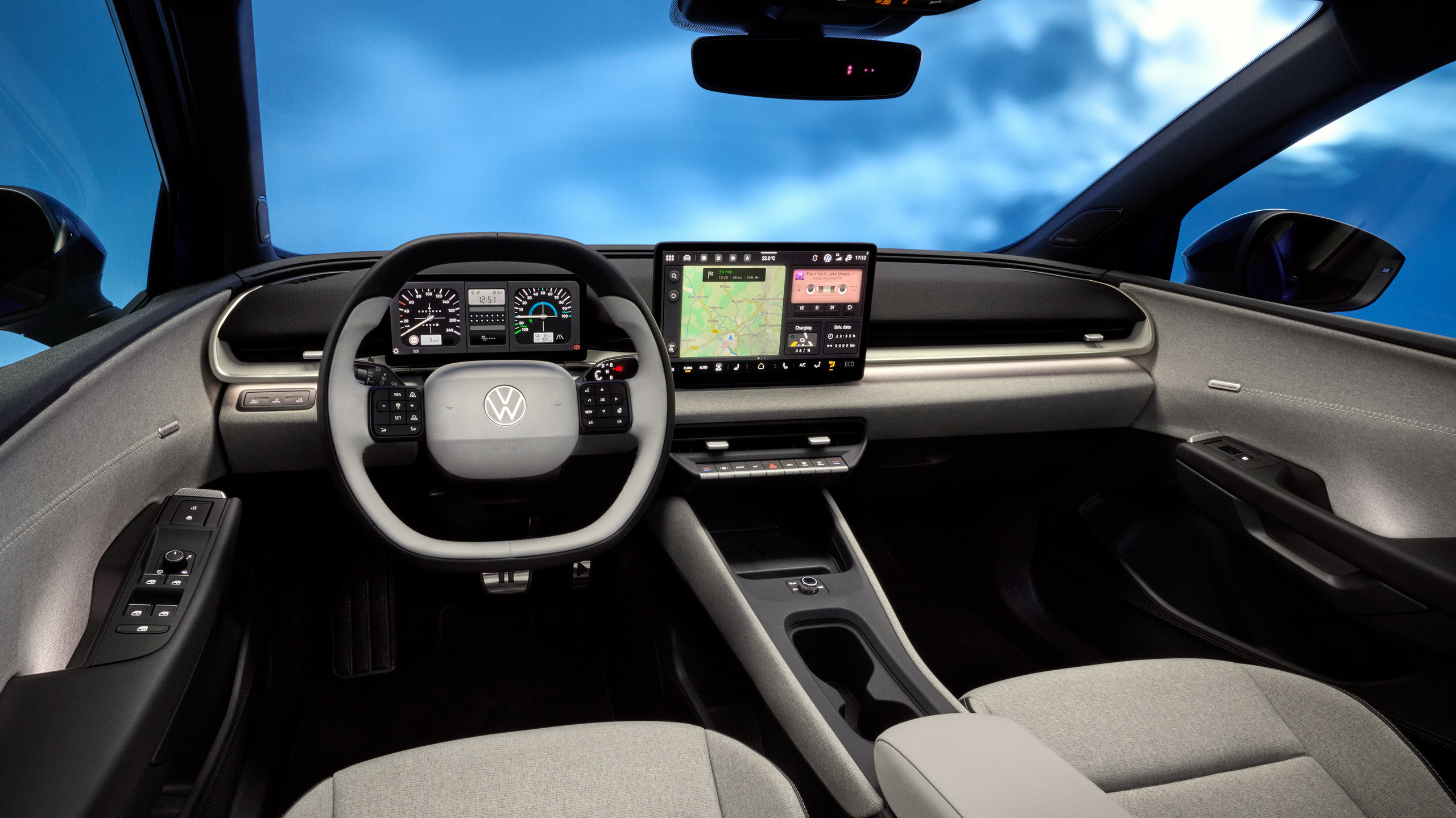
Exterior styling is getting a rethink, too, following the Schäfer-assisted exodus of Klaus Bischoff, architect of the mostly bland first-generation ID. cars. New creative boss Andy Mindt, who came from Bentley, has pushed for simpler, more timeless shapes, plus interiors that don’t require a tutorial. Physical buttons are coming back, and even door handles are being reconsidered so they actually work when your hands are full.
“We sell emotions, we sell memories,” Grünitz said, summing up the new direction, which is really just about getting back to the old direction. If VW can pull that off again with the help of cars like the new ID. Polo (below), maybe the people’s car maker really can find its groove.
Jony Ive leads Luce EV interior design with focus on tactile controls.
Ferrari blends digital screens with physical switches for better usability.
Touchscreens criticized as impractical for driving by Ive in interview.
The Luce, Ferrari’s first EV, is set to arrive with a refreshingly retro-modern interior that leans as much on philosophy as it does on design. At the center of that vision is Jony Ive, best known for shaping the iPhone and Apple Watch. Interestingly, despite pioneering the everyday use of touchscreen displays, he is now advocating for their restraint in cars.
Tesla played an important role in popularizing large, tablet-like touchscreens in cars, using them to house almost all key vehicle functions. Now, most vehicles on the market have precious few buttons and rely heavily on screens. While this helps brands achieve a modern design aesthetic, we also know car companies love screens because they’re much cheaper to use than physical buttons and controls.
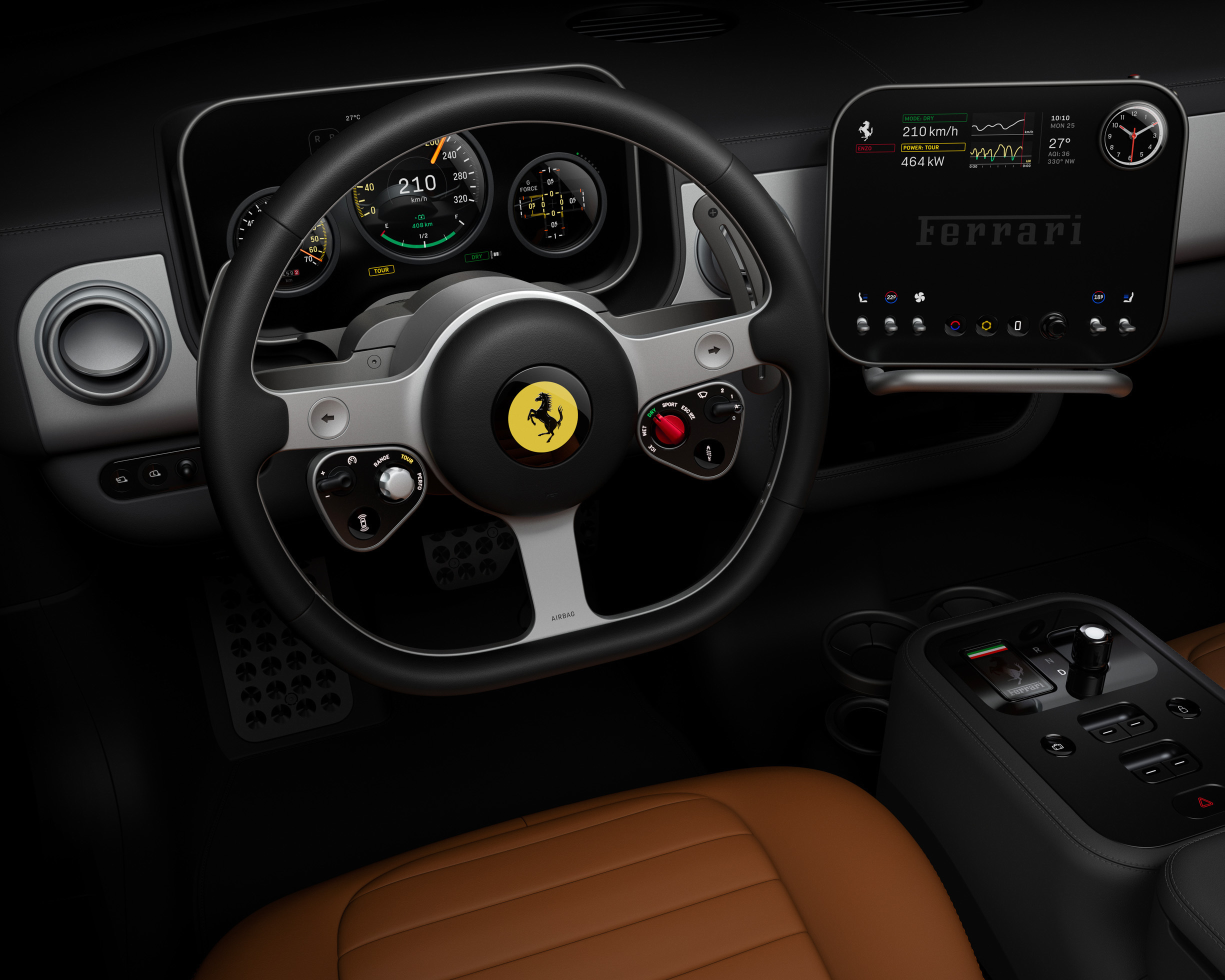
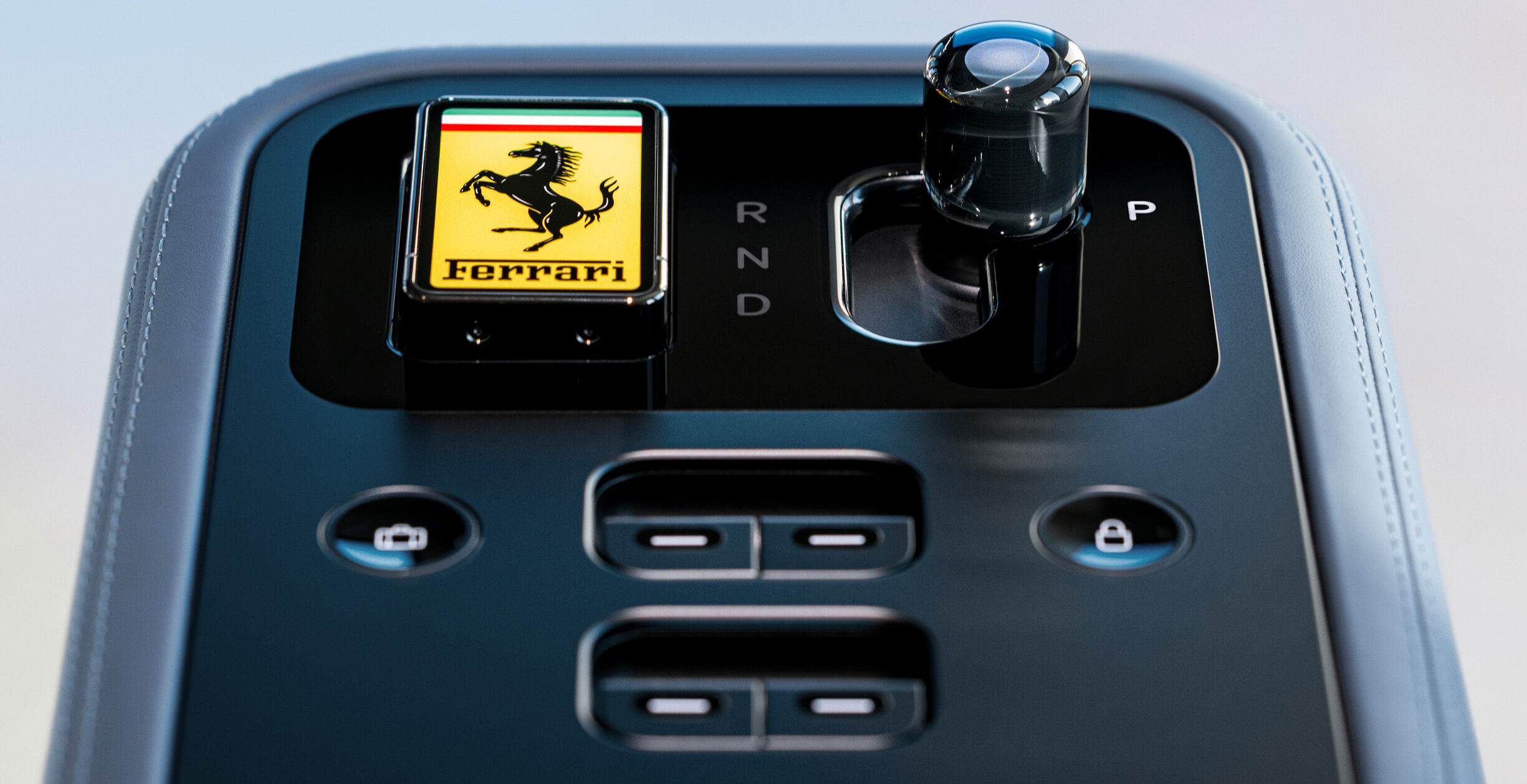
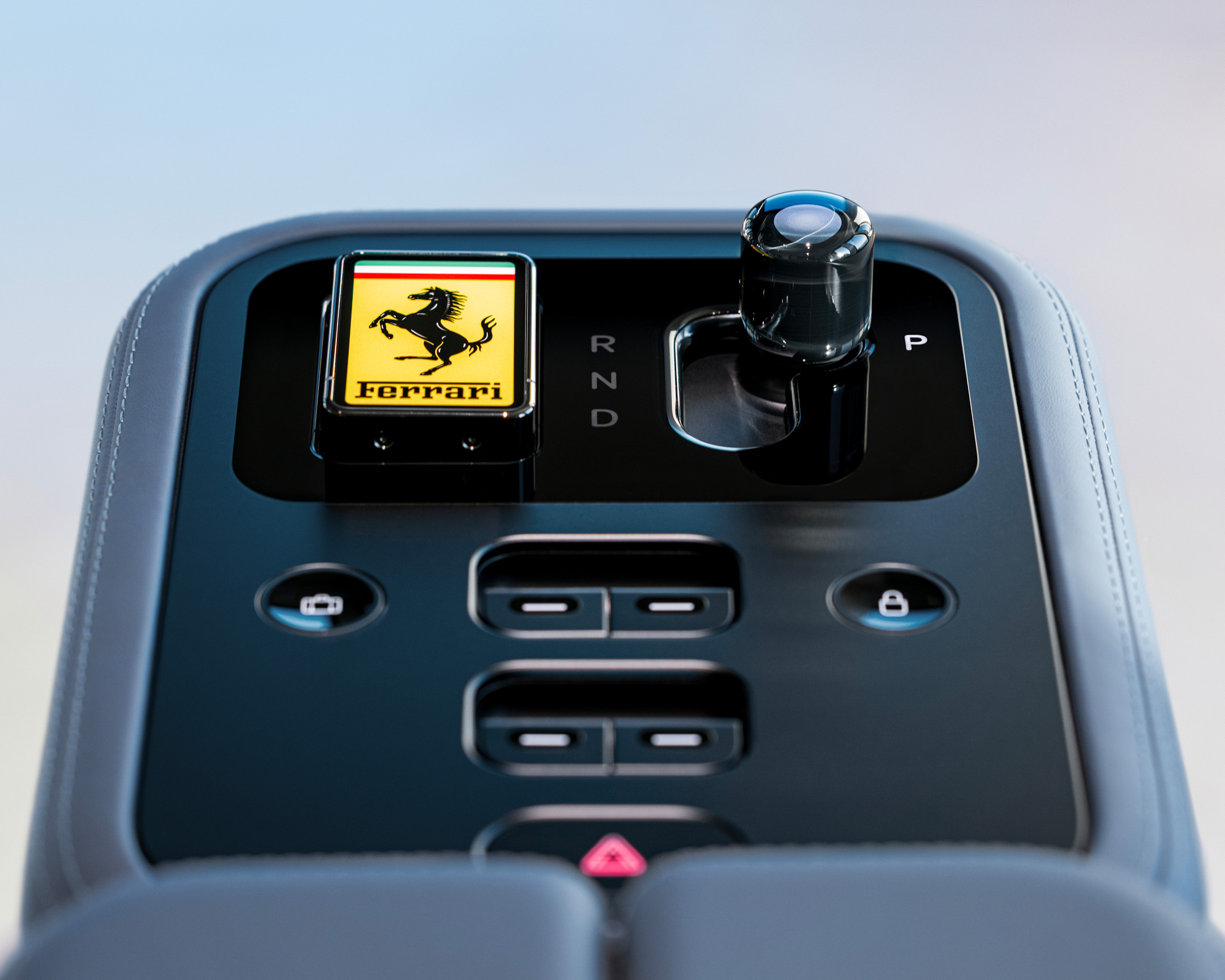
In the Ferrari Luce, Ive is looking to blend the two in a way that hasn’t been seen before. He explained that the goal was to create an interface that blends physical interaction with digital displays, combining the strengths of both rather than relying entirely on one. While there are screens, high-quality physical switches and toggles are used to control them, each with its own click and feel.
Ive Rejects Large Touchscreens
“Practically and functionally, a large touchscreen doesn’t work in a car,” Ive told Top Gear during a recent interview. “That’s incontrovertible. I find it easy and lazy. This is a space where there can be an infatuation with style and fashion.”
According to Ive, he and fellow LoveFrom co-founder Marc Newson approached the project by focusing on how each element is made and used, drawing from their experience designing finely crafted objects.
They “treated every single element as if it was a camera or a watch,” noting the team obsessed over even the smallest details, effectively “designing hundreds of products” that come together to feel “singular and coherent.”
SHProshots
The steering wheel of the Luce has a classic, three-spoke metal design out of 19 CNC-machined parts and includes dials for the Manettino, driving modes, wipers, and turn signals. Positioned behind the wheel is an intricate digital gauge cluster with circular OLED panels from Samsung, with high-end glass positioned in front of them.
Each switch and toggle looks like a little piece of jewelry, adding some theatre to a vehicle that may lack some of the soul of other Ferraris because of its electric powertrain.
“To make something simple and intuitive is really difficult,” Ive added. “Everything is founded on being functional. It’s not styled, it’s not garnish, because that’s a distraction and it doesn’t last well. The binnacle and steering wheel are intimately connected, and this is about driving. Everything else augments that experience. The binnacle is about output and the steering wheel is about input. All the controls are physical and mechanical.”
Ferrari CEO says touch controls cost less to build, not better to actually use.
Luxury brands are bringing buttons back after years of touchscreen overload.
Hyundai and VW are now restoring physical controls in their latest new models.
For the past decade or so, the automotive industry has been marching steadily toward touchscreens and capacitive buttons, and the reasoning has always been the same: they look cleaner, they signal modernity, and they photograph well in press materials. At the same time, they’ve often proven harder to use in practice.
Now, one of the world’s most storied automotive names is admitting what many suspected all along: touch controls took over because they’re cheaper, not because they’re better.
According to Ferrari CEO Benedetto Vigna, the shift away from physical buttons has little to do with improving the driving experience and everything to do with manufacturing efficiency. “The touch [button] is something that is made for the supplier’s advantage… Making a touch button is cheaper — 50 percent cheaper.” He also made clear that the trend is not driven by customer preference or any inherent technological advantage.
That’s the blunt admission he made while speaking to Autocar India, and it lines up with what we’ve been hearing across the industry. Capacitive panels reduce parts count, simplify wiring, and allow manufacturers to reuse the same hardware across multiple models. They also eliminate the need to design, engineer, and validate bespoke physical switches for each function. In high-volume cars, those savings add up quickly. But even premium brands leaned into the trend, sometimes at the expense of usability.
Ferrari’s “Phygital” Philosophy
Ferrari, however, now says it’s going the other direction, especially for its first electric vehicle, the Luce, due out later this year. Instead of doubling down on screens, the company plans to bring back more physical switches, dials, and toggles, particularly for frequently used functions. This includes steering wheel controls and secondary systems such as climate settings, areas where tactile feedback can make a noticeable difference.
Vigna calls the approach “phygital,” a blend of physical and digital controls meant to keep the interface intuitive without giving up modern software features. That philosophy will appear in the upcoming EV, the interior of which, has already been revealed, giving us a first look at the new layout.
The Jony Ive Irony
What makes this particularly interesting is that the Luce has been developed with input from design consultancy LoveFrom, led by former Apple designer Jony Ive. That’s the man behind the original iPhone, a product that became historically significant in large part because of its deliberate absence of physical controls.
All said, Ferrari is far from alone in this new understanding of why physical controls are so important. Super-luxury brands like Rolls-Royce never fully departed from such controls. Mainstream brands like Hyundai and Volkswagen are also open about the need to eschew touch controls for physical ones. Now, we just have to wait to see how each company will implement those design briefs.
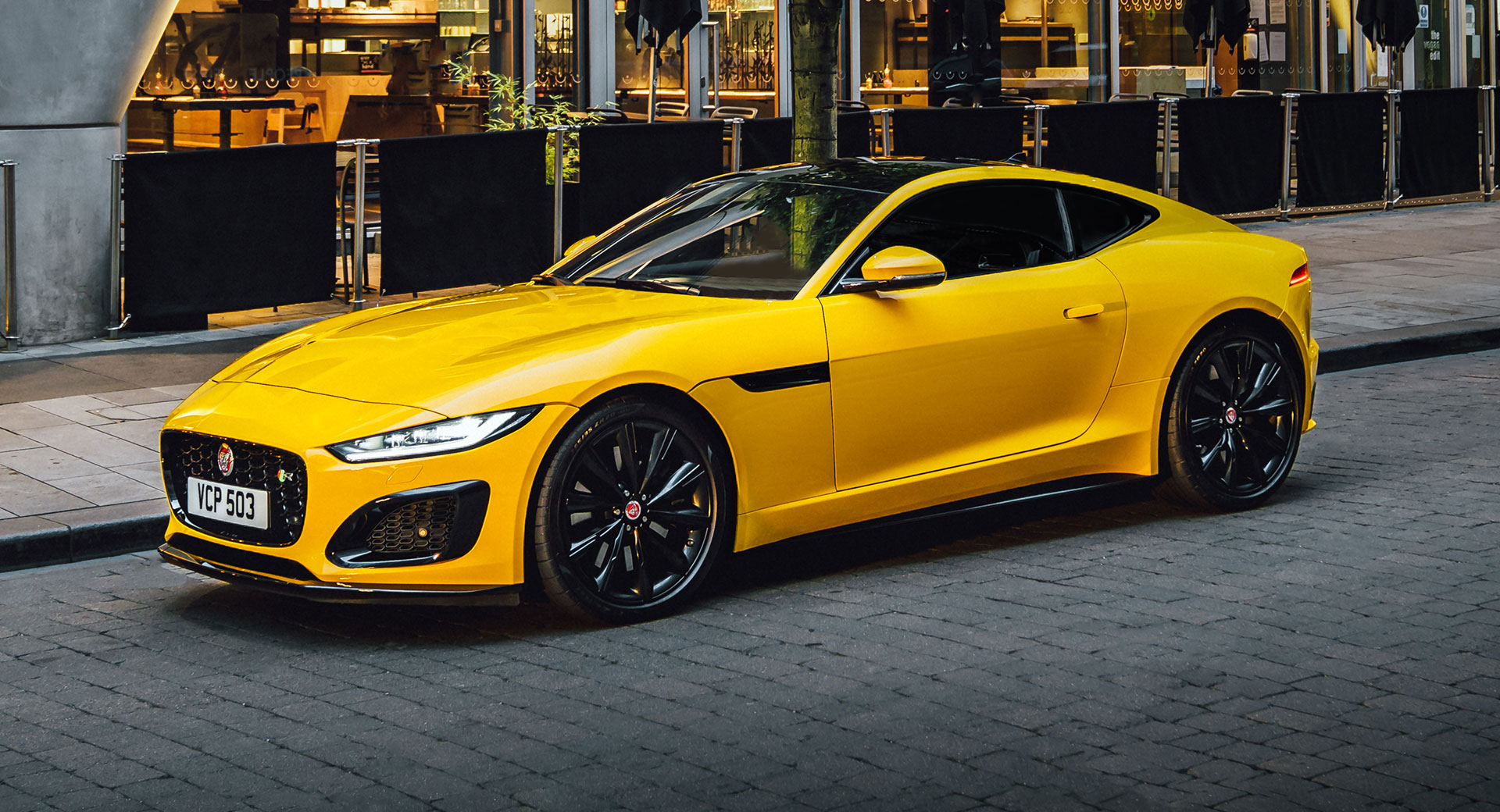
A second-generation F-Type was in development before cancellation.
Jaguar will reveal its production Type 00 electric sedan this year.
Ian Callum designed new XF and F-Pace models before leaving in 2019.
Jaguar’s radical pivot to electric vehicles, anchored by a four-door GT sedan, has proven deeply controversial. And once you learn about some of the planned future Jaguar models that had to be killed to make way for the Type 00, you may deride Jaguar’s EV shift even more.
For years, it was known that Jaguar had been developing an all-new XJ before abruptly changing course, cancelling the project mere months before it was ready. The car was going to be electric, but the platform was flexible enough to support a six-cylinder engine if the market demanded it.
In a recent chat on the Road to Success Podcast, Jaguar’s former design director Ian Callum revealed he had also designed a new XF sedan and an F-Pace SUV before departing the company in 2019. Both were scrapped to clear the path for the Type 00. The most painful revelation, perhaps, is that a successor to the F-Type was also in development.
What Could Have Been
Callum didn’t say how far work on a second-generation F-Type had progressed when he left. He considers the original one of the last great Jaguars, before the company’s strategy shifted beneath it. At a time when sleek, front-engined two-door sports cars are disappearing from the market, losing the F-Type to make room for a grand touring EV is a difficult pill to swallow.
Speaking about the company’s new EV, Callum described it as a “handsome car,” adding that “it’s bold, it’s brave, and it’s got a lot of good design attributes about it, but it’s not beautiful and Jaguars need to be beautiful.” He also said the Type 00 is “too retro.”
What Can We Expect From The Type 00?
Jaguar wants to establish itself as a legitimate rival to Bentley and Rolls-Royce with the Type 00, abandoning its pursuit of volume sales and chasing the likes of BMW, Audi, and Mercedes-Benz. The production model will stick true to the concept’s radical design, though it will add two extra doors and have a longer wheelbase.
Power comes from three motors, a 350 hp unit up front and two at the rear producing a combined 950hp, with Jaguar promising at least 1,000 hp total along with just over 1,000lb ft of torque. According to Top Gear, that translates to a 0-62 mph (100 km/h) sprint in around 3.3 seconds, a limited top speed of 155 mph (250 km/h), and a driving range of approximately 430 miles (692 km).
VW ID.3 Neo refresh brings a few subtle design and tech tweaks.
The electric hatch arrives next month with hardware upgrades.
Other ID EVs also now gain the same updated software platform.
Volkswagen is preparing another update for its compact electric hatchback. In mid-April, the company will unveil a revised version of the ID.3, which will carry the new ID.3 Neo name. The refreshed model brings a mix of hardware and software changes intended to keep the hatch competitive for the rest of the decade, at least until the long-anticipated ID. Golf eventually reaches showrooms.
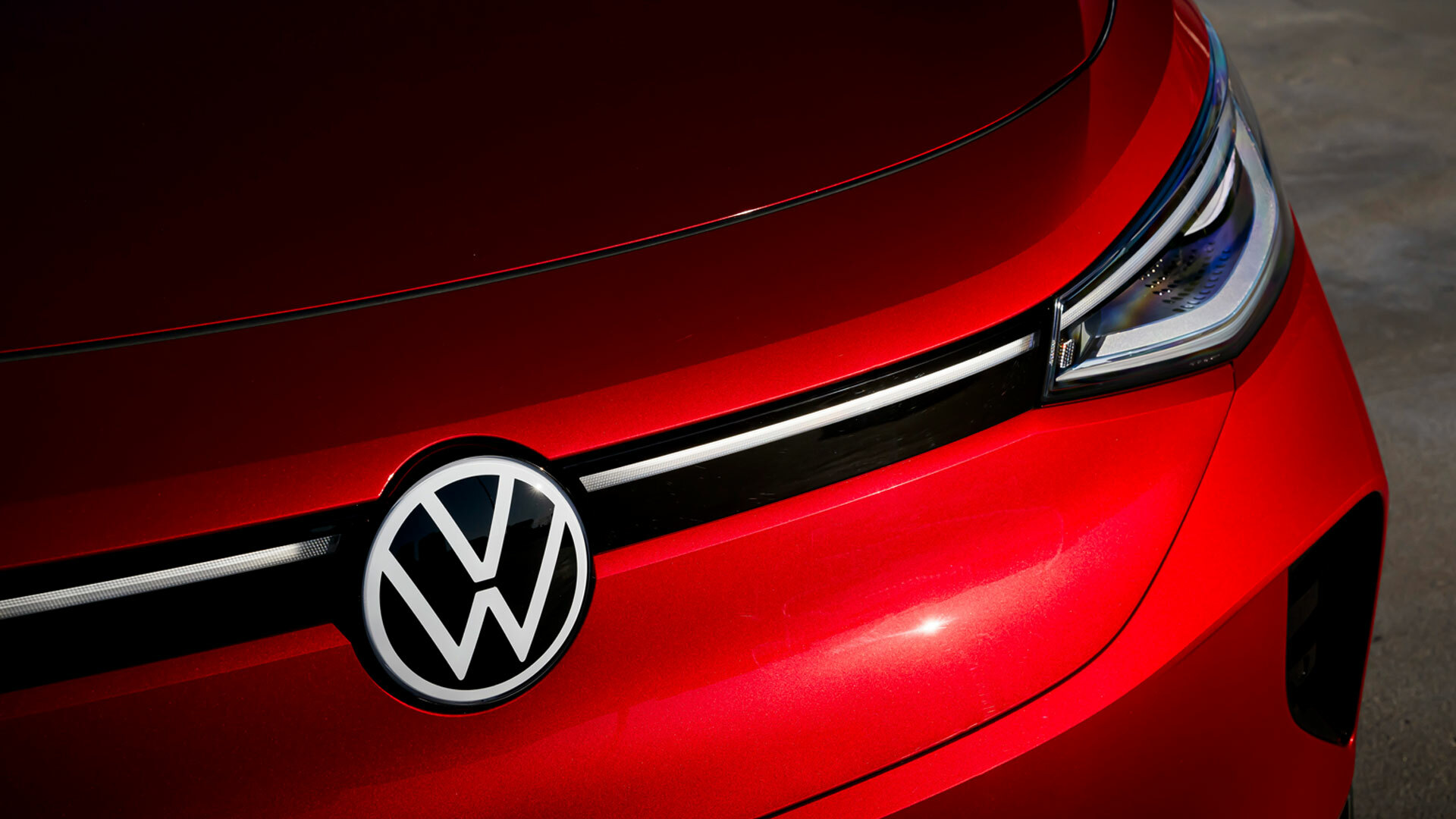
Alongside the announcement, the automaker released a set of official design sketches. They show a shape that remains immediately recognizable as an ID.3, but with styling cues that align it more closely with Volkswagen’s next batch of electric models, including the ID. Polo and ID. Cross.
Most of the visual changes are concentrated at the front. The headlights are now linked by a slim grille element, creating a more cohesive face, while the bumper intakes adopt a simpler, cleaner design. From the side, the proportions look largely untouched.
Out back, however, the taillights gain updated LED graphics, and the lower section of the tailgate is now finished in body color rather than contrasting trim. Volkswagen is also expected to expand the palette with new exterior colors and wheel options.
Volkswagen design chief Andreas Mindt says the update focuses on refining the car’s overall presence. The goal, he explained, was to deliver “clean proportions, confident surfaces, and a sharper digital character” for one of the company’s most important electric models.
The ID.3 first arrived in 2019 as Volkswagen’s inaugural purpose-built EV, marking the start of the brand’s modern electric era. A facelift followed in 2023, so the upcoming ID.3 Neo effectively represents the model’s second major update since its original launch.
New Software And More Buttons
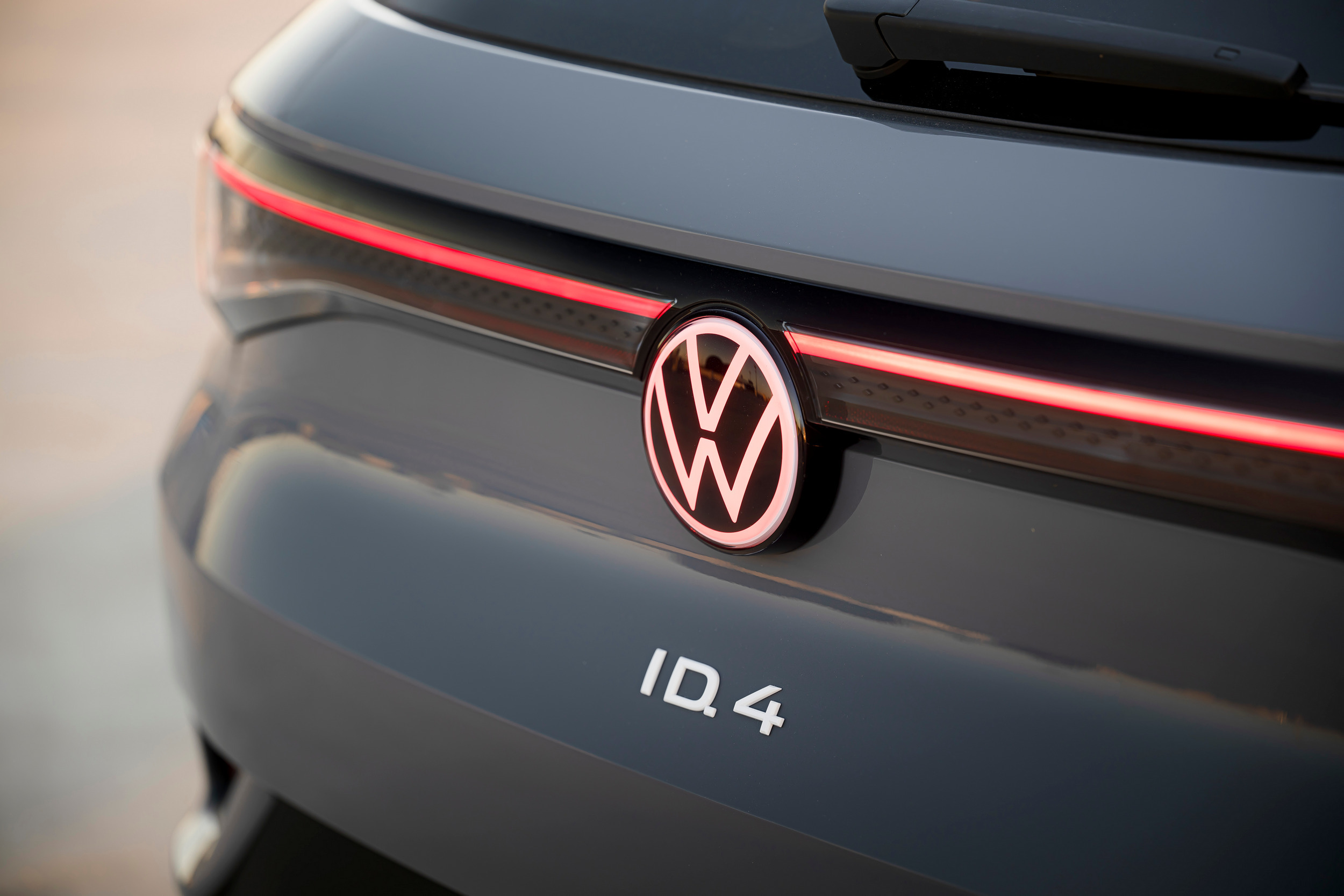
A major focus of the ID.3 Neo is the new Innovision infotainment system, which introduces an integrated app store for audio and video streaming, gaming, charging services, and parking services. Inside the cabin, Volkswagen has also eliminated the controversial touch-sensitive steering wheel controls, replacing them with traditional tactile buttons.
In addition, a new digital vehicle key option allows owners to unlock and access their cars using a smartphone or smartwatch without needing to carry a physical key fob or install a dedicated app.
Updates For Other ID Models
On the practical side, Volkswagen is rolling out Vehicle-to-Load (V2L) capability across the ID lineup. This allows owners to draw up to 3.6 kW of electricity from the high-voltage battery through a 230V socket inside the cabin or by using an external adapter. That output can power tools, charge e-bikes, or run camping equipment when the car is parked.
The software package also receives additional functionality. Updates include Travel Assist with traffic light detection, along with support for One-Pedal Driving.
Kai Grünitz, Member of the Volkswagen Board of Management responsible for Technical Development, said: “The new software generation brings more performance and an even better customer experience to the ID. models. The new Volkswagen electric models in the small and compact vehicle segments – ID. Polo, ID. Polo GTI, ID. Cross – will also soon be launched on the market with these new innovations, offering more flexibility in everyday life and for leisure activities.”
Beyond the updated software, the Pure trims of both electric crossovers will receive a new electric motor called the APP 350. The unit recently appeared in the closely related Ford Explorer and Capri EVs. It produces 187 hp (140 kW / 190 PS) and is said to deliver more torque while consuming less energy than the previous motor.
Efficiency gains also come from a new 58 kWh lithium phosphate battery pack. Combined with the updated motor, Volkswagen says the changes increase the WLTP range of the ID.4 by 40 km (25 miles).
Ferrari fits the Luce with a 122 kWh battery and over 986 hp.
Its exterior may blend modern design with subtle retro cues.
Deliveries are expected to begin in 2027 after the May reveal.
While there will always be enthusiasts who scoff at Ferrari launching an EV, there’s an inevitability that even the most exotic of car manufacturers would need to venture into all-electric vehicles. Ferrari is doing exactly that with the Luce, and the company has now released a short clip offering a glimpse of its exterior. Well, sort of, because there is not much, if anything, to make out.
In this video, we’re given a brief teaser of the electric car, filmed at night. Don’t expect to see much detail, though, as the car appears to be wearing the same white-and-black camouflage seen on recent prototypes.
What Will Power It?
What we can say with confidence is that the Luce will be a four- or five-seater, slightly smaller and sleeker than the Purosangue. Power will come from four electric motors, combining to produce more than 986 hp, enough to send the car to 62 mph (100 km/h) in 2.5 seconds and on to a top speed of 193 mph (310 km/h), an impressive figure for an EV.
Integrated into the Luce’s floorpan will be a large 122 kWh battery pack that supports charging speeds of up to 350 kW, giving the Luce a range exceeding 329 miles (530 km). To ensure the first electric Ferrari still delivers some sense of drama from behind the wheel, the company has developed a system that amplifies the powertrain’s mechanical vibrations, producing distinctive tones that vary with speed and torque delivery.
Ferrari has confirmed the Luce will be revealed in full in May, with the first customer deliveries expected to begin next year.
Despite reports it might disappear, the A-Class looks set to stay.
The next generation will use Mercedes’ new MMA platform.
A Euro 7-ready hybrid model could join the electric version too.
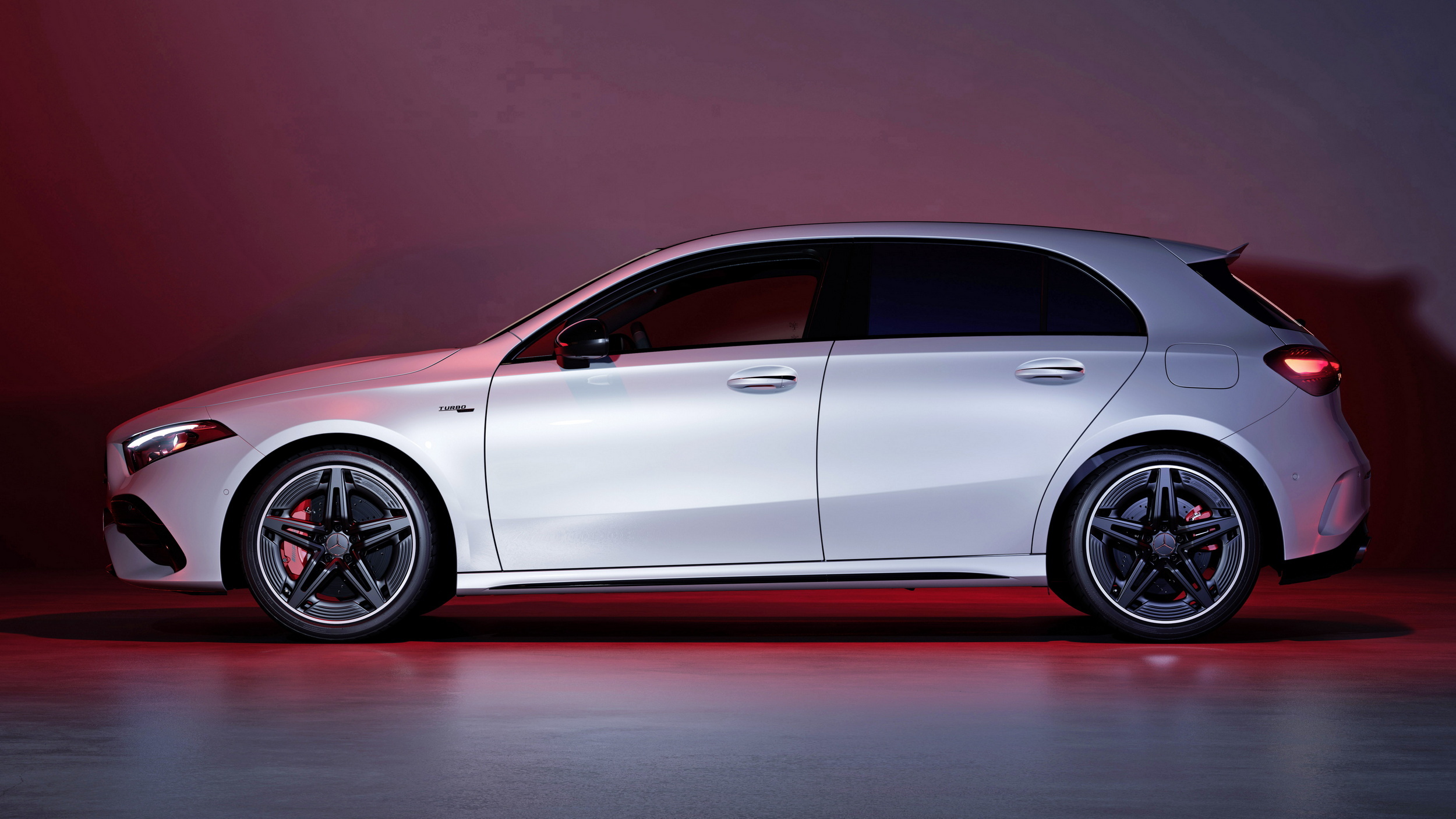
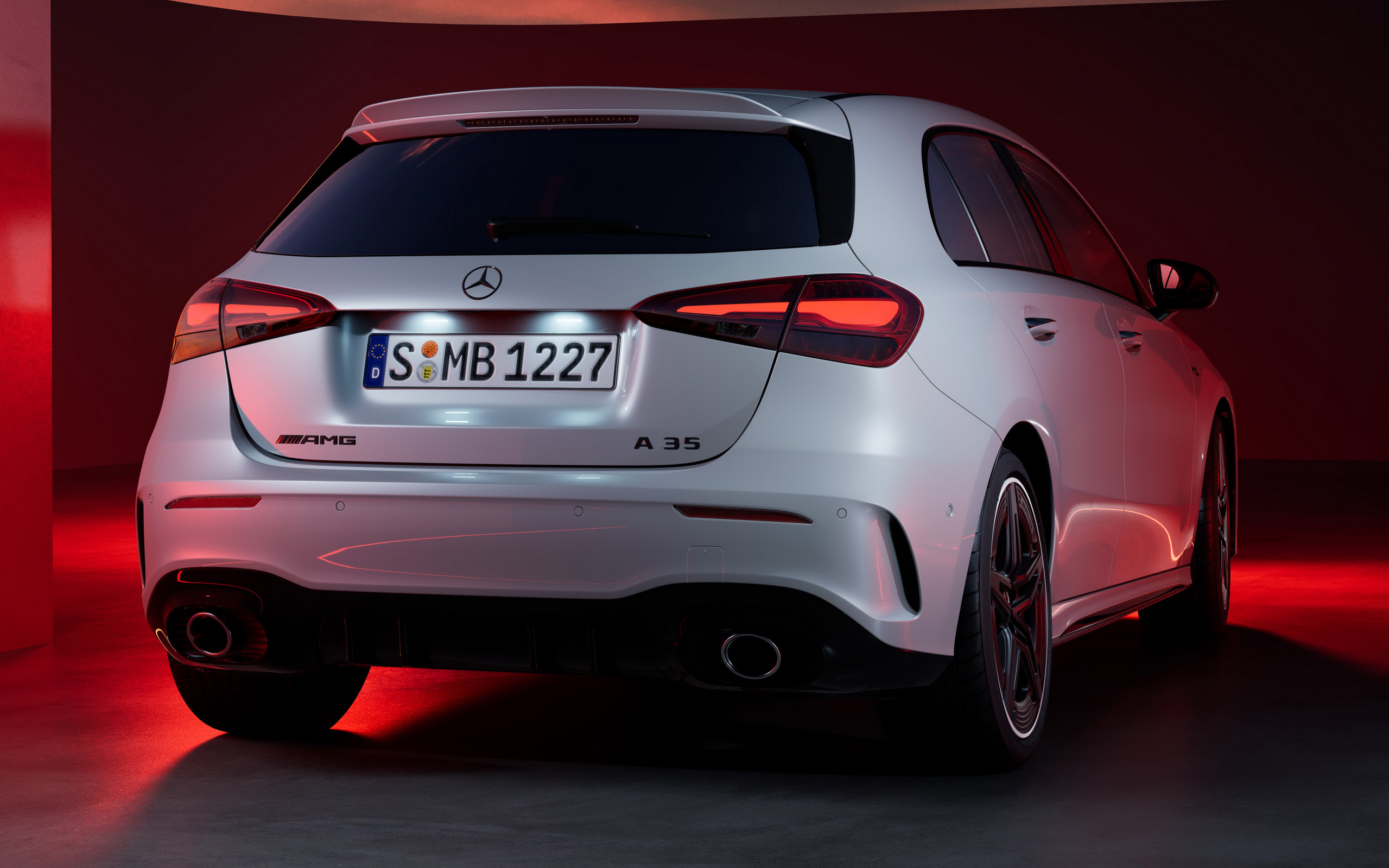
The Mercedes A-Class looks to be sticking around for the foreseeable future, just not in its current guise. Despite initial speculation that the model was going to be culled, as Benz tries to consolidate its offerings, a replacement for the existing model may very well come to fruition, albeit as an EV.
Although plans haven’t yet been announced, in an interview with Design Director Robert Lesnik Auto Express gleaned info that the new hatchback will probably arrive towards the end of the decade as an EV.
Current expectations suggest the next-generation model could debut around 2029, after the existing A-Class completes an extended production run expected to last until 2028.
The current A-Class debuted all the way back in 2018, making the model well overdue for a refresh by the time the new generation rolls around.
EV Architecture
In order meet the needs of the next-generation A-Class, Mercedes intends to transfer the production of the current A-Class to the Hungary plant in the next year. Lesnik claimed the production line wouldn’t require a significant revision to meet the specific requirements of the new MMA (Modular Mercedes Architecture) platform. Mercedes focuses on expanding the versatility of the MMA platform to give next-gen EV technology, innovative design, and cost efficiency.
The MMA platform grants the company the flexibility to fit the same all-electric powertrain and hybrid unit as in the CLA model, underpinning the next-generation A-class. Mercedes developed this hybrid system to meet the stringent Euro 7 emissions standards to be implemented by 2027.
When Mercedes first outlined its compact MMA lineup in 2023, it planned four models including the CLA, CLA Shooting Brake, GLA, and GLB. Lesnik indicated that an electric A-Class would effectively become a fifth model in that family.
A-Class, Not An EQA
Mercedes has decided its somewhat confusing decision to separate its EV models under their own “EQ” brand wasn’t the best way forward. Which is why the A-Class name is likely to remain in place of the EQA.
Lesnik also confirmed that the A-Class will remain stylish, with a “cab-back” approach, as opposed to the original upright shape adopted by the A-Class of the 90s. The design is also expected to avoid the streamlined styling seen on models like the EQE and EQS, instead following the CLA’s longer-hood proportions and more traditional hatchback profile.
On May 6, MIT AgeLab’s Advanced Vehicle Technology (AVT) Consortium, part of the MIT Center for Transportation and Logistics, celebrated 10 years of its global academic-industry collaboration. AVT was founded with the aim of developing new data that contribute to automotive manufacturers, suppliers, and insurers’ real-world understanding of how drivers use and respond to increasingly sophisticated vehicle technologies, such as assistive and automated driving, while accelerating the applied insight needed to advance design and development. The celebration event brought together stakeholders from across the industry for a set of keynote addresses and panel discussions on critical topics significant to the industry and its future, including artificial intelligence, automotive technology, collision repair, consumer behavior, sustainability, vehicle safety policy, and global competitiveness.
Bryan Reimer, founder and co-director of the AVT Consortium, opened the event by remarking that over the decade AVT has collected hundreds of terabytes of data, presented and discussed research with its over 25 member organizations, supported members’ strategic and policy initiatives, published select outcomes, and built AVT into a global influencer with tremendous impact in the automotive industry. He noted that current opportunities and challenges for the industry include distracted driving, a lack of consumer trust and concerns around transparency in assistive and automated driving features, and high consumer expectations for vehicle technology, safety, and affordability. How will industry respond? Major players in attendance weighed in.
In a powerful exchange on vehicle safety regulation, John Bozzella, president and CEO of the Alliance for Automotive Innovation, and Mark Rosekind, former chief safety innovation officer of Zoox, former administrator of the National Highway Traffic Safety Administration, and former member of the National Transportation Safety Board, challenged industry and government to adopt a more strategic, data-driven, and collaborative approach to safety. They asserted that regulation must evolve alongside innovation, not lag behind it by decades. Appealing to the automakers in attendance, Bozzella cited the success of voluntary commitments on automatic emergency braking as a model for future progress. “That’s a way to do something important and impactful ahead of regulation.” They advocated for shared data platforms, anonymous reporting, and a common regulatory vision that sets safety baselines while allowing room for experimentation. The 40,000 annual road fatalities demand urgency — what’s needed is a move away from tactical fixes and toward a systemic safety strategy. “Safety delayed is safety denied,” Rosekind stated. “Tell me how you’re going to improve safety. Let’s be explicit.”
Drawing inspiration from aviation’s exemplary safety record, Kathy Abbott, chief scientific and technical advisor for the Federal Aviation Administration, pointed to a culture of rigorous regulation, continuous improvement, and cross-sectoral data sharing. Aviation’s model, built on highly trained personnel and strict predictability standards, contrasts sharply with the fragmented approach in the automotive industry. The keynote emphasized that a foundation of safety culture — one that recognizes that technological ability alone isn’t justification for deployment — must guide the auto industry forward. Just as aviation doesn’t equate absence of failure with success, vehicle safety must be measured holistically and proactively.
With assistive and automated driving top of mind in the industry, Pete Bigelow of Automotive News offered a pragmatic diagnosis. With companies like Ford and Volkswagen stepping back from full autonomy projects like Argo AI, the industry is now focused on Level 2 and 3 technologies, which refer to assisted and automated driving, respectively. Tesla, GM, and Mercedes are experimenting with subscription models for driver assistance systems, yet consumer confusion remains high. JD Power reports that many drivers do not grasp the differences between L2 and L2+, or whether these technologies offer safety or convenience features. Safety benefits have yet to manifest in reduced traffic deaths, which have risen by 20 percent since 2020. The recurring challenge: L3 systems demand that human drivers take over during technical difficulties, despite driver disengagement being their primary benefit, potentially worsening outcomes. Bigelow cited a quote from Bryan Reimer as one of the best he’s received in his career: “Level 3 systems are an engineer’s dream and a plaintiff attorney’s next yacht,” highlighting the legal and design complexity of systems that demand handoffs between machine and human.
In terms of the impact of AI on the automotive industry, Mauricio Muñoz, senior research engineer at AI Sweden, underscored that despite AI’s transformative potential, the automotive industry cannot rely on general AI megatrends to solve domain-specific challenges. While landmark achievements like AlphaFold demonstrate AI’s prowess, automotive applications require domain expertise, data sovereignty, and targeted collaboration. Energy constraints, data firewalls, and the high costs of AI infrastructure all pose limitations, making it critical that companies fund purpose-driven research that can reduce costs and improve implementation fidelity. Muñoz warned that while excitement abounds — with some predicting artificial superintelligence by 2028 — real progress demands organizational alignment and a deep understanding of the automotive context, not just computational power.
Turning the focus to consumers, a collision repair panel drawing Richard Billyeald from Thatcham Research, Hami Ebrahimi from Caliber Collision, and Mike Nelson from Nelson Law explored the unintended consequences of vehicle technology advances: spiraling repair costs, labor shortages, and a lack of repairability standards. Panelists warned that even minor repairs for advanced vehicles now require costly and complex sensor recalibrations — compounded by inconsistent manufacturer guidance and no clear consumer alerts when systems are out of calibration. The panel called for greater standardization, consumer education, and repair-friendly design. As insurance premiums climb and more people forgo insurance claims, the lack of coordination between automakers, regulators, and service providers threatens consumer safety and undermines trust. The group warned that until Level 2 systems function reliably and affordably, moving toward Level 3 autonomy is premature and risky.
While the repair panel emphasized today’s urgent challenges, other speakers looked to the future. Honda’s Ryan Harty, for example, highlighted the company’s aggressive push toward sustainability and safety. Honda aims for zero environmental impact and zero traffic fatalities, with plans to be 100 percent electric by 2040 and to lead in energy storage and clean power integration. The company has developed tools to coach young drivers and is investing in charging infrastructure, grid-aware battery usage, and green hydrogen storage. “What consumers buy in the market dictates what the manufacturers make,” Harty noted, underscoring the importance of aligning product strategy with user demand and environmental responsibility. He stressed that manufacturers can only decarbonize as fast as the industry allows, and emphasized the need to shift from cost-based to life-cycle-based product strategies.
Finally, a panel involving Laura Chace of ITS America, Jon Demerly of Qualcomm, Brad Stertz of Audi/VW Group, and Anant Thaker of Aptiv covered the near-, mid-, and long-term future of vehicle technology. Panelists emphasized that consumer expectations, infrastructure investment, and regulatory modernization must evolve together. Despite record bicycle fatality rates and persistent distracted driving, features like school bus detection and stop sign alerts remain underutilized due to skepticism and cost. Panelists stressed that we must design systems for proactive safety rather than reactive response. The slow integration of digital infrastructure — sensors, edge computing, data analytics — stems not only from technical hurdles, but procurement and policy challenges as well.
Reimer concluded the event by urging industry leaders to re-center the consumer in all conversations — from affordability to maintenance and repair. With the rising costs of ownership, growing gaps in trust in technology, and misalignment between innovation and consumer value, the future of mobility depends on rebuilding trust and reshaping industry economics. He called for global collaboration, greater standardization, and transparent innovation that consumers can understand and afford. He highlighted that global competitiveness and public safety both hang in the balance. As Reimer noted, “success will come through partnerships” — between industry, academia, and government — that work toward shared investment, cultural change, and a collective willingness to prioritize the public good.
Across a career’s worth of pioneering product designs, Doug Field’s work has shaped the experience of anyone who’s ever used a MacBook Air, ridden a Segway, or driven a Tesla Model 3.
But his newest project is his most ambitious yet: reinventing the Ford automobile, one of the past century’s most iconic pieces of technology.
As Ford’s chief electric vehicle (EV), digital, and design officer, Field is tasked with leading the development of the company’s electric vehicles, while making new software platforms central to all Ford models.
To bring Ford Motor Co. into that digital and electric future, Field effectively has to lead a fast-moving startup inside the legacy carmaker. “It is incredibly hard, figuring out how to do ‘startups’ within large organizations,” he concedes.
If anyone can pull it off, it’s likely to be Field. Ever since his time in MIT’s Leaders for Global Operations (then known as “Leaders in Manufacturing”) program studying organizational behavior and strategy, Field has been fixated on creating the conditions that foster innovation.
“The natural state of an organization is to make it harder and harder to do those things: to innovate, to have small teams, to go against the grain,” he says. To overcome those forces, Field has become a master practitioner of the art of curating diverse, talented teams and helping them flourish inside of big, complex companies.
“It’s one thing to make a creative environment where you can come up with big ideas,” he says. “It’s another to create an execution-focused environment to crank things out. I became intrigued with, and have been for the rest of my career, this question of how can you have both work together?”
Three decades after his first stint as a development engineer at Ford Motor Co., Field now has a chance to marry the manufacturing muscle of Ford with the bold approach that helped him rethink Apple’s laptops and craft Tesla’s Model 3 sedan. His task is nothing less than rethinking how cars are made and operated, from the bottom up.
“If it’s only creative or execution, you’re not going to change the world,” he says. “If you want to have a huge impact, you need people to change the course you’re on, and you need people to build it.”
A passion for design
From a young age, Field had a fascination with automobiles. “I was definitely into cars and transportation more generally,” he says. “I thought of cars as the place where technology and art and human design came together — cars were where all my interests intersected.”
With a mother who was an artist and musician and an engineer father, Field credits his parents’ influence for his lifelong interest in both the aesthetic and technical elements of product design. “I think that’s why I’m drawn to autos — there’s very much an aesthetic aspect to the product,” he says.
After earning a degree in mechanical engineering from Purdue University, Field took a job at Ford in 1987. The big Detroit automakers of that era excelled at mass-producing cars, but weren’t necessarily set up to encourage or reward innovative thinking. Field chafed at the “overstructured and bureaucratic” operational culture he encountered.
The experience was frustrating at times, but also valuable and clarifying. He realized that he “wanted to work with fast-moving, technology-based businesses.”
“My interest in advancing technical problem-solving didn’t have a place in the auto industry” at the time, he says. “I knew I wanted to work with passionate people and create something that didn’t exist, in an environment where talent and innovation were prized, where irreverence was an asset and not a liability. When I read about Silicon Valley, I loved the way they talked about things.”
During that time, Field took two years off to enroll in MIT’s LGO program, where he deepened his technical skills and encountered ideas about manufacturing processes and team-driven innovation that would serve him well in the years ahead.
“Some of core skill sets that I developed there were really, really important,” he says, “in the context of production lines and production processes.” He studied systems engineering and the use of Monte Carlo simulations to model complex manufacturing environments. During his internship with aerospace manufacturer Pratt & Whitney, he worked on automated design in computer-aided design (CAD) systems, long before those techniques became standard practice.
Another powerful tool he picked up was the science of probability and statistics, under the tutelage of MIT Professor Alvin Drake in his legendary course 6.041/6.431 (Probabilistic Systems Analysis). Field would go on to apply those insights not only to production processes, but also to characterizing variability in people’s aptitudes, working styles, and talents, in the service of building better, more innovative teams. And studying organizational strategy catalyzed his career-long interest in “ways to look at innovation as an outcome, rather than a random spark of genius.”
“So many things I was lucky to be exposed to at MIT,” Field says, were “all building blocks, pieces of the puzzle, that helped me navigate through difficult situations later on.”
Learning while leading
After leaving Ford in 1993, Field worked at Johnson and Johnson Medical for three years in process development. There, he met Segway inventor Dean Kamen, who was working on a project called the iBOT, a gyroscopic powered wheelchair that could climb stairs.
When Kamen spun off Segway to develop a new personal mobility device using the same technology, Field became his first hire. He spent nearly a decade as the firm’s chief technology officer.
At Segway, Field’s interests in vehicles, technology, innovation, process, and human-centered design all came together.
“When I think about working now on electric cars, it was a real gift,” he says. The problems they tackled prefigured the ones he would grapple with later at Tesla and Ford. “Segway was very much a precursor to a modern EV. Completely software controlled, with higher-voltage batteries, redundant systems, traction control, brushless DC motors — it was basically a miniature Tesla in the year 2000.”
At Segway, Field assembled an “amazing” team of engineers and designers who were as passionate as he was about pushing the envelope. “Segway was the first place I was able to hand-pick every single person I worked with, define the culture, and define the mission.”
As he grew into this leadership role, he became equally engrossed with cracking another puzzle: “How do you prize people who don’t fit in?”
“Such a fundamental part of the fabric of Silicon Valley is the love of embracing talent over a traditional organization’s ways of measuring people,” he says. “If you want to innovate, you need to learn how to manage neurodivergence and a very different set of personalities than the people you find in large corporations.”
Field still keeps the base housing of a Segway in his office, as a reminder of what those kinds of teams — along with obsessive attention to detail — can achieve.
Before joining Apple in 2008, he showed that component, with its clean lines and every minuscule part in its place in one unified package, to his prospective new colleagues. “They were like, “OK, you’re one of us,’” he recalls.
He soon became vice president of hardware development for all Mac computers, leading the teams behind the MacBook Air and MacBook Pro and eventually overseeing more than 2,000 employees. “Making things really simple and really elegant, thinking about the product as an integrated whole, that really took me into Apple.”
The challenge of giving the MacBook Air its signature sleek and light profile is an example.
“The MacBook Air was the first high-volume consumer electronic product built out of a CNC-machined enclosure,” says Field. He worked with industrial design and technology teams to devise a way to make the laptop from one solid piece of aluminum and jettison two-thirds of the parts found in the iMac. “We had material cut away so that every single screw and piece of electronics sat down into it an integrated way. That’s how we got the product so small and slim.”
“When I interviewed with Jony Ive” — Apple’s legendary chief design officer — “he said your ability to zoom out and zoom in was the number one most important ability as a leader at Apple.” That meant zooming out to think about “the entire ethos of this product, and the way it will affect the world” and zooming all the way back in to obsess over, say, the physical shape of the laptop itself and what it feels like in a user’s hands.
“That thread of attention to detail, passion for product, design plus technology rolled directly into what I was doing at Tesla,” he says. When Field joined Tesla in 2013, he was drawn to the way the brash startup upended the approach to making cars. “Tesla was integrating digital technology into cars in a way nobody else was. They said, ‘We’re not a car company in Silicon Valley, we’re a Silicon Valley company and we happen to make cars.’”
Field assembled and led the team that produced the Model 3 sedan, Tesla’s most affordable vehicle, designed to have mass-market appeal.
That experience only reinforced the importance, and power, of zooming in and out as a designer — in a way that encompasses the bigger human resources picture.
“You have to have a broad sense of what you’re trying to accomplish and help people in the organization understand what it means to them,” he says. “You have to go across and understand operations enough to glue all of those (things) together — while still being great at and focused on something very, very deeply. That’s T-shaped leadership.”
He credits his time at LGO with providing the foundation for the “T-shaped leadership” he practices.
“An education like the one I got at MIT allowed me to keep moving that ‘T’, to focus really deep, learn a ton, teach as much as I can, and after something gets more mature, pull out and bed down into other areas where the organization needs to grow or where there’s a crisis.”
The power of marrying scale to a “startup mentality”
In 2018, Field returned to Apple as a vice president for special projects. “I left Tesla after Model 3 and Y started to ramp, as there were people better than me to run high-volume manufacturing,” he says. “I went back to Apple hoping what Tesla had learned would motivate Apple to get into a different market.”
That market was his early love: cars. Field quietly led a project to develop an electric vehicle at Apple for three years.
Then Ford CEO Jim Farley came calling. He persuaded Field to return to Ford in late 2021, partly by demonstrating how much things had changed since his first stint as the carmaker.
“Two things came through loud and clear,” Field says. “One was humility. ‘Our success is not assured.’” That attitude was strikingly different from Field’s early experience in Detroit, encountering managers who were resistant to change. “The other thing was urgency. Jim and Bill Ford said the exact same thing to me: ‘We have four or five years to completely remake this company.’”
“I said, ‘OK, if the top of company really believes that, then the auto industry may be ready for what I hope to offer.’”
So far, Field is energized and encouraged by the appetite for reinvention he’s encountered this time around at Ford.
“If you can combine what Ford does really well with what a Tesla or Rivian can do well, this is something to be reckoned with,” says Field. “Skunk works have become one of the fundamental tools of my career,” he says, using an industry term that describes a project pursued by a small, autonomous group of people within a larger organization.
Ford has been developing a new, lower-cost, software-enabled EV platform — running all of the car’s sensors and components from a central digital operating system — with a “skunk works” team for the past two years. The company plans to build new sedans, SUVs, and small pickups based on this new platform.
With other legacy carmakers like Volvo racing into the electric future and fierce competition from EV leaders Tesla and Rivian, Field and his colleagues have their work cut out for them.
If he succeeds, leveraging his decades of learning and leading from LGO to Silicon Valley, then his latest chapter could transform the way we all drive — and secure a spot for Ford at the front of the electric vehicle pack in the process.
“I’ve been lucky to feel over and over that what I’m doing right now — they are going to write a book about it,” say Field. “This is a big deal, for Ford and the U.S. auto industry, and for American industry, actually.”
“So many things I was lucky to be exposed to at MIT,” Doug Field says, were “all building blocks, pieces of the puzzle, that helped me navigate through difficult situations later on.”
Car design is an iterative and proprietary process. Carmakers can spend several years on the design phase for a car, tweaking 3D forms in simulations before building out the most promising designs for physical testing. The details and specs of these tests, including the aerodynamics of a given car design, are typically not made public. Significant advances in performance, such as in fuel efficiency or electric vehicle range, can therefore be slow and siloed from company to company.
MIT engineers say that the search for better car designs can speed up exponentially with the use of generative artificial intelligence tools that can plow through huge amounts of data in seconds and find connections to generate a novel design. While such AI tools exist, the data they would need to learn from have not been available, at least in any sort of accessible, centralized form.
But now, the engineers have made just such a dataset available to the public for the first time. Dubbed DrivAerNet++, the dataset encompasses more than 8,000 car designs, which the engineers generated based on the most common types of cars in the world today. Each design is represented in 3D form and includes information on the car’s aerodynamics — the way air would flow around a given design, based on simulations of fluid dynamics that the group carried out for each design.
Each of the dataset’s 8,000 designs is available in several representations, such as mesh, point cloud, or a simple list of the design’s parameters and dimensions. As such, the dataset can be used by different AI models that are tuned to process data in a particular modality.
DrivAerNet++ is the largest open-source dataset for car aerodynamics that has been developed to date. The engineers envision it being used as an extensive library of realistic car designs, with detailed aerodynamics data that can be used to quickly train any AI model. These models can then just as quickly generate novel designs that could potentially lead to more fuel-efficient cars and electric vehicles with longer range, in a fraction of the time that it takes the automotive industry today.
“This dataset lays the foundation for the next generation of AI applications in engineering, promoting efficient design processes, cutting R&D costs, and driving advancements toward a more sustainable automotive future,” says Mohamed Elrefaie, a mechanical engineering graduate student at MIT.
Elrefaie and his colleagues will present a paper detailing the new dataset, and AI methods that could be applied to it, at the NeurIPS conference in December. His co-authors are Faez Ahmed, assistant professor of mechanical engineering at MIT, along with Angela Dai, associate professor of computer science at the Technical University of Munich, and Florin Marar of BETA CAE Systems.
Filling the data gap
Ahmed leads the Design Computation and Digital Engineering Lab (DeCoDE) at MIT, where his group explores ways in which AI and machine-learning tools can be used to enhance the design of complex engineering systems and products, including car technology.
“Often when designing a car, the forward process is so expensive that manufacturers can only tweak a car a little bit from one version to the next,” Ahmed says. “But if you have larger datasets where you know the performance of each design, now you can train machine-learning models to iterate fast so you are more likely to get a better design.”
And speed, particularly for advancing car technology, is particularly pressing now.
“This is the best time for accelerating car innovations, as automobiles are one of the largest polluters in the world, and the faster we can shave off that contribution, the more we can help the climate,” Elrefaie says.
In looking at the process of new car design, the researchers found that, while there are AI models that could crank through many car designs to generate optimal designs, the car data that is actually available is limited. Some researchers had previously assembled small datasets of simulated car designs, while car manufacturers rarely release the specs of the actual designs they explore, test, and ultimately manufacture.
The team sought to fill the data gap, particularly with respect to a car’s aerodynamics, which plays a key role in setting the range of an electric vehicle, and the fuel efficiency of an internal combustion engine. The challenge, they realized, was in assembling a dataset of thousands of car designs, each of which is physically accurate in their function and form, without the benefit of physically testing and measuring their performance.
To build a dataset of car designs with physically accurate representations of their aerodynamics, the researchers started with several baseline 3D models that were provided by Audi and BMW in 2014. These models represent three major categories of passenger cars: fastback (sedans with a sloped back end), notchback (sedans or coupes with a slight dip in their rear profile) and estateback (such as station wagons with more blunt, flat backs). The baseline models are thought to bridge the gap between simple designs and more complicated proprietary designs, and have been used by other groups as a starting point for exploring new car designs.
Library of cars
In their new study, the team applied a morphing operation to each of the baseline car models. This operation systematically made a slight change to each of 26 parameters in a given car design, such as its length, underbody features, windshield slope, and wheel tread, which it then labeled as a distinct car design, which was then added to the growing dataset. Meanwhile, the team ran an optimization algorithm to ensure that each new design was indeed distinct, and not a copy of an already-generated design. They then translated each 3D design into different modalities, such that a given design can be represented as a mesh, a point cloud, or a list of dimensions and specs.
The researchers also ran complex, computational fluid dynamics simulations to calculate how air would flow around each generated car design. In the end, this effort produced more than 8,000 distinct, physically accurate 3D car forms, encompassing the most common types of passenger cars on the road today.
To produce this comprehensive dataset, the researchers spent over 3 million CPU hours using the MIT SuperCloud, and generated 39 terabytes of data. (For comparison, it’s estimated that the entire printed collection of the Library of Congress would amount to about 10 terabytes of data.)
The engineers say that researchers can now use the dataset to train a particular AI model. For instance, an AI model could be trained on a part of the dataset to learn car configurations that have certain desirable aerodynamics. Within seconds, the model could then generate a new car design with optimized aerodynamics, based on what it has learned from the dataset’s thousands of physically accurate designs.
The researchers say the dataset could also be used for the inverse goal. For instance, after training an AI model on the dataset, designers could feed the model a specific car design and have it quickly estimate the design’s aerodynamics, which can then be used to compute the car’s potential fuel efficiency or electric range — all without carrying out expensive building and testing of a physical car.
“What this dataset allows you to do is train generative AI models to do things in seconds rather than hours,” Ahmed says. “These models can help lower fuel consumption for internal combustion vehicles and increase the range of electric cars — ultimately paving the way for more sustainable, environmentally friendly vehicles.”
“The dataset is very comprehensive and consists of a diverse set of modalities that are valuable to understand both styling and performance,” says Yanxia Zhang, a senior machine learning research scientist at Toyota Research Institute, who was not involved in the study.
This work was supported, in part, by the German Academic Exchange Service and the Department of Mechanical Engineering at MIT.
In a new dataset that includes more than 8,000 car designs, MIT engineers simulated the aerodynamics for a given car shape, which they represent in various modalities, including “surface fields.”
As a major contributor to global carbon dioxide (CO2) emissions, the transportation sector has immense potential to advance decarbonization. However, a zero-emissions global supply chain requires re-imagining reliance on a heavy-duty trucking industry that emits 810,000 tons of CO2, or 6 percent of the United States’ greenhouse gas emissions, and consumes 29 billion gallons of diesel annually in the U.S. alone.
A new study by MIT researchers, presented at the recent American Society of Mechanical Engineers 2024 International Design Engineering Technical Conferences and Computers and Information in Engineering Conference, quantifies the impact of a zero-emission truck’s design range on its energy storage requirements and operational revenue. The multivariable model outlined in the paper allows fleet owners and operators to better understand the design choices that impact the economic feasibility of battery-electric and hydrogen fuel cell heavy-duty trucks for commercial application, equipping stakeholders to make informed fleet transition decisions.
“The whole issue [of decarbonizing trucking] is like a very big, messy pie. One of the things we can do, from an academic standpoint, is quantify some of those pieces of pie with modeling, based on information and experience we’ve learned from industry stakeholders,” says ZhiYi Liang, PhD student on the renewable hydrogen team at the MIT K. Lisa Yang Global Engineering and Research Center (GEAR) and lead author of the study. Co-authored by Bryony DuPont, visiting scholar at GEAR, and Amos Winter, the Germeshausen Professor in the MIT Department of Mechanical Engineering, the paper elucidates operational and socioeconomic factors that need to be considered in efforts to decarbonize heavy-duty vehicles (HDVs).
Operational and infrastructure challenges
The team’s model shows that a technical challenge lies in the amount of energy that needs to be stored on the truck to meet the range and towing performance needs of commercial trucking applications. Due to the high energy density and low cost of diesel, existing diesel drivetrains remain more competitive than alternative lithium battery-electric vehicle (Li-BEV) and hydrogen fuel-cell-electric vehicle (H2 FCEV) drivetrains. Although Li-BEV drivetrains have the highest energy efficiency of all three, they are limited to short-to-medium range routes (under 500 miles) with low freight capacity, due to the weight and volume of the onboard energy storage needed. In addition, the authors note that existing electric grid infrastructure will need significant upgrades to support large-scale deployment of Li-BEV HDVs.
While the hydrogen-powered drivetrain has a significant weight advantage that enables higher cargo capacity and routes over 750 miles, the current state of hydrogen fuel networks limits economic viability, especially once operational cost and projected revenue are taken into account. Deployment will most likely require government intervention in the form of incentives and subsidies to reduce the price of hydrogen by more than half, as well as continued investment by corporations to ensure a stable supply. Also, as H2-FCEVs are still a relatively new technology, the ongoing design of conformal onboard hydrogen storage systems — one of which is the subject of Liang’s PhD — is crucial to successful adoption into the HDV market.
The current efficiency of diesel systems is a result of technological developments and manufacturing processes established over many decades, a precedent that suggests similar strides can be made with alternative drivetrains. However, interactions with fleet owners, automotive manufacturers, and refueling network providers reveal another major hurdle in the way that each “slice of the pie” is interrelated — issues must be addressed simultaneously because of how they affect each other, from renewable fuel infrastructure to technological readiness and capital cost of new fleets, among other considerations. And first steps into an uncertain future, where no one sector is fully in control of potential outcomes, is inherently risky.
“Besides infrastructure limitations, we only have prototypes [of alternative HDVs] for fleet operator use, so the cost of procuring them is high, which means there isn’t demand for automakers to build manufacturing lines up to a scale that would make them economical to produce,” says Liang, describing just one step of a vicious cycle that is difficult to disrupt, especially for industry stakeholders trying to be competitive in a free market.
Quantifying a path to feasibility
“Folks in the industry know that some kind of energy transition needs to happen, but they may not necessarily know for certain what the most viable path forward is,” says Liang. Although there is no singular avenue to zero emissions, the new model provides a way to further quantify and assess at least one slice of pie to aid decision-making.
Other MIT-led efforts aimed at helping industry stakeholders navigate decarbonization include an interactive mapping tool developed by Danika MacDonell, Impact Fellow at the MIT Climate and Sustainability Consortium (MCSC); alongside Florian Allroggen, executive director of MITs Zero Impact Aviation Alliance; and undergraduate researchers Micah Borrero, Helena De Figueiredo Valente, and Brooke Bao. The MCSC’s Geospatial Decision Support Tool supports strategic decision-making for fleet operators by allowing them to visualize regional freight flow densities, costs, emissions, planned and available infrastructure, and relevant regulations and incentives by region.
While current limitations reveal the need for joint problem-solving across sectors, the authors believe that stakeholders are motivated and ready to tackle climate problems together. Once-competing businesses already appear to be embracing a culture shift toward collaboration, with the recent agreement between General Motors and Hyundai to explore “future collaboration across key strategic areas,” including clean energy.
Liang believes that transitioning the transportation sector to zero emissions is just one part of an “energy revolution” that will require all sectors to work together, because “everything is connected. In order for the whole thing to make sense, we need to consider ourselves part of that pie, and the entire system needs to change,” says Liang. “You can’t make a revolution succeed by yourself.”
The authors acknowledge the MIT Climate and Sustainability Consortium for connecting them with industry members in the HDV ecosystem; and the MIT K. Lisa Yang Global Engineering and Research Center and MIT Morningside Academy for Design for financial support.
A new study by MIT researchers quantifies the impact of a zero-emission truck’s design range on its energy storage requirements and operational revenue.

 Login
Login