Federal agents on patrol in Minneapolis in January. A coalition of 22 states says the Trump administration appears to have violated a court order limiting the types of health data that can be shared with U.S. Immigration and Customs Enforcement for deportation proceedings. (Photo by Nicole Neri/Minnesota Reformer)
A coalition of 22 states told a federal court that the Trump administration appears to have violated a court order that limited the types of health data that could be shared with U.S. Immigration and Customs Enforcement for deportation proceedings.
Back in December, a court allowed ICE to pull some basic information from Medicaid, the state-federal health insurance program that primarily covers people with low incomes, to help the agency find people who are in the country illegally.
That ruling was a partial win for the administration in a lawsuit in which the 22 states and the District of Columbia had sued to block information sharing between ICE and Medicaid.
But the court also placed restrictions on ICE, saying it could only pull basic data such as addresses, phone numbers, birth dates and citizenship or immigration status. And the ruling barred ICE from collecting information on lawful permanent residents or citizens.
Advocates warned that even the sharing of that partial information would prompt immigrants, including those in the country legally, to forgo health coverage for fear that enrolling in Medicaid could make them or their family members easier for ICE to find.
Now, in a new filing, the states say the Trump administration appears to have ignored the court’s order limiting what information ICE is allowed to have. They claim the U.S. Department of Health and Human Services, which oversees Medicaid, has admitted to sharing with ICE “a large and complex” set of data on Medicaid recipients, even though the court said the data of citizens and lawful permanent residents is off limits.
The states claim the federal government hasn’t clarified how it determines who is “lawfully present,” nor has it confirmed whether it’s filtering out protected individuals from the data it gives to ICE.
The states are asking the court to formally bar the sharing of protected health care information for people lawfully residing in the United States. They’re also asking the court to confirm that “lawfully residing” includes noncitizens who have legal status, such as refugees and asylees. And they want the court to allow the states to examine the data that’s been shared with ICE so far, and how it has been used.
The Trump administration has not yet responded. The plaintiff states are scheduled to appear in a San Francisco federal court on April 30 for a hearing.
The states involved in the suit are those with Democratic attorneys general: Arizona, California, Colorado, Connecticut, Delaware, Hawaii, Illinois, Kentucky, Maine, Maryland, Massachusetts, Michigan, Minnesota, Nevada, New Jersey, New Mexico, New York, Oregon, Rhode Island, Vermont, Washington, Wisconsin.
The court’s orders preventing Medicaid data sharing won’t apply to states not involved in the lawsuit.
This story was originally produced by Stateline, which is part of States Newsroom, a nonprofit news network which includes Wisconsin Examiner, and is supported by grants and a coalition of donors as a 501c(3) public charity.
A sign directs voters at a polling place in Kentucky in 2024. The Trump administration has sued dozens of states, including Kentucky, for their voter rolls. (Photo by Austin Anthony/Kentucky Lantern)
The U.S. Department of Justice confirmed in court Thursday that it is sharing sensitive voter data with the Department of Homeland Security in a search for noncitizen voters. But a DOJ lawyer denied the department is building a national voter database.
The Justice Department has demanded states provide full copies of their voter lists, including sensitive personal information, such as driver’s license and partial Social Security numbers. It has sued 29 states and the District of Columbia for refusing to turn over the data. At least a dozen other states have provided their lists.
During a hearing in the Justice Department’s lawsuit seeking Rhode Island’s voter data, DOJ attorney Eric Neff said the information would be shared with Homeland Security. U.S. District Court Judge Mary McElroy had asked whether the Justice Department could send the list to Homeland Security with instructions to search for noncitizens.
“Yes, and we intend to do so,” Neff said.
He added that the Justice Department and Homeland Security already have a “use agreement” in place for such sharing.
Three federal judges have so far rejected the Justice Department’s demands for state voter data, and no judge has sided with the department. DOJ has appealed those decisions and oral arguments are scheduled for later this spring after the Trump administration pushed for quick decisions ahead of the midterm elections.
The Justice Department has said it needs the voter data to determine whether states are complying with federal voting rights laws that require states to regularly update and clean their lists. The department has voiced particular determination to root out non-citizen voting, which is extremely rare.
In September, Homeland Security told Stateline in an unsigned statement that the Justice Department was sharing voter data with the agency in a collaborative effort.
But Neff’s courtroom statement on Thursday appeared to mark the first on-record acknowledgment of the data sharing. CBS News also reported on Thursday that the two agencies were nearing a final agreement on sharing voter data for immigration and criminal investigations.
The Justice Department and Homeland Security didn’t respond to requests for comment from Stateline.
In recent weeks, a Justice Department lawyer sidestepped a question about whether voter data would be used for immigration purposes. On March 3 during a hearing in a lawsuit over Minnesota’s voter roll, U.S. District Court Judge Katherine Menendez asked DOJ lawyer James Tucker whether there was intention to use the data for immigration enforcement.
“Not to my knowledge, no, your honor, not with the data we are getting,” Tucker said, according to a transcript. But he added that some federal prosecutors were working with Homeland Security.
During a federal court hearing in Maine on Thursday, Tucker said the Justice Department was not creating a national voter database. At the same time, he didn’t rule out voter data being checked against federal databases.
“Again, that’s something that’s been routine the United States has done in the past,” Tucker said.
Since President Donald Trump took office last year, Homeland Security has refashioned an online program previously used to verify whether immigrants qualified for government benefits into a tool that can verify U.S. citizenship. Called SAVE, the program is capable of checking millions of voters against federal databases for citizenship information.
DHS has encouraged states to run their voter lists through the program. Some Democratic state election officials have expressed concerns about the program and point to instances where SAVE has wrongly flagged a voter as a potential noncitizen.
“They are initiating litigation in states all around the country, seeking the same information in sort of this cookie-cutter way,” Jonathan Bolton, an attorney in the Maine Attorney General’s Office, said during Thursday’s federal court hearing in Maine.
“Which suggests that the purpose is not to investigate specific concerns about specific states, but it is to compile this sort of national voter registration database,” Bolton said.
Bolton was representing Maine Democratic Secretary of State Shenna Bellows in the Justice Department’s lawsuit for Maine’s voter roll.
Rhode Island Current reporter Alexander Castro contributed reporting. Stateline reporter Jonathan Shorman can be reached at jshorman@stateline.org.
This story was originally produced by Stateline, which is part of States Newsroom, a nonprofit news network which includes Wisconsin Examiner, and is supported by grants and a coalition of donors as a 501c(3) public charity.
Federal immigration agents allow an arrested man to talk to his wife on the phone in Robbinsdale, Minn., in February. Recent immigration operations have resulted in some households losing a provider and renters facing eviction. (Photo by Nicole Neri/Minnesota Reformer)
As federal immigration officers made more “at-large” arrests in communities across the country in the first year of the current Trump administration — including at homes, places of worship and workplaces — more than 1,100 Nebraska families developed family safety plans in the event a parent or breadwinner faced detention or deportation.
These plans help families decide who will take care of the children, handle school and medical decisions, and manage finances if a parent suddenly cannot be there.
Families are encouraged to choose a trusted adult — such as a relative or family friend — who could temporarily care for the children. They’re making sure children have passports, updating school emergency contacts, and letting family members know how to locate a parent if they are detained.
“This is not unique to immigrant families, but it’s of course more nuanced for immigrant families in the sense that their family can be separated at any time,” said Lina Traslaviña Stover, a sociologist who also is executive director of the Heartland Workers Center, a Nebraska nonprofit that advocates on behalf of workers in the meatpacking, restaurant, construction and cleaning industries.
“There are a lot of ripple effects when families prepare for the possibility of separation. In some cases, older siblings are being asked to step into the role of head of household if a parent is detained or deported. Imagine a high school senior suddenly carrying the responsibility for the family’s finances and stability. Even if it’s just a ‘what if’ scenario, that kind of pressure can change a young person’s plans for the future.”
The effort in Nebraska, and similar ones around the country, points to the social and economic fallout from the immigration crackdown. The deportation of a breadwinner, the potential exposure of tenants’ personal data and stricter federal housing policies can all stress families, advocates say, even as some policymakers are trying to help.
Demand for rental housing is driven primarily by U.S. citizens, but immigrants have long been a key subset of renters: They headed 9.6 million renter households (21%) in 2024, according to the recently published America’s Rental Housing report by the Harvard University Joint Center for Housing Studies. Researchers also note that immigrants contribute to the economy and pay taxes, supporting the communities they live and work in.
“For households living paycheck to paycheck, losing just a few days of wages can mean losing housing,” said Meesha Moulton, a Las Vegas-based immigration attorney. “Housing insecurity in these communities doesn’t start with an eviction notice, it starts with the empty chair at a job site.”
Fear can also affect how or whether immigrant families — with or without legal status — apply for food, housing or health programs they qualify for because they worry it could put them on the government’s radar. Both Americans and immigrants with legal status have been arrested during the past year’s enforcement crackdown. And nearly three-fourths of the people in immigration detention in late January had no criminal record.
Jacob Rugh, a sociologist and associate professor at Brigham Young University who studies immigration enforcement and housing, said high-profile incidents of aggressive and fatal encounters between federal agents and U.S. citizens and noncitizens have shifted public opinion in ways that could help affected immigrants.
In a Quinnipiac University poll conducted shortly after a federal immigration officer fatally shot 37-year-old Renee Good, roughly 80% of respondents said they had seen video of the shooting.
“People are seeing videos everywhere and there’s more visibility in the non-immigrant community,” Rugh said. “It makes the issue much more salient in ways that didn’t exist before. People donate, help on the ground and become part of the solution.”
‘We cannot GoFundMe our way out of a crisis’
Policymakers in many affected places are looking for ways to help.
In Los Angeles County, officials declared a state of emergency in 2025 after federal immigration raids, allowing the county to provide rent relief, legal aid and other services to residents affected by immigration enforcement in Southern California last year.
In Clark County, Washington, a $50,000 rental assistance program was launched to help families who have a family or household member — and are missing a primary wage-earner — detained or deported by immigration officers. Officials say the demand for assistance is already exceeding available funds.
In Santa Ana, California, a $100,000 emergency assistance program is aimed at helping renters affected by federal immigration raids. It offers up to one month of rent or utility assistance for a household that lost income as a result of a member’s detention or deportation.
Few places better illustrate the direct relationship between immigration enforcement and housing insecurity than Minnesota, where the Trump administration in December sent thousands of federal agents. Operation Metro Surge closed streets and businesses amid protests and shelter-in-place orders, and agents detained more than 4,000 people, according to the White House.
The Minneapolis City Council approved extending the time frame for eviction notices, but Mayor Jacob Frey vetoed the measure and instead proposed $1 million in city funding in rental assistance.
Landlords across Minneapolis and St. Paul have filed 2,585 eviction notices so far this year, 25% above the same time period in 2023 and 2024, according to the Eviction Lab at Princeton University.
Many residents have reported losing jobs, said Tara Raghuveer, director of the Tenant Union Federation, a national union of tenant unions involved in a new tenant campaign in the Twin Cities. Some fell behind on rent, and with income-earners detained, some families have attempted to fill the void by raising money on GoFundMe.
“We cannot GoFundMe our way out of a crisis of this scale,” Raghuveer said in an interview. “Many people have not been able to work, and as a result many people have not been able to pay rent, and the economic pain created by this invasion will still be with everyday people long after ICE (Immigration and Customs Enforcement) agents are gone.”
Minneapolis and St. Paul have each allocated about $1 million in emergency rental assistance.
Last week, Minnesota’s Democratic-led Senate approved $40 million in rental assistance, but the legislation isn’t expected to pass the evenly split House. Republicans argued that residents living in the country illegally shouldn’t receive aid, the Minnesota Reformer reported.
Trust between landlords and immigrant tenants
Immigration enforcement has also caused a ripple in the relationship between landlords and their tenants who lack legal status. In Tennessee, a law enacted in 2025 criminalizes harboring such immigrants for financial gain, which some critics argue could pressure landlords to evict tenants or refuse rentals out of fear of legal consequences.
In Oregon, lawmakers passed legislation that would restrict landlords from disclosing a tenant’s immigration status and sensitive personal information without clear legal requirements. The measure would protect information such as immigration status, Social Security numbers and financial records. It’s awaiting action by the governor.
A New Jersey bill that would bar landlords from using a tenant’s immigration status is advancing in the legislature.
California, Colorado and Illinois have enacted so-called immigrant tenant protection acts, with provisions to prevent landlords from harassing, intimidating or evicting tenants based on their citizenship or immigration status.
Democratic Oregon state Rep. Pam Marsh, who sponsored the Oregon legislation, told Stateline that the idea emerged after reviewing tenant records from her own experience as a small landlord.
“I realized I had file drawers full of very sensitive data,” she said. “It made me start asking what the law actually requires about confidentiality.”
The measure ultimately passed with bipartisan support after negotiations with landlord groups.
Immigration authorities have taken a new legal position that civil administrative warrants may allow agents to enter residences without a judge-signed warrant, according to guidance compiled by the National Apartment Association’s legal team. Many legal experts dispute the directive, and at least one court has found it unconstitutional.
A proposed U.S. Housing and Urban Development rule would prohibit “mixed-status” families — households with both U.S. citizens and people without legal immigration status — from living in public or other subsidized housing.
HUD estimates that about 25,000 mixed-status households currently receive agency-assisted housing, less than 1% of all federally aided renters. The Center for Budget and Policy Priorities estimates about 80,000 people could lose housing assistance, including roughly 37,000 children, nearly all U.S. citizens.
They’d rather live in a crowded basement with no paperwork than sign a legal contract that has their name on it.
– Meesha Moulton, a Las Vegas-based immigration attorney
Some landlords are concerned their tenants may end a lease early or not renew based on rumors or threats of immigration agent sightings, according to Alexandra Alvarado, director of marketing and education for the trade group American Apartment Owners Association.
María Monclova, a Mexican-born immigration lawyer, says that landlord compliance with requests from federal agents is in part due to ignorance of obligations to cooperate with federal matters.
“There have been credible reports of immigration authorities requesting leases, rental applications and identification documents from landlords or property managers,” she said.
“Many landlords don’t fully understand the difference between an administrative request and a court-issued subpoena or warrant,” she said. “When that distinction isn’t clear, some property owners may overcomply out of fear of liability.”
Given the current administration’s attempt to determine immigration status through public housing data, Moulton, the immigration attorney, thinks some immigrant and mixed-status families may be avoiding formal leases altogether.
“They’d rather live in a crowded basement with no paperwork than sign a legal contract that has their name on it. This is all bad for everyone,” Moulton said. “It leads to ‘shadow housing’ where buildings aren’t inspected, safety rules are ignored and slumlords can take advantage of people. When we push people into the shadows, we lose the data we need to keep our neighborhoods safe.”
Some neighborhoods — and the groups of people who live and call them home — have been reshaped by immigration preceding the current Trump administration and dating through the George W. Bush, Obama, first Trump and Biden administrations.
A 2025 study from Rugh and other researchers in the journal Demography found that when local police helped enforce immigration laws, Latino and white residents were less likely to live in the same neighborhoods over time. Researchers say tougher enforcement can make immigrant families feel less secure financially and more likely to move.
“When large numbers of men are detained or deported — and most deportees are men — they’re suddenly no longer contributing to household income,” Rugh said in an interview.
“When you detain and deport large numbers of people, it affects entire communities,” he said. “Landlords lose renters, property values can fall, local businesses suffer, and people who aren’t immigrants feel the economic effects.”
This story was originally produced by Stateline, which is part of States Newsroom, a nonprofit news network which includes Wisconsin Examiner, and is supported by grants and a coalition of donors as a 501c(3) public charity.
A banner of President Donald Trump is hung on the Department of Justice in February. The Justice Department is arguing it needs access to states’ voter data to ensure the security of the midterm elections. (Photo by Heather Diehl/Getty Images)
The U.S. Department of Justice has begun connecting its push to obtain sensitive personal data on millions of voters to whether the upcoming midterm elections will be fair and secure, laying the groundwork for the Trump administration to potentially cast doubt on the results.
The Justice Department has sued 29 states and the District of Columbia over their refusal to provide unredacted voter rolls that include the driver’s license and partial Social Security numbers of voters. The department has lost three of those lawsuits so far this year.
But as the Justice Department begins appealing the losses, it has filed emergency motions warning the “security and sanctity of elections” would be questioned in those states — California, Michigan and Oregon — without immediate rulings.
Election experts told Stateline that federal appellate courts are unlikely to move quickly for the Justice Department. Instead, the department’s court filings suggest that without the data, the Trump administration may question the validity of the midterm elections in November.
“Absent a final Court determination on this matter there is no other process to ensure a fair election in 2026,” the Trump administration’s motions say.
President Donald Trump has made identifying noncitizen voting, an extremely rare occurrence, a priority of his administration, and the Justice Department has said the detailed personal data is necessary to ensure states are properly maintaining their voter rolls. At least a dozen Republican-led states have provided the information.
Democratic election officials, and some Republicans, have condemned the demands as an invasion of voters’ privacy and have voiced concerns the Trump administration plans to use the information to target political opponents or create a national voter list. Other Republican election officials and the Trump administration and have downplayed privacy concerns and said the data will help ensure only eligible voters cast ballots.
The DOJ’s sense of urgency comes after the department spent months sending letters to state officials demanding voter data, followed by successive rounds of lawsuits against states that refused to comply — all in what department officials said was the pursuit of noncitizen voters.
“We know this isn’t a big problem nationwide,” said David Becker, executive director of the nonpartisan Center for Election Innovation & Research and a former senior trial attorney in the Justice Department’s Voting Section during the Clinton and George W. Bush administrations.
“We know the states have adequate safeguards,” Becker said. “We see Republicans — Republicans — coming out and saying this repeatedly. So there is no problem that urgently needs to be solved in advance of the election.”
But the Trump administration has increased its attention on elections in recent weeks. In early February, Trump voiced a desire to “nationalize” elections. He demanded Congress pass a proof of citizenship voter registration requirement and strict voter ID rules. The U.S. Senate is expected to debate the bill next week, but it is unlikely to have enough votes to advance.
The FBI has also seized ballots from the 2020 election in Fulton County, Georgia, and the Arizona Senate complied with a federal grand jury subpoena for records related to its 2020 audit of that year’s election results in Maricopa County, Arizona.
Michigan responded to the Justice Department in a March 6 court filing by asserting that its case involves no emergency. Lawyers representing Michigan Secretary of State Jocelyn Benson, a Democrat, wrote that the appeal doesn’t challenge any state election law or rule and that the outcome of the case would have little to no effect on the 2026 election.
In response to an interview request, Benson’s office referred Stateline to a news release that quoted the secretary as urging election officials across the country “to stand up to the federal government’s overreach and to safeguard citizens’ private voting information we’ve been entrusted to protect.”
Oregon Democratic Secretary of State Tobias Read said in an emailed statement to Stateline that he’s “confident in our case, and trust the courts will continue to uphold the Constitution and the privacy rights of all Oregonians.”
California Democratic Secretary of State Shirley Weber didn’t respond to an interview request.
Race against time
Federal judges have so far ruled that even though states must perform maintenance on their voter rolls, federal law doesn’t give the Justice Department authority to obtain full voter lists.
While the Justice Department now claims the security and sanctity of upcoming elections necessitates the need for speed, the department hasn’t alleged any states are violating federal voter list maintenance requirements, said Derek Clinger, senior counsel and director of partnerships at the State Democracy Research Initiative at the University of Wisconsin Law School.
“This is the first time in all the litigation that DOJ has claimed that there’s an urgent need to resolve the cases,” said Clinger, who is tracking the voter data lawsuits.
This is the first time in all the litigation that DOJ has claimed that there’s an urgent need to resolve the cases.
– Derek Clinger, State Democracy Research Initiative at the University of Wisconsin Law School
Even if courts ultimately determine that states must provide the voter data, it’s not clear that the Justice Department could make effective use of it before the midterms.
Federal law generally prohibits states from conducting significant purges of registered voters less than 90 days before primary and general elections. For example, that period will begin in Michigan on May 6 ahead of the state’s Aug. 4 primary election.
The Justice Department has asked for all court documents in its Michigan appeal to be filed by April 1. Even if the appellate court immediately ruled in the department’s favor, only 35 days would be left until the pre-primary blackout period.
Lawyers for Michigan wrote in its court filing that it is “dubious” that any serious assessment of the state’s 7.3 million voters could occur in that time frame.
Still, Rosario Palacios, a naturalized U.S. citizen who leads the good-government group Common Cause Georgia, said she’s worried the federal government could wrongly flag her or others like her as noncitizens if the Justice Department eventually obtains her state’s unredacted voter roll.
The U.S. Department of Homeland Security operates a powerful online program called SAVE (Systematic Alien Verification for Entitlements) that it uses to verify citizenship. It has previously invited states to run their voter rolls through the program, and the Trump administration in September confirmed the Justice Department is sharing state voter roll data with Homeland Security. But SAVE has faced criticism from some election officials for mistakenly flagging U.S. citizens for review.
After the department sued Georgia for refusing to turn over its data, Palacios and Common Cause intervened in the lawsuit to oppose the demand.
Palacios said in an interview she’s worried some may choose not to participate in the election. “The fear alone of this is going to make people withdraw.”
Some GOP states share voter data
The Justice Department has offered few details about how it intends to analyze the voter data it obtains. The agency didn’t answer questions from Stateline and declined to comment.
Idaho Republican Secretary of State Phil McGrane last month said he wouldn’t turn over voter data. McGrane declined an interview request, but in a Feb. 26 letter to the Justice Department he raised concerns about data security.
“While I appreciate the Department’s representations that Idaho’s data will be safeguarded, I cannot take that now-apparent risk in the absence of clear legal duty to do so,” McGrane wrote.
Some Republican election officials have decided to share their state’s data, however.
Eric Neff, the acting chief of the Justice Department’s Voting Section, wrote in a March 2 court filing that 18 states had either shared voter data or planned to do so soon. He didn’t name those states.
The Brennan Center for Justice at New York University, which tracks the voter data requests, has identified at least a dozen states that have provided the data: Alaska, Arkansas, Indiana, Kansas, Louisiana, Mississippi, Nebraska, Ohio, South Dakota, Tennessee, Texas and Wyoming.
Two of those states — Alaska and Texas — provided their voter rolls after signing a memorandum of understanding, or MOU, with the Justice Department.
The document, marked confidential, says that after the state provides its voter roll, the department agrees to test, analyze and assess the information. Each state agrees to “clean” its voter roll within 45 days by removing any ineligible voters. States would then resubmit their list.
Tennessee Elections Coordinator Mark Goins, who works under Tennessee Republican Secretary of State Tre Hargett, said in an interview that the state had shared its voter data after concluding that DOJ was entitled to it as part of its authority to enforce federal voting law. But Goins said Tennessee had decided against signing the memorandum of understanding because of concerns that the agreement conflicted with the National Voter Registration Act, which sets rules on when election officials can remove voters from their lists.
“When you’re dealing with this much data, and we have 4 million registered voters here, there could be a false flag and you certainly don’t remove anyone improperly,” Goins said.
In Texas, it’s unclear when the Justice Department will provide feedback on the state’s voter list. The state is currently in the preelection blackout period on sweeping changes to its voter registration list ahead of a May 26 primary runoff election, a spokesperson for Texas Republican Secretary of State Jane Nelson told Stateline.
Texas already ran its voter roll of more than 18 million voters through Homeland Security’s SAVE program last year, identifying 2,724 potential noncitizens registered to vote. County election officials were then left to investigate the flagged voters.
Christopher McGinn, executive director of the Texas Association of County Election Officials, said he’s unsure what would happen now, given that the state’s voter roll was recently examined by SAVE.
“Especially since those noncitizens were, in theory, cleaned up,” McGinn said.
In Alaska, the decision to share voter data has produced blowback from some state lawmakers. The state constitution guarantees a right to privacy that “shall not be infringed.”
Alaska Director of Elections Carol Beecher faced skeptical lawmakers during hearings last week that probed her refusal to waive attorney-client privilege to divulge the legal advice she received before providing the voter roll. In response to questions from Stateline, Beecher’s office referred back to her remarks to lawmakers.
“At this point, I am not willing to waive that privilege,” Beecher said at an Alaska Senate hearing.
Alaska state Sen. Bill Wielechowski, a Democrat who was among those who questioned Beecher, in an interview predicted the state will soon face lawsuits challenging the data sharing. He also said lawmakers are looking into pursuing legislation that would direct state officials to seek the return of the information from the Justice Department.
“I just think there’s a total lack of trust in what the federal government will do with this information,” Wielechowski said.
This story was originally produced by Stateline, which is part of States Newsroom, a nonprofit news network which includes Wisconsin Examiner, and is supported by grants and a coalition of donors as a 501c(3) public charity.
LOS ANGELES, Calif. -HopSkipDrive, a leading technology company partnering with school districts to get kids to school more quickly, safely, and easily than anyone else, today released new data highlighting the impact of its expert-developed CareDriver education and the deep experience of its driver network. Following the launch of the company’s industry-leading driver education program focused on supporting students with neurodivergence, internal data reveals that 94% of surveyed CareDrivers say they feel confident supporting neurodivergent riders, a result that translates directly into greater preparation for students and better experiences for students, families, and school staff. Additionally, 85% of surveyed CareDrivers found these proprietary resources, developed in partnership with nationally recognized child development leaders, essential in preparing for these specialized rides.
Defining the “Caregiver on Wheels”
Unlike traditional rideshare platforms or traditional unlicensed brokers, HopSkipDrive vets the human, not just the paperwork. CareDrivers are highly qualified individuals from the community—often parents, nurses, or educators—who provide a dignified and supportive experience for students.
Reflecting a deep well of expertise within the network, CareDrivers bring a median of 10 years of prior caregiving experience. Every CareDriver is vetted through a rigorous 15-point certification process, which includes fingerprint-based background checks and mandatory video screenings to evaluate empathy and situational judgment before their first trip.
“My son’s driver was patient and understanding with him since he’s a special needs child,” says Andrea O., a parent in Los Angeles. “She always watched him get inside the building before she took off to make sure he got in safely. She provided a safe and calm atmosphere.”
The Differentiator: Education That Empowers Care
School districts often spend 95% of their time solving transportation for the most vulnerable 5% of their students, such as those with IEPs or those experiencing homelessness. HopSkipDrive’s customized curriculum provides CareDrivers with practical skills in:
Trauma-informed care to support students during difficult transitions.
Supporting neurodivergent riders and understanding sensory sensitivities to ensure a calm ride environment.
De-escalation techniques for proactive ride management.
“The integration [of HopSkipDrive] has significantly streamlined our processes, allowing for a smoother and more responsive service for our students,” says Marcy P., Littleton Public Schools in Littleton, Colorado. “It allows me to fully focus as a ride organizer by saving me valuable time.”
The Power of Direct Accountability
This specialized preparation is a primary differentiator of HopSkipDrive, which prioritizes direct accountability and verified oversight for every trip. As a fully licensed and regulated Transportation Network Company (TNC), HopSkipDrive maintains a direct relationship with every CareDriver on the platform. This allows for rigorous, transparent reporting and a level of verified compliance that provides school districts with peace of mind and reduced liability.
“Safety and education are not add-ons; they are the foundation of our entire model,” says Jennifer Brandenburger, SVP of Safety at HopSkipDrive. “Because we maintain a direct relationship with every CareDriver, we can ensure our specialized education reaches every person behind the wheel without a ‘game of telephone.’ This direct accountability ensures drivers are not just vetted, but truly prepared for the students they serve, providing districts with a level of verified compliance and risk reduction that subcontracted models simply can’t guarantee.”
About HopSkipDrive:
HopSkipDrive is a leading technology company partnering with school districts to get kids to school more quickly, safely, and easily than anyone else. The company is modernizing the $30 billion school transportation industry through two core solutions: a care-centered transportation marketplace and an industry-leading transportation intelligence platform, RouteWise AI. HopSkipDrive’s marketplace supplements school buses and existing transportation options by connecting kids to highly-vetted caregivers on wheels, such as grandparents, babysitters, and nurses in local communities. RouteWise AI helps schools and districts address critical challenges, including budget cuts, bus driver shortages, and reaching climate goals. HopSkipDrive has supported over 13,500 schools across 21 states, with nearly 1,300 school districts, government agencies, and nonprofit partners. More than five million rides over 95 million miles have been completed through HopSkipDrive since the company was founded in 2014 by three working mothers.
Artwork for cover and divider pages created by Kimber Horne using generative A.I. in Adobe Firefly.
Find the latest vehicle production data and budget reports, industry trends, and contact information for state, national and federal agencies, manufacturers, dealers, and suppliers.
On May 6, MIT AgeLab’s Advanced Vehicle Technology (AVT) Consortium, part of the MIT Center for Transportation and Logistics, celebrated 10 years of its global academic-industry collaboration. AVT was founded with the aim of developing new data that contribute to automotive manufacturers, suppliers, and insurers’ real-world understanding of how drivers use and respond to increasingly sophisticated vehicle technologies, such as assistive and automated driving, while accelerating the applied insight needed to advance design and development. The celebration event brought together stakeholders from across the industry for a set of keynote addresses and panel discussions on critical topics significant to the industry and its future, including artificial intelligence, automotive technology, collision repair, consumer behavior, sustainability, vehicle safety policy, and global competitiveness.
Bryan Reimer, founder and co-director of the AVT Consortium, opened the event by remarking that over the decade AVT has collected hundreds of terabytes of data, presented and discussed research with its over 25 member organizations, supported members’ strategic and policy initiatives, published select outcomes, and built AVT into a global influencer with tremendous impact in the automotive industry. He noted that current opportunities and challenges for the industry include distracted driving, a lack of consumer trust and concerns around transparency in assistive and automated driving features, and high consumer expectations for vehicle technology, safety, and affordability. How will industry respond? Major players in attendance weighed in.
In a powerful exchange on vehicle safety regulation, John Bozzella, president and CEO of the Alliance for Automotive Innovation, and Mark Rosekind, former chief safety innovation officer of Zoox, former administrator of the National Highway Traffic Safety Administration, and former member of the National Transportation Safety Board, challenged industry and government to adopt a more strategic, data-driven, and collaborative approach to safety. They asserted that regulation must evolve alongside innovation, not lag behind it by decades. Appealing to the automakers in attendance, Bozzella cited the success of voluntary commitments on automatic emergency braking as a model for future progress. “That’s a way to do something important and impactful ahead of regulation.” They advocated for shared data platforms, anonymous reporting, and a common regulatory vision that sets safety baselines while allowing room for experimentation. The 40,000 annual road fatalities demand urgency — what’s needed is a move away from tactical fixes and toward a systemic safety strategy. “Safety delayed is safety denied,” Rosekind stated. “Tell me how you’re going to improve safety. Let’s be explicit.”
Drawing inspiration from aviation’s exemplary safety record, Kathy Abbott, chief scientific and technical advisor for the Federal Aviation Administration, pointed to a culture of rigorous regulation, continuous improvement, and cross-sectoral data sharing. Aviation’s model, built on highly trained personnel and strict predictability standards, contrasts sharply with the fragmented approach in the automotive industry. The keynote emphasized that a foundation of safety culture — one that recognizes that technological ability alone isn’t justification for deployment — must guide the auto industry forward. Just as aviation doesn’t equate absence of failure with success, vehicle safety must be measured holistically and proactively.
With assistive and automated driving top of mind in the industry, Pete Bigelow of Automotive News offered a pragmatic diagnosis. With companies like Ford and Volkswagen stepping back from full autonomy projects like Argo AI, the industry is now focused on Level 2 and 3 technologies, which refer to assisted and automated driving, respectively. Tesla, GM, and Mercedes are experimenting with subscription models for driver assistance systems, yet consumer confusion remains high. JD Power reports that many drivers do not grasp the differences between L2 and L2+, or whether these technologies offer safety or convenience features. Safety benefits have yet to manifest in reduced traffic deaths, which have risen by 20 percent since 2020. The recurring challenge: L3 systems demand that human drivers take over during technical difficulties, despite driver disengagement being their primary benefit, potentially worsening outcomes. Bigelow cited a quote from Bryan Reimer as one of the best he’s received in his career: “Level 3 systems are an engineer’s dream and a plaintiff attorney’s next yacht,” highlighting the legal and design complexity of systems that demand handoffs between machine and human.
In terms of the impact of AI on the automotive industry, Mauricio Muñoz, senior research engineer at AI Sweden, underscored that despite AI’s transformative potential, the automotive industry cannot rely on general AI megatrends to solve domain-specific challenges. While landmark achievements like AlphaFold demonstrate AI’s prowess, automotive applications require domain expertise, data sovereignty, and targeted collaboration. Energy constraints, data firewalls, and the high costs of AI infrastructure all pose limitations, making it critical that companies fund purpose-driven research that can reduce costs and improve implementation fidelity. Muñoz warned that while excitement abounds — with some predicting artificial superintelligence by 2028 — real progress demands organizational alignment and a deep understanding of the automotive context, not just computational power.
Turning the focus to consumers, a collision repair panel drawing Richard Billyeald from Thatcham Research, Hami Ebrahimi from Caliber Collision, and Mike Nelson from Nelson Law explored the unintended consequences of vehicle technology advances: spiraling repair costs, labor shortages, and a lack of repairability standards. Panelists warned that even minor repairs for advanced vehicles now require costly and complex sensor recalibrations — compounded by inconsistent manufacturer guidance and no clear consumer alerts when systems are out of calibration. The panel called for greater standardization, consumer education, and repair-friendly design. As insurance premiums climb and more people forgo insurance claims, the lack of coordination between automakers, regulators, and service providers threatens consumer safety and undermines trust. The group warned that until Level 2 systems function reliably and affordably, moving toward Level 3 autonomy is premature and risky.
While the repair panel emphasized today’s urgent challenges, other speakers looked to the future. Honda’s Ryan Harty, for example, highlighted the company’s aggressive push toward sustainability and safety. Honda aims for zero environmental impact and zero traffic fatalities, with plans to be 100 percent electric by 2040 and to lead in energy storage and clean power integration. The company has developed tools to coach young drivers and is investing in charging infrastructure, grid-aware battery usage, and green hydrogen storage. “What consumers buy in the market dictates what the manufacturers make,” Harty noted, underscoring the importance of aligning product strategy with user demand and environmental responsibility. He stressed that manufacturers can only decarbonize as fast as the industry allows, and emphasized the need to shift from cost-based to life-cycle-based product strategies.
Finally, a panel involving Laura Chace of ITS America, Jon Demerly of Qualcomm, Brad Stertz of Audi/VW Group, and Anant Thaker of Aptiv covered the near-, mid-, and long-term future of vehicle technology. Panelists emphasized that consumer expectations, infrastructure investment, and regulatory modernization must evolve together. Despite record bicycle fatality rates and persistent distracted driving, features like school bus detection and stop sign alerts remain underutilized due to skepticism and cost. Panelists stressed that we must design systems for proactive safety rather than reactive response. The slow integration of digital infrastructure — sensors, edge computing, data analytics — stems not only from technical hurdles, but procurement and policy challenges as well.
Reimer concluded the event by urging industry leaders to re-center the consumer in all conversations — from affordability to maintenance and repair. With the rising costs of ownership, growing gaps in trust in technology, and misalignment between innovation and consumer value, the future of mobility depends on rebuilding trust and reshaping industry economics. He called for global collaboration, greater standardization, and transparent innovation that consumers can understand and afford. He highlighted that global competitiveness and public safety both hang in the balance. As Reimer noted, “success will come through partnerships” — between industry, academia, and government — that work toward shared investment, cultural change, and a collective willingness to prioritize the public good.
Car design is an iterative and proprietary process. Carmakers can spend several years on the design phase for a car, tweaking 3D forms in simulations before building out the most promising designs for physical testing. The details and specs of these tests, including the aerodynamics of a given car design, are typically not made public. Significant advances in performance, such as in fuel efficiency or electric vehicle range, can therefore be slow and siloed from company to company.
MIT engineers say that the search for better car designs can speed up exponentially with the use of generative artificial intelligence tools that can plow through huge amounts of data in seconds and find connections to generate a novel design. While such AI tools exist, the data they would need to learn from have not been available, at least in any sort of accessible, centralized form.
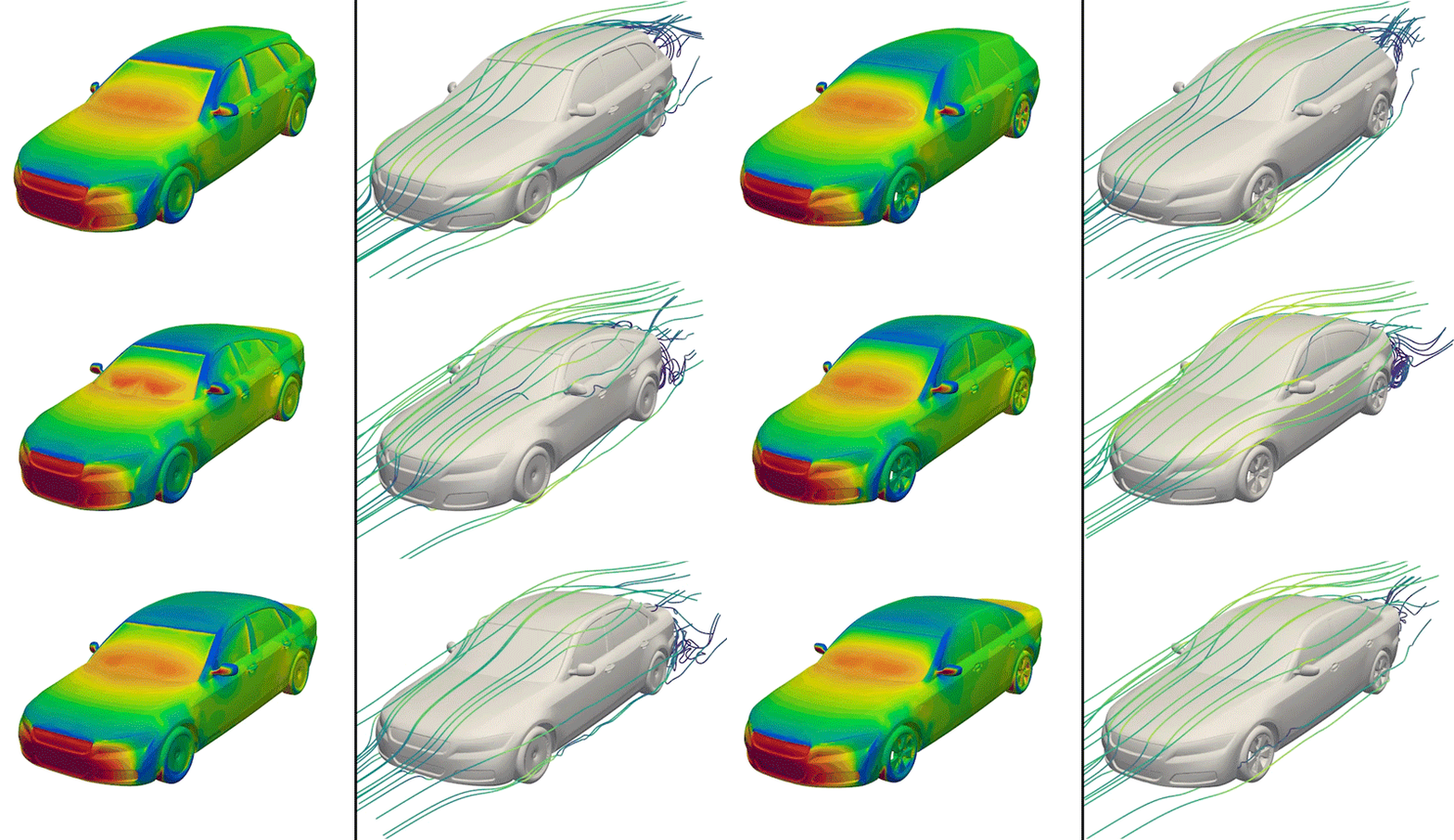
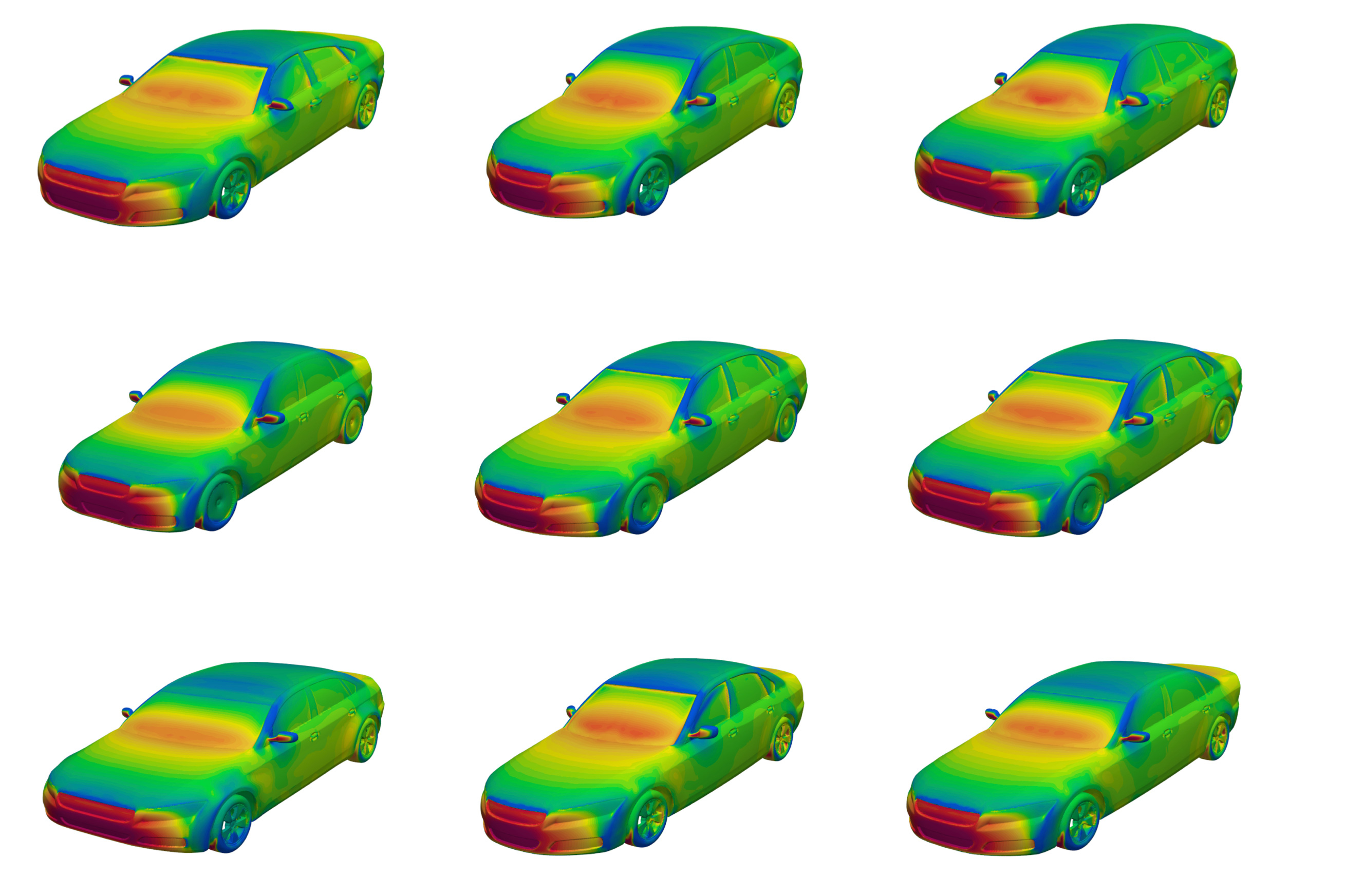
But now, the engineers have made just such a dataset available to the public for the first time. Dubbed DrivAerNet++, the dataset encompasses more than 8,000 car designs, which the engineers generated based on the most common types of cars in the world today. Each design is represented in 3D form and includes information on the car’s aerodynamics — the way air would flow around a given design, based on simulations of fluid dynamics that the group carried out for each design.
Each of the dataset’s 8,000 designs is available in several representations, such as mesh, point cloud, or a simple list of the design’s parameters and dimensions. As such, the dataset can be used by different AI models that are tuned to process data in a particular modality.
DrivAerNet++ is the largest open-source dataset for car aerodynamics that has been developed to date. The engineers envision it being used as an extensive library of realistic car designs, with detailed aerodynamics data that can be used to quickly train any AI model. These models can then just as quickly generate novel designs that could potentially lead to more fuel-efficient cars and electric vehicles with longer range, in a fraction of the time that it takes the automotive industry today.
“This dataset lays the foundation for the next generation of AI applications in engineering, promoting efficient design processes, cutting R&D costs, and driving advancements toward a more sustainable automotive future,” says Mohamed Elrefaie, a mechanical engineering graduate student at MIT.
Elrefaie and his colleagues will present a paper detailing the new dataset, and AI methods that could be applied to it, at the NeurIPS conference in December. His co-authors are Faez Ahmed, assistant professor of mechanical engineering at MIT, along with Angela Dai, associate professor of computer science at the Technical University of Munich, and Florin Marar of BETA CAE Systems.
Filling the data gap
Ahmed leads the Design Computation and Digital Engineering Lab (DeCoDE) at MIT, where his group explores ways in which AI and machine-learning tools can be used to enhance the design of complex engineering systems and products, including car technology.
“Often when designing a car, the forward process is so expensive that manufacturers can only tweak a car a little bit from one version to the next,” Ahmed says. “But if you have larger datasets where you know the performance of each design, now you can train machine-learning models to iterate fast so you are more likely to get a better design.”
And speed, particularly for advancing car technology, is particularly pressing now.
“This is the best time for accelerating car innovations, as automobiles are one of the largest polluters in the world, and the faster we can shave off that contribution, the more we can help the climate,” Elrefaie says.
In looking at the process of new car design, the researchers found that, while there are AI models that could crank through many car designs to generate optimal designs, the car data that is actually available is limited. Some researchers had previously assembled small datasets of simulated car designs, while car manufacturers rarely release the specs of the actual designs they explore, test, and ultimately manufacture.
The team sought to fill the data gap, particularly with respect to a car’s aerodynamics, which plays a key role in setting the range of an electric vehicle, and the fuel efficiency of an internal combustion engine. The challenge, they realized, was in assembling a dataset of thousands of car designs, each of which is physically accurate in their function and form, without the benefit of physically testing and measuring their performance.
To build a dataset of car designs with physically accurate representations of their aerodynamics, the researchers started with several baseline 3D models that were provided by Audi and BMW in 2014. These models represent three major categories of passenger cars: fastback (sedans with a sloped back end), notchback (sedans or coupes with a slight dip in their rear profile) and estateback (such as station wagons with more blunt, flat backs). The baseline models are thought to bridge the gap between simple designs and more complicated proprietary designs, and have been used by other groups as a starting point for exploring new car designs.
Library of cars
In their new study, the team applied a morphing operation to each of the baseline car models. This operation systematically made a slight change to each of 26 parameters in a given car design, such as its length, underbody features, windshield slope, and wheel tread, which it then labeled as a distinct car design, which was then added to the growing dataset. Meanwhile, the team ran an optimization algorithm to ensure that each new design was indeed distinct, and not a copy of an already-generated design. They then translated each 3D design into different modalities, such that a given design can be represented as a mesh, a point cloud, or a list of dimensions and specs.
The researchers also ran complex, computational fluid dynamics simulations to calculate how air would flow around each generated car design. In the end, this effort produced more than 8,000 distinct, physically accurate 3D car forms, encompassing the most common types of passenger cars on the road today.
To produce this comprehensive dataset, the researchers spent over 3 million CPU hours using the MIT SuperCloud, and generated 39 terabytes of data. (For comparison, it’s estimated that the entire printed collection of the Library of Congress would amount to about 10 terabytes of data.)
The engineers say that researchers can now use the dataset to train a particular AI model. For instance, an AI model could be trained on a part of the dataset to learn car configurations that have certain desirable aerodynamics. Within seconds, the model could then generate a new car design with optimized aerodynamics, based on what it has learned from the dataset’s thousands of physically accurate designs.
The researchers say the dataset could also be used for the inverse goal. For instance, after training an AI model on the dataset, designers could feed the model a specific car design and have it quickly estimate the design’s aerodynamics, which can then be used to compute the car’s potential fuel efficiency or electric range — all without carrying out expensive building and testing of a physical car.
“What this dataset allows you to do is train generative AI models to do things in seconds rather than hours,” Ahmed says. “These models can help lower fuel consumption for internal combustion vehicles and increase the range of electric cars — ultimately paving the way for more sustainable, environmentally friendly vehicles.”
“The dataset is very comprehensive and consists of a diverse set of modalities that are valuable to understand both styling and performance,” says Yanxia Zhang, a senior machine learning research scientist at Toyota Research Institute, who was not involved in the study.
This work was supported, in part, by the German Academic Exchange Service and the Department of Mechanical Engineering at MIT.
In a new dataset that includes more than 8,000 car designs, MIT engineers simulated the aerodynamics for a given car shape, which they represent in various modalities, including “surface fields.”

 Login
Login


 . HopSkipDrive’s marketplace supplements school buses and existing transportation options by connecting kids to highly-vetted caregivers on wheels, such as grandparents, babysitters, and nurses in local communities. RouteWise AI helps schools and districts address critical challenges, including budget cuts, bus driver shortages, and reaching climate goals. HopSkipDrive has supported over 13,500 schools across 21 states, with nearly 1,300 school districts, government agencies, and nonprofit partners. More than five million rides over 95 million miles have been completed through HopSkipDrive since the company was founded in 2014 by three working mothers.