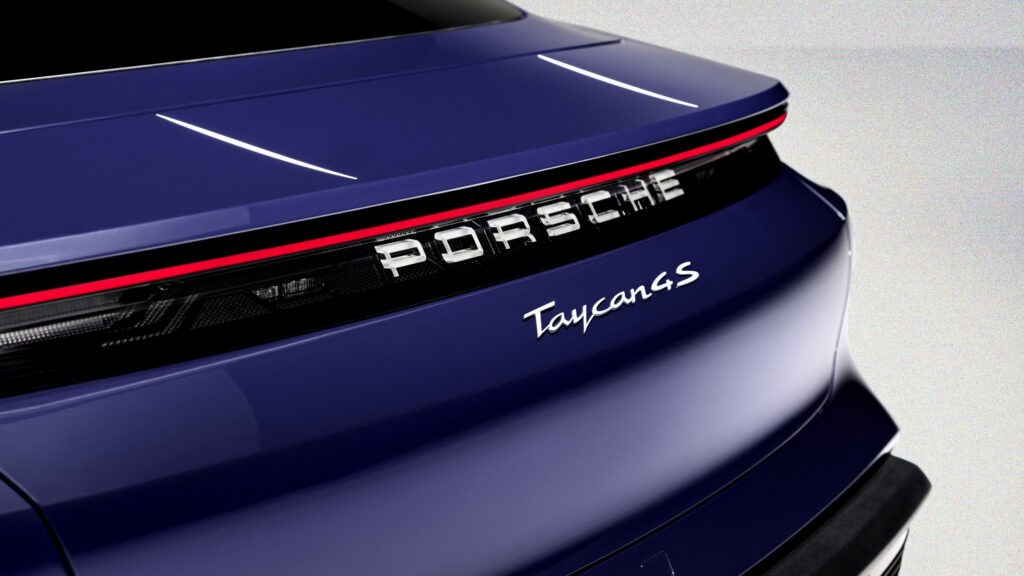
Porsche is using recycled lithium, nickel, cobalt, and manganese in batteries.
Vehicles using cells made with recycled materials are already being tested.
Porsche and partners will be able to produce these new battery cells from 2028.
Porsche has cut back some of its planned electric vehicle investments in recent months, but that doesn’t mean the German brand isn’t still interested in pushing the industry forward. For the first time, it has produced battery cells using recycled cathode active material, a major development in its efforts to establish a closed-loop circular economy for high-voltage batteries.
Working with German recycling firm cylib, Porsche has created battery cells using nothing but recycled battery raw materials from its own high-voltage cells. Through the pilot program, Porsche has been recovering the raw materials of end-of-life high-voltage batteries and processing them into new cells for test vehicles, and is now ensuring these cells can withstand the rigors of being in a car.
Porsche’s ongoing collaboration with cylib has seen it recycling its batteries using a water-based process since May. The raw material recovered during this process will be available to Porsche and partner companies to produce new battery cells in 2028.
Coming To A Porsche EV Soon?
The automaker isn’t yet putting a date on when recycled battery cells could be used in its production vehicles, but acknowledges that “in the future, battery raw materials recycled in Europe could be used in high-voltage batteries for Porsche vehicles.”
Key materials recovered in the recycling process and used to manufacture new battery cells include lithium, nickel, cobalt, and manganese. This means newly produced cells are made entirely from recycled active materials.
“With battery cells made entirely from recycled raw materials such as lithium and cobalt, we have achieved an important technological milestone,” member of the executive board for procurement at Porsche, Joachim Scharnagl said. “This innovation is a key step in advancing both circular economy principles and raw material resilience, always with the ambition of optimizing progress, quality and resource efficiency.”
Powered doors can close when the driver buckles up or presses the brake.
Wireless charging delivers up to 11 kW with roughly 90 percent efficiency.
Paint to Sample expands the Cayenne Electric’s palette to 105 colors.
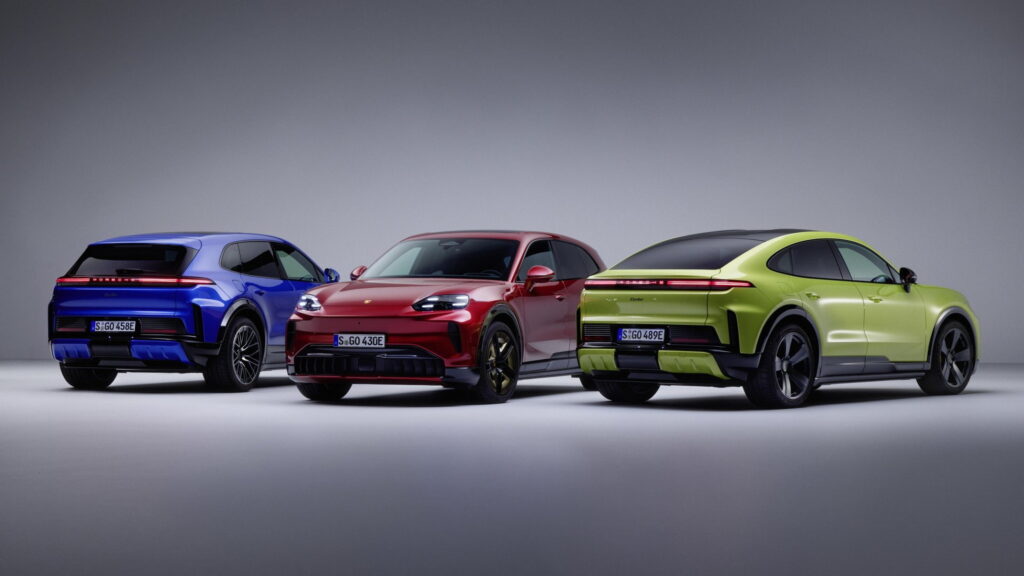
The Porsche Cayenne Electric is learning some new tricks, including some aimed squarely at drivers who find closing doors and connecting charging cables unduly exhausting. For the new model year, Porsche is adding electrically operated doors, wireless home charging, and an even more elaborate massage system. Buyers can also select from 105 exterior colors. Of those features, however, it’s the self-closing driver’s door that may attract the most attention.
The optional powered doors use servo motors to open and close automatically after a brief pull of the handle. They can also be controlled through buttons inside the cabin, the infotainment system, exterior handles, or Porsche’s Digital Key. Drivers won’t necessarily need to reach for any of those controls, as the Cayenne can close its driver’s door when the seat belt is fastened, or the brake pedal is pressed, making the start-up process feel a little more private jet than family SUV. They also feature one cool and vital trick.
Sensors monitor the surrounding area and halt the doors if they detect a person or obstacle. The system also works with the vehicle’s exit warning technology to prevent a door from opening into approaching traffic. Porsche says the powered mechanism can function on inclines, while conventional manual operation remains available.
Another new option removes the charging cable from the equation. Porsche Wireless Charging uses a weatherproof ground pad that can be installed indoors or outside. Once the Cayenne is positioned correctly, charging starts automatically at up to 11 kW. Porsche claims approximately 90 percent energy-transfer efficiency.
Motion sensors and foreign-object detection can interrupt charging if a person or animal approaches, or if a metallic object lands on the pad and begins heating up. The system is now available to order in Germany and certain European markets, with a broader rollout planned in stages. Porsche has not yet detailed US availability or pricing.
Massage Seats That Feel The Music
The front seats can now be fitted with 16 air cushions and six sound actuators apiece. Five massage programs are offered, while the actuators produce vibrations synchronized with music for what Porsche calls a “4D” audio experience. Three additional wellness modes combine massage, vibration, and curated soundscapes.
Finally, Paint to Sample adds 92 shades to the Cayenne Electric’s 13 regular colors, bringing the total to 105. Porsche hasn’t revealed what all these indulgences will cost, but expecting restraint from the options sheet would probably be optimistic.
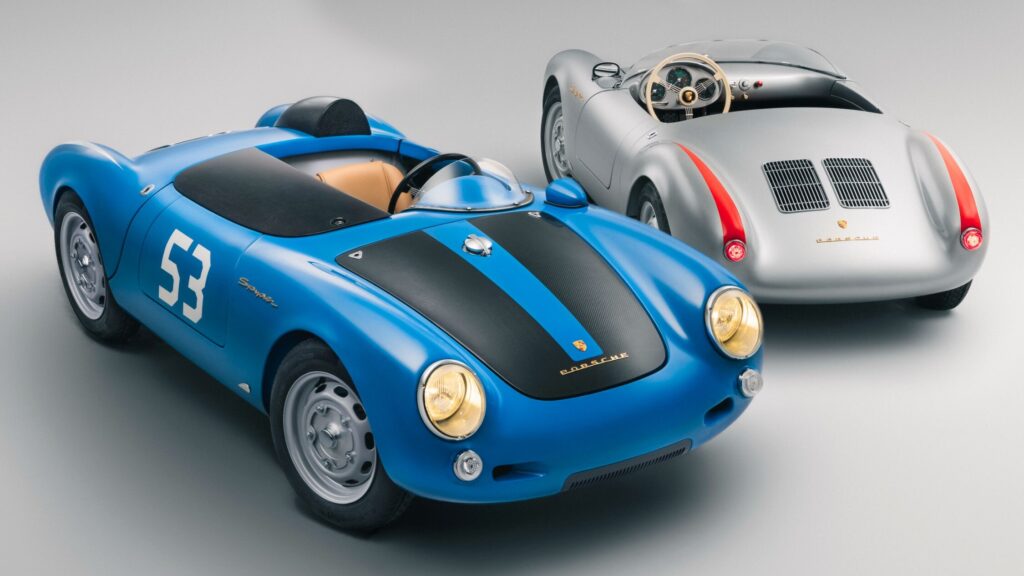
Hedley Studios has teamed up with Porsche to create 250 shrunken 550 Spyders.
The UK firm also makes similar-scale EVs for Aston, Ferrari, Bentley and Bugatti.
Base 550Js get 11 hp and 40 mph vmax; optional RS Pack gives 21 hp, 50 mph.
Camo-free sightings of Porsche’s new Boxster EV point to a debut later this year and a 2027 on-sale date. But if you’re dead-set on a brand new Porsche-branded electric sports car for less than $100k and can’t wait that long, there is another option. The snag is you’ll only be able to cruise it to the end of your driveway and back.
It’s called the 500J, and it’s from Hedley Studios. They’re the folks who previously went by the name Little Car Company and built electric-powered scale replicas of classic legends for the likes of Aston Martin, Ferrari, Bugatti and Bentley. As with those previous projects, the 550J was created in partnership with the automaker using real technical drawings and specifications stashed in the archives.
The original Porsche 550 was built between 1953 and 1956 and is most famous for either being James Dean’s last ride, or a motorsport giant killer, depending on your interest in pop culture and racing. On the track, it used its tiny 1,213 lbs (550 kg) curb weight and 109-133 hp (110-135 PS) 1.5-liter boxer engine to score wins at major events like Le Mans, the Mille Miglia, and the Carrera Panamericana. Only 90 were built, and they’re now worth anything from $1.5 million to $5 million depending on racing provenance.
Hedley’s flyweight 728 lbs (330 kg) 550J is based on the later 550 A, which arrived in 1956 and replaced the original ladder chassis with a much stiffer steel spaceframe. But instead of the original’s aluminium body, the scale tribute gets a carbon fiber suit. And instead of a Type 547 Fuhrmann four-cam, there’s a single electric motor behind the rear seats.
Drilled Rotors But Only 22 HP
In stock form, that motor delivers just 11 hp (11 PS / 8 kW) and a 40 mph (64 km/h) top speed. But spring for the optional RS Pack and output is boosted to 22 hp (22 PS / 16 kW), and the top speed to 50 mph (81 km/h). Going the RS route also brings drilled brake discs and adjustable Bilstein dampers, while also lifting the electric range from 30 to 50 miles (48-81 km).
Which sounds fairly pointless since, unlike some of Hedley’s other cars, this one can’t be used on the road. And that, together with a price that’d net you a nice used Porsche, ought to make it the kind of niche trinket that sells in handfuls. But Hedley plans to build 250 of these, each costing £69,500 ($93,800) before taxes and personalization requests. Besides adding the RS Pack, buyers can option theirs with period liveries and even paint-to-sample colors, just like on a full-size Porsche.
Barmy Not To Get A Beck Instead?
The idea of shelling out six figures on what is really just a beautifully crafted toy probably sounds as ludicrous to you as it does to me. But saying that you’d rather spend that $94k on a brand new full-size Beck 550 at Indiana-based Special Edition misses the point.
Seriously rich people live in a different world where they can have both to keep their real 550 company, and throw in a Boxster Electric order for fun. Hedley Studios is just helping them do some of the crazy things we’d all do if we had too much money. What do you think the company’s next scale replica should be?
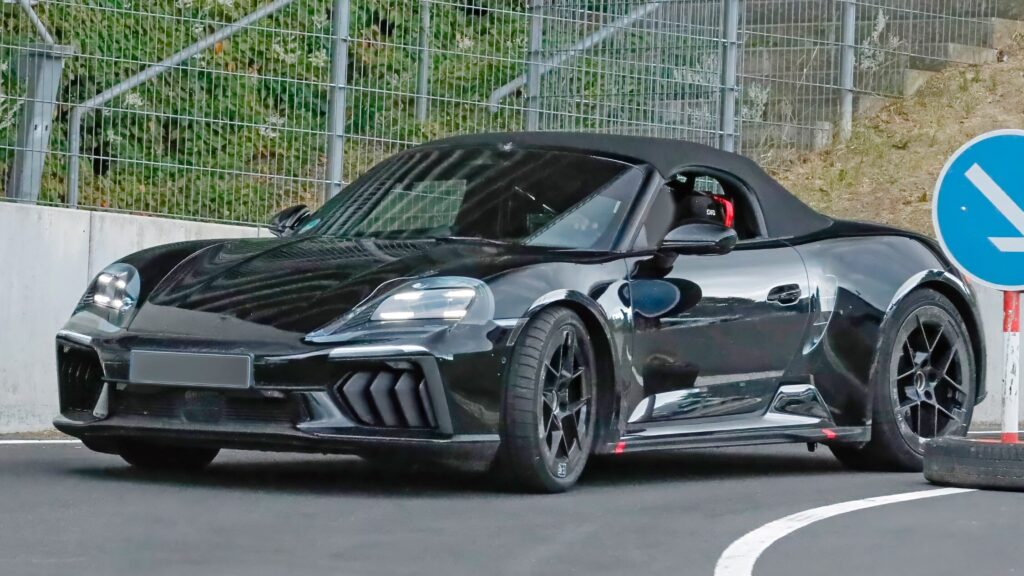
Porsche’s 718 Boxster Electric has been spied testing for the first time in months.
The zero-emissions, two-seat ragtop has dropped almost all of its heavy disguise.
Single motor comes standard, but available bi-motor creates first AWD Boxster.
More than two years have passed since we last spied a Boxster Electric prototype testing. It’s almost like Porsche forgot about it. And there must be some suits at Stuttgart who would rather forget about it, because the world in which the EV sports car is about to debut is very different to the one Porsche imagined when it green lighted the project more than five years ago.
We’ll get to that problem in a minute, but for now let’s take a look at these fresh spy shots because they show the Boxster EV with almost non camo for the first time ever. Sure, it’s still got some misleading stickers around the front and rear lights and rear quarters, but we can see the true shapes of those lights and the heavy disguise has gone from the bumpers.
That means we can see this Boxster has the same vertical, active cooling slats in its front grille that Porsche has already deployed in the 911 GTS and Turbo. Lesser models, and their Cayman EV counterparts, are likely to have a simpler grille design, as the base 911 Carrera and Carrera S have. Shots from the rear showing a diffuser panel and lack of exhaust tailpipes confirm Porshe is sticking to its EV plan for the two-seater – for now, at least.
Besides the grille, there’s another indicator that we’re looking at a hotter version of the Boxster Electric. Previous spy shots showed a digital gauge cluster and conventional internal door handles. But this car has fabric, loop-style handles of the kind usually reserved for cars like the 911 GT3 or the old Cayman GT4 and its Boxster Spyder brother.
Choose One Or Two Motors
Intel from sources close to Porsche suggests base cars will get a single motor driving the rear wheels, but the big news is the rumored availability of dual-motor powertrains in more expensive versions that will give the Boxster and Cayman their first all-wheel drive options.
If Porsche’s GT4 e-Performance racer concept is any guide, expect up to 604 hp (612 PS / 450 kW) for the hottest AWD cars and the option of a virtual paddle-shift transmission, a feature recently added to the Taycan lineup. A T-shaped battery mounted in the transmission tunnel and behind the seats keeps the floorpan low and replicates the weight distribution of a typical mid-engined, ICE-powered car.
EV First, Gas Later
The Boxster and Cayman Electric go in sale in 2027, but a couple of years after that, they’ll be joined by combustion versions, potentially limited to the top of the lineup. That was never part of the plan, but Porsche’s hand has been forced by a dramatic slowdown in EV sales.
The Boxster and Cayman Electric were conceived in the late 2010s, a period when Porsche’s Taycan was still enjoying its honeymoon glow and the car industry was projecting electric cars would soon relegate old-fashioned combustion vehicles to a sideshow act. Now, in 2026, it’s true that EV sales are riding high, though not universally.
Taycan To Tap-Out?
One in four mass-market cars sold in Europe is now electric and the numbers are growing. But luxury buyers and American drivers aren’t buying EVs. They want gas cars. The Taycan is tanking and could reportedly die soon, but since it was too late to scrap the Boxster and Cayman Electric, which have the added complication of sharing their platform and hardware with Audi’s upcoming TT replacement, Porsche opted to re-engineer them for combustion power instead.
Would you buy an electric Boxster or is Porsche setting itself up for a massive fall? Leave a comment and let us know.
Porsche wasn’t the first automaker to sell an SUV that felt quick. It was, however, the first to prove that an SUV could be truly athletic on pavement. The original Cayenne was somewhat unloved by many in the automotive sphere, but it set a new bar for an SUV that could do more than hustle down a straight road with a loud exhaust and too much body roll. It could attack curves in a way no other similar vehicle could.
Now Porsche has a different, arguably tougher job. The 2027 Cayenne Electric arrives in a market already full of expensive electric SUVs, including the Lucid Gravity, Cadillac Vistiq, Volvo EX90, Mercedes EQS SUV, and BMW’s upcoming iX5. This time, being fast is not enough. The question is whether Porsche can make an EV SUV feel special enough to rewrite the rulebook again.
The Cayenne Turbo Electric certainly has the hardware to try. Its dual-motor system produces 1,139 hp and 1,106 lb-ft of torque with Launch Control engaged. That is four-figure power in a five-seat family SUV. The real question isn’t just whether or not the driving experience will be memorable. It’s whether it’ll be memorable enough and engaging enough to be a true sales success for the brand at a time when Americans are overlooking impressive EVs all over the market.
Quick Facts
› Model:
2027 Porsche Cayenne Turbo Electric
› Starting Price:
$165,350, including destination ($198,180 as tested)
› Dimensions:
196.3 x 78.0 x 65.9 in (4,985 x 1,980 x 1,674 mm)
› Wheelbase:
119.0 in (3,023 mm)
› Curb Weight:
5,860 lbs (2,658 kg)
› Powertrain:
Dual electric motors / AWD / 113-kWh battery
› Output:
Up to 1,139 hp (850 kW) / 1,106 lb-ft (1,500 Nm)
› 0-62 mph
2.4 seconds (0-100 km/h)
› Transmission:
Single speed
› Range:
Up to 298 miles
› Towing Capacity:
7,716 lbs (3,500 kg)
› On Sale:
Now
SWIPE
Styling Befitting A Cayenne
Credit: Stephen Rivers for Carscoops
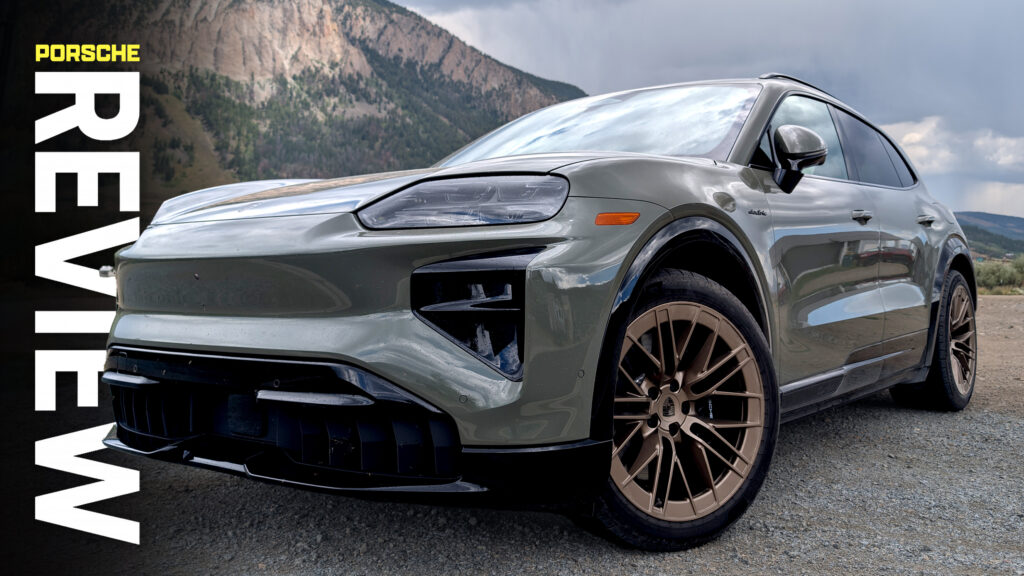
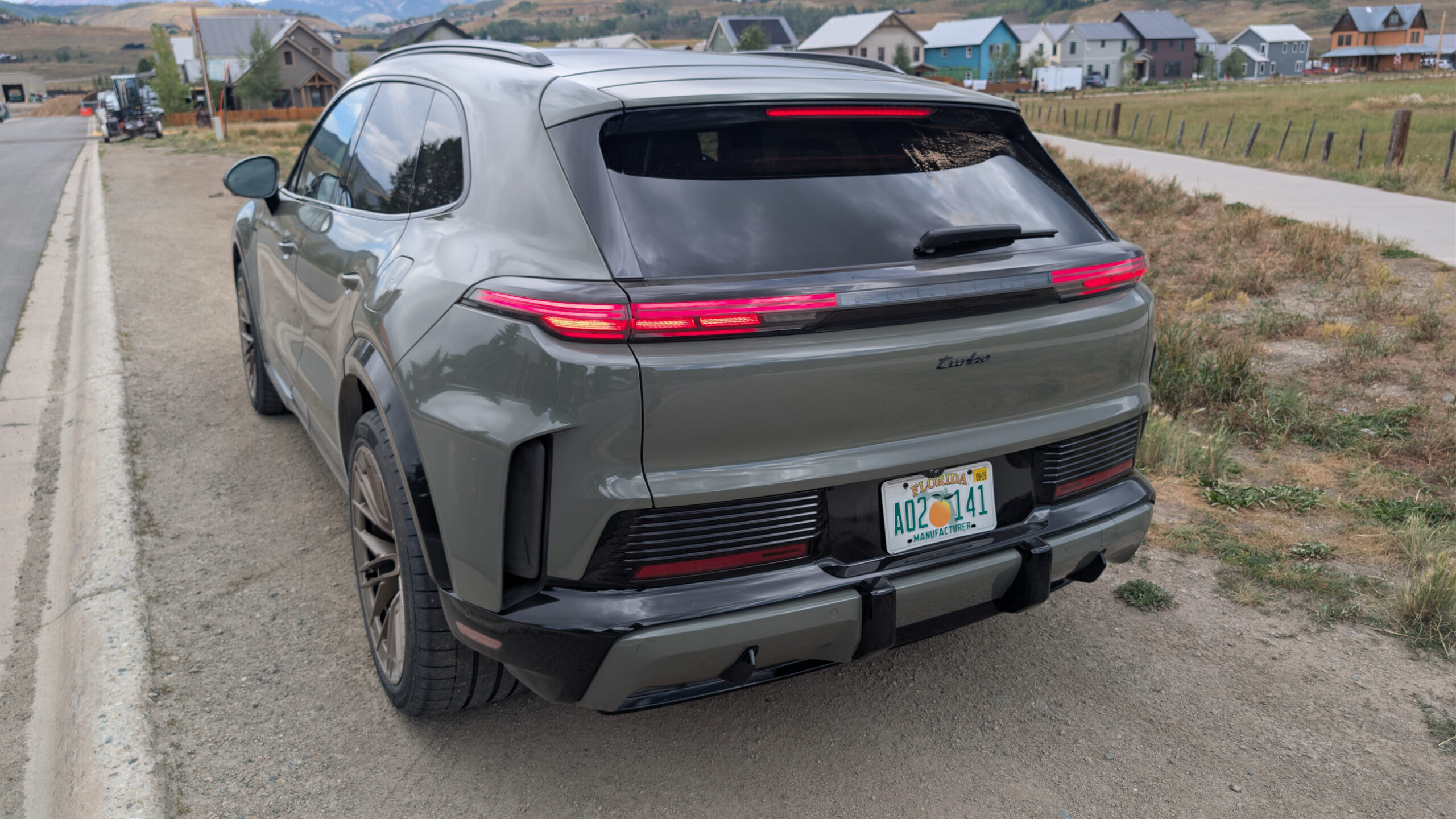
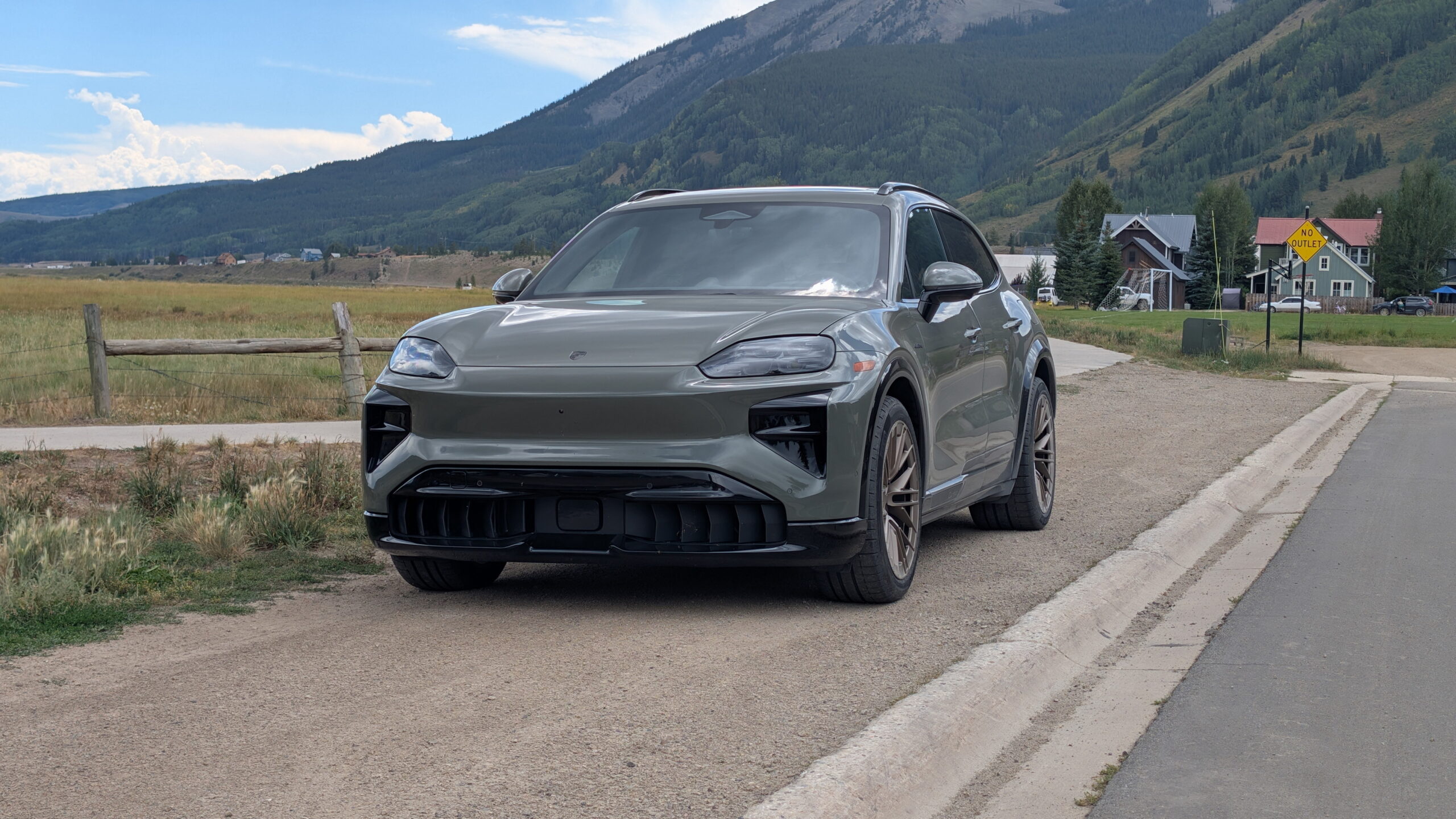
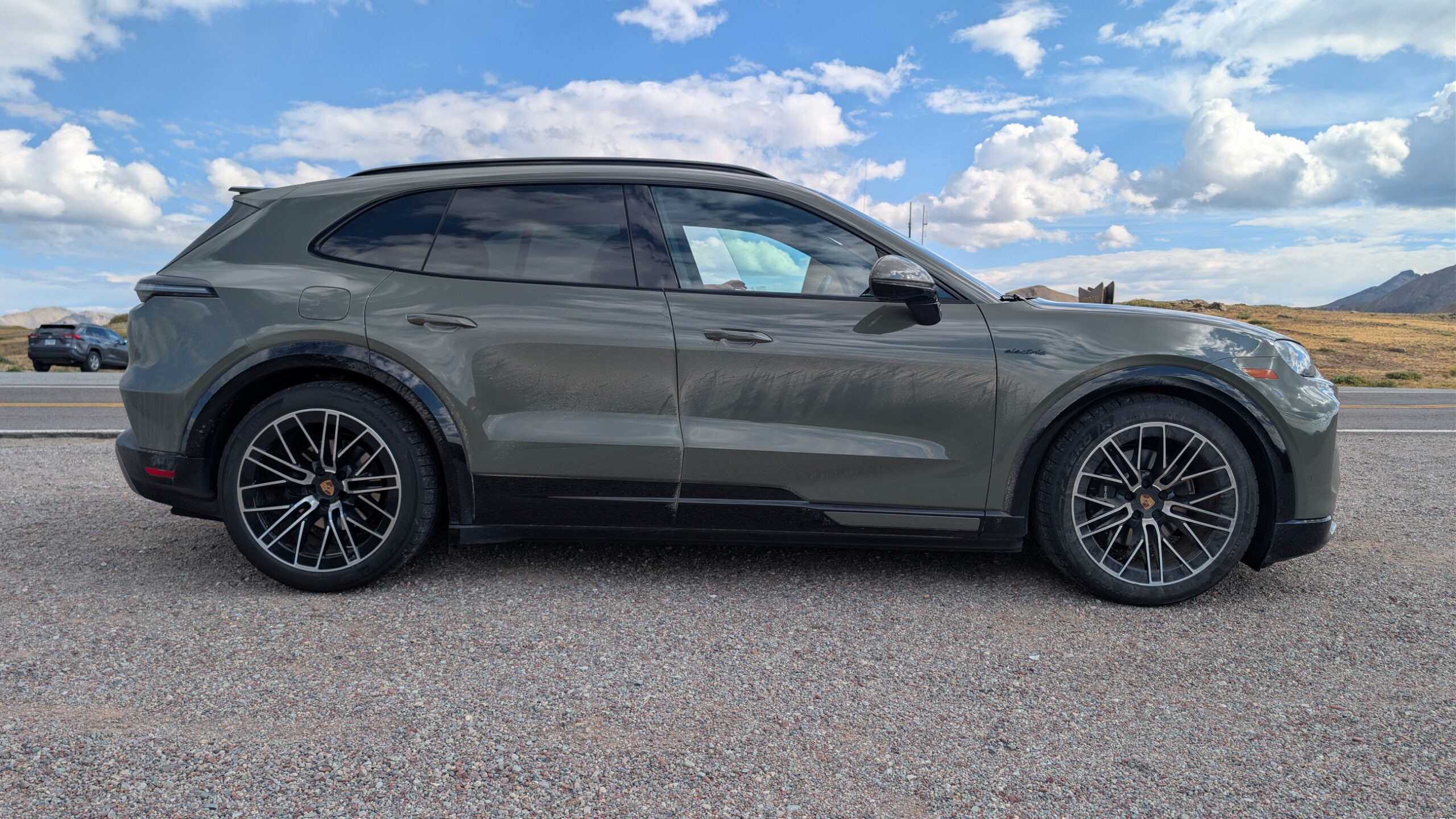
The overall look of the Cayenne Electric is stately. Not everyone will love the changes made in favor of identity and aerodynamics, but at least it doesn’t feel overstyled or too much like a jelly bean. Simple designs tend to age the best. That does not guarantee the Cayenne Electric will become a classic, but it has a much better shot than many.
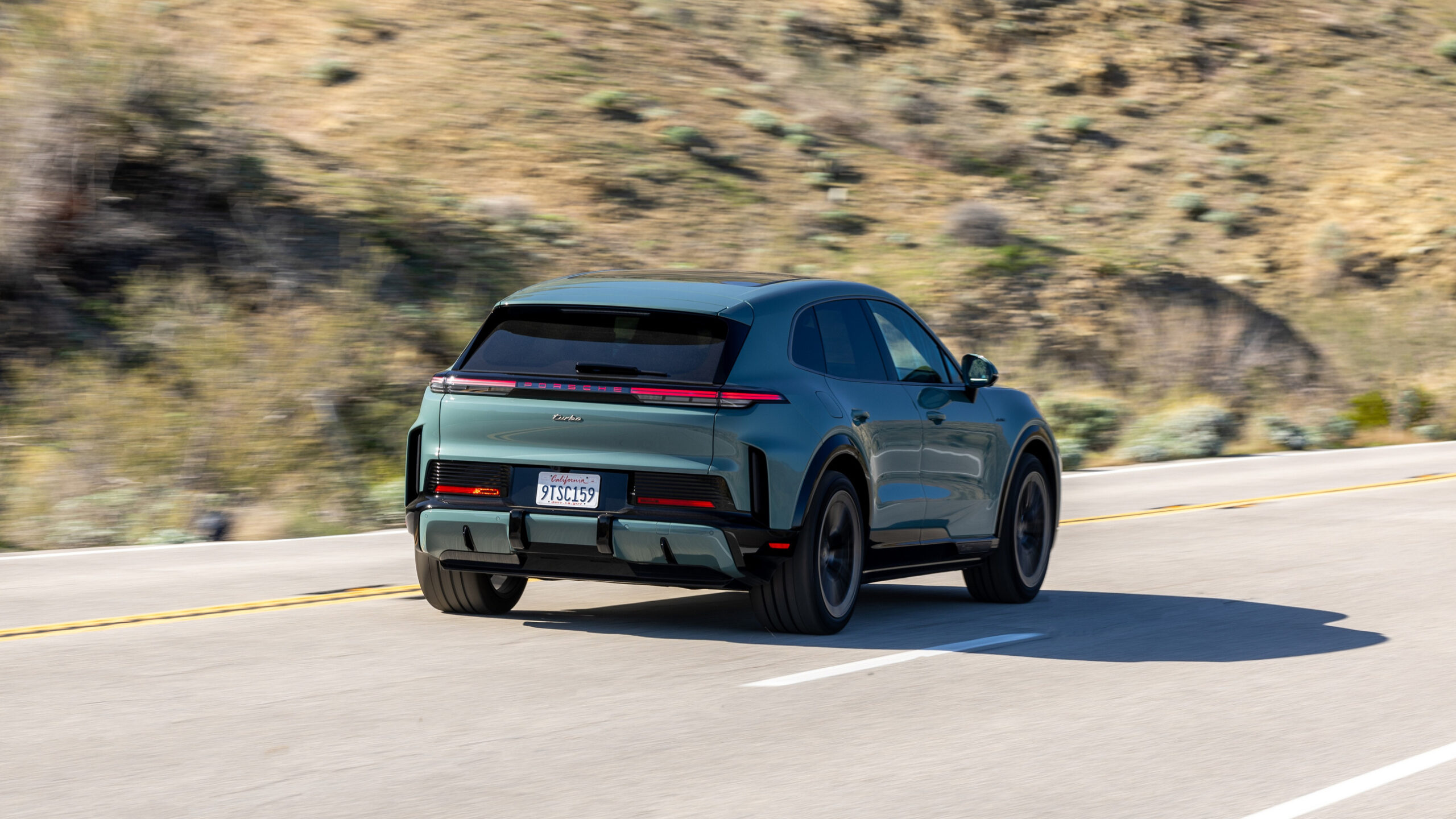
The headlights are the one element I am still not fully sold on. They are technically impressive and help emphasize the Cayenne’s width, but they do not have quite the same immediate warmth as the best Porsche lighting signatures. Everything else works. On the Turbo, the active aerodynamic blades at the rear even extend at speed to clean up airflow. You will never see them work from the driver’s seat, of course, but they are genuinely cool.
The reference vehicle here wears Monteverde Metallic over a brown Espresso leather cabin with black accents. It also gets rear-axle steering, Porsche Active Ride, the SportDesign package, 22-inch SportTechno wheels, performance summer tires, HD-Matrix headlights, a panoramic roof, and the Premium Package. The $163,000 starting point climbs to $198,180 quickly. That is Porsche ownership in a single sentence.
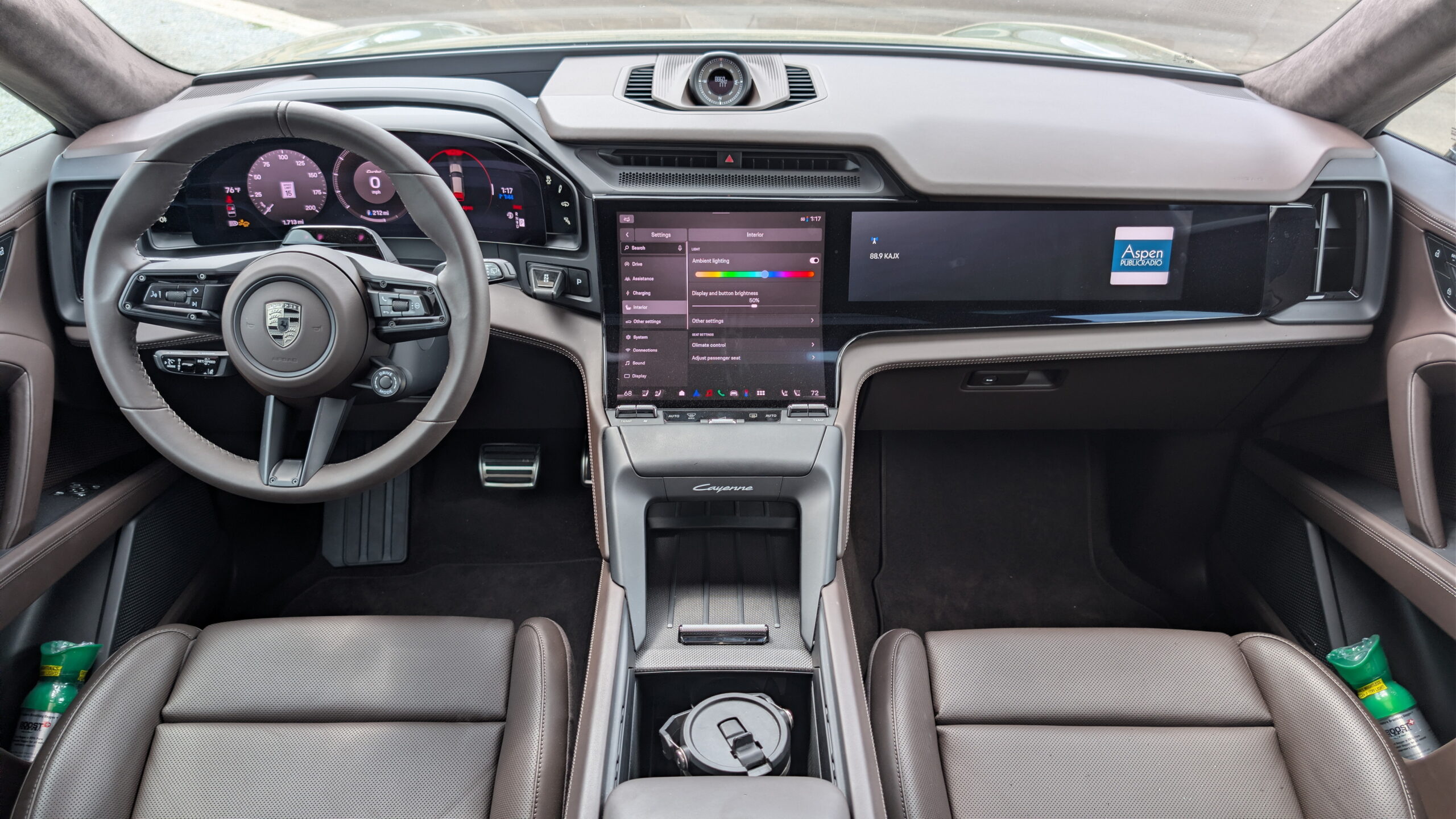
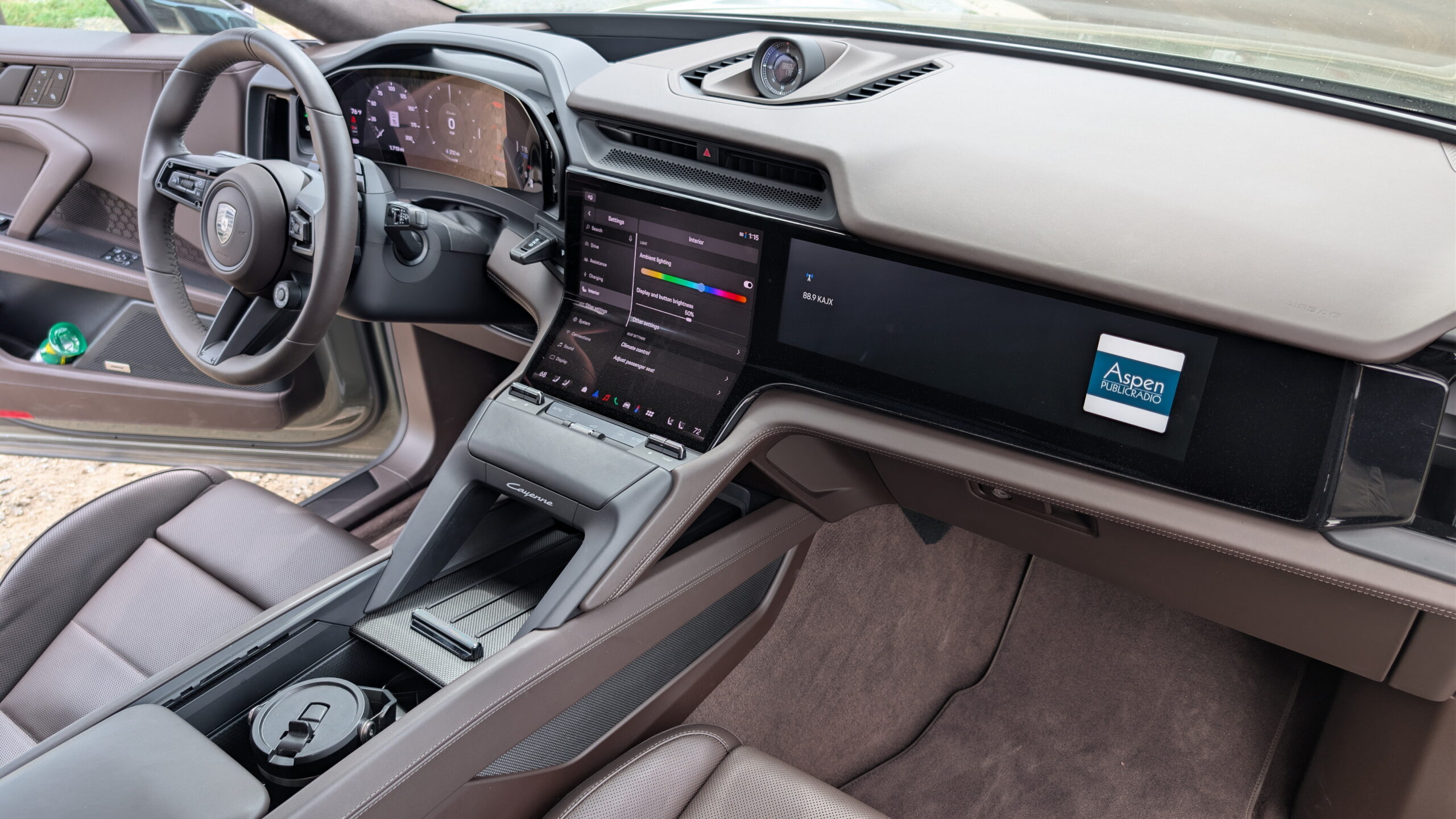
There are plenty of nods to the original Cayenne inside. The high center tunnel is still there. The steering wheel is recognizably Porsche. The seating position remains appropriately sporty for a Porsche, not just an SUV. It’s capable of settling in quite low, and that’s a big win. The chairs could plausibly come from one of Porsche’s sports cars, excluding the most hardcore GT models. They are supportive, comfortable, and genuinely attractive. The dashboard itself is a different deal entirely.
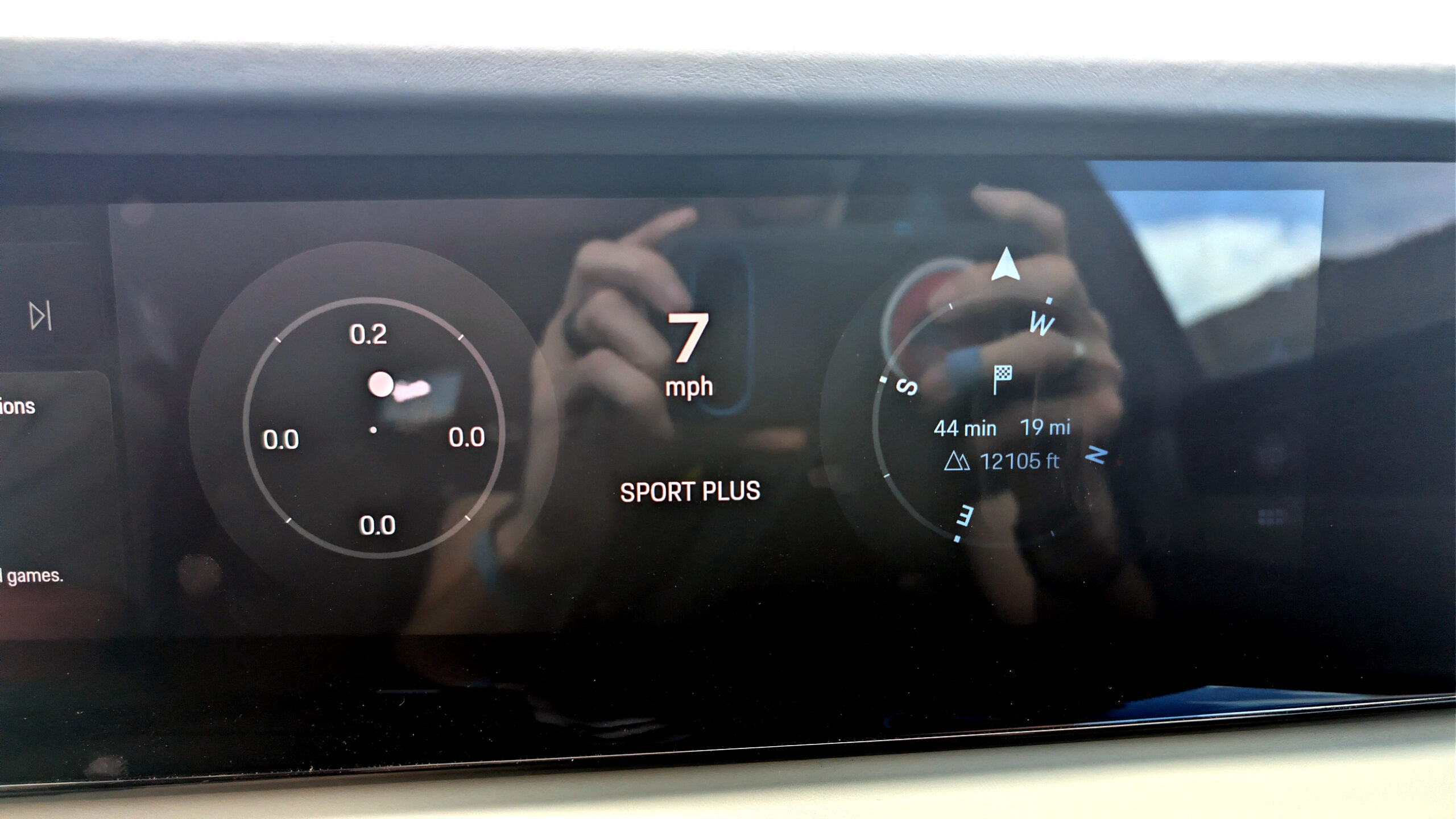
The centerpiece is Porsche’s curved Flow Display, which stretches down from the center stack toward the physical climate controls. It looks theatrical but is actually very functional in practice. The wrist rest below it enables genuinely easy use as the controls typically sit on the lower portion of the screen while the upper level shows the occupants what they’re managing. Many automakers expect drivers to operate giant touchscreens with one hand floating in mid-air. The wrist rest fixes that issue.
Some buyers will absolutely decide there is too much screen here. They will not be wrong. In 10 years, this cabin could look dated in the same way early digital dashboards eventually do. Or it could develop the occasional electrical gremlin that turns its futuristic charm into a very expensive service appointment.
Right now, though, it feels appropriately over the top. The optional passenger display is one of the more feature-rich units in the business, and it reacts quickly enough that it does not feel like a tablet trapped in a dashboard. Users can connect bluetooth headphones, watch YouTube, and other things while their phone charges on the wireless dock in the console.
Porsche also put the physical volume control in the middle of the climate controls, where the passenger can reach it without leaning across the cabin. More automakers need to figure this out. There is no reason the passenger should need to reach toward the driver’s side for a knob when the driver already has audio controls on the steering wheel.
Credit: Stephen Rivers for Carscoops
The seats, upholstery, and major touchpoints feel appropriately expensive. The physical switchgear works well and provides a really nice tactile sensation during use. Some of it feels a little underwhelming, perhaps with its flat black color, but it should age well. The rear seats aren’t what I’d call spacious, but at six-foot-six, I still fit back there without feeling cramped. The seats themselves also offer quite a bit more lateral bolstering than just about everything else on the market. More performance-slanted SUVs should take note.
Finally, the cargo space is genuinely useful. The Turbo model offers 26.4 cubic feet of space, while the Base and S versions offer 27.6 cubic feet. The Coupe models see a significant drop-off to 18.9 for Base and S and just 17.7 for the Turbo.
Range And Charging
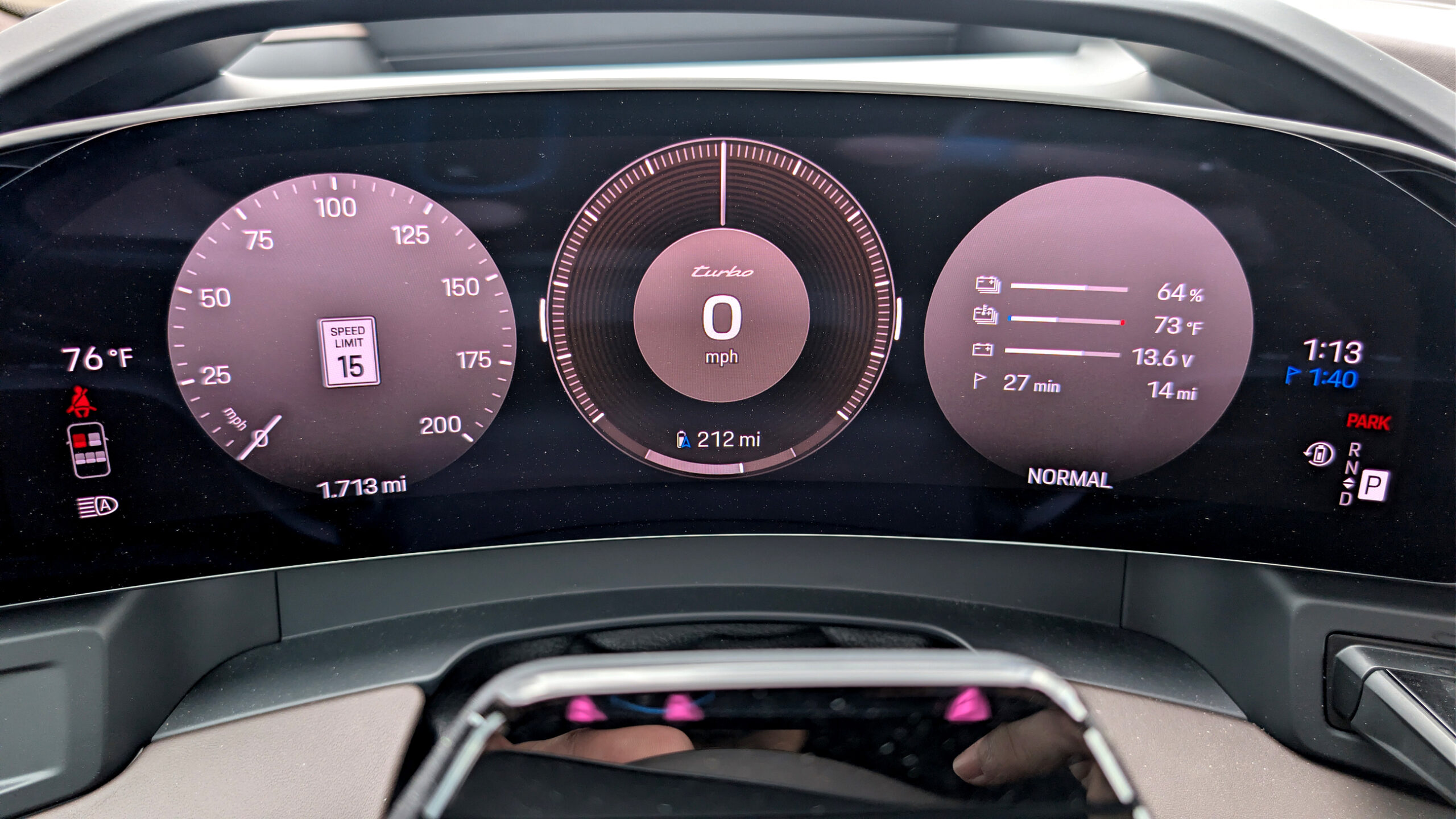
The Cayenne Turbo Electric is EPA-rated for 298 miles of range, or 303 miles with its range-oriented tire. That is fine. Not great, not embarrassing, just fine. The base Cayenne does better at 317 miles, while the Cayenne S is rated at 299 miles. Those are respectable numbers, but the Lucid Gravity makes the Porsche’s range look merely ordinary with up to 450 miles in Grand Touring form.
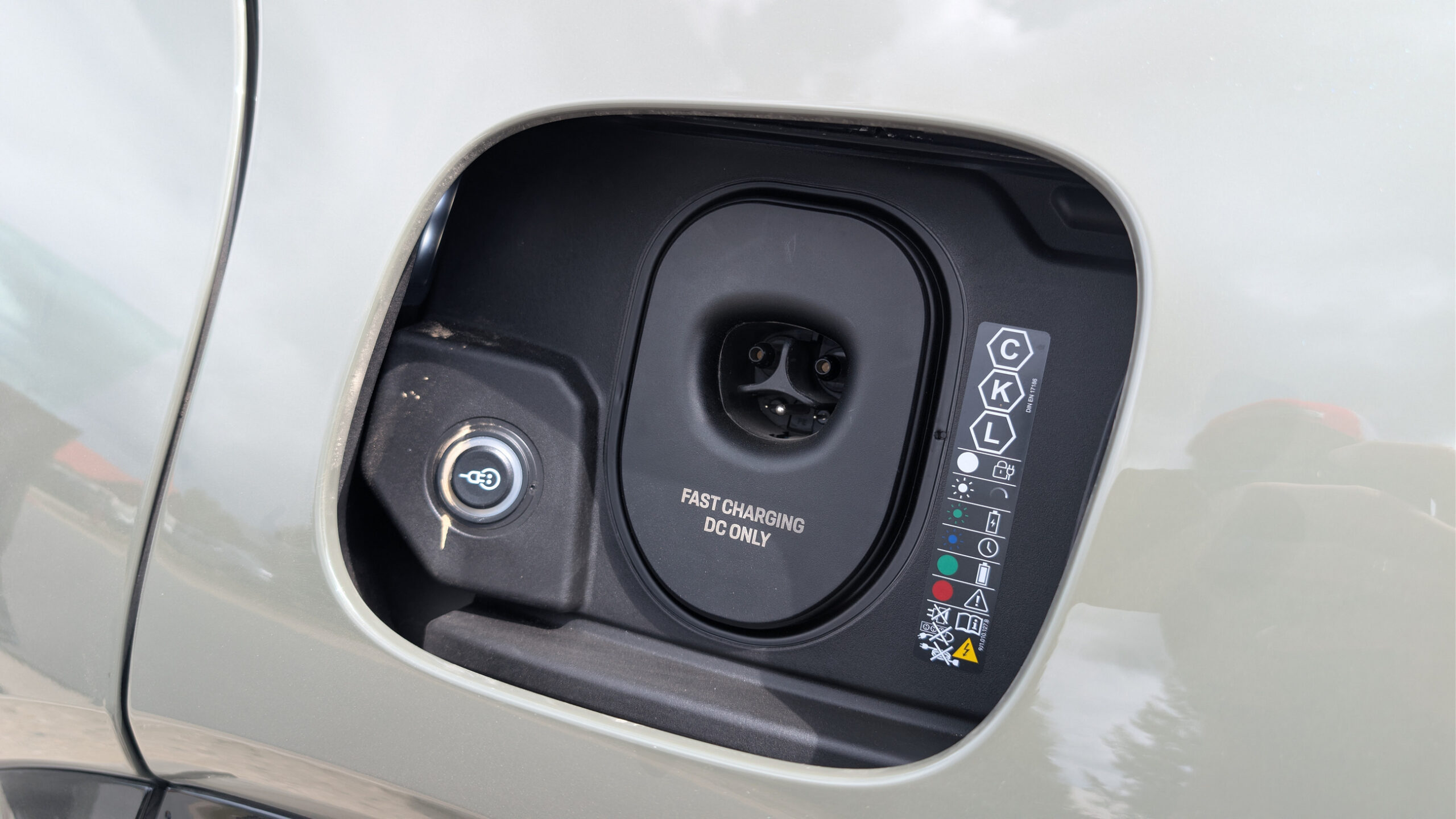
Where Porsche fights back is charging. Its 800-volt architecture can accept up to 400 kW under ideal conditions, allowing a 10-80 percent charge in as little as 16 minutes. That requires the right charger and the right battery conditions, obviously, but the capability matters. The Cayenne is built for drivers who will use it hard and cover long distances, not just people who want a fast commute appliance.
Driving Impressions: A Serious Testing Space
Speaking of driving hard over long distances. Of all the places to test an EV, several mountain passes in the Colorado Rocky Mountains aren’t what most would consider ideal. After all, range is heavily affected by the environment, and climbing can diminish it quickly. Despite that, Porsche brought us out to Aspen, Colorado, to test these cars and then sent us on a 234-mile trek through Crested Butte and Buena Vista as well as over Independence and Cottonwood Pass.
Driving the Turbo variant, with up to 1,139 hp (850 kW) when using launch control, the most immediate sensation is just how comfortable, quiet, and composed the car feels. Thanks to the active suspension, the Cayenne Turbo is almost always adjusting to suit the moment. By that, I mean that it has features that attempt, and almost always succeed, in countering any forces that a lesser SUV would feel under normal driving actions.
Under medium acceleration, the rear suspension actually lifts up very gently while the front lowers to keep the body level and cancel out the nose lift that is typical in just about every other vehicle, period. On braking, the opposite happens as the nose lifts rather than dips. In turns, the outer suspension lifts and the inner lowers.
This is what Porsche called “helicoptering,” and while it sounds like a party trick, it basically eliminates the sometimes jarring feeling that an EV can create with its instant torque and regen. It also never makes the car feel disconnected, numb, or artificial, which could be the most impressive bit of that technology.
Then, there’s the real party trick in this SUV: its ability to go from stately five-passenger luxury cruiser to an absolute maniac. Spin the dial into Sport Plus, come to a stop, mash the brake, then the accelerator, let go of the brake, and it’ll do 0-60 in the real world in 2.4 seconds. Importantly, Porsche claims that figure, but we tested it on a real road literally less than a minute after driving on gravel, and it delivered a 2.5-second 0-60 time that registered as 2.3 when subtracting rollout.
Porsche tells us it managed its run on a prepared surface. Car And Driver recently managed 2.1 seconds, also on a prepared surface. We intentionally tested on a real road and are happy to tell you that this car will basically do its published number whether you’re at the track or not. Still, those numbers alone really cannot express properly just how insane that type of acceleration feels.
The Cayenne needed under 116 feet to go from not moving to highway speed. The feeling from the driver’s seat is akin to being shot out of a cannon at your local Six Flags. Perhaps the most impressive bit, though, is that it requires basically zero skill to pull this off. Hold the wheel straight, and the clever differentials and motors will ensure the car does the job. Don’t get me wrong. A car that requires the driver to have genuine skill to pilot it at the very edge is far more enjoyable and engaging, but if you want a car that helps someone with less skill to catch the bug for improving their own ability, this is a serious gateway drug.
The fun doesn’t stop when the straight lines run out, though. When not using launch control, the car moves around with a constant 844 hp (630 kW) on tap. The roads we drove were about as curvy and elevation-varied as they get. The Cayenne never ever felt overly heavy despite a curb weight similar to some full-size pickup trucks. In fact, the car feels much smaller than its wheelbase would suggest.
Then, there’s the braking situation. Porsche doesn’t offer one-foot driving. That singular statement is somewhat intentional. The brand wants to encourage engagement and the way this car brakes demonstrates that. Often, the transition from regen to friction braking can be jittery or jarring. In the Cayenne, it’s indistinguishable. That level of granular control feels like it’s a part of everything this SUV does. Rear-wheel steering makes the SUV feel more nimble both on mountain roads and in town when a slightly tighter turning radius can make a gigantic difference.
The Base Cayenne with 435 hp (325 kW) doesn’t come with all the same party tricks. It lacks the active suspension, the active aero, and rear-axle steering. Still, it feels properly composed and quick. In one section with a Turbo version both ahead and behind us, it didn’t feel overpowered or incapable of managing serious pace with its more powerful siblings.
One more note. Porsche will sell the Cayenne with an off-road package and while we didn’t truly test it off-road, we did take it on several dedicated gravel roads where it continued to feel composed and confidence-inspiring. For those who want or need it, the SUV can tow 7,716 pounds (3,500 kg).
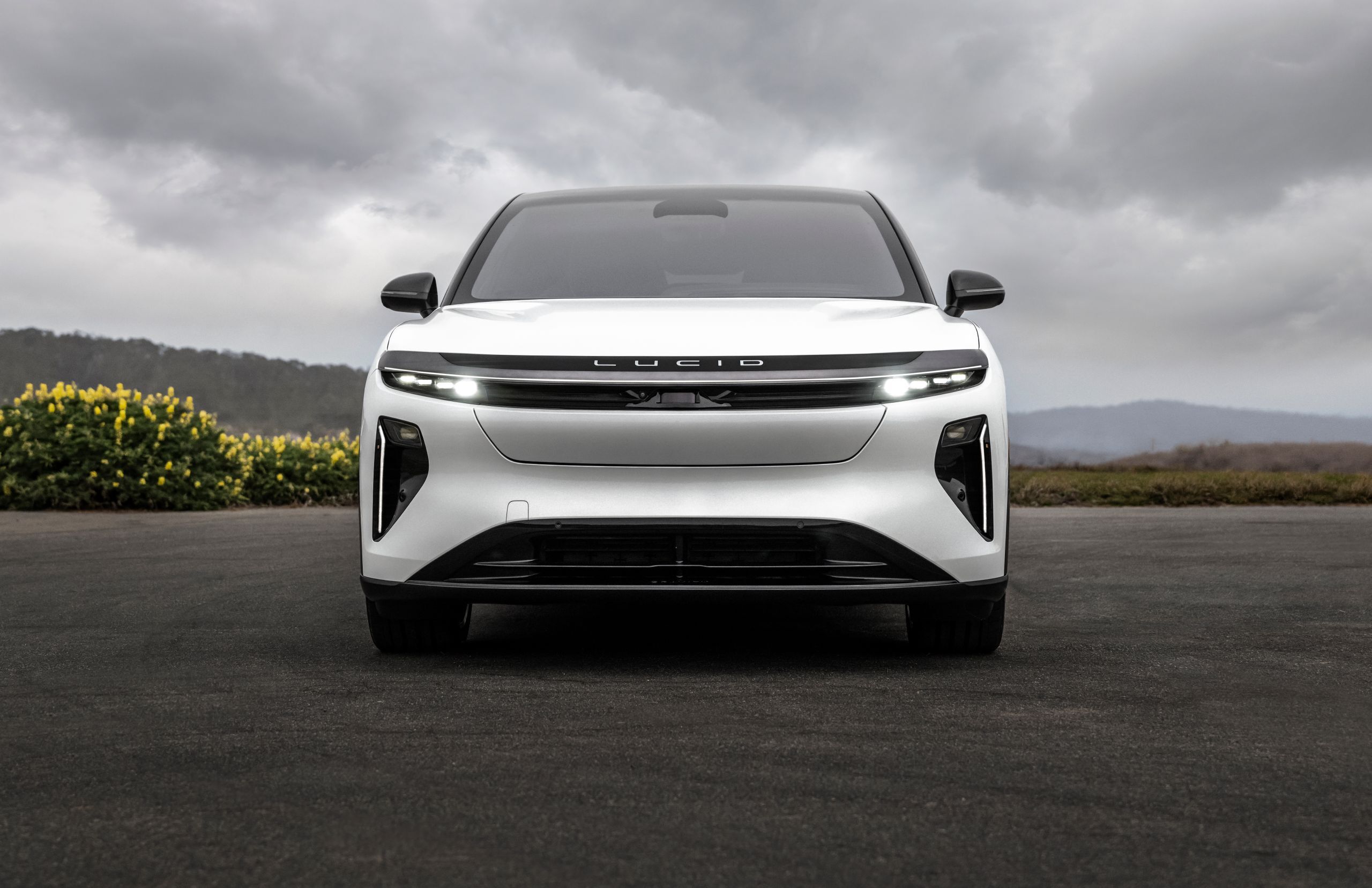
The Lucid Gravity is the Cayenne Electric’s biggest problem. It starts at $79,900 in Touring form, while the 828-hp Grand Touring starts at $98,900 and promises as much as 450 miles of range. Even the new 1,070-hp GT-S starts at $125,900, hits 60 mph in 3.1 seconds, and offers room for up to seven people along with a claimed 120 cubic feet of cargo space.
The Lucid cannot match the Cayenne Turbo’s 2.4-second sprint, nor does it have the same decades-long performance pedigree. But it makes a far more convincing case as the one EV in a well-off family’s garage that can genuinely do everything. It is quicker than almost anything needs to be, dramatically roomier, and better suited to long trips. Porsche has the badge, the chassis, and the more compelling driving experience. Lucid has the more rational argument.
Cadillac’s Vistiq makes a different kind of case. It starts at $77,395, offers three rows, up to 305 miles of range, 615 hp, a 3.7-second sprint to 60 mph, and standard Super Cruise. It is nowhere near as athletic or outrageous as the Cayenne Turbo, but it does much of the luxury-EV job for a lot less money. The Volvo EX90 takes an even calmer route. It is a safety-first, three-row family hauler with up to 305 miles of range and, in Twin Motor Performance form, 670 hp. Neither will tempt someone looking for a Porsche sports car in SUV form, but both make a strong argument for spending less.
Before BMW pulled it from America earlier this year, the iX was the closest traditional German alternative, particularly in M70 guise. The replacement is the new iX5, though Americans have to wait twice over, once for its Stateside launch next year, and again for the hotter M Performance and full-fat M versions, since the launch car tops out at 570 hp in iX5 60 AWD form. Mercedes’ EQS SUV leans harder into quietness and comfort. Both are good luxury EVs. None of these, though, feels as if they was engineered by people who spent their lunch breaks figuring out how to make a 5,860-pound SUV behave on a mountain road.
The Cayenne Turbo Electric does not make physics disappear. It is still enormously heavy, very expensive, and only fine when it comes to range. Its cabin also leans heavily into screens at a time when some buyers are already suffering from digital fatigue. And as impressive as the whole thing is, Porsche cannot ignore the ugly depreciation story surrounding some of its other EVs.
But it absolutely feels like a Porsche.
That might sound like faint praise in a vehicle with 1,139 hp, but it is not. Making an EV absurdly fast is easy compared with making one feel engaging, predictable, and genuinely enjoyable on a road that does not point straight ahead. The Cayenne manages that trick. It has the acceleration of a supercar, the composure of a luxury SUV, enough off-road ability to be more than a pavement princess, and the sort of granular brake and chassis control that makes driving it hard feel rewarding rather than intimidating.
No, it probably will not rewrite the rulebook in quite the same way the original Cayenne did. The electric-SUV market is too crowded, and too good, for that. But Porsche has built one of the first electric SUVs that feels like it has a legitimate reason to exist beyond its powertrain.
The harder question is whether buyers will pay $110,000 – $200,000 for it—and whether they will still want to own it once the newness wears off. That part isn’t up to Porsche’s engineers anymore, but regardless of what happens next, they should be proud of what they’ve created.
Three months of ownership cost this Porsche buyer over $500 a day.
The electric Porsche SUV was used for just 2,100 miles.
A gas Macan replacement could push these EV values down further.
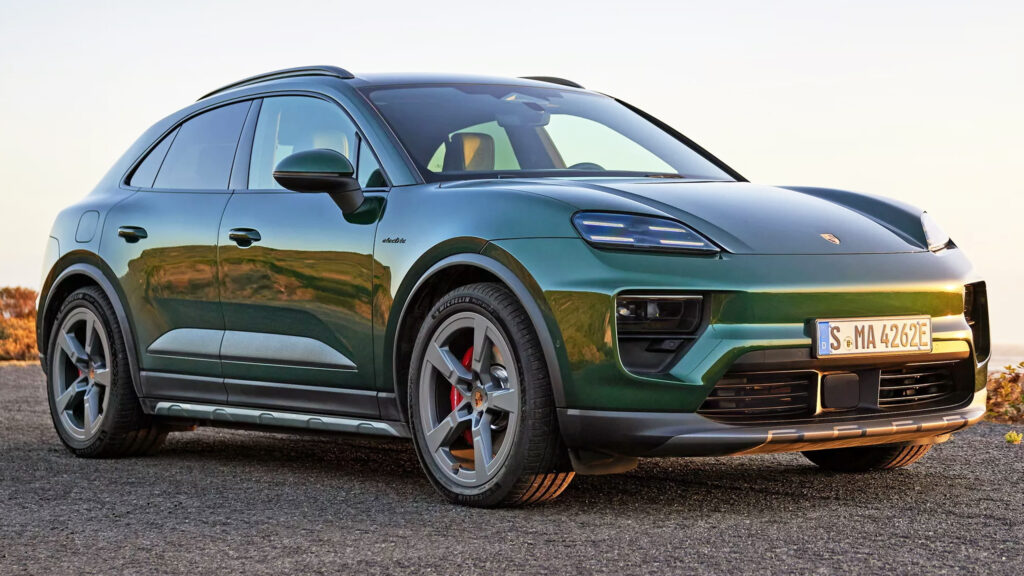
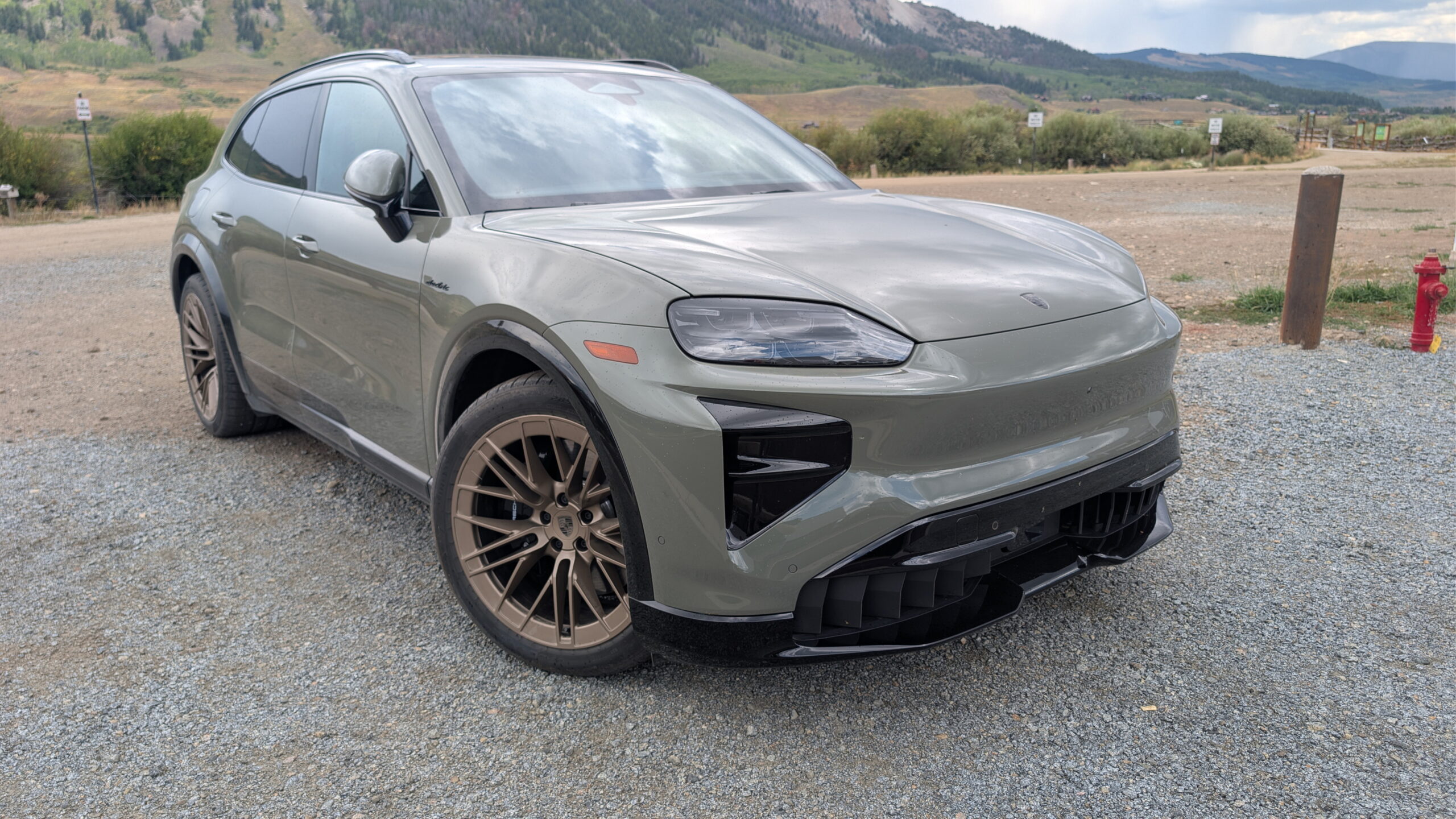
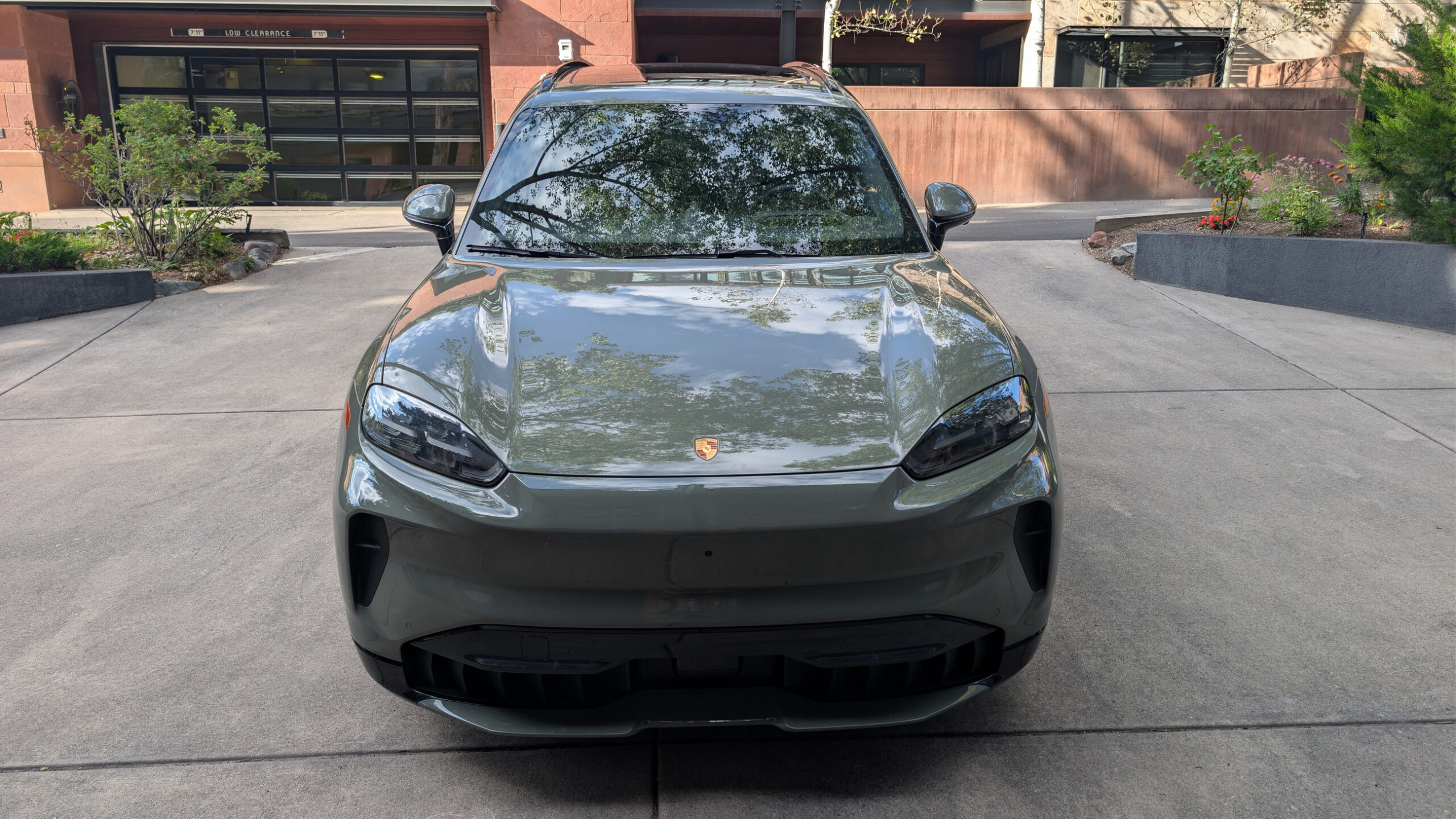
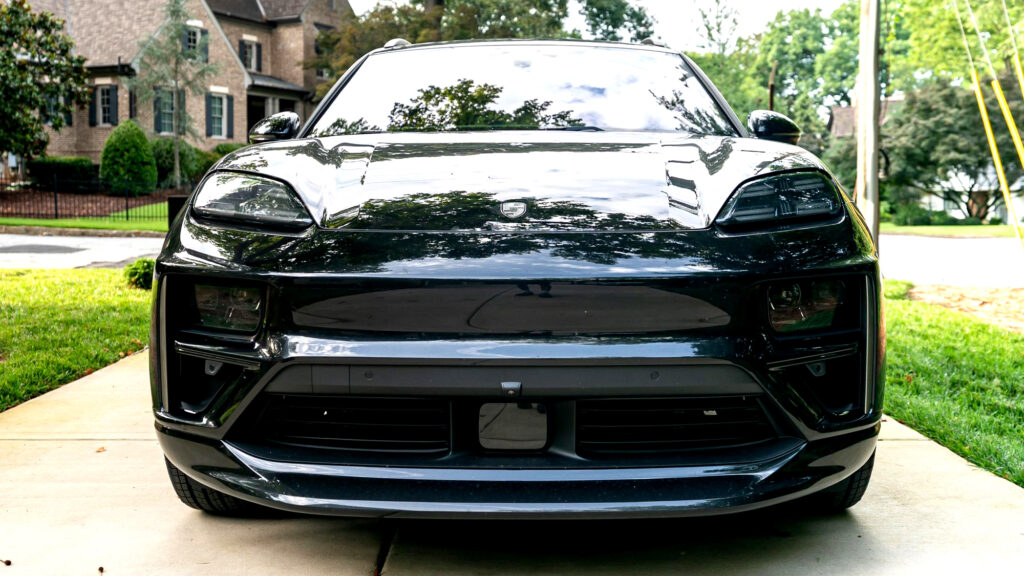
Like any other Porsche vehicle, the Macan Turbo Electric is very nice. However, the seller of this one in the US was no doubt shocked when they sold it on Cars & Bids for almost exactly $50,000 less than MSRP, despite only been driven 2,100 miles (3,379 km).
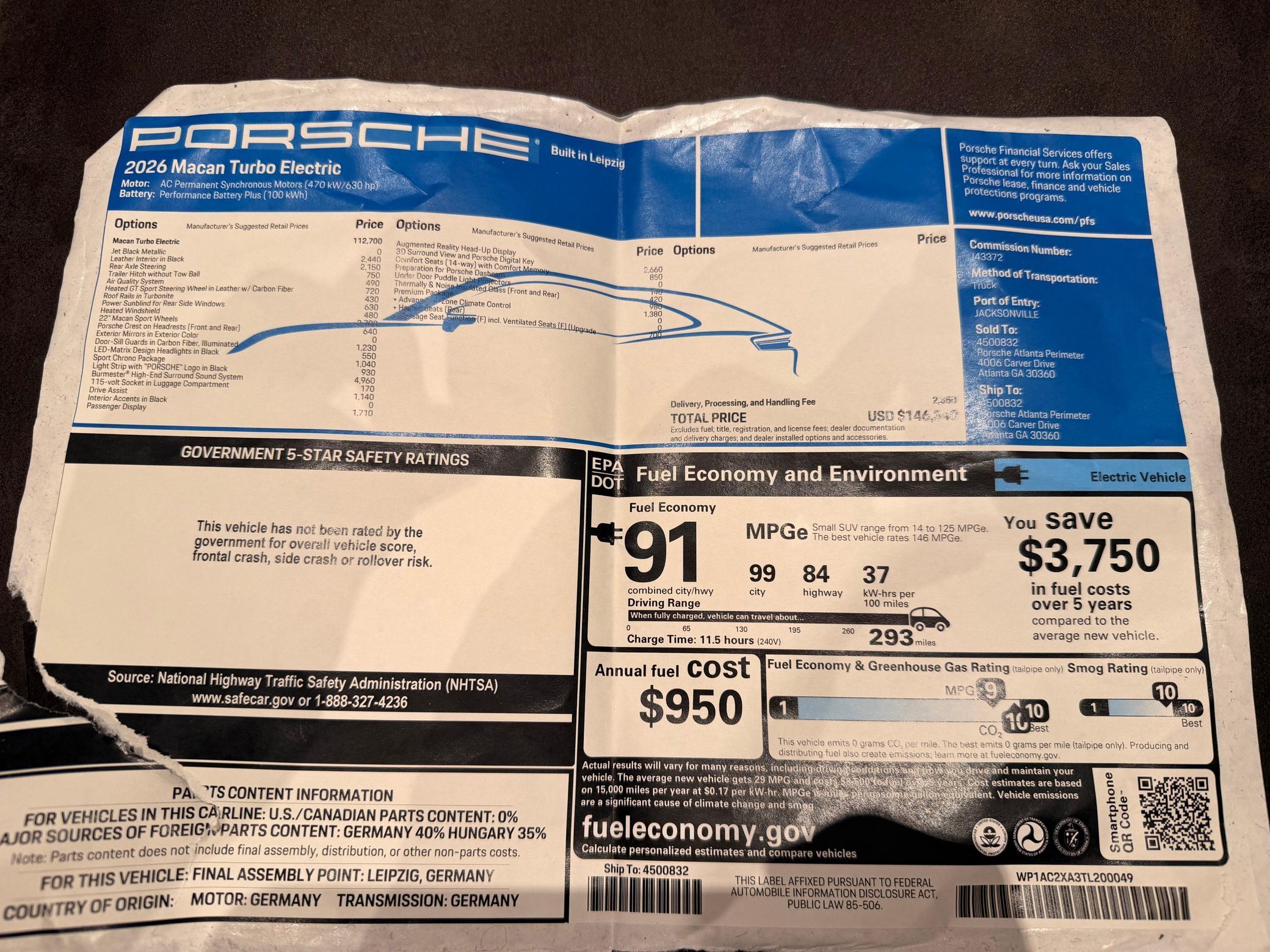
It’s no secret that premium EVs often lose an unbelievable amount of money the moment they drive off the lot, but even this result is quite shocking. After 37 bids, the Macan sold for $97,000, which wouldn’t have been a terrible result had this example only cost the seller $112,700, the Turbo Electric’s MSRP.
Cars & Bids
However, it actually cost $146,340 as it is laden with expensive options. These include a $2,150 rear-axle steering, a $2,440 black leather interior, $2,700 22-inch Macan Sport wheels, a $4,960 Burmester high-end surround sound system, $1,140 Drive Assist, $1,710 passenger display, $1,040 Sport Chrono Package, and a $2,660 augmented reality head-up display. The seller drove the EV only 2,100 miles in the span of three months, meaning they lost over $500 on it every single day.
Dropping Like A Stone
Cars & Bids
This isn’t the first time we’ve seen the value of a Macan Turbo Electric plummet on the used market. In April, bids on an example with just 1,500 miles (2,414 km) maxed out at $88,500, despite a sticker price of $121,855. The depreciation comes despite the EV offering plenty of performance, using twin motors to deliver 630 hp and 833 lb-ft (1,130 Nm) of torque, enough to hit 60 mph (96 km/h) in 3.1 seconds.
In the next couple of years, Porsche will introduce a new combustion-powered compact crossover to fill the void left behind by the old ICE Macan, and once that model launches, values of the electric Macan could drop even further. It’s expected to use the VW Group’s Premium Platform Combustion architecture, just like the new Audi Q5, and will slot below the Cayenne.
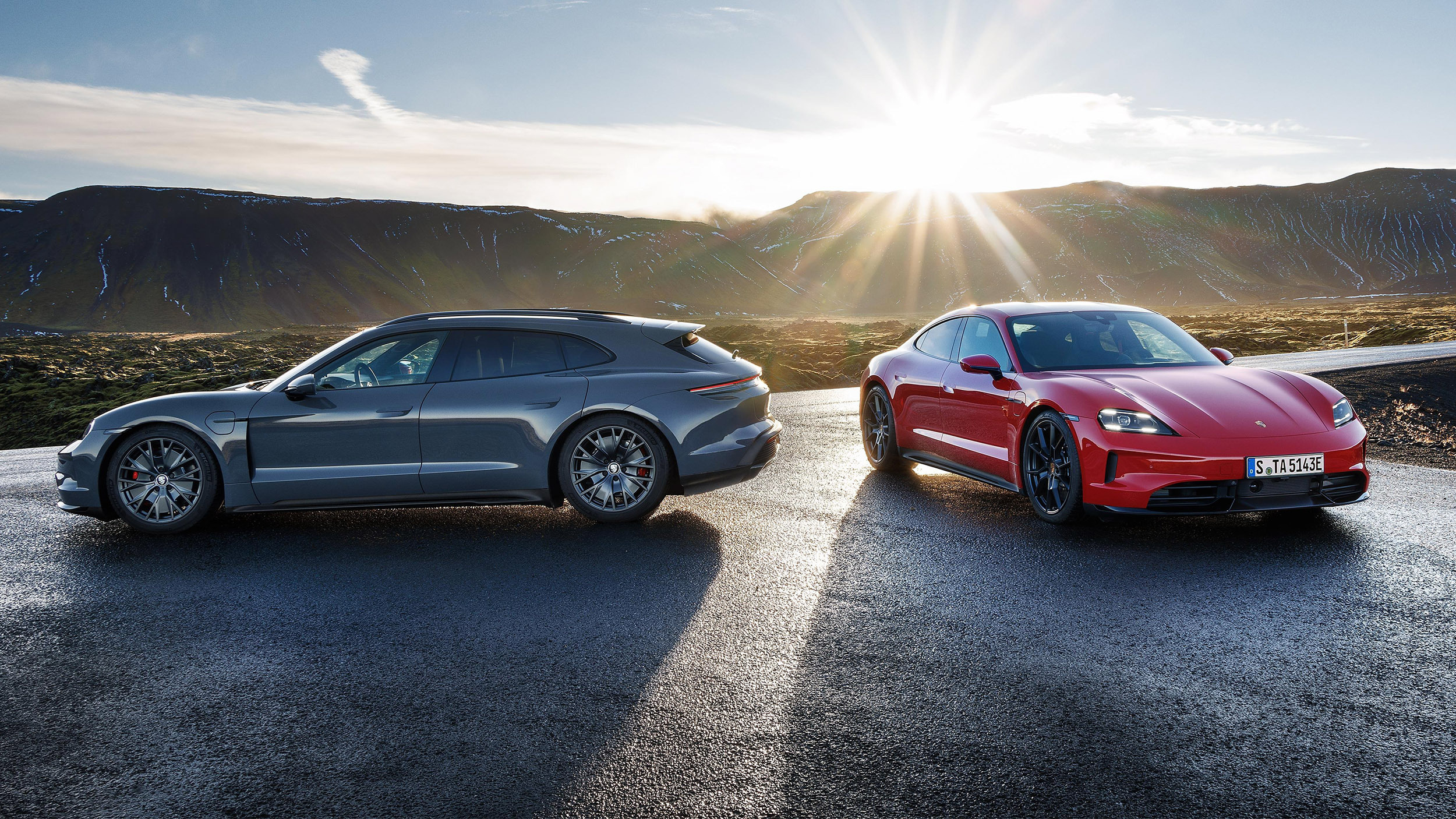
Sales of the Taycan have collapsed from 40,629 in 2023 to just 16,339 in 2025.
Porsche is streamlining the Taycan model range but isn’t discontinuing it.
The company continues to monitor how demand for the Taycan develops.
With sales slipping and synthetic gear shifts unlikely to reverse a drop in demand, it was recently reported that the Porsche Taycan is living on borrowed time and will be axed by 2030. Porsche has denied this suggestion, although it’s stopped short of confirming whether the Taycan will live on well into the future and if this could include a second generation.
A report from German publication WirtschaftsWoche indicated earlier this month that Porsche executives recently agreed to gradually retire the Taycan by 2030, but at one stage, were even said to be considering immediately axing the model from its line-up. Given that Taycan sales have slipped from a peak of 40,629 in 2023 to just 16,339 in 2025, killing off the car seems like a smart move.
Responding to the report in a statement to Carscoops, Porsche acknowledged that “streamlining the model range” does not, in its words, “necessarily mean discontinuing entire model lines,” adding that “for the Taycan, we will continue to reduce the number of variants in order to lower complexity.”
A Porsche spokesperson added that the automaker currently has “no plans to discontinue the Taycan in the short term. We have invested significantly in the model and will continue to monitor how demand develops.”
What Will Happen Next?
While Porsche says the Taycan isn’t going anywhere in the “short term,” it did not comment on the long-term future of the EV, which is telling. It’s no secret that Porsche overestimated demand for EVs, hence why it’s walked back its original decisions to only sell the future ‘K1’ flagship SUV as an EV, as well as the future 718 Cayman and Boxster models, since confirming that both will also be available with combustion engines.
Rather than developing an all-new, second-generation Taycan, it’d probably make more financial sense for Porsche to offer an all-electric version of the Panamera next decade. Sharing parts and a platform across different versions of the Panamera would also speed up development times and allow the German brand to more easily adjust production schedules depending on demand.

 Login