(The Center Square) – Wisconsin taxpayers are growing in their concern over property taxes, as witnessed by a recent Marquette poll showing that 60% of voters are more concerned about reducing property taxes than increasing spending on public schools.
The city of Madison on Monday appealed a ruling that allows it to be sued for monetary damages for disenfranchising nearly 200 voters in the 2024 election, arguing the decision would unrealistically require “error-free elections” and expose municipalities across the state to liability for mistakes.
The appeal comes after Dane County Circuit Court Judge David Conway’s Feb. 9 ruling that Madison could face potential financial liability for disenfranchising 193 voters whose absentee ballots were unintentionally left uncounted. Notably, the city did not specifically contest the judge’s rejection in that ruling of its earlier argument that absentee voting is merely a “privilege” under state law — a claim that would have shielded it from damages.
Instead, the appeal centers on who has the authority to enforce election laws and whether voters can sue for negligence. The city argues that such complaints must go first to the Wisconsin Elections Commission and asks higher courts to revisit a landmark 1866 case that allowed damages against election officials who deprive citizens of the right to vote.
“It is not difficult to imagine how the circuit court’s ruling may be perceived as an opportunity by partisan actors to influence the election,” attorneys for the city, former Clerk Maribeth Witzel-Behl and Deputy Clerk Jim Verbick wrote in the filing.
A permanent path to sue for damages over accidental election errors without going first through the commission could “chill the willingness of individuals to volunteer to assist with elections, and the willingness of voters to participate in the political process,” they wrote.
Madison asks court to revisit landmark voting case
Much of Madison’s appeal asks the court to revisit a key finding in the landmark 1866 case that secured the extension of the franchise to Black Wisconsinites, Gillespie v. Palmer. In that case, the court held that state law allows plaintiffs to sue election officials for damages if they “negligently deprive citizens of the right to vote.”
The case arose after Ezekiel Gillespie, a Black man, was turned away from the polls in 1865. While voters had ratified a measure extending the franchise to Black residents 16 years earlier, it went largely unenforced, as state officials still disputed whether the change was valid. Gillespie sued, and courts ultimately ruled in his favor, concluding in 1866 that Black Wisconsinites had been wrongfully disenfranchised for 17 years.
Although Gillespie was intentionally barred from voting, the court’s ruling established negligence — not just intentional misconduct — as a basis for disenfranchised voters to seek damages. The Dane County Circuit Court relied on that broader standard in allowing the Madison lawsuit to proceed.
Madison officials in their latest appeal argue the lower court misapplied the precedent. In their view, Gillespie was about protecting the right to cast a ballot — a right that they say isn’t disputed in this case. No election official in Madison denied that the 193 Madison voters had a right to vote, they wrote. Rather, they contend, the voters’ ballots were unintentionally left uncounted after being cast.
If Gillespie is extended under these circumstances, the defendants argue, Wisconsin would be the first state to allow “any voter whose ballot is accidentally uncounted a right to sue for monetary damages,” a premise that they say requires immediate review by higher courts given the impending 2026 midterms.
They also contend the 1866 ruling predates Wisconsin’s modern election system, and relying on “such an archaic interpretation of Constitutional rights in Wisconsin is grossly in error and requires intervention before the case proceeds further.”
Madison’s filing “seeks to erode the protections” guaranteed in Gillespie, said Scott Thompson, staff attorney for Law Forward, which filed the case. “This argument follows the city’s failed attempt to throw out this case by arguing that the right to vote does not protect absentee voters from disenfranchisement. The right to vote has value, and the voters the city of Madison disenfranchised look forward to having their day in court.”
Bryna Godar, a staff attorney at the University of Wisconsin Law School’s State Democracy Research Initiative, clarified that a court wouldn’t need to overturn the historic Black voting rights case entirely to rule that it doesn’t apply in the lawsuit against Madison.
“You could potentially read that case in a more narrow way, as applying only to intentional deprivation of the right to vote, as opposed to negligence and deprivation,” she said, adding that it’s likely that only a higher court could reinterpret Gillespie in such a way.
Law Forward’s response to Madison’s appeal is due on March 9. Then the Madison-based District 4 Court of Appeals is expected to determine whether the appeal may move forward.
Alexander Shur is a reporter for Votebeat based in Wisconsin. Contact Alexander at ashur@votebeat.org.
In Wisconsin, unlike in nearly every other state, first-offense drunken driving is not a crime.
Wisconsin treats a standard first-offense operating while intoxicated as a civil violation.
Punishment includes a fine of $150-$300 and driver’s license revocation for six to nine months.
Subsequent OWI offenses generally are crimes, but there is an exception.
If a second offense occurs more than 10 years after the first, first-offense penalties apply.
Otherwise, second and third offenses are misdemeanors. Jail time is five days to six months for a second offense and 45 days to one year for a third offense.
Fourth and subsequent offenses are felonies punishable by jail or prison time.
New Jersey treats first-offense OWI as a traffic violation, but up to 30 days in jail can be imposed.
In New Hampshire, first-offense is a misdemeanor, but no jail time can be imposed.
This fact brief is responsive to conversations such as this one.
A federal lawsuit filed Feb. 23 by the legal nonprofit group Protect Democracy alleges the Department of Homeland Security used facial recognition technology unlawfully to track legal observers and label them domestic terrorists.
In Milwaukee County, law enforcement representatives are addressing facial recognition technology-related fears from residents. They’re concerned about a potential collaboration with a company called Biometrica, which provides access to facial recognition search results.
In August, Milwaukee County Sheriff Denita Ball signed an “agreement of intent” to enter into a contract with Biometrica, said James Burnett, director of public affairs and community engagement and acting chief of staff at the Milwaukee County Sheriff’s Office.
“But the contract is still considered to be in draft form – not fully signed, executed or valid – and has to proceed, like any other proposed contract, through the county’s statutory signing process,” Burnett said.
There currently are no services or technology being provided by Biometrica, and Biometrica does not have access to any sheriff’s office data, Burnett said.
County Supervisor Sky Capriolo, member of the county’s Judiciary, Law Enforcement and General Services Committee, said she and residents have serious concerns.
“It warrants more consideration, education and discussion,” Capriolo said. “I certainly am not ready to green-light a contract.”
Capriolo said she’s waiting to hear whether the contract will go to her committee again.
Milwaukee Police Chief Jeffrey Norman took a different step and banned the use of facial technology by his department in early February.
On Feb. 24, Norman announced the suspension of MPD officer Josue Ayala for the improper use of a different tracking tool, the Flock camera system, to track a dating partner and a former partner.
“I am extremely disappointed to learn about the incident and expect all members, sworn and civilian, to demonstrate the highest ethical standards in the performance of their duties,” said Norman in a statement.
Ayala was charged by the Milwaukee County District Attorney’s Office with one count of attempted misconduct in public office. Norman said he immediately directed MPD to create additional auditing mechanisms.
Concerns remain high
Social justice and civil rights advocates have expressed grave concerns about the use of the technology by both agencies, citing evidence of inaccuracies, racial bias and privacy violations.
Facial recognition technology uses artificial intelligence to identify someone by comparing a photo of an unknown face to some database of images of known faces, said Katie Kinsey at the Feb. 5 Milwaukee Fire and Police Commission meeting during a presentation by the NYU Policing Project.
The image databases can include mug shot collections, driver’s license records or images found on the internet, Kinsey said.
Facial recognition technology and local law enforcement
In spring, MPD acknowledged it used outside agencies’ licenses for facial recognition search results for two to three years without a written department policy.
The department also announced it was considering an agreement with Biometrica – an agreement that would have provided access to facial recognition technology to the department in exchange for approximately 2.5 million Milwaukee County Jail booking photos.
This proposal prompted months of public pushback before the announcement by Norman in February that the department would no longer pursue the technology.
ACLU preaches vigilance
The American Civil Liberties Union of Wisconsin welcomed Norman’s announcement but also expressed concerns about MPD’s past decision making.
It is “extremely concerning that MPD secretly used FRT (facial recognition technology) searches for years without any standard operating procedure – or any written guidelines – in place,” an ACLU spokesperson said in an email to NNS.
The organization is urging Milwaukee residents to remain vigilant.
“Countless Milwaukee residents and community leaders have engaged in thoughtful community education, spent hours upon hours in public meetings and contacted their local elected officials to voice their unequivocal opposition to the use of (facial recognition technology), and they will still be watching,” the spokesperson said.
The MPD spokesperson told NNS the department could revisit the issue in the future when a policy is in place that aligns with both public safety benefit and public concerns.
Jonathan Aguilar is a visual journalist at Milwaukee Neighborhood News Service who is supported through a partnership between CatchLight Local and Report for America.
The PSC required Alliant file a revised version of its application by 4 p.m. Friday. The agency is now reviewing the new version to analyze the redactions and justifications from the utility before moving forward.
The ordinance would temporarily waive all permitting and inspection fees for the installation of sprinkler systems in older buildings that are exempt from having them.
Waukesha-based Generac Power Systems is settling a lawsuit related to a 2023 explosion of one of its portable generators at a Pennsylvania construction site.
This week, WPR’s Lori Skelton and PBS’s Deb Piper sat down to talk about their experiences working on the Final Forte, an event in which young performers from around the state compete in Madison’s Overture Center.
The state and local tax burden in Wisconsin reached a record low in the 2023 fiscal year, but a decades-long trend of declining tax burden may soon be coming to an end.
A masked U.S. Immigration and Customs Enforcement agent knocks on a car window in Minnesota on Jan. 12, 2026. (Photo by Nicole Neri/Minnesota Reformer)
Three new county sheriff’s offices have signed agreements with Immigration and Customs Enforcement that allow deputies to enforce federal immigration law.
The sheriffs of Dunn, Green Lake and Walworth counties have signed the agreements under ICE’s 287(g) program. ICE records show the Dunn County agreement was signed Feb. 10 while the other two are still pending. All three counties have signed on to the program under the warrant service officer model, which allows county sheriff’s deputies to arrest people targeted by ICE with administrative warrants.
With the three new agreements, 19 of Wisconsin’s 72 counties have joined the 287(g) program. Most of the counties have joined the program under the warrant service model while Kenosha and Marathon counties have joined under the jail enforcement model — which allows departments to notify ICE of undocumented immigrants detained in county jails. Kewaunee, Sauk and Waukesha counties have signed up under both models.
Dodge County does not have a 287(g) agreement with ICE but for years has had a contract to hold federal detainees in its county jail, which includes people arrested by ICE.
Immigrants’ rights and civil rights groups have criticized the 287(g) agreements, arguing that law enforcement openly stating its support for ICE and its often aggressive tactics discourages immigrants of all legal statuses from reporting crimes as victims or coming forward as witnesses.
“287(g) agreements do not make anyone safer — they stoke fear and erode trust, deter residents from reporting crime, and divert local resources away from addressing real public safety concerns and the needs of the community,” the ACLU of Wisconsin said in a statement in January after the Kenosha and Sauk county sheriffs signed their agreements.
U.S. Sen. Mark Kelly , D-Ariz., speaks on the failed grand jury indictment against him during a news conference at the U.S. Capitol on Feb. 11, 2026 in Washington, D.C. (Photo by Heather Diehl/Getty Images)
WASHINGTON — The Trump administration must explain to a circuit court before the end of March exactly why it appealed a lower court’s ruling that allows Arizona Democratic Sen. Mark Kelly to keep his retirement rank and pay while a First Amendment case about the “Don’t Give Up The Ship” video plays out.
The U.S. Court of Appeals for the District of Columbia Circuit’s order gives the Department of Justice until March 30 to provide a series of documents in its appeal of the district court’s preliminary injunction.
That ruling, from Senior Judge Richard J. Leon of the District of Columbia District Court, said Defense Department officials, including Secretary Pete Hegseth, erred when trying to apply rules that affect active-duty military members to Kelly, a retired Navy Captain.
“Secretary Hegseth relies on the well-established doctrine that military servicemembers enjoy less vigorous First Amendment protections given the fundamental obligation for obedience and discipline in the armed forces,” Leon wrote. “Unfortunately for Secretary Hegseth, no court has ever extended those principles to retired servicemembers, much less a retired servicemember serving in Congress and exercising oversight responsibility over the military. This Court will not be the first to do so!”
Leon was nominated by former President George W. Bush.
DOD seeks to downgrade Kelly retirement rank
The lawsuit began earlier this year after the Defense Department began proceedings to downgrade Kelly’s retirement rank and pay for appearing in the 90-second video.
The six Democrats, all of whom are former members of the military or intelligence agencies, said in the video they understood the people working in those fields “are under enormous stress and pressure right now.”
“Americans trust their military. But that trust is at risk,” they said. “This administration is pitting our uniformed military and intelligence community professionals against American citizens.”
They went on to say the “laws are clear” and that illegal orders can and must be refused. The video ended with them saying, “Don’t Give up the Ship,’ a long-held phrase in the U.S. Navy.
The Democrats’ video infuriated President Donald Trump, leading the Defense Department to open an investigation into Kelly.
Justice Department officials also launched an investigation into Kelly, Michigan Sen. Elissa Slotkin, Colorado Rep. Jason Crow, Pennsylvania Reps. Chris Deluzio and Chrissy Houlahan and New Hampshire Rep. Maggie Goodlander.
Kelly cites effects on millions of retired veterans
Kelly wrote on social media Tuesday, after the Justice Department filed its appeal on behalf of the Defense Department, that the Trump administration didn’t “know when to quit.”
“A federal judge told Donald Trump and Pete Hegseth that they violated my constitutional rights and chilled the free speech of millions of retired veterans,” Kelly wrote. “There is only one reason to appeal that ruling: to keep trampling on the free speech rights of retired veterans and silence dissent. I went to war to defend Americans’ constitutional rights and I won’t back down from this fight, no matter how far they want to take it.”
Sen. Dora Drake (D-Milwaukee), who chairs the Legislative Black Caucus, told reporters that the caucus’ policy agenda will serve as a guide in the future for drafting legislation. | Photo by Baylor Spears
With the potential for a Democratic majority next year, Wisconsin’s Legislative Black Caucus closed this year’s Black History Month by laying out its policy goals on issues ranging from housing to education to civic engagement for the next legislative session.
Each year, the caucus starts Black History Month with a celebration and ends it with a day of work by bringing community members together in the state Capitol for Black Advocacy Day to discuss the issues facing Black Wisconsinites, meet with Democratic and Republican legislators and network with other community members. The day was created by former Sen. Lena Taylor, who was a member of the caucus during her time in office and is now a Wisconsin circuit court judge in Milwaukee County.
Sen. LaTonya Johnson detailed some of the disparities that Black Wisconsinites face. (Photo by Baylor Spears/Wisconsin Examiner)
Lawmakers developed their plans from listening sessions with Black Wisconsinites in four communities across the state.
Sen. Dora Drake (D-Milwaukee), who chairs the caucus, told reporters that the caucus’ policy agenda will serve as a guide in the future for drafting legislation.
“We know that the landscape is changing, and so we want to be proactive and make sure that we have a clear agenda of setting policy for next year,” Drake said.
Drake and Sen. LaTonya Johnson (D-Milwaukee), who sits on the Joint Finance Committee, said they believe Democrats will be able to win majorities in the state Legislature in this year’s midterm elections. Democrats are two seats away from control of the state Senate and five seats in the state Assembly.
“We can’t continue to not address these issues,” Johnson said, specifically noting Medicaid and providing resources to the Wisconsin public school system.
During a briefing, Johnson was joined by her fellow caucus members as well as Milwaukee County Executive David Crowley, who formerly served in the state Assembly and is currently running in the Democratic primary for governor, and Wisconsin Voices executive director and former state Rep. David Bowen.
The platform covered seven issue areas: improving affordable housing and protecting renters; education, literacy and economic opportunity; expanding access to affordable, comprehensive health and mental health care; ending mass incarceration and creating a rehabilitative criminal legal system; protecting people’s ability to participate in the democratic process; and helping communities by ensuring they have safe roads, clean air and affordable housing.
Johnson detailed some of the disparities that Black Wisconsinites face.
Housing
“Poverty hits Milwaukee the hardest, especially for Black Milwaukeeans,” Johnson said, adding, “30% of Black residents in Milwaukee live below the poverty line, which is the highest rate among major U.S. metropolitan areas. [Only] 27% of Black [people are] homeowners in Milwaukee, compared to the 56[%] for white households; $37,000 is the median household income for Black families in Milwaukee. That ranks us dead last among the 50 largest metropolitan areas. Poverty among Milwaukee’s African-American children is a whopping 38.8[%], which is the third worst out of the 50 largest metropolitan areas.”
Housing and protections for renters are at the top of the caucus’ agenda. Priorities include tenants’ rights and developing housing affordability programs for communities with high displacement risk, including a first time homebuyers program and a home repairs program.
Johanna Jimenez of the Community Development Alliance, a Milwaukee-based organization dedicated to increasing homeownership for Black and Latino residents, told the Examiner that the organization supports the goals of the Black caucus and sees a need to connect with lawmakers and other advocates.
“People there are struggling to become homeowners, to rent affordably and to live in safe housing,” Jimenez said. “Even though, like, we do housing every day, coming together on a larger scale and with more people, it’s super important. We recognize that not one person, not one organization, can get everything done, but we do have proof that when we come together, we get more done, and we get laws passed, people protected and more resources coming down.”
Jimenez said prioritizing renters and helping people become homeowners is important to building and stabilizing communities. She noted that out-of-state investors, who buy up property in Milwaukee communities, especially on the city’s North Side, driving up prices and limiting options for first-time homebuyers, continues to be an issue
“The tenants that are in our neighborhoods, they want to live in the neighborhoods, and so if we can focus on homeownership and putting resources aside for homeowners rather than giving investors an ‘easy way in,’ it would help communities… help families thrive.”
The caucus wants increase the state minimum wage, which currently sits at $7.25 an hour, expand access to job training in high-demand fields, including technology and skilled trades, provide targeted support for Black-owned small businesses and entrepreneurs, including grants and low-interest loans, and expand state investment in economic development in underserved communities.
Education
Johnson noted that the graduation rate for white students in Wisconsin is roughly 92.7% while the graduation rate for Black children is 71% — the largest gap in the country.
“Absenteeism is also a strong predictor of involvement with youth in the criminal justice system,” Johnson said, noting that data from the 2023-24 school year shows that Black students in Wisconsin have chronic absenteeism rates that hover around 47%, which is more than four times higher than the 11.2% absenteeism rate for white students.
Under its platform, the caucus says that it wants to work to “fully fund” public schools with targeted resources to bring up low literacy scores; expand evidence-based literacy programs, including early childhood and reading intervention initiatives; strengthen accountability and transparency in voucher schools and support development and recruitment of teachers and culturally responsive curricula.
It also wants to help protect people’s participation in the democratic processes by establishing a “Wisconsin John Lewis Voting Rights Act” that would ensure fair electoral maps and end gerrymandering, strengthen voting rights protections and expand civic education and community-led voter outreach.
Criminal justice reform
Johnson said the caucus also wants to end the cycle of mass incarceration. One attendee shook her head in agreement and said “amen” as Johnson spoke.
Some caucus priorities in that area include reforming sentencing guidelines, increasing community oversight of law enforcement practices, expanding reentry programs and ending crimeless revocations.
One proposal from the caucus meant to help improve the state’s criminal justice system, which was introduced this week, is a constitutional amendment proposal that would ensure Wisconsin bans slavery and involuntary servitude without exceptions.
Black history
When the Wisconsin Constitution was adopted in 1848, it included a prohibition of slavery and involuntary servitude. The state joined the union to ensure it followed the Northwest Ordinance of 1787, which forbade slavery in the territory, and to establish itself as a free state. However, that provision includes an exception for slavery or involuntary servitude if it is imposed as punishment for a crime.
Last week, the Republican-led Assembly refused to take up a resolution to recognize February as Black History Month, which wouldn’t have an effect on policy in the state but which lawmakers said represents a recognition of their history, achievements and work that has shaped the state.
During the Assembly floor session last week, Rep. Supreme Moore Omokunde (D-Milwaukee) said Republicans’ refusal to recognize Black History Month was “a horrific attempt to silence Black voices and to give us a subtle inference that our history isn’t as important as we think it is.”
Moore Omokunde noted that in the past Republicans have easily passed resolutions to honor President Ronald Reagan, Charlie Kirk and Rush Limbaugh — who Moore Omokunde noted called once called President Barack Obama a “magic negro.”
“At most, we should aspire to be one of the few Black faces in white spaces, and in order to be successful, we should strip ourselves of all of our identity and our traditions…This is only a glimpse of what it’s like to be a Black legislator in this building,” Moore Omokunde said. “You’re welcome to be here, as long as you have a signed permission slip.”
This year’s resolution sought to recognize Black people with ties to the state including Marcia Coggs, who was the first Black woman to be elected to the state Legislature and the first Black lawmaker to sit on the powerful Joint Finance Committee, Bob Mann, who was the first Black player to play a regular season game for the Green Bay Packers, and Malcolm X, who was a prominent Black Nationalist during the Civil Rights movement and had “unique ties” to Wisconsin.
Malcolm X’s family lived in Wisconsin while he was young after they fled Nebraska due to harassment from the Ku Klux Klan and moved to Milwaukee. His young brother, Reginald, was born in Wisconsin’s largest city. The family lived on West Galena Street on Milwaukee’s North Side until 1929 when they relocated to Lansing, Michigan.
Malcolm X returned to Wisconsin many times in the 1960s, visiting Milwaukee and speaking to local communities about racial injustice. His work inspired grassroots organizing in the state.
This year was not the first time that lawmakers have fought over proposals to recognize Black History Month. The state Assembly passed a resolution in 2025 honoring the month, but the resolution left out names of any individual people. The Senate passed that resolution in March 2025.
Whether or not Democrats do win control of the Senate and Assembly in November, Johnson and Drake expressed confidence that Republicans would not be able to continue to block their work on the issues in the same way that they have for many years.
“Even if we just get one house, we’re in a better position to hold them accountable,” Johnson said. “They’ll literally have to answer for why these things aren’t good ideas, or why this isn’t good governance when they see the numbers that we’re dealing with.”
Vice President JD Vance speaks in Plover, Wisconsin on Feb. 26, 2026 | Screenshot via The White House
Vice President JD Vance did not utter the word “tariffs” a single time during his upbeat speech at a Plover, Wisconsin, machining plant Thursday. The visit, aimed at shoring up vulnerable Republican U.S. Rep. Derrick Van Orden ahead of the 2026 midterms, was part of a post-State of the Union victory lap Vance is taking to market the so-called Golden Age of prosperity President Donald Trump claims he and the Republicans have delivered to rural and blue-collar voters.
It’s a tough sell.
The latest Marquette University Law School poll, released the day before Vance parachuted into Wisconsin, shows Trump hitting a second-term low with Wisconsin voters, with 44% saying they approve of the job he’s doing and 54% saying they don’t approve. Across partisan affiliations, the rising cost of living is voters’ No. 1 concern, while 55% of respondents told pollsters tariffs are hurting Wisconsin farmers. Manufacturers are not happy, either.
“I can tell you from my experience running our company, from everyone I talk to in my networks — 95% of people in manufacturing — 99% do not support the tariffs,” said Sachin Shivaram, CEO of Wisconsin Aluminum Foundry, a Wisconsin-based company with locations across the Midwest.
Shivaram spoke on a press call with Wisconsin Sen. Tammy Baldwin ahead of Vance’s speech Thursday. Many business owners, he said, are afraid to publicly share their criticisms of the Trump administration. When he meets other leaders of manufacturing companies in boardrooms, he said, “It’s like, look, we can’t say anything about how dumb the tariff policy is, because we’re going to be the next one whacked on X.” But, he added, “it’s costing all of them, all of us, a lot of money.”
Tariffs have caused “chaos and uncertainty” for businesses, agreed Kyle LaFond, owner and founder of American Provenance and Natural Contract Manufacturing, a small business that makes personal care products. “Last year, when these tariffs were first instituted, I absorbed those costs as much as possible. I did that for about eight months,” LaFond said. “But that is not a sustainable business practice.” Ultimately, he said, businesses have to pass along the cost to their customers: “Tariffs are just attacks on the American consumer.”
Trump 's failure to deliver the economic miracle he advertised, along with devastating cuts to health care and the safety net, pose a looming problem for Republicans ahead of the midterms. The solution they’ve hit on is a combination of bluster, bullying and straight up lies.
There’s a reason slim majorities of Wisconsin voters chose Trump in 2016 and 2024. Vance put his finger on it in his speech at the Republican National Convention in Milwaukee. “When I was in the fourth grade, a career politician by the name of Joe Biden supported NAFTA, a bad trade deal that sent countless good jobs to Mexico.”
Wisconsin manufacturing workers and farmers suffered tremendously from global trade deals. Democrats and Republicans alike brushed aside their pain and tried to tell them that the booming stock market and increasing corporate profits were worth the crashing prices and job losses. Never mind the communities ruined and all the families that fell out of the middle class.
Trump and Vance spoke to those voters. In his convention speech, Vance cleverly tied global trade deals supported by both political parties to immigration.“Now, thanks to these policies that Biden and other out-of-touch politicians in Washington gave us,” he said, “our country was flooded with cheap Chinese goods, with cheap foreign labor.”
But the immigrants who make up 70% of the labor force on Wisconsin dairy farms did not drive the collapse of Wisconsin’s small-farm economy. They, too, were displaced by globalization that drove down prices and accelerated a “get big or get out” economy that has taken a heavy toll on working people on both sides of the border. The arrival of immigrants willing to work long hours for low pay on farms that were forced to expand rapidly to stay afloat was a blessing to farmers who simply couldn’t find American workers to fill those jobs.
Today’s increasingly virulent, demagogic attacks on those hardworking immigrants should make everyone queasy.
Alex Jacquez, a former White House economic official in the Biden administration who also worked for Sen. Bernie Sanders’ 2020 presidential campaign, sees Vance’s rise as a big win for the populist right. Vance’s criticism of global trade deals that hollowed out American manufacturing, and his appeal to the “forgotten” American workers who have never recovered from outsourcing, struck a nerve with voters across the industrial Midwest.
“But I think the question is whether the actual policies put forward are having the outcomes that they intend here,” Jacquez said in a phone interview Thursday.
Trump ‘s failure to deliver the economic miracle he advertised, along with devastating cuts to health care and the safety net, pose a looming problem for Republicans ahead of the midterms. The solution they’ve hit on is a combination of bluster, bullying and straight up lies.
In his Plover speech, Vance doubled down on Trump’s scapegoating of immigrants and Democrats in the State of the Union. Following up on Trump’s racist characterization of the entire Somali immigrant community in Minnesota as “pirates” responsible for plundering public aid, Vance blamed “‘illegal aliens” for fraud in public benefits programs and voting. He brought up Trump’s lurid descriptions of crimes committed by immigrants and, like Trump, excoriated Democrats for not standing up and cheering as the president subjected grieving parents to a gory rehash of violent attacks on their children.
The reason Democrats didn’t stand up during Trump’s speech, Vance suggested, is that “they answer to people who have corrupted this country. They answer to people who opened the border. They answer to people who got rich off of illegal immigrant labor. … We want American workers to get rich for working hard, not illegal aliens.”
Today’s increasingly virulent, demagogic attacks on those hardworking immigrants should make everyone queasy.
Sucker-punching Democrats on immigration was a goal of the State of the Union speech. And Republicans will keep on punching. Their sanctimonious horror at the very idea of their colleagues not standing up and cheering for the victims of violent criminals is a way of changing the subject away from the spectacle of masked federal immigration agents spreading murderous mayhem in Midwestern neighborhoods, and, of course, the fact that none of this is making American workers better off.
As Jacquez pointed out, “Certainly Trump has cracked down on immigration, but that doesn’t seem to be redounding to the benefit of native-born workers. We’ve seen the unemployment rate creep up even while fewer immigrants are working these days on the manufacturing side.”
“We lost manufacturing jobs in every single month of 2025,” he added. “There has been no resurgence whatsoever in actual people getting jobs in manufacturing and, in fact, in many sectors, some of the trade policies that Trump has advanced have been actively harmful.”
At the end of his speech, Vance took questions from local media that reflected the immediate concerns of voters in western Wisconsin.
What can his administration do to stop the closure of rural hospitals that are creating a health care desert in the district he was visiting?
Vance blamed the problem on the Biden administration, although rural hospital closures did not begin under Biden and are severely exacerbated by Medicaid cuts under Trump. Vance also claimed the Trump administration is now turning things around with the rural hospital fund included in the “Big Beautiful Bill Act” — $200 million of which was awarded to Wisconsin in December.
Derrick Van Orden also pumped the rural hospital fund in remarks ahead of Vance’s speech, saying it’s “just a lie” that Democrats care about rural health care, because they didn’t vote for the massive tax- and spending-cut bill that contained the rural health care fund.
KFF projects the fund will only make up for about one-third of the Republicans’ cuts to Medicaid in rural areas. And that offset is temporary. The rural health fund expires in five years. In Wisconsin, meanwhile, 250,000 people are losing their health care coverage because of the Medicaid cuts and changes to the Affordable Care Act passed by Republicans. Those losses are concentrated in rural areas, and have a cascading effect on rural hospitals and entire rural economies.
Van Orden, who has spent his whole political career calling for the elimination of the Affordable Care Act, reversed course and voted with Democrats to extend ACA subsidies last month — right after voting to block the same measure when Democrats brought it up the day before.
In answer to a question on the health care worker shortage and the aging population of rural Wisconsin, Vance took a swipe at college students who major in women’s studies. The Trump administration — which has focused on repealing a pandemic-era pause on student loan repayment, resumed garnishing the wages of student debtors and imposed less affordable repayment plans — wants to make it easier for people to study to become doctors and nurses without getting “layered up with debt,” Vance declared.
Will the Trump administration withhold Medicaid money from Wisconsin as it recently announced it will do to Minnesota, as punishment for the state’s refusal to hand over the sensitive, personal information of food assistance recipients and of voters?
In answer to that question, Vance said it was outrageous that Wisconsin Gov. Tony Evers and the Wisconsin Elections Commission have refused to hand over the data Trump is demanding, and left the open the option of withholding federal Medicaid money, saying Democrats “like to cheat” in “voter rolls and welfare rolls.”
Asked about farmers facing wildly fluctuating commodity prices, Vance celebrated the administration’s success in getting China to open up its market to U.S. soybeans. That’s a head-scratcher, since China was purchasing about half of all U.S. soybeans a year ago, before it stopped amid a trade war caused by Trump’s tariffs. That was a big problem for Wisconsin farmers who were suddenly stuck sitting on a bumper soybean crop after losing their biggest buyer. Even with the new deal, those farmers will not be made whole, Darin Von Ruden, president of the Wisconsin Farmers Union, told Wisconsin Public Radio, and China has now found new markets, setting up a long-term business loss.
Among Vance’s many preposterous claims, perhaps the most incredible was the picture he tried to paint of a caring, empathetic Trump, who wakes up every morning asking what he can do to solve the problems of the American people. Do even Trump’s supporters buy the idea that the man who made $4 billion off the presidency after just one year in office is driven by selfless concern for the needs of others?
On one occasion, Vance said, during a discussion of the soaring stock market, Trump asked earnestly what could be done for people who don’t own any stocks. The answer, he said, was Trump’s brilliant plan to give low-income workers a $1,000 federal match for retirement. That idea was actually signed into law by Biden four years ago.
Asked for his further ideas for investing in rural communities, Vance said his administration will mostly “just listen” to voters. He held up Van Orden as the administration’s point man for keeping in touch with constituents in rural Wisconsin. Unfortunately, Van Orden is so notorious for avoiding in-person contact with voters, Democrats have made a regular practice of visiting his district to hold town halls from which he is reliably, notably absent.
The claim that either he or the Trump administration is concerned about solving the problems of Wisconsin voters is the biggest lie of all.
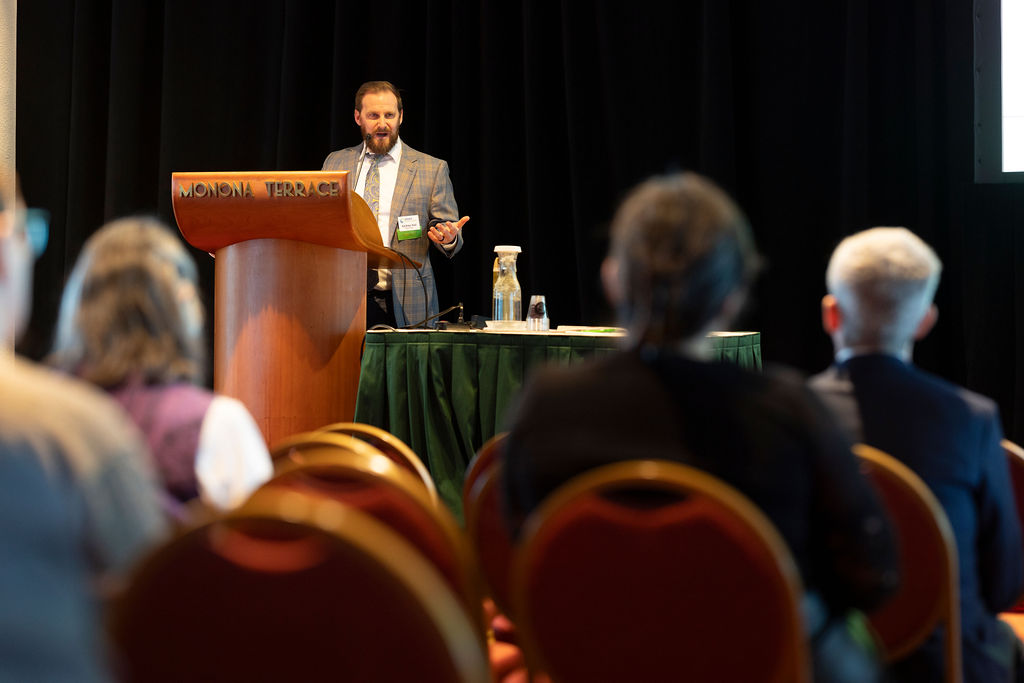
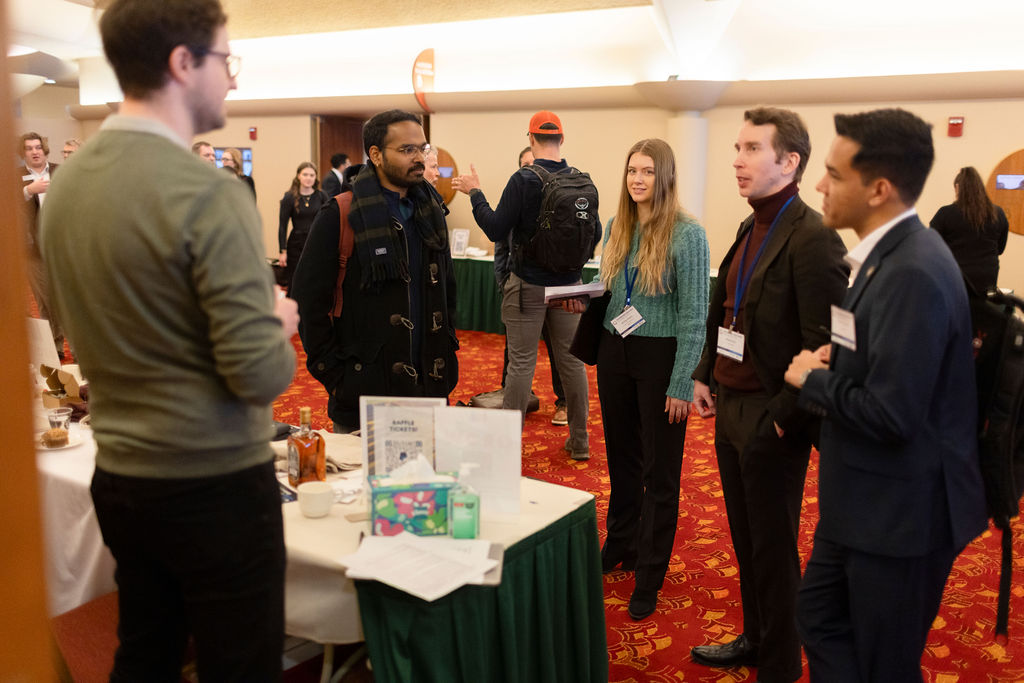
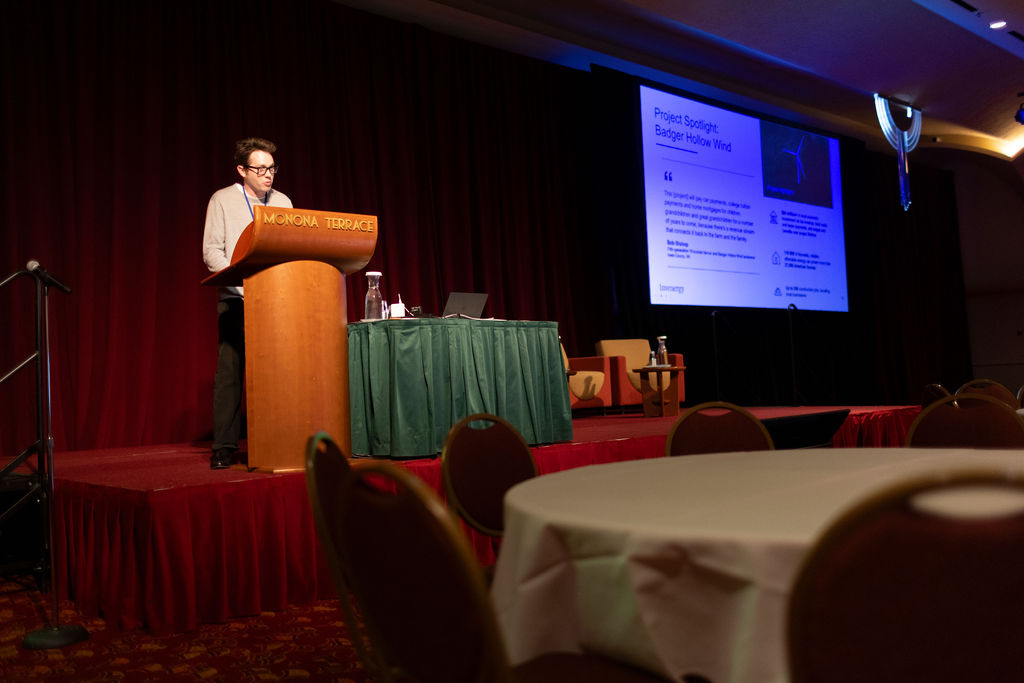
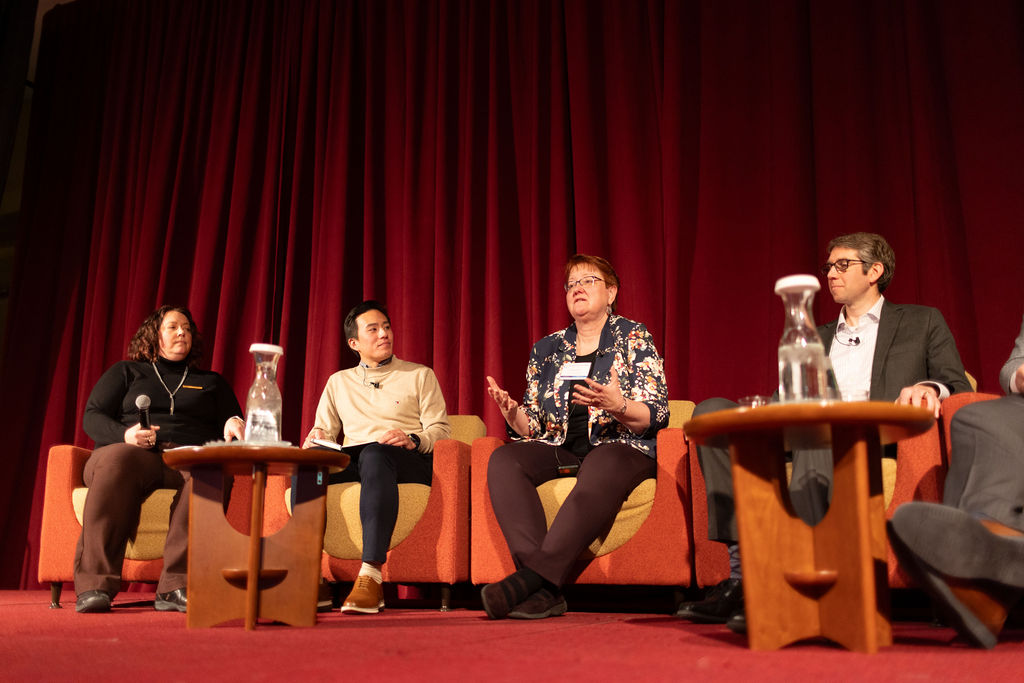
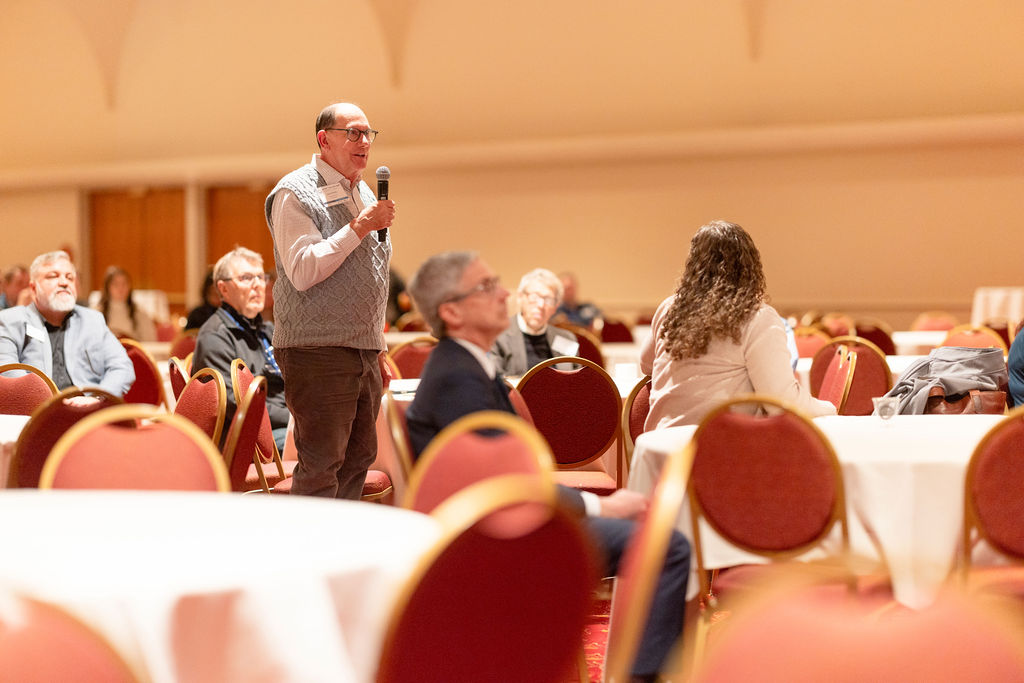
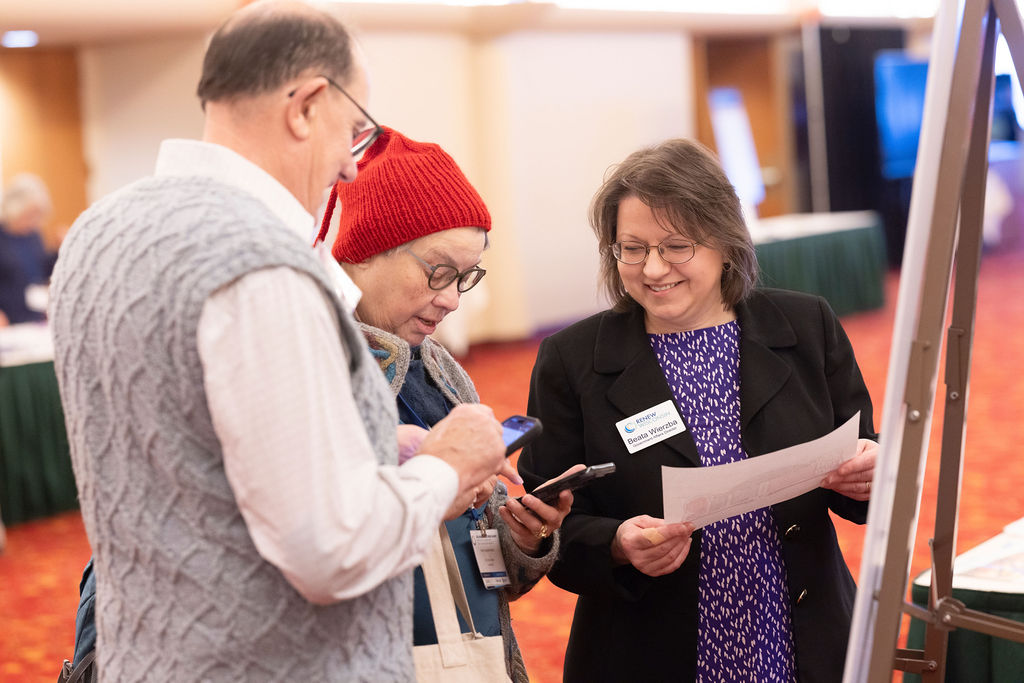
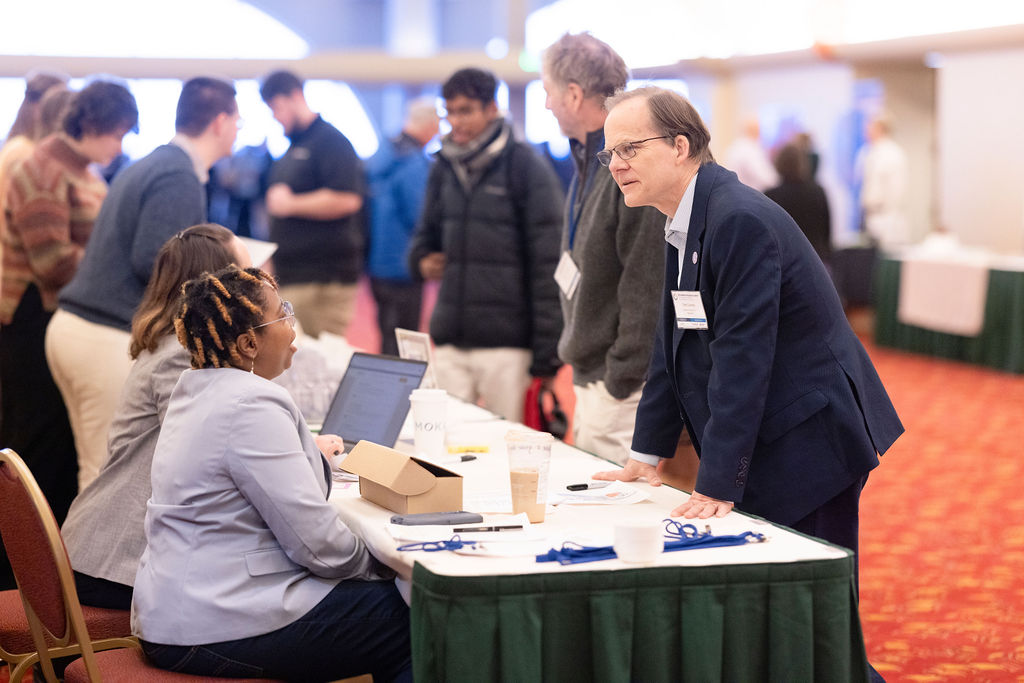
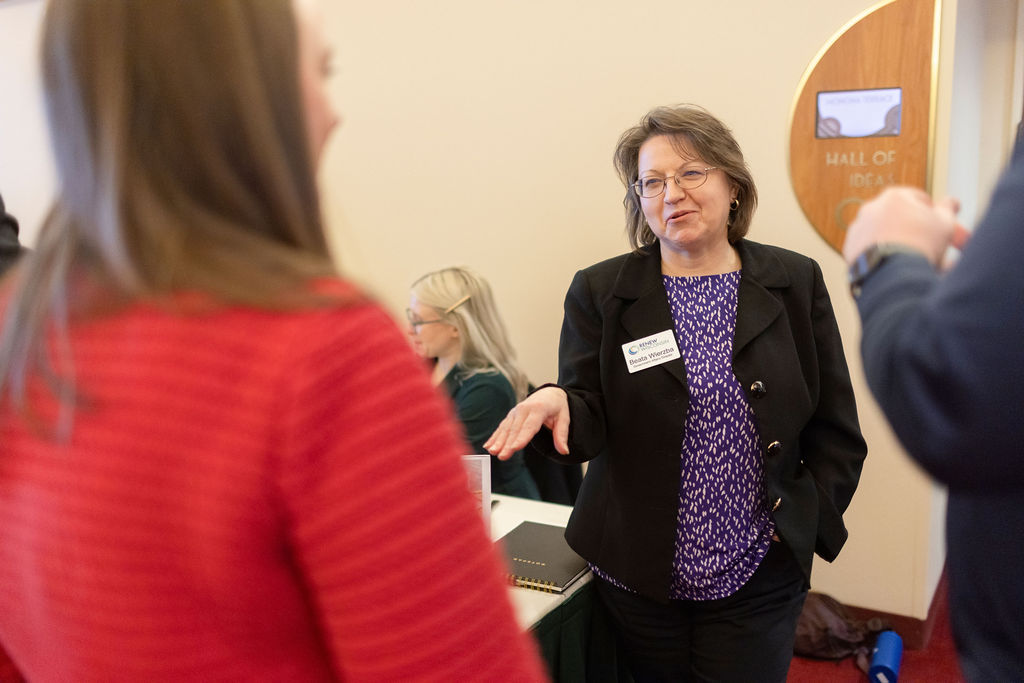
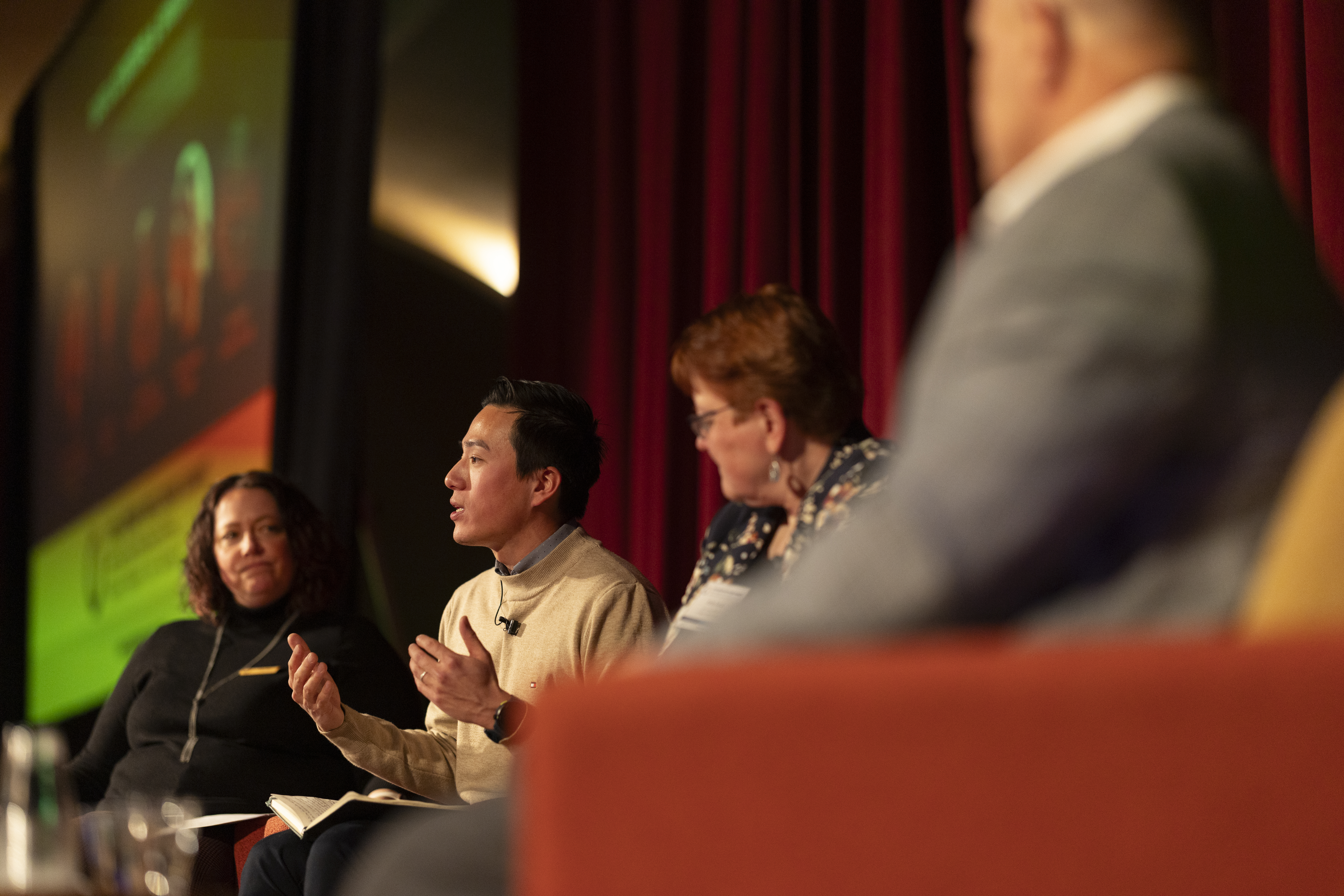
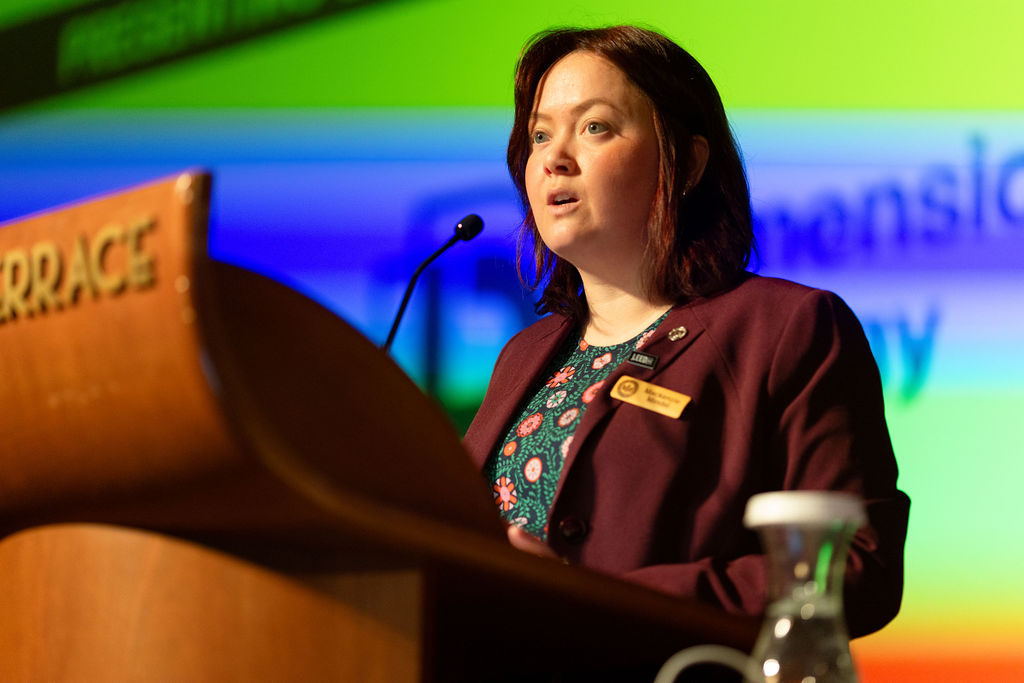
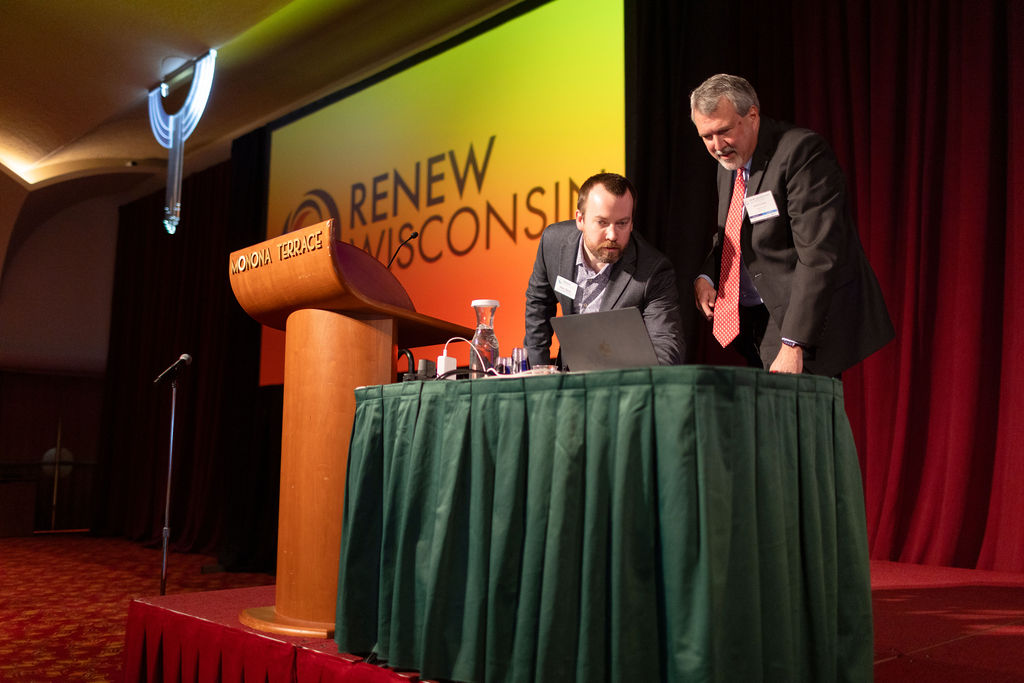
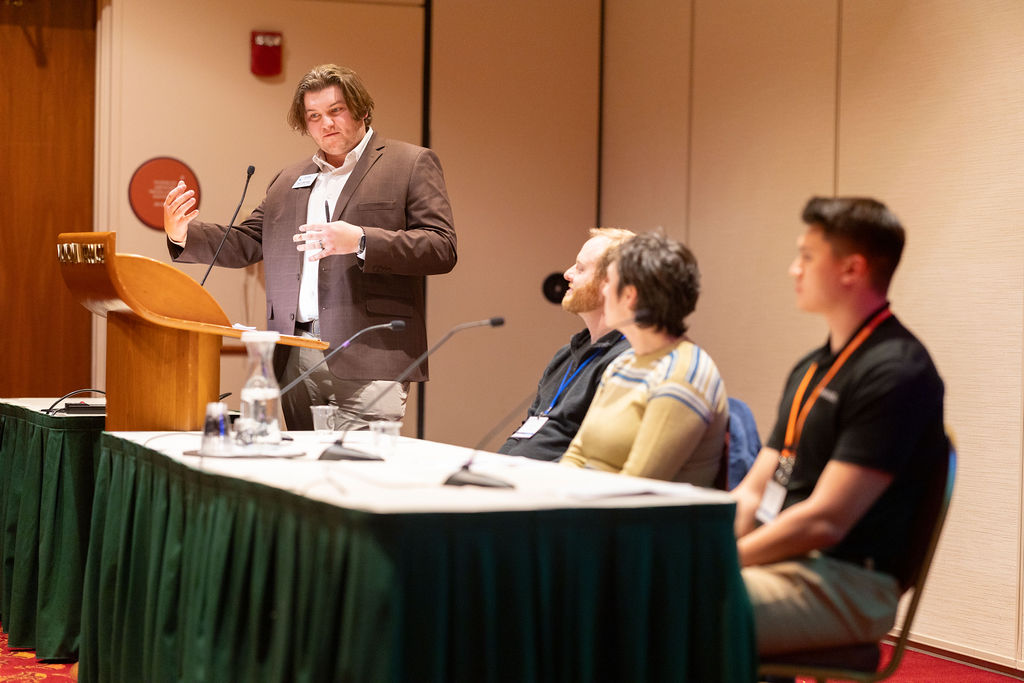
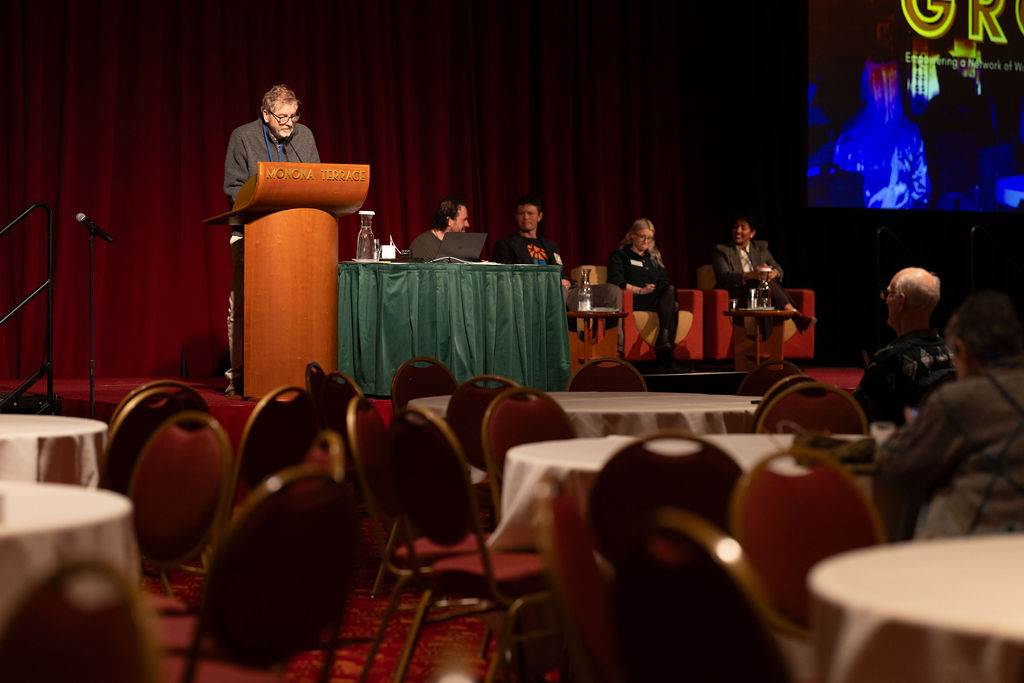
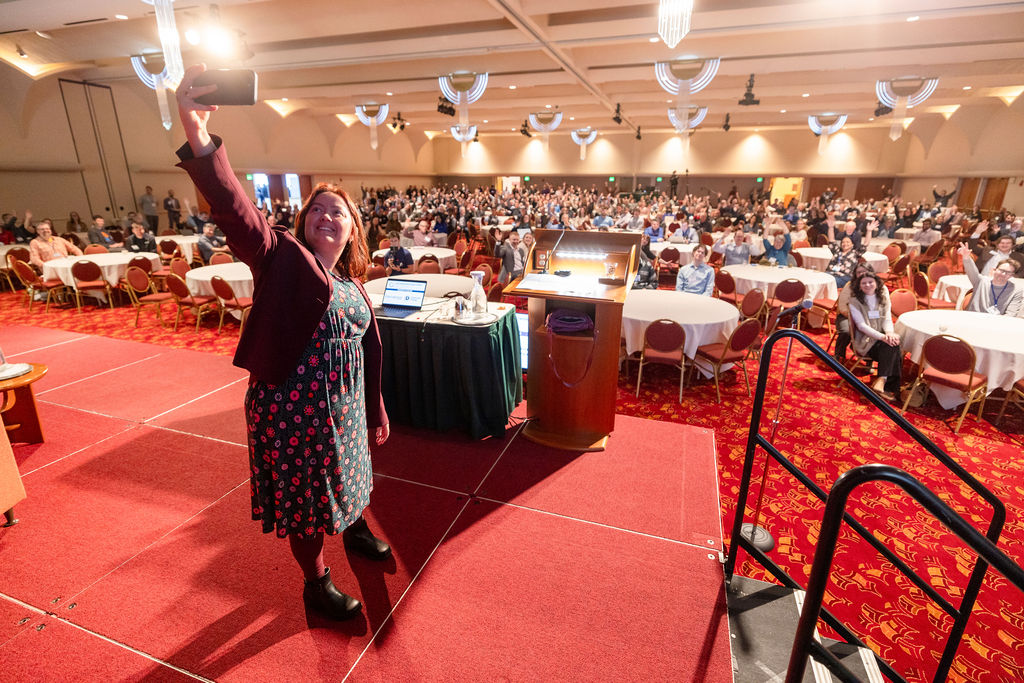
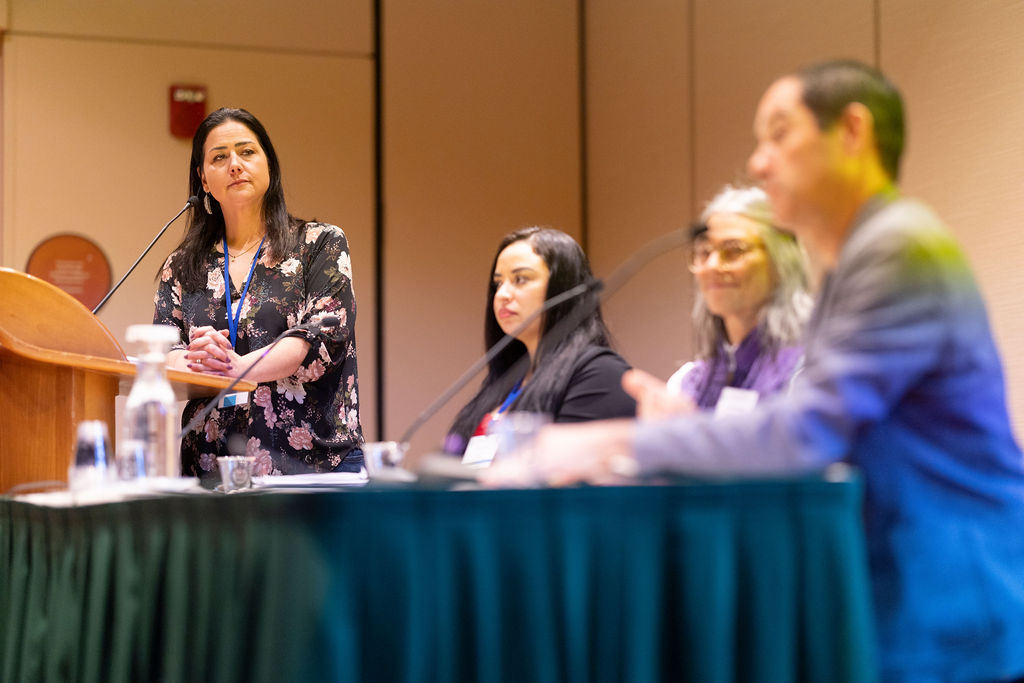
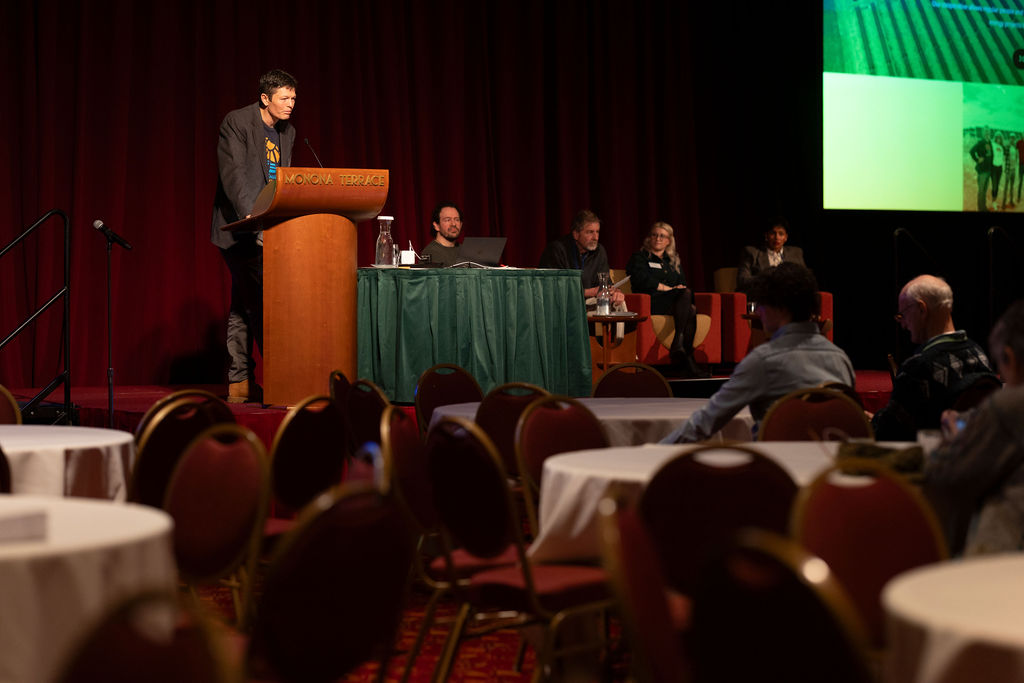
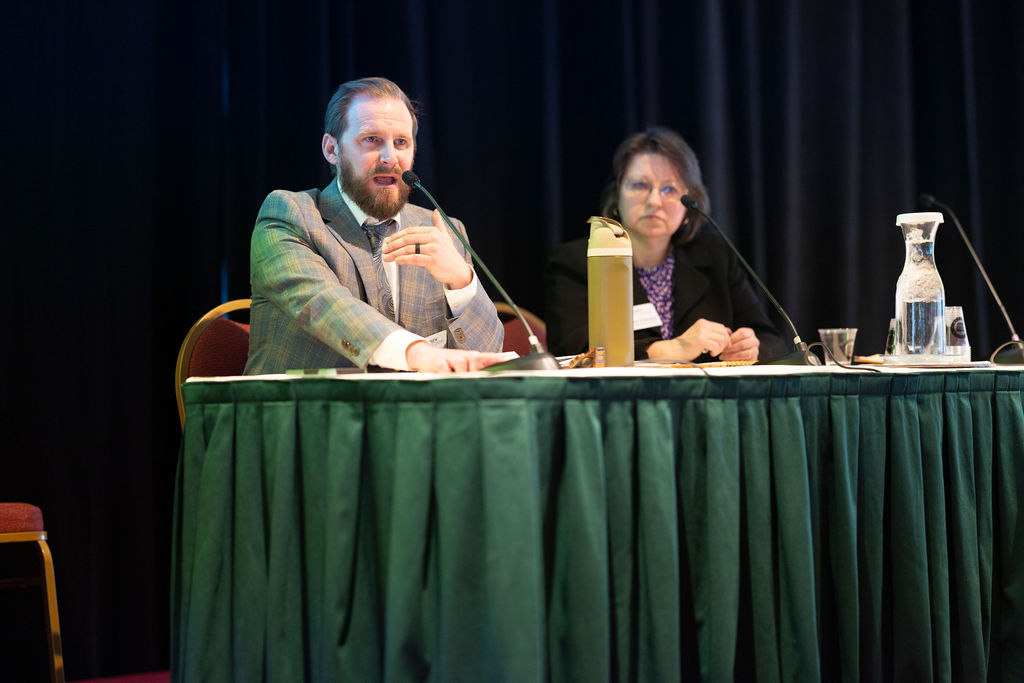
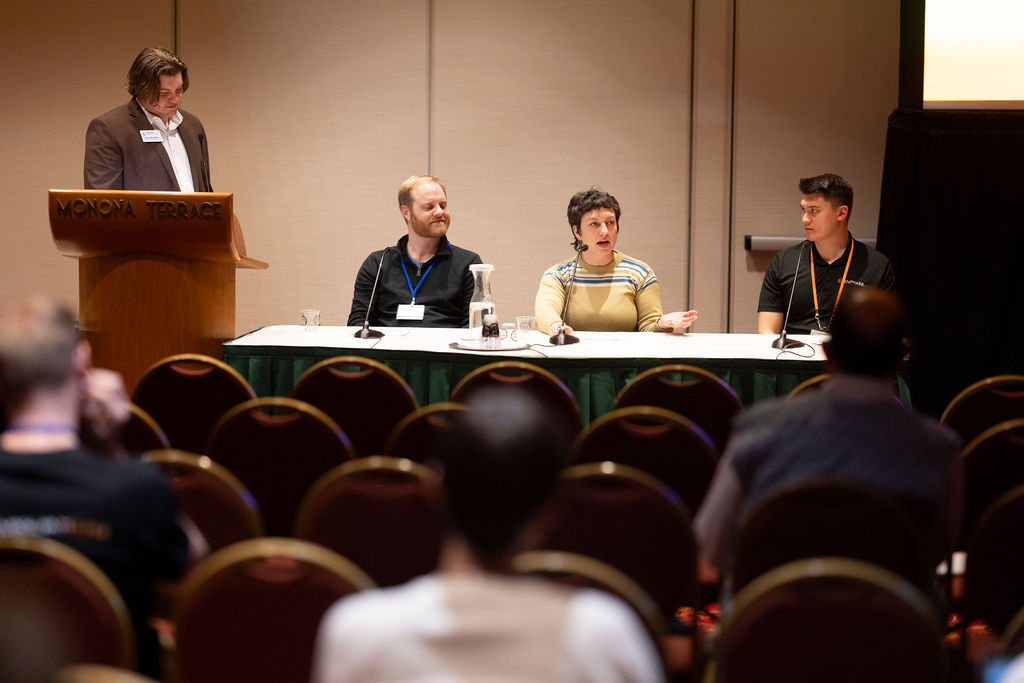
On Thursday, February 5, 2026, RENEW held our 15th annual RENEW Wisconsin Summit, presented by Invenergy and Dimension Energy. More than 600 Attendees from across the country joined us to discuss policy, legislation, and the future of energy, and how we will use clean energy to make Wisconsin more resilient! It’s hard to believe this event has been going on for so long, but it serves as proof that our industry is a resilient one.
This year, we made some small changes to our Summit, and we were happy to hear that most of them went unnoticed. That’s what we had hoped for! What changed, you ask? For the most part, we cut back on things that felt excessive, like the overall amount of food and some similar small parts of the Summit. Though we are all about clean energy, we also understand the importance of reducing waste in everything we do. Besides that, we did what we do every year — we focused on programming that we felt best represented current events so that we could have timely conversations about our industry, however difficult.
We certainly did have some interesting conversations this year, as well as a couple that might have been difficult or uncomfortable for some. That said, we hope you walked away from our programming with a stronger idea of the energy issues facing us in 2026 and some ideas of how we can address them. It’s our hope that the Summit serves as a launching pad for the remainder of the year. If our sessions on data centers, nuclear power, community benefits of utility-scale renewables, financing, or any of the others spurred an idea, we’d love to hear it. Together, we can turn these ideas into action as we continue to build a more resilient Wisconsin by expanding renewable energy.
And finally, we’d like to share some gratitude. The RENEW Wisconsin Summit comes together through the tireless efforts of our staff, board, volunteers, the many speakers who join us, our generous sponsors, and even our many attendees. The collective effort of the renewable energy industry is what makes this event so special, at least we certainly consider it special. It’s our hope that this event means something to all of you as well, because we’re doing it again. We admittedly don’t have many of the details worked out just yet for the 16th RENEW Wisconsin Summit, but we do know that we’ll be back on February 4, 2027. We hope you’ll join us then!
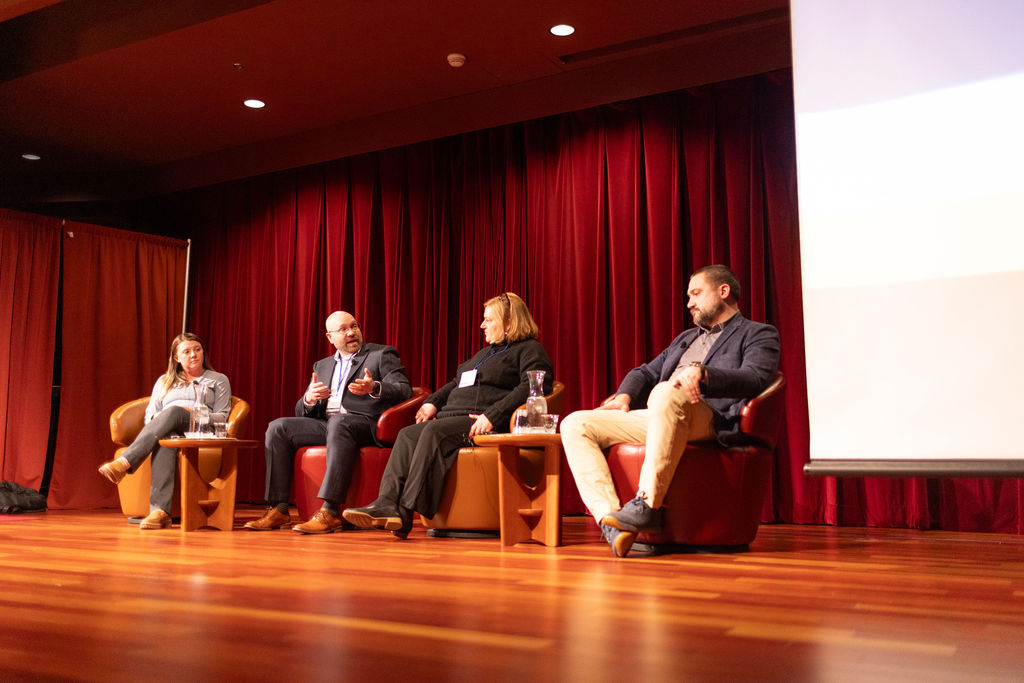
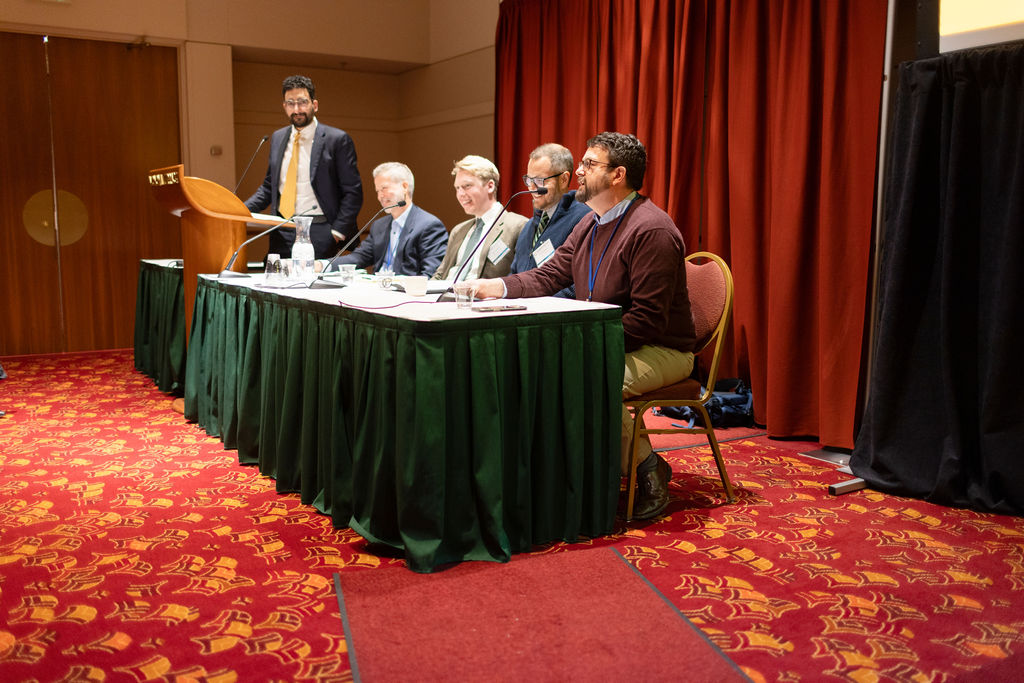
I know I already said “and finally,” but I do have one more thing. Below is a gallery of photos from the event. We know that photos don’t quite do it justice. We promise to have session recordings available within the next couple of weeks. Thanks again to everyone, you all make the yearly effort worth it!
In other words, Wisconsin voters won’t see Hong on the ballot until late summer.
A Marquette University Law School poll – published the same day as the misleading post – found 11% of Wisconsin voters said they plan to vote for Hong in the primary, compared to 10% for Mandela Barnes. A majority of voters, 65%, were undecided.
Polls do not determine election outcomes, and there is no guarantee that Hong will maintain that lead over the next six months.
This fact brief is responsive to conversations such as this one.

 Login
Login