The new battery delivers 400 Wh/kg energy density.
Mass production is planned to begin next year.
BYD, SAIC, GAC, and CATL are developing similar packs.
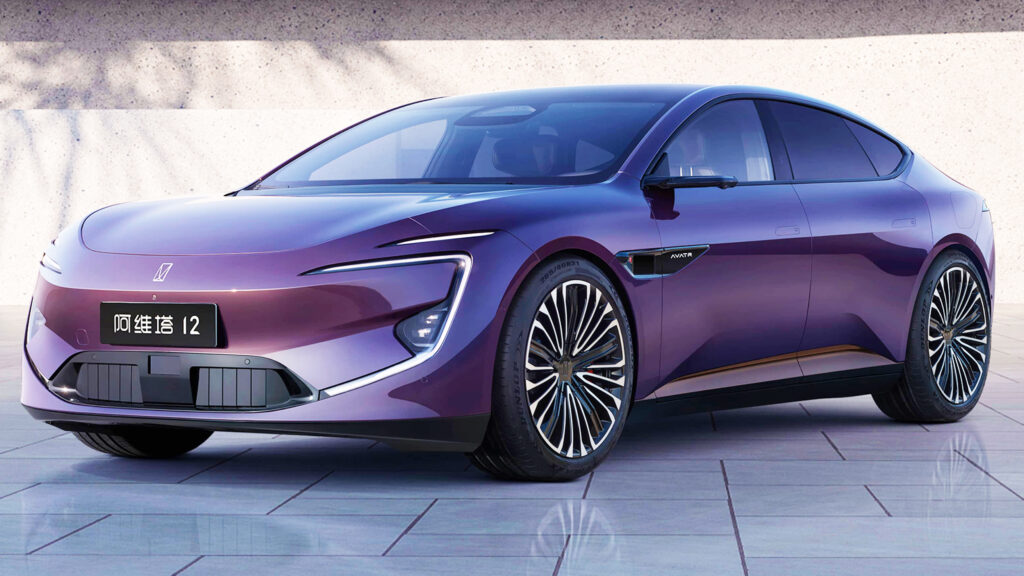
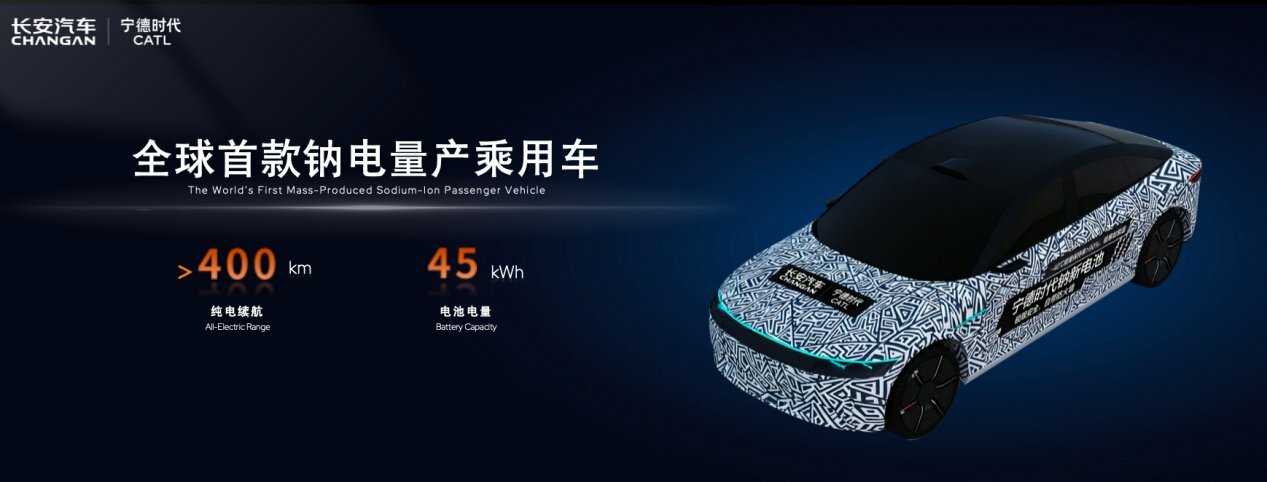
Solid-state batteries have been “just around the corner” for what feels like an entire EV generation. Now, they might actually be arriving. In the third quarter of this year, China’s Changan will begin fitting its new solid-state packs to robots and EVs, with full mass production slated for 2027.
According to Chinese media, Changan claims its new solid-state battery has an energy density of 400 Wh/kg, and EVs using it will be able to travel upwards of 932 miles (1,500 km) on a single charge. While you could argue that this much range borders on excessive, it would make future Changan models far better suited to long road trips through remote areas where charging infrastructure remains sparse.
Breakthrough Energy Density
The pack is called the Golden Bell. Aside from being very energy-dense, it is said to be 70 percent safer than a conventional EV battery and, because this is 2026, it also uses artificial intelligence for remote diagnostics. Smarter batteries, apparently, are part of the plan.
Changan will build these units under its new Jingzhongzhao solid-state battery brand. The company intends to manufacture fully solid-state packs while also producing liquid and semi-solid-state batteries that rely on a liquid electrolyte.
China’s Solid-State Push
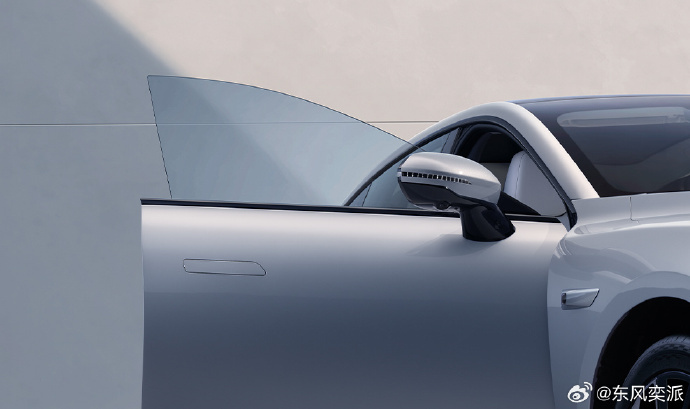
It is not alone. Other Chinese brands are also edging closer to making solid-state batteries mainstream. Earlier this year, Dongfeng Motor began testing its own solid-state battery in extreme cold weather. It has an energy density of 350 Wh/kg and a claimed range exceeding 620 miles (1,000 km). It also plans to roll them out in production cars this year, aiming for September.
BYD, Chery, SAIC, GAC, and CATL are all chasing similar breakthroughs. So are legacy names such as Mercedes-Benz, VW, BMW, Toyota, Nissan, Hyundai, and Honda. After years of promising headlines and laboratory milestones, solid-state batteries may finally be edging toward something tangible. If they deliver on even half of these promises, combustion engines will have one more reason to feel nervous.
Shrunken G-Class will offer both hybrid and fully electric options.
Hybrid borrows 1.5-liter turbo engine from new CLA, report says.
EV version targets nearly 450-mile range, far better than big G EV.
Mercedes’ upcoming baby-G was supposed to be the cute, chunky electric-only gateway into G-Class ownership. But the automotive market is changing fast, and so are Benz’s plans, as it reacts to cooling demand for EVs in some markets, especially for its own electric cars. As a result, the boxy SUV will now come with hybrid power.
Internally nicknamed Little G, Autocar reports, the compact, GLB-sized, two-row off-roader is due in 2027 and will still be available as a pure EV. But a companion hybrid model is now in development, using the turbocharged four-cylinder from the latest Mercedes-Benz CLA sedan.
The change speaks to a wider reset inside Mercedes. The company has stepped back from its earlier EV-only plans, with CEO Ola Källenius confirming it will keep selling combustion models well into the 2030s to stay flexible across different markets. Tepid demand for the electric G-Class has, by most accounts, helped concentrate minds.
The hybridized 1.5-liter unit is designed by Mercedes and built by Horse Powertrain in China, a joint venture involving Geely and Renault. Exactly how much kick it will deliver in the Little G is unknown, but the new CLA 220 hybrid makes 208 hp (211 PS) and 280 lb-ft (380 Nm) of torque, and gets to 62 mph (100 kmh) in 7.1 seconds.
In the CLA, the engine is paired with a gearbox-mounted electric motor that allows short periods of engine-off driving.
Prefer your G a little more refined? The EV variant will reportedly come standard with two motors and all-wheel drive to preserve off-road credibility, Autocar says.
An 85 kWh NMC battery is tipped to deliver close to 450 miles (724 km) of WLTP range, which would be seriously impressive for something shaped like a luxury brick – it’s not far short of the CLA 350 sedan’s 418-479 miles (672-771 km) figures. The full-size electric G580 with EQ technology, you might recall, is only rated for 280 WLTP miles (450 km).
Regardless of powertrain, the Little G will be sold exclusively with four-wheel drive, and both versions are tipped to feature advanced torque vectoring capable of distributing drive to individual wheels to mirror the off-road ability of the larger G-Class.
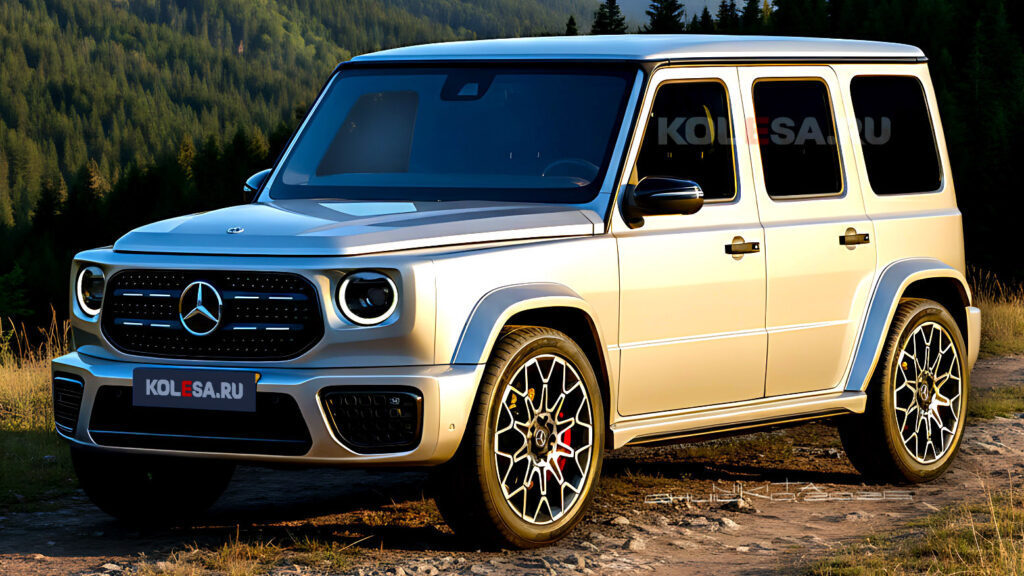
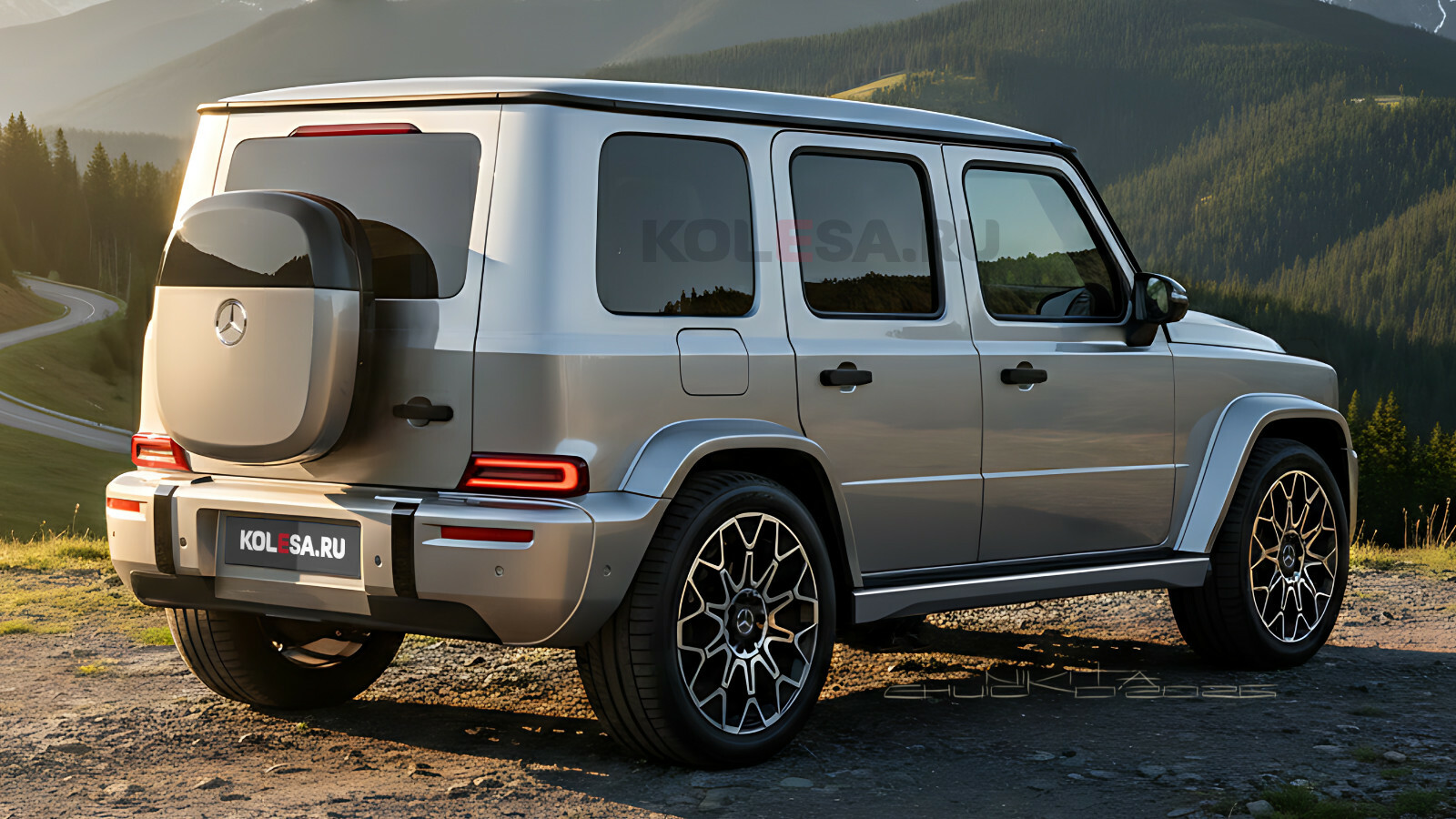
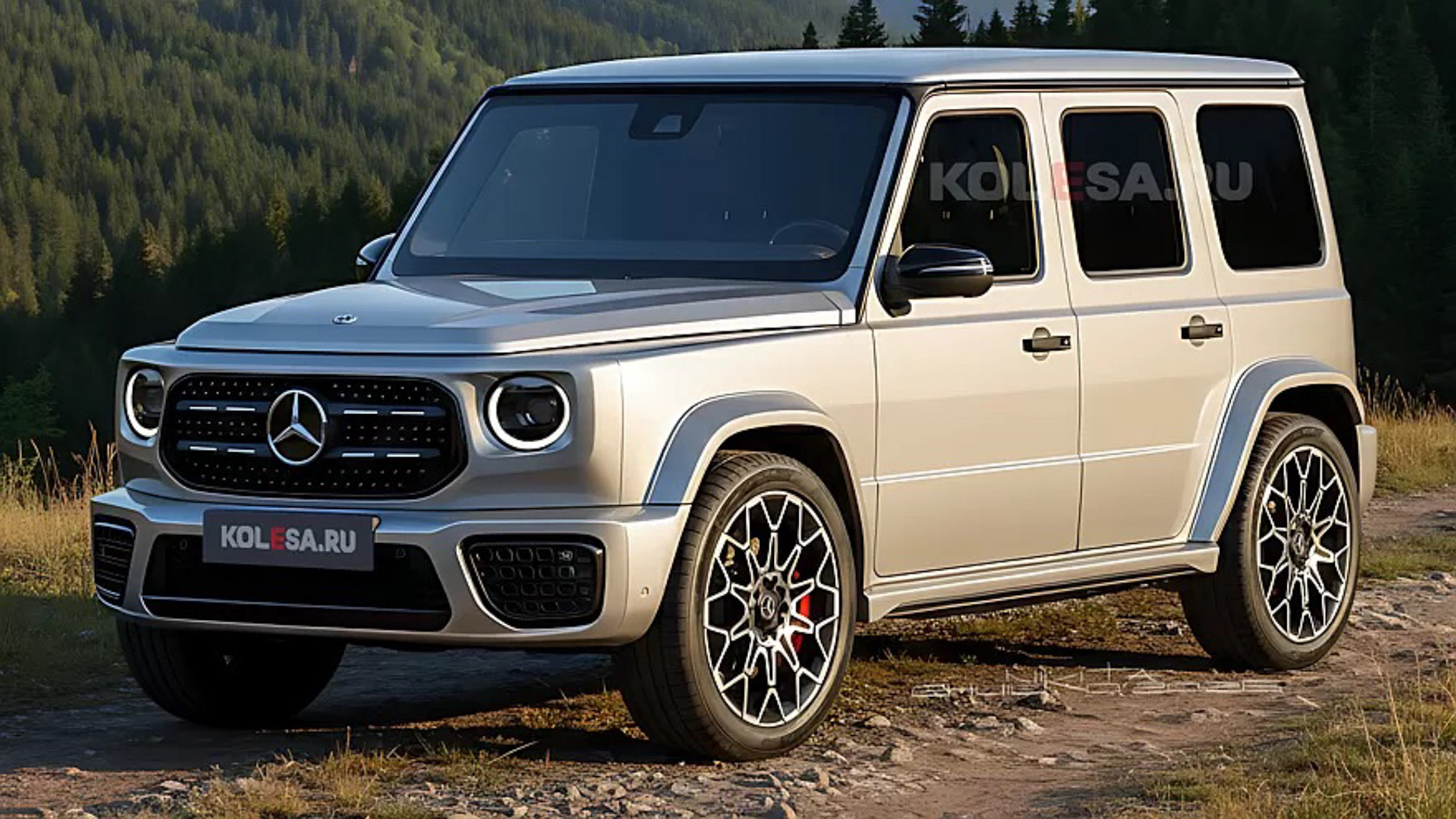
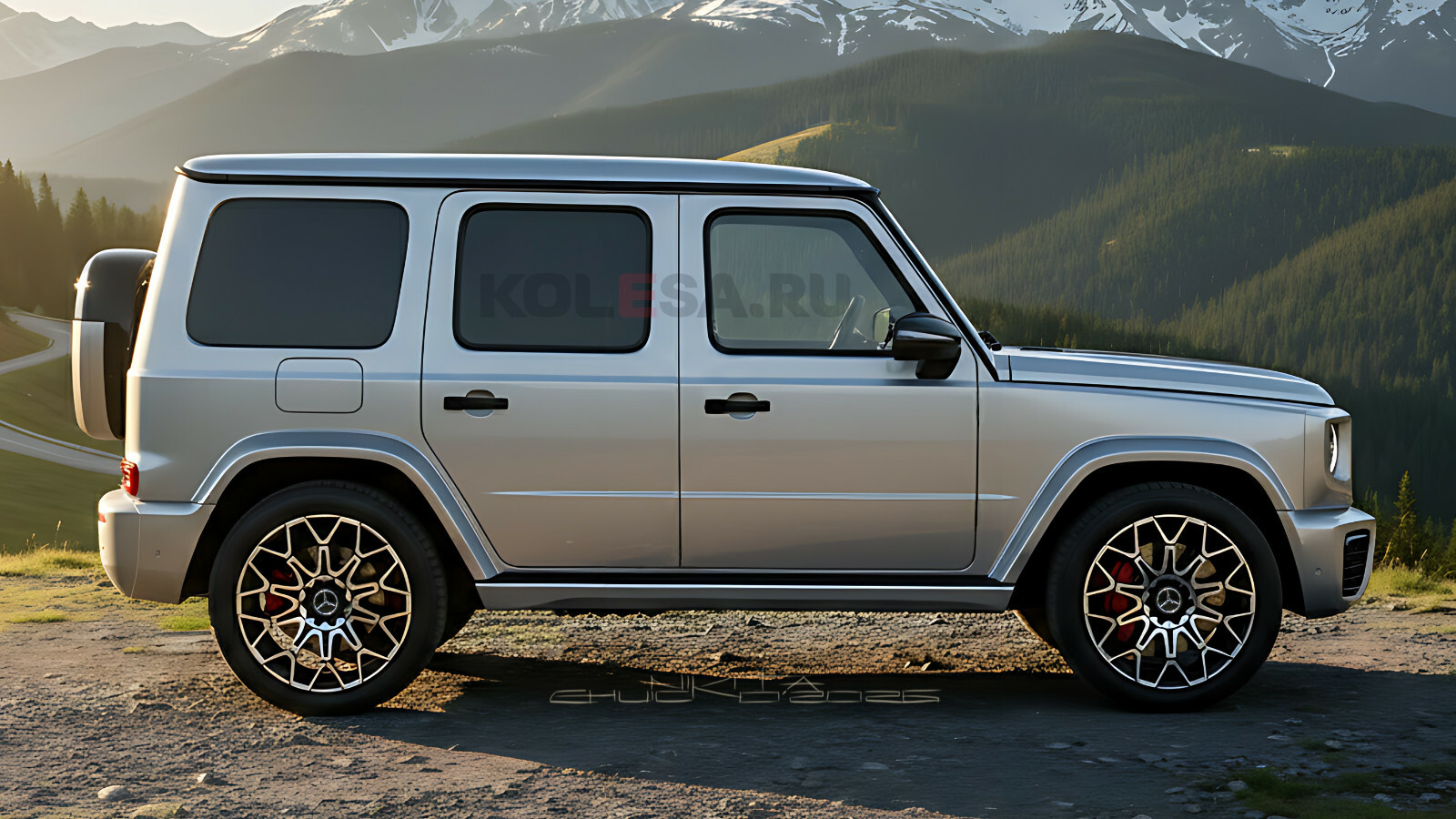
Where the baby G does follow its big brother’s lead, though, is in military-chic charm. Unofficial renders from Nikita Chuyko for Kolesagive us a credible idea of what the finished SUV could look like, showing round headlights, upright glass, three big side windows and a tailgate-mounted spare.
It looks like someone left a G-Class in the dryer too long, and the good news is the slow-selling G580 EV’s $163k price should also shrink, hopefully by around 50 percent.
Unlike many compact crossovers pretending to be rugged, the Little G is said to ride on a bespoke ladder-frame platform rather than sharing underpinnings with Mercedes’ electric GLC or C-Class.
That should help it take on the incoming Land Rover Defender Sport, the Little G’s most natural rival, though that gets a unibody structure. We can’t wait to see them duke it out in the dirt next year.
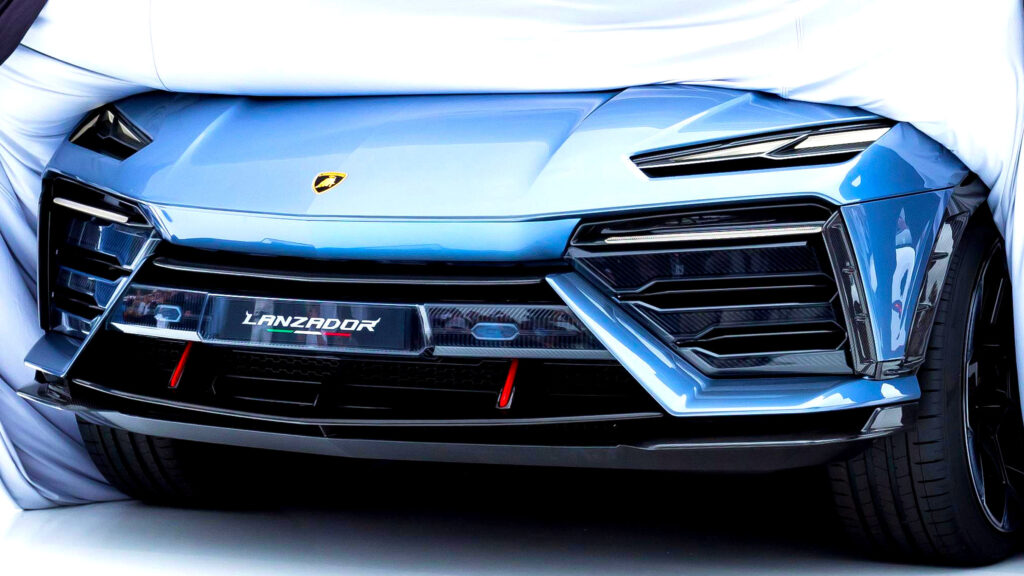
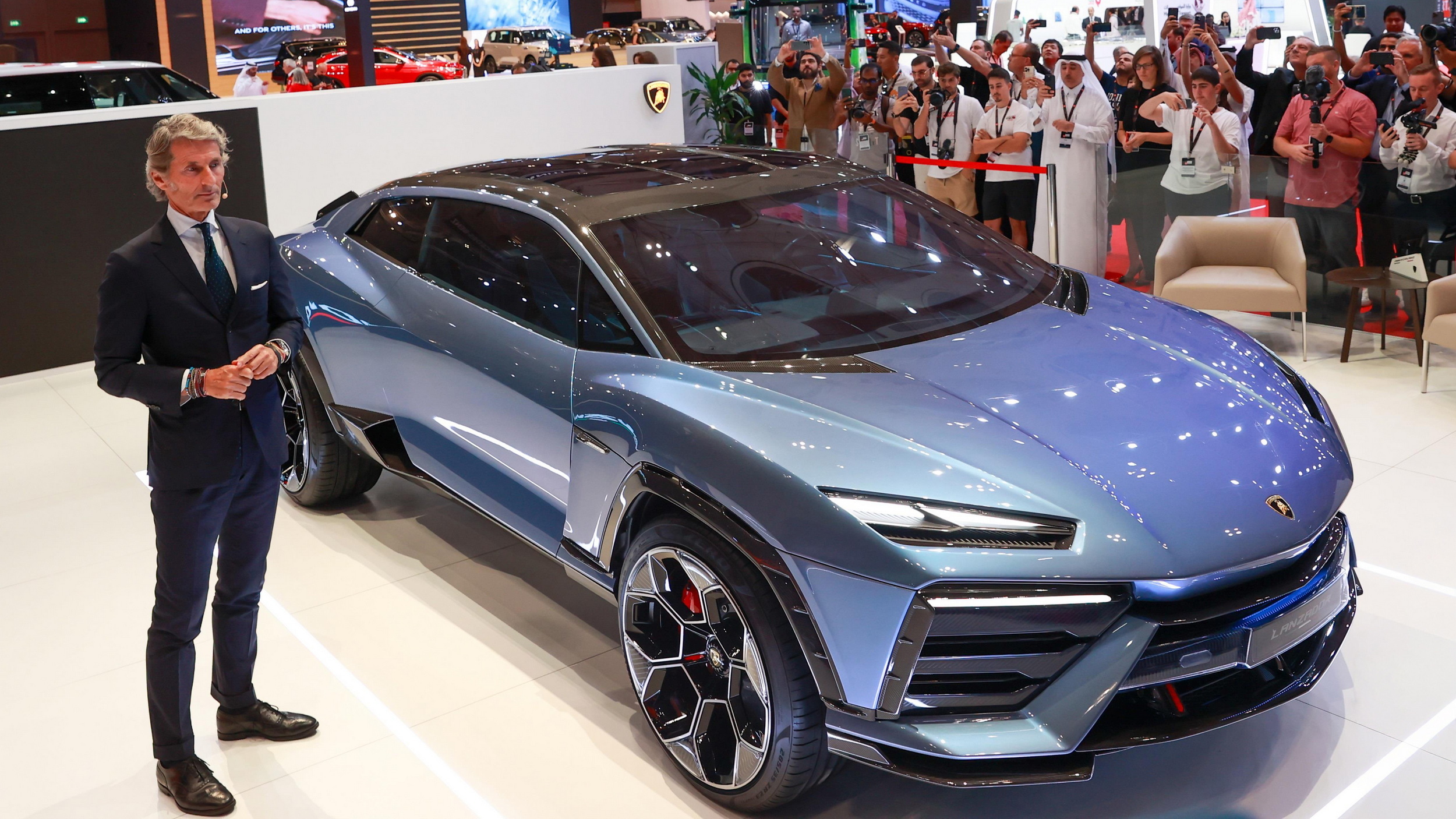
Lamborghini has canceled the electric Lanzador over low demand.
The brand will stick with plug-in hybrids across its range.
CEO Stephan Winkelmann says EVs risk becoming costly hobbies.
Lamborghini has officially shelved plans for its first production EV, deciding instead to lean harder into high-performance plug-in hybrids through 2030. In Sant’Agata’s world, electricity is welcome, just so long as it’s boosting a V8 or V12 rather than replacing one.
The model in question, previewed by the Lamborghini Lanzador concept in 2023, was supposed to arrive before the end of the decade as a fully electric 2+2 crossover. Instead, it is heading back to the drawing board, if not straight into the history books.
A Strategic Backflip On EVs
Speaking to the Sunday Times, Lamborghini CEO Stephan Winkelmann confirmed the EV won’t be joining the production lineup and will instead give way to another plug-in hybrid offering. He also cautioned that going all-in on electric could turn into an “expensive hobby,” noting that the “acceptance curve” for zero-emission tech among Lamborghini’s clientele is “close to zero.” Not exactly a ringing endorsement.
Winkelmann went on to say that Lamborghini buyers are still chasing the full “emotional experience,” meaning the styling, the performance, and, crucially, the noise. That, in his view, is something EVs cannot yet replicate in their current form. So for now, combustion engines remain very much on the menu, and will continue to be built “for as long as possible.”
The call to axe the project was reportedly made behind closed doors late last year, after extensive talks with customers and dealers, along with a thorough market analysis. In other words, Lamborghini did the homework and did not like what it saw. As Winkelmann put it:
“Investing heavily in full-EV development when the market and customer base are not ready would be an expensive hobby, and financially irresponsible towards shareholders, customers [and] to our employees and their families. Plug-in hybrids offer the best of both worlds, combining the agility and low-rev boost of electric battery technology with the emotion and power output of an internal combustion engine.”
Pressed by the Sunday Times on whether Lamborghini would ever build a full EV, Winkelmann left the door slightly ajar, albeit with a very firm hand on the handle.
“Never say never, but only when the time is right,” he said. “For the foreseeable future, only PHEVs. We will continue to develop electrification because we also need to be ready. The times we are living in are fast moving; if you don’t react fast, you risk going out of business or losing momentum. Therefore we need a solid financial base to reinvest in the future.”
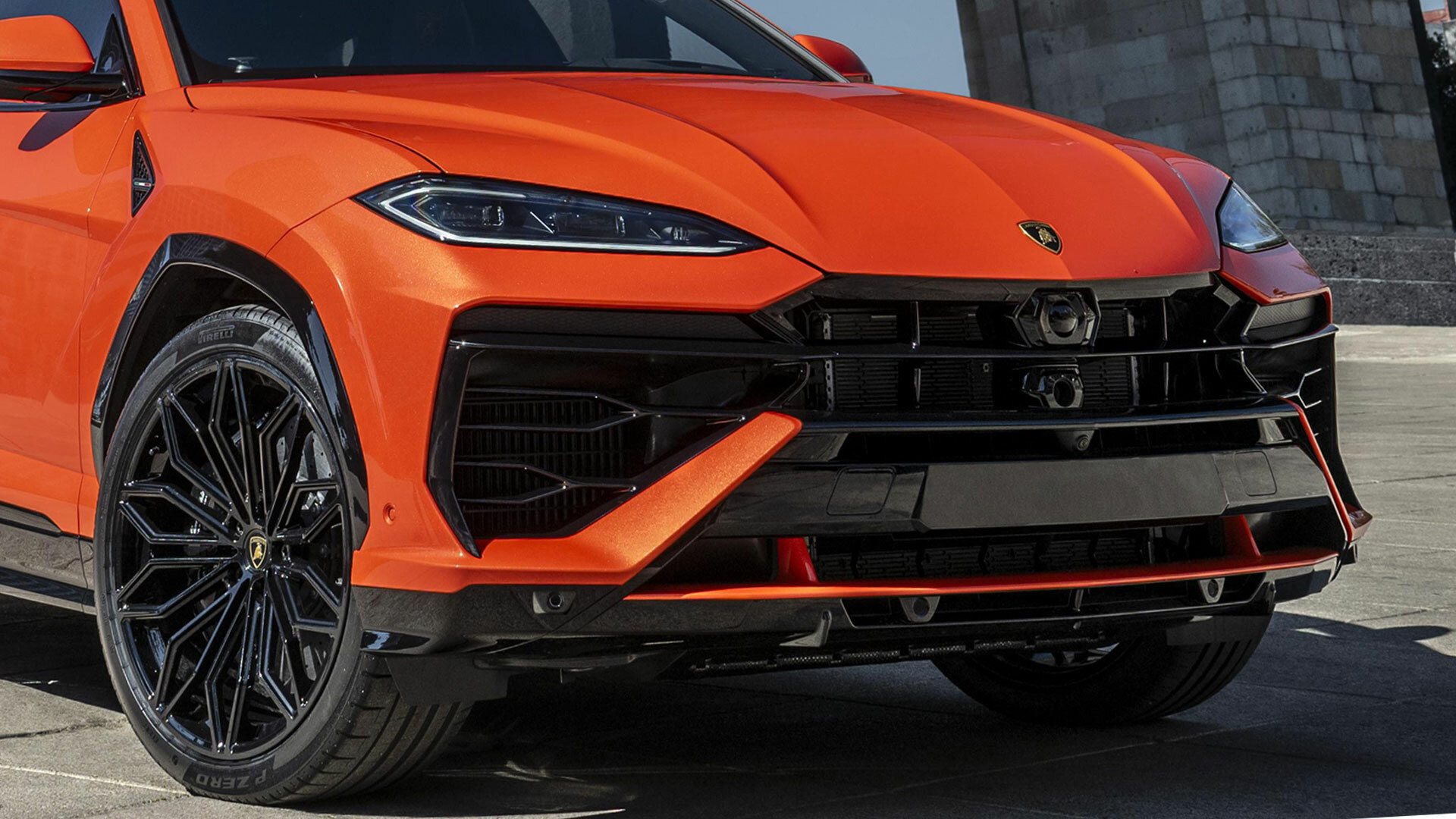
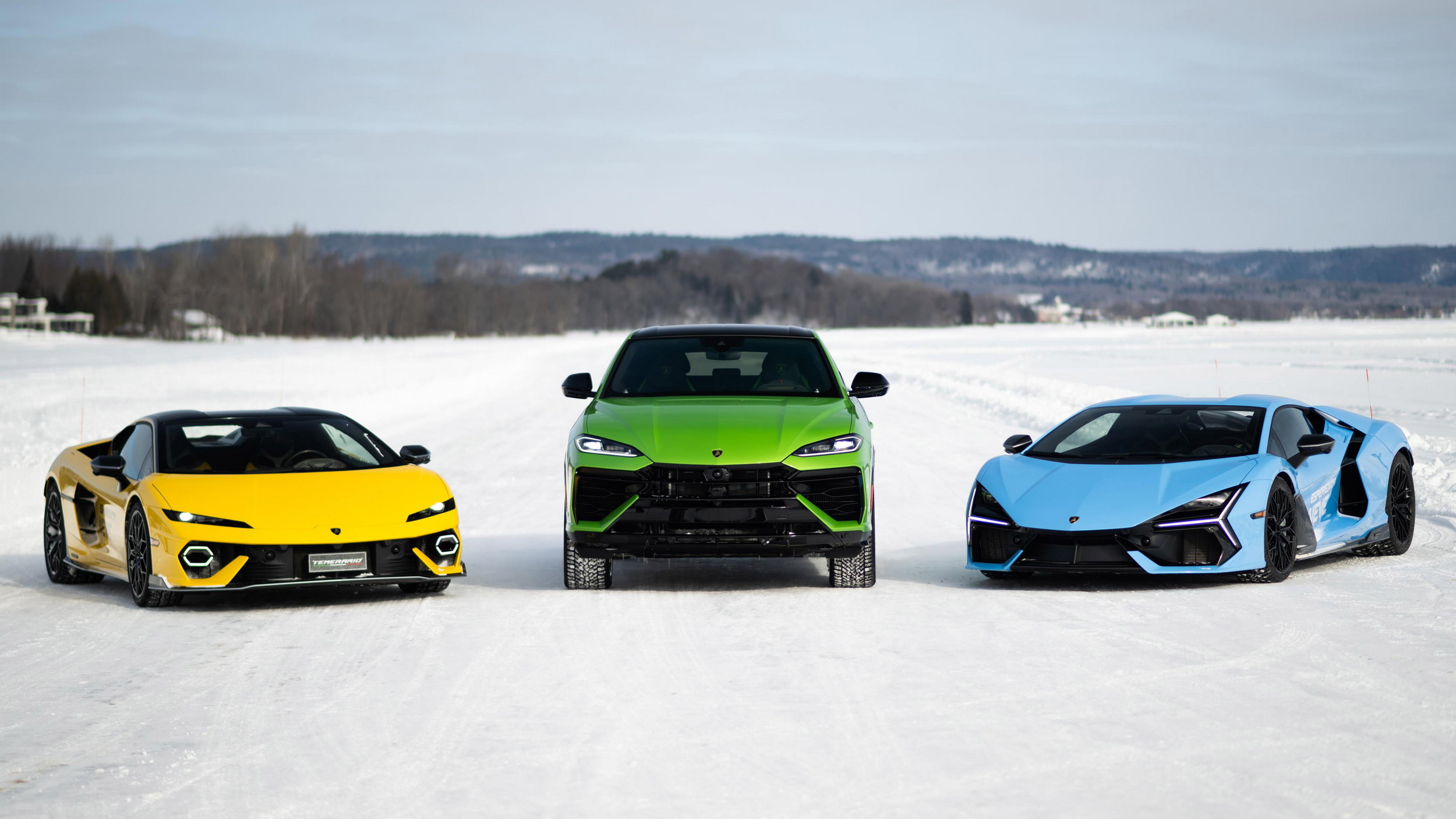
Lamborghini’s current lineup is now fully hybridised, from the Urus SUV to the Temerario and Revuelto supercars, each pairing combustion muscle with electric assistance. The formula seems to be working. Last year Sant’Agata shifted a record 10,747 cars, with the Urus comfortably leading the charge.
Protecting The Brand’s Best Seller
The performance-focused SUV was supposed to enter a new generation in 2029, transitioning to a fully electric powertrain, but that is no longer the case. After speaking with customer groups, Lamborghini concluded that a battery-powered Urus would not exactly set its order books alight.
According to Winkelmann, they simply couldn’t risk it with their best seller. The Urus is the brand’s financial backbone. Supercars may command higher margins, but they occupy what he calls a “tiny segment” compared with the Urus market, which is “bigger and more stable.” In other words, you do not gamble with the model that pays the bills.
Winkelmann also pointed to the regulatory road ahead. “We have a big task as an automotive industry. Everybody’s speaking about 2035, but there’s a big date which is very dangerous at 2030, due to the emissions. And this is something which is not clear enough, in my opinion, today.”
Jony Ive admits anxiety before the Luce’s big reveal.
Ferrari’s first EV pursues a singular, radical design.
It debuts in May ahead of its planned 2028 launch.
Ferrari is no stranger to controversy, and it rarely shies away from it either. Its upcoming all-electric Luce could turn out to be the most polarizing project yet. The man behind the design, Jony Ive, Apple’s former design chief who shaped the iPhone and several other era-defining products, admits he is feeling the pressure.
That seems like a perfectly reasonable response with a historic unveiling just two months away, especially when you are tasked with redefining what a Ferrari is supposed to be in the modern era.
This isn’t just another EV launch after all. It is Ferrari, a brand built on racing at the highest levels and on exciting V12 supercars, sometimes only obtainable through wild buying rituals, and now venturing into the silent world of EVs.
A Defining Electric Debut
SHProshots
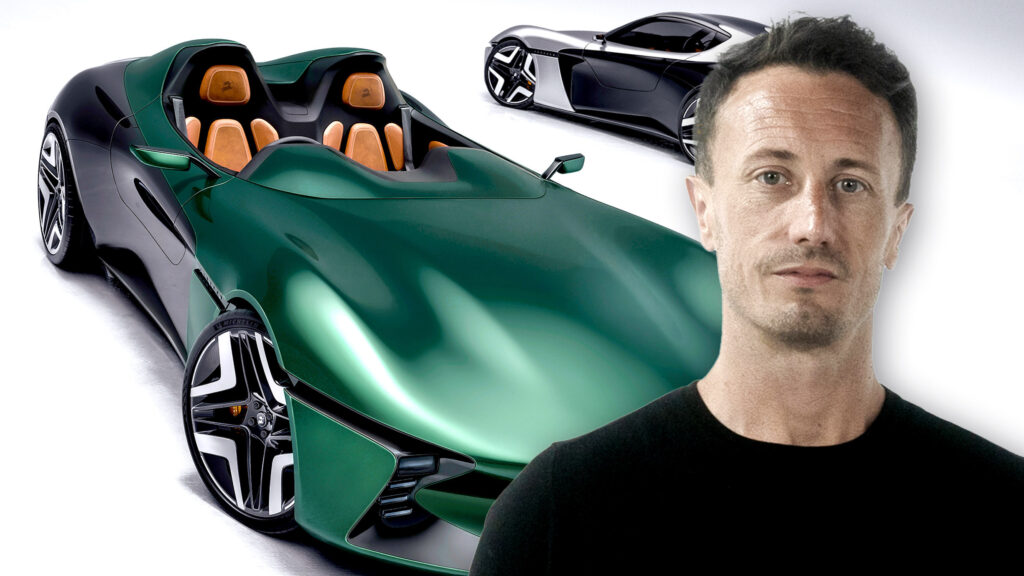
Calling it a big deal would be a massive understatement, which is probably why Ferrari hired Ive and fellow designer Marc Newson for the task of shaping the Luce.
The exterior, in fact, has been penned by LoveFrom, the design house founded by Ive and Australian designer Newson, which makes this less a routine Ferrari project and more a collision between Maranello and Silicon Valley minimalism.
Speaking to Autocar, Ive openly admitted that he’s “anxious” about revealing the car to the world. It’s not concern over the design itself that sparks that feeling, but instead the gravity of just how big this moment is for Ferrari. He called it “still clearly a Ferrari,” but went on to say that “It’s a different manifestation based on some of the beliefs around simplicity and the inherent beauty of something.”
On the flip side, his co-designer, Newson, highlighted the freedom offered with such a project. “One of the great and serendipitous sort of things is that this is an electric vehicle, the first electric Ferrari, right? So that afforded us a degree of freedom that perhaps we would otherwise have not had: literal physical freedom or creative freedom… on many levels here,” he said.
Inside The Luce Philosophy
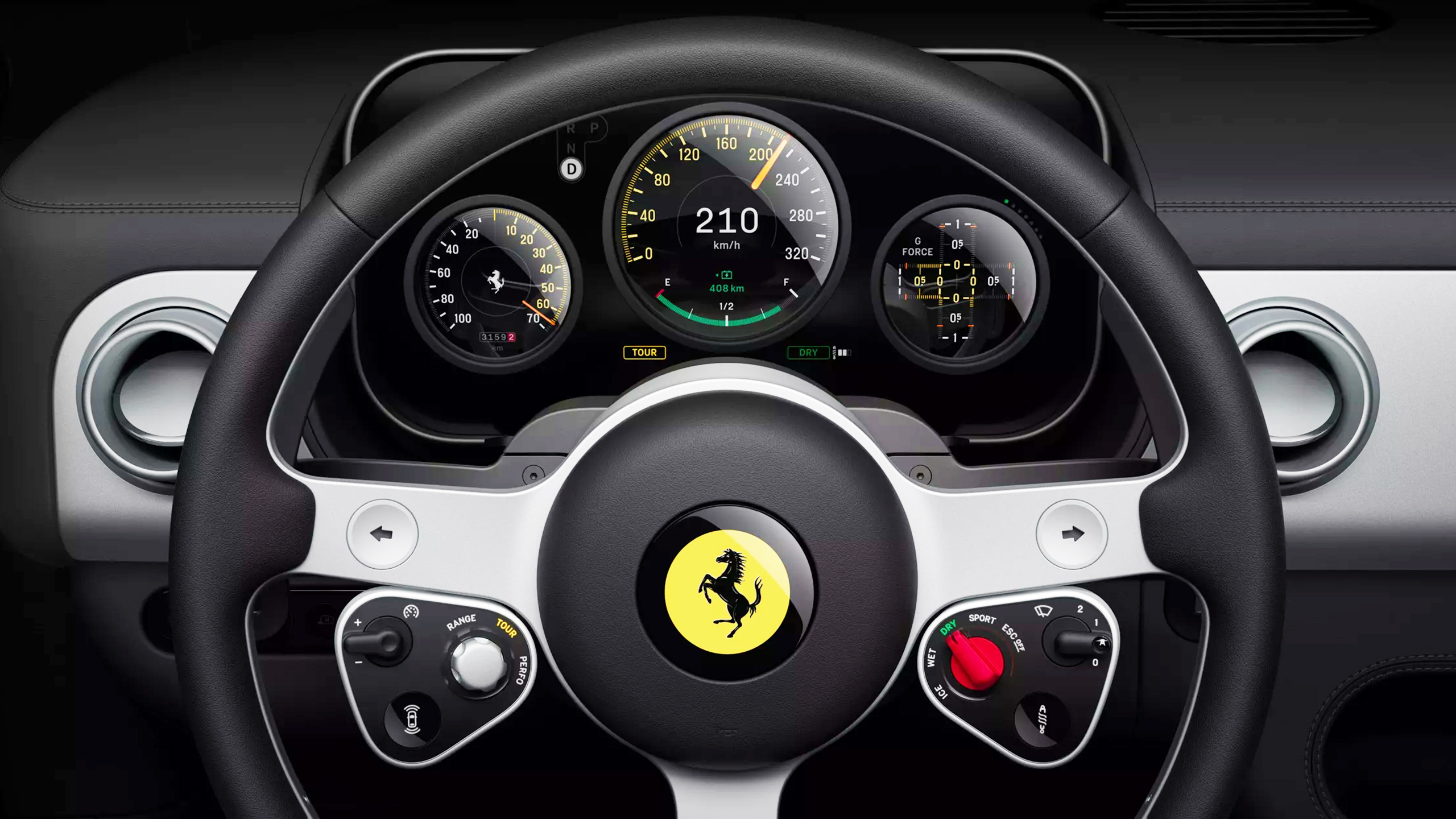
At this stage, we’ve already seen official bits of the interior. The brand unveiled the dash earlier this month. It’s quite the departure from other modern Ferraris. That’s key because Ive and Newson say that the entire car has a “consistency and a singularity” about it.
Ive has also stressed that there is “no disconnection” between the exterior and interior, noting that both were designed simultaneously rather than by separate departments. In his view, that approach results in a complete package that feels cohesive rather than pieced together.
What we also know so far is that the Luce will be a four-door, four-seat GT with a ride height similar to the Purosangue, and that it will feature a 1000hp four-motor powertrain. Ive has hinted that the car will be “big” in its proportions and just as radical on the outside as it is within.
Will The Luce Use Rear-Hinged Doors?
SHProshots
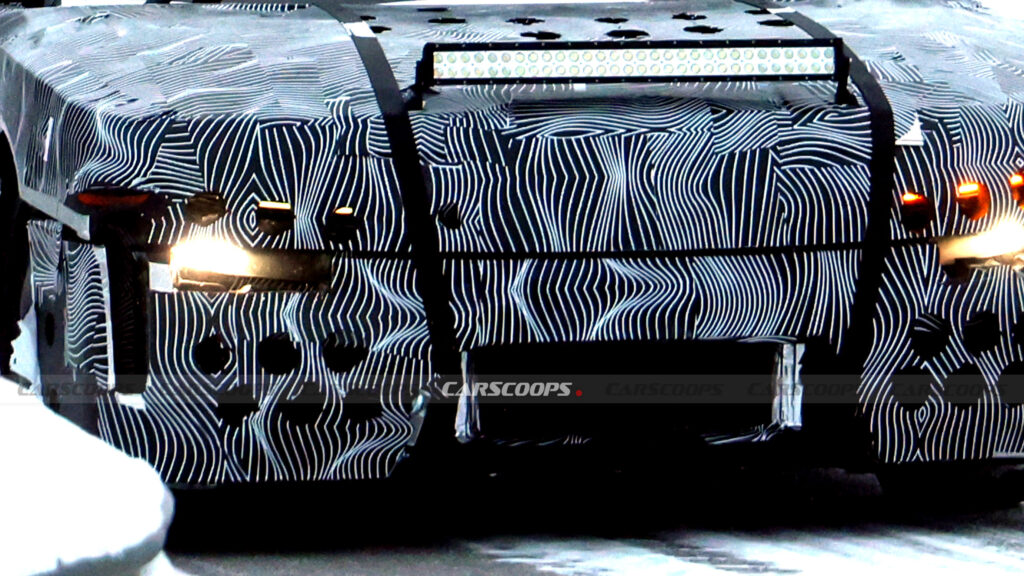
To that end, we wonder if the exterior will be far more retro-futurist than previously expected. While Ive was talking about the new Luce, our spies caught another heavily disguised prototype undergoing testing in northern Sweden this week.
Like earlier Luce testers, this one was wrapped in makeshift panels from top to bottom, making it extremely difficult to interpret what is happening underneath beyond a general sense of its proportions and size.
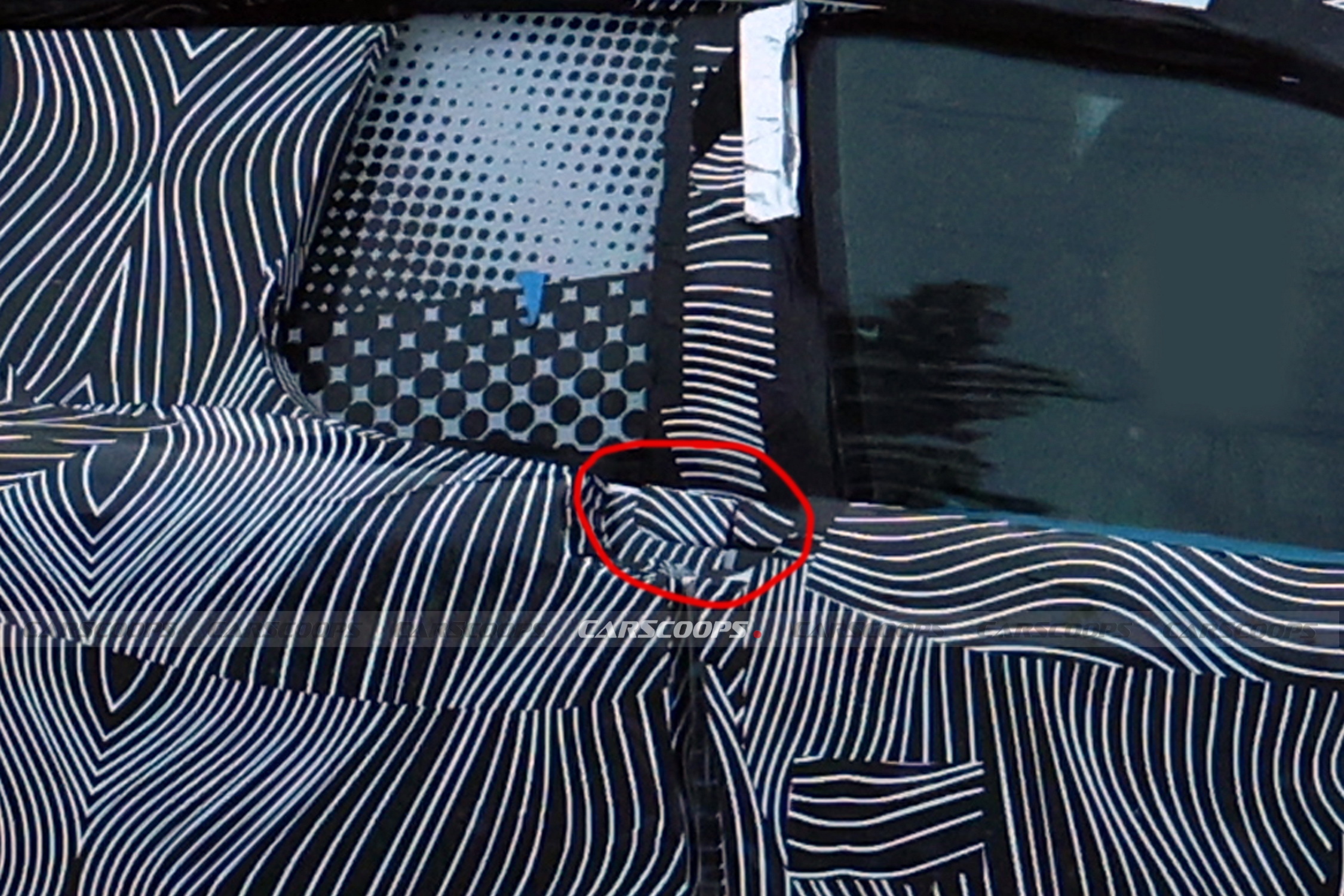
One detail our photographers did catch appears to be a set of door handles, circled in red, positioned just under the B-column in the middle section. According to our photographer, the Luce may be using suicide-style rear doors that open toward the front of the vehicle, similar to the Purosangue. This has not been officially confirmed, and it could just as easily be Ferrari engaging in a bit of cheeky misdirection.
We will know for certain in May, when Ferrari finally unveils its first EV.
PROS ›› Genuinely quick, nimble handling, faithful design features CONS ›› Tight rear seating, Uncharted undercuts it, limited cargo space
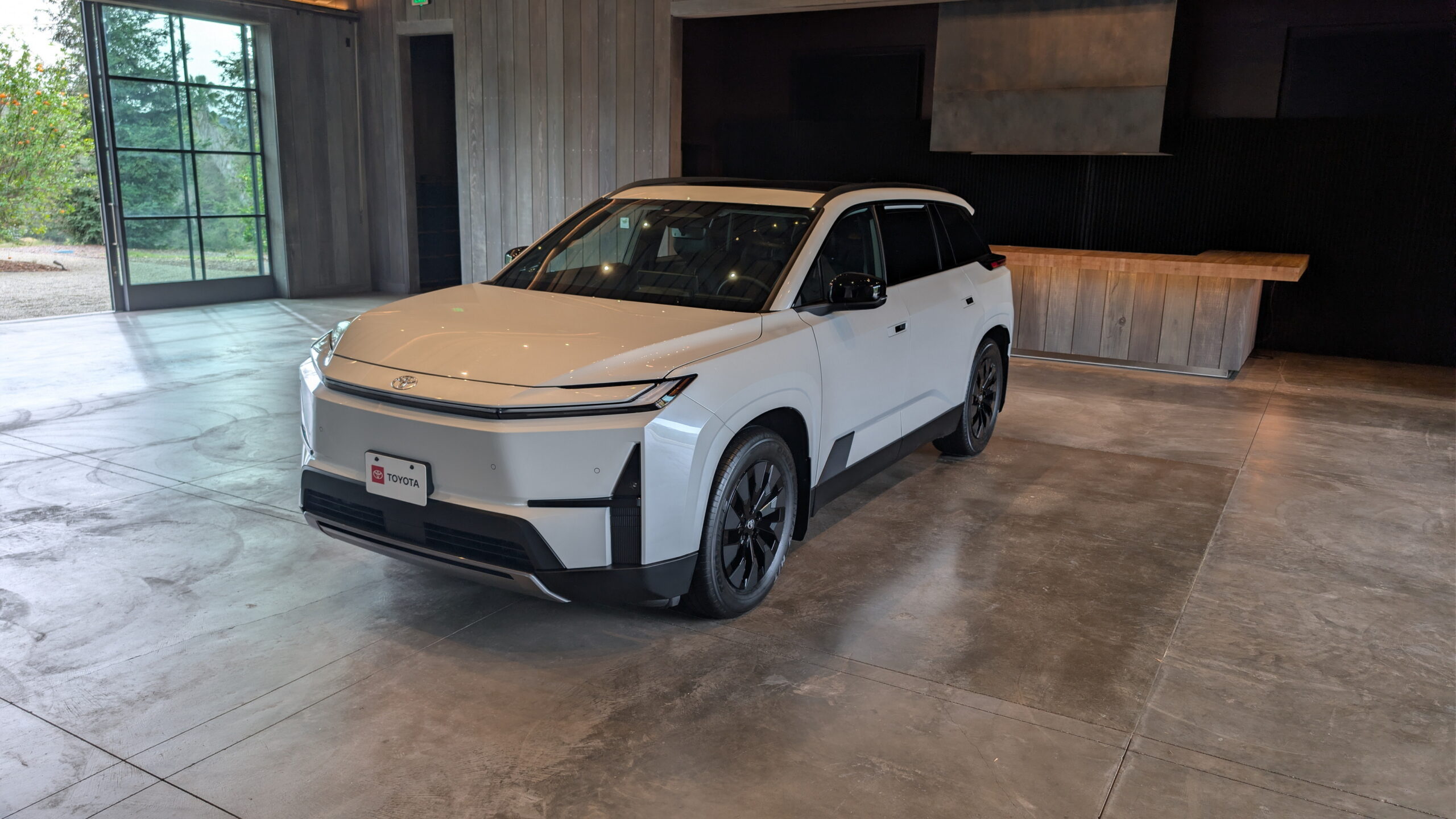
A quick look around the automotive industry would have most thinking that EV adoption is slowing down. Whether that perception holds true or not, Toyota is moving ahead full steam with not one, but three new electric vehicles, and the C-HR might be the most playful of the bunch. Yesterday, we talked about how the bZ Woodland is a great improvement on the old bZ4x.
Today, the focus shifts to the C-HR, a revived nameplate that now returns exclusively as an EV. It’s a huge deal beyond just the fact that it’s going electric. It’s the first formerly gas-powered Toyota nameplate to go fully electric. Sure, it only beat the new Highlander by a few months, but that’s more than enough. Both will have a big impact on Toyota moving forward.
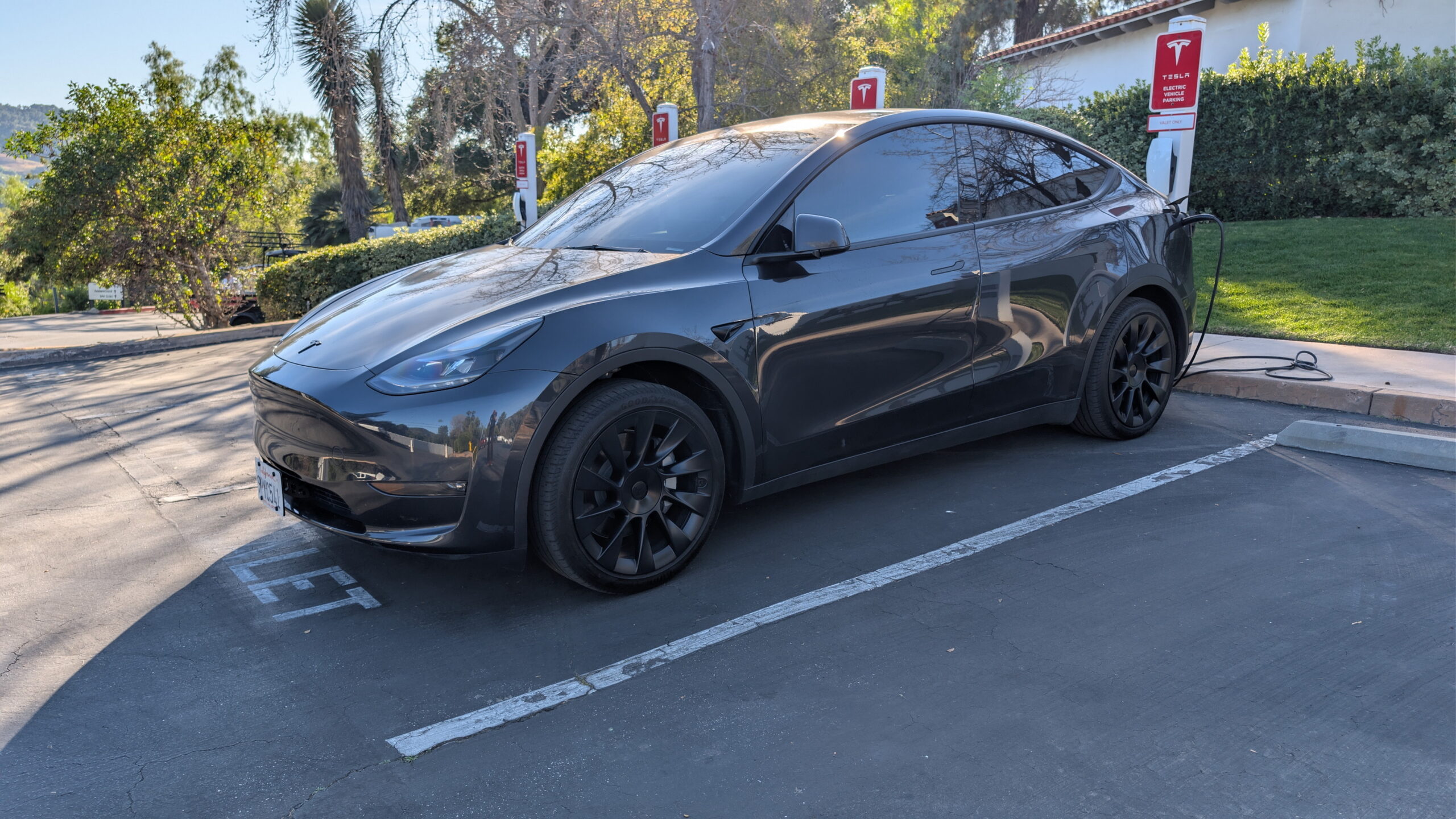
While we don’t know what the Highlander will end up selling for, the C-HR is clearly aimed at a different demographic. With a starting price shy of $38,000 before destination and handling, it’s aimed at Tesla Model Y buyers wanting something a touch smaller. Packing standard all-wheel drive, 338 hp (252 kW), and almost 300 miles of range, it’s a new face in the segment that will no doubt blow up one day.
Quick Facts
› Model:
2026 Toyota C-HR
› Starting Price:
$37,000 (excluding destination)
› Dimensions:
177.9 L x 73.6 W x 63.8 in H (4,519 x 1,870 x 1,621 mm)
› Wheelbase:
108.3 in (2,751 mm)
› Curb Weight:
4,322 lbs (1,960 kg)
› Powertrain:
Dual electric motors / 74.7 kWh battery
› Output:
338 hp (252 kW)
› 0-60 mph
4.9 seconds
› Transmission:
Single speed
› Range:
Up to 287 Miles
› On Sale:
First-half of 2026
SWIPE
Now, all that’s left is to figure out if it’s good enough that it’ll gain a foothold for a long ride, or if it’s still a battery cell or two away from a fully-formed EV. Thankfully, a week of testing it in hilly Ojai, California, helped us figure out the good from the bad.
Styling
Photos Stephen Rivers/Carscoops
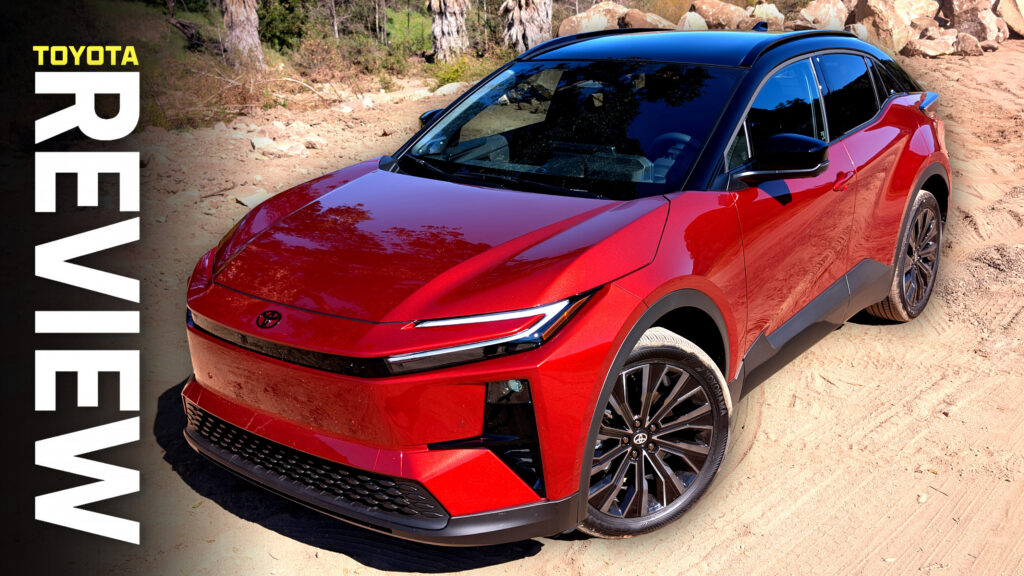
Let’s not play coy. While the C-HR’s nomenclature has always invited comparisons to Honda’s HR-V, the exterior designs couldn’t have been much more different when it first arrived. We’re happy to report that the same playful attitude carries over to this new electric version of the crossover.
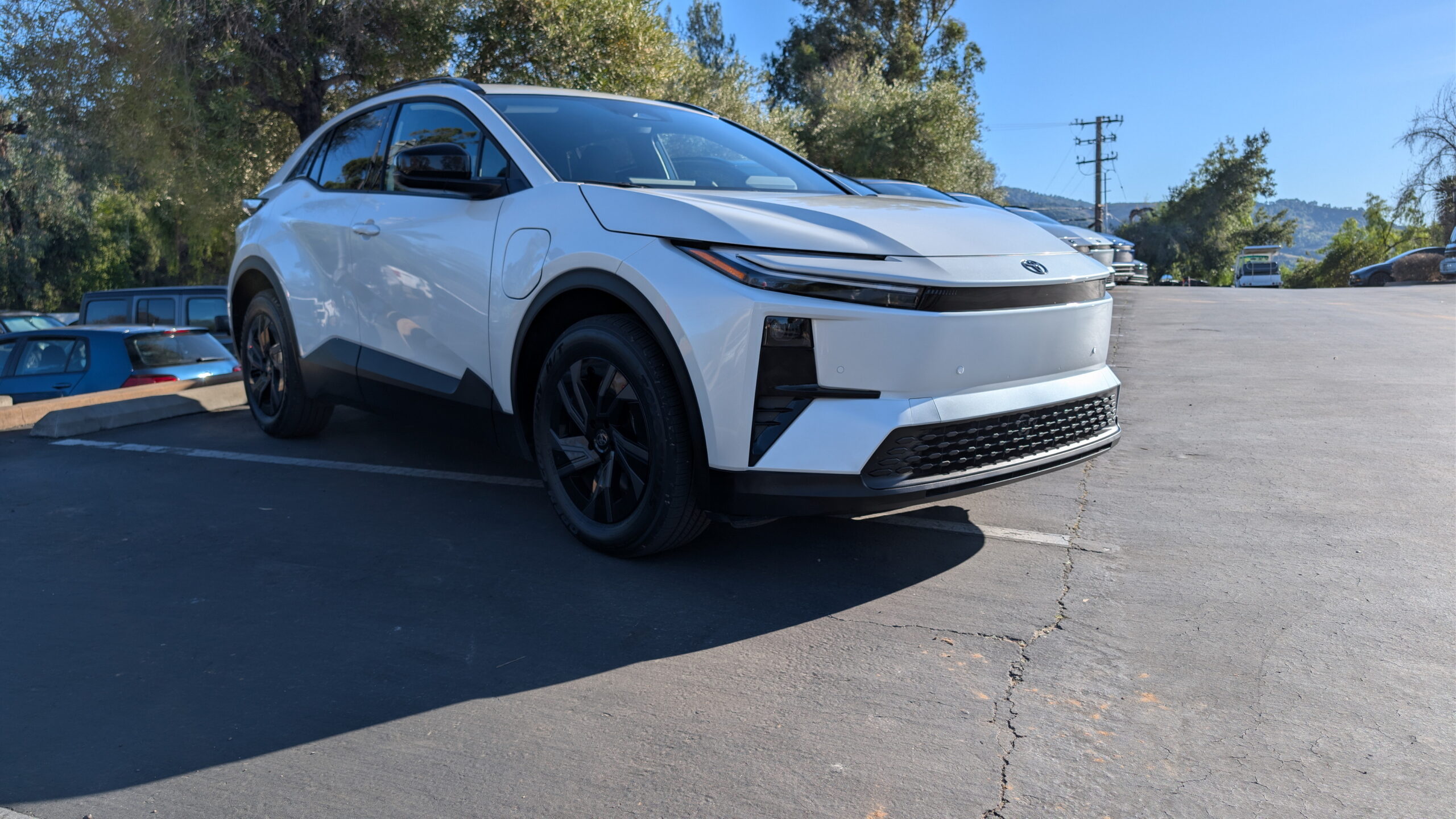
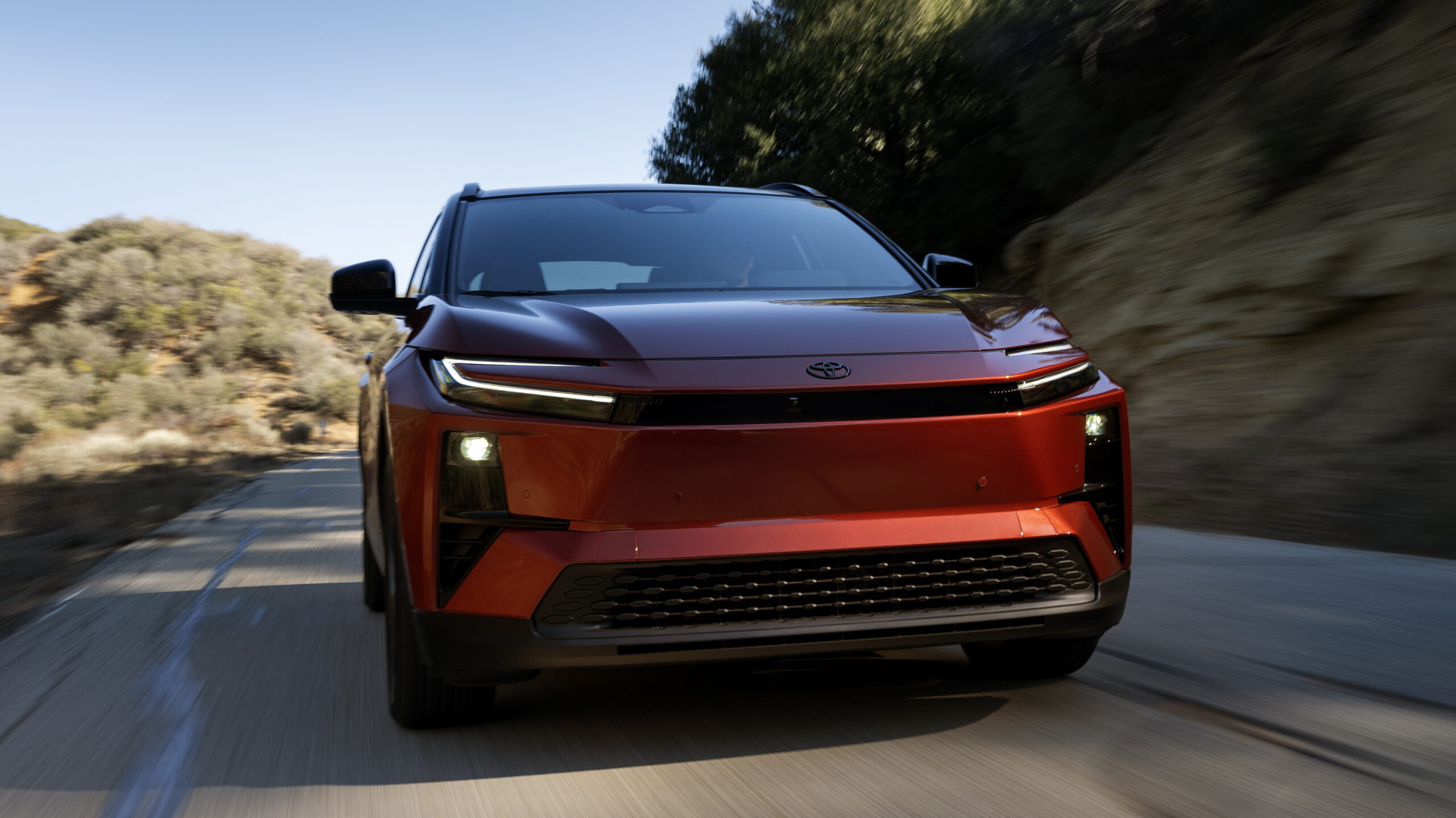
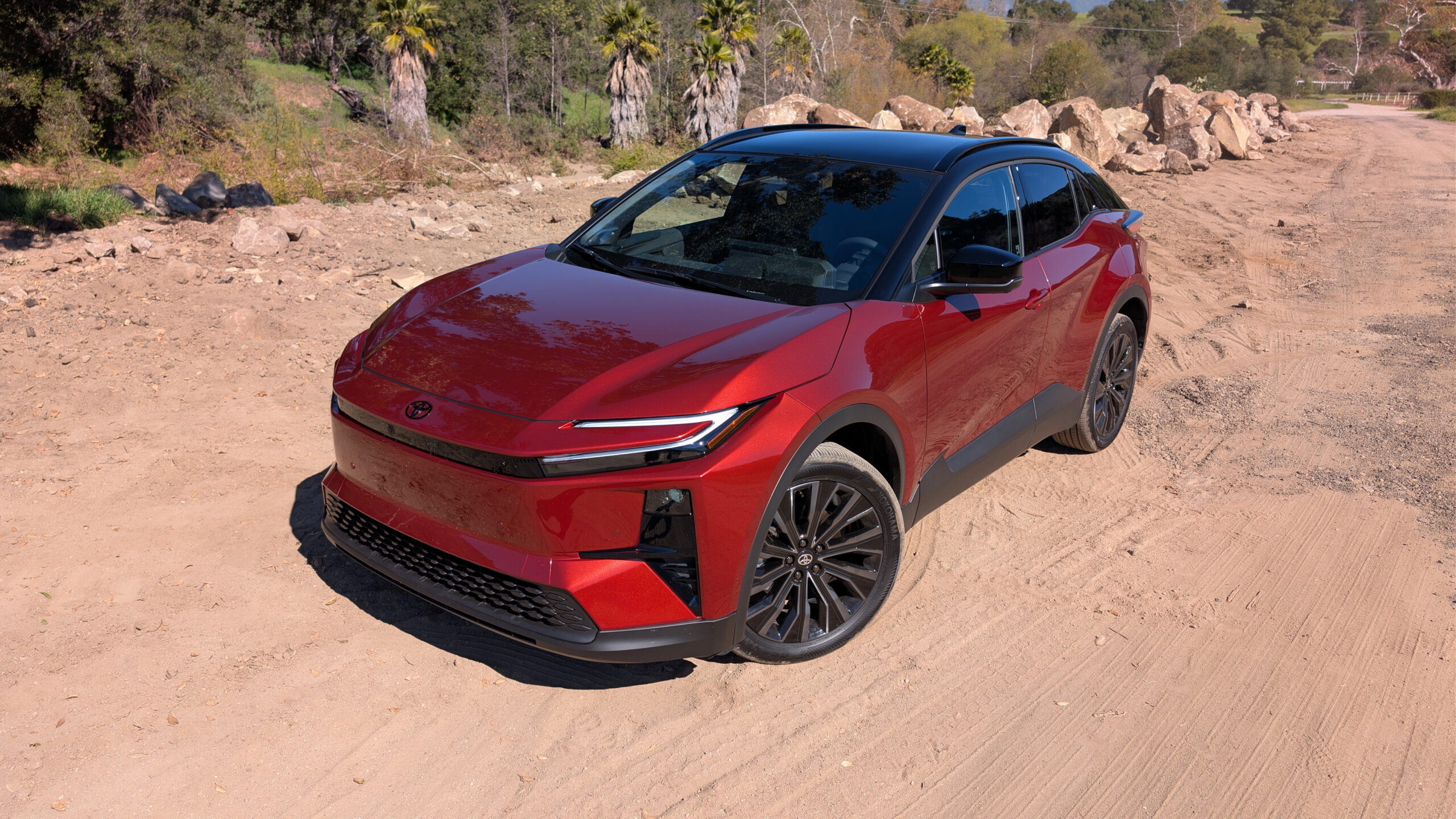
The front end adopts Toyota’s newer hammerhead design language, with a low, aggressive nose and slim lights that visually widen the car. The coupe-like roofline flows cleanly into the rear, and from certain angles, the C-HR almost looks more hatchback than crossover, which works in its favor. It feels athletic despite being clearly compromised on that front.
Compared to the bZ Woodland, the C-HR looks tighter and more urban. It’s clearly aimed at buyers who want something sporty and expressive rather than rugged or adventurous. The wheel options help sell that image, too, with 18-inch alloys on the SE and aggressive 20-inch wheels on higher trims.
If the old C-HR was bold but polarizing, this one is more mature. It’s still stylish, but it’s less desperate for attention and more apt to provide an experience worthy of an offbeat appearance.
Cabin Space
Photos Stephen Rivers/Carscoops
Toyota told us early on that we’d see a lot of crossover between this and the bZ Woodland, and it was right. It leverages supportive front seats, an intuitive infotainment setup, a steering wheel that feels good in your hands, and visibility that’s better than the sloping roofline suggests. The driver’s position feels good, though; we’d love a little more adjustability from the steering wheel.
Photos Stephen Rivers/Carscoops
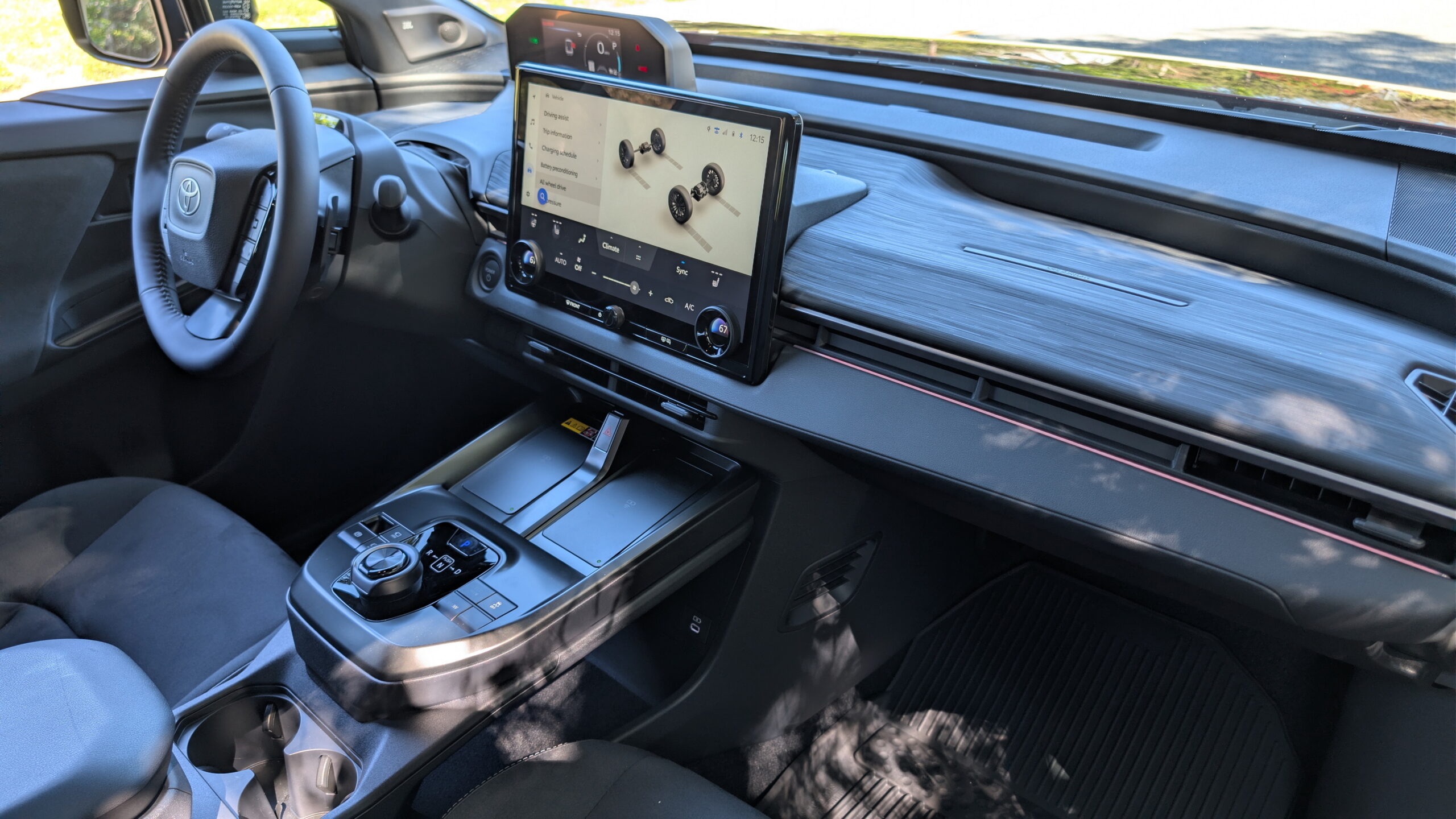
The 14-inch touchscreen dominates the dashboard and comes standard across the lineup. It’s responsive, cleanly laid out, and avoids the over-complicated UI issues that plague some competitors. Dual wireless charging pads and practical storage touches reinforce that Toyota still knows how to design for daily life.
Material quality is a step up from Toyota’s earlier EV efforts, too. Soft-touch surfaces and ambient lighting keep things modern without crossing into gimmicky territory. And then you climb into the rear seats. Things go from perfectly livable to suddenly only for the smallest around us.
How Tight Is Too Tight?
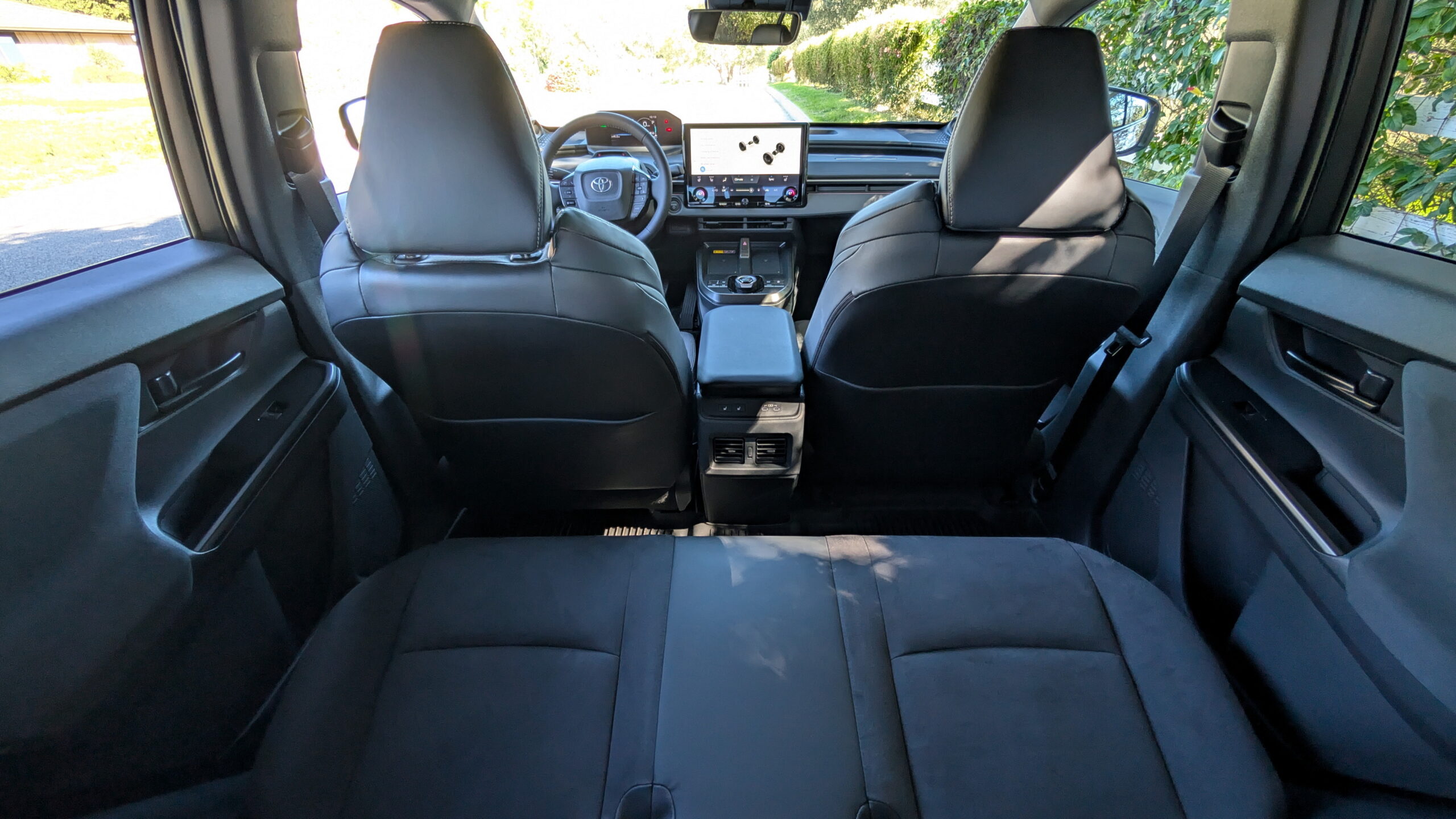
I get that as a taller-than-average guy, I won’t fit everywhere, but I was sincerely shocked at just how tight the back seats of the C-HR are. This is a compact crossover, and that’s clear as soon as we compare it to another new crossover in the form of the Mazda CX-5.
The Mazda has a wheelbase that is just 2.5 inches (63 mm) longer. Despite that, the CX-5 offers 7.7 inches (195 mm) of additional legroom, up to 2.8 inches of headroom, and in total over 10 cubic feet of extra space in the rear seats. Put simply, rear-seat occupants won’t be happy in the C-HR unless they’re relatively small. That said, they’ll fit kids just fine.
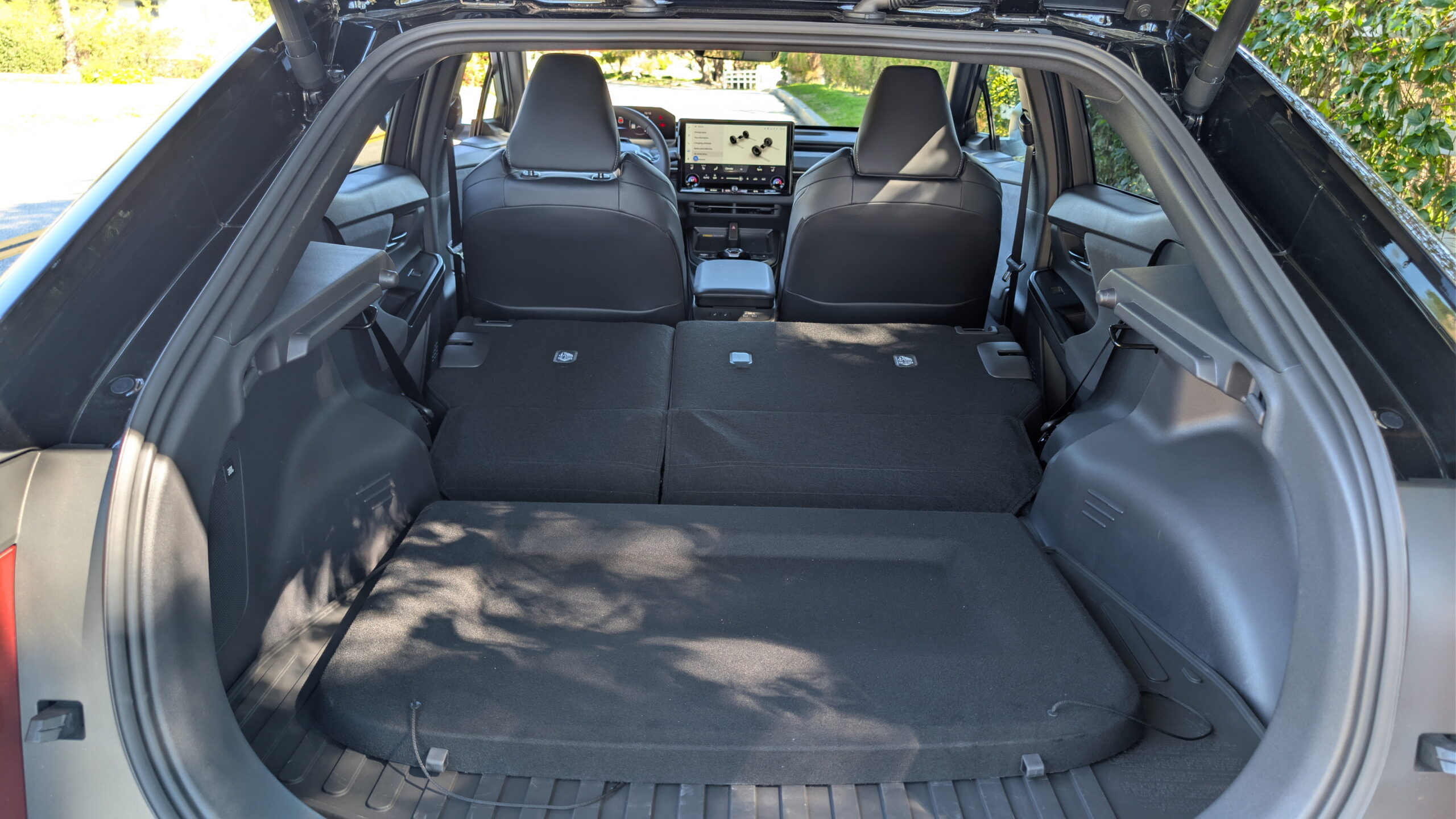
Cargo space fares better, with 25.3 cubic feet behind the rear seats and nearly 60 cubic feet with them folded. That’s perfectly usable for daily life, but the passenger packaging tells you clearly where Toyota’s priorities were.
Driving Impressions
Here’s where the plot thickens, in the best way possible. EVs are well-known for their instant torque, but that doesn’t automatically make one good to drive. The way the C-HR moves about the world is with more authority than one might expect. It’s sharp. The short wheelbase helps it manage bends with confidence. And the steering is more communicative than in the larger bZ Woodland.
Toyota claims 0-60 mph in 4.9 seconds, and it absolutely feels believable. This thing moves… not with the aggressive chaos of a GR Corolla, but with the smooth, relentless urgency only an EV can deliver. In fact, this might be the quickest pseudo-practical car in Toyota’s lineup right now. It’s not trying to be a sports car, yet it’s faster in a straight line than many cars that are.
The low battery placement keeps the center of gravity down, and the chassis feels planted through corners. Steering is light but accurate enough that you want to push a little harder than you probably expected. There’s a maturity to the tuning. It’s composed, predictable, and easy to trust. The brakes are excellent, too.
The regenerative braking paddles let you adjust deceleration on the fly, which adds a layer of driver involvement often missing from mainstream EVs. It’s not revolutionary, but it does make the driving experience feel more interactive.
Ride quality strikes a nice balance, too. It’s firm enough to feel sporty without punishing you over rough pavement. The C-HR doesn’t feel like a small SUV pretending to be sporty. It just feels like a well-sorted EV with some genuine personality. No, it’s a far cry from a Hyundai Ioniq 5 N or a Tesla Model Y Performance, but it’s the EV I’d pick from Toyota’s lineup if driving feel was all that mattered.
From a more practical standpoint, range tops out at 287 miles on the SE trim, dropping slightly with the larger wheels. Charging speeds max out at 150 kW DC fast charging. That’s enough to go from 10–80 percent in roughly 30 minutes under ideal conditions. As we’ve seen in the past, ideal conditions can be rare, but the inclusion of Tesla’s NACS port should help.
The C-HR lands in an increasingly crowded space, but its personality gives it, like the bZ Woodland, a unique angle. The Tesla Model Y remains the benchmark for space and usability. It’s roomier, more versatile, and easier to live with if rear-seat comfort matters. The Model 3, while technically a sedan, also beats the C-HR for rear-seat comfort despite looking smaller.
Frankly, comparing it on paper to most cars in the segment makes the C-HR look like a middling choice at best. Even pairing it against its badge-engineered sibling, the Subaru Uncharted, it costs more and isn’t available with front-wheel drive, which unlocks more range. That said, I’m not about to start complaining that we need more front-wheel drive cars.
Where the C-HR stands out is key, though. All-wheel drive is something that plenty of folks want and or need where they live. Second, it’s probably the easiest car in the segment to park, thanks to great sightlines and one of the shortest wheelbases here. That matters.
No, it’s not the quickest, cheapest, or most spacious. Instead, it’s leaning into the vibe of a compact, economical electric vehicle to the best of its ability in its current form. And that form just so happens to be quite attractive and fun.
The Verdict
Toyota just launched the new Highlander in all-electric form, which is a huge deal in itself, but let’s not forget that this new C-HR is the first formerly gas-powered Toyota to go all-EV in America. That’s also a big deal, and it makes this little commuter car an important inflection point in history.
To that end, it’s great to see that Toyota didn’t hold back here regarding performance. The C-HR is properly quick, genuinely fun to pilot, and even fun to look at. The front seats, infotainment, and overall driving position are all excellent, and on the road, it feels composed, lively, and far more engaging than many electric crossovers in its segment.
That said, it’s not without compromise. Rear-seat space is tight enough to be a real consideration, especially if you regularly carry adults. This is a crossover that prioritizes style and driving feel over maximum practicality. And honestly, that might be exactly the point. Here, the fun comes first, and the practicality, while important, comes in second place. Will it be a mix that sells well? Only time will tell.
The company wants EVs to feel like sports cars not tech showcases.
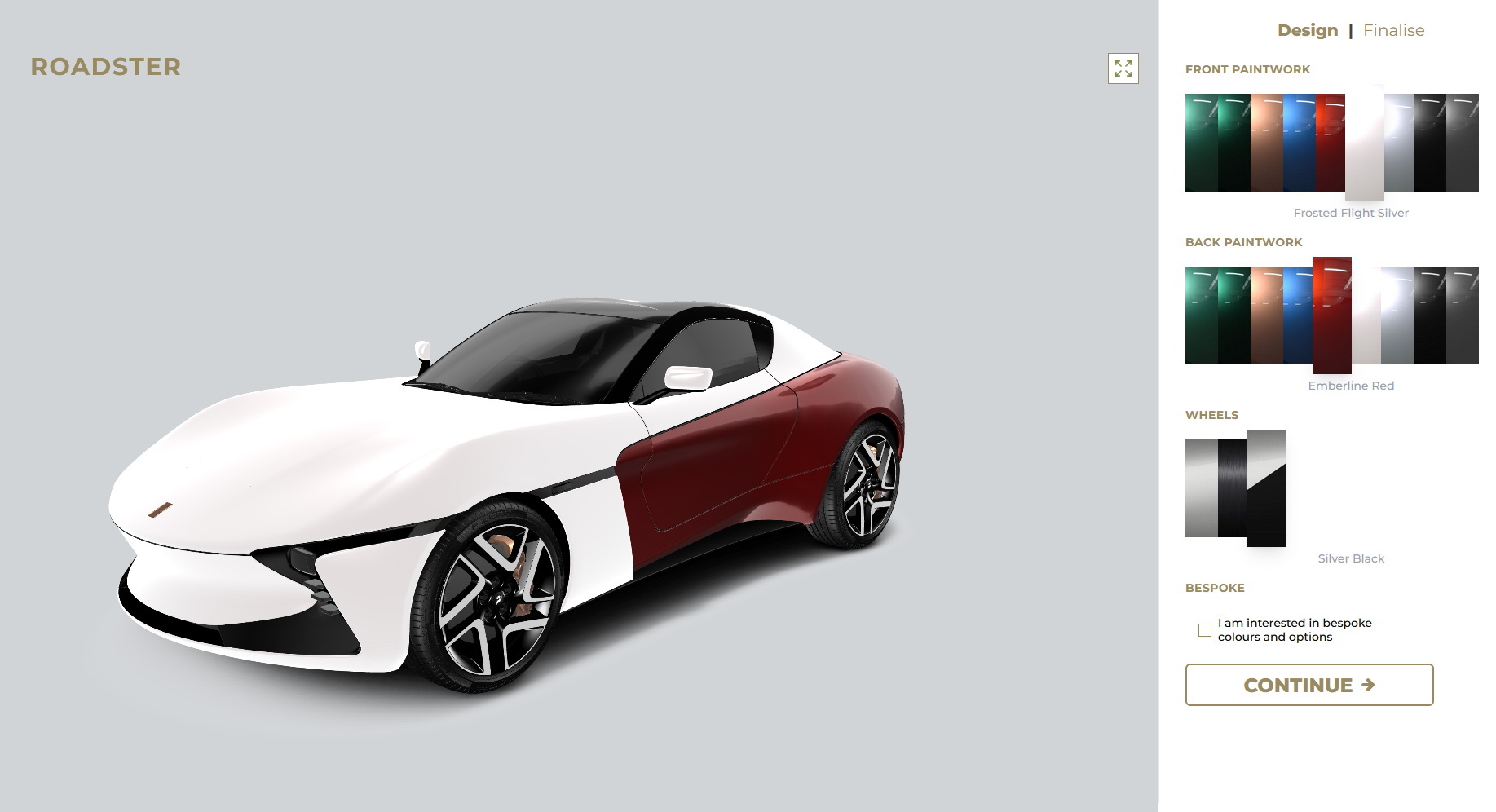
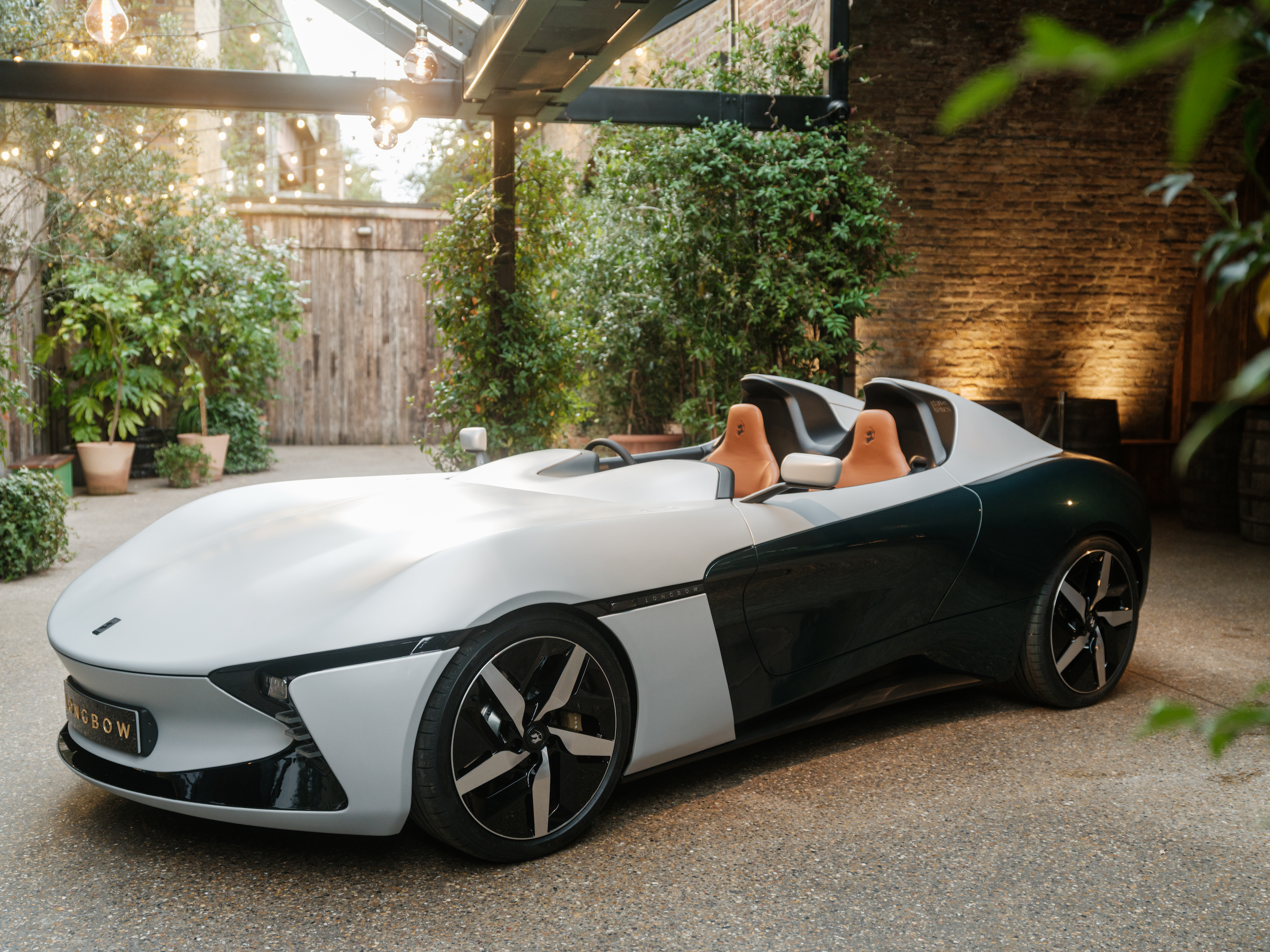
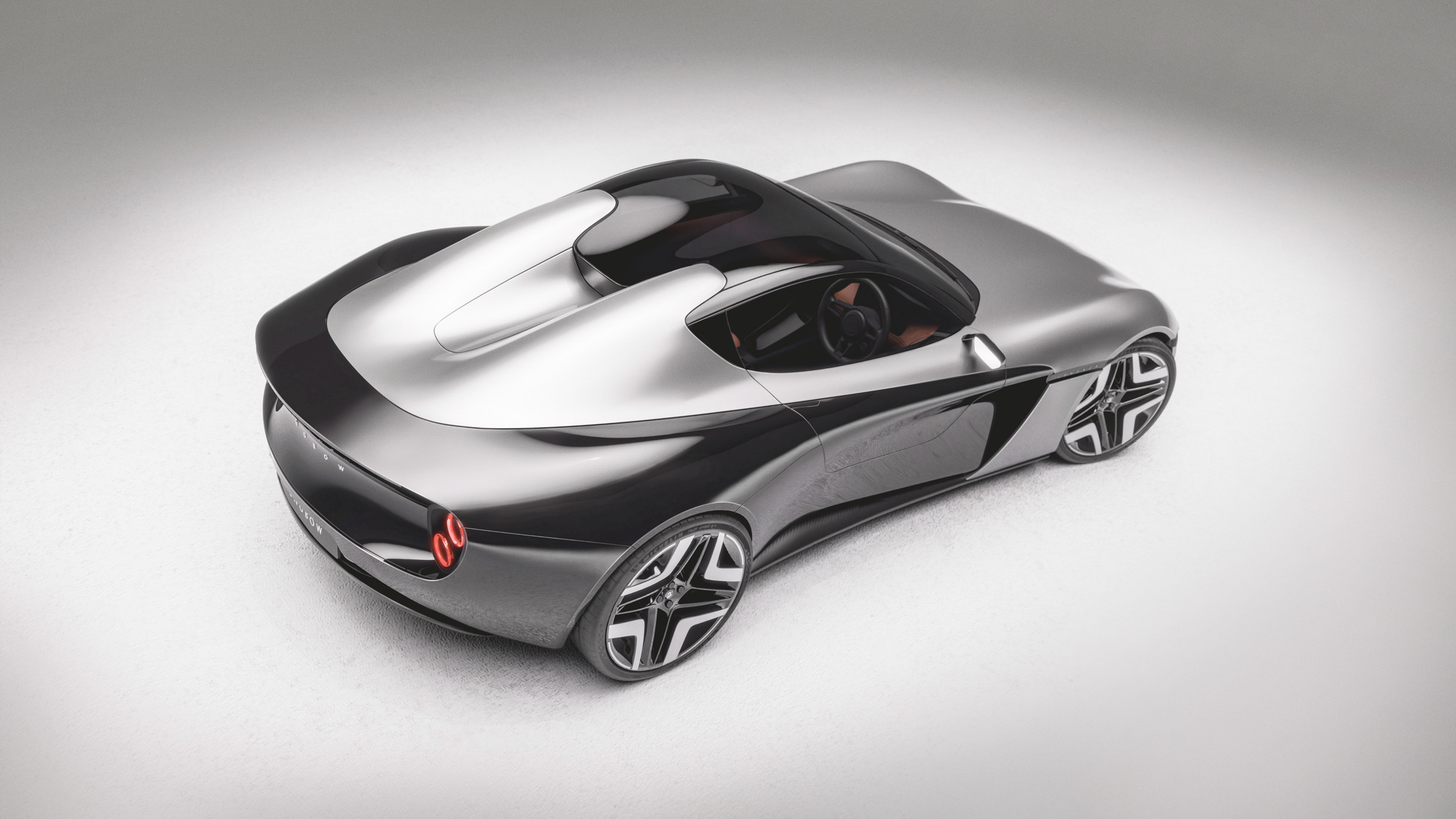
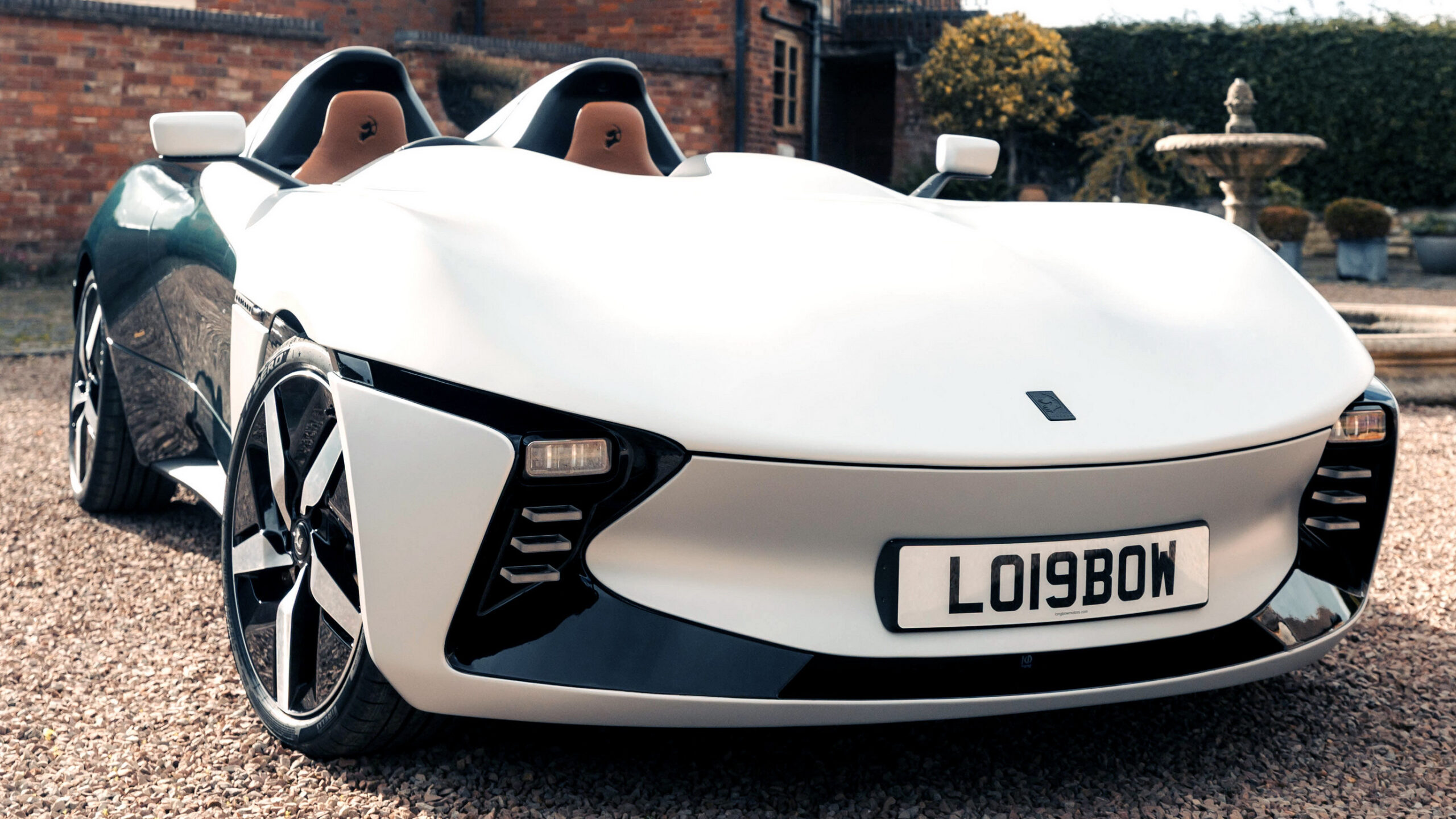
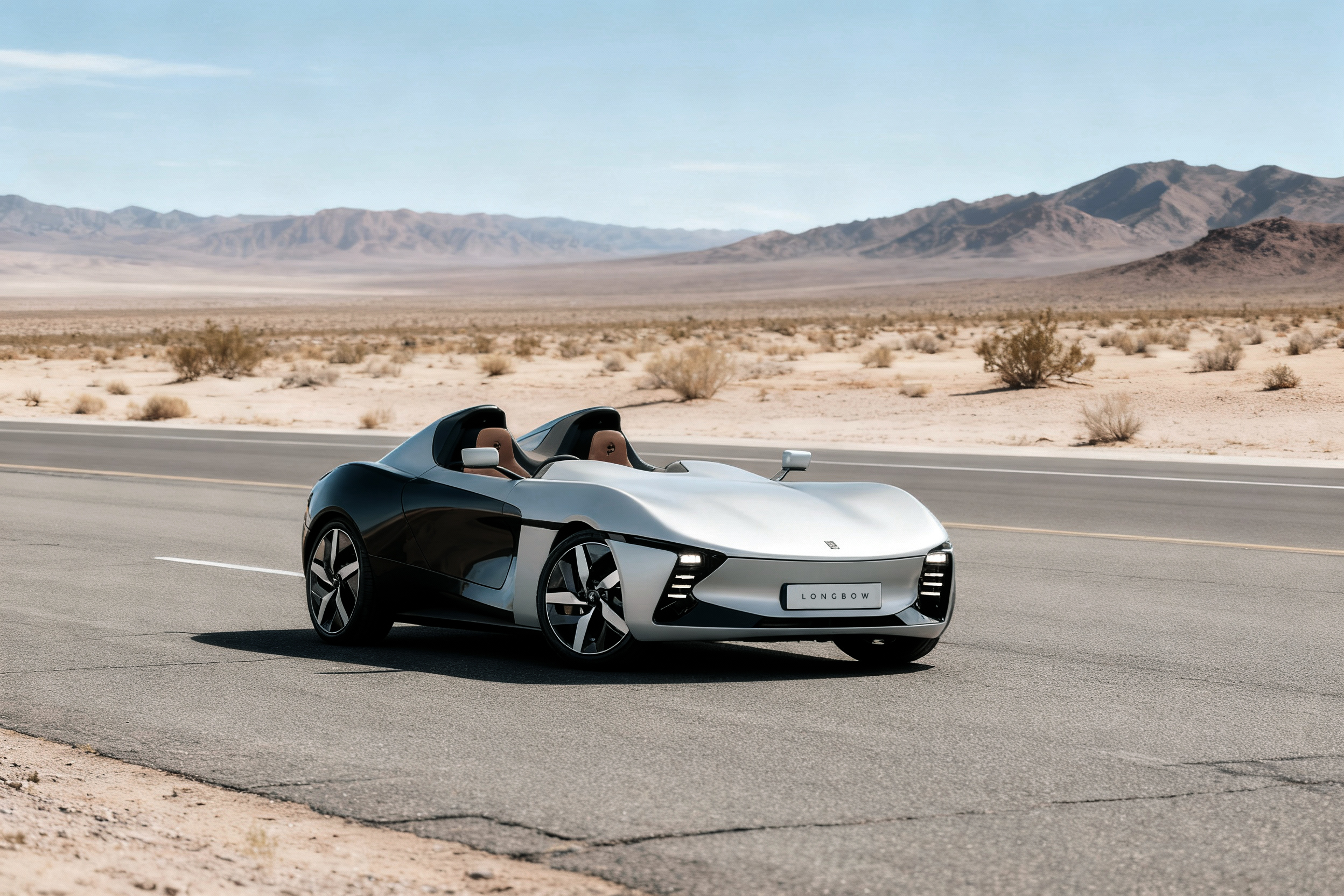
For many modern electric vehicles, progress has come to mean more. More batteries, more screens, more driver aids, and more weight. Longbow doesn’t see that as a requirement, or even desirable, for that matter.
The company was founded in 2023 by Daniel Davey and Mark Tapscott, both veterans of Tesla and Lucid, so they have seen firsthand how ambitious EV concepts hold up once they leave the presentation slide. At the end of 2025, former X Shore CEO Jenny Keisu joined the leadership team, bringing experience from the electric marine world into the mix.
Speaking exclusively with Carscoops, Tapscott outlined an engineering philosophy rooted in first principles, lightweight design, and a rejection of the idea that electrification must automatically lead to oversized, tech-heavy vehicles.
Does Every EV Need To Be Built From Scratch?
“I think it’s just a strengthening of resolve, to be honest,” Tapscott said when asked whether shifting industry conditions had forced a rethink. Rather than chasing vertical integration or speculative future technologies, Longbow is focused on building a sports car using proven components that already exist.
That mindset was reinforced early on through conversations with one of Tesla’s original co-founders, Tapscott told us, though he did not specify which one. Tesla was founded in 2003 by Martin Eberhard and Marc Tarpenning. “He sort of explained to us… that it’s exactly how they wanted to build Tesla 15–20 years ago,” Tapscott said. Back then, the supply chain simply wasn’t ready. Today, it is.
Instead of pouring resources into building motors or factories from scratch, Longbow is deliberately sourcing components with millions of miles of validation behind them. “There are so many suppliers making incredible products that we can take advantage of,” he explained. “The industry is helping us in what it’s doing.”
Physics First, Always
Tapscott says Longbow didn’t need to “unlearn” much when forming the company, largely because its founders came from motorsport, startups, and consultancy work rather than traditional OEM bureaucracy. What they did adopt, and continuously return to, is physics-based thinking.
“We always come back to that, which is the ‘why’ every single time,” he said. “It’s always ‘why this, ok, why that,’ until we get to that physics first-principle reason. And very often, there isn’t a reason—it’s just a choice.” A clear example is Longbow’s battery architecture. Instead of layering cells inside multiple cases and mounts, the company questioned whether those layers were truly necessary.
“Cells go into a case. That case is in another case. And then it goes into the vehicle, which is another case,” Tapscott explained. “So you end up having these extra layers of unnecessary weight and volume.”
By stripping those layers away and integrating the battery structure directly into the chassis, Longbow says it has achieved significant stiffness gains. According to Tapscott, the resulting structure is “at least twice as stiff as the Lotus chassis,” often cited as a benchmark for lightweight aluminum sports cars.
Clearing The Air On In-Wheel Motors
Longbow’s CES appearance sparked plenty of conversation around in-wheel motors. The brand touted a potential output of 900 horsepower, but it left us wondering how those motors would affect unsprung mass. Tapscott was quick to clarify that what was shown was a demonstration, not a production specification.
“The vehicle that we showed at CES… was really a demonstration,” he said. The goal was to highlight the flexibility of the underlying chassis rather than preview a finalized drivetrain. For production, Longbow is sticking with what Tapscott described as a “beautifully engineered, tiny little watchmaker’s motor” mounted within the vehicle. Still, he sees long-term potential in hub motors, particularly as technology matures.
“There is development work to be done on in-wheel motors,” he said. “We do think there is definitely a future for them… because it gives you so much more opportunity within the vehicle.” So for now, put a pin in the hub motors, but don’t forget them. They could pop back up in a future Longbow product.
Weight Loss As A Daily Discipline
Ask where weight was spent most reluctantly, and Tapscott doesn’t point to a single component. Instead, he describes an internal philosophy that governs every decision. “Our engineers are given two tasks,” he said. “Every day, they need to lose at least one gram from anything they’re designing. And the second is the best design they can do is no design at all.”
That ethos borrows heavily from Colin Chapman, whose influence Tapscott freely acknowledges. Still, Longbow isn’t pursuing minimalism at all costs. Some elements, like a physical shifter, exist purely to enhance the experience. “There are things we’re adding… for the theatrics,” he said. “Customer enjoyment is important.”
Additive Manufacturing And A Different Production Model
One of the most under-the-radar aspects of Longbow’s approach may be how it’s using additive manufacturing beyond prototyping. “At the moment, a lot of the development prototype cars we’ve been producing have been fully 3D printed on the exterior,” Tapscott said, noting how it enables rapid iteration during development.
Looking ahead, he sees additive manufacturing changing how low-volume cars are supported and customized. Instead of maintaining warehouses full of body panels across different markets, parts could be printed locally, on demand.
“You can actually just have one printer that can print off that part in that country immediately, without any delay,” he said. The same approach could also enable personalization without the cost typically associated with bespoke programs. “It could be entirely personalized to you,” Tapscott added. “That’s something that hasn’t been explored as much in production automotive.”
An EV That Puts The Driver First
Ultimately, Longbow’s message is that electrification doesn’t have to erase driver engagement. “An EV powertrain doesn’t mean a D-segment SUV with all of the extra cameras and weight and everything else,” Tapscott said. “Those two things are different.”
Longbow wants its car to be a tool – powerful, precise, and rewarding- but only when paired with an engaged driver. Or, as Tapscott put it, borrowing from the company’s own name: the weapon matters, but the archer matters more. Modern EVs are often defined by their tech-heavy approach, but that leads directly to just being outright heavy. Longbow’s approach to cutting out the fat might be its sharpest edge in the market.
Toyota’s 2027 Highlander is electric only with no gas option.
Two trims launch later this year with up to 320 miles range.
New platform brings larger dimensions and improved packaging.
For over twenty years, the Toyota Highlander has quietly been a heavy hitter. It’s never been wildly flashy, it’s never pretended to be an off-road giant, and yet, it’s been one of Toyota’s most important family haulers. Even with the arrival of the larger Grand Highlander that siphoned off some spotlight (and a fair share of sales), the original has held steady as a central figure in the lineup.
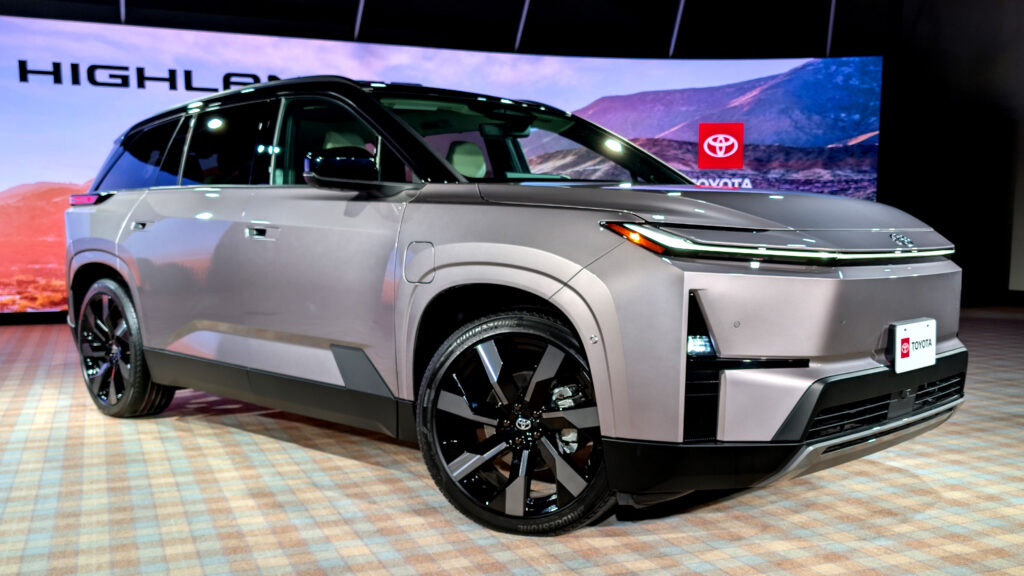
Now, for 2027, the brand is tearing up what seemed like a tried and true formula for something much bigger and far bolder than ever before. This all-new Highlander is an EV aimed squarely at the heart of the mid-sized market.
QUICK FACTS
Output
XLE FWD: 221 hp / 198 lb-ft
XLE AWD: 338 hp / 323 lb-ft
Limited AWD: 338 hp / 323 lb-ft
Overall Length
198.8 in (5,050 mm)
Overall Width
78.3 in (1,989 mm)
Overall Height
67.3 in (1,709 mm)
Wheelbase
120.1 in (3,050 mm)
Cargo Volume
45.6 ft³ (1,292 L) with 3rd row folded
15.9 ft³ (450 L) with 3rd row up
Range (Est.)
XLE FWD (77 kWh): 287 miles
XLE FWD (77 kWh): 270 miles
XLE AWD & Limited (95.8 kWh): 320 miles
SWIPE
Again, this isn’t just a new generation of the Highlander. It’s like a train switching tracks altogether. Buyers can’t get a gas-powered version, no matter how much they pay. That alone makes this a huge shift but Toyota didn’t stop there. This new SUV arrives with a new platform, larger proportions (color us shocked), and more technology than ever before.
Bigger And Bolder
Photos Stephen Rivers/Carscoops
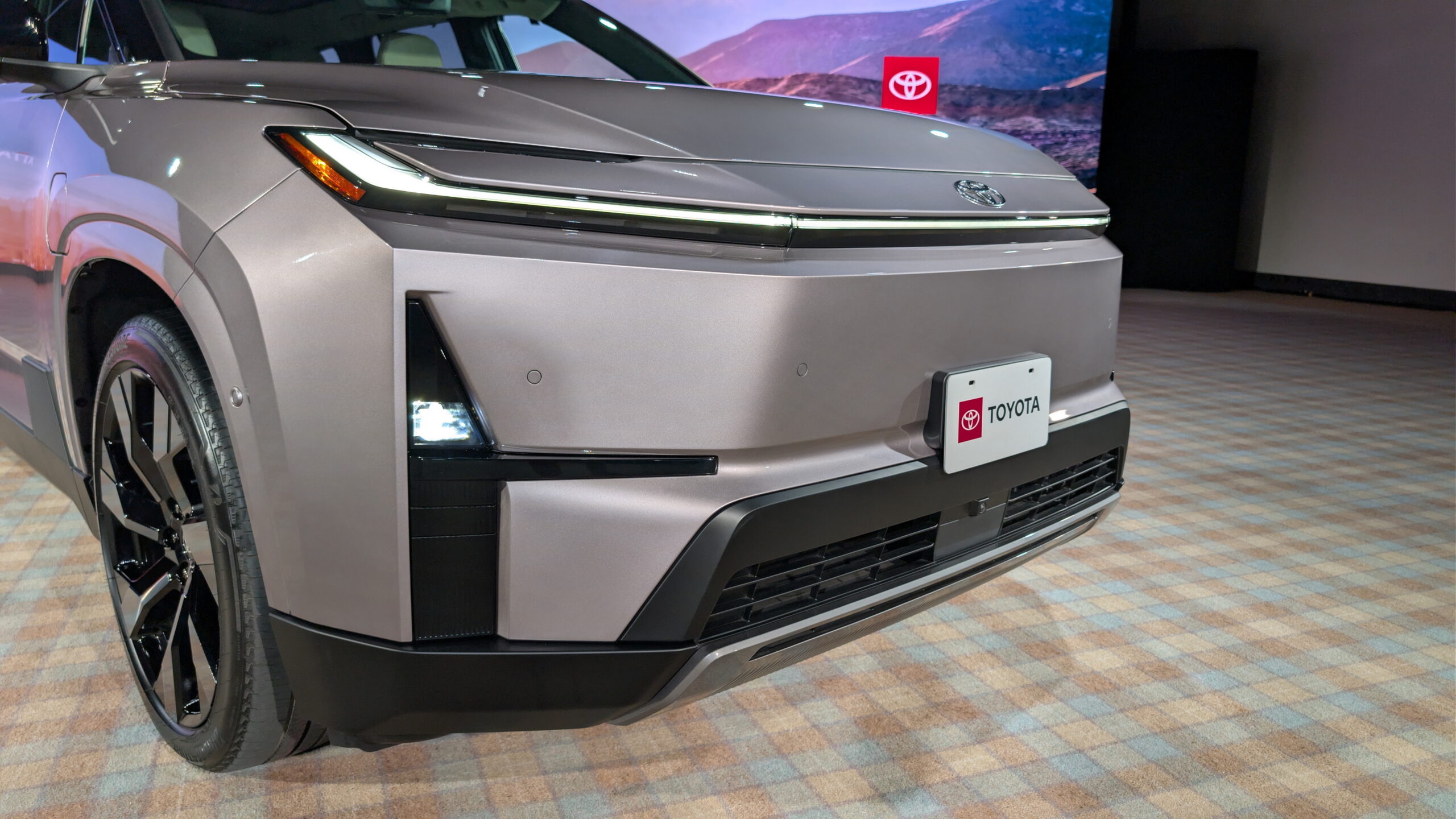
Visually, the new Highlander leans heavily into the new styling that we’ve seen from the brand in recent years. Who would’ve guessed that the Prius would spark a styling revolution? Nevertheless, that’s what’s happened, and the hammerhead front-end has slowly moved from Toyota’s most famous hybrid to the BZ line and now to the Highlander. In this case, that equates to an aerodynamically slippery front end, slim LED DRLs, flush door handles, and broad fenders.
It’s also considerably larger than the last-gen Highlander. Overall length jumps to 198.8 inches (+3.9 in.), width to 78.3 inches (+2.3 in.), and height to 67.3 inches (-0.8 in.). More importantly, the wheelbase now stretches to 120.1 inches (+7.9 in.). Don’t forget that the very first Highlander had a wheelbase of 106.9 inches (2,716 mm).
Photos Stephen Rivers/Carscoops
The two share little more than a name at this point. That said, the roofline is lower than the outgoing version. Combining that lower roof with a longer and wider body provides a planted stance.
Toyota says those revised proportions weren’t just about aesthetics. The longer wheelbase allows for a roomier cabin, easier third-row access, and better overall packaging for the battery underneath. Ultimately, it’s all about how the car shuttles passengers, so let’s dive into that interior space.
Cabin Acoutrement
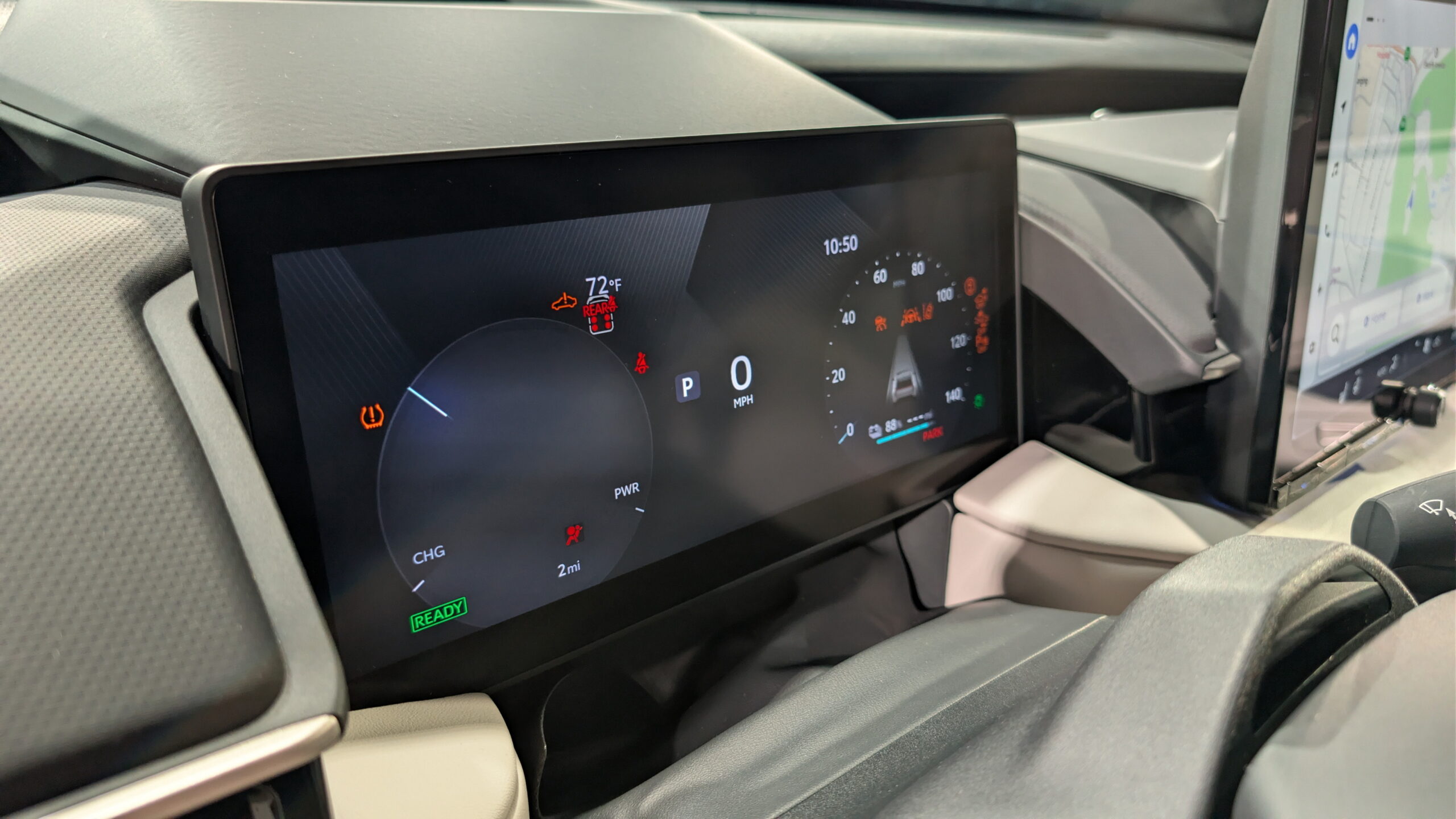
From the front seats, what stands out most is that this Highlander feels more elegant and straightforward. Everything is centered around a 14-inch infotainment system and a 12.3-inch digital gauge cluster. Thankfully, Toyota includes physical buttons and switches for vital functions like climate controls.
Both trims come standard with SofTex upholstery, heated front seats, customizable ambient lighting with 64 colors, and Toyota’s latest multimedia system. A panoramic glass roof is available on the base XLE trim and standard on the Limited. It’s the largest ever fitted to a Toyota.
Photos Stephen Rivers/Carscoops
In the second row, things are pretty stellar as well. Captain’s chairs are standard. Buyers of the XLE AWD can choose an optional bench to increase seating from six to seven. Perhaps the boldest claim from Toyota is that the third row can comfortably fit adults.
After sitting in it myself, I can say that short adults might find it perfectly livable. No question, it has some nice features like USB-C ports, climate vents, and the flexibility to recline the backrest a little. That said, please don’t try to carry around taller folks back there for very long.
Photos Stephen Rivers/Carscoops
Toyota lists cargo space at 45.6 cubic feet (1,292 liters) with the third row folded and 15.9 cubic feet (450 liters) with it upright. For comparison, the gas-powered Grand Highlander offers over 57 cubic feet behind the second row and just above 20 cubic feet behind the third. So while the new EV Highlander is spacious, it’s not quite as roomy as its larger sibling.
Power And Range
While all 2027 Highlanders use an electric powertrain, buyers do have a few options on that front. Toyota will offer a front-wheel drive XLE with a 77.0 kWh battery and 287 miles of range as the base model. It offers just 221 horsepower and 198 lb-ft of torque.
Above that is an AWD XLE with the same battery and 270 miles of range, but buyers can also spec a larger 95.8 kWh battery to acquire up to 320 miles of range. Those who opt for the Limited trim get both the larger battery and AWD standard, along with the same 320-mile range.
Performance varies by configuration. AWD models deliver up to 338 horsepower and 323 lb-ft of torque, while FWD versions make 221 hp and 198 lb-ft. Paddle shifters control regenerative braking, and AWD models add features like Multi-Terrain Select and Crawl Control—yes, even on an EV.
Charging hardware includes a standard NACS port for DC fast charging, with Toyota estimating a 10–80 percent charge in about 30 minutes under ideal conditions (which is a very important qualifier). A dual-voltage home charging cable is included, along with battery preconditioning and Plug & Charge capability.
Tech And Safety
Toyota has long led the way with regard to standard safety tech, and the Highlander gets to continue that legacy. It’s the debut vehicle for Safety Sense 4.0. It bundles updated driver aids, including pre-collision braking, adaptive cruise control, lane-tracing assist, and proactive driving assist. The Limited adds Traffic Jam Assist, Advanced Park, a panoramic view monitor, and lane change assist.
Of all the big new tech features, vehicle-to-load might be the most likely to fly under the radar. It allows the car to power external devices, such as power tools at a job site, or to act as a backup power source during an outage. That’s a really beneficial feature for a family SUV trying to stand out.
What’s Left?
Toyota still hasn’t allowed us to drive it, though we have good reason to believe it’ll be a positive experience. More on that in the next couple of weeks. For now, we know that sales begin late this year, but we still don’t have pricing.
Normally, we’d make pricing the biggest key to success here, and no doubt, it’ll be vital. That said, the EV market in America is cooling off. Federal tax incentives are gone, and plenty of brands are backtracking or ditching EV goals altogether. For Toyota, putting this big a name on this EV says that it has a lot of confidence in how it’ll sell.
It certainly helps that production will take place in the U.S. at Toyota’s Kentucky facility, with the battery sourced from North Carolina. That should eliminate much of the concern over tariffs and help to keep prices low. That said, it would be shocking to see this thing start at under $50,000.
Is a price above that figure attractive enough in this market? Only time will tell. If it’s lower than that, it’ll probably sell well despite the market thanks to one of the most recognizable names in the segment.
Porsche may cancel its electric 718 due to rising program costs.
Audi’s Concept C depends on the same shared EV platform.
Dropping the platform could delay or derail Audi’s sports car.
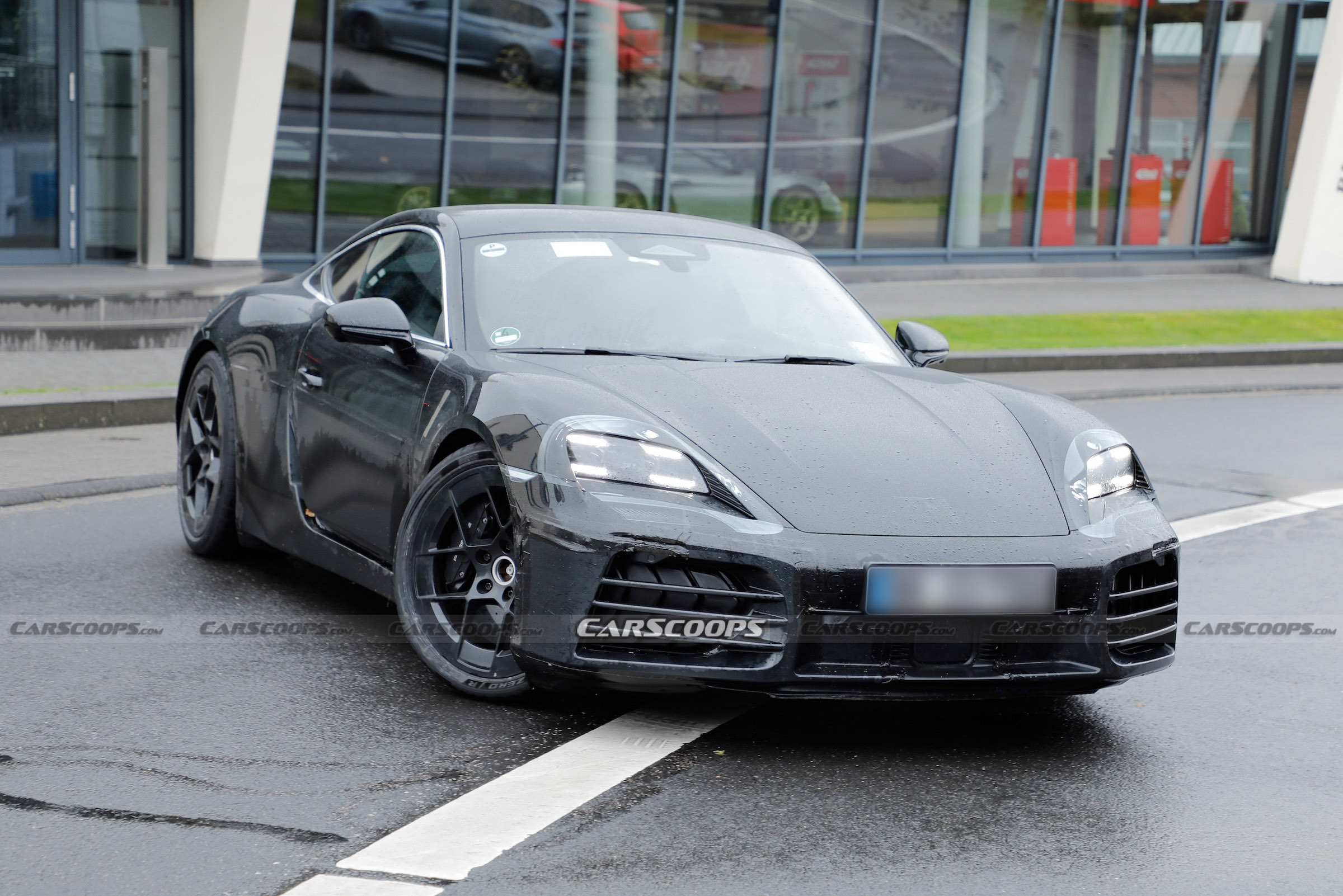
It’s a new year, and for Porsche, it begins with a leadership shakeup that might reshape more than just boardroom priorities. The brand has a new CEO, Michael Leiters, and within days of stepping in, he’s reportedly reconsidering the future of the all-electric 718 Boxster and Cayman.
That would be a huge reversal of course for the automaker, but here’s the real kicker: new reports suggest the unceremonious end of Audi’s new Concept C sports car before it ever reaches production.
Leiters has reportedly begun a sweeping review of Porsche’s operations as sales slump in China and profit margins took a big hit. One of the biggest question marks is the electric 718 program, which has been plagued by delays, ballooning costs, and battery supply issues following the bankruptcy of Swedish cell supplier Northvolt.
Insiders told German publication Handelsblatt that the battery issue has become particularly thorny, and finding a viable replacement would come with significant cost increases. Some within Porsche lay blame at the feet of former CEO Oliver Blume, saying he let the program’s problems drag on for too long.
According to sources cited by Bloomberg, Porsche is now actively debating whether continuing development of the electric Cayman and Boxster even makes financial sense.
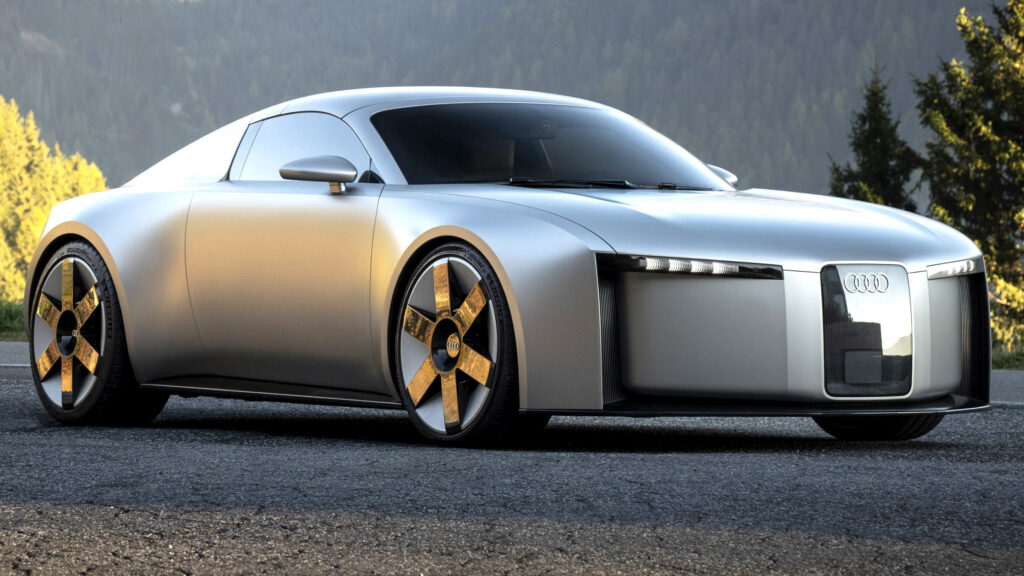
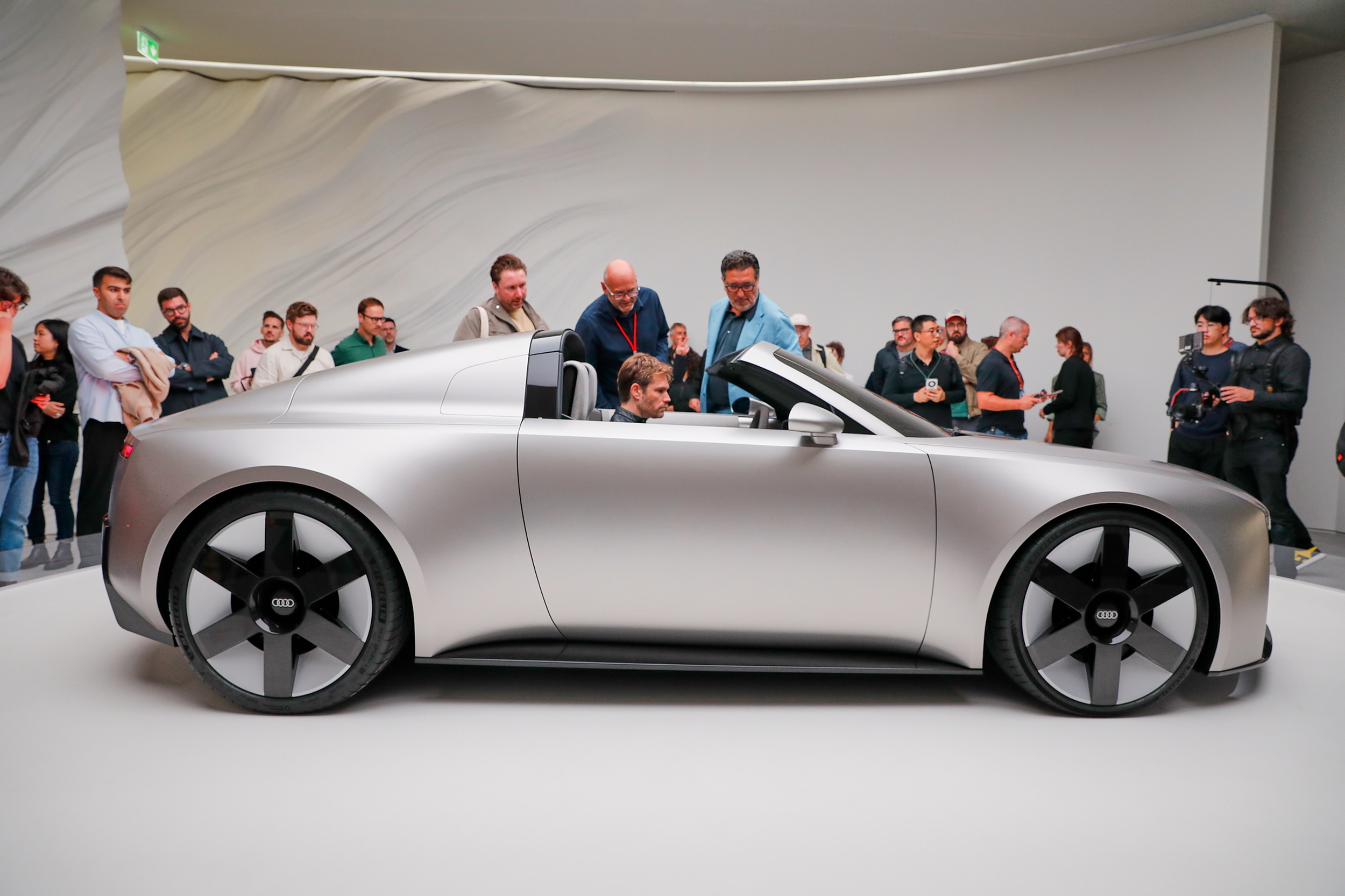
Audi CEO Gernot Döllner has tied much of his turnaround strategy to a new halo model known internally as Concept C and rumored to revive the TT nameplate and centering much of its future design around it. And the trouble is that it’s engineered around the same Porsche-developed EV platform intended for the electric 718.
The shared architecture was supposed to deliver cost savings and accelerate development. Without it, Audi may be forced to either shelve the Concept C entirely or buy and finish the platform independently.
Insiders told the German publication indicate that such a move could cost Audi a nine-figure sum. There’s no telling how long it would take Audi to sort out the development and get a production car ready to roll. Help isn’t coming from any other direction, either.
Volkswagen Group’s next-generation SSP platform, which will underpin most future EVs across its brands, isn’t expected to be ready before mid-2028. All of this is going on as Porsche is struggling to manage shifting industry sands. Sales of the Taycan have fallen off a cliff in China, and tariffs are making things a lot harder in the U.S. as well.
Projections for China, once Porsche’s biggest growth engine, have been cut from 100,000 units to just 30,000 to 40,000 in 2026, with the brand recently deciding to shut down more than a third of its dealerships in the country.
Audi, for its part, publicly showcased the Concept C in Milan last September during a high-profile launch event complete with celebrity appearances. At that event, Döllner described it as “the first visible evidence of Audi’s transformation as a company.” He emphasized that the model marks a break from the brand’s past design language and lays the groundwork for what comes next.
That foundation isn’t limited to design either. The Concept C’s tech platform is intended to underpin Audi’s future lineup. Originally, the sports car was scheduled to launch in 2027.
The big question now is whether Döllner will stick with Leiters’ cost-cutting approach or push ahead with Concept C, even if it means spending hundreds of millions to take over and finish the platform on Audi’s own terms by 2027.
For now, both companies are staying quiet. Porsche says no final decisions have been made, while Audi declined to comment on the Concept C’s future.
Video shows three passengers rescued from a burning electric sedan.
Dongfeng says the crash involved a high-speed collision with a truck.
Incident highlights just how important functional doors are in any crash.
The last year has been full of stories surrounding dangerous door handle design. Now, China is banning retractable handles, beginning with electric vehicles. A newly uncovered video highlights why. After a collision with a truck, one Dongfeng eπ007 turns into a full conflagration in less than a minute.
While the video went viral today, Dongfeng itself confirmed that the crash actually occurred in Wenshan, Yunnan province, on March 19, 2025.
In it, we see the Chinese electric sedan, which, notably, serves as the base for Nissan’s popular N7, spins and slides off the road before it hits some construction fencing. Nothing about the crash looks particularly devastating, but apparently, somewhere along the line, the battery ends up punctured.
Why Seconds Count
The driver pops out of the car immediately, but can’t open the rear door. The handles won’t extend out of the body of the door itself. Then, his door also shuts and no longer responds to similar attempts to open it. 29 seconds after the initial impact, smoke is billowing from the passenger side of the car, and all of the doors are shut.
The driver begins trying to break the window with his elbow. Another individual runs up, and the pair uses rocks to break the side windows. Then, the real work begins as they pull two occupants from the car rather quickly. 52 seconds after the initial crash, flames are clearly visible on the outside of the car, and the cabin is completely filled with black smoke.
A Race Against Time and Fire
Despite the flames, the individual who popped up out of nowhere to help managed to pull the final passenger out of the fully on-fire car. The occupants all have remnants of the fire visible on their clothing and faces.
The rescuer later said all three passengers suffered burns, with the injuries described as serious but not life-threatening. He himself sustained severe burns to his hands, saying five fingers were still bandaged months later and that the injuries may prevent him from returning to work as a truck driver.
Company Responds
On February 5, Dongfeng’s eπ brand issued a statement confirming the crash occurred in March 2025 and expressing sympathy to all those involved. The company said its team went to the scene at the time and cooperated with authorities.
According to Dongfeng, the fire was triggered after a high-speed collision with a truck. The automaker also warned that circulating clips may not reflect the full context of the crash and could cause further distress to those involved.
It’s also worth noting that, while some reports from China claimed a front-seat passenger died in the fire, this has not been confirmed.
Neue Klasse iX3 demand is so strong BMW is adding production shifts early.
Strong early sales bode well for the Neue Klasse 3-Series arriving later this year.
BMW also upgrades charging, colors, and range for iX3 and other electric SUVs.
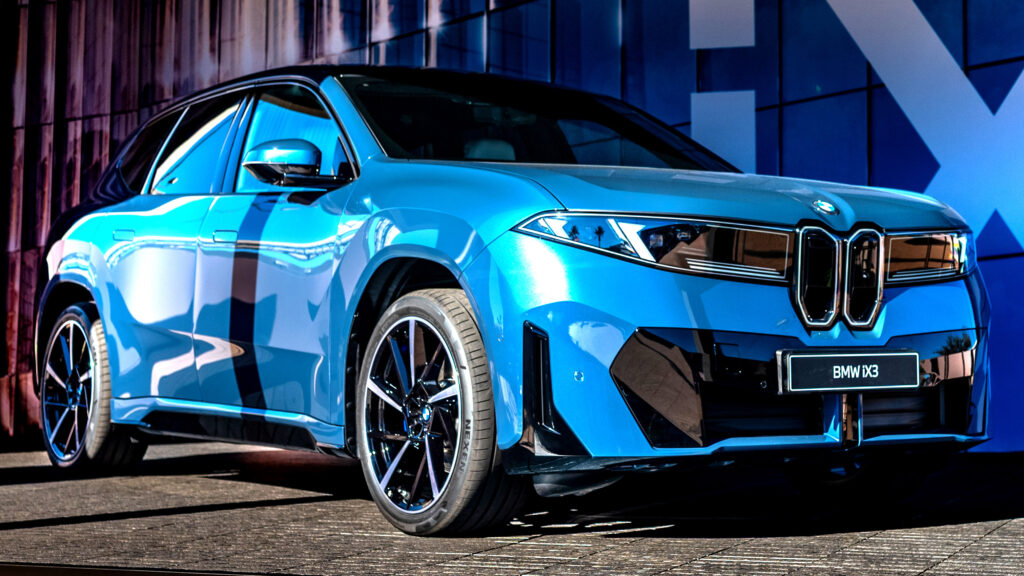
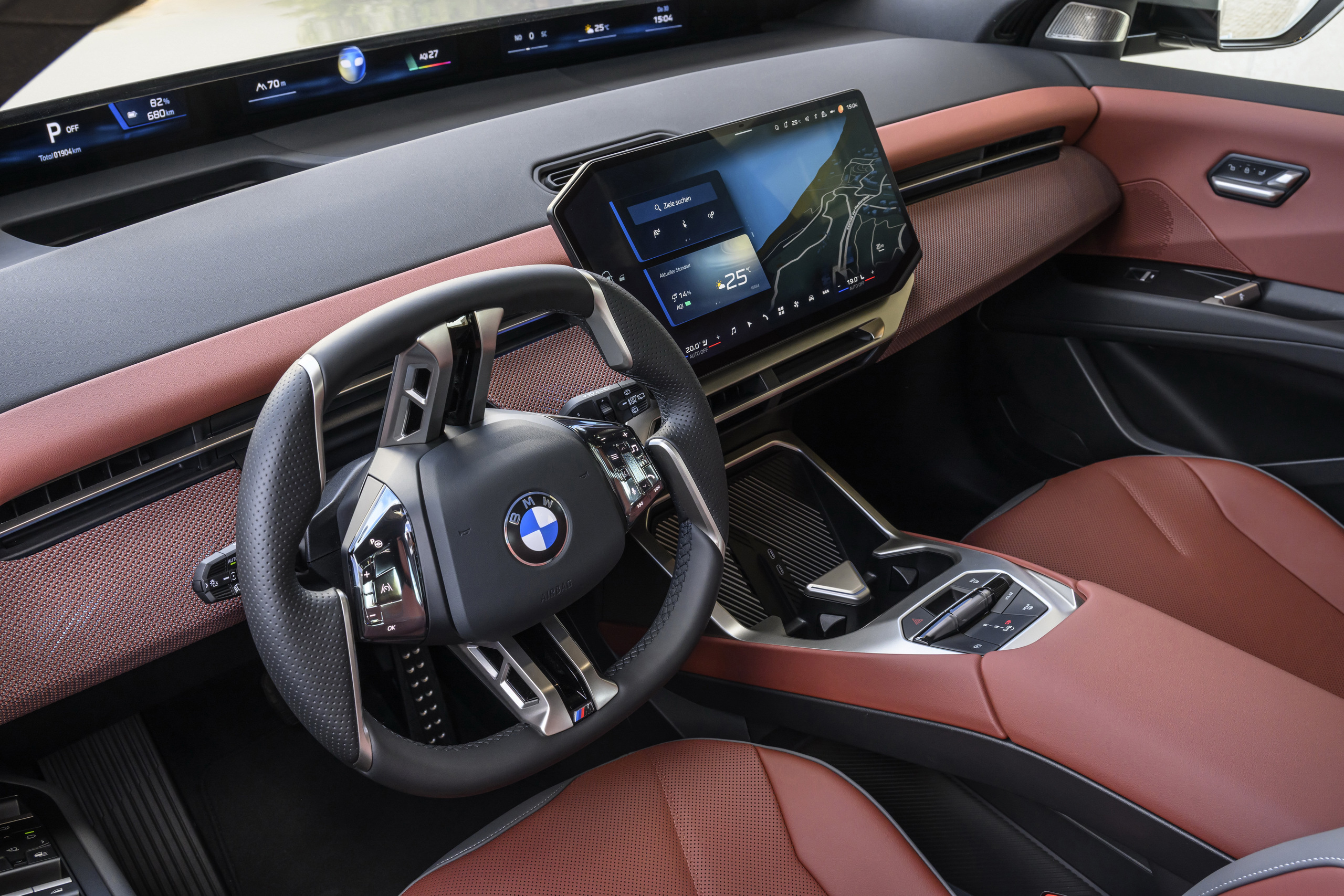
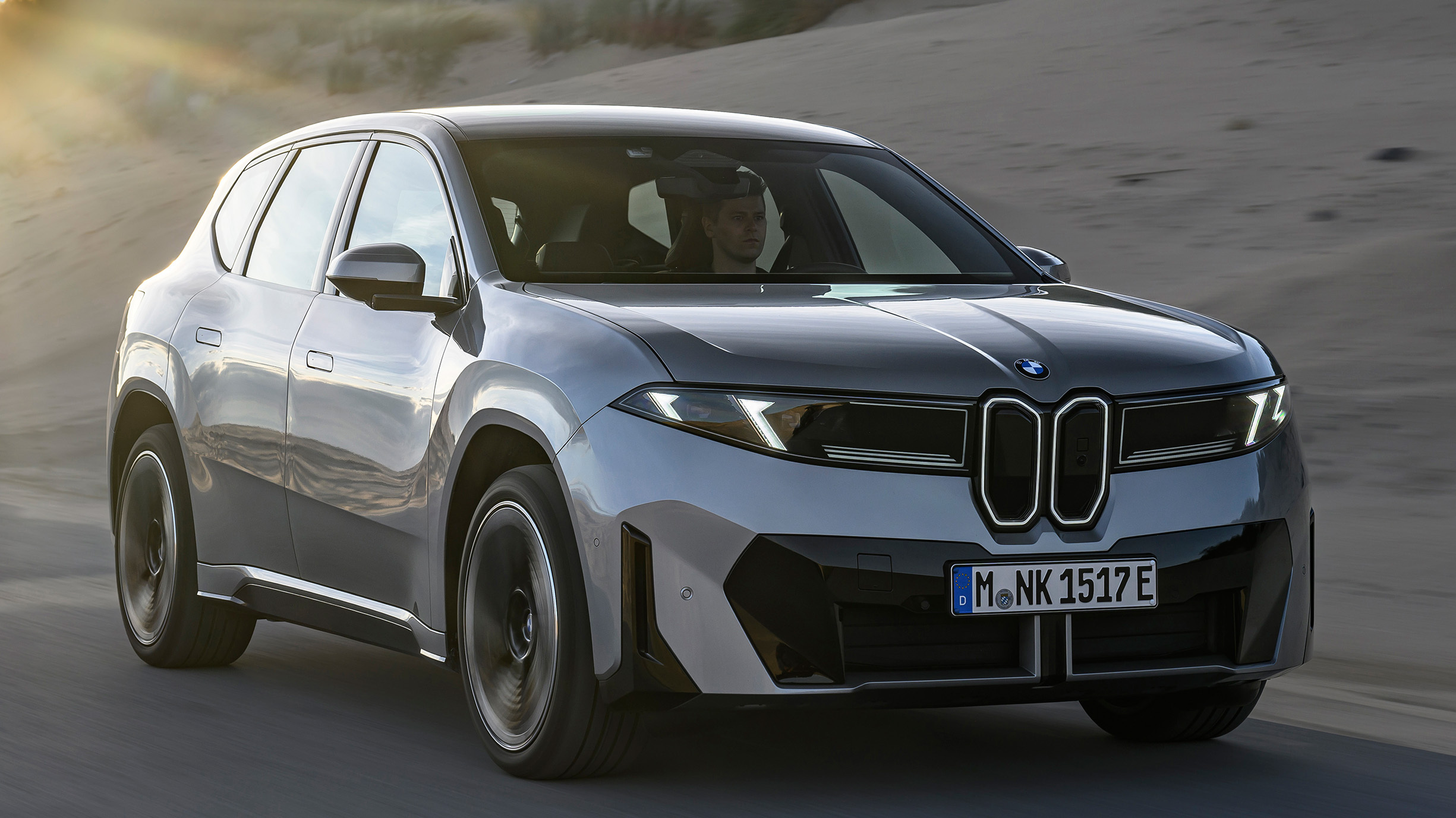
The Neue Klasse revolution has barely begun and already BMW has a problem. The good kind. Buyers are snapping up the new electric iX3 so quickly that it’s almost sold out through to the end of 2026, forcing the company to speed up plans for extra factory shifts.
That’s a big vote of confidence for a car customers haven’t even driven yet. Since its debut last autumn, the iX3 has made up around a third of BMW’s electric orders in Europe. Deliveries only start in March, yet much of the planned output is effectively gone.
To keep wait times from stretching into next winter, BMW is bringing forward a second production shift at its brand new Debrecen plant in Hungary, Auto News reports. The site is BMW’s first factory built purely for EVs, and while it’ll eventually build around 150,000 cars a year, it’s currently still ramping up. Clearly, that ramp needs to get steeper.
This matters far beyond one SUV. The iX3 is the first model on BMW’s all-new Neue Klasse platform and wears a bravely modern Neue Klasse design, as will the upcoming Neue Klasse 3-Series replacement later this year.
If buyers are this enthusiastic about the SUV, BMW executives will be feeling pretty good about the electric sports sedan waiting in the wings.
More Tech, More Color for 2027MY
BMW isn’t wasting time in adding polishing the package to make the iX3 even more desirable, either. From spring, the compact SUV gains an optional 22 kW AC charging upgrade, cutting home and workplace charging times. It also adds Vehicle to Load capability, letting owners power external devices at up to 3.7 kW and making camping trips more sophisticated.
There are fresh paint choices, too, including Eucalyptus Green metallic and Frozen Space Silver, plus some interior trim tweaks and the introduction of new options like a stainless steel loading sill, bright white steering wheel and an M-striped key.
Smaller SUVs Get Some Love Too
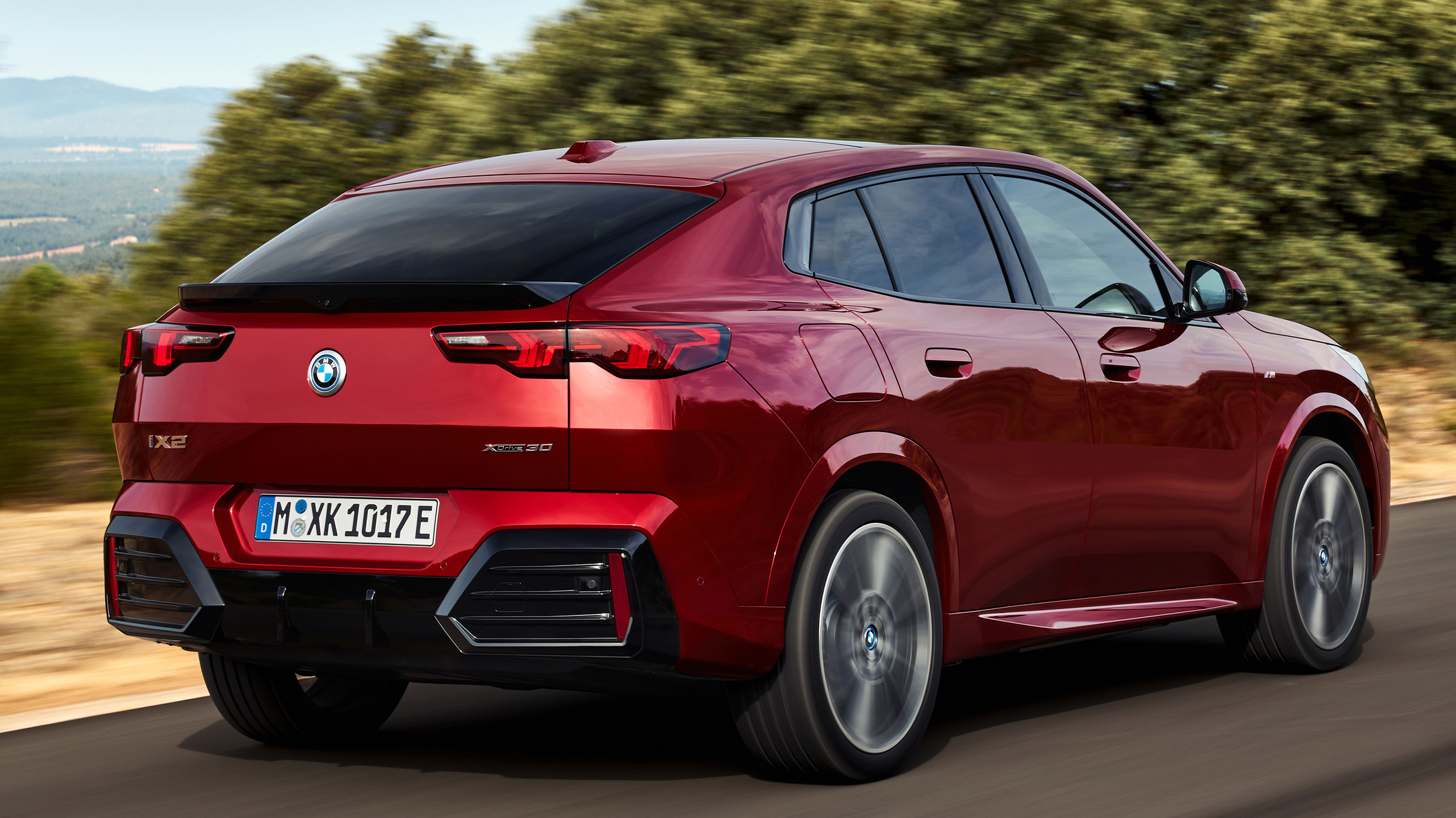
And BMW’s older electric crossovers aren’t being ignored this year, even if the iX3 is hogging the spotlight. The iX1 and iX2 receive more efficient silicon-carbide semiconductor components, boosting range by about 25 miles (40 km) depending on version. That’s a handy bump for everyday usability, improving the previously poor range of the best-performing eDrive20 to as much as 319 miles (514 km).
Russian brand Russo-Balt unveils an electric van with Tesla flair.
The F200 uses a hand-welded stainless steel body and monocoque.
It looks similar to a Chinese van, but company claims it’s original.
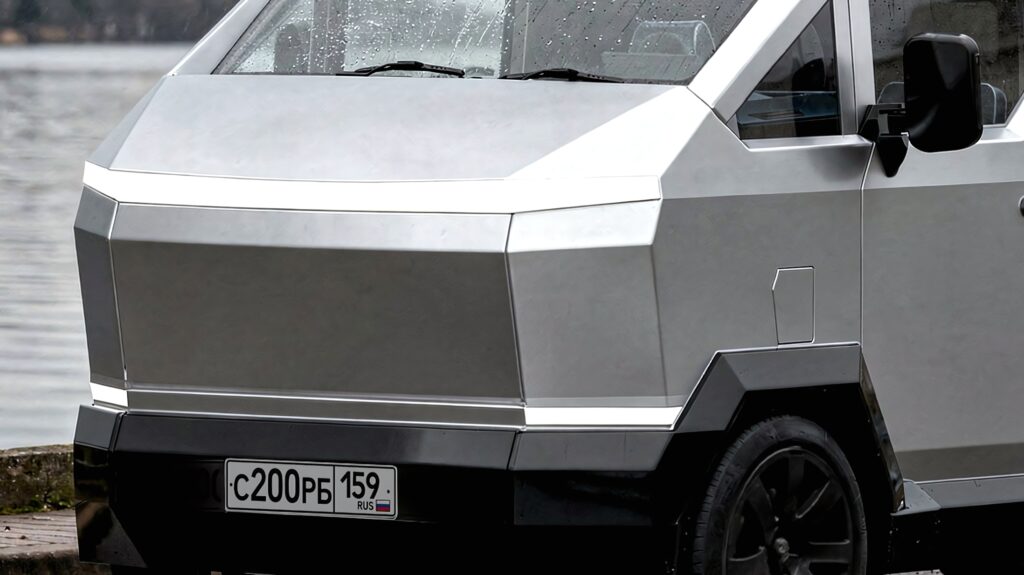
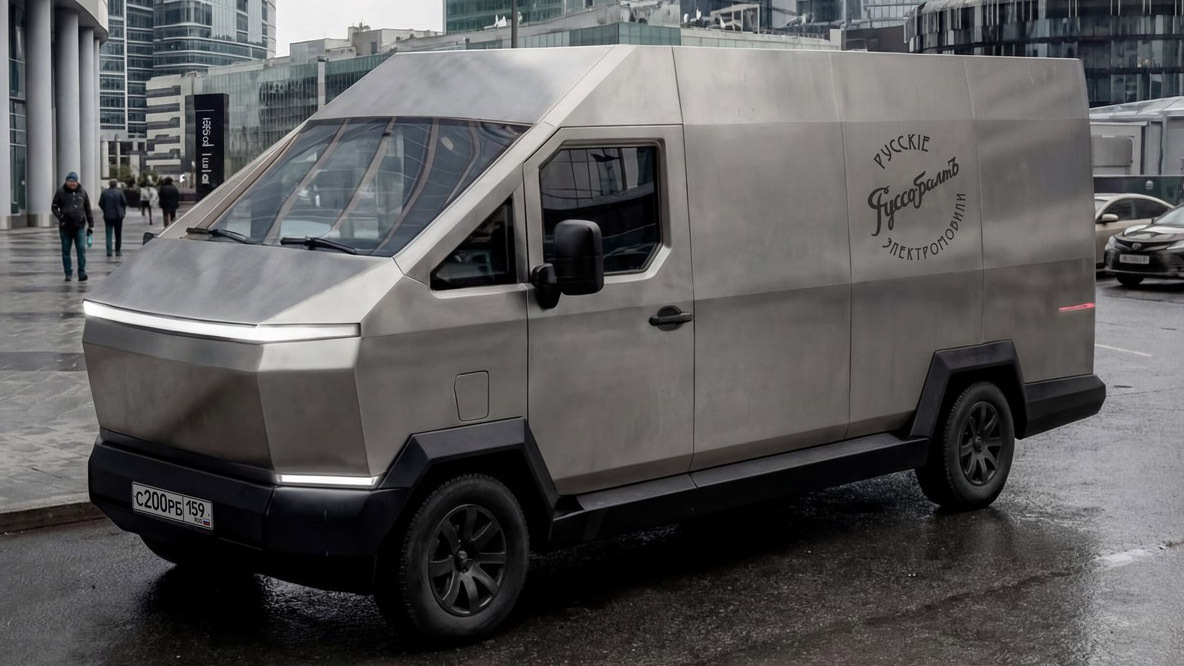
Tesla hasn’t created a Cybervan yet, but someone else just beat them to it. A Russian startup has stepped in with something that looks uncannily like a bulked-up Cybertruck, except it’s an electric van, and yes, it’s heading for production.
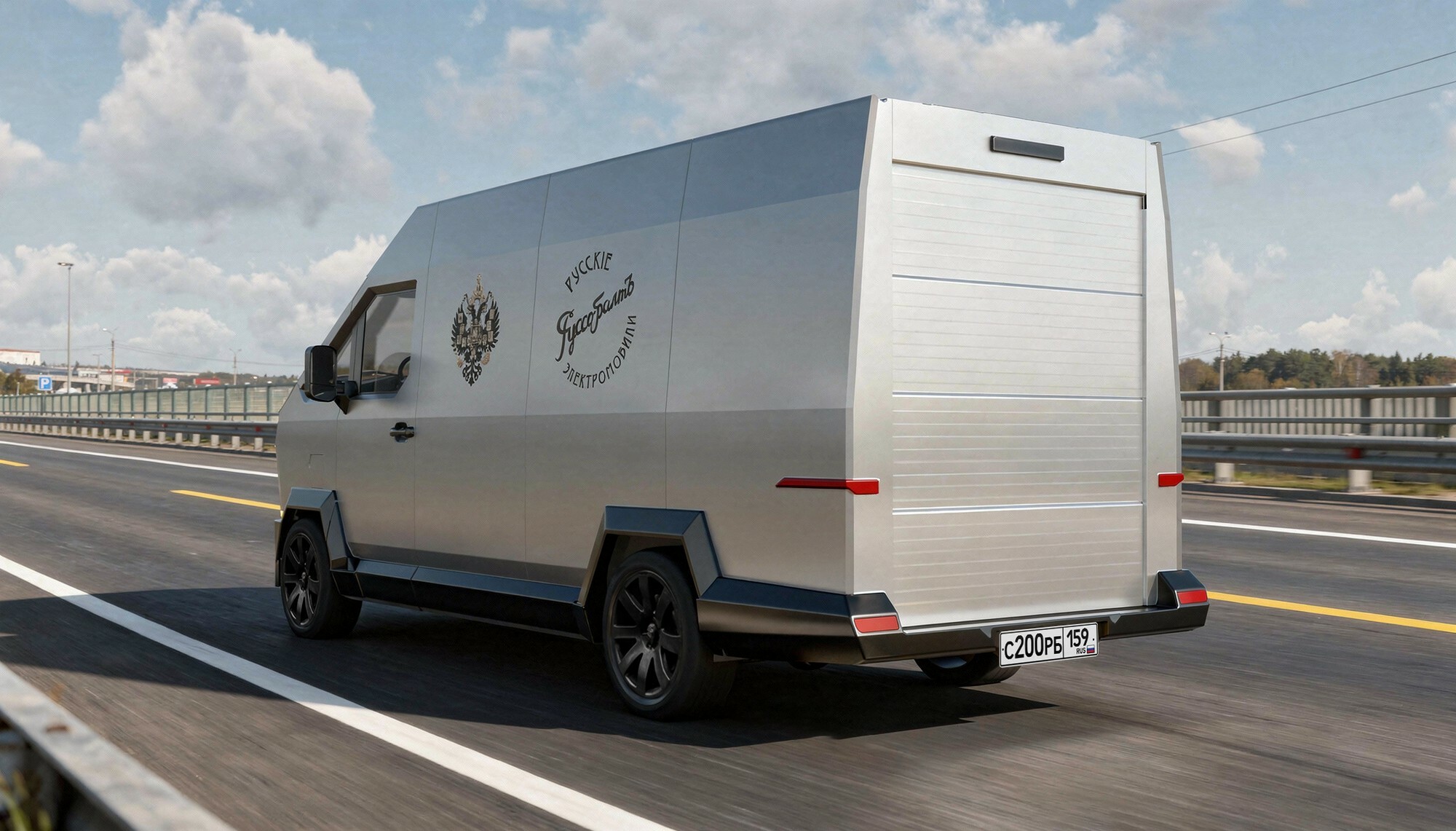
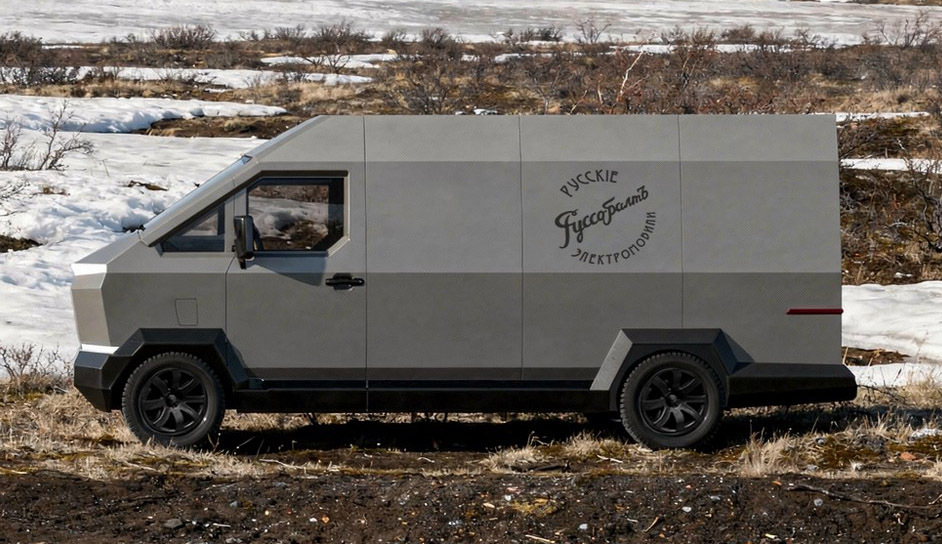
Meet the Russo-Balt F200, a stainless steel slab of a van with unmistakable Cybertruck flair. It’s the first model from a newly revived brand that traces its name back to a storied Russian automaker and railway carriage builder that operated between 1869 and 1918. Production plans are already in motion, with initial deliveries scheduled for January 2027.
As we previously reported, the F200 has already been seen roaming public roads in Russia, confirming that it’s more than a rendering or vaporware project. Amusingly, the company even featured a link to our earlier coverage on its own website.
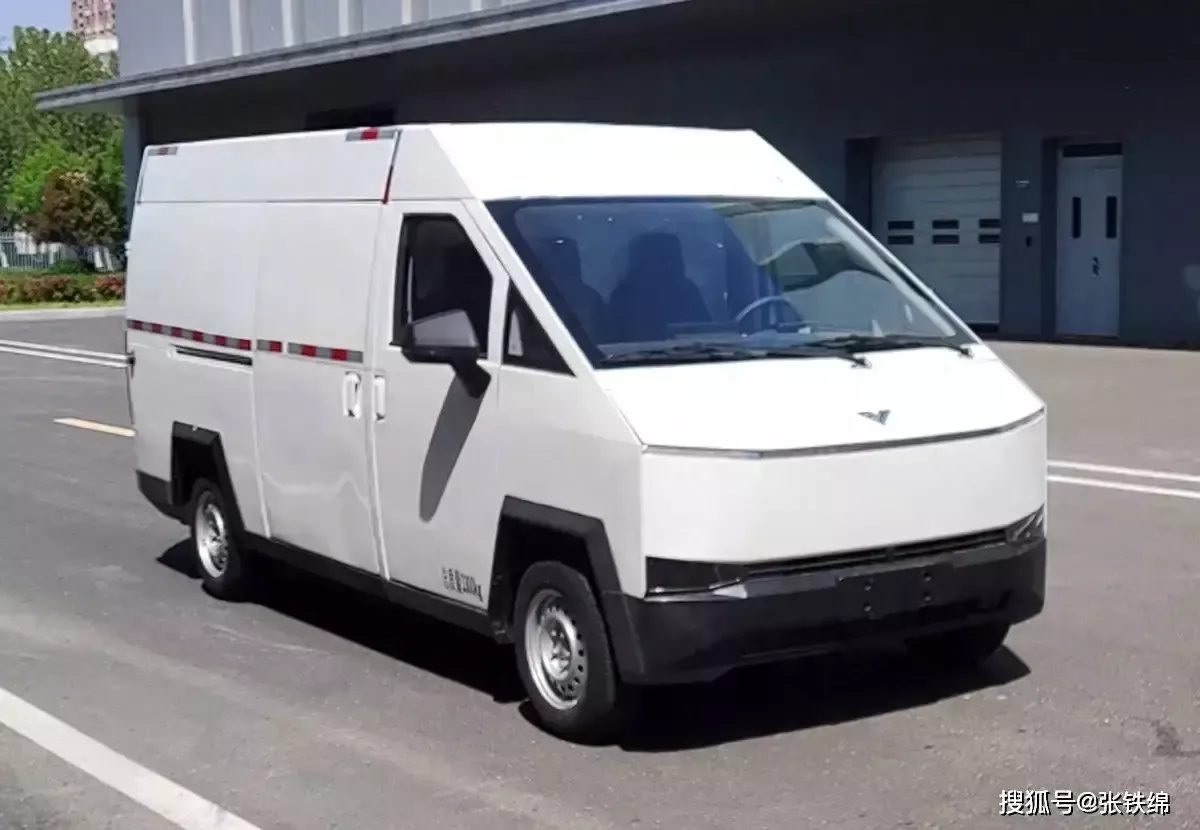
Although we pointed out a resemblance to China’s Weiqiao New Energy V90, Russo-Balt insists the F200 is its own creation and not a rebadge job.
The body panels are shaped from unpainted stainless steel, just like the Cybertruck, welded together by hand. Despite the raw-metal finish, buyers can personalize the look with optional polyurethane wraps, available in a full range of colors and graphics.
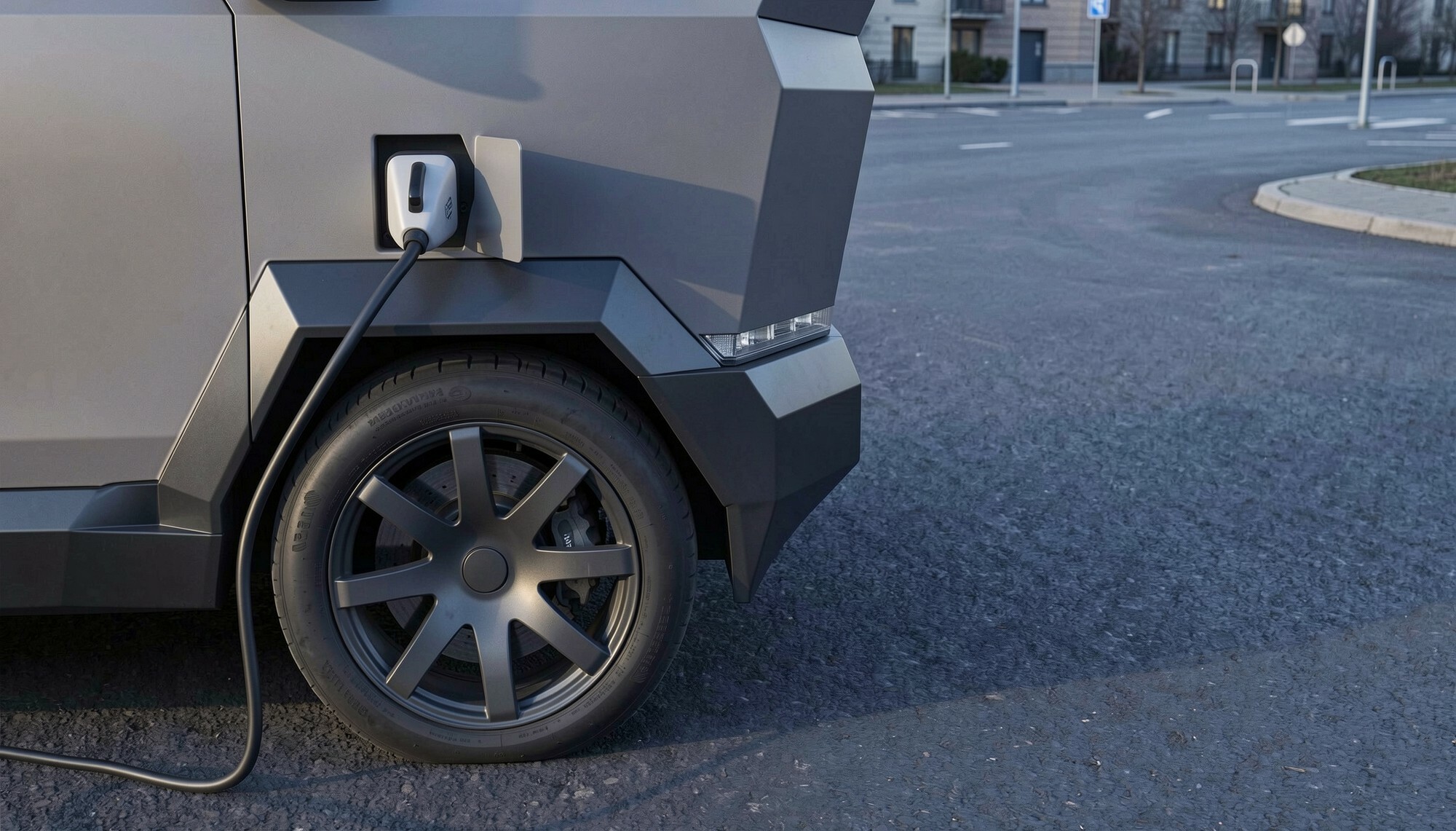
From its sharp creases to the flat windows and squared-off arches, the F200 borrows more than a few cues from the Cybertruck. Full-width LED lighting front and rear, plus a tailgate design that recalls the styling of Tesla’s electric truck bed cover, round out the visual nods.
While most vans of this size ride on a ladder-frame chassis, the F200 uses a monocoque chassis. This setup supports a payload of up to 1,000 kg (2,205 pounds), which appears to be in line with commercial expectations.
100-Year Warranty
According to the Russian startup, the vehicle falls under the international L3H3 classification and measures 5,950 mm (234.3 inches) in length, 2,000 mm (78.7 inches) in width, and 2,550 mm (100.4 inches) in height, tall enough for most people to stand upright inside.
The standard build includes a 100-year body warranty for the stainless steel panels, which sounds a bit rich for a van that hasn’t hit the road yet in full production form.
Power comes from a single electric motor with 200 hp sent to the front wheels. A 115 kWh battery pack provides a claimed range of 400 kilometers (249 miles), with DC fast charging supported via a port on the front fender.
How Much Does it Cost?
Pricing is set at 6.5 million rubles, roughly $85,200 at current exchange rates. A refundable deposit of just 10,000 rubles (around $131) secures a place in the production queue, though the total planned volume hasn’t been disclosed.
Standard equipment includes ABS, ESP, climate control, rear air suspension, and a 360-degree camera setup with live streaming capability. Virtually every surface that could be warmed, including seats, steering wheel, mirrors, even the windshield wipers, is heated. This is a vehicle built for Russian winters, after all.
Infotainment is handled by a 14-inch touchscreen, which displays vehicle settings and offers integrated entertainment from Russian platforms such as Rutube, VKvideo, and Yandex.
More to Come from Russo-Balt
Interestingly, the team behind the F200 claims prior experience in manufacturing stainless steel water dispensers, and they plan to carry over the same material and fabrication expertise to the van. Production will be on a made-to-order basis.
A second model, the F400, is already in development. This one will feature a range-extending gas engine and all-wheel drive via dual electric motors, combining for a projected 400 horsepower. It will also add front air suspension, in addition to the rear air spring setup already included on the F200. Pricing details have yet to be announced.
Volvo’s EX60 delivers 400 miles of range and 400 kW charging.
First Volvo EV with native Tesla Supercharger access in US.
Rugged EX60 Cross Country adds lift, air suspension, and flair.
Volvo calls the new EX60 a game-changer and for once, that might not be completely marketing hyperbole. This new SUV is the brand’s most important EV yet and it rolls into the segment with some impressive numbers on paper.
It offers 400 miles of EPA-estimated range, 400 kW fast-charging capability, and native access to Tesla’s Supercharger network. It’s also arriving with a special soft-roader variant.
Volvo Enters Long-Range Territory
The new peak of the EX60 lineup is what the brand calls the P12 AWD Electric. It boasts 400 miles (644 km) of EPA-rated range in North America and a more generous 503 miles (810 km) of estimated range in Europe and other regions around the world, likely due to the differences in testing methods, though Volvo didn’t clarify this in its international release.
That immediately puts it ahead of all other previous Volvo EVs and squarely in the same space as the Tesla Model Y Long Range, if not ahead of it. But wait, there’s more.
Charging at 400 kW enables the EX60 to add up to 173 miles (278 km) of range in just 10 minutes. Keep in mind that you’ll need a charger capable of handling such speed, which is very rare in the U.S. right now. Not even Tesla’s Supercharger network, which this car has native support for, often offers such speeds. Still, the fact that the capability is built in shows where Volvo expects the infrastructure to go.
Powertrain Options
In total, Volvo is offering the EX60 with three powertrains and seven trim levels. The P6 RWD delivers up to 310 miles (499 km) of range, the P10 AWD provides 320 miles (515 km), and then the P12 AWD brings the 400 miles (644 km) we’ve already discussed.
Dubbed the SPA3, the brand pairs this new architecture with a HuginCore computing system. This setup introduces several key technologies, including cell-to-body battery construction, mega casting, and next-generation in-house electric motors.
Volvo says this all equates to less weight, better efficiency, better manufacturer scalability, and importantly… lower cost to the consumer. In the end, it matches the carbon footprint of the smaller EX30. While the brand hasn’t publicly mentioned specific pricing per trim, it has said to expect that a well-equipped EX60 to cost around $60,000.
Design Inside and Out
Visually, the EX60 doesn’t reinvent Volvo’s design language so much as it evolves it. The car manages a 0.26 drag coefficient thanks to a low nose, a sloping roofline, and tapered sides. In the cabin, the long wheelbase and flat floor enable extra legroom in the rear along with a large cargo area.
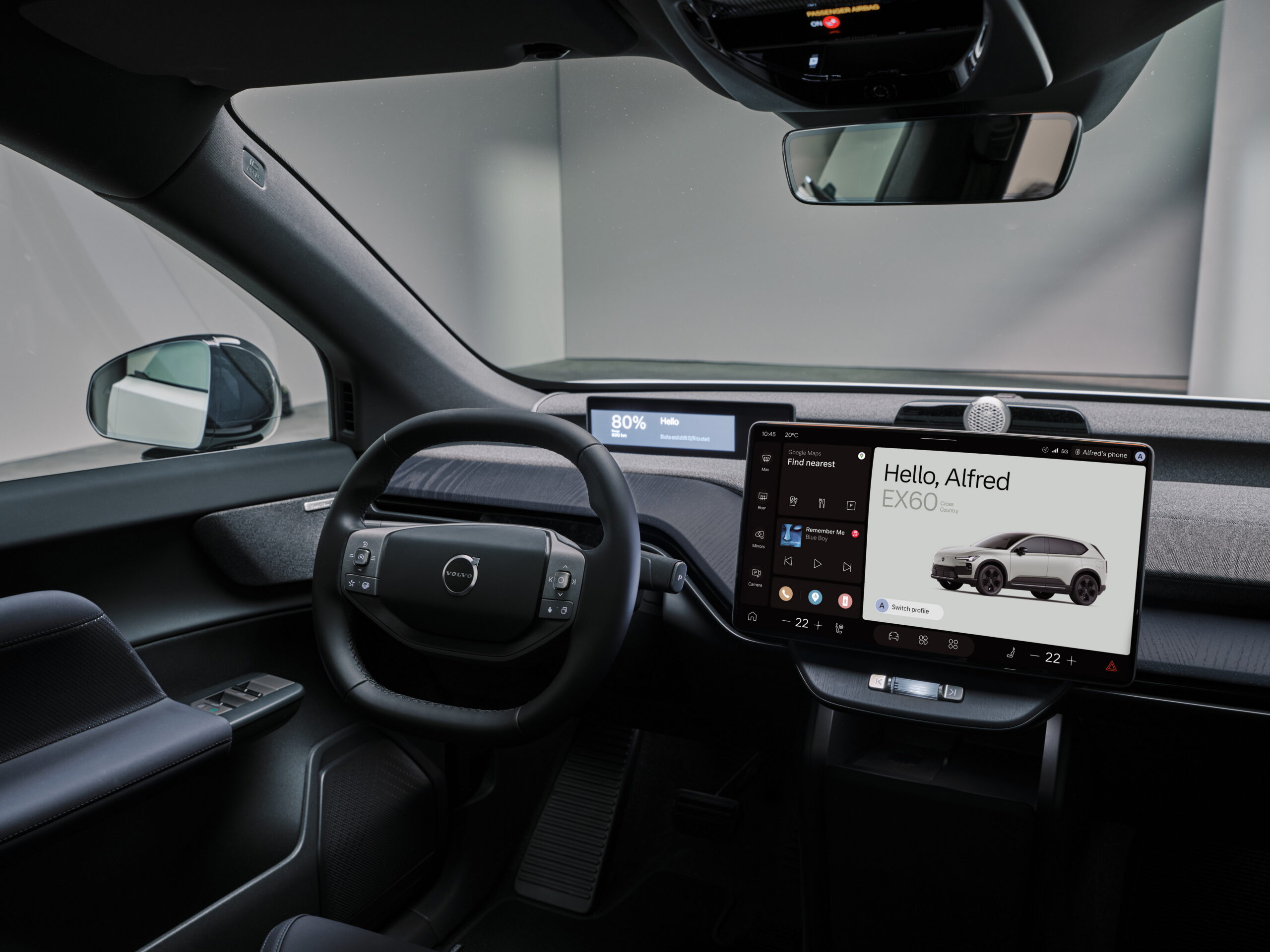
Tech highlights include a 28-speaker Bowers & Wilkins audio system, headrest speakers for all four main seats, and Apple Music with Dolby Atmos built in.
The EX60 Runs Google Gemini AI
Let’s not forget the AI assistant that Volvo says will speak like a normal person and accept the same type of speech inputs. The system runs Google’s Gemini AI atop Android Automotive OS so it should be snappy and smooth, but we’ll have to test it to be sure. The new multi-adaptive safety belt is something else to get excited about, as are the other safety innovations in the EX60.
Volvo leveraged a reinforced safety cage using boron steel, a wide array of sensors, and constant environmental monitoring to go beyond what they say are current regulatory standards. In other words, Tesla might not be the only manufacturer with safety scores that go beyond NHTSA or IIHS ratings in the near future.
A Cross Country Version on the Way
Volvo also confirmed that an EX60 Cross Country model will be heading to the U.S., though it’ll debut in Europe first. This version gets 20mm (0.8 inches) of extra ride height as standard, with another 20mm (0.8 inches) available via an adjustable suspension system. Forty millimeters (1.6 inches) might not sound like much, but the Cross Country packs more than just lift.
There are underbody skid plates, wider arches, unique wheels, and exclusive Frost Green paintwork. It also comes standard with all-wheel drive and will be offered only with the P10 and P12 powertrains
Availability
European customers can already place orders for the EX60. U.S. order books will open in late spring, with production kicking off around the same time at Volvo’s Swedish plant. The P6 and P10 models will arrive first this summer, followed by the long-range P12 not long after.

 Login
Login