The U.S. Supreme Court will hear arguments April 1, 2026, in a case challenging the President Donald Trump's order ending birthright citizenship. (Getty Images)
WASHINGTON — The U.S. Supreme Court will hear oral arguments Wednesday in a case that could reshape the understanding of who is American by birth.
The case, Trump v. Barbara, challenges President Donald Trump’s executive order that redefines citizenship to exclude children born to parents who either do not have legal status, or hold temporary legal visas.
It has the potential to upend the guarantee of birthright citizenship in effect since a Supreme Court decision in 1898 that extended citizenship to virtually anyone born in the United States. There is a small carveout for children born to foreign diplomats.
The Trump administration petitioned the high court in December after multiple lower courts struck down the executive order, finding it violated the Constitution.
Birthright citizenship has been a longstanding core principle in the United States, where nearly any child — regardless of their parents’ immigration status — born on U.S. soil is automatically granted citizenship. Experts have warned that if birthright citizenship were struck down, it would effectively create a class of millions of stateless people.
But what was once a fringe legal theory has been pushed into the mainstream by the president and his far-right allies, who have sought to redefine who is American.
They argue the citizenship clause of the Constitution’s 14th Amendment, which is the basis for birthright citizenship, was meant to apply to newly freed African American slaves after the Civil War, not to children of immigrants. Most legal scholars and historians disagree with that interpretation.
The text of the clause is: “All persons born or naturalized in the United States, and subject to the jurisdiction thereof, are citizens of the United States and of the State wherein they reside.”
After oral arguments are heard on Wednesday, a decision from the Supreme Court is expected before the court’s summer recess begins at the end of the term in late June or early July.
19th-century case
This is not the first time the Trump administration has brought a birthright citizenship case before the Supreme Court.
Last year, after federal judges in Maryland, Massachusetts, New Hampshire and Washington state struck down the president’s executive order, the Trump administration appealed to the Supreme Court, but asked the justices to consider the lower courts’ use of universal injunctions, rather than the merits of birthright citizenship.
The justices took up the case, and in a 6-3 vote divided along ideological lines, the use of universal injunctions was curtailed by the conservative wing of the high court.
After the ruling, immigration advocates and the American Civil Liberties Union filed class action suits, which were successful in blocking the birthright citizenship executive order. The suits argued that future children born in the United States without gaining citizenship constituted a nationwide class.
Cody Wofsy, of the ACLU, is a co-lead attorney in the case and told reporters last week that the Supreme Court already decided the issue of birthright citizenship in 1898.
“The constitutional text is clear, the precedent is clear and the history is clear,” Wofsy said.
The 1898 case, United States vs. Wong Kim Ark, settled the idea that automatic citizenship was granted to children born on U.S. soil, Wofsy said.
Ark, born in San Francisco, was denied entry back into the country after visiting China. Officials at the time argued that because his parents were Chinese citizens in the United States on temporary visas at the time of his birth, and therefore were not “subject to the jurisdiction” of the U.S., he was not a citizen. He took the issue to the high court and in 1898 the Supreme Court affirmed that children born in the United States were guaranteed citizenship.
Arguing on behalf of the Trump administration, Solicitor General D. John Sauer has said that the 1898 case is being misinterpreted, and that it meant to only include children born to parents who were granted authorization to be in the U.S.
“Illegal aliens are not ‘permitted by the United States to reside here,’ and thus their children are excluded from citizenship,” Sauer argued in briefs.
However, Trump’s executive order would also deny citizenship to children born to parents on temporary visas, such as for work or school.
Sauer also relies on an 1884 Supreme Court decision that denied citizenship to John Elk, a Native American man born in Nebraska, who was no longer a member of his tribe and tried to become a naturalized U.S. citizen in order to vote.
Elk was denied citizenship, because he was not “subject to the jurisdiction of” the U.S. because of his “political allegiance” to his tribe, even though he had renounced his tribal citizenship. Congress extended citizenship to all Native Americans in 1924.
Sauer cites the Elk case in his argument that the citizenship clause does not apply to children born to immigrants on temporary visas or undocumented people and “only to those born of parents with primary allegiance to the United States.” The administration is not arguing that Indigenous people should be denied birthright citizenship.
Torey Dolan, an assistant professor at the University of Wisconsin Law School, said Sauer’s argument wrongly conflates Indigenous people with migrants, despite a long U.S. legal tradition of treating them distinctly.
“American law has always found a way to distinguish Indigenous people from non-Indigenous people in a way that has never been applied to immigrants,” Dolan, an enrolled citizen of the Choctaw Nation of Oklahoma, said.
She noted that in the Declaration of Independence, which includes the grievances of the colonists, one complaint was how British King George III refused to allow for migration into the colonies in order to occupy land stolen from Indigenous tribes.
“This conflation of immigrants and Indigenous people, for the sake of this argument, I think, is pretty egregious, and I think it really obfuscates American history and its colonial history in particular,” she said.
‘Pure chaos’
Legal advocates challenging the executive order are confident they will win at the Supreme Court.
“President Trump’s executive order is plainly unconstitutional and unlawful, and we’re confident that the Supreme Court will reaffirm existing legal precedent and strike down this executive order once and for all,” Hannah Steinberg, a staff attorney for the ACLU’s Immigrants’ Rights Project, told reporters.
In briefs, the ACLU has also argued that if Trump’s executive order were to go into effect, it would create a stateless class of people. The Migration Policy Institute, a think tank that studies migration, found that the end of birthright citizenship would increase the unauthorized population by an additional 2.7 million by 2045.
Trump’s push to end birthright citizenship is part of the administration’s broader goal to curtail migration to the U.S., arguing that birthright citizenship is an incentive for unauthorized immigration.
But the idea that people migrate to the U.S. so their children can be born as citizens is not supported by research, Julia Gelatt, the associate director of the U.S. Immigration Policy Program at the Migration Policy Institute, said.
“People move mainly for opportunity for themselves and their children and also for safety,” she said. “There are many unauthorized immigrants who have come to the United States with their own children, who were born in another country, who won’t be U.S. citizens, and they still come.”
“I don’t think there’s any evidence that birthright citizenship specifically is an independent pull factor. It’s more the safety, the rule of law and the earnings potential that people see in the United States, and the opportunity to reunite with other families is another major factor,” she continued.
Ama S. Frimpong, the legal director for the immigrant rights group We Are CASA, told reporters that there are practical questions to how Trump’s executive order would even work.
“What happens in a household in which there are older children who are born here and now, suddenly they have a new baby who’s born tomorrow, and that baby is not going to have the same rights that their siblings have?” she asked. “Is a baby going to be subject to detention and deportation by their very own government that is meant to protect them because they were born here?”
That reality of birthright citizenship being stripped, Frimpong said, would be “just pure chaos.”
Gov. Tony Evers said in his veto message Monday that he objected to the national expansion of private school choice and that public funds should go to public schools. Evers speaks to reporters in July 2025 before signing the 2025-27 state budget, which did not provide any additional funding for general school aids. (Photo by Baylor Spears/Wisconsin Examiner)
Gov. Tony Evers vetoed Republican lawmakers’ bill that would have opted Wisconsin into a federal program rewarding taxpayers for contributions to private voucher schools and other educational organizations, saying he objected to the national expansion of private school choice and that public funds should go to public schools.
A provision in the federal tax and spending law signed by President Donald Trump in July 2025 will provide a dollar-for-dollar tax credit of up to $1,700 to people who donate to qualifying “scholarship granting organizations.” Donations to organizations are used for educational expenses including tuition and board at private schools, tutoring and books. The provision created the first major federal program to allocate public money towards private school tuition in the form of tax incentives.
Republican lawmakers, who hold the majority in Wisconsin’s state Legislature, as well as conservative and school choice advocacy groups have advocated for Wisconsin’s participation in the program — highlighting that the funds could be used for costs for public school students, including tutoring, as well as for private school students. However, governors are responsible for opting their states into the program by 2027, meaning they needed to convince Evers, a former state superintendent and public school teacher who had previously expressed skepticism about the program, to opt in. Without Evers’ approval, Wisconsin taxpayers can still reap the benefits of the federal tax credit, but the money they donate will support private school programs in other states.
AB 602 directed Evers to join the program on behalf of Wisconsin. In his veto message, Evers laid out a number of his concerns.
“This nationwide voucher program has no student achievement metrics, no school accountability measures, no minimum or maximum scholarship size, no certain end date, and no cap on how much the federal government can spend,” Evers said. “Republicans in Washington have given private voucher expansion carte blanche to run roughshod over public education in this country — and a blank check to do so at taxpayer expense, clearly without any regard for whether it actually does what is best for kids.”
Evers also noted that the rulemaking process for the program has not been completed.
According to the U.S. Department of Education, 23 states had opted into the program as of January. Those states, mostly led by Republican governors, include Alabama, Tennessee, Georgia, Idaho, Montana, Louisiana and Texas. In February, Colorado Gov. Jared Polis became the first Democratic governor to opt into the program. Other Democratic governors have remained skeptical.
Evers said in his veto message that Wisconsin is uniquely positioned to understand the effects of voucher expansion and disputed claims that the federal program would provide sufficient support to public school students.
“As a former science teacher, principal, superintendent, state superintendent and a son of the state that created the nation’s first-ever private school voucher program, I have spent decades of my life watching the impacts that draining public funds from public schools to fund private voucher school programs instead has had on kids, schools and public education in Wisconsin,” Evers said.
Wisconsin’s school voucher program — from the number of students and schools that participate to the amount of state money invested — has grown exponentially since its inception in Milwaukee in 1990. Growth is likely to accelerate dramatically in the next few years. Participation caps, which limit the number of students in each district who can participate, have been lifted by 1% each year since 2017. Next year they will be phased out completely.
“With each passing school year, public school districts continue to endure capped and prorated state funding, strict revenue limits and the need to go to referenda in many cases just to keep up with inflationary pressures to provide a quality education for their kids,” Evers said. “Even now, the Legislature has simultaneously failed to act on my calls to increase funding for special education to ensure the state meets the targets promised in our bipartisan budget.”
In the most recent state budget, Wisconsin lawmakers provided increases to payments for the school voucher program, but did not provide any additional funding for general aid for public schools. The state’s investment in the special education reimbursement for public schools was not enough to cover the estimated 42% of costs in the first year of the budget and 45% in the second year.
With funding from the state not keeping pace with inflation, public school districts have turned increasingly to property taxpayers for additional funding that must be approved by voters.
Next week, there will be 74 referendum requests on April ballots across the state — and the results will shape whether school districts can pay their bills, how much staff get paid and whether schools can open their doors next year. A lawsuit filed in February argues that the state isn’t fulfilling its constitutional duties and the current funding formula needs to be overhauled.
Rep. Jessie Rodriguez (R-Oak Creek), who coauthored the school donation tax credit bill with Senate President Mary Felzkowski (R-Tomahawk), wrote in an email to the Wisconsin Examiner that she was “disappointed, but not surprised” Evers vetoed the bill, saying he misunderstands the purpose of the bill.
“AB 602 would have allowed Wisconsin students to be eligible for more scholarships to use towards the education style that works best for them, whether that be private school tuition or hiring a tutor outside of school time,” Rodriguez said. “This would have benefited K-12 students in all educational settings. For example, a scholarship could have been created to help low-income families send their 8th grade students on their class field trip to Washington, D.C.”
“It’s just unfortunate, because opting in would have cost the state nothing, and by not opting in Wisconsin will sit idly by while our residents donate to scholarship granting organizations in other states and receive a federal tax benefit for doing so,” she said. “Sadly, we can’t just wait for a new governor in January.”
Evers is not running for a third term in office this year, meaning the new governor could be a Republican or a Democrat, but will not take office until Jan. 4, 2027. The deadline for states to opt in to the federal program is Jan. 1, 2027.
Felzkowski said in a statement that Evers was “putting politics over helping Wisconsin students.”
“Apparently, expanded educational opportunities for students in all schools, whether public, private, homeschool or charter, (at NO cost to the state and without the need for a single new bureaucrat!) makes too much sense for the governor. Wisconsin students and families deserve better,” Felzkowski said.
Evers addressed proponents’ argument that “the program will benefit public school students, families, and schools, too” in his veto message.
“Perhaps I am wrong and maybe it will. Nevertheless, right now, I have no such comfort, and my decades of experience in public education in the state with the first and oldest modern voucher program tell me the opposite will be true,” Evers said. “Therefore, I must veto this bill in its entirety. What’s best for our kids is what’s best for our state, and it remains unclear how this bill will do what’s best for the more than 800,000 Wisconsin public school kids for whom the state has a constitutional obligation to adequately provide and invest in public education.”
Peggy Wirtz-Olsen, president of the Wisconsin Education Association Council, the state’s largest teachers union, celebrated the veto in a statement.
“More than 70 school districts in Wisconsin are going to referendum next week just to have enough money to continue operating because they have been abandoned by the state and federal government,” Wirtz-Olsen said. “Yet the Trump Administration and the Republicans in the Wisconsin Legislature think this is a good time to pour tens of billions of dollars into a voucher program that has no standards and no accountability. A veto is the least of what this program deserves.”
A TSA officer's patch can be seen on their shirt as people travel through Hartsfield-Jackson Atlanta International Airport on Nov. 7, 2025 in Atlanta, Georgia. (Photo by Megan Varner/Getty Images)
Most Transportation Security Administration officers received a paycheck Monday covering four weeks of back wages that were held up by the funding lapse at the Department of Homeland Security, a TSA spokesperson said.
The lack of pay had produced long wait lines for security checks at some of the nation’s busiest airports after TSA officers quit or called out sick.
The 45-day partial government shutdown of DHS remains ongoing — with each chamber of Congress, both led by Republicans, unable to reach a consensus on a solution. It is now the longest government shutdown in history, exceeding last year’s 43-day record.
But President Donald Trump on Friday ordered the department and the White House Office of Management and Budget to reprogram funds with a “logical nexus” to TSA in order to compensate the airport screeners who had remained on the job without pay.
That month of back pay went out Monday, DHS spokeswoman Lauren Bis wrote in an email.
“Most TSA employees received a retroactive paycheck today that included at least two full paychecks … today,” Bis wrote.
Some TSA workers “might see a slight delay,” which could be attributed to a variety of factors, such as processing by their banks, Bis added. She said the department was working with the U.S. Department of Agriculture’s National Finance Center to process the half-paycheck employees missed in February.
Because TSA workers are considered essential, they are required by law to stay on the job even when the government cannot fund their positions. Though they receive back pay once funding is available, long shutdowns cause major problems for workers.
More than 500 TSA workers have quit since the shutdown began and thousands more have missed shifts, Bis wrote.
Breakdown in Congress
The House and Senate passed competing measures Friday to end the shutdown. Because the chambers diverged in how to fund the department, it remains shuttered.
The shutdown began Feb. 14 after Democrats in Congress said they would only support a funding bill for the department if it contained changes in how the Trump administration carried out immigration enforcement following the fatal shootings of two U.S. citizens by immigration agents in Minneapolis.
Senators last week reached a deal to fund the department except for its immigration enforcement agencies, which received a massive influx from Republicans’ spending and tax cuts law last year.
The House bill would have extended 2025 funding levels for the entire department for two months. Lawmakers from both chambers left for a two-week recess after passing their respective bills.
White House wants full funding
At a Monday briefing, White House press secretary Karoline Leavitt urged Congress to pass full funding for the department.
“The president just can’t keep signing presidential memorandums and proclamations every time Congress fails to do its job and every time Democrats hold our country hostage, picking and choosing the programs and agencies they want to fund just because they don’t like this administration’s policies,” she said. “That’s not how it’s supposed to work.”
Wisconsin Elections Commission Chair Ann Jacobs determines the results of the 2020 presidential election and recounts. (Screenshot | WisEye)
Wisconsin Elections Commission Chair Ann Jacobs is warning voters that it’s against state law to wager on an election if you are casting a ballot in that race.
Jacobs’ comments, made last week on X, come as prediction market sites such as Kalshi and Polymarket have continued to grow in popularity.
“I know it’s all the rage to bet on everything, but you cannot bet on an election in Wisconsin,” Jacobs wrote. “If you do, your ballot can be challenged & thrown out … So go vote and save your $ for playing Euchre with your uncle!”
Wisconsin’s election laws include a provision that states nobody “shall be allowed to vote in any election in which the person has made or become interested, directly or indirectly, in any bet or wager depending upon the result of the election.”
Currently on Kalshi, tens of thousands of dollars in bets have been placed on the result, turnout and margin of victory of next week’s state Supreme Court election. Even more money has been wagered on the state’s upcoming race for governor — including $85,000 on the Democratic primary race.
The ethics of participating in prediction markets have come under scrutiny as their popularity has grown, particularly the opportunity for placing bets that are akin to insider trading. More than $500 million in bets were placed on the prospect of the U.S. going to war with Iran shortly before major announcements about U.S. military actions in the country, NBC News reported.
The law against betting on elections has been on the books in some form since 1849. Other states, including Arizona and Texas, also have laws against wagering on elections.
Jacobs told Wisconsin Public Radio that the state isn’t going to go looking for offenders of the election betting law, however if someone brags online about a big win, that could open them up to scrutiny and the potential cancellation of their vote.
“No, the state is not going out and issuing search warrants to betting platforms to cross reference against voters,” Jacobs told WPR. “I think the most likely way this would come up would be exactly how you think, which is somebody posted on social media saying, ‘Hey, I made this big bet,’ and then someone who doesn’t like them reports it to the authorities.”
Jacobs told the Wisconsin Examiner a voter’s ballot could be voided because of betting through the state’s existing ballot challenge processes, which allow anyone to object to the counting of an absentee ballot. She compared it to challenges that are received for people who post selfies with their ballots.
“Who would do such a thing? people who hate you,” Jacobs said. “It’s almost always the opposing candidate. Is that a lot of work? Yes. Is it sort of silly? Yes. If you think you’re going to get a big amount of money, then don’t vote.”
The emergence of the prediction markets was also an impetus for the state Legislature quickly passing a bill to legalize online sports betting in Wisconsin. That bill is currently awaiting the signature of Gov. Tony Evers.
A Hope Kit distributed by the Milwaukee Overdose Response Initiative (Photo by Isiah Holmes/Wisconsin Examiner)
Connection, compassion and hope — those are the three key elements members of the Milwaukee Overdose Response Initiative (MORI) say helped lower overdose deaths to levels unseen in Milwaukee County since 2016. “It’s MORI in conjunction with this whole community,” Jonathan Belott, a lieutenant with the Milwaukee Fire Department, told the Wisconsin Examiner.
“We don’t live in a silo,” said Belott, who’s led the overdose response initiative since its inception in 2019. “We have so many of our different partners that we have come to rely on to get people the help that they need throughout this community.”
Last year there were 383 fatal overdoses in Milwaukee, the lowest number in a decade, according to the county’s overdose dashboard. That marked a significant reversal of the recent overdose epidemic that peaked in 2022, with 674 fatal overdoses in Milwaukee, fueled by widespread contamination of cocaine, heroin, prescription pills, and other substances with the powerful synthetic opioid fentanyl.
Jonathan Belott (left) stands with Amy Molinski (center) and Robert Rehberger (right). (Photo by Isiah Holmes/Wisconsin Examiner)
As the crisis accelerated in 2019, Belott was assigned to head a new strategy. “I didn’t even know what I was getting into in that moment,” he told the Examiner, sitting beside fellow firefighter and team supervisor Robert Rehberger and peer support specialist Amy Molinski — both members of the overdose response initiative — at the team’s homebase fire station on Fiebrantz Avenue.
“I didn’t understand even the full impact of what it was,” said Belott. “I was kind of just told, ‘Hey, you’re going to be this guy.’ But the more you get into it, the more you see how it has been impacting people’s lives over these years…We watched those numbers go up and up…Just a crazy amount of people.”
Between 2017 and 2025, 4,582 people died across Milwaukee County. Nationwide, overdose deaths became more common than those caused by homicide, car accidents or suicide. The people who died were brothers and sisters, fathers and mothers. Some were children younger than 5, others were elders in their 70s. Most were people between 20 and 60 years old. They were unhoused, working class and wealthy people from numerous ethnic and racial backgrounds. Even in Milwaukee — one of America’s most segregated cities — addiction and death have never discriminated.
Every year seemed worse than the last as record-breaking numbers of Milwaukeeans died. “And then we saw just a little decline,” said Belott. Overdose deaths fell by more than 30% in 2024, followed by a sharp drop in 2025. “You’re talking 50% less people dying over the course of the three years,” Rehberger said of the most recent numbers.
“I’ll say it’s bittersweet,” said Molinski. “And I’ll say that because the number of deaths that we have are still too many. It’s unfortunate that it had to get as high as it did before people were willing to do anything about it.”
Milwaukee’s sharp decrease in overdose deaths mirrors a nationwide trend, tied to stepped-up treatment and harm reduction efforts as well as a shrinking fentanyl supply.
Building a program from scratch
Belott credited Michael Murphy, who served on the common council, with helping steer the first $100,000 to the fire department to start an overdose reduction program. “To his credit, he recognized that we had to do something different than what we were doing,” Belott told the Examiner.
Although it was just enough money to get a program off the ground, there were questions about what such a program would actually look like. “We had to make the program from absolutely nothing,” said Belott. “Like this didn’t exist anywhere that we knew. …We didn’t base it off anything.” The team itself started off very small. “It was like three hours a day for Monday through Friday,” said Rehberger. “And now we got four teams going out every day doing this work. And it’s just proud to see like, something come from it.”
The Milwaukee Overdose Response Initiative started by using the fire department’s access to 911 call data to identify people who had survived an overdose within the last 24-48 hours. From there, team members would go out to find those people, and see whether there was any help they could provide. “Help” doesn’t have to mean pressuring someone to go into rehab — although the Milwaukee overdose team also regularly works to get people into treatment programs. With time, the team realized that “help” can also mean getting someone clothes, food, providing them with narcan and other harm reduction supplies, and offering compassionate and non-judgmental support.
Whatever recovery looks like to them is what we do.
– Robert Rehberger, Milwaukee Fire Department and supervisor for the Milwaukee Overdose Response Initiative
Molinski recalled one girl who called the overdose response team because she needed a ride to her psych appointment. “It’s cold, she didn’t want to walk,” Molinski recalled. “So we picked her up and we took her there. We stopped at the food pantry along the way so that she could get some food.”
“Help” can also mean checking in on family members who recently lost a loved one to the overdose crisis, and ensuring they have access to the resources they’ll need to process their loss. Belott said that acts like these are about providing “basic humanity for the people that we work with.” Molinski echoed the sentiment. “It’s helping to eliminate some of the struggle,” she told the Examiner. “We all want to quit when it’s hard.”
Milwaukee Fire Lt. Jonathan Belott, project manager for the Milwaukee Overdose Response Initiative (MORI). (Photo by Isiah Holmes/Wisconsin Examiner)
The Milwaukee overdose team also had to focus on how it would grow to meet those needs. Like Belott, Rehberger didn’t know what to expect when he joined the team. “I volunteered but I didn’t really know exactly what I was volunteering for at the time,” he told the Examiner. When the team decided to add addiction peer support specialists, Molinski, who is employed by Community Medical Services, a medication-assisted treatment clinic, was brought on. The team’s vehicles, modestly marked with the fire department’s logo and “community paramedics” on the trunk, usually carry two firefighters and one peer supporter.
Working on the overdose response team, Molinski grew to understand just how much people respected the Milwaukee Fire Department. “These guys [firefighters] got rolled into it, and I don’t think that there’s any way that you can’t say that that helped impact the success that we see today,” Molinski, who got into the peer support field after enduring her own battles with addiction, said. When overdose survivors “get greeted by someone in a uniform that doesn’t judge them, tries to take the shame out of what they’re doing and say ‘your life is worth saving, like not just on the street last night but moving forward,’ that means a lot,” she said.
As the overdose response effort evolved, so did team members’ understanding of the epidemic, themselves, and each other. “There was a lot of humility in the beginning,” said Molinski. “There was a lot of us having to look at one another and sometimes kindly, sometimes very directly, [saying] like, ‘Hey, what you just did wasn’t right.’”
Molinski admitted that “I’m a little rough around the edges” and “I’ve kind of always done things my own way.” She grew to appreciate what representing the fire department meant. “So you can be you, just tone down just a little bit,” she said. “And I needed to hear that. …We learned from one another.” The firefighters learned how to loosen up and Molinski learned how to tighten up, she said, “and we were kind of able to share that with everybody as they came.”
A conversation, not an interrogation
Firefighters who joined the team also often had to rethink how they approach people struggling with addiction. As emergency responders, Belott and Rehberger were trained to stabilize people, patch them up, and transport them to a hospital in the middle of a crisis. In order to succeed, however, the overdose response effort demanded a completely different modus operandi.
“For us, we’re not there in the crisis moment,” Belott explained. “We’re there following the crisis moment. So we have time…we sit down and we have a conversation, not an interrogation, which is what I used to do at the beginning.”
“If you have a conversation with somebody, you learn about them…Because a conversation flows,” Molinski said. Rehberger called it “asking a question in a different way, and listening.”
Nasal Narcan, used to reverse an overdose, inside one of Milwaukee County harm reduction vending machine. (Photo by Isiah Holmes/Wisconsin Examiner)
This allowed team members, especially those with no personal experience with addiction, to see a whole new side of the epidemic and what it meant for people fighting to stay alive. The conversations they had affected them deeply, allowing them to experience the gratitude the people they tried to help felt for anyone willing to treat them with dignity. “Before I came here, one of the things that I wasn’t expecting was how much relationship you grow with the people that we’re meeting,” said Rehberger. “I feel like I was just thinking that it was going to be mostly like a 911 call, you know? Like you’re helping the person in that moment.” Rehberger wasn’t used to people being so grateful on calls that they gave him giant hugs. “Never did I think that I was going to be hugging someone while on the fire department. Ever.”
Molinski recalled her first month with the overdose response team. “It was in the middle of the summer, it was hot, they didn’t have air conditioning,” Molinski recounted. “He was wearing no shirt, he was smoking cigarettes in his apartment, and it was a lot. And as we left, I hugged him goodbye.” Belott was taken aback, quipping that Molinski was “all in.” The peer support specialist explained that it may have been a very long time since that man had felt “a caring human touch.”
What winning looks like
Even for Molinski, who’d experienced her own addiction to heroin and other drugs, the conditions people survived day-to-day were startling. “Our stories of addiction while we were in active addiction are insane,” Molinski told the Examiner. People living with an active addiction may or may not have stable housing, regular access to food, hygiene products, transportation, work, or even trustworthy people. Sometimes, the overdose response team would find people only to lose track of them again for over a year.
“They probably lost three phones in those 18 months,” said Molinski. Yet, out of the blue, the same person who couldn’t hold onto a phone might call the overdose response team for help because they had managed to keep a team member’s business card. “I mean, think about that for a second,” said Molinski, “how hard it is to keep track of your property when you’re in active addiction, but somehow a business card was still there to call.”
Tent encampments around King Park in Milwaukee. (Photo | Isiah Holmes)
Other times, team members learned firsthand just how hard it is for people to stop using drugs. “People are trying,” said Molinski. “… not everybody is just choosing to stay in their addiction. Some of them don’t see a way out. They’ve tried and they can’t get out. And when you see that, it’s easier to treat people with a little bit more compassion. Give somebody a little bit of grace as to why they’re still in that situation.”
Rehberger remembered checking on a woman, who contacted the team saying that she didn’t have any clothes. “I didn’t know what that meant, honestly,” said Rehberger. When team members met the woman they realized that she literally didn’t have clothes to wear. So they got her clothes, then food, and then they returned to see if she’d go into treatment. When they did, the woman told them, “Honestly, I would never have gone in for treatment the next day had you not gotten me the food first,” Rehberger recounted.
We want them to believe that their life is worth saving.
– Amy Molinski, peer support specialist assigned to the Milwaukee Overdose Response Initiative
Belott said that simply getting through the door to have a conversation was a success. “If they’re willing to sit down and talk with some strangers in uniform, that’s an amazing thing,” he said. “And we show up and they know, OK, somebody’s following up, somebody gives a crap about me.”
Team members have dropped off birthday cupcakes to people living in homeless encampments, and celebrated “clean days,” marking milestones for people who’ve quit drugs. Molinski recalled one unhoused man the team had been trying to locate for a long time. After connecting with his grandparents, the team was able to arrange for him to get into detox before going off to a residential facility. It turned out the man was living near an alley. He conveyed to the team that he didn’t want members to park too close to the site. So they stood near a pizza sign, yelled his name, and he came out accompanied by a friend. “My buddy needs help, too,” he said.
The overdose response team’s efforts were the subject of intense debate in the community. Team members often found themselves fighting the stigma and shame attached to addiction. Some people were confused about why the team tried so hard, even questioning whether the city would be better off just letting people die. With patience and much labor, however, some people’s minds changed. Belott wondered, “How many 10-minute conversations have we had over the years? And how many minds [were] changed by doing that?”
Success can be measured in concrete results like the lower number of fatal overdoses. But not every achievement can be recorded on a spreadsheet, and not every good deed results in a life saved.
About eight months into the program, team members were working with a young woman they had come to know well. “We actually got told that we weren’t allowed to see her anymore,” said Molinski. “We were too invested…She saw us a lot. She was not in good shape. This girl was struggling. And we just kept going to see her. And we didn’t know how we were going to help her, if we could help her. We had no idea what to do.” First they tried reaching her parents, who were exhausted by their daughter’s addiction. The mother hadn’t seen her in over 200 days, and the father didn’t want her back home because she was prone to stealing.
Drug overdose and awareness information in Milwaukee. (Photo | Isiah Holmes)
Team members eventually found out that she was sustaining herself as a sex worker on Milwaukee’s North Side. Besides her addiction, she also suffered from the condition endocarditis which causes inflammation of the heart. Team members accompanied her to the hospital so that she could get a Peripherally Inserted Central Catheter (PICC) line, a procedure which frightened her.
Then one day the team got a call from a man she was staying with, saying that she was lying in the bathroom and couldn’t get up. She was rushed to the emergency room. She asked team members to bring some of her favorite treats, a Sprite and Reese’s Peanut Butter Cups, when they visited.
It was her thirtieth birthday when the team visited the hospital and brought her a blanket and a book to read. “She was completely unconscious, unable to speak in any way,” said Molinski. “And then the day after that, her family called [Belott] and I and said, ‘We’ve made the decision to take her off of life support. And we would like to invite you guys to come and say goodbye if you would like.’”
Molinski said that she and Belott “were too invested…We were all f-ing in…And we went, and we cried over her bed, and we said goodbye to her, and her family took her off life support, and that sucked.” Yet, Molinski also had texts that the young lady sent her saying that she loved them, and that knowing them was the first time in years that she felt that anyone cared about her. “And she died,” Molinski said, shedding tears, “but she died feeling loved.” Her parents saw that love, too. “I don’t care what anybody says…The numbers say that was a fail,” said Molinski. “They weren’t there. It wasn’t a fail. …We made that girl feel like she was worth something before she left the world. We met her too late, we couldn’t help her. But she felt loved when she left.”
Despite the loss, the team knew that they’d done something good that day. “I think about her all the time,” said Molinski. Belott, the team leader who was sitting near her and Rehberger, wiped tears from his eyes.
“I still have a list of the books that she wanted me to bring her when she was in the hospital. I can’t delete it off my phone,” said Molinski. “She made an impact on me. And we were told to stop. And we didn’t stop.”
What Milwaukee needs to keep overdose deaths down
Since the Milwaukee Overdose Response Initiative began its work in 2019, Milwaukee County has made great strides against the overdose and addiction epidemics. Narcan — the crucial spray-medication used to revive an overdose victim — can be found in bars, grocery stores, hospitals, restaurants, and free-to-use vending machines. Not only is Narcan carried by firefighters and other emergency responders, but ordinary people can be trained to use it. “Keep that Narcan flowing out there,” Belott stressed.
How many 10-minute conversations have we had over the years? And how many minds (were) changed by doing that?
– Jonathan Belott, Milwaukee fire lieutenant and project manager for the Milwaukee Overdose Response Initiative
Several Milwaukee County communities have adopted their own kinds of overdose response teams. The West Allis fire department, which recently integrated with Wauwatosa’s, has launched one such effort. The state of Wisconsin also legalized testing strips both for fentanyl and xylazine — a potent tranquilizer — allowing people to check drugs for dangerous substances before using them. New treatment centers have opened in parts of the county. Even within local jails, people are able to access medication-assisted treatment and take the first steps towards recovery.
Vehicles used by the Milwaukee Overdose Response Initiative (MORI). (Photo by Isiah Holmes/Wisconsin Examiner)
Many of those resources are also distributed by the Milwaukee Overdose Response Initiative for free in the form of “Hope Kits.” Similar to a small plastic purse, with the word “Hope” printed on it in bright red lettering, the kits are stocked with Narcan, testing strips and contact information for treatment centers, therapy, and groups like Narcotics Anonymous and Alcoholics Anonymous. All frontline firefighters are deployed with Hope Kits.
The Milwaukee overdose response team’s work is funded by opioid settlement funds, paid out by the pharmaceutical companies that helped spark the opioid epidemic. With those funds, and additional grants, the team is able to keep the lights on and grow its coterie of firefighters, peer support specialists, vehicles, and harm reduction resources. “We’re proud of MORI,” Belott told the Examiner.
Treatment is still in short supply. Often, the team is forced to look for residential treatment beds outside of Milwaukee County. Sometimes that’s a good idea for people who need to sever their old connections. But for those facing transportation challenges, it can be difficult. Molinski, Belott and Rehberger also said no residential treatment centers in Milwaukee have proper accommodations for people with disabilities.
“There is none. Zero,” said Molinski. “Not a single place where someone can get help in a wheelchair. Or somebody that simply hurt themselves while using and is on crutches, they also can’t go.”
Ultimately, the greatest resource the overdose response team can provide is hope. Regardless of what they’ve done, or experienced, people’s lives are worth saving, team members said. In Molinski’s case, it was disconnection and feeling empty that led her into drug use, and it was connection and hope that pulled her out of it.
“My life was worth saving,” said Molinski. “It would’ve been really hard to convince someone of that back in 2006, 2007…That would’ve been a tough sell. My parents were starting to wonder if it was worth it for them to keep fighting. But it was worth it!” Today, she is raising a teenage daughter, and works in a field where she can help people who struggle like she did. But to get there, Molinski had to keep trying. “I never dreamt that this was waiting for me,” she said.
This article has been edited to reflect that Ald. Michael Murphy helped steer funds to get the overdose team started, not Ashanti Hamilton.
Demonstrators wearing costumes depicting characters from Margaret Atwood's 1985 novel "The Handmaid's Tale" protest cuts to Idaho's Medicaid program in the State Capitol Building in Boise. The percentage of Medicaid recipients who lose coverage under new federal work rules will vary greatly from state to state, depending on how state officials implement them according to a new study. (Photo by Pat Sutphin for the Idaho Capital Sun)
All 41 states that expanded Medicaid eligibility under the Affordable Care Act will see fewer people covered due to new federal work requirements and more frequent eligibility checks. But the percentage of recipients who lose coverage will vary greatly from state to state, depending on how state officials implement the new rules, according to a new report.
The report, released this week by the Urban Institute with support from the Robert Wood Johnson Foundation, projects that in 2028, between 4.9 million and 10.1 million people will lose coverage as a result of the federal policy changes included in the broad tax and spending measure President Donald Trump signed last summer. That prediction is roughly in line with estimates by the Congressional Budget Office, which projected last fall that the changes would increase the number of people without health insurance by 7.5 million in 2034.
Whether the actual number ends up at the low end or the high end of that estimate will depend on state policy, according to the researchers. States that automatically check eligibility using data-matching, impose the minimum work requirements allowed under federal law and broadly define certain exemptions, such as those for “medical frailty,” will minimize the number of people who lose coverage.
On the other end of the spectrum, states that require stricter documentation of work hours and implement narrower exemptions will see more people dropped from the rolls.
With stricter state policies, the report projected that eight states — Connecticut, Massachusetts, Maryland, Minnesota, Missouri, New York, Vermont and Wisconsin — would see a decline in enrollment of 60% or more. (Wisconsin hasn’t expanded Medicaid under the ACA, but it was included in the study because it received a federal waiver that makes some of its Medicaid enrollees subject to work requirements.)
Arkansas, Idaho, Montana, North Dakota, Nebraska, New Mexico, Oklahoma and Oregon would have the smallest declines under strict policies, but would still see losses ranging from 37% to 46%.
With the least stringent policies, North Dakota and South Dakota would have the smallest declines — 18% and 19%, respectively. Even under lax rules, six states — Connecticut, Massachusetts, Maryland, New York, Virginia, Vermont —- would see declines of 30% or more.
Nationwide, between 19% and 37% of people who already work will lose Medicaid coverage, according to the analysis, due to challenges such as fulfilling the documentation requirements to prove that they work.
States have to enforce work requirements by next January. They may enforce them earlier via a waiver or state plan amendment, but so far only one state, Nebraska, has announced a plan to implement the requirements earlier, in May.
Some groups are exempt from the work requirements, including American Indian and Alaska Natives, people deemed “medically frail,” households receiving benefits through the Supplemental Nutrition Assistance Program, caretakers for children under age 13 or for those with disabilities, foster care youth and former foster care youth under age 26, among others.
This story was originally produced by Stateline, which is part of States Newsroom, a nonprofit news network which includes Wisconsin Examiner, and is supported by grants and a coalition of donors as a 501c(3) public charity.
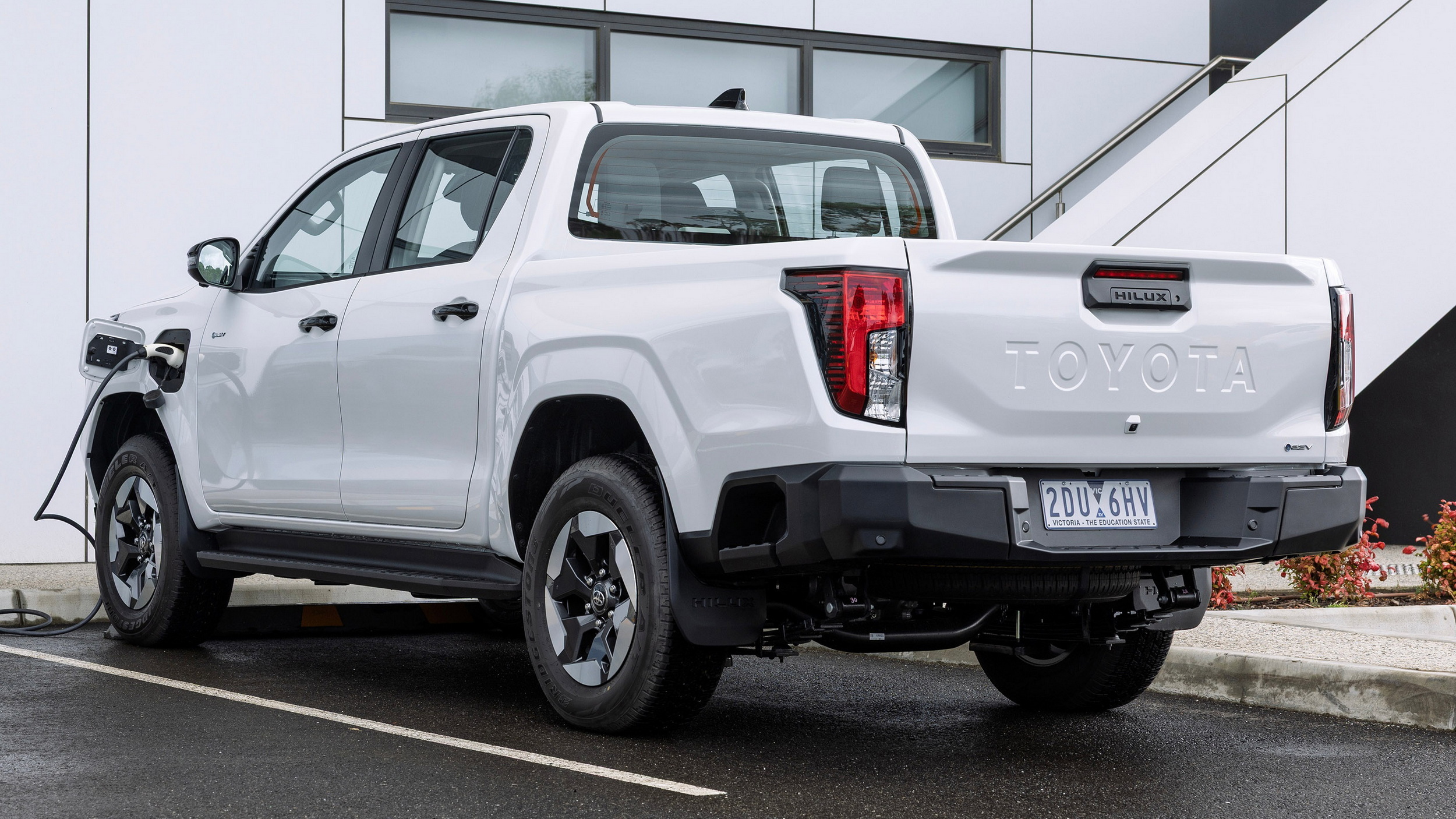
The Hilux BEV enters Australia as the most expensive variant in the local lineup.
Electric pricing carries a significant premium over both diesel and hybrid versions.
Dual motors provide AWD capability with modest output and limited driving range..
The latest generation of the Toyota Hilux has entered a new era. For the first time in its history, the nameplate offers a fully electric variant alongside existing gasoline, diesel, and mild-hybrid options. In Australia, the zero-emission truck is now available to order, sitting at the top of the local Hilux lineup as its most expensive model.
Jumping straight to the numbers, the entry-level Hilux BEV SR double-cab chassis starts at a hefty AU$74,990 (equal to US$51,400). That’s AU$20,000 (US$13,700) more than the equivalent diesel version with a manual gearbox. Move over to the electric SR double-cab pickup, and the price climbs to AU$76,490 (US$ 52,500), which still leaves it AU$ 17,000 (US$ 11,700) above its mild-hybrid diesel automatic counterpart.
The SR5 sits at the top of the electric Hilux range, largely by default, as the Rogue and Rugged X trims skip electrification altogether. Priced at AU$82,990 (US$56,900), it now stands as the most expensive Hilux you can buy in Australia.
Put that into perspective, and the electric SR5 carries a AU$19,000 (US$13,000) premium over the diesel SR5, while also undercutting expectations by coming in AU$11,000 (US$7,500) above the former range-topping mild-hybrid diesel Rugged X. More tellingly, it lands right on top of the starting price of the new Ford Ranger Super Duty, which says plenty about where Toyota is positioning its first electric truck.
But what do you actually get for the money? The Hilux BEV runs a dual-motor setup delivering a combined 193 hp (144 kW / 196 PS) and 468 Nm (345 lb-ft) of torque. It comes with full-time AWD and six selectable drive modes via the Multi-Terrain Select system, so it’s not short on off-road intent.
Power comes from a 59.2 kWh battery, good for a claimed 245–315 km (152–196 miles) of range on the NEDC cycle, depending on spec. That’s hardly ideal for long hauls across the vast Australian outback, though a 10–80% charge takes around 30 minutes. There’s also a practical touch, as a 1,500 W inverter in the center console lets it double as a mobile power source when needed.
Underneath, the ladder-frame chassis gets a bespoke De Dion rear suspension with leaf springs, plus additional reinforcements to cope with the battery weight. Towing is capped at 2,000 kg (4,409 lbs), well short of the diesel’s 3,500 kg (7,716 lbs) figure.
Design And Features
Visually, the Hilux BEV sets itself apart with a closed-off grille and a set of distinct 17-inch alloy wheels shaped for improved aerodynamics. Color choices are kept tight, as they’re limited to Glacier White, Frosted White, and Ash Slate, reinforcing its fleet-focused brief, even if private buyers are still free to place an order.
As for equipment, the SR trim comes well stocked. LED headlights, body-colored bumpers, side steps, fabric upholstery, and all-weather floor mats are all standard. So are dual-zone climate control, a pair of 12.3-inch displays with built-in navigation, eight airbags, and the full Toyota Safety Sense ADAS suite.
The SR5 adds auto-leveling headlights, LED tech for the footlights and taillights, retractable and heated mirrors, privacy glass, leather upholstery, heated seats and steering wheel, an eight-speaker audio system, a wireless charging pad and more. Thanks to the shared design, the BEV is compatible with most of the optional accessories already available for the diesel, including the pictured bull bar.
Modest Sales Target
Given its pricing and rather underwhelming driving range, Toyota keeping expectations in check with just 500 units for Australia’s first year doesn’t come as much of a shock. Most are likely headed straight for mining and construction fleets, where outright range matters less than predictable daily use. To help make that case, the company says the HiLux BEV has already been pushed through extensive testing in remote outback conditions, working closely with mining operators.
For now, Thailand is the first place where buyers can actually place an order, fittingly as the truck’s production hub. There, the Hilux Travo-e starts at ฿1,491,000 ($45,300), undercutting expectations slightly but still landing ฿165,000 ($5,000) above a comparable diesel automatic Hilux Travo 4TREX.
Japan cut subsidies for the Chinese EV maker to just 150,000 yen.
New rules now favor EVs using locally produced battery packs.
Toyota and Nissan models still qualify for far higher incentives.
Electric vehicles make up less than 2 percent of new car sales in Japan, yet that didn’t stop Chinese EV giant BYD from unveiling an all-electric Kei car last year, aiming to make inroads into the local market. However, the company has just been dealt a serious blow.
It has been revealed that the Japanese government has slashed subsidies for BYD by more than half, reducing them to just 150,000 yen, or about $936. Previously, incentives for BYD models ranged between 350,000 yen ($2,000) and 400,000 yen ($2,500).
The reason is quite simple. Japan is revising its EV subsidy scheme to benefit vehicles that use locally manufactured battery packs. Obviously, BYD’s cars use Chinese-made batteries. Thus, it seems more like a measure to protect the Japanese car industry from the burgeoning Chinese brand, which was the world’s sixth-largest car manufacturer last year.
Japanese EVs Get A Big Boost
BYD Racco
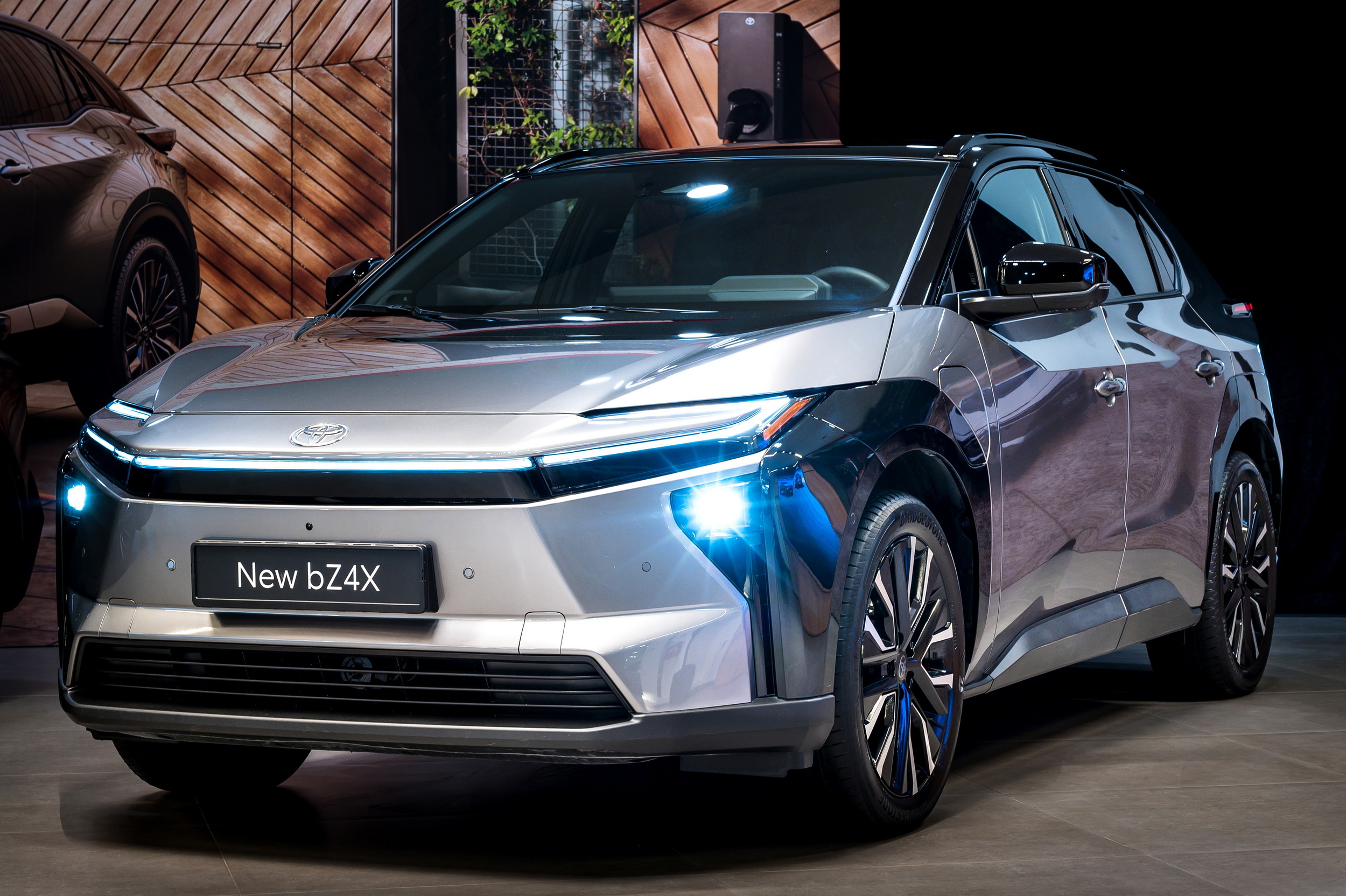
As part of a change to the subsidy program, the Toyota bZ4X will continue to be offered with the highest possible subsidy of 1.3 million yen ($8,100). The Nissan Ariya had been available with a 1.29 million yen ($8,075) subsidy, although this will be cut to 1 million yen ($6,200) in 2027.
Interestingly, it’s not just Japanese brands that get generous government assistance. Earlier this month, Tesla’s subsidies were increased by 400,000 to 1.27 million yen ($7,900), likely due to the fact that it uses Panasonic batteries. Audi also saw a recent increase of 320,000 yen ($2,000) up to just over 1 million yen ($6,200) for its EVs. Similarly, subsidies for some of Hyundai’s EVs have been boosted this month.
As noted by Nikkei Asia, not all of these subsidy increases will remain in effect. From next January, subsidies for brands including Audi and Hyundai will be cut, although their extent remains unclear. Prior to the most recent round of cuts, BYD said it was already at a disadvantage.
“We’re at an overwhelming disadvantage,” the boss of its Japan unit, Atsuki Tofukuji said. “The gap [with companies like Toyota Motor] has grown to up to nearly 1 million yen. We can’t compete with 350,000 yen.”
Opel confirmed the GSE will be its most powerful production Corsa to date.
Nürburgring testing focused on chassis tuning, steering, and ESC calibration.
Hatch is expected to borrow its 278-hp electric powertrain from the Mokka GSE.
Opel announced plans for a Corsa GSE earlier this year and the automaker recently took the hot hatch to the Nürburgring for testing. Unsurprisingly, the brand’s answer to the upcoming Volkswagen ID. Polo GTI was spotted not only by spy photographers, but also by the company’s own cameras.
We’ll get to the details in a moment, but Opel said testing was primarily focused on fine-tuning the chassis. They went on to say the upcoming model will “be the most powerful series Corsa ever built” and have “specific throttle, steering, and ESC tuning.”
While the company is keeping details under wraps, we can see a lightly revised front end with triangular air curtain accents. They’re joined by extended fender flares and aerodynamically optimized wheels, which are backed up by yellow brake calipers with GSE badging.
The changes largely fly under the radar, but the production model could be hiding a few tricks up its sleeve. That remains to be seen, but we can expect to learn more as we approach the car’s unveiling at the Paris Motor Show in October.
Opel
One thing that isn’t much of a mystery is the powertrain as the hatchback is expected to borrow heavily from the Mokka GSE. This means we can likely expect a 54 kWh battery that powers a front-mounted motor developing 278 hp (207 kW / 281 PS) and 254 lb-ft (345 Nm) of torque. It enables the crossover to accelerate from 0-62 mph (0-100 km/h) in 5.9 seconds, before hitting a top speed of 124 mph (200 km/h).
The upgrades should extend beyond the powertrain as the Corsa GSE will likely be equipped with a limited-slip differential, unique axles, and a sport-tuned suspension with special shock absorbers.
The fifth-gen Wuling Hongguang Mini EV has launched in China.
The EV has a 40 hp motor and offers up to 187 miles of range.
It brings a redesigned exterior and interior, starting at $6,200.
The Wuling Hongguang Mini EV has been around since 2020, yet it has already cycled into what’s being called its fifth generation. If that feels excessive, you’re not alone. In reality, these aren’t clean-sheet overhauls so much as heavy facelifts, which says plenty about the pace at which China’s car industry moves. Even so, racking up so many redesigns in just six years is an impressive feat.
This latest iteration leans into a redesigned exterior with a soft, almost sugar-cube look, while also stepping up inside with improved tech and a more polished cabin. Range has increased too.
Built by the SAIC-GM-Wuling partnership, the micro EV has quietly become a runaway success in China, with cumulative sales surpassing 1.9 million units by the end of 2025. This version continues to widen its appeal with a more practical five-door layout, a bodystyle first introduced late in 2024 on the outgoing model.
Visually, the highlight is the new face with a more upright nose giving the car a friendlier, almost toy-like expression. Round LED headlights and taillights are linked by a chrome strip. The overall silhouette remains familiar, but every panel has been reworked and paired with a brighter, more playful color palette.
It’s Small, Really Small
The five-door Hongguang Mini measures 3,268 mm (128.7 inches) in length, just 12 mm (0.5 inch) longer than before, while keeping the same 2,190 mm (86.2 inches) wheelbase. The two-door version remains the more compact option, coming in at 3,064 mm (120.6 inches) long with a 2,010 mm (79.1 inches) wheelbase.
The interior looks familiar, but the dashboard has been redesigned with a larger 10.1-inch infotainment touchscreen and slimmer climate vents. Furthermore, the physical climate controls have been removed entirely, and a column-mounted gear selector opens up extra space between the front seats.
Cargo space stands at 170 liters (6 cu ft) with the seats up, expanding to 838 liters (29.6 cu ft) when the rear bench is folded. The company also claims 20 separate storage compartments throughout the cabin, which should help offset the Mini’s modest footprint in everyday use.
40 HP, But Range Does The Talking
Every version sticks with a rear-mounted electric motor, delivering just 40 hp (30 kW / 41 PS) and 85 Nm (63 lb-ft) of torque, identical to the outgoing model. Performance remains modest, as expected, with top speed capped at 101 km/h (62 mph).
Buyers get a choice of two battery packs. The entry-level model runs a 16.2 kWh unit, good for 205 km (127 miles) of CLTC range. Step up to the 25.1 kWh battery, and that figure climbs to 301 km (187 miles). In both cases, charging from 30% to 80% takes around 35 minutes, which keeps downtime relatively short for a city-focused EV.
How Much Does It Cost?
The five-door 2026 Wuling Hongguang Mini EV is already on sale in China, with pricing starting at ¥44,800 ($6,500) and rising to ¥55,800 ($8,100) for the range-topping version with the larger battery. Factor in current trade-in subsidies, and the entry point drops slightly further to ¥42,800 ($6,200), reinforcing its position as one of the most accessible EVs on the market.
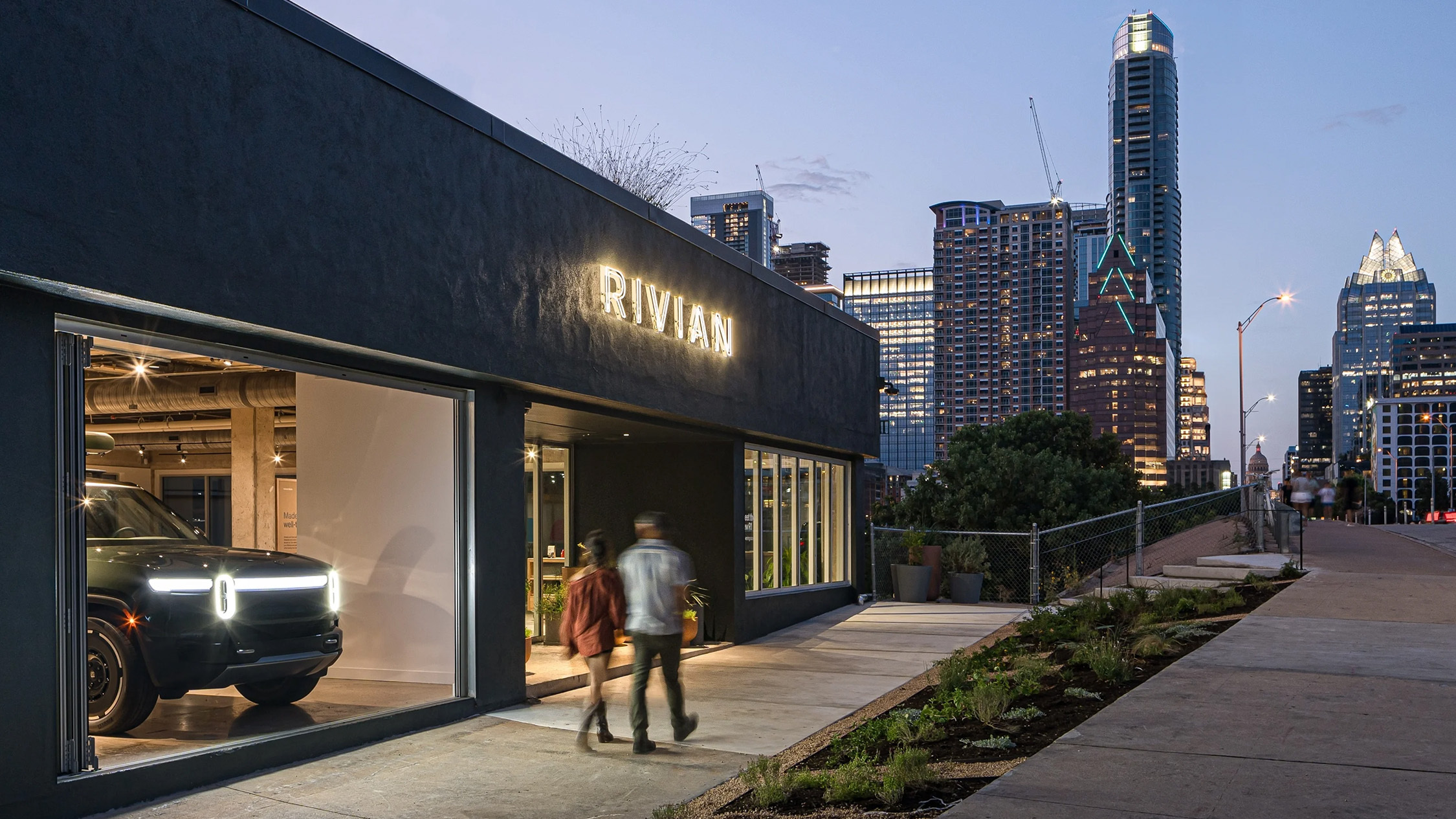
Rivian wins direct sales rights in Washington after dealer resistance collapses.
Nearly 70 percent of buyers support skipping dealerships and buying directly.
Other states may follow as pressure builds against traditional franchise laws.
Rivian didn’t just win a fight in Washington this week when it was granted the right to sell cars directly to consumers. It might have started a war that will leave dealer groups across America far less powerful and profitable 10 or 15 years from now.
After years of getting blocked by dealer laws in Washington state, the EV startup pushed hard enough that the opposition simply stepped aside. The turning point came when Rivian threatened to take the issue to voters, a gamble that could have cost it up to $30 million. Faced with an expensive ballot battle, dealer groups backed off and supported a narrow law letting Rivian and Lucid – but no other brands – sell directly.
“The writing was on the wall,” said lawmaker Andrew Barkis to The Wall Street Journal. Once the resistance faded, the bill sailed through.
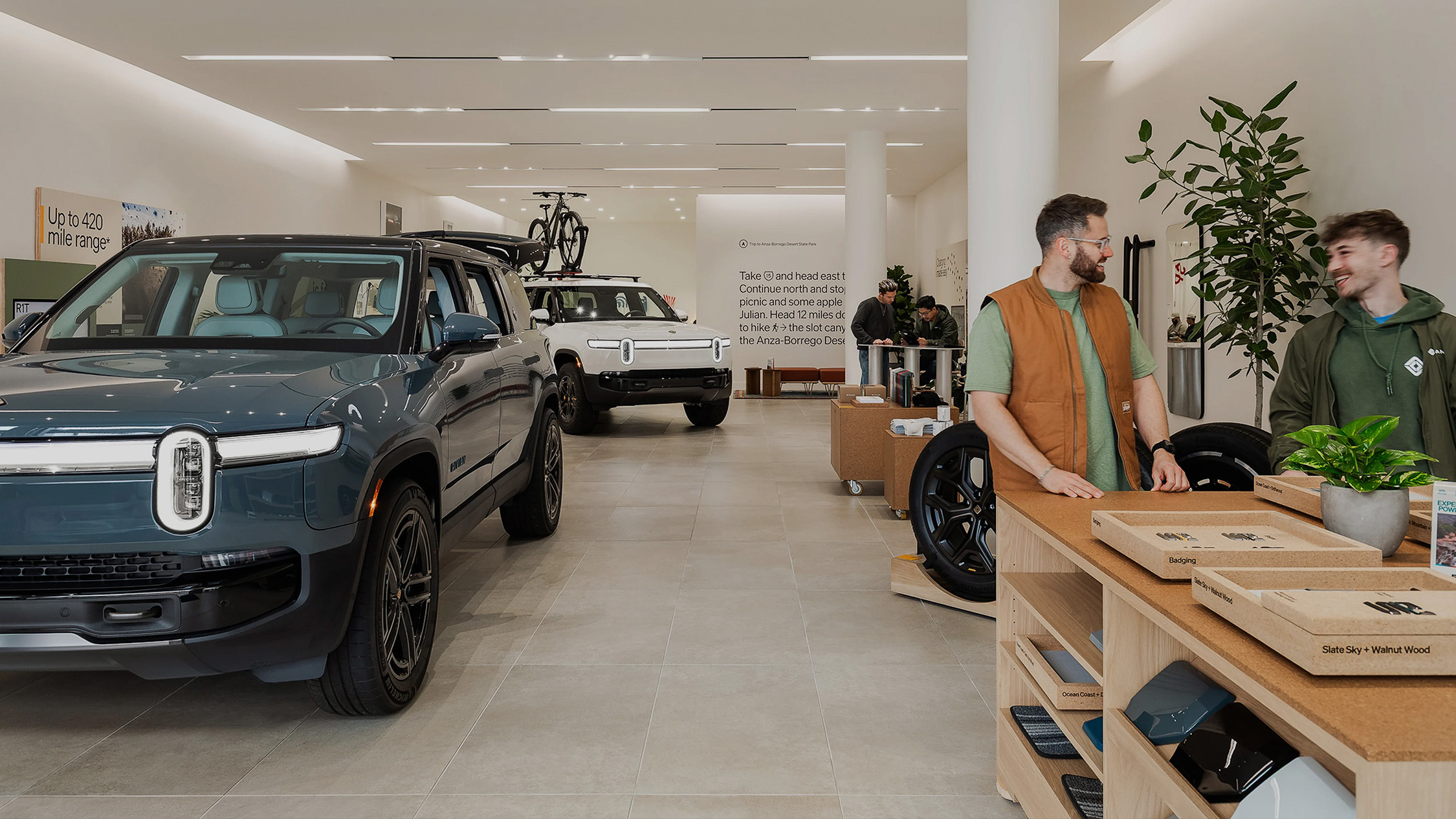
It’s a big moment in a long-running tug of war over how Americans buy cars. For decades, laws in most states have forced automakers to sell through independent dealers. That system isn’t going quietly, but Rivian just proved it can be bent, something Tesla already does, and VW is also trying to do with its new Scout brand.
Buyers Backed The Move
And the reason is simple. Buyers don’t love dealerships as much as the system assumes. Rivian’s own polling showed nearly 70 percent of people support direct sales in the same way that they like to get their sneakers from the Nike store or their new iPhone from an Apple outlet.
Rivian CEO RJ Scaringe says selling direct means more control, better margins, and a cleaner customer experience. But not everyone’s thrilled. Traditional automakers and dealer groups argue this creates an uneven playing field. They say franchise networks keep prices competitive and provide essential services like repairs and financing.
Limited Freedom
“The franchise model continues to be the ideal system,” Vicki Giles Fabré of the Washington State Auto Dealers Association told the WSJ in a statement. Still, even dealers seem to recognize the tide is turning. The Washington compromise is tightly limited, applying only to Rivian and Lucid, but it cracks the door open.
Now Rivian is eyeing other states where voters can be brought into the fight. Places like Ohio and Oklahoma could be next, and if this strategy keeps working, the patchwork of sales laws might start to unravel.
Google Maps is rolling out new trip planning features for EVs.
Users can now see how much battery usage trips will take.
Drivers will also see recommended charging stops along the way.
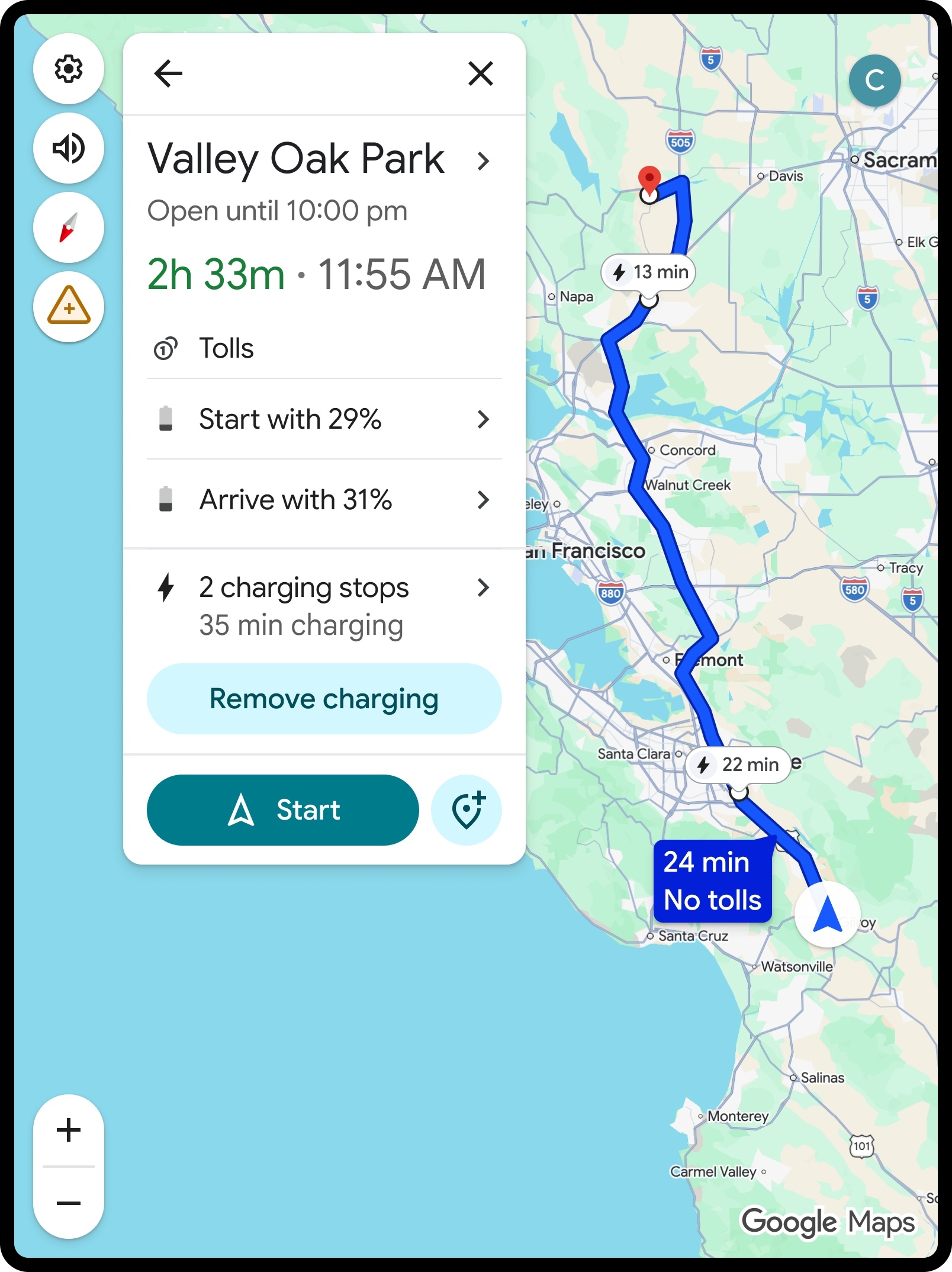
Electric vehicle owners are in for a treat as Google Maps is bringing new trip planning features to more than 350 vehicles with Android Auto. This promises to make long-distance trips less stressful as drivers won’t have to worry about running out of juice or bouncing between multiple apps to find a charging station.
To use the new features, owners need to add their vehicle to Google Maps. This can be done by opening the app, selecting your profile, scrolling down to Settings, and tapping Your Vehicles. They can then select Electric and add their make and model of EV.
With this information in hand, Google Maps can use vehicle information to calculate several important details. For example, when you set a destination, the app will estimate battery usage for the trip.
Users can add their current battery level to unlock more features, including recommended charging stops, estimated arrival battery level, and an updated ETA based on charging time. There’s even an option that allows you to select how much battery charge you want left when you arrive at your destination, so you’re not immediately forced to recharge.
This sounds like a pretty handy update, and the tech giant said the predictions are made possible by a combination of AI and “advanced energy models that analyze vehicle details, like weight and battery size, alongside Maps’ real-time information about traffic, road elevation, and weather.” All of this means drivers will be well-informed and won’t have to worry about planning routes or charging stops ahead of time.
The new features are rolling out today in the United States and will support 16 brands, with additional companies coming in the future. As of now, that list includes Audi, BMW, Chevrolet, Fiat, Genesis, Hyundai, Jaguar, Kia, Lexus, Lucid, Mercedes, Nissan, Porsche, Subaru, Toyota, and Volkswagen.
BMW’s iX3 LWB adds 108 mm (4.25 inches) of wheelbase for Chinese buyers.
China-specific software includes Huawei, Alibaba, Deepseek, and Amap navigation.
Longer rear doors and new semi-enclosed handles meet local safety regulations.
BMW is kicking off its Neue Klasse rollout in China with a version built specifically for the market, and the new iX3 LWB makes that clear from the outset. This all-electric SUV stretches its wheelbase to free up more rear-seat space, while also packing in tech and safety systems tuned to local expectations.
While the official debut of the BMW iX3 LWB is scheduled for the 2026 Beijing Auto Show in April, the company has already shared photos on its social media accounts, following the camouflaged prototypes they showed us last January.
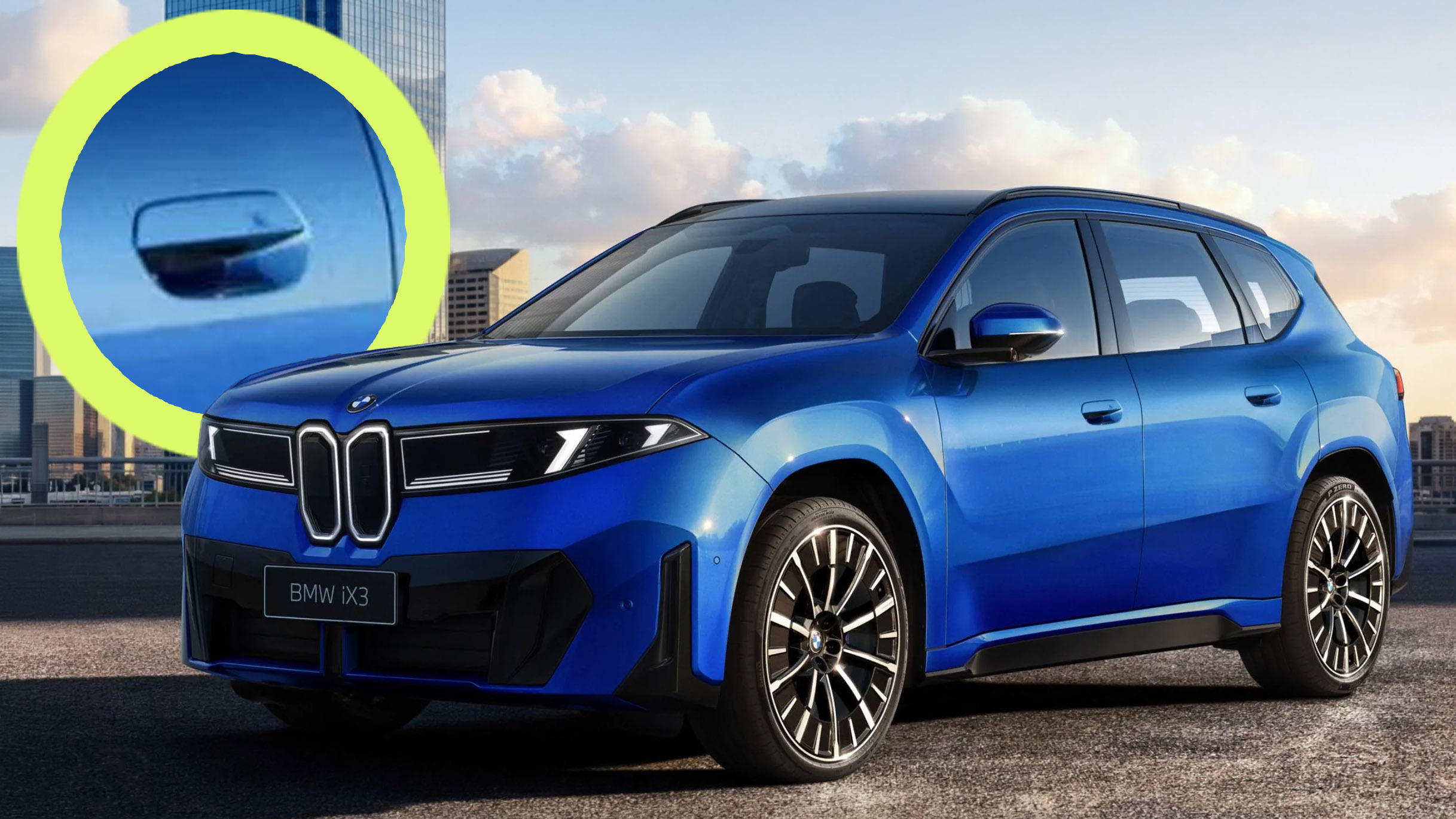
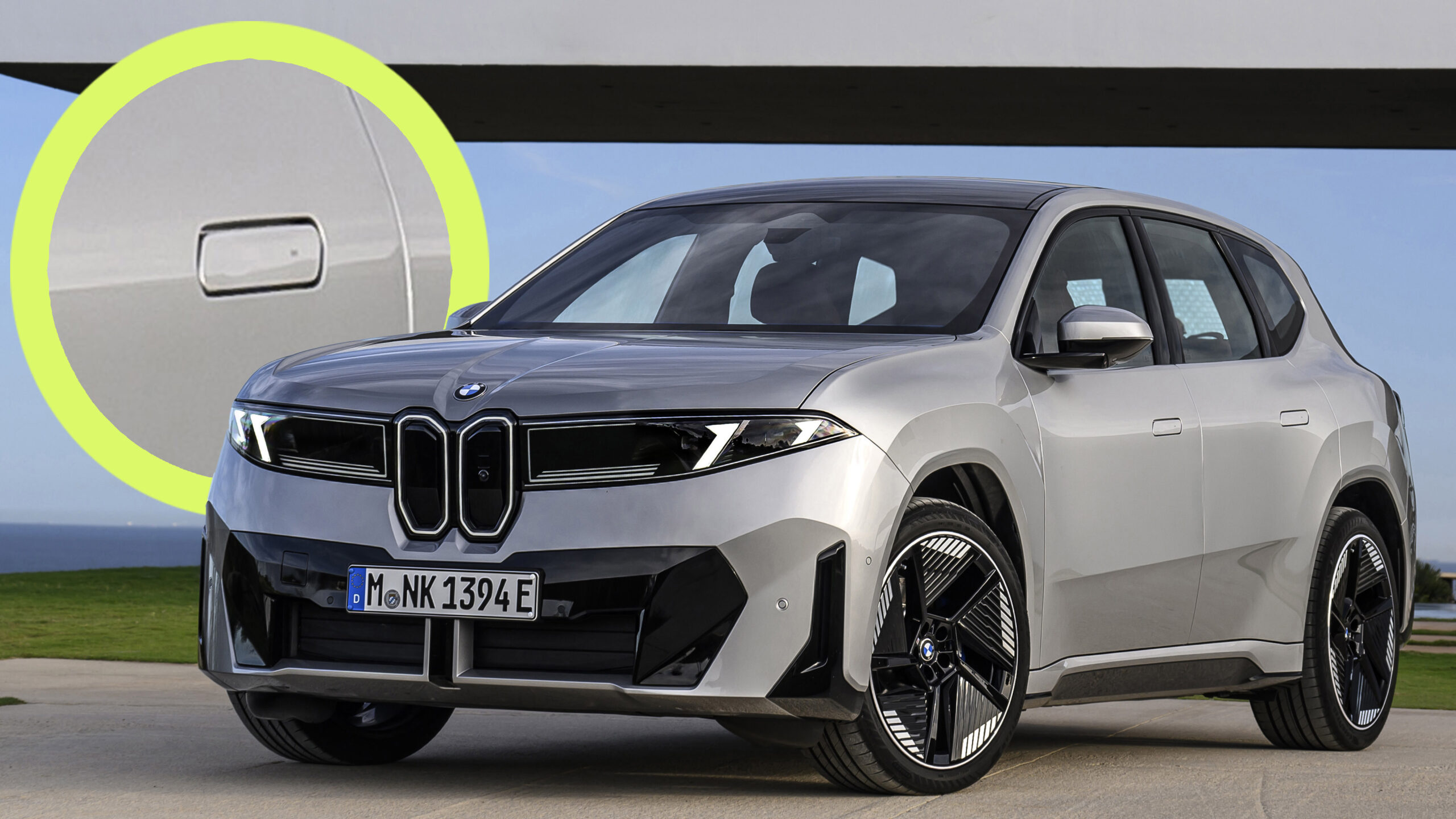
On the surface, the iX3 LWB closely mirrors the standard model, but the details start to separate it. The rear doors are slightly stretched, a result of the longer wheelbase, and the door handles now use a semi-enclosed design. That change is not just aesthetic, it aligns with Chinese regulations that restrict electronically controlled handles. It may also mark one of the first instances of a Western manufacturer developing two distinct door-handle solutions to comply with differing regional rules.
There are a couple of other small but telling tweaks. A new camera sensor sits on the roof spoiler, and the tailgate carries Chinese lettering, reinforcing that this version is very much market-specific.
The headline change is the extra 108 mm (4.25 inches) added to the wheelbase, bringing it to 3,005 mm (118.3 inches). That is actually 30 mm longer than the ICE-powered X3 LWB and puts it right in line with the current X5’s footprint between the axles.
Assuming the overhangs stay the same, overall length should land around 4,890 mm (192.5 inches). That places it slightly ahead of the X3 LWB, yet still just shy of an X5, which is an interesting bit of positioning.
Localized Software
Inside, BMW has yet to show the cabin, though expectations are that it will largely carry over from the standard iX3. The bigger story is software. The new BMW Operating System X is expected to integrate Huawei HarmonyOS Next, along with AI models from Alibaba and DeepSeek, plus navigation from Amap with 3D mapping.
BMW is also rolling out a “China-exclusive all-scenario driver assistance system” developed in collaboration with Momenta. This promises to be “deeply customized for Chinese users” providing sophisticated ADAS for China’s “complex urban environments, highways, and long-distance travel”.
Finally, BMW engineers have tweaked the chassis, electronics, and suspension of the Neue Klasse architecture for the Chinese market, targeting “an elegant balance of comfort and stability in diverse driving scenarios.”
Same Power, Big Numbers
As for the powertrain, the iX3 50L xDrive mirrors its standard iX3 counterpart. It runs a dual-motor setup producing a combined 463 hp (345 kW / 469 PS) and 645 Nm (476 lb-ft) of torque, paired with a 108.7 kWh battery pack. That battery is rated for more than 900 km (559 miles) of range on the CLTC cycle and supports DC fast charging at up to 400 kW.
Built In China, For China
This version of the iX3 will be exclusive to China, built locally through the BMW Brilliance partnership at its Shenyang plant. Pricing remains under wraps for now, though that will come into focus closer to launch.
Josef Borrell, CEO of BMW Brilliance, framed it as more than just another variant, positioning the long-wheelbase iX3 as a key step in blending BMW’s global tech with locally developed innovation.
“The new generation BMW iX3 long wheelbase represents a significant milestone for us in integrating innovation, driving pleasure, and digital intelligence for the Chinese market,” he said. “The new generation of technologies driven by our Chinese R&D team is gradually becoming an important part of BMW’s global technology landscape and brand DNA.”
GAC and FAW Toyota have slashed pricing for their bZ3X SUV and bZ3 sedan.
bZ3X was the top-selling joint-venture EV in China for five consecutive months.
Both EVs use batteries with enough capacity to cover between 321 and 383 miles.
Toyota has just made two of its cheap EVs in China even cheaper. They’re so affordable that, depending on where you live, you may consider selling your house, packing up your belongings, and immediately moving to China.
Just kidding, but when a brand new vehicle costs less than what you pay in the States for a 15-year-old used Corolla (around $14,000), then something has gone genuinely, wonderfully wrong with our understanding of what a car is supposed to cost.
Perhaps the most interesting of the pair is the bZ3X SUV, launched in China in early 2025 through the GAC Toyota joint venture. It typically starts at 109,800 yuan, or about $15,800, which already feels like a steal. Now, to celebrate GAC Toyota shifting 80,000 vehicles in its first year, the entry price has dropped to just 99,800 yuan, roughly $14,400.
You get a heck of a lot of features for the money. The base model is powered by a 50 kWh battery, and while that’s small, it’s good enough for 267 miles (430 km) of driving on the generous CLTC cycle. It powers a single electric motor producing 221 hp. Step up to the 58 kWh or 68 kWh battery options, and range stretches to as much as 379 miles (610 km).
Unsurprisingly, it’s been flying out of showrooms. The bZ3X topped joint venture EV sales for five consecutive months starting in September. Given the starting price, it’s hardly a surprise why.
The Sedan Is Even Cheaper
Too expensive? Well, good news, as the price cuts don’t stop with the SUV. FAW Toyota has also trimmed the cost of the bZ3 sedan, another strong seller. The refreshed version arrived just a few months ago and, like the SUV, originally carried a 109,800 yuan ($15,800) starting price. Now, that entry point has dropped to 93,800 yuan, or about $13,500.
Underneath, the electric sedan uses BYD’s Blade battery tech and comes with either a 49.9 kWh or 65.3 kWh pack. Depending on configuration, that translates to between 321 miles (517 km) and 383 miles (616 km) of claimed range.
Of course, you’re not just paying for the powertrain, but a slew of other technologies. For example, there’s a new 15.6-inch infotainment display, a digital gauge cluster, panoramic sunroof, dual wireless smartphone charging pads, a roof-mounted LiDAR, and Level 2 semi-autonomous driving functionalities. Not bad for $13,500, right?
Skoda’s Peaq is a fully electric three-row SUV stretching 192 inches long.
The flagship 90x trim offers 295 hp, AWD, and over 373 miles of claimed range.
European sales begin in mid-2026, with production set for the Czech Republic.
Skoda is lifting the veil a little further on its upcoming flagship, previewing the Peaq with fresh details and a camouflaged prototype. Sitting at the very top of the lineup, this large, fully electric SUV brings three rows of seating and is scheduled to hit European roads in mid-2026.
Size is a big part of the story. At 4,874 mm (191.9 inches) long, it stretches 116 mm (4.6 inches) beyond the ICE-powered Kodiaq. More telling is the 2,965 mm (116.7 inches) wheelbase, which outgrows the Kodiaq by 174 mm (6.9 inches) and even eclipses the Superb by 124 mm (4.9 inches), putting it right alongside the Chinese-spec VW ID.6 in footprint.
Despite the heavy camouflage, the near-production prototype already hints at a softer, more restrained look than the Vision 7S concept from 2022. The so-called “Tech-Deck Face” remains, pairing slim full LED Matrix headlights with a covered grille, much like the Epiq, Elroq, and Enyaq. The Peaq sets itself apart up front, though, with a more distinct bumper design featuring diagonal intakes that give it a sharper edge.
Skoda will offer a Sportline trim featuring black accents and optional 21-inch alloy wheels. The side profile is defined by large doors with flush handles, while the upright rear design hints at a spacious and practical cabin.
A Family-Focused Interior
The flagship SUV will be available in both five-seat and seven-seat configurations. The former offers a substantial 1,010 liters (35.7 cu-ft) of cargo space, while the latter provides 299 liters (10.6 cu-ft) with all seats in place. Both versions include a 37-liter (1.3 cu-ft) frunk.
Inside, highlights include a new 13.6-inch infotainment touchscreen, an optional augmented-reality head-up display, and the largest panoramic roof ever fitted to a Skoda. This roof features electrochromic technology called Dynamic Shade Control. For added comfort, the “Relax Package” brings ergonomic massage seats with leg rests, a wellness app, and a high-end Sonos audio system.
Skoda says more than 50 kg (110 lbs) of recycled materials have been used throughout the cabin, alongside both animal-free and genuine leather upholstery options. The Peaq also introduces a fresh set of “Simply Clever” features aimed at improving everyday usability.
Powertrain Options Breakdown
Under the skin, the EV ides on the VW Group’s familiar MEB architecture. It will be offered with two battery sizes and three powertrain configurations. The entry-level 60 variant features a rear-mounted motor producing 201 hp (150 kW / 204 PS), paired with a 63 kWh battery delivering over 460 km (286 miles) of range.
The 90 and 90x variants use a larger 91 kWh battery, enabling over 600 km (373 miles) of range and 10-80% charging in under 28 minutes. The 90 remains rear-wheel drive with 282 hp (210 kW / 286 PS), while the 90x adds a dual-motor all-wheel-drive setup producing 295 hp (220 kW / 300 PS), good for 0-100 km/h (0-62 mph) in 6.7 seconds.
Production will take place at Skoda’s Mlada Boleslav plant in the Czech Republic. When it arrives in mid-2026, the Peaq will go up against rivals such as the Kia EV9, Hyundai Ioniq 9, Peugeot E-5008, and Volvo EX90.
Natural gas liquids (NGL) exports reached 3.1 million barrels per day (b/d) in 2025, growing 7% from the previous year. These fuels are primarily extracted from the natural gas stream. NGL plant production has increased every year since 2005, driven by higher production of NGLs and more global demand for NGLs, especially as petrochemical feedstocks.
Deep sleep does far more than rest the body — it activates a powerful brain-driven system that controls growth hormone, fueling muscle and bone strength, metabolism, and even mental performance. Scientists have now mapped the neural circuits behind this process, uncovering a delicate feedback loop in which sleep boosts growth hormone, and that same hormone helps regulate wakefulness.
A major analysis of nearly 10,000 patients shows that simple, non-drug treatments like knee braces, hydrotherapy, and exercise can significantly ease knee osteoarthritis symptoms. These approaches not only reduce pain and improve mobility, but also avoid the risks tied to common medications. The findings suggest that low-cost, accessible therapies could play a bigger role in how doctors treat arthritis in the future.
Astronomers have spotted a bizarre cosmic explosion that refuses to play by the rules—and it’s leaving scientists scrambling for answers. GRB 250702B, detected by NASA’s James Webb Space Telescope and a global network of observatories, lasted an astonishing seven hours—far longer than typical gamma-ray bursts, which usually fade in under a minute.
A blazing supermassive black hole can influence far more than its own galaxy. Scientists found that quasars emit radiation strong enough to shut down star formation in nearby galaxies millions of light-years away. This could explain why some galaxies near early quasars appear faint or missing. The finding suggests galaxies grow and evolve together, not in isolation.

 Login
Login