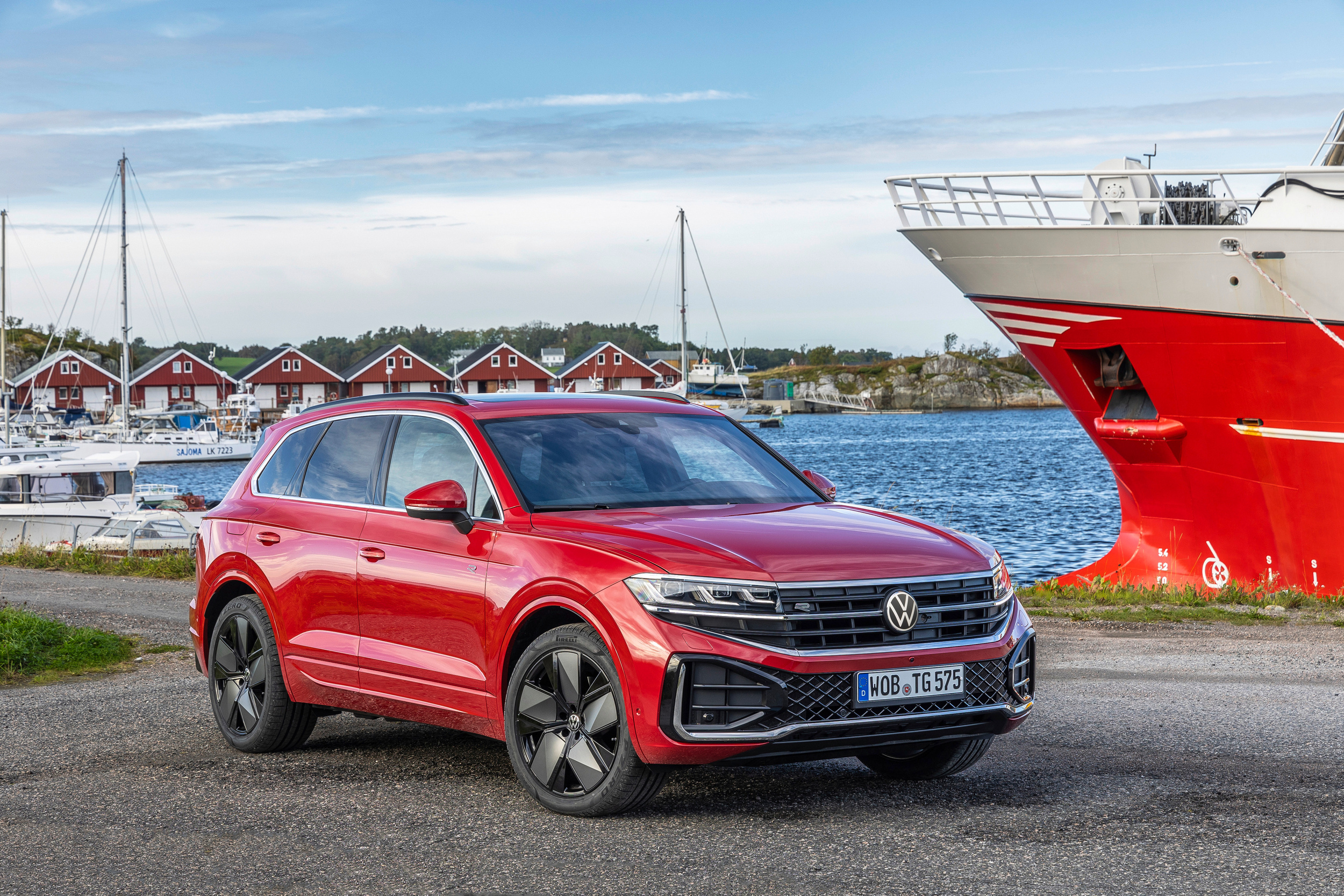
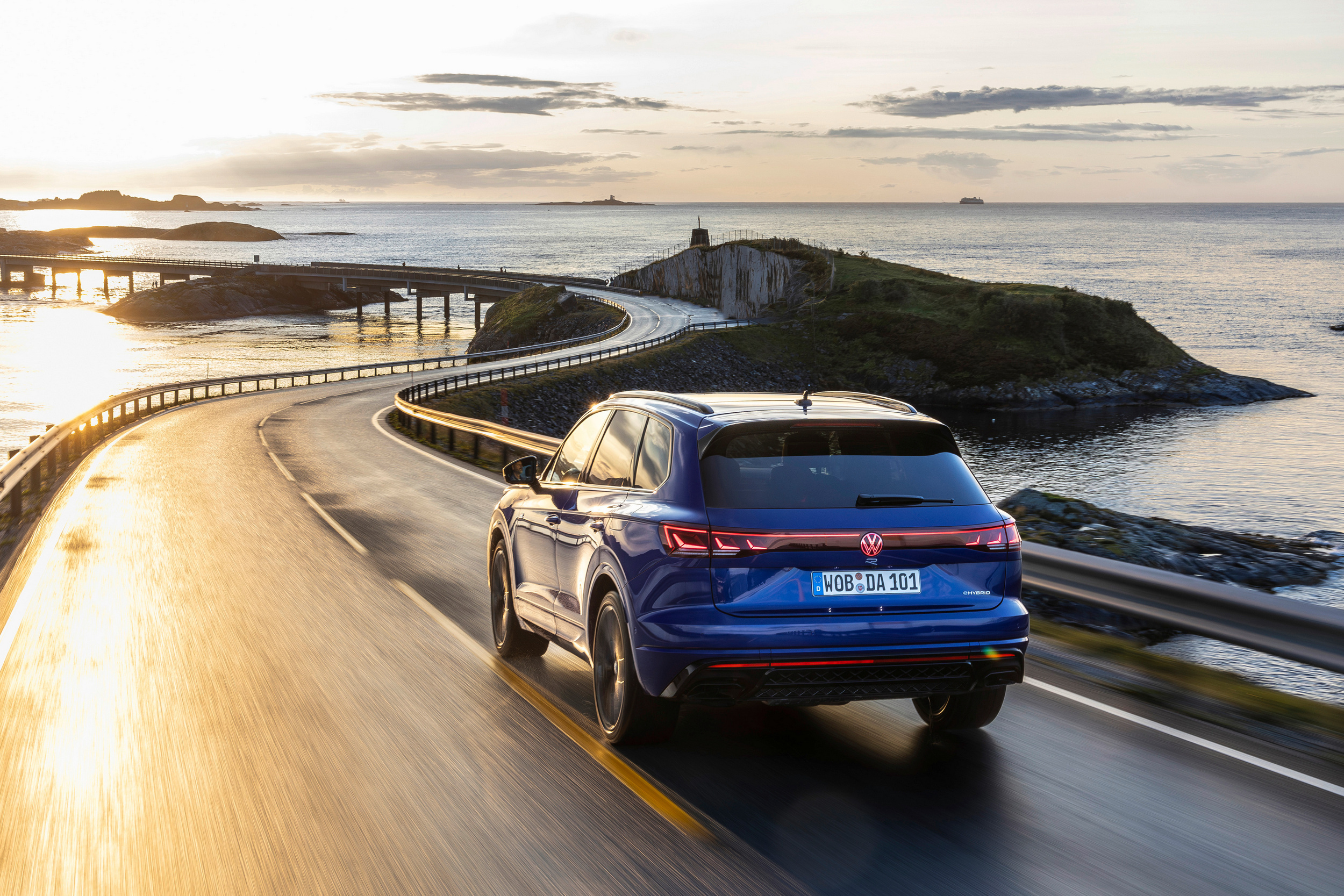
Volkswagen is considering a next-generation Touareg.
If approved, the redesigned SUV would be fully electric.
Porsche Cayenne Electric could offer hints at what to expect.
Volkswagen recently stopped accepting orders for the Touareg as the company prepares to sunset the model. However, the automaker is reportedly considering an electric successor that would enable them to hold onto well-heeled customers.
In an interview with Autocar, Volkswagen’s sales and marketing boss said ,”We are the brand for the people,” but the Touareg has “its place and this is why we are looking into opportunities for a next-generation. ”
Martin Sander went on to acknowledge low sales, but noted there’s a certain type of customer that wants “great design and space, and a very high level of quality and sophistication but, for whatever reason, do not want to be associated with a premium brand.”
In essence, it’s for people that want the luxury and style of an Audi, but with a Volkswagen badge. Sander went on to describe Touareg customers as “very down-to-earth people who are affluent,” but “low-key” and don’t want to show off. He went on to note many are business owners and it might send the wrong signal if they show up to a customer’s home in a vehicle like a Porsche Macan.
Little is known about the next-generation Touareg but, if approved, Sander said it would be fully electric and a large SUV. This suggests the model could be based on either the PPE or SSP platform. The former underpins the electric version of the Porsche Cayenne and that model has typically been closely related to the Touareg.
If history repeats itself, the ID. Touareg could follow in the footsteps of the entry-level Cayenne Electric and have a roughly 113 kWh battery pack, a 390 kW DC fast charging capability, and a dual-motor all-wheel drive system producing a combined output of around 435 hp (324 kW / 441 PS). Of course, the Volkswagen could be less advanced to help keep prices down.
The new electric SUV uses VW and Xpeng’s advanced CEA architecture.
A high-tech driver assistance system will come standard on the new model.
VW is also working on Chinese EVs with its other local joint venture partners.
Volkswagen is working on yet another addition to its burgeoning range of electric cars sold in China. Whereas the brand’s range of EVs offered in Western markets is starting to feel a little old, some of its Chinese models appear to be up to the task of rivaling local brands.
Its latest model is being brought to life through the FAW-Volkswagen joint venture, rather than the Volkswagen Anhui partnership with JAC, which is responsible for the new ID. Unyx 08. Photos published online by VW show its next Chinese EV will be a large SUV sitting above the Unyx.
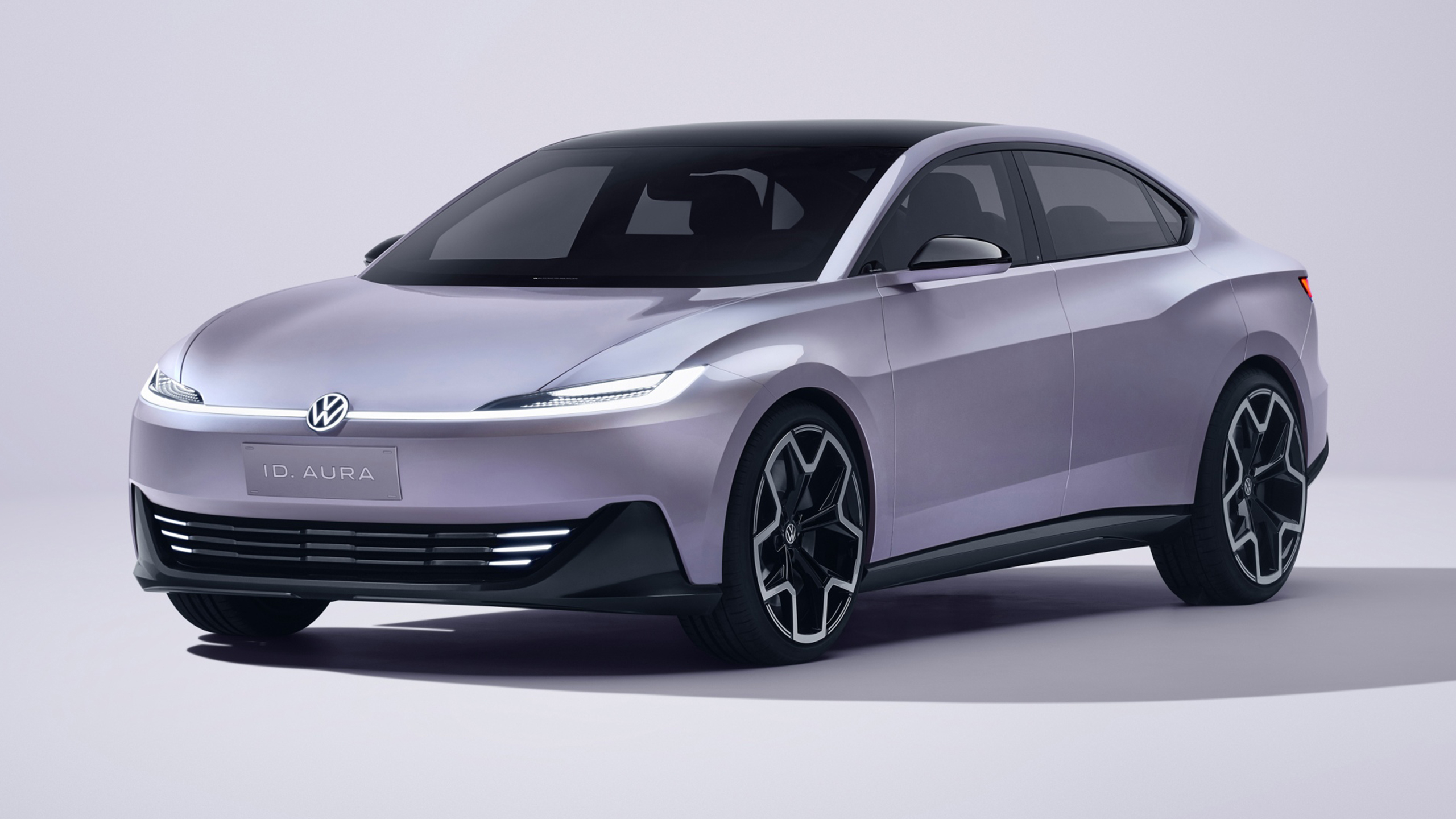
A final name for the model has yet to be confirmed, but we know this SUV will form part of VW’s ID.Aura family, previewed last year with a sleek, low-slung sedan. Like the ID. Unyx 08, it’s reported that this model is based on the CEA architecture that VW has co-developed with Xpeng, complete with 800-volt tech.
Advanced Driving Tech
These images indicate the first ID.Aura model will be slightly more conventional in its shape than the Unyx. We can see it will have a split-headlight design and a front fascia that sits quite upright. Other notable elements of the design include bulging fenders and a LiDAR unit positioned above the windshield.
Elsewhere, this prototype can be seen sporting roof rails, a sunroof or panoramic glass roof, and a fairly traditional-looking tailgate. Small parts of the LED taillights are also visible.
It’s understood that the first model from the ID.Aura family will use an advanced driver assistant system developed by VW and Horizon Robotics, known as Carizon. Limited other details about it are known, including what powertrain it will have, what charging speeds it will support, and what kind of driving range will be on offer.
The ID. Unyx 08 is sold with 82 kWh and 95 kWh battery packs in China.
VW says the flagship model can drive up to 453 miles on a single charge.
Xpeng’s advanced Level 2 driving-assistance system is used in the SUV.
VW’s partnership with Xpeng in China has started to bear fruit. Less than two years after the two car manufacturers joined forces to develop new EVs, production of the full-size ID. Unyx 08 has just started. It’s been priced very reasonably, too.
Pre-sales have started to coincide with the production of the ID. Unyx 08, starting at 239,900 yuan ($34,700) and topping out at 299,900 yuan ($43,400). To put those prices into perspective, a new ID.4 starts at $45,095 in the US, yet the ID. Unyx 08 blows it out of the water in terms of performance and technology.
The design of the new SUV is unlike any VW sold in the West, which is no bad thing. The front is sleek with intricate LED daytime running lights and black elements. Flowing sides taper off to a modern rear-end with an illuminated VW logo. All up, it is 5,000 mm (196.8 inches) long, 1,954 mm (76.9 inches) wide, and 1,672 mm (65.8 inches) tall, with a 3,030 mm (112.9-inch) wheelbase.
Efficiency And Power
Autohome
Importantly, the ID. Unyx 08 is underpinned by an 800-volt electrical architecture and offered with 82 kWh and 95 kWh battery packs, both sourced from CATL. Chinese buyers can order the SUV with either a 308 hp (230 kW) motor at the rear wheels, or in all-wheel drive configuration, which includes a 188 hp (140 kW) motor at the front wheels, making for a combined 496 hp (370 kW). This model can hit 62 mph (100 km/h) in 4.9 seconds.
VW has yet to release range estimates for all powertrain configurations, but we know versions with the 95 kWh pack will be able to drive up to 730 km on the CLTC cycle. The battery packs also support 315 kW DC fast charging, meaning the pack can be topped up from 10-80 percent in roughly 20 minutes.
The EV is also equipped with Xpeng’s Level 2 intelligent driving assistance system and has a modern interior that appears just as tech-focused as some Chinese competitors. Positioned behind the steering wheel is a relatively traditional digital instrument cluster, but the ID. Unyx 08 also includes two huge screens, consisting of one for the infotainment system and another for the passenger.
Other key features include massaging seats, an optional in-car fridge, an electrochromatic panoramic glass roof, and a 20-speaker audio system.
Volkswagen ID. Polo has leaked ahead of its debut this spring.
Closely resembles a toned down version of the ID.2all concept.
New EV will offer outputs ranging from 114 hp to 223 hp.
Someone better check the plumbing as March has been full of leaks. The Rivian R2 snuck out shortly before its big debut, while images of the BMW 7-Series and X5 quickly followed.
Now, it’s Volkswagen turn as images of the ID. Polo and ID. Polo GTI have surfaced online. Their original source is unclear, but they were eventually posted to Instagram before being removed. However, the internet never forgets so they’re still floating around cyberspace.
That being said, the images are hardly surprising as Volkswagen has been heavily promoting the models as part of an extensive teaser campaign. As you can see, the EV closely resembles the ID.2all concept, but features a more traditional grille and headlight treatment. They’re joined by larger door-mounted mirrors and less flamboyant bodywork.
The ID. Polo GTI closely echoes the regular model, but it’s distinguished by a unique front bumper with a sportier intake featuring a honeycomb mesh insert. The air curtains have also been replaced by vertical daytime running lights, while there’s a red stripe and “GTI” badging beneath the grille.
Volkswagen has already confirmed the model measures 59.6 inches (4,053 mm) long, 71.5 inches (1,816 mm) wide, and 60.2 inches (1,530 mm) tall with a wheelbase spanning 102.4 inches (2,600 mm). This is roughly the same size as the MQB-based Polo, but the interior is 0.7 inches (19 mm) longer and has additional headroom and rear seat legroom.
Buyers will also find a relatively spacious boot that holds 15.4 cubic feet (435 liters) of luggage, which can be expanded to 43.9 cubic feet (1,243 liters) by folding the rear seats down.
Speaking of the interior, Volkswagen has already revealed the cabin will have a 10.25-inch digital instrument cluster and a 13-inch infotainment system. The minimalist interior will also have a two-spoke steering wheel, physical switchgear, and a handful of metallic accents.
The ID. Polo will ride on the MEB+ platform and be offered with front-mounted motors sporting outputs of 114 hp (85 kW / 116 PS), 133 hp (99 kW / 135 PS), and 208 hp (155 kW / 211 PS). The ID. Polo GTI will arrive one year later with 223 hp (166 kW / 226 PS).
The 114 hp (85 kW / 116 PS) and 133 hp (99 kW / 135 PS) variants will come equipped with a 37 kWh lithium iron phosphate battery and an underwhelming DC fast charging capacity of 90 kW. The other two variants embrace a larger 52 kWh nickel manganese cobalt battery, which promises to deliver up to 280 miles (450 km) of range. These versions also have a higher 130 kW DC fast charging capability.
The ID. Polo lineup will debut shortly and Volkswagen has previously said pricing will start around €25,000 ($28,810).
Volkswagen has teased the ID. Cross, ahead of its fall debut.
Buyers will get two battery options and three power outputs.
Pricing in Europe will start from around €28,000 ($32,220).
Spy photographers recently caught the ID. Cross virtually undisguised, but Volkswagen put the camouflage back on for an official photo shoot in Amsterdam. That’s not all as the company has released a handful of initial specifications.
The electric crossover is scheduled to arrive in Europe this fall with a starting price of about €28,000 ($32,218). It rides on the MEB+ platform and shares a lot in common with the ID. Polo. This includes a choice of three front-mounted motors with outputs of 114 hp (85 kW / 116 PS), 133 hp (99 kW / 135 PS), and 208 hp (155 kW / 211 PS).
The ID. Polo lineup will also receive a GTI variant with 223 hp (166 kW / 226 PS). It will arrive in the spring of 2027, although there’s no word yet on whether the ID. Cross will get the same treatment.
Volkswagen also confirmed the crossover will have 37- and 52 kWh battery packs. Like on the ID. Polo, the smaller one should have a lithium iron phosphate chemistry and a 90 kW DC fast charging capability. It should power versions developing 114 hp (85 kW / 116 PS) and 133 hp (99 kW / 135 PS).
The 52 kWh battery will likely have a nickel manganese cobalt chemistry and Volkswagen has said it’ll give the hatchback a range of up to 280 miles (450 km). It will also have a slightly higher 105 kW DC fast charging capability.
In terms of size, Volkswagen confirmed the model will measure 163.5 inches (4,153 mm) long, 70.6 inches (1,794 mm) wide, and 62.2 inches (1,581 mm) tall with a wheelbase that spans 102.4 inches (2,601 mm). The ID. Cross will also offer 20-inch wheels as well as a towing capacity of 2,645 lbs (1,200 kg).
Volkswagen didn’t release interior pictures, but the cabin should echo the ID. Polo and have a 10.25-inch digital instrument cluster as well as a 13-inch infotainment system. The automaker also revealed the model will have a cargo capacity of 16.8 cubic feet (475 liters), but that can be expanded to 47.3 cubic feet (1,340 liters) by folding the rear seats down. If that’s not enough, there’s an extra 0.7 cubic feet (22 liters) of space in the frunk.
Volkswagen previews refreshed Caddy and Multivan vans for 2026.
Larger infotainment screens arrive with simpler, more intuitive menus.
Other models, including the ID. Buzz, are also lined up for upgrades.
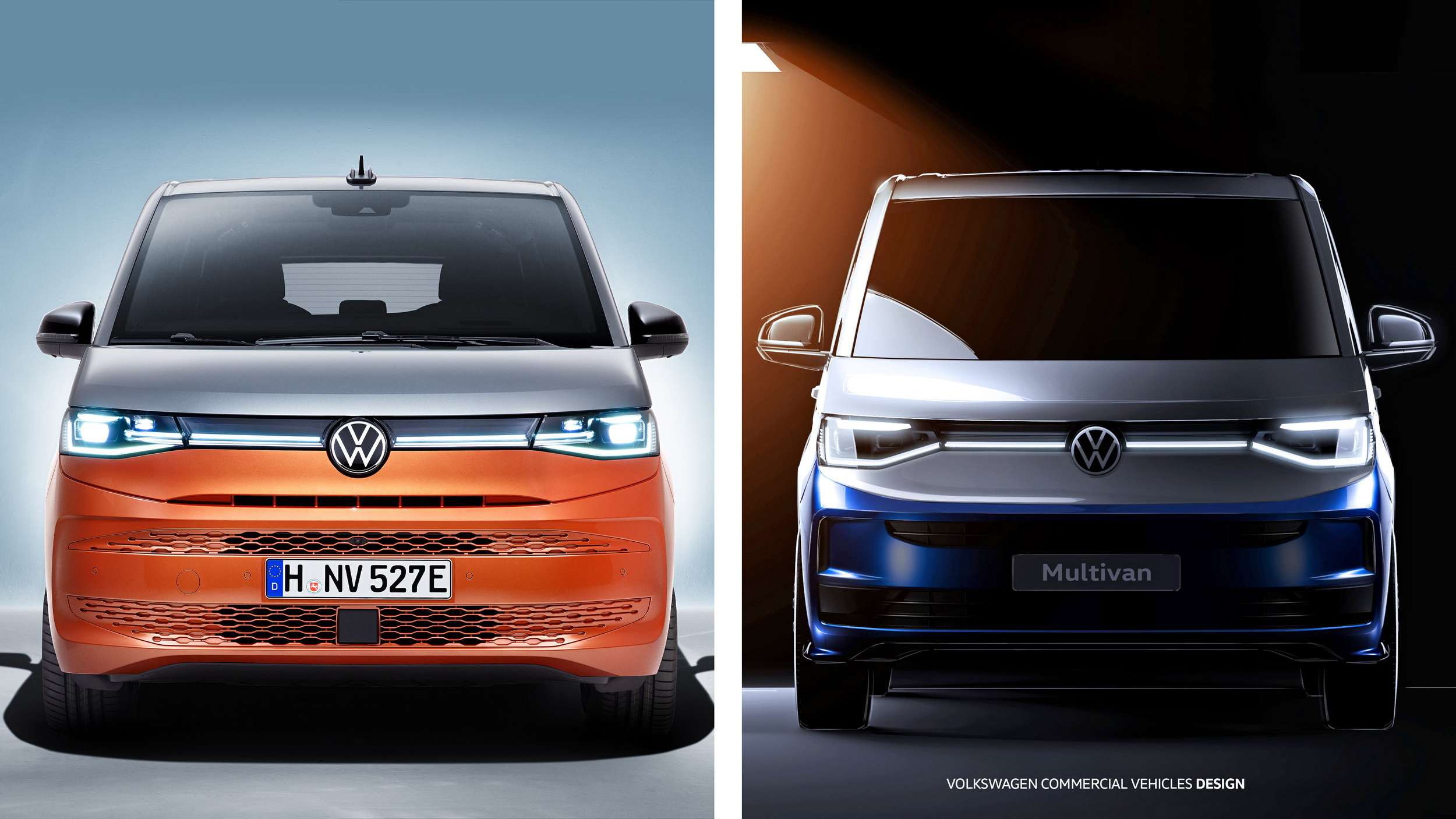
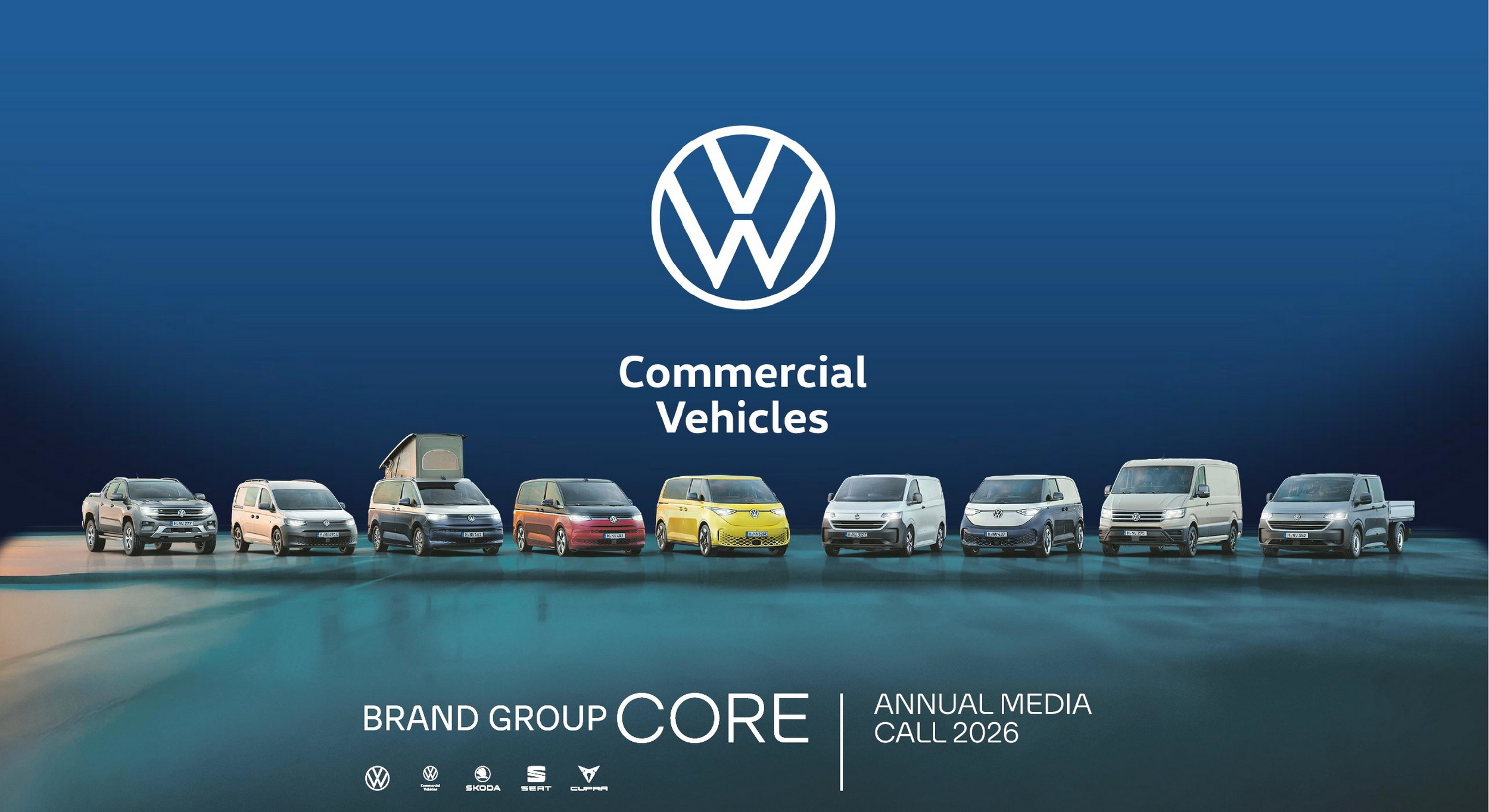
Volkswagen’s commercial vehicles division has offered a preview of what’s coming next for its van lineup at the 2026 Annual Media Conference. Alongside a business update, the company released official sketches teasing facelifted versions of the Caddy and the Multivan T7, both scheduled to arrive later this year with styling revisions and cabin upgrades.
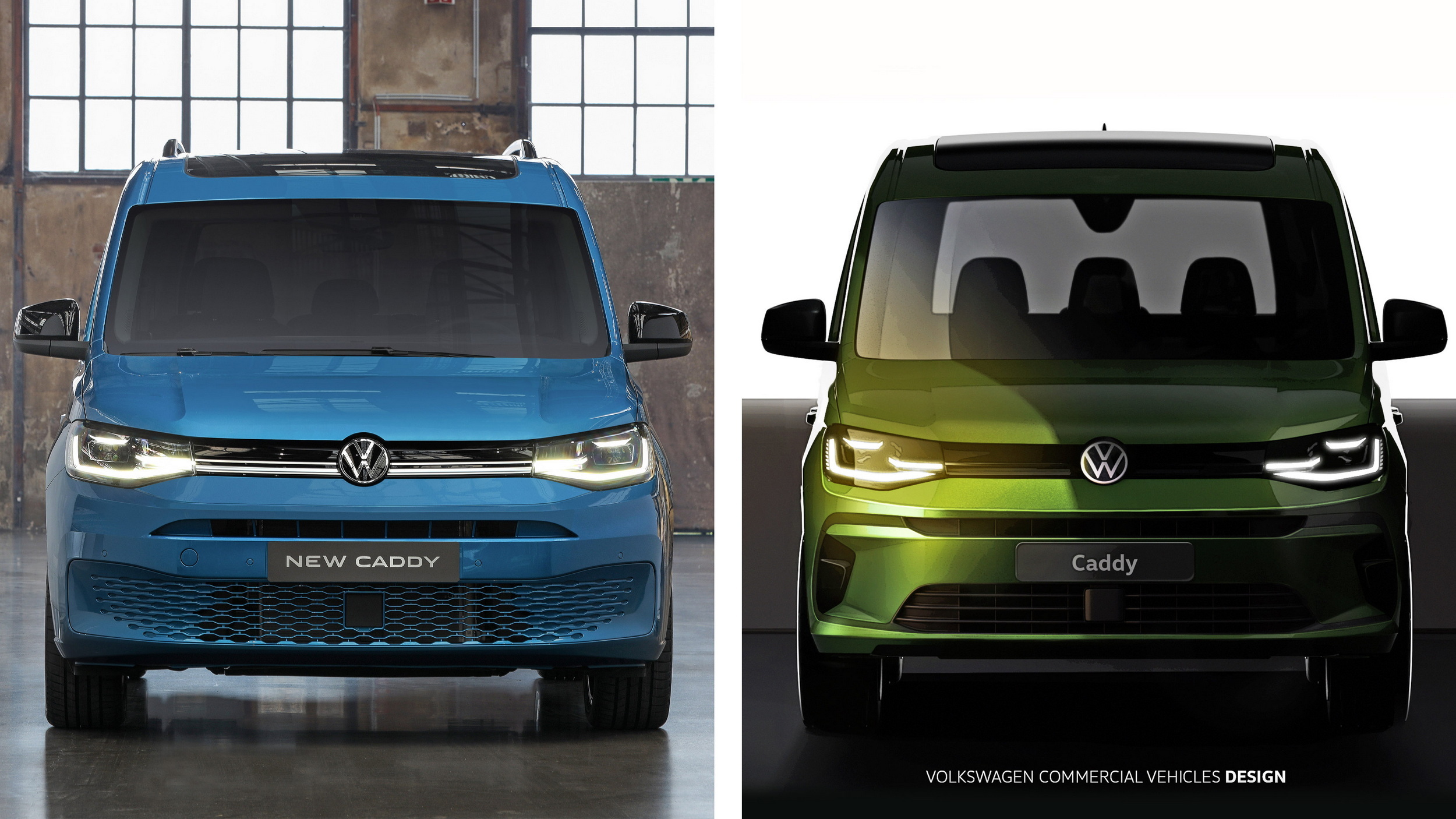
The first teaser focuses on the Caddy. Up front, the van picks up a redesigned bumper that replaces the previous body-colored mesh pattern with more traditional cooling intakes. The grille shown in the sketch appears to drop illuminated elements altogether, though it remains unclear whether that detail will apply across the entire trim range.
The Multivan T7 receives a similar refresh, although its front end retains the LED light strip spanning the grille. The headlights adopt revised LED graphics, and the van shown in the teaser wears a new two-tone paint scheme that echoes the look of the ID. Buzz.
Beyond the exterior tweaks, Volkswagen says both vans will receive what it calls “significantly optimized interior solutions.” The most obvious change will be larger infotainment displays paired with simpler, more intuitive menus, an update the company claims will make everyday use noticeably easier for owners.
It has also been confirmed that the 2026 MY updates will be applied to the California version of the Multivan T7, which was caught by our spy photographers during winter testing. For now, Volkswagen has not indicated any mechanical changes. Powertrain options for the Caddy and Multivan are expected to carry over largely unchanged from the current lineup.
Upgrades For Other Vans
The update cycle is not limited to the Caddy and Multivan. Volkswagen also plans to expand electrified options across the rest of its van range in 2026. That includes new plug-in hybrid powertrains for the Ford-based VW Transporter and Caravelle, giving both models a partially electric option for the first time.
The fully electric ID. Buzz is also due for a few new tricks. Volkswagen plans to add Vehicle-to-Load (V2L) capability, allowing owners to power external devices directly from the van’s battery. A “Good Night” package and a dedicated Camp Mode are also on the way.
Finally, the Grand California flagship camper will be “comprehensively upgraded based on customer feedback”, and the Crafter will become available with a three-way tipper bodystyle.
Financial Hurdles Amid A Fresh Start
The product push comes as VW Commercial Vehicles tries to bounce back from a difficult 2025. Sales revenue actually rose 11% to €16.86 billion ($19.3 billion), but operating profit plunged 67% to €245 million ($281 million).
Much of the decline was attributed to provisions set aside for CO2 fines in the European Union, largely tied to the slower-than-expected ramp-up of fully electric LCVs. Even so, the brand maintained a solid net cash flow of €1 billion ($1.15 billion) to support future product updates. Deliveries also edged up, with VW Commercial Vehicles selling 428,000 units in 2025, a 6% increase compared to 2024.
VW will rename the updated ID.4 as the ID. Tiguan in 2027.
Design shifts closer to the familiar look of the brand’s SUVs.
Physical buttons return, replacing the much-criticized sliders.
Volkswagen’s replacement for the ID.4 is not shaping up as a clean-sheet electric SUV. Instead, the company seems set to give the existing formula a fairly thorough rethink, reworking what it already has rather than tearing it up and starting again from scratch.
And it will likely arrive wearing a badge most buyers already know. Volkswagen is preparing to pin the Tiguan name onto what will become its core compact EV, a move meant to make the brand’s electric lineup feel less like a collection of tech codes and more like the VW showroom people already recognize.
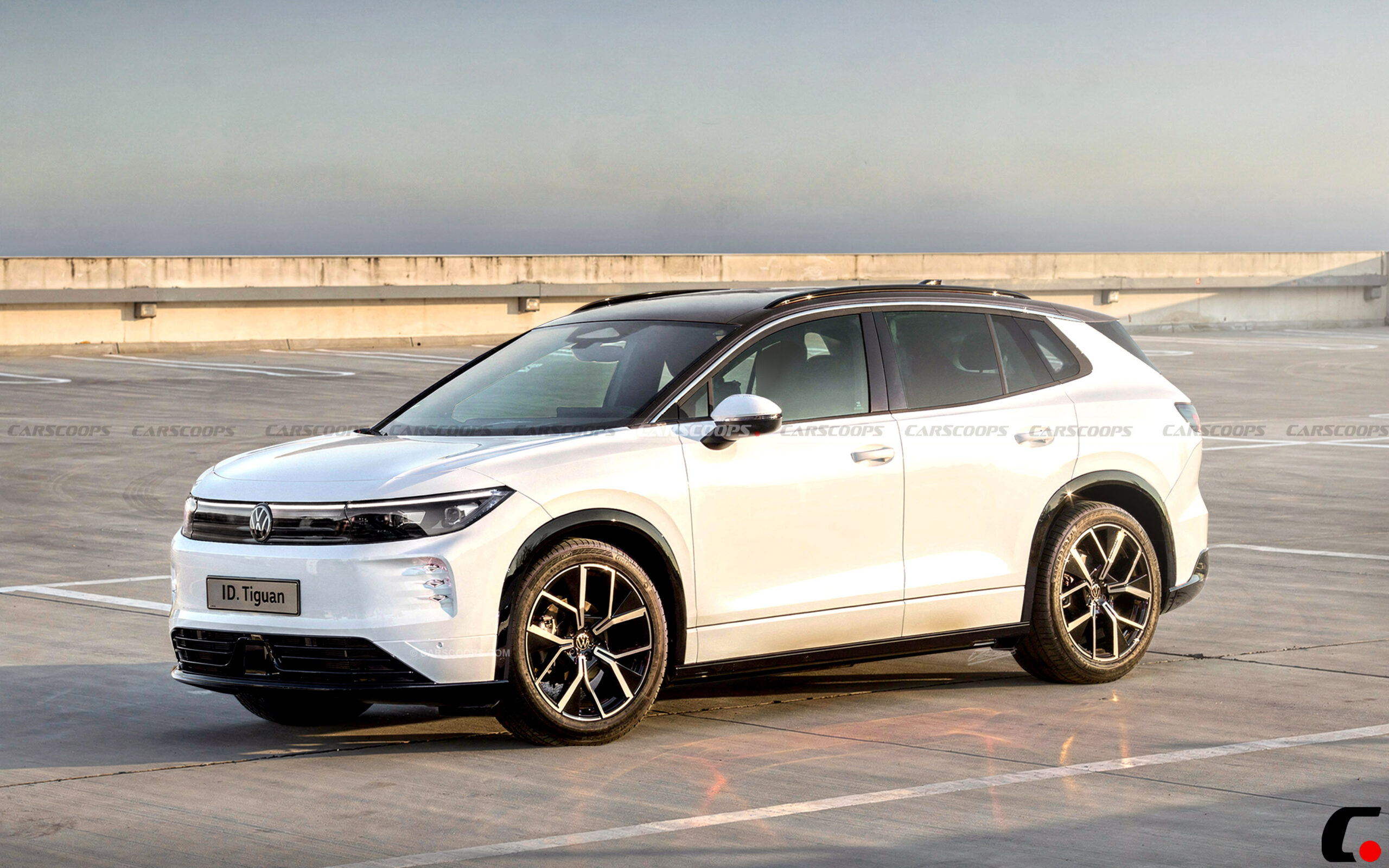
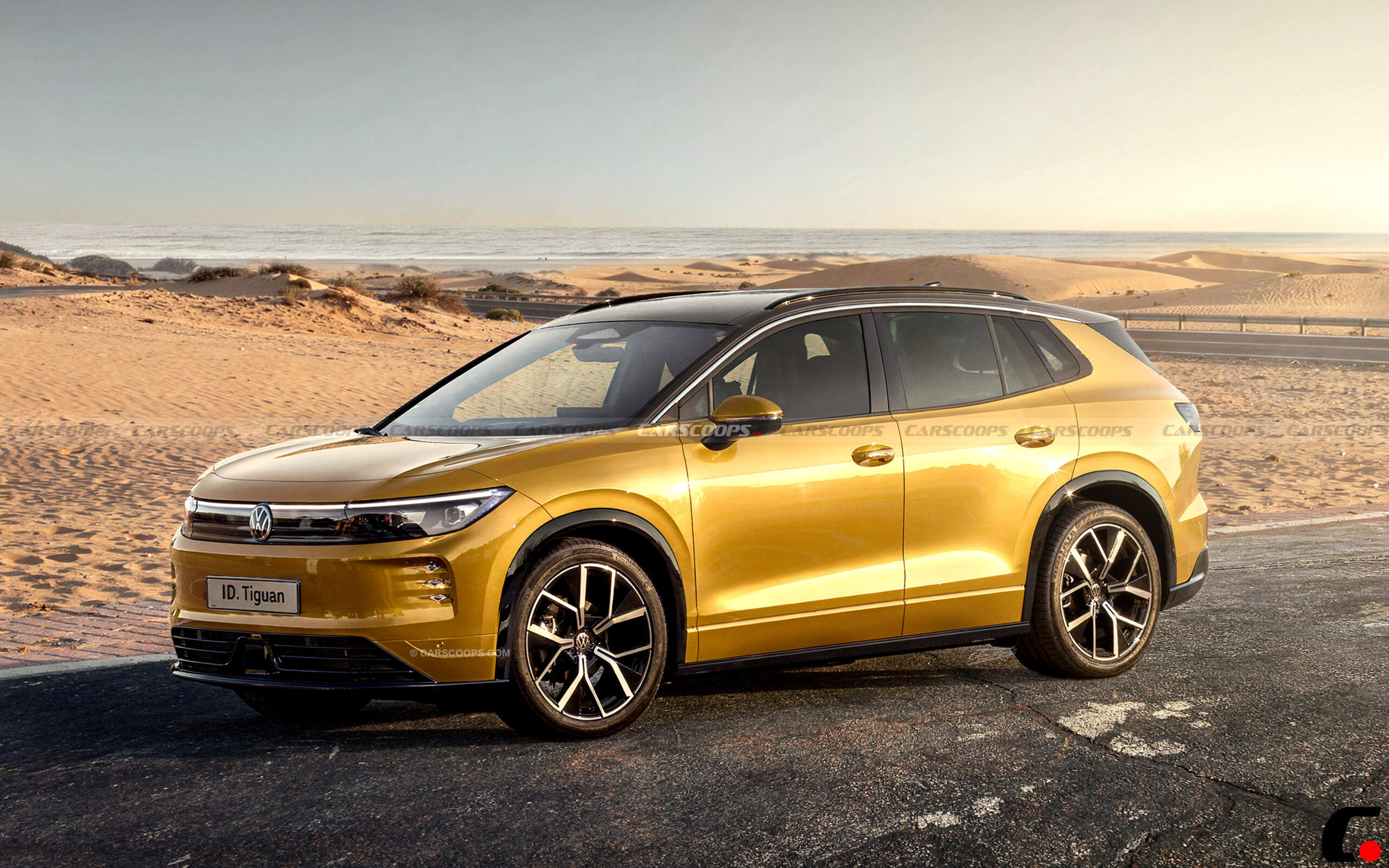
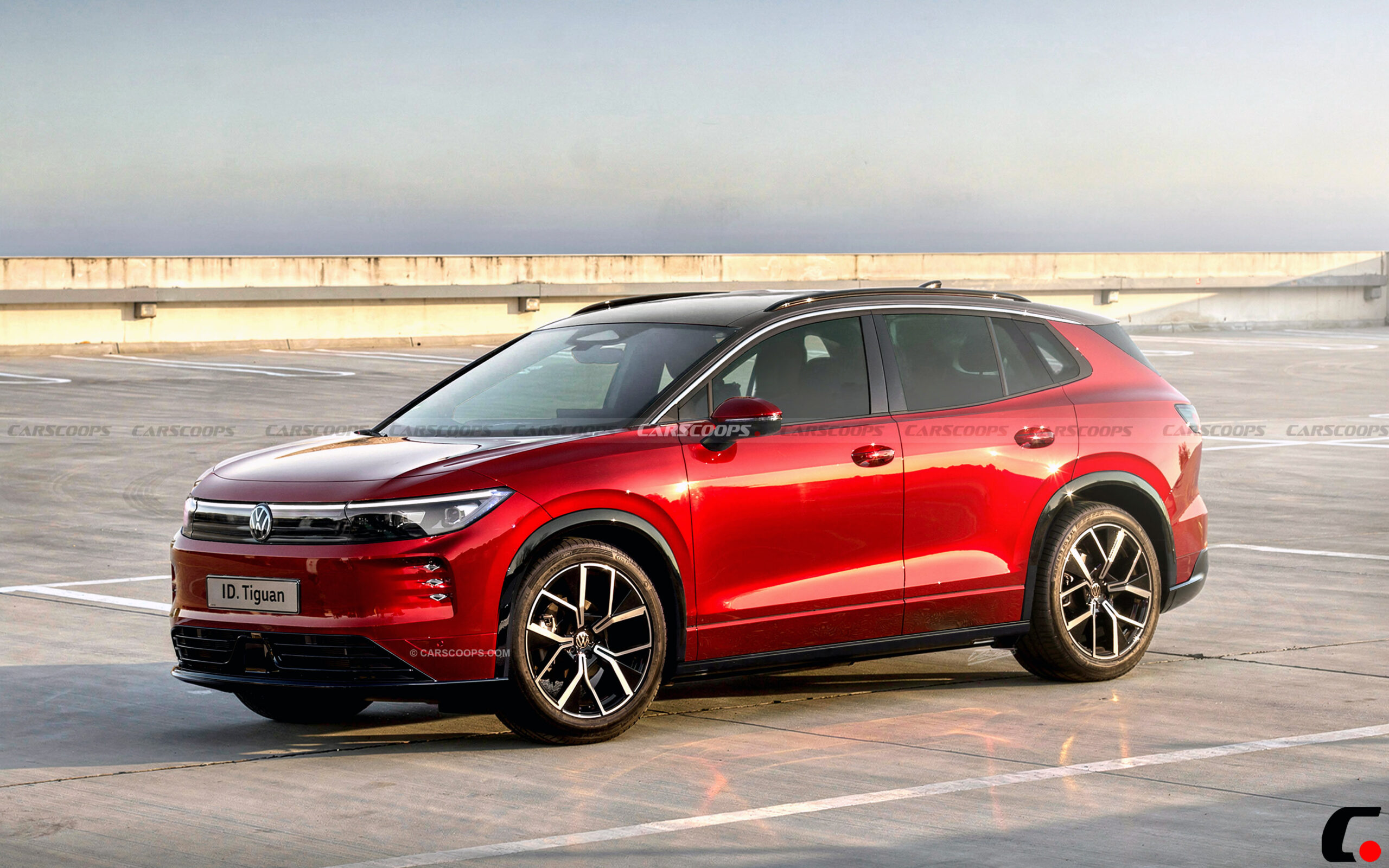
Recent prototype sightings give us a good idea of where the design is headed. Using those clues, we put together a production-style rendering and gathered everything currently known about the upcoming model.
Arguably, the electric Tiguan won’t get your pulse racing in the same way, say, Mazda’s new CX-6e will, but that’s okay. Visually, the ID. Tiguan retains the ID.4’s underlying proportions but refines them with more conventional SUV cues.
The front fascia is a squarer affair, ditching the rounded look in favor of rectangular LED headlights connected by a full-width light bar and an illuminated VW badge. A more upright bumper with subtle vertical elements exudes minimalism.
In profile, it now has a straighter shoulder line, revised window graphics, and linear lower cladding. The roofline remains largely unchanged, while the flush door handles have been replaced by a conventional ‘pull-action’ setup. Out back, a full-width taillight cluster mirrors the front, while a revised bumper and subtle roof spoiler clean up the overall look.
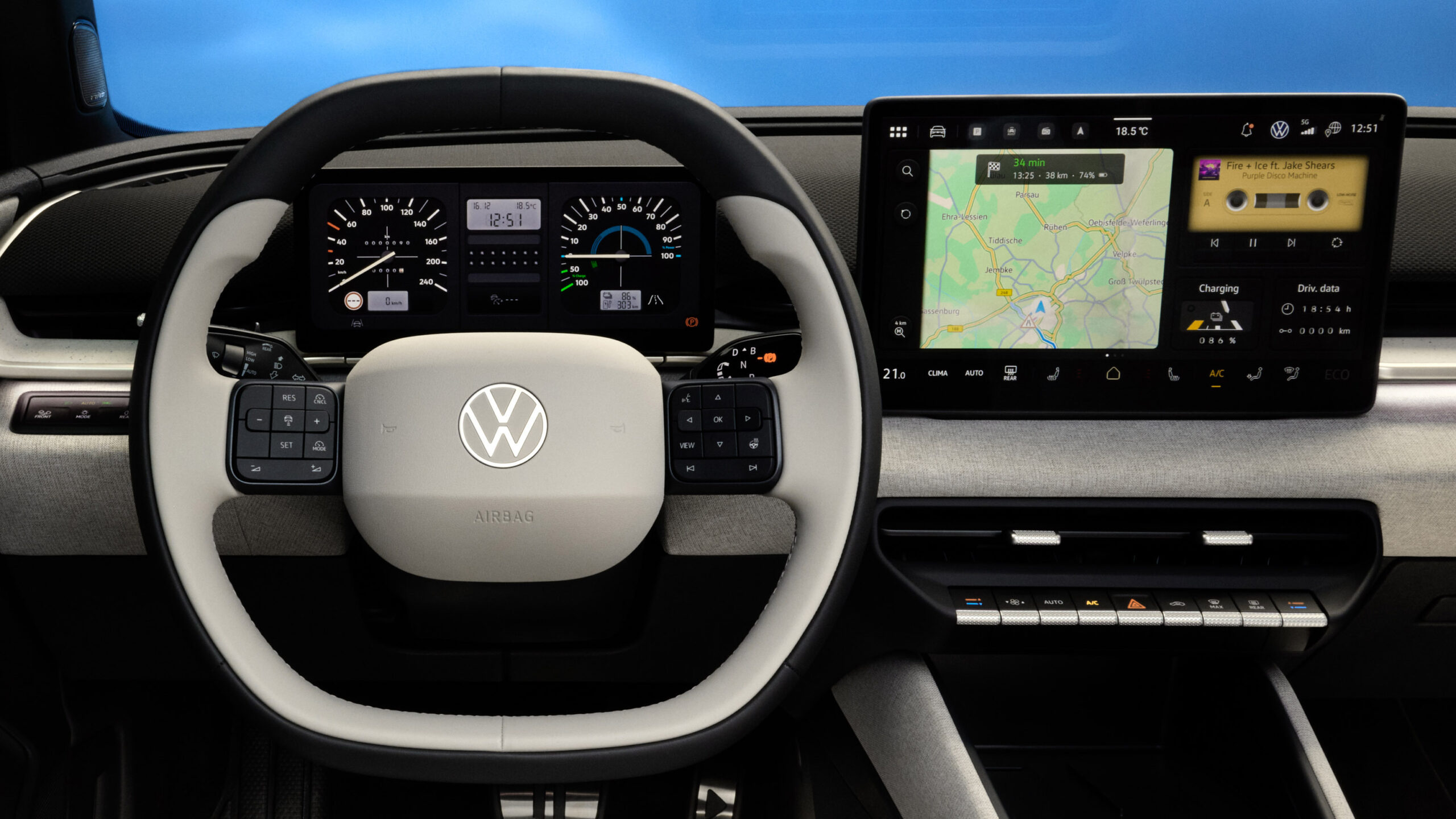
Inside, the previous and much-despised haptic feedback and slider setup from the ID.4 will be ditched. A large infotainment screen will remain, but like the new ID. Polo, it will bring back proper physical buttons for the steering wheel and HVAC controls, plus an actual volume knob.
On the tech front, it will bring AI integration with ChatGPT, conversational voice commands, and other connected services. Interior quality is also set to improve, with increased recycled materials and fabric surfaces. Occupant space will largely stay the same, offering generous rear-seat legroom and a flat floor.
Under the skin, the ID. Tiguan will continue to ride on Volkswagen Group’s MEB architecture, most likely in its updated MEB+ form. The overall battery and chassis layout should remain familiar, with MacPherson struts up front and a multi-link rear suspension. Expect recalibrated driver-assistance systems and a handful of upgraded safety features to round out the updates.
As previously reported, powertrain options are also expected to closely mirror the current lineup with minor tweaks. Base variants will continue to use a single motor on the rear axle, developing around 282 hp (210 kW). Dual-motor, all-wheel-drive versions will yield close to 335 hp (250 kW).
The 400-volt system will employ LFP batteries with roughly 77kWh to 86kWh of capacity, targeting WLTP metrics in the 311-342 mile (500–550km) range, alongside improved DC fast-charging capability.
Rivals and Reveal
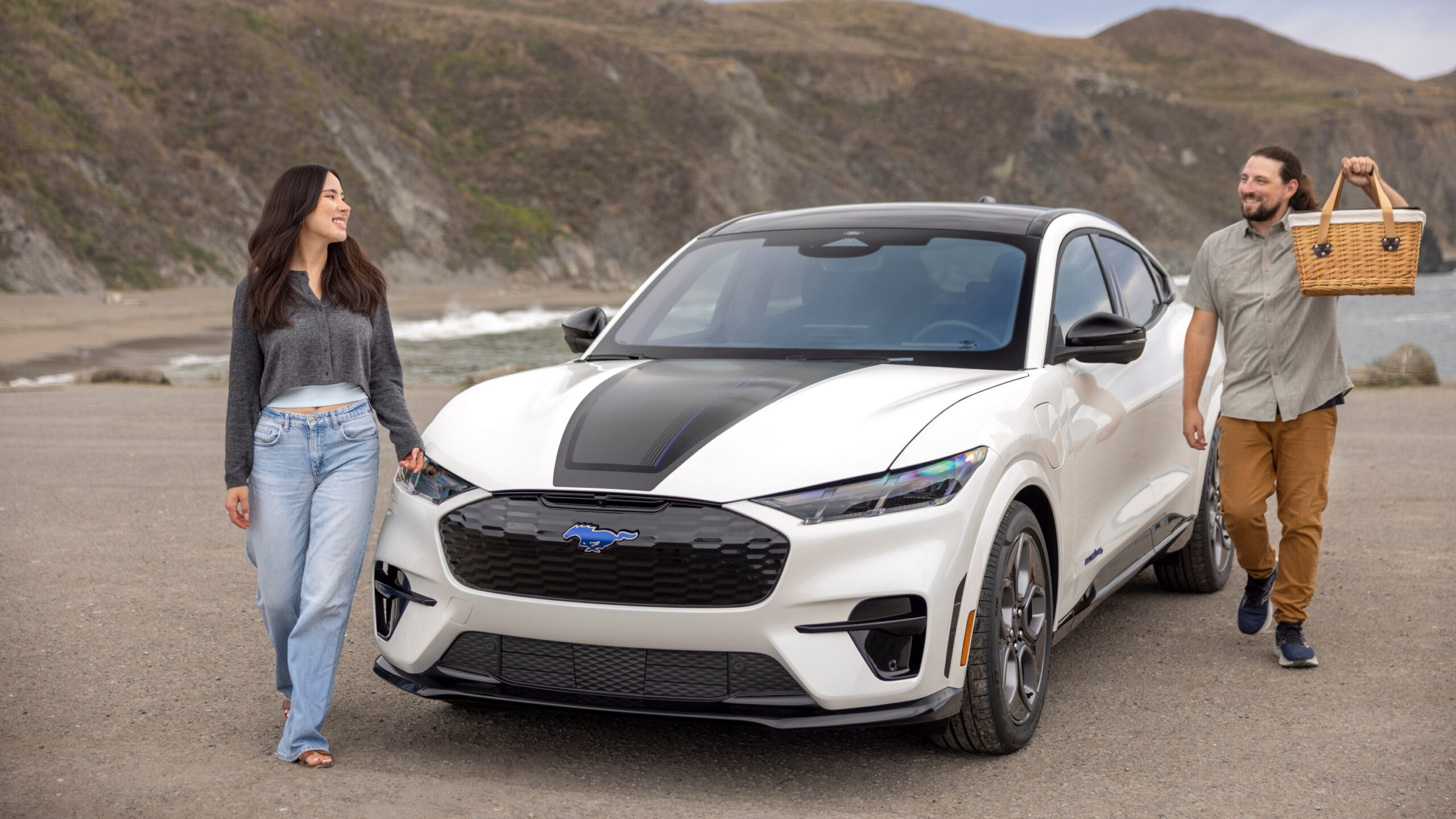
When it arrives, the ID. Tiguan will find itself in very busy territory. The usual suspects are all here, including the Tesla Model Y, Ford Mustang Mach-E, Hyundai Ioniq 5, Kia EV6, Skoda Enyaq, Zeekr 7X, and Peugeot e-5008. Volkswagen is expected to reveal the model sometime in 2026, with sales likely following in 2027.
So, what do you make of the ID. Tiguan’s familiar, slightly more conventional look? Let us know your thoughts in the comments.
Global EV sales fell by 11% in Feb, and are down 8% year-to-date.
Europe surged 21%, but the biggest region, China, suffered a 26% drop.
Carmakers and suppliers are now moving into energy storage systems.
Electric cars were supposed to take over the world in a neat upward line. Instead the global EV market and new-vehicle buyers threw in a curveball and carmakers are scrambling to adapt.
Approximately 1.1 million electric vehicles were sold worldwide in February, according to new data from Benchmark Mineral Intelligence, which sounds impressive until you look closer. Sales were down 11 percent compared with the same month last year and also down 11 percent compared with January.
So yes, EV demand is still big. But it’s not as big as it was, and it differs wildly from region to region. Europe, for instance, is still booming. EV sales there are up 21 percent so far this year, helped heavily by subsidies and government incentives. Germany (up 26 percent) and France (+30 percent) are leading the charge, and Italy’s market has nearly doubled thanks to generous EU backed incentives.
Ford’s Tough Time
Meanwhile, North America is heading the opposite direction. True, February sales climbed 8 percent, but year-to-date they’re down a staggering 36 percent as demand weakens. Some automakers are feeling the pain more than others. Ford’s EV sales have reportedly dropped 70 percent so far this year.
China, still the biggest EV market, is somewhere in between. Domestic EV sales are down 26 percent since the start of the year after the country reintroduced purchase taxes and tweaked its trade in incentives. But Chinese brands are making up for that by exporting more EVs than ever. In the first two months of 2026 alone, Chinese EV exports more than doubled and topped half a million units.
EV Sales Jan-Feb 2026
YTD ’26
Change vs ’25
Global
2.2 million
-8%
China
1.1 million
-26%
Europe
0.6 million
21%
North America
0.17 million
-36%
Rest of World
0.37 million
84%
SWIPE
Benchmark Minerals
For automakers the slowdown creates a practical problem. Billions have been invested in battery factories designed to feed a huge wave of EV demand. And when that demand softens, those batteries still need a job.
That’s why more automaker and suppliers are turning toward energy storage. Large grid scale battery systems are suddenly becoming a convenient way to soak up spare production while also helping stabilize electricity networks.
VW Hooks Up
Volkswagen, for example, recently switched on its first large scale battery storage facility in Germany. In Salzgitter, the VW Group’s energy subsidiary Elli has connected a storage system to the grid with an output of approximately 20 megawatts (MW) and a storage capacity of 40 megawatt-hours (MWh).
Instead of powering cars, the batteries help store renewable electricity and release it when the grid needs extra juice. Other automakers including Tesla, BYD, GM, Ford, Renault, Mercedes and Hyundai are also either already selling energy storage systems or working on them.
VW ID.3 Neo refresh brings a few subtle design and tech tweaks.
The electric hatch arrives next month with hardware upgrades.
Other ID EVs also now gain the same updated software platform.
Volkswagen is preparing another update for its compact electric hatchback. In mid-April, the company will unveil a revised version of the ID.3, which will carry the new ID.3 Neo name. The refreshed model brings a mix of hardware and software changes intended to keep the hatch competitive for the rest of the decade, at least until the long-anticipated ID. Golf eventually reaches showrooms.
Alongside the announcement, the automaker released a set of official design sketches. They show a shape that remains immediately recognizable as an ID.3, but with styling cues that align it more closely with Volkswagen’s next batch of electric models, including the ID. Polo and ID. Cross.
Most of the visual changes are concentrated at the front. The headlights are now linked by a slim grille element, creating a more cohesive face, while the bumper intakes adopt a simpler, cleaner design. From the side, the proportions look largely untouched.
Out back, however, the taillights gain updated LED graphics, and the lower section of the tailgate is now finished in body color rather than contrasting trim. Volkswagen is also expected to expand the palette with new exterior colors and wheel options.
Volkswagen design chief Andreas Mindt says the update focuses on refining the car’s overall presence. The goal, he explained, was to deliver “clean proportions, confident surfaces, and a sharper digital character” for one of the company’s most important electric models.
The ID.3 first arrived in 2019 as Volkswagen’s inaugural purpose-built EV, marking the start of the brand’s modern electric era. A facelift followed in 2023, so the upcoming ID.3 Neo effectively represents the model’s second major update since its original launch.
New Software And More Buttons
A major focus of the ID.3 Neo is the new Innovision infotainment system, which introduces an integrated app store for audio and video streaming, gaming, charging services, and parking services. Inside the cabin, Volkswagen has also eliminated the controversial touch-sensitive steering wheel controls, replacing them with traditional tactile buttons.
In addition, a new digital vehicle key option allows owners to unlock and access their cars using a smartphone or smartwatch without needing to carry a physical key fob or install a dedicated app.
Updates For Other ID Models
On the practical side, Volkswagen is rolling out Vehicle-to-Load (V2L) capability across the ID lineup. This allows owners to draw up to 3.6 kW of electricity from the high-voltage battery through a 230V socket inside the cabin or by using an external adapter. That output can power tools, charge e-bikes, or run camping equipment when the car is parked.
The software package also receives additional functionality. Updates include Travel Assist with traffic light detection, along with support for One-Pedal Driving.
Kai Grünitz, Member of the Volkswagen Board of Management responsible for Technical Development, said: “The new software generation brings more performance and an even better customer experience to the ID. models. The new Volkswagen electric models in the small and compact vehicle segments – ID. Polo, ID. Polo GTI, ID. Cross – will also soon be launched on the market with these new innovations, offering more flexibility in everyday life and for leisure activities.”
Beyond the updated software, the Pure trims of both electric crossovers will receive a new electric motor called the APP 350. The unit recently appeared in the closely related Ford Explorer and Capri EVs. It produces 187 hp (140 kW / 190 PS) and is said to deliver more torque while consuming less energy than the previous motor.
Efficiency gains also come from a new 58 kWh lithium phosphate battery pack. Combined with the updated motor, Volkswagen says the changes increase the WLTP range of the ID.4 by 40 km (25 miles).
Two different powertrains will be offered for the VW ID. Era 9X.
The ID. Era 9X is similar in size to the BMW X7 and has up to 510 hp.
VW once criticized EREV tech as environmentally unfriendly in 2020.
The VW Group began selling its EA211 engine in 2011, offering it in both three- and four-cylinder forms across a wide range of models. Over the years, it has powered familiar names such as the VW Golf, Seat Ibiza, Skoda Fabia, VW T-Roc, Audi Q2, and Seat Leon.
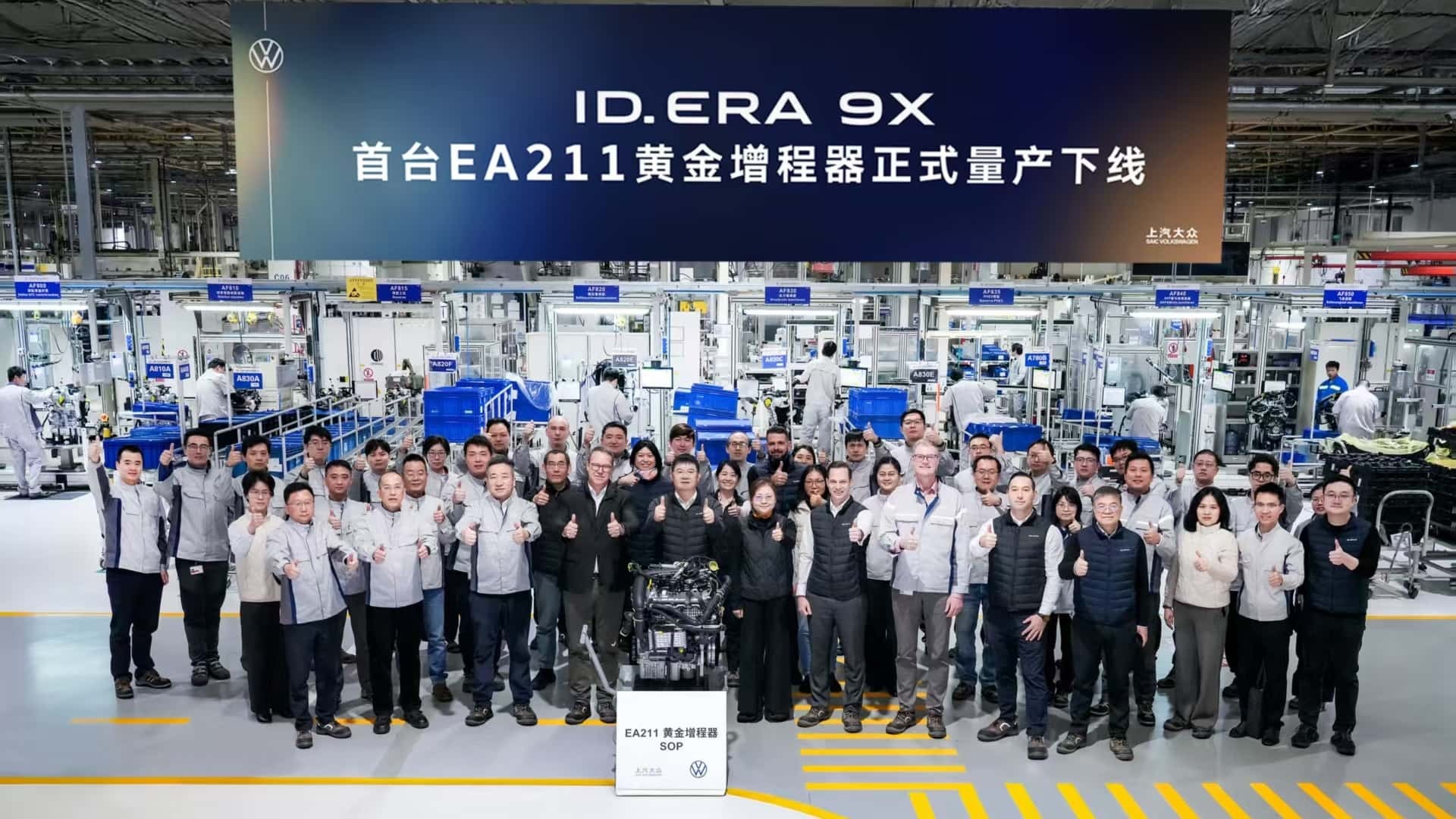
Now the company has updated and adapted this long-running engine for an entirely new role, serving as the range-extender in its first extended-range electric vehicle in China, the ID. Era 9X.
VW presented its new flagship SUV, co-developed with SAIC, earlier this year. At the time, we knew it would use a range-extender powertrain, but few technical details were available. Earlier this month, VW confirmed that the ID. Era 9X uses a 1.5-liter turbocharged EA211 engine, although several notable revisions have been made to prepare it for this application.
What’s Different?
For example, the updated engine now includes a new variable-geometry turbocharger to seamlessly adjust airflow, depending on the driving conditions. VW has also improved thermal efficiency and reduced emissions, while also installing a water-cooled intercooler for cooler intake temperatures. The upgraded engine is being built in China.
EREVs are enjoying something of a resurgence at the moment, though VW was not always enthusiastic about the concept. Six years ago, VW China executives described EREVs as “very environmentally unfriendly.”
As reported by CarNewsChina, shortly after announcing production of the new EA211 range-extender, Li Auto’s social media director reminded VW of this statement, writing on social media, “Congratulations to Volkswagen for successfully mass-producing a technology that is ‘outdated, very environmentally unfriendly, and had little development potential’ in just 6 years!”
The tension dates to September 2020, when Volkswagen China CEO Stephan Wöllenstein criticized gasoline-powered range-extenders as environmentally unfriendly. Around the same time, the company’s China R&D chief, Wiedmann, described the technology as outdated with limited long-term potential.
The Juicy Details
The VW ID. Era 9X is slightly longer, a touch narrower, and has a marginally shorter wheelbase than a BMW X7. It is one of several China-only Volkswagen models that could likely find an audience elsewhere if it were ever sold internationally.
In addition to the EA211 range-extender, the base model features a rear-mounted electric motor producing 295 hp and a 51.1 kWh LFP battery. This setup delivers an all-electric driving range of up to 166 miles (267 km). A version with a larger 65.2 kWh battery and up to 211 miles (340 km) of electric range will also be offered, along with a rear-wheel-drive twin-motor variant producing 510 hp.
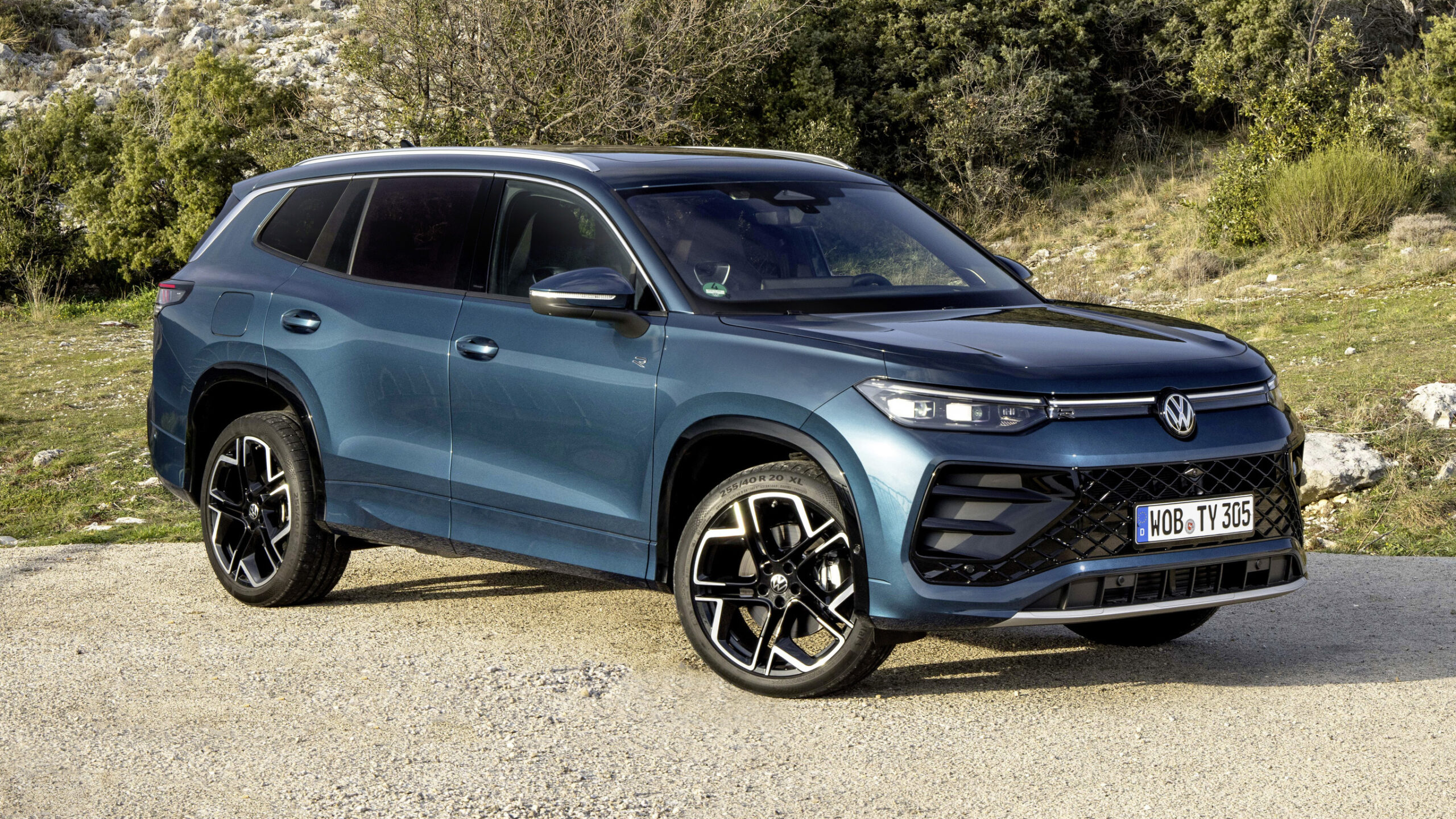
VW confirmed two facelifts for the EU-spec Tiguan.
ICE-powered production now expected to last until 2035.
Facelifted ID.4 may adopt the ID. Tiguan name in 2027.
Volkswagen has offered the first glimpse of the next-generation Golf but the same announcement in Wolfsburg also brought notable news about the Tiguan. The compact SUV is set for two major updates that will effectively extend its lifecycle until at least 2035.
During the first meeting of 2026, Works Council Chairwoman Daniela Cavallo revealed that Volkswagen is planning “two extensive product upgrades for the best-selling Tiguan for the years 2028 and 2031”.
Cavallo was referring to the European-market Tiguan, which was followed by the larger Tayron in October 2024. That model later evolved into the North American-market Tiguan, although without the third-row seating and hybrid options.
The Double Facelift Strategy
Most models receive a single mid-cycle refresh before slowly drifting toward retirement. The Tiguan, however, is getting special treatment. VW has already locked in two updates for the SUV, which rides on the MQB Evo architecture.
The first facelift, scheduled for 2028, will likely bring the interior tech up to speed with Volkswagen’s newer models. Expect a renewed focus on physical controls, paired with more capable software. If recent VW updates are anything to go by, exterior changes may stay fairly restrained, limited to revised bumpers and LED lighting signatures, plus a few new colors and wheel designs.
The second facelift is planned four years later, or eight years after the current generation first arrived. That update should deliver more noticeable design revisions, keeping the Tiguan looking current in the crowded compact SUV segment and aligned with Volkswagen’s evolving design language.
Powertrains will also need attention. A stronger dose of electrification will likely be required to keep the lineup compliant with Europe’s steadily tightening emissions rules.
By launching a major refresh as late as 2031, Volkswagen is effectively guaranteeing the ICE-powered Tiguan a long life. The new plan pushes the SUV’s lifecycle to at least 2035, lining up with company plans to keep combustion engines on sale in Europe until the middle of the next decade.
A similar fate appears likely for the current ICE-powered Golf. Reports suggest it could remain on sale until around 2035, even after the fully electric ID. Golf arrives before 2030. So while the electric future is clearly coming, Volkswagen is not in a rush to turn off the lights on its combustion models.
Production remains split across two continents. The EU-spec Tiguan is built in Wolfsburg, Germany, alongside the Tayron, while the US-spec version rolls out of Volkswagen’s Puebla plant in Mexico. The company has not confirmed long-term plans for either model, but a pair of facelifts sounds far more plausible than funding entirely new generations.
Volkswagen has also confirmed two upcoming EVs built in Wolfsburg on the new SSP architecture. They are the ID. Golf and the ID. Roc, both expected to arrive toward the end of the decade. Before their arrival, the company plans substantial updates for the current MEB-based ID.3 and ID.4.
While nothing is official yet, the facelifted ID.4 is rumored to adopt the ID. Tiguan name as part of Volkswagen’s new naming strategy. The electric crossover is also expected to abandon its curvier styling in favor of a more traditional SUV design. Inside, look for a heavily revised cabin and mechanical upgrades aimed at improving power, range, and efficiency.
By keeping the Tiguan name alive across two different platforms, VW is hedging its bets. Whether buyers choose hybrid or fully electric, Wolfsburg seems keen to make sure there is still a Tiguan sitting in the driveway over the next decade.
VW workers got the first glimpse of the ID. Golf silhouette.
The electric hatchback will use VW’s new SSP platform.
Production of the ID. Golf will remain in Wolfsburg.
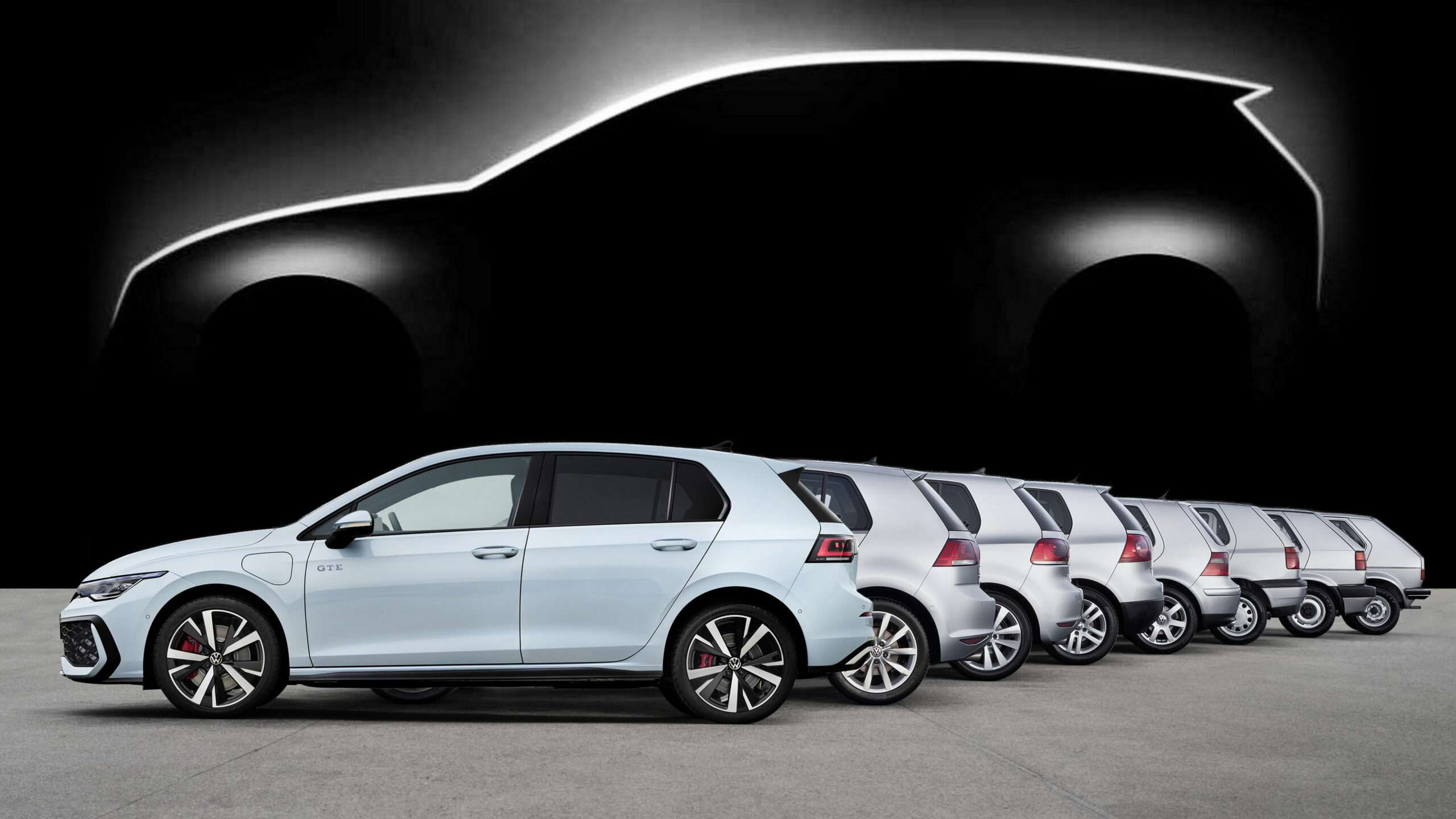
Volkswagen’s future is starting to take shape in Wolfsburg, and yes, it still looks like a Golf. During a works council meeting on March 4, 2026, trade union IG Metall revealed the first official teaser of the next-generation VW Golf, a model that will carry the icon into the EV era.
The file name includes the ID. Golf moniker, effectively confirming earlier rumors that VW plans to combine traditional nameplates with the ID prefix for future EVs. The approach was kick-started by the smaller ID. Polo and is expected to spread across a wide range of models.
The Return Of The King
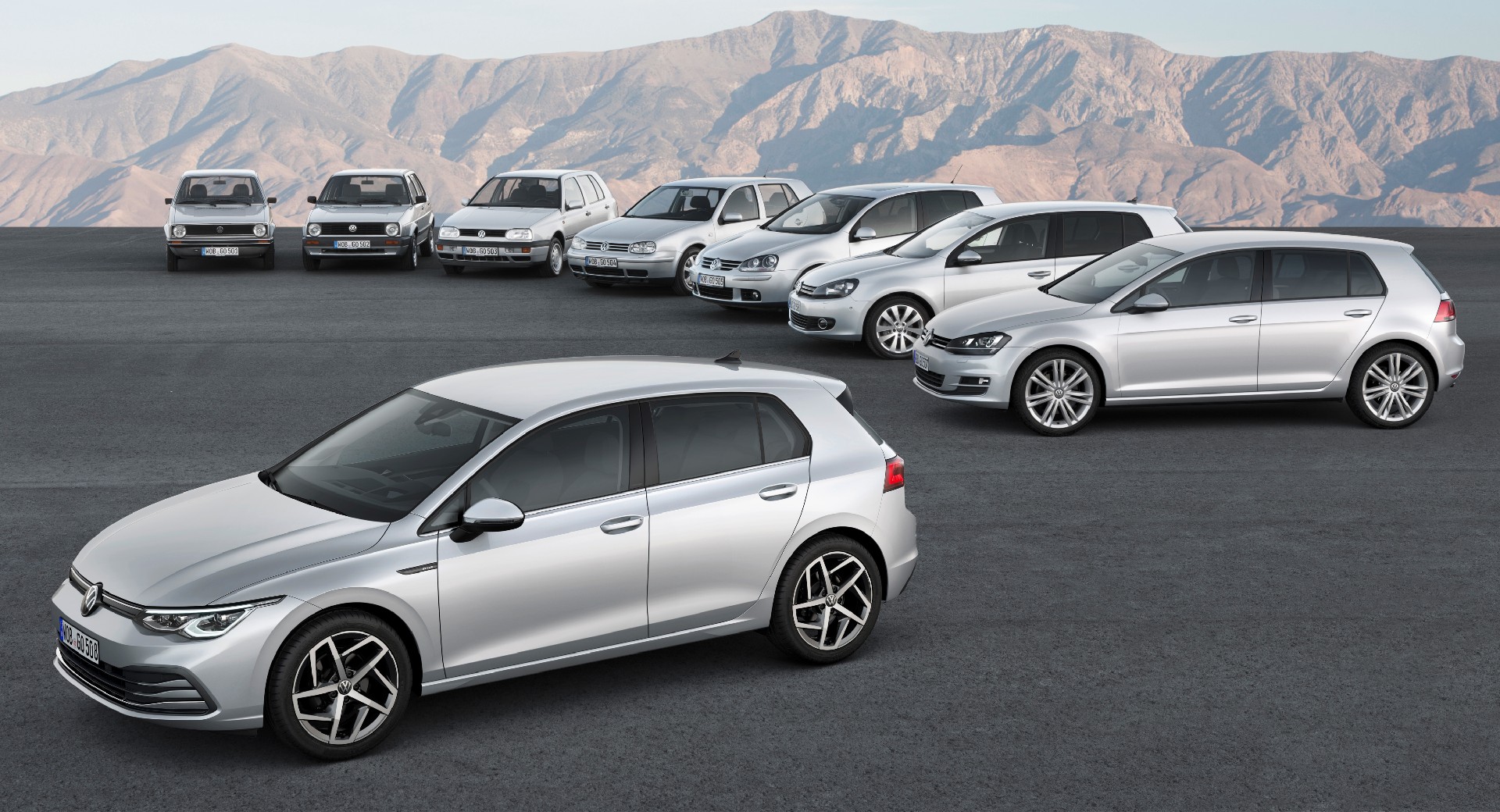
Everyone knows VW prefers to play it safe, particularly with one of its most important models. The Golf has evolved gradually over the decades, effectively turning into the Porsche 911 of mainstream hatchbacks.
Against that backdrop, the first teaser reveals a familiar shape with clear references to earlier generations of the Golf. The front end looks boxier than the current model, recalling the Golf III and the Corrado coupe from the ’90s.
The profile shows pronounced fenders reminiscent of the Golf VII, and it is expected to retain the signature C-pillar that has defined the nameplate since the beginning. Around the back, the tail blends cues from the Golf II and Golf VIII, topped by a large roof spoiler that extends the aerodynamic roofline.
Overall, the ID. Golf looks far more like a traditional hatchback than the ID.3 it is meant to replace. The current Golf VIII is not disappearing just yet, either. It will continue alongside the EV as an ICE-powered alternative.
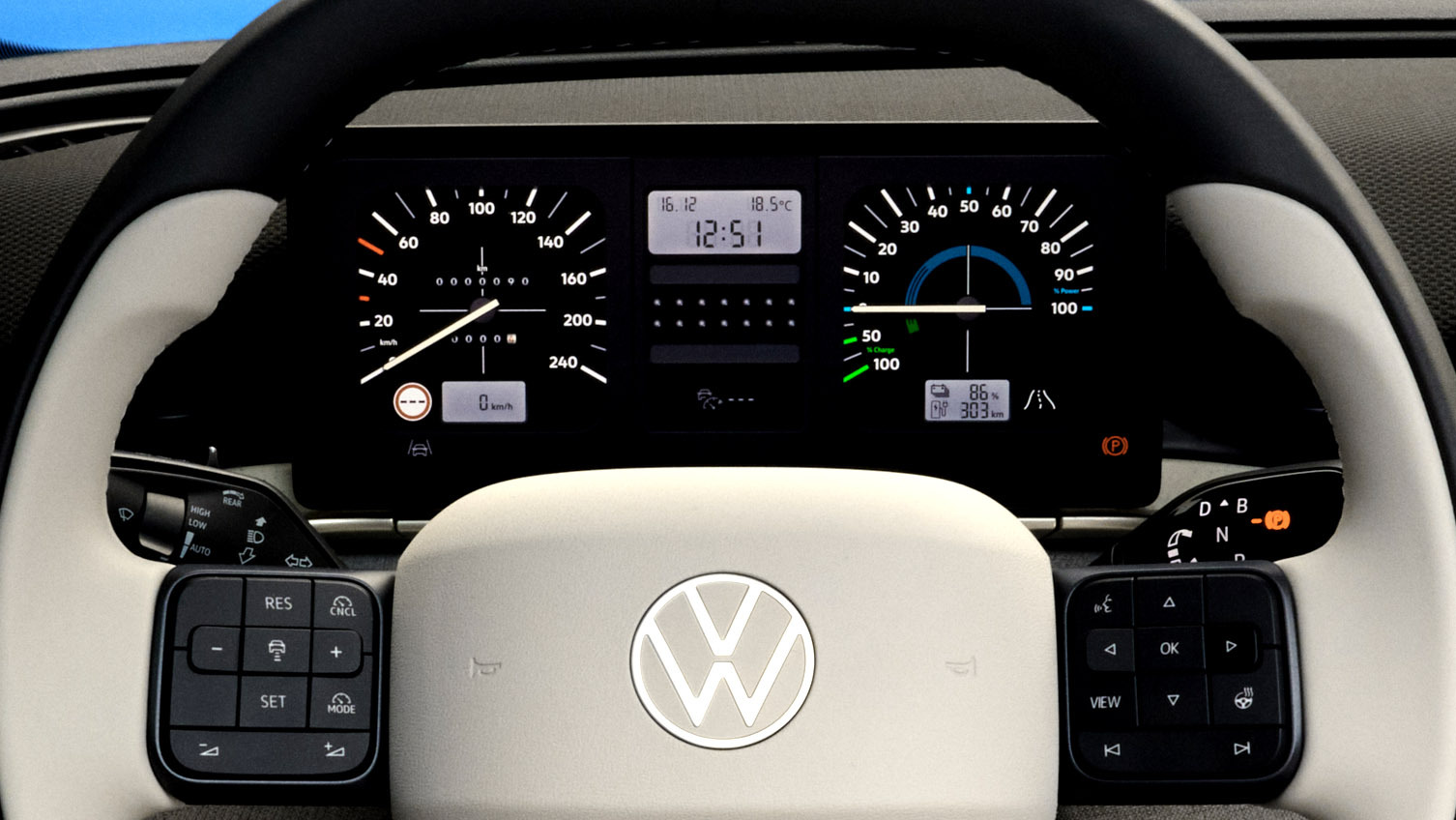
Inside, the Golf is expected to place greater emphasis on physical controls, paired with vintage-style graphics for the digital cockpit and sustainable materials for the upholstery. The odds are it will also be more spacious and practical than its predecessors.
New Underpinnings
The ninth-generation Golf will ride on the Scalable Systems Platform (SSP), using zonal architecture and software developed in partnership with Rivian. It will feature an 800-volt system and cell-to-pack battery technology, most likely with both single and dual-motor setups. Alongside the standard ID. Golf, hotter hatch variants wearing the GTI and R badges are expected.
Other VW Group models set to use the same underpinnings include the upcoming ID. Roc, ID. Tiguan, and ID. Touareg SUVs, along with the next Skoda Octavia.
When Will It Arrive?
According to the Volkswagen Works Council newspaper, the fully electric hatchback is meant to carry the Golf’s long-running success story into the next decade as the company moves toward 2030.
VW has not confirmed a precise launch date. Earlier reports pointed to possible delays until 2030, blamed on production hurdles, shifting EV demand, and the ever-present issue of cost. However, some sources claim the new Golf will arrive sooner, with a debut in 2028, while other reports place it a year later, in 2029.
One thing that is confirmed is a reshuffle in production. Assembly of the current ICE-powered Golf VIII will move to Puebla, Mexico in 2027. That change frees up Volkswagen’s Wolfsburg plant in Germany to build the electric ID. Golf, which was the key takeaway from the recent announcement by the IG Metall union. To prepare for it, the facility is undergoing what VW describes as extensive renovations for state-of-the-art production processes.
Volkswagen has delivered its 2 millionth EV, an ID. 3 hatch.
It only celebrated the 1 millionth electric car in April 2025.
New affordable models like ID. Polo and ID. Cross coming.
Volkswagen has just handed over its 2 millionth fully electric vehicle, and the pace is what really grabs you. It took 12 years to reach the first million. The 2 millionth car showed up just 10 months later.
The anniversary car is an ID. 3 hatch, built in Zwickau, Germany, and delivered to a customer at the Transparent Factory in Dresden. The ID. 3 kicked off VW’s large-scale MEB era back in 2020, though the modern electric journey really began with the e-up in 2013 and the company experimented with a small number of electric Golfs as far back as the 1980s.
Volkswagen only celebrated its 1 millionth EV, an ID.3 GTX, last April. That means the brand effectively doubled its lifetime electric output in less time than it takes some automakers to add a new paint color to mark a model-year changeover.
ID. 4 Led The Charge
The heavy lifter in that sales charge is the ID. 4 SUV, which together with its ID. 5 fastback brother clocked up roughly 901,000 deliveries worldwide, proving SUVs still rule even in the electric age. The ID. 3, whose sales potential is restricted by the fact that it’s not available in North America, follows with around 628,000 units, while the larger and more premium ID. 7 has added another 132,000 to the tally.
Europe is the engine behind much of that growth. Roughly one in five cars sold there is now electric, and Volkswagen has carved out a leading role in the region. The US market has definitely cooled, but globally, the trajectory is still pointing upward.
More EVs On The Way
And VW isn’t slowing down. A refreshed ID. 4 badged as the ID. Tiguan is on the way this year, and the new ID. Polo (seen below) and first ever electric GTI, the ID. Polo GTI, will take the fight into the affordable small car segment.
An ID. Cross SUV spinoff follows soon after and an electric ID. Golf is also looming on the horizon. At this pace, don’t be surprised if we’re talking about 3 million before your summer tan has faded.

 Login
Login