Normal view

There are new articles available, click to refresh the page.
Today — 9 June 2026Main stream

A Slate Designer Spent His Spare Time Redrawing Volvo’s Lost Wagon

  • A former Volvo designer revived the brand’s lost wagon as a concept.
  • The V77 and XC77 wear a three-door aerodynamic shooting brake body.
  • Bauhaus thinking and Dieter Rams shape the studies’ clean surfacing.

Volvo’s current lineup leans hard on SUVs, but the brand built its reputation on wagons, and there’s reason to believe it hasn’t given up on them. Neither has at least one of the people who used to design its cars. A former Volvo designer set out to bring the old formula back with a pair of digital concepts, the V77 and XC77, each built around a mix of minimalism and sustainability.

The man behind them is Julien Fesquet, a Los Angeles-based professional designer currently working for Slate Auto. His resume reads like a grand tour of the industry, with stops at Volvo, Honda, Jaguar Land Rover, BMW, and Ferrari.

More: Volvo’s Prettiest Wagon Returns, But Only A Lucky Few Will Own One

The V77 and XC77 are a personal project, drawing on Bauhaus principles and the work of Dieter Rams, the industrial designer whose thinking eventually shaped the look of Apple products. Both wear a three-door shooting brake body with a low nose and an aerodynamic roofline. Staying true to Volvo’s playbook, the V77 is built for the road while the XC77 adds crossover cues and a lifted stance.

\\\\\\\\\\\\\\\

Illustrations: Julien Fesquet

Beyond the compact footprint and genuinely handsome proportions, the concepts trade in clean surfacing and restraint. The low-mounted headlights fade into a covered grille via a digital gradient, and the Volvo emblem has been pared down to a single horizontal line.

More: Volvo 240R EV Study Throws A Brick At Electric Performance

The profile is distinguished by large alloy wheels, supercar-style creases on the front fenders, a flat beltline, and a bi-tone livery with a darker finish for the lower bodywork. The rear section is even more striking, with a glass tailgate surrounded by ultra-slim LEDs. The designer also placed emphasis on the Color, Materials, and Finish (CMF) strategy, proposing the use of recycled materials and an unpainted body for the V77.

Inside, we find two rows of seats and a rather large boot. The V77 adopts a Cream Yellow interior theme inspired by the Volvo 850 T-5R, while the XC77 gets an Orange interior that complements its earthy brown exterior panels.

\\\\\\\\\\\\\\\\\

Illustrations: Julien Fesquet

Fesquet didn’t list any specs, but the absence of cooling vents and tailpipes suggests the digital concepts were envisioned with a fully electric powertrain.

More: The EX30 Is Dead, But Volvo’s Next Cheap EV Is Already On The Way To America

Fesquet told CarScoops: “Volvo is a brand with iconic station wagon, very minimal functional boxy designs in the past. It still has beautiful cars, but it tends to be oriented to more traditional automotive design. I thought it would be interesting to break the modern Volvo codes and imagine what it could look like if it was still a more minimal, functional, and industrial design. Something modern, sophisticated yet boxy, but without forgetting the need of aerodynamic performance. This led to this shooting brake silhouette with a low nose, sleek roof and low ground clearance.”

What About Real Volvo Wagons?

Volvo has recently wound down production of the aging V60 and V90, along with the adventurous XC60 and XC90. Even so, wagon fans aren’t completely out of luck.

Chief technology officer Anders Bell has said the new SPA3 architecture, which debuted underneath the EX60 SUV, can support a range of bodystyles, low-slung models included. Volvo hasn’t confirmed any wagon yet, so the question comes down to whether demand will be there to justify the spend. For now, we wait.

\\\\\\\\\\\\\

Illustrations: Julien Fesquet

Before yesterdayMain stream

GMC’s Bronco-Sized Concepts Admit The Hummer EVs Got Too Big And Too Expensive

  • Smaller Hummer concepts suggest fresh opportunities beyond today’s oversized EV lineup.
  • SUV concept targets hardcore off-roaders with trail-ready hardware and ground clearance.
  • Longer pickup concept blends Chevrolet Colorado proportions with futuristic technology.

GMC’s Hummer EVs are too big and too expensive to register on most American buyers’ radar, but maybe that’s about to change. The heavy-duty GM brand just pulled the covers off two concepts that it swears aren’t destined for production, but give us a taste of what we might expect from a future generation of smaller, leaner-looking Hummers.

The concepts were unveiled alongside the opening of GM’s new Advanced Design studio in Pasadena, California, a 148,000 square feet studio spread across three buildings and home to 100 staff. Called the Hummer X SUV and Hummer X Truck, both are significantly shorter than today’s Hummer EV models and were, we’re told, created as rolling laboratories for new design, manufacturing, and technology ideas.

Related: Thieves Drove Two New Hummer EVs Off A Train, You Can Guess The Rest

First up is the Bronco-sized Hummer X SUV. Measuring 188.3 inches (4,783 mm) long with a 116-inch (2,946 mm) wheelbase, it’s 10.7 inches (272 mm) shorter between the axles than a current Hummer SUV, while retaining the chunky stance and visual toughness buyers expect from the nameplate. 

The off-road credentials are equally serious. GM fitted the concept with 37-inch tires, beadlock wheels, Multimatic dampers, removable fender flares, substantial underbody protection, and enough ground clearance to handle some really gnarly obstacles. Approach and departure angles of 44 and 46 degrees suggest the designers weren’t merely focused these things simply looking ready for off-road action.

Inside, the concept explores a highly configurable cockpit featuring stackable infotainment displays that can be added or removed depending on how much information drivers want available. There’s even a drone that can scout terrain ahead and relay information back to the vehicle.

The Hummer X Truck follows a similar philosophy but packages it in a familiar pickup shape. At 207.3 inches (5,265 mm) long and riding on a 130.7-inch (3,319 mm) wheelbase, it’s much bigger than the SUV, but slots into midsize truck territory rather competing with today’s XXL Hummer truck.

Flex Fab Technology

\\\\\\\

Like the SUV, it incorporates removable components, rugged off-road hardware, and a design intended to support customization. GM also used the concepts to showcase Flex Fab manufacturing technology, which allows low-volume metal parts production without traditional stamping tools.

GM is adamant these vehicles aren’t destined for showrooms. That’s probably true. But the ideas behind them feel harder to dismiss. The Hummer brand remains surprisingly underutilized given its recognition and the fashion for tough-looking utilities. And a family of smaller, more affordable off-road EVs would arguably make more sense than relying solely on enormous six-figure flagships that are selling so badly GM had to shut the plant down.

Even if these exact concepts never reach production, don’t be surprised if elements of their DNA eventually filter into future Hummers aimed at the likes of Ford’s Bronco and Jeep’s Wrangler and Gladiator. And probably sooner than you’d think.

\\\\\\\\\\\

GM

Cupra’s Lambo-Looking Tindaya SUV Is Heading To Showrooms To Hunt BMW’s iX3

  • Cupra’s Tindaya SUV concept from the Munich Motor Show will make production.
  • Seat and Cupra CEO Markus Haupt confirmed the plan in a recent interview.
  • VW Group’s SSP platform underpins Tindaya, allowing powertrain flexibility.

Cupra’s aggressive-looking Tindaya concept is officially heading for production, the automaker’s boss says, meaning Europe’s premium SUV crowd is about to get a new headache. The dramatic electric crossover will sit above the Tavascan and Terramar in Cupra’s lineup and target established players like the new BMW iX3, Volvo EX60, and Mercedes-Benz GLC EV.

And with a design we described last fall as looking like it was whipped up by Lamborghini on a wild night out, we can imagine it grabbing sales from drivers who think those other premium SUVs are just too dull.

Related: ABT’s Cupra Formentor Has More Power Than A Lambo Huracan From Audi’s Dying 5-Cylinder

The concept first appeared at last year’s Munich motor show looking more like a sci-fi prop than a realistic production model. At the time, Cupra played it mostly as a design and technology statement. Now, though, Seat-Cupra boss Markus Haupt has confirmed the company is deadly serious about bringing it to showrooms.

“It looks fantastic. Why should we not build the Tindaya?” Haupt told Autocar in a recent interview. “We are indeed looking at our plans for when we could build the Tindaya, but it’s something I can promise. This car will see the streets in some years.”

Premium-Sized, Premium-Priced

At 4,720 mm (185.8 inches) long, the Tindaya is sized right for Europe’s lucrative premium SUV segment. That’s a crowded neighborhood packed with familiar badges from Germany, plus challengers from brands like Genesis, Lexus and Volvo. Cupra clearly believes buyers want something less conservative than another neatly tailored executive crossover.

Pricing is expected to start around £60,000, making it much more expensive than the cars in Cupra’s current lineup, but again, right for the segment. While neither Haubt or Autocar said as much, we suspect the Tindaya is the bigger of the two models that would have led Cupra’s plan to expand to North America. That expansion is no longer happening due to tariffs and weak US demand for EVs.

Electric Or Range Extender

\\\\\\\\

The Tindaya will ride on Volkswagen Group’s upcoming SSP electric platform, which is set to replace today’s MEB architecture across multiple brands, the magazine says. But the report claims Cupra still hasn’t locked down the final powertrain setup. The original concept used a 489 hp (496 PS / 365 kW) range-extender arrangement combining electric power with combustion support, but Haupt suggested everything remains on the table while the company watches market trends evolve.

“All this discussion is changing by the day, very fast,” he said. “Which powertrains will we have in the end? It’s a decision we have not taken now.”

That flexibility is one advantage of belonging to the sprawling Volkswagen empire. SSP reportedly supports everything from pure EVs to electrified combustion-assisted setups, depending on regional demand.

\\\\\\\\\\\\\\\\\\\\\\\\\\

Cupra, Baldauf

Honda Won’t Touch The CRX, So Two Designers Did It Themselves

  • Independent designers revive the iconic Honda CRX.
  • Its retro stance echoes the second-generation model.
  • The study is envisioned as an electric hatch with 350 hp.

Honda’s product planners are deep in the weeds with the returning Prelude, but a sharper memory from the company’s back catalog has caught the internet’s attention. A digital concept drags the original CRX from the late 1980s into the present, and the result is the kind of car that makes you wonder why Honda isn’t building it.

More: Honda Previews New Fastback Sedan And Next Acura RDX, And Neither Is An EV

The modern CRX prototype comes from designer and modeler Vitaly Batalka, with CG artist Valentin Komkov handling the visualization. The reference point is the second-generation CRX sold between 1987 and 1991, built on a shortened Civic platform and remembered for being one of the more entertaining small Hondas of its era.

Original Silhouette Carries The Update

The proportions are all there: short wheelbase, low roofline, and the split rear window layout that gave the original its profile. Up front, the blocky sealed-beam headlights have been swapped for slimmer LED units that flank a grille-less nose with the new Honda emblem at the center.

\\\\\

Illustrations: Vitaly Batalka and Valentin Komkov

The sculpted hood and the black trim on the bumpers are clear references to the original, joined by horizontal taillights and an illuminated CRX emblem at the back. The profile features clean surfacing with toned rear fenders, flush door handles, black pillars, frameless doors, and futuristic bi-tone alloy wheels.

More: This Practically New 1990 Honda CRX Could Be The Lowest-Mileage Example In The World

The designers also put together a retro-styled “Turbo 2026” collector card with fictional specs to round out the exercise. The card pitches the reborn CRX as a fully electric machine rather than a hybrid, with 350 hp (261 kW / 355 PS) on tap. A claimed top speed of 285 km/h (177 mph) feels wildly optimistic for an EV of that output, and it would handily eclipse what the original 1.6-liter VTEC could manage.

\\\\\\\\

Illustrations: Vitaly Batalka and Valentin Komkov

The two creators emphasized that the project was completed using traditional digital modeling workflows rather than generative AI tools. Batalka was responsible for the initial design and the 3D Alias modeling, while Komkov executed the final visualization in Blender.

More: Designers Are Doing What Honda Won’t With The S2000

The nearest thing Honda built to a true CRX successor was the short-lived CR-Z. The somewhat sporty three-door hatchback launched in 2010 with a self-charging hybrid powertrain and was discontinued in 2016 without a replacement. Projects like this one keep the idea alive, but the math gets harder every year. The current market gives Honda very little reason to spend the R&D money required to put a small, sporty three-door back on a showroom floor, and that’s a shame.

 Honda Won’t Touch The CRX, So Two Designers Did It Themselves

Illustrations: Vitaly Batalka and Valentin Komkov

Mercedes’ Future Looks More Convincing When Mercedes Stops Designing It

  • Independent designer creates a sleek Mercedes concept.
  • The exterior design draws inspiration from the ’90s era.
  • The premium cabin features physical dials and controls.

Mercedes design is having a moment, and not a good one. The electric era has not flattered the brand’s studio, where pebble-shaped sedans and wall-to-wall screens have landed flat with buyers. Independent designer Lukas Wochinger has put forward an alternative. His digital concept marries quieter exterior surfacing with a cabin built around analogue dials and proper switchgear.

Wochinger is not a hobbyist with a render engine. He was Lead Exterior Designer at NIO from 2021 to 2025, which means he has spent the past few years thinking seriously about what a premium EV ought to look like.

More: Mercedes Just Lost The Man Who Shaped Its Entire Design Language For Nearly 30 Years

The Munich-based designer published a set of high-fidelity renders on LinkedIn. The brief he set himself was a “more constructed and clearly defined form language” with the 1990s as touchstone. Think R129 SL, W124 E-Class, C215 CL-Class coupe. Cars that did not feel the need to shout.

The digital concept is perfectly timed for the Concorso d’Eleganza Villa d’Este in Italy, combining clean surfacing with simple lines and balanced proportions. The biggest difference with the EQS is the elongated hood that gives it a proper Mercedes stance.

\\\\\\\\

The face wears a new closed-off grille, which is an enormous improvement over the fussy treatment of the facelifted EQS or the illuminated panels on the electric C-Class and GLC. Boxy LED headlights, deep bumper intakes, and a pronounced splitter complete the front.

More: Mercedes’ Electric C-Class Is The BMW i3’s Neue Nightmare

Star-shaped alloys dominate the side view, along with flush door handles and sculpted rear shoulders that echo the AMG GT Four-Door. The arched greenhouse is pure CL coupe, and the two-tone paint stretches the visual length. At the back, a subtle ducktail spoiler sits above horizontal LED taillights set into a black panel, with a clean diffuser-integrated bumper below.

Analogue Dials And Physical Controls

\\\\\\\\\\\

The exterior is sharp, but the cabin is where this concept earns its keep. The much-maligned Hyperscreen is gone, replaced by a more sensible infotainment display along the lines of previous-generation Mercedes models, paired with analogue dials behind the wheel. They look like high-end watches, with the speedometer finished in white.

More: 144,000 Mercedes Owners Just Remembered Why Analog Gauges Were So Great

Another highlight are the physical controls on the center console, door cards, and steering wheel, providing the much-needed haptic feedback. The cabin features high-end materials like mint-green leather, dark wood, and metal, while the posh seats have inserts with the Mercedes emblem.

The powertrain is left ambiguous. No cooling intakes and no tailpipes suggest an EV, but Wochinger imagines a hybrid, which is presumably why there is an rpm dial in the binnacle.

Either way, this independent concept makes a quiet but convincing case that Mercedes doesn’t need more pixels to reclaim its premium throne. It just needs a little more soul, and a few honest references to its past.

\\\\\\\\

Lukas Wochinger

Suzuki’s Jimny Has Been Frozen Since 2018, A Designer Just Thawed It

  • A professional designer rethinks the Jimny as a modular EV concept.
  • Study morphs from a compact SUV into a pickup or camper setup.
  • The electric layout could help the tiny off-roader return to Europe.

The popular Jimny in its current fourth-generation form has been on sale since 2018, which puts Suzuki well into the development cycle for whatever comes next. Until the factory shows its hand, Ford designer Christopher Giroux has put forward his own interpretation, with modularity as the organizing principle.

More: Lancia’s Past Just Came Roaring Back In A Gorgeous Modern Tribute

Giroux isn’t just another aspiring internet designer but a professional in the field. He spent the past six years designing cars at Ford Europe, and yet the Jimny is personal. His family owned two of the previous-generation cars, and that firsthand experience shaped this project. The result leans into sci-fi flourishes far more than the production car ever would.

Lunar Rover, Not Lunchbox

The boxy silhouette that defined every Jimny before it has been set aside. In its place is a muscular, sculpted body that looks built for a lunar expedition rather than a school run. The face wears minimalist LED headlights and a closed grille flanked by slim cooling intakes, and the rear treatment echoes the same theme to keep things cohesive.

\\\\\\\\\

Illustrations: Christopher Giroux

The profile is dominated by chunky multi-spoke wheels on grippy tires, with unusual intakes carved into the leading edge of the doors. Jimny lettering rides on the side skirts, blue LEDs sit on the fenders, and 4×4 decals confirm what the stance has already told you.

However, what is more interesting is the configurable bodystyle. The rear section of the roof can be removed together with the rear windows, creating a small pickup or a semi-convertible off-roader echoing the spirit of the original.

More: The Surprising Reason Why Suzuki Won’t Make A Jimny Pickup

The designer has also created a camper configuration, with a custom-fit tent turning the Jimny into a mobile basecamp. Another highlight is the functional illuminated compass on the hood, with part of it extending inside the cabin.

\\\\\\\\\\\

Illustrations: Christopher Giroux

Frustrated by the current model’s struggle to meet strict emission regulations, which led to its withdrawal from European markets in passenger form, Giroux decided to opt for a fully electric powertrain. Being a conceptual proposal, it carries no estimated output or range figures, but all-wheel drive is a given for anything wearing the Jimny badge.

More: Suzuki’s Most Practical Jimny Just Got Better, But You Still Need To Win A Lottery To Buy It

Suzuki had initially teased a fully electric version of the Jimny for Europe, but those plans appear to have been shelved. The current model received mild updates in 2025, proving that the company wants to extend its lifecycle without electrifying its tried-and-tested naturally-aspirated 1.5-liter engine.

 Suzuki’s Jimny Has Been Frozen Since 2018, A Designer Just Thawed It

Illustrations: Christopher Giroux

Honda Previews New Fastback Sedan And Next Acura RDX, And Neither Is An EV

  • Honda will roll out 15 hybrid models worldwide by the end of 2029.
  • Two new prototypes appear to preview the next Accord or Civic, and RDX.
  • A $9.9 billion EV write-down forced Honda’s full strategic reset.

Honda has overhauled its product strategy and put hybrid technology at the center of the global lineup, a course correction triggered by the costly cancellation of several high-profile EV projects. The automaker pulled the wraps off two prototypes that appear to telegraph the next Accord sedan and Acura RDX SUV, alongside a commitment to launch 15 hybrid models by 2029

The Honda Hybrid Sedan Prototype and the Acura Hybrid SUV Prototype will both reach production within two years. Honda has not named either car or even confirmed a segment, but the proportions tell their own story. The fastback-style sedan looks like the next Accord, though the Civic can’t be completely ruled out, while the SUV is unmistakably the RDX successor.

More: Honda’s $15.9 Billion EV Disaster Just Delayed The Next Accord, Odyssey, And MDX

The sedan wears a five-door fastback profile, sharp surfacing, slim LED lighting, and a small amount of black cladding. The boxy nose recalls the Civic development mule Honda showed last year.

\\\\\\

Honda Hybrid Sedan Prototype

On the other hand, the Acura SUV has a more sculpted body with aggressive front bumper intakes, toned shoulders, and V-shaped taillights. Its silhouette matches the official teaser from January 2026, leaving little doubt this is indeed a successor to the discontinued RDX.

More: Acura’s Losing Its RDX For Two Years, And Dealers Know What Happens Next

Both vehicles sit on a next-generation hybrid architecture due in 2027. Honda is targeting a 30 percent reduction in production costs and a fuel-economy improvement of more than 10 percent over 2023 levels. A new electric all-wheel drive unit is part of the package, alongside what Honda promises will be sharper driving dynamics. The next-gen ADAS suite follows in 2028.

Honda said that North America will be one of the “key focus regions” of the hybrid rollout. In 2029, the company will debut large hybrid models in the D-Segment and above, tailored to the needs of the region.

\\\\\

Acura Hybrid SUV Prototype

In order to support the rollout, Honda will “reallocate all excess capacity” at the Ohio plant to production of vehicles with gasoline and hybrid powertrains. Furthermore, all US plants will be converted to support production of hybrids.

Finally, the the joint venture between Honda and LG Energy Solution will switch part of the EV battery production to hybrid batteries while increasing local components by more than four times the current level to fight supply shortage and tariffs.

Other Markets

The Japanese automaker is doubling down on market-specific needs to stabilize its business foundation following a period of strategic realignment. In its home market, the focus shifts toward electrified kei cars, led by the upcoming N-Box EV scheduled for a 2028 debut. The next-gen hybrid and ADAS tech will be introduced in the updated Vezel, while the lineup will expand with Sport Line and Trail Line trim levels.

More: Honda Went To China, Saw The Future, And Reached Back To The 1960s

In India, the play is compact and midsize cars due in 2028, along with continued investment in the motorcycle business to expand local production. China is more complicated. Honda plans to use locally standardized components and roll out new electrified vehicles built on platforms supplied by Chinese partners.

Investing In Hybrids Over EVs

 Honda Previews New Fastback Sedan And Next Acura RDX, And Neither Is An EV

Honda is going through a challenging financial period, reporting its first annual net loss since 1957. The loss totaled ¥423.9 billion ($2.68 billion), largely driven by a massive ¥1.57 trillion ($9.94 billion) write-down following the restructuring and cancellation of EV projects.

Honda is still publicly optimistic about the recovery, targeting a record operating profit above ¥1.4 trillion ($8.86 billion) for the fiscal year ending March 2029.

More: Honda’s $11 Billion Canadian EV Plant Just Got Shelved Because America Wants Hybrids

The investment plan tells you everything you need to know about where Honda thinks the next decade is going. Of the ¥6.2 trillion ($39.25 billion) earmarked through 2029, ¥4.4 trillion ($27.85 billion) goes to gasoline and hybrid powertrains, with another ¥1 trillion ($6.3 billion) for software.

Spending on pure EVs has been trimmed to ¥0.8 trillion ($5.06 billion). Anything beyond that gets decided after 2030, and Honda has made clear it would rather partner with someone else than build its next EV platform alone.

\\\\\

Honda

A New Kia Stinger Is On The Table, But It’s For Buyers Who Grew Up On Controllers, Not V6s

  • A new Stinger is in Kia’s plans, just not for the immediate future.
  • The Meta Turismo concept is the blueprint, and it runs on batteries.
  • Design boss Karim Habib blames performance EV pricing for the delay.

The Stinger never sold in the numbers Kia had hoped for, but it built something more valuable than volume: a small, loyal audience that still wants the brand to try again. The company is keen to make another sports sedan in the vein of the Stinger, only this one will run on electrons and could trace its bones to the recent Vision Meta Turismo concept.

The EV6 GT was supposed to fill the void. It hasn’t. The crossover stance and electric powertrain never landed with the enthusiast crowd the Stinger had cultivated, and the price walked well past where the Stinger ever lived. Design boss Karim Habib is betting that performance EVs will eventually get cheap enough to make the Meta Turismo a production reality and a real Stinger replacement.

Read: Kia’s New Concept Sparks Questions About A Stinger GT Return

“We have a small history of doing cars like the Stinger, and that’s something we don’t want to give up on,” Habib told Autocar. “The Meta Turismo is our idea of a sports sedan for the gamer generation. A few years ago, we started thinking about what could we do beyond SUVs? We do produce and sell a lot of SUVs, which is good, but we also believe that there’s more than that.”

Kia revealed the striking concept late last year as the latest evolution of its Opposites United design language. Like every recent Kia show car, it’s dramatic and has a design that the company says is supposed to be emotionally engaging. But it’s not yet ready for prime time.

EV Tech Needs To Develop

 A New Kia Stinger Is On The Table, But It’s For Buyers Who Grew Up On Controllers, Not V6s
Kia Vision Meta Turismo Concept

“At this point, it is more strategic,” Karim said when asked by Autocar why Kia doesn’t start building it today. “It’s a pure EV, and the price of doing a high-performance EV is what is slowing us down. Hopefully, the upward movement of EVs keeps going. I think there will be more openness to this [type of] car. At least that’s what we’re betting on.”

Kia built the Stinger for just five and a half years before killing it off in 2023. It launched with a 2.0-liter turbo four and a 3.3-liter twin-turbo V6, picked up a 2.5-liter four at the facelift, and was briefly offered with a 2.2-liter turbo-diesel in some markets. While enthusiasts like ourselves would like Kia to capture some of the ICE magic in a successor, this doesn’t appear likely.

“We’re car people,” Kia head of interior design Jochen Paesen said. “We grew up on the side of a race track hearing V8s, but those are not the things that the younger generation care as much about. It actually doesn’t trigger them. It triggered us, but we’re living in a different age, so understanding what triggers the younger generation and gets them emotionally tied in and emotionally interested, that’s important.”

\\\\\\\\

Renault’s R4 Concept Just Became A Beach Buggy That Moonlights As A Pickup

  • The R4 JP4x4 Concept is inspired by beach buggies of the ’70s.
  • It gets a custom body, a lifted stance, and dual electric motors.
  • Renault has confirmed there are no plans for production.

Renault has unveiled a new concept based on the R4 E-Tech, this one built around summer use. The R4 JP4x4 wears an open-air two-door body, a reworked two-seat cabin with an exposed cargo area, and an AWD powertrain for tackling whatever hypothetical sandy beach you have in mind.

The study borrows from two R4 variants of the past, the 1969 Plein Air and the 1981 JP4. Its name is short for Journée à la Plage, French for “a day at the beach.”

More: Renault’s Making A Jimny For 2027, But Even The French Don’t Get It

Visually, the highlight is the pair of half-doors that replace the production car’s five-door layout. They work with a redesigned roof structure built around an X-shaped element for carrying a surfboard. There are no side windows and no canvas top, which leaves the cabin permanently open to the elements.

\\\\\\\\\\\\\\\\\

The concept wears a custom Emerald Green finish that plays against a vibrant orange interior. Beyond its beach buggy identity, it also serves as a pickup with a drop-down tailgate for easy loading. The roof-mounted surfboard is joined by a pair of skateboards stowed in the cargo area.

More: Renault Is Emptying Its Secret Vault And The Concept Cars Inside Are Unreal

Inside, the highlights include “Egyptian mummy” seats with integrated headrests and mixed-fabric upholstery. The dashboard and digital cockpit carry over from the production EV, though the concept adds a passenger-side grab handle and a floating center console.

As with last year’s R4 Savane 4×4 concept, the JP4x4 runs a dual-motor powertrain for AWD, a setup Renault still hasn’t offered on the production R4.

\\\\\\\\\\\\\\\\\\\\

The concept rides 15 mm (0.6 inches) higher than the standard R4, with front and rear tracks widened by 10 mm (0.4 inches) per side. The 18-inch wheels carry a futuristic design and wear chunkier Goodyear UltraGrip Performance+ tires. Renault made no mention of changes to the EV’s 2,624 mm (103.3 inches) wheelbase.

No Plans For Production

Renault has been clear that the JP4x4 will stay a one-off, with no production plans on the table. The show car will be displayed at the Roland-Garros French Open alongside the R4, R5, and Twingo E-Tech production EVs.

More: Radical Espace Reboot Leads Renault’s 36-Car Plan To Fight China’s Threat

For buyers who want an open-air R4 E-Tech, the automaker already sells the Plein Sud variant with an electric-powered canvas roof. That one went on sale earlier this month starting at €37,290 ($43,800).

Jaguar’s Most Polarizing Car In A Generation Is Finally Getting A New Name

  • Jaguar will finally reveal the production name for the radical Type 00 EV on May 12.
  • Four-door electric GT is expected to pack more than 1,000 hp and 700 km of range.
  • It marks the first production Jaguar born from the brand’s controversial EV-only reboot.

Jaguar’s reboot is about to get a lot more real. After months of teasers, heated debate, and one of the most polarizing relaunches in recent memory, the British brand is reportedly preparing to reveal the actual production name of the EV currently known as the Jaguar Type 00. The wait has been long, and it’s not over anytime soon, as production hasn’t started, but a lot is riding on this nameplate.

Known internally as the X900, the concept and production mules have been all over the planet. It’s a long, low-slung four-door electric grand tourer that is supposed to reset the bar for what a Jaguar is. Now, according to a report from Autocar India, we’ll find out what Jaguar will call it on May 12. Then, in September, the brand will reveal the production-spec version, and if all goes according to plan, deliveries will start sometime in 2027.

More: Jaguar’s 1,000-HP Answer To Bentley Looks Nothing Like The Jaguar You Knew

Underneath the long hood and fastback roofline sits Jaguar’s new dedicated EV platform, dubbed JEA, short for Jaguar Electric Architecture. The company says the car will use a tri-motor setup with one motor up front and two at the rear, producing over 1,000 hp (746 kW) and roughly 959 lb-ft (1,300 Nm) of torque in the launch edition. That would immediately make it the most powerful Jaguar road car ever built.

 Jaguar’s Most Polarizing Car In A Generation Is Finally Getting A New Name
A prototype of the new 1,000 hp Jaguar luxury sedan.
 Jaguar’s Most Polarizing Car In A Generation Is Finally Getting A New Name

Jaguar is also targeting around 700 km (435 miles) of WLTP range from a battery pack measuring about 120 kWh. The automaker claims the car can recover approximately 321 km (200 miles) of range in just 15 minutes of fast charging.

Despite the outlandish concept styling, spy shots suggest the production car stays remarkably faithful to the original design previewed by the concept. It keeps the exaggerated proportions, long front end, slab-sided surfacing, and sleek roofline, though the production version swaps the concept’s two-door layout for a more practical four-door GT configuration. Jaguar needs a win here. Hopefully, it has an appropriately grand name for this new grand tourer.

 Jaguar’s Most Polarizing Car In A Generation Is Finally Getting A New Name
Illustrations Josh Byrnes / Carscoops

If You Ever Dreamed Of A Cheap Bugatti Sedan, China Has You Covered

  • Dreame moved from vacuum cleaners into cars with three new brands.
  • Star Motor’s latest crossover-sedan concept borrows heavily from luxury icons.
  • Images show it sporting Rolls-Royce-style suicide doors with no B-pillar.

Just a few months ago, Dreame was a virtual unknown in the West, having primarily cut its teeth in China’s consumer electronics industry, making a name for itself with vacuum cleaners. The company has since pivoted hard into the automotive space, spinning up three separate car brands called Nebula Next, Kosmera, and Star Motors, each with its own stream of concepts. This is its latest creation.

The car appears to wear the badge of Star Motor, one of Dreame’s three new automotive sub-brands. It was introduced back in February with the T08 and T08L, a pair of boxy off-roaders that looked like carbon copies of Dongfeng’s M817 and M917. The brand also showed the D09, a luxury SUV that lifted heavily from the Rolls-Royce Cullinan playbook.

Read: The Chinese Vacuum Brand That Built A 1,973-HP Sedan Just Showed Up At Berkeley With It

As for this latest concept, it was present at the recent Beijing Auto Show and may make a return appearance at the Chengdu Auto Show in September in more production-ready form. Dreame has shown a penchant for taking inspiration from other brands’ designs, and this sedan appears no different. If the Bugatti Chiron and Ferrari Purosangue had a baby, it would look a lot like this.

\\

TychodeFeijter/X

The front of the crossover-style sedan features a massive grille that recalls the Kosmera concept Dreame trotted out at CES back in January, only scaled up and turned more aggressive. It also sports wide, gaping air intakes and a set of sharp LED headlights.

The standout feature in profile is the set of Rolls-Royce-style rear suicide doors, though Star Motor has pushed the idea further than Goodwood does. Where the Phantom retains a structural B-pillar between the front and rear doors, this Dreame concept deletes it entirely, leaving one uninterrupted opening when both doors swing wide. Recent spy shots show the upcoming Genesis GV90 adopting the same pillarless layout.

\\

Photos of the rear haven’t surfaced yet, but the C-shaped element wrapping the rear side windows and rear doors definitely looks reminiscent of the signature C-line used by Bugatti.

No details have emerged on the powertrain, assuming there’s even a working one under the sheetmetal, but in all likelihood, it will follow the lead of Dreame’s other concepts and run on pure electric power.

Whether any of these showcars will actually reach production remains anyone’s guess. Dreame has so far traded entirely in show cars and renderings.

\\\\\\\\\\\\\

Dreame Nebula Next Jet Concept

The Brand Behind Your Robot Vacuum Strapped Rockets To Its EV Claiming 0-62 In 0.9 Seconds

  • Dreame unveiled a concept EV with jet power at an event in Silicon Valley.
  • Rocket-assisted sedan promises 0-100 kmh (62 mph) in less than a second.
  • Concept also features solid state batteries and Lidar that works at 600 m.

Chinese consumer electronics brand turned carmaker Dreame hasn’t even delivered its first vehicle, but it’s already talking about what comes next, and it might have rockets attached.

Dreame unveiled the Nebula NEXT 01 JET Edition during the company’s DREAME NEXT event in San Francisco, and yes it looks just like the Nebula Next 01X EV we’ve reported on before, and which is earmarked for sale in 2027.

Also: The Chinese Vacuum Brand That Built A 1,973-HP Sedan Just Showed Up At Berkeley With It

But compared with the production supercar-shaped four-door sedan, this one looks rather different at the rear. That’s where you’ll find a pair of rocket boosters that give the concept a claimed 0-62 mph (100 kmh) time of just 0.9 seconds.

\\\\\\\\\\\

Dreame says the concept, which explores where the company’s car development could go in future, represents more than a decade of development in autonomous systems, motors, AI, and robotics. It also represents someone in marketing being allowed unsupervised access to caffeine and hallucinogenics.

Twin Jets

The headline feature is that custom dual solid-fuel rocket setup mounted to assist acceleration. Dreame claims the system reacts in 150 milliseconds and produces up to 100 kN of thrust. But there’s plenty of other modern or futuristic tech onboard that isn’t just concept nonsense, including steer- and brake-by-wire, and solid-state batteries with an energy density above 450 Wh/kg that Dreame says is nearing production readiness.

For ADAS duties, the company introduced its DHX1 LiDAR unit. Dreame says it can detect objects from up to 600 m (1,970 ft) away, Autohome reports, and deliver detail clarity rather than traditional rough outlines of obstacles. The plan includes advanced assisted L2+ driving and eventually more advanced L3 autonomy.

Inside, the car is intended to act as a rolling smart-home hub. Dreame’s AI assistant is designed to connect with robots, appliances, and other devices, turning the vehicle into a mobile command center for your gadgets. Perhaps surprisingly for a car from a brand famous for its vacuum cleaner and robot window washers, the car isn’t capable of washing itself.

Dreame says vehicle manufacturing begins in 2027, but don’t expect rockets to be part of the specification when those first cars hit the road.

\\\\\\\\\\\

Dreame

BMW Puts A Kindle-Style Display On The Hood Of Its iX3

  • BMW has introduced the iX3 Flow Edition at Auto China.
  • It features a unique hood with integrated E Ink technology.
  • Users can select eight different animations to display.

Lighting used to be an afterthought, but now it plays a big role in automotive design. This is clear as automakers have embraced illuminated grilles, light bars, and glowing emblems.

BMW envisions taking things even further and they’re showcasing the possibilities with the iX3 Flow Edition concept. It features a hood infused with E Ink and “demonstrates the technology’s readiness for series production.”

More: BMW’s Color-Changing E Ink Could Hit Production By 2027

The automaker has been playing around with E Ink for years and introduced the iX Flow concept in 2022. It’s now inching closer to road-going models as the automaker has integrated a display into a “large-scale bodywork element for the first time.”

In this case, it’s the hood and users can select between eight different animations. This includes illuminating the outline of a Chinese skyline in a moving pattern and lighting up the buildings themselves. The latter can be done in a variety of different ways and in multiple levels of brightness.

The resulting design is like a piece of automotive art that can range from “subtle to expressive.” BMW added the technology “makes innovation visible and conveys the driver’s style and mood in a personalized and context-sensitive way.”

BMW declined to say when we might see something like this on road-going models, but automakers have been aiming for more personalization. Audi has been doing this for awhile and models like the Q4 e-tron offer customizable daytime running light signatures.

\\\\\

Smart’s Smallest EV Just Grew Almost A Foot, And Mercedes Is To Blame

  • The Smart Concept #2 previews a successor to the Fortwo.
  • The urban EV promises a range of 186 miles (300 km).
  • The production version will debut at the Paris Motor Show.

Smart goes back to basics with a successor to the original Fortwo microcar that put the company on the map. At the “Change of Perspectives” event in Beijing, the brand unveiled the Concept #2, which serves as a close preview of a tiny urban EV set to arrive later this year.

The model was designed by Mercedes-Benz, looking like a natural evolution of the EQ Fortwo that was discontinued in 2024. It has a familiar two-door silhouette with a very short hood and large wheels positioned at the corners. Other highlights include the aggressive LED headlights and the clean surfacing.

More: You’re Not Wrong, The New Mercedes GLB Looks Suspiciously Like A Smart

The concept features futuristic wheels with transparent aero covers shod in light-colored rubber, trick DRLs with #2 lettering, leather straps instead of door handles, and a blocked grille that looks like a luxury suitcase, while at the rear it sports a small matrix screen that can display various messages. Those elements will likely be toned down for production, as with the shiny gold finish of the floating roof.

\\\\\\\\\\\\\\\\\\\\\\\\\\\\\\\\\\\\\\

The Concept #2 measures 2,792 mm (109.9 inches) long, making it the largest interpretation of a two-door city car from Smart. It is 292 mm (11.5 inches) longer than the original Smart and 97 mm (3.8 inches) longer than the last generation of the EQ Fortwo.

More: Smart Thinks Its E-Class-Sized Sedan Looks Like A Shark, And Stands By It

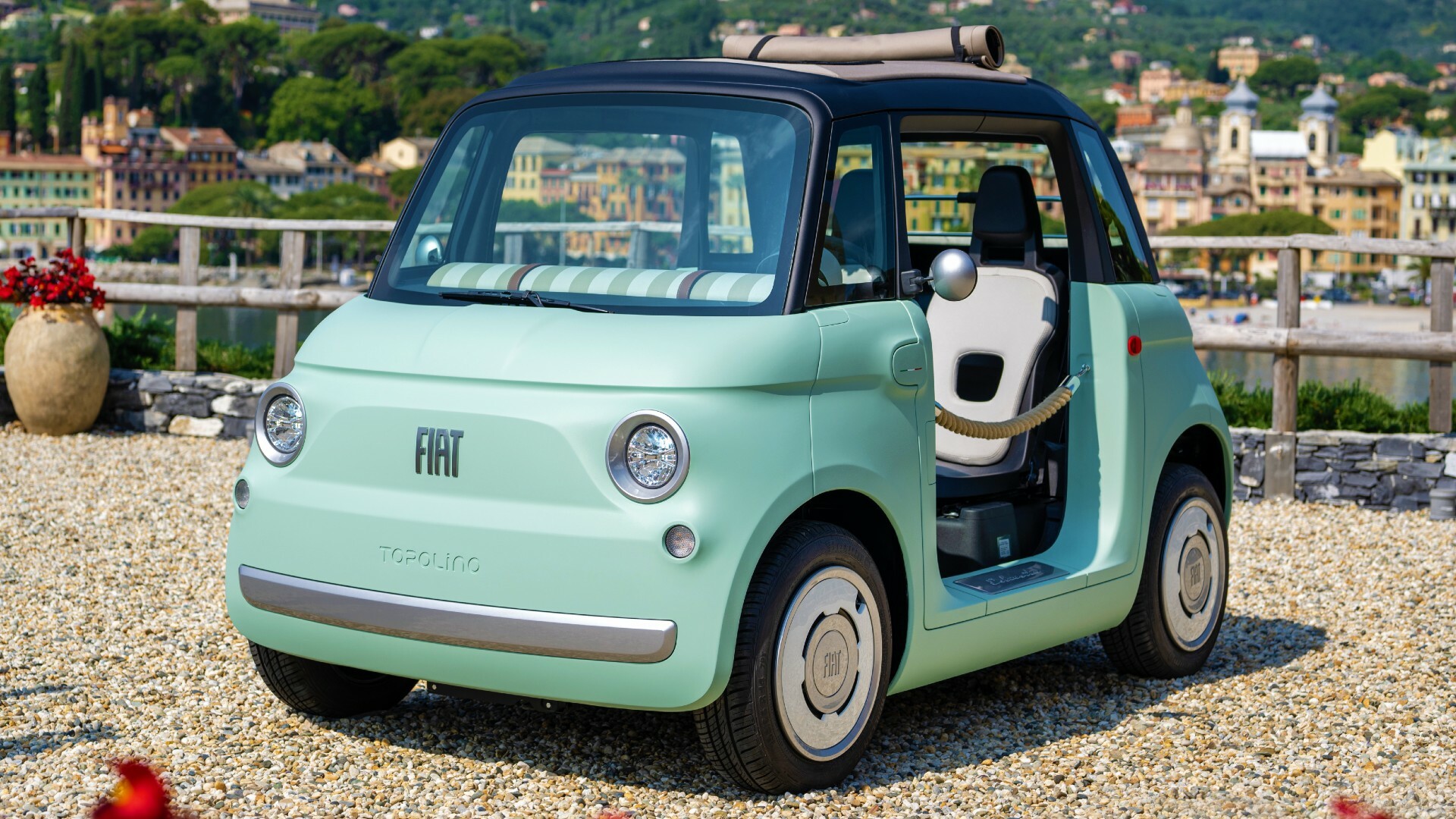
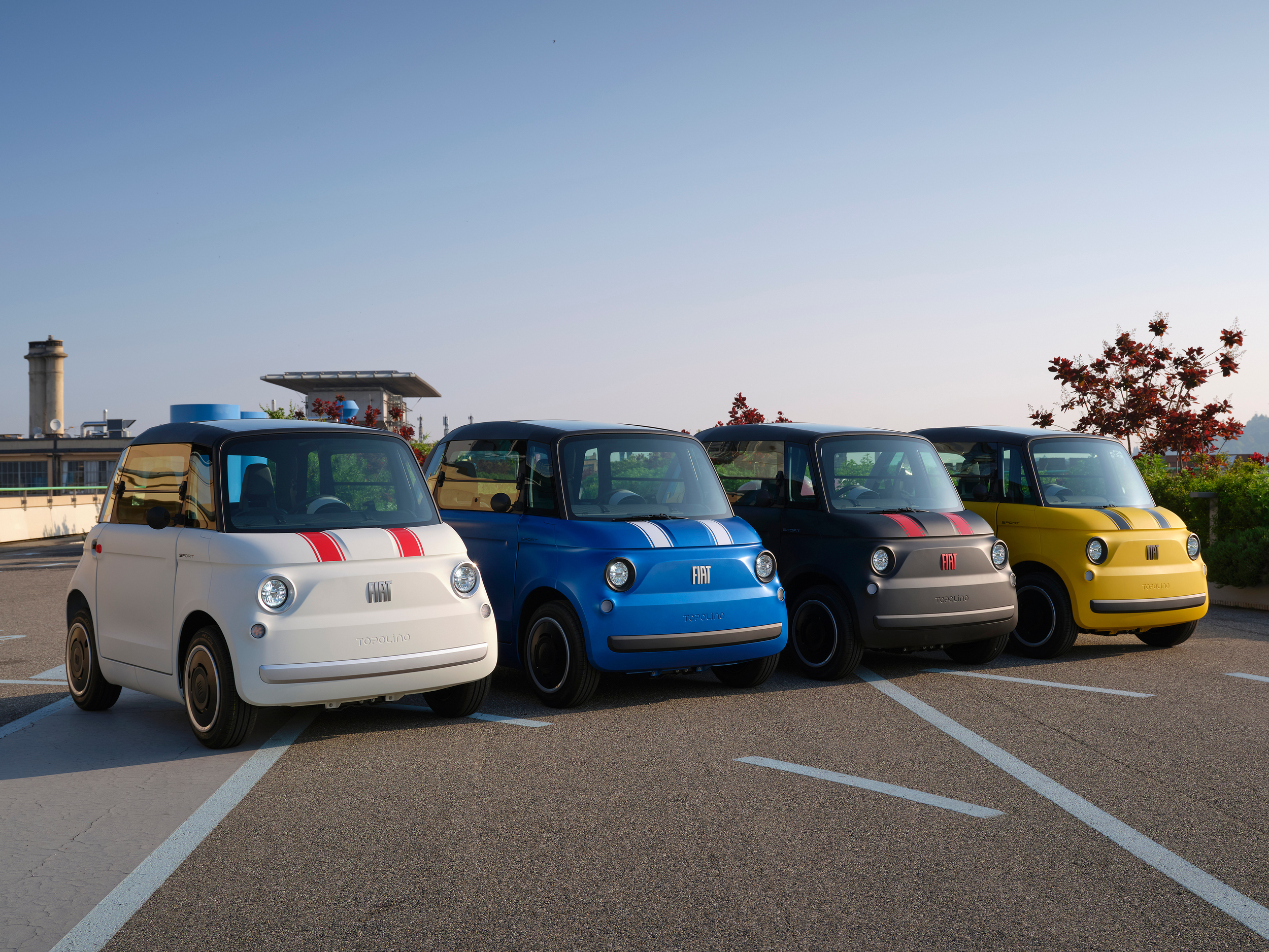
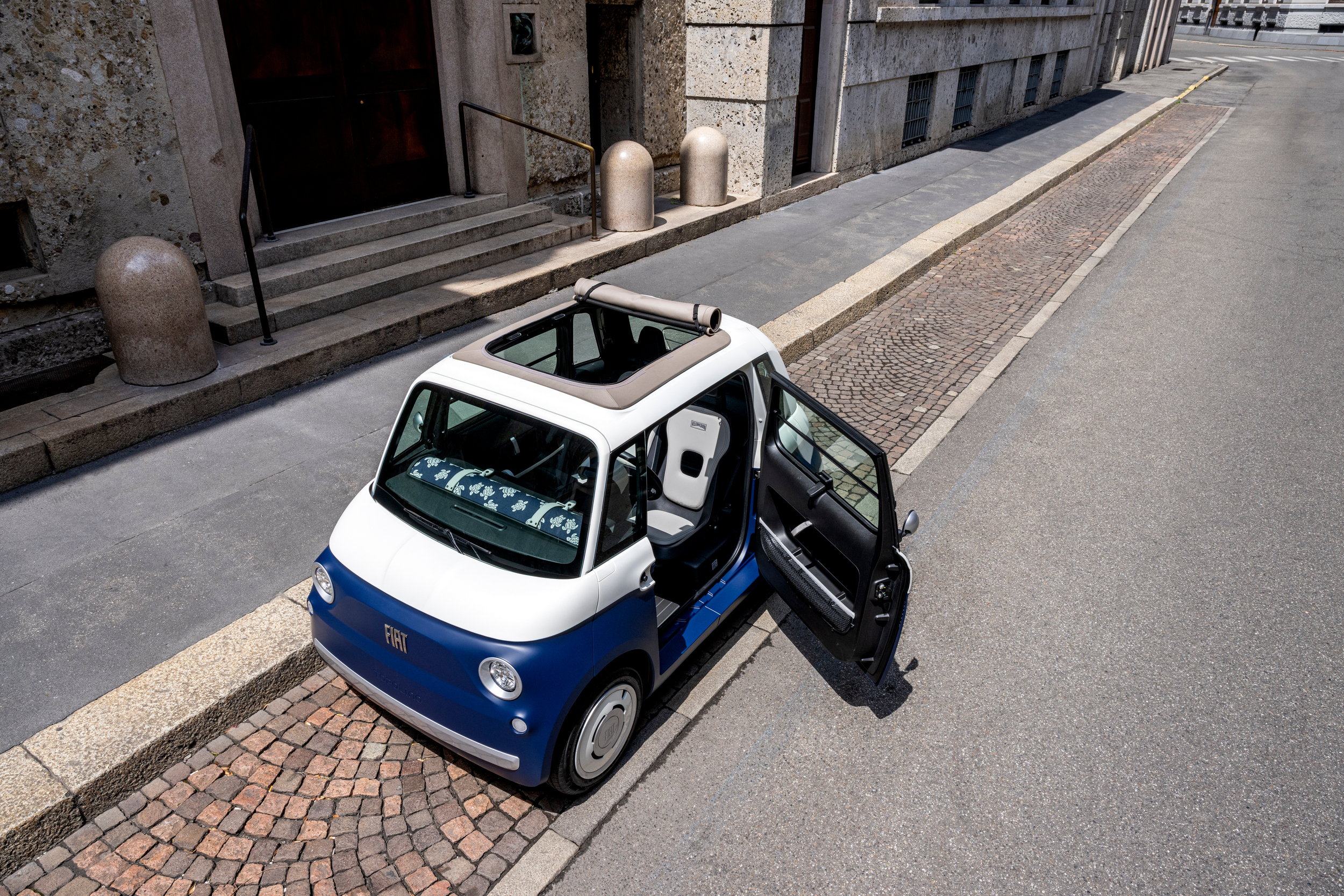
Still, the EV remains the smallest contestant in Europe’s A-Segment, being 840 mm (33 inches) shorter than the Fiat 500e and 997 mm (39 inches) shorter than the Renault Twingo E-Tech. In fact, the new Smart is closer in size to heavy quadricycles like the Citroen Ami and the Fiat Topolino than actual cars.

New Underpinnings

Under the skin lies a new Electric Compact Architecture (ECA) developed in house. Since Smart is co-owned by Mercedes and Geely, it is safe to assume that the platform uses technology from the Chinese automaker.

The #2 will be exclusively available with an electric powertrain, similar to the #1 and #3 and unlike the larger #5 and #6, which are also available in plug-in hybrid forms.

\\\\\\\\\\

Smart has yet to announce detailed specifications, but mentioned a targeted range of around 186 miles (300 km), which is more than double the 135 km (84 miles) range of the EQ Fortwo. The battery will charge from 10-80% in under 20 minutes and will support V2L (Vehicle-to-Load) functions. Chances are that the #2 will stick to the RWD layout of its rear-engined predecessors.

More: Smart Just Killed Hopes Of A ForFour Comeback

The presentation didn’t include photos of the interior, but the packaging of the EV-dedicated platform promises a more spacious two-seater cabin which is also expected to be more premium than before.

The production Smart #2 will debut at the Paris Motor Show in October, ahead of its market launch. The model will be likely focused in Europe and the UK, although it could also find its way into other markets around the world.

\\\\\\\\\\\\\\\\\\\

Smart

Smart Goes Back To Its City Car Roots With Concept #2

  • The Smart Concept #2 previews a successor to the Fortwo.
  • The urban EV promises a range of 186 miles (300 km).
  • The production version will debut at the Paris Motor Show.

Smart goes back to basics with a successor to the original Fortwo microcar that put the company on the map. At the “Change of Perspectives” event in Beijing, the brand unveiled the Concept #2, which serves as a close preview of a tiny urban EV set to arrive later this year.

The model was designed by Mercedes-Benz, looking like a natural evolution of the EQ Fortwo that was discontinued in 2024. It has a familiar two-door silhouette with a very short hood and large wheels positioned at the corners. Other highlights include the aggressive LED headlights and the clean surfacing.

More: You’re Not Wrong, The New Mercedes GLB Looks Suspiciously Like A Smart

The concept features futuristic wheels with transparent aero covers shod in light-colored rubber, trick DRLs with #2 lettering, leather straps instead of door handles, and a blocked grille that looks like a luxury suitcase, while at the rear it sports a small matrix screen that can display various messages. Those elements will likely be toned down for production, as with the shiny gold finish of the floating roof.

\\\\\\\\\\\\\\\\\\\\\\\\\\\\\\\\\\\\\\

The Concept #2 measures 2,792 mm (109.9 inches) long, making it the largest interpretation of a two-door city car from Smart. It is 292 mm (11.5 inches) longer than the original Smart and 97 mm (3.8 inches) longer than the last generation of the EQ Fortwo.

More: Smart Thinks Its E-Class-Sized Sedan Looks Like A Shark, And Stands By It

Still, the EV remains the smallest contestant in Europe’s A-Segment, being 840 mm (33 inches) shorter than the Fiat 500e and 997 mm (39 inches) shorter than the Renault Twingo E-Tech. In fact, the new Smart is closer in size to heavy quadricycles like the Citroen Ami and the Fiat Topolino than actual cars.

New Underpinnings

Under the skin lies a new Electric Compact Architecture (ECA) developed in house. Since Smart is co-owned by Mercedes and Geely, it is safe to assume that the platform uses technology from the Chinese automaker.

The #2 will be exclusively available with an electric powertrain, similar to the #1 and #3 and unlike the larger #5 and #6, which are also available in plug-in hybrid forms.

\\\\\\\\\\

Smart has yet to announce detailed specifications, but mentioned a targeted range of around 186 miles (300 km), which is more than double the 135 km (84 miles) range of the EQ Fortwo. The battery will charge from 10-80% in under 20 minutes and will support V2L (Vehicle-to-Load) functions. Chances are that the #2 will stick to the RWD layout of its rear-engined predecessors.

More: Smart Just Killed Hopes Of A ForFour Comeback

The presentation didn’t include photos of the interior, but the packaging of the EV-dedicated platform promises a more spacious two-seater cabin which is also expected to be more premium than before.

The production Smart #2 will debut at the Paris Motor Show in October, ahead of its market launch. The model will be likely focused in Europe and the UK, although it could also find its way into other markets around the world.

\\\\\\\\\\\\\\\\\\\

Smart

China Is Getting A Jetta SUV For Less Than A Used Corolla Costs In America

  • VW debuts the ID. Aura T6 SUV and ID. Unyx 09 sedan in China.
  • The Jetta X Concept previews an affordable electric SUV.
  • The VW Group has also revealed the production AUDI E7X SUV.

The Volkswagen Group arrived in China with a full plate, using its Media Night ahead of the Beijing Auto Show to roll out a mix of production models and near-future previews. There is a clear pattern running through it all, heavy local collaboration, faster development cycles, and a lineup that looks increasingly tailored to Chinese tastes rather than global consistency.

More: VW Spent Years Removing Knobs From Its Cars, The ID.3 Neo Puts Them Back

Among the reveals were the VW ID. Aura T6 from FAW, the ID. Unyx 09 co-developed with XPeng, and the AUDI E7X from SAIC. Sitting slightly off to the side, but arguably just as important, was the Jetta X Concept, previewing a cheaper, more accessible electric SUV.

The ID. Aura T6 is a fully electric midsize SUV built specifically for China, and at a glance, it could pass as an ID. Tiguan. It comes from the FAW-VW joint venture and leans into familiar design cues, split LED headlights, a full-width rear light bar, proper door handles, and a five-seat layout. It is also the first member of the ID. Aura family, even though the initial concept from 2025 was a sedan.

\\\\\\

VW ID. Aura T6

Next up is the ID. Unyx 09, an electrified sedan borrowing technology from Xpeng. It is a sibling to the recently unveiled ID Unyx 08 SUV, adopting a similar styling language. The low-slung model features slim LEDs and the signature black trim piece that connects the main headlights with the ADAS sensors on the profile.

More: Toyota Was Mocked For Going Slow On EVs, Honda And VW Are Now Paying For Going Fast

VW didn’t get into details, but the ID. Unyx 09 will likely share the electric powertrains with the ID. Unyx 08, including CATL-sourced battery packs. Its market launch in China is scheduled for the second half of 2026.

\\\\

VW ID. Unyx 09

Both the ID. Aura T6 and the ID. Unyx 09 feature the new CEA electric and electronic architecture, a result of VW’s partnership with Xpeng. This supports Level 2+ driving assistance and high-tech infotainment systems with an integrated AI Intelligent Assistant.

More: The New AUDI E7X Looks Nothing Like The Audis You Know

During the Media Night, VW Group also showed the production version of the AUDI E7X. The fully electric SUV is produced as part of its joint venture with SAIC, joining the E5 Sportback in the Chinese lineup.

A New Jetta SUV

Then there is the Jetta X Concept, which might be the most telling piece of the puzzle. It is a rugged-looking SUV with an electrified powertrain, styled with a kind of no-nonsense simplicity that feels closer to Dacia than anything wearing a VW badge. That is not accidental. With Skoda exiting China after a prolonged sales slide, Jetta now steps into its place as the value-focused brand.

The Jetta X rides on the Compact Main Platform (CMP), developed in China. More importantly, it is expected to reach production by FAW later this year, with a rumored starting price under the ¥100,000 ($14,700) mark. Overall, the Jetta lineup will grow with five new models by 2028, including four NEVs (models with electrified powertrains).

\\\\

VW Group’s Offensive In China

VW plans to launch 20 new electric vehicles this year as part of its “In China, for China” strategy. The company promises they will use “state-of-the-art electrical architectures, ADAS systems, an intelligent cockpit and AI features,” designed to fulfil the needs of Chinese customers.

More: VW’s China Collapse Is Bad, But Its American Problem Might Be Harder To Fix

Overall, the VW Group will offer around 50 electrified models in China by 2030, including around 30 battery electric vehicles.

 China Is Getting A Jetta SUV For Less Than A Used Corolla Costs In America

Lynk & Co Built A Ferrari-Sized GT That Stretches Itself By 4 Inches When You Push A Button

  • Lynk & Co debuts its first GT concept at the Beijing Auto Show.
  • Low-slung 2+2 EV features active aero and foldable screens.
  • Electric RWD setup allows 0-62 mph sprint in 2 seconds.

Lynk & Co’s production range has, until now, played it safe with SUVs and sedans. That may be about to change. The Geely-owned brand is marking its 10th anniversary with the “Time to Shine” GT concept at the 2026 Beijing Auto Show.

At 4,780 mm (188.2 inches) long, the coupe lands in roughly the same footprint as the Ferrari 12Cilindri, though it trades the V12 theatrics for a fully electric setup. The proportions still do the heavy lifting, with a long dash-to-axle ratio, a low, sculpted stance, and properly planted rear haunches.

More: Volvo Gives Its European Dealers Something New To Sell Without A Volvo Badge

The design does that familiar thing we’re seeing from some Chinese concepts, pulling in a few well-known ideas and blending them together. Up front and along the profile, there’s a passing resemblance to the Ferrari Amalfi, while the rear leans into an Aston Martin-style look.

The real talking point is its shape-shifting tricks. Tap a button on the center console and the rear wing rises, while the front and rear bumpers extend, stretching the car by 100 mm (3.9 inches) to chase extra downforce. At the same time, the suspension drops by 15 mm (0.6 inches), and the digital displays retract, clearing the cabin of distractions when it matters.

\\\\\\\

Inside, the 2+2 cabin is finished in white leather, offset by carbon fiber accents. The digital cockpit leans hard into the futuristic brief, pairing two screens in the instrument cluster with three more across the center console, though it hasn’t abandoned physical controls entirely.

More: This Chinese SUV Now Boasts Europe’s Longest Electric Range In A PHEV

While technical specifications remain under wraps, Lynk & Co has confirmed an electric rear-wheel-drive setup capable of dispatching 0–100 km/h (0–62 mph) in 2 seconds flat. There’s also talk of an AI-driven digital chassis, tuned with track-focused intent, though what that actually amounts to remains unclear.

Taken as a whole, the GT underlines the brand’s motorsport credentials, something it has built through its success in TCR Touring Car Championship. Lynk & Co joined the series in 2019, effectively picking up where the now-defunct Volvo Polestar Racing left off.

\\\\\\\\\\

What’s interesting is that this electric GT may be more than a one-off design exercise. Lynk & Co says it plans to “use feedback from the public and its community to help shape any future decisions regarding powertrain options and potential production.”

More: Volvo’s Favorite Tuner Just Crossed Over Into China’s EV Scene

If it does get the green light, the model could end up taking aim at the Denza Z from BYD, along with established sports cars like the Porsche 911 and the Mercedes-AMG GT. At least in theory, as this is the sort of company where you don’t just arrive, look pretty, and expect a seat at the table.

\\\\\\\

Smart’s Tiny ForTwo Is Back. Sort Of

  • Smart previews Concept #2 as modern two-seat city EV.
  • Original 1998 ForTwo spirit returns with same silhouette.
  • Concept debuts at Beijing alongside China-only #6 sedan.

Some cars try to dominate the road, but Smart’s greatest hit barely took up half a parking space. Now the brand is teasing its icon’s comeback act with the Concept #2, a preview of the long-awaited successor to the legendary ForTwo, which went out of production in 2024.

Having dropped disguised images of a prototype testing last year, Smart has now released sketches and extreme close-up teaser images of the new concept ahead of a global brand event at the Beijing Auto Show later this month.

Related: Smart’s First Ever Sedan Is Much Bigger Than You Think

While full design and tech details remain hidden, it’s clear from what we can see that the #2’s profile closely echoes the original’s, but that this time the the arches are much fatter. The front end also adopts the family face from other new-generation Smarts like the #1, #3 and #5. Slightly confusingly, the #2 will be much smaller, and probably less expensive, than the #1.

Fashion Inspiration

Smart says the concept uses a matte white and warm gold two-tone finish, along with details inspired by fashion accessories, including buckle-like elements and leather touches. This is definitely no Citroen Ami-style no-frills economy EV.

\\\

We can see some of that white and gold coloring in the teaser shots, though whether those “fashion” ideas will find their way onto the production car is another matter. That design direction makes sense, though. The modern Smart brand isn’t selling bare-bones transportation anymore. It now pitches itself as a premium EV maker, with larger models like the #1, #3, and #5 already moving the company far beyond its original microcar roots.

ForTwo Legacy

CEO Tong Xiangbei previously admitted that building a truly tiny EV on a fresh platform is harder than making a larger car. Packaging batteries, safety systems, and decent practicality into something this small is engineering Tetris at expert level. But the #2 matters emotionally. It’s the car enthusiasts actually associate with Smart, the machine that made city motoring weird and fun long before everyone else discovered quirky mobility.

We’ll see the full concept in Beijing on April 22, where it shares the stage with the new China-only #6 EHD fastback sedan. The #6 was designed by the Mercedes-Benz Global Design team, and is shaping up to be a bit like a cut-price Mercedes EQE.

\\\\\\\\

Smart

❌
❌