Peugeot has detailed the new e‑208 GTi, which costs €42,900 ($49,646).
Model features a 54 kWh battery and a motor developing 277 hp.
It hits 62 mph in 5.5 seconds and can travel up to 233 miles on a charge.
Following a preview earlier this month, Peugeot has unveiled the e‑208 GTi. The hot hatch packs a surprising punch and is the brand’s first fully electric performance variant.
Starting with the powertrain, the model has an M4+ motor developing 277 hp (207 kW / 281 PS) and 254 lb-ft (345 Nm) of torque. It enables the car to accelerate from 0-62 mph (0-100 km/h) in 5.5 seconds, before hitting a limited top speed of 112 mph (180 km/h).
The motor is powered by a 54 kWh battery pack, which gives the vehicle a combined WLTP range of up to 233 miles (375 km). However, on the standard Michelin Pilot Sport 4S performance tires, the range drops to 219 miles (352 km). Other highlights include a best in class power‑to‑weight ratio and a 100 kW DC fast charging capability, which enables the battery to go from 20–80% in less than 30 minutes.
Sticking with the performance theme, the e‑208 GTi has been lowered by 1-inch (25 mm) and features a wider track. The model also sports unique springs and dampers, a mechanical limited‑slip differential, and an additional anti‑roll bar. The latter resides out back and joins the front anti‑roll bar found on the regular model.
Since we’ve already seen the car before, we’ll briefly mention it features a unique front lip and a revised gloss black diffuser with an F1-inspired rear fog light. They’re joined by red accents, extended wheel arches, “perforated” 18-inch wheels, and 208 GTi badging on the C-pillars.
The red theme continues inside as there are red carpets, floor mats, seatbelts, and stitching. They’re accompanied by special sport seats that pay tribute to the 205 GTi 1.9 and feature a “central red insert and red mesh detail” evocative of the 205 GTi 1.6.
Elsewhere, there’s a leather and Alcantara steering wheel, red‑themed displays, and red ambient lighting – although seven other colors are also available. Peugeot also mentioned a “sound ambience” system, which is linked to your speed and can be deactivated.
The company is currently accepting orders and pricing starts at €42,900 ($49,646) in France including taxes. That undercuts the 600 Abarth, which begins at €46,900 ($54,280).
Larvae hatch from New World screwworm eggs within about 24 hours before burrowing into the infested animal’s wound to feed on living flesh. (Photo courtesy of USDA)
The New World screwworm has arrived in the United States.
For years, ranchers across Southern states have prepared for a potential invasion of the flesh-eating parasite that can wreak havoc on livestock, pets and even humans.
Though the United States went decades without a confirmed case of the invasive pest, it’s now made its way across the U.S.-Mexico border. Officials have confirmed one case in a New Mexico dog and five cases in Texas, including cattle, a dog and a goat.
The New World screwworm poses potentially life-threatening risks to pets, wildlife and livestock. While the risk is concentrated in a few states, experts say a massive invasion could ripple across the American economy through higher grocery prices.
Is it a fly or a worm?
Contrary to its name, the screwworm grows into an adult fly that’s about the size of a common housefly. The adult fly has orange eyes, a metallic blue or green body, and three dark stripes along the back.
The name screwworm refers to the larvae (maggots) that burrow into open wounds, feeding as they go “like a screw being driven into wood,” according to the U.S. Department of Agriculture.
The maggots burrow into the flesh of living animals through wounds as small as a tick bite or in body openings such as the eyes or nose. That means ranchers must keep close watch over newborn calves with exposed umbilical cords and may need to rethink branding and tagging operations that could provide an entry for the pests.
What to look for
The screwworm can infest livestock, pets, wildlife, birds and, in rare cases, people.
Infested animals can exhibit foul-smelling wounds with visible maggots as well as lesions in navels, ears or other sites. Texas A&M says animals may bite or lick at wounds and could display unusual restlessness or lethargy.
“Pay attention to your animals, pay attention to any wildlife that might be around your property, if they’re acting like they’re in distress,” New Mexico Livestock Board Executive Director Belinda Garland told Source New Mexico this week. “Be aware, but there’s no need to panic.”
The federal Centers for Disease Control and Prevention says people may feel or see maggots moving within a wound, or in their ears, noses, eyes or mouth. The larvae can cause painful sores that worsen within a few days. People may also experience bleeding and a foul-smelling odor from the site of the infestation.
People should immediately see a healthcare provider, who must remove each maggot, sometimes surgically, the CDC says.
For animals, USDA has approved emergency use of several medications for prevention and treatment of the parasite. Those include ivermectin, the drug that many people hoarded for off-label use during the coronavirus pandemic.
Will this cost me?
The New World screwworm could raise prices at the grocery store. In fact, it probably already has: American beef prices are near record highs after ranchers liquidated herds to the smallest level in 75 years because of drought and other operating disruptions, including a halt on cattle imports from Mexico.
In an effort to stop the screwworm, the U.S. banned live Mexican cattle imports, which traditionally occupy American pastures and feedlots before going to slaughter. Last month, David Anderson, professor and extension specialist in livestock and food product marketing at Texas A&M University, told Stateline that the move likely exacerbated meat prices.
Beef prices have increased faster than inflation in recent months, according to the most recent consumer price index report. While ground beef prices fell 1.27% in May, that drop followed a 2.7% increase in April, CNBC reported, and beef prices remain up 12.9% year over year.
USDA has created screwworm monitoring, reporting and quarantine protocols for animals. But because the disease does not create food safety concerns, the agency will not stop any movement of animal products, including meat.
To eradicate the flies, the federal government plans to breed sterile male flies and then release them into areas with established populations. The sterilized males will mate with females, which will then lay unfertilized eggs. With females mating only once in their lifespan, officials say this method progressively reduces and eliminates the fly population.
USDA just broke ground on a $750 million sterile fly facility in Edinburg, Texas, that aims to produce up to 300 million sterile flies per week when it opens next year. The agency has also invested in sterile fly facilities in Mexico and Panama.
Political blame game
The arrival of the screwworm has ignited political attacks from Washington, D.C., to the Southern border.
At a U.S. Senate oversight hearing earlier this week, Minnesota Democratic Sen. Amy Klobuchar raised concerns about how deep cuts to USDA employment affected the department’s ability to combat issues such as the screwworm threat. She noted that the department’s Animal and Plant Health Inspection Service lost 25% of its staff, including more than 300 veterinary services employees.
The Trump administration has sought to deflect blame on previous President Joe Biden.
In that same hearing, Agriculture Secretary Brooke Rollins blamed the previous administration and Mexican cartels’ “refusal to crack down” for allowing the screwworm to migrate north.
“Everyone took their eye off the ball years ago, and unfortunately, because of the border policies, it’s coming our way,” Rollins said.
Meanwhile, Texas Agriculture Commissioner Sid Miller has called on the federal government to deploy targeted baits that kill screwworm flies before they reproduce. Miller recently lost his GOP primary for reelection.
“The science is settled. The tools are available,” Miller said in a news release this week. “What’s missing is urgency from the USDA.”
This story was originally produced by Stateline, which is part of States Newsroom, a nonprofit news network which includes Wisconsin Examiner, and is supported by grants and a coalition of donors as a 501c(3) public charity.
Consumer price inflation reached 4.2% in May, the highest mark in three years, boosted largely by higher energy prices that have spiked because of the Iran war. (Photo by Niki Kelly/Indiana Capital Chronicle)
Consumer price inflation reached 4.2% in May, the highest mark in three years, boosted largely by higher energy prices that have spiked because of the Iran war, according to federal numbers released on Wednesday.
The higher year-over-year inflation rate was expected. But at more than double the Federal Reserve’s target rate of 2%, the new numbers dimmed hopes for a cut in the interest rate.
The so-called core inflation rate, which excludes volatile food and fuel costs, was 2.9%. Apparel costs were up 4.8% and the cost of transportation services increased by 4.1%.
Even before today’s report, the conservative-leaning American Enterprise Institute said that “Trump’s war of choice in Iran, coupled with his reckless budget and import tariff policies, offer strong arguments against the appropriateness of an interest rate cut at this juncture.”
The costs of the Iran war have already outstripped recent economic benefits from bigger tax refunds under the Trump administration, according to a June 1 report from Moody’s Analytics.
“The bigger tax refunds Americans have received this year no longer cover the higher costs of gasoline, diesel, and jet fuel caused by the war,” Mark Zandi, chief economist for Moody’s Analytics, wrote in a social media post. “This is a big economic blow, but deficit-financed tax cuts have cushioned it — until now,” Zandi wrote.
The largest cost increases in the past year were for fuel oil, up 58.9% and gasoline, up 40.5%. The only decreases were in used car and truck prices, down 2%, and medical care commodities, down 1.8%.
Overall inflation was highest in the Northeast and Midwest at 5%, and lowest in the West at 3.5%. It was 3.9% in the South.
A few metro areas reported separately. The highest rate was 5.1%, for both Honolulu, Hawaii, and the New York City area, including parts of New Jersey and Pennsylvania. The next highest rates were 4.7% for Minneapolis-St. Paul, 4.1% for the Washington, D.C., area including parts of Maryland, Virginia and West Virginia, and 3.2% for the Tampa, Florida, area.
This story was originally produced by Stateline, which is part of States Newsroom, a nonprofit news network which includes Wisconsin Examiner, and is supported by grants and a coalition of donors as a 501c(3) public charity.
The Rhode Island House of Representatives debates the fiscal year 2027 state budget in Providence on Friday. A new survey of state budget officers found many states face ongoing budget pressures. (Photo by Alexander Castro/Rhode Island Current)
The most recent budgets proposed by governors across the country reflect ongoing financial pressures for states as they expect modest revenue growth, rising prices and federal policy changes.
Most governors recommended state budgets for fiscal year 2027 that would essentially keep spending flat from the general funds that pay for most state services. That’s according to the Fiscal Survey of States by the National Association of State Budget Officers. (Forty-six states will begin the 2027 fiscal year in July.)
The survey of budget leaders found nearly half the states were implementing some form of spending cuts to balance the books.
In their budget plans, 14 states said they would eliminate vacant positions, four reported hiring freezes and eight reported changed retirement benefits to reduce costs. Four states reported layoffs and cuts in employee benefits.
“While budgets are tightening, states overall remain in a strong fiscal position due to steps taken in recent years to manage spending carefully and build reserves,” Alexis Sturm, director of the Illinois Governor’s Office of Management and Budget and current president of the National Association of State Budget Officers, or NASBO, said in a news release.
The survey found that most states planned to increase the size of their rainy day funds: 25 states project those reserves to grow in fiscal 2027, 10 expect theirs to decrease and 11 states expect no change in dollars unadjusted for inflation. Four states did not report.
But researchers at The Pew Charitable Trusts earlier this year found that the power of those reserve funds is weakening as states confront rising costs. Pew researchers concluded that the median state in 2025 could fund its operations on reserve funds for 47.8 days — down from a record 54.5 days in fiscal 2024.
States pay for most spending from three primary tax revenues: sales and use taxes, personal income taxes and corporate income taxes. In the recent survey, 29 states reported tax revenues were coming in higher than forecasted for fiscal year 2026. Nine states reported collections were on target, while 11 said their revenues were below expectations. One state did not report on revenue collections and NASBO noted the revenue numbers may change following the April tax season.
In their budgets, governors proposed a mix of tax increases and decreases for the upcoming fiscal year that NASBO says will collectively have a near-zero net impact on general fund revenues.
With federal stimulus dollars and strong consumer demand, states recorded record revenue growth in fiscal years 2021 and 2022. But NASBO expects more modest growth for state revenues in the coming years with a slower national economy, the impact of state tax cuts and changes in federal tax policy.
“States are continuing to navigate a tighter fiscal environment than they experienced earlier this decade,” Shelby Kerns, executive director of NASBO, said in a statement. “While revenues in most states are meeting or exceeding forecasts, growth remains modest and many states are seeing ongoing spending demands outpace recurring revenue growth in the out-years.”
This story was originally produced by Stateline, which is part of States Newsroom, a nonprofit news network which includes Wisconsin Examiner, and is supported by grants and a coalition of donors as a 501c(3) public charity.
Ty and Allisha Setty pose with the two-bedroom house in suburban Cincinnati they bought in May for $170,000. Unlike many new homebuyers, the couple didn't need family help with the purchase. (Photo courtesy of Ty and Allisha Setty)
The idea started with a sermon Micah Longmire heard at his Presbyterian church in Ogden, Utah, about the importance of grandparents in a child’s life.
Longmire, now 31, exchanged a look with his mother-in-law. “We were like, ‘I’d be OK living with you after that sermon,’ and the ball rolled downhill from there,” Longmire said.
Both families are now living in a house they bought together in Chattanooga, Tennessee, after a two-year nationwide search. Their partnership is an example of the lengths first-time homebuyers have gone to this year amid stubbornly high home prices and interest rates.
“I make $200,000 and I wouldn’t have been able to buy a house by myself. That’s ridiculous,” Longmire said. His wife’s parents contributed $200,000 from selling their own home in Utah and retired to live with them in a 3,500-square-foot house that cost $585,000.
Home prices rose this year, though not as much as inflation, so affordability increased in all regions as of April compared with a year before, according to the National Association of Realtors.
But prices are settling at a high level. After inflation adjustment, they’re still less than 4% below the 2022 peak, though some areas with large-scale building, mostly in Florida and Texas, have seen prices drop, according to real estate analyst Bill McBride’s CalculatedRisk newsletter.
Help from family and even shared living arrangements are becoming the norm in higher-priced areas.
“The family now has accumulated so much equity that they’re able to help their kids make these downpayments. Many people like to live in multi-generational households for reasons of culture and also cost,” said Nadia Evangelou, senior economist for the National Association of Realtors.
Nationally a typical single-family home cost $422,300 in April, up $4,300 from a year before, according to the National Association of Realtors. But the typical family made about $6,000 more in that time, and mortgage rates came down a little, so affordability improved.
But a shortage of affordable starter homes is slowing the market and keeping it hard to buy for first-timers. Last year the median age of first-time buyers reached a record 40 years old, while the median repeat buyer was 62, as the housing market became dominated by repeat buyers who could sell a house at today’s high prices.
“Affordability today is still nowhere near what it was for much of the last decade,” Evangelou said. Between 2009 and 2016, the typical family had about 70% more income than it needed to buy the typical median-priced house, while today it’s a much smaller margin of about 11% as of April.
Quotation
Many young households still face the most challenging home-buying environment in decades.
– Nadia Evangelou, senior economist, National Association of Realtors
San Francisco is an extreme example: The artificial intelligence boom has driven median home prices to a record $2.15 million, according to the real estate brokerage firm Compass. So Charlie and Nettie Culp felt lucky to get a 1,500-square-foot condo for $1.5 million. The couple, both 32, work in finance and tech and saved for years with some family help, putting down $500,000 and taking a $1 million mortgage in May.
“That’s a lot of money for what you get, but that’s the market and it’s a beautiful city,” Charlie Culp said. He has lived in the city since 2015, at times sharing rent among as many as four people while saving money.
“I saw the AI boom coming in San Francisco, so we decided to reach out to our landlord and ask if she was willing to sell,” he said.
First-time buyers are particularly hard-pressed: They lack profits from a previous house, and the smaller houses they can buy are in short supply. The number of houses on the market is rising, but mostly at the high-priced end.
“Many young households still face the most challenging homebuying environment in decades,” Evangelou said. “The question isn’t simply whether more homes are coming into the market, the question is whether those homes that are available for sale are at price points that local households can actually afford.”
The nation needs another 311,000 houses selling for less than $261,000 to meet the needs of middle-income families — buyers earning around $75,000 — according to a May report that Evangelou co-authored. Several states considered legislation this year aimed specifically at creating more starter homes.
A New Mexico law signed in March by Democratic Gov. Michelle Lujan Grisham creates no-interest loans of up to $75,000 for down payments to first-time buyers with moderate income. The loans are meant as an incentive for builders to create smaller houses.
Several states moved to curb minimum lot sizes, seen as an impediment to starter homes and other affordable housing, often drawing opposition from cities.
Colorado considered a measure this year allowing smaller lots for building, hoping to “expand attainable homeownership opportunities for first-time homebuyers.” It was opposed by the Colorado Municipal League, which said it “removes community planning and public input from the decision-making process.” The bill passed the state House but was killed in a state Senate committee.
Florida also considered smaller lots and other incentives for starter homes in a bill this year that died in committee after opposition from the Florida League of Cities.
A similar bill that would limit minimum lot sizes, aimed at creating more starter homes and other affordable housing, was under consideration this year in Hawaii but did not pass after clearing a state Senate committee. Democratic state Sen. Stanley Chang, the bill’s sponsor, told Stateline that “some version of the concept” will be considered in future sessions.
The Midwest continues to have the highest affordability, according to the National Association of Realtors report.
Ty Setty, 29, and his wife, Allisha, 32, had been renting for six years near Cincinnati, but they needed no family help to buy their new $170,000 house, a two-bedroom in suburban Delhi Township, Ohio.
“We had been looking at houses for a few years and just couldn’t afford them, or we let ourselves think that,” Ty Setty said.
After two weeks of looking on Zillow and touring nine houses, they saw this house as a new listing and “fell in love. We put an offer on it that night,” Ty Setty said. “They accepted the next morning. That was a long 12 hours.”
For the Longmire family in Chattanooga, the partnership between parents raising children and grandparents needing their own affordable housing has worked out well.
“Grandparents want to live with their grandchildren, and you know parents need a babysitter on date night,” Micah Longmire said. “The story that we’re telling through our life right now is, that if you can work with your family, don’t give in to the pressure of the world to go it alone.”
This story was originally produced by Stateline, which is part of States Newsroom, a nonprofit news network which includes Wisconsin Examiner, and is supported by grants and a coalition of donors as a 501c(3) public charity.
Lotus will sell two versions of the hybrid Lotus Eletre across key European markets.
The flagship H1000 variant delivers 939 hp and 690 lb-ft (935 Nm) of torque.
The Eletre X plug-in hybrid has a combined driving range of over 745 miles.
As impressive as the all-electric Lotus Eletre is, it’s never been very popular, in part because of its price, but also because few people are willing to pay a premium for an electric SUV like it. This prompted Lotus to launch a hybrid version in China earlier this year, and it’s now touched down in Europe.
Known as the Eletre X, the plug-in hybrid model is arguably what the Eletre should have always been. It uses a 2.0-liter turbocharged four-cylinder engine, two electric motors, a 70 kWh battery pack, and has a 900-volt architecture, resulting in a combined 939 hp and 690 lb-ft (935 Nm) of torque. This gives it 34 more ponies than the all-electric Eletre R, although it is down on that model’s 985 lb-ft (1,335 Nm).
Lotus says the Eletre X can hit 62 mph (100 km/h) in 3.3 seconds and power from 50-99 mph (80-160 km/h) in just 3.88 seconds. Perhaps more important than the straight-line performance is that, thanks to the generous battery pack and the 52-liter fuel tank, the plug-in hybrid Lotus can travel more than 745 miles (1,200 km) between stops. All-electric range also sits at a solid 217 miles (350 km). What’s more, it takes just 9 minutes to charge the 70 kWh pack from 20-80 percent at a 350 kW DC charger.
Two Versions On Offer
Two different versions of the Eletre X plug-in hybrid will be offered. The figures of 939 hp and 690 lb-ft (935 Nm) are reserved for the H1000 model, but an H550 entry-level version will also be offered. This model is capped at 542 hp but retains the same 690 lb-ft (935 Nm) of torque. It can hit 62 mph in 4.9 seconds and tops out at 130 mph (210 km/h), whereas the H1000 is good for 143 mph (230 km/h). The H550 includes the same 70-kWh pack, 900-volt system, and driving range.
Among the key features retained from the electric version are a 48-volt active anti-roll control system, dual-chamber air suspension, dual-valve adaptive dampers, front double-wishbone suspension, and huge Brembo brakes.
Then there’s the all-important pricing. In Germany, the base all-electric Eletre starts at €95,990 ($111,600), while the new Eletre X H550 starts at €96,990. Importantly, the H1000 starts at €119,990 ($112,800), whereas the flagship electric version is much pricier at a touch over €150,000 ($174,400), so the H1000 seems like quite a good deal.
The 2027 Dodge Charger gets 25 new personalization options.
The Charger Daytona now comes with a native NACS port.
Model starts at $49,995, but the EV gets a $12,500 price hike.
Dodge announced a handful of changes to the 2027 Charger Daytona Scat Pack last winter and now the company has revealed more information about the larger Charger lineup. Highlights include 25 new customization options and a NACS port for the EV.
Starting outside, ICE-powered models can be equipped with a new Satin Black painted hood. Buyers will also find new dual stripes – in Satin White, Satin Black, and Gloss Red – as well as expanded graphic choices. The latter include “Charger” blade stripes and strobe stripes in the aforementioned colors.
Rounding out the exterior highlights is a new Mopar accessory glass roof sunshade. Buyers will also find a Brembo braking system that now offers orange and black calipers.
One of the coolest updates resides inside Scat Pack models. For 2027, they can be equipped with new Petrol Blue leather sport seats that feature “Digital Slash” perforation and red contrast stitching. They’re a nice departure from the usual black or red.
Last but not least, all Chargers can be equipped with new Demonic Red seat belts. They help to add an extra splash of color to the cabin.
Pricing for the 2027 Charger starts at $49,995, which is the same as last year’s model. However, the electric Charger Daytona Scat Pack soars to $72,495, which is an increase of $12,500. As we’ve previously noted, Dodge appears to be actively discouraging sales of the slow-selling EV with the massive price hike.
As a refresher, the Charger R/T has a twin-turbo 3.0-liter Hurricane inline-six developing 420 hp (313 kW / 426 PS) and 468 lb-ft (634 Nm) of torque. It enables the model to accelerate from 0-60 mph (0-96 km/h) in 4.6 seconds and run the quarter-mile in 12.9 seconds.
Upgrading to the Scat Pack rewards buyers with a high output engine developing 550 hp (410 kW / 558 PS) and 531 lb-ft (719 Nm). Thanks to the extra power, the dash to 60 mph (96 km/h) falls to 3.9 seconds while the quarter-mile comes in 12.2 seconds.
The Charger Daytona Scat Pack is the performance champ as it sports a dual-motor all-wheel drive system with 670 hp (500 kW / 679 PS) and 627 lb-ft (849 Nm) of torque. 60 mph (96 km/h) comes in 3.3 seconds, while the quarter-mile blows past in 11.5 seconds. However, you’ll have to keep trips short as the model only has 267 miles (430 km) of range.
Dodge is currently accepting orders for the 2027 Charger and cars will begin arriving at dealerships in the third quarter.
EV trade-in rates rose from 67.1% to 72.1% between January and April.
Used EV wholesale values jumped 11% this year and beat ICE prices for weeks.
Analysts urge caution, citing high rates and more expensive gasoline.
Data from Edmunds suggests the shift from gas to electric is gaining momentum at the dealership level. In January of this year, 67.1% of new EV purchasers at dealerships traded in a gas car. In April of this year, that figure had jumped to 72.1%. And it’s not just a first-time fad. Repeat EV purchase data also show an increase.
Numbers for January 2026 show that 26.2% of buyers traded in an old EV for a brand-new one. That figure leaped to 35.4% in April. Worth noting: this uptick comes despite the removal of the federal $7,500 EV tax credit and several state-level incentives. So, is this a definitive trend, then?
Speaking to CNBC, Ivan Drury, Senior Director of Insights at Edmunds, says it’s too early to draw a concrete conclusion, or to say whether it’s just the effect of the Middle East War and its resulting runaway fuel prices. “Oil and gas prices started rising after the U.S. and Israel attacked Iran on Feb. 28. About three more months of high gas prices and elevated EV trade-in numbers will give a better indication of whether customers feel pinched enough at the pump to consider a switch…” says Drury.
Car Prices Are Rising, But Especially EVs
With auto prices rising across the board, whether you buy a brand-new car or a used one, the chances are you’ll be paying more for it now than you would have six months ago, and much more than in 2020.
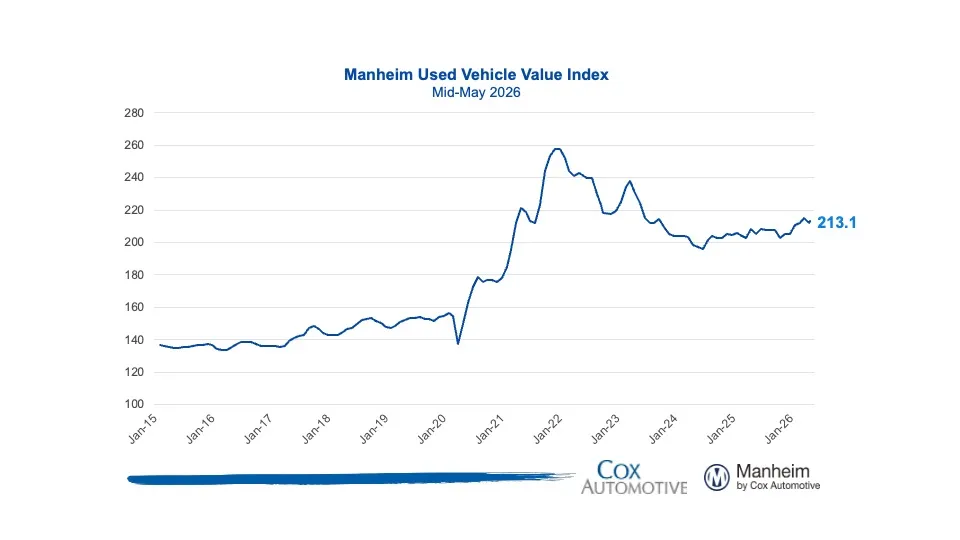
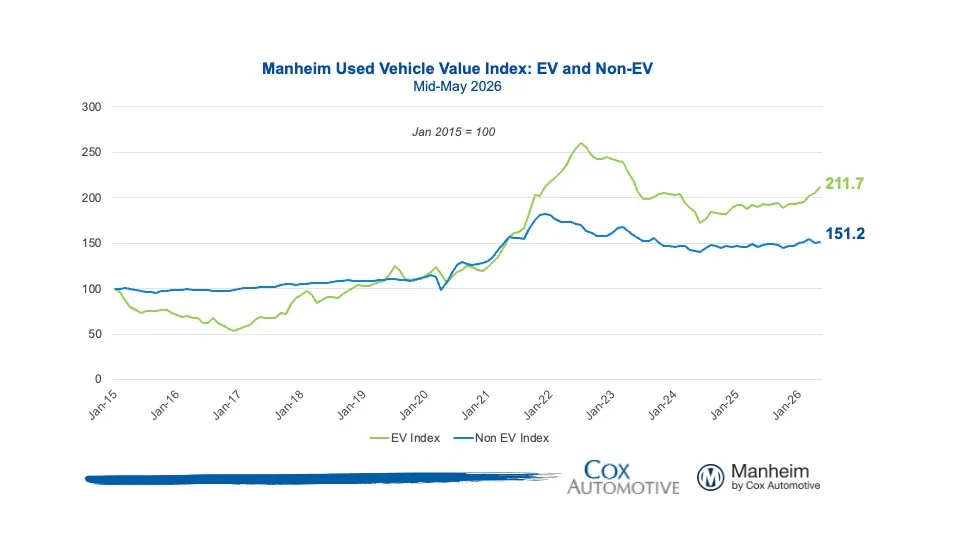
According to Cox Automotive, their Manheim Used Vehicle Value Index is approximately 4% higher than at the same time last year. And they’ve seen EVs leading the charge, with price increases notably higher than regular gas-powered vehicles.
“Additionally, we continue to see EV prices rising faster and holding higher than non-EVs. Three-year-old EV prices have outpaced non-EVs for six weeks in a row and are 11% higher than they were at the start of the year. The longer gas prices remain elevated, the more we expect consumers to turn to fuel-efficient vehicles.
“As EV lease maturities continue to increase throughout the summer, it will be critical to follow EV price trends—especially if the Middle East conflict remains unresolved.” says Jeremy Robb, Chief Economist at Cox Automotive. So, it seems that buyers are willing to pay more upfront if it means lower running costs, which EVs have offered for quite some time now.
Unsurprisingly, ICE SUVs Have Appreciated Least
It’s no surprise to see that out of all the categories analyzed by Cox Automotive, used gas-powered SUVs and CUVs have appreciated by just 0.3% on average since last year. Given their gas-guzzling tendency and resultant tugging at pocket strings, it’s to be expected.
Equally unsurprising is the fact that compact cars, a relatively fuel-efficient segment in the internal combustion engine class, saw the second-highest increase, at 7.6%. As Drury would likely agree, the data points in an interesting direction — but it’s still too early to call it a structural shift rather than a gas-price reaction.
Chinese EVs are depreciating rapidly in Europe, a new study reveals.
Weak residual values in Germany are concerning to lease companies.
Private buyers are also feeling the pain when it comes time to sell.
Chinese automakers have spent the last few years steamrolling into Europe with bargain prices, generous equipment, and monthly lease deals looking almost too good to ignore. But there’s a growing catch buyers are starting to notice. Those bargain EVs can lose value frighteningly quickly once they leave the showroom.
Fresh figures from Germany’s DAT vehicle valuation group show Chinese EVs and plug-in hybrids are depreciating twice as fast as the industry average. And the rate of depreciation is only getting worse.
That creates headaches for almost everyone involved. Owners face painful trade-in figures, manufacturers risk swallowing losses through guaranteed buyback schemes, and leasing companies suddenly discover the cars returning are worth far less than expected.
Martin Weiss from DAT told Autonews Europe that “it is not enough to launch a good product.” Brands also need strong support systems behind the scenes if they want used buyers to remain confident years later. Part of the problem is uncertainty. Plenty of European buyers wonder whether some Chinese brands will actually stick around long term. Concerns about servicing, replacement parts, and dealer networks continue making cautious used buyers think twice.
Not Just Chinese EVs Suffering
But it’s not only Chinese brands feeling the pressure. Britain’s EV market is also watching residual values tumble across the board, in part due to the influx of cars from China, the Financial Times reported recently. Quoting figures from Indicata, it claimed the average three-year-old EV as of last month was worth 38 percent of its original value, compared with 46 percent in Germany, France and Spain. In contrast, a same-age petrol car in the UK retained 45 percent of its value, and a hybrid, 51 percent.
Carmakers are under huge pressure to increase EV sales, so many are throwing massive discounts at new models to hit UK government targets. That’s pushed a Chinese car, the Jaecoo 7, to the top of the UK sales chart for the first time ever, but it leaves nearly-new EVs looking overpriced beside heavily incentivized factory-fresh cars.
Ironically, rapid technological progress is also hurting values. Chinese brands especially release updates at breakneck speed, meaning today’s cutting-edge EV can suddenly feel old-fashioned months later. Great for innovation perhaps, but brutal if you’re trying to protect resale values.
Rivian has revived its Forest Edge cabin for the R1S and R1T after dropping it.
A green vegan leather treatment now covers seats, doors, pillars, and headliner.
Brown Ash Wood trim keeps the heavy green from overwhelming the whole cabin.
The Rivian R1S and R1T have always been aimed at a particular type of buyer, one who hikes, camps, and treats the outdoors as a destination rather than a backdrop. Or, more honestly, one who wants to look like they do. Given that, it’s a little surprising Rivian has taken this long to revive one of the better interior options it ever offered, the one that turns the cabin into something resembling a private forest.
The cabin, aptly named Forest Edge, was offered a few years ago before quietly disappearing from the R1 family. It’s now back in both the R1S and R1T, but only for a limited time. Rivian hasn’t said exactly how long the window will stay open, though it should find plenty of takers.
A rich shade of green vegan leather covers most of the cabin’s key surfaces, including the seats, door panels, and center console lid. It also climbs up the pillars and across the headliner. To keep the look from tipping into the overbearing, Rivian has paired it with Brown Ash Wood trim on the doors and dashboard, along with plenty of black faux-leather panels and a few subtle yellow accents tying everything together.
What Else Is Included?
Shoppers who want a Forest Edge interior will only be offered the chance to pair it with three exterior paints: Glacier White, Half Moon Grey, or Forest Green. In addition, models with the Forest Green configuration include the Darkout Package with 22-inch Sport Dark wheels as standard, but also available with optional 20-inch All-Terrain Dark wheels. The Sound + Vision package also comes pre-equipped, adding Rivian’s Dynamic Glass Roof and premium audio system.
Perhaps the most notable downside about the Forest Green option is that it’s only available on Dual-Motor with Max Pack configurations, which, as standard, start at $83,990 for the R1S and $79,999 for the R1T. The Forest Edge Package adds $9,000 to the price tags of both, lifting their MSRPs to $92,990 for the R1S and $88,990 for the R1T.
Slate Auto will begin taking orders for its budget-focused EV on June 24.
Startup still hasn’t revealed final pricing after losing the federal EV tax credit.
More than 160,000 people have already placed refundable reservations.
For Slate Auto, it’s been a wild ride since its inception four years ago. Initially, it planned to bring an EV to market for less than $20,000. Then Donald Trump cancelled the $7,500 tax credit that made such a price feasible. Now, the company is about to open up order books on June 24, but there’s still something missing… the price buyers will have to actually pay.
Today, the electric vehicle startup backed by Amazon’s Jeff Bezos sent an email to prospective buyers saying that preorders will begin in June. Specifically, they’ll open on June 24, and those who jump on board early will evidently get a “delivery window before non-reservers.”
That date is about a month away as of this writing, and there’s still no official base price for the small electric pickup truck. The number is apparently dropping the same day orders open. For now, Slate only says the truck will start somewhere in the “mid-$20,000” range.
If not knowing the price was one hurdle for hand-raisers, the preordering and reservation process might be another. According to a post on Slateforums, on June 24, those with an existing reservation will have an assigned delivery window and a link to finish their preorder.
Customers will need to pay a $300 non-refundable deposit (minus their $50 reservation fee if they have one already). Those with a reservation have 30 days starting on the 24th to submit their deposit. Slate evidently has over 160,000 reservation holders.
Photos Slate
If those 30 days pass, they can still preorder, but their delivery window will shift further back in the queue. Importantly, the deposit will go toward the final price of the vehicle. The email to customers claims that in the fall of this year, they’ll have the option to pick their wrap and accessories, select financing, finalize the purchase, and then choose how they’d like to take delivery of their Slate.
Keep in mind that even for those who do make a reservation and follow through on the preorder, they’ll have to wait to get delivery until mid-2027. Between now and then, Slate says it’ll offer customers the chance to see the vehicle up close, but there’s no word on exactly how that’ll take place or where those locations will be. Hopefully, the preorder rollout answers the bevvy of questions piling up.
The all-electric Nio ES9 has dual electric motors delivering 697 hp.
All models feature the same CATL-sourced 102 kWh battery pack.
Key features include foot massagers and a 47-speaker audio system.
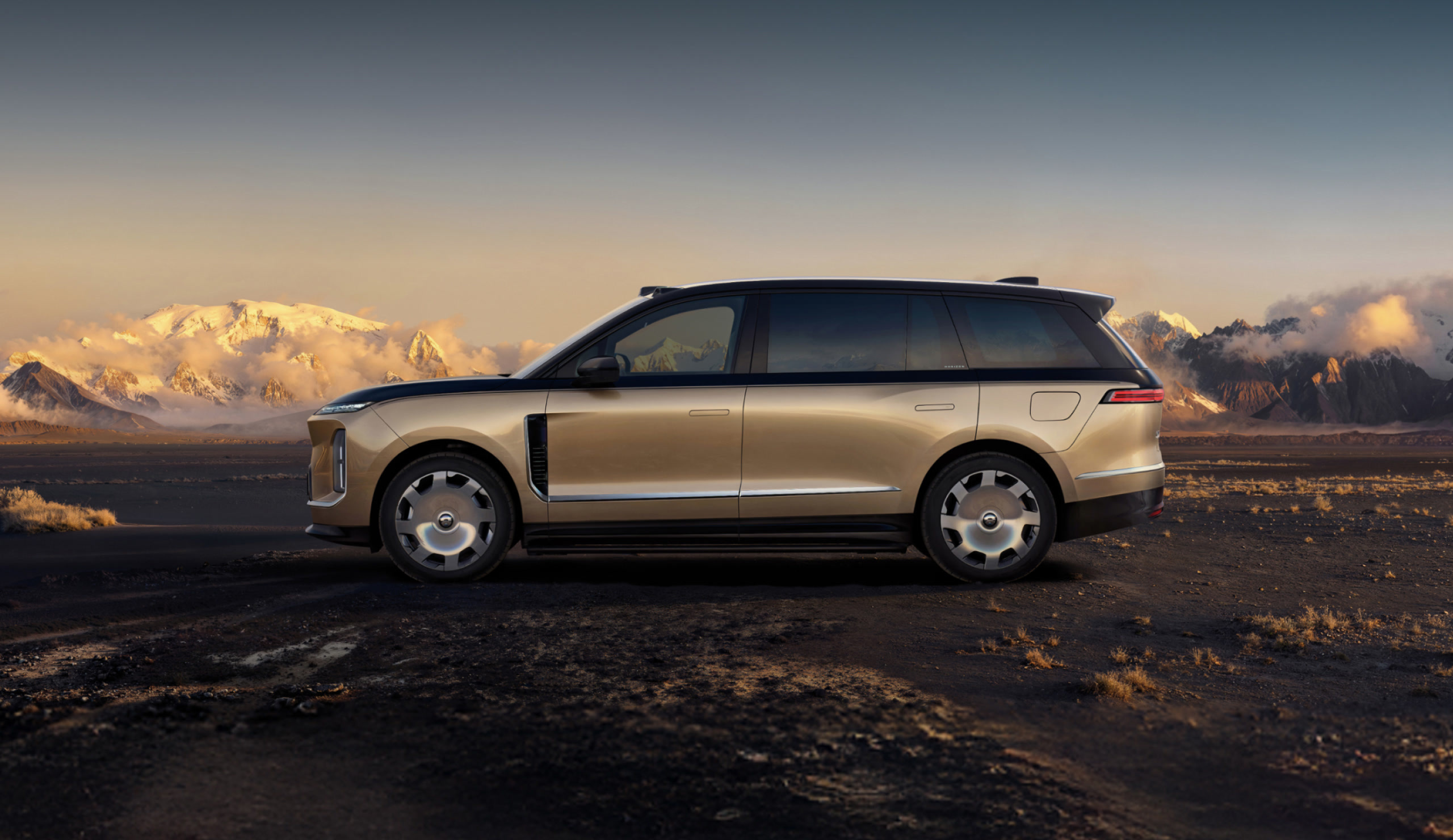
A few months after the first photos and details about the Nio ES9 emerged, the huge SUV has been officially launched and priced in China. It’s the automaker’s most luxurious model built to date and could be enough to make local shoppers forget about European alternatives.
All versions of the ES9 use an advanced 900-volt electrical architecture and come standard with a 102 kWh battery sourced from CATL. Power is provided by a pair of electric motors that combine to deliver 697 hp, allowing the ES9 to hit 100 km/h (62 mph) in just 4.3 seconds. The driving range will vary from 580 km (360 miles) to 600 km (373 miles) and 620 km (385 miles), depending on the trim level.
Importantly, the ES9 has been designed to support Nio’s battery-swapping technology, meaning the 102 kWh pack can be replaced in just 3 minutes at one of the company’s swapping stations. Buyers can opt for Nio’s battery-as-a-service rental program to reduce the ES9’s starting price to 390,000 yuan ($57,500). Those who opt to own the ES9 and its battery pack outright will need to pay a minimum of 498,000 yuan ($73,500). Either way, it’s pretty cheap for what you get.
The ES9 is massive, measuring 5,365 mm (211.2 inches) long, 2,029 mm (79.8 inches) wide, and 1,870 mm (73.6 inches) tall, with a 3,250 mm (127.9-inch) wheelbase. Given its size, it is perhaps no surprise that it sits on large 23-inch wheels. In general, the SUV’s design is quite homogeneous with other Nio models, meaning it includes a set of rather simple split headlights, simple body lines and creases, and a light bar at the rear.
A Cabin For Ultimate Comfort
It’s in the cabin where most of the exciting stuff is found. The dashboard has a large central 15.6-inch infotainment display and a 48-inch screen stretching across the dash. There’s also a large head-up display and loads of premium materials. As with other premium SUVs, those in the second row get treated to a true first-class experience.
Not only are there a pair of captain’s chairs, but there are also large entertainment screens and a 42-point massage system, including massaging footrests that fold down from the rear of the front seats. Nio has also added a panoramic glass roof and a 47-speaker audio system.
This Z9 GT adds violet amethyst stones and freshly trimmed leather inside.
Chopard also created matching rose-gold watches exclusively for the EV.
Three electric motors work together to produce a massive 1,150 hp.
New electric vehicles from China have become synonymous with their incredibly low price tags, but this particular Denza Z9 GT broke from the script. Presented at the recent Cannes Film Festival, it sold at a charity auction for an eye-watering €700,000 ($814,200), nearly five times the going rate for a standard Z9 GT in Europe.
So why is this Denza worth so much more? Well, the car is a one-off, built by BYD in partnership with Swiss jeweler and watchmaker Chopard. The powertrain was left alone, but the rest of the vehicle received a generous dose of bespoke detail intended to push it well past the standard model.
Found throughout the cabin are violet-colored amethyst stones, including around the central infotainment screen and used as toggles on the center console and the seat controls.
The Z9 GT’s interior also includes a combination of high-grade leather and wooden accents, as well as a 20-speaker audio system from Devialet. Chopard’s logo has been incorporated into the headrests, the carpets, and the wireless phone charging pad. The Swiss brand also handcrafted two custom timepieces to match the car, including the 36 mm Happy Sport in 18-carat gold with diamonds, as well as the 41 mm Alpine Eagle in rose gold.
Hypercar Power For Your Next Roadtrip
A custom set of luggage was also handcrafted by Shiro for the car. As for the exterior, it stands out from other Z9 GT models you’ll see thanks to gold accents running along the sides and used on the wheels and brake calipers.
The bespoke Chopard model is based on the flagship Denza Z9 GT, which uses three electric motors that combine to produce 1,150 hp. The EV also uses BYD’s Blade Battery 2.0 and supports Flash Charging, meaning the battery can be charged from 10 percent to 97 percent in just nine minutes.
This one-off marked the European launch of the Z9 GT, which in standard form opens at €117,500, or $136,700 at current exchange rates, in Germany. That figure sits well above its Chinese prices of between 269,800 yuan and , around $39,800 today, yet still a relative bargain compared to what it offers as well as the competition like the Porsche Panamera.
Spiraling gas prices are just part of the affordability crisis that small business owners face, Mel and Mike Ohlinger write. (Wisconsin Examiner photo)
Recently we paid $4.63 per gallon for gas while driving from Neenah, Wisconsin, to Nashville for our industry’s largest trade show. The trip is 633 miles each way. For years, loading up our company van with our booth and hitting the road was the affordable option for a small business like ours. Now even that feels out of reach.
We own OhmCo, a small, family-owned business that provides digital marketing and signage services for car washes across the United States. We are veteran-owned, woman-owned, and entirely self-funded. Every dollar we earn goes back into supporting our employees, growing our company, and serving our customers.
But right now, small businesses are being squeezed from every direction.
Every extra dollar spent on fuel is money that cannot go toward hiring, healthcare, equipment, or growth.
We understand that the recent inflation in the price of gas is driven by national policy and global events out of the state’s control. But that doesn’t make the escalating transportation and energy costs any easier for small businesses like ours to absorb, especially when travel, shipping, and logistics are essential to staying competitive.
Large corporations have dedicated legal, tax and compliance teams that can help them absorb rising costs more easily. Small businesses cannot.
What makes this even more frustrating is watching fuel prices climb while consumers are also dealing with higher costs tied to tariffs, supply disruptions, airline instability, and economic uncertainty. Working people and small businesses are left paying the price while political leaders seem more focused on spectacle than solutions.
At the same time, healthcare costs remain crushing for employers. Like many small business owners, we want to provide good coverage for ourselves and our employees, but premiums continue to rise beyond what many businesses can realistically sustain. Healthcare should not bankrupt employers or employees, and people should not have to stay trapped in jobs simply because coverage is tied to employment.
Through our advocacy with the Main Street Alliance, we have connected with entrepreneurs across the country facing the exact same challenges. Small business owners are delaying hiring, scaling back investments, and questioning whether they can continue operating under the weight of rising costs and instability.
We also need elected leaders, including our state Legislature, to prioritize regular working families and small businesses like ours instead of catering primarily to large corporations and powerful special interests.
Small businesses are the ones sponsoring local sports teams, supporting community organizations, employing local workers, and reinvesting in our neighborhoods. Yet too often it feels like the needs of Main Street come last.
Large corporations have the resources to negotiate, litigate or exploit loopholes. They benefit from complicated tax systems and special carve-outs tend to benefit them over local businesses and communities.
Tax incentives may keep a large corporation from leaving the community, but when they contribute less, that burden still has to be made up somewhere, and it often falls on homeowners or small businesses.
What small businesses need is not complicated. We need lower and more stable fuel prices and reduced tariffs that increase consumer and operating costs.
We need healthcare that is actually affordable for working families and employers, as well as affordable childcare.
We need simpler rules for interstate hiring, because every state has different payroll registrations, labor laws, unemployment systems, tax requirements and compliance rules. Larger companies can afford teams of lawyers and HR departments to manage that. Smaller businesses usually cannot.
We need stronger protections from predatory lending and excessive fees as well as easier access to loans. We need easier access to broadband internet and automation incentives.
We need more competition and affordability in transportation and energy markets. We need policies that support small business growth instead of squeezing us out — lower shipping costs, lower payroll processing and credit card processing fees, and stronger protections against large corporations that delay payments and dominate policy discussions to their advantage and our disadvantage.Most of all, we need elected leaders willing to prioritize regular people and small businesses over large corporations and special interests.
Small businesses are the backbone of this country. At OhmCo, we sponsor a local kids bowling team, and we travel around the country teaching businesses about technology, AI, marketing, and innovation. We believe deeply in our communities and in the promise of hard work.
But right now, many small businesses feel like we are being priced out of survival.
We are not asking for special treatment. We are asking for leadership that prioritizes working families and small businesses instead of corporate profits and political theater. Americans deserve an economy where hard work actually leads somewhere again.
The Epiq will be sold with compact 37 kWh and 52 kWh battery packs.
All versions have front-wheel drive, with the flagship model delivering 208 hp.
In Europe, prices will start at €25,900 for the entry-level Epiq Essence 35.
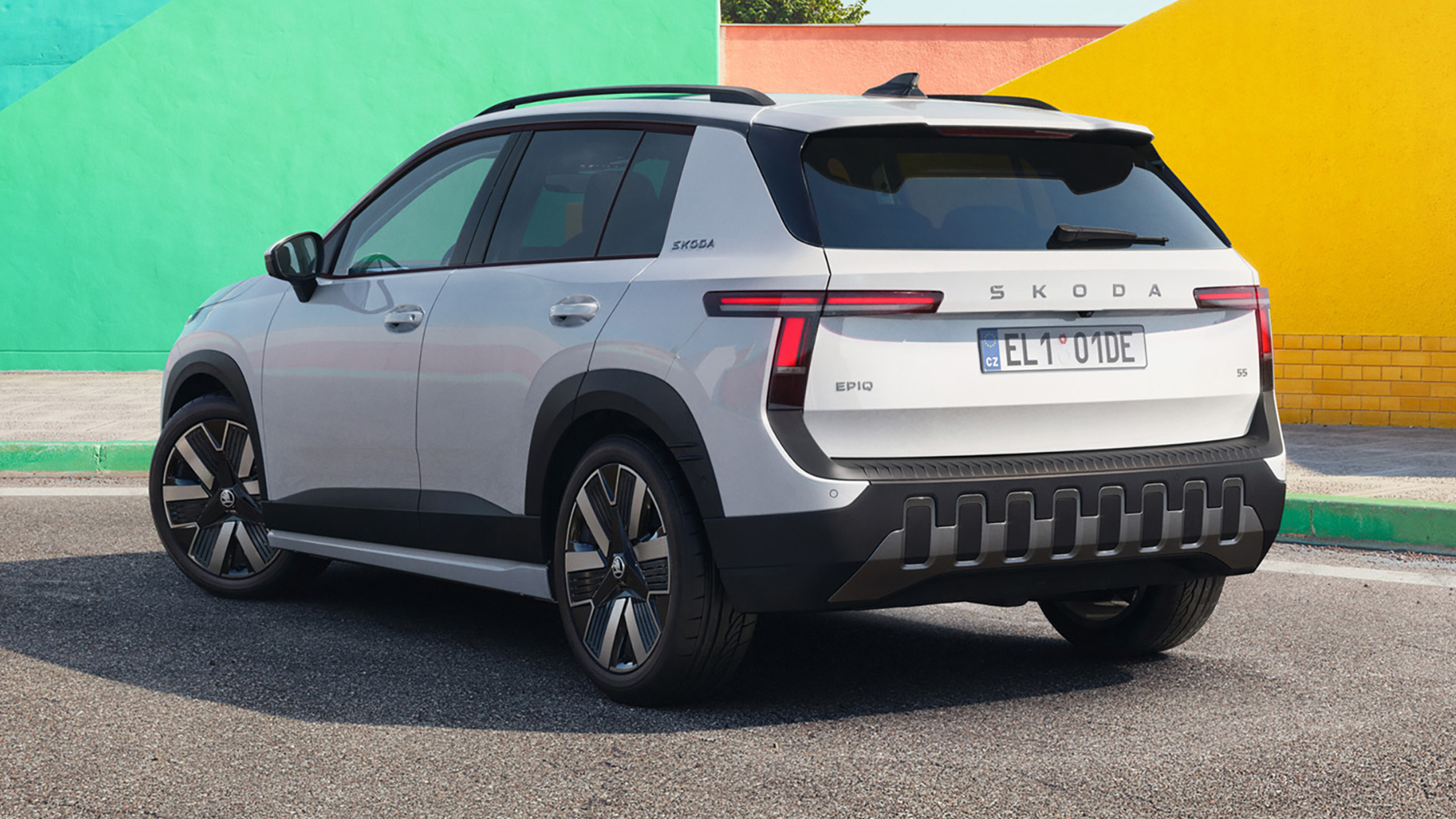
Skoda has just unveiled its long-awaited, entry-level electric Epiq SUV, some two years after it was first showcased to the world. With the potential to outsell other popular Skoda EVs, including the Enyaq and Elroq, the new Epiq looks fun, has solid specs, and most importantly, is affordable.
Underpinning the Skoda Epiq is the VW Group’s familiar MEB+ platform. Depending on the market, three versions will be offered: 30, 40, and 55. The two base models use a 37 kWh lithium-ion phosphate battery and can be configured with either a 114 hp or a 133 hp motor, both driving the front wheels exclusively. By comparison, both the base Enyaq and Elroq are rear-wheel drive.
Driving range for the Epiq 35 and 40 models is capped at roughly 190 miles (306 km). The main difference between the two is that the 35’s charging speeds are limited to 50 kW at a DC charger, while the 40 boosts this to 90 kW.
Sitting at the top of the range is the Epiq 55. It uses a larger 52 kWh NMC battery supporting a driving range of 272 miles (438 km) and peak DC charging speeds of 105 kW, allowing the battery to be charged from 10-80 percent in around 25 minutes. The Epiq 55 also sports a more powerful front-mounted motor with 208 hp.
One common complaint among Skoda’s current electric SUVs is that they don’t offer a one-pedal driving mode. This has been solved with the Epiq. The SUV has also been designed to be reasonably aerodynamically efficient, with a drag coefficient of 0.275.
Cute And Fun Looks
Visually, the Epiq immediately stands out from other existing Skoda models and looks all the better for it. It features a sharp front fascia with a blacked-out lower grille and aggressive headlights and DRLs. Black body cladding extends across the wheel arches, down the sides, and fills the rear bumper. Skoda will offer six different paint options for the Epiq.
A Normal Skoda Cabin
As for the cabin, it shares a lot in common with the Enyaq, Elroq, and other Skoda models. There’s a familiar 13-inch infotainment display on the dashboard, as well as a two-spoke steering wheel. While physical controls are few and far between, there are some physical toggles positioned below the central air vents for important vehicle patrols. As with other Skodas, umbrellas are also hidden in the door panels, like a Rolls-Royce.
What About Prices?
Then there’s the all-important price. In Europe, the Epiq will start at €25,900 ($30,000) for the base Epiq Essence 35, bringing it to price parity with the similarly-sized combustion-powered Kamiq. In the UK, prices start at £24,950 ($33,400) for the Epiq SE L 40, as the base 35 model won’t be sold there. Prices increase to £27,700 ($37,100) for the SE L 55 and Edition 40, then to £30,450 ($40,800) for the Edition 55, and finally to £31,450 ($42,100) for the First Edition 55.
Prices for three versions of the Model Y have increased in the US.
Premium RWD, Premium AWD, and Performance trims are now pricier.
A stretched six-seat Model Y may soon arrive in American showrooms.
The Model Y still sits at the top of the American EV charts by a margin that borders on embarrassing for the rest of the industry. More than 357,000 found buyers last year, north of five times the volume of the Chevy Equinox EV, which finished 2025 as the best-selling non-Tesla EV. However, there’s some unwelcome news for those shopping for a new Model Y.
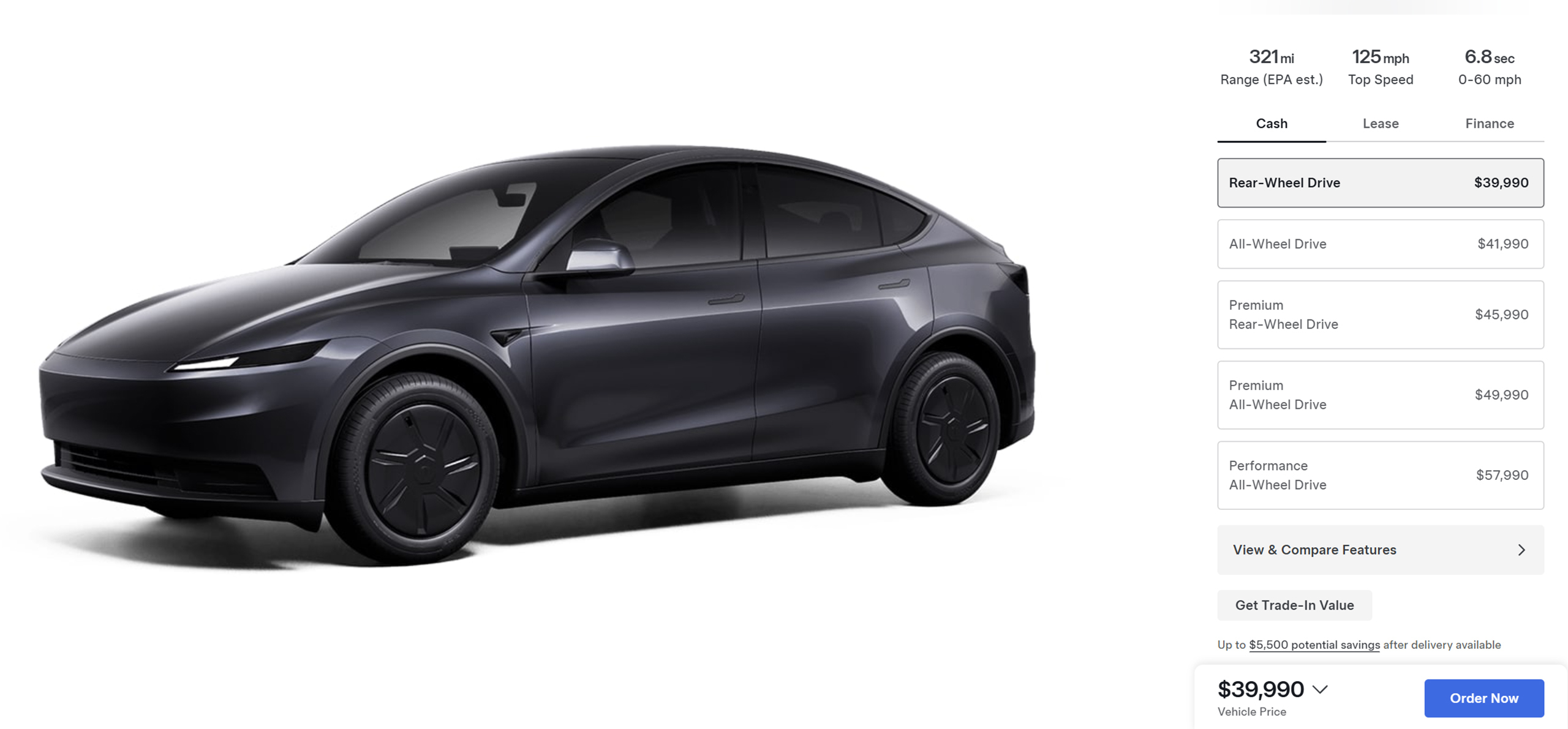
While the price hikes are relatively small, they may be enough to convince some to look elsewhere for their next EV. The entry-level Model Y RWD and AWD trims continue to start at $39,990 and $41,990 respectively, but the mid-range Premium RWD climbs $1,000 to $45,990, an increase of 2.2 percent.
Tesla has applied the same $1,000 walk to the Premium AWD, which now lists at $48,990, while also bumping up the MSRP of the Model Y Performance from $57,490 to $57,990. All prices exclude delivery fees and local state taxes.
Getting Ready To Launch The Six-Seat Model Y L?
In typical Tesla fashion, the company has offered no explanation for the increases, and they have not been paired with the kind of model-year refresh other automakers usually point to when they tap the price tag. This is the first Model Y hike since 2024, which leaves the increases comfortably below the current 3.8 percent annual inflation rate.
The Model Y line-up may soon grow in the United States with the launch of the three-row Model Y L, first introduced in China and since added to the line-up in several other markets, including the UK and Australia. A prototype of the six-seat Model Y was recently spotted being tested on US roads, perhaps indicating that a local launch is imminent. If it does indeed land locally, prices will likely start just north of $50,000.
Volvo has announced that the 2027 EX60 starts at $58,400.
Entry-level model has 369 hp and 307 miles of range.
Range-topper arrives later with 670 hp and a 400-mile battery.
Following its unveiling in January, the 2027 Volvo EX60 celebrated its North American debut in New York City. The automaker has also begun accepting orders, and pricing starts at $58,400 before a $1,395 destination fee. That’s nearly $20,000 less than the EX90 and $3,100 cheaper than the BMW iX3.
Kicking things off is the EX60 P6 Plus, which features a streamlined design and a minimalist interior. The latter sports an 11.4-inch digital instrument cluster and a 15-inch infotainment system with Gemini as well as Google built-in. Buyers will also find a 21-speaker Bose audio system, Pilot Assist, and a Safe Space technology suite.
The EX60 P6 Ultra begins at $65,000 and has an upgraded interior with ventilated Nappa leather upholstery as well as a heated second row featuring integrated booster seats. They’re joined by an electrochromic panoramic roof and a 28-speaker Bowers & Wilkins premium audio system.
From 369 HP To 503 HP, And Up To 322 Miles Of Range
Both models are equipped with a rear-mounted motor producing 369 hp (275 kW / 374 PS) and 354 lb-ft (479 Nm) of torque. It enables the crossover to accelerate from 0-60 mph (0-96 km/h) in 5.7 seconds, before hitting a top speed of 112 mph (180 km/h).
The motor is powered by an 83 kWh battery pack, providing a range of up to 307 miles (494 km). When the battery is low, owners will be thankful for the 800V architecture and 320 kW DC fast-charging capability, which enables the P6 variants to get 155 miles (249 km) of range in as little as 10 minutes. The battery can also go from 10-80% in a mere 16 minutes. It’s also worth noting that the EX60 has a native NACS port for easy access to the Tesla Supercharger network.
Moving up the trim ladder is the EX60 P10 AWD Plus and Ultra. They retail for $60,750 and $67,350, respectively.
As the name suggests, the P10 features a dual-motor all-wheel drive system. It produces 503 hp (375 kW / 510 PS) and 524 lb-ft (710 Nm) of torque, which enables the EV to hit 60 mph (96 km/h) in 4.4 seconds and a top speed of 112 mph (180 km/h).
Upgrades extend beyond the motors as the P10 has a beefier 95 kWh battery that increases the range up to 322 miles (518 km). Buyers will also find an improved DC fast-charging capability of 370 kW, which provides up to 165 miles (266 km) of range in as little as ten minutes. The EV can also go from 10-80% charge in around 16 minutes.
The EX60 P12 AWD will arrive later with a 117 kWh battery and a dual-motor all-wheel-drive system pumping out 670 hp (500 kW / 680 PS) and 583 lb-ft (790 Nm) of torque. This will give the crossover a range of up to 400 miles (644 km) and a 0-60 mph (0-96 km/h) time of 3.8 seconds.
With all that being said, you can configure your EX60 and order it here.
Unleaded gas is $4.09 per gallon at the Marathon station on Point Street in Providence, Rhode Island on April 30, 2026. (Photo by Christopher Shea/Rhode Island Current)
On paper it makes little sense. Ship traffic through the Strait of Hormuz, roughly 7,000 miles from the United States, is restricted and gasoline prices in this country soar?
The strait is the major export route for oil produced by Saudi Arabia, the United Arab Emirates, Kuwait, Qatar, Iraq, Bahrain and Iran, according to the International Energy Agency. But since Feb. 28, when the Iran war began and the narrow passageway between Oman and Iran became a battleground, U.S. gasoline prices have soared — and the prices of consumer products and services are poised to jump as well.
Most oil passing through the strait goes to Asian markets, according to the U.S. Energy Information Administration. And due to greater domestic production, the U.S. is importing less crude oil from the Persian Gulf than it has in 40 years, EIA said in a March analysis.
So why are U.S. consumers paying so much more for gasoline? Globalization.
“Supply disruptions anywhere in the world can also affect prices everywhere in the world because we live in a global market,” explained Jeff Lenard, a vice president of the trade group National Association of Convenience Stores. “Oil and refined products like gasoline are traded on the commodities markets. Places with short supply are willing to pay more for product. That drives up the global price.”
Gas prices are tied to the global supply and demand for crude oil, meaning a disruption to the supply anywhere can have an effect everywhere, said Patrick De Haan, head of petroleum analysis at GasBuddy, which tracks gas prices.
“It’s because the price of oil is based on how much is available in total. Since oil from there is in short supply, the rest of the oil all around the world becomes more expensive,” De Haan said.
A gallon of regular gasoline Monday cost an average of $4.52, according to AAA up from $4.14 a month ago and $3.14 a year ago. Consumer prices overall were up 0.9% in March, and were averaging 3.3% higher over the past year.
Dissecting prices
While the Middle East oil disruption affects prices throughout the world, retail pump costs can vary dramatically from state to state across the U.S.
California’s average Monday was $6.16, the nation’s highest, AAA reported. Next were Washington, $5.76, and Hawaii, $5.65. The lowest averages were in Oklahoma, $3.95, Mississippi, $3.98 and Arkansas, $4.
The price of crude oil is the biggest part of the price consumers pay at the pump. EIA estimates that it makes up 51% of the retail cost. Distribution and marketing account for 11%, refining costs and profits 20% and federal and state taxes 18%.
That means dramatic changes in the price of crude have a huge impact on retail prices.
Brent crude, the world benchmark, was $70.50 the day before the U.S. and Israel struck Iran. Monday morning, it was more than $104.
The $34 a barrel increase since the war began would mean a 82-cent per gallon increase.
Competition can keep prices from rising too much. No gas station wants to be an outlier projecting much higher prices than the one across the street.
Taxes and gasoline prices
There are other factors impacting gasoline prices, notably taxes that vary from state to state.
The federal tax on gasoline has been 18.4 cents a gallon since 1993. President Donald Trump said Monday he supports freezing the tax, though he offered no timeline. A suspension would need congressional approval, and Republican leaders have in the past been reluctant to embrace any pause.
While the average state tax is 33.55 cents a gallon, it varies widely. California’s taxes and fees are estimated at 70.9 cents a gallon, the nation’s highest. The lowest tax and fee rate is in Alaska, 9 cents a gallon.
California’s costs are also boosted by other factors, including its tough environmental standards. The state requires a special blend of gasoline that aims to help air quality.
“This fuel burns cleaner but is more expensive to produce because it requires more processing steps and expensive blending components,” EIA said.
Another reason for the higher prices is California’s reliance on in-state refineries. It doesn’t have as much proximity as other states to interstate supply pipelines
Ripple effects
About 20% of the world’s oil passed through the strait prior to the war. But reopening the strait would be unlikely to suddenly bring prices down.
“In complex supply chains, a disruption in one critical link, even if only briefly, can cascade through the system, well beyond the initial event,” Pinar Keskinocak, professor at the H. Milton Stewart School of Industrial and Systems Engineering at Georgia Tech, said in an analysis. “As delays persist and compound, interconnected systems often take a long time to recover, rebalance, and return to normal.”
“I don’t expect there to be an open flooding of barrels just leaving the region,” said Jerome Dortmans, co-head of global oil and products trading in Goldman Sachs Global Banking & Markets, in an analysis.
And if the Iran crisis continues and the strait remains restricted, more price pain is probably ahead.
“A prolonged disruption of Middle East oil trade would create oil market conditions for which there is no historical precedent,” said a March report from the nonpartisan Congressional Research Service.
U.S. Secretary of Defense Pete Hegseth listens to questions during a news conference at the Pentagon on March 2, 2026. (Photo by Alex Wong/Getty Images)
WASHINGTON — The cost of the Iran war has increased to $29 billion to date, Pentagon officials told lawmakers in both chambers Tuesday.
Secretary of Defense Pete Hegseth, Chairman of the Joint Chiefs of Staff Dan Caine and Department of Defense acting comptroller Jules Hurst faced questions from House and Senate appropriators over several hours of testimony on the administration’s Pentagon budget request and the direction of the U.S. operation in Iran and the Strait of Hormuz.
The hearings began just as the Bureau of Labor Statistics released the latest inflation figures that showed skyrocketing fuel costs drove overall inflation to the highest level since 2023.
Rep. Betty McCollum, the top Democrat on the House Appropriations Subcommittee on Defense, said she remains skeptical of Pentagon spending, as it has lacked “sufficient transparency with gas prices and inflation numbers increasing.”
“The American people just want to afford the basic necessities for everyday life, but this administration is not doing anything to help them with the cost of living crisis,” the Minnesota lawmaker said.
Inflation
Similarly, Sen. Jack Reed, D-R.I., who sits on the Senate Appropriations Committee and serves as the top Democrat on the Senate Committee on Armed Services, said “vague generalities are not helping this committee make critical judgments.”
“And the tradeoffs are significant. The deficit is increasing dramatically. We have to be conscious of that. We also have to be conscious (of) helping American families just get by, and inflation just hit 3.8% today,” Reed said.
Fuel prices displayed at a Brooklyn, N.Y., gas station on April 28, 2026. (Photo by Spencer Platt/Getty Images)
The latest Consumer Price Index reached 3.8% over one year ago, according to the Department of Labor, up from 3.3% last month.
Fuel and energy costs largely drove the inflation increase, with gasoline up 28.4% compared to last year.
Oil and gas prices have soared since the U.S. joined Israel in launching strikes against Iran on Feb. 28. The protracted conflict has led to a near standstill in the Strait of Hormuz, a key maritime passageway off the coast of Iran where one-fifth of the world’s petroleum crossed prior to the war.
‘It comes with cost’
Senate Appropriations Committee Vice Chair Sen. Patty Murray, D-Wash., questioned the Pentagon’s estimate that the war has cost $29 billion, calling it “suspiciously low.”
When pressed, Hurst said the figure does not include the cost of damage to U.S. military bases in the Middle East. Iran launched retaliatory strikes in March on multiple American installations in the region, including a strike on a base in Kuwait that killed six U.S. troops.
“Your acting comptroller suggested that damage to U.S. facilities was not factored into that figure,” Murray said to Hegseth. “It is clear that there has been extensive damage to American military assets.”
The secretary said he could not divulge details on damage to U.S. assets.
“I think an important point is, considering what the president is undertaking, what is the cost of Iran obtaining a nuclear weapon? And the fact that this president’s been willing to make a historic and courageous choice to confront that, it comes with cost. And we recognize that,” Hegseth said.
Congressional authorization
Despite continued tit-for-tat attacks in the Strait of Hormuz, Hegseth told lawmakers that a ceasefire between the U.S. and Iran is still in effect.
Sen. Lisa Murkowski, R-Alaska, asked Hegseth whether he believes President Donald Trump will need congressional authorization to continue military activity against the Islamic Republic.
“It doesn’t appear that hostilities have ended, and so the question to you is whether or not the administration has considered or had intended to seek an authorization of the use of military force from the Congress?” she asked.
Hegseth replied: “Senator, our view is that should the president make the decision to recommence that we would have all the authorities to do so.”
Efforts to pass a War Powers Resolution to rein in Trump’s military operations in Iran have failed multiple times in the the Republican-led Senate and House.
Tesla has dropped Deep Blue Metallic and introduced Marine Blue.
Frost Blue Metallic from the Model S is now available for the 3 and Y.
Sadly, Frost Blue Metallic is only offered for the Performance models.
Tesla has never been known for offering particularly exciting or flamboyant paint schemes, generally opting for subtlety over pizzazz. However, the Model 3 and Model Y have just been updated with two new shades of blue in the United States, and both look superb.
The first new color is dubbed Marine Blue, and it’s available for the Premium Rear-Wheel Drive and Premium All-Wheel Drive versions of the Model 3 and Model Y. Marine Blue is a deep shade that replaces Deep Blue Metallic, which was brighter and a little more eye-catching.
As before, those shopping on a budget and looking to buy the entry-level Rear-Wheel Drive or All-Wheel Drive versions of the Model 3 or Model Y don’t get this new color and still only have Stealth Grey, Pearl White Multi-Coat, and Diamond Black to choose from.
In the US, Marine Blue adds $1,000 to the price of applicable Model 3s and Model Ys. In Canada, it costs CA$1,300 (US$940).
Exclusive Performance Color
The second new color introduced by Tesla is Frost Blue Metallic. It’s exclusive to the Model 3 Performance and Model Y Performance. This isn’t the first time this color has been offered by Tesla, as it was previously available on the Model S and Model X before those models were discontinued. Of all the colors that Tesla offers, Frost Blue Metallic might be our favorite, alongside Ultra Red.
What’s more, Frost Blue Metallic is a no-cost option in the US. It’s also been launched for the Model 3 Performance in Canada, though it’s not yet clear whether it will be added to the Model Y Performance locally.

 Login
Login