Reading view

There are new articles available, click to refresh the page.

China’s First-Time Buyers Just Flipped The Script On What Cars They Want

  • Nearly half of new buyers are leaning toward a single drivetrain.
  • Overall demand shows a striking shift compared to early 2024.
  • Traditional engines still draw attention despite market changes.

China’s electric vehicle market isn’t just growing, it’s evolving faster than most can process. With new models rolling out at breakneck speed, the country’s automakers aren’t simply keeping pace with global trends, they’re driving them.

And they’re not building EVs in a vacuum either. Domestic demand, especially among younger and first-time buyers, is pushing the shift forward.

Read: Forget EVs, China’s Dumping Millions Of Gas Cars On The Rest Of The World

It turns out, more of these buyers are now leaning electric than ever before. A recent study conducted by Bloomberg Intelligence has revealed that 47 percent of prospective first-car buyers in the country plan to buy an EV within the next 12 months. This represents a massive spike from the 25 percent in February.

Widen the scope to include all prospective car buyers in the country, and the trend holds. A full 52 percent now say they intend to make their next vehicle an EV, compared to 34 percent back in both February and March 2024.

 China’s First-Time Buyers Just Flipped The Script On What Cars They Want

Interest in extended-range EVs, those that offer additional miles from an onboard generator or similar tech, is also gaining ground. As of the latest figures, 8 percent of surveyed buyers said they’d consider one for their next purchase.

Interestingly, the Bloomberg survey also found that plug-in hybrids are losing ground fast. Just 12 percent of respondents now say they’re considering one for their next car, a steep drop from 23 percent in February.

Conventional hybrids have slipped even further. Once viewed as a sensible middle option, their share has fallen from 15 percent in February to just 9 percent by November.

Demand for traditional combustion-engine cars hasn’t disappeared though, which comes as somewhat of a surprise. 19 percent said they’d opt for an ICE model for their next car. Admittedly, just 1,000 people participated in the survey, so it’s hard to make definitive conclusions based on this small sample size.

What’s Behind the Surge?

 China’s First-Time Buyers Just Flipped The Script On What Cars They Want
GWM Ora

According to Bloomberg Intelligence analyst Joanna Chen, the competitive prices of EVs in China have contributed to the exceptionally strong demand for them.

“The country beats Europe and the US with battery electric vehicles already reaching price parity versus gasoline cars, while consumers’ strong interests in advanced tech features give local startups and tech giants Huawei Technologies Co. and Xiaomi Corp. stronger edge in the fierce market competition,” she said.

 China’s First-Time Buyers Just Flipped The Script On What Cars They Want

Porsche Vibes Are Strong In This Chinese SUV Coming To Europe

  • GWM’s Ora 5 has been spotted testing in Europe.
  • The crossover is slightly larger in size than an EV3.
  • Single, front-mounted electric motor makes 201 hp.

The new Ora 5 has been spotted out in the wild and covered in disguise, but it wasn’t cruising around China at the time. The electric crossover was caught testing on European roads, confirming that Great Wall Motor is preparing to launch the its first SUV outside its home market.

And yes, that’s the same Ora that got under Volkswagen’s skin a few years ago with the Punk Cat, a car that looked like a mashup of the classic and modern Beetle. This time, the design direction is different, but you’ll still find yourself thinking about certain Porsche models, particularly the Macan and 911.

Review: Great Wall’s Haval H6 Promises Refinement But Trips Over Its Own Power

If the shape under the camouflage looks vaguely familiar that is because the Ora 5 shares plenty of design ideas with the little Ora 3, which was previously known as the Funky Cat in Europe, and goes by Good Cat in China and GWM Ora in Oz.

Imagine an Ora 3 fed a diet of protein shakes and roof rails and you’ve got a solid handle on the 5’s look.

The rounded lighting signatures are still there, as is the smooth surfacing that has become something of an Ora trademark. Even wrapped up, the car looks friendlier than most compact SUVs, which is very much the point. Ora wants cute but practical, not angry and aggressive.

Already Unveiled in China

 Porsche Vibes Are Strong In This Chinese SUV Coming To Europe

Don’t bother straining too hard to make out the final design, though. Ora has already revealed the 5 in full in Asia and we’ve included pictures of that at the bottom of the post so you can get a fuller idea of what to expect when European sales start in 2026.

Tough competition

\\\\\\\\\\\

SH Proshots

We also know from the earlier static launch that the 5 measures just under 4,500 mm (177 inches) long and has a 2,720 mm (107.1 inches) wheelbase, putting it squarely in the heart of Europe’s most competitive EV segment.

That means it will be lining up against everything from the BYD Atto 3 and Peugeot e-2008 to the Kia EV3 when it finally lands.

Under the skin the Ora 5 uses a single electric motor producing 201 hp (204 PS / 150 kW) paired with an LFP battery. Capacity has not been officially confirmed, but Car News China suggests 63.87 kWh and 83.49 kWh options are likely since that’s what’s offered in the mechanically similar Lightning Cat sedan.

Screen-Heavy Interior

\\\\\\\\

Inside it borrows heavily from the facelifted Good Cat/Ora 3, including a big, floating infotainment screen running GWM’s Coffee OS and featuring some climate functions built into the display.

But you still get a few physical toggles further down the console for key controls, while a two-spoke steering wheel, 10-inch digital cluster, wireless phone charging and ambient lighting round out the cabin upgrades.

For Europe, the timing makes sense. Ora has already dipped its toe into several markets with mixed success and the brand badly needs a volume product that fits current tastes. A small electric crossover like this could really help Ora make its mark.

\\\\\\\\\\\\\\\\\\\\

Auto Home

Jim Farley Warns Europe It’s Selling Its Future To Chinese Carmakers

  • Jim Farley wants EV rules aligned with real customer demand.
  • Ford’s CEO says Europe’s EV share has stalled at 16 percent.
  • Farley warns Chinese brands could soon dominate the market.

Not long after carmakers caught a break from former US President Donald Trump, who relaxed stringent fuel economy standards, Ford chief executive Jim Farley has written an op-ed urging the European Union to adopt more pragmatic EV targets. Without them, he warns, the region could be swallowed up by fast-moving Chinese entrants.

Read: Ford’s Jim Farley Was “Shocked” After Tearing Down Chinese And Tesla EVs

In a Financial Times op-ed, Farley accuses European policymakers of crafting unrealistic regulations, only to revise them late in the year, creating what he calls a “recipe for turmoil.”

Ford’s CEO argues this approach costs automakers billions in investment by interrupting the “complex cycle of product design, engineering, and supply chains.”

A New Approach is Needed

While speaking in the White House last week, Farley noted that Biden-era policies were unreasonable and not in line with consumer demand. He’s drawn a direct comparison to the situation in Europe, pointing out that EV market share across the EU has stalled at around 16 percent, well short of Brussels’ 25 percent goal for 2025.

“The approach to regulation – mandate it and they will buy it – has failed,” he writes. “We must align carbon targets with actual market adoption and provide automakers with a realistic and reliable 10-year horizon. This includes giving consumers the option to drive hybrid vehicles for longer, bridging the gap rather than forcing a leap to EVs they aren’t ready to take.”

 Jim Farley Warns Europe It’s Selling Its Future To Chinese Carmakers

Farley also notes that Europe’s automakers have already poured hundreds of billions into electrification. In return, he believes governments need to step up with serious purchase incentives and support for charging infrastructure that goes well beyond affluent urban neighborhoods.

China Looms Large

The Blue Oval’s boss isn’t just concerned with government policy. He’s also keeping a close eye on the momentum of Chinese automakers. With massive overcapacity and a strong foothold in battery tech, China is now in a position to flood the European market. Over the past year alone, Chinese EV brands have doubled their market share in the region.

“EU vehicle production is now 3mn units below pre-Covid levels,” Farley notes. “Plants are going dark. In 2024 alone, 90,000 jobs in the automotive industry evaporated. These are the kinds of jobs that sustain European social stability”.

This isn’t a hypothetical threat. Farley argues that a combination of subsidized Chinese EVs and rigid carbon mandates could upend the local industry faster than policymakers anticipate.

“To be clear, the industry is not asking for a bailout,” he adds. “We are not asking for protectionism to shield inefficiency. At Ford, we will continue to do the hard work of restructuring. We have closed legacy facilities, reduced our workforce and slimmed down costs to become more agile….But if Europe wants to avoid becoming a museum of 20th-century manufacturing, we need an urgent reset and a long-term plan.”

“This is not a transition,” he warns. “It’s more like a wind-down of Europe’s automotive industry.”
Without immediate course correction, Farley argues, Europe’s industrial backbone could slip into long-term decline.

 Jim Farley Warns Europe It’s Selling Its Future To Chinese Carmakers

Source: Financial Times

Lotus Dropped A Gas Engine Into The Eletre SUV

  • Lotus built its first hybrid SUV, based on the electric Eletre.
  • The hybrid’s 2.0L turbo engine is paired with electric motors.
  • Combined output could hit 952 hp, topping the Eletre R EV.

Not too long ago, Lotus committed to an all-electric future. The plan was ambitious, but in hindsight, maybe a touch premature. Like several other automakers, it’s now reevaluating that timeline. Enter a new chapter: hybrids. The first model stepping into this transitional role is a familiar face, spun from the current Eletre SUV.

Read: The Automaker That Swore Off Gas Engines Is Building Its Most Powerful Yet

Images released by the Chinese Ministry of Industry and Information Technology (MIIT) confirm what earlier reports suggested. Lotus’s first hybrid offering isn’t a ground-up redesign. It’s a lightly revised version of the existing Eletre, tweaked just enough to accommodate a new powertrain.

Visually, there’s little to give it away. The bodywork remains unchanged apart from a discreet new ‘For-Me’ badge on the decklid. That small emblem is the only outward hint that this Eletre swaps batteries alone for something a little more combustible.

What’s Changed Underneath?

 Lotus Dropped A Gas Engine Into The Eletre SUV

Many technical specifics are still being kept under wraps. What is confirmed is the presence of a 2.0-liter turbocharged four-cylinder engine producing 279 horsepower. That unit will work in tandem with an unspecified electric drive system.

We don’t yet know the size of the battery pack or how many electric motors are onboard, but reports claim that the hybrid setup will deliver a combined 952 hp. That would put it slightly ahead of the fully electric Eletre R, which tops out at 905 hp.

Review: We Drove Lotus’ Electric SUV To See If It Can Silence Its Haters

Electric range in the Lotus For-Me depends on the trim, with figures falling between 345 and 355 kilometers (214 to 221 miles) under the optimistic CLTC cycle.

 Lotus Dropped A Gas Engine Into The Eletre SUV
The electric Eletre SUV | Photo Brad Anderson / Carscoops

In plug-in hybrid mode, fuel consumption is exceptionally low at just 0.06 to 0.07 liters per 100 km (approximately 392 to 336 mpg), according to WLTC standards.

Once the battery is depleted and the crossover runs on its combustion engine alone, consumption rises significantly to between 6.0 and 6.10 liters per 100 km (around 39 to 38.6 mpg).

The dimensions of the hybrid are identical to the EV. As such, the sleek SUV is 5,103 mm (201 inches) long, 2,019 mm (79.4 inches) wide, and stands 1,636 mm (64.4 inches) tall with a 3,019 mm (118-inch) wheelbase. Weight will vary between 2,575 kg (5,676 lbs) and 2,625 kg (5,787 lbs), depending on the specification.

It’s Coming to Europe

 Lotus Dropped A Gas Engine Into The Eletre SUV

The hybrid version, called the Eletre For-Me, will make its debut in China. But this isn’t a market-exclusive product. Lotus has confirmed that its new plug-in hybrid lineup is headed for Europe as well.

Next in line after the hybrid Eletre is likely a plug-in version of the sleek Emeya sedan. Built on the same platform and sharing many core components with the SUV, the Emeya is an obvious candidate for hybridization. A third model, a smaller SUV, has also been confirmed and is due to arrive in 2027.

Each of these new plug-in hybrids will make use of Lotus’s 900-volt electrical architecture. Among other benefits, that setup supports ultra-fast charging. According to Lotus, charging from 10 to 80 percent will take just ten minutes.

\\\\

Nissan’s New NX8 SUV Outsizes The Rogue And Might Outshine It Too

  • Nissan NX8 debuted in China ahead of its 2026 market launch.
  • Electric and hybrid versions are powered by CATL battery tech.
  • The electric NX8 makes up to 335 hp from a single electric motor.

Nissan has introduced a new midsize SUV developed in partnership with Dongfeng in China, marking the latest addition to its growing, budget-conscious N-series lineup. Named the NX8, the model joins the existing N6 and N7 sedans and will be offered with a selection of electrified powertrains.

More: Nissan’s New Hybrid Sedan Is As Big An Altima For Thousands Less Than A Versa

The SUV’s exterior design follows the same styling language as its sedan counterparts, with clean surfacing and a grille-free front fascia. A full-width daytime running light runs across the split headlights and wraps around the front fenders, while OLED tail lights extend across the rear.

The overall shape leans toward conventional SUV proportions, marked by flush-fitting door handles and pronounced shoulders.

How Big Is It?

The NX8 measures 4,870 mm (191.7 inches) in length, 1,920 mm (75.6 inches) in width, and 1,680 mm (66.1 inches) in height, with a wheelbase of 2,917 mm (114.8 inches).

That makes it 222 mm (8.7 inches) longer than the Rogue (X-Trail) and 152 mm (6 inches) shorter than the Pathfinder. Interestingly, its wheelbase is 17 mm (0.7 inches) longer than the Pathfinder’s, which should translate to slightly better interior space.

\\\\\\\

Images reveal a suite of sensors along with a roof-mounted lidar unit, hinting at advanced driver assistance tech. Nissan hasn’t revealed the interior yet, but it’s expected to mirror the cabin layout of the N6 and N7, likely featuring a prominent touchscreen and soft-touch materials throughout. The company says the NX8 will offer a spacious five-seat configuration.

What Powers It?

Nissan has confirmed the NX8 will be classified as a NEV (New Energy Vehicle), with specifications recently published by China’s Ministry of Industry and Information Technology.

More: Nissan Thinks You’re Not Mature Enough To Appreciate What It Just Launched In Japan

The fully electric variants will be available with either a single motor producing 288 hp (215 kW / 292 PS) or a more powerful version at 335 hp (250 kW / 340 PS).

A plug-in hybrid or range-extender version will also be offered, pairing a 1.5-liter turbocharged engine making 146 hp (109 kW / 148 PS) with an electric motor rated at 262 hp (195 kW / 265 PS).

 Nissan’s New NX8 SUV Outsizes The Rogue And Might Outshine It Too

All variants will use the latest lithium iron phosphate battery packs supplied by CATL. While range figures and battery capacities have not yet been disclosed, the packs are said to support ultra-fast charging.

The market launch of the Nissan NX8 in China is scheduled for the first half of 2026 with pricing set to be announced closer to that date. As with the N6 and N7 sedans, the SUV will reportedly be exported to other markets in the near future.

When and Where Can You Buy One?

Nissan plans to launch the NX8 in China during the first half of 2026, with pricing to be confirmed closer to its market debut. As with the N6 and N7 sedans, the NX8 is expected to be exported to additional markets after its initial rollout. Whether that will include Western regions like Europe and Australia, however, remains to be seen.

As for pricing, we’ll have to wait for official figures, but if the N6 and N7 are any indication, it’s likely to stay within a very competitive range. The N7, for example, is priced between 119,900 and 149,900 yuan, or roughly $17,000 to $21,200 at current exchange rates.

 Nissan’s New NX8 SUV Outsizes The Rogue And Might Outshine It Too
The N7 (left), NX8 (center), and N6 (right) new energy vehicles from the Dongfeng-Nissan joint venture.

The New AUDI E7X Looks Nothing Like The Audis You Know

  • The upcoming AUDI E7X has been revealed by Chinese authorities.
  • Arrives next year offering a dual-motor AWD system with 671 hp.
  • Cabin tech may mirror E5 with wide display and AI-powered assistant.

Audi’s awkwardly named Chinese sub-brand AUDI introduced the E SUV concept at the Guangzhou Auto Show last month and now China’s Ministry of Industry and Information Technology has revealed the production model. It’s known as the E7X and it closely echoes the concept.

The design is instantly recognizable as both have a familiar front fascia with a fully enclosed grille. However, the production model eschews the full light surround seen on the concept. The road-going crossover also has a revised lower intake with what appears to be an active shutter.

More: Audi’s AUDI Bets Big On China With A 671 HP Electric SUV That Means Business

Moving further back, we can see traditional and digital side mirrors as well as new cameras or sensors on the front fenders. They’re joined by a roof-mounted Lidar sensor as well as flush-mounted door handles and a variety of wheels in sizes up to 22-inches.

How Big Is It?

\\\\\\\\

The E7X measures 198.8 inches (5,049 mm) long, 78.6 inches (1,997 mm) wide, and 67.3 inches (1,710 mm) tall with a wheelbase that spans 120.5 inches (3,060 mm). That means the production crossover is slightly smaller and shorter than the concept.

Furthermore, to put those numbers into prospective, the model is 0.8 inches (20 mm) shorter than the current Q7. However, its wheelbase extends an extra 2.6 inches (66 mm).

The MIIT didn’t reveal interior pictures, but confirmed at least one variant will be offered with a four-seat setup.

 The New AUDI E7X Looks Nothing Like The Audis You Know
The interior of the AUDI E5 Sportback.

That’s not much to go on, we do know the E5 Sportback has a 27-inch pillar-to-pillar display and an AI-powered avatar known as AUDI Assistant, so it’s reasonable to expect similar tech inside the E7X.

The E5 also sports three-dimensional wood trim, a dual wireless smartphone charger, and an ambient lighting system. They’re joined by a fragrance diffuser and hidden air vents.

Multiple Powertrains And Up To 671 HP

\\\\

The images reveal quattro and non-quattro variants, which means we can expect an entry-level model with a rear-mounted motor producing 402 hp (300 kW / 408 PS). The all-wheel drive variant, on the other hand, will have 671 hp (500 kW / 680 PS) and a top speed of 143 mph (230 km/h).

The MIIT didn’t have much else to say about the crossover, but the concept had a 109 kWh battery pack that provided a CLTC range of more than 435 miles (700 km). The model also had an 800-volt electrical architecture, which enabled it to get 199 miles (320 km) of range with a ten minute fast charge.

AUDI has previously confirmed the production model will be launched next year, so expect to learn more in the coming months.

Audi E SUV Concept
\\\\\\\\

Nio EV Splits Open Like A Can Of Tuna In A Strange Crash

  • Nio EC6 hit a concrete barrier in Shanghai and split through the rear.
  • Driver and passenger escaped without injuries after the violent impact.
  • Battery pack survived the crash and avoided any fire or thermal issues.

All too often, we read about EVs catching fire after relatively minor accidents, and in some cases, occupants were trapped inside. This story is a little different though, as a Nio EC6 was recently destroyed in a crash in China, but remarkably didn’t catch fire despite almost completely splitting in two.

This incident happened in Shanghai on Monday. It’s understood that the light pink-colored EC6 hit a concrete crash barrier side-on after cutting in front of another vehicle, causing it to clip the rear of the Nio.

Local reports suggest that the top edge of the barrow, approximately 120 mm (4.7 inches) wide, applied an extraordinary amount of pressure on the C-pillar and the area of the floor.

Read: Nio’s Mass-Market Onvo Drops Its First 3-Row SUV With More Power Than An EV9 GT

This force caused a split through the rear of the car. Remarkably, the driver and passenger of the Nio were not injured in the crash. Additionally, the battery pack wasn’t severely damaged and did not catch fire.

According to a statement released by Nio, immediately after the crash, the vehicle’s onboard safety systems reported the accident. Nio staff were alerted to the impact and quickly responded to the scene, helping the occupants receive medical treatment.

Perhaps in a thinly-veiled dig at Tesla, Nio says that the EV’s doors immediately unlocked after the collision, allowing the driver and passenger to free themselves.

\\\\

Weibo

The car manufacturer also confirmed that the EC6’s driving assistance system was not enabled at the time.

The Nio EC6 was first unveiled in late 2019 before being thoroughly updated in February 2023. The example involved in this crash was one of the facelifted models.

It’s available with either a 75 kWh or 100 kWh battery pack and sold exclusively in dual-motor guise, producing a combined 483 hp and 516 lb-ft (700 Nm) of torque.

Sources: Weibo, Nio, CarNewsChina

Europe Might Not Be Ready For What China’s Most Luxurious Brand Plans Next

  • Hongqi plans 15 hybrid and EV models across 25 European markets.
  • The brand is scouting sites for local factories in multiple regions.
  • FAW-owned Hongqi sold just 771 vehicles in Europe through October.

Hongqi cars may be a common sight across China, but beyond its home market, the brand remains something of a mystery to most car buyers. That may soon change. China’s oldest and most luxurious automaker has set its sights on a sweeping European expansion, planning to introduce 15 electric and hybrid models and bring them to 25 markets by 2028.

Read: China’s Most Luxurious Brand Is Coming For Europe With 15 New Models And It’s A Red Flag

Like many of its Chinese peers, Hongqi sees global growth as essential, and Europe is high on the list. The brand’s plans, however, face a complicated landscape. The European Union has imposed heavy tariffs on Chinese-built electric vehicles, raising both costs and stakes.

In response, Hongqi is said to be exploring local production. Potential manufacturing sites are reportedly under consideration in southern Europe, eastern Europe, and the Nordic region. Building cars within the EU could soften tariff impacts and make logistics smoother, especially as the company works to establish itself in a new market.

\\\\\\\\\\\

Hongqi, a division of state-owned FAW, has sold just 771 vehicles in Europe through October, a modest figure compared with its home market reach. That number, though, may serve more as a baseline than a limit.

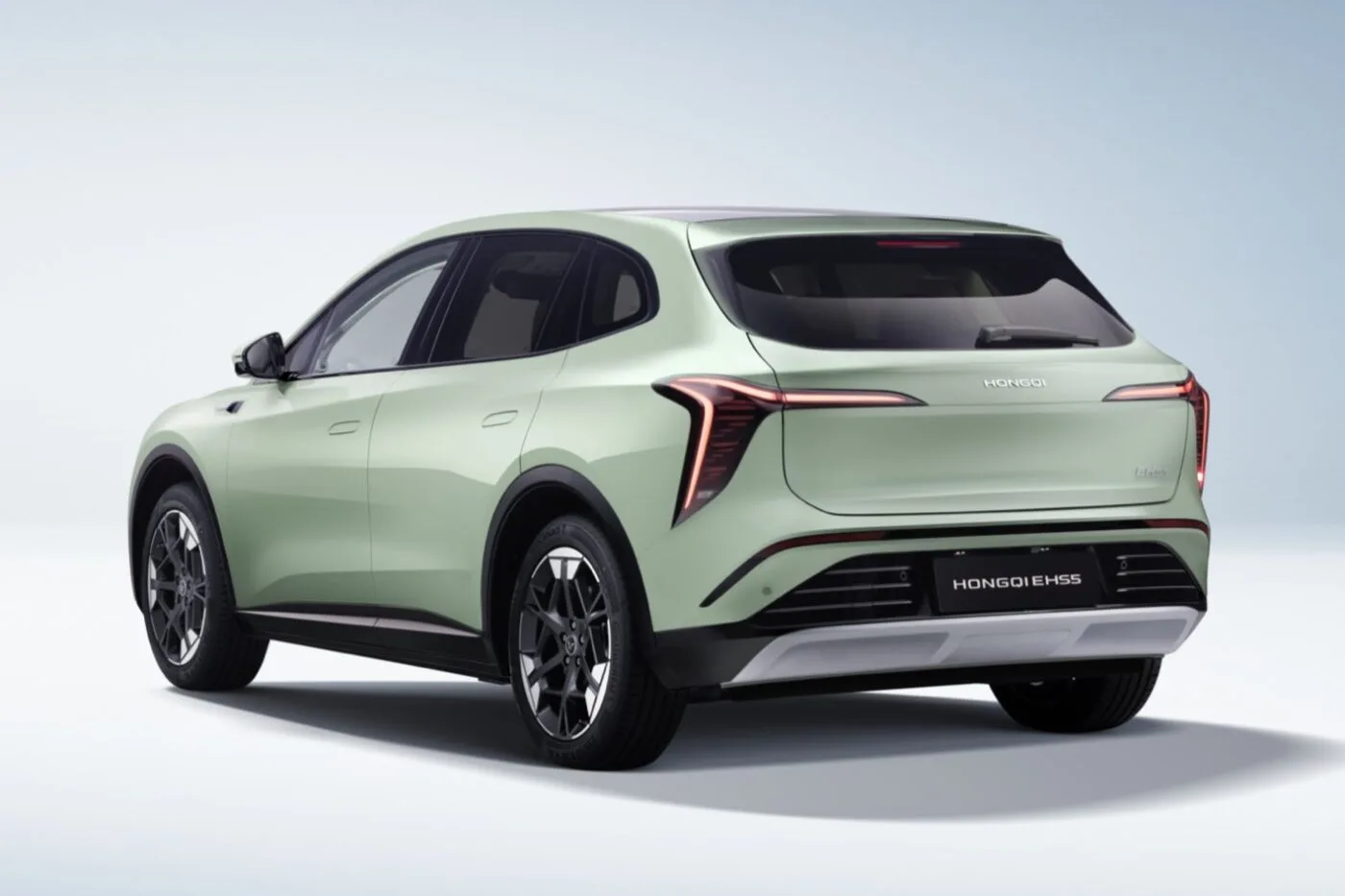
Its most significant newcomer is the EHS5, a mid-size electric SUV first shown at the Munich Motor Show. The model runs on an 85 kWh lithium-ion battery and offers a range of 342 miles (550 km).

European specifications haven’t yet been finalized, but in China the EHS5 comes in two versions: a 339 hp rear-wheel-drive model and a 610 hp all-wheel-drive setup. Until now, the EHS7 has been Hongqi’s top seller in Europe, but the new SUV could change that balance.

 Europe Might Not Be Ready For What China’s Most Luxurious Brand Plans Next
Hongqi EHS5

Pricing will be key to Hongqi’s success in Europe. Fellow Chinese brands, like MG, Chery, and BYD, have been steadily growing their sales across the region thanks to cut-price models.

FAW’s design chief, Giles Taylor, told Auto News that Hongqi’s government ties give it access to technology “at prices that you just wouldn’t believe.” That cost structure could be a powerful advantage.

“We can then leverage that pricing power whether it’s in domestic market or in Europe,” he said. “Do you really want to spend €5 for a Starbucks coffee when there’s a new little startup brand around the corner selling coffee for €1.50?”

\\\\\\\

Sources: Auto News

China’s Getting Ready To Flood The World With Even Cheaper EVs And PHEVs

  • Chinese automakers debut budget EVs under $21,000 to expand abroad.
  • Falling EV prices spark fears of excessive competition and lower profits.
  • BYD and Great Wall Motor report 30 percent profit drops amid price cuts.

Chinese automakers are steering the electric era into a new phase, flooding the market with low-cost EVs and plug-in hybrids at the Guangzhou Motor Show.

With prices starting between 100,001 yuan ($14,100) and 150,000 yuan ($21,100), this new generation of vehicles sends a message that’s hard to miss: China intends to own the mass market for electrification.

Read: The Company That Started The EV Price War Now Says It’s Gone Too Far

According to Nikkei Asia, many of China’s biggest automakers are getting ready to export these budget-friendly newcomers. For Western legacy brands still wrestling with production costs and emissions targets, those prices don’t signal healthy competition so much as the opening act of a global price reckoning.

The Global Push Begins

 China’s Getting Ready To Flood The World With Even Cheaper EVs And PHEVs
Leapmotor A10

Several new EV and PHEV models took the stage at the show, among them the Leapmotor A10, which is expected to start around 100,000 yuan ($14,100) and head for export worldwide. The company’s Lafa 5 electric hatchback is set to launch at roughly the same figure.

Nio made a strong impression with its Firefly, shown for the first time in right-hand drive. Priced around 100,000 yuan ($14,100) in China, the Firefly will enter 17 new markets next year, reaching into Central America and beyond. GAC joined in with its Aion i60, a range-extender SUV starting at 109,800 yuan ($15,500).

Price Wars Continue

The Chinese automotive industry has been in a price war for the past few years, and there are no signs of cooling, as carmakers feverishly battle to gain market share. The lower end of the market is proving to be an especially fierce battleground, Nikkei Asia reports.

During the first nine months of this year alone, 2.35 million EVs and plug-in hybrids priced between 100,001 yuan ($14,100) and 150,000 yuan ($21,100) were sold in China. That makes it the nation’s largest market segment, up from fewer than 1.5 million in the same range last year.

By contrast, models priced between 150,001 yuan and 200,000 yuan ($21,100–$28,200) have held steady at around 2.3 million sales.

 China’s Getting Ready To Flood The World With Even Cheaper EVs And PHEVs
Firefly EV

There has also been significant growth in even more affordable NEVs. The number of vehicles sold in the $11,300 – $14,100 and $11,300-or-less price brackets has doubled to over 1 million units.

While the growing number of affordable models is good for Chinese customers, it’s hurting the automakers themselves. During the July-September quarter, BYD’s net profit fell 30 percent, its first decline in four years. Great Wall saw a similar hit, with profits falling 30 percent despite a 20 percent rise in sales.

Exports, meanwhile, are accelerating. Over the first three quarters of this year, Chinese brands shipped 1.75 million EVs and plug-in hybrids abroad, an astonishing 89 percent increase from the same period last year.

 China’s Getting Ready To Flood The World With Even Cheaper EVs And PHEVs

Source: Nikkei Asia

The Automaker That Swore Off Gas Engines Is Building Its Most Powerful Yet

  • Lotus reverses course with a new powerful plug-in hybrid SUV.
  • The first model launches in China in early 2026 before Europe.
  • The hybrid will recharge from 10 to 80 percent in ten minutes.

Five years ago, Lotus vowed to go fully electric, rolling out a host of battery-powered models like the Eletre, Emeya, and Evija. Yet, like several other automakers now revisiting the middle ground, it seems the British brand can’t entirely turn its back on hybrids.

Read: Lotus Hyper Hybrid Can Run 100% On ICE-Power

The first compromise looks set to arrive in the form of a plug-in hybrid Eletre, blending the company’s electric ambitions with a dose of combustion practicality. About a year ago, Lotus offered a glimpse of its newly developed hybrid system but has since kept the details close to its chest. That quiet stretch appears ready to end.

Hybrid Plans Take Shape

During the company’s most recent earnings call, chief executive Feng Qingfeng confirmed that Lotus’s first plug-in hybrid will pack 912 hp. The model will reach Chinese showrooms in the first quarter of 2026, with European deliveries following later that year.

The company has so far committed to launching three PHEVs. If the first of these is a new version of the Eletre, the second may be a hybrid version of the Emeya sedan.

As for the third model, Lotus has confirmed it will be a smaller SUV, slotting below the Eletre. This model will be launched in 2027 and is currently known as the Vision X.

Inside the Hyper Hybrid

 The Automaker That Swore Off Gas Engines Is Building Its Most Powerful Yet

Lotus has named its new powertrain the ‘Hyper Hybrid,’ built around a 900-volt electrical platform designed for ultra-fast charging. The system allows the battery to charge from 10 to 80 percent in just ten minutes when connected to suitable infrastructure.

The company also notes that the combustion engine will serve as a generator for “on-the-drive” charging, replenishing the battery while the car is in motion.

Lotus has not provided any details about the combustion engine it will use. That said, it’s a safe bet that it will be a turbocharged four-cylinder, as reported by Autocar.

Expanding The Range

 The Automaker That Swore Off Gas Engines Is Building Its Most Powerful Yet
Photo Brad Anderson / Carscoops

Feng explained that adding hybrid models broadens the company’s reach, particularly in regions where full EV adoption has been slower.

“The introduction of hybrid models offers more choice for luxury vehicle buyers and will help us expand into broader markets, including regions with slower EV adoption, such as Italy and Spain and Saudi Arabia,” he said.

Review: We Drove Lotus’ Electric SUV To See If It Can Silence Its Haters

In addition to offering performance comparable to its all-electric models, the PHEVs from Lotus will boast far greater driving ranges. Whereas the electric Eletre has a range of between 254 and 373 miles (409 – 600 km), models equipped with the Hyper Hybrid system will be able to travel up to 684 miles (1,100 km) between stops.

 The Automaker That Swore Off Gas Engines Is Building Its Most Powerful Yet

Sources: Lotus, Autocar

Xiaomi’s YU7 Outsold Tesla’s Model Y And Now It’s Getting Personal

  • Xiaomi launched its Customization Service with 100 paint options.
  • Buyers can select special alloy wheels and colored Brembo calipers.
  • 24-karat gold and gold carbon fiber badges add unique touches.

Xiaomi’s YU7 has quickly found its stride in China. Only a few months into its launch, the electric SUV has seen a sharp rise in sales and, in October, even edged past the Tesla Model Y. For now, though, buyers outside China are still waiting for Xiaomi to take its EVs beyond the domestic market.

Last month, Xiaomi sold an impressive 48,654 vehicles across China. Of these, 33,662 were YU7s, meaning it is now comfortably outselling the SU7 sedan. By comparison, Tesla shipped approximately 61,500 Model Ys in October, but 35,400 of these were sent to overseas markets, meaning Chinese buyers snapped up roughly 26,100 units.

Read: A 60-Week Waitlist Just Made Xiaomi’s SUV A Flippers Goldmine

Since customer deliveries of the YU7 began in July, Xiaomi is believed to have shipped around 70,000 units in total. That’s a rapid rise for a newcomer, suggesting the SUV has struck a chord with Chinese buyers.

New Customization Options

 Xiaomi’s YU7 Outsold Tesla’s Model Y And Now It’s Getting Personal

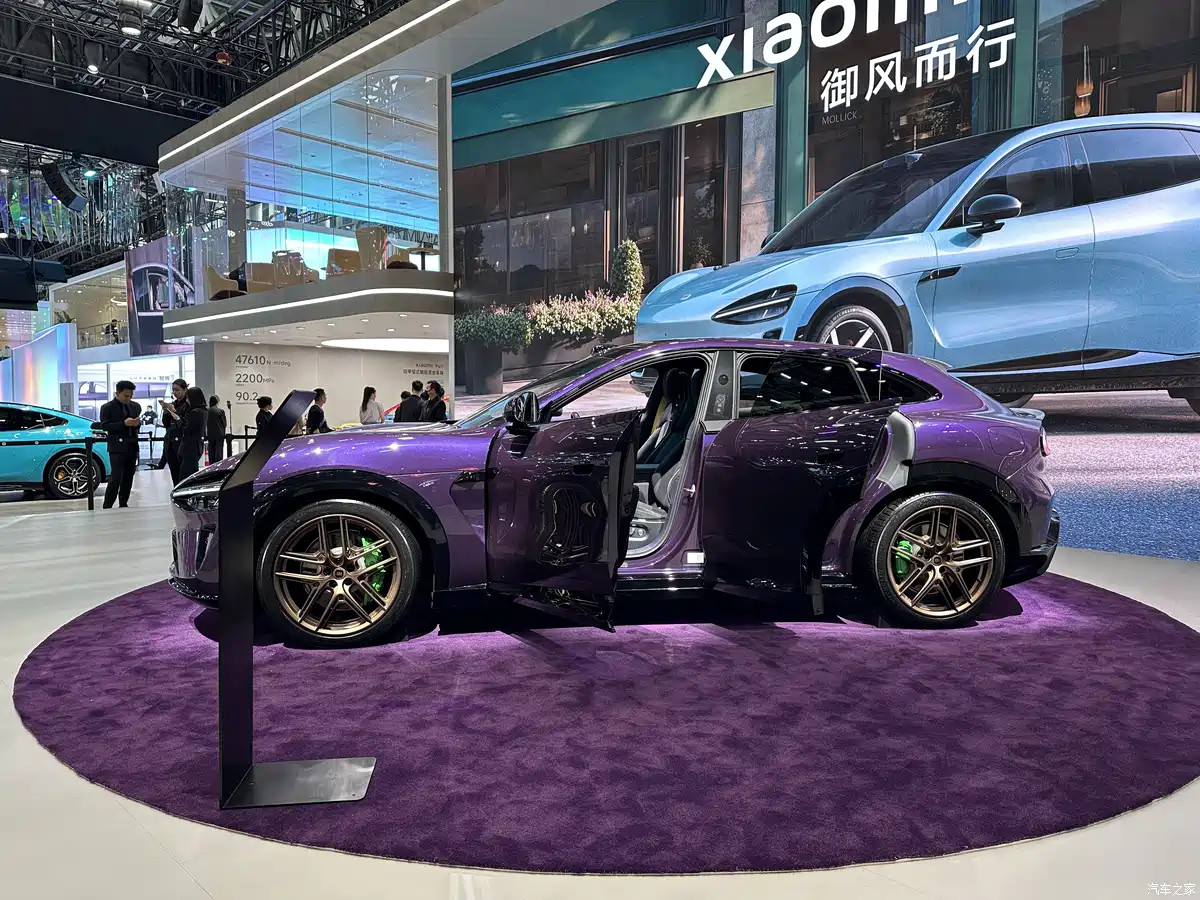
On the back of continued SUV sales success, Xiaomi announced its new Customization Service at the Guangzhou Auto Show, presenting a YU7 Max painted in Crystal Purple to mark the occasion.

The new service is effectively Xiaomi’s take on Porsche’s Paint to Sample program, with plans to roll out more than 100 new paint colors over the next three years. It’s a striking contrast to Tesla’s strategy, which restricts buyers to just a few standard colors and trims in the name of production efficiency and fatter profit margins.

The full list of paint colors has yet to be announced, but Xiaomi did say that the special finishes will be priced from 11,000 yuan ($1,500). Through the Customization Service, shoppers will also be able to choose from a selection of alloy wheels and colored Brembo brake calipers.

 Xiaomi’s YU7 Outsold Tesla’s Model Y And Now It’s Getting Personal

For buyers with a taste for extravagance, Xiaomi will also offer 24-karat gold badges or black-and-white emblems, along with gold carbon fiber versions.

Powering single motor versions of the YU7 is a rear-mounted unit delivering 315 hp (235 kW) and 389 lb-ft (528 Nm) of torque, fed by a 96.3 kWh battery pack. Xiaomi also offers dual-motor versions with 489 hp (365 kW) and 681 hp (508 kW), respectively.

An even more potent version of the YU7 is on the cards, but it’s too early to say if it will reach the same heights as the SU7 Ultra.

\\\\

VW’s Chinese EVs Cost Half As Much And They’re Coming For The Rest Of The World

  • VW can build Chinese EVs for half the cost of European production.
  • Lower labor and faster R&D cut time by 30 percent at its Hefei hub.
  • Tariffs make exporting to Europe less viable for now, VW admits.

Volkswagen is leaning further into its Chinese operations, looking to export more vehicles built there to overseas markets. albeit with the notable exception of Europe. The strategy hinges on a striking cost advantage that makes developing cars in China significantly cheaper than in other regions.

As established European carmakers face growing pressure from newer Eastern brands, many are beginning to shift attention toward their Chinese production networks. For legacy manufacturers like VW, the appeal is increasingly hard to ignore.

Read: VW Will Start Selling Its Chinese Models Overseas

According to a report from the Financial Times, Volkswagen says it can develop and build a new electric vehicle in China from scratch for about half the cost of doing so elsewhere.

What Makes China So Efficient?

 VW’s Chinese EVs Cost Half As Much And They’re Coming For The Rest Of The World

Volkswagen has invested billions of dollars into the local market, and, thanks to things like lower labor costs, shorter development periods, better battery procurement, and supply chain efficiencies, costs can be reduced by 50 percent.

Part of this efficiency comes from VW’s new research and development hub in Hefei, which is playing a key role in shaping the company’s next-generation EVs. By optimizing integration across teams and disciplines, the automaker now claims it can develop a new electric model in roughly 30 percent less time than before, a process that would traditionally take around 50 months.

Thomas Ulbrich, chief technology officer at Volkswagen Group China, described the facility as offering “an entirely new level of integration,” with software, hardware, and vehicle validation processes all running in parallel.

“We can now run software, hardware and full-vehicle validation processes in parallel, shorten decision loops and bring innovations to maturity much faster,” he told the Financial Times.

 VW’s Chinese EVs Cost Half As Much And They’re Coming For The Rest Of The World
VW ID.Unyx 08

VW has already begun shipping Chinese-built petrol sedans to the Middle East, and Ulbrich confirmed the company is exploring similar exports to countries across Southeast and Central Asia. That said, there are no plans to bring these China-built vehicles to Europe.

The reason is twofold. First, the electronic architecture of China-developed vehicles doesn’t align with European standards. Second, tariffs on Chinese-made EVs would likely negate any cost benefits, undermining the very strategy that makes this approach viable elsewhere.

VW’s Chinese Plans

VW plans to release 30 new EV models in China over the next five years. These models will be crucial in helping the automaker regain market share in China.

Data reported by The Financial Times reveals that VW does not rank among the top 10 battery-electric or even plug-in hybrid brands in China, although it still holds a 20 percent share of pure ICE model sales.

 VW’s Chinese EVs Cost Half As Much And They’re Coming For The Rest Of The World

Source: Financial Times

European Automakers Won’t Like What GAC And Magna Are Doing

  • GAC will build the Aion V electric SUV at Magna’s plant in Austria.
  • Move helps it avoid European import tariffs on fully built vehicles.
  • Aion V offers up to 466 miles of range and a 181 hp electric motor.

Guangzhou Automobile Group, better known as GAC, is positioning itself to join the growing list of Chinese carmakers setting up shop in Europe to sidestep rising import tariffs. The company has also chosen an established partner to make it happen, teaming up with contract manufacturer Magna to handle production.

GAC has confirmed that its all-electric Aion V will be built at Magna’s facility in Graz, Austria. Over the years, this plant has built several models for a variety of carmakers, including the Mercedes-Benz G-Class, Jaguar I-Pace and E-Pace, BMW 5-Series, BMW Z4, and even the Toyota GR Supra.

Read: Does The New Aion V Electric SUV Remind You Of A T-Rex? GAC Thinks So

Recent changes in client contracts have left Magna with open capacity. Several models, including those from Jaguar, have already departed the Graz lines, while agreements with BMW and Toyota will end next year. As a result, the company has been on the lookout for new manufacturing partners.

How Xpeng Does It

\\\\\\\\\\\

Guido ten Brink/SB-Medien

In September, Magna’s Graz facility began assembling Xpeng’s G6 and G9 SUVs for Europe. The process is somewhat unconventional: the vehicles are built in China, partially disassembled, shipped to Austria, then reassembled for final delivery.

This approach lets Xpeng pay tariffs only on parts rather than complete vehicles, a practical workaround in the current trade climate. Whether GAC’s Aion V will follow the same method remains unconfirmed, though the option certainly seems plausible.

The Chinese company unveiled the Aion V in the second quarter of last year and has been enjoying strong sales in recent months. It is underpinned by the firm’s modular AEP architecture and is equipped with an electric motor producing 181 hp.

Buyers can choose between 62 kWh, 75 kWh, and 90 kWh battery packs, the largest offering a CLTC range of up to 466 miles (750 km).

Global Aspirations

It’s too early to say how popular the Aion V will prove to be in Europe, but it certainly has the potential to sell well and appears to be a compelling alternative to the likes of the Geely EX5 and BYD Atto 3.

GAC plans to launch the SUV in more than 30 global markets, including Australia and various European countries, as it continues to expand its international footprint.

\\\\\\\\\\\

Ford’s Electric Bronco Costs The Same As Ours And Gives You Twice The Power

  • Ford’s new Bronco Basecamp starts at just over $32,000 in China.
  • The electric model delivers 445 hp and up to 404 miles of range.
  • A range-extended version offers 758 miles of total driving range.

Shortly after introducing range-extended and fully electric versions of the Bronco Basecamp in China, Ford opened the order books for its newest off-road offering. While most eyes may still be on the familiar Bronco lineup in the West, this China-market version makes a strong case of its own.

Read: Ford’s Electrified Bronco Arrives In China With A Pop Up Roof Surprise

As we’ve come to expect from pretty much all new cars sold in China, the electrified Bronco is affordable by Western standards and is bound to make some US buyers feel stewing.

 Ford’s Electric Bronco Costs The Same As Ours And Gives You Twice The Power

Although it bears more than a passing resemblance to a scaled-up and refreshed Bronco Sport, the Basecamp wasn’t drawn from the same blueprint. Instead, it was developed through Ford’s joint venture with Jiangling Motors Corporation (JMC), which has increasingly become the brand’s partner of choice for locally tailored models.

Ford’s foothold in China has eroded significantly over the past decade, with annual sales dropping from over 1.2 million units in 2014 to fewer than 200,000 last year. A model like this, combining familiar design cues with drivetrain options built to local tastes, might just help reverse that disastrous slide.

What Do You Get For The Money?

\\\\\\\\\\

Ford has confirmed the new Bronco Basecamp will start at 229,800 yuan ($32,300), topping out at 282,800 yuan ($39,800). That pricing roughly mirrors the smaller Bronco Sport sold in the US, which starts at $31,695 and tops out at $40,115 before delivery charges and taxes. But in China, buyers get significantly more than just a roomier body.

Where the American Bronco Sport comes with either a 1.5-liter turbo three-cylinder or a 2.0-liter turbo four, the Basecamp goes fully electric with a 105.4 kWh battery and twin motors generating 445 hp. On a full charge, it’s rated for up to 404 miles (650 km).

Then there’s the range-extender version. This alternative setup pairs a 1.5-liter turbocharged engine with dual electric motors and a 43.7 kWh battery pack. The result is 416 hp and a claimed 137 miles (220 km) of electric-only range. Thanks to the engine topping up the battery as needed, total driving range stretches to 758 miles (1,220 km) on China’s optimistic CLTC cycle.

Longer, Wider, Better?

The new SUV shares its 116.1-inch (2,950 mm) wheelbase with the full-size four-door Bronco sold in the US, offering a noticeably longer body than America’s more compact Bronco Sport, which measures just 105.1 inches (2,670 mm) between the axles.

At 197.8 inches (5,025 mm) in overall length, it also outstretches both of its siblings, eclipsing the standard Bronco by over eight inches and the Bronco Sport by more than two feet.

This Chinese model is also laden with other important features. This includes a roof-mounted LiDAR as part of a suite of more than 30 sensors and cameras, enabling advanced driver assistance functions.

The cabin is also a far cry from the American Bronco and Bronco Sport and includes a 15.6-inch infotainment display, a digital gauge cluster, and a 70-inch head-up display.

It might not wear the Bronco badge in quite the same spirit as the American original, but for China’s EV-hungry buyers, that may not matter much. For now, Ford has no plans to export the Bronco Basecamp, and even if that changes, North America almost certainly won’t be on the list.

\\\\\\\\\\\\

The Real Reason BYD Is Killing Its Rotating Screens

  • BYD confirms rotating screens will vanish, starting with the new Atto 2.
  • Existing BYD models can’t run Apple CarPlay or Android Auto vertically.
  • Brand’s vice-president says few drivers actually used the rotating display.

When BYD burst onto the global stage a few years ago, it arrived with a certain sense of experimentation that was hard to ignore, and the most visible example was its infotainment display that could spin 90 degrees and run in either portrait or landscape modes.

While mostly a gimmick, it has helped the brand’s models stand out from the competition. However, the Chinese conglomerate has revealed its spinning screen won’t be around for much longer.

Read: BYD’s European Expansion Is About to Explode

BYD’s vice president, Stella Li, said that while the company’s customers liked having the rotating screen, it is limiting for some apps, in particular Apple CarPlay and Android Auto.

As such, the automaker has ditched it for the new Atto 2 and will eliminate it from other models, too. Moving forward, the screens will be locked in their landscape position.

“We are starting to engage in a lot of apps,” Li told Autocar. “The Atto 2 will be the first model with Google and Apple CarPlay. And if they want to give the best experience, then a rotating screen will limit their apps. And then secondly, we saw the feedback in the market. People love the rotating screens, but the usage is very small.”

Tech Trade-Offs

 The Real Reason BYD Is Killing Its Rotating Screens
BYD Yuan Up / Atto 2

According to BYD, its infotainment screen had been easier to use in portrait mode when stationary and while on the move, in addition to being better for navigation.

However, in the models that we’ve driven, we’ve always found it easier to operate the screen in landscape mode, perhaps because this is the orientation of the screens in the vast majority of modern cars. Additionally, Apple CarPlay and Android Auto only function in that mode.

Review: BYD Sealion 6 Makes Plug-In Hybrids Feel Seamless But Fun Is Optional

During the same interview, Li also noted that BYD plans to deepen its collaborations with companies like Apple and Google, and locking the display orientation simplifies that process. A fixed screen means fewer interface compromises and smoother integration.

BYD is also ramping up its global ambitions. The company has set its sights on a major push in Europe for 2026. Just this week, its regional managing director announced plans to double the brand’s retail footprint across the continent next year, targeting around 1,000 retail points.

 The Real Reason BYD Is Killing Its Rotating Screens

Source: Autocar

Audi’s AUDI Bets Big On China With A 671 HP Electric SUV That Means Business

  • E SUV concept previews the second model from the AUDI sub-brand.
  • It carries the E5 Sportback’s design language on a larger SUV body.
  • Dual motors deliver 671 hp and promise a 435-mile driving range.

One year after introducing the AUDI sub-brand for China, Audi and its joint-venture partner SAIC are already gearing up for their second production model, following the market launch of the E5 Sportback in September.

The momentum continues with the reveal of the new AUDI E SUV concept at the Guangzhou Auto Show, a preview of an electric SUV expected to reach Chinese showrooms in 2026.

More: Of Course, The New AUDI E5 EV Is Ridiculously Cheap In China

The concept feels nearly production-ready, carrying over the same design cues as its low-slung stablemate. Signature styling cues include the wraparound lights on both ends and the clean surfacing with sculpted fenders.

The electric SUV also features short overhangs, flush door handles, and camera-based mirrors, with fin-shaped C-pillars adding a distinctive profile.

The AUDI emblem now sits prominently on the nose, and at 5,057 mm (199.1 inches) in length with a 3,060 mm (120.5 inches) wheelbase, the concept nearly matches the footprint of the combustion-powered Q7.

\\\\\\\\\

The company hasn’t revealed the interior, though it’s likely to mirror the E5 Sportback’s layout, centered around a vast 27-inch 4K display stretching across most of the dashboard.

The concept also includes the AUDI 360 Driving Assist System, an advanced driver-assistance suite developed specifically for Chinese traffic patterns and road conditions.

The AUDI E SUV is built on the Advanced Digitized Platform (ADP), developed jointly with SAIC. Power comes from dual electric motors delivering a combined 671 hp (500 kW / 680 PS) to a quattro all-wheel-drive system.

According to the company, it accelerates from 0 to 100 km/h (0–62 mph) in roughly five seconds.

\\\\\\\\\

The 800-volt battery pack holds 109 kWh and promises a CLTC range of over 700 km (435 miles). A rapid 10-minute charge can add about 320 km (199 miles), though the figure trails slightly behind the smaller, slipperier E5 Sportback, which stretches to 770 km (478 miles) per charge.

A Stretched A6 e-tron For China

Sharing the spotlight in Guangzhou, the A6L e-tron stretches Audi’s EV presence in the region. This version, built for Chinese buyers, gains 132 mm (5.2 inches) in wheelbase and a subtly revised front end featuring a black trim strip that links the main headlights across a covered grille.

More: Audi’s China-Only EV Deserves An RS Treatment

The cabin features a market-specific infotainment system and enhanced driver assistance features. It runs on an 800-volt electrical system with a 107 kWh battery offering a CLTC range of 770 km (479 miles).

Production takes place in Changchun under the Audi-FAW joint venture, alongside the Q6L e-tron and Q6L Sportback e-tron.

\\\\\

AUDI’s leadership describes this expansion as part of a sweeping realignment in China. CEO Gernot Döllner called it “the largest model initiative in our company’s history,” noting that five new locally built models have already launched in the latter half of 2025.

Audi China President Johannes Roscheck emphasized the brand’s dual strategy of combining two powertrains and two partners to secure long-term growth. In his words, “local innovation is now part of our foundation,” as the company aims to balance its legacy in combustion engines with a steady acceleration toward electrification.

The plan carries through 2026, with several new models already slated to join the China-specific portfolio.

 Audi’s AUDI Bets Big On China With A 671 HP Electric SUV That Means Business

Buick’s New Concepts Look Suspiciously Ready For Production

  • GM Design revealed two new Buick concept vehicles created in China.
  • One of them is a family-oriented compact SUV with modern styling.
  • The other is a sleek crossover with a sporty estate stance and suicide doors.

Buick is enjoying solid momentum in China, with consistent demand for the Envision SUV, LaCrosse sedan, and GL8 minivan keeping showrooms busy. Even so, the design team continues to push forward, developing fresh ideas and refining future models.

Two of these design studies just appeared on the General Motors Design Instagram account: one is a family compact SUV, the other a sportier crossover estate. Different takes, but both look unusually ready for production.

More: Buick’s Flagship Sedan Concept Looks Like A Citroen DS Beamed In From The Future

Both concepts were developed at the GM Advanced Design studio in Shanghai, China. One is designed by Sangmin Kim, while the other is designed by Yixuan Feng.

\\\\\\\\\

GM Design / Instagram

Starting with the more conventional concept, it’s described as “a fun, family-oriented premium Buick design study” created around the theme “driving in comfort.”

Up front, split LED headlights feature futuristic internal graphics, compensating neatly for the absence of a traditional grille. Along the sides, large bi-tone alloy wheels fill the arches, framed by glossy black cladding and muscular fenders.

The thick C-pillars flow into a rear spoiler that wraps around the back window, where the taillights are integrated beneath the glass. The rear also features a wide tailgate and a sculpted bumper with a discreet diffuser. Despite modest ground clearance, the upright front end, roof rails, and protective cladding lend it an SUV stance reminiscent of the Kia Niro.

Buick hasn’t revealed technical details, but the proportions seem to place this concept between the 171.4 inches (4,355 mm) of the Encore GX and the 182.7 inches (4,645 mm) of the Envision.

\\\\\\\

GM Design / Instagram

The next concept is described as a “small, expressive premium Buick design study” built around the idea of “driving pleasure.” It adopts an aerodynamic crossover hatchback or estate profile, complete with suicide doors and a split tailgate.

The front end features an illuminated grille, slim headlights, and ADAS sensors hidden in the bumper intakes. The forged aluminum wheels have shiny chrome accents, while the surfacing in front of the toned rear shoulders looks inspired by Lexus.

More: GM Imagines Tomorrowland’s EVs And They’re Nothing Like Today

Other highlights include the panoramic sunroof, the flying buttresses, the swooping rear glass, and the reflective taillights. Overall, the model appears to be smaller in size compared to the Electra-L Shooting Brake concept from 2024.

What’s Next For Buick?

Buick’s design language is shifting toward New Energy Vehicles (NEV), and both of these concepts seem well-suited to fully electric or range-extender setups.

While the models are labeled as design studies, they could easily pass for production vehicles, as they don’t have any wildly futuristic features. Buick is reportedly working on an electric subcompact crossover, which is set to arrive before 2029, followed by a new generation of the Encore GX.

 Buick’s New Concepts Look Suspiciously Ready For Production

GM Design / Instagram

Tesla Is Now The World’s Most Avoided EV Brand And It’s Probably Musk’s Fault

  • Over half of EV owners now avoid certain brands for political reasons.
  • Tesla leads global “no thanks” list, with China the top country avoided.
  • Study reveals growing divide between affordability, politics, and perception.

Electric car buyers have always been an opinionated bunch. Ask 10 EV drivers why they went electric, and you’ll hear everything from saving the planet, to saving money, to “I just like torque.” But a new global study suggests many are now choosing and avoiding brands for a different reason entirely: politics.

Related: Tesla Drivers Say Musk Makes Them Look Like Fascists So They’re Suing

Global EV Alliance surveyed more than 26,000 electric-vehicle owners across 30 countries and discovered that a large proportion of EV drivers avoid certain brands or countries specifically because of political factors.

Tesla is the most-avoided brand, while China, perhaps predictably, is the most-avoided country of production.

What Shapes an EV Buyer’s Loyalty?

 Tesla Is Now The World’s Most Avoided EV Brand And It’s Probably Musk’s Fault

Of those who said they avoid specific brands, 41 percent named Tesla, a stunning figure for a company that essentially invented the modern mass-market EV segment. China was called out as a country of origin to avoid by 12 percent, while 5 percent of respondents said they avoid US-built EVs altogether.

The study didn’t spell out which political issues were driving the Tesla aversion, but it isn’t exactly hard to imagine respondents’ grievances.

Tesla CEO Elon Musk has spent the last few years ping-ponging between political controversies, online fights, and eyebrow-raising hand gestures that have sparked everything from newspaper op-eds to calls for boycotts.

Some Tesla owners seem willing to separate the car from the CEO, but for others, Musk’s extracurricular activities have made the brand a no-go. A recent report suggested the CEO’s antics had cost the company more than a million sales.

What brands/countries would you avoid for political reasons?
 Tesla Is Now The World’s Most Avoided EV Brand And It’s Probably Musk’s Fault
Global EV Alliance

The survey reveals interesting regional quirks. In the US, Germany, the UK, Australia, and even electric-loving Norway, more than 45 percent of EV drivers said they would avoid Tesla, suggesting that the brand’s home market and the world’s biggest EV adopters are among the least forgiving.

But in India and Hungary, just 2 percent and 6 percent of EV owners said they would avoid the brand.

The Cost of Country of Origin

China-built EVs also face wildly different levels of acceptance, ranging from a 2-percent avoid rating (Italy, Poland) to 43 percent (Lithuania). This may come down to availability and affordability. In developing markets, Chinese EVs dominate the lower-cost end of the spectrum, which means political preferences sometimes take a back seat to price and practicality.

But generally, as EV sales continue to rise globally and drivers have more choice, brand identity and origin are becoming more important. It’s no longer just about range and charging speed. Drivers are paying attention to who builds the cars, where they come from, and even who posts what on social media.

If automakers weren’t already watching their public image, this survey gives them another reason to tread carefully. In the EV world, it turns out politics can be just as important as performance. You can check out the full study here.

 Tesla Is Now The World’s Most Avoided EV Brand And It’s Probably Musk’s Fault
 Tesla Is Now The World’s Most Avoided EV Brand And It’s Probably Musk’s Fault

BYD’s European Expansion Is About to Explode

  • BYD plans to double its European network next year, reaching 2,000 outlets.
  • The brand now operates in 29 European markets and tripled sales this year.
  • The automaker is eyeing new production facilities in Spain and Turkey.

Not too long ago, BYD vehicles were a rare sight on the roads of Europe. But over the past five years, the car manufacturer has grown into a global powerhouse, expanding into new markets quicker than any of its competitors. Next year, its models will become even more commonplace throughout Europe.

Read: Stellantis Dealers Are Embracing BYD And Making Things Awkward

Despite the added weight of European tariffs on Chinese-made cars, BYD has no intention of slowing down. The company views Europe as one of its key new territories and expects to reach around 1,000 retail points across the continent before the year closes. That milestone, however, is only the start of what’s planned for 2026.

How Big Will BYD Go?

At a recent event in Frankfurt, Maria Grazia Davino, BYD’s regional managing director for Europe, outlined the company’s next move. She confirmed that BYD will double its footprint in the region next year, calling the expansion essential for winning over customers in a highly competitive landscape.

“In line with successful competitors, we need to have proximity and win proximity to the European customers,” Davino said, reports Reuters.

 BYD’s European Expansion Is About to Explode

Currently active in 29 European markets, BYD is pursuing what Davino describes as a “long-term localization strategy.” The plan centers on building more of the vehicles it sells within Europe itself, reducing reliance on imports and strengthening its ties to local economies. Key to this effort is a major new production hub in Hungary, set to open soon.

So far this year, BYD sales in Europe have more than tripled, reaching 80,807 vehicles in just the first nine months.

Even though the Hungarian site has yet to open its doors, BYD is also weighing up the possibility of building a factory in Turkey and a site in Spain.

“Localizing in a mature region like Europe is a very important project. It requires knowledge, dedication, investments, and resources at all levels,” Davino added.

\\\\\\

Source: Reuters

Stellantis’ Secret Weapon Against Chinese EVs In Europe Turns Out To Be A Chinese EV

  • Leapmotor has introduced a smaller fully electric SUV, named A10/B03x.
  • It will be sold in China and Europe with a range of up to 311 miles.
  • A related small electric hatchback will reportedly join the lineup soon.

Update: This story now includes new photos and fresh details on the Leapmotor A10 / B03x, following its world premiere at the Guangzhou Auto Show in China and Stellantis’ confirmation of its launch in Europe.

Stellantis’ Chinese partner Leapmotor continues to expand its model lineup, this time setting its sights on one of the most competitive corners of the market: small SUVs. Its latest offering is called A10 in China and B03x in Europe, positioned below the slightly larger B10.

The new EV made its first public outing at the Guangzhou Auto Show and has also been confirmed by Stellantis for European markets including Germany. The SUV is expected to be joined by a mechanically-related small hatchback set to be unveiled in 2026.

More: Stellantis Wants To Rebrand Chinese EVs For Europe

The bodywork reflects the smooth surfacing and rounded contours seen across Leapmotor’s lineup, complemented by a Citroen-like wraparound greenhouse, discreet plastic cladding, and LED lighting with darkened clusters. The graphics on the taillights look like smiling emojis, adding a playful note to the rather generic design.

The model rides on 18-inch alloy wheels and will be available in six shades – including the pictured Seaweed Green and Acorn Brown. A roof-mounted Lidar unit and visible sensors along the profile indicate that the model will include a full suite of advanced driver-assistance systems.

New Platform And Modern Tech

\\\\\\\\\

According to the company, the SUV measures over 4,200 mm (165.4 inches) long, 1,800 mm (70.9 inches) wide, and 1,600 mm (63 inches) tall, with a wheelbase of over 2,600 mm (102.4 inches), placing it within the small SUVs segment.

More importantly, the A10/B03x is the first model to ride on Leapmotor’s new global A-Segment platform. While technical details remain undisclosed, the EV will be fitted with an “extremely high-energy-density LFP battery” offering a CLTC range of 500 km (311 miles), most likely combined with a single electric motor.

More: Stellantis’ Leapmotor Found An Unlikely Ally In Germany’s Tuning Scene

While no interior photos were released and the show car’s windows remained heavily tinted, the cabin is expected to carry on Leapmotor’s familiar minimalist theme, combining a large infotainment display with a clean, uncluttered dashboard and seating for five. The company promises generous space inside, an AI-driven cockpit, and full over-the-air update capability throughout the vehicle’s life cycle.

The A10/B03x and the related supermini are both planned for European release, joining the T03, B05, B10, and C10 already offered there. In China, Leapmotor’s lineup is broader, spanning the B01 and C01 sedans along with the C11, C16, and D19 SUVs.

Who It’s Up Against?

 Stellantis’ Secret Weapon Against Chinese EVs In Europe Turns Out To Be A Chinese EV

At home, the A10 will go head-to-head with the BYD Yuan Up (also known as the Atto 2), priced between ¥96,800 and ¥119,800 (equivalent to about $13,600–$16,900 at current exchange rates).

In Europe, it will enter a crowded field of compact electric crossovers including the Citroen e-C3 Aircross, Opel Frontera Electric, Renault 4 E-Tech, Kia EV3, Peugeot E-2008, Fiat 600e, Jeep Avenger, Alfa Romeo Junior, Ford Puma Gen-E, and the forthcoming VW ID.Cross and Skoda Epiq.

Stellantis says the B03x is intended for “rational customers who are looking for an affordable yet high-quality second vehicle, as well as newcomers to electric mobility who are switching from a compact car with a combustion engine, without wanting to compromise on safety, space or intelligent technology.”

Joint Venture And Growth

 Stellantis’ Secret Weapon Against Chinese EVs In Europe Turns Out To Be A Chinese EV

Stellantis holds a controlling 51 percent stake in Leapmotor International, the joint venture managing the Chinese brand’s distribution across Europe, Southeast Asia, and other regions outside China. The partnership followed Stellantis’ €1.5 billion ($1.73 billion) investment in Leapmotor back in 2023.

Between January and September 2025, Leapmotor delivered 395,516 vehicles globally, a 129% increase year-on-year that pushed its cumulative sales past the one-million mark. October extended its winning streak to a sixth consecutive month of record-breaking results, with 70,289 units sold.

\\\\\\\\\

❌