Reading view

There are new articles available, click to refresh the page.

China’s Biggest Electric SUV Yet Wasn’t Made For Drivers
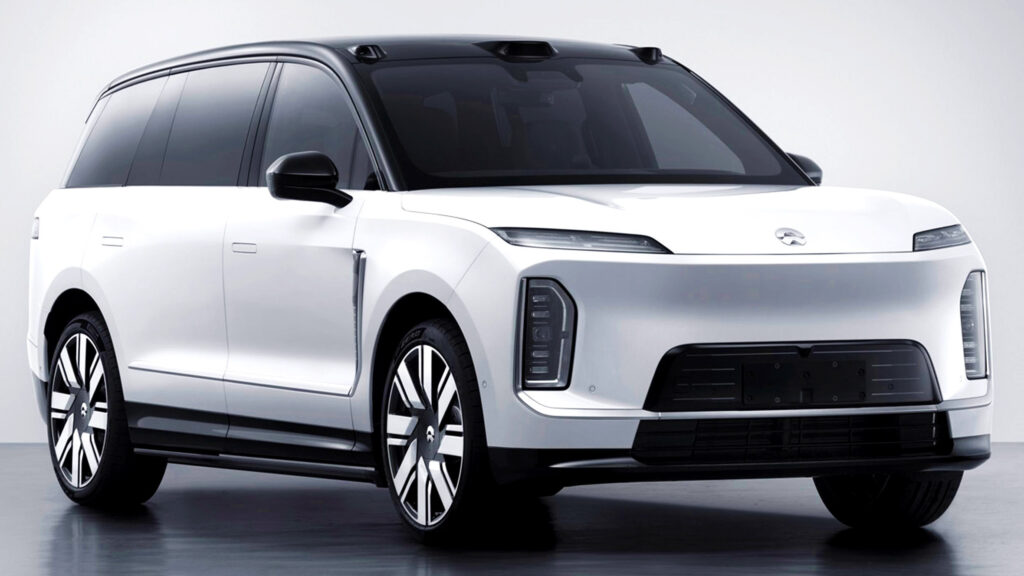
  • ES9 is China’s longest electric SUV with a 127.9-inch wheelbase.
  • Dual electric motors deliver 697 hp and 516 lb-ft of torque total.
  • It supports three-minute battery swaps across Nio’s network.

For China’s most wealthiest car buyers, the appeal of driving often takes a back seat to being driven. Luxury isn’t measured in horsepower alone, but in legroom, comfort, and the ability to stretch out while someone else handles traffic.

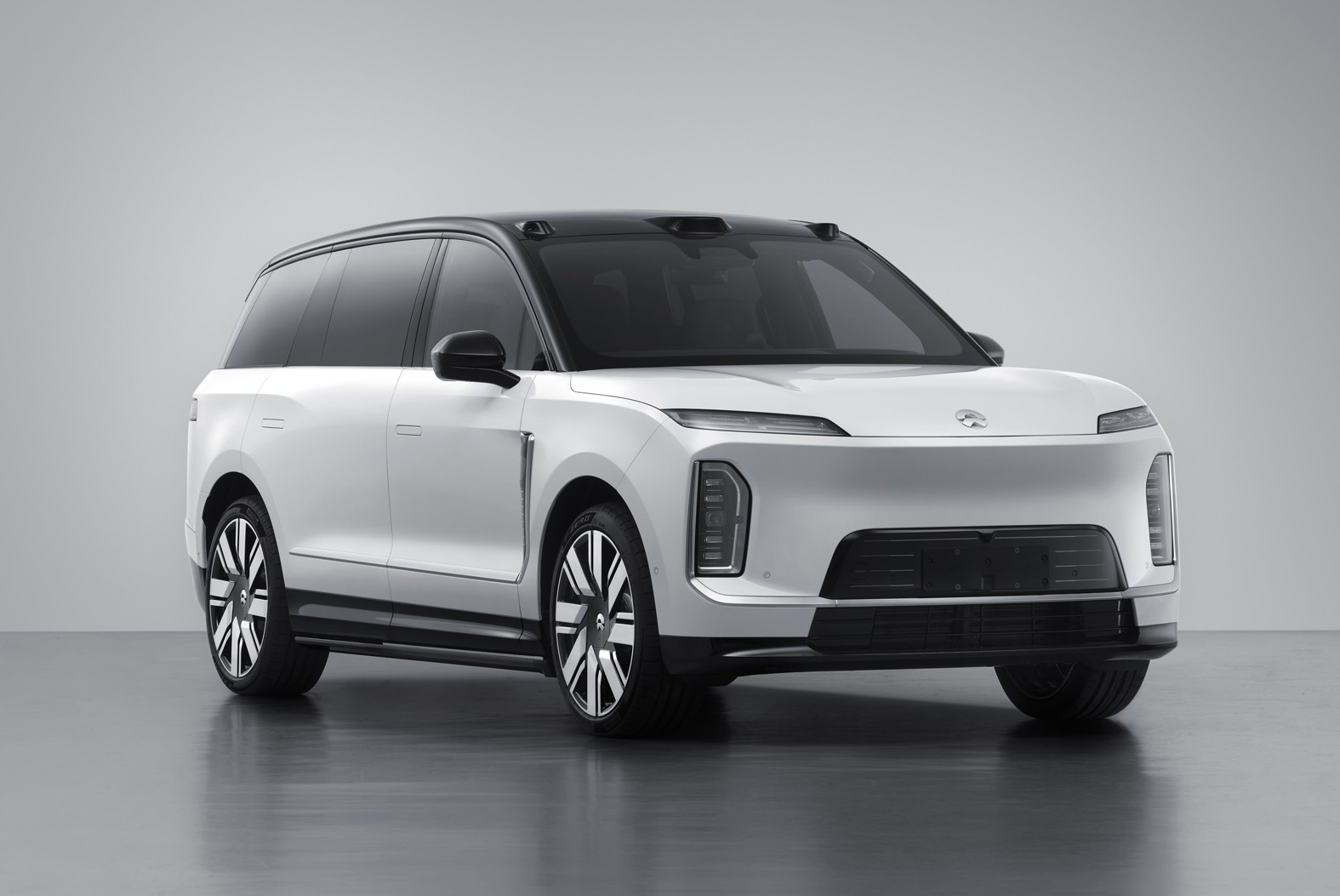
With that in mind, Nio is preparing a new electric SUV designed squarely for this audience, and for larger families as well. Shown here in newly released photos, the Nio ES9 is set to join the brand’s growing lineup, slotting in just above the ES8.

Big Numbers, Bigger Presence

This upcoming flagship will become the largest electric SUV available in China, overtaking the ES8 for that title, according to CarNewsChina. Figures from the Ministry of Industry and Information Technology confirm it stretches 5,365 mm (211.2 inches) in length, spans 2,029 mm (79.8 inches) in width, and stands 1,870 mm (73.6 inches) tall.

Read: This Full-Size Electric SUV Packs 456 HP And Costs Less Than A Honda Civic

That makes it 85 mm (3.3 inches) longer, 29 mm (1.1 inches) wider, and 70 mm (2.7 inches) taller than the ES8. More importantly, the wheelbase stretches to 3,250 mm (127.9 inches), an increase of 120 mm (4.7 inches) over the ES8, which translates to noticeably more room for passengers.

To put that in perspective, its footprint lands somewhere between the standard Cadillac Escalade and the extended-wheelbase Escalade ESV.
 China’s Biggest Electric SUV Yet Wasn’t Made For Drivers

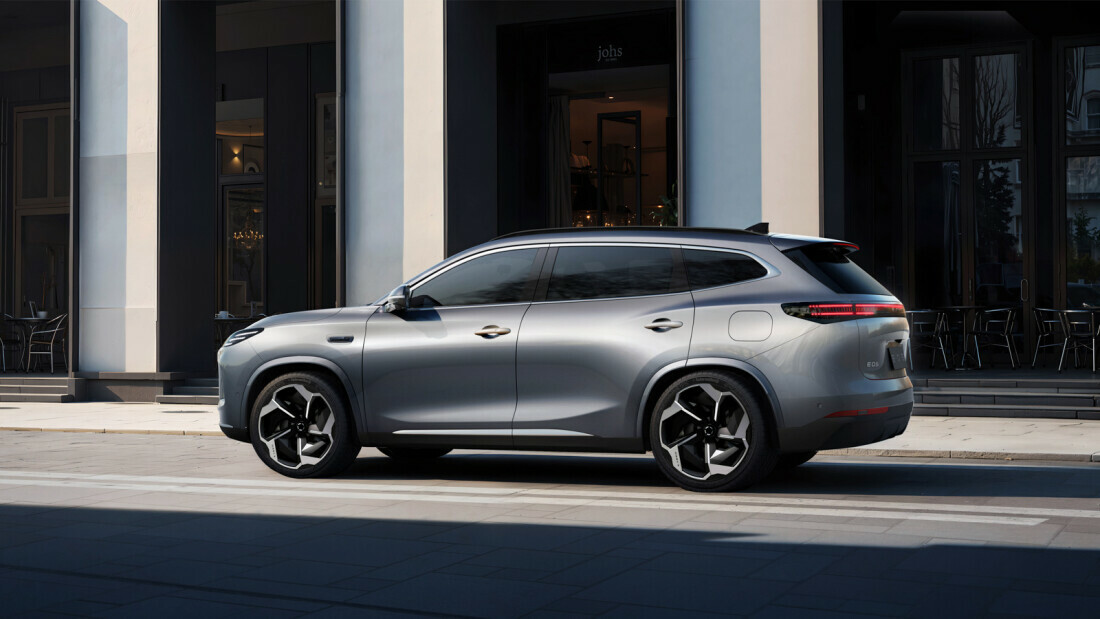
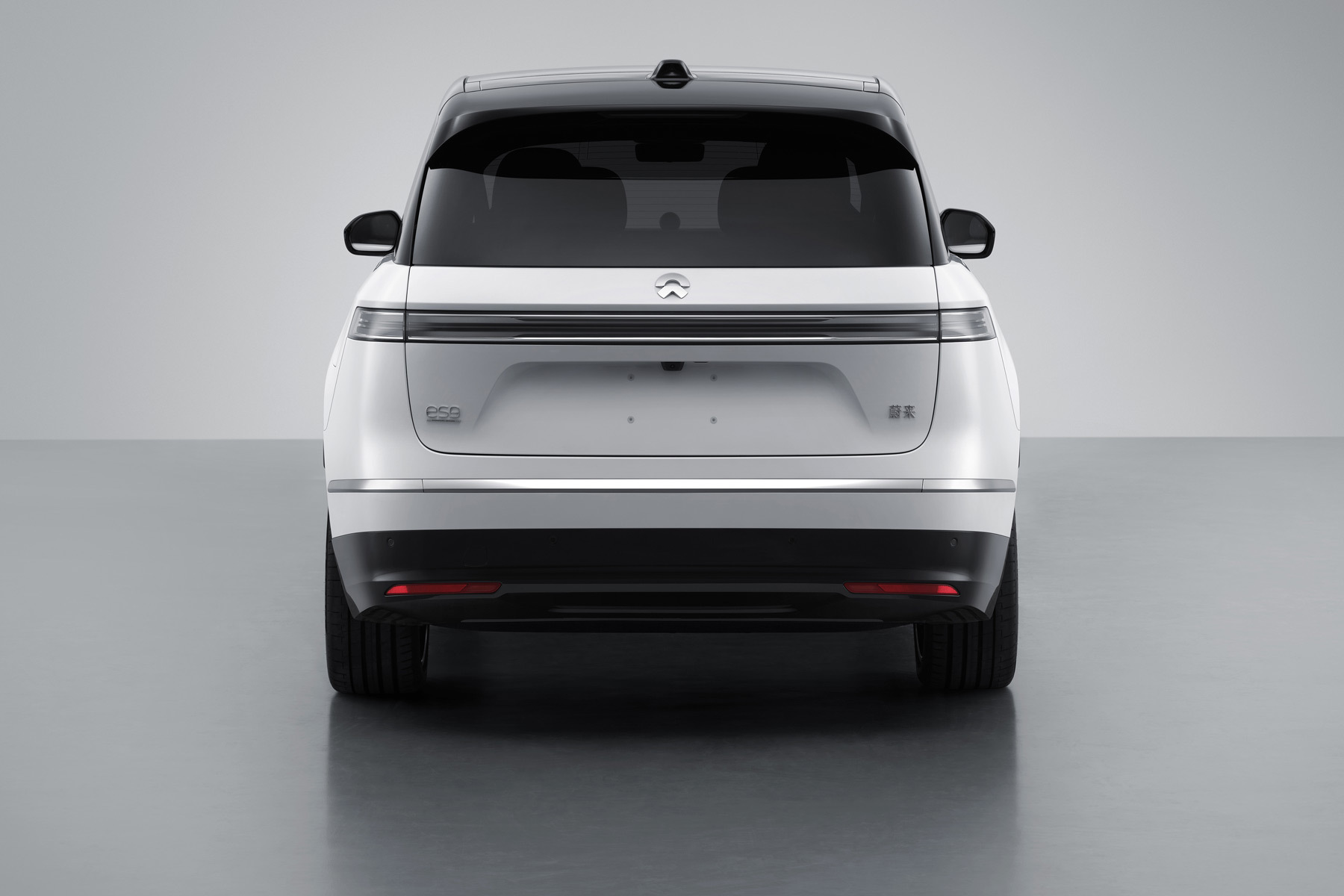
Visually, the design of the ES9 is very similar to its smaller brother, although it does have a more upright and squared front fascia. There are split DRLs and headlights at the front, alongside a large grille and a ribbon of black along the bottom of the bumper. As with the ES8, there’s a LiDAR protruding from the roof.

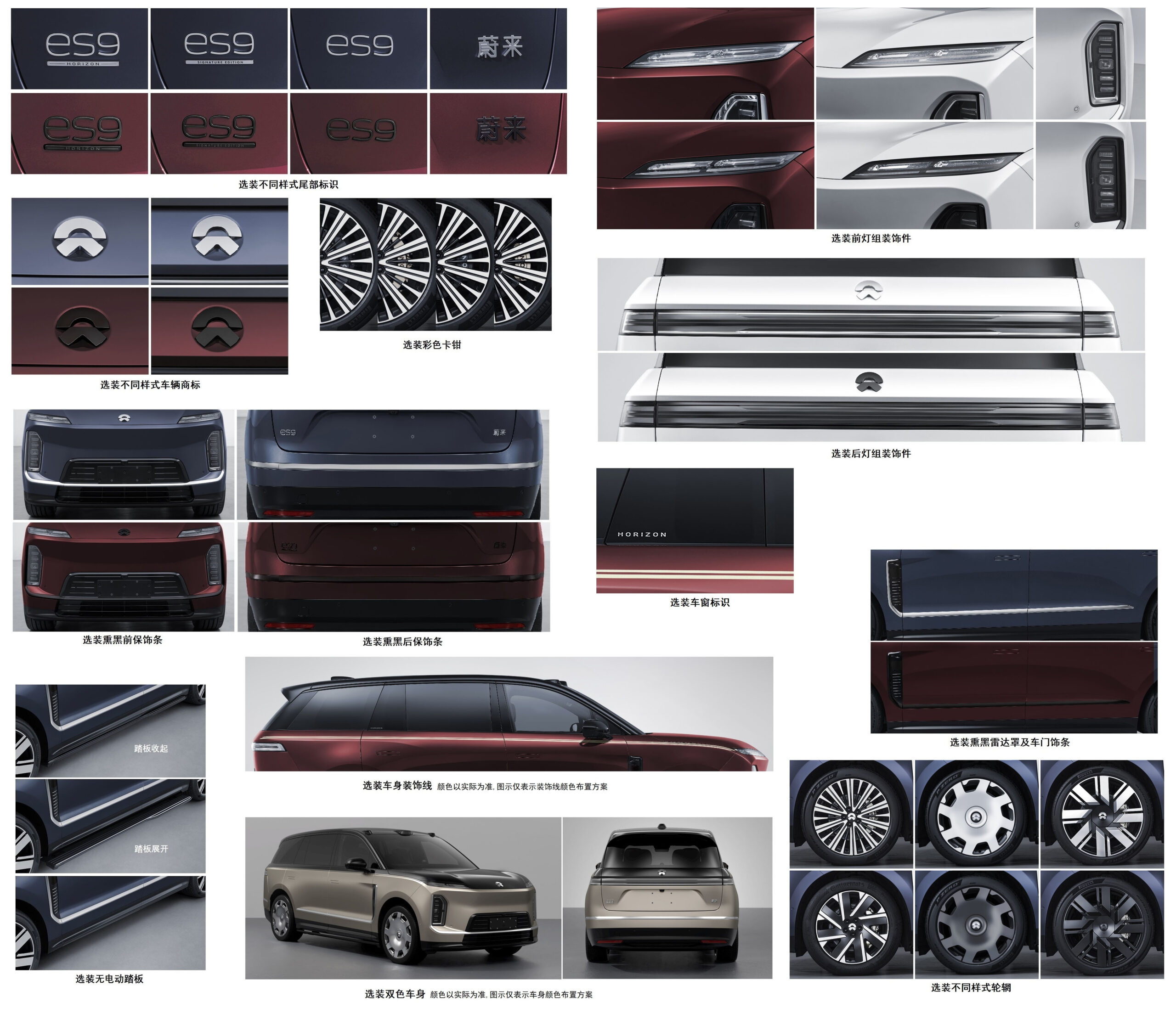
Around back, the design leans toward simplicity, featuring a single LED light bar and little else of interest. Other photos of the SUV reveal that retractable side steps will be available, as will at least six different wheel designs/finishes. Shoppers will also be able to choose between black or silver accents running along the body.

Dual-Motor Drive
 China’s Biggest Electric SUV Yet Wasn’t Made For Drivers

We don’t yet know what the cabin of the ES9 will look like, but we do have some important powertrain details. Powering the SUV will be a 241 hp (177 kW) electric motor at the front axle and a 456 hp (335 kW) motor at the rear axle, combining to deliver 697 hp (513 kW) and 516 lb-ft (700 Nm) of torque. The battery pack will be sourced from CATL and is expected to have a capacity of 102 kWh.

There’s no word on what charging speeds this battery will support, but in the land of Nio, charging times aren’t particularly important, as Nio operates a huge battery-swapping network where a depleted battery can be replaced with a fully charged one in just 3 minutes.

A full reveal is expected in the coming months, with its domestic launch set to follow soon after. Availability in markets outside China has not yet been confirmed.
 China’s Biggest Electric SUV Yet Wasn’t Made For Drivers

BMW Slashes EV Prices By Up To $42,000 In China, And It’s Not Alone

  • BMW cut prices across 31 models to stay competitive in China.
  • Fourteen brands launched incentives before the New Year rush.
  • Officials fear price cuts could trigger harmful deflation risks.

Price cuts aren’t just a domestic strategy for Chinese automakers. Even Western legacy brands are jumping in. Last week, BMW announced sweeping reductions across 31 of its models in China, highlighting a more aggressive effort to keep pace with intensifying competition in the world’s largest auto market.

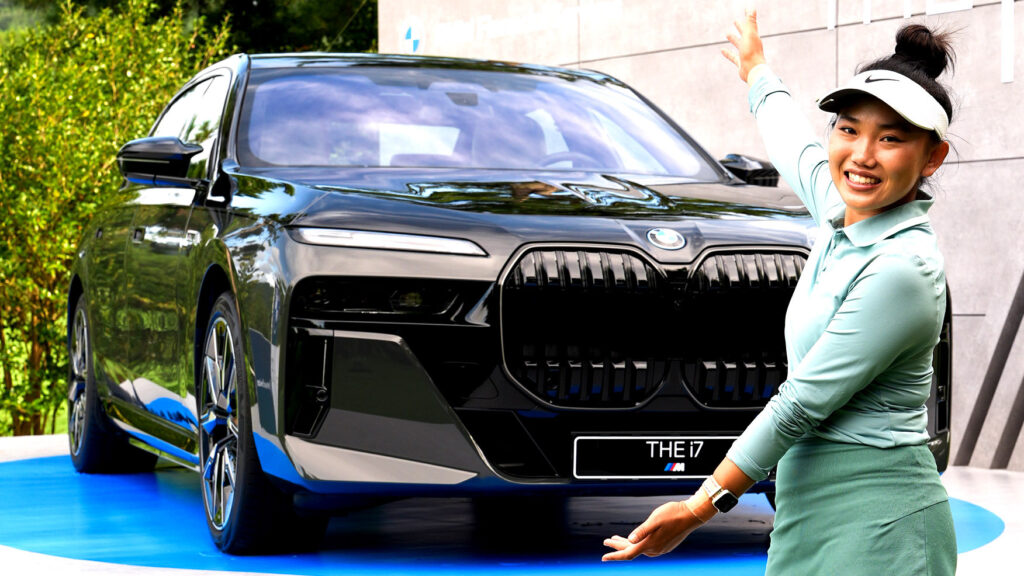
The biggest cut came to the BMW i7 M70L, the high-performance flagship of the all-electric 7-Series. This dual-motor sedan delivers 659 horsepower and 811 lb-ft (1,100 Nm) of torque. As of last week, it now carries a price tag that’s 301,000 yuan lower, a reduction of roughly $42,000.

Read: BMW Is Cranking Out Cars “Like Pretzels” And Says Even China Can’t Keep Up

While the i7 had the largest drop in raw numbers, the steepest percentage cut went to the iX1 eDrive25L. BMW trimmed the price of the long-wheelbase variant of the compact SUV by 24 percent, bringing the new starting figure to 228,000 yuan, or about $32,600.

 BMW Slashes EV Prices By Up To $42,000 In China, And It’s Not Alone
BMW iX1

Speaking to Bloomberg, BMW said the price changes are part of its “regular price management,” adding that “final transaction prices are independently negotiated and determined between authorized BMW dealers and customers.”

How Far Will Discounts Go?

Behind the curtain, though, the timing suggests more than just routine recalibration. November marked the second straight month of declining sales in China, according to data from the China Passenger Car Association. That slide has spurred several automakers to adjust pricing.

Meanwhile, regulators have introduced measures designed to prevent brands from undercutting costs, prohibiting sales below production cost and banning dealer incentives that push prices beneath that threshold, Bloomberg reports.

Also: China Is Banning Tesla-Style Door Handles

BMW’s recent cuts appear to bring official pricing closer to what customers were already paying after negotiations. According to Yale Zhang, managing director at Automotive Foresight, the updated stickers largely reflect existing transaction norms rather than undercutting them. “The new prices aren’t any lower than typical dealer selling prices,” Zhang noted.

When Deals Become a Warning Sign

 BMW Slashes EV Prices By Up To $42,000 In China, And It’s Not Alone

Big savings could be just around the corner. With the Chinese New Year approaching in February, many manufacturers are expected to introduce further incentives in hopes of front-loading first-quarter sales.

At least 14 car brands have already rolled out some form of discount or incentive program since the beginning of 2026. Zhang believes this trend is less a temporary blip than a reflection of broader pressures within the market.

“Various kinds of promotional activities may ebb and flow in the market from time to time, but they are here to stay,” Zhang told the news outlet.

Chinese authorities, meanwhile, are taking a cautious stance. With more manufacturers opting to slash prices, regulators are increasingly concerned about the potential knock-on effects. They worry that an extended period of discounts could spark deflation, disrupt the automotive supply chain, and put downward pressure on wages.

 BMW Slashes EV Prices By Up To $42,000 In China, And It’s Not Alone
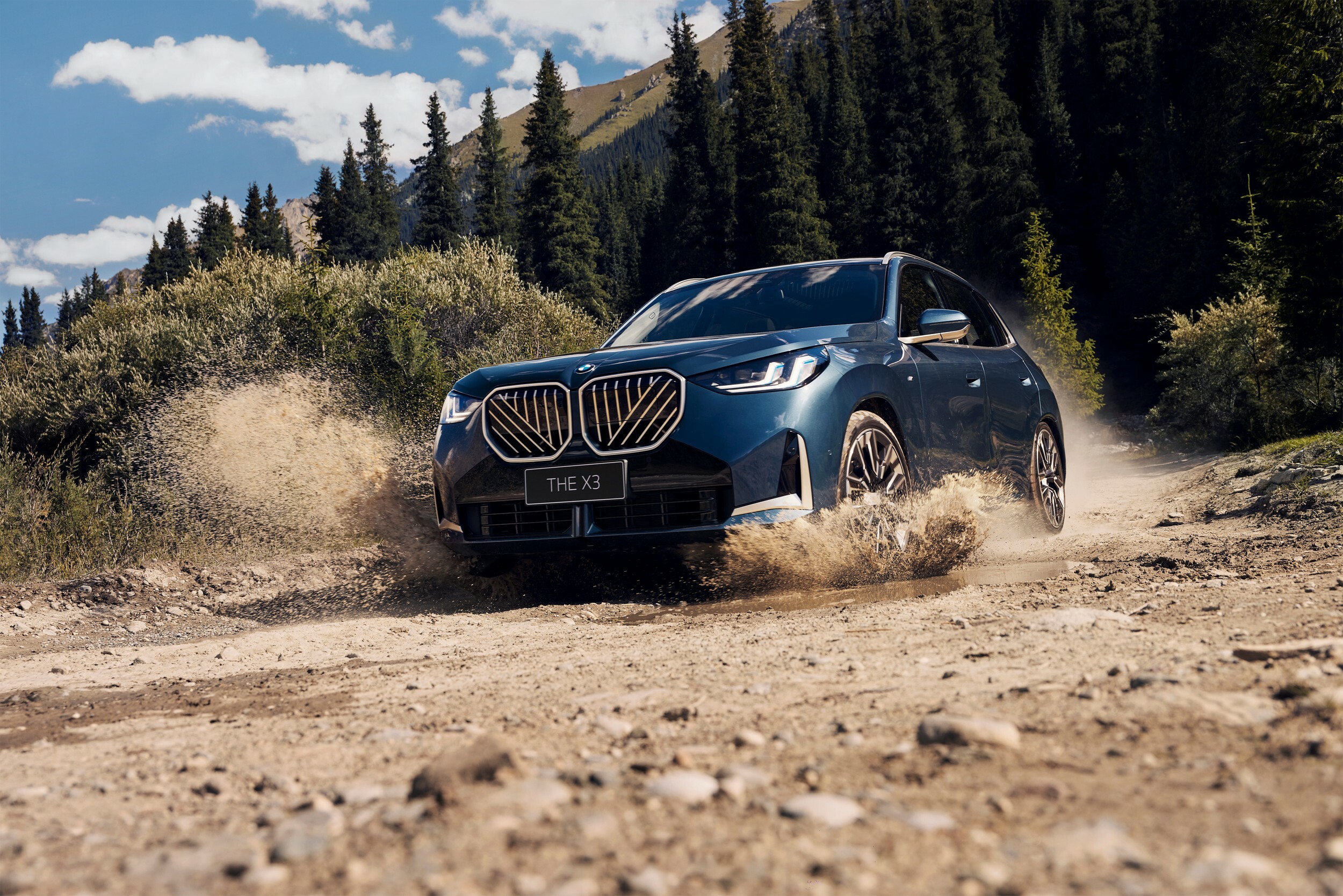
BMW X3 China

VW And Toyota Dominated For Decades. Now It’s China’s Time

  • Localization will help Chinese carmakers boost global vehicle sales.
  • VW and Toyota’s market share could fall sharply in key segments.
  • Analysts expect Tesla’s share to rise from 2 to 8 percent globally.

In just a few years, Chinese automakers may do more than disrupt the global car industry. As they scale up overseas and lean into their strengths in electrification and cost control, the shift looks less like a disruption and more like a permanent redrawing of the map. If the current pace holds, they could control a third of the global market within five years.

Read: One In Ten Cars Sold In The UK Now Comes From China

Analysts at UBS, the Swiss investment bank and financial services company, point out that while China’s domestic car market continues to grow, it’s the overseas expansion that’s becoming increasingly important for them. According to their latest estimates, foreign markets now represent about 20 percent of industry sales for Chinese carmakers, and in some cases, up to 50 percent of their profits.

The Global Impact of Expansion

UBS says its forecast remains unchanged from two years ago, even as Chinese manufacturers scale up production in Europe and some legacy automakers begin stepping back from their EV plans, citing uncertain returns and cooling demand.

“The main drag was due to Europe’s slowdown of EV adoption, and tariffs and protectionism against Chinese EVs,” said Paul Gong, UBS’s lead analyst for Chinese EVs. “I think 2024 progress was slower than expected, but recent signs have shown some catch-up.”

The South China Morning Post (SCMP) reports that China’s long-term bets on electric vehicles, vertical integration, and aggressive supply chain development appear to be paying off. These moves haven’t just given Chinese brands a cost advantage, they’ve made it easier to scale production and respond quickly to market shifts.

Chinese Carmakers Gain Speed as Global Rivals Lose Ground

 VW And Toyota Dominated For Decades. Now It’s China’s Time

Frank Diana, a managing partner at Tata Consultancy Services, says China’s edge is not just about scale but about speed. “The fact that [China] has been learning aggressively means that they’re going to have a dominant position and market share,” he explained. “But they’re not alone … you will see the rise of other players in the space.”

UBS forecasts that the rise of Chinese brands will cut deep into the dominance of current global leaders. Combined, Volkswagen and Toyota now hold 81 percent of the market share in key segments. By 2030, that number could drop to just 58 percent. Meanwhile, Tesla’s global share, currently sitting at around 2 percent, could grow to as much as 8 percent by the same year.

Also helping Chinese brands expand internationally is a move to localized production. In Thailand, automakers such as SAIC Motor, Great Wall, BYD, GAC, Changan Automobile, and Chery already operate assembly plants. Great Wall and BYD have also established manufacturing in Brazil, with BYD developing a large-scale facility in Hungary to support its growing footprint in Europe.

India Eyes a Bigger Role

 VW And Toyota Dominated For Decades. Now It’s China’s Time

China isn’t the only nation that could see its car industry expand rapidly by 2030. India, too, is positioning itself for growth. Domestic automakers like Tata and Mahindra are increasing their share in the local market and looking outward.

However, they face stiff competition, not only from dominant player Maruti Suzuki, but also from Chinese-owned MG Motor, which has introduced several new models to Indian buyers. BYD has also begun to establish a presence, and both Chery and Great Wall have plans to enter the market, reports SCMP.

Still, analysts suggest that China’s early investments gave it a lasting edge. The ability to learn quickly, build tightly controlled supply chains, and manage costs efficiently has kept its companies ahead.

“The EV supply chain is dominated by Chinese companies,” said analyst Ramakrishnan. “The India EV supply chain, including electronics, is imported from China.”

Fewer Players, Bigger Stakes in the Next Phase of EVs

In Diana’s view, the current market is heading toward consolidation. China’s early lead puts it in a strong position as the EV space matures into a more concentrated field of major players.

“So there will be consolidation even at the EV market level, and you end up with 10 to 15 platform orchestrators made up of [original equipment manufacturers and] big technology companies,” he said.

 VW And Toyota Dominated For Decades. Now It’s China’s Time

Mercedes Gave China’s GLC A Little Extra, And It Shows

  • China’s GLC EQ stretches an extra 2.1 inches in wheelbase.
  • It features dual motors with a 219 hp and 402 hp split.
  • Range could hit 500 miles using China’s local test cycle.

Mercedes-Benz isn’t waiting around when it comes to expanding its electric lineup in China. Less than six months after unveiling the all-new GLC with EQ Technology in Europe, the first images of the long-wheelbase version have surfaced, tailored specifically for the Chinese market.

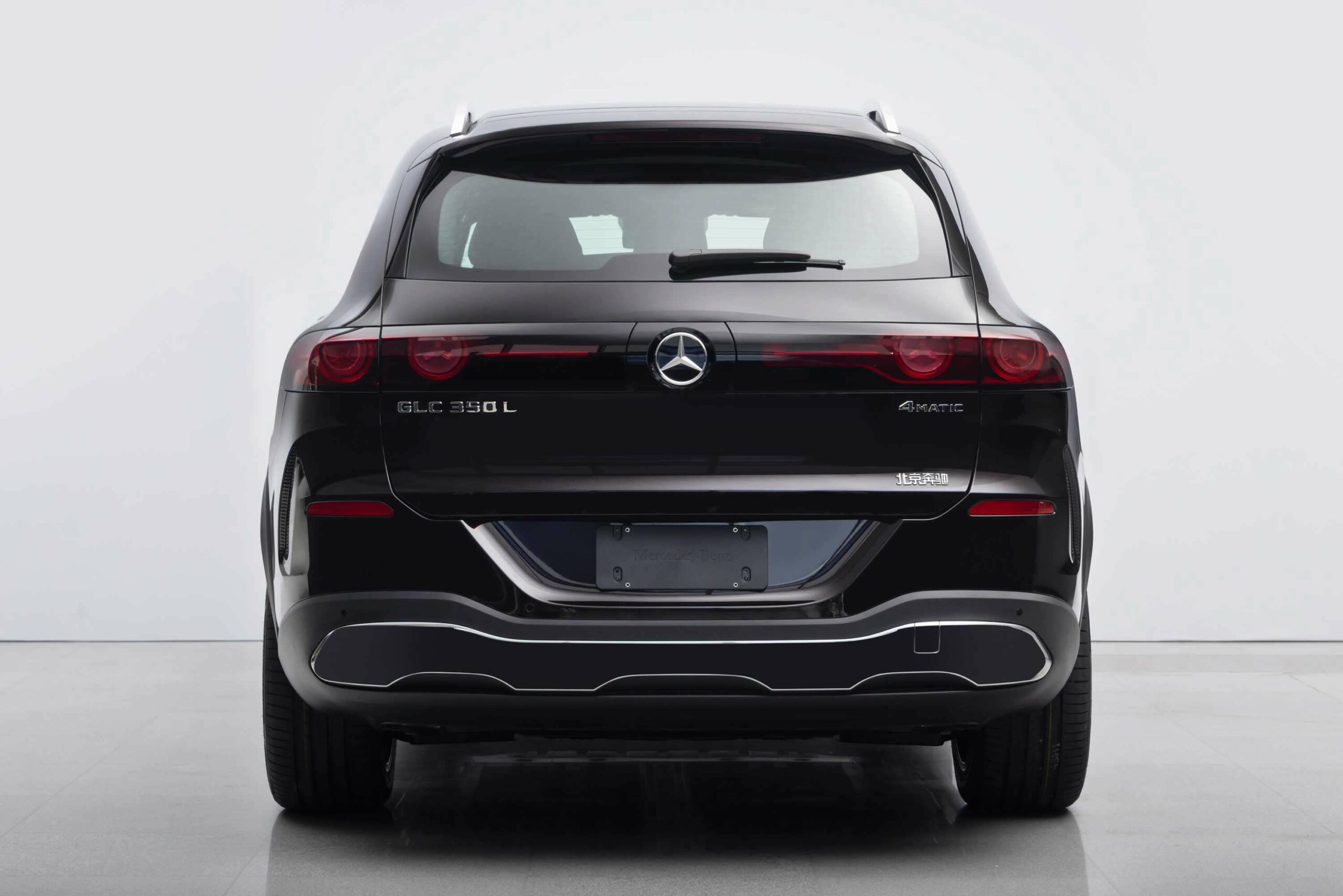
Scheduled to launch as the GLC 350 L, this variant stretches the wheelbase to 3,027 mm (119 inches), compared to the 2,972 mm (115.2 inches) found in Western versions. The extra 55 mm, or about 2.1 inches, may not seem dramatic on paper, but in practice, it’s likely to matter quite a bit for those riding in the back.

Read: Star-Stricken Mercedes GLC EV Has A Grille Big Enough To Swallow A BMW iX3

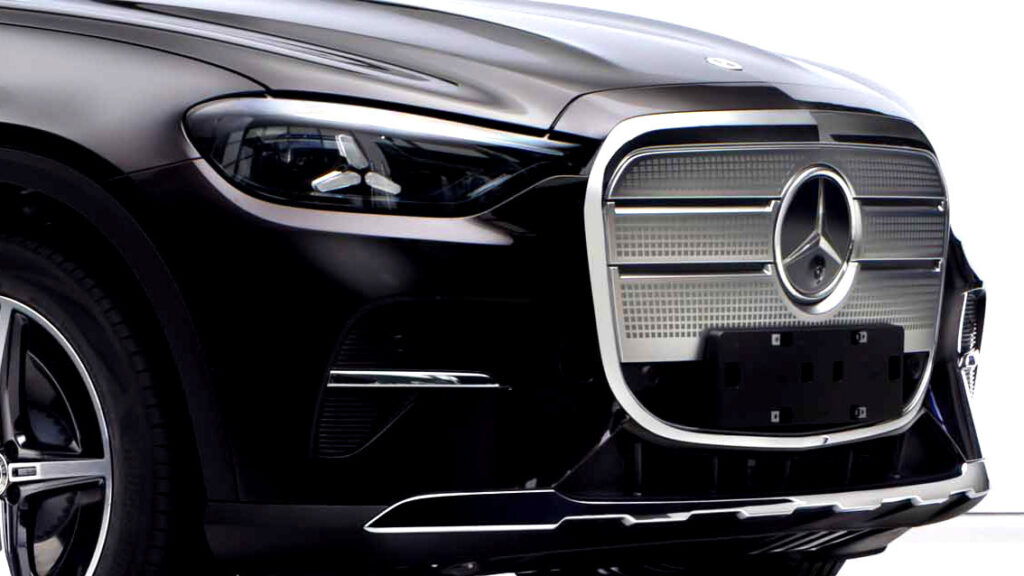
Without a direct comparison, the extended-wheelbase GLC EQ looks much like the standard version. The longer rear doors are the most visible difference, with a small ‘L’ badge on the tailgate offering the only other clear indication of the added length. Otherwise, the SUV looks quite suave, though we’re still not entirely convinced by the oversized illuminated grille up front.

 Mercedes Gave China’s GLC A Little Extra, And It Shows

So far, early details from China haven’t confirmed the exact battery specifications for the local version. Globally, the GLC EQ is equipped with a 94 kWh lithium-ion pack, offering up to 443 miles (713 km) of range.

It’s likely that the Chinese model will carry the same setup, though local testing standards tend to be more generous. If that holds true, the official figure could land somewhere north of 500 miles (805 km) on a full charge.

According to data released by Chinese authorities, the GLC 350 L comes standard with a dual-motor setup. The front axle motor produces up to 219 hp (163 kW), while the rear one delivers a more substantial 402 hp (300 kW). By comparison, Europe’s sole announced version, the GLC 400 EQ, offers a combined output of 483 hp.

Mercedes-Benz has a lot riding on the GLC EQ’s performance in China. Competition from domestic EV makers is intensifying, and the German carmaker saw a 7 percent dip in Chinese sales in 2024. Full-year figures for 2025 haven’t been released yet, but expectations are for another decline. The GLC EQ’s success may play a key role in reversing that trend.

\\\\

VW Built A Bigger ID SUV Than The X7 And You Can’t Have It

  • VW ID. Era 9X is a full-size SUV with extended-range EV tech.
  • Three powertrain options include rear- and all-wheel drive.
  • Dual-motor version produces 510 hp with 199 miles EV range.

As more carmakers double down on their efforts to cater specifically to China’s fast-evolving EV market, buyers in other parts of the world are being left out of some genuinely interesting vehicles. The VW ID. Era 9X is one of the latest examples, and it brings quite a bit to the table.

Revealed through filings with China’s Ministry of Industry and Information Technology, as well as VW itself, this new production SUV emerges from the SAIC Volkswagen joint venture. It’s a large, range-extender SUV positioned to compete in a growing segment of vehicles that blend electric driving with longer-distance practicality.

Read: VW’s Next Electric Sedan Looks Nothing Like You’d Expect

Battery-electric SUVs are increasingly common in China, but they still don’t meet the needs of every buyer. That’s where extended-range EVs, or EREVs, come into their own.

A Full-Size SUV Built for China

\\\\\\\\\\\\

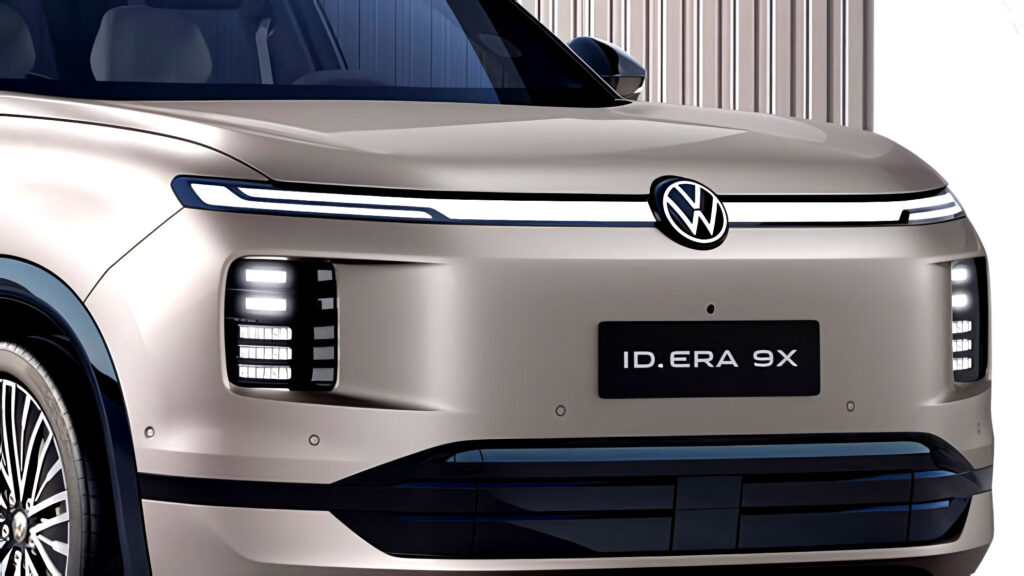
The VW ID. Era 9X, which somewhat curiously shares its 9X badge with Zeekr’s own EREV SUV, is bigger than many popular Western model, including the VW Atlas and Touareg. It even edges out the BMW X7 in overall length. Measuring 5,207 mm (205 inches) long, 1,997 mm (78.6 inches) wide, and 1,810 mm (71.2 inches) tall, the Era 9X rides on a 3,070 mm (120.8-inch) wheelbase.

For reference, the BMW X7 comes in at 5,181 mm (204 inches) in length, 2,000 mm (78.7 inches) wide, and 1,805 mm (71.1 inches) tall, with a 3,105 mm (122.2-inch) wheelbase. This makes the ID. Era 9X slightly longer and taller, though marginally narrower and with a slightly shorter wheelbase. In terms of footprint, it’s firmly in full-size luxury SUV territory.

 VW Built A Bigger ID SUV Than The X7 And You Can’t Have It
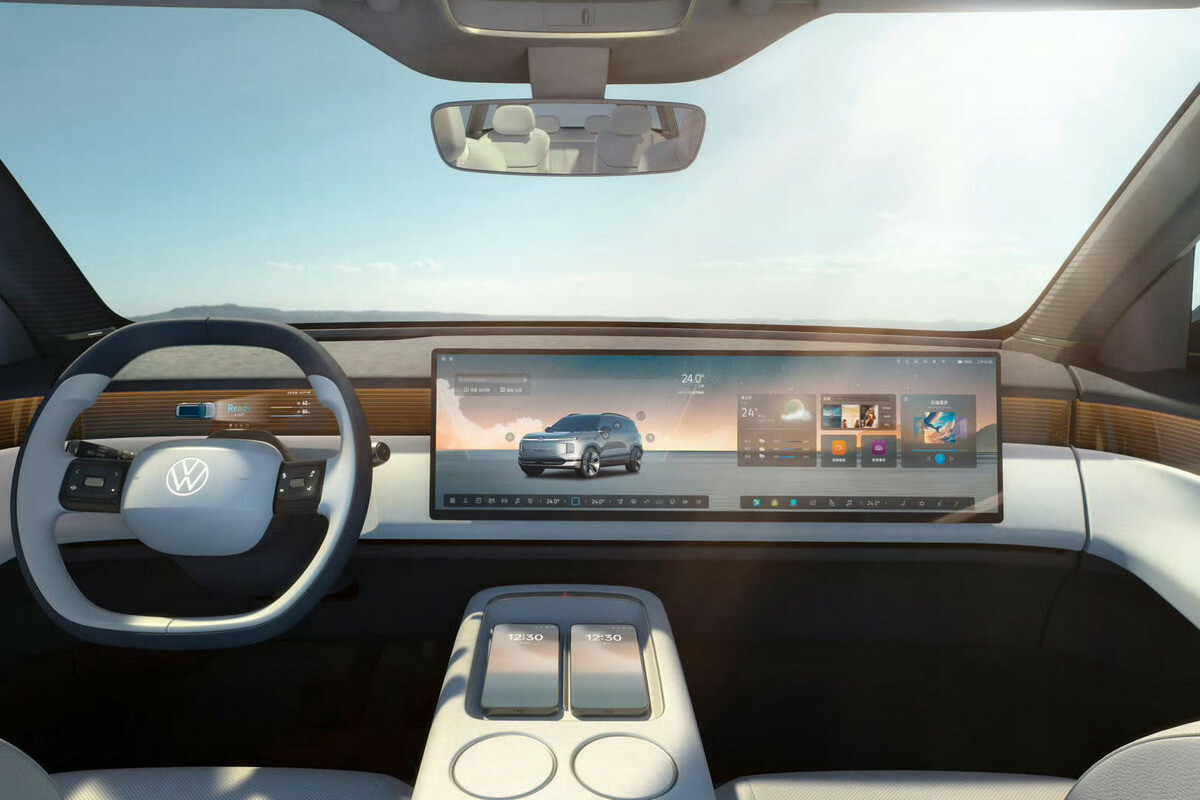
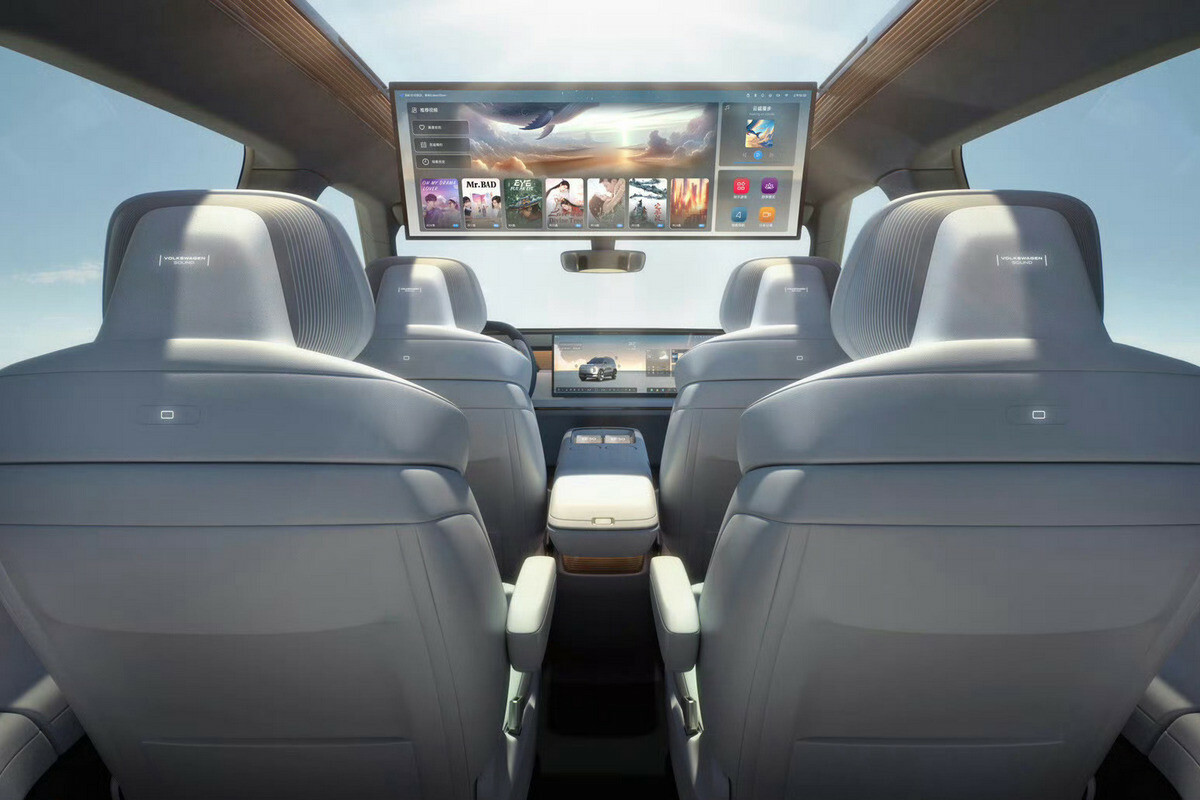
VW ID. Era Concept’s interior.
 VW Built A Bigger ID SUV Than The X7 And You Can’t Have It

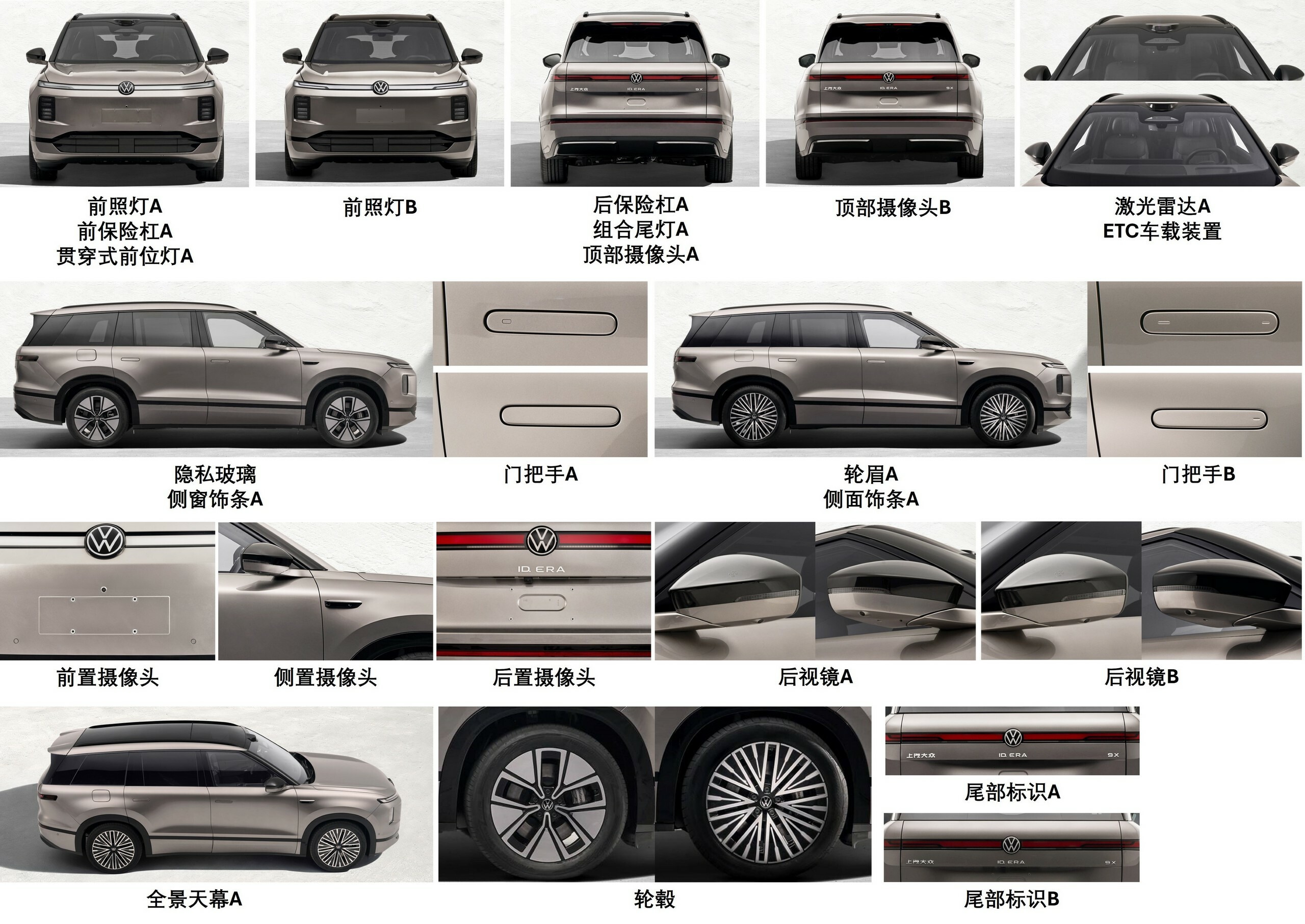
The exterior design remains remarkably close to the original ID. Era concept that VW unveiled earlier last year, with a premium and contemporary look that hasn’t been watered down much in the transition to production.

Volkswagen hasn’t revealed the production interior yet. But if it mirrors the concept closely, expect a massive dashboard-spanning infotainment system to carry over. There may also be an optional roof-mounted display for rear passengers. The spec sheet confirms that the ID. Era 9X will come with six seats in a 2+2+2 arrangement.

Powertrain Options

Where things get more interesting is under the skin. The ID. Era 9X is an extended-range electric vehicle, using a gasoline engine only to charge the battery. Volkswagen will offer it in three powertrain configurations, with both rear- and all-wheel drive options.

The base model features a single rear-mounted electric motor producing 220 kW (295 hp), powered by a 51.1 kWh LFP battery. It delivers a pure electric range of up to 267 km (166 miles). The curb weight comes in at 2,600 kg (5,732 lbs).

The second variant uses the same electric motor driving the rear wheels but swaps in a larger 65.2 kWh NMC battery. This upgrade boosts the pure electric range to 340 km (211 miles). It weighs slightly more at 2,620 kg (5,776 lbs).

 VW Built A Bigger ID SUV Than The X7 And You Can’t Have It

Finally, at the top end, it keeps the 65.2 kWh battery but adds a second electric motor on the rear axle, bumping total output to 380 kW (510 hp). This dual-motor setup increases curb weight to 2,700 kg (5,952 lbs). Pure electric range drops slightly to 321 km (199 miles).

While full combined range figures haven’t been published, all three configurations are expected to comfortably exceed 1,000 km (over 600 miles) when using both battery and gasoline power, depending on the final gas tank capacity.

Will It Go Global?

Pricing is still under wraps and should be announced in the coming months before the vehicle officially goes on sale. While a Western launch isn’t confirmed, there’s reason to keep a small window of optimism open for certain martkets.

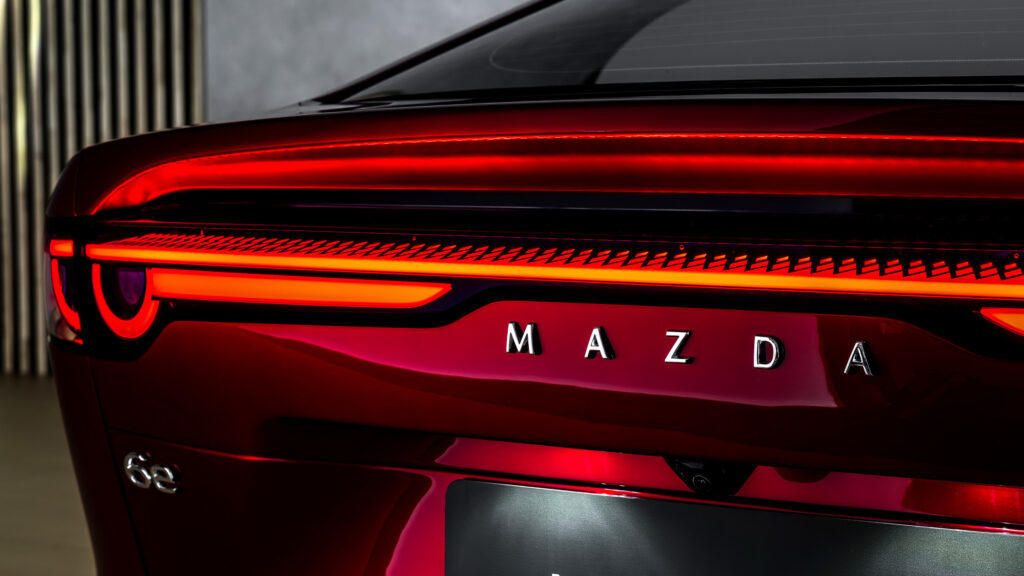
Mazda already offers its China-built JV models in Europe and Australia, having debuted the new CX-6e SUV earlier today, and Nissan is preparing to follow suit. It’s not out of the question for Volkswagen to consider doing the same with the ID. Era 9X, at least in select international markets, though a US launch is firmly off the table.

\\\\\\\\\

China Just Gave This AUDI Its Highest Honor

  • AUDI E5 was named China Car of the Year for design and value.
  • The Sportback starts at $33,800 with four configurations.
  • Other winners include Nio ET9, iCAR V23, and Ferrari 296.

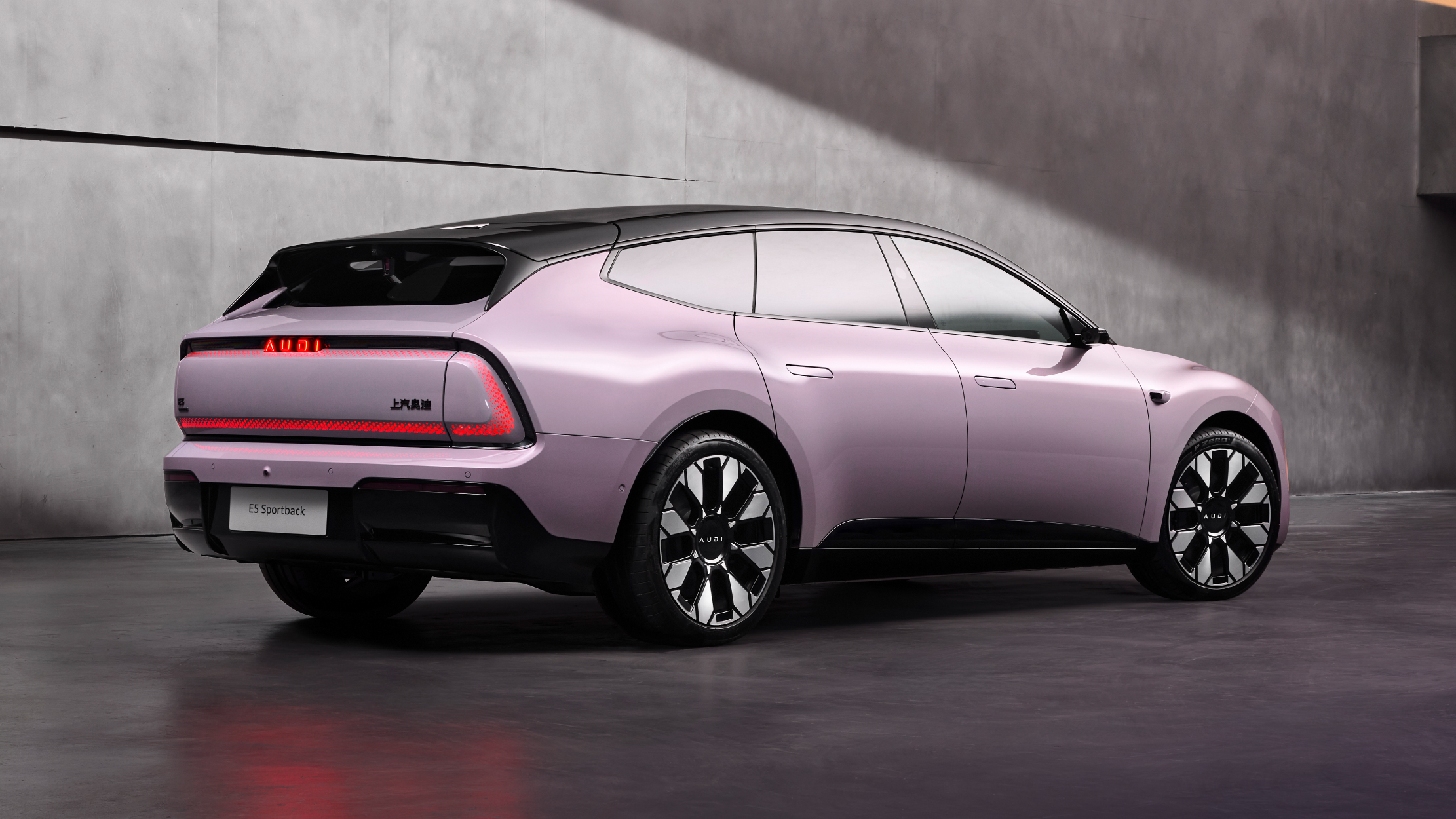
Launching a brand-new EV in China under a fresh badge with no Audi rings in sight might have seemed like an odd gamble at the time. But with the E5 Sportback now crowned China Car of the Year, Audi’s unconventional move is starting to look like a smart one. The car, developed in partnership with SAIC, is the first product of a standalone brand created specifically for the Chinese market.

While the China Car of the Year awards don’t carry quite the same global weight as the World Car Awards, they’re still judged by a panel that includes automotive journalists and industry insiders. And since the awards launched in 2014, Western brands have consistently punched above their weight.

Read: Of Course, The New AUDI E5 EV Is Ridiculously Cheap In China

Audi, or rather in this case, AUDI, began production of the E5 Sportback in August last year, with the first deliveries following just a month later. It enters a crowded but fast-moving EV space, where pricing pressure and tech innovation come at breakneck speed. Like many of its peers, the E5 Sportback offers strong value, a factor that’s undoubtedly helped fuel interest.

 China Just Gave This AUDI Its Highest Honor

The EV, combining German engineering and quality with Chinese tech, is available in four different configurations. Prices range from 235,900 yuan (about $33,800) to 319,900 yuan (roughly $45,800) for the range-topping Flagship Quattro. That top-tier model features dual motors delivering 776 hp, a 100 kWh battery, and an estimated range of 402 miles (647 km) on a single charge.

Spurred on by the success of the sleek estate, Audi presented its new E SUV Concept at November’s Guangzhou Auto Show. This model has a similar design to the Sportback and will be launched later this year as the E7X.

The Other Winners

 China Just Gave This AUDI Its Highest Honor
Nio ET9

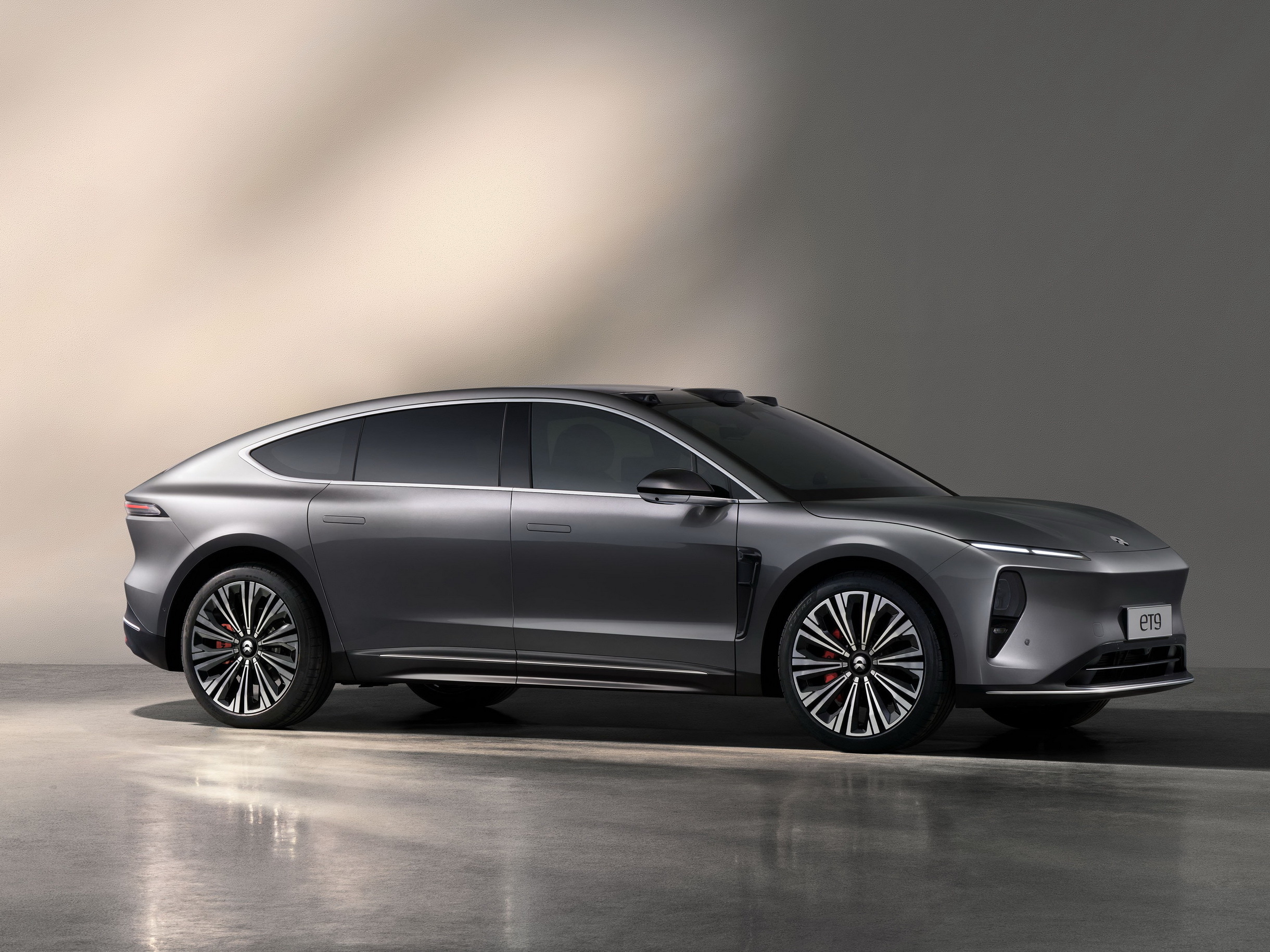
Of course, the E5 Sportback wasn’t the only car to earn recognition. Other winners included the Nio ET9, named Luxury Car of the Year, the iCAR V23 as Budget Car of the Year, the Ferrari 296 Speciale for Performance Car of the Year, and Audi’s own A5L, which took home Design Car of the Year.

Last year, the overall title went to the Aito M9, a flagship electric SUV. Other award recipients included the Mercedes-Benz E-Class, the Geely Galaxy E5, the Hyundai Ioniq 5 N, and Volkswagen’s ID.UNYX. In recent years, premium European brands have maintained a strong showing. The Mercedes-Benz S-Class won in 2022, followed by the EQE in 2023, and the BMW i7 in 2024.

\\\\\\\\\\\\\\\\\\\

Chinese Brands Bring Not One, Not Two, But Three Bugatti-Style Super Sedans To CES

  • Dreame revealed three electric Bugatti-style sedans at CES 2026.
  • Kosmera’s designs mimic Bugatti’s front and rear styling cues.
  • Two of the super sedans produce 1,903 hp from four electric motors.

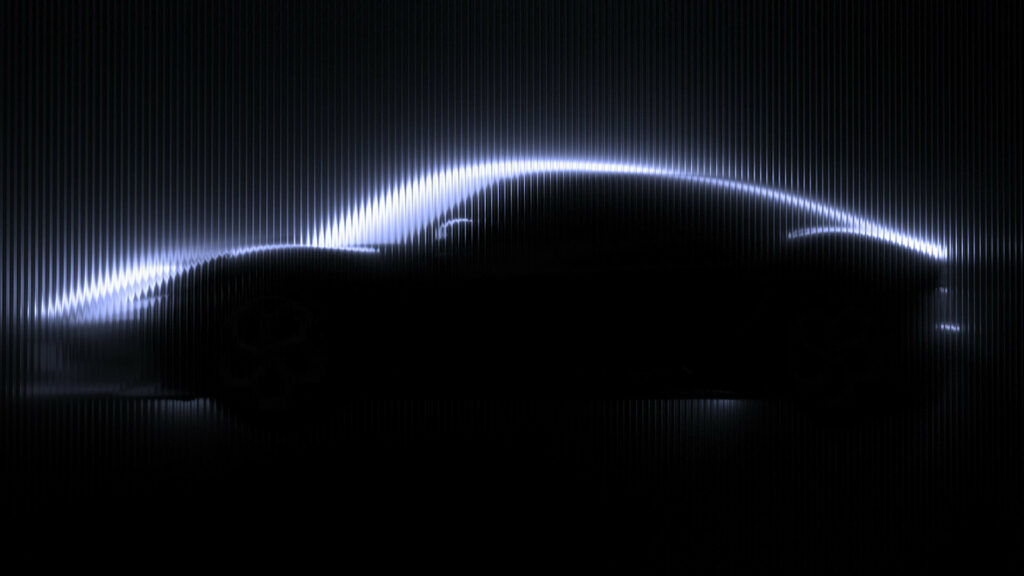
Few would expect a vacuum cleaner company to roll up to CES with supercars, but that’s exactly what Dreame just did. Chinese tech firm Dreame, best known for producing competitively priced vacuum cleaners, has unveiled three dramatic high-performance cars at the Consumer Electronics Show in Las Vegas, introduced under the newly formed Kosmera and Nebula Next brands.

As early teasers hinted, Dreame has looked to Bugatti for stylistic inspiration. Even so, while initial renders leaned heavily into Chiron-like mimicry, the finished models veer in their own direction, avoiding full-blown imitation but still bearing more than a few familiar cues.

Read: This Four-Door EV From China Now Looks Like Bugatti’s Rarest One-Off

What many might not know is that Dreame sits within Xiaomi’s sprawling ecological chain. The tech giant has invested in the company and may be lending more than just capital. Xiaomi itself has already become a serious contender in China’s burgeoning EV market, though it remains unclear if Dreame’s pivot is directly tied to Xiaomi’s automotive push.

Bugatti Echoes, Not Clones

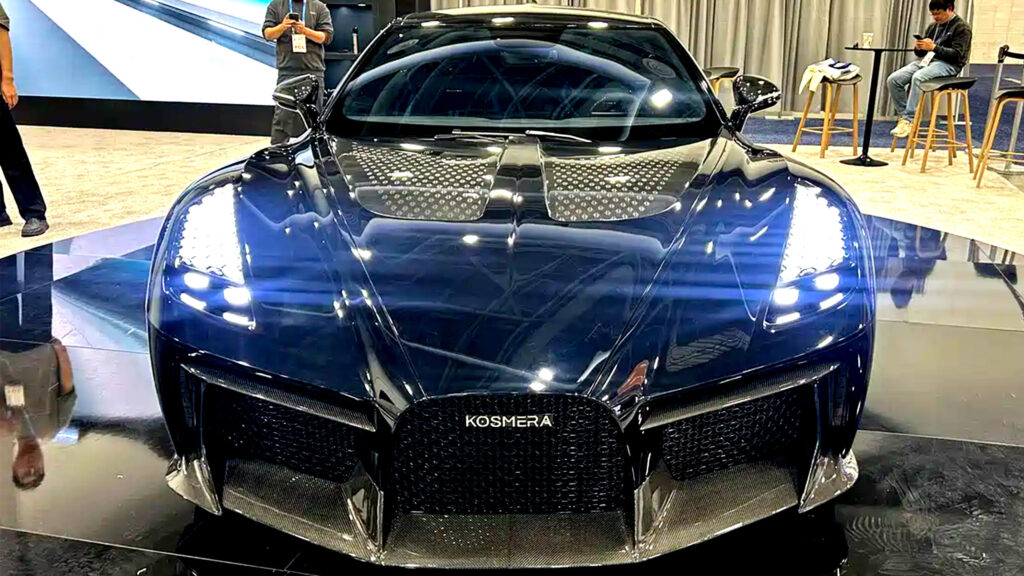
The first model under the Kosmera name is described as a super sports car and comes dressed in black. Its four-door configuration immediately sets it apart, but the front end is where things get especially familiar. The grille, framed in carbon fiber, strongly resembles the Bugatti Mistral and Brouillard. Large air intakes flank the front, and the overall fascia feels unmistakably French in its inspiration.

Headlight and DRL placement continue the Bugatti homage, as does the sculpted hood with prominent air extraction vents, a detail nearly identical to the one-off Brouillard.

\\\\\

Autohome

The side profile, however, strikes a different chord. With smooth surfaces and a gradually sloping roofline, it brings to mind a lengthened Porsche Taycan more than anything from Molsheim. Around back, the car adds its own flair with a full-width LED light bar, a fixed rear wing, and a vertical brake light extending down the rear window.

Also: Dreame’s Cullinan SUV Clone Might Be Rolls-Royce’s Worst Nightmare

According to Autohome, this Kosmera sedan houses four electric motors, combining for a total of 1,903 horsepower. Intriguingly, the car reportedly weighs exactly 1,903 kilograms (4,195 pounds), creating a symmetrical 1:1 power-to-weight ratio that sounds almost too perfect to be real.

While most technical details remain under wraps, the car is said to incorporate a complex suspension setup and a number of 3D-printed components.

A Second Concept

Kosmera’s second offering looks quite different. It’s also a sedan, finished in a dark purple paint, but the design is less dramatic. While the front doesn’t look like a Bugatti, the same can’t be said about the rear, as it bears a resemblance to the Chiron, including its taillights, the shape of the fascia and decklid, and the split rear window. As for specs, Dreame hasn’t released anything about this model’s capabilities just yet.

\\\

Autohome

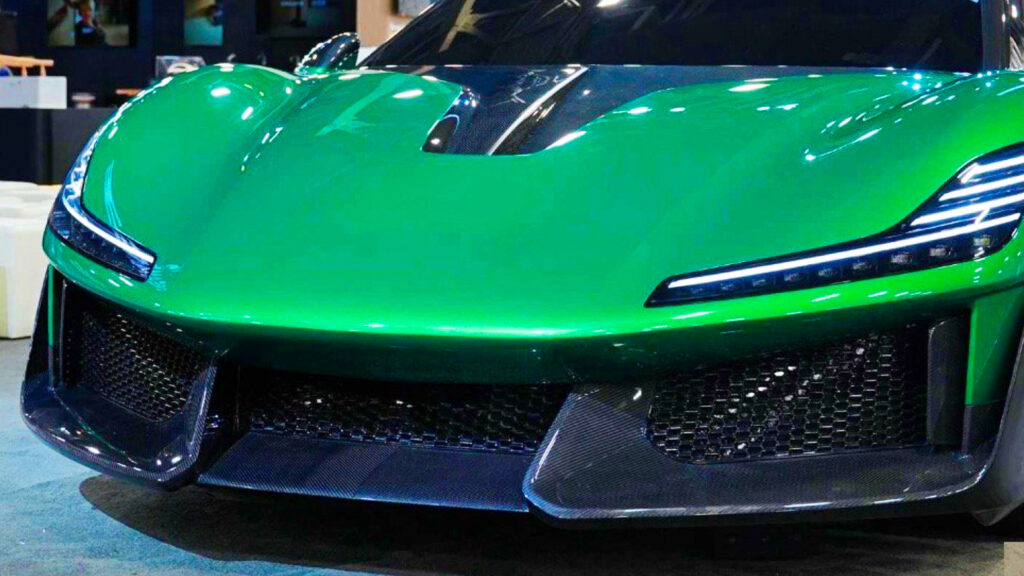
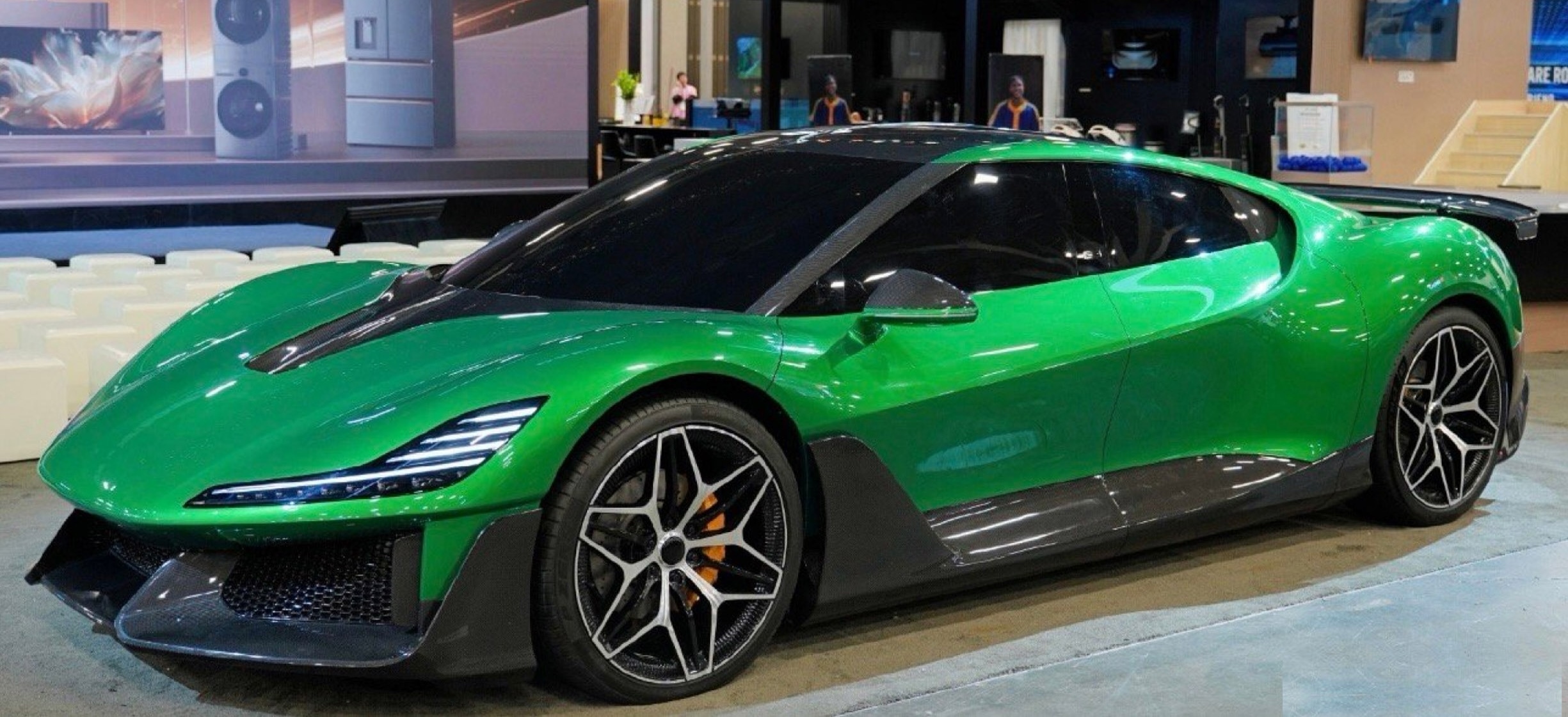
Rounding out the trio is the Nebula Next 01, the only car not wearing a Kosmera badge. This is the model Dreame teased earlier. Painted green, it has the most supercar-like design of the trio, but surprisingly, it is also a four-door. It rocks loads of exposed carbon fiber parts, including the front splitter and rear diffuser, and also has similar Bugatti-inspired headlights to the first of the Kosmera cars.

See: Remember Dreame’s Rolls-Royce Clone? It’s Got A Bentley Brother

Local media claims the Nebula Next 01 is powered by the same four-motor setup with 1,903 horsepower. If accurate, it should rocket from 0 to 100 km/h (62 mph) in just 1.8 seconds. As of now, Dreame hasn’t confirmed whether and when this concept will reach production.

\\\\\\

Autohome

Chinese Vacuum Brand Drops A 1,876 hp Taycan-Trampling Reality At CES

  • Dreame’s first EV is the Nebula Next 01, revealed at CES 2026.
  • It uses four electric motors to deliver a massive 1,876 hp output.
  • Final design leans more toward Ferrari and Lotus than Bugatti.

For months, Chinese consumer electronics company Dreame looked like it was trying to sneak into the car world dressed as a Bugatti. The early renders felt like Chiron fan fiction, and even the later teaser leaned heavily on a rare Bugatti one offs for inspiration. But now the covers are off at CES in Las Vegas, the real thing looks less Molsheim and more Maranello.

Related: Dreame’s Cullinan SUV Clone Might Be Rolls-Royce’s Worst Nightmare

The Nebula Next 01, as we now know the brand and model thanks to Car News China, still wears a dramatic shape, but it’s swapped out the heavy-handed hypercar cosplay for something lighter and more athletic, almost as if Lotus had a hand in the design. If the name rings a bell, that’s because we’ve heard it before, but we’ll get back to that in a minute.

A Ferrari F8’s Face

 Chinese Vacuum Brand Drops A 1,876 hp Taycan-Trampling Reality At CES
Fengyu Huanhuan / Carnewschina / Autohome

And while there are similarities between the shape of the C-pillar kink here and the one on the Bugatti Brouillard, there’s no sign of the Bugatti horseshoe grille on a nose that reminds us far more of a Ferrari F8 Tributo than any Chiron.

We already knew the Nebula Next 01 would have four doors, but the overall shape says supercar more than sedan, and the aggressive carbon lower aero pack and motorsport-stye trunk-lid wing hint at some serious racetrack potential.

Hypercar Levels Of Power

\\\\\\

Fengyu Huanhuan / Carnewschina / Autohome /Dreame

Backing that aero trickery up, is a quad-motor electric drivetrain making 1,876 hp (1,902 PS/ 1,399 kW). Zero to 62 mph (100 kmh) takes just 1.8 seconds, the report says, putting on the same performance level as other Chinese exotics like the Yangwang U9 and Xiaomi SU7 Ultra, not to mention any supercar from Europe’s legacy brands.

Family of Three

\\\\\

Rather confusingly, Dreame has a second brand called Kosmera, which is also teasing two more low-slung four-door cars at CES, one of which looks like it could be a different version of the Nebula 1. But the third car’s front-wheel is pushed further away from the A-pillar and it has two visible charging/filling flaps, suggesting it is a front-engined PHEV.

The Nebula 1 is still a concept at this stage and one without an interior, so plenty could change before production allegedly starts later this year at a Berlin, Germany plant close to Tesla’s Gigafactory. Or so the company’s CEO recently claimed. Still, if it drives as well as it looks and is priced to match the SU7 Ultra, Porsche’s Taycan sales could be heading from bad to worse.

Stellantis’ Chinese Partner Built A Minivan That Makes The Pacifica Feel Ancient

  • Leapmotor D99 launched in BEV and range-extender variants.
  • D99 EREV packs 80.3 kWh, largest hybrid battery to date.
  • BEV version features 115 kWh battery and 447 mile range.

The Leapmotor lineup is expanding once again, and this time the Stellantis-backed Chinese automaker is steering into new territory with its first fully electric minivan. Called the D99, the model arrives in both battery-electric and range-extender versions, marking Leapmotor’s entry into a segment already populated by the likes of the Xpeng X9, Zeekr 009, and Li Auto Mega.

Read: Stellantis’ Secret Weapon Against Chinese EVs In Europe Turns Out To Be A Chinese EV

Unveiled during a special event celebrating the brand’s 10th anniversary, the D99 has a simple, flowing design similar to other Leapmotor models. The front end includes a very short nose section and a windshield that stretches beyond the front axle, which should give the D99 excellent visibility.

Other visual details include retractable door handles, now being phased out by regulators in China, and darkened B- and C-pillars that merge visually with the side glass. At the back, a futuristic LED light bar spans the width of the vehicle, tying into the modern theme.

The Largest Battery in Its Class

\\\\\\\\\

Under the skin is where the D99 truly separates itself from the competition. Built on an 800V platform, the range-extender version carries a massive 80.3 kWh battery pack, the largest of any hybrid currently on the market. That gives it a clear edge over Zeekr’s 9X range-extender, which makes do with a 70 kWh unit.

It also tops the upcoming range-extended Xpeng X9, which is set to feature a 63.3 kWh battery when it launches. According to Leapmotor, the D99 EREV is expected to deliver up to 500 kilometers (311 miles) of electric driving range on a full charge.

Details of the combustion engine supporting the range-extender setup haven’t been confirmed, though it’s likely to be a 1.5-liter four-cylinder, similar to the one used in Leapmotor’s C10 REEV.

As for the fully electric D99, it steps up to a 1000V architecture and houses an even larger 115 kWh battery supplied by CATL. That setup is good for a claimed range of 720 kilometers (447 miles).

Plush Promises Inside

No interior images have been released yet, but based on Leapmotor’s recent offerings, the cabin is expected to be packed with high-definition displays and generously cushioned seating. It’s being positioned as a vehicle not just for families but for passengers who prefer to be driven rather than drive.

Additional details, including pricing in China and potential availability beyond the domestic market, are expected to be announced in the coming weeks.

\\\\\\\\\\

One In Ten Cars Sold In The UK Now Comes From China

  • Chinese brands sold over 200,000 new cars in the UK in 2025.
  • MG led UK sales among Chinese carmakers, followed by BYD.
  • Japanese automakers lost market share across the same period.

Once treated as curiosities or written off entirely, Chinese cars have quietly secured a firm foothold in the UK’s market. By the end of 2025, vehicles imported from the Far East are expected to make up around 10 percent of all new car sales in the country. The days when Chinese models were casually dismissed by Western buyers now seem increasingly out of step with reality.

Read: Europe Tried To Block Chinese Cars But Ended Up Helping Them Instead

A new report from The Guardian, citing European EV analyst Matthias Schmidt, estimates that once the final sales numbers for 2025 are in, Chinese brands will have sold more than 200,000 new vehicles in the UK.

MG and BYD Drive the Surge

 One In Ten Cars Sold In The UK Now Comes From China

The lion’s share of that success comes from three names in particular: MG, BYD, and Chery. Meanwhile, as Chinese manufacturers have gained ground, demand for Japanese cars has noticeably slipped.
MG continues to lead the pack by a wide margin. It sold over 70,000 cars in 2025, keeping pace with its strong performance from the previous year. BYD has also stepped up in a significant way, increasing its UK sales from fewer than 9,000 in 2024 to more than 40,000 this year. Their presence on British roads is no longer novel.

Several other Chinese brands posted significant gains during the year as well. Jaecoo sold over 20,000 vehicles, while Omoda came close to that same figure. Chery, Polestar, and Leapmotor have also continued to find traction with UK buyers, though on a somewhat smaller scale.

At the same time, Japanese brands have seen their market share in the UK slip by nearly a full percentage point over the past twelve months. The decline isn’t dramatic, but it is measurable, and it mirrors trends playing out across the continent.

Why Tariffs Didn’t Slow Things Down

 One In Ten Cars Sold In The UK Now Comes From China

As The Guardian reported, Chinese car sales have risen across the European continent despite the imposition of steep tariffs. In an effort to protect domestic manufacturers, European lawmakers introduced these measures late last year, targeting EVs produced in China. However, the tariffs do not apply to hybrid or internal combustion models, and sales of those have surged accordingly.

The UK, now outside the EU, has proven especially receptive to these brands. With no major domestic carmakers remaining, the market is wide open.

“With no genuine domestic volume brands for UK consumers to choose from, UK consumers crucially can no longer participate in what is known as patriotic purchasing,” said analyst Matthias Schmidt. “In Germany and France, half of each country’s new-car market is effectively in the control of domestic brands. While in China, we now also see that two-thirds of the market is accounted for by domestic brands.”

 One In Ten Cars Sold In The UK Now Comes From China

Dozens Of Chinese EV Brands Could Collapse In The Next Year

  • Only a few Chinese EV brands have reached profitability.
  • Up to 50 struggling EV firms may slash operations in 2026.
  • China’s EV tax perks are ending or being sharply reduced.
Chinese electric vehicles are spreading fast across global markets, fueled by booming demand and strong backing from Beijing. In November alone, China’s EV exports jumped 87 percent compared to the same month last year. Yet even with this rapid growth, cracks are starting to show.
The year 2026 is shaping up to be a major turning point for China’s EV sector, with a looming shakeout expected to hit dozens of struggling manufacturers.

Read: China’s Getting Ready To Flood The World With Even Cheaper EVs And PHEVs

Deliveries of new vehicles in China are expected to slip by as much as 5 percent next year, the largest contraction since 2020, due in part to lowered government support and the industry’s history of overcapacity.

Industry at a Crossroads

And this isn’t speculation from outsiders either, but comes from the South China Morning Post (SCMP), a Hong Kong-based English-language newspaper owned by Alibaba Group. The SCMP reports that around 50 of China’s money-losing EV makers may be forced to either downsize or shut down entirely in 2026.

“Time is against those players whose cars cannot impress young drivers,” said Qian Kang, who runs a factory producing automotive printed circuit boards. “For most of the unprofitable EV assemblers, next year’s performance will be critical.”

 Dozens Of Chinese EV Brands Could Collapse In The Next Year

Policy Shifts and Market Pressure

Much hinges on an upcoming policy decision. In January, Beijing is expected to determine whether the 20,000 yuan (roughly US$2,900) EV trade-in subsidy will be extended. Meanwhile, the current 10 percent purchase tax exemption is set to expire at the end of this year. A reduced 5 percent rate will apply starting in January and remain in place until the full tax returns in 2028.

While the price war among Chinese firms has brought affordable EVs within reach of millions of car buyers, it has eroded many companies’ ability to turn a profit. Combined with significant investments into research and development, as well as urgency among brands to establish large portfolios of models, it’s hardly a surprise that very few carmakers have become profitable.

“The fundraising bonanza surrounding China’s EV makers and key car component suppliers is history now,” angel investor Yin Ran said. “So it will be a game of survival, with profitable carmakers becoming the winners, while unprofitable players face running out of funds soon.”

Few companies have weathered the storm. Profitable big players such as BYD, Seres, and Li Auto stand out as rare exceptions. These firms are expected to intensify their overseas efforts as they look for new growth opportunities. Research from AlixPartners suggests that only about 10 percent of China’s EV brands will be profitable in the coming years.

 Dozens Of Chinese EV Brands Could Collapse In The Next Year

Leapmotor Gets Cash Injection

Among the handful of companies securing new support, Stellantis-backed Leapmotor has landed a major investment. The state-owned FAW Group has announced it will acquire a 5 percent stake in the Chinese carmaker for 3.74 billion yuan, or $534 million. This makes Leapmotor the first of the nation’s car manufacturers to receive investment from a state-owned group and will help with its planned expansion.

Leapmotor is aiming to deliver 1 million vehicles in 2026. If it achieves this figure, it would be China’s third-largest EV maker, trailing only BYD and Geely. Through the first 11 months of 2025, Leapmotor delivered 536,132 vehicles.

“Leapmotor aims to achieve annual deliveries of 4 million units a year in 10 years’ time,” Leapmotor found and chief executive Zhu Jiangming revealed in an interview. “Leapmotor will strengthen our value through the fine-tuning of our production, while offering customers best [driving] experiences.”

 Dozens Of Chinese EV Brands Could Collapse In The Next Year
Leapmotor A10

Chinese EV Exports Are Exploding, And The West Has No Way To Stop Them

  • Chinese EV exports are booming and were up 87% last month.
  • Mexico was the top export market in November with 19,344 units.
  • Over 600,000 Chinese EVs have been exported to Europe in 2025.

Chinese cars were once the butt of jokes, but they’ve become a major threat to Western automakers. That’s clear today as data from China’s General Administration of Customs has revealed exports of electric vehicles soared 87 percent in November.

More: Europe Tried To Block Chinese Cars But Ended Up Helping Them Instead

That’s a huge increase compared to last year and the most popular destination in November was Mexico. Chinese EV exports to the country soared 2,367 percent to total 19,344 units. While the numbers don’t reveal which vehicles were responsible for the boost, the BYD Dolphin Mini has been a hit south of the border.

The small EV measures just 148.8 inches (3,780 mm) long and features a front-mounted motor developing 74 hp (55 kW / 75 PS) and 100 lb-ft (135 Nm) of torque. Customers can also get 30.1 and 38.8 kWh battery packs, which provide a NEDC range of up to 236 miles (380 km).

Mexico was followed by Indonesia and Thailand as the top markets for Chinese exports last month. The former country imported 17,503 vehicles, while the latter took in 13,517.

\\\\\\\

Focusing on Europe, exports to the UK soared 113 percent last month to 9,096. This means 121,555 Chinese EVs have arrived since the beginning of the year and this is an increase of 24 percent .

That pales in comparison to Belgium, where 195,309 Chinese EVs have been imported in the first 11 months of the year. However, it’s worth noting this is a 15 percent drop compared to 2024.

Where Most Chinese EVs Are Going

Asia remained the biggest market for Chinese EVs as exports climbed 71 percent to 110,061 units in November. They were followed by Europe and Latin America (including the Caribbean).

While Asian countries have imported nearly 1 million Chinese EVs through November, the big story is Europe’s 604,105. That’s 12 percent more than 2024 and the number shows why European automakers and politicians are so worried.

 Chinese EV Exports Are Exploding, And The West Has No Way To Stop Them

EV Makers Just Got A New Problem In China, And It Starts In 2026

  • EVs in China must meet new consumption rules starting in 2026.
  • Models that fail may be pulled from sale or updated to comply.
  • Rule is said to be world’s first mandatory EV efficiency law.

Fuel economy regulations have shaped the auto industry for decades, setting benchmarks for combustion engines around the world. But when it comes to electric vehicles, formal efficiency standards have remained largely absent.

That’s beginning to change. In China, a new set of laws focused on EV energy consumption is set to take effect, requiring automakers to deliver more efficient electric models.

Read: China Is Banning Tesla-Style Door Handles

The regulations are designed around vehicle weight, assigning maximum energy usage thresholds for different categories. For example, a typical battery-electric passenger car weighing about two tons will need to consume no more than 15.1 kilowatt-hours per 100 kilometers.

That’s quite a low number and is around the same as you might expect to achieve in a new Tesla Model 3 during typical, everyday driving.

Efficiency Gets a Legal Backbone

 EV Makers Just Got A New Problem In China, And It Starts In 2026

According to local media, these new regulations will be approximately 11 percent stricter than the outgoing recommendations. Chinese authorities believe that thanks to the new efficiency standards, EV owners will see an increase in their average driving ranges of about 7 percent.

Importantly, the regulations are designed to prevent manufacturers from simply bolting on larger battery packs to achieve longer ranges. Instead, the focus will shift to improving the efficiency of existing systems and designs.

Chinese tech publication IT Home notes that this will be the first mandatory EV power consumption regulation in the world. The law is scheduled to take effect on January 1, 2026.

Behind the Policy Push

 EV Makers Just Got A New Problem In China, And It Starts In 2026

Work on the new standards has been ongoing for several months. In July, China’s Ministry of Industry and Information Technology, the National Development and Reform Commission, and the State Administration for Market Regulation met to work on the new laws, as well as new battery recycling standards.

Read: BMW And Porsche Just Lost China’s Luxury Market To A $100,000 Newcomer

Car News China notes that many EVs currently sold by major brands like BYD and Geely already meet the new efficiency standards. Models that fall short may need to be upgraded or pulled from production entirely until they’re brought into compliance.

 EV Makers Just Got A New Problem In China, And It Starts In 2026

Sources: IT Home, Car News China

BMW And Porsche Just Lost China’s Luxury Market To A $100,000 Newcomer

  • Maextro S800 is China’s best-selling car over $100,000.
  • Undercuts Mercedes while offering Maybach-level luxury.
  • Signals rising demand for Chinese high-end car brands.

When Huawei partnered with JAC to launch the Maextro S800, few took the brand’s aim of challenging Maybach and Rolls-Royce at face value. For a new Chinese marque to set its sights on the pinnacle of automotive luxury seemed like a stretch.

One year on, it’s Maextro that has the last word. Their flagship sedan has become China’s best-selling vehicle priced above $100,000.

More: New Ultra-Luxury Sedan For The People Gives Rolls-Royce A Run For Its Money

Until recently, foreign automakers had a firm grip on China’s high-end car market. That grip has loosened. Local buyers are increasingly turning to domestic brands, even when shopping in the upper echelons, something that would’ve seemed far-fetched just a few years ago.

European Brands No Longer Lead the Pack

\\\\\\\\

As Bloomberg reports, the Maextro S800 outsold both the Porsche Panamera and BMW 7-Series combined in November. It had already taken the top spot in September.

The S800 also surpassed the Mercedes S-Class and, somewhat ironically, the Maybach variant, despite (or perhaps because of) its resemblance to a mash-up of Maybach and Rolls-Royce.

More: The Chinese Brand That Fell On Stairs Now Aims For Le Mans Glory

Weibo user Chu Xiaomin notes that Maextro received 18,000 orders for the S800 within just 175 days of launch. The company says it’s currently selling more than 2,000 units a month and intends to ramp up production to reach 4,000 per month.

How Did Maextro Pull It Off?

\\\\\\\

A major part of the S800’s appeal is price. At 215.7 inches (5,480 mm) long, this is a proper full-size luxury sedan, yet it’s priced between ¥708,000 and ¥1,020,000 (equal to $100,600 to $144,900 at current exchange rates).

For reference, the BMW 7-Series starts at ¥919,000 ($130,000), the Porsche Panamera at ¥1.1 million ($156,200), and the Mercedes S-Class at ¥1.47 million ($208,800). A Rolls-Royce Phantom? That’ll be ¥8.47 million ($1.2 million).

But competitive pricing alone doesn’t explain its traction. The Maextro S800 is heavy on features. There’s a triple-screen dashboard, a 40-inch rear projector that turns the back seat into a private cinema, automatic doors, crystal-effect buttons, and a starlit ceiling reminiscent of Rolls-Royce.

The cabin is finished with wood and leather, and the ADAS system comes courtesy of Huawei’s tech suite.

\\\\\\\

Speaking with CCTV, Richard Yu, Chairman of Huawei’s Consumer Business Group, said: “Maextro S800 is the first time that a Chinese brand has managed to get a foothold in the 1 million yuan ultra-luxury segment. We’re in the intelligence and electrification era and we’re leading through smarter technologies and innovation.”

German Giants Lose Their Footing

Bloomberg reports that BMW, Mercedes, and Audi continue to lose market share in China, struggling to keep up with the local competition in terms of pricing and tech features. Huawei’s challenge now is to maintain this momentum, not just spark early interest.

Meanwhile, rival brand YangWang, owned by Chinese-powerhouse BYD, is also pushing into six-figure territory with models like the U8 SUV, which starts at around $150,000. It also offers the YangWang U7 sedan, positioned slightly lower between ¥628,000 and ¥708,000 ($89,200 to $100,600).

\\\\\\\\\\\\\\\\\

Sources: Huawei, Bloomberg

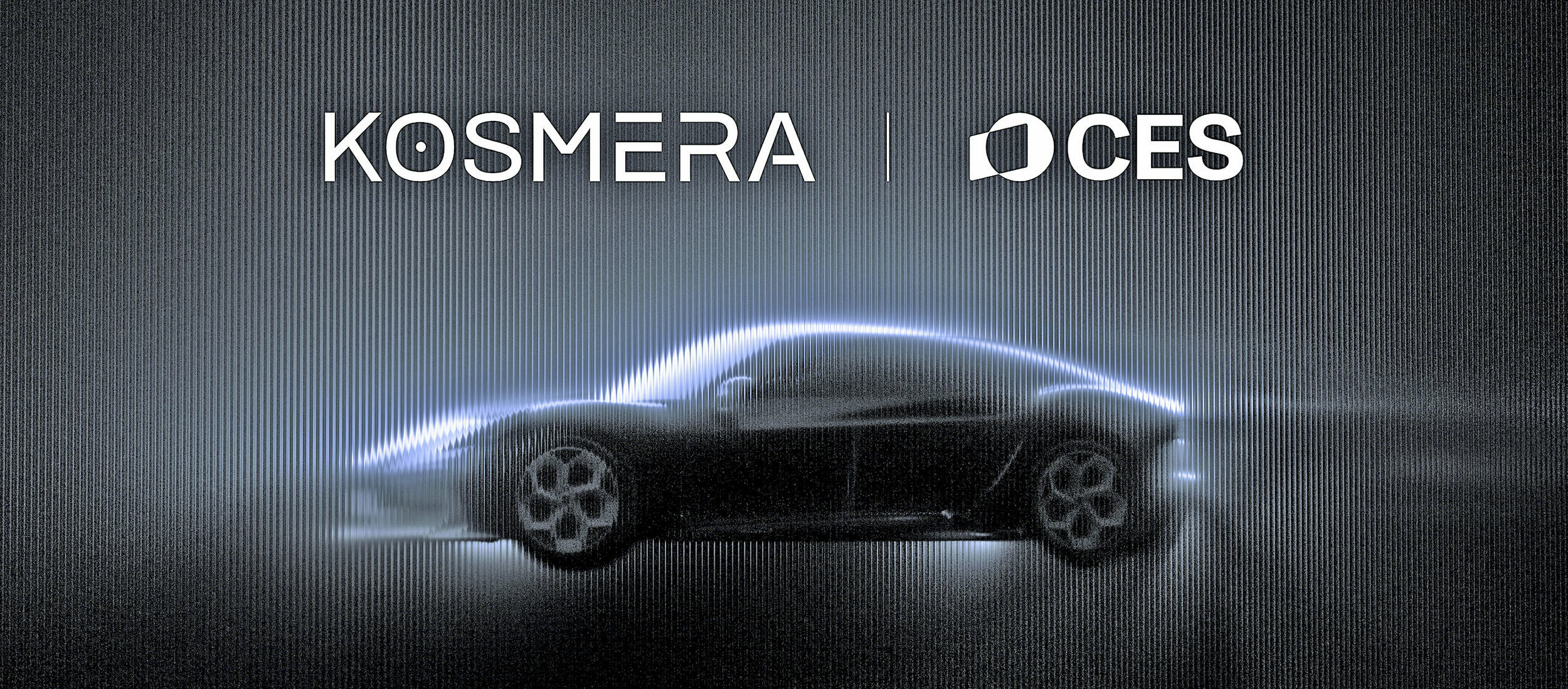
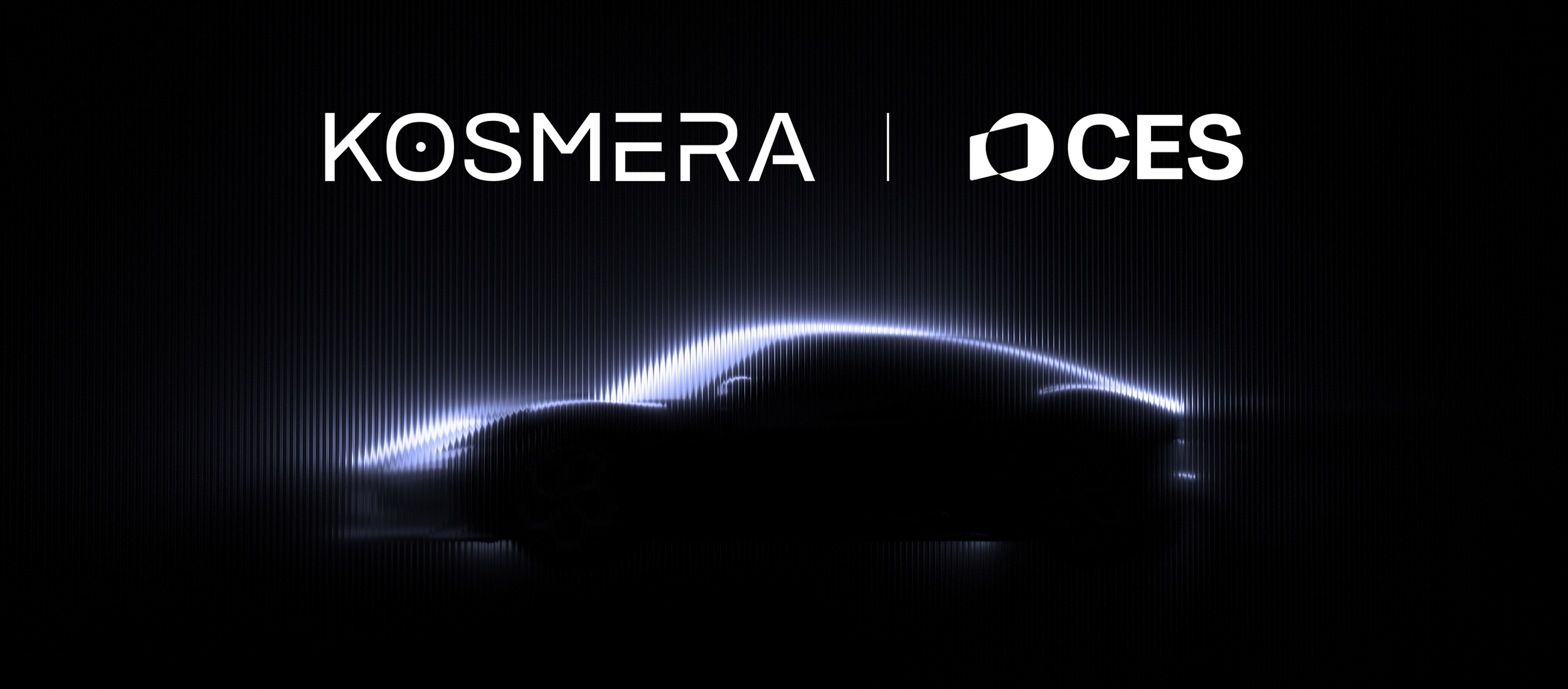
A Mystery Brand Called Kosmera Is Coming To CES

  • A new automaker called Kosmera is debuting at CES next month.
  • Their first vehicle appears to be a sporty four-door sedan.
  • The mysterious company seemingly hails from Suzhou, China.

Many of us are looking forward to Christmas and New Year’s, but CES is right around the corner. As a result, we’re seeing announcements trickle out including one for an all-new company called Kosmera.

Details are limited, but the company is planning to stage its international debut at the show. They’re promising to take a “fundamentally different approach to mobility,” which apparently contrasts with firms chasing an “autonomous and connected future.”

More: Sony Honda Mobility Bringing New Concept And Pre-Production Afeela 1 To CES

While would seemingly imply an analog driver’s car, Kosmera described themselves as “not just an automaker,” but a “technology-driven company developing a platform that connects people with real-world scenarios and digital services.”

That’s a head scratcher, but the company dropped an interesting teaser image. At first glance, it appears to show a stylish sports car that vaguely recalls the Porsche 718 Cayman.

Enhanced Teaser Image

 A Mystery Brand Called Kosmera Is Coming To CES

However, after playing around in Photoshop, we were able to enhance the image to reveal it shows a four-door sedan or liftback. We can also see muscular rear haunches and a seemingly massive front overhang. The latter is presumably some sort of distortion, but you get the idea.

Doing a little more digging, we were able to uncover a trademark application from earlier this month. It was for the Kosmera name and was made by Xing Chen Future Automotive Technology Co Ltd. While this doesn’t tell us much, we know the mysterious model hails from China.

We’ll learn more next month as Kosmera’s exhibit opens on January 6.

 A Mystery Brand Called Kosmera Is Coming To CES

If You Think EV Sales Are Dead, You’re Probably Staring At The Wrong Map

  • EV and PHEV sales climbed significantly in China and Europe.
  • Roughly 18.5 million electrified vehicles were sold this year.
  • North America’s EV market declined despite global momentum.

While the headlines might suggest an EV apocalypse is underway, with manufacturers pulling back and investments drying up, the reality is a bit more complicated. Sure, some markets are cooling and certain automakers are reconsidering their timelines, but the global picture paints a different story.

At least for now. The coming months could easily tip the scale again, especially in regions where policy and consumer behavior tend to swing fast.

Read: More Buyers Are Ditching EVs And Choosing Gas Again

New data shows that worldwide sales of battery-electric and plug-in hybrid vehicles have actually grown this year, bolstered by steady demand in China and across Europe.

According to figures from Rho Motion, approximately 18.5 million EVs and PHEVs have been sold globally between January and November 2025, representing a 21 percent increase from last year.

Where the Growth Is

Unsurprisingly, China leads the way with reported sales of 11.6 million, a 19 percent rise from the same period in 2024. While Europe remains a far smaller market, with 3.8 million EVs and PHEVs finding new homes, it experienced a higher growth rate with sales jumping 33 percent.

A closer look at Europe reveals that 35 percent more BEVs have been sold this year, and 39 percent extra PHEVs have been delivered. Contributing to this growth was France, where for the first time this year, year-to-date sales rose in November, although only by 1 percent.

EV Sales Jan-Nov 2025
Region YTD 2025YoY Change
Global18.5 million+21%
China11.6 million+19%
Europe3.8 million+33%
North America1.7 million-1%
Rest of World1.5 million+48%
SWIPE

Rho Motion

Italy also experienced a strong November with EV and PHEV sales jump to 25,000 units after an incentive program was launched, encouraging locals to sell their old ICE models.

Still, the trajectory in Europe could change direction quickly. On Tuesday, the European Commission revealed plans to drop the proposed 2035 ban on new combustion-engine vehicle sales, a reversal largely driven by industry lobbying.

What About America?

 If You Think EV Sales Are Dead, You’re Probably Staring At The Wrong Map

Things couldn’t be anymore different in North America, in particular in the US. While EV sales increased in November compared to October, the first month without the federal EV tax credit, they are still far below what they were when the $7,500 credit was still available.

Data from Rho Motion notes that sales in North America have fallen 1 percent this year, meaning it’s quickly turned into a global laggard when it comes to global EV adoption.

Following President Trump’s decision to rollback CAFE fuel economy standards, sales of EVs and PHEVs are unlike to grow at a significant rate, and may ultimately decline.

In contrast, the rest of the world, grouped together in the dataset, logged 1.5 million EV and PHEV sales this year, up 48 percent compared to 2024. While the volumes are smaller, the growth suggests that in many regions, electrification is still gaining ground, just not always where the spotlight is aimed.

 If You Think EV Sales Are Dead, You’re Probably Staring At The Wrong Map

Australia And Other Markets Might Finally Get A Bronco, Just Not The One You Expect

  • Ford developed the Bronco Basecamp with its Chinese joint venture partner.
  • Both fully electric and range extender versions of the SUV are available.
  • Right and left-hand drive builds could allow exports to Australia and beyond.

Given Australia’s long-running affection for off-roaders and the popularity of models like the Ford Ranger and Ranger Raptor, it’s somewhat surprising that the Ford Bronco has never officially made it over there. That may soon change.

But rather than bringing in one of the two American-market Broncos, Ford could instead be planning to import a new, unrelated version just launched in China.

Read: Ford’s Electric Bronco Costs The Same As Ours And Gives You Twice The Power

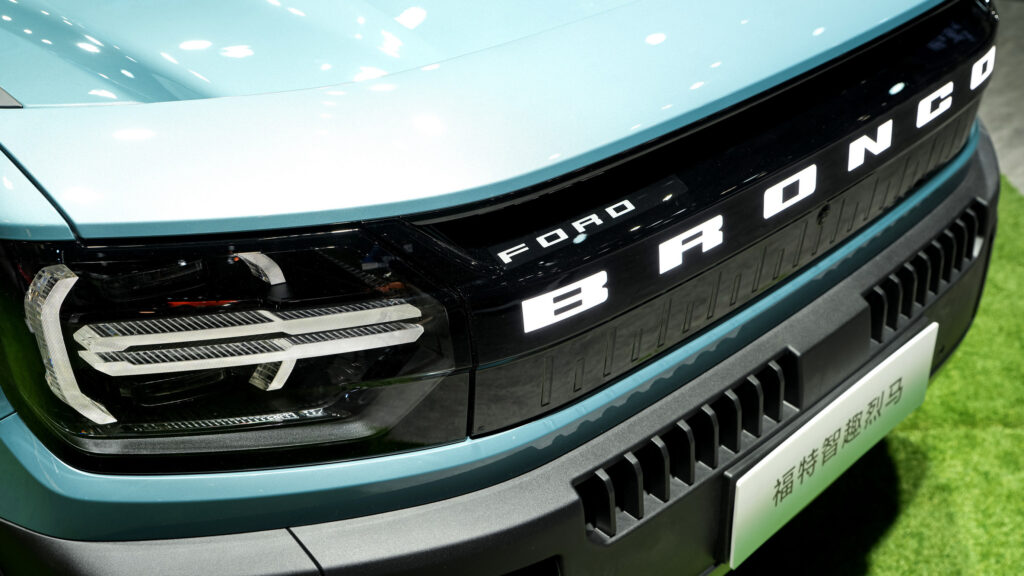
Known as the Ford Bronco Basecamp, or Bronco New Energy, this model is the result of Ford’s joint venture with Jiangling Motors Corporation (JMC). It’s styled like a mash-up of the full-size US Bronco and the more compact Bronco Sport, yet it’s larger than both.

Importantly, unlike the Bronco sold stateside, Ford will build the Bronco Basecamp in right-hand drive configuration. According to the team from Wheelsboy, it will be exported to markets like Australia, as well as throughout Southeast Asia, the Middle East, and South America.

A New Angle on the Bronco

 Australia And Other Markets Might Finally Get A Bronco, Just Not The One You Expect

Unlike the American Bronco, which sits on a ladder-frame chassis, the Chinese version uses a unibody construction. That suggests it won’t be quite as competent in hardcore off-road situations, though it could be more agreeable on sealed roads.

And it’s no small thing, literally, as it measures 5,025 mm in length, or just over 197 inches, which makes it 101 mm longer than the Ford Everest already sold in Australia.

This shift in construction doesn’t just affect handling. It also reflects a different sort of appeal, likely aimed at buyers who want rugged looks with more livable day-to-day driving dynamics. As such, it feels less like a direct rival to traditional 4x4s and more like a large SUV with outdoorsy credentials.

EV And Range-Extender Power

\\\\\\\\\\

The powertrains are particularly interesting. All-electric versions of the Bronco Basecamp are equipped with a sizeable 105.4 kWh battery pack and two electric motors that combine to deliver 445 hp and 424 lb-ft (575 Nm) of torque. This gives it more horsepower than the ICE-powered Bronco Raptor, and almost as much torque.

In China, the Bronco Basecamp is also available as a range-extender, featuring a 1.5-liter turbocharged four-cylinder engine with two electric motors and a 43.7 kWh battery pack. It delivers a combined 416 hp and 442 lb-ft (600 Nm), all while being able to travel up to 220 km (137 miles) on a single charge.

It’s not yet clear if Ford could bring both of these powertrain options to Australia, or if it’ll limit the range to just one. While this won’t be the American Bronco that many locals have been clamoring for, it could be the next best thing.

\\\\\\\\\\\

China’s First-Time Buyers Just Flipped The Script On What Cars They Want

  • Nearly half of new buyers are leaning toward a single drivetrain.
  • Overall demand shows a striking shift compared to early 2024.
  • Traditional engines still draw attention despite market changes.

China’s electric vehicle market isn’t just growing, it’s evolving faster than most can process. With new models rolling out at breakneck speed, the country’s automakers aren’t simply keeping pace with global trends, they’re driving them.

And they’re not building EVs in a vacuum either. Domestic demand, especially among younger and first-time buyers, is pushing the shift forward.

Read: Forget EVs, China’s Dumping Millions Of Gas Cars On The Rest Of The World

It turns out, more of these buyers are now leaning electric than ever before. A recent study conducted by Bloomberg Intelligence has revealed that 47 percent of prospective first-car buyers in the country plan to buy an EV within the next 12 months. This represents a massive spike from the 25 percent in February.

Widen the scope to include all prospective car buyers in the country, and the trend holds. A full 52 percent now say they intend to make their next vehicle an EV, compared to 34 percent back in both February and March 2024.

 China’s First-Time Buyers Just Flipped The Script On What Cars They Want

Interest in extended-range EVs, those that offer additional miles from an onboard generator or similar tech, is also gaining ground. As of the latest figures, 8 percent of surveyed buyers said they’d consider one for their next purchase.

Interestingly, the Bloomberg survey also found that plug-in hybrids are losing ground fast. Just 12 percent of respondents now say they’re considering one for their next car, a steep drop from 23 percent in February.

Conventional hybrids have slipped even further. Once viewed as a sensible middle option, their share has fallen from 15 percent in February to just 9 percent by November.

Demand for traditional combustion-engine cars hasn’t disappeared though, which comes as somewhat of a surprise. 19 percent said they’d opt for an ICE model for their next car. Admittedly, just 1,000 people participated in the survey, so it’s hard to make definitive conclusions based on this small sample size.

What’s Behind the Surge?

 China’s First-Time Buyers Just Flipped The Script On What Cars They Want
GWM Ora

According to Bloomberg Intelligence analyst Joanna Chen, the competitive prices of EVs in China have contributed to the exceptionally strong demand for them.

“The country beats Europe and the US with battery electric vehicles already reaching price parity versus gasoline cars, while consumers’ strong interests in advanced tech features give local startups and tech giants Huawei Technologies Co. and Xiaomi Corp. stronger edge in the fierce market competition,” she said.

 China’s First-Time Buyers Just Flipped The Script On What Cars They Want

Porsche Vibes Are Strong In This Chinese SUV Coming To Europe

  • GWM’s Ora 5 has been spotted testing in Europe.
  • The crossover is slightly larger in size than an EV3.
  • Single, front-mounted electric motor makes 201 hp.

The new Ora 5 has been spotted out in the wild and covered in disguise, but it wasn’t cruising around China at the time. The electric crossover was caught testing on European roads, confirming that Great Wall Motor is preparing to launch the its first SUV outside its home market.

And yes, that’s the same Ora that got under Volkswagen’s skin a few years ago with the Punk Cat, a car that looked like a mashup of the classic and modern Beetle. This time, the design direction is different, but you’ll still find yourself thinking about certain Porsche models, particularly the Macan and 911.

Review: Great Wall’s Haval H6 Promises Refinement But Trips Over Its Own Power

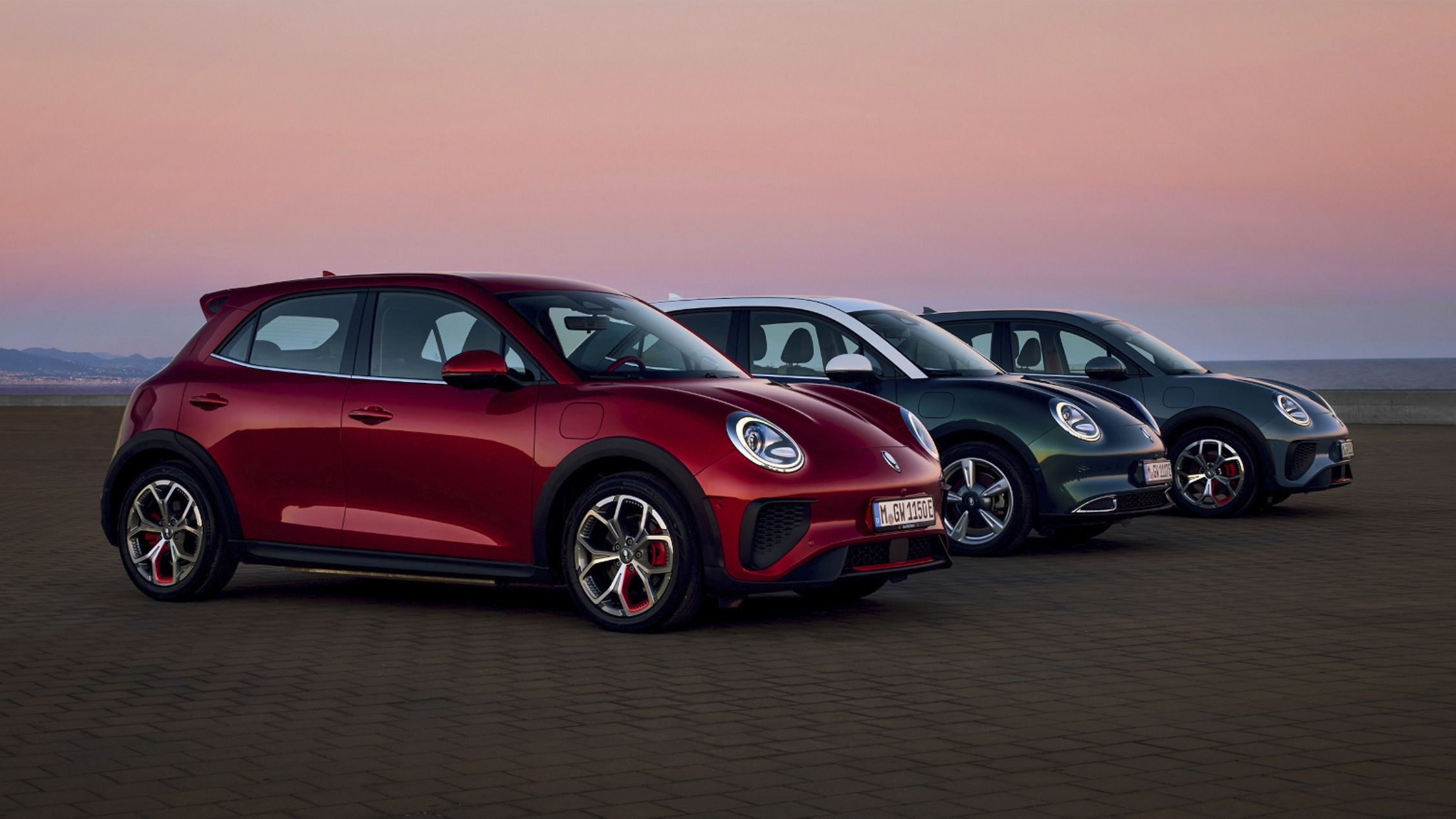
If the shape under the camouflage looks vaguely familiar that is because the Ora 5 shares plenty of design ideas with the little Ora 3, which was previously known as the Funky Cat in Europe, and goes by Good Cat in China and GWM Ora in Oz.

Imagine an Ora 3 fed a diet of protein shakes and roof rails and you’ve got a solid handle on the 5’s look.

The rounded lighting signatures are still there, as is the smooth surfacing that has become something of an Ora trademark. Even wrapped up, the car looks friendlier than most compact SUVs, which is very much the point. Ora wants cute but practical, not angry and aggressive.

Already Unveiled in China

 Porsche Vibes Are Strong In This Chinese SUV Coming To Europe

Don’t bother straining too hard to make out the final design, though. Ora has already revealed the 5 in full in Asia and we’ve included pictures of that at the bottom of the post so you can get a fuller idea of what to expect when European sales start in 2026.

Tough competition

\\\\\\\\\\\

SH Proshots

We also know from the earlier static launch that the 5 measures just under 4,500 mm (177 inches) long and has a 2,720 mm (107.1 inches) wheelbase, putting it squarely in the heart of Europe’s most competitive EV segment.

That means it will be lining up against everything from the BYD Atto 3 and Peugeot e-2008 to the Kia EV3 when it finally lands.

Under the skin the Ora 5 uses a single electric motor producing 201 hp (204 PS / 150 kW) paired with an LFP battery. Capacity has not been officially confirmed, but Car News China suggests 63.87 kWh and 83.49 kWh options are likely since that’s what’s offered in the mechanically similar Lightning Cat sedan.

Screen-Heavy Interior

\\\\\\\\

Inside it borrows heavily from the facelifted Good Cat/Ora 3, including a big, floating infotainment screen running GWM’s Coffee OS and featuring some climate functions built into the display.

But you still get a few physical toggles further down the console for key controls, while a two-spoke steering wheel, 10-inch digital cluster, wireless phone charging and ambient lighting round out the cabin upgrades.

For Europe, the timing makes sense. Ora has already dipped its toe into several markets with mixed success and the brand badly needs a volume product that fits current tastes. A small electric crossover like this could really help Ora make its mark.

\\\\\\\\\\\\\\\\\\\\

Auto Home

Jim Farley Warns Europe It’s Selling Its Future To Chinese Carmakers

  • Jim Farley wants EV rules aligned with real customer demand.
  • Ford’s CEO says Europe’s EV share has stalled at 16 percent.
  • Farley warns Chinese brands could soon dominate the market.

Not long after carmakers caught a break from former US President Donald Trump, who relaxed stringent fuel economy standards, Ford chief executive Jim Farley has written an op-ed urging the European Union to adopt more pragmatic EV targets. Without them, he warns, the region could be swallowed up by fast-moving Chinese entrants.

Read: Ford’s Jim Farley Was “Shocked” After Tearing Down Chinese And Tesla EVs

In a Financial Times op-ed, Farley accuses European policymakers of crafting unrealistic regulations, only to revise them late in the year, creating what he calls a “recipe for turmoil.”

Ford’s CEO argues this approach costs automakers billions in investment by interrupting the “complex cycle of product design, engineering, and supply chains.”

A New Approach is Needed

While speaking in the White House last week, Farley noted that Biden-era policies were unreasonable and not in line with consumer demand. He’s drawn a direct comparison to the situation in Europe, pointing out that EV market share across the EU has stalled at around 16 percent, well short of Brussels’ 25 percent goal for 2025.

“The approach to regulation – mandate it and they will buy it – has failed,” he writes. “We must align carbon targets with actual market adoption and provide automakers with a realistic and reliable 10-year horizon. This includes giving consumers the option to drive hybrid vehicles for longer, bridging the gap rather than forcing a leap to EVs they aren’t ready to take.”

 Jim Farley Warns Europe It’s Selling Its Future To Chinese Carmakers

Farley also notes that Europe’s automakers have already poured hundreds of billions into electrification. In return, he believes governments need to step up with serious purchase incentives and support for charging infrastructure that goes well beyond affluent urban neighborhoods.

China Looms Large

The Blue Oval’s boss isn’t just concerned with government policy. He’s also keeping a close eye on the momentum of Chinese automakers. With massive overcapacity and a strong foothold in battery tech, China is now in a position to flood the European market. Over the past year alone, Chinese EV brands have doubled their market share in the region.

“EU vehicle production is now 3mn units below pre-Covid levels,” Farley notes. “Plants are going dark. In 2024 alone, 90,000 jobs in the automotive industry evaporated. These are the kinds of jobs that sustain European social stability”.

This isn’t a hypothetical threat. Farley argues that a combination of subsidized Chinese EVs and rigid carbon mandates could upend the local industry faster than policymakers anticipate.

“To be clear, the industry is not asking for a bailout,” he adds. “We are not asking for protectionism to shield inefficiency. At Ford, we will continue to do the hard work of restructuring. We have closed legacy facilities, reduced our workforce and slimmed down costs to become more agile….But if Europe wants to avoid becoming a museum of 20th-century manufacturing, we need an urgent reset and a long-term plan.”

“This is not a transition,” he warns. “It’s more like a wind-down of Europe’s automotive industry.”
Without immediate course correction, Farley argues, Europe’s industrial backbone could slip into long-term decline.

 Jim Farley Warns Europe It’s Selling Its Future To Chinese Carmakers

Source: Financial Times

❌