Reading view

There are new articles available, click to refresh the page.

School Bus Driver Credited with Protecting Students from Falling Tree

A school bus driver is being credited with protecting 14 children and three adults after a large pine tree fell onto their bus as they traveled through Newbury, New Hampshire, reported Valley News.

Jesse Aiken was reportedly driving children enrolled in Claremont’s Red and Blue Project, a district leadership program for incoming sixth graders, Wednesday afternoon when the incident occurred.

Aiken said he was traveling about 50 mph on Route 103 near Todd Lake when he noticed a pine tree moving alongside the road. He initially thought wind was causing the movement but realized the surrounding trees were still.

“My first reaction was to hit the brakes,” Aiken told local news reporters. “Then I’m thinking, I can’t stop in time.”

With only seconds to react, Aiken reportedly accelerated in hopes of passing beneath the falling tree. The tree, which he estimated was more than 100 feet tall, struck the rear portion of the bus roof and briefly lifted the vehicle’s front wheels from the roadway.

The impact reportedly caused significant damage to the bus, but no one sustained serious injuries. Claremont Police Chief Brent Wilmot said he did not believe anyone was transported by ambulance. He described the injuries as minor and caused by occupants being jostled during the impact.

Aiken slowed the bus and stopped safely. Its windshield was splintered but remained intact. School Resource Officer Crystal Simonds, who runs the leadership program, called 911 and contacted parents. Counselors Paige Simonds and Vicky Bonneau also assisted the students as Newbury volunteer rescue personnel responded.

Aiken praised the children, ages 10 and 11, for remaining calm and staying in their seats despite becoming emotional. Many parents arrived and reunited with their children at the scene. A second bus transported the remaining students back to Claremont.

Superintendent Tim Broadrick lauded Aiken’s “decisive and quick actions” and recognized Crystal Simonds and Wilmot for their “calm response and leadership.” Aiken stated that accelerating likely prevented the tree from striking the front of the bus more directly.

“You want to make sure everyone is safe,” he said.

Written with the Assistance of AI.


Related: ‘Hometown Hero’ Honored for Behind-the-Scenes Service, Dedication in West Virginia Student Transportation
Related: ‘Hero’ Teacher Praised by Parent Florida School Bus Crash Evacuation
Related: Life-saving Trio Honored for Life-Saving Actions During School Bus Emergency
Related: Minnesota School Bus Driver Hailed Hero for Avoiding Head-On Crash With Semi

The post School Bus Driver Credited with Protecting Students from Falling Tree appeared first on School Transportation News.
Ford’s New $30K EV Truck Barely Clears An Expedition’s Shoulder

  • Ford’s upcoming $30k electric truck was spotted testing in Dearborn.
  • Prototype sits noticeably lower than a Ford Expedition Max.
  • The compact pickup rides on Ford’s new in-house EV architecture.

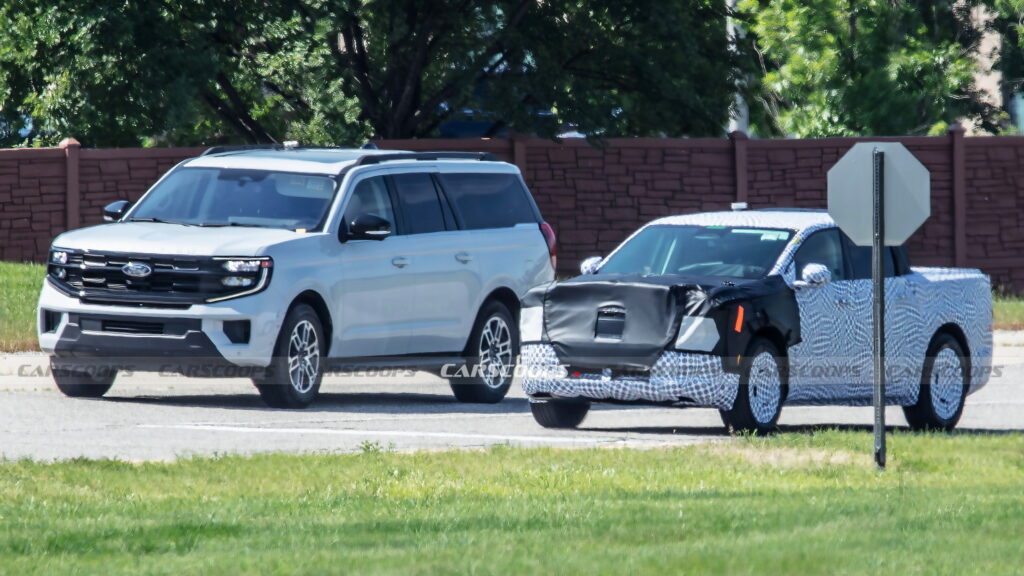
Ford’s highly anticipated, affordable electric truck is still working through development testing ahead of its debut next year, and our spy photographers have sent over fresh shots from Dearborn that put the compact pickup right next to a full-size SUV for scale. The result tells you a lot about how small this thing really is, especially when compared to the Blue Oval’s other truck offerings.

More: Jim Farley Says It Took Ford Four Years To Finally Get Its Quality Issues Under Control

The camouflaged prototype got a brief escort from a Ford Expedition Max, and the pairing does the truck no favors. At 221.9 inches (5,636 mm) long and 78 inches (1,981 mm) tall, the giant SUV makes the pickup look like a car with a bed bolted on. The EV’s low roofline barely clears the Expedition’s shoulder line. There’s a good reason for that.

A Roofline Shaped by the Spreadsheet

\\\\\\\

Baldauf

Ford’s designers poured their attention into aerodynamic efficiency, chasing every bit of range so the truck can get away with a smaller, lighter battery. In an earlier video, the company walked through the math, noting that adding 1 mm (0.04 inches) to the roof height would cost $1.30 more in battery or trim 0.055 miles off the range, which explains why the roofline sits where it does.

Beyond the low roof, the model has a steeply raked windshield, smaller mirrors, low-resistance Michelin E Primacy tires, an integrated roof spoiler, and cross-shaped aero wheel covers measuring 19 inches across. All of it adds up to what Ford claims is 15% better aerodynamics than “any other pickup truck on the market today,” including the similarly sized Maverick.

Retro Cues Hiding Under Playful Camouflage

\\\\\\

Baldauf

Ford’s engineers have stuck chunks of camouflage onto the front end to disguise its shape, and the production version is expected to wear a lower, more rounded nose than what the prototype shows.

More: Ford Asked AI To Build Better Cars, Then Rehired Humans To Fix What AI Broke

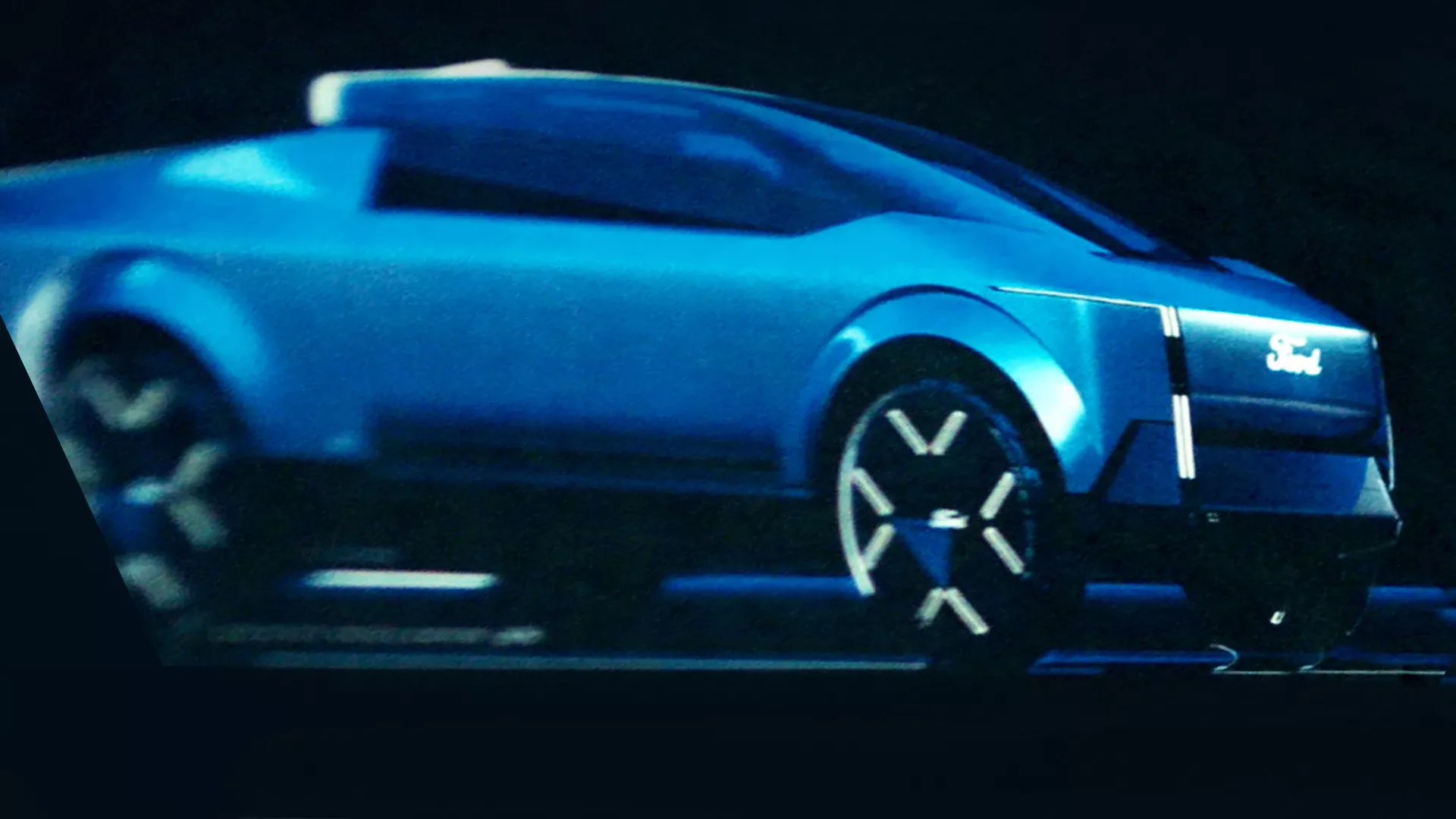
The droopy headlights sit low enough to suggest Ford might be dusting off the design language of the second-gen F-Series from the 1950s, a look it already leaned on for the mid-2000s and early-2010s Mustangs. Then again, these might be placeholder units, since earlier teaser sketches pointed toward a more futuristic take on the lighting signature.

\\

Baldauf

The spy shots also give us a glimpse inside the cabin, where a large free-standing infotainment display dominates the dash. The new camouflage wrap comes into view too, scattered with graphics of a dog, a sailboat, a soccer ball, a heart, a flower, a motorcycle, and plenty more.

A Clean-Sheet Architecture

\\\\\\

Baldauf

Underneath, the pickup rides on Ford’s new Universal EV platform, developed in-house by a dedicated skunkworks team. The architecture leans on large aluminum unicastings for a 27% weight advantage over rivals, and it cuts parts by 20%, fasteners by 25%, and factory workstations by 40%. It also runs a simplified 48-volt low-voltage system with a wiring harness that comes in 4,000 feet (1,219 meters) shorter and 10 kg (22 lbs) lighter than the harnesses in Ford’s first-generation EVs.

More: Ford CEO Suddenly Reopens The Door To A New Falcon Ute

\\\\

Baldauf

Ford hasn’t said anything yet about the electric motors or the battery pack. What we do know is that the truck will use a cost-effective Lithium Iron Phosphate (LFP) battery, which is how Ford plans to hold the starting price near the $30,000 mark.

More details should surface over the coming months as the 2027 debut draws closer. Earlier reports suggest the model could revive the historic Ranchero nameplate, though Ford hasn’t confirmed anything on that front.

 Ford’s New $30K EV Truck Barely Clears An Expedition’s Shoulder
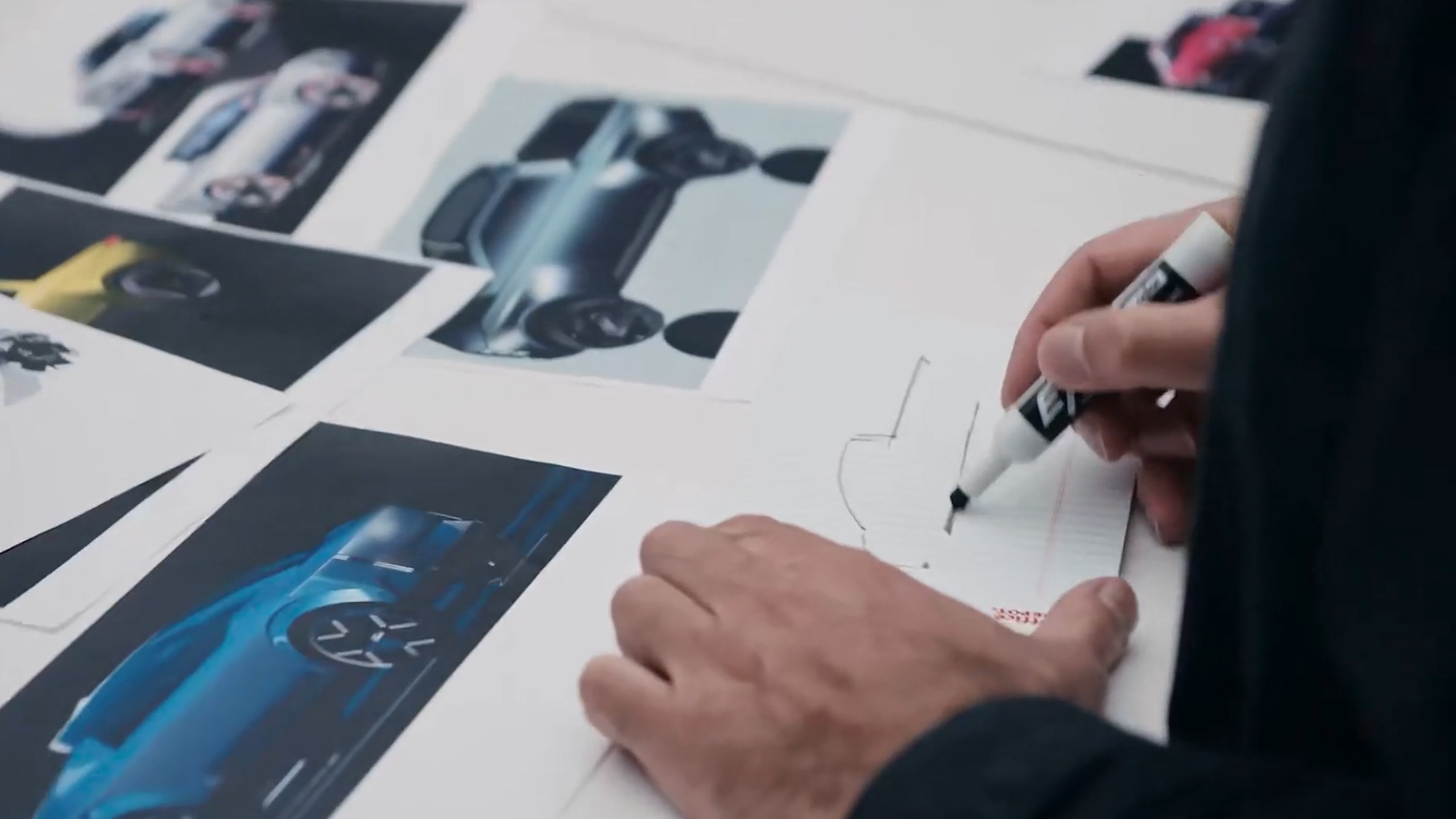
Official sketches of a futuristic truck shared on an earlier teaser.
 Ford’s New $30K EV Truck Barely Clears An Expedition’s Shoulder

Ford

❌