President Donald Trump speaks during a press briefing at the White House Feb. 20, 2026, in Washington, D.C., after the U.S. Supreme Court ruled against his use of emergency powers to implement international trade tariffs. Also pictured on stage, left to right, are Solicitor General John Sauer and Secretary of Commerce Howard Lutnick. (Photo by Kevin Dietsch/Getty Images)
WASHINGTON — Senate Democrats sent a letter to Treasury Secretary Scott Bessent on Friday demanding the administration refund businesses that paid tariffs to import goods into the United States under authority the Supreme Court has ruled the president never held.
“The American people — small business owners, importers, manufacturers, and the consumers who ultimately bore the cost of these illegal taxes — deserve better than this stonewalling,” the group wrote. “This money does not belong to the federal government. It belongs to the businesses and individuals you illegally taxed.”
The Supreme Court ruled on Feb. 20 that President Donald Trump wrongly instituted tariffs under the International Economic Emergency Powers Act, writing “that IEEPA does not authorize the President to impose tariffs.”
Trump held a press conference later that day declaring he would institute tariffs under other authorities that he and members of his administration believe Congress has granted the president. But he didn’t give a clear answer about whether the federal government would refund the businesses that paid IEEPA tariffs.
“They take months and months to write an opinion, and they don’t even discuss that point,” Trump said at the time. “I guess it has to get litigated for the next two years.”
Senate Democrats’ letter says the Trump administration “collected over $130 billion in illegal taxes and then refused — with a smile and a shrug — to give it back.”
Democrats wrote in the letter the administration must tell U.S. Customs and Border Protection “to begin processing automatic refunds for all tariffs and customs duties unlawfully collected under IEEPA since January 20, 2025.”
The Trump administration, they wrote, should release a timeline within 90 days for when it would begin those refunds.
The letter was signed by Senate Minority Leader Chuck Schumer, Whip Dick Durbin, Maryland Sen. Angela Alsobrooks, Connecticut Sen. Richard Blumenthal, Delaware Sens. Chris Coons and Lisa Blunt Rochester, Illinois Sen. Tammy Duckworth, New York Sen. Kirsten Gillibrand, Colorado Sens. Michael Bennet and John Hickenlooper, Hawaii Sen. Mazie Hirono, Virginia Sens. Tim Kaine and Mark Warner, New Jersey Sen. Andy Kim, Minnesota Sen. Amy Klobuchar, New Mexico Sen. Ben Ray Luján, Oregon Sens. Jeff Merkley and Ron Wyden, Rhode Island Sens. Jack Reed and Sheldon Whitehouse, Nevada Sen. Jacky Rosen, California Sens. Adam Schiff and Alex Padilla and Georgia Sen. Raphael Warnock.
The Treasury Department did not respond to a request for comment.
Vice President JD Vance speaks in Plover, Wisconsin on Feb. 26, 2026 | Screenshot via The White House
Vice President JD Vance did not utter the word “tariffs” a single time during his upbeat speech at a Plover, Wisconsin, machining plant Thursday. The visit, aimed at shoring up vulnerable Republican U.S. Rep. Derrick Van Orden ahead of the 2026 midterms, was part of a post-State of the Union victory lap Vance is taking to market the so-called Golden Age of prosperity President Donald Trump claims he and the Republicans have delivered to rural and blue-collar voters.
It’s a tough sell.
The latest Marquette University Law School poll, released the day before Vance parachuted into Wisconsin, shows Trump hitting a second-term low with Wisconsin voters, with 44% saying they approve of the job he’s doing and 54% saying they don’t approve. Across partisan affiliations, the rising cost of living is voters’ No. 1 concern, while 55% of respondents told pollsters tariffs are hurting Wisconsin farmers. Manufacturers are not happy, either.
“I can tell you from my experience running our company, from everyone I talk to in my networks — 95% of people in manufacturing — 99% do not support the tariffs,” said Sachin Shivaram, CEO of Wisconsin Aluminum Foundry, a Wisconsin-based company with locations across the Midwest.
Shivaram spoke on a press call with Wisconsin Sen. Tammy Baldwin ahead of Vance’s speech Thursday. Many business owners, he said, are afraid to publicly share their criticisms of the Trump administration. When he meets other leaders of manufacturing companies in boardrooms, he said, “It’s like, look, we can’t say anything about how dumb the tariff policy is, because we’re going to be the next one whacked on X.” But, he added, “it’s costing all of them, all of us, a lot of money.”
Tariffs have caused “chaos and uncertainty” for businesses, agreed Kyle LaFond, owner and founder of American Provenance and Natural Contract Manufacturing, a small business that makes personal care products. “Last year, when these tariffs were first instituted, I absorbed those costs as much as possible. I did that for about eight months,” LaFond said. “But that is not a sustainable business practice.” Ultimately, he said, businesses have to pass along the cost to their customers: “Tariffs are just attacks on the American consumer.”
Trump 's failure to deliver the economic miracle he advertised, along with devastating cuts to health care and the safety net, pose a looming problem for Republicans ahead of the midterms. The solution they’ve hit on is a combination of bluster, bullying and straight up lies.
There’s a reason slim majorities of Wisconsin voters chose Trump in 2016 and 2024. Vance put his finger on it in his speech at the Republican National Convention in Milwaukee. “When I was in the fourth grade, a career politician by the name of Joe Biden supported NAFTA, a bad trade deal that sent countless good jobs to Mexico.”
Wisconsin manufacturing workers and farmers suffered tremendously from global trade deals. Democrats and Republicans alike brushed aside their pain and tried to tell them that the booming stock market and increasing corporate profits were worth the crashing prices and job losses. Never mind the communities ruined and all the families that fell out of the middle class.
Trump and Vance spoke to those voters. In his convention speech, Vance cleverly tied global trade deals supported by both political parties to immigration.“Now, thanks to these policies that Biden and other out-of-touch politicians in Washington gave us,” he said, “our country was flooded with cheap Chinese goods, with cheap foreign labor.”
But the immigrants who make up 70% of the labor force on Wisconsin dairy farms did not drive the collapse of Wisconsin’s small-farm economy. They, too, were displaced by globalization that drove down prices and accelerated a “get big or get out” economy that has taken a heavy toll on working people on both sides of the border. The arrival of immigrants willing to work long hours for low pay on farms that were forced to expand rapidly to stay afloat was a blessing to farmers who simply couldn’t find American workers to fill those jobs.
Today’s increasingly virulent, demagogic attacks on those hardworking immigrants should make everyone queasy.
Alex Jacquez, a former White House economic official in the Biden administration who also worked for Sen. Bernie Sanders’ 2020 presidential campaign, sees Vance’s rise as a big win for the populist right. Vance’s criticism of global trade deals that hollowed out American manufacturing, and his appeal to the “forgotten” American workers who have never recovered from outsourcing, struck a nerve with voters across the industrial Midwest.
“But I think the question is whether the actual policies put forward are having the outcomes that they intend here,” Jacquez said in a phone interview Thursday.
Trump ‘s failure to deliver the economic miracle he advertised, along with devastating cuts to health care and the safety net, pose a looming problem for Republicans ahead of the midterms. The solution they’ve hit on is a combination of bluster, bullying and straight up lies.
In his Plover speech, Vance doubled down on Trump’s scapegoating of immigrants and Democrats in the State of the Union. Following up on Trump’s racist characterization of the entire Somali immigrant community in Minnesota as “pirates” responsible for plundering public aid, Vance blamed “‘illegal aliens” for fraud in public benefits programs and voting. He brought up Trump’s lurid descriptions of crimes committed by immigrants and, like Trump, excoriated Democrats for not standing up and cheering as the president subjected grieving parents to a gory rehash of violent attacks on their children.
The reason Democrats didn’t stand up during Trump’s speech, Vance suggested, is that “they answer to people who have corrupted this country. They answer to people who opened the border. They answer to people who got rich off of illegal immigrant labor. … We want American workers to get rich for working hard, not illegal aliens.”
Today’s increasingly virulent, demagogic attacks on those hardworking immigrants should make everyone queasy.
Sucker-punching Democrats on immigration was a goal of the State of the Union speech. And Republicans will keep on punching. Their sanctimonious horror at the very idea of their colleagues not standing up and cheering for the victims of violent criminals is a way of changing the subject away from the spectacle of masked federal immigration agents spreading murderous mayhem in Midwestern neighborhoods, and, of course, the fact that none of this is making American workers better off.
As Jacquez pointed out, “Certainly Trump has cracked down on immigration, but that doesn’t seem to be redounding to the benefit of native-born workers. We’ve seen the unemployment rate creep up even while fewer immigrants are working these days on the manufacturing side.”
“We lost manufacturing jobs in every single month of 2025,” he added. “There has been no resurgence whatsoever in actual people getting jobs in manufacturing and, in fact, in many sectors, some of the trade policies that Trump has advanced have been actively harmful.”
At the end of his speech, Vance took questions from local media that reflected the immediate concerns of voters in western Wisconsin.
What can his administration do to stop the closure of rural hospitals that are creating a health care desert in the district he was visiting?
Vance blamed the problem on the Biden administration, although rural hospital closures did not begin under Biden and are severely exacerbated by Medicaid cuts under Trump. Vance also claimed the Trump administration is now turning things around with the rural hospital fund included in the “Big Beautiful Bill Act” — $200 million of which was awarded to Wisconsin in December.
Derrick Van Orden also pumped the rural hospital fund in remarks ahead of Vance’s speech, saying it’s “just a lie” that Democrats care about rural health care, because they didn’t vote for the massive tax- and spending-cut bill that contained the rural health care fund.
KFF projects the fund will only make up for about one-third of the Republicans’ cuts to Medicaid in rural areas. And that offset is temporary. The rural health fund expires in five years. In Wisconsin, meanwhile, 250,000 people are losing their health care coverage because of the Medicaid cuts and changes to the Affordable Care Act passed by Republicans. Those losses are concentrated in rural areas, and have a cascading effect on rural hospitals and entire rural economies.
Van Orden, who has spent his whole political career calling for the elimination of the Affordable Care Act, reversed course and voted with Democrats to extend ACA subsidies last month — right after voting to block the same measure when Democrats brought it up the day before.
In answer to a question on the health care worker shortage and the aging population of rural Wisconsin, Vance took a swipe at college students who major in women’s studies. The Trump administration — which has focused on repealing a pandemic-era pause on student loan repayment, resumed garnishing the wages of student debtors and imposed less affordable repayment plans — wants to make it easier for people to study to become doctors and nurses without getting “layered up with debt,” Vance declared.
Will the Trump administration withhold Medicaid money from Wisconsin as it recently announced it will do to Minnesota, as punishment for the state’s refusal to hand over the sensitive, personal information of food assistance recipients and of voters?
In answer to that question, Vance said it was outrageous that Wisconsin Gov. Tony Evers and the Wisconsin Elections Commission have refused to hand over the data Trump is demanding, and left the open the option of withholding federal Medicaid money, saying Democrats “like to cheat” in “voter rolls and welfare rolls.”
Asked about farmers facing wildly fluctuating commodity prices, Vance celebrated the administration’s success in getting China to open up its market to U.S. soybeans. That’s a head-scratcher, since China was purchasing about half of all U.S. soybeans a year ago, before it stopped amid a trade war caused by Trump’s tariffs. That was a big problem for Wisconsin farmers who were suddenly stuck sitting on a bumper soybean crop after losing their biggest buyer. Even with the new deal, those farmers will not be made whole, Darin Von Ruden, president of the Wisconsin Farmers Union, told Wisconsin Public Radio, and China has now found new markets, setting up a long-term business loss.
Among Vance’s many preposterous claims, perhaps the most incredible was the picture he tried to paint of a caring, empathetic Trump, who wakes up every morning asking what he can do to solve the problems of the American people. Do even Trump’s supporters buy the idea that the man who made $4 billion off the presidency after just one year in office is driven by selfless concern for the needs of others?
On one occasion, Vance said, during a discussion of the soaring stock market, Trump asked earnestly what could be done for people who don’t own any stocks. The answer, he said, was Trump’s brilliant plan to give low-income workers a $1,000 federal match for retirement. That idea was actually signed into law by Biden four years ago.
Asked for his further ideas for investing in rural communities, Vance said his administration will mostly “just listen” to voters. He held up Van Orden as the administration’s point man for keeping in touch with constituents in rural Wisconsin. Unfortunately, Van Orden is so notorious for avoiding in-person contact with voters, Democrats have made a regular practice of visiting his district to hold town halls from which he is reliably, notably absent.
The claim that either he or the Trump administration is concerned about solving the problems of Wisconsin voters is the biggest lie of all.
Republican lawmakers have heard farmers’ concerns about President Donald Trump’s tariff agenda. Their response? Short-term pain, long-term gain.
Farmers faced a shrunken export market and operating costs after Trump enforced steep tariffs on key trading partners and farm materials last year. In response, the Trump administration will begin disbursing a $12 billion bailout to farmers due to “unfair market disruptions” at the end of this month.
Republican lawmakers from Wisconsin, a major agricultural producer, acknowledge the 2025 to 2026 crop season challenges, which resulted in an estimated $34.6 billion in losses for the industry, according to the American Farm Bureau Federation. But they’re arguing that the success of specialty crops and rosier-than-expected economic indicators are evidence farmers can withstand any turmoil the tariffs have caused.
“Our farmers understand that we have to level the playing field. And how do you do that? You do that with these tariffs,” U.S. Rep. Derrick Van Orden said. “In order to get to the long term, you have to get through the short term, and that’s the reason that this money’s going back to people in the agriculture industry.”
A bipartisan group of agricultural experts said the Trump administration’s policies have “significantly damaged” the American farm economy in a letter to Senate Agriculture Committee leadership this month, as first reported by The New York Times.
“It is clear that the current Administration’s actions, along with Congressional inaction, have increased costs for farm inputs, disrupted overseas and domestic markets, denied agriculture its reliable labor pool, and defunded critical ag research and staffing,” they wrote.
Wisconsin agriculture experts told NOTUS the administration’s bailout is undesirable and insufficient to cover many farmers’ lost revenue this year.
“They don’t solve the long-run problem of higher input costs and low prices; they are a Band-Aid to get us through this short-term problem,” said Paul Mitchell, the director of the Renk Agribusiness Institute at the University of Wisconsin-Madison.
Agriculture professor and economist Steven Deller, also of the University of Wisconsin-Madison, had a similar view.
“We’re hemorrhaging thousands and thousands and thousands of dollars, and they’re giving us pennies,” Deller said, adding that farmers want “fair markets” and a “level playing field.”
Republicans in the state, however, are standing behind the president’s agenda, pointing to the administration’s stated goal to boost the manufacturing industry through baseline tariff rates for all countries, reciprocal tariffs and tariffs on goods from Canada and Mexico.
“Wisconsin, at the end of the day, is going to benefit as we bring manufacturing back to the state,” said U.S. Rep. Tom Tiffany, the likely GOP nominee for governor.
He blamed the North American Free Trade Agreement for sending manufacturing companies packing for cheaper operations in China. Trump replaced NAFTA during his first term in office with the United States-Mexico-Canada Agreement — a deal Tiffany applauded.
Trump administration officials have defended tariffs in cable television appearances and in congressional hearings as key to transforming the American economy, even as some agricultural industries languish. At a Senate Banking Committee hearing earlier this month, Democratic Sen. Tina Smith of Minnesota pressed Treasury Secretary Scott Bessent on whether instability in the agricultural markets is a result of Trump’s tariff policies.
“It has nothing to do with the tariffs,” Bessent said.
Still, there are some signs the administration could be responsive to the backlash. The Trump administration is planning to roll back tariffs on some steel and aluminum goods due to concerns the tariffs are hurting consumers, the Financial Times reported.
The soybean industry is one of the hardest hit by tariffs, which temporarily cost farmers the U.S.’ largest soybean trading partner, China. Although China fulfilled its initial purchase agreement last month and has agreed to purchase tens of millions more metric tons over the next few years, American soybean producers withstood an unprecedented five consecutive months without purchases by China.
This story was produced and originally published by Wisconsin Watch and NOTUS, a publication from the nonprofit, nonpartisan Allbritton Journalism Institute.
President Donald Trump speaks during a press briefing at the White House Feb. 20, 2026 in Washington, D.C., after the U.S. Supreme Court ruled against his use of emergency powers to implement international trade tariffs. Also pictured on stage, left to right, are Solicitor General John Sauer and Secretary of Commerce Howard Lutnick. (Photo by Kevin Dietsch/Getty Images)
WASHINGTON — President Donald Trump said Friday he plans to keep tariffs in place using different authorities after the Supreme Court ruled he exceeded his power under the International Economic Emergency Powers Act.
During the afternoon press conference in the White House briefing room, Trump repeatedly criticized the six justices who wrote “that IEEPA does not authorize the President to impose tariffs.”
“The Supreme Court’s ruling on tariffs is deeply disappointing and I’m ashamed of certain members of the Court, absolutely ashamed, for not having the courage to do what’s right for our country,” he said.
Trump’s disdain of Chief Justice John Roberts as well as Justices Amy Coney Barrett, Neil Gorsuch, Ketanji Brown Jackson, Elena Kagan and Sonia Sotomayor did not stop there.
He said the justices’ opposition to his tariff policies meant they were a “disgrace to our nation” as well as “unpatriotic and disloyal to our Constitution.”
Justices Clarence Thomas and Brett Kavanaugh wrote dissenting opinions. Justice Samuel Alito and Thomas joined Kavanaugh’s dissent.
Trump appointed Barrett, Gorsuch and Kavanaugh during his first term.
But, Trump said, the ruling would not change the tariffs he has implemented under IEEPA since he planned to institute the same tax on goods coming into the country under different laws.
“The good news is that there are methods, practices, statutes and authorities as recognized by the entire Court in this terrible decision, and also as recognized by Congress, which they refer to, that are even stronger than the IEEPA tariffs available to me as president of the United States,” he said.
Trump said he would sign an order later in the day to “impose a 10% global tariff under Section 122, over and above our normal tariffs already being charged.”
Trump didn’t commit to returning the tens of billions of dollars the U.S. government has collected from IEEPA tariffs, saying the ruling didn’t address that issue.
“They take months and months to write an opinion, and they don’t even discuss that point,” Trump said. “I guess it has to get litigated for the next two years.”
Trump said he didn’t plan to ask Congress to pass any new laws or give the president broader tariff authority.
“I don’t have to. I have the right to do tariffs. And I’ve always had the right to do tariffs. It has all been approved by Congress, so there’s no reason to do it,” he said. “All we’re doing is we’re going through a little bit more complicated process, not complicated very much, but a little more complicated than what we had. And we’ll be able to take in more tariffs.”
Trump is set to address a joint session of Congress, which will likely be attended by many, if not all, of the Supreme Court justices, on Tuesday night.
Trump said he “couldn’t care less” whether the justices attend the speech, which is held in the House chamber. He said they are “barely” still invited, even though the president, who leads the executive branch, doesn’t hold the authority to exclude guests from either chamber of Congress, which makes up the separate but equal legislative branch.
The U.S. Supreme Court on Oct. 9, 2024. (Photo by Jane Norman/States Newsroom)
WASHINGTON — The U.S. Supreme Court dealt a major blow to President Donald Trump’s trade agenda Friday, ruling the tariffs he issued under the International Economic Emergency Powers Act are illegal.
In a 6-3 decision authored by Chief Justice John Roberts, the court said Congress alone holds the power to tax in almost all circumstances. The Trump administration’s argument that trade deficits and illegal drug imports granted it emergency power to levy tariffs was not justified, the court said. Tariffs are taxes on imported goods.
The Trump administration had argued that a provision in the law, known as IEEPA, that said the executive branch could “regulate” imports empowered the president to levy tariffs.
“Based on two words separated by 16 others (in the law)—‘regulate’ and ‘importation’—the President asserts the independent power to impose tariffs on imports from any country, of any product, at any rate, for any amount of time,” Roberts wrote. “Those words cannot bear such weight.”
Justices Sonia Sotomayor, Elena Kagan, Neil Gorsuch, Amy Coney Barrett and Ketanji Brown Jackson joined Roberts’ opinion.
Justices Clarence Thomas and Brett Kavanaugh filed dissenting opinions. Thomas and Justice Samuel Alito joined Kavanaugh’s.
Kavanaugh’s dissent accepted the administration’s reading of the law and said it was not the justices’ role to decide a policy matter that has “generated vigorous” debate.
“The sole legal question here is whether, under IEEPA, tariffs are a means to ‘regulate . . . importation,’” he wrote. “Statutory text, history, and precedent demonstrate that the answer is clearly yes: Like quotas and embargoes, tariffs are a traditional and common tool to regulate importation.”
New tariffs
Trump blasted the ruling at an afternoon press conference. Asked if he regretted nominating Gorsuch and Barrett, he said the decision was “an embarrassment to their families.”
He said the judges were “being politically correct” and catering to special interests rather than fairly interpreting the law.
He also said he would impose global 10% tariffs under a provision of the Trade Act of 1974, which allows the president to unilaterally apply tariffs for up to 150 days.
“Today, I will sign an order to impose a 10% global tariff under Section 122 over and above our normal tariffs already being charged,” he said.
Tariffs were an important tool to balance the country’s trade and hold leverage over other countries, he said.
‘Unchecked’ presidential authority
In the opinion of the court, Roberts wrote that Trump’s expansive use of the emergency tariff powers would upend the balance of powers between branches of government.
The administration’s position would empower the president “to unilaterally impose unbounded tariffs,” simply by declaring an economic emergency, Roberts wrote. Further, that declaration would be unreviewable and could be overturned only by a veto-proof majority in both houses of Congress.
That view “would replace the longstanding executive-legislative collaboration over trade policy with unchecked Presidential policymaking,” he wrote.
When Congress intends to convey that kind of power to the executive branch, it generally does so in uncertain terms, Roberts said.
“In light of the breadth, history, and constitutional context of that asserted authority, he must identify clear congressional authorization to exercise it,” he wrote.
The government’s argument that IEEPA authorized that power, “falls short,” the opinion said.
The chief justice added that it was telling that in the nearly 50 years since the IEEPA became law, no other president has read such broad powers into it.
What to do about the taxes that were collected?
The ruling opens a new debate about how to handle tariff revenue that the government has already collected since Trump first imposed the IEEPA tariffs a year ago.
Kavanaugh noted the likely confusion the issue would cause.
“The Court says nothing today about whether, and if so how, the Government should go about returning the billions of dollars that it has collected from importers,” he wrote. “But that process is likely to be a ‘mess,’ as was acknowledged at oral argument.”
U.S. Sen. Elizabeth Warren, a Massachusetts Democrat and prominent economic liberal, said that revenue should be sent to small businesses that were harmed by the imposition of tariffs.
“Any refunds from the federal government should end up in the pockets of the millions of Americans and small businesses that were illegally cheated out of their hard-earned money by Donald Trump,” she wrote in a statement.
Main Street Alliance, a national trade group representing small businesses, called for the revenue collected under the tariffs to be returned to small businesses.
“If the authority was unlawful, the collections were unlawful,” Executive Director Richard Trent said in a statement. “Every penny taken from small businesses under this framework should be returned.”
Attention turns to Congress
With the court ruling that taxing power lies with Congress, efforts to codify the tariffs Trump had applied could become a priority for Republican lawmakers.
“No one can deny that the President’s use of tariffs has brought in billions of dollars and created immense leverage for America’s trade strategy and for securing strong, reciprocal America-first trade agreements with countries that had been taking advantage of American workers for decades,” House Speaker Mike Johnson, a Louisiana Republican, wrote on social media. “Congress and the Administration will determine the best path forward in the coming weeks.”
Adrian Smith, a Nebraska Republican who chairs the House Ways and Means Committee’s subpanel on trade, said Congress should work with the president to legislate tariffs.
“Nebraska’s farmers, ranchers, and manufacturers create world-leading products and deserve reliable access to global markets,” he said. “I am committed to working with the administration to deliver long-term certainty through comprehensive and enforceable trade agreements. The President has made clear his intention to use every available tool to secure strong deals, but only Congress can ensure that these agreements provide lasting stability beyond any single administration.”
Ohio Republican Sen. Bernie Moreno, though, said in a social media post that the ruling would severely hamper efforts to rebalance trade, and called for Congress to codify the tariffs.
“SCOTUS’s outrageous ruling handcuffs our fight against unfair trade that has devastated American workers for decades,” he wrote. “These tariffs protected jobs, revived manufacturing, and forced cheaters like China to pay up. Now globalists win, factories (sic) investments may reverse, and American workers lose again. This betrayal must be reversed and Republicans must get to work immediately on a reconciliation bill to codify the tariffs that had made our country the hottest country on earth!”
Democratic lawmakers praised the court’s decision, while blasting the tariffs as a matter of policy.
“This is a win for the wallets of every American consumer,” Senate Minority Leader Chuck Schumer, D-N.Y., said. “Trump’s chaotic and illegal tariff tax made life more expensive and our economy more unstable. Families paid more. Small businesses and farmers got squeezed. Markets swung wildly. We’ve said from day one: a president cannot ignore Congress and unilaterally slap tariffs on Americans. That overreach failed.”
Sen. Jeff Merkley, the ranking Democrat on the Senate Budget Committee, called the decision “a win for farmers, small businesses, and hardworking, middle-class families across the country,” he said in a statement.
“Trump’s illegal and chaotic tariffs have harmed American consumers and businesses, leaving them to foot the bill for rising prices due to Trumpflation,” the Oregon Democrat added. “While Trump continues his ‘families lose, billionaires win’ agenda, we’re using every tool at our disposal to fight back against his reckless policies and build an economy where families thrive, and billionaires pay their fair share.”
Arguments were heard in November
The justices heard arguments in early November in what was the first major case of the second Trump term to move beyond the court’s emergency docket and be heard on the merits of the case.
Small businesses and Democratic state attorneys general led the legal challenges against Trump’s tariffs in the two separate cases, consolidated before the Supreme Court. They alleged Trump usurped taxing power, which belongs to Congress as outlined in Article I of the Constitution.
Victor Schwartz, founder and president of VOS Selections, spoke to reporters outside the U.S. Supreme Court on Wednesday, Nov. 5, 2025. Schwartz, a New York-based wine and spirits importer of 40 years, was the lead plaintiff in a case against President Donald Trump’s sweeping emergency tariffs. (Photo by Ashley Murray/States Newsroom)
Victor Schwartz, founder and president of the family-owned, New York-based wine and spirits importer VOS Selections led the small business plaintiffs, which included a Utah-based plastics producer, a Virginia-based children’s electricity learning kit maker, a Pennsylvania-based fishing gear company and a Vermont-based women’s cycling apparel company.
State attorneys general who sued included those from Arizona, Colorado, Maine, Minnesota, Nevada, New Mexico and Oregon.
Two Illinois-based toy makers that primarily manufacture products in Asia filed a separate challenge.
For nearly three hours on Nov. 5, the justices dissected the language of IEEPA, a 1970s-era sanctions law that Trump invoked during the first year of his term in a series of emergency declarations and proclamations triggering import taxes on goods from nearly every country.
The high-profile case drew Cabinet officials to the court, including Treasury Secretary Scott Bessent, who sat shoulder-to-shoulder with Commerce Secretary Howard Lutnick and U.S. Trade Representative Jamieson Greer.
Members of Congress also attended. Among the crowded rows were U.S. House Ways and Means Chairman Jason Smith, R-Mo., Sen. Mike Lee, R-Utah, and Democratic Sens. Amy Klobuchar of Minnesota and Ed Markey of Massachusetts.
‘Liberation day’
Trump began imposing tariffs under IEEPA via executive order in February and March on products from China, Canada and Mexico, declaring the countries responsible for illegal fentanyl smuggled into the United States.
The president escalated the emergency tariffs April 2, which he dubbed “liberation day,” when he declared trade imbalances a national emergency. In addition to a new baseline 10% global tariff, Trump announced hefty additional duties on products from countries that export more goods to the U.S. than they import from U.S. suppliers.
The White House calculations baffled economists, as the administration proposed steep duties on close trading partners — including 20% on products from the European Union, 25% on South Korea, 32% on Taiwan and 46% on Vietnam.
Inexplicably he also announced a 50% tariffs on goods from the landlocked, 11,000-square-mile African nation of Lesotho, and 10% on the Heard and McDonald Islands, only inhabited by penguins and seals.
Trump’s announcement crashed markets, wiping trillions of dollars away in just a matter of days. He relented and delayed most of the tariffs, but escalated a trade war with China — shooting up the levy to 125%, and eventually to 145%.
The administration’s trade war with China cooled a bit in May, but left the rate on some products at an effective 55%.
Trump maintains his tariffs have forced the hand of other governments to invest in the U.S. in exchange for lower tariffs. For example, Trump officials claimed victory in a framework deal with Japan that lowered duties on Japanese products to 15%, from 25%, with a promise from Japan to invest $550 billion in the U.S.
As recently as late August, Trump imposed an extra 25% tariff on goods imported from India, bringing the total tariffs on Indian products to 50%, because of the country’s usage of Russian oil.
In early August, Trump slapped a 40% tax on all Brazilian goods after he disagreed with the country’s prosecution of its former right-wing President Jair Bolsonaro for plotting a coup to remain in power in 2022.
Tristan Wright, founder and president of Lost Boy Cider, stands near his production line on Feb. 6, 2026, in Alexandria, Virginia. (Photo by Ashley Murray/States Newsroom)
WASHINGTON — Aluminum cans rolling off Virginia cider maker Tristan Wright’s production line cost more because of increased tariffs on aluminum.
Minnesota baby product inventor and seller Beth Benike ran out of inventory and lost income for months last year when President Donald Trump sparked a trade war with China.
Maryland dog apparel producer Barton O’Brien pulled the plug on a new line of Irish-style fisherman sweaters. Importing from his manufacturers in India became unfeasible.
Pennsylvania glass and ceramic decorator Walt Rowen worries about his tariff bill each time he replenishes stock.
“If there’s one thing that’s universal in business, no matter what you’re doing, it’s that stability and calmness create a positive market,” said Rowen, a third-generation owner of Susquehanna Glass Company in eastern Pennsylvania.
But many small business owners feel anything but calm since Trump began his whiplash trade policy shortly upon starting his second term. And now they are waiting on the U.S. Supreme Court, which has been mulling since November what was supposed to be an expedited opinion on whether large shares of the president’s unilateral emergency tariffs are legal.
The Supreme Court is not scheduled to release opinions again until Feb. 20.
Tristan Wright’s Lost Boy Cider in Alexandria, Virginia, readies its spring specialty line on Feb. 6, 2026, ahead of Cherry Blossom Festival season in the Washington, D.C., metro area. (Photo by Ashley Murray/States Newsroom)
In a tariff impact survey to roughly 3,000 small business members from June to November 2025, the advocacy group Main Street Alliance found that 81.5% indicated they may raise prices to offset tariff costs, 41.7% reported they would delay business expansion and 31.5% said employee layoffs were likely if tariff rates remained unchanged.
The U.S. Chamber of Commerce estimated as of August that Trump’s tariff policies will cost America’s roughly 236,000 small businesses about $200 billion annually.
Tariffs are taxes paid by U.S. importers to U.S. Customs and Border Protection on goods purchased from abroad.
Trump tariffs pass one-year mark
Trump began using the novel approach of imposing tariffs under the International Emergency Economic Powers Act, or IEEPA, just over a year ago.
As the first president to use the 1970s emergency statute to trigger import taxes, Trump slapped duties in February 2025 on products from Canada, Mexico and China, pointing to a crisis of illicit fentanyl smuggling.
He next targeted global imports in April with a universal 10% import tax, adding varying “reciprocal” tariffs on goods from numerous trading partners — all due to his declared emergency on trade deficits.
A handful of small business owners, led by a New York-based wine and spirits importer, sued and won in two lower courts.
Trump appealed to the Supreme Court and was granted an expedited case.
The U.S. Supreme Court on Oct. 9, 2024. (Photo by Jane Norman/States Newsroom)
The justices grilled the government and lawyers for the small businesses in early November on whether the president legally used the statute — which does not include the word tariffs — and if his presidential power extends to unilaterally upending trade policy.
The arguments attracted rare appearances in the courtroom from Treasury Secretary Scott Bessent and other Cabinet members.
The case outcome will only apply to the import taxes the president imposed under his declared emergencies. Sectoral tariffs on imports on metals, critical minerals and pharmaceuticals, put in place by Trump because of national security concerns or unfair trade practices, will remain.
“We’ve been waiting on it. Nobody’s sure what really is going to happen — are they going to decide one way or another, and then what will happen?” Rowen said.
Rowen’s company, among other things, sandblasts and laser engraves glassware, mugs and tumblers found in winery tasting rooms, on restaurant tables and in university gift shops.
“If they decide that the president’s policies are legal, then we’re stuck where we’re at. Potentially, he might become emboldened to do even more. If they decide that (he) can’t then what happens? What happens to all the money that’s already been set aside?” Rowen asked.
Trump promises on tariffs
The Trump administration hails the tariffs as a windfall for the country. He’s promised the customs duties collected from U.S. businesses and other importers will, in part, help the country crawl out of its nearly $39 trillion debt.
Trump has also said tariffs will bring factories back to U.S. soil, provide for $2,000 dividend checks to taxpayers and even offset the cost of child care.
The import taxes pulled in $195 billion in 2025, up from $77 billion in 2024.
So far for fiscal year 2026, which began Oct. 1, the government has earned about $118 billion in tariffs, according to the U.S. Treasury monthly statement through Jan 31, though the report does not delineate between emergency and sectoral tariffs.
The nonpartisan Congressional Budget Office estimates roughly 41% of tariffs collected last year were due to those imposed under IEEPA. The office projects if tariffs are left in place, revenue will jump to $418 billion in 2026 — exceeding corporate income tax receipts for the first time since the 1930s, a high-water mark for levies on imports.
Wright, founder and president of Lost Boy Cider in Alexandria, Virginia, said the administration is “literally banking the future of the country on the tariffs.”
The menu at Lost Boy Cider in Alexandria, Virginia, on Feb. 6, 2026, reflects recent price increases according to Tristan Wright, owner and president. (Photo by Ashley Murray/States Newsroom)
“They don’t have another way of getting us out of this debt situation (and) you can point all the fingers you want over the last couple of decades,” he said.
While Wright has not had to directly pay tariffs, he’s shelled out more and more money for the aluminum cans that hold his specialty cider. China is, by far, the world’s largest aluminum producer.
“We work with a lot of people that purchase internationally because they can’t get the products here. And I understand it. You know, some point in five, 10,15 years from now, maybe we have 16 aluminum plants in the country. But you don’t just snap your fingers and, like, create an aluminum plant,” Wright told States Newsroom during an interview at his cidery.
Costs to households
Economists argue that while tariffs have raised revenue, they hurt the economy by shrinking business growth and reducing consumers’ purchasing power.
“You can’t do partial accounting. How much additional income growth and business income growth did you not get because of the tariffs?” Wayne Winegarden, an economist with the pro-growth Pacific Research Institute, told States Newsroom.
“If you wanted to raise taxes, there are ways of doing it that would be less obstructive to the economy than imposing tariffs,” he said.
The Tax Foundation estimates the president’s tariffs will cost households roughly $1,300 in 2026.
“If you have $100 to spend on groceries every week and the price of coffee goes up by like $5, your grocery budget doesn’t magically increase to $105 to pay for the higher coffee price. Instead, you’re forced to make trade-offs. If I want to buy the coffee, then that means I have $5 less to spend,” said Erica York, vice president of federal tax policy for the think tank, which advocates for business growth.
O’Brien, owner of the Annapolis, Maryland-based Baydog company, said he boosted his inventory of woven collars manufactured in India and dog harnesses from China to get ahead of the tariff costs.
“I have been forced, as a business owner, to borrow money and tie up all that cash in product,” he said.
A screenshot of the Baydog company website on Feb. 13, 2026. (Screenshot via baydog.com)
“If I look at other dog harness manufacturers, the prices have gone up everywhere. We have chosen not to raise prices, but to take that money out of our own pocket. So instead of everybody paying five bucks more for a dog harness, basically everyone at Baydog makes less money, myself included,” he said in an interview with States Newsroom.
Benike, who owns 15 patents for specialty baby products including silicone dining trays with attachments for toys and sippy cups, said she had to lay off her brother and forfeit her own paycheck last year.
The owner of Busy Baby told States Newsroom in an early February interview that she delayed a shipping container of her product from China’s Guangdong province, in case the Supreme Court ruled Trump’s emergency tariffs were illegal.
“I was holding off on shipping it until that decision was made, because the difference would have been $40,000 for me,” she said.
A screenshot of the Busy Baby website on Feb. 13, 2026. (Screenshot via busybabymat.com)
She had to pull the trigger in mid-January as the Supreme Court continued deliberating and she began running out of product.
“I have a container that should be sitting at the port. It should be clearing customs, hopefully, like as we speak, so I’ll have a tariff bill to pay,” Benike said.
The following day she emailed to say she didn’t realize Trump had lowered the fentanyl emergency tariff on China last year during negotiations.
“So my final tariff ended up being 10% less than I expected. YAY!” she wrote.
The big ‘what if’
Shawn Phetteplace, national campaigns director for Main Street Alliance, said the advocacy organization is preparing to help its network of small business members if the Supreme Court strikes down the emergency tariffs.
“My understanding is that the things that can be done to get people’s money back is either some type of class action lawsuit, so that it forces customs and government to essentially refund the dollars,” Phetteplace said in an interview with States Newsroom. “But that process will take quite a bit of time. The other option is for individual businesses to sue the government and to recoup those costs.”
O’Brien said of the delay, “The Supreme Court has proven they can issue decisions very quickly when they want to. Every day that goes by, they’re making the mess bigger.”
In a response to States Newsroom, White House spokesperson Taylor Rogers said in an emailed statement, “President Trump promised to bring prosperity back to Main Street with an America First agenda that benefits every small business, just as he did in his first term.”
“In addition to slashing regulations and lowering energy costs, the Trump administration signed the largest Working Families Tax Cut in history to unleash unprecedented growth for small businesses with a permanent 20% tax deduction and full expensing of equipment investments,” according to Rogers’ statement.
February 18, 20262:05 pmThe spelling of Wayne Winegarden's name has been corrected.
President Donald Trump, right, and Canadian Prime Minister Mark Carney speak to reporters in the Oval Office of the White House on Oct. 7, 2025 in Washington, D.C. (Photo by Anna Moneymaker/Getty Images)
WASHINGTON — In a notable break from President Donald Trump’s signature trade policy, several House Republicans joined Democrats in passing a resolution to terminate the president’s national emergency at the northern border that triggered tariffs on Canada just over one year ago.
The measure, passed 219-211, revokes Trump’s Feb. 1, 2025, executive order imposing tariffs on Canada, which he triggered under an unprecedented use of the International Emergency Economic Powers Act, or IEEPA.
Whether he has the power to invoke tariffs under the 1970s law is under review at the U.S. Supreme Court, which heard arguments in November. An opinion, still not released, has been expected for months.
Reps. Don Bacon, R-Neb., Brian Fitzpatrick, R-Pa., Jeff Hurd, R-Colo., Kevin Kiley, R-Calif., Thomas Massie, R-Ky., and Dan Newhouse, R-Wash., broke ranks with the GOP to join Democrats in rebuffing Trump’s levies on Canadian goods.
Rep. Jared Golden, D-Maine, was the only Democrat to vote against the resolution.
Two Republicans, Greg Murphy of North Carolina and Riley Moore of West Virginia, did not vote.
The House vote occurred less than 24 hours after three House Republicans delivered a rebuke to Trump and joined Democrats in blocking House leadership’s effort to extend a ban on bringing any resolutions to the floor that disapprove of the administration’s tariffs.
Trump’s centerpiece economic policy has drawn criticism over its on-again, off-again changes, causing uncertainty for business and costs passed along to consumers.
The vote also comes just days after Trump threatened to close a new bridge between Windsor, Ontario, and Detroit, Michigan, if Canada does not negotiate a new trade deal with the United States.
In a nearly 300-word post Monday on his platform Truth Social, Trump predicted that if Canada struck a deal with China, the eastern power would “terminate ALL ice Hockey being played in Canada, and permanently eliminate The Stanley Cup.”
‘Canada is our friend’
Rep. Gregory Meeks, D-N.Y., the resolution’s lead sponsor, criticized Trump’s “manufactured emergency” regarding Canada.
“Canada isn’t a threat. Canada is our friend. Canada is our ally. Canadians have fought alongside Americans, whether it was in World War II or the war in Afghanistan,” Meeks said.
Meeks also said tariffs are costing his constituents up to $1,700 per year.
“That’s what this is about. It’s about American people and making things affordable for them,” Meeks said on the floor ahead of the vote.
Analyses from the Tax Foundation and Yale Budget Lab pin the average cost per household between roughly $1,300 and $1,750 from all current tariffs combined — not just import taxes on products purchased from Canada.
Fentanyl debate
Rep. Brian Mast, R-Fla., disagreed, arguing the cost amounted not to lost income but to drug overdose deaths attributed to illicit fentanyl.
“Who will pay the price? It’s a very sad thing to have (been) asked by this colleague of mine … because it’s important to remember, what is this resolution? This resolution ends an emergency related to fentanyl,” Mast said during pre-vote debate.
But U.S. Customs and Border Protection data from fiscal year 2023 to the present shows fentanyl seizures at the northern border dwarfed by the amount intercepted at the southwest border.
The U.S. Drug Enforcement Agency identifies China as the beginning of the illicit fentanyl supply chain that moves through clandestine labs in Mexico and then into the United States.
Trump’s Feb. 1, 2025 executive order conceded that Border Patrol agents seized “much less fentanyl from Canada than from Mexico last year,” but claimed the amount seized at the northern border in 2024 was still enough to kill 9.5 million people.
The synthetic opioid “is so potent that even a very small parcel of the drug can cause many deaths and destruction to America(n) families,” according to the executive order.
Senate action so far
A handful of Republican senators have also rebuked at least one category of Trump’s emergency tariffs.
In late October, Sens. Mitch McConnell and Rand Paul of Kentucky, along with Alaska’s Lisa Murkowski, Maine’s Susan Collins and Thom Tillis of North Carolina, supported a joint resolution in a 52-48 vote to terminate Trump’s 50% tariffs on Brazilian products, including coffee.
The president declared a national emergency and imposed the steep tariff on Brazilian goods on July 30 after accusing Brazil’s government of “politically persecuting” its former far-right President Jair Bolsonaro for plotting a coup to remain in power in 2022.
The Senate vote marked a shift from two earlier efforts in April to stymie Trump’s tariffs, including a measure to terminate the president’s levies on Canadian imports.
The U.S. Capitol as seen from New Jersey Avenue SE on Jan. 6, 2025. (Photo by Ashley Murray/States Newsroom)
WASHINGTON — A handful of House Republicans tanked a procedural vote Tuesday night that would have kept intact a ban on congressional action against President Donald Trump’s emergency tariffs.
Republican Reps. Don Bacon of Nebraska, Thomas Massie of Kentucky and Kevin Kiley of California joined all Democrats in a 214-217 vote blocking language to continue a prohibition on any House votes challenging the unprecedented import taxes Trump triggered under the International Economic Emergency Powers Act, or IEEPA. Rep. Gregory Murphy, R-N.C., did not vote.
“I don’t like putting the important work of the House on pause, but Congress needs to be able to debate on tariffs. Tariffs have been a ‘net negative’ for the economy and are a significant tax that American consumers, manufacturers, and farmers are paying,” Bacon said in a post on X following the vote.
“Article I of the Constitution places authority over taxes and tariffs with Congress for a reason, but for too long, we have handed that authority to the executive branch. It’s time for Congress to reclaim that responsibility. I also oppose using the rules votes to legislate. I want the debate and the right to vote on tariffs,” Bacon continued, referring to the “rules” vote, a procedural vote often taken prior to advancing legislation.
The provision, tucked in a vote to advance three unrelated bills, would have continued the ban until July 31.
Trump declared national emergencies on numerous occasions in 2025. The resolution, enacted in September, effectively prohibited any congressional counteraction to Trump’s emergency tariffs imposed on Feb. 1, April 2, July 30 and Aug. 6.
The president targeted imports from a host of trading partners on those dates, including establishing steep tariffs on Canada, Mexico, China, Brazil and India.
Trump’s novel use of IEEPA to immediately trigger tariffs on global imports is currently under review at the U.S. Supreme Court after a group of small businesses sued the president. The justices heard oral arguments in early November, and an opinion has been expected for months.
Chinese Cupra Tavascan could dodge tariffs under EU price deal.
Lawmakers expected to approve the pricing-based tariff path.
China supports the move but pushed for broader concessions.
The Volkswagen Group has been doing some careful footwork lately, trying to stay ahead as Europe tightens the rules on electric cars coming in from China. Cupra boss Wayne Griffiths warned just over a year ago that the brand could be “wiped out” by new European Union tariffs on electric vehicles imported from China.
But now, the VW Group might get a special lane through Europe’s new tariffs on Chinese-built EVs, and that possibility isn’t going unnoticed in Beijing.
Here’s the deal in simple terms. The EU slapped tariffs on electric cars made in China, arguing they benefit from heavy state support. But there is a loophole. Instead of paying those extra duties, a carmaker can agree to sell a model at a minimum price.
Volkswagen looks set to use that option for the Cupra Tavascan, which is built in China, Germany’s Handelsblatt reports. If Brussels signs off, VW can ship it into Europe without being stung by punitive 20.7 percent tariffs, as long as it sticks to the agreed pricing rules. Officially, this is all perfectly above board and part of existing procedures.
Not A U-Turn
The European Commission’s diplomats in Beijing say these kinds of allowances do not constitute a U-turn on its Chinese vehicle policy, a complaint leveled by some critics. Beijing, meanwhile, is being outwardly positive about the rumored EU concessions.
But behind closed doors, the Chinese worry that Volkswagen might be getting friendlier treatment than other manufacturers because it’s a European brand. China had pushed for an industry-wide solution, but now seems to be accepting smaller, case-by-case deals, realizing that letting individual brands cut their own deals may be better than endless stalemate.
Long Process
Each application for a minimum pricing deal can take well over a year and must be reportedly handled on a car-by-car basis, the report says. Industry watchers doubt every Chinese brand will rush in, especially those already making healthy margins even with tariffs in place, but VW evidently believes it’s worth the admin in the Tavascan’s case.
The Tavascan is Cupra’s sportier take on the VW ID.5, a 182.8-inch (4,644 mm) electric crossover built around the MEB platform and offering a mix of single and dual-motor powertrains with up to 353 miles (568 km) of electric range.
Canada is scrapping its EV sales mandate and changing course.
The 2035 target shifts from 100% EVs down to just 75% now.
Clean car incentives return as Canada distances from the U.S.
Canadian Prime Minister Mark Carney has introduced a new automotive strategy that “rewards the production of made-in-Canada vehicles and harnesses our world-class capabilities in artificial intelligence and technology expertise to build the cars of the future.”
As part of this effort, the country is revamping its electric vehicle mandate once again. The goal is to “rationalize emissions reduction policies” and put Canada on a path that will see 75% of sales come from EVs by 2035. That would then climb to 90% by 2040. This is a notable shift as the country was previously looking at reaching 100% by 2035.
Furthermore, Canada is repealing the Electric Vehicle Availability Standard and increasing emissions standards. The government said this will “allow manufacturers to use a wide array of technologies to meet the [new] standards and respond to consumer preferences in the near-term, while driving EV adoption over time.”
New Incentives For Canadians To Go Green
While the country is tapping the brakes on the electric vehicle transition, they’ll encourage Canadians to buy EVs with a new five-year program that will provide individuals and businesses with incentives to go green. Electric and fuel cell vehicles will be eligible for up to $5,000 CAD (3,658 USD), while plug-in hybrids can get up to $2,500 CAD ($1,829 USD).
Canada’s auto industry is facing huge pressures, leaving workers and businesses in a state of uncertainty. So we’re taking control — and launching a new strategy that will transform the industry to be a global leader in electric vehicles.
There’s a $50,000 CAD ($36,574 USD) limit on the final transaction price for vehicles made in countries Canada has a free-trade agreement with, but Canadian-made EVs and PHEVs have no price cap at all.
To further encourage adoption, Canada will invest $1.5 billion CAD ($1.1 billion USD) to improve their charging infrastructure. This aims to make it “easier and more convenient for drivers to charge their EVs across the country.”
Incentives For Businesses As Well
The government is setting aside up to $3.1 billion CAD ($2.3 billion USD) to “help the auto industry adapt, grow, and diversify to new markets.” There will also be tax incentives to encourage companies to invest in electric vehicles as well as clean technologies.
On top of that, the country aims to strengthen the competitiveness of their auto sector by rewarding companies that produce and invest in Canada. They’ll also maintain counter-tariffs on automotive imports from the United States and look to grow automotive imports from elsewhere.
China is front and center as vehicles will be imported from there in the near future. Ultimately, Canada hopes Chinese automakers will setup shop in the country and build vehicles locally. This could help fill the void left by American automakers, who have moved some production stateside.
Support For Autoworkers
Canada announced a handful of measures designed to protect autoworkers in an era of trade wars and electrification. In particular, there will be a new Work-Sharing grant that aims to support worker retention and prevent layoffs.
The country will also provide employment assistance and reskilling support for up to 66,000 people including displaced auto workers. This will be made possible by a $570 million CAD ($417 million USD) investment.
American Tariffs Push Canada To Embrace Other Countries
The government noted over 90% of Canadian-made vehicles and 60% of Canadian-made parts are exported to the United States. This is a huge problem as Canadian-made vehicles have faced a 25% tariff in America (on non-US content) since April.
The country said the tariff is “threatening Canada’s automotive manufacturing industry and the 125,000 direct jobs it supports.” Given this, the country is looking to develop a more independent economy and one that can ship Canadian-made vehicles to new export markets.
In a statement, Carney said “Canada’s new government is fundamentally transforming our economy – from one reliant on a single trade partner, to one that is stronger, more independent, and more resilient to global shocks. We are making strategic decisions and generational investments to build a strong Canadian auto sector, where Canadian workers build the cars of the future.”
Unifor welcomes elements of the new federal auto policy, while calling for bold steps to protect Canadian auto jobs and secure a future for workers at idled plants in Brampton and Ingersoll. #canlabhttps://t.co/r8CXSmPp0S
India will slash tariffs on European ICE cars from 110 to 40 percent.
European carmakers currently hold less than 4 percent market share.
Local market is projected to grow from 4.4M to 6M units by 2030.
India has long guarded its domestic car industry with near-impenetrable tariffs, making foreign vehicles a rare sight on its roads unless built locally. That’s about to change.The country is now getting ready to lower those duties on European Union cars, dropping them from a steep 110 percent to 40 percent.
Final terms of the trade agreement between India and the EU will be outlined later this week, but the current proposal outlines that tariffs on EU-made combustion-engine cars will fall to 40 percent for up to 200,000 units annually. Over time, that figure is expected to drop even further, eventually settling at 10 percent.
In order to protect local firms like Mahinda & Mahindra as well as Tata Motors, battery-electric vehicles would be excluded from the tariff cuts for the first five years. After that, European-made BEVs will also qualify for the reduced tariff structure.
Only cars priced above €15,000 (roughly $17,700) would be eligible for the reduction, a threshold designed to limit direct competition with mass-market offerings from firms such as Maruti Suzuki. These models dominate India’s affordable car segment and are critical to local industry stability.
According to Reuters, the deal is still under negotiation, with finer details yet to be finalized. Certain provisions remain subject to revision before the full announcement is made.
A Massive Market, Ripe for Growth
India now ranks as the third-largest new car market in the world, trailing only the United States and China. Yet European brands currently hold less than a 4 percent share of annual sales, positioning India as a key target for future expansion. Around 4.4 million new vehicles were sold in the country last year, with forecasts suggesting that number could climb to 6 million by 2030.
While the trade pact is expected to give EU carmakers a clearer path into the Indian market, it could also make things easier for Indian textile and jewellery exports. Those goods currently face US tariffs as high as 50 percent, and access to a new market could help take some pressure off.
GM will build the third-generation Buick Envision in America.
Will be built alongside the Chevrolet Equinox at Fairfax Assembly.
Production begins in 2028, following the demise of the Chevy Bolt.
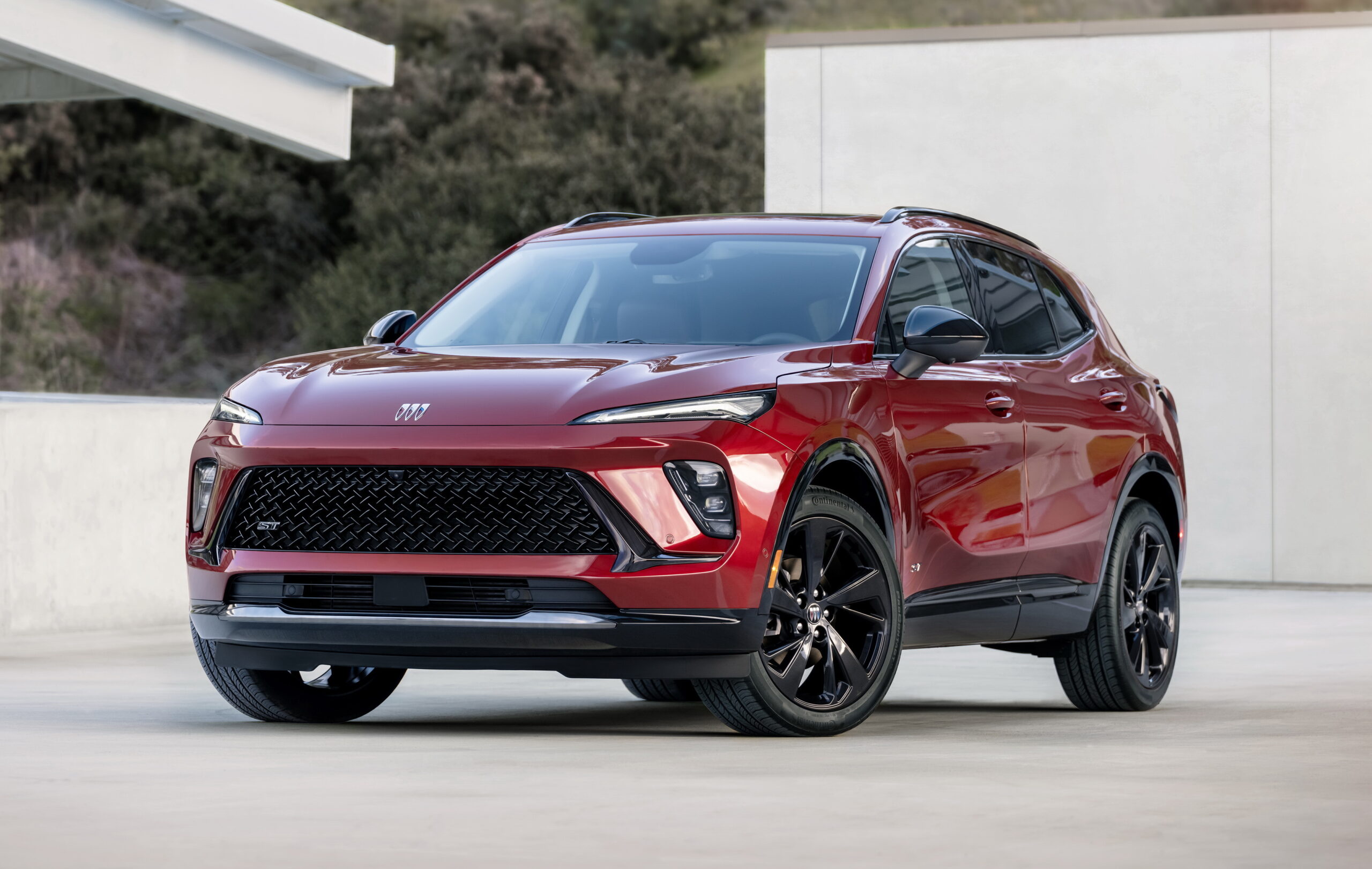
The Chinese-built Buick Envision got slammed by Trump’s tariffs and the company recently hiked prices by $3,000. This followed an earlier increase, which means the cost of entry has shot up $4,500 in less than a year.
As a result, the 2026 Envision now starts at $41,000 before a $1,995 destination fee. That’s pretty steep and the price increases appear to have started weighing on sales.
While the model was only down 11.4 percent last year to 41,924 units, fourth quarter sales plummeted 60.9 percent. Even with the steep decline, the Envision finished the year as Buick’s third best-selling vehicle, accounting for just over a fifth of the brand’s total annual sales of 198,155 deliveries.
However, the situation was unsustainable and General Motors has effectively admitted as much. In a brief statement, the company said they’ll “onshore production of the next-generation Buick compact SUV to Fairfax Assembly in Kansas City, beginning in 2028.”
The automaker didn’t have much to say about the move, but stated the “decision further strengthens GM’s domestic manufacturing footprint and supports U.S. jobs, building on $5.5 billion in new investments announced across our U.S. manufacturing sites in the last year.”
We also asked whether the current model will remain on sale until its replacement arrives in 2028. A GM spokesperson told us, “We are working through the model transition plan”, a rather a noncommittal response that suggests the company isn’t ready to confirm details just yet.
Chevrolet Bolt Dies Soon
Interestingly, the announcement also revealed the impending death of the Chevrolet Bolt. While the EV was just relaunched, the company had previously referred to it as a “limited run model.”
They weren’t joking as Fairfax Assembly will be retooled to build the Chevrolet Equinox starting in 2027. This suggests the Bolt will only be sticking around for about a year.
The third-generation Envision will follow one year after the Equinox and this could hint at some commonality between the two models. This remains to be seen, but the bowtie brand’s crossover has a turbocharged 1.5-liter four-cylinder that develops 175 hp (131 kW / 177 PS) and up to 203 lb-ft (275 Nm) of torque. It’s connected to a continuously variable or eight-speed automatic transmission.
U.S. President Donald Trump gives a speech at the World Economic Forum on Jan. 21, 2026 in Davos, Switzerland. (Photo by Chip Somodevilla/Getty Images)
WASHINGTON — President Donald Trump announced in a social media post Wednesday that he and NATO Secretary General Mark Rutte brokered a possible agreement on Greenland, though Trump provided few details or a timeline.
Trump’s comments came just hours after he took his case for acquiring the Arctic island to the World Economic Forum in Switzerland, urging European leaders to begin negotiations while appearing to rule out a military takeover.
A few hours later, Trump wrote after meeting one-on-one with Rutte that the two “have formed the framework of a future deal with respect to Greenland and, in fact, the entire Arctic Region.”
“This solution, if consummated, will be a great one for the United States of America, and all NATO Nations,” Trump wrote. “Based upon this understanding, I will not be imposing the Tariffs that were scheduled to go into effect on February 1st.”
Trump threatened over the weekend to place a 10% tariff on goods coming into the United States from Denmark, Finland, France, Germany, the Netherlands, Norway, Sweden and the United Kingdom if they continued to oppose his attempts to acquire Greenland. Trump wrote he would increase the tariffs to 25% in June if a deal hadn’t been brokered before then.
Trump wrote in his most recent social media post that further negotiations about Greenland will be handled by Vice President JD Vance, Secretary of State Marco Rubio, Special Envoy Steve Witkoff and several other officials.
“Additional discussions are being held concerning The Golden Dome as it pertains to Greenland,” Trump wrote, referring to a possible missile defense system. “Further information will be made available as discussions progress.”
Asked by reporters if the framework includes U.S. ownership of Greenland, Trump declined to say directly.
“It’s a long-term deal. It’s the ultimate long-term deal. And I think it puts everybody in a really good position, especially as it pertains to security and minerals and everything else,” Trump said, later adding it would last “forever.”
White House spokeswoman Anna Kelly wrote in a statement that if the “deal goes through, and President Trump is very hopeful it will, the United States will be achieving all of its strategic goals with respect to Greenland, at very little cost, forever.”
“President Trump is proving once again he’s the Dealmaker in Chief,” Kelly added. “As details are finalized by all parties involved, they will be released accordingly.”
‘I don’t have to use force’
Trump insisted during the 75-minute, wide-ranging speech he gave a few hours before his announcement that Greenland represents “a core national security interest” that “would greatly enhance the security of the entire” NATO alliance if it were fully controlled by the United States.
“I’m seeking immediate negotiations to once again discuss the acquisition of Greenland by the United States,” Trump said. “Just as we have acquired many other territories throughout our history, as many of the European nations have … there’s nothing wrong with it.”
Trump signaled he will likely not use the U.S. military to take over Greenland, saying, “I don’t have to use force. I don’t want to use force. I won’t use force.”
But he indicated any European country that objects to the U.S. making Greenland part of the country will face repercussions.
“You can say ‘yes,’ and we will be very appreciative, or you can say ‘no’ and we will remember,” Trump said.
Greenland would become the site of a missile defense system that Trump refers to as the Golden Dome, which he said could “keep our very energetic and dangerous potential enemies at bay” if the island becomes part of the United States.
Trump bashes NATO
Trump repeatedly criticized the other NATO countries during his speech, falsely claiming more than once the United States has never benefited from the military alliance formed following World War II.
“What we have gotten out of NATO is nothing, except to protect Europe from the Soviet Union and now Russia,” Trump said. “I mean, we’ve helped them for so many years.”
The United States is the only country in the history of the alliance to invoke Article 5, which says that an attack against one is an attack against all.
That led NATO countries to send their military members to fight alongside U.S. troops in Afghanistan following the 2001 terrorist attacks. More than 1,000 of those NATO troops died, according to the 9/11 Memorial and Museum.
NATO Secretary General Mark Rutte sought to reassure Trump of NATO’s security commitment to all of its member countries later in the day, when the two met one-on-one during the forum.
“Let me tell you, they will. And they did in Afghanistan, as you know,” Rutte said, according to audio of the exchange shared by the White House pool.
Rutte noted that for “every two Americans who paid the ultimate price, there was one soldier from another NATO country” or Australia.
“So you can be assured, absolutely, if ever the U.S. will be under attack, your allies will be with you. Absolutely. There’s an absolute guarantee,” Rutte said. “I really want to tell you this, because this is important. It pains me if you think it is not.”
Trump told reporters ahead of his meeting with Rutte that he “could see” paying a price for Greenland, though he did not elaborate. He said he had “no idea” when he might speak directly with leaders of Denmark about trying to acquire Greenland. He said he believes Rutte is “frankly more important.”
Investors and single-family homes
Trump focused some of his speech in Davos on domestic issues, talking briefly about an executive order he signed this week focused on the availability of housing within the United States.
“I have signed an executive order banning large institutional investors from buying single-family homes. It’s just not fair to the public. They’re not able to buy a house,” Trump said. “And I’m calling on Congress to pass that ban into permanent law, and I think they will.”
Trump said he wanted to take steps to help Americans afford homes, but that he didn’t want those actions to reduce the value of homes people already own. He didn’t elaborate on how that would work.
“I am very protective of people that already own a house, of which we have millions and millions and millions. And because we have had such a good run, the house values have gone up tremendously, and these people have become wealthy. They weren’t wealthy. They become wealthy because of their house,” he said. “And every time you make it more and more and more affordable for somebody to buy a house cheaply, you’re actually hurting the value of those houses, obviously, because the one thing works in tandem with the other.”
Trump said if he wanted to, he could “really crush the housing market” and decrease housing prices, though he didn’t say how exactly he would go about doing that if he wanted to.
Trump said he’s ordered “government-backed institutions to purchase up to $200 billion in mortgage bonds,” and that he expects to announce a new Federal Reserve chairman “in the not-too-distant future,” who he believes will decrease interest rates. Trump has been feuding over interest rates with Federal Reserve Chair Jerome Powell, whose term as chair ends in May although Powell can remain as a governor.
Trump also called on Congress to approve legislation that would prevent credit card companies from hiking their interest rates above 10% for one year, saying that would help people save some money that they could use for buying a house.
President Donald Trump waved and pointed to the crowd as he exited the stage following his remarks at the Iowa State Fairgrounds July 3, 2025 at an event kicking off a yearlong celebration leading up to America’s 250th anniversary. (Photo by Robin Opsahl/Iowa Capital Dispatch)
WASHINGTON — President Donald Trump is scheduled to travel to Iowa on Jan. 27 to deliver a speech focused on the economy and energy, White House Chief of Staff Susie Wiles told reporters Wednesday.
The president is expected to begin weekly travel ahead of the midterm elections — in which the GOP is aiming to improve its razor-thin majority in the U.S. House and maintain its lead in the U.S. Senate.
The anticipated travel will also come as Trump seeks to boost his affordability policy blitz and as the cost of living marks a focal point of the midterm elections. On Tuesday, stocks plunged after Trump doubled down on threats to acquire Greenland and pledged tariffs on eight European countries that opposed his plans.
While traveling to Davos, Switzerland, with Trump for the World Economic Forum, Wiles told the traveling press that officials in Trump’s Cabinet would also be increasing their domestic travel.
The timing and location of the Iowa event have yet to be announced. Trump last visited the Hawkeye State in July 2025, which marked the beginning of a yearlong celebration heading into the 250th anniversary of the country.
Meanwhile, Vice President JD Vance is slated to be in Minneapolis, Minnesota, on Thursday for a roundtable with local leaders and community members, according to his office Wednesday.
The vice president will also give remarks centered on “restoring law and order in Minnesota.”
Thousands of Minnesotans have been protesting the Immigration and Customs Enforcement presence there following the Jan. 7 fatal shooting of 37-year-old Renee Good by a federal agent.
Vance is also set to make a visit to an industrial shipping facility, in Toledo, Ohio, on Thursday, according to his office.
Vance is set to deliver remarks there focused on the administration’s “commitment to lower prices, bigger paychecks, and creating more good-paying jobs in Ohio and across the Midwest,” per his office.
Multi-colored traditional Greenlandic homes in Nuuk, Greenland, are seen from the water on March 29, 2025. (Photo by Leon Neal/Getty Images)
WASHINGTON — President Donald Trump threatened Friday to place tariffs on Greenland and any country that opposes his efforts to take over the Arctic island, as members of Congress from both political parties were in Europe to assure allied nations that lawmakers won’t go along with his plans.
“I may do that for Greenland too. I may put a tariff on countries if they don’t go along with Greenland because we need Greenland for national security,” Trump said. “So I may do that.”
Trump has been increasingly focused on acquiring Greenland during his second term in the Oval Office and White House press secretary Karoline Leavitt said earlier this month that “utilizing the U.S. Military is always an option at the Commander in Chief’s disposal.”
Lawmakers not on board
Republicans and Democrats in Congress have been skeptical or outright opposed to Trump’s aspirations for Greenland, a territory of Denmark, which is a NATO ally.
Alaska Republican Sen. Lisa Murkowski and Maine independent Sen. Angus King, co-chairs of the Senate Arctic Caucus, met with officials from Denmark this week to try to reassure the country’s leaders.
King wrote in a statement after the meeting that “the Denmark and Greenland coalition reiterated to us that they are fully prepared to cooperate with the United States in any way to expand our national security presence in Greenland – an agreement which goes back 75 years.”
“It was a very productive meeting and I’m hopeful that the administration will finally realize that taking Greenland over by a military force is almost unthinkable — to attack essentially a NATO ally,” King added. “That would be the greatest gift to (Russian President) Vladimir Putin that this country could possibly bestow.”
Murkowski wrote that the “United States, Denmark and Greenland should be able to count on each other as partners in diplomacy and national security.”
“Respect for the sovereignty of the people of Greenland should be non-negotiable, which is why I was grateful for the opportunity to engage in direct dialogue with Foreign Ministers from Denmark and Greenland,” Murkowski wrote. “Meetings like the one held today are integral to building stronger relationships with our allies that will continue to endure amid a shifting geopolitical landscape.”
House speaker derides ‘media narrative’
U.S. House Speaker Mike Johnson, R-La., said during a press conference this week that he hasn’t heard any plans for military action in Greenland at any briefings he’s attended and that he believes “this is a media narrative that’s been created.”
Johnson said he doesn’t “anticipate any boots on the ground anywhere anytime soon,” though he added the United States does have national security and critical mineral interests in Greenland.
“Greenland is of strategic importance, its geography and everything else. So look, again, you have to wait for that to play out. I’m going to leave it to the administration to articulate it how they will,” Johnson said. “But I think what the president is articulating is something that everybody objectively has to acknowledge, that Greenland has strategic significance to us and also to other countries around the world, so we need to play that very seriously.”
A bipartisan congressional delegation was in Denmark on Friday to communicate to leaders of that country and Greenland that they don’t support Trump’s efforts.
Lawmakers on the trip include Delaware Democratic Sen. Chris Coons, Illinois Democratic Sen. Dick Durbin, Murkowski, New Hampshire Democratic Sen. Jeanne Shaheen and North Carolina Republican Sen. Thom Tillis, as well as Pennsylvania Democratic Rep. Madeleine Dean, Maryland Democratic Rep. Steny Hoyer, California Democratic Rep. Sara Jacobs, Delaware Democratic Rep. Sarah McBride and New York Democratic Rep. Gregory Meeks.
President Donald Trump holds up the "One, Big Beautiful Bill" Act that he signed into law on the South Lawn of the White House on July 4, 2025, in Washington, D.C. (Photo by Alex Brandon - Pool/Getty Images)
WASHINGTON — This year produced a seemingly endless array of history-making events and nearly constant change to immigration policy, tariffs, the Education Department and federal health care programs.
President Donald Trump came back into office emboldened by a decisive 2024 election victory and empowered by Republican majorities in both chambers of Congress. The unified GOP government enacted a major tax cuts and domestic spending law in July, but hit a roadblock in late September when the federal government shut down for a record-breaking six weeks.
Here’s a look back at some of the biggest news stories from Washington, D.C.
Senate Majority Leader John Thune, R-S.D., officially took over the role from Mitch McConnell, R-Ky., pledging to protect the legislative filibuster, the 60-vote procedural hurdle that requires at least some bipartisanship for major legislation to advance. Meanwhile, several committees began the confirmation process for Trump’s nominees.
President Donald Trump holds up an executive order after signing it during an indoor inauguration parade at Capital One Arena on Jan. 20, 2025 in Washington, D.C. (Photo by Anna Moneymaker/Getty Images)
Just days ahead of his second inauguration, a judge sentenced Trump in the New York hush money case for paying off an adult film star in the leadup to the 2016 election.
Just before the end of the month, Trump signed the first bill approved by the Republican-controlled Congress, the Laken Riley Act. And he announced plans to implement tariffs on Canada, Mexico and China, the start of one of his signature economic policies.
February
Lawsuits against Trump’s actions began piling up within weeks as Democratic attorneys general, immigrant rights organizations and civil liberties groups accused the administration of overstepping its authority.
Trump’s efforts to dismantle the Department of Education began advancing shortly after the Senate voted to confirm Linda McMahon as secretary. In one of her first acts leading the department, she wrote in a memo its “final mission” would be to “to send education back to the states and empower all parents to choose an excellent education for their children.”
Supreme Court Chief Justice John G. Roberts issued a rare public statement defending the judicial branch against criticism from Trump.
The Republican chairman of the Senate Armed Services Committee asked the Defense Department inspector general to look into the use of the Signal messaging app by high-ranking officials to discuss an imminent bombing in Yemen. A journalist at The Atlantic was inadvertently added to the chat and later published a series of articles about the experience.
April
The Trump administration admitted in court filings that officials mistakenly deported Kilmar Abrego Garcia of Maryland to a notorious mega-prison in El Salvador.
Homeland Security Secretary Kristi Noem tours the CECOT prison in Tecoluca, El Salvador, on March 26, 2025. (Photo by Alex Brandon-Pool/Getty Images)
The Supreme Court became more involved in the national debate about Trump’s policies toward immigrants, first ruling that the administration didn’t need to bring Abrego Garcia back before reversing course and ruling officials must “facilitate” his return to the United States.
El Salvador President Nayib Bukele, sitting alongside Trump in the Oval Office, later said he wouldn’t send Abrego Garcia back.
The Supreme Court ruled that a ban on transgender people serving in the military could remain in place while the case continued at a lower level, that the Trump administration violated due process rights when it tried to deport some Venezuelans under the Alien Enemies Act of 1798, that the administration could end temporary protected status for 350,000 Venezuelans, and that the Trump administration could proceed with deportations for 500,000 people from Cuba, Haiti, Nicaragua and Venezuela who had been granted temporary protected status.
Republicans in the House voted to approve a 1,116-page package that combined 11 bills into what would eventually become the “big, beautiful bill,” sending the measure to the Senate.
Former President Joe Biden was diagnosed with “a more aggressive form” of prostate cancer.
June
Trump doubled tariffs on steel and aluminum, from 25% to 50%, saying during a trip to a U.S. Steel plant in Pennsylvania that he would increase them even further if he thought it would be necessary to “secure the steel industry in the United States.” The nonpartisan Congressional Budget Office reported later in the month that his tariff policies would reduce the country’s deficit but likely slow the economy.
Immigration continued to be a central part of the news cycle with Abrego Garcia returning to the U.S., California Democratic Sen. Alex Padilla being forcibly removed and handcuffed while attempting to ask Homeland Security Secretary Kristi Noem a question during a press conference in Los Angeles and the Supreme Court weighing in on lower courts issuing nationwide injunctions.
U.S. Speaker of the House Mike Johnson celebrates with fellow House Republicans during an enrollment ceremony of H.R. 1, the One, Big, Beautiful Bill Act, at the U.S. Capitol on July 3, 2025. (Photo by Alex Wong/Getty Images)
July
The Senate approved the final, much reworked version of the “big, beautiful bill,” sending it back to the House, which voted along party lines to clear the sweeping tax and health care package for Trump, who signed it on the Fourth of July.
The legislation included several policy goals for the GOP, including on Medicaid, immigration and deportations and a national private school voucher program. The Congressional Budget Office expects the law will increase the federal deficit by $3.394 trillion during the next decade and lead 10 million people to lose access to health insurance.
The Supreme Court ruled the Trump administration could continue with its plans for mass layoffs and downsizing at the Education Department.
Trump was diagnosed with chronic venous insufficiency, a “benign and common” condition for people over the age of 70, according to U.S. Navy Capt. Sean Barbabella, the president’s physician.
Senators from both parties expressed frustration that Department of Agriculture officials didn’t consult with Congress before proposing to move thousands of jobs out of the Washington, D.C., area.
Trump announced a deal with European Union leaders that would result in a 15% tariff on most goods coming into the U.S. from those 27 countries.
August
President Donald Trump holds up a chart while speaking during an event announcing broad global tariffs in the Rose Garden of the White House on April 2, 2025. (Photo by Chip Somodevilla/Getty Images)
Trump started off the month instituting a 15% tariff on goods brought into the U.S. from about three dozen countries, though he raised that amount for several nations, including 18% on products from Nicaragua, 30% on imports from South Africa and 50% on goods from Brazil.
A New York State appeals court ruled the $465 million civil penalty against Trump in the case where he was found liable for financial fraud for inflating the worth of some of his real estate holdings was excessive.
Republican and Democratic state legislatures, urged on by the president and members of Congress, sought to begin the November 2026 midterm elections early by redrawing maps for U.S. House seats to give their party a baked-in advantage.
Federal Reserve governor Lisa Cook sued Trump after he attempted to fire her, arguing in court documents his actions were an “unprecedented and illegal attempt” that would erode the board’s independence.
Former Centers for Disease Control and Prevention Director Susan Monarez testified before a Senate committee that she was fired from that role after less than a month because she refused to pre-approve vaccine recommendations.
Trump and several other high-ranking Republicans spoke at the memorial service for conservative political activist Charlie Kirk, who was assassinated during an event at Utah Valley University.
Kirk’s death was one of several instances of political violence this year that also included the killing of Minnesota House Speaker Melissa Hortman and her husband, the arson at the official home of Pennsylvania Gov. Josh Shapiro and the shooting at the CDC’s headquarters in Atlanta.
Congress failed to approve the dozen full-year government funding bills before the start of the new fiscal year, leaving an opening for a government shutdown. Democrats tried to bring attention to health care costs and other issues throughout the weeks-long debacle.
The No Kings day protests highlighted some Americans’ discontent with Trump and Republican policies a little more than a year before the 2026 midterm elections will measure that frustration at the ballot box.
Trump demolished the East Wing of the White House to make way for construction of a ballroom that will be nearly double the size of the 55,000-square-foot residence and workplace.
The funding bill approved by Congress and signed by Trump included three full-year funding bills but a stopgap for the rest of government, setting up the possibility of a partial government shutdown beginning in February if lawmakers don’t broker a deal before then.
The Supreme Court heard oral arguments in the case that will determine whether Trump overstepped when he instituted tariffs using the International Emergency Economic Powers Act.
A small memorial of flowers and an American flag has been set up outside the Farragut West Metro station in Washington, D.C., on Nov. 27, 2025. Two members of the West Virginia National Guard were shot a day earlier in what authorities called a targeted shooting. (Photo by Andrew Leyden/Getty Images)
Separately, the FBI charged a 30-year-old Virginia man with placing pipe bombs outside the Democratic National Committee and the Republican National Committee offices ahead of the 2021 attack on the U.S. Capitol.
The House and Senate were unable to come up with a bipartisan agreement to avoid a spike in health insurance premiums for the 22 million Americans enrolled in the Affordable Care Act marketplace who have benefited from an enhanced tax credit created during the coronavirus pandemic to make coverage less expensive. But a discharge petition in the House will force a floor vote early in the new year to extend the subsidies for three more years.
President Donald Trump addresses the nation in an address from the Diplomatic Room of the White House on Dec. 17, 2025. (Photo by Doug Mills - Pool/Getty Images)
WASHINGTON — As Americans continue to face rising prices ahead of year-end holidays, President Donald Trump blamed inflation and health care costs on his predecessor during a prime-time speech Wednesday in which he also claimed to have fixed the issues.
Trump “inherited a mess” and has turned the United States into the “envy of the entire globe” by imposing an immigration crackdown, tariffs and tax breaks, he said.
“Over the past 11 months, we have brought more positive change to Washington than any administration in American history. There’s never been anything like it, and I think most would agree I was elected in a landslide,” Trump said.
Standing before a backdrop of Christmas decorations, Trump also promised $1,776 checks would arrive for members of the United States military by Christmas.
And he continued to blame Democrats for health care costs that are projected to skyrocket next month when tax credits for Affordable Care Act marketplace plans expire.
Nearly a year into his second term, Trump remains fixated on blaming former President Joe Biden even as his own approval ratings sink, according to numerous recent polls.
A plaque below Biden’s photo in Trump’s newly installed “Presidential Walk of Fame” display reads “Sleepy Joe Biden,” according to reports from journalists present at the White House Wednesday.
“When I took office, inflation was the worst in 48 years, and some would say in the history of our country, which caused prices to be higher than ever before, making life unaffordable for millions and millions of Americans. This happened during a Democrat administration, and it’s when we first began hearing the word ‘affordability,’” Trump said.
Consumer price index data released Thursday for September through November show the overall cost of goods rose 2.7% over the past 12 months, after rising 3% for the 12 months recorded at the end of September, according to the Bureau of Labor Statistics. When Trump took office in January 2025, it was 3% over the previous 12 months. The bureau did not analyze data for October 2025 because of the government shutdown.
In recent weeks, Trump has said “affordability” is a “hoax.”
Yet the bulk of Trump’s somewhat hastily scheduled address — the White House announced it Tuesday — focused on lowering costs for housing, electricity and health care.
Trump announced he will send a $1,776 “warrior dividend” to every U.S. servicemember. The amount is in honor of the year of the country’s founding, Trump said. Checks are “already on the way,” he said.
That could add up to as much as $2.6 billion, according to a White House estimate Wednesday night that 1.45 million service members would receive the payment.
Health care costs
He also touted trumprx.gov, where he said Americans can find “unprecedented price reductions” on prescription drugs starting in January.
“These big price cuts will greatly reduce the cost of health care,” Trump said.
He boosted a Republican plan on Capitol Hill to fund individual health savings accounts, or HSAs, in annual amounts of $1,000 to $1,500 depending on age and poverty level. An HSA is not health insurance.
“I want the money to go directly to the people so you can buy your own health care. You’ll get much better health care at a much lower price,” Trump said.
Four House Republicans defected Wednesday to sign a Democrat-led petition to bypass Speaker Mike Johnson, R-La., and force a floor vote in January on extending health insurance premium subsidies for people who buy insurance on the Affordable Care Act marketplace.
‘My favorite word’
Trump spent several minutes addressing the economy, stating that prices on groceries and fuel are coming down. Both claims are false, according to government data.
“I am bringing those high prices down and bringing them down fast,” Trump said.
The latest consumer price index for September showed gasoline prices rose 4.1% over the past 12 months, and “was the largest factor in the all items monthly increase,” increasing 1.5% over the previous month.
Food prices rose faster than overall inflation in recent months, according to the government’s latest data. Food prices in August were 3.2% higher than a year ago, according to the data.
Still, Trump claimed an economic turnaround that he credited to his international trade policy.
“Much of this success has been accomplished by tariffs — my favorite word ‘tariffs’ — which for many decades have been used successfully by other countries against us, but not anymore,” he said.
The U.S. ended fiscal year 2025 with a deficit reaching nearly $1.8 trillion, or roughly 6% of the domestic economy’s gross domestic product.
Trump unilaterally imposed a global 10% tariff on all foreign goods in April, plus higher tariffs on many major trading partners, including the European Union, Japan, South Korea and Vietnam. The Supreme Court is expected to rule soon on whether Trump’s emergency tariffs are legal.
The U.S. collected nearly $195 billion in customs duties in fiscal year 2025, up from $77 billion in fiscal 2024, according to the U.S. Treasury’s monthly statement.”
Americans have lost faith in Trump’s ability to handle the economy, according to an NPR/PBS News/Marist poll published Wednesday.
Trump received a 36% approval rating on his economic strategy, the lowest rating over the past six years that the survey has asked voters the question.
A Fox News poll released Nov. 19 found 76% of respondents saw the economy negatively. Of all voters polled, 41% approved and 58% disapproved of Trump’s performance. That’s down from the conservative news network’s poll of Biden’s approval ratings during the same point in his presidency, which the network says was 44%.
Mum on Venezuela
The president did not spend much time addressing his military campaign off the coast of Venezuela, despite declaring just 24 hours beforehand that the U.S. had formed a “blockade” in the Caribbean Sea.
Trump posted on his own social media platform Truth Social Tuesday night that Venezuela is “completely surrounded by the largest Armada ever assembled in the History of South America.”
The campaign, which has become top of mind for many lawmakers on Capitol Hill, is about preventing drug smuggling to the U.S., Trump and Republican lawmakers have repeatedly said.
Democratic lawmakers are pressing the Trump administration to release unedited footage of a Sept. 2 strike that killed two shipwrecked individuals who were clinging to what was left of a boat after an initial strike.
December 18, 20259:30 amThis report was updated to reflect new Consumer Price Index data on inflation released Thursday.

 Login
Login