Normal view

There are new articles available, click to refresh the page.
Today — 13 April 2026Main stream

BYD’s New Megawatt Flash Chargers Are Coming To Europe, And They’ll Be Open To Everyone

  • BYD will roll out ultra fast chargers in Europe delivering up to 1,500 kW.
  • Europe gets 3,000 Flash Charging stations within the next 12 months.
  • Denza EVs and even hybrids will both exploit very short top-up times.

BYD has officially confirmed that its absurdly powerful new charging tech is headed to Europe, which means the phrase “rapid charger” may soon need a slightly more ambitious definition. Across the next 12 months, the company plans 6,000 Flash Charging stations outside China, including 3,000 across Europe.

Europe already has thousands of EV fill-up stations, but these BYD Flash Charge devices don’t just edge past today’s fastest public chargers, they absolutely body-slam them. BYD says the new hardware can deliver up to 1,500 kW, making it comfortably the quickest charging setup announced for Europe so far.

Related: Geely’s Golden Brick Battery Charges Faster Than BYD, But Good Luck Finding A Plug For It

Better yet, this won’t be some members-only club for BYD owners. The chargers are set to use CCS2 connectors and should be open to other brands too. Dealers selling BYD’s posh Denza vehicles will get their own branded versions, while public sites elsewhere will simply wear the Flash name. BYD is also planning to work with existing charging locations rather than starting from scratch every time.

The headline numbers are predictably bonkers. BYD says its newest battery tech can take compatible cars from 10 to 70 percent in five minutes, and from 10 to 97 percent in nine. That’s less charging stop, and more pause for breath.

Denza Leads The Charge

\\\\\\

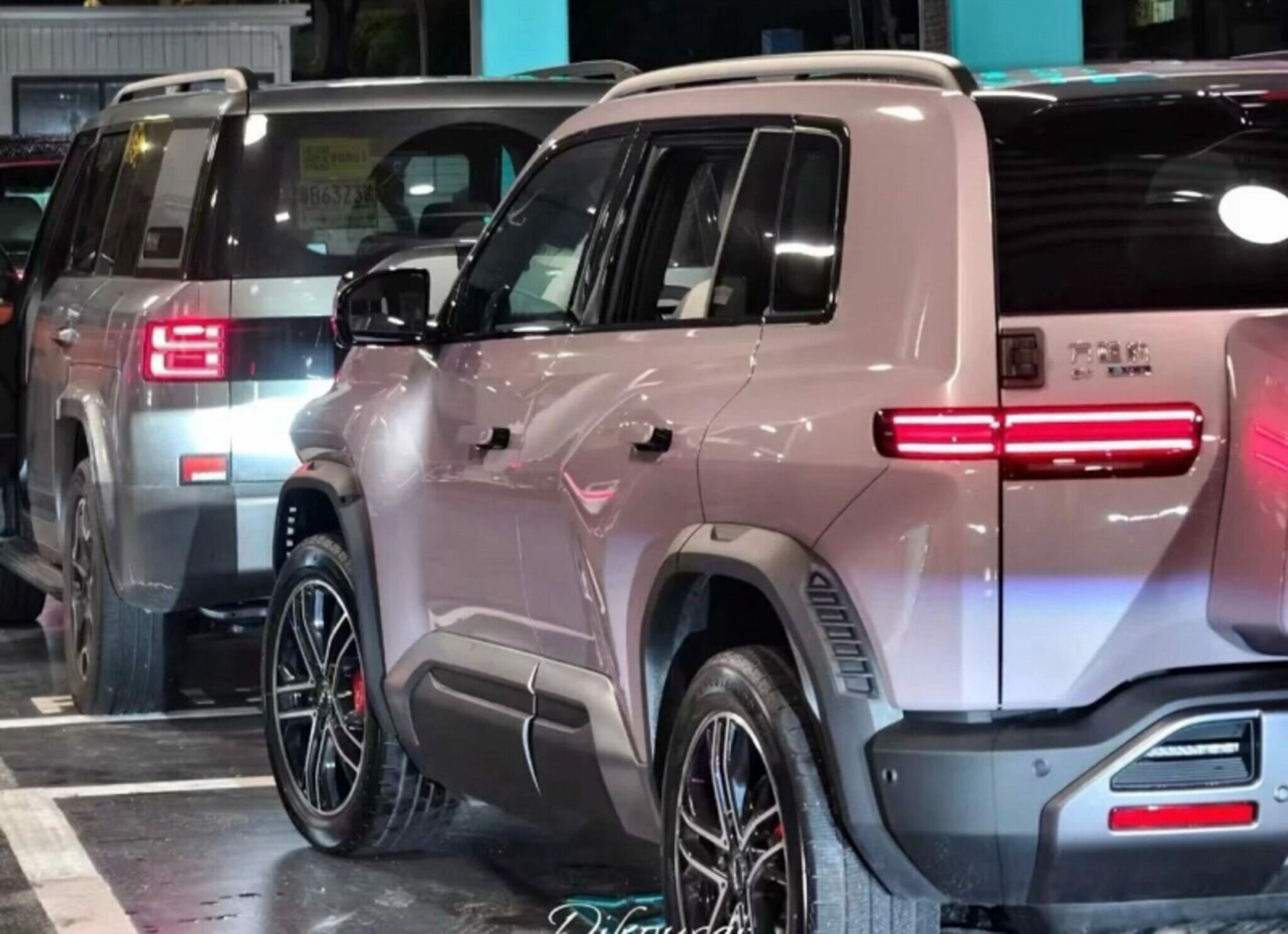
The first big beneficiaries in Europe will be the Denza Z9GT and the D9 DM-i. The Z9GT is the flashy one, a tri-motor, fully-electric shooting brake with a 123 kWh battery and enough shove to hit 62 mph in 2.7 seconds.

The D9 DM-i minivan, meanwhile, proves plug-in hybrids can join the party too. Its 58.5 kWh battery can accept up to 559 kW, allowing the same five-minute run from 10 to 70 percent and nine minutes from 10 to 97. That’s especially handy in a giant seven-seat MPV with 130 miles (209 km) of electric range and a 590-mile (950 km) total figure when the petrol tank is full. In contrast, some PHEVs from other brands still don’t accept DC charging at all.

\\\

Of course, BYD isn’t the only one throwing elbows. Earlier this week, Geely claimed its latest chargers and Golden Brick battery tech were even quicker still, because apparently the industry has decided the best way to sell EVs is through stopwatch violence.

BMW Says Non To Charging War

BMW, though, isn’t buying the hype. “You always have to be careful with those kinds of announcements,” the company’s battery production boss Markus Fallböhmer told Car Sales recently, suggesting battery longevity and reliability could be at stake.

“It is possible to optimize one single performance indicator, but you have to make compromises on other sides. We could also increase our charging speed, but then you have to reduce other important factors of a battery.”
 BYD’s New Megawatt Flash Chargers Are Coming To Europe, And They’ll Be Open To Everyone

BYD

Before yesterdayMain stream

BYD Flash Charges To 97% In 9 Minutes, And KFC Just Figured Out What To Do With The Wait

  • BYD opens its 5,000th fast charging station across China.
  • A new KFC tie-up links meals with rapid charging stops.
  • Expansion plans include thousands of sites across Europe.

In China’s growing EV market, convenience is starting to matter just as much as range or charging speed. BYD isn’t the type of company that does things in halves. Only a month after announcing its new 1,500 kW charging technology, it has opened its 5,000th Flash Charging station in China and partnered with KFC to broaden its footprint.

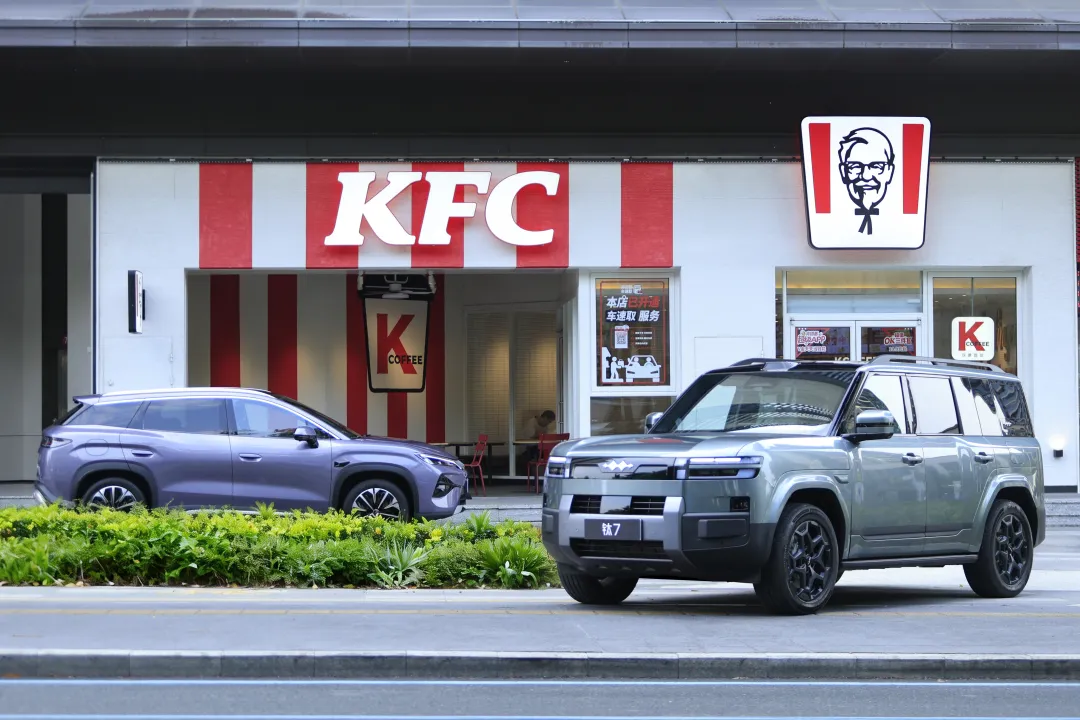
Through a collaboration with the fast-food giant, BYD will establish so-called ‘9-minute drive-thru’ areas at KFC locations across the country, referencing the Flash Chargers’ ability to take one of the firm’s EVs from 10-97 percent in just nine minutes. The partnership is being developed with Yum China, the operator behind KFC’s extensive local network.

Read: BYD Says Its New Battery Can Recharge As Fast As Filling Up Your Gas Tank

For owners who enjoy grabbing a burger or fried chicken on the go, the deal makes practical sense. It also mirrors similar partnerships in the US involving Volvo, Mercedes, and Starbucks, where charging points have been added to many of the coffee chain’s stores.

To simplify ordering, the KFC app will be integrated into BYD infotainment systems. When an order is placed through the screen, the vehicle’s location is tracked as it approaches the nearest KFC, ensuring the food is ready and hot on arrival.

Flash Charging Goes Global

 BYD Flash Charges To 97% In 9 Minutes, And KFC Just Figured Out What To Do With The Wait

BYD has not said how many KFC locations will receive Flash Chargers, but it aims to install 20,000 stations across China by the end of the year. The company also plans to roll out 6,000 Flash Charging stations outside China throughout 2026, including 3,000 across Europe.

The Flash Charging stations can be configured similarly to traditional gas stations. According to BYD, vehicles equipped with its second-generation blade battery can charge from 10-70 percent in just 5 minutes and from 10-97 percent in nine minutes. The company also highlights performance in cold conditions, stating that vehicles can charge from 20-97 percent in 12 minutes even at -22° F (-30° C).

\\\\\\\

Geely’s Golden Brick Battery Charges Faster Than BYD, But Good Luck Finding A Plug For It

  • Geely claims its latest batteries charge faster than BYD’s mk2 Blades.
  • Energee Golden Brick charges from 10-70 % in just 4 minutes 22 secs.
  • BMW warns extreme charging speeds could bring durability trade-offs.

Forget zero to 60 mph (97 kmh) times, the EV world has a new kind of electric performance battleground and China’s Geely just claimed top honors. It says its new batteries can charge even faster than the BYD batteries that sent us into a spin last month with their crazy top-up times.

Geely’s Lynk and Co brand says its latest 95 kWh battery – the hopefully not prophetically named 900V Energee Golden Brick – can charge from 10 to 70 percent in just 4 minutes 22 seconds. That compares with BYD’s megawatt flash charging results of 5 minutes for the same race, an achievement that itself is way ahead of anything European or American automakers can deliver.

Related: BYD Says Its New Battery Can Recharge As Fast As Filling Up Your Gas Tank

Stretch the experiment from 10-80 percent and the Geely EV does the job in 5 minutes 32 seconds, and even going from 10-97 percent, which takes account of batteries charging more slowly as they get close to full, the clock only registers 8 minutes 42 seconds. BYD’s second-generation blade battery needs 9 minutes to get to 97 percent when hooked up to one of the company’s new megawatt flash chargers.

Destroys Western EVs

The secret sauce is a high voltage setup paired with seriously beefy charging hardware. We’re talking peak power of around 1,100 kW with strong input of more than 500 kW at 75 percent charged, and 350 kW at 97 percent. That 350 kW figure is higher than the peak charge rate achieved by all but the fastest-charging Western EVs.

There is a catch though, or more likely several. These charge speeds rely on next level charging stations that aren’t exactly everywhere yet. Geely’s network is growing, but it’s way behind BYD in terms of super-fast rollout, being about one quarter the size, Car News China reports. So while Geely may have bragging rights today, the real winner could still be whoever builds the infrastructure fastest.

 Geely’s Golden Brick Battery Charges Faster Than BYD, But Good Luck Finding A Plug For It

BMW Not Convinced

Not everyone’s convinced this race is worth winning anyway. BMW has been openly skeptical about the obsession with ever faster charging.

“You always have to be careful with those kinds of announcements,” BMW’s battery production boss, Markus Fallböhmer told Carsales last month. “It is possible to optimize one single performance indicator, but you have to make compromises on other sides.”

That’s BMW’s polite way of saying there’s no free lunch. Push charging speeds high enough and something else may give, whether that’s longevity, cost, or overall performance.

 Geely’s Golden Brick Battery Charges Faster Than BYD, But Good Luck Finding A Plug For It
Geely

BYD Says Five-Minute Charging Adds 310 Miles, BMW Says Read The Fine Print

  • The Denza Z9GT can add 310 miles (500 km) of range in just five minutes.
  • BMW execs claim that pursuing quick charging forces other compromises.
  • The iX3 and i3 are BMW’s fast-charging EVs, supporting 400 kW speeds.

BYD sent a jolt through the EV space with its ultra-fast charging push, though not everyone is ready to buy in. The Chinese automaker unveiled a 1,500 kW flash-charging system in China, promising speeds that edge close to refueling a combustion car. Despite the extraordinary claims, BMW remains unconvinced.

According to BYD, the Denza Z9GT can add roughly 310 miles (500 km) of range in just five minutes, thanks to its 1,500 kW charging technology and the second-generation Blade Battery.

Read: BYD’s New EV Chargers Are So Fast They’re Arranged Like Gas Station Pumps

The system also relies on megawatt-level charging hardware and extremely high current delivery to reach those peak rates. It all sounds pretty incredible, but BMW battery production boss Markus Fallböhmer says pursuing charging speeds like this has compromises.

“You always have to be careful with those kinds of announcements,” he told Car Sales. “It is possible to optimize one single performance indicator, but you have to make compromises on other sides. We could also increase our charging speed, but then you have to reduce other important factors of a battery. It is a blanket – if you pull it at one side.”

BMW’s New EVs Are No Charging Slouches

\\\\\\

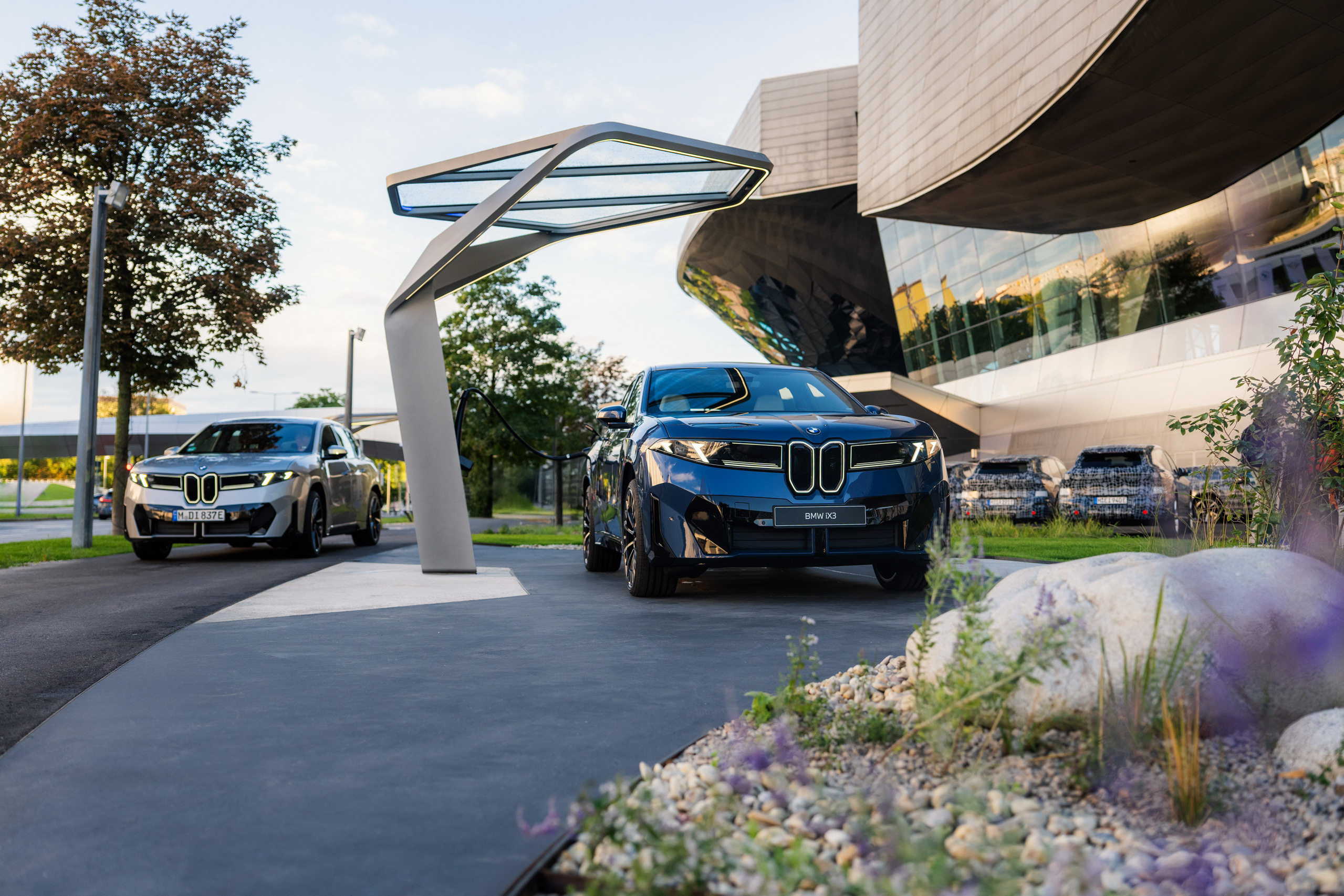
The second-generation iX3 and the new i3 are the quickest-charging BMWs released to date, supporting peak 400 kW speeds. This is quick enough to top up the i3 with 400 km of range in just 10 minutes. BMW says it can guarantee “quality and safety” at these charging speeds, and appeared to question whether BYD can do the same.

Also: BMW Showed Just Enough Of The i3 Touring For Someone Else To Finish The Job

BMW executives also indicated that pushing beyond these speeds would bring trade-offs in battery durability, range, and affordability, which they see as unnecessary for most real-world use.

 BYD Says Five-Minute Charging Adds 310 Miles, BMW Says Read The Fine Print

“We look to decrease charging time more and more, but you have to look at range, durability, reliability,” the head of BMW’s Neue Klasse models, Mike Reichelt, added. “All of these facts, we guarantee. We look at the speed of the Chinese market… but on the other side, we guarantee quality and safety. That is a topic that we do not [negotiate] with anyone.”

The race to improve charging times in the EV world is much the same as we’ve seen among smartphone manufacturers looking to uprate charging speeds of their devices, with the Chinese often leading the charge. Boost charging speeds too much, and batteries can get hot, including the risk of thermal management issues, which is clearly something BMW would like to avoid.

\\\\\\\\\\

EV Speed Comes At A Price, So Where’s The Sweet Spot?

  • A Tesla owner performed a series of real range tests in his single-motor Model Y.
  • He drove the same route 30-mile route at 50 mph, 60mph, 70 mph and 80 mph.
  • Going 80 mph vs 50 mph cut time by 38% but dropped range by same amount.

Speed or efficiency? For as long as there have been cars, drivers have had to weigh up that decision. Going faster means getting from A to B sooner, but is going to burn through more fuel, costing you more money.

And now, in the EV age, there are added pressures. Some electric cars are only good for 250 real-world miles (402 km), and BYD’s new 1,500 kW chargers aren’t here yet, meaning that if you need to stop mid-journey you can easily add 15-30 minutes to your trip, more than wiping out the time you saved by flexing your right ankle.

Related: Tesla’s Budget Model Y Gets Grip And Grit For $2K More, But Don’t Call It Standard

So what’s the sweet spot? That’s what one Tesla-owning YouTuber behind the Carwire channel decided to find out by conducting a series of test runs in his single-motor, rear-wheel drive Model Y.

He ran the same 30-mile (50 km) looping route along local multi-lane freeways (dual-carriageways in UK-speak) at 50 mph (81 km/h), 60 mph (96 km/h), 70 mph (113 km/h) and 80 mph (129 km/h), noting the Wh/mile efficiency for each trip.

Taking those numbers and assuming a 75 kWh usable battery capacity, he was able to extrapolate realistic freeway-type range figures, plus a hypothetical time for a 200-mile (302 km) journey based on the time taken to complete each loop at the different speeds. While this isn’t exactly super-scientific, it still delivers a useful comparison that highlights the huge effects different speeds have on efficiency and journey time.

The first loop, taken at a steady 50 mph, would result in 200-mile trip in the Model Y taking four hours. But the excellent 224.7 Wh/mi efficiency gives a calculated 333-mile (536 km) range, meaning you’d get to your destination with stacks of charge to spare.

80 MPH Decimates Range

At the other end of the scale, the 80 mph run crashed efficiency to 366.2 Wh/mi, and the range to just 204 miles (328 km). So while technically you could handle the 200-mile journey in one go, and in only 2 hours and 30 minutes, few people would risk not filling up before they hit the finish line.

The sweet spot, as Carwire concludes, seems to be somewhere between 60 and 70 mph. Bumping the speed up to 60 mph cuts a handy 40 minutes off the 50 mph journey time, yet the 300-mile (483 km) range is only 33 miles (53 km) lower.

Pushing the needle up to 70 mph cuts another half hour from the trip, and though the efficiency starts to tumble the 248-mile calculated range would still let you comfortably complete your 200-mile run without charging, or stressing that you probably ought to.

Speed Versus Time And Efficiency
50 mph60 mph70 mph80 mph
Journey time4 hours3 hours 20 mins2 hours 51 mins2 hours 30 mins
Efficiency224.7 Wh/mi249.9 Wh/mi302.2 Wh/mi366 Wh/mi
Calculated range333 miles300 miles248 miles204 miles
SWIPE

Carwire

Heliox Introduces Heliox 60 Dual DC Fast Charger

By: STN
10 March 2026 at 21:09

ATLANTA — Heliox, A Siemens Business, a leader in EV charging solutions, introduces the H60D fast charger, a compact, high-utilization solution designed for a wide range of vehicles including cars, buses, and trucks. The system combines a dynamic power allocation between its two CCS1 outlets, broad EV and backend compatibility, and flexible mounting options to support higher charger usage across a wide variety of sites.

The H60D enables two parallel charging sessions from a single unit, cutting both hardware spend and footprint while increasing the number of vehicles that can be served at each location. Both outlets can operate simultaneously and share power dynamically, allowing operators to either deliver the full 60 kW to one vehicle or distribute power between two vehicles as demand shifts throughout the day. With 60 kW rated output and up to 150 A maximum DC current, the charger delivers efficient DC charging for a variety of cars, buses, and trucks, helping reduce overall charging time and keep assets in service.

EV compatibility is supported by US-based in-house testing and development capabilities, ensuring seamless integration. The charger’s flexible design allows deployment as wall- or pedestal-mounted and in either networked or standalone configurations, so operators can scale and customize installations to match site constraints and operational priorities. A new RFID capability expands driver access management, enabling Heliox products to deliver flexible authentication across fleet operations. Peak efficiency above 96% minimizes power losses and energy use while maximizing energy delivered to vehicles. A NEMA 3R-rated enclosure enables safe, reliable operation indoors or outdoors and is engineered to stand up to daily wear and tear, expanding siting options from depots and yards to parking lot environments. A compact, low-profile enclosure helps operators fit chargers into new or existing facilities with minimal disruption, further decreasing benchmark installation time through design improvements.

Built for interoperability and future-readiness, the H60D supports the SAE J1772 (CCS Type-1) standard, providing compatibility with the dominant North American DC fast-charging connector. A broad 200–1,000 V DC output range enables support for today’s and next-generation commercial EV battery platforms, protecting infrastructure investments as vehicle technology evolves. Communication based on open standards, incl. OCPP 1.6J and OCPP 2.0.1, enables robust vehicle-to-charger connectivity and supports advanced smart-charging capabilities.

Engineered and manufactured in the United States, the H60D leverages domestic engineering and production quality standards, with system-wide durability and thermal upgrades that support consistent performance over the product’s lifecycle. Rated to operate from -22°F to +131°F, the charger delivers reliable performance across diverse climates and seasonal conditions, enabling nationwide deployment strategies without extensive customization.

To support long-term reliability and predictable lifecycle performance, the H60D includes a standard 24‑month warranty and optional preventative maintenance programs that help operators maintain high uptime and optimize asset performance over the charger’s service life. This comprehensive support model gives fleets and site hosts confidence that their charging infrastructure will perform reliably and remain a strong, future-ready asset in their operations.

About Heliox, A Siemens Business

Heliox, A Siemens Business, delivers world class EV charging equipment, services, and robust solutions for a broad range of EV fleets. Our portfolio encompasses all aspects of smart and efficient AC and DC charging infrastructure, including IoT-connected hardware, software, and a comprehensive service offering. Designed and manufactured in North America, Heliox builds UL and CSA compliant products that also meet Build America, Buy America Act (BABA) standards. Heliox’s high-quality, field-proven charging products are now backed by Siemens’ financial strength, global reach, and long-term stability—delivering the best of both worlds.

For more information, visit www.heliox-energy.com.

The post Heliox Introduces Heliox 60 Dual DC Fast Charger appeared first on School Transportation News.

Heliox, A Siemens Business, Showcases Advanced Fleet and Commercial EV Charging Solutions at EV Charging Summit & Expo 2026

By: STN
9 March 2026 at 18:08

Heliox, A Siemens Business (Heliox), a leader in EV charging solutions, will showcase its latest fleet and commercial EV charging innovations at the EV Charging Summit & Expo, taking place March 17–19, 2026, in Las Vegas, Nevada, at Booth 641. The company will feature its versatile Heliox 60 kW DC chargers, including the new dual-port pedestal and single-port mobile units. It will also showcase its next-generation Heliox 44 kW V2G bidirectional DC charger and the powerful VersiCharge Blue 80A AC Series. Together, these solutions underscore Heliox’s commitment to reliable, future-ready infrastructure for fleets, depots, and commercial sites.

Heliox will spotlight its 60 kW chargers, delivering compact, adaptable DC fast charging for cars, buses, and trucks, making it ideal for depots, maintenance yards, and temporary or evolving sites. The lineup now includes the new Heliox 60 kW Dual, which offers two outlets for parallel charging and dynamic power sharing (1×60 kW or 2×30 kW) to optimize CAPEX utilization and serve more vehicles from a single unit. Available in both hardwired and portable configurations, in networked or standalone operation, and in single- and dual-connect variants, the system can be deployed as a single unit or in multiples and mounted on a wall, pedestal, or mobile cart to match each fleet’s power availability and long-term growth plans.

Heliox will showcase its 44 kW V2G DC charger, a next generation bidirectional solution that enables vehicles to both charge quickly and discharge energy back to the grid or facility, helping fleets turn parked EVs like school buses, into flexible energy assets. Designed and manufactured in the United States, the system supports grid services and new revenue opportunities while offering a compact design and intuitive operation to support long term reliability in demanding fleet environments.

Building on this DC fast charging and V2G foundation, Heliox will also feature the VersiCharge Blue 80A AC Series, a powerful Level 2 AC charger engineered for fleets, school buses, and commercial EV applications. Delivering up to 80A and 19.2 kW of power with flexible installation options and connected smart charging features, the VersiCharge Blue 80A AC Series helps operators manage energy use, control costs, and seamlessly integrate AC charging into modern depots, yards, and workplaces.

As part of the event program, Job van Campen will join other industry leaders on a panel session titled “V2G: Harnessing EVs as a Grid Resource for Reliability and Resiliency” on March 19, 2026, at 11:00 a.m. PT. During the session, he will explore how vehicle-to-grid technology can transform EV fleets into dynamic grid assets, enabling operators and utilities to enhance reliability, support the integration of renewable energy, and create new economic value from existing fleet investments. Attendees can visit Booth 641 to continue the conversation with Heliox experts and see how solutions like the Heliox 44 kW V2G can support real-world use cases, from demand response and peak shaving to backup power during outages.

Across its 44 kW V2G, 60 kW DC chargers, and VersiCharge Blue 80A AC Series platforms, Heliox, A Siemens Business, continues to deliver smart, efficient, and reliable charging solutions backed by global expertise and robust local support. With UL compliant, Build America, Buy America ready products, advanced connectivity, and comprehensive service offerings showcased at Booth 641, the company is positioned to help fleets, operators, and commercial customers scale electrification with confidence as infrastructure demands grow.

About Heliox, A Siemens Business:
Heliox, A Siemens Business, delivers world class EV charging equipment, services, and robust solutions for a broad range of EV fleets. Our portfolio encompasses all aspects of smart and efficient AC and DC charging infrastructure, including IoT-connected hardware, software, and a comprehensive service offering. Designed and manufactured in North America, Heliox builds UL and CSA compliant products that also meet Build America, Buy America Act (BABA) standards. Heliox’s high-quality, field-proven charging products are now backed by Siemens’ financial strength, global reach, and long-term stability—delivering the best of both worlds. For more information, visit www.heliox-energy.com.

The post Heliox, A Siemens Business, Showcases Advanced Fleet and Commercial EV Charging Solutions at EV Charging Summit & Expo 2026 appeared first on School Transportation News.

Nearly 1 In 3 EV Chargers Are Mischarging UK Drivers

  • About 31.5 percent of tested chargers fell outside limits.
  • Some units delivered far less energy than shown.
  • Public charging costs and taxes add to driver concerns.

Refueling is something most drivers don’t think about too much. They plug in or insert a fuel nozzle, press go, and wait to see how bad the bank account damage is in the end. Now, EV drivers in the UK might be thinking twice before they plug in at a public charging station. A new study found that almost one in three mis-calculated the energy provided during a session.

According to independent inspection provider EVCI Global, 31.5 percent of the chargers it reviewed either overestimated or underestimated the energy transferred to vehicles. In roughly 15 percent of cases, errors exceeded five percent, with a small number showing what the company described as “materially larger deviations.”

EVCI says this effectively leaves EV drivers carrying more financial risk than petrol car owners, who enjoy far tighter oversight every time they pull up to a pump.

More: BYD’s New EV Chargers Are So Fast They’re Arranged Like Gas Station Pumps

The study, first reported by The Telegraph, highlights how different standards are for EV chargers when compared to gas or diesel fuel pumps. Fuel dispensers are subject to strict statutory verification and typically must operate within a tolerance of -0.5 to +1 percent.

 Nearly 1 In 3 EV Chargers Are Mischarging UK Drivers

By contrast, most public EV charge point meters are allowed a margin of error of up to +2 percent. Even so, EVCI says nearly a third of the units it tested fell outside that permitted window.

The company argues that public chargers should be brought under a formal verification regime similar to fuel pumps. It has also raised the issue with relevant government departments, pushing for clearer oversight and enforcement.

Extreme Cases And Industry Response

In one extreme case cited by CEO Craig Marsden, a charger was found to be delivering 37 percent less electricity than the figure displayed on-screen. Importantly, there were also cases where the chargers actually under-valued the amount of juice they provided, so drivers paid less. The findings have been presented to the Transport Select Committee.

“People with EVs need to know that they’re getting what they’re paying for, the same way that they do at petrol pumps,” Marsden said.

 Nearly 1 In 3 EV Chargers Are Mischarging UK Drivers

EVCI argues that this situation creates a two-tiered situation where EV owners are at greater risk of losing money. That’s especially true for those who don’t have access to off-street parking and home charging networks. Such individuals rely heavily on public charging infrastructure and could end up paying more than their fair share. A long charging session can exceed £70, and annual costs may approach £2,000. That’s without the errors included.

Industry Response To Accuracy Claims

Industry body ChargeUK has pushed back on the report, saying that the inaccuracies are isolated cases. It also pointed out that measuring electricity transfer is more complex than measuring liquid fuel.

Also: PHEVs Promised Efficiency, Drivers Are Burning Three Times More Fuel

A spokesperson for the Department for Transport told the newspaper that public EV charge points are expected to measure and supply exactly the electricity they claim to deliver. They added that meters at most public chargers are regulated to ensure accuracy within 2 percent.

That said, EV drivers will no doubt want to see a dramatic improvement in the next EVCI report. Otherwise, adoption rates could take a hit.

 Nearly 1 In 3 EV Chargers Are Mischarging UK Drivers

BYD’s New EV Chargers Are So Fast They’re Arranged Like Gas Station Pumps

  • BYD is testing its 1,500 kW megawatt flash charging network.
  • The demo site looks more like a gas forecourt than an EV hub.
  • Fast chargers could transform the appeal and usability of EVs.

BYD isn’t just building electric cars at a frightening pace, it’s now building chargers that make today’s versions look about as powerful as your car’s 12-volt accessory plug. The company has been spotted testing a 1,500 kW flash charging network in Shenzhen, China, and the layout looks suspiciously like a traditional gas station’s.

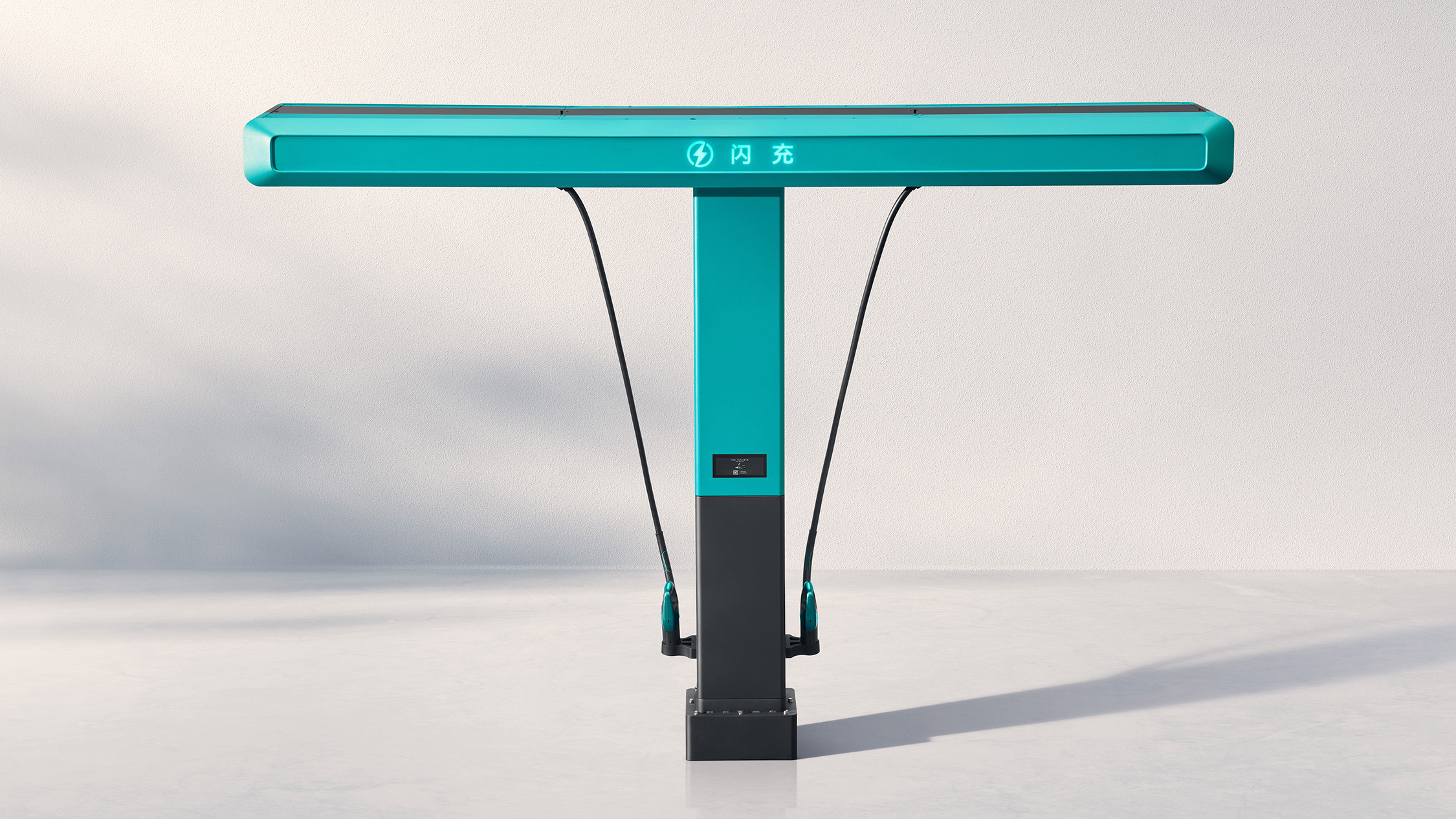
Instead of the usual lonely bank of DC chargers around a load of parking bays arranged like a regular parking lot, the demo site features liquid-cooled charging guns and T-shaped gantries lined up like fuel pumps so that drivers can pull up, fill up, and pull out without hanging about.

Related: Breakthrough EV Battery Patent Could Charge In Minutes And Cross A Continent

Leaked intel suggests peak outputs of up to 1,500 kW running on a 1,000 V architecture that could potentially add 249 miles (400 km) of range in just 5 minutes. For context, the quickest public chargers in the US and Europe top out around 350 kW, though most push out a lot less, and the majority of EVs can’t even sustain that anyway.

BYD-Use Only, For Now

Access during testing appears limited to select BYD models wearing a Flash Charge badge, including upcoming Tang, Song, Seal, and Denza variants, Car News China says. Charging reportedly starts within about 10 seconds of plugging in, no QR codes or smartphone gymnastics required.

 BYD’s New EV Chargers Are So Fast They’re Arranged Like Gas Station Pumps

Pricing at the demo site was shown at 1.3 yuan per kWh, roughly $0.18, which will come as a shock to Western EV drivers. Plug in to a 360 kW Gridserve charger in the UK, and you’ll be stung for up to £0.89 per kWh. That’s $1.20. Even a feeble 22 kW jolt costs £0.49 ($0.66) per kWh. Buyers of compatible cars are rumored to get 1,000 kWh of free electricity annually, according to the story out of China, though final policy details haven’t been confirmed.

Drive It Like A Gas Car

The real story isn’t just the headline charging speed. It’s what that speed could mean. If you can genuinely add hundreds of miles in minutes, you don’t need a massive 450-mile battery pack. Smaller batteries mean lighter, more affordable cars with better efficiency and sharper performance. And faster charging could make EV ownership feel less like planning a military operation and more relaxed, encouraging drivers to embark on spontaneous journeys.

BYD is said to be targeting more than 4,000 self-operated flash charging stations in China, with partner networks potentially pushing that number far higher. For now, it’s all still internal testing, but it offers a glimpse into how EV ownership might look only a few years from now, not just in China, but around the world.

\\\\\\

BYD Fans

100% Buy America Requirement Proposed for EV Chargers

By: Ryan Gray
13 February 2026 at 01:00

The Federal Highway Administration (FHWA) seeks public input on a proposed modification to its waiver of Buy America requirements for electric vehicle (EV) chargers, which could impact K-12 student transportation professionals looking to use federal funds to purchase the equipment for electric school buses.

The proposal, announced Tuesday by FHWA Administrator Sean McMaster, aims to increase the domestic content requirement for EV chargers used in federally funded projects.

Currently, the waiver issued two years ago allows EV chargers manufactured in the U.S. to meet a 55-percent domestic component cost threshold. FHWA is considering raising this requirement to as much as 100 percent, meaning all components of EV chargers would need to be sourced domestically.

This change could have significant implications for school districts planning to use federal funds for EV charger acquisition or installation, when or if the EPA’s Clean School Bus Program or other funding projects return. FHWA said the proposal is part of a broader effort to support domestic manufacturing and align with federal priorities to maximize the use of American-made products in infrastructure projects.

If finalized, the new requirements would apply to projects obligated after the publication of the final notice.

Public comments on Docket No. FHWA-2025-007030 will be available through March 16 at 11:59 p.m. Eastern. FHWA said transportation professionals are encouraged to share their perspectives on the potential impact of the increased domestic content requirement, including any challenges or benefits it may present for school bus electrification projects.


Related: EPA ‘Revamping’ Clean School Bus Program
Related: Report: Inequities in Canadian Electric School Bus Transition Threaten At-risk Populations
Related: Deploying Electric School Buses in Rural and Suburban Districts

The post 100% Buy America Requirement Proposed for EV Chargers appeared first on School Transportation News.

Heliox, A Siemens Business, Highlights VersiCharge Blue 80A for Fleet and Commercial EV Charging

By: STN
3 February 2026 at 21:32

Heliox, A Siemens Business, a leader in EV charging solutions, is proud to highlight its VersiCharge Blue 80A, engineered for the most demanding fleet and commercial vehicle charging environments. Designed to deliver up to 80A AC (19.2 kW) power output, the VersiCharge Blue 80A ensures that fleet operators can keep vehicles moving efficiently and reduce operational downtime. With Level 2 charging capability via a J1772 connector and a 24-foot cable, this solution is compatible with most standard EVs, E-Trucks and School Buses, and streamlines installation and daily operation for maximum flexibility and reach.

This charger exemplifies robust quality, featuring Buy America compliance to meet government procurement requirements and ENERGY STAR certification to support lower operational costs and high energy efficiency. Safety remains paramount, as the VersiCharge Blue 80A holds multiple UL listings and carries a NEMA 4 and IK10 rating to ensure exceptional resilience against extreme temperatures, humidity, and physical impact. Backed by a 3-year warranty, customers gain peace of mind knowing their investment is safeguarded for the long haul.

Connectivity is central to the VersiCharge Blue 80A’s design, with cellular and Wi-Fi networking providing easy remote monitoring and flexible network-sharing in commercial deployments. Site safety and aesthetics are prioritized thanks to retractable cable management, reducing trip hazards and maintaining a clean, professional appearance. State-of-the-art smart charging features, including ISO15118-2 hardware readiness and OCPP 1.6J support, enable advanced load management, authentication, security, and future compatibility, while Sifinity Setup mobile app configuration simplifies multi-charger installations.

Precise energy tracking is guaranteed by embedded metering, helping operators optimize usage and manage costs. Built for resilient operation, the unit withstands wide temperature swings from -40°C to 50°C (>50°C with derating) and functions reliably in up to 98% humidity, making it ideal for harsh climates and challenging locations. Wall or post mounting options offer flexible installation for any site layout, and over-the-air (OTA) software upgrades future-proof investments by delivering remote updates and new capabilities.

Engineered for versatility, VersiCharge Blue 80A features rated current settings from 12A to 80A to easily accommodate varying power needs across fleet and facility applications. Its recommended wire cross section of 3 AWG with a 90°C minimum ensures safe, high-capacity wiring and consistent performance even under heavy usage. Built-in ground fault and overvoltage protection shield both users and vehicles against electrical risks, while multicolor LED indicators provide instant feedback on charging status, connectivity, and fault diagnostics to streamline site management.

Advanced OCPP and ISO15118-2 user authentication deliver enterprise-grade security and fleet management capability. The charger operates at altitudes up to 6,562 feet, expanding site possibilities in high-elevation regions, and customizable mounting options ensure seamless integration in diverse venues.

With VersiCharge Blue 80A, Heliox, A Siemens Business, is bringing a powerful blend of reliability, safety, and intelligent connectivity to the heart of fleet and commercial EV operations, enabling customers to scale with confidence as electrification demands grow.

About Heliox, A Siemens Business
Heliox, A Siemens Business, delivers world class EV charging equipment, EV charger maintenance and support services, and robust solutions for a broad range of EV fleets. Our portfolio encompasses all aspects of smart and efficient AC and DC charging infrastructure, including IoT-connected hardware, software, and a comprehensive service offering. Heliox manufactures UL compliant products that meet Buy America Act (BAA) and Build America Buy America (BABA) standards. Heliox’s high-quality, field-proven charging products are now backed by Siemens’ financial strength, global reach, and long-term stability—delivering the best of both worlds.

The post Heliox, A Siemens Business, Highlights VersiCharge Blue 80A for Fleet and Commercial EV Charging appeared first on School Transportation News.

Support for Electric Vehicles

By: newenergy
31 March 2025 at 15:54

New Poll: American Voters Support Federal Investments in Electric Vehicles Broad, Bipartisan Support for EV Investments and Incentives that Lower Costs, Expand Access, and Help the U.S. Beat China in the Race for Auto Manufacturing WASHINGTON, D.C. – A new bipartisan national poll conducted by Meeting Street Insights and Hart Research finds broad public support …

The post Support for Electric Vehicles appeared first on Alternative Energy HQ.

GM-Pilot EV charging network now spans over 25 states

Pilot, GM, and EVgo build out EV fast-charging networkGM-Pilot stations with EVgo now cover more than 130 locations The automaker also has GM Energy projects with ChargePoint and EVgo GM is also part of Ionna, seeking 30,000 fast-chargers by 2030 Automakers beyond just Tesla have been committing to the EV infrastructure buildout; and among them, General Motors remains one of the most diversified in...

California has nearly 50% more public EV chargers than gas nozzles

2025 Audi Q6 E-TronIn 2024, public charging in California expanded at record levels The state has double the publicly accessible chargers versus 2022 Nearly 30% of U.S. EV sales go to California customers In California, drivers are now much more likely to encounter an electric vehicle charging connector than a gas pump nozzle. The state reached 178,549 public...

Study: Tesla, Rivian charging networks have far fewer problems

Rivian Adventure Network charging site in Joshua Tree, CaliforniaOwners report more than ten times the issues with Shell Recharge, EVgo, or Blink than with Tesla Rivian's own charging network was second only to Tesla Hardware-related issues have become more prevalent than payment problems Charging networks operated by Tesla and Rivian tended to have fewer problems than non-automaker efforts, according to a...

BYD targets 5-minute EV charge at thousands of sites in China

BYD Super E-Platform chargingChinese automaker BYD on Monday unveiled a new high-power charging system which it plans to deploy at thousands of locations in its home country. As reported by Reuters, the BYD "Super E-Platform" enables megawatt charging—1,000 kw of power—and can add 400 kilometers of range, or nearly 250 miles, in five minutes of charging at that...

Toyota EV fast chargers open for underserved communities

Toyota and EVgo Empact EV fast-charging stations for underserved communitiesToyota and EVgo on Tuesday announced the opening of new DC fast-charging stations for underserved communities. Located in Baldwin Park and Sacramento, California, the fast chargers are part of Toyota's Empact plan for making electric vehicles more accessible to communities not reached by previous infrastructure projects, such as those in urban...

California GM EV owners could see $4,500 off home-backup hardware

GM Energy bidirectional charging home hardwareAll 2025 GM EVs eligible soon; a mix of 2024 and 2025 models eligible now Additional incentives if owners opt to suspend charging during high-load times Could help lay groundwork for future V2G program General Motors electric vehicle owners in certain parts of California could receive a $4,500 discount on home-backup power hardware as part of a...

Ford EVs getting Tesla Supercharger route planning via Apple Maps

Ford Mustang Mach-E and F-150 LightningNow that it's rolling out adapters that allow its electric vehicles to charge at Tesla Supercharger stations, Ford is streamlining things for Apple iPhone users that want to navigate to them. The automaker on Monday announced that Mustang Mach-E and F-150 Lightning drivers using Apple Maps EV route planning, via Apple CarPlay, can now specify a...
❌
❌