Normal view

There are new articles available, click to refresh the page.
Yesterday — 13 April 2026Main stream

Mazda Bet Big On New Tech And Paid For It In The Reliability Rankings

  • Lexus, Subaru, and Toyota top Consumer Reports’ latest reliability rankings.
  • Tesla climbs sharply, while Mazda tumbles thanks to trouble with new SUVs.
  • Hybrids keep impressing, but EVs and PHEVs still cause trouble for owners.

If you want a new car that spends more time on your driveway than at the dealer, Consumer Reports has some familiar advice. Stick with the usual suspects, be suspicious of shiny new tech, and maybe don’t volunteer to beta test an automaker’s latest big idea.

At the top of the pile, Toyota grabbed first place with Subaru second and Lexus third. Honda and BMW rounded out the top five. Consumer Reports based the study on survey data covering about 380,000 vehicles, so this is the kind of league table that has credibility, and isn’t just the result of an angry guy yelling into a forum thread about his rogue SUV.

Related: A CX-90 Owner Returned His New SUV After One Day, Bought Another, And Got The Same Problem

If you’re wondering who had the best transformation, that would be Tesla. It jumped eight places from last year’s study to ninth overall, helped largely by stronger showings from the Model 3 and, in particular, the Model Y. That doesn’t mean everything in Tesla land is suddenly flawless, because the Cybertruck still landed below average, but it does suggest the company is finally getting a better grip on some of the fit, finish, and hardware gremlins that used to follow it around.

Mazda’s PHEV Nightmare

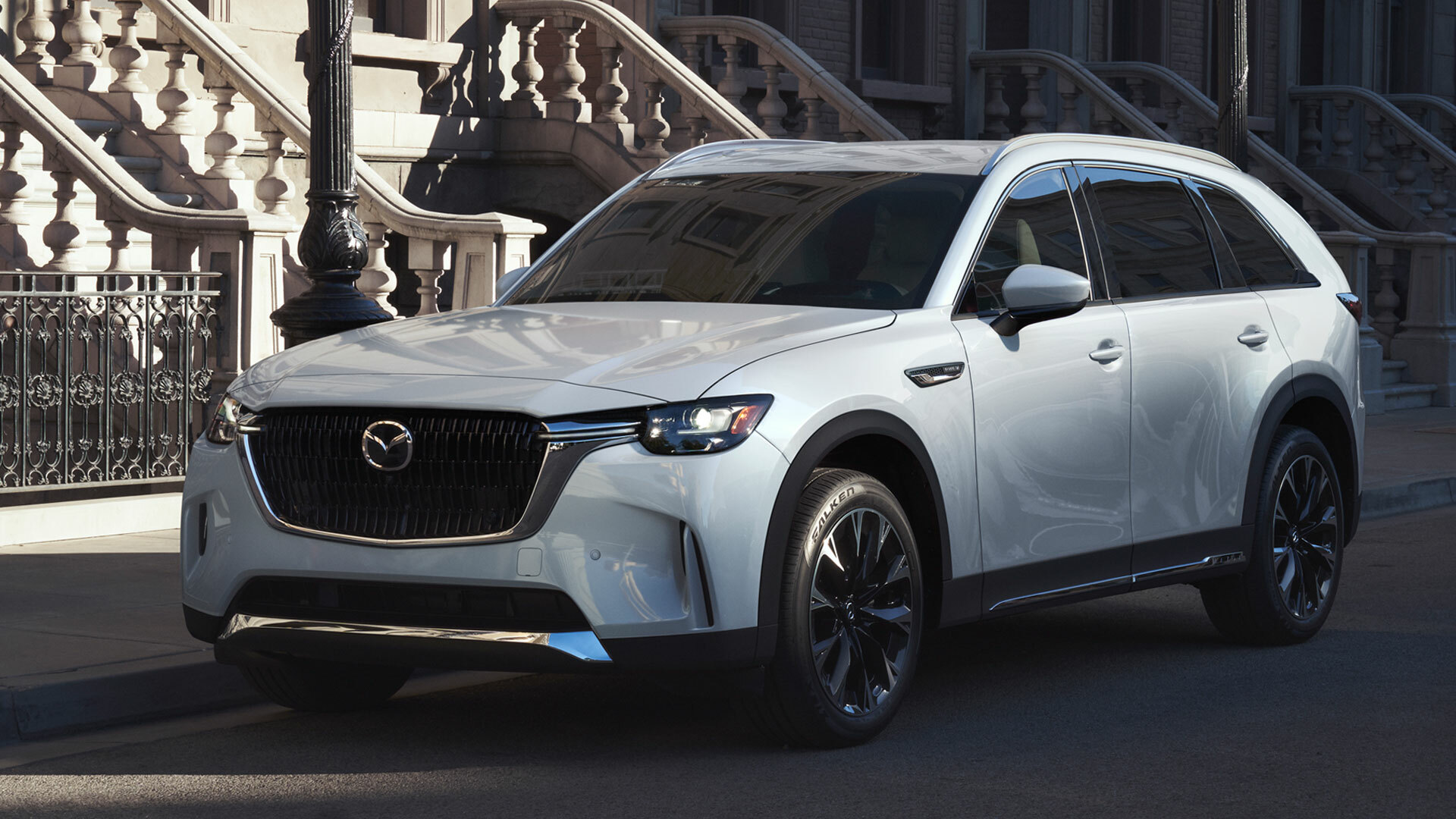
The brand that took the awkward tumble was Mazda, which dropped eight spots to 14th. Older Mazda models still did reasonably well, but the newer, more complicated CX-70 and CX-90, especially in plug-in hybrid form, apparently kept causing trouble.

That’s a classic case of what happens when an automaker gets ambitious with new platforms, new drivetrains, and new tech all at once. Sometimes the engineering team nails it. Sometimes the owners become unwitting, unpaid members of the R&D squad.
 Mazda Bet Big On New Tech And Paid For It In The Reliability Rankings
Mazda

Consumer Reports also says hybrids continue to be a safe option for ICE fans looking for better economy. EVs and PHEVs, meanwhile, remain overrepresented among the least reliable models in the survey, especially when they’re brand new or heavily redesigned.

Buick Leads Detroit Brands
 Mazda Bet Big On New Tech And Paid For It In The Reliability Rankings

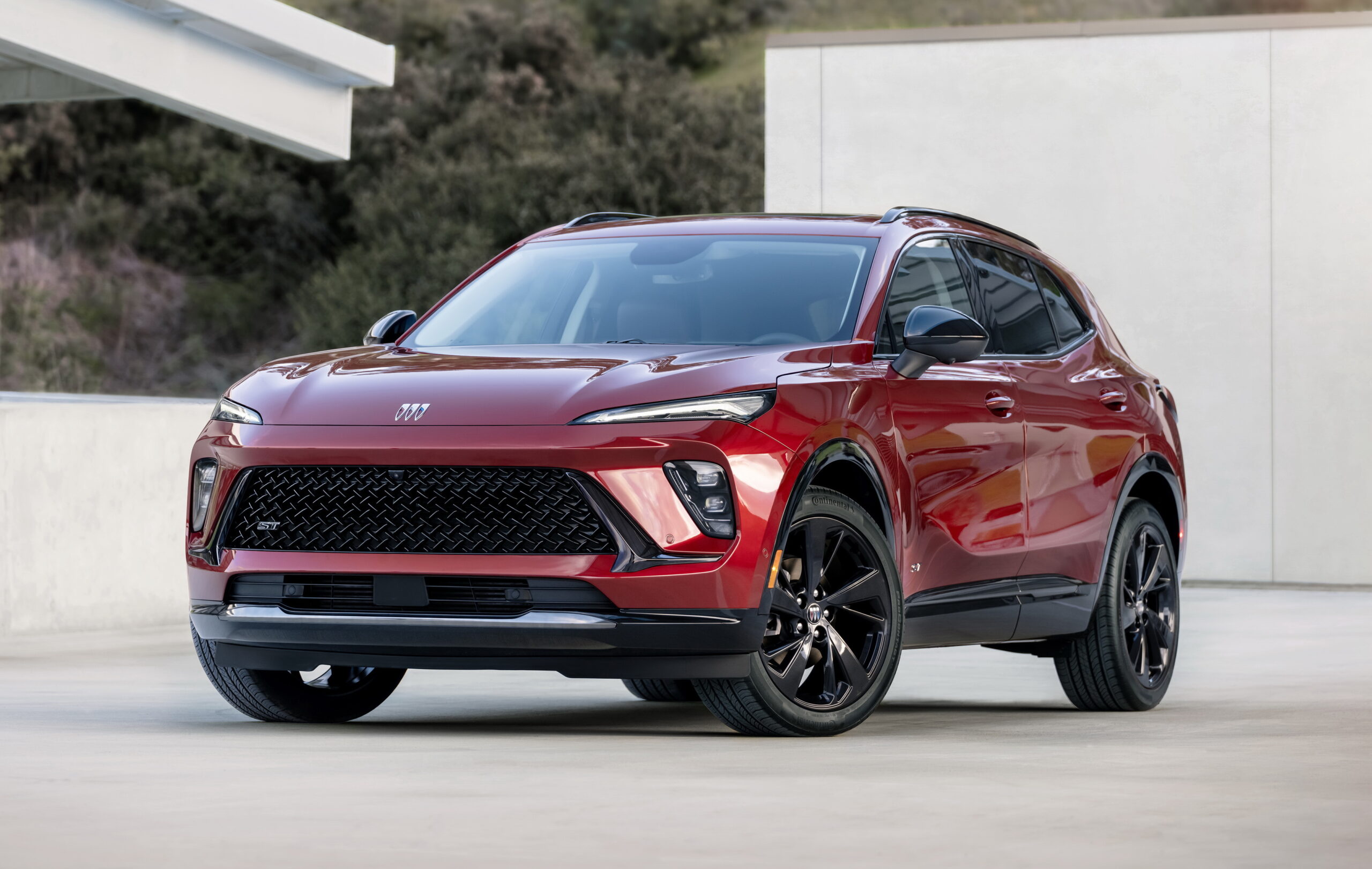
There were a few other eyebrow raisers in the rankings. Buick was the highest placed traditional Big Three Detroit brand at eighth, Ford landed 11th, and relative newcomer Rivian brought up the rear, though it’s worth pointing out that Jaguar, Land Rover, Fiat, Alfa Romeo and more were excluded from the study due to a lack of data.

Consumer Reports also found Asian brands still dominate on reliability, Europeans sit in the middle, and domestic brands trail overall, even if Tesla’s jump gave Team America something to celebrate. 

And reliability is worth celebrating. No, it’s never going to be sexy, but unless your idea of excitement includes hanging around in waiting rooms and constantly swapping into loaner crossovers, Consumer Reports has a pretty clear message: maybe let somebody else test the cutting edge first.

Consumer Reports Reliability Study
Position BrandScore
1Toyota66
2Subaru63
3Lexus60
4Honda59
5BMW58
6Nissan57
7Acura54
8Buick51
9Tesla50
10Kia49
11Ford48
12Hyundai48
13Audi44
14Mazda43
15Volvo42
16Volkswagen42
17Chevrolet42
18Cadillac41
19Mercedes-Benz41
20Lincoln40
21Genesis33
22Chrysler31
23GMC31
24Jeep28
25Ram26
26Rivian24
SWIPE

Consumer Reports

Before yesterdayMain stream

Honda’s Tiny £20k Super-N EV Lands In UK Like A Half-Scale Ioniq 5 N

  • Honda brings Japan’s Super-One EV to Europe as Super-N.
  • Tiny EV has simulated transmission shifts and sound effects.
  • Sub £20k price is low, but so is 94 hp output, 128-mile range.

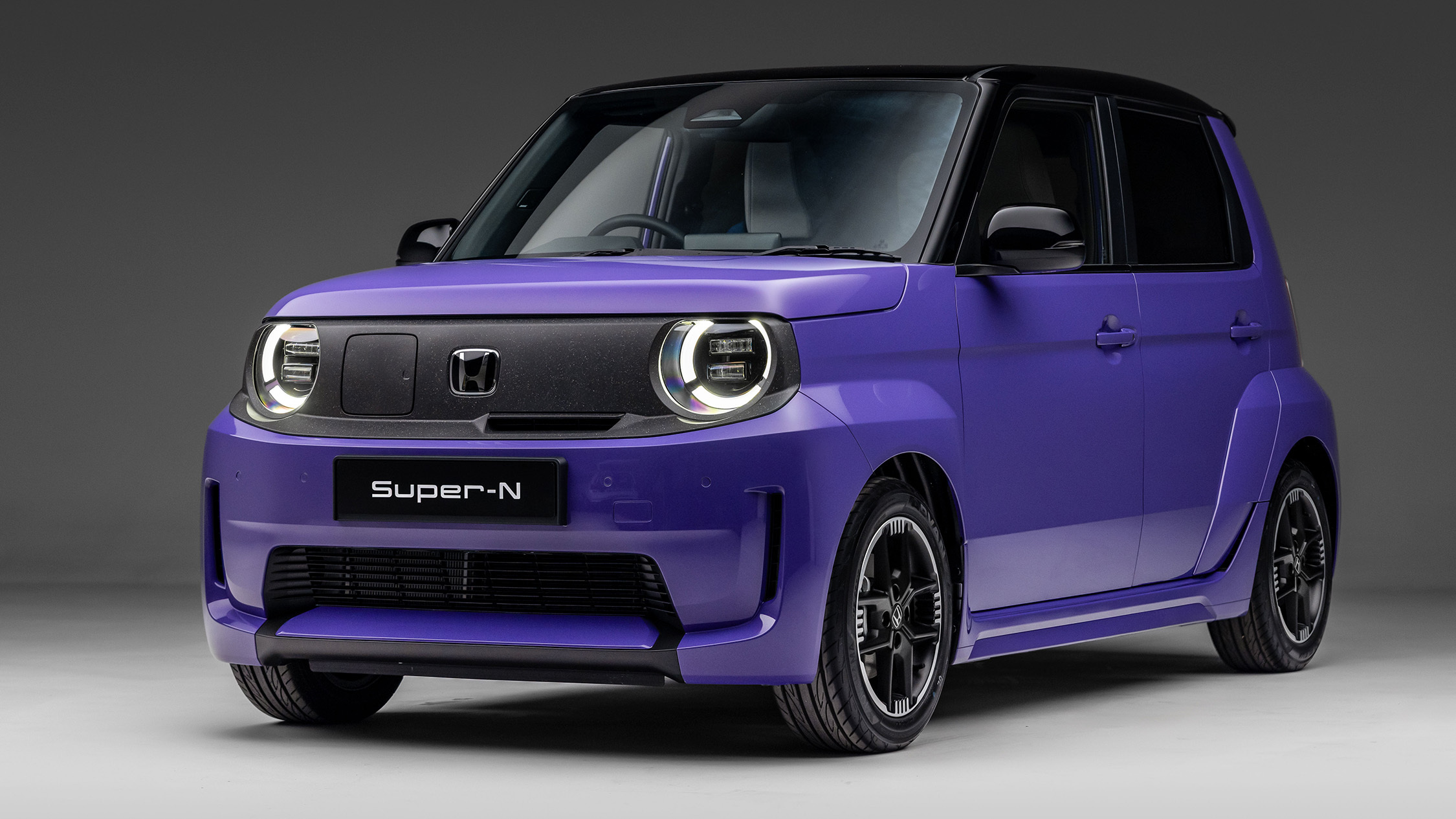
Honda has decided that what the world really needs right now is a tiny electric city car with dreams if being a rowdy ’80s hot hatch. Meet the Super-N, a kei car escapee heading to the UK and mainland Europe this July with a sub £20,000 (about $26,900 or €22,900 at current rates) price and a very clear mission to prove you can have fun even with a two-digit power output.

The Super-N is Europe’s version of the Japanese Super-One, itself a pumped-up evolution of Honda’s JDM N Series cars, but with a heavy dose of nostalgia thrown in. It borrows its attitude from the legendary City Turbo II, which means chunky arches, aggressive bumpers, and enough visual drama to make other sub-£20k EVs like the Dacia Spring look downright dull.

Related: Honda Cancelled Its EV Future And Now Has Nothing New To Sell America Until 2027

Under the short 3.59 m (141.3 inches) skin, a compact, front-mounted e-axle delivers between 63 hp (64 PS / 47 kW) and 94 hp (95 PS / 70 kW), with the higher figure unlocked in something called Boost Mode. That might not sound like much, but this is one of the lightest EVs around, so it should feel perkier than the numbers suggest.

Fake Gears And Sounds

 Honda’s Tiny £20k Super-N EV Lands In UK Like A Half-Scale Ioniq 5 N

Anyway, Boost Mode doesn’t just add power. It also brings a simulated seven-speed gearbox and fake engine noise, just like the acclaimed Hyundai Ioniq 5 N. The idea is to give drivers something closer to an old-school hot hatch experience, and convince ICE diehards that affordable EVs can be entertaining.

Range is very much city-focused. Honda quotes up to 199 miles (320 km) in urban driving, though that drops to 128 miles (206 km) combined. Still, that’s more than enough for daily duties, and this car isn’t pretending to be a motorway muncher anyway.

Sports Seats And Go-Faster Lighting

\\\\\

Inside, the Super-N gets playful with supportive seats, blue accents, and ambient lighting that switches to purple when you hit Boost Mode and start pushing the uprated chassis. Honda says the suspension has been specially tuned for UK and European roads, and the setup must be stiffer than what you get in the non-sporty, slab-sided N-One e: offered alongside the Super-One in Japan.

UK sales start in July, but fun as the Super-N looks, it won’t have things its own way. Renault’s stylish new Twingo also hits European roads this year, and will match the Honda’s sub-£20k price.

\\\\\

Honda Cancelled Its EV Future And Now Has Nothing New To Sell Until 2027

  • Honda faces product drought in North America after cancelling multiple EV programs.
  • No major redesigns expected until the new CR-V SUV arrives sometime around 2027.
  • Losses mount while rivals push ahead with fresher lineups and faster development.

Honda slammed the brakes on its EV push, and now it faces the prospect of being stuck at a development red light with not much new to show customers. After canceling several electric models, the company is staring down a product gap in North America that could stretch into 2027 and far beyond.

That’s a problem in a market where newness sells. Analysts say there may be no fully redesigned core models arriving next year, leaving Honda to rely on cars that are starting to feel a little long in the tooth.

More: Honda Went To China, Saw The Future, And Reached Back To The 1960s

The irony is that only a couple of months ago, Honda dealers were preparing for a massive influx of exciting new metal. Honda had gone all in on EVs, shifting engineers and resources away from traditional development. Then demand softened, policies shifted, and suddenly those future models didn’t make financial sense anymore.

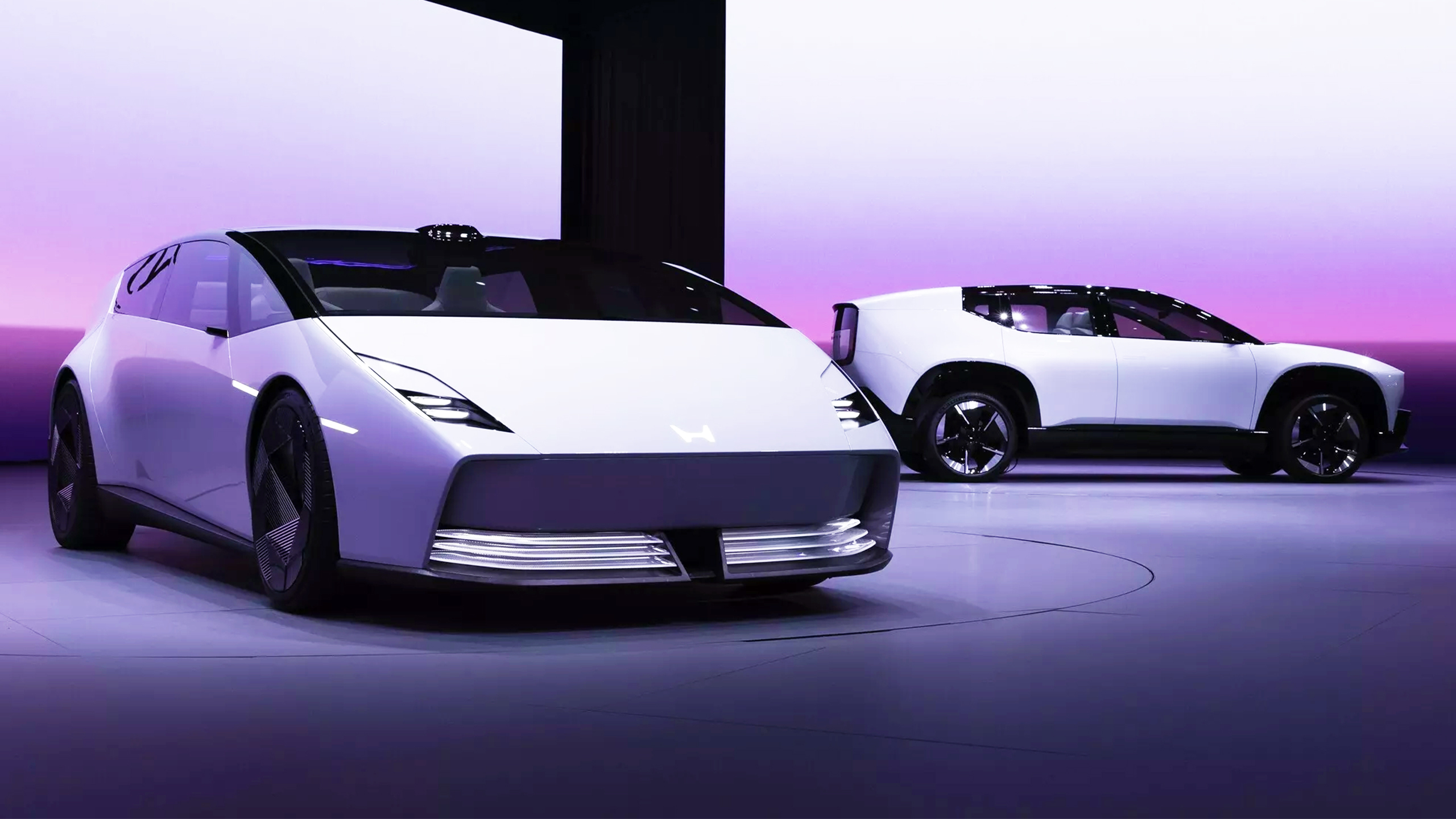
So the company pulled the plug. That included the wild looking 0 Saloon, the 0 SUV, and even Acura’s planned RSX revival. Cool ideas, all gone, along with billions in investment. What’s left is the hangover. Development pipelines for gas powered cars have slowed, and the company is left trying to rebuild momentum while competitors keep rolling out fresh vehicles. Its first fresh vehicle will be a redesigned CR-V due in 2027, Nikkei Asia reports.

Rivals More Efficient

 Honda Cancelled Its EV Future And Now Has Nothing New To Sell Until 2027

It’s not just about product timing either. Honda’s development efficiency has been under scrutiny for years, and the gap versus rivals like Toyota isn’t helping. Pricing pressure is another concern. In the US, Honda is already offering bigger incentives than some rivals to keep cars moving. If newer competitors arrive while Honda’s lineup stays largely unchanged, those discounts may have to climb even higher.

No New Cars But Plenty Of Bills

Financially, things don’t look much rosier. The EV retreat is expected to trigger massive losses, and not just in wasted development time and money. Nikkei Asia says the automaker could have to pay $10 billion to suppliers who were all geared up and ready to build parts for the cancelled electric cars. And there’s growing chatter that dividends could come under pressure if earnings don’t recover soon.

Honda insists it’s stabilizing things and focusing on hybrids while reorganizing development to speed things up again, and there’s even talk of potential collaboration with Nissan in North America. But nothing concrete has emerged yet, so don’t expect many new-model fireworks for a couple of years.

 Honda Cancelled Its EV Future And Now Has Nothing New To Sell Until 2027

Honda

Honda Isn’t Done With The 0 Series, Just Done With Selling One Here

  • Honda will build the 0 α SUV in India to take advantage of lower production costs.
  • The smaller 0 α is distinct from the 0 SUV that was cancelled for the U.S. market.
  • Japan is confirmed as an export destination, though other markets remain open.

It’s been a couple of weeks since Honda pulled the plug on plans to build the 0 Saloon, 0 SUV, and Acura RSX EVs in the US. However, not all of that investment is going to waste, as the smaller 0 α SUV has now been confirmed for production in India, with exports planned for other markets as well.

Last month, Honda began testing the all-electric SUV in India for the first time, putting it through a wide range of driving conditions. Engineers are also evaluating performance in extreme heat and monsoon environments, alongside testing its charging capabilities.

Read: New Honda 0 SUV Gets Real With Production Design

Deciding on Indian production is an obvious move for Honda. Having already poured billions of dollars investing too heavily in EVs, Honda will be eager to make the most of lower labor costs in India. It’s revealed that not only will the 0 α SUV be built and sold in India, but it will also be exported to its home market of Japan, among other “key markets”, though Honda won’t say which ones at this stage.

Deciding on Indian production is a logical move. After pouring billions into EV development with limited return, Honda will be keen to capitalize on lower labor costs. The plan now is for the 0 α SUV to be built and sold in India, while also being exported to Japan and other “key markets”, though the company has yet to specify which ones.

This Isn’t The American Model

\\\\\\

The Honda 0 α SUV was unveiled as a concept in late 2025 and looks almost identical to the 0 SUV that had been destined for the US. However, the 0 α is smaller and designed to be more affordable. In a world where lots of SUVs look the same, the 0 α stands apart, largely due to its unusually tall rear end. Whether buyers will embrace the design remains an open question.

Developed under Honda’s new ‘Thin, Light, and Wise,’ approach, the Honda 0 α SUV will hit the market with a thin and lightweight battery pack, although capacity details are not yet known. Honda has also committed to mounting the batteries and power units as low as possible to reduce the center of gravity.

 Honda Isn’t Done With The 0 Series, Just Done With Selling One Here

Honda says the new 0 α SUV will be introduced during the 2026-2027 financial year, likely launching first in India and Japan before expanding to other regions.

According to Honda, “The start of pan-India Public Road Verification testing is a key milestone in our electrification journey. India has unique driving and climate conditions, and it is important for us to test our electric vehicle thoroughly in real-world environments. This programme reflects Honda’s global engineering strengths combined with a strong focus on local customer needs, as we prepare to introduce an electric SUV that offers reliability, comfort, and ease of use.”

 Honda Isn’t Done With The 0 Series, Just Done With Selling One Here

Honda Cuts $7,500 Off Every Prologue, Including Cars Already On Dealer Lots

  • The discount offsets the lost federal EV tax credit, dollar for dollar.
  • Price reductions apply to existing dealer inventory, not just new builds.
  • The base single-motor EX now starts at $41,395 including destination.

The Prologue hasn’t been the success that Honda would have liked, and pricing has been a big part of the problem. It was already on the expensive side, and the loss of the $7,500 federal EV tax credit under the Trump administration only made things harder to justify. Honda appears to have taken the hint.

For 2026, it’s cutting $7,500 across the entire Prologue lineup, effectively replacing the missing incentive and bringing the model within reach of a much wider pool of buyers.

The 2026 Prologue range goes unchanged, meaning it continues to be offered in single-motor and dual-motor EX, Touring, and Elite configurations. Importantly, the price cuts won’t just apply to newly-built models from April 1, but also 2026 models already in Honda’s inventory.

Read: That Strange Clicking Noise In Honda’s Prologue Is Now A Lawsuit

Sitting at the base of the range is the single-motor EX, now priced at $41,395, including a $1,495 destination charge, down from $48,895 for the 2025 model. Positioned above this model is the EX dual motor, now starting at $43,495. The 2026 Prologue continues to be sold in Touring guises, starting at $46,695 for the single-motor and $48,495 for the dual-motor.

2026 Honda Prologue
TrimDriveMSRPMSRP w/Dest.EPA Range
EXSingle Motor, 2WD$39,900$41,395308 miles
EXDual Motor, AWD$42,000$43,495294 miles
TouringSingle Motor, 2WD$44,200$46,695308 miles
TouringDual Motor, AWD$47,000$48,495294 miles
EliteDual Motor, AWD$50,400$51,895283 miles
SWIPE

Whereas the front-wheel drive models have 220 hp, 243 lb-ft (329 Nm) of torque, and an EPA range of 308 miles (496 km), the dual-motor versions deliver 300 hp and 355 lb-ft (481 Nm) of torque. The added power comes at the cost of range, which is reduced to 294 miles (473 km) in the dual-motor EX and Touring.

Continue to sit at the top of the range is the dual-motor Elite with a reduced range of 283 miles (455 km). For 2026, it starts at $51,895, including destination, down from $59,395.

The long-term future of the Honda Prologue remains unclear. Following the removal of the federal EV tax credit, sales have plunged through the early part of this year, prompting Honda to cut production in half. This also prompted recent speculation that the Prologue will be killed after production ends in December, with no successor on the agenda. However, Honda has denied these reports.

\\\\\\\\

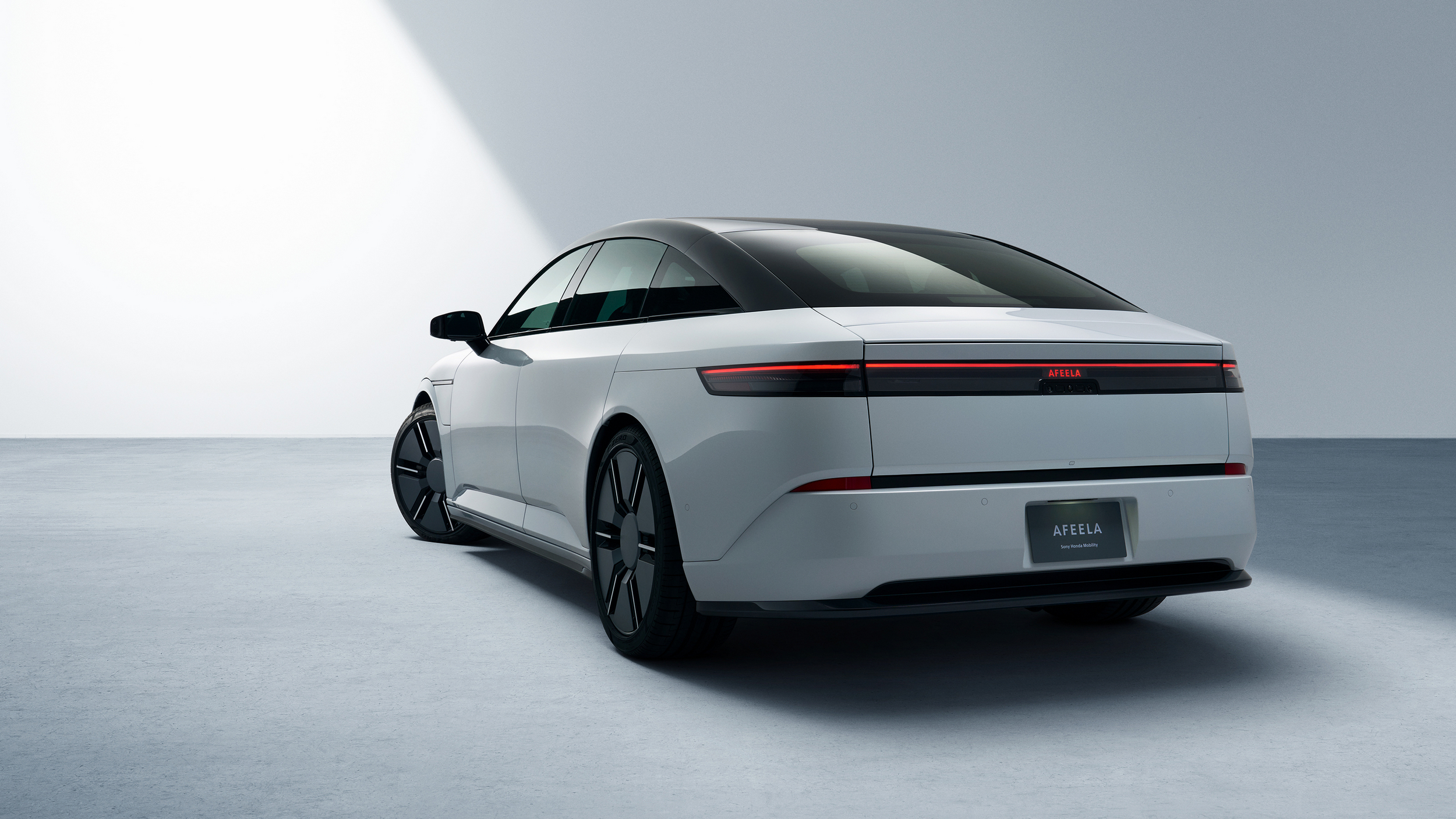
Honda’s EV Pivot Just Wiped Out The Entire Sony Afeela Brand

  • Sony Honda Mobility cancels electric sedan and SUV
  • Honda’s strategy shift leaves the joint venture without tech.
  • Reservation holders of the Afeela 1 will receive full refunds.

The dream of a Sony-branded electric car has officially run out of road, ending a project that once promised to blend consumer tech with automotive engineering. Sony Honda Mobility has confirmed it is pulling the plug on the development and launch of its entire EV lineup, including the Afeela 1 sedan set to arrive later this year, along with a follow-up SUV previously penciled in for 2028.

The decision effectively collapses the joint venture formed in 2022, which aimed to combine Sony’s software and entertainment ecosystem with Honda’s manufacturing backbone. What once looked like a credible attempt to rethink the in-car experience has instead unraveled before a single production model reached customers.

More: EV Bets Already Cost Four Legacy Carmakers $70B, And The Tab Keeps Climbing

The project’s demise traces directly back to Honda’s sweeping strategy reset announced earlier this month. The automaker pulled the plug on several key EV programs, including the Honda 0 Saloon, the 0 SUV, and the Acura RSX crossover, all of which had been planned for North America.

 Honda’s EV Pivot Just Wiped Out The Entire Sony Afeela Brand
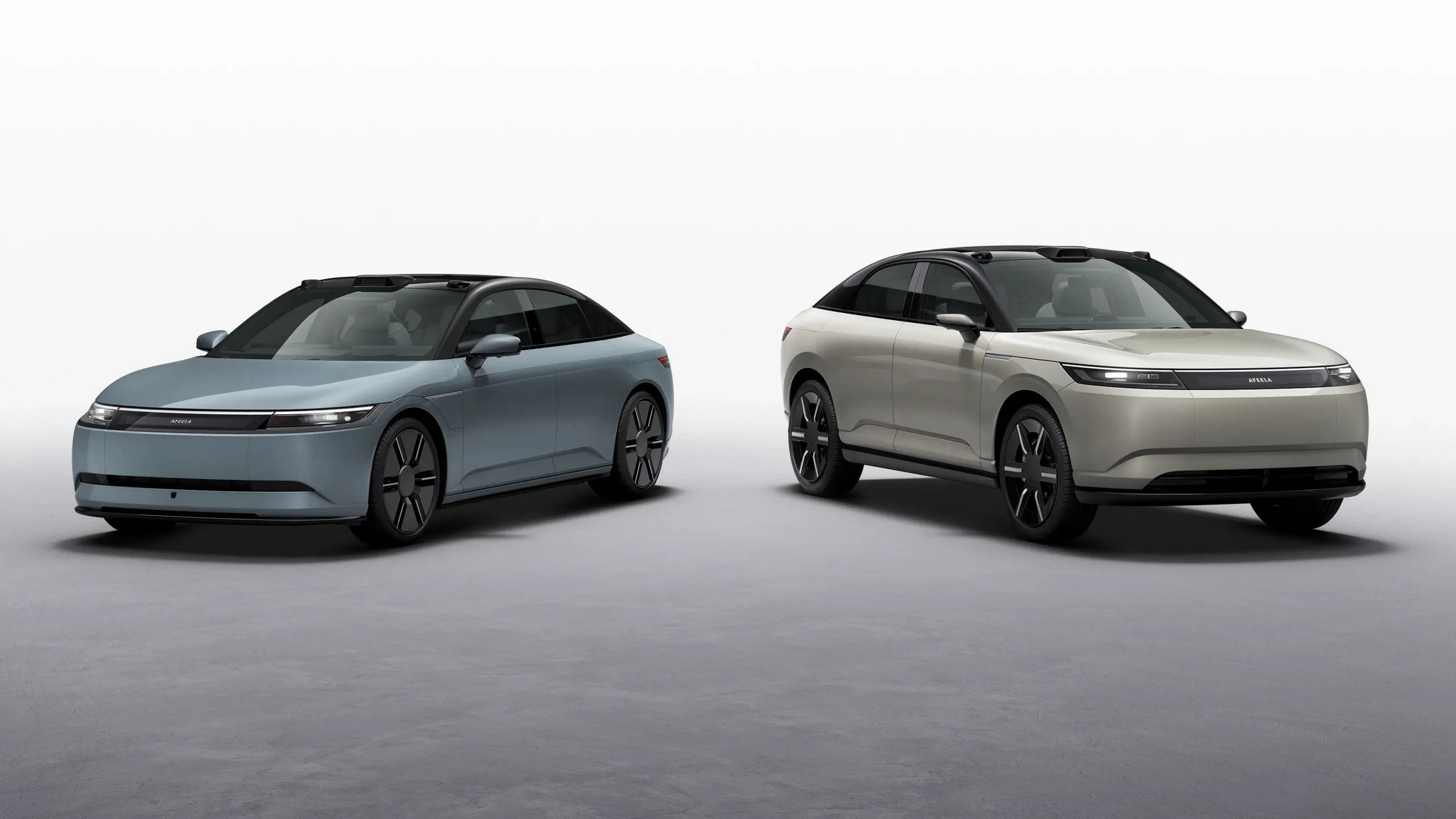
The Afeela 1 sedan (left) and a prototype of the mechanically-related SUV (right).

As Honda pivots away from its previous electrification targets to stem a projected 2.5 trillion yen ($15.7 billion) loss, it has withdrawn the technical assets and dedicated platforms that Afeela was supposed to use. Without the automaker’s hardware support, the joint venture admitted it does not have a viable path forward to bring the models to market as originally planned.

More: Honda’s Prologue Might Soon Become An EV Epilogue

The news comes shortly after Sony Honda Mobility of America announced the grand opening of the Afeela Studio and Delivery Hub in Torrance, California, on March 16. Instead of taking delivery of the Afeela 1, those who placed reservations for the electric sedan will receive full refunds.

Is It Game Over For Sony?

 Honda’s EV Pivot Just Wiped Out The Entire Sony Afeela Brand
Afeela Prototype 2026

Sony’s push into the automotive space began with the Vision-S 01 and Vision-S 02 prototypes, unveiled at CES in 2020 and 2022, with the intention of evolving into production models. In 2022, Sony partnered with Honda to form the joint venture that would bring that ambition closer to reality.

The Afeela brand name was introduced at CES 2023 alongside an early prototype. By CES 2025, the production version of the electric sedan debuted as the Afeela 1, with reservations opening via a refundable $200 deposit and a target price of $89,900.

More: After Honda Kills Three EVs, Afeela Tries Something Shiny While It Still Can

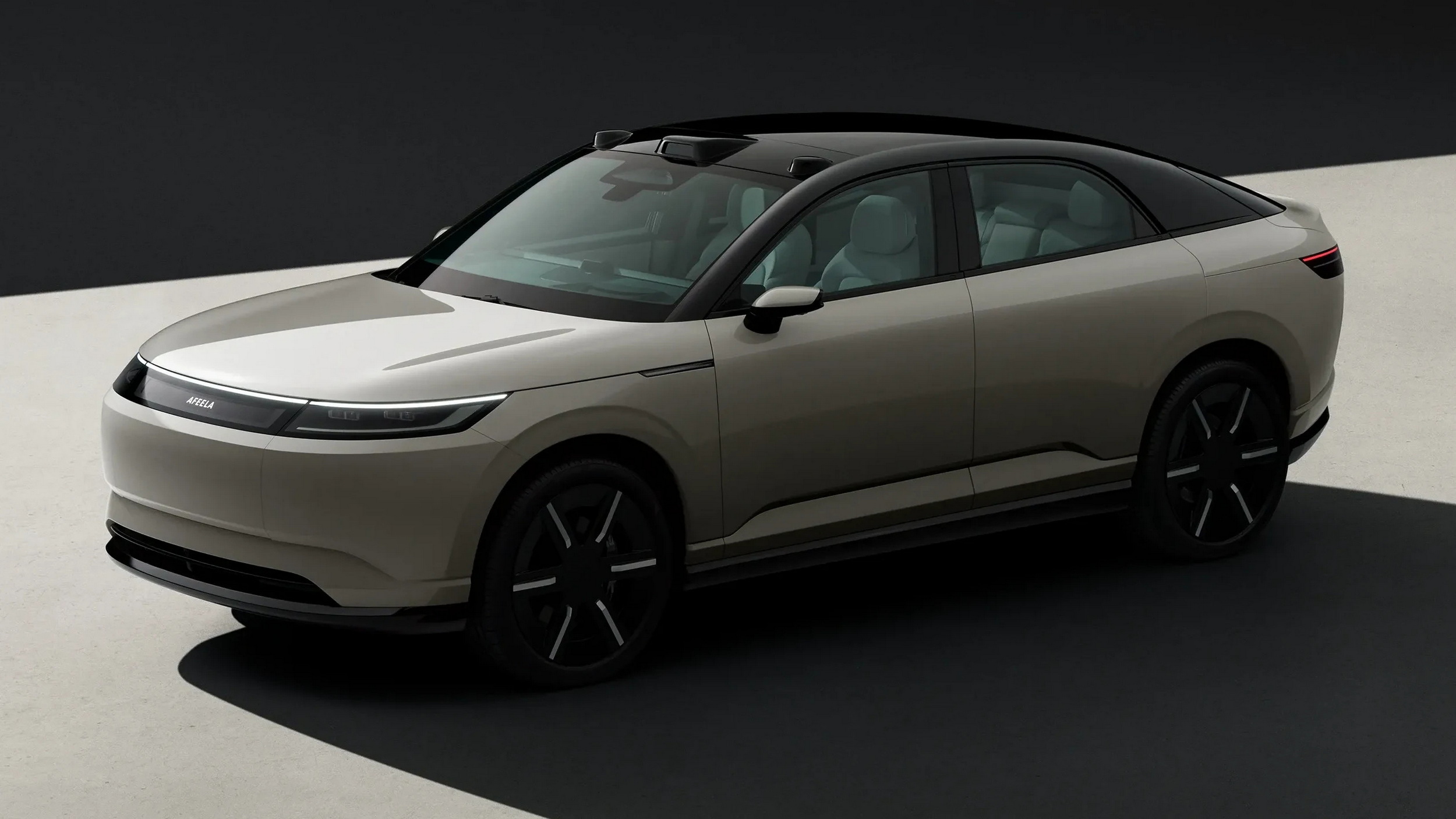
The last chapter was written at CES 2026 with the unveiling of the Afeela Prototype 2026, which was intended to evolve into a production SUV by 2028. In March 2026, the company also revealed two art cars based on the Afeela 1 in collaboration with Matt Copson and Hajime Sorayama, though by then the project was already on borrowed time.

In its announcement, the company stated that Sony Honda Mobility will continue discussions with Sony and Honda regarding its future business plans. Whether it can repurpose its technology and resources, or whether this venture will stand as a costly experiment, remains unclear.

 Honda’s EV Pivot Just Wiped Out The Entire Sony Afeela Brand
Afeela 1

After Honda Kills Three EVs, Afeela Tries Something Shiny While It Still Can

  • Sony Honda Mobility has quietly introduced two new art cars.
  • Created in collaboration with Matt Copson and Hajime Sorayama.
  • Afeela 1 starts at $89,900 and is slated to arrive late this year.

Just days after Acura and Honda killed three upcoming EVs, Sony Honda Mobility quietly announced a new art car based on the Afeela 1. It was created in collaboration with Japanese illustrator Hajime Sorayama, who is best known for creating sexy robots.

That’s an unlikely combination, but it spawned the dull sounding “Afeela prototype tuned up by Hajime Sorayama.” The model was unveiled over the weekend at a museum in Tokyo celebrating the artist’s work.

More: Honda Cancels 0 Sedan, 0 SUV, And Acura RSX EVs

SHM didn’t say much about the art car, but noted it “embodies the concepts of light, transparency, and reflection.” That’s not a lot to go on, but it appears the model has been given a chrome wrap as well as special Sorayama badging. We can also see deep tinted windows as well as gray tires and blue lights.

\\\

In a brief statement, Sorayama said: “I’ve always been fascinated by machines, so it was a real pleasure to take part in designing a car. I aimed to give it an analog sensibility that hints at a near-future vision. I’m especially proud of the moiré effect on the wheels.”

Besides the art car, SHM used the event to launch Afeela’s first-ever apparel item. It’s a black silkscreen t-shirt that features layers of ink showing the car. The shirt costs ¥11,000 ($69.15) and will be offered in limited quantities at the museum.

A Second Art Car

 After Honda Kills Three EVs, Afeela Tries Something Shiny While It Still Can

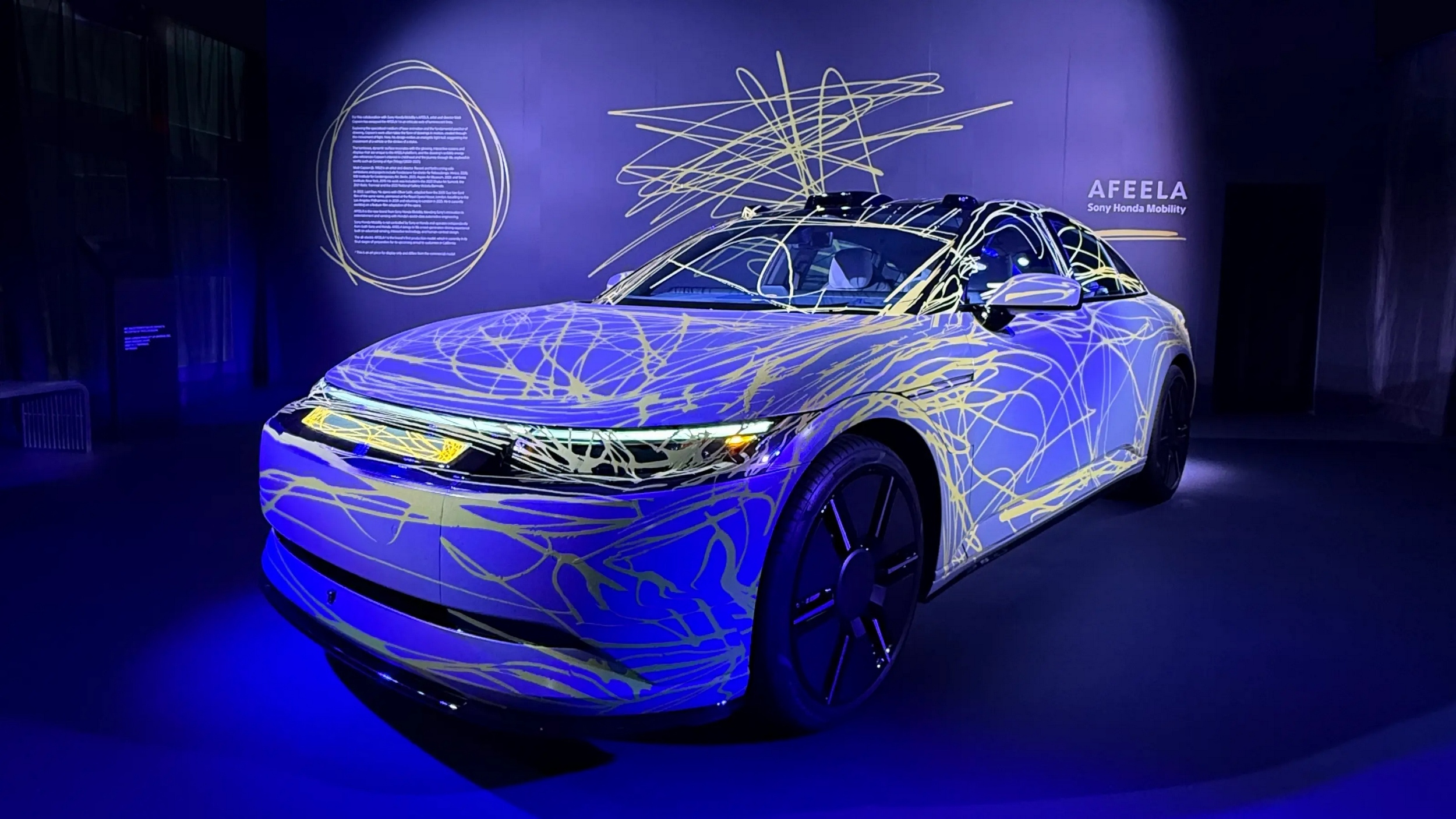
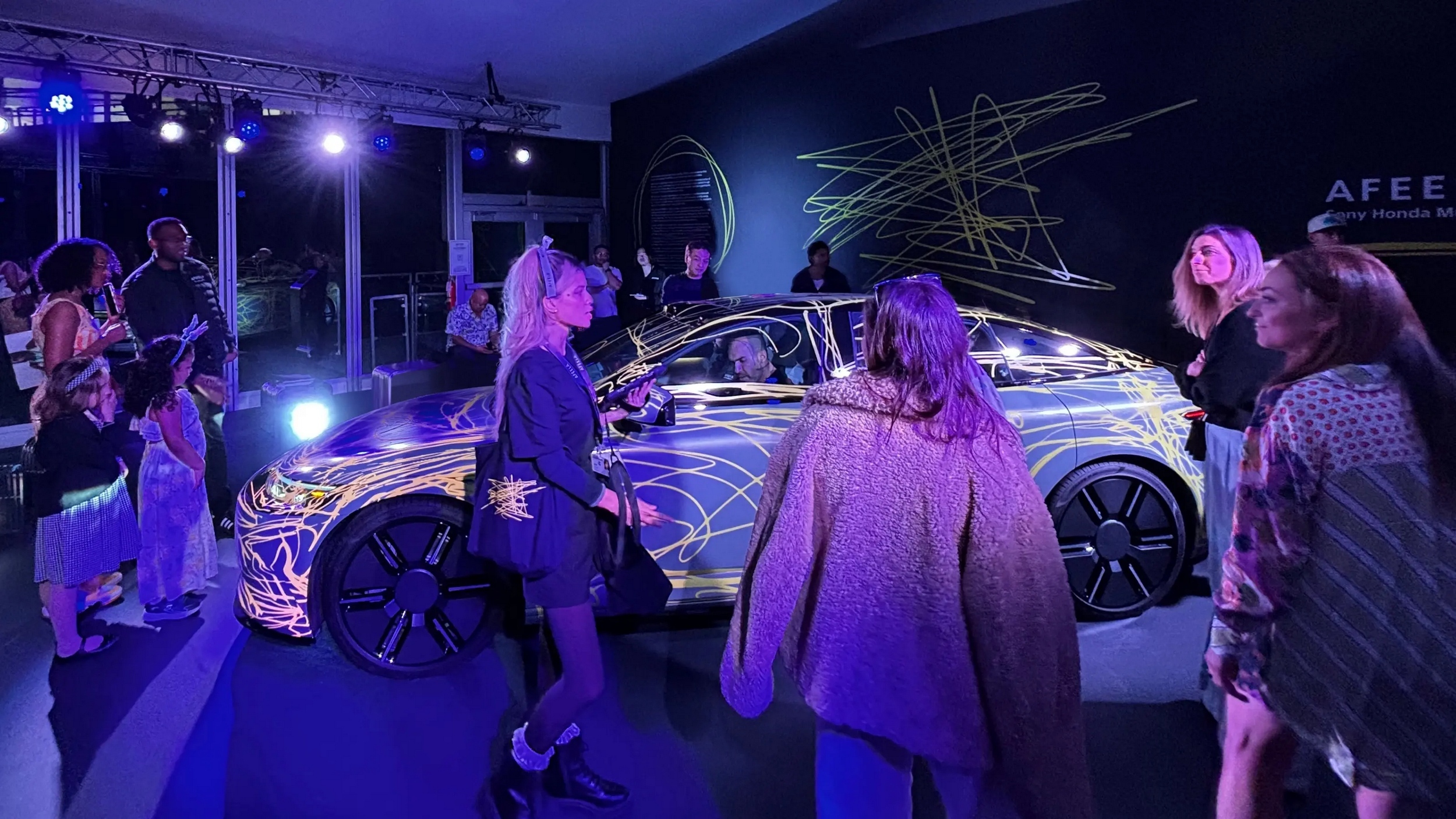
Closer to home, SHM teamed up with artist and director Matt Copson to introduce a separate art car at Frieze Los Angeles. It’s been covered in a “reflective material… commonly found on emergency vehicles and signage.” As a result, it looks like it’s been coated in glow-in the dark silly string.

The car was accompanied by limited-edition tote bags and will eventually be shown at Frieze New York in May.

 After Honda Kills Three EVs, Afeela Tries Something Shiny While It Still Can

EV Bets Already Cost Four Legacy Carmakers $70B, And The Tab Keeps Climbing

  • Honda recently posted $15.7 billion in expenses for its EV U-turn.
  • EV registrations in the US collapsed 48 percent in December.
  • Ditching the $7,500 federal EV tax credit has eroded EV demand.

The new year hasn’t been kind to traditional automakers, many of which now find themselves confronting an EV reality in the U.S. that looks very different from what they had been planning in boardrooms not long ago. A mix of policy changes and cooling demand is forcing several manufacturers to rethink electrification plans that, until recently, sat at the center of their long-term strategies.

Read: Honda Cancels 0 Sedan, 0 SUV, And Acura RSX EVs

Honda is the latest to change course. The company confirmed this week that it will scrap all three electric vehicles it had planned to build in America, citing weakening demand, especially in the US market. The move places it alongside Ford, GM, and Stellantis, all of which have recently scaled back their own EV programs.

Taken together, the retreat is proving expensive. Those four automakers alone have absorbed close to $70 billion in losses tied to their EV investments, reports Auto News. And that figure doesn’t even include other manufacturers, such as Porsche, which have also begun dialing back their electrification plans.

The drop in EV demand in the US can be largely traced to decisions made by the Trump administration. New government policies not only encourage manufacturers to prioritize combustion-powered models, but the removal of the $7,500 federal EV tax credit has also further weakened demand at a time when adoption was already slowing.

In fact, EV registrations fell 48 percent in December compared to last year, dropping to just 75,427 vehicles. As a result, EV market share slipped from 9.9 percent to 5.3 percent.

The EV Graveyard

 EV Bets Already Cost Four Legacy Carmakers $70B, And The Tab Keeps Climbing

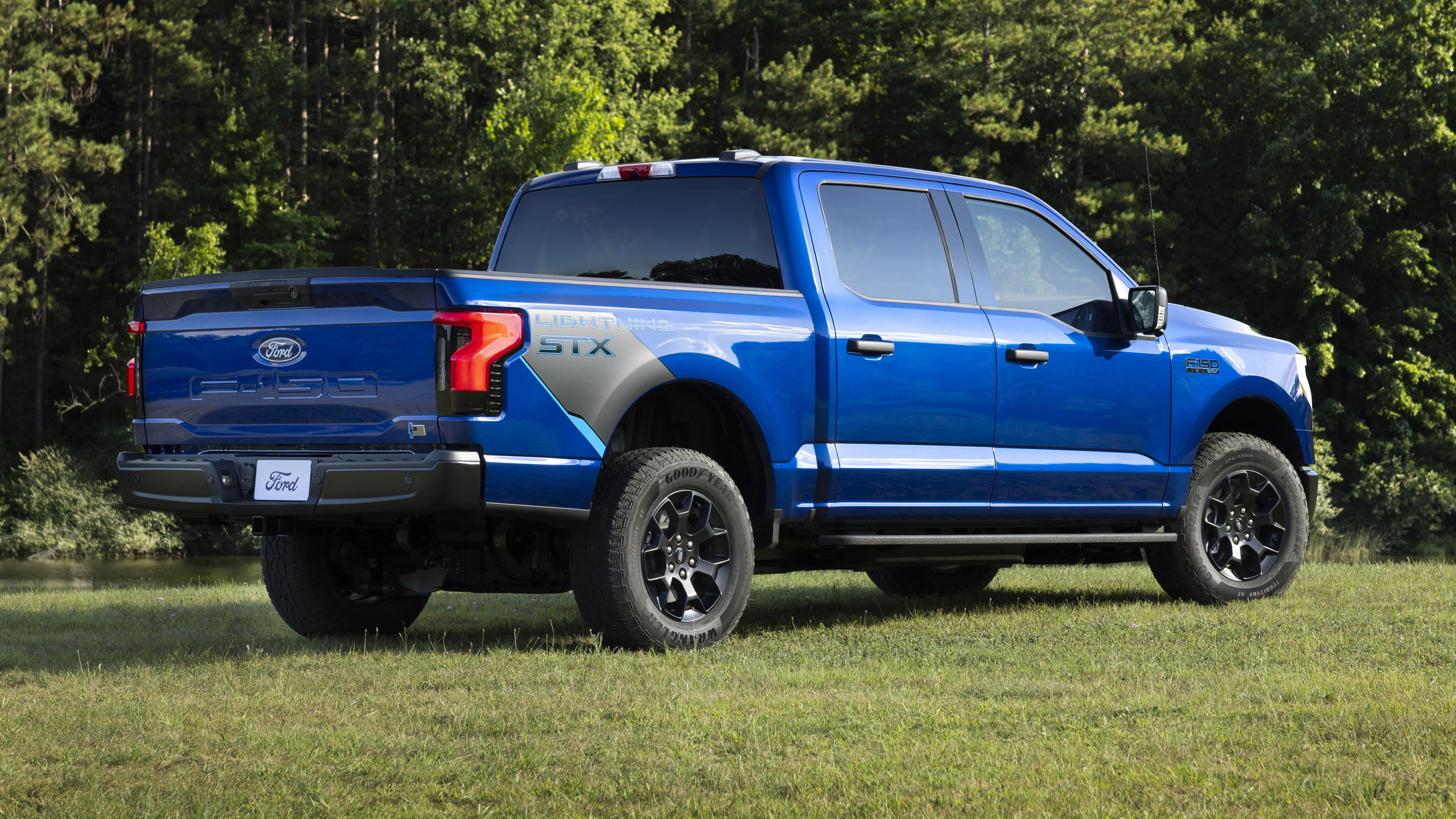
Ford has already revealed that its retreat from EVs has cost roughly $21 billion. The company scrapped plans for a three-row electric SUV and ended production of the F-150 Lightning last year after it failed to meet sales expectations.

Stellantis recently said its EV pullback will cost about $26 billion, following the cancellation of several electric models. GM has also stepped back, halting production of the Chevrolet BrightDrop electric van in Canada and repurposing a Michigan plant for gas trucks after originally planning to build EVs there.

As noted by Auto News, Honda is booking 2.5 trillion yen or $15.7 billion in expenses and losses due to its EV U-turn. In addition to killing off the 0 Saloon and the 0 SUV, the car manufacturer has killed off the all-electric Acura RSX. That sleek coupe SUV was unveiled as a pre-production prototype last year and would have been the first to use Honda’s in-house global EV platform.

Honda is booking 2.5 trillion yen or $15.7 billion in expenses and losses tied to its EV U-turn. Alongside the cancellation of the 0 Saloon and the 0 SUV, the automaker has also killed the all-electric Acura RSX. The stylish coupe SUV debuted as a pre-production prototype last year and was set to become the first model built on Honda’s in-house global EV platform.

 EV Bets Already Cost Four Legacy Carmakers $70B, And The Tab Keeps Climbing
Acura RSX

Honda’s Prologue Might Soon Become An EV Epilogue

  • Honda may cancel Prologue after current production ends this December.
  • EV sales plunged after federal tax credits vanished and demand cooled.
  • Honda is now pivoting toward hybrids after scrapping several planned EVs.

Honda’s big electric push in the United States may soon get a lot smaller, and not just because the company has scrapped three new EVs at the eleventh hour. According to a report from Auto News citing AutoForecast Solutions, Honda isn’t planning a second generation of the Prologue crossover once the current production run ends later this year. And if that happens, the brand would effectively exit the US EV market altogether.

The Prologue only launched in 2024 and initially looked like a success story. Nearly 39,000 buyers took one home in 2025, helped along by heavy incentives and a handy federal tax credit worth $7,500. Then the incentives disappeared, and so did much of the demand.

Related: That Strange Clicking Noise In Honda’s Prologue Is Now A Lawsuit

After the US government scrapped the EV tax credit, Prologue sales reportedly plunged. Deliveries in early 2026 have fallen about 74 percent compared with the same period last year, Auto News reports. Honda has already cut production roughly in half and now expects to sell fewer than 18,000 units this year.

We asked Honda about the report and it refused to confirm that the Prologue was on its way out, but didn’t categorically deny it either.
“The Automotive News article is based purely on speculation,” a spokesperson told us.  “The Prologue remains in our lineup.”

Regardless of whether it stays or goes, the Prologue was always a slightly unusual project anyway. It isn’t built by Honda but by General Motors at a plant in Mexico using GM’s electric platform. Honda essentially borrowed the technology as a fast way to get an EV into American showrooms while it developed its own architecture. Acura already cancelled its version of the Prologue, the ZDX, last September, after just one year of production.

\\\\\\

Now the company appears ready to pull back even further. Earlier this week, Honda confirmed it is scrapping several future electric models planned for North America and due to be built in Ohio. Those three models shown in the gallery below are the 0 Series SUV, the futuristic 0 Series Saloon, and the upcoming Acura RSX crossover.

Suppliers Were Already Up And Running

The strategy shift could cost the automaker up to $15.8 billion in write-downs and expenses, and suppliers Auto News spoke to are also in line for some hurt. They’d already started building RSX parts and had begun hiring and training staff in readiness for the start of EV production in July.

Honda dealers, however, aren’t exactly mourning the change. Many say customers simply prefer hybrids right now and are happy to skip expensive full electric models altogether.

\\\\\\\\\\\\\

Honda/Acura

Honda Cancels 0 Sedan, 0 SUV, And Acura RSX EVs

  • Honda confirms it’s canceled three US EVs including Acura RSX.
  • Axed Honda models are a Lambo-shaped sedan and quirky SUV.
  • Honda now expects massive losses and a bigger focus on hybrids.

Honda’s electric future just got a whole lot less bright. The automaker has announced it’s scrapping three planned North American EVs that were supposed to spearhead its next big push as it rethinks its electrification plans against a backdrop of cooling global EV demand.

The three vehicles are Honda’s delightfully bonkers 0 Saloon and 0 SUV, and Acura’s upcoming RSX crossover, and axing them so late in the game means a ton of financial pain for Honda. The company says it is booking roughly 2.5 trillion yen ($15.7 billion) in expenses and losses due to the U-turn.

Related: Honda Walks Back Its EV Plans As Losses Spiral

Here’s what Honda told us in a statement:

“In order to improve the current earnings situation as early as possible, Honda considered various options; however, after careful consideration, the company made the decision to cancel the development and market launch of three EV models that had been planned for production in the U.S., namely the Honda 0 SUV, Honda 0 Saloon, and Acura RSX.

Honda determined that starting production and sales of these three models in current business environment where the demand for EVs is declining significantly would likely result in further losses over the long term.”

Sedan Does Supercar

Of the trio, the 0 Saloon was the showstopper. It looked like someone fed a Lamborghini Gallardo and a minivan into the same blender. Honda had previously said it would launch in North America after the SUV, and just earlier this year reports said it had already slipped to 2027. Now it appears the delay has turned into a funeral.

\\\\\\\\\\\\\\

The 0 SUV was the more realistic sibling, though still plenty wild from a design standpoint with its hunchback rear. It was an electric crossover SUV with a tall cabin, pixel style lighting and Honda’s new ASIMO OS. This was supposed to be the practical EV that actually paid the bills, and would probably have been the model seen most regularly on US roads.

RSX Revival Iced

But maybe it’s the loss of the Acura RSX that was due to enter production later this year that will sting the most. Acura had already shown a pre-production prototype of the coupe SUV, promising dual motors, all-wheel drive and a sportier feel than the GM-based ZDX that was recently dropped. The RSX was also going to revive a name made famous by an iconic driver-focused Acura of yesteryear, and even if it did so by turning a fondly remembered rev-happy coupe into yet another crossover, at least it was a seriously good looking crossover.

Honda’s change of heart isn’t just bad news for North American EV buyers either, it’s all bad for US workers. All three EVs were scheduled to be built in Ohio. We have reached out to Honda for confirmation and will update this story when we hear back.

\\\\\\\\\\\\

Honda/Acura

That Strange Clicking Noise In Honda’s Prologue Is Now A Lawsuit

  • Honda faces lawsuit over persistent Prologue axle noise.
  • Two owners cite popping and clicking after early delivery.
  • Dealers replaced CV axles but noises reportedly remain.

Honda’s all-electric Prologue has found itself under legal scrutiny following reports of some rather odd drivetrain noises. Not long after the company warned US dealers that certain 2024–2026 Prologue models might require repairs due to clicking or ratcheting-type sounds from the drive axles, a lawsuit followed. Owners say the noises can linger even after a trip, sometimes more than one, to the dealership.

A class action lawsuit filed in Pennsylvania names two Prologue owners who say their SUVs developed unusual noises from the front axle. One of them, Ashley Custer, leased a 2024 Prologue in May 2025 and soon began hearing the sounds, prompting a trip to the dealer with just 4,039 miles (6,500 km) on the odometer.

Read: She Expected 200K Miles From Her V6, Now She’s Suing Honda

After she reported a creaking noise when turning, the Honda dealer replaced the CV axles. That, however, didn’t solve the problem. Custer returned to the dealership in November, where she was told no repair was currently available. An associated repair order reportedly noted that she was “experiencing the suspension noise that we are familiar with and have seen on other Prologues,” adding that it is a “known issue that Honda is working on.”

 That Strange Clicking Noise In Honda’s Prologue Is Now A Lawsuit

She took her Prologue to a dealer last month, but was again told that no repairs were available. Similarly, the second plaintiff, Jorge Santiago, drives a 2024 Prologue and started noticing popping and clicking sounds shortly after taking delivery. Despite the car also being taken to a dealership, it hasn’t been fixed.

What’s The Fix?

In December, Honda issued a Tech Line to dealerships, asking them to verify the noise of faulty Prologue models, inspect for damage, and make any necessary repairs. However, the lawsuit claims that the fix is pointless as Honda is simply using the same defective front axles and components. As such, the noise continues, even after multiple dealership visits.

The lawsuit claims that Honda was aware of the “abnormal and anxiety-inducing noises” when it first started selling the all-electric Prologue.

\\\\\\\\\

❌
❌