Normal view

There are new articles available, click to refresh the page.
Today — 9 June 2026Main stream

Tesla Can’t Move Cybertrucks at Home, So Kazakhstan’s Government Bought Some

  • A matte black Cybertruck recently joined Kazakhstan state security.
  • The Ministry of Emergency Situations has acquired one as well already.
  • Its arrival follows the start of Cybertruck sales in the Middle East.

Tesla’s trouble moving the Cybertruck in any meaningful quantity on US soil is by now thoroughly documented. Before the electric pickup ever reached a showroom, Elon Musk boasted that Tesla could move as many as 500,000 a year. The reality has been less kind. In 2025, American buyers took home just over 20,000 of them.

While it seems the Cybertruck has lost a lot of its initial luster in the US, it is slowly being introduced in other markets. One of them is Kazakhstan, where a handful are being used by government departments, proving that the car’s controversial design does have its perks.

Read: Unplugged’s $18K Cybertruck Package Adds What Tesla Left Out

In mid-May, a matte black Cybertruck served the State Security Service during the Summit of the Organization for Turkic States, held in Kazakhstan’s Turkistan region. Fitted with flashing blue and red lights, the Tesla was reportedly donated to the authorities by a local entrepreneur.

It started out as a mobile command center, and from here it will take on a central role at major security events across the country, handling field coordination between units and providing communications support.

A Second Cybertruck

\\\

This isn’t the only Cybertruck roaming the roads of Kazakhstan. The Ministry of Emergency Situations has folded one into its fleet too, this one wrapped in matte white with orange and blue graphics. According to vice minister Yerbolat Sadyrbayev, the truck has proven itself capable of tackling the treacherous terrain of the country’s mountainous Almaty Region.

🇰🇿 The future has arrived in #Kazakhstan’s spiritual capital – #Turkistan#Cyber-police are patrolling the Turkic States Summit @Turkic_States #Cybertruck @Tes @elonmusk pic.twitter.com/ofKCXROnli

— Consulat général du Kazakhstan à Strasbourg (@KazStrasbourg) May 14, 2026

“Our ministry deals with situations where assistance must be provided as quickly as possible and every minute counts,” Sadyrbayev told Kazinform. “The Cybertruck has proven to be highly effective in responding to various emergency situations. We are talking about saving people’s lives.” The minister added that the government plans to add more Cybertrucks to its fleet, although he didn’t specify how many.

At this stage, it seems Tesla will take any Cybertruck order it can get. With US sales sliding from 39,965 in 2024 to just 20,237 in 2025, the company has been eager to sell the truck wherever there’s an appetite for one, even if it’s just for show. Earlier this year, it even started selling the electric pickup in the Middle East.

Before yesterdayMain stream

GMC’s Bronco-Sized Concepts Admit The Hummer EVs Got Too Big And Too Expensive

  • Smaller Hummer concepts suggest fresh opportunities beyond today’s oversized EV lineup.
  • SUV concept targets hardcore off-roaders with trail-ready hardware and ground clearance.
  • Longer pickup concept blends Chevrolet Colorado proportions with futuristic technology.

GMC’s Hummer EVs are too big and too expensive to register on most American buyers’ radar, but maybe that’s about to change. The heavy-duty GM brand just pulled the covers off two concepts that it swears aren’t destined for production, but give us a taste of what we might expect from a future generation of smaller, leaner-looking Hummers.

The concepts were unveiled alongside the opening of GM’s new Advanced Design studio in Pasadena, California, a 148,000 square feet studio spread across three buildings and home to 100 staff. Called the Hummer X SUV and Hummer X Truck, both are significantly shorter than today’s Hummer EV models and were, we’re told, created as rolling laboratories for new design, manufacturing, and technology ideas.

Related: Thieves Drove Two New Hummer EVs Off A Train, You Can Guess The Rest

First up is the Bronco-sized Hummer X SUV. Measuring 188.3 inches (4,783 mm) long with a 116-inch (2,946 mm) wheelbase, it’s 10.7 inches (272 mm) shorter between the axles than a current Hummer SUV, while retaining the chunky stance and visual toughness buyers expect from the nameplate. 

The off-road credentials are equally serious. GM fitted the concept with 37-inch tires, beadlock wheels, Multimatic dampers, removable fender flares, substantial underbody protection, and enough ground clearance to handle some really gnarly obstacles. Approach and departure angles of 44 and 46 degrees suggest the designers weren’t merely focused these things simply looking ready for off-road action.

Inside, the concept explores a highly configurable cockpit featuring stackable infotainment displays that can be added or removed depending on how much information drivers want available. There’s even a drone that can scout terrain ahead and relay information back to the vehicle.

The Hummer X Truck follows a similar philosophy but packages it in a familiar pickup shape. At 207.3 inches (5,265 mm) long and riding on a 130.7-inch (3,319 mm) wheelbase, it’s much bigger than the SUV, but slots into midsize truck territory rather competing with today’s XXL Hummer truck.

Flex Fab Technology

\\\\\\\

Like the SUV, it incorporates removable components, rugged off-road hardware, and a design intended to support customization. GM also used the concepts to showcase Flex Fab manufacturing technology, which allows low-volume metal parts production without traditional stamping tools.

GM is adamant these vehicles aren’t destined for showrooms. That’s probably true. But the ideas behind them feel harder to dismiss. The Hummer brand remains surprisingly underutilized given its recognition and the fashion for tough-looking utilities. And a family of smaller, more affordable off-road EVs would arguably make more sense than relying solely on enormous six-figure flagships that are selling so badly GM had to shut the plant down.

Even if these exact concepts never reach production, don’t be surprised if elements of their DNA eventually filter into future Hummers aimed at the likes of Ford’s Bronco and Jeep’s Wrangler and Gladiator. And probably sooner than you’d think.

\\\\\\\\\\\

GM

$131 Million Worth Of Cybertrucks Went To One Buyer, And Elon Musk Owns It

  • Tesla has sold millions in battery storage systems to SpaceX as well.
  • SpaceX bought 1,279 Cybertrucks during the fourth quarter of 2025.
  • Cybertruck sales dropped from 38,965 units in 2024 to 20,237 last year.

SpaceX is heading for the public markets, and its prospectus has put a hard number on something Tesla watchers have suspected for a while. Since 2023, Tesla has booked roughly $890 million in revenue from SpaceX and xAI, the artificial intelligence outfit Elon Musk founded and folded into SpaceX in February.

Musk’s space exploration company has proven to be rather fond of the all-electric Cybertruck, despite its popularity falling off a cliff among private buyers. Last year, SpaceX purchased $131 million worth of Cybertrucks from Tesla.

Doing The Math On 131 Million Dollars

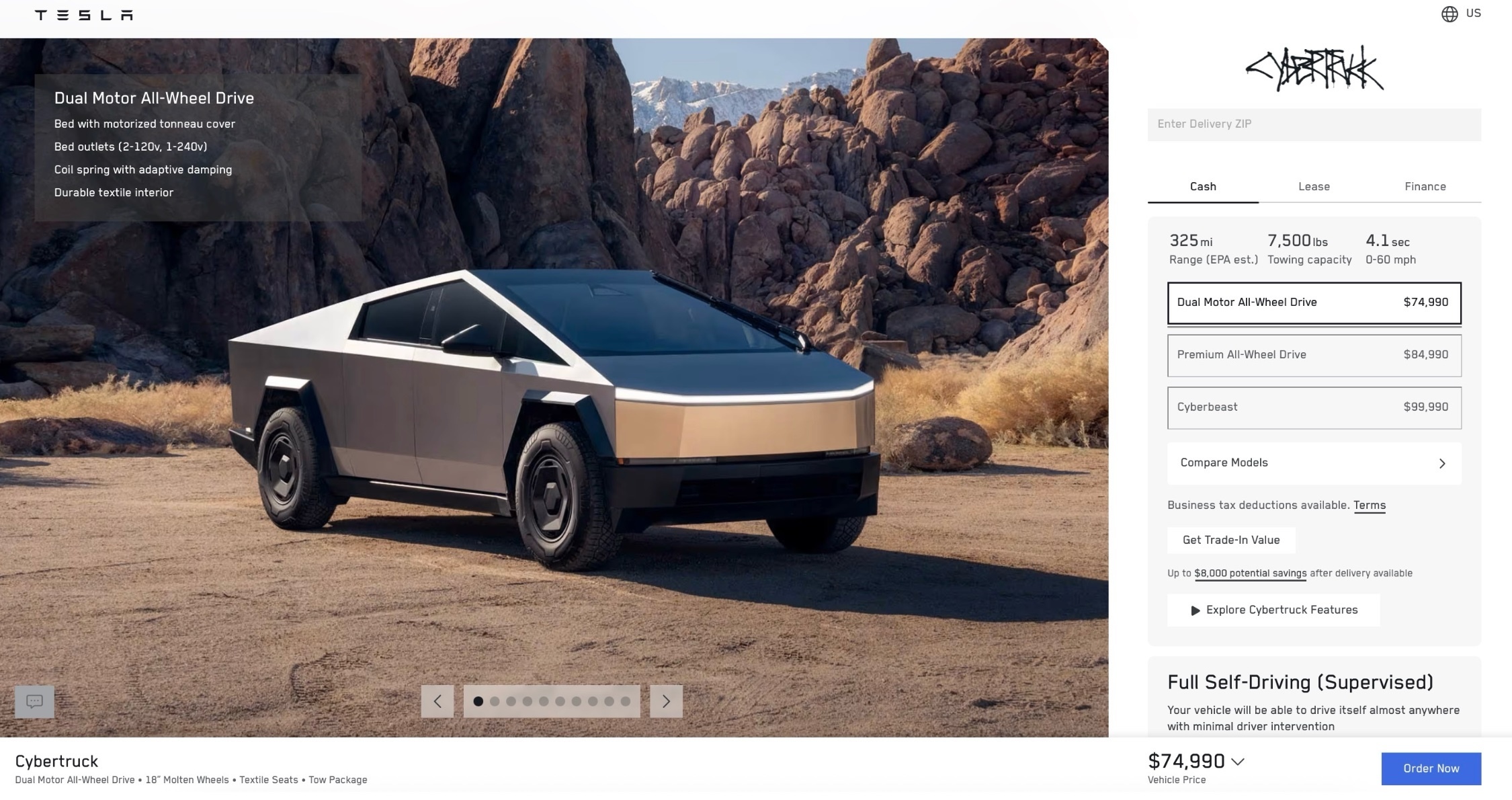
At the Cybertruck’s current sticker prices of $69,990, $79,990, and $99,990, that $131 million works out to between 1,310 and 1,872 trucks, depending on trim mix. A realistic blend, weighted toward the base and mid trims that fleet buyers typically favor, lands closer to 1,700 to 1,800 units. The exact figure depends on which trims SpaceX actually bought and when, since pricing has moved over the past 12 months.

These vehicles were purchased at MSRP and, according to the regulatory filing, payments were made on similar terms to normal transactions. While it all seems to be above board, one may wonder if SpaceX bolstering sales of the Cybertruck has helped to boost Tesla’s share price.

Sales Slip

 $131 Million Worth Of Cybertrucks Went To One Buyer, And Elon Musk Owns It

Recent registration data revealed that SpaceX purchased 1,279 Cybertrucks in the fourth quarter of 2025. This represented more than 18 percent of the total number of Cybertrucks registered across this period. An additional 60 trucks were also purchased by xAI, The Boring Company, and Neuralink. Musk’s companies also purchased 158 Cybertrucks in January of this year, and 67 in February.

Read: Tesla’s Running Out Of Cybertruck Buyers, So Musk’s Other Companies Are Buying It

Overall interest in the Cybertruck has slipped significantly in the two-and-a-half years since deliveries began. In 2024, Tesla sold 38,965 Cybertrucks in the US, making it the best-selling electric pickup in the country. However, sales slipped to just 20,237 in 2025 and fell even further through the first quarter of this year, with just 3,519 reportedly sold.

SpaceX and xAI haven’t just tapped Tesla for Cybertrucks. In 2024, they purchased $191 million worth of Megapack energy-storage batteries from the automaker. This figure swelled to a massive $506 million last year, The Wall Street Journal reports.

 $131 Million Worth Of Cybertrucks Went To One Buyer, And Elon Musk Owns It

Renault’s R4 Concept Just Became A Beach Buggy That Moonlights As A Pickup

  • The R4 JP4x4 Concept is inspired by beach buggies of the ’70s.
  • It gets a custom body, a lifted stance, and dual electric motors.
  • Renault has confirmed there are no plans for production.

Renault has unveiled a new concept based on the R4 E-Tech, this one built around summer use. The R4 JP4x4 wears an open-air two-door body, a reworked two-seat cabin with an exposed cargo area, and an AWD powertrain for tackling whatever hypothetical sandy beach you have in mind.

The study borrows from two R4 variants of the past, the 1969 Plein Air and the 1981 JP4. Its name is short for Journée à la Plage, French for “a day at the beach.”

More: Renault’s Making A Jimny For 2027, But Even The French Don’t Get It

Visually, the highlight is the pair of half-doors that replace the production car’s five-door layout. They work with a redesigned roof structure built around an X-shaped element for carrying a surfboard. There are no side windows and no canvas top, which leaves the cabin permanently open to the elements.

\\\\\\\\\\\\\\\\\

The concept wears a custom Emerald Green finish that plays against a vibrant orange interior. Beyond its beach buggy identity, it also serves as a pickup with a drop-down tailgate for easy loading. The roof-mounted surfboard is joined by a pair of skateboards stowed in the cargo area.

More: Renault Is Emptying Its Secret Vault And The Concept Cars Inside Are Unreal

Inside, the highlights include “Egyptian mummy” seats with integrated headrests and mixed-fabric upholstery. The dashboard and digital cockpit carry over from the production EV, though the concept adds a passenger-side grab handle and a floating center console.

As with last year’s R4 Savane 4×4 concept, the JP4x4 runs a dual-motor powertrain for AWD, a setup Renault still hasn’t offered on the production R4.

\\\\\\\\\\\\\\\\\\\\

The concept rides 15 mm (0.6 inches) higher than the standard R4, with front and rear tracks widened by 10 mm (0.4 inches) per side. The 18-inch wheels carry a futuristic design and wear chunkier Goodyear UltraGrip Performance+ tires. Renault made no mention of changes to the EV’s 2,624 mm (103.3 inches) wheelbase.

No Plans For Production

Renault has been clear that the JP4x4 will stay a one-off, with no production plans on the table. The show car will be displayed at the Roland-Garros French Open alongside the R4, R5, and Twingo E-Tech production EVs.

More: Radical Espace Reboot Leads Renault’s 36-Car Plan To Fight China’s Threat

For buyers who want an open-air R4 E-Tech, the automaker already sells the Plein Sud variant with an electric-powered canvas roof. That one went on sale earlier this month starting at €37,290 ($43,800).

Ford’s Cheapest EV Yet Is Coming Out Of California, Not Detroit

  • Ford admits its first electric vehicles fell short of changing the industry.
  • A 350-person team in Long Beach is rebuilding how Ford makes EVs.
  • The new $30,000 mid-size electric pickup is expected to arrive next year.

Ford knows its first swing at EVs missed. The Mustang Mach-E and F-150 Lightning sold in respectable numbers but never delivered the volume, margins, or cultural impact the company was chasing, and both have since been overtaken by leaner, cheaper competition. The Blue Oval’s answer is a ground-up reset, and the headline product is a mid-size electric pickup priced at $30,000.

We’ve known about this model for quite some time, developed by Ford’s small skunkworks lab. The brand has now shed new light on the Ford Electric Vehicle Design Center, which houses its ace team of engineers, and provided select members of the automotive press with a quick preview of the new truck.

Read: Ford’s Biggest Product Push In Years Will See 80% Of Its American Lineup Refreshed By 2029

The campus now houses 350 people, including company veterans and new arrivals from startups and the consumer electronics industries. Situated in Long Beach, California, the site is rethinking how Ford should build EVs, making them simpler and cheaper. At the core of this is the new Universal EV Platform.

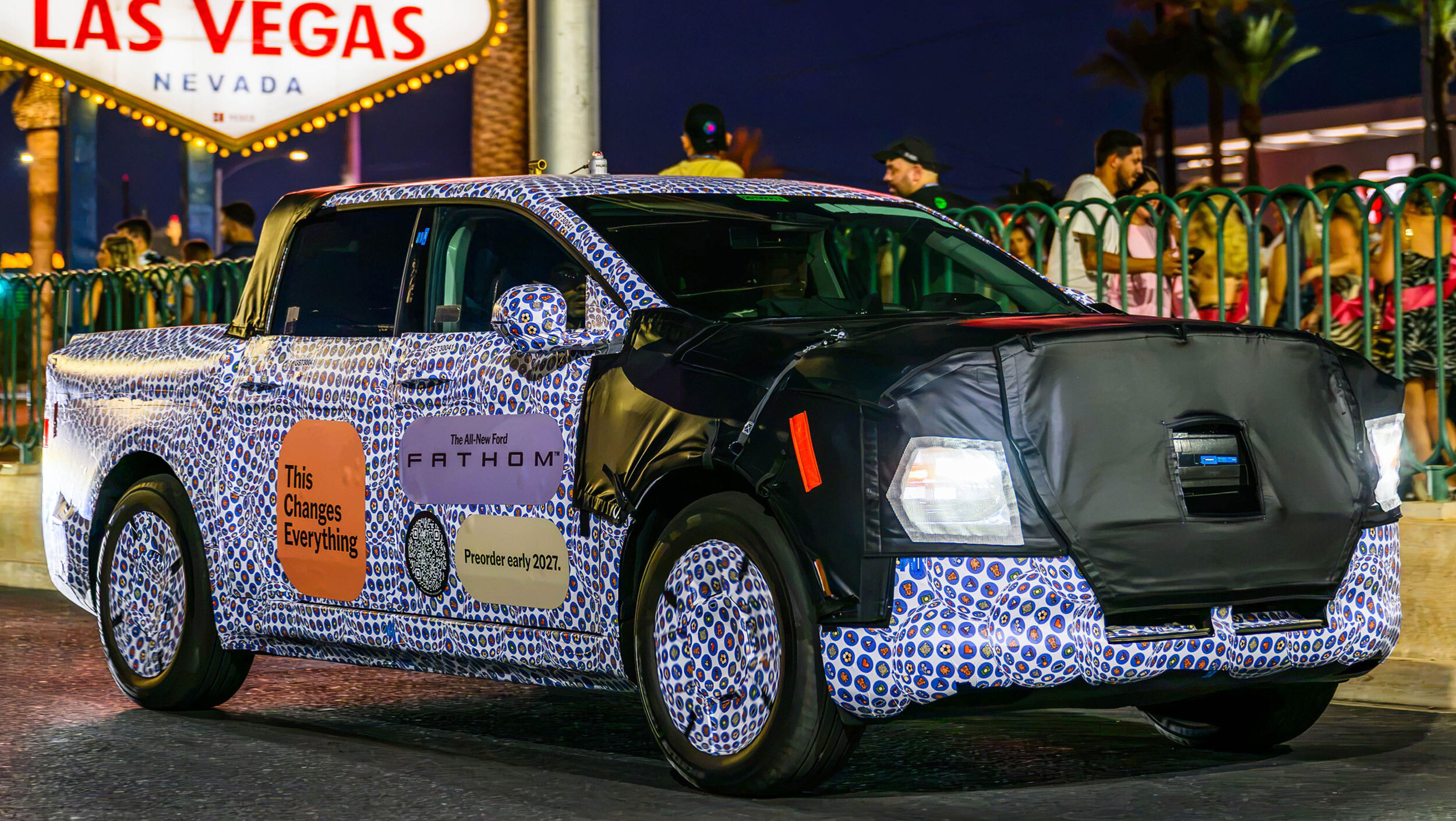
This platform consists of three large cast elements joined together and then topped by the cab of the pickup, or both body styles, which will follow. While Ford didn’t unveil the electric truck in full, Car and Driver caught a glimpse of a camouflaged mule, noting that it has a traditional pickup truck shape and appears similar in size to the current Maverick, albeit with higher sides on the bed.

\\\\\\\\\\\\\\

In addition, it seems the EV will have a short nose, allowing Ford to expand the cabin size. According to Ford, the truck will have more interior space than a Toyota RAV4.

Easy To Repair

An important aspect of the new platform will be its repairability. After all, there’s no point in selling an affordable car if it has to be scrapped after even the most minor of collisions. According to the chief engineer of Ford’s advanced vehicle structure architecture, the three large platform castings will each include cutlines, where damaged sections can be cut out and replaced with new ones.

48-Volt Tech

Another key area of development is the EV’s wiring. Vehicles using the new platform will rely primarily on 48-volt electrical systems for most components, other than the lights, electric windows, and other parts that will still run at 12 volts. Ford has significantly reduced the amount of wiring used in the vehicle and notes that 48-volt components are also much lighter and smaller.  

In total, the truck will have 20 percent fewer parts and 50 percent fewer cooling hoses and connections than previous Ford EVs, meaning it can be assembled 15 percent faster. Ford says the new pickup will be ready by next year.

\\\\\\\\\\\\\\\\\

Tesla Is Recalling All 173 Cheap Cybertrucks Because Their Wheels Can Fall Off

  • The issue stems from cracking around brake rotor stud holes under load.
  • Only rear-wheel-drive units with base 18-inch wheels are affected.
  • Some serviced EVs may also carry the same potentially faulty parts.

The owners of 173 Cybertruck RWDs have a new problem to worry about. Tesla has issued a recall on the short-lived budget variant after discovering the wheels can come off while driving, which ranks somewhere near the top of the list of things you definitely do not want your vehicle to do.

Tesla says that on-road disturbances and cornering forces can cause cracking around the stud holes in the brake rotors. If that happens, the entire wheel stud may separate from the hub. The company is not aware of any crashes or injuries tied to the issue, though it has logged three related warranty claims.

Read: His Cybertruck Made It to 100,000 Lyft Miles Before Sending A $7,200 Reminder

A total of 173 models built between March 21, 2024, and November 25, 2025, are included in the recall. Only Cybertruck RWD versions with the base 18-inch wheels are affected, not those fitted with the optional 20-inch setup.

Tesla first identified a potential problem in August of last year, when pre-production testing revealed some cracking in the brake rotors, even though all studs remained intact at the time. Further investigation, along with field reports, showed the issue was more serious than initially thought.

Not only did Cybertruck RWD models leave the factory with the defect, but some Tesla service centers were also using the potentially faulty brake rotors, so vehicles that have had their brakes replaced may also suffer from the same issue.

What’s The Fix?

 Tesla Is Recalling All 173 Cheap Cybertrucks Because Their Wheels Can Fall Off

While the recall notice lists vehicles produced from March 21, 2024, Tesla says it only began building Cybertruck RWD models with 18-inch wheels on August 28, 2025. Production ended less than three months later, on November 5, with the company citing limited demand for the variant.

Owners can expect notification from Tesla after June 20. They will be asked to bring their trucks to a service center, where technicians will replace the front and rear brake rotors, hubs, and lug nuts with updated, more durable components.

\\\\\

Ford Gives A Tiny Glimpse Of The $30K EV Truck Slate Should Be Worried About

  • Ford teased its upcoming $30,000 electric pickup in a LinkedIn post.
  • It rides on a new in-house platform built by a skunkworks team.
  • Truck could revive the Ranchero name, unused since the late 1970s.

Ford has trimmed plenty from its electric vehicle plans, but the compact electric truck has survived the cuts, and the company still hopes it will deliver the success the F-150 Lightning never quite managed. A proper reveal isn’t on the cards yet, though a handful of images posted to LinkedIn give an early look at what’s coming.

Company boss Jim Farley posted these images to celebrate Doug Field’s last day with the company. One of the photos shows Field speaking about the new truck with Farley and other Ford executives, and includes a small glimpse of the EV’s bed. A separate image also seems to show the roofline of the new model, while another shows it with several roof-mounted accessories.

Read: $30K Ford Electric Truck Coming In 2027 Is Seriously Bad News For Slate

While these images don’t give us a good look at the new model, there’s plenty to get excited about. Underpinning the $30,000 pickup will be the new Ford Universal EV platform, developed in-house by a skunkworks team of engineers. This platform will be used by several other vehicles, including SUVs and vans.

Cheaper And More Efficient

\\\

According to Ford, the platform has 20 percent fewer parts, 25 percent fewer fasteners, and requires 40 percent fewer plant workstations than an ordinary platform. This will be aided by the new unicasting process, similar to Tesla’s gigacasting, in which important parts will use large single-piece aluminum castings. This process will also significantly reduce costs.

Speaking about the new truck last year, Farley noted its wiring harness will be more than 4,000 feet (1.3 km) shorter and 10 kg (22 lbs) lighter than its first-generation EVs. The company will also overhaul how it builds vehicles on this platform, manufacturing the front, rear, and structural battery pack in separate lines before joining them during final assembly.

Key specifications of the truck remain unclear, but we know it will use lithium iron phosphate batteries. It may also revive the Ranchero nameplate, which Ford hasn’t used since 1979.  

 Ford Gives A Tiny Glimpse Of The $30K EV Truck Slate Should Be Worried About

Ford’s EV Skunk Works Tech Is Quietly Reshaping The Gas Lineup Too

  • Ford’s next-gen EV tech will help to improve all future models.
  • Higher aluminum prices could cost the automaker an extra $1 billion.
  • Company’s $30,000 electric truck will appeal to crossover buyers.

Ford has high hopes for their upcoming mid-size electric truck and CEO Jim Farley recently revealed the company did an “incredible job” creating its UEV platform. However, its advancements won’t be limited to next-generation electric vehicles.

Speaking during an earnings call, Farley said the platform “represents a step change in efficiency and cost, especially for the EV market.” While the company has been touting those benefits for awhile, the executive revealed they’re now integrating these “skunk works breakthroughs” into their mainstream products and processes.

More: Ford Reveals Details Of $30K Electric Truck Due In 2027

He went on to say the Blue Oval is applying learnings from the program to their high-volume internal combustion and hybrid lines, and this will help to reduce costs as well as improve quality. Farley added that by the end of the decade, 90% of their global nameplates will offer electrified powertrains including hybrid, electric, and range-extended options.

When asked about Chinese automakers, Farley wants to have his cake and eat it too. As he explained, “As America’s largest auto producer, we are totally dedicated to a thriving U.S. auto industry and safeguarding our country’s industrial base.” However, he noted the company leverages global partnerships – including with Chinese automakers – to grow their business.

 Ford’s EV Skunk Works Tech Is Quietly Reshaping The Gas Lineup Too

Despite occasionally partnering with them, Farley wants to keep Chinese automakers out of America. He said it’s not just a case of “economic vitality,” but also “national security.”

The executive briefly addressed the war in Iran by saying they’re monitoring the situation. Farley went on to note the company has successfully navigated the pandemic, chip crisis, and tariff headwinds, so they’re used to making adjustments on the fly.

That being said, the automaker is expecting some impacts including commodity headwinds. This could end up costing them $1 billion more than they originally anticipated and it’s largely due to higher aluminum prices as a result of global supply constraints.

 Ford’s EV Skunk Works Tech Is Quietly Reshaping The Gas Lineup Too

While there was a lot of talk about aluminum, we’ll spare you the boring details and skip right to pickups. Ford is particularly bullish about them, despite a number of new contenders on the horizon including Kia.

As Farley explained, the market continues to broaden and grow. He said car and crossover buyers are moving into pickups, and he’s really excited about their $30,000 EV because its packaging will appeal to both truck and crossover shoppers.

 Ford’s EV Skunk Works Tech Is Quietly Reshaping The Gas Lineup Too

The Cybertruck Hit 118 MPH In The Quarter Mile, A 56-Year-Old Chevy Still Beat It

  • Modified Chevy Chevelle narrowly beats a Cybertruck whose driver had terrible reactions.
  • Tesla recovers late, posts quicker ET and higher trap speed, but still technically loses.
  • A better Tesla reaction in a rematch would have transformed the result in Cybertruck’s favor.

The classic muscle scene is seriously tribal, but the one thing guaranteed to get GM, Mopar, and Ford fans to unite is a race between a V8 and a modern EV. And that’s exactly what’s served up in this surprising video, where a Tesla Cybertruck ventures onto a drag strip.

In the left lane is a 1970 Chevrolet Chevelle Malibu, and while we don’t know the full details of the car in question, it’s obviously not rocking that year’s base inline-six. It rolled to the line wearing fat sticky rear rubber, aftermarket wheels, and the sort of stance that says this thing doesn’t spend much time below full throttle.

Related: In Florida, 148 MPH Gets You Arrested. In California, It Gets You A Ticket

The biggest factory motor available in 1970 Chevelles delivered 454 cubes (7.4 liters) of displacement, and modern builds on that big-block base can easily generate 500-600 hp (507-608 PS) in naturally aspirated form.

Cybersnooze

We’ve all seen enough EV videos to expect the Cybertruck to hook up instantly and erupt from the line, leaving the Chevelle struggling to get its tires hooked up. A few seconds later, the Tesla would be flashing across the finish with the Chevy trailing behind, its pride in tatters.

But that’s not how it worked out here. When the lights change, the Chevy gets the jump immediately and charges ahead, opening enough daylight to make it seem like the race might be over before the Tesla has fully woken up. For the first half of the quarter mile, the old-school muscle car looks comfortably in command.

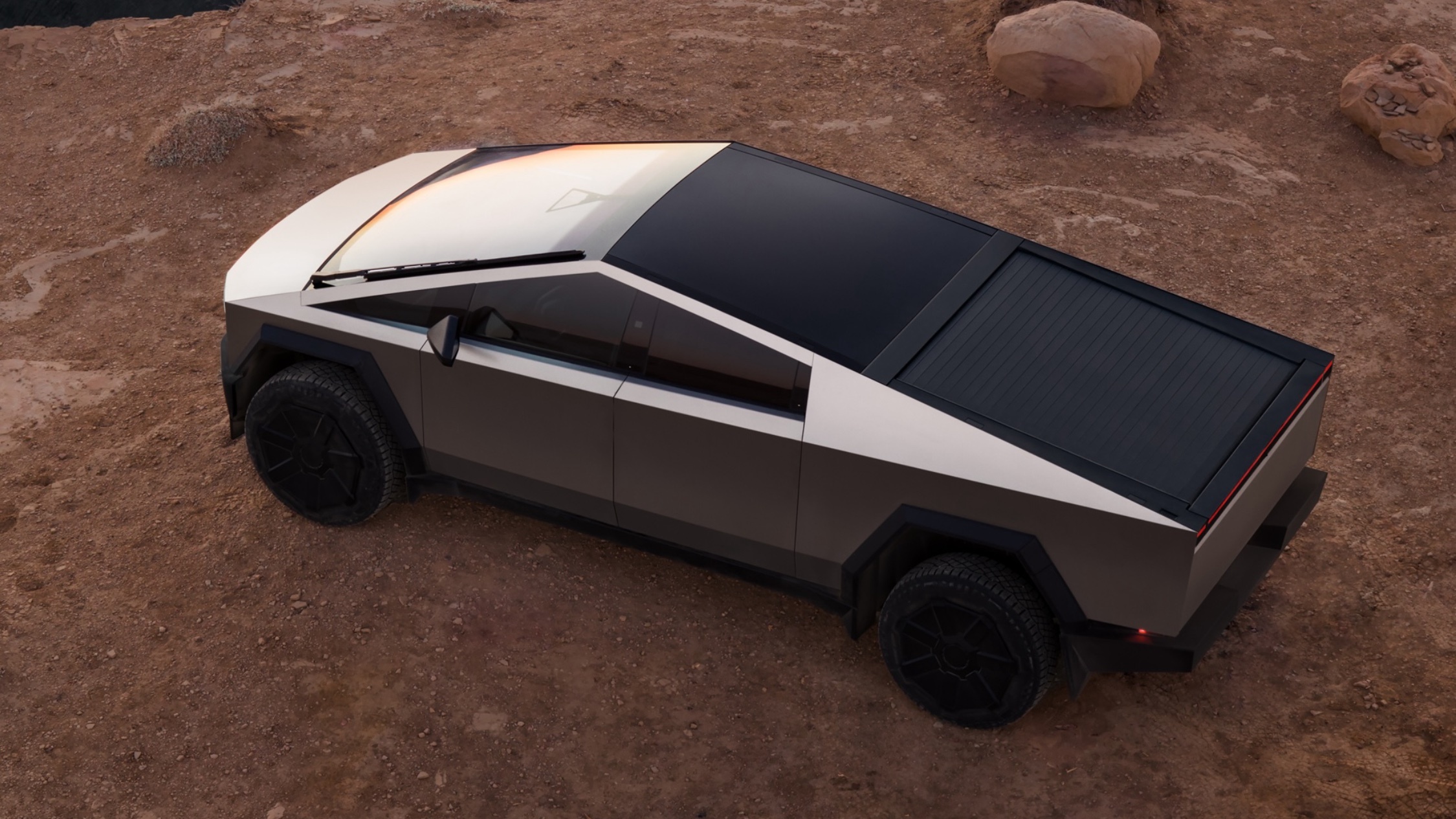
Then the Cybertruck gets its act together. Once it’s moving and the motors are fully delivering, the giant stainless wedge storms downtrack and begins hauling in the Chevy at an alarming rate. What had looked like an easy Chevelle win suddenly becomes a blink-and-you-miss-it finish line showdown.

Times Come Second

You’ll need slowed playback to separate them by seeing whose numbers come up first, but the Chevelle appears to nose ahead at the line. In drag racing, that’s what counts. First across wins, even if the stopwatch tells a slightly different story.

And the stopwatch did tell a different story. The Cybertruck completed the quarter in 11.39 at 118.6 mph (191 km/h), that ET and trap speed suggesting it’s the top-spec Cyberbeast, which has a tri-motor setup and 845 hp (856 PS / 630 kW). The Chevelle registered 11.69 seconds at 114.9 mph (185 kmh).

So on this occasion, muscle fans got to celebrate taking an EV’s scalp, but you just know that if the Cybertruck sorted his reactions for a rematch, it would be a different story.

 The Cybertruck Hit 118 MPH In The Quarter Mile, A 56-Year-Old Chevy Still Beat It

YouTube/@Wheels

Ford Already Backed Away From One EV Truck, Now GM Is Backing Away From Four

  • GM reportedly pauses next-gen full-size electric truck development.
  • Gas V8s, hybrids and range extenders are suddenly more important.
  • Current-generation EV trucks stay alive, but future refresh looks hazy.

General Motors spent years telling us electric pickups were the next great American migration. Now the convoy appears to have missed an exit because reports claim GM has indefinitely paused development of its next-generation full-size EV trucks.

According to a piece by Crain’s Detroit, GM had been developing updated and lower-cost successors for the electric Chevrolet Silverado EV, GMC Sierra EV, Cadillac Escalade IQ, and GMC Hummer EV lineup, with production previously targeted for 2028.

Related: GM Pauses Production Of Two Hyped-Up EVs, Sending 1,300 Workers Home

But suppliers were reportedly told the program has been halted, with no replacement timeline offered. Industry watchers now don’t expect fresh full-size GM electric trucks before 2030, and they could end up arriving much later.

That doesn’t mean GM’s current EV trucks are dead. Existing models will continue rolling out of the under-utlilized Factory Zero in Detroit-Hamtramck, the story says, and experts think the Escalade IQ is important enough to Cadillac’s plans to keep in production. But it does suggest GM wants to spend more R&D time and money on products customers are actually buying in larger numbers right now. Ones that run on gasoline.

The company is said to be redirecting resources toward its upcoming T1-2 internal-combustion truck platform, which is expected to power future full-size pickups and SUVs. Orion Assembly, once earmarked for electric trucks, and now thriving after switching to ICE versions, is now reportedly preparing for future gas-powered models.

Hybrids And Range Extenders

 Ford Already Backed Away From One EV Truck, Now GM Is Backing Away From Four

Crain’s Detroit sources also claim plug-in hybrid versions of the Silverado and Sierra are in the mix, while GM has discussed range-extended EV tech with suppliers. It’s an idea rivals are already chasing. Ram is expected to launch a range-extended pickup first, while Ford has signaled similar plans after backing away from the idea of renewing the all-electric F-150 Lightning.

No More Federal Handouts, Or Directives

None of this is happening in a vacuum. EV tax credits have been rolled back, emissions rules have softened, and demand for expensive electric pickups hasn’t exactly set sales charts on fire. Big batteries and six-figure stickers remain a hard sell for many truck buyers, though GM refused to comment on the report that its EV plans have been axed.

“We have not disclosed any potential plans or timing for any next-generation battery electric trucks and we’re not going to engage in speculation,” a GM spokesperson told Crain’s Detroit.

GM still says the long-term destination is electric, and it probably is. But right now, Detroit’s most profitable vehicles are trucks, and trucks and their buyers can’t kick their gasoline habit.

 Ford Already Backed Away From One EV Truck, Now GM Is Backing Away From Four

GM

Ford’s Biggest Product Push In Years Will See 80% Of Its American Lineup Refreshed By 2029

  • Ford plans to refresh most of its global vehicle lineup by 2029.
  • A new internal group will unify design, EV, and software teams.
  • UEV platform focuses on weight reduction and system simplicity.

Ford is preparing one of its most aggressive product overhauls in years, and it is reorganizing itself to get there. The company plans to refresh 70 percent of its global portfolio by 2029 and, to support that effort, has created a new end-to-end internal organization that integrates its EV, digital, and design teams with its global industrial system.

According to Ford, this structure will “deliver one of the most intensive product, software, and services rollouts in Ford’s history.”

The new group, called Product Creation and Industrialization, will be led by Kumar Galhotra. Beyond the global target, Ford says 80 percent of its North American portfolio by volume will also be refreshed by 2029. That includes a next-generation F-150 and F-Series Super Duty, alongside a new mid-size pickup built on Ford’s Universal Electric Vehicle (UEV) platform.

Read: Jim Farley Promises A New Affordable Ford EV To Take On Tesla’s Model 3 And Y

Developed by a skunkworks team, the UEV platform uses unicastings to reduce weight and complexity. It also features an ultra-efficient powertrain and a fully zonal electrical architecture, supported by in-house software and advanced driver assistance systems.

More Electrified Options

 Ford’s Biggest Product Push In Years Will See 80% Of Its American Lineup Refreshed By 2029

As part of Ford’s product updates, nearly 90 percent of its global nameplates will offer electrified powertrains by 2030, including hybrids, extended-range EVs, and full EVs. Interestingly, Ford notes that work on its UEV platform will benefit its hybrids, too, thanks to the new high-efficiency motors developed.

“This is the culmination of years of work and progress to create the modern Ford – a talented, unified organization capable of scaling high-quality, software-defined vehicles with a choice of propulsion, distinctive digital experiences and features, and a personalized ownership experience that improves over time,” Ford chief executive Jim Farley said in the announcement.

Doug Field Exits

Ford’s sweeping internal reset comes with a notable departure at the top. The company confirmed that Doug Field, who joined five years ago to steer its push into electrified, connected, and software-defined vehicles, will leave within the next month.

Field played a central role in shaping the newly formed Product Creation and Industrialization organization, the same group tasked with streamlining development across hardware, software, and manufacturing. His exit lands at a critical moment, as Ford leans on this structure to execute its broad product overhaul and move toward an 8 percent adjusted EBIT margin by 2029.

 Ford’s Biggest Product Push In Years Will See 80% Of Its American Lineup Refreshed By 2029
Ford Super Duty sketches from the past.

Toyota And Isuzu’s New Hydrogen Truck Solves The Problem Refrigerated Delivery EVs Can’t

  • Isuzu and Toyota are building Japan’s first hydrogen light-duty truck.
  • The fuel cell hardware is Toyota’s, the chassis is Isuzu’s Elf EV.
  • Toyota’s next fuel cell system delivers 20% better efficiency than before.

Hydrogen mobility might not be moving forward as quickly as expected in passenger cars, but it still has clear promise in the commercial space. The latest move comes from Isuzu and Toyota, which have teamed up to develop Japan’s first mass-produced light-duty fuel-cell electric truck, expected to reach the road within the next two years.

This won’t be a ground-up rethink. Instead, it rides on the familiar ladder-frame chassis of the Isuzu Elf EV. The electric Elf, known globally as the N-Series, arrived in 2023 with modular 20 kWh battery packs, scaling from 40 to 180 kWh depending on spec.

More: A Gullwing Door Hides The Coziest Room On Wheels

The real story sits under the skin. Toyota’s upcoming third-generation fuel-cell system takes center stage here, bringing a claimed 20% improvement in efficiency over the current setup. It is also expected to last longer and cope better with hard use, which matters when your daily routine involves stop-start urban logistics or hauling refrigerated goods across a city.

Why Hydrogen?

 Toyota And Isuzu’s New Hydrogen Truck Solves The Problem Refrigerated Delivery EVs Can’t

One of the primary drivers behind this FCEV project is the inherent limitation of battery-electric trucks in certain commercial roles. Light-duty trucks used for supermarket and convenience store deliveries often require heavy refrigeration equipment that drains battery power quickly. Furthermore, the long charging times associated with large battery packs can disrupt tight delivery schedules.

More: BMW iX5 Hydrogen Teased With 385 Miles Of Range

Hydrogen refueling, which takes roughly the same amount of time as diesel, offers a more seamless transition for fleet operators, while offering an extended driving range. At the same time, an FCEV truck produces much fewer vibrations and noise compared to a diesel-powered equivalent, while having zero CO2 emissions.

Reducing Costs Is The Key

 Toyota And Isuzu’s New Hydrogen Truck Solves The Problem Refrigerated Delivery EVs Can’t

The sticking point remains cost. Fuel-cell vehicles are still expensive, and hydrogen infrastructure is far from widespread. Isuzu and Toyota say the answer lies in smarter engineering, from optimizing the vehicle structure to rethinking manufacturing processes, alongside continued development of the fuel-cell system itself.

More: The Honda CR-V e:FCEV Is Living On Borrowed Time

Production of the light-duty fuel cell truck is scheduled to start in the Japanese fiscal year 2027, which ends on March 30, 2028.

This isn’t the first time the two companies have worked together on hydrogen. Isuzu and Toyota are already collaborating on the ERGA FCV, an urban flat-floor bus with hydrogen tanks integrated on its roof structure.

\\\\\\

Ford’s F-150 Starts At $87,000 In Australia, And BYD Thinks That’s An Opportunity

  • BYD is developing a rival to the Ford F-150, Ram 1500, and Chevy Silverado.
  • The “super-sized” truck is a response to strong customer demand in Australia.
  • Company is also reportedly considering an EV counterpart to the Shark 6.

BYD isn’t content with just taking on the Ford Ranger. China’s most successful automaker is already looking to move up a weight class to challenge the Ford F-150. That next step won’t involve the US market, though, as this larger model is being developed with Australia in mind.

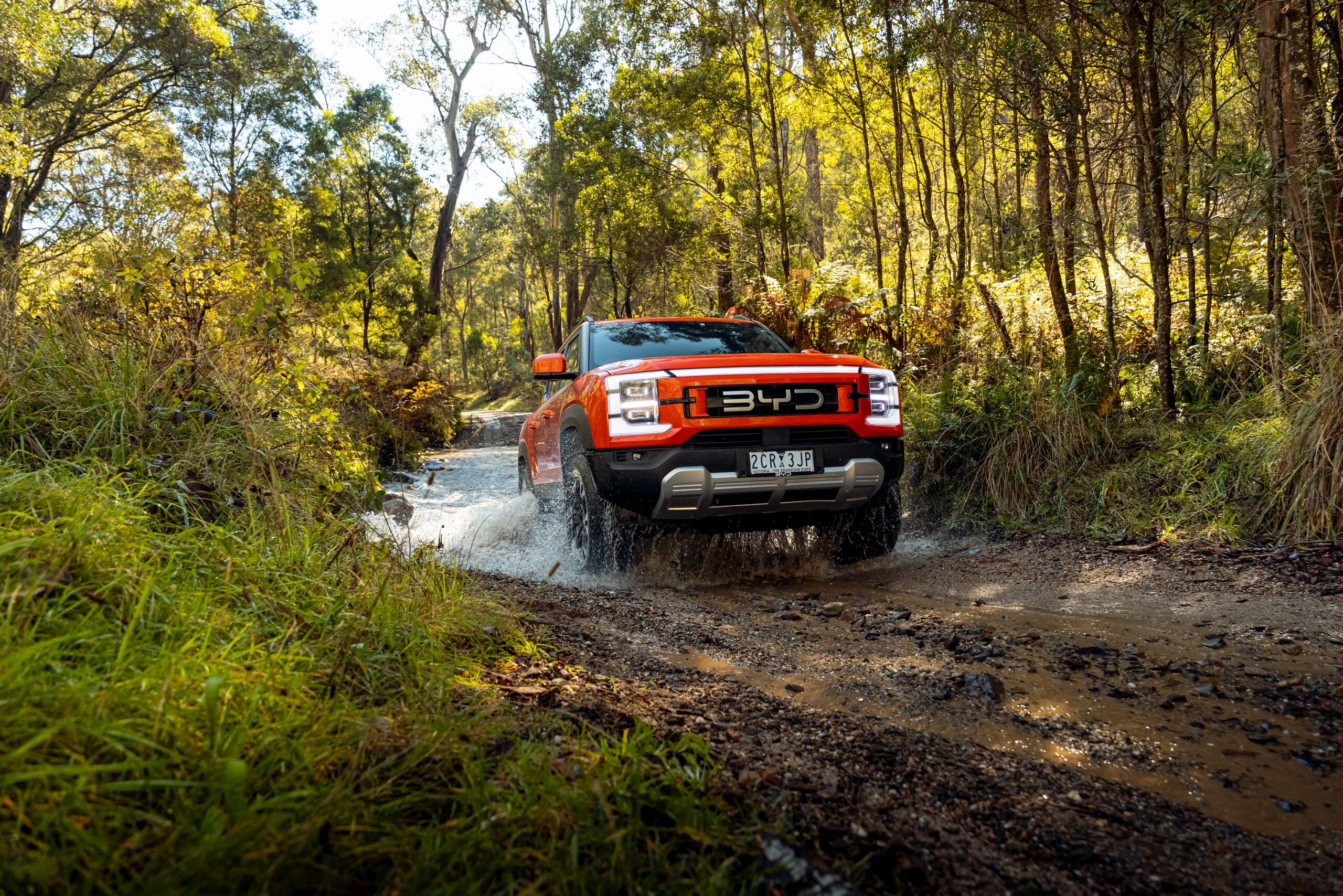
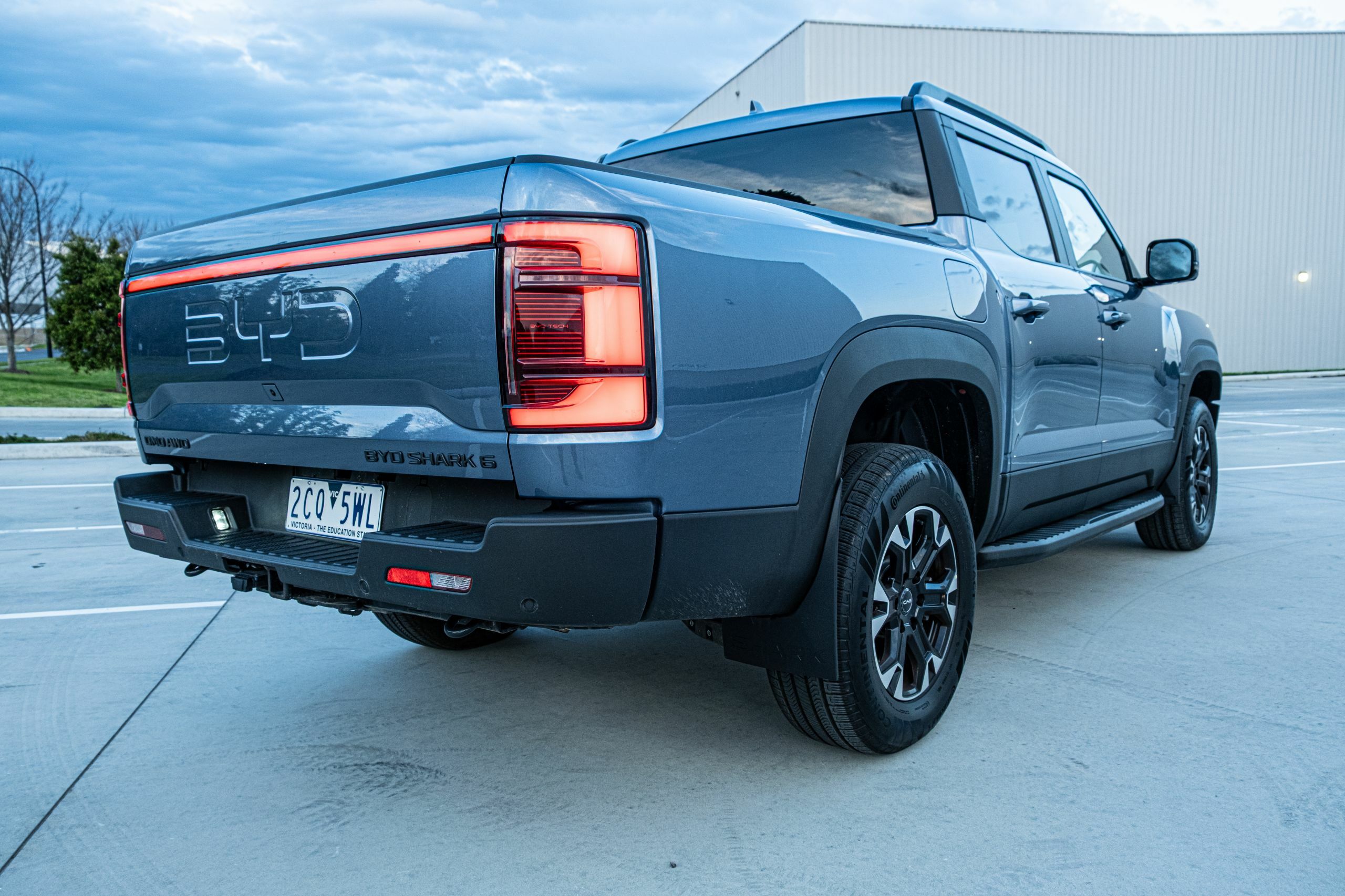
BYD’s first pickup in Australia, the Shark 6, arrived in late 2024 wearing a face that looked more than a little inspired by the F-150. At 5,457 mm (214.8 inches) long, it sits just beyond the typical midsize footprint and comes equipped with a plug-in hybrid powertrain.

More: Jim Farley Said Chinese Pickups Couldn’t Tow Like A Ranger. BYD Just Proved Him Wrong

The Shark 6 was a runaway success, becoming Australia’s best-selling PHEV truck in 2025 with 18,073 deliveries. For 2026, BYD has doubled down, introducing a Performance trim with a more potent powertrain along with a chassis-cab bodystyle driven by customer demand.

Moving Up to the Heavyweights

However, Australians have been asking for something even bigger. Liu Xueliang, managing director of BYD Asia Pacific, said: “Some customers have requested a full-size Shark 6, similar in size to the Ford F-150. We are on our way to try to get there.”

 Ford’s F-150 Starts At $87,000 In Australia, And BYD Thinks That’s An Opportunity
BYD Shark 6

Word of the program first slipped out in early 2025, when David Smitherman, then CEO of EVDirect, said a full-size BYD pickup was “absolutely in development.” Since then, things have gone quiet on timing, but the working expectation points to a 2027 arrival if everything stays on track.

More: BYD Just Landed On Brazil’s Dirty List, And It Wasn’t For Its Cars

According to CarExpert, the real pressure isn’t coming from private buyers chasing something bigger. It’s fleet operators, particularly mining companies, that are pushing for a larger, more capable truck with electrification baked in from the start.

In Australia, the full-size segment currently includes the Ford F-150, Ram 1500, Chevrolet Silverado, and Toyota Tundra. With a combined sales of 8,763 units in 2025, full-size trucks are a niche compared to the midsize segment, as the Ford Ranger alone sold 56,555 units becoming Australia’s best-selling vehicle overall for the third consecutive year. Still, the profit margins are significantly higher, which explains BYD’s interest.

 Ford’s F-150 Starts At $87,000 In Australia, And BYD Thinks That’s An Opportunity
Australian-spec Ford F-150

Factory right-hand-drive conversions for full-size trucks don’t come cheap, and in Australia they can easily push past AU$150,000 (US$105,800). The F-150 starts from a little over AU$122,000 (US$87,000) in XLT trim climbing to over AU$152,000 (US$108,000) for the Lariat, both with the 3.5L engine. BYD sees an opening here. Build the truck properly from the start in right-hand drive, price it more sensibly, add a tech-heavy cabin and an electrified powertrain, and suddenly those inflated conversion costs start to look like yesterday’s problem.

More BYD Trucks On The Horizon

That move upmarket isn’t happening in isolation. Liu Xueliang has already suggested a fully electric counterpart to the Shark 6 is in development, aimed squarely at industries that no longer want diesel on site. Mining is the obvious target. If it lands as expected, it will go head-to-head with the electric workhorses now lining up, including the Toyota Hilux BEV, the upcoming Isuzu D-Max BEV, and the LDV eTerron 9.

More: Toyota’s Electric Hilux Costs $20K More Than The Diesel, And That’s Not Even The Worst Part

At the other end of the scale, BYD is also sketching out something smaller. A compact pickup is in the works, expected to ride on a unibody platform and use a plug-in hybrid setup. This one isn’t chasing job sites. It’s aimed at buyers who want the look and versatility of a pickup without committing to something oversized or overly serious.

 Ford’s F-150 Starts At $87,000 In Australia, And BYD Thinks That’s An Opportunity
BYD Shark 6 Cab-Chassis
❌
❌