Reading view

There are new articles available, click to refresh the page.

Cupra Already Makes The Best VW ID.3, Now It’s Teasing A Better One
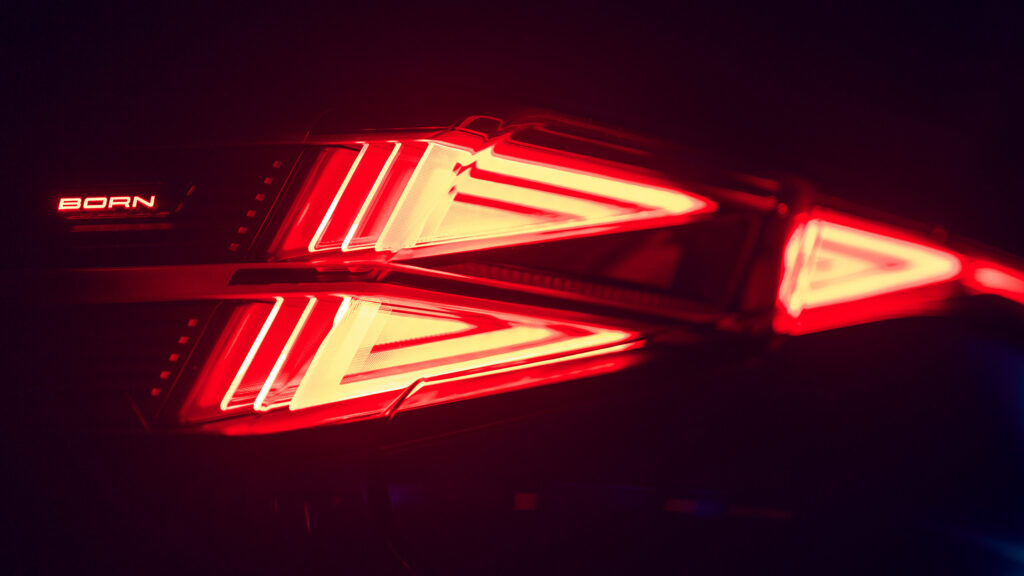
  • Cupra Born facelift teased with sharper triangular lights.
  • Already great interior quality set to get another boost.
  • Growing brand’s new-look EV makes its debut March 5.

Cupra is at it again, reminding us why its versions of big-name Volkswagens are almost always superior to the real thing. This time, the Spanish brand has teased an updated Born, its sportier take on the VW ID.3, and we’ll get to see the full makeover on March 5.

The biggest change is visual, and it seems like it’ll be hard to miss. The updated Born adopts Cupra’s latest design DNA, complete with triangular Matrix LED headlights and a matching triangular lighting graphic at the rear. There’s also an illuminated rear badge because lit logos are the car design world’s new LED light bar.

Related: VW Found A Way To Slip A Chinese Cupra EV Past EU Tariffs

We’ve spied disguised prototypes of the facelift Born testing a couple of times, and those images suggest redesigned bumpers and a taller lower grille augmented by vertical outer vents that make the EV look tougher and wider.

Tech Upgrade

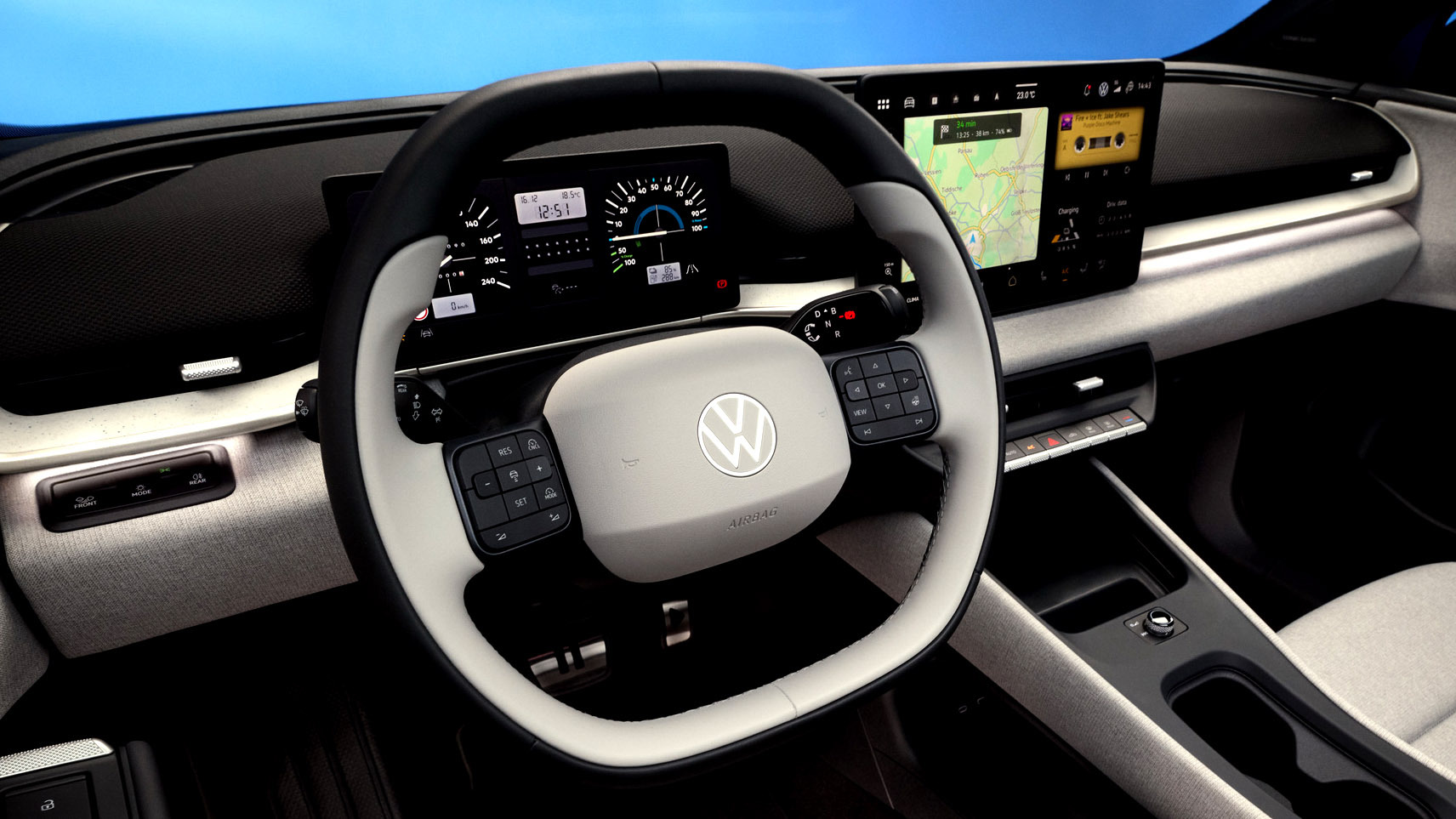
The Born’s cabin already makes the ID.3s look cheap and dull (though VW did improve the materials a couple of years ago), and Cupra says we should expect even better quality and more technology in the refreshed car. But it’s not like the brand has a ton to do in this area, having already upgraded the Born to VW’s much-improved 12.9-inch touchscreen in 2024.

\\\\\

Few Below-Surface Changes

Under the skin, things are more mysterious, and we’re guessing that’s because it’s all carried across from the current hatch. Cupra hasn’t confirmed any technical changes, and the current Born is already competitive for electric range and performance in its class. So this update could be more about feel and flair than extra kilowatts. Still, a little surprise boost wouldn’t hurt.

As of today, Cupra skips the low-tune motor options offered in entry-level VW ID.3s and jumps straight to a 228 hp (231 PS / 170 kW) single-motor setup with a choice of 59 or 79 kWh batteries, giving up to 354 miles (570 km ) between fills. Hot hatch fans can upgrade to Cupra’s version of the ID.3 GTX, the Born VZ, which comes with a 322 hp (326 PS / 240 kW) motor, again driving the rear wheels only.
\\\\\\\\\\\

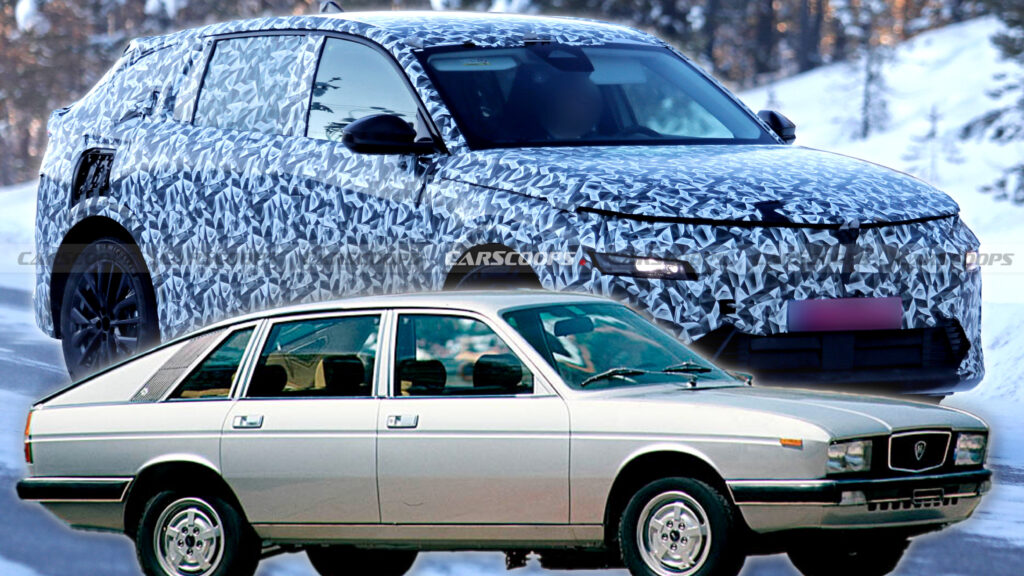
New Lancia Crossover Appears In The Wild Hiding A Famous Old Name

  • Lancia’s flagship crossover was spotted in winter tests.
  • New Gamma will offer electric, mild-hybrid, and PHEV options.
  • It will be built in Melfi, Italy, alongside the DS No8.

Stellantis’ grand Lancia revival, or as they called it, ‘Renaissance’, has not exactly burst out of the gates. The new Ypsilon subcompact hatchback has struggled to gain momentum, which is not quite a surprise. Still, phase two is already taking shape, and it brings with it a familiar name. The Lancia Gamma is coming back.

More: Lancia HF Integrale Returns With White Wheels And Something To Prove

This time, it arrives as an electrified crossover, and our spies have spotted a prototype for the first time during winter testing. The test car reveals enough to give us a better sense of what to expect ahead of its official debut later this year.

\\\\\\

Unlike the original Gamma, which was offered from 1976 through 1984 as a fastback saloon and coupe, the new model takes a very different route. It is now a crossover, effectively the Italian sibling to France’s DS No8. From the spy shots, the Gamma appears more upright than the DS, leaning closer to coupe-SUV territory than to a traditional crossover.

Design Direction Takes Shape

\\\\\\\\

Baldauf

At the front, expect familiar cues borrowed from the smaller Ypsilon. The split LED headlight layout looks set to return, joined by an illuminated T-shaped grille that, intentionally or not, brings to mind a Mandalorian helmet. Down below, the lower bumper intake has a clean, contemporary design and seems to incorporate active shutters flanking an ADAS sensor.

Down the sides, the surfacing closely mirrors the DS, right down to the door handles and mirror caps, though the Gamma appears to get slightly larger windows. The wheels look modest in size, which is usually a giveaway that this is not the upcoming HF performance version.

More: One Lancia Ypsilon HF Is Fast The Other Just Pretends

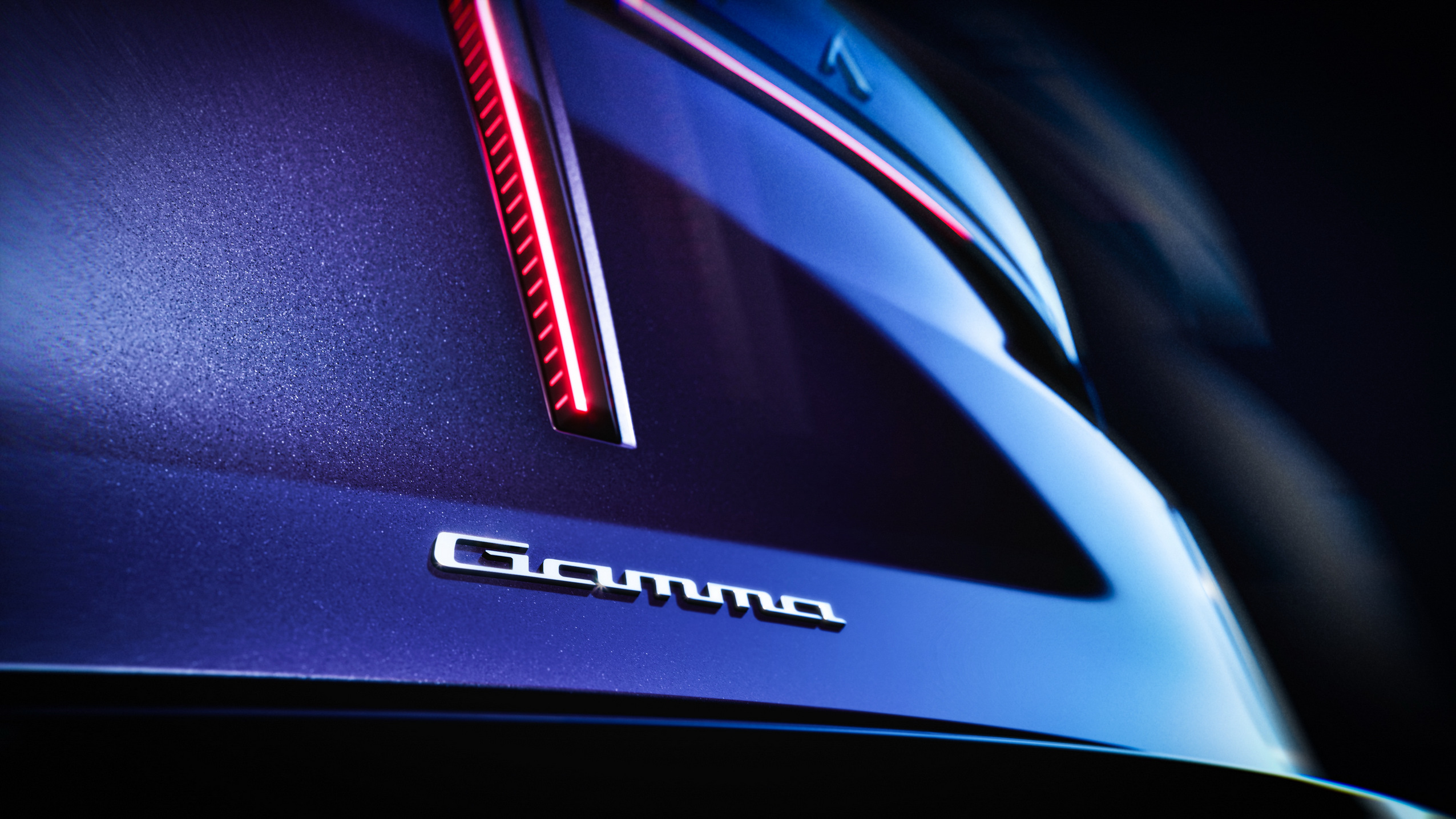
At the rear, heavy camouflage does its best to hide the details, but you can still make out the coupe-style rear glass flowing into what seems to be an integrated spoiler. An official teaser released in late 2024 indicates that the full-width LED taillights will adopt a T-shaped lighting signature, directing your eye toward the Gamma lettering across the sculpted tailgate. There are no visible tailpipes beneath the diffuser, reinforcing the likelihood that this particular prototype is fully electric.

Inside, expect a mix of premium and sustainable materials, along with Lancia’s signature “tavolino,” a mini round coffee-table integrated into the center console. The digital setup should include a 10.25-inch instrument cluster paired with a 16-inch infotainment display running the Lancia SALA system.

A Broader Powertrain Mix

 New Lancia Crossover Appears In The Wild Hiding A Famous Old Name

Like the DS No8, the Lancia Gamma will sit on Stellantis’ STLA Medium platform and roll out of the Melfi plant in Italy. Both models were originally pitched as fully electric, but Stellantis has since recalibrated. Mild-hybrid and plug-in hybrid options are now part of the plan.
More: Stellantis Bet Big On EVs, Now It’s Betting On The Engine Europe Wrote Off

Looking at what Stellantis already has on the shelf, we can speculate on the powertrain lineup. The entry-level Gamma is expected to be powered by a turbocharged 1.2-liter mild-hybrid unit generating 143 hp (107 kW / 145 PS). At the opposite end, the Gamma HF could pack dual electric motors delivering up to 370 hp (276 kW / 375 PS), complete with AWD.

\\\\\\\\\

In terms of range, the larger 97 kWh battery pack could allow the Gamma to cover up to 435 miles (700 km) between charging stops.

Lancia has confirmed the new Gamma will arrive in 2026, so expect a steady drip of details over the coming months. It will later be joined by a new Lancia Delta in 2028, rounding out a three-model lineup for the revived Italian brand.

\\\\\\\\\

Baldauf

Porsche Turns Cayenne EV Coupe Into A Hypercar Hunter

  • Porsche is working on a hardcore Cayenne Electric.
  • Based on the Cayenne Coupe, it’s expected to be a Turbo GT.
  • It should be capable of producing more than 1,139 hp.

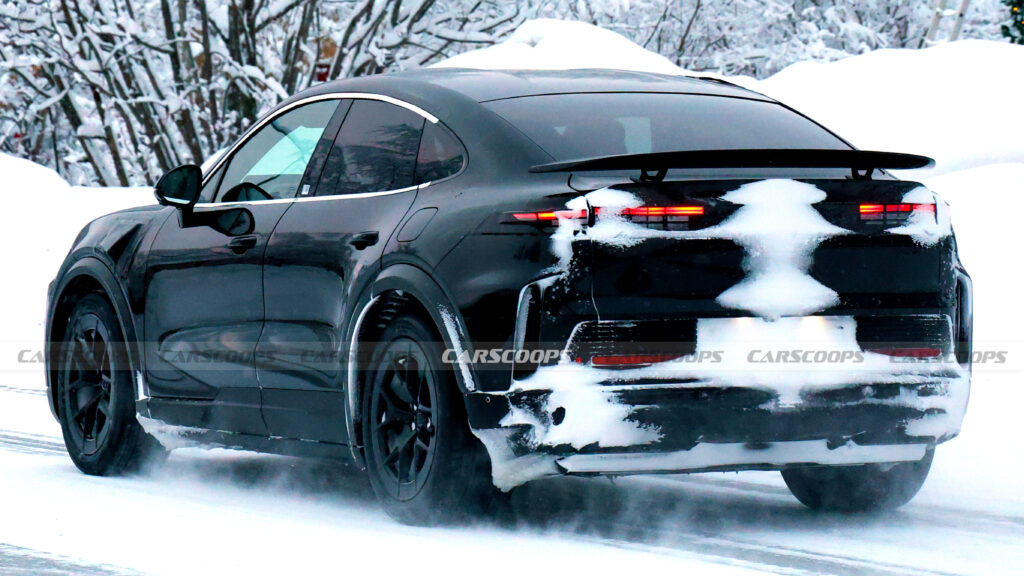
Porsche introduced the Cayenne Electric last November and the lineup will soon be expanded to include a crossover coupe. Spy photographers have snapped the model on multiple occasions, but now they’ve gotten a glimpse at the range-topping variant.

Tentatively dubbed the Cayenne Coupe Turbo GT Electric, the model follows in the footsteps of the regular Cayenne Turbo Electric. As a result, we can see a familiar front fascia with slender Matrix Design headlights as well as an active lower intake.

\\\\\\\

SHProshots

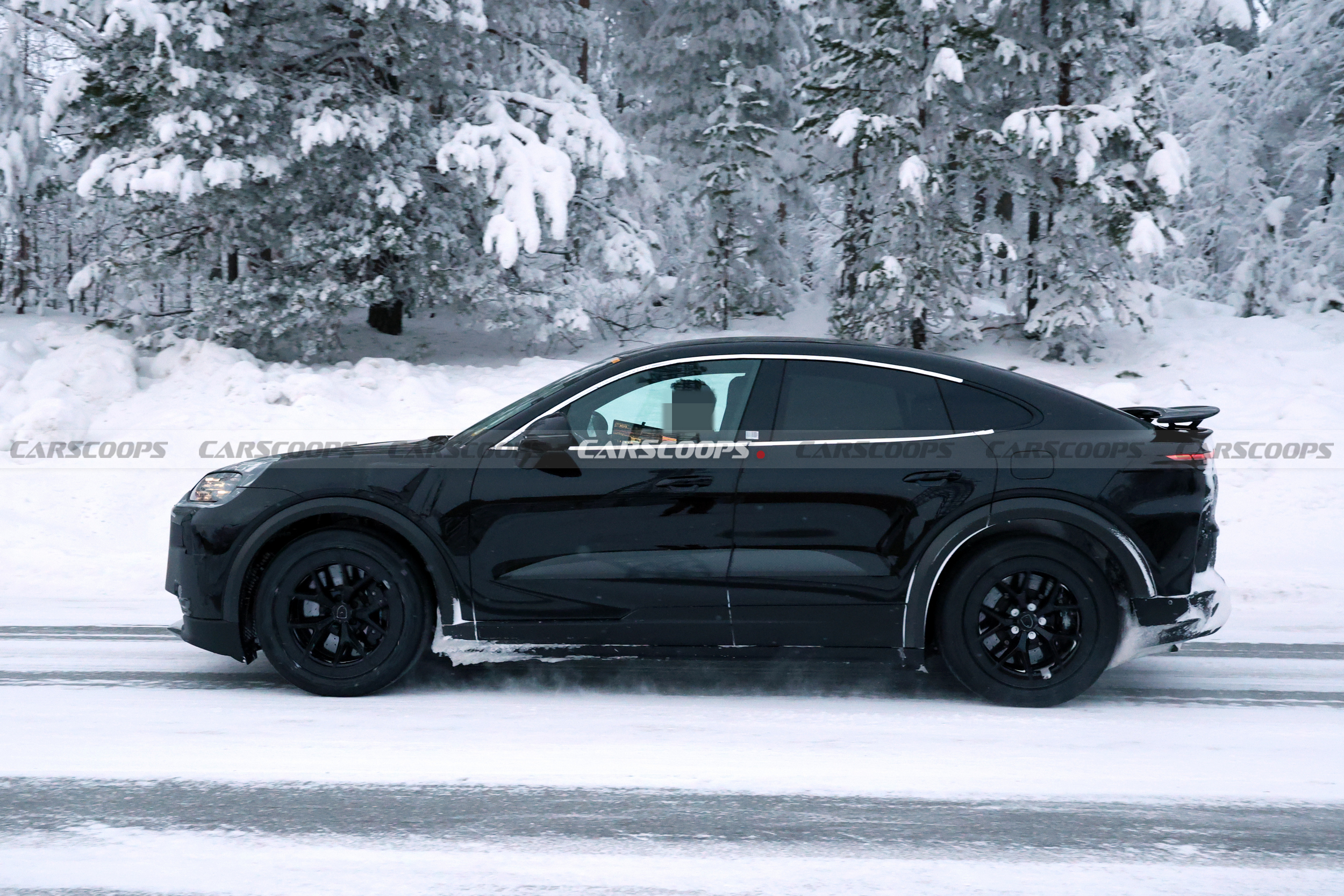
While the front end is familiar, the profile has a rakish windscreen that flows into a steeply sloping roof. They’re joined by a shrunken greenhouse, plastic body cladding, and five-spoke wheels that are backed up by a high-performance braking system with ventilated discs as well as sizable calipers.

More: 1,139 HP Cayenne Electric Is Porsche’s Most Powerful Road Car Ever

The rear end is epitomized by an angular rear window and an upright liftgate. While this carries over from the standard coupe, the performance variant is notable for sporting a fixed rear wing. Further below, we can see a familiar bumper that echoes the regular model.

 Porsche Turns Cayenne EV Coupe Into A Hypercar Hunter
Porsche Cayenne Electric

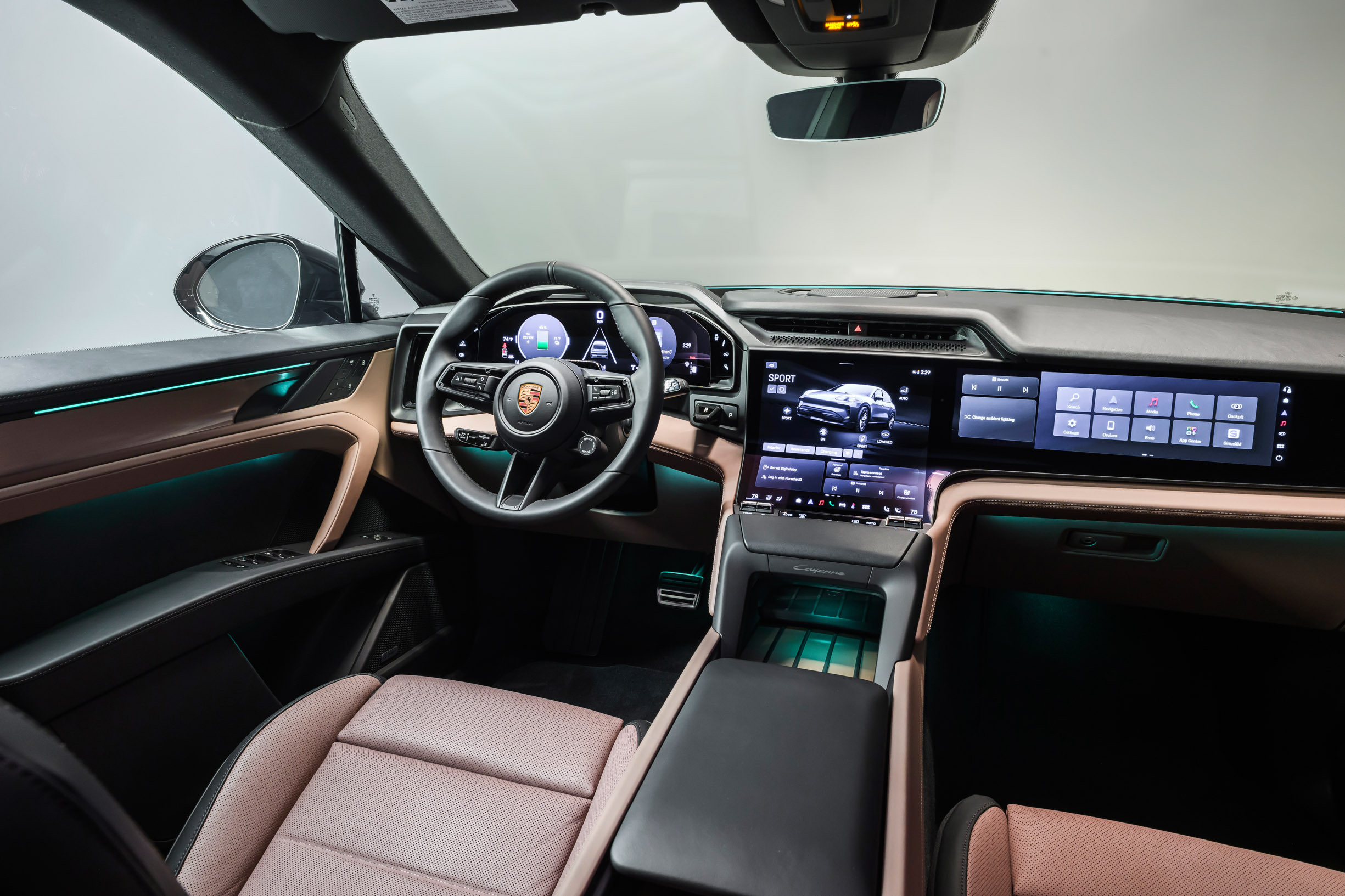
Spy photographers did not get a look inside, but do not expect any surprises, as it is unlikely to stray far from the standard Cayenne Electric. That means a 14.25-inch digital instrument cluster, a curved OLED infotainment system, and an optional 14.9-inch front passenger display should all make an appearance.

They should be joined by an augmented reality head-up display, an ambient lighting system, and a heating system that warms the seats as well as the armrests and door panels.

Electric Hyper Performance

 Porsche Turns Cayenne EV Coupe Into A Hypercar Hunter

The Cayenne Turbo Electric has a 113 kWh battery pack and a dual-motor all-wheel drive system that normally develops 844 hp (630 kW / 857 PS). However, that number soars to 1,139 hp (850 kW / 1,156 PS) and 1,106 lb-ft (1,498 Nm) of torque when Launch Control is activated. This enables the crossover to rocket from 0-60 mph (0-96 km/h) in 2.4 seconds, before hitting a top speed of 162 mph (261 km/h).

Assuming this is indeed a Coupe Turbo GT prototype, the model should be even quicker and more powerful. This suggests we can expect a steep price tag as the Cayenne Turbo Electric starts at $163,000, while the gas-powered Cayenne Turbo GT begins at $214,800.

\\\\\\

SHProshots

Audi’s Smallest EV Gives Up Its Interior Secrets

  • Audi’s upcoming A2 e-tron has been snapped inside and out.
  • The BMW iX1-sized SUV has a widescreen digital dashboard.
  • MEB platform from Q4 e-tron could give 350+ miles of range.

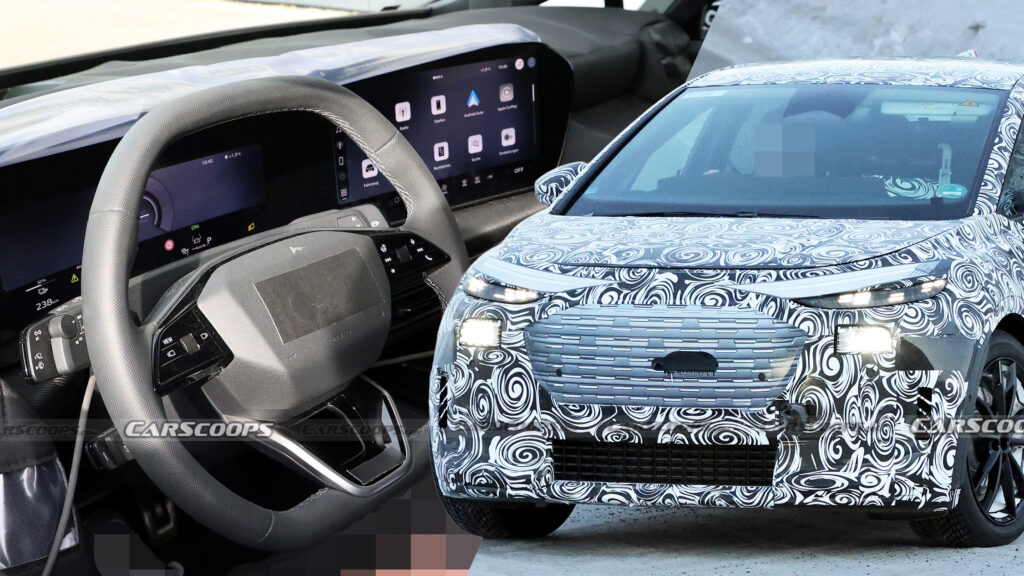
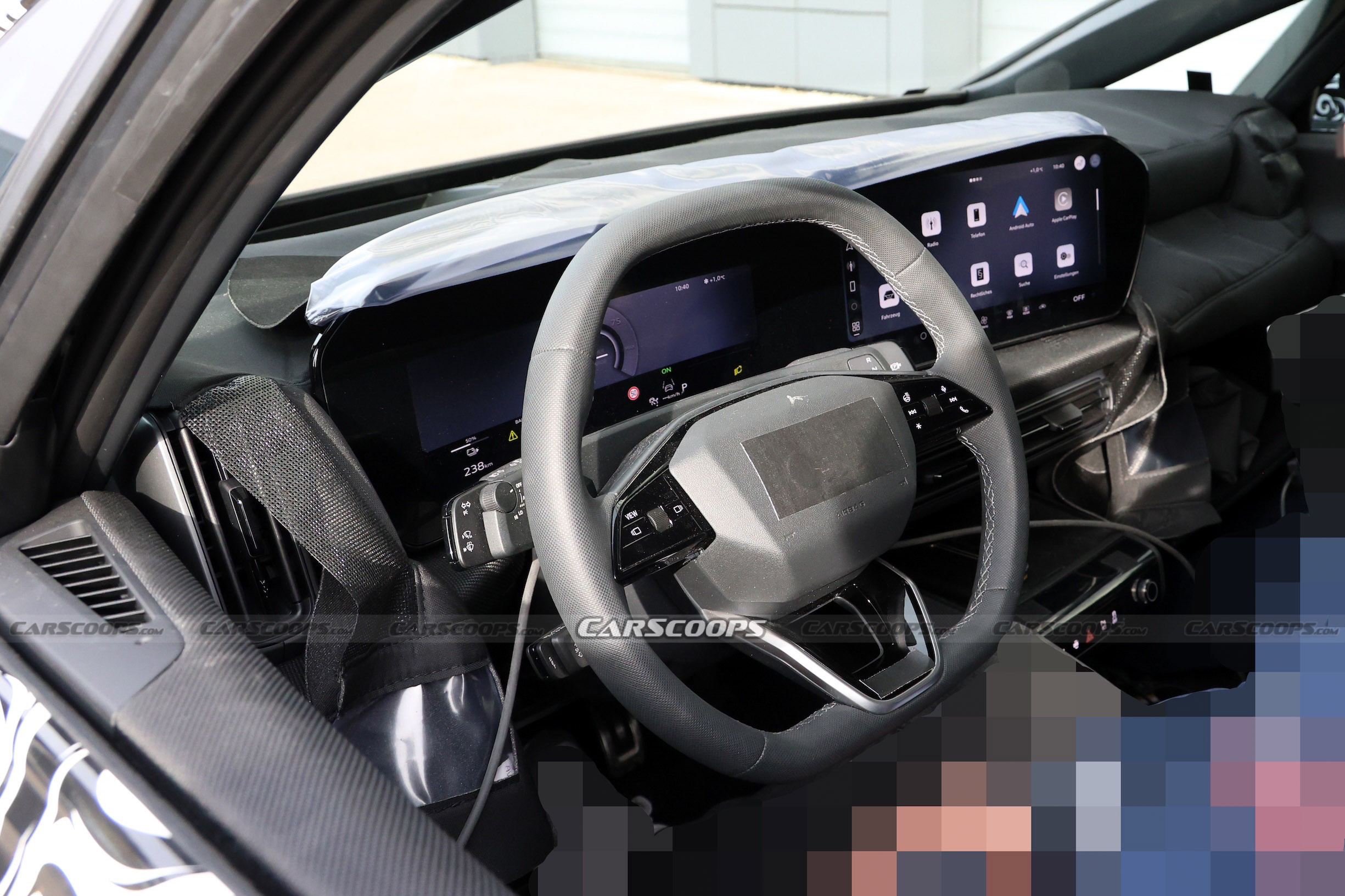
We’ve seen the outside of the upcoming Audi A2 e-tron plenty of times, but now we finally get a peek inside. And surprise, it looks like Audi raided the new Q3 parts bin for its smallest EV, a car that’s retro in name, but definitely not in nature.

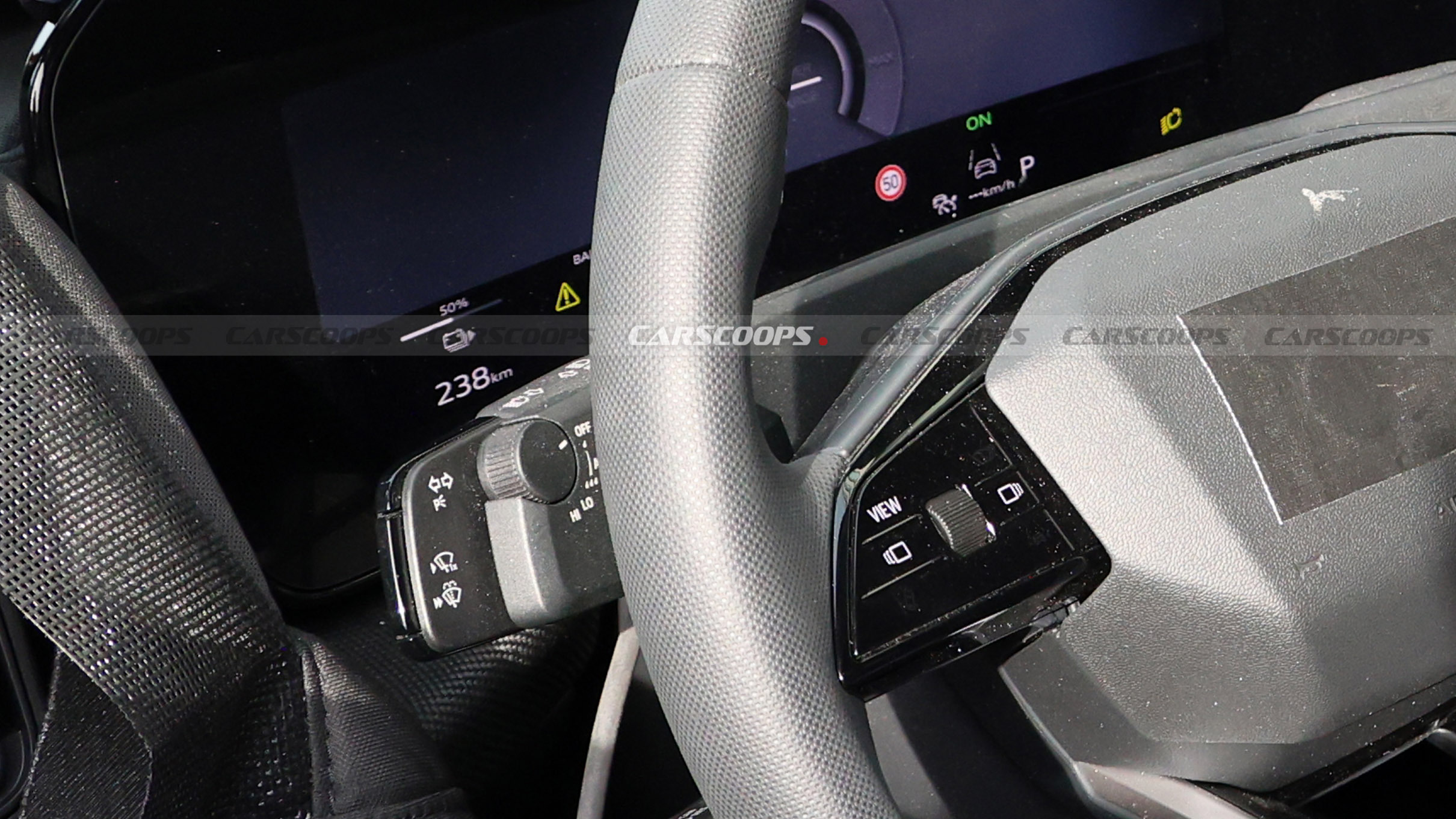
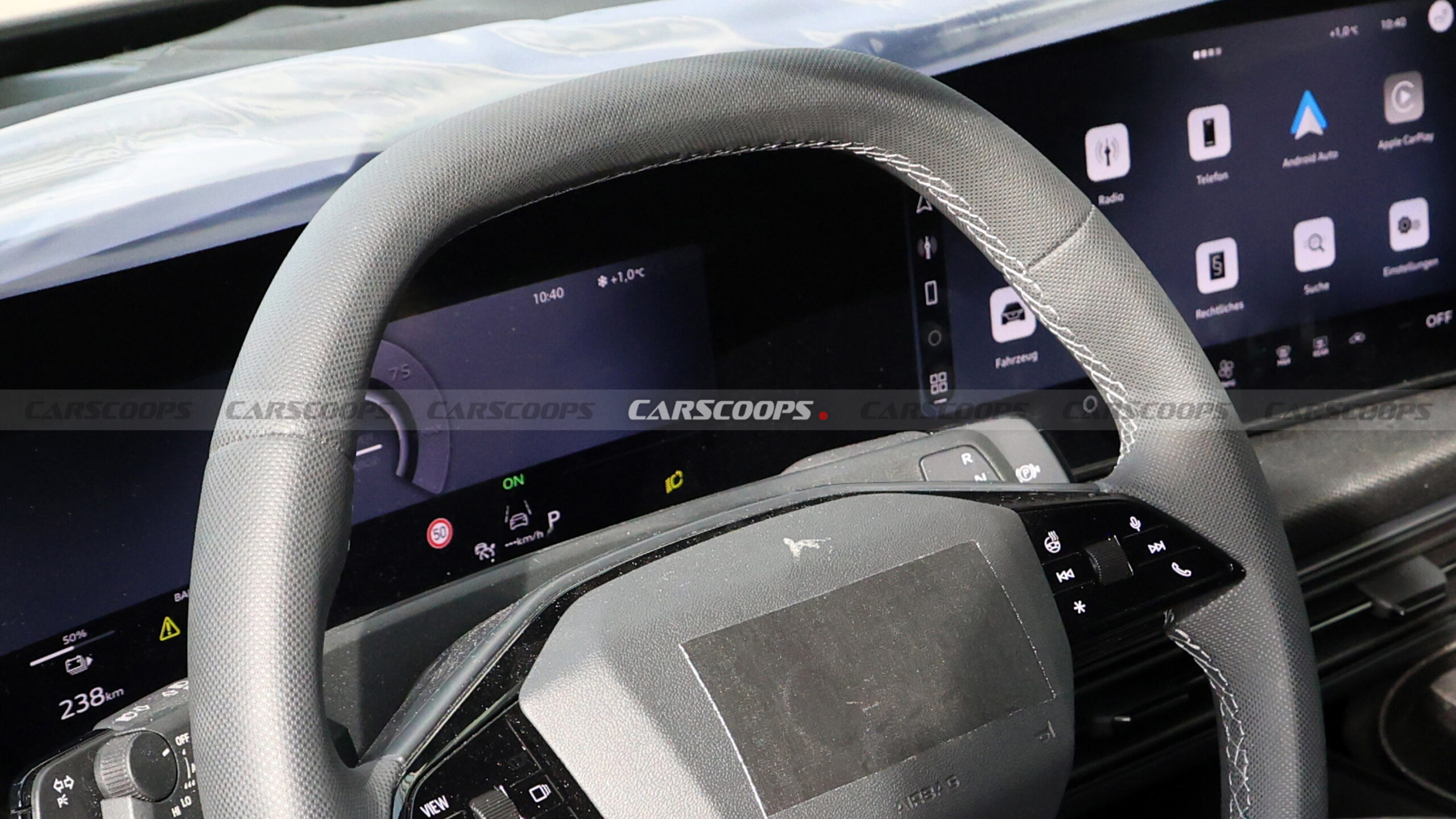
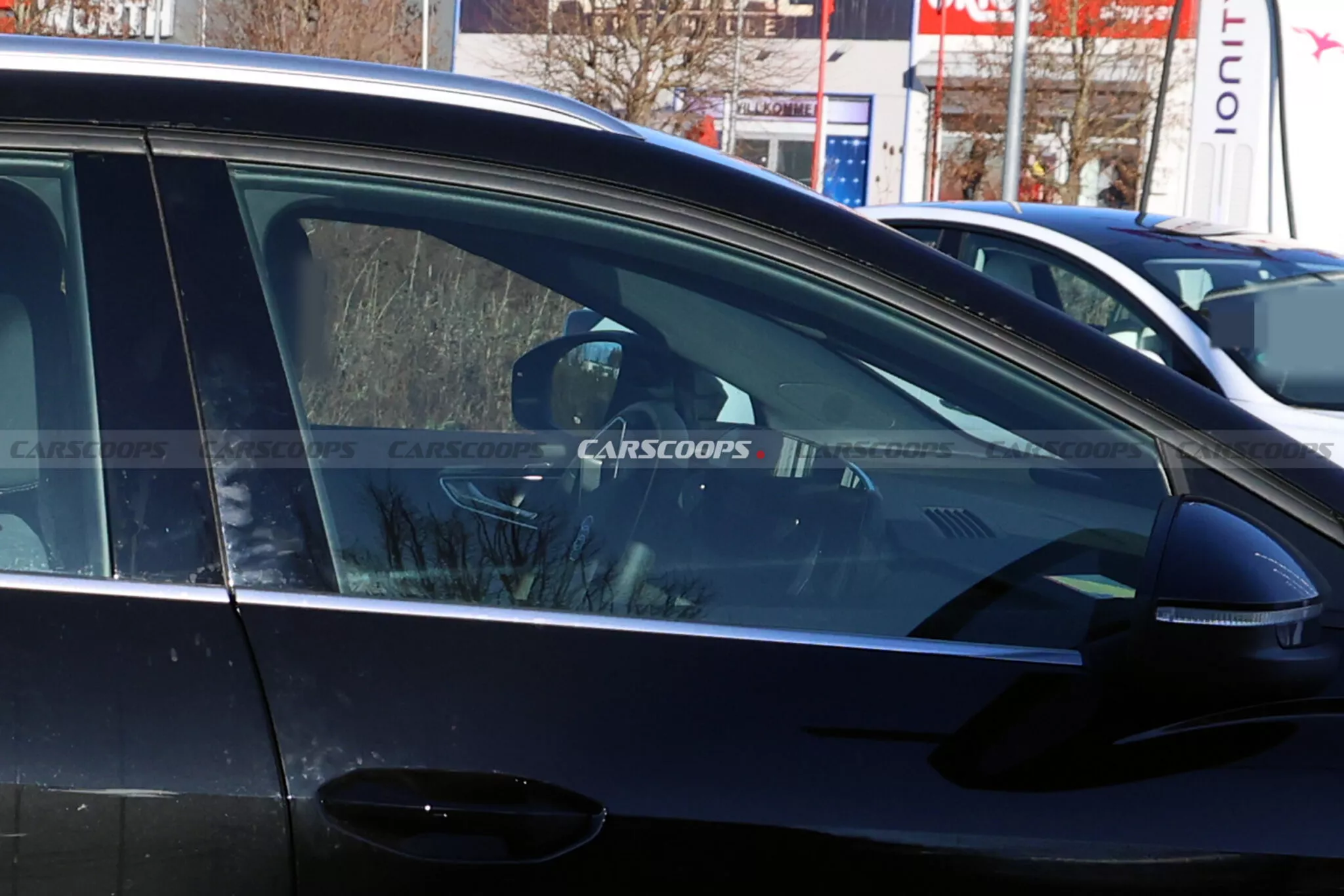
The spy shot reveals a clean, tech-forward cabin that mirrors the latest Audi Q3 revealed last September. There’s the familiar curved digital driver display flowing neatly into a central MMI touchscreen, plus Audi’s chunky, squared-off steering wheel with multi-function controls.

More: Audi’s Updated Q4 Is Coming With Changes You Won’t See At First

Even the controversial new-style column stalks look lifted straight from the Q3, where they made their debut.

 Audi’s Smallest EV Gives Up Its Interior Secrets

If anything, it confirms Audi isn’t treating this as a bargain basement EV. The A2 e-tron might be the baby of the lineup, but inside it still looks properly premium. Expect configurable ambient lighting, sustainable trim options, and Audi’s latest AI-based voice assistant with app integration and streaming services. Level 2 driver assistance tech should also be on the menu.

Older platform

\\\\\\\\

SHProshots

Underneath, it rides on Volkswagen Group’s familiar 400-volt MEB platform used on countless VW Group models like the VW ID.3 and ID.4 and Audi’s own Q4 e-tron. Single-motor MEB cars are rear-wheel drive, but dual-motor quattro variants will also be available, and yes, whispers of an A2 RS version are already doing the rounds.

The base version is tipped to pack a single front-mounted motor producing 201 hp (204 PS / 150 kW), fed by a 63 kWh battery delivering around 250 miles (402 km) of range. Step up the ladder and single-motor outputs could climb past 268 hp (272 PS / 200 kW), with a larger battery offering up to 348 miles (560 km) on the WLTP cycle, and maybe more.

Modern Classic

 Audi’s Smallest EV Gives Up Its Interior Secrets

The A2 name, as you probably know, is a throwback. The original Audi A2 was an aluminium spaceframe oddball that ran from 1999 to 2005 and never really sold in huge numbers, but later gained cult status. Audi skipped the obvious Q2 badge choice this time, reviving A2 instead, reports say, betting on nostalgia with a modern e-tron twist.

Design-wise, the exterior looks noticeably different from the bigger Q4 e-tron, as seen in our recent artist impression. There’s a nod to the original A2 with its upright stance and that split-style rear glass effect, but it’s sharper, wider and more assertive.

Slim daytime running lights sit high, the main lamps are lower in the bumper, and the closed-off grille gives it a confident EV face.

 Audi’s Smallest EV Gives Up Its Interior Secrets

The A2 will effectively replace both the gas-powered A1 hatch and Q2 SUV in Europe, and slot beneath the Q4 e-tron. Key rivals include the Volvo EX30, BMW iX1, Smart #1, Alfa Romeo Junior, and Mini Aceman, so prices should start south of €35,000 (£31,000 / $41,000 ) when sales start next year.

\\\\\\\\\

SHProshots

Mercedes Baby G-Class Ditches Its EV-Only Plan

  • Shrunken G-Class will offer both hybrid and fully electric options.
  • Hybrid borrows 1.5-liter turbo engine from new CLA, report says.
  • EV version targets nearly 450-mile range, far better than big G EV.

Mercedes’ upcoming baby-G was supposed to be the cute, chunky electric-only gateway into G-Class ownership. But the automotive market is changing fast, and so are Benz’s plans, as it reacts to cooling demand for EVs in some markets, especially for its own electric cars. As a result, the boxy SUV will now come with hybrid power.

More: Mercedes Wants This Baby G-Wagen To Win Buyers The Big One Never Could

Internally nicknamed Little G, Autocar reports, the compact, GLB-sized, two-row off-roader is due in 2027 and will still be available as a pure EV. But a companion hybrid model is now in development, using the turbocharged four-cylinder from the latest Mercedes-Benz CLA sedan.

 Mercedes Baby G-Class Ditches Its EV-Only Plan
Illustrations Nikita Chuyko / Kolesa

The change speaks to a wider reset inside Mercedes. The company has stepped back from its earlier EV-only plans, with CEO Ola Källenius confirming it will keep selling combustion models well into the 2030s to stay flexible across different markets. Tepid demand for the electric G-Class has, by most accounts, helped concentrate minds.

Read: Mercedes’ Electric G Flops So Hard It Could Change What Comes Next

The hybridized 1.5-liter unit is designed by Mercedes and built by Horse Powertrain in China, a joint venture involving Geely and Renault. Exactly how much kick it will deliver in the Little G is unknown, but the new CLA 220 hybrid makes 208 hp (211 PS) and 280 lb-ft (380 Nm) of torque, and gets to 62 mph (100 kmh) in 7.1 seconds.

In the CLA, the engine is paired with a gearbox-mounted electric motor that allows short periods of engine-off driving.

450-mile Range

 Mercedes Baby G-Class Ditches Its EV-Only Plan
Illustrations Nikita Chuyko / Kolesa

Prefer your G a little more refined? The EV variant will reportedly come standard with two motors and all-wheel drive to preserve off-road credibility, Autocar says.

Also: Mercedes’ Smallest SUV Points To A Different Kind Of Compact Future

An 85 kWh NMC battery is tipped to deliver close to 450 miles (724 km) of WLTP range, which would be seriously impressive for something shaped like a luxury brick – it’s not far short of the CLA 350 sedan’s 418-479 miles (672-771 km) figures. The full-size electric G580 with EQ technology, you might recall, is only rated for 280 WLTP miles (450 km).

Regardless of powertrain, the Little G will be sold exclusively with four-wheel drive, and both versions are tipped to feature advanced torque vectoring capable of distributing drive to individual wheels to mirror the off-road ability of the larger G-Class.

Slab Sides

 Mercedes Baby G-Class Ditches Its EV-Only Plan
Illustrations Nikita Chuyko / Kolesa

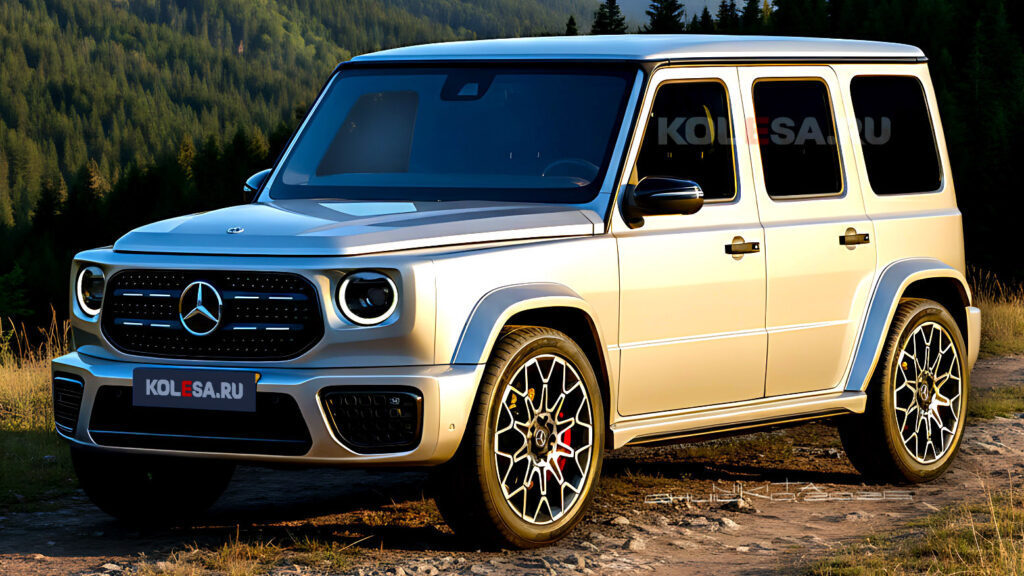
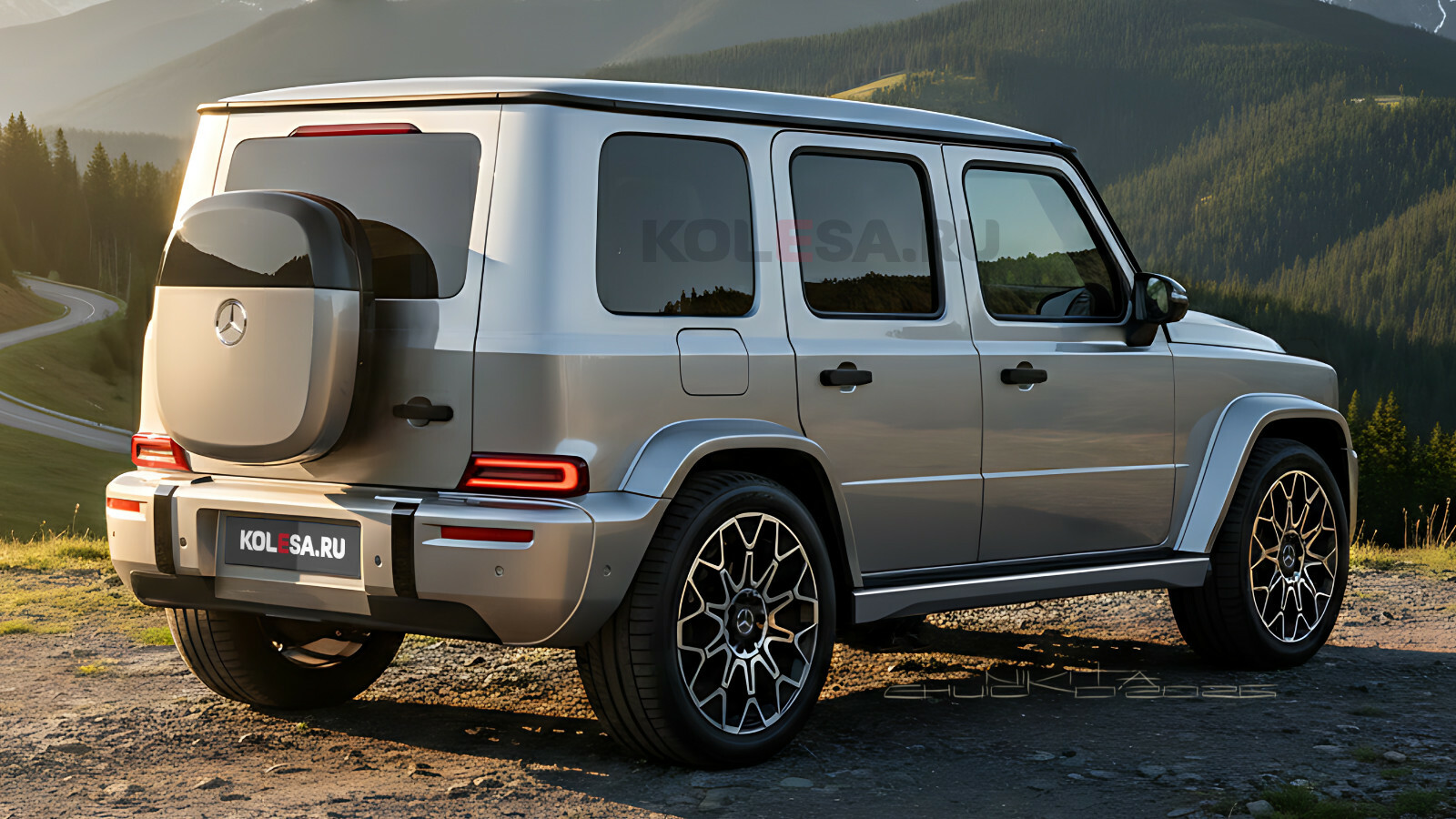
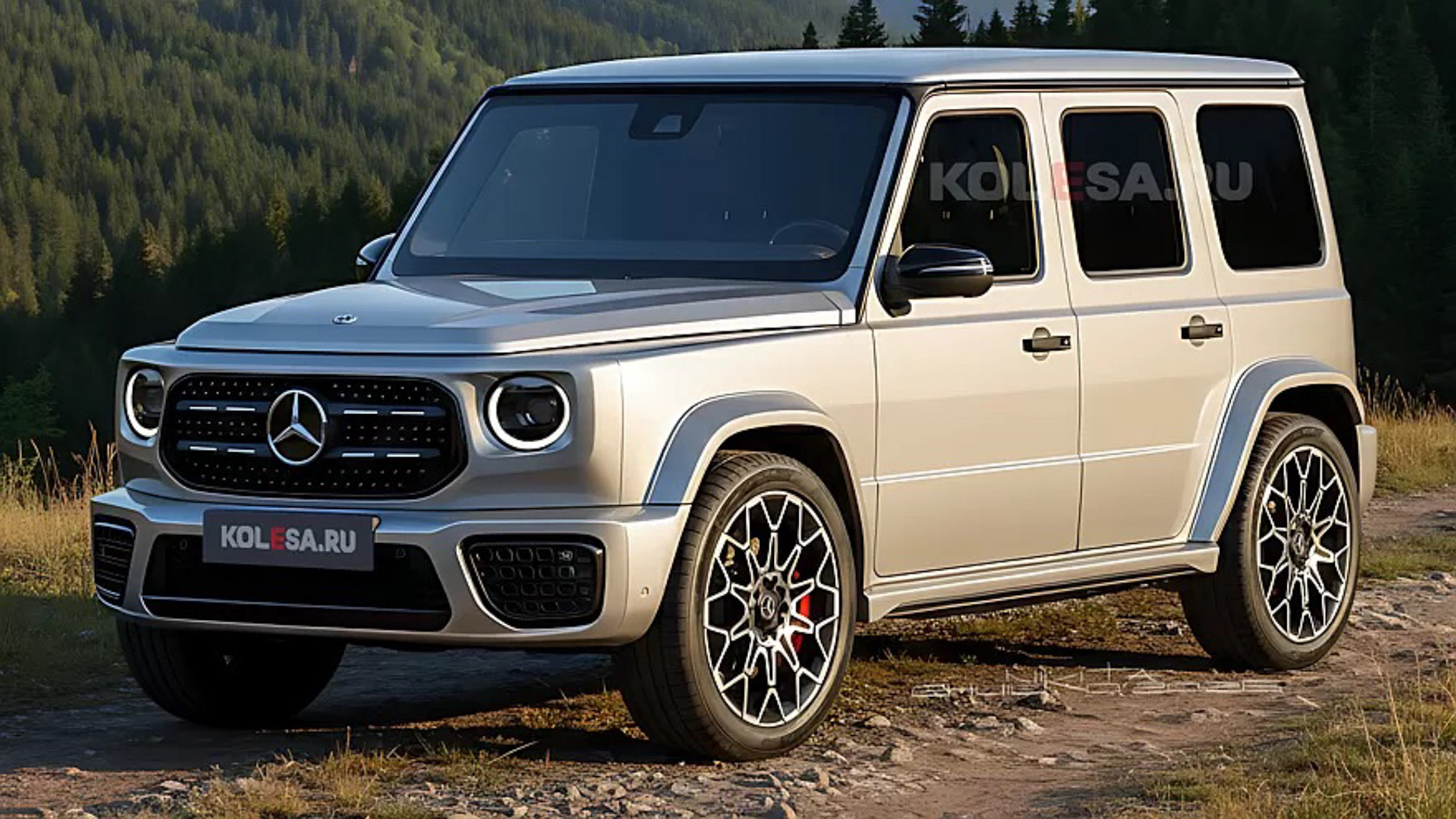
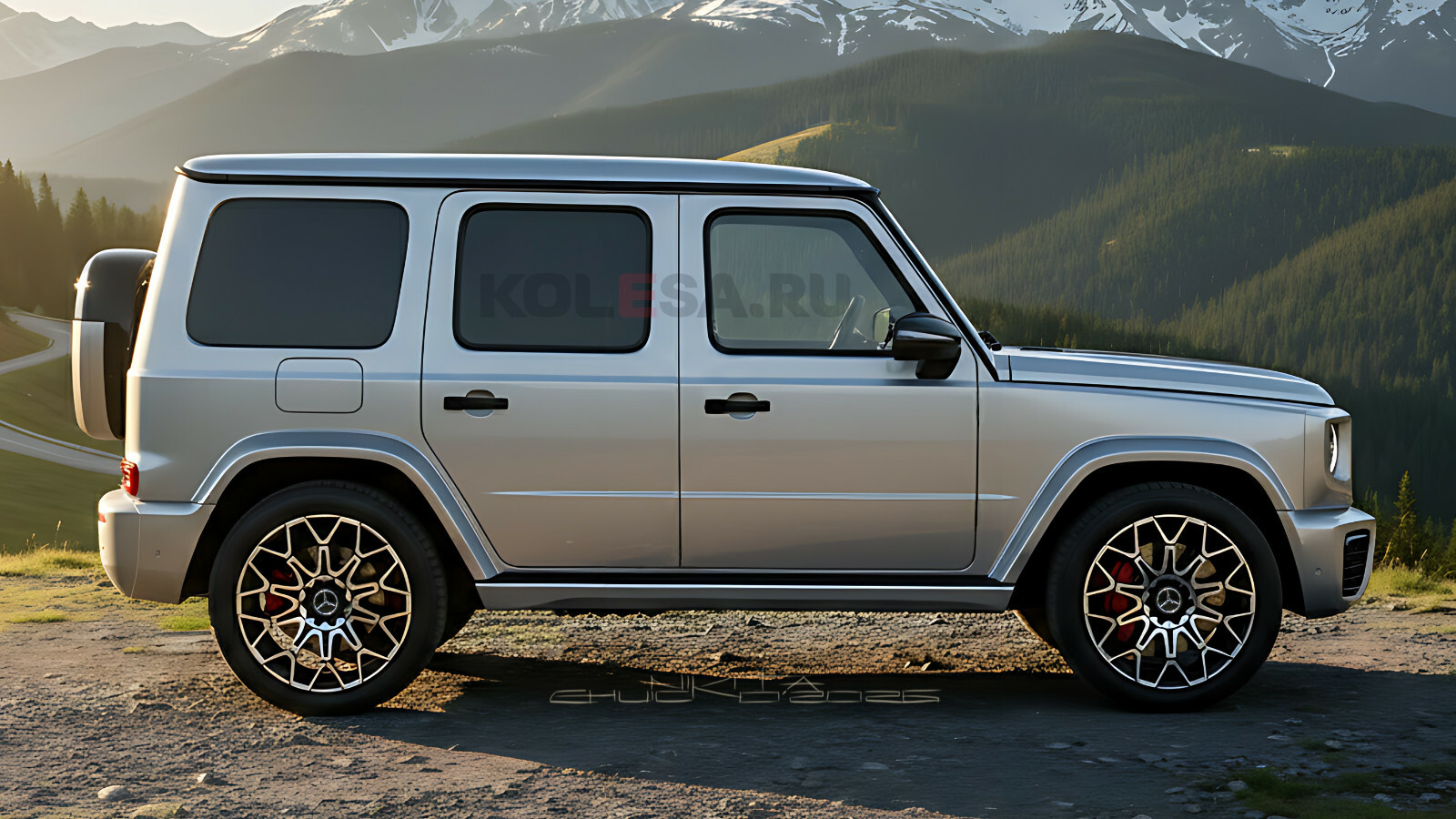
Where the baby G does follow its big brother’s lead, though, is in military-chic charm. Unofficial renders from Nikita Chuyko for Kolesa give us a credible idea of what the finished SUV could look like, showing round headlights, upright glass, three big side windows and a tailgate-mounted spare.

It looks like someone left a G-Class in the dryer too long, and the good news is the slow-selling G580 EV’s $163k price should also shrink, hopefully by around 50 percent.

Unlike many compact crossovers pretending to be rugged, the Little G is said to ride on a bespoke ladder-frame platform rather than sharing underpinnings with Mercedes’ electric GLC or C-Class.

That should help it take on the incoming Land Rover Defender Sport, the Little G’s most natural rival, though that gets a unibody structure. We can’t wait to see them duke it out in the dirt next year.

\\\\\\\\\\\\\\

Baldauf

Ford Killed Fiesta For A Crossover, Now It Might Return Like This

  • Ford Fiesta could return as an all-electric model in Europe.
  • It will ride on Renault’s 400-volt AmpR Small platform.
  • Hotter ST version may join the lineup with around 200 hp.

Once thought to be permanently axed in favor of the Puma subcompact crossover, it appears the Ford Fiesta is poised for an electrified resurrection. The Blue Oval has turned to its strategic partnership with Renault Group to develop two affordable electric cars for Europe based on the French automaker’s AmpR Small platform.

Future Cars: Mercedes’ Smallest SUV Points To A Different Kind Of Compact Future

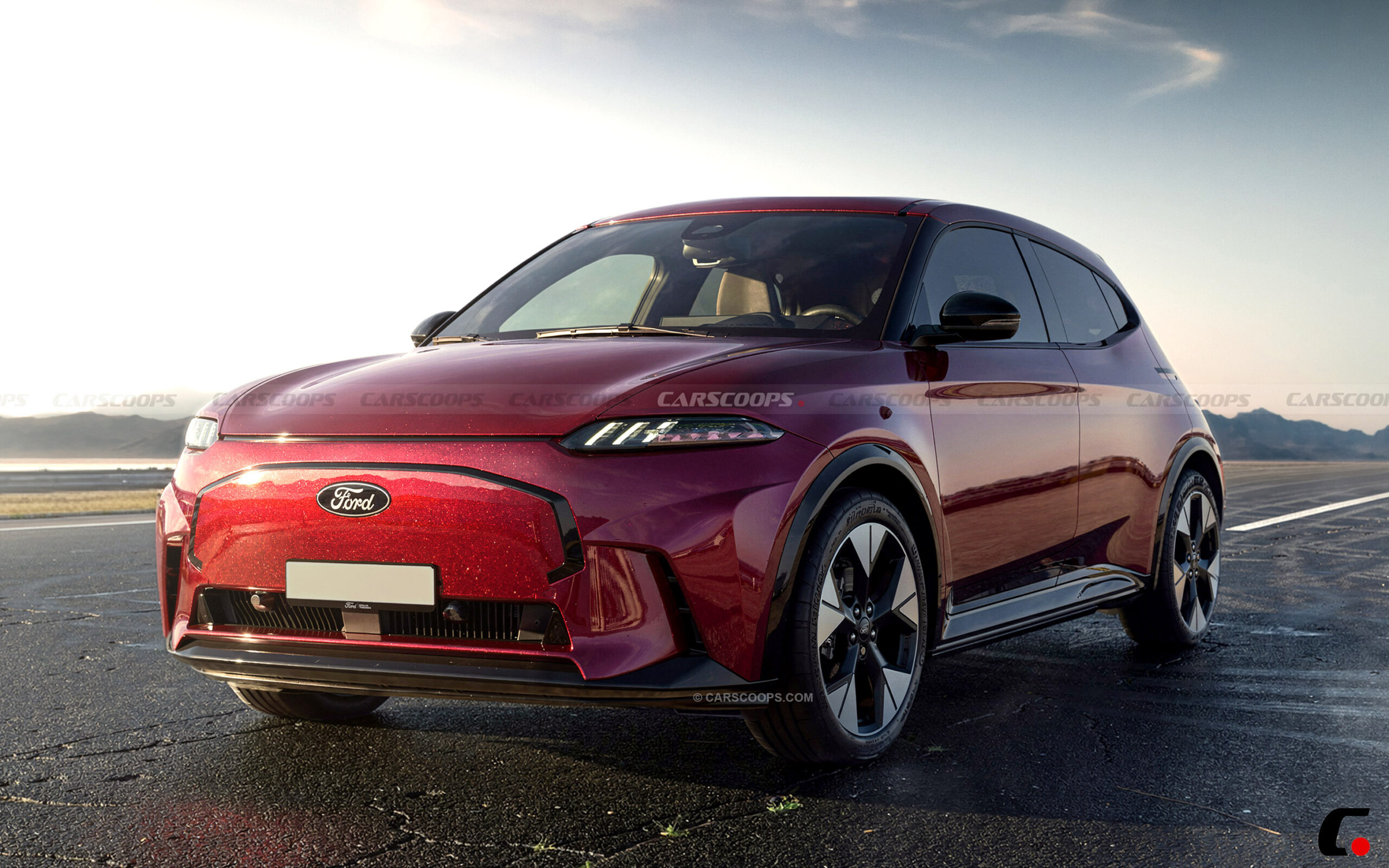
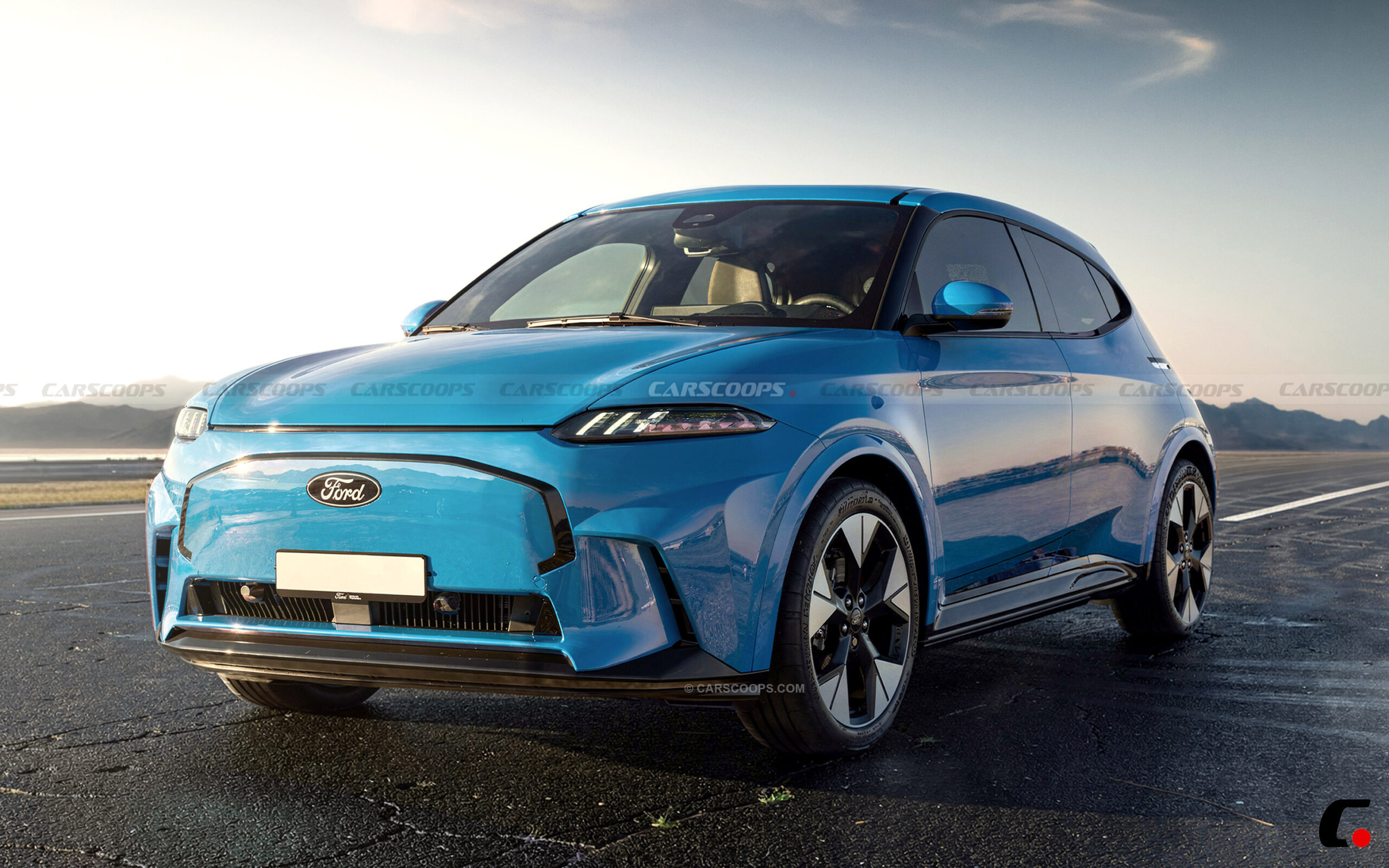
While the Fiesta EV has yet to be officially confirmed, intel suggests it’s all systems go. So we’ve pulled together everything we know so far, along with what to reasonably expect, including an exclusive illustration previewing how Ford’s smallest electric hatch might look in production form.

Fresh Look, Familiar Proportions

 Ford Killed Fiesta For A Crossover, Now It Might Return Like This
Illustrations Josh Byrnes / Carscoops

The basis for my render is the Renault R5, which is evident in its bite-size dimensions, short overhangs, and upright windscreen. Upfront, it adopts a clean, closed-off nose typical of most EVs with a smooth panel framed by a gloss-black moustache motif. Slim headlights with tri-DRLs sit high on the fascia, while subtle air intakes below aid cooling without adding visual clutter.

Read: Ford Quietly Ends Focus Production After 27 Years Without Even Saying Goodbye

In profile, it’s defined by a gently rising beltline, blacked-out a-pillars, and curvaceous surfacing inspired by Ford’s radical ‘Start’ that debuted in 2010. Out back, it appears wider due to a contrasting horizontal line that connects the taillights and the lower bumper, which sports a centrally located vertical fog lamp.

\\\\\\\\\\\

A Smart Interior

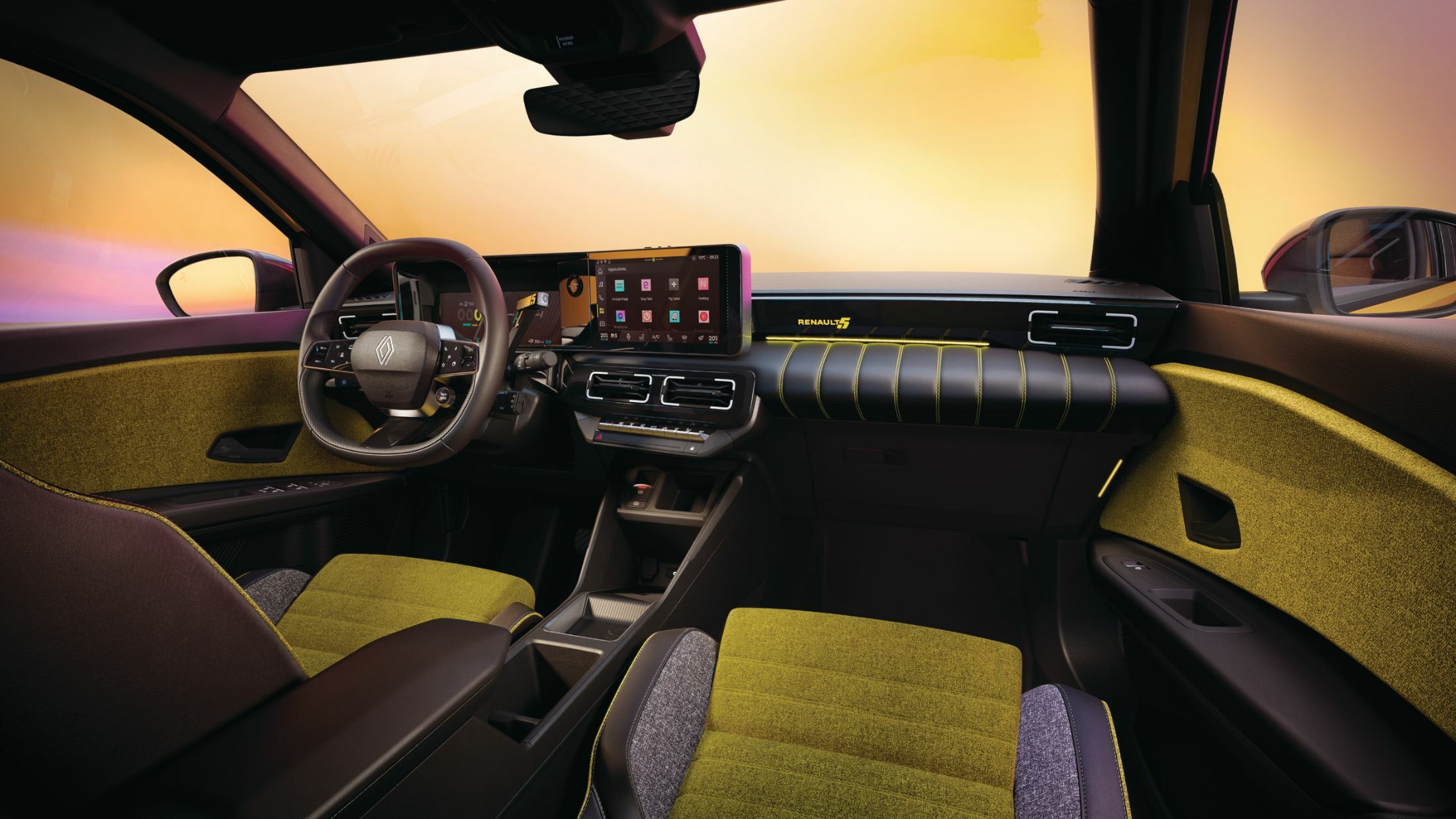
Inside, the Fiesta is expected to be a tech-laden affair, owing much of its electronic hardware to its French-supplied architecture. Sure, it’ll feature Ford-specific fonts and graphics, but underneath the dual 10-inch digital instrument cluster and infotainment screen, it’s a Google-based Renault operating system with over-the-air update capabilities.

Future Cars: Ford’s $30K Pickup Wants To Beat Cybertruck At Its Own Game

 Ford Killed Fiesta For A Crossover, Now It Might Return Like This
The new Renault 5’s interior.

Material quality should improve, with soft-touch surfaces and recycled fabrics replacing the budget plastics of past Fiestas. The dedicated EV platform should also help liberate cabin space, with overall dimensions expected to closely shadow those of the Renault 5.

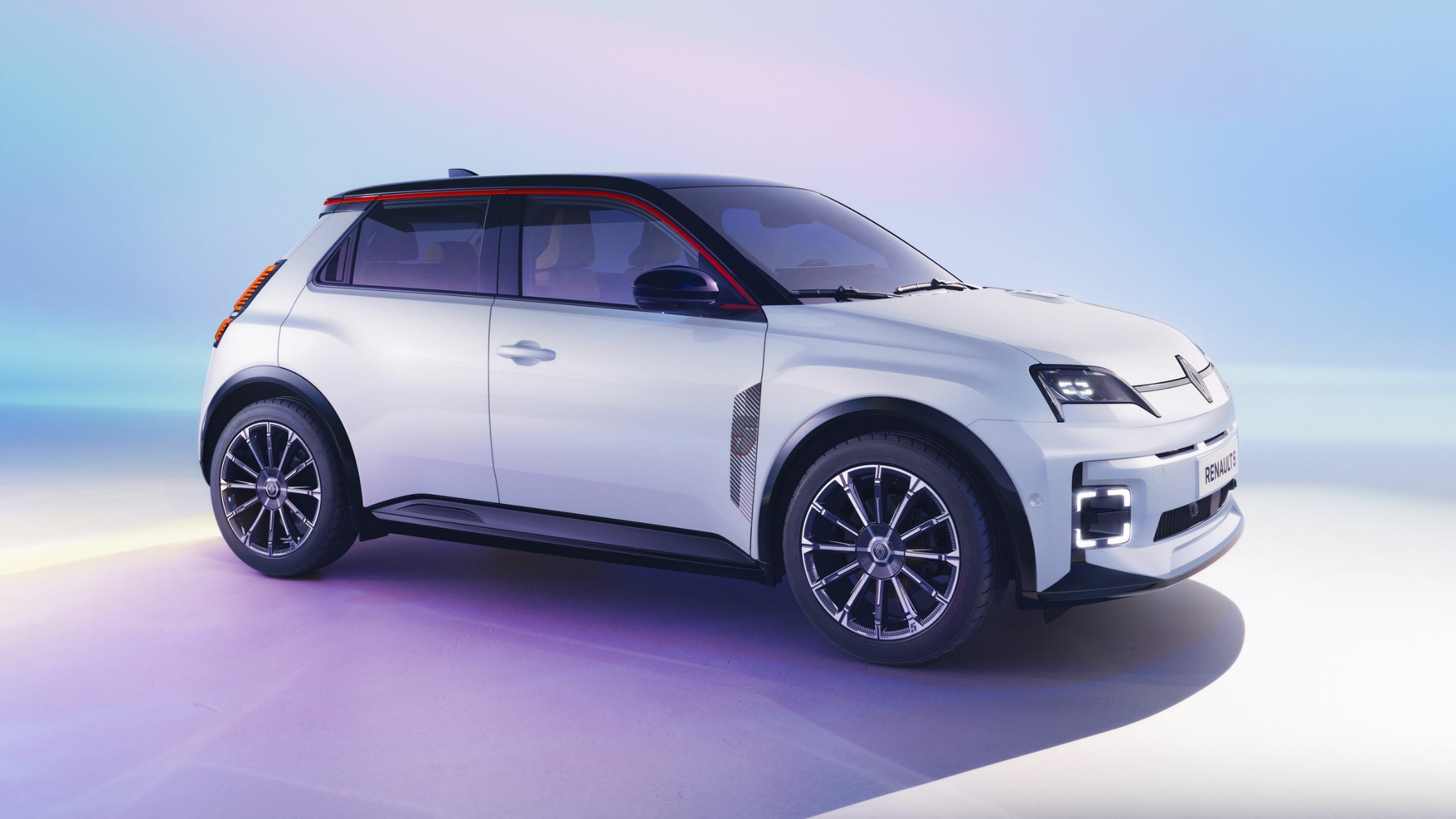
The electric French hatch measures 3,922 mm (154.4 inches) in length, 1,774 mm (69.8 inches) in width and 1,498 mm (59.0 inches) in height, with a wheelbase of 2,540 mm (100.0 inches). Sharing the same underpinnings, the Fiesta EV should sit in virtually the same size class, even if Ford gives it its own visual character.

Renault Platform

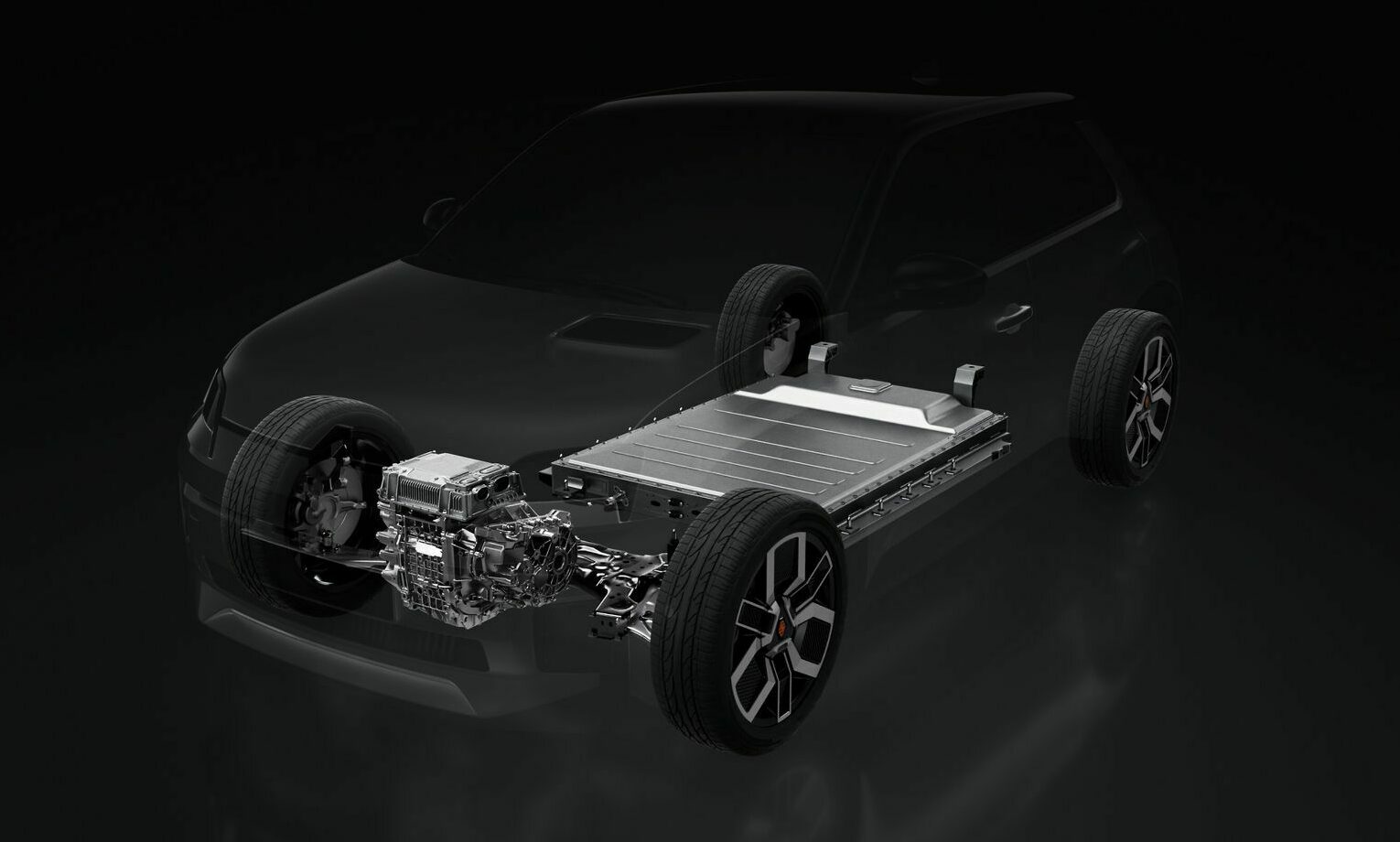
Based on the Renault group’s 400-volt AmpR-Small architecture, Ford Europe engineers will work their magic on ride and handling. It will likely have a multi-arm rear suspension and a low-mounted battery for comfort and taut body control.

 Ford Killed Fiesta For A Crossover, Now It Might Return Like This

Watts Over EcoBoost

Before the axe fell, the last Fiesta had a cracking wee 1.0-litre turbocharged 3-cylinder engine. Sadly, the three-pot thrum will be replaced by a front-drive, single-motor electric setup. It’s not all bad, though, with outputs projected to be in the 120-150 hp (88–110kW) range. We’d expect a spicier ‘ST’ variant to come later with up to 210 hp.

Also: Farley Says Ford Couldn’t Compete With Toyota And Hyundai, So It Stopped Trying

Expect 40 kWh and 52 kWh NMC battery options, with a range up to 248 miles (400km) on the WLTP cycle. Using the R5 as a reference, DC fast charging will max out at 101 kW, and it is expected to have vehicle-to-load and vehicle-to-grid capabilities.

Rivals And Reveal

 Ford Killed Fiesta For A Crossover, Now It Might Return Like This
Renault 5 EV

Competition will be fierce. Likely rivals include the Peugeot e-208, Opel Corsa-ECupra RavalKia EV2, Renault 5 E-Tech and Volkswagen ID.Polo. More about the Fiesta EV is expected to surface in the next 12 months, with a potential reveal likely to be late next year or early 2028.

Could it be offered outside Europe? It’s possible. But given the current tariff landscape, the Fiesta’s small footprint, and America’s cooling appetite for EVs following the end of the federal tax credit last year, a US launch feels highly unlikely.
Would you like to see the Fiesta reborn as an affordable EV? We’d love to hear your thoughts in the comments below.
 Ford Killed Fiesta For A Crossover, Now It Might Return Like This
Illustrations Josh Byrnes / Carscoops

Mercedes G-Class Got Too Big And Expensive, The Little G Is Meant To Fix It

  • The mini Mercedes G-Class will rival Land Rover’s baby Defender.
  • Underpinning the SUV will be a bespoke ladder frame chassis.
  • Launches as an EV, but combustion power remains a possibility.

Sales of the Mercedes-Benz G-Class surged 23 percent last year to a record 49,700 vehicles. Not bad for a machine that still drives like it could climb a mountain on the school run. Now, those who can’t get enough of the G-Wagen will soon have another compelling, albeit smaller, option.

Read: Mercedes Wants This Baby G-Wagen To Win Buyers The Big One Never Could

The so-called ‘Little G’ is on the way, promising all the boxy attitude of the full-size model in a tighter, more affordable package. Positioned beneath the full-size model, the Little G marks Mercedes’ first serious attempt to stretch the G-Class name beyond a single model line.

A Compact G Takes Shape

\\\\\\\\

Baldauf

Also known as the mini G and baby G, this new addition to the Mercedes-Benz line-up should have enthusiasts paying close attention. It’s expected to rival the smaller Defender currently in development at Jaguar Land Rover. For now, it’s confirmed to launch as an all-electric model, while a combustion-powered version remains possible in the future.

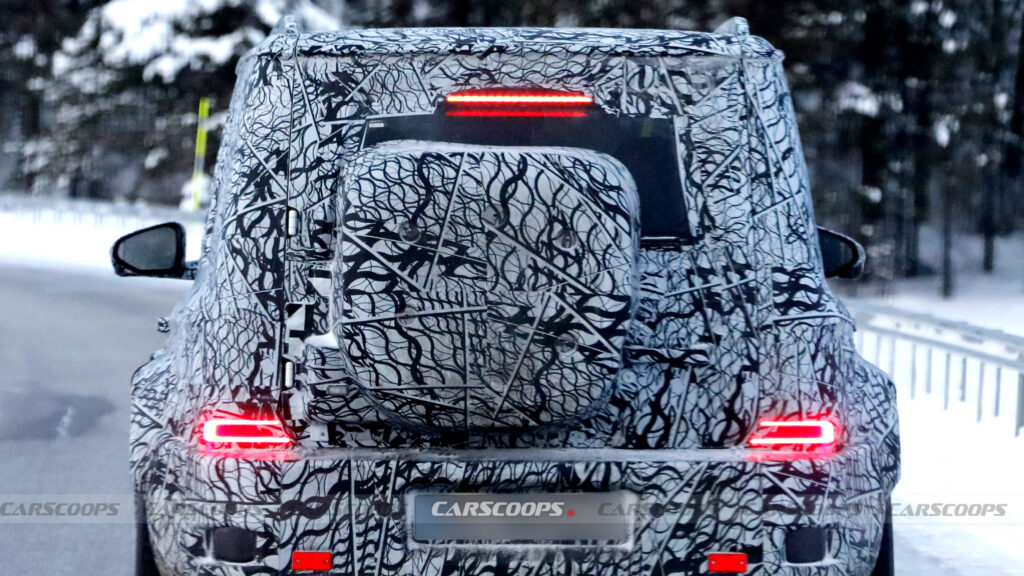
The latest round of spyshots of the Little G shows the model testing in the depths of the European winter. While this prototype is still under heavy camouflage and some body cladding, there’s no hiding the overall shape. It looks just like a G-Class should, just scaled to about 70 percent and softened slightly around the edges.

\\\\\\

Baldauf

Found at the front are the circular headlights you’d expect, with outer rings that serve as the turn signals. It also has blocky front quarter panels and a remarkably flat hood. This particular prototype can also be seen on a set of mismatched wheels and with a pair of roof rails. Although future powertrain options have not been detailed, this prototype is clearly an EV, as evidenced by the lack of exhaust.

Like the larger G 580 with EQ Technology, the test cars appear to retain signature details such as a side-hinged rear door and an external spare wheel cover. On the electric version, that rear-mounted housing is expected to double as storage for charging cables, echoing the setup already offered on the full-size EV.

Bespoke Bones Beneath The Boxy Body

Underpinning the new model will be a bespoke chassis. According to the former chief technology officer of Mercedes, Markus Schäfer, the Little G will have a “miniature ladder-frame chassis,” adding that it will have similar qualities “when it comes to suspension and wheel size,” to the larger model.

\\\\\\\\

EV Rollout Plan

Mercedes is set to launch the baby G as a fully electric SUV. Exact battery sizes and motor outputs are still under wraps, but expect it to borrow heavily from the tech already rolling out in Merc’s newer EVs, including the GLA and GLC electric models.

What it won’t get, according to Schäfer, is a range-extender setup. Smaller and mid-size Mercedes models are steering clear of that halfway-house solution, which means the Little G should stick with proper, full battery-electric hardware.

As for combustion power, nothing is confirmed. Mercedes hasn’t shut the door on it, but it hasn’t opened it either. If an ICE version does materialize, it’ll likely depend on the market. For now, the company is keeping its options open.

\\\\\\\

Baldauf

Skoda’s Super-Sized EV Takes Aim At The Hyundai Ioniq 9

  • The Skoda Peaq has been spied ahead of its summer debut.
  • Electric three-row crossover previewed by Vision 7S concept.
  • Expected 89 kWh battery could provide a 373-mile WLTP range.

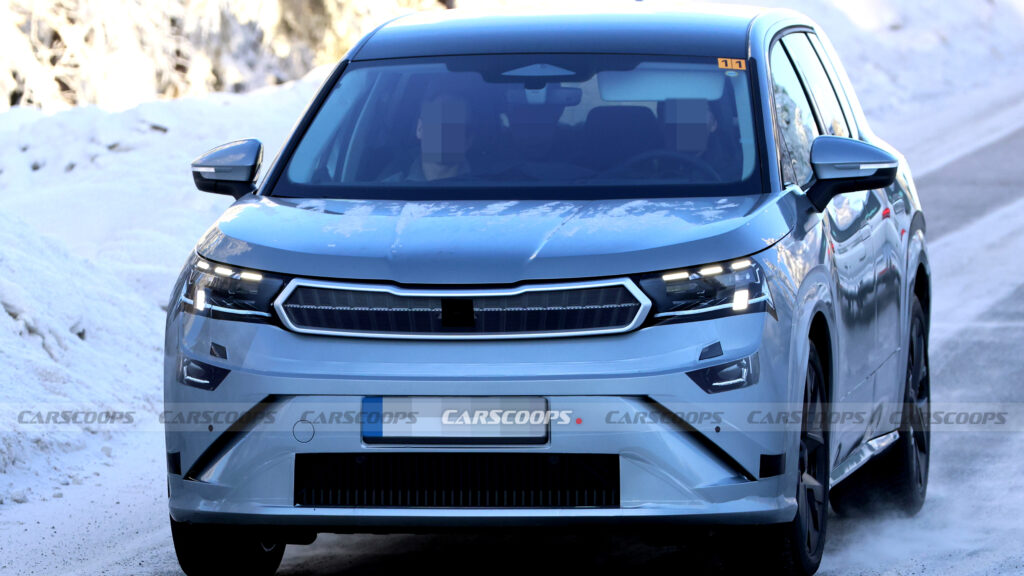
Skoda recently confirmed its upcoming three-row electric crossover would be called the Peaq and now spy photographers have caught a lightly camouflaged prototype undergoing cold weather testing.

Previewed by the Vision 7S concept, the production model will debut this summer and sport a design reminiscent of the Hyundai Ioniq 9. While stickers provide plenty of misdirection, we can see angular air curtains as well as a trapezoidal lower intake sporting stylized lines.

More: Skoda’s Electric Three-Row Crossover Steps Out Of The Shadows

The grille and headlight treatment is designed to throw people off as the camouflage hides a new “Tech‑Deck Face,” which appears to resemble the one used on the concept. A closer inspection appears to show C-shaped headlights that are connected by a lower band.

\\\\\\\\\\\\

SHProshots

Moving further back, we can see slender A-pillars that flow into a long, sloping roof. They’re joined by an expansive greenhouse, streamlined bodywork, and flush-mounted door handles. The model also has pronounced wheel arches, but the disguise appears to add some extra thickness.

The rear end has a stylish liftgate with a trapezoidal accent as well as a distinctive spoiler. The taillight graphics are fake, but presumably hide T-shaped lighting units that echo those found up front.

What About The Interior?

\\\\\\\\\\

SHProshots

Spy photographers didn’t get a look inside, but Skoda has previously said the seven-seater will bring “spaciousness and practicality to a whole new level.” We can also expect a relatively upscale cabin as the Peaq will become the brand’s range-topping model.

MEB Platform And Battery Expectations

\\\\\\\\\\

SHProshots

Powertrain details remain elusive, but the crossover will ride on the MEB platform and likely offer an assortment of powertrains. If the concept is any indication, the road-going model could have an 89 kWh battery pack and a WLTP range in excess of 373 miles (600 km). The Peaq may also offer a DC fast charging capability of around 200 kW.

The model could take a few cues from the Enyaq, which offers dual-motor all-wheel drive systems with outputs of 282 hp (210 kW / 286 PS) and 335 hp (250 kW / 340 PS). That being said, the newer Peaq could have more powerful and efficient motors.

\\\\\\\

SHProshots

Porsche’s Most Extreme Taycan Yet Exists For A Very Personal Reason

  • RS-style Taycan prototype now wears production aero parts.
  • Engineers chase Nürburgring glory after Xiaomi stole record.
  • Could make even more power than the 1,019 hp Taycan GT.

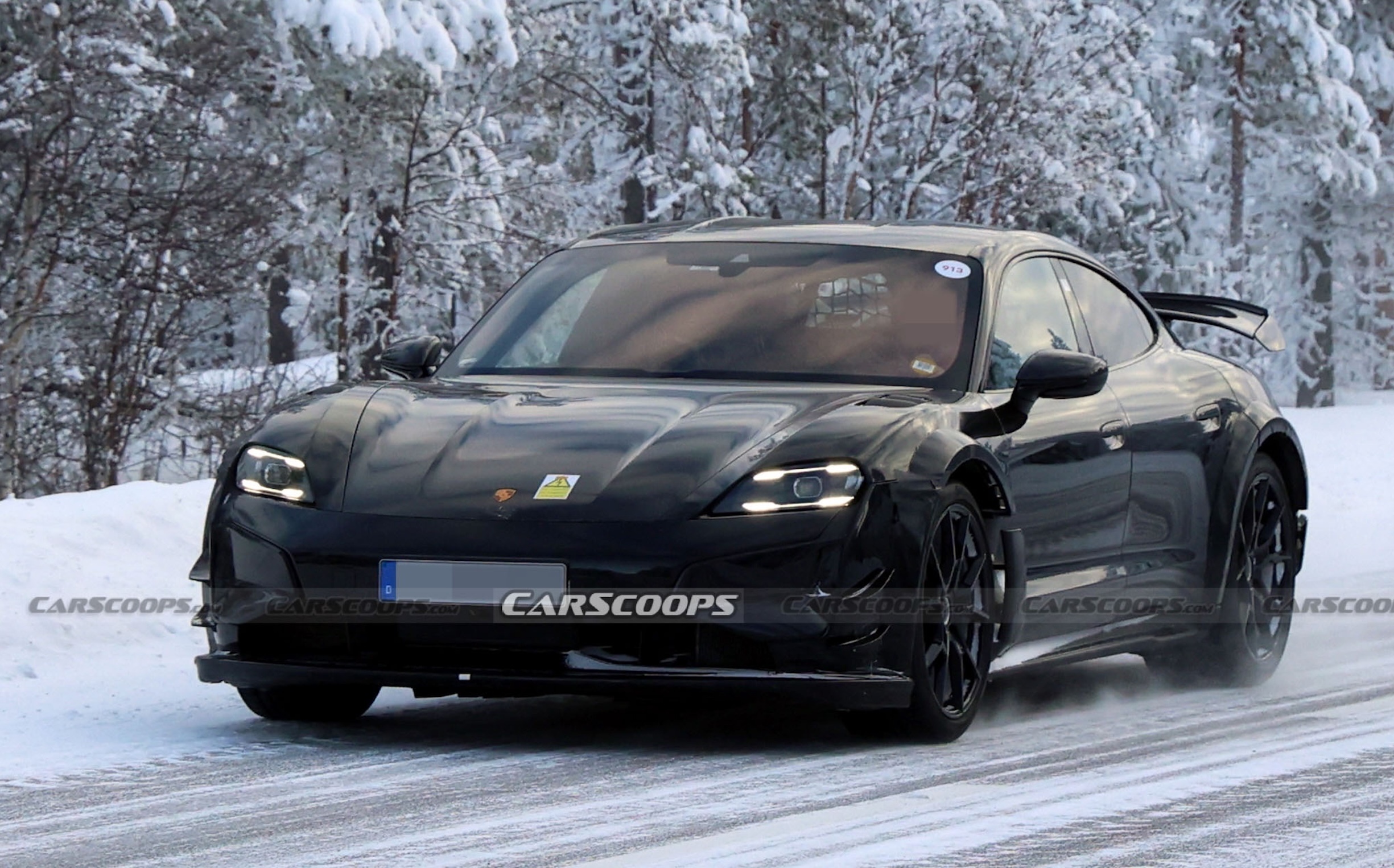
It’s eight months since Xiaomi smashed Porsche’s production EV sedan record at the Nurburgring, but 2026 is the year the Germans fight back. Fresh spy shots from northern Sweden show a vicious-looking, track-ready Taycan ahead of a new record attempt later this year.

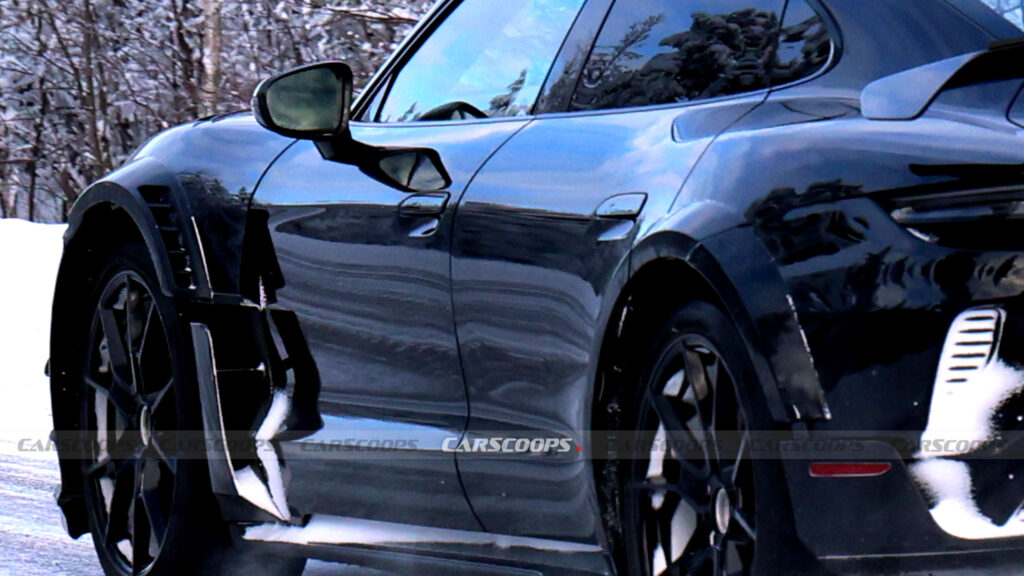
Visually, this prototype has matured since we last saw it bullying the Nürburgring in September. The aero components, heavily inspired by the mighty 911 GT3 RS, now look less like prototype science projects and more like showroom-ready hardware.

More: Taycan Goes Full Psycho Mode To Steal Porsche’s Lost Record From Xiaomi

The front splitter is a different shape and no longer held on with motorsport-style bars, and the fat arch spats designed to cover a much wider track now have cooling slots behind the front wheels. Less visible this time, though, due to this car’s disguise, are the saw-tooth vents cut into each fender top whose job is to vent air pressure built up in the wheelhousings.

Toned-Down Rear Wing

\\\\\\\\

SH Proshots

At the back is the same gigantic diffuser we saw on the last prototype, but here it’s paired with a different trunk spoiler. The latest wing looks less race-car-like, its end planes moulded into the overall shape rather than being bolted on. It’s more like the Weissach-kitted Turbo GTs but with an added lip, though it still rides high above the tail to grab as much of the passing air as possible.

We can expect some advanced chassis trickery under the skin and more power than even the 1,019 hp (1,033 PS / 760 kW) the Taycan Turbo GT delivers. The Xiaomi SU7 Ultra’s 1,526 hp (1,547 PS / 1,138 kW) powertrain played a major role in helping the Chinese brand pull off a 7-minute 4.957-second lap of the Ring, beating the Taycan Turbo GT’s record by over 2.5 seconds.

Sub-Seven?

 Porsche’s Most Extreme Taycan Yet Exists For A Very Personal Reason

Separately, a stripped-down prototype version of the SU7 recorded 6:22.091, and though we doubt Porsche’s new Taycan will beat that in fully road-legal form, it should become the first production EV to go sub-seven. We’ll find out in a few months when the weather is good enough for Porsche to try for an official timed run.

We’ll also find out if the hottest Taycan will get an RS badge to match those RS aero goodies. If it does, it’ll be the first EV to be granted those letters, and it’ll have a price to match. The Taycan Turbo GT already costs $243,700 with or without the Weissach package, so an RS is surely going to be close to $300k.

\\\\\\\\\

SH Proshots

Forget Jaguar, Land Rover Might Have The Coolest New EV

  • The 2027 Range Rover Velar has been spied.
  • New EV is expected to debut later this year.
  • It has a sportier design and a new platform.

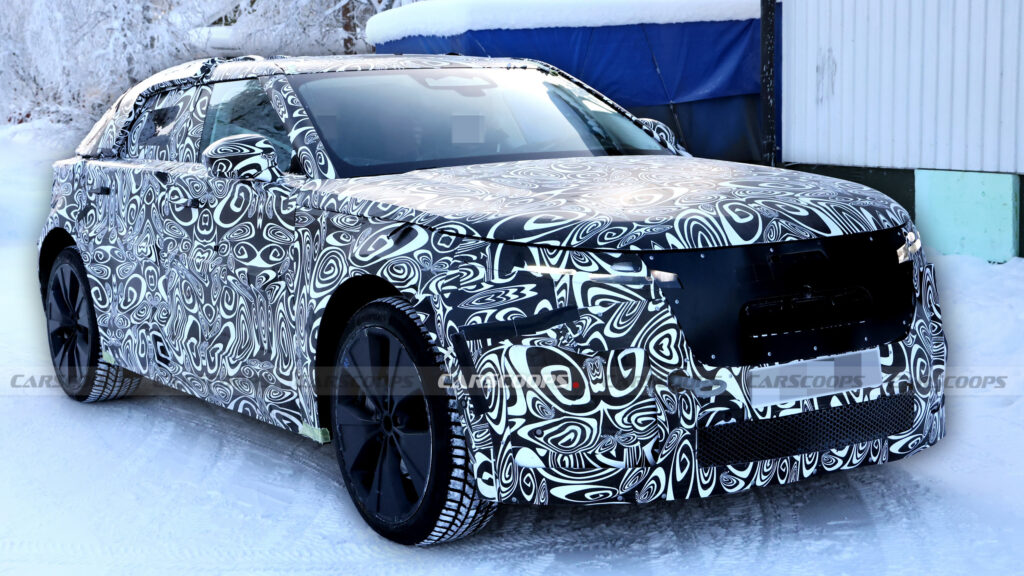
Spy photographers recently snapped the facelifted Range Rover and now they’ve gotten a glimpse of the second-generation Velar. It will be a radical departure as the model becomes even sleeker and adopts a fully electric powertrain.

The redesigned crossover is expected to debut later this year, but it’s still covered in heavy camouflage. This hides a number of key details, but we can expect a rounded front end with a fully enclosed grille that is flanked by slender headlights. They’re joined by a clamshell hood and a wide lower intake.

More: Land Rover’s New Velar Trades V8 Roar For Electric Muscle

The profile immediately stands out as the Velar has a rakish windscreen that flows into a steeply sloping roof. This results in a far more dynamic design, but it looks like this could come at the expense of cargo space and rear seat headroom.

\\\\\

SHProshots

A closer inspection reveals a rear-mounted charging port as well as flush-mounted door handles. They’re joined by streamlined bodywork, which is disguised by subtle bumps.

The rear end is the most interesting angle as we can see a distinctive liftgate with an upright tail. We can also get a glimpse of a roof-mounted camera, which could indicate the Velar will eschew a rear window. That remains to be seen, but Polestar led the way and Jaguar is following suit.

While we’re hopeful that a rear window will be included, the model will have a spoiler and wraparound taillights. They’re accompanied by a minimalist bumper, which features horizontal reflectors.

What Will Power The New Velar?

\\\\\

SHProshots

Land Rover has primarily been focused on promoting the Range Rover Electric, so little is known about the Velar at this point. However, the two models could have a lot in common.

If that’s the case, the Velar could have a 117 kWh battery pack as well as a dual-motor all-wheel drive system that produces around 542 hp (404 kW / 550 PS) and 627 lb-ft (849 Nm) of torque. That being said, we wouldn’t be surprised if there were multiple configurations on the Velar.

While there could be some similarities between the two models, it’s important to note the Velar will ride on the brand’s new electrified modular architecture (EMA). It will be built at the company’s Halewood plant and be a major test to see if Land Rover fans are ready to go electric.

\\\\\\\

SHProshots

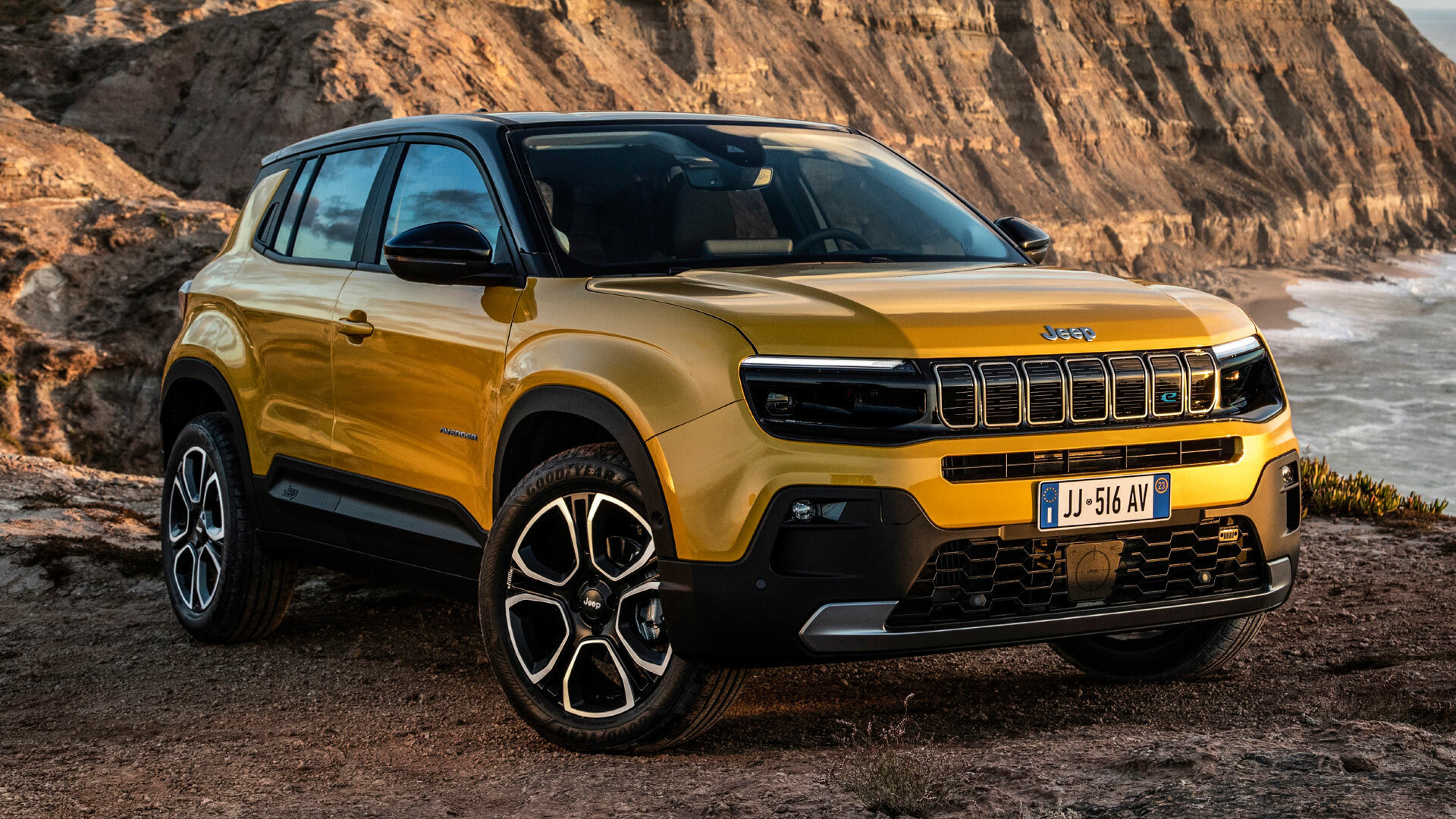
Jeep’s Smallest SUV Is Getting A Facelift, And It’s Not Just For Europe This Time

  • Camouflaged Jeep Avenger prototype spotted in winter testing.
  • The subcompact is due for a facelift in 2027, four years after launch.
  • Production of the SUV expands to Brazil with a localized version

The Jeep Avenger might still seem fresh to many drivers, but Stellantis isn’t waiting around. Just a few years after its 2023 debut, the small SUV is already heading for a mid-cycle refresh. The updated model is expected to arrive in early 2027, and now, we’re getting our first look.

Caught during cold-weather testing in Europe, a camouflaged prototype hints at what Jeep may be changing on its smallest offering.

Review: Jeep Avenger EV Is A Fun Little Gem That’s Too Small For US

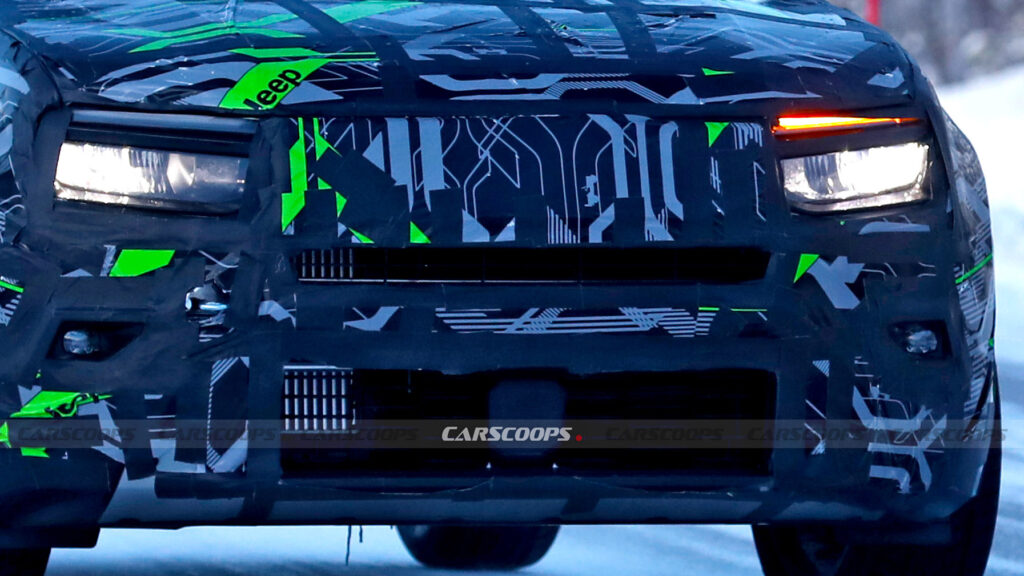
The development vehicle wears a full wrap with Jeep-branded graphics, doing its best to hide the details. But through a few narrow openings, the split LED headlights and cooling intakes seem to be in exactly the same spots as before. One noticeable adjustment, though: the fog lights have shifted slightly lower in the front bumper.

\\\\\\\\\\\\\\\\\\

Baldauf

The sculpted profile of the Avenger will most likely be carried over from the current version. Still, the plastic cladding might get a mild revision, and we’re expecting some new alloy wheel designs and exterior colors to freshen things up.

Review: Jeep Avenger Proves ICE And Manual Combo Can Still Be Compelling

At the back, the prototype doesn’t seem to wear any redesigned panels, although this could change as we move closer to the launch date. The single tailpipe suggests that the turbo 1.2-liter three-cylinder gasoline engine lies under the hood, either in non-electrified or mild-hybrid forms.

What To Expect Inside

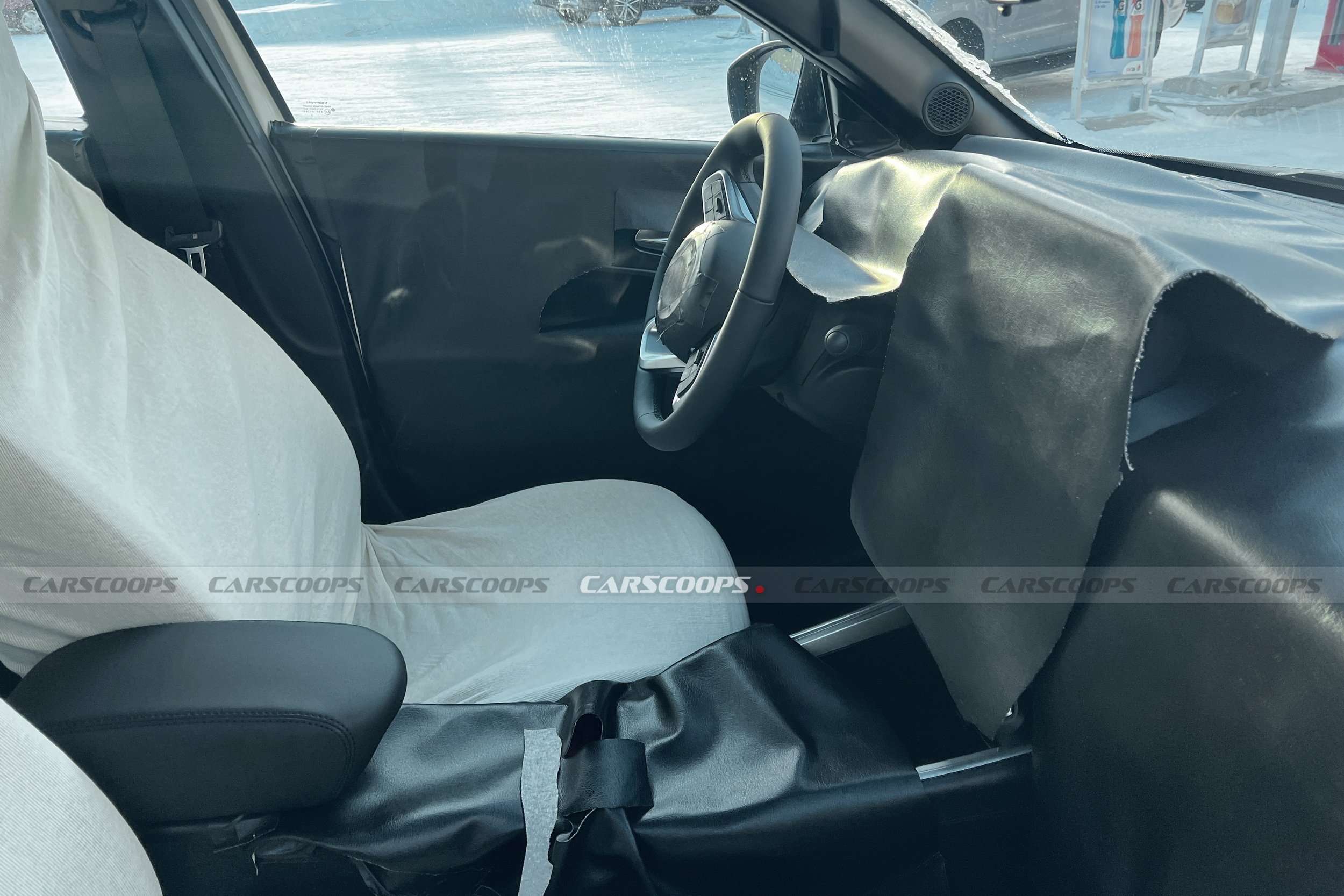
Our spy photographers managed to get a glimpse inside the cabin, though Stellantis engineers didn’t make it easy. Everything from the dashboard to the door panels and seats was concealed beneath vinyl. The SUV still appears to feature the free-standing infotainment display, positioned separately from the digital instrument cluster. Even so, the effort to hide it all suggests that changes are coming.

 Jeep’s Smallest SUV Is Getting A Facelift, And It’s Not Just For Europe This Time

It remains to be seen whether Jeep will add softer materials instead of the hard plastics of the current model, at least on the main touchpoints. We also expect that equipment will be updated with the latest connectivity and safety tech from the Stellantis parts bin.

As for the mechanical side, it’s too early for specifics, but there’s no sign of a major overhaul. The current Avenger offers internal combustion, mild-hybrid, and fully electric options, and that lineup will likely continue. An all-wheel-drive variant is already available through the mild-hybrid 4xe trim, and that setup should carry over.

More: Jeep’s Smallest SUV Will Be Built In South America With A Local Twist

The Avenger rides on Stellantis’s updated CMP/eCMP platform, shared with several other models including the Alfa Romeo Junior and Fiat 600. It also underpins the Lancia Ypsilon, Opel Corsa and Mokka, Peugeot 208 and 2008, and DS3. That shared DNA means many of the same components and configurations are likely to remain in play for the refresh.

\\\\\\\\\\\\\\\

Baldauf

We’ll keep watching the test fleet as Jeep continues development. With any luck, the next round of spy shots will reveal more by shedding some of the camouflage.

Outside of Europe, the smallest Jeep is getting ready for a wider rollout. Production will soon begin in Brazil, where the Avenger will be offered with region-specific updates. In fact, this camouflaged prototype might not just preview a facelift for Europe, it could also be part of the testing program for a localized South American version with its own powertrain changes.

 Jeep’s Smallest SUV Is Getting A Facelift, And It’s Not Just For Europe This Time
The fully electric version of the Jeep Avenger.

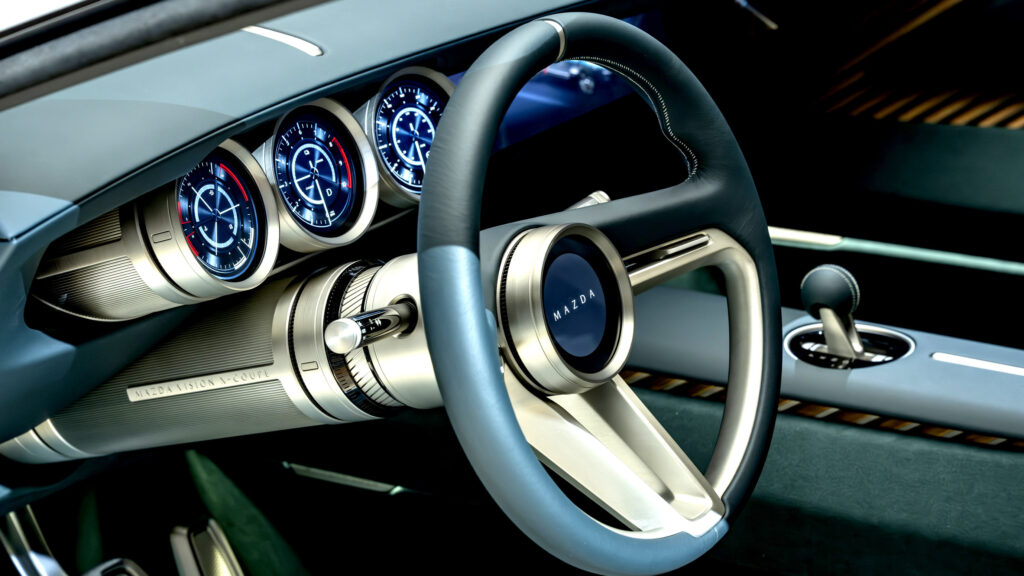
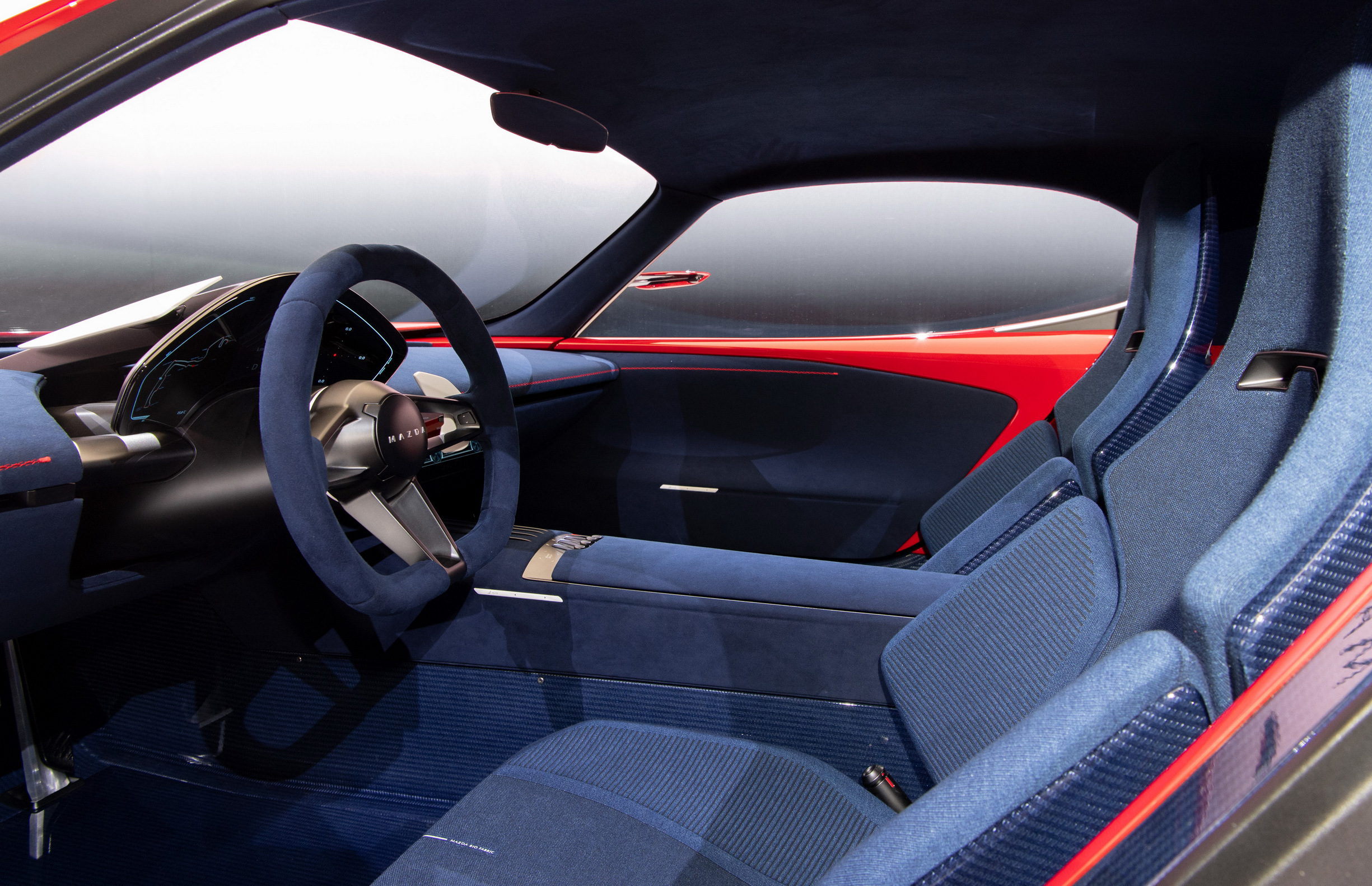
Mazda’s Rotary Sports Coupe Plan Faces A Roadblock It Can’t Engineer Around

  • Mazda says rotary dreams live, but business limits remain.
  • Iconic SP may shape MX-5 more than spawn an RX-7 reboot.
  • European emissions rules complicate rotary development.

When Mazda rolled out the gorgeous Iconic SP concept in 2023, the enthusiast collective brain immediately screamed “new RX-7 confirmed!” Now yet another interview with Mazda execs is gently fanning those flames again, but serving it with a generous helping of cold financial reality.

In a recent chat, Mazda insiders made it clear the idea of a rotary sports car is not locked in a dusty basement drawer and that the company’s workforce would love to crank out a new RX-7-style flagship.

Related: Mazda’s RX-7 Successor Meets The One Problem It Can’t Engineer Away

“The amount of car enthusiasts in this company is insane,” Mazda Europe’s planning chief Moritz Oswald told Auto Express. “Everybody loves cars, so of course there is a deep desire to keep on launching emotional products.”

Profit Is The Priority

The problem is passion doesn’t usually balance spreadsheets, and while no one doubts Mazda could deliver a great $100k sports car, guaranteeing that it would sell in sufficient quantities to make a decent profit is another matter altogether.

“So are we looking into [the Iconic SP]? Yes, of course,” Oswald continued. “But again, we are also a company that has to bring in revenues,” he aded, making clear that the MX-5 is “still our halo car.”

\\\\\\\\\\\\\\\\\\\\\\\

Christian Schultze of Mazda Europe’s R&D team also poured water on the RX-7 dream in the same Auto Express story, stating that “Mazda stands for cars for ordinary people,” not wealthy Porsche owners.

True rotary sports car

But Schultze did hint that if Mazda ever did build something like the SP, it could have a much better powertrain setup than the concept, which used its rotary engine only as a generator to power the 365 hp (272 kW / 370 PS) electric motors that turned the car’s road wheels.

“If you want to have it more sporty then maybe you look rotary plus a more sporty oriented hybrid, more parallel hybrid rather than a series hybrid,” said Schultze. “Because people who cherish the engine, they want to feel the power of the engine directly, not only listen to it.”

 Mazda’s Rotary Sports Coupe Plan Faces A Roadblock It Can’t Engineer Around

What Happened To “Coming Soon”?

This downbeat, pragmatic intel from Mazda Europe paints a very different picture of the SP’s future than the one presented by Masashi Nakayama, Mazda’s design chief, in November 2024.

“This concept is not just one of those empty show cars,” Nakayama said at the time. “It has been designed with real intent to turn it into a production model in the not-so-distant future.”

What feels more realistic to us is the Iconic SP acting as a design preview for the next MX-5. Not the full rotary fantasy, maybe, but still a pretty tasty compromise. And last year’s 503 hp (375 kW / 510 PS) Vision X four-door coupe concept hinted that we could still see a performance rotary powertrain in the near future, though probably not in a two-seat sports car.

\\\\\\\\\\\\\

Mazda

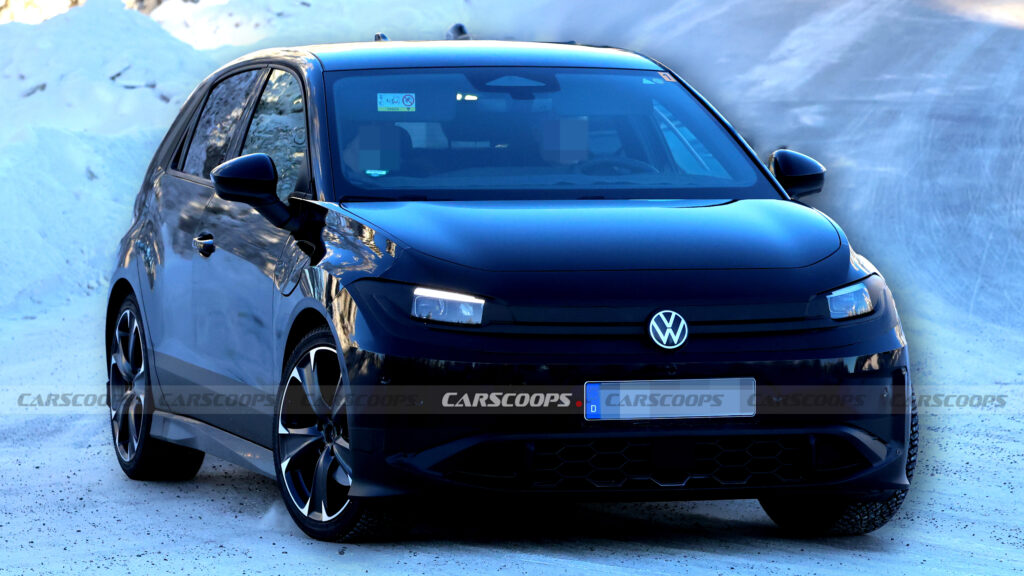
This Isn’t The GTI You Remember And VW’s Fine With That

  • VW’s first electric GTI is based on the ID. Polo.
  • It arrives next year with FWD and 223 hp.
  • Hot hatch features unique aero and wheels.

Spy photographers snapped the ID. Polo R-Line earlier today and now they’ve followed up with images of the real deal. We’re talking about the ID. Polo GTI, which was previewed by a concept in 2023.

Spotted virtually undisguised, the model looks pretty tame at first glance. However, there are a few telltale cues that separate the GTI from the regular model.

More: ID. Polo R-Line Is Shaping Up To Be The Poor Man’s GTI

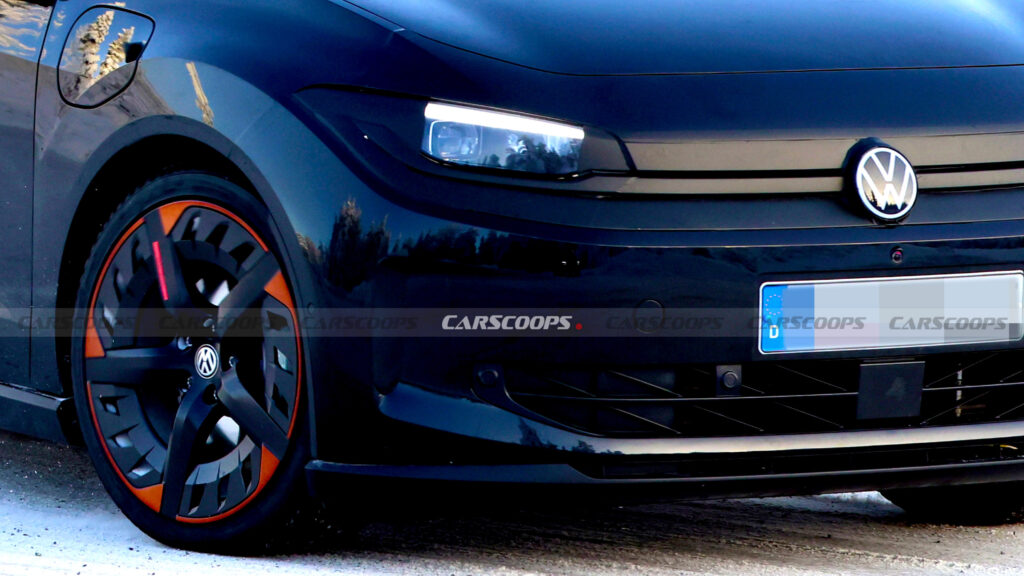
One of the most notable changes is a unique front bumper, which features a pronounced air intake with a honeycomb mesh pattern. Moving further back, we can see sportier side skirts and what appear to be larger wheels. The latter have a two-tone design and are backed up by a braking system with red calipers.

\\\\\\\\\

SHProshots

The boy racer upgrades continue out back, where there’s an extended spoiler and a revised bumper with a massive diffuser. The latter would appear more at home on an off-road focused crossover than a hot hatch.

The interior should largely carryover from the standard model, which means we can expect a 10.25-inch digital instrument cluster and a 13-inch infotainment system. They’ll likely be joined by a sport steering wheel and red accents. Customers can also expect a spacious boot that holds up to 43.9 cubic feet (1,243 liters) of luggage when the rear seats are folded down.

 This Isn’t The GTI You Remember And VW’s Fine With That
The standard 2027 VW ID. Polo’s interior.

Volkswagen hasn’t been shy about details as they’ve previously revealed the ID. Polo GTI will arrive one year after the regular model and have a front-mounted motor producing 223 hp (166 kW / 226 PS). It will be powered by a 52 kWh nickel manganese cobalt battery pack.

Volkswagen has previously said the battery will provide a range of up to 280 miles (450 km), although the actual number could be lower on the performance variant. While that remains to be seen, the company has already confirmed a 130 kW DC fast charging capability.

\\\\\\\\\\

SHProshots

VW’s First Electric GTI Is Inbound, But Maybe This Is All You Need

  • Spy shots reveal ID. Polo bodywork with minimal disguise.
  • Two prototypes show R-Line styling with subtle add-ons.
  • FWD platform offers 114, 133, and 208 hp configurations.

Camo season is clearly ending early for Volkswagen’s smallest electric hatch. Fresh spy shots show the upcoming ID. Polo testing in winter conditions, while wearing so little disguise it might as well not have bothered at all.

Sure, VW already showed us official photos of prototypes at the tail end of 2025, but those cars were wrapped like overenthusiastic Christmas presents. These new images are different. The sides are totally clean, giving us a proper look at the proportions, surfacing, and that neat rear door handle tucked into the window frame near the C pillar.

Related: VW’s ID. Polo Interior Brings Back Something You Thought Was Gone For Good

Up front and out back, there’s still a thin layer of visual misdirection, but not enough to hide the shape of the lower intakes or the basic bumper design. It all looks very production-ready and incredibly close to the ID.2 all concept from back in 2023.

Not Quite A GTI

\\\\\\\\\\\\\

Two cars appear in the photos, one white and one black. The darker car rolls on larger, sportier alloys, and both seem to wear subtle body add-ons. Think small roof spoiler, chunkier side skirts, and a deeper front lip. That points to R Line trims rather than the full-fat GTI, which VW has previewed separately, again in disguise form, with even angrier details.

Size-wise, this electric supermini is close to the current combustion Polo, but clever packaging and a long 2,600 mm (102.4 inches) wheelbase mean more interior room. Volkswagen says rear passengers get extra legroom, plus gains in headroom and cabin width.

Inside, drivers get to enjoy real buttons, warm materials, and some slick retro gauge cluster graphics, as VW itself recently teased.

\\\\\\\

Up To 223 hp

Power comes from front-mounted motors in three flavors: 114 hp (116 PS / 85 kW), 133 hp (135 PS / 99 kW), and 208 hp (211 PS / 155 kW). Those setups exactly match those confirmed for the ID. Polo’s Skoda Epiq cousin, which, along with the Cupra Raval, rides on the same front-wheel drive MEB+ platform, so expect zero to 62 mph (100 kmh) in around 7 seconds.

The even hotter ID. Polo GTI, the first electric VW to get those letters, lands later with 223 hp (226 PS / 166 kW).

Entry versions use a 37 kWh battery with modest fast charging and city-friendly range, but a larger 52 kWh pack will give 280 miles (450 km) between stops. But it sounds like the big battery will be the only one available at launch, meaning the promised €25,000 starting price might not be a reality until very late 2026 or early 2027.

\\\\\\\\\\

SH Proshots

Audi’s Updated Q4 Is Coming With Changes You Won’t See At First

  • The facelifted Q4 Sportback e-tron has been spied in Europe.
  • It sports new bumpers, a revised grille, and an updated interior.
  • Model will likely have an improved powertrain and extra range.

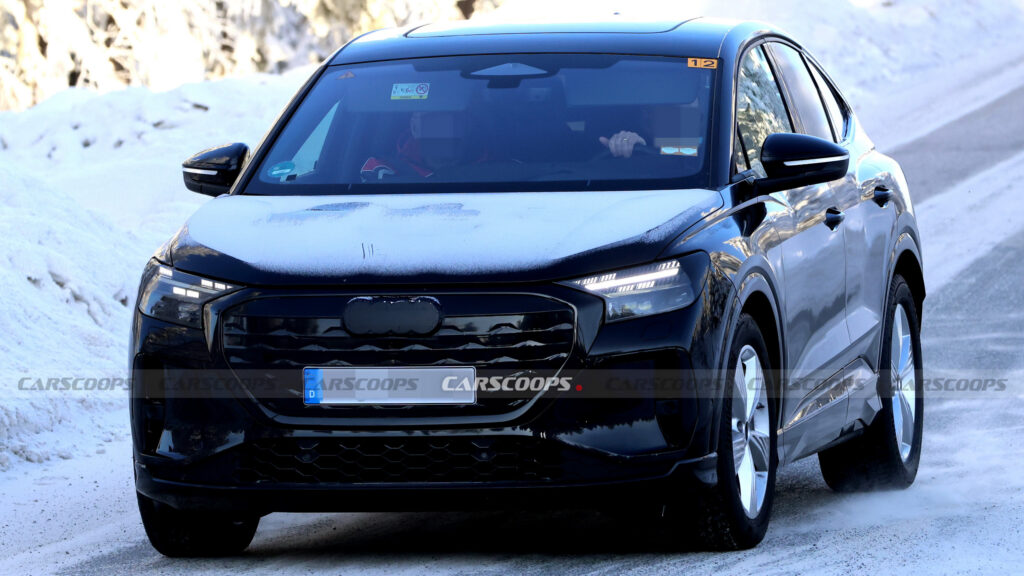
Audi is wrapping up testing on the facelifted Q4 e-tron as spy photographers have snapped a Sportback prototype virtually undisguised. It looks instantly recognizable, but incorporates a number of updates.

Starting up front, we can see a lightly revised grille that is flanked by familiar headlights. They’re joined by a new bumper, which has updated air curtains as well as a revamped intake with a honeycomb mesh pattern.

More: Something Big Is Changing Inside Audi’s Electric SUVs And It’s Not Just The Battery

The subtle changes continue out back as the crossover adopts a streamlined bumper that eschews “e-tron” badging. The faux vent has also been removed, while there are new triangular accents at the outside edges. Elsewhere, we can see a new diffuser with more pronounced vertical elements.

\\\\\\\\\\

SHproshots

The head- and taillights have varying degrees of camouflage, suggesting we can expect updated lighting units. We also wouldn’t be surprised to find restyled wheels and some other minor tweaks.

Spy photographers didn’t snap interior pictures this time around, but previous images have shown an all-new dashboard with a freestanding curved display. It appears to echo the one found in newer models such as the A6 and Q5.

This means we can expect an 11.9-inch digital instrument cluster and a 14.5-inch infotainment system. They could be joined by an optional 10.9-inch front passenger display.

 Audi’s Updated Q4 Is Coming With Changes You Won’t See At First

Powertrain details remain elusive, but the model will likely benefit from more efficient motors, improved batteries, and upgraded charging technology. This should help to make the Q4 e-tron more competitive, which is important as the model has lost a lot of its luster since the Q6 e-tron arrived.

While specifics are few and far between, the current model features a 77 kWh battery pack as well as rear- and dual-motor all-wheel drive systems. The former produces 282 hp (210 kW / 286 PS), while the latter develops a combined output of 335 hp (250 kW / 340 PS). Customers can also expect ranges of between 258 and 288 miles (415 – 463 km).

\\\\\\\\

SHproshots

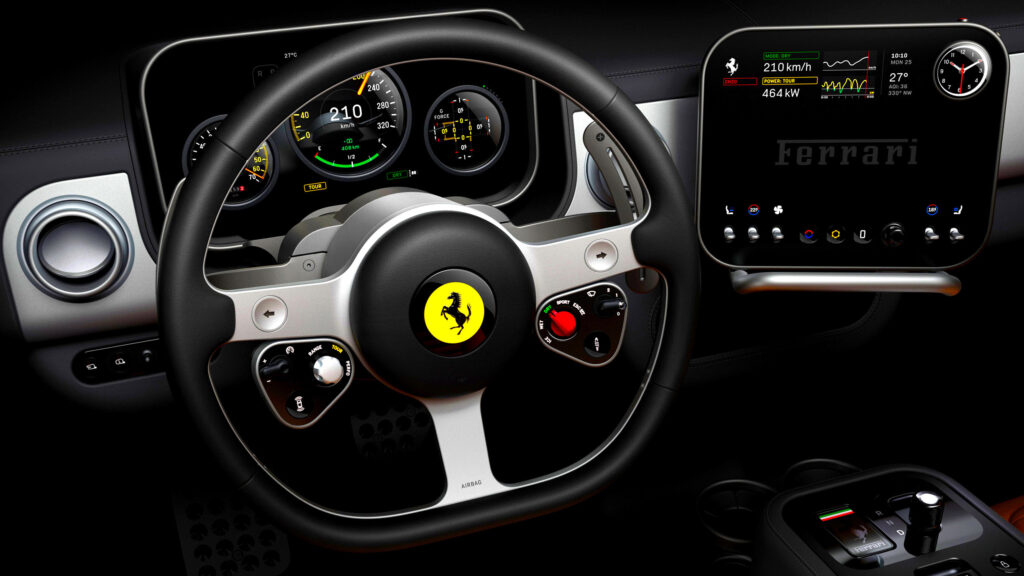
Ferrari’s Luce EV Has A Glass Key And Buttons That Click Like A Rifle Bolt

  • Ferrari’s first EV named Luce, pairs retro tactility with futuristic digital tech.
  • Exposed aluminum and innovative layered displays are like nothing else.
  • Nardi-style steering wheel features power and chassis manettinos toggles.

If you thought Ferrari’s first EV would feel like an iPad on wheels, think again. The new cabin designed by former Apple man Jonny Ive is a gorgeous fusion of digital tech, tactile physical controls, and some retro styling cues guaranteed to make even a trip to the corner store feel like a Mille Miglia run.

Meet the Ferrari Luce, a name that means light and quietly hints that electrons can still have a pulse. Before we even see the bodywork in May, the Italians have pulled back the curtain on the interior to prove to us that maybe an electric Ferrari isn’t the devil’s work after all.

Related: Ferrari Found A Way To Make Fake EV Noise Sound Honest

That design energy comes courtesy of LoveFrom, the creative outfit founded by Jony Ive and Marc Newson. Ive is famous for his work on touchscreen tech juggernauts like the iPhone and iPad, but for this project, he was adamant that the Luce needed plenty of real switches.

\\\\\\\\\\\

Toggles Are Back

So the Luce doubles down on physicality. Real buttons. Real toggles. Real rotary controls that click with satisfying precision. Ferrari says test drivers went through more than 20 rounds just to perfect the feel and sound of each switch. It is basically ASMR for your fingertips, especially the launch control switch, which is located above your head, aircraft-style.

 Ferrari’s Luce EV Has A Glass Key And Buttons That Click Like A Rifle Bolt

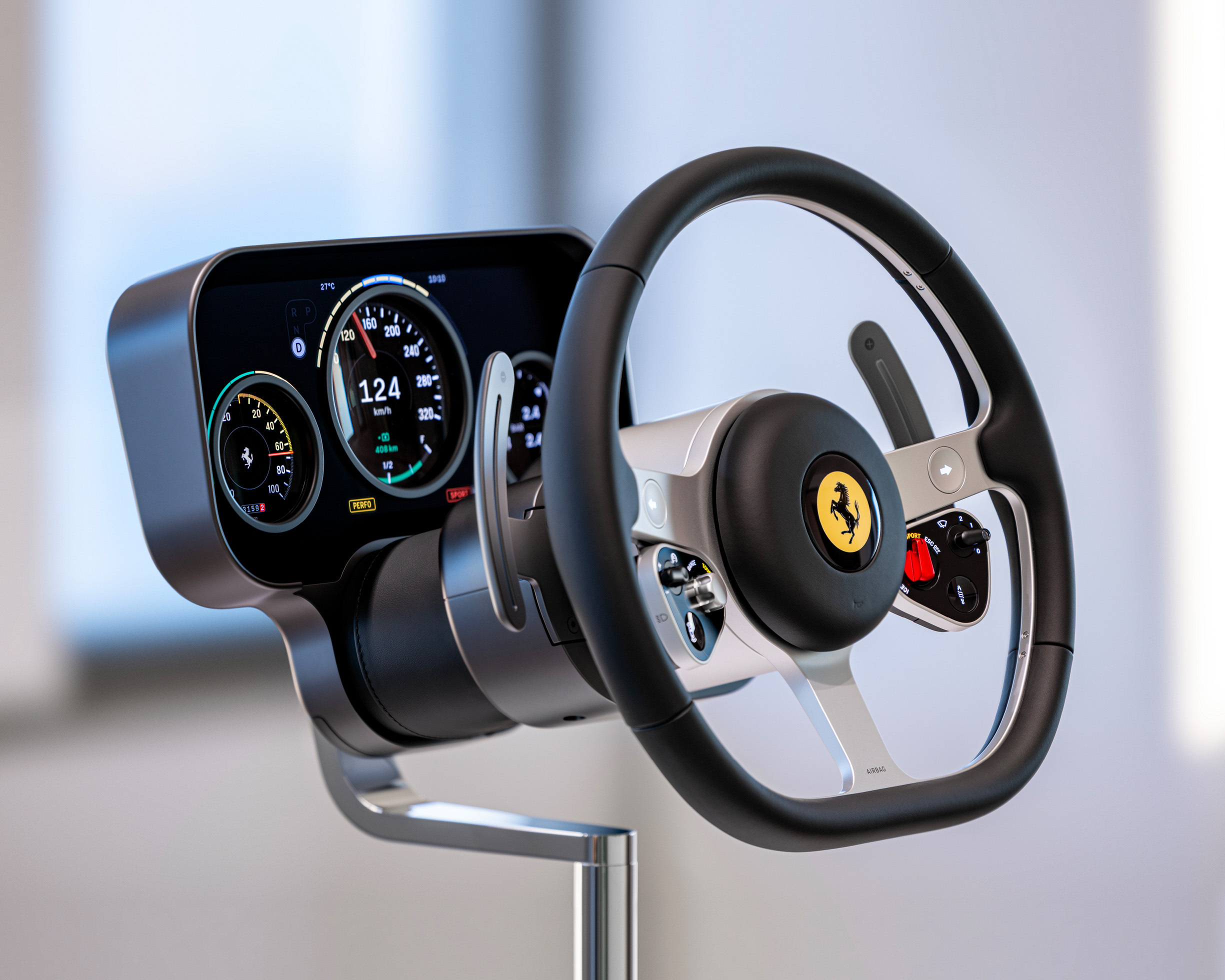
Front and center is a steering wheel that looks like it time-traveled from the 1960s. Three slim spokes, exposed aluminum, and a layout inspired by classic Formula One cars. Nineteen CNC-machined parts make it lighter than a typical Ferrari wheel, yet it’s packed with finger controls so you can adjust things without playing touchscreen whack-a-mole.

Real Or Virtual?

 Ferrari’s Luce EV Has A Glass Key And Buttons That Click Like A Rifle Bolt

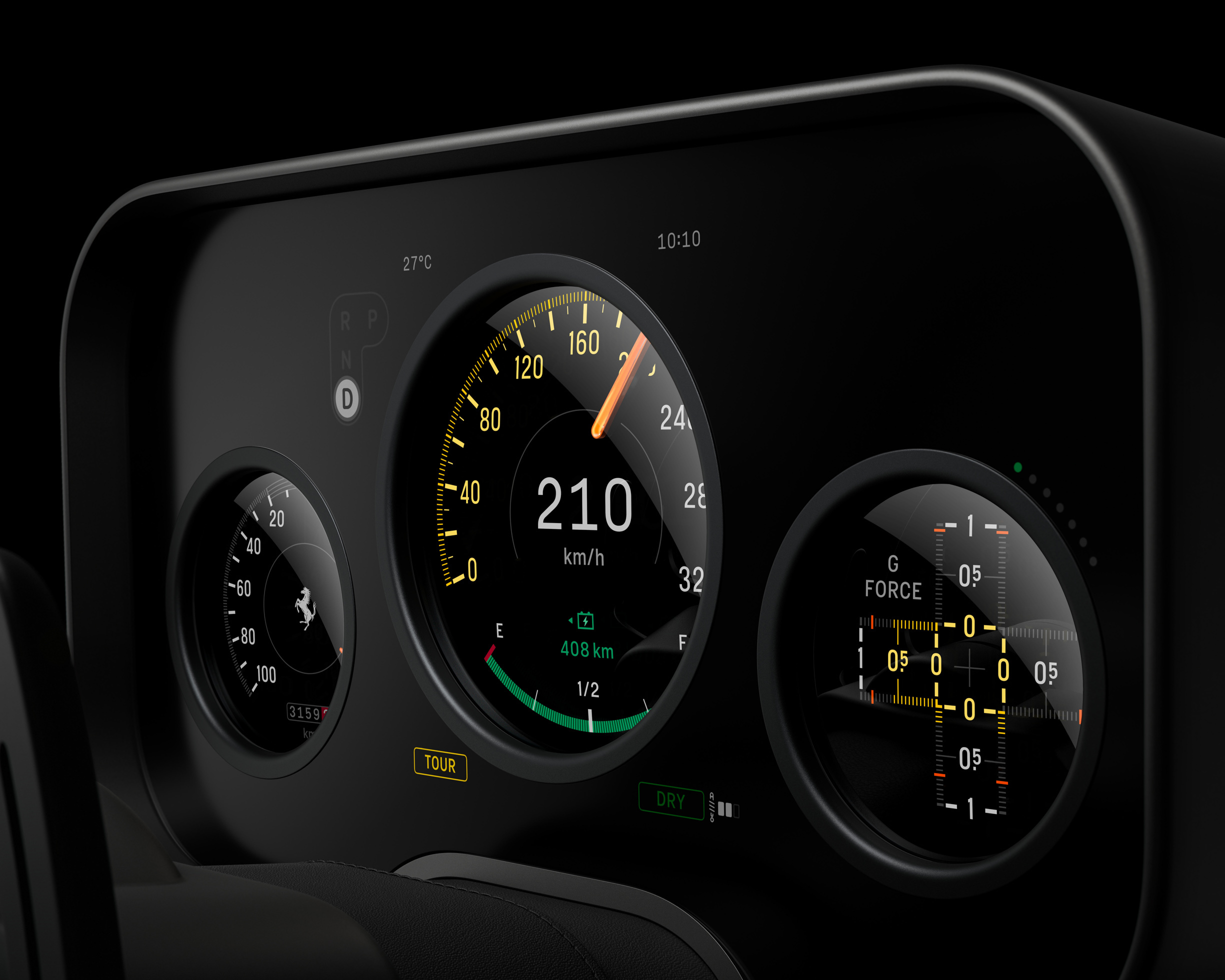
Behind it sits a wild instrument binnacle developed with help from Samsung Display. Two wafer-thin OLED panels overlap to create deep, layered dials that look almost analog at a glance. There’s even a physical needle sweeping across digital graphics because apparently pixels alone weren’t dramatic enough.

According to Ferrari, the Luce’s digital displays were “inspired by both historic automotive cues and the purposeful, clear graphics found in aviation, particularly helicopters and aircraft.” The influence is easy to spot. The layout and typography are unmistakably automotive, a modern tribute to the Veglia and Jaeger instruments from classic Ferraris.

Start-Up Buzz

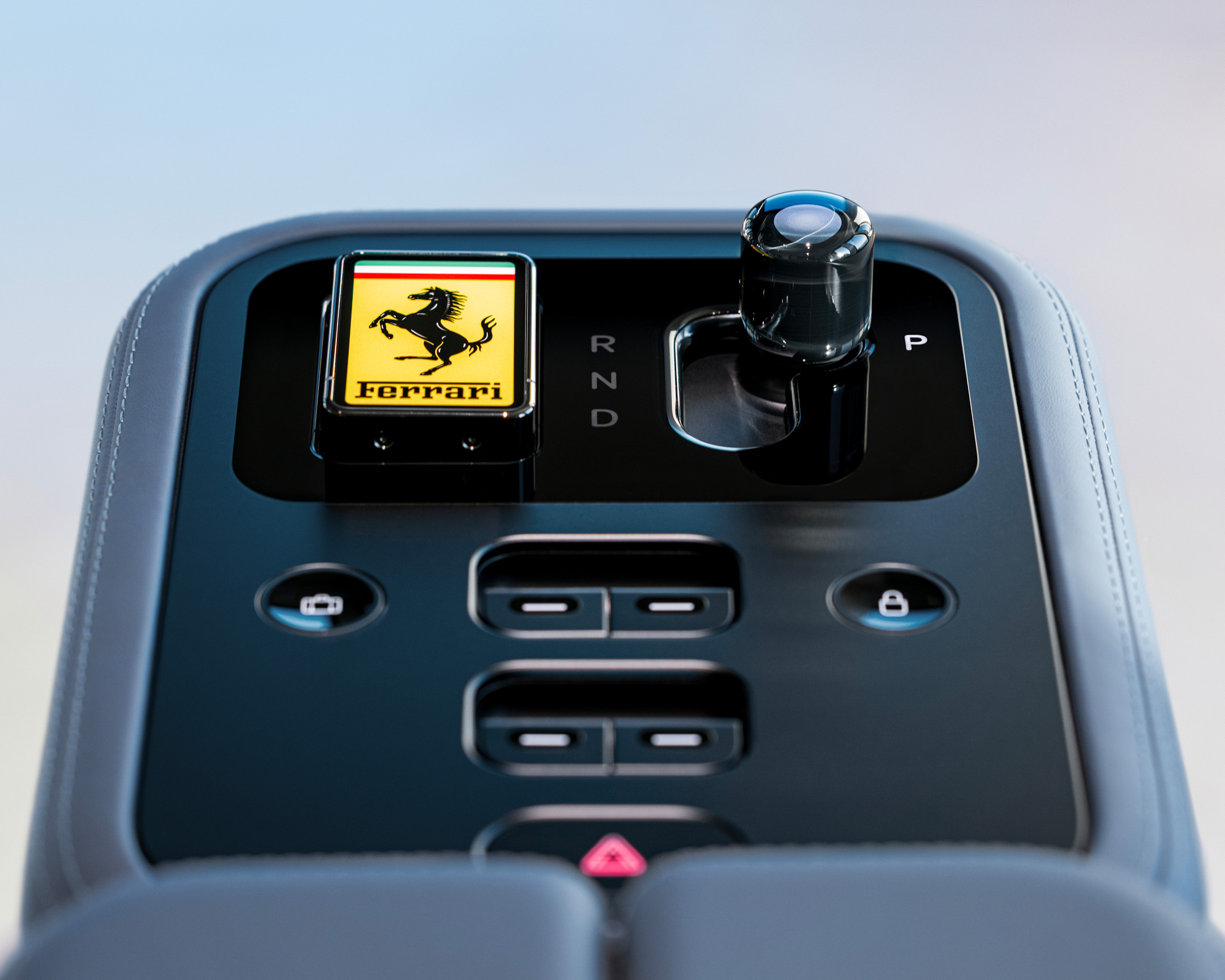
Ferrari messed up with the SF90, putting a nasty touch-sensitive start button on the steering wheel that killed much of the buzz you normally get from firing up a Maranello car. But it has redressed the balance with the Luce’s startup ritual. First, you insert a chunky glass key into a dock on the console. Its color shifts, then the drive selector wakes up in a coordinated light show.

 Ferrari’s Luce EV Has A Glass Key And Buttons That Click Like A Rifle Bolt

We’ll have to wait until May to see the Luce’s exterior, though it’s likely we’ll learn more about the powertrain and chassis package between now and then.

Many of us thought we’d find it hard to get excited about an electric Ferrari, no matter how quickly it laps Fiorano, but if the rest of the car is as thoughtful and original as this cockpit there’s going to be plenty to love, even if it doesn’t have gas in its veins.

\\\\\\\\\\\\

Skoda’s Smallest EV Has One Big-Car Surprise

  • Skoda Epiq is the brand’s smallest EV and Kamiq alternative.
  • Built on VW’s MEB Plus with FWD and up to 267 miles of range.
  • Related to VW ID. Polo and Cupra Raval, starts from €26,000.

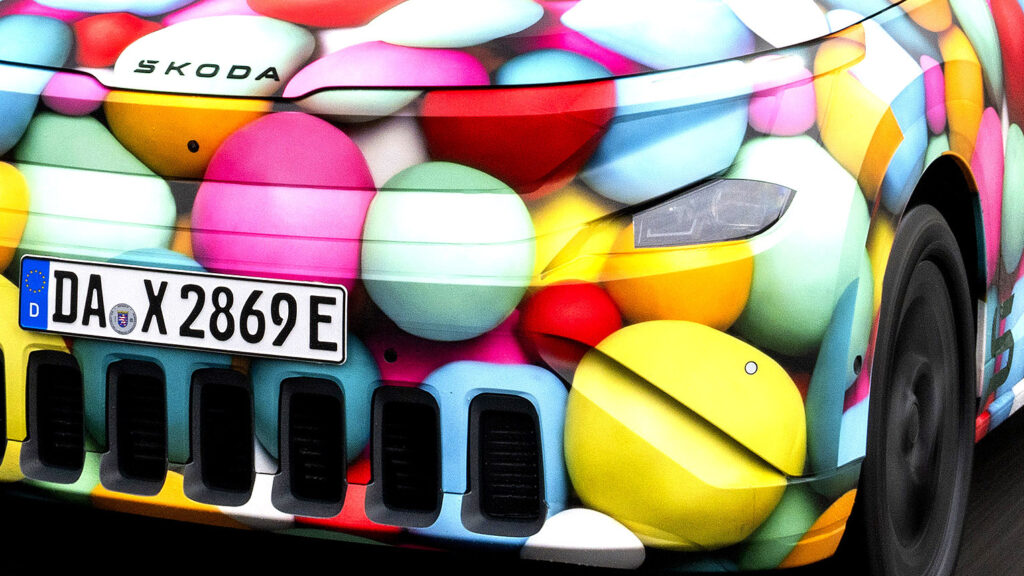
This year’s new Skoda Epiq still wearing a psychedelic disguise, but underneath the swirls and squiggles is a very clear message. This is the electric SUV for people who like their cars small on the outside, big on the inside and don’t want to pay a premium for swapping a combustion powertrain for an electric one.

Think of the Epiq as the baby brother to the Elroq and Enyaq, and the electric cousin of the Kamiq. At just under 4,200 mm (165 inches) long and riding on a 2,601 mm (102 inches) wheelbase, it’s squarely in city-friendly crossover territory.

Related: Skoda’s Affordable EV Looks Like It Wanted To Be A Jeep

However, Skoda claims packaging magic gives it one of the biggest boots in its class, at a surprising 475 liters (16.8 cu-ft). Fold the seats and you get 1,344 liters (47.5 cu-ft), which is properly useful family car stuff.

What’s Underneath?

\\\\\

Under the skin, the Epiq is Skoda’s first model on the new MEB Plus platform, a cost focused evolution of the VW Group’s electric toolkit. Unlike larger rear drive MEB cars, this one is front wheel drive, which helps free up cabin and cargo space.

It’s also closely related to the upcoming VW ID. Polo and the Cupra Raval, all part of the group’s affordable urban EV push along with the ID. Cross SUV.

Tortoise Or Hare?

The not very epic entry-level Epiq 35 makes 85 kW, or about 114 hp (116 PS), from a single front motor that gets it to 62 mph (100 kmh) in 11.2 seconds, and uses a 38.5 kWh LFP battery for up to 196 miles (315 km) of range. But a maximum 50 kW charge speed means fills will be slow, so this one is best suited to urban sorties from the house, not road trips.

\\\\\

The Epiq 40 bumps power to 133 hp (135 PS / 99 kW) and drops to 62 mph sprint to 9.8 seconds, with similar battery capacity but slightly faster 90 kW DC charging. At the top sits the Epiq 55 with 208 hp (211 PS / 155 kW) and a larger 55 kWh NMC battery good for up to 267 miles (430 km) of range.

Charging peaks at up to 133 kW on the bigger battery, meaning a 10 to 80 percent top up can take just over 20 minutes, and the 62 mph time is a spritely 7.4 seconds. That makes this little Skoda more road trip capable than you might expect from something that looks ready to spend its life dodging delivery vans and cyclists.

Big Screen, Eco Materials

Inside, Skoda promises its usual Simply Clever touches, a 13 inch central screen, a small digital driver display and lots of recycled materials. It hasn’t released any interior images of the finished car yet, but the cabin pics of the Epiq concept shown in the gallery below are surely at least 85 percent on the money.

We’ll get the real images in the coming weeks, along with prices, which are expected to start at $26,000 (£25k for the UK), matching those of the combustion Kamiq. That looks like good value next to Kia’s EV3, though the base EV3 is much more powerful and longer-legged. Renault’s 4 E-Tech also poses a strong threat thanks to its even lower entry price, better range and acceleration and more interesting design.

\\\\\\\\\\\\\\\\\\\\\

Epiq concept (Skoda)

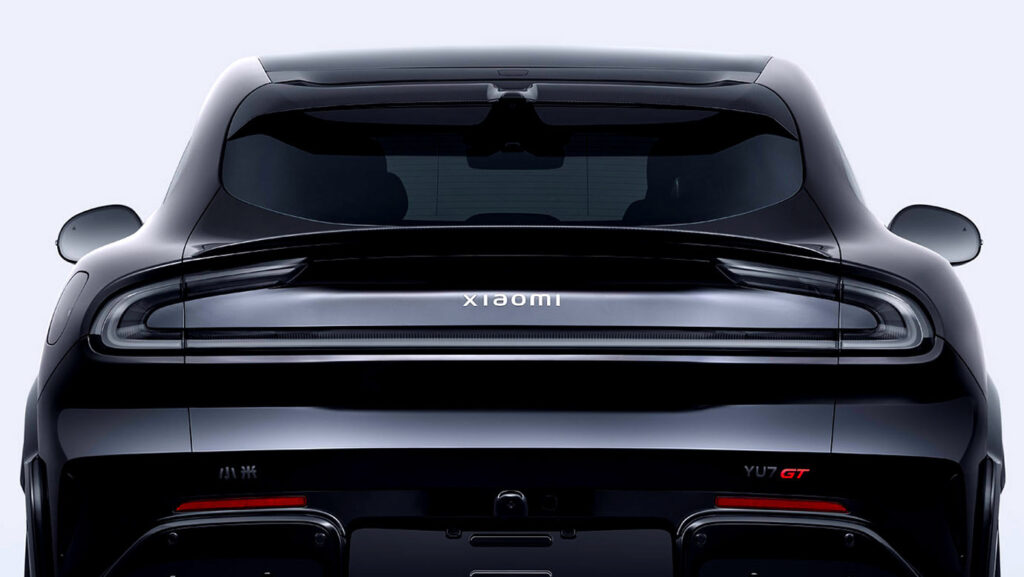
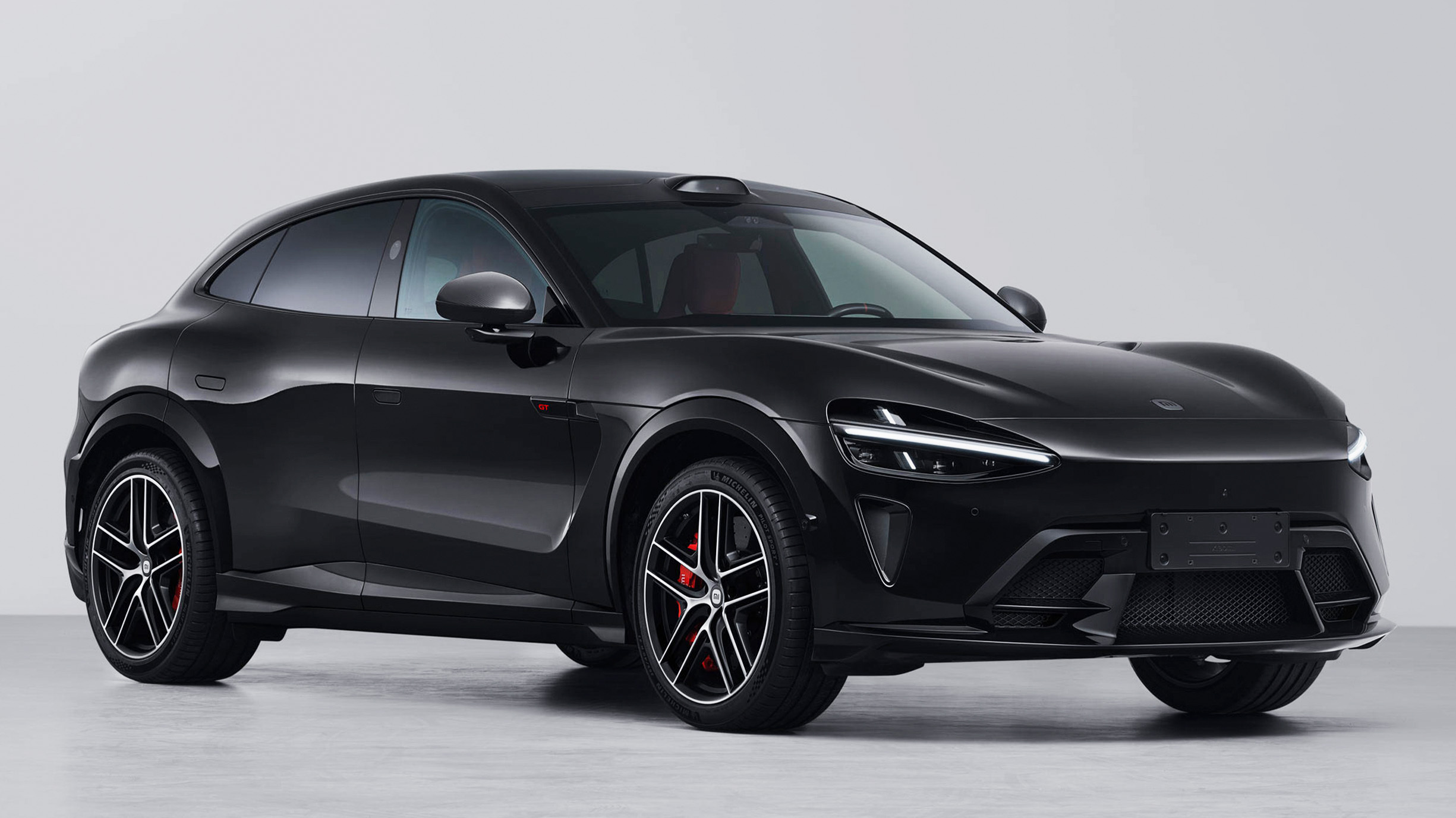
This Ferrari SUV Lookalike From China Makes More Power Than The Real One

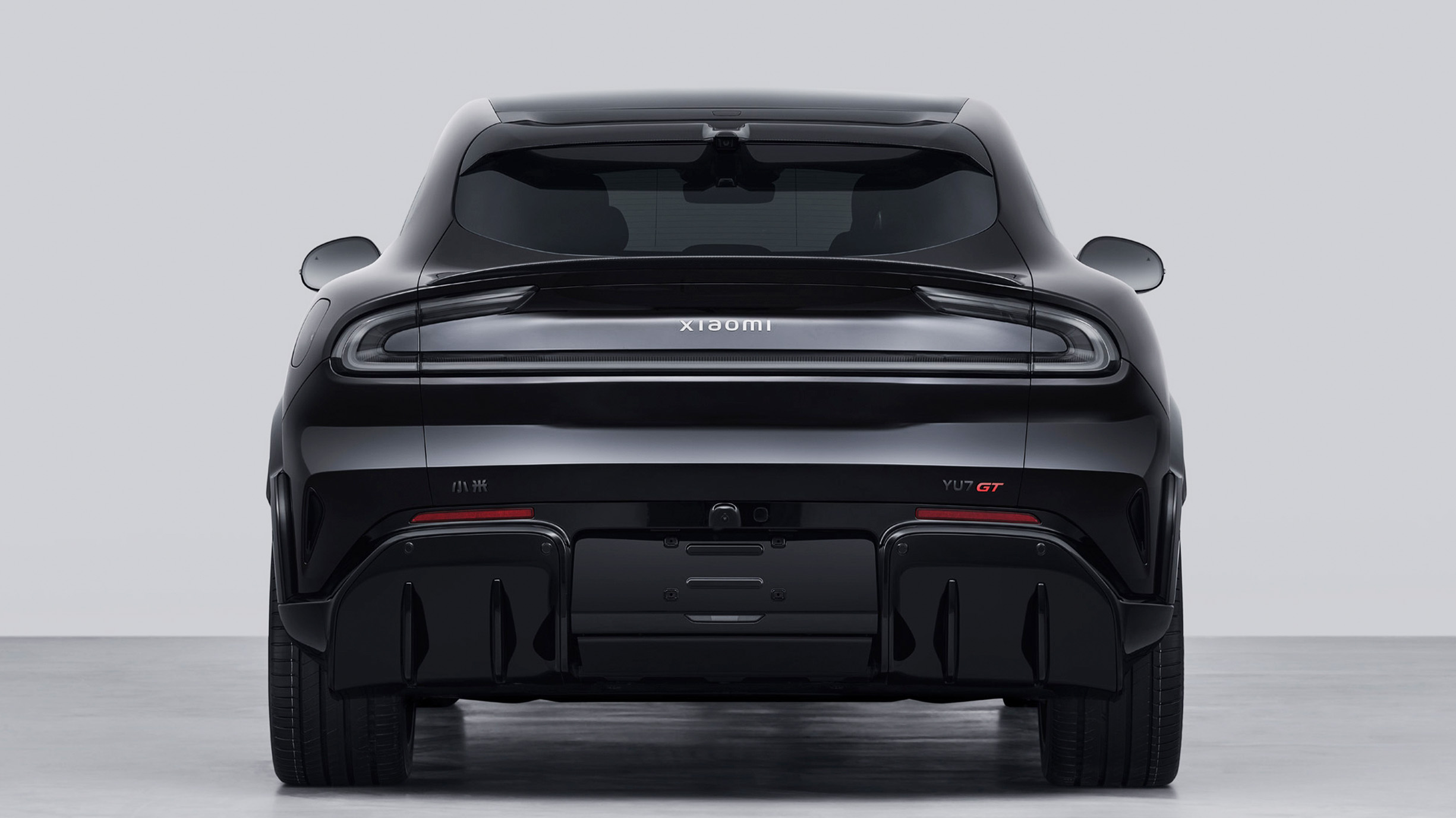
  • Electric YU7 GT packs 990 hp from dual-motor, all-wheel drive setup.
  • Voluptuous body bigger air intakes, large rear diffuser, red GT badge.
  • Reports say the Model Y Performance-eater could cost $60k-$70k.

Xiaomi isn’t content with making an SUV that looks almost as good as Ferrari’s. The Chinese tech giant’s high performance YU7 GT has surfaced in official Chinese filings, and if the numbers are right, this thing has enough power to make some V12 Purosangue owners sweat into their designer driving gloves.

Related: A Xiaomi EV Was Spotted In America, And A US Maker Might Be Behind It

The regular YU7 is already turning heads by mixing sleek looks with serious EV grunt. Now Xiaomi has cranked the dial way past sensible. The GT version gets a dual-motor setup pushing a combined 738 kW, which works out to about 990 hp (1,004 PS). Its combustion Ferrari lookalike makes do with 715 hp (725 PS / 733 kW).

 This Ferrari SUV Lookalike From China Makes More Power Than The Real One

Okay, so that’s not quite as crazy as the 1,526 hp (1,547 PS / 1,138 kW) punched out by the hottest version of the YU7’s sedan brother, the SU7 Ultra, but we doubt anyone who buys one will feel it lacking in go.

Spec papers logged with Chinas’ Ministry of Industry, Information and Technology (MIIT) list the top speed as 186 mph (300 kmh) and we’d put money on that being artificially limited. The battery is a lithium pack from CATL but electric range details are still under wraps.

Subtle Menace

 This Ferrari SUV Lookalike From China Makes More Power Than The Real One

Visually, the GT dials up the drama with, chunkier bumpers with angrier air intakes and a large rear diffuser. Red brake calipers peek out from behind 21 inch wheels, and there are matching red GT badges on the rail and doors to make sure nobody mistakes this for the sensible family version.

The regular YU7 lineup already stretches from single-motor, rear-drive models with around 315 hp (320 PS / 235 kW)  up to dual-motor versions with as much as 681 hp (691 PS / 508 kW). Those cars helped Xiaomi rack up huge sales in China and even outranked the Tesla Model Y on home turf.

Priced to Shame Porsche

\\\\

The YU7 GT sits higher, both in performance and, most likely, price. Early chatter from China point to a range between 450,000 and 500,000 yuan, or roughly $60,000 to $70,000. Porsche’s new Cayenne Turbo Electric makes significantly more power, with 1,139 hp (1,155 PS / 850 kW), but it starts at $163,000 in the U.S. and is expected to cost at least twice as much as the Xiaomi in China. No surprise, then, that Porsche is struggling.

\\\\\\\\\\\\\\

Baldauf

BMW’s First Neue Klasse Sedan Is One Big Step Closer To Your Driveway

  • BMW begins i3 pre-series production at its Munich facility.
  • Electric i3 promises strong performance and long driving range.
  • Gas-powered 3-Series continues using BMW’s CLAR platform.

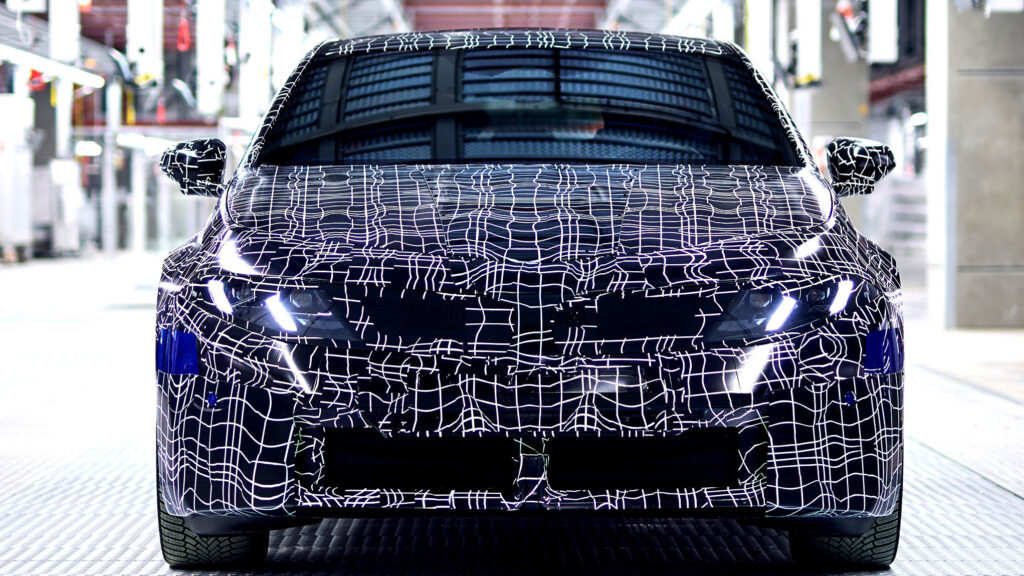
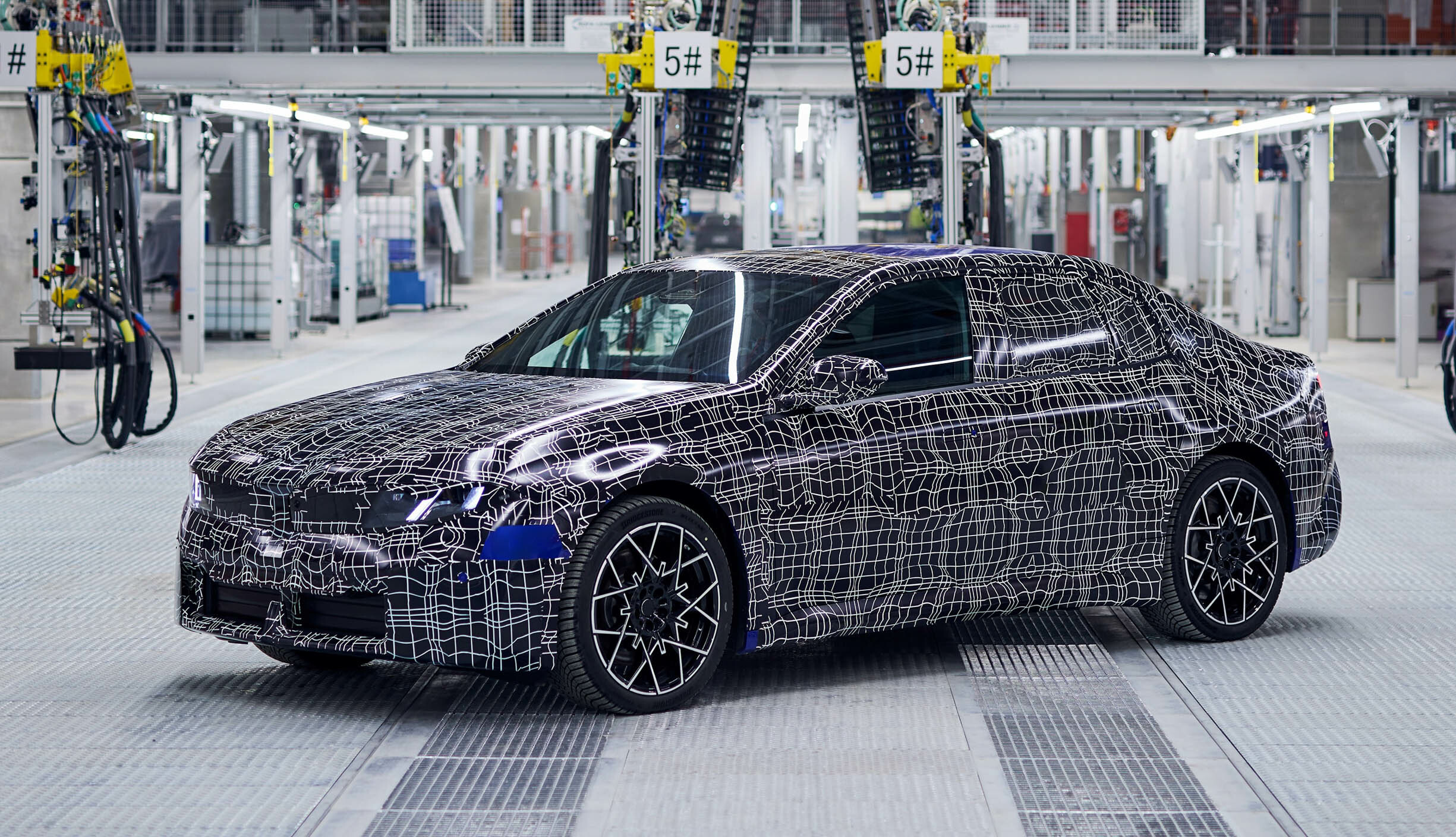
After months of spy shots and speculation, BMW’s all-new electric i3 is officially leaving the theoretical stage. The brand has begun pre-series production at its Munich plant, which means the future 3-Series EV is no longer just a prototype trying to evade Nürburgring photographers.

BMW released official images of camouflaged near-series cars to mark the milestone, confirming that production-spec hardware is now running through the factory. According to BMW, these early cars are built using full production processes, from the press shop to final assembly, to stress-test logistics, equipment, and workflows before series production begins in the second half of 2026.

Related: New i3 And 3-Series Reveal BMW’s Most Striking Split Yet

This is a bigger deal than it sounds. Until now, early i3s were assembled partly at BMW’s pilot plant near its Research and Innovation Centre. With Munich’s new body shop, paint shop, and assembly areas now complete, the i3 finally goes through every production step under one roof, just like a real car should.

 BMW’s First Neue Klasse Sedan Is One Big Step Closer To Your Driveway

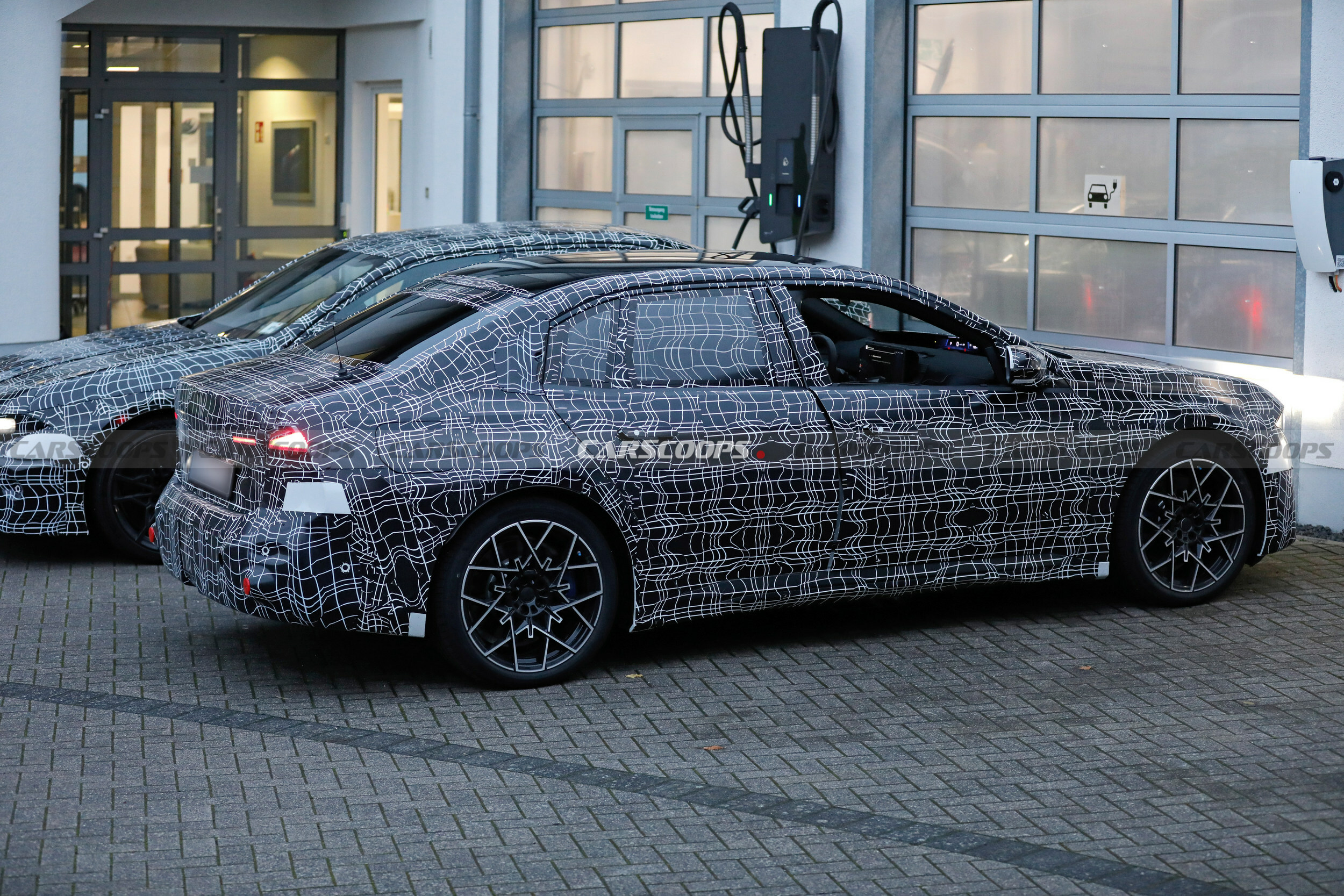
The timing fits perfectly with what we’ve seen on the road. Spy shots have shown the electric i3 and the next combustion 3-Series testing side by side, wearing similar Neue Klasse styling but hiding very different bones underneath.

The i3 rides on BMW’s dedicated Neue Klasse EV platform first seen on the 2026 iX3 SUV, while the gas-powered 3-Series sticks with an updated version of today’s CLAR architecture.

Spot the EV

But you won’t need to get them on a ramp to tell them apart, you’ll just have to look closely. The electric i3 has a flatter roofline, different door and window shapes, and even a relocated charging port compared to the fuel door on the ICE model. Inside, though, both will share a futuristic cabin, including a freestanding display and BMW’s pillar-to-pillar Panoramic iDrive screen.

 BMW’s First Neue Klasse Sedan Is One Big Step Closer To Your Driveway

iX3 Powertrain

Powertrain details remain unofficial, but based on what we already know about the iX3, expectations are sky high. The i3 50 xDrive is rumored to deliver around 463 hp (469 PS / 345 kW) and an EPA range that should exceed 400 miles (644 km), backed by a massive battery and ultra-fast DC charging.

An entry-level rear-wheel drive version will follow, with a hotter, heavier, M3 EV also confirmed.

BMW says employee training is now shifting from virtual reality to hands-on work with real machinery, which tells us the launch clock is ticking. The camouflage may still be on, but the electric i3 has clearly entered its final dress rehearsal and the full disguise-free show starts later this year with first deliveries coming in early 2027.

\\\\\\\

BMW

Jaguar’s New Electric GT Is Learning To Slide Before It Can Strut

  • Jaguar’s four door electric GT packs over 986 hp and three motors.
  • Engineers tune ride comfort and handling in brutal Arctic testing.
  • About 400 miles EPA range expected when cars arrive in spring 2027.

Jaguar’s dramatic electric rebirth is not just about pastel concept cars and moody teaser shots. Prototypes of the upcoming four door GT are out on frozen lakes in Sweden, being hurled sideways in temperatures that would make most EVs want to stay plugged in.

The GT, or whatever Jaguar decides to call it when it debuts later this year, is the production follow up to the Type 00 concept, and Jaguar says it will be the most powerful road car it has ever built.

Related: Jaguar Thinks Its $180K EV Gamble Could Finally Ditch Its BMW Complex

With more than 986 hp (1,000 PS) on tap, it has far more power than you could used on a frozen lake, but the Arctic Circle is the perfect place to test out the limit-behaviour of the all-wheel drive chassis.

Jaguar released some high quality images of the four-door sedan testing, but not much in the way of meaningful technical info to advance the story, beyond mentioning that its clever thermal management system can reduce heating energy consumption by up to 40 percent.

\\\\\\\\

We already knew about the total power output and torque vectoring capability, and the confirmation of twin-valve active dampers and air suspension isn’t much of a surprise.

Tri-motor Setup

But a report by Autocar, which got to hang out with the test team in Sweden, fills in some of the blanks, including breaking down the tri-motor setup. Up front is a roughly 350 hp (355 PS / 261 kW) unit, mainly used for efficiency at cruising speeds. At the rear sit two much angrier motors that together deliver around 950 hp (963 PS / 708 kW).

Combined output is at least 986 hp (1,000 PS / 735 kW), along with a walloping 959 lb ft (1,300 Nm) of torque. And that rumored hybrid conversion JLR is working on? Not true and not happening, the company claims.

 Jaguar’s New Electric GT Is Learning To Slide Before It Can Strut

Instead of one giant skateboard pack, the 5,200 mm (205 inches) Jag uses multiple battery stacks, including a smaller pack near the front and several larger ones further back.

That setup allows the cabin floor and seats to sit lower, giving the car a sports car like driving position, an impressively low centre of gravity, and keeps the roof height to 1,400 mm (55 inches).

Up to 400 Miles Between Fills

 Jaguar’s New Electric GT Is Learning To Slide Before It Can Strut

Range is expected to be around 400 miles (644 km) on the US EPA cycle, or about 430 miles (692 km) WLTP, from a battery of roughly 120 kWh. That should make it a genuine long legged GT, the kind of thing Jaguar has historically been good at building, even if this car – at a starting price of £120,000 (about $160,000) – will be twice as expensive as many recent Jaguars.

Production Reveal Coming This Summer

In terms of timing, Jag says we will see the finished production car revealed later this summer. Order books are expected to open in the autumn, with first customer deliveries planned for spring next year.

That’s still a long way off and some dealers are already feeling unsure about the whole EV direction, but the GT and the SUV that comes later, could be worth the wait.

\\\\\\

Jaguar

❌