Chinese brands are outpacing Western automakers on updates.
Legacy manufacturers are struggling to keep up, says report.
Despite this, Chinese marques are struggling to monetize software.
In an era where cars are less mechanical than they are tech showpieces on wheels, your car is becoming more akin to your phone in terms of how its lifecycle is updated. Modern vehicles are packed with screens and features, all governed by software, software that can be updated, refined, and patched with relative ease. According to one report, there’s a company that understands that better than any others.
That company is none other than BYD, the Chinese New Energy Vehicle specialist that continues to make headlines, both good and bad. In this instance, the firm is employing over-the-air (OTA) software updates to increase vehicle performance and the life cycle of its models.
In mid-February, BYD released the fourth OTA update to its Han L sedan, a flagship vehicle of the Dynasty family, which was first unveiled in April 2025. The upgrade will introduce an enhanced driver assistance system, which is end-to-end AI-driven to improve its perception and decision-making in complex driving scenarios.
The new features will take about two hours to install, and owners will be in a position to utilize the new features without going to an automobile dealership.
Chinese Lead In OTA Updates
Chinese manufacturers, such as BYD, seem to be leading in the OTA update sphere. While the concept may have been pioneered by brands such as Tesla, the evidence would suggest that Western manufacturers are lagging.
In the past, vehicles would receive only minor changes, often via facelifts and perhaps even several years after being introduced. OTA technology has broken this pattern and enabled the cycle of continuous improvements to keep vehicles updated throughout their lifetime in a similar manner as smartphones.
BYD leads this change with its active strategy of updates. In 2025, Nikkei Asia reports that the company released about 200 software updates on its Ocean and Dynasty brands. Other brands like Aito, a creation of Huawei Technologies and Seres Group, and startups like Leapmotor have become more prolific when it comes to OTA updates. Tesla, by comparison, only had 16 OTA updates last year. Toyota and VW didn’t fair any better, with eight and five respectively.
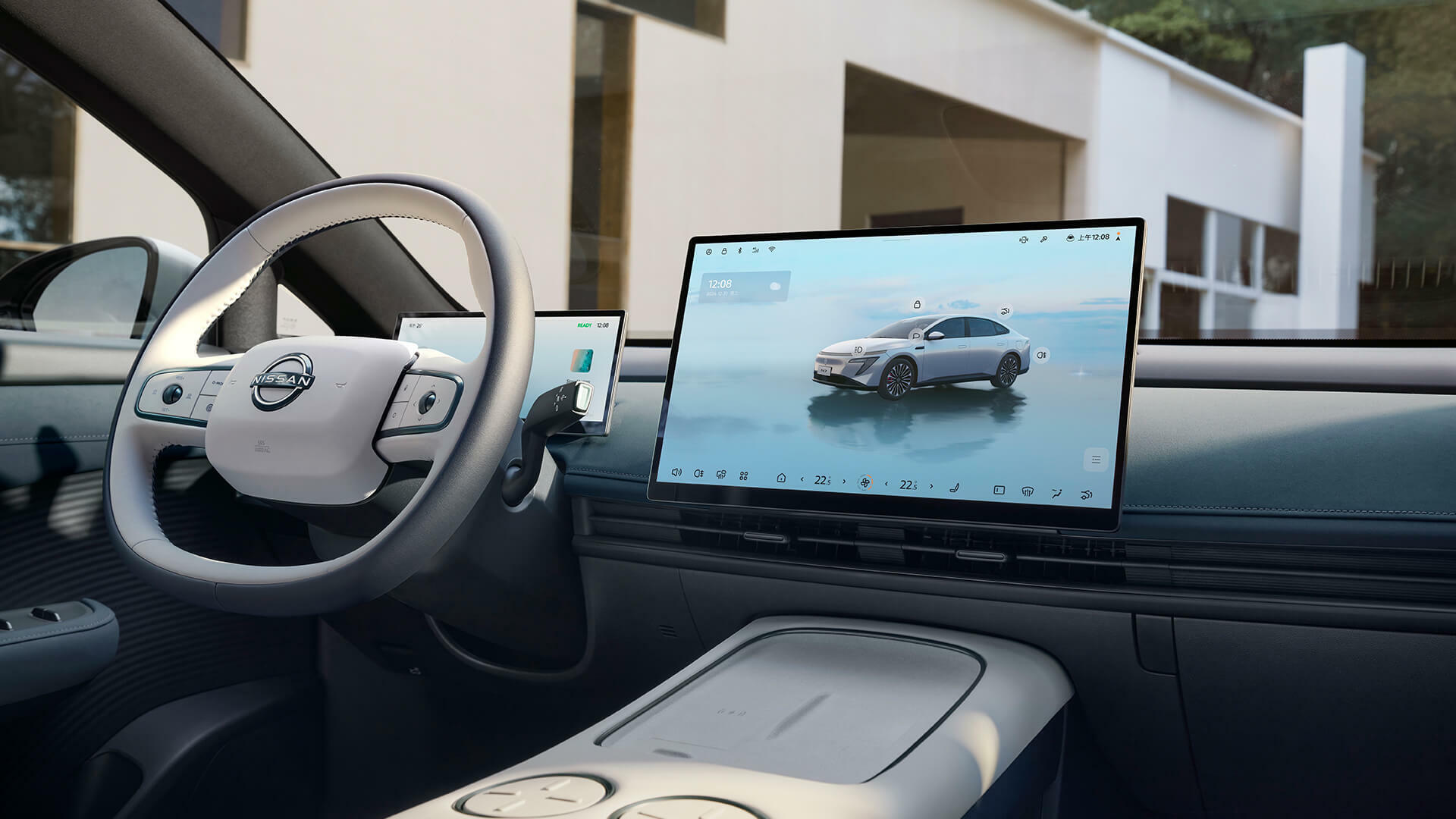
Nissan, with its new N7 electric car, however, managed to push out its first update just two months after its launch, unlocking new applications and longer voice recognition capabilities. “OTA updates must be developed even before product launch as part of the car’s lifecycle, in order to keep up,” said Isao Sekiguchi, managing director of Dongfeng Nissan.
There is a catch. The N7 is not a clean-sheet Nissan effort, but a joint project with Dongfeng Motor Corporation, built on the Chinese partner’s eπ 007 platform.
Less Opportunities To Monetize Updates
BYD’s rapid rate may be explained by the vertical integration development model, i.e. in-house design of semiconductors, operating systems, and hardware, designed by BYD. Such control allows the company to update it at a very high speed and efficiently without modifying the user experience.
However, OTA updates have an economic cost. It’s not just the cost incurred in developing and rolling out each update. While the extension of technological relevance of a vehicle may enhance the resale values and decrease the occurrence of complete model redesigns, OTA technology is difficult to commercialize.
In China, updates are generally free of charge, which rules out the opportunity to add to a company’s bottom line. Instead, Tesla-like subscription-based solutions are being considered by the industry. XPeng is mulling over more advanced levels of autonomous driving, particularly Level 4 technology, which could be marketed as an extra service. This would mirror the strategy Tesla already used with its Full Self-Driving subscription in North America.
BYD will roll out ultra fast chargers in Europe delivering up to 1,500 kW.
Europe gets 3,000 Flash Charging stations within the next 12 months.
Denza EVs and even hybrids will both exploit very short top-up times.
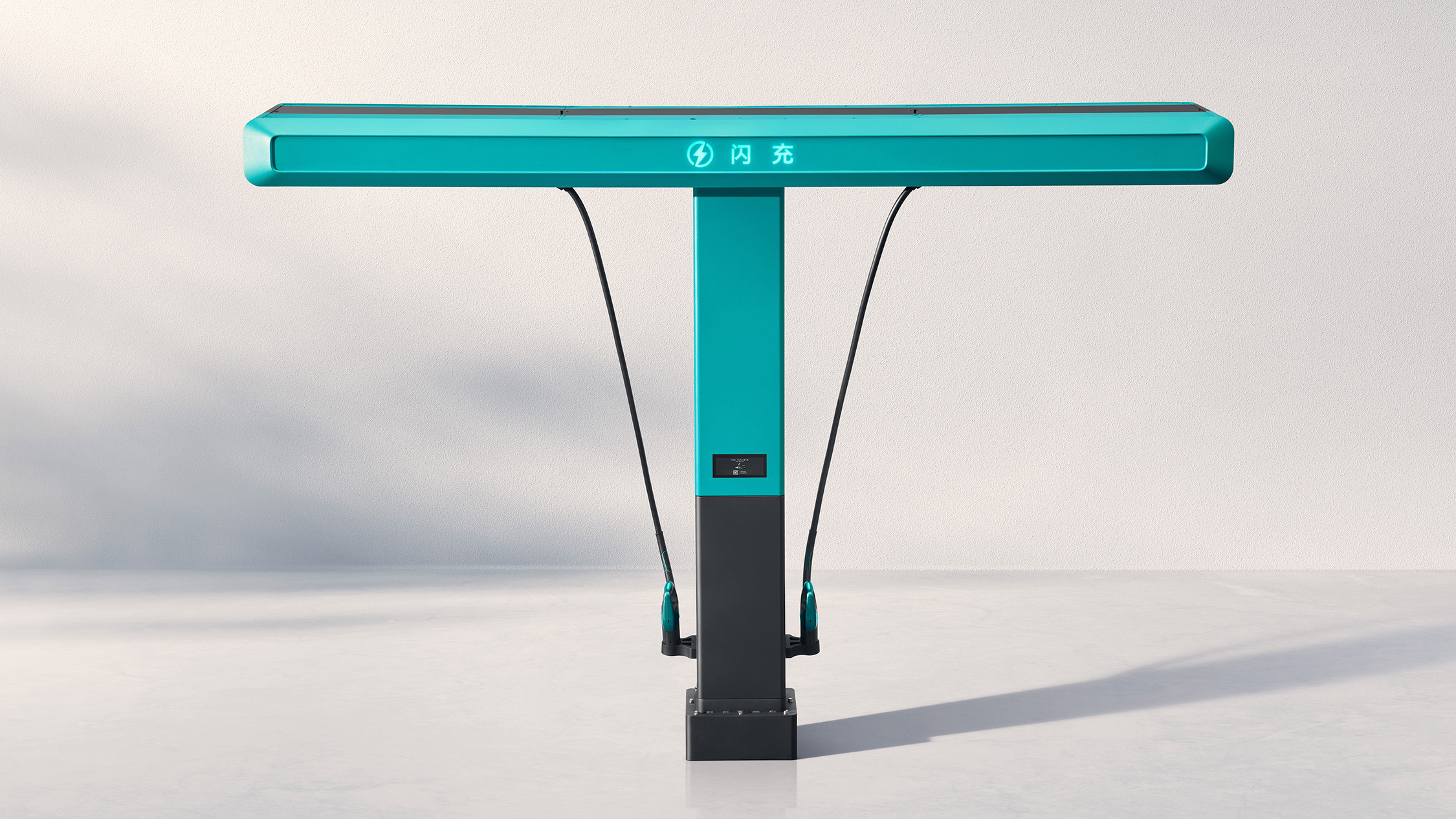
BYD has officially confirmed that its absurdly powerful new charging tech is headed to Europe, which means the phrase “rapid charger” may soon need a slightly more ambitious definition. Across the next 12 months, the company plans 6,000 Flash Charging stations outside China, including 3,000 across Europe.
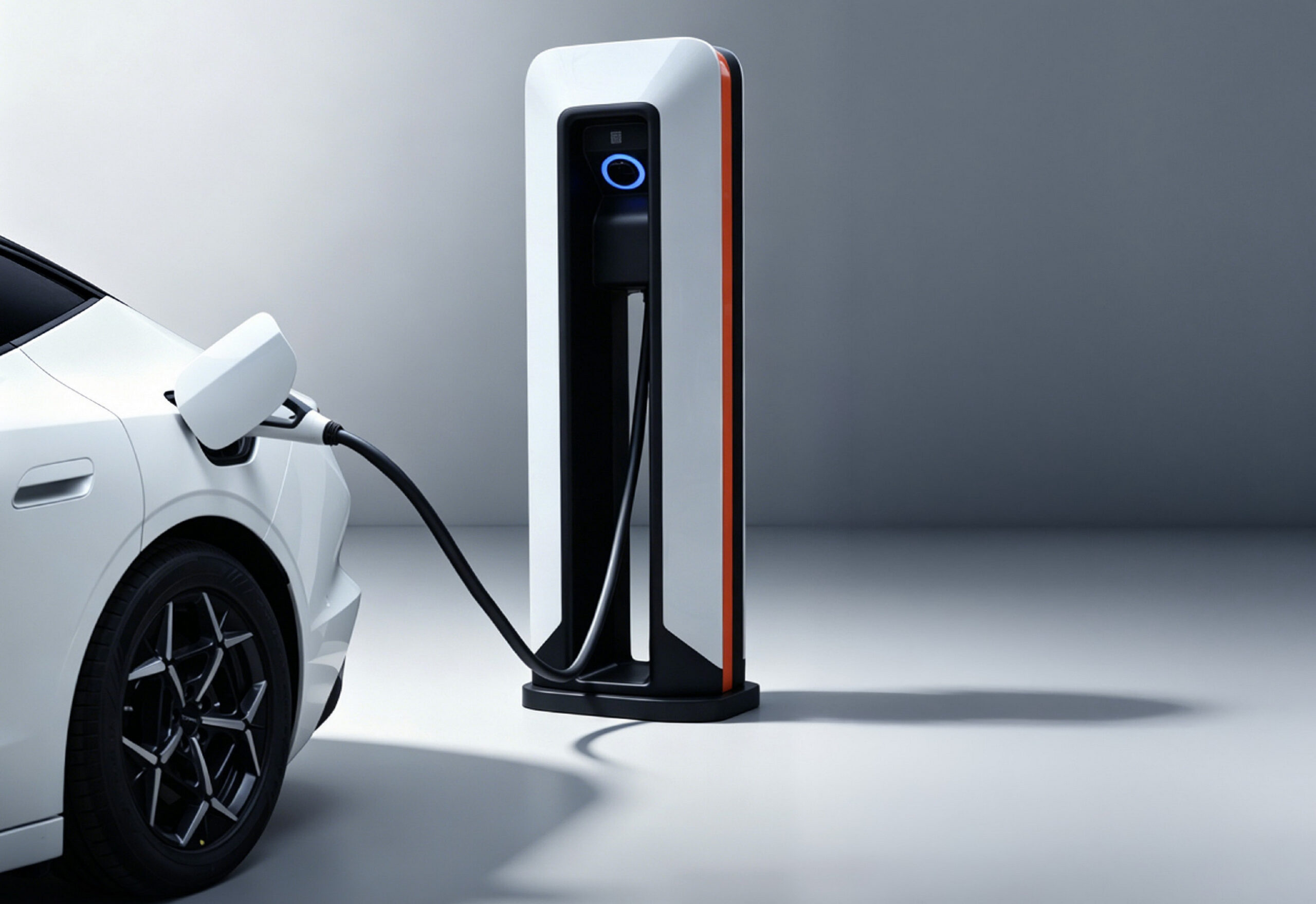
Europe already has thousands of EV fill-up stations, but these BYD Flash Charge devices don’t just edge past today’s fastest public chargers, they absolutely body-slam them. BYD says the new hardware can deliver up to 1,500 kW, making it comfortably the quickest charging setup announced for Europe so far.
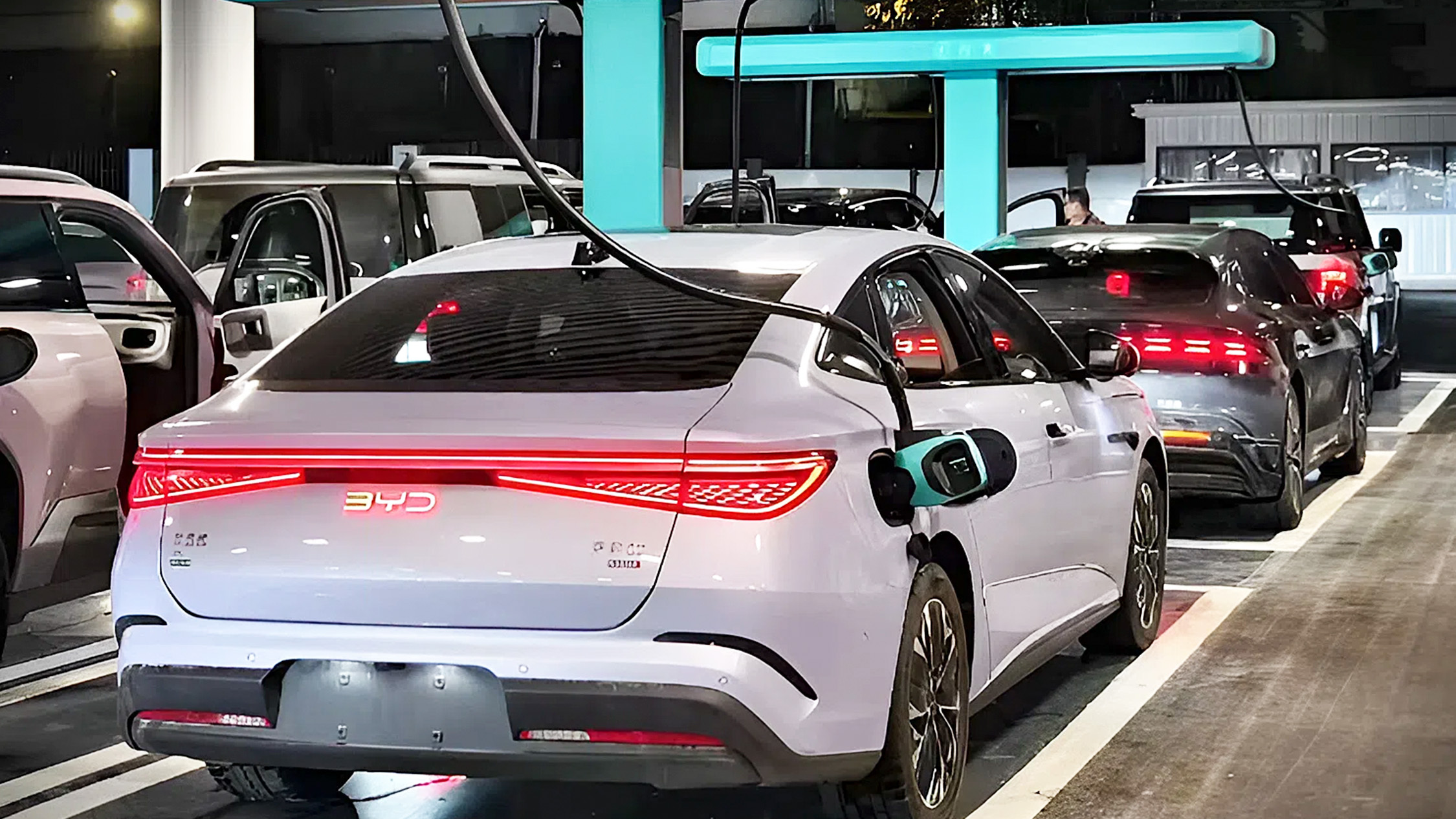
Better yet, this won’t be some members-only club for BYD owners. The chargers are set to use CCS2 connectors and should be open to other brands too. Dealers selling BYD’s posh Denza vehicles will get their own branded versions, while public sites elsewhere will simply wear the Flash name. BYD is also planning to work with existing charging locations rather than starting from scratch every time.
The headline numbers are predictably bonkers. BYD says its newest battery tech can take compatible cars from 10 to 70 percent in five minutes, and from 10 to 97 percent in nine. That’s less charging stop, and more pause for breath.
Denza Leads The Charge
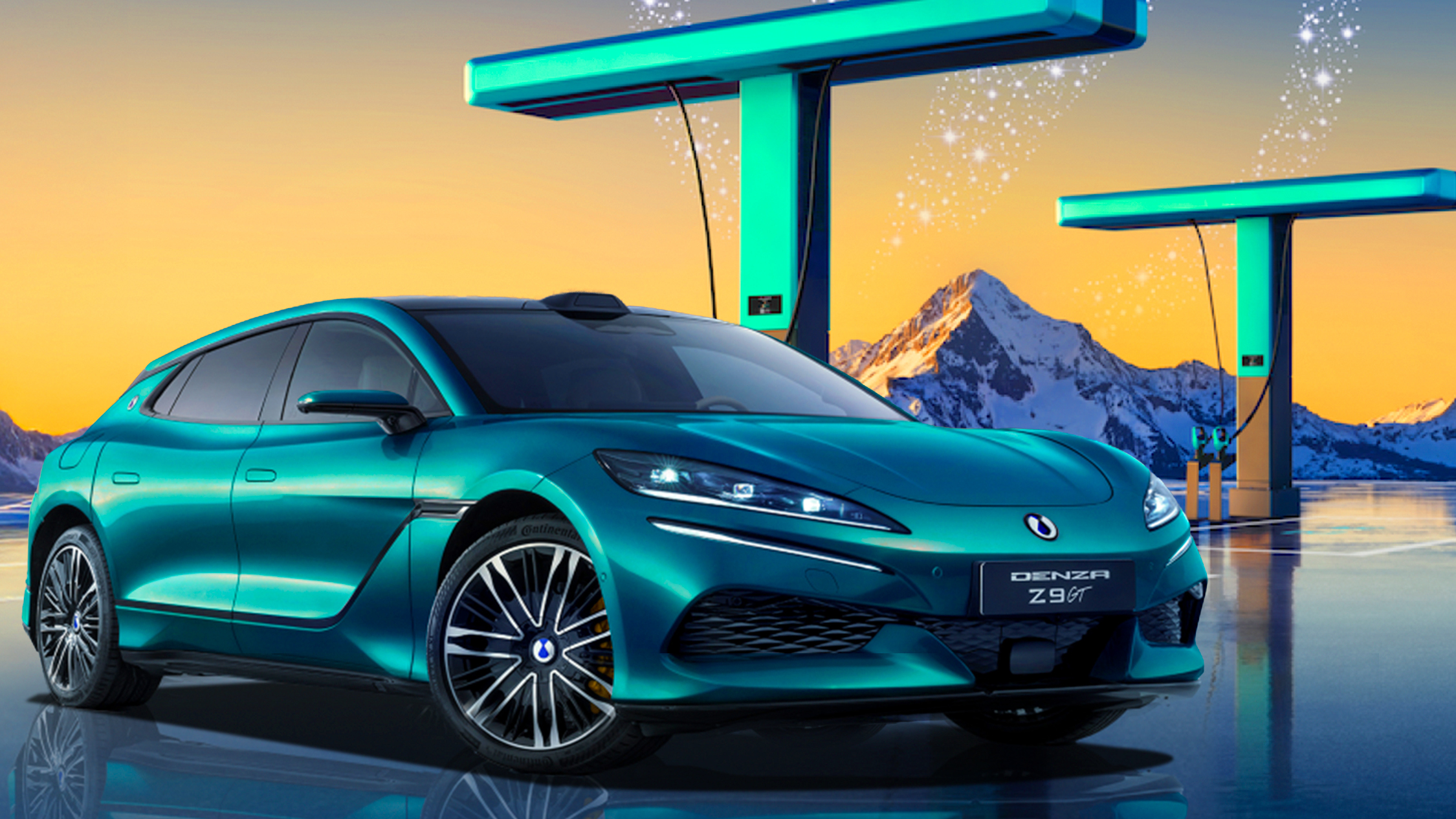
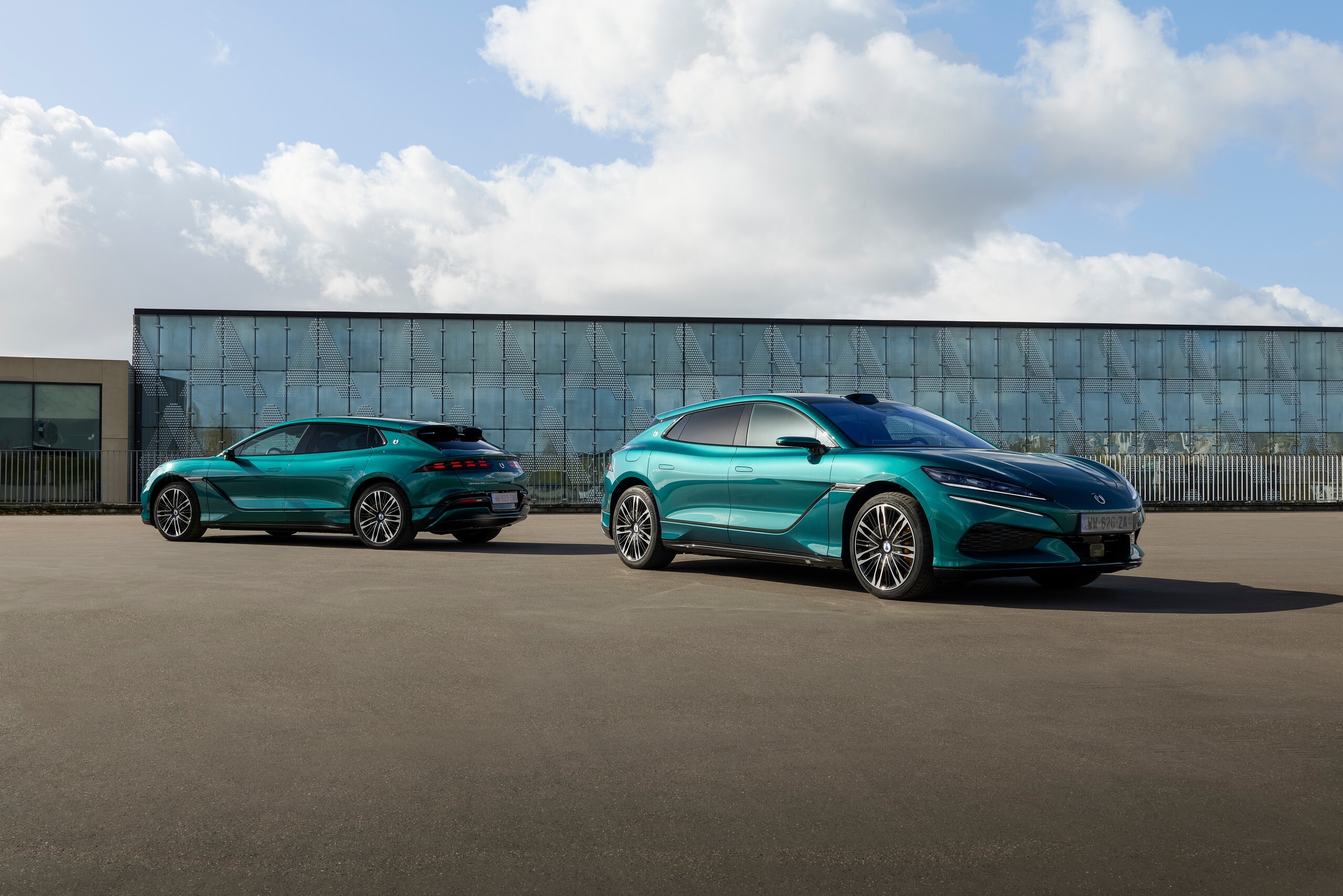
The first big beneficiaries in Europe will be the Denza Z9GT and the D9 DM-i. The Z9GT is the flashy one, a tri-motor, fully-electric shooting brake with a 123 kWh battery and enough shove to hit 62 mph in 2.7 seconds.
The D9 DM-i minivan, meanwhile, proves plug-in hybrids can join the party too. Its 58.5 kWh battery can accept up to 559 kW, allowing the same five-minute run from 10 to 70 percent and nine minutes from 10 to 97. That’s especially handy in a giant seven-seat MPV with 130 miles (209 km) of electric range and a 590-mile (950 km) total figure when the petrol tank is full. In contrast, some PHEVs from other brands still don’t accept DC charging at all.
Of course, BYD isn’t the only one throwing elbows. Earlier this week, Geely claimed its latest chargers and Golden Brick battery tech were even quicker still, because apparently the industry has decided the best way to sell EVs is through stopwatch violence.
BMW Says Non To Charging War
BMW, though, isn’t buying the hype. “You always have to be careful with those kinds of announcements,” the company’s battery production boss Markus Fallböhmer told Car Sales recently, suggesting battery longevity and reliability could be at stake.
“It is possible to optimize one single performance indicator, but you have to make compromises on other sides. We could also increase our charging speed, but then you have to reduce other important factors of a battery.”
BYD opens its 5,000th fast charging station across China.
A new KFC tie-up links meals with rapid charging stops.
Expansion plans include thousands of sites across Europe.
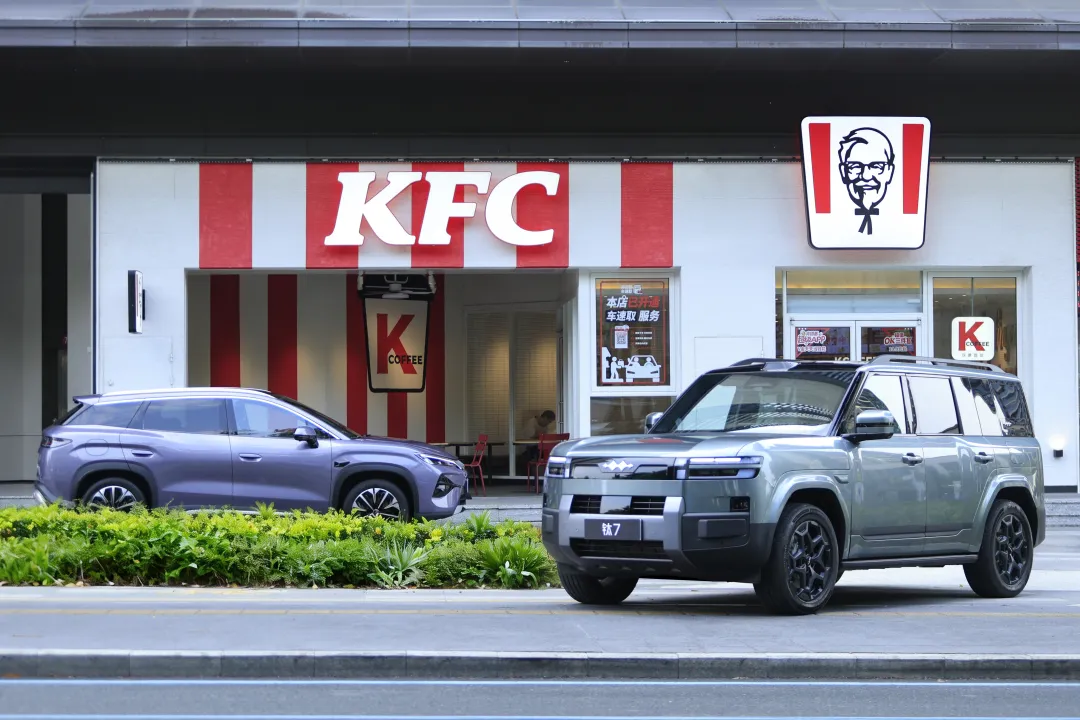
In China’s growing EV market, convenience is starting to matter just as much as range or charging speed. BYD isn’t the type of company that does things in halves. Only a month after announcing its new 1,500 kW charging technology, it has opened its 5,000th Flash Charging station in China and partnered with KFC to broaden its footprint.
Through a collaboration with the fast-food giant, BYD will establish so-called ‘9-minute drive-thru’ areas at KFC locations across the country, referencing the Flash Chargers’ ability to take one of the firm’s EVs from 10-97 percent in just nine minutes. The partnership is being developed with Yum China, the operator behind KFC’s extensive local network.
For owners who enjoy grabbing a burger or fried chicken on the go, the deal makes practical sense. It also mirrors similar partnerships in the US involving Volvo, Mercedes, and Starbucks, where charging points have been added to many of the coffee chain’s stores.
To simplify ordering, the KFC app will be integrated into BYD infotainment systems. When an order is placed through the screen, the vehicle’s location is tracked as it approaches the nearest KFC, ensuring the food is ready and hot on arrival.
Flash Charging Goes Global
BYD has not said how many KFC locations will receive Flash Chargers, but it aims to install 20,000 stations across China by the end of the year. The company also plans to roll out 6,000 Flash Charging stations outside China throughout 2026, including 3,000 across Europe.
The Flash Charging stations can be configured similarly to traditional gas stations. According to BYD, vehicles equipped with its second-generation blade battery can charge from 10-70 percent in just 5 minutes and from 10-97 percent in nine minutes. The company also highlights performance in cold conditions, stating that vehicles can charge from 20-97 percent in 12 minutes even at -22° F (-30° C).
Denza’s entry-level Z9 sedan uses a single rear motor producing 496 hp.
The existing Z9 GT Shooting Brake is heading to Europe and Australia soon.
Design changes include revised lighting, door handles, and new mirror options.
In a market where rapid model updates have become the norm, even relatively new EVs are already due for mid-cycle reinvention. Just 18 months after BYD’s Denza brand unveiled its all-electric Z9 sedan as a counterpart to the Z9 GT Shooting Brake, the first images and details of a revised version have surfaced. It has a thoroughly updated design and, fittingly, is now even more powerful.
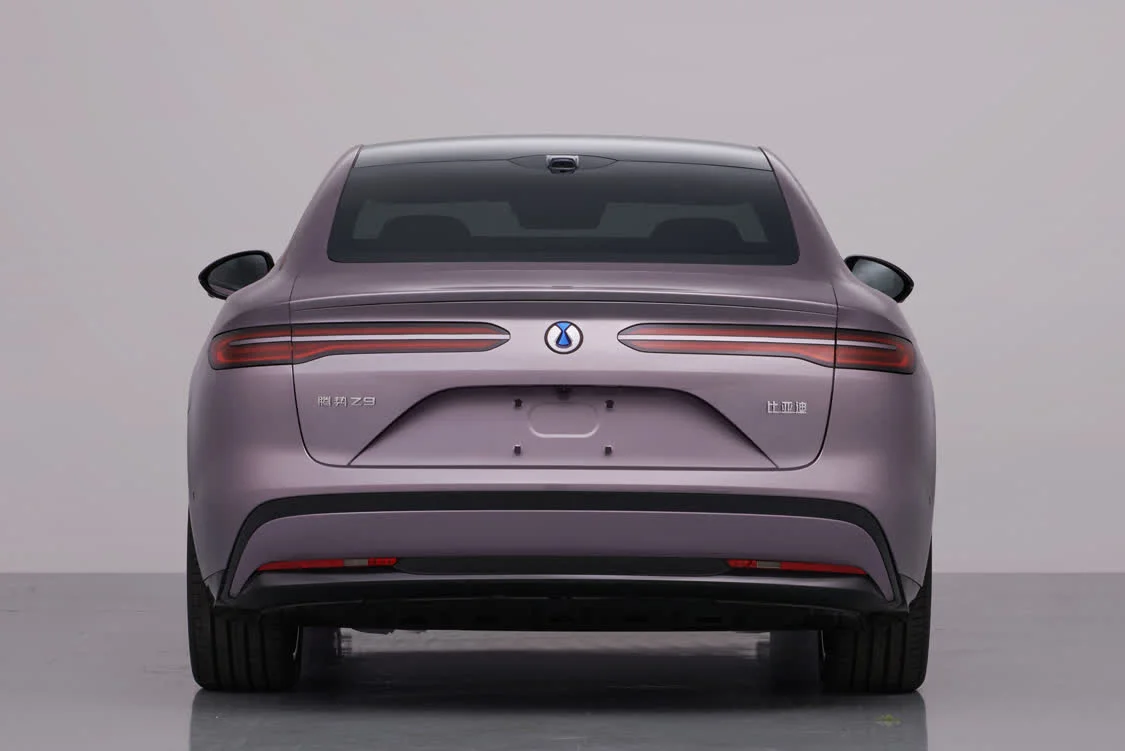
These images from China’s Ministry of Industry and Information Technology (MIIT) show the updated Z9 sports all-new bodywork. Visible at the front are revised split LED daytime running lights, while the headlights have been positioned alongside the black lower grille section.
The sides remain sleek, although there are now new optional wing mirrors similar to those used by Volvo and Polestar models. The door handles have also been redesigned, while new slim LED taillights are found at the rear. The car is 5,090 mm (200.3 inches) long, 1,980 mm (77.9 inches) wide, stands just 1,490 mm (58.6 inches) tall, and has a generous 3,025 mm (119-inch) wheelbase.
Power For All
Two distinct, all-electric versions are mentioned in the MIIT filings. The first is a single-motor version with a rear-mounted electric motor delivering 496 hp. There’s no word on how large the car’s battery pack will be, but the weight of this model will vary between 2,397 kg (5,284 lbs) and 2,438 kg (5,374 lbs), depending on the specification. The top speed is listed at 155 mph (250 km/h).
As we’ve learned from Denza, simply having almost 500 hp isn’t enough. Sitting at the top of the Z9 sedan family will be a tri-motor version with a pair of 416 hp motors and a single 362 hp motor, delivering 1,328 hp. That gives it a power advantage over the existing Z9 GT Shooting Brake that tops out at 1,274 hp. The top speed of this model will be 168 mph (270 km/h), and it’ll be a little heavier, weighing in at 2,588 kg (5,705 lbs).
Details of this new model emerged shortly after Denza announced it was taking the current Z9 GT Shooting Brake global and will start selling it in Europe and Australia. Given that an updated sedan is in the works, it seems likely a new version of the Shooting Brake is also on the cards, mimicking some of the design changes made to the sedan.
The flagship Z9 will churn out an extraordinary 1,328 hp from three motors.
Denza is also readying a single-motor Z9 sedan with 496 hp at the rear wheels.
A slew of design changes have been made to the sleek Chinese sedan.
Just 18 months after BYD’s Denza brand unveiled its all-electric Z9 sedan as a counterpart to the Z9 GT Shooting Brake, the first images and details of a revised version have surfaced. It has a thoroughly updated design and, fittingly, is now even more powerful.
These images from China’s Ministry of Industry and Information Technology (MIIT) show the updated Z9 sports all-new bodywork. Visible at the front are revised split LED daytime running lights, while the headlights have been positioned alongside the black lower grille section.
The sides remain sleek, although there are now new optional wing mirrors similar to those used by Volvo and Polestar models. The door handles have also been redesigned, while new slim LED taillights are found at the rear. The car is 5,090 mm (200.3 inches) long, 1,980 mm (77.9 inches) wide, stands just 1,490 mm (58.6 inches) tall, and has a generous 3,025 mm (119-inch) wheelbase.
Power For All
Two distinct, all-electric versions are mentioned in the MIIT filings. The first is a single-motor version with a rear-mounted electric motor delivering 496 hp. There’s no word on how large the car’s battery pack will be, but the weight of this model will vary between 2,397 kg (5,284 lbs) and 2,438 kg (5,374 lbs), depending on the specification. The top speed is listed at 155 mph (250 km/h).
As we’ve learned from Denza, simply having almost 500 hp isn’t enough. Sitting at the top of the Z9 sedan family will be a tri-motor version with a pair of 416 hp motors and a single 362 hp motor, delivering 1,328 hp. That gives it a power advantage over the existing Z9 GT Shooting Brake that tops out at 1,274 hp. The top speed of this model will be 168 mph (270 km/h), and it’ll be a little heavier, weighing in at 2,588 kg (5,705 lbs).
Details of this new model emerged shortly after Denza announced it was taking the current Z9 GT Shooting Brake global and will start selling it in Europe and Australia. Given that an updated sedan is in the works, it seems likely a new version of the Shooting Brake is also on the cards, mimicking some of the design changes made to the sedan.
The Z9 GT Shooting Brake makes 1,139 hp in EV guise, hitting 62 mph in 2.7 seconds.
A PHEV variant offers 126 miles of electric range and a combined total of 500 miles.
BYD plans 3,000 European charging stations within 12 months alongside the launch.
BYD isn’t content with its core brand competing against the world’s biggest carmakers. It has now launched its premium Denza brand in Europe. There’s a certain irony here, as Denza was originally created as a joint venture between BYD and Mercedes-Benz owner Daimler, blending Chinese EV expertise with German premium know-how. It was established in 2010 before Mercedes-Benz gradually stepped back and exited entirely in 2024.
The rollout begins in Germany, France, Italy, Spain, and the UK, with two key models leading the way. By the end of 2026, Denza is expected to be present in 30 countries across the continent.
Those opening acts are the D9 DM-i minivan and the Z9GT Shooting Brake. The D9 leans on a plug-in hybrid setup, while the Z9GT gives buyers a choice between full electric and plug-in hybrid power. Their arrival also lines up with BYD’s wider push to roll out its Flash Charging system internationally. Over the next 12 months, the company aims to install 3,000 charging stations across Europe, with another 3,000 planned for markets beyond China.
Denza has already been selling the Z9GT Shooting Brake in China for quite some time, and it’s one of the country’s most intriguing family cars. Based on the firm’s e3 Platform, the all-electric model uses a sizeable 122.49 kWh battery pack, a front motor with 308 hp (230 kW) and 302 lb-ft (410 Nm) of torque, as well as two 416 hp (310 kW) and 295 lb-ft (400 Nm) motors at the rear axle, giving it a combined 1,139 hp (850 kW) and 892 lb-ft (1,210 Nm) of torque.
The sprint to 62 mph (100 km/h) is dealt with in just 2.7 seconds, and the top speed is 167 mph (269 km/h), more than enough for high-speed cruising on the German Autobahn. The EV has a quoted WLTP driving range of 372 miles (599 km), and thanks to BYD’s 1,500 kW Flash Charging system, it charges from 10-70 percent in five minutes and 10-97 percent in nine minutes.
A High-Powered Plug-In
The plug-in hybrid version uses a 2.0-liter turbocharged four-cylinder engine producing 170 hp (127 kW) and 236 lb-ft (320 Nm), along with a 268 hp (200 kW) front motor and two 248 hp (185 kW) rear motors producing 266 lb-ft (360 Nm) each, resulting in a combined output of 765 hp (570 kW) and 763 lb-ft (1,035 Nm).
It also features a sizeable 63.82 kWh battery and can travel 126 miles (203 km) on all-electric power, or 500 miles (805 km) when combined with the engine. It needs just 3.6 seconds to hit 62 mph (100 km/h) and tops out at 161 mph (259 km/h).
Both versions come standard with carbon ceramic brakes and include rear-wheel steering. They also included BYD’s advanced DiSUS-A dual-chamber air suspension system and can tow up to 2,000 kg (4,409 lbs). A rear-wheel-drive-only version of the electric Z9 GT will launch later this year, boasting greater driving range.
The D9 DM-i minivan features a plug-in hybrid, all-wheel-drive powertrain delivering up to 130 miles (209 km) of electric-only range and a combined range of 590 miles (950 km). It also supports BYD’s Flash Charging technology.
Market-specific pricing for the new Denza models has yet to be announced, though details are expected to follow shortly.
The Z9GT Shooting Brake churns out a massive 1,139 hp in EV guise.
A plug-in hybrid version with a 63.82 kWh battery is also offered.
Joining the sleek Z9GT Shooting Brake is Denza’s D9 DM-i minivan.
Not satisfied with its namesake brand expanding worldwide and rivaling some of the world’s largest car manufacturers, BYD has officially launched its premium Denza brand in Europe. Bringing with it two compelling models, the firm is initially launching in Germany, France, Italy, Spain, and the UK, but by the end of 2026, it will be present in 30 countries across the continent.
The two models launched are the D9 DM-i minivan and the Z9GT Shooting Brake. The D9 is a plug-in hybrid, while the Z9GT is offered in all-electric and plug-in hybrid guises, and the launch of both models coincides with BYD’s planned international rollout of its new Flash Charging system. Within the next 12 months, it plans to establish 3,000 stations in Europe and 3,000 others in markets outside of China.
Denza has already been selling the Z9GT Shooting Brake in China for quite some time, and it’s one of the country’s most intriguing family cars. Based on the firm’s e3 Platform, the all-electric model uses a sizeable 122.49 kWh battery pack, a front motor with 308 hp (230 kW) and 302 lb-ft (410 Nm) of torque, as well as two 416 hp (310 kW) and 295 lb-ft (400 Nm) motors at the rear axle, giving it a combined 1,139 hp (850 kW) and 892 lb-ft (1,210 Nm) of torque.
The sprint to 62 mph (100 km/h) is dealt with in just 2.7 seconds, and the top speed is 167 mph (269 km/h), more than enough for high-speed cruising on the German Autobahn. The EV has a quoted WLTP driving range of 372 miles (599 km), and thanks to BYD’s 1,500 kW Flash Charging system, it charges from 10-70 percent in five minutes and 10-97 percent in nine minutes.
A High-Powered Plug-In
The plug-in hybrid version uses a 2.0-liter turbocharged four-cylinder engine producing 170 hp (127 kW) and 236 lb-ft (320 Nm), along with a 268 hp (200 kW) front motor and two 248 hp (185 kW) rear motors producing 266 lb-ft (360 Nm) each, resulting in a combined output of 765 hp (570 kW) and 763 lb-ft (1,035 Nm). It also features a sizeable 63.82 kWh battery and can travel 126 miles (203 km) on all-electric power, or 500 miles (805 km) when combined with the engine. It needs just 3.6 seconds to hit 62 mph (100 km/h) and tops out at 161 mph (259 km/h).
Both versions come standard with carbon ceramic brakes and include rear-wheel steering. They also included BYD’s advanced DiSUS-A dual-chamber air suspension system and can tow up to 2,000 kg (4,409 lbs). A rear-wheel-drive-only version of the electric Z9 GT will launch later this year, boasting greater driving range.
The D9 DM-i minivan is equipped with a plug-in hybrid, all-wheel drive powertrain offering 130 miles (209 km) of electric driving range, and a combined driving range of 590 miles (950 km). It also supports BYD’s Flash Charging technology.
Market-specific pricing details for the new Denza models have yet to be announced, but are expected to be confirmed soon.
Geely claims its latest batteries charge faster than BYD’s mk2 Blades.
Energee Golden Brick charges from 10-70 % in just 4 minutes 22 secs.
BMW warns extreme charging speeds could bring durability trade-offs.
Forget zero to 60 mph (97 kmh) times, the EV world has a new kind of electric performance battleground and China’s Geely just claimed top honors. It says its new batteries can charge even faster than the BYD batteries that sent us into a spin last month with their crazy top-up times.
Geely’s Lynk and Co brand says its latest 95 kWh battery – the hopefully not prophetically named 900V Energee Golden Brick – can charge from 10 to 70 percent in just 4 minutes 22 seconds. That compares with BYD’s megawatt flash charging results of 5 minutes for the same race, an achievement that itself is way ahead of anything European or American automakers can deliver.
Stretch the experiment from 10-80 percent and the Geely EV does the job in 5 minutes 32 seconds, and even going from 10-97 percent, which takes account of batteries charging more slowly as they get close to full, the clock only registers 8 minutes 42 seconds. BYD’s second-generation blade battery needs 9 minutes to get to 97 percent when hooked up to one of the company’s new megawatt flash chargers.
Destroys Western EVs
The secret sauce is a high voltage setup paired with seriously beefy charging hardware. We’re talking peak power of around 1,100 kW with strong input of more than 500 kW at 75 percent charged, and 350 kW at 97 percent. That 350 kW figure is higher than the peak charge rate achieved by all but the fastest-charging Western EVs.
There is a catch though, or more likely several. These charge speeds rely on next level charging stations that aren’t exactly everywhere yet. Geely’s network is growing, but it’s way behind BYD in terms of super-fast rollout, being about one quarter the size, Car News China reports. So while Geely may have bragging rights today, the real winner could still be whoever builds the infrastructure fastest.
BMW Not Convinced
Not everyone’s convinced this race is worth winning anyway. BMW has been openly skeptical about the obsession with ever faster charging.
“You always have to be careful with those kinds of announcements,” BMW’s battery production boss, Markus Fallböhmer told Carsales last month. “It is possible to optimize one single performance indicator, but you have to make compromises on other sides.”
That’s BMW’s polite way of saying there’s no free lunch. Push charging speeds high enough and something else may give, whether that’s longevity, cost, or overall performance.
Brazil adds BYD to labor abuse registry over construction worker treatment.
Chinese workers faced passport confiscation, poor housing, and wage restrictions.
Carmaker denies knowledge, but authorities say it shoulders the responsibility.
BYD sells more EVs than any other carmaker on the planet, but Brazil’s government doesn’t like some of the methods it used to get there. Lawmakers in the country have just placed the Chinese automaker on a “dirty list” due to mistreatment of workers.
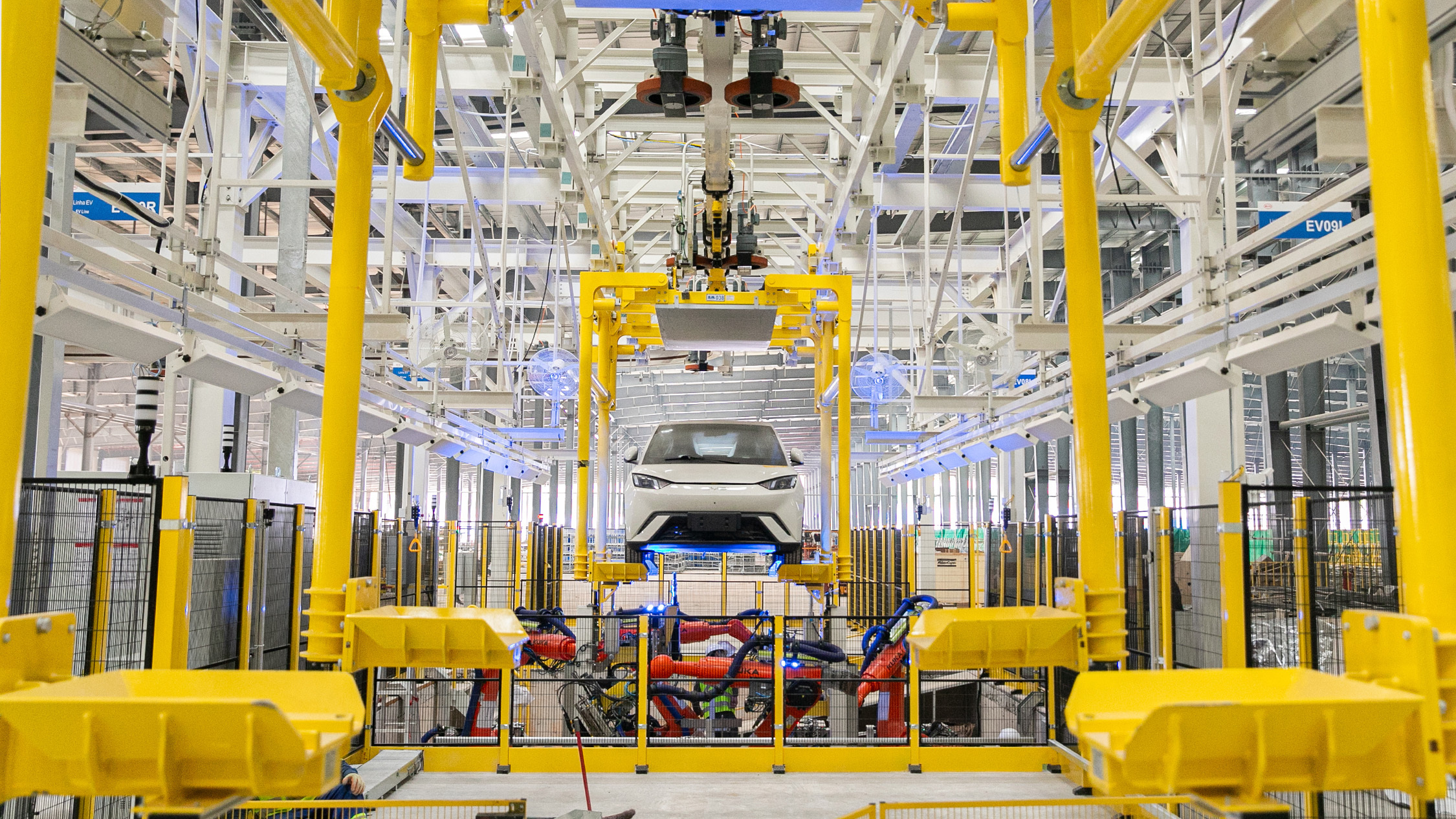
The issue doesn’t involve people building cars for BYD in Brazil, but those who built the plant at Camaçari. A group of 163 Chinese laborers brought in by contractor Jinjiang Group allegedly faced conditions that sound less like a modern construction job and more like something from the 1800s.
Investigators found workers living in overcrowded housing, with dozens sharing limited facilities and basic comforts noticeably absent, Reuters says. In one raid, 31 workers were found squashed into a single house with only one bathroom.
Reports also suggested the workers’ passports were taken away and a chunk of wages never made it into their hands, instead being routed to China. They even had to hand over a $900 deposit just to start the job, which was only returned after they had completed six months on the site.
BYD Blamed Contractor
The 2024 scandal raised serious questions about how closely BYD was watching what was happening on its own project. The company has said it wasn’t aware of any wrongdoing until the situation became public, but Brazilian authorities aren’t buying the idea that responsibility stops with the contractor.
Officials argue that if your name is on the factory, then the buck stops with you, even if someone else handled the hiring. That stance has now resulted in BYD being formally added to a government registry reserved for companies linked to deeply unacceptable labor practices.
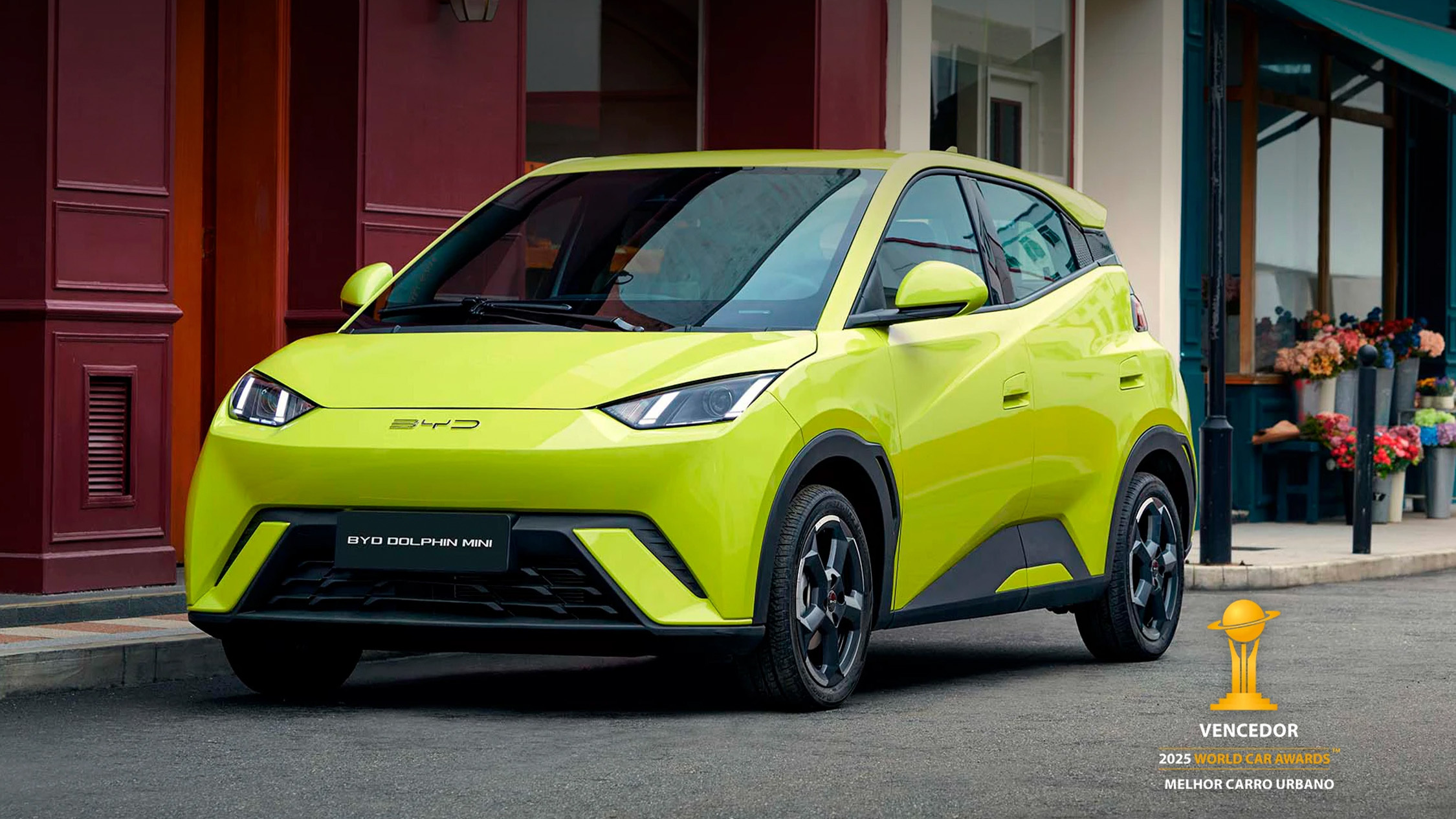
Being on that list isn’t just a bad look. It can also limit access to certain financial support from Brazilian institutions, which could complicate future expansion plans in BYD’s biggest market after its home country. But since its ability to produce and sell cars like the Camaçari-built Dolphin Mini (Seagull in China; Dolphin Surf in Europe) isn’t affected, BYD is going to remain a major thorn in the side of every other brand operating in the region.
The Denza Z9GT can add 310 miles (500 km) of range in just five minutes.
BMW execs claim that pursuing quick charging forces other compromises.
The iX3 and i3 are BMW’s fast-charging EVs, supporting 400 kW speeds.
BYD sent a jolt through the EV space with its ultra-fast charging push, though not everyone is ready to buy in. The Chinese automaker unveiled a 1,500 kW flash-charging system in China, promising speeds that edge close to refueling a combustion car. Despite the extraordinary claims, BMW remains unconvinced.
According to BYD, the Denza Z9GT can add roughly 310 miles (500 km) of range in just five minutes, thanks to its 1,500 kW charging technology and the second-generation Blade Battery.
The system also relies on megawatt-level charging hardware and extremely high current delivery to reach those peak rates. It all sounds pretty incredible, but BMW battery production boss Markus Fallböhmer says pursuing charging speeds like this has compromises.
“You always have to be careful with those kinds of announcements,” he told Car Sales. “It is possible to optimize one single performance indicator, but you have to make compromises on other sides. We could also increase our charging speed, but then you have to reduce other important factors of a battery. It is a blanket – if you pull it at one side.”
BMW’s New EVs Are No Charging Slouches
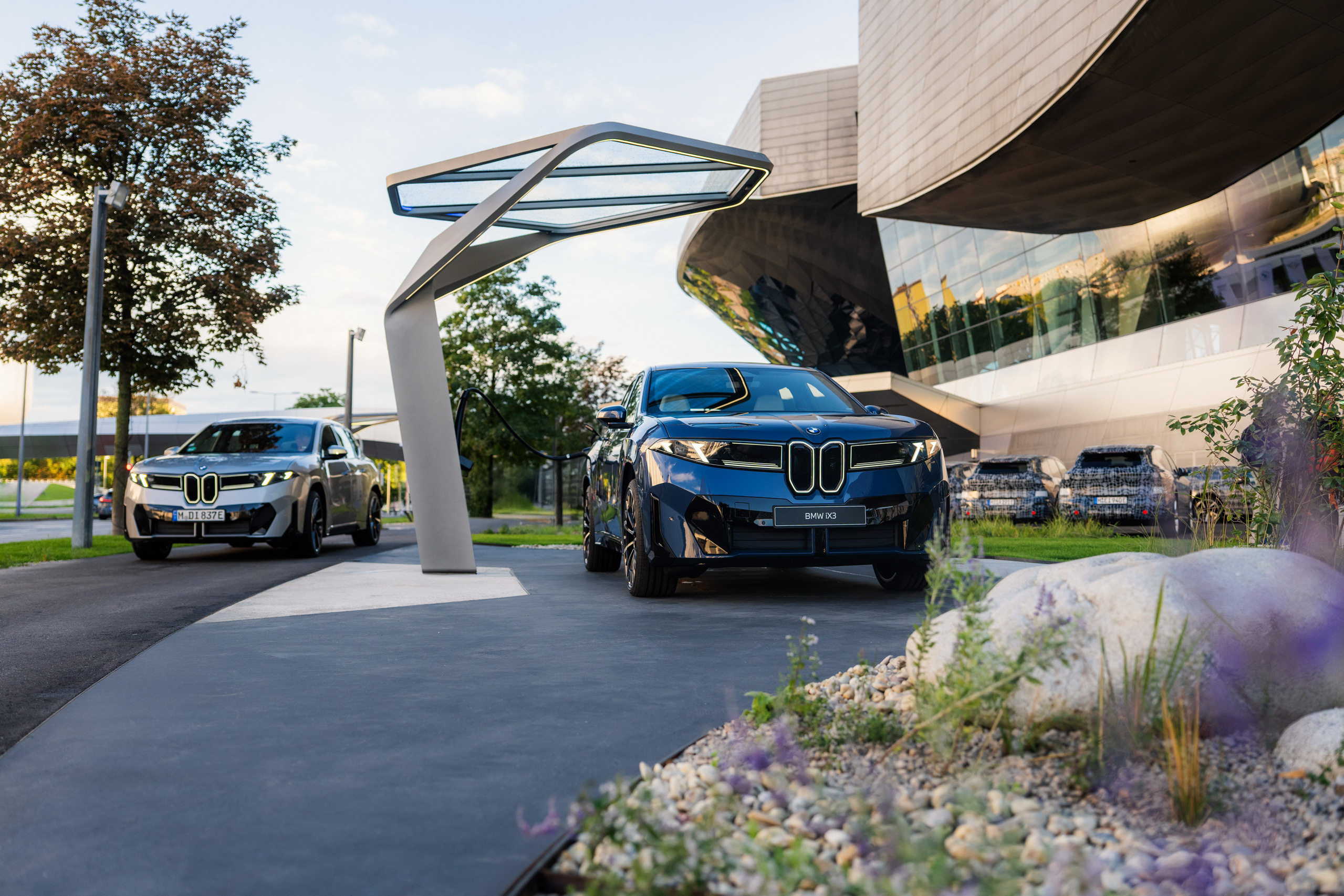
The second-generation iX3 and the new i3 are the quickest-charging BMWs released to date, supporting peak 400 kW speeds. This is quick enough to top up the i3 with 400 km of range in just 10 minutes. BMW says it can guarantee “quality and safety” at these charging speeds, and appeared to question whether BYD can do the same.
BMW executives also indicated that pushing beyond these speeds would bring trade-offs in battery durability, range, and affordability, which they see as unnecessary for most real-world use.
“We look to decrease charging time more and more, but you have to look at range, durability, reliability,” the head of BMW’s Neue Klasse models, Mike Reichelt, added. “All of these facts, we guarantee. We look at the speed of the Chinese market… but on the other side, we guarantee quality and safety. That is a topic that we do not [negotiate] with anyone.”
The race to improve charging times in the EV world is much the same as we’ve seen among smartphone manufacturers looking to uprate charging speeds of their devices, with the Chinese often leading the charge. Boost charging speeds too much, and batteries can get hot, including the risk of thermal management issues, which is clearly something BMW would like to avoid.
Japan cut subsidies for the Chinese EV maker to just 150,000 yen.
New rules now favor EVs using locally produced battery packs.
Toyota and Nissan models still qualify for far higher incentives.
Electric vehicles make up less than 2 percent of new car sales in Japan, yet that didn’t stop Chinese EV giant BYD from unveiling an all-electric Kei car last year, aiming to make inroads into the local market. However, the company has just been dealt a serious blow.
It has been revealed that the Japanese government has slashed subsidies for BYD by more than half, reducing them to just 150,000 yen, or about $936. Previously, incentives for BYD models ranged between 350,000 yen ($2,000) and 400,000 yen ($2,500).
The reason is quite simple. Japan is revising its EV subsidy scheme to benefit vehicles that use locally manufactured battery packs. Obviously, BYD’s cars use Chinese-made batteries. Thus, it seems more like a measure to protect the Japanese car industry from the burgeoning Chinese brand, which was the world’s sixth-largest car manufacturer last year.
Japanese EVs Get A Big Boost
BYD Racco
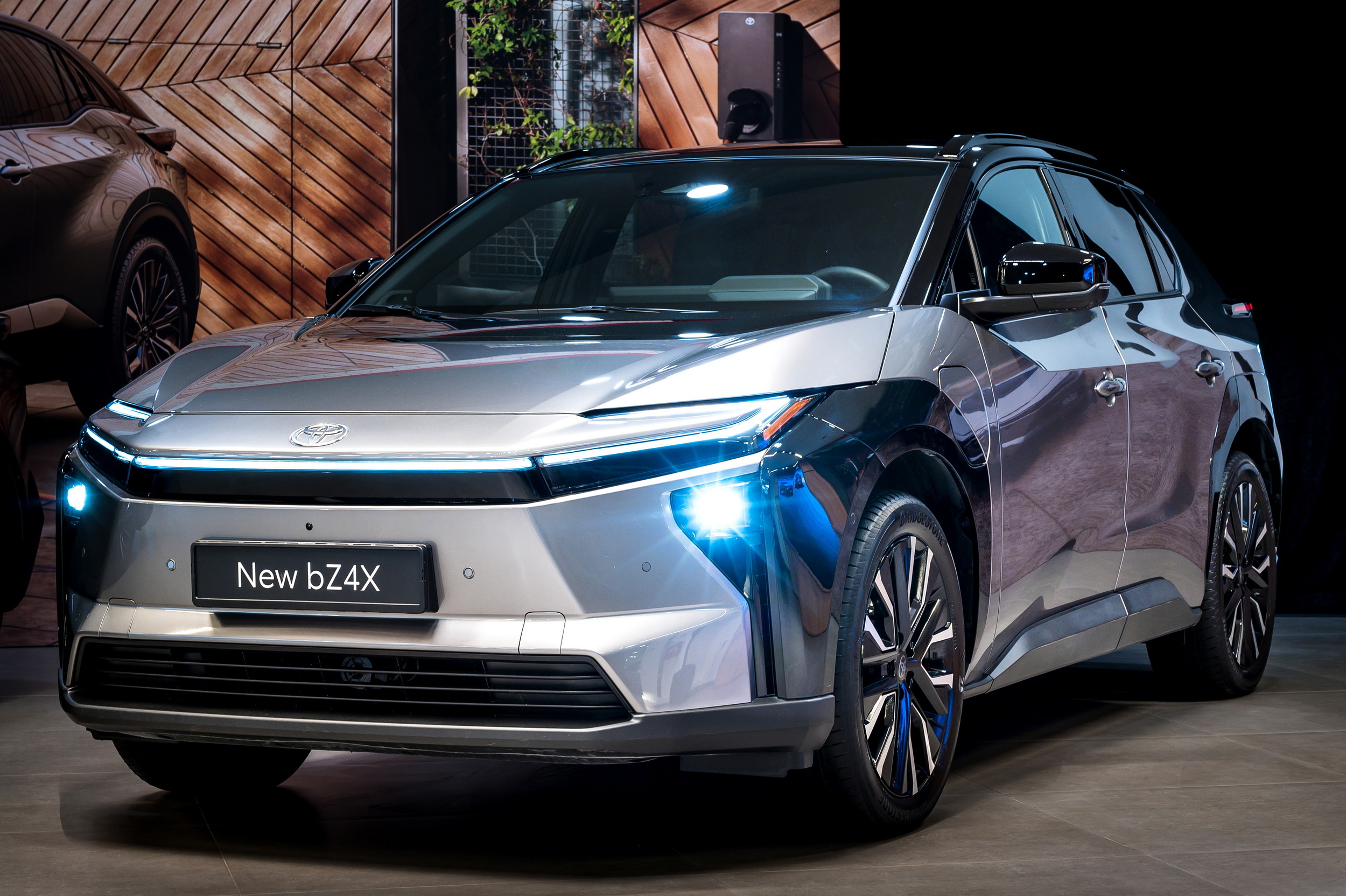
As part of a change to the subsidy program, the Toyota bZ4X will continue to be offered with the highest possible subsidy of 1.3 million yen ($8,100). The Nissan Ariya had been available with a 1.29 million yen ($8,075) subsidy, although this will be cut to 1 million yen ($6,200) in 2027.
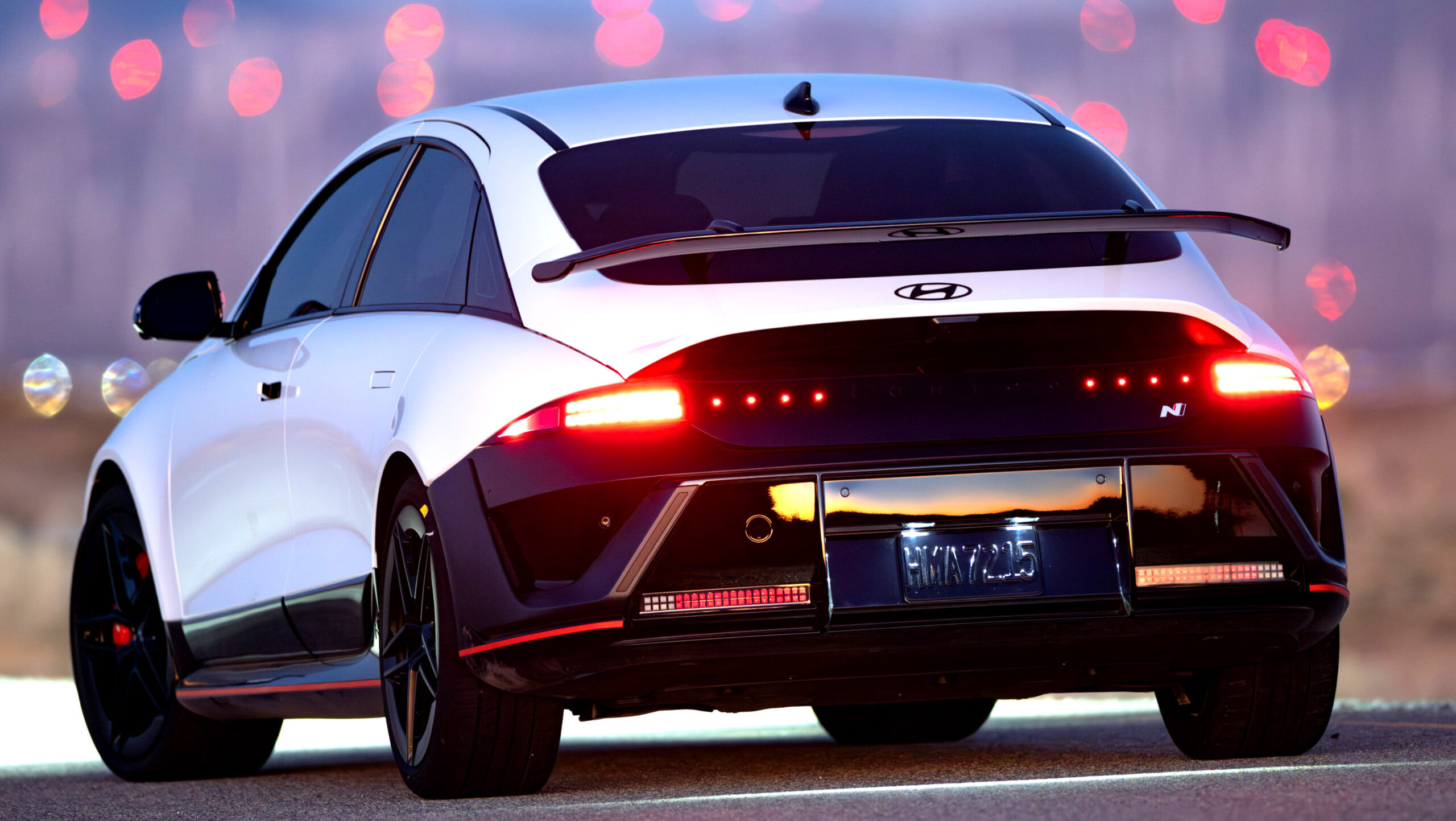
Interestingly, it’s not just Japanese brands that get generous government assistance. Earlier this month, Tesla’s subsidies were increased by 400,000 to 1.27 million yen ($7,900), likely due to the fact that it uses Panasonic batteries. Audi also saw a recent increase of 320,000 yen ($2,000) up to just over 1 million yen ($6,200) for its EVs. Similarly, subsidies for some of Hyundai’s EVs have been boosted this month.
As noted by Nikkei Asia, not all of these subsidy increases will remain in effect. From next January, subsidies for brands including Audi and Hyundai will be cut, although their extent remains unclear. Prior to the most recent round of cuts, BYD said it was already at a disadvantage.
“We’re at an overwhelming disadvantage,” the boss of its Japan unit, Atsuki Tofukuji said. “The gap [with companies like Toyota Motor] has grown to up to nearly 1 million yen. We can’t compete with 350,000 yen.”
The production-spec Denza Z makes its global debut at Goodwood this summer.
Daniel Craig is fronting Denza’s push into Europe, the Middle East, and Africa.
Concept styling carries over largely intact, but the large rear wing is gone for now.
A new Chinese sports car is on the way, and it’s aiming straight at one of the most recognizable nameplates in the business. Denza, BYD’s premium offshoot that began as a joint venture with Mercedes before it sold its stake in 2024, is preparing to unveil its long-anticipated Porsche 911 rival, and it has enlisted a certain former secret agent to attract eyeballs.
Denza’s flagship sports car was previewed with the eye-catching Z Concept in April last year, and now we’re getting an early look at the production version ahead of its debut at the Goodwood Festival of Speed. The preview image puts a bright orange Z front and center, sitting just behind BYD executive vice president Stella Li and former James Bond actor Daniel Craig, and from what’s visible, it clearly sticks true to the concept.
This new model is set to crown Denza’s lineup, positioned above the Z9 GT, D9 MPV, and B5 SUV as the brand’s top-tier performance offering.
Partially visible at the front are the sharp, diamond-shaped headlights and an aggressive front bumper, not dissimilar to what you’ll find on the Lotus Emira. Notably, the production model ditches the concept’s sharp splitter, though that may be present on a higher-performance version of the car.
Little else of the car can be seen, though you will notice it has silver-and-black wheels and does without the concept’s large fixed rear wing. Earlier prototypes have already been spotted testing at the Nürburgring, suggesting serious performance intent and perhaps even a push for a headline lap time.
Near Four-Digit Horsepower
Denza Z Concept
Powertrain details have yet to be confirmed, and Denza never actually said what was powering the concept. However, all signs point towards the Z getting the same powertrain as the all-electric Z9 GT. That car uses a 100-kWh Blade battery and a trio of electric motors that combine to deliver more than 952 hp. Obviously, this would easily outmuscle the Porsche 911, which isn’t available in an all-electric configuration.
Beyond raw output, Denza has also pointed to a suite of advanced hardware, including magnetorheological suspension and steer-by-wire. It’s also likely to inherit some trick features from the brand’s Z9 GT, such as crab-walk, slow-motion drifting into parking spaces, and tighter turning capability.
According to Stella Li, BYD has partnered with Daniel Craig for a promotional campaign for Denza, helping to expand its presence across Europe, Latin America, the Middle East, and Africa. The firm already has Land Rover Defender and Toyota Land Cruiser Prado rivals with the B8 and B5 off-roaders, and is now targeting the pinnacle of sports cars.
BYD and Chery are actively looking to establish a Canadian dealership network.
It comes after Canada agreed to a quota of Chinese EVs allowed in with reduced tariffs.
The Chinese automakers’ plans start with Toronto, before expanding west and east.
A report has seemingly confirmed that two of China’s biggest electric car manufacturers are swiftly building the foundation for a Canadian push. The news comes from a consultant tasked with laying the groundwork. The companies are in talks to set up branded dealerships throughout the country, a serious move into a massive market that has so far eluded Chinese car makers.
It’s understood that both BYD and Chery have plans centered around establishing independent dealerships, but cautioned that the low volume of cars allowed by the quota may not be enough to sustain many Canadian dealerships.
The initial strategy involves launching out of the Greater Toronto Area, then expanding west and east to cities such as Vancouver, Montreal, and Calgary. Those involved in the talks say that BYD’s goal is to build about 20 dealership locations in the first year of operation. That would give China’s biggest carmaker a visible presence in Canada’s biggest urban markets, where there is a continuing rise in the demand for electric vehicles as consumers look for cheaper alternatives.
The news comes from Farid Ahmad, the CEO of Dealer Solutions Mergers & Acquisitions, a consultancy which has already had discussions with three possible BYD locations. “They’ve asked us to help them find as many of the 20 that they possibly can, but they’re out there doing that themselves, as well,” said Ahmad speaking to The Globe And Mail. Ahmad went on to say that a number of Chinese manufacturers were interested in setting up shop in Canada, including Chery.
Canada recently restructured its tariff regime relating to Chinese-built electric vehicles by implementing a quota that permits 24,500 Chinese-made EV to come into Canada at a significantly reduced duty rate of just 6.1 percent. That change in policy means a change in math for companies such as BYD and Chery that previously have struggled with steep barriers that made it difficult for them to expand.
With the advent of lower import costs now possible under the quota, the move into the Canadian market is becoming more realistic. Still, there are a number of steps before any cars are in showrooms. Regulatory approvals, dealer agreements, financing structures, and service networks all have to be put in place.
Launch Timing Remains Unclear
Sources caution that although discussions are ongoing, there hasn’t been an official date initiated for the launch by BYD. The company has not publicly outlined its timeline, nor the specific models it prioritizes for Canada.
By coming into the Canadian EV market, Industry analysts believe BYD and Chery will transform pricing and competition in the industry. The market has been dominated by established North American, European, and Korean brands for an extended period. A new player that is well-known globally for high-volume electric vehicles production could expand consumer choice and put a squeeze on rivals.
BYD could enter Canada solo, avoiding joint venture deals entirely.
Canada may serve as a North American base for production and exports.
Tariff quota begins at 49,000 units and rises steadily over five years.
BYD is taking on the world, and thanks to a new trade deal between Canada and China, it could start building vehicles in the Great White North. The company’s executive vice president has even admitted an openness to acquire an existing car manufacturer as it looks to further broaden its reach.
Earlier this year, Canada announced it would slash tariffs on Chinese EVs from 100 percent to 6.1 percent, but only for the first 49,000 vehicles per year. This quota will grow to around 70,000 vehicles annually over five years, reopening the door for BYD to enter the Canadian market.
The Chinese juggernaut was eager to enter Canada a couple of years ago, but shelved its plans in late 2024 when the 100 percent tariffs were announced by then-Prime Minister Justin Trudeau. Now, BYD executive vice president Stella Li said at an event in Brazil that a Canadian launch is back on the cards and that the firm is even considering a manufacturing facility there.
Exactly how BYD would establish itself locally remains undecided. Ottawa has been pushing Chinese automakers toward joint ventures with domestic partners, but Li was blunt on that point, saying she does not believe “a JV will work” for the company.
Can Anything Stop BYD’s Growth?
Canada could provide BYD with a foothold in North America, meaning building models for the local market and having the option of exporting them. Fellow Chinese brands Geely and Chery are also reportedly making moves to enter Canada, although they’ve yet to commit to building cars in the country.
BYD’s growth strategy could involve acquiring an existing automaker. Speaking with Bloomberg, Li suggested the company is interested in taking over a legacy car brand, noting that “We’re open to every opportunity we have,” and that BYD is currently evaluating potential assets.
Acquiring an established automaker could also give BYD an indirect route into the United States. It is a well-worn strategy, and one that has worked before. Geely took control of Volvo and used it to expand its global footprint, while SAIC revived MG into a thriving EV-focused brand. BYD could be looking at a similar playbook.
While the likes of Tesla can sleep easily in the US, largely insulated from the surge of Chinese EVs sweeping through global markets, the situation looks very different overseas. In places like Malaysia, where we’re currently experiencing the BYD lineup firsthand, the competitive landscape is far more intense.
You’re probably already aware that brands like BYD have moved quickly to market with smaller and more affordable electric vehicles. What’s becoming clearer, however, is that they also seem to have an answer for nearly every category Tesla occupies.
Take the Sealion 7. In East Asia, it’s a mid size electric SUV that carries the Ocean Series legacy into a more premium segment. Available in both rear wheel drive and all wheel drive Performance variants, the Sealion 7 brings BYD’s e Platform 3.0 Evo, Blade Battery, and its so called Ocean Aesthetics design language into a very capable package.
QUICK FACTS
› Model:
2026 BYD Sealion 7 Performance
› Dimensions:
190.2 L x 75.8 W x 63.8 in H (4,830 x 1,925 x 1,620 mm)
› Wheelbase:
115.4 in (2,930 mm)
› Curb Weight:
2,340 kg (5,159 lbs)
› Powertrain:
Dual electric motors / 82.56 kWh battery
› Output:
290 kW / 690 Nm (509 lb-ft) of torque
› Performance:
4.5 seconds 0–62 mph (0–100 km/h)*
› Charging
Rapid Charger (150 kW DC)
› Range
283 miles (456 km) WLTP*
› On Sale:
Now
SWIPE
*Manufacturer
Or, if we strip away the brochure language, it may simply represent the next major headache for the Tesla Model Y.
But with the EV market at its most competitive, and BYD no longer alone in its export ambitions, the real question is whether the Sealion 7 can go toe to toe not just with Tesla, but with the growing wave of Chinese rivals also establishing themselves abroad.
Sealion? Ocean Aesthetics? What Does Any Of That Mean?
Photos Sam D. Smith / Carscoops
Okay, it’s a bit complex, but let’s try to break it down: BYD has multiple lines. For the domestic market, it has models under the Dynasty lines, and then you have the Ocean series, which, as the name implies, takes aquatic styling cues with sea-creature-based names. Seagull, Dolphin, and yes, Sealion. There are multiple Sealions as well, with the 5 being a Honda HR-V-sized competitor that’s also available with a hybrid drivetrain, and the Sealion 6 being a larger SUV in the vein of the Nissan Rogue.
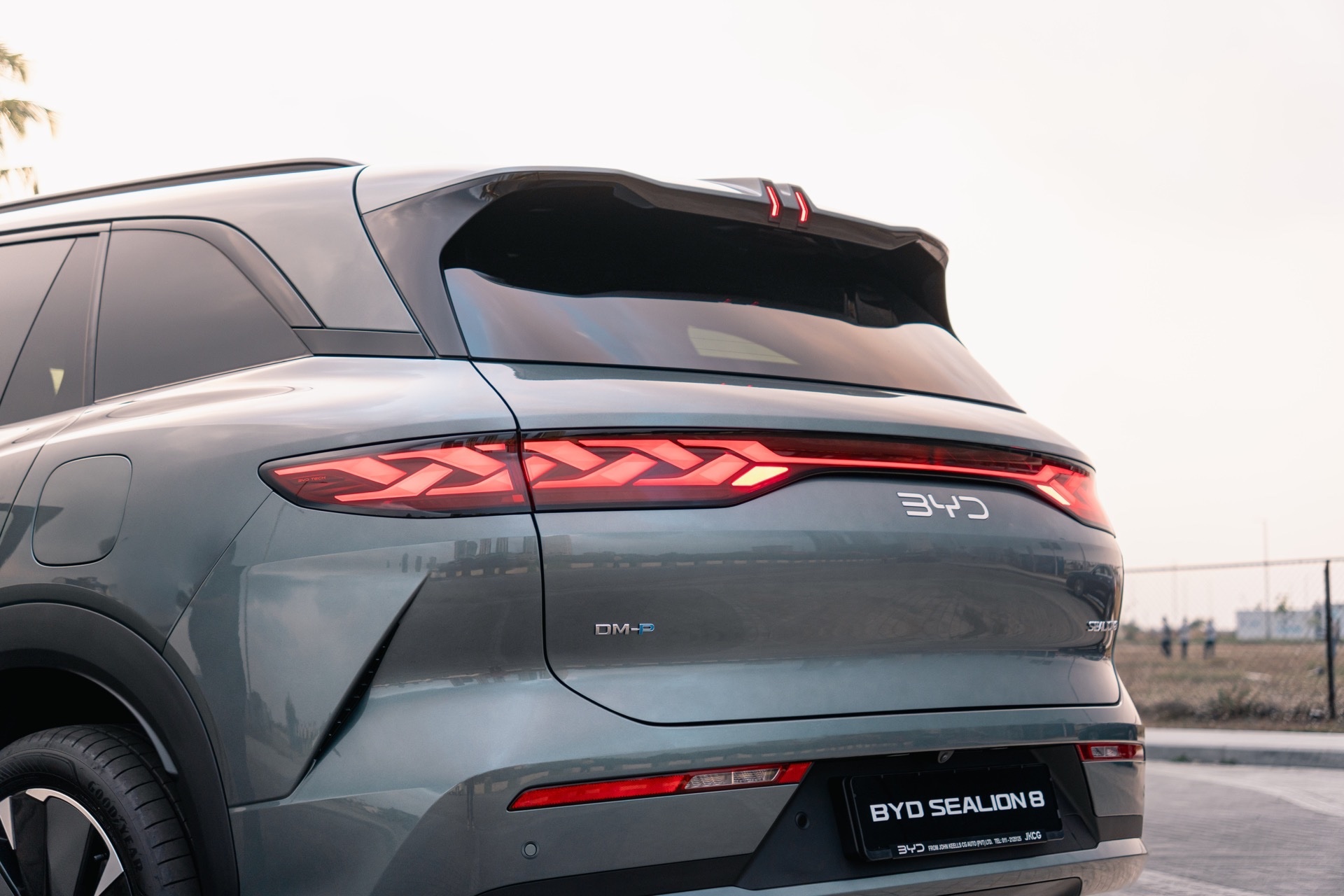
The Sealion 7 is more akin to the Audi Q8, a more stylish approach for those who care about such things. And while the front end is very much BYD, in the fact that it’s a tad anonymous but inoffensive, the rear end has actually grown on me.
Rather than trying to make a bold, but frankly pointless statement by being objectionably coupe-like (I’m looking at you, Porsche Cayenne Coupe and BMW X6), it’s a more cohesive, perhaps egg-like, shape. Again, it’s not revolutionary, but nor is it different for the sake of being different either. It’s streamlined and more put-together in its execution, avoiding the awkward proportions that so many other “sporty” SUVs seem to cling to.
That Low Tapering Roofline Can’t Be Very Practical, Can It?
Photos Sam D. Smith / Carscoops
Well, rear-seat passengers don’t have to sacrifice too much in terms of headroom, which is a plus. However, after several airport runs, it was soon clear that boot space, or rather the shape of it, is not the Sealion 7’s strong suit.
That rounded-off rear does look nice, but when it comes to getting it to close when stuffed to the brim, you’re going to have to end up playing some suitcase tetris…or, in our case, moving some luggage to the passenger compartment instead.
Photos Sam D. Smith / Carscoops
It’s a common tradeoff: looks at the expense of practicality. But it’s also worth noting if you’re trying to decide between the more conventional Sealion 6 or the Sealion 7. Plus, it’s not all style over substance. There are some nice functional features too, such as proper air curtains in the front bumper, which help with airflow around the wheels.
It’s Still A Chinese Car, Right? How Stylish Can It Be?
You’d be surprised. Yes, there are still a fair few (how should we put this?) “inspired” designs throughout the Chinese market, with the Land Rover Defender and Range Rover seemingly being the most imitated. The Sealion 7, though, looks to be cutting its own mold in many respects.
It’s the interior that really shines. Unlike the Atto 3 we tested earlier, this is a much more “conventional” setup. The interior quality feels premium, with soft-touch plastics everywhere, while the layout won’t have you scratching your head.
It still lacks physical AC controls, except there’s a button to turn the fan on and off. Not fan speed. Not temperature. Just on and off. Why?
Now, having spent some time with BYD products, I’m going to label the rotating screen as gimmicky. At 15.6 inches, it’s large enough for anything you’d want, and the hardware is beefy enough for the system to be super snappy and responsive. However, if you do use wireless CarPlay or Android Auto, as 90 percent of users will, the screen will force you to use it in its landscape orientation. Go figure.
Photos Sam D. Smith / Carscoops
Still, there’s some great integration with the super-legible driver’s display and head-up display, the latter of which supports turn-by-turn navigation when using Google Maps. Both screens also do an excellent job of displaying info for the lane-keep assist and cruise control functions, which are noticeably less intrusive than earlier attempts from BYD.
The electric seats feature lumbar and adjustable under-thigh support, helping these chairs feel supportive, but not overly bolstered. The front seats are also ventilated, with up to three speeds of cooled air channeled to combat any hint of back sweat.
If you want to see more of the outside, there’s a full-length panoramic roof with an electrically controlled sunshade, and there are physical switches for drive modes and regen.
So, How Does It Drive?
In a single sentence, it feels mature, but still not as polished as I’d have hoped. BYD may have had a few missteps in the past, but their premium product offerings are starting to feel closer to the semi-premium image they’re chasing in the way they drive.
The Performance AWD model we got to the keys to packs a dual-motor setup for AWD, producing 390kW (523 hp) and 690 Nm of torque. To get from 0-100 km/h (0-62 mph) you need just 4.5 seconds. That’s faster than a Porsche Cayenne Coupe S, all while offering an integrated battery, fast charging up to 230 kW, and being able to top up from 10-80 percent in around 24 minutes.
While figures are all well and good, there’s proper substance when you’re behind the wheel. While a proper enthusiast may want a quicker ratio rack, the Sealion 7’s steering is nicely weighted, and does a decent job of providing the kind of feedback that you need with 500+ hp under your right foot.
The car also handles better than expected. There’s a trend for Chinese SUVs to be a bit over-damped, with the ensuing wallow meaning that true confidence can’t be found. But the Sealion 7’s chassis not only feels dynamic through a set of quick corners, it also remains planted, more sedan-like than you may expect.
There’s one huge penalty, though, experienced while driving on Malaysia’s roads. Over bigger, faster imperfections, such as expansion joints, the ride feels almost crashy. It’s the one chink in this BYD’s armor that would otherwise have convinced us that the Germans themselves had tuned this suspension. But alas, there’s still a lack of composure there.
But at slower speeds, and over smaller humps, the Sealion 7 maintains a well-damped composure that you’d expect from something upmarket, and that’s despite riding on 19-inch rims. Also of note is that the Performance version of the Sealion 7 comes equipped with Michelin Pilot Sport EV tires, again, another sign that BYD is taking this segment of SUV seriously, rather than cheaping out on lesser-known rubber, as has been seen in the past.
You also get several drive modes, and they behave pretty much as expected. However, despite offering selectable “normal” and “larger” regenerative braking settings, there’s still no proper one-pedal driving mode. It’s not a dealbreaker, but it does feel like something future versions of the Sealion should include if it’s going to go head-to-head with Tesla
Verdict
For the Malaysian market, the Sealion 07 comes in at RM 183,800 (equal to $25,900 a current rates) for the Premium model, or RM 199,800 ($28,100) for the AWD Performance. The latter undercuts Tesla’s Model Y Long Range AWD (RM 242,450) significantly, which is slower (0-62 mph in 4.8 seconds vs 4.5 seconds for the BYD), and has less range on the WLTP cycle.
But with more aggressive entries planned for East Asia, including the likes of Chery and Changan, the Sealion 7 is about to come up against tough competition. It highlights the fast-moving pace of the EV industry, particularly spurred on by the Chinese automakers who are keen to find market share outside of their home playing field.
BYD’s China sales have tumbled 36 percent in 2026.
About half of BYD vehicles this year were exported.
Geely sold 76,000 more vehicles than BYD in China.
For much of the past three years, it has often seemed as though BYD could do no wrong. The company steadily launched new models, expanded its lineup, and watched its sales climb at an impressive pace. However, the start of 2026 has been alarmingly slower, allowing fellow Chinese automaker Geely to pull ahead.
Through the first two months of this year, BYD has sold 400,241 vehicles, down 36 percent from the year prior. Of these, 190,190 vehicles were sold in February, a drop of 9.5 percent from the past month, due in large part to the Lunar New Year holiday, but it was also a 41 percent drop compared to the same month last year.
Apparently, shrinking tax breaks and a dip in buyer confidence are starting to cool the market. Plenty of shoppers are opting to wait it out, holding off to see what new models land and whether government trade in schemes become clearer before committing their cash.
While BYD is facing some struggles at home, it continues to gain popularity in foreign markets. In February alone, it exported 100,600 of its new energy vehicles, consisting of EVs and plug-in hybrids. Include January in those figures, and BYD has exported 201,082 vehicles.
Competitors Step Up
While BYD is facing growing pains, several other Chinese automakers are enjoying the opposite problem. Through the first two months of 2026, Stellantis partner Leapmotor’s sales have climbed 19 percent to 60,126 units. Xiaomi’s EV division is up 48 percent year over year to more than 59,000 units. Zeekr has posted an 84 percent surge across January and February, while Nio deliveries have jumped 77 percent, according to CNBC.
Geely is also having a particularly strong run. So far this year, it has delivered roughly 76,000 more vehicles than BYD. That is notable because it marks the first time Geely has outsold BYD for at least two consecutive months since 2022. While Geely currently leads within China, it trails slightly in overseas markets, exporting 181,891 vehicles so far this year.
According to Bloomberg, BYD chief executive Wang Chuanfu acknowledged the growing pressure back in December. He said rival automakers had begun closing the technological gap that once gave BYD a clear edge, something that now appears to be showing up in the sales figures.
This is the first BYD model with its second-gen Blade battery.
It rides on brand’s new Super e platform with 1000-volt tech.
Both rear-wheel drive and all-wheel drive versions are offered.
BYD has a new flagship SUV, and it’s called the Great Tang. The name may sound a little unusual, but underneath sits the Chinese giant’s latest electric platform, built to take on high-end rivals like the Zeekr 9X and IM LS9, along with more familiar names from Europe and Asia such as the Volvo EX90 and Hyundai Ioniq 9.
First previewed by the Chinese Ministry of Industry and Information Technology earlier this year and now revealed in full, the Great Tang is bigger than even the Denza B8. It stretches to 5,302 mm (208.7 inches) in length, measures 1,999 mm (78.7 inches) across, stands up to 1,800 mm (70.8 inches) tall, and rides on a generous 3,130 mm (123.2-inch) wheelbase. The SUV also forms part of BYD’s new premium Dynasty series of models.
Design-wise, it looks quite smart, particularly with the two-tone red-and-silver paint scheme it was presented with. The front end shares similarities with existing BYD models, complete with a flowing light bar, a black lower grille, and vertical headlamps neatly integrated into the fascia.
Class-Leading EV Tech
But the real story isn’t the styling. It’s the technology lurking underneath. The Great Tang rides on BYD’s new Super e platform and uses the company’s second-generation Blade battery. According to BYD, those cells can charge from 10 percent to 97 percent in just nine minutes, provided you plug into one of its new 1,500 kW charging stations. The SUV also runs a 1000-volt electrical architecture, which helps make those charging claims possible.
There’s still no word on the size of the SUV’s battery pack, but BYD has confirmed a few key drivetrain details. A single-motor version will be offered with either 402 hp or 496 hp. If that sounds a bit restrained for something this large, there is also a dual-motor setup delivering 784 hp.
Even so, the numbers that matter most for a family-sized electric barge are the range figures. Despite weighing as much as 2,970 kg (6,547 lbs), BYD claims the rear-motor version can travel up to 590 miles (950 km) on the CLTC cycle. Opt for the punchier dual-motor model and the figure drops slightly to around 528 miles (850 km) on a charge. Still, for something this big, that is not exactly a short leash.
A glance inside reveals a 2+2+3 seating layout and pretty much every luxury extra you’d expect in a flagship family hauler. The dashboard is dominated by a large central infotainment display, joined by separate screens for the driver and front passenger. You also get wireless phone chargers, a built-in fridge, and a fold-down screen in the ceiling to keep rear passengers entertained on longer trips.
In China, prices are expected to start just above 400,000 yuan, which works out to roughly $58,000.

 Login
Login