Fang Cheng Bao unveils a striking electric supercar dubbed Formula X.
It is joined by the Formula S and SL sedans, and the GT hatchback.
All four high-performance EVs will enter production by next year.
Fang Cheng Bao, the BYD-owned brand that built its reputation on boxy and rugged SUVs, has undergone a radical transformation at the 2026 Beijing Auto Show. The automaker has unveiled a striking supercar, along with three low-slung EVs under the Formula series.
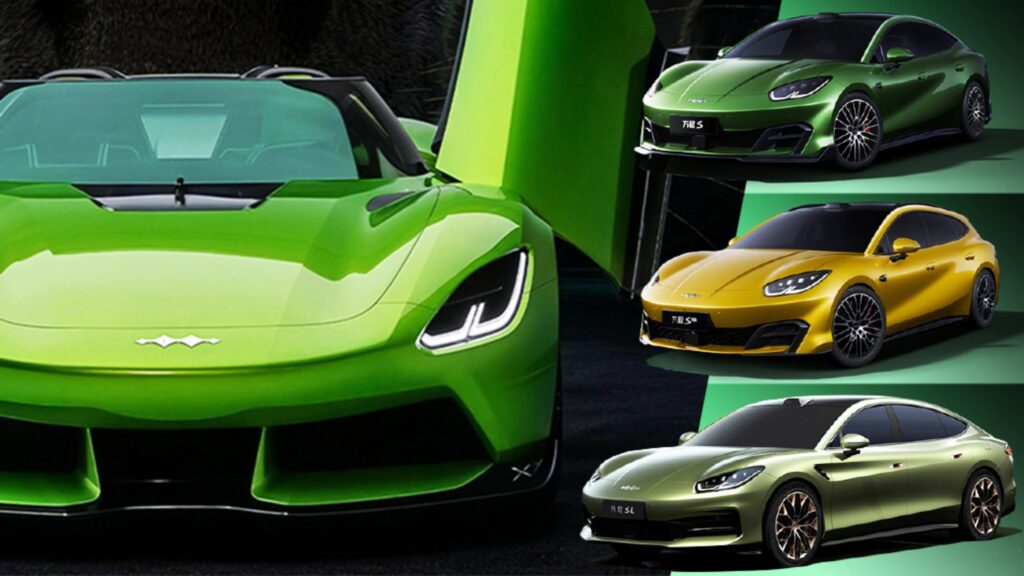
The Formula X is the undisputed showstopper. This open-air supercar evolved from the Super 9 speedster concept from 2024 and features balanced proportions, aggressive LED headlights, upwards opening doors and no less than 19 functional air vents. Overall, the styling language is similar to Denza, a BYD brand with European aspirations.
The sculpted bodywork is made of carbon fiber, as is the custom “monocage” chassis. The exposed two-seater cabin has a futuristic “battle cockpit” wrapped around the driver, and does without the structural bridge of the earlier concept.
The supercar is powered by three electric motors producing a combined 1,000 hp (746 kW / 1,014 PS) and 1,000 Nm (738 lb-ft) of torque. These numbers would be labeled extreme a decade ago, but we now live in a world where BYD’s record-breaking YangWang U9 Xtreme generates a staggering 2,977 hp (2,220 kW / 3,018 PS).
In any case, the specs of the Fang Cheng Bao Formula X still sound quite promising. More importantly, the model is not just a show piece, as BYD announced plans for a market launch in 2027. It will be interesting to see whether the high-performance EV will be offered outside China.
A Hatchback and Two Sedans
Besides the high-performance EV, the Formula series expands into the executive sector. The Formula S is a Taycan-rivaling sedan, the Formula S GT is a hatchback/wagon with a shooting brake stance, and the Formula SL is a high-end version of the aforementioned sedan.
The S and the S GT are effectively two different bodystyles of the same model that could easily wear the Denza emblem. The SL is distinguished by the redesigned bumpers, the more sculpted profile, and the gold-finished 21-inch alloy wheels.
All three models share the same electric foundation, riding on an 800V platform with a tri-motor AWD powertrain generating up to 1,000 horsepower. They also utilize BYD’s DiSus-M magnetic ride control. In terms of footprint, they have an identical wheelbase of 3,100 mm (122,1 inches), and measure over 5,000 mm (196.8 inches) long.
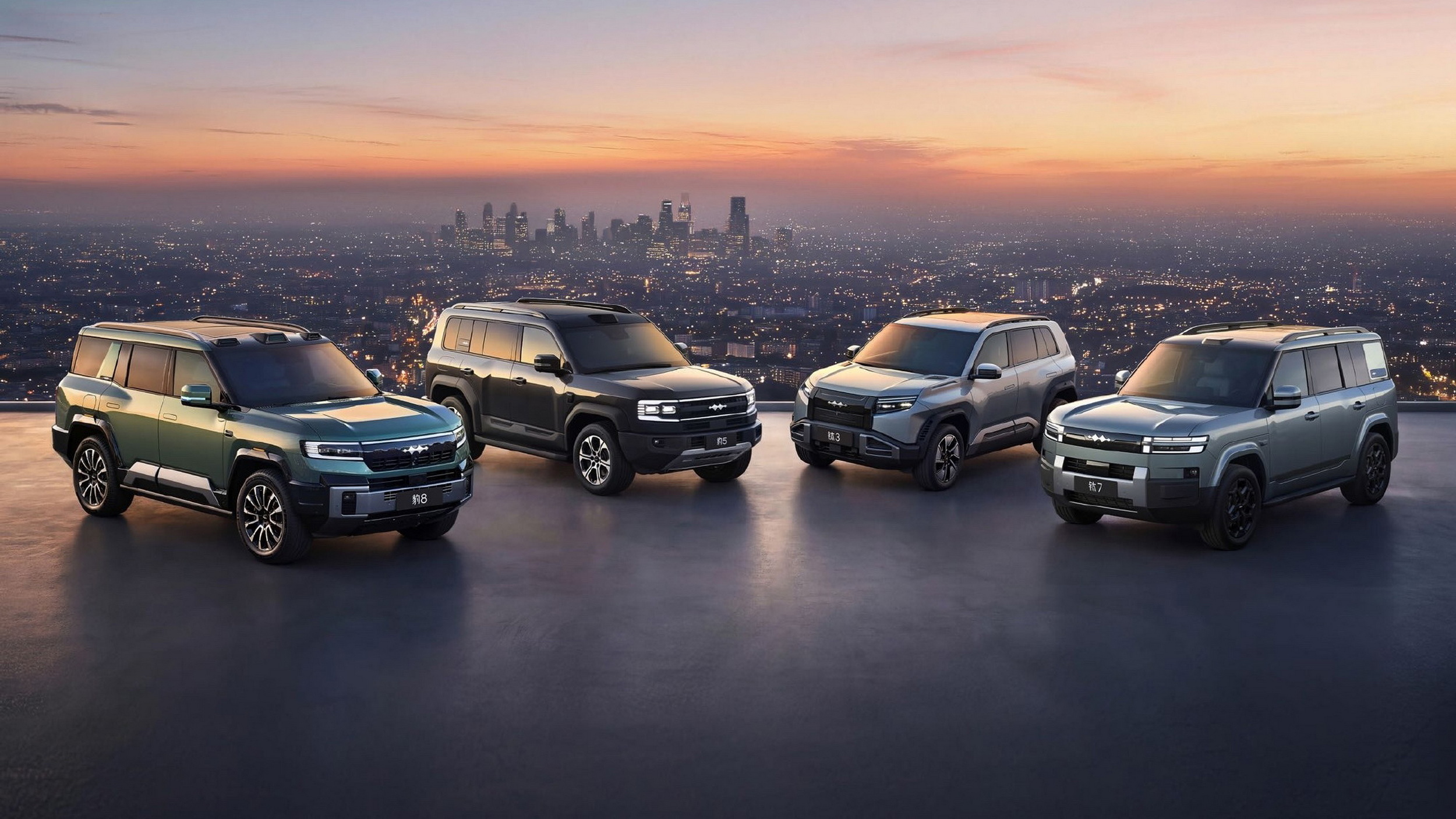
The high-performance EVs are scheduled to hit the roads in late 2026. The low-slung models will expand the Fang Cheng Bao lineup next to the existing Leopard series of SUVs.
The previously SUV-only lineup of the Fang Cheng Bao brand.
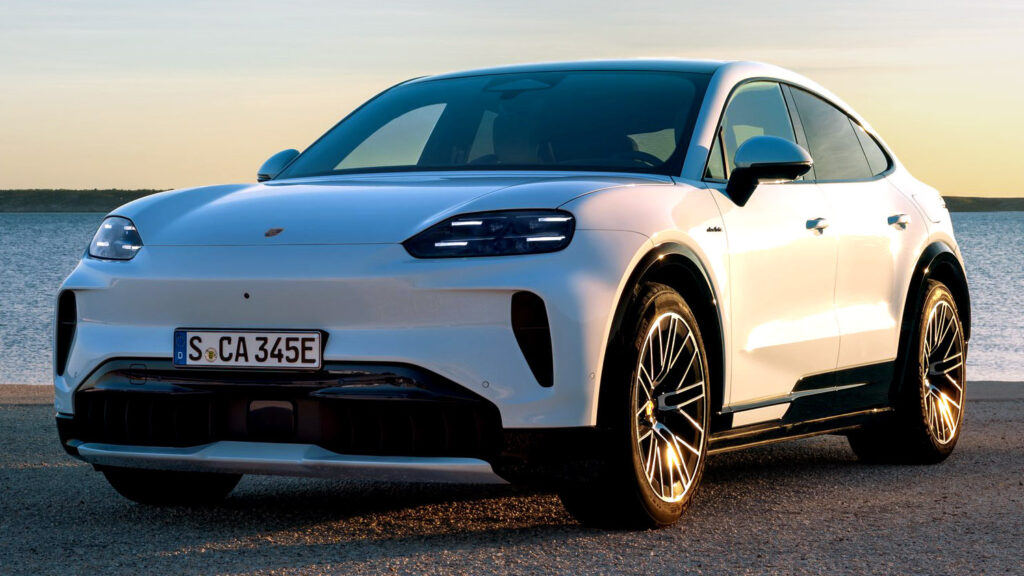
The new Cayenne Coupe Electric arrives with three distinct power levels.
Turbo variant produces 1,139 horsepower and hit 60 mph in 2.4 seconds.
Buyers still get adaptive air suspension and up to 7,700 pounds of towing.
The Porsche Cayenne Coupe has never quite added up on paper. It’s a sportier, less practical version of an SUV meant to add a boatload of practicality to a sporty brand. Now, Porsche is adding another powertrain because buyers want options.
After some 40 percent of U.S. buyers chose the less practical Coupe body style of the Cayenne in 2025, they have an all-new, all-electric version available, and it just so happens to boast up to 1,139 horsepower (850 kW).
We’ve known for a while that this was coming. Porsche already released the Cayenne Electric SUV. This is the Coupe version with its “911-inspired” roofline. It also features a unique roof structure and a coupe-specific windshield, giving it a more steeply raked profile than the SUV.
Under the sheet metal and cramped back seat, you’ll find the same bones as the normal Cayenne Electric. That includes an 800-volt architecture, a 113 kWh battery, and the ability to leverage a 400 kW charger to go from 10-80 percent in under 16 minutes.
The base model starts at 435 hp (325 kW) and 615 lb-ft, which already feels like overkill for a daily SUV. Step up to the Cayenne S Coupe Electric, and you’re looking at 657 hp (490 kW). But the real headline grabber is the Turbo Coupe Electric: up to 1,139 hp (850 kW) and 1,106 lb-ft, with a claimed 0–60 mph (97 km/h) time of just 2.4 seconds. That matches the fastest 911 on sale today, the 911 Turbo S.
Top speeds vary depending on the model, ranging from 143 mph (230 km/h) in the base version to 162 mph (261 km/h) in the Turbo.
That’s not just quick. It’s supercar territory in something that can tow 7,716 lbs (3,500 kg). Adaptive air suspension, optional rear-axle steering, torque vectoring, and Porsche’s trick Active Ride system all make appearances, too. Buyers can also opt for an Off-Road Package that improves approach angles
The Sport Chrono package and a panoramic glass roof are both standard on the Coupe. Charging hardware includes a NACS port on the driver-side rear fender and a J1772 AC port on the passenger side, with a CCS adapter included as standard.
Pricing starts at $113,800 and climbs to $168,000 for the Turbo, with deliveries expected by late summer 2026.
Importantly, Porsche isn’t replacing the gas Cayenne. Or even the plug-in hybrid. They’re all sticking around. That’s key because it makes the brand’s viewpoint clear. Customers can pick and choose whatever type of powertrain they want for the foreseeable future.
Dreame teased an apparent partnership with leading UC Berkeley researchers.
A recent meeting centered on autonomous tech and core modern AI systems.
The company may share further details at a public event later this month.
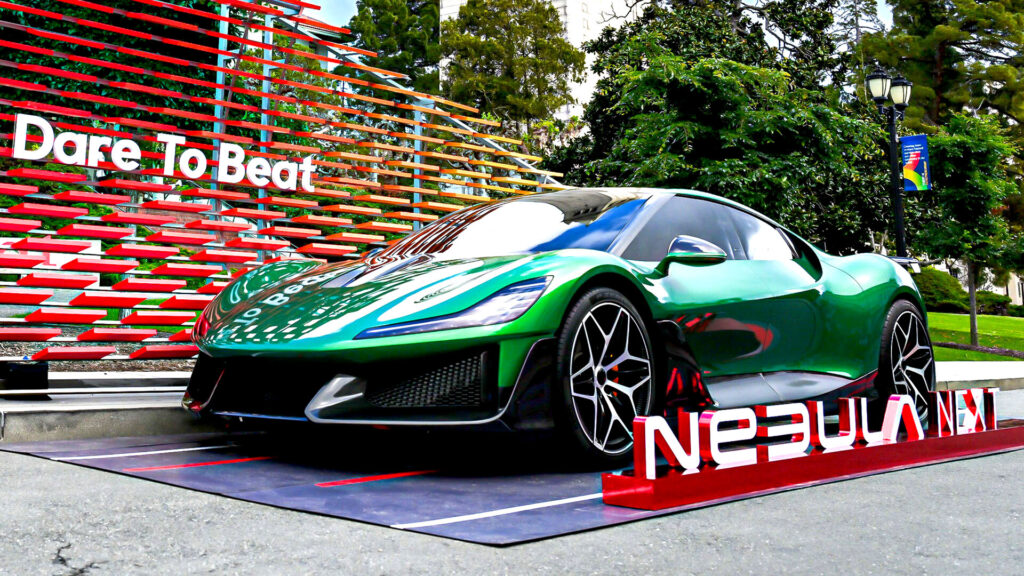
Dreame Nebula Next Auto is looking to make a splash in the United States and they’re hosting an event in San Francisco later this month. However, they’re not stopping there as the company has “deepened its engagement with leading academic institutions.”
The vacuum giant turned automaker pointed to a recent event at the University of California, Berkeley suggesting it could help accelerate the “development of AI-defined vehicles and next-generation autonomous systems.” As part of the “engagement,” engineers met with Berkeley researchers specializing in autonomous control systems, intelligent transportation, and artificial intelligence.
The group discussed “translating advanced research into real-world vehicle systems, with particular emphasis on safety, control and full-stack AI integration.” However, it remains unclear if this was a one-off event or part of a deeper collaboration.
The company implied it’s the latter as they said the “visit forms part of a broader strategy to anchor Nebula Next’s development in deep technical collaboration. By working closely with academic experts, the company is strengthening its approach to autonomous driving, vehicle intelligence and system-level engineering.”
Dreame is best-known for vacuums and pool cleaners, but the company showcased the Nebula Next 01 concept at CES. Billed as a “four-door electric hyper-sedan,” the firm claimed the model had over 1,973 hp (1,471 kW / 2,000 PS) and could accelerate from 0-62 mph (0-100 km/h) in 1.8 seconds.
While the Chinese company botched the introduction in January, it appears they brought the concept to the Berkley campus as a few pictures surfaced online. That detail suggests the event might have been more show than anything else.
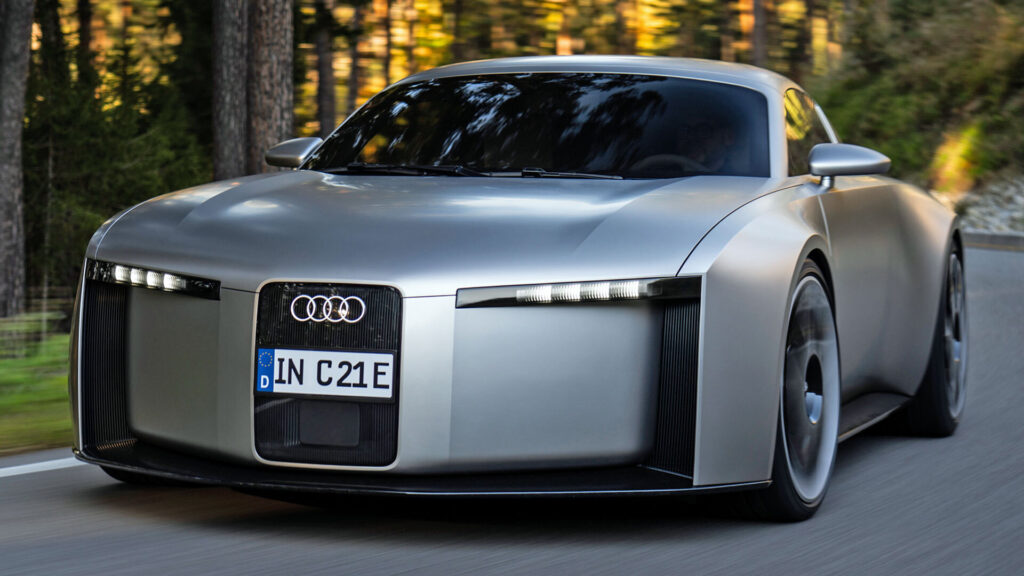
Affordability is in vogue these days, but apparently not at Audi. Quite the opposite as the brand is killing off the entry-level A1 and Q2.
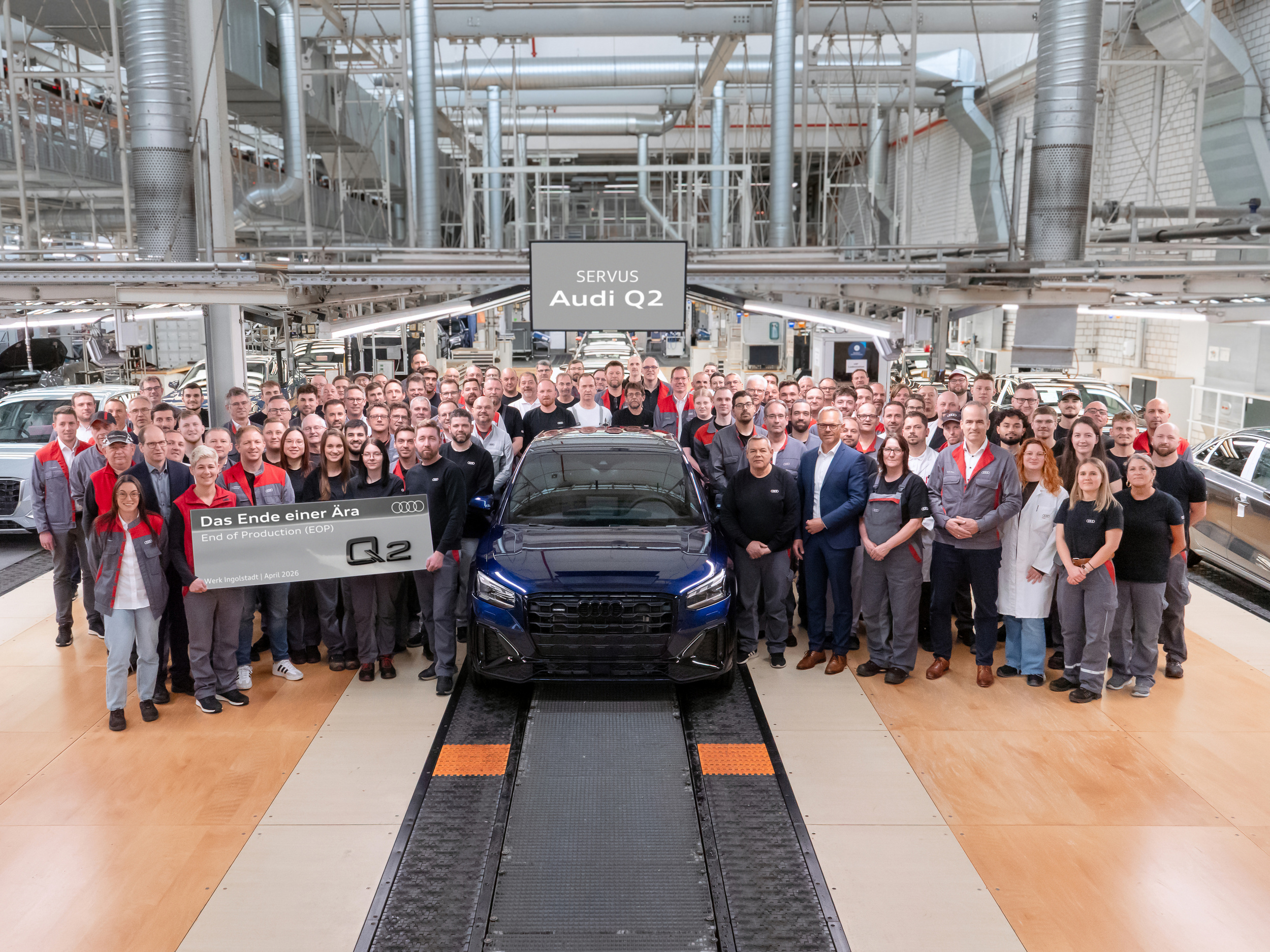
Tucked in an announcement about their assembly network, Audi revealed production of the Q2 will end in Ingolstadt this April. Its death will apparently make room for the upcoming A2 e-tron.
While the Q2 was never offered in the United States, the compact crossover was introduced in 2016 and started at €29,000 ($33,862) in Germany, which made it significantly cheaper than the €44,600 ($52,066) Q3. It was relatively popular as consumers snapped up 887,231 units over the past decade. However, sales dropped off in recent years.
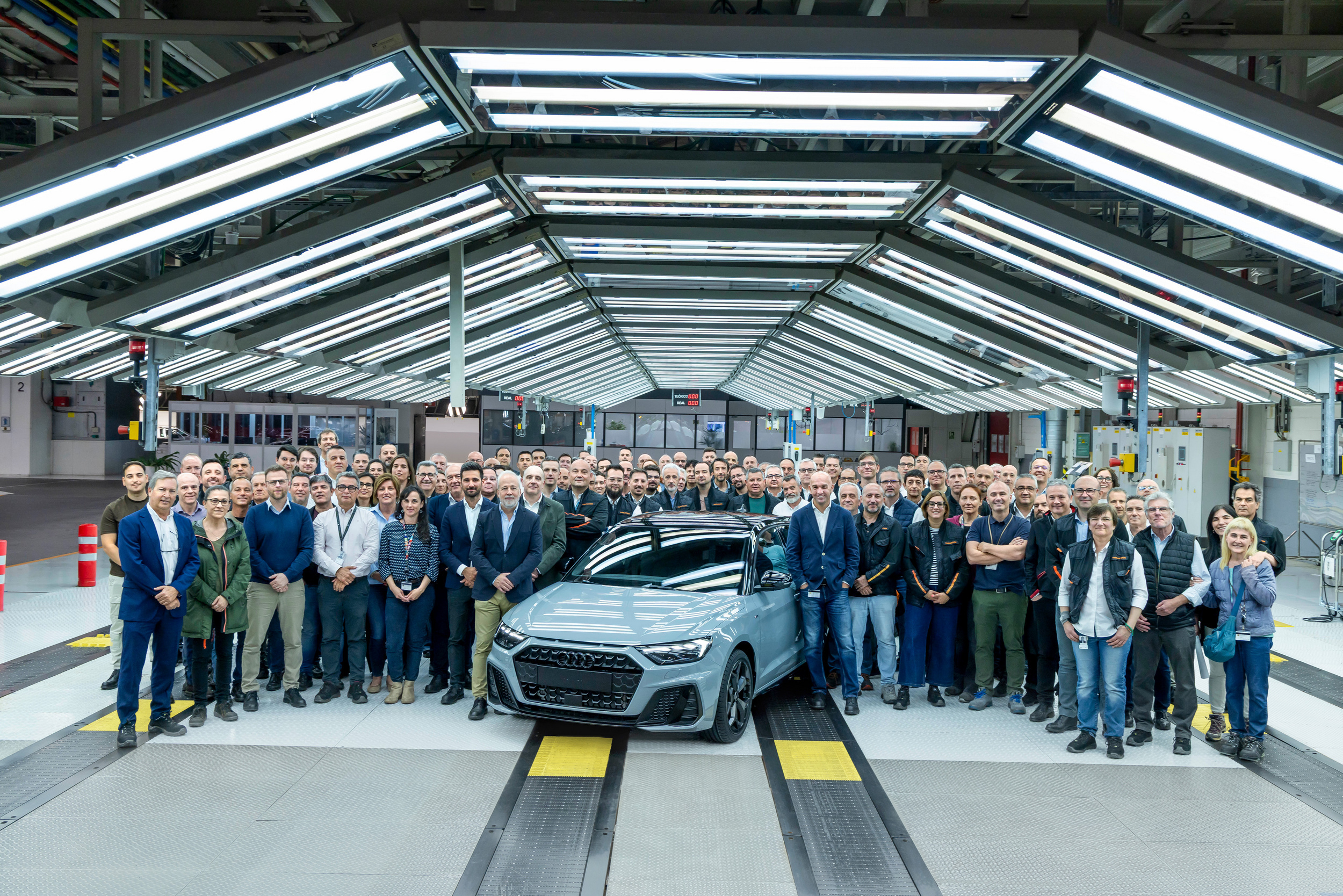
The Q2 isn’t the only model going away as A1 production is “winding down” in Martorell, Spain. The entry-level hatchback was introduced in 2010 and generated 1,389,658 sales over two generations.
The latest version started at €22,950 ($26,792) and was offered in Sportback and Allstreet guise. Like the Q2, the A1 proved successful at launch but sales tapered off in the past few years.
It’s not all bad news as the two models will effectively be replaced by the A2 e-tron. The compact EV debuts this fall and is expected to ride on the MEB+ platform that underpins the ID.3 Neo. The mainstream electric hatch recently debuted with 58 and 79 kWh battery packs as well as a WLTP range of up to 391 miles (630 km).
Electric Sports Car Arrives In 2027
Besides announcing the death of the A1 and Q2, Audi confirmed their electric sports car will go into production in 2027. It will be built at their Böllinger Höfe site, which specializes in small-series production.
The model was previewed by the Concept C and will essentially be Audi’s version of the Porsche 718 Boxster and Cayman. As you may recall, it was a two-seat sports car with a retractable hardtop, a minimalist interior, and an all-new design language.
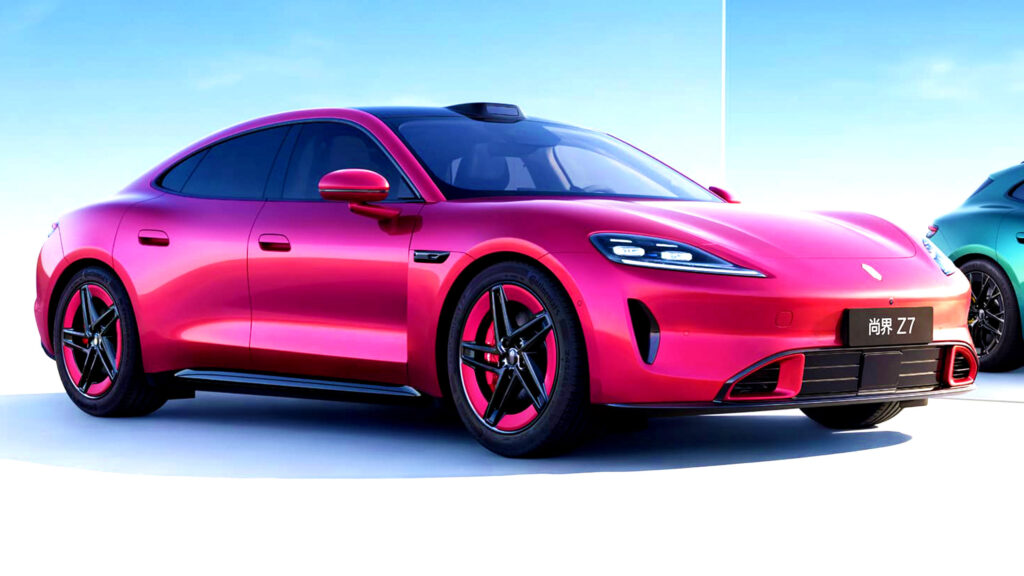
SAIC’s new Z7 starts at just $32K, undercutting Porsche’s Taycan dramatically.
The dual-motor Z7 Ultra hits 62 mph (100km/h) in a Taycan-baiting 3.4 seconds.
A Touring-body Z7T variant mirrors the Cross Turismo version of the Taycan.
China continues to cement its position as the home of the cut-price EV, and the latest proof is SAIC’s bargain-bin Porsche Taycan lookalike. The company has confirmed that its Z7 will start at just 219,800 yuan ($32,200), which puts it in the realm of a mid-range Toyota Camry in the US. That is even less than expected, and a very, very long way below the Taycan’s 918,000 yuan ($134,500) starting point.
In fact, you could easily spend more with just a few options in Porsche’s configurator. There is a reason why Jim Farley has been warning about the pressure coming from China.
Unveiled earlier this year as a rival to the hugely popular Xiaomi SU7, the Z7 is making its public debut at this week’s Beijing Auto Show, where SAIC has also confirmed several variants. The standard sedan keeps things simple with the Z7 name, while the wagon version goes by Z7T. Put something like this in a showroom, and it does rather leave the Taycan looking like an expensive way to buy a badge.
The entry-level Z7 uses a rear-mounted electric motor with 359 hp and an 81 kWh battery pack. SAIC will also offer it with a 100 kWh pack and a dual-motor setup rated at 590 hp. In that form, it can reach 100 km/h (62 mph) in 3.44 seconds, which is not hanging about.
For comparison, the base Taycan at 918,000 yuan ($134,500) has 408 PS (402 hp) and covers 0 to 100 km/h in 4.8 seconds. The Taycan 4 costs 1,038,000 yuan ($152,100), has 517 PS (510 hp), and does the same run in 3.9 seconds. The Taycan GTS has 700 PS (690 hp), reaches 0 to 100 km/h in 3.3 seconds, and costs 1,298,000 yuan ($190,000). Meanwhile, the Taycan Turbo has 884 PS (872 hp), gets to 0 to 100 km/h in 2.7 seconds, and starts at 1,568,000 yuan ($230,000).
Cut-Price, But Promising Specs
The base model, known as the Z7 Max, is priced from 219,800 yuan ($32,200) and offers a solid 732 km (455 miles) range. Step up to the Z7 Max+, and you get the larger 100 kWh battery, stretching range to 905 km (562 miles) while nudging the price to 249,800 yuan ($36,600). Above that sits the dual-motor Z7 Ultra, also with the 100 kWh pack, delivering 791 km (491 miles) of range from 299,800 yuan ($43,900).
Three versions of the Z7T sports wagon are also offered, also badged the Z7T Max, Z7T Max+, and Z7T Ultra. The cheapest is priced at 229,800 yuan ($33,700) with the 81 kWh battery and 712 km (442 miles) of range, while the Z7T Max+ adds the 100 kWh pack, boosting the range to 873 km (542 miles). At 259,800 yuan ($38,000), it’s still very affordable. Then there’s the Z7T Ultra, rated at 776 km (482 miles) and priced from 309,800 yuan ($45,400).
All variants are built under SAIC’s Harmony Intelligent Mobility Alliance, led by Huawei, and come heavily loaded. Expect features like LiDAR and the brand’s latest intelligent driving system, which, on paper at least, puts it right up against far more expensive rivals.
Fiat dealers are offering huge discounts on the slow-selling 500e.
If you know where to look, you can score more than $15,000 in savings.
It’s almost May, but Fiat still hasn’t introduced a 2026 500e yet.
Fiat’s return to America was anything but triumphant, but things have only gotten worse since then. While the brand once offered an assortment of models including an underrated 124 Spider, they’re down to a single EV.
This was always going to be an uphill battle, but the situation has gotten significantly worse since the elimination of the federal tax credit. A quick look at the sales chart reveals a brutal first quarter where the 500e found a mere 68 buyers.
That’s less than one per day and 23 per month. Things were so bad that the electric hatchback was outsold by the 500X, which was killed off in 2023.
A quick search online suggests dealers have over 100 units in stock and that’s roughly five months worth of supply. Given this, it’s not surprising there are huge discounts on 2024 and 2025 models.
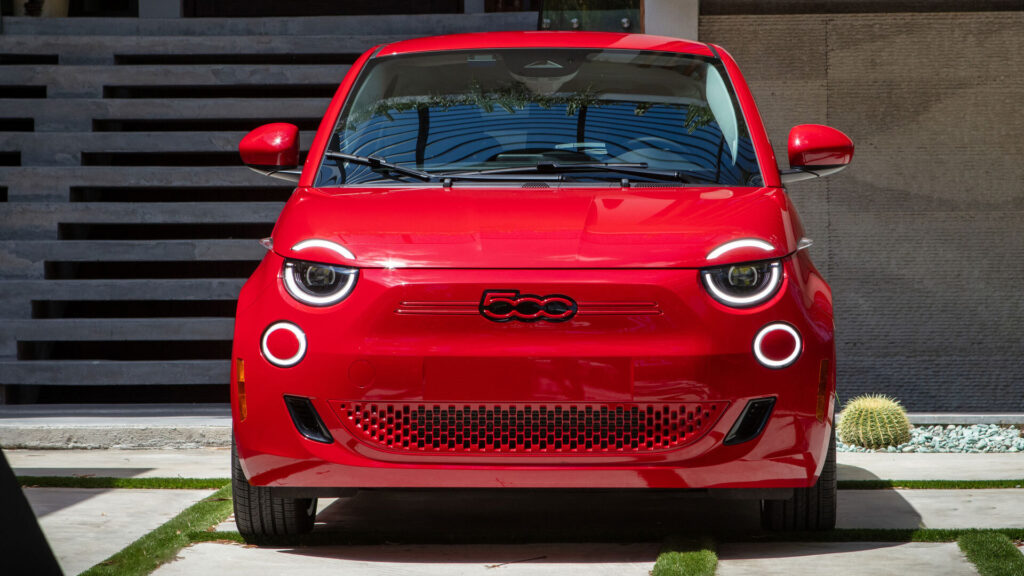
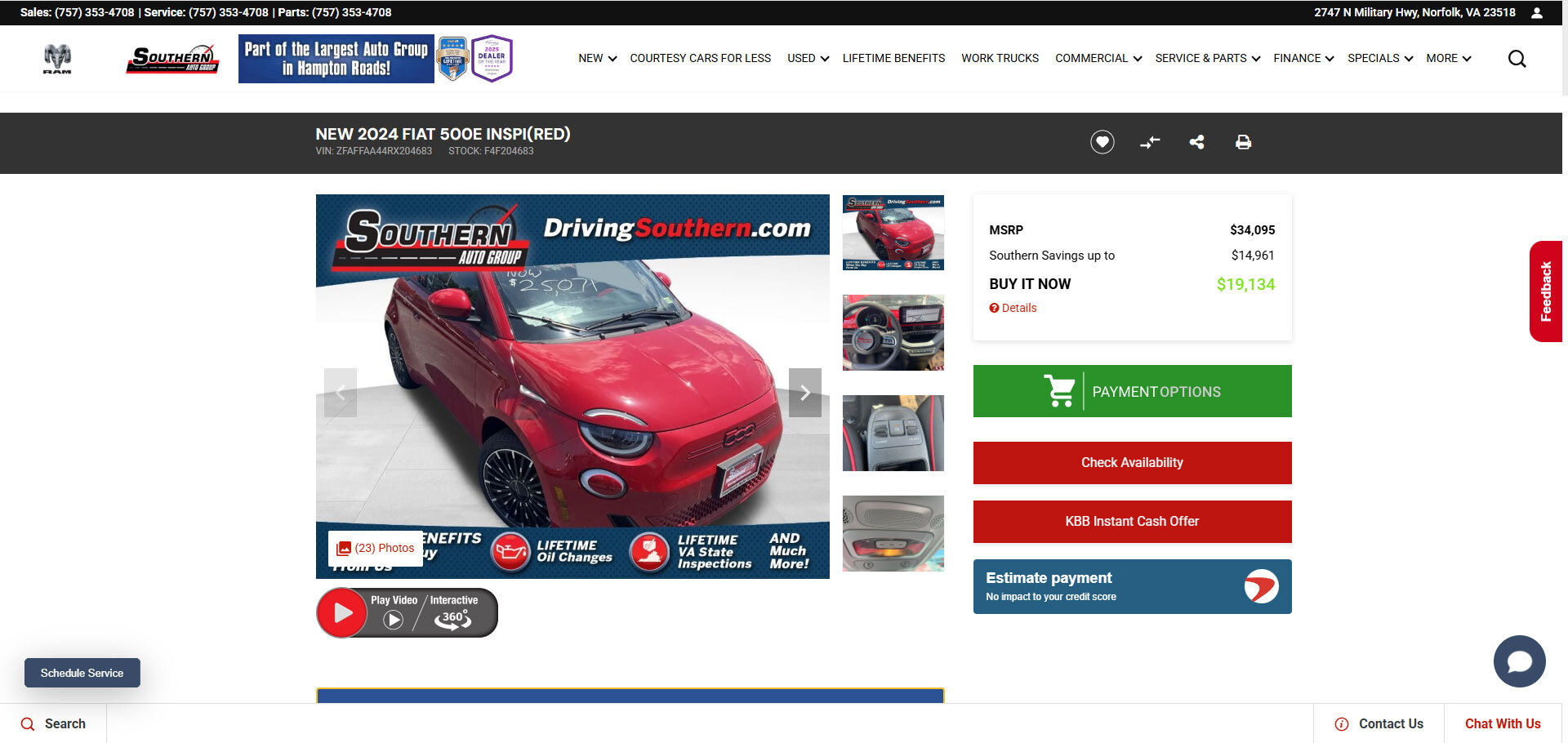
The cheapest car appears to be a 2024 500e INSPI(RED) at Southern Dodge Chrysler Jeep Ram Fiat of Norfolk, Virginia. The model originally stickered for $34,095, but the dealer has it listed for $19,134. That’s a discount of $14,961 and pictures reveal the dealer had previously tried to sell it for $25,071 but didn’t get any takers.
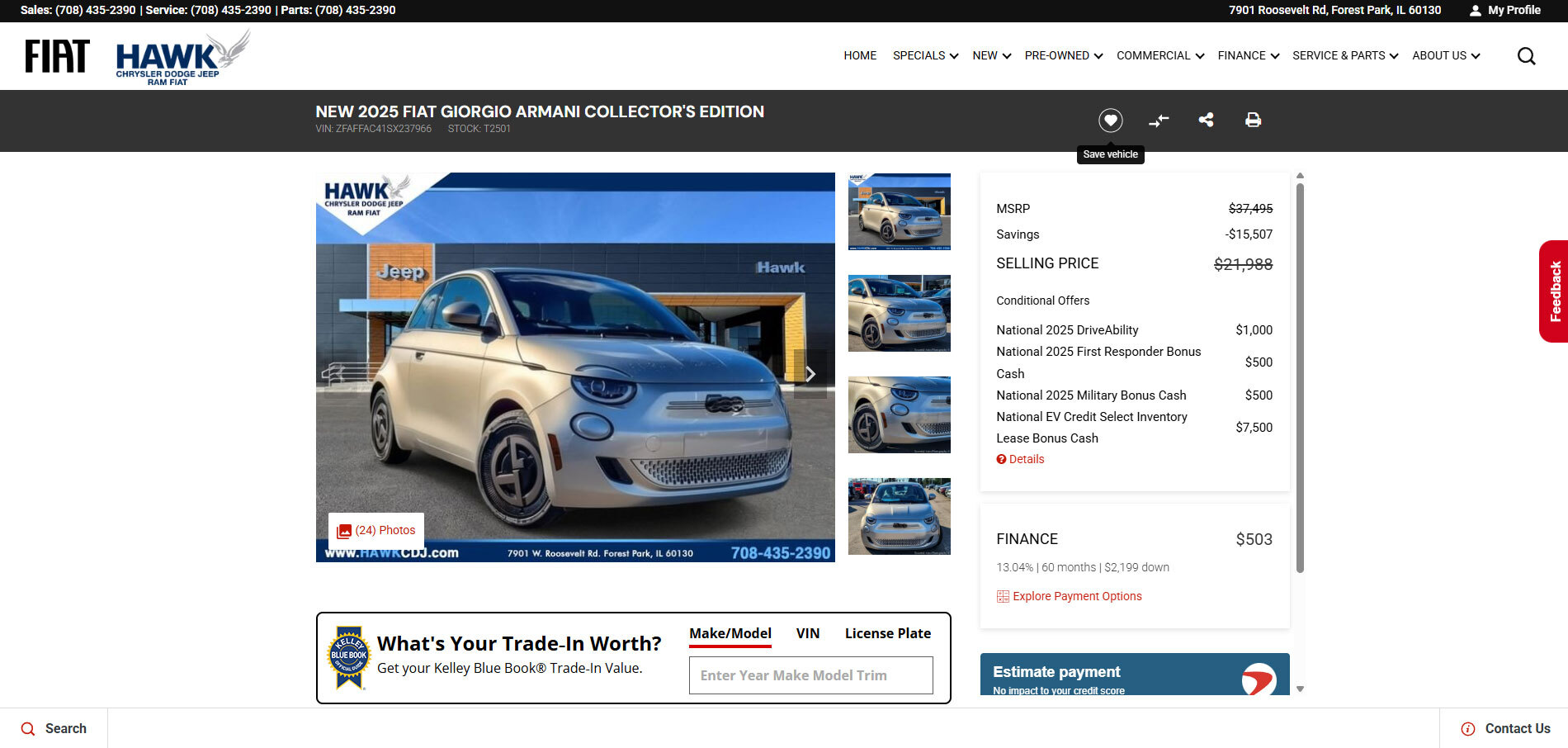
If you’re in the mood for something newer, Illinois’ Hawk Chrysler Dodge Jeep Ram Fiat has a 2025 500e Armani Edition listed for $21,988. That’s $15,507 below the original sticker price of $37,495.
Those are far from the only examples as Taverna Chrysler Dodge Jeep Ram Fiat in Florida has an Armani Edition with a $12,254 discount. It’s also worth noting Stellantis appears to be offering a $7,500 national incentive to help make up for the aforementioned tax credit.
Lexus is preparing a three-row electric flagship to take on Volvo and Hyundai rivals.
The TZ shares its overall shape and proportions with the new Toyota Highlander EV.
Powertrain choices may follow Toyota’s setup, though upgrades are likely.
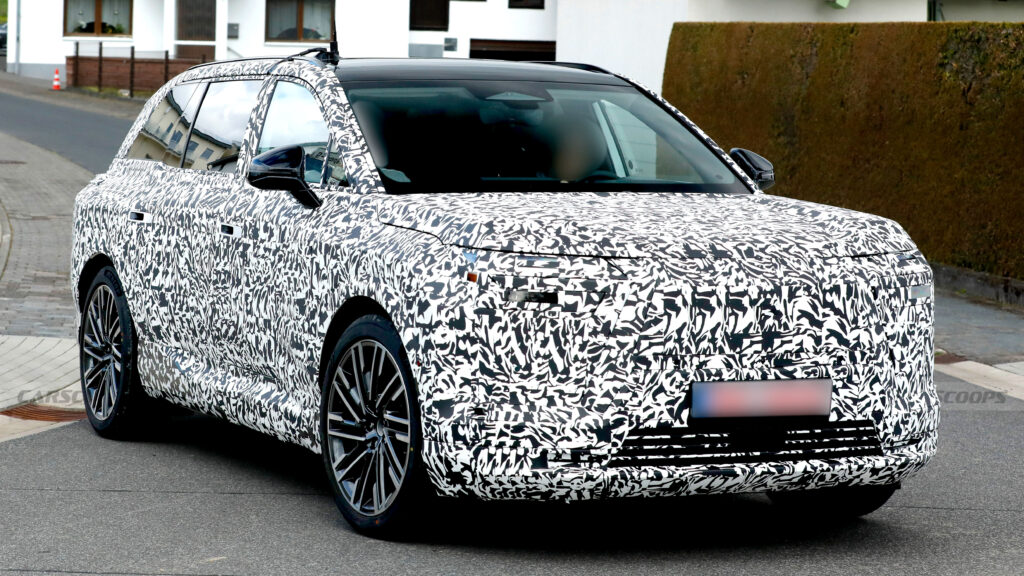
After plenty of speculation about its existence, Lexus’s long-expected electric three-row SUV has surfaced in the open at last. Spied testing for the first time, it is, at heart, a more polished take on the new Toyota Highlander EV, positioned to square up against the Hyundai Ioniq 9, Kia EV9, and Volvo EX90, with a ‘9’ set to feature in its name.
While this prototype is covered from head to toe in camouflage, we can see it retains the same overall shape and profile as the Highlander, though Lexus has worked over the details. Up front, for example, there are split headlights and a cleaner, less cluttered bumper design.
Cast your eyes down the sides of the TZ, and you’ll notice the wheel arches are slightly more square than they are on the Highlander, and it sits on new wheels, too. The door handles and side windows also look the same as the Toyotas’, although the door skins look a little different.
The rear remains carefully disguised, offering little beyond hints. The taillights appear to mirror the Highlander’s general shape, possibly stretching further down the sides, though for now, most of the detail stays under wraps.
Baldauf
With a few possible exceptions due to the different body panels, the Lexus TZ should have largely the same dimensions as the Highlander. That means it should be about 198.8 inches long, 78.3 inches wide, and stand 67.3 inches, complete with a 120.1-inch wheelbase.
With a few allowances for its unique bodywork, the Lexus TZ or TZ9 if the naming structure holds, is expected to mirror the Highlander’s footprint quite closely. That points to an overall length of roughly 198.8 inches, a width of 78.3 inches, and a height of 67.3 inches, riding on a 120.1-inch wheelbase.
What About The Powertrain?
As for what sits underneath, the safest assumption is that Lexus will lean heavily on Toyota’s existing hardware. In Highlander form, the base setup pairs a 77 kWh battery with a single motor producing 221 hp and 198 lb-ft (268 Nm). Step up to all-wheel drive and output rises to 338 hp and 323 lb-ft (438 Nm), alongside a larger 95.8 kWh battery and a claimed range of up to 320 miles (515 km).
SB-Medien
Although those figures would pass muster for a Lexus, the competition has already moved on. The Volvo EX90 carries a 111 kWh battery, while the Hyundai Ioniq 9 comes in at 110.3 kWh, both pushing for longer real-world range. Against that backdrop, a larger pack for the TZ would not go amiss.
A Familiar Lexus Cabin
We don’t yet have any photos of the TZ’s interior, though a couple of shots show the door panels. They’re clearly different from the doors of the Highlander and appear to have the same electric door release button as other Lexus models.
While some reports suggest it could be built alongside the Highlander EV at Toyota’s plant in Georgetown, Kentucky, others point to production in Japan with exports to global markets, including the US. Either way, it is expected to debut toward the end of the year or in early 2027.
The Rivian R2 has gone into production in Normal, Illinois.
First customer deliveries are set to begin later this spring.
Crossover starts at $57,990, but cheaper variants are coming.
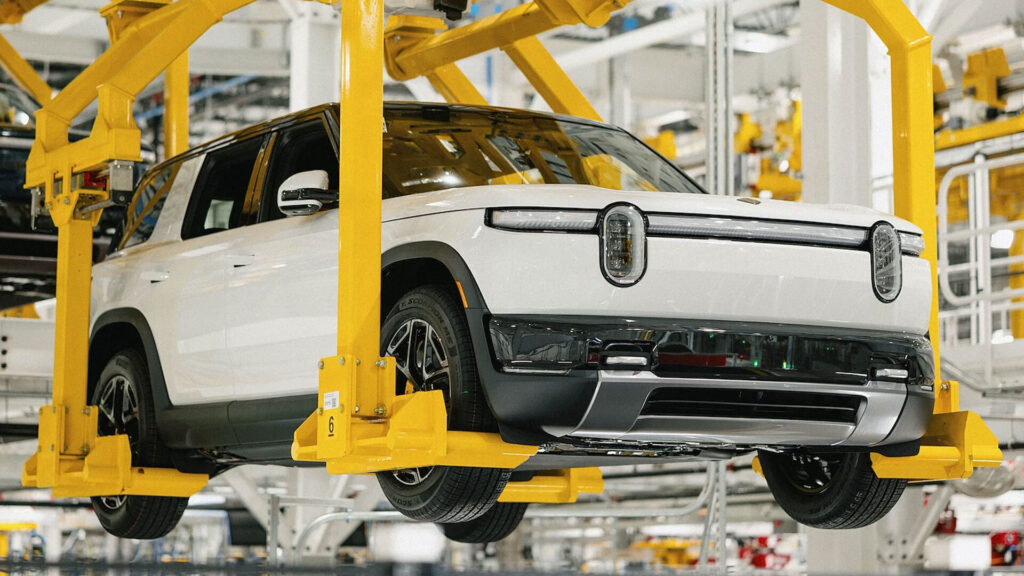
A little over two years after unveiling the R2 concept, the production model is now being built in Normal, Illinois. That’s particularly impressive considering a tornado hit and damaged the facility last Friday.
Rivian didn’t have much to say about the production process itself, but noted the first vehicles will undergo a series of final quality and validation checks. If everything pans out, the first customer deliveries will begin later this spring.
The automaker called production a “milestone moment” for the R2 and said it means the “manufacturing process has been verified, every weld has been checked, every software string has been validated, and every interior material has been scrutinized to meet the high bar we set for ourselves and for you, our community.”
Rivian’s COO Javier Varela went further as he said the R2 “represents a major advance in engineering excellence and manufacturing efficiency, driving meaningful improvements in cost and quality.” Those sentiments were echoed by CEO RJ Scaringe, who called the vehicle “incredible.” The executive added he can’t wait until customers get their hands on the EV.
The R2 is being launched in $57,990 Performance guise, which features a dual-motor all-wheel drive system developing 656 hp (489 kW / 665 PS) and 609 lb-ft (825 Nm) of torque. It enables the model to accelerate from 0–60 mph (0-96 km/h) in as little as 3.6 seconds and have a range of up to 330 miles (531 km).
The range-topping variant comes nicely equipped with a Black Crater Signature interior with Birch wood trim as well as 12-way power front seats with heating and ventilation. They’re joined by heated rear seats, a heated steering wheel, and a nine-speaker premium audio system.
Early models also come with a Launch Package, which includes a lifetime subscription to Autonomy+ as well as a towing package that enables the crossover to haul 4,400 lb (1,996 kg). Buyers will also find a green anodized key fob as well as an available Launch Green paint job.
A more affordable R2 Premium is scheduled to follow later this year. It starts at $53,990 and has a dual-motor all-wheel drive system with 450 hp (356 kW / 456 PS) and 537 lb-ft (727 Nm) of torque.
The R2 Standard lineup is set to arrive in 2027 and offer Short and Long Range variants. The former will cost “around $45,000” and have a range in excess of 275 miles (443 km).
The motorcycle is powered by a 7.1 kWh lithium-ion battery with a rear motor.
Flagship versions of the two-wheeler produce up to 37 hp and 350 lb-ft.
While the bikes look appealing, they cost more than a loaded BMW S 1000 RR.
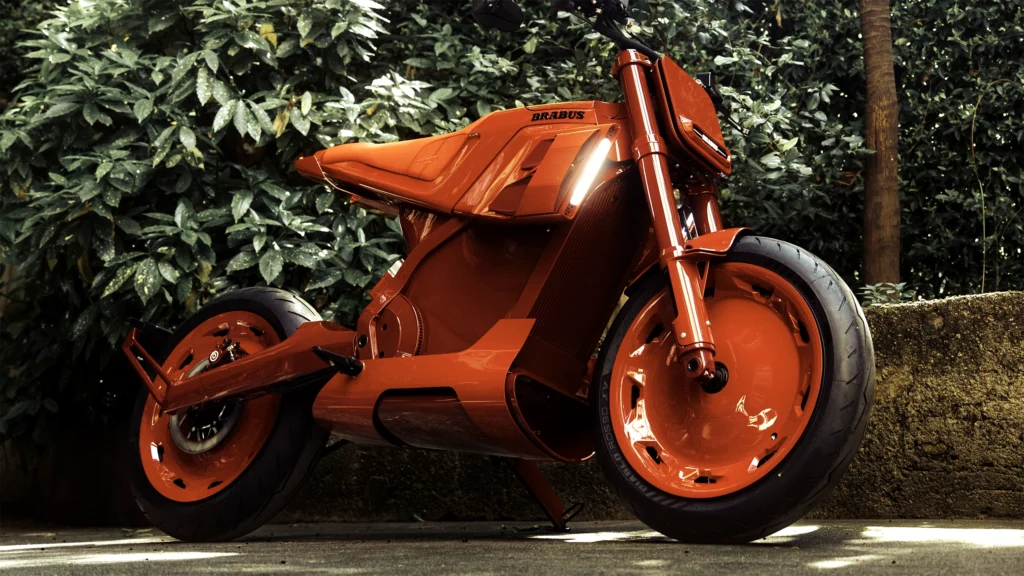
Brabus has taken a break from building V8-powered monsters with enough torque to twist the planet, and has partnered with a French motorcycle manufacturer to build three all-electric bikes. Dubbed the DAB 1a Brabus, Brabus Urban E, and Brabus Urban E First Edition, they appear well-suited for inner-city use.
All three are based on DAB’s existing 1a but offer different performance levels and unique designs. The DAB 1a Brabus is finished in black and features exposed carbon fiber on the belly pan, front fender, and engine cover inserts. It also rocks matte black wheel covers and an Alcantara seat with gray stitching, giving it a low-profile and stealthy look.
Power comes courtesy of a 7.1 kWh lithium-ion battery, driving a rear-mounted electric motor with 31 hp and 291 lb-ft (395 Nm) of torque. Brabus says the bike can travel up to 93 mph (150 km/h) on a charge and run through to 75 mph (120 km/h), while it can be charged from 20 to 100 percent through a standard household plug in about 3 hours.
Brabus DAB 1a
Then there’s the Brabus Urban E. It ups the ante with an upgraded motor delivering 37 hp and 350 lb-ft (475 Nm). The Urban E also introduces carbon-fiber air ducts on the left and around the motor to help keep the electric motor cool, while the battery pack is untouched.
Style And Power
Other upgrades include newly painted gloss-black parts with red accents and carbon-fiber pieces. The wheel covers are also made from carbon fiber, vertical DRLs have been added, and there’s a Supermoto-style handlebar with CNC-machined aluminum levers. Brabus has also added keyless start to this model and included several different riding modes: Eco, Street, Sport, Nitrous, and Reverse. What’s more, there’s also a fully adjustable suspension and upgraded Brembo brakes.
Brabus Urban E
Rounding out the trio is the Urban E First Edition. It has all the same features as the regular Urban E, but is offered in four distinctive colors: Peetch, Desert Sand, Superviolet, and Fusion Red. Each color will be limited to just 10 units.
While the designs of the bikes are quite appealing, their prices aren’t so pretty. The base DAB 1a Brabus starts at €16,590 ($19,500), the Urban E is priced from €20,800 ($24,400), and the First Edition is €32,500 ($38,100). To put those figures into perspective, you can get a brand new BMW S 1000 RR, a top-notch superbike that comes with no less than 215 hp, loaded with features for around €25,000 ($29,000). Guess it’s another case of horses for courses…
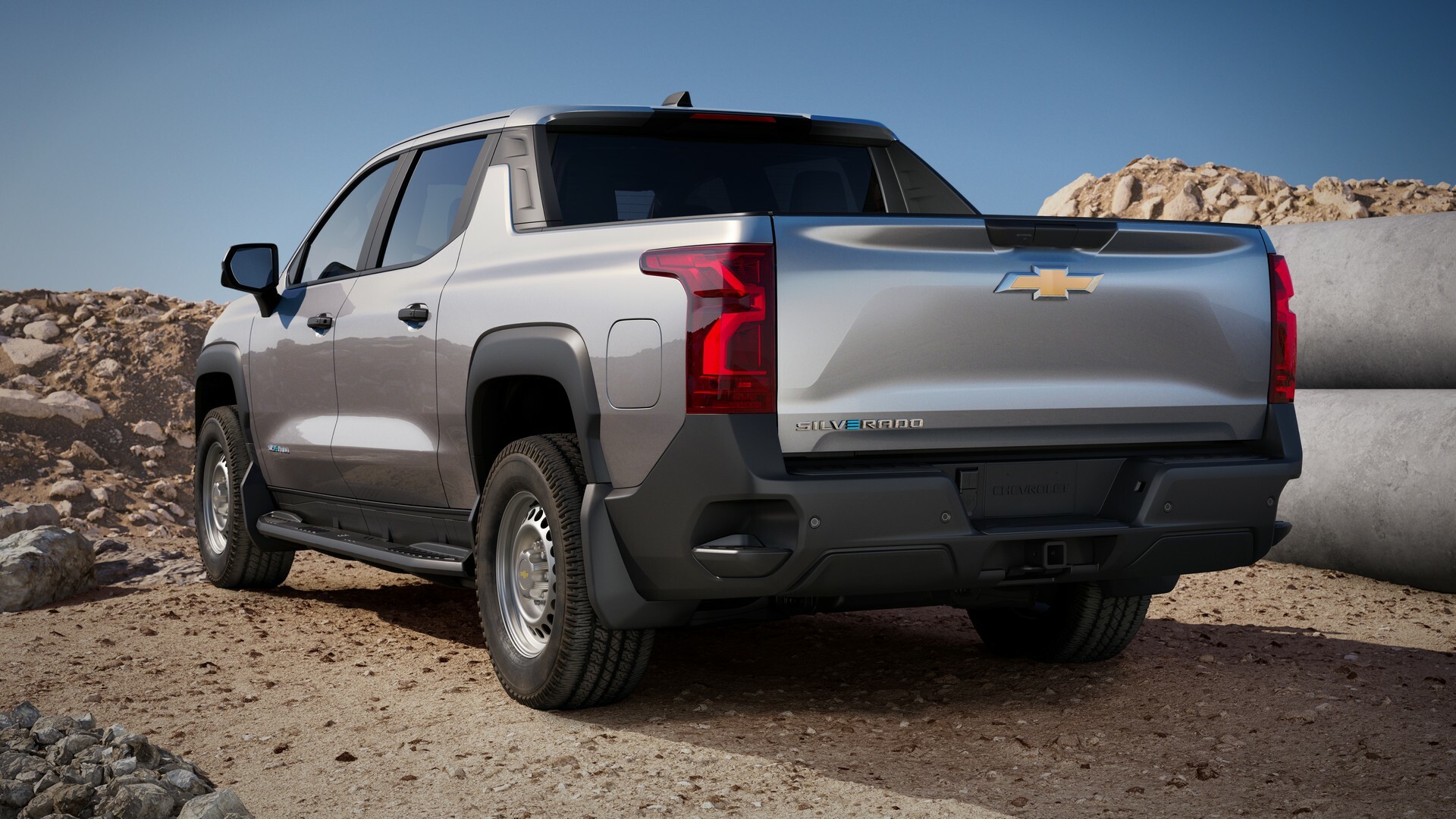
GM reportedly pauses next-gen full-size electric truck development.
Gas V8s, hybrids and range extenders are suddenly more important.
Current-generation EV trucks stay alive, but future refresh looks hazy.
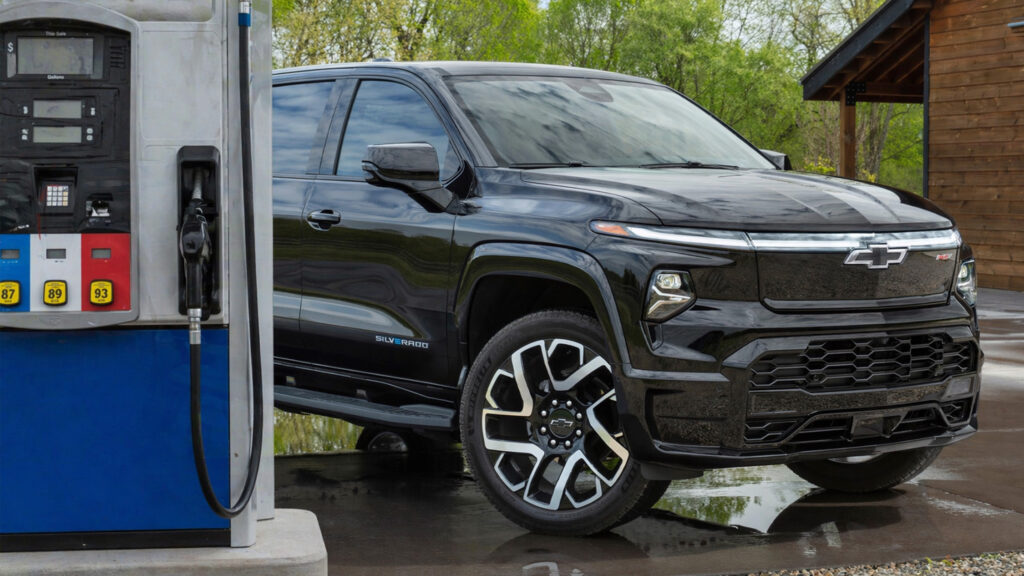
General Motors spent years telling us electric pickups were the next great American migration. Now the convoy appears to have missed an exit because reports claim GM has indefinitely paused development of its next-generation full-size EV trucks.
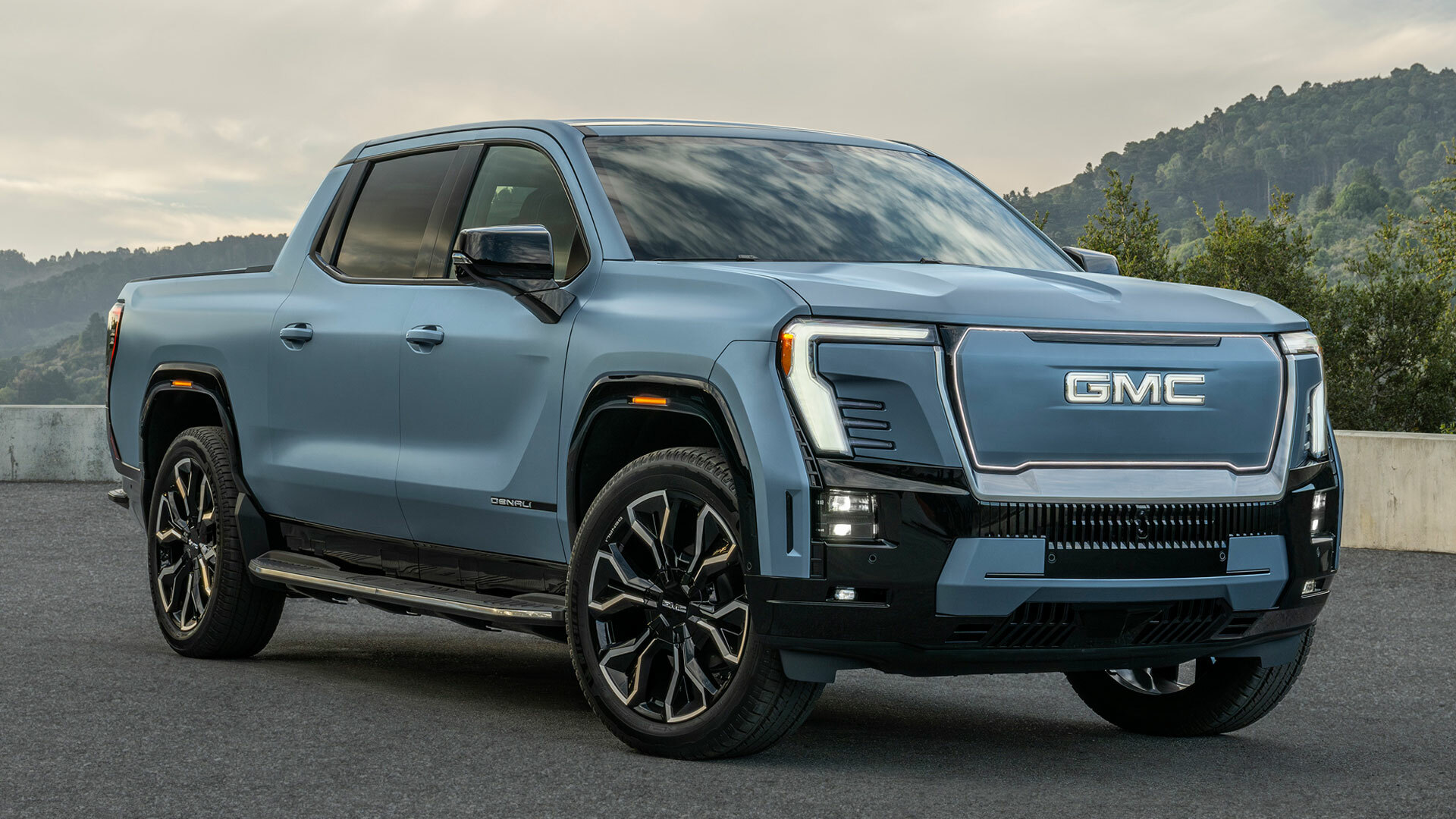
According to a piece by Crain’s Detroit, GM had been developing updated and lower-cost successors for the electric Chevrolet Silverado EV, GMC Sierra EV, Cadillac Escalade IQ, and GMC Hummer EV lineup, with production previously targeted for 2028.
But suppliers were reportedly told the program has been halted, with no replacement timeline offered. Industry watchers now don’t expect fresh full-size GM electric trucks before 2030, and they could end up arriving much later.
That doesn’t mean GM’s current EV trucks are dead. Existing models will continue rolling out of the under-utlilized Factory Zero in Detroit-Hamtramck, the story says, and experts think the Escalade IQ is important enough to Cadillac’s plans to keep in production. But it does suggest GM wants to spend more R&D time and money on products customers are actually buying in larger numbers right now. Ones that run on gasoline.
The company is said to be redirecting resources toward its upcoming T1-2 internal-combustion truck platform, which is expected to power future full-size pickups and SUVs. Orion Assembly, once earmarked for electric trucks, and now thriving after switching to ICE versions, is now reportedly preparing for future gas-powered models.
Hybrids And Range Extenders
Crain’s Detroit sources also claim plug-in hybrid versions of the Silverado and Sierra are in the mix, while GM has discussed range-extended EV tech with suppliers. It’s an idea rivals are already chasing. Ram is expected to launch a range-extended pickup first, while Ford has signaled similar plans after backing away from the idea of renewing the all-electric F-150 Lightning.
No More Federal Handouts, Or Directives
None of this is happening in a vacuum. EV tax credits have been rolled back, emissions rules have softened, and demand for expensive electric pickups hasn’t exactly set sales charts on fire. Big batteries and six-figure stickers remain a hard sell for many truck buyers, though GM refused to comment on the report that its EV plans have been axed.
“We have not disclosed any potential plans or timing for any next-generation battery electric trucks and we’re not going to engage in speculation,” a GM spokesperson told Crain’s Detroit.
GM still says the long-term destination is electric, and it probably is. But right now, Detroit’s most profitable vehicles are trucks, and trucks and their buyers can’t kick their gasoline habit.
The plan leans on overseas markets that barely know the brand exists
Plug-in hybrids and BEVs would make up 60 percent of that volume
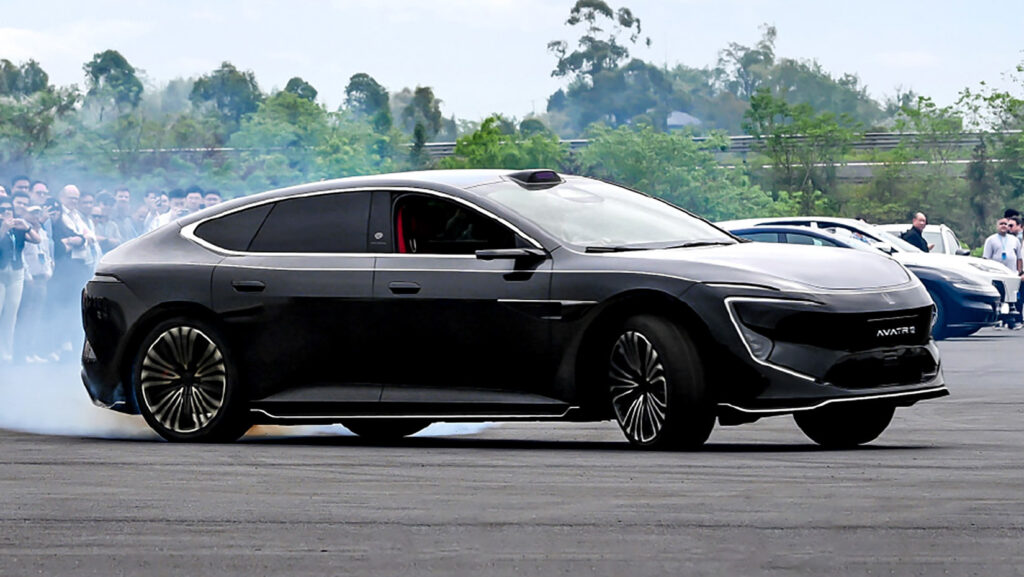
Changan operates brands like Nevo, Deepal, Volga, Avatr, and Kaicene.
Last year, BYD and Geely were the only two Chinese automakers to firmly establish themselves among the planet’s top 10 largest car manufacturers by volume. By 2030, fellow Chinese brand Changan aims to join them and grow its global sales by more than two-thirds.
Heading into the Beijing Auto Show, Changan Automobile says it is aiming for 5 million annual sales by 2030, with a fallback target of 4 million if conditions tighten. Reaching the higher figure would make it the world’s fifth-largest carmaker based on 2025 volumes, putting it ahead of Ford at 4.4 million, Honda at 3.5 million, and Nissan at 3.2 million. The plan leans heavily on electrification, with plug-in hybrids and battery-electric models expected to account for 60% of total sales.
The key to Changan’s desired growth will be overseas markets. Last year, it sold 638,000 vehicles outside China, but by 2030, it aims to increase this figure to between 1.4 million and 1.8 million units. Among the brands currently operated by Changan include Nevo, Deepal, Volga, Avatr, and Kaicene, while it also has joint ventures with Mazda and Ford.
Chinese Rivals Could Also Climb The Charts
Of course, Changan isn’t the only Chinese carmaker that wants to see more sales in the coming years. Geely, which ended 2025 as the world’s eighth largest car manufacturer with 4.12 million vehicles, is targeting 6.5 million sales in 2030. Additionally, BYD will be pushing for more sales, although it hasn’t announced a set target for 2030, Reuters notes.
New technologies will play a part in Changan’s sales growth. The car manufacturer is gearing up to launch a pair of all-electric sedans using advanced sodium-ion batteries. As sodium-ion batteries are far cheaper to produce than existing lithium-ion batteries, these models could usher in a new era of even more ultra-affordable EVs in China. Most other major Chinese car companies are also developing sodium-ion batteries, including Geely and BYD.
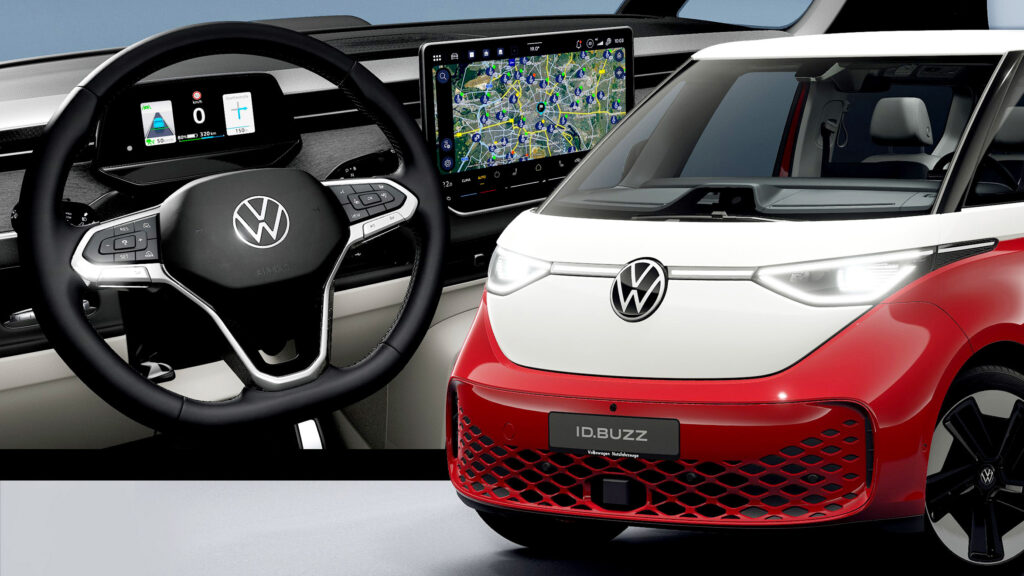
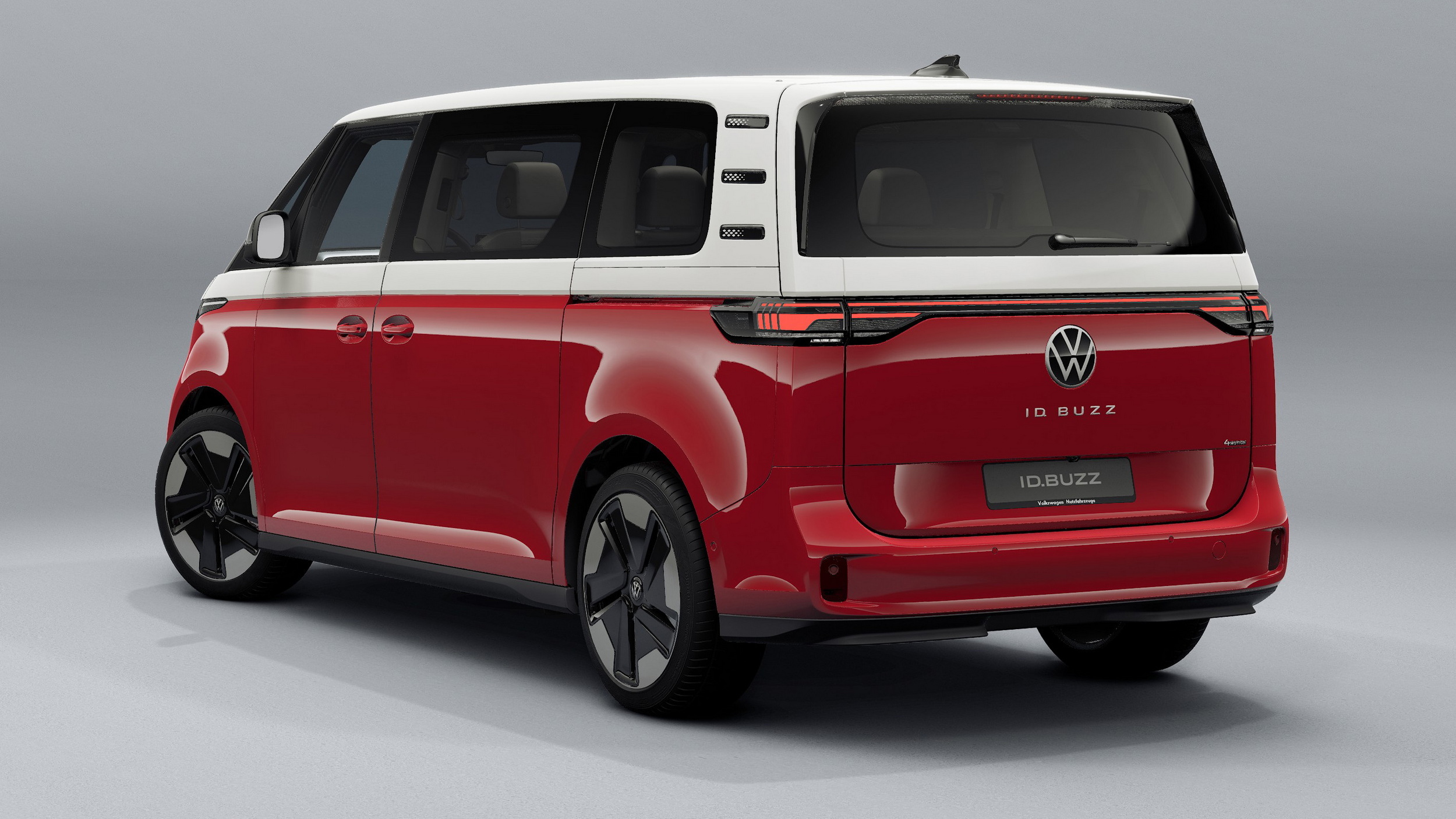
The 2026 ID. Buzz gets updates in Europe, while the US still waits.
New infotainment arrives, along with proper physical steering buttons.
It also adds AWD, one-pedal driving, and useful V2L capability.
Volkswagen is giving the ID. Buzz a round of updates, adding power and finally addressing some of the cabin’s most complained-about ergonomics. There is a catch, though. These changes are currently limited to Europe and the UK, with North America set to skip the 2026 model year entirely.
The biggest addition is the new ID. Buzz Pro 4Motion. It brings a dual-motor setup producing 335 hp (250 kW), a figure that was previously reserved for the hotter GTX variant. Buyers get a 79 kWh battery in short-wheelbase form, while the long-wheelbase version steps up to an 86 kWh pack.
More importantly, the switch to all-wheel drive is not just about traction. Towing capacity gets a useful bump, up by 600 kg (1,323 lbs) over the rear-wheel-drive models. That pushes the maximum to 1,800 kg (3,968 lbs) for the standard version, although the longer, heavier model sees that figure trimmed slightly to 1,600 kg (3,527 lbs).
Smarter Tech Inside
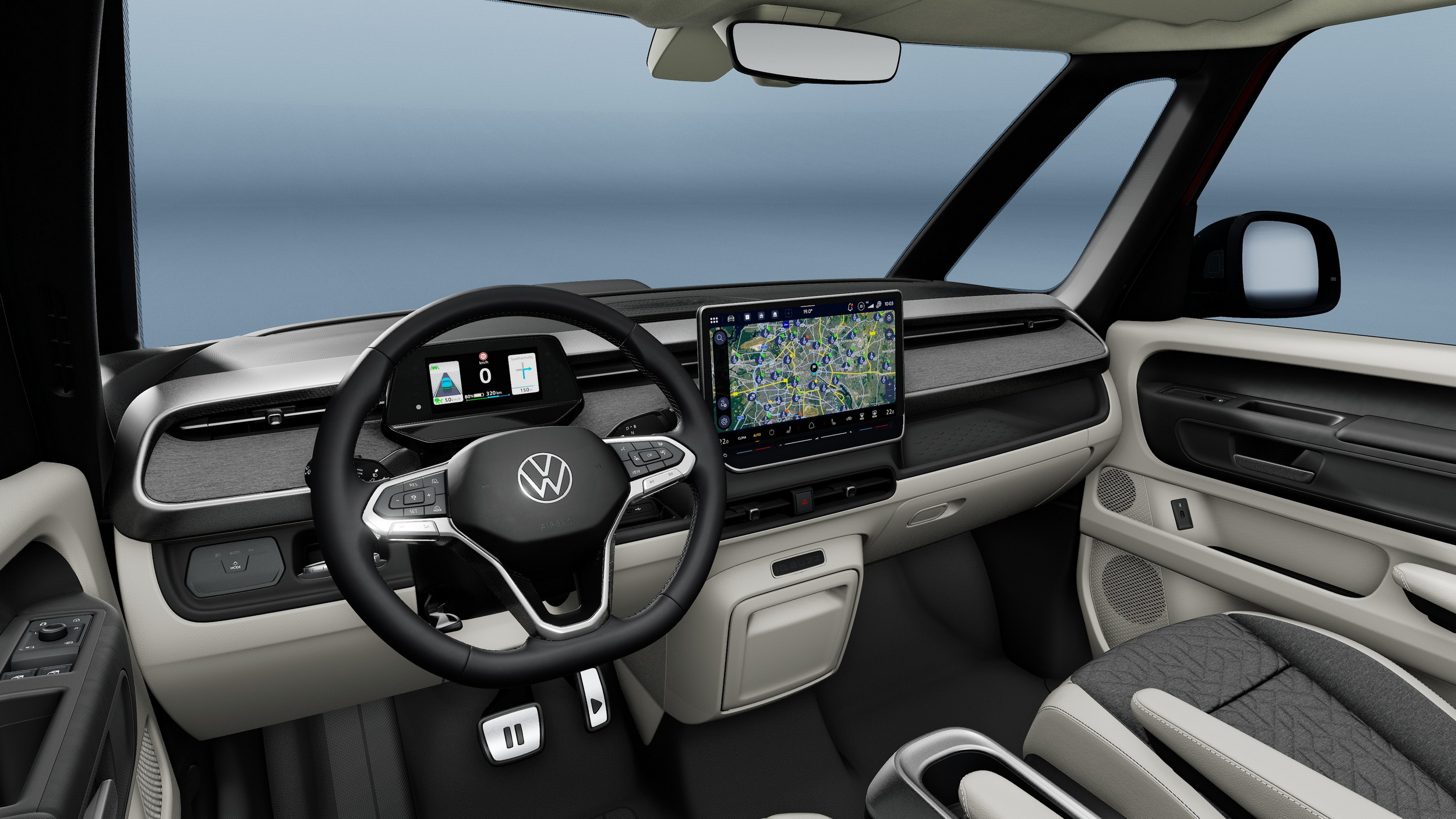
Volkswagen is also using this update to tidy up the cabin, focusing on usability while layering in a few new tech features. The ID. Buzz now gets the latest Innovision infotainment system, bringing cleaner menus and access to a new App Store covering audio, video streaming, parking, charging, and even gaming. It is the same setup already seen in the ID.3 Neo, and it will roll out to the facelifted Caddy and Transporter T7 later this year.
One of the more welcome fixes sits right in front of the driver. Proper physical buttons return to the steering wheel, replacing the fiddly touch-sensitive controls that never quite convinced anyone. That said, VW is still holding onto the touch sliders below the main screen, which remain as divisive as ever.
There is also a practical upgrade. Vehicle-to-Load functionality is now available, allowing the ID. Buzz to power external devices like e-bikes or other equipment through a dedicated adapter, turning the van into a mobile power source when needed.
The fully electric microbus will finally offer one-pedal driving, allowing regenerative braking to bring it to a standstill when the driver lifts their foot off the gas. Finally, safety equipment has been improved with the optional Connected Travel Assist, featuring traffic light recognition.
The 2026 VW ID.Buzz will reach dealers in Europe and the UK this summer. While the updates are currently limited to the other side of the Atlantic, there is a chance they will be applied to the US-spec ID.Buzz for the 2027 model year.
Battery maker CATL has just leaped ahead of BYD and Geely in charge speeds.
Its latest Shenxing LFP battery can charge from 10-35 % in only one minute.
A 10-80% charge takes 3 min 44 seconds, cold weather has minimal impact.
Some records stand for decades. Bob Beamon’s 8.9 m 1968 long jump, still unbroken 58 years later, is one. Others, like the 5 minutes it takes BYD’s Blade 2.0 battery to go from 10-70 percent, seem spectacular at the time, but here we are only weeks later and it’s already been smashed not once, but twice.
First it was Geely, whose Golden Brick battery can charge from 10-70 percent in 4 minutes 22 seconds. And now battery giant CATL has made even that look like it was hooked up to a household AC socket.
CATL’s 3rd-gen Shenxing LFP battery stops the clock at 3 minutes 44 seconds. And that’s not even charging to 70 percent, but to 80 percent. Geely’s battery needs almost two minutes longer to reach the same point.
And that’s not the only crushing stat. If you’ve ever charged an EV, you’ll know that charge rates aren’t linear. It takes a while to reach peak charge speed and then the rate falls away again as the battery gets closer to full. But the CATL pack comes out all guns blazing, charging from 10-35 percent in just 1 minute.
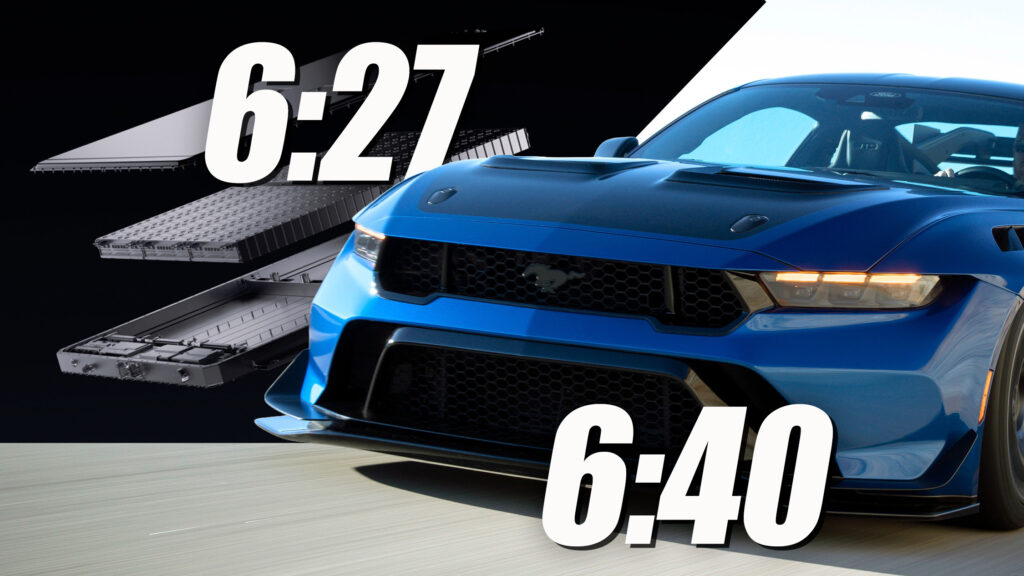
And from 10-98 percent takes only 6 minutes and 27 seconds. That compares with 8 minutes 42 seconds for a 10-97 percent fill with Geely’s Golden Brick and 9 minutes for BYD’s Blade 2.0. Or to put it another way, the CATL goes from flat to full 13 seconds faster than it takes a Ford Mustang GTD to lap the Nurburgring.
Cold Weather? No Problem
These numbers are all achieved in optimal temperatures, of course, but CATL threw out another one to show that even in less than ideal condition charging is still really rapid. Drop the temperature to -30˚ C (-22˚F) and the 10-98 percent top-up still only takes 9 minutes.
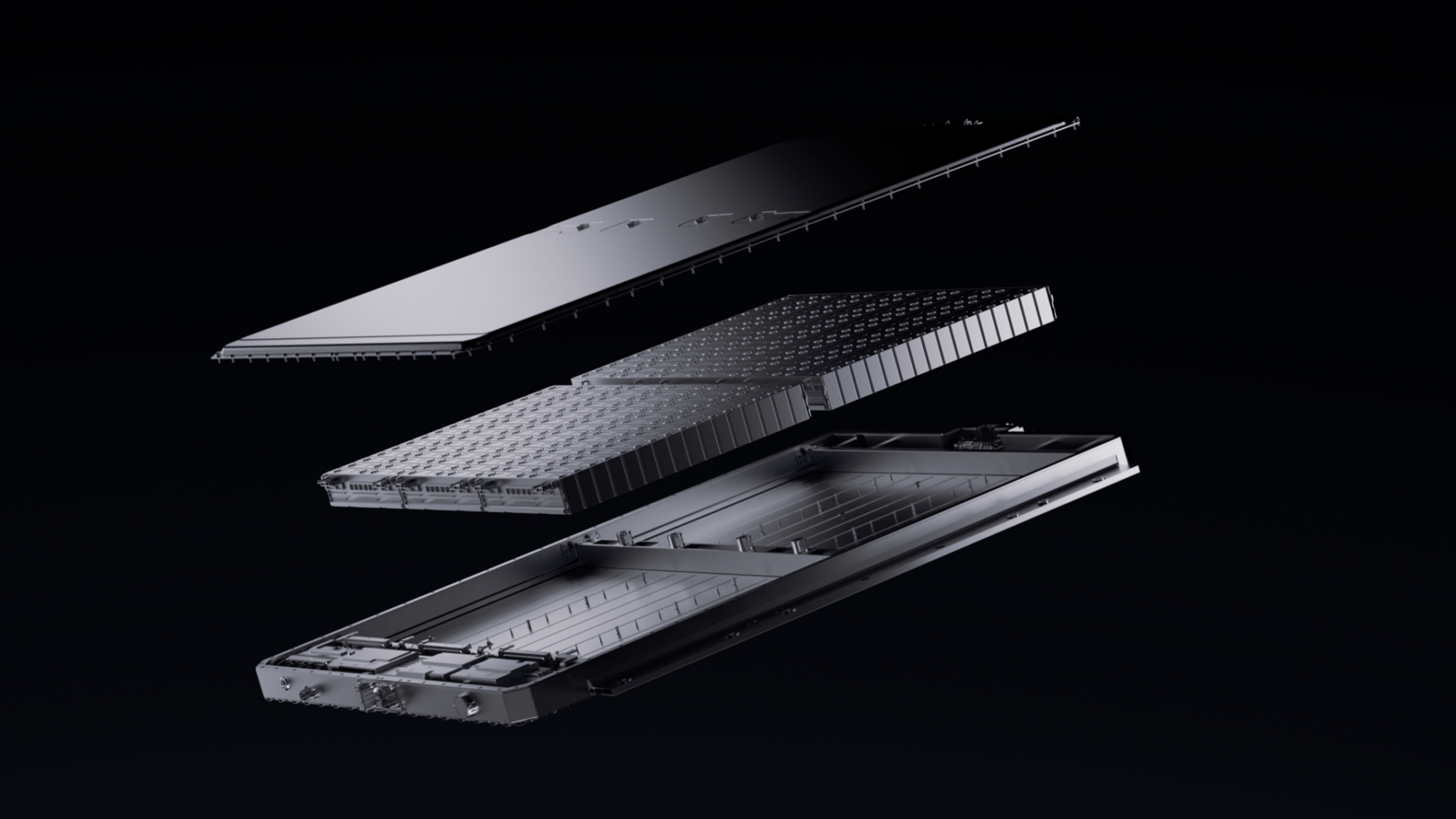
Unveiling the new battery at its Tech Day Event, CATL claimed the pack’s 0.25 milliohms internal resistance is 50 percent lower than the industry average. It also features multi-point temperature monitoring for each cell and Self-Heating tech that involves using pulses of heat to improve low-temperature charging speeds.
Long Lifespan
Just as importantly, CATL claims that the battery health remains above 90 percent even after 1,000 ultra-fast charge cycles, countering skepticism from BMW engineers about the viability of the new generation of insanely fast-filling Chinese batteries.
BYD has already begun to expand its Flash Charging network to Europe, and CATL also claims it’s looking into bringing its own tech behind China’s borders together with SAIC-GM-Wuling. But don’t bank on it arriving in the US any time soon.
China-market BMW EVs swap pop-out handles for safer ones.
Long-wheelbase i3 and iX3 debut with local tech upgrades.
Claimed 621-mile range probably translates to less than 400.
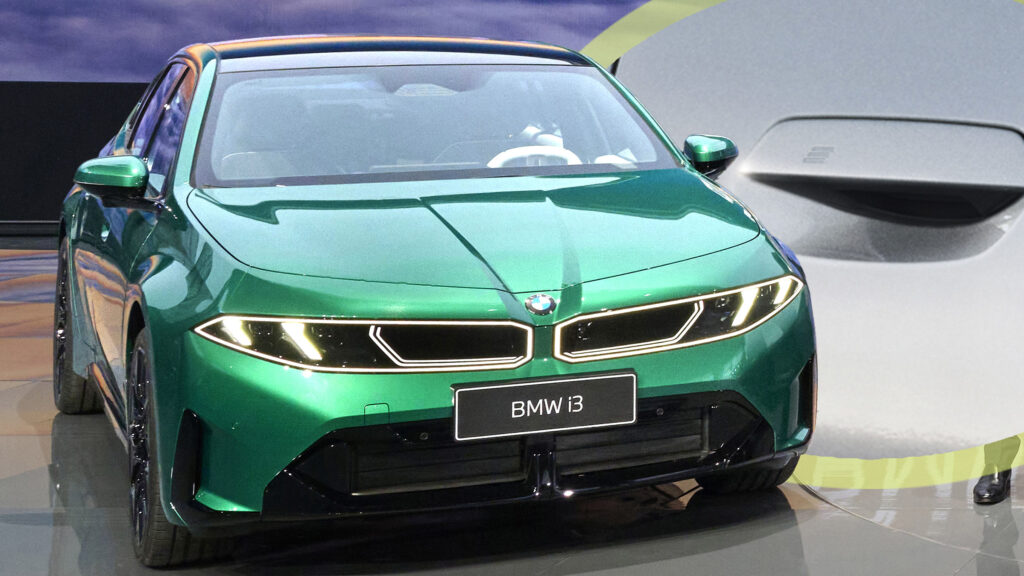
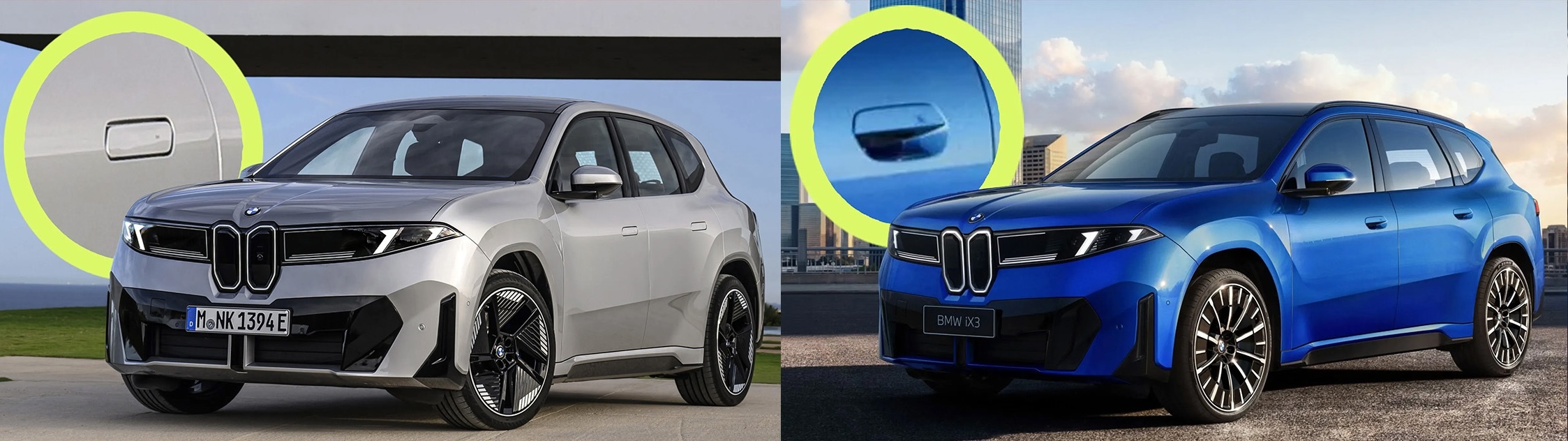
Sometimes the smallest detail says the most. BMW has launched its new China-only i3 Long Wheelbase and iX3 Long Wheelbase, but the headline feature, as we see it, isn’t rear legroom, horsepower, batteries, or giant screens. It’s the door handles.
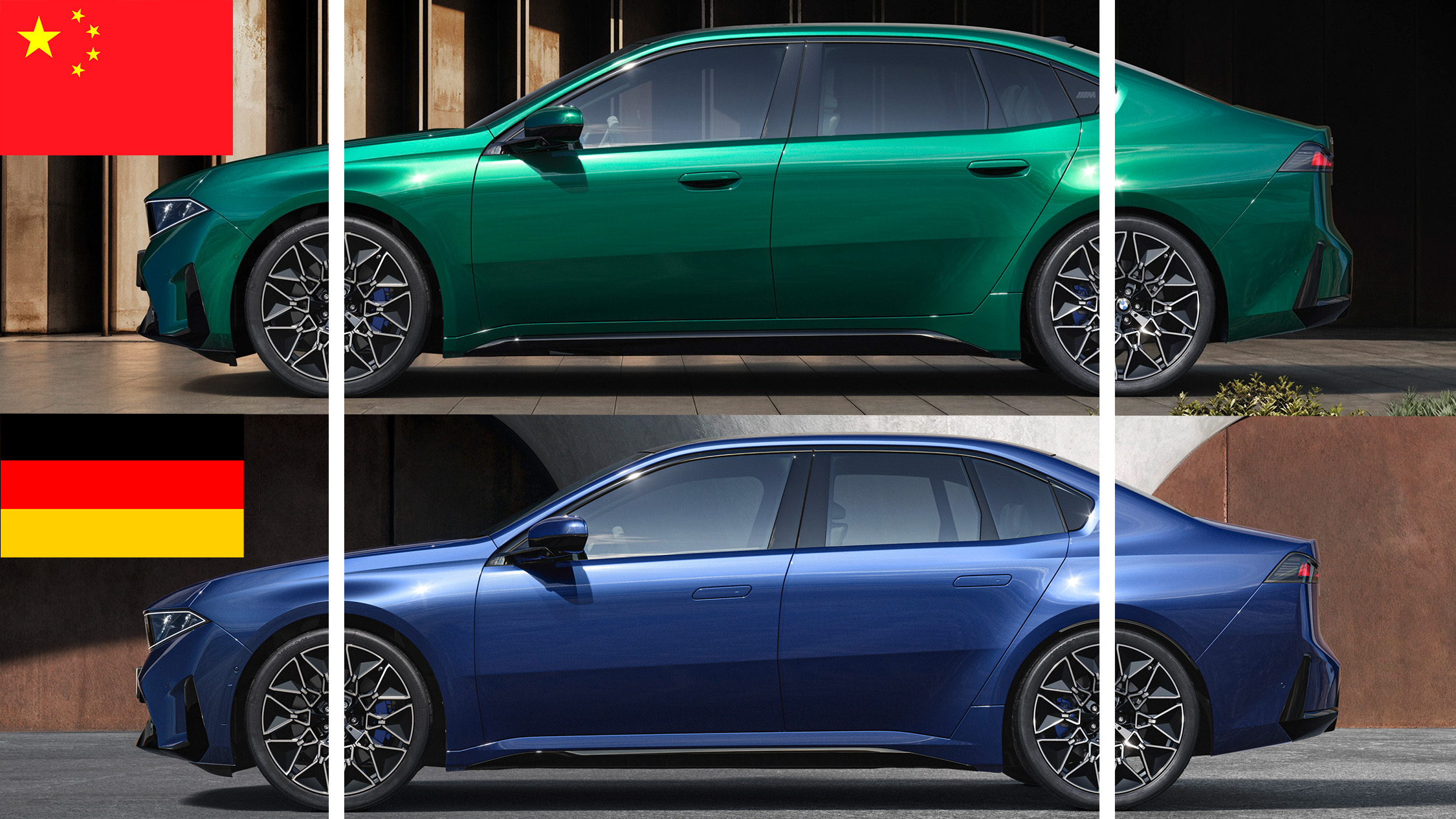
While European and US Neue Klasse models launched with flush pop-out handles, China’s versions get semi-recessed, more conventional units instead. That follows growing scrutiny of retractable handles after several high-profile crashes in China, where trapped occupants reportedly struggled to exit damaged vehicles.
Tesla has faced similar concerns in the US and abroad, with NHTSA opening an investigation into Model Y door handles last year after reports of parents unable to reach children trapped inside after a power loss. Suddenly, boring handles look pretty smart.
BMW says the redesigned hardware meets Chinese regulations while still satisfying its own global safety standards. And having tried cars with pop-out handles, often finding them fiddly, we’re kind of jealous of these new Asian ones.
Beyond the door handles, these two EVs mark the official start of the Neue Klasse era in China and have been tailored specifically for local buyers. Both ride on BMW’s latest Neue Klasse dedicated EV architecture, but they’re stretched compared with Western versions because you can never have enough legroom in China.
Exactly how much the i3L is stretched versus the 2,898 mm (114.1 inches) wheelbase of the West’s i3 sedan, BMW hasn’t yet revealed. But we know the iX3L gets an extra 108 mm (4.25 inches) of wheelbase, bringing it to an X5-like 3,005 mm (118.3 inches). The good news is that the extra sheetmetal has been carefully integrated so as not to upset the proportions of either car.
Bespoke China OS
Inside, both models use BMW Panoramic iDrive and a China-specific version of Operating System X. There’s navigation developed with Amap, AI help via Alibaba and DeepSeek, and HarmonyOS NEXT compatibility so the cars can better live inside China’s digital ecosystem.
Driver assistance was also developed locally with Momenta and is tuned for Chinese roads, traffic patterns, and parking chaos. BMW says it offers Level 2 navigation-guided support across city streets, highways, and parking scenarios.
That, we’re happy to believe, but as usual, we’ll treat the optimistic CLTC range figures with some healthy skepticism. BMW claims over 900 km (559 miles) for the iX3 Long Wheelbase and more than 1,000 km (621 miles) for the i3 Long Wheelbase.
To give some perspective, BMW in North America quotes 400 miles (644 km) EPA for the shorter, so presumably lighter, iX3 and 440 miles (709 km) for the truncated i3 sedan.
Both Chinese models get 800-volt electrical systems with up to 400 kW DC charging, just like Western cars, but way behind what BYD can offer Chinese drivers. The powertrains seem identical, too. The iX3 50L xDrive makes 463 hp (470 PS / 345 kW) plus 476 lb-ft (645 Nm) of torque, BMW says.
Do you think BMW should also swap out its pop-out handles on Western-market i3s and iX3s? Drop a comment and let us know.
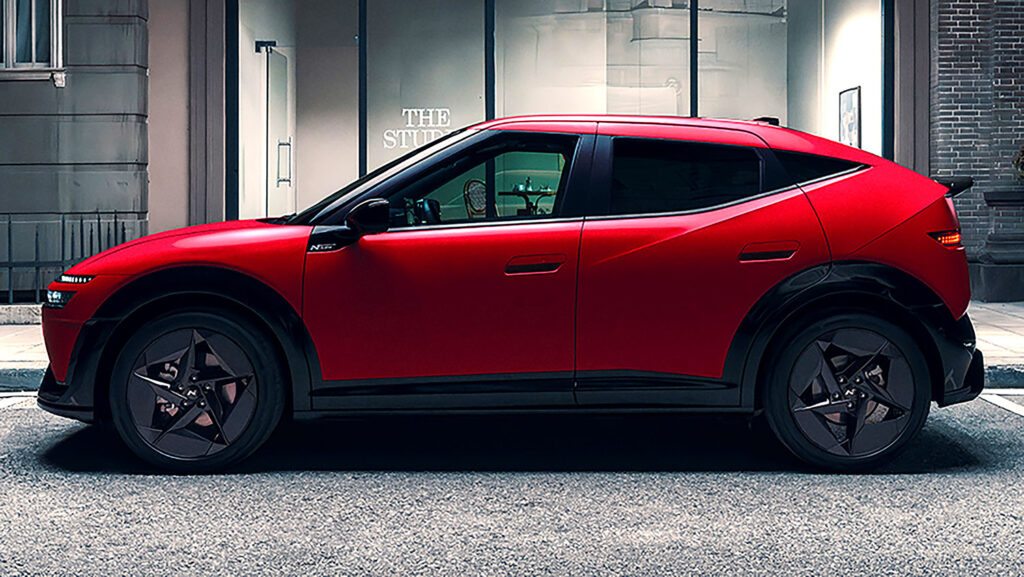
Hyundai’s N division is weighing whether the Ioniq 3 deserves its badge
Kia already launched an EV3 GT using nearly identical underpinnings
A 400-volt performance EV was something Hyundai previously ruled out
Electric performance cars are still working out what they want to be. Some feel quick but distant, others try a bit too hard. The new Hyundai Ioniq 3’s design has already picked up some unflattering Pontiac Aztek comparisons, yet this all-electric hatch could still be first in line for the N treatment.
Hyundai’s N performance division fast dabbled in the world of performance EVs with the Ioniq 5 N three years ago, proving it was possible to build an electric car that’s fun and engaging to drive. It’s since followed this up with the Ioniq 6 N, and senior executives at the company appear open to the idea of an Ioniq 3 N.
“We are looking into different ways to expand the N line-up,” Hyundai Europe product vice president Raf van Nuffel told Car Sales. “N was always about cornering and fun to drive. When we launched the i30 N, it was not about the sheer 0-100km/h number and so on. It’s about having fun while driving,” noting a smaller and lighter vehicle like the Ioniq 3 doesn’t need supercar-levels of performance.
Up until now, Hyundai has shied away from making any N EVs that use cheaper 400-volt architectures, citing concerns that they lack cooling systems to maintain on-track performance. Lower charging speeds could also impact their appeal for those seeking out their local circuit. However, it seems executives are reversing this stance and see an opportunity to make the Ioniq 3 more exciting.
Hyundai Could Follow Kia’s Lead
Kia has launched a GT-branded version of its EV3, and it shares many of its parts with the Ioniq 3, so there’s certainly scope for the Hyundai to be given some extra power. In the case of the EV3 GT, a pair of electric motors delivers 288 hp (215 kW) and 345 lb-ft (468 Nm) of torque, figures right in line with current combustion-powered hot hatches, including Hyundai’s own i30 N.
Speaking about the possibility of an Ioniq 3 N last year after the reveal of the dramatic Concept Three, the president and chief executive of Hyundai Motor Europe, Xavier Martinet, indicated such a project was under consideration.
“The concept is quite sporty, and obviously you have heritage with the N brand. I think it’s a fair topic to consider,” he said.
New 7-Series gets Neue Klasse tech, including a standard front passenger display screen.
Electric i7 gets cylindrical battery cells, standard all-wheel drive, and 350+ miles of range.
Rear 31.3-inch Theater Screen now does Zoom calls, has touch functionality, HDMI port.
BMW’s calling the new 2027 7-Series the most extensive mid-life update it’s ever done, but what we’re seeing here goes beyond Munich’s flagship sedan. Because this update shows us how BMW will apply its Neue Klasse thinking to every older model going forward, including the revised 5-Series.
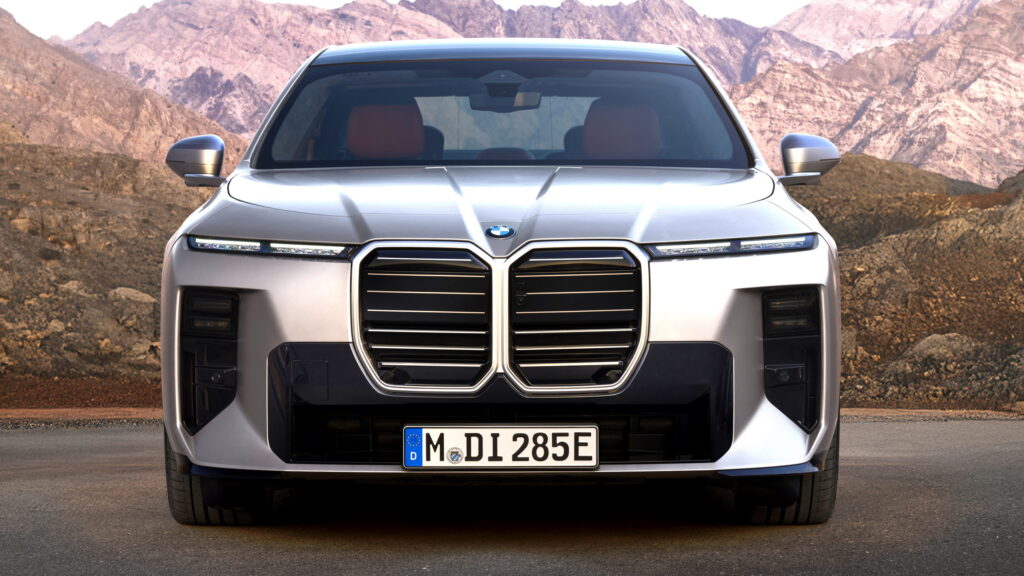
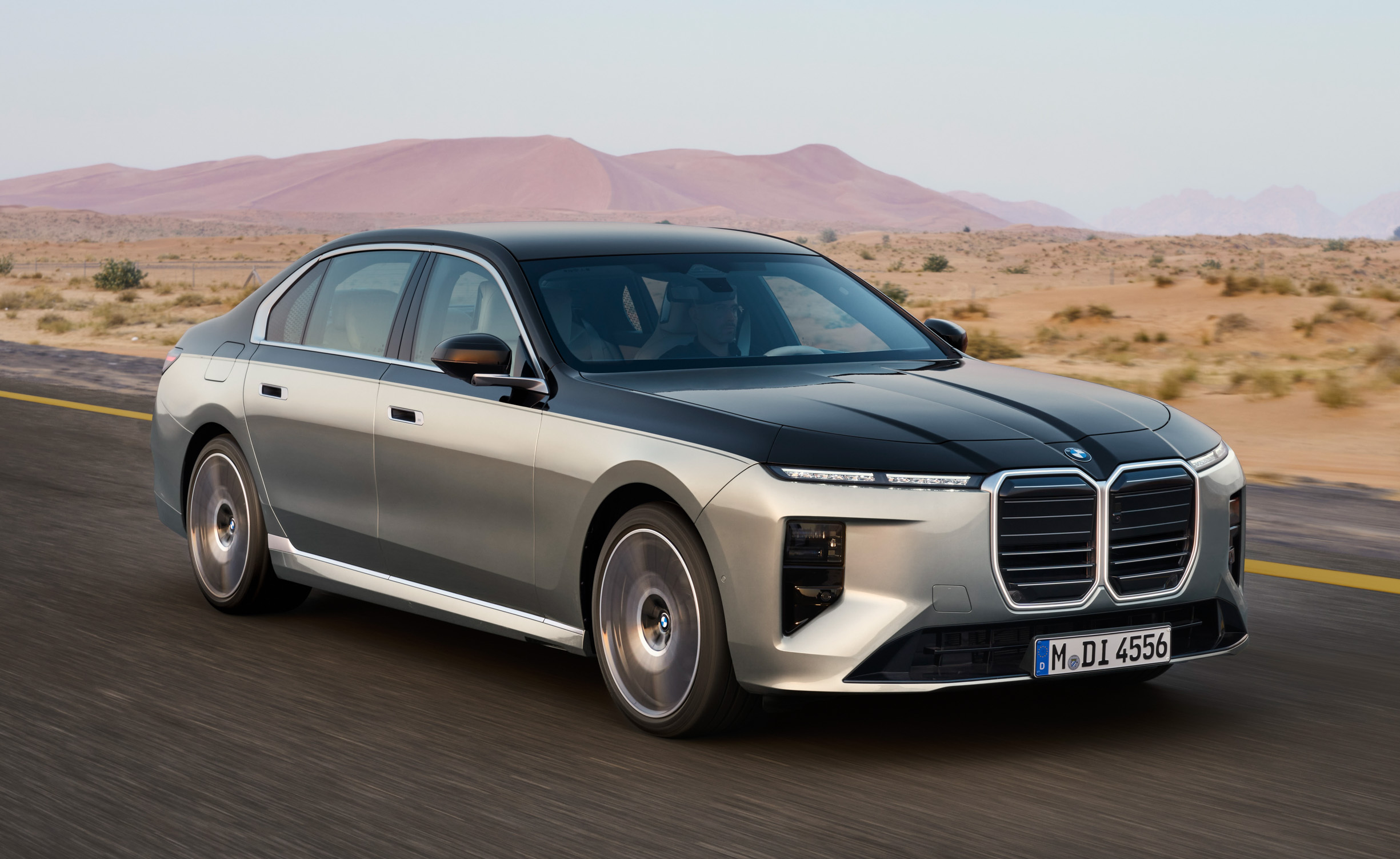
That claim of “most extensive update” might leave you shrugging at first. The new 7-Series still rides on the older CLAR platform adapted to take both ICE and electric powertrains, rather than the EV-only Neue Klasse architecture seen on the i3 and iX3. And even some of the visual changes are subtle. It doesn’t have the visor face or retro-futuristic compact kidneys.
But take another look. The now illuminated jumbo grille is narrower, and its bars run horizontally, not vertically. The super-slim DRLs butt up against the grille, and the real headlights are now smaller and almost hidden in the front bumper’s side air intakes. BMW is even bracing the 7’s industrial look this time around, happy to leave big expanses of body-color plastic up front, rather than trying to break it up with large chunks of black.
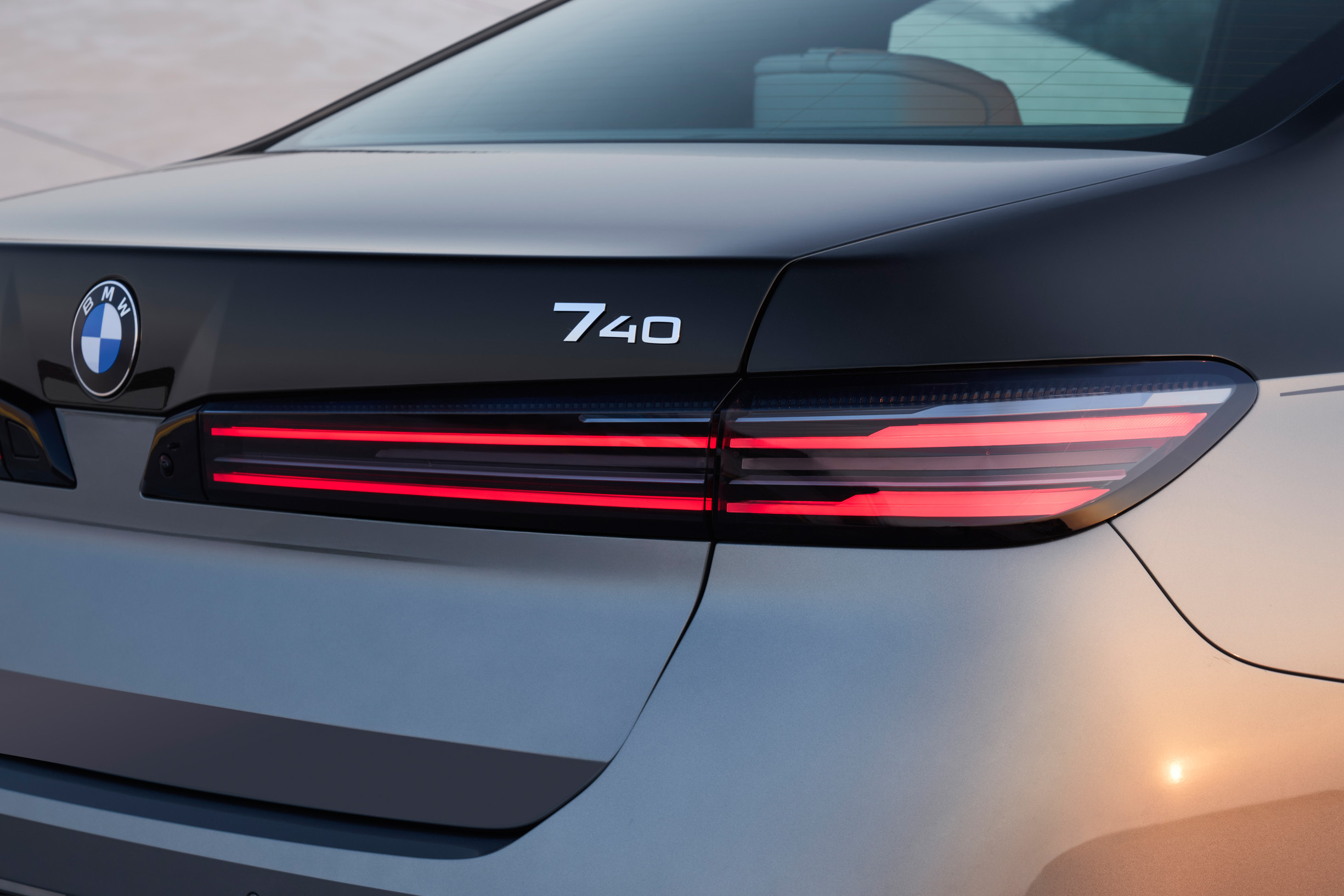
It’s not pretty, and we don’t love the duo-tone Individual paint, even if it does take 75 hours of shop time to create. But the 7-Series is certainly not lacking in presence, looking like someone machined a luxury sedan directly from a solid billet of aluminum and bolted some wheels on. Head round the back, and things are less aesthetically challenging. Besides adopting BMW’s new matte roundel first seen on the iX3, the 7-Series now has longer light units that are just a handspan from being a full light bar.
Panoramic iDrive
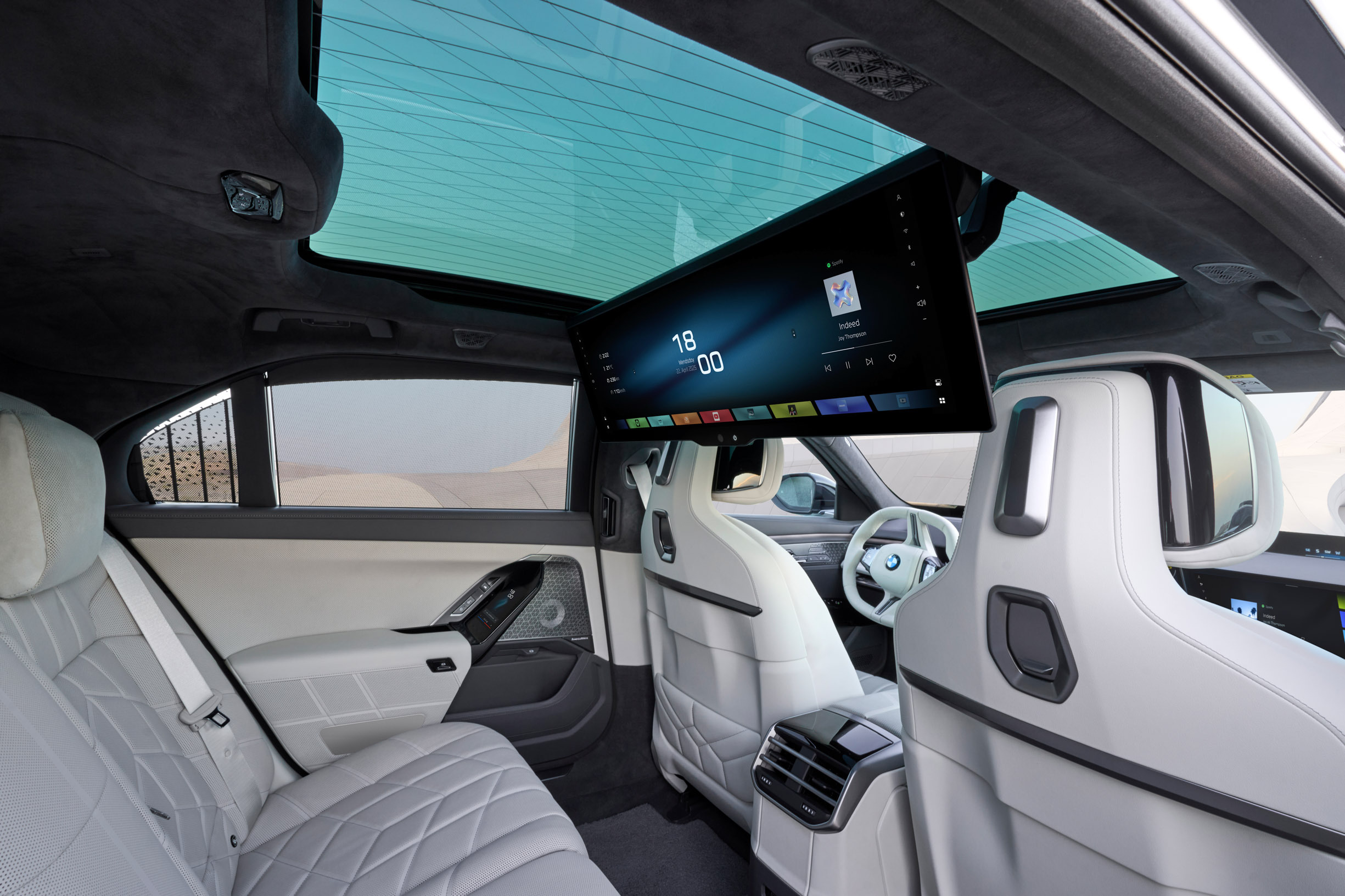
Step inside and you’ll not need a guide to help you spot the changes, like you might the exterior updates. BMW’s Panoramic iDrive, again first seen on the iX3 and then the i3, and coming to the facelifted 5-Series and i5, and new X5 soon, makes its debut here, bringing a full-width windscreen projection called Panoramic Vision and a 17.9-inch free-floating central display.
But in this case, there’s a standard 14.6-inch Passenger Screen for whoever’s riding shotgun. They get streaming, gaming, and TV, but you only get jealous: an interior camera dims it automatically if it detects driver distraction. Maybe it’s just us, but that second screen looks kind of clunky, like an afterthought. Mercedes’ latest full-width Hyperscreen setup is slicker.
Zoom On the Move
The rear Theater Screen that was such a big deal when the G70 7-Series debuted in 2022 hasn’t been left out of the updates. The 31.3-inch 8K display is now a touchscreen, supports Zoom video calls via a built-in camera, and has an HDMI input for a laptop or streaming stick, and Dolby Atmos through the optional 36-speaker, 1,925-watt Bowers and Wilkins Diamond system. It’s all optional, of course, but the standard kit includes a more modest but still very decent 18-speaker, 575-watt Bowers and Wilkins setup, so even base buyers aren’t exactly slumming it.
Powering all of this digital extravagance is a completely new electrical architecture borrowed from the Neue Klasse cars. It packs 20 times more processing power than before, and a zonal wiring harness that cuts around 2,000 ft (610 m) of cabling and sheds 30 percent of harness weight. The voice assistant had a serious upgrade too, now integrating Amazon’s Alexa+ AI for proper conversational interaction, smart home control, and streaming. BMW claims you can just talk to your 7-Series like you would a real person.
New Batteries, Extra Range
On the electric side of the 7-Series equation, the biggest news is found under the floorpan. BMW’s swapped to sixth-generation cylindrical cells that are 20 percent more energy dense, and bumped usable battery capacity up more than 10 percent to 112.5 kWh. All 2027 i7s come standard with an NACS port and can charge at up to 250 kW instead of 195 kW.
The 536 hp (544 PS / 400 kW) i7 60 xDrive makes the same power as before but now offers over 350 miles (563 km) of range rather than 311 miles (500 km), and can charge from 10 to 80 percent in just 28 minutes. It gets to 60 mph (97 kmh) in 4.6 seconds and costs $126,250, including $1,550 destination, up from $125,750 for the 2026 equivalent, the XDrive60.
At the lower end of the lineup, there’s no single-motor eDrive50 this year, but the equally powerful 449 hp (455 PS / 335 kW) i7 50 xDrive that replaces it looks like a better value at $107,750 (up from $107,250). We know it hits 60 mph in the same 5.3 seconds as the old rear-wheel drive car, but BMW hasn’t released a range figure.
ICE Upgrade, M Comes Later
For those who’d rather have pistons, the 740 and 740 xDrive use a new-generation 3.0 inline-six making 394 hp (400 PS), or 19 hp/20 PS more than before, with the xDrive sprinting to 60 in under 5 seconds. Prices start at $101,350 and $104,350, respectively. A plug-in hybrid 750e xDrive follows in early 2027, pairing an inline six with an electric motor for the same 483 combined hp (490 PS) as the outgoing PHEV, and an unchanged 4.6-second zero-to-60.
There’s no mention of a direct replacement for 2026’s 650 hp (659 PS / 485 kW) electric M70, or the 536 hp (544 PS) 4.0-liter V8 760i xDrive, but BMW does say a V8 M Performance model arrives a little time after launch, and will probably take on that 760i ICE powertrain.
Scaling Back Autonomous Ambitions
Driver assistance has been overhauled under the banner of BMW Symbiotic Drive, a Level 2 system designed to assist without being annoying. It uses eye-tracking to understand driver intent, meaning the lane-keeping assist only nudges you when you’re actually drifting unintentionally. Wildlife detection has been added to automatic emergency braking, too.
Worth noting, though, is that this generation quietly drops the Level 3 autonomous driving capability that once made the 7-Series a genuine tech pioneer. BMW isn’t alone in retreating here. Mercedes has pulled back from Level 3 as well, both apparently concluding that the regulatory headaches and liability questions aren’t worth it when a really good Level 2 system is cheaper to develop and easier to sell.
Production kicks off in July 2026 at BMW’s Dingolfing plant with the i7s and 740s arriving in the US soon after. But the 750e xDrive PHEV doesn’t land until early 2027, some time before the V8-powered M Performance model.
The all-electric Luce could be more expensive than the 849 Testarossa.
Ferrari’s first EV may also be a lot more expensive than the Purosangue.
A 122 kWh battery pack and four electric motors will be fitted as standard.
Ferrari is taking a gamble with its all-electric Luce, launching it at a time when EV sales have contracted in the US, and competition from China is offering EV buyers supercar-levels of power at a fraction of the cost. If a new report about the Luce’s potential starting price is accurate, it could prove to be a hard sell for the brand.
Citing unnamed sources, it’s being reported that European prices for the Luce will start at approximately €550,000, or the equivalent of $645,000. To put that in perspective, the Ferrari Purosangue SUV starts at around €400,000 ($470,000) in Europe, although strong demand for that model means some used examples are going for over €600,000 ($704,000).
Bloomberg understands that the final price is yet to be locked in, and could be adjusted 10 percent in either direction from the €550,000 mark. If true, this could make the Luce more expensive than even the 849 Testarossa and 12Cilindri, and would be the firm’s second-most expensive series production model after the F80 hypercar.
Such a sky-high price tag could limit the Luce’s appeal, particularly since Ferrari’s customers are used to buying models from the Italian marque with sizzling internal combustion engines, not heavy battery packs and electric motors. If it’s possible to buy a V12-powered, four-seat Purosangue for less, while boasting all the practicality as the Luce, some may be swayed by the allure of the combustion-powered Fezza.
Admittedly, loyal Ferrari customers aren’t exactly strapped for cash, so they may not really care about how much the Luce costs and could be fixated on buying one anyway. Not only could the Luce be one of Ferrari’s most expensive models, but it’d be one of the priciest EVs on the market, costing way more than anything sold by Porsche and even more than the Rolls-Royce Spectre that starts from under $400,000 in America.
Quad Motors
What will shoppers get for their money? While final specifications for the Luce won’t be announced until its unveiling next month, we know it will have four electric motors delivering over 986 hp. Feeding these motors with juice will be a 122 kWh battery pack supporting charging speeds of up to 350 kW, giving the model a driving range of over 329 miles (530 km).
The Smart Concept #2 previews a successor to the Fortwo.
The urban EV promises a range of 186 miles (300 km).
The production version will debut at the Paris Motor Show.
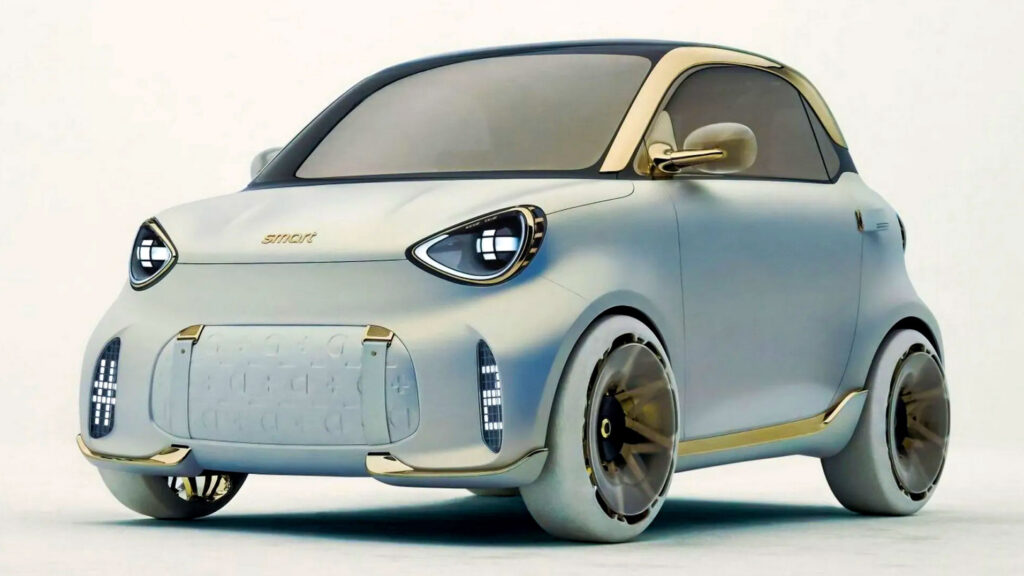
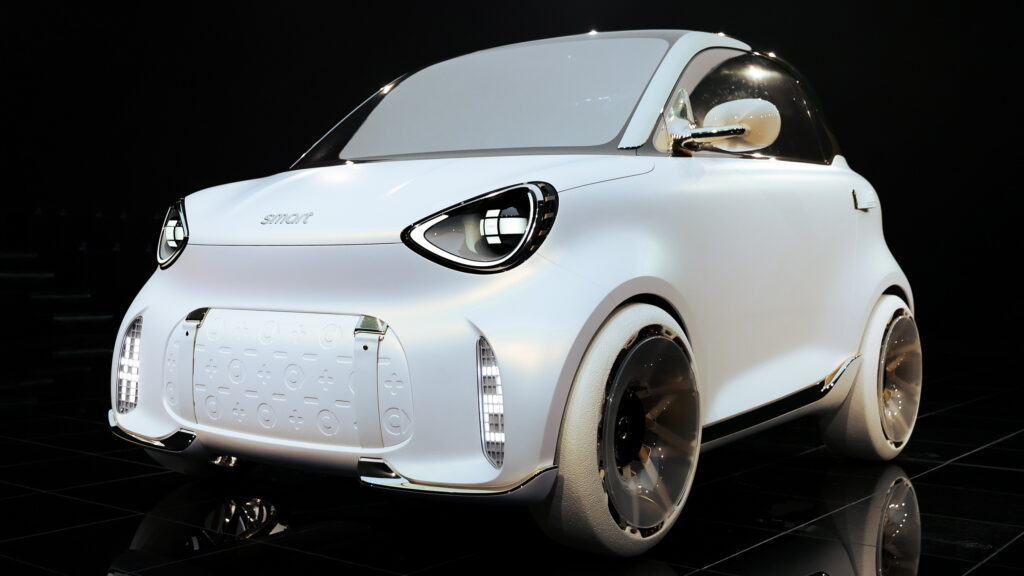
Smart goes back to basics with a successor to the original Fortwo microcar that put the company on the map. At the “Change of Perspectives” event in Beijing, the brand unveiled the Concept #2, which serves as a close preview of a tiny urban EV set to arrive later this year.
The model was designed by Mercedes-Benz, looking like a natural evolution of the EQ Fortwo that was discontinued in 2024. It has a familiar two-door silhouette with a very short hood and large wheels positioned at the corners. Other highlights include the aggressive LED headlights and the clean surfacing.
The concept features futuristic wheels with transparent aero covers shod in light-colored rubber, trick DRLs with #2 lettering, leather straps instead of door handles, and a blocked grille that looks like a luxury suitcase, while at the rear it sports a small matrix screen that can display various messages. Those elements will likely be toned down for production, as with the shiny gold finish of the floating roof.
The Concept #2 measures 2,792 mm (109.9 inches) long, making it the largest interpretation of a two-door city car from Smart. It is 292 mm (11.5 inches) longer than the original Smart and 97 mm (3.8 inches) longer than the last generation of the EQ Fortwo.
Still, the EV remains the smallest contestant in Europe’s A-Segment, being 840 mm (33 inches) shorter than the Fiat 500e and 997 mm (39 inches) shorter than the Renault Twingo E-Tech. In fact, the new Smart is closer in size to heavy quadricycles like the Citroen Ami and the Fiat Topolino than actual cars.
New Underpinnings
Under the skin lies a new Electric Compact Architecture (ECA) developed in house. Since Smart is co-owned by Mercedes and Geely, it is safe to assume that the platform uses technology from the Chinese automaker.
The #2 will be exclusively available with an electric powertrain, similar to the #1 and #3 and unlike the larger #5 and #6, which are also available in plug-in hybrid forms.
Smart has yet to announce detailed specifications, but mentioned a targeted range of around 186 miles (300 km), which is more than double the 135 km (84 miles) range of the EQ Fortwo. The battery will charge from 10-80% in under 20 minutes and will support V2L (Vehicle-to-Load) functions. Chances are that the #2 will stick to the RWD layout of its rear-engined predecessors.
The presentation didn’t include photos of the interior, but the packaging of the EV-dedicated platform promises a more spacious two-seater cabin which is also expected to be more premium than before.
The production Smart #2 will debut at the Paris Motor Show in October, ahead of its market launch. The model will be likely focused in Europe and the UK, although it could also find its way into other markets around the world.
The Smart Concept #2 previews a successor to the Fortwo.
The urban EV promises a range of 186 miles (300 km).
The production version will debut at the Paris Motor Show.
Smart goes back to basics with a successor to the original Fortwo microcar that put the company on the map. At the “Change of Perspectives” event in Beijing, the brand unveiled the Concept #2, which serves as a close preview of a tiny urban EV set to arrive later this year.
The model was designed by Mercedes-Benz, looking like a natural evolution of the EQ Fortwo that was discontinued in 2024. It has a familiar two-door silhouette with a very short hood and large wheels positioned at the corners. Other highlights include the aggressive LED headlights and the clean surfacing.
The concept features futuristic wheels with transparent aero covers shod in light-colored rubber, trick DRLs with #2 lettering, leather straps instead of door handles, and a blocked grille that looks like a luxury suitcase, while at the rear it sports a small matrix screen that can display various messages. Those elements will likely be toned down for production, as with the shiny gold finish of the floating roof.
The Concept #2 measures 2,792 mm (109.9 inches) long, making it the largest interpretation of a two-door city car from Smart. It is 292 mm (11.5 inches) longer than the original Smart and 97 mm (3.8 inches) longer than the last generation of the EQ Fortwo.
Still, the EV remains the smallest contestant in Europe’s A-Segment, being 840 mm (33 inches) shorter than the Fiat 500e and 997 mm (39 inches) shorter than the Renault Twingo E-Tech. In fact, the new Smart is closer in size to heavy quadricycles like the Citroen Ami and the Fiat Topolino than actual cars.
New Underpinnings
Under the skin lies a new Electric Compact Architecture (ECA) developed in house. Since Smart is co-owned by Mercedes and Geely, it is safe to assume that the platform uses technology from the Chinese automaker.
The #2 will be exclusively available with an electric powertrain, similar to the #1 and #3 and unlike the larger #5 and #6, which are also available in plug-in hybrid forms.
Smart has yet to announce detailed specifications, but mentioned a targeted range of around 186 miles (300 km), which is more than double the 135 km (84 miles) range of the EQ Fortwo. The battery will charge from 10-80% in under 20 minutes and will support V2L (Vehicle-to-Load) functions. Chances are that the #2 will stick to the RWD layout of its rear-engined predecessors.
The presentation didn’t include photos of the interior, but the packaging of the EV-dedicated platform promises a more spacious two-seater cabin which is also expected to be more premium than before.
The production Smart #2 will debut at the Paris Motor Show in October, ahead of its market launch. The model will be likely focused in Europe and the UK, although it could also find its way into other markets around the world.
Olto combines e-bike legality with scooter-like performance and design.
A removable battery delivers up to 40 miles of claimed range.
Built-in security and app controls make it more car than bicycle.
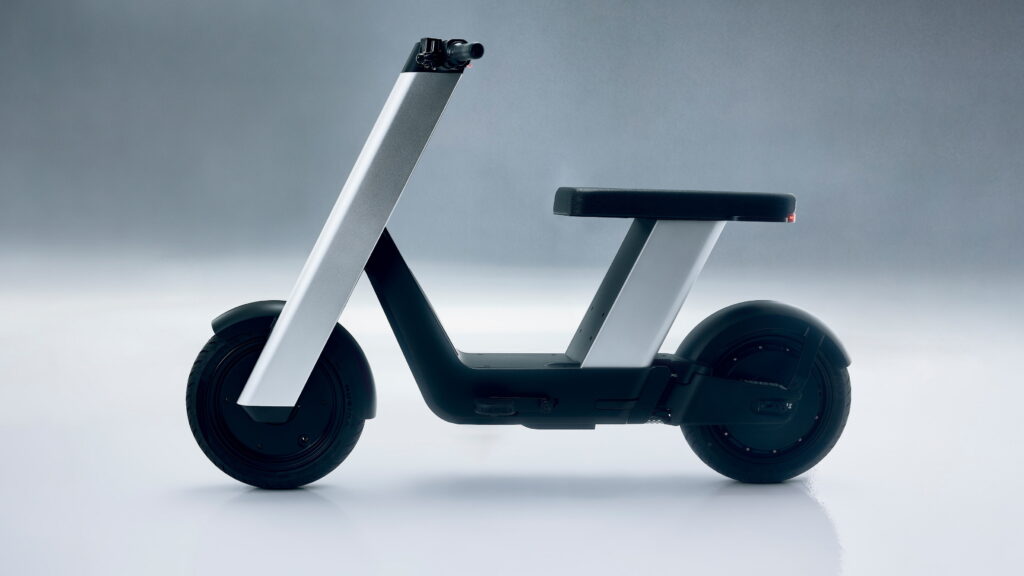
Electrified bike-shaped vehicles are becoming more and more commonplace across the USA. One of the latest additions to the market is the Infinite Machine Olto, and what it might lack in lightweight construction or conventional design, it makes up for in sheer utility and practicality. Now, after a review and a deep dive into the specs, it’s easy to see why the manufacturer sees it as a car alternative.
The Olto is technically classified as a Class 2 ebike in most places. That’s problematic for real ebike riders, as we’ve pointed out in the past. The loophole that allows this 175-lb electric moped that goes up to 33 mph (and faster downhill) to be sold as an ebike is probably also what allows Infinite Machine to build and sell it in the first place. As an e-moped or e-motorcycle (both things that it’s far more akin to), it would have to navigate more regulations, and riders would likely need to do more with regard to getting licensed and insured to use it.
That said, the product itself is noteworthy for several reasons. Let’s start with the basics. The Olto starts at $3,495, and for that price, buyers get a 48-volt architecture, a 25-Ah removable battery, a 2-kW rear hub motor, weatherproof aluminum bodywork, NFC unlocking, GPS tracking, anti-theft alerts, automatic steering lock, USB-C charging, and even over-the-air software updates. In other words, it has more tech than some actual cars.
The Olto’s biggest trick is that it changes personality depending on how you use it. In Class 2 mode, it behaves like a legal e-bike with a 20 mph top speed and throttle operation. Switch to Class 3 and it can hit 28 mph, although you have to use pedal assist (yes, it has dinky little almost vestigial pedals to get into the ebike segment). Put it in Off-Road mode, and the full 33 mph is unlocked. Infinite Machine says the companion app can even tailor the settings based on local laws. In its review of the Olto, The Verge says it managed to achieve 36 mph.
All of that tech should explain why Infinite Machine sees this as a car alternative. With 40 miles of range, it’s more than enough for most commutes, errands, or quick city runs. That said, if the battery dies, good luck pedaling it.
Most folks would struggle to pedal a 30lb mountain bike very far, and those are designed for human-powered movement only. The Olto isn’t. On the plus side, the removable battery can be charged indoors, while the bike itself is designed to stay outside thanks to its weatherproof construction and built-in security features. Is it truly worth $3,495? Probably for those who will truly use it instead of a car.
Most ebikes don’t offer the modularity and practicality of the Olto. It’s available with a slew of accessories such as a kid carrier, storage bins, baskets, racks, and more. That’s a great combo of features and flexibility. We just hope regulation figures out how to allow things like the Olto without sentencing actual ebike riders to wearing motorcycle helmets and having ebike insurance while they’re on a greenway.

 Login
Login