Reading view

There are new articles available, click to refresh the page.

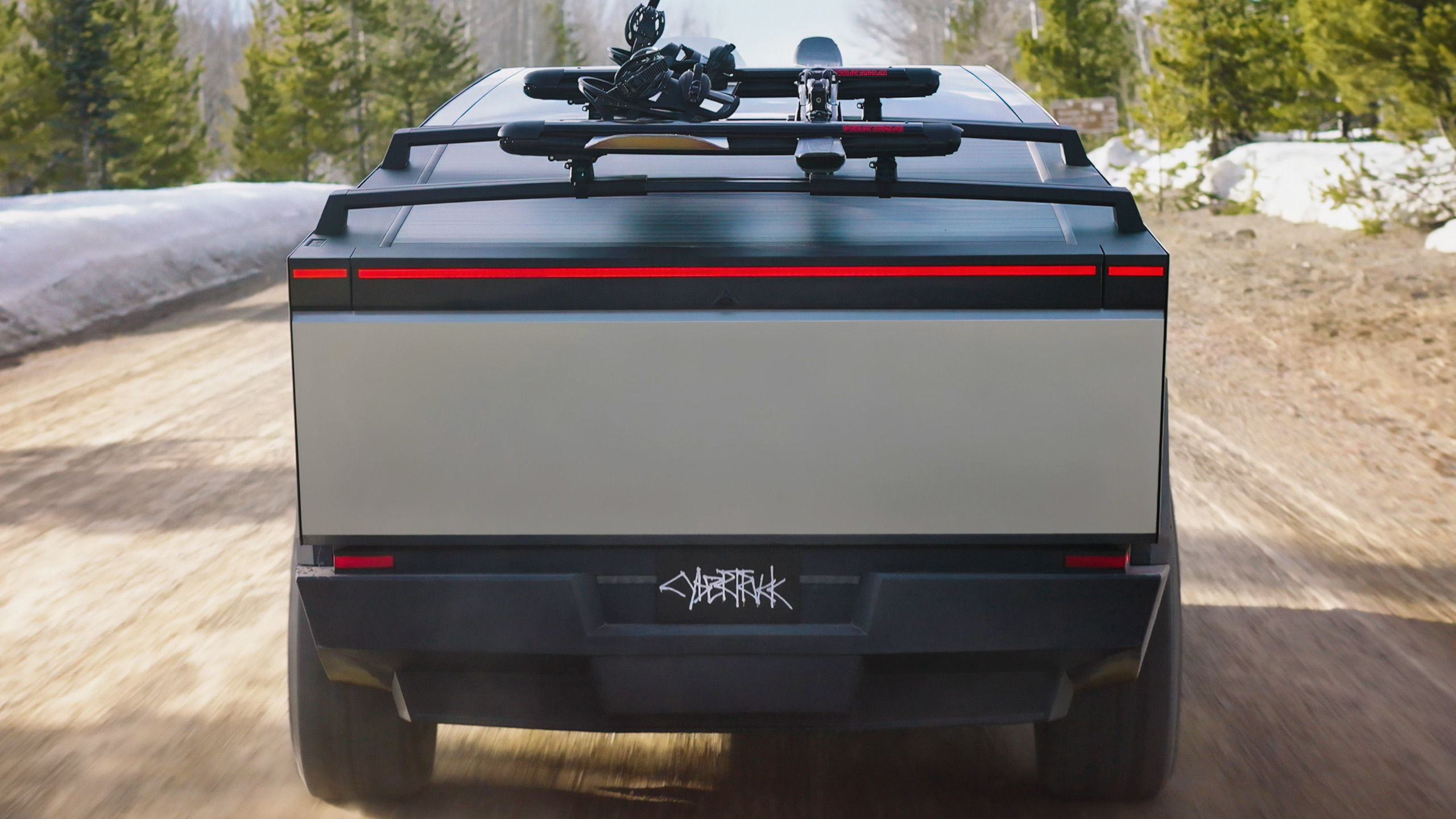
Tesla Never Sold The Six-Seat Cybertruck, So A Dad Built One Himself
  • Cybertruck owner added a center seat to carry four kids up front.
  • Tesla showed this layout in 2019 but never offered it to buyers.
  • Custom seat has no visible airbags, which may affect crash safety.

Tesla owners aren’t strangers to modifying their vehicles. Sometimes, that action comes out of a desire for additional safety. Other times, it’s because Tesla itself didn’t deliver on a previous promise. And occasionally, those two aspects of design come into fierce opposition. That’s what happened here.

A father of four needed space for his entire family, and when it became clear that Tesla wouldn’t offer a six-seat Cybertruck, he took matters into his own hands. He commissioned a custom version and later shared the results in a Tesla group on Facebook.

More: Cybertruck’s $16K Range Booster Is Dead And Tesla Isn’t Saying Why

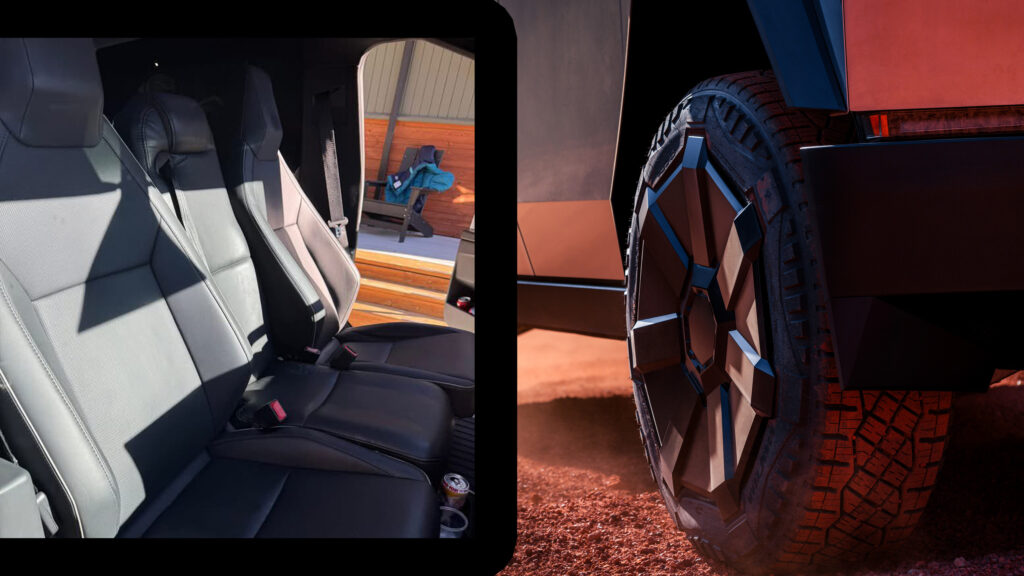
The custom setup removes the center console of the truck and replaces it with a narrow upright seat wedged between the original pair. It comes complete with a seatbelt, but that might be where safety ends. We’ll come back to that, though. Let’s focus first on the design itself.

It’s a far cry from the angular unit Tesla once teased, but at least the upholstery matches. Some folks might not even realize that it’s an aftermarket addition because of that.

What Killed Tesla’s Center Seat Plans?

At the same time, it’s tough to call this a big win for now. While Tesla originally showed renders of a similar setup, it never came to pass. Many believe that’s because of safety regulations regarding the center seat.

Some observers have noted that the truck includes a driver’s side inboard airbag, which could strike anyone seated in the center. There’s also no airbag directly in front of that position. And beyond the lack of protection, there’s always a chance the seat may not be anchored to mounting points strong enough to hold up in a crash.
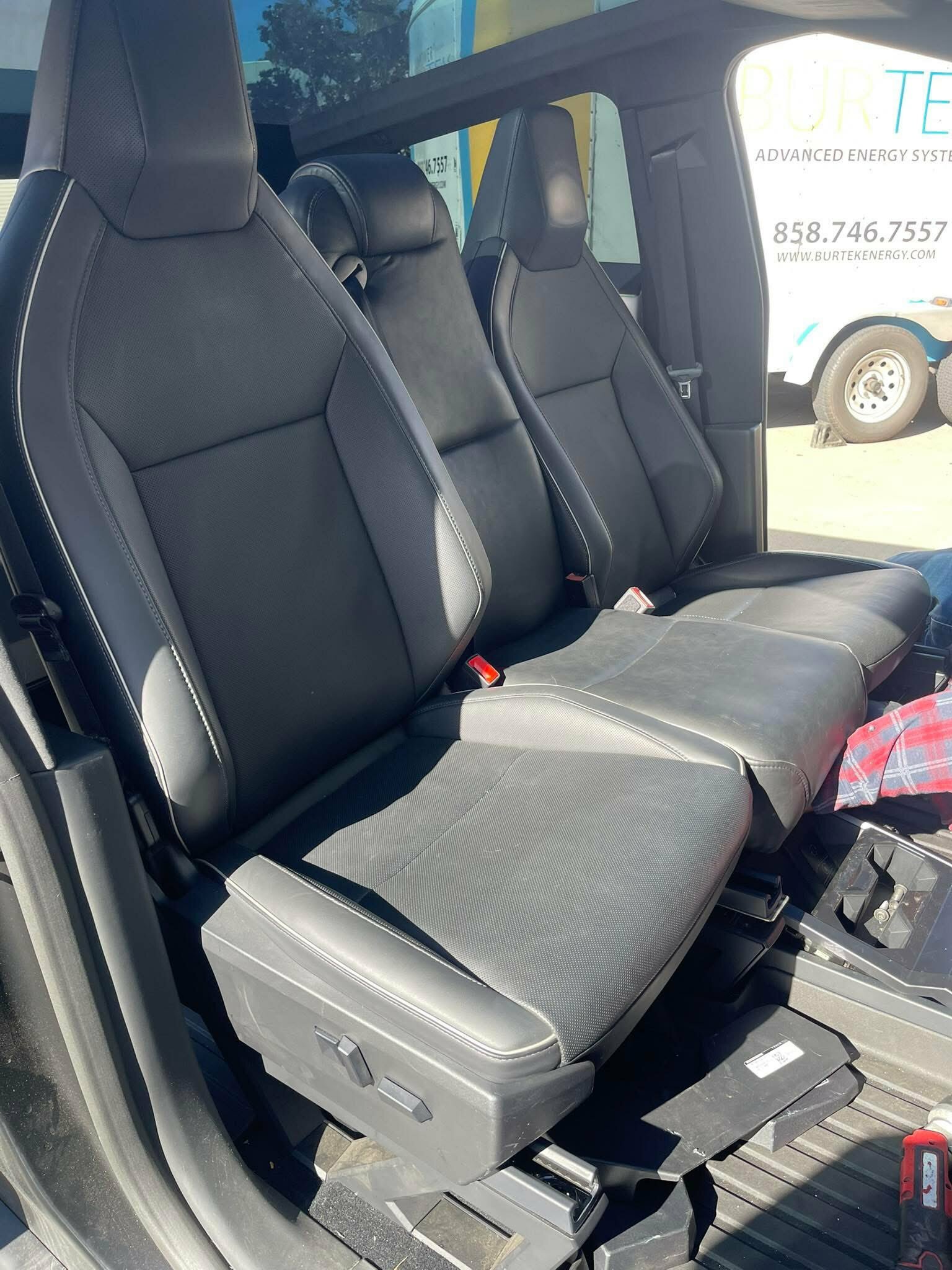
 Tesla Never Sold The Six-Seat Cybertruck, So A Dad Built One Himself
Credit: Roger D. / Facebook

To be clear, this isn’t a knock on the owner’s intentions. Wanting to carry your entire family with you is obviously normal and easy to understand. But it does highlight a recurring Tesla theme. The brand and CEO often make bold promises, offer flashy renderings, and then production vehicles quietly walk things back a bit.

Tesla once showed a front bench. That version never reached production, and now an owner has stepped in to fill the gap with a custom modification. In doing so, he’s taking on a level of risk that some might find concerning in a six-figure vehicle. Maybe the solution here is to just get the Model X since it actually has room for the whole family.
Toyota Debuts Electric Pickup For Europe, And It’s Just The Beginning

  • Toyota revealed the Euro-spec Hilux at Brussels Motor Show.
  • New EV version joins the mild-hybrid diesel in the lineup.
  • Hilux BEV offers 160-mile range with dual-motor AWD setup.

The Hilux has spent decades surviving anything the world throws at it, from mud and floods to plummeting from a Top Gear crane – though not being dropped from a helicopter. Now Toyota is testing its most famous small pickup with a more complicated challenge: staying relevant in an electric future.

Related: New Toyota Hilux Brings Sumo-Inspired Looks And EV Option

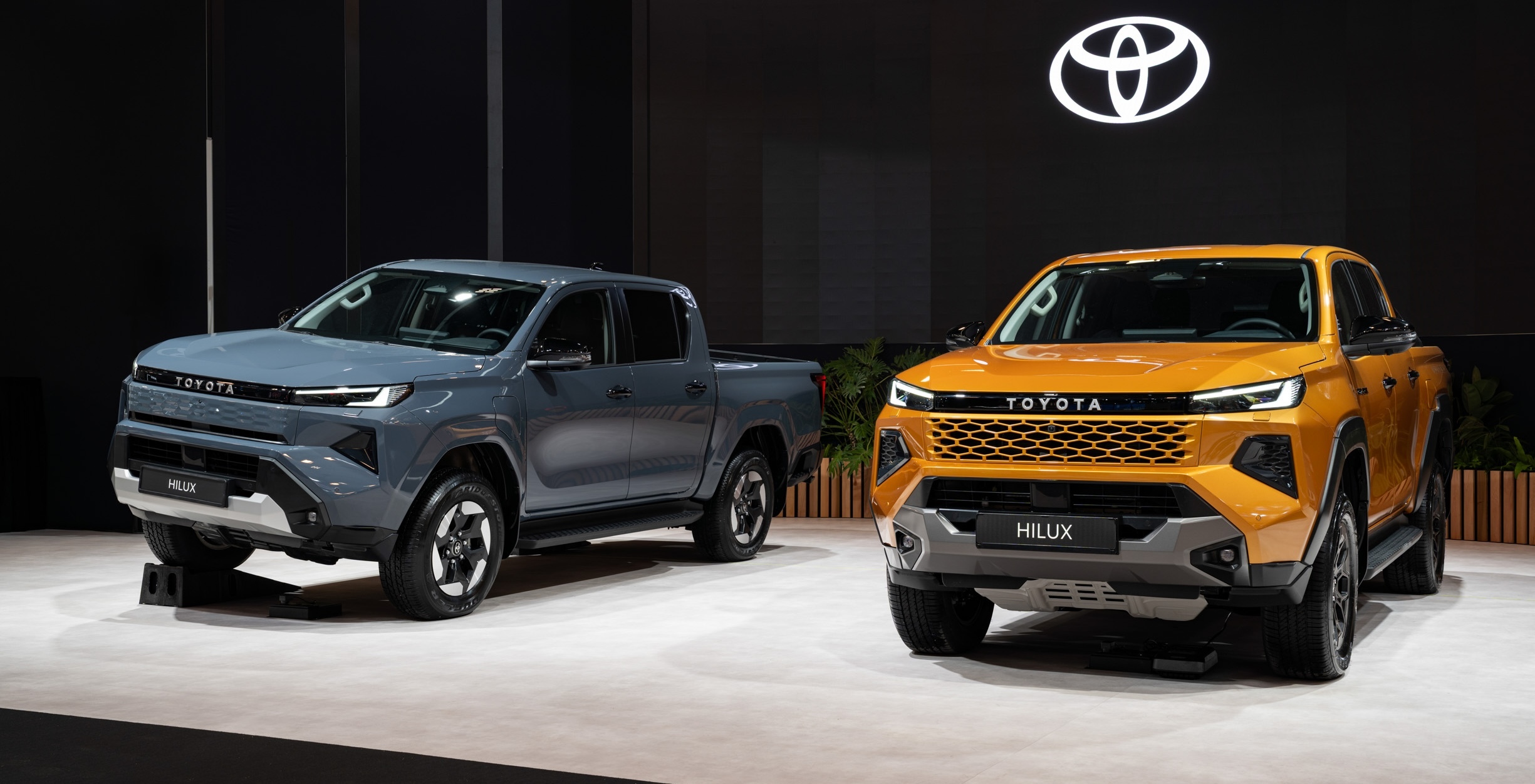
Toyota unveiled the Euro-spec ninth-generation Hilux in mild-hybrid and fully electric Hilux BEV form at this week’s Brussels Motor Show, months after both trucks debuted in Asia. The first ever EV Hilux is big news, but soon it won’t be the only version of the unstoppable truck that doesn’t emit any tailpipe nasties.

As we reported last year, Toyota Toyota hasn’t just confirmed that it’s working on a hydrogen-powered Hilux that will arrive later, it’s already testing them out in the open. Yes, the same pickup that built its legend hauling bricks and sheep is about get a fuel-cell stack.

Multipath Meets Multipurpose

\\\\\\\\\\

Toyota calls this its multipath strategy, though for many buyers little will change. Because they’ll still be able to get a truck with the same 201 hp (204 PS) 2.8 litre diesel mild hybrid (shown above) that made its debut in the previous generation Hilux’s twilight years. Some less-developed European countries will even get a non-hybrid diesel.

In the UK and Europe the 48-volt oil burner is expected to be the volume seller even after the EV’s arrival. It keeps up the old model’s 1,000 kg (2,205 lbs) payload and 3,500 kg (7,720 lbs) tow ratings, while being smoother and slightly cleaner than before.

Electric But Still Unbreakable

\\\\\\\\\\\\

But business-owning truck buyers with an eye on cutting running costs and tax bills will want to give the Hilux BEV a look. It uses a 59.2 kWh battery with motors on both axles for permanent all-wheel drive.

The front motor makes 151 lb-ft (205 Nm) and the rear 198 lb-ft (268 Nm), and Toyota quotes a WLTP range of 160 miles (258 km), which sounds unimpressive in a passenger-car context, but that climbs to 236 miles (380 km) in urban use.

Payload drops to 715 kg (1,580 lbs) and towing to 1,600 kg (3,530 lbs) in the EV, but the fundamentals remain. You’re getting the same body-on-frame construction, 212 mm (8.4 inches) of ground clearance and 700 mm (27.6 inches) of wading depth, whichever power source you choose. And the BEV gets a special off road drive mode tuned for electric torque and braking.

All In the Grilles

 Toyota Debuts Electric Pickup For Europe, And It’s Just The Beginning

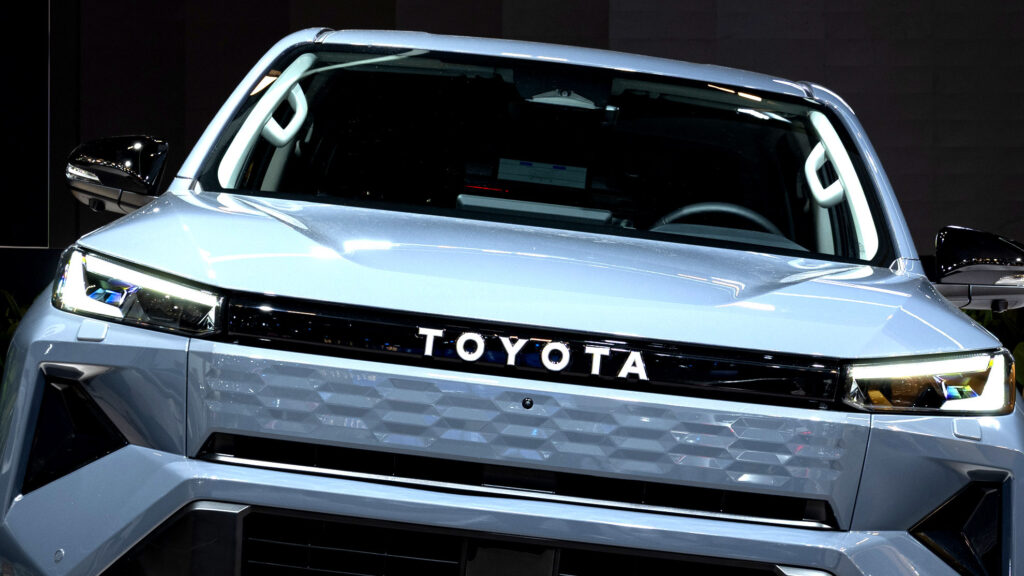
Both hybrid and BEV models adopt the same new Cyber Sumo design that was reportedly developed by Toyota’s Australian team. Characterized by stronger angles and flatter surfaces, it gives the Hilux and more modern, big-truck look, though it seems not everyone loves it. The EV is easily identified by its hole-free grille panel and (less obvious) re-shaped silver bumper insert.

Also: Toyota’s Most Expensive Supercar Has Something In Common With Lexus’ Cheapest Sedan

The modern makeover continues inside the crew cab-only interior where drivers and passengers are treated to a 12.3-inch digital gauge pack and same-sized tablet touchscreen, plus a steering wheel from the new Land Cruiser.

\\\\\\\\\\\\\\\

There are dual storage compartments on the passenger side, dashboard-mounted cupholders, and a full suite of electronic safety gadgets, but Toyota remembered to cram in plenty of physical switches for regularly-used functions.

UK sales start in June, Toyota says, and prices – guaranteed to be higher than for the outgoing truck – will be revealed within the next few months.

\\\\\\\\

Toyota

Tesla’s $2.67B Cybertruck Battery Deal Is Now Worth Just $6,776

  • Tesla signed a $2.67B Cybertruck battery deal in 2023.
  • The deal has been slashed to just $6,776 after poor sales.
  • Cybertruck was expected to sell 250K yearly, hit under 20K.

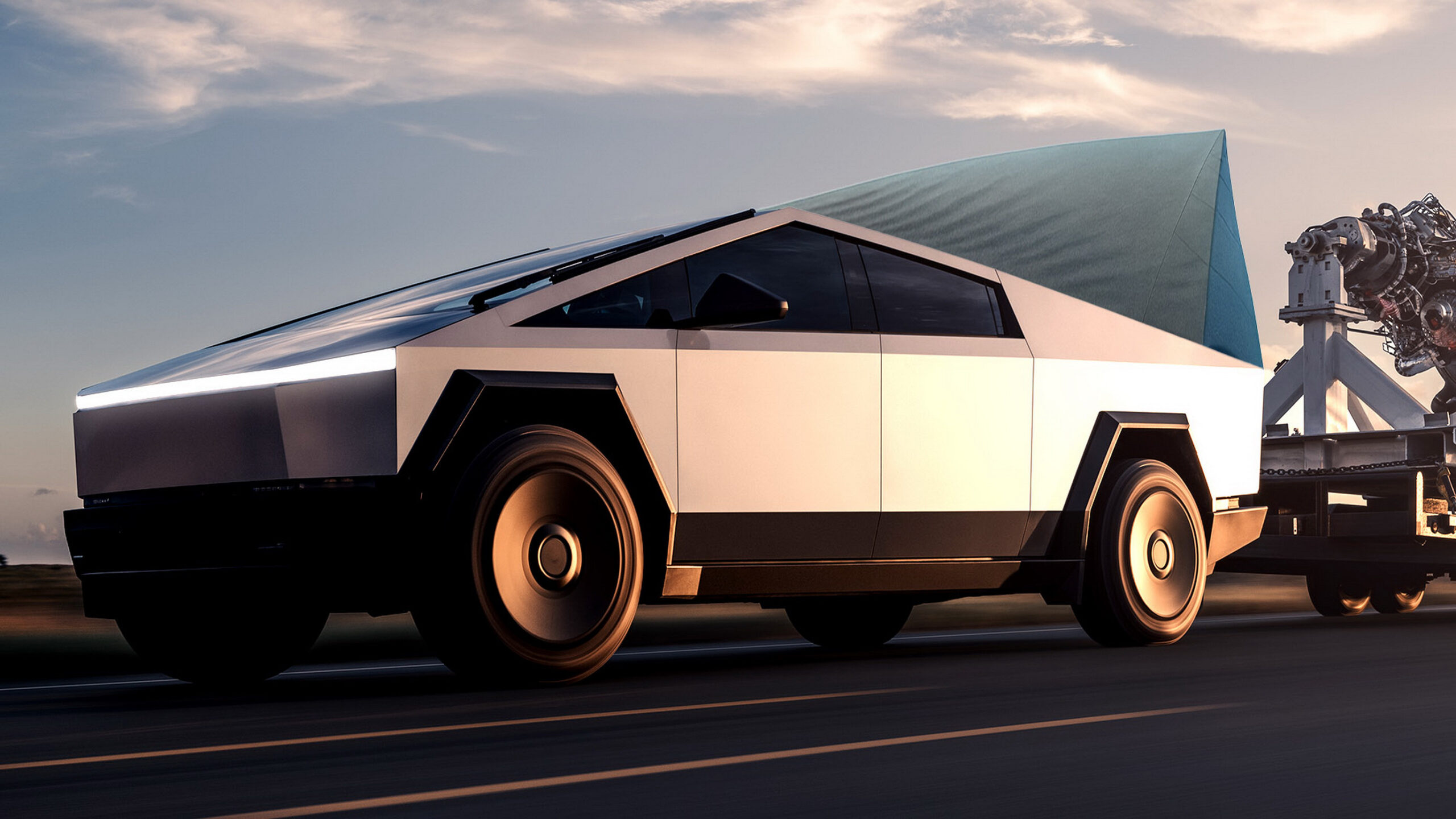
Several years ago, Elon Musk proudly proclaimed that Tesla would be moving as many as 250,000 Cybertrucks annually. The electric pickup was billed as a disruptive force, set to shake up the truck market. In reality, it hasn’t come anywhere near those targets. This year, Tesla is expected to sell fewer than 20,000 Cybertrucks, less than 10 percent of that overly ambitious goal.

Read: This Shop Tore Down A Cybertruck To Do What Tesla Wouldn’t In Europe

While you’ll never hear Tesla head honcho Elon Musk describe the Cybertruck as anything other than a raging success, lower-than-expected sales are hurting suppliers.

One notable casualty is L&F Co., a South Korean battery material supplier, which recently disclosed that its supply contract with Tesla had been cut by 99 percent, a shift attributed in part to sluggish demand for the truck.

A Contract Cut to the Bone

Back in February 2023, L&F had secured a sizable deal worth 3.83 trillion won (roughly $2.67 billion) to provide Tesla with high-nickel cathode material intended for the Cybertruck’s batteries. But that agreement has now been trimmed down to a token 9.73 million won, or about $6,776 at current exchange rates.

 Tesla’s $2.67B Cybertruck Battery Deal Is Now Worth Just $6,776

The original contract was tied to Tesla’s 4680 battery cells, which were first revealed in 2020. At the time, Tesla presented them as a major leap forward, central to its plan to rapidly expand production and eventually launch a $25,000 EV. That model has yet to materialize, and so far, the 4680 cells are used primarily in the Cybertruck.

According to an unnamed source with knowledge of the supply contract, L&F only needed to supply contract with small amounts of material as the development of the Cybertruck was repeatedly postponed. Bloomberg reports that policy and economic issues also affected the contract, including the elimination of subsidies through the Inflation Reduction Act.

SpaceX to the Rescue?

As Tesla continues to struggle with sluggish Cybertruck sales, a familiar buyer has entered the picture. According to a recent report, SpaceX has already purchased more than 1,000 Cybertrucks from Tesla, and that number could eventually climb to 2,000.

SpaceX hasn’t said why it’s buying so many Cybertrucks, but it likely has more to do with surplus stock than necessity. Either way, the move points to just how closely Musk’s companies operate, and hints that Tesla may be offloading inventory through its own back door.

 Tesla’s $2.67B Cybertruck Battery Deal Is Now Worth Just $6,776

Ford Pulled The Plug On More EVs Than You Realize

  • Ford cancels Lightning EV and planned electric vans worldwide.
  • Automaker shifts focus to hybrids and range-extended EV trucks.
  • It will also build a new van in Ohio with gas and hybrid engines.

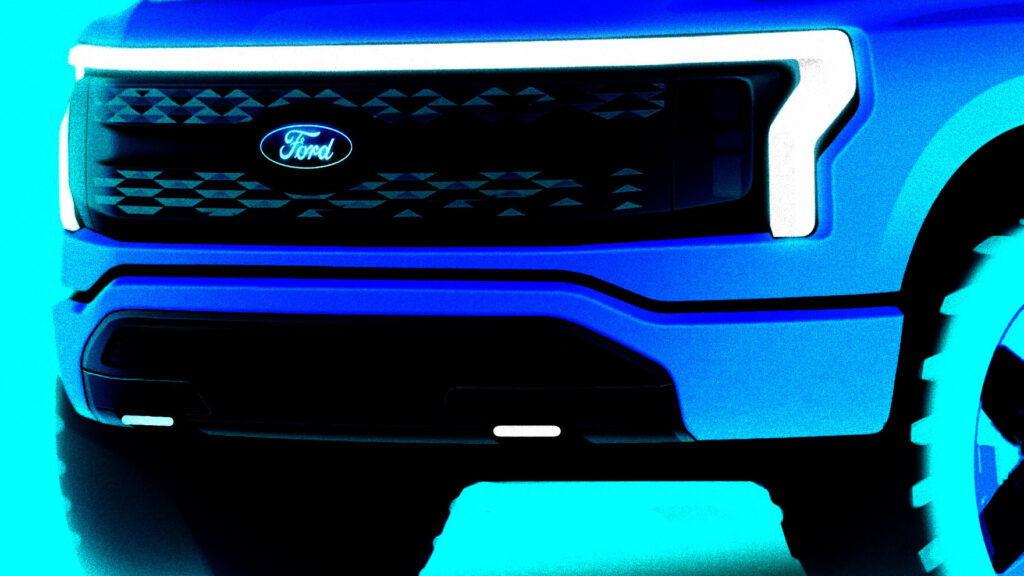
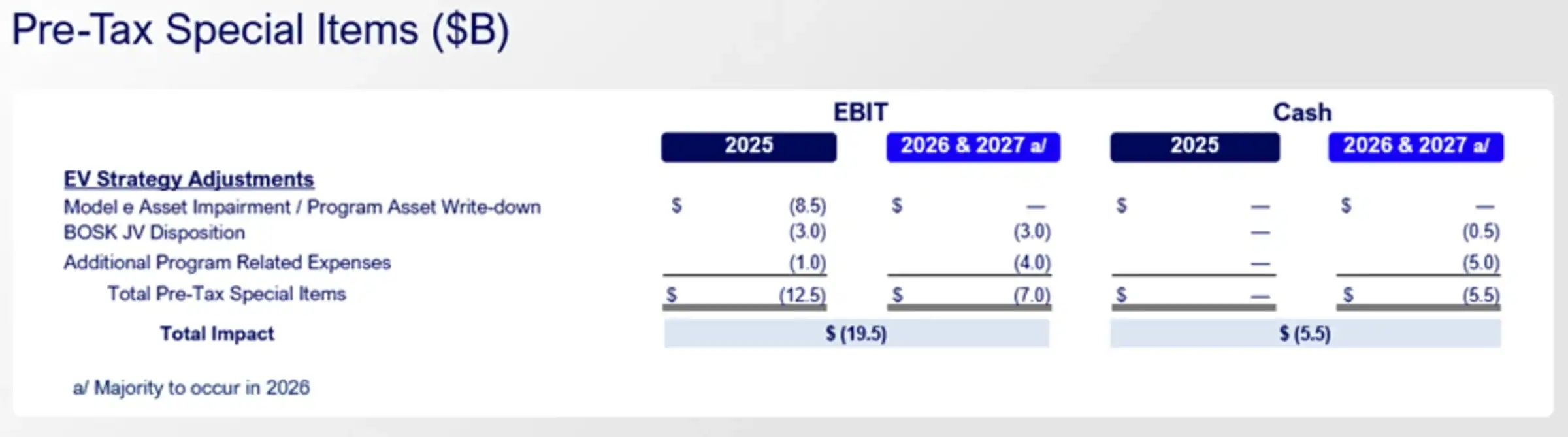
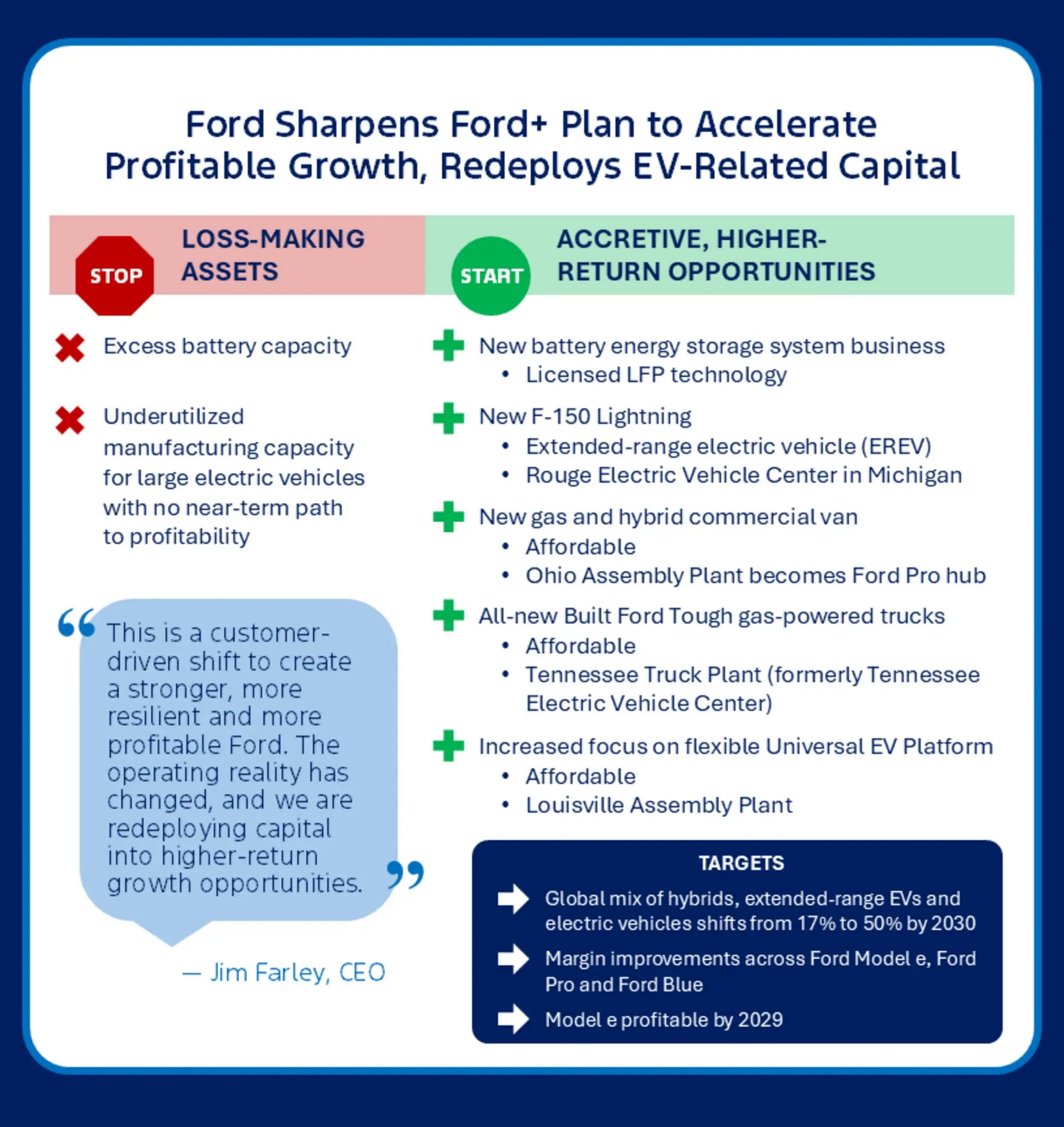
Ford’s bad bet on electric vehicles continues to have brutal repercussions, so they announced plans to rationalize their “U.S. EV-related assets and product roadmap.” This will come with a steep price tag as the automaker announced plans to record about $19.5 billion in special items on their financial results.

Aside from wasting a ton of money, Ford revealed they no longer plan to “produce select larger electric vehicles where the business case has eroded due to lower-than-expected demand, high costs and regulatory changes.” This likely references today’s decision to axe the F-150 Lightning EV and eventually revive it as a range-extended pickup truck.

More: The F-150 Lightning Is Dead, But It’s Coming Back As A Range-Extended EV

The company also announced they will no longer build a previously planned electric commercial van for Europe. Plans for an electric van in North America have also been dropped, but they’re being replaced by an affordable commercial van that will offer gas and hybrid engines. This model will be built at Ford’s Ohio Assembly Plant in Avon Lake starting in 2029.

Ford previously abandoned three-row EVs, but they’re still committed to new electric vehicles based on the Universal EV Platform. These will be small and affordable, with the first variant arriving in 2027 for around $30,000.

 Ford Pulled The Plug On More EVs Than You Realize

Besides hitting the brakes on most BEVs, Ford confirmed they’ll “expand powertrain choice” by offering more hybrids and range-extended electric vehicles. The company expects the mix of these three powertrains will be approximately 50% of its global volume by 2030, which would be up from 17% this year.

To help fuel this projected jump in demand, Ford is planning a range of different hybrids. Some will focus on fuel economy, while others chase performance. We can also expect hybrids with exportable power, which has become popular with customers.

 Ford Pulled The Plug On More EVs Than You Realize

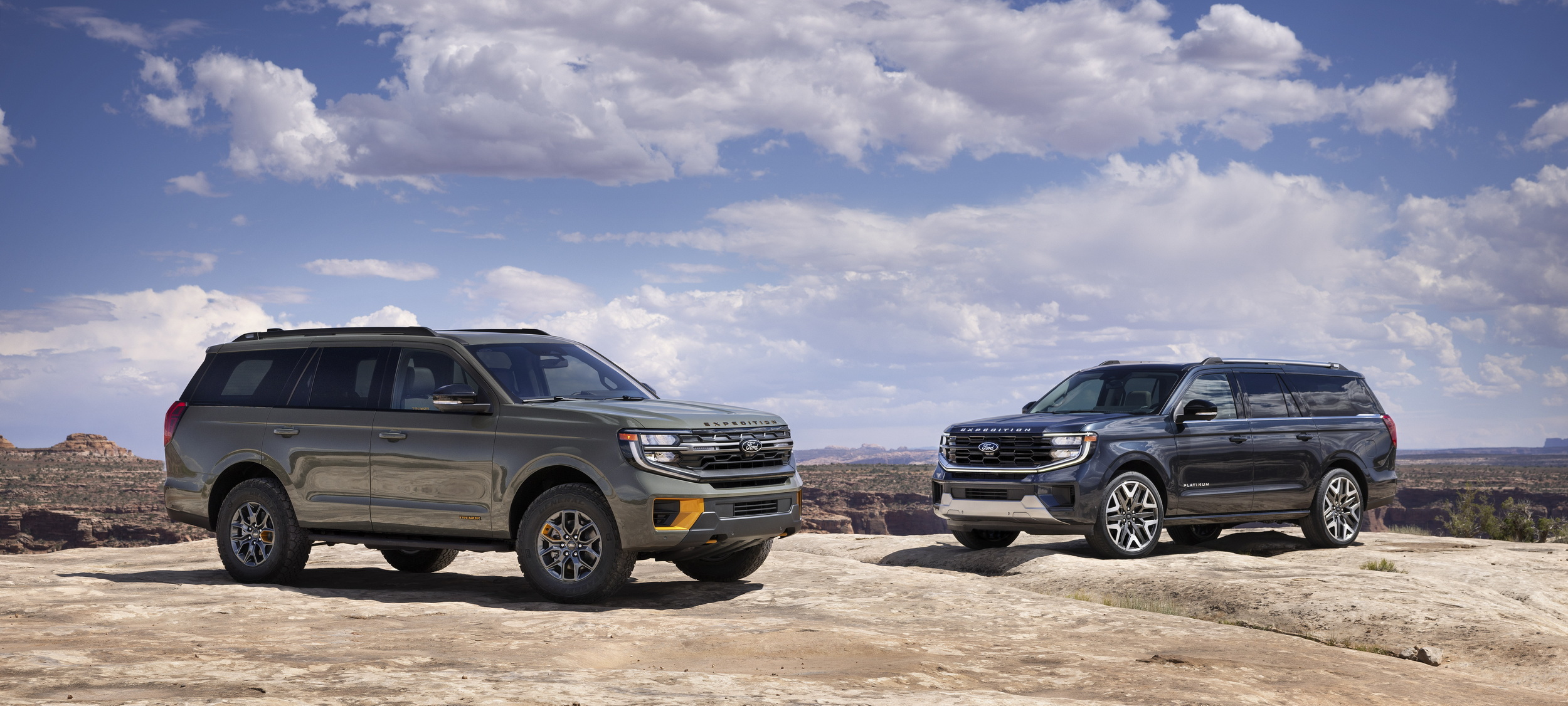
On the range-extended side of things, Ford implied the second-generation F-150 Lightning will be joined by range-extended versions of their larger SUVs. This likely means we can expect to see electrified versions of the Expedition and Navigator.

Ford went on to say that by the end of the decade, nearly every vehicle will offer a hybrid or “multi-energy powertrain choice.”

Given the shift away from EVs, Ford is renaming the Tennessee Electric Vehicle Center as the Tennessee Truck Plant. It will build new, affordable gas-powered trucks starting in 2029. This is a departure as the plant was originally supposed to build the next-generation F-150 Lightning.

Ford Battery Business

 Ford Pulled The Plug On More EVs Than You Realize

Despite throwing in the towel on most EVs, Ford announced plans to launch a battery energy storage system business. It will provides sales and service to support the electric grid and growing demand from data centers.

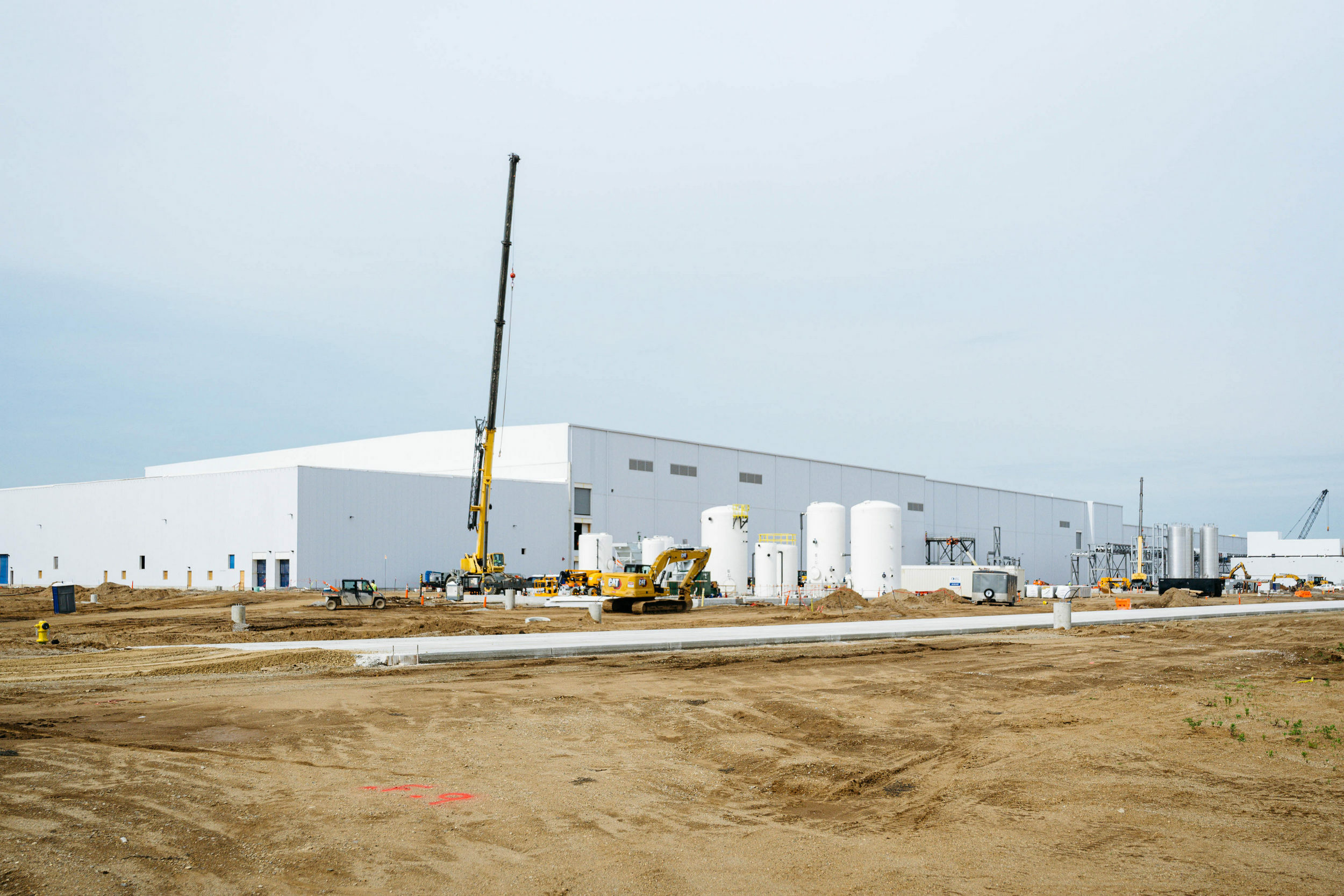
The pivot can partially be explained by the transition away from EVs as Ford has a lot of excess battery manufacturing capacity. As a result, they’re repurposing their Glendale, Kentucky plant to manufacture 5 MWh+ advanced battery energy storage systems. As part of the change, the facility will build “LFP prismatic cells, battery energy storage system modules, and 20-foot DC container systems.”

 Ford Pulled The Plug On More EVs Than You Realize

Ford also announced their BlueOval Battery Park in Marshall, Michigan will make residential energy storage solutions. They’ll be built alongside LFP prismatic battery cells for models based on the Universal EV Platform.

In a statement, Ford CEO Jim Farley said “This is a customer-driven shift to create a stronger, more resilient and more profitable Ford.” He added, “The operating reality has changed, and we are redeploying capital into higher-return growth opportunities: Ford Pro, our market-leading trucks and vans, hybrids and high-margin opportunities like our new battery energy storage business.”

 Ford Pulled The Plug On More EVs Than You Realize

Rivian Goes Plum Crazy With A New Color And Something Extra

  • Borealis purple debuts as a $3,000 option for R1S and R1T buyers.
  • Rivian has also announced a special Lease Bonus for both models.
  • Some R1S and R1T trims qualify for lower monthly payments now.

It seems to be that time of year for Rivian again. Fresh off unveiling its limited-run Miami Edition, the company has decided it’s time for a new splash of color, one that might actually be its best yet. Called Borealis, it’s a deep, moody shade of purple inspired by the Northern Lights, offered on the Tri and Quad variants of the brand’s EVs.

Purple tones aren’t as popular as some other colors in the car industry, but when done right, they can look superb. We’ll reserve full judgment on Borealis until we see it under natural light, but based on early images, it flatters the R1S slightly more than the R1T, whose pickup shape doesn’t highlight the color in quite the same way.

Read: Rivian Turns One-Off Miami Showpiece Into A Very Pricey Limited Run

Like every Rivian finish beyond the standard LA Silver, Borealis comes at a premium, $3,000, to be exact. That puts it in line with other paid options such as Red Canyon, Rivian Blue, and Storm Blue.

The company hasn’t confirmed whether Borealis will filter down to the more affordable Dual Standard and Dual trims, though it’s easy to imagine that decision hinging on how buyers respond to the initial rollout.

\\\\\\\\

Rivian’s new purple looks especially nice when accented against its available 20- and 22-inch burnished bronze wheels. Paired with a set of bright blue brake calipers, shoppers can get a Rivian that really stands out.

A New Lease Deal

The addition of a new color isn’t the only thing that prospective Rivian owners can get excited about. The company has announced that several 2026 R1T and R1S models are eligible for a $5,000 Lease Bonus if customers take delivery by December 31.

Models eligible for the deal include the 2026 R1S and R1T Tri, R1S and R1T Dual Standard, and both the R1S and R1T Dual with the Large battery and Performance Upgrade. Importantly, Rivian notes this deal is only available while supplies last.

 Rivian Goes Plum Crazy With A New Color And Something Extra

Even with that bonus, leasing an R1T or R1S remains a costly proposition. For example, the R1T Dual Standard, priced at $72,990, still comes to $709 per month over 36 months, with $8,604 due at signing, an effective monthly rate of $948 before adding the $1,895 destination fee and state taxes.

For those willing to sacrifice a little cargo space for a lower payment, the R1S Dual Standard presents a slightly better deal. Its lease terms come in at $699 per month with $3,594 due at signing, translating to an effective monthly rate of $798, plus destination.

\\\\\\\\\

Ford Accused Of Advertising A Missing Feature On New Trucks

  • Ford is being sued over missing safety tech in 2024 F-150 Lightnings.
  • Plaintiffs claim Ford misrepresented features listed on window stickers.
  • Company offered $100 refunds, but owners say that barely covers losses.

Ford’s electric pickup has long been seen as a bellwether for mainstream EV demand, but the latest news surrounding it has little to do with torque or battery range. Instead, the company now faces scrutiny of an entirely different kind inside a courtroom.

Read: F-150 Lightning Production Halted Indefinitely As Ford Bets On Gas Trucks Again

Ford is being sued in the United States over claims that certain 2024 F-150 Lightning models advertised with a Forward Sensing System were delivered without it. The lawsuit alleges that customers have “incurred damages” due to the missing safety feature and that the company’s efforts to make amends have fallen short.

Missing Sensors or Missing Disclosure?

The class action, filed in the US District Court for the Eastern District of California, argues that the window stickers on 2024MY F-150 Lightning models clearly state the vehicles are equipped with the Forward Sensing System, which includes several parking sensors on the front bumper.

Ford reportedly notified U.S. dealerships on March 31 that every 2024 F-150 Lightning advertised with the system was actually built without it. The company subsequently began contacting customers, offering a $100 refund to address what it described as a window-sticker error.

 Ford Accused Of Advertising A Missing Feature On New Trucks

What the Plaintiff Claims

The plaintiff named in this new lawsuit, Ibrahim Lunawadawala, contends that the refund offer is negligible, pointing out that installing equivalent aftermarket sensors would cost substantially more. The filing states that Ford “has been unwilling to provide adequate compensation to aggrieved consumers.”

“Plaintiff Lunawadawala has suffered an ascertainable loss because of Ford’s misrepresentations, including but not limited to, diminished value of his vehicle and other consequential damages,” the lawsuit continues, as cited by Carcomplaints.

Production Pause and Broader Troubles

This legal development arrives just weeks after Ford confirmed it had indefinitely paused production of the all-electric F-150 Lightning, redirecting resources toward gas and hybrid models instead.

The decision was made not just to address falling sales of the model, but also because of a huge fire at a Novelis aluminum plant in Canada that supplies Ford with the aluminum it needs for all F-150 models.  

\\\\\\\\

Sources: Law, CarComplaints

Toyota Promises The Electric Hilux Will Be ‘Attainable’, Just Not Affordable

  • Hilux BEV could prove popular with mining companies in Australia.
  • Toyota confirmed the electric Hilux will cost more than diesel models.
  • A 59.2 kWh battery powers twin electric motors producing 193 hp/

Earlier this month, Toyota pulled the covers off its long-awaited battery-electric Hilux, built on the thoroughly reworked ninth-generation platform. While powertrain specifications for the model have been released, Toyota has yet to confirm pricing, saying only that it will be “attainable.”

Read: New Toyota Hilux Brings Sumo-Inspired Looks And EV Option

The complete list of markets where the Hilux BEV will be sold is unclear, but we do know that Australia will be among them. Local buyers will see the Hilux BEV arrive in the first half of 2026, with Toyota initially targeting fleets rather than private owners.

Large mining operations are expected to be the main customers, given the suitability of electric drivetrains for underground work.

Pricing Expectations

While recently speaking with local outlet Drive about the new truck, Toyota Australia vice president for sales and marketing Sean Hanley acknowledged the Hilux BEV will “be dearer than the diesel cars we’ve got right now.”

Prices for the new Hilux equipped with the mild-hybrid diesel engine will start at AU$65,990 ($42,800), and it’s not beyond the realm of possibility that the BEV could add AU$15,000 ($9,700) to that figure, meaning this model could be positioned near the top of the Hilux range.

\\\\\\\\\\\

“We know this is not going to be our biggest seller, but it’s got to be competitive and affordable for those that want it, so it’s got to be attainable,” Hanley added.

“There’s no point putting it out there if it’s going to be a hundred grand (AU$100,000), you know what I mean, like maybe you’re referencing. It’s got to be achievable, it’s got to be attainable.”

Toyota has equipped the Hilux BEV with a small 59.2 kWh battery pack and dual electric motors delivering 193 hp. The pickup has a quoted range of just 149 miles (240 km).

A Niche Future

\\\\\

Despite some interest from private buyers, Hanley is realistic about where this model fits. He describes it as a niche vehicle, built with clear intent rather than broad market ambition.

“Where this will appeal will actually be mining – massively. Again, I don’t wanna sit here and say to you ‘it’s gonna take the world by storm and volume’. [It’s] not going to do that. It’s not meant to do that. That’s not why we’re launching it,” he said.

Still, he admits there could be some crossover appeal. “There is a niche market out there where we can put this car, and in mining it will be, I think, our biggest target market. Now, that’s not to say some tradies may not want it. They may… it’s possible.”

\\\\\\\

Ford’s First Heavy Duty EV Truck Swaps Diesel Grit For Electric Grit

  • Ford F-Line E debuts as an all-electric heavy-duty truck in Europe.
  • Top-spec 6×2 version packs four 98 kWh batteries and 523 hp.
  • Smaller 4×2 variant uses three packs with a 315 hp electric motor.

While Ford has walked back some of its more ambitious electric vehicle goals lately, the company is still pushing forward with notable investment and new product launches.

The Ford Truck division’s first-ever, production battery-powered creation, however, isn’t something customers will find parked at their local dealership. Instead, it’s a dedicated all-electric rig called the F-Line E.

Read: Mercedes Takes On Tesla Semi With New eActros 600 EV Offering 311 Miles Of Range

Ford Trucks operates as the heavy-commercial arm of Ford Otosan, the long-running joint venture between Ford and Turkey’s Koç Holding. The partnership oversees the design, engineering, and production of tractors, construction vehicles, and heavy-duty haulers serving markets across Europe, the Middle East, and Asia.

Production of the F-Line E will take place under Ford Otosan, with the model making its first appearance at the Solutrans fair in France, displayed in both 4×2 and 6×2 configurations.

The largest of the available models has no fewer than four 98 kWh nickel manganese cobalt batteries, making for a combined 392 kWh or a usable 314 kWh. Ford says this is enough to give the F-Line a driving range of up to 186 miles (300 km).

Power is provided by a single electric motor at the rear wheels with 415 hp and 1,010 lb-ft (1,370 Nm) of torque during regular driving, but capable of producing up to 523 hp and 1,821 lb-ft (2,470 Nm). The 6×2 model also supports peak charging speeds of up to 285 kW.

 Ford’s First Heavy Duty EV Truck Swaps Diesel Grit For Electric Grit

By comparison, the smaller 4×2 version has three battery packs and a combined capacity of 294 kWh or 235 kWh usable. It also relies on a less powerful motor with 315 hp and a peak of up to 389 hp.

Ford says this version can travel up to 155 miles (250 km) on a single charge. Peak charging speeds on the 4×2 are capped at 213 kW. Both the 4×2 and 6×2 models are capped at 56 miles (90 km/h).

Built for Work

Ford Trucks positions the F-Line E as a flexible platform suitable for delivery fleets, municipal operations, and various vocational applications, including garbage collection. The truck’s modular design allows operators to tailor it for specific roles without major reconfiguration.

Alongside the F-Line E, Ford also revealed the updated F-Max at the same event. Significantly larger and powered by a revised 12.7-liter engine for 2025, the F-Max promises to trim fuel costs by 11 percent, showing that Ford’s commercial lineup isn’t going all-in on electrification just yet.

\\\\

Aussies Can Finally Buy A Rivian, But Good Luck Driving It

  • MEVCO’s Rivian R1T trucks will be auctioned in Australia after bankruptcy.
  • Some models were modified for mining, adding bull bars and extra gear.
  • Left-hand-drive Rivians can’t be legally registered for Australian roads.

Australia has long been a stronghold for pickup trucks, but Rivian’s all-electric lineup remains out of reach for local buyers. For now, at least. Without any right-hand-drive models in its range, the American EV maker hasn’t officially broken into the Australian market.

More: Rivian Is Getting Bigger But Its Service Workforce Is Getting Smaller

That could shift in a roundabout fashion, courtesy of a batch of Rivian R1T trucks that ended up stranded Down Under. They might soon be offered to the public. Just one small hitch; you can’t legally drive them on the road, which tends to put a dent in the whole ownership experience.

How Did They Get Here?

 Aussies Can Finally Buy A Rivian, But Good Luck Driving It

So, how did a bunch of Rivianland in Australia in the first place? The short answer is MEVCO, a Perth-based startup launched in 2022 with plans to supply fully electric light commercial vehicles to the mining sector.

The company purchased 13 Rivian R1Ts in 2024 for local trials, alongside three electric Toyota Hilux utes converted by SEA Electric. But MEVCO’s ambitions didn’t last. After struggling to raise funds and drowning in debt, the company collapsed into administration in September 2025.

As part of the liquidation, the entire fleet is now heading to auction. The Rivians will be sold through Grays Auctions in Western Australia, giving local EV enthusiasts a rare chance to pick up one of the U.S.-built trucks, if they can live with some serious restrictions.

Can You Actually Use One?

\\\\\\\\\

MEVCO via Drive.com.au

Under Australian law, left-hand-drive vehicles can only be registered for road use if they’re over 30 years old. There are limited exemptions for rare imports, but as these Rivians are mass-produced, they likely won’t qualify.

That means buyers will be confined to using them on private property, think farms, mine sites, remote tracks, or driveways outside the public road network.

More: Rivian CEO Gets A Musk-Style Pay Deal, But Minus A Few Zeros

Technically, converting them to right-hand drive could make them street legal, but that’s not a cheap process.

As reported by Australian outlet Drive.com.au, which broke the story, the Rivians will go under the hammer in Western Australia through Grays Auctions.

 Aussies Can Finally Buy A Rivian, But Good Luck Driving It

The Rivians in MEVCO’s fleet are second-generation models equipped with dual electric motors, with several adapted for use in Australian mining operations.

Press photos show a range of added gear, including a bull bar, sports bar, Kevlar underbody protection, wiring harnesses for auxiliary equipment, and a custom sliding drawer mounted behind the cabin.

Michael Fernandes, State Operations Manager for Grays Auctions in WA, told Drive.com.au, “We’re currently working closely with the administrator and completing our legal and compliance due diligence to ensure that when these vehicles hit the open market, ownership will pass to buyers as smoothly as these vehicles drive.”

He added that more details about the auction sale would be made available once the formal process allows.

Tesla Found Out You Can’t Hold A Truck Together With Glue

  • Tesla will attach the Cybertruck’s light bar using bolts instead of adhesive.
  • Over 6,000 Cybertrucks were recalled due to light bars detaching on the road.
  • Owners will be notified by December 26, with repairs expected in early 2026.

Sometimes, the fix really is the obvious one, especially when the original solution involved little more than strong glue and wishful thinking. Tesla has outlined how it intends to keep the Cybertruck’s optional off-road lightbar from slipping away.

Instead of relying on adhesive, which has not aged well in practice, the company now plans to fasten the light bar to the roof with actual bolts.

Read: Cybertruck’s Light Bar Has Joined The Long List Of Things Falling Off Teslas

Last month, Tesla announced that it was recalling 6,197 Cybertrucks because the optional LED light bar was being held on solely with strong adhesive.

Not surprisingly, several light bars failed to stay attached, separating from vehicles while driving. The issue stemmed from problems with the adhesive primers used during installation. So far, Tesla has logged 619 warranty claims related to the light bar coming loose.

Bolts Sure Are Better Than Adhesive

 Tesla Found Out You Can’t Hold A Truck Together With Glue

Well, at least now Tesla has come up with a solution that should, in practice, work. The company has developed a new steel bracket that affixes to both sides of the light bar.

The bracket then slides between the stainless steel window frames of the Cybertruck and includes a small attachment that is bolted directly into the vehicle’s roof.

Also: Tesla Recalls Every Single Cybertruck After Glued Stainless Steel Trims Fall Off

Although Tesla has now developed the fix, it’s not yet ready to start repairing customer cars. According to the original recall bulletin, owners won’t be formally notified until December 26. That means service center appointments likely won’t begin until early 2026.

 Tesla Found Out You Can’t Hold A Truck Together With Glue

So, if you own a Cybertruck with the light bar held on exclusively with adhesive, it might be wise to limit your drive. Or, if you must drive it before you’re able to book in an appointment at your local Tesla service center, it wouldn’t be a bad idea to get some duct tape to try and better secure the light bar, if only temporarily.

A Long-Standing Issue

The off-road light bar has been a sore point for owners ever since the Cybertruck arrived in late 2023. Owners who paid extra for the Foundation Series version of the electric pickup were supposed to receive the light bar as standard, yet most trucks showed up without it because Tesla was still finalizing the accessory.

By August, the delay had worn thin enough that one owner took the matter to court and sued Tesla in California.

\\\\\

New Toyota Land Cruiser Pickup May Break With A Long-Standing Tradition

  • Reports from Japan say Toyota is developing two new Land Cruisers.
  • One is an SUV and the other a pickup truck, both coming to US too.
  • Both models may offer electric or hybrid options when they debut.

Toyota has broadened the ever-expanding Land Cruiser family with the smaller, more accessible FJ. The catch? It’s only available in select Asian markets. But fear not, as according to a new report, this might just be the start.

A new SUV and pickup duo is said to be in the works, potentially marking a turning point for the storied Land Cruiser name.

More: Toyota’s Baby Land Cruiser FJ Looks Retro Enough To Break Your Heart

All Land Cruiser models since 1951 have been built on rugged ladder-frame foundations, defined by their focus on durability, reliability, and off-road prowess.

A Softer Side of Land Cruiser

Now, according to unnamed inside sources cited by Japan’s Best Car, an upcoming pair of Land Cruiser SUV and pickup, described by those same insiders as “the beginning of a new chapter”, are set to break from that long-held tradition.

Both are said to adopt a unibody structure, favoring on-road comfort and daily drivability over the usual body-on-frame toughness.

\\\\\\\\\

While these reports should be taken with a measure of caution, they immediately call to mind two familiar concepts: the Toyota EPU pickup truck and the larger, three-row Land Cruiser Se SUV, both shown at the 2023 Japan Mobility Show.

According to Best Car, the forthcoming pickup will share styling cues with the EPU, which measured 199.6 inches (5,070 mm) in length and featured an extendable rear bed.

That setup would clearly set it apart from the new generation Hilux, Tacoma, Tundra, and Land Cruiser 70 Series trucks, all of which continue to rely on traditional body-on-frame construction.

Electric Roots, Flexible Future

 New Toyota Land Cruiser Pickup May Break With A Long-Standing Tradition

Both of the 2023 concepts were fully electric, pairing large battery packs with all-wheel drive systems. Production versions could evolve from Toyota’s e-TNGA platform or shift to a different unibody layout that supports hybrid powertrains. That approach would align with Toyota’s broader “multi-pathway” philosophy, as demonstrated by the new Corolla concept.

More: Forget The Slate, Toyota Wants To Make A Cheap Small Truck For America

The report indicates that the new pickup could debut as early as 2027. Earlier coverage suggests the production version of the Land Cruiser Se SUV may arrive a year sooner, in 2026, to coincide with the 75th anniversary of the nameplate.

Will They Come to the US?

 New Toyota Land Cruiser Pickup May Break With A Long-Standing Tradition
The new Toyota Land Cruiser FJ will not be offered in America or Europe.

What is more interesting, but hardly surprising, is that the aforementioned pickup and SUV could be sold in North America. Current information points to the upcoming electric Land Cruiser being built in the US, which makes sense given ongoing tariff challenges and Toyota’s major push into local manufacturing, recently underscored by a $10 billion investment commitment.

Adding to this, Toyota officials have admitted they are considering an affordable pickup for the US market, a role that could be fulfilled by these new two new Land Cruiser models.

An electrified Land Cruiser pickup could go head-to-head with Ford’s forthcoming Ranger-sized EV or the eventual successor to the compact Maverick. Either way, it’s clear Toyota is positioning itself for a broader, more flexible future. We’ll be watching closely as these plans take shape.

\\\\\\\\\\

Source: Best Car

New Study Shatters The ‘Pavement Princess’ Myth About EV Truck Owners

  • APT truck owners off-road and haul at rates similar to gas trucks.
  • Only towing habits differ slightly, limited by current EV range.
  • The stereotype of EV truck owners as city posers is inaccurate.

We’ve all heard the stereotype: electric truck owners are latte-sipping tech bros cruising around in Rivian R1Ts or Tesla Cybertrucks to look adventurous rather than be adventurous. It’s an easy image to picture – clean trucks, unscuffed tires, not a hint of mud in sight. No doubt, the entire truck market is far too full of folks who own them but don’t use them.

That’s an entirely different topic we’ve already covered. Today, we focus in on another truth that data has unveiled. It’s not just “real” truck folks that are hauling and off-roading. EV truck owners behave almost exactly like their gas-powered counterparts.

Also: Everyone’s Buying Pickup Trucks, But Almost No One’s Using Them That Way

Carscoops obtained data from Strategic Vision, a company that surveys some 250,000 people annually about the way they use their vehicles. That data paints a very clear picture of where truck drivers take their rides, what they do with them, and how size and powertrain affect those figures.

Who’s Actually Getting Dirty?

For example, off-roading is a hobby that around one in every three truck owners enjoys. 31 percent of alternative powertrain (ATP) truck owners report doing light off-roading. Think gravel or dirt roads, at least once a month.

That’s nearly identical to the 29 percent of standard truck (think Toyota Tacoma) owners who report the same. What about full-size truck owners? 32 percent of them take to the dirt or gravel at least once a month.

Off-Roading Activity by Truck Type
Truck TypeLight Off-Roading

At Least Once/Month
Serious Off-Roading –

At Least Once/Month
Alternative Powertrain (EV/Hybrid)31%11%
Standard Truck29%13%
Full-Size Truck32%15%
SWIPE
 New Study Shatters The ‘Pavement Princess’ Myth About EV Truck Owners

When the trail gets harder to cope with, the data doesn’t change much either. Serious off-road terrain, like rocks, mud, and streams, is the playground for 11 percent of ATP truck owners once a month or more. 13 percent of standard truck owners and 15 percent of full-size truck owners say the same.

Put another way, electric truck owners aren’t babying their rigs. If anything, they’re using them just as often for weekend adventures as those of ICE-powered ones. Perhaps the most interesting data in the entire lump that we collected is how heavy-duty truck owners differ from everybody else.

Those drivers are significantly more likely to do both types of off-roading that we’ve discussed. That tracks since these folks are often hauling equipment into fields, farms, and job sites.

Truck Bed Utility and Driving Behavior
Truck TypeHauls Cargo MonthlyDrives For Pleasure Monthly
Alternative Powertrain (EV/Hybrid)64%89%
Standard Truck58%90%
Full-Size Truck61%90%
Heavy-Duty Truck74%82%
SWIPE
 New Study Shatters The ‘Pavement Princess’ Myth About EV Truck Owners

Hauling Habits

Speaking of hauling, it’s another place where we see clear evidence that EV truck owners don’t just drive as though they’re in a crossover or car. Data shows that 64 percent of them use their bed to haul something at least once a month.

In fact, they do it more often than standard truck owners at 58 percent and full-size pickup owners at 61 percent, though obviously less than heavy-duty truck owners, who lead the pack at 74 percent.

More: America’s Truck Tariffs Just Opened A New Trade Front

On top of that, driving purely for enjoyment is common across all three core segments, with 89 to 90 percent of owners saying they do it regularly, while heavy-duty truck owners come in slightly lower, but still high at 82 percent.

No doubt, APT truck owners tow less frequently than combustion engine classes. That makes sense given the big issues with towing range, charging infrastructure, and charging speed. But when it comes to everyday utility, APT pickup drivers are putting their trucks to work.

Electric, But Every Bit a Truck

 New Study Shatters The ‘Pavement Princess’ Myth About EV Truck Owners

This data undercuts one of the most persistent cultural divides in the pickup world. For years, EV truck buyers have been portrayed as outsiders. Newcomers who love the look and lifestyle of a truck but not the dirt under the fingernails. The numbers suggest otherwise.

Also: Your Green Plug-in Hybrid Is An Eco Sham, Study Finds

Whether it’s a Ford Lightning hauling mulch, a Rivian R1T chasing forest service roads, or even a Cybertruck owner heading for a campsite, electric truck drivers are proving that capability isn’t defined by what’s under the hood, but how the truck gets used.

So while the stereotype might linger in comment sections, the evidence is clear: EV truck owners aren’t replacing trucks with toys. They’re just redefining what it means to be a truck owner.

Truck Owner Usage Summary
ActivityAlternative
Powertrain
StandardFull-SizeHeavy-Duty
Light Off-Roading31%29%32%46%
Serious Off-Roading11%13%15%23%
Hauls Monthly64%58%61%74%
Drives For Pleasure89%90%90%82%
SWIPE
 New Study Shatters The ‘Pavement Princess’ Myth About EV Truck Owners

Ford Challenges Tesla With Hands-Free Driving For Mass Models In Europe

  • Ford’s BlueCruise expands to the Puma, Kuga, and Ranger in Europe.
  • It enables hands-off, eyes-on driving across 135,000 km of highways.
  • Available from spring 2026 within the optional Driver Assistance Pack.

Ford is widening the reach of its “hands-off” driving tech, showing just how quickly features once kept for top-tier models are filtering into everyday vehicles. BlueCruise now targets the brand’s most accessible SUVs in Europe, giving buyers a taste of advanced driver assistance without having to climb the price ladder.

Besides the Puma and the fully electric Puma Gen-E, the system will soon be offered on the Kuga compact SUV and the Ranger PHEV midsize pickup as part of an optional Driver Assistance Pack.

The BlueCruise made its European debut with the Mustang Mach-E in 2023, before gradually expanding from the UK to 16 countries across the continent.

More: Ford Racing Is Readying A Secret ‘Road Car’ For January

Starting from spring 2026, Ford’s small and compact SUVs and its midsize pickup will also be offered with the hands-free system. That leaves only the VW-based Capri and Explorer EVs, the Transit/Tourneo range, and the ICE Mustang without access to the technology.

 Ford Challenges Tesla With Hands-Free Driving For Mass Models In Europe
From left to right the Ford Mustang Mach-E, Puma, Kuga, Puma Gen-E, and Ranger PHEV.

The BlueCruise, which is based on the Intelligent Adaptive Cruise Control, allows the driver to take their hands off the wheel while keeping their eyes on the road. It manages acceleration, braking, and steering, with cameras and sensors monitoring traffic, lane markings, and even the driver’s gaze and head position to ensure attentiveness.

More: Ford’s Ranger Street Truck Just Got Louder And Greener With New PHEV Punch

In Europe, the BlueCruise can be activated on over 135,000 km (84,000 miles) of highways, which are marked as “Blue Zones”. For example, one could use it to travel from Stockholm to Rome, covering 2,000 km (1,500 miles) across six countries and totaling around 25 hours of hands-free driving.

\\\\\\\\\\\\

Globally, Ford and Lincoln owners have logged over 888 million km (552 million miles) using BlueCruise-equipped vehicles. However, the majority of those were most likely covered in North America.

The company says that the tech will be available in “selected new model year vehicles” of the Puma, Puma Gen-E, Kuga, and Ranger PHEV starting in spring 2026. Subscription options and pricing for the Driver Assistance Pack will be announced closer to that date.

The BlueCruise is currently available in select European markets, including Austria, Belgium, the Czech Republic, Denmark, France, Great Britain, Germany, Greece, Hungary, Italy, the Netherlands, Norway, Poland, Portugal, Spain, and Sweden.

2026 Toyota Hilux Goes Wild With Off-Road Builds And Camper Conversions

  • Toyota showcased several modified versions of the new Hilux in Thailand.
  • Off-road builds, camper conversions, and sporty variants were displayed.
  • Genuine accessories are already available through Toyota’s official site.

Toyota has just unveiled the new generation of the Hilux, and while the new model has barely touched showroom floors, it’s already been reimagined to showcase just how far owners can take customization.

More: New Toyota Hilux Debuts Sumo-Inspired Looks And EV Option

During the truck’s official launch in Thailand, the brand presented a lineup of rugged, modified builds, blending genuine factory accessories with a few aftermarket touches to hint at the model’s versatility.

GR Flavor in Full Effect

The display featured no fewer than six distinct takes on the pickup, each aimed at a different type of driver. One stood out for its GR Parts catalogue treatment, equipped with a black grille, red skid plate, glossy black fender extensions, branded side steps, and black wheels wrapped in chunky off-road tires.

Accessories from Toyota’s Gazoo Racing division didn’t stop there. The brand also showcased roof and bed racks, plus the signature red mudflaps familiar to GR-badged models.

A GR Sport version of the new Hilux is expected to follow, with a tougher stance, refined performance, and chassis upgrades tailored to those seeking a sharper drive.

\\\\\\\\\\

Interestingly, the GR Parts build wasn’t the star of the show. That honor went to an off-road-focused version developed by Australian tuner ARB, which looked ready to tackle almost anything.

It sat higher thanks to a lift kit and wore a rugged front bumper with clearance cutouts, auxiliary LEDs, a roof rack, a side awning, and a bed rack designed for specialized gear.

Overlanding Camper

Still, what caught our eye was an overlanding camper conversion of the Hilux with a tent mounted on a custom bed rack. The adventure-packed model came with a lifted suspension, all/terrain tires, beadlock wheels, rock sliders, a skid plate with integrated lights, an LED bar on the roof, and an aerodynamic snorkel.

More: Toyota Hilux Transforms Into A 6×6 Military Truck Ready For Battle

Another rugged example took a different visual route, wearing a matte gray-and-red color scheme with a snorkel, protective hardware, raised suspension, and carbon-plated tailpipe. Mudflaps and new wheels rounded out its stance.

\\\\\\\\\\\\\\\\

Unlike the European and Australian Hilux, which come exclusively in double-cab form, the Thai-market truck is available in Standard Cab and Smart Cab configurations.

The Standard Cab provided the base for a particularly practical build featuring a lift kit, black wheels, white-and-black graphics, extended mirrors, and a metal cage that expanded the load capacity of the open cargo area.

More: Toyota Hilux Champ Shows Off Its Customization Potential

Rounding out the lineup was a sportier, road-focused Hilux finished in yellow with a carbon-textured wrap for the hood and tailgate. It sat lower on new wheels, backed by uprated brakes, though the heart remained unchanged, a 2.8-liter turbodiesel producing 201 hp (150 kW / 204 PS).

Depending on the market, the new Hilux range will also include mild-hybrid diesel, petrol, and fully electric options, underscoring its global versatility.

Available Accessories

\\\\\\\\

Toyota Thailand’s official website lists a comprehensive range of add-ons for the new Hilux. Among them are additional plastic cladding for the doors, larger wheel arch extensions, door handle covers, a rear spoiler, stainless steel exhaust outlets, and bed liners.

Owners can also choose underbody protection and metal-look garnish for the taillights, tailgate, hood, and bumper intakes. Inside, options include heavy-duty floor mats, aluminum scuff plates, and clever storage solutions.

Thailand has a prominent tuning culture, which is why most automakers advertise the customization capabilities of their trucks. Judging from the aforementioned builds and the popularity of the Hilux, we expect to see a lot of interesting conversions in the future.

New Toyota Hilux Brings Sumo-Inspired Looks And EV Option

  • Toyota Hilux debuts with major design and powertrain upgrades.
  • Offers diesel, gasoline, mild-hybrid, BEV, and future FCEV options.
  • Launches first in Europe and Australia, then Asia and Japan soon.

While the Ford F-150 dominates North America, the Toyota Hilux continues to reign just about everywhere else. Now entering its ninth generation, Toyota’s workhorse returns with sharper styling, a thoroughly redesigned cabin, reinforced ladder-frame underpinnings, and, for the first time, a fully electric powertrain.

More: Toyota’s Baby Land Cruiser FJ Looks Retro Enough To Break Your Heart

The new design theme, dubbed “Cyber Sumo,” takes a different path from the hammerhead styling found in other recent Toyota models. Up front, slimmer LED headlights flank a body-colored honeycomb grille, while angular bumper intakes and a solid skid plate add a functional, squared-off presence.

The fully electric version wears a unique front bumper with a closed grille and redesigned intakes, a subtle cue to its zero-emission identity.

\\\\\\\\\\\\\\\\\\\\\\\\\\\\\\\

The profile remains familiar because the greenhouse, pillars, and doors carry over from the outgoing model that’s been around since 2015. Even so, re-sculpted front and rear fenders with boxy wheel arches, paired with fresh wheel designs, give it a tougher stance.

At the rear, the Hilux shows more definition than before, with sharper LED taillights and a modernized bumper that now incorporates practical side steps similar to those on the Ford Ranger.

Its footprint stays consistent with its predecessor at 5,320 mm in length and a 3,085 mm wheelbase. Toyota has chosen to offer only the dual-cab version in Europe and Australia, while markets such as Thailand retain the Single Cab and Smart Cab configurations.

How Has The Interior Changed?

\\\\\\\\\\

The cabin has been thoroughly overhauled, blending modern tech with the Hilux’s traditionally utilitarian nature. A boxy dashboard frames a free-standing 12.3-inch infotainment screen (8-inch in the base Thai-spec model) and a 12.3-inch digital instrument cluster (7-inch in lower trims). Importantly, physical controls remain for core functions such as climate and audio, preserving tactile ease of use.

The chunky steering wheel with buttons is borrowed from the Land Cruiser, while the compact gear knob and drive mode selector sit on the center console. Dual storage compartments line the passenger side, and dashboard-mounted cupholders complete the layout.

Toyota has also expanded the Hilux’s safety credentials with a “significantly extended” suite of advanced driver-assistance systems, bringing it in line with the brand’s passenger car range.

Multiple Powertrain Options

Toyota’s “Multipathway” approach to propulsion continues here, and the new Hilux exemplifies it. Depending on the market, buyers can choose from the familiar 2.8-liter turbodiesel engine in regular or mild-hybrid form, as well as a 2.7-liter gasoline option.

The biggest leap, however, is the all-electric version. It uses dual electric motors producing a combined 193 hp (144 kW / 196 PS), powered by a 59.2 kWh battery pack.

\\\\\\\\\\\\\\\

Toyota quotes a range of 240 km (149 miles) under the WLTP cycle, or just over 300 km (186 miles) using NEDC standards. It may not rival long-range EVs, but Toyota plans to add a hydrogen fuel-cell variant by 2028.

Payload and towing capacities remain robust: up to 1,000 kg (2,205 lbs) and 3,500 kg (7,716 lbs) respectively for internal combustion models. The Hilux BEV, with its heavier battery setup, carries 715 kg (1,576 lbs) and tows 1,600 kg (3,527 lbs).

Upgraded Underpinnings

Under the skin, the Hilux rides on an upgraded version of the IMV ladder-frame architecture of its predecessor rather than moving to the more modern TNGA-F used by the Tacoma and Land Cruiser. 

Still, it benefits from a new electric power steering, new engine and cabin mounts for reduced vibrations, new front rail extensions for improved crash perfromance, and a revised suspension setup.

\\\\\\

The suspension setup combines independent coil springs at the front with a rigid rear axle supported by leaf springs. Toyota Australia says there are two distinct calibrations: one tuned for heavy-load and towing performance, and another focused on everyday ride comfort.

More: Toyota Shrinks Its Hilux Champ Into The Super Short Wheelbase

In terms of off-road credentials, the 4×4 versions use a part-time 4WD system with high and low range ratios, now improved with the standard fitment of a rear locking differential and the available Multi-Terrain Select system.

\\\\\\\\\\\\\\\\\\\\\\\\\\\\\\\\\\

Pricing and Availability

Production remains centered in Thailand, where the diesel-powered Hilux Travo is already on sale, priced between ฿767,000 ($23,700) and ฿1,366,000 ($42,200). The fully electric model starts at ฿1,491,000 ($46,100), placing it at the top of the lineup.

The new Hilux will reach Europe and Australia in December 2025, followed by broader Asian rollouts in 2026 and a home-market debut in Japan by mid-2026. Detailed specifications and pricing for each region will be announced closer to launch.

\\\\\\\\\\
\\\\\\\\\\\\\\\\\\\\\\\

Toyota

Tesla’s Semi Is Getting A Facelift For Volume Production

  • 2026 Semi gains 15% efficiency, new aero, and autonomy-ready hardware.
  • 500-mile range and 1.2 MW charging target for faster long-haul turnaround.
  • Significant visual and structural changes separate it from earlier prototypes.

Tesla’s annual shareholder meeting was absolutely full of news. More than 75 percent of the company’s shareholders voted to approve Elon Musk’s one-trillion-dollar compensation plan, split into 12 tranches of shares that unlock only if Tesla meets a series of milestones over the next decade. Musk also confirmed that series production of the long-awaited CyberCab will begin in April next year.

Also: Elon Musk’s Trillion Dollar Pay Hinges On A Bet That Could Break Tesla

The Roadster 2 demo is now slated for the same month, and in classic Musk style, the timing isn’t without a joke. He says it’s happening on April Fools’ Day, partly because it “affords some deniability.” If the demo slips, he quipped, “I could say I was just kidding.”

What’s New With the Semi?

And then there’s the Semi, which is heading for a redesign and full-scale production next year, following its unveiling all the way back in 2017 The redesigned Class 8 hauler gets meaningful efficiency gains, higher payload capacity, and a package clearly engineered around Tesla’s autonomy ambitions.

While the original Semi entered limited production back in 2022, this is a full-scale update with big aspirations and changes.

 Tesla’s Semi Is Getting A Facelift For Volume Production

Efficiency is the biggest news. Tesla claims energy consumption drops to 1.7 kWh per mile, a 15 percent improvement over the current Semi. Paired with a 500-mile range rating, the update positions the new truck more competitively against rivals from Daimler and Volvo.

Drive power holds at 800 kW, but Tesla says that internal improvements under the skin, such as cooling, software, and thermal routing, provide more consistent performance under load.

Fast Charge Future

Another major upgrade is charging. The new Semi supports a peak rate of 1.2 MW (1,200 kW). That eclipses the current Megacharger output and allows for significantly shorter high-volume charging stops when paired with compatible infrastructure. Payload capacity also increases, though Tesla didn’t reveal by how much.

Visually, the Tesla truck looks a lot more like the rest of the family now. It gets a new Model Y-style front light bar, cleaner body surfacing, and a reshaped roof to improve aerodynamic flow. The black glass side panel is narrower, the bumper is reworked, and that continues to the wheel openings.

Read: Tesla’s Cybercab Might Become The Affordable Model 2 After All

Tesla frames all of this as groundwork for a future autonomous freight platform. Amazingly, the brand and its CEO avoided reaffirming any specific Level 5 self-driving timelines.

 Tesla’s Semi Is Getting A Facelift For Volume Production

How Fast Can It Build the Cybercab?

Elon Musk didn’t stop at teasing the Cybercab itself; he also boasted about how it would be built. According to him, the dedicated production line will operate on an astonishing sub-10-second cycle time, compared with the roughly one-minute rhythm it currently takes to assemble a Model Y.

If that target holds, Musk suggested, it could translate to an annual output up to five million Cybercabs, a figure that would eclipse the production pace of nearly any vehicle on the road today. Still, as with most of Musk’s projections, take everything said with a grain of salt.

Either way, it’s going to be a wild year for Tesla. From Semi production ramp-up to the launch of the Cybercab and the potential demo of the Roadster, there’s a lot to live up to and lots that could go wrong.

 Tesla’s Semi Is Getting A Facelift For Volume Production
 Tesla’s Semi Is Getting A Facelift For Volume Production

VW Quietly Walks Away From Electrified Pickup Plans

  • VW canceled plans to offer electrified versions of the Amarok.
  • Current model shares its underpinnings with Ford’s Ranger.
  • Hybrid Amarok on Chinese underpinnings to launch in South America.

Volkswagen has stepped back from its earlier plans to introduce fully electric or plug-in hybrid versions of the global-spec Amarok, choosing instead to stick with its familiar lineup of diesel and gasoline powertrains for now. The decision keeps the pickup rooted in its traditional formula, at least for this generation.

Unlike the South American Amarok, which still rides on Volkswagen’s own ladder-frame platform, the global model is built on the same underpinnings as the Ford Ranger.

More: VW Just Dropped An Electric Pickup And It’s Not The One You’re Expecting

Ford’s pickup truck already offers a plug-in hybrid setup combining a turbocharged 2.3-liter gasoline engine with a single electric motor, producing 277 hp (207 kW / 281 PS). A modest 11.8 kWh battery enables around 40 km (25 miles) of electric-only driving.

Why Skip Electrification?

Earlier this year, reports suggested Volkswagen was seriously evaluating an electrified Amarok, especially given it already had access to the Ranger’s compatible hybrid system. Yet that interest appears to have faded.

According to Australian outlet CarExpert, Nathan Johnson, Volkswagen Commercial Vehicles’ brand director, explained that CEO Stefan Mecha “made it clear … the PHEV and BEV Amarok is no longer being discussed at this point in time, in this generation,” emphasizing that it’s a global decision.

 VW Quietly Walks Away From Electrified Pickup Plans
The current second-gen VW Amarok in the range-topping Panamericana trim.

That doesn’t mean the idea is gone for good. Johnson hinted that the door remains open for the next Amarok, which could arrive near the end of the decade.

The current generation debuted in 2022, so a successor is still some years off, but by then electrification will likely be standard practice among midsize pickups, making a hybrid or electric version all but inevitable.

Another Hybrid Amarok Is Under Development

Volkswagen’s approach looks different in South America. There, the company continues to evolve the first-generation Amarok, which remains in production on VW’s original chassis. A refreshed version of that truck launched last year, and an all-new hybrid successor is already scheduled for 2027.

More: VW’s New Pickup Shares DNA With A Chinese Pickup You’ve Never Heard Of

The upcoming truck will ride on a ladder-frame chassis sourced from Chinese automaker SAIC, as part of its collaboration with Volkswagen. However, it will be manufactured at the General Pacheco factory in Argentina, backed by a $580 million investment.

Early teasers point to a close relationship with the Maxus Interstellar X, LDV Terron 9, and MGU9 pickup twins, though Volkswagen will apply its own design language to set it apart. The new hybrid Amarok will be limited to South American markets, sidestepping overlap with the global version.

 VW Quietly Walks Away From Electrified Pickup Plans
The official teaser for the upcoming hybrid Amarok that will debut in South America in 2027.

The F-150 Lightning Found a Way to Work From Home Before Ford Did

  • The Lightning can feed electricity back to the grid, earning cash.
  • Ford says owners can save $42 monthly, or nearly $500 each year.
  • Production of the electric pickup truck remains paused indefinitely.

Owning a Ford F-150 Lightning means saying goodbye to gas stations forever. That’s the promise, at least, though it comes with the unspoken reality of long waits while electrons trickle into the battery. On the bright side, your truck can double as a backup power source for your home, and if Ford’s to be believed, even earn a few bucks while it sits in the driveway.

Read: F-150 Lightning Production Halted Indefinitely As Ford Bets On Gas Trucks Again

The company is eager to promote its usefulness, recently dedicating an entire piece describing how owners can turn their EV into a “side hustle”.

How Does It Work?

For some time, Ford’s Energy Rewards program has provided customers with bonuses for charging their F-150 Lightnings during off-peak times. It also has a system that allows the truck’s battery to serve as a backup generator during outages and blackouts.

In select US markets, owners can now charge their Lightning when electricity is cheaper (typically overnight during off-peak hours) and use the stored energy to power their home when grid prices are higher during peak times.

\\\

That’s not all. Customers can also return excess power from the F-150 back to the grid and get incentives from participating utility providers. According to Ford, customers can save up to $42 per month, or almost $500 per year, by using its new Home Power Management software.

The program has been launched in partnership with DTE Energy in Southeast Michigan. DTE will provide eligible owners the means to transfer power from the EV to their home.

Everything happens automatically, too, meaning the software optimizes the flow of energy to and from the battery pack while retaining battery health.

F-150 Lightning Production Paused Indefinitely

While the system is clever, it hasn’t done much to change the Lightning’s overall fortunes. Despite being the best-selling electric pickup in America this year, sales still trail Ford’s early projections. Earlier this month, production was officially paused with no restart date in sight.

With the federal EV tax credit gone and fuel economy penalties no longer enforced under the Trump-era rollback, Ford appears to be easing away from the Lightning experiment. The company now plans to build over 45,000 additional combustion-powered F-150s next year, signaling a quiet retreat to familiar ground

\\\\\\\
❌