Reading view

There are new articles available, click to refresh the page.

Toyota’s New EV Costs Over $5K More Than Its Subaru Twin, And We’re Not Sure Why

  • The 2026 Toyota bZ Woodland arrives soon for $45,300.
  • It costs thousands more than the similar Subaru Trailseeker.
  • Crossover has 375 hp and an estimated range of 260 miles.

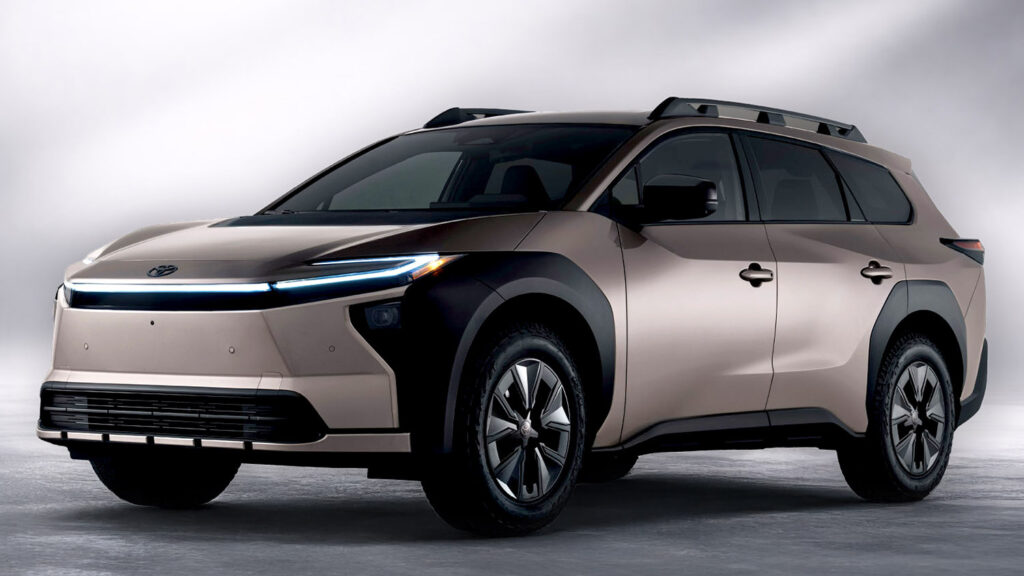
Toyota has quietly announced pricing for the 2026 bZ Woodland will start at $45,300 before a $1,450 destination fee. That makes the model $10,400 more expensive than the smaller bZ and a whopping $5,305 pricier than the similar Subaru Trailseeker.

That’s a sizable difference, but the company is only offering the crossover-ified wagon in one well-equipped trim. However, customers can order an optional Premium Package. This stands in contrast to Subaru, which will offer the Trailseeker in three separate trims named Premium, Limited, and Touring.

More: Subaru’s New Trailseeker Costs $5,000 More Than The Outback

Toyota hasn’t published full specs yet, but the bZ Woodland will come equipped with LED lighting units and 18-inch alloy wheels. Buyers will also find a six-speaker audio system, a 14-inch infotainment system, and a wireless smartphone charger. Other highlights include ambient lighting and heated power fronts seats wrapped in SofTex upholstery.

They’re joined by the Toyota Safety Sense 3.0 suite of driver assistance systems. It includes a Pre-Collision System with Pedestrian Detection, Full-Speed Range Dynamic Radar Cruise Control, and Lane Tracing Assist. These features are accompanied by Automatic High Beams, Road Sign Assist, Proactive Driving Assist, and Lane Departure Alert with Steering Assist. Other safety systems include a Blind Spot Monitor with Rear Cross-Traffic Alert, a Panoramic View / Multi-Terrain Monitor, and Safe Exit Alert.

The bZ Woodland with the Premium Package costs $47,400 and adds a panoramic moonroof as well as a nine-speaker JBL premium audio system. Buyers will also find front radiant heaters as well as heated and ventilated front seats with a memory function on the driver’s side.

The Trailseeker Looks Like A Far Better Deal

\\\\\\\\\\\

While we’re waiting for Toyota to share more details, the Trailseeker looks like a far better deal as the base model has much of the same equipment as the bZ Woodland. Furthermore, the $43,995 Trailseeker Limited seems to be better equipped as it has a hands-free power liftgate and larger 20-inch wheels. It also sports heated rear seats and a Harman Kardon premium audio system.

The $46,555 Trailseeker Touring compares favorably to the $47,400 bZ Woodland Premium as well as both have a panoramic glass roof, ventilated front seats, and radiant leg warmers. Subaru also throws in a gloss black hood decal and a digital rearview mirror.

A Shared Powertrain With 375 HP

\\\\\\\\\\

Both models ride on the e-TNGA platform and have a 74.7 kWh battery pack. The latter feeds a dual-motor all-wheel drive system developing a combined output of 375 hp (280 kW / 380 PS).

Toyota originally quoted a range of up to 260 miles (418 km), but Subaru pegs it at around 280 miles (451 km). The latter company also noted the Trailseeker accelerates from 0-60 mph (0-96 km/h) in 4.4 seconds, has a NACS port, and can get an 80% charge in as little as 28 minutes.

2026 Toyota bZ Woodland Pricing
ModelMSRP
bZ Woodland$45,300
bZ Woodland Premium$47,400
SWIPE

H/T to Car & Driver

US Senate Dems probe effect of Trump administration child care cutbacks on rural families

A September poll from First Five Years Fund, an advocacy group, found that 4 out of 5 rural Americans “say the ability of working parents to find and afford quality child care is either in a ‘state of crisis’ or ‘a major problem.’” (Photo by Sue Barr/Getty Images)

A September poll from First Five Years Fund, an advocacy group, found that 4 out of 5 rural Americans “say the ability of working parents to find and afford quality child care is either in a ‘state of crisis’ or ‘a major problem.’” (Photo by Sue Barr/Getty Images)

WASHINGTON — Several U.S. Senate Democrats launched an investigation into how the Trump administration’s child care funding cuts and policy changes are affecting rural families, in a Sunday letter provided exclusively to States Newsroom.

Sens. Elizabeth Warren of Massachusetts and Raphael Warnock of Georgia led four of their colleagues in urging the respective heads of Rural Development at the Department of Agriculture and the Administration for Children and Families at the Department of Health and Human Services to offer up more information on their “current capacity to support child care, particularly in rural communities.” 

Joining Warren and Warnock are Sens. Ben Ray Luján of New Mexico, Angela Alsobrooks of Maryland, Alex Padilla of California and Jeff Merkley of Oregon. 

“Despite child care being one of the biggest costs American families face, the Trump administration has taken a wrecking ball to the federal programs that aim to make child care more accessible and affordable, including ACF and USDA’s Rural Development Office,” the senators wrote to acting Under Secretary for Rural Development Todd Lindsey and ACF’s Assistant Secretary Alex Adams. 

USDA Rural Development and ACF work to expand access to child care in rural areas. 

The senators pointed to a September poll from First Five Years Fund, an advocacy group, which found that 4 out of 5 rural Americans “say the ability of working parents to find and afford quality child care is either in a ‘state of crisis’ or ‘a major problem.’” 

The group said the administration’s slashing of staff at agencies and programs that support affordable child care, including ACF and Rural Development at USDA, are raising concerns that the administration is “failing families across the country and adding to the affordability crisis facing working-class families.” 

Cuts from federal child care fund to Dem states

The senators raised alarm over some of the administration’s most sweeping actions regarding child care programs, including attempts to cut off nearly $2.4 billion from the multibillion-dollar Child Care and Development Fund, or CCDF, to California, Colorado, Illinois, Minnesota and New York earlier in January. 

All are led by Democratic governors and the administration cited concerns about allegations of fraud.

CCDF — administered within the Office of Child Care under ACF — provides federal funding to states, territories and tribes to help low-income families obtain child care.

The five Democratic-led states sued in a New York federal court over the freeze, which also included $7.35 billion from the Temporary Assistance for Needy Families program and $869 million from the Social Services Block Grant — totaling more than $10 billion when combined with CCDF. 

A judge temporarily blocked the administration from freezing the funds earlier this month. A separate judge extended that order Friday. 

“States are challenging the legality of this freeze, but the consequences would be devastating should the courts permit the administration to permanently withhold the funds,” the senators wrote. 

Days prior to the announced freeze, the administration said states had to provide “justification” that federal child care funds they receive are spent on “legitimate” providers to get those dollars.

That demand followed allegations of fraud in Minnesota child care programs, which had prompted HHS to freeze all child care payments to the state.

The administration also announced earlier in January it would be rescinding multiple Biden administration child care rules that “required states to pay providers before verifying any attendance and before care was delivered.” 

Head Start in rural America

The Democrats argued that President Donald Trump has also “attacked Head Start at every turn since his inauguration.” 

ACF administers Head Start, which provides early childhood education, nutritious meals, health screenings and other support services to low-income families. 

The senators noted that “Head Start is especially crucial in rural communities, where it is often the only licensed child care program available.” 

During the record-long government shutdown in 2025, scores of Head Start centers experienced lapses in funding grants as a result.  

Even prior to the shutdown, Head Start already experienced chaos during the Trump administration, such as reports of delays in accessing approved grant funding, regional office closures and firings at ACF’s Office of Head Start.

Flood of workers departing USDA 

Meanwhile, USDA saw more than 20,000 employees leave in the first half of 2025, according to a report from the agency’s Office of Inspector General. More than one-third of the agency’s Rural Development unit left during that time.  

“Instead of strengthening the programs that aim to address the rural child care crisis, President Trump is firing the people who administer them,” the senators wrote. 

On top of that, the agency in March confirmed it would be slashing around $1 billion in previously announced funding for programs to help child care facilities, schools and food banks purchase from local farmers. 

USDA also faced backlash during the shutdown for refusing to tap into a multibillion-dollar contingency fund in order to keep benefits flowing for the country’s main food assistance program known as the Supplemental Nutrition Assistance Program, or SNAP.

The senators urged Lindsey and Adams to respond to their inquiries by Feb. 16. 

USDA did not immediately respond to requests for comment. 

In response to a request for comment, ACF said Monday it is “currently reviewing the U.S. Senators’ letter and will respond to them directly.” 

Trump to block foreign aid for transgender care, Vance tells anti-abortion rally

Vice President JD Vance delivers remarks during the annual March for Life rally on the National Mall in Washington, D.C., on Jan. 23, 2026. (Photo by Kevin Dietsch/Getty Images)

Vice President JD Vance delivers remarks during the annual March for Life rally on the National Mall in Washington, D.C., on Jan. 23, 2026. (Photo by Kevin Dietsch/Getty Images)

WASHINGTON — The Trump administration plans to expand a policy that blocks foreign aid dollars from going to organizations that discuss, refer or perform abortions to also include groups that address transgender health care or have policies on diversity, equity and inclusion, Vice President JD Vance said Friday.

“We’re expanding this policy to protect life, to combat DEI and the radical gender ideologies that prey on our children. And with these additions, the rule will now cover every non-military foreign assistance that America sends,” Vance announced at the March for Life anti-abortion rally on the National Mall.  

“All in all, we have expanded the Mexico City Policy about three times as big as it was before,” he added. “And we’re proud of it, because we believe in fighting for life.”

The White House did not immediately respond to a request from States Newsroom for more details on the policy expansion or when it would be implemented. 

Defending administration’s record

Vance said during the rally he needed to “address an elephant in the room” that President Donald Trump and others in the administration have not made enough progress on anti-abortion initiatives during the first year of unified Republican control of the federal government.  

“I want you to know that I hear you and that I understand,” he said. “There will inevitably be debates within this movement. We love each other. But we’re going to have open conversations about how best to use our political system to advance life, how prudential we must be in the cause of advancing human life. I think these are good, natural and honest debates.”

Vance mentioned that Trump nominated some of the Supreme Court justices that overturned Roe v. Wade, the 1973 case that had guaranteed a constitutional right to an abortion for nearly 50 years. 

He also noted that Republicans in Congress included a provision in the “big, beautiful” law that blocks Medicaid funding from going to Planned Parenthood for one year for any type of health care. Federal law had already barred funding from going to abortions, with limited exceptions.

Vance argued that in addition to judicial rulings and federal laws, members of the anti-abortion movement must strive to change hearts and minds as well. 

“We’re not trying to argue to the Supreme Court anymore,” he said. “We’re trying to argue to our fellow citizens that we must build up that culture of life. And as you know, that effort is going to take a lot of time, it’s going to take a lot of energy and it’s going to take a little bit of money.”

Later in his speech, Vance sought to discourage people from concentrating on professional lives and instead called on them to focus more on getting married and having children. 

“You’re never going to find great meaning in a cubicle or in front of a computer screen,” he said. “But you will find great meaning if you dedicate yourself to the creation and sustenance of human life.”

Trump didn’t attend the rally in person but recorded a video message that was played just before Vance spoke, telling attendees he “was proud to be the first president in history to attend this march in person” six years ago. 

“In my first term I was honored to appoint judges and justices who believed in interpreting the Constitution as written. That was a big deal. And because of that, the pro-life movement won the greatest victory in its history,” Trump said. “Now the work to rebuild a culture that supports life continues in every state, every community and every part of our beautiful land.”

Calls for action on medication abortion

Trump and some in his administration have come under scrutiny lately for not moving faster to complete a safety review of mifepristone, one of two pharmaceuticals used in medication abortion, which is approved for up to 10 weeks gestation. 

Marjorie Dannenfelser, president of Susan B. Anthony Pro-Life America, and Lila Rose, founder of the anti-abortion group Live Action, both released statements in December calling on Trump to fire Food and Drug Administration Commissioner Marty Makary over the pace of that review.

Anti-abortion organizations want the administration to end the ability of doctors or other qualified health care providers to prescribe mifepristone and the second pharmaceutical used in medication abortion, misoprostol, via telehealth and have it shipped to patients. 

Several Republicans in Congress have joined their call, with Senate Health, Education, Labor and Pensions Committee Chairman Bill Cassidy, R-La., holding a hearing on mifepristone earlier this month. 

The U.S. Supreme Court rejected efforts from anti-abortion organizations to limit access to mifepristone in a June 2024 ruling, writing they never had standing to bring the lawsuit in the first place. 

Trump told House Republicans during a policy retreat at the Kennedy Center earlier this month they must be “flexible” about the Hyde Amendment, which blocks federal funding for abortion with limited exceptions, in order to broker a health care deal that can reach his desk. 

Dannenfelser rebuked Trump for the comment, writing in a statement that to “suggest Republicans should be ‘flexible’ is an abandonment of this decades-long commitment. If Republicans abandon Hyde, they are sure to lose this November.”

Anti-abortion activists from across the U. S. protest legal abortion at the annual March for Life on Jan. 23, 2026. (Photo by Sofia Resnick/States Newsroom)

GOP leaders tout major law

U.S. House Speaker Mike Johnson, R-La., also spoke at the March for Life rally, touting the “big, beautiful” law as “the most pro-life and pro-family legislation that has been signed into law in decades.”

“For the first time since Roe v. Wade was reversed, we have the White House, the Senate and the House all working together to deliver meaningful and historic pro-life victories,” he said. 

The law included several policies that Johnson said will aid Americans in having children, including an expansion of the child tax credit and the adoption tax credit as well as the investment accounts for babies

Johnson said the provision that blocks Medicaid patients from going to Planned Parenthood for non-abortion health care services, depriving the organization of that income, was a massive policy victory for Republicans. 

“We stand here today with one united voice to affirm the federal government should not be subsidizing any industry that profits from the elimination of human life,” Johnson said. 

New Jersey Republican Rep. Chris Smith, speaking just after Johnson while other GOP lawmakers stood on the stage, said eliminating access to mifepristone must be accomplished. 

“I’ve been here since Ronald Reagan’s first election, 1981,” Smith said. “And I can tell you, this leadership is the most pro-life, so committed. And behind me are just absolute heroes. Men and women who take up the fight every single day.”

Senate Majority Leader John Thune, R-S.D., didn’t attend the rally in person but submitted a video that touted the Planned Parenthood defunding provision. 

“Thanks to that landmark legislation, this year, some of the nation’s largest abortion providers, including Planned Parenthood, are prohibited from receiving Medicaid funding,” Thune said. 

Other Republicans attending the rally included Alabama Rep. Robert Aderholt, Arkansas Rep. French Hill, Florida Rep. Kat Cammack, Georgia Rep. Andrew Clyde, Maryland Rep. Andy Harris, Michigan Reps. Bill Huizenga and Tim Walberg, Minnesota Rep. Michelle Fischbach, Missouri Rep. Bob Onder, Pennsylvania Rep. Dan Meuser, South Carolina Rep. William Timmons, Texas Reps. Michael Cloud and Dan Crenshaw, Utah Rep. Mike Kennedy, Virginia Rep. John McGuire and Wisconsin Rep. Glenn Grothman.

Hearing held on Republican bill to set wolf population number

Collared Wolf

A gray wolf. (Wisconsin DNR photo)

Wisconsin Republicans on Thursday continued their yearslong effort to reverse the Wisconsin Department of Natural Resource’s decision not to quantify a specific statewide goal for the state’s gray wolf population with a public hearing on a bill that would require the agency to set one. 

The bill, authored by Sen. Rob Stafsholt (R-New Richmond) and Rep. Chanz Green (R-Grand View), is unlikely to be signed into law by Gov. Tony Evers if it’s passed, but shows how the contentious politics around wolves continue to play a major role in the state’s natural resource policy debates — especially in an election year. U.S. Rep. Tom Tiffany, seen as the frontrunner in the Republican primary for governor, was the author of a bill recently passed in the House that would remove the gray wolf from the federal endangered species list. 

State law in Wisconsin requires that whenever the wolf isn’t listed as endangered, the state must hold an annual wolf hunt. 

The state’s wolf management plan was updated for the first time in decades in 2023. The plan was established after a two and a half year process involving an advisory committee made up of 28 member organizations and thousands of public comments. 

Prior to the current plan’s adoption, Wisconsin was operating under a plan that was first approved in 1999 and then updated in 2007. That plan went into effect as the state was working to responsibly handle the animal’s return to the state after its extirpation in the 1960s. 

Initially, the state set a  population goal of 350 wolves. 

More than a quarter century after the 1999 plan’s adoption, the state’s wolf population is estimated to be about 1,200 wolves. The 350 number that was initially set as an aspiration for a healthy wolf population has come to be seen by some hunters and farmers as a wolf population ceiling. 

But under the current wolf management plan, the DNR opted to use an “adaptive management” system which forgoes setting a specific population number. Instead, the state gets divided into zones and in each zone the DNR annually assesses the local wolf population to decide if it needs to be kept stable, allowed to grow or reduced through a hunt. 

Adaptive management is the method used by the state for most other game species, including black bear, bobcat, coyote, white-tailed deer and wild turkey. But since the plan’s adoption, Republicans have been opposed to using the method for wolves. 

Rep. Green, the bill’s co-author, said that the growth of the wolf population in northern Wisconsin is causing a number of problems, including in the area’s deer population. 

“We’d like to see a wolf management goal in place where — most of these wolves are concentrated in northern Wisconsin and we’d like to see that reduced,” Green said. “It’s been heavily impacted on our deer populations and things like that.”

Research has shown that Wisconsin’s wolves have helped cause a noticeable decline in the number of vehicle-deer collisions that occur in the state. 

At the hearing, Chris Vaughan, Wisconsin director of the pro-hunting organization Hunter Nation, complained that the wolf management plan focuses too much on the social effects of the wolf population, putting too much weight on people’s personal views about wolves. Vaughan lamented how frequently Wisconsin’s plan uses the word “social” compared to other states

But representatives of the DNR said social carrying capacity is an important consideration for biologists when managing any species. 

“Dare I say the biological part of wolf management is the easy part,” Randy Johnson, the DNR’s large carnivore species specialist, said. ”We know how to have a pretty good system of monitoring the population. The science is pretty clear about how we can move the population up and down through harvest. It is the social side of this that continues to be the difficult part of it. Everybody knows it’s a contentious issue. Some people see it different ways, some people want more, some people want less and it’s our job to try to balance that.” 

Proponents of a hard limit on the wolf population also cast their argument in social terms.

Brad Olson, president of the Wisconsin Farm Bureau, said the state should have a specific population number to assuage the feelings of farmers who are traumatized by losing livestock to wolves. 

“For those of us who live in wolf country and deal with wolves on a day in, day out basis, at times, I think the number is very important to those of us in wolf country who have these issues,” Olson said. “You haven’t been on the farms like I have where, where the mule has been killed by a pack of wolves … and I think in all of this, what we’re really missing from the legislative side, from the DNR side, is we’re missing the impact of the mental health on rural ag and those in rural Wisconsin.” 

“When compared to other species where adaptive management works, wolves sit at a completely different intersection of biology, social politics and law, where this vague management tool is impossible to apply,” Vaughan said.

Democrats on the committee questioned the prudence of changing the DNR’s management plan before the wolf has been delisted and the plan has a chance to be put to the test when a hunt must be held. 

“So if we actually could accomplish [a healthy wolf population] utilizing the tools and the science that the DNR has provided, would that or would that not actually accomplish the goal?” Sen. Kristin Dassler-Alfheim (D-Appleton) asked.

Lotus Might Slash Eletre’s Price In Half In Canada

  • Lotus could slash Eletre prices in Canada by nearly 50 percent.
  • Eletre currently costs more than a Lamborghini Urus SE in Canada.
  • EV tariff deal lets some Chinese imports face lower 6.1 percent tax.

The Lotus Eletre might soon become a far more accessible proposition in Canada, thanks to a new trade agreement with China that could take a wrecking ball to the electric SUV’s bloated sticker price. What is now priced well into super-luxury territory may soon fall within reach for a much broader group of buyers.

Read: We Drove Lotus’ Electric SUV To See If It Can Silence Its Haters

As in the United States, 100 percent tariffs have pushed the Eletre’s price in Canada into the stratosphere, starting at a jaw-tightening CA$313,500 (about US$226,000 at current exchange rates). That puts it in the same league as a mid-spec Bentley Bentayga and even pricier than the Lamborghini Urus E. In the U.S., things aren’t much better, with a starting price of US$229,000 before delivery.

Tariff Relief

 Lotus Might Slash Eletre’s Price In Half In Canada

With the new policy in effect, the first 49,000 Chinese EVs imported into Canada each year will now face a reduced 6.1 percent tariff. Lotus claims this will cause the Eletre’s price to “fall sharply by about 50 percent.”

However, it’s worth noting that under the terms of the agreement, half of those 49,000 vehicles are required to start below CA$35,000 (US$25,000), which the Eletre most definitely does not.

Lotus announced the change on Chinese social media, although it stopped short of confirming a new starting price for the Eletre. If it does indeed drop by 50 percent, it could start from around CA$156,000 ($112,500), significantly undercutting the Urus and positioning it closer to the Porsche Cayenne GTS, which starts at CA$134,800 ($97,200).

\\\\\\\\\

“Canada has always been an important market with great strategic significance in the global territory of Lotus sports cars,” Lotus Group chief executive Feng Qingfeng wrote in a social media posting. “Users here have a high appreciation for high performance and driving pleasure. We warmly welcome the new tariff optimization policy, which has created a more open and fair market environment for international car brands.”

More: Canada Just Invited China’s Biggest EV Makers To Build Cars On America’s Border

Lotus currently operates six dealerships across Canada and will no doubt be eager to ramp up sales of the Eletre. The flagship model features a pair of electric motors that combine to produce 905 hp, allowing a 0-100 km/h (62 mph) in a blistering 2.95 seconds and reach a 265 km/h (164 mph) top speed. It also has a quoted WLTP range of 280 miles.

A Hybrid Eletre Is in the Works Too

 Lotus Might Slash Eletre’s Price In Half In Canada
The upcoming hybrid Lotus Eletre For-Me

Lotus isn’t stopping with just the all-electric Eletre. A hybrid version is also in the works, offering an alternative path for buyers who aren’t quite ready to go fully electric. Official documents out of China confirm that this variant, called the Eletre For-Me, retains the SUV’s shape and layout but adds a turbocharged four-cylinder engine to the mix.

Read: Lotus Dropped A Gas Engine Into The Eletre SUV

It’s Lotus’s first step back from its earlier pledge to go EV-only, and while the full specs haven’t been disclosed, early reports point to a combined output of 952 hp, slightly more than the current top-spec Eletre R.

We had a chance to review the all-electric Eletre last year and were pleasantly surprised. It’s quick, feels well-built, and has a beautiful interior that suits the category. Will those qualities be enough to convince Canadians to buy it if the price drops by half?

 Lotus Might Slash Eletre’s Price In Half In Canada

Mercedes Thinks A $10K Discount Will Get $165K Electric SUVs Moving

  • Mercedes G580 electric G-Class now has a $10,000 incentive bonus.
  • Previous lease-only bonus now expanded to all G580 transactions.
  • Quad-motor electric G starts at $164,550 including destination.

Mercedes-Benz’s decision to offer an all-electric version of the G-Class hasn’t come without controversy. After all, one of the most iconic and traditionally rugged off-roaders can now glide along in complete silence.

Still, fresh off a strong 2025 for the G-Wagen lineup in America, Mercedes is moving ahead with its electrification strategy, now aiming to boost interest in the G580 with EQ Technology.

Read: Mercedes’ Electric G Flops So Hard It Could Change What Comes Next

The electric G-Class is currently offered with a $10,000 Incentive Bonus, now available whether you lease or buy the vehicle outright. Previously, this discount was capped at $5,000 and applied only to lease agreements, according to Cars Direct.

 Mercedes Thinks A $10K Discount Will Get $165K Electric SUVs Moving

Whether that’s enough to sway potential buyers is another matter entirely.

The G580 starts at $164,550 including destination. However, as is often the case, finding one at base MSRP is nearly impossible. A quick search on Cars.com turned up 224 listings, with only a single example priced at MSRP. Most hovered between $180,000 and $190,000.

Even so, at base price, a $10,000 discount, while not insignificant, doesn’t sound like it will do much to tip the scales. It amounts to roughly 6 percent off, and for typical G-Class buyers, that might equate to a minor financial blip, not a reason to commit.

Sales Flop

\\\\\\\\

Mercedes recently confirmed it delivered 49,700 G-Class vehicles globally last year, a 23 percent jump over the previous year and a new high-water mark for the model. What it didn’t share is how many of those were the electric G580 and how many still carried internal combustion.

However, reports from early last year described the G580 as a sales “flop,” noting that just 1,450 examples had been sold in Europe as of April 2025, and only 58 in China. It was also claimed that Mercedes had failed to sell a single example in the US, though that was never officially confirmed.

\\\\\\\\\\\

Germany Reboots EV Subsidies, And This Time Chinese Brands Are In

  • Incentives range from €1,500 to €6,000 per eligible household.
  • Buyers earning under €45,000 may benefit from the new program.
  • Chinese brands are included in the subsidy with no import ban.

Not long ago, Germany made a sharp U-turn on electric vehicle incentives, pulling the plug on subsidies just as local automakers were counting on them to shore up faltering demand. Unsurprisingly, sales tanked. Now, the government is reversing course once again, preparing to reinstate a new subsidy program aimed at reviving interest in EVs.

Read: Mercedes Keeps Its Most Affordable Model Alive, But It Won’t Be German Soon

The upcoming scheme will offer buyers between €1,500 ($1,742) and €6,000 ($7,000) in incentives, depending on the vehicle, household income, and family size. The total budget stands at €3 billion ($3.48 billion), enough to support around 800,000 vehicles under the plan.

No Barriers for Foreign EVs

 Germany Reboots EV Subsidies, And This Time Chinese Brands Are In

Unlike some neighboring countries, Germany’s EV subsidy will be open to all manufacturers, including Chinese brands. According to Bloomberg, the government has confirmed it will not impose origin-based restrictions, with Environment Minister Carsten Schneider saying there’s no evidence of a flood of Chinese imports and that local brands are strong enough to compete.

Germany’s subsidies will be offered through 2029, and applications can be submitted retroactively to January 1, 2026. An online portal is scheduled to be launched in May to handle applications.

The program was first announced last October and has been designed to mostly benefit low- and middle-income households. Final terms are expected to be revealed later in the year.

A Reboot for EV Incentives

 Germany Reboots EV Subsidies, And This Time Chinese Brands Are In

Germany previously ditched its EV incentives in late 2023 due to budgetary issues. This immediately triggered a 27 percent decline in EV sales in 2024.

There’s now a new government in power who are clearly eager to see the sales of electric cars rebound, even though the European Union did recently give car manufacturers a major reprieve in reversing the proposed 2035 ban on new cars with internal combustion engines.

 Germany Reboots EV Subsidies, And This Time Chinese Brands Are In

In late last year, it was reported that the new incentive scheme would only provide subsidies for new EVs costing less than €45,000 ($52,300), but it’s unclear whether this cap has been confirmed. Additionally, it had been reported that only individuals earning less than €45,000 ($52,300) would be eligible.

Germany’s earlier EV incentive program, which ran from 2016 to 2023, distributed roughly €10 billion ($11.6 billion) in subsidies to buyers.

What Else Comes With the Package?

Alongside the new funding package, the program comes with additional efforts to support EV uptake, including a tax break for electric vehicles extended through 2035. Estimated to cost around €600 million (about $700 million) in forgone revenue, the move reflects the coalition’s backing for a slower, more flexible transition, even as the future of combustion engine bans remains under debate.

 Germany Reboots EV Subsidies, And This Time Chinese Brands Are In

Far fewer people buy Obamacare coverage as insurance premiums spike

A patient registers for care at a mobile dental and medical clinic in August 2025. Nationwide, the number of people buying health plans on Obamacare insurance marketplaces is down by about 833,000 compared with a year ago, according to state and federal data.

A patient registers for care at a mobile dental and medical clinic in August 2025. Nationwide, the number of people buying health plans on Obamacare insurance marketplaces is down by about 833,000 compared with a year ago, according to state and federal data. (Photo by Spencer Platt/Getty Images)

Nationwide, the number of people buying health plans on Obamacare insurance marketplaces is down by about 833,000 compared with a year ago, according to federal data released this week.

Many states are reporting fewer new enrollees, more people dropping their coverage, and more people choosing cheaper and less generous health insurance plans with higher deductibles.

Across most states, Thursday was the last day to enroll for plans that start in February. But nine states and Washington, D.C., have deadlines later this month, so the numbers could change.

There are 21 states with state-run health insurance marketplaces, and the rest use the federal website. The vast majority of states have seen declines in enrollment so far, compared with around this time last year.

Preliminary data released Monday by the federal Centers for Medicare & Medicaid Services shows 22.8 million enrollees, down from a record total of 24.3 million last year.

Premiums have surged as a result of the expiration of enhanced federal subsidies first made available by the American Rescue Plan Act in 2021 and later extended through the end of 2025 by the Inflation Reduction Act. The availability of the subsidies spurred a sharp increase in the number of people buying health plans on the marketplaces. In 2020, 11.4 million people were enrolled in marketplaces through Obamacare, formally known as the Affordable Care Act. More than double that amount enrolled last year.

Congress failed to reach an agreement on extending the subsidies before the end of last year and still hasn’t reached one. As a result, premiums were expected to increase this year by 114% on average — from $888 last year to about $1,904, according to estimates made in September by health policy research organization KFF.

The higher costs appear to be driving many people to forgo insurance or opt for cheaper, less generous plans this year, health officials and analysts say. Several states with state-based marketplaces — including Georgia, Illinois, Minnesota, New York, Vermont, Virginia and Washington — are reporting fewer enrollments this year in comparison with enrollments through early January 2025, according to early data. Other states, such as California, are reporting fewer new enrollees.

“It’s important to consider that this is preliminary data, so this represents people who have signed up and selected the plan — but they probably haven’t received their first premium bill,” said Elizabeth Lukanen, executive director of the health policy research organization State Health Access Data Assistance Center at the University of Minnesota. “Once that happens, I think there’s concern — and it seems very possible — that people may decide to drop coverage. So, the decline could get bigger.

“On the other hand, open enrollment hasn’t closed, so you have two things sort of competing. It seems pretty likely that there will be a decline,” she said.

If the downward trend continues, the nation could see the first decline in enrollment since 2020, Lukanen said, adding that a full picture of income levels and demographics of people who have dropped coverage won’t be clear until the summer.

In Pennsylvania, data updated through Tuesday shows more than 15,000 previously enrolled adults between the ages of 55 and 64 have dropped coverage entirely — the most of any age bracket.

Pennsylvania’s state-based exchange, Pennie, has seen about 15% fewer new enrollments compared with last year. The state is also reporting 1,000 residents dropping coverage per day during open enrollment — with the most coverage losses among people with incomes 150% to 200% of the poverty level. These could include families of two adults and two children with an income between $48,225 and $64,300.

The state is seeing an “unprecedented” number of previously enrolled people dropping coverage, said Devon Trolley, executive director of the Pennsylvania Health Insurance Exchange Authority.

California is reporting 31% fewer new enrollees this year compared with last year, and more than a third of new enrollees are choosing bronze plans — the lowest, least generous coverage tier — up from less than a quarter at this time last year.

In Minnesota, data as of Dec. 3 shows more than half of active enrollees are opting to keep their coverage tier. But of those changing plans, more than a third — 37% — are going to cheaper plans. The state notes a full picture won’t be available until March.

Meanwhile, some states are seeing roughly the same number of enrollees or more. Texas, for example, is reporting about 4.1 million people enrolling this year compared with 4 million last year.

Charles Miller, health and economic mobility policy director at Texas 2036, a policy research nonprofit, said it’s unclear why enrollments are up, but pointed to some clues.

“Texas had a uniquely large population of uninsured individuals eligible for free and inexpensive plans that hadn’t enrolled previously … [and] has more affordable bronze and gold plans than many states,” he said.

He attributes that to a bipartisan state law, enacted in 2021, that had the effect of increasing subsidies for those plans, Miller said.

Nevada is seeing fewer enrollees overall. But compared with this time last year, the state is seeing 29% more people who are actively shopping the website to explore plans, said Katie Charleson, communications officer at the Nevada Health Authority Division of Consumer Health Services.

The state introduced a new public option, according to the Nevada Current, and health officials told lawmakers last week that about 1 in 5 active shoppers are opting for that plan.

In addition to the expiration of the subsidies, the cost of coverage has risen because of other factors, according to insurers. They say they’ve had to raise premiums because of rising prescription drug costs, inflation and workforce challenges, such as provider shortages.

But the enhanced premium tax credits were aimed at buffering those year-to-year changes for Americans with lower incomes, said Trolley, adding that the tax credit structure “helps make sure that [enrollees] don’t see those really larger drops that happen from time to time, sort of from those market forces.”

“When there are broader rate increases of … the total cost of the coverage, the tax credits are structured so that people who get a tax credit don’t feel a lot of that increase. They’re sort of sheltered from it on a year to year basis,” Trolley said. “The tax credit is tied to someone’s income and limits what they pay as part of their income, not necessarily tied to the cost of the coverage.”

She added that she’s also heard from some residents who say they are waiting to enroll in a plan to see if Congress takes action.

“People are leaving the ACA marketplace because the trade-offs have just become harder to justify,” Lukanen said. “What worries me is that when the coverage becomes unaffordable, it isn’t that people suddenly stop needing care. They just lose the protection that insurance offers, and those health care costs don’t go away.”

If people are going to the doctor and they don't have insurance, these costs are then just shifted.

– Elizabeth Lukanen, executive director of the health policy research organization State Health Access Data Assistance Center at the University

Lukanen added that if more people forgo coverage, health care services may end up costing the nation more overall.

“If people are going to the doctor and they don’t have insurance, these costs are then just shifted. They’re shifted to hospitals, ultimately to the community and the taxpayer.”

Trolley echoed that, saying she’s concerned about the overall burden on providers in rural counties, which are seeing the highest drops in Obamacare coverage in Pennsylvania.

“Any increase in the uninsured rate is going to further strain providers that are in rural areas, especially — further strain their financial situation,” she said. “We are very concerned about that in Pennsylvania.”

Stateline reporter Nada Hassanein can be reached at nhassanein@stateline.org.

This story was originally produced by Stateline, which is part of States Newsroom, a nonprofit news network which includes Wisconsin Examiner, and is supported by grants and a coalition of donors as a 501c(3) public charity.

Trump rolls out framework on health care costs that’s silent on ACA tax credits

President Donald Trump addresses the Detroit Economic Club at the MotorCity Casino on Jan. 13, 2025. (Photo by Ben Solis/Michigan Advance)

President Donald Trump addresses the Detroit Economic Club at the MotorCity Casino on Jan. 13, 2025. (Photo by Ben Solis/Michigan Advance)

WASHINGTON — President Donald Trump outlined his health care proposals to Congress on Thursday, asking lawmakers to approve several broad policy changes “without delay” — but left out any mention of enhanced tax credits whose expiration has left some Americans with skyrocketing costs. 

Health care costs, especially the rising price of health insurance, have become a frequent talking point for politicians from both political parties following last year’s government shutdown, when Democrats repeatedly called on Republicans to extend the now-expired enhanced tax credits for Affordable Care Act marketplace plans. 

Trump reiterated in a five-minute video that he wants Congress to give Americans money directly so they can use it to offset the cost of health insurance or health care, a proposal that has so far been unable to get the traction needed to advance on Capitol Hill. 

Trump didn’t detail any income caps on the direct payments, which would likely be sent to Health Savings Accounts as opposed to a simple check. He also didn’t say how much per month or annually he wants lawmakers to provide Americans, leaving it for members of Congress to hash out. 

“The government is going to pay the money directly to you. It goes to you, and then you take the money and buy your own health care,” Trump said. “Nobody has ever heard of that before, and that’s the way it is. The big insurance companies lose and the people of our country win.”

The enhanced ACA marketplace tax credits, first implemented by Democrats during the coronavirus pandemic, expired at the end of 2025. The subsidies helped to keep premiums lower than they would have otherwise been for about 22 million Americans on those health insurance plans. 

The House voted earlier this month to keep the enhanced tax credits going for another three years, but the bill has stalled in the Senate as a bipartisan group of lawmakers tries to reach consensus on two more years of the subsidies with significant changes. 

Lower drug prices

Trump said in the video that Congress should approve legislation that requires prescription drug companies to ensure Americans pay the lowest price in the world for pharmaceuticals, a policy known as “most favored nation” that he has pursued during his second term. 

“So instead of Americans paying the highest drug prices in the world, which we have for decades, we will now be paying the lowest cost paid by any other nation,” he said. “So any other nation that’s paying the lowest cost, that’s what we’re going to pay. And the American people will get the savings.”

Trump said the legislative request, which he dubbed “The Great Health Care Plan,” would require health insurance companies and health care providers to publicly share easy-to-understand information about what they charge and how much they make in profit.  

“As the saying goes, sunlight is the best disinfectant. That is why my plan orders all insurance companies to publish rate and coverage comparisons in very plain English,” Trump said. “It requires insurers to publish detailed information about how much of your money they’re going to be paying out in claims versus how much they’re taking in in profits.” 

Health insurance companies, he said, would be required to detail how many claims they deny and whether those refusals to pay for health care were overturned on appeal. 

“And most importantly, it will require any hospital or insurer who accepts Medicare or Medicaid to prominently post all prices at their place of business so that you are never surprised and you can easily shop for a better deal or better care,” Trump said, though a 2019 rule created a similar requirement. “We will have maximum price transparency and costs will come down incredibly.”

Path through Congress

one-page outline of the proposal posted to the White House website doesn’t detail whether Trump wants Congress to approve the policy requests through the complex budget reconciliation process that Republicans used to approve the “big, beautiful” law this summer or to negotiate a bipartisan bill with Democrats. 

A White House official, speaking on background on a call with reporters to detail the plan and the next steps, said the administration believes the “proposals all have broad support from the American people.”

“We expect both Republicans and Democrats to be able to embrace them, so reconciliation would not be necessary,” the official said.

The framework is intended to provide “broad direction” to lawmakers, leaving negotiators the ability to take any bill they may write in different directions, the official said, adding the administration is “open to working” with Congress on the details. 

“We want to make progress,” the official said. “We’re not laying out a specific path.”

The official said the president leaving out any mention of the expired enhanced tax credits for people who purchase their health insurance from the Affordable Care Act marketplace was not intended to cut off ongoing bipartisan talks in the Senate. 

“This does not specifically address those bipartisan congressional negotiations that are going on,” the official said. “It does say that we have a preference that money goes to people, as opposed to insurance companies.”

Engaging drugmakers

Centers for Medicare & Medicaid Services Administrator Dr. Mehmet Oz said on the same call with reporters that the framework focused on “four pillars” the administration believes must be codified into law — solidifying most favored nation drug pricing, lowering health insurance costs, transparency from health insurance companies and more pricing information from health care providers. 

“Although we’re taking major action at CMS, including fines and the like, having Congress say, ‘This is how it’s going to be, this is a law of the land’ is important,” Oz said, adding that he really does believe there can be bipartisan support for at least some of the proposals. 

Oz said the administration’s approach to bring down the cost of prescription drugs to the lowest level offered anywhere in the world is not intended to impede innovation and reiterated that lawmaking is crucial for longer-term stability. 

“We believe by codifying it, we’ll make sure that the drug companies stay engaged for future administrations,” Oz said. “We also believe that by doing it correctly, we’ll not overreach and create challenges to life-saving drugs being continually evolved and developed in the United States.”

The Trump administration, he said, wants Congress to give the Food and Drug Administration more leeway to convert prescription medications to over-the-counter availability, possibly increasing competition and decreasing prices. 

Oz said the price transparency portion of the request would help Americans to have more information about how long it takes to get routine appointments and whether health insurance companies are able to keep their rates down by frequently denying claims.

UPDATE: Federal addiction treatment grants restored

(Darwin Brandis | iStock Getty Images Plus)

UPDATE 1/15/26: The Trump Administration has reportedly reversed up to $2 billion in cuts to grants that fund addiction treatment, after sending termination letters to programs across the country on Tuesday night. 

Nonprofits that address housing, addiction, mental health and other human service needs were notified this week that they will lose up to $2 billion in federal grant money, in a wave of termination letters issued to programs across the country. 

The cuts will make it more difficult for frontline groups to provide treatment and harm reduction care that has been crucial to combating overdose deaths, and breaking the cycles of addiction and housing insecurity. Resources like Narcan medication used to save lives by reversing overdoses, peer support, and treatment access could dry up, just as communities nationwide began to see reductions in overdose deaths.

The U.S. Substance Abuse and Mental Health Services Administration (SAMHSA), which issued the letters, hasn’t yet commented on the cuts. There are 30 SAMHSA-funded opioid treatment programs scattered across Wisconsin including in Appleton; Beloit, Eau Claire, Fond Du Lac, Green Bay, Madison, Milwaukee, Oshkosh, Kenosha, and others, according to the agency’s website. One of those programs, Vin Baker Recovery, is named after a Milwaukee Bucks basketball team player and assistant coach.

Milwaukee County Executive David Crowley condemned the sudden funding cuts. “The Trump administration’s cuts are not just numbers on a budget sheet; they are threats to the wellbeing of real people — our neighbors, our families, and our loved ones,” Crowley said in a statement. “While I will continue fighting for funding and resources to deliver results for our most vulnerable communities, the federal government must recognize the urgent need to preserve these vital services. These cuts cannot stand, because the lives of Wisconsinites depend on it.” 

A Milwaukee County Department of Health and Human Services (DHHS) spokesperson said that so far, no termination letters have been sent to the county. DHHS received $13.9 million in direct SAMHSA funds, with $6.2 million remaining as of December. The county also receives another $15.3 million in state mental health and substance use disorder grants which  partially consist of federal funding through SAMHSA.

In an emailed statement the spokesperson said that “any termination of SAMHSA funding would result in immediate termination of mental health and substance use services in Milwaukee County.” Wisconsin’s most populous county has no other funding alternatives, and the loss of federal grant money would lead to more hospitalizations and higher incarceration rates, the spokesperson warned.

Elizabeth Goodsitt, a spokesperson for Wisconsin’s Department of Health Services (DHS) wrote in an email statement Wednesday that the department was “notified late yesterday that effective January 13, the Tribes of Wisconsin Prescription Drugs/Opioid Overdose-Related Deaths Prevention Program (PDO) grant has been terminated by the federal government.” Goodsitt described this as “part of a much larger set of cancellations across the country for federally funded projects that provided life-saving mental health and substance use disorder services.” 

Wisconsin had received nearly $1 million to operate the PDO until August 2026. The program was in the third year of a five-year grant. “The goal of the PDO is to save lives,” said Goodsitt. “The funding supports training first responders and other key community sectors on overdose prevention strategies, and it supports the purchase and distribution of naloxone, the overdose reversal medication for opioids.” 

For now the Bad River Band of Lake Superior Chippewa, the Lac Courte Oreilles Band of Lake Superior Chippewa, Menominee Indian Tribe of Wisconsin and the University of Wisconsin Board of Regents have not received termination letters regarding SAMHSA funding. Native American communities are disproportionately affected by overdose deaths in Wisconsin at a rate of 75.4 people per 100,000 in 2023, as compared to a rate of 20 people per 100,000 for white Wisconsin residents. 

“We are assessing all avenues possible to ensure the federal government is following all requirements in these existing funding agreemets,” said Goodsitt. “While there continues to be much uncertainty about this evolving situation, we will keep working to serve Wisconsinites and support their behavioral health needs. We will continue to closely monitor this situation and will share more information as it becomes available.” 

This story was updated Thursday morning to reflect the Trump Administration’s decision to reverse the grant cuts. 

GET THE MORNING HEADLINES.

Title X lawsuit dropped after Trump administration releases funds to Planned Parenthood

Planned Parenthood and other providers got word in March that millions they anticipated in Title X funding would be withheld. The money was eventually released last year, though some providers say damage was still done. (Getty Images)

Planned Parenthood and other providers got word in March that millions they anticipated in Title X funding would be withheld. The money was eventually released last year, though some providers say damage was still done. (Getty Images)

Planned Parenthood clinics in Utah resumed family planning services after the Trump administration unfroze millions in federal funds.

The American Civil Liberties Union on Tuesday submitted a brief to dismiss a lawsuit filed on behalf of the National Family Planning and Reproductive Health Association after the federal government notified nine Planned Parenthood affiliates and other family planning providers in March it would withhold annual Title X funding. 

Shireen Ghorbani, president and CEO of Planned Parenthood Association of Utah, said in a statement Monday that the restored funding does not erase all of the damage caused by nine months without it. Title X funds are meant to provide affordable family planning services, such as birth control, cancer screening, and STI tests and treatment. 

Ghorbani noted that the Utah affiliate has been the only Title X grant recipient in the state since 1985. 

“We are thrilled that Title X funding is restored to Utah for now, allowing more Utahns to get critical family planning services,” Ghorbani said. “But we cannot ignore the fact that too many Utahns have already felt the devastating effects of the Trump administration’s unwarranted decision to withhold this funding for the last nine months. Many of the 26,000 Utahns who rely on the program were forced to pay more for their health care or go without care altogether.”

Crucially, she said, the affiliate closed two health centers, in St. George and Logan, among dozens that have closed because of the withheld Title X funding and are unlikely to reopen, according to Planned Parenthood

Some grantees had their funding restored over the summer, Politico reported, while others remained under investigation for possibly violating the Trump administration’s new rules around so-called diversity, equity and inclusion practices until December. That’s when the U.S. Department of Health and Human Services informed Planned Parenthood affiliates that they would receive their promised funds dating back to last April, with no explanation beyond unspecified “clarifications made by, and actions taken by, the grantees.” 

Planned Parenthood’s Utah affiliate said that on Jan. 9 it received $2 million in Title X funding for the current grant year that had been withheld since April.

In the lawsuit over the Title X funding, plaintiffs argued that the federal government withholding 22 federal Title X grants from Planned Parenthood and other family planning organizations was illegal and unjustified. 

“Our lawsuit succeeded in holding the administration accountable for its unlawful acts, and today, NFPRHA members’ grants have been restored. We are relieved all of our members now have access to their promised funds, but we know the fight for contraceptive access in this country goes on,” said Clare Coleman, president & CEO of the National Family Planning and Reproductive Health Association, in a statement Tuesday. 

She estimated that 865 family planning service sites were unable to provide Title X-funded services to an estimated 842,000 patients across nearly two dozen states.

While some states have fought to restore Title X family planning funding, Idaho last year declined its annual $1.5 million federal Title X funding, leaving patients statewide without free and low-cost contraception and reproductive health care services.

At least 20 more Planned Parenthood clinics have also closed because of last year’s budget reconciliation bill, which effectively blocked Planned Parenthood and other nonprofit reproductive health care providers from being able to participate in Medicaid, reducing low-income health care options throughout the country. Litigation remains ongoing in several cases over that Medicaid rule.

This story was originally produced by News From The States, which is part of States Newsroom, a nonprofit news network which includes Wisconsin Examiner, and is supported by grants and a coalition of donors as a 501c(3) public charity.

Model Y’s New Third-Row Looks Perfect For Kids You Secretly Don’t Like

  • Tesla has introduced a new seven-seat version of the Model Y.
  • Seats cost $2,500 and are limited to the Model Y Premium AWD.
  • There are also other changes including a larger 16-inch display.

Tesla has introduced a new seven-seat version of the facelifted Model Y Premium. It’s available exclusively on the all-wheel drive Premium variant and costs an additional $2,500.

While the company hasn’t provided specifics on the fold-flat third row, it appears nearly identical to the setup found in the pre-facelift Model Y, meaning it can accommodate two small children at best. Unfortunately, they won’t find much back there besides two cup holders and some armrests integrated into the cargo area.

More: Tesla’s Model Y L Gets Bigger And Pricier With New Six-Seat Layout

Pricing starts at $51,490 and the vehicle has an EPA-estimated range of 327 miles (526 km). The crossover can also accelerate from 0-60 mph (0-96 km/h) in 4.6 seconds, before hitting a top speed of 125 mph (201 km/h).

\\\

In other news, Tesla revealed all Premium and Performance variants will now come equipped with a black headliner and a larger 16-inch infotainment system. That’s up slightly from the previous 15.4-inch display.

Tesla didn’t mention additional changes, but reports suggest the model also gains matte black badging and a new 20-inch wheel design. The latter are known as the Helix 2.0 and they cost $2,000. Unfortunately, the titanium colored wheels lower the range of the aforementioned all-wheel drive Model Y Premium to 303 miles (488 km).

 Model Y’s New Third-Row Looks Perfect For Kids You Secretly Don’t Like

Americans Just Blew $15 Billion On Pickups In A Single Month

  • Truck buying pushed U.S. average transaction prices to a new high.
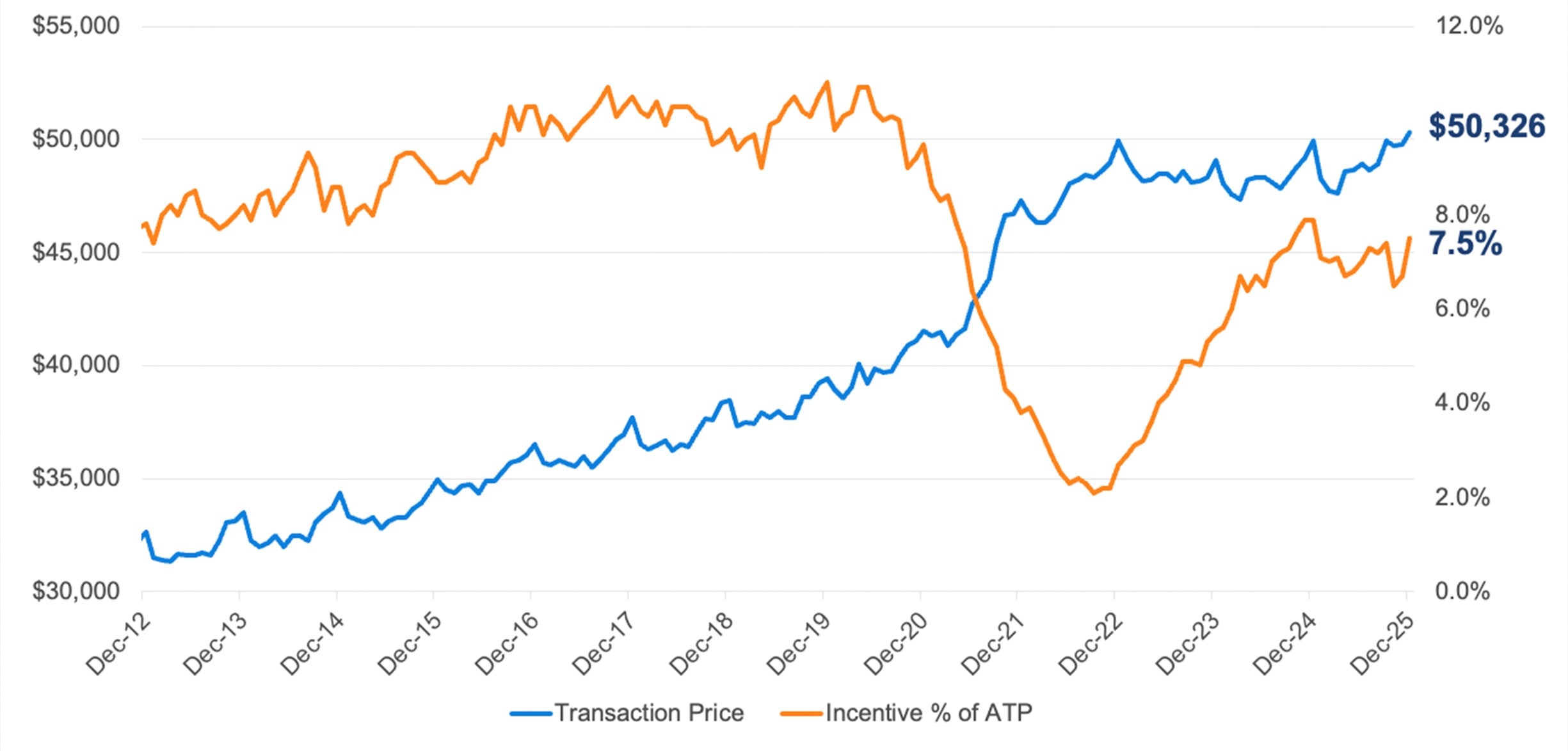
  • December 2025 ATP hit $50,326, up 0.8% yearly and 1.1% monthly.
  • Over 233,000 full-size trucks sold at a $66K average, Cox says.

New vehicle prices traditionally peak in December, but last month they really boomed, the average transaction price (ATP) in America reaching an all-time high after breaking the $50,000 barrier for the first time in September of 2025. And it was trucks, appropriately enough, that did the heavy lifting.

Kelley Blue Book says the average transaction price for a new vehicle climbed to $50,326 in the final month of 2025, up 0.8 percent year on year and up 1.1 percent from November. Americans’ desire to put a pickup on their driveway helped fuel that growth, with drivers splurging a staggering $15 billion on full-size trucks in December alone.

Related: Woohoo! We Found A New Honda Prelude With A Discount

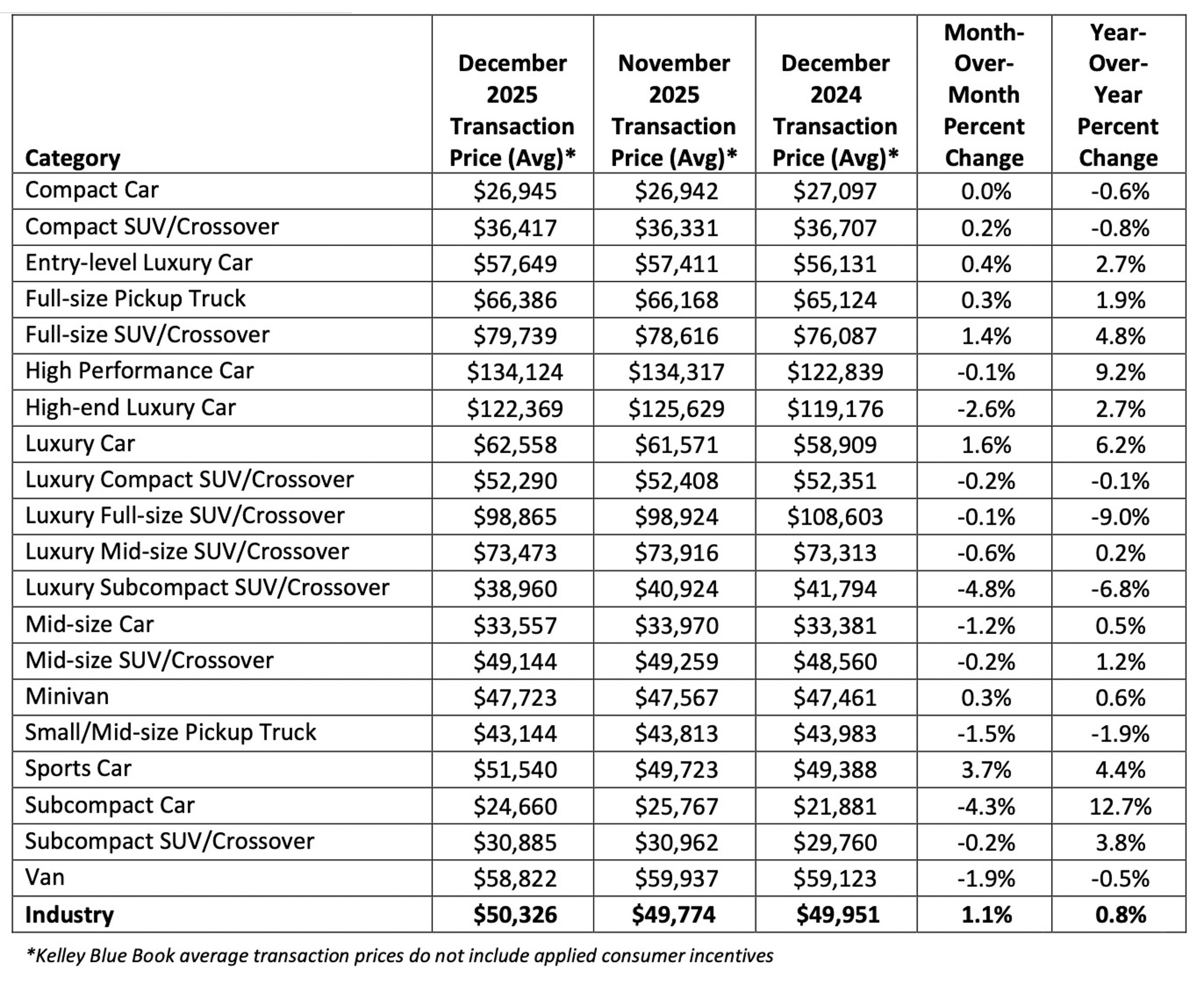
Jumbo pickups including the Ford F-150 and Chevy Silverado had an averaged price of $66,386 in December, according to Cox Automotive’s data, that average a modest 1.9 percent higher than the previous December. But over 233,000 of them were sold, turning the segment into a kind of economic leaf blower that pushed the entire industry’s average higher.

Choosing luxury

That truck performance confirms that average prices aren’t simply rising because everything naturally gets more expensive, even when inflation is low. They’re rising because buyers are choosing more expensive stuff. Nearly 20 percent of shoppers went for luxury rides in December, according to Cox and that doesn’t even include high-end trucks, which increasingly behave like luxury vehicles with bed liners.

Transaction Price Versus Incentives
 Americans Just Blew $15 Billion On Pickups In A Single Month
Cox Automotive

December’s $50,326 ATP, by the way, reflects what buyers are actually paying at the dealership. It wasn’t the only number to hit a new high. The average new-vehicle manufacturer’s suggested retail price (MSRP), often referred to as the “asking price,” also set a record last month, reaching $52,627. That figure is 1.2 percent higher than it was in December 2024. Notably, the average MSRP has stayed above $50,000 for eight straight months.

The industry average incentive rose to 7.5 percent of transaction price, higher than November but lower than last year and far lower than pre-covid levels. That means the sticker shock is real regardless of the difference between ATP and MSRP.

“We typically see elevated prices in December, as the market delivers a strong mix of high-end and luxury vehicle sales,” said Cox Automotive Executive Analyst Erin Keating. “It’s important to remember, the Kelley Blue Book ATP is a reflection of what was sold in a given month, not what is available. Last month, nearly 20% of shoppers bought luxury, a peak for 2025 – and that doesn’t include the volume of high-end pickups that were snapped up by affluent shoppers.”

Big EV Incentives

 Americans Just Blew $15 Billion On Pickups In A Single Month

On the electric front it was a mixed bag, which is hardly surprising given how much uncertainty tariffs and the loss of tax credits has injected into a segment whose growth has slowed. Average EV transaction prices dipped slightly from November but stayed higher than a year ago at just over $58,000 on average.

But much more generous incentives – a record 18 percent, more than twice that for combustion cars – must have played a big role in pushing monthly electric sales above 84,000 units in December. That last figure is the best since credits were axed in September, but 2025’s total EV sales of around 1.28 million is down 2 percent on 2024, Cox analysts say.

Average Transaction Price by segment
 Americans Just Blew $15 Billion On Pickups In A Single Month
Cox Automotive
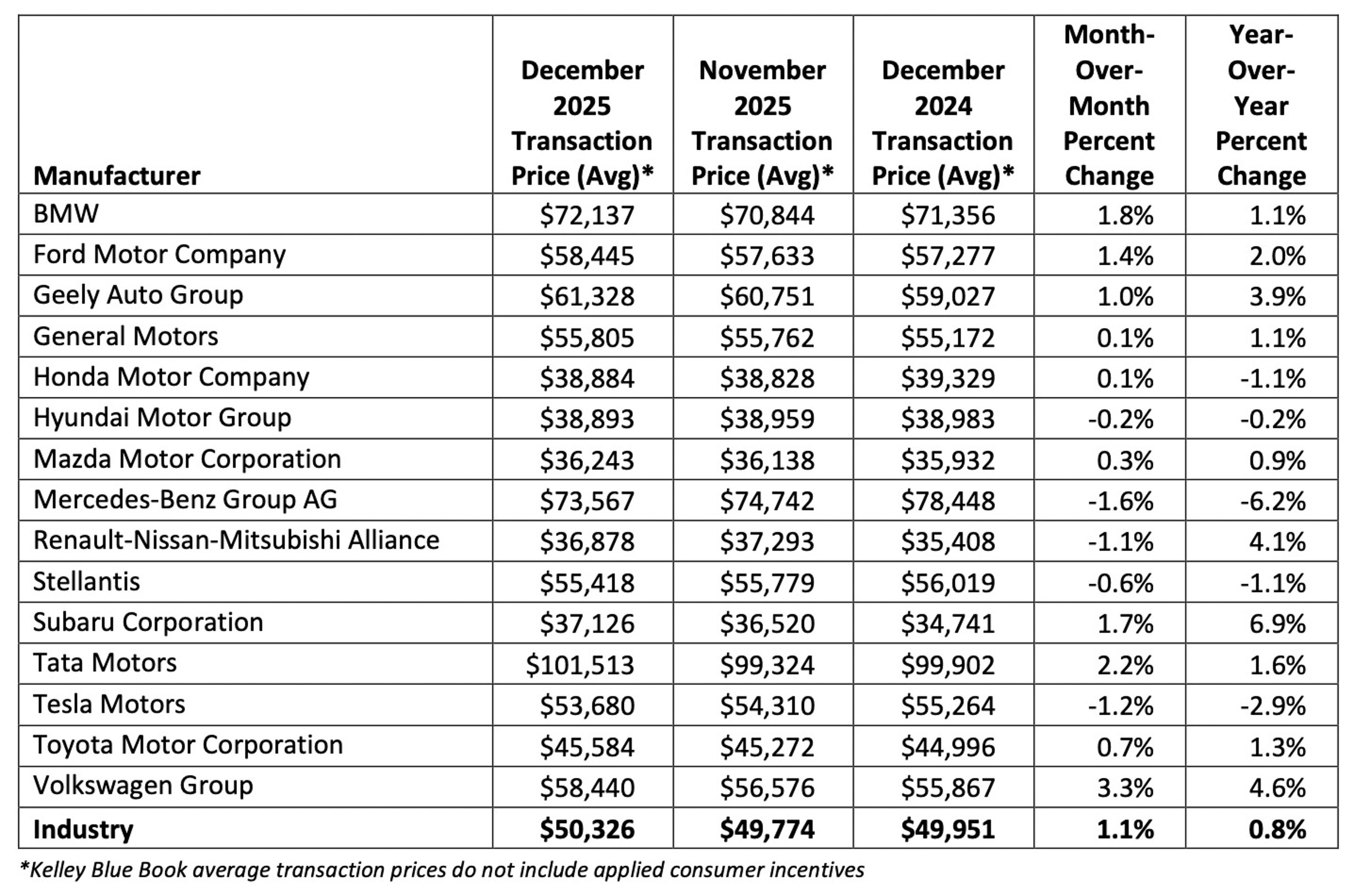
Average Transaction Price by automaker
 Americans Just Blew $15 Billion On Pickups In A Single Month
Cox Automotive
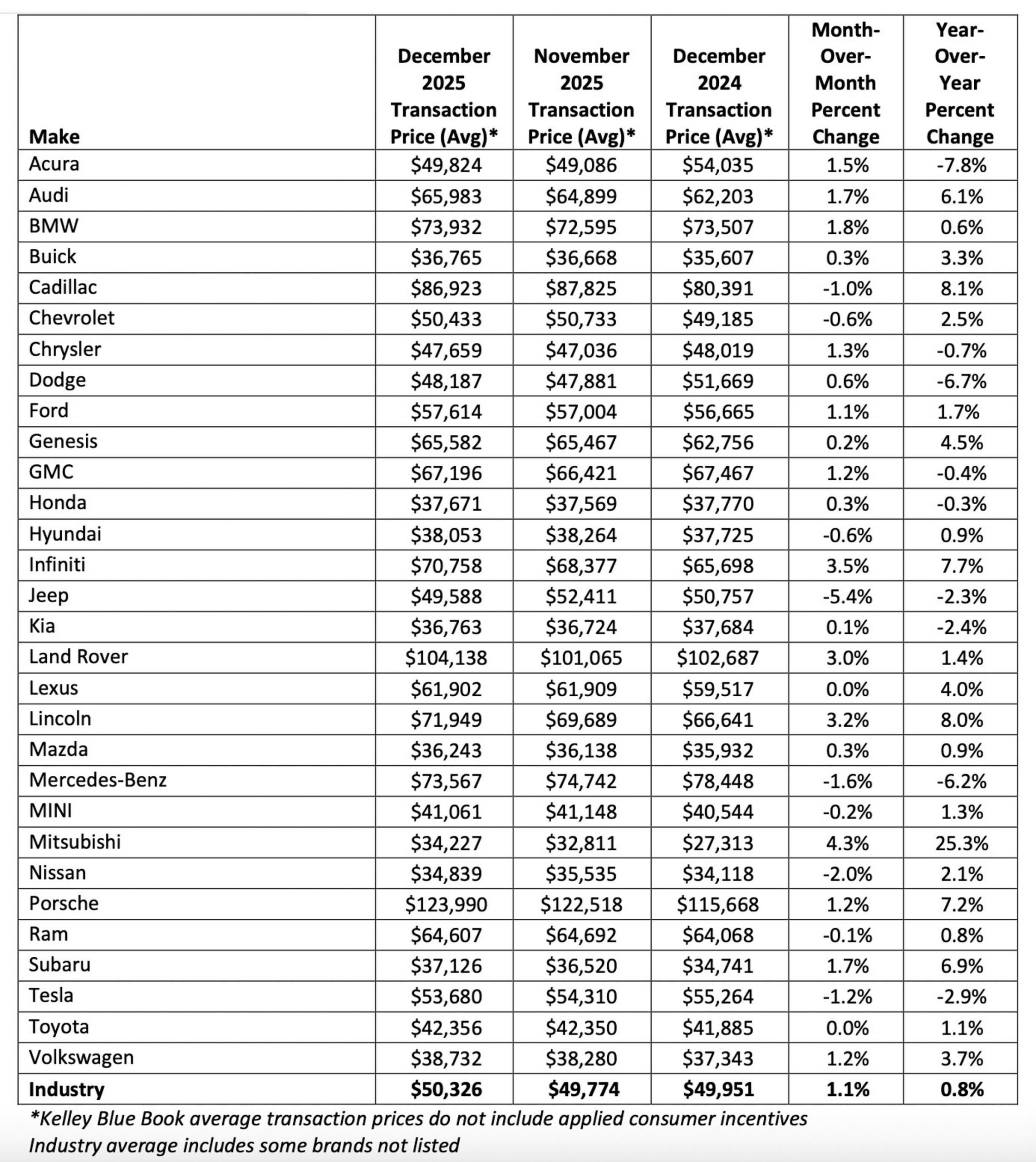
Average Transaction Price by brand
 Americans Just Blew $15 Billion On Pickups In A Single Month
Cox Automotive

Wisconsin’s state building footprint is shrinking. Candidates for governor have different ideas about what’s next

Exterior of a stone building with a sign reading "State of Wisconsin Department of Health and Family Services" and a separate sign reading "FOR SALE" near an entrance.
Reading Time: 5 minutes

A 422,000-square-foot Art Deco building overlooking Lake Monona in Madison was the home of state employees for nearly 100 years. It most recently served as the offices of the Wisconsin Department of Health Services. 

Today large “For Sale” signs bookend the historic structure, which sits vacant just a few blocks from the Capitol. A brochure for the property describes redevelopment opportunities such as a boutique hotel or mixed-use space. It also notes its proximity to a potential future commuter rail station in another state-owned building occupied by the Department of Administration.

The sale of the building, announced in December, is merely one piece of a multiyear initiative of Gov. Tony Evers’ administration known as Vision 2030. The plan seeks to make state government smaller and save taxpayers money through “rightsizing” underused office space and supporting hybrid work to grow the number of state workers across the state, according to the Department of Administration. 

Since its launch in 2021, state agencies have sold millions of dollars worth of buildings and consolidated more than 589,000 square feet of office space, nearly 10% of the state’s total building footprint, according to DOA reports. The funds from building sales are used to cover outstanding state debts and then transferred to the state’s general fund. 

“I see this really as a win-win both for state workers and for taxpayers,” DOA Secretary Kathy Blumenfeld said in an interview with Wisconsin Watch. “One of the things that we’re looking at is modernization and how can we be more efficient and be good fiscal stewards for the state.” 

Vision 2030 fits with a long-standing desire by Wisconsin’s leaders of both parties to reduce the physical footprint of state agencies and create a presence outside of Madison. Former Gov. Scott Walker also sought to move state divisions and to seek efficiencies for taxpayers by reducing private leases. Walker’s administration oversaw the construction of a new state office building that opened in Madison in 2018 and is home to eight state agencies today. 

These ideas on building a smaller, modernized state government are likely to continue when Evers leaves office next year. Former Evers Cabinet member Joel Brennan, who led DOA when it launched Vision 2030 in 2021, is one of at least eight Democrats running for governor this year.

Washington County Executive Josh Schoemann, a Republican candidate for governor running against U.S. Rep. Tom Tiffany, announced in December a “Shrink Madison” plan to require state employees to return to in-person work, sell state office buildings in Madison and eventually move key agencies to different regions across the state. His plan specifically mentions continuing Evers’ Vision 2030 efforts.

But he also goes further to move agencies out of liberal Dane County and into more conservative parts of the state — a potential source of political patronage. Schoemann proposes moving the Department of Veterans Affairs to La Crosse, the Department of Natural Resources to Wausau, the Department of Agriculture, Trade and Consumer Protection to Stevens Point, the Department of Financial Institutions to Green Bay, the Department of Tourism to Rhinelander and the departments of Children and Families and Workforce Development to the Kenosha/Racine area. 

Those moves would take years, but Schoemann in an interview said he sees it as a way to improve the relationships between state government and its citizens. 

“I think this is about people, first, affordability and accountability and changing the culture of state government, which to me, ultimately, is just entirely too focused on itself … and getting it back focused on the people,” Schoemann said. 

Why Vision 2030? 

The Evers administration’s plan grew out of the pandemic when conditions required remote work, deferred maintenance costs for state buildings kept rising, and there was a growing need for workers to fill state jobs — all colliding at the same time. 

“All these things were swirling at one time, and we launched a study in 2021 trying to get our arms around that,” Blumenfeld said. 

Hybrid work opportunities meant state agencies took up less space and could hire workers outside of Madison and Milwaukee, which Blumenfeld refers to as the “Hire Anywhere in Wisconsin” initiative. Remote work also meant the state could get rid of underused office space through consolidation or sales, she said. In Milwaukee, the state sold a former Department of Natural Resources headquarters in 2022 and purchased 2.69 acres for a new office building. But as of last year it planned to work with a private developer to create a multitenant public-private space instead. 

Expected moves in Madison this year include the sale of the former human services building along Lake Monona where offers are due in March. Other expected moves in 2026 include the spring listing of two adjacent general executive offices in downtown Madison, the brutalist GEF 2 and GEF 3 buildings, at a combined total of 391,000 square feet, Blumenfeld said. 

A large stone office building with tall windows and decorative carvings, displaying signs reading "State of Wisconsin Department of Health and Family Services" and "FOR SALE" near an entrance.
The historic Art Deco state government office building at 1 W. Wilson Street in Madison, Wis., seen Jan. 6, 2026, was the home of state employees for nearly 100 years. It most recently served as the offices of the Wisconsin Department of Health Services. (Brittany Carloni / Wisconsin Watch)

Blumenfeld said DOA has seen limited opposition to building sales and agency moves to reduce office space, but the Republican-led Legislature has pushed back on remote work following the pandemic. Lawmakers have argued that in-person work ensures more accountability for state employees. Evers in October vetoed a Republican bill that would have required state employees to “perform assigned work duties in physical office space for at least 80 percent” of their work time every month. 

“The important progress my administration has made on our Vision 2030 goals means that it would not be possible to return to largely in-office-only work arrangements without leasing more space,” Evers wrote in his veto message. “Or having to re-open buildings that are slated for closure and sale — both of which will cost taxpayers more money.” 

Blumenfeld said she can’t predict what the next governor will do when it comes to government efficiency, but changes in the state’s workforce needs and updates to work spaces are unlikely to slow down.

“Our hope is that we’ve laid a really solid foundation for utilizing space efficiently, effectively, for hiring the best talent, for bringing in people from all over the state and bringing family-sustaining jobs to all 72 counties,” Blumenfeld said. 

Wisconsin’s next governor

Wisconsin voters will choose the next governor later this year, with primary contests in August and the general election in November

Other than Schoemann’s plan, gubernatorial campaigns that responded to questions from Wisconsin Watch shared different perspectives on how they would address state government’s size and efficiency.   

Tiffany, the Northwoods congressman and Schoemann’s primary opponent, said he supported then-Gov. Walker’s move of the DNR’s forestry division to Rhinelander when he served in the Legislature, but his goal is focused on rooting out “waste, fraud and duplication” in state government. 

“I’ve supported changes like that when they make sense, but my focus is making government smaller, more accountable, and more efficient, not just rearranging the furniture,” Tiffany said.

Among Democratic candidates, plans for state government include making sure state agencies are effectively helping Wisconsinites and that citizens can access resources. 

“Mandela Barnes’ priority as Governor is to deliver for Wisconsin families and lower costs — which includes ensuring state agencies are serving communities effectively, are spending taxpayer dollars efficiently, and that Wisconsinites in every corner of the state can access the services they rely on,” Cole Wozniak, a spokesperson for the Barnes campaign, said in a statement. 

Brennan, who helped develop Vision 2030, in a statement said state government should continue to work for and be led by Wisconsinites. 

“Any conversation about the future footprint of state government should start with access, effectiveness, and responsible use of taxpayer dollars,” Brennan said. 

Sen. Kelda Roys, D-Madison, said the state should invest in modernizing its technology so agencies can deliver better services to citizens across the state. Republicans in the Legislature have pursued a “fiscally irresponsible starvation of government for decades,” she said.  

“There’s a huge opportunity to make state government work better and deliver better outcomes for people at lower cost to taxpayers,” Roys said. “But it does take that upfront investment and political capital, frankly, to say it’s actually worth spending a little money to save bigger in the long run.” 

Wisconsin Watch is a nonprofit, nonpartisan newsroom. Subscribe to our newsletters for original stories and our Friday news roundup.

Wisconsin’s state building footprint is shrinking. Candidates for governor have different ideas about what’s next is a post from Wisconsin Watch, a non-profit investigative news site covering Wisconsin since 2009. Please consider making a contribution to support our journalism.

BMW Slashes EV Prices By Up To $42,000 In China, And It’s Not Alone

  • BMW cut prices across 31 models to stay competitive in China.
  • Fourteen brands launched incentives before the New Year rush.
  • Officials fear price cuts could trigger harmful deflation risks.

Price cuts aren’t just a domestic strategy for Chinese automakers. Even Western legacy brands are jumping in. Last week, BMW announced sweeping reductions across 31 of its models in China, highlighting a more aggressive effort to keep pace with intensifying competition in the world’s largest auto market.

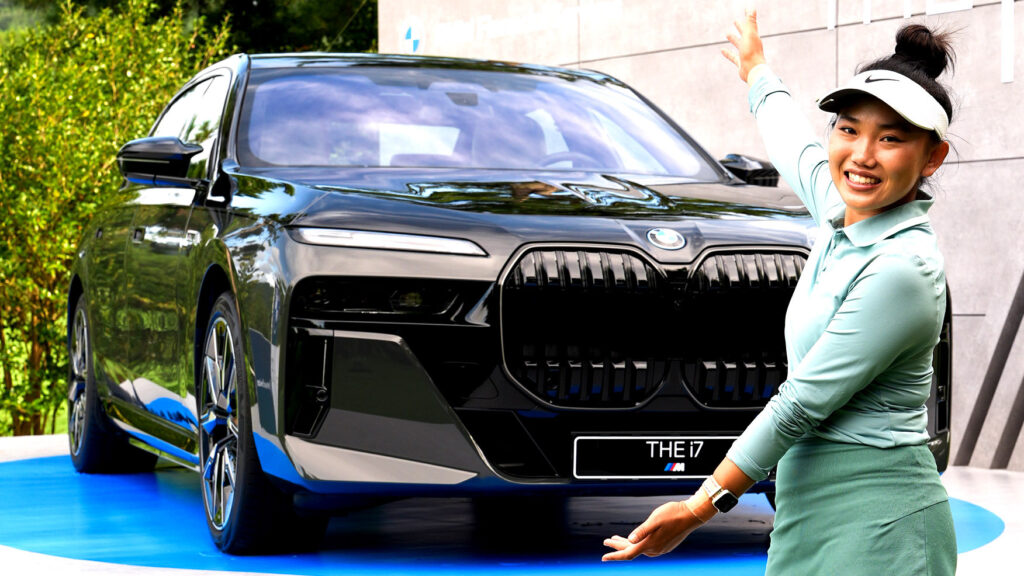
The biggest cut came to the BMW i7 M70L, the high-performance flagship of the all-electric 7-Series. This dual-motor sedan delivers 659 horsepower and 811 lb-ft (1,100 Nm) of torque. As of last week, it now carries a price tag that’s 301,000 yuan lower, a reduction of roughly $42,000.

Read: BMW Is Cranking Out Cars “Like Pretzels” And Says Even China Can’t Keep Up

While the i7 had the largest drop in raw numbers, the steepest percentage cut went to the iX1 eDrive25L. BMW trimmed the price of the long-wheelbase variant of the compact SUV by 24 percent, bringing the new starting figure to 228,000 yuan, or about $32,600.

 BMW Slashes EV Prices By Up To $42,000 In China, And It’s Not Alone
BMW iX1

Speaking to Bloomberg, BMW said the price changes are part of its “regular price management,” adding that “final transaction prices are independently negotiated and determined between authorized BMW dealers and customers.”

How Far Will Discounts Go?

Behind the curtain, though, the timing suggests more than just routine recalibration. November marked the second straight month of declining sales in China, according to data from the China Passenger Car Association. That slide has spurred several automakers to adjust pricing.

Meanwhile, regulators have introduced measures designed to prevent brands from undercutting costs, prohibiting sales below production cost and banning dealer incentives that push prices beneath that threshold, Bloomberg reports.

Also: China Is Banning Tesla-Style Door Handles

BMW’s recent cuts appear to bring official pricing closer to what customers were already paying after negotiations. According to Yale Zhang, managing director at Automotive Foresight, the updated stickers largely reflect existing transaction norms rather than undercutting them. “The new prices aren’t any lower than typical dealer selling prices,” Zhang noted.

When Deals Become a Warning Sign

 BMW Slashes EV Prices By Up To $42,000 In China, And It’s Not Alone

Big savings could be just around the corner. With the Chinese New Year approaching in February, many manufacturers are expected to introduce further incentives in hopes of front-loading first-quarter sales.

At least 14 car brands have already rolled out some form of discount or incentive program since the beginning of 2026. Zhang believes this trend is less a temporary blip than a reflection of broader pressures within the market.

“Various kinds of promotional activities may ebb and flow in the market from time to time, but they are here to stay,” Zhang told the news outlet.

Chinese authorities, meanwhile, are taking a cautious stance. With more manufacturers opting to slash prices, regulators are increasingly concerned about the potential knock-on effects. They worry that an extended period of discounts could spark deflation, disrupt the automotive supply chain, and put downward pressure on wages.

 BMW Slashes EV Prices By Up To $42,000 In China, And It’s Not Alone
BMW X3 China

Chevy Promised 255 Miles, The New Bolt Beats It Anyway

  • 2027 Chevy Bolt supports Tesla Superchargers and fast charging.
  • Powered by an LFP battery and a 210 hp single electric motor.
  • Pricing starts at $29,990, but a cheaper version will soon follow.

Chevrolet introduced the 2027 Bolt last fall and now they’ve revealed the electric crossover has an EPA-estimated range of 262 miles (422 km). That’s more than GM’s original estimate of 255 miles (410 km) and it blows past the previous Bolt (259 miles) and Bolt EUV (247 miles).

Despite having more range than before, the Bolt falls short of the 2026 Nissan Leaf. We drove the Japanese EV earlier this year and it has an EPA rating of up to 303 miles (488 km). That’s 41 miles (66 km) more than the Bolt and this is a pretty noticeable advantage.

More: 2027 Chevrolet Bolt Debuts With A Leaf Beating Price Tag

However, you shouldn’t write the Bolt off as it has some standout features, including the Super Cruise semi-autonomous driving system. The hatch also has a Vehicle-to-Home bi-directional charging capability, which means it can power your house in the event of an outage (when paired with a GM Energy Home System).

Buyers will also find an 11-inch digital instrument cluster and an 11.3-inch infotainment system with Google built-in.

 Chevy Promised 255 Miles, The New Bolt Beats It Anyway

Power comes from a 65 kWh LFP battery pack, which feeds an electric motor developing 210 hp (157 kW / 213 PS) and 169 lb-ft (229 Nm) of torque. When the battery is low, a 150 kW DC fast charger can take it from 10% to 80% in just 26 minutes. Speaking of which, the Bolt is the first Chevrolet to have a native NACS port and this means easy access to Tesla Superchargers.

The 2027 Bolt starts at $29,990 – including destination – and is currently arriving at dealerships. It will be followed by an even more affordable variant that begins at $28,995.

Both prices undercut the Leaf, which starts at $31,485 out the door. That being said, Nissan has already confirmed plans for an entry-level variant with a smaller 52 kWh battery. It’s also worth noting the Bolt is a “limited run model,” while the Leaf will be sticking around.

\\\\\\\\\\\\

Lawmakers seek hospital price transparency, while hospitals say they should focus on insurers

"What major purchase does anyone in this room make without knowing the cost before you make the purchase? It is inconceivable to me that we do not know what something is going to cost of that magnitude before we actually consent to the cost,” Sen. Mary Felzkowski said. (Photo by Baylor Spears/Wisconsin Examiner)

A bill to implement state-level enforcement of federal hospital price transparency requirements in Wisconsin, with the goal of bringing down the cost of health care, received pushback from hospital representatives and support from employers on Wednesday.

Sen. Julian Bradley (R-New Berlin) told the Senate Licensing, Regulatory Reform, State and Federal Affairs Committee that ensuring that the cost of services provided would help with health care affordability.  

“When hospitals clearly share pricing information, patients can make informed decisions. Trust in the system grows and costs come down naturally,” Bradley said, adding that the bill would ensure Wisconsin “reaps the benefits” of changes made by the Trump administration. 

During his first term, President Donald Trump’s administration implemented rules to require hospitals to post pricing information online. The effects of the changes on patients’ costs have been mixed. At the start of his second term, Trump signed an executive order intended to bolster the effort and in December, the administration proposed a new rule that aims to simplify how price data is organized and shared with people. 

SB 383 would instruct the Wisconsin Department of Health Services to enforce federal price transparency requirements for hospitals. 

Bradley and Rep. Robert Wittke (R-Caledonia), the bill coauthors, said it is needed to help ensure that federal policies are being followed.

“Sometimes we need to take action to make sure that it goes all the way through the state and all of our residents have access to the things that are expected through federal law,” Wittke said. 

Bradley said the lawmakers aren’t trying to penalize hospitals, just ensure people have access to information. 

If a hospital is found to be out of compliance under the bill, Wisconsin DHS would be able to take several actions including providing a written notice to the hospital, requesting a corrective action plan or imposing a financial penalty. DHS would also need to keep a public list of any hospitals that have violated the requirements.

Hospitals would also need to be certified as being in compliance with the requirements when seeking judgment from a court against a patient who owes a debt for services.

Lawmakers introduced a similar bill in 2023, but it failed to receive a floor vote in the Senate and advance in the Assembly.

The current version of the bill includes a provision that says that if federal laws change and are eliminated, then provisions in the bill that establish state level requirements for publishing prices will take effect.

Under those provisions, each hospital would need to make a list of “shoppable services” — ones that can be scheduled in advance such as a knee replacement — available with the standard charge for each item that would be publicly available. A hospital’s list would need to include at least 300 “shoppable services,” and if a hospital doesn’t provide that many, it must list all of its shoppable services.

The change is meant to avoid overlapping and varying requirements, though hospital representatives expressed concerns that would happen anyway.

The Wisconsin Hospital Association (WHA) opposes the bill. Christian Moran, the WHA vice president of Medicaid and payer reimbursement policy, said during the hearing that the organization’s opposition to the bill is not opposition to price transparency.

“Our opposition is to the added regulatory complexity that is created by layering on state level enforcement and state level regulations and unlimited fines on Wisconsin hospitals when robust federal regulation and enforcement already exists,” Moran said.

Moran said no Wisconsin hospitals have been fined for noncompliance since the first federal regulations went into effect. 

“Personal experience, it’s somewhat inevitable: if you pass legislation on the state level that mirrors the federal level it will eventually not match up,” John Russell, president and CEO of Prairie Ridge Health, said. 

Hospital representatives also expressed concerns that not enough attention was being given to the role of health insurance companies. 

“The solution proposed to you in [SB] 383 is to double up on existing enforcement for hospitals while ignoring the state’s current responsibility to enforce and monitor insurance compliance,” Moran said.

Brian Stephens, CEO of the Door County Medical Center, said the state should be more focused on the “middlemen” including insurance providers, saying that bolstering the transparency of hospital costs has its limitations. He spoke to the work that his medical center has done over many years to improve transparency of prices.

“There’s a disconnect in this country between the concerted efforts of health care providers to provide reasonable and transparent prices and the costs that people are paying for health insurance. Unfortunately, hospital price transparency efforts have not put a dent in that dichotomy,” Stephens said. “Perhaps we need to be asking for more transparency from health insurance companies and other middlemen to understand the real drivers of health care costs in our country. Perhaps hospitals have just become a good punching bag for folks who need an effective sound bite. The reality is that, despite our wholehearted commitment to providing reasonable upfront prices, transparency has its limitations. What are the odds that a person waking up with pain will take the time to bring out his or her phone and search the most affordable hospital or clinic prior to seeking treatment.”

Sen. Steve Nass (R-Whitewater) said the testimony focused on the insurance companies’ role sounded like “a lot of finger-pointing.” 

Several other states have adopted laws or are in the process of advancing bills to bolster price transparency including Colorado, Washington State and Ohio

Patrick Neville, a former Republican state representative in Colorado who helped pass a similar law in his state, testified on the Wisconsin bill, saying provisions in his home state have already helped. He told the story of one patient who was charged nearly $80,000 for a hysterectomy, but didn’t have to pay the cost.

“Because we had the consumer protections in this bill in Colorado, and they weren’t compliant with price transparency. They couldn’t actually collect that $80,000,” Neville said. “That was really important and powerful for the actual consumer in this case, and so it’s actually working in Colorado.” 

Neville added that the Colorado legislation did not codify the federal rules, but he wishes it had. 

“Any president could get rid of those rules at any point and I think the way this bill is crafted… It’s hugely important,” Neville said. “That’s a clever way to craft it.” 

Several employers testified in favor of the legislation. 

Erik Sonju, president of Fitchburg-based Power System Engineering, described the unpredictable jumps in health care costs that his company has grappled with since 2018 when he started in his position. He said that 2023 was the year the “straw broke” as they dealt with a 20% increase in insurance rates and he wasn’t able to get clear answers about the rising cost. 

Sen. Mary Felzkowski (R-Tomahawk) told the committee that the cost of health care is too high. 

“This is common sense. What major purchase does anyone in this room make without knowing the cost before you make the purchase? It is inconceivable to me that we do not know what something is going to cost of that magnitude before we actually consent to the cost,” Felzkowski said.  

Felzkowski is the lead coauthor on two of the other bills the committee took up. SB 796 would require insurers to submit information about claims to the Wisconsin Health Information Organization (WHIO), a nonprofit organization that collects health care claims data, and SB 797 would provide a $600,000 grant for the WHIO to establish an online dashboard of health care claims information and to add new payer data.

The committee also took testimony on SB 703, coauthored by Wittke and Sen. Rob Hutton (R-Brookfield), which would establish that employers who sponsor group health insurance plans have a right to data relating to the employees and dependents covered under those plans, including claims data, utilization reports and other information necessary to understand and manage health care costs.

Wittke said the bill will maintain privacy protections by requiring employers to designate a HIPAA compliance privacy officer and ensure that the Office of the Commissioner of Insurance maintains oversight. The bill also includes a provision prohibiting data from being sold to any party without the permission of the plan sponsor and the person to whom the claims data relates.

GET THE MORNING HEADLINES.

Hyundai Slashes $7K From Its Smallest EV, But It’s Still $10K Pricier Than Its Chinese Rival

  • Hyundai trims Inster pricing, but the value gap still lingers.
  • Kona Electric sees price changes across the Australian range.
  • Rival EVs still apply pressure despite recent pricing moves.

As electric vehicles flood into Australia’s increasingly crowded new car market, the pressure is mounting, particularly from aggressively priced models coming out of China. In response, Hyundai has rolled out some major price cuts to two of its more compelling EV offerings, the compact Inster and the updated Kona Electric.

Starting with the pint-sized Inster, which we drove just a few months ago, price cuts mean buyers can now save upwards of AU$7,288 (equal to US$4,900 at current exchange rates).

The base Inster Standard Range now starts at AU$35,990 (US$24,200), and that figure includes all on-road costs. Even with the adjustment, it’s still undercut by the base BYD Atto 1, which starts from just AU$26,500 (US$17,800) in standard trim, or around AU$30,650 (US$20,600) for the Premium version.

Read: American Brands Shut Out As One Country Dominates World Car Of The Year Finalists

The Inster itself brings a lot to the table in terms of practicality. It makes excellent use of space and comes with a solid feature set for its size. But those strengths haven’t translated into strong sales, largely due to its steep pricing. Between June and December last year, just 467 units found homes in Australia, according to data from CarExpert.

 Hyundai Slashes $7K From Its Smallest EV, But It’s Still $10K Pricier Than Its Chinese Rival
 Hyundai Slashes $7K From Its Smallest EV, But It’s Still $10K Pricier Than Its Chinese Rival

Slashing Prices Across the EV Board

Even more significant price cuts have been made to the Hyundai Kona Electric and Hybrid. The entry-level Kona Electric Standard Range now lists at AU$45,990 (US$30,900), marking a price drop of more than AU$13,000 ($8,700). The Kona Hybrid also sees a notable cut, with prices falling to AU$39,990 (US$26,900).

The price cuts bring the Kona Electric cost to the Geely EX5, which starts at a touch over AU$44,000 (US$29,500). Elsewhere, Hyundai has slashed prices of the Kona Electric Extended Range by AU$13,357 (US$9,000) to $49,990 (US$33,600), including all on-road fees.

The price of the Kona Electric Premium has also been cut by AU$13,857 ($9,300), meaning it’s no longer available from AU$59,990 (US$40,300).

 Hyundai Slashes $7K From Its Smallest EV, But It’s Still $10K Pricier Than Its Chinese Rival

The sales figures reflect the challenges Hyundai has faced. Just 541 Kona Electrics were sold locally last year, making up only 2.4 percent of total Kona sales, hardly the breakout performance the brand had hoped for.

Lowering the barrier to entry not only helps the Kona Electric stay in the game against newer Chinese models, it also clears space for Hyundai’s incoming Elexio.

Built in China and priced from AU$59,990 (US$40,300), the Elexio now occupies the middle ground between the Kona Electric and the more premium Ioniq 5. Hyundai positions it as a rival to the Kia EV5, BYD Sealion 7, and Tesla Model Y, creating a more layered EV lineup with a clearer progression.

 Hyundai Slashes $7K From Its Smallest EV, But It’s Still $10K Pricier Than Its Chinese Rival

Chinese Brands Bring Not One, Not Two, But Three Bugatti-Style Super Sedans To CES

  • Dreame revealed three electric Bugatti-style sedans at CES 2026.
  • Kosmera’s designs mimic Bugatti’s front and rear styling cues.
  • Two of the super sedans produce 1,903 hp from four electric motors.

Few would expect a vacuum cleaner company to roll up to CES with supercars, but that’s exactly what Dreame just did. Chinese tech firm Dreame, best known for producing competitively priced vacuum cleaners, has unveiled three dramatic high-performance cars at the Consumer Electronics Show in Las Vegas, introduced under the newly formed Kosmera and Nebula Next brands.

As early teasers hinted, Dreame has looked to Bugatti for stylistic inspiration. Even so, while initial renders leaned heavily into Chiron-like mimicry, the finished models veer in their own direction, avoiding full-blown imitation but still bearing more than a few familiar cues.

Read: This Four-Door EV From China Now Looks Like Bugatti’s Rarest One-Off

What many might not know is that Dreame sits within Xiaomi’s sprawling ecological chain. The tech giant has invested in the company and may be lending more than just capital. Xiaomi itself has already become a serious contender in China’s burgeoning EV market, though it remains unclear if Dreame’s pivot is directly tied to Xiaomi’s automotive push.

Bugatti Echoes, Not Clones

The first model under the Kosmera name is described as a super sports car and comes dressed in black. Its four-door configuration immediately sets it apart, but the front end is where things get especially familiar. The grille, framed in carbon fiber, strongly resembles the Bugatti Mistral and Brouillard. Large air intakes flank the front, and the overall fascia feels unmistakably French in its inspiration.

Headlight and DRL placement continue the Bugatti homage, as does the sculpted hood with prominent air extraction vents, a detail nearly identical to the one-off Brouillard.

\\\\\

Autohome

The side profile, however, strikes a different chord. With smooth surfaces and a gradually sloping roofline, it brings to mind a lengthened Porsche Taycan more than anything from Molsheim. Around back, the car adds its own flair with a full-width LED light bar, a fixed rear wing, and a vertical brake light extending down the rear window.

Also: Dreame’s Cullinan SUV Clone Might Be Rolls-Royce’s Worst Nightmare

According to Autohome, this Kosmera sedan houses four electric motors, combining for a total of 1,903 horsepower. Intriguingly, the car reportedly weighs exactly 1,903 kilograms (4,195 pounds), creating a symmetrical 1:1 power-to-weight ratio that sounds almost too perfect to be real.

While most technical details remain under wraps, the car is said to incorporate a complex suspension setup and a number of 3D-printed components.

A Second Concept

Kosmera’s second offering looks quite different. It’s also a sedan, finished in a dark purple paint, but the design is less dramatic. While the front doesn’t look like a Bugatti, the same can’t be said about the rear, as it bears a resemblance to the Chiron, including its taillights, the shape of the fascia and decklid, and the split rear window. As for specs, Dreame hasn’t released anything about this model’s capabilities just yet.

\\\

Autohome

Rounding out the trio is the Nebula Next 01, the only car not wearing a Kosmera badge. This is the model Dreame teased earlier. Painted green, it has the most supercar-like design of the trio, but surprisingly, it is also a four-door. It rocks loads of exposed carbon fiber parts, including the front splitter and rear diffuser, and also has similar Bugatti-inspired headlights to the first of the Kosmera cars.

See: Remember Dreame’s Rolls-Royce Clone? It’s Got A Bentley Brother

Local media claims the Nebula Next 01 is powered by the same four-motor setup with 1,903 horsepower. If accurate, it should rocket from 0 to 100 km/h (62 mph) in just 1.8 seconds. As of now, Dreame hasn’t confirmed whether and when this concept will reach production.

\\\\\\

Autohome

Caterham Says Americans Are “Loaded,” So It’s Selling Us A $135K EV

  • Caterham says it’s finally taking the US market seriously.
  • Project V uses twin 27 kWh batteries with a Yamaha motor.
  • The 268 hp EV skips a skateboard layout for better feel.

It’s been more than two years since Caterham introduced its all-electric Project V concept, and while the wait hasn’t exactly flown by, the project is edging closer to production. The car is now on display at the Consumer Electronics Show in Las Vegas, and later this week, a working prototype will debut at the Tokyo Auto Salon. For American sports car fans, there’s also some promising news on the horizon.

Read: Caterham Won’t Let Go Of Its EV Dream Even If The World Already Has

Caterham has long been a niche name outside Europe, but that’s about to change. Speaking at CES, Justin Gardiner, the company’s overseas representative, confirmed that Caterham plans to bring the Project V to the US market. And it’s not a half-measure.

“You Guys Are All Loaded”

“We have ignored America as a market for 50 years, and that’s ridiculous, because you guys are all loaded,” Gardiner told Car and Driver. “We’re going to take America very seriously as of this week. We are looking to sell a lot of these over here.”

The Project V will be sold alongside the iconic Caterham Seven, but Gardiner notes that the firm needs to “future-proof” itself, preparing for the day when it’ll no longer be able to build the Seven.

Electric, but on Caterham’s Terms

 Caterham Says Americans Are “Loaded,” So It’s Selling Us A $135K EV

Staying true to its purist driving ethos, Caterham has engineered the Project V to feel nimble and alive behind the wheel. Instead of adopting a typical skateboard battery layout, the company went with a more unconventional approach.

Two liquid-cooled battery packs from Xing Mobility are mounted at the front and rear of the car, helping distribute weight in a way that echoes the dynamics of the Seven. Together, the packs provide just over 27 kWh and feed a 268 hp electric motor sourced from Yamaha.

“Whereas every other EV manufacturer tends to put the batteries in the skateboard, we have absolutely deliberately put the driver’s seat as close to the ground as possible,” Gardiner told the magazine.

“While every other car manufacturer wants [the weight] all the way to the middle, we’ve deliberately pushed it all the way to the front and the back, because that’s the way it is in the Seven, and that’s what makes the Seven fun to drive. Polar momentum is the term, and we’re deliberately putting polar momentum into this car.”

Priorities Behind the Powertrain

\\\\

The battery setup is cooled using a dielectric liquid, which helps manage heat under aggressive driving conditions. Despite a relatively modest charging cap of 100 kW, Caterham isn’t particularly concerned with rapid top-ups.

As Gardiner puts it, the focus is on how quickly the battery can discharge, not how fast it can recharge. The target buyer isn’t thinking about long-distance commutes, they’re more interested in how hard they can push the car on a back road or track session.

As for pricing, there’s still no firm number for the US, but Gardiner expects the Project V will land somewhere around $135,000 when it arrives.

\\\\\\

Caterham

❌