Reading view

There are new articles available, click to refresh the page.

Hyundai’s Ioniq Concepts Forgot They Were Supposed To Look Like Hyundais, Especially The Lambo One
  • Hyundai has unveiled two Ioniq concepts, badged the Venus and Earth.
  • The Venus is a high-riding sedan that looks nothing like the Ioniq 5.
  • Both concept cars feature radical interiors to inspire production models.

China’s EV market has become a proving ground where global brands often rethink their playbook from the ground up. The Ioniq brand has served as Hyundai’s premium series of EVs in Western markets for several years. Now Hyundai is bringing Ioniq to China, but not with any existing models. Instead, it has revealed two concepts ahead of the Auto China show in Beijing.

Read: Hyundai’s New EV Sedan For China Could Be Everything The Ioniq 6 Wasn’t

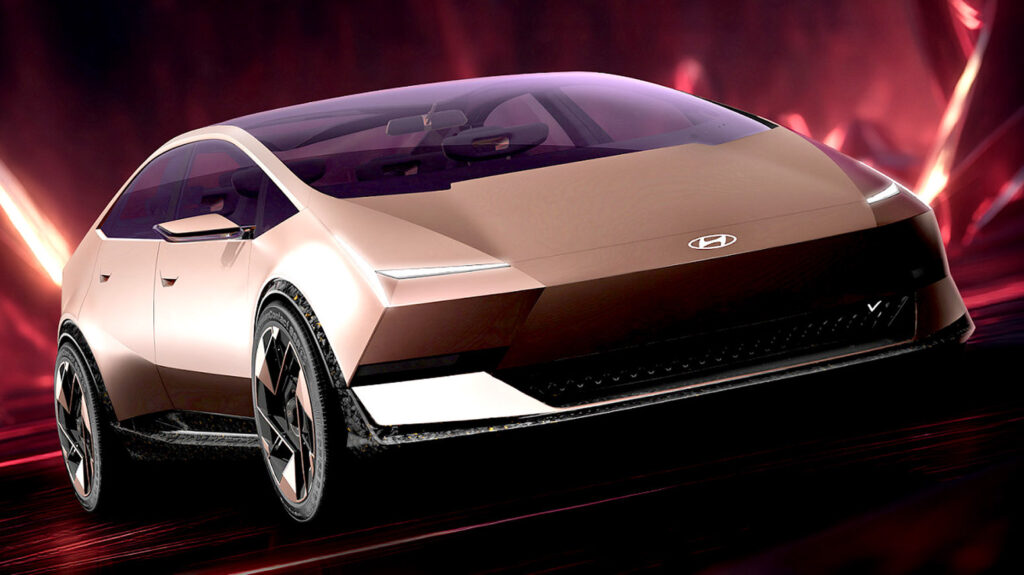
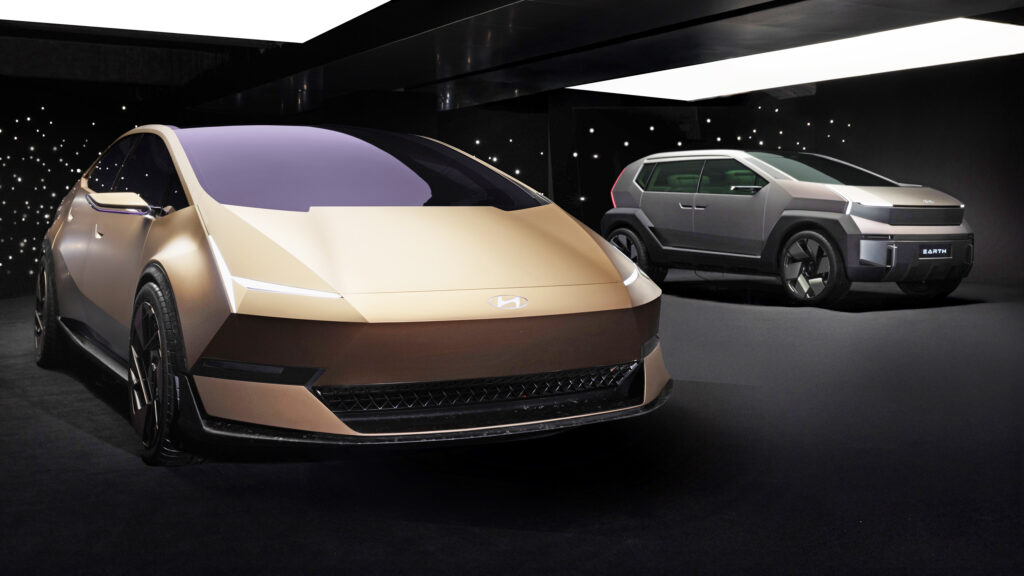
All future Ioniq models bound for China will follow a new naming convention, one that swaps numbers for planets as Hyundai reshapes its electric lineup for the market. With this in mind, its first two concepts are dubbed the Venus and the Earth, the former a sharp looking sedan that strongly recalls a Lamborghini four-door, while the latter takes the form of an SUV.

According to Hyundai, the Ioniq series will “evolve beyond a product lineup into a broader mobility ecosystem tailored to local customers” as it develops.

\\\\\\\\\

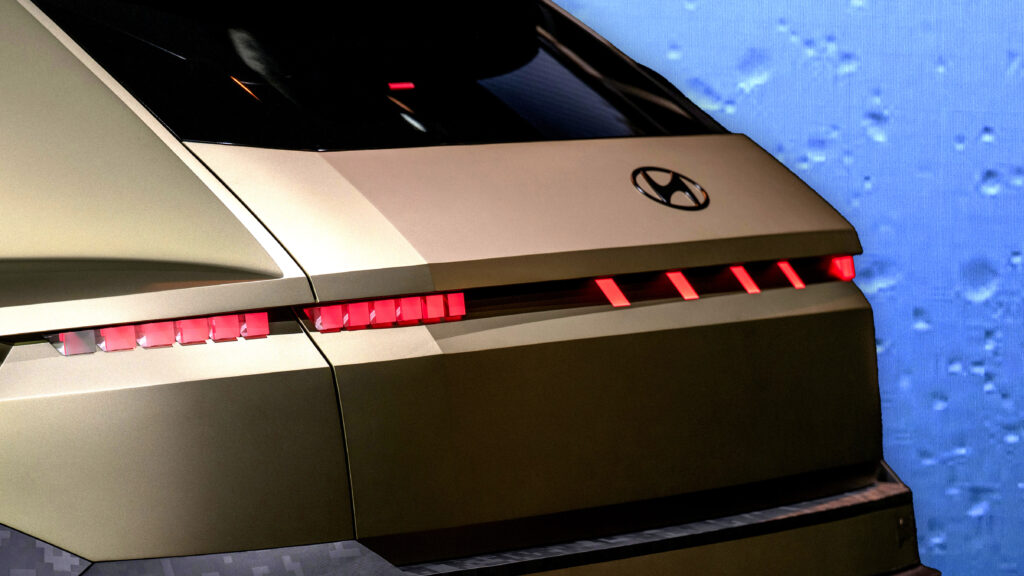
Hyundai says the Venus and Earth serve as design ‘barometers’ for future production models. The Venus has been presented in a shade of Radiant Gold and looks unlike any other Ioniq model we’ve seen. Like an Ioniq 5, it sits quite high and has an aggressive front end with slim LEDs and a gaping grille.

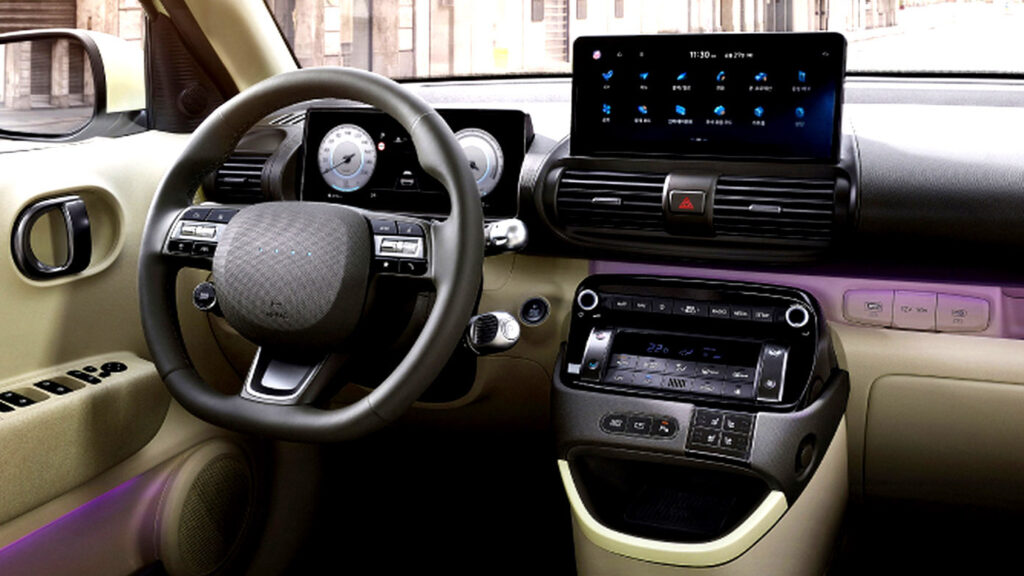
The cabin is also quite intriguing, featuring a slew of gold accents and a panoramic screen for the infotainment system and the front passenger, similar to the current Hyundai Elexio built in China. Just how much of this concept’s interior will influence future production models remains to be seen, but it certainly makes a statement.

No Ordinary Hyundai

\\\\

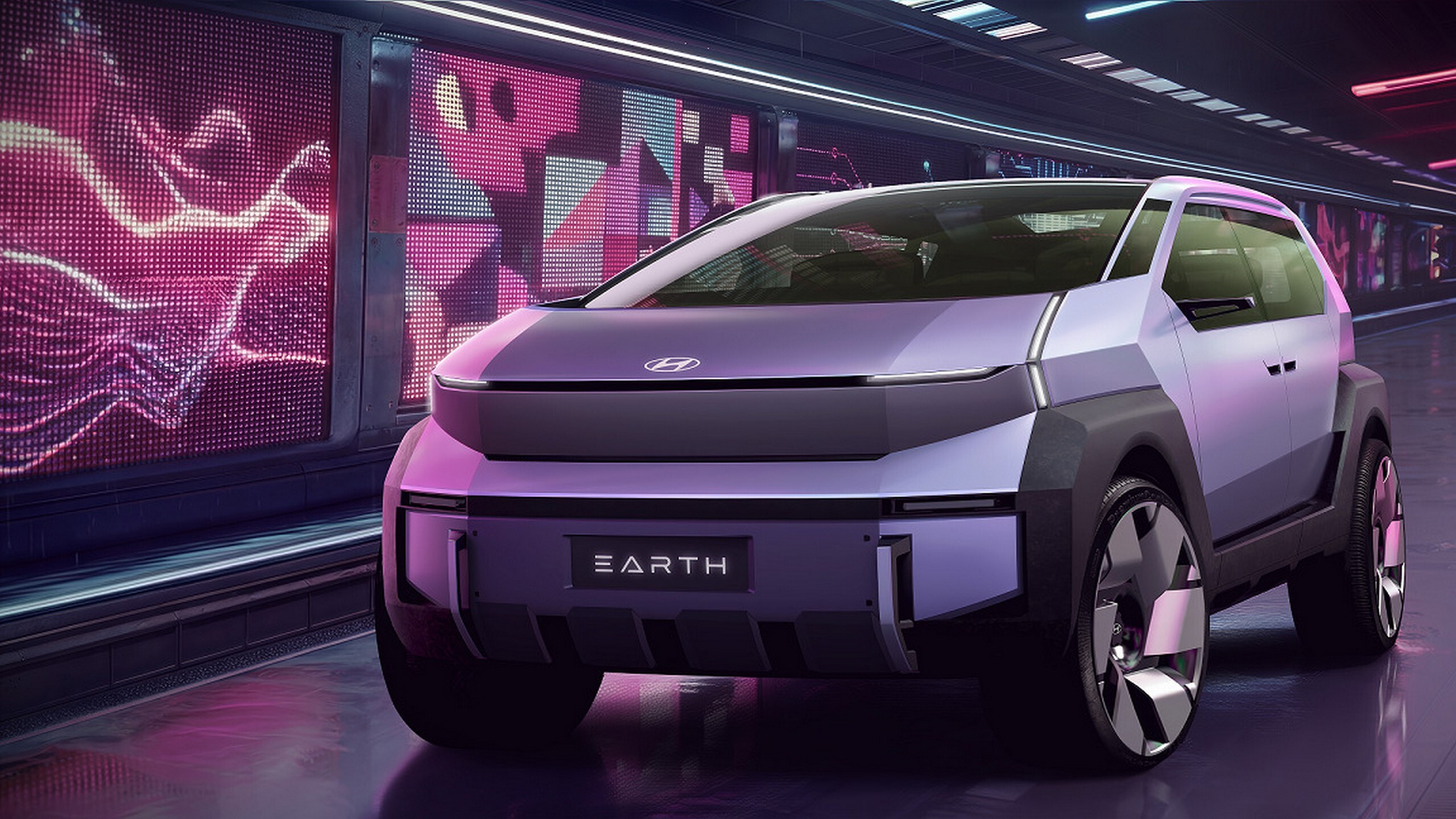
Hyundai’s Earth SUV is even more dramatic. Sharing some similarities to recent Kia concepts, it has a bold front fascia and a rugged design, painted in a shade Hyundai calls Aurora Shield. A peek inside the cabin reveals suicide rear doors, a tablet-like central touchscreen, and special seats with air-filled modules.

“Starting with the two concept cars unveiled today, we will continue to present products that reflect deep insight into Chinese customers and our genuine commitment to this market,” Beijing Hyundai Motor Company president Li Fenggang said.

“Built on IONIQ’s uncompromising principles of world-class safety and quality, we will soon introduce production models that seamlessly combine the smart driving and smart cabin experiences that Chinese consumers demand.”

Hyundai has yet to announce when the first of its China-only Ioniq models will be launched, but they shouldn’t be too far off.
Hyundai Goes Interstellar As Ioniq Brand Launches In China

  • Hyundai has unveiled two Ioniq concepts, badged the Venus and Earth.
  • The Venus is a high-riding sedan that looks nothing like the Ioniq 5.
  • Both concept cars feature radical interiors to inspire production models.

The Ioniq brand has served as Hyundai’s premium series of EVs in Western markets for several years. Now, Hyundai is launching Ioniq in China, but it’s not doing so with any existing models. Instead, it has presented two concepts ahead of the Auto China show in Beijing.

All future Ioniq models sold by Hyundai in China will be named after planets. With this in mind, its first two concepts are dubbed the Venus and the Earth, the first of which is a sleek sedan while the latter is an SUV. Hyundai has declared that its Ioniq series will “evolve beyond a product lineup into a broader mobility ecosystem tailored to local customers” as it develops.

Read: Hyundai’s New EV Sedan For China Could Be Everything The Ioniq 6 Wasn’t

Hyundai says the Venus and Earth serve as design ‘barometers’ for future production models. The Venus has been presented in a shade of Radiant Gold and looks unlike any other Ioniq model we’ve seen. Like an Ioniq 5, it sits quite high and has an aggressive front end with slim LEDs and a gaping grille.

The cabin is also quite intriguing, featuring a slew of gold accents and a panoramic screen for the infotainment system and the front passenger, similar to the current Hyundai Elexio built in China. Just how much of this concept’s interior will influence future production models remains to be seen, but it certainly makes a statement.

No Ordinary Hyundai

 Hyundai Goes Interstellar As Ioniq Brand Launches In China

Hyundai’s Earth SUV is even more dramatic. Sharing some similarities to recent Kia concepts, it has a bold front fascia and a rugged design, painted in a shade Hyundai calls Aurora Shield. A peek inside the cabin reveals suicide rear doors, a tablet-like central touchscreen, and special seats with air-filled modules.

“Starting with the two concept cars unveiled today, we will continue to present products that reflect deep insight into Chinese customers and our genuine commitment to this market,” Beijing Hyundai Motor Company president Li Fenggang said. “Built on IONIQ’s uncompromising principles of world-class safety and quality, we will soon introduce production models that seamlessly combine the smart driving and smart cabin experiences that Chinese consumers demand.”

Hyundai has yet to announce when the first of its China-only Ioniq models will be launched, but they shouldn’t be too far off.
\\\\\\\\\\

GM’s Only Answer To Toyota’s Seventeen Hybrids Is A $109K Corvette

  • Some automakers ignored hybrids to bet big on EVs.
  • That bet went bad and could get worse as gas prices soar.
  • Toyota and Hyundai stand to benefit from diverse lineup.

A few years ago, automakers faced a tough choice. They could eschew hybrids and plug-in hybrids to go all-in on EVs, or adopt a more balanced, but expensive approach that saw them invest in multiple technologies.

A number of companies went the electric route and that ended up costing them greatly as adoption was slower than they anticipated. If that wasn’t bad enough, the United States eliminated the federal tax credit and governments rolled back overly ambitious green agendas.

More: Gas Was $2.98 A Month Ago. It Just Crossed $4 For The First Time Since 2022

This has pushed automakers to cancel EVs and abandon plans to go electric-only. Companies have posted huge losses and now they’re suddenly playing catch-up with rivals that took a more nuanced approach.

Expensive Gas Is Going To Make Things Even Worse

 GM’s Only Answer To Toyota’s Seventeen Hybrids Is A $109K Corvette

Since some companies were betting on a quick transition to EVs, a number of them don’t have many hybrids or plug-in hybrids to offer customers. That’s bad news in an era where the national average price of a gallon of gasoline is above $4 and climbs to nearly $6 in some states.

The only hybrid GM has in America is the $108,600 Corvette E-Ray and that’s a huge problem. Consumers in the market for a compact crossover might look at an Equinox, which returns up to 26 mpg city, 29 mpg highway, and 27 mpg combined. That’s not terrible, but the Toyota RAV4 gets 47 mpg city, 40 mpg highway, and 43 mpg combined. This is a huge difference, especially in an era of sky high gas prices.

 GM’s Only Answer To Toyota’s Seventeen Hybrids Is A $109K Corvette

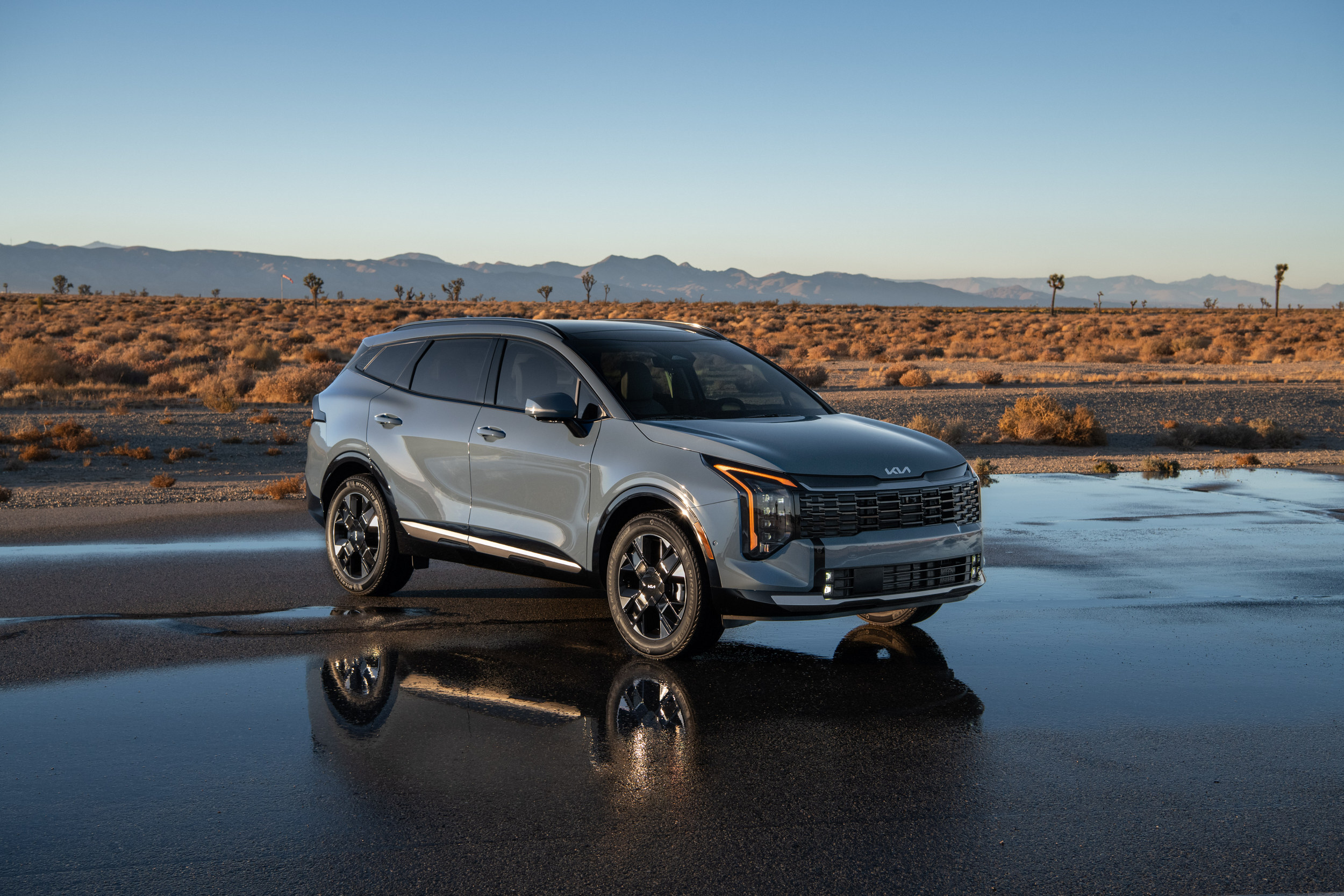
Hyundai and Kia also offer hybrid competitors in the form of the Tucson and Sportage. The former offers up to 38 mpg across the board, while the latter returns up to 41 mpg city, 44 mpg highway, and 42 mpg combined. It’s also worth noting all three competitors offer plug-in hybrid variants, while GM doesn’t offer a single one in the United States.

General Motors isn’t the only automaker that bet big on EVs and lived to regret it. Ford has a limited hybrid lineup that consists of the Maverick and F-150. The Escape, which offered hybrid and plug-in hybrid options, was recently killed off, while the Explorer Hybrid is limited to police and the Pope.

Hybrid Sales Are Skyrocketing

 GM’s Only Answer To Toyota’s Seventeen Hybrids Is A $109K Corvette

While the war in Iran is barely more than a month old, hybrid sales are booming. Kia recently revealed sales of hybrids soared 73% to set a new quarterly record.

Last month was also Hyundai’s best ever March for hybrid sales. The company noted hybrids saw a huge jump in the first quarter as the Elantra Hybrid was up 141%, while the Sonata Hybrid soared 107%. The Santa Fe Hybrid also got a 47% boost as consumers embraced efficiency.

 GM’s Only Answer To Toyota’s Seventeen Hybrids Is A $109K Corvette

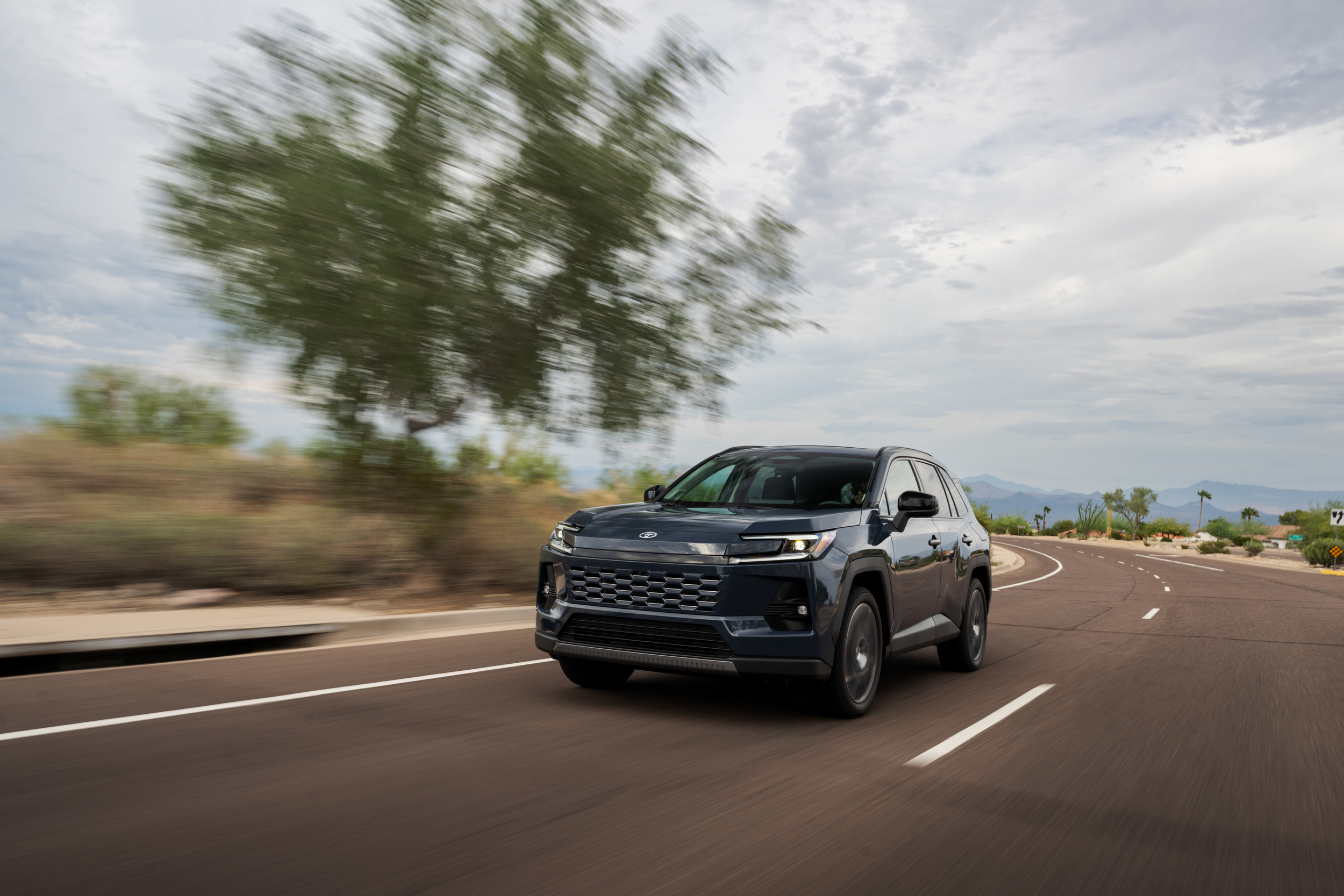
While Toyota sales fell 6.9% in the first quarter, high gas prices could help to reverse that trend as the company offers a dizzying array of hybrids. Seventeen, to be exact, according to our last count. This includes the Camry, Corolla, Crown, Corolla Cross, and Prius, as well as the Crown Signia, Highlander, Grand Highlander, Land Cruiser, RAV4, 4Runner, Tacoma, Tundra, Sequoia, and Sienna. Two of those, the Prius and RAV4, are also offered as plug-in hybrids.

That’s a huge lineup, especially compared to Ford, GM, and Stellantis. The latter recently killed off plug-in hybrids and only offers the new Cherokee Hybrid in America. However, range-extended variants of the Ram 1500 and Grand Wagoneer are coming.

While EVs do offer some cover to these companies during periods of high gas prices, consumers have been clear: most want hybrids, not fully electric vehicles.

 GM’s Only Answer To Toyota’s Seventeen Hybrids Is A $109K Corvette

Hyundai’s New Concepts Tease A Design Direction Ioniq Has Never Tried Before

  • Hyundai teases Earth and Venus concepts as part of its Ioniq sub-brand.
  • The EVs show slim LEDs, futuristic proportions, and sharply cut surfaces.
  • A countdown on Hyundai China’s website points to an April 10 debut.

Hyundai is setting the stage for the next phase of its Ioniq sub-brand, previewing what’s to come with a pair of new concepts. The EVs, dubbed Earth and Venus, introduce an evolved design language that will likely carry over to future production models.

The automaker’s official website in China now features a countdown to a “Hyundai Ioniq Brand Launch Event” scheduled for April 10. A teaser video shows a meteorite impact revealing a gold-colored crystal, one face shaped like the letter “i.” Whether this becomes the new Ioniq emblem remains unclear.

More: The Boulder Is Hyundai’s Answer To The Ford Bronco, And A New Pickup Is Behind It

Hyundai has also released shadowy teasers of the upcoming concepts across its global social media channels, describing them as “a cosmic statement, engineered for humans.”

 Hyundai’s New Concepts Tease A Design Direction Ioniq Has Never Tried Before
Hyundai Earth Concept

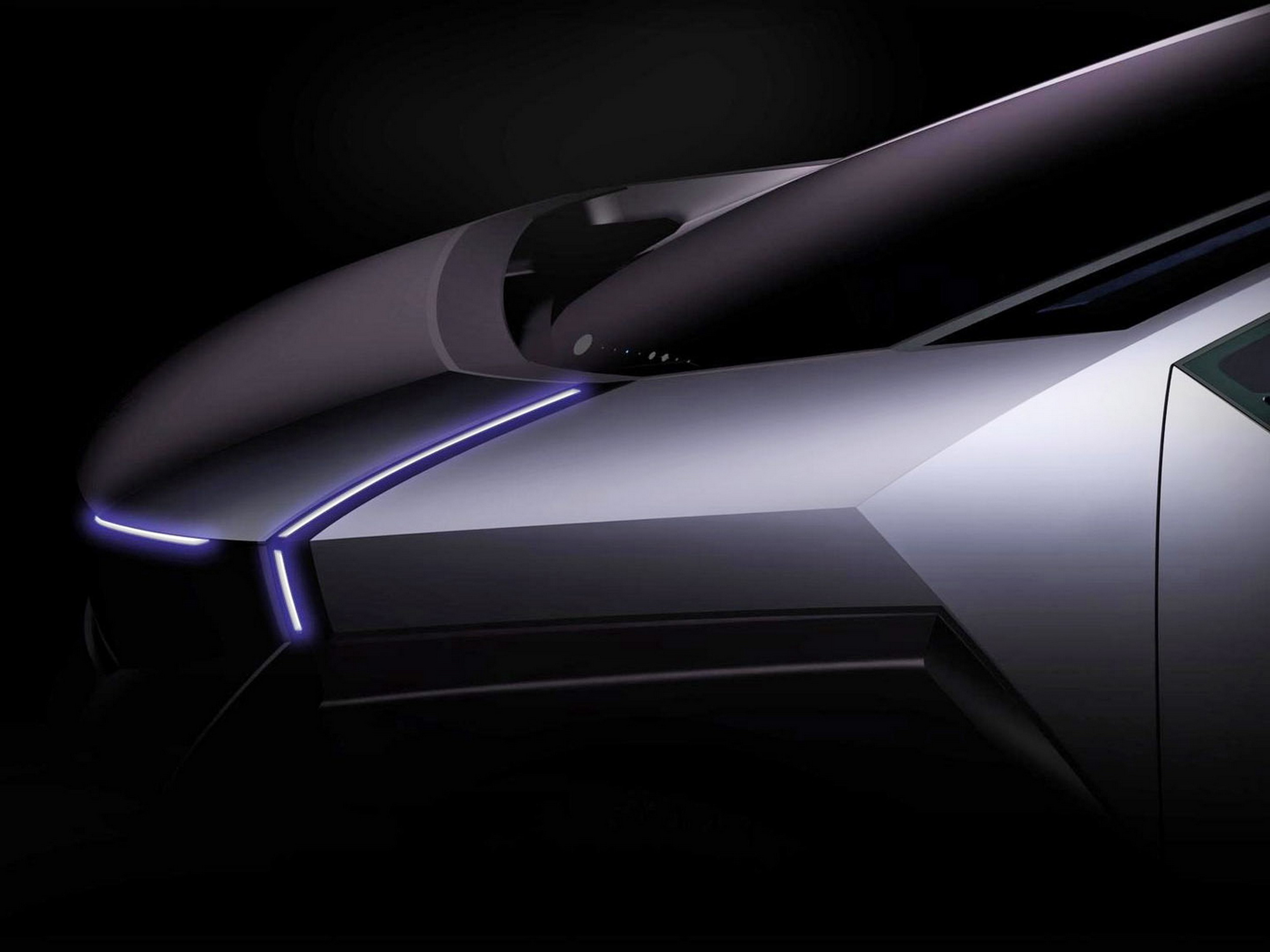
The Earth is finished in silver and features Y-shaped LEDs reminiscent of the Lamborghini V12 Vision Gran Turismo Concept from 2019. Its short hood, steeply raked windscreen, boxy wheel arches, and flat surfacing give it a distinctly Cybertruck-like presence. Unfortunately, only a small portion of the profile is visible, so the overall bodystyle remains unclear.

More: Hyundai’s New Pickup Truck Will Be Everything The Santa Cruz Refused To Be

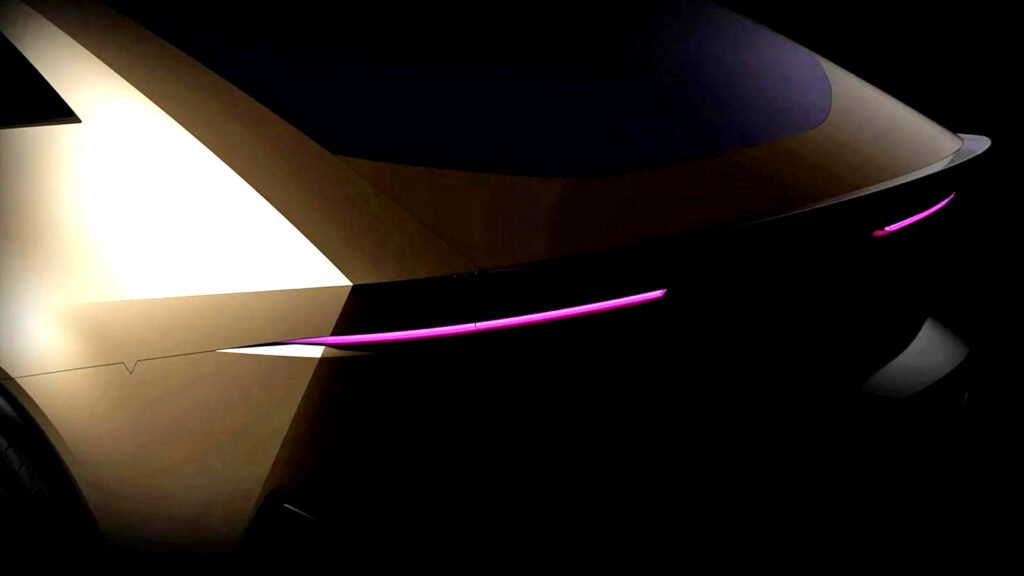
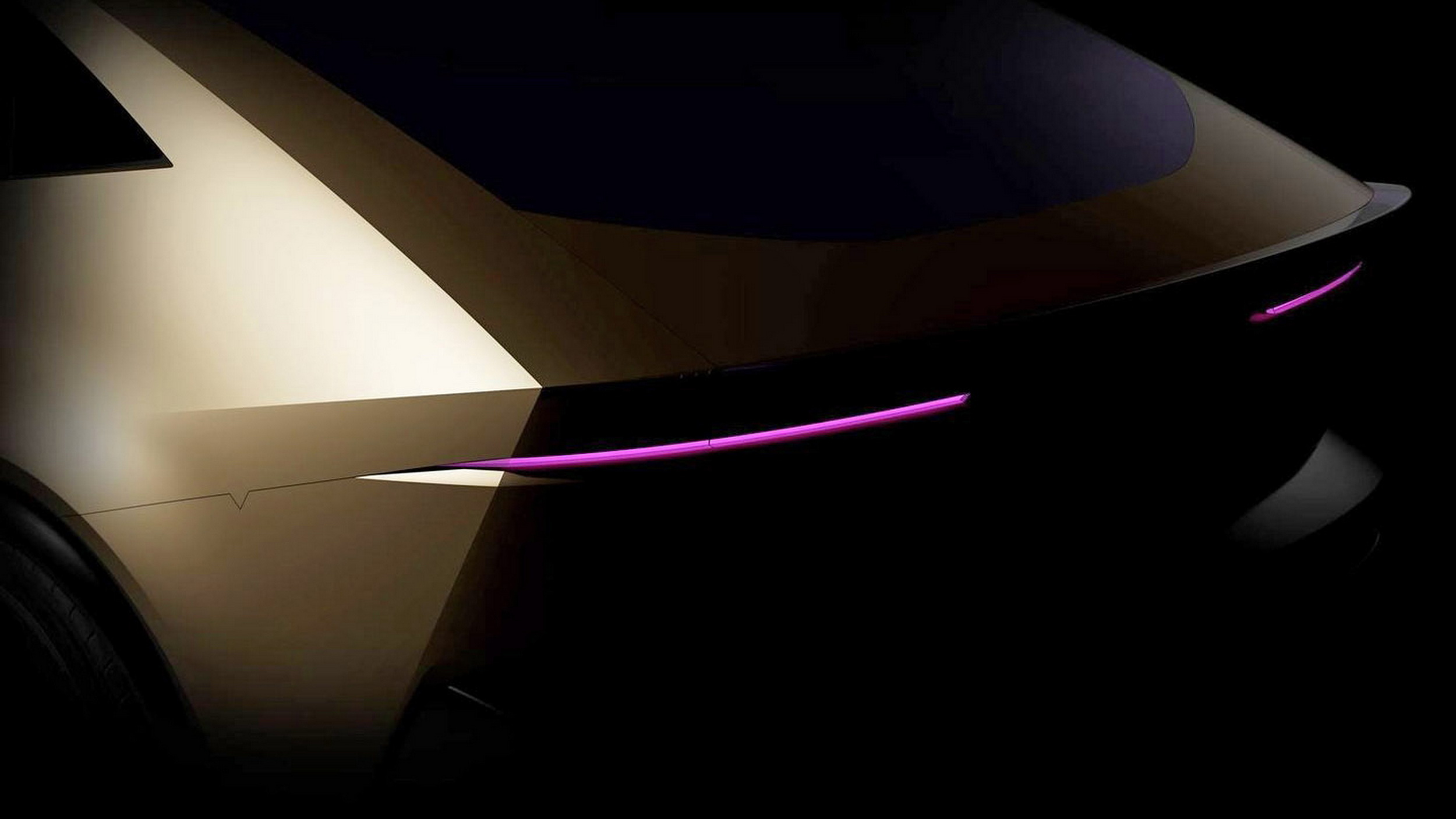
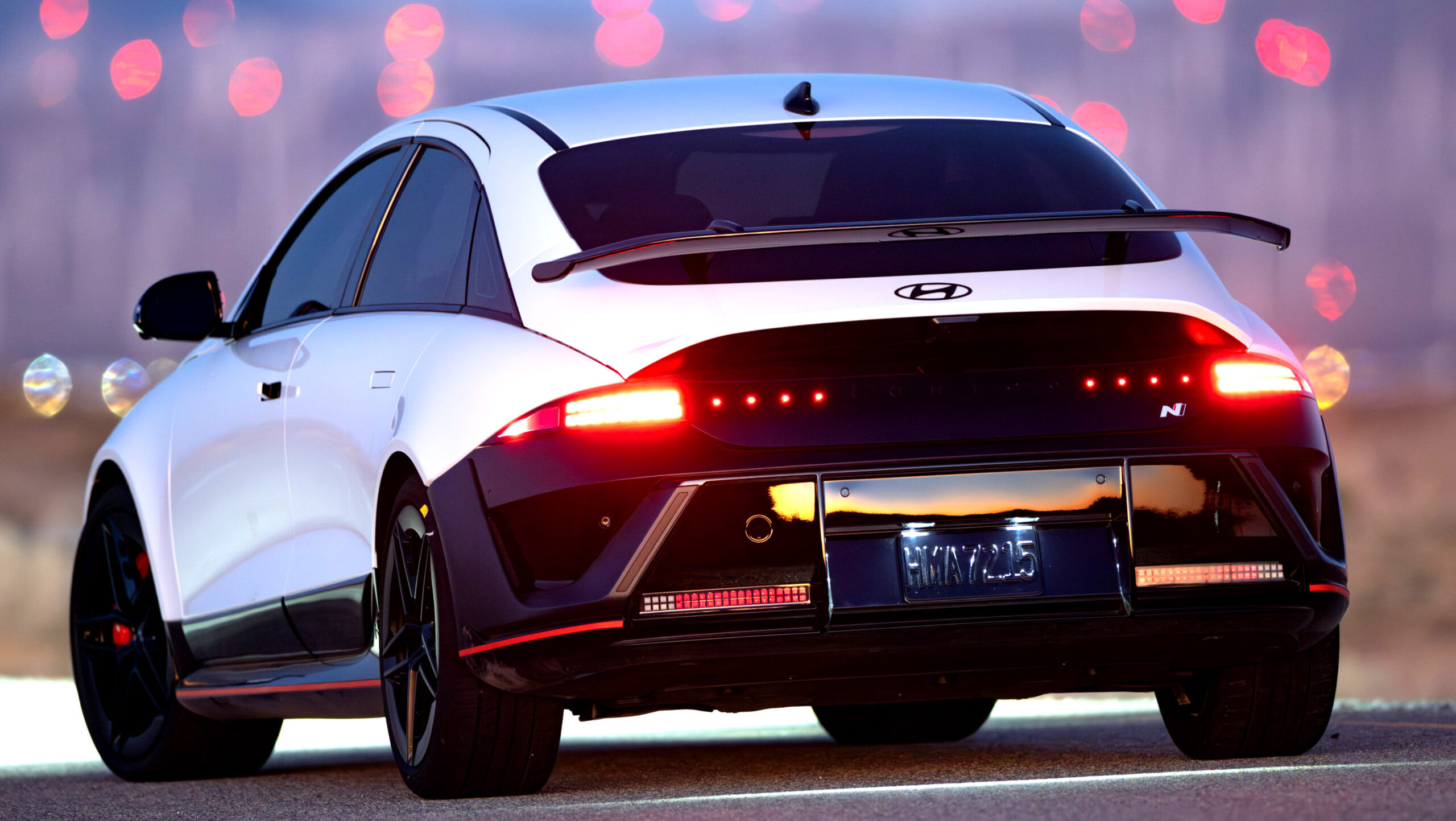
The Venus appears in a gold finish, with the teaser focusing on its rear. It leans into sharper, more angular surfacing, paired with a fastback-style tail, ultra-slim LEDs, and a ducktail spoiler. There are also glimpses of a pronounced bumper and round wheel arches.

 Hyundai’s New Concepts Tease A Design Direction Ioniq Has Never Tried Before
Hyundai Venus Concept

It will be interesting to see whether the Earth and Venus are simply futuristic styling exercises or early previews of where Hyundai’s electric lineup is headed alongside the Ioniq 3, 5, 6, and 9.

More: A Hyundai Beat The BMW M2 CS For World Performance Car Of The Year

The timing of the announcement, along with its ties to China, suggests the concepts could make their first public appearance at the Beijing Auto Show on April 24. Hyundai may also choose to reveal the designs earlier at its April 10 event.

Setting aside its global and China-focused ambitions, Hyundai is planning an aggressive product push in North America, with 36 new or refreshed models due over the next five years. That rollout includes a rugged SUV and a body-on-frame pickup previewed by the Boulder concept at the New York Auto Show.

\\\\\\

Hyundai

A Hyundai Beat The BMW M2 CS For World Performance Car Of The Year

  • BMW’s iX3 took home two trophies at the 2026 World Car Awards.
  • Lucid’s Gravity SUV beat the Cadillac Vistiq for a major global title.
  • Gas-powered cars didn’t win a single category at this year’s event.

Electric vehicles have dominated the World Car Awards as they’ve won every single category this year. This is hardly surprising as many of the finalists were EVs, but it likely won’t alleviate criticism.

Top honors went to the BMW iX3 which was named 2026 World Car of the Year as well as World Electric Vehicle. In the former category, it beat out the redesigned Hyundai Palisade and Nissan Leaf. The Leaf was also up for being named World Electric Vehicle, but it and the Mercedes CLA lost to the German crossover.

More: Ford Won North American Truck Of The Year With A Trim

Speaking of luxury brands, the Lucid Gravity was named World Luxury Car. The electric crossover, which offers up to 450 miles (724 km) of range, bested the Cadillac Vistiq and Volvo ES90.

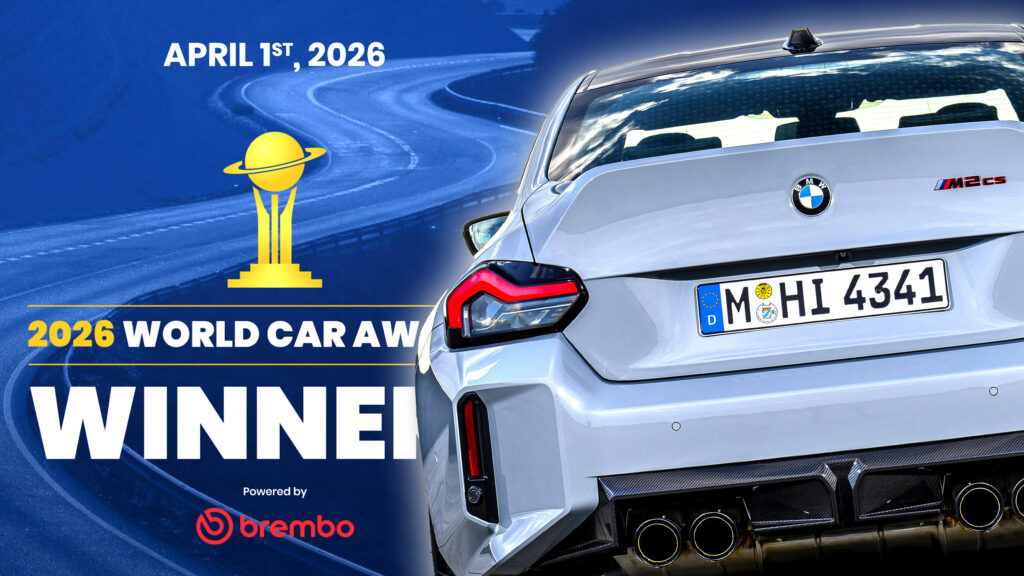
That brings us to the most controversial award, which is World Performance Car. Here, the Hyundai Ioniq 6 N beat the BMW M2 CS and Chevrolet Corvette E-Ray.

\\\\\\\\\\\

While a 641 hp (478 kW / 650 PS) Hyundai is certainly impressive, is it really more of a performance car than a 523 hp (390 kW / 530 PS) coupe that accelerates from 0-60 mph (0-96 km/h) in 3.7 seconds and laps the Nordschleife in 7:25.534? The E-Ray, on the other hand, has all-wheel drive, an EV-only mode, and a combined output of 655 hp (488 kW / 664 PS).

Since you’re probably still stewing over that, we’ll finish up with the two categories little care about. World Urban Car went to the Nio Firefly, which beat out the Hyundai Venue as well as the Baojun Yep Plus / Chevrolet Spark EUV.

\\\\\\\\\\\\\\

There’s also World Car Design of the Year, which was apparently decided by Mr. Magoo. The Mazda 6e / EZ-6 took home the prize as it won over the Kia PV5 and Volvo ES90. None of them are particularly pretty, but the 6e isn’t too shabby and the finalists were chosen by a design panel of people you’ve probably never heard of before.

2026 World Car Awards
World Car of the YearBMW iX3
World Electric VehicleBMW iX3
World Luxury CarLucid Gravity
World Performance CarHyundai Ioniq 6 N
World Urban CarNio Firefly
Car Design of the YearMazda 6e / EZ-6
SWIPE

Japan Just Dealt BYD A Massive EV Blow

  • Japan cut subsidies for the Chinese EV maker to just 150,000 yen.
  • New rules now favor EVs using locally produced battery packs.
  • Toyota and Nissan models still qualify for far higher incentives.

Electric vehicles make up less than 2 percent of new car sales in Japan, yet that didn’t stop Chinese EV giant BYD from unveiling an all-electric Kei car last year, aiming to make inroads into the local market. However, the company has just been dealt a serious blow.

It has been revealed that the Japanese government has slashed subsidies for BYD by more than half, reducing them to just 150,000 yen, or about $936. Previously, incentives for BYD models ranged between 350,000 yen ($2,000) and 400,000 yen ($2,500).

Read: BYD Surprises Japan With A Tiny EV Ready To Take On The Kei Giants

The reason is quite simple. Japan is revising its EV subsidy scheme to benefit vehicles that use locally manufactured battery packs. Obviously, BYD’s cars use Chinese-made batteries. Thus, it seems more like a measure to protect the Japanese car industry from the burgeoning Chinese brand, which was the world’s sixth-largest car manufacturer last year.

Japanese EVs Get A Big Boost

\\\\\

BYD Racco

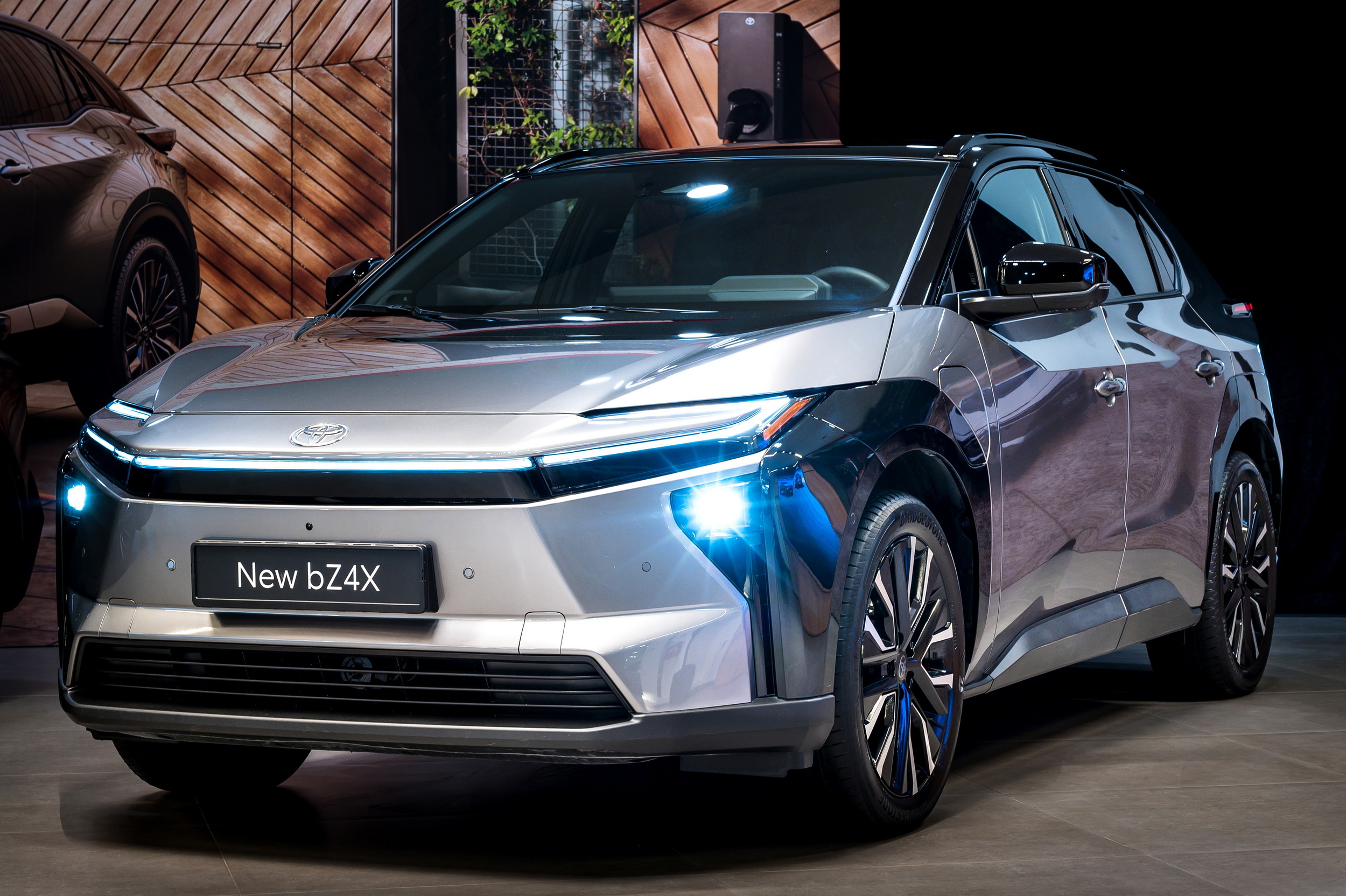
As part of a change to the subsidy program, the Toyota bZ4X will continue to be offered with the highest possible subsidy of 1.3 million yen ($8,100). The Nissan Ariya had been available with a 1.29 million yen ($8,075) subsidy, although this will be cut to 1 million yen ($6,200) in 2027.

Interestingly, it’s not just Japanese brands that get generous government assistance. Earlier this month, Tesla’s subsidies were increased by 400,000 to 1.27 million yen ($7,900), likely due to the fact that it uses Panasonic batteries. Audi also saw a recent increase of 320,000 yen ($2,000) up to just over 1 million yen ($6,200) for its EVs. Similarly, subsidies for some of Hyundai’s EVs have been boosted this month.

 Japan Just Dealt BYD A Massive EV Blow

As noted by Nikkei Asia, not all of these subsidy increases will remain in effect. From next January, subsidies for brands including Audi and Hyundai will be cut, although their extent remains unclear. Prior to the most recent round of cuts, BYD said it was already at a disadvantage.

“We’re at an overwhelming disadvantage,” the boss of its Japan unit, Atsuki Tofukuji said. “The gap [with companies like Toyota Motor] has grown to up to nearly 1 million yen. We can’t compete with 350,000 yen.”

 Japan Just Dealt BYD A Massive EV Blow

Hyundai Is About To Flood The North American Market With 36 New Models

  • Hyundai will launch 36 vehicles in North America through 2030.
  • This includes new and updated models as well as derivatives.
  • There will be new XRT and N variants, and range-extended EVs.

Hyundai CEO José Muñoz used the company’s annual shareholders meeting to reveal an accelerated North American growth strategy. It calls for launching 36 all-new or “significantly enhanced” vehicles in Canada, Mexico, and the United States between 2026 and 2030.

The automaker didn’t go into many specifics, but confirmed we can expect commercial vehicles as well as cars, trucks, and SUVs. There will also be a mix of “core models and expanded trims” as well as new XRT and N variants.

More: Hyundai’s Best-Seller Is About To Get A Major Redesign

While Hyundai has bet heavily on EVs, they’re not putting all their eggs in one basket. Quite the opposite as they promised a “broad mix” of powertrains that will include gas and hybrid options as well as battery and range-extended EVs. This is designed to meet “evolving customer demands across the region,” which is codeword for slower than expected electric vehicle adoption.

\\\\

Muñoz alluded to this as he said, “By expanding our product portfolio and offering a wider range of powertrains in North America, we’re giving customers more choice while continuing to strengthen our long‑term investment in U.S. manufacturing, jobs, and the broader automotive ecosystem.”

Speaking of the latter, Hyundai aims to have more than 80% of vehicles sold in the United States assembled domestically by 2030. The automaker also wants to increase U.S. parts content from around 60% to 80% by the end of the decade.

What’s Coming?

\\\\\\\\\\\\\

The automaker was tight-lipped on what to expect, but spy photographers have already snapped an assortment of upcoming models including the redesigned Tucson and Elantra. The company is also working on a facelifted Santa Fe, while a larger truck is expected to replace the Santa Cruz.

On top of those models, Hyundai and General Motors have teamed up to jointly develop five new vehicles including an electric commercial van for North America.

\\\\\\\\

Hyundai Unveils Luxurious Version Of Its Smallest EV

  • The Hyundai Casper Electric Lounge is the new flagship trim of the micro-SUV.
  • Exclusive 17-inch alloy wheels and new colors distinguish the exterior design.
  • The cabin gets genuine leather upholstery and plenty of standard equipment.

Hyundai’s smallest EV is getting a taste of the finer things. The automaker is taking its most compact electric vehicle upmarket with the debut of the Lounge trim for the Casper Electric in South Korea, also known as the Inster in export markets. The new micro-SUV trim serves as a premium alternative to the rugged Cross model, sitting at the top of the range.

On the outside, the Lounge is distinguished by a new grille pattern, an exclusive Glow Mint paint option, a lighter Medium Metallic Paint finish for the plastic cladding, and a set of 17-inch futuristic-looking alloy wheels. Like the Cross, it now comes standard with full-LED headlights and taillights.

Review: The Hyundai Inster Ticks Many Boxes Except The One That Counts

The interior is where the Lounge truly sets itself apart from its siblings. The headline feature is genuine leather upholstery, which remains genuinely rare in this segment. Hyundai has also fitted knit-material headliner and sun visors, along with Kevlar cone speakers for improved sound quality.

\\\\\\\\\\

Hyundai Casper Electric Lounge

The 10.25-inch infotainment display and matching digital instrument cluster are both standard, as is Level 2 ADAS. A sunroof and wireless charging pad are optional extras. Hyundai also offers a range of accessories including interior storage solutions, pet-friendly items, roof racks, a retractable awning, and an inflatable mattress.

Powertrain And Pricing

Mechanically, the Casper Electric Lounge uses the more potent 113 hp (84.5 kW / 115 PS) electric motor paired with the larger 49 kWh battery pack. Driving range is rated at 295 km (183 miles), which is 10 km (6 miles) more than the Cross but 20 km (12 miles) fewer than the Inspiration, a gap attributed to the different wheel size.

\\\\\\\\\\\\\\\

Hyundai Casper Electric

Predictably, the Casper Electric Lounge is the most expensive version of the urban EV on sale in Korea. It is priced at ₩36,410,000 ($24,500), or ₩1,260,000 ($850) more than the Cross. According to the Korean Car Blog, however, the effective price drops closer to ₩20 million (around $13,400) once EV subsidies in Seoul are factored in.

More: New Hyundai Inster Is A Tiny Electric Crossover For The Masses

Hyundai has yet to confirm whether the new flagship trim will reach export markets under the Inster name, following the precedent set by the Cross.

The automaker also continues to offer an gas-powered Casper in Korea, featuring a 180 mm (7.1 inches) shorter wheelbase than the Casper Electric. It is available with naturally aspirated and turbocharged versions of a 1.0-liter three-cylinder engine, though it misses out on the Lounge and Cross grades offered on its fully electric sibling

\\\\\\\\\\

Hyundai Casper Electric

EV Sales Plunge 41% In The US As Post-Incentive Reset Takes Hold

  • EV registrations fell sharply in January as market momentum faded.
  • Cadillac ranked as the No. 2 EV brand behind Tesla with modest growth.
  • Gas and hybrid vehicles gained market share as EV demand softened.

Newly-released sales figures from the United States is starting to reveal just how much electric vehicle demand leaned on the federal EV tax credit that was discarded on September 30 last year. With that incentive now gone, the early numbers suggest the market is already feeling the adjustment, and it has not been a subtle one.

Data from S&P Global Mobility shared by Auto News show that 59,802 new EVs were registered in January, a massive 41 percent drop from a year earlier. Out of nearly 1.2 million vehicles registered that month, that leaves fully electric models with just a 5.1 percent share of the market, down from 8.3 percent a year earlier.

Meanwhile, gasoline vehicles quietly expanded their hold, rising 2.3 percentage points to claim 76.6 percent of registrations. Hybrids also edged upward, gaining 1 point to reach a 14.7 percent share.

Read: Global EV Sales Just Fell 11%, But Carmakers Found A Surprising Backup Plan

Tesla still sits comfortably at the top of the US EV market, which will surprise absolutely no one. In January alone, 32,123 new Teslas were registered. Even so, Tesla is not immune to the slowdown, with registrations down 26 percent from a year earlier. Despite that drop, its share of the EV market jumped 11 percent to 53.7 percent.

Cadillac ranked a distant second with 3,189 registrations, more than ten times behind Tesla. However, the brand was one of the few to post growth, with registrations rising 8.1 percent year over year. Its share of the EV market also increased by 2.3 percent to 5.3 percent.

 EV Sales Plunge 41% In The US As Post-Incentive Reset Takes Hold

Many other carmakers have also seen their EV sales fall off a cliff. For example, there were 3,027 new Hyundai EVs registered in January, down 23 percent from the year prior. This decline was led by the Ioniq 5, which saw its deliveries slide 22 percent to 2,101 vehicles.

Ford’s EV registrations also dropped 67 percent to 2,772, while Chevrolet’s fell 55 percent to 2,658. Toyota, however, reported a 25 percent increase, although its EV registrations totaled just 2,529, meaning it still trails many competitors.

According to iSeeCars executive analyst Karl Brauer, “there’s going to be a shakeout to the new reality with no federal EV incentives, which was the carrot, and no greenhouse gas penalties, which was the stick.”

Auto News notes that EV registrations have declined year over year every month since the tax credit was scrapped on September 30. S&P Global Mobility analyst Tom Libby says the drop was “expected,” adding, “it’s a reset, and it’s going to be a very slow process moving forward.”

January 2026 EV Sales USA
BrandSalesDiff. vs Jan-25
Tesla32,123-26%
Cadillac3,189+8.1%
Hyundai3,027-23%
Ford2,772-67%
Chevrolet2,658-55%
Toyota2,529+25%
Rivian2,232-25%
Lucid1,633+97%
BMW1,501-60%
Kia1,462-58%
GMC1,156-31%
Lexus810+166%
Honda658-85%
Volvo599-32%
Subaru555-51%
Porsche495-60%
Volkswagen488-90%
Mercedes-Benz374-84%
Audi319-82%
Polestar299-34%
Nissan249-88%
Ram137
Jeep106-29%
Mini98-57%
Dodge80-65%
Genesis62-87%
Fisker41-70%
BrightDrop38-50%
VinFast37-76%
Rolls-Royce24-20%
Acura15-99%
Fiat15-91%
Maserati12+140%
Jaguar6-98%
Zeekr3
SWIPE

 S&P Global Mobility

❌