Normal view

There are new articles available, click to refresh the page.
Yesterday — 18 April 2026Main stream

Limits on speech rights for military retirees at issue in Sen. Kelly case against DOD

17 April 2026 at 19:59
U.S. Sen. Mark Kelly, D-Ariz., speaks at a news conference at the U.S. Capitol on Feb. 11, 2026 in Washington, D.C. (Photo by Heather Diehl/Getty Images)

U.S. Sen. Mark Kelly, D-Ariz., speaks at a news conference at the U.S. Capitol on Feb. 11, 2026 in Washington, D.C. (Photo by Heather Diehl/Getty Images)

WASHINGTON — Arizona Democratic Sen. Mark Kelly’s legal team is urging a federal appeals court to uphold a ruling that allows the former Navy captain to keep his retirement rank and pay while his First Amendment case against the Pentagon moves forward. 

Benjamin C. Mizer, partner at Arnold & Porter, wrote in a brief filed April 15 that the Defense Department violated Kelly’s constitutional rights when it tried to punish him for appearing alongside other Democrats in the “Don’t Give Up The Ship” video. 

The Trump administration’s appeal of the district court’s ruling, he wrote, doesn’t cite “a single case” that has expanded the limited speech rights of active-duty military members to “retirees like Senator Kelly.”

The legal precedent the Trump administration did reference, Parker v. Levy, “involved an active-duty officer directly urging soldiers at his wartime military post to refuse specific orders to deploy and fight,” Mizer wrote. 

“Senator Kelly, by contrast, is a retired officer and legislator who publicly called, alongside other Members of Congress, for adherence to settled law, not defiance of it,” Mizer wrote. 

‘Illegal orders’ video posted in November

Kelly, Michigan Sen. Elissa Slotkin, Colorado Rep. Jason Crow, New Hampshire Rep. Maggie Goodlander, and Pennsylvania Reps. Chris Deluzio and Chrissy Houlahan, all Democrats with backgrounds in the military or national security, posted the video at the center of the case on Nov. 18.

They said that Americans in those institutions “can” and “must refuse illegal orders.”

“No one has to carry out orders that violate the law or our Constitution. We know this is hard and that it’s a difficult time to be a public servant,” they said. “But whether you’re serving in the CIA, in the Army, or Navy, or the Air Force, your vigilance is critical.”

Mizer wrote in his legal brief that “Kelly never told members of the armed forces to refuse any particular military orders. The video did not even identify any specific military orders or operations.”

Mizer added the obligation to refuse clearly illegal orders “is a bedrock of the law of armed conflict.”

Defense Secretary Pete Hegseth announced in January that he would attempt to downgrade Kelly’s retirement rank and pay for his participation in the video, leading the senator to file a lawsuit

Senior Judge Richard J. Leon of the District of Columbia District Court issued a preliminary injunction in February, blocking that from taking effect while the case progresses through the legal system. 

The Trump administration appealed the preliminary injunction to the Court of Appeals for the D.C. Circuit, which has scheduled oral arguments for May 7.

Karen LeCraft Henderson, nominated by President George H.W. Bush in 1990; Cornelia T.L. Pillard, nominated by President Barack Obama in 2013; and Florence Y. Pan, nominated by President Joe Biden in 2022, make up the three-judge panel that will decide whether to uphold the district court’s preliminary injunction or overturn it. 

DOJ argues discipline at risk

Assistant Attorney General Brett A. Shumate wrote in a 71-page brief filed March 20 the district court judge’s ruling “was gravely wrong and sweeps far beyond Kelly’s suit, calling into question the military’s ability to maintain discipline among servicemembers.”

Shumate added later in the filing that “while retired officers may well have greater speech rights than active-duty servicemembers in some respects, the district court erred in holding that they are indistinguishable from civilians for purposes of First Amendment analysis. 

“The court reasoned that retired officers cannot undermine discipline as significantly as active-duty servicemembers, but that conclusion is unsupportable.”

Shumate contended that the “district court also erred insofar as it suggested that Kelly is entitled to heightened First Amendment protection because he is a Member of Congress. Whatever enhanced speech rights Kelly has in that capacity, they come from other constitutional provisions, not the First Amendment.”

“If anything, Kelly’s role in Congress provides more, not less, reason to hold him as accountable as other servicemembers for counseling disobedience to lawful orders, given that his ‘leadership position’ as a member of the Senate Armed Services Committee gives him ‘unique sway over the military,’” Shumate wrote. 
Before yesterdayMain stream

Rolls-Royce Calls The Nightingale Its Most Accessible Coachbuild. It Starts At $9.5 Million

  • Rolls-Royce’s Nightingale is a fully electric, two-seat coachbuild.
  • At 226.8 inches, it matches the Phantom sedan in overall length.
  • The cabin ceiling uses 10,500 stars patterned on a nightingale’s song.

While several automakers quietly scale back their EV projects, Rolls-Royce is doing the opposite, and doing it in typical fashion. The Project Nightingale arrives as an exclusive two-door convertible, marking the first entry in the company’s Coachbuild Collection with bespoke styling and a strictly limited run of 100 units

With a length of 5.76 meters (226.8 inches), the Nightingale closely mirrors the Phantom sedan in sheer presence. It adopts a raked windscreen, a two-seat cabin, a long, tapering tail, and a set of 24-inch directional wheels styled to echo yacht propellers.

More: Rolls-Royce’s Electric SUV Revives A Long-Forgotten Hood Design

The front is dominated by the Pantheon Grille, carved from a solid block of stainless steel, and flanked by ultra-slim vertical LED headlights. Those are connected to the split LED taillights through polished stainless-steel bands that run across the entire length of the car. Furthermore, a sophisticated diffuser manages airflow without the need for a spoiler, a feat made possible by the absence of exhaust pipes.

\\\\\\\\\\\\\

The pictured model is painted in Cote d’Azur Blue infused with subtle red flakes, combined with silver accents and a matching soft top. This pale blue shade is inspired by the experimental Rolls-Royce 17EX from 1928.

Two-Seater Cabin

Inside, the dashboard looks familiar, but the cabin only has two seats, framed by horseshoe-shaped forms. The saddle-like armrest glides rearwards to reveal the Spirit of Ecstasy controller, which is one of the five rotary controls.

More: This Exclusive Rolls-Royce Was 100 Years In The Making

Another highlight is the “Starlight Breeze” with 10,500 individual fiber-optic stars that wrap around the occupants. In typical Rolls-Royce fashion, these are not arranged in a random order, but with a special pattern derived from the sound-wave analysis of a nightingale’s song

\\\\\\\\\

For the launch vehicle, designers chose a combination of Charles Blue with Grace White, joined by Deep Navy details, Peony Pink accents, and Openpore Blackwood inserts.

More: When A Tech Billionaire Says Game On, Rolls-Royce Unlocks A Secret Level

To maintain the romance of open-top driving, the roof uses a composite blend of cashmere and high-performance fabrics, specifically tuned to let the sound of raindrops through while blocking mechanical noise.

Shared Underpinnings

Naturally, the Nightingale shares the “Architecture of Luxury” aluminum spaceframe chassis with the rest of the Rolls-Royce lineup. It also uses the same fully electric powertrain, currently employed by the Spectre.

Specifications remain under wraps, but the company promised to unveil more details as the vehicle “progresses through its global testing and development program”.

Rolls-Royce Decides Who Will Buy It

The Nightingale is significantly less exclusive than coachbuilt specials from the recent past like the Sweptail, Boat Tail, and Drop Tail. More specifically, the model will be manufactured in 100 units, with owners hand-picked from the firm. Deliveries are scheduled to begin in 2028.

As reported by Autocar, the starting price is approximately £7 million ($9.5 million), although the final cost is expected to climb following extensive personalization options. Besides the vehicle itself, the Coachbuild Collection program includes behind-the-scenes access to design and testing, plus global curated events.

\\\\\\\\\\\\\\\\\\\\\
\\\\\

Tesla’s FSD Was Branded Controversial, But Dutch Safety Regulators Called It The Safest System In The Test

  • Owners in the Netherlands will soon be able to use Tesla’s FSD system.
  • The Dutch safety agency will now submit FSD for EU-wide approval.
  • Tesla’s FSD system was found to outperform other driver assistance systems.

Tesla’s controversial Full Self-Driving system has received the green light for use in the Netherlands, and this could just be the start of its expansion across Europe. The decision comes after more than 18 months of tests and analysis by the RDW, the Dutch vehicle authority.

The most recent version of Tesla’s supervised FSD system “makes a positive contribution to road safety,” the RDW said. Now that it has the agency’s approval, Tesla says it will soon start rolling out the technology across the Netherlands, allowing owners to experience hands-free driving in both urban and highway settings.

Read: Feds Expand Tesla FSD Investigation After Visibility Failures

Even more important than the system’s approval for use in the Netherlands is that the RDW’s approval means it can be introduced across all European Union member states at a later date.

Before this happens, however, RDW must submit the application for authentication across the entire region, and all member states must vote on it. A majority vote is needed for the system to be approved EU-wide, and even if a majority is not achieved, individual countries can still decide to approve the system, Reuters notes.

Tackling The Country’s Most Difficult Roads

Smooth https://t.co/zJdymUNkcm

— Elon Musk (@elonmusk) April 12, 2026

Since the approval, Tesla has flooded its X account with videos of the FSD Supervised system being tested in the Netherlands. Importantly, the RDW noted that “a vehicle with FSD Supervised is not self-driving,” pointing out that “the driver remains responsible and must always maintain control.”

“The Tesla driver assistance system supports the driver more than other systems because it takes over multiple driving tasks when it is switched on,” the agency said in a statement. It added that “due to the continuous strict monitoring of the driver in the vehicle, the system is safer than other driver assistance systems,” noting it was tested both on test tracks and on public roads.

If a driver is consistently found to be not fully alert while behind the wheel, the system will trigger various signals to catch their attention. In extreme cases, the system can shut down and temporarily be prevented from switching back on.

Passed the 🇳🇱 wife test @aelluswamy ! pic.twitter.com/zpZqTR1DkD

— Sander Smit (@Sandersmit83) April 12, 2026

Hyundai’s Ioniq Concepts Forgot They Were Supposed To Look Like Hyundais, Especially The Lambo One

  • Hyundai has unveiled two Ioniq concepts, badged the Venus and Earth.
  • The Venus is a high-riding sedan that looks nothing like the Ioniq 5.
  • Both concept cars feature radical interiors to inspire production models.

China’s EV market has become a proving ground where global brands often rethink their playbook from the ground up. The Ioniq brand has served as Hyundai’s premium series of EVs in Western markets for several years. Now Hyundai is bringing Ioniq to China, but not with any existing models. Instead, it has revealed two concepts ahead of the Auto China show in Beijing.

Read: Hyundai’s New EV Sedan For China Could Be Everything The Ioniq 6 Wasn’t

All future Ioniq models bound for China will follow a new naming convention, one that swaps numbers for planets as Hyundai reshapes its electric lineup for the market. With this in mind, its first two concepts are dubbed the Venus and the Earth, the former a sharp looking sedan that strongly recalls a Lamborghini four-door, while the latter takes the form of an SUV.

According to Hyundai, the Ioniq series will “evolve beyond a product lineup into a broader mobility ecosystem tailored to local customers” as it develops.

\\\\\\\\\

Hyundai says the Venus and Earth serve as design ‘barometers’ for future production models. The Venus has been presented in a shade of Radiant Gold and looks unlike any other Ioniq model we’ve seen. Like an Ioniq 5, it sits quite high and has an aggressive front end with slim LEDs and a gaping grille.

The cabin is also quite intriguing, featuring a slew of gold accents and a panoramic screen for the infotainment system and the front passenger, similar to the current Hyundai Elexio built in China. Just how much of this concept’s interior will influence future production models remains to be seen, but it certainly makes a statement.

No Ordinary Hyundai

\\\\

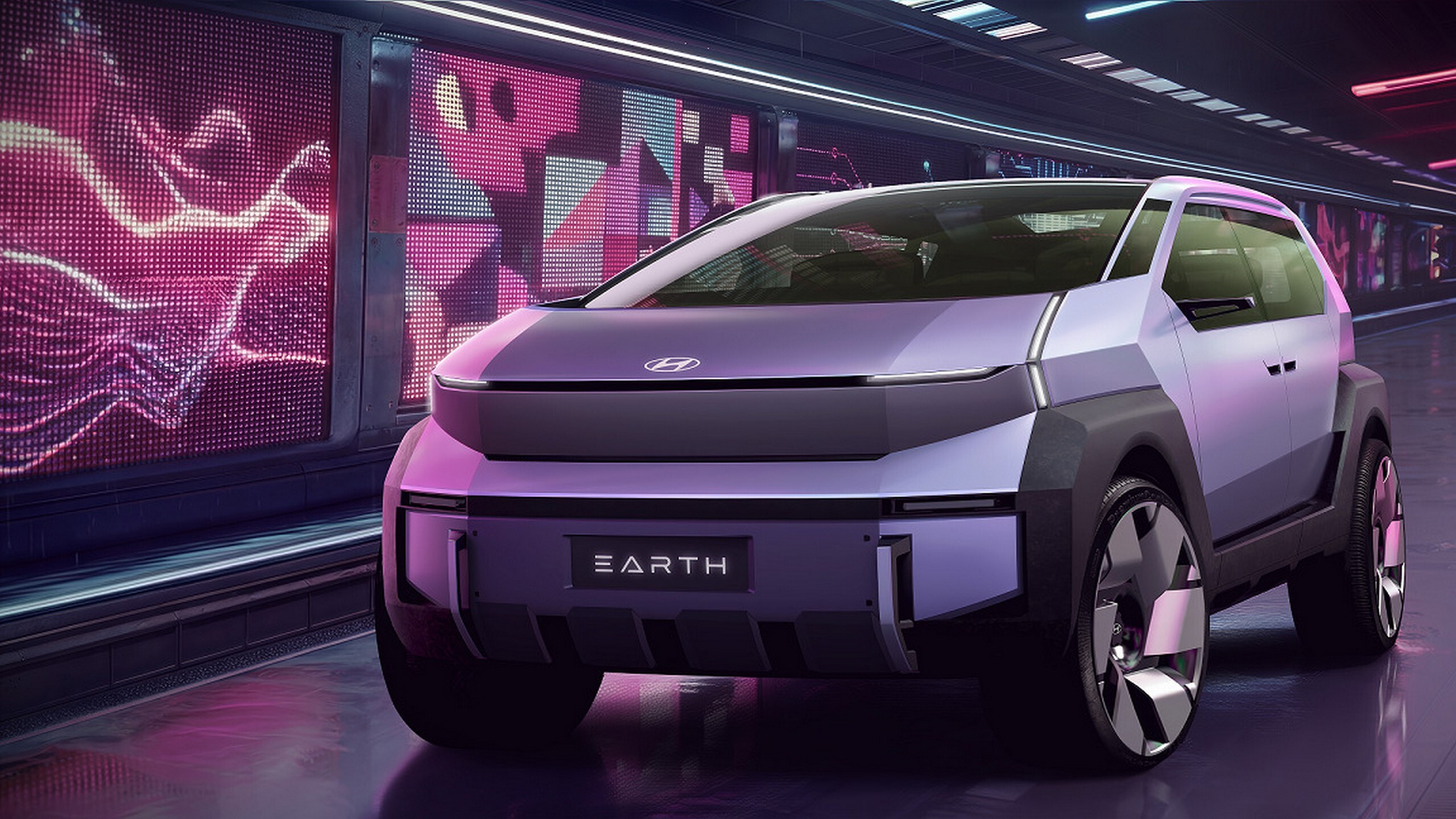
Hyundai’s Earth SUV is even more dramatic. Sharing some similarities to recent Kia concepts, it has a bold front fascia and a rugged design, painted in a shade Hyundai calls Aurora Shield. A peek inside the cabin reveals suicide rear doors, a tablet-like central touchscreen, and special seats with air-filled modules.

“Starting with the two concept cars unveiled today, we will continue to present products that reflect deep insight into Chinese customers and our genuine commitment to this market,” Beijing Hyundai Motor Company president Li Fenggang said.

“Built on IONIQ’s uncompromising principles of world-class safety and quality, we will soon introduce production models that seamlessly combine the smart driving and smart cabin experiences that Chinese consumers demand.”

Hyundai has yet to announce when the first of its China-only Ioniq models will be launched, but they shouldn’t be too far off.

Debate over US war crimes, illegal military orders returns with Trump threats against Iran

9 April 2026 at 20:15
U.S. President Donald Trump speaks from the Cross Hall of the White House on April 1, 2026 in Washington, DC. Trump used the prime-time address to update the nation on the war in Iran. (Photo by Alex Brandon-Pool/Getty Images)

U.S. President Donald Trump speaks from the Cross Hall of the White House on April 1, 2026 in Washington, DC. Trump used the prime-time address to update the nation on the war in Iran. (Photo by Alex Brandon-Pool/Getty Images)

WASHINGTON — President Donald Trump’s threats to destroy power plants and bridges in Iran before saying he was prepared for a “whole civilization” to die have renewed questions about what constitutes an illegal order and what, if any, repercussions officials could face for committing war crimes.  

The issue originally surged to the forefront last year when the Trump administration repeatedly struck boats in the Caribbean officials alleged were carrying illegal drugs. Democratic lawmakers with backgrounds in the military and intelligence community then published a video reminding troops they “can” and “must refuse illegal orders.”

“No one has to carry out orders that violate the law or our Constitution. We know this is hard and that it’s a difficult time to be a public servant,” they said. “But whether you’re serving in the CIA, in the Army, or Navy, or the Air Force, your vigilance is critical.”

The issue of legal versus illegal military orders surfaced again this week when Trump escalated his threats against Iran, leading to bipartisan condemnation from members of Congress before he gave that country’s leaders two more weeks to negotiate.

But what exactly violates international law or rises to the level of a war crime is often murky, as is who would be willing to prosecute U.S. troops, according to experts interviewed by States Newsroom. 

Rachel E. VanLandingham, professor of law at Southwestern Law School in Los Angeles and a former judge advocate in the U.S. Air Force, said that “at the end of the day, the law of war does allow for a great deal of violence and a great deal of civilian suffering.” 

But several of the threats Trump has made, including to destroy power plants and bridges in Iran, would likely violate the law if the military were to carry them out, she said. 

“Under no stretch of interpretation would that be lawful, right? Because that just fails to distinguish whatsoever the civilian objects versus lawful military objectives, even if we stretch the definition of what’s a lawful military objective,” VanLandingham said. 

The boat strikes in the Caribbean, including the decision to order a second strike on two survivors, could also have been illegal, she said. 

VanLandingham doesn’t expect the Trump administration will hold anyone accountable for actions the military has already taken or may take. But she noted there is no statute of limitations on the charges that would likely apply under the Uniform Code of Military Justice for military members or the War Crimes Act for anyone not subject to the military justice system.

“The next administration could come in and investigate our service members for alleged war crimes. And they should, to demonstrate renewed fidelity to U.S. law, to the law of war,” she said. 

Congress doesn’t have the authority to prosecute anyone for violating the law, but could hold oversight hearings with Defense Department officials, a scenario that would become more likely if one or both chambers return to Democratic control following the November midterm elections

“They can have public, open hearings and drag in every single military member that was involved in the chain of command of orders for striking Iran, if they wanted to,” VanLandingham. “That’s not a criminal prosecution, but it’s transparency.”

Lawmakers could also provide more funding and require the Pentagon to reinstitute the Civilian Harm Mitigation Program, which she said “the Trump administration has gutted.”

Geneva Conventions

Leila Sadat, the James Carr Professor of International Criminal Law at WashU Law School in St. Louis, Missouri, said that in a situation where the president directs the military to violate the laws of war, it’s highly unlikely military commanders or the Department of Justice would then turn around and prosecute those actions. 

Even if a prosecutor were to try, Trump would likely be insulated from any domestic prosecution for “official acts.” And as president he could issue preemptive pardons for any military members he believes could face future prosecution, either in the military or civilian justice system.

Trump has a history of absolving military members accused of violating military law, including in 2019, when he pardoned two officers in the Army for actions in Afghanistan and restored the rank of a Navy SEAL who had been demoted for his conduct in Iraq. Trump later pardoned four contractors for killing more than a dozen Iraqi civilians in 2007.

But those protections only apply within the United States. 

The Geneva Conventions’ provision on universal jurisdiction would apply internationally and any country could choose to prosecute. 

“Now you still have to catch them, you have to get the evidence, but every state in the world is a party to the Geneva Conventions,” Sadat said. “So committing violations of the Geneva Conventions by attacking civilian objects, by attacking marketplaces, or hospitals, or schools, or electrical infrastructure, those kind of crimes can be prosecuted by every country in the world. So people should think about it before they do it.”

France, Germany and Sweden have all used the principle of universal jurisdiction to prosecute Syrians for crimes they committed during the war in their home country, she said. 

“The one debate is, do you have to have the person on your territory before you can go forward? Or can you do an investigation even if the person is not on your territory?” Sadat said. “And many have argued that you can do the investigation even if the individual is not on your territory. Different countries have different rules on whether they accept trials in absentia.”

Sadat said that gets a bit more complicated when the Status of Forces Agreements that give the U.S. jurisdiction over alleged wrongdoing by U.S. troops in dozens of countries come into play. 

Sadat, who was a special adviser on Crimes Against Humanity to the International Criminal Court Prosecutor from 2012 through 2021, said if the U.S. military were to carry out some or all of the threats Trump posted to social media, that could have led countries to reconsider those agreements. 

“It could create a huge security problem for the United States eventually. And that’s why I hope calmer heads are prevailing. Saying, ‘You know, there’s an entire complex web of treaties and agreements,'” she said. 

Trump would also likely pressure countries not to try U.S. military members for violating international law, but he may not always be successful, she said.  

“Eventually there’s going to be a country in which that’s not going to work,” Sadat said. “And so that’s why you really do have to think of this a little bit differently, because there are external forces and external actors that could decide we’re going to enforce the law, even if the United States is not going to enforce the law.”

Investigating US forces

Susana Sacouto, director of the War Crimes Research Office at American University’s Washington College of Law, said the Geneva Conventions require the U.S. to “investigate and … deal with alleged violations of the law of war by its own forces.”

How well that works in practice has “varied over time,” she said. 

“The problem is, we have an architecture, but those cases, particularly the criminal cases, are really exceptional, and they’re really exceptional, especially regarding senior officials,” Sacouto said. “So there’s been a lot of criticism about whether that architecture that exists is actually functioning to routinely investigate our own military actions for potential war crimes or (international humanitarian law) violations.” 

There is the possibility a future presidential administration may have defense officials or the Department of Justice look into allegations that emerge during the Trump administration. But Sacouto said, “past history with respect to accountability for U.S. officials, especially senior officials, is not very encouraging.”

Congressional investigations into the Central Intelligence Agency’s use of torture in the aftermath of the 9/11 terrorist attacks is one example Sacouto pointed to of a long-term investigation that did not lead to any high-level prosecutions. 

“Even then, no senior officials were really ultimately held accountable for their role in that program,” she said. “There were lower-level Abu Ghraib prosecutions, but no senior-level folks were found accountable.”

Hyundai Goes Interstellar As Ioniq Brand Launches In China

  • Hyundai has unveiled two Ioniq concepts, badged the Venus and Earth.
  • The Venus is a high-riding sedan that looks nothing like the Ioniq 5.
  • Both concept cars feature radical interiors to inspire production models.

The Ioniq brand has served as Hyundai’s premium series of EVs in Western markets for several years. Now, Hyundai is launching Ioniq in China, but it’s not doing so with any existing models. Instead, it has presented two concepts ahead of the Auto China show in Beijing.

All future Ioniq models sold by Hyundai in China will be named after planets. With this in mind, its first two concepts are dubbed the Venus and the Earth, the first of which is a sleek sedan while the latter is an SUV. Hyundai has declared that its Ioniq series will “evolve beyond a product lineup into a broader mobility ecosystem tailored to local customers” as it develops.

Read: Hyundai’s New EV Sedan For China Could Be Everything The Ioniq 6 Wasn’t

Hyundai says the Venus and Earth serve as design ‘barometers’ for future production models. The Venus has been presented in a shade of Radiant Gold and looks unlike any other Ioniq model we’ve seen. Like an Ioniq 5, it sits quite high and has an aggressive front end with slim LEDs and a gaping grille.

The cabin is also quite intriguing, featuring a slew of gold accents and a panoramic screen for the infotainment system and the front passenger, similar to the current Hyundai Elexio built in China. Just how much of this concept’s interior will influence future production models remains to be seen, but it certainly makes a statement.

No Ordinary Hyundai

 Hyundai Goes Interstellar As Ioniq Brand Launches In China

Hyundai’s Earth SUV is even more dramatic. Sharing some similarities to recent Kia concepts, it has a bold front fascia and a rugged design, painted in a shade Hyundai calls Aurora Shield. A peek inside the cabin reveals suicide rear doors, a tablet-like central touchscreen, and special seats with air-filled modules.

“Starting with the two concept cars unveiled today, we will continue to present products that reflect deep insight into Chinese customers and our genuine commitment to this market,” Beijing Hyundai Motor Company president Li Fenggang said. “Built on IONIQ’s uncompromising principles of world-class safety and quality, we will soon introduce production models that seamlessly combine the smart driving and smart cabin experiences that Chinese consumers demand.”

Hyundai has yet to announce when the first of its China-only Ioniq models will be launched, but they shouldn’t be too far off.

\\\\\\\\\\

Lexus Let An Artist Loose On The IS, And It Looks Like It Escaped A Comic Book

  • Lexus has introduced new IS and RZ art cars.
  • The former was created with artist Alex Alpert.
  • The RZ celebrates Miles Davis’ 100th birthday.

Lexus must be feeling artistic as the company has introduced two separate one-off vehicles in the past week. One embraces style, while the other is focused on music.

Without further ado, the automaker teamed up with Alex Alpert to unveil a unique IS 350 at EXPO Chicago. It embraces the artist’s “signature line-art style” and features black lines that largely accent the shapes of Lexus’ entry-level sedan, giving it the look of something sketched before it was built.

More: The Next Lexus IS May Go In A Very Different Direction

The F Sport variant has black wheels, matching mirror caps, and dark window trim. It should also have a familiar 3.5-liter V6 developing 311 hp (232 kW / 315 PS) and 280 lb-ft (379 Nm) of torque. This enables the sedan to accelerate from 0-60 mph (0-96 km/h) in 5.9 seconds before hitting a top speed of 143 mph (230 km/h).

\\\

Besides the art car, Alpert will paint custom IS 350 hoods at NYCxDesign and Art Basel. They’ll feature a “series of symbolic illustrations that connect to Lexus brand values and Japanese heritage, including motifs representing Lexus’ elite and precise craftsmanship, hospitality, engineering precision, performance, and smooth driving.”

RZ Blue In Green

\\\\\\\\\\\

The second model is an RZ that celebrates what would have been the 100th birthday of musician Miles Davis. It was created in collaboration with Laufey and was inspired by her “reimagined interpretation of Davis’ iconic composition Blue In Green.”

As part of the makeover, the electric crossover features a unique paint job that “shifts from deep blue to green as light moves across its surface.” The model also sports a custom illuminated “L” badge as well as brass-colored brake calipers that are a nod to Davis’ trumpet.

The brass theme continues inside, where it’s joined by red and black upholstery. Other highlights include written lyrics in the cargo area as well as a unique startup sequence that plays the first notes of Davis’ Blue In Green.

Rimac Went From Modifying An Old BMW To Supplying The New i7’s Most Expensive Part

  • The new i7 battery pack promises more range and faster charging.
  • BMW and Rimac spent five years developing the battery together.
  • Facelifted i7 and 7-Series will debut at Auto China 2026 in Beijing.

BMW has confirmed the next phase of its partnership with Rimac Technology that will see the Croatian firm supply high-voltage battery systems for the upcoming facelifted i7, which is expected to debut later this month.

For CEO Mate Rimac, the deal brings things full circle. His journey into the EV space started back in 2009 with a modified E30 BMW 3-Series. Now, the company he founded is delivering the most critical component for BMW’s flagship electric sedan. Rimac Group also holds a controlling stake in Bugatti Rimac, the hypercar joint venture with Bugatti.

More: There’s A Lot More To The 2027 BMW 7-Series Facelift Than A New Face

Rimac shared the news via his personal social media channels, noting that development work on the battery has been underway with BMW for the past five years.

\\\\\\

BMW / Rimac

The battery unit was developed in Jankomir, Croatia, and is now built locally at Rimac’s sprawling 90,000 square meter (968,751 square feet) campus in Zagreb. From there, completed battery packs are shipped to BMW’s Dingolfing plant in Germany, where final vehicle assembly takes place.

Production capacity stands at 300,000 modules per year, translating to around 50,000 full battery systems annually. Rimac says the scale of the operation likely makes it the largest industrial project in Croatia’s history, which puts into perspective just how ambitious this setup really is.

More: BMW’s iX7 Gets Every Neue Klasse Upgrade Except The One That Would Make It Look Different

According to the Bugatti Rimac CEO, the dedicated production line for the BMW i7 battery carries a €130 million ($150 million) price tag. That figure actually surpasses the €120 million ($139 million) cost to build the entire campus.

 Rimac Went From Modifying An Old BMW To Supplying The New i7’s Most Expensive Part
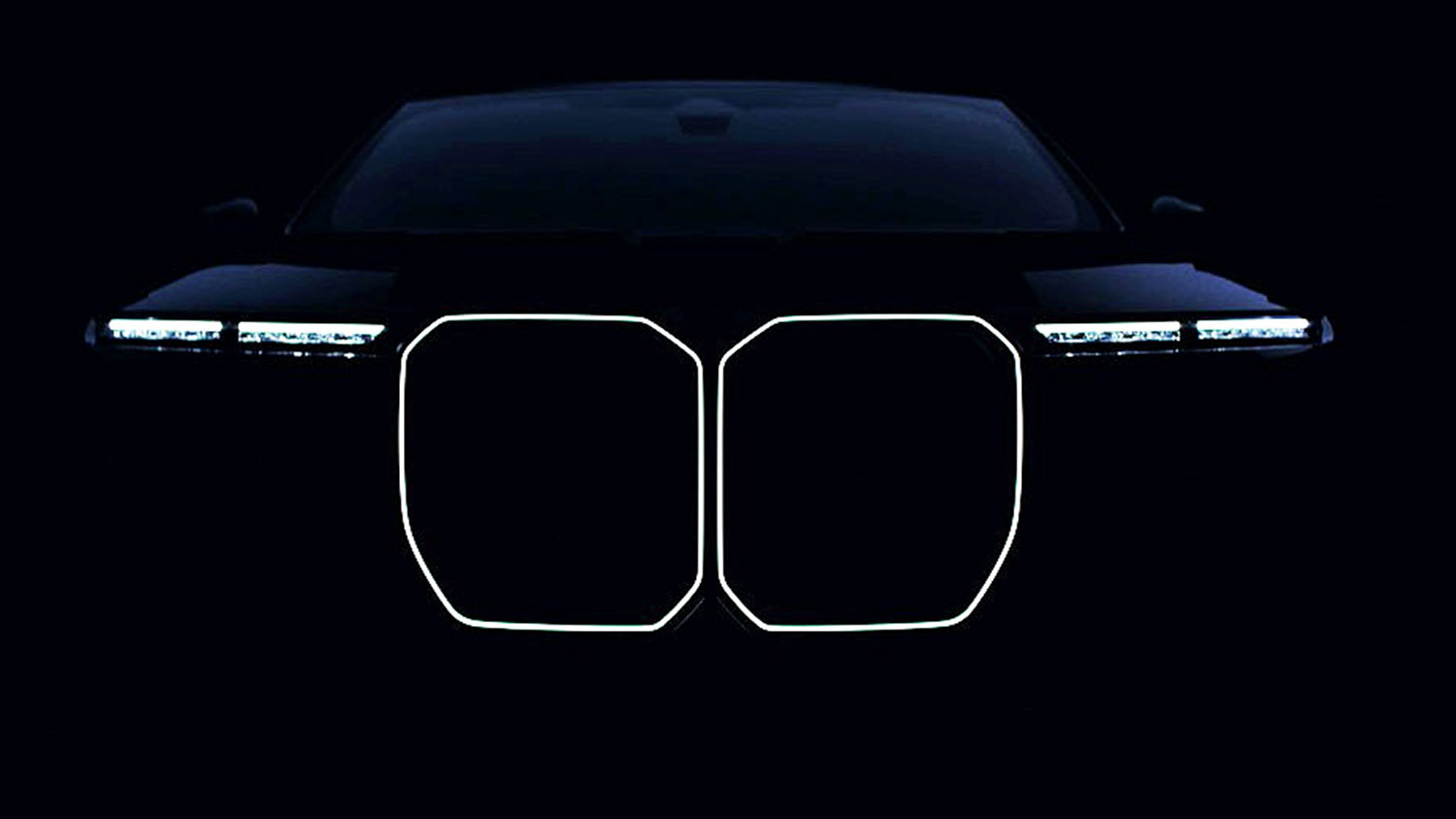
The official teaser for the updated BMW 7-Series / i7.


The high-voltage battery pack blends BMW’s Gen6 cell chemistry with its Gen5 module-based architecture. It uses 4695-format cylindrical lithium-ion cells, delivering a 20% boost in energy density compared to the prismatic cells used in current batteries.

BMW says the new setup will bring “significantly increased range” and “much faster” charging than the outgoing i7, effectively injecting some Neue Klasse thinking into the brand’s flagship EV sedan.

More: BMW Once Owned Range Rover, Now It Wants To Make One

Rimac added: “BMW has always been known for pushing engineering to the highest level, which made this collaboration especially exciting for us. Together, we developed a high-voltage battery system that unlocks the full potential of the new cylindrical cells in record time, delivering significant improvements in energy, range, and charging performance. We are proud to now see this system being produced at scale at our new Rimac Campus.”

The updated BMW i7 is set to make its global debut alongside the combustion 7-Series facelift at the Auto China 2026 in Beijing at the end of April. Teasers, leaks, and recent spy shots all point to a redesigned front end and a refreshed interior.

Jaguar Wants To Rival Bentley, But GT’s Cabin Goes In A Different Direction Entirely

  • The Jaguar GT has been fitted with a very unusual steering wheel.
  • A curved display has been perched on top of the car’s dashboard.
  • Jaguar has also added a pair of rather unusual steering wheel stalks.

Jaguar’s controversial EV is edging closer to a September reveal, and while its exterior remains concealed under camouflage, the company has now offered a first look inside. It marks a clear departure from anything the brand has produced before. As expected, the cabin design doesn’t follow familiar Jaguar themes.

As development enters its final phase, Jaguar recently invited a small group of journalists and social creators to get behind the wheel of the EV, currently referred to as the GT, though the final name has yet to be confiremd. The exterior is expected to closely mirror the divisive Type 00 Concept, though the production car has evolved from a two-door coupe into a four-door sedan.

Read: Jaguar Benchmarked Its Electric GT Against One Classic Above All Others

With the exterior leaning heavily on straight lines and sharp edges, the interior was always going to follow suit. These photos confirm it, revealing an all-new steering wheel that looks like it could have rolled straight out of a 1970s or 1980s concept car. It features thick horizontal spokes, each packed with large touch-sensitive surfaces handling a wide range of functions.

Stalks, But Not Normal Stalks

It’s hard to say with certainty, but it appears these could be touch-sensitive or haptic-style buttons, rather than physical ones, which is a shame but a sign of the times. Positioned on the left are controls for making calls and the car’s voice function, while the cruise control settings appear on the right. The airbag module also sits lower than normal.

Positioned behind the steering wheel are two large stalks, also with a squared-off design. The one on the left appears to control the lights, turn signals, and windshield wipers, while the right stalk houses Reverse, Neutral, Drive, and Park. While Jaguar wants to rival Bentley, the dash appears quite minimal, with a large, curved infotainment screen and gauge cluster, free of any physical dials.

What About Performance?

Beyond the cabin, we know Jaguar’s new GT is based on the company’s Electric Architecture and tips the scales at about 2,700 kg (5,962 lbs). To help somewhat offset that weight, it’ll be fitted with three electric motors delivering more than 986 hp and 959 lb-ft (1,300 Nm) of torque.

As for driving impressions, Andrew Frankel from The Intercooler notes that it doesn’t offer the same kind of bonkers performance as a Tesla Model S Plaid and has been configured for smooth, progressive performance.

\\\\\\\\\\\\\

Photos Jaguar, Lead Image SidewalkHustle/Instagram

AMG Built A Sedan That Growls, Revs, And Shifts Like It Has A V8. It Doesn’t

  • Mercedes-AMG has revealed the V8 soundtrack of its latest EV
  • We’re talking about the fully electric AMG GT 4-Door Coupe.
  • The upcoming model offers highly configurable drive modes.

Mercedes-AMG is gearing up to unveil its new GT 4-Door Coupe, and this time it’s chasing a different target. What once took aim at the Porsche Panamera now pivots toward the Porsche Taycan, trading combustion muscle for electric intent without losing its sense of theater.

Even without a drop of fuel involved, AMG says it will still deliver a proper performance experience. The new model mimics the character of a V8, leaning on a mix of synthetic sound, feedback, and clever engineering to deliver something that still feels alive from behind the wheel.

The latest video teaser shows a camouflaged prototype of the Mercedes-AMG GT 4-Door Coupe undergoing winter testing in Lapland. American actor Gabriel Macht, AMG’s brand ambassador since mid-2025, gets an early drive of the upcoming EV before its official arrival.

More: AMG’s GT SUV Could Be The Least Mercedes-Looking Car Mercedes Has Ever Made

The highlight of the clip is the startup sequence when the driver selects Sport+ mode via the rotating steering wheel dial. That setting brings a digital V8 to life, complete with a simulated rev counter and paddle shifters that echo the feel of a combustion-powered car.

The Concept GT XX featured eight external speakers pumping synthesized engine sounds to alert pedestrians of the vehicle’s presence. Based on the exterior shots in the video, the production version appears to follow a similar approach.

More: Mercedes Is Betting On A Yoke To Save The Disastrous EQS

Macht also gets to play around with the three rotating dials on the center tunnel. These provide access to different levels of Throttle Response, Agility, and Traction, transforming the driving experience of the new AMG GT 4-Door Coupe. The Traction is probably the most impressive of the three, allowing everything from crazy wheel spin to insane traction and everything in between.

\\\\\\\\\\\\\\\\\

Mercedes-AMG / YouTube

Predictably, the video includes plenty of drifting, with the driver exploiting the advanced torque vectoring system. Since Mercedes has already revealed the interior, the prototype’s screen-heavy cabin remains fully visible throughout the drive.

More: Drivers Want More Buttons, So Mercedes-AMG’s New Super Sedan Removes Most Of Them

The new-generation AMG GT 4-Door Coupe will be the first production model built on the AMG.EA platform. The concept points to outputs as high as 1,341 hp (1,000 kW / 1,360 PS), delivered by three axial-flux electric motors. On the chassis side, AMG has confirmed adjustable air suspension, semi-active roll stabilization, configurable dampers, and a mix of carbon-ceramic and steel brake discs.

It remains to be seen whether the V8 soundtrack and the highly configurable driving experience will make the zero-emission era of AMG more appealing to its target audience.

\\\\\\

Mercedes-AMG

BMW Showed Just Enough Of The i3 Touring For Someone Else To Finish The Job

  • The i3 Touring will shares its design with the sedan up to the B-pillars.
  • A longer roof and revised rear will give the wagon added practicality.
  • Production starts in 2027 following the sedan’s launch in late 2026.

The new BMW i3 sedan has finally filled in enough blanks to picture what its more practical wagon sibling might look like. With BMW confirming an i3 Touring, independent artists have stepped in to interpret the brand’s vague teasers and turn them into something more tangible.

Nikita Chuyko from Kolesa and Theophilus Chin have each offered their own interpretation of the fully electric wagon, and while both follow the same basic blueprint, the details diverge. In each case, the sheet metal mirrors the i3 sedan up to the B-pillars. What distinguishes the i3 Touring is the extended roof and the redesigned tail.

More: The iX3 And i3 Will Send Video Of Your Worst Moments On The Road To BMW

BMW’s own teaser hints at a rising beltline behind the C-pillars, a small tweak meant to inject some visual tension into the longer body. Theottle leans heavily into that idea, exaggerating the upward sweep, while Chuyko opts for a more restrained interpretation. The production version could land somewhere in the middle, keeping things sporty without overdoing it.

\\

Illustrations Kolesa / Nikita Chuyko

At the rear, both designers carry over the slim LED taillights and rear bumper from the i3 sedan, focusing their changes on the tailgate and the sloping rear glass. Theottle retains the sculpted lines beside the BMW emblem and adds a more contemporary roof spoiler, similar to the one seen on the iX3 SUV.

More: BMW Gives China’s Stretched iX3 Door Handles The Rest Of The World Can’t Have

We suspect that the production i3 Touring will likely keep the sedan’s 114.1-inch (2,898 mm) wheelbase, meaning any increase in overall size will likely come from a longer rear overhang.

\\\\\

Illustrations Theophilus Chin

The interior will also be carried over, including the pillar-to-pillar display on the base of the windshield and the 17.9-inch infotainment touchscreen. Rear passengers should benefit from slightly improved headroom, along with a more generous cargo area.

Also: BYD Says Five-Minute Charging Adds 310 Miles, BMW Says Read The Fine Print

Underneath, the i3 Touring will share its 800-volt Neue Klasse architecture with the i3 sedan and the iX3 SUV. A potential 50 xDrive variant is expected to produce 463 hp (345 kW / 469 PS) and 645 Nm (476 lb-ft) of torque, offering more than enough performance for a family-oriented model.

The i3 sedan targets an EPA range of 708 km (440 miles) between charges, though the wagon’s less aerodynamic shape will likely reduce that figure slightly. Even so, it should be capable of adding 249 miles (400 km) of range in just 10 minutes when connected to a 400 kW charger.

\\\\\\

BMW has confirmed that production of the i3 sedan will begin in August 2026, with first deliveries scheduled for the fall. The i3 Touring is expected to follow in 2027, as part of the 40 new and updated models the company plans to introduce by the end of that year.

The Bavarian automaker is also preparing an ICE-powered 3-Series Touring, which will mirror the design and technology of the Neue Klasse-based i3 Touring while riding on an updated version of the current CLAR platform.

Jim Farley Promises A New Affordable Ford EV To Take On Tesla’s Model 3 And Y

  • Ford developing an affordable EV aimed at the Model 3 and Model Y.
  • The new model is expected to ride on Ford’s flexible UEV architecture.
  • A $30K electric pickup on the same platform is expected to arrive ahead of it.

We’re in the third inning of a nine-inning game, says Ford’s CEO Jim Farley. What’s he talking about? Electric vehicle adoption. And the automaker has plenty coming down the pipeline before the game is over, he adds. Chief among those products is an affordable EV built to directly take on the Tesla Model 3 and Model Y.

Ford has spent the past few years insisting it still believes in EVs, even as it slashed programs, killed the F-150 Lightning, and pivoted hard toward hybrids. That shift is one that plenty of other automakers are also going through, but none seem to have the exact same game plan as the Blue Oval brand.

More: Farley Admits Ford Got The F-150 Lightning Wrong

“We really want to bet on all of it. We’re going to have an all-hybrid lineup. So Bronco… everything you can buy at Ford will have a hybrid. We’ll also have EREVs for towing. We’ll have an all-electric, affordable vehicle to compete with Model Y and Model 3,” Farley said during an appearance on the Spike’s Car Radio podcast.

That last part is the most notable. Ford already sells the Mustang Mach-E, a relatively affordable EV that offers similar benefits to the Model Y. At the same time, the Ford lags behind in several key metrics, including range, performance, charging speed, and more. Farley clearly wants to change that.

To that end, the brand is working on something new and unique. This future Model Y/Model 3 fighter will almost certainly ride on the company’s Universal EV Platform, or UEV, a new architecture developed by a secretive “skunkworks” team made up largely of former Tesla and Formula 1 engineers. According to Ford, the platform can support up to eight body styles, including compact crossovers, sedans, pickups, vans, and larger SUVs.

Ford’s first UEV-based model is expected to be a roughly $30,000 midsize electric pickup arriving in 2027. The Model 3 and Model Y rival would likely follow shortly after, potentially debuting later that year or in 2028.

 Jim Farley Promises A New Affordable Ford EV To Take On Tesla’s Model 3 And Y

This $36,000 Used Tesla SUV Still Hits 0-60 in 2.9 Seconds

  • Used Model X offers more performance per dollar than a new Tesla.
  • A 2018 Model X P100D just sold for $36,000 with only 26,000 miles.
  • At that price, 680 hp and a 2.9-second 0-60 is an extraordinary deal.

Tesla has been chasing a $35,000 EV for the U.S. market since roughly 2015, when the Model 3’s unveiling promised to democratize electric motoring. It came close with the $36,990 Model 3 Rear-Wheel Drive launched last year, and the entry-level Model Y RWD at $39,990. But for buyers who want a genuinely affordable Tesla without the feel of a stripped-out special, the used market is where things get interesting.

Read: Tesla Quietly Kills Its Flagship EVs In Europe Just After Updating Them

Once-flagship versions of Tesla’s three-row Model X are now available for around $35,000 or so, and after eight years of depreciation, they represent a rather compelling proposition.

\\\\\\\\\\\\\\\\

Bring a Trailer

A 2018 Model X P100D recently sold for $36,000 on Bring a Trailer. Yes, it’s eight years old, which explains the price, but it has only covered 26,000 miles (41,800 km), which is remarkably low for its age. Barring anything catastrophic, the SUV should deliver tens of thousands of additional trouble-free miles, provided it has been routinely maintained and kept up to date with software updates.

Supercar Performance With SUV Practicality

Before Tesla’s Plaid models were a thing, the P100D-branded models represented the pinnacle of performance. In the Model X, a pair of electric motors produces a combined 680 hp, enough to send it to 60 mph (96 km/h) in just 2.9 seconds. Find an SUV buyer who claims they need something faster than that, and we’ll tell you they’re lying.

Tesla only recently announced it would stop building the Model X, hardly a surprise given how few have been sold in recent years. But when it was first launched, it was incredibly innovative.

\\\\\\\\\\\\\

Bring a Trailer

We’d argue the cabin of this original model is more appealing than newer models, which adopted Tesla’s landscape-oriented touchscreen, rather than a vertical one. There are also loads of carbon fiber throughout and plenty of plush black leather.

Three-row electric SUVs still have relatively limited appeal, but at this price point, with this mileage, and with this level of performance, there’s no denying that something like this offers good value for the money.

Ford’s New Electric Van Has A Chinese Secret

  • Ford debuts the EV-only Transit City van in Europe for last-mile urban delivery.
  • Payload ranges from 2,392 lbs. to 3,373 lbs. across three body configurations.
  • It is based on a Chinese platform and will be manufactured in China too.

Ford Pro’s van lineup is already sprawling, with models like the fully electric E-Transit Custom and E-Transit covering a lot of ground. Still, that hasn’t stopped Ford Pro from adding another name to the roster with the all-new Transit City. Built on an EV-focused platform developed by Jiangling Motors Corporation (JMC) and assembled in China, it will be offered in mainland Europe and the UK.

To further slash costs, Ford has pursued an aggressively simplified strategy. There’s just one trim, no options list, and very little room for personalization. It’s as pared back as it gets. The design follows suit. You get a straightforward look with modern LED lighting linked by a closed-off grille, clean body surfaces, black wheels, and unpainted plastic bumpers that make no attempt to hide their budget-friendly intent.

More: Volvo’s First Commercial Van Looks Familiar Because It Is

The Transit City is available in three body styles, including a standard panel van, a long-wheelbase high-roof variant, and a chassis cab version. The latter is designed to serve as a blank canvas for conversions by aftermarket specialists.

\\\\\\\\\\\

Payload capacity ranges between 1,085 kg (2,392 lbs) and 1,530 kg (3,373 lbs), depending on the specification. As for the available space at the back, the largest van can hold up to 8.5 cubic meters (300 cubic feet) of cargo and has a loading space length of 3,070 mm (120.9 inches).

More: VW’s ID. Buzz Picks Up A Feature No Minivan Has Any Business Offering

Despite its budget character and lack of options, the standard equipment is quite generous for the segment. The dashboard features a 12.3-inch touchscreen running Ford’s SYNC 4 infotainment system, a digital instrument cluster, and plenty of storage compartments.

Furthermore, the van comes standard with adaptive cruise control, lane-keeping assist, front and rear parking sensors, a rearview camera, and even a heated driver’s seat.

\\\\\\\\\\

A Dedicated EV

Unlike other models in Ford Pro’s commercial vehicle lineup, the Transit City is a dedicated battery-electric vehicle with no internal combustion or hybrid variants on the horizon. The company claims the electric powertrain will help reduce maintenance costs by up to 40% compared to a diesel van.

More: These Chinese Trucks Look Like Ford Rejects

It rides on a ladder-frame chassis developed by the JMC joint venture and is fitted with a front-mounted electric motor producing 148 hp (110 kW / 150 PS). Energy is stored in a 56 kWh Lithium Iron Phosphate (LFP) battery pack, allowing a WLTP range of up to 254 km (158 miles). While that might sound modest to some, Ford notes that typical users in this segment average less than 110 km (68 miles) per day.

Charging is handled via an 87 kW peak DC fast-charging rate, enabling 50 km (31 miles) of range to be added in 10 minutes, or a 10-80% top-up in approximately 33 minutes. Using the standard 11 kW AC charger, a full charge takes about five hours.

Focused On Affordability

Ford hasn’t put a price tag on it yet, but it has made confirmed that the Transit City will slot between the smaller E-Transit Custom and the full-size E-Transit. Right now, those models start at £43,630 ($58,300) and £49,545 ($66,200), respectively, which gives a fairly tight window for where this new addition is likely to land.

Ferrari’s Boss Admits Your Car’s Touch Controls Were Never About You

  • Ferrari CEO says touch controls cost less to build, not better to actually use.
  • Luxury brands are bringing buttons back after years of touchscreen overload.
  • Hyundai and VW are now restoring physical controls in their latest new models.

For the past decade or so, the automotive industry has been marching steadily toward touchscreens and capacitive buttons, and the reasoning has always been the same: they look cleaner, they signal modernity, and they photograph well in press materials. At the same time, they’ve often proven harder to use in practice.

Now, one of the world’s most storied automotive names is admitting what many suspected all along: touch controls took over because they’re cheaper, not because they’re better.

According to Ferrari CEO Benedetto Vigna, the shift away from physical buttons has little to do with improving the driving experience and everything to do with manufacturing efficiency. “The touch [button] is something that is made for the supplier’s advantage… Making a touch button is cheaper — 50 percent cheaper.” He also made clear that the trend is not driven by customer preference or any inherent technological advantage.

More: Volkswagen Gives First Official Look At Golf MK9

That’s the blunt admission he made while speaking to Autocar India, and it lines up with what we’ve been hearing across the industry. Capacitive panels reduce parts count, simplify wiring, and allow manufacturers to reuse the same hardware across multiple models. They also eliminate the need to design, engineer, and validate bespoke physical switches for each function. In high-volume cars, those savings add up quickly. But even premium brands leaned into the trend, sometimes at the expense of usability.

Ferrari’s “Phygital” Philosophy

\\\\\\\\\\

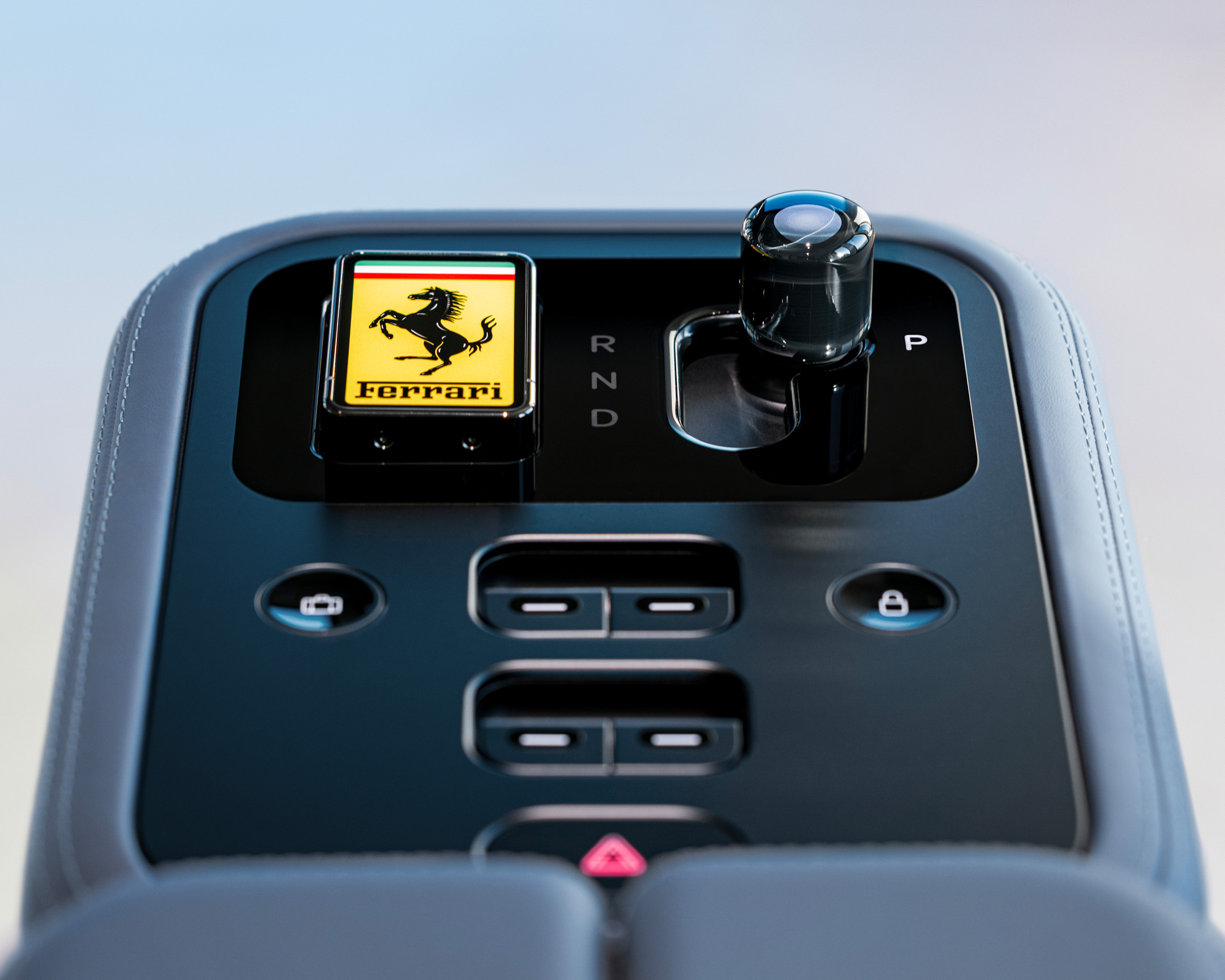
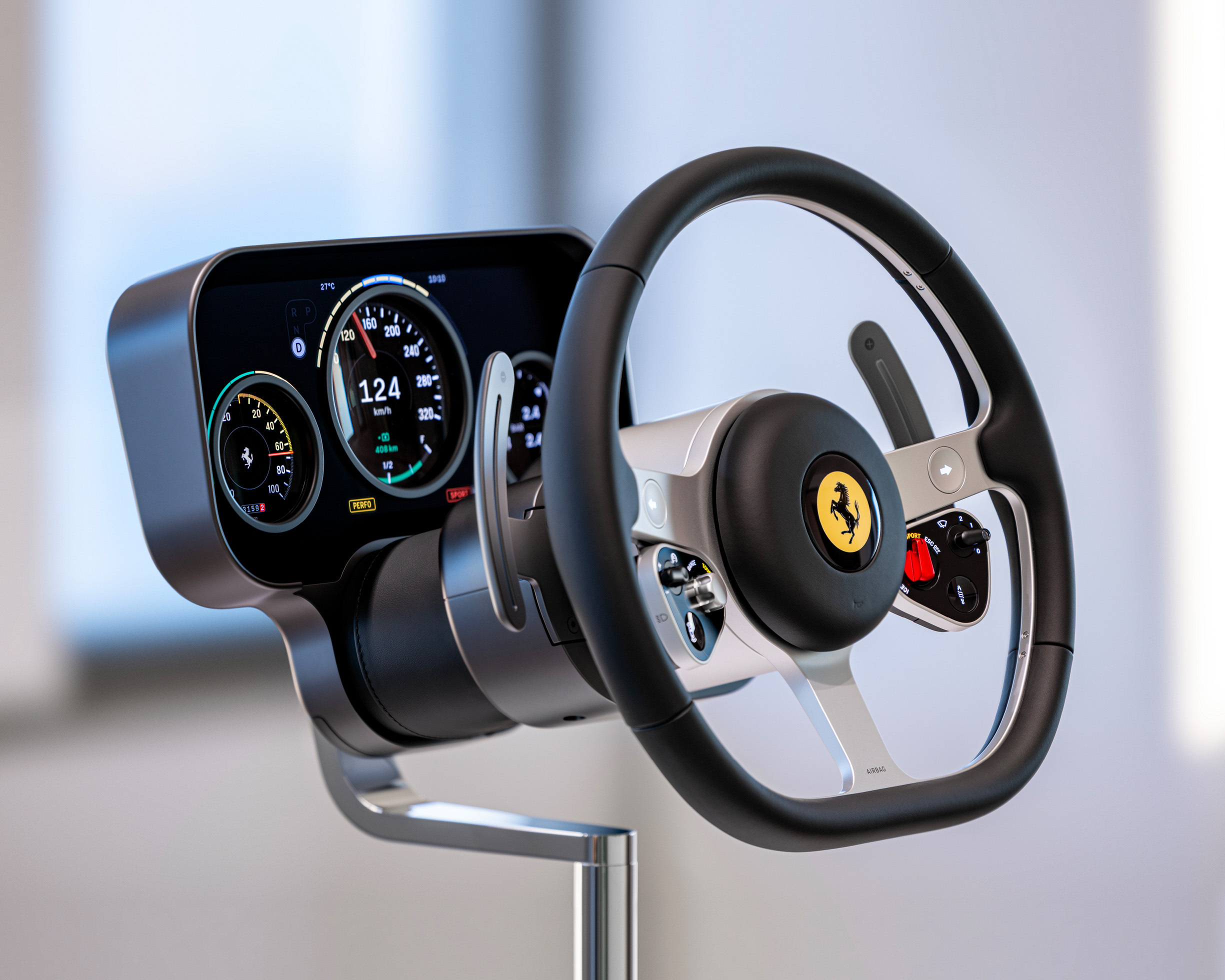
Ferrari, however, now says it’s going the other direction, especially for its first electric vehicle, the Luce, due out later this year. Instead of doubling down on screens, the company plans to bring back more physical switches, dials, and toggles, particularly for frequently used functions. This includes steering wheel controls and secondary systems such as climate settings, areas where tactile feedback can make a noticeable difference.

Vigna calls the approach “phygital,” a blend of physical and digital controls meant to keep the interface intuitive without giving up modern software features. That philosophy will appear in the upcoming EV, the interior of which, has already been revealed, giving us a first look at the new layout.

The Jony Ive Irony

 Ferrari’s Boss Admits Your Car’s Touch Controls Were Never About You

What makes this particularly interesting is that the Luce has been developed with input from design consultancy LoveFrom, led by former Apple designer Jony Ive. That’s the man behind the original iPhone, a product that became historically significant in large part because of its deliberate absence of physical controls.

All said, Ferrari is far from alone in this new understanding of why physical controls are so important. Super-luxury brands like Rolls-Royce never fully departed from such controls. Mainstream brands like Hyundai and Volkswagen are also open about the need to eschew touch controls for physical ones. Now, we just have to wait to see how each company will implement those design briefs.

Every Tesla Is Missing The Door Handle The Cybercab Just Introduced

  • Tesla has designed a new door handle similar to what Audi and Lexus use.
  • The new interior handle houses both the electric and mechanical releases.
  • Other Tesla models will be updated with these safer door releases.

Following a spate of fatal incidents involving Tesla models with door handles that allegedly couldn’t be opened after a crash, and several lawsuits, we now have our first chance to see the new inner door handles that Tesla has developed. Perhaps surprisingly, these new handles have premiered on the self-driving Cybercab.

Development of Tesla’s mass-market robotaxi is continuing, and the carmaker continues to make changes to the car. Recently, a pair of YouTubers had the chance to take an in-depth look at a new Cybercab prototype, revealing the new handles and a slew of other features.

Read: Cybercab Spotted Up Close, Steering Wheel, Panel Gaps And All

In the current Tesla Model 3, Model Y, and Cybertruck, there are individual interior buttons to open the doors, and then physical pulls incorporated into the handles. At the rear, the emergency releases are generally located in the door pockets, beneath a plastic panel, possibly making them hard to find in an emergency, particularly for someone unfamiliar with the car.

Tesla’s solution has been to switch to a small latch that can be lifted lightly to trigger the electronic release, opening the door. If you then pull the same latch harder, it will serve as the manual release. It’s a much better system than the one currently used and is similar to the door latches used by companies like Audi and Lexus, where the electronic and manual releases share the same switch or handle.

Tesla has also gone to the trouble of adding braille to the release, helping those with visual impairments to find it. That’ll be particularly useful in the Cybercab, where people will be driven around by the car’s advanced self-driving suite without anyone else on board. This new door pull is presumably the same one that will be added across all other existing Tesla models.

What Else Is New?

 Every Tesla Is Missing The Door Handle The Cybercab Just Introduced

Several other changes have been made to the Cybercab. For example, it now includes a charging port at the rear, despite initially being presented without one because Tesla only wanted them to be charged wirelessly. However, the more significant change made on a prototype Carscoops recently spied was the presence of a steering wheel, which given the autonomous nature of the Cybercab was a surprise.

\\\\\\

Photos Robert G. | Lead screenshot Kim Java / YouTube

EV Speed Comes At A Price, So Where’s The Sweet Spot?

  • A Tesla owner performed a series of real range tests in his single-motor Model Y.
  • He drove the same route 30-mile route at 50 mph, 60mph, 70 mph and 80 mph.
  • Going 80 mph vs 50 mph cut time by 38% but dropped range by same amount.

Speed or efficiency? For as long as there have been cars, drivers have had to weigh up that decision. Going faster means getting from A to B sooner, but is going to burn through more fuel, costing you more money.

And now, in the EV age, there are added pressures. Some electric cars are only good for 250 real-world miles (402 km), and BYD’s new 1,500 kW chargers aren’t here yet, meaning that if you need to stop mid-journey you can easily add 15-30 minutes to your trip, more than wiping out the time you saved by flexing your right ankle.

Related: Tesla’s Budget Model Y Gets Grip And Grit For $2K More, But Don’t Call It Standard

So what’s the sweet spot? That’s what one Tesla-owning YouTuber behind the Carwire channel decided to find out by conducting a series of test runs in his single-motor, rear-wheel drive Model Y.

He ran the same 30-mile (50 km) looping route along local multi-lane freeways (dual-carriageways in UK-speak) at 50 mph (81 km/h), 60 mph (96 km/h), 70 mph (113 km/h) and 80 mph (129 km/h), noting the Wh/mile efficiency for each trip.

Taking those numbers and assuming a 75 kWh usable battery capacity, he was able to extrapolate realistic freeway-type range figures, plus a hypothetical time for a 200-mile (302 km) journey based on the time taken to complete each loop at the different speeds. While this isn’t exactly super-scientific, it still delivers a useful comparison that highlights the huge effects different speeds have on efficiency and journey time.

The first loop, taken at a steady 50 mph, would result in 200-mile trip in the Model Y taking four hours. But the excellent 224.7 Wh/mi efficiency gives a calculated 333-mile (536 km) range, meaning you’d get to your destination with stacks of charge to spare.

80 MPH Decimates Range

At the other end of the scale, the 80 mph run crashed efficiency to 366.2 Wh/mi, and the range to just 204 miles (328 km). So while technically you could handle the 200-mile journey in one go, and in only 2 hours and 30 minutes, few people would risk not filling up before they hit the finish line.

The sweet spot, as Carwire concludes, seems to be somewhere between 60 and 70 mph. Bumping the speed up to 60 mph cuts a handy 40 minutes off the 50 mph journey time, yet the 300-mile (483 km) range is only 33 miles (53 km) lower.

Pushing the needle up to 70 mph cuts another half hour from the trip, and though the efficiency starts to tumble the 248-mile calculated range would still let you comfortably complete your 200-mile run without charging, or stressing that you probably ought to.

Speed Versus Time And Efficiency
50 mph60 mph70 mph80 mph
Journey time4 hours3 hours 20 mins2 hours 51 mins2 hours 30 mins
Efficiency224.7 Wh/mi249.9 Wh/mi302.2 Wh/mi366 Wh/mi
Calculated range333 miles300 miles248 miles204 miles
SWIPE

Carwire

Jaguar Cancelled Three New Cars In Development To Make Room For One EV

  • A second-generation F-Type was in development before cancellation.
  • Jaguar will reveal its production Type 00 electric sedan this year.
  • Ian Callum designed new XF and F-Pace models before leaving in 2019.

Jaguar’s radical pivot to electric vehicles, anchored by a four-door GT sedan, has proven deeply controversial. And once you learn about some of the planned future Jaguar models that had to be killed to make way for the Type 00, you may deride Jaguar’s EV shift even more.

For years, it was known that Jaguar had been developing an all-new XJ before abruptly changing course, cancelling the project mere months before it was ready. The car was going to be electric, but the platform was flexible enough to support a six-cylinder engine if the market demanded it.

Read: Secrets Of The Ill-Fated Jaguar XJ Revealed

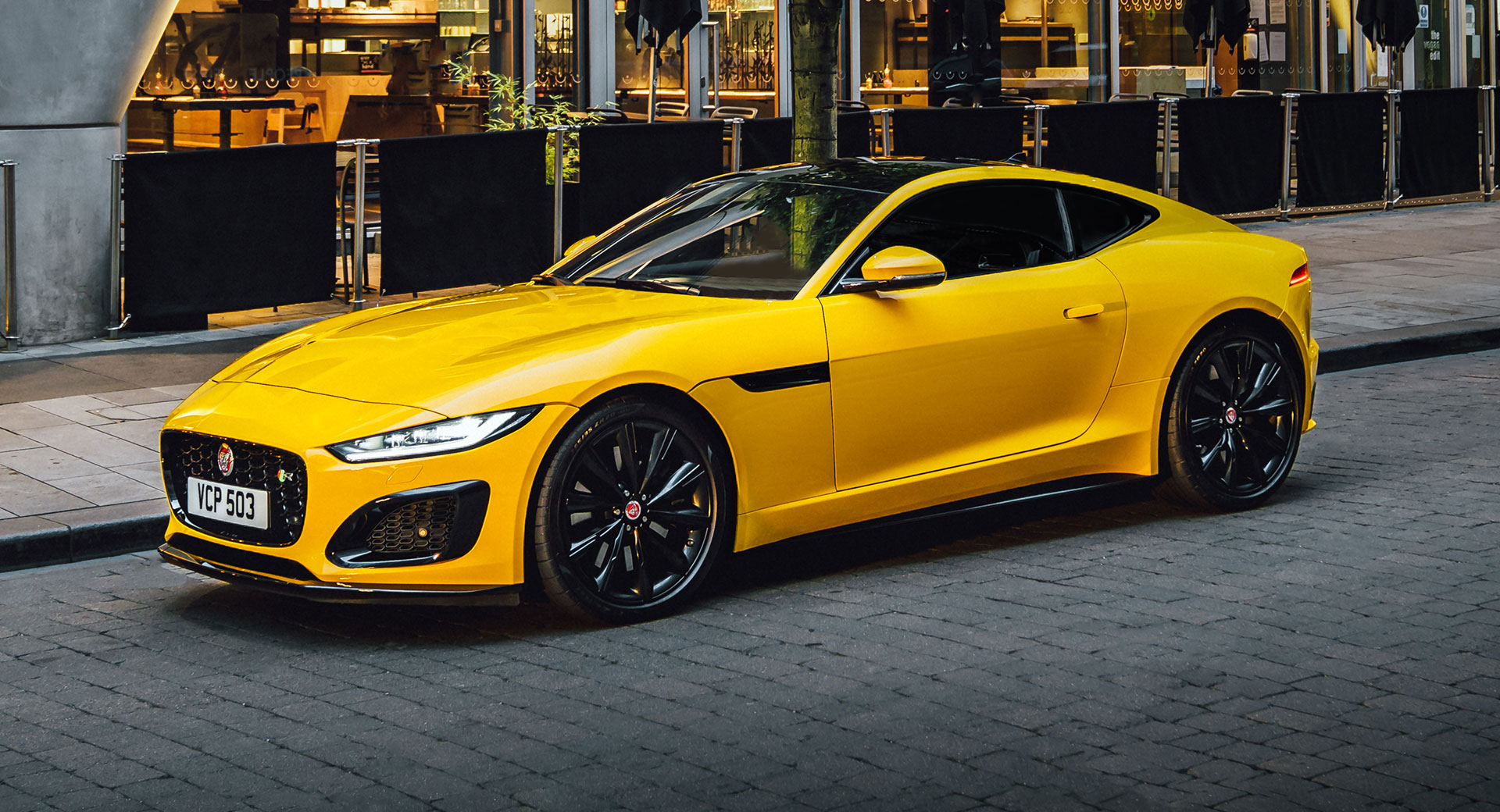
In a recent chat on the Road to Success Podcast, Jaguar’s former design director Ian Callum revealed he had also designed a new XF sedan and an F-Pace SUV before departing the company in 2019. Both were scrapped to clear the path for the Type 00. The most painful revelation, perhaps, is that a successor to the F-Type was also in development.

What Could Have Been

 Jaguar Cancelled Three New Cars In Development To Make Room For One EV

Callum didn’t say how far work on a second-generation F-Type had progressed when he left. He considers the original one of the last great Jaguars, before the company’s strategy shifted beneath it. At a time when sleek, front-engined two-door sports cars are disappearing from the market, losing the F-Type to make room for a grand touring EV is a difficult pill to swallow.

Speaking about the company’s new EV, Callum described it as a “handsome car,” adding that “it’s bold, it’s brave, and it’s got a lot of good design attributes about it, but it’s not beautiful and Jaguars need to be beautiful.” He also said the Type 00 is “too retro.”

What Can We Expect From The Type 00?

Jaguar wants to establish itself as a legitimate rival to Bentley and Rolls-Royce with the Type 00, abandoning its pursuit of volume sales and chasing the likes of BMW, Audi, and Mercedes-Benz. The production model will stick true to the concept’s radical design, though it will add two extra doors and have a longer wheelbase.

Power comes from three motors, a 350 hp unit up front and two at the rear producing a combined 950hp, with Jaguar promising at least 1,000 hp total along with just over 1,000lb ft of torque. According to Top Gear, that translates to a 0-62 mph (100 km/h) sprint in around 3.3 seconds, a limited top speed of 155 mph (250 km/h), and a driving range of approximately 430 miles (692 km).

Mahindra Offers To Buy Back Its Sold-Out Batman SUV

  • Mahindra offers a full buyback for the BE 6 Batman Edition.
  • The move follows backlash over a second “limited” batch launch.
  • First-batch owners can return SUVs for a full refund by April 17.

Exclusivity is a powerful currency in the car world, and it’s not just reserved for exotics. Mahindra is now learning that the hard way. After two rapid-fire sellouts of its officially licensed BE 6 Batman Edition, the automaker is now dealing with pushback from early buyers and has rolled out a 30-day buyback scheme.

The BE 6 Batman Edition first appeared in August 2025, bringing a mix of exterior and interior details inspired by the Dark Knight. It was initially pitched as a 300-unit run, but demand quickly changed those plans. Mahindra expanded production to 999 units, and they were gone in a claimed 135 seconds.

More: Mahindra’s Confused Formula E SUV Looks More Dakar Than Formula

By March 2026, Mahindra went back for another round, reopening orders for a second batch of 999 units on the back of what it called “unprecedented demand”. Those didn’t hang around either, selling out in just seven minutes and confirming there’s strong appetite for anything with a hint of Bruce Wayne about it.

Disappointment Among The “Founding Owners”

What was pitched as a 1-of-300 collector’s piece quickly ballooned into a 1-of-1,998 run. So much for exclusivity. Unsurprisingly, owners weren’t thrilled, and social media filled up fast with complaints accusing Mahindra of watering down what was meant to feel special.

More: You Can Buy Four Of These Wrangler Clones For One Jeep And Still Have Cash Left

In response, Mahindra has taken the unusual step of offering a way out. First-batch buyers now get a 30-day window, from March 18 to April 17, to return their Batman SUVs for a full refund. Hand the keys back, and you’ll get ₹27.79 lakh ($29,900), the original ex-showroom price, rather than the slightly higher ₹28.49 lakh ($30,700) attached to the later batch.

\\\\\\\\\\\\

Whether owners will actually hand the keys back is anyone’s guess. Some might take the guaranteed refund, others may hold on and hope values recover. Not long ago, low-mileage first-batch cars were advertised at up to ₹45 lakh ($48,500). Since the second wave landed, that’s slipped to roughly ₹29–31 lakh ($31,200–33,400).

The Electric Batmobile

So why all the noise in the first place? This special edition came together through a collaboration with Warner Bros Discovery Global Consumer Products. Underneath the themed styling, it’s based on the range-topping BE 6, packing a 282 hp (210 kW / 286 PS) electric motor and a 79 kWh battery.

More: You Can Pretend To Be Batman With This Bulletproof Lamborghini

Visually, the Batman Edition is distinguished by the Satin Black shade with gloss black graphics, an Alchemy Gold finish for the suspension and the brake calipers, 20-inch alloy wheels, and countless bat emblems around the bodywork.

\\\\\\\\\

Inside, it leans fully into the theme. Black suede and leather cover most surfaces, broken up by gold accents that make sure you don’t forget this is the special one. Then come the details. Custom puddle lights, bespoke welcome animations on the infotainment screen, unique sounds, even an illuminated bat logo set into the glass roof.

Despite the production increase, the “Founding 999” units still hold a slight edge because they are the only units with the numbered dashboard plaques.

As for Mahindra, it’s sticking to the script. The company says these kinds of editions are about “celebrating passion and individuality,” and hints that more of these themed projects are already in the pipeline for 2027.

Mahindra

NASA Helped Ferrari Fix The Luce EV’s “Disturbing” Acceleration

  • The Ferrari Luce has paddle shifters to adjust the torque deployment.
  • Ferrari will also enhance the motors’ sounds for added auditory pleasure.
  • Unlike some of the brand’s other cars, the Luce won’t be a track model.

The high-end EV market is facing some struggles, but despite this, Ferrari is plowing ahead with its first-ever electric car, the aptly named Luce. While the brand is perhaps the last you’d ever expect to enter the EV world, it’s confident the model will offer all the driving thrills expected of a Prancing Horse.

During a recent interview, Ferrari chief executive Benedetto Vigna insisted that the Luce will deliver each of the five key drivers of driving thrills, ensuring it is befitting of the brand’s badge and can succeed where some EVs have failed: to tug at the emotional heartstrings.

Read: Ferrari Breaks Its Silence On Luce Trademark Rights After Mazda Filing

Speaking with Autocar India, Vigna said one element “is longitudinal acceleration,” agreeing with the interviewer that perhaps this acceleration in EVs is too linear, and also “too much, because sometimes it’s disturbing our brain.” He went on to reveal that Ferrari has worked with NASA to “understand what is the level of acceleration that is disturbing people,” and that too much acceleration is not a good thing.

Sounds And Shifts

\\\\\\\\\\\\\\

SHProshots

Another important contributor to driving thrills is “transversal acceleration, followed by the braking experience, the gearshift, and the sound. As recent images of the Luce’s interior revealed, it will include paddle shifters, and unlike some EVs, these won’t be used to adjust the level of brake regeneration but instead to adjust the level of torque engagement.

Vigna stopped short of confirming that the system will mimic traditional shifts, as in the Hyundai Ioniq 5 N, but it certainly sounds like that is what Ferrari is aiming for. Then there’s the all-important sound.

 NASA Helped Ferrari Fix The Luce EV’s “Disturbing” Acceleration

As patents have revealed, Ferrari won’t aim to mimic the sound of an internal combustion engine with the Luce, and instead will amplify the sounds of the electric motor.

“The electric motor is not silent,” he said, “there is a sound there. The problem sometimes today [is that] most of us associate the sound of electric motor with something high frequency that is disturbing. But, there are also low frequency, there are also ways to pick up the sound in an authentic way, in the original way, to avoid the two looking like a DJ.”

Vigna went on to add that the Luce will have a driving range of over 311 miles (500 km), and while that may not sound all that impressive, he noted it has not been designed with track use in mind, indicating that the battery technology is not in a place to make such cars achievable.

❌
❌