Verge Motorcycles has introduced a motorcycle with a solid-state battery.
It has 20.2 and 33.3 kWh capacities, offering up to 370 miles of range.
Bike has 137 hp and 737 lb-ft of torque, and pricing starts at $29,900.
Solid-state batteries promise to be the next big thing and they’re finally coming to road-going vehicles. One of the first companies to offer them is Verge Motorcycles, which said customers can expect a significantly faster recharging time as well as nearly twice the range of conventional batteries.
Set to become available in the coming months, the solid-state battery will be offered in the Verge TS Pro. The company didn’t go into many specifics, but the battery is sourced from Donut Lab and will be offered in 20.2 and 33.3 kWh configurations. The former provides 217 miles (349 km) of range, while the latter increases that figure to 370 miles (595 km).
When it comes time to recharge, a 200 kW NACS charger can deliver 186 miles (299 km) of range in as little as ten minutes. That’s pretty impressive and the company noted the “upgraded battery pack does not affect the motorcycle’s price.”
The good news doesn’t end there as Verge said the solid-state battery will “last for the entire lifetime of the motorcycle,” which is opposed to “thousands of charging cycles” for traditional batteries. The company also noted safety benefits as solid-state batteries “do not catch fire, making them much safer for users and charging locations.”
Solid-State Claim with Big Numbers
For their part, Donut Lab said they’ve created the “world’s first solid-state battery that is ready for use in OEM vehicle manufacturing.” The company went on to say the battery has an energy density of 400 Wh/kg and has been designed to last up to 100,000 cycles. That would seemingly equate to nearly 274 years of daily use.
The company also noted the battery has been “rigorously tested across extreme conditions.” At both -22° F (–30° C) and 212° F (100° C), it retained over 99% of its capacity.
Getting back to the motorcycle, the solid-state Verge TS Pro will start at $29,900 when it arrives in the first quarter. It will feature an electric motor developing 137 hp (102 kW / 139 PS) and 737 lb-ft (998 Nm) of torque. This will enable the bike to rocket from 0–60 mph (0-96 km/h) in just 3.5 seconds.
Tesla signed a $2.67B Cybertruck battery deal in 2023.
The deal has been slashed to just $6,776 after poor sales.
Cybertruck was expected to sell 250K yearly, hit under 20K.
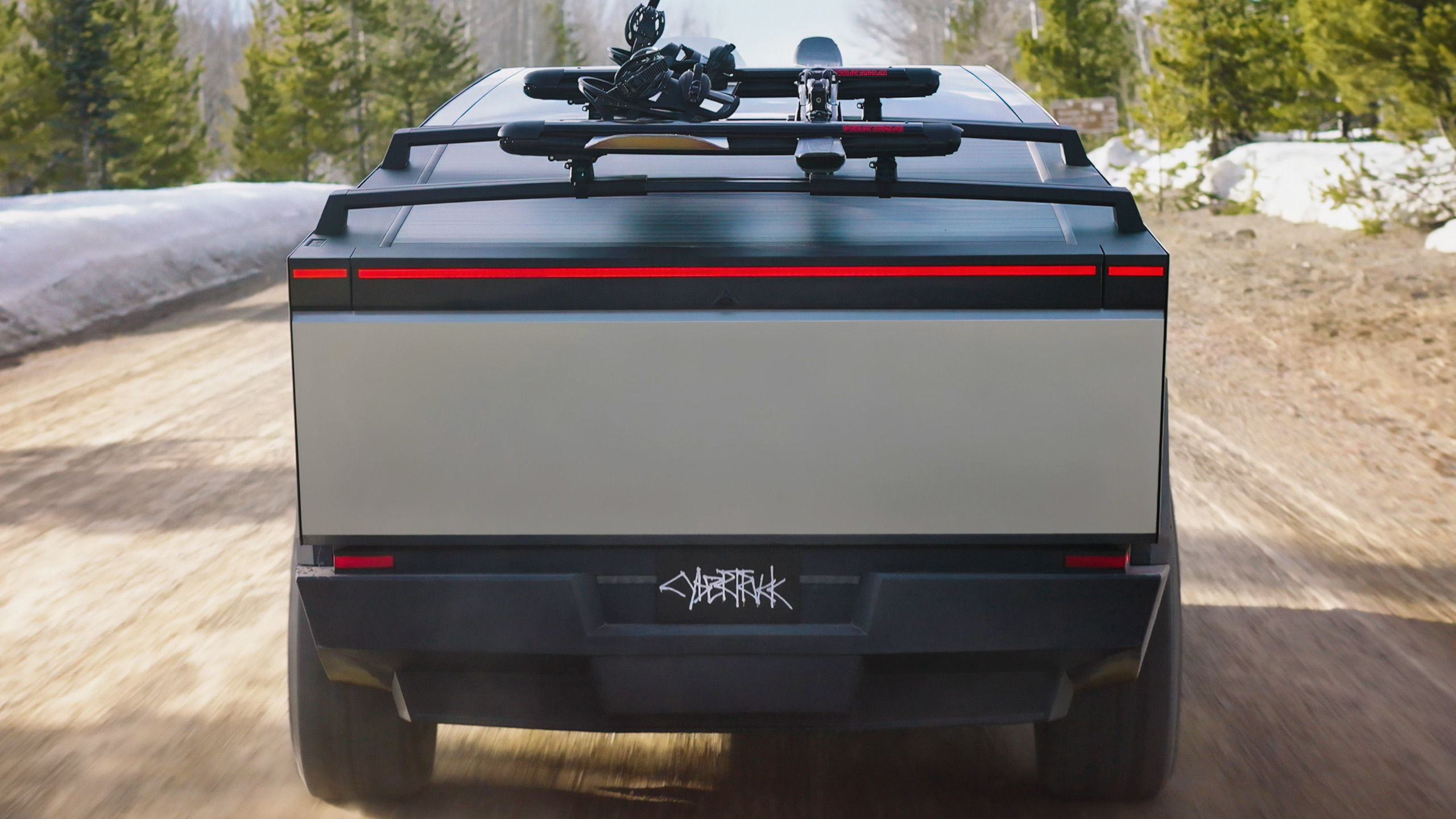
Several years ago, Elon Musk proudly proclaimed that Tesla would be moving as many as 250,000 Cybertrucks annually. The electric pickup was billed as a disruptive force, set to shake up the truck market. In reality, it hasn’t come anywhere near those targets. This year, Tesla is expected to sell fewer than 20,000 Cybertrucks, less than 10 percent of that overly ambitious goal.
While you’ll never hear Tesla head honcho Elon Musk describe the Cybertruck as anything other than a raging success, lower-than-expected sales are hurting suppliers.
One notable casualty is L&F Co., a South Korean battery material supplier, which recently disclosed that its supply contract with Tesla had been cut by 99 percent, a shift attributed in part to sluggish demand for the truck.
A Contract Cut to the Bone
Back in February 2023, L&F had secured a sizable deal worth 3.83 trillion won (roughly $2.67 billion) to provide Tesla with high-nickel cathode material intended for the Cybertruck’s batteries. But that agreement has now been trimmed down to a token 9.73 million won, or about $6,776 at current exchange rates.
The original contract was tied to Tesla’s 4680 battery cells, which were first revealed in 2020. At the time, Tesla presented them as a major leap forward, central to its plan to rapidly expand production and eventually launch a $25,000 EV. That model has yet to materialize, and so far, the 4680 cells are used primarily in the Cybertruck.
According to an unnamed source with knowledge of the supply contract, L&F only needed to supply contract with small amounts of material as the development of the Cybertruck was repeatedly postponed. Bloomberg reports that policy and economic issues also affected the contract, including the elimination of subsidies through the Inflation Reduction Act.
SpaceX to the Rescue?
As Tesla continues to struggle with sluggish Cybertruck sales, a familiar buyer has entered the picture. According to a recent report, SpaceX has already purchased more than 1,000 Cybertrucks from Tesla, and that number could eventually climb to 2,000.
SpaceX hasn’t said why it’s buying so many Cybertrucks, but it likely has more to do with surplus stock than necessity. Either way, the move points to just how closely Musk’s companies operate, and hints that Tesla may be offloading inventory through its own back door.
Ford ended a $6.5B battery deal with LG due to EV demand.
LG disclosed cancellation in a regulatory filing this past week.
The deal was set to power over 500,000 Ford EVs per year.
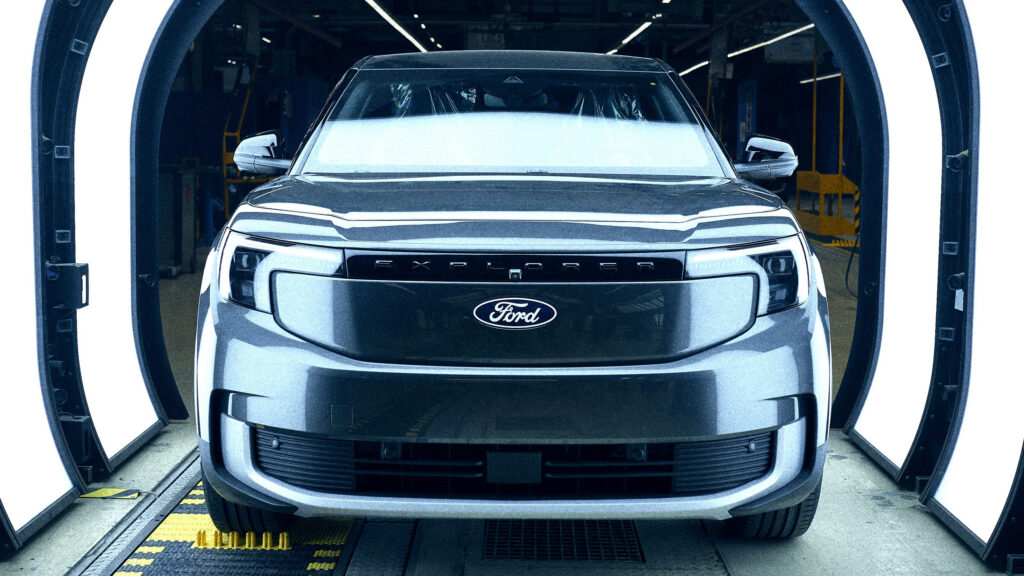
Just days after dialing back its electric vehicle plans, and barely a week after abandoning its $11.4 billion battery venture with South Korean firm SK On, Ford has now cancelled another high-stakes battery deal. The automaker has scrapped a $6.5 billion agreement with LG Energy Solution, citing shifting market conditions and a cooling appetite for electric vehicles.
The cancellation came to light in a regulatory filing made by LG in South Korea. It lands shortly after Ford outlined a sharp pullback in its EV rollout, including the decision to shelve the all-electric F-150 Lightning. The $6.5 billion figure represents roughly a third of LG’s total revenue from the previous year.
The Scale Behind the Deal
Ford and LG originally signed the deal in October 2024. Under its terms, LG committed to supplying Ford with 34 GWh of batteries between 2026 and 2030, enough to power around half a million EVs annually, assuming each one carries a 75 kWh battery pack.
Beyond that, LG was also set to deliver an additional 75 GWh of batteries for Ford’s commercial vehicle lineup between 2027 and 2032. These packs were to be built at LG’s manufacturing plant in Poland, then fitted into vehicles destined for the European market.
In its regulatory filing, LG said, “this matter concerns the counterparty’s [Ford’s] decision to discontinue the production of certain electric vehicle (EV) models due to recent policy changes and shifts in EV demand forecasts, and the subsequent notice of contract termination.”
EV Demand Runs Cold
Since President Donald Trump returned to the White House for his second term, the EV market has quickly undergone a significant shakeup. Demand for EVs in the US remained strong through the first nine months of the year, but sales collapsed the moment the $7,500 federal EV tax credit was axed.
More recently, the Trump administration has loosened fuel economy regulations, encouraging carmakers like Ford to build more ICE models. On top of that, the European Commission softened its stance on zero-emissions mandates, most notably by proposing a 90 percent CO₂ reduction target for new vehicles by 2035, rather than a full ban on internal combustion engines.
Ford chief executive Jim Farley recently said he expects EV sales to fall by as much as 50 percent in the US due to these key policy changes.
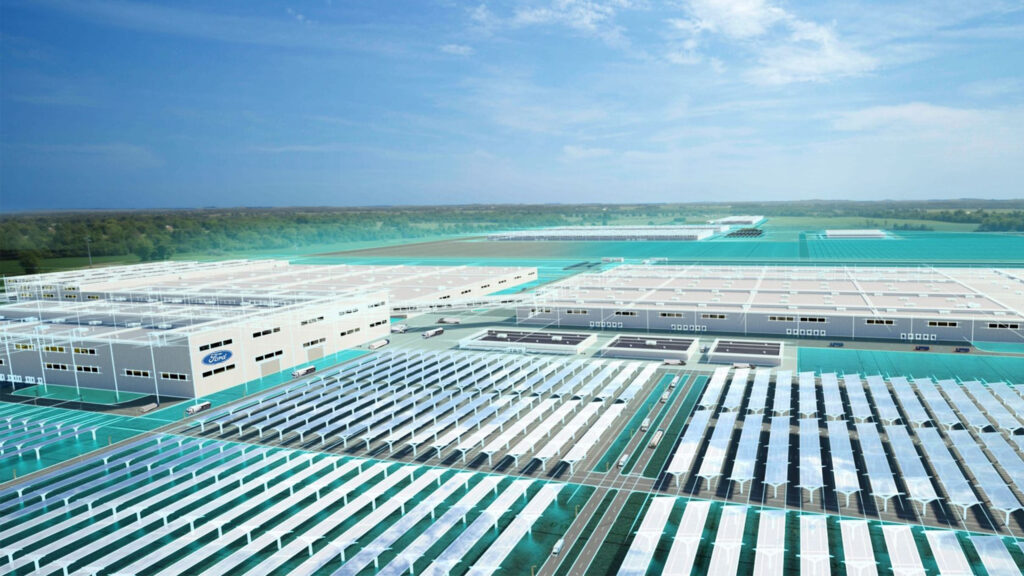
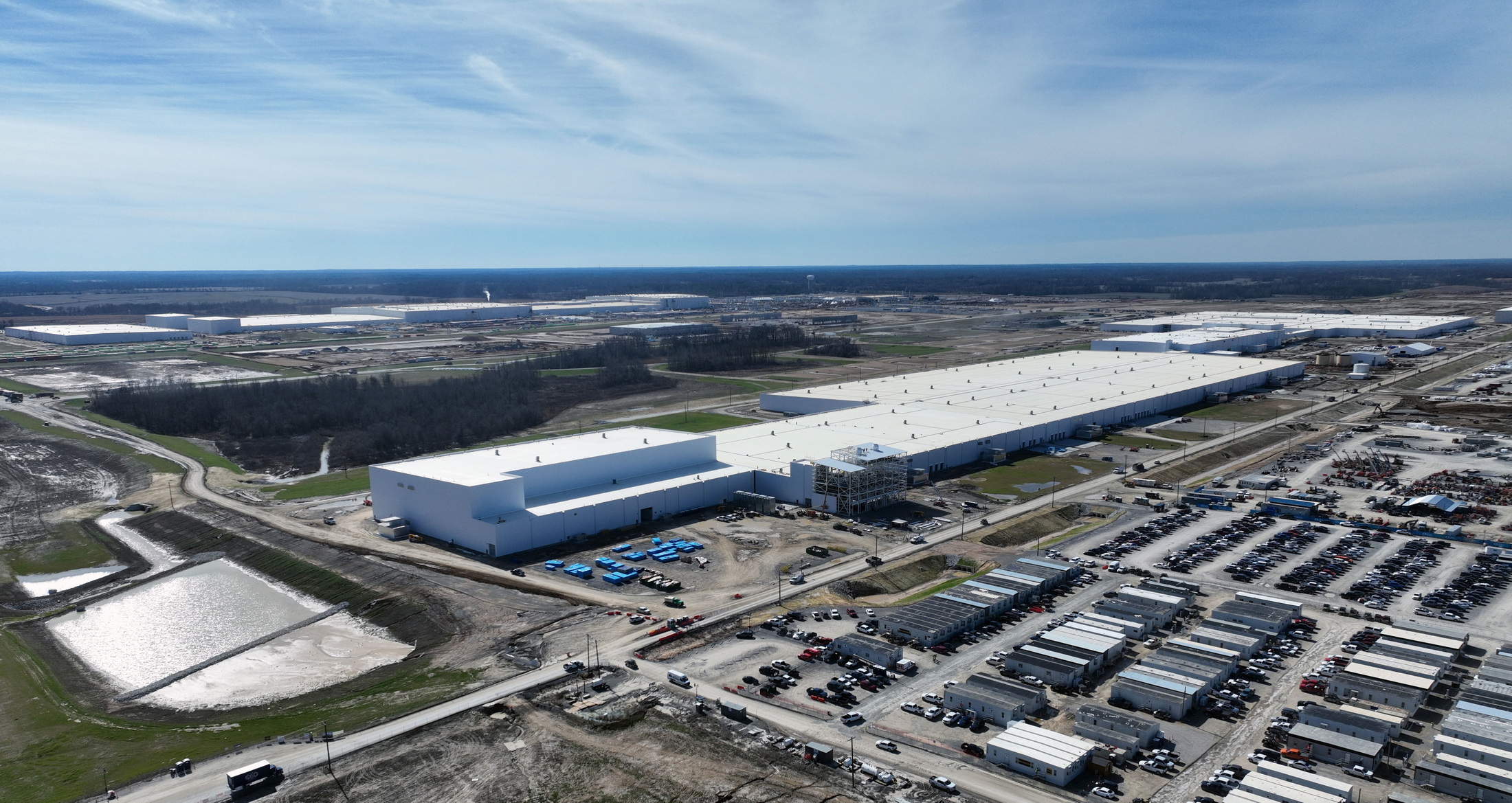
SK On takes over Tennessee plant as Ford gets two in Kentucky.
Trump administration will cut a loan up to $9.6 billion total.
Ford CEO says U.S. EV sales could fall by as much as 50 percent.
In 2021, Ford and South Korean battery manufacturer SK On committed to a massive $11.4 billion investment aimed at building several joint-venture electric vehicle battery plants across the United States. It was a huge business decision that showed Ford’s commitment to the EV market.
That was then. As 2025 winds down, the two companies are pulling the plug on the battery partnership altogether, a sharp turn that underscores how turbulent the EV landscape has become.
The move follows two key developments. First, the rollback of the federal EV tax credit, which has hit sales across the board. Second, the U.S. administration’s recent decision to revise fuel economy standards, a move expected to favor gasoline-powered vehicles over electric ones.
Disruption in the Battery Game
Through the high-profile breakup, SK On will take over the joint venture factory that’s already been established in Tennessee, known as the BlueOval plant. Ford will then take control of two factories in Kentucky located next to each other.
SK On was the one to formally dissolve the partnership, although the company maintains that it intends to continue working with Ford around the Tennessee facility.
It believes that ending the joint venture will allow it to enhance productivity and improve operational flexibility. Additionally, it notes the split will allow it to accelerate its North American energy storage system business.
One of the more immediate consequences of the split is a reassessment of a government loan approved near the end of the Biden administration. Originally pegged at up to $9.6 billion for the joint venture, the loan will now be reduced under the Trump administration’s oversight.
Exactly how much it will be cut remains to be seen. According to Bloomberg, the loan will be restructured to “reduce exposure to taxpayers and ensure its prompt repayment.”
It’s understood that Ford is working voluntarily with the Energy Department to repay the loan more quickly than originally planned.
Bleak Outlook for EV Sales
In the background, Ford’s local EV sales are falling, and chief executive Jim Farley expects further carnage. He recently said that because of the Trump administration, EV sales could fall by as much as 50 percent in the US.
Ford also lost $5.1 billion before interest and taxes on its EV business in 2024 and expects to lose even more this year.
“We believe the writing was on the wall this partnership was not going to work moving forward,” WedBush securities managing director Dan Ives told the Detroit Free Press.
“Ford has to make some difficult moves and this was a smart strategic one to rip the band-aid off. The EV market is dramatically scaled down for Ford now and they have to adjust accordingly.”
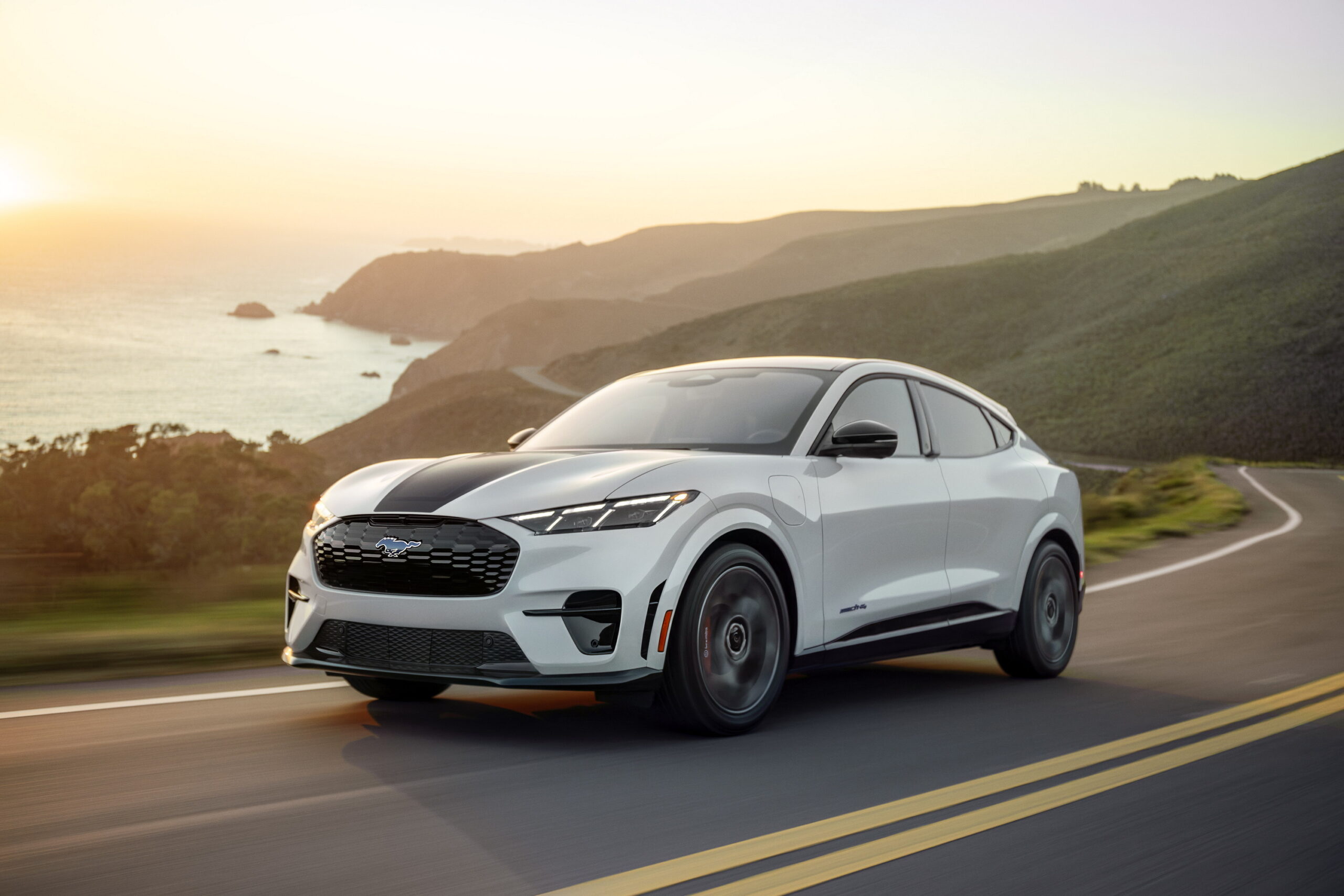
Dealers say Ford only paid $600 per EV battery replacement.
They claim the real cost should be $22,600 per battery.
More lawsuits are reportedly being prepared in other states.
As more legacy automakers navigate the shift to electric vehicles, the complexity of servicing and supporting them is beginning to reveal fault lines, especially when it comes to who pays for what.
Ford is now facing allegations that it underpaid two New York dealerships for comprehensive EV battery replacements, according to a lawsuit filed in US District Court.
And the trouble may not stop there, as attorneys say similar legal actions are in motion and could eventually be consolidated into a class action, raising the stakes for the company.
Jericho Turnpike Auto Sales and Patchogue 112 Motors allege that Ford has sidestepped state warranty reimbursement laws by issuing low flat-rate payments for full battery pack replacements, rather than covering the actual costs of the repairs.
The dealer says it has completed 15 EV battery replacements on Ford models since early 2024. Of those, Ford allegedly reimbursed the dealer just $600 per battery for 13 jobs that should have cost $22,600 each, leaving a gap of $286,200. In the remaining two cases, the dealer received $13,000 per battery. Even so, the lawsuit claims Ford still failed to pay the full amount.
Patchogue 112 Motors reports a similar pattern, stating it was paid only $600 per battery instead of the expected $22,600.
What Are Ford’s Responsibilities?
At the heart of the lawsuit is the question of how franchised dealerships are compensated for warranty and service contract repairs.
The filling alleges that Ford ignored legal requirements despite a state statute requiring manufacturers to reasonably cover repairs and manufacturer service contracts not “less than the price and rate charged by the franchised motor vehicle dealer for like services to non-warranty and/or non-service contract customers.”
That includes the cost of parts plus a 40 percent markup. Dealers are also allowed, under the law, to apply their typical non-warranty retail markup on labor, which can range from 70 to 200 percent depending on the service. The lawsuit claims Ford has not followed these provisions.
Leonard Bellavia, one of the attorneys representing the dealerships, told Auto News that Ford isn’t alone. His firm is pursuing similar claims against other automakers in multiple states, all centered on what he describes as a pattern of failing to meet warranty payment obligations
The solid-state cell offers 20 to 30 percent more density.
Bugatti’s next model may debut with the new battery tech.
Rimac also supplies batteries and e-axles to other brands.
Compared to some of the battery juggernauts in China and South Korea, Rimac Technology is still a relatively small player. But that hasn’t stopped it from pursuing next-generation EV tech and among its most ambitious efforts is a solid-state battery project that could power a future Bugatti model due within the next five years.
Rimac Technology became a standalone engineering firm in 2022, spun off from the Croatian carmaker to focus on supplying electric components to third-party manufacturers.
Behind the Battery Development
According to chief operating officer Nurdin Pitarevic, the company is now working with composite material specialists from Mitsubishi and solid-state cell developer ProLogium to bring its new battery to life.
The prototype battery in question is a 100 kWh pack that weighs 30 kg (66 lbs) less than a typical equivalent. Rimac says it delivers 20 to 30 percent more energy density than traditional batteries, with the long-term goal of reaching price parity with conventional NMC cells by 2035.
Speaking with Autocar, Pitarevic revealed that testing of the new batteries will start soon and hinted at them being used in a mid-volume production model from Bugatti in 2030.
Details about the new Bugatti model are few and far between, but it would likely be the company’s long-awaited car to sit alongside the Tourbillon, rather than a special version of that V16-powered monster.
Rimac’s e-Axles
It’s not just advanced batteries that Rimac Technology is developing. New e-axles that combine electric motors, gearboxes, and electronics into a single package are also in the works, being flexible enough to be used for front-, rear-, and all-wheel-drive models.
They can also be specced to deliver between 200 hp and 470 hp, making them suitable for a broad range of performance models. Porsche and BMW are among the automakers currently sourcing e-axles from Rimac.
A Saudi startup called Ceer, developed in partnership with Foxconn Technology Group, is also on board. Ceer’s upcoming SUV will feature a Rimac rear e-axle with output comparable to the 1,288 horsepower rear motor in the Rimac Nevera, yet the unit weighs only 132 kg (291 lbs), a full 66 kg (145 lbs) lighter than the Nevera’s setup.
Rimac is also working on a smaller e-axle, weighing just 48 kg (106 lbs), with a projected output of 500 horsepower.
Malaysia’s first locally developed EV starts from $19,400.
Buyers must lease the 52.5-kWh battery for nine years.
Electric motor makes 201 hp with 277 miles of range.
Malaysian automaker Perodua has taken its first serious step into electrification with the launch of the QV-E, short for Quest for Visionary Electric Vehicle.
This subcompact crossover marks the brand’s first zero-emission model and comes with a subscription-based battery plan that trims the headline price, though it’s a hollow saving since you can’t drive an electric car without the very component you’re leasing.
The QV-E also holds a unique distinction as Malaysia’s first domestically developed electric car. Rival Proton’s e.MAS 7 SUV and e.MAS 5 hatchback are rebadged versions of Geely models, while Perodua has invested heavily in building something original. Development began in 2023, with research and engineering work totaling 800 million ringgit (around $194 million).
Everything started with a scale model of the EMO (Electric Motion Online) concept in May 2023, followed by the EMO-I hatchback mule a year later and the EMO-II crossover concept that surfaced in December 2024. By May 2025, the design had matured into a running prototype, giving the public its first clear look at what would eventually become the production QV-E.
Compact Footprint, Coupe-SUV Looks
Perodua
At 4,170 mm (164.2 inches) long and sitting on a 2,680 mm (105.5-inch) wheelbase, the QV-E blends compact dimensions with a sport-leaning stance. Its front end features sharp split LED headlights, a contoured hood, and muscular fenders.
The silhouette bears some resemblance to the previous-generation Toyota C-HR and the current Nissan Juke, particularly around the windowline. The front door handles are flush with the bodywork, while the rear ones are hidden on the C-pillars.
Moving to the rear, the sloping roof meets a full-width light bar and integrated diffuser. The crossover rolls on 18-inch alloy wheels and comes in only two shades for now: Ice Blue and Caviar Gray.
Plain Interior
Inside, the dashboard plays it safe, leaning more toward functional than inspiring. A pair of 10.25-inch screens, one for infotainment, the other for instruments, cover the basics without breaking new ground.
The floating center console, ambient lighting, and aluminum-look trim do their best to lift the mood, though the overall impression still feels more cost-conscious than cutting-edge. Safety is well covered with six airbags and a full ADAS suite.
A Single Powertrain Option
The Perodua QV-E sits on a modular platform developed with assistance from Magna Steyr. Power comes from a single electric motor rated at 201 hp (150 kW / 204 PS) and 285 Nm (210 lb-ft) of torque, driving the front wheels for a 0–100 km/h (0–62 mph) time of 7.5 seconds.
The lithium iron phosphate battery, supplied by China’s CATL, has a capacity of 52.5 kWh and claims up to 445 km (276 miles) of range under the optimistic NEDC cycle. The catch, of course, is that this essential piece of hardware isn’t actually included in the car’s price.
Buy The Car, Lease The Battery
The Perodua QV-E starts from 80,000 ringgit (equal to $19,400 at current exchange rates), but owners will have to pay an additional 275 ringgit ($67) per month for the battery as part of a nine-year lease contract.
Perodua CEO Zainal Abidin Ahmad says the Battery-as-a-Service (BaaS) model ensures “a lifetime guarantee on the battery for our customers’ peace of mind,” calling it a way to reduce ownership anxiety often tied to electric vehicles.
Production is set to take place locally in Malaysia, starting with 500 units per month before ramping up to 3,000 by the third quarter of 2026. Bloomberg reports that Perodua aims for 50 percent local parts content by early 2026, rising to 70 percent by 2030.
Electric vehicle adoption in Malaysia continues to gather pace, with the government targeting EVs to make up 15 percent of new car sales by the end of the decade.
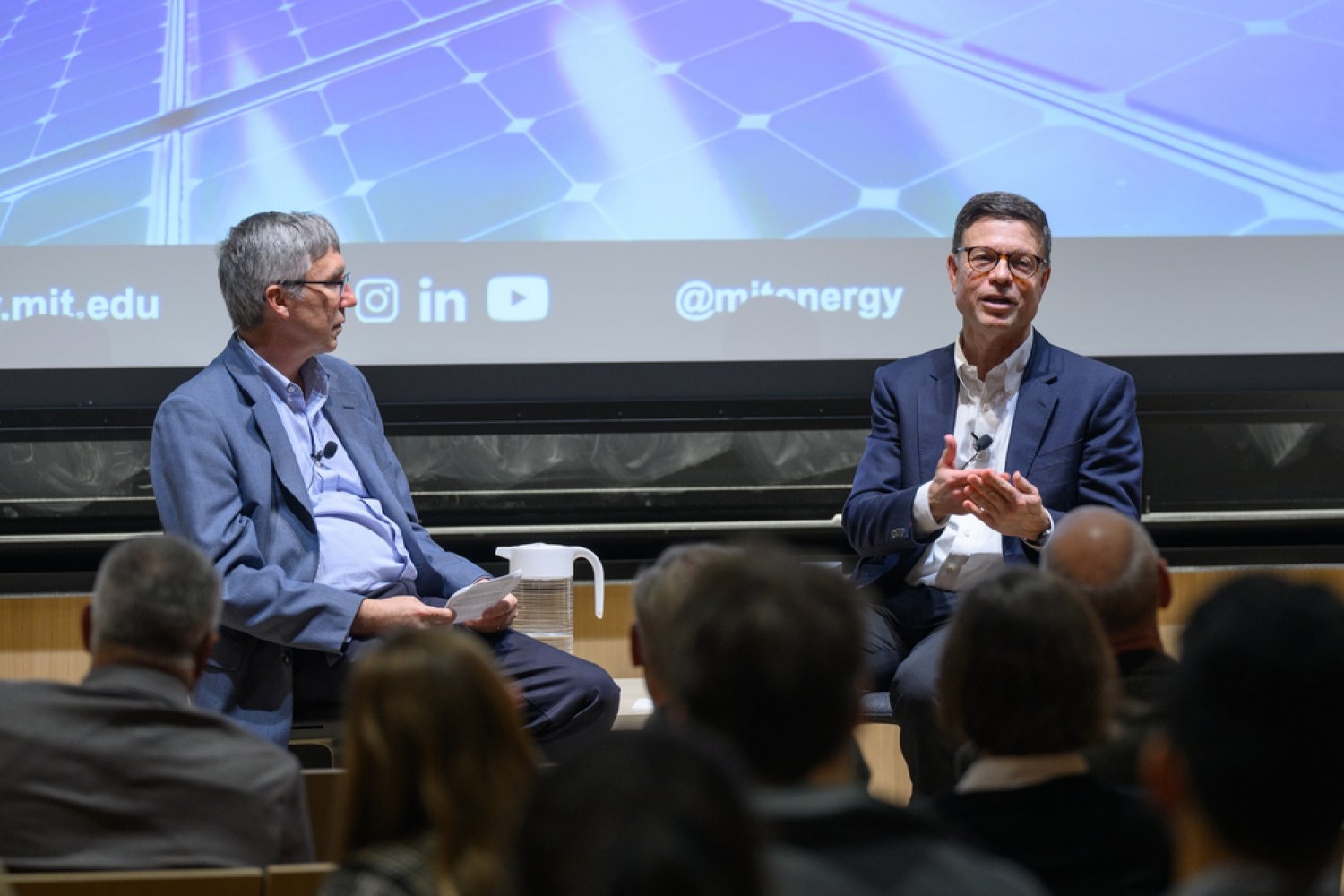
Advancements in battery innovation are transforming both mobility and energy systems alike, according to Kurt Kelty, vice president of battery, propulsion, and sustainability at General Motors (GM). At the MIT Energy Initiative (MITEI) Fall Colloquium, Kelty explored how GM is bringing next-generation battery technologies from lab to commercialization, driving American battery innovation forward. The colloquium is part of the ongoing MITEI Presents: Advancing the Energy Transition speaker series.
At GM, Kelty’s team is primarily focused on three things: first, improving affordability to get more electric vehicles (EVs) on the road. “How do you drive down the cost?” Kelty asked the audience. “It's the batteries. The batteries make up about 30 percent of the cost of the vehicle.” Second, his team strives to improve battery performance, including charging speed and energy density. Third, they are working on localizing the supply chain. “We've got to build up our resilience and our independence here in North America, so we're not relying on materials coming from China,” Kelty explained.
To aid their efforts, resources are being poured into the virtualization space, significantly cutting down on time dedicated to research and development. Now, Kelty’s team can do modeling up front using artificial intelligence, reducing what previously would have taken months to a couple of days.
“If you want to modify … the nickel content ever so slightly, we can very quickly model: ‘OK, how’s that going to affect the energy density? The safety? How’s that going to affect the charge capability?’” said Kelty. “We can look at that at the cell level, then the pack level, then the vehicle level.”
Kelty revealed that they have found a solution that addresses affordability, accessibility, and commercialization: lithium manganese-rich (LMR) batteries. Previously, the industry looked to reduce costs by lowering the amount of cobalt in batteries by adding greater amounts of nickel. These high-nickel batteries are in most cars on the road in the United States due to their high range. LMR batteries, though, take things a step further by reducing the amount of nickel and adding more manganese, which drives the cost of batteries down even further while maintaining range.
Lithium-iron-phosphate (LFP) batteries are the chemistry of choice in China, known for low cost, high cycle life, and high safety. With LMR batteries, the cost is comparable to LFP with a range that is closer to high-nickel. “That’s what’s really a breakthrough,” said Kelty.
LMR batteries are not new, but there have been challenges to adopting them, according to Kelty. “People knew about it, but they didn’t know how to commercialize it. They didn’t know how to make it work in an EV,” he explained. Now that GM has figured out commercialization, they will be the first to market these batteries in their EVs in 2028.
Kelty also expressed excitement over the use of vehicle-to-grid technologies in the future. Using a bidirectional charger with a two-way flow of energy, EVs could charge, but also send power from their batteries back to the electrical grid. This would allow customers to charge “their vehicles at night when the electricity prices are really low, and they can discharge it during the day when electricity rates are really high,” he said.
In addition to working in the transportation sector, GM is exploring ways to extend their battery expertise into applications in grid-scale energy storage. “It’s a big market right now, but it’s growing very quickly because of the data center growth,” said Kelty.
When looking to the future of battery manufacturing and EVs in the United States, Kelty remains optimistic: “we’ve got the technology here to make it happen. We’ve always had the innovation here. Now, we’re getting more and more of the manufacturing. We’re getting that all together. We’ve got just tremendous opportunity here that I’m hopeful we’re going to be able to take advantage of and really build a massive battery industry here.”
This speaker series highlights energy experts and leaders at the forefront of the scientific, technological, and policy solutions needed to transform our energy systems. Visit MITEI’s Events page for more information on this and additional events.
Kurt Kelty (right), vice president of battery, propulsion, and sustainability at General Motors, joined MITEI's William Green at the 2025 MIT Energy Initiative Fall Colloquium. Kelty explained how GM is developing and commercializing next-generation battery technologies.
A new study tested whether EVs expose drivers to hidden radiation.
The German researchers tested 11 electric cars while driving and charging.
Engineers used dummies packed with sensors to capture real conditions.
A new study has just delivered some reassuring news for anyone who has ever wondered whether sitting on top of a massive battery pack might quietly turn them into a human antenna. Electric cars, it turns out, aren’t the stealth radiation chambers some might imagine.
Germany’s ADAC auto club recently took a deep dive into electromagnetic fields in electric cars and found that drivers and passengers are exposed to very low levels of radiation.
In fact, the results show that EVs are no more dangerous than any other modern vehicle and in some cases they actually give off less electromagnetic – or “electrosmog” – activity than cars with combustion engines.
What Did They Test?
The study was commissioned by Germany’s Federal Office for Radiation Protection. It involved testing eleven electric cars along with a couple of hybrids and one conventional gasoline model.
Engineers from ADAC placed ten probes into a seat dummy and moved it through at least two seating positions while the vehicles were driven and charged. They wanted to know how strong the magnetic fields get under realistic conditions and whether any of them approach the thresholds that scientists consider risky.
During the on-road testing, the team observed a few brief spikes in magnetic field strength during hard acceleration and braking or when electrical components were activated. These peaks, though, are nothing unusual in a car that relies on high voltage circuitry and electric motors.
What the Numbers Show
According to ADAC, the electric fields and current densities that would actually arise in a human body under those conditions remained well below the recommended limits.
And the higher values were measured in the footwell, not near the head. In other words, there is nothing happening inside the cabin that would trouble your cells, your nerves, or your pacemaker.
One surprising finding came from a feature many of us use without a second thought. Heated seats produce some of the strongest electromagnetic readings, and this was true not only in electric cars but also in plug in hybrids and even the lone combustion model in the study.
Even then, however, the numbers were far from dangerous. The most noticeable variations happened in the footwell near the electric drive units and their cabling while the head and torso area barely registered anything at all.
Does Charging Change Anything?
Charging did not make much difference either. AC charging created stronger readings around the plug at the moment the session began yet these levels also fell safely inside all guidelines. And despite its higher power output, DC fast charging produced weaker fields than the slower AC charging.
AlixPartners predicts EV battery capacity will triple global demand by 2030.
Ford cuts its planned battery capacity by 35 percent amid lower EV sales.
Panasonic’s expansion stalls as Tesla demand dips in North America.
Many automakers spent the past few years racing to electrify their lineups, betting heavily that global demand for electric vehicles would surge. The industry poured billions into new EV battery plants across the world, particularly in North America.
Now, a new report suggests that much of that production capacity could end up sitting idle by the end of the decade.
Overcapacity Ahead
AlixPartners speculates that global production of EV batteries will be roughly three times greater than demand for EVs in 2030. By that time, EV battery production capacity in North America is expected to roughly quadruple.
According to Nikkei Asia, many manufacturers are already scaling back their ambitious battery production plans. Ford, one of the most aggressive investors in U.S. battery manufacturing, is a prime example. The company is building a $5.8 billion facility in Kentucky with its partner SK On, which is expected to employ about 5,500 people by 2030.
However, the Blue Oval already reduced its planned battery capacity by 35 percent. It also recently halted production of the F-150 Lightning indefinitely due to dwindling demand in North America.
General Motors has also been forced to make changes. It has been confirmed that 1,550 workers at the battery plants it operates alongside LG Energy Solution in Ohio and Tennessee will be sacked due to “slower near-term EV adoption and an evolving regulatory environment.”
Nikkei Asia also reports that Panasonic opened a new battery factory in Kansas in July, but has yet to say when it will reach full-scale production. Initially, it was expected to hit this mark by the end of the 2026 fiscal year. However, as a major supplier to Tesla, it has been affected by the fall in demand for EVs as well.
Slowing EV sales in the States have led to the cancellation of some endeavors entirely. T1 Energy was planning to build a battery plant in Georgia, but has since canned the project.
Changing Policy Winds
The Trump administration’s policies have further tilted the scales toward internal combustion vehicles. By removing the $7,500 federal EV tax credit and scrapping penalties for missing emissions targets, the government has made it easier for carmakers to ramp up traditional ICE production once again.
A new British company thinks battery cooling tech could revolutionize EVs.
Hydrohertz’s Dectravalve keeps every battery cell at a constant temperature.
It works with any battery and can cut a typical 30-min charge to 10 minutes.
A new British company with bluechip supercar connections reckons it’s cracked one of the biggest bottlenecks in electric car tech: how to keep batteries cool enough to charge at full speed.
Hydrohertz, a UK startup led by an engineer whose resumé includes work for McLaren, Singer Design and Land Rover, has created hardware that could make long charging stops a thing of the past.
Smarter Thermal Control
It’s called the Dectravalve, and it’s a smart, compact control unit that precisely manages the temperature of each section of an EV battery, instead of treating the whole pack as one big lump. That means every cell stays at the same optimum temperature – no hot spots, no wasted cooling, and no thermal throttling.
The result? A 10–80 percent charge, which typically takes around 30 minutes on a 400-volt EV even when hooked up to the fastest available DC charger, could drop to just 10 minutes.
That’s still a bit longer than it takes to fill up a petrol car, but it’s not far off. And faster fills aren’t the only promised benefit. Because the Dectravalve keeps the whole pack at its sweet spot all the time, and not just during charging, Hydrohertz says it can boost real-world range by up to 10 percent, which could be worth 30 or even 40 miles (48-64 km).
Other bonuses include extended battery life, a reduced risk of thermal runaway, and probably more consistent maximum-attack acceleration for performance EVs used in anger.
What The Data Shows
Hydrohertz tested its setup using a 100 kWh LFP battery, and the results are impressive. The hottest cell stayed under 44.5°C (112 F), with just a 2.6°C (37 F) variation across the entire pack. Most current systems see swings of 12°C (54 F) or more, forcing chargers to slow down once things heat up past 50°C (122 F).
Keep the temperature perfectly balanced, though, and the battery can safely accept maximum power right to the end.
A Shortcut To Better EVs
The system is also “chemistry agnostic,” meaning it’ll work with any current or future battery tech. That means it’s far cheaper than developing an all-new pack from scratch, which could make it a tempting upgrade for carmakers looking to squeeze more performance out of existing designs rather then spend big on solid-state packs.
“The automotive industry has been waiting for battery technology to catch up with consumer expectations, but progress has been slow and expensive,” says Hydrohertz CEO Paul Arkesden.
“A new chemistry can take a decade to develop and require billions in investment. What we’ve done is take a different approach. For OEMs, this means better, more useable EVs now, without waiting for the next generation of battery technology.”
Toyota is investing $10 billion in the United States over the next five years.
The company also began production at their new battery plant in North Carolina.
The facility will build batteries for hybrids, plug-in hybrids, and EVs.
Toyota has announced plans to invest an additional $10 billion in the United States over the next five years. The company didn’t say where the money is going or what it will fund, but it will bring their total U.S. investment to nearly $60 billion.
While the automaker was coy on specifics, the move comes amid tariffs and pressure from the Trump administration to build more vehicles in the United States.
Just last month, the White House said “Toyota plans to export its U.S.-made vehicles to Japan and open its distribution platform in Japan to U.S. automakers.”
The country also decided to allow sales of American-made vehicles and “U.S. safety-certified vehicles” without additional testing.
An American Battery Plant
Putting politics aside, Toyota Battery Manufacturing North Carolina has officially opened and begun production. Located in Liberty, the $13.9 billion plant is the company’s eleventh manufacturing facility in America and Toyota’s only battery plant outside of Japan.
It’s expected to generate up to 5,100 jobs and be capable of producing 30 GWh of battery capacity annually. While the opening comes shortly after the clean vehicle tax credit was eliminated, Toyota noted the plant has 14 battery production lines that support not only electric vehicles, but also hybrids and plug-in hybrids.
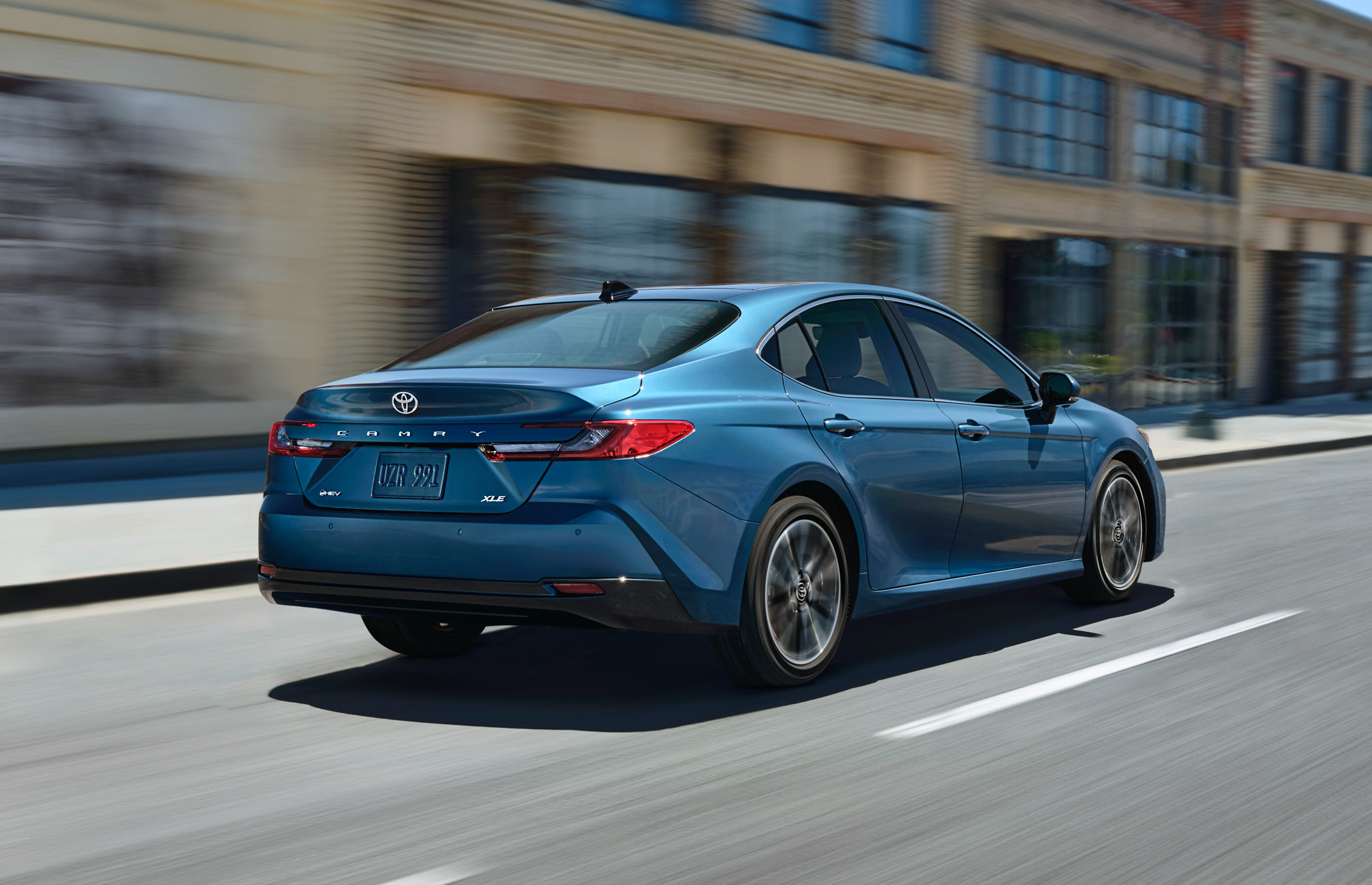
Speaking of which, batteries made at the plant will be used in the Camry Hybrid, Corolla Cross Hybrid, and RAV4 Hybrid. It will also make batteries for the company’s upcoming three-row EV.
While production is just getting started, Toyota plans to open additional assembly lines by 2030. The company also noted that once construction is complete, the facility won’t just be a workplace as it will also house a pharmacy, a medical clinic, a fitness center, and on-site childcare.
Toyota Motor North America CEO Tetsuo Ogawa remarked, “Today’s launch of Toyota’s first U.S. battery plant and additional U.S. investment up to $10 billion marks a pivotal moment in our company’s history. Toyota is a pioneer in electrified vehicles, and the company’s significant manufacturing investment in the U.S. and North Carolina further solidifies our commitment to team members, customers, dealers, communities, and suppliers.”
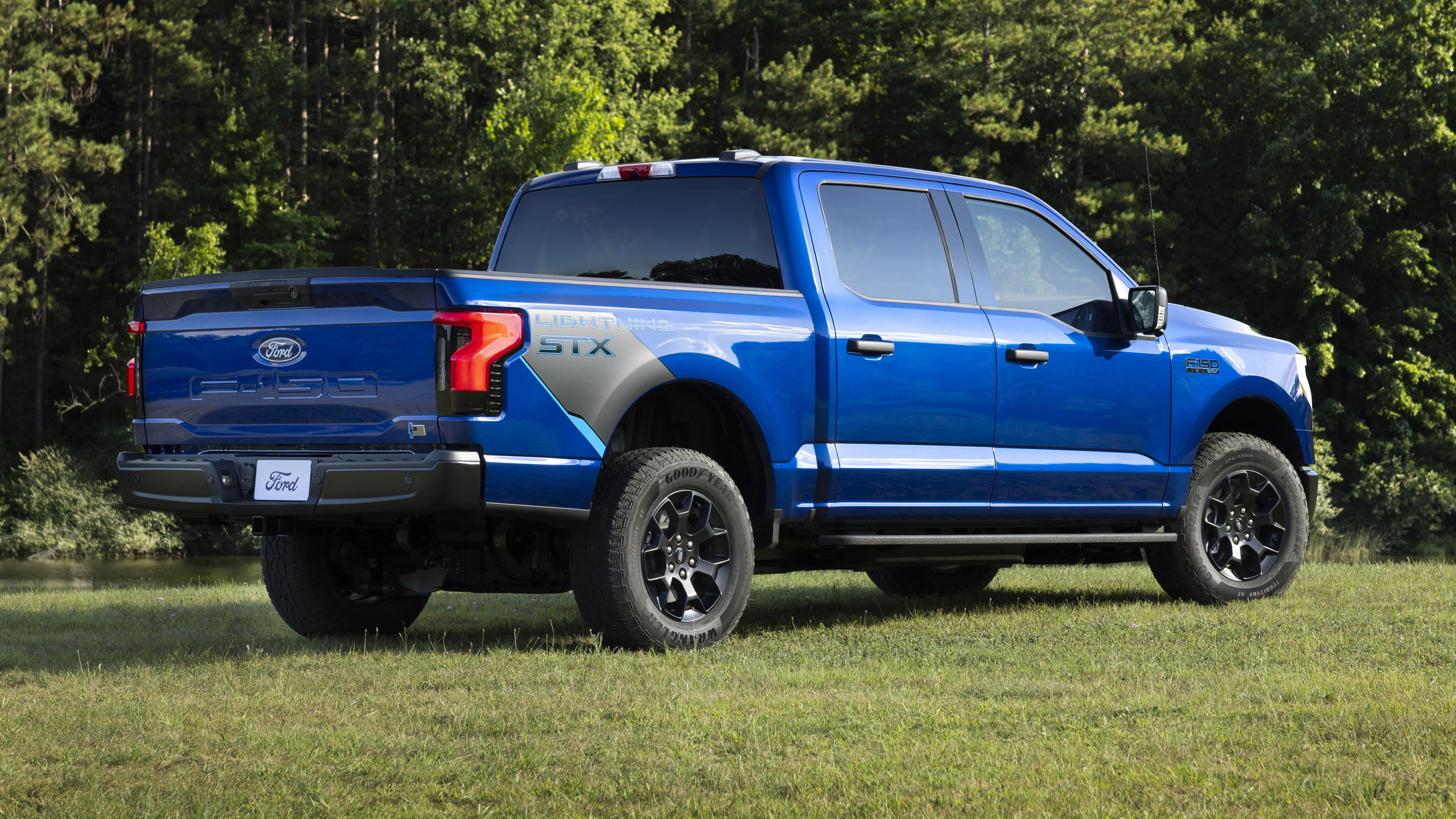
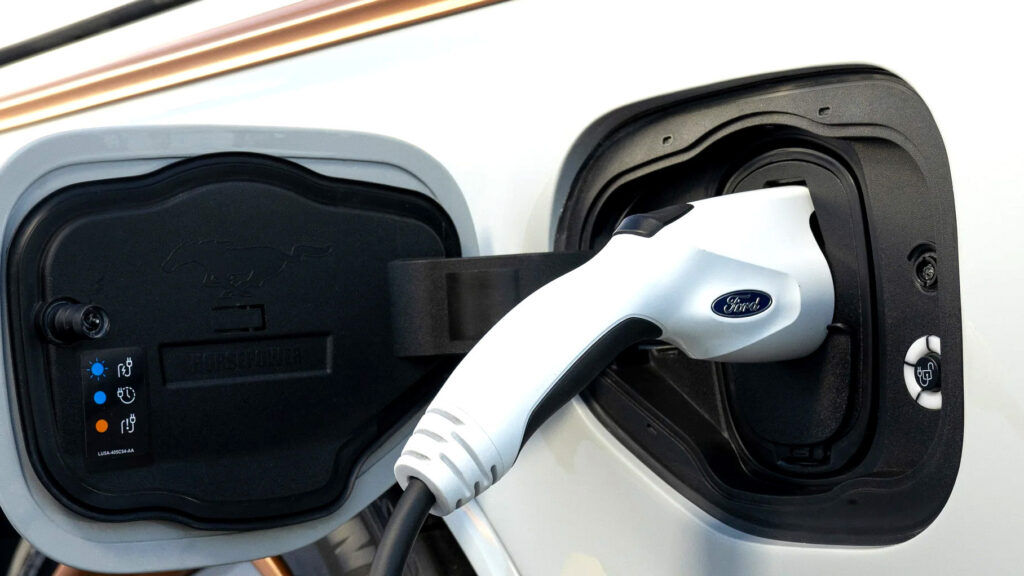
The Lightning can feed electricity back to the grid, earning cash.
Ford says owners can save $42 monthly, or nearly $500 each year.
Production of the electric pickup truck remains paused indefinitely.
Owning a Ford F-150 Lightning means saying goodbye to gas stations forever. That’s the promise, at least, though it comes with the unspoken reality of long waits while electrons trickle into the battery. On the bright side, your truck can double as a backup power source for your home, and if Ford’s to be believed, even earn a few bucks while it sits in the driveway.
The company is eager to promote its usefulness, recently dedicating an entire piece describing how owners can turn their EV into a “side hustle”.
How Does It Work?
For some time, Ford’s Energy Rewards program has provided customers with bonuses for charging their F-150 Lightnings during off-peak times. It also has a system that allows the truck’s battery to serve as a backup generator during outages and blackouts.
In select US markets, owners can now charge their Lightning when electricity is cheaper (typically overnight during off-peak hours) and use the stored energy to power their home when grid prices are higher during peak times.
That’s not all. Customers can also return excess power from the F-150 back to the grid and get incentives from participating utility providers. According to Ford, customers can save up to $42 per month, or almost $500 per year, by using its new Home Power Management software.
The program has been launched in partnership with DTE Energy in Southeast Michigan. DTE will provide eligible owners the means to transfer power from the EV to their home.
Everything happens automatically, too, meaning the software optimizes the flow of energy to and from the battery pack while retaining battery health.
With the federal EV tax credit gone and fuel economy penalties no longer enforced under the Trump-era rollback, Ford appears to be easing away from the Lightning experiment. The company now plans to build over 45,000 additional combustion-powered F-150s next year, signaling a quiet retreat to familiar ground
Around 80 percent of global energy production today comes from the combustion of fossil fuels. Combustion, or the process of converting stored chemical energy into thermal energy through burning, is vital for a variety of common activities including electricity generation, transportation, and domestic uses like heating and cooking — but it also yields a host of environmental consequences, contributing to air pollution and greenhouse gas emissions.
Sili Deng, the Doherty Chair in Ocean Utilization and associate professor of mechanical engineering at MIT, is leading research to drive the transition from the heavy dependence on fossil fuels to renewable energy with storage.
“I was first introduced to flame synthesis in my junior year in college,” Deng says. “I realized you can actually burn things to make things, [and] that was really fascinating.”
Deng says she ultimately picked combustion as a focus of her work because she likes the intellectual challenge the concept offers. “In combustion you have chemistry, and you have fluid mechanics. Each subject is very rich in science. This also has very strong engineering implications and applications.”
Deng’s research group targets three areas: building up fundamental knowledge on combustion processes and emissions; developing alternative fuels and metal combustion to replace fossil fuels; and synthesizing flame-based materials for catalysis and energy storage, which can bring down the cost of manufacturing battery materials.
One focus of the team has been on low-cost, low-emission manufacturing of cathode materials for lithium-ion batteries. Lithium-ion batteries play an increasingly critical role in transportation electrification (e.g., batteries for electric vehicles) and grid energy storage for electricity that is generated from renewable energy sources like wind and solar. Deng’s team has developed a technology they call flame-assisted spray pyrolysis, or FASP, which can help reduce the high manufacturing costs associated with cathode materials.
FASP is based on flame synthesis, a technology that dates back nearly 3,000 years. In ancient China, this was the primary way black ink materials were made. “[People burned] vegetables or woods, such that afterwards they can collect the solidified smoke,” Deng explains. “For our battery applications, we can try to fit in the same formula, but of course with new tweaks.”
The team is also interested in developing alternative fuels, including looking at the use of metals like aluminum to power rockets. “We’re interested in utilizing aluminum as a fuel for civil applications,” Deng says, because aluminum is abundant in the earth, cheap, and it’s available globally. “What we are trying to do is to understand [aluminum combustion] and be able to tailor its ignition and propagation properties.”
Among other accolades, Deng is a 2025 recipient of the Hiroshi Tsuji Early Career Researcher Award from the Combustion Institute, an award that recognizes excellence in fundamental or applied combustion science research.
Before batteries lose power, fail suddenly, or burst into flames, they tend to produce faint sounds over time that provide a signature of the degradation processes going on within their structure. But until now, nobody had figured out how to interpret exactly what those sounds meant, and how to distinguish between ordinary background noise and significant signs of possible trouble.
Now, a team of researchers at MIT’s Department of Chemical Engineering have done a detailed analysis of the sounds emanating from lithium ion batteries, and has been able to correlate particular sound patterns with specific degradation processes taking place inside the cells. The new findings could provide the basis for relatively simple, totally passive and nondestructive devices that could continuously monitor the health of battery systems, for example in electric vehicles or grid-scale storage facilities, to provide ways of predicting useful operating lifetimes and forecasting failures before they occur.
The findings were reported Sept. 5 in the journal Joule, in a paper by MIT graduate students Yash Samantaray and Alexander Cohen, former MIT research scientist Daniel Cogswell PhD ’10, and Chevron Professor of Chemical Engineering and professor of mathematics Martin Z. Bazant.
“In this study, through some careful scientific work, our team has managed to decode the acoustic emissions,” Bazant says. “We were able to classify them as coming from gas bubbles that are generated by side reactions, or by fractures from the expansion and contraction of the active material, and to find signatures of those signals even in noisy data.”
Samantaray explains that, “I think the core of this work is to look at a way to investigate internal battery mechanisms while they’re still charging and discharging, and to do this nondestructively.” He adds, “Out there in the world now, there are a few methods that exist, but most are very expensive and not really conducive to batteries in their normal format.”
To carry out their analysis, the team coupled electrochemical testing with recording of the acoustic emissions, under real-world charging and discharging conditions, using detailed signal processing to correlate the electrical and acoustic data. By doing so, he says, “we were able to come up with a very cost-effective and efficient method of actually understanding gas generation and fracture of materials.”
Gas generation and fracturing are two primary mechanisms of degradation and failure in batteries, so being able to detect and distinguish those processes, just by monitoring the sounds produced by the batteries, could be a significant tool for those managing battery systems.
Previous approaches have simply monitored the sounds and recorded times when the overall sound level exceeded some threshold. But in this work, by simultaneously monitoring the voltage and current as well as the sound characteristics, Bazant says, “We know that [sound] emissions happen at a certain potential [voltage], and that helps us identify what the process might be that is causing that emission.”
After these tests, they would then take the batteries apart and study them under an electron microscope to detect fracturing of the materials.
In addition, they took a wavelet transform — essentially, a way of encoding the frequency and duration of each signal that is captured, providing distinct signatures that can then be more easily extracted from background noise. “No one had done that before,” Bazant says, “so that was another breakthrough.”
Acoustic emissions are widely used in engineering, he points out, for example to monitor structures such as bridges for signs of incipient failure. “It’s a great way to monitor a system,” he says, “because those emissions are happening whether you’re listening to them or not,” so by listening, you can learn something about internal processes that would otherwise be invisible.
With batteries, he says, “we often have a hard time interpreting the voltage and current information as precisely as we’d like, to know what’s happening inside a cell. And so this offers another window into the cell’s state of health, including its remaining useful life, and safety, too.” In a related paper with Oak Ridge National Laboratory researchers, the team has shown that acoustic emissions can provide an early warning of thermal runaway, a situation that can lead to fires if not caught. The new study suggests that these sounds can be used to detect gas generation prior to combustion, “like seeing the first tiny bubbles in a pot of heated water, long before it boils,” says Bazant.
The next step will be to take this new knowledge of how certain sounds relate to specific conditions, and develop a practical, inexpensive monitoring system based on this understanding. “Now, we know what to look for, and how to correlate that with lifetime and health and safety,” Bazant says.
One possible application of this new understanding, Samantaray says, is “as a lab tool for groups that are trying to develop new materials or test new environments, so they can actually determine gas generation or active material fracturing without having to open up the battery.”
Bazant adds that the system could also be useful for quality control in battery manufacturing. “The most expensive and rate-limiting process in battery production is often the formation cycling,” he says. This is the process where batteries are cycled through charging and discharging to break them in, and part of that process involves chemical reactions that release some gas. The new system would allow detection of these gas formation signatures, he says, “and by sensing them, it may be easier to isolate well-formed cells from poorly formed cells very early, even before the useful life of the battery, when it’s being made,” he says.
The work was supported by the Toyota Research Institute, the Center for Battery Sustainability, the National Science Foundation, and the Department of Defense, and made use of the facilities of MIT.nano.
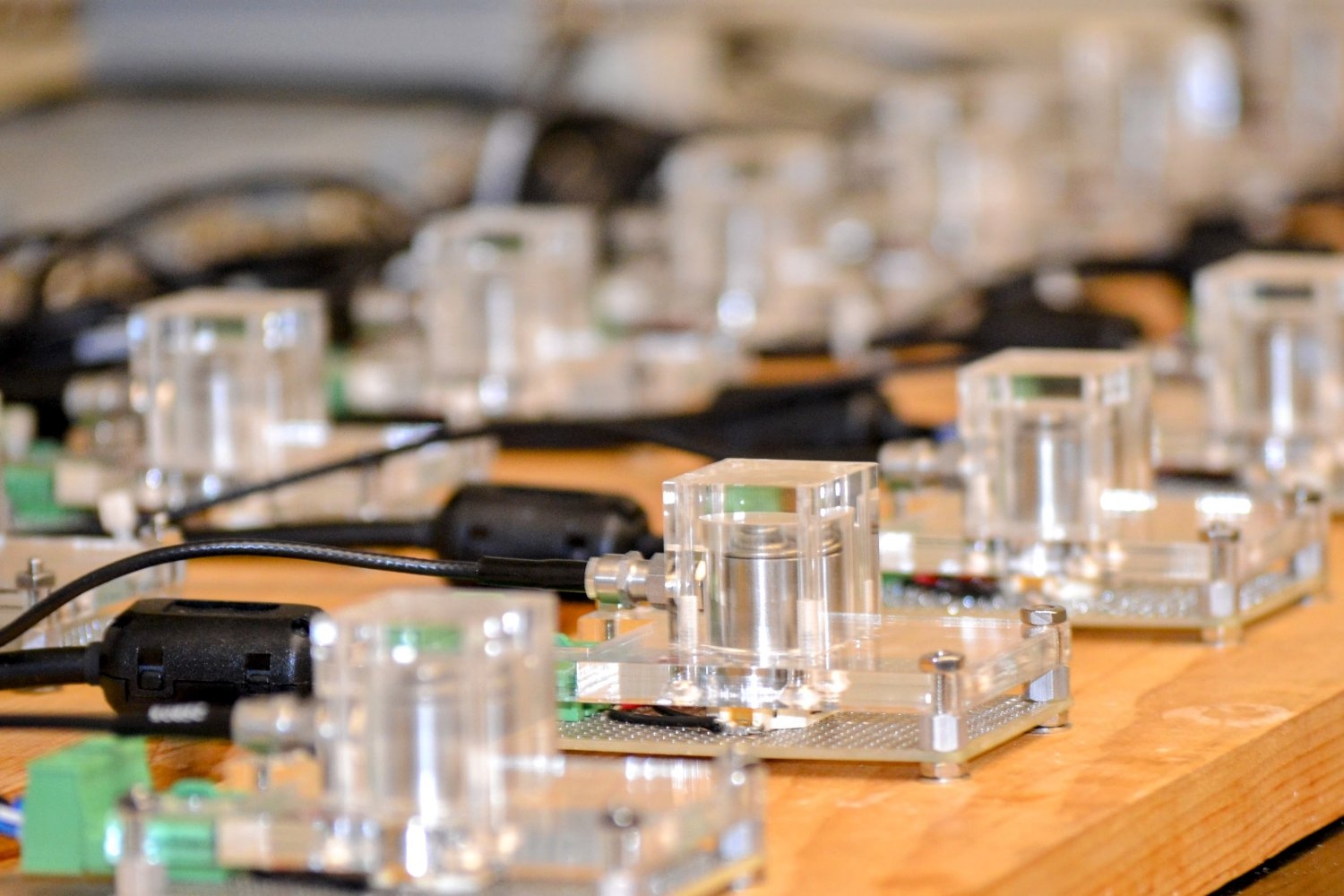
The MIT researchers used a customized experimental platform to simultaneously record acoustic emissions and perform electrochemical tests on lithium ion batteries.
A German startup believes it has the recipe for electric vehicle battery cells that are cheaper, more energy dense, and less problematic for the environment than current lithium-ion cells. But commercialization seems a long way off. Theion announced Thursday in a press release that it is close to completing a 15 million euro (approximately $16.2...
Chinese researchers claim to have developed a process to recover nearly all of the lithium from used electric vehicle batteries for recycling. The Independent (via InsideEVs) reports on study results first published in the German academic journal Angewandte Chemie claiming recovery of 99.99% of lithium from a used battery, as well as 97% of nickel...
Deployment of 5-minute battery swaps could support hundreds of commercial EVs Ample says it's a straightforward retrofit, switching to its own battery packs Solution is less demanding on the grid than fast-charging stations California-based startup Ample is looking to deploy its battery-swapping tech with fleets of electric delivery trucks in...
Chinese battery firm CATL and automaker Nio are preparing to launch what the two companies claim will be the world's largest electric vehicle battery swapping network. CATL and Nio announced a technical partnership last year that included battery swapping, but on Tuesday they confirmed plans to start coordinating efforts as they build out battery...
SK On will supply batteries to Nissan for U.S.-made electric vehicles, the two companies announced Wednesday in a press release. Under the agreement, SK On will supply nearly 100 gigawatt-hours of batteries to Nissan from 2028 to 2033. They'll go into EVs produced at the automaker's Canton, Mississippi, assembly plant starting in 2028. Nissan...

 Login
Login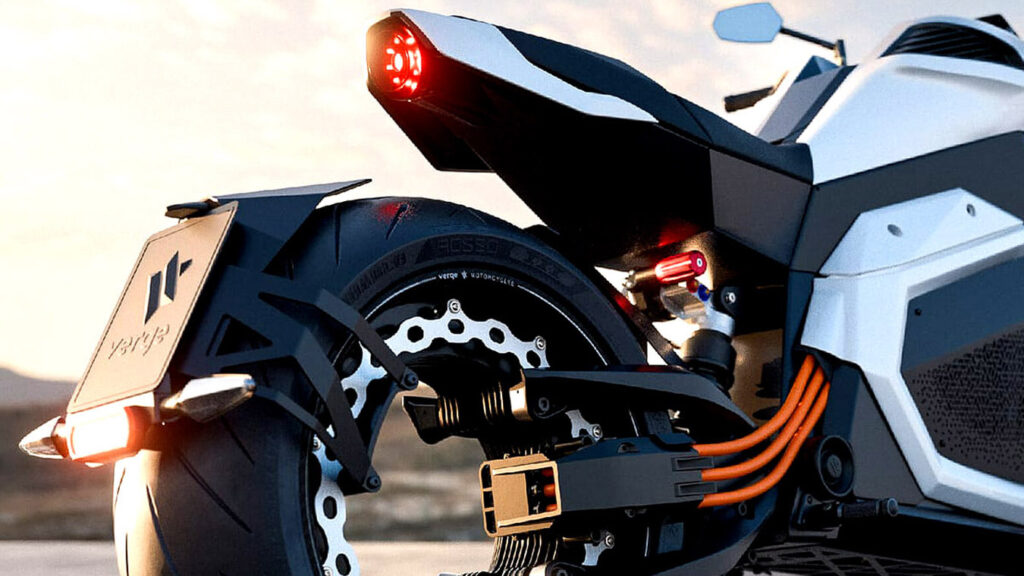








 A German startup believes it has the recipe for electric vehicle battery cells that are cheaper, more energy dense, and less problematic for the environment than current lithium-ion cells. But commercialization seems a long way off. Theion announced Thursday in a press release that it is close to completing a 15 million euro (approximately $16.2...
  Chinese researchers claim to have developed a process to recover nearly all of the lithium from used electric vehicle batteries for recycling. The Independent (via InsideEVs) reports on study results first published in the German academic journal Angewandte Chemie claiming recovery of 99.99% of lithium from a used battery, as well as 97% of nickel...
  Deployment of 5-minute battery swaps could support hundreds of commercial EVs Ample says it's a straightforward retrofit, switching to its own battery packs Solution is less demanding on the grid than fast-charging stations California-based startup Ample is looking to deploy its battery-swapping tech with fleets of electric delivery trucks in...
  Chinese battery firm CATL and automaker Nio are preparing to launch what the two companies claim will be the world's largest electric vehicle battery swapping network. CATL and Nio announced a technical partnership last year that included battery swapping, but on Tuesday they confirmed plans to start coordinating efforts as they build out battery...
  SK On will supply batteries to Nissan for U.S.-made electric vehicles, the two companies announced Wednesday in a press release. Under the agreement, SK On will supply nearly 100 gigawatt-hours of batteries to Nissan from 2028 to 2033. They'll go into EVs produced at the automaker's Canton, Mississippi, assembly plant starting in 2028. Nissan...