Reading view

There are new articles available, click to refresh the page.

Palestinian activist, Milwaukee Islamic Society Pres. Salah Sarsour detained by ICE

Kareem Sarsour, son of Salah Sarsour, speaks to the crowd gathered after his father's arrest by federal immigration officers. (Photo by Isiah Holmes/Wisconsin Examiner)

Kareem Sarsour, son of Salah Sarsour, speaks to the crowd gathered after his father's arrest by federal immigration officers. (Photo by Isiah Holmes/Wisconsin Examiner)

A large and diverse crowd packed a community center on Milwaukee’s  south side Thursday, calling for the release of Salah Sarsour, president of the Islamic Society of Milwaukee. Sarsour, who is of Palestinian descent, was detained by federal immigration agents Monday morning. His supporters are calling Sarsour’s arrest an targeted act of political retaliation designed to chill opposition to the Israeli government and support for the Palestinian people.

“This is a man who came to the United States and kind of lived the American dream,” Othman Atta, executive director of the Islamic Society of Milwaukee, told the audience of community members, press, activists, and local elected officials. “And they are trying to tarnish his image. They’re trying to target him.”

Othman Atta, executive director of the Islamic Society of Milwaukee. (Photo by Isiah Holmes/Wisconsin Examiner)

A green card holder and lawful permanent resident, Sarsour has lived in the United States for over 30 years. “The U.S. government fully vetted his visa application at that time,” Kathryn Brady, head of the Muslim Legal Fund of America’s Immigration Litigation Department, said in a statement Wednesday. Brady said that it’s difficult to believe that the federal government’s “position now is not rooted in a violation of his First Amendment right to speak about the suffering of Palestinians in Gaza and the West Bank.”

Atta said that on Monday Sarsour stopped at an old warehouse on Milwaukee’s south side which he owned because mail kept arriving there. As he left, a car came on the wrong side of the street “flying toward him,” said Atta, forcing Sarsour to jump out of the way. The unmarked car stopped and a person allegedly in civilian clothes pointed a gun at Sarsour and asked who he was by name. 

Atta said 12 vehicles were involved in the arrest, and Sarsour was loaded into a van before being told he was being taken by federal immigration officers. 

Atta said that the story was relayed to Sarsour’s attorney Munjed Ahmad during a phone call in which Sarsour declared that he was a lion and willing to fight. Sarsour was transported to the Broadview Detention Center in Illinois before being quickly transferred to another facility in Indiana, Atta said.  

Community members call for the release of Salah Sarsour. (Photo by Isiah Holmes/Wisconsin Examiner)

“This is America,” said Atta. “This is Trump’s America.” 

He described Sarsour as a husband, father, grandfather, and a successful business owner who has no criminal record or convictions. 

“According to the papers that were filed in immigration court, they went back to when he was a minor — a teenager — in the West Bank under Israeli occupation,” said Atta. 

When he was a teenager, Sarsour was arrested and detained by the Israeli police. “He served two years,” said Atta. “Many of you who know him know that his passion for Palestine, his passion for justice, was based on the experience he had and that his family and friends had. He would talk to us many times how for 80 straight days, he was interrogated, and brutalized, and tortured while he was in Israeli military custody.” 

Palestinians living both in the West Bank and the region of Gaza, which has suffered catastrophic damage and where tens of thousands of people have been killed during attacks by the Israeli government in the last two and a half years, have reported similar abuse. 

In 2024, the United Nations found that due process rights for Palestinians had been violated in the West Bank for nearly 60 years. Last year, charges were dropped against five Israeli soldiers accused of beating and sexually abusing a Palestinian prisoner in an assault that was captured in a video. A top legal official in the Israeli military admitted to approving the video’s release in an effort to show the world how the over 9,000 Palestinians detained by Israel are treated, the Associated Press reported. 

Community members call for the release of Salah Sarsour. (Photo by Isiah Holmes/Wisconsin Examiner)

Al Jazeera reported that the bodies of Palestinians released as part of a ceasefire deal between Israel and militant factions of Hamas exhibited signs of torture including restraints and injuries still evident on the dead. 

The Department of Homeland Security (DHS) said in a statement Thursday that Sarsour was convicted of throwing Molotov cocktails at the homes of Israeli armed forces.” In the statement, which repeatedly called Sarsour a “terrorist” and an “illegal alien from Jordan,” DHS charged that he “lied” on his green card application to enter the country in 1993 during the Clinton administration, and that his first attempts to apply for an immigrant visa at the American consulate in Jerusalem were rebuffed because of those allegations and others of “illegally attempting to possess” weapons and ammunition. 

Atta and Sarsour’s supportive community urged onlookers Thursday not to forget the reports about Israel’s treatment of Palestinians. 

Atta said that Sarsour was again detained by the Israeli government after returning in 1995, which is where the weapons allegations came from, and that the written charges were in Hebrew, “which he doesn’t read or understand.”

Sarsour’s son, Kareem, was joined by other members of his family Thursday. Over the last two days, the family has been “bombarded” with “thousands of messages from all the people who knew him saying what he meant to them as a father-figure, as a role model, as a beloved community member, it just tells you who he was,” said Kareem Sarsour. Kareem described his father as “always giving” and said that Sarsour had tried to give his children everything he couldn’t have when he lived in the West Bank. 

Muslim and Christian faith leaders join to call for the release of Salah Sarsour. (Photo by Isiah Holmes/Wisconsin Examiner)

The crowd that assembled to support Sarsour and his family included many Muslim residents, local activists, and elected officials, with Milwaukee County Executive David Crowley and  Mayor Cavalier Johnson in the front row, and further back, Alds. JoCasta Zamarripa watched Alex Brower. Christine Neumann-Oriz, executive director of Voces de la Frontera, was in the audience, and speakers from Jewish Voices For Peace joined Muslim and Christian faith leaders in denouncing Sarsour’s detention and calling for his release.

A flurry of Wisconsin lawmakers and local officials have condemned Sarsour’s arrest. Sen. Chris Larson (D-Milwaukee) said in a statement that the federal government was “increasingly fascist”  and called Sarsour “a vocal advocate for a free and independent Palestinian State.” 

“We have already seen numerous Muslim activists unfairly and unlawfully targeted by the Trump Administration for their beliefs and their speech,” Larson said. “These Unconstitutional assaults on our freedoms should alarm all of us. When any individual or group is targeted by the government for their speech, all of our freedoms are threatened.” 

Congresswoman Gwen Moore called Sarsour’s detention “completely unacceptable.” “Salah Sarsour is a respected leader in the Milwaukee community, and his detention raises serious concerns about the continued targeting of lawful residents based on the color of their skin or their political beliefs,” she said.

Community members call for the release of Salah Sarsour. (Photo by Isiah Holmes/Wisconsin Examiner)

Rep. Ryan Clancy (D-Milwaukee) charged that Sarsour’s detention was an attack on free speech. “Until free expression and free speech are protected, not treated as a privilege of the Trump Administration’s loudest supporters, this openly fascist government should be neither trusted nor obeyed,” Clancy said in a statement. “We must abolish ICE and hold those responsible for these repeated acts of state violence accountable.” 

Statements supporting Sarsour were also put out by the Council on American-Islamic Relations, the Mandela Barnes for governor campaign, and the Milwaukee Area Labor Council Immigrant Rights Committee. 

Ahmad said that he’s “shocked” at how many communications he’s received from attorneys around the country on Sarsour’s case. “We have assembled a very capable legal team, that legal team continues to grow,” said Ahmad, declaring that they will work to free Sarsour. A hearing is scheduled on April 18. 

GET THE MORNING HEADLINES.

‘Liberation Day’ tariffs celebrated by Trump one year out, panned by Dems

Shipping cranes stand above container ships loaded with shipping containers at the Port of Los Angeles on Feb. 20, 2026 in Los Angeles. (Photo by Mario Tama/Getty Images)

Shipping cranes stand above container ships loaded with shipping containers at the Port of Los Angeles on Feb. 20, 2026 in Los Angeles. (Photo by Mario Tama/Getty Images)

WASHINGTON — One year after President Donald Trump announced his now-illegal “Liberation Day” tariffs, he marked the anniversary by signing executive orders adjusting duties on pharmaceuticals and metals as Democratic critics slammed economic fallout from Trump’s trade policies.

Last April 2, Trump shocked American businesses and global markets when he declared a national emergency to impose a 10% tariff on goods from nearly every country, plus higher double-digit duties on imports from major U.S. trading partners. 

Investors lost trillions days after the announcement, and Trump began months of delays and on-again, off-again taxes on imports. 

In doing so, Trump raised the effective tariff rate on foreign goods to its highest point since the 1930s. Economists warned the average American household would end up losing up to a few thousand dollars in increased costs. 

After lawsuits from small business owners and Democratic state officials, the Supreme Court decided 6-3 in February that Trump’s unprecedented triggering of sweeping tariffs under the 1977 International Economic Emergency Powers Act exceeded presidential authority.

Since then, the White House has sought other legal routes to impose tariffs. Several, like duties on metals, are already in place under national security statutes, and have been since Trump’s first term. Almost immediately after the Supreme Court’s major blow, Trump announced a temporary base 10% tariff on all imports under section 122 of the Trade Act of 1974.

On Thursday, Trump signed two executive orders changing the tariff calculation on imported steel, aluminum and copper, and slapping a whopping 100% tariff on pharmaceuticals made by transnational companies that decline to invest in manufacturing their drugs in the United States.

Both tariff adjustments are under Section 232 of the Trade Expansion Act of 1962, a statute authorizing the president to impose trade restrictions in response to national security threats.

Dems stress affordability 

Democrats pounced on Trump’s “Liberation Day” anniversary ahead of the 2026 midterm elections that will determine control of Congress and will surely include affordability as a central issue.

On a press call organized by the Democratic National Committee, House Minority Leader Hakeem Jeffries laid blame on Trump’s tariffs for increasing costs.

“We can thank the Trump tariffs for imposing thousands of dollars in additional costs on everyday Americans, small business owners and farmers throughout the country,” he said.

Senate Minority Leader Chuck Schumer, D-N.Y., said in a statement that in one year, Trump “thrust the United States’ economy into chaos with sweeping tariff taxes on dozens of countries.”

Sen. Ron Wyden, D-Ore., described Trump’s trade policy as “manic.”

“Trump is taking money out of the pockets of families walking an economic tightrope, by slapping huge taxes on groceries and other essentials,” he said in a statement Thursday.

Several questions on the degree to which tariff costs have been passed on to consumers, and how much they have stymied growth and hiring, remain unanswered, according to a one-year analysis from the Yale Budget Lab.

Sen. Andy Kim, D-N.J., said during the virtual DNC press conference he met this week with business owners in his state and heard trepidation about their decisions moving forward.

“The thing that they just continue to hammer over and over again is just how uncertain this moment is, how much unpredictability that there is and that they cannot, you know, they cannot figure out how to invest further or try to grow their business,” Kim said, adding businesses need “immediate relief” after the Supreme Court struck down Trump’s emergency tariffs.

Kim is among two dozen Senate Democrats sponsoring a bill that would require the U.S. Customs and Border Protection commissioner to report to lawmakers every 30 days on the status of IEEPA tariff refunds.

States Newsroom has interviewed several business owners about the effects of tariffs and the prospect of being made whole by the government for the now illegal IEEPA tariffs they were charged.


States pass laws allowing pregnancy centers to evade regulation and countersue for damages

A set of boxes at a crisis pregnancy center in Wakulla County, Florida, with information about pregnancy options. Two states, Kansas and Wyoming, recently enacted laws preventing government regulation of crisis pregnancy centers based on model legislation from conservative legal advocacy group Alliance Defending Freedom. (Photo by Nada Hassenein/Stateline)

A set of boxes at a crisis pregnancy center in Wakulla County, Florida, with information about pregnancy options. Two states, Kansas and Wyoming, recently enacted laws preventing government regulation of crisis pregnancy centers based on model legislation from conservative legal advocacy group Alliance Defending Freedom. (Photo by Nada Hassenein/Stateline)

States with and without abortion bans are advancing bills that would shield anti-abortion pregnancy resource centers from certain government mandates and attempts at regulation, allowing them to sue for damages if any part of the law is violated.

At least four states introduced the legislation this session, and two of them, Kansas and Wyoming, made it law. Montana also passed a similar law in 2025. The bills are still pending in Oklahoma and New Hampshire.

They are based on model legislation drafted by the Alliance Defending Freedom, a conservative legal advocacy group that represented one of the large umbrella organizations for pregnancy centers around the country, National Institute of Family and Life Advocates, when the California government attempted to regulate the centers in 2018 by requiring signage to be placed informing clients of available abortion options at state-funded clinics.

“This really just reflects the legal reality that pregnancy care centers have been hauled into court when they’ve decided they are not interested in pushing abortion and (the government is) going to make them,” said Kristi Hamrick, vice president of media and policy for the anti-abortion group Students for Life Action.

Many crisis pregnancy centers are faith based, with a mission of preventing anyone who walks in from choosing an abortion. In a recent 50-state analysis, States Newsroom found that 21 states allocated more than $491 million of taxpayer funds to crisis pregnancy centers since the U.S. Supreme Court’s Dobbs decision in 2022 that upended federal abortion rights. Medical experts, including the American College of Obstetricians and Gynecologists, say the centers can endanger public health by delaying legitimate health care and some centers that advertise services like free ultrasounds can miss diagnoses like ectopic or molar pregnancies, which are nonviable and can be life-threatening conditions.

The centers have also been criticized by advocates for misleading potential clients about their services, making it look like they provide abortion care, and for promoting treatments like abortion pill reversal that are unproven and potentially dangerous.

California’s law, which the U.S. Supreme Court struck down in 2018 on free speech grounds, also mandated disclosure if the pregnancy resource center was unlicensed. Violators would be fined $500 for a first offense.

Hamrick said the center protection bills are an “inoculation” against what she called malicious lawsuits that would punish them for refusing to go against their anti-abortion mission.

Samantha Nagler, a legal fellow with the Equal Justice Works program at Gender Justice, said the bills are carving out an area of health care where providers can omit information during a visit and face no consequences for it.

“No other health care provider I can think of is just exempted from regulation,” Nagler said.

Israel Cook, legislative counsel for the Center for Reproductive Right’s policy and advocacy team, said this type of legislation is becoming more popular as reproductive rights advocates push for regulation of crisis pregnancy centers.

Colorado passed a law in 2023 making it a deceptive trade practice to disseminate any public advertisement that indicates a facility provides abortions or emergency contraceptives when they do not. The law included a similar provision barring advertisement of abortion pill reversal, but a federal judge blocked enforcement of that part of the law in August. Alliance Defending Freedom also assisted with that lawsuit.

“It’s very scary for (the centers) to not be on the hook for the kind of harm that they perpetuate,” Cook said.

Oklahoma sponsor: Law allows centers to ‘stay in their lane’

The bills prohibit a state or local government from adopting or enacting a law, rule, ordinance or any other type of regulation that would require a center to offer or perform abortion, make referrals for abortion or abortion medication, or post any type of advertisement or material promoting abortion or abortion medication. Every bill, with the exception of Kansas, also says the centers cannot be compelled to offer or refer for contraception.

The Kansas Legislature passed House Bill 2635 on March 12 and overturned a veto by Democratic Gov. Laura Kelly on Friday. Kelly said she vetoed it because Kansans already voted to keep the government out of private medical decisions in 2022, preventing lawmakers from passing an abortion ban. Kelly also opposes the funding that crisis pregnancy centers receive from the state on an annual basis — the legislature approved $3 million in 2025, on top of a $10 million tax credit program.

Oklahoma’s House of Representatives overwhelmingly passed a similar bill in early March, but it hasn’t yet been heard by the Senate. It was sponsored by Republican Rep. Denise Crosswhite Hader, who said it was legislation that allowed the centers to continue their mission.

Oklahoma’s bill prescribes the largest penalties with an allowance for treble damages, which means a successful lawsuit could yield three times the amount of damages proven in court. A pregnancy center would be entitled to at least $10,000.

“I don’t see abortion as care. I see abortion as ending a pregnancy,” she said on the House floor during debate. The centers want to help with continuing a pregnancy, she said, but when they avoid abortion, they’re getting sued, “and what we’re trying to do is help it so that they can stay in their lane and not fight lawsuits over and over.”

The state government allocated $18 million to a revolving grant fund for crisis pregnancy centers in 2024 that will last through November 2027.

Oklahoma has a near-total abortion ban, with no exceptions for rape or incest, only an exception to save a pregnant person’s life. With that in mind, Democratic Rep. Cyndi Munson told States Newsroom she doesn’t see the need for the legislation.

“If a private organization has a policy, they can stick to their policy. I don’t know why we need to put additional protections into law,” Munson said.

Meanwhile, Oklahoma’s health care struggles continue, according to Munson. The state ranked 46th in infant mortality in a report from the nonprofit March of Dimes, and 31st in maternal mortality. But reproductive health care in general can also be difficult to obtain. Munson said she recently had to wait an entire year to receive her annual gynecological exam because her provider is overbooked.

She worries that at a certain point, crisis pregnancy centers will be the only type of health care that’s left, especially in more rural parts of the state.

“Not every woman is looking for abortion access, but they all need reproductive health care,” Munson said.

This story was originally produced by News From The States, which is part of States Newsroom, a nonprofit news network which includes Wisconsin Examiner, and is supported by grants and a coalition of donors as a 501c(3) public charity.

Evers signs bills for new grant program to support nonprofits serving homeless veterans

Gov. Tony Evers signed a pair of bills Thursday that will create a new state grant program to support nonprofits housing and serving homeless veterans. Evers addressed lawmakers during his final State of the State. (Photo by Baylor Spears/Wisconsin Examiner)

Gov. Tony Evers signed a pair of bills Thursday that will create a new state grant program to support nonprofits housing and serving homeless veterans. 

AB 596, now 2025 Wisconsin Act 153, and AB 597, now 2025 Wisconsin Act 154, direct $1.9 million to be used to create a new state grant match program for nonprofits serving homeless veterans. Evers did not comment on signing the bills into law in his release.

The bills were introduced by Sen. Eric Wimberger (R-Oconto) and Rep. Benjamin Franklin (R-De Pere) after the closure of two Wisconsin Veterans Housing and Recovery Program (VHRP) sites, one in Green Bay and the other in Chippewa Falls, and disagreements with Democrats and Evers on who was to blame for the closures. The VHRP serves veterans who are on the verge of or experiencing homelessness, including those who have experienced incarceration, unemployment or underemployment, physical and mental health problems. 

“I’m glad that the funding the Legislature provided to house and support Wisconsin’s military heroes will soon be going to organizations helping veterans across our state,” Wimberger said. “I hope the bills encourage even more groups to answer the call and step up to provide vital services to our veterans in need.”

The new program will provide $25 per day per veteran to eligible nonprofits that house veterans. To be eligible, nonprofit groups need to be participating in the U.S. Department of Veterans Affairs per diem program, which currently provides about $82 per day per veteran housed to groups that offer wraparound supportive services to homeless veterans. 

There are currently just four eligible nonprofits, and none are in the Green Bay or Chippewa falls areas. Democratic lawmakers expressed these concerns as the bills were debated, though Republican lawmakers have argued other nonprofits could become eligible if the program became law.

GET THE MORNING HEADLINES.

UW President Jay Rothman says Regents told him to resign or be fired without clear reasons

Jay Rothman, president of the University of Wisconsin system, says that the Board of Regents is trying to oust him from his position. Rothman speaks during the UW Board of Regents meeting hosted at Union South at the University of Wisconsin–Madison on Feb. 9, 2023. (Photo by Althea Dotzour / UW–Madison)

Universities of Wisconsin President Jay Rothman says that the Board of Regents is trying to oust him from his position — and he is refusing to go as he says he has not been given any clear reasons for their loss of confidence in him.

In a letter first obtained by the Associated Press dated March 26, Rothman said he met with Regent President Amy Bogost and Regent Vice President Kyle Weatherly in a meeting they requested. Rothman wrote that he was “surprised” that during the meeting they “indicated for the first time and without any prior discussion or notice that an unidentified majority of the Board of Regents had lost confidence in my leadership despite all that my team and I along with our universities have accomplished to move the Universities of Wisconsin forward.”

Rothman, who was an attorney in Milwaukee and CEO of the law firm Foley and Lardner, was hired by the UW Board of Regents in January 2022. He was chosen after the UW system did not have a permanent leader for two years.

In the letter, Rothman said Bogost and Weatherly did not give reasons for the regents’ conclusion or the lack of confidence in him, but that “each Regent has his or her own perspective on the matter.” 

“You did not provide any tangible reasons for the Board’s determination. It also appears that whatever conclusions were reached, the concerns were vetted without the benefit of any recent in-person or even virtual meeting of the entire Board,” Rothman wrote. “From a Board governance and leadership perspective, I find that to be extraordinarily difficult for the Board to defend; as a person who reports directly to the Board, I am profoundly disappointed.

Rothman wrote that he was given three options for his departure: announcing his resignation and retirement in the near future with an effective date at the end of this calendar year, which he said was the Board’s preferred path; resigning at any time with 120 days notice and the Board terminating his employment if he didn’t resign.

Bogost said in a statement that the Board “is responsible for the leadership of the Universities of Wisconsin and is having discussions about its future.”

“We don’t comment on personnel matters,” Bogost said. 

In his letter, Rothman provided a list of 37 accomplishments throughout his tenure. The list includes obtaining the largest increase in funding from the state Legislature in the last 20 years; engaging with “third-party advisors to evaluate and assist the universities in addressing financial headwinds and improving operational efficiencies”; implementing a direct admissions program for eligible in-state high school students; continuing the tuition promise program by securing private funding; and rebranding the system from the UW System to the Universities of Wisconsin. 

“If the foregoing list is not sufficient evidence of my leadership in driving bold and transformative change, I really do not know what is. Since to date you have not provided any substantive reason or reasons for the Board’s finding of no confidence in my leadership, I am not prepared, as a matter of principle, to submit my resignation. In light of the current circumstances, I do not believe my resignation at this time is in the best interests of either the Universities of Wisconsin or the state of Wisconsin,” Rothman wrote. 

During his tenure, Rothman has overseen the closure or dramatic downsizing of at least eight UW branch campuses and has also sought to work with the Republican-led Legislature, which has often appeared hostile towards the UW system. 

In 2023, Rothman negotiated a deal on university system diversity, equity and inclusion programs (DEI) and funding with Assembly Speaker Robin Vos (R-Rochester) and Senate Majority Leader Devin LeMahieu (R-Oostburg), both of whom are now retiring from the Legislature. Under the deal, which was initially rejected by regents, Rothman got funding for building projects and staff cost-of-living adjustments — which lawmakers had already approved but were holding back as a bargaining chip — while Republicans got cuts to UW DEI initiatives. 

In 2024, Rothman also responded to student pro-Palestinian protests by defending the actions of police officers on campus and saying encampments would be gone eventually.

While Rothman appears confident in his achievements, not all UW stakeholders have been happy with his leadership. AFT-Wisconsin President Jon Shelton said in a statement that even without the details of the reported “loss of confidence,” the union supports the Board’s action. 

“President Rothman’s tenure has been defined by his unwillingness to listen to the stakeholders that truly define our campuses: on everything from our faculty, staff, and students’ commitments to diversity, equity, and inclusion to UW System Administration’s disastrous efforts to impose a general education curriculum on our campuses instead of simply implementing a universal credit transfer policy last December as required by Act 15,” Shelton said. 

“We are encouraged by the Board’s recent actions,” Shelton added. “We will gladly work with them moving forward to ensure any UW system president fights to uphold the values that has made the UW System great.”

Rothman wrote that there are also to-do list items that make it a bad time for him to leave, including finding new chancellors for UW-Madison and UW-Eau Claire as well as establishing priorities for the next state budget.

“I understand that, as you indicated on Saturday, the Board may act to terminate my employment, which the Board is empowered to do,” Rothman wrote. “If, however, the full Board would like to discuss this matter with me in either an open or closed session, I would welcome the opportunity to participate in such a meeting.” 

In a second letter to Regents Ashok Rai and Jack Salzwedel dated April 1, Rothman wrote that in a separate conversation, they also provided no reason for the request for his departure. 

“Similar to Regent President Bogost, you indicated that you could not offer any reason at this time. In fact, you said that topic would be discussed at the upcoming meeting of the Board,” Rothman wrote. 

The Board of Regents met in a closed special meeting on April 1 in the evening to discuss personnel matters. 

“Unfortunately, I am left to conclude that any basis for a Board finding of no confidence in my leadership will be, at best, an after-the-fact rationalization of a decision that clearly has already been made without the benefit of any recent meeting of the Regents and despite all the successes and transformative accomplishments during my tenure as President,” Rothman wrote in the letter to Rai and Salwedel. “I am not prepared, as a matter of principle, to submit my resignation at this time.”

GET THE MORNING HEADLINES.

US Senate Dems rip Trump plan to remove student loan oversight from Education Department

U.S. Senate Democrats say the Trump administration plan to transfer student loan management from the Education Department to the Treasury Department will add unneeded bureaucracy. (Photo illustration by Catherine Lane/Getty Images)

U.S. Senate Democrats say the Trump administration plan to transfer student loan management from the Education Department to the Treasury Department will add unneeded bureaucracy. (Photo illustration by Catherine Lane/Getty Images)

WASHINGTON — U.S. Senate Democrats this week blasted the Trump administration’s attempts to shift management of federal student loans from the Education Department to the Treasury Department, saying it would contribute to dysfunction in the student loan system.

In a Wednesday letter, the ranking members of five Senate panels — the committees covering banking, finance, education, federal spending and the Appropriations subcommittee overseeing the Education Department — called on Education Secretary Linda McMahon and Treasury Secretary Scott Bessent to “immediately” rescind the interagency agreement announced in March.

The letter is part of Democrats’ efforts to stop President Donald Trump and his administration from outsourcing Education Department responsibilities to other agencies as part of the administration’s attempts to dismantle the department, which Congress created and only Congress can abolish. 

Democratic Sens. Elizabeth Warren of Massachusetts, Ron Wyden of Oregon, Patty Murray of Washington state and Tammy Baldwin of Wisconsin, along with independent Sen. Bernie Sanders of Vermont, who caucuses with the Democrats, penned the letter. 

They are the respective ranking members of the Senate Committees on Banking, Housing, and Urban Affairs; Finance; Appropriations; the Appropriations subcommittee overseeing Education Department funding; and Health, Education, Labor and Pensions.  

They argued the transfer would introduce “more dysfunction into the federal student loan system, worsening the ongoing student loan default crisis that the Trump Administration has already exacerbated.” 

An ‘illegal scheme’

Under the agreement, Treasury will take over Education’s responsibility for collecting on defaulted federal student loan debt — the first step in a multi-phase process toward Treasury taking on the entire, roughly $1.7 trillion federal student loan portfolio. 

The senators called the move an “illegal scheme” that “threatens to trap student loan borrowers, students, and families in chaos and bureaucracy, all while American taxpayers are left to foot the bill for Treasury to administer programs that (the Education Department) can and should administer itself, likely costing more money and burying borrowers and families in unnecessary red tape.” 

The lawmakers also emphasized the spending package Trump signed into law in February rejects the president’s calls to axe the agency — funding the Education Department at $79 billion this fiscal year. 

The senators point to the joint explanatory statement accompanying the measure, which states that “no authorities exist for the Department of Education to transfer its fundamental responsibilities under numerous authorizing and appropriations laws, including through procuring services from other Federal agencies, of carrying out those programs, projects, and activities to other Federal agencies.” 

The lawmakers gave McMahon and Bessent two weeks to respond to their inquiries on the logistics, timing, costs and implementation of the transfer. 

‘A hard reset’

Education Department spokesperson Ellen Keast said in a statement shared with States Newsroom on Thursday that the current approach to student loan management was not working.

“With the student loan portfolio approaching $1.7 trillion and defaults nearing 25 percent, now is the time for a hard reset in how the federal government provides and services student loans,” Keast said. 

“We are confident that our partnership with the Treasury, an experienced and proven fiduciary, will strengthen program administration and better serve American students, borrowers, and taxpayers,” she added.

The Treasury Department did not immediately respond to a request for comment Thursday.

Homeland Security shutdown drags on, but Trump says he’ll sign order to pay all employees

The U.S. Capitol building in Washington, D.C., amid fog on Tuesday, Dec. 10, 2024. (Photo by Jennifer Shutt/States Newsroom)

The U.S. Capitol building in Washington, D.C., amid fog on Tuesday, Dec. 10, 2024. (Photo by Jennifer Shutt/States Newsroom)

WASHINGTON — The U.S. Senate approved legislation Thursday that would end the shutdown at the Department of Homeland Security, sending the same bill it passed last week to the House, which didn’t take any action during a brief session.

But it appeared the shutdown also could be affected by executive action. President Donald Trump wrote in a social media post later in the morning that he “will soon sign an order to pay ALL of the incredible employees at the Department of Homeland Security.” 

He didn’t detail when that would take place or from where he would pull that money. White House spokespeople did not immediately respond to a request for details. 

Asked about the Senate-passed bill, Speaker Mike Johnson’s office didn’t immediately return a request for comment as to when the House may approve the legislation. But members aren’t scheduled to return from a two-week spring break until April 14. 

The House could have cleared the measure for Trump’s signature during a short session it held an hour after the Senate approved the bill, but its leaders chose not to.

Those pro forma sessions, as they are known, are held about every three days when one or both chambers of Congress are on break and the vast majority of lawmakers are away from Capitol Hill. They typically don’t include any real work and are intended to avoid recess appointments. 

The Senate approved the bill after a few procedural remarks from Senate Majority Leader John Thune, R-S.D., and didn’t hold a recorded vote. 

‘Deep division and dysfunction’

Senate Minority Leader Chuck Schumer, D-N.Y., said in a statement after the House opted not to clear the legislation that the “deep division and dysfunction among House Republicans is needlessly extending the DHS shutdown and hurting federal workers who are missing another paycheck.”

“The Senate did its work twice to fund key parts of DHS without funding the lawlessness of ICE and Border Patrol,” he added. “House Republicans need to get to work and end the longest Republican shutdown in history.”

The DHS appropriations bill the Senate approved would provide funding for the vast majority of the department except Immigration and Customs Enforcement and the Border Patrol. 

It would ensure funding for the Cybersecurity and Infrastructure Security Agency, Coast Guard, Federal Emergency Management Agency and Secret Service. 

Senators approved an identical DHS funding bill last week by voice vote, but Johnson, R-La., rejected it and instead put an eight-week stopgap spending bill up for a vote in the House.

That legislation had no chance of getting past procedural hurdles in the Senate, which require at least 60 lawmakers to vote to end debate. 

Objections to immigration enforcement

Senate Democrats originally held up approval of the DHS spending bill after federal officers shot and killed two U.S. citizens in Minneapolis in January. They have said repeatedly since then they won’t approve any more funding for immigration and deportation activities without new guardrails. 

Thune reached a deal with Schumer last week to pass a DHS funding bill without any new money for ICE or the Border Patrol, which have tens of billions available from Republicans’ “big, beautiful” law. 

GOP lawmakers said at the time the idea was to approve another reconciliation package to further bolster funding levels for immigration enforcement and deportations. 

“To my Democrat colleagues, this bill is the moderate option. What’s coming next is going to supercharge deportations,” Missouri Sen. Eric Schmitt said during floor debate at the time. “To my Republican colleagues, let this be a rallying cry every time the Democrats obstruct the safety of American families, the wall gets 10 feet higher and ICE gets another $100 billion.”

Thune and Johnson released a statement Wednesday that they had brokered a deal to do just that, with Trump’s support. 

“In following this two-track approach, the Republican Congress will fully reopen the Department, make sure all federal workers are paid, and specifically fund immigration enforcement and border security for the next three years so that those law-enforcement activities can continue uninhibited,” they said. “In return, Democrats will once again demonstrate to the American people their support for open borders and keeping criminal illegal immigrants in America.”

Trump wrote in his social media post that “Republicans are UNIFIED, and moving forward on a plan that will reload funding for our FANTASTIC Border Patrol and Immigration Enforcement Officers.” 

Pam Bondi out as Trump’s attorney general

Attorney General Pam Bondi listens as President Donald Trump speaks during a lunch with the Kennedy Center board members in the East Room of the White House on March 16, 2026, in Washington, D.C. (Photo by Alex Wong/Getty Images)

Attorney General Pam Bondi listens as President Donald Trump speaks during a lunch with the Kennedy Center board members in the East Room of the White House on March 16, 2026, in Washington, D.C. (Photo by Alex Wong/Getty Images)

WASHINGTON — Attorney General Pam Bondi is leaving the Department of Justice and will be replaced for now by President Donald Trump’s former personal defense lawyer, the president announced Thursday.

“Pam Bondi is a Great American Patriot and a loyal friend, who faithfully served as my Attorney General over the past year. Pam did a tremendous job overseeing a massive crackdown in Crime across our Country,” the president wrote on social media.

Bondi will depart for an “important new job in the private sector, to be announced at a date in the near future,” Trump added.

Deputy Attorney General Todd Blanche, “a very talented and respected Legal Mind,” will move up in an acting role, he said.

Blanche thanked the president on social media and praised Bondi for doing her job “with strength and conviction” adding he was “grateful for her leadership and friendship.”

Trump did not indicate who he would nominate to succeed Bondi on a permanent basis.

Bondi’s exit follows the departure last month of another high-profile Cabinet member, Kristi Noem, whom Trump reassigned from the position of secretary of Homeland Security. 

Epstein files

Bondi, the former attorney general of Florida, oversaw the legally mandated release of government files on the late sex offender Jeffrey Epstein, who surrounded himself with powerful figures, including Trump, even after he pleaded guilty to soliciting a minor in 2008. Epstein died in a Manhattan jail cell awaiting federal trial on sex trafficking charges.

Trump’s name appeared thousands of times in the files, along with those of numerous celebrities, writers and tech giants. Trump denies knowing about Epstein’s scheme to groom and solicit hundreds of young girls for sex.

Shortly after being installed as attorney general, Bondi touted her access to the Epstein files, telling Fox News in February 2025 that the sex offender’s client list was “sitting on my desk,” and distributing binders marked “Epstein Files: Phase I” to conservative political commentators.

By July, the department announced it had found no leads in the files warranting further investigation and that no further information would be made public. The announcement set off a firestorm in Congress that eventually led to the bipartisan passage of legislation mandating the department to release millions of documents related to Epstein.

Bondi received heavy criticism for missing the legally mandated deadline to release the files, and for a botched rollout that disclosed the names of several victims. 

The House Committee on Oversight and Government Reform subpoenaed Bondi on March 4 to testify before the committee for its separate investigation of the files. Bondi appeared on Capitol Hill for a closed-door briefing with the committee that quickly turned heated, according to CNN’s Kaitlan Collins.

Dem slams ‘legacy of failure’

Lawmakers released an avalanche of statements upon Trump’s announcement that Bondi will no longer hold the highest law enforcement role in the United States.

Rep. Jamie Raskin, D-Md., ranking member of the House Committee on the Judiciary, slammed Bondi’s tenure as a “profound betrayal not only of the Department of Justice but of the American people the Department exists to serve.”

Bondi’s “legacy of failure” includes the firing of prosecutors and federal law enforcement agents who investigated crimes committed leading up to and during the Jan. 6, 2021, attack on the U.S. Capitol, Raskin said in a statement Thursday. Three FBI agents sued this week over their ouster.

“This shameful legacy is cemented by her grotesque mishandling of the Epstein files,” Raskin said, alleging Bondi protected powerful figures by redacting their names, yet allowing names of victims to be publicly disclosed.

Bondi and Raskin shared a heated exchange over the Epstein files during a Feb. 11 oversight hearing, at which she called Raskin a “washed-up loser lawyer.”

Bondi built a reputation of combativeness and an unwavering loyalty to Trump during hearings before lawmakers on Capitol Hill.

Sen. Chuck Grassley, R-Iowa, who chairs the Senate Committee on the Judiciary, thanked Bondi for being responsive to his oversight records requests and said she “helped bring violent crime down to historic lows.”

“The Judiciary Committee stands ready to advance President Trump’s next Attorney General nominee,” Grassley said.

Report: Wisconsin job market is cooling, but not as much as the nation’s

By: Erik Gunn
New home under construction. (Dan Reynolds Photography/Getty Images)

Wisconsin jobs in construction have increased over the last year, while manufacturing jobs have fallen, according to the Wisconsin Department of Workforce Development. (Dan Reynolds Photography/Getty Images)

Wisconsin’s economy, along with the nation’s, is cooling, the state’s labor department reported Thursday, with unemployment up slightly in January and jobs trending down from January a year ago.

The state’s trend tends to match seasonal patterns in Wisconsin, said Scott Hodek, section chief for the Office of Economic Advisors in the Wisconsin Department of Workforce Development, during an online briefing. But it also tracks with the national economic slowdown, he said, although Wisconsin’s experience has been easier.

“The Wisconsin labor market has cooled a bit along with the national economy, but unemployment does remain historically low” in the state, Hodek said.

The state projected 3,032,500 jobs in January 2026 — an increase of 8,000 from December 2025, but a drop of 15,400 from January 2025. “That fits what we know of national trends that we have seen so far in the first quarter,” Hodek said.

Wisconsin’s construction industry has been gaining in the last year, with 10,000 more jobs in January 2026 compared with January 2025, and an increase of 2,400 jobs since December.

Manufacturing, however, lost 2,100 jobs in January 2026 compared with December 2025, and 8,600 jobs from January 2025. That continues “a long-running trend,” Hodek said.

The number of jobs reported each month is a projection made from a federal survey of employers’ payrolls.

The Wisconsin unemployment rate edged up to 3.3% in January — an increase from 3.2% in December 2025, but the same as January 2025, Hodek said. Labor force participation in Wisconsin is 64.3%, higher than the national average of 62.5%, DWD reported.

Labor force participation measures how many people age 16 or older are working or looking for work; it leaves out people in the military or living in institutions including prisons and nursing homes.

The employment and labor force projections are based on a different survey that the federal government conducts of households.

The report released Thursday is one of three to come out in April. Hodek said the January data didn’t come out sooner because the federal government shutdown in October delayed an annual review that adjusts the labor market statistics to new benchmarks. Data for February and March will be released later in April to catch Wisconsin up with the calendar. 

A national report that looks at hiring trends as well as layoffs and firings through February shows that “hires have been down and overall openings have been down, and separations have been pretty stable,” Hodek said.

Those numbers aren’t available yet for Wisconsin, he said, but the December data showed the state had a higher rate of job openings and a lower rate of job separations, he added.

GET THE MORNING HEADLINES.

Wisconsinites decry data center effects on utility bills, climate in online town hall

Residents of communities across Wisconsin have opposed the construction of hyperscale data centers. (Henry Redman | Wisconsin Examiner)

About 100 Wisconsinites joined a virtual town hall hosted by Citizen Action of Wisconsin Wednesday evening to share how data center developments across the state are harming local residents through the increased use of energy. 

Over the past year, data centers have become an increasingly potent issue in the state as the number of data center facilities in Wisconsin has risen to about 50. Data center proposals are currently pending in communities including Beaver Dam and Janesville. The Democratic and Republican candidates for governor have frequently been asked about the issue and lawmakers of both parties introduced legislation to manage data center growth — yet both chambers of the Legislature adjourned for the year without the bills being signed into law. 

The Legislature’s lack of action, and the 10 month wait before the body is back in session in January 2027, was a big concern for data center opponents at the event Wednesday who are worried about how many data center projects can be planned and started before then. 

“These are happening fast. A lot of these decisions are being made in the next six to 18 months, which is especially concerning because, as mentioned earlier, the state Legislature went home on a 10 month long vacation without helping us with many of these important decisions,” Kat Klawes, Citizen Action of Wisconsin’s climate policy coordinator, said. “There are data centers and power plants being built 24/7, so there are people out at construction sites across the state, still working late at night. And there’s local projects that are being approved.

“And this is a big issue, because Wisconsin does not have a statewide plan,” Klawes said “These projects are being approved on a case-by-case basis. Local towns are coming up against billion dollar companies and teams of lawyers who are demanding things. There’s no consistent framework for cost, water use, energy demand, community impact or community say. There is none of that. Wisconsin is the wild, wild west.”

Among the biggest concerns shared by attendees were the pressure that data centers’ massive energy use will put on regular Wisconsinites’ energy bills and the effect that increased energy use will have on the climate. 

Keviea Guiden, who works on energy burden issues on Milwaukee’s north side, noted that Wisconsin is two weeks away from the end of the winter moratorium on utilities shutting off people’s power. She said that with so many Wisconsin families already struggling to pay their bills, the state needs to do something to prevent data centers from further increasing the cost of energy. 

“We will be burdened with having to pay for those facilities being built,” she said. “Families are already being forced between if they should pay for health care, day cares, diapers, if they should figure out if the dog could even eat as well.” 

Attendees complained about the large amount of water data centers use to cool their systems and the effect that could have on local water supplies — especially the Great Lakes. But the bigger climate concern is the emissions caused by increasing the amount of electricity Wisconsin’s utility companies generate. Green Bay resident Arden Kozlow connected the fight against data centers to the fight against oil pipelines such as the activism against the Line 5 pipeline across northern Wisconsin. 

“We’re just fast tracking a process that is already happening with absolutely no regulation and no care for how it’s happening, and that, frankly, this only adds to the problem that we’ve already had with oil pipelines,” Kozlow said. “So it’s all just sort of feeding into itself and creating a bigger and bigger problem.”

Attendees still suggested a number of statewide solutions for managing the effects of data centers. 

One proposal is capping the state’s utility rates at 2% of household income, which advocates said would encourage the state’s utilities to invest in lower cost renewable energy. Attendees also supported legislation proposed by Democratic lawmakers that would put a moratorium on data center construction until many of the questions about their impacts can be answered.

State Rep. Angelito Tenorio (D-West Allis) joined the town hall to tout his proposed legislation that would require Wisconsin get 100% of its energy from carbon free sources by 2050. 

“We have a moral imperative to move towards clean energy, renewable energy,” he said, noting that Wisconsin lags behind its neighbors in Iowa, Illinois, Michigan and Minnesota on the issue. 

With the Legislature out for the year, local government approvals will remain the only lever Wisconsin residents have to push back against data center developments.

Milwaukee County re-affirms Paris Climate Commitments

Milwaukee County Executive David Crowley (left) signs legislation re-affirming the county's commitment to the Paris Climate Accords alongside Milwaukee County Board President Marcelia Nicholson-Bovell (right). (Photo by Isiah Holmes/Wisconsin Examiner)

Milwaukee County Executive David Crowley (left) signs legislation re-affirming the county's commitment to the Paris Climate Accords alongside Milwaukee County Board President Marcelia Nicholson-Bovell (right). (Photo by Isiah Holmes/Wisconsin Examiner)

Milwaukee County Executive David Crowley and County Board President Marcelia Nicholson-Bovell signed legislation Wednesday afternoon reaffirming the county’s commitment to adhering to the goals of the 2016 Paris Climate agreement. 

“In Milwaukee County, we know that the climate crisis is a real, pressing threat to our environment, our economy, our health, and our quality of life,” Crowley said at the gathering beside other officials at the Urban Ecology Center of Washington Park. 

The Washington Park Urban Ecology Center in Milwaukee. (Photo by Isiah Holmes/Wisconsin Examiner)

The international agreement called on nations to adopt policies to keep average global temperatures from increasing more than 2 degrees Celsius above pre-industrial levels. The United States joined nearly 200 global nations and states in signing onto the agreement under President Barack Obama. President Donald Trump pulled out of the agreement after he was sworn into office in 2017 and, after President Joe Biden rejoined the agreement, again in 2025.  Trump has called the agreement “unfair,” “one-sided,” and a “rip-off.” Since the Trump administration exited the agreement, state and local governments across the country have signaled their aims to stick with the agreement’s aims. 

Milwaukee County first signed onto the Paris Climate Accords in 2017. The county’s goal is to reach net-zero operational emissions by 2050. The event Wednesday was held on the first day of Earth Month.

Crowley praised Milwaukee’s efforts towards reducing carbon emissions and climate resiliency despite being in a time “when federal climate leadership is stepping back.” He said at the event that the county has reduced its emissions by nearly 50% since 2005. 

Nicholson-Bovell echoed the sentiment.

“Milwaukee County continues leading the way in the march toward a more environmentally sustainable community,” she said. “Our legislation recommits Milwaukee County to the Paris Agreement and Greenhouse Gas Endangerment Finding, because our children’s future depends on how we combat the climate crisis and build the equitable future we all deserve.” 

Grant Helle, director of the Milwaukee County Office of Sustainability. (Photo by Isiah Holmes/Wisconsin Examiner)

Crowley and Nicholson-Bovell were joined by Milwaukee County Supervisors Felesia Martin, Anne O’Connor and Sky Capriolo.

The Urban Ecology Center itself is an example of the steps Milwaukee County has taken towards reaching net-zero. The Washington Park center was recently renovated, becoming the first all-electric non-residential building in Milwaukee County, the center’s executive director, Jen Hense, explained. 

Now the building creates zero emissions and, with the planned installation of 100 new solar panels next week, is set to reduce its energy consumption by about one-third.

When the building was renovated, about 60% of its original structure was re-used. Some of the wood used in the renovations was also reclaimed from trees felled by Milwaukee County to combat the emerald ash borer insect. Bird-safe glass had also been installed, so far decreasing the number of collisions the building is responsible for. Surrounding the ecology center are ponds where people often fish, and the center works to re-introduce native plants to assist local ecosystems.

Hense stressed the importance of the Urban Ecology Center’s work. There are over 35,000 young people who attend outdoor and science programs at the county’s three Urban Ecology Centers, and more than 600,000 people visit the green spaces the center stewards in Riverside Park, Washington Park, and Menomonee Valley. 

“We know that these natural spaces, and hundreds more across the county — that are loved and cared for by amazing individuals and incredible environmental organizations — are important to our community, and are essential to protect for generations to come,” said Hense. “We know that combatting the global climate crisis can start right here in the county, and that this work is truly an act of environmental justice.” 

Child sits with signs at Milwaukee climate march 2019
Child sits with signs at Milwaukee climate march 2019. (Photo by Isiah Holmes/Wisconsin Examiner)

Nicholson-Bovell recalled growing up in a Milwaukee neighborhood where the nearest park didn’t have grass. She said that she was born premature with under-developed lungs, a condition worsened by the air pollution in her community. Studies have shown that increasing the number of urban trees would help improve polluted air conditions. 

“The environment that I grew up in had been ripped apart by the building of a freeway,” said Nicholson-Bovell. “And it was little kids like me who struggled to breathe in our communities. We didn’t have access to clean air, we didn’t have access to green space. And when I became a Milwaukee County supervisor, I promised that no child that I could help support would ever have to experience that again.”

Crowley said visiting the county’s parks reminds him “of just how lucky we are to have accessible access to beautiful green spaces like the one that we are in today.” He stressed that having this “in our backyard” should never be “taken for granted” while highlighting the success the county has already achieved at reducing its climate impact. “And it is because, and through, our office of sustainability that we remain focused on building green infrastructure, creating local sustainability jobs, and making sure that every single neighborhood is part of our climate solution,” said Crowley. 

Crowley said that partnership and collaboration with higher levels of government will be needed to fully accomplish the county’s climate goals. Yet that assistance is unlikely to come from the current federal government. Trump has repeatedly called climate change a hoax. Under Trump, the Environmental Protection Agency also repealed the 2009 endangerment finding that greenhouse gases threaten public health. During both Trump Administrations, climate data and even the words “climate change” have been purged from federal websites. Climate policies at the state level have also been blocked or frustrated by Wisconsin’s Republican-controlled legislature. 

Photos of flooded streets in Milwaukee during the August 2025 storm. (Photo courtesy of Anne Tuchelski)
A Milwaukee street flooded by the storms that swept the city Aug. 9 to Aug. 11, 2025. (Photo courtesy of Anne Tuchelski)

Grant Helle, director of the Milwaukee County Office of Sustainability, said that “while federal climate leadership declines, Milwaukee County is taking action.” Helle said that local action is “not optional, but essential.” Helle noted that the new Marcia P. Coggs Health and Human Services Center will have on-site solar which will off-set over 11% of that facility’s energy use. The county is also re-thinking how building design could impact climate change, an issue which Helle said residents are concerned about. 

A stream of extreme weather events in recent months and years have likely fueled those concerns. Just weeks ago, people in parts of Wisconsin endured a historic blizzard, receiving so much snow that plow services needed to be shut down. Some Milwaukee communities still haven’t fully recovered from record-breaking amounts of rain and flooding that swept through the city in August. The Trump Administration has denied multiple requests for assistance and flood relief made by Wisconsin communities. 

Extreme heat gripped areas of the state in 2023, coinciding with increased wildfire activity within the state, while smoke from fires in Canada worsened air quality. Severe storms also hit Milwaukee and other Wisconsin communities in 2022 and 2021. O’Connor recalled the floods of 2010, where people were “literally canoeing down the street where I live in my district.” 

Crowley said that the August floods should be an indication that the midwest is not safe from climate change. 

“That tells us how do we build infrastructure that is resilient, and how do we think long term making sure that this planet is continuously livable for our young people and for many generations moving forward,” he said. 

The river flowing through Wauwatosa's Hart Park overflowing with flood water. (Photo by Isiah Holmes/Wisconsin Examiner)
The river flowing through Wauwatosa’s Hart Park overflowing with flood water. (Photo by Isiah Holmes/Wisconsin Examiner)

Nicholson-Bovell said that the floods were devastating, but that climate change is a national issue. “My husband I met in St. Louis,” she said. “They had a historic tornado rip through the inner-city of St. Louis and they’re still scrambling to try and find housing for individuals.” 

Helle said that increased flooding, harsher heatwaves, and worse air quality are climate hazards Milwaukeeans are already experiencing. “It’s really unfortunate,” said Helle. “But what it does is go to show that we need to continue to make efforts here in Milwaukee County right now where we can to lower the impact on those residents that we ultimately serve.” 


Jim Farley Promises A New Affordable Ford EV To Take On Tesla’s Model 3 And Y

  • Ford developing an affordable EV aimed at the Model 3 and Model Y.
  • The new model is expected to ride on Ford’s flexible UEV architecture.
  • A $30K electric pickup on the same platform is expected to arrive ahead of it.

We’re in the third inning of a nine-inning game, says Ford’s CEO Jim Farley. What’s he talking about? Electric vehicle adoption. And the automaker has plenty coming down the pipeline before the game is over, he adds. Chief among those products is an affordable EV built to directly take on the Tesla Model 3 and Model Y.

Ford has spent the past few years insisting it still believes in EVs, even as it slashed programs, killed the F-150 Lightning, and pivoted hard toward hybrids. That shift is one that plenty of other automakers are also going through, but none seem to have the exact same game plan as the Blue Oval brand.

More: Farley Admits Ford Got The F-150 Lightning Wrong

“We really want to bet on all of it. We’re going to have an all-hybrid lineup. So Bronco… everything you can buy at Ford will have a hybrid. We’ll also have EREVs for towing. We’ll have an all-electric, affordable vehicle to compete with Model Y and Model 3,” Farley said during an appearance on the Spike’s Car Radio podcast.

That last part is the most notable. Ford already sells the Mustang Mach-E, a relatively affordable EV that offers similar benefits to the Model Y. At the same time, the Ford lags behind in several key metrics, including range, performance, charging speed, and more. Farley clearly wants to change that.

To that end, the brand is working on something new and unique. This future Model Y/Model 3 fighter will almost certainly ride on the company’s Universal EV Platform, or UEV, a new architecture developed by a secretive “skunkworks” team made up largely of former Tesla and Formula 1 engineers. According to Ford, the platform can support up to eight body styles, including compact crossovers, sedans, pickups, vans, and larger SUVs.

Ford’s first UEV-based model is expected to be a roughly $30,000 midsize electric pickup arriving in 2027. The Model 3 and Model Y rival would likely follow shortly after, potentially debuting later that year or in 2028.

 Jim Farley Promises A New Affordable Ford EV To Take On Tesla’s Model 3 And Y

Mercedes Is Betting On A Yoke To Save The Disastrous EQS

  • The facelifted Mercedes EQS will offer steer-by-wire technology.
  • It will come with a new and more compact yoke steering wheel.
  • Updated EV will have revised styling and improved infotainment.

The Mercedes EQS has been an unmitigated disaster as consumers ignored the anonymous, electric blob. The underwhelming reaction pushed the automaker to rush out an emergency facelift in 2024, which featured a more traditional grille, a hood ornament, interior tweaks, and a beefier battery pack.

The company is now preparing a second facelift and Mercedes has confirmed the model will embrace steer-by-wire technology as well as a yoke steering wheel. They’re a bit late to the game, but said the change will usher in a variety of benefits.

More: Mercedes EQS Is Going Back Under The Knife For A Second Facelift

While the automaker didn’t go into many specifics, they said the changes reduce steering effort and mean drivers no longer need to adjust their grip on the wheel while turning. In effect, small movements can make a big difference when driving.

 Mercedes Is Betting On A Yoke To Save The Disastrous EQS

Mercedes went on to say road vibrations transmitted through the steering wheel are eliminated as there’s no longer a mechanical linkage. The automaker also promised the “precise, intuitive steering feel” will be maintained despite being digital.

The steer-by-wire system will be optional, but Mercedes said it has already logged over a million kilometers (621,371 miles) worth of testing. They added the technology has redundancies built in to ensure safety including two signal paths, so “steering capability is always guaranteed.”

A New Steering Wheel

\\\\\

Models equipped with steer-by-wire technology will have a new, yoke-style steering wheel. It features a rectangular design with four spokes as well as curves at the top and bottom.

Mercedes said the yoke gives drivers more space, while also aiding entry and egress. Drivers can also see the digital instrument cluster more easily as the steering wheel rim no longer blocks part of the view. Those are tangible benefits, but the company noted the new designed required the development of a unique airbag.

Other Changes

\\\\\\

The interior pictures suggest the cabin will largely carryover, but a closer inspection reveals an updated infotainment system with new graphics and a revised layout. It presumably runs the new Mercedes-Benz Operating System that debuted on the CLA and is slowly spreading across the company’s lineup.

Mercedes also gave us a peek at the updated exterior, which sports star-infused headlights. We can also expect a revised grille and updated bumpers.

More importantly, the EQS could adopt a new 800 volt electrical architecture to significantly reduce recharging times. We also wouldn’t be surprised to find a new battery pack with an improved cell chemistry as well as more efficient motors that were developed in-house. These changes should deliver a significant improvement in range, although that wasn’t much of a problem as the current model can travel up to 390 miles (628 km) between stops.

\\\\\\\\\\\

Baldauf

The Guy Who Removed Every Button From Your Phone Just Filled A Ferrari With Them

  • Jony Ive leads Luce EV interior design with focus on tactile controls.
  • Ferrari blends digital screens with physical switches for better usability.
  • Touchscreens criticized as impractical for driving by Ive in interview.

The Luce, Ferrari’s first EV, is set to arrive with a refreshingly retro-modern interior that leans as much on philosophy as it does on design. At the center of that vision is Jony Ive, best known for shaping the iPhone and Apple Watch. Interestingly, despite pioneering the everyday use of touchscreen displays, he is now advocating for their restraint in cars.

Tesla played an important role in popularizing large, tablet-like touchscreens in cars, using them to house almost all key vehicle functions. Now, most vehicles on the market have precious few buttons and rely heavily on screens. While this helps brands achieve a modern design aesthetic, we also know car companies love screens because they’re much cheaper to use than physical buttons and controls.

Read: NASA Helped Ferrari Fix The Luce EV’s “Disturbing” Acceleration

In the Ferrari Luce, Ive is looking to blend the two in a way that hasn’t been seen before. He explained that the goal was to create an interface that blends physical interaction with digital displays, combining the strengths of both rather than relying entirely on one. While there are screens, high-quality physical switches and toggles are used to control them, each with its own click and feel.

Ive Rejects Large Touchscreens

 The Guy Who Removed Every Button From Your Phone Just Filled A Ferrari With Them

“Practically and functionally, a large touchscreen doesn’t work in a car,” Ive told Top Gear during a recent interview. “That’s incontrovertible. I find it easy and lazy. This is a space where there can be an infatuation with style and fashion.”

According to Ive, he and fellow LoveFrom co-founder Marc Newson approached the project by focusing on how each element is made and used, drawing from their experience designing finely crafted objects.

They “treated every single element as if it was a camera or a watch,” noting the team obsessed over even the smallest details, effectively “designing hundreds of products” that come together to feel “singular and coherent.”

\\\\\\\\\

SHProshots

The steering wheel of the Luce has a classic, three-spoke metal design out of 19 CNC-machined parts and includes dials for the Manettino, driving modes, wipers, and turn signals. Positioned behind the wheel is an intricate digital gauge cluster with circular OLED panels from Samsung, with high-end glass positioned in front of them.

Each switch and toggle looks like a little piece of jewelry, adding some theatre to a vehicle that may lack some of the soul of other Ferraris because of its electric powertrain.

 The Guy Who Removed Every Button From Your Phone Just Filled A Ferrari With Them

“To make something simple and intuitive is really difficult,” Ive added. “Everything is founded on being functional. It’s not styled, it’s not garnish, because that’s a distraction and it doesn’t last well. The binnacle and steering wheel are intimately connected, and this is about driving. Everything else augments that experience. The binnacle is about output and the steering wheel is about input. All the controls are physical and mechanical.”

\\\\\\\\\\

Toyota’s bZ Outsold The Prius, And Now A Second US-Made Electric SUV Is Coming

  • Toyota plans to offer seven electric models in the US lineup by 2027.
  • US-built Highlander EV will be joined by another electric SUV.
  • EV sales are climbing, with the bZ outselling the Prius in Q1 2026.

While much of the industry is quietly backing away from aggressive EV rollouts, Toyota is doing the opposite. The company is doubling down on its zero-emission push in North America, wagering that more Americans are ready to make the switch, even after the scrapped tax credits and incentives last year.

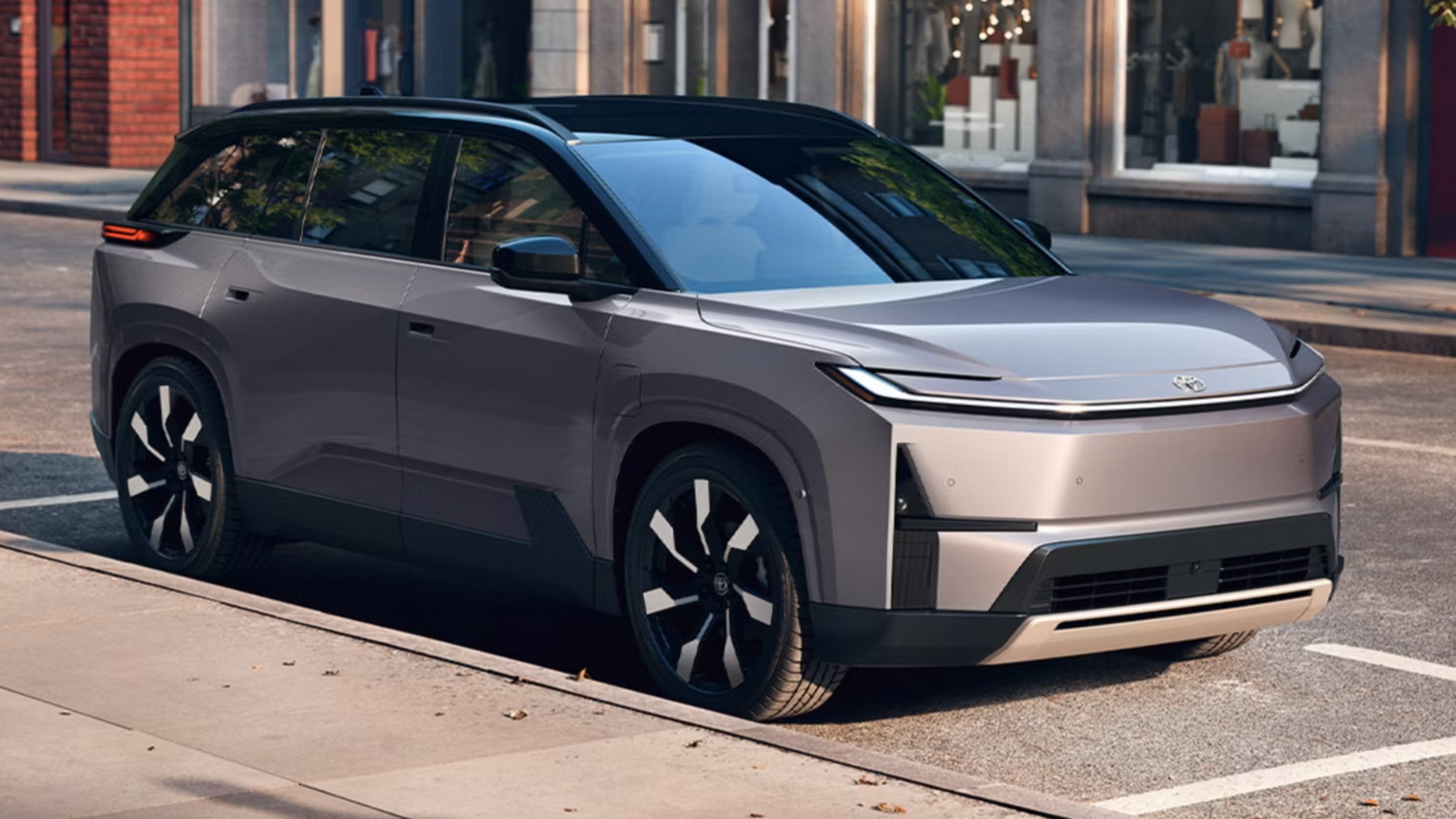
By 2027, Toyota plans to offer seven fully electric models in the country. Among them is a still-unnamed mystery SUV that will be built in the United States.

More: Toyota’s Electric Hilux Costs $20K More Than The Diesel, And That’s Not Even The Worst Part

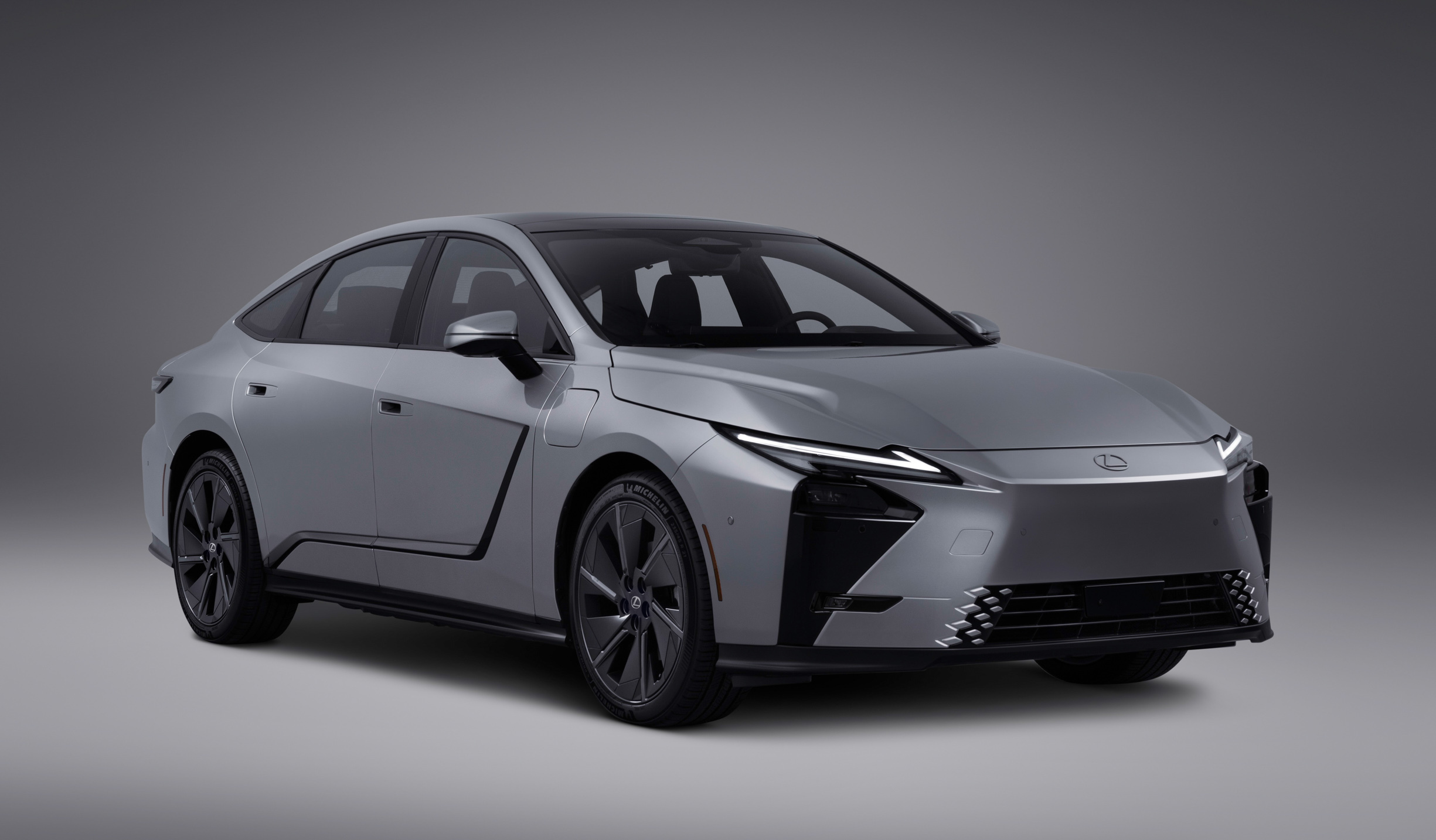
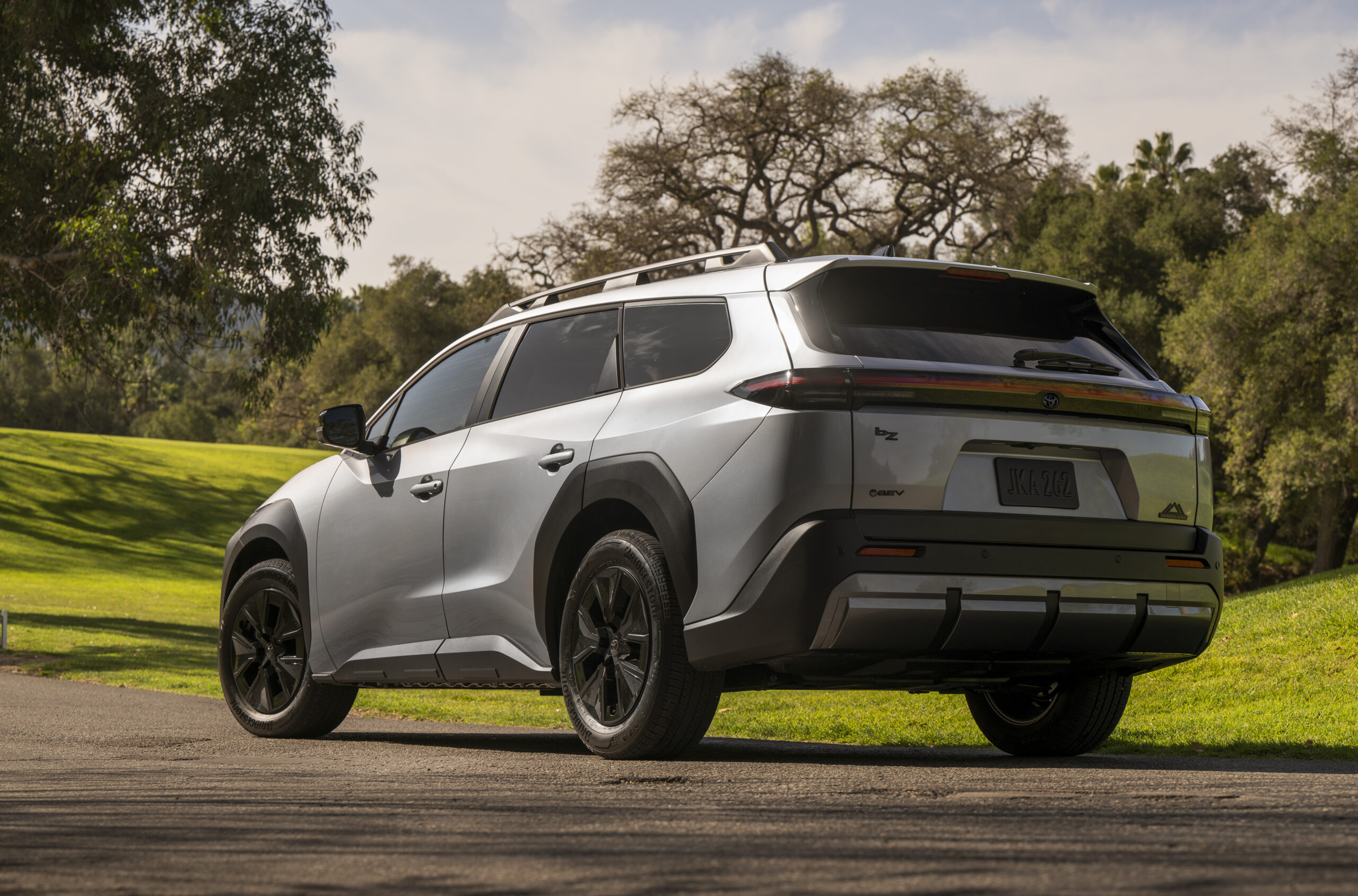
Right now, the Japanese automaker’s North American EV lineup sits at four models, and all of them are imported. That group includes the Toyota bZ, bZ Woodland, C-HR, and Lexus RZ. A fully electric Lexus ES sedan is set to arrive later this month, with the all-electric 2027 Toyota Highlander scheduled to follow in late 2026.

North America EV Expansion Plans

 Toyota’s bZ Outsold The Prius, And Now A Second US-Made Electric SUV Is Coming
2027 Toyota Highlander

The Highlander EV marks a turning point for the brand. It will be the first electric Toyota built in North America, assembled in Kentucky, with batteries sourced from North Carolina. But this is really just the first step in Toyota’s USA EV strategy.

According to a Bloomberg report, the second US-built EV is set to be an SUV already in development. Details remain scarce, including its size and where it will fit within the lineup, but production is also slated for Kentucky, with a planned start in 2027.

Mark Templin, executive vice president and chief operating officer at Toyota Motor North America, says the company plans to give buyers “multiple options.” The idea is fairly simple: if Toyota can secure 15% of the overall market in the US, it should be able to capture a similar share of the EV segment.

 Toyota’s bZ Outsold The Prius, And Now A Second US-Made Electric SUV Is Coming
Lexus ES

He also gave a better sense of who these upcoming EVs are meant to attract, referring to them as “Tesla killers.” The target, in his view, is a familiar group.

More: Toyota’s Flagship Electric Sedan Undercuts Tesla Model S By Nearly $96,000 In China

“We’ll probably see what I call boomerang customers, people who loved Prius for being the greenest car in the industry that maybe went to a Tesla – and then we get those people back. Two weeks ago in Japan, I drove three of our future battery electric cars. They’re fantastic. And I think they’re going to be Tesla killers.”

Recovering After A Rough Start

 Toyota’s bZ Outsold The Prius, And Now A Second US-Made Electric SUV Is Coming
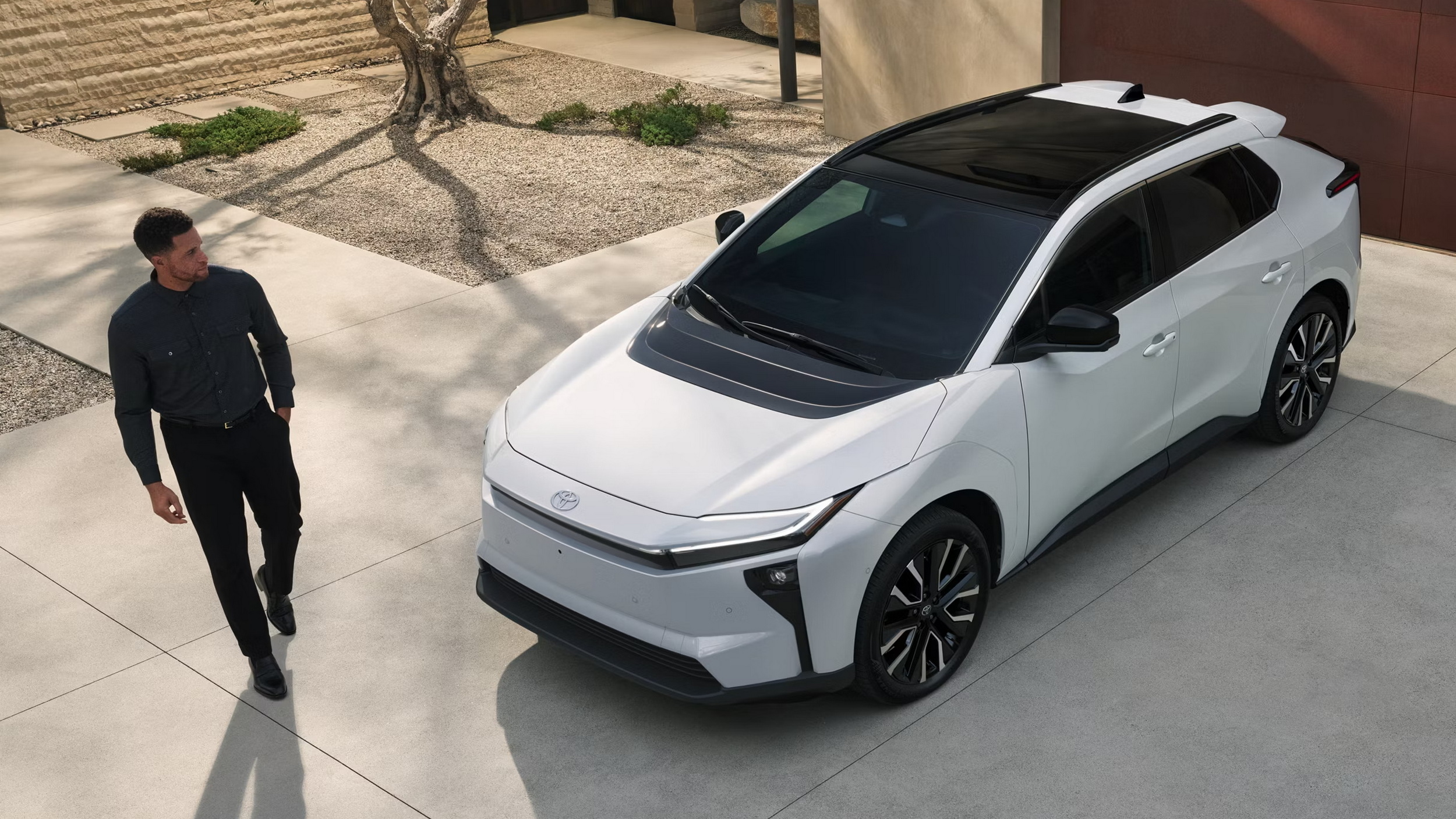
2026 Toyota bZ

Toyota didn’t exactly nail its first swing at EVs. The bZ4X landed with a bit of a thud, but things are starting to look promising. The updated bZ and the related Lexus RZ are finally gaining traction, with deliveries more than doubling in March 2026.

The numbers are revealing, with the bZ reaching 10,029 sales in Q1 2026, up from 5,610 a year earlier, a jump of about 79%. Over the same period, Prius sales fell to 9,737 from 16,653, a drop of roughly 42%. That’s been enough for the bZ to move ahead of the Prius so far this year, which shows just how quickly things can flip.

Hybrids Remain The King

Even so, hybrids are still doing the heavy lifting. They made up 55% of Toyota’s North American sales in March 2026, up from 49% a year earlier. And that number probably doesn’t tell the whole story, since plenty of buyers are still stuck on waiting lists despite factories running flat out.

More: The Soon-To-Be-Axed Supra Has More Than Doubled Its Sales This Year

Toyota clearly knows where its strength lies. The company has committed $10 billion to its U.S. operations in the coming years, including $1 billion to expand plants in Kentucky and Indiana. EVs are part of the plan, but hybrids remain the safe bet that keeps the numbers moving.

 Toyota’s bZ Outsold The Prius, And Now A Second US-Made Electric SUV Is Coming
2026 Toyota bZ Woodland

BYD Says Five-Minute Charging Adds 310 Miles, BMW Says Read The Fine Print

  • The Denza Z9GT can add 310 miles (500 km) of range in just five minutes.
  • BMW execs claim that pursuing quick charging forces other compromises.
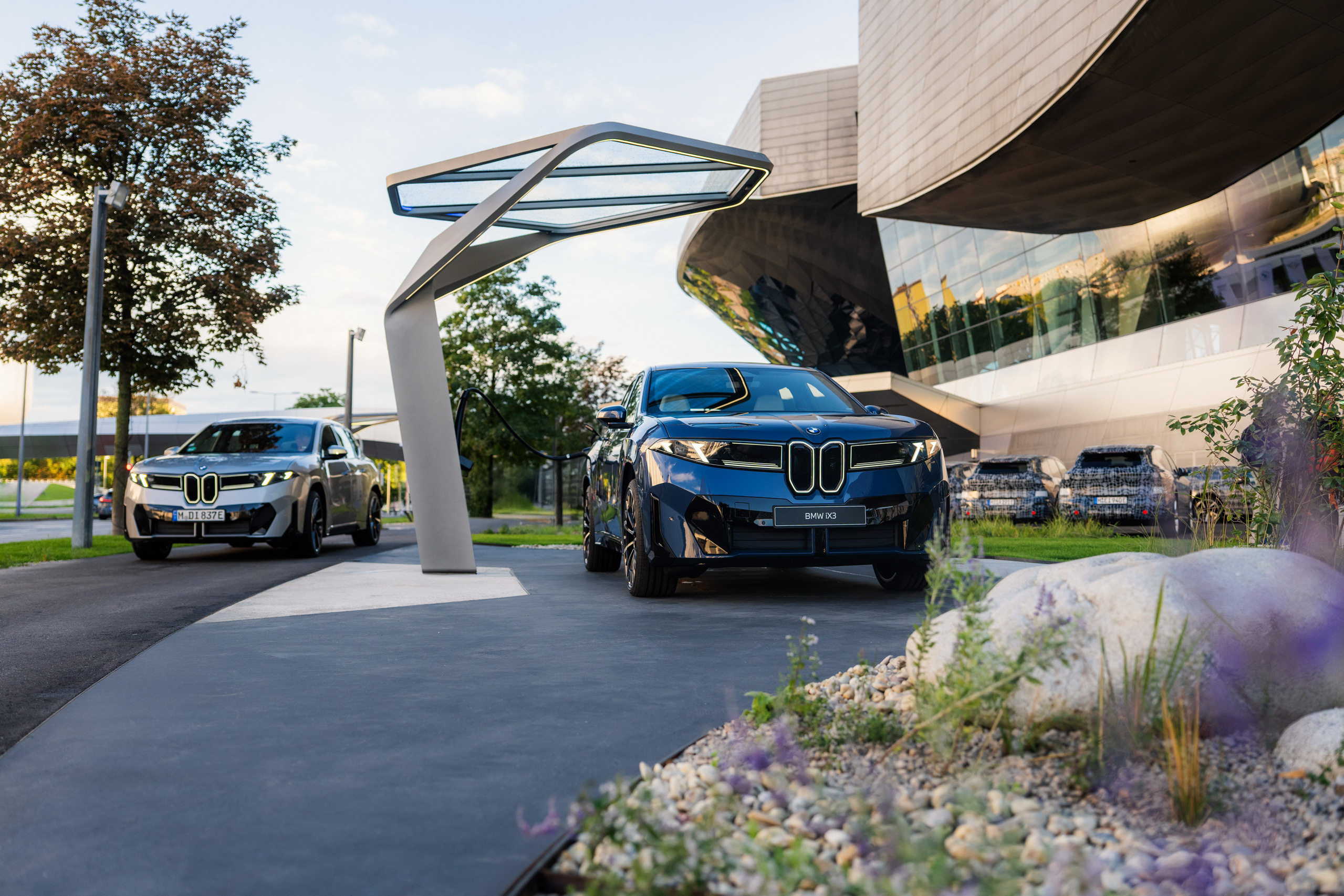
  • The iX3 and i3 are BMW’s fast-charging EVs, supporting 400 kW speeds.

BYD sent a jolt through the EV space with its ultra-fast charging push, though not everyone is ready to buy in. The Chinese automaker unveiled a 1,500 kW flash-charging system in China, promising speeds that edge close to refueling a combustion car. Despite the extraordinary claims, BMW remains unconvinced.

According to BYD, the Denza Z9GT can add roughly 310 miles (500 km) of range in just five minutes, thanks to its 1,500 kW charging technology and the second-generation Blade Battery.

Read: BYD’s New EV Chargers Are So Fast They’re Arranged Like Gas Station Pumps

The system also relies on megawatt-level charging hardware and extremely high current delivery to reach those peak rates. It all sounds pretty incredible, but BMW battery production boss Markus Fallböhmer says pursuing charging speeds like this has compromises.

“You always have to be careful with those kinds of announcements,” he told Car Sales. “It is possible to optimize one single performance indicator, but you have to make compromises on other sides. We could also increase our charging speed, but then you have to reduce other important factors of a battery. It is a blanket – if you pull it at one side.”

BMW’s New EVs Are No Charging Slouches

\\\\\\

The second-generation iX3 and the new i3 are the quickest-charging BMWs released to date, supporting peak 400 kW speeds. This is quick enough to top up the i3 with 400 km of range in just 10 minutes. BMW says it can guarantee “quality and safety” at these charging speeds, and appeared to question whether BYD can do the same.

BMW executives also indicated that pushing beyond these speeds would bring trade-offs in battery durability, range, and affordability, which they see as unnecessary for most real-world use.

 BYD Says Five-Minute Charging Adds 310 Miles, BMW Says Read The Fine Print

“We look to decrease charging time more and more, but you have to look at range, durability, reliability,” the head of BMW’s Neue Klasse models, Mike Reichelt, added. “All of these facts, we guarantee. We look at the speed of the Chinese market… but on the other side, we guarantee quality and safety. That is a topic that we do not [negotiate] with anyone.”

The race to improve charging times in the EV world is much the same as we’ve seen among smartphone manufacturers looking to uprate charging speeds of their devices, with the Chinese often leading the charge. Boost charging speeds too much, and batteries can get hot, including the risk of thermal management issues, which is clearly something BMW would like to avoid.

\\\\\\\\\\

Lucid Is Blaming Someone Else For The Gravity’s Second Recall In Four Months

  • Lucid’s second Gravity recall stems from a supplier change no one approved.
  • A seatbelt anchor weld falls short of federal safety requirements in most SUVs.
  • Affected owners will have their seats repaired or replaced at no charge.

Just a few months after the Lucid Gravity was recalled over seat covers that could prevent the airbag from functioning properly, the electric luxury SUV has been recalled yet again. This time, it’s due to a potential defect in the second-row seatbelt anchors.

The EV maker says that during internal tests for another issue, it discovered the outboard lap belt anchor bracket weld in the second row is shorter than it should be and not positioned correctly. The reason? Lucid says seat manufacturer Camaco made a change to the manufacturing process without notifying the company or obtaining its approval.

Read: Wrong Seat Covers Could Stop This EV’s Airbags From Saving You

Vehicles with an insufficiently welded lap belt anchor fail to comply with Federal Motor Vehicle Safety Standards and may increase the risk of injury in a crash. Unlike December’s recall, which impacted just 66 vehicles, this one is much more widespread.

In fact, the recall involves 4,476 Lucid Gravity models built from December 2, 2024, to February 3, 2026, and listed as 2025-2026 model year vehicles. Of these, 97 percent are estimated to have the issue.

What Happens Next?

 Lucid Is Blaming Someone Else For The Gravity’s Second Recall In Four Months

This recall comes shortly after Lucid issued a brief stop-sale for the Gravity earlier this year as it ran tests to determine whether the seat belts could meet safety standards with or without a reinforcing bracket. Even with a bracket, they failed to meet load requirements, prompting Lucid to ensure the components sourced from Camaco meet its standards.

Lucid will start informing its owners of the recall on May 22. Dealers will inspect impacted vehicles, and if a non-conforming weld is found, it will be repaired with either a reinforcing bracket and adhesive or, if necessary, the entire seat will be replaced free of charge.

\\\\\\

Hyundai’s New Concepts Tease A Design Direction Ioniq Has Never Tried Before

  • Hyundai teases Earth and Venus concepts as part of its Ioniq sub-brand.
  • The EVs show slim LEDs, futuristic proportions, and sharply cut surfaces.
  • A countdown on Hyundai China’s website points to an April 10 debut.

Hyundai is setting the stage for the next phase of its Ioniq sub-brand, previewing what’s to come with a pair of new concepts. The EVs, dubbed Earth and Venus, introduce an evolved design language that will likely carry over to future production models.

The automaker’s official website in China now features a countdown to a “Hyundai Ioniq Brand Launch Event” scheduled for April 10. A teaser video shows a meteorite impact revealing a gold-colored crystal, one face shaped like the letter “i.” Whether this becomes the new Ioniq emblem remains unclear.

More: The Boulder Is Hyundai’s Answer To The Ford Bronco, And A New Pickup Is Behind It

Hyundai has also released shadowy teasers of the upcoming concepts across its global social media channels, describing them as “a cosmic statement, engineered for humans.”

 Hyundai’s New Concepts Tease A Design Direction Ioniq Has Never Tried Before
Hyundai Earth Concept

The Earth is finished in silver and features Y-shaped LEDs reminiscent of the Lamborghini V12 Vision Gran Turismo Concept from 2019. Its short hood, steeply raked windscreen, boxy wheel arches, and flat surfacing give it a distinctly Cybertruck-like presence. Unfortunately, only a small portion of the profile is visible, so the overall bodystyle remains unclear.

More: Hyundai’s New Pickup Truck Will Be Everything The Santa Cruz Refused To Be

The Venus appears in a gold finish, with the teaser focusing on its rear. It leans into sharper, more angular surfacing, paired with a fastback-style tail, ultra-slim LEDs, and a ducktail spoiler. There are also glimpses of a pronounced bumper and round wheel arches.

 Hyundai’s New Concepts Tease A Design Direction Ioniq Has Never Tried Before
Hyundai Venus Concept

It will be interesting to see whether the Earth and Venus are simply futuristic styling exercises or early previews of where Hyundai’s electric lineup is headed alongside the Ioniq 3, 5, 6, and 9.

More: A Hyundai Beat The BMW M2 CS For World Performance Car Of The Year

The timing of the announcement, along with its ties to China, suggests the concepts could make their first public appearance at the Beijing Auto Show on April 24. Hyundai may also choose to reveal the designs earlier at its April 10 event.

Setting aside its global and China-focused ambitions, Hyundai is planning an aggressive product push in North America, with 36 new or refreshed models due over the next five years. That rollout includes a rugged SUV and a body-on-frame pickup previewed by the Boulder concept at the New York Auto Show.

\\\\\\

Hyundai

Rooftop solar photovoltaic systems account for 20% of Puerto Rico's capacity mix

Rooftop solar generating capacity in Puerto Rico totaled 1,456 megawatts (MW) at the end of 2025, 20% of the overall capacity mix. Rooftop solar capacity has increased faster than other sources over the past decade. Between 2016 and 2025 rooftop solar installations accounted for 81% of the new generating capacity in Puerto Rico, according to data from our Electric Power Monthly and Puerto Rico Energy Bureau's (PREB) Quarterly Report on System Data. In 2025, rooftop solar became the second-largest capacity source, after petroleum liquids capacity (3,671 MW), and surpassed natural gas capacity (1,391 MW).
❌