❌

Reading view

There are new articles available, click to refresh the page.

ACT Expo 2027 Opens Registration, Unveils Agenda Focused on Reducing Fleet Costs and Accelerating Performance

By: STN

LAS VEGAS, Nev. – ACT Expo today announced the opening of early bird registration and released its 2027 conference agenda, bringing together the technologies, strategies, and real-world fleet experiences operators need to improve performance and protect their bottom line. Taking place May 17–20 at the Las Vegas Convention Center, ACT Expo 2027 brings together fleet operators, shippers, vehicle manufacturers, technology innovators, and industry leaders for a comprehensive program spanning advanced vehicle technologies, diesel and alternative fuels, AI, automation, fleet safety, infrastructure, and operational efficiency.

Designed for the entire fleet leadership team—from operations and maintenance to safety, technology, finance, IT, and sustainability—the agenda tackles the decisions that directly impact fleet performance and profitability. At the top of fleet concerns, U.S. on-highway diesel prices reached a record weekly average of $6.53 per gallon in September 2026, with prices projected to remain elevated through 2027, highlighting the need for technologies and strategies that address the issue. ACT Expo’s program uniquely combines the latest technology innovations with real-world fleet results, giving attendees the insights they need to make confident purchasing and investment decisions.

“With fuel and operating costs continuing to climb, and the technological complexity of today’s commercial vehicles ever-increasing, fleet leaders can’t afford to stand still,” said Erik Neandross, founder of ACT Expo. “Every investment decision matters, and understanding which technologies can deliver real savings and operational improvements has never been more critical. ACT Expo brings together the technologies, industry leaders, and real-world fleet experiences that operators need to reduce costs, improve performance, and stay competitive. This isn’t just a sustainability conversation anymore; it’s a business imperative.”

2027 Program Highlights

Shaped by input from ACT Expo’s Fleet Planning Committee, whose members collectively manage hundreds of thousands of commercial vehicles, and other industry stakeholders, the 2027 agenda focuses on the technologies, operational challenges, and investment decisions that matter most to fleets. Programming will examine how fleets are:

• Reducing fuel and operating costs through advancements in diesel technology, aerodynamics, vehicle efficiency, right-sizing, telematics, and AI-enabled fleet management.

• Using AI, connected vehicle data, and predictive technologies to improve maintenance, asset utilization, uptime, safety, and operational decision-making.

• Deploying autonomy in real-world fleet operations, with a focus on what early commercial applications are revealing about safety, productivity, workforce impacts, and scalability.

• Navigating changing vehicle and emissions requirements, including the operational, maintenance, purchasing, and replacement-cycle implications of next-generation engines.

• Improving fleet safety and reducing risk through advanced driver assistance systems, AI-enabled safety tools, vehicle technology, and better use of fleet data.

• Building stronger business cases for technology investments, with sessions focused on total cost of ownership, vehicle-to-mission matching, deployment economics, and measurable ROI.

• Evaluating the right technologies for the right applications, including diesel, natural gas, electric, hybrid, hydrogen, and other emerging powertrain solutions.

• Supply, cost, and access to alternative fuels, including renewable diesel, biodiesel, and traditional and renewable natural gas, hydrogen and propane.

• Scaling EV infrastructure and overcoming energy challenges, including scaling operations, temporary and megawatt charging solutions, energy management, utility coordination, and new technologies.

The program features real-world fleet case studies, C-suite perspectives, technical workshops and sector-specific discussions. Visit www.actexpo.com/agenda to view the full program.

Continuing Education Credit
For the second consecutive year, ACT Expo will offer continuing education credit opportunities for fleet professionals. In 2026, more than 25 conference sessions and 10 workshops were approved for credit through NAFA Fleet Management Association and Green Business Certification Inc. (GBCI). Details on eligible 2027 sessions and workshops will be announced as they are finalized.

Expo Hall and Ride & Drive
The ACT Expo exhibit hall, open May 18-19, will feature more than 400 exhibitors and sponsors, over 200 advanced commercial vehicles, and one of the industry’s most comprehensive showcases of technologies transforming commercial transportation. Attendees can explore the latest light-, medium- and heavy-duty trucks, commercial vans, buses, and off-road equipment alongside innovations in AI, autonomous driving, fleet management, vehicle efficiency, safety, alternative fuels, and charging infrastructure.

The expansive exhibit floor gives fleet operators a unique opportunity to compare competing solutions side by side, connect directly with manufacturers and technology providers, and identify the products and partners best suited to their operations. The Expo Hall Theater will also feature product demonstrations and discussions highlighting emerging technologies.

The ACT Expo Ride & Drive takes the experience a step further, putting attendees behind the wheel of the latest advanced commercial vehicles. Fleet operators can experience vehicle performance, handling, safety features, and driver comfort firsthand, with manufacturer representatives available to answer questions about range, maintenance, infrastructure requirements, and total cost of ownership.

Registration and New Team Offers

Registration is open at https://www.actexpo.com/register, with early bird rates through December 11, 2026. Fleets and shippers can now bring more of their team for less, with two new registration offers:

• Fleet & Shipper Team Package: Buy two passes and receive additional qualifying team passes complimentary

• First-Time Fleet and Shipper Offer: Qualified fleets and shippers may be eligible for a complimentary pass

ACT Expo 2027 is supported by presenting sponsors Daimler Truck North America, Penske Transportation Solutions, and Geotab. Visit www.actexpo.com to register and learn more.

About ACT Expo
ACT Expo is North America’s largest fleet technology conference and expo, covering the vehicles, fuels, infrastructure, and digital technologies that improve commercial fleet performance. Produced by WSP, and recognized by Trade Show Executive magazine as one of the nation’s Gold 100 events, ACT Expo brings together fleet operators, vehicle manufacturers, infrastructure providers, and technology developers to share emerging solutions to the most pressing challenges and opportunities in commercial transportation, especially decarbonization. ACT Expo hosts approximately 10,000 attendees from 50+ countries, 275+ speakers, 200+ vehicles on display, and 400+ exhibitors and sponsors. www.actexpo.com

The post ACT Expo 2027 Opens Registration, Unveils Agenda Focused on Reducing Fleet Costs and Accelerating Performance appeared first on School Transportation News.
As Diesel Prices Hit Record Highs, EverDriven Shows What Route Consolidation Could Save School Districts

By: STN

DENVER, Colo.- Diesel prices reached a record high this fall, and many school districts that built their budgets around last year’s fuel costs are now absorbing the difference. The U.S. average price of on-highway diesel peaked at $6.529 a gallon the week of Sept. 21 and stood at $6.199 the week of Oct. 5, according to the U.S. Energy Information Administration (EIA). That is about 69% above the 2025 average of $3.66.

EverDriven, a category leader in Modern Student Transportation, is showing how a routine route review can turn fuel volatility into a measurable budget opportunity for districts. Consider an example of a district operating 120 daily bus routes with an average route length of 35 miles per day round trip. This calculation uses the following baseline:

  • Bus fuel economy of 6 miles per gallon, typical for a diesel school bus.
  • Diesel at $6.199 per gallon, the EIA national average for the week of Oct. 5, 2026.
  • A 10% reduction in routes by right-sizing service to actual daily ridership.

Consolidating routes by 10% alone could reduce annual diesel fuel costs by more than $78,000 annually:

  • 10% of 120 routes = 12 routes consolidated.12 routes x 35 miles = 420 fewer miles driven per day.420 miles / 6 mpg =
  • 70 gallons of diesel saved per day.70 gallons x $6.199 =
  • $433.93 saved per school day. $433.93 x 180 school days = $78,107.40 in annual diesel savings.

District transportation leaders looking to calculate their own diesel savings from route consolidation can use EverDriven’s Diesel Savings Calculator, available at https://www.everdriven.com/resources/blog/diesel-route-savings-calculator

“This scenario counts fuel only. Running fewer routes also reduces tire wear, maintenance, and driver salary and overtime, so the full return for a district would likely be higher,” said Greg Jackson, General Manager of Consolidated Routing Services at EverDriven. “Because each mile optimized saves a fixed amount of fuel, the value of a leaner route plan rises with fuel prices. When prices ease, the efficiency carries forward into every future budget cycle.”

Route consolidation matches the number of routes a district runs to the number of students riding each day. Enrollment patterns have shifted in many communities, and route plans built for past ridership often go years without a full review. A well-planned consolidation keeps every eligible student on a route.

Districts that have adopted this model have seen route costs decrease by up to 15%, along with measurable improvements in on-time performance and reduced ride times for students with additional needs. Consolidated Routing Services complements EverDriven’s Alternative Student Transportation offering, which serves students that fixed routes cannot efficiently reach.

About EverDriven
EverDriven delivers modern student-centered transportation that’s safe, consistent, and built for those who need it most. EverDriven specializes in routing and transporting students across all ranges of needs — from everyday support to the most complex circumstances — including students with disabilities, students experiencing housing instability, and other high-need populations. Serving more than 800 districts across 38 states, the company completed more than 2.1 million successful trips in the 2025–26 school year. EverDriven’s deeply human, fully compliant, and AI-powered approach helps districts get students on the road in hours, not days, while maintaining consistent, high-trust rides that complement traditional yellow bus fleets. For more information, visit everdriven.com.

The post As Diesel Prices Hit Record Highs, EverDriven Shows What Route Consolidation Could Save School Districts appeared first on School Transportation News.
U.S. Representatives Seek Clean School Bus Program Reauthorization

While the industry awaits information on the remaining $2.3 billion available through the EPA Clean School Bus Program, three U.S. representatives hope to extend the program through 2031, reauthorizing another $1 billion in funding annually for five more years.

To date, the CSBP has awarded $2.7 billion to replace more than 8,500 school buses, reaching nearly every U.S. state. More than 5,200 electric school buses funded through the program have already been delivered to schools. Ninety-one percent of the new school buses applied for were electric. The remaining 9 percent consisted mostly of propane with a small number of CNG also awarded. No new CNG-powered school bus models are being manufactured.

The Clean School Bus Reauthorization Act builds on the Clean School Bus Program funding included in the Infrastructure Investment and Jobs Act, signed into law in 2021. The program was expected to award $5 billion over five years, through competitive grants and rebates. However, following President Donald Trump’s return to office, the funding has reached a standstill. The last funding opportunity from the EPA was the 2024 Clean School Bus Rebate Program, which opened September 2024. However, the EPA canceled the rebate and no organizations received awarded funds. The last round of distributed funds was the 2023 rebate program.

The new legislation would amend the Energy Policy Act of 2005 by replacing the program’s current authorization period of fiscal years 2022 through 2026 with fiscal years 2027 through 2031. Under the existing statute, the program is authorized to receive $1 billion annually, totaling $5 billion. Rep. Jahana Hays, D-Conn., introduced the bill Oct. 9 and was joined by Reps. Greg Landsman, D-Ohio, and Buddy Carter, R-Ga.

“Since I came to Congress in 2019, I have advocated for clean school bus funding. As an educator with over a decade of classroom experience, I know how damaging diesel exhaust can be for student well-being and learning. The consequences of diesel emissions extend to our environment, exacerbating the effects of greenhouse gas emissions,” Hayes said in a statement. “The Clean School Bus Reauthorization Act will help to provide cleaner and healthier air for school children in Connecticut and across the country, support clean energy jobs, and protect our environment for decades to come.”

The legislation would maintain the existing funding structure, which allocates $500 million annually for clean and zero-emission school buses and another $500 million exclusively for zero-emission school buses. Funding supports the replacement of older school buses with cleaner alternatives.

It does not establish new grant requirements or change program eligibility. Rather, it extends the existing authorization for five additional years.

According to a press release, The Clean School Bus Reauthorization Act is endorsed by the American School Bus Industry Coalition which includes Blue Bird, First Student, Beacon Mobility, National Express, Highland, Greenpower Motor Company, National School Transportation, Student Transportation of America, and IC Bus. Additional endorsers include the American Bus Association, American Asthma and Allergy Foundation (AAFA), League of Conservation Voters, Moms Clean Air Force, Sierra Club, Union of Concerned Scientists, and World Resources Institute’s (WRI) Electric School Bus Initiative.

Sue Gander, director of WRI’s Electric School Bus Initiative, stated that children’s health is not a partisan issue.

“As this bill shows, there’s real enthusiasm on both sides of the aisle to give children the clean ride to school they deserve,” she said. “This bipartisan support is no surprise, as 51 percent of school districts with electric school buses on the road or coming soon are in Congressional districts represented by Republicans.


Related: EPA Opens $180 Million in 2026 Diesel Emissions Reduction Act Grants 
Related: Oregon School Districts Make Case for Propane at STN EXPO West
Related: School Buses as Power Plants? Real-World V2G Journey Offers Roadmap
Related: Updated: EPA Seeks to Expand Fuel Scope of Clean School Bus Program


“The Clean School Bus Program has been a game-changer, answering school districts’ call to replace aging diesel buses with clean, zero-emissions vehicles in rural, suburban and urban communities alike,” Gander continued. “Replacing diesel buses with electric buses protects children from the dangers of diesel exhaust pollution, which disproportionately impacts low-income and Black communities.”

She added that electric school buses are popular with school districts that use them, especially the drivers behind the wheel. The number of ESBs on the road today is 12 times higher than it was five years ago, she noted.

“With diesel prices at record highs, Congress has a chance to help school districts save big on fuel costs and improve children’s health at the same time,” she said.

Meanwhile, First Student posted on Facebook that it welcomes the bipartisan introduction of the legislation.

“As the program’s largest recipient of funding, First Student has seen firsthand its importance in helping bring zero-emission school buses to our customers students and communities we serve,” the post reads. “Continued bipartisan support for this program is important to helping school districts and communities access funding for cleaner school bus technologies, including electric school buses.”

The school bus contractor added that reauthorizing the program would help preserve a pathway for Congress to continue supporting ESBs.

The post U.S. Representatives Seek Clean School Bus Program Reauthorization appeared first on School Transportation News.
VW ID. Buzz And Transporter Gain Signature Editions With GTI Flair

  • VW introduced a Signature Edition pack for its commercial vans.
  • The €6,495 kit adds carbon-look aero, new wheels, and eco-leather.
  • It’s available in the Netherlands and doesn’t affect their taxable value.

Sporty vans are trending, with nearly every single automaker offering some sort of optional package or special edition inspired by the aftermarket tuning scene. Volkswagen Commercial Vehicles has already applied the GTI-style treatment to its vans, but its Dutch division has just introduced a new option for local buyers.

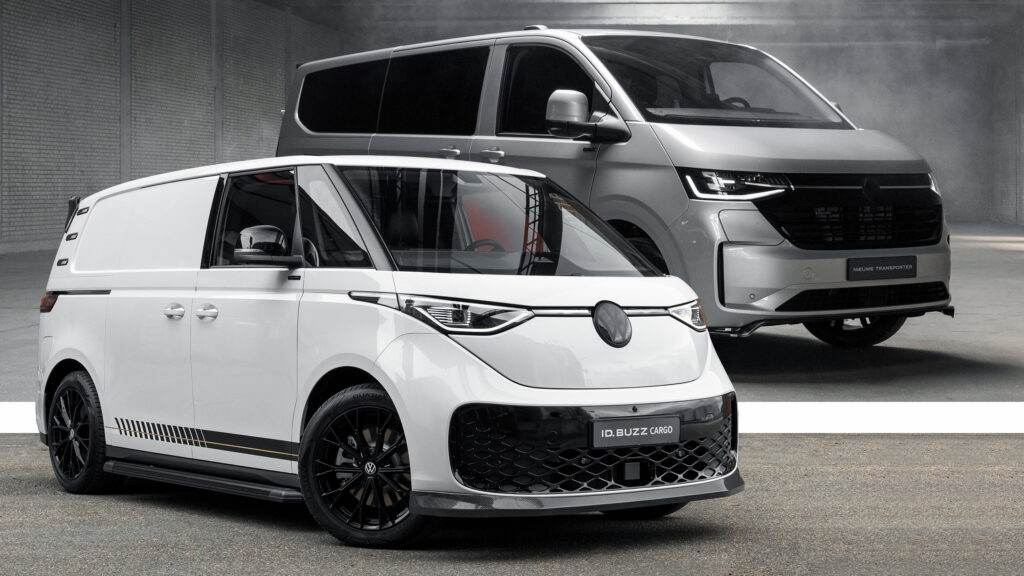
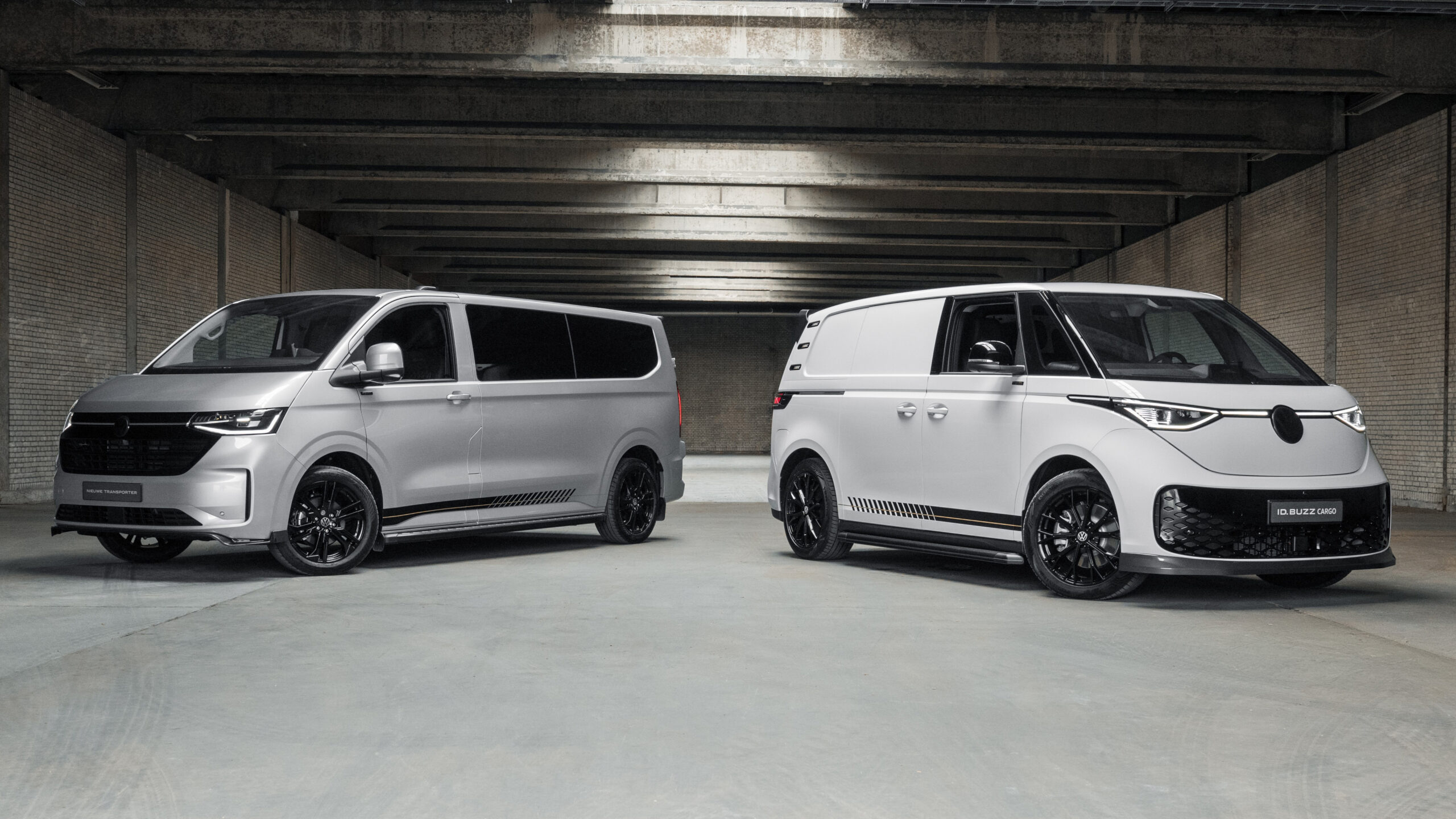
The Signature Edition is an optional package available for the Transporter Bulli and the ID.Buzz Cargo in the Netherlands. Both vans feature sharper aero components, new alloy wheels, side decals, Signature Edition badges, and fresh upholstery inside the cabin making them more appealing.

More: VW’s New Van Shows Up In GTI Cosplay, But No One Told The Engine

The bodykits include splitters and rear spoilers with a carbon finish, paired with black side skirts. The grille and VW emblems are also finished in black. The same applies to the alloy wheels, measuring 19 inches on the Transporter and 20 inches on the ID. Buzz Cargo.

\\\\\\\\\\\\

VW ID.Buzz Cargo Signature Edition

Inside, the package adds eco-leather upholstery on the seats with Dinamica accents, a hexagonal pattern, and contrasting stitching. Signature Edition logos can be found on the seatbacks and the dashboard. The door cards also gain Dinamica and eco-leather inserts, with the Transporter featuring the same materials on the dashboard. Finally, the vans feature carbon-style details on the steering wheel.

More: VW’s ID. Buzz Picks Up A Feature No Minivan Has Any Business Offering

Unfortunately, the sporty looks and the upmarket interiors are not combined with any performance or chassis upgrades. This means that the electric ID. Buzz and the diesel-powered or electric Transporter/e-Transporter retain their standard powertrains.

\\\\\\\\\

VW Transporter Bulli Signature Edition

Volkswagen is offering the Signature Edition as an optional package in the Netherlands, with a starting price of €6,495 ($7,300) before VAT. The accessories are fitted locally after the vehicle’s registration, ensuring that the upgrades won’t increase its taxable catalog value.

More: VW’s Electric Cargo Van Adds Extra Space With New Extended Wheelbase Variant

This is not the first time Volkswagen Commercial Vehicles spruces up its vans. The company is offering an even cooler VW Transporter Sportline in the UK as well as various sporty add-ons for the ID.Buzz Cargo. As for performance, the flagship ID.Buzz GTX trim of the passenger van remains the most potent member of the VW lineup thanks to its 335 hp bi-motor setup.

 VW ID. Buzz And Transporter Gain Signature Editions With GTI Flair

VW Commercial Vehicles / Netherlands

Mazda Is Working On A New Midsize Pickup

  • Mazda confirms a next-gen BT-50 pickup is under development.
  • It could feature sharper styling based on shared underpinnings.
  • The new midsize truck is expected to hit the road around 2028.

The Mazda BT-50 might not be as popular as its Toyota Hilux and Ford Ranger rivals, but it remains an important model for the Japanese automaker. The increased competition in the midsize pickup segment has prompted Mazda to consider a new generation, set to arrive over the next couple of years.

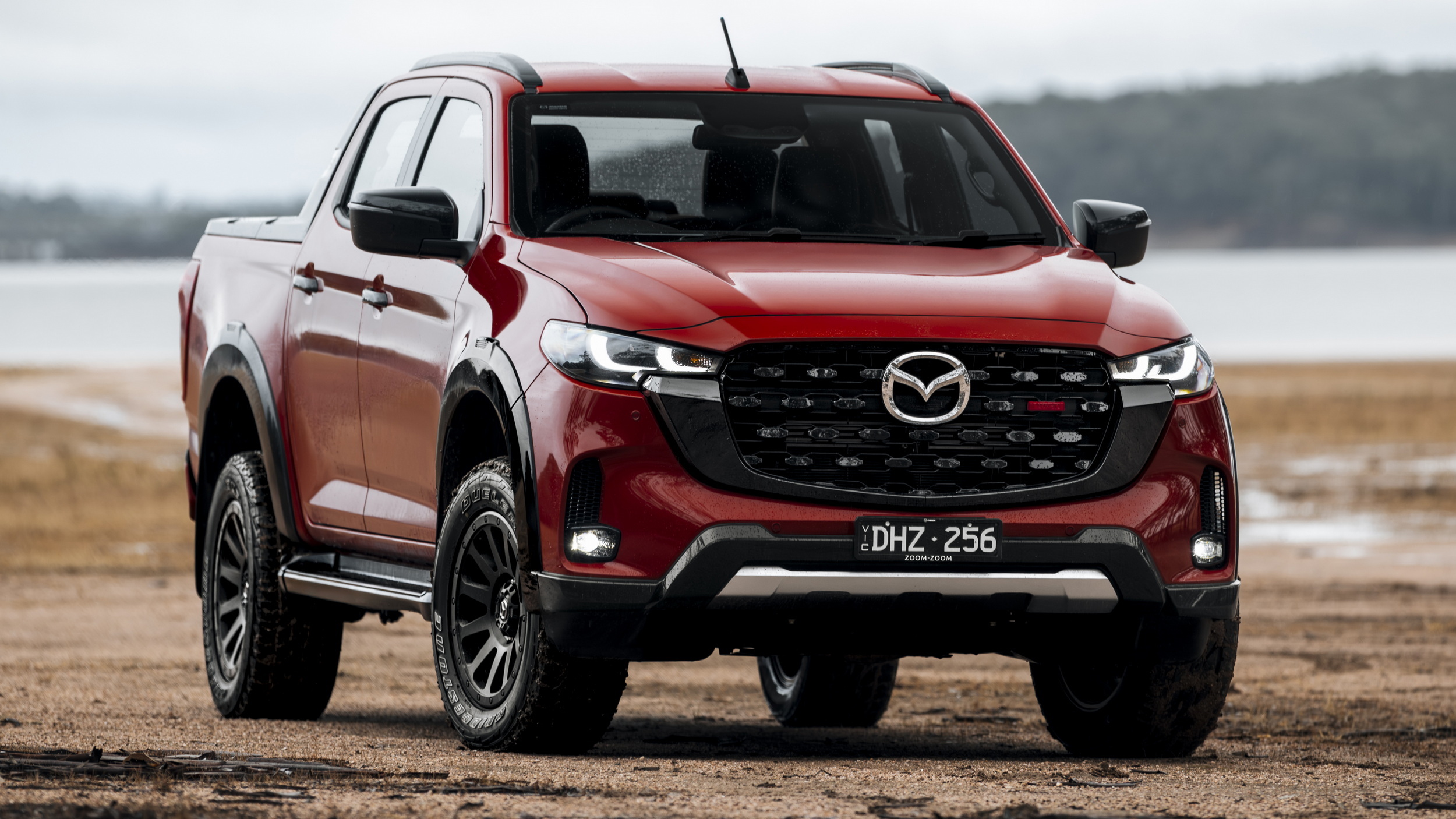
The third generation of the Mazda BT-50 was introduced in 2020, with a mid-lifecycle update following in late 2024. The model is based on the ladder-frame underpinnings of the Isuzu D-Max, with Mazda-specific styling inside-out and is currently offered with non-electrified turbodiesel powertrain options.

More: Mazda Pickup Gets Its Thunder Back, As A New Boss Steps In

Our colleagues at CarsGuide spoke to Vinesh Bhindi, Mazda Australia’s managing director, who confirmed that a new generation of the BT-50 is under development. The high-ranking official didn’t get into details about the specifications, but confirmed it will likely hit the road around 2028.

 Mazda Is Working On A New Midsize Pickup
The current Mazda BT-50 is based on the Isuzu D-Max.

The same publication spoke to Eiji Kimoto, Mazda’s chief designer, who was responsible for the styling of the current BT-50. When asked about the upcoming pickup, Kimoto said: “I am not allowed to speak much about the future product, but I can tell you, please look forward to it”.

More: Bare-Bones Mazda BT-50 Grows Stronger And More Capable

Since Mazda doesn’t have enough R&D resources to develop a pickup on its own, the next BT-50 will likely be the result of a partnership. After all, the first two generations were paired with the Ford Ranger, while the third one migrated to the Isuzu platform.

Collaborative Effort

 Mazda Is Working On A New Midsize Pickup

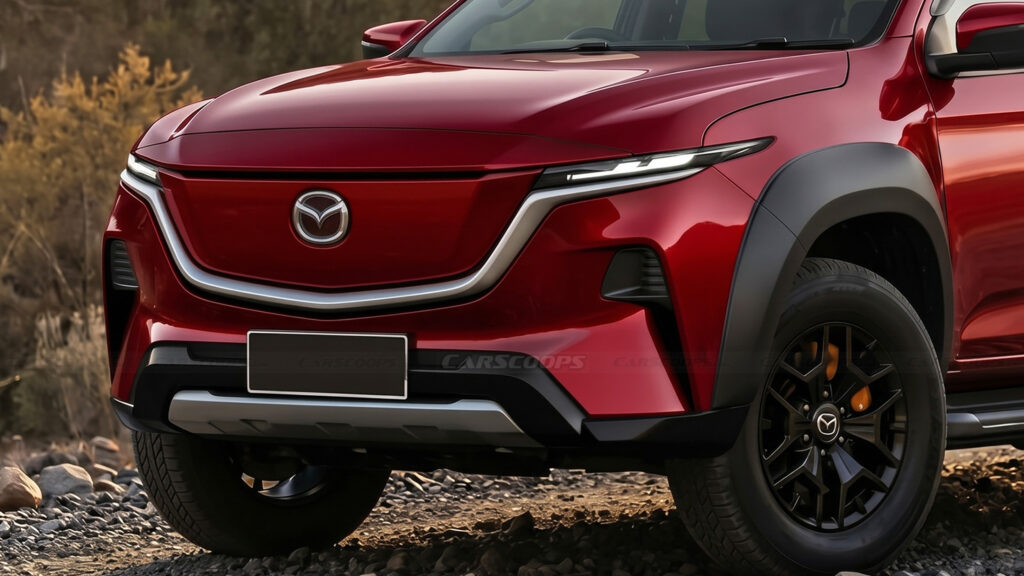
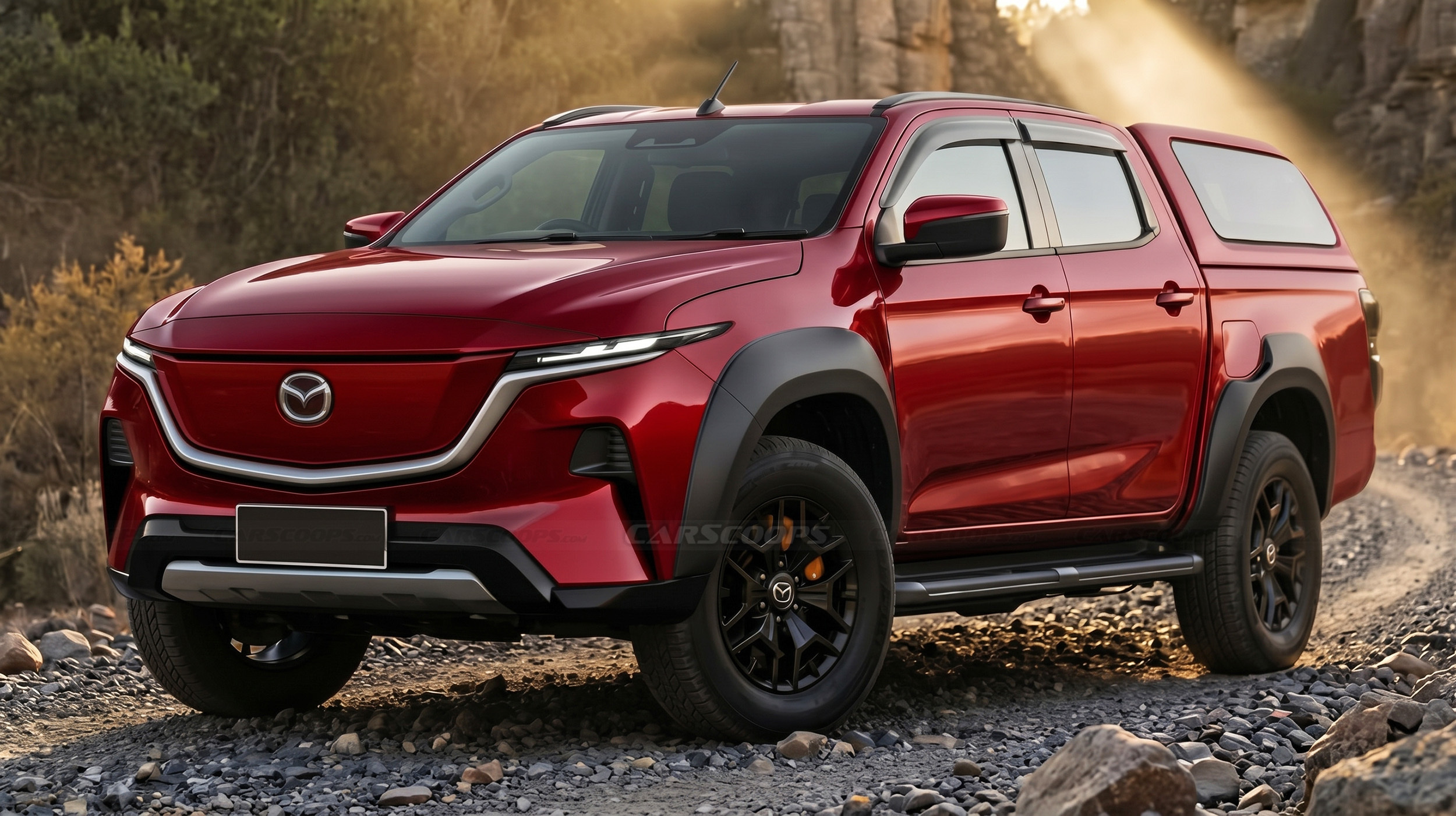
Illustrations: Thanos Pappas / CarScoops

Mazda could continue the partnership with Isuzu, developing the new model alongside the new generation of the D-Max. Another option would be to broaden its collaboration with Chinese automaker Changan, following the 6e sedan and CX-6e SUV projects.

More: Mazda Poised To Build More Chinese-Based EVs

Changan already offers a pickup in the form of the Hunter K50 with a revolutionary range-extender powertrain. However, this one is based on the ladder-frame chassis of the diesel-powered Changan Hunter which has already spawned several siblings from Stellantis brands in South America including the Peugeot Landtrek, the Fiat Titano, the Ram 1200, and Ram Dakota.

Sharp Looks And Upmarket Interior

 Mazda Is Working On A New Midsize Pickup

Illustrations: Thanos Pappas / CarScoops

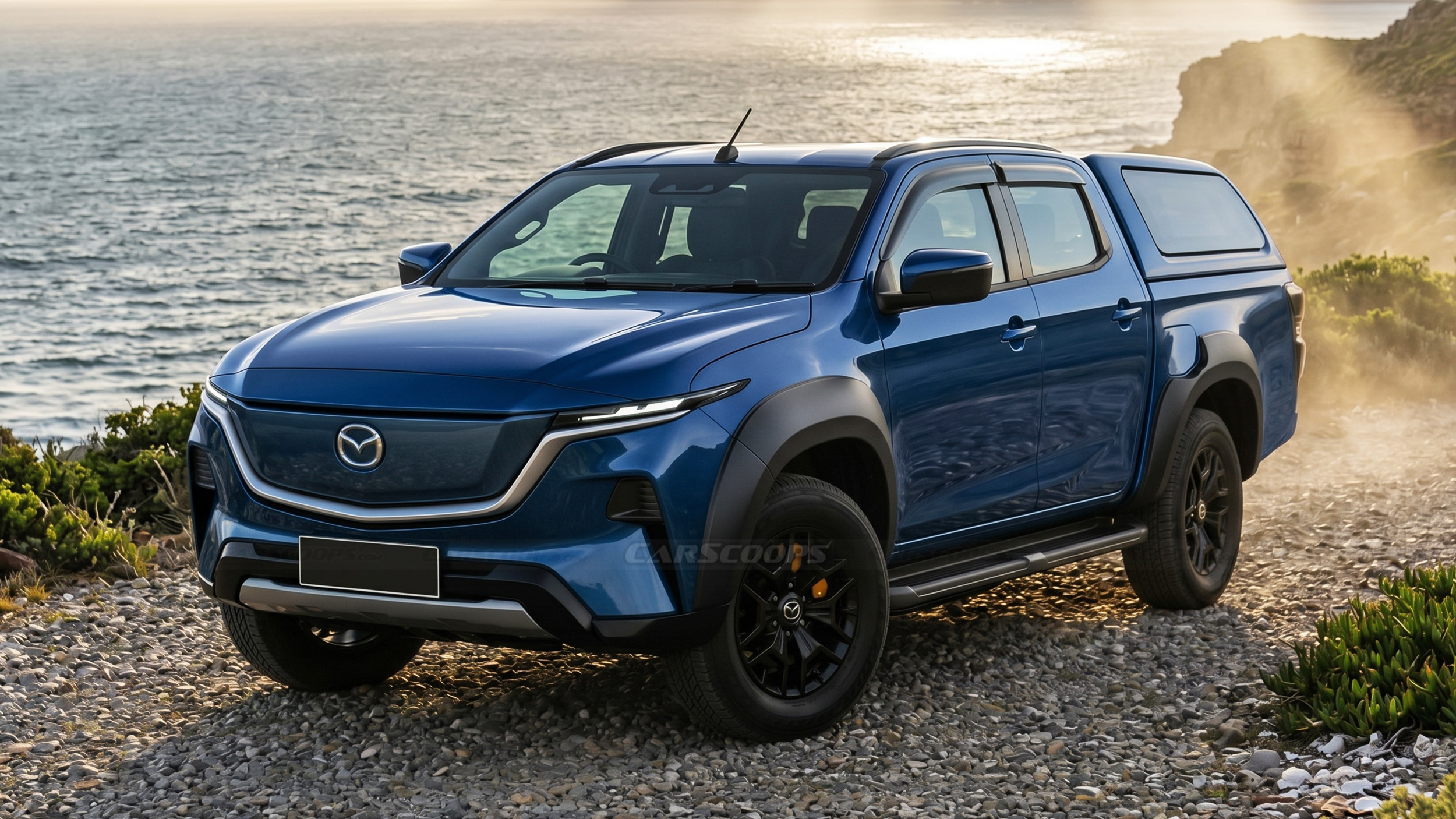
In any case, the next Mazda BT-50 is expected to adopt the brand’s updated styling language with sharp LEDs and sculpted details. In our speculative rendering we used the proportions of the Isuzu D-Max as a base, infusing elements from the Mazda CX-6e alongside wide fender extensions and a rear canopy.

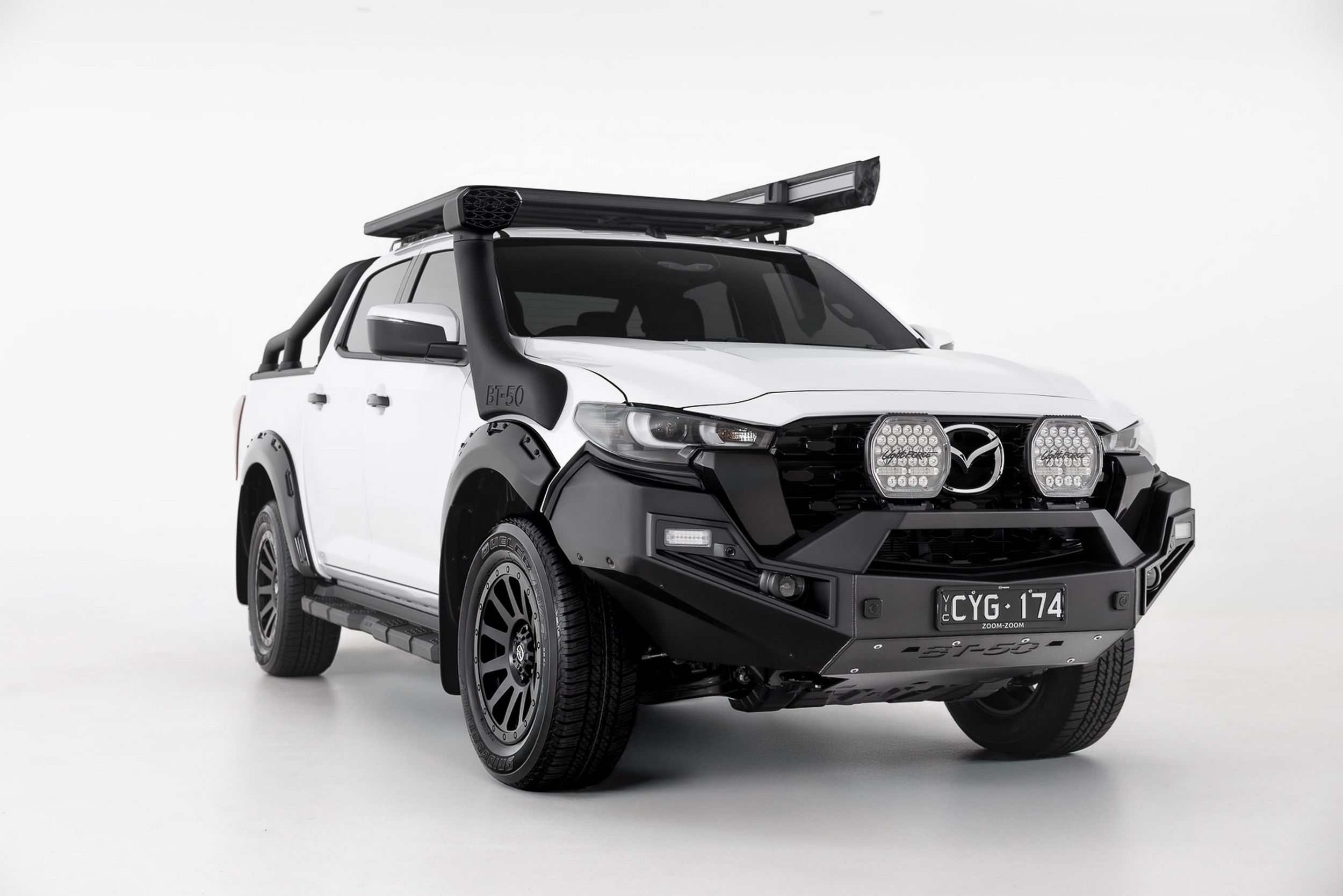
We also expect Mazda to give its truck a more premium interior, in line with the upmarket move of its entire lineup. This could help the next BT-50 stand out in a crowded segment, targeting a specific kind of buyer. As with most midsize pickups in Australia, the model could continue offering rugged trims like the Thunder alongside a selection of optional accessories for off-road enthusiasts.

What About The Powertrain?

Back in 2025, the Mazda Australia boss said there won’t be a fully electric variant of the BT-50 in the foreseeable future, despite the availability of the closely-related Isuzu D-Max EV. He also didn’t perceive PHEV pickups as a threat, adding that diesel powertrains will probably stick around. Still, the local Managing Director admitted they will let the market pinpoint if there’s demand for electrified trucks and consider the options.

Reading between the lines, Mazda could offer some sort of electrified powertrain options for the next BT-50. If it sticks to the partnership with Isuzu they will likely use a mild-hybrid diesel, while the Changan route would probably result in a range-extender option. That would allow the pickup to fulfil market demand while complying with tightening emission regulations and potentially expanding its scope to markets outside Australia.

 Mazda Is Working On A New Midsize Pickup
A heavily accessorized example of the Mazda BT-50 in Australia.

EPA Opens $180 Million in 2026 Diesel Emissions Reduction Act Grants 

By: Ryan Gray

With the return of the Clean School Bus Program reportedly still one month away, the U.S. Environmental Protection Agency (EPA) is accepting applications for approximately $180 million through the 2026 Diesel Emissions Reduction Act (DERA) national grant competition.

Eligible projects include school bus replacements powered by battery-electric, diesel, gasoline and propane as well as after-treatment retrofits and engine upgrades. The DERA funding also covers other diesel vehicles and equipment.

EPA announced the national grants on Sept. 24. Applications are due through Grants.gov by 11:59 p.m. Eastern on Jan. 22, 2027. Selection notifications are anticipated in May, with awards expected in July.

According to the Notice of Funding Opportunity, the national competition combines approximately $65 million from fiscal 2024, $62 million from fiscal 2025, and $53 million from fiscal 2026. Final awards depend on funding availability, application quality and agency priorities. EPA said it expects to award 120 entities, with the maximum amount of each award set at $12 million. No minimum dollar amount was provided.

School Bus Eligibility and DERA Funding Limits

Eligible DERA applicants include public school districts responsible for student transportation that own or operate diesel fleets, other qualifying government agencies and certain nonprofits. For-profit school bus contractors cannot apply directly but may receive support through programs administered by eligible grant recipients, including rebates.

Diesel, alternative-fuel and electric school bus replacements are eligible, subject to program requirements. For selected school bus replacement projects, federal funding is limited to 25 percent, 35 percent or 45 percent of eligible vehicle costs, depending on certified nitrogen oxides emissions. Electric replacements fall under the 45 percent limit, but charging equipment including is ineligible. EPA said charging equipment includes chargers/EVSE, electrical panels or service upgrades, wiring and conduit, design and engineering, electricity, and stationary battery storage.

Existing school buses must be operational, have at least three years of remaining life, and have been owned and operated by the participating fleet owner during the two years before the upgrade. They generally must have accumulated at least 7,000 miles annually during those years.

Replacement projects generally require scrapping or permanently disabling the old bus within 90 days after the replacement becomes operational, with limited EPA-approved alternatives.

National program webinars are scheduled for Oct. 13, Oct. 28 and Nov. 12. Questions about the competition are due Nov. 24.

DERA State Funding and Oct. 1 Webinar

Separately, EPA said last week it anticipates approximately $27 million in DERA state funding for fiscal 2025 and another $27 million for fiscal 2026 — approximately $54 million combined, subject to appropriations.

That funding is allocated by formula rather than through the national competition. Participating states and territories will receive both fiscal years’ funding in one grant to support state-administered grants and rebates. School buses are eligible.

States that match their federal base allocation with qualifying nonfederal funding can receive an additional federal incentive equal to 50 percent of that base allocation.

EPA held an Oct. 1 webinar that provided an overview of the state program. State and territorial notices of intent to participate are due Oct. 8, with final allocations scheduled for Oct. 15. Application packages are due Nov. 19.

Those deadlines apply to participating states and territories, according to EPA. School districts seeking state-administered funding should follow their state agency’s grant or rebate process.

Article written with the assistance of AI and EPA documents.


Related: Federal Grants Provide Opportunities for School Transportation Emergency Training
Related: Engine, Truck Manufacturers Support EPA Easing Derate of SCR Diesel Emissions Controls
Related: Report Highlights Shift in Federal Policy from EVs to Conventional Fuels

The post EPA Opens $180 Million in 2026 Diesel Emissions Reduction Act Grants  appeared first on School Transportation News.
Cheap Thrills: Stellantis Adds Extra Plastic And Mobile Office To Base Vans

  • Citroen Berlingo and Opel Combo gain cheaper trims in Europe.
  • The vans feature unpainted bumpers and a redesigned dashboard.
  • The Opel Combo Start is priced from €22,400 ($26,000) in Germany.

Stellantis has introduced two new entry-level trims for the Citroen Berlingo and Opel Combo twins in Europe, making them more accessible and more practical. The base models benefit from a redesigned interior which transforms into a mobile office, and will be available with gasoline, diesel, mild-hybrid, and fully electric powertrains.

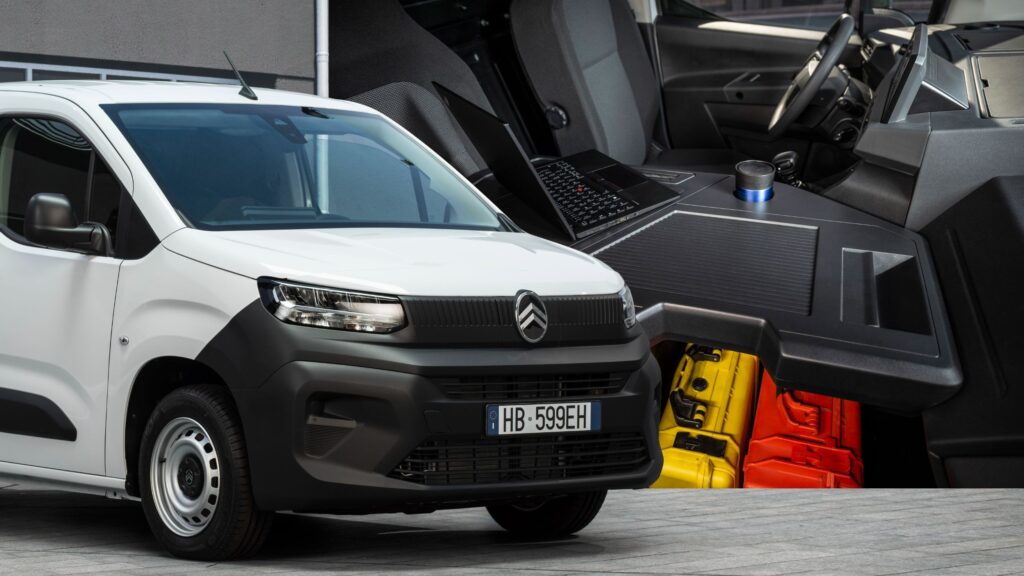
From the outside, the Citroen Berlingo Van First and the Opel Combo Start have slightly different faces compared to the rest of the lineup. The lower bumper appears to be carried over but the upper portion sheds the body-colored finish for unpainted plastic and gains a simplified design for the grille. The rest of the bodywork remains unchanged.

More: Opel’s Cheapest New Car Is Now A Family SUV With Three Pedals And Steelies

Note that the Berlingo Van has different headlights compared to the Berlingo which is better aligned with Citroen’s passenger car and SUV lineup.

More Practicality Inside The Cabin

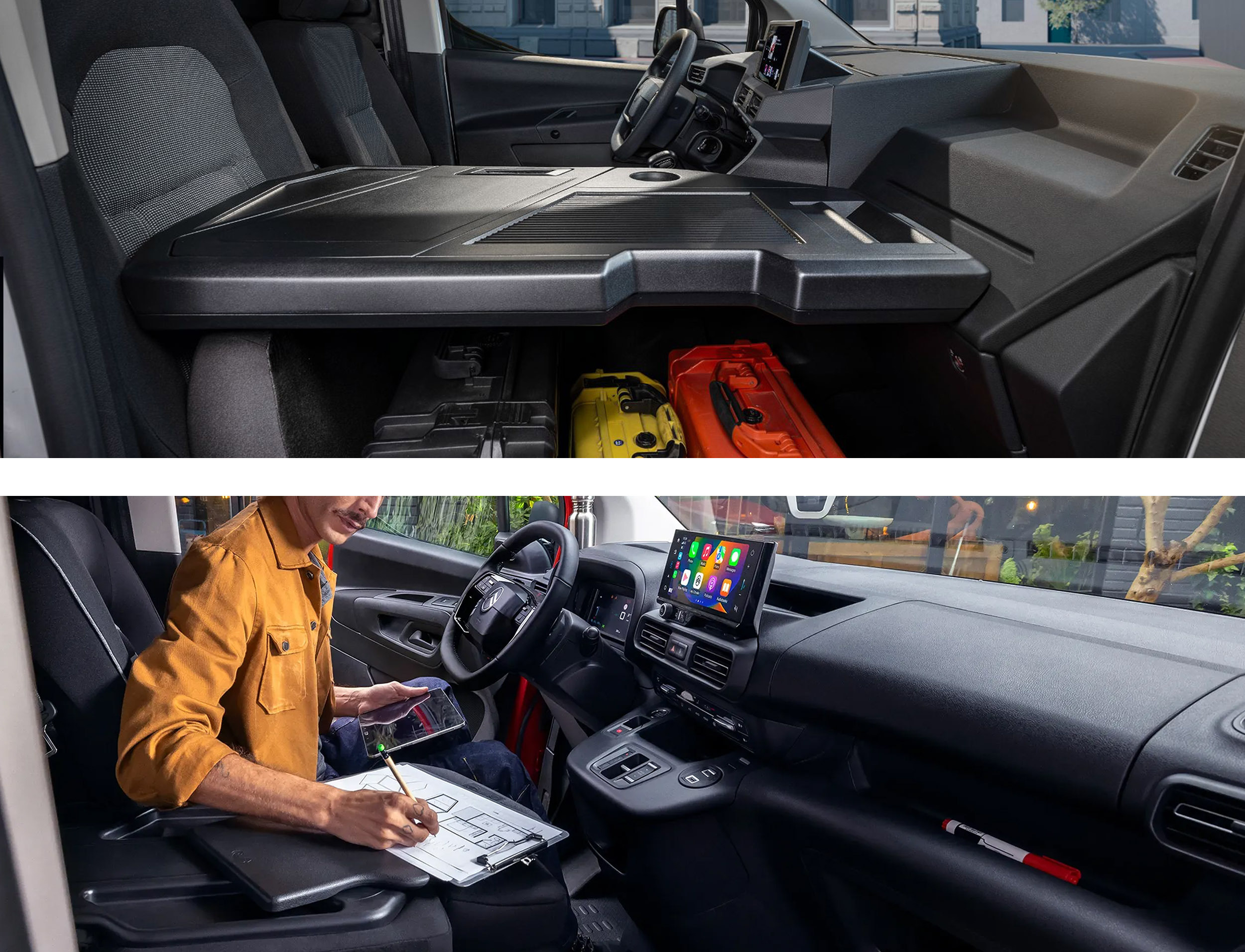
More substantial changes take place inside the cabin, making us wonder why Opel and Citroen didn’t apply this treatment to the entire lineup of the Combo and Berlingo vans. The dashboard and door panels have been redesigned with the goal of improving “robustness” and “ergonomic handling” for business owners and fleet operators using the LCVs for delivery services and on construction sites.

 Cheap Thrills: Stellantis Adds Extra Plastic And Mobile Office To Base Vans

Highlights include the extra shelfs on the dash, the new drawer under the driver’s seat, and the standard FlexiSeat for the front passenger. The latter can be folded upwards, creating extra space for packages, tool boxes or other equipment and increasing the van’s total load volume by 0.5 cubic meters (17.7 cubic feet).

More: This Smart Kit Turns Your Stellantis Van Into A Camper On The Go

More importantly, the FlexiSeat can be optionally combined with the ModuTable. This costs €300 ($350) and offers a surface that can be used as an extra shelf with cupholders or as a mobile desk for your laptop. When not in use, the ModuTable can be stored behind the cabin wall in the cargo area. Still, Citroen said that professionals drive alone for about 80% of the time so it will likely be used quite often.

Finally, the FlexCargo/Moduwork configuration adds a third seat at the front which turns into a load-through when transporting longer items.

\\\\\\\\\

Citroen Berlingo Van First

The compact vans remain available in two body lengths, delivering a load volume between 3.3-4.4 cubic meters (116.5-155.4 cubic feet). The maximum payload capacity is unchanged at 1,000 kg (2,205 lbs).

Multiple Powertrain Options

As with the rest of the lineup, the entry-level vans offer the option between gasoline, diesel and fully electric powertrains, with a mild-hybrid variant set to join the lineup in 2027.

More: Stellantis Turns ICE FWD Vans Into 4x4s With Rear Electric Motor Conversion

The turbo 1.2-liter engine is good for 109 hp (81 kW / 110 PS), while the 1.5-liter turbodiesel produces 101 hp (75 kW / 102 PS) or 129 hp (96 kW / 131 PS). All ICE variants are exclusively offered with a six-speed manual gearbox, although the upcoming mild hybrid will get a dual-clutch automatic. Finally, the EV has a single electric motor generating 134 hp (100 kW / 136 PS), and a 42 kWh battery offering up to 270 km (168 miles) of WLTP range.

Pricing

\\\\

The base Opel Combo Start with the gasoline engine is priced from €22,400 ($26,000) before VAT in Germany, lowering the entry point in the compact van’s lineup by €1,000 ($1,200). The diesel starts from €23,200 ($26,900) and the electric from €28,500 ($33,100).

More: This New Fiat Might Be Stellantis’ Most Halfhearted Reboot Yet

Citroen has yet to announce pricing for the Berlingo Van First, but we expect similar figures with its Opel twin. It will be interesting to see whether the same treatment will be applied to the nearly identical Peugeot Partner, Fiat Doblo, and Toyota ProAce City.

\\\\\\\\\\\

Opel Combo Start

Alfa Romeo’s Entire Lineup Gains A Racing Boat-Inspired Treatment

  • Alfa Romeo launches new Edizione Luna Rossa special editions.
  • They include the Junior, Tonale, Giulia, and Stelvio in Europe.
  • The models gain yacht-inspired colors and special touches inside.

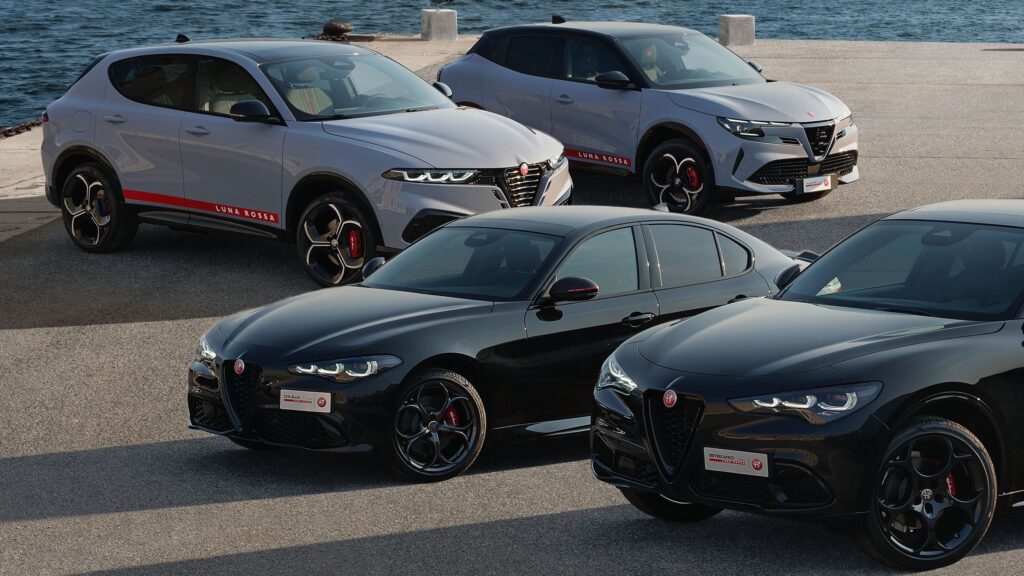
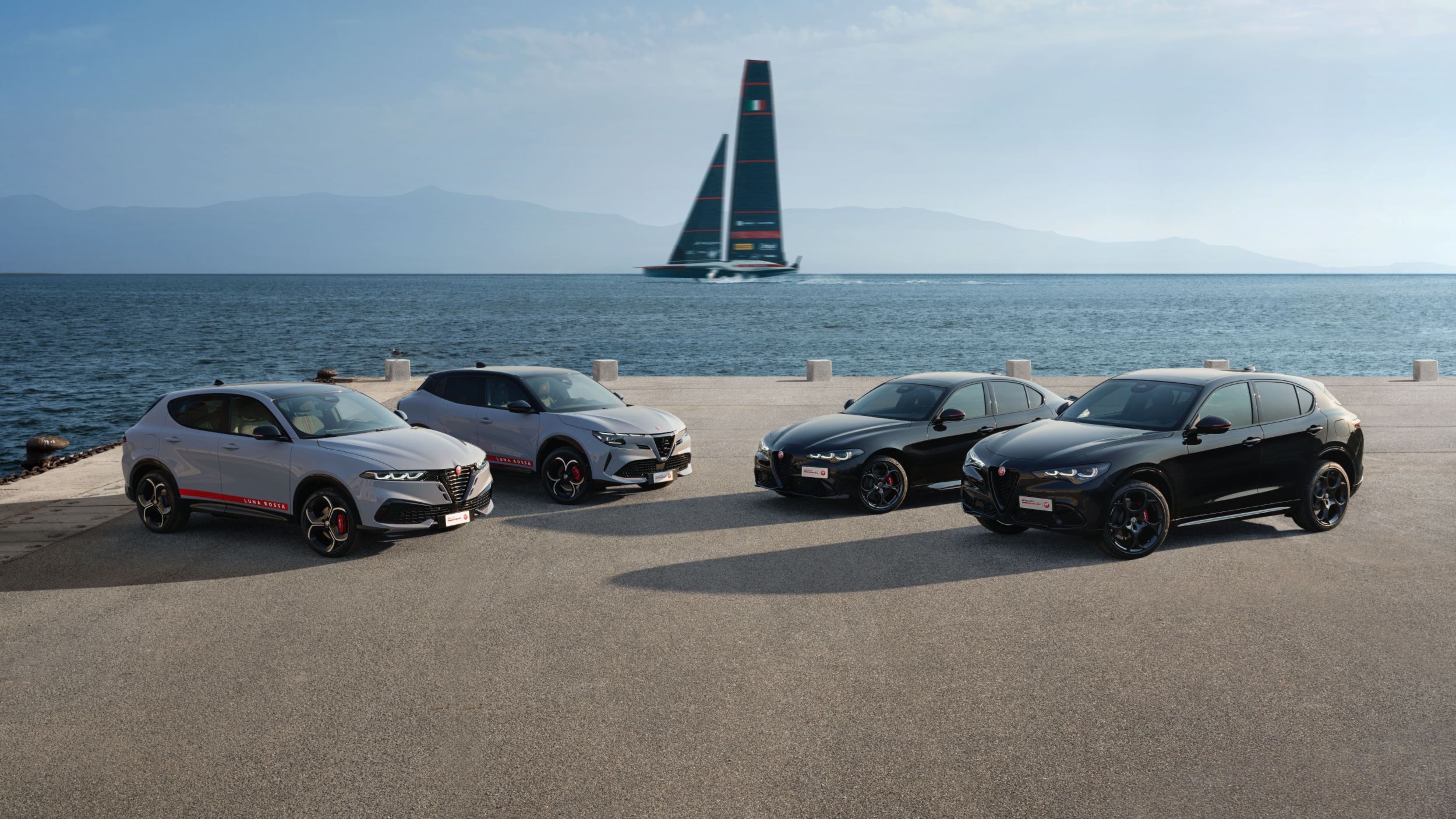
Alfa Romeo is gearing up for the debut of a mysterious concept at the Paris Motor Show next month, but before that happens they have a new special series in store. The Biscione brand has introduced Edizione Luna Rossa editions for its entire lineup, including the Junior, Tonale, Giulia and Stelvio.

Luna Rossa is an Italian yacht-racing team competing at the America’s Cup. Its collaboration with Alfa Romeo was inaugurated in June 2025, followed by the debut of the ultra-exclusive Giulia Quadrifoglio Luna Rossa in January 2026. While the first model was only produced in 10 units with custom colors and a unique aero package, the Edizione Luna Rossa models are available for everyone, serving as the flagships of their respective lineups.

More: Take A Ride With Me To Alfa’s Homeland In Its Smallest SUV, Sins And All

The special editions feature boat-inspired colors, custom touches inside-out, and a dedicated Alfa Romeo emblem. However, not every model is the same, with the Junior and the Tonale getting a different treatment than the stealthier and more exclusive Giulia and Stelvio.

\\\\\\\\\\\\\\\\\\\

Alfa Romeo Junior Edizione Luna Rossa

Starting with the subcompact and compact SUVs, the Junior and the Tonale Edizione Luna Rossa feature a gray shade with Gloss Black accents and red stripes on the profile, although buyers can also choose black or white for the main color of the body.

Review: The Junior Is Everything Alfa Romeo Needed And Nothing Alfisti Wanted

The wheels measure 18 inches on the Junior and 20 inches on the Tonale, both featuring a gloss black diamond cut finish and three-spoke designs. Besides the larger wheels, the Tonale also gets Brembo brakes with red brake calipers.

\\\\\\\\\\\\\\\\\\\

Alfa Romeo Tonale Edizione Luna Rossa

Inside, we find black and gray upholstery, with 3D knit technology on the premium fabric, red stripes featuring Luna Rossa lettering, and red Alfa Romeo emblems. The SUVs also feature aluminum sports pedals and kick plate, new graphics for their digital cockpits, and ambient lighting.

More: Alfa Teases The Tonale’s Successor, And Maybe A Dodge Called Goes Like Hell

Equipment is pretty generous, with the Edizione Luna Rossa being the highest-spec trims. In terms of powertrains, the Junior offers the option between hybrid and fully electric setups, while the Tonale is available with hybrid and PHEV options.

\\\\\\\\\\\\\\\\\\\\\\\

Alfa Romeo Stelvio Edizione Luna Rossa

Moving on to the midsize offerings, the aging Giulia and Stelvio take a different route, focusing more on exclusivity and sportiness. The mechanically-related models are pictured with a blacked-out configuration, but the color palette of the Edizione Luna Rossa editions also include white and Etna Red shades.

More: Alfa Romeo Swears The Next Giulia And Stelvio Aren’t Dead, They’re Just ‘Under Study’

Independently of the color, the aging duo benefits from extensive use of carbon fiber on the exterior and the interior, red Alfa Romeo emblems, and the Luna Rossa logo on the mirror caps. The Giulia features Quadrifoglio-inspired side skirts and rear spoiler combined with Gloss Black 19-inch alloy wheels, with the Stelvio riding on 21-inch wheels.

\\\\\\\\\\\\\\\\\\\\

Alfa Romeo Giulia Edizione Luna Rossa

The monochrome interior features a generous amount of carbon fiber on the dashboard, center console, and door cards, alongside leather and recycled Econyl fabric upholstery. Red stripes on the steering wheel and seatbacks break the monotony of black, alongside the matching Alfa Romeo emblems.

Review: Alfa’s 2026 Giulia Quadrifoglio Is Over A Decade Old And Still Out-Handles A New M3

The Edizione Luna Rossa Giulia and Stelvio come standard with a Harman Kardon Hi-Fi system and the electronically controlled suspension. Finally, the electric sunroof is standard on the sedan and optional on the SUV.

As with the regular Giorgio-based models, the special editions are available with the 2.2-liter turbodiesel in two power outputs, while UK buyers also have access to the 2.0-liter gasoline engine that has been phased out in Europe. In other words, only the V6-powered Quadrifoglios escape the Luna Rossa treatment.

The Junior, Tonale, Giulia, and Stelvio Edizione Luna Rossa will gradually go on sale on European markets, positioned at the top of the lineup of each non-Quadrifoglio model. Pricing will be announced closer to the market launch.

More: Alfa Romeo Charged $22,000 Extra For Gold Trim, And Dubai Said Yes

According to Stellantis, the partnership between the two Italian brands goes deeper than colors, materials, and special emblems. More specifically, Alfa Romeo “has provided its expertise in simulation, dynamics and virtual analysis to Luna Rossa, while also collaborating on the development and fine-tuning of the control software for the systems that manage sail movement.”

 Alfa Romeo’s Entire Lineup Gains A Racing Boat-Inspired Treatment

Alfa Romeo

RNG-Fueled Fleets in California Mark Five Years of Carbon-Free Outcomes

By: newenergy

RNG Remains the Most Immediate, Cost-Effective Way to Decarbonize Heavy-Duty Transportation Washington, DC – Last calendar year marked the fifth consecutive year that commercial fleets in the State of California fueled by bio-CNG (renewable natural gas, or RNG) achieved a carbon-negative transportation outcome, according to a report released today by The Transport Project (TTP) and RNG Coalition alongside partner California Renewable Transportation Alliance (CRTA). Lowest …

The post RNG-Fueled Fleets in California Mark Five Years of Carbon-Free Outcomes appeared first on Alternative Energy HQ.

World’s first fully electric ferry celebrates 10 years of success

By: newenergy

Bergen, Norway February 17th, 2025 — Since going into service in 2015, the MF Ampere has now sailed an astonishing distance equivalent to 17 times around the equator on batteries alone, solidifying its place as a groundbreaking achievement in sustainable maritime transport. A decade on and the Ampere continues to showcase the transformative potential of electric …

The post World’s first fully electric ferry celebrates 10 years of success appeared first on Alternative Energy HQ.

Merging Net Zero With Zero Waste: One solution to biofuel feedstock shortage

By: newenergy

The international biofuels industry has found an unlikely ally in the waste management sector. A heightened global urgency to reduce greenhouse gas emissions (GHGs) is incentivizing renewable fuels production like never before, but the International Energy Agency (IEA) recently warned of an impending feedstock shortage for biodiesel, renewable diesel and biojet (aviation fuel) production, estimated …

The post Merging Net Zero With Zero Waste: One solution to biofuel feedstock shortage appeared first on Alternative Energy HQ.

❌