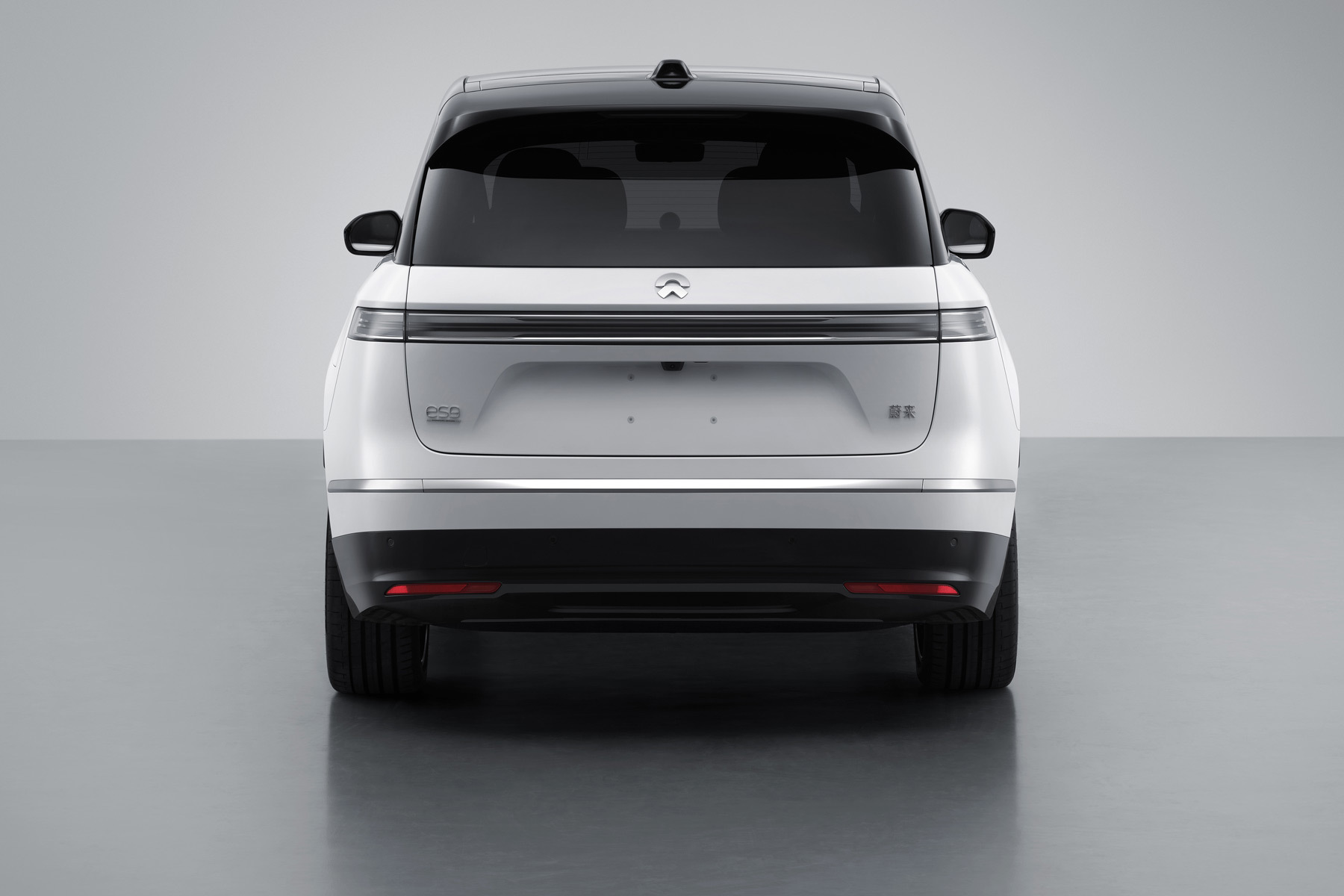
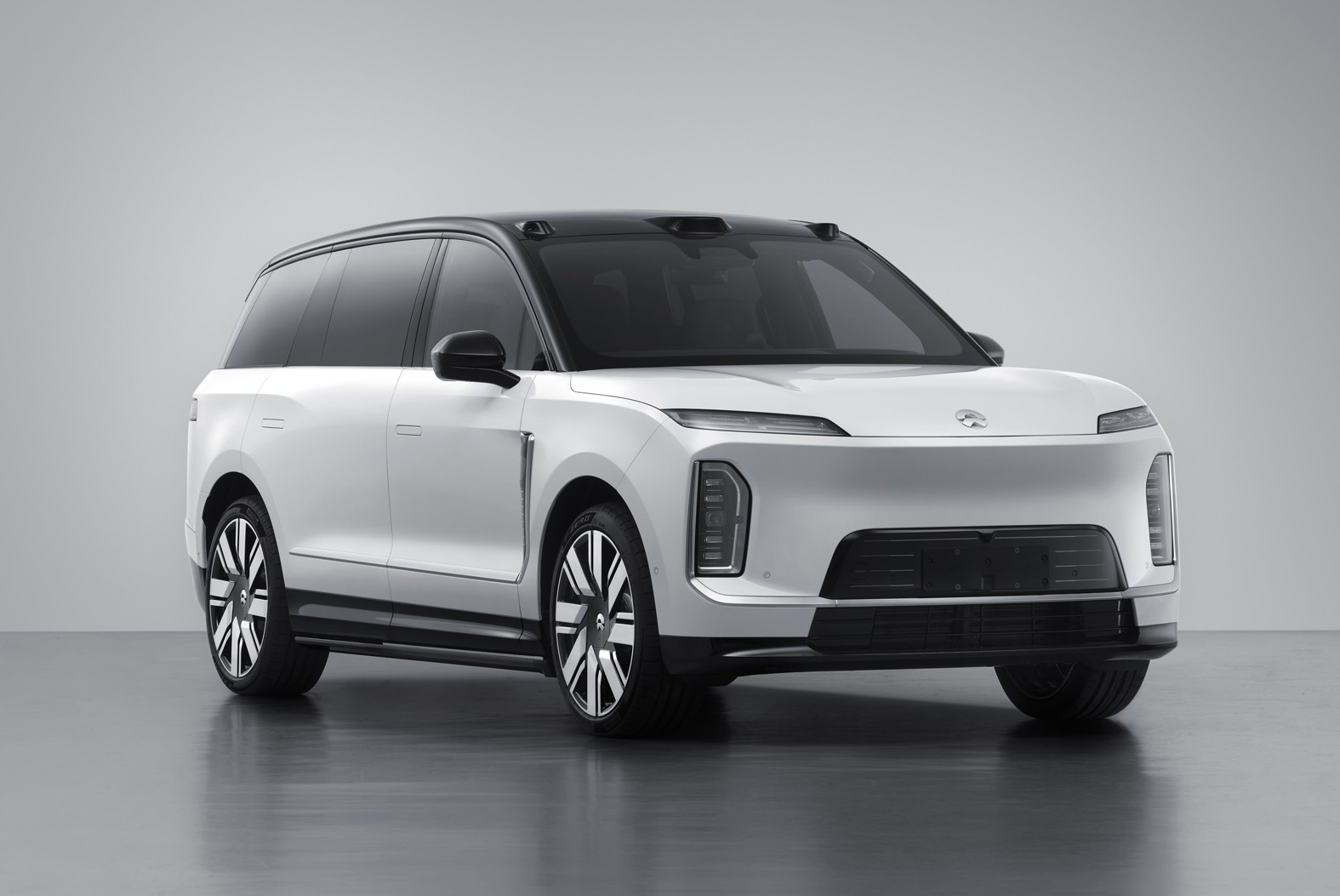
ES9 is China’s longest electric SUV with a 127.9-inch wheelbase.
Dual electric motors deliver 697 hp and 516 lb-ft of torque total.
It supports three-minute battery swaps across Nio’s network.
For China’s most wealthiest car buyers, the appeal of driving often takes a back seat to being driven. Luxury isn’t measured in horsepower alone, but in legroom, comfort, and the ability to stretch out while someone else handles traffic.
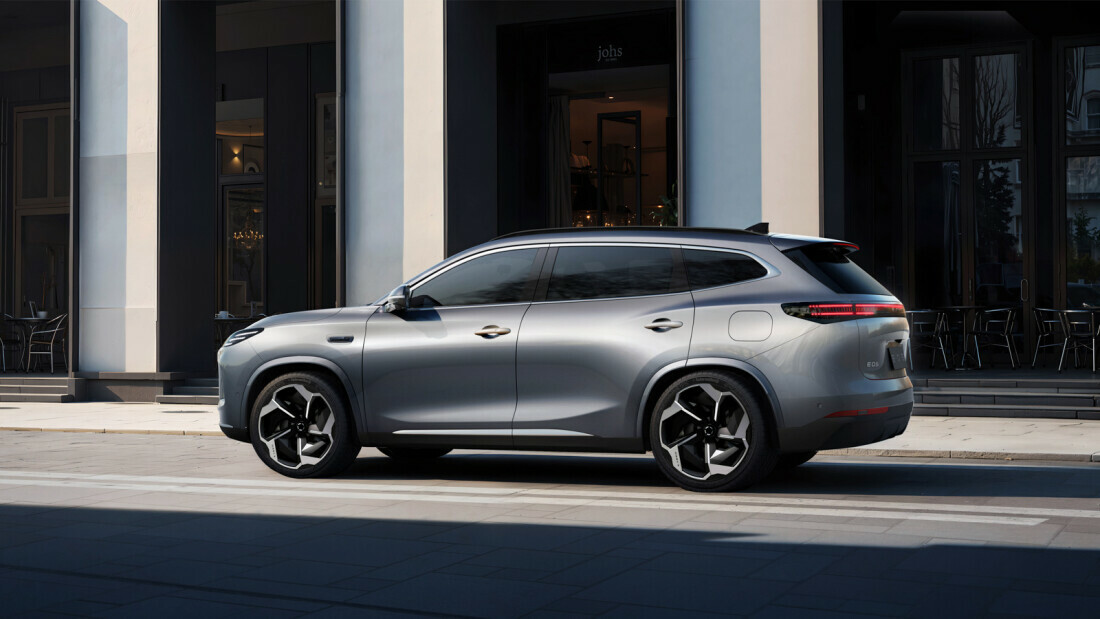
With that in mind, Nio is preparing a new electric SUV designed squarely for this audience, and for larger families as well. Shown here in newly released photos, the Nio ES9 is set to join the brand’s growing lineup, slotting in just above the ES8.
Big Numbers, Bigger Presence
This upcoming flagship will become the largest electric SUV available in China, overtaking the ES8 for that title, according to CarNewsChina. Figures from the Ministry of Industry and Information Technology confirm it stretches 5,365 mm (211.2 inches) in length, spans 2,029 mm (79.8 inches) in width, and stands 1,870 mm (73.6 inches) tall.
That makes it 85 mm (3.3 inches) longer, 29 mm (1.1 inches) wider, and 70 mm (2.7 inches) taller than the ES8. More importantly, the wheelbase stretches to 3,250 mm (127.9 inches), an increase of 120 mm (4.7 inches) over the ES8, which translates to noticeably more room for passengers.
To put that in perspective, its footprint lands somewhere between the standard Cadillac Escalade and the extended-wheelbase Escalade ESV.
Visually, the design of the ES9 is very similar to its smaller brother, although it does have a more upright and squared front fascia. There are split DRLs and headlights at the front, alongside a large grille and a ribbon of black along the bottom of the bumper. As with the ES8, there’s a LiDAR protruding from the roof.
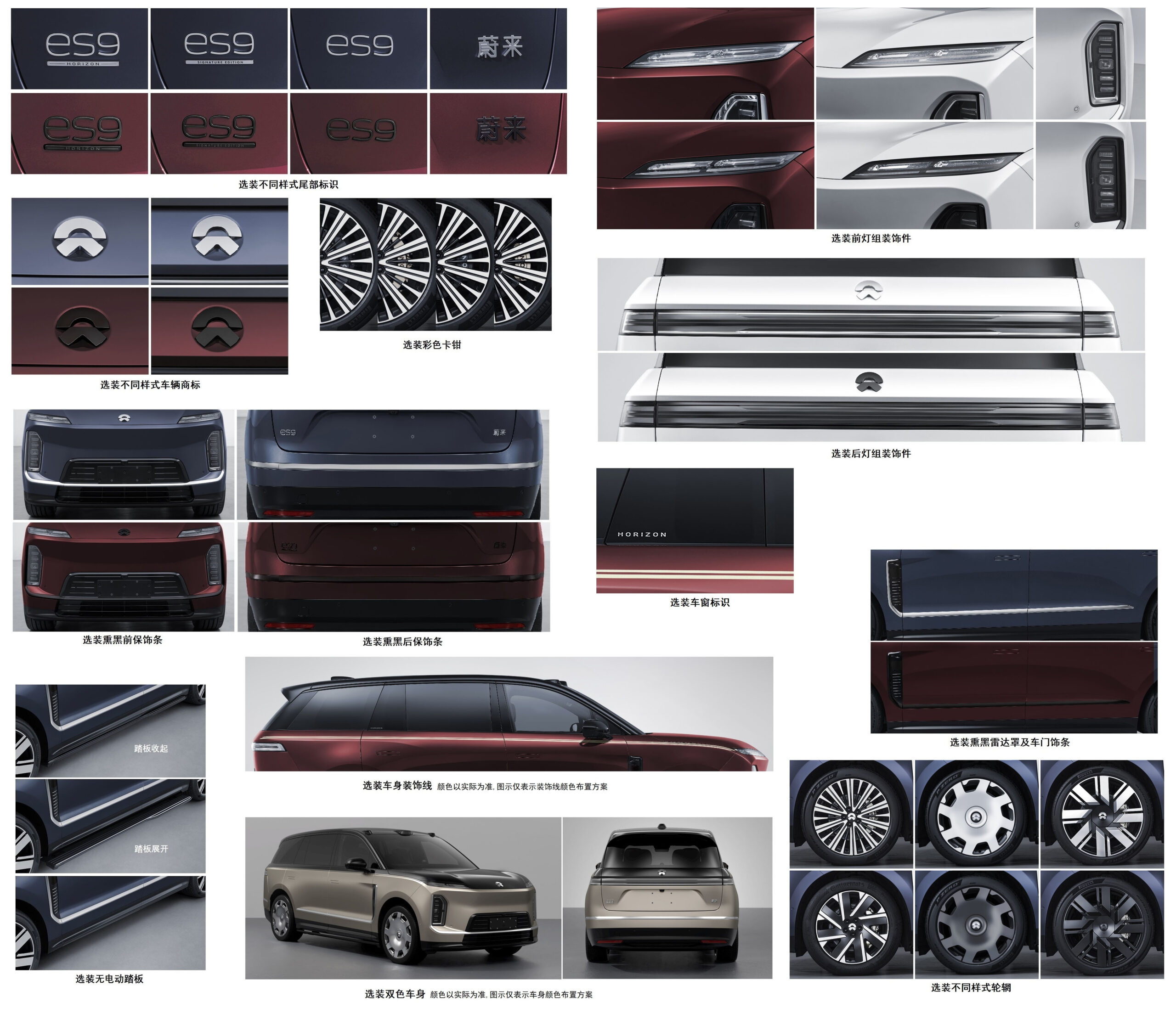
Around back, the design leans toward simplicity, featuring a single LED light bar and little else of interest. Other photos of the SUV reveal that retractable side steps will be available, as will at least six different wheel designs/finishes. Shoppers will also be able to choose between black or silver accents running along the body.
Dual-Motor Drive
We don’t yet know what the cabin of the ES9 will look like, but we do have some important powertrain details. Powering the SUV will be a 241 hp (177 kW) electric motor at the front axle and a 456 hp (335 kW) motor at the rear axle, combining to deliver 697 hp (513 kW) and 516 lb-ft (700 Nm) of torque. The battery pack will be sourced from CATL and is expected to have a capacity of 102 kWh.
There’s no word on what charging speeds this battery will support, but in the land of Nio, charging times aren’t particularly important, as Nio operates a huge battery-swapping network where a depleted battery can be replaced with a fully charged one in just 3 minutes.
A full reveal is expected in the coming months, with its domestic launch set to follow soon after. Availability in markets outside China has not yet been confirmed.
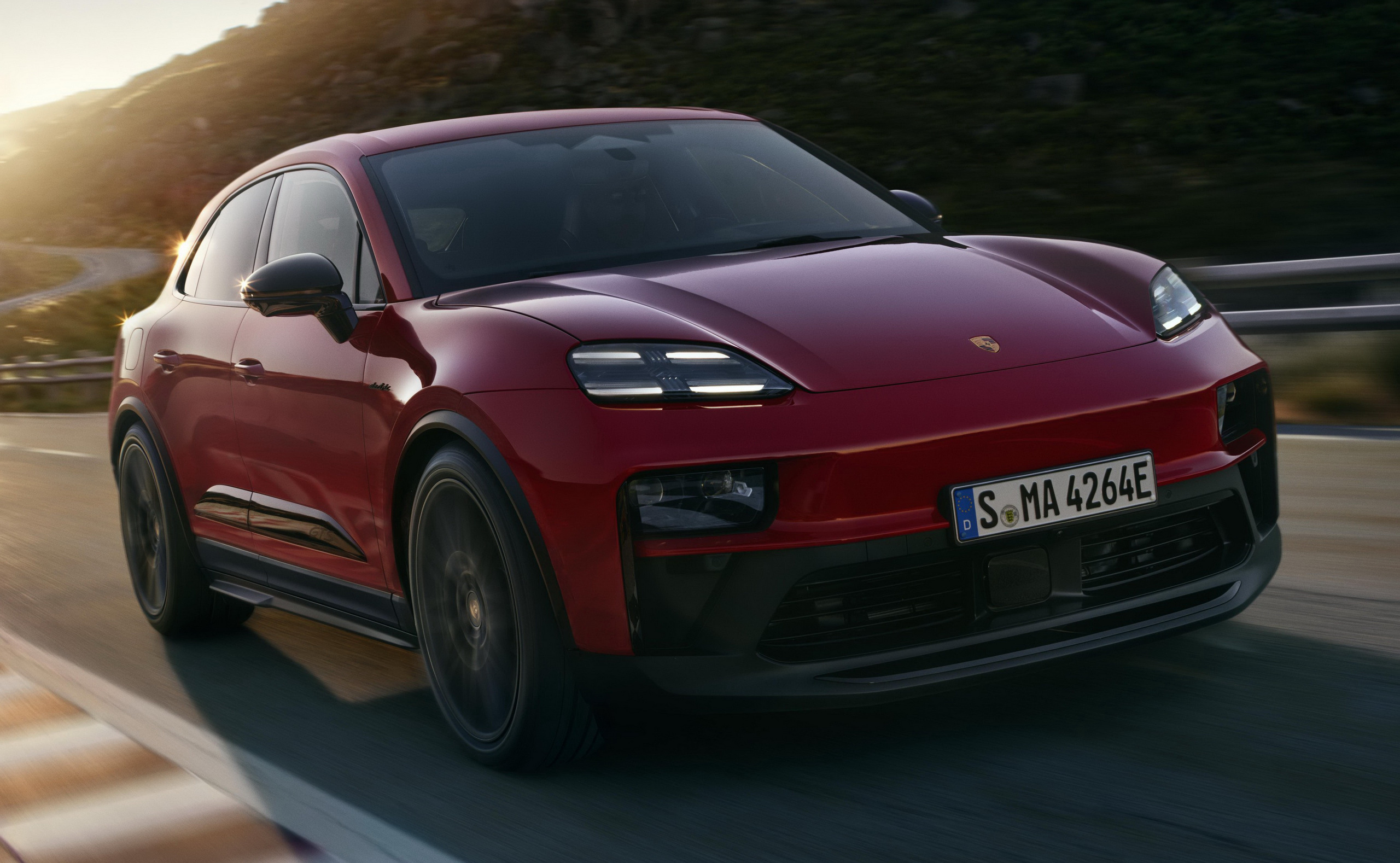
Porsche admits its EV-only Macan strategy was a misstep.
New gas-powered SUV will arrive before end of 2028.
Future 718s will offer gas, hybrid, and electric options.
Plenty of automakers are rethinking their electric vehicle strategies. Some names make it easy to shrug and say, well, they probably bit off more than they could chew. Stellantis, for instance, has struggled to steer its EV plans with any consistency. But it’s not just the usual suspects pulling U-turns.
On the other side of that coin, you’ll find Porsche, which, like Stellantis and other mainstream brands, is now backtracking hard on its EV plans. The brand’s former CEO just openly admitted that making the Macan an EV-only model was a mistake. Porsche has plans to fix its foible, too.
A Misstep in the Macan Playbook
Former CEO Oliver Blume, who stepped down at the start of 2026, revealed that making the next-generation Macan electric-only was a mistake. Speaking with Frankfurter Allgemeine Zeitung, Blume said, “We were wrong about the Macan,” reflecting on Porsche’s 2019 decision to retire the gas-powered Macan in favor of a fully electric model.
We were there when the EV launched in early 2024. While purists didn’t love it, plenty of folks figured that most Macan buyers cared more about the badge than the engine. But cooling demand for pricey luxury EVs and regulatory hurdles made the all-electric Macan a tougher sell than some expected. Blume acknowledged that hindsight is 20/20.
“Based on the data at the time, we would have made the same decision,” Blume said, “but the situation today is different. We are responding by adding combustion engines and hybrids.” Porsche now plans to reintroduce a gas-powered compact crossover but it won’t be called the Macan.
The Macan misstep isn’t the only one the brand is handling. Porsche also confirmed that future 718 sports cars, initially slated to go EV-only, will offer combustion and hybrid options.
It turns out that even one of the world’s most famous and focused brands can misread the market and industry to an almost embarrassing degree. In the end, we all just end up with more Porsches in more flavors and I can’t say I’m sad about that.
Cybertruck owner added a center seat to carry four kids up front.
Tesla showed this layout in 2019 but never offered it to buyers.
Custom seat has no visible airbags, which may affect crash safety.
Tesla owners aren’t strangers to modifying their vehicles. Sometimes, that action comes out of a desire for additional safety. Other times, it’s because Tesla itself didn’t deliver on a previous promise. And occasionally, those two aspects of design come into fierce opposition. That’s what happened here.
A father of four needed space for his entire family, and when it became clear that Tesla wouldn’t offer a six-seat Cybertruck, he took matters into his own hands. He commissioned a custom version and later shared the results in a Tesla group on Facebook.
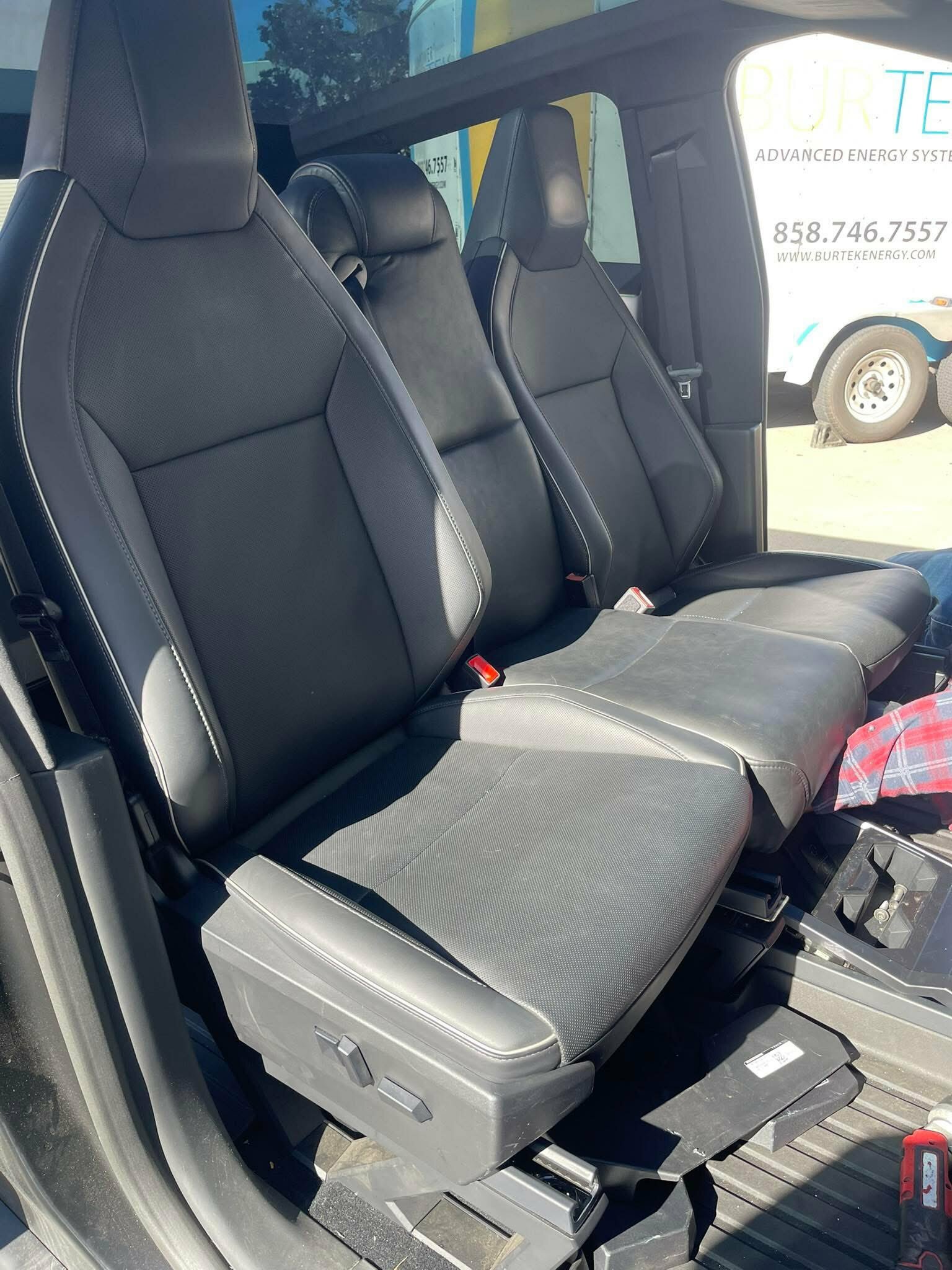
The custom setup removes the center console of the truck and replaces it with a narrow upright seat wedged between the original pair. It comes complete with a seatbelt, but that might be where safety ends. We’ll come back to that, though. Let’s focus first on the design itself.
It’s a far cry from the angular unit Tesla once teased, but at least the upholstery matches. Some folks might not even realize that it’s an aftermarket addition because of that.
What Killed Tesla’s Center Seat Plans?
At the same time, it’s tough to call this a big win for now. While Tesla originally showed renders of a similar setup, it never came to pass. Many believe that’s because of safety regulations regarding the center seat.
Some observers have noted that the truck includes a driver’s side inboard airbag, which could strike anyone seated in the center. There’s also no airbag directly in front of that position. And beyond the lack of protection, there’s always a chance the seat may not be anchored to mounting points strong enough to hold up in a crash.
To be clear, this isn’t a knock on the owner’s intentions. Wanting to carry your entire family with you is obviously normal and easy to understand. But it does highlight a recurring Tesla theme. The brand and CEO often make bold promises, offer flashy renderings, and then production vehicles quietly walk things back a bit.
Tesla once showed a front bench. That version never reached production, and now an owner has stepped in to fill the gap with a custom modification. In doing so, he’s taking on a level of risk that some might find concerning in a six-figure vehicle. Maybe the solution here is to just get the Model X since it actually has room for the whole family.
BMW cut prices across 31 models to stay competitive in China.
Fourteen brands launched incentives before the New Year rush.
Officials fear price cuts could trigger harmful deflation risks.
Price cuts aren’t just a domestic strategy for Chinese automakers. Even Western legacy brands are jumping in. Last week, BMW announced sweeping reductions across 31 of its models in China, highlighting a more aggressive effort to keep pace with intensifying competition in the world’s largest auto market.
The biggest cut came to the BMW i7 M70L, the high-performance flagship of the all-electric 7-Series. This dual-motor sedan delivers 659 horsepower and 811 lb-ft (1,100 Nm) of torque. As of last week, it now carries a price tag that’s 301,000 yuan lower, a reduction of roughly $42,000.
While the i7 had the largest drop in raw numbers, the steepest percentage cut went to the iX1 eDrive25L. BMW trimmed the price of the long-wheelbase variant of the compact SUV by 24 percent, bringing the new starting figure to 228,000 yuan, or about $32,600.
Speaking to Bloomberg, BMW said the price changes are part of its “regular price management,” adding that “final transaction prices are independently negotiated and determined between authorized BMW dealers and customers.”
How Far Will Discounts Go?
Behind the curtain, though, the timing suggests more than just routine recalibration. November marked the second straight month of declining sales in China, according to data from the China Passenger Car Association. That slide has spurred several automakers to adjust pricing.
Meanwhile, regulators have introduced measures designed to prevent brands from undercutting costs, prohibiting sales below production cost and banning dealer incentives that push prices beneath that threshold, Bloomberg reports.
BMW’s recent cuts appear to bring official pricing closer to what customers were already paying after negotiations. According to Yale Zhang, managing director at Automotive Foresight, the updated stickers largely reflect existing transaction norms rather than undercutting them. “The new prices aren’t any lower than typical dealer selling prices,” Zhang noted.
When Deals Become a Warning Sign
Big savings could be just around the corner. With the Chinese New Year approaching in February, many manufacturers are expected to introduce further incentives in hopes of front-loading first-quarter sales.
At least 14 car brands have already rolled out some form of discount or incentive program since the beginning of 2026. Zhang believes this trend is less a temporary blip than a reflection of broader pressures within the market.
“Various kinds of promotional activities may ebb and flow in the market from time to time, but they are here to stay,” Zhang told the news outlet.
Chinese authorities, meanwhile, are taking a cautious stance. With more manufacturers opting to slash prices, regulators are increasingly concerned about the potential knock-on effects. They worry that an extended period of discounts could spark deflation, disrupt the automotive supply chain, and put downward pressure on wages.
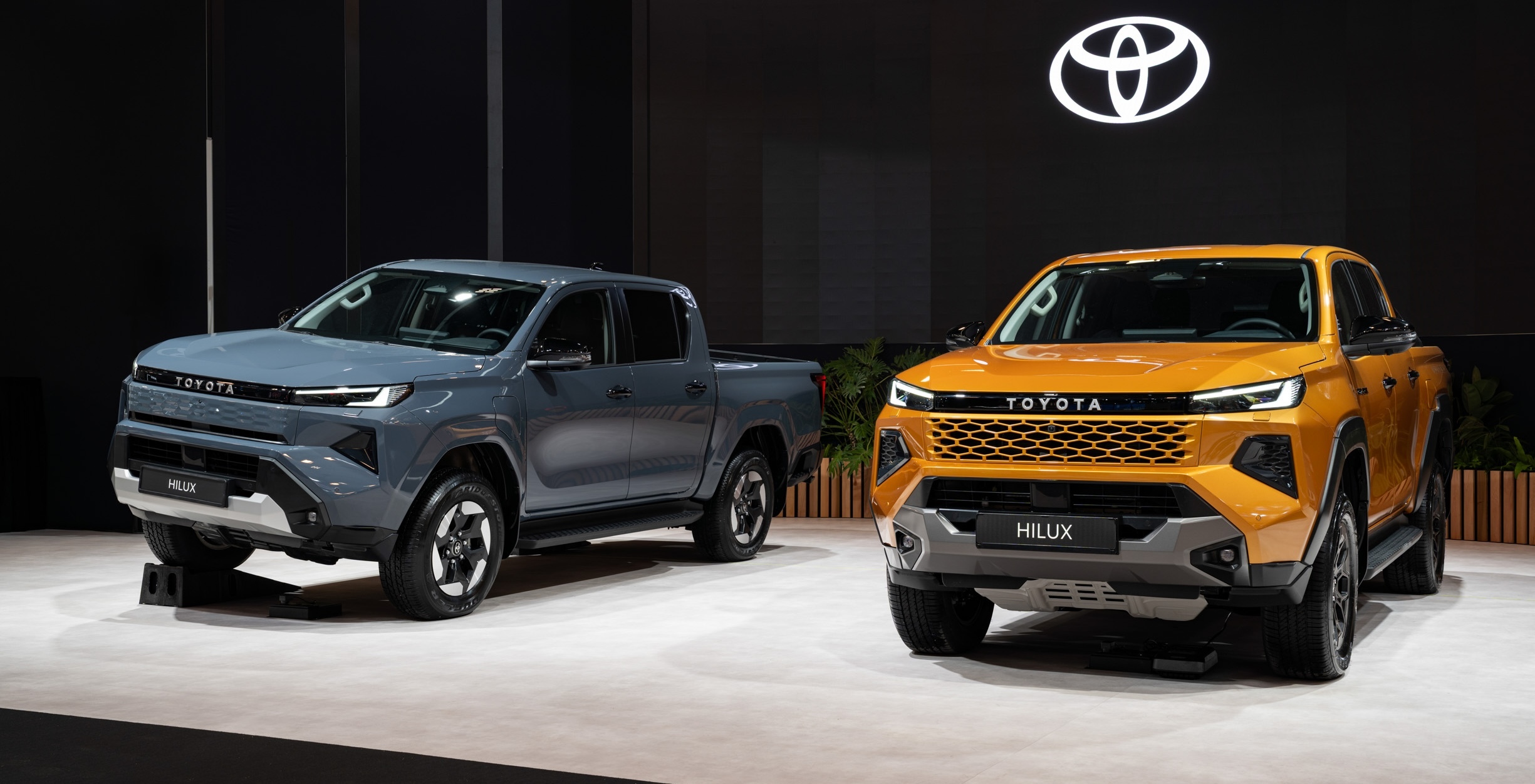
Toyota revealed the Euro-spec Hilux at Brussels Motor Show.
New EV version joins the mild-hybrid diesel in the lineup.
Hilux BEV offers 160-mile range with dual-motor AWD setup.
The Hilux has spent decades surviving anything the world throws at it, from mud and floods to plummeting from a Top Gear crane – though not being dropped from a helicopter. Now Toyota is testing its most famous small pickup with a more complicated challenge: staying relevant in an electric future.
Toyota unveiled the Euro-spec ninth-generation Hilux in mild-hybrid and fully electric Hilux BEV form at this week’s Brussels Motor Show, months after both trucks debuted in Asia. The first ever EV Hilux is big news, but soon it won’t be the only version of the unstoppable truck that doesn’t emit any tailpipe nasties.
As we reported last year, Toyota Toyota hasn’t just confirmed that it’s working on a hydrogen-powered Hilux that will arrive later, it’s already testing them out in the open. Yes, the same pickup that built its legend hauling bricks and sheep is about get a fuel-cell stack.
Multipath Meets Multipurpose
Toyota calls this its multipath strategy, though for many buyers little will change. Because they’ll still be able to get a truck with the same 201 hp (204 PS) 2.8 litre diesel mild hybrid (shown above) that made its debut in the previous generation Hilux’s twilight years. Some less-developed European countries will even get a non-hybrid diesel.
In the UK and Europe the 48-volt oil burner is expected to be the volume seller even after the EV’s arrival. It keeps up the old model’s 1,000 kg (2,205 lbs) payload and 3,500 kg (7,720 lbs) tow ratings, while being smoother and slightly cleaner than before.
Electric But Still Unbreakable
But business-owning truck buyers with an eye on cutting running costs and tax bills will want to give the Hilux BEV a look. It uses a 59.2 kWh battery with motors on both axles for permanent all-wheel drive.
The front motor makes 151 lb-ft (205 Nm) and the rear 198 lb-ft (268 Nm), and Toyota quotes a WLTP range of 160 miles (258 km), which sounds unimpressive in a passenger-car context, but that climbs to 236 miles (380 km) in urban use.
Payload drops to 715 kg (1,580 lbs) and towing to 1,600 kg (3,530 lbs) in the EV, but the fundamentals remain. You’re getting the same body-on-frame construction, 212 mm (8.4 inches) of ground clearance and 700 mm (27.6 inches) of wading depth, whichever power source you choose. And the BEV gets a special off road drive mode tuned for electric torque and braking.
All In the Grilles
Both hybrid and BEV models adopt the same new Cyber Sumo design that was reportedly developed by Toyota’s Australian team. Characterized by stronger angles and flatter surfaces, it gives the Hilux and more modern, big-truck look, though it seems not everyone loves it. The EV is easily identified by its hole-free grille panel and (less obvious) re-shaped silver bumper insert.
The modern makeover continues inside the crew cab-only interior where drivers and passengers are treated to a 12.3-inch digital gauge pack and same-sized tablet touchscreen, plus a steering wheel from the new Land Cruiser.
There are dual storage compartments on the passenger side, dashboard-mounted cupholders, and a full suite of electronic safety gadgets, but Toyota remembered to cram in plenty of physical switches for regularly-used functions.
UK sales start in June, Toyota says, and prices – guaranteed to be higher than for the outgoing truck – will be revealed within the next few months.
Jason Fenske’s Lucid Air critique triggered direct engineer talks.
Lucid outlined software fixes and upcoming UX 3.0 overhaul plans.
This isn’t typical service, but Lucid’s response stands out.
Negative YouTube reviews of cars have earned a certain reputation over the years. Some are so brutal they’re blamed, rightly or not, for helping to sink entire automakers, like the high-profile case of Fisker about a year ago. This time, though, a critical video sparked something different. A public takedown led not to fallout, but to potential fixes, and not just for one frustrated owner.
Jason Fenske of Engineering Explained leased a Lucid Air, ended up having issues with it, and has now been in direct contact with the brand. The result is going to benefit countless Lucid owners in the future.
A Critical Eye Meets a Willing Ear
When Jason Fenske published a blunt video detailing his disappointment with a newly leased Lucid Air Touring, it wasn’t a rage-bait takedown or a viral stunt. It was a long, technical breakdown of how a mechanically brilliant EV was being kneecapped by frustrating software, clumsy UX decisions, and some puzzling hardware quirks.
Rather than simply ignoring it and continuing on with its plans, the EV maker reached out. According to Fenske, what followed was a constructive discussion with engineers and even the SVP of engineering, Imad Dlala.
Evidently, the team at Lucid provided insider details and previews of upcoming changes. That’s where this story really takes its biggest turn. Lucid owners have a lot to look forward to if Fenske’s information proves reliable.
Lucid Plots a UX Overhaul
The biggest news is software. Lucid confirmed it’s actively improving phone-as-key reliability, door handle behavior, mirror positioning in reverse, percentage-versus-miles range inconsistencies, and Tesla Supercharger Plug & Charge support.
More significantly, a full UX 3.0 overhaul is planned for early fall 2026, bringing multitasking, faster profile switching, improved CarPlay stability, better voice commands, and a more intuitive interface. Owners with newer hardware, or those willing to pay to upgrade, will get access.
Lucid also confirmed vehicle-to-home power capability is coming in the first half of 2026, promising up to 17 kW peak output without requiring a separate home inverter, an area where Lucid’s hardware advantages could genuinely shine.
Fenske estimates that his Lucid could power his home for four days if they lost power, and that’s without changing any of the behavior his family is accustomed to.
Not All Feedback Gets a Reply
At the same time, he remains cautious, and rightly so. Promises aren’t fixes, and the Lucid Air still struggles with daily usability today. But admitting problems, engaging with informed criticism, and outlining concrete changes is more than many automakers manage.
In addition, this isn’t how most customers get treated. Fenske runs Engineering Explained, has a massive audience, and speaks the same technical language as Lucid’s engineering team. That context matters. Still, what Lucid outlined is meaningful. Especially for current and future owners.
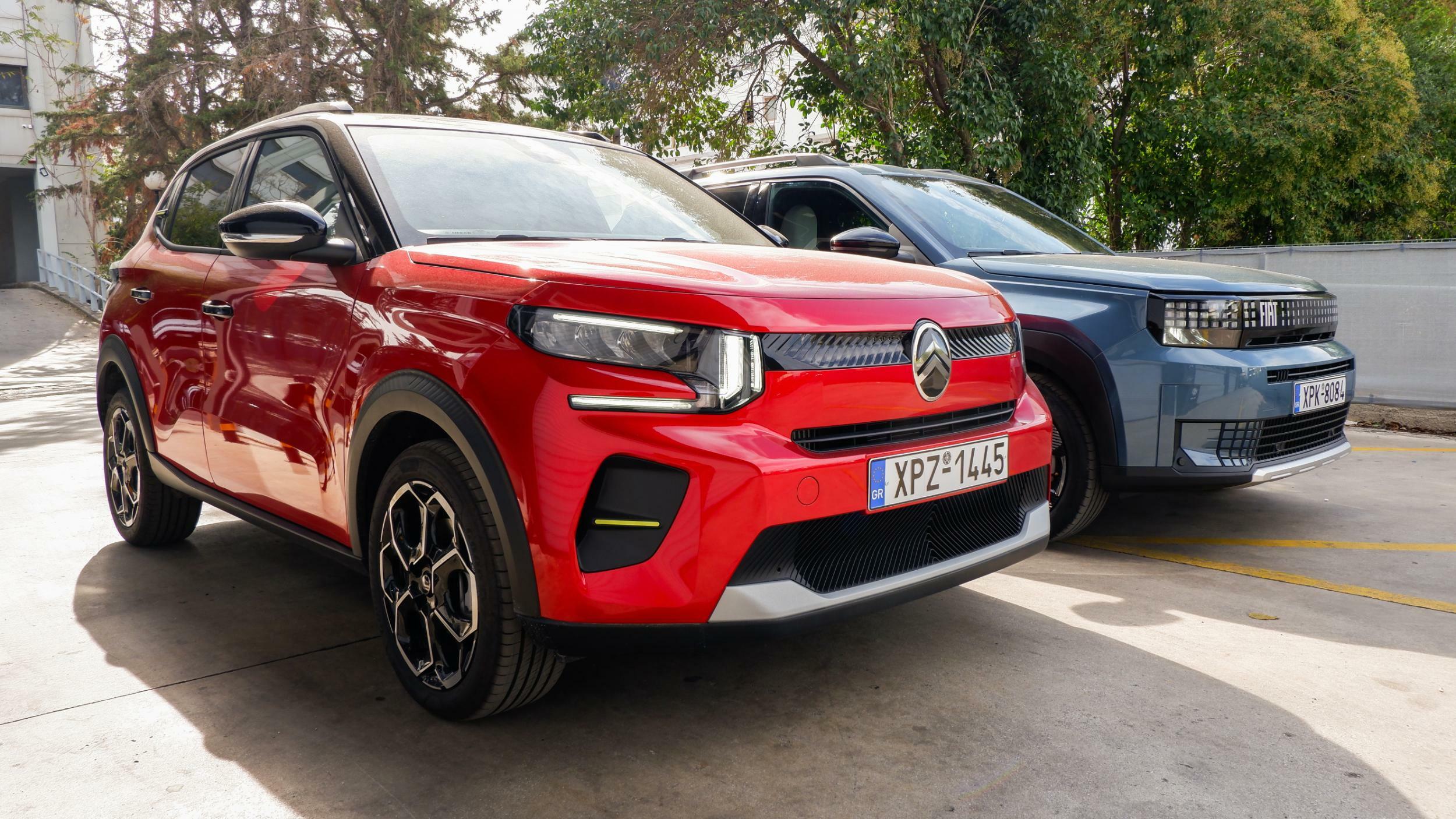
SUVs may have flooded European streets, but compact, affordable hatchbacks haven’t packed up and left just yet. Stellantis seems to have taken note, quietly repositioning the Citroen C3 into a value-focused crossover-style hatchback and offering Fiat the same platform to build the new Grande Panda. We recently drove both, back to back, curious to see whether the distinctions ran deeper than design.
Citroen and Fiat play a specific role within the Stellantis portfolio. They’re the budget-conscious brands, tasked with delivering the most affordable cars in each segment. That’s why the new C3 and Grande Panda are built on the cost-effective Smart Car platform, rather than the more sophisticated CMP architecture underpinning their Opel Corsa, Peugeot 208, and Lancia Ypsilon cousins.
Despite the lower-cost foundations, Stellantis didn’t skimp on drivetrains. Buyers get the same menu of internal combustion, mild hybrid, and full electric powertrains.
Quick Facts
Model
Fiat Grande Panda
Citroen C3
Powertrain Options
ICE / Mild Hybrid / Electric
ICE / Mild Hybrid / Electric
Length
3,999 mm (157.4 inches)
4,015 mm (158.1 inches)
Width
1,763 mm (69.4 inches)
1,755 mm (69.1 inches)
Height
1,585 mm (62.4 inches)
1,577 mm (62.1 inches)
Wheelbase
2,540 mm (100 inches)
2,540 mm (100 inches)
Weight
1,240-1,554 kg (2,734-3,427 lbs)
1,226-1,491 kg (2,703-3,286 lbs)
Boot
361-412 lt (12.8-14.6 cubic feet)
310 lt (11 cubic feet)
Price (Greece)
from €16,990 ($19,900)
from €17,300 ($20,300)
SWIPE
Predictably, the two hatchbacks share a wheelbase and sit within millimetres of each other in length and width. The Citroen measures 16 mm (0.6 inches) longer, while the Fiat is 5 mm (0.2 inches) wider. On paper, these are rounding errors, but the styling does help differentiate them more than the tape measure might suggest.
Different Shells
Photos Thanos Pappas for CarScoops
Most would agree that Citroen and Fiat’s designers did well to set their cars apart. Although the two models inevitably share core proportions, roof structure, and key hardpoints, every body panel is unique. That gave each brand the freedom to apply its own design language across the entire exterior.
The Citroen looks chunky and aggressive with sculpted details, while the Fiat is boxier and retro-futuristic with many Easter Eggs doubling as references to its Italian origins. Both hatchbacks sit higher than usual and carry crossover styling cues, but the slightly thicker plastic cladding and taller roof rails of the Grande Panda make it look a bit more adventurous than the C3.
Examples that highlight the fine line between cost-cutting and design statement include the combinations of the identical mirror caps with different indicators (from the Stellantis parts bin), the shared door handles with bespoke door stampings, and the common greenhouse with slightly different window lines.
Two Interiors, Two Moods
Photos Thanos Pappas for CarScoops
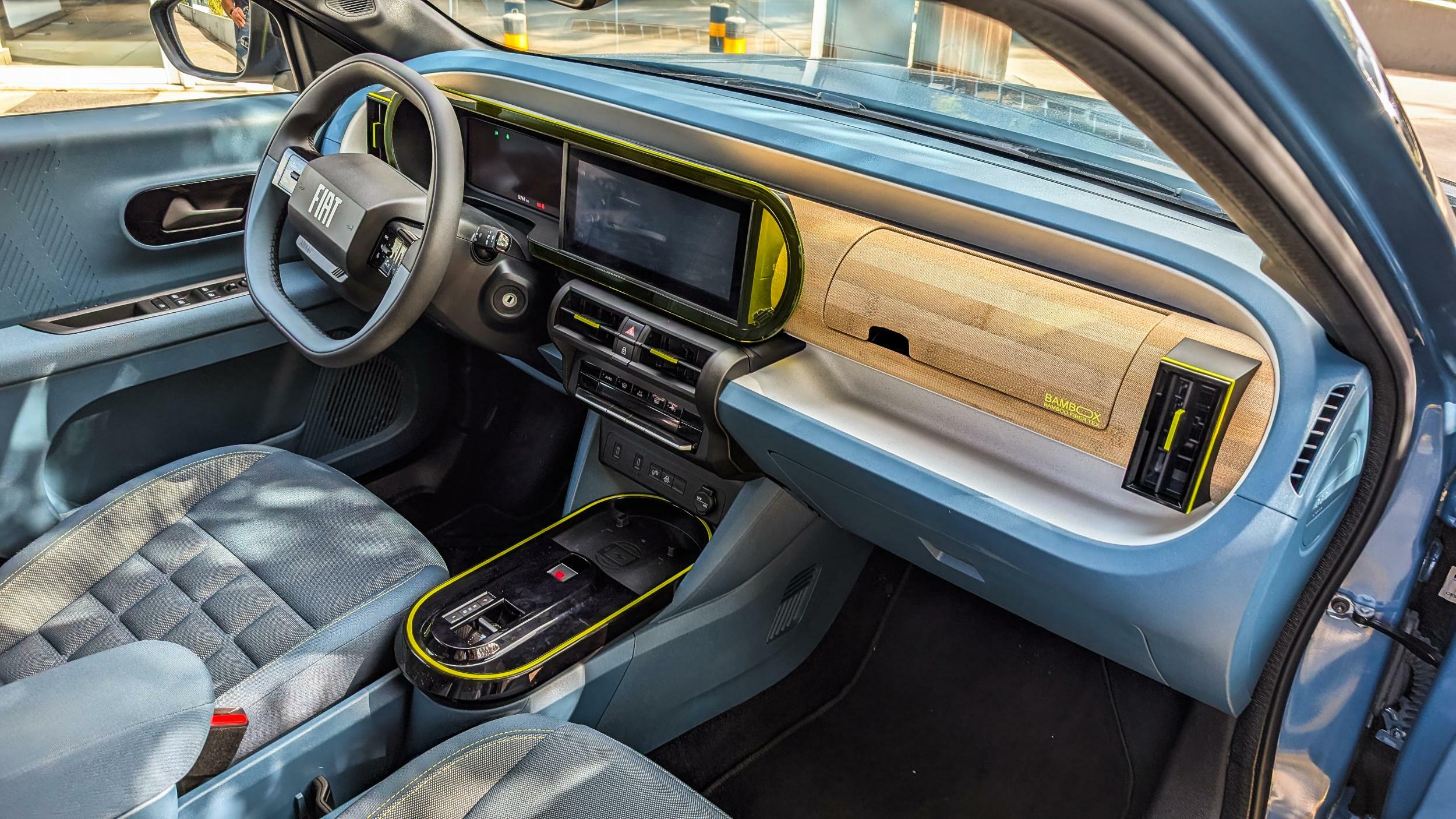
The unique character of each model is even more pronounced inside the cabin. The Citroen has a modern and minimalist approach, with horizontal lines on the dashboard. Highlights include the small two-spoke steering wheel, the tiny digital instrument cluster that resembles a head-up display, and the fabric trim that disguises the hard plastics.
The Fiat is far more playful and colorful. It has an oval shaped digital cockpit with a miniature Panda trapped in the transparent perimeter, a Bamboo-like cover for the glovebox, vintage emblems and glossy black surfaces.
Of course, many of the core components are shared. The climate controls remain mercifully physical, the infotainment screen is a 10.25-inch unit across the board, and most of the switchgear and door handles are the same. It’s what you’d expect from two cars built from the same parts bin.
Comfort and Practicality
Cabin space feels identical, with both cars offering enough legroom and headroom for four adults to travel comfortably. The seats are plush and equally stylish in their own regard, leaving Citroen’s “Advanced Comfort” marketing claim mostly symbolic. The boot also looks the same to the naked eye, despite the notable difference on paper in favor of the Fiat.
Overall, the Fiat has the most unique interior ambiance that will make passengers smile. On the other hand, the Citroen might age better and has a narrow lead in perceived quality – most likely due to the darker trim.
Trim levels mirror each other from the base models to the range-toppers we tested. In Greece, the Fiat is the more affordable choice across the range. But in other markets like Germany and the UK, the Citroen often comes in cheaper, at least for the electric versions.
Driving Impressions
Behind the wheel, the similarities are immediately obvious. Contrary to what some reviews suggest, both models share identical suspension geometry and a soft overall tune. The Citroen does have a slight advantage over rough surfaces, thanks to its “Progressive Hydraulic Cushions” that take the edge off full damper extension.
Both small hatchbacks are very easy to drive and proved to be agile in Athens’ narrow streets. Of course, performance is identical across the range, which includes electric and turbocharged 1.2-liter engines in regular and mild-hybrid forms. The Grande Panda may eventually offer an all-wheel-drive version, potentially reviving the spirit of the Panda 4×4.
The steering feel is also very similar, but at least it gave me something to write about. In the Grande Panda I got the sense of the ultra-light City mode of older Fiats – but only when stationary. The Citroen’s steering adds a barely perceptible touch of extra weight, likely a result of the smaller steering wheel diameter.
Verdict
Photos Thanos Pappas for CarScoops
In the end, the Citroen C3 and Fiat Grande Panda are two interpretations of the same idea, delivered in French and Italian dialects. Both target the value end of the subcompact market and use a shared platform to keep costs down, while still managing to carve out distinct personalities through design.
They don’t face much direct competition beyond the Dacia Sandero Stepway, though small SUVs and traditional hatchbacks are always hovering nearby. Beneath the styling, they’re mechanically identical, with only slight differences in ride and agility. The C3 feels a bit more composed when the suspension hits its limits, while the Grande Panda comes across as slightly more nimble. These nuances only really emerge if you drive them one after the other.
For car enthusiasts and romantics, a little more character in the driving dynamics wouldn’t have gone amiss, but for most buyers, design is what matters. On that front, the fraternal twins deliver more than enough distinction to stand on their own.
The final verdict ends in a clear draw, with each car bringing its own strengths to the table and appealing to slightly different sensibilities. The Grande Panda leans into playful energy and quirky charm, while the C3 carries itself with a more restrained, minimalist poise. If it came down to styling alone, which one would you take home?
Localization will help Chinese carmakers boost global vehicle sales.
VW and Toyota’s market share could fall sharply in key segments.
Analysts expect Tesla’s share to rise from 2 to 8 percent globally.
In just a few years, Chinese automakers may do more than disrupt the global car industry. As they scale up overseas and lean into their strengths in electrification and cost control, the shift looks less like a disruption and more like a permanent redrawing of the map. If the current pace holds, they could control a third of the global market within five years.
Analysts at UBS, the Swiss investment bank and financial services company, point out that while China’s domestic car market continues to grow, it’s the overseas expansion that’s becoming increasingly important for them. According to their latest estimates, foreign markets now represent about 20 percent of industry sales for Chinese carmakers, and in some cases, up to 50 percent of their profits.
The Global Impact of Expansion
UBS says its forecast remains unchanged from two years ago, even as Chinese manufacturers scale up production in Europe and some legacy automakers begin stepping back from their EV plans, citing uncertain returns and cooling demand.
“The main drag was due to Europe’s slowdown of EV adoption, and tariffs and protectionism against Chinese EVs,” said Paul Gong, UBS’s lead analyst for Chinese EVs. “I think 2024 progress was slower than expected, but recent signs have shown some catch-up.”
The South China Morning Post (SCMP) reports that China’s long-term bets on electric vehicles, vertical integration, and aggressive supply chain development appear to be paying off. These moves haven’t just given Chinese brands a cost advantage, they’ve made it easier to scale production and respond quickly to market shifts.
Chinese Carmakers Gain Speed as Global Rivals Lose Ground
Frank Diana, a managing partner at Tata Consultancy Services, says China’s edge is not just about scale but about speed. “The fact that [China] has been learning aggressively means that they’re going to have a dominant position and market share,” he explained. “But they’re not alone … you will see the rise of other players in the space.”
UBS forecasts that the rise of Chinese brands will cut deep into the dominance of current global leaders. Combined, Volkswagen and Toyota now hold 81 percent of the market share in key segments. By 2030, that number could drop to just 58 percent. Meanwhile, Tesla’s global share, currently sitting at around 2 percent, could grow to as much as 8 percent by the same year.
Also helping Chinese brands expand internationally is a move to localized production. In Thailand, automakers such as SAIC Motor, Great Wall, BYD, GAC, Changan Automobile, and Chery already operate assembly plants. Great Wall and BYD have also established manufacturing in Brazil, with BYD developing a large-scale facility in Hungary to support its growing footprint in Europe.
India Eyes a Bigger Role
China isn’t the only nation that could see its car industry expand rapidly by 2030. India, too, is positioning itself for growth. Domestic automakers like Tata and Mahindra are increasing their share in the local market and looking outward.
However, they face stiff competition, not only from dominant player Maruti Suzuki, but also from Chinese-owned MG Motor, which has introduced several new models to Indian buyers. BYD has also begun to establish a presence, and both Chery and Great Wall have plans to enter the market, reports SCMP.
Still, analysts suggest that China’s early investments gave it a lasting edge. The ability to learn quickly, build tightly controlled supply chains, and manage costs efficiently has kept its companies ahead.
“The EV supply chain is dominated by Chinese companies,” said analyst Ramakrishnan. “The India EV supply chain, including electronics, is imported from China.”
Fewer Players, Bigger Stakes in the Next Phase of EVs
In Diana’s view, the current market is heading toward consolidation. China’s early lead puts it in a strong position as the EV space matures into a more concentrated field of major players.
“So there will be consolidation even at the EV market level, and you end up with 10 to 15 platform orchestrators made up of [original equipment manufacturers and] big technology companies,” he said.
Before yesterdayElectric Vehicles - Latest News | Carscoops
Peugeot has introduced the facelifted 408 crossover in Brussels.
It features a new front end, updated wheels, and a revamped cluster.
The E-408 gains several features including battery pre-conditioning.
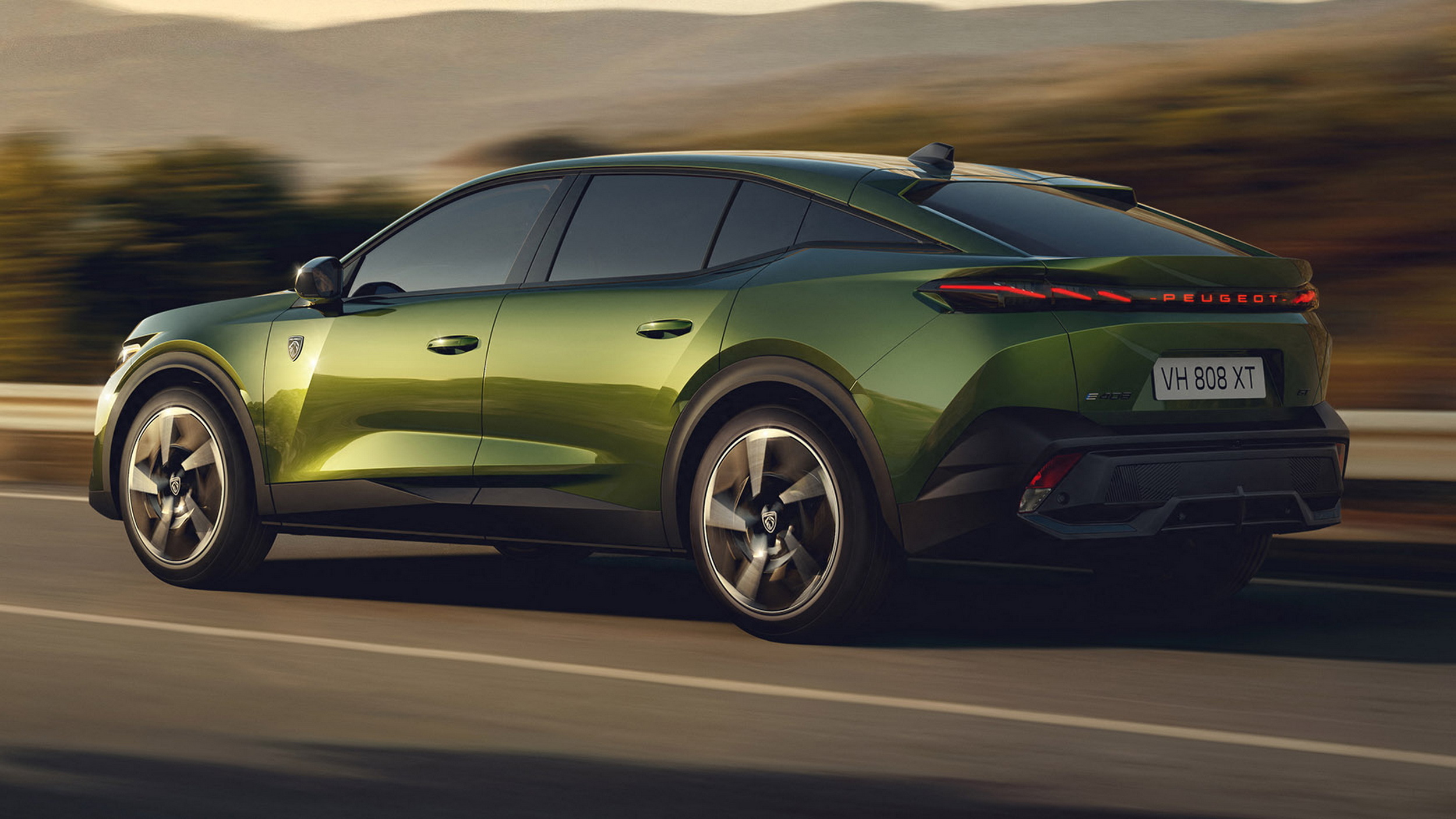
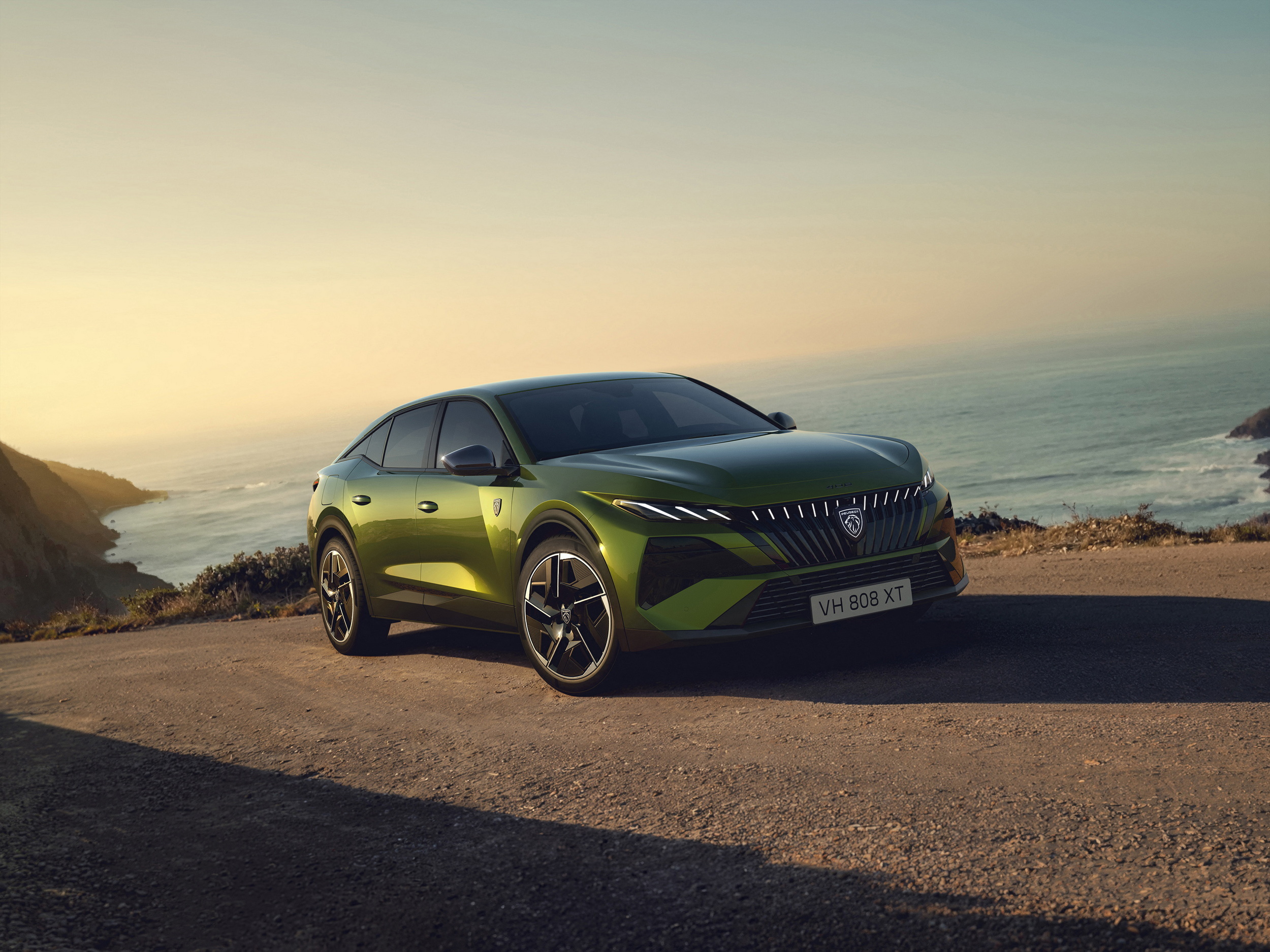
The Brussels Motor Show is in full swing, and Peugeot has brought a familiar face with a sharper edge. The refreshed 408 makes its debut with a sportier, more upscale design along with a few well-placed upgrades.
The changes are immediately apparent as the fastback crossover has been ‘defanged.’ As part of the makeover, the model adopts split lighting units with an upper section that has three “claws.” These serve as daytime running lights as well as animated turn signals.
The headlights reside below and are “almost invisible” as they’re surrounded by gloss black accents. This enables them to effectively blend into the background.
Designers gave the 408 a more expressive grille that features an illuminated logo on higher-end variants. The Lion badge also has a radar sensor hidden behind it, which helps to create a cleaner appearance.
Elsewhere, there’s a new bumper and a revised central intake. The latter trades a honeycomb mesh pattern for horizontal lines.
The rear end largely carries over, but the traditional logo has been replaced by illuminated “Peugeot” lettering. This is a first for the company and it’s joined by gloss black accents as well as revamped taillights.
Last but not least, the model rides on updated wheels ranging in sizes from 17- to 20-inches. Customers will also find a revised color palette that includes an exclusive new color known as Flare Green. It changes from bright yellow in sunlight to deep green in shadows.
Minor Interior Changes
While exterior styling changes are pretty noticeable, the same can’t be said about interior updates. These blend into the background, but include updated trim and upholstery.
The model also gains a new 10-inch digital instrument cluster, which sports improved graphics. It’s joined by a familiar 10-inch infotainment system.
An Updated EV With New Features
The E-408 carries over with a 58.2 kWh NMC battery pack, which feeds an electric motor developing 210 hp (157 kW / 213 PS) and 253 lb-ft (343 Nm) of torque. This enables the model to have a WLTP combined range of 283 miles (456 km).
While the powertrain will give you déjà vu, there are several new features including a battery pre-conditioning system. In cold weather, owners can tell the battery to heat up at the touch of a digital button. The GT trim takes this up a notch as navigating to a charging station will automatically trigger battery pre-conditioning at the perfect time.
Customers will also find a new Plug & Charge capability as well as a Vehicle To Load function that delivers up to 3.5 kW of power. The model also has a new “80% charge limit” function for AC charging at home.
Hybrid And Plug-In Hybrid Power Too
If you’re not ready to go fully electric, you can opt for a plug-in hybrid powertrain that consists of a 178 hp (132 kW / 180 PS) petrol engine, a 123 hp (92 kW / 125 PS) electric motor, a 14.6 kWh lithium-ion battery, and a seven-speed dual-clutch transmission. This enables the crossover to have a combined output of 237 hp (177 kW / 240 PS) and an electric-only range of up to 53 miles (85 km).
Customers can also opt for a hybrid variant, which has a petrol engine with 143 hp (107 kW / 145 PS). It’s connected to an electrified six-speed dual-clutch transmission and the model consumes 5.0 L/100 km (47 mpg US) in the WLTP combined cycle.
2027 Chevy Bolt supports Tesla Superchargers and fast charging.
Powered by an LFP battery and a 210 hp single electric motor.
Pricing starts at $29,990, but a cheaper version will soon follow.
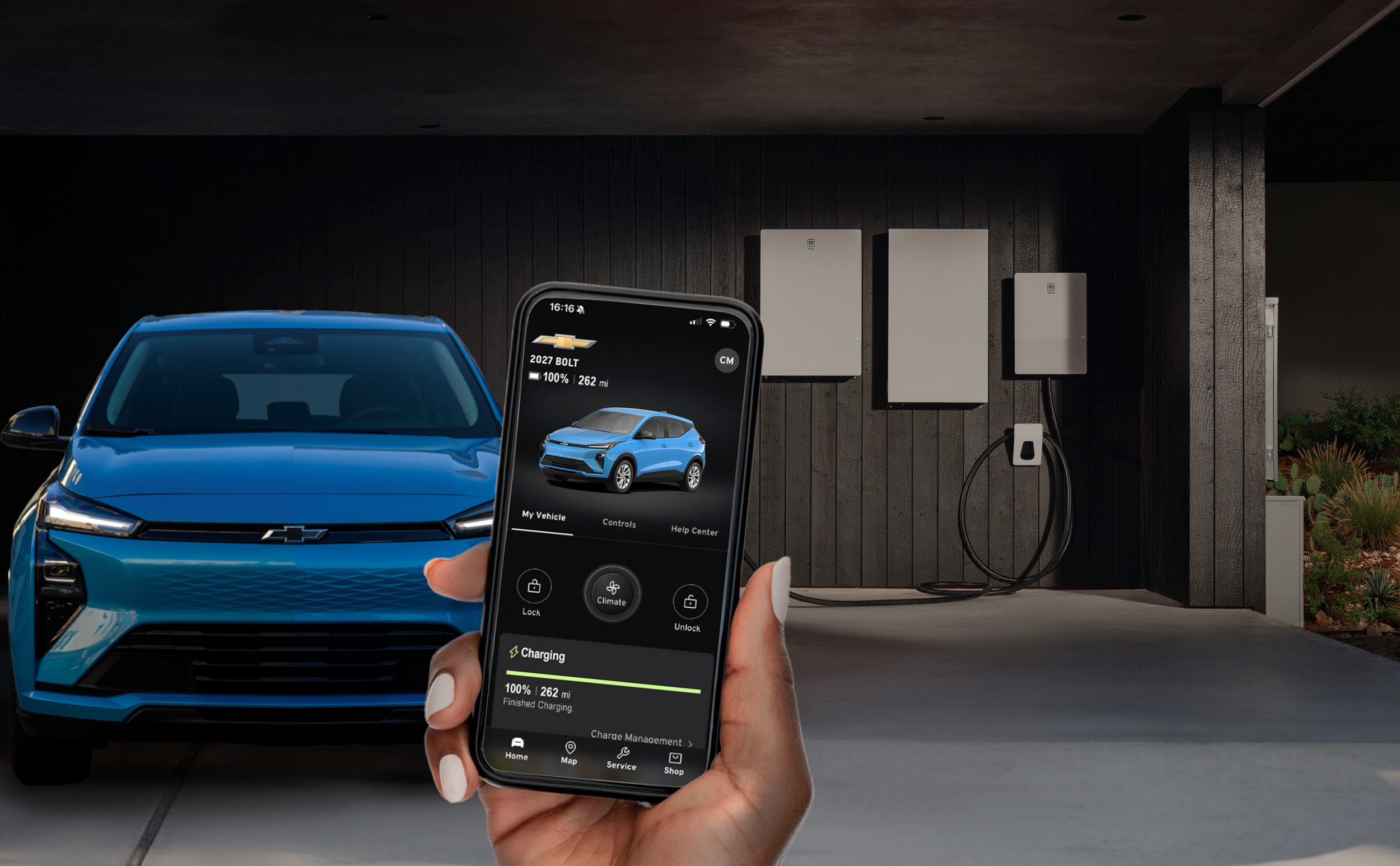
Chevrolet introduced the 2027 Bolt last fall and now they’ve revealed the electric crossover has an EPA-estimated range of 262 miles (422 km). That’s more than GM’s original estimate of 255 miles (410 km) and it blows past the previous Bolt (259 miles) and Bolt EUV (247 miles).
Despite having more range than before, the Bolt falls short of the 2026 Nissan Leaf. We drove the Japanese EV earlier this year and it has an EPA rating of up to 303 miles (488 km). That’s 41 miles (66 km) more than the Bolt and this is a pretty noticeable advantage.
However, you shouldn’t write the Bolt off as it has some standout features, including the Super Cruise semi-autonomous driving system. The hatch also has a Vehicle-to-Home bi-directional charging capability, which means it can power your house in the event of an outage (when paired with a GM Energy Home System).
Buyers will also find an 11-inch digital instrument cluster and an 11.3-inch infotainment system with Google built-in.
Power comes from a 65 kWh LFP battery pack, which feeds an electric motor developing 210 hp (157 kW / 213 PS) and 169 lb-ft (229 Nm) of torque. When the battery is low, a 150 kW DC fast charger can take it from 10% to 80% in just 26 minutes. Speaking of which, the Bolt is the first Chevrolet to have a native NACS port and this means easy access to Tesla Superchargers.
The 2027 Bolt starts at $29,990 – including destination – and is currently arriving at dealerships. It will be followed by an even more affordable variant that begins at $28,995.
Both prices undercut the Leaf, which starts at $31,485 out the door. That being said, Nissan has already confirmed plans for an entry-level variant with a smaller 52 kWh battery. It’s also worth noting the Bolt is a “limited run model,” while the Leaf will be sticking around.
Fiat has introduced the new Qubo L, which is a revamped Doblo.
Aimed at families, the model will arrive at dealerships early this year.
The van will be offered with gas, diesel, and electric powertrains.
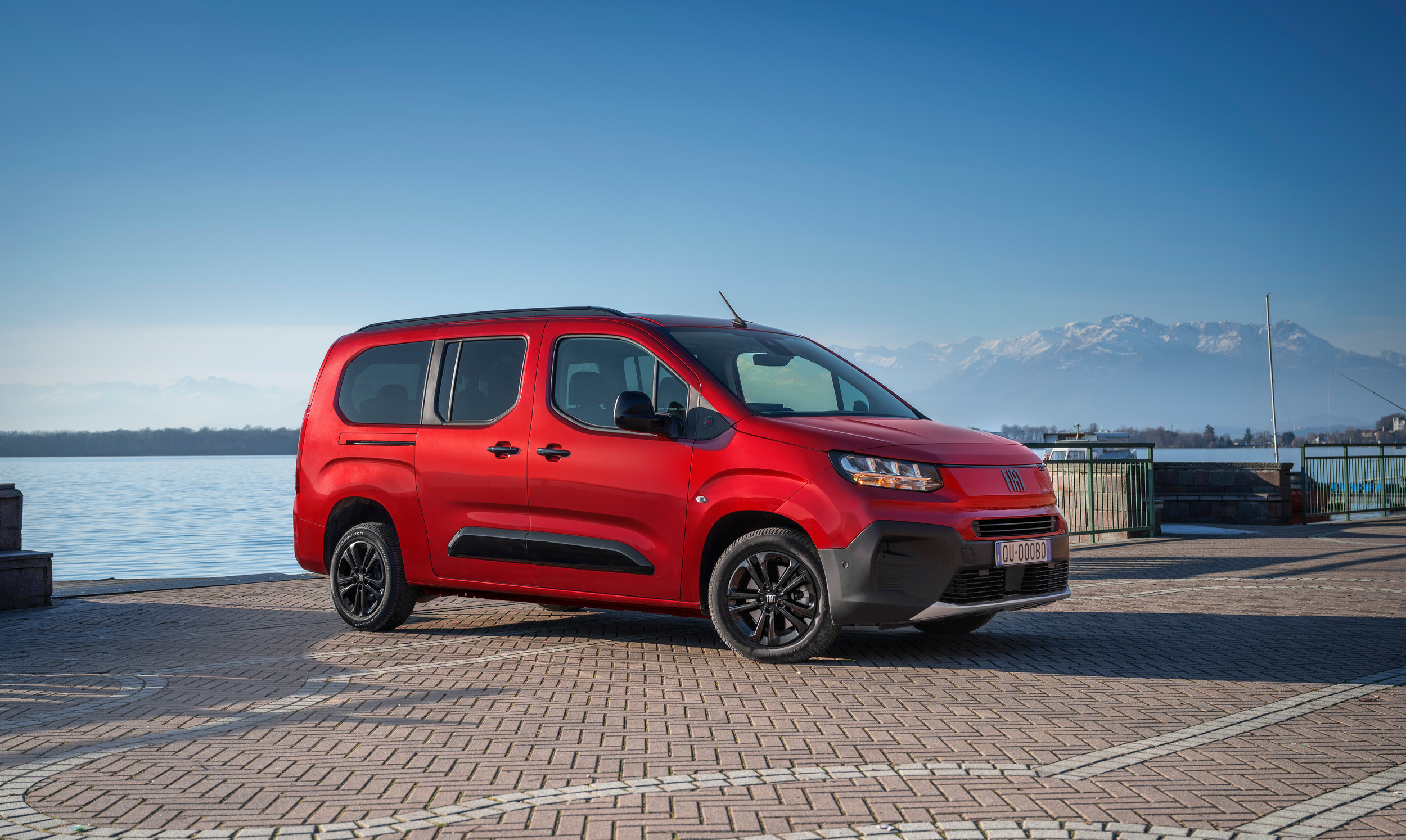
Fiat is rebooting the Qubo and transforming it into the “ultimate family mover for modern living.” That’s a bit of a stretch as the new Qubo L appears to be little more than a reworked version of the Doblo.
Given this, Fiat’s PR team phoned it in and barely said anything useful about the van. That’s far from ideal, but the Qubo L seems to be positioned as a family vehicle rather than the more business-focused Doblo.
Whatever the case, the Qubo L appears to be a renamed Doblo with the Pack Style Plus. The latter adds a faux silver skid plate and a Magic Top panoramic roof. Both appear to be included on the Qubo L as Fiat mentioned a “multi-purpose glass roof.” However, the company strangely referred to it as Magic Window, which is the flip up rear window on the Doblo. They even noted it “allows access to storage or [to] pick items from the luggage shelf without opening the tailgate.”
While Fiat doesn’t even appear to know what they’re talking about, the company confirmed the van will be offered in five colors called Cinema Black, Riviera Blue, Foresta Green, Gelato White, and (RED). The company also mentioned five- and seven-seat variants that measure 173.2 inches (4,400 mm) and 187 inches (4750 mm) long.
Fiat couldn’t be bothered to release interior pictures or details, but the cabin likely carries over from the Doblo. If that’s the case, we can expect it to offer a 10-inch infotainment system, a wireless smartphone charger, heated front seats, and a heated leather steering wheel. This remains to be seen, but the company mentioned Pop, Icon, and La Prima trims.
Three Ways to Power It
Under the hood, customers will find gas, diesel, and electric powertrains. The company was coy on specifics, but it sounds like the van will offer a familiar 1.2-liter petrol with 108 hp (81 kW / 110 PS) and 151 lb-ft (205 Nm) of torque. It enables the Doblo to accelerate from 0-62 mph (0-100 km/h) in a glacial 13.1 seconds.
Fiat also confirmed a diesel engine with outputs of 99 hp (74 kW / 100 PS) and 128 hp (96 kW / 130 PS). It also appears to carryover and should displace 1.5-liters.
Surprising no one at all, there’s an electric variant with 134 hp (100 kW / 136 PS). It presumably has a 50 kWh battery pack and a combined WLTP range of 211 miles (339 km).
While Fiat doesn’t even sound remotely interested in the Qubo L, they’ll begin accepting orders later this month. The van will then arrive at dealerships in “early 2026.”
China’s GLC EQ stretches an extra 2.1 inches in wheelbase.
It features dual motors with a 219 hp and 402 hp split.
Range could hit 500 miles using China’s local test cycle.
Mercedes-Benz isn’t waiting around when it comes to expanding its electric lineup in China. Less than six months after unveiling the all-new GLC with EQ Technology in Europe, the first images of the long-wheelbase version have surfaced, tailored specifically for the Chinese market.
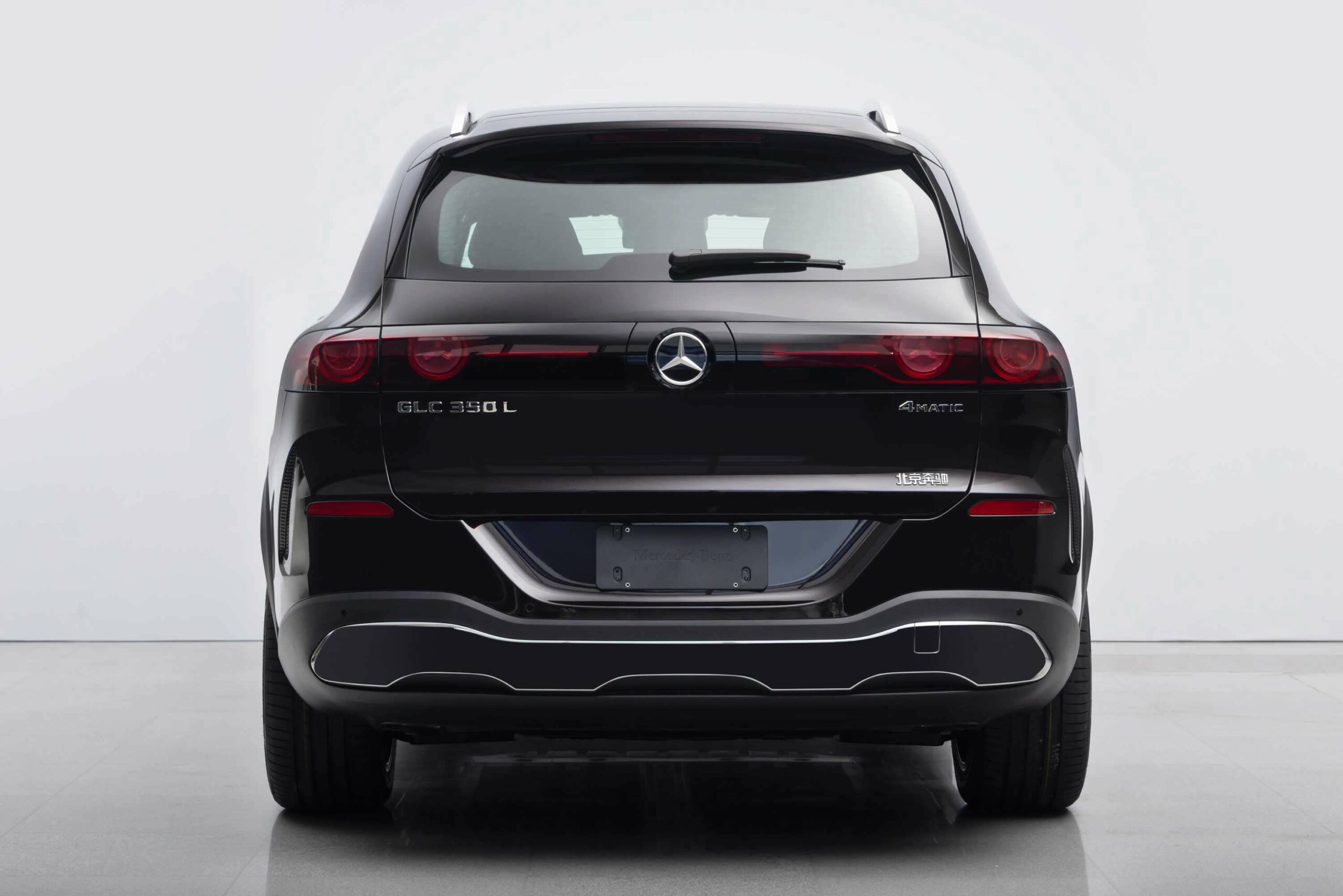
Scheduled to launch as the GLC 350 L, this variant stretches the wheelbase to 3,027 mm (119 inches), compared to the 2,972 mm (115.2 inches) found in Western versions. The extra 55 mm, or about 2.1 inches, may not seem dramatic on paper, but in practice, it’s likely to matter quite a bit for those riding in the back.
Without a direct comparison, the extended-wheelbase GLC EQ looks much like the standard version. The longer rear doors are the most visible difference, with a small ‘L’ badge on the tailgate offering the only other clear indication of the added length. Otherwise, the SUV looks quite suave, though we’re still not entirely convinced by the oversized illuminated grille up front.
So far, early details from China haven’t confirmed the exact battery specifications for the local version. Globally, the GLC EQ is equipped with a 94 kWh lithium-ion pack, offering up to 443 miles (713 km) of range.
It’s likely that the Chinese model will carry the same setup, though local testing standards tend to be more generous. If that holds true, the official figure could land somewhere north of 500 miles (805 km) on a full charge.
According to data released by Chinese authorities, the GLC 350 L comes standard with a dual-motor setup. The front axle motor produces up to 219 hp (163 kW), while the rear one delivers a more substantial 402 hp (300 kW). By comparison, Europe’s sole announced version, the GLC 400 EQ, offers a combined output of 483 hp.
Mercedes-Benz has a lot riding on the GLC EQ’s performance in China. Competition from domestic EV makers is intensifying, and the German carmaker saw a 7 percent dip in Chinese sales in 2024. Full-year figures for 2025 haven’t been released yet, but expectations are for another decline. The GLC EQ’s success may play a key role in reversing that trend.
Malachi James, 14, died in a Christmas crash with a Cybertruck.
Family wants Cybertruck banned for weight and safety concerns.
Their concerns are the same many have about trucks in general.
On Christmas night, the driver of a Tesla Cybertruck allegedly piloted their vehicle into oncoming traffic and hit a Toyota Corolla. Inside that car was 14-year-old Malachi James, who died as a result. Now, his family is raising questions about whether or not the U.S. should follow Europe’s lead and keep the Cybertruck off public roads.
“We are going to do our best to look at some ways to see if we can get them removed from the streets,” said Royael Saez, Malachi’s aunt, to WTNH.
“We don’t believe in something like this; this is a tank.” The family argues the Cybertruck is simply too big and too fast to safely share the road with normal traffic. “From our understanding, it’s already banned all over Paris, so obviously they know something like this shouldn’t be on the road,” Saez added.
While the vehicle meets U.S. safety standards and boasts a five-star rating from the National Highway Traffic Safety Administration, experts note its size and weight remain significant factors in crash severity. We’ll circle back to those factors, though.
Trucks Are Growing, and So Are the Risks
Dr. Eric Jackson from the Connecticut Transportation Institute explained, “They are very large vehicles, they are very heavy vehicles…a unibody structure, so it’s one solid frame throughout.”
He added that the Cybertruck is equipped with 11 cameras that record sensor data during collisions, helping investigators analyze accidents. The lightest Cybertruck model weighs 6,634 pounds, according to Tesla’s website.
While the James family’s concerns have focused on Tesla’s futuristic truck, it’s worth noting that the Cybertruck is far from unique in its size or weight. The Rivian R1T weighs roughly 6,800 pounds. Standard-sized pickups from Ford, GM, and Stellantis can all weigh as much, if not more.
Heavy-duty trucks like the Ford F-350, GMC Sierra 3500 HD, and RAM 3500 can weigh over 7,000 pounds and are considerably larger than any Cybertruck.
Regardless of powertrain or shape, heavier cars are worse at just about every important metric on public roads. Braking, handling, and visibility all suffer when compared to everyday commuter vehicles.
Critics are quick to call out the angular nature of the Cybertruck, but the reality is that all trucks probably deserve a lot more scrutiny than they receive.
As for the case that has broken the hearts of the James family, police now have their suspect in custody. He has 11 pending cases preceding this one, including one for reckless driving. Video from the scene appears to show him speeding and overtaking cars in the oncoming lane moments before the fatal crash. That type of behavior is dangerous in any car, not just a big angular pickup.
VW ID. Era 9X is a full-size SUV with extended-range EV tech.
Three powertrain options include rear- and all-wheel drive.
Dual-motor version produces 510 hp with 199 miles EV range.
As more carmakers double down on their efforts to cater specifically to China’s fast-evolving EV market, buyers in other parts of the world are being left out of some genuinely interesting vehicles. The VW ID. Era 9X is one of the latest examples, and it brings quite a bit to the table.
Revealed through filings with China’s Ministry of Industry and Information Technology, as well as VW itself, this new production SUV emerges from the SAIC Volkswagen joint venture. It’s a large, range-extender SUV positioned to compete in a growing segment of vehicles that blend electric driving with longer-distance practicality.
Battery-electric SUVs are increasingly common in China, but they still don’t meet the needs of every buyer. That’s where extended-range EVs, or EREVs, come into their own.
A Full-Size SUV Built for China
The VW ID. Era 9X, which somewhat curiously shares its 9X badge with Zeekr’s own EREV SUV, is bigger than many popular Western model, including the VW Atlas and Touareg. It even edges out the BMW X7 in overall length. Measuring 5,207 mm (205 inches) long, 1,997 mm (78.6 inches) wide, and 1,810 mm (71.2 inches) tall, the Era 9X rides on a 3,070 mm (120.8-inch) wheelbase.
For reference, the BMW X7 comes in at 5,181 mm (204 inches) in length, 2,000 mm (78.7 inches) wide, and 1,805 mm (71.1 inches) tall, with a 3,105 mm (122.2-inch) wheelbase. This makes the ID. Era 9X slightly longer and taller, though marginally narrower and with a slightly shorter wheelbase. In terms of footprint, it’s firmly in full-size luxury SUV territory.
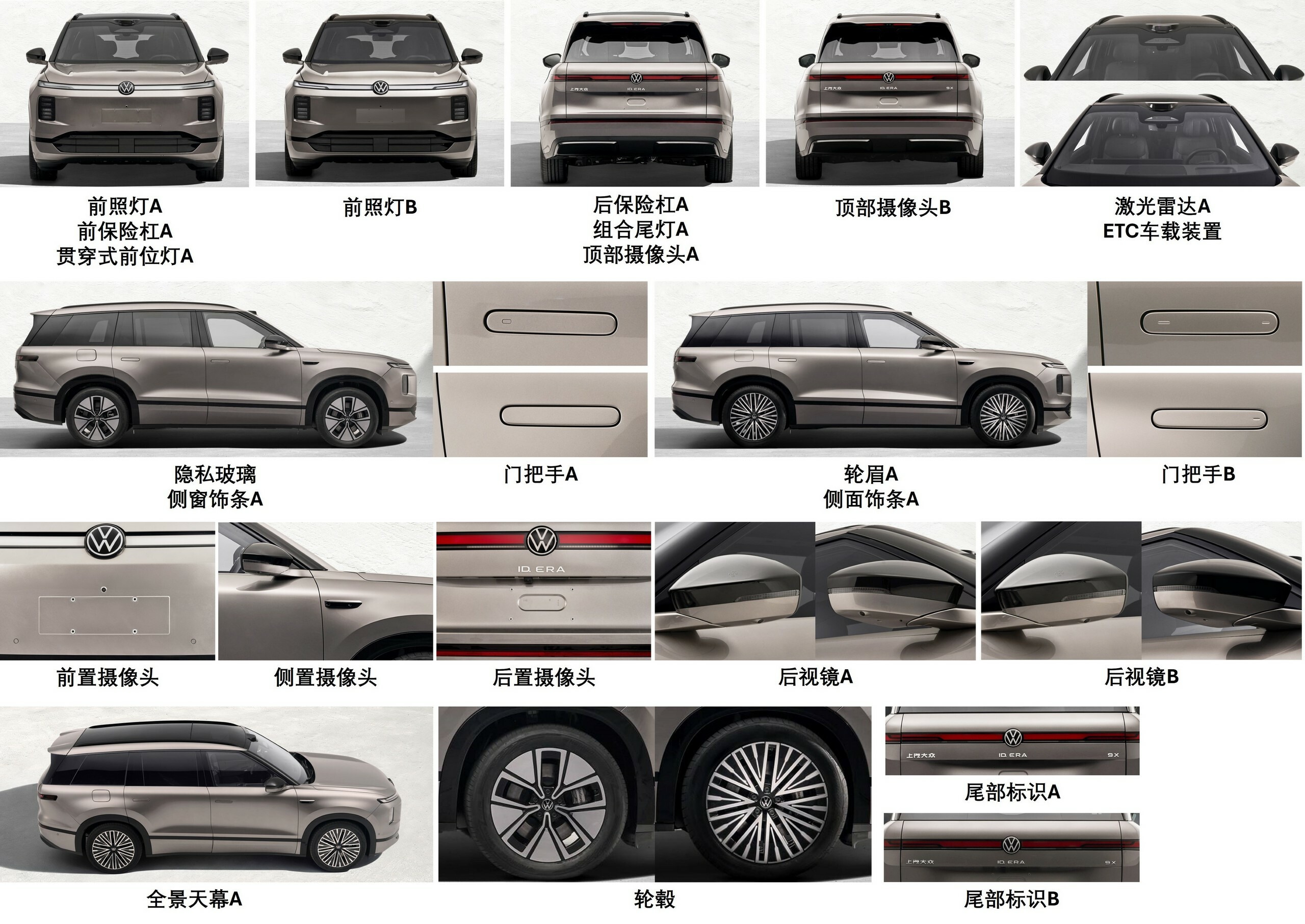
The exterior design remains remarkably close to the original ID. Era concept that VW unveiled earlier last year, with a premium and contemporary look that hasn’t been watered down much in the transition to production.
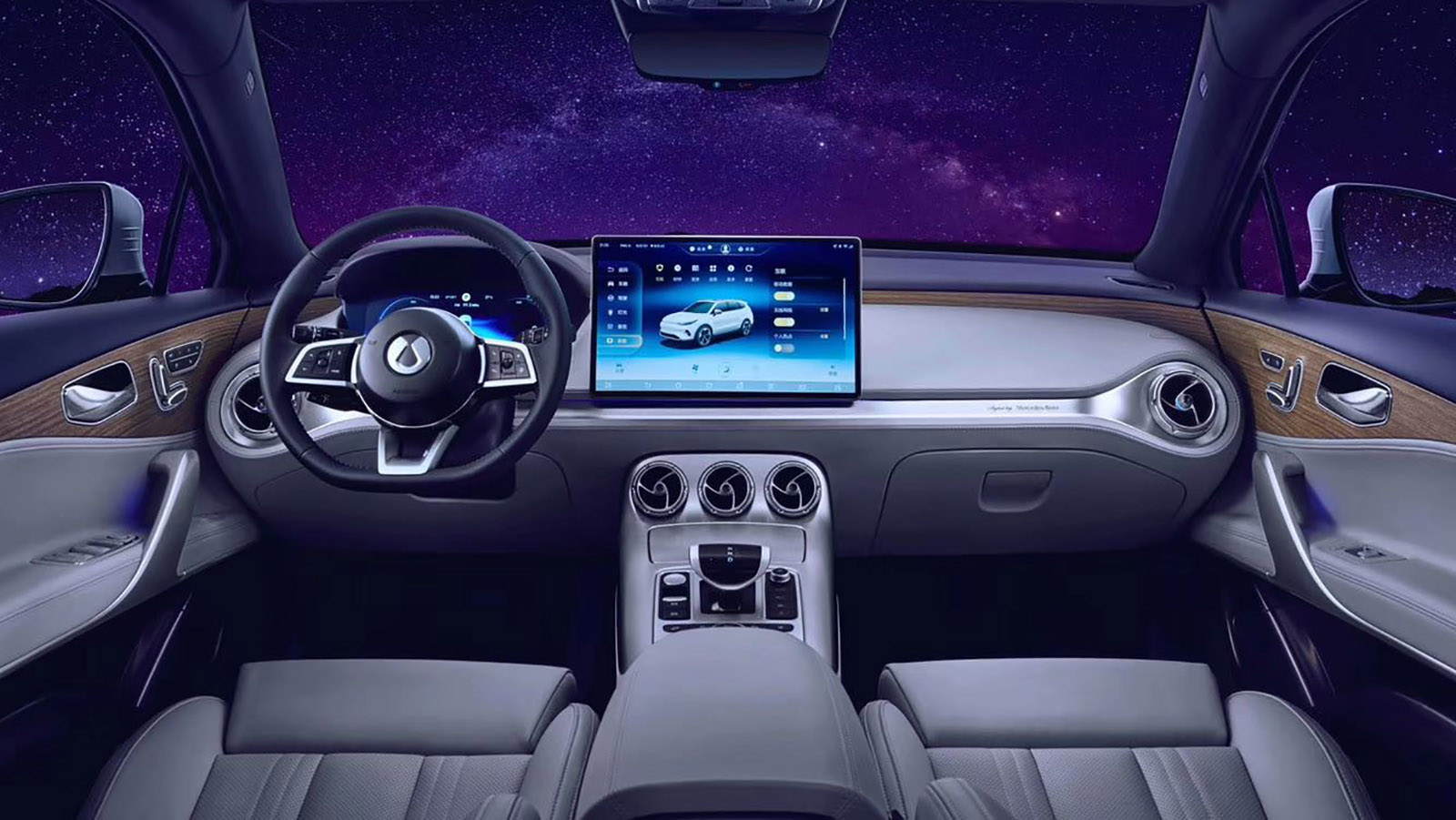
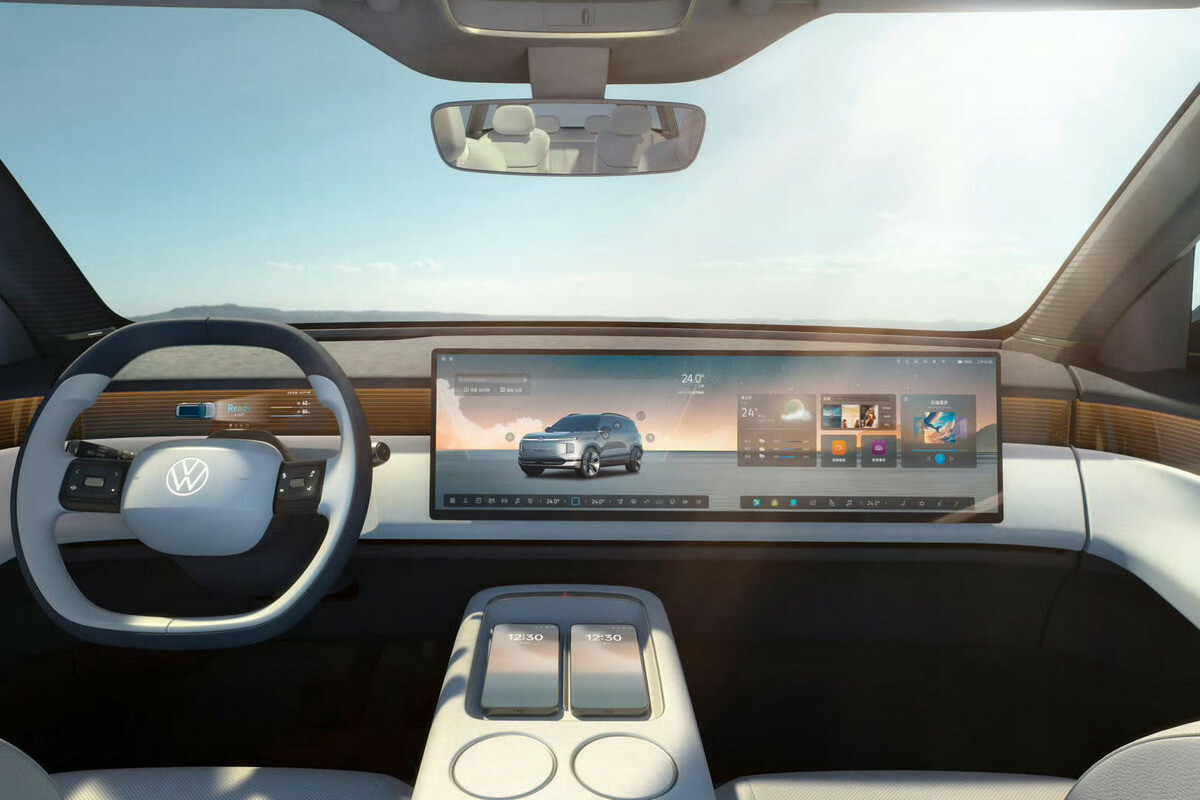
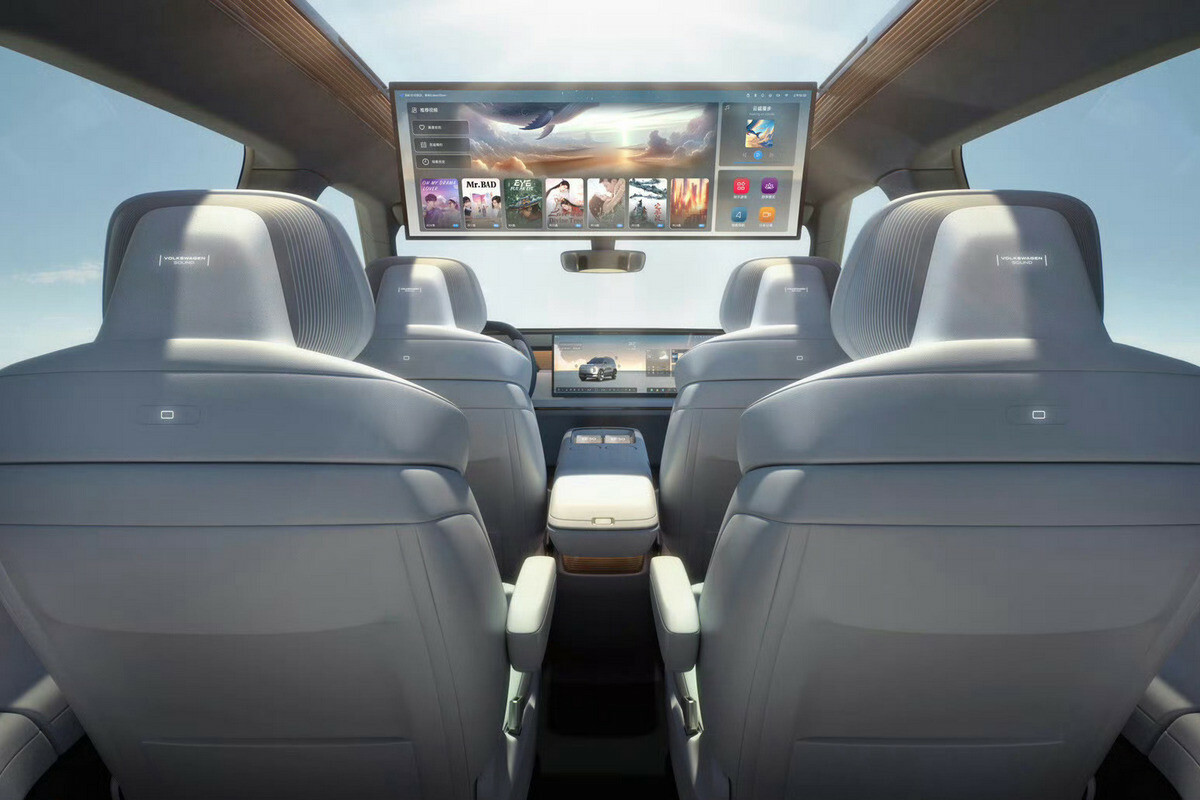
Volkswagen hasn’t revealed the production interior yet. But if it mirrors the concept closely, expect a massive dashboard-spanning infotainment system to carry over. There may also be an optional roof-mounted display for rear passengers. The spec sheet confirms that the ID. Era 9X will come with six seats in a 2+2+2 arrangement.
Powertrain Options
Where things get more interesting is under the skin. The ID. Era 9X is an extended-range electric vehicle, using a gasoline engine only to charge the battery. Volkswagen will offer it in three powertrain configurations, with both rear- and all-wheel drive options.
The base model features a single rear-mounted electric motor producing 220 kW (295 hp), powered by a 51.1 kWh LFP battery. It delivers a pure electric range of up to 267 km (166 miles). The curb weight comes in at 2,600 kg (5,732 lbs).
The second variant uses the same electric motor driving the rear wheels but swaps in a larger 65.2 kWh NMC battery. This upgrade boosts the pure electric range to 340 km (211 miles). It weighs slightly more at 2,620 kg (5,776 lbs).
Finally, at the top end, it keeps the 65.2 kWh battery but adds a second electric motor on the rear axle, bumping total output to 380 kW (510 hp). This dual-motor setup increases curb weight to 2,700 kg (5,952 lbs). Pure electric range drops slightly to 321 km (199 miles).
While full combined range figures haven’t been published, all three configurations are expected to comfortably exceed 1,000 km (over 600 miles) when using both battery and gasoline power, depending on the final gas tank capacity.
Will It Go Global?
Pricing is still under wraps and should be announced in the coming months before the vehicle officially goes on sale. While a Western launch isn’t confirmed, there’s reason to keep a small window of optimism open for certain martkets.
Mazda already offers its China-built JV models in Europe and Australia, having debuted the new CX-6e SUV earlier today, and Nissan is preparing to follow suit. It’s not out of the question for Volkswagen to consider doing the same with the ID. Era 9X, at least in select international markets, though a US launch is firmly off the table.
Mazda’s CX-6e electric SUV makes its debut at the Brussels Motor Show.
Tesla rival is the European version of the EZ-60 sold in China and Australia.
Only electric power and no hybrid planned for Europe; US gets nothing at all.
Mazda has pulled the wraps off its new CX-6e electric SUV at the Brussels Motor Show and it’s easily the best-looking SUV the brand has done in years. But under the skin this premium EV is also years behind rivals from BMW and Audi.
The CX-6e isn’t a pure Mazda creation. Like the mechanically similar 6e sedan, it’s the result of a joint project with Changan and is built in China on the same line as the Deepal S07. Mazda has done the design, tuning and branding work, but the bones are very much shared.
The Chinese connection means it won’t make it to the US, but it lands in European showrooms later in 2026 where it will take on the Tesla Model Y, BMW iX3 and Audi Q6 e-tron. And it’ll probably cost three times what it does in China, where prices start at just $16,800.
Off The Pace
Under the 2,902 mm (114.3 inches) wheelbase is a 78 kWh LFP battery feeding a single rear motor making 258 hp (258 PS / 190 kW) and just 214 lb-ft (290 Nm) of torque. Mazda claims a WLTP range of up to 300 miles (483 km), which looks like a joke when Volvo this week revealed its similarly-sized EX60 will have up to 503 miles (810 km) of range. Even Tesla’s most basic Model Y Standard, a more accurate rival for the CX, gives you 314 miles (505 km) between charges.
The performance is nothing to get excited about, either. Zero to 62mph (100 kmh) takes 7.9 seconds, and while we’re talking speed, the 195 kW max charge rate is far from class-leading, meaning a 10 to 80 percent refill in about 24 minutes. AC charging tops out at 11 kW, which is on par with rivals, however.
Screens Everywhere, Buttons Nowhere
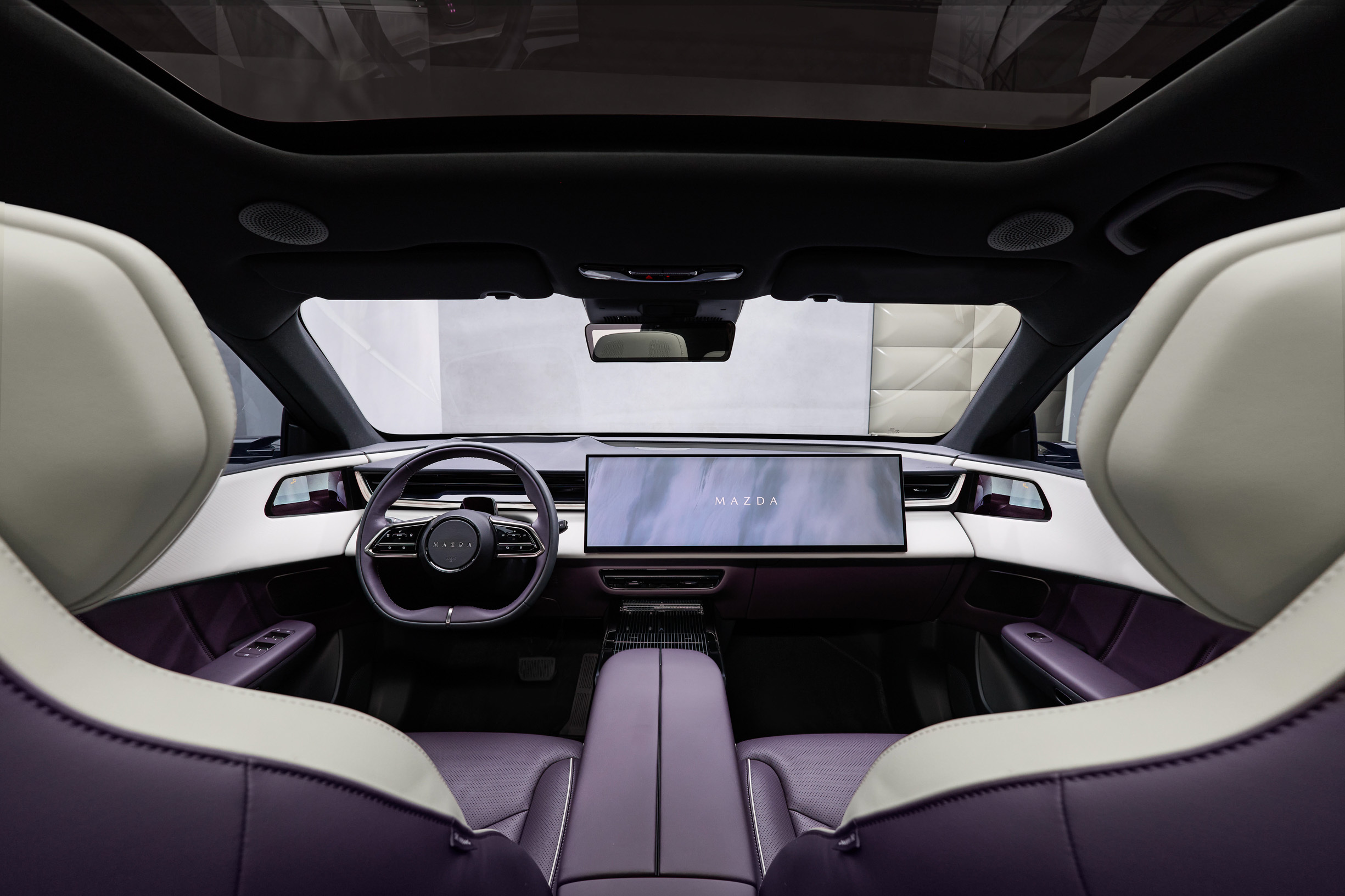
The interior is where the CX-6e really leans into the future. A huge 26 inch display stretches across the dash and a head up display removes the need for a traditional instrument cluster. Other tech highlights include gesture shortcuts, speakers in the headrests and screens for the camera-based door mirrors neatly embedded in the door cards.
Size-wise, the CX-6e is longer and wider than the combustion CX-60 but it can’t touch the ICE SUV or its electric rivals for cargo space. The EV only offers 468 litres (16.5 cu-ft) compared with 570 liters (20.1 cu-ft) in the CX-60, and over 850 litres (30 cu-ft) in a Model Y, though you do also get an 80-liter (2.8 cu-ft) frunk for cables, which you don’t in the Tesla.
Style Over Substance.
We think the CX-6e looks great inside and out, but that style and the still-TBC prices might have to do a lot of heavy lifting to make buyers overlook the poor range, performance and practicality.
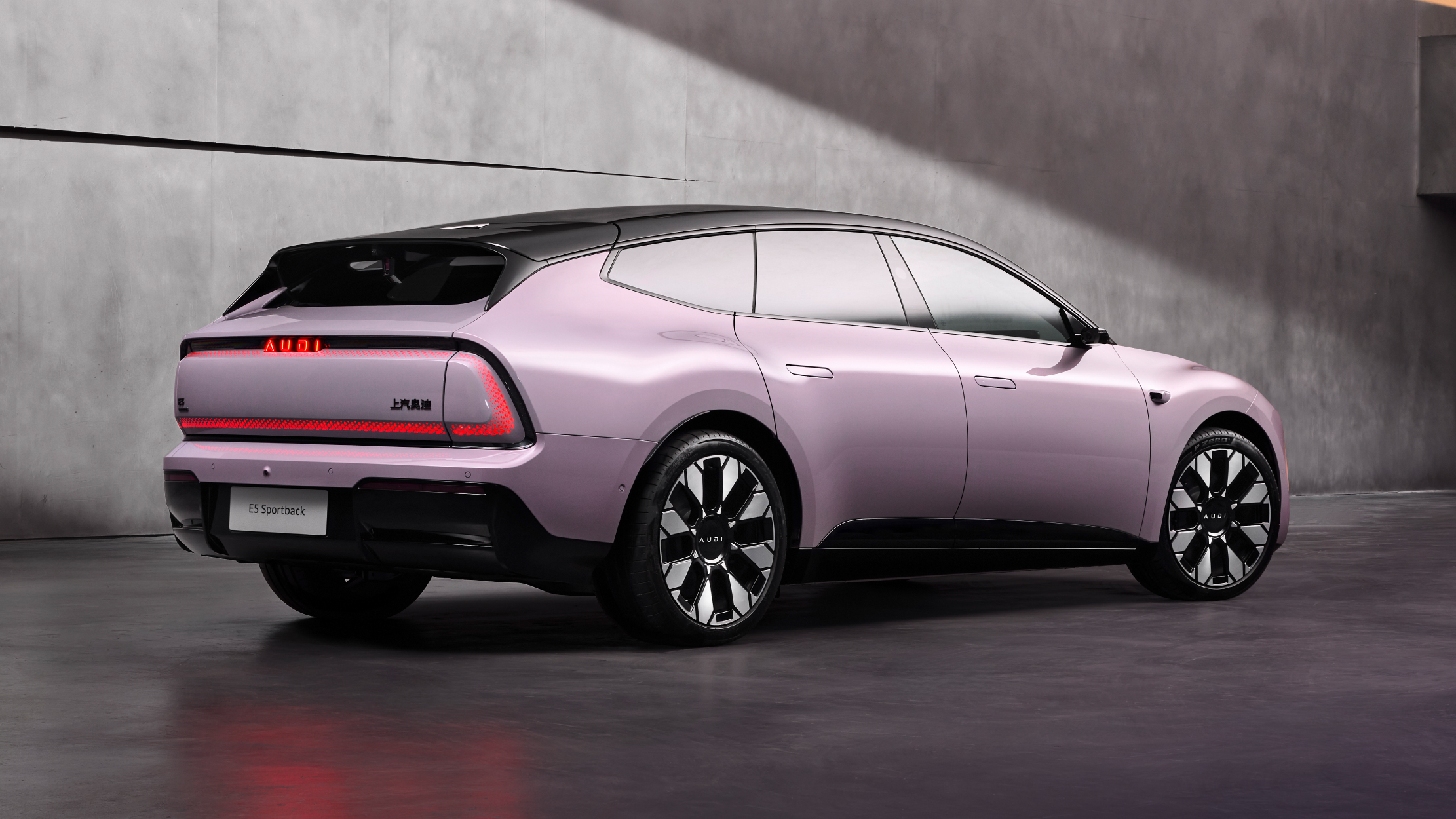
AUDI E5 was named China Car of the Year for design and value.
The Sportback starts at $33,800 with four configurations.
Other winners include Nio ET9, iCAR V23, and Ferrari 296.
Launching a brand-new EV in China under a fresh badge with no Audi rings in sight might have seemed like an odd gamble at the time. But with the E5 Sportback now crowned China Car of the Year, Audi’s unconventional move is starting to look like a smart one. The car, developed in partnership with SAIC, is the first product of a standalone brand created specifically for the Chinese market.
While the China Car of the Year awards don’t carry quite the same global weight as the World Car Awards, they’re still judged by a panel that includes automotive journalists and industry insiders. And since the awards launched in 2014, Western brands have consistently punched above their weight.
Audi, or rather in this case, AUDI, began production of the E5 Sportback in August last year, with the first deliveries following just a month later. It enters a crowded but fast-moving EV space, where pricing pressure and tech innovation come at breakneck speed. Like many of its peers, the E5 Sportback offers strong value, a factor that’s undoubtedly helped fuel interest.
The EV, combining German engineering and quality with Chinese tech, is available in four different configurations. Prices range from 235,900 yuan (about $33,800) to 319,900 yuan (roughly $45,800) for the range-topping Flagship Quattro. That top-tier model features dual motors delivering 776 hp, a 100 kWh battery, and an estimated range of 402 miles (647 km) on a single charge.
Spurred on by the success of the sleek estate, Audi presented its new E SUV Concept at November’s Guangzhou Auto Show. This model has a similar design to the Sportback and will be launched later this year as the E7X.
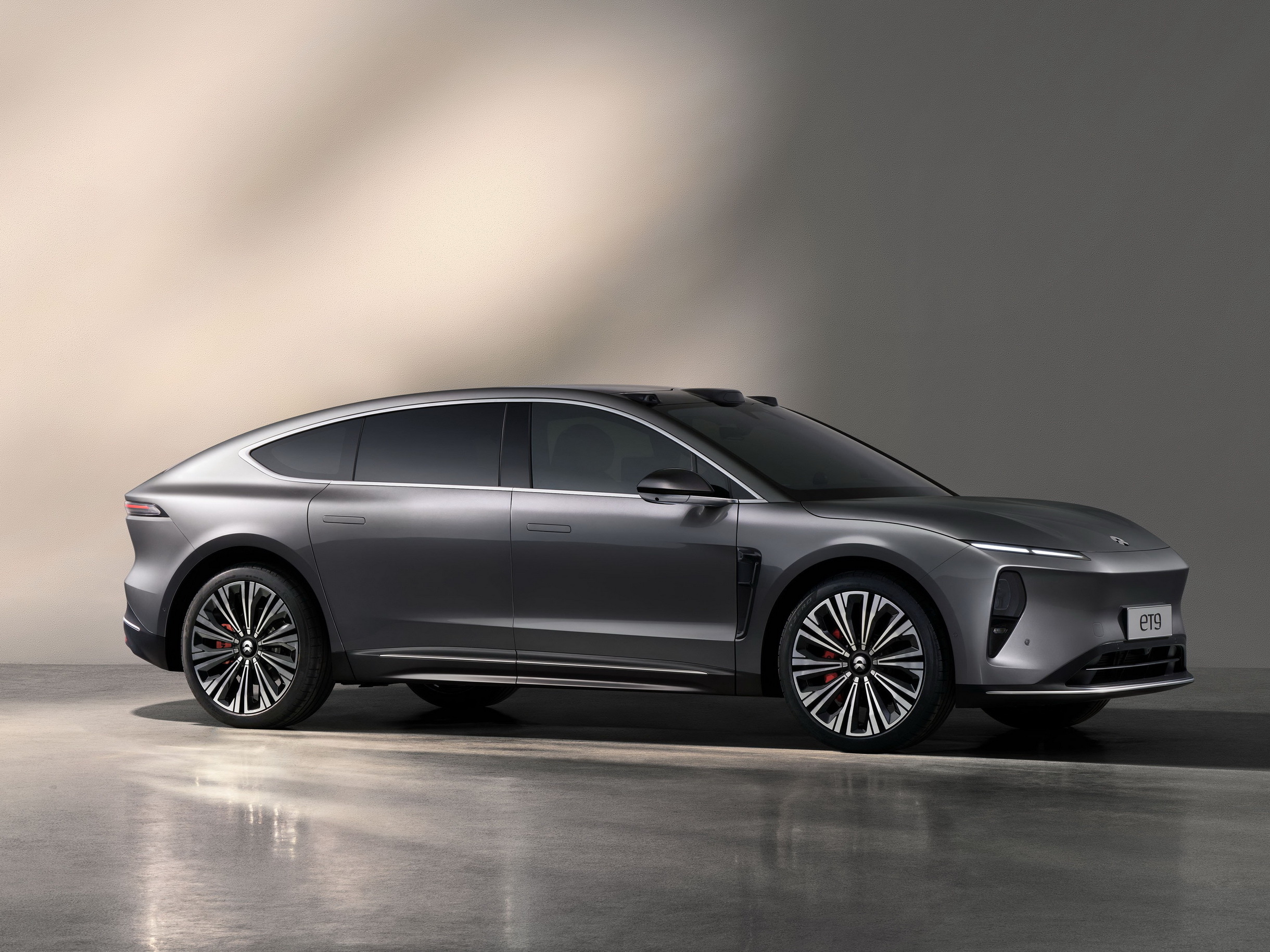
Of course, the E5 Sportback wasn’t the only car to earn recognition. Other winners included the Nio ET9, named Luxury Car of the Year, the iCAR V23 as Budget Car of the Year, the Ferrari 296 Speciale for Performance Car of the Year, and Audi’s own A5L, which took home Design Car of the Year.
Last year, the overall title went to the Aito M9, a flagship electric SUV. Other award recipients included the Mercedes-Benz E-Class, the Geely Galaxy E5, the Hyundai Ioniq 5 N, and Volkswagen’s ID.UNYX. In recent years, premium European brands have maintained a strong showing. The Mercedes-Benz S-Class won in 2022, followed by the EQE in 2023, and the BMW i7 in 2024.
Kia debuts its entry-level EV at the Brussels Auto Show.
Biggest of two battery options gives 278-mile range.
EV2 debuted alongside GT versions of EV3, 4 and 5.
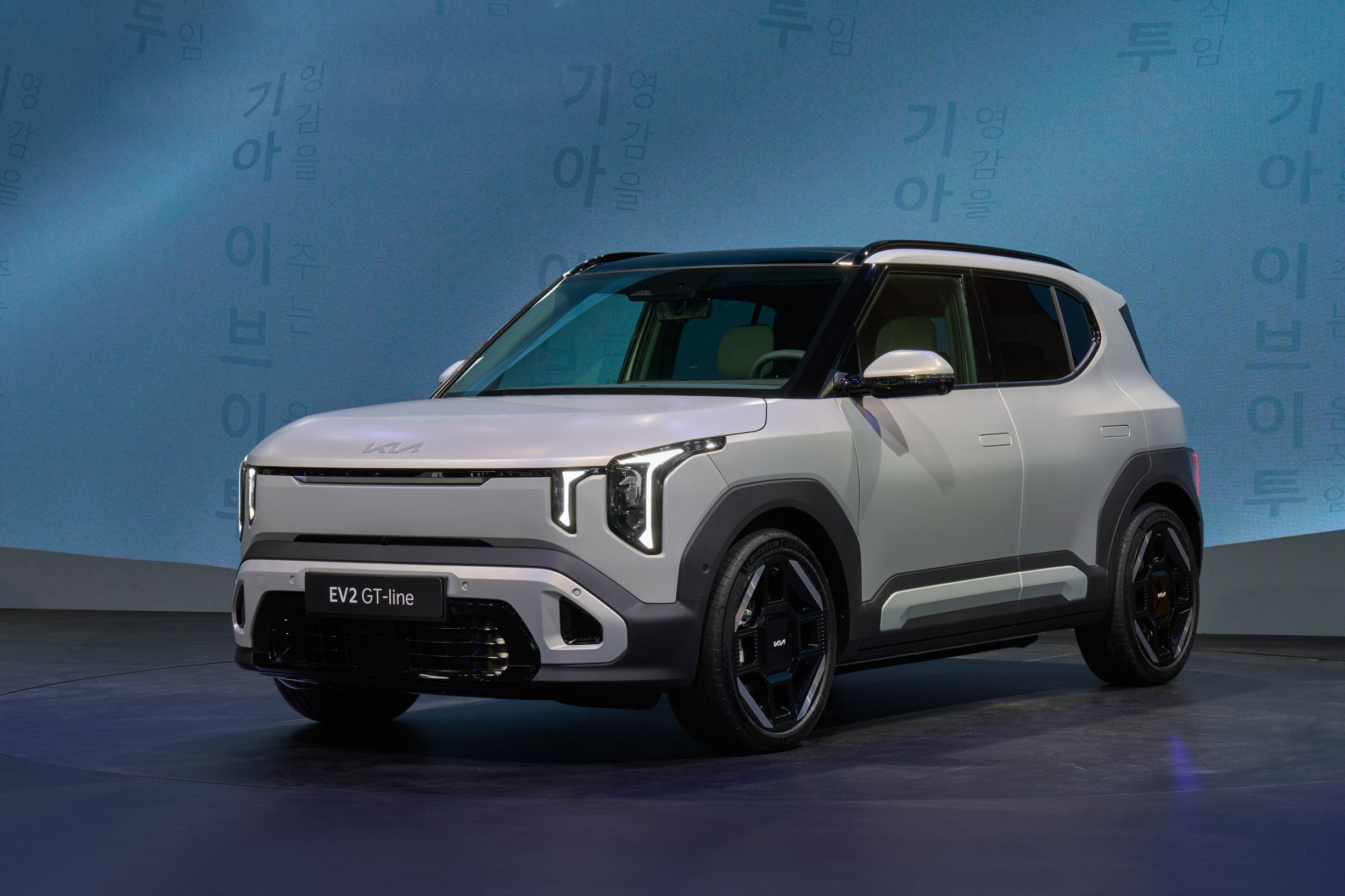
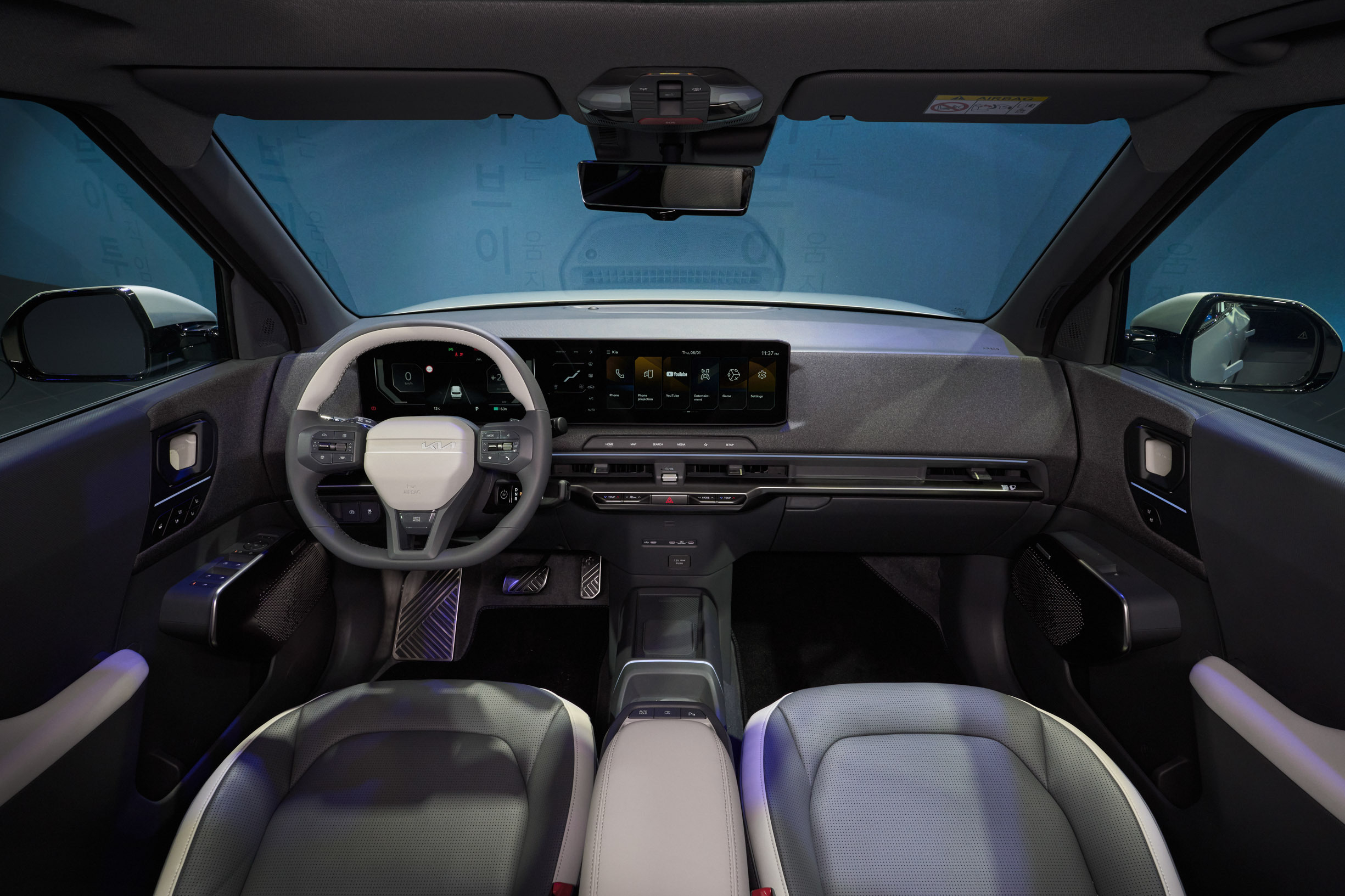
The electric SUV world is getting crowded, but Kia thinks it’s found a sweet spot. Meet the EV2, a new B-segment electric SUV that wants to be your first EV, your family car and your everyday runabout all at once. It’s compact, practical, packed with tech and at an estimated £26k/€30k, should be relatively affordable, too.
Kia is positioning the EV2 as its most accessible electric car yet. It sits below the brand’s bigger EV3 and EV5 SUVs but borrows their design language, technology and desirability. Think of it as a punchy YouTube short culled from your favourite long-form vid. The EV2 made its debut at this week’s Brussels Motor Show alongside GT-branded performance versions of the EV3, EV4 and EV5.
A circa-4.1m (160 inches) length means it’s suitably city-sized, the design is upright and confident, with vertical lighting signatures, chunky arches and a stance that looks adventurous and cute at the same time. Wheel choices run from 16 to 19 inches, and there’s even a GT line version if you want your small SUV with a side of attitude. Hopefully a full-house GT is in the works.
Up to 278 miles of range
Two batteries are offered, each coming with a different power output. A 42.2 kWh version mated to a 145 hp (147 PS / 108 kW) motor available from launch this spring promises up to 197 miles (317 km) for drivers with few plans to leave town.
Coming later, along with the GT-Line versions, the 61.0 kWh pack aims for 278 miles (448 km) and adds flexibility if you think you might need to take on some longer journeys. Kia hasn’t revealed how much muscle the EV2 with the bigger battery gets, but both models feature a single motor driving the front wheels.
Charging times hover around 30 minutes on DC fast chargers, though like the EV3, EV4 and EV5, the EV2 makes do with slower-charging 400-volt electrics, rather than the lightning-fast 800-volt hardware used in the pricier EV6 and EV9. But it does support both 11 and 22 kW AC charging and offers V2L and V2G, letting you power devices or even send energy back to the grid.
Renault 4-grade space
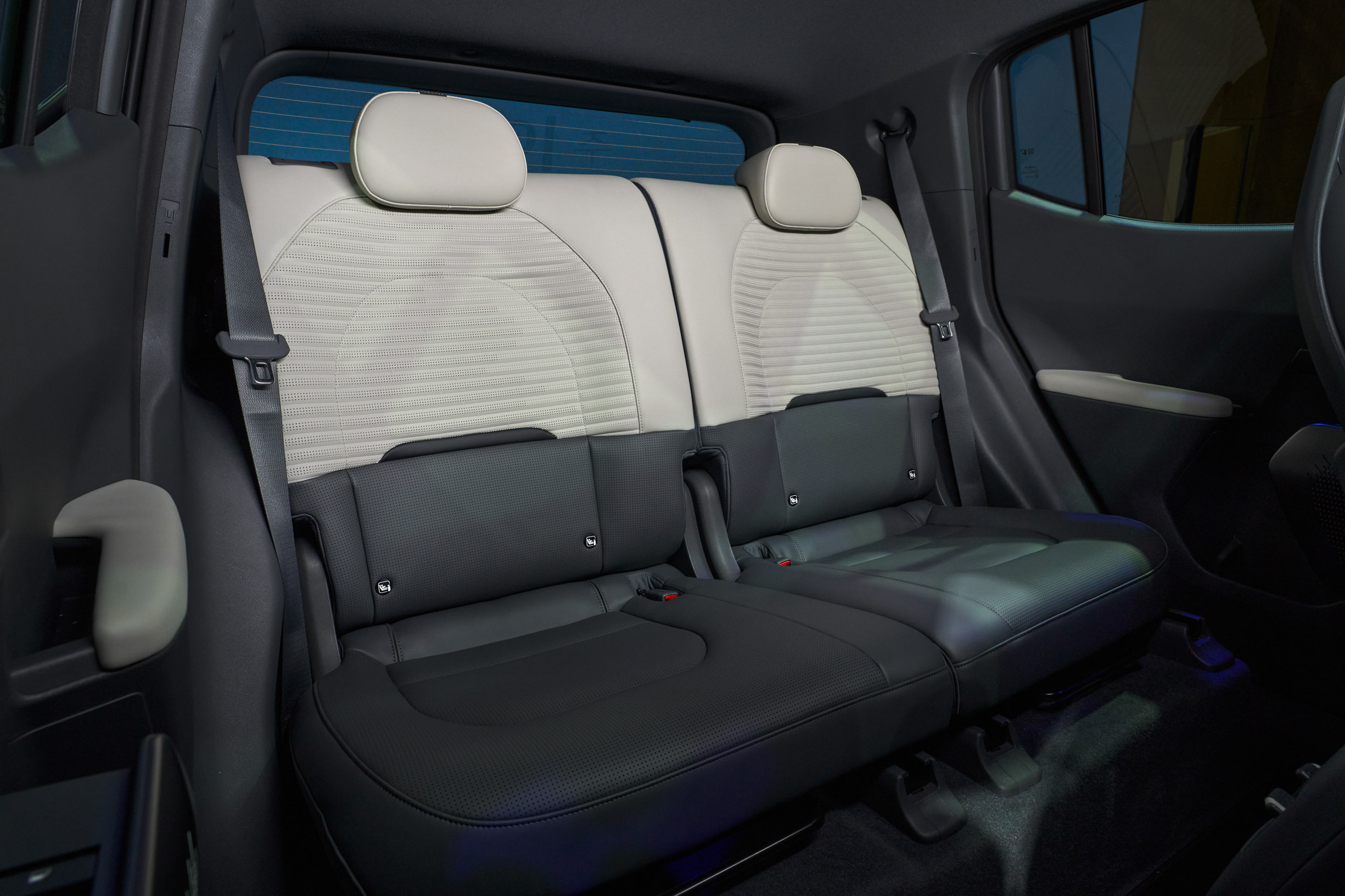
The EV2’s quoted 2,565 mm (101 inches) wheelbase is 59 mm (2.3 inches) shorter than a Renault 4’s, but Kia promises you won’t be disappointed by the interior space. Buyers get to choose between four- and five-seat configurations, and by sliding and reclining them you can stretch legroom or expand the cargo space depending on your needs.
With seats slid forward, suitcase room tops out at up to 403 litres (14.2 cu-ft), in the slightly roomier four-seat version, which isn’t far short of the 420 liters (14.8 cu-ft) the Renault 4 delivers. Plus there’s a handy little 15-liter (0.5 cu-ft) frunk for cables that the Renault can’t match.
Big-car tech
The tech is also surprisingly serious for a so-called entry-level EV. You get a triple-screen layout with a digital cluster, climate display and central touchscreen, just like you do in Kia’s pricier cars. But it’s actually a new lower cost ‘lite’ version of the ccNC infotainment system designed for the company’s more affordable cars.
OTA updates, digital keys and app integration are all part of the deal, as are remote parking, surround view cameras and a long list of driver assistance systems normally reserved for more expensive cars.
Made in Europe for Europe, the Slovakia-built EV2 is shaping up to be yet another big hit for Kia. If it gets the pricing right, this could be one of the most important electric launches of the next few years, because small, sensible and actually affordable sounds bang on trend right now.
Kia launched GT versions of the EV3, EV4, and EV5 in Brussels.
Each GT model has dual-motor AWD and a revised chassis setup.
Production begins in Q2 2026 alongside EV6 GT and EV9 GT.
Kia is moving full speed ahead on its EV performance promise, expanding its electric GT range with three new entries unveiled at the Brussels Motor Show. With the covers pulled off the EV3 GT, EV4 GT, and EV5 GT, the brand is sticking to its plan to give every electric model a sharper, sportier twin.
All three, or technically speaking, four newcomers, since the EV4 is offered in both hatchback and fastback bodystyles, sit at the top of their respective ranges, each fitted with a more powerful dual-motor setup, a dedicated GT drive mode, revised suspension tuning, and styling tweaks that bring more edge inside and out.
If you’re not yet fluent in Kia’s EV naming scheme, here’s a quick primer: the EV3 is a subcompact SUV, the EV4 comes in hatchback and fastback forms, and the EV5 is a slightly larger compact SUV. In true Kia fashion, even the full-fat GT variants keep things relatively low-key.
Most of the visual changes are subtle, and all three models ride on distinctive 20-inch alloy wheels that hint at their upgraded performance.
Inside the cabin, we find semi-bucket seats, GT-branded steering wheels, striking neon accents, and ambient lighting that changes depending on the drive mode. Equipment is rich, with features such as the Harman Kardon premium audio, head-up display, and Remote Smart Parking Assist included as standard.
How Much Power Do They Make?
Under the skin, all three GTs are built on Kia’s E-GMP platform and share the same 81.4 kWh battery pack. What separates them, though, is how each model tunes its dual-motor system.
Both the EV3 GT and EV4 GT generate 282 hp (215 kW / 286 PS), while the larger EV5 GT gets a slight bump to 302 hp (225 kW / 286 PS). Those aren’t headline-grabbing numbers, but they’re more than enough to give each vehicle a meaningful boost over its standard counterpart.
Kia says the low-slung EV4 GT delivers “an even more agile and road-focused interpretation of the GT philosophy,” and based on its specs, that might hold up. It’s the quickest of the bunch, clocking 0-100 km/h (0-62 mph) in 5.6 seconds.
Just behind it, the EV3 GT completes the sprint in 5.7 seconds, while the heavier EV5 GT takes 6.2 seconds to do the same. All three are far from slow, especially given their size and class, but Kia seems more interested in fine-tuning the feel than chasing supercar numbers, which makes sense given their positioning.
All three models have a dedicated GT drive mode which sharpens up power delivery, steering response, and the standard electronically-controlled suspension. They also benefit from e-torque vectoring, Virtual Gear Shift (VGS), and active sound design systems aiming to make the driving experience a bit more engaging.
Launch Timeline
Production of the sporty EVs is scheduled to begin in the second quarter of the year. Pricing and details on availability will be announced closer to their market launch.
The EV3 GT, EV4 GT, and EV5 GT will join the existing EV6 GT and EV9 GT in Kia’s growing performance EV lineup. A sixth member, based on the yet-to-launch EV2, is also on the way and made its first appearance alongside the others in Brussels.
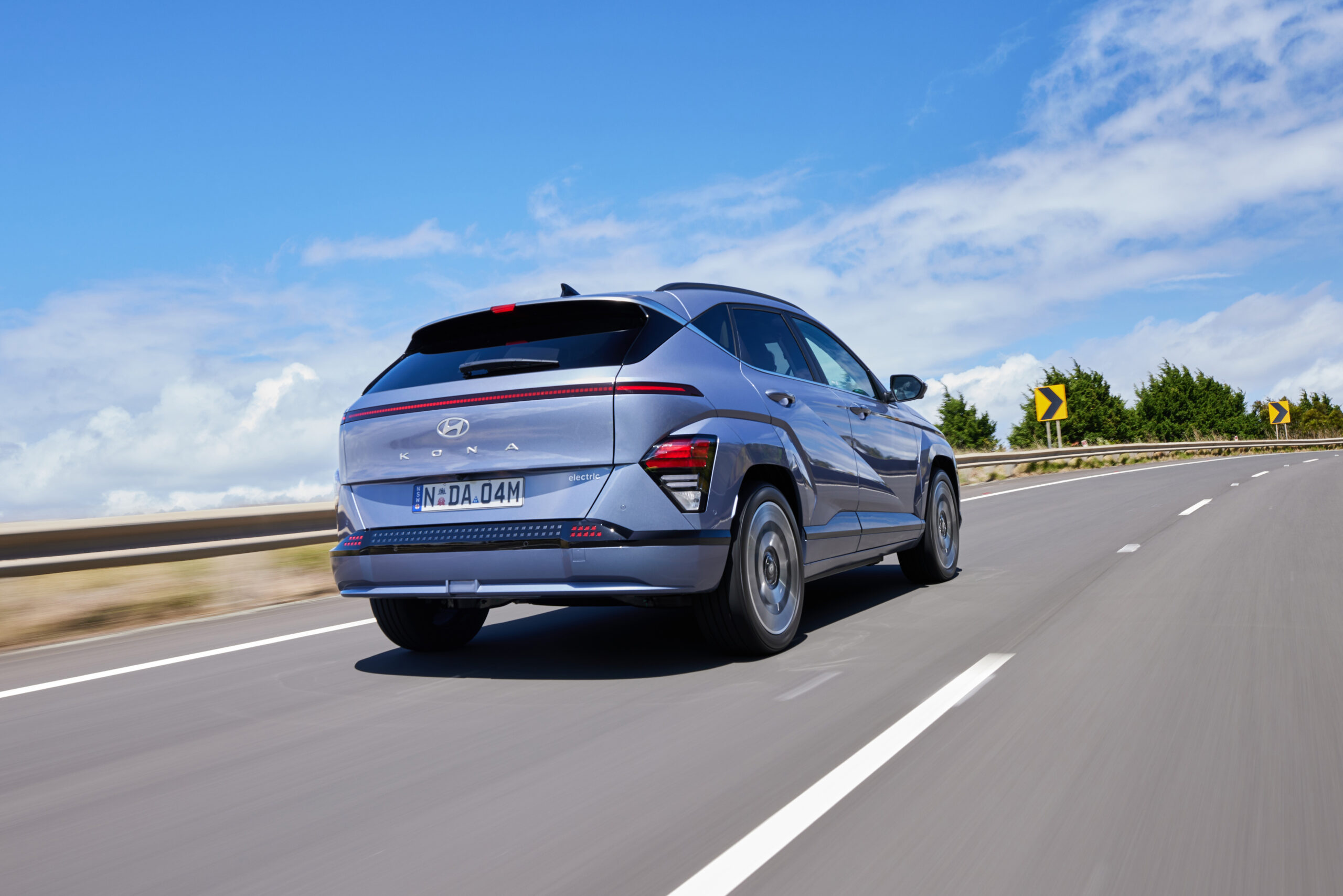
Hyundai trims Inster pricing, but the value gap still lingers.
Kona Electric sees price changes across the Australian range.
Rival EVs still apply pressure despite recent pricing moves.
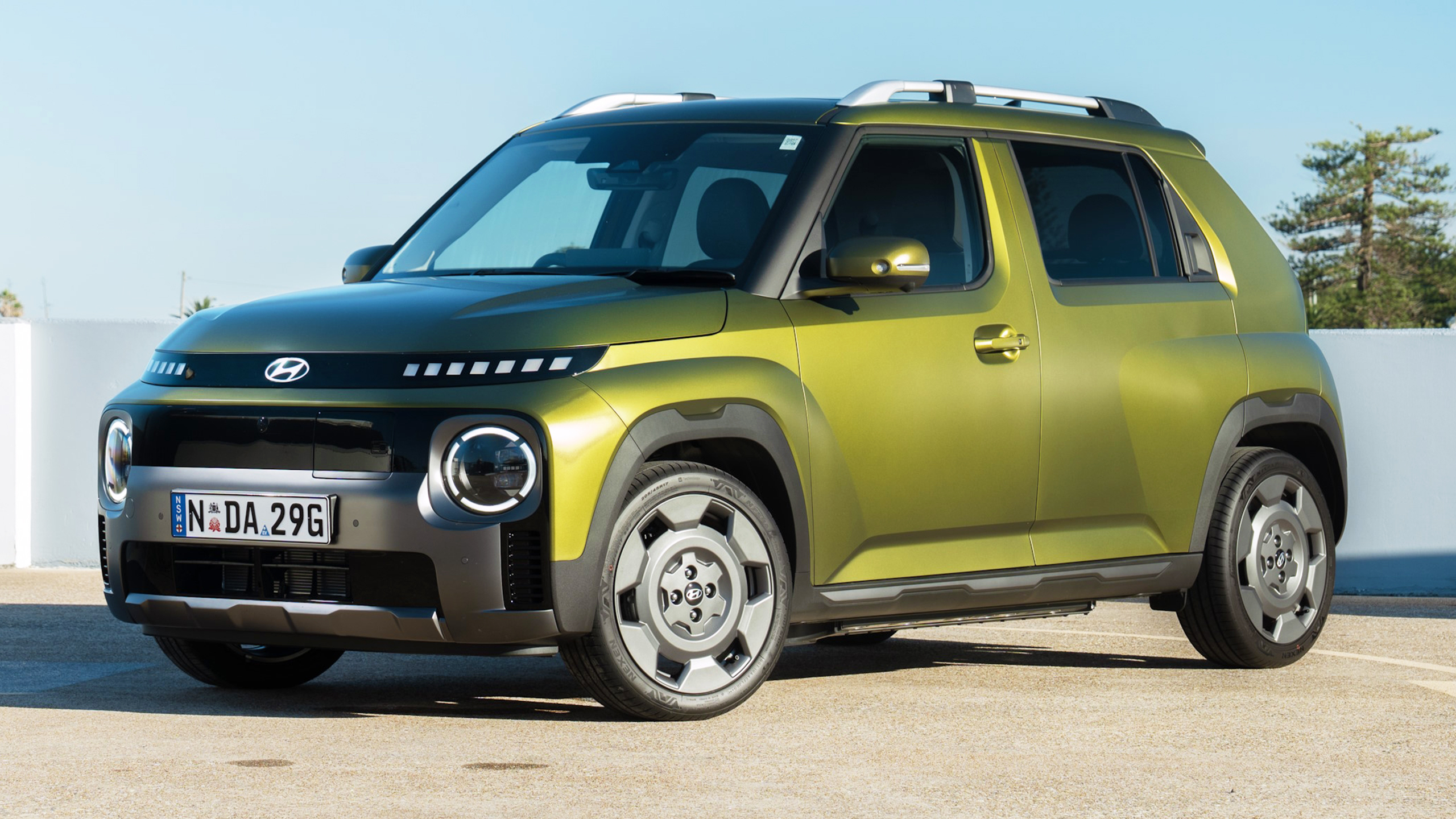
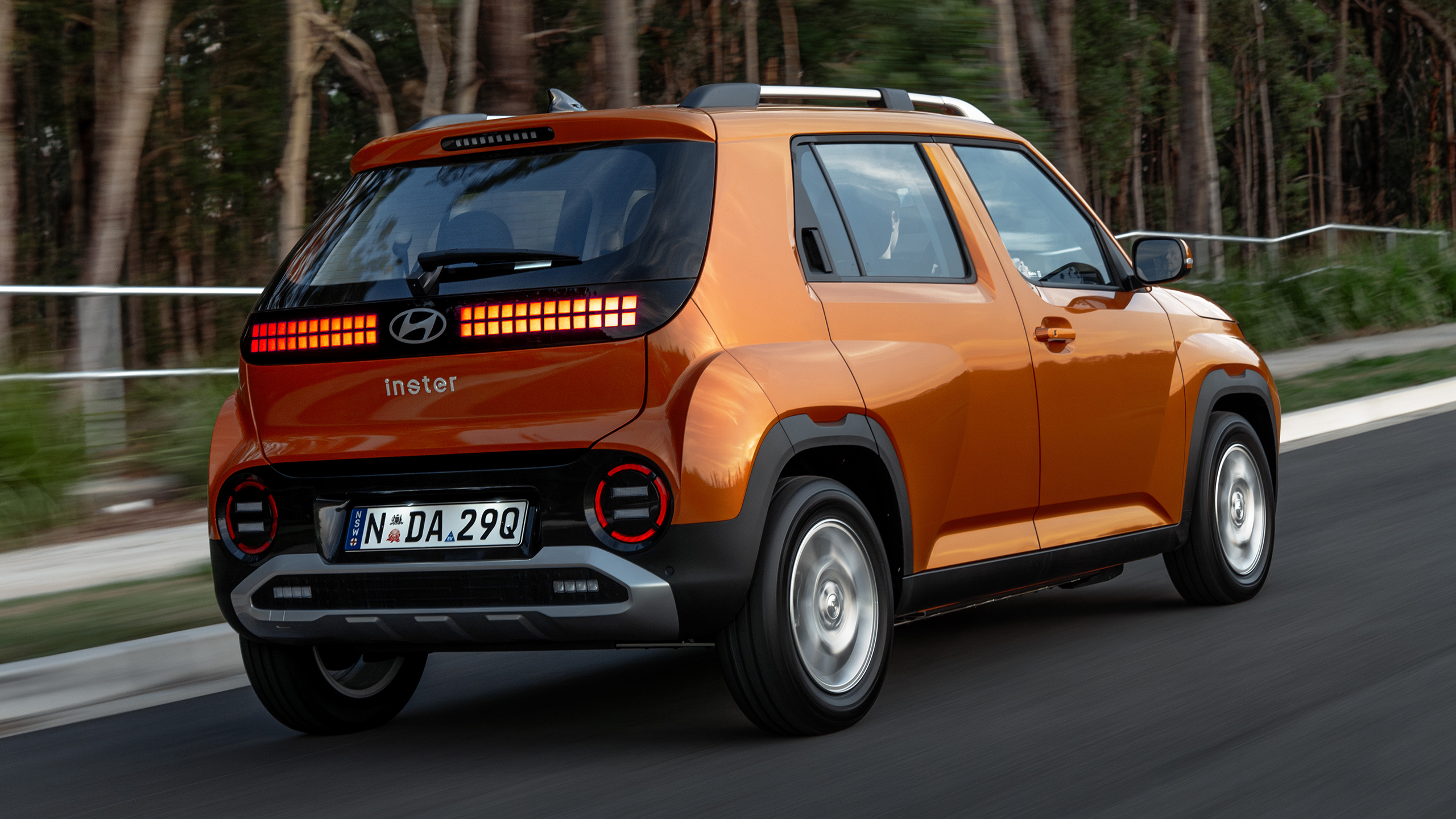
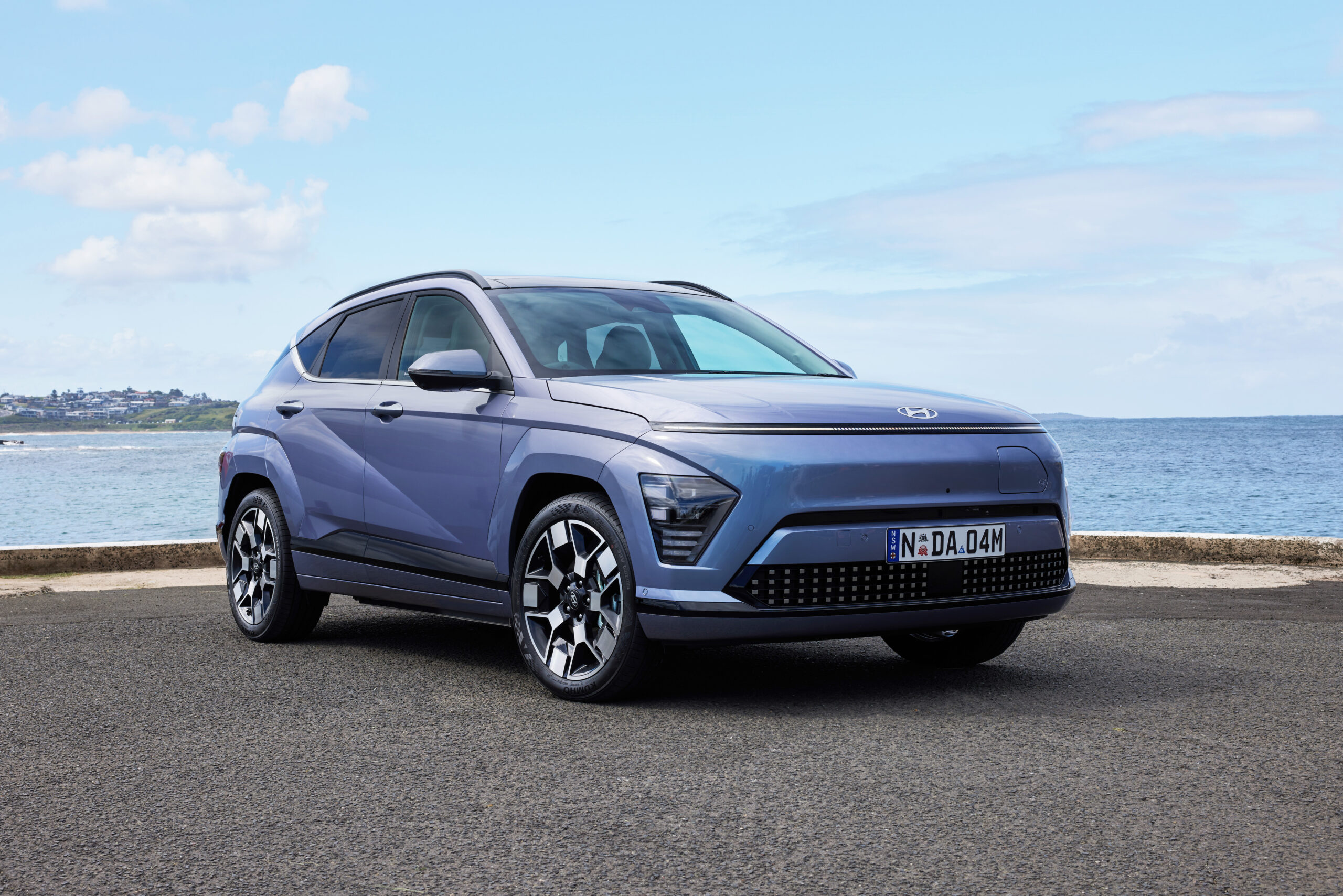
As electric vehicles flood into Australia’s increasingly crowded new car market, the pressure is mounting, particularly from aggressively priced models coming out of China. In response, Hyundai has rolled out some major price cuts to two of its more compelling EV offerings, the compact Inster and the updated Kona Electric.
Starting with the pint-sized Inster, which we drove just a few months ago, price cuts mean buyers can now save upwards of AU$7,288 (equal to US$4,900 at current exchange rates).
The base Inster Standard Range now starts at AU$35,990 (US$24,200), and that figure includes all on-road costs. Even with the adjustment, it’s still undercut by the base BYD Atto 1, which starts from just AU$26,500 (US$17,800) in standard trim, or around AU$30,650 (US$20,600) for the Premium version.
The Inster itself brings a lot to the table in terms of practicality. It makes excellent use of space and comes with a solid feature set for its size. But those strengths haven’t translated into strong sales, largely due to its steep pricing. Between June and December last year, just 467 units found homes in Australia, according to data from CarExpert.
Slashing Prices Across the EV Board
Even more significant price cuts have been made to the Hyundai Kona Electric and Hybrid. The entry-level Kona Electric Standard Range now lists at AU$45,990 (US$30,900), marking a price drop of more than AU$13,000 ($8,700). The Kona Hybrid also sees a notable cut, with prices falling to AU$39,990 (US$26,900).
The price cuts bring the Kona Electric cost to the Geely EX5, which starts at a touch over AU$44,000 (US$29,500). Elsewhere, Hyundai has slashed prices of the Kona Electric Extended Range by AU$13,357 (US$9,000) to $49,990 (US$33,600), including all on-road fees.
The price of the Kona Electric Premium has also been cut by AU$13,857 ($9,300), meaning it’s no longer available from AU$59,990 (US$40,300).
The sales figures reflect the challenges Hyundai has faced. Just 541 Kona Electrics were sold locally last year, making up only 2.4 percent of total Kona sales, hardly the breakout performance the brand had hoped for.
Built in China and priced from AU$59,990 (US$40,300), the Elexio now occupies the middle ground between the Kona Electric and the more premium Ioniq 5. Hyundai positions it as a rival to the Kia EV5, BYD Sealion 7, and Tesla Model Y, creating a more layered EV lineup with a clearer progression.
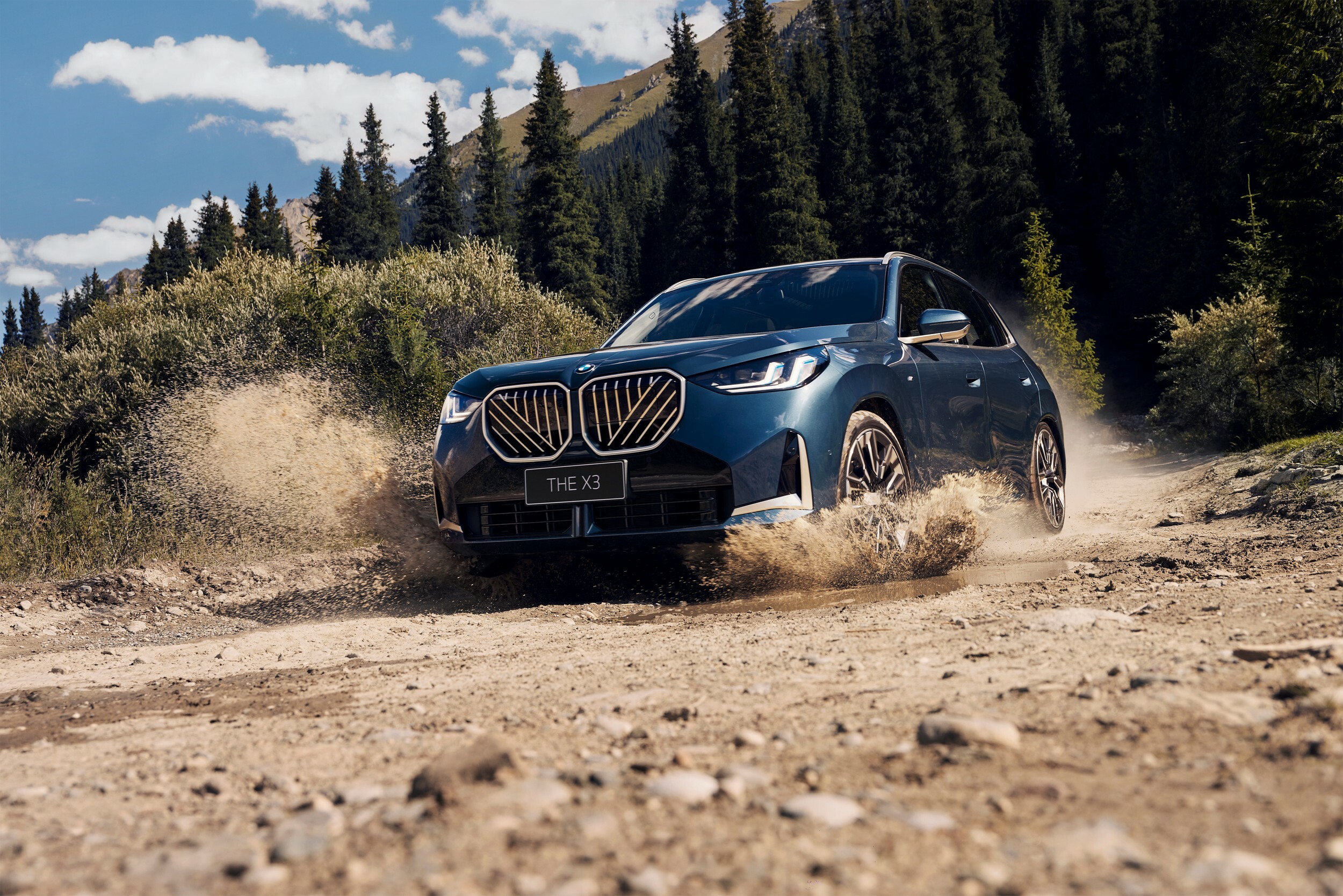
Electric BMW iX4 spied testing ahead of official debut this year.
Coupe-like crossover shares styling cues with the new iX3 SUV.
Dual-motor AWD setup expected to deliver 463 hp and quick pace.
If you liked the BMW iX3, but wished it came in a slightly sportier and less practical package, you’re in luck as spy photographers have snapped the new iX4.
Caught undergoing testing in Europe, the electric crossover follows in the footsteps of its more conservative SUV counterpart, the newly lauched iX3. This is clear up front as it adopts a vertical twin kidney grille that is flanked by the company’s new “horizontal light signature.”
Coupe-Inspired Proportions
Changes occur further back as the iX4 has a rakish windscreen that flows into a steeply sloping roof. The sportier design results in new doors and a shrunken down greenhouse. We can also see a rounded shoulder, which contrasts with squared off wheel arches.
The rear end is unique to the crossover coupe as there’s a special spoiler with an integrated third brake light, which doesn’t appear to be working on the prototype. The model also bucks the iX3 by eschewing a rear wiper.
Shproshots
That being said, the rest of the design appears to echo its counterpart as we can see familiar taillights peeking out from beneath the camouflage. The rear bumper also looks similar, although it’s hard to be certain with all that camouflage.
Spy photographers didn’t get a glimpse inside, but the cabin should echo the iX3 and have a pillar-to-pillar Panoramic iDrive display as well as a 17.9-inch infotainment system. We can also expect a futuristic steering wheel, a 3D head-up display, and an intelligent personal assistant.
What Will It Deliver Underneath?
On the performance front, there should be an iX4 50 xDrive with a dual-motor all-wheel drive system producing a combined output of 463 hp (345 kW / 469 PS) and 476 lb-ft (645 Nm) of torque. This enables the iX3 to accelerate from 0-60 mph (0-96 km/h) in 4.7 seconds, before hitting a top speed of 130 mph (210 km/h).
The motors are powered by a 108.7 kWh lithium-ion battery pack, which provides a WLTP range of up to 500 miles (805 km). The impressive figures extend to the 400 kW DC fast charging capability, which enables the battery to go from a 10-80% charge in as little as 21 minutes.
We can also expect additional variants, which will be previewed by upcoming iX3 derivatives.

 Login
Login