Reading view

There are new articles available, click to refresh the page.

Spilled Water Bricks Lucid, Repair Costs As Much As A Used Corolla

  • A trunk spill caused limp mode, warning lights, and left the Air stuck.
  • Warranty coverage was denied, and insurance may reject the repair bill.
  • It follows a similar Ioniq 5 incident where a water spill cost nearly $12k.

Doctors and health influencers are always telling us that drinking tons of water is the secret to clearer skin, sharper minds, strain-free poops and longer lives. But if there’s one group that absolutely should not stay hydrated, it’s modern electric vehicles, because a few drops could leave them with a massive medical bill.

Just ask Reddit user u/raging_onyx who leased a Lucid Air and saw his Thanksgiving week turn into a $15,000 lesson in why electric cars and water should never meet.

What Happened?

The disaster started with a perfectly innocent trip to a grocery store to refill a water container. But a pothole encountered on the way back tipped that container over, causing a catalog of faults that eventually rendered the vehicle completely immobile.

Also: $4,900 For A Taillight? Lucid’s Ridiculous Lease Charges Are Scaring Off Buyers

Within seconds of the spill happening the dash lit up like Times Square, the EV jumped into limp mode, regen braking tapped out, and the driver got a warning to pull over. When he found a local residential area to stop and tried to reboot the system, the Air wouldn’t shift out of Park.

A Very Expensive Lesson
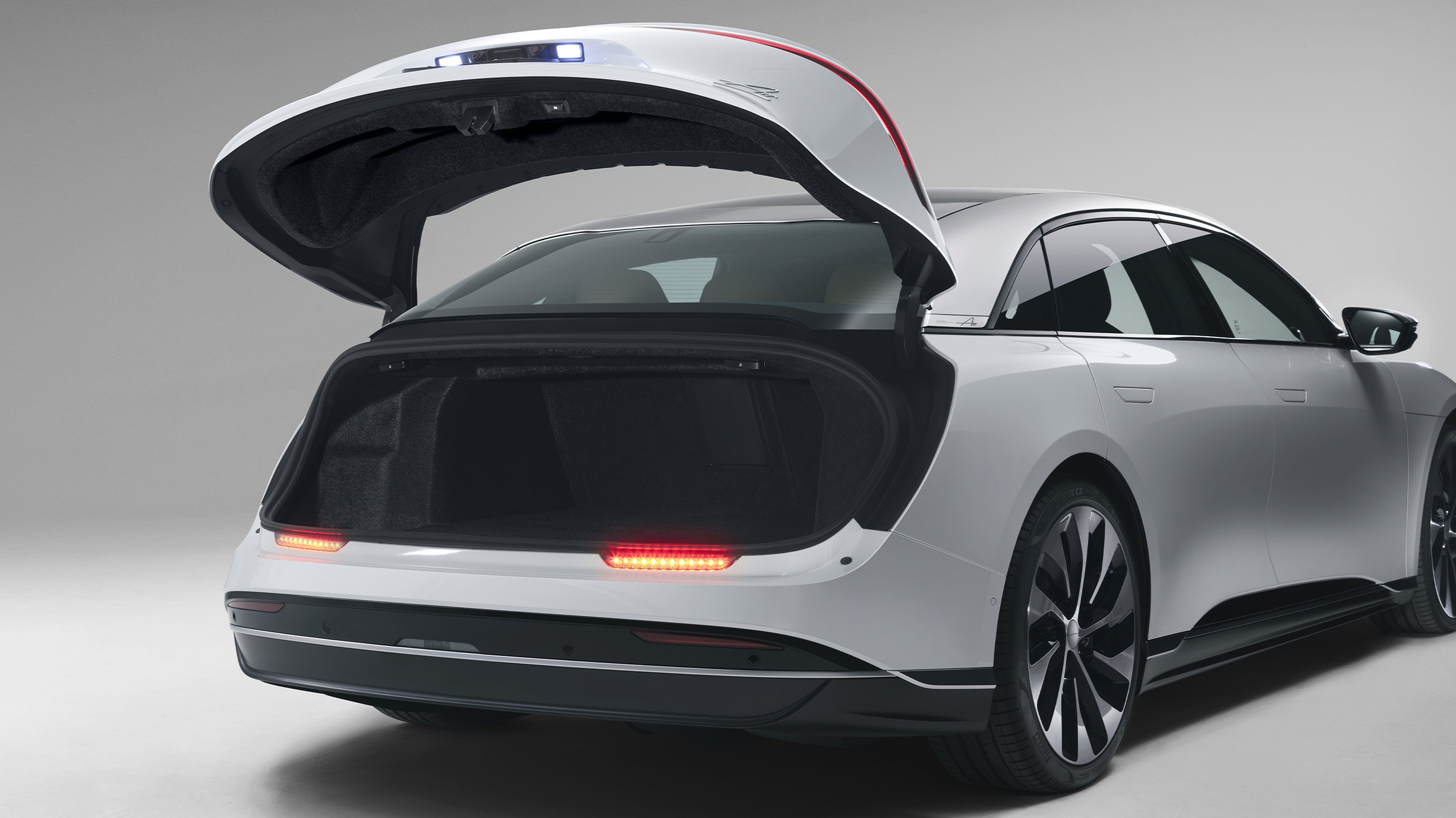
 Spilled Water Bricks Lucid, Repair Costs As Much As A Used Corolla

Lucid customer support, in an impressive display of holiday cheer, suggested two things: call insurance, and brace for the possibility the car was totaled. Happy Thanksgiving!

Also: Insurance Offered $1,700 For This R1T Mishap, Rivian Wanted A Fortune

There was more bad news when the first tow truck driver arrived and said he couldn’t move the sedan, since the Air wouldn’t shift into neutral. Fortunately, by the next day, neutral was found and a second truck was able to tow the stranded car.

Finally, the EV reached a service center, where the advisor initially estimated the repair at under $1,000. Bearable, right? This turned out to be off by roughly the price of a used Corolla.
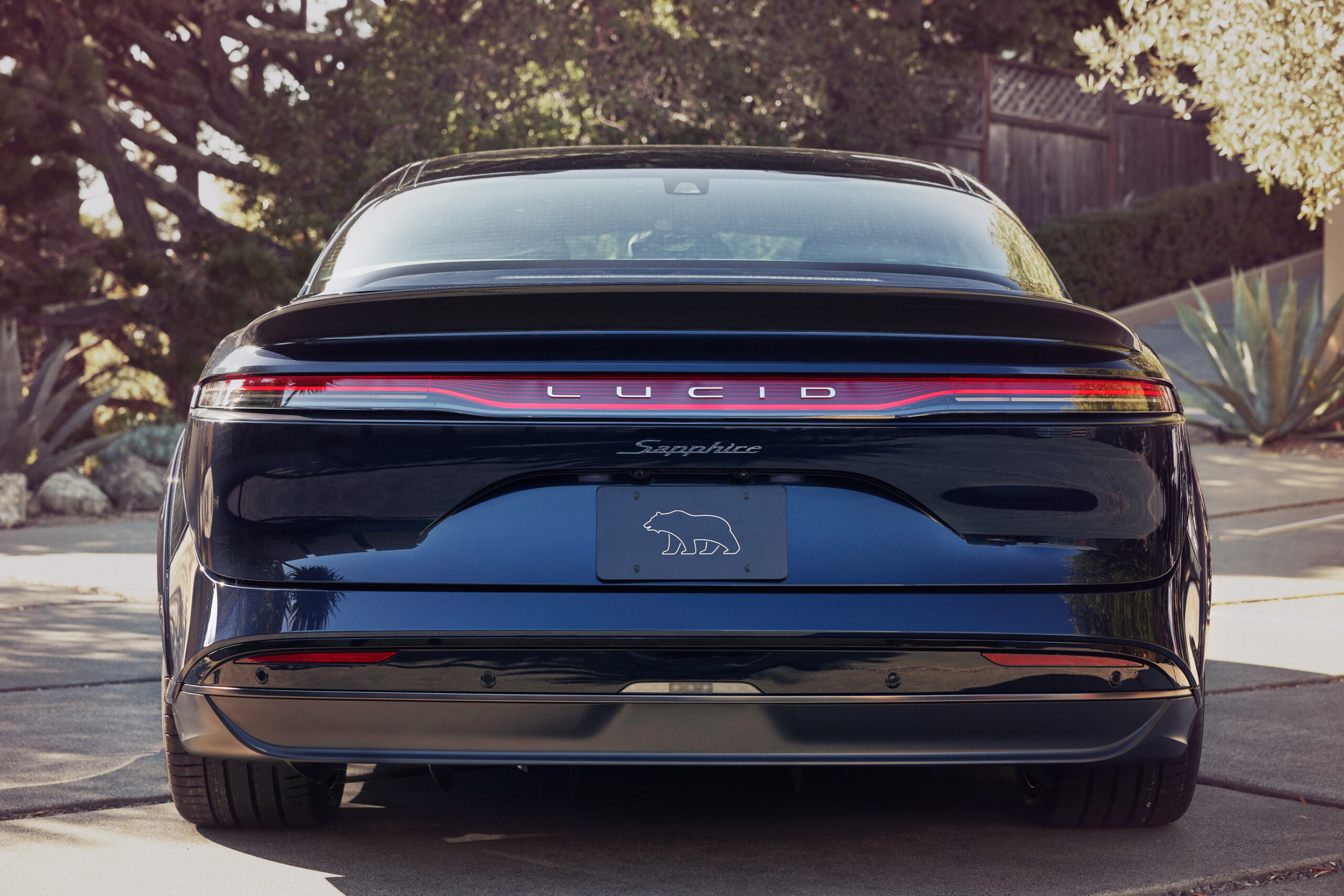
 Spilled Water Bricks Lucid, Repair Costs As Much As A Used Corolla

The real number, the rep later confirmed, was about $15,000, and it wouldn’t be covered by warranty, because the spill was technically the driver’s fault.

More: A $2 Water Bottle Just Cost This Hyundai Driver Nearly $12,000

As of the Reddit post, the driver was still waiting to find out whether his insurance would step in to cover the costs. You’d think the answer would be yes, but that’s not always how these things always play out.

Just last month, we reported on a similar incident involving a Hyundai Ioniq 5. A small water spill in the rear footwell damaged the car’s wiring, and neither the manufacturer nor the insurance company was willing to cover the $11,882 repair bill.

 Spilled Water Bricks Lucid, Repair Costs As Much As A Used Corolla

Source: Reddit

Robotaxi Rolls Through LAPD Crime Scene As Suspect Is Held At Gunpoint

  • A Waymo robotaxi rolled into an LAPD arrest as officers yelled.
  • LAPD said the incident ended quickly without disrupting the arrest.
  • Waymo called it a learning moment as its testing expands nationwide.

Autonomous driving may have come a long way in the last decade but, apparently, there’s room for improvement. Waymo, one of the leaders in the space, still has some bugs to work out – and one of them is how to handle active crime scenes.

Video from just a few days ago shows one of the firms’ robotaxis casually rolling through an intersection as police with guns drawn attempt to make a felony arrest. 

Footage of the incident popped up via content creator Alex Choi. In the video, we see the car turning left at an intersection. Just off the road in the oncoming lane is a parked truck with the driver’s door open. Just to the left of the truck, a suspect is face down on the ground with officers holding him at gunpoint. 

More: Waymo Robotaxis Racked Up 589 Parking Tickets In A Year

Strangely, the robotaxi actually slows down and appears to pause as it passes the suspect. Keep in mind that the car itself was in the line of fire at this point. The video ends after the car has left the scene, while the police move in for the arrest.

Police told NBC that the incident happened around 3:40 a.m. and that officers’ tactics were unchanged by the robotaxi’s interference. 

For its part, the company responded that the entire situation lasted just 15 seconds. “Safety is our highest priority at Waymo, both for people who choose to ride with us and with whom we share the streets,” a spokesperson said.

“When we encounter unusual events like this one, we learn from them as we continue improving road safety and operating in dynamic cities.”

The company has logged more than 100 million miles of autonomous driving as of mid-2025 and boasts a strong safety record, but it hasn’t been immune from oddities and public-relations headaches.

Earlier this year, pranksters redirected 50 Waymos to the same San Francisco intersection, gridlocking traffic. In a separate incident, five Waymo vehicles were set ablaze during protests in Los Angeles.

The plan? At dusk, 50 people went to San Francisco's longest dead-end street and all ordered a Waymo at the same time.

The world's first: WAYMO DDOS pic.twitter.com/DEDH0tdMKP

— Riley Walz (@rtwlz) October 12, 2025

Credit: Alex Choi

Nio EV Splits Open Like A Can Of Tuna In A Strange Crash

  • Nio EC6 hit a concrete barrier in Shanghai and split through the rear.
  • Driver and passenger escaped without injuries after the violent impact.
  • Battery pack survived the crash and avoided any fire or thermal issues.

All too often, we read about EVs catching fire after relatively minor accidents, and in some cases, occupants were trapped inside. This story is a little different though, as a Nio EC6 was recently destroyed in a crash in China, but remarkably didn’t catch fire despite almost completely splitting in two.

This incident happened in Shanghai on Monday. It’s understood that the light pink-colored EC6 hit a concrete crash barrier side-on after cutting in front of another vehicle, causing it to clip the rear of the Nio.

Local reports suggest that the top edge of the barrow, approximately 120 mm (4.7 inches) wide, applied an extraordinary amount of pressure on the C-pillar and the area of the floor.

Read: Nio’s Mass-Market Onvo Drops Its First 3-Row SUV With More Power Than An EV9 GT

This force caused a split through the rear of the car. Remarkably, the driver and passenger of the Nio were not injured in the crash. Additionally, the battery pack wasn’t severely damaged and did not catch fire.

According to a statement released by Nio, immediately after the crash, the vehicle’s onboard safety systems reported the accident. Nio staff were alerted to the impact and quickly responded to the scene, helping the occupants receive medical treatment.

Perhaps in a thinly-veiled dig at Tesla, Nio says that the EV’s doors immediately unlocked after the collision, allowing the driver and passenger to free themselves.

\\\\

Weibo

The car manufacturer also confirmed that the EC6’s driving assistance system was not enabled at the time.

The Nio EC6 was first unveiled in late 2019 before being thoroughly updated in February 2023. The example involved in this crash was one of the facelifted models.

It’s available with either a 75 kWh or 100 kWh battery pack and sold exclusively in dual-motor guise, producing a combined 483 hp and 516 lb-ft (700 Nm) of torque.

Sources: Weibo, Nio, CarNewsChina

Stellantis Furious At Influencers Who Tore Apart Recon Interior To Mock Its Build Quality

  • Influencers tore apart a Jeep Recon interior at the LA Auto Show.
  • Stellantis called the act destructive, citing a pre-production model.
  • The viral TikTok drew over 1.1 million views and 2,300 comments.

Stellantis has publicly condemned two influencers after a viral video showed them dismantling parts of the new fully-electric Jeep Recon during the 2025 Los Angeles Auto Show. The clip, which spread quickly across social media, reopened the debate over how pre-production prototypes ought to be treated at auto shows.

The automaker explained that the show car mocked for its poor build quality was a hand-assembled pre-production prototype, not the finished model, describing the creators’ actions as “destructive.”

Online Outrage or Honest Critique?

The viral video, posted by an LA-based channel called “The Middle Lane,” has drawn more than 1.1 million views and 2,300 comments on TikTok since November 22. It reportedly appeared on YouTube and Instagram as well, though it has since been removed from both platforms.

More: Jeep’s $65,000 Recon Is Surprisingly Fast, But Can It Outrun The EV Slowdown?

The creators blasted the build quality of the latest Jeep, saying they expected better fit and finish for a vehicle with an MSRP of $65,000. They are shown removing and then reattaching plastic pieces from the Recon’s interior, including trim around the center console and above the digital instrument cluster.

They also zoom in on uneven gaps between materials on the door panels and wiggle the infotainment screen and passenger grab handle, saying they were simulating “off-road use.”

@themiddlelanes Jeep Recon Moab build quality… #laautoshow #tiktokcartalkcontest #electriccar #buildquality ♬ original sound – The Middle Lane

Stellantis Responds

In response, Stellantis released a statement: “The vehicle in question is a preproduction show car, built exclusively for reveals and events to highlight the design inspiration for the final product. These prototype units are typically hand-built and not intended to demonstrate final production, durability, quality, or integrity of materials.”

More: Jeep’s Latest Special Edition Honors A Classic Military Truck

Kaileen Connelly, Senior Vice President of North America Communications at Stellantis, added in an email to the Detroit Free Press: “The actions taken to disassemble the all-new Jeep Recon on display at the LA Auto Show were both destructive and unprofessional.”

What the Creators Say

The Detroit Free Press later spoke with Luke Miani, founder of “The Middle Lane,” who said they were surprised by the video’s reach and the conversation it triggered. According to Miani, their intention had simply been to share “thoughts on many different cars.”

Addressing Stellantis’ statement, he explained, “I want to push back on the claims of ‘destructive’ conduct as the video clearly shows the clips holding certain interior parts together were loose and the parts easily pop out by hand without damage.”

He added that he looks forward to seeing the production version of the Recon, hoping that “the build quality is indeed improved.”

\\\\\\\\\\\\

How the Public Reacted

Reaction online has been mixed. Some commenters expressed disappointment with what they perceived as poor craftsmanship, placing blame on Stellantis. Others defended the automaker, noting that the vehicle was a pre-production demo unit brought to LA for the show and never intended for close physical inspection.

The story also gained traction on Reddit, where many users criticized the influencers for “unprofessionalism,” while others argued that automakers should be more discerning about who gets access to display cars.

One self-identified “interior trim engineer” commented that building pre-production models is “way different” from production, describing a process where “employees are working on a table with a drill and some screws” long before an assembly line is operational.

The electric 2026 Jeep Recon is scheduled to enter production in early 2026 at Stellantis’ Toluca plant in Mexico. Initial deliveries in North America are expected shortly after, with global rollout planned for the final quarter of the year. The first version, a Moab trim exclusive to the US and Canada, will start at $65,000, with more affordable variants to follow

\\\\\\\\\\\\

The Power Behind McMurtry And Lotus Evija Could Bring Back Concorde

  • Helix’s hypercar electric motors are now headed for supersonic flight.
  • Astro Mechanica wants Mach 3 travel to feel like ordinary air travel.
  • Helix currently supplies motors for McMurtry Spéirling and Lotus Evija.

UK-based Helix has already built a reputation in the industry for giving the world’s wildest EVs their punch. You might not recognize its name, but you’ll have seen its work if you’ve watched a McMurtry Spéirling, Lotus Evija, or Aston Martin Valkyrie swallow up the horizon on a YouTube video.

Also: McMurtry Speirling Smashes Top Gear Lap Record, Beats F1 Car

Now Helix is working with Californian startup Astro Mechanica on an engine concept that claims it can make supersonic passenger air travel viable again.

What’s The Idea?

Astro Mechanica is chasing what the late, great Concorde never could. It wants long-range supersonic aircraft that are efficient enough for everyday use.

To make that possible, the company has built a propulsion system called Duality. It is an adaptive hybrid electric setup that uses both a gas turbine and electric drive to shift personalities depending on speed.

 The Power Behind McMurtry And Lotus Evija Could Bring Back Concorde
The McMurty Speirling

At takeoff, it behaves like a turbofan. At lower supersonic speeds, it behaves like a turbojet. When things get seriously quick, it transforms into something closer to a ramjet.

That flexibility is meant to solve the problem that killed commercial supersonic air travel in the first place. The engines were great at going very fast but not great at everything else, and gobbled up a ton of fuel.

Power Behind The Concept

The current fourth-generation Duality prototype uses four Helix SPX242-94 electric motors. Each produces up to 536 hp (544 PS / 400 kW) of peak power. They drive the two-stage compressor of the propulsor unit and can run continuously at 402 hp (408 PS / 300 kilowatts).

 The Power Behind McMurtry And Lotus Evija Could Bring Back Concorde
Helix/Astro Mechanica

But custom-designed radial flux motors for the fifth generation of Astro Mechanica’s propulsion system are also in development, these ones pumping out up to 1,274 hp (1,292 PS / 950 kW) of peak muscle for extreme-altitude flying.

The company is targeting a first flight in three years and commercial operations within a decade. If it takes until 2035 and Astro Mechanica is the first to offer supersonic air travel, we’ll have waited 32 years since Concorde was retired to see a passenger airplane break the sound barrier.

\\\\\\\\\

Helix/Astro Mechanica, McMurty, Lotus

Owners Sue VinFast After VF 8 Takes Almost 24 Hours To Charge

  • Owners allege VF 8 charges under 2 kW, requiring nearly 24 hours.
  • Plaintiffs say charging shuts down at the advertised 32-amp rate.
  • Judge pauses class action, sends owners’ claims to arbitration.

VinFast is in the spotlight again, this time for reasons it would rather avoid. The Vietnamese automaker now faces another lawsuit, adding a fresh speed bump to its already bumpy road. Owners in the United States claim that the VF 8 Plus AWD charges so slowly it can take a full 24 hours to replenish its battery.

Filed in the U.S. District Court for the Central District of California, the lawsuit represents customers who leased or purchased a VF 8 Plus AWD in the past four years.

Why So Slow?

The electric vehicles are supposed to charge at a rate of 6.6 kW or higher. Instead, these customers say that their VinFasts charge at under 2 kW. That’s closer to the speed of an original Nissan Leaf than it is to a modern EV.

More: Vinfast Owner Says Their EV Took Over Steering And Nearly Hit A Wall

The plaintiffs, Gil Swigi and Joseph Mizrahi, say that they were led to believe that they were getting standard Level 2 charging performance. VinFast allegedly advertised that its cars could charge at up to 32 amps.

When Mizrahi and Swigi tried that, they claimed the cars would shut down due to software defects. Their only recourse was to charge at 19 amps, which cut total charging speed by almost 40 percent.

 Owners Sue VinFast After VF 8 Takes Almost 24 Hours To Charge

To make matters worse, the shutdowns would allegedly happen in the middle of the night with regularity, meaning that owners would wake up to a nasty surprise.

Not only did their car have a problem, but that meant less range to do whatever they had planned for that day. According to Carcomplaints, VinFast attempted multiple repairs on both vehicles in question.

Only when the owners bought additional charging equipment did their cars start to charge at the claimed manufacturer speeds. That said, VinFast successfully argued that both owners agreed to arbitrate their differences. A judge granted that motion, and arbitration is set for February 20, 2026.

 Owners Sue VinFast After VF 8 Takes Almost 24 Hours To Charge

Source: Classaction, CarComplaints

Tesla Sued Again After Doors Wouldn’t Open As Car Burned

  • Lawsuit claims Model 3 doors failed to open after a fiery crash.
  • Witnesses tried rescuing the couple but couldn’t open the doors.
  • Complaint says Tesla sold cars with faulty door handle designs.

Another day brings another legal challenge for Tesla, this time centered on a tragic crash that once again raises questions about the company’s design choices.

The latest lawsuit claims that the electrically operated door handles of a 2018 Model 3 failed to function after a collision and subsequent fire, trapping one of the occupants inside and leading to her death.

Read: Trapped Children Die In Tesla Fire After Door Handles Allegedly Wouldn’t Open

It marks yet another serious concern for Tesla, one that could prove costly and push the automaker to reexamine how its vehicles handle emergency situations, particularly when power is lost.

Door Handles Under Scrutiny

Filed last week in the U.S. District Court for the Western District of Washington, the complaint outlines a sequence of events. On January 7, 2023, Jeffrey Dennis was driving his Tesla Model 3 with his wife in Tacoma, Washington, when the car reportedly accelerated suddenly and struck a utility pole at the corner of South 56th and South Washington Streets.

Shortly after impact, the EV caught fire. It’s alleged that several witnesses tried to open the Tesla’s doors to rescue the couple, but were unable to do so because they failed to operate without battery power. The lawsuit says that some witnesses even tried to break the Model 3’s windows with a baseball bat, but it also failed.

First responders eventually managed to extract the pair, though Wendy Dennis succumbed to her injuries at the scene. Jeffrey Dennis suffered severe burns to his legs.

Could It Have Been Prevented?

 Tesla Sued Again After Doors Wouldn’t Open As Car Burned
US District Court

The complaint says the Model 3 has a “unique and defective door handle design” that prevented rescuers from freeing the couple. It is also alleged that Tesla knew about the defect with the door handle but failed to address it, and continued to market and sell the popular EV.

The lawsuit doesn’t stop at the door handles. It also claims that Tesla’s Automatic Emergency Braking system failed to activate as the vehicle sped toward the utility pole. In addition, it accuses the company of using “a highly explosive battery chemistry” despite the existence of safer, more practical, and less costly alternatives.

Jeffrey Dennis is seeking financial relief for the wrongful death of his wife and his long-term injuries, as well as compensatory damages and punitive damages under California law.

He Sold His $142K Lucid At A Huge Loss After Just 400 Miles Of EV Reality

  • The owner sold nearly new $142K Lucid Gravity after 400 miles.
  • Broken workplace chargers and no home charger caused the issue.
  • The seller still loves the car and plans to return to EVs eventually.

It’s hard to argue that owning a vehicle with 1,070 horsepower (797 kW) wouldn’t be extremely fun. However, that excitement turns on its head when you realize that there’s nowhere to refuel, or rather in this case, recharge it.

That’s exactly what just happened to a Brooklyn-based Lucid Gravity Dream Edition buyer. After snatching this unique EV up brand new in September of 2025, he ended up selling it just 400 miles later for a huge loss.

More: Lucid’s Cheaper Gravity Lost Hundreds Of Horses But Found You Thousands In Savings

The seller on Cars & Bids shared a photo of the window sticker for this luxury SUV, listing an MSRP of $141,550. When the hammer fell on his auction sale of the car, it brought just $123,000. That’s a painful $18,500 lesson for 400 miles of usage in a little over a month, amounting to $46.25 for every mile he put on the odometer.

Where Do You Plug In?

Why take such a big loss for a vehicle that the owner says is “an awesome car”? It all comes down to charging it up. For the owner, it was almost like buying a Hellcat and then realizing that the closest gas station is 220 miles away.

\\\\\\

Cars&Bids

He says that his initial plan was to charge where he works but then one option after another fell apart until he had to take the loss we’re talking about here.

“I was planning to charge at work but the chargers at my work aren’t working and there is seemingly no plan to fix them. Since I don’t have a charger at home and can’t get one installed this became an unsolvable,” he said in response to a question about the situation.

He then went on to fault his living location, New York, more than anything else.

 He Sold His $142K Lucid At A Huge Loss After Just 400 Miles Of EV Reality

“I tried to find another solution but in NYC most chargers (all the ones convenient to me) were in parking garages where you had to pay exuberant [sic] prices to park in order to use the chargers. I live a busy life so just couldn’t find a workable solution,” he added.

It’s a little ironic that in a city as vast and densely packed as New York, famous for both its wealth and its gridlock, a high-end EV can still be this impractical. For now, he’s out, but he hasn’t sworn off electric power entirely. According to him, he’ll be back behind the wheel of another EV “as soon as [a solution] presents itself.”

\\\\\\\\

Source: Cars&Bids

Insurance Offered $1,700 For This R1T Mishap, Rivian Wanted A Fortune

  • A Rivian R1T owner faced a massive bill after a low-speed parking incident.
  • Insurance estimated $1.7K but later refused to pay the certified shop’s bill.
  • Owner paid out of pocket, fought insurance, and recovered only part of it.

Rivian owners take on a risk that many may not fully appreciate when they buy one of these trucks. It’s not just about the company being young, or its future still being written. Those are expected gambles.

The real hidden concern and surprise comes when something goes wrong, and not mechanically, but physically. Damage that would be a quick fix on a Ford, a Toyota or most other legacy carmakers can turn into a financial nightmare with a Rivian, sometimes severe enough to write off the vehicle altogether.

Read: Guess How Much It Costs To Repair This Rivian R1T?

It’s becoming an increasingly common problem, and the ordeal one owner continues to face shows just how complicated it can get.

When Simple Damage Isn’t Simple

Back in May of this year, the employee of a Rivian R1T owner backed into his electric truck. The damage appeared quite straightforward in the rear quarter panel. However, this is a Rivian R1T, so “straightforward” doesn’t really apply in this case.

The rear quarter panel is part of one giant piece that actually includes the roof. In other words, fixing a dent in it, especially a large one, isn’t a simple job. We’ve seen instances of paintless dent repair (PDR) being a savior in some cases. This isn’t one of them.

The owner of the R1T says that his employee’s insurance company initially quoted just $1,700 for the repair. Considering that many of these situations end up in the five-figure range, he knew that was potentially problematic. To that end, he contacted Rivian, and things only got worse from there.

The True Cost of Rivian Repairs

 Insurance Offered $1,700 For This R1T Mishap, Rivian Wanted A Fortune

The automaker explained that there was only one certified repair shop within 300 miles (about 480 km), and their estimate came in at a whopping $16,000. Given the huge gap, the owner started asking PDR shops for help, but none would touch the R1T.

Also: Rivian Owner’s DIY Repair Saves Thousands After Mishap And Teaches Us A Lesson

That said, the owner decided to go ahead and go with the certified repair shop, hoping that the final bill would come in lower than the estimate. Instead, the shop found additional damage once the truck was in the building.

The total came to $22,000 after a seven-week repair process. The ordeal wasn’t even over after all that because insurance refused to pay that amount.

Can You Ever Win Against Insurance?

 Insurance Offered $1,700 For This R1T Mishap, Rivian Wanted A Fortune
Reddit u/RepresentativeCat940

Instead, it offered $13,000 and said that the certified repair shop’s rates were excessive. Faced with either paying the $9k himself or entering arbitration that would delay pickup indefinitely, the owner paid the difference, retrieved the truck, and launched an appeal.

His letters were ignored. A second, more forceful letter outlining what he considered an unfair settlement? Also ignored. Only after filing a complaint with his state’s Secretary of State did the insurer finally respond, this time offering an additional $5,100 to make the issue go away.

The state recommended accepting the offer, and the owner did. “I really enjoy this truck, but this is bonkers,” he says. “I hope Rivian improves design to allow for less expensive repair costs for common dings.”

No doubt, plenty of other Rivian owners hope the same thing.

Photo Reddit u/RepresentativeCat940

Man Broke Into Government Offices With A Sewer Lid To Steal A Mustang

  • Delaware man broke into state offices and stole a Mustang Mach-E.
  • Suspect used a sewer lid to break in and later crashed the stolen EV.
  • Police used the EV’s GPS tracker to find it and the 29-year-old.

A 29-year-old in Delaware has been arrested over the convoluted theft of a state-owned Ford Mustang Mach-E, in a scene that we’d love to see recreated in a Hollywood film.

The man who has been identified by police as Isiah Worthy was arrested for allegedly stealing the EV after breaking into two state office buildings using a steel sewer door, seemingly unaware of how heavily surveilled government facilities often are.

Read: Ford’s Electric Pony Car Gets A Classic Gas Mustang Package

Local law enforcement reports that at approximately 3:50 p.m., they were alerted to a burglar alarm triggered at 600 South Bar Road in Dover. Police soon discovered that a masked man had forced entry into the facility with a steel sewer lid and proceeded to damage property and steal money.

While investigating the break-in, police discovered the same thief had reportedly broken into the Office of Management and Budget – Fleet Services facility on the same property. Once again, the individual broke in using the sewer lid. While inside, he allegedly stole key fobs and drove off in a Ford Mustang Mach-E.

However, the suspect didn’t make a clean getaway and ended up hitting two parked cars while trying to flee the scene. He also ditched a bank bag filled with stolen money in the parking lot.

 Man Broke Into Government Offices With A Sewer Lid To Steal A Mustang

How Police Found Him

Police had no issue tracking down the 29-year-old. Unbeknownst to him, the Mustang Mach-E had a GPS tracker and was found abandoned on Carpenter’s Bridge Road. Police scoped the area and found a man matching the suspect’s description walking along a nearby road. They arrested him and searched him, finding additional money he had stolen.

Isiah Worthy has been arrested on two counts of burglary in the third degree, theft of a motor vehicle, possession of burglary tools or instruments, wearing a disguise during the commission of a felony, theft under $1,500, and three counts of criminal mischief.

\\\\\\

Tesla Beats Racial Bias Class Action But Now Faces Hundreds Of Lawsuits

  • California judge ruled Tesla workers can’t sue as a class for bias.
  • Many plaintiffs reportedly can’t afford to miss work to testify.
  • Lawyers warn Tesla may now face hundreds of individual lawsuits.

Tesla has long been familiar with the courtroom, especially when it comes to class-action lawsuits in the United States. Over the years, the company has paid out millions to settle various cases, but this week brought a rare turn of fortune for the EV maker.

Read: California Judge Approves Class Action Against Tesla Over Racial Harassment

A California state judge has ruled that a group of African American factory workers cannot sue Tesla as a class over alleged racial discrimination, handing the company a temporary reprieve in a high-profile case that’s been unfolding for years.

What Changed in Court?

The lawsuit, originally filed by former assembly-line worker Marcus Vaughn, had claimed that Black employees at Tesla’s plant in Fremont, California, were subjected to racial discrimination that included slurs directed at them and nooses hung at their workstations.

Initially certified as a class action in 2024, the case was scheduled to go to trial in April 2026. However, earlier this week, California Superior Court Judge Peter Borkon said the 2017 lawsuit can no longer proceed as a class action, noting that many of the 200 workers randomly selected to testify at trial have been unwilling to do so.

As such, Borkon says he can no longer trust that the experiences of a smaller selection of workers can be applied to the entire class.

 Tesla Beats Racial Bias Class Action But Now Faces Hundreds Of Lawsuits

According to one of the lawyers for the plaintiffs, Lawrence Organ, many of those named in the class-action are low-income workers who cannot afford to miss work and testify in the case.

More Lawsuits Could Come

But Tesla is still in hot water. While the class action hasn’t been certified, the plaintiffs’ co-lead counsel, Bryan J. Schwartz, says lawyers will pursue hundreds of individual lawsuits. So far, more than 500 have been filed, and by the time it’s all said and done, more than 900 separate lawsuits alleging racial discrimination could be filed against Tesla.

“Tesla has jumped out of the frying pan and into the fire with this decertification, because they are now facing hundreds of victims of race harassment seeking damages in their own suits,” Schwartz told KQED.

 Tesla Beats Racial Bias Class Action But Now Faces Hundreds Of Lawsuits

Sure, You Can Replace Ioniq N Brakes, But Only With Hyundai’s $6K Tool Or A $2K Locked Workaround

  • Ioniq 5 and 5 N need official software to replace rear pads safely.
  • Hyundai defends the system, citing safety and secure service access.
  • Right-to-repair advocates say it limits owners’ maintenance rights.

Maintaining your own car has long been a badge of pride for some and a financial necessity for many others. Swapping fluids, filters, or brake pads is part of the standard weekend maintenance ritual for countless drivers.

But for one Hyundai Ioniq 5 N owner, that sense of self-reliance recently hit a wall, or more precisely, a brake caliper. He discovered that replacing the rear pads on his EV wasn’t as simple as it used to be. Now, Hyundai has responded.

More: Apparently You Need Hyundai’s Permission To Change Your Own Brakes

It might seem odd that someone has already burned through their rear pads, especially on an EV, but it happened because the owner drove this car the way Hyundai wants owners to: hard and on the track.

When he tried to replace these pads, he learned that he needed to retract the electronic parking brake. That’s where this easy DIY job took a scary turn.

When Maintenance Gets Complicated

 Sure, You Can Replace Ioniq N Brakes, But Only With Hyundai’s $6K Tool Or A $2K Locked Workaround
Aftermarket J2534 Diagnostic Tool from DG Technologies

One way to retract the brake is to use Hyundai’s Global Dynamic System (GDS). That software and the hardware that goes with it can cost almost $6,000, as we’ve seen online. Don’t worry, though, there’s another option called the J2534 Diagnostic Tool, which Hyundai supports, as seen in an official document discovered by TheDrive.

According to the owner, Redditor u/SoultronicPear, the software costs $60 a week (or less on average for longer time periods) and requires the use of a J2534 adapter that can be found for around $2,000.

Hyundai currently approves only three options for this tool: the CarDAQ Plus 3, Bosch’s MTS 6531 and DG Technologies’ d-briDGe PRO, adding that, “under no circumstances do we recommend the use of a
non-approved J2534 device”. So be warned.

Credentials Required

More importantly, beyond that, using the tool requires special National Automotive Service Task Force (NASTF) authentication and a constant internet connection.

But here’s the kicker. Only certified repair shops or repair businesses are supposed to get access to that software. NASTF told the owner that “NASTF credentials are for use by qualified technicians, mechanics or locksmiths working in businesses providing repair or replacement services.”

Hyundai Speaks Up

Before publishing our first coverage of this issue, we reached out to Hyundai for comment. After the story went live, the automaker responded with the following statement to Carscoops:

“Hyundai is committed to supporting both our dealer network and independent repair facilities with safe, secure, and accessible service solutions. For vehicles equipped with electronic parking brakes, including the Ioniq 5 and Ioniq 5 N, the official repair procedure requires placing the rear calipers in service mode using either our Global Diagnostic System (GDS) or the J2534 application.

This ensures proper functionality and customer safety. Hyundai recently expanded access through an update to our J2534 application, enabling aftermarket users to perform functions previously restricted by the GDS secure gateway.

While authentication through NASTF is required for sensitive operations, this step helps maintain security and accountability. Our official dealer tool (GDS) is also available for purchase by anyone. Hyundai is actively exploring ways to make routine maintenance easier for all customers while upholding safety standards.

We appreciate the interest in DIY repairs and will continue working toward solutions that balance convenience with security.”

 Sure, You Can Replace Ioniq N Brakes, But Only With Hyundai’s $6K Tool Or A $2K Locked Workaround

Seeking more detail, we pushed Hyundai to clarify whether a skilled owner could realistically do the job at home. The company followed up with this explanation:

“DIYers can replace brake pads on the Hyundai Ioniq 5 and Ioniq 5 N, but it requires specific steps and tools. Because these vehicles use electronic parking brakes, the rear calipers must be placed in service mode using either Hyundai’s Global Diagnostic System (GDS) or the J2534 application with a compatible pass-through device.

Both tools are publicly available, though GDS is more expensive and J2534 requires NASTF authentication for secure functions. Without these tools, the job cannot be done safely, as manual retraction could damage components.

Hyundai is not restricting DIY repairs, in fact, recent updates have expanded access, and we continue to explore ways to make routine maintenance easier while maintaining safety and security.”


So, yes, it can be done. But unless you already own the specialized tools or have deep pockets, the process can cost about as much as a tired old hatchback from the classifieds.

For now, at least until a cheaper workaround surfaces (we’re looking into it, so stay tuned), the Ioniq 5 N’s rear brakes may remain one of those maintenance jobs probably best left to the professionals.

 Sure, You Can Replace Ioniq N Brakes, But Only With Hyundai’s $6K Tool Or A $2K Locked Workaround

Apparently You Need Hyundai’s Permission To Change Your Own Brakes

  • Ioniq 5 N owner says Hyundai’s software blocks brake pad changes.
  • Access reportedly requires costly tools, a business login, and more.
  • The story raises new concerns about Right to Repair in modern EVs.

Automotive enthusiasts aren’t the only ones who enjoy getting their hands dirty. Many regular drivers tackle oil changes, swap air filters, or fit new brake pads without a second thought. These are the sorts of jobs that make you feel connected to your car, a small ritual of maintenance and pride.

But every so often, a manufacturer decides to make things harder than they need to be. I once had to drop an entire subframe on my BMW just to replace oxygen sensors, an experience that left me wondering whether the engineers had ever tried it themselves.

Also: His Ioniq 5 N Turned Into A Paperweight Months Ago And Hyundai Still Has No Answers

It’s rare to see a mainstream brand like Hyundai put similar hurdles on its customers when it comes to repairs. However, according to one owner, the brand isn’t just making a simple fix hard; it’s straight up declaring war on his (and your) right to repair his own car.

Is Hyundai Denying Right to Repair?

 Apparently You Need Hyundai’s Permission To Change Your Own Brakes

Two recent posts on Reddit’s r/Ioniq5N community have ignited a fierce debate. There, an owner claims Hyundai has drawn the battle lines. He’d set out to replace his rear brake pads, something he says he’s done countless times before on other vehicles, but soon discovered the automaker’s diagnostic tools had other plans.

According to the post, Hyundai’s digital systems effectively lock out anyone who isn’t a certified technician from performing even basic maintenance.

The rear brake pads are affected by the electric parking brake. To replace them, one must disengage the brake and get it to retract completely, otherwise, the new pads won’t fit. In addition, the car needs a diagnostic tool to recalibrate the motor on how far to move with the new pads in place.

In other words, even if you could manually disengage the parking brake, the car would still need calibration to work properly.

More: Rivian Refused To Sell JerryRigEverything A 12V Battery Then Sent Him The Bill

The only way to accomplish this is allegedly to use Hyundai’s J2534 Diagnostic Tool, a Windows-based application available only through the automaker’s tech info portal.

The owner says the software requires a $60 weekly subscription, a $2,000+ approved hardware adapter, and a constant internet connection for authentication. Even then, it reportedly doesn’t work properly on newer models like the 2025 Ioniq 5 N.

No DIYers, Please – Only Pros

“I broke down and bought the subscription and special adapter,” the owner wrote. “Guess what? It didn’t work.” Only later did they find out why. “My blood is boiling at the moment. NASTF has blocked my account, saying “DIYers are not permitted access.”

They included a photo of a message from NASTF that says in part, “Please provide your business name and 9-digit Federal Employer Identification Number. DIYers are not permitted access.”

 Apparently You Need Hyundai’s Permission To Change Your Own Brakes
Reddit

The irony, the poster points out, is that Hyundai dealers don’t even use this Windows tool. They reportedly have access to an entirely different Android-based software suite that works seamlessly.

While this all sounds like a bureaucratic mess, the underlying issue raises serious questions about Right to Repair access in the EV era. For decades, enthusiasts and independent mechanics have fought for access to diagnostic tools and repair data that manufacturers often guard tightly.

But when basic wear items like brake pads require proprietary authentication, the argument takes on a new urgency.

Has Hyundai Gone Too Far?

 Apparently You Need Hyundai’s Permission To Change Your Own Brakes

Nothing about this setup sounds reasonable. Replacing brake pads is as fundamental as car maintenance gets, yet Hyundai’s system allegedly makes it feel like breaking into Fort Knox.

If that’s true, the automaker has some serious rethinking to do because locking out the people who care most about maintaining their vehicles isn’t a good long-term strategy.

I have personally considered buying an Ioniq 5 and a Kia EV6, but will avoid both until this sort of thing is doable for folks like me. Hyundai tells us that it’s looking into the situation and will report back once it has more information.

 Apparently You Need Hyundai’s Permission To Change Your Own Brakes

$4,900 For A Taillight? Lucid’s Ridiculous Lease Charges Are Scaring Off Buyers

  • A Lucid Air lessee was charged thousands for small cosmetic damages.
  • Most expensive part needed was a new right taillight due to a tiny crack.
  • Bank of America reportedly uses third-party inspectors for lease returns.

It seems Lucid just can’t stop tripping over its own shoelaces when it comes to end-of-lease charges. What began as a few isolated complaints has grown into a steady chorus of frustration, as more customers share stories online about the surprisingly steep bills arriving when their leases wrap up.

Read: Lucid Wants Thousands In Lease Charges For Scratches And A Missing Key Fob

The latest example might be the most egregious we’ve seen so far, and cases like this are already pushing some customers to abandon plans for leasing a Lucid altogether.

Mounting Lease Complaints

As we’ve seen in several recent instances, the first charge this customer faced was for a front bumper replacement. According to the inspector’s report, when the Air was returned, 10 small rock chips, a one-inch crack, and a one-inch scratch were deemed enough to justify replacing the entire bumper. The bill came in at $2,400.

However, this isn’t the most ridiculous charge. The owner notes that the right taillight had a small hairline crack along a glue line. They mentioned that the crack isn’t noticeable unless you zoom in, and that it’s so small it doesn’t even allow for any water ingress. Despite this, they’ve been charged $4,900 for a replacement.

The lessee was also billed $100 for minor damage to the left taillight, which seems inconsistent given the note that the entire unit would be replaced, something that can’t reasonably be done for that amount. Completing the tally was a $200 repair for a seven-inch scrape on the left front wheel.

The automaker’s leasing division, Lucid Financial Services, partners with Bank of America, which is believed to contract independent inspection firms to evaluate vehicles when leases conclude.

The Backlash Builds

Stories like this are taking a toll on Lucid’s image. On Reddit, one user said they had planned to switch from a Rivian to a Lucid when their current lease ended but changed their mind after seeing how these charges were handled. They added that they’d only reconsider “if Lucid get their act together.”

Another commenter said they canceled their Gravity order “100% because of” the excessive end-of-lease fees.

 $4,900 For A Taillight? Lucid’s Ridiculous Lease Charges Are Scaring Off Buyers

What Lucid Has To Say

It appears Lucid is aware of growing customer discontent. In an email recently sent to a leasing customer and shared to Carscoops, the car manufacturer acknowledged the issues and clarified what end-of-lease charges are appropriate:

“At Lucid Motors, we strive to deliver an exceptional experience at every stage of ownership, including the conclusion of your lease. We understand that some customers have encountered concerns or confusion during the lease-return process, and we want to acknowledge those experiences directly,” the letter reads.

“We sincerely apologize for any frustration or inconvenience you may have experienced. Your feedback has made it clear that, in some cases, our communication, inspection, and billing processes did not meet the standards of transparency and fairness that we hold ourselves to.

 $4,900 For A Taillight? Lucid’s Ridiculous Lease Charges Are Scaring Off Buyers

Lucid is currently reviewing all recent lease-end charges to ensure they are accurate, appropriate, and consistent with our published policies. We are also working closely with our finance and inspection partners to improve clarity in inspection reports, final billing, and the overall return experience.

In addition to these measures, please note that underbody plate scratches and any scratches smaller than 3.5 inches on the body of the vehicle are not subject to charges. We have also eliminated charges for wheel scrapes that are less than 3.5 inches, and reduced charges for wheel scrapes between 3.5 inches and 12 inches to $200. Additionally, there will be no charges for any interior stain that is less than 3.5 inches.

If you believe that a charge you received may be inaccurate or would like to request a review, please contact Lucid Financial Services at 1-833-423-0369.

Thank you for being part of the Lucid community and for giving us the opportunity to make this right. Your trust and satisfaction are of the utmost importance to us.”

While Lucid’s acknowledgment and policy adjustments suggest an attempt to regain trust, the lasting effect will likely depend on whether future lease customers see tangible change rather than another round of apologies.

\\\\\\\\

Two Killed After Wrong-Way BMW Driver Crashes Into Cybertruck

  • The BMW sedan hit the Cybertruck, pushing it into an 18-wheeler.
  • Police are investigating if the BMW driver was impaired that night.
  • More than 230 people were injured in wrong-way crashes last year.

Crashes on Houston’s busy freeways are an unfortunate reality of city life, and one earlier this week proved especially tragic. The driver of a BMW was killed, and the driver of a Tesla Cybertruck died in hospital after the two vehicles collided in Houston, Texas.

Shockingly, police say the BMW’s driver had mistakenly entered the freeway, traveling the wrong way after driving down an exit ramp and heading westbound in the eastbound lanes.

Watch: Cybertruck Ripped In Half By A Mercedes Built Like A Tank

The crash occurred around midnight on October 28 along the I-10 Katy Freeway. According to police, the BMW, whose specific model hasn’t been identified, slammed into the Cybertruck and burst into flames almost instantly. The force of the impact also pushed the Tesla into an 18-wheeler.

Initially, it was only the driver of the BMW who was declared dead on the scene, and the driver of the Cybertruck was taken to a nearby hospital in critical condition. Sadly, the Tesla driver succumbed to their injuries.

Houston Police Department Sgt. Rebecca Dallas told KHOU that the BMW driver had entered the freeway in the opposite direction, ignoring multiple Do Not Enter and Wrong Way signs along the ramp.

Investigators are expected to conduct an autopsy of the BMW driver to see if they were impaired at the time of the collision. The name of the driver who caused the crash hasn’t been released. However, the driver of the Cybertruck has been confirmed as a 38-year-old father of two young children.

Accidents Like This Are Far Too Common

Accidents like this are far from rare. More than 1100 wrong-way fatalities have been recorded across Harris County in the past decade, and last year alone, 233 people were injured in similar incidents throughout the area. Clearly, something needs to be done to reduce these numbers.

Local authorities may need to explore a combination of measures, from adding more signage to exit ramps to enhancing driver education. Small changes could go a long way toward preventing future tragedies on Houston’s highways.

❌