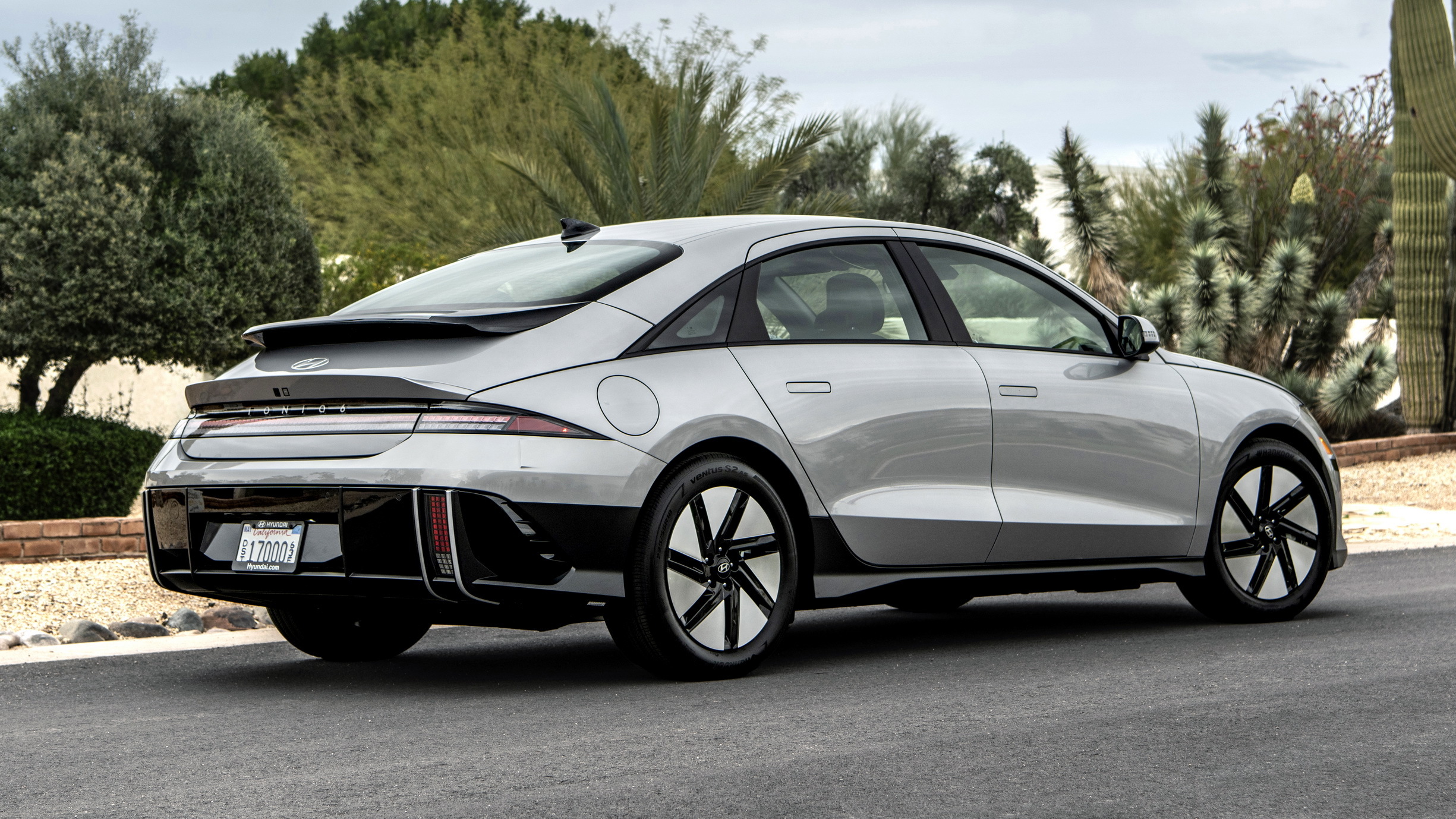
Reading view

There are new articles available, click to refresh the page.

The 2026 Ioniq 9 Calligraphy’s Biggest Threat Is Hyundai Itself | Review

PROS ›› Superb interior, excellent performance, bold design CONS ›› Expensive, heavy, hard-sell over Palisade

Electric SUVs have come a long way in a short time, but in the three-row space, progress has been surprisingly slow. Hyundai made a big impression on the EV market when it unveiled the striking Ioniq 5 in early 2021. A month later, Kia unveiled its related EV6.

However, following the debut of the Ioniq 5 and the later arrival of the Ioniq 6, Hyundai’s rollout of next-generation EVs has slowed, especially compared to Kia. In the same span, Kia has steadily grown its lineup, recently adding the EV3, EV4, EV5, and EV9 to its expanding electric stable.

Review: The New Nissan Qashqai e-Power Drives Like An EV But Doesn’t Need Charging

This makes the launch of the new Hyundai Ioniq 9 all the more important. You see, it’s related to the three-row Kia EV9, but that model was launched more than 18 months before it, meaning Hyundai has to catch up ground.

QUICK FACTS
› Model:2026 Hyundai Ioniq 9 Calligraphy
› Starting Price:AU$128,413 (US$84,000)
› Dimensions:5,060 mm (199.2 in.) Length

1,980 mm (77.9 in.) Width

1,790 mm (70.4 in.) Height

3,130 mm (123.2 in) Wheelbase
› Curb Weight:2,721 kg (5,998 lbs)
› Powertrain:Dual electric motors | 110.3 kWh battery
› Output:421 hp (314 kW) / 516 lb-ft (700 Nm)
› 0-62 mph5.2 seconds (0-100 km/h)
› Transmission:Single-speed
› Efficiency:22 kWh/100 km as tested
› On Sale:Now
SWIPE

Working in Hyundai’s favor is the fact that not much has changed in the three-row electric SUV segment since the EV9 launched. Few contenders have emerged in this particular bracket, especially at the price point where both the EV9 and Ioniq 9 are playing.

We recently had the opportunity to spend a full week living with the Hyundai Ioniq 9 in Calligraphy trim, putting it through its paces not just to see how it stacks up against the EV9, but also to ask a tougher question: can it justify its position as the most expensive Hyundai ever sold?

What Does it Cost?

\\\\\\\\\\\\\

Photos Brad Anderson/Carscoops

While Kia offers several versions of the EV9 in Australia, Hyundai has only launched a single trim variant of the Ioniq 9, known as the Calligraphy. Buyers can choose between six or seven seats, and pricing starts at AU$128,413 (equal to US$84,000 at current exchange rates) including on-road costs.

There’s no denying that’s a lot of cash for a Hyundai. However, it’s surprisingly good value compared to the Kia EV9 GT-Line, the nearest equivalent to the Calligraphy, which is priced from AU$138,915 ($90,700).

Read: Americans Just Sent Hyundai EV Sales Through The Roof But Trouble’s Brewing

Shoppers in the US looking to pick up the keys to the new Ioniq 9 can purchase it for as little as US$58,955. The flagship Performance Calligraphy Design tops out at the range, starting at US$76,490. Although Australia’s Calligraphy model lacks the word ‘Performance’ in its name, it has the same powertrain as the American model.

Beneath the concept-car-like looks of the Ioniq 9 is a huge 110.3 kWh battery, larger than the flagship 99.8 kWh pack in the EV9. This battery feeds a pair of electric motors, each rated at 157 kW (210 hp), or a combined 314 kW (421 hp) and 700 Nm (516 lb-ft) of torque. That gives it a healthy edge over the EV9 GT-Line’s 283 kW (380 hp), although torque remains identical.

A High-Class Cabin

\\\\\\\\\\\\\\\\

Photo Credits: Brad Anderson/Carscoops

As you’d expect for a vehicle at this price point, the Ioniq 9 Calligraphy’s cabin is exceptionally plush and feels more premium than the EV9, which has too much plastic for our liking.

Like other Hyundai models, there are two 12.3-inch screens in front of the driver, housed within a single curved display that supports wireless Apple CarPlay and Android Auto. Whereas Kia insists on continuing to employ an inconveniently located third screen on the dash for the climate controls, the Ioniq 9 uses a dedicated display under the dash with a touch panel and physical temperature dials.

Review: New Fiat Grande Panda Hybrid Makes Budget Look Cool Again

Our Ioniq 9 was equipped with the eye-catching Dark Wine and Dove Grey two-tone Nappa leather, one of three available two-tone options for those not interested in the standard Obsidian Black trim. The Ioniq 9 is available with digital wing mirrors, but fortunately, our car didn’t have them. By comparison, the EV9 GT-Line is sold exclusively with cameras instead of mirrors.

There are plenty of luxuries found within the cabin, making the Ioniq 9 perfectly suited to any kind of journey. This includes a heated steering wheel, heated, ventilated, and massaging front seats and a wireless phone charger.

\\\\\\\\\\\\\\\\\\\\\\\\\\\\\\\\\\\\

Photos Brad Anderson/Carscoops

There’s also a panoramic sunroof, tri-zone climate control, configurable ambient lighting, and a head-up display. Tech enthusiasts will be pleased to know that in addition to having two high-powered 100-watt USB-C ports in the dash, there are also 100-watt USB-C ports on the backs of the front seats for rear passengers.

Those seeking the ultimate in comfort would be wise to opt for the six-seat version, as it replaces the second-row bench seat with a pair of captain’s chairs, which are very similar to the front seats.

Review: BYD Sealion 6 Makes Plug-In Hybrids Feel Seamless But Fun Is Optional 

However, even in 7-seat guise, the Ioniq 9’s second row is more than large enough to carry three adults in comfort. Even the third row is surprisingly practical. I’m 6’2” (189 cm) and my hair only brushed the headliner, but I did have to slide the second-row seats forward to get any leg room.

There’s no question this ranks among the most premium interiors Hyundai has ever put together. Even so, it doesn’t feel dramatically more upscale than the far more affordable Santa Fe. It shares quite a few components too, including the dual screens, steering wheel, and HVAC controls. Cabin space is only slightly more generous as well. The latest Palisade, for that matter, feels every bit as polished as the Ioniq 9.

Performance and Comfort
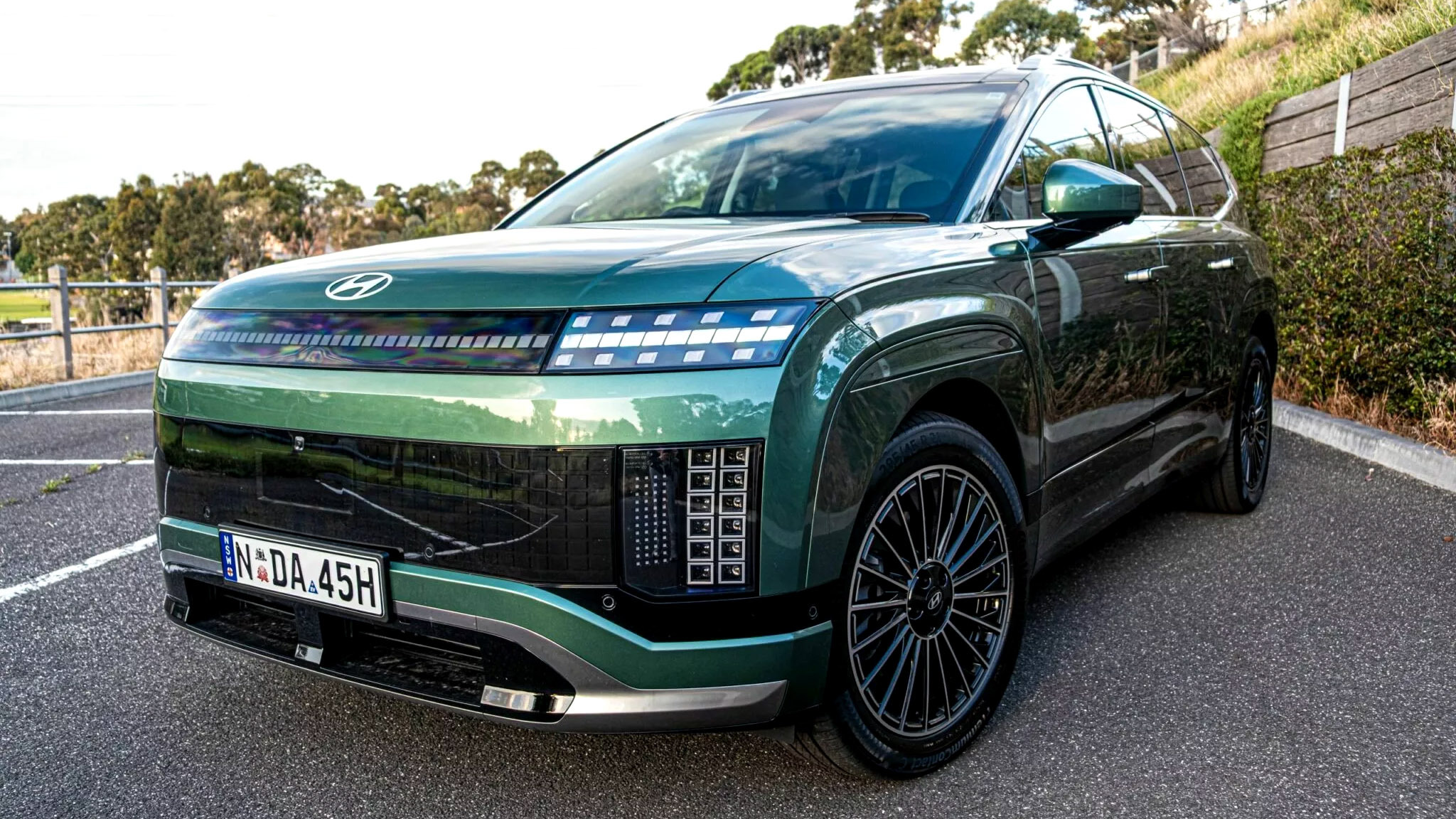
 The 2026 Ioniq 9 Calligraphy’s Biggest Threat Is Hyundai Itself | Review

Despite not being marketed as a performance vehicle in Australia, that’s exactly what the Ioniq 9 feels like, at least in a straight line. It can hit 100 km/h (62 mph) in 5.2 seconds, an impressive figure considering the seven-seater weighs a portly 2,721 kg (5,998 lbs). Pin the throttle and it lurches forward, squatting at the rear and leaving hot hatches for dead.

However, show the Ioniq 9 a set of corners, and it doesn’t match the surprising agility of the EV9 GT-Line. That isn’t to say it can’t be hustled through corners at impressive speeds, as it can, thanks in part to the Continental PremiumContact tires. But the Ioniq 9 clearly prefers a calmer approach, and with the massaging seats doing their thing, it feels most at ease settling into a smooth cruise.

Hyundai has done a good job of calibrating the steering of its new flagship SUV and it is beautifully light, perfect for a vehicle of this size, ensuring it’s easy to park. While driving the Ioniq 9, I quickly forgot about its weight, although it was a little harder to forget about the sheer size of the thing.

Measuring it at 5,060 mm (199.2 inches) long, it’s 50 mm (1.9 inches) longer than the EV9, and matches the Kia’s 1,980 mm (77.9-inch) width. It’s even 8mm (0.3 inches) longer than a full-size Range Rover.

Range to Match The Speed

\\\\\\\\\\\\\\\\

Photos Brad Anderson/Carscoops

Thanks to the big battery pack and respectable efficiency, the Ioniq 9 has good, real-world driving range. Hyundai claims it can travel up to 600 km (373 miles) between stops and quotes average efficiency of 20.6 kWh/100 km. During my week with the Ioniq 9, I averaged 22 kWh/100 km, traveled 210 km (130 miles), and had 298 km of remaining range (185 miles).

As with other EVs from Hyundai, Kia, and Genesis, charging is a strong suit of the Ioniq 9. It supports charging speeds of up to 233 kW, meaning the battery can be topped up from 10-80 percent in 24 minutes through a 350 kW charger. AC charging is capped at 10.5 kWh, which is enough for an overnight charge at home.

Also: Hyundai Just Got A Big Gift From Trump, But It’s GM That’s Smiling

Given the Ioniq 9’s considerable weight, I expected the ride to be on the firmer side, as is often the case with electric vehicles. Instead, it turned out to be surprisingly comfortable and noticeably softer than the EV9 GT-Line. That said, the lighter and more compact Santa Fe still manages to deliver an even smoother ride.

Brake regeneration is handled by paddle shifters behind the steering wheel, allowing you to cycle between four different levels, including a one-pedal driving mode which works superbly.
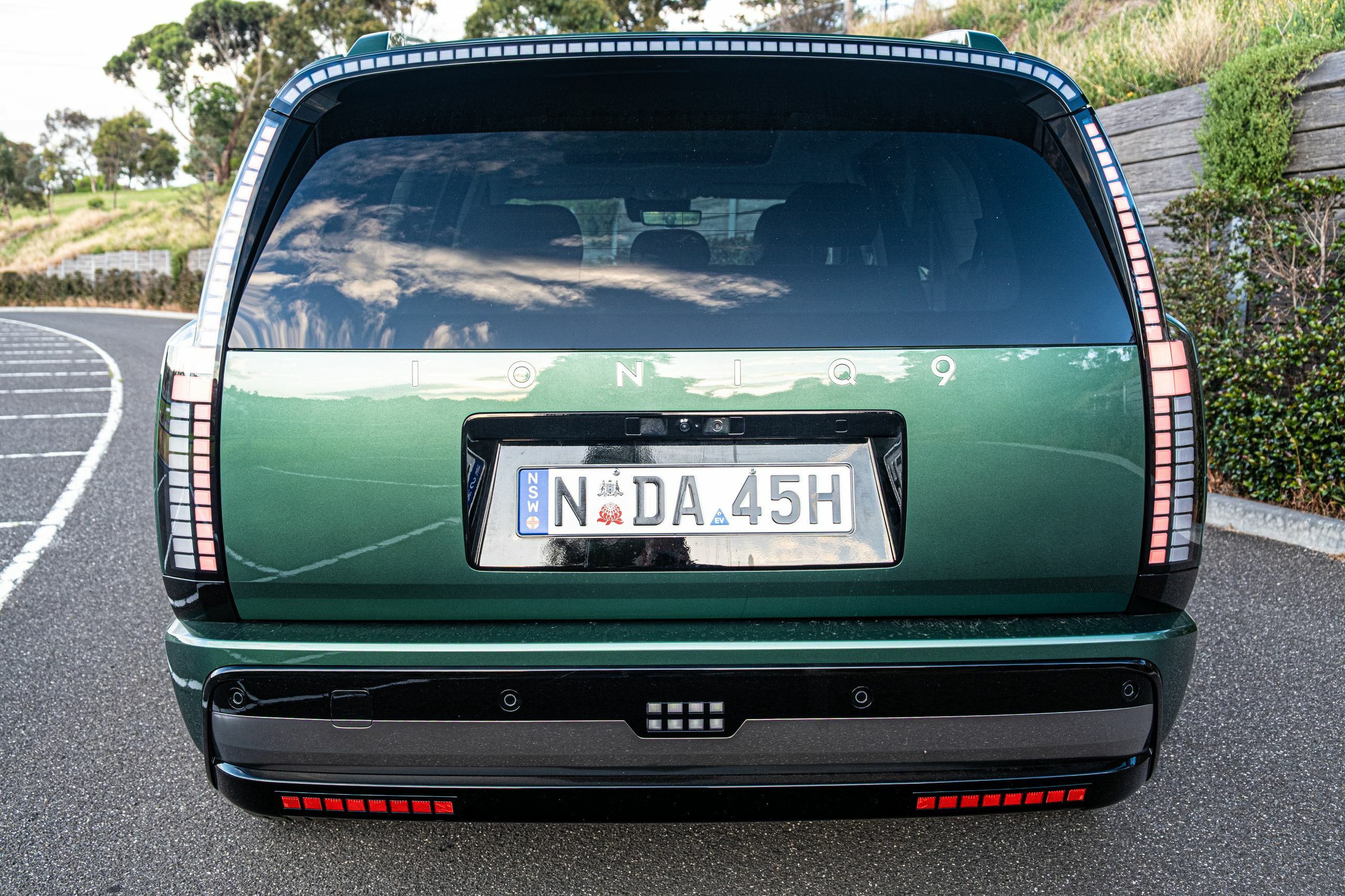
 The 2026 Ioniq 9 Calligraphy’s Biggest Threat Is Hyundai Itself | Review

Hyundai has also equipped the Ioniq 9 Calligraphy with its Highway Driving Assist 2 system, which includes radar cruise control and an automatic lane-change function. It can even shift the EV to the edge of the lane when passing a truck for added safety. As we’ve come to expect from the South Koreans, the HDA2 system works flawlessly on the highway.

Verdict

As a standalone EV, especially when stacked against pricier rivals like the troubled Volvo EX90, the Hyundai Ioniq 9 makes a compelling case for itself. Yes, it carries a price more commonly tied to Hyundai’s luxury arm, Genesis, but large electric SUVs come at a premium, particularly those that blend comfort, refinement, and capability as well as this one.

However, as we saw with the Kia EV9, it is the competition from within Hyundai’s own lineup that will likely limit the Ioniq 9’s appeal.

For roughly AU$50,000 (US$32,600) less, you can get a seven-seat Santa Fe Hybrid Calligraphy. And if you’re looking for something larger, the all-new Palisade is available as a seven-seater or even an eight-seater, and costs around AU$30,000 (US$19,500) less. Still, if you’re dead set on an electric SUV for the family, the Ioniq 9 is an easy one to recommend.
\\\\\\\\\\\\\\\\\\\\\\\\\\\\\\\\\\\\\\\\\\\\\\\\\\\\\\\\\\\\\\\\\\\\\\\\\\\\\\\\\\\\\\\\\\\\\\\

Photos Brad Anderson/Carscoops

Hyundai’s Latest Robots May Be Eyeing Your Job

  • Hyundai launched two MobED versions with distinct capabilities and uses.
  • The Pro model adds full autonomy while the Basic relies on remote input.
  • Cameras, LiDAR, and AI let the robot navigate tight and crowded places.

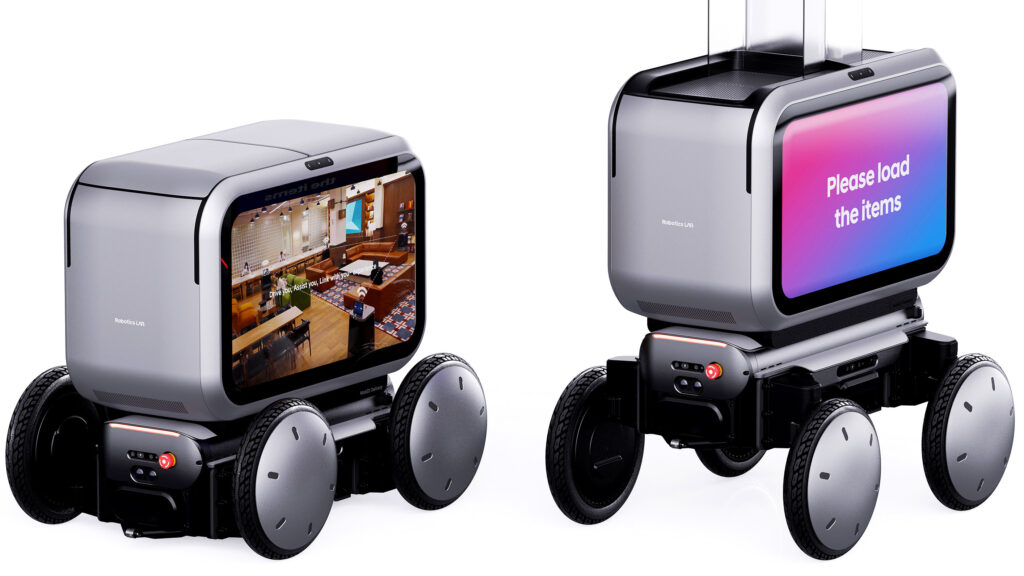
Four years after first showing its Mobile Eccentric Droid (MobED) concept, Hyundai’s Robotics LAB has now revealed the production version in Tokyo, Japan. The debut marks an important step in the company’s expansion into advanced robotics.

The compact platform has been engineered to be fully autonomous and uses advanced artificial intelligence that allows it to cruise over different surfaces and provide incredible adaptability for different use cases.

How Does It Move?

Central to MobED’s capability is its Eccentric Control Mechanism, a clever system that lets the robot adjust its posture and each wheel individually. The result is an uncanny steadiness, even when crossing inclined or uneven terrain.

Read: Like All Eccentrics, Hyundai’s New Mobile Eccentric Droid May Be Going Into The Film Business

For spatial awareness, Hyundai equipped the platform with a suite of advanced cameras and LiDAR sensors. An AI-driven obstacle detection system adds another layer of awareness, helping the robot navigate confined or crowded spaces without missing a beat.

Hyundai envisions it taking on various roles, from last-mile deliveries to logistics support, with minimal human intervention.

Two Flavors Of Droid

 Hyundai’s Latest Robots May Be Eyeing Your Job

Hyundai has revealed two versions of the robot: the Basic and the Pro. The Basic measures 1,150 mm (45.2 inches) in length, 750 mm (29.5 inches) in width, and 430 mm (16.9 inches) in height. It weighs 78 kg (172 lbs) and can carry up to 57 kg (125 lbs).

The Pro variant stands a little taller at 650 mm (25.5 inches) and heavier at 88 kg (194 lbs), though its payload capacity drops slightly to 47 kg (104 lbs).

Where they diverge most is autonomy. The Pro comes equipped with Hyundai’s full self-driving system, while the Basic relies on manual operation via remote control.

What Keeps It Rolling?

\\\\\\

Powering both versions is a small 1.47 kWh battery that provides up to 4 hours of operating time. However, compared to some of Hyundai’s EVs, the MobED charges slowly, needing 2.5 hours to juice up the battery from 10 to 90 percent.

Each robot also features universal mounting rails that make it easy to attach a variety of tools and modules. In the future, they could perform a range of important tasks in factories and warehouses, as well as crucial functions at production facilities, reducing the need for human labor.

Commercial sales of the MobED are expected to begin in the first half of 2026. Hyundai has yet to announce pricing, though it’s clear the company sees the robot as more than a novelty.

As EV Sales Crash Badly, Hyundai Gets Its Lifeline From Elsewhere

  • Hyundai Ioniq 5 sales fell sharply after federal tax credits ended.
  • Ioniq 6 demand also dropped significantly with sales hitting new lows.
  • Hybrids surged strongly marking their best monthly performance yet.

Hyundai is selling more hybrids in the United States than ever, a result that surely has executives reaching for the champagne. The mood, however, is muted by a sharp downturn in the company’s electric vehicle fortunes. Since the federal EV tax credit expired on September 30, demand has plunged, leaving Hyundai’s battery-powered lineup scrambling to regain its footing

How Low Can It Go?

The Ioniq 5 remains Hyundai’s best-selling EV in the US, though November brought little reason to celebrate. Only 2,027 units found buyers across the country, a steep 59 percent drop from the 4,989 sold in November last year.

 As EV Sales Crash Badly, Hyundai Gets Its Lifeline From Elsewhere

There was some consolation in the fact that this figure edged up slightly from October’s 1,642 sales, but the wider picture is still uneven. Year-to-date results show a modest 12 percent improvement over 2024, totaling 44,760 cars sold.

Read: Hyundai And Kia EV Sales Collapse After Tax Credits Vanish Overnight

Things have been equally as bad for the Ioniq 6, with just 489 being sold this November, a decline of 56 percent. Cumulative sales have also slipped, from 11,055 cars in 2024 to 10,019 so far this year, marking a 9 percent decline.

The seven-seat, three-row Ioniq 9 wasn’t available last year, but it remains a relatively slow seller. A total of 315 found new homes last month, down slightly from the 317 sold in October. Year-to-date, 4,809 have been sold.

Hyundai Sales November 2025
VehicleNov-25Nov-24% Chg2025 YTD2024 YTD% Chg
Elantra10,38911,344-8%136,825125,113+9%
Ioniq 52,0274,989-59%44,76039,805+12%
Ioniq 64891,121-56%10,01911,055-9%
Ioniq 931504,8090
Kona5,7836,133-6%68,03076,326-11%
Nexo000%593-95%
Palisade9,9068,982+10%112,23799,757+13%
Santa Cruz1,5372,393-36%23,88929,991-20%
Santa Fe14,00412,376+13%127,964105,701+21%
Sonata4,0186,971-42%54,23861,701-12%
Tucson23,76220,178+18%212,037185,954+14%
Venue2,0591,521+35%27,94322,808+23%
Total Sales74,28976,008-2%822,756758,304+8%
SWIPE

Hyundai’s total November sales have fallen 2 percent from November last year to 74,289 units. So for this year, it still remains in the green, shifting 822,756 vehicles, an 8 percent rise from the 758,304 sold during the first 11 months of 2024.

Hybrids to the Rescue

The big story, though, is hybrids. Sales of electrified models jumped 42 percent, making November Hyundai’s strongest hybrid month on record. That surge has been critical in offsetting the EV slump and maintaining overall growth through the final quarter.

Among individual models, several performed particularly well. In November, The Palisade rose 10 percent to 9,906 units, Santa Fe gained 13 percent to 14,004, and Tucson continued its strong run with an 18 percent increase to 23,762. Even the pint-sized Venue grew 35 percent to 2,059 units.

The Sonata, meanwhile, took a noticeable hit in November, dropping 42 percent year-over-year to 4,018 sales, bringing its year-to-date total to 54,238, down 12 percent from the same period in 2024.

For now, Hyundai’s U.S. lineup shows a clear divide between hybrid gains and weakening EV demand. The next few months will show whether that hybrid momentum can do enough to steady the company’s position in a softening electric market.

 As EV Sales Crash Badly, Hyundai Gets Its Lifeline From Elsewhere

A $2 Water Bottle Just Cost This Hyundai Driver Nearly $12,000

  • Hyundai Ioniq 5 owner faces $12K bill after bottle spilled water.
  • Company denied warranty, citing damage from an external factor.
  • State Farm also refused coverage, claiming gradual wiring corrosion.

Most drivers think spilling a bottle of water in their car is annoying at worst. Maybe you get a damp carpet and some condensation on your windows. Maybe your floor mats start to smell like a gym bag.

What you probably do not expect is a repair bill that costs more than a used Honda Civic. But that’s exactly what happened to one Hyundai driver.

Related: Stop Sale Issued For Hyundai Ioniq 5 As Sonata Gas Tanks Risk Melting

Mike McCormick was driving his Ioniq 5 on the freeway in Florida when a traffic snarl-up ahead forced him to hit the brakes. That move sent a water bottle in one of the rear cupholders flying forward and eventually to the floor, where its contents found their way into some wiring harness connectors, though it’s not clear if the bottle’s cap was on, off or somewhere in between at the time.

Within a few minutes of the water bottle performing its base jump, McCormick noticed various warning lights come up on the dash. Then the turn signals stopped working and by the time he got home he couldn’t shut the car off.

How One Bottle Became a Bill

 A $2 Water Bottle Just Cost This Hyundai Driver Nearly $12,000

After inspecting the two-year-old EV, a Hyundai dealer told him the underfloor and under-seat wiring harnesses would both have to be replaced. Annoying, but how much could a few wires cost, right? The answer is a whole lot, as the bill ballooned to a crazy $11,882.08.

And according to the company, the damage was caused by an “external factor,” and not a factory defect, meaning McCormick was on the hook for the whole repair cost.

Okay, you’re thinking, go to plan B: insurance. He tried that too, and State Farm denied his claim, suggesting that its investigation showed the damage to the wiring harness had occurred over time, rather than as a result of the one water bottle spill. Talk about rock and a hard place.

Why So Fragile?

 A $2 Water Bottle Just Cost This Hyundai Driver Nearly $12,000

WFTV Channel 9’s report on the story highlighted the vulnerability of the Ioniq 5’s wiring harness below the Ioniq 5’s seat by referencing another owner who was left with a five figure bill for new harnesses after a dealer found his had frayed.

Also: Sure, You Can Replace Ioniq N Brakes, But Only With Hyundai’s $6K Tool Or A $2K Locked Workaround

And that’s not the only unexpected bill some of the EV drivers have come across. If you want to replace your own brake pads on the sporty Ioniq 5 N, maybe after a track day, you need access to special software and tools that can cost thousands of dollars. Some owners suggest cheaper unofficial workarounds, but those come with inherit risks, including the possibility of voiding your warranty or creating even costlier problems if anything goes wrong.

Do you think Hyundai or the insurance company should pay for the repairs to McCormick’s EV, or is it right that he’s being forced to foot the bill? Leave a comment and let us know.

Thanks to Marco for the tip!

Sources: WFTV 9

“This Is The Way” Says Porsche Exec After Driving Hyundai’s Ioniq 5 N

  • Porsche engineers were blown away by the Hyundai Ioniq 5 N’s fun driving character.
  • N Grin Boost, virtual shifts, and synthetic sounds made a big impression.
  • German brand may add similar features to its electric 718 due in 2027.

Porsche engineers are not exactly easy to impress. These are the people who spend their days perfecting GT3s and wringing every last drop of magic from flat-six engines and setting Nurburgring lap records.

So when two of the brand’s most senior engineering bosses drove the Hyundai Ioniq 5 N and came away buzzing like teenagers leaving an arcade, you know something interesting is happening in the electric-car world.

Also: Hyundai Ioniq 5 N Gets A Cheaper Version But You Can’t Have It

Frank Moser, Porsche’s vice president in charge of the 718 and 911 lines, admitted to Australia’s Drive that he has driven the Ioniq 5 N “several times” and called it an “eye-opening” experience.

Moser even dragged along Andreas Preuninger, the legendary head of Porsche GT cars, whose blood type is probably 98 RON premium, and definitely not amps.

From Skeptic to Convert?

Preuninger was not exactly enthusiastic at first. According to Moser, he grumbled, “I don’t want any of that electric stuff” when the idea was floated. But once they climbed inside and Moser pressed the Hyundai’s N Grin Boost button, the GT boss instantly turned into a believer.

“He was ‘wow’” Moser said, describing the moment Hyundai’s punchiest EV unleashed its full 641 hp ( 650 PS / 478 kW) and 568 lb-ft (770 Nm). “We learnt a lot from that car,” Moser told Australia’s Drive. “That’s why we decided to have a deeper look.”

It was not just the acceleration that snagged Porsche’s attention. The Ioniq 5 N’s signature party tricks, including its virtual gearshifts and synthesized powertrain noises, have Porsche seriously considering similar features for its upcoming electric 718 sports car.

Can Sound Create Soul?

\\\\\\\\\\\

Hyundai calls these systems N e-shift and N Active Sound+, and they replicate the snap of a dual-clutch gearbox and offer a selection of digital engine noises (most of them pretty lame, in my experience).

It is the kind of thing EV purists roll their eyes at, but performance engineers instantly understand. It makes the car feel alive and the driver connected to the driving experience.

“This is the way,” Moser said of the synthesized features, while making clear that Porsche wouldn’t force them on drivers.

“The customer could decide if he wants to drive in complete silent mode, or he wants to be part of the game, feeling the virtual sounds of a flat six and the virtual gear shifts,” Moser said. “That would be the direction for the future.”

Tuning the Future

 “This Is The Way” Says Porsche Exec After Driving Hyundai’s Ioniq 5 N

Our money’s on it being part of a Sport Chrono-type option package that’ll add at least $2,000 to the bill of the new electric Porsche 718 Boxster and Cayman.

The first 718 EV arrives in early 2027, and Moser promises it will be “really lightweight for an electric car,” though he declined to reveal an exact or even ballpark weight figure.

One thing is clear: Hyundai has just influenced one of the world’s most respected sports-car makers. Who could have imagined that happening 20 years ago?

Gas Or EV? Hyundai N Embraces Both With Two New Models For America

  • The Elantra N TCR Edition is coming to America early next year.
  • It features a carbon fiber rear wing and interior upgrades.
  • Hyundai also showed off the US-spec Ioniq 6 N, which has 641 hp.

The Los Angeles Auto Show continues and Hyundai has used the event to introduce the US-spec Ioniq 6 N and Elantra N TCR Edition. The former originally debuted over a year ago, while the latter was introduced this summer.

Starting with the high-performance Ioniq 6 N EV, it features an 84 kWh battery pack and a dual-motor all-wheel drive system producing a combined output of 601 hp (448 kW / 609 PS). However, a boost function increases that number to 641 hp (478 kW / 650 PS).

More: Hyundai’s Fastest Electric Sedan Can Drift And Snarl Like A Gas Car, Hit 62 MPH In 3.2 Seconds

This setup enables the car to accelerate from 0-60 mph (0-96 km/h) in approximately 3.2 seconds when using Launch Control. Drivers can also expect to hit a top speed of up to 160 mph (257 km).

Hyundai declined to reveal the car’s range, but noted the model has a 350 kW DC fast charging capability. This will enable the battery to go from a 10% to 80% charge in as little as 18 minutes.

Other highlights include a sport-tuned suspension with electronically controlled dampers and N e-Shift technology. They’re joined by N Launch Control, N Drift Optimizer, N Grin Boost, N Torque Distribution, and an N Active Sound + system.

\\\\\\\

Since we’ve already seen the model numerous times before, we’ll briefly note the car features black and red accents as well as 20-inch forged wheels. They’re joined by sportier bumpers and a rear spoiler.

Hyundai hasn’t released full details, but said the car will have a Black interior with Performance Blue accents. Buyers will also find sporty seats with Alcantara upholstery as well as leatherette bolsters. Other highlights include a unique steering wheel as well as additional physical switchgear for more intuitive operation.

The Ioniq 6 N will arrive next year and be offered in “limited quantities.” There’s no word on pricing, but the 2025 Ioniq 5 N starts at $66,200.

Elantra N TCR Edition

\\\\

Speaking of yesterday’s news, Hyundai introduced the Elantra N TCR Edition. Designed for boy racers on a budget, the car has a massive carbon fiber rear wing that tells everyone you’re compensating for something. It’s joined by special badging as well as gloss black 19-inch forged wheels that are backed up by a four-piston front braking system.

The interior sports an Alcantara-wrapped steering wheel, shifter, and handbrake. They’re accompanied by Performance Blue seat belts, aluminum door sill plates, and unique door puddle lamps.

Hyundai didn’t mention pricing or specifications, but the model should have a turbocharged 2.0-liter four-cylinder engine pumping out 276 hp (206 kW / 280 PS) and 289 lb-ft (391 Nm) of torque. It can be connected to either a six-speed manual or an optional eight-speed dual-clutch transmission.

The Hyundai Elantra N TCR Edition will arrive in the first quarter of 2026 as a “limited production run.” There’s no word on how many will be offered stateside, but expect it to cost more than the regular model, which begins at $35,100.

 Gas Or EV? Hyundai N Embraces Both With Two New Models For America

Hyundai Launches $7.5K Carbon Kit That Makes The Ioniq 6 N Even Wilder

  • Hyundai Ioniq 6 N now offers an optional N Performance package.
  • Carbon aero kit adds a swan-neck wing for extra track downforce.
  • Includes 20-inch forged wheels, racing stripes, and cabin upgrades.

The Hyundai Ioniq 6 N already cuts a fierce silhouette, but for some owners, that isn’t quite enough. They want something with more of a track-day attitude. Hyundai is answering that call with a new suite of N Performance Parts, led by a swan-neck rear wing reminiscent of the Porsche 911 GT3.

The optional accessory package also includes a more prominent splitter, sharper side skirts, and a diffuser extension. All of the components are finished in exposed carbon, contrasting the red accents found on the lower part of the bodywork.

More: Hyundai’s Next Performance SUV Could Be A Hybrid Rival To RAV4 GR Sport

The larger CFRP rear wing, which can also be ordered on its own, features a double-deck design adjustable to three positions: 8°, 0°, and -8°. Depending on the angle, it produces between 265 and 305 kilograms (584–672 pounds) of downforce at 257 km/h (160 mph).

A deflector mounted beneath the car trims lift and adds another 16 kilograms (35 pounds) of downforce at top speed.

\\\\\\\

Beyond the aerodynamic pieces, the package includes 20-inch forged wheels with a 12-spoke layout, finished in either black or white. They shave 1.5 kilograms (3 pounds) from the unsprung mass compared to the standard aero wheels of the same size.

To fine-tune the exterior, owners can add a racing stripe, a Sabelt tow strap, carbon center caps, and black wheel nuts.

Inside, the upgrades extend to a steering wheel wrapped in Pasubio leather, suede armrests, carbon fiber scuff plates, and floor mats marked with N Performance branding. The company also offers Ferodo brake pads designed for both street and circuit use.

More: Veloster’s Reincarnation Could Arrive As An Ioniq 3 N Hot Hatch

 Hyundai Launches $7.5K Carbon Kit That Makes The Ioniq 6 N Even Wilder

The Ioniq 6 N draws power from dual electric motors that produce a combined 641 hp (478 kW / 650 PS) and 770 Nm (568 lb-ft) of torque through the N Grin Boost function, launching it from 0–100 km/h (62 mph) in 3.2 seconds. True to N division form, the EV integrates systems such as simulated gear shifts, synthesized exhaust sounds, and an N Drift Optimizer.

What’s The Cost?

Hyundai first announced these N Performance Parts in July 2025. They’re now available to order in Korea before rolling out to other international markets. According to the Korean Car Blog, the full aero package is priced at ₩11,000,000 (equal to $7,500 at current exchange rates), while the rear wing alone costs ₩4,900,000 ($3,400).

In Korea, the Hyundai Ioniq 6 N starts at ₩79.9 million ($54,700). The U.S. version is expected to be priced from around $68,000 when it arrives next year.

 Hyundai Launches $7.5K Carbon Kit That Makes The Ioniq 6 N Even Wilder

Sources: TheKoreanBlog, Hyundai

Sure, You Can Replace Ioniq N Brakes, But Only With Hyundai’s $6K Tool Or A $2K Locked Workaround

  • Ioniq 5 and 5 N need official software to replace rear pads safely.
  • Hyundai defends the system, citing safety and secure service access.
  • Right-to-repair advocates say it limits owners’ maintenance rights.

Maintaining your own car has long been a badge of pride for some and a financial necessity for many others. Swapping fluids, filters, or brake pads is part of the standard weekend maintenance ritual for countless drivers.

But for one Hyundai Ioniq 5 N owner, that sense of self-reliance recently hit a wall, or more precisely, a brake caliper. He discovered that replacing the rear pads on his EV wasn’t as simple as it used to be. Now, Hyundai has responded.

More: Apparently You Need Hyundai’s Permission To Change Your Own Brakes

It might seem odd that someone has already burned through their rear pads, especially on an EV, but it happened because the owner drove this car the way Hyundai wants owners to: hard and on the track.

When he tried to replace these pads, he learned that he needed to retract the electronic parking brake. That’s where this easy DIY job took a scary turn.

When Maintenance Gets Complicated

 Sure, You Can Replace Ioniq N Brakes, But Only With Hyundai’s $6K Tool Or A $2K Locked Workaround
Aftermarket J2534 Diagnostic Tool from DG Technologies

One way to retract the brake is to use Hyundai’s Global Dynamic System (GDS). That software and the hardware that goes with it can cost almost $6,000, as we’ve seen online. Don’t worry, though, there’s another option called the J2534 Diagnostic Tool, which Hyundai supports, as seen in an official document discovered by TheDrive.

According to the owner, Redditor u/SoultronicPear, the software costs $60 a week (or less on average for longer time periods) and requires the use of a J2534 adapter that can be found for around $2,000.

Hyundai currently approves only three options for this tool: the CarDAQ Plus 3, Bosch’s MTS 6531 and DG Technologies’ d-briDGe PRO, adding that, “under no circumstances do we recommend the use of a
non-approved J2534 device”. So be warned.

Credentials Required

More importantly, beyond that, using the tool requires special National Automotive Service Task Force (NASTF) authentication and a constant internet connection.

But here’s the kicker. Only certified repair shops or repair businesses are supposed to get access to that software. NASTF told the owner that “NASTF credentials are for use by qualified technicians, mechanics or locksmiths working in businesses providing repair or replacement services.”

Hyundai Speaks Up

Before publishing our first coverage of this issue, we reached out to Hyundai for comment. After the story went live, the automaker responded with the following statement to Carscoops:

“Hyundai is committed to supporting both our dealer network and independent repair facilities with safe, secure, and accessible service solutions. For vehicles equipped with electronic parking brakes, including the Ioniq 5 and Ioniq 5 N, the official repair procedure requires placing the rear calipers in service mode using either our Global Diagnostic System (GDS) or the J2534 application.

This ensures proper functionality and customer safety. Hyundai recently expanded access through an update to our J2534 application, enabling aftermarket users to perform functions previously restricted by the GDS secure gateway.

While authentication through NASTF is required for sensitive operations, this step helps maintain security and accountability. Our official dealer tool (GDS) is also available for purchase by anyone. Hyundai is actively exploring ways to make routine maintenance easier for all customers while upholding safety standards.

We appreciate the interest in DIY repairs and will continue working toward solutions that balance convenience with security.”

 Sure, You Can Replace Ioniq N Brakes, But Only With Hyundai’s $6K Tool Or A $2K Locked Workaround

Seeking more detail, we pushed Hyundai to clarify whether a skilled owner could realistically do the job at home. The company followed up with this explanation:

“DIYers can replace brake pads on the Hyundai Ioniq 5 and Ioniq 5 N, but it requires specific steps and tools. Because these vehicles use electronic parking brakes, the rear calipers must be placed in service mode using either Hyundai’s Global Diagnostic System (GDS) or the J2534 application with a compatible pass-through device.

Both tools are publicly available, though GDS is more expensive and J2534 requires NASTF authentication for secure functions. Without these tools, the job cannot be done safely, as manual retraction could damage components.

Hyundai is not restricting DIY repairs, in fact, recent updates have expanded access, and we continue to explore ways to make routine maintenance easier while maintaining safety and security.”


So, yes, it can be done. But unless you already own the specialized tools or have deep pockets, the process can cost about as much as a tired old hatchback from the classifieds.

For now, at least until a cheaper workaround surfaces (we’re looking into it, so stay tuned), the Ioniq 5 N’s rear brakes may remain one of those maintenance jobs probably best left to the professionals.

 Sure, You Can Replace Ioniq N Brakes, But Only With Hyundai’s $6K Tool Or A $2K Locked Workaround

Hyundai And Kia EV Sales Collapse After Tax Credits Vanish Overnight

  • Hyundai’s Ioniq 5 sales plunged after federal tax credits ended.
  • Kia’s EV9 and EV6 saw steep drops of 66 and 71% respectively.
  • Kia delayed its EV4 launch citing changing U.S. market conditions.

We all knew that sales of EVs in the US would fall dramatically in October, since there’s no $7,500 federal tax credit available. However, major automakers like Hyundai and Kia may not have anticipated just how dramatically sales would fall due to this policy change.

Starting with Hyundai, it recently confirmed that it sold 70,118 vehicles last month, a 2 percent decline from the 71,802 in October 2024. Importantly, year-to-date sales are up 10 percent to 748,467. But this is where the good news mostly ends.

Read: Hyundai Enjoys Record Sales Thanks To Some Unlikely Models

Sales of the Ioniq 5 plummeted 62 percent to just 1,642 units, down from 4,498 sold last October. Similarly, Hyundai sold 52 percent fewer Ioniq 6s, down from 837 units to 398. The Ioniq 9 wasn’t available last year, but it hasn’t been a big seller this year, shifting 4,494 units year-to-date and just 317 in October.

Other Hyundai models that experienced significant declines included the Kona (-13 percent), Santa Cruz (-29 percent), Sonata (-32 percent), and Elantra (-16 percent). Helping to prop up total sales were the likes of the Palisade (+6 percent), Santa Fe (+22 percent), Tucson (+16 percent), and Venue (+49 percent).

Hyundai USA Sales
Model25-Oct24-OctDiff25 YTD24 YTDDiff
Elantra10,22412,151-16%126,436113,76911%
Ioniq 51,6424,498-64%42,73334,81623%
Ioniq 6398837-52%9,5309,934-4%
Ioniq 93174,494
Kona4,9695,685-13%62,24770,193-11%
Nexo24-50%593-95%
Palisade9,5498,9836%102,33190,77513%
Santa Cruz1,7192,427-29%22,35227,598-19%
Santa Fe11,8009,64422%113,96093,32522%
Sonata4,3066,300-32%50,22054,730-8%
Tucson23,03619,82916%18,8275165,77614%
Venue2,1561,44449%25,88421,28722%
Total70,1187,1802-2%748,467682,29610%
SWIPE

Kia’s EV Collapse

Things are similar at Kia. Year-to-date, it sold 705,150 vehicles, a solid increase from the 653,078 units moved over the same period in 2024. Its total sales also rose slightly in October from 68,908 units to 69,002. However, like Hyundai, Kia EVs didn’t share in this success.

Kia sold just 666 examples of the three-row EV9 this October, over 1,941 examples sold the same month last year. Overall sales of the EV9 this year are down from 17,911 to just 13,114. Then there’s the EV6, which saw its number fall from 1,732 to just 508.

Through the first ten months of the year, 11,585 EV6s have been sold compared to the 17,717 last year. Kia also sells the Niro as an EV in the US, but has grouped its sales with those of the gasoline and hybrid versions.

These numbers come just after Kia confirmed that it has postponed the American launch of the EV4 “until further notice” due to changing market conditions.

Kia USA Sales
Model25-Oct24-OctDiff25 YTD24 YTDDiff
EV96661,941-66%13,11417,911-27%
EV65081,732-71%11,58517,717-35%
K4/Forte9,95512,858-23%117,598116,8621%
K57,6315,81831%60,21234,29476%
Soul3,9914,622-14%44,39944,716-1%
Niro2,6981,54675%22,80726,678-15%
Seltos5,6224,26632%45,68752,443-13%
Sportage16,05713,68117%150,159132,43913%
Sorento6,6987,841-15%80,71077,0175%
Telluride8,5719,694-12%101,06991,44811%
Carnival6,6054,90935%57,81039,63646%
Total69,00268,9080%705,150653,0788%
SWIPE
 Hyundai And Kia EV Sales Collapse After Tax Credits Vanish Overnight

Apparently You Need Hyundai’s Permission To Change Your Own Brakes

  • Ioniq 5 N owner says Hyundai’s software blocks brake pad changes.
  • Access reportedly requires costly tools, a business login, and more.
  • The story raises new concerns about Right to Repair in modern EVs.

Automotive enthusiasts aren’t the only ones who enjoy getting their hands dirty. Many regular drivers tackle oil changes, swap air filters, or fit new brake pads without a second thought. These are the sorts of jobs that make you feel connected to your car, a small ritual of maintenance and pride.

But every so often, a manufacturer decides to make things harder than they need to be. I once had to drop an entire subframe on my BMW just to replace oxygen sensors, an experience that left me wondering whether the engineers had ever tried it themselves.

Also: His Ioniq 5 N Turned Into A Paperweight Months Ago And Hyundai Still Has No Answers

It’s rare to see a mainstream brand like Hyundai put similar hurdles on its customers when it comes to repairs. However, according to one owner, the brand isn’t just making a simple fix hard; it’s straight up declaring war on his (and your) right to repair his own car.

Is Hyundai Denying Right to Repair?

 Apparently You Need Hyundai’s Permission To Change Your Own Brakes

Two recent posts on Reddit’s r/Ioniq5N community have ignited a fierce debate. There, an owner claims Hyundai has drawn the battle lines. He’d set out to replace his rear brake pads, something he says he’s done countless times before on other vehicles, but soon discovered the automaker’s diagnostic tools had other plans.

According to the post, Hyundai’s digital systems effectively lock out anyone who isn’t a certified technician from performing even basic maintenance.

The rear brake pads are affected by the electric parking brake. To replace them, one must disengage the brake and get it to retract completely, otherwise, the new pads won’t fit. In addition, the car needs a diagnostic tool to recalibrate the motor on how far to move with the new pads in place.

In other words, even if you could manually disengage the parking brake, the car would still need calibration to work properly.

More: Rivian Refused To Sell JerryRigEverything A 12V Battery Then Sent Him The Bill

The only way to accomplish this is allegedly to use Hyundai’s J2534 Diagnostic Tool, a Windows-based application available only through the automaker’s tech info portal.

The owner says the software requires a $60 weekly subscription, a $2,000+ approved hardware adapter, and a constant internet connection for authentication. Even then, it reportedly doesn’t work properly on newer models like the 2025 Ioniq 5 N.

No DIYers, Please – Only Pros

“I broke down and bought the subscription and special adapter,” the owner wrote. “Guess what? It didn’t work.” Only later did they find out why. “My blood is boiling at the moment. NASTF has blocked my account, saying “DIYers are not permitted access.”

They included a photo of a message from NASTF that says in part, “Please provide your business name and 9-digit Federal Employer Identification Number. DIYers are not permitted access.”

 Apparently You Need Hyundai’s Permission To Change Your Own Brakes
Reddit

The irony, the poster points out, is that Hyundai dealers don’t even use this Windows tool. They reportedly have access to an entirely different Android-based software suite that works seamlessly.

While this all sounds like a bureaucratic mess, the underlying issue raises serious questions about Right to Repair access in the EV era. For decades, enthusiasts and independent mechanics have fought for access to diagnostic tools and repair data that manufacturers often guard tightly.

But when basic wear items like brake pads require proprietary authentication, the argument takes on a new urgency.

Has Hyundai Gone Too Far?

 Apparently You Need Hyundai’s Permission To Change Your Own Brakes

Nothing about this setup sounds reasonable. Replacing brake pads is as fundamental as car maintenance gets, yet Hyundai’s system allegedly makes it feel like breaking into Fort Knox.

If that’s true, the automaker has some serious rethinking to do because locking out the people who care most about maintaining their vehicles isn’t a good long-term strategy.

I have personally considered buying an Ioniq 5 and a Kia EV6, but will avoid both until this sort of thing is doable for folks like me. Hyundai tells us that it’s looking into the situation and will report back once it has more information.

 Apparently You Need Hyundai’s Permission To Change Your Own Brakes

Smallest Ioniq Spills Secrets On Hyundai’s New Infotainment Setup

  • Hyundai’s Ioniq 3 prototypes shed their heavy camouflage during tests.
  • Small electric crossover evolves from September’s Three concept.
  • Sharing its base with Kia’s EV4, it runs on 400-volt E-GMP hardware.

Hyundai’s next big (or rather, small) electric debut is edging closer to reality and this time photographers haven’t only captured the upcoming Ioniq 3 testing without heavy disguise, but they got to peek inside and check out a very different interior layout.

Related: Hyundai Gives Its Smallest N Line SUV Sharper Looks And Smarter Tech

The Ioniq 3, a production version of the Three concept Hyundai revealed in September at the Munich motor show, is positioned below the Ioniq 5 and Ioniq 6, being smaller and slightly less sophisticated.

Styling

Where those models ride on the high-spec 800-volt E-GMP platform, the new 3 will use a simplified version of the same architecture running on 400-volt electrics.

 Smallest Ioniq Spills Secrets On Hyundai’s New Infotainment Setup
SH Proshots

That means slightly slower charging and potentially smaller motors, but also a more affordable entry point for Hyundai’s EV lineup, and an internal competitor for the closely related Kia EV4. But their very different designs means the casual buyer will never guess the connection.

These latest images show a clean, confident shape with a sporty low nose, but also a raised ride height that gives the little hatch a more crossover-y stance than the concept had.

The door handles – recessed, not pop-out – and tapering roofline hint at good aerodynamics, and the high-set tail means the silhouette (but not the rising waistline) reminds us of Alfa Romeo’s classic Sud sedan.

New Infotainment System

 Smallest Ioniq Spills Secrets On Hyundai’s New Infotainment Setup
SH Proshots

Inside, the Ioniq 3 looks very different from its Ioniq 5 and 9 brothers, junking their conjoined gauge cluster and infotainment displays for for a super-slim digital instrument pack directly under the windshield and a large, Tesla-style tablet touchscreen mounted above the console.

Also: Hyundai’s New Pleos Infotainment System Looks Like A Tesla Knockoff

Speaking of that tablet-style display, as you can see from the pictures, it appears to be running Hyundai’s new Pleos Connect infotainment system set to launches in 2026.

Built on Android Automotive OS, it adopts a smartphone-like interface with customizable menus and cloud-based user profiles known as Pleos ID, allowing drivers to load their preferences in any Pleos-equipped vehicle.

 Smallest Ioniq Spills Secrets On Hyundai’s New Infotainment Setup

The system integrates Gleo AI, an intelligent voice assistant designed to handle navigation, media, and vehicle functions through natural conversation.

There’s no sign of the concept’s moveable digital widget blocks, but it’s good to see some hard keys and rotary knobs fitted below the main display.

\\\\\

SH Proshots

Powertrain

Detailed specs are still under wraps, but based on what we know about the Kia EV4 (which is no longer coming to the US) it could comes with 58.kWh and 81.4kWh battery options, and might launch with a single 201 hp (204 PS / 150 kW) motor driving the front wheels.

That setup would give a zero to 62 mph (100 kmh) time of just over 7 seconds and a range of close to 400 miles (644 km).

With the camouflage now lighter and the design details nearly finalized, it looks like the Ioniq 3 is entering the final stretch of development.

Hyundai is expected to pull the covers off the production model midway through 2026. It may be the smallest Ioniq yet, but it could turn out to be Hyundai’s most important.

\\\\\\\\\\\\\\\\\

SH Proshots

Another Chinese SUV Coming To Australia, This Time From Hyundai

  • Hyundai confirms its Elexio electric SUV will launch in Australia next year.
  • EV was co-developed with BAIC and built on Hyundai’s E-GMP platform.
  • Expected pricing between AU$55K and AU$65K targets Model Y buyers.

When Hyundai pulled the wraps off the Elexio, a new electric SUV developed with joint venture partner BAIC and standing apart from the Ioniq lineup, most assumed it would remain a China-only model. That would have made sense, given how often collaborations like this one are designed for domestic markets.

Now, though, Hyundai has confirmed that the Elexio will also make its way to Australia. It’s expected to arrive next year, sitting between the Kona EV and the Ioniq 5 in the local lineup.

Read: Hyundai’s New Electric SUV Skips Physical Buttons Nearly Entirely For Massive Screen

Positioned as a direct rival to the Tesla Model Y and BYD’s Sealion 7, the Elexio marks new territory for Hyundai in Western market.

Whether Australian drivers will warm up to its distinctive styling and unconventional cabin design is still an open question. Yet with Chinese-built electric SUVs rapidly gaining traction Down Under, the Elexio could soon become a common sight on local roads, especially if the price is right.

\\\\\\\\\\\\

Lineup And Power

Underneath, it rides on the Hyundai Group’s familiar E-GMP platform and comes with a single 88.1 kWh battery pack. Charging from 30 to 80 percent takes about 27 minutes, which is a slower than the Ioniq 5’s 10-to-80 percent top-up in about 18 minutes.

In China, the Elexio has a quoted driving range of 722 km (449 miles), but under the (considerably less generous) WLTP cycle, Hyundai is simply quoting a range of “over 500 km” (311 miles).

Australia is expected to receive three different versions of the Elexio. The base model will be a single-motor standard-range variant, the middle version will be a single-motor long-range model, and the flagship will be an all-wheel-drive long-range one, according to Drive.

\\\\\\\\

Both two-wheel-drive options use a 160 kW (215 hp) motor, while the AWD variant steps up to around 230 kW (308 hp). The configuration mirrors that of the Kia EV5, which shares similar output figures across its own lineup.

Review: BYD Sealion 7 Performance Could Be Tesla’s Worst Nightmare

Inside, the Elexio wears clear Chinese design cues, though in this case, that’s not a bad thing. A 27-inch panel spans the dashboard, merging the main infotainment screen with a separate passenger display.

The driver gets a smaller readout set low near the windshield, while wireless charging pads and an eight-speaker Bose audio system round out the cabin’s tech package.

What Will It Cost?

In China, the Elexio starts at 119,800 yuan and tops out at 149,800, roughly US$16,900 to US$21,100 or about AU$25,700 to AU$32,200 if you’re counting in local currency. Tempting figures, but don’t get too comfortable. Those kinds of prices never make it past customs.

Hyundai hasn’t disclosed Australian pricing yet, though it’s safe to assume the local figure will be less charitable. Expect something between AU$55,000 ($36,000) and AU$65,000 ($42,600), a range that drops the Elexio right into the thick of the mid-size electric SUV contest.

It’s a crowded corner of the market, but one Hyundai seems quite happy to elbow its way into.

\\\\\\\\\

Hyundai Let YouTubers Go Wild With Its Biggest EV

  • Hyundai teams with BigTime for an off-road IONIQ 9 at SEMA.
  • Concept features a lifted suspension, light bar, and rugged tires.
  • Based on the Ioniq 9 Calligraphy AWD with 422 hp and 516 lb-ft.

The 2025 SEMA Show is coming up soon, and Hyundai is bringing something big – literally.The automaker has teamed up with the YouTube duo BigTime to showcase a project that blurs the line between tech showcase and trail rig.

Automotive personalities Jeremiah Burton and Zach Jobe helped Hyundai create what you see here, the Ioniq 9 Off-Road Concept. Think of it as a junction between EV luxury and off-roading prowess.

Set for display inside SEMA’s Future Tech Studio, this Hyundai concept makes an immediate impression. It features bright yellow paint, a lifted suspension, unique wheels, and knobby all-terrain tires. Hyundai’s largest electric SUV doesn’t look bad with what appears to be a trail-ready stance.

More: Hemi V8 Ram And Purple Charger Team Up For Stellantis’ SEMA Spectacle

A custom light bar and auxiliary lighting boost nighttime visibility and provide a bit more functionality to a vehicle clearly intended for the trail.

Underneath all of this is an Ioniq 9 Calligraphy. It features dual motors, all-wheel drive, 422 horsepower (315 kW), and 516 lb-ft (700 Nm) of torque. Notably, Hyundai hasn’t said if there are any mechanical modifications.

“This concept takes IONIQ 9 into new off-road terrain it has yet to explore,” said Sean Gilpin, Chief Marketing Officer for Hyundai Motor North America. “Its aggressive lift, all-terrain tires, and rugged design inspire both innovation and customization—the hallmarks of any successful SEMA concept.”

\\\\

For Burton and Jobe, who rose to fame through their fun, informative automotive builds, the collaboration marks a fresh spin on the EV world.

“EVs have come a long way, so getting a chance to put our own spin on an off-road-themed IONIQ 9 is pretty cool,” said Burton. “We themed this IONIQ 9 off of our 1977 vintage cabover we call Bud. This new-tech-meets-vintage look gives it character and capability.”

BigTime will highlight the SUV across its social media channels. Fans will get the chance to see behind-the-scenes footage of the build.

The partnership highlights how Hyundai is willing to be very flexible when it comes to marketing a luxurious flagship electric SUV. It doesn’t have to be all champagne and leather. Sometimes it can be dirt and light bars.

 Hyundai Let YouTubers Go Wild With Its Biggest EV
❌