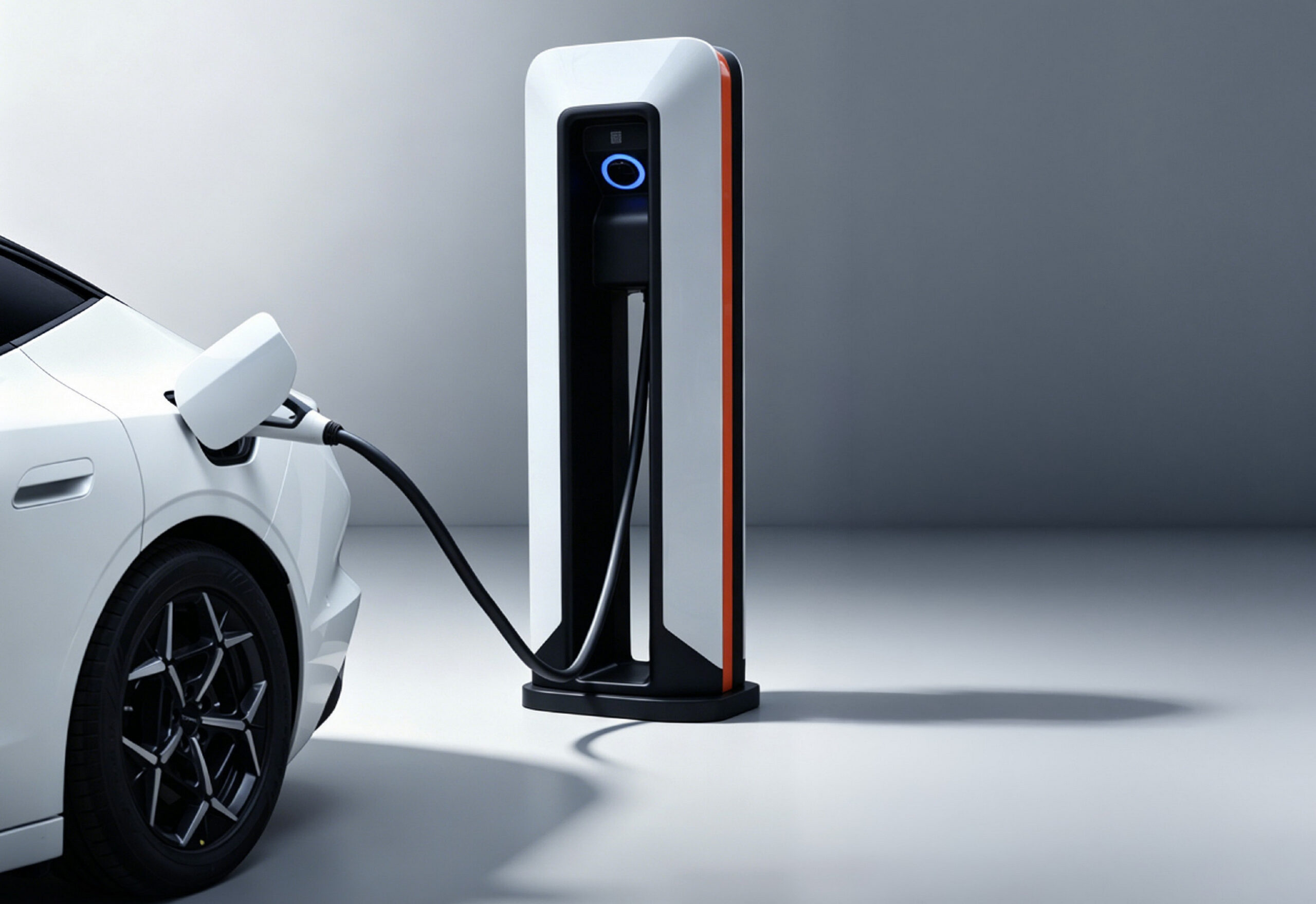
Geely claims its latest batteries charge faster than BYD’s mk2 Blades.
Energee Golden Brick charges from 10-70 % in just 4 minutes 22 secs.
BMW warns extreme charging speeds could bring durability trade-offs.
Forget zero to 60 mph (97 kmh) times, the EV world has a new kind of electric performance battleground and China’s Geely just claimed top honors. It says its new batteries can charge even faster than the BYD batteries that sent us into a spin last month with their crazy top-up times.
Geely’s Lynk and Co brand says its latest 95 kWh battery – the hopefully not prophetically named 900V Energee Golden Brick – can charge from 10 to 70 percent in just 4 minutes 22 seconds. That compares with BYD’s megawatt flash charging results of 5 minutes for the same race, an achievement that itself is way ahead of anything European or American automakers can deliver.
Stretch the experiment from 10-80 percent and the Geely EV does the job in 5 minutes 32 seconds, and even going from 10-97 percent, which takes account of batteries charging more slowly as they get close to full, the clock only registers 8 minutes 42 seconds. BYD’s second-generation blade battery needs 9 minutes to get to 97 percent when hooked up to one of the company’s new megawatt flash chargers.
Destroys Western EVs
The secret sauce is a high voltage setup paired with seriously beefy charging hardware. We’re talking peak power of around 1,100 kW with strong input of more than 500 kW at 75 percent charged, and 350 kW at 97 percent. That 350 kW figure is higher than the peak charge rate achieved by all but the fastest-charging Western EVs.
There is a catch though, or more likely several. These charge speeds rely on next level charging stations that aren’t exactly everywhere yet. Geely’s network is growing, but it’s way behind BYD in terms of super-fast rollout, being about one quarter the size, Car News China reports. So while Geely may have bragging rights today, the real winner could still be whoever builds the infrastructure fastest.
BMW Not Convinced
Not everyone’s convinced this race is worth winning anyway. BMW has been openly skeptical about the obsession with ever faster charging.
“You always have to be careful with those kinds of announcements,” BMW’s battery production boss, Markus Fallböhmer told Carsales last month. “It is possible to optimize one single performance indicator, but you have to make compromises on other sides.”
That’s BMW’s polite way of saying there’s no free lunch. Push charging speeds high enough and something else may give, whether that’s longevity, cost, or overall performance.
The new i7 battery pack promises more range and faster charging.
BMW and Rimac spent five years developing the battery together.
Facelifted i7 and 7-Series will debut at Auto China 2026 in Beijing.
BMW has confirmed the next phase of its partnership with Rimac Technology that will see the Croatian firm supply high-voltage battery systems for the upcoming facelifted i7, which is expected to debut later this month.
For CEO Mate Rimac, the deal brings things full circle. His journey into the EV space started back in 2009 with a modified E30 BMW 3-Series. Now, the company he founded is delivering the most critical component for BMW’s flagship electric sedan. Rimac Group also holds a controlling stake in Bugatti Rimac, the hypercar joint venture with Bugatti.
Rimac shared the news via his personal social media channels, noting that development work on the battery has been underway with BMW for the past five years.
BMW / Rimac
The battery unit was developed in Jankomir, Croatia, and is now built locally at Rimac’s sprawling 90,000 square meter (968,751 square feet) campus in Zagreb. From there, completed battery packs are shipped to BMW’s Dingolfing plant in Germany, where final vehicle assembly takes place.
Production capacity stands at 300,000 modules per year, translating to around 50,000 full battery systems annually. Rimac says the scale of the operation likely makes it the largest industrial project in Croatia’s history, which puts into perspective just how ambitious this setup really is.
According to the Bugatti Rimac CEO, the dedicated production line for the BMW i7 battery carries a €130 million ($150 million) price tag. That figure actually surpasses the €120 million ($139 million) cost to build the entire campus.
The high-voltage battery pack blends BMW’s Gen6 cell chemistry with its Gen5 module-based architecture. It uses 4695-format cylindrical lithium-ion cells, delivering a 20% boost in energy density compared to the prismatic cells used in current batteries.
BMW says the new setup will bring “significantly increased range” and “much faster” charging than the outgoing i7, effectively injecting some Neue Klasse thinking into the brand’s flagship EV sedan.
Rimac added: “BMW has always been known for pushing engineering to the highest level, which made this collaboration especially exciting for us. Together, we developed a high-voltage battery system that unlocks the full potential of the new cylindrical cells in record time, delivering significant improvements in energy, range, and charging performance. We are proud to now see this system being produced at scale at our new Rimac Campus.”
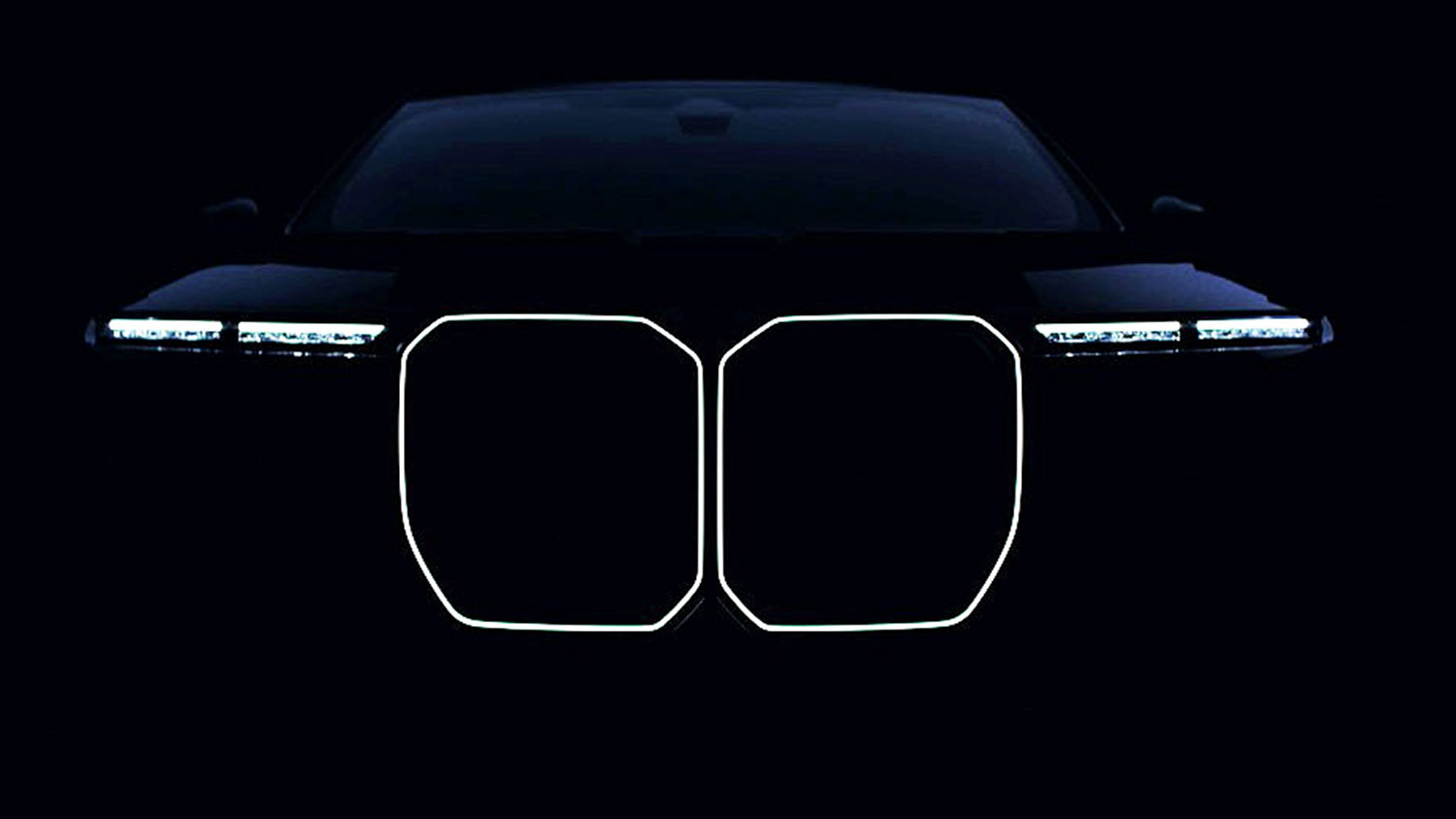
The updated BMW i7 is set to make its global debut alongside the combustion 7-Series facelift at the Auto China 2026 in Beijing at the end of April. Teasers, leaks, and recent spy shots all point to a redesigned front end and a refreshed interior.
Nissan recalls 51 examples of the 2026 Leaf over potential battery fire risks.
Owners are advised not to drive, charge, or park the vehicle near buildings.
Two thermal incidents were reported, though no injuries have been reported.
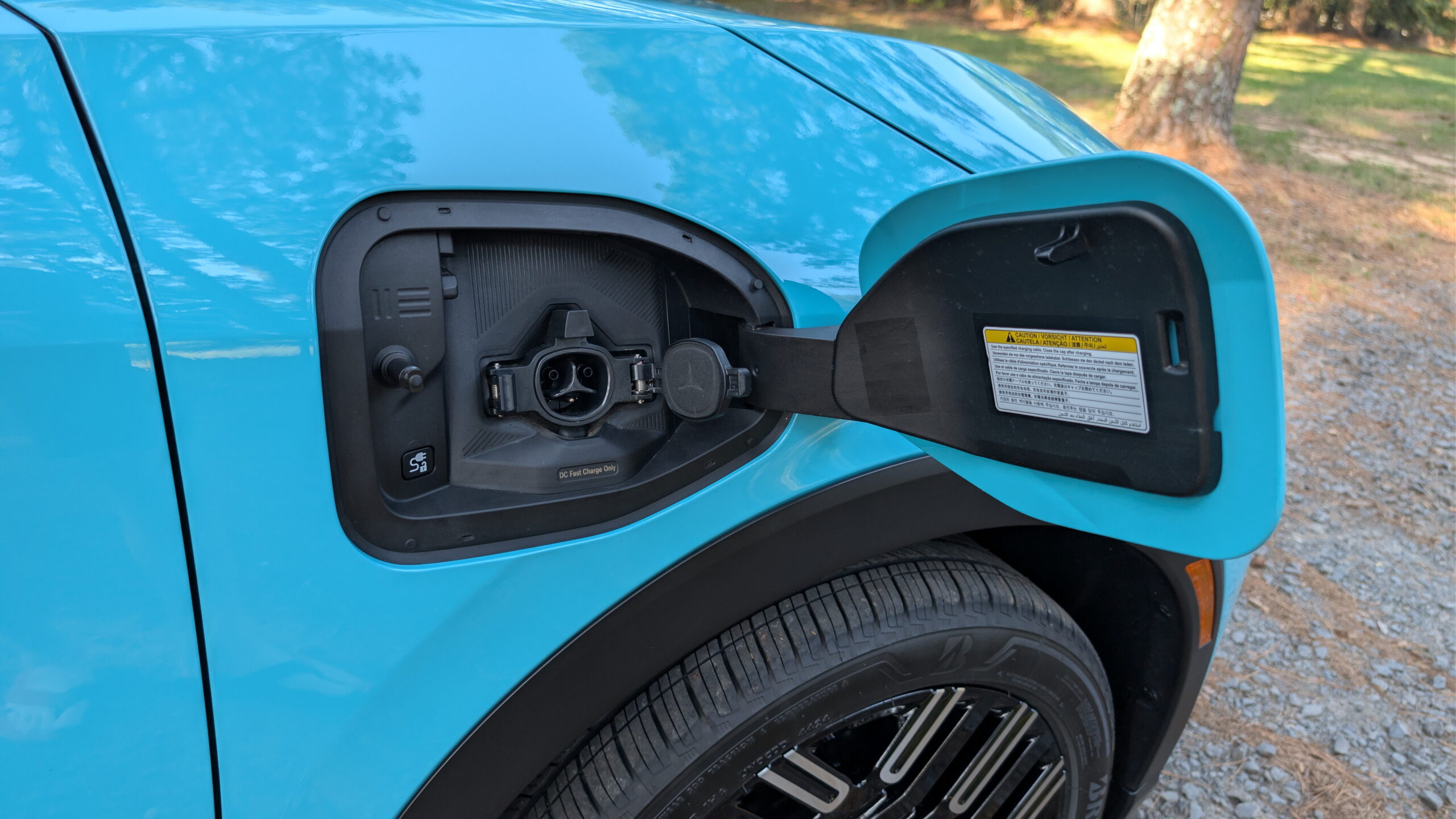
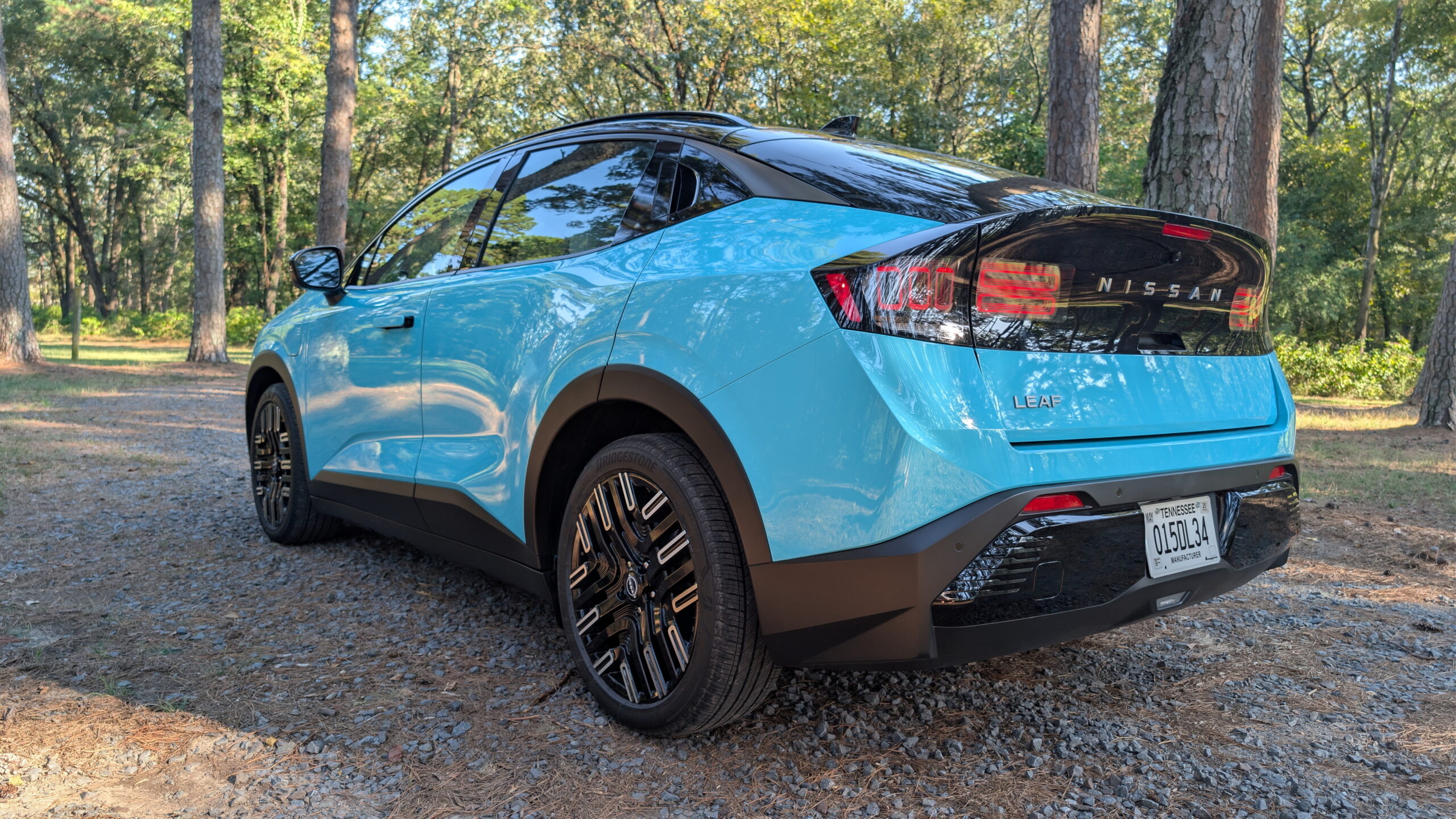
The current Nissan Leaf hasn’t even been out for a full year, and yet the company is already issuing a serious safety recall. 51 owners might have a car that could, in very specific circumstances, experience a thermal event. Put simply, the specific vehicles could catch fire, so Nissan is telling owners to take several safety precautions, including parking outside.
According to the recall, the issue traces back to the 78-kWh lithium-ion battery pack. During the supplier’s manufacturing process, the edge of a battery cathode may have been torn. If that damaged section folds over inside the cell, it can create an internal short circuit.
That’s where things get serious. Nissan says the short circuit could overheat the battery and potentially trigger what the company calls a “thermal event.” In other words, the battery could catch fire even when the car is parked, switched off, and not charging.
The first known incident happened in Japan on February 16, when a parked 2026 Leaf suffered a thermal event while sitting outside. A second case surfaced in the U.S. on March 2 at a Nissan dealership. In both cases, the vehicles were turned off and not plugged in.
That’s key because oftentimes, it’s the charging procedure itself that can initiate instances like this. Considering that these cars weren’t plugged in means owners could have zero indication of an issue before a fire erupts.
Nissan says it used telematics data to scan other Leafs for unusual battery behavior, then traced the suspect battery packs directly to specific VINs. The company says it has one-to-one traceability between the battery and each affected vehicle. Nissan stopped shipping potentially affected Leafs on March 17 and placed vehicles on hold at ports. Owners will begin receiving calls immediately, and interim recall letters will start going out on April 17.
Until then, Nissan says affected owners should park the car outside and away from structures, avoid charging it, and bring it to a dealer. Dealers will provide a rental car until a fix is ready. Once that happens, Nissan will replace the damaged battery modules, or the entire battery pack if necessary, free of charge.
The Denza Z9GT can add 310 miles (500 km) of range in just five minutes.
BMW execs claim that pursuing quick charging forces other compromises.
The iX3 and i3 are BMW’s fast-charging EVs, supporting 400 kW speeds.
BYD sent a jolt through the EV space with its ultra-fast charging push, though not everyone is ready to buy in. The Chinese automaker unveiled a 1,500 kW flash-charging system in China, promising speeds that edge close to refueling a combustion car. Despite the extraordinary claims, BMW remains unconvinced.
According to BYD, the Denza Z9GT can add roughly 310 miles (500 km) of range in just five minutes, thanks to its 1,500 kW charging technology and the second-generation Blade Battery.
The system also relies on megawatt-level charging hardware and extremely high current delivery to reach those peak rates. It all sounds pretty incredible, but BMW battery production boss Markus Fallböhmer says pursuing charging speeds like this has compromises.
“You always have to be careful with those kinds of announcements,” he told Car Sales. “It is possible to optimize one single performance indicator, but you have to make compromises on other sides. We could also increase our charging speed, but then you have to reduce other important factors of a battery. It is a blanket – if you pull it at one side.”
BMW’s New EVs Are No Charging Slouches
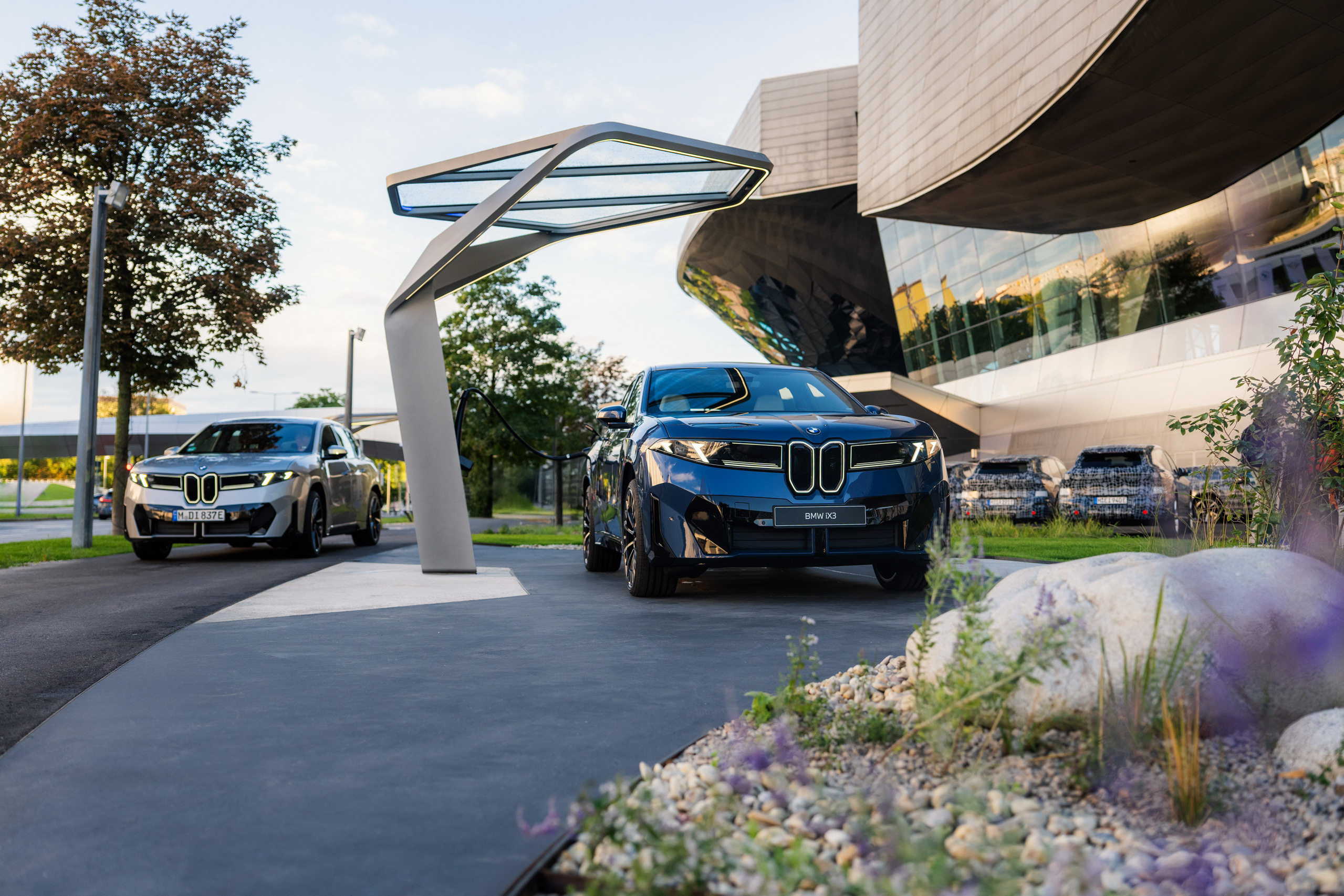
The second-generation iX3 and the new i3 are the quickest-charging BMWs released to date, supporting peak 400 kW speeds. This is quick enough to top up the i3 with 400 km of range in just 10 minutes. BMW says it can guarantee “quality and safety” at these charging speeds, and appeared to question whether BYD can do the same.
BMW executives also indicated that pushing beyond these speeds would bring trade-offs in battery durability, range, and affordability, which they see as unnecessary for most real-world use.
“We look to decrease charging time more and more, but you have to look at range, durability, reliability,” the head of BMW’s Neue Klasse models, Mike Reichelt, added. “All of these facts, we guarantee. We look at the speed of the Chinese market… but on the other side, we guarantee quality and safety. That is a topic that we do not [negotiate] with anyone.”
The race to improve charging times in the EV world is much the same as we’ve seen among smartphone manufacturers looking to uprate charging speeds of their devices, with the Chinese often leading the charge. Boost charging speeds too much, and batteries can get hot, including the risk of thermal management issues, which is clearly something BMW would like to avoid.
A Tesla owner performed a series of real range tests in his single-motor Model Y.
He drove the same route 30-mile route at 50 mph, 60mph, 70 mph and 80 mph.
Going 80 mph vs 50 mph cut time by 38% but dropped range by same amount.
Speed or efficiency? For as long as there have been cars, drivers have had to weigh up that decision. Going faster means getting from A to B sooner, but is going to burn through more fuel, costing you more money.
And now, in the EV age, there are added pressures. Some electric cars are only good for 250 real-world miles (402 km), and BYD’s new 1,500 kW chargers aren’t here yet, meaning that if you need to stop mid-journey you can easily add 15-30 minutes to your trip, more than wiping out the time you saved by flexing your right ankle.
So what’s the sweet spot? That’s what one Tesla-owning YouTuber behind the Carwire channel decided to find out by conducting a series of test runs in his single-motor, rear-wheel drive Model Y.
He ran the same 30-mile (50 km) looping route along local multi-lane freeways (dual-carriageways in UK-speak) at 50 mph (81 km/h), 60 mph (96 km/h), 70 mph (113 km/h) and 80 mph (129 km/h), noting the Wh/mile efficiency for each trip.
Taking those numbers and assuming a 75 kWh usable battery capacity, he was able to extrapolate realistic freeway-type range figures, plus a hypothetical time for a 200-mile (302 km) journey based on the time taken to complete each loop at the different speeds. While this isn’t exactly super-scientific, it still delivers a useful comparison that highlights the huge effects different speeds have on efficiency and journey time.
The first loop, taken at a steady 50 mph, would result in 200-mile trip in the Model Y taking four hours. But the excellent 224.7 Wh/mi efficiency gives a calculated 333-mile (536 km) range, meaning you’d get to your destination with stacks of charge to spare.
80 MPH Decimates Range
At the other end of the scale, the 80 mph run crashed efficiency to 366.2 Wh/mi, and the range to just 204 miles (328 km). So while technically you could handle the 200-mile journey in one go, and in only 2 hours and 30 minutes, few people would risk not filling up before they hit the finish line.
The sweet spot, as Carwire concludes, seems to be somewhere between 60 and 70 mph. Bumping the speed up to 60 mph cuts a handy 40 minutes off the 50 mph journey time, yet the 300-mile (483 km) range is only 33 miles (53 km) lower.
Pushing the needle up to 70 mph cuts another half hour from the trip, and though the efficiency starts to tumble the 248-mile calculated range would still let you comfortably complete your 200-mile run without charging, or stressing that you probably ought to.
The facility now builds LFP cells for grid and data use.
Retooling the plant cost the joint venture tens of millions.
LG is also shifting other battery plants to storage facilities.
Just a few months after Ford announced that one of its battery plants, originally destined for EV batteries, would instead start making batteries for energy storage systems, General Motors has done the same.
The car manufacturer, in partnership with LG Energy Solution, operates the Ultium Cells LLC joint venture and runs a large factory in Tennessee. This site opened in 2024, making cells for the Cadillac Lyriq and Vistiq, and the Acura ZDX. Late last year, more than 700 employees were laid off from the plant as GM, like its competitors, pulled back its EV investments.
Now, Ultium’s vice president of operations, Tom Gallagher, said that these workers will be rehired and return to work by the end of April, as the site is switching to lithium-iron phosphate cells for grid and data center customers.
An Expensive Pivot
Bloomberg reports that retooling the plant has cost the joint venture tens of millions of dollars, but will help prevent hemorrhaging even more money from its EV pivot. It will also help LG, which is also retooling four other EV battery plants in North America, including two in Michigan, one in Canada formed through a joint venture with Stellantis, and an Ohio plant established with Honda. All of these sites will now begin manufacturing LFP cells for storage systems.
“Having these facilities that are able to be converted in less than a year means that we can react and we can actually get up to capacity,” chief product officer from LG’s systems integration unit, Vertech, Tristan Doherty said. “We’re going to be supplying the majority of the US market with domestic cells.”
GM says staff at the joint venture battery plant will be retrained as part of the shift. But the car manufacturer is remaining silent about its longer-term plans for the site, having previously stated that it’d start producing lithium manganese-rich batteries in Tennessee by 2028.
The facility now builds LFP cells for grid and data use.
Retooling the plant cost the joint venture tens of millions.
LG is also shifting other battery plants to storage facilities.
Just a few months after Ford announced that one of its battery plants, originally destined for EV batteries, would instead start making batteries for energy storage systems, General Motors has done the same.
The car manufacturer, in partnership with LG Energy Solution, operates the Ultium Cells LLC joint venture and runs a large factory in Tennessee. This site opened in 2024, making cells for the Cadillac Lyriq and Vistiq, and the Acura ZDX. Late last year, more than 700 employees were laid off from the plant as GM, like its competitors, pulled back its EV investments.
Now, Ultium’s vice president of operations, Tom Gallagher, said that these workers will be rehired and return to work by the end of April, as the site is switching to lithium-iron phosphate cells for grid and data center customers.
An Expensive Pivot
Bloomberg reports that retooling the plant has cost the joint venture tens of millions of dollars, but will help prevent hemorrhaging even more money from its EV pivot. It will also help LG, which is also retooling four other EV battery plants in North America, including two in Michigan, one in Canada formed through a joint venture with Stellantis, and an Ohio plant established with Honda. All of these sites will now begin manufacturing LFP cells for storage systems.
“Having these facilities that are able to be converted in less than a year means that we can react and we can actually get up to capacity,” chief product officer from LG’s systems integration unit, Vertech, Tristan Doherty said. “We’re going to be supplying the majority of the US market with domestic cells.”
GM says staff at the joint venture battery plant will be retrained as part of the shift. But the car manufacturer is remaining silent about its longer-term plans for the site, having previously stated that it’d start producing lithium manganese-rich batteries in Tennessee by 2028.
The Verge’s motorcycle has an 18 kWh capacity and supports fast charging.
A recent test shows the Donut Lab battery sitting at over 100 kW while charging.
Crucially, the motorcycle’s battery is air-cooled, rather than being liquid-cooled.
Electric motorcycles haven’t gained widespread acceptance to the same extent as electric cars. However, with solid-state battery packs now just around the corner, the motorbike industry is on the precipice of a revolution, one which could be led by Verge Motorcycles and Finnish firm Donut Lab.
Verge unveiled its new TS Pro electric two-wheeler earlier this year, promising up to 186 miles (299 km) of range in as little as 10 minutes when plugged into a 200 kW NACS charger. Eager to show the world just how quickly the bike can charge, Donut Lab conducted a live test at a public charging station as part of the company’s ongoing series to address the critics.
The model from Verge Motorcycles in this test is a previous-generation model that’s been upgraded with the latest Donut Lab battery pack. It has a capacity of 18 kWh, and the test showed peak charging rates of over 100 kW, allowing it to charge from 10-70 percent in a touch over 9 minutes, and then 10-80 percent in 12 minutes.
According to Donut Lab, the battery pack charges three times faster than Verge’s previous-generation pack. On the surface, having a battery pack that charges at a touch over 100 kW may not seem very impressive, particularly compared to some 1,500 kW charging systems being deployed by Chinese brands like BYD, Geely, and Zeekr.
An Air-Cooled Battery
However, it’s important to note that electric cars capable of extraordinarily fast charging use liquid cooling systems to prevent the battery pack from overheating. By comparison, Verge’s battery is air-cooled, which is why the charging rates aren’t as high. Donut Lab also says its battery will charge more quickly once Verge fully optimizes it.
“This is the first test we have published to a wider audience that demonstrates the performance and behaviour of multiple battery cells in a real vehicle environment,” Donut Lab chief technology officer Ville Piippo said. “The high energy density of our battery technology enables flexible battery pack design and superior performance even in more challenging applications, such as motorcycles, where space is limited and system simplicity is key.”
Global EV sales fell by 11% in Feb, and are down 8% year-to-date.
Europe surged 21%, but the biggest region, China, suffered a 26% drop.
Carmakers and suppliers are now moving into energy storage systems.
Electric cars were supposed to take over the world in a neat upward line. Instead the global EV market and new-vehicle buyers threw in a curveball and carmakers are scrambling to adapt.
Approximately 1.1 million electric vehicles were sold worldwide in February, according to new data from Benchmark Mineral Intelligence, which sounds impressive until you look closer. Sales were down 11 percent compared with the same month last year and also down 11 percent compared with January.
So yes, EV demand is still big. But it’s not as big as it was, and it differs wildly from region to region. Europe, for instance, is still booming. EV sales there are up 21 percent so far this year, helped heavily by subsidies and government incentives. Germany (up 26 percent) and France (+30 percent) are leading the charge, and Italy’s market has nearly doubled thanks to generous EU backed incentives.
Ford’s Tough Time
Meanwhile, North America is heading the opposite direction. True, February sales climbed 8 percent, but year-to-date they’re down a staggering 36 percent as demand weakens. Some automakers are feeling the pain more than others. Ford’s EV sales have reportedly dropped 70 percent so far this year.
China, still the biggest EV market, is somewhere in between. Domestic EV sales are down 26 percent since the start of the year after the country reintroduced purchase taxes and tweaked its trade in incentives. But Chinese brands are making up for that by exporting more EVs than ever. In the first two months of 2026 alone, Chinese EV exports more than doubled and topped half a million units.
EV Sales Jan-Feb 2026
YTD ’26
Change vs ’25
Global
2.2 million
-8%
China
1.1 million
-26%
Europe
0.6 million
21%
North America
0.17 million
-36%
Rest of World
0.37 million
84%
SWIPE
Benchmark Minerals
For automakers the slowdown creates a practical problem. Billions have been invested in battery factories designed to feed a huge wave of EV demand. And when that demand softens, those batteries still need a job.
That’s why more automaker and suppliers are turning toward energy storage. Large grid scale battery systems are suddenly becoming a convenient way to soak up spare production while also helping stabilize electricity networks.
VW Hooks Up
Volkswagen, for example, recently switched on its first large scale battery storage facility in Germany. In Salzgitter, the VW Group’s energy subsidiary Elli has connected a storage system to the grid with an output of approximately 20 megawatts (MW) and a storage capacity of 40 megawatt-hours (MWh).
Instead of powering cars, the batteries help store renewable electricity and release it when the grid needs extra juice. Other automakers including Tesla, BYD, GM, Ford, Renault, Mercedes and Hyundai are also either already selling energy storage systems or working on them.
MG unveils the MG4X electric SUV with semi-solid-state tech.
New battery chemistry targets better range and heat stability.
Shares E3 electronic architecture with the MG4 hatchback.
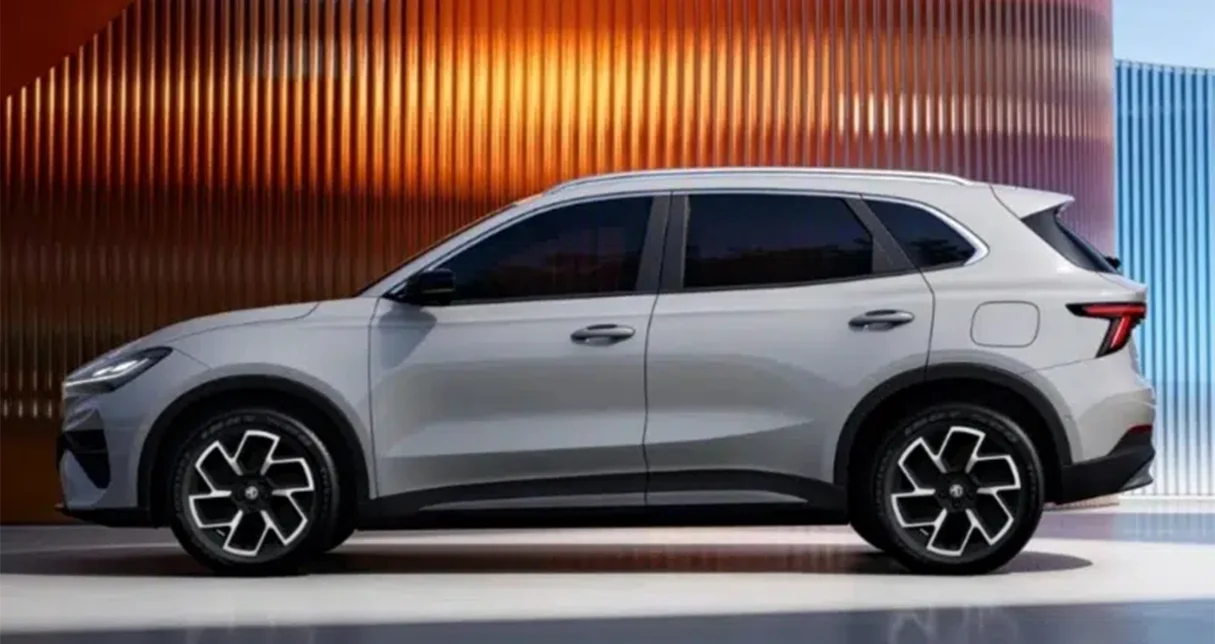
The new MG 4 lineup is expanding with a slightly larger addition called the MG 4X. Positioned as a higher-riding SUV counterpart to the hatchback, the model brings one particularly notable feature with it. Like its smaller sibling, the MG4X uses an advanced semi-solid-state battery pack.
Sitting between the axles is a 53.95 kWh battery that contains only 5 percent liquid electrolyte, which is why MG classifies it as semi-solid-state. The chemistry is intended to improve thermal stability and cope better with both very cold and very hot conditions. Even with a battery that is not especially large by modern EV standards, MG says the setup is good for a driving range of 317 miles (510 km).
For now, MG is keeping the performance figures to itself. Power output remains undisclosed, and there is still no word on the electric motor or motors that will power the SUV. What has been confirmed is the underlying tech. The MG4X runs on the same E3 electronic architecture as the latest MG4 hatchback, and it is clearly aimed at competitors like the BYD Atto 2.
A BYD Rival
It is 4,395 mm (173 inches) long, 1,842 mm (72.5 inches) wide, 1,551 mm (61 inches) tall, and sits on a 2,750 mm (108.2-inch) wheelbase. It also has a curb weight of just 1,485 kg (3,273 lbs). Visually, it resembles the hatchback but has its own unique style.
The front end is quite imposing, complete with large air intakes and a lower grille, as well as triangular headlights with a thin light bar. Early images of the SUV also show it rocking black wing mirrors, a large panoramic glass roof, and sharp taillights, appearing to be similar in shape to the current MG S5, which sits right above it in MG’s range.
We don’t yet know what the cabin of the MG 4X will be like, but it’s safe to assume it will share parts with the hatchback. This could include the same central infotainment display, co-developed with smartphone manufacturer Oppo. It may also feature a handful of proper physical buttons on the steering wheel and console, ensuring that it’s not too minimalist.
The solid-state battery kept 97.7% charge in ten days.
Donut Lab faced claims its tech was just supercapacitors.
Independent test conducted by Finnish Technical Research Centre.
Donut Lab, a small Finnish startup claiming to have developed the first solid-state battery for electric vehicles, has released results from a new test aimed at addressing doubts about its technology. The company says the data shows its battery retains 97.7 percent of its charged capacity after sitting idle for 10 days. Even so, skeptics may still need convincing.
This third test follows Donut Lab’s recent demonstration of how quickly its solid-state cells can charge. It is intended to counter reports suggesting the company has not built a true battery at all, but rather a supercapacitor. To address those claims, Donut Lab worked with the Finnish Technical Research Centre (VTT) to measure how slowly the cell loses charge while idle.
Measuring Idle Voltage Loss
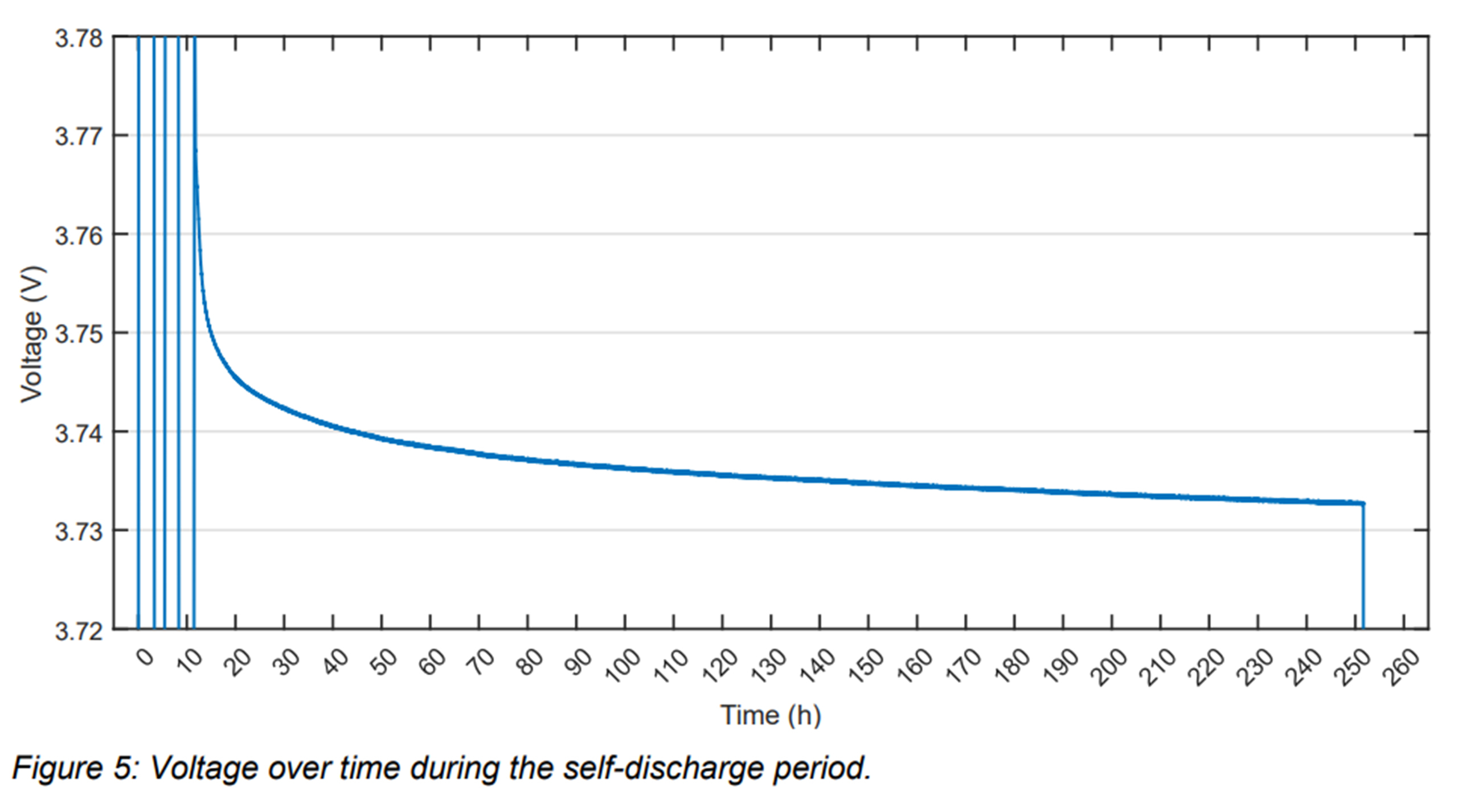
For the self-discharge test, a cell was charged to approximately 50 percent and then left idle for 240 hours. During the test, temperatures ranged between 22-28°C, and the cell’s voltage was recorded every 10 seconds.
The results are interesting. During the first hour, the battery’s voltage dropped by 103 mV, though the company says this is largely due to voltage relaxation rather than true self-discharge. By the end of the 240-hour test, the voltage had fallen by an additional 12 mV, representing a total loss of 2.3 percent over the 10-day period.
While this is a solid result, it’s not incredible. Typical lithium-ion battery cells can lose around 5 percent of their charge within the first 24 hours, after which the self-discharge rate typically slows to between 1-2 percent per month. Donut Lab argues the results still demonstrate that the technology is not a supercapacitor, which would normally lose far more charge when idle.
“Since we unveiled the Donut Battery, there has been a lot of speculation and theories about whether it is a supercapacitor,” Donut Lab chief technology officer Ville Piippo said. “In all its simplicity, this test proves that it is a battery. Supercapacitors charge and discharge quickly, but they also lose their charge quickly when not in use. The Donut Battery behaves like a battery and can maintain a charge for significantly longer.”
David Blenke runs a private car service in his 2022 Mach-E.
He can still squeeze nearly 300 miles (482 km) from it.
The SUV has needed six tire sets and seven cabin filters.
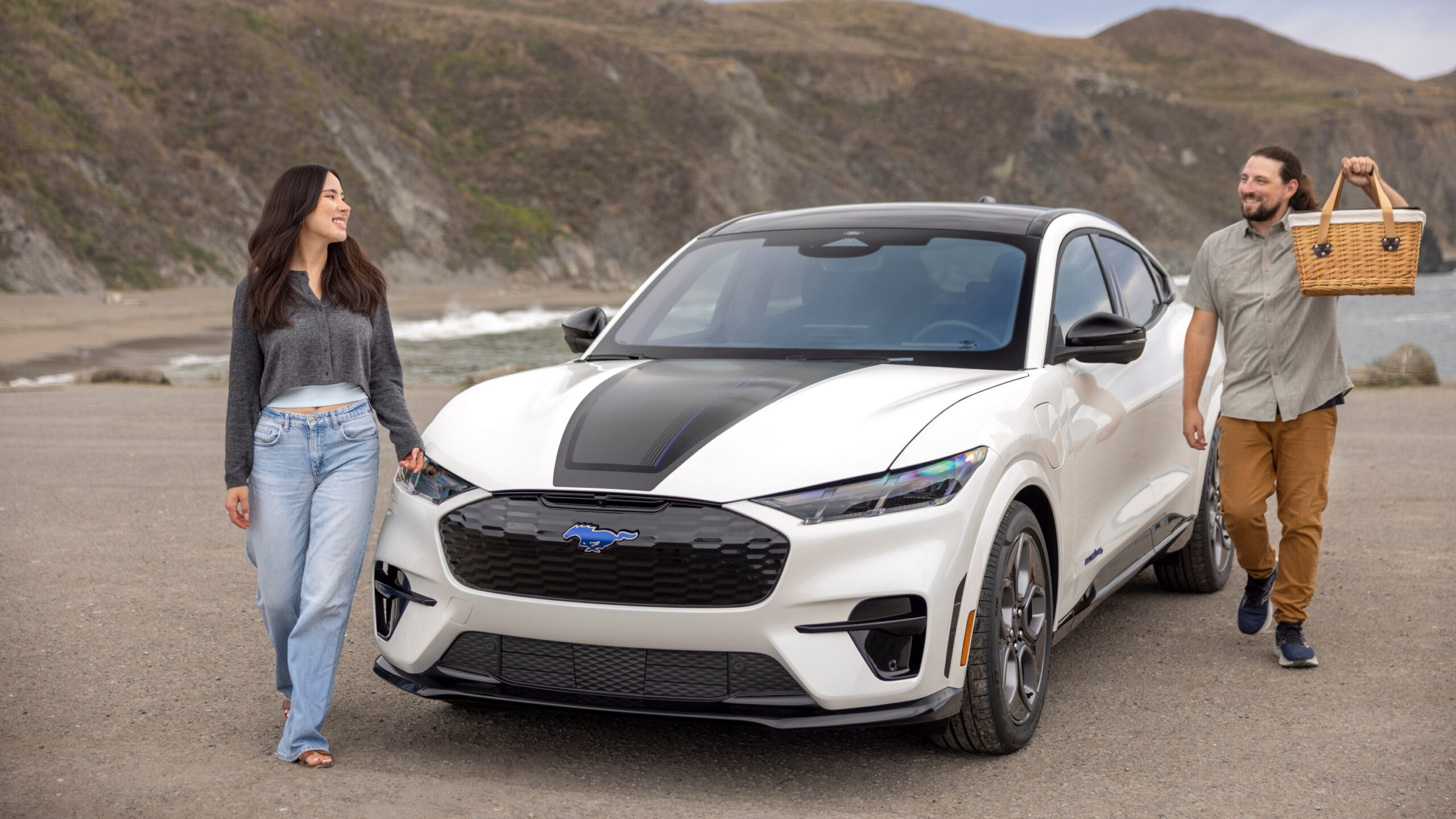
Many questioned Ford’s decision to launch the all-electric Mustang Mach-E in 2020, and the debate has not entirely faded. Despite early opposition, it has established itself as a solid option for buyers shopping for an electric SUV.
It has never managed to dethrone the Tesla Model Y, but for a stretch before federal tax credits expired last year, there were months when it actually outsold the gas Mustang. That has since flipped back the other way, though that is a different conversation altogether.
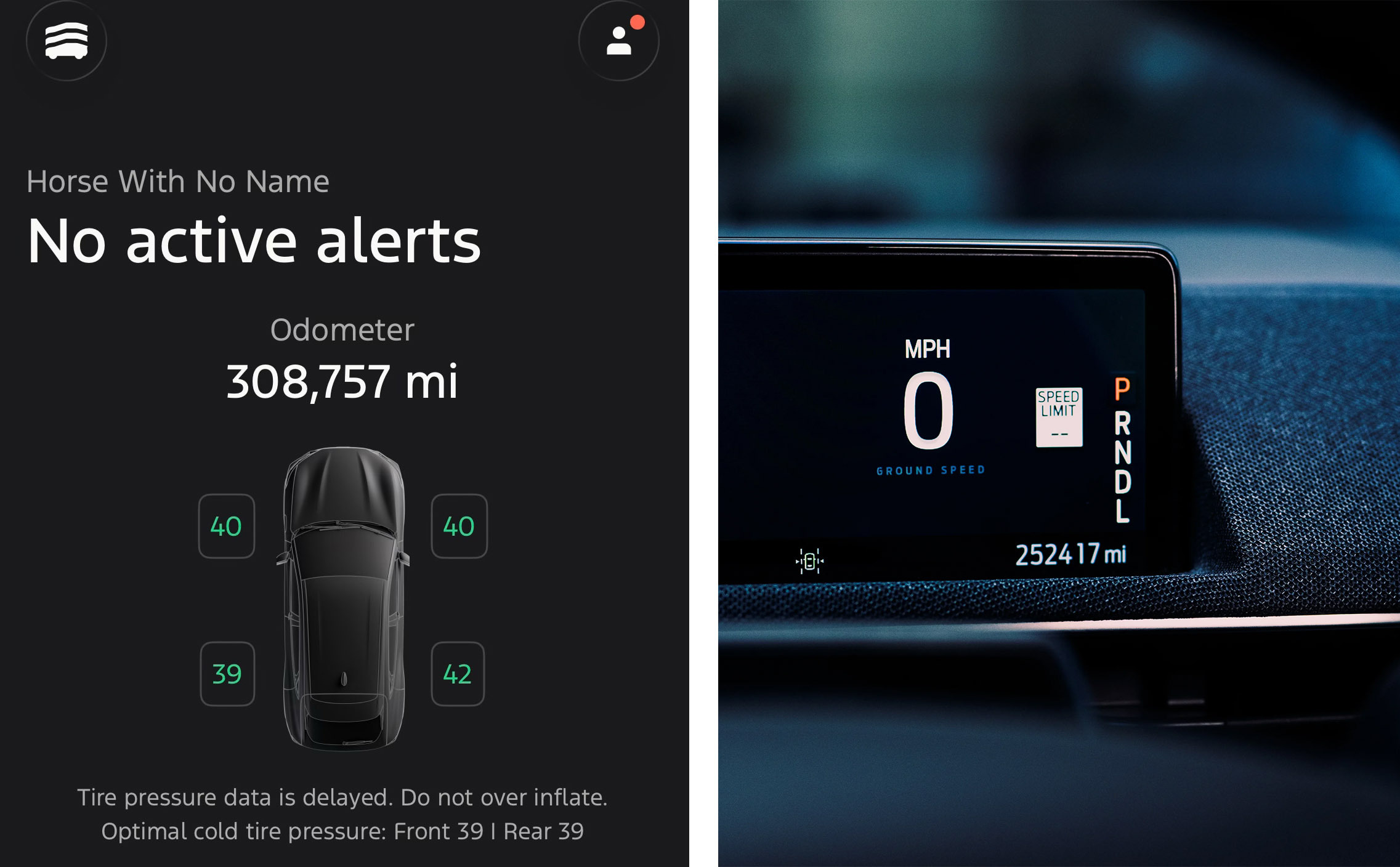
Of all the tens of thousands of Americans who own a Mustang Mach-E, few have put it to work like David Blenke. After purchasing a Premium model with the extended-range battery pack at the end of June 2022 and launching a private car service with it, he has driven more than 316,000 miles (508,500 km). Over the course of those miles, he has also carried more than 7,000 passengers.
He operates in the Santa Cruz, California area and bought the car at the height of the chip shortage. At one point, he faced a nine-month wait before locating an available example in Monterey.
How Much Battery Capacity Remains?
Ford itself celebrated Blenke’s Mustang Mach-E soldiering past 250,000 miles (403,000 km) in July last year, and this week, he spoke with Forbes. Not only has he continued to rack up the miles in his Mach-E at a remarkable pace, but during the interview, he revealed the battery has only degraded 8 percent after all those miles.
According to Blenke, the Mach-E still delivers nearly 300 miles (482 km) of range. Battery degradation remains a common concern among EV buyers, but his experience with the Mustang Mach-E suggests outcomes can vary widely.
For a bit of perspective, data from EV analytics firm Recurrent suggests that most electric vehicles with more than 250,000 miles hang on to roughly 80 percent of their original battery capacity. If Blenke’s figure is accurate, that puts his reported 92 percent battery health notably higher than average.
What About Maintenance?
Under his ownership, Blenke says he has gone through six sets of tires, seven cabin filters, and more than twenty routine 10,000-mile checkups. Incredibly, he says the car has not needed any repairs and still uses the original brakes. Most of the time, he drives the car in Whisper mode, which is the most efficient.
No doubt, Blenke’s charging habits help keep the battery pack in good health. He says he charges to 90 percent every night and tries to avoid letting the battery slip below 20 percent. Most charging is done with a Level 2 charger at home and Electrify America’s public network while working. He also carries an adapter that allows access to Tesla’s Supercharger network when necessary.
BYD is testing its 1,500 kW megawatt flash charging network.
The demo site looks more like a gas forecourt than an EV hub.
Fast chargers could transform the appeal and usability of EVs.
BYD isn’t just building electric cars at a frightening pace, it’s now building chargers that make today’s versions look about as powerful as your car’s 12-volt accessory plug. The company has been spotted testing a 1,500 kW flash charging network in Shenzhen, China, and the layout looks suspiciously like a traditional gas station’s.
Instead of the usual lonely bank of DC chargers around a load of parking bays arranged like a regular parking lot, the demo site features liquid-cooled charging guns and T-shaped gantries lined up like fuel pumps so that drivers can pull up, fill up, and pull out without hanging about.
Leaked intel suggests peak outputs of up to 1,500 kW running on a 1,000 V architecture that could potentially add 249 miles (400 km) of range in just 5 minutes. For context, the quickest public chargers in the US and Europe top out around 350 kW, though most push out a lot less, and the majority of EVs can’t even sustain that anyway.
BYD-Use Only, For Now
Access during testing appears limited to select BYD models wearing a Flash Charge badge, including upcoming Tang, Song, Seal, and Denza variants, Car News China says. Charging reportedly starts within about 10 seconds of plugging in, no QR codes or smartphone gymnastics required.
Pricing at the demo site was shown at 1.3 yuan per kWh, roughly $0.18, which will come as a shock to Western EV drivers. Plug in to a 360 kW Gridserve charger in the UK, and you’ll be stung for up to £0.89 per kWh. That’s $1.20. Even a feeble 22 kW jolt costs £0.49 ($0.66) per kWh. Buyers of compatible cars are rumored to get 1,000 kWh of free electricity annually, according to the story out of China, though final policy details haven’t been confirmed.
Drive It Like A Gas Car
The real story isn’t just the headline charging speed. It’s what that speed could mean. If you can genuinely add hundreds of miles in minutes, you don’t need a massive 450-mile battery pack. Smaller batteries mean lighter, more affordable cars with better efficiency and sharper performance. And faster charging could make EV ownership feel less like planning a military operation and more relaxed, encouraging drivers to embark on spontaneous journeys.
BYD is said to be targeting more than 4,000 self-operated flash charging stations in China, with partner networks potentially pushing that number far higher. For now, it’s all still internal testing, but it offers a glimpse into how EV ownership might look only a few years from now, not just in China, but around the world.
The new battery delivers 400 Wh/kg energy density.
Mass production is planned to begin next year.
BYD, SAIC, GAC, and CATL are developing similar packs.
Solid-state batteries have been “just around the corner” for what feels like an entire EV generation. Now, they might actually be arriving. In the third quarter of this year, China’s Changan will begin fitting its new solid-state packs to robots and EVs, with full mass production slated for 2027.
According to Chinese media, Changan claims its new solid-state battery has an energy density of 400 Wh/kg, and EVs using it will be able to travel upwards of 932 miles (1,500 km) on a single charge. While you could argue that this much range borders on excessive, it would make future Changan models far better suited to long road trips through remote areas where charging infrastructure remains sparse.
Breakthrough Energy Density
The pack is called the Golden Bell. Aside from being very energy-dense, it is said to be 70 percent safer than a conventional EV battery and, because this is 2026, it also uses artificial intelligence for remote diagnostics. Smarter batteries, apparently, are part of the plan.
Changan will build these units under its new Jingzhongzhao solid-state battery brand. The company intends to manufacture fully solid-state packs while also producing liquid and semi-solid-state batteries that rely on a liquid electrolyte.
China’s Solid-State Push
It is not alone. Other Chinese brands are also edging closer to making solid-state batteries mainstream. Earlier this year, Dongfeng Motor began testing its own solid-state battery in extreme cold weather. It has an energy density of 350 Wh/kg and a claimed range exceeding 620 miles (1,000 km). It also plans to roll them out in production cars this year, aiming for September.
BYD, Chery, SAIC, GAC, and CATL are all chasing similar breakthroughs. So are legacy names such as Mercedes-Benz, VW, BMW, Toyota, Nissan, Hyundai, and Honda. After years of promising headlines and laboratory milestones, solid-state batteries may finally be edging toward something tangible. If they deliver on even half of these promises, combustion engines will have one more reason to feel nervous.
Advancements in battery innovation are transforming both mobility and energy systems alike, according to Kurt Kelty, vice president of battery, propulsion, and sustainability at General Motors (GM). At the MIT Energy Initiative (MITEI) Fall Colloquium, Kelty explored how GM is bringing next-generation battery technologies from lab to commercialization, driving American battery innovation forward. The colloquium is part of the ongoing MITEI Presents: Advancing the Energy Transition speaker series.
At GM, Kelty’s team is primarily focused on three things: first, improving affordability to get more electric vehicles (EVs) on the road. “How do you drive down the cost?” Kelty asked the audience. “It's the batteries. The batteries make up about 30 percent of the cost of the vehicle.” Second, his team strives to improve battery performance, including charging speed and energy density. Third, they are working on localizing the supply chain. “We've got to build up our resilience and our independence here in North America, so we're not relying on materials coming from China,” Kelty explained.
To aid their efforts, resources are being poured into the virtualization space, significantly cutting down on time dedicated to research and development. Now, Kelty’s team can do modeling up front using artificial intelligence, reducing what previously would have taken months to a couple of days.
“If you want to modify … the nickel content ever so slightly, we can very quickly model: ‘OK, how’s that going to affect the energy density? The safety? How’s that going to affect the charge capability?’” said Kelty. “We can look at that at the cell level, then the pack level, then the vehicle level.”
Kelty revealed that they have found a solution that addresses affordability, accessibility, and commercialization: lithium manganese-rich (LMR) batteries. Previously, the industry looked to reduce costs by lowering the amount of cobalt in batteries by adding greater amounts of nickel. These high-nickel batteries are in most cars on the road in the United States due to their high range. LMR batteries, though, take things a step further by reducing the amount of nickel and adding more manganese, which drives the cost of batteries down even further while maintaining range.
Lithium-iron-phosphate (LFP) batteries are the chemistry of choice in China, known for low cost, high cycle life, and high safety. With LMR batteries, the cost is comparable to LFP with a range that is closer to high-nickel. “That’s what’s really a breakthrough,” said Kelty.
LMR batteries are not new, but there have been challenges to adopting them, according to Kelty. “People knew about it, but they didn’t know how to commercialize it. They didn’t know how to make it work in an EV,” he explained. Now that GM has figured out commercialization, they will be the first to market these batteries in their EVs in 2028.
Kelty also expressed excitement over the use of vehicle-to-grid technologies in the future. Using a bidirectional charger with a two-way flow of energy, EVs could charge, but also send power from their batteries back to the electrical grid. This would allow customers to charge “their vehicles at night when the electricity prices are really low, and they can discharge it during the day when electricity rates are really high,” he said.
In addition to working in the transportation sector, GM is exploring ways to extend their battery expertise into applications in grid-scale energy storage. “It’s a big market right now, but it’s growing very quickly because of the data center growth,” said Kelty.
When looking to the future of battery manufacturing and EVs in the United States, Kelty remains optimistic: “we’ve got the technology here to make it happen. We’ve always had the innovation here. Now, we’re getting more and more of the manufacturing. We’re getting that all together. We’ve got just tremendous opportunity here that I’m hopeful we’re going to be able to take advantage of and really build a massive battery industry here.”
This speaker series highlights energy experts and leaders at the forefront of the scientific, technological, and policy solutions needed to transform our energy systems. Visit MITEI’s Events page for more information on this and additional events.
Kurt Kelty (right), vice president of battery, propulsion, and sustainability at General Motors, joined MITEI's William Green at the 2025 MIT Energy Initiative Fall Colloquium. Kelty explained how GM is developing and commercializing next-generation battery technologies.
Around 80 percent of global energy production today comes from the combustion of fossil fuels. Combustion, or the process of converting stored chemical energy into thermal energy through burning, is vital for a variety of common activities including electricity generation, transportation, and domestic uses like heating and cooking — but it also yields a host of environmental consequences, contributing to air pollution and greenhouse gas emissions.
Sili Deng, the Doherty Chair in Ocean Utilization and associate professor of mechanical engineering at MIT, is leading research to drive the transition from the heavy dependence on fossil fuels to renewable energy with storage.
“I was first introduced to flame synthesis in my junior year in college,” Deng says. “I realized you can actually burn things to make things, [and] that was really fascinating.”
Deng says she ultimately picked combustion as a focus of her work because she likes the intellectual challenge the concept offers. “In combustion you have chemistry, and you have fluid mechanics. Each subject is very rich in science. This also has very strong engineering implications and applications.”
Deng’s research group targets three areas: building up fundamental knowledge on combustion processes and emissions; developing alternative fuels and metal combustion to replace fossil fuels; and synthesizing flame-based materials for catalysis and energy storage, which can bring down the cost of manufacturing battery materials.
One focus of the team has been on low-cost, low-emission manufacturing of cathode materials for lithium-ion batteries. Lithium-ion batteries play an increasingly critical role in transportation electrification (e.g., batteries for electric vehicles) and grid energy storage for electricity that is generated from renewable energy sources like wind and solar. Deng’s team has developed a technology they call flame-assisted spray pyrolysis, or FASP, which can help reduce the high manufacturing costs associated with cathode materials.
FASP is based on flame synthesis, a technology that dates back nearly 3,000 years. In ancient China, this was the primary way black ink materials were made. “[People burned] vegetables or woods, such that afterwards they can collect the solidified smoke,” Deng explains. “For our battery applications, we can try to fit in the same formula, but of course with new tweaks.”
The team is also interested in developing alternative fuels, including looking at the use of metals like aluminum to power rockets. “We’re interested in utilizing aluminum as a fuel for civil applications,” Deng says, because aluminum is abundant in the earth, cheap, and it’s available globally. “What we are trying to do is to understand [aluminum combustion] and be able to tailor its ignition and propagation properties.”
Among other accolades, Deng is a 2025 recipient of the Hiroshi Tsuji Early Career Researcher Award from the Combustion Institute, an award that recognizes excellence in fundamental or applied combustion science research.
Before batteries lose power, fail suddenly, or burst into flames, they tend to produce faint sounds over time that provide a signature of the degradation processes going on within their structure. But until now, nobody had figured out how to interpret exactly what those sounds meant, and how to distinguish between ordinary background noise and significant signs of possible trouble.
Now, a team of researchers at MIT’s Department of Chemical Engineering have done a detailed analysis of the sounds emanating from lithium ion batteries, and has been able to correlate particular sound patterns with specific degradation processes taking place inside the cells. The new findings could provide the basis for relatively simple, totally passive and nondestructive devices that could continuously monitor the health of battery systems, for example in electric vehicles or grid-scale storage facilities, to provide ways of predicting useful operating lifetimes and forecasting failures before they occur.
The findings were reported Sept. 5 in the journal Joule, in a paper by MIT graduate students Yash Samantaray and Alexander Cohen, former MIT research scientist Daniel Cogswell PhD ’10, and Chevron Professor of Chemical Engineering and professor of mathematics Martin Z. Bazant.
“In this study, through some careful scientific work, our team has managed to decode the acoustic emissions,” Bazant says. “We were able to classify them as coming from gas bubbles that are generated by side reactions, or by fractures from the expansion and contraction of the active material, and to find signatures of those signals even in noisy data.”
Samantaray explains that, “I think the core of this work is to look at a way to investigate internal battery mechanisms while they’re still charging and discharging, and to do this nondestructively.” He adds, “Out there in the world now, there are a few methods that exist, but most are very expensive and not really conducive to batteries in their normal format.”
To carry out their analysis, the team coupled electrochemical testing with recording of the acoustic emissions, under real-world charging and discharging conditions, using detailed signal processing to correlate the electrical and acoustic data. By doing so, he says, “we were able to come up with a very cost-effective and efficient method of actually understanding gas generation and fracture of materials.”
Gas generation and fracturing are two primary mechanisms of degradation and failure in batteries, so being able to detect and distinguish those processes, just by monitoring the sounds produced by the batteries, could be a significant tool for those managing battery systems.
Previous approaches have simply monitored the sounds and recorded times when the overall sound level exceeded some threshold. But in this work, by simultaneously monitoring the voltage and current as well as the sound characteristics, Bazant says, “We know that [sound] emissions happen at a certain potential [voltage], and that helps us identify what the process might be that is causing that emission.”
After these tests, they would then take the batteries apart and study them under an electron microscope to detect fracturing of the materials.
In addition, they took a wavelet transform — essentially, a way of encoding the frequency and duration of each signal that is captured, providing distinct signatures that can then be more easily extracted from background noise. “No one had done that before,” Bazant says, “so that was another breakthrough.”
Acoustic emissions are widely used in engineering, he points out, for example to monitor structures such as bridges for signs of incipient failure. “It’s a great way to monitor a system,” he says, “because those emissions are happening whether you’re listening to them or not,” so by listening, you can learn something about internal processes that would otherwise be invisible.
With batteries, he says, “we often have a hard time interpreting the voltage and current information as precisely as we’d like, to know what’s happening inside a cell. And so this offers another window into the cell’s state of health, including its remaining useful life, and safety, too.” In a related paper with Oak Ridge National Laboratory researchers, the team has shown that acoustic emissions can provide an early warning of thermal runaway, a situation that can lead to fires if not caught. The new study suggests that these sounds can be used to detect gas generation prior to combustion, “like seeing the first tiny bubbles in a pot of heated water, long before it boils,” says Bazant.
The next step will be to take this new knowledge of how certain sounds relate to specific conditions, and develop a practical, inexpensive monitoring system based on this understanding. “Now, we know what to look for, and how to correlate that with lifetime and health and safety,” Bazant says.
One possible application of this new understanding, Samantaray says, is “as a lab tool for groups that are trying to develop new materials or test new environments, so they can actually determine gas generation or active material fracturing without having to open up the battery.”
Bazant adds that the system could also be useful for quality control in battery manufacturing. “The most expensive and rate-limiting process in battery production is often the formation cycling,” he says. This is the process where batteries are cycled through charging and discharging to break them in, and part of that process involves chemical reactions that release some gas. The new system would allow detection of these gas formation signatures, he says, “and by sensing them, it may be easier to isolate well-formed cells from poorly formed cells very early, even before the useful life of the battery, when it’s being made,” he says.
The work was supported by the Toyota Research Institute, the Center for Battery Sustainability, the National Science Foundation, and the Department of Defense, and made use of the facilities of MIT.nano.
The MIT researchers used a customized experimental platform to simultaneously record acoustic emissions and perform electrochemical tests on lithium ion batteries.
A German startup believes it has the recipe for electric vehicle battery cells that are cheaper, more energy dense, and less problematic for the environment than current lithium-ion cells. But commercialization seems a long way off. Theion announced Thursday in a press release that it is close to completing a 15 million euro (approximately $16.2...
Chinese researchers claim to have developed a process to recover nearly all of the lithium from used electric vehicle batteries for recycling. The Independent (via InsideEVs) reports on study results first published in the German academic journal Angewandte Chemie claiming recovery of 99.99% of lithium from a used battery, as well as 97% of nickel...
Deployment of 5-minute battery swaps could support hundreds of commercial EVs Ample says it's a straightforward retrofit, switching to its own battery packs Solution is less demanding on the grid than fast-charging stations California-based startup Ample is looking to deploy its battery-swapping tech with fleets of electric delivery trucks in...

 Login
Login