❌

Normal view

There are new articles available, click to refresh the page.
Today — 27 October 2026Main stream

AI Cameras Aim to Make School Bus Operations Safer

26 October 2026 at 17:37

Technology experts explained how AI can help school bus drivers spot students in blind zones, prevent collisions and improve safety, without replacing driver judgment.

AI could give school bus drivers an extra set of eyes when students are most vulnerable: Boarding, exiting and crossing near the school bus, according to a Thursday webinar sponsored by Brigade Electronics. The company’s representatives discussed how AI-powered cameras can recognize pedestrians, cyclists and other hazards, then alert drivers before an incident occurs.

CEO Corey Heniser said traditional cameras provide visibility, but AI adds the ability to recognize people and issue active warnings.

“It can identify the human form and what we call it as human form recognition,” he explained. “That will identify individuals, pedestrians, as well as small students around a vehicle and allow you to take evasive action where needed.”

Protecting Students in Blind Zones

Steve Wenger, Brigade’s OEM business development manager, said school buses present significant visibility challenges because of their size and the number of students moving around them.

Wenger explained that AI-enabled, 360-degree camera systems can monitor blind spots and identify people approaching or moving alongside a bus. He added that the technology can support driver awareness during loading and unloading.

“Artificial intelligence is a human-taught technology,” Wenger said, explaining that developers train systems to recognize hazards and determine when to alert operators.

Brigade’s presentation highlighted a camera system with full 360-degree visibility and AI-powered pedestrian detection. Another application adapts technology originally developed to protect workers behind waste trucks to help monitor students around school buses, according to the slide deck.

Wenger emphasized that AI should complement established safety practices.

“Artificial intelligence is not necessarily replacing judgment or experience or the many trainings that an operator goes through,” he said, adding that instead, it can provide earlier warnings and better information when drivers need to make critical decisions.

Helping School Bus Drivers Prevent Crashes

Jeff Schweitzer, Brigade’s national sales manager, said AI offers particular value to districts experiencing driver turnover and increasingly complicated traffic conditions.

“Today’s drivers need more support [now] than ever,” he said.

Schweitzer explained that AI cameras can monitor high-risk areas and notify drivers while they still have time to respond. He contrasted that capability with traditional video systems, which primarily document incidents afterward.

“Prevention is more valuable than recording,” he noted.

Wenger also covered AI dashcams that can warn drivers about potential collisions, unsafe following distances and lane departures. Driver-facing cameras can identify fatigue, distraction and handheld-device use, while connected systems allow transportation departments to review events and provide targeted coaching.

Schweitzer said those capabilities can help newer drivers develop situational awareness.

“Experience definitely cannot be built overnight,” he noted.

Turning Safety Data Into Action

Heniser said districts could eventually combine AI camera information with telematics to identify near misses, recognize recurring hazards and tailor driver coaching for school bus drivers with more close calls.

Brigade’s slide deck also presented injury and fatality trends from 2013 through 2022. Heniser pointed to a general decline in injuries over the period, but he said fatalities remained comparatively steady outside the pandemic-related dip in 2020. He cited those trends while explaining the potential benefits of more proactive safety technology.

Heniser said districts can add AI camera systems to existing buses through aftermarket installations, while manufacturers may increasingly offer the technology on new vehicles.

Wenger cautioned that AI recognition remains imperfect and can produce false positives, but said timely warnings still offer safety benefits.

“It’s not perfect, but it’s extremely accurate,” he said.

Wenger also clarified that automated vehicle functions, such as braking, would require integration at the manufacturer level rather than a simple camera retrofit.

Starting With School District Safety Needs

Schweitzer encouraged transportation leaders to frame AI as a tool for protecting students, drivers and communities rather than employee surveillance.

“It’s not the big brother side of it,” he said.

Heniser advised districts to identify their most common safety challenges before selecting technology, whether those involve loading zones, blind spots or driver behavior.

“Really, it’s up to the fleet managers, fleet operators, drivers to identify where their most common problems are,” he concluded.

Heniser also emphasized that AI’s role in student transportation should remain focused on helping drivers create safer conditions, rather than replacing their judgement or student interaction.

“The goal overall is to create a safer environment while operating vehicles,” he summarized.

Watch the webinar on demand.

Written with the assistance of AI and a live session transcript.

The post AI Cameras Aim to Make School Bus Operations Safer appeared first on School Transportation News.

Before yesterdayMain stream

(STN Podcast E328) This, That & the Other: Fuel Frustration, AI As a Tool, Texas Training Partnership

20 October 2026 at 22:15

School districts feel the pinch at the fuel pump, await news on Clean School Bus Program funding, and deal with extreme weather events threatening operations. Plus, the TSD Conference presents advice on leveraging AI as a tool.

Prosper Independent School District in Texas is hosting the hands-on evacuation training as well as The Roadeo Competition at the TSD Conference in a few weeks. Director of Transportation Teri Mapengo talks operational teamwork to better serve student with special needs, as well as meeting school bus fueling and staffing challenges.

Read more about special needs.

This episode is brought to you by Transfinder.


Message from School Radio.


Stream, subscribe and download the School Transportation Nation podcast on Apple Podcasts, Deezer, iHeartRadio, Spotify and YouTube.

The post (STN Podcast E328) This, That & the Other: Fuel Frustration, AI As a Tool, Texas Training Partnership appeared first on School Transportation News.

Crowley says he would repeal data center tax subsidies, regulate AI and social media 

16 October 2026 at 08:30

Crowley at a press conference in Madison in August 2026. (Photo by Baylor Spears/Wisconsin Examiner)

Democratic gubernatorial candidate and Milwaukee County Executive David Crowley said he would sign a bill to repeal tax incentives for data centers if he’s elected, marking a change in his position on the issue.

Gov. Tony Evers and Wisconsin Republicans approved a provision during the 2023 state budget that exempts data center developers from paying sales and use taxes for the “sale of property and equipment to construct, renovate or operate data centers.” The policy is estimated to have already saved data center developers $1.5 billion. 

However, as data centers have become increasingly unpopular, Democrats and Republicans alike have changed their minds on providing these subsidies. 

A group of Republican lawmakers, some of whom voted for the budget that created the tax subsidies in 2023, introduced a bill earlier this month that would repeal the tax breaks, though the bill won’t go anywhere as the Legislature is out of session.

Crowley said he would “absolutely” sign that bill to repeal the tax subsidies if it were sent to him as governor during an event at the Overture Center on Wednesday evening.

“The fact that these tech companies are getting a billion dollars in tax breaks — it’s being delivered on the backs of hard-working families,” Crowley said. “I want to be very clear about my position. We’re going to be aggressive when it comes down to holding data centers to account, making sure that we protect our land, protect our water, have strict environmental standards, but also communities need to have a seat at the table.”

Crowley had previously been noncommittal when it came to repealing the tax benefit for data centers. He told the Milwaukee Journal Sentinel that he did not “believe Wisconsin should automatically roll back all data center tax incentives” but that he believed that the state needed “a more rigorous review of whether taxpayers are receiving sufficient value for the incentives being provided.” 

Republican candidate and U.S. Rep. Tom Tiffany had previously criticized Crowley’s position on the tax incentives, saying that he wanted to give “a blank check to data centers” and that data centers “do not need to be subsidized by us, the taxpayers.” Tiffany has not always been a champion of tough regulation on data centers, either. He previously voted for legislation in Congress that would have banned state and local governments across the country from being able to enforce laws or regulations on AI models, systems, and related digital infrastructure, including data centers, for 10 years. 

Crowley’s changing position comes with less than three weeks left until Election Day and as data centers and AI continue to be unpopular across the political spectrum. A September Marquette Law School poll found that 74% of Wisconsinites say the costs of data centers outweigh the benefits.

This week Crowley laid out an 11-point policy plan for restricting and regulating AI and social media companies. The policies include:

  • Requiring platforms to set kids’ accounts and new accounts to the highest privacy setting and cut off unsolicited messages. Users over 18 would have the option to turn the restrictions off. 
  • Prohibiting infinite scroll, autoplay and other addictive features for minors’ accounts as well as a ban on push notification for the users overnight and during the school day. 
  • Banning surveillance advertising. 
  • Allowing parents the option to sue platforms over design choices that harm a child including content promoting suicide, eating disorders and drug sales 
  • Regulating AI chatbots by restricting them for users under 13, prohibiting chatbots from posing as doctors and therapists and requiring disclosures on AI chatbots designed to form emotional bonds with individuals
  • Increasing the penalties for online predators and sextortion and implementing those same penalties for creating or sharing AI-generated sexual images of children
  • Penalizing companies that knowingly make money from scam ads
  • Requiring identification verification for advertisers before they can place ads
  • Requiring platforms to implement a scam reporting tool that’s easy to use and requiring that they confirm the reports and report the action that they took within a set timeframe
  • Funding the state Department of Justice and the Department of Agriculture, Trade and Consumer Protection to support their work to combat online fraud and enforce anti-trust law
  • Investing in county and tribal adult protective services and aging and disability resource centers, so victims of scams have support to recover

Crowley said during the Wednesday evening event that the state needs to do something in the absence of the Trump administration and Congress taking action. 

“It’s unfortunate that the federal government has actually not put in these guardrails to protect our young people, protect our families, but also to protect our seniors,” Crowley said. “Look, I’m a father, I have three daughters and I want to make sure I can protect my girls from these chatbots. You have, you know, social media platforms that allow them to chat about sexuality. That’s not what I want my 9 and 7-year-old to be introduced to. My oldest right now is a freshman at Whitewater. I don’t want her having pictures out there, and all of a sudden, she can’t be protected.” 

Crowley said the policies are aimed at putting the burdens on the tech, social media and AI companies, rather than on individuals. 

Tiffany also supports some guardrails for these companies. He said in a statement to the Examiner that the state needs “common sense guardrails that protect children and seniors, safeguard personal privacy, and prevent sensitive data from falling into the hands of foreign adversaries, including Communist China.” His campaign noted that in Congress Tiffany cosponsored a law aimed at strengthening law enforcement’s ability to investigate financial fraud targeting seniors. The legislation covered scams involving AI.

“We cannot allow artificial intelligence to become another tool for harvesting Americans’ personal information or exploiting vulnerable individuals. We must hold Big Tech accountable when its platforms enable the creation of sexually explicit AI-generated images of children or expose minors to sexually inappropriate chatbot conversations,” Tiffany said. 

Tiffany said he would support imposing age verification requirements for app providers, strengthening parental consent protections and “give parents greater control over their children’s online activity.” 

Farming in the Age of AI: Recording Now Available

14 October 2026 at 13:42

On October 13, 2026, Farm Foundation hosted “Farming in the Age of AI,” a virtual Forum exploring how emerging artificial intelligence technologies were being applied in agriculture. The conversation examined where AI was delivering measurable value, where adoption remained challenging, and how these tools might shape the future of farm management.

The Forum featured:

  • Dan Maycock, Co-Founder, Dataplai
  • Tim Marquis, Senior Product Manager, Precision Ag Analytics, John Deere
  • Alex Echols, Program Strategist, Agriculture, Campbell Foundation
  • John Dawes, Executive Director and Co-Founder, The Commons.

Participants discussed AI’s opportunities and limitations, along with the policy, workforce, and data considerations influencing its integration into U.S. agriculture. The discussion explored what was needed to turn technological advances into practical value for producers and the broader food system.

Missed the Forum? Watch the recording and explore the presentation slides.

The post Farming in the Age of AI: Recording Now Available appeared first on Farm Foundation.

(Free Webinar) Understanding AI’s Role in Improving Student Transportation Safety

By: STN
14 October 2026 at 19:46

Between driver’s ignoring stop arm cameras, bus drivers unable to see students outside of the bus, and inattentive students, the Kansas State Department of Educated estimates there are over 13,000 injuries in school-bus related incidents involving students, pedestrians, and vehicles.

In this presentation, we will discuss how Artificial Intelligence (AI) is quickly moving from concept to a practical safety tool for student transportation safety. AI-powered safety systems can help detect pedestrians and objects around vehicles, alert drivers to risky behaviors, and trigger real-time responses to specific safety events.

This presentation explores how AI is being used today to improve school bus safety, what technologies are most ready for adoption, and which applications may be further out. Attendees will learn implementation best practices, key considerations for evaluating solutions, and how evolving industry expectations and regulations may shape future fleet safety decisions.

Brought to you by Brigade Electronics


REGISTER BELOW:


Presenters:

Corey Heniser
CEO
Brigade Electronics

Corey Heniser is CEO of Brigade Electronics, Inc., bringing 30 years of experience focused on vehicle safety for on-road and off-road applications. His career began with municipal fleet technologies for safer winter road maintenance, then expanded into hydraulic braking systems and radar-based collision avoidance for major OEMs and international distributors. In 2009, Brigade invited Corey to help grow its North American business. Now in his 16th year with Brigade, he continues to introduce safety technologies for commercial fleets while contributing to ANSI standards, collaborating with OSHA, and supporting Vision Zero and Together for Safer Roads initiatives.

Jeff Schweitzer
National Sales Manager
Brigade Electronics

Jeff Schweitzer is a sales and business development leader with more than a decade of experience driving growth for Brigade Electronics Inc. As National Sales Manager, he leads U.S. sales teams, develops national accounts, and supports forecasting, budgeting, and quota planning. His work has expanded Brigade’s presence across the United States and Mexico while strengthening relationships with distributors, OEMs, body builders, and fleet operators. Jeff has helped grow Brigade’s vehicle safety solutions, including radar, alarms, camera systems, proximity sensors, and recorders. He brings multi-industry experience and a customer-focused approach to building strategic relationships and supporting commercial vehicle safety nationwide.

Steven Wenger
OEM Business Development Manager
Brigade Electronics Group Plc

Steven Wenger is a business development and engineering leader with extensive experience delivering technology solutions for OEMs, commercial vehicle manufacturers, fleets, and upfitters. He currently serves as OEM Business Development Manager at Brigade Electronics Group Plc, where he builds strategic partnerships and helps customers identify practical solutions for the commercial vehicle market.

Drawing on a background in project engineering, direct sales, strategic partnerships, and fleet applications, Steven connects technical capabilities with real-world customer needs. His work is focused on developing strong relationships and scalable solutions that support safer, smarter, and more seamlessly integrated vehicles.

The post (Free Webinar) Understanding AI’s Role in Improving Student Transportation Safety appeared first on School Transportation News.

National School Bus Contractor of The Year Credits People for Success

13 October 2026 at 16:57

At school bus contractor B.R. Williams, Inc., the company president and CEO credits the
foundation of its success to its people. “We’re always telling our story ending with
that we are always looking for ‘good people’,” said Chloe Williams, president and CEO. “We can teach a good person to drive, but we can’t teach a good driver to be a good person.”

During its annual meeting in Denver, Colorado in July, the National Association of School Transportation (NSTA), in partnership with School Transportation News, presented B.R. Williams the Contractor of the Year Award. “B.R. Williams is a third-generation school bus contractor operating primarily in southern New Jersey. The current president of the company, Chloe Williams, is an active member of the NSTA board of directors and she
also served as past president of the New Jersey School Bus Contractors Association (NJSBCA),” NSTA executive director Curt Macysyn noted.

“Chloe has been an integral part of several projects at NSTA, and her school bus operation is viewed as a testament to best practices in pupil transportation,” he
continued. “She and the company engage with vendor partners in a collaborative way, and B.R. Williams is always looking to improve and enhance their systems to the benefit of the students and communities they serve.” The company serving Salem, Gloucester and Cumberland counties has been honored throughout the past several years as the “Best of Salem County – Transportation,” Williams noted.

B.R. Williams has been family-owned and operated since it start in 1935 by Chloe’s grandfather Benjamin Riley Williams, known as a hard-working farmer who took
his children to school after milking the cows.

Chole Williams grew up in the family business, going on to earn a bachelor’s degree in hotel and restaurant management from Pennsylvania State University. She spent a decade working at Marriott Hotels as part of a task force opening properties and then served as
general manager for the company’s Courtyard division before returning to B.R. Williams in 1996 to continue the three-generation legacy with the stipulation her parents should travel and enjoy themselves.

B.R. Williams is known for “a flexible working environment and a longstanding reputation for safe, courteous transportation” as well as deep community involvement, said Williams, adding community involvement is important to her personally and in representing her company.

Upon learning of the NSTA honor, Williams said “grateful” is the first word that came to mind: Gratitude for “my family, who taught me that hard work pays off and our staff, who comes in daily wanting to do the right thing and with a caring heart to take care of ‘our kids.”

She expressed gratitude for the school transportation industry, specifically NSTA and the NJSBCA for “bringing together competitors and vendors who are committed to supporting one another and upholding the standards that make school transportation the safest mode of travel in the nation.”

Additionally, she indicated she is, “Gateful to God. He never lets me down.” Williams said staff members noted, “being considered for such a prestigious award is a great accomplishment.

“They were excited and proud to be honored for their service and that they are viewed favorably for showing their core values not just within the company, but throughout the community,” she added.

The company’s core values are “respect, professional, friendly, dependable” with a focus on ”our family safely transporting your family,” Williams noted.

Employees take special pride in “being part of a tremendous association made up of many deserving companies,” said Williams, adding they indicated while they “don’t do this for trophies, it sure feels good to be honored.”

Employees told Williams they were even more proud to wear the company’s logo and indicated “we’re a family here. It feels like a family celebration.” Williams indicated the company’s approach to driver recruitment is to be consistent and never stop recruitment efforts.

Cover all the bases: Billboards, placemats, social media, recruitment sites, yard signs, job fairs, New Jersey’s One-Stop Career Centers, radio, newspapers, sporting event banners, flyers, back-to-school nights, and school newsletters,” she said.

Williams also advised companies to sponsor community events and speak at local civic organizations and events as part of overall community involvement.

B.R. Williams’ Driving Academy offers people the opportunity to earn a CDL for driving a school bus at no cost, a $4,000 value, for those who agree to work for the company after graduation. For school transportation or field trips, the company offers a starting salary of $26.50 an hour starting 30 days after completing and passing the course, which requires five days of classroom study and 40 hours of behind-the-wheel, instructor-led training.

No prior experience or existing CDL license is required. Applicants must pass a drug test, background check and have a relatively clean driving record.

Williams noted her company is “constantly looking for new ways to make our routes safer and our staff’s work easier.”

Ninety-nine percent of the company’s fleet is equipped with GPS, camera systems with communication capability and maintenance telematics.

Williams noted the company constantly evaluates needs and adjusts current technology capabilities as needed, adding, “Every decision is made with a careful eye on value, budget and long-term impact.”

B.R. Williams uses artificial intelligence in its operations. “We love AI for simple daily tasks, assisting in writing letters, notes and policies, evaluating options. The list goes on,” she said. “Its greatest impact has been within our safety program. Our AI-driven camera technology has elevated driver performance, strengthened accountability and made it easier to track and support meaningful improvement. Learning and understanding
the capabilities of AI is ongoing and ever-changing.”

Williams emphasized company culture centers around the staff. “It may have originated from my grandfather and carried through the generations,” she added. “But on a daily basis, our staff shows up every day with a genuine commitment to doing what’s right and living our core values.

“They bring heart, integrity and an unwavering sense of responsibility to the children we transport, always treating them as ‘our kids.’ Their dedication is the backbone of our operation,” she concluded.

Editor’s Note: As reprinted from the October 2026 issue of School Transportation News.


Related: AI Takes a Larger Role in School Transportation Management
Related: Does your local superintendent prioritize the use of AI for student transportation services?
Related: Does your school district have a policy on how to use AI?
Related: District Says ‘No Looking Back’ After Using Artificial Intelligence Routing System

The post National School Bus Contractor of The Year Credits People for Success appeared first on School Transportation News.
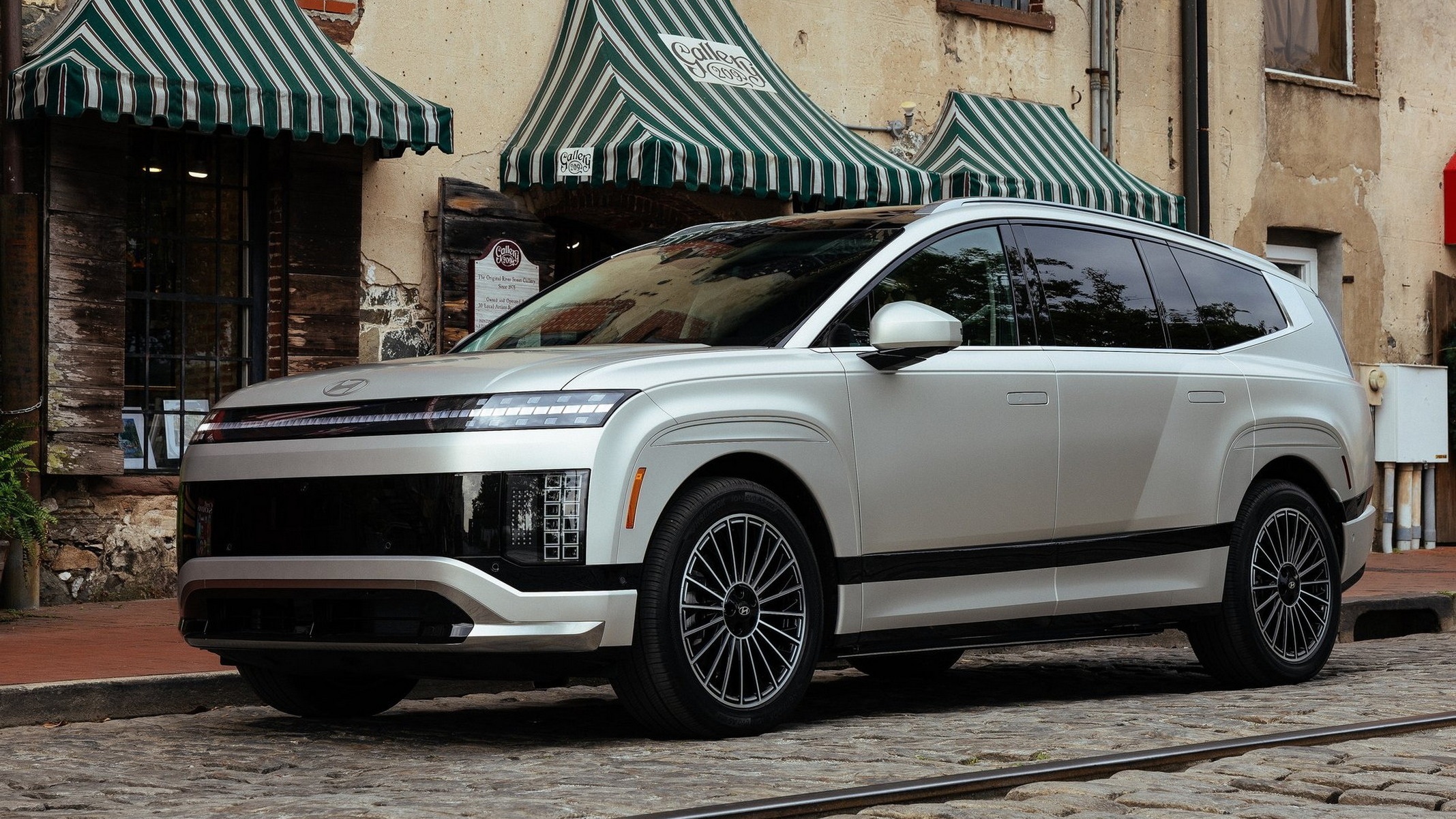
Hyundai Is Working On Both An Ioniq 4 And An Ioniq 7

  • Hyundai’s range of EVs will soon be expanded with two new SUVs.
  • A new Ioniq 7 will be positioned between the Ioniq 5 and Ioniq 9.
  • An Ioniq 4 is coming as a more traditional SUV alternative to the Ioniq 3.

No one could accuse Hyundai of dragging its heels on electric vehicles. While some of its legacy rivals have been a little slow to embrace EVs, the South Korean brand continues to grow its fleet of battery-powered cars at an impressive rate, and it’s already working on at least two more.

One of these all-new EVs will be the Hyundai Ioniq 7. For quite some time, the brand’s flagship electric SUV and compatriot to the Kia EV9 was referred to as the Ioniq 7, but it ended up launching as the Ioniq 9. Wearing the Ioniq 7 name will be a new SUV positioned between the Ioniq 5 and the Ioniq 9.

Read: Hyundai Strips The New Ioniq 3 Down To Its Cleaner, Cheaper Self

Like most other EVs from Hyundai, the Ioniq 7 should launch with an 800-volt electrical architecture and be sold in both single- and dual-electric motor configurations. Although prototypes have yet to be seen testing out in the wild, AutoExpress understands this model will be closer in size to the Ioniq 5 than the Ioniq 9.

An Elexio Alternative

 Hyundai Is Working On Both An Ioniq 4 And An Ioniq 7
Hyundai Ioniq 9

If so, then it may end up being similar in size to the Chinese-built Elexio, which we drove earlier this year. If that’s the case, the Ioniq 7 may inevitably snatch some sales from the Elexio in markets where both are sold. Crucially, Hyundai’s ‘Ioniq’ branded models are positioned as slightly more premium offerings, helping to differentiate the two. In addition, the Elexio uses a 400-volt system and front-wheel drive, so the Ioniq 7 will have it beat on the powertrain front, too.

A Kia EV3-Sized SUV Is Also Coming

 Hyundai Is Working On Both An Ioniq 4 And An Ioniq 7
Hyundai Ioniq 5

Hyundai isn’t just working on the long-awaited Ioniq 7. The company is also developing a smaller EV that may be badged the Ioniq 4. It’s expected to be similar in size to the new Ioniq 3 hatchback, but unlike that model, it will be a slightly more conventional SUV and similar to the Kia EV3.

In morphing the Ioniq 3 into an SUV, Hyundai’s designers are believed to have given it a boxier, more upright design, so it may hold slightly broader appeal than the somewhat odd Ioniq 3. In addition, it’ll offer more interior space than the Ioniq 3, so it should be better for young families.

Hyundai will probably use the same battery packs and electric motors as the Ioniq 3 in the new Ioniq 4, meaning 42 kWh and 61 kWh batteries will be available.

 Hyundai Is Working On Both An Ioniq 4 And An Ioniq 7

British Traffic Officers Testing Hyundai Ioniq 9 EV For Highway Duty

  • The UK’s National Highways Traffic Officers are civilians, not police.
  • The Ioniq 9s have been converted for frontline duty, with additional lights, horns, and cameras.
  • The agency is looking at further purchases this year, if the trials are successful.

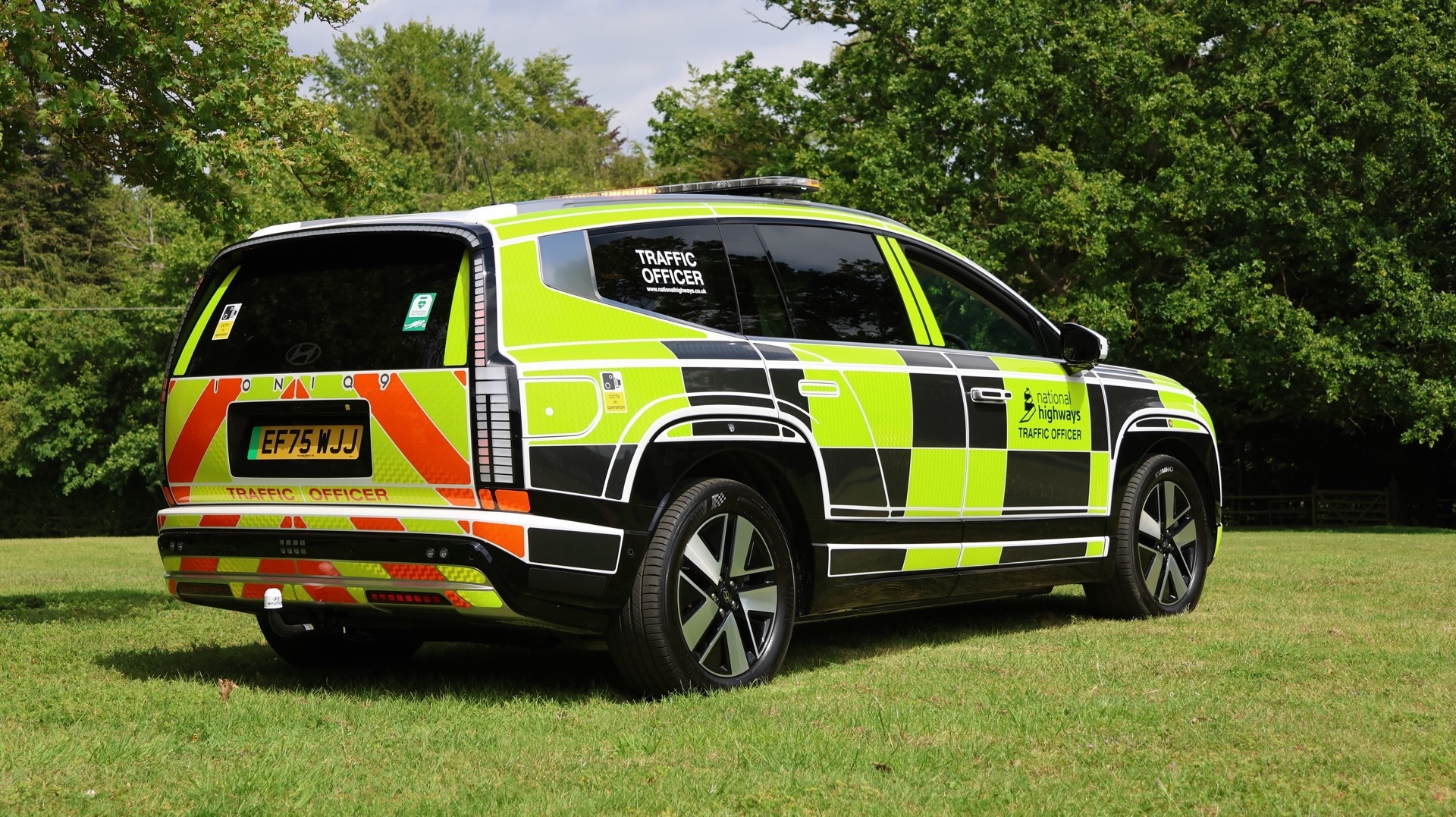
The UK’s Traffic Officers are looking for an all-new, all-electric tool for their fleet, as National Highways runs testing on the Hyundai Ioniq 9. Four examples of the full-size electric SUV have been commissioned for use by the agency and are currently deployed for evaluation on England’s motorways and major A-roads.

These seven-seaters from Hyundai have been decked out in the highway agency’s traditional high-visibility livery, with reflective decals and the all-important emergency lighting systems. In addition to the low-profile amber and red LED light bar, there are additional warning lights installed in the rear windscreen, side mirrors, front bumper, and tailgate, plus a programmable LED signboard for good measure.

Read: Fake Cop Pulls Over Tesla, Then Calls Real Cops On Himself

Add the lighting, CCTV, a 100W bullhorn, and the additional juice needed for the full suite of on-board equipment for patrolling the UK’s roads, and you’re looking at some significant power draw. Normally, that would be especially concerning for an EV. However, the folks at Richell Vehicle Conversions, who handled the conversion, thought of that and have fitted the on-test Ioniq 9s with their own dedicated 240 Ah auxiliary battery system.

Even though the auxiliary battery system is kept separate from the 110 kWh battery that powers the rest of the car, it’s still not clear what the extra draw and added weight (plus the aerodynamic penalty of the lightbar) will do to the Ioniq 9’s 385-mile (620 km) electric range. Still, at least the Ioniq 9 comes with rapid charging thanks to its 800-volt architecture.

 British Traffic Officers Testing Hyundai Ioniq 9 EV For Highway Duty

Although they may look like police cars at a passing glance, National Highways Traffic Officers and their vehicles aren’t actually affiliated with the UK police force. However, despite the role of a traffic officer being one of a civilian, officers are allowed to stop and direct traffic, pull drivers over for safety reasons, and close lanes of a motorway. What they can’t do is arrest or charge drivers or search vehicles.

Either way, if the tests are successful, UK roadgoers may be seeing a lot more of these EVs, provided they’re up to the task. The trail is being used as the UK’s National Highways is considering further purchases during 2026.

 British Traffic Officers Testing Hyundai Ioniq 9 EV For Highway Duty

Images: Hyundai

Hyundai Isn’t Done Making Its Performance EVs Fun To Drive

  • Hyundai may tune its simulated gears to provide realistic engine braking.
  • Models like the Hyundai Ioniq 5 N and Genesis GV60 Magma prove EVs can be fun.
  • There’s no word on which EV from Hyundai could be the first with this tech.

After Hyundai pioneered the use of a simulated transmission in its high-performance EVs, and has nearly perfected an ICE-inspired soundtrack in them, too, one may have expected engineers at the brand to kick up their feet and let the rest of the industry play catch-up. As it turns out, they’re looking to make driving an EV even more exhilarating.

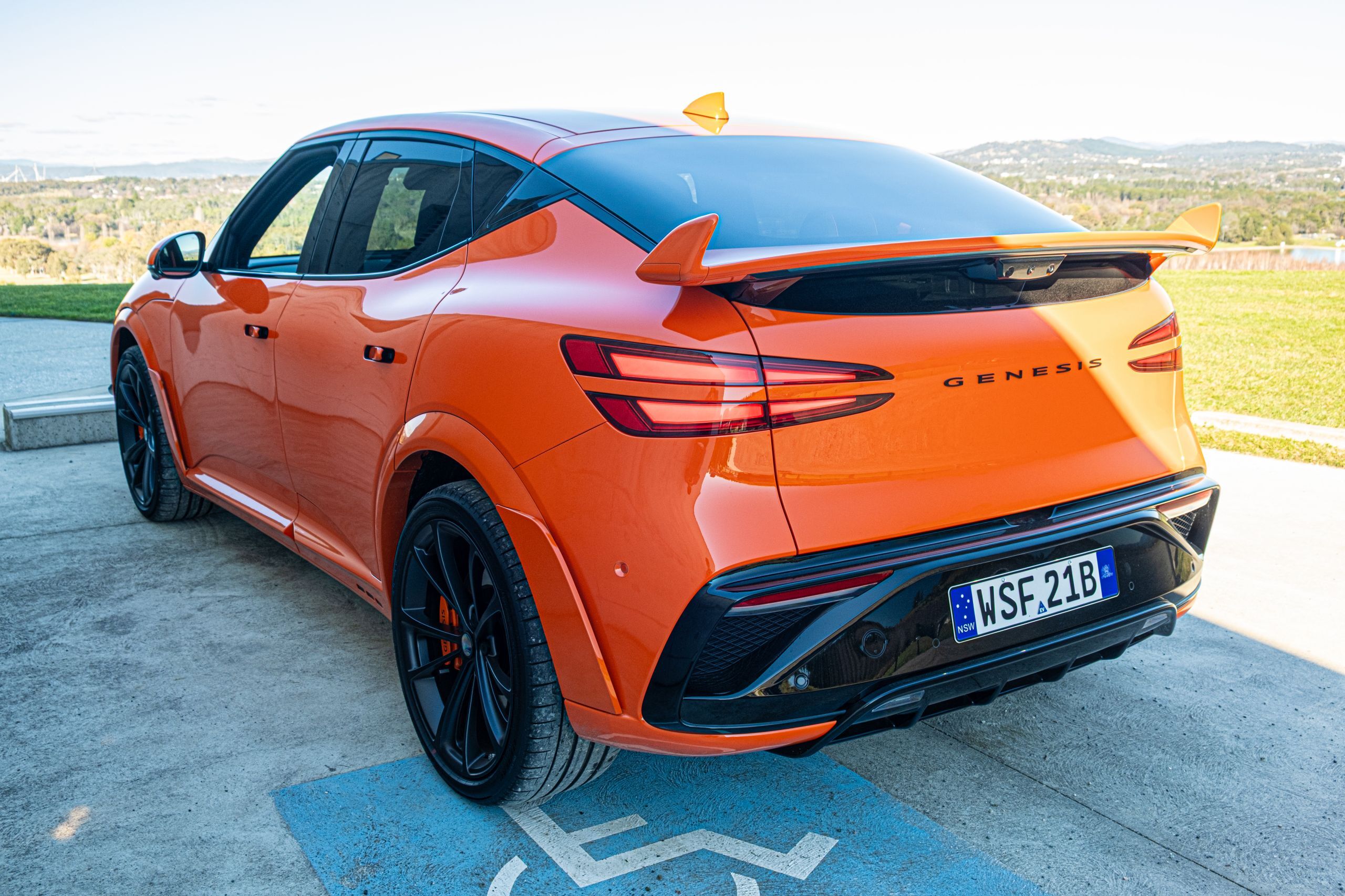
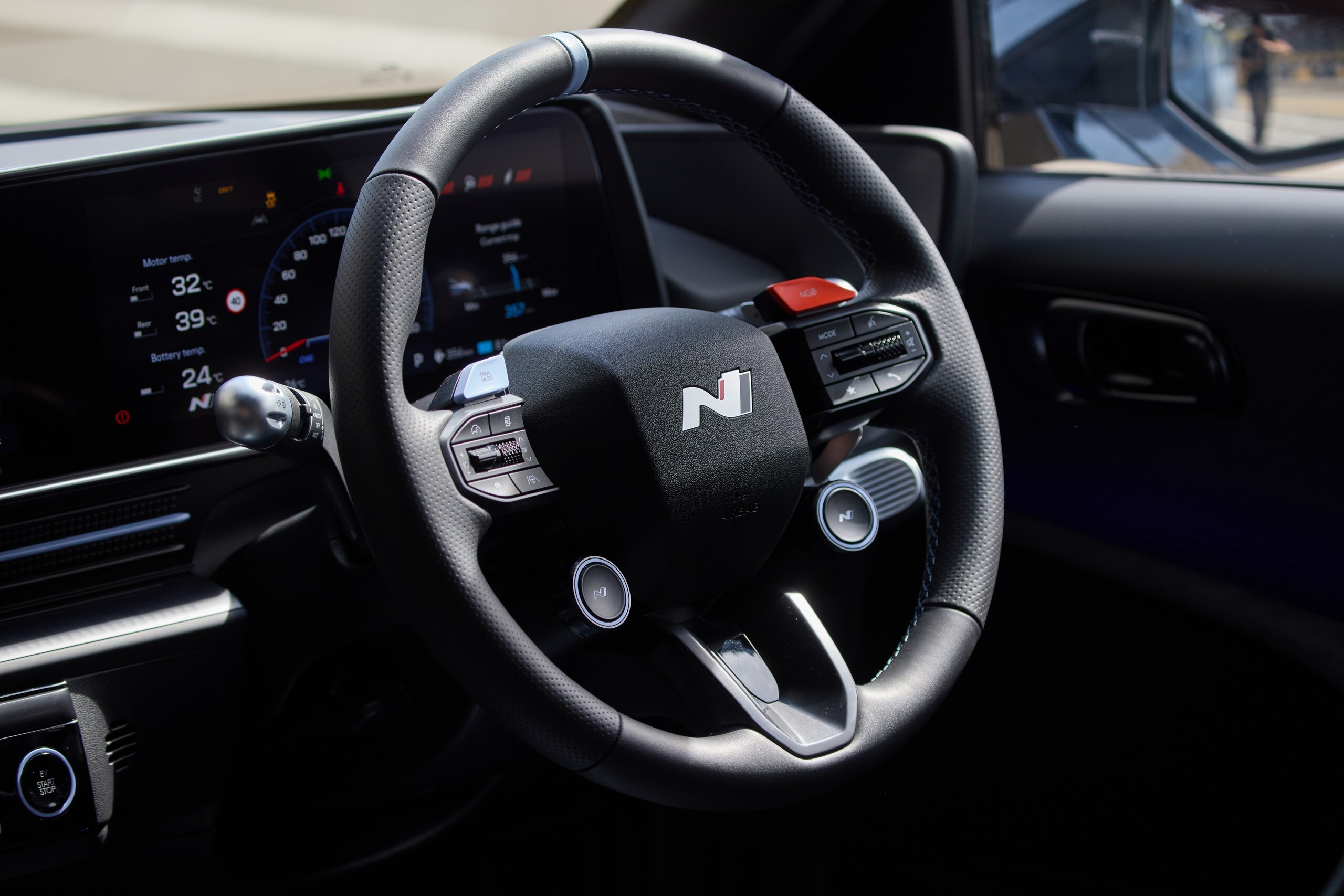
A patent recently filed in the U.S. reveals the South Korean brand is attempting to make the virtual gear shifter found in models like the Ioniq 5 N, Ioniq 6 N, Kia EV6 GT, and Genesis GV60 Magma even more engaging. To do so, Hyundai may be developing a way to replicate the engine braking found in combustion-powered cars.

Review: Genesis’s New GV60 Magma Keeps The N Car Madness Without The Boy-Racer Baggage

Building upon the current setup, which imposes torque limitations and a rev limiter, this new system would tweak the amount of “engine” braking the driver experiences depending on what gear is selected and the revs. As in a gas car, if the revs are high and the driver is in a low gear, the amount of off-throttle engine braking would increase.

Fun-Focused Software

 Hyundai Isn’t Done Making Its Performance EVs Fun To Drive
Genesis GV60 Magma

Obviously, given that Hyundai, Kia, and Genesis EVs use electric motors, rather than engines, all of this would be controlled by advanced software. It would use on-the-fly tweaks to the regenerative braking, CarBuzz reports, and certainly sounds like an intriguing way to make driving one of the brand’s electric motors that much more engaging. As it stands in current electric Hyundai N, Kia GT, and Genesis Magma models, the level of “engine” braking present is the same, regardless of what gear is selected and what the revs are.

It remains to be seen if a system like this would be introduced in updated versions of the current Ioniq 5 N and Ioniq 6 N, or if we’ll have to wait for an all-new model before this system becomes a reality. A high-performance N version of the small Ioniq 3 is in the works and could be a great candidate for such a system.

 Hyundai Isn’t Done Making Its Performance EVs Fun To Drive

Tuner Imagines A Dacia Spring Hot Hatch, But There’s A Problem

  • German tuner Carpoint uses AI to envision a hotter Dacia Spring.
  • The bodykit includes extreme aero and wide fender extensions.
  • The problem is that the urban EV only makes 80 horsepower.

German dealer Carpoint GmbH, known for modifying Dacia Dusters through its Redust brand, has shared its wild vision for the new Dacia Spring. The company presented a heavily modified version of the budget-friendly EV, featuring track-inspired aero, a widebody treatment, and a lowered chassis.

Before prospective buyers of the new Spring get excited, we have to inform them that the tuning package currently exist only in the form of AI-generated renderings, as the new Dacia EV has yet to reach dealers in Europe. Still, Carpoint is no stranger to offering styling upgrades for Dacia models, so they might be cooking up something special for the newcomer.

More: Dacia Duster Redust Sport Is All Show, No Go, Yet Costs Up To $55K

The digital concept gives the small hatchback a motorsport overhaul. The front end gains an oversized splitter with integrated fins and canards. The add-ons appear to bolt on the stock bumper, although the tuner added extra DRLs on the plastic cladding.

\\\\\\\\

Carpoint GmbH / Facebook

The profile features aggressive side skirts, wide fender extensions and a new set of alloy wheels. The new shoes are much larger than the stock 16-inch steelies with hubcaps, and appear to hide beefier disc brakes with red calipers. Furthermore, the light blue model has faux vents and side gills on the fenders for a more dramatic appearance.

More: New Dacia Spring EV Flees From China And Pays The Price

At the back, the towering wing and the large diffuser with an F1-style brake light wouldn’t look out of place on a TCR racecar. Finally, the electric hatchback rides on a noticeably lowered suspension and has wider tracks.

What About The Powertrain?

The biggest problem with Carpoint’s vision is the lack of power. The new Dacia Spring might have gotten a more potent electric motor compared to its predecessor, but it still makes an uninspiring 80 hp (60 kW / 82 PS) and 175 Nm (129 lb-ft) of torque. According to the automaker, the 0-100 km/h (0-62 mph) sprint is completed in 12.1 seconds and top speed is limited at 130 km/h (81 mph).

\\\\\\\\

Dacia

With most tuners not being able to upgrade electric powertrains, the underwhelming performance of the EV doesn’t make it a good candidate for such an extreme visual makeover. Furthermore, Dacia has promised that the entire lineup of the new Spring will cost under €20,000 ($23,100) before subsidies, and most budget-conscious buyers won’t be willing to spend thousands on bodykits.

More: Dacia Made A Pickup Out Of The Duster And Forgot The Pickup Part

Besides the new Spring, Carpoint has also shared renderings of the Striker wagon with a similarly sporty treatment contrasting the crossover nature of the donor vehicle. It remains to be seen whether any of these parts will reach production, resulting in some of the wildest Dacia builds yet.

\\\\\

Carpoint GmbH / Facebook

Family Sues Tesla After Model X Allegedly Surged Through Red Light

  • A family says their Model X accelerated from a red light without driver input.
  • The lawsuit claims the driver could not stop or control the electric vehicle.
  • NHTSA previously linked Tesla acceleration complaints to pedal misapplication.

Imagine sitting at a red light when suddenly and without warning, your car accelerates on its own. In fact, it does so at such a pace that it “bursts” its own tires and then fights back when you attempt to take control. That’s what one family in Washington alleges happened with their Tesla Model X. The incident is at the heart of a new lawsuit, and only data from the car may be able to prove or disprove the claim.

As KING 5 reports, Linh Nguyen was stopped at the intersection of 144th Street Northeast and 124th Avenue Northeast in Kirkland on June 29, 2023. His then-14-year-old daughter was riding with him. The complaint alleges that their 2023 Model X suddenly accelerated into the intersection, then struck a curb. Thankfully, no other vehicle was hit.

Read: Another Tesla Crash, Another Owner Says It ‘Drove On Its Own’

According to Nguyen, he sustained injuries to his neck, back, shoulder, knees, and left side, while suffering from dizziness and confusion. The complaint says his daughter was injured too, and suffered severe emotional distress. The family is seeking damages from Tesla, including compensation for medical treatment and other losses.

The lawsuit points to Autopilot, alleging the system failed to keep the SUV stopped, accelerated without Nguyen’s input, and prevented him from regaining control by braking or steering.

 Family Sues Tesla After Model X Allegedly Surged Through Red Light

Nguyen also says he paid roughly $15,000 extra for the technology, which brings up another question. Tesla has never required that type of payment for Autopilot. On the other hand, it has indeed priced its Full Self-Driving (Supervised) tech suite at that figure. So to that end, we’re left wondering what system Nguyen alleges created the crash. That said, the allegations here aren’t without precedent.

More: Tesla’s Self-Driving Feature Just Became A Monthly Bill For Everyone

After investigating a fatal 2018 Model X crash in California, the NTSB concluded that Autopilot steered the SUV into a highway gore area. The board also cited the driver’s failure to respond. Obviously, swerving into a lane while moving is quite different from what sounds like a car attempting its own 0-60 test without warning. That’s where the vehicle logs and event data could prove either vindicating or damning.

The public account doesn’t include data like accelerator position, brake application, speed, steering input, and the status of its assistance systems. Each of those would say a lot about what went down.

In an earlier review of Tesla sudden-acceleration complaints, NHTSA analyzed crash data from 118 incidents. It found that the crashes for which event data was available were caused by pedal misapplication, with no evidence of a vehicle fault or ineffective brakes in those cases. Until the data comes out, plenty of folks could assume this is another similar case.

 Family Sues Tesla After Model X Allegedly Surged Through Red Light

Photos: Tesla

University of Illinois Urbana-Champaign Quad Recycling Containers

Project Title: University of Illinois at Urbana-Champaign Quad Recycling Containers Sector: Higher Education Location: Champaign-Urbana, IL  Services: Implementation Assistance, Fostering Sustainable Behavior Background: The Illinois Climate Action Plan (iCAP) is the University of Illinois at Urbana-Champaign’s roadmap to reducing the campus carbon footprint and achieving carbon neutrality. Since the development of the iCAP, the Illinois […]

Read More from University of Illinois Urbana-Champaign Quad Recycling Containers

University of Illinois Urbana-Champaign Indoor Solid Waste & Recycling Collection Assessment & Infrastructure Improvement

Project Title: University of Illinois at Urbana-Champaign Indoor Solid Waste & Recycling Collection Assessment & Infrastructure Improvement Sector: Higher Education Location: Champaign-Urbana, IL  Service: Implementation Assistance, Fostering Sustainable Behavior Background: In 2008, the University of Illinois at Urbana-Champaign (UI) signed the American College & University Presidents’ Climate Commitment, becoming part of a network of institutions of […]

Read More from University of Illinois Urbana-Champaign Indoor Solid Waste & Recycling Collection Assessment & Infrastructure Improvement

Chicago Zoological Society Recycling and Waste Reduction Opportunity Assessment

Project Title: Chicago Zoological Society Recycling and Waste Reduction Opportunity Assessment Sectors: Zoos, Aquaria, and Museums; Parks and Recreation  Location: Chicago, IL Services: Waste Characterization Study, Fostering Sustainable Behavior Background: The Chicago Zoological Society (CZS) has been committed to inspiring conservation leadership by connecting people with wildlife and nature since the gates opened at Brookfield […]

Read More from Chicago Zoological Society Recycling and Waste Reduction Opportunity Assessment

Forest Preserve District of Cook County Sustainability & Climate Resiliency Plan

Project Title: Forest Preserve District of Cook County Sustainability & Climate Resiliency Plan  Sector: Parks and Recreation Location: Forest Preserves of Cook County, Illinois Services: Resilient Solutions (Climate Resiliency), Sustainability Planning, Fostering Sustainable Behavior, Implementation Assistance Background: In 2014 the Forest Preserve District of Cook County (Forest Preserves), a public agency responsible for protecting and […]

Read More from Forest Preserve District of Cook County Sustainability & Climate Resiliency Plan

Forest Preserve District of Cook County Clean Energy Framework

Project Title: Forest Preserve District of Cook County Clean Energy Framework Sector: Parks and Recreation Location:Forest Preserves of Cook County, Illinois Services: Resilient Solutions (Climate Resiliency), Sustainability Planning, Fostering Sustainable Behavior, Implementation Assistance Background: ISTC’s Technical Assistance Program (TAP) and the Forest Preserve District of Cook County (Forest Preserves) have a history of working together […]

Read More from Forest Preserve District of Cook County Clean Energy Framework

Materials Management Advisory Committee Report to the General Assembly

Project Title: Materials Management Advisory Committee Report to the General Assembly Sector: State Government Location: Illinois, Statewide Service(s): Sustainability Planning, Stakeholder Engagement, Resilient Solutions Background: In July 2019, Governor Pritzker signed House Bill 3068, which created the Statewide Materials Management Advisory Committee (MMAC). Coordinated by the Illinois Environmental Protection Agency (EPA) and comprised of a […]

Read More from Materials Management Advisory Committee Report to the General Assembly

Green Lunchroom Challenge

Project Title: Green Lunchroom Challenge Sectors: K-12 schools (primary original sector targeted), Higher Education, Institutions (any with on-site food service) Location: Illinois (primary focus); United States (Beyond IL) Services: Implementation Assistance, Fostering Sustainable Behavior, Stakeholder Engagement, Waste Characterization Background: According to a 2012 report from the Natural Resources Defense Council, food production represented 10 percent […]

Read More from Green Lunchroom Challenge

University of Illinois at Urbana-Champaign Waste Transfer Station Data Management and Tracking System

Project Title: University of Illinois at Urbana-Champaign Waste Transfer Station Data Management and Tracking System Sector: Higher Education Location: Champaign-Urbana, IL Services: Implementation Assistance, Process Optimization, Resilient Solutions, Waste Characterization/Reduction/Management Background: Members of the ISTC Technical Assistance Program (TAP) zero waste team were engaged by the University of Illinois Facilities and Services (F&S) to better […]

Read More from University of Illinois at Urbana-Champaign Waste Transfer Station Data Management and Tracking System

❌
❌