Lamborghini says it doesn’t need an EV until at least 2030.
Ferrari’s controversial Luce debut appears to be influencing rivals.
Lamborghini will keep combustion engines alive with hybrids for now.
Ferrari’s controversial Luce debut got plenty of attention, though perhaps not the kind Maranello was hoping for. Rather than have cross-town rival Lamborghini feeling like it’s behind the times, it appears as though the brand’s CEO is even more content now that the Lanzador didn’t remain on schedule for an earlier debut. He’s openly doubling down on the idea that Lamborghini was right to delay the brand’s first EV.
In a round table with journalists, asked about the reaction to the Luce, Lamborghini CEO Stephan Winkelmann said his company made the “right decision” in postponing its first fully electric car, arguing that customer demand for electric supercars simply hasn’t materialized the way much of the industry assumed it would.
According to Handelsblatt, Winkelmann said Lamborghini has spent years monitoring demand in the luxury segment. To no one’s surprise who’s been paying attention, the company found that acceptance of electric vehicles hasn’t climbed at anything close to the pace many had forecast.
The automaker had planned to launch the all-electric Lanzador before the end of the decade. Initially, production was simply delayed. Now, it won’t happen until at least 2030, if not later, because acceptance for EVs within the brand’s target demographic was “close to zero.” For now, Lamborghini has scrapped it and is looking at a new hybrid model to join the lineup in the near future.
Importantly, European regulations currently call for a ban on the sale of new combustion-powered vehicles beginning in 2035, although exemptions for e-fuels and certain low-volume manufacturers remain under discussion. While many exotic-car makers spent the last several years announcing ambitious EV programs, Lamborghini now appears content to let others test the waters first.
That’s probably a wise move considering its positioning. While nowhere near as successful as Ferrari, Lamborghini has its position underneath Volkswagen Group going for it. It’s currently one of the most profitable divisions. In 2025, it generated €3.2 billion ($3.7 billion) in revenue. Even though operating profit slipped from €835 million ($970 million) to €768 million ($892 million), the company still posted a remarkable 24 percent operating margin.
Lexus plans EVs and hybrids from one common vehicle architecture.
Flexible platforms help preserve profits if consumer tastes change.
Experts say Lexus benefits from Toyota technology and buying power.
For years, automakers, including Lexus that once pledged to go EV-only by 2035, told us the future would be electric. Now that EV growth has cooled in several key markets, many of those same companies are quietly changing course, often at a huge cost. Lexus, however, thinks it has found a smarter, less financially painful way forward.
Instead of betting everything on dedicated EV platforms, or U-turning in favor of old-fashioned gas cars, Toyota’s luxury division is developing vehicles that can be built as either hybrids or fully electric models using much of the same underlying architecture. It’s a strategy designed to give Lexus maximum flexibility while competitors wrestle with expensive shifts in demand.
Future products will be designed so the two brands can install either a battery pack or a hybrid powertrain within essentially the same vehicle structure, according to Lexus and Toyota executives who presented the plan to Handelsblatt and other media at the Shimoyama development center in Japan. That means Lexus can react faster if customer demand swings toward EVs, hybrids, or somewhere in between. Or if the next US president reinstates tax credits for cleaner vehicles.
Toyota CTO Hiroki Nakajima told reporters that Lexus’s upcoming TZ electric SUV is expected to be profitable from launch in North America. That’s a claim many automakers would love to make right now, because some, like Honda/Acura and Porsche, are hurting badly from having written off billions of dollars in EV development, and US EV sales are dire.
Christopher Richter, an automotive analyst at CLSA in Tokyo, traces that edge to Lexus’s lower cost base. Toyota doesn’t break out Lexus financials, but Richter told the German outlet he figures the brand’s margins sit well into the double digits. By comparison, Mercedes posted a return on sales of 5% last year and BMW managed 5.3%. The trick, Richter says, is that Lexus can charge BMW money while leaning on the purchasing volume and development resources of the world’s largest carmaker.
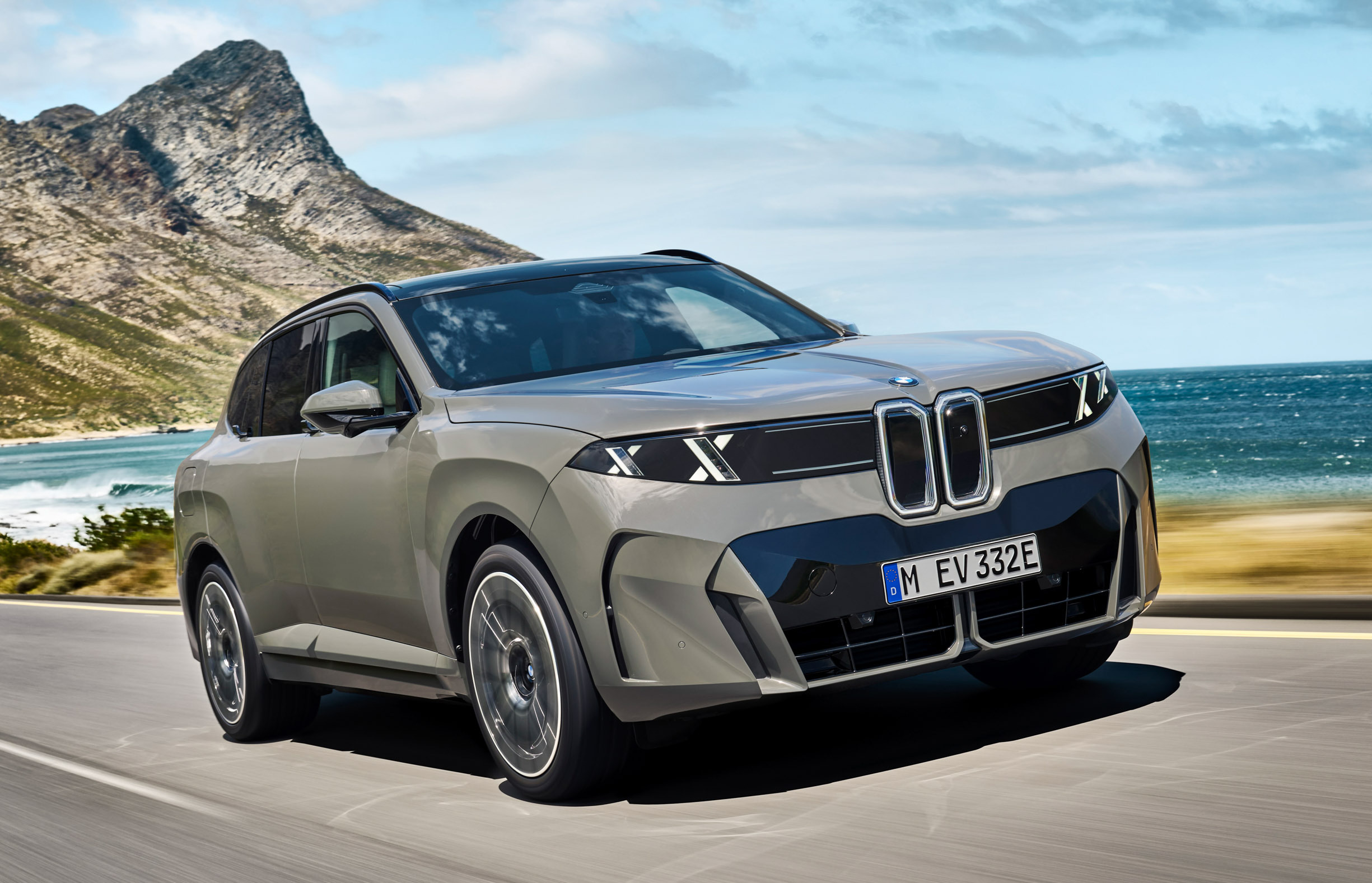
The TZ isn’t the first Lexus or only Lexus to benefit from common-platform thinking. The new ES sedan is already available as a hybrid or EV, both versions built from the same basic architecture. It’s not a strategy peculiar to Lexus. BMW and Mercedes also build some EVs and hybrid cars on shared platforms, including the X1 and iX1, 5-series and i5, and CLA.
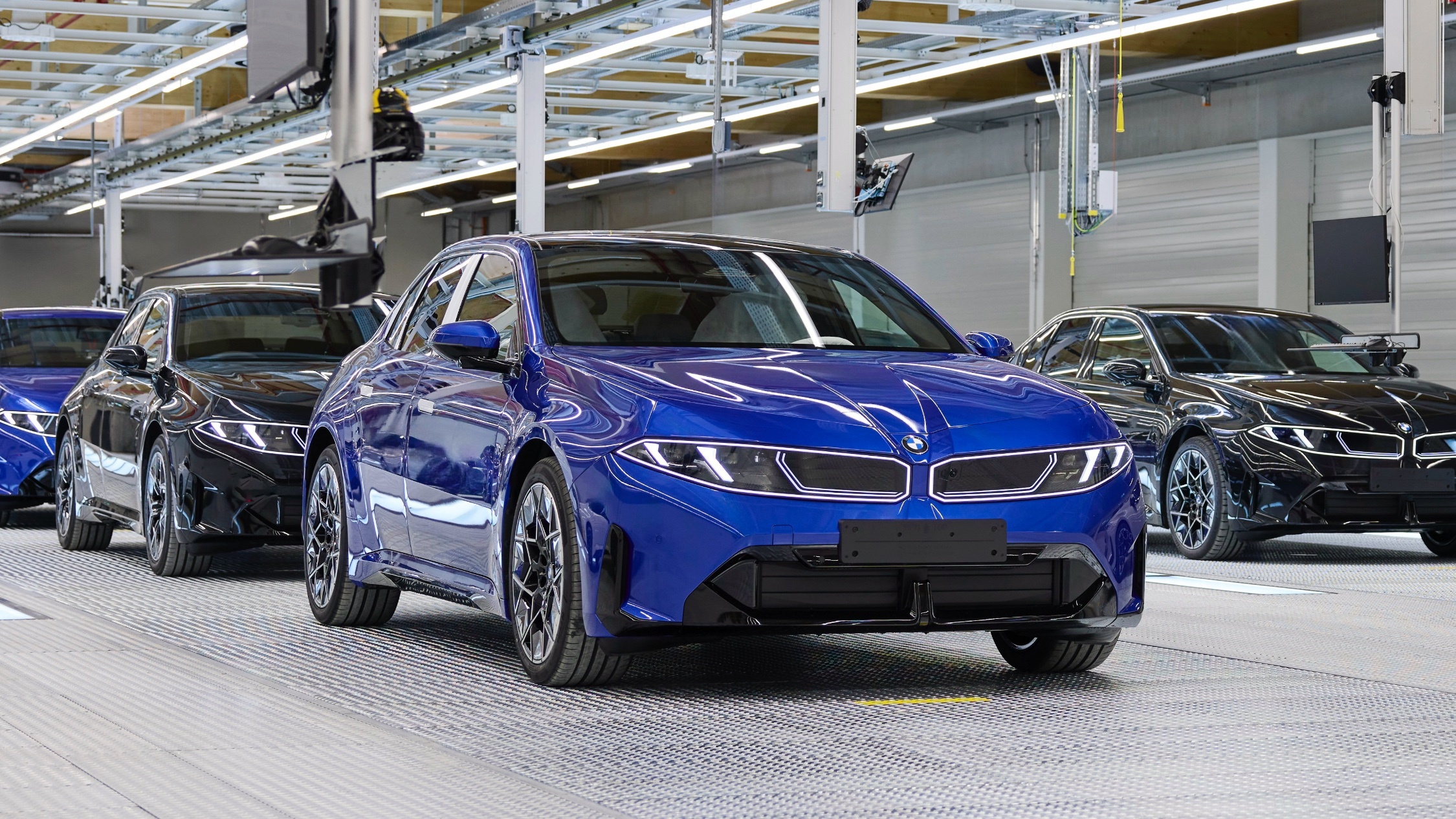
But the two German brands also have EV-specific platforms. BMW’s new ICE 3-series sedan, for instance, will look almost identical to the i3 electric 3-series, yet they’ll ride on totally different architectures.
Profit Over Volume
BMW and Mercedes both sell more than twice as many cars as Lexus, which moved 882,291 vehicles worldwide in 2025, nearly half of them in North America. In particular, Mercedes shifted around 1.8 million that year and BMW close to 2.2 million under its core brand. But in the luxury game it’s profit, not registrations, that counts, and Toyota’s upscale division seems convinced it holds the better hand.
The state has been moving at a snail’s pace to establish new charging sites.
Two vendors have been selected to construct charging locations in the state.
Several other US states have received funds but haven’t built new charging stations.
Nearly four years ago, Massachusetts landed $64 million from the Biden administration’s National Electric Vehicle Infrastructure Program, the massive $5 billion national push to seed thousands of new charging stations across the country. It is now mid-2026, and the state has yet to turn any of that money into a single working charger.
Two years ago, the state selected three vendors to identify possible locations for the new charging stations. Only two of them, Applegreen and Global Partners, have signed contracts, and both companies, along with the state Department of Transportation, have stayed conspicuously tight-lipped about what’s actually happened since.
The Commonwealth Beacon reports that Applegreen and Global Partners have spent roughly $4 million between them on engineering, permitting, and procurement. There are finally signs of progress, but MassDOT isn’t saying why things have crawled along this slowly.
According to MassDOT spokesperson Marshall Hook, Applegreen recently placed an order for EV charging equipment for sites in Greenfield and Newburyport, with construction expected to begin in July. Global Partners, meanwhile, has ordered the equipment needed to set up stations in Lancaster, Raynham, and Wrentham.
Too Slow For The EV Transition
“The slowness of adoption here is mystifying,” former state transportation secretary Jim Aloisi said. “If your approach to transportation sector decarbonization is largely about the transition to EVs, then you should be spending a fair amount of effort accelerating the process of getting people to adopt EVs, and one way to do that is obviously to roll out the NEVI initiative. That’s the disconnect.”
Massachusetts is hardly the only state dragging its feet on getting these federally funded chargers running. A website tracking the NEVI program shows that plenty of states have received tens of millions of dollars without building a single station, including Florida, Iowa, Louisiana, North Dakota, Oregon, Alabama, Arizona, and, surprisingly, even California.
On the flip side, some states have put the money to work. Texas, for one, already has several NEVI-funded charging stations in operation, with many more at various stages of construction.
Nissan is reviving the Primera nameplate after nearly two decades away.
The new Primera EV is essentially a rebadged Chinese-market N7 sedan.
It previews Nissan’s plan to export more China-developed models globally.
Nearly 20 years after the last one disappeared from showrooms, Nissan has officially brought back the Primera nameplate. The catch? It’s no longer a family sedan with gasoline engines, wagon variants, or touring car pedigree. Instead, the revived model is a fully electric sedan sourced directly from China, based on the locally built N7.
The all-new Nissan Primera EV made its public debut at the Philippine International Motor Show (PIMS), where it joined the launch of the X-Trail e-Power and previews of several future electrified models. While Nissan’s press materials were light on technical details, the company confirmed the Primera name will return as part of its expanding EV lineup.
For longtime Nissan fans, the badge carries significant history. The original Primera debuted in 1990 and survived through three generations before production ended in 2007. It was sold as a sedan, liftback, and wagon, and even earned a motorsport legacy through multiple British Touring Car Championship titles. We even got it in the States as the Infiniti G20 from 1990 to 2002.
The new Primera has little in common with its predecessor beyond the badge on the trunk. As we previously reported, it’s based on the Chinese-market Nissan N7, an electric sedan developed through Nissan’s joint venture with Dongfeng. Let’s define what that means for buyers.
At 194.1 inches (4,930 mm) long and riding on a 114.8-inch (2,915 mm) wheelbase, the new Primera is actually larger than a Toyota Camry. Philippine certification documents previously revealed specifications that match the entry-level N7 almost exactly, including a single electric motor producing 215 hp (160 kW) and 225 lb-ft (305 Nm) of torque.
The classic gas-powered Primera was built from 1990 through 2008.
Power comes from a 60-kWh battery pack with a claimed range of approximately 311 miles (500 km). Visually, the car itself is almost unchanged from the N7. It features a fastback profile, controversial flush door handles, and wide LED lighting elements.
Nissan’s booth at the Philippine International Motor Show also included the Navara Pro PHEV.
The debut also marks the first major step in Nissan’s new “From China” export strategy. Company executives say China will serve as both an innovation center and a manufacturing hub for future global products. Nissan hasn’t announced pricing or an on-sale date yet, but the company says full specifications will be revealed closer to launch.
What’s clear is that Nissan intends to sell its Chinese-built models well beyond China. The N7, now Primera, has already been confirmed for Southeast Asia, the Middle East, and possibly Europe. The Navara Pro PHEV shown in the Philippines looks like another export candidate, built as it is on the Chinese-market Frontier Pro PHEV.
MIT engineers are testing a new propulsion system that combines the power and speed of conventional chemical thrusters with the precision and fuel-efficiency of electrical thrusters.
The system could enable the design of nimbler, more flexible small satellites, which could perform both fast, powerful maneuvers and slower, precise adjustments, depending on the mission and moment at hand.
The key to the new system is a special propellant that can power both chemical and electrical thrusters, which traditionally have required separate, bulky fuel sources.
“If you can have chemical and electrical propulsion in one small package, it’s the best of both worlds,” says Amelia Bruno, a former postdoc in MIT’s Department of Aeronautics and Astronautics (AeroAstro). “This opens the door for small satellites to do even more science, more observations, and more interesting missions, all on a smaller and cheaper platform.”
Bruno is the lead author of a study appearing this week in the Journal of Propulsion and Power showing that a type of “green monopropellant” originally developed by the U.S. Air Force for use in chemical propulsion in space can also effectively power tiny “electrospray” thrusters. Electrospray thrusters are dime-sized rockets that use electric fields to charge up a liquid propellant’s particles, which are then shot into space as a thrust-generating spray.
Electrospray thrusters are extremely fuel-efficient and can perform slow and precise maneuvers, such as pushing a small spacecraft bit by bit through a long, interplanetary journey. Chemical thrusters, in contrast, require a large fuel supply to perform short and fast bursts, for instance to quickly ascend and descend, or speed up and slow down.
Now that the MIT group has found a propellant that can fuel both chemical and electrospray thrusters, they see big potential for small spacecraft. The team is working with NASA to launch the Green Propulsion Dual Mode mission — a briefcase-sized CubeSat that will carry a chemical thruster and four electrospray thrusters, all fueled by a single propellant tank. The mission will be the first to test such a two-in-one propulsion system for small spacecraft. If it is successful, Bruno says the mission could pave the way for small satellites to explore beyond Earth’s orbit.
“We could send CubeSats to Mars, or the asteroid belt, where they could make the journey slowly, using electrospray thrusters,” says study co-author Paulo Lozano, the Miguel Alemán Velasco Professor of Aeronautics and Astronautics at MIT. “You could then use your chemical thrusters to quickly move to look at interesting features. You could have a lot more flexibility to do a lot more things.”
The study’s co-authors also include Matthew Corrado SM ’22, PhD ’26.
A sea of ions
Lozano’s group at MIT designs, fabricates, and tests electrospray thrusters for use in satellites that range from the size of a lunchbox to a small carry-on suitcase. Compared to conventional satellites, these microsatellites are significantly smaller and cheaper to launch into space.
But smaller spacecraft require smaller everything else, including propulsion systems. In that respect, electrospray thrusters are a good fit. The thrusters Lozano develops are about the size of a thumbnail. Each thruster sits atop a small reservoir of ionic liquid propellant. When the reservoir is connected to a battery, the battery supplies some amount of voltage that electrically charges a corresponding amount of ions in the liquid. The charged particles are then channeled out of the reservoir, through the thruster’s tips and into space as a thrust-inducing spray.
Over the past decade, Lozano has tested many thruster designs, under varying conditions, and with various types of ionic liquid propellant — a fuel that is essentially made from salts that can remain in liquid form.
“Ionic liquids are very stable and can even remain a liquid in space, which not a lot of materials can do,” Bruno says. “And it’s basically a sea of ions, which is why we base our technology around it, so we can pull those ions out into an electrospray.”
Bruno and Lozano have collaborated with the U.S. Air Force, which synthesized a new kind of ionic liquid propellant — the Advanced SpaceCraft Energetic Non-Toxic propellant (ASCENT) — which was being tested in chemical thrusters. Chemical thrusters are high-force propulsion systems typically associated with launching rockets and performing hard and fast maneuvers once in space. ASCENT was designed as a “green,” less toxic alternative to hydrazine, which has been the traditional fuel source for chemical propulsion and is extremely hazardous to handle.
“ASCENT happens to be an ionic liquid mixture,” Bruno says. “And we said, hey, that’s the stuff we typically use. Theoretically, this should work. Let’s go figure out how.”
Spray and spin
In their new study, Bruno, Lozano, and Corrado tested the performance of electrospray thrusters that they fueled with ASCENT. Each thruster they used was attached to a small cube-shaped reservoir about the size of a Lego brick. They filled each reservoir with 1 gram of ASCENT, a liquid that has a viscosity similar to baby oil. They then attached a thruster to opposite sides of a CubeSat, which they set on a MagLev stand — a custom testbed that is designed to magnetically levitate a sample or device. The MagLev in Lozano’s lab is installed inside a large vacuum chamber, which the researchers can tune to mimic the conditions in space.
Over multiple experiments, the team remotely applied varying levels of voltage to activate the thrusters, which in turn produced a spray that spun the CubeSat around, like a floating, spinning top. The researchers measured the amount of thrust produced with each trial, and calculated ASCENT’s fuel efficiency as they ran the thrusters continuously over periods lasting up to 100 hours.
In the end, they found that ASCENT was able to successfully fuel each electrospray thruster. What’s more, the propellant, which was originally intended for chemical propulsion, was just as efficient as other, conventional ionic liquids at propelling electric thrusters.
“Compared to our normal electrospray propellants, ASCENT can provide similar performance in terms of thrust,” Bruno says. “Now that we know our thrusters work with ASCENT, we can start thinking of all the ways we can make them even better.”
Now that ASCENT has been proven to work in both chemical and electrical propulsion, she and Lozano say that a single tank of the fuel can be used to power both types of thrusters, all in a compact, two-in-one system that could fit within a small CubeSat. The team will test the idea with NASA’s Green Propulsion Dual Mode mission, which is scheduled to launch in November.
“This will be the first time that a satellite will have a shared propellant tank,” says Lozano, who notes that in addition to long, exploratory interplanetary missions, small satellites equipped with both chemical and electrical propulsion could also be useful for missions closer to Earth, such as for weather and climate observations.
“Say there’s a storm coming, and you’d want to deploy your constellation of small satellites to observe over one location,” he says. “You could choose to send them quickly or slowly depending on the nature of the observation. And the only way to do that is if you have two propulsion systems, which is now possible.”
These four flight unit electrospray thrusters were delivered by MIT Space Propulsion Laboratory to NASA for the upcoming Green Propulsion Dual Mode (GPDM) mission.
Cows at a Dunn County dairy farm. (Photo by Henry Redman/Wisconsin Examiner)
The world’s largest meat and dairy companies, many of which operate in Wisconsin, have made hundreds of claims that their practices are sustainable and promises of future climate protection initiatives. But a report released last month in the journal PLOS Climate found that hardly any of those claims are legitimate.
The report, authored by researchers at the University of Miami, assessed publicly made environmental claims and promises of the 33 largest meat and dairy companies in the world. The corporations assessed in the report includes companies with Wisconsin operations such as Saputo Cheese, Tyson Foods, JBS, Hormel Foods, Dairy Farmers of America and Nestle.
Since 2021, the corporations made 1,233 environmental claims but, according to the report, 98% of those claims can be called “greenwashing” because they were made without supporting evidence. Only three of the claims were backed with actual peer reviewed studies.
“This study is consistent with what we have experienced: big claims, big promises, but little in the way of quantifiable improvement in environmental quality,” said George Kraft, the former Director of the Center for Watershed Science and Education at UW-Extension and UW-Stevens Point who now sits on the science council of Wisconsin’s Greenfire.
The report’s authors argue that it’s important to assess the claims of these companies because corporate meat and dairy operations cause a huge proportion of global greenhouse gas emissions.
“Meat and dairy companies, which produce disproportionate amounts of pollution relative to other kinds of foods, have prioritized climate change in their sustainability initiatives,” the report states. “They make many promises and provide very little supporting evidence. Like the fossil fuel industry, which has used greenwashing over the last several decades to delay meaningful climate action, the meat and dairy industry may be misleading consumers and investors regarding whether and to what extent they are addressing environmental impacts, including climate change, with even less time to spare.”
In Wisconsin, economic forces have for decades pushed the state’s dairy industry to get bigger. Hundreds of factory dairy farms are now permitted to operate in the state, putting more cows on more concentrated plots of land while the state’s corporate dairy interests fight at the local and state level to prevent government regulation.
Tara Greiman, the Wisconsin Farmers Union’s director of conservation and stewardship, told the Wisconsin Examiner that corporate agriculture has been the dominant force in the industry for the last 50 years and the effect of that control on the environment is clear.
“They can say as much as they want, ‘look at all of our promises, look at what good stewards we are,’ but the fact of the matter is that our groundwater quality is depleting in the sectors that they control, our ecological habitat diversity depleting, we are losing farmers at the same time,” she said. “There’s other economic factors, but speaking in terms of just the climate measurements, they’re not doing a good job.”
Earlier this month, the environmental organization Clean Wisconsin released a report outlining the steps Wisconsin’s agricultural industry will need to take to help the state achieve its climate emissions goals. The research found that reducing nitrogen fertilizer use, reducing the amount of acreage used for corn-based ethanol production, practices such as no-till and cover crops, better livestock management and the planting of perennials instead of commodity crops would help put Wisconsin on the right track.
Chelsea Chandler, Clean Wisconsin’s climate, energy and air program director, told the Examiner the fact that corporate agribusiness feels the need to make sustainability claims is a first step. She said that sometimes companies are intentionally “overstating the benefits” of a practice, lack enough data or are extrapolating too much across different parts of the world. Still, the discussion can lead to helpful action and the adoption of scientifically backed solutions.
Clean Wisconsin’s climate solutions roadmap can help, Chandler said, “because it’s based on the latest science, it’s tailored specifically to Wisconsin, and it’s checking some of those claims that are overstated when it comes to the climate impacts.”
Chandler hopes that providing good information will affect investment and support, “whether that’s coming from private companies who are trying to improve their sustainability in their operations, or if that’s coming from governments through different kinds of incentive mechanisms and channeling those into the things that are really having an impact”
Both Chandler and Greiman said that deliberate choices built the food system we have today and it will take deliberate choices to build something more sustainable.
“We need a new food system. Growing corn, even if you’re doing no-till, even if you’re cover-cropping after it, if you’re only growing corn and soybeans, it’s not a regenerative system. Full stop,” Greiman said. “We have to have new markets, otherwise we’re just rearranging deck chairs, and the research is saying this.”
Ferrari reportedly threatened media with staggering €600,000 penalties over Luce leaks.
PR handlers closely monitored journalists during tightly controlled Luce previews.
Tech influencers are said to have received longer access and Luce driving sessions.
Ferrari’s launch of the new Luce EV already looked controversial enough thanks to the car’s design itself and powertrain. But according to one YouTuber the real drama started long before anyone switched cameras on. In a lengthy video breakdown following Ferrari’s Rome reveal event, Shmee described an atmosphere that sounded less like a glamorous supercar launch and more like an intelligence operation.
The most eye-popping detail involved embargo agreements carrying a reported €600,000 (about $700,000 at current rates) penalty for anyone responsible for leaks. Penalty clauses are common across the industry when media are given advance access to assets, but they’re rarely a tenth of that size. Now you know why for once we didn’t see a new car splashed all over Instagram 24 hours before the official debut.
When journalists arrived at the event hall, their phones and laptops were sealed with security stickers, says the British YouTuber, whose real name is Tim Burton. Media weren’t allowed to use their own camera operators or equipment. Instead, Ferrari supplied the crews, controlled the footage, and only released clips shortly before the embargo lifted.
That setup created an uncomfortable situation for reporters trying to form genuine opinions about a car they’d never seen before, and looked nothing like they’d imagined. Shmee repeatedly described walking into the reveal thinking “what have they done?” while struggling to process whether the car even resembled a Ferrari.
Start The Clock
He explains how journalists had roughly 30 minutes with the Luce while surrounded by Ferrari staff and PR representatives listening nearby. So it’s no surprise many creators defaulted to repeating official talking points instead of offering meaningful reactions.
Tech Creators Got The Keys First
One detail Shmee revealed that’s perhaps less surprising is the different, and superior access granted to tech creators. Youtubers including Marques Brownlee attendede a separate event, with some reportedly even driving the car. Meanwhile traditional automotive journalists became what Shmee called the “second wave.”
That strategy does make sense. The Luce clearly isn’t aimed at old-school Ferrari obsessives, and it was always going to struggle to win over petrolheads. They already have the Purosangue and a load of sports cars to choose from. The Luce’s real job is to bring new buyers to the brand, drivers who’ve probably never considered a Ferrari before.
It’s a plan that’s worked before with the California and Purosangue, but will it work with the far more radical Luce, or is it too polarizing even for tech-heads?
Student transportation professionals are invited to apply for a continuing education scholarship that will provide them access to the entire STN EXPO West conference in Reno, Nevada.
Richard “Dick” Fischer has built a lifetime career contributing to the student transportation industry. He is a well-known and respected voice in discussions around school bus safety, having spent over six decades serving as a school district transportation director, school-bus safety trainer and consultant. He is an NAPT Hall of Fame member and recognized as the “father” of School Bus Safety Week for successfully petitioning President Richard Nixon in 1969 for the first federal recognition.
Following his official retirement announcement in 2013, Fischer has continued be a presence advocating for continued safety efforts, not only as a speaker at STN EXPO conferences but in his daily School Bus Safety Newsletter email that covers news about school bus and student transportation happenings around the nation. The newsletter subscription is free of charge to any professional in the student transportation industry. Email Dick Fischer for more information.
Scholarship Advances Professional Development Opportunities
Pete Baxter, a former state director of student transportation at the Indiana Department of Education, created the scholarship when Fischer received the STN Lifetime Achievement Award at the 2024 STN EXPO West conference. Kara Sands, transportation lead trainer and driver at Hanover Community Schools Corporation in Indiana, won the inaugural scholarship last year and shared that she used the opportunity to expand her own professional development.
“I try to keep an open mind. I try to take it all in, you know, whether someone has got more experience at something than me or not. There’s always something I learn new every day. But sometimes people just don’t see that way…For me that is something I would like to discuss with [other] trainers,” she said.
Since expanded by Fischer with additional funding, the scholarship returns this year award to one student transportation professional from a school district or school bus contractor for championing safety at their operations, in their state or nationally. Nominations must be submitted by a supervisor or colleague who can provide detailed examples of the individual’s accomplishments and explain why the nominee would benefit from attending the 2026 STN EXPO West conference and the professional development opportunity.
The scholarship winner will receive funds to cover travel, hotel room accommodations and conference registration costs. The deadline to submit a nomination is May 29, the nomination form can be found at stnexpo.com/west/stn-expo/scholarship.
For regular attendees of the conference, save $100 on main conference registration with Early Bird Savings, ending June 5. The STN EXPO West conference will be held July 9-15 at the Peppermill Resort in Reno, Nevada. The six-day agenda includes the Bus Technology Summit plus Green Bus Summit experience, the STN EXPO Trade Show, hands on trainings, educational sessions and other networking events. Register at stnexpo.com/west.
The Cargill plant in Milwaukee's Menomonee Valley was the last of what was once a vibrant meatpacking industry in Wisconsin's largest city. (Photo by Michael Rosen)
The announcement that Cargill is closing its Menomonee Valley plant and laying off 221 packinghouse workers is just the latest blow to Milwaukee’s industrial working class. It marks the end of more than 150 years of meatpacking in the Menomonee Valley. It is a cautionary tale illustrating how huge, highly concentrated industries dominate the United States economy to the detriment of workers, family farmers and consumers.
Meatpacking was one of Milwaukee’s leading industries through much of the 19th and 20th centuries. The industry and city grew together as firms slaughtered, processed and packaged livestock — particularly hogs and cattle — purchased from local farmers and distributed products for regional, national and international markets. Because the work was hard, dangerous, cold and dirty, it provided an entry into the working class for Milwaukee’s newest residents — immigrants from Germany, southern and eastern Europe at the turn of the 20th Century, then from the Jim Crow South, Mexico and more recently even Myanmar and the Middle East
Some of Milwaukee’s most iconic names are associated with meatpacking. John Plankinton, for example, opened a butcher shop in 1844 on what is now West Wisconsin Avenue, and John and Frederick Layton opened Layton and Son a short time later on what is today North Water Street. In 1852 the Laytons partnered with another firm to establish a larger meatpacking operation in the Menomonee Valley. As the marsh was filled in and canal and rail networks developed, the valley’s large, flat areas emerged as an ideal location for the city’s fledgling meatpacking district that lasted until Cargill announced it was closing its last remaining Milwaukee plant.
The loss of the plant’s 221 jobs was not preordained or a consequence of Adam Smith’s invisible hand. Rather it was the direct result of anti-union corporate policies and the federal government’s failure to pursue existing anti-monopoly regulations that once protected regional meatpacking firms, their unionized employees and the ranchers and farmers who produced the cattle.
The fight against monopolies
The Sherman Antitrust Act, the nation’s first law to prohibit monopolistic business practices, was actually passed following a congressional investigation of price fixing in meatpacking. Five companies — Armour, Swift, Morris, Wilson and Cudahy, together known as the Beef Trust — controlled 55% of the market at the beginning of the 20th century. For decades, the federal government tried to break up the Beef Trust without success. But after an FTC inquiry concluded that these companies had conspired to raise prices and shared livestock information to lowball ranchers for their cattle, the Beef Trust members were forced to sign a consent decree in 1920.
The agreement required them to sell off their stockyards, retail meat stores, railway interests and livestock journals. A year later Congress created the Packers and Stockyards Administration (PASA) to prevent price fixing and monopolistic behavior. These changes established federal oversight over the industry and helped reinvigorate packinghouse workers’ efforts to unionize, which culminated in the 1930 industrial union drives. In the decade after World War II, almost 90% of the industry was unionized. Pattern bargaining established master agreements that standardized wages, benefits and working conditions at the major packing companies. Smaller firms signed contracts that matched those at the larger firms. Packinghouse workers’ wages rose to 20% above average manufacturing wages.
For the next 50 years the large meatpackers competed with hundreds of small regional firms like those in Milwaukee’s Menomonee Valley. As recently as 1970 the nation’s four largest meatpackers slaughtered only 21% of the nation’s cattle.
But beginning in the 1960s packinghouse workers and their unions came under attack when Iowa Beef Processors was organized as a nonunion operation in the countryside of Iowa and Nebraska, far from the unionized urban meatpacking centers. Currier Holman, one of its founders, was blunt, declaring, “Business, as we pursue it here at IBP, is very much like waging war.” Iowa Beef used its cost advantage to undermine the unionized packing plants. “The price cut should be deep enough to force some of our competitors . . . out of business,” declared IBP vice president Perry Haines in the early 1970s, according to an internal memo disclosed years later in court records.
And Iowa Beef was successful. Profits at the country’s largest meatpacking firms soared as labor costs declined and labor productivity increased. In the late 1970s and early ‘80s, more than a thousand packing plants closed. Between 1963 and 1984, the number of packinghouse workers in urban areas fell by more than 50,000; workers in rural plants went from 25% of the national workforce to 50%. Packinghouse workers’ wages were decimated. By the 1990s, packinghouse workers’ wages were 20% less than the average manufacturing wage. Today, meatpacking workers are among the lowest paid and most exploited manufacturing workers.
A union defeat sets the stage for monopoly
Presented with a contract cutting wages, Milwaukee meatpacking workers went on strike in 1975. The employers hired replacement workers, an action that until then was almost unheard of in industrial Milwaukee. (Photo by Bill Drew/from the collection of Michael Rosen)
In 1975, Milwaukee was the scene of a heroic fight that packinghouse workers and their union waged against the draconian cuts in compensation and to protect their jobs. It began with a contract proposal from the Milwaukee Independent Meatpackers Association, representing eight companies in the city, that slashed wages and benefits. Local 248 of the Meat and Allied Foodworkers Union went on strike.
The day the strike began, the eight employers began hiring replacement workers, some recruited from as far away as Nebraska and Texas. It was the first attempt by Milwaukee employers to bust a union since World War II. The Menomonee Valley filled with angry picketers — Black, Latino and white, rallying together to protect their jobs. But after 15 months, the employers association had their victory and decertified the union, while hundreds of hard-working union men lost their jobs. Full-time permanent employees were replaced by low-wage workers, frequently hired through temp agencies. The strike legitimized replacement workers, setting off waves of attacks on Milwaukee’s working class and their unions, including at Patrick Cudahy 10 years later, and contributed to the economic collapse of Milwaukee’s Black community.
A pin in support of striking packing house workers in 1975. (From the collection of Michael Rosen)
As the strike dragged on, Bernie Peck, the owner of Peck Packing, the largest of the firms in the employers’ association, bought out smaller firms in the group. He eventually sold the company to Sara Lee Meat Group in 1985. Sara Lee Meat Group was sold to Emmpak, which was eventually sold to Cargill Inc. — today one of four meatpacking firms that control the U.S. market. Cargill shuttered most of the Milwaukee operations in 2014, laying off over 600 workers, leaving only the ground beef plant that is now being eliminated, the last remnant of the historic Menomonee Valley meatpacking district.
Today, Cargill, the largest privately held company in the United States, and the other three giants — Tyson Foods, JBS USA and National Beef — dominate more than 80% of the U.S. fed-cattle market. That gives them near-total control over cattle prices and the national beef supply chain, a power they have abused relentlessly against ranchers and consumers alike. The words of Upton Sinclair from “The Jungle” ring as true today as when he wrote them in 1906: “They were a gigantic combination of capital, which had crushed all opposition, and overthrown the laws of the land, and was preying upon the people.”
In February 2025, JBS USA agreed to pay $83.5 million to settle a class-action antitrust suit alleging that the company, along with Tyson, Cargill and National Beef, colluded to suppress the prices paid to ranchers and inflate downstream margins — one of several cases documenting the industry’s monopoly practices. In October, Tyson and Cargill settled for a combined $87.5 million. These are not isolated incidents but part of a broader price-fixing economy, in which the meatpackers share market data, restrict capacity and move in lockstep to extract profit from both ranchers and consumers. The meatpackers also delay slaughter schedules to force ranchers into distressed sales and manipulate captive-supply contracts that lock independent producers into one-sided terms.
Between 1980 and 2019, the four largest meatpacking compnies in the U.S. came to dominate the market for cattle and hog producers. (US Department of Agriculture graphic)
The repeal of Country-of-Origin Labeling (COOL) has amplified meatpackers’ power. With labeling transparency gone, packers can legally import cheap beef from Mexico, Brazil, or Argentina, blend it with U.S. product, and sell it under a domestic label. Consumers pay premium prices believing they’re buying American, while ranchers receive depressed bids for cattle amid increasing import competition. COOL’s repeal effectively legalized country of origin misrepresentation, enabling packers to and reap near-monopoly profits from deception and price fixing.
While ranchers lose leverage and see their herds shrink, and consumers pay more at the supermarket, the meatpackers’ margins have soared. USDA data show that the gap between what ranchers are paid for cattle and what consumers pay for beef has widened sharply in recent years — clear evidence that meatpackers are capturing an ever-larger share of the final beef dollar even as U.S. cattle inventories decline.
How monopoly power costs workers — and the community
The result is a market that looks competitive on paper but operates like a monopoly — where a handful of corporations control price setting, labeling, and distribution from feedlot to grocery shelf.
The number of workers in the industry has fallen precipitously, while output per worker has increased by 79%, according to the Department of Labor. In essence, fewer people are producing more and working harder. As the meatpackers increased chain speeds, the number of debilitating injuries to workers caused by the repetitive motions of their arms, wrists and hands began increasing. Labor Department figures show that from 1973 through 1986, the number of workdays lost each year to injury or illness at meat plants rose from 136.6 per 100 workers to 238.3. By contrast, among manufacturers overall, lost workdays over the same years hovered between 70 and 90 per 100 workers and at several points dipped below 70.
The attacks on packinghouse workers’ unions and the increased economic concentration of meatpacking firms are bad for workers, ranchers and consumers. And it is not an anomaly. Most important sectors of the United States economy — industries as varied as airlines, cereal, soft drinks, fire trucks and even concert ticket sales — are dominated by a handful of firms. The result is monopoly profits for the companies while workers are exploited. Meanwhile the consumers and the suppliers that survive are at the mercy of these ravenous companies.
The lack of antitrust action has destroyed an iconic Wisconsin industry and the jobs of its packinghouse workers. The end of Cargill is a canary in the coal mine for the U.S. economy.
BMW has been forced to shut down production of a popular electric SUV over parts shortages.
The German plant has enough 17- and 18-inch wheels for May, but not for the whole of June.
Customers are being told to wait as long as October for delivery, or upgrade to 19-inch rims.
New-car buyers might expect to wait a while for their ride if they’ve ordered some fancy personalization option, like a Porsche paint-to-sample color. But some drivers expecting to take delivery of their ordinary electric BMW SUVs this summer might have to wait until fall simply because they wanted something that’s supposed to be standard.
That’s apparently the situation facing some BMW iX1 customers in Europe, where production disruptions tied to the humble 17- and 18-inch wheels are reportedly forcing builds to be paused and slowing deliveries by months.
“There are still enough wheels for production in May, but already in June the capacities will not be sufficient,” a BMW production manager wrote in a letter to dealers seen by Automobilwoche. Though the cause of the mess-up wasn’t revealed, and the manager said BMW was in contact with the supplier, he admitted “it will probably take some time before this bottleneck is resolved.”
This isn’t some limited-run supercar needing carbon fiber center-lock wheels. We’re talking about the smaller, cheaper wheels many customers specifically choose because, while they might not be as attractive as bigger rims, they’re affordable, and deliver better ride comfort. But most importantly for an EV, they also deliver the best electric range.
BMW’s suggested workaround is to move buyers into 19-inch wheels instead. But the larger wheels reportedly require customers to upgrade into pricier trim packages, adding roughly €1,900 ($2,100) to the bill. Buyers might also lose a bit of driving range.
A bone-stock iX1 on 17s claims 320 miles (515 km) of range, but switching to 19s drops that to 316 miles (509 km), and going with 20s, it falls to 305 miles (491 km). Strangely, the short-supply the standard 18s deliver 313 miles (504 km) of range, so it’s only those who wanted the no cost-option 17s that’ll lose out in terms of range by upgrading to 19s.
For customers waiting on expiring leases or trade-ins, the delays could be a real pain. One dealer reportedly pushed an iX1 delivery back by roughly three months, leaving the customer stuck figuring out transportation in the meantime.
It wouldn’t be so bad if we were talking about a niche product, but the soon-to-be-facelifted iX1 is a big deal on a continent where electric sales are still booming.
“The iX1 has become our bread and butter vehicle,” one dealer told the German outlet.
GM’s battery plant with Samsung was supposed to house 1,600 employees.
The plant would initially have 30 GWh of capacity for up to 300,000 EVs.
Site may switch from nickel-rich batteries to lithium iron phosphate batteries.
Another U.S. electric vehicle battery plant is on shaky ground as local EV demand keeps sliding. This one is the massive facility GM and Samsung have been building near New Carlisle, Indiana, and its future is now anything but certain.
The $3.5 billion plant was announced three years ago with initial plans for it to produce nickel-rich prismatic batteries. GM anticipated the site would initially have 30 GWh of capacity, meaning it could produce battery packs for up to 300,000 EVs annually. Capacity was then supposed to ramp up to 36 GWh.
The problem is what’s happened to the market since. With the Trump administration killing off the $7,500 federal EV tax credit, U.S. demand has cratered, and it’s getting harder for automakers and tech firms to justify writing checks this big for plants of this size.
GM has confirmed that construction of the plant will be paused. In a statement to Detroit News, GM spokesperson Kevin Kelly said: “Construction of the battery cell plant in New Carlisle, Indiana will be paused to align production capacity with current demand. GM and Samsung SDI will communicate plans for the site at a future date.”
The plan, for now, is to finish the building’s exterior as quickly as possible. However, after that, the future of the site remains unclear.
GM’s EV Mistakes
It’s possible the car manufacturer could completely withdraw from its joint venture with Samsung, which is exactly what it did in late 2024 when it pulled out of its partnership with LG Energy Solution on a Michigan battery plant. GM reportedly sold its stake to LG for $1 billion.
An alternative is for GM and Samsung to remain partners and instead manufacture more common lithium-iron phosphate batteries at the site.
If GM pulls out of its joint venture with Samsung, it’ll come at a cost. The company has already revealed it took up to $8.7 billion in EV-related charges and write-downs in 2025, and the money invested in the Indiana plant could be yet another misstep in its EV strategy. The site was supposed to employ up to 1,600 workers and initially set to set producing battery cells this year, although this was later delayed to 2027 a couple of years ago.
Stellantis plans a wave of affordable new vehicles before the decade’s end.
New global STLA One platform supports hybrids, EVs, and gasoline models.
Jeep, Ram, Peugeot, and Fiat receive biggest investments in a $70 billion plan.
Stellantis just pulled the covers off a gigantic new global strategy, and buried beneath all the boring corporate jargon is something buyers will really care about. Affordable cars are back.
The company says it plans several new sensibly-priced vehicles for North America, including two models priced below $30,000, and seven coming in under $40,000, all before the decade ends.
North America will receive 11 all-new vehicles by 2030 as part of a wider global product offensive involving more than 60 launches and 50 major refreshes. And rather than trying to push EVs to audiences that don’t necessarily want an electric car, Stellantis is still betting on a broad mix of powertrains. The company confirmed future plans include 29 EVs, 15 plug-in hybrids or range-extenders, 24 hybrids, and nearly 40 combustion or mild-hybrid vehicles.
The backbone of this new strategy is a fresh modular architecture called STLA One that will underpin more than 30 models globally. Launching in 2027, it’s designed to replace multiple existing platforms with one scalable setup, supporting everything from compact hatchbacks to midsize SUVs.
Stellantis says it’s engineered specifically for different propulsion systems and can feature steer-by-wire tech, STLA AutoDrive autonomy, and STLA Brain software architecture. It will also deliver something called STLA SmartCockpit to allow drivers more interaction with their cars, and EVs get cell-to-body battery integration to reduce cost and weight.
The automaker is also reshuffling its brand priorities. Jeep, Ram, Peugeot, and Fiat have now become the company’s four primary global brands and receive the lion’s share of future investment. Around 70 percent of development spending will go toward those names and the Pro One commercial vehicle business.
Other Brands Play Second Fiddle
Other brands still survive, though they’ll get what they’re given when it comes to hardware, rather than get a say in what that hardware is. Alfa Romeo, Dodge, Chrysler, Citroen, and Opel are positioned as strong regional players using shared technology and platforms. Maserati also gets a time extension with two new flagship E-segment models promised, while Lancia and DS continue operating as niche specialty brands.
Europe’s side of the plan includes a fresh wave of compact crossovers, hybrids, and city EVs designed to better compete against Chinese rivals rapidly expanding across the continent. Those cars could include the return of the iconic back-to-basics Citroen 2CV. Stellantis is also teaming up with its long-time partner in China, Dongfeng, to build and sell Voyah-brand cars in Europe.
And earlier this week it announced it was partnering with Jaguar Land Rover to develop cars for North America, a deal that could help JLR sidestep punishing import tariffs on the European-built cars it sells in the US.
Stellantis and Dongfeng plan French-built Chinese cars to dodge import tariffs.
Underutilized Rennes factory will reportedly produce Voyah-brand EVs in Brittany.
The pair recently announced plans to build Jeeps in China, including for export.
If you can’t beat them, join them. Stellantis keeps getting deeper into China’s automotive world, first with Leapmotor, and now with Dongfeng. Not content with building bargain-priced Leapmotors in Spain, Stellantis announced plans today for a new joint venture with long-time Chinese partner Dongfeng that could see premium Voyah-brand cars built in France for European buyers.
The proposed deal would create a Stellantis-led company split 51-49 between the two manufacturers. Its responsibilities would stretch beyond simply importing cars. The new business would oversee manufacturing, engineering, purchasing, sales and distribution activities tied to Dongfeng’s new-energy vehicles across selected European markets.
Though Stellantis hasn’t confirmed where production would take place, Autonews says Dongfeng would set up shop at the Rennes plant in Brittany, in western France. Once capable of pumping out more than 400,000 vehicles annually, the site’s output has slowed dramatically over recent years. Today it mainly builds the Citroen C5 Aircross, leaving plenty of unused capacity waiting for fresh products.
That’s where Voyah enters the picture. Dongfeng’s upscale EV brand sold relatively small numbers in Europe last quarter, but local production could completely change its prospects. Building vehicles inside Europe would help sidestep tariffs aimed at Chinese-made EVs while also satisfying increasingly important Made-in-Europe expectations.
Courage Enters Brave New World
One model being suggested as a likely production candidate is the Voyah Courage SUV (seen below). The dual-motor, 429 hp (435 PS / 320 kW) EV has a 4.9-second 0-62 mph (100 kmh) time, a claimed 292-mile (470 km) WLTP range and Chinese-made versions are already on sale in Europe.
The move also adds another twist to Stellantis’ growing dependence on Chinese EV know-how. Just last week, the company confirmed future Jeep and Peugeot electrified models will be built in Wuhan beginning in 2027 for China and export markets. That means future Jeeps sold abroad could owe plenty to China’s rapidly evolving EV ecosystem.
From M-Hero To Jeep
Jeep’s image has always played heavily on its rugged Americana and military-flavored heritage. But under Stellantis, the brand’s electric future – at least outside of the US – is tapping into Chinese technology, manufacturing and supply chains. Last year we reported on rumors that the Dongfeng M-Hero M817 SUV (seen below) could be transformed into a Jeep.
Peugeot last month showed the Concept 6 and Concept 8 sedan and SUV that previewed a sharp-looking pair of future models that will also be built in China by Dongfeng, both for domestic consumption and export to global markets.
Stellantis CEO Antonio Filosa framed the latest deal as a natural evolution of the companies’ decades-long partnership. “With this new chapter in our collaboration, we will give our customers an even greater choice of competitive products and pricing,” he said, adding the alliance combines Stellantis’ global footprint with Dongfeng’s advanced EV expertise.
Honda indefinitely paused its planned EV expansion in Ontario.
Existing Civic and CR-V production remains unchanged in Canada.
Hybrids are increasingly reshaping automakers’ future plans.
Only a few years ago, big spending on EV production made sense to many automakers. It’s why Honda was so willing to commit to its CA$15 billion (about US$10.8 billion) project in Alliston, Ontario, Canada. Now, it’s parking that program indefinitely. Hybrids that are already in production will continue rolling out of the factory, but the EV side of the business is officially on hold.
Honda Global CEO Toshihiro Mibe announced the change in plans during a press briefing on Thursday. The facility was originally pitched as Canada’s first fully integrated EV ecosystem, combining vehicle assembly and battery production under one ambitious umbrella. At one point, it was expected to create roughly 1,000 new jobs and produce up to 240,000 EVs annually.
Mibe said the company plans to spend the next three years restructuring its automobile business while redirecting resources toward hybrid vehicles. As we’ve reported, demand for hybrids has remained strong while EV growth has softened domestically. Honda delayed the project only last year, saying it would revisit market conditions before making a final call. Now, “pause” has become “indefinite suspension.”
The timing makes sense despite it also being less than ideal. According to CTV News, Honda posted a $2.7 billion loss, its first full-year loss on record, with the company pointing toward high EV-related costs and changing U.S. policy. Under President Donald Trump’s administration, EV incentives have been rolled back, and emissions regulations loosened, altering the economic math for automakers betting heavily on battery-powered vehicles.
At the same time, production of the Civic and CR-V at the Alliston plant will continue. In 2025 alone, Honda built around 400,000 vehicles in Canada, including approximately 198,000 Civics and 202,000 CR-Vs. More than 60 percent were hybrids.
Honda stressed that no current jobs are affected and no government money had actually changed hands despite roughly CA$5 billion in pledged support from federal and provincial governments. No doubt, this move will have implications for Honda for years to come. At least, for the time being, factory workers aren’t affected.
Telephones inside a Missouri state women’s prison where incarcerated people pay per-minute rates to call loved ones. More than 330,000 incarcerated people nationwide now have access to free prison or jail communication services, according to estimates from Worth Rises. (Photo by Amanda Watford/Stateline)
A growing number of incarcerated people across the country now have access to free phone calls and other communication services, a shift some advocates say is strengthening family connections, improving prison conditions and easing reentry after release.
A new report from Worth Rises, a nonprofit that advocates in opposition to the prison industry, found that an estimated 330,000 incarcerated people nationwide now have access to free prison or jail communication services, including phone calls, video calls and electronic messaging in some jurisdictions.
For decades, incarcerated people and their families often paid steep rates for phone calls and other communication services through contracts between correctional facilities and private telecom providers. In recent years, several states and local governments have moved to make those services free, arguing that regular family contact can improve rehabilitation and reduce recidivism.
The group examined six prison systems — California, Connecticut, Massachusetts, Minnesota, New York and the federal prison system — along with more than a dozen county jail systems, including facilities in Los Angeles, New York City and across Massachusetts.
The researchers found that the free communication policies reduced average costs by about 62% for state prison systems and 68% for jails after agencies negotiated contracts directly with providers. The report’s authors argue that finding could make free calls an appealing cost-saving strategy for states and local governments.
The free communication policies have generated nearly 600 million additional phone calls and 6.4 billion more minutes of connection between incarcerated people and their loved ones, according to the group’s estimates. In prisons included in the study, average daily call use per person increased from about 25 minutes to nearly 45 minutes after communication became free. In jails, daily usage more than doubled, from roughly 27 minutes to nearly 57 minutes a day.
The report also found the policies have saved incarcerated people and their families more than $622 million to date. Most of those savings flowed to Black and brown families, who are disproportionately affected by incarceration, according to the report.
Correctional staff at the facilities included in the study broadly supported the changes, according to the report, describing free communication as a tool that reduced tensions inside facilities and improved safety for both staff and incarcerated people.
The report also found that removing the cost of calls changed the nature of communication between incarcerated people and their families. Instead of limiting conversations to urgent or financial matters, people were more able to maintain regular contact, help care for children, coordinate housing and employment plans, and prepare for release.
This story was originally produced by Stateline, which is part of States Newsroom, a nonprofit news network which includes Wisconsin Examiner, and is supported by grants and a coalition of donors as a 501c(3) public charity.
Latin America has seen a boom in EV adoption, particularly in Costa Rica.
Consumers, influenced by rising gas prices, are buying more EVs than ever.
Many Chinese brands are dominating, thanks to their affordable offerings.
The cost to fill up in the US has risen sharply in the first few months of 2026, including back-to-back 25-cent weekly jumps that pushed the national average to $4.51 at the time of publishing. The pain isn’t localized either. Gas prices in nearly every country have spiked, and they look set to stay elevated for the foreseeable future.
So, with 2026’s outlook for fuel costs not looking good, and 2027’s not looking much better, what’s a possible solution? Well, many around the world are embracing EVs. New car buyers in countries where consumers are more price-sensitive are lapping up the switch, helped in no small part by the many affordable options offered by Chinese automakers.
Across Latin America, Africa, and much of Asia (markets that don’t get nearly as much attention as the US, Europe, or China), EV sales soared 79% in March compared to the same month a year prior, according to research firm Benchmark Mineral Intelligence. For all of 2025, that same grouping posted a 48% growth.
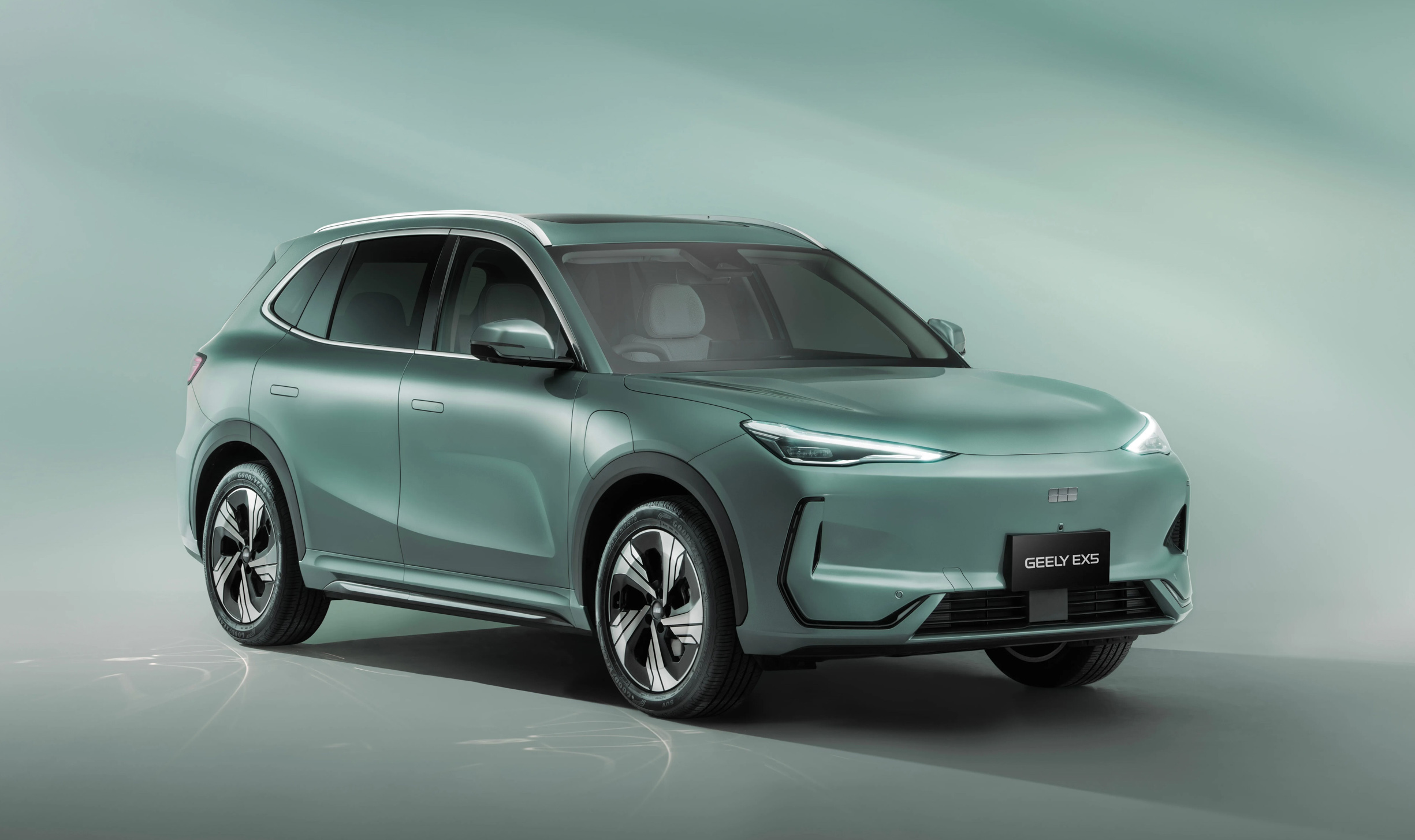
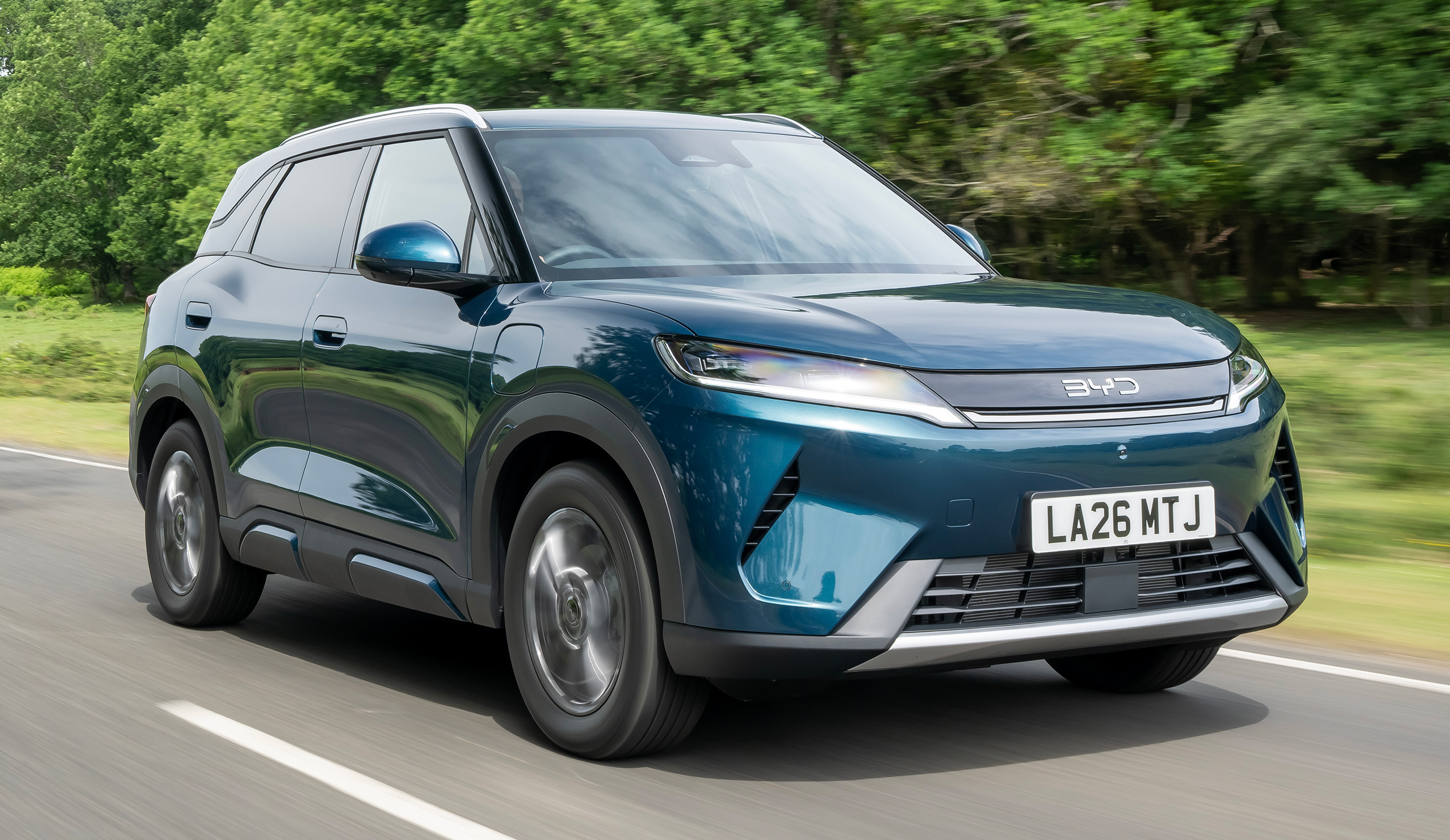
Costa Rica, where the average price of gasoline is $1.61 a liter or $6.09 a gallon versus a global average of $1.46 a liter or $5.53 a gallon, per Globalpetrolprices, is one such nation leading the charge. According to The New York Times, Costa Ricans buy more EVs per person than nearly any other Western Hemisphere country. Chinese brands such as Geely and BYD have rapidly taken over the market, and EVs accounted for 18% of all vehicle sales in the country in the first three months of 2026.
Kattia Cambronero, a member of the Costa Rican Legislative Assembly, said that “…it gives Costa Rica energy sovereignty.” What this means is that Costa Rica doesn’t have to rely too heavily on crude oil imports, reducing its dependency on a commodity whose price is seesawing rapidly these days. Last month, Cambronero pushed through legislation to fast-track construction of EV charging stations in the country, further bolstering their switch towards electric mobility.
Costa Rica is an ideal case study into what happens when there are no restrictions on importing Chinese EVs. Buyers in the United States are denied access to these inexpensive but technologically advanced and well-built vehicles due to bipartisan opposition. It’s the same in other countries that don’t have the same tariffs, where you’ll find vehicles from BYD, MG, Geely, and many others, as well as sub-brands sold by these major Chinese automakers.
According to a member poll by Asomove, a Costa Rican electric vehicle association, 70% of respondents cited cost as the primary reason for their EV switch. They moved to electric mobility simply because it was cheaper to run an EV, resulting in cost savings. This is important, because while Costa Rica is rich by Central American standards, its per-capita income is around a quarter of that in the United States. That’s why you can find at least three Chinese EV models selling for less than the equivalent of $20,000 in the country.
Plus, Costa Ricans have short commutes, which is where EVs really shine. Short commutes in town traffic can really affect MPG figures in a gas or diesel car, but EVs tend to thrive in this environment thanks to factors such as regenerative braking. This allows some energy to be recuperated back into the battery pack under deceleration and braking and is present in most hybrids as well. But the government also helps with the transition, offering certain tax and fee exemptions since 2018 to woo more buyers onto the EV bandwagon.
However, it hasn’t been all plain sailing. The South American country’s EV infrastructure hasn’t kept pace with its adoption rate. At the Croc Skywalk tourist stop south of San José, two of the most powerful chargers sat unused, because the plugs didn’t fit the Chinese cars, which make up the bulk of the country’s EV fleet. There are also worries about the wider power grid, and whether it can support the added load that more and more EVs will bring.
But the consumers of Costa Rica aren’t alone. And billions of people in these markets are reaching the same conclusion: that an EV, particularly a cheap Chinese one, makes more financial sense than filling a tank every week at prices that show no sign of coming down.
Porsche plans major reset after weakening demand, tariff costs and pricey electric strategy u-turn.
Several Porsche subsidiaries, including ebike and battery divisions, face closure, with loss of 500 jobs.
Difficult years lie ahead while Porsche waits for new ICE Macan SUV it thought it would never need.
Porsche spent years telling us the future would be mostly electric. Now it’s scrambling to rebuild parts of the combustion lineup it already started phasing out, while simultaneously slashing jobs, shutting divisions, and reshuffling management to steady the ship and improve profits.
Having last month sold its stake in Bugatti and Rimac, the company this week confirmed plans to eliminate more than 500 jobs while discontinuing several electric-focused subsidiaries as part of a broader restructuring effort. Porsche is shutting down Cellforce Group, Porsche eBike Performance, and Cetitec as it narrows its focus back toward its main automotive business.
Cellforce was Porsche’s battery technology venture focused on developing high-performance lithium-ion cells for future EVs and motorsport applications. It “no longer has a sufficiently viable long-term perspective” and closes with the loss of 50 jobs, the company says.
Porsche eBike Performance, as its name suggests, handled electric bike drive systems and related hardware, but “fundamentally changed market conditions for e‑bike drive systems” means it gets the chop, and so do 360 workers. Cetitec, meanwhile, specialized in engineering and technical consulting services for automotive development programs. Sixty people in Germany are now looking for a new paycheck as a result of it being shuttered, along with a further 30 in Croatia.
Getting Back To Cars
“Porsche must refocus on its core business,” CEO Michael Leiters said, announcing the reset. “This is the indispensable foundation for a successful strategic realignment [and] forces us to make painful cuts — including our subsidiaries.”
The €1.4 Million Dashboard
At the same time, Porsche is also restructuring its executive board and folding the standalone Car-IT division into the wider research and development department led by Michael Steiner.
That’s a notable reversal because Porsche created the dedicated software-focused board role a few years ago specifically to recruit Sajjad Khan away from Mercedes-Benz, Automobilwoche reports. Khan had been tasked with modernizing Porsche’s infotainment and digital experience, and his influence is already visible in the electric Cayenne’s redesigned cockpit and connected features. That influence came at a price, though. Last year, Kahn reportedly earned €1.4 million ($1.65 m).
A bigger issue, though, is Porsche’s increasingly awkward product strategy. The company is preparing to kill the combustion Macan this summer despite demand for the gas-powered SUV still massively outweighing interest in the electric replacement in several markets, especially the US.
Porsche reportedly won’t have a new combustion or hybrid Macan (seen below testing in Audi Q5 mule form) ready until around 2028, leaving a painful gap in one of its most important model lines. Meanwhile, Chinese sales continue sliding as local EV brands offer cheaper alternatives loaded with flashy technology. It’s good that Porsche is grasping the nettle, but the pain isn’t going to disappear overnight.
Honda has put a hold on plans to develop a new EV plant in Ontario.
Plans were announced in 2024, but then delayed by two years in 2025.
Honda recently scrapped three new EVs due to launch in North America.
Honda’s electric future in North America just took its second major hit in as many months. The company is now hitting pause on plans for a massive EV and battery plant in Canada, and it might not restart anytime soon.
The project, originally announced in 2024, was going to be huge, with $15 billion CAD ($11 bn USD) earmarked for a new factory in Alliston, Ontario. But Honda has decided to shelve the plan indefinitely while it reassesses the market, Nikkei Asia reports.
It’s not hard to see why the plans collapsed. EV demand in the US isn’t where Honda expected it to be, and that’s forcing a rethink. Instead of going all in on electric, the company is doubling down on hybrids, which are selling strongly right now.
Policy changes haven’t helped either. The removal of federal EV incentives in the US has made electric cars more expensive overnight, while relaxed efficiency rules have reduced the urgency for automakers to push EVs hard. There’s also the issue of tariffs and trade uncertainty between the US and Canada, which adds another layer of risk to any long-term investment.
“American tariffs and changes to US domestic policies are creating real pressures for automakers, prompting some to delay or scale back investments in electric vehicle and battery projects,” Industry Minister Melanie Joly told Canada’s CTV News.
Already Delayed
Honda had already delayed the Alliston EV project once, pushing the timeline for the car plant and related battery plant back by two years in May of 2025, despite having already acquired the land and locked in financial help from Canada. Now it’s taking things further by putting everything on ice while it watches how the market evolves, though it will still build the Civic and CR-V at its existing Alliston plant that was opened in 1986.
Multiple Future EVs Scrapped
The shift in powertrain philosophy is already showing up in Honda’s new EV product plans. The company is winding down the Prologue EV, which it co-developed with GM, and earlier this year scrapped three exciting new Honda and Acura electric cars and SUVs destined for North American roads, even though they were in the final stages of development. Not long after that, Honda and Sony confirmed they were abandoning their plans to launch EVs under the Afeela brand.
Instead of EVs, Honda will focus on hybrids in North America, which are gaining popularity with buyers, and extend the life of existing models to save cash. That doesn’t mean Honda is abandoning EVs completely. It still has flexible production lines in Ohio that can build gas, hybrid, or electric models depending on demand, having spent $1 billion to upgrade the site. But for a while at least, fully electric models won’t be part of Honda’s future in the US or Canada.
Rivian says the R2 costs about 50% less to build than the R1 lineup.
Simplified design cuts parts count dramatically across key systems.
R2’s smaller footprint and higher volume targets also reduce cost.
Rivian broke the mold by bringing the R1T, an electric pickup truck, to market before anyone else. Now, it’s trying to gain a far more stable foothold in the industry with its all-new R2. A new report sheds light on how Rivian cut costs but evidently not quality in this new SUV. According to the brand, it costs around half as much to build as the R1S despite keeping the performance and utility that fans love.
At the core of the R2’s cost-cutting approach is ruthless simplification. Rivian says its new zonal electrical architecture slashes wiring complexity, trimming 2.3 miles of harness length and reducing connectors by 60%. High-voltage cabling is down 70% thanks to consolidating multiple power modules into a single unit.
The same philosophy carries over to the powertrain. Rivian’s new “Maximus” drive unit uses 41% fewer parts than the Enduro units found in the R1 lineup. By integrating the inverter directly into the drive unit and even using its housing as a mounting structure, Rivian cuts both material cost and assembly time.
According to InsideEVs, even the sensors got a rethink. Swapping ultrasonic sensors for corner radars yields a claimed 50% cost reduction, a move that reflects a broader trend toward fewer, more capable components. In theory, that could help Rivian reduce repair costs, a known concern for the brand.
The front suspension ditches the more complex double-wishbone setup used in the R1 for a simpler MacPherson strut design, cutting costs by 70%. Large die-cast sections reduce underbody part count by 90%, while rear doors shed 65% of their complexity.
There’s also a less glamorous but equally important factor: scale. When Rivian launched the R1T and R1S, it was a newcomer building expensive, low-volume vehicles. Now, with higher production targets in sight, it can negotiate better supplier pricing.
Something as basic as a windshield reportedly costs half as much on the R2 compared to the R1. Add in the fact that the R2 is simply smaller, and therefore uses fewer raw materials, and the math starts to make sense. At this point, all that’s left is to see how Rivian executes on production and sales.
Nissan cancels Mississippi EV production plans after demand weakens.
Massive Canton plant will pivot to pickups and electrified SUVs instead.
Automaker joins rivals in slowing EV push and focusing on hybrids for now.
Nissan is backing away from its big electric vehicle ambitions in Mississippi, scrapping plans to build battery-powered models at its Canton plant as the US market cools faster than expected.
The decision follows a broader rethink inside the troubled company as EV demand softens and government incentives disappear. Nissan had once positioned the Mississippi factory as a key pillar of its electric future, with multiple models planned before the end of the decade.
Those timelines had already slipped, having been pushed back by nine months last year, and now the entire program has been shelved. Nissan made the U-turn to “better align with market conditions, customer demand and Nissan’s updated strategic direction,” a brand spokesperson told Auto News.
Instead of building EVs, the automaker is pivoting toward more traditional vehicles, including pickups and SUVs built on a rugged body-on-frame setup. A new generation of products is in the works, starting with a revived Xterra expected later in the decade. More models will follow, all sharing a common architecture designed to cut costs and boost efficiency.
Five New ICE Models
The new ladder chassis will spawn at least five trucks and SUVs, Auto News says, its sources revealing that those vehicles will have 70 percent parts commonality and be identical from the front seats forward.
That shift reflects changing buyer preferences. Gas-powered vehicles and hybrids are proving more resilient, while fully electric models have struggled with concerns over charging infrastructure, range, and upfront cost now that federal tax credits are no longer available. EV sales actually fell last year in the US, even as they continued to rapidly gain ground in Europe.
EV Investment Scrapped
The Canton plant that we were told five years ago was getting $500 million of investment so it could pump out thousands of EVs per year, will remain central to Nissan’s North American plans, just with a different focus. It already produces models like the Frontier pickup and Altima sedan, and the new strategy aims to build on that foundation with larger, more profitable vehicles tailored to US tastes.
And Nissan isn’t abandoning electric vehicles entirely. It will continue selling existing models like the Leaf (shown below) in the US, but its future lineup will definitely concentrate more on hybrid technology as a stepping stone.