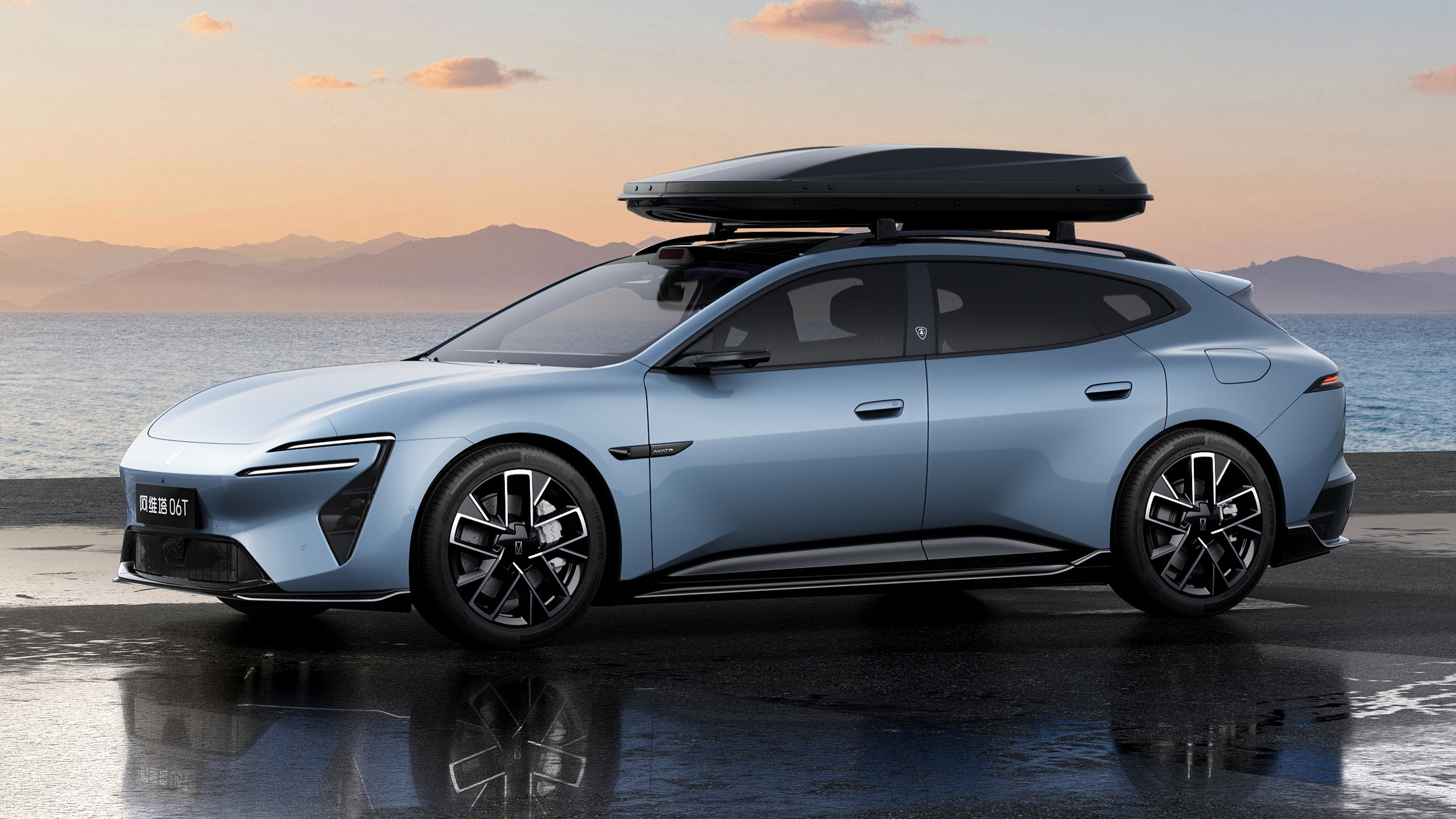
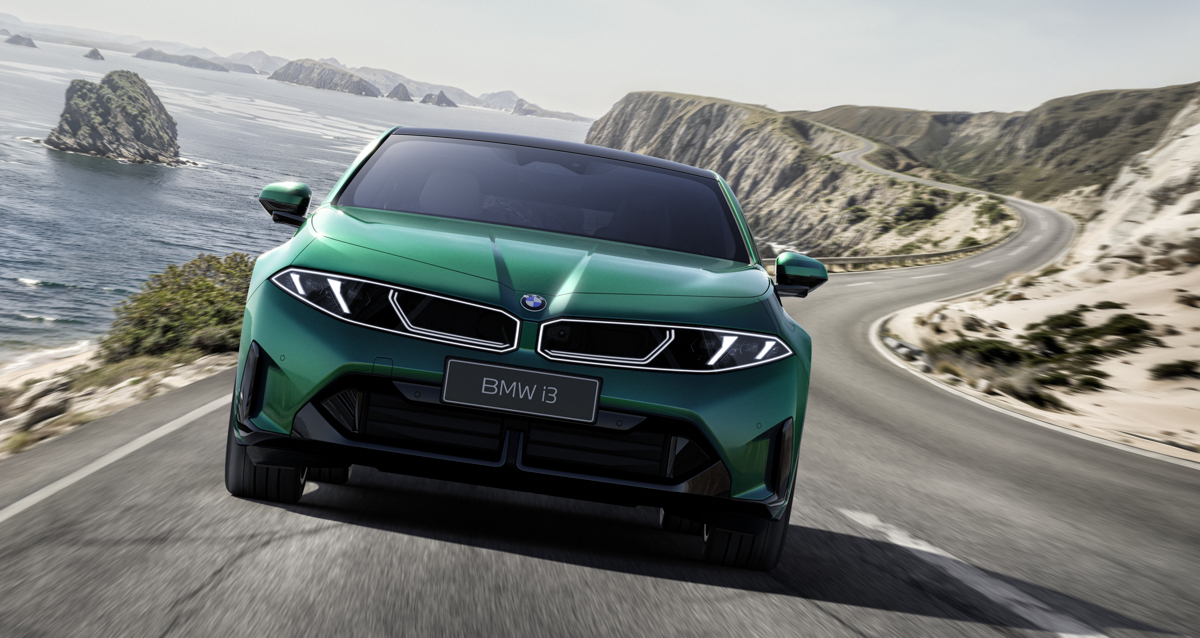
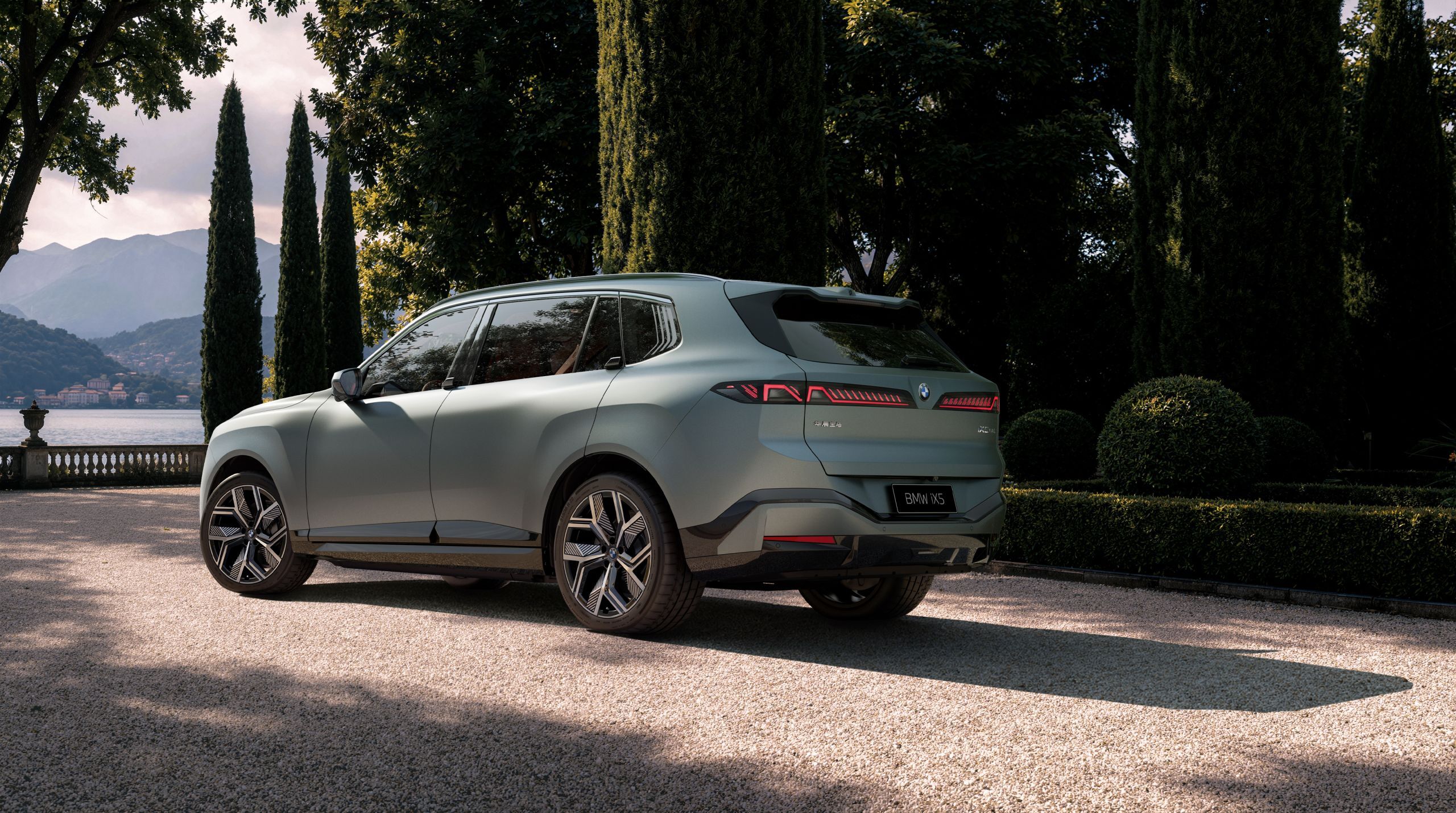
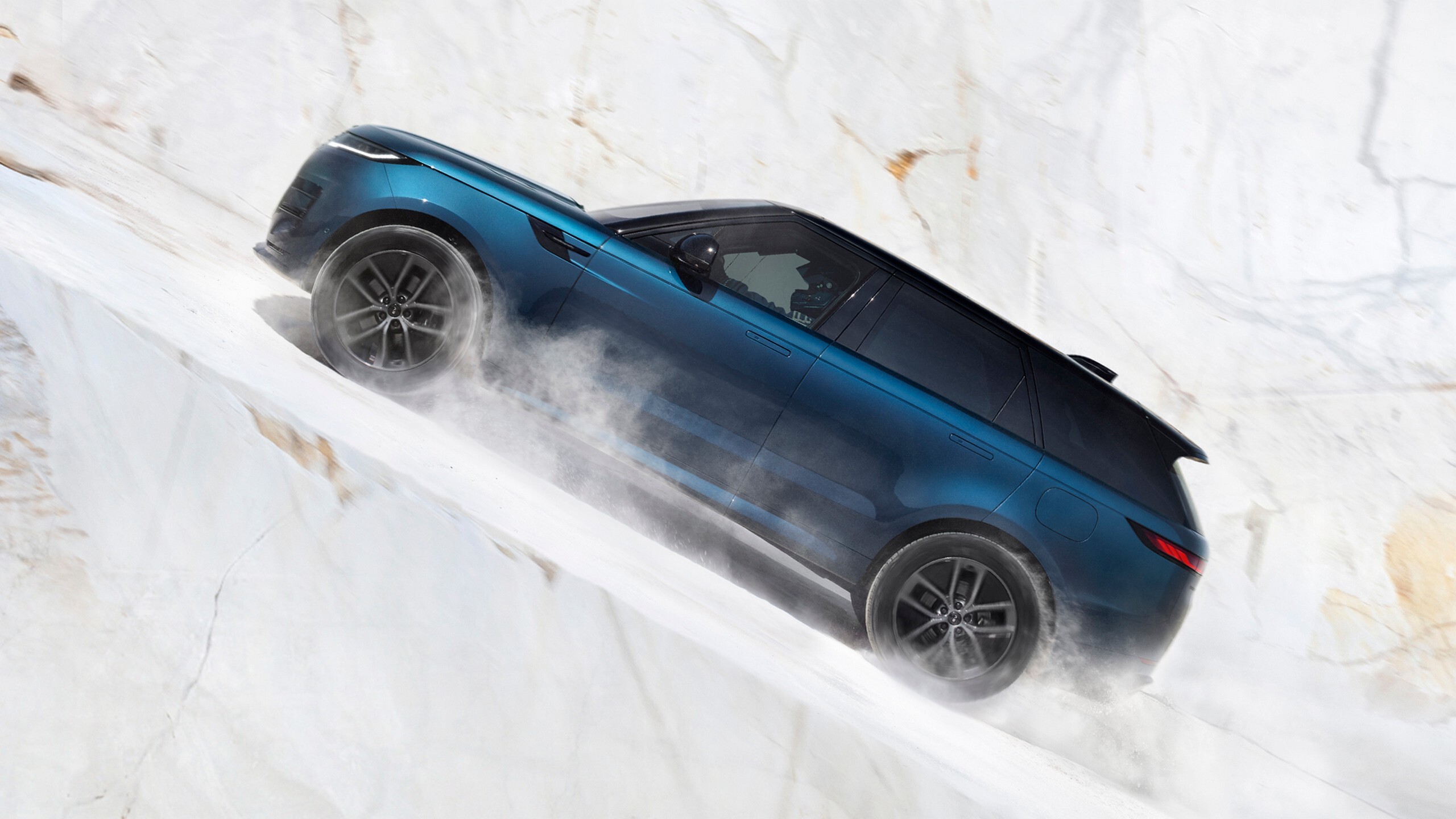
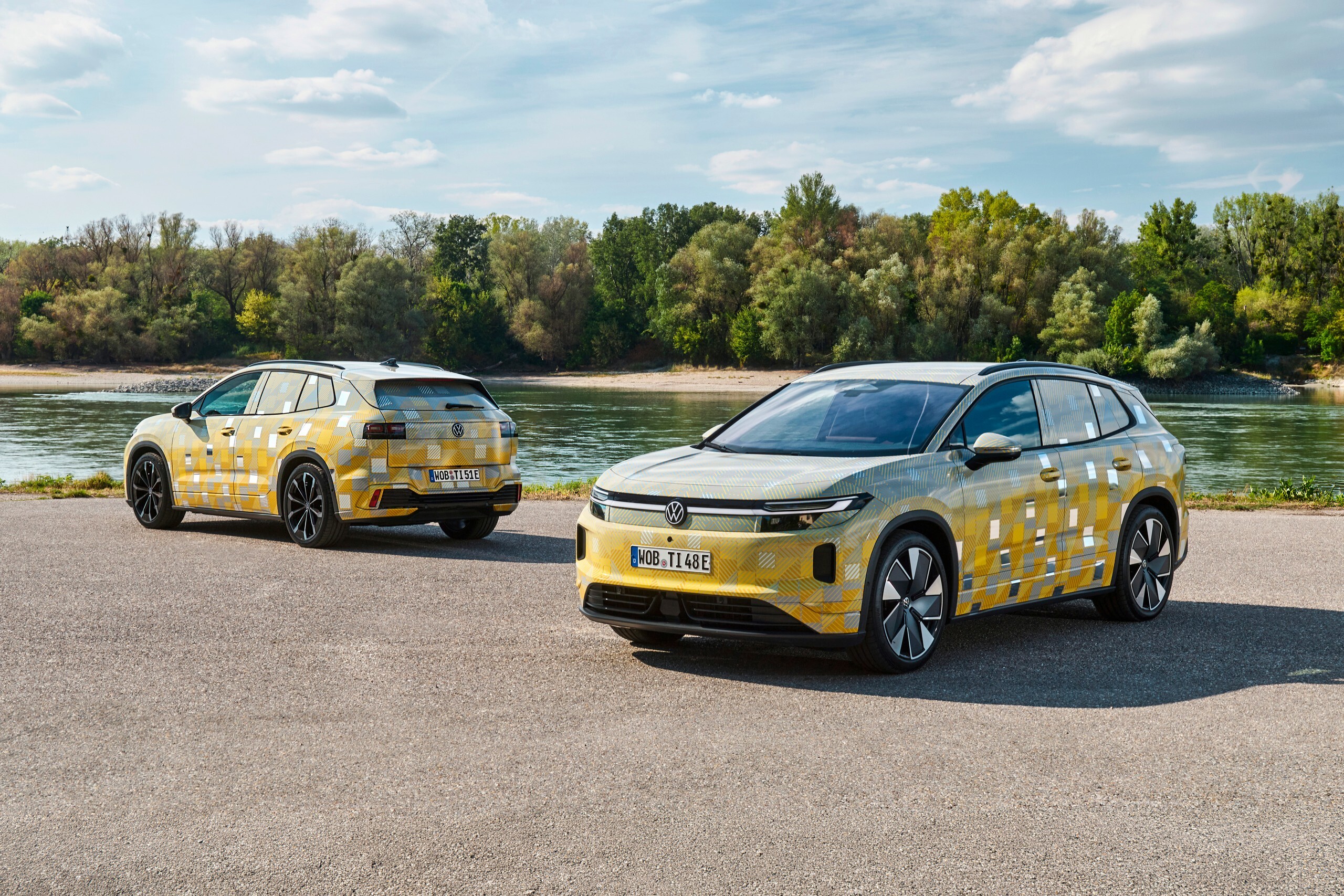
The brand’s impending launch was announced at the Paris Motor Show. It’s working to establish sales, service and partner networks across Norway and Spain, and has confirmed the 06T and 07L will be among the first models it launches. The 06T takes the form of a sleek estate while the 07L is a luxurious SUV, and they will ultimately be joined by six other models over the coming three years.
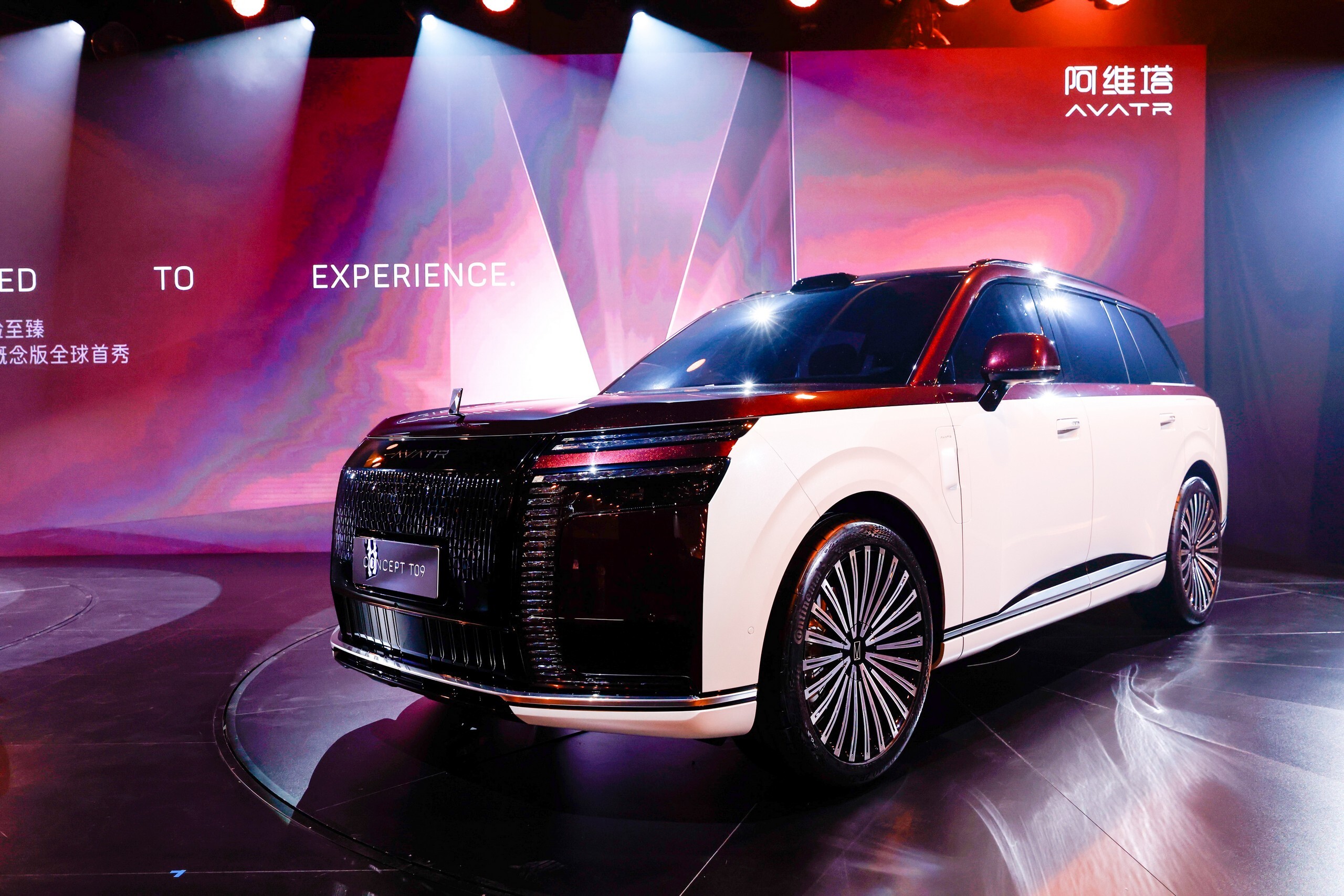
One of these new models will be the Avatr T09. Previewed in Paris with the T09 Concept. It will be a flagship, full-sized SUV designed to rival vehicles like the Li Auto L9, Aito M9, Zeekr 9X, and even models like the Mercedes-Maybach GLS and Rolls-Royce Cullinan.
Recent filings made in China have already revealed many key details about the production model. It will be sold as a range-extender EV with options for either a turbocharged 1.5-liter inline-four with 141 horsepower (105 kW), a front motor with 241 hp (180 kW), and electric motors at the rear with 415 hp (310 kW). A turbo 2.0-liter four-cylinder with 201 hp (150 kW), a 241 hp (180 kW) front motor, and a pair of 302 hp (225 kW) rear motors will also be offered. Both versions will launch in China with a 71.24 kWh battery. It’s unclear if the European model will have the same specifications.
While Avatr is only now expanding into Europe, it already has a presence in more than 70 countries and regions and plans to expand to 110 countries by 2030. So far, the Chinese brand has sold more than 280,000 vehicles. Interestingly, Avatr’s global design center is based in Munich, Germany, and designers there work with those at its Shanghai design center to craft models that should appeal to global buyers.
Avatr Overseas Business head Justin Li spoke at an event in Paris, and he said: “Avatr has been a global brand from the very beginning. Over the next three years, six models will be launched in Europe spanning mid‑size SUVs, large SUVs and shooting‑brake body styles. In 2027, Norway and Spain will serve as AVATR’s European launch markets, where the AVATR 06T and 07L will make their European debut, officially embarking on a new journey for AVATR in Europe.”
Avatr will work with local dealers and service partners across Europe and provide full-lifecycle support to local buyers thanks to a European spare-parts logistics system and roadside assistance.
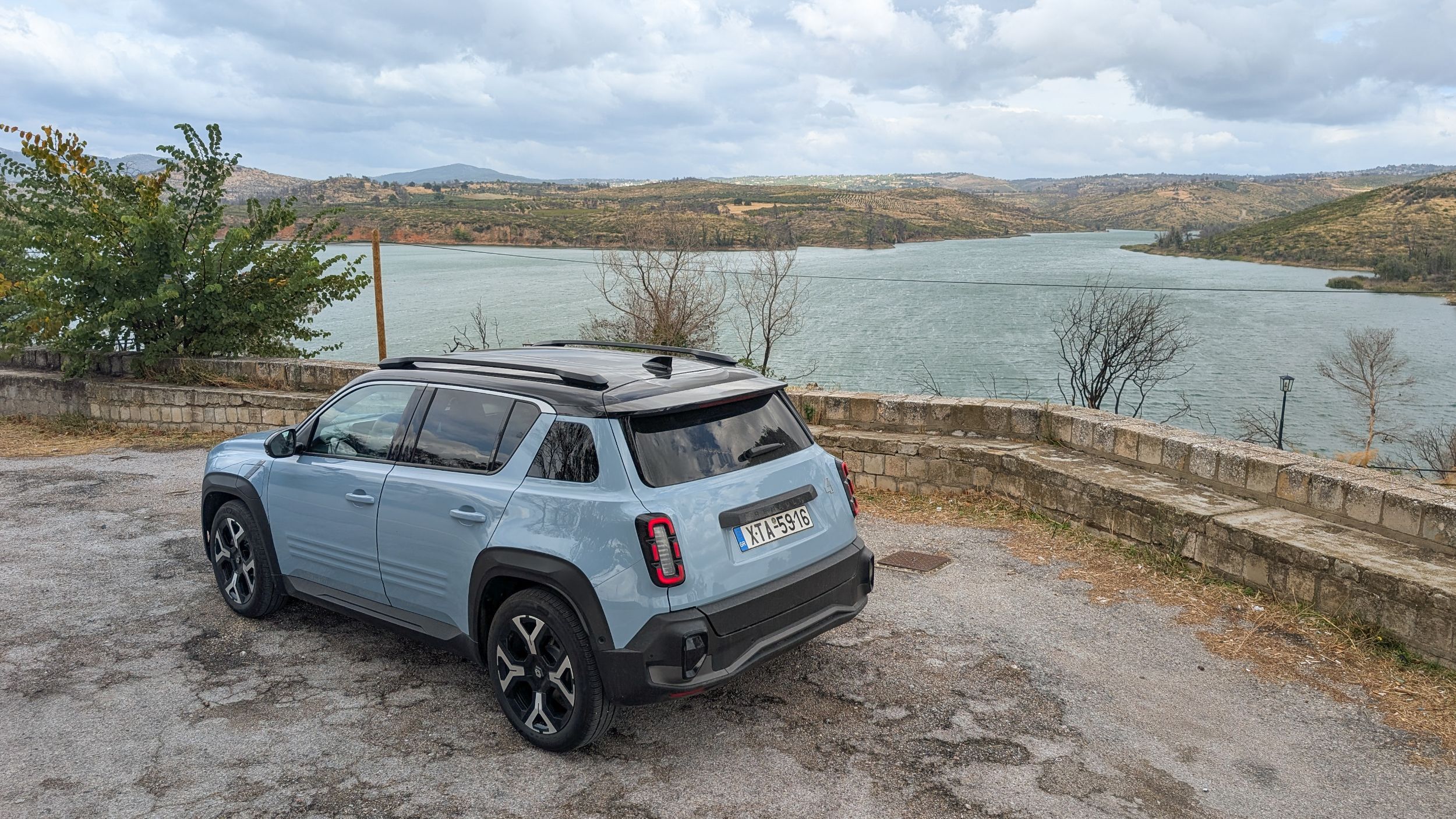
One would think that Europe has enough small SUVs to satisfy the growing demand, but every once in a while, a new addition to the segment proves there’s always room for one more. A fitting example is the Renault 4 E-Tech, an EV-only alternative to the Clio-based Captur with a retro-modern design and Renault 5 E-Tech underpinnings.
A few months after we drove the R5 hatchback, we got the keys to the R4 crossover which – unlike what the numbers may suggest – is a larger and more practical offering.
Our press car is the mid-spec Techno trim, slotting right in between the entry-level Evolution and the flagship Iconic. Besides the standard Renault 4 E-Tech, the company is also offering a Plein Sud variant with a retractable fabric top creating an open-air feeling.
QUICK FACTS
› Model
Renault 4 E-Tech
› Powertrain
Single Electric Motor (FWD)
› Output
148 hp (110 kW / 150 PS)
› Torque
245 Nm (180 lb-ft)
› 0-100 km/h (0-62 mph)
8.2 seconds*
› Top Speed
150 km/h (93 mph)*
› Battery
52 kWh Lithium-ion
› Range (WLTP)
415 km (258 miles)
› Dimensions
163.2 in L x 70.9 in W x 61.9 in H (4,144 x 1,800 x 1,572 mm)
› Wheelbase
103.3 in (2,624 mm)
› Boot Capacity
420 lt (14.8 cubic feet)
› Curb Weight
1,462 kg (3,223 lbs)*
› Price (Greece)
from €33,500 ($37,500)
SWIPE
*Manufacturer
But let’s start with the basics. The original R4 was introduced in 1961 as the first front-wheel-drive passenger car by Renault. The 4L was designed to serve families and workers, and ended up selling 8.13 million units over its 33-year production run, becoming one of the most successful French vehicles in history.
Modern Revival With A Twist
Fast forward to the present, Renault has infused the spirit of the classic estate/hatchback into a modern electric crossover. The production version debuted in 2025, following the rugged Renault 4ever Trophy concept from 2022.
Of course, 64 years of evolution brought big changes to the technology and the footprint, with the R4 E-Tech being almost half a meter longer compared to its predecessor. Still, the EV remains on the smaller side of Europe’s B-SUV segment measuring 4,144 mm (163.2 in) long. When compared to the R5, the R4 is 222 mm (8.7 in) longer, with 84 mm (3.3 in) of the extra length between the axles.
Photos and Videos: Thanos Pappas/Carscoops
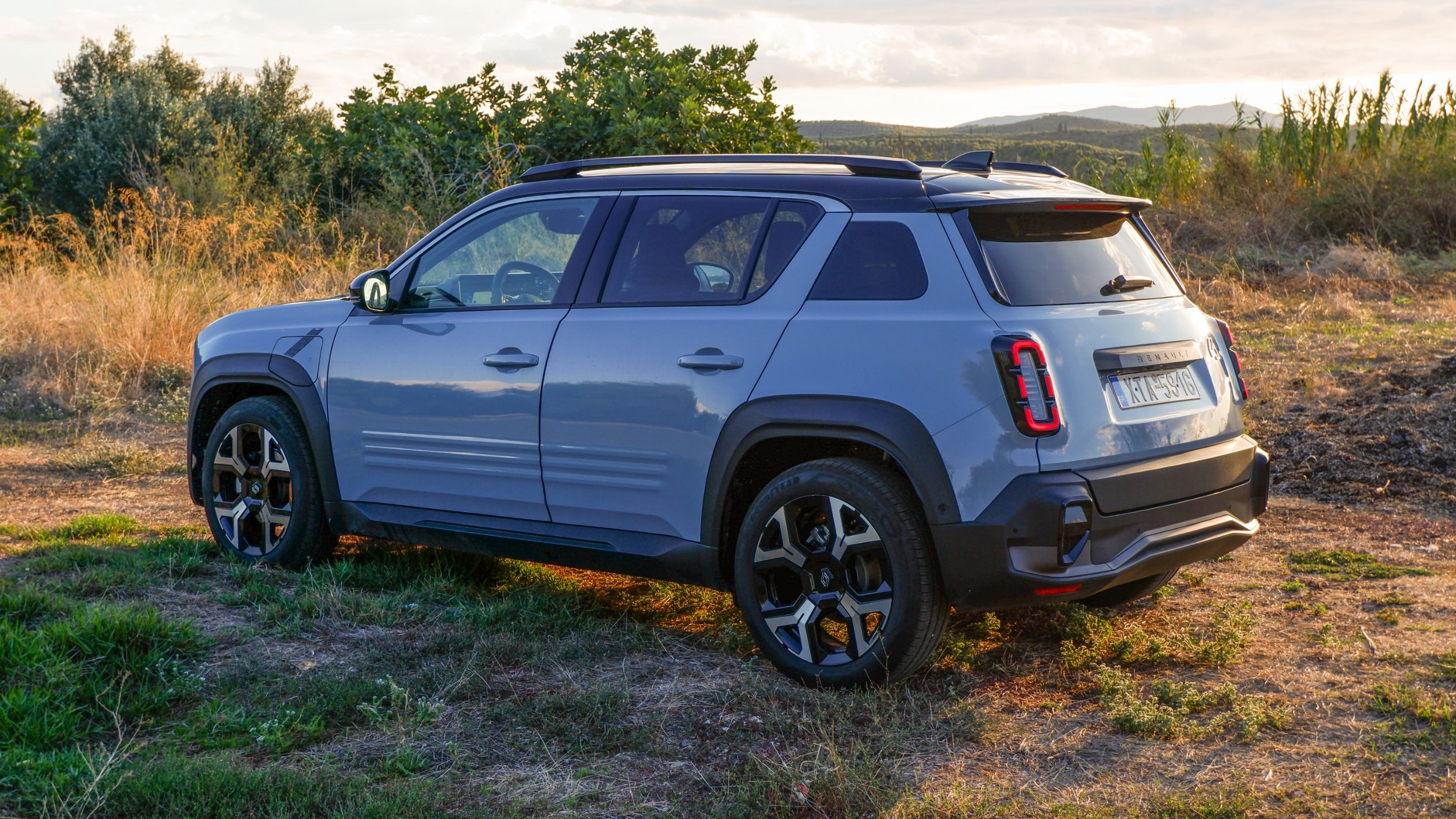
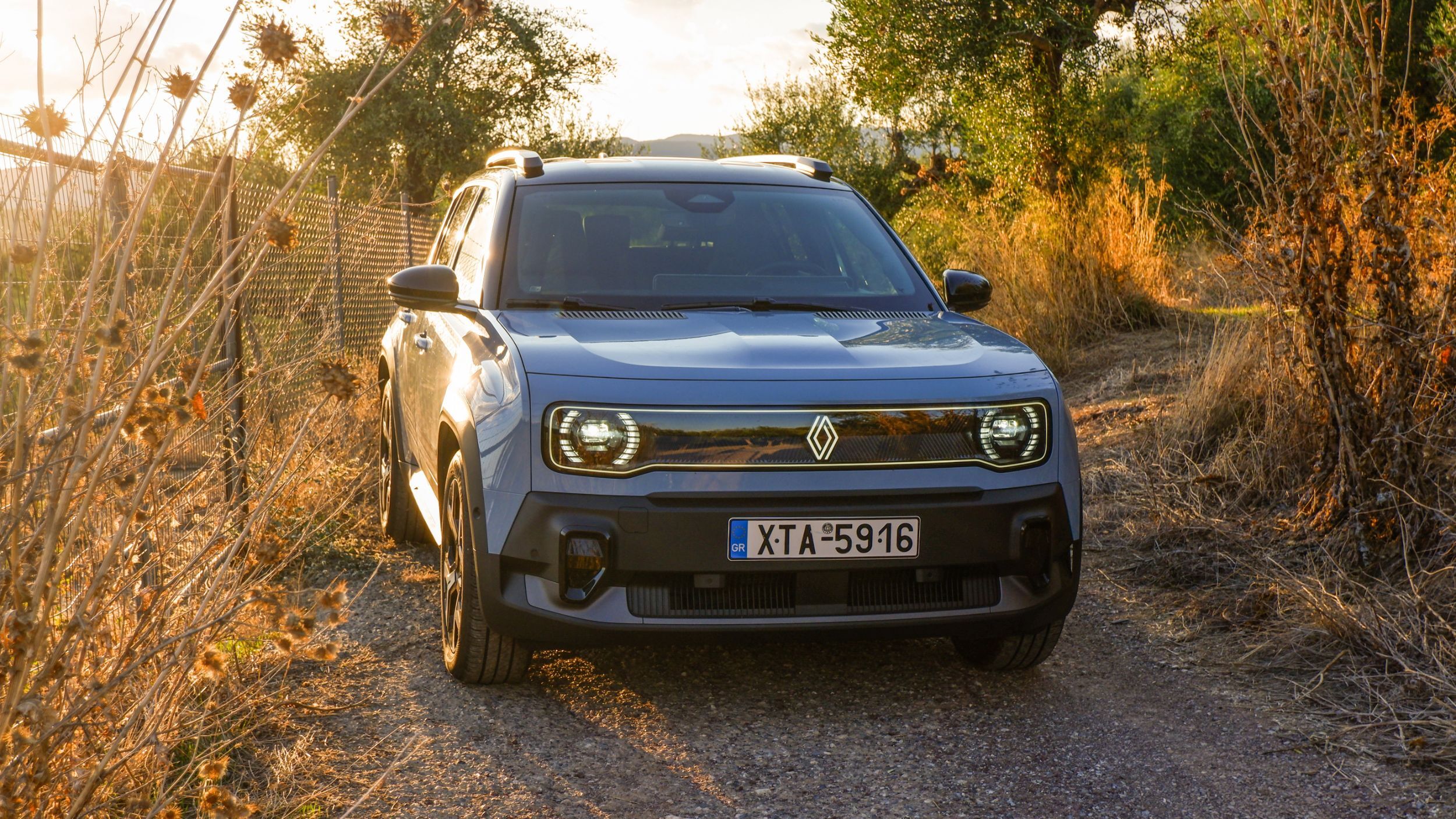
Despite the bump in dimensions and the jump into crossover territory, Renault designers managed to seamlessly integrate multiple styling references to the original. The R4 might not be as attractive as the R5, but it still turns heads on the road thanks to its retro yet fresh appearance.
Highlights include the tastefully illuminated grille integrating the semi-circular LED headlights, the protective cladding on the bumpers, the squared-off wheel arches, the sculpted lines on the profile, and the signature greenhouse. The pill-shaped LED taillights and black roof are reminiscent of the previous-gen Mini Countryman, but some of these features were taken from the classic 4L.
Modern Interior Design
Moving inside, the dashboard and and digital cockpit are carried over from the Renault 5 E-Tech. While the upper and lower sections are dominated by hard plastics, the fabric inserts on the dashboard and the door cards help improve the perceived quality.
The 10.1-inch infotainment display sits right in your face, but thankfully there’s a power button so you can switch it off when you’re driving at night. The Google-powered OpenR software is easy to use and responsive, although I did encounter a few Android Auto bugs during my time with it. The “Reno” AI assistant is also a bit annoying, popping up at random times.
Minor ergonomic issues include the volume buttons which are mounted on the top of the screen, even though there is a dedicated media stalk behind the steering wheel. Another thing that needs time to get used to is the position of the column-mounted gear selector, creating a stalk-heavy setup. On the bright side, the physical controls on the center console are a wonderful touch, giving you immediate access to the climate settings.
Space And Equipment
The real advantage of the R4 over the R5 lies in passenger accommodation thanks to the longer wheelbase and the taller roofline. Rear-seat headroom is generous and knee room is adequate, while the rear bench can accommodate three adults for short trips.
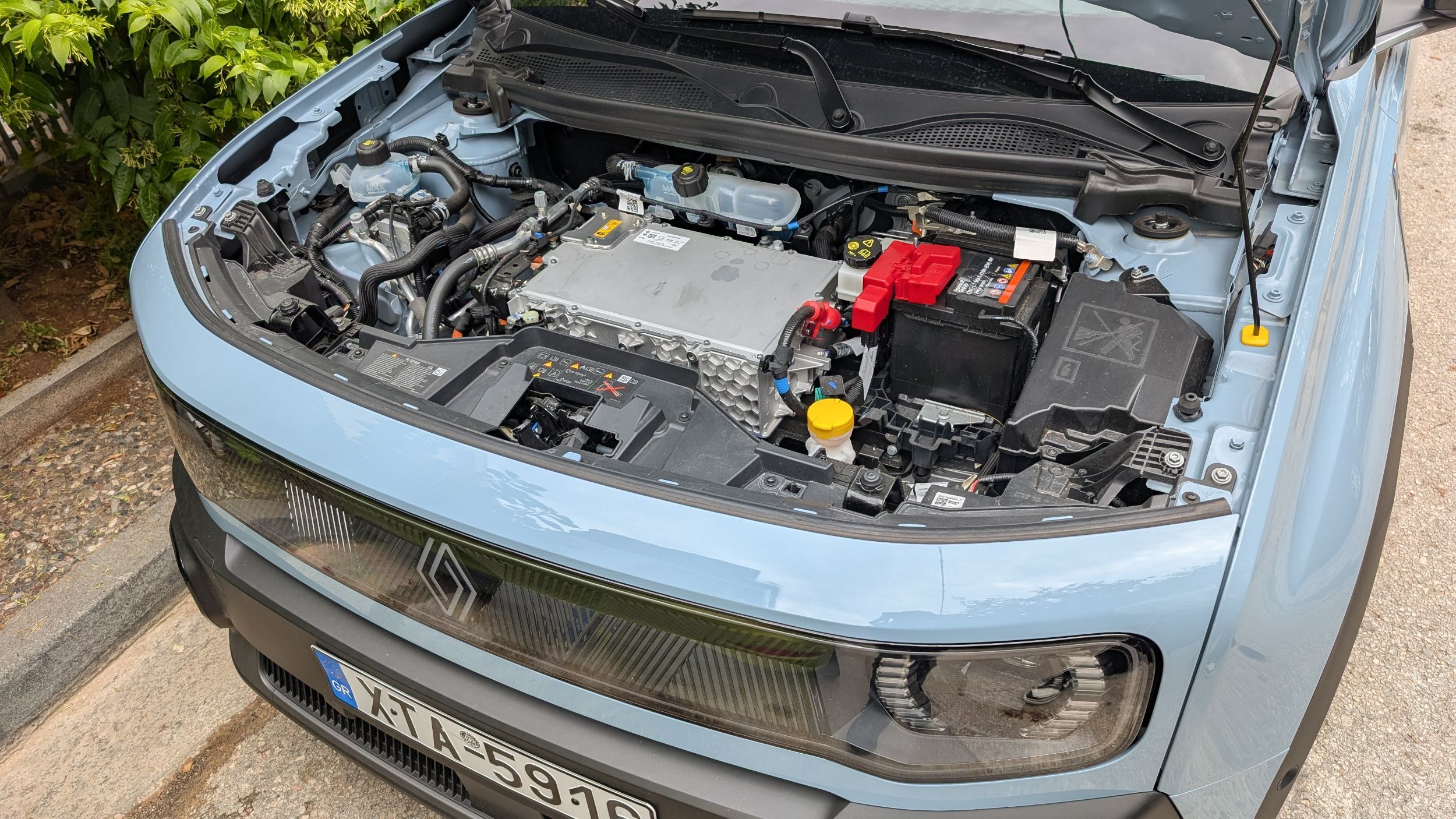
The 420 lt (14.8 cubic feet) boot is large enough for a vehicle of its size, although it would be nice to have a dedicated compartment for the charging cables since the electric motor occupies all of the space under the hood.
I was also impressed with the standard equipment. Our mid-spec Techno trim comes with 18-inch alloy wheels, roof rails, the digital cockpit, a six speaker audio system, a wireless charging pad, four USB-C outlets, auto climate control, a hands-free tailgate, auto-folding mirrors, Multi-Sense drive modes, and a comprehensive ADAS suite with auto parking.
The only reason to upgrade to the flagship Iconic is if you really need the heated steering wheel and heated seats with a massaging function for the driver and synthetic leather upholstery. And the only important omission from entire lineup is rear climate vents, although this is common amongst B-SUVs.
Superb Road Manners
Believe it or not, the greatest strength of the R4 E-Tech is how it drives. The EV-dedicated AmpR Small architecture is a lot more sophisticated than its size suggests. The superb suspension setup with a standard multi-link rear axle is only slightly softer than the R5, enough to make it a bit more comfortable without loosing its sharpness.
On B-roads, the R4 drives like more like a hatchback than a crossover, keeping its composure in the corners with almost no body roll. At full throttle and in slippery conditions the FWD setup might struggle to put the power on the road, causing torque steer. The steering might not be as communicative as in the Ford Puma, but it is quick and direct. In the Sport mode, it gets a slightly more weighted feel, making the driving experience more enjoyable than your average EV.
At the same time, the R4 offers a refined and quiet ride on the highway, while being zippy and agile in urban environments. Thankfully, Renault listened to our feedback and added a One Pedal drive function making life easier in everyday traffic.
Our press car featured the flagship powertrain with a front-mounted electric motor producing 148 hp (110 kW / 150 PS), accelerating from 0-100 km/h (0-62 mph) in 8.2 seconds.
In reality, the R4 feels a lot faster than the number suggests, especially within the 40-120 km/h (25-75 mph) threshold. The Sport mode unlocks full power, the Comfort is slightly smoother in its response, while the Eco significantly limits the output for the sake of efficiency making it perfect for the city.
In terms of range, the R4 E-Tech with the 52 kWh battery can easily exceed 400 km (250 miles) in suburban and city traffic, meaning that the average driver will be charging it less often than once per week. However, if you are constantly driving at highway speeds, real-world range drops closer to 250-280 km (155-186 miles). Thankfully, the battery can replenish 15-80% of its energy in roughly half an hour when connected to a 100 kW DC charger. In my case, I only had to stop for 10-15 minutes to complete a 260 km (160-mile) journey.
For buyers seeking a lower price point, Renault also offers a cheaper version with a 40 kWh battery offering a 310 km (193 mile) range, and a 118 hp (88 kW / 120 PS) electric motor. By the end of the year, the lineup will grow further with an entry-level Jogging variant featuring an even smaller 37 kWh battery, 305 km (190 miles) of range, and an 107 hp (80 kW / 110 PS) electric motor.
Still, based on my experience with the 52 kWh battery, I wouldn’t recommend opting for the smaller units if you intend to use the R4 as a family hauler or outside the city walls. Fortunately, the 2027 model year updates have increased the range of the flagship variant to 415 km (256 miles). Overall, I believe that the R4 would still benefit from the addition of a longer-range battery option later in the product cycle.
As for a potential dual-motor AWD option like the one offered by the rival Kia EV3, it would certainly make the R4 more suitable for all-weather adventures, although there’s no indication there will ever be one. After all, even the larger Megane E-Tech and Scenic E-Tech EVs are exclusively available with FWD setups despite riding on the AWD-compatible AmpR Medium architecture.
Pricing And Rivals
We tested the Renault 4 E-Tech in Greece, where it is priced from €28,900 ($32,400) for the base 40 kWh Evolution 120 PS model – dropping to as little as €24,400 ($27,300) when you account for the local EV subsidies and scrappage benefit. This is only €2,000 ($2,200) more expensive than the smaller Renault 5 E-Tech hatchback with the same powertrain, making it a good deal.
Stepping up to the larger 52 kWh battery with 150 PS brings the entry point to €33,500 ($37,500) before subsidies for the Evolution trim. Our mid-spec Techno retains at €35,500 ($39,800), while the flagship Iconic tops out at €37,500 ($42,000). Finally, the Plein Sud canvas roof adds a €1,200 ($1,300) premium.
Key rivals in the crowded subcompact electric SUV segment include the Peugeot E-2008, Ford Puma Gen-E, Kia EV2 and EV3, Jeep Avenger Electric, Mini Aceman, Fiat 600e, as well as the budget-conscious and family-friendly Citroën ë-C3 Aircross.
Besides EVs, the model is also facing competition from numerous well-established hybrid and ICE alternatives like the super-popular Toyota Yaris Cross and the Dacia Duster. Another option is Renault Captur sibling which starts from as little as €20,900 ($23,400) for the cheapest LPG/gasoline version and from €24,500 ($27,500) for the self-charging hybrid.
Verdict
The Renault 4 E-Tech does a great job in expanding the charm of the closely-related R5 hatchback by adding genuine day-to-day practicality without sacrificing much of its fun-to-drive character. While a longer-range battery option would have made it even more desirable, it already stands out as one of the most complete subcompact electric crossovers.
The combination of eye-catching looks with a generous equipment, and a superb chassis setup for the standards of the segment, makes the R4 E-Tech a compelling case for being the best mainstream retro EV on the market. Too bad it’s availability is currently limited to Europe and the UK.
BYD’s electric Atto SUV charges faster than any rival – with the right charger.
The 115-kWh Blade battery can charge from 10% to 70% in five minutes.
Most potent version makes 764 hp and gives a 374-mile WLTP electric range.
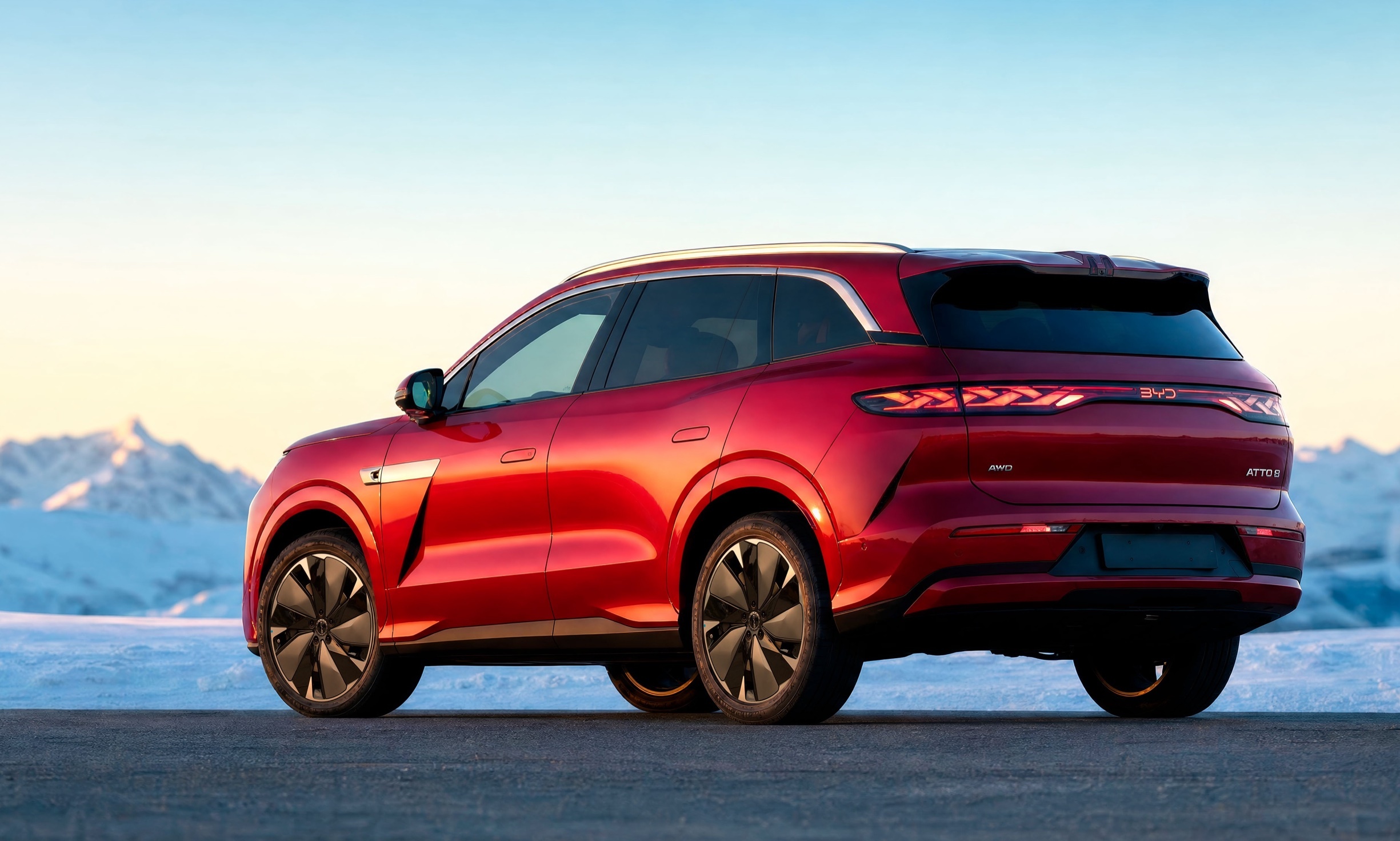
Fast electric SUVs are nothing new. But BYD’s new Atto 8 is fast in a straight line and at the charging station. You might even spend less time topping up the battery than you would pumping gas into a combustion SUV and paying for it.
The Atto 8 made its European debut at this week’s Paris Motor Show, and on the stand, it doesn’t look particularly groundbreaking. Sure, it’s BYD’s first three-row vehicle for Europe, where it will take on the new Skodq Peaq. But the design, a predictable mashup of existing BYD styling cues, is entirely forgettable.
It’s a different story under the skin. The Atto 8 is powered by BYD’s second generation Blade battery, and the generous 115 kWh capacity is actually the least interesting thing about it. Because the real story is the Atto 8’s ability to charge that huge battery from 10-97 percent full in only nine minutes.
And you can cut that almost in half by settling on a 10% to 70% fill, pulling the plug before the charge rate slows for the final push. Even in chilly (-30 C) weather, a 20-97 percent charge is done in 12 minutes. That compares with a 10% to 80% fill time of 28 minutes for the new Skoda Peaq.
BYD’s Flash Charging technology makes those feats possible, but only if you can find a Flash charger. The automaker is still building the infrastructure, so they’re few and far between right now, although BYD says 3,000 Flash stations will be live across Europe by the end of 2027.
Choose 456 HP Or 764 HP
Both versions of the 198-inch (5 m) SUV get the same battery and charging capabilities, but not the same powertrain. The entry level Design comes with a 456 hp (462 PS / 340 kW) electric motor and rear-wheel drive. That might sound like a solid number of horses, but the weight of the huge battery means zero to 62 mph takes a leisurely 8 seconds.
Atto 8 Excellence adds a second motor, boosting overall output to 764 hp (775 PS / 570 kW), and chopping the sprint time to 4.6 seconds. But it also chops the available range. The RWD 8 can over a respectable 405 miles (652 km) on a fill, and the dual-motor SUV, a less impressive 374 miles (602 km).
26-Inch Head-Up Display
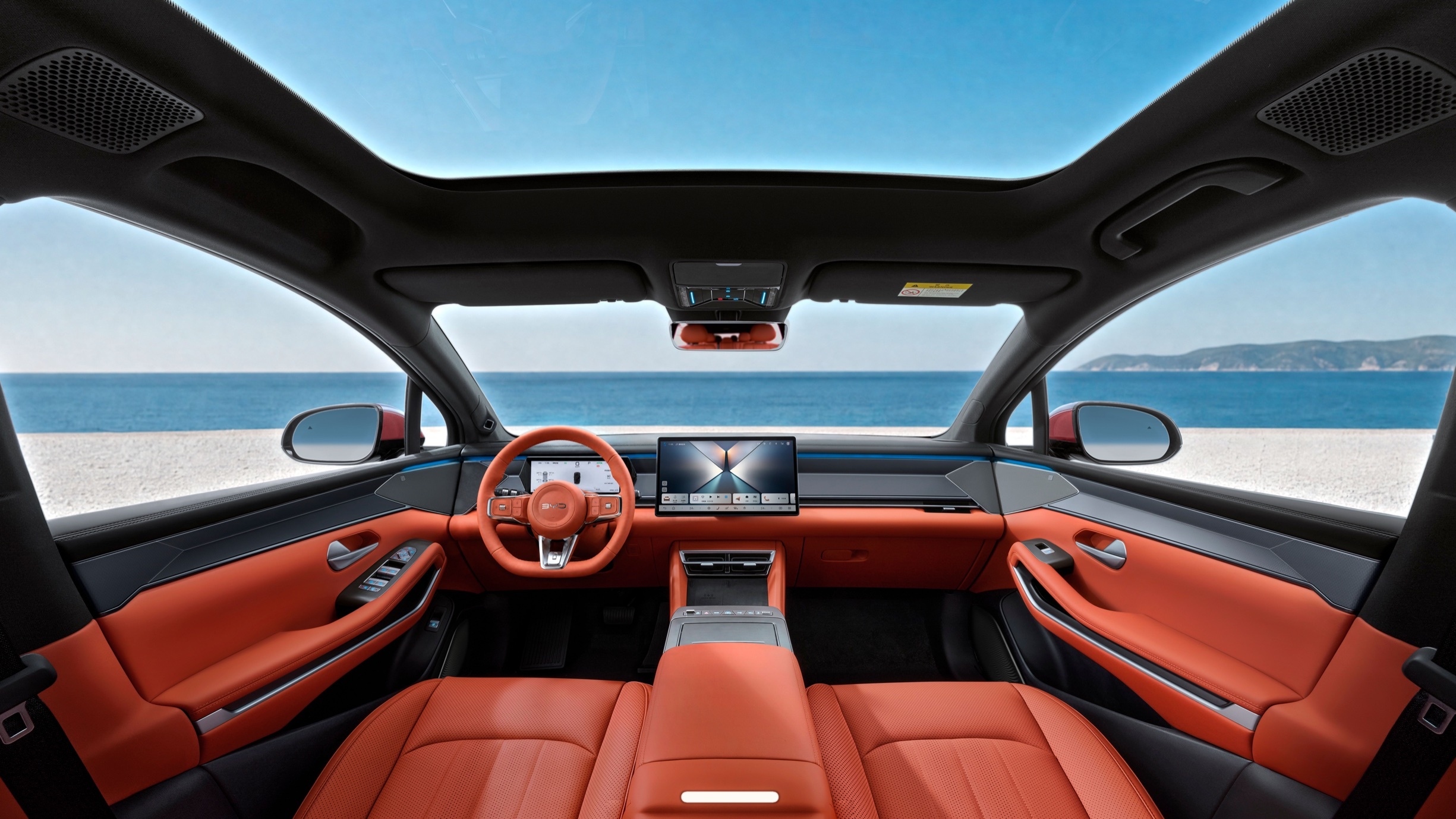
The Atto 8’s flagship status in BYD’s lineup means it comes loaded with standard equipment, including a panoramic glass roof, a 26-inch head-up display, and heating, ventilation and massage functions for both the front seats, and the outer pair in the middle row. Both models get dual 50W smartphone chargers, and Excellence models attempt to justify their name with a refrigerator.
Will it also be excellent value? We’ll find out later this year, closer to the spring 2027 on-sale date, by which time BYD might have plumbed in a few more Flash chargers.
Fiat has launched the new Multiplay concept in Paris.
It combines elements from SUVs, MPVs, and pickups.
It has a family-friendly cabin in the spirit of the Multipla.
Fiat Multipla fans rejoice, the spirit of the polarizing minivan is back in a quirky concept. The Multiplay is a modular vehicle that transforms from a family-friendly SUV with minivan traits into a lifestyle pickup.
The “3-in-1” concept takes center stage at the Paris Motor Show. In Fiat’s own words, the goal was to combine “the space efficiency of an MPV, the character of an SUV and the versatility of a pick-up”, creating a single vehicle that meets the needs of “a family juggling work, school, sport and outdoor activities”.
Visually, the Multiplay looks like an evolution of the Fiat Concept Pick-Up from 2024, albeit with a much shorter hood, a different greenhouse, and a revised lighting signature retaining the pixel-style LEDs from the Grande Panda. It also has a generous ground clearance and plastic cladding around the wheel arches looking like a crossover minivan.
Stellantis
However, the coolest feature is its ability to transform into a different bodystyle thanks to what Fiat calls the “Metamorfosi” architecture. The rear section of the roof slides forward together with the third row of seats, turning the Multiplay into a dual-cab four-seater pickup with an exposed cargo are at the back.
In truck form, the concept has a split tailgate, a retractable bed cover and a clever system on the modular floor for securing cargo in place. Furthermore, the roof spoiler can rotate, revealing an integrated bike rack for carrying a pair of bicycles.
Stellantis
The Multiplay measures 4.45 m (172.5 in) long which is shorter than a Jeep Compass. Still, when dressed as an SUV it has a three-row interior with a 6+1 seat configuration designed for family use.
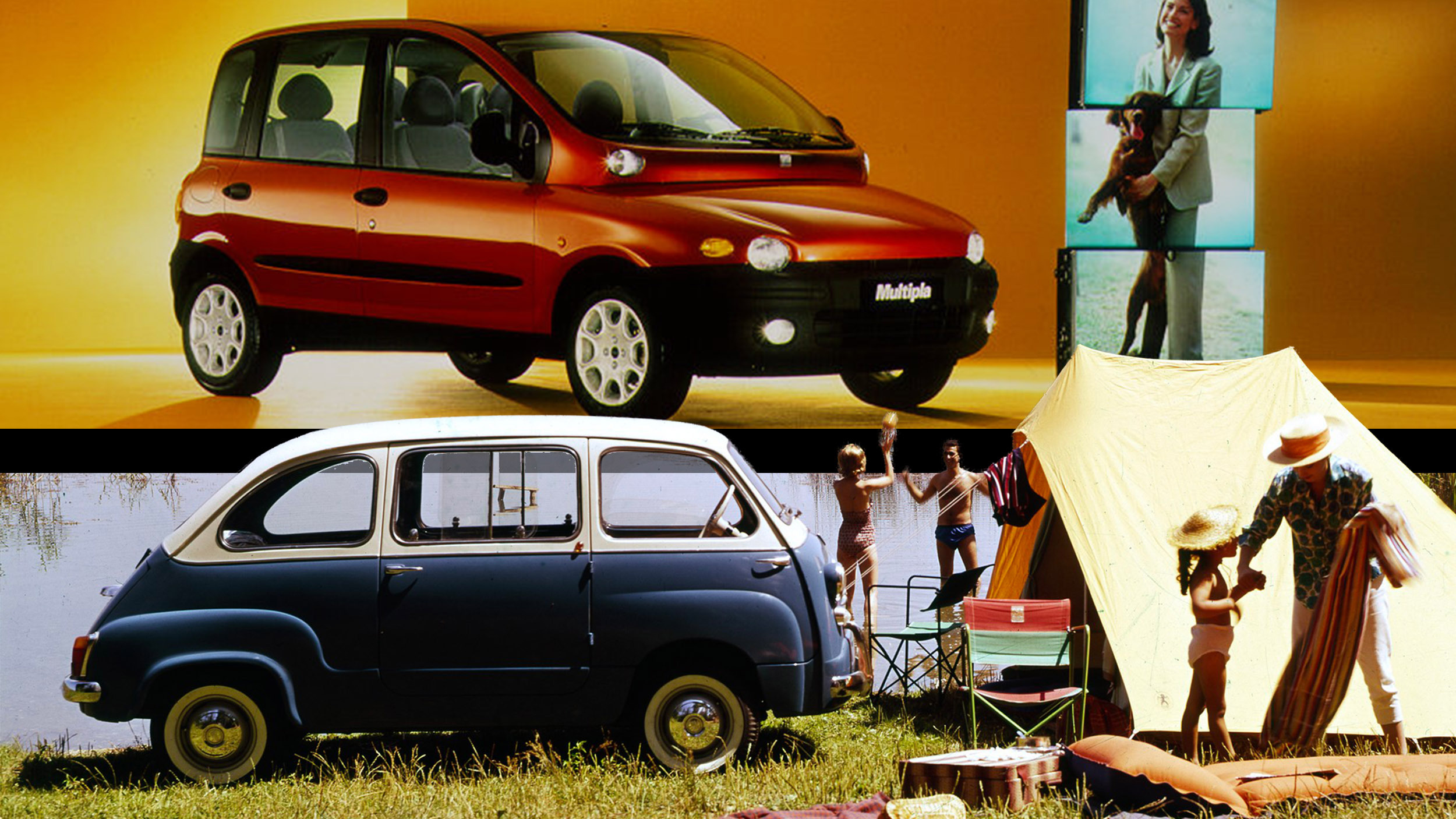
The number six is used deliberately, as the 1955 Fiat 600 Multipla could seat six people in three rows despite measuring 3.5 m (137.8 in) long. In a similar context, the 1998 Fiat Multipla came with a two-row six-seater layout while measuring only 3,994 mm (157.2 in) long.
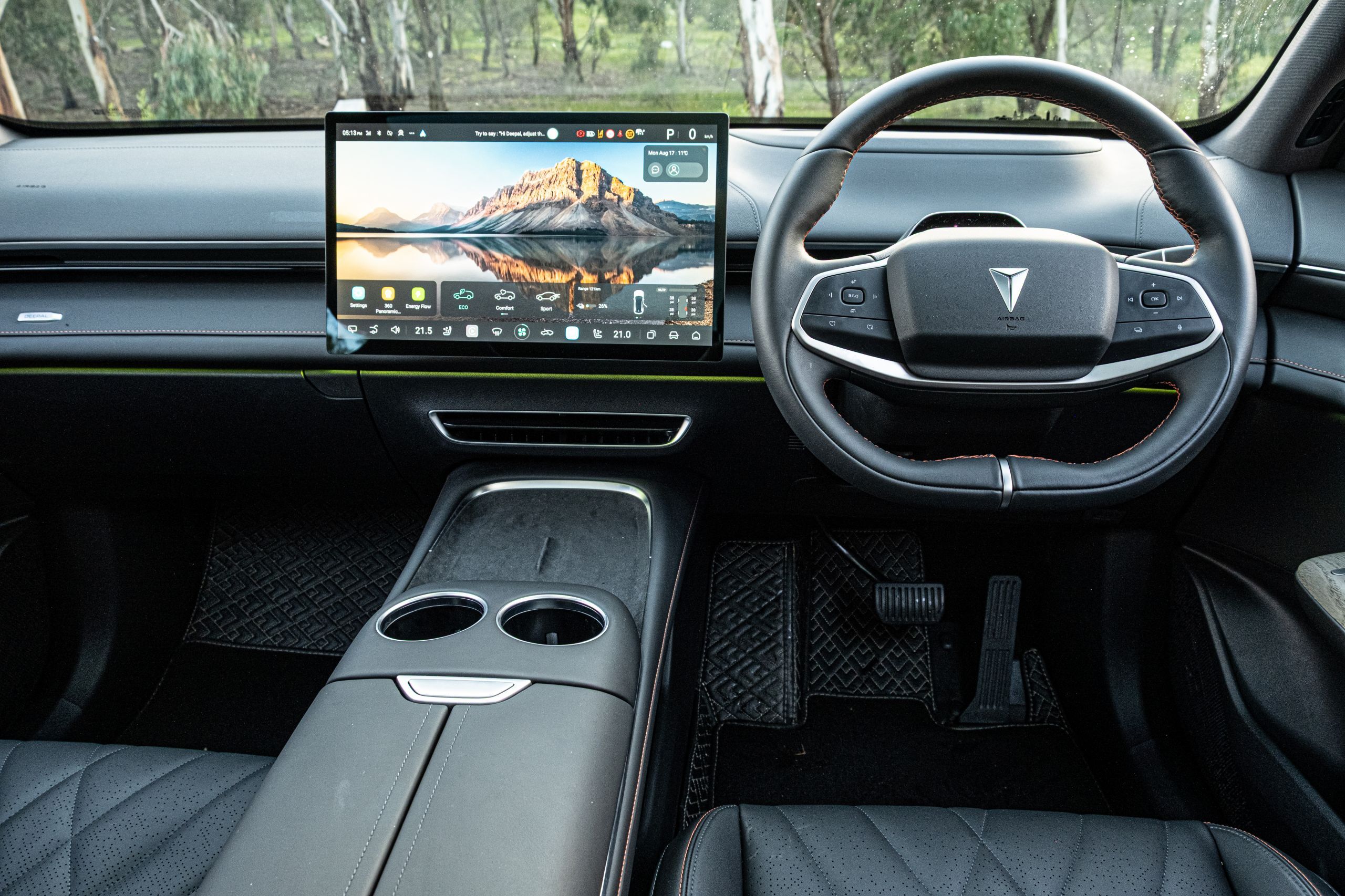
The +1 refers to a “Petsenger seat” in the second row, distinguished by the lack of a seatback and the green upholstery. The rest of the interior is bathed in orange, with green details on the futuristic dashboard, a yoke steering wheel and an ultra-wide display. Another cool touch is the front passenger seat which folds down into a comfortable recliner in combination with the cylindrical pillow on the dash.
Stellantis
The automaker didn’t get into specifics about the underpinnings or the powertrain type of the concept. Still, with no room for a combustion engine up front, it is most likely an EV.
Will They Make It?
Fiat insists that the Multiplay doesn’t preview a specific production model. Instead, it was conceived as “a laboratory of solutions for tomorrow’s mobility” meaning that some of its quirks could find their way into the future lineup.
While the “3-in-1” concept is too crazy for production, Fiat could always introduce a unibody pickup based on the underpinnings of the Grizzly and Grizzly Fastback. This could adopt a Panda-inspired styling language and eventually replace the Fiat Toro in South America. The production version of the Concept Pick-Up from 2024 could ride on the Smart Car architecture, which is compatible with gasoline, mild-hybrid, and fully electric powertrains.
PROS ›› Well-priced, plush interior, has a fridge, efficient CONS ›› Little brand value, unusual design
If you walked up to someone on the street and asked them what a GAC Aion V was, most would give you a blank stare. Those brave enough to answer might think it’s a fancy new washing machine, while others may guess it’s the name of an advanced hot-water system. It’s actually an electric SUV, and it’s launched in several markets, eager to shake up the EV establishment.
On paper, the Aion V seems almost too good to be true. This SUV promises space and comfort to match a Tesla Model Y, all while costing significantly less, having more impressive features, and being backed by one of China’s oldest and largest car manufacturers.
However, as we’ve seen with many other new cars from China, the specification sheet only tells part of the story. Building a compelling electric SUV isn’t easy. Has GAC managed to create one with the Aion V? The answer is a resounding yes.
QUICK FACTS
› Model:
2026GAC Aion V
› Starting Price:
AU$44,590 (US$31,100) plus on-road costs
› Dimensions:
181.2 x 72.9 W x 66.3 in H (4,605 x 1,854 x 1,686 mm)
› Wheelbase:
109.2 in (2,775 mm)
› Curb Weight:
1,880 kg (4,104 lbs)
› Powertrain:
Single electric motor / 75 kWh battery
› Output:
201 hp (150 kW) / 155 lb-ft (210 Nm)
› 0-62 mph
7.9 seconds
› Transmission:
Single speed
› Efficiency:
14.8 kWh/100 km
› On Sale:
Now
SWIPE
Photos Brad Anderson/Carscoops
Two versions of the Aion V are sold in Australia. The entry-level Aion V Premium kicks off the range, priced from AU$42,590 (US$29,700) before fees, while sitting at the top of the family is the Aion V Luxury, which we recently drove, priced at AU$44,590 (US$31,000) before fees.
The Aion V is actually in its second generation, with this model first introduced in China in mid-2024. It’s underpinned by GAC’s AEP 3.0 platform, also used by the China-exclusive Toyota bZ3X. Several different battery packs are available depending on the region. These include a 62 kWh lithium-ion pack from CATL, a slightly larger 64.5-kWh LFP battery, a 75-kWH LFP, and a 90-kWh NMC battery. All versions sold in Australia come standard with the 75 kWh pack, directing power through a single front-mounted electric motor with 150 kW (201 hp) and 210 Nm (155 lb-ft)of torque.
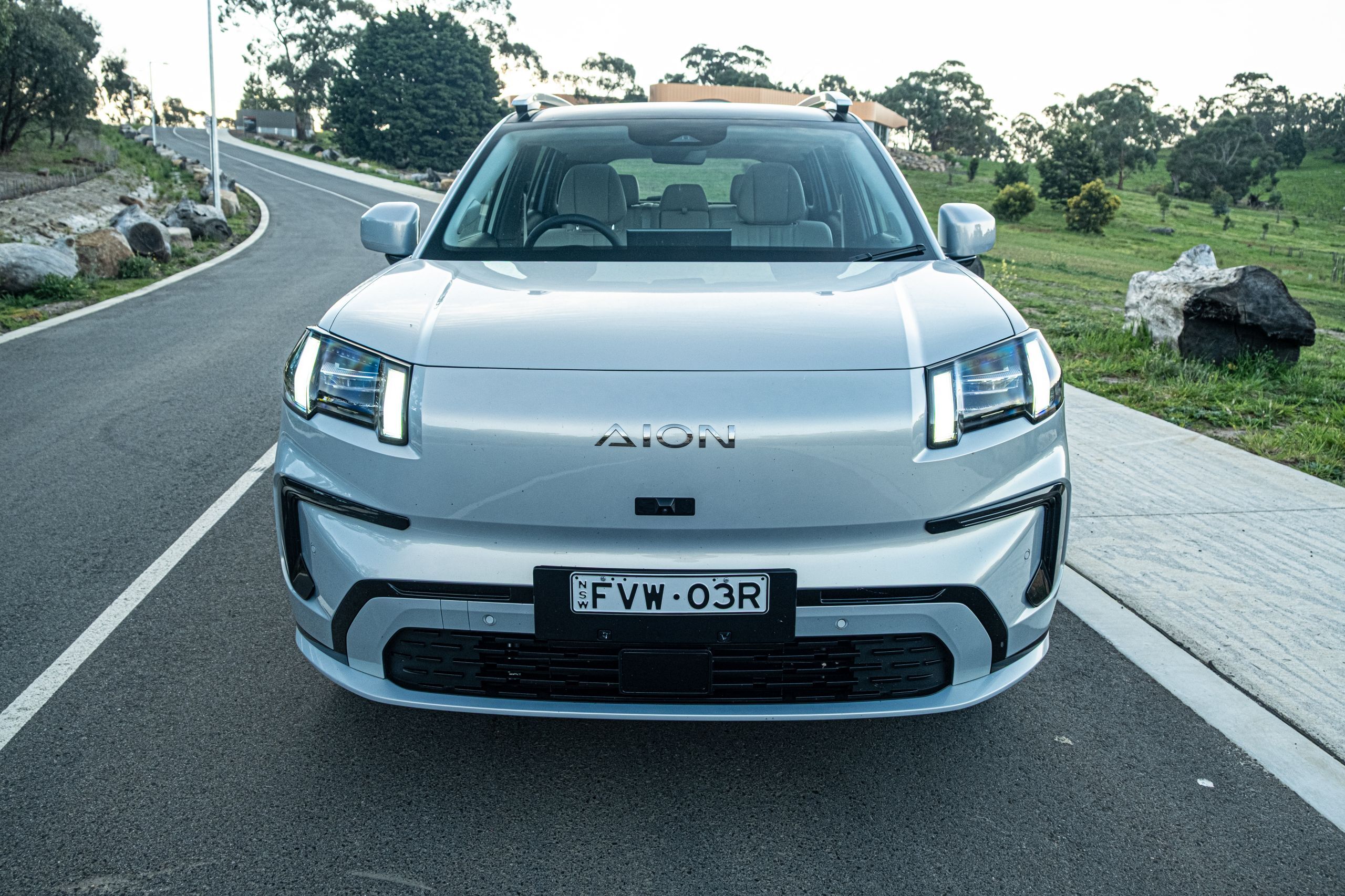
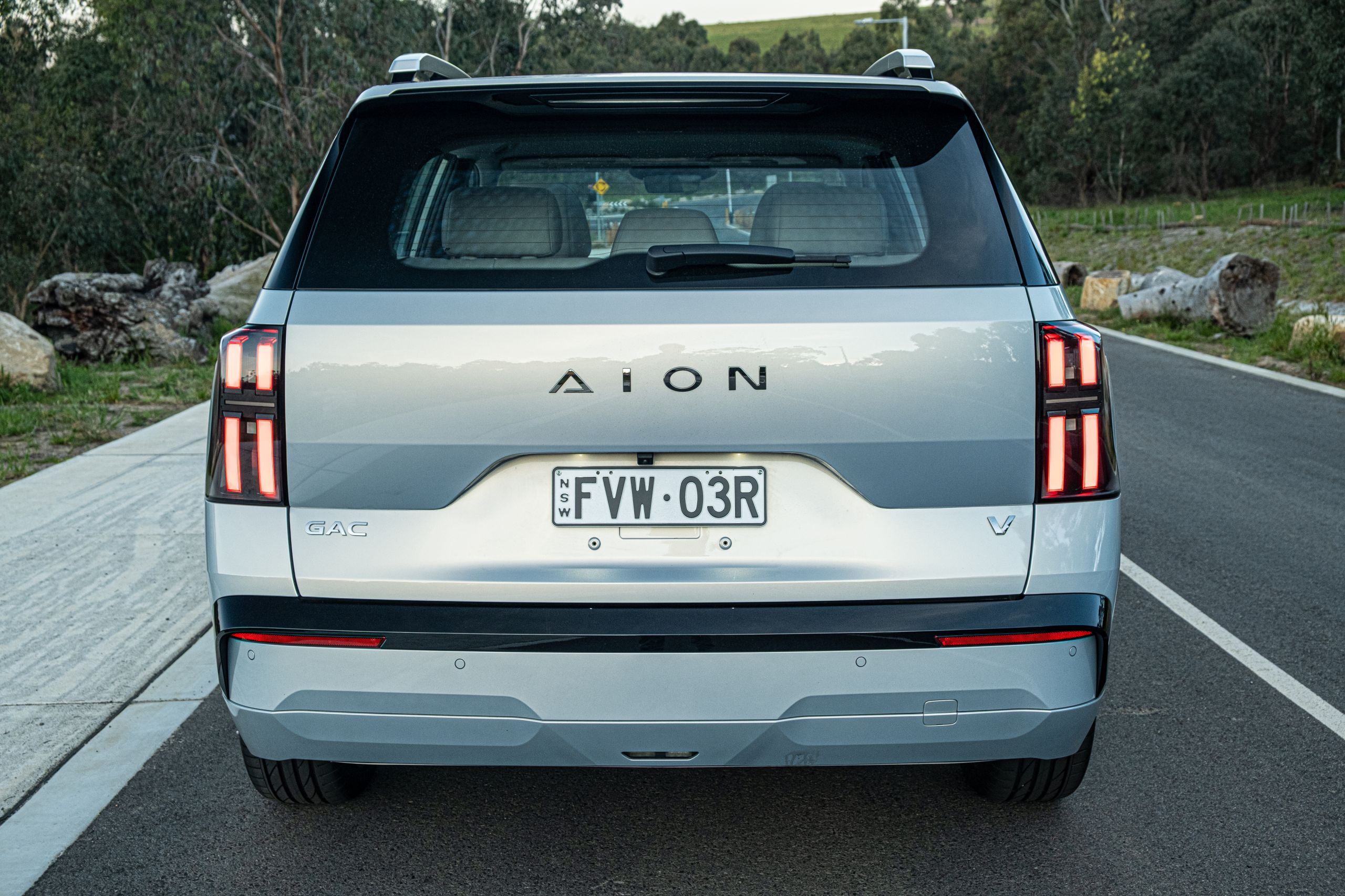
Although Chinese car brands have shown they can build cars at almost unthinkable price points, not all of them have figured out how to build a vehicle that’s nice to look at. As we experienced earlier this year with the Emzoom, M8 PHEV, and Aion UT, the Aion V isn’t exactly the most stylish SUV. It’s boxy, but not necessarily in a good way, and has a rather unusual stance on the road. Look past the odd design and peek inside the cabin, and you’ll understand where the Aion V starts to make a whole lot of sense.
Luxury On A Budget
Photos Brad Anderson/Carscoops
The interior of the Aion V doesn’t compute with an SUV that costs less than AU$45,000 (US$31,400), or roughly the same as a Toyota Corolla ZR, which is now almost a decade old. It feels so well put together, and so premium, that you could easily be fooled into thinking you were sitting in a vehicle costing upwards of AU$70,000 (US$48,900).
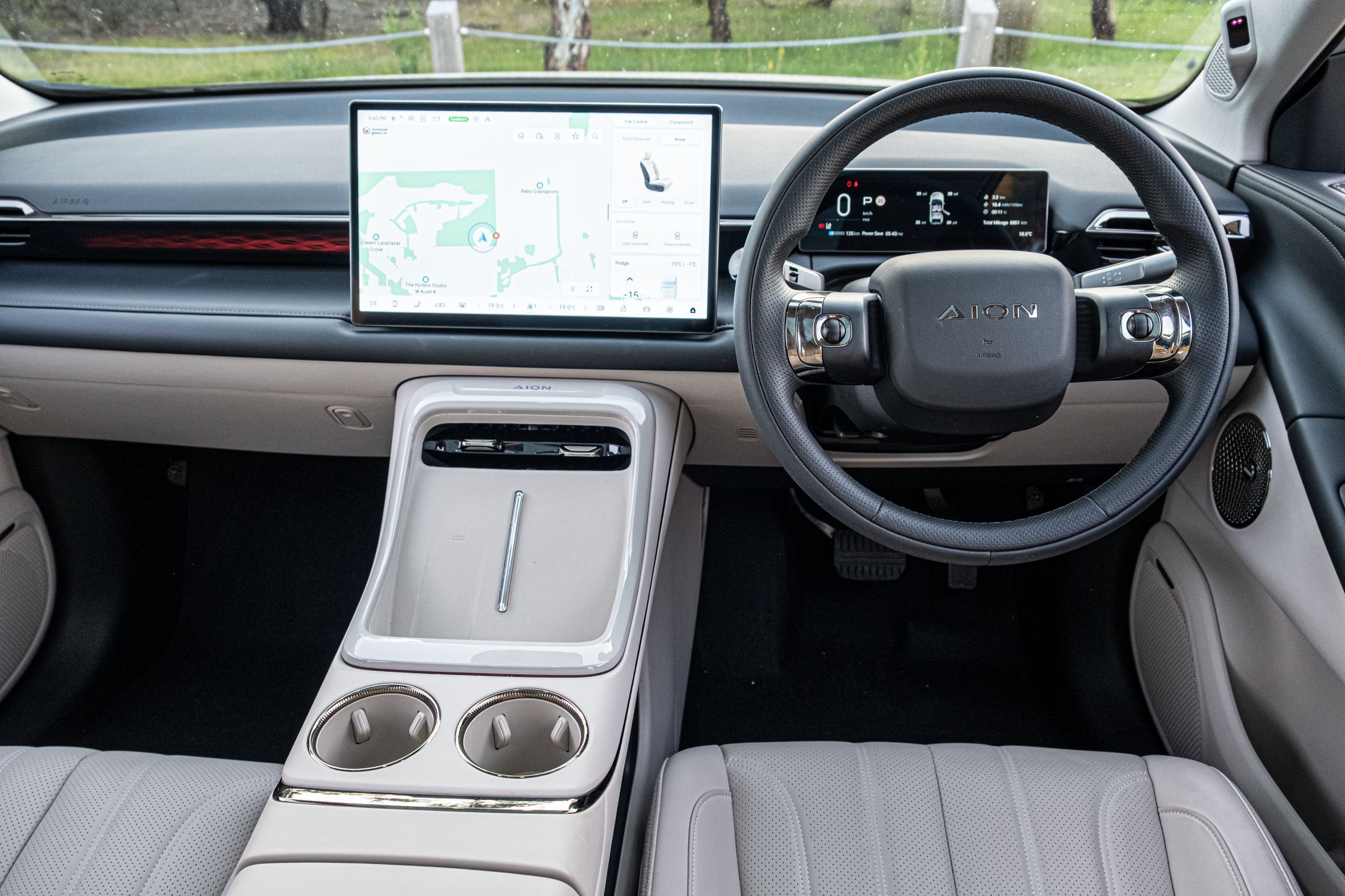
Obviously, the 14.6-inch infotainment display is what immediately catches the eye. It’s crisp and snappy, housing all important vehicle controls, including the climate functions. We hate screens used to adjust temperature and fan speed as much as anyone, but at least the Aion V has a shortcut menu locked at the bottom of the screen with these controls, making them a little easier to access while on the move.
The Aion V also comes standard with an 8.8-inch digital instrument cluster and a two-spoke steering wheel. In Luxury guise, the EV also comes standard with genuine leather seats that feel exceptionally premium. Better yet, both front seats include superb massage functions that work absolutely brilliantly. Unlike so many massaging seats where you can only feel a tiny pulse in your back, the Aion V’s seats deliver a surprisingly realistic feel, as if tiny fists are being firmly pressed into your back. Usually, this is something you’ll only find in cars worth six figures.
Perhaps the single biggest party piece of the Aion V’s cabin is the fridge. Housed between the front seats where you’d ordinarily find the center console, it’s 6.6 liters and proved hugely beneficial in hot weather, keeping my drink bottle cool. It’s not just a fridge either. The temperature can be adjusted to as low as 5 degrees Fahrenheit (-15 degrees Celsius), so it doubles as a freezer. What’s more, the temperature can be increased to up to 122 degrees Fahrenheit (50 degrees Celsius) should you want to keep drinks or food warm.
Photos Brad Anderson/Carscoops
All important interior surfaces feel very premium. These include the two-tone door panels with diamond stitching, the soft-touch dashboard, and the felt used for the wireless smartphone charger.
The positives continue in the rear. While the Aion V’s 2,775-mm (109.2-inch) wheelbase isn’t huge, it feels certifiably palatial in the second row. There’s plenty of headroom and legroom for adults to sit comfortably in the back. The Luxury model even includes a fold-out table on the back of the front passenger seat. Add in a panoramic glass roof with a sliding cover – unlike a Tesla – and you get a cabin that feels beautifully executed.
This Is No Sporty SUV, And That’s Okay
Unlike a Tesla Model Y, which even in its simplest form has a sporty edge to it, there’s nothing sporty about the Aion V. That’s not to say it isn’t a lovely place to spend time, as it is.
Figures of 150 kW (201 hp) and 210 Nm (155 lb-ft) are par for the course for front-wheel drive EVs like this, matching figures like the Hyundai Elexio and Kia EV5, but down slightly on the Geely EX5 with its 160 kW (215 hp) and 320 Nm (236 lb-ft).
Torque steer is kept to a minimum, although there is a hint of it if you pin the throttle in Sport mode. I spent most of the week with the Aion V driving around in Power Save mode as it’s the only mode that enabled one-pedal driving. This let me average just 14.8 kWh/100 km across more than 300 km (186 miles) of driving, meaning it is very possible to meet GAC’s WLTP-claimed driving range of 510 km (317 miles).
Photos Brad Anderson/Carscoops
The lack of one-pedal driving in Sport or Comfort modes is disappointing, as is the lack of paddle shifters to make on-the-fly adjustments to the regenerative braking. This isn’t a big deal, but it is something that prospective buyers should be aware of.
Steering feel is good. Unlike some EVs, the Aion V’s steering isn’t so light that a strong gust of wind through an open window could turn the wheel. Instead, it’s nicely weighted, although it doesn’t do a good job of transmitting feedback from the road, so it can be a little difficult to determine what the front tires are up to.
GAC has also done a good job of calibrating the suspension. The Aion UT I tested earlier this year rode more like a premium German sedan than a cheap, electric hatchback, and it’s much the same as the V. Owing to the SUV’s larger size, it is a little firmer than the UT, but it never crashes over potholes or speed bumps, and instead rides over them gracefully and quietly.
Charging speeds are solid. GAC says the Aion V supports charging speeds of up to 180 kW, meaning the battery can be charged from 10-80 percent in roughly 24 minutes. While a base Tesla Model Y can charge at up to 250 kW, it costs roughly AU$13,000 (US$9,000) more than the Aion V. More direct rivals like the Geely EX5 and Hyundai Elexio have DC charging speeds capped at just 100 kW and 150 kW, respectively.
It’s not all sunshine and rainbows, though. My biggest gripe with the Aion V is its safety systems, which are an all-too-common theme among Chinese EVs. First is the driver-monitoring system, which is as hyperactive as a kid that’s just eaten a whole bag of M&Ms. Glance away from the road for a split second and it’ll start complaining, triggering an annoying ring until you look back at the road.
Similarly, the speed monitoring immediately alerts you even if you’re just momentarily 1 km/h over the speed limit. While these features are becoming more common, not just on cars from China but elsewhere in Asia, Europe, and the US, some brands have made it simple to disengage these alerts with conveniently placed shortcuts on the touchscreen. That’s not the case with the Aion V, as you have to dive into several menus to disable them every time you go for a drive.
Photos Brad Anderson/Carscoops
Verdict
The GAC Aion V is very impressive, especially given the price and all of the equipment on offer. I have no doubt the exterior design will put off some in the market for an electric SUV, but if you can look past some of the odd styling, it’s a well-rounded proposition.
For a vehicle costing less than AU$50,000 (US$34,900), the interior is the obvious highlight. It’s stylish, well-made, plush, and loaded with features. Combine a calming driving experience with great efficiency, and you get a mid-size electric SUV that’ll leave some legacy brands scratching their heads.
The new ID Tiguan replaces both the VW ID 4 and ID 5.
VW’s latest electric SUV uses its familiar MEB+ platform.
The ID Tiguan will launch in North America, but timing is unconfirmed.
Like many of its competitors, Volkswagen has realized the best way to convince motorists to buy an EV is not to make it look weird or give it an odd name, but instead to create an EV that looks and sounds familiar. This is exactly what it’s done with the new ID Tiguan, built to replace the ID 4 and ID 5, and leaning into a more traditional SUV design that should better appeal to typical VW buyers.
Just like the Cupra Raval, VW ID Polo, and VW ID Cross, the new ID Tiguan uses the company’s latest MEB+ platform. This architecture supports three distinctive versions and two different battery packs. Sitting at the base of the range will be a rear-wheel-drive version using a 58-kWh battery. VW hasn’t provided chemistry details about this pack, nor has it said whether it’s the same usable 58-kWh pack that had been offered in North America’s ID 4. What we do know is this base model is rated at 187 horsepower.
Positioned in the middle of the range will be a more powerful, 282 hp rear-wheel drive model with a larger 77 kWh battery. Shoppers who want all-wheel drive traction will be able to order the ID Tiguan in a single 4MOTION all-wheel drive configuration, producing a combined 295 hp and also using the 77-kWh pack.
VW says the new ID Tiguan can travel up to 373 miles (600 km) on a single charge under the WLTP cycle. This is presumably for the rear-wheel-drive, 77-kWh model, although that has yet to be confirmed. Prospective buyers of the ID Tiguan will be pleased to know the 58-kWh version can haul up to 3,968 lbs (1,800 kg), while the 77 kWh models are good for 4,409 lbs (2,000 kg).
A Fresh New Design
The ID Tiguan’s design immediately distinguishes it from the ID 4 and ID 5. VW says it uses the company’s Pure Positive design language, boosting its presence and making it look more modern. Like the ID Polo and ID Cross, which it shares its platform with, the ID Tiguan also has several design similarities to those models.
The most obvious of these is the intricate LED daytime running lights and light bar stretching the width of the front fascia. Instead of a traditional grille, VW has added a pair of black intakes near the base of the bumper. There’s nothing radical about the EV’s side profile, but the shoulder line running from the corner of the headlight, along the doors, and across the tailgate catches the eye. At the rear are an intriguing set of taillights with bold LED graphics and four narrow illuminated stripes connecting them. Glowing emblems have also been added to the front and rear of the ID Tiguan.
A Cabin With Real Buttons
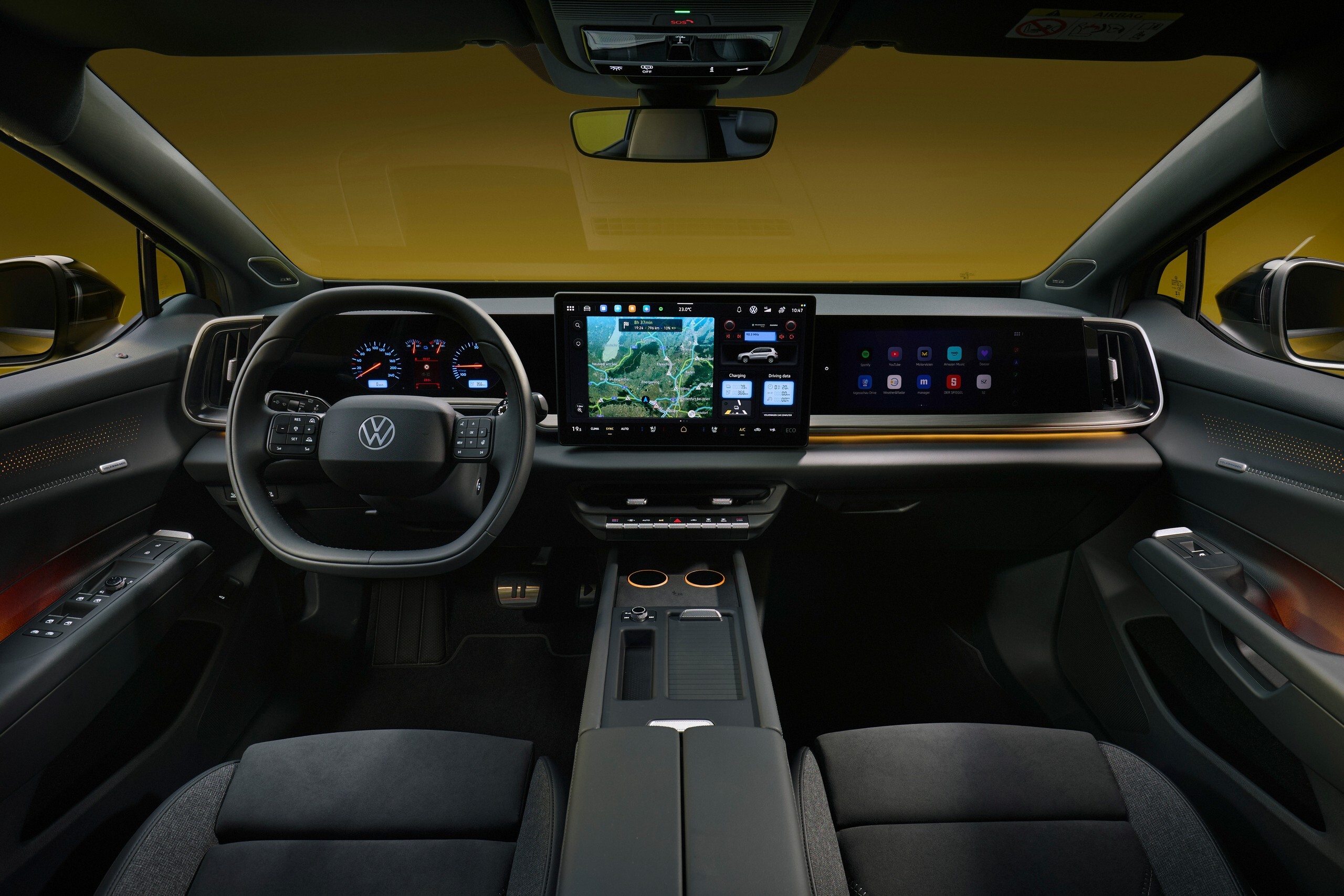
Arguably more important than how the EV looks from the outside is what the interior is like. By comparison, the old ID 4 and ID 5 feel very outdated. It starts with the new steering wheel that uses physical buttons for the cruise control and audio settings, rather than the silly piano black plastic haptic switches of old.
Additionally, the ID Tiguan has a larger digital instrument cluster built into the dashboard, rather than just perched on top of it like this model’s predecessors. This cluster even includes a very cool ‘Retro’ theme which displays four traditional gauges. A larger infotainment system has also been added, although VW hasn’t mentioned how big it is. A passenger display will also be available.
Then there are the buttons. VW was almost burned at the stake for its silly touch-sensitive controls used across its outgoing generation of cars. There are none in sight with the ID Tiguan. Located under the central air vents are nine physical switches to control the HVAC, including the temperature and fan speed, all with a lovely, knurled metal finish. There’s also a small volume knob on the center console and two wireless phone chargers.
The materials throughout also appear slightly nicer, particularly the soft-touch surfaces on the tunnel and door panels, although we’ll reserve final judgment until we actually see it in person. A full range of options has yet to be announced, but VW says the ID Tiguan will be available with optional massaging, heated, and ventilated front seats, a Harman Kardon audio system, and a panoramic sunroof. It also supports a Digital Key, so owners can use their smartphone to lock, unlock, and start the EV.
VW has confirmed the ID Tiguan will launch in North America, but it’s not yet ready to say when it will arrive locally. In the meantime, pre-sales across Europe will start on October 13 with prices kicking off at €42,695 ($47,900). Deliveries will start early next year.
Like the regular iX3, the performance-focused M60 xDrive supports 400 kW charging.
BMW has made significant modifications to the SUV’s chassis and suspension.
Joining the performance upgrades are several styling and interior tweaks.
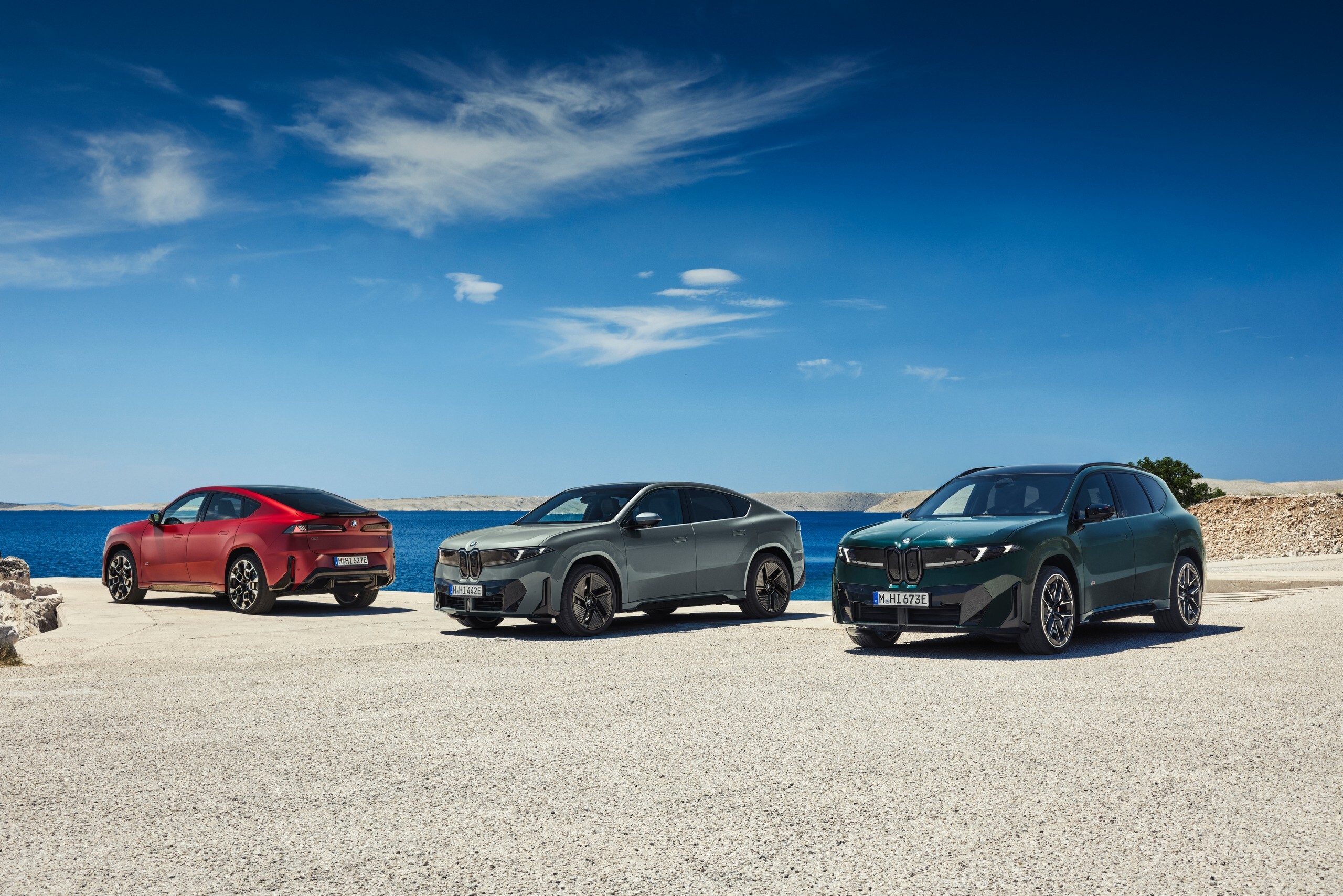
The second-generation iX3 has proven that BMW can build an EV to rival the best coming out of Asia. Now, the German brand has launched the high-performance iX3 M60 xDrive, eager to show it can build not only an efficient EV, but one that packs a serious punch.
Like other iX3 models, the M60 xDrive has a sizeable 112.2 kWh battery pack that powers motors at the front and rear axles. It’s the rear motor that’s received most of BMW’s attention, featuring a new stator and a more powerful inverter, contributing to a combined 603 horsepower and 645 pound-feet (874 Nm) of torque. BMW says the iX3 M60 xDrive needs just 3.9 seconds to hit 62 mph (100 km/h), making this electric SUV quicker than a rear-wheel drive BMW M3. Not too shabby.
Not only does the M60 xDrive accelerate harder than any normal iX3, but the top speed has also been raised to 149 mph (240 km/h) thanks to a longer gear ratio. Just like other iX3 models, this version supports DC fast charging speeds of up to 400 kW, and AC charging at 15.4 kW. Curiously, BMW hasn’t released a driving range figure for the M60 xDrive, nor has it said how long it takes to charge the battery.
BMW’s ‘Heart of Joy’
It’s not just more power and torque that makes the iX3 M60 xDrive a little special. It includes BMW’s ‘Heart of Joy’ computer working alongside the new BMW M Dynamic Performance Control Driving Stack, ensuring this SUV delivers the type of handling you’d expect from a true M car. BMW also says it’s refined the EV’s regenerative braking system, ensuring it stops more smoothly than any of its other models.
While this isn’t a fully-fledged M model, the iX3 M60 xDrive comes fitted as standard with Adaptive M Suspension and electronically controlled dampers, which will also play a key part in the overall dynamics and handling. There’s also an updated and improved variable steering rack ratio that adjusts the effort depending on the drive mode.
Perhaps the single biggest handling upgrade is the fitment of an electronically controlled M Sport differential at the rear axle. Tweaks have also been made to the anti-roll bar links, and the underbody also includes more front-end bracing.
What About The Design?
While there’s plenty to differentiate the M60 xDrive from other iX3 versions under the skin, it doesn’t look dramatically different from the outside. The most obvious change is the distinctive light elements on either side of the kidney grilles, in addition to the availability of yellow driving lights. All iX3 M60 xDrive models also come standard with the M Sport package and the BMW Iconic Glow exterior package, the latter of which includes selectable lighting elements at the front and at the rear. Other changes include new standard 21-inch M wheels and several optional 21- and 22-inch wheels.
The cabin is also all very familiar. All the same core components as other iX3s remain, including the Panoramic iDrive system, the angled central infotainment display, and an optional 3D head-up display. Fitted as standard is an M Sport steering wheel with special Boost Mode and M Mode buttons. BMW has also equipped the M60 xDrive with M Sport seats with 10-way power adjustment and massage functions. Distinctive M graphics and colors are also used throughout.
Several apps specific to the M60 xDrive are also available. These include the M Cockpit app, which tracks and displays key vehicle signals and driving dynamics data, as well as the M Drag Meter app. A 13-speaker audio system with Dolby Atmos is also fitted as standard equipment.
BMW has yet to announce US pricing for the iX3 M60 xDrive, but it has confirmed US orders will open at the end of January.
Alfa Romeo improves Junior’s low-rent interior feel for 2027.
Smallest SUV gains better cabin materials, new alloy wheels.
Stelvio Quadrifoglio now comes standard with 21-inch rims.
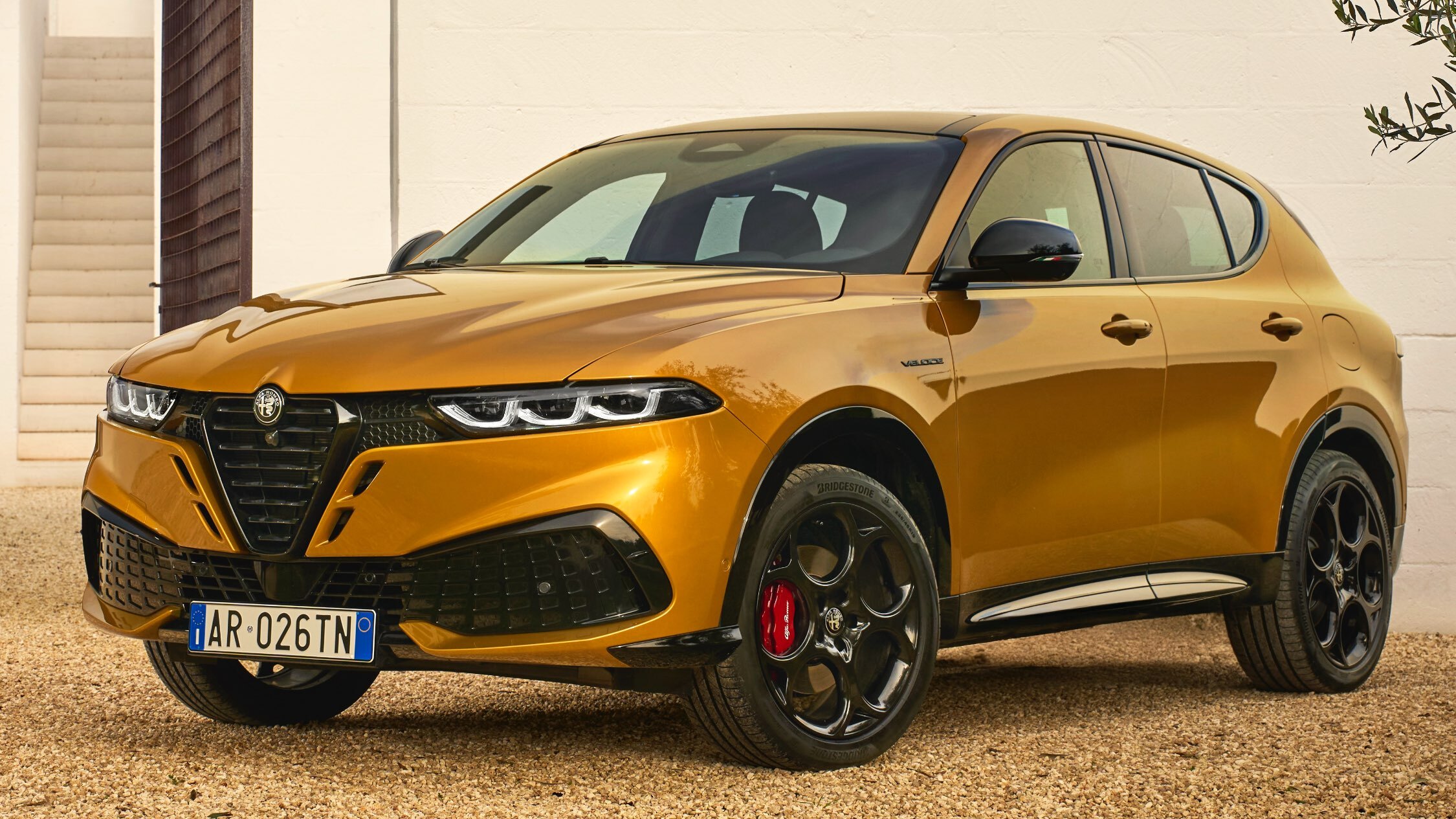
Changes are coming to Alfa Romeo’s entry-level car for 2027, though this time the badge on the tail isn’t looking for a new home. The Junior, which was originally called Milano before the Italian city objected to its use on a car built in Poland, benefits from some upgrades that promise to give it a more premium feel.
New 18-inch three-hole, and 19-inch four-hole alloy wheels help you spot one of the upgraded SUVs from the outside, though the biggest changes are found inside. And not just on the more expensive variants. Junior and Sprint trims head into MY27 with new ‘Icona’ upholstery that mixes black fabric seats, gray stitching and black Scuba material across the dashboard, console and door cards.
Step up to Ti or Veloce spec and you upgrade to Alfa Romeo’s ‘Carbon’ interior. Scuba fabric is used again, but this time with red stitching and details and a new Microcloud material on the dash and doors. What you won’t find, despite that name, is any carbon trim, but these upgrades might offset criticism that the Junior’s cabin has always felt a bit low rent for something wearing a premium badge.
A load of extra standard equipment ought to lend an extra hand in that department. Sprint versions look like the sweet spot in the range now that they come with navigation, keyless entry, adaptive cruise, a reversing camera, wireless phone charging and blind-spot monitoring. But the Ti’s heated, powered and massaging seats, and ambient lighting will surely help open a few wallets wider.
Elettrica EV Holds The Performance Card
What Alfa hasn’t messed with is the mechanical package. Base Junior Ibrida models still feature a 143 hp (145 PS) 1.2-litre, mild hybrid engine in front-wheel drive, or Q4 all-wheel drive forms. The Junior Elettrica EV makes 154 hp (156 PS), but only drives the front wheels. Top dog is another EV, this one the 276 hp (281 PS) Junior Veloce, which relies on a sportier suspension tune and a mechanical limited-slip differential to help its front end handle the extra muscle.
Tonale Tweaks
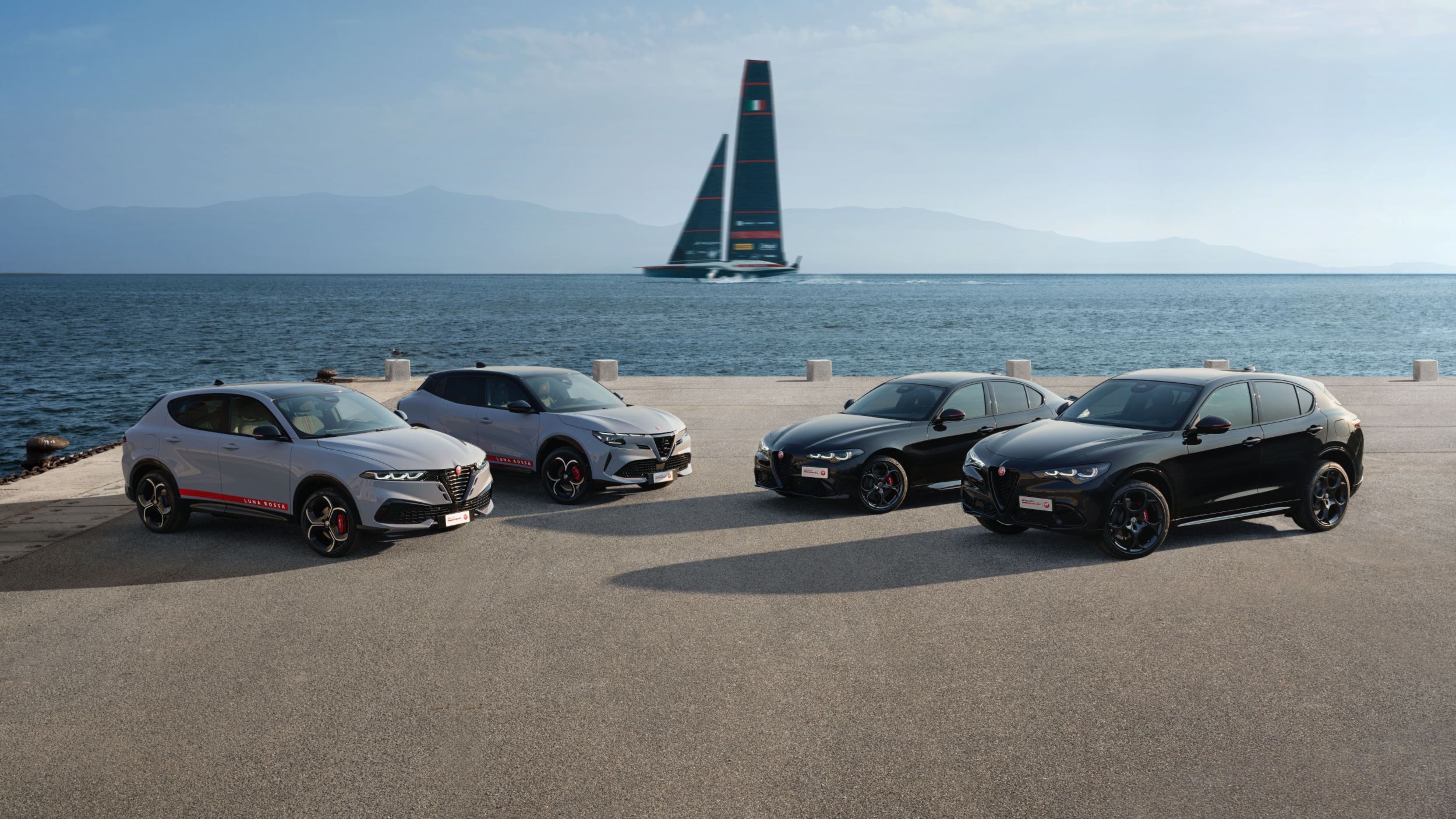
The brand already upgraded the Junior’s Tonale big brother – Alfa’s base model for the US – and you can read about those changes, and why the model might soon be axed, here. But it’s only thrown a few teaks the way of the geriatric Giulia SUV and Stelvio sports sedan. By rights both of those models should have been replaced by now, but the planned replacements were EVs and in the wake of falling electric sales in the US Alfa was forced to go back to the drawing board and come up versions that could also take combustion power.
Giulia And Stelvio Tread Water
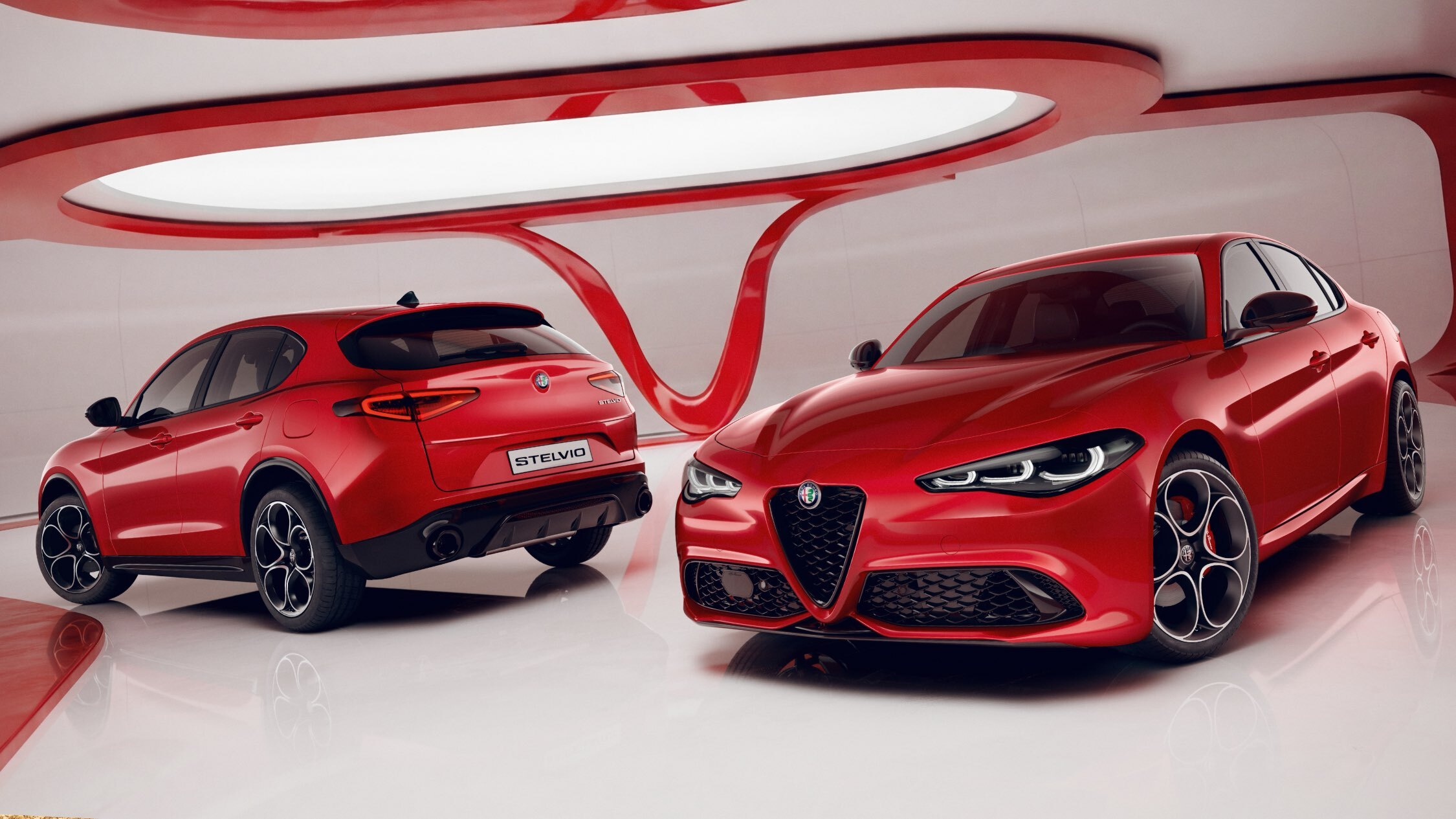
We won’t see those new Giulia and Stelvio models until at least next year, by which time the pair will be 12 and 11 years old. To keep potential buyers interested while we wait, the current models gain updated software and driver monitoring kit required by EU law, black and white Alfa Romeo badges and a new Anodized Blue paint option. Hardly, the kind of thing to worry BMW when it has a brand new 3 Series and i3 EV ready to ship to dealers.
But the new M3 and X3 M are a year or two away, and you can still buy both Alfa Romeos in 520 hp (513 PS), 2.9-liter V6 Quadrifoglio guise. Go for the hot Stelvio Quadrifoglio and you now get 21-inch wheels instead of 20-inch rims, while buying either of the QVs unlocks a day’s on-track training at the Alfa Romeo Driving Academy.
All of these Alfa updates will be on display at Alfa’s Paris Motor Show Stand, though they might not get much attention. The brand has teased a new concept for Paris called the Cuorerosso (image below) that looks like a low-slung supercar, and it’s sure to dominate the conversation.
Mercedes is streamlining their US lineup by axing some models and trims.
The EQE and AMG EQE are toast, although an E-Class Electric is on the horizon.
Mercedes-Maybach EQS 680 SUV and S63 E Performance are also gone for 2027.
Mercedes’ electric vehicle push has been a disaster in the United States as Americans never warmed up to the EQE, EQS, or their crossover counterparts. The company appears ready to admit defeat as several models are reportedly going away for 2027.
Citing a company spokesperson, Car & Driver is reporting the EQE and AMG EQE are dead. The EQE 320+ started at $64,950 and offered 315 hp (235 kW / 319 PS) as well as an electric-only range of up to 308 miles (496 km).
Likewise, the $96,600 AMG EQE had a dual-motor all-wheel drive system developing up to 677 hp (505 kW / 686 PS) when the boost function was activated. This enabled the model to hit 60 mph (96 km/h) in 3.2 seconds, but it dropped the range to a disappointing 230 miles (370 km).
While the EQE is going away, the company is working on an all-new E-Class Electric. It features a more conventional design that follows in the footsteps of the fully electric C-Class.
Speaking of dead EVs, the Mercedes-Maybach EQS 680 SUV is toast. The model started at $180,000 and featured a dual-motor all-wheel drive system developing 649 hp(484 kW / 658 PS) and 700 lb-ft (948 Nm) of torque. They were fed by a 118 kWh battery pack, which provided 300 miles (483 km) of range.
Last but not least, the Mercedes-AMG S63 E Performance is gone for 2027. The pricey plug-in hybrid produced 791 hp (590 kW / 802 PS) and 1,055 lb-ft (1,430 Nm) of torque, but the company recently introduced a facelifted S-Class.
This means we can expect a new AMG variant in the near future. Car & Driver suggests the model will arrive in around a year and ditch the plug-in hybrid technology for pure V8 power.
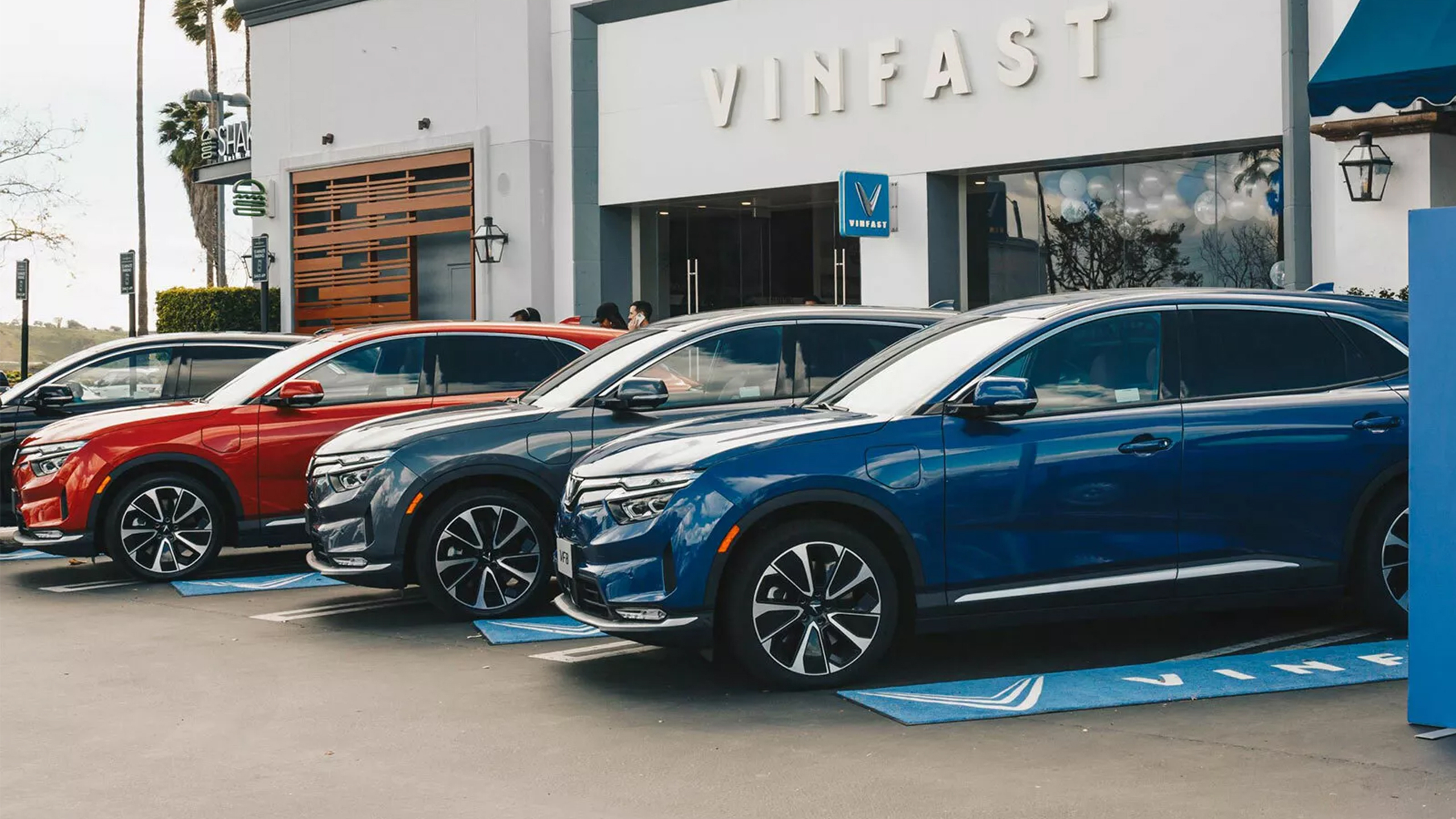
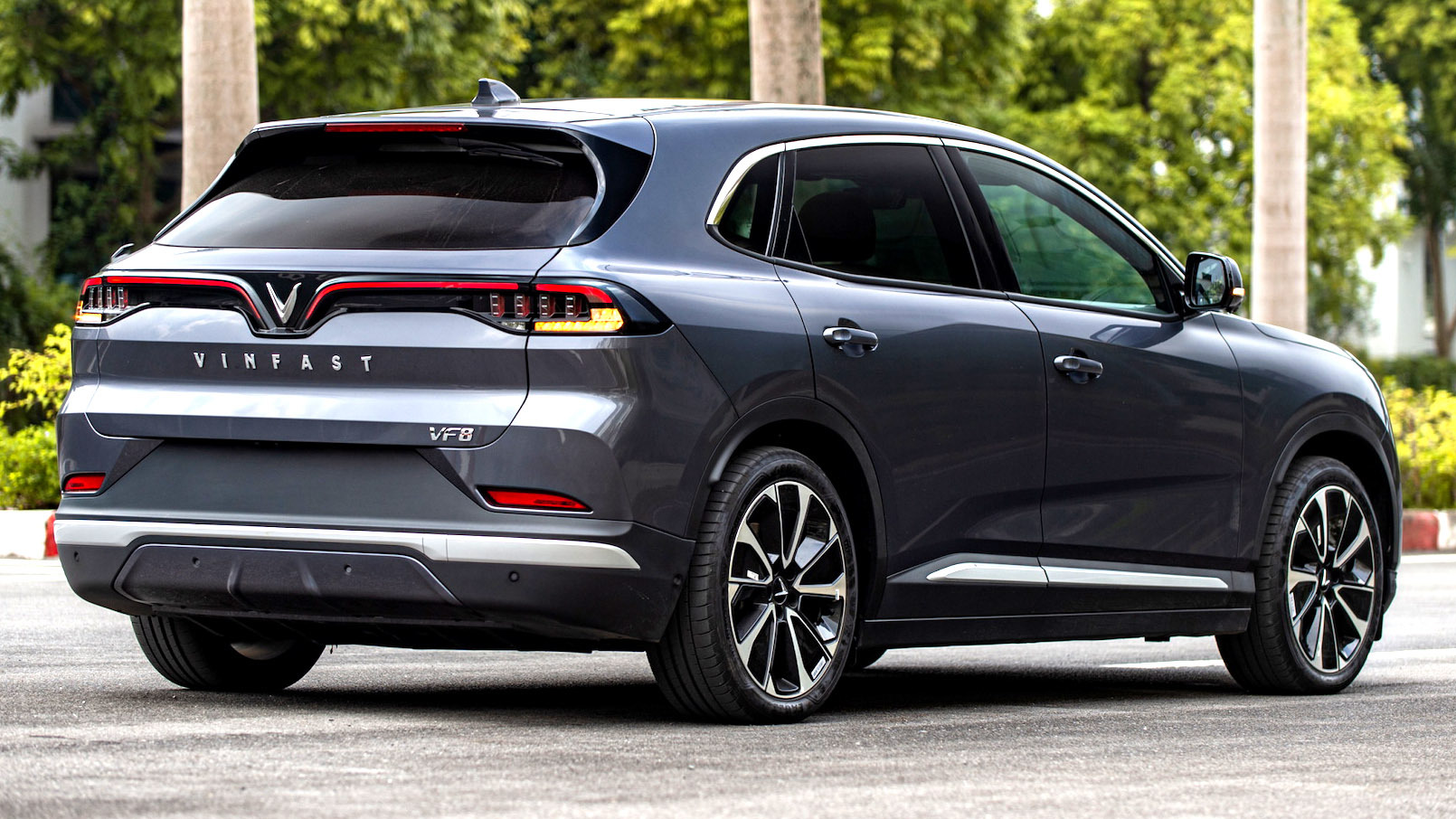
VinFast sold a measly 389 vehicles in the US through the first seven months of the year.
Despite the poor sales, VinFast remains committed to building a plant in the US.
VinFast has secured three new franchised agreements with dealers in California and Philadelphia.
The American car market is a difficult one to crack; just ask VinFast. In the three years since it started selling EVs locally, it’s delivered a few thousand of them, and it’s also had to slash the number of dealerships it operates across the country. Despite this, VinFast isn’t ready to give up on the US.
The Vietnamese company initially launched in California, before expanding into other states throughout 2024 and 2025. At one point, it said it had secured agreements with 38 dealers across the country, but as of the end of 2025, it was operating fewer than two dozen dealerships. Things aren’t looking good.
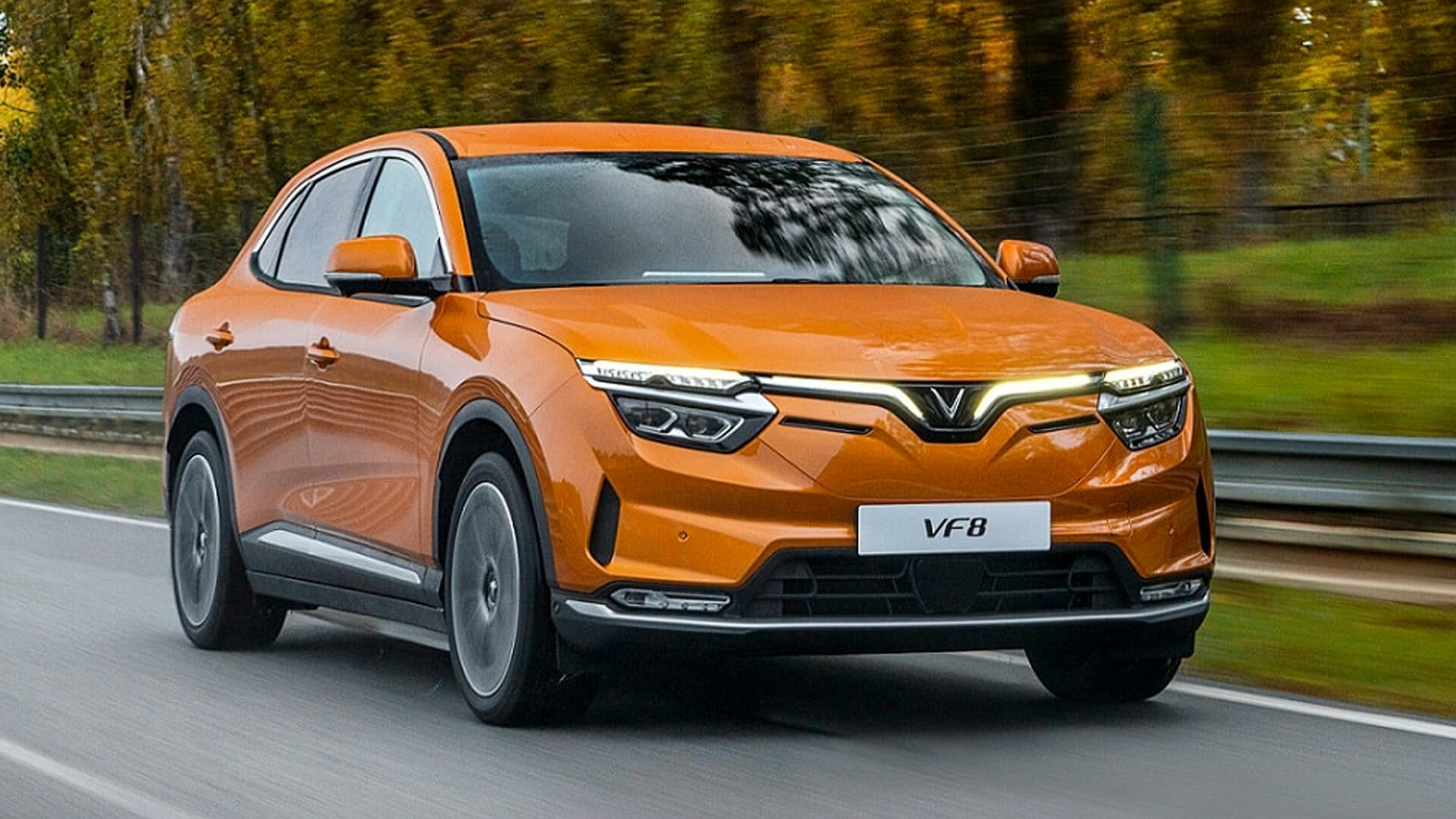
Then there’s the sales. Through the first seven months of this year, VinFast sold just 389 vehicles, a 63 percent decline from the previous year. To put that into perspective, Rivian sold 12,613 vehicles in the second quarter alone, and its vehicles are much pricier than VinFast’s. Things are so bad for VinFast that average incentives on the VF 8 sit at $19,000 per vehicle, while average incentives on the larger VF 9 are almost $20,000. It would seem the writing is on the wall for the brand.
VinFast Isn’t Going Anywhere
However, VinFast insists it isn’t going anywhere. It has secured franchise agreements for dealerships in Tustin, California, Redondo Beach, California, and one in Philadelphia. VinFast North America chief executive Brian Finnerty says the brand has a long-term commitment to the US.
“Our vision is clear: VinFast is continuing to build for the next phase of growth by investing in the customer experience, strengthening our team, continuously enhancing our products, policies, and sales and service network,” he said. “These new dealerships will ensure customers can access comprehensive sales, maintenance, and warranty support right in their local communities. This is more than an expansion of our network. It is a long-term commitment by VinFast to the U.S. market as we enter our next chapter of growth.”
This all sounds very good, but VinFast dealerships are still selling 2024 VF 9 and 2025 VF 8 models, underscoring how hard it’s proving to be for dealerships to sell these EVs.
Ambitious plans to establish a factory in the US have also been delayed multiple times. Initially, this plant in North Carolina was scheduled to start building vehicles in mid-2024, but earlier this year, VinFast pushed that date back to 2028.
PROS ›› Stands out, affordable, efficient CONS ›› No brand recognition, slow, average range
A few years ago, Australians looking for a mid-size, all-electric SUV had very few options. Now, there’s never been more, and it seems as though a new option arrives every few months.
The Tesla Model Y still moves more units than any of the competition. Still, other models, including the Kia EV5, Hyundai Elexio, BYD Sealion 7, GAC Aion V, and Zeekr 7C, have opened up many options for buyers. Deepal is one of the newer Chinese automakers to launch locally and, backed by Changan, its S07 aims to upset the establishment.
Sporting a coupe-inspired exterior, premium features, and an interior that feels genuinely considered, it seems promising. But is this enough to pull buyers away from the names they already trust? We recently spent a week living with the Deepal S07 to find out.
QUICK FACTS
› Model:
2026 Deepal S07
› Starting Price:
AU$47,990 (US$34,400)
› Dimensions:
187 x 75.9 W x 63.9 in H (4,750 x 1,930 x 1,625 mm)
› Wheelbase:
114.1 in (2,900 mm)
› Curb Weight:
2,073 kg (4,570 lbs)
› Powertrain:
79 kWh battery / single rear motor
› Output:
214 hp (160 kW) / 236 lb-ft (320 Nm)
› 0-62 mph
7.9 seconds
› Transmission:
Single speed
› Efficiency:
17.8 kWh/100 km
› On Sale:
Now
SWIPE
Photos Brad Anderson/Carscoops
Sold in a single configuration and offered with either 19- or 20-inch wheels, the S07 is currently available from AU$47,990 (US$34,400), including all on-road costs, or roughly AU$10,000 (US$7,200) less than when it initially launched locally in early 2025. This is very competitive, making the Deepal AU$2,000 (US$1,400) cheaper than a base Kia EV5, and more than AU$15,000 (US$10,800) less than a Tesla Model Y.
For a brand that has absolutely no heritage in Australia, nailing price is extremely important, so Deepal has at least done a good job in that regard.
The S07 has a 79.97 kWh ternary lithium battery pack, driving a rear-mounted electric motor with 160 kW (214 hp) and 320 Nm (236 lb-ft) of torque, roughly on par with other electric SUVs in this segment. One crucial area where the S07 lags the competition is charging, with a peak DC rate of just 92 kW, meaning it takes 35 minutes to charge from 30 to 80 percent. AC charging peaks at 11 kW. Notably, the S07 includes a 3.3 kW vehicle-to-load function, which is a nice addition.
Photos Brad Anderson/Carscoops
Changan designed the S07 at its facility in Turin, Italy, and it stands out from much of the competition thanks to the coupe-SUV roofline and sporty lights. By comparison, the interior is typical of many current electric SUVs from China. For what it lacks in originality, it makes up for it with its material choices.
A 15.6-inch central infotainment display comes standard across the range and supports wireless Apple CarPlay and Android Auto. Like a Tesla Model Y, but unlike many of its competitors, the S07 doesn’t feature a separate digital instrument cluster, which is unfortunate. It somewhat makes up for this with a large, augmented-reality head-up display, but I would prefer a cluster.
The party piece of the S07’s cabin is that the central screen can sit centered or be angled toward the driver or passenger. It may only sound like a small thing, but it’s a great idea. After driving the Deepal for a week with the screen directed at me, it felt odd to step into another car with the screen centered. Several BYD’s have screens that can be positioned in portrait and landscape modes, but Deepal’s idea is better.
Photos Brad Anderson/Carscoops
Diving deeper into the screen reveals a tablet-like software package that’s easy to navigate, if a little overwhelming because of all the different controls and settings. The graphics are clear, and the responsiveness is excellent. Swipe down from the top, and you can configure several shortcut controls. You can also operate the climate control through the screen. It works okay, but I often had trouble turning the different vents on and off, as well as directing the air.
An annoying AI-powered voice assistant is also featured, greeting the driver every time they sit inside. Thankfully, you can turn it off.
The driving position is good, although it’d be nice if the seat could be lowered and there were more steering wheel adjustments. Soft-touch synthetic black leather adorns most interior parts, including the wheel, seats, center console, dashboard, and door panels, giving the cabin a premium feel. At the same time, the orange contrast stitching added some sporty flair. Our tester also had the same synthetic leather on the floor mats, which felt a little cheap.
At the rear, there’s enough space to fit two large adults with ease, plus separate climate controls and toggles to move the front passenger seat forward and back. Practicality is respectable, but far from class-leading. With the rear seats upright, you can fit 445 liters (15.7 cubic feet) in the rear, or 1,385 liters (48.9 cubic feet) with the seats folded down.
Smooth But Soulless
There’s a lot to like about the S07, although there are certainly elements that could be improved.
When the S07 first launched, it drew fierce criticism for feeling unfinished and having poorly calibrated safety systems. Several software updates over the past year have improved things, and they seem to have mostly worked.
When I first stepped into the Deepal, I was relieved to see that the overzealous driver monitoring system can be easily disabled through the swipe-down menu and, importantly, it remains off even after the S07 is turned off and switched back on. When I did use it, I found it overbearing, frequently telling me I was distracted no matter how focused I actually was.
Photos Brad Anderson/Carscoops
The S07 isn’t particularly quick, not that you’d expect, given it has a single motor. It takes about 7.9 seconds to reach 100 km/h (62 mph), and although this won’t get your heart pumping, it’s more than adequate for everyday driving.
The rear-wheel-drive setup also means the S07 avoids the torque steer found in some front-wheel-drive competition, like the Kia EV5 and Hyundai Elexio. The lighter front end also gives the S07 a pointy, direct feel when turning, while staying surprisingly flat through sweeping corners and tight hairpins.
The level of regenerative braking is highly customizable, which is welcome, but what’s not so welcome is the lack of a one-pedal driving mode, which seems like a silly exclusion in this day and age. Compounding that, the transition from regen to the mechanical brakes isn’t as smooth as it could be. It also doesn’t use steering wheel paddles for regen adjustments on the fly.
Ride comfort is good, and the S07 walks the fine line between sportiness and plushness well, quickly responding to imperfections in the road without sending too many thumps into the cabin. I think it could be a little softer, but that’s really clutching at straws.
Deepal quotes a combined efficiency of 18.6 kWh/100 km and says the S07 gets up to 475 km of range, roughly on par with similarly priced competition. I averaged 17.8 kWh/100 km, so that claimed range is certainly achievable in the real world. It’s just a shame that using a public DC fast charger gets a little annoying given the slow peak speeds.
The automated driving functions need further improvement. While things like adaptive cruise control and lane-centering work relatively well, the S07 often hugs freeway lane lines rather than sitting in the center of a lane.
Photos Brad Anderson/Carscoops
Verdict
The Deepal S07 isn’t the best vehicle in the class, but at the current price point, it is a compelling package. Buyers eager for an EV that makes a statement on the road will find that in the S07, particularly in bright colors like Cosmic Yellow or Sunset Orange.
Sales data in Australia shows the S07 is performing reasonably well, with 522 examples sold through the end of June, making it more popular than something like a Leapmotor C10 and roughly on par with the Hyundai Elexio, although well down from the more than 3,000 Kia EV5s sold over the same time. For now, it’s not the best choice in the market, but it’s a solid option if you want something a little different. You’ll just have to live with the fact that you’ll be telling people you drive a Deepal.
VW is offering generous discounts for the 2025 ID.4 and 2026 ID.4.
Customer bonuses of $6,000 and $12,500 are available in the US.
Sales of the ID.4 have plummeted from the all-time high in 2023.
Hot on the heels of Volkswagen announcing the ID. Tiguan will replace both the ID.4 and the ID.5, the brand has announced some generous incentives to clear remaining inventory in the United States.
The most sizeable offer is for the 2025 ID.4. From now until November 2, anyone who purchases or leases a new ID.4 will receive a $12,500 ‘customer bonus’ that’s applied directly to the sticker price.
VW’s local inventory search tool doesn’t allow you to select the model year, so it’s hard to know how many 2025 versions are sitting around at VW dealership lots across the country. What we can see is that there are hundreds of ID.4 models available across the 2025 and 2026 model years, so there’s certainly no shortage of options.
If you’re unable to find a 2025 model nearby, there’s also an offer available for 2026 ID.4s. This one is worth $6,000, and it is also available until November 2. Prices for the 2026 ID.4 start at $45,095 for the entry-level Pro excluding destination, or $46,570 including destination.
This isn’t the only offer available for the 2026 ID.4, either. Military members, veterans, and first responders can also receive a $500 discount when they purchase the outgoing EV, cutting the price even further.
US sales of the ID.4 peaked in 2023 when 37,789 units were sold but then plummeted to 17,021 units the following year. In 2025, sales rebounded to 22,373 units, but that clearly wasn’t enough to convince VW to keep selling the model for the long term. Through the first six months of this year, just 2,205 were sold, following the end of local production in Chattanooga, Tennessee, in April.
What Comes Next?
Once VW clears inventory of ID.4 models, it will be able to turn its attention to the ID. Tiguan. Lightly camouflaged prototypes have revealed it will look radically different than the ID.4 and, instead, look more similar to the gas-powered Tiguan. VW has confirmed it will start European sales of the new model at the start of next year, before launching it in the United States.
Limited technical details are known about the new ID. Tiguan, but it’s believed to be based on VW’s MEB+ platform and should be offered with new and improved battery packs. The current ID.4 is sold with 58 kWh and 79 kWh packs, providing it with a peak driving range of just 292 miles (470 km) in the US.
Fiat has teased a new concept for Paris Motor Show, called the Multiplay.
It will combine the practicality of a pickup with the comfort of an SUV.
Profile graphics honor the Fiat Multipla generations from 1956 and 1998.
Stellantis will storm the Paris Motor Show with a number of concepts, and Fiat is getting a piece of the action. The automaker has announced a new Fiat Multiplay concept, referencing both the classic 600 Multipla from the mid ’50s and the modern Multipla from the late ’90s. However, unlike its predecessors, the concept won’t be a minivan and has nothing to do with the Multiplina micro-MPV.
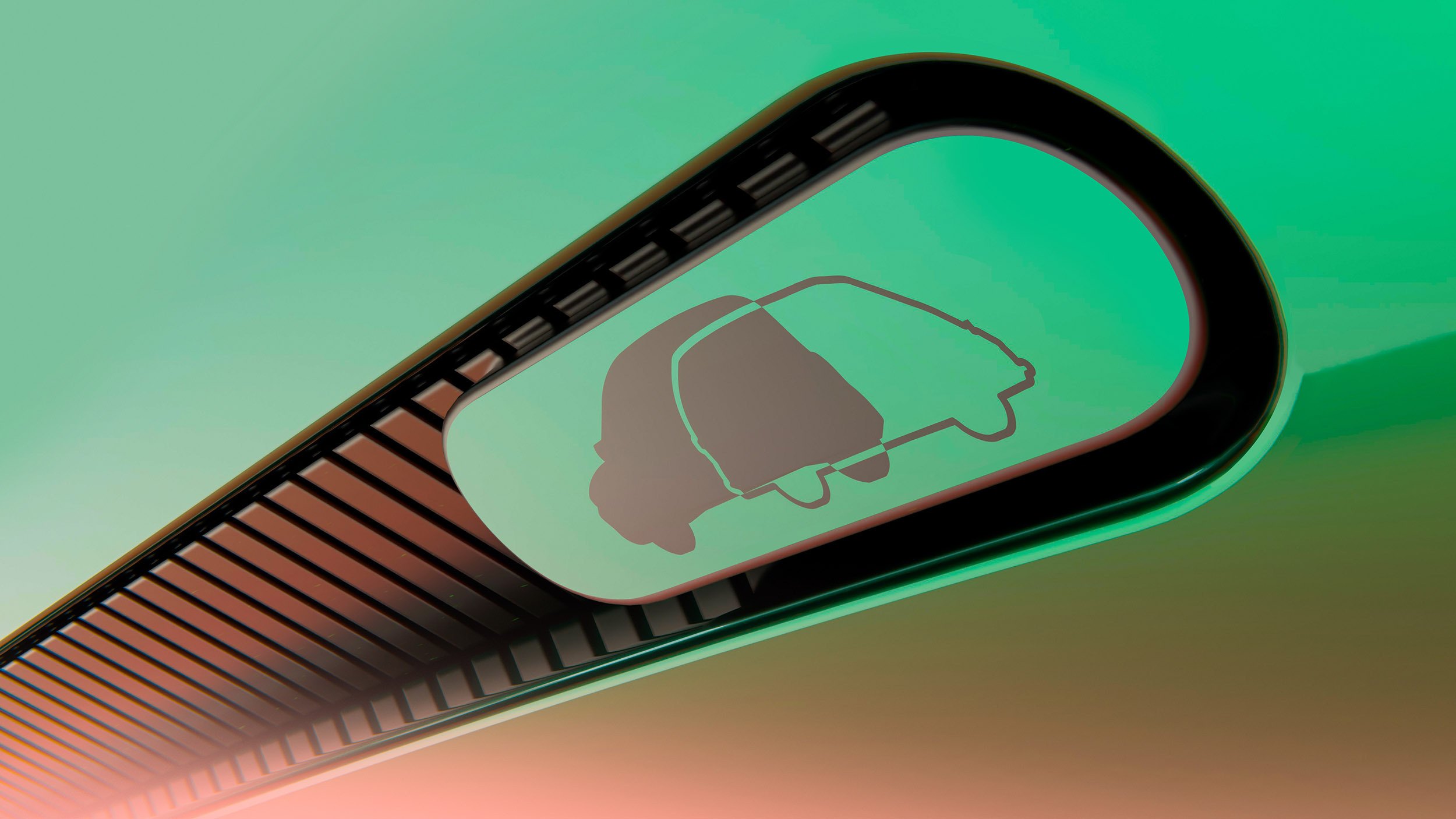
The official teaser doesn’t reveal much about the design of the Multiplay, as it is focused on an oval-shaped insert, likely positioned on its profile. The insert has a modern black pattern and a body-colored section with the overlaying silhouettes of both Multipla models.
Fiat described the model as a “new concept of mobility” promising it will be “flexible, accessible, and radically useful”. The automaker claims that innovation “lies in reimagining space, freedom, and shared everyday life”.
What is interesting is the company’s description of the bodystyle. The Multiplay is said to combine “the open load space and outdoor versatility of a pickup with the comfort and flexibility of an SUV”. The different configurations will be interchangeable in “a few movements” thanks to an “ingenious mechanism”.
2024 Fiat Concept Pick-Up
Despite being presented in concept form, Fiat hints at a potential production version adding that the Multiplay “could create an entirely new category by responding to the way people live today, as the boundaries between family life, leisure, work and adventure become increasingly fluid.”
Reading between the lines, this sounds a lot like the Panda-themed Concept Pick-Up from 2024, that could evolve into a potential sibling of the upcoming Grizzly and Grizzly Fastback production SUVs. After all, the Italian brand admits that the concept serves as “a source of inspiration for the future development of products that will complete its affordable family transportation range”.
If this is the case, expect the pickup/SUV to ride on Stellantis’ Smart Car architecture, which is compatible with gasoline, mild-hybrid, and fully electric powertrains.
The original Fiat 600 Multipla was introduced in 1955 with a single-volume body measuring 3.5 m (137.8 in) long and a three-row six-seater interior. It was based on the underpinnings of the Fiat 600, but featured an LCV-inspired cab-over design that proved to be beneficial for packaging.
Decades later, the moniker was revived in the Multipla which entered production in 1998 following the concept from 1996. The compact minivan became notorious for its two-story headlights and unconventional shape, but managed to gather a cult following. It was also able to carry six occupants, albeit in two rows of seats, measuring only 3,994 mm (157.2 in) long.
It remains to be seen whether Fiat designers will infuse enough practicality to the Multiplay pickup/SUV inspired by the ingenious mininvans from the past.
The German brand wants to capitalize on demand for its SUVs in the US.
An X8 could serve as the perfect flagship SUV for the BMW brand.
BMW has also confirmed a high-volume EV will launch in Europe in 2028.
BMW sold a record 388,897 vehicles in the United States last year, a solid 4.7 percent increase from the previous year and the third consecutive record year. Not willing to rest on its laurels and bathe in the glory of its sales success, BMW has confirmed it’s considering launching a new flagship model.
As part of a company-wide update issued this week, BMW announced it is “considering” a new model to sit above the X7 in its line-up of SUVs, or as BMW calls them, Sports Activity Vehicles (SAV).
BMW provided precious few details about this model, other than stating it will “be closely tailored to the needs of the US market.” Presumably that means an X8, a vehicle which has been talked about for almost a decade, but has so far yet to see the light of day.
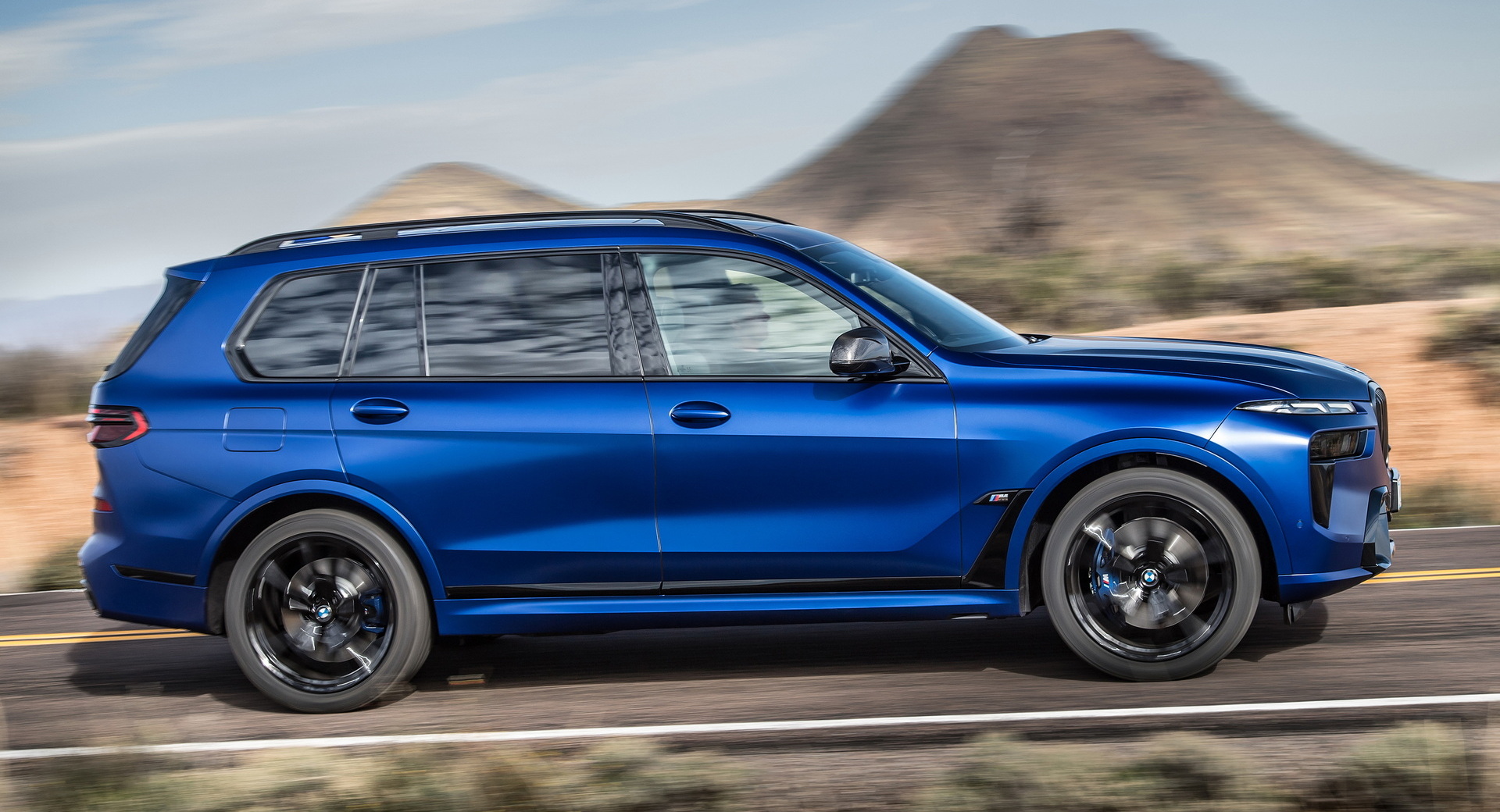
Earlier this year, Audi finally launched the Q9, its long-awaited rival to the BMW X7 and Mercedes-Benz GLS. While it now seems possible BMW may release a model even larger than its X7 and punching beyond the Q9, the press release doesn’t specifically state this will be the case, simply noting the new model could sit “above the current top-end model, the BMW X7,” without expressly stating it will be larger. That leaves a lot open to interpretation, including the possibility of perhaps a BMW X7 Coupe, or simply a more luxurious and exclusive variant, perhaps akin to the Mercedes-Maybach GLS.
BMW says it’s considering the new model because of strong demand for its existing SUVs. It says Plant Spartanburg in North Carolina is already operating at full capacity, and the brand is looking for ways to grow global production.
A New Alpina And A New EV For Europe
A new flagship SUV isn’t the only thing that BMW is working on. In the same announcement, it revealed a new streamlined portfolio plan for China with features that local customers are calling for. By 2030, BMW says it wants 95 percent of the vehicles it sells in China to be built locally.
The first all-new model from the Alpina brand since the BMW takeover is set to launch in the coming year. Few details have been confirmed, other than the fact that it will be based on the 7-Series and designed to slot between regular BMW models and those from Rolls-Royce.
Europe is also going to receive an all-new EV. This model, set to arrive in 2028 and competing in the high-volume entry segment, will serve as the latest model in BMW’s Neue Klasse family, using many of the same technologies as the others. BMW also says that the 2-Series Active Tourer will be phased out and will not be replaced.
The all-electric RR Sport uses a large 118.5 kWh battery and dual motors.
These powerful motors deliver 542 hp and 627 lb-ft of torque.
Charging the big battery from 10 to 80 percent takes as little as 22 minutes.
This is the all-new Range Rover Sport Electric, unveiled less than a month after JLR lifted the veil on the full-size Range Rover Electric. It borrows much of its technology from its larger sibling and looks virtually identical to the current combustion-powered model on sale.
Built on an updated version of the company’s Modular Longitudinal Architecture Flex (MLA-Flex) with an 800-volt electric system, the new model is driven by a gargantuan 118.5 kWh lithium-ion battery pack. You won’t get the same range from this battery as you will from a plug-in hybrid Range Rover Sport, but the battery is big enough to deliver a solid driving range of up to 373 miles (600 km).
A pair of electric motors sends power to the pavement, delivering 542 hp and 627 lb-ft (850 Nm) of torque. With Dynamic Launch Control active, the EV reaches 62 mph (100 km/h) in 4.5 seconds, matching a supercharged V8-powered Range Rover Sport. Obviously, you won’t get the same aural thrills as the eight-cylinder model, but plenty of people appreciate the utter silence of a high-powered, performance EV, and that’s where this should deliver.
There Are Sounds, If You Want Them
Range Rover engineers have developed a special soundscape for the Sport Electric, claiming it “blurs the lines between music and engineering.” Whether it will give the SUV the emotion delivered by one of the V8 models remains to be seen.
Shoppers needn’t worry about the Range Rover Sport losing any of its off-roading credentials as it’s moved to electric power. It comes equipped with the most up-to-date version of the firm’s Intelligent Traction Management system, Dynamic Air Suspension and Active Roll Control. It also has twin valve dampers and an adaptive dynamics system that monitors 100 different parameters 500 times per second, giving the Range Rover Sport Electric extraordinary control of body roll and pitch.
To show off the SUV’s credentials, Range Rover tested it at open-air Carrara marble quarries in Italy, where it tackled the slippery surfaces and steep inclines and declines with ease. Further boosting the model’s usability is all-wheel steering. It can also wade through up to 35.4 inches (900 mm) of water and tackle 45-degree inclines.
Stiffer And Sportier
Compared to a current plug-in hybrid Range Rover Sport, the Electric model’s body structure is 61 percent stiffer, and the center of gravity is 2.8 inches (73 mm) lower. Like the full-sized model, the Range Rover Sport Electric supports DC fast charging at up to 350 kW, meaning the large battery can be charged from 10-80 percent in just 22 minutes, giving it up to 137 miles (220 km) of range in just 10 minutes.
Other than the lack of exhausts, it’s very hard to differentiate the EV from combustion-powered versions. With that being said, it does have a slightly more aerodynamic grille design and also has unique alloy wheels.
“Range Rover Sport is the most dynamic expression of Range Rover,” the firm’s managing director Martin Limpert said. “With Range Rover Sport Electric we’re taking that spirit of visceral engagement and desire into the electric age. It is first and foremost a Range Rover Sport. The seamlessly-integrated electric propulsion system means we’ve been able to unlock new levels of responsiveness and precision, with a uniquely tuned chassis set-up, performance-focused torque delivery, and distinctive sound profiles that ensure our clients enjoy the very best driver engagement in a sporting luxury SUV.”
The Range Rover Sport Electric will be sold in Dynamic HSE and Autobiography guises, the latter giving customers access to Range Rover’s Bespoke commissioning service, allowing for near-endless customization options. Customer deliveries will start in select markets in the first quarter of 2027, although the US will not be among them, with confirmation that the EV won’t be available for the 2027 model year.
Mazda has introduced an updated EZ-60 in China, one year after its launch.
The SUV gains a LiDAR sensor and more advanced autonomous capabilities.
It retains the EV and EREV powertrain options, starting at ¥113,900 ($17,000).
The Mazda EZ-60 – known as the CX-6e in export markets – has been on sale in China for only one year, but that didn’t stop the Changan Mazda joint venture from giving it an early technological update. The SUV, which is available with range-extender and fully electric powertrains, gains upgraded sensors enabling more advanced semi-autonomous capabilities.
The highlight of the refreshed EZ-60 is the addition of a roof-mounted LiDAR. This is combined with three millimeter-wave radars, 12 ultrasonic sensors, and 11 high-definition cameras, continuously monitoring the surrounding environment. The impressive setup allows Navigation-on-Autopilot (NOA) driving on highways when travelling at speeds of up to 130 km/h (81 mph), and in urban traffic at speeds of up to 80 km/h (50 mph).
According to Mazda, the model can now handle roundabouts and highway ramps, perform automated lane changes, U-turns, and features autonomous parking with upgraded memory. The systems are classified as Level 2+ and have been tested in hazardous scenarios including nighttime driving under heavy rain conditions and navigating narrow mountain passes with tree branches encroaching into the travel lane.
Changan Mazda / Weibo
Setting aside the LiDAR pod on the roof on certain trims, the exterior design of the 4,850 mm (190.9 in) long SUV remains unchanged.
The same applies to the interior with the carry-over 26.45-inch infotainment display stretching on the passenger side of the dashboard and nine airbags fitted as standard. High-spec trims are equipped with a 50-inch augmented reality head-up display (optionally upgraded to 100-inch projection), and dual front zero-gravity seats with eight-point massage function that can recline by 120 degrees transforming into beds.
Changan Mazda / Weibo
Under the skin, the EZ-60 retains Changan’s EPA1 architecture with carry-over EREV and BEV powertrain options. Both employ a rear-mounted electric motor producing 255 hp (190 kW / 258 PS). The BEV has a 77.94 kWh battery offering a CLTC range of up to 373 miles (600 km).
The EREV adds a 1.5-liter gasoline engine producing 97 hp (72 kW / 98 PS) which acts purely as a generator for the 31.73 kWh battery pack. This allows an alleged combined range of up to 808 miles (1,301 km) between charging and refueling stops.
Changan Mazda / Weibo
The 2027 Mazda EZ-60 is already available to order in China. Pricing starts at ¥113,900 ($17,000) for the base EREV 200 Air trim but the LiDAR-equipped range begins with the EREV 200 Pro LiDAR at ¥145,900 ($21,700) and tops out at ¥166,900 ($24,900) for the flagship EV 600 Max LiDAR.
It remains to be seen whether the aforementioned updates will find their way into the Mazda CX-6e in the near future. The model landed in the Old Continent and in Australia earlier this year, so Mazda might wait before introducing any new features to export markets.
The VW ID. Tiguan has been previewed with a bold new design.
Underpinning the new electric SUV will be VW’s MEB+ platform.
The EV will offer many of the same practicalities as the ICE model.
VW has confirmed recent reports that the ID.4 and ID.5 will be replaced by an all-new model, badged the ID. Tiguan. This new EV will be sold alongside the combustion-powered Tiguan and, following a lengthy period of development and teasing, will be unveiled in early October.
As we’ve seen from plenty of other car brands, VW has obviously decided it doesn’t need to position its electric models as completely different propositions from their combustion counterparts. By using a recognizable name for its latest EV, VW’s marketing team will no doubt be hopeful the ID. Tiguan will feel familiar to existing customers.
VW most recently adopted a similar approach with the ID. Polo, naming it after the brand’s most iconic pint-sized hatchback. In the case of the ID. Tiguan, it will land in European markets at the beginning of 2027. It will also be available in North America, although VW says it will arrive “at a later date,” without providing more details.
A More Traditional Design
Newly released photos of a lightly disguised ID. Tiguan prototype also gives us our best look at the SUV’s design. Compared to the ID.4 and ID.5 which looked completely unlike any other VW SUV, the ID. Tiguan will share similarities to the combustion-powered Tiguan.
The front of the new model features sleek LED headlights and daytime running lights, in addition to a black lower grille and a pair of small air curtains on the outer edges of the bumper. Other eye-catching elements include the low-set wing mirrors, the roof rails, and the chunky door handles, vastly different than the flap-style handles of the ID.4.
Plenty of changes have also been made at the rear, including a new bumper, tailgate, and window. The taillights of this prototype don’t appear to be production-spec units.
Interestingly, VW has released images of two different versions of the ID. Tiguan, without specifying the differences. Whereas one has small air intakes positioned at the front, the other has vertical LED daytime running lights. It also has a unique lower grille.
What About The Hardware?
The ID. Tiguan is tipped to be built on VW’s MEB+ platform. Whereas the outgoing ID.4 is available with relatively small 58 kWh and 79 kWh batteries, we’d expect this new model to get larger and more efficient packs.
“Tiguan represents a versatile, premium vehicle and embodies the essence of True Volkswagen,” VW chief executive Thomas Schäfer said in a statement. “With the ID. Tiguan, we are carrying this product promise into the electric future. The all-electric model builds on the strengths of the bestseller and offers premium design, generous space, intuitive operation and innovative technologies. Together, both models form a strong offering for our customers’ different powertrain preferences.”
The electric Mercedes-AMG SUV was spotted with less camouflage.
New model will share tech with the AMG GT 4-Door Coupe.
Tri-motor setup could pack 1,153 hp, emitting fake V8 sounds.
Mercedes-AMG is almost ready to expand its lineup with its first dedicated electric SUV. Shortly after the automaker shared official teasers, our spy photographers caught a prototype wearing significantly less camouflage.
The SUV, codenamed X591, is the high-riding sibling of the Mercedes-AMG GT 4-Door Coupe. Even under the remaining camo, the aggressive styling is evident, with an aerodynamic roofline and muscular shoulders making it look like a hybrid between a coupe-SUV and sporty estate.
The latest prototype gives us an unobstructed view of its greenhouse. The AMG will also stand out thanks to its unique lighting signature with Y-shaped LEDs up front, an oversized front grille, and round taillights. The latter are probably becoming a trademark AMG choice for its latest standalone models.
Another cool detail is the black alloy wheels featuring five double spokes in front of massive brake discs with yellow brake calipers. Inside, we expect a screen-heavy setup similar to the coupe, paired with more space for passengers and their luggage.
Baldauf
The fully electric model rides on the dedicated AMG.EA platform using an 800-volt system. It will use the advanced Yasa-developed axial-flux electric motors and F1-inspired battery technology with direct liquid cell cooling.
Judging from the AMG 4-Door Coupe, the flagship tri-motor setup could produce up to 1,153 hp (860 kW / 1,169 PS) and 2,000 Nm (1,475 lb-ft) of torque, allowing a 0-100 km/h (62 mph) in around 2.5 seconds. AMG could also offer a dual-motor variant with 805 hp (600 kW / 816 PS) and 1,800 Nm (1,328 lb-ft) of torque.
Despite being an EV, the new model will sound and feel like an ICE-powered AMG thanks to the AMGFORCE S+ system. This includes fake but highly detailed V8 sounds emitted from internal and external speakers, and simulated gearshifts.
Baldauf
The high-riding model is expected to inherit the 106 kWh battery from the 4-Door Coupe, supporting ultra-fast DC charging speeds of up to 600 kW. This will allow it to replenish around 460 km (286 miles) of range in 10 minutes of charging.
Finally, it will come equipped with the latest chassis tech, including an AMG Active Ride Control air suspension with semi-active roll stabilization, and a rear-axle steering system, which is visible on the spy shots.
The official debut of the new AMG model is scheduled for October 17. The event will take place at the Mercedes-Benz Museum in Stuttgart, coinciding with the 140th anniversary of Karl Benz patenting the first automobile.
Land Rover’s mini Defender is testing ahead of a 2027 debut.
Box on rear could be hiding storage cables and tire foam can.
Hybrid and EV types offered, could get Defender Sport name.
Land Rover is working on a smaller version of its massively popular Defender, a compact SUV that could be called Defender Sport. But a smaller Defender means a smaller trunk, and it looks like Land Rover has come up with a new solution to expand storage options.
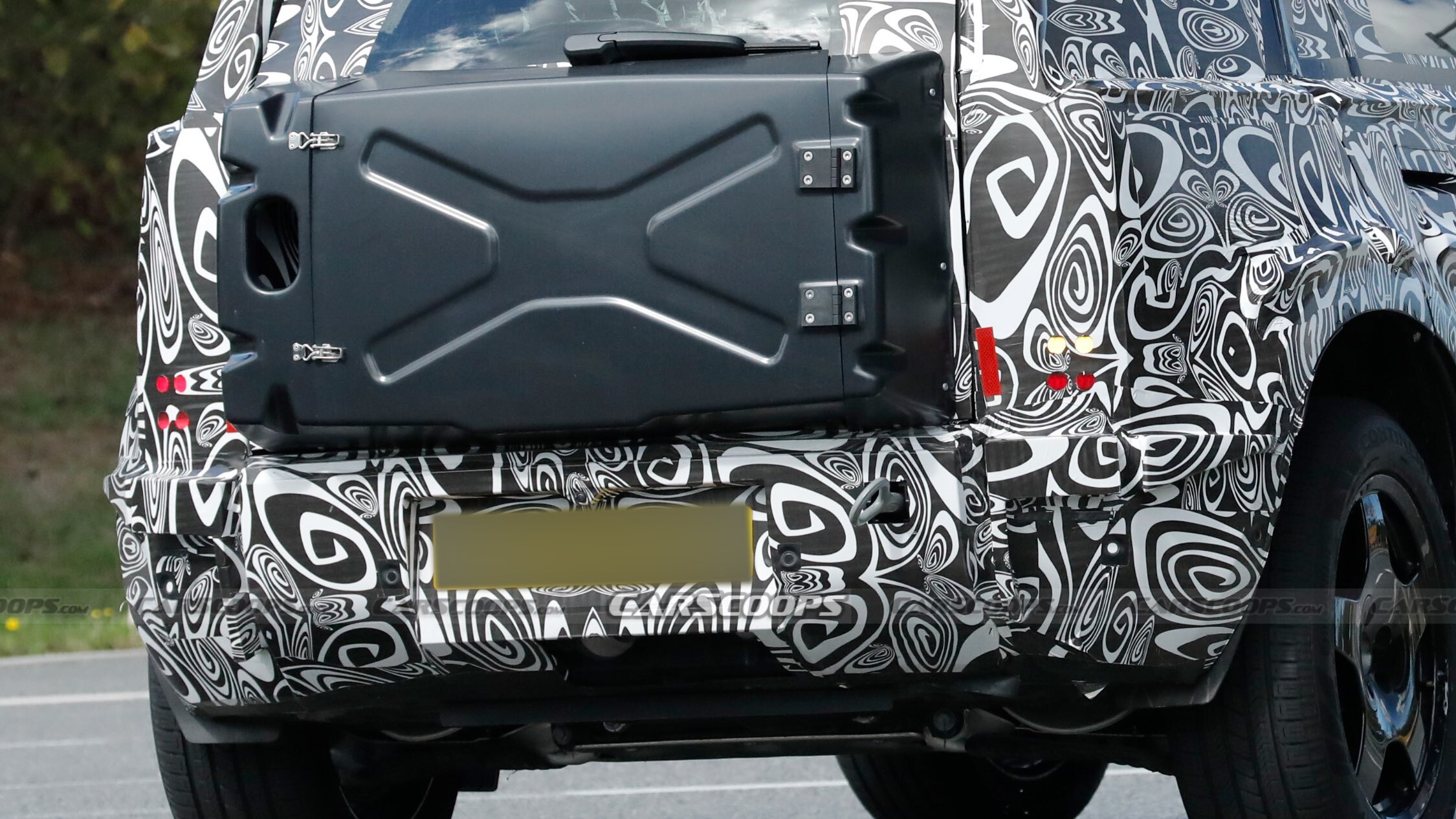
New spy shots taken close to JLR’s Nurburgring base show the baby Defender with a strange-looking rectangular box bolted to the outside of the side-hinged rear door. It’s the wrong shape to be hiding a conventional spare wheel, something we saw on a different prototype earlier this month. And the fact that’s not covered in camouflage suggests Land Rover wants us to notice it and ask questions.
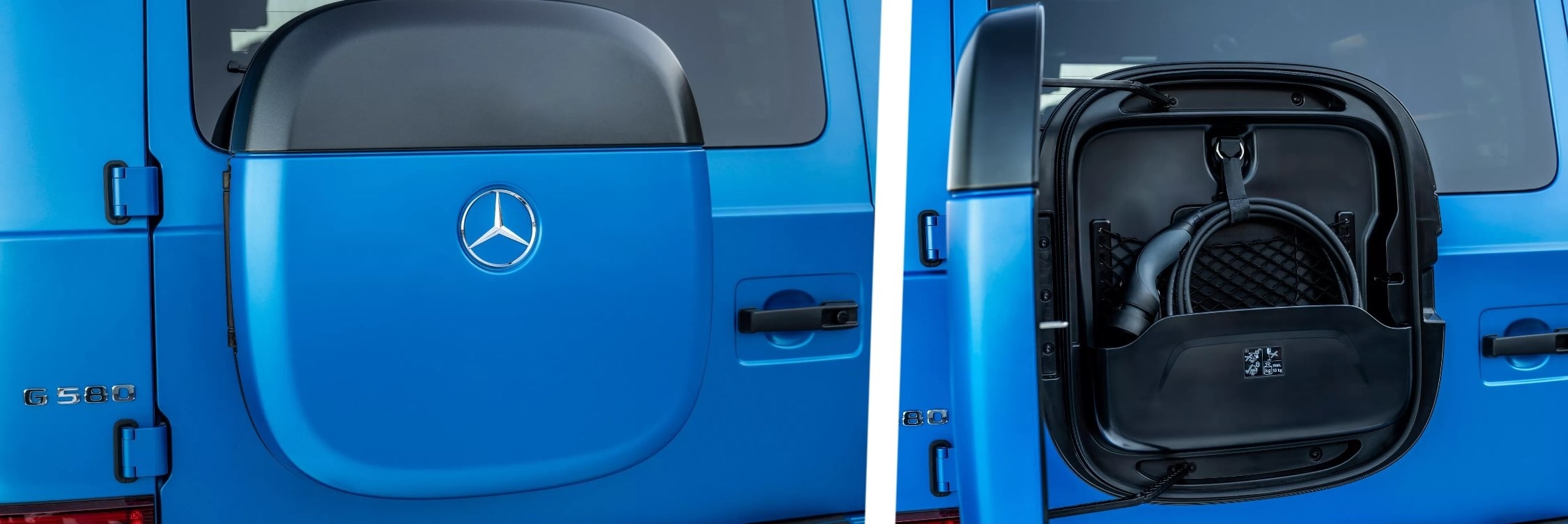
We’re sure that the box we can see in these pics is only there to hide what’s underneath, and won’t actually be available on the Defender Sport when it goes on sale next year. But if that’s the case, what is underneath? One possibility is that there’s a dedicated box for a charging cable, like the Design box Mercedes offers for its slow-selling electric G-Class (below).
Cable storage is a bit of a problem on most EVs, especially ones without a frunk, and particularly if you carry a lot of other kit around in your trunk. The Mercedes Design box solves this problem, allowing you to easily access the cable from a box on the rear door that looks like a mini spare wheel, so fits with the rugged SUV design aesthetic.
But it’s possible Land Rover might choose a different look for its box, maybe one that replicates the look of the side panel boxes on the big Defender. And on cars without the rear-mounted spare wheel, which is heavy and saps range on an EV, Land Rover could potentially use that same box for a tire repair kit to at least continue the wheel theme.
Hybrid And Electric
Not all Defenders will even need a charging cable box, because although the EMA platform the baby Defender shares with the new Range Rover GT coupe was designed originally for EVs and features 800-volt electrics for speedy charging, it has since been modified to accept hybrid power. But unlike some premium SUV brands, this one won’t offer plug-in powertrains, focusing instead on conventional full hybrid tech.
That shift from electric to petrol-electric was essential for the SUV to succeed in the US, which is likely to be its biggest market. It’s a market where EV sales have sunk like a stone, but hybrid demand is on the rise. In Europe, on the other hand, where electric sales are hitting new heights, and one in every four new cars is electric, the EV version will be extremely popular.
But the Defender Sport won’t have the market all to itself. Because Mercedes is working on a shrunken G-Class in the same mould as Land Rover’s compact Defender. Like the baby Defender, the pocket G will be offered with both hybrid and electric powertrains. This time next year could have a real boxing match on our hands.
Alfa Romeo launches new Edizione Luna Rossa special editions.
They include the Junior, Tonale, Giulia, and Stelvio in Europe.
The models gain yacht-inspired colors and special touches inside.
Alfa Romeo is gearing up for the debut of a mysterious concept at the Paris Motor Show next month, but before that happens they have a new special series in store. The Biscione brand has introduced Edizione Luna Rossa editions for its entire lineup, including the Junior, Tonale, Giulia and Stelvio.
Luna Rossa is an Italian yacht-racing team competing at the America’s Cup. Its collaboration with Alfa Romeo was inaugurated in June 2025, followed by the debut of the ultra-exclusive Giulia Quadrifoglio Luna Rossa in January 2026. While the first model was only produced in 10 units with custom colors and a unique aero package, the Edizione Luna Rossa models are available for everyone, serving as the flagships of their respective lineups.
The special editions feature boat-inspired colors, custom touches inside-out, and a dedicated Alfa Romeo emblem. However, not every model is the same, with the Junior and the Tonale getting a different treatment than the stealthier and more exclusive Giulia and Stelvio.
Alfa Romeo Junior Edizione Luna Rossa
Starting with the subcompact and compact SUVs, the Junior and the Tonale Edizione Luna Rossa feature a gray shade with Gloss Black accents and red stripes on the profile, although buyers can also choose black or white for the main color of the body.
The wheels measure 18 inches on the Junior and 20 inches on the Tonale, both featuring a gloss black diamond cut finish and three-spoke designs. Besides the larger wheels, the Tonale also gets Brembo brakes with red brake calipers.
Alfa Romeo Tonale Edizione Luna Rossa
Inside, we find black and gray upholstery, with 3D knit technology on the premium fabric, red stripes featuring Luna Rossa lettering, and red Alfa Romeo emblems. The SUVs also feature aluminum sports pedals and kick plate, new graphics for their digital cockpits, and ambient lighting.
Equipment is pretty generous, with the Edizione Luna Rossa being the highest-spec trims. In terms of powertrains, the Junior offers the option between hybrid and fully electric setups, while the Tonale is available with hybrid and PHEV options.
Alfa Romeo Stelvio Edizione Luna Rossa
Moving on to the midsize offerings, the aging Giulia and Stelvio take a different route, focusing more on exclusivity and sportiness. The mechanically-related models are pictured with a blacked-out configuration, but the color palette of the Edizione Luna Rossa editions also include white and Etna Red shades.
Independently of the color, the aging duo benefits from extensive use of carbon fiber on the exterior and the interior, red Alfa Romeo emblems, and the Luna Rossa logo on the mirror caps. The Giulia features Quadrifoglio-inspired side skirts and rear spoiler combined with Gloss Black 19-inch alloy wheels, with the Stelvio riding on 21-inch wheels.
Alfa Romeo Giulia Edizione Luna Rossa
The monochrome interior features a generous amount of carbon fiber on the dashboard, center console, and door cards, alongside leather and recycled Econyl fabric upholstery. Red stripes on the steering wheel and seatbacks break the monotony of black, alongside the matching Alfa Romeo emblems.
The Edizione Luna Rossa Giulia and Stelvio come standard with a Harman Kardon Hi-Fi system and the electronically controlled suspension. Finally, the electric sunroof is standard on the sedan and optional on the SUV.
As with the regular Giorgio-based models, the special editions are available with the 2.2-liter turbodiesel in two power outputs, while UK buyers also have access to the 2.0-liter gasoline engine that has been phased out in Europe. In other words, only the V6-powered Quadrifoglios escape the Luna Rossa treatment.
The Junior, Tonale, Giulia, and Stelvio Edizione Luna Rossa will gradually go on sale on European markets, positioned at the top of the lineup of each non-Quadrifoglio model. Pricing will be announced closer to the market launch.
According to Stellantis, the partnership between the two Italian brands goes deeper than colors, materials, and special emblems. More specifically, Alfa Romeo “has provided its expertise in simulation, dynamics and virtual analysis to Luna Rossa, while also collaborating on the development and fine-tuning of the control software for the systems that manage sail movement.”

 Login