Reading view

There are new articles available, click to refresh the page.

Avatr’s Electric Wagon Packs Supercar Power And A Backup Gas Engine
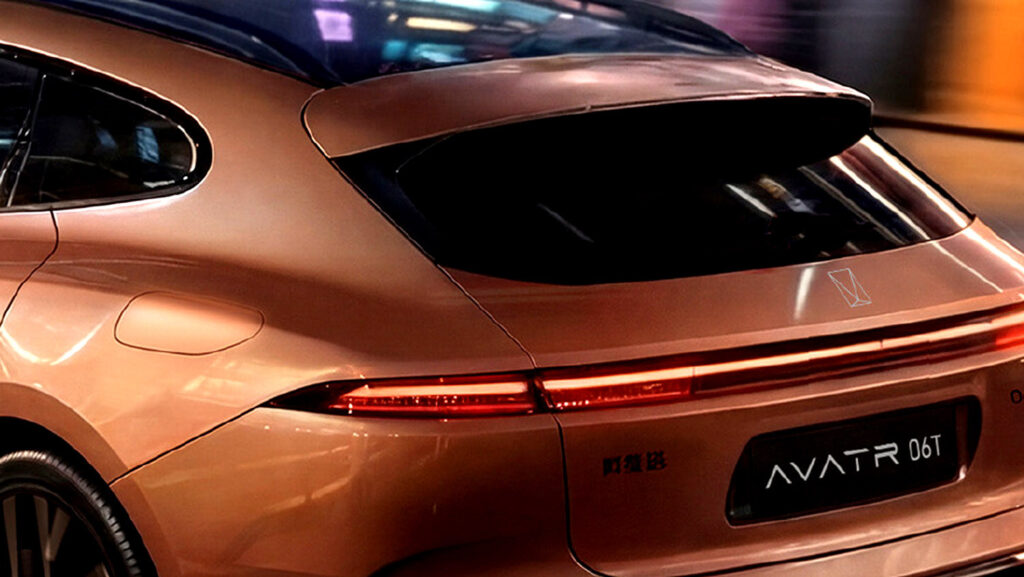
  • Avatr previews the 06T electric shooting brake for China market.
  • The wagon body looks better balanced than the sedan version.
  • Battery EV models offer up to 955 hp in the range topping trim.

Sleek estate cars have become somewhat of a rarity these days. Buyers keep drifting toward crossovers and SUVs, and manufacturers have largely followed the money. Traditional wagons, especially the low and sporty ones, now feel like a niche choice. China, however, still has a few brands willing to keep the format alive. Avatr is one of them.

The company has now previewed its newest addition, a wagon called the 06T. Similar in size and profile to the Zeekr 007 GT, Avatr’s new model will be sold both as a range-extender and as a fully-electric wagon. It also has a seductive Shooting Brake shape that should get many car enthusiasts excited.

Read: Avatr Just Extended The 06 In More Ways Than One

Measuring 4,940 mm (194.4 inches) long, 1,960 mm (77.1 inches) wide, and 1,475 mm (58 inches) tall, the 06T rides on a 2,940 mm (115.7-inch) wheelbase and shares its underpinnings with the existing 06 sedan. The sedan’s rear design has always looked a bit awkward, but stretching the roof into a wagon shape helps smooth out the proportions and gives the overall profile a more natural look.

The Juicy Details

\\\\\

Pictured here in a new color known as Liujin Orange, the fully electric version uses an 89.33 kWh battery pack. Buyers will have two rear-wheel-drive EV options to choose from. The entry model uses a pair of 302 hp (225 kW) motors, while the more powerful version upgrades to two 337 hp (251 kW) units.

Sitting above these two variants in the range will be an all-wheel drive variant. In addition to having the two 337 hp motors at the rear, it also includes a 282 hp (210 kW) unit at the front, combining to produce 955 hp (712 kW). There’s no word on how quickly it’ll hit 60 mph (96 km/h), but we know all models will be capped at a 149 mph (240 km/h) top speed.

\\\\\

Avatr will offer the three EV variants alongside an extended-range version of the 06T. This model uses a 1.6-liter turbocharged engine producing 154 hp (115 kW), which functions solely as a generator for the battery pack. Propulsion comes from two 248 hp (185 kW) electric motors mounted at the rear axle. Battery capacity has not yet been disclosed, and there is still no information on either the combined driving range or the all-electric range.
\\\\\\\\\\\

EV Bets Already Cost Four Legacy Carmakers $70B, And The Tab Keeps Climbing

  • Honda recently posted $15.7 billion in expenses for its EV U-turn.
  • EV registrations in the US collapsed 48 percent in December.
  • Ditching the $7,500 federal EV tax credit has eroded EV demand.

The new year hasn’t been kind to traditional automakers, many of which now find themselves confronting an EV reality in the U.S. that looks very different from what they had been planning in boardrooms not long ago. A mix of policy changes and cooling demand is forcing several manufacturers to rethink electrification plans that, until recently, sat at the center of their long-term strategies.

Read: Honda Cancels 0 Sedan, 0 SUV, And Acura RSX EVs

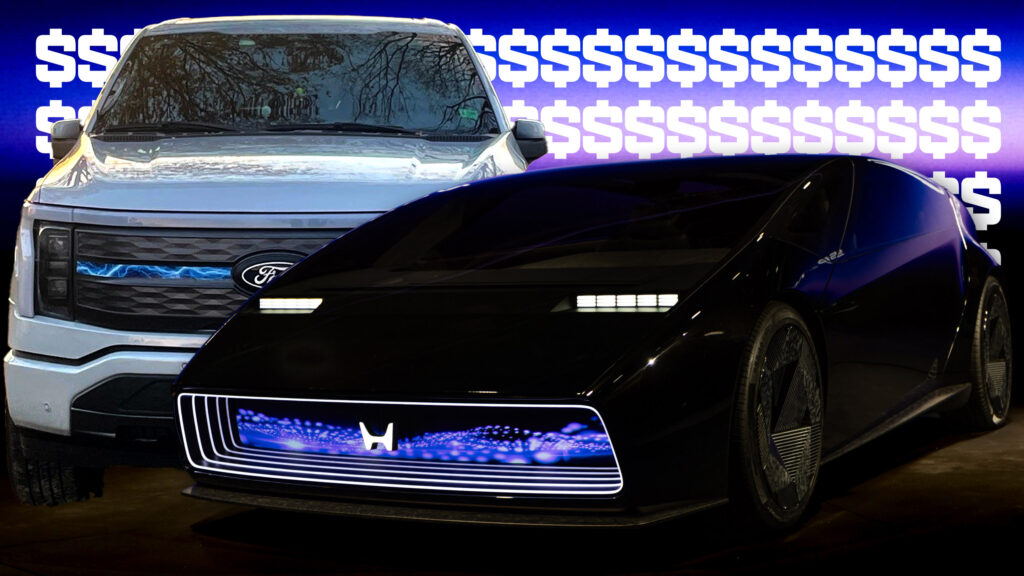
Honda is the latest to change course. The company confirmed this week that it will scrap all three electric vehicles it had planned to build in America, citing weakening demand, especially in the US market. The move places it alongside Ford, GM, and Stellantis, all of which have recently scaled back their own EV programs.

Taken together, the retreat is proving expensive. Those four automakers alone have absorbed close to $70 billion in losses tied to their EV investments, reports Auto News. And that figure doesn’t even include other manufacturers, such as Porsche, which have also begun dialing back their electrification plans.

The drop in EV demand in the US can be largely traced to decisions made by the Trump administration. New government policies not only encourage manufacturers to prioritize combustion-powered models, but the removal of the $7,500 federal EV tax credit has also further weakened demand at a time when adoption was already slowing.

In fact, EV registrations fell 48 percent in December compared to last year, dropping to just 75,427 vehicles. As a result, EV market share slipped from 9.9 percent to 5.3 percent.

The EV Graveyard

 EV Bets Already Cost Four Legacy Carmakers $70B, And The Tab Keeps Climbing

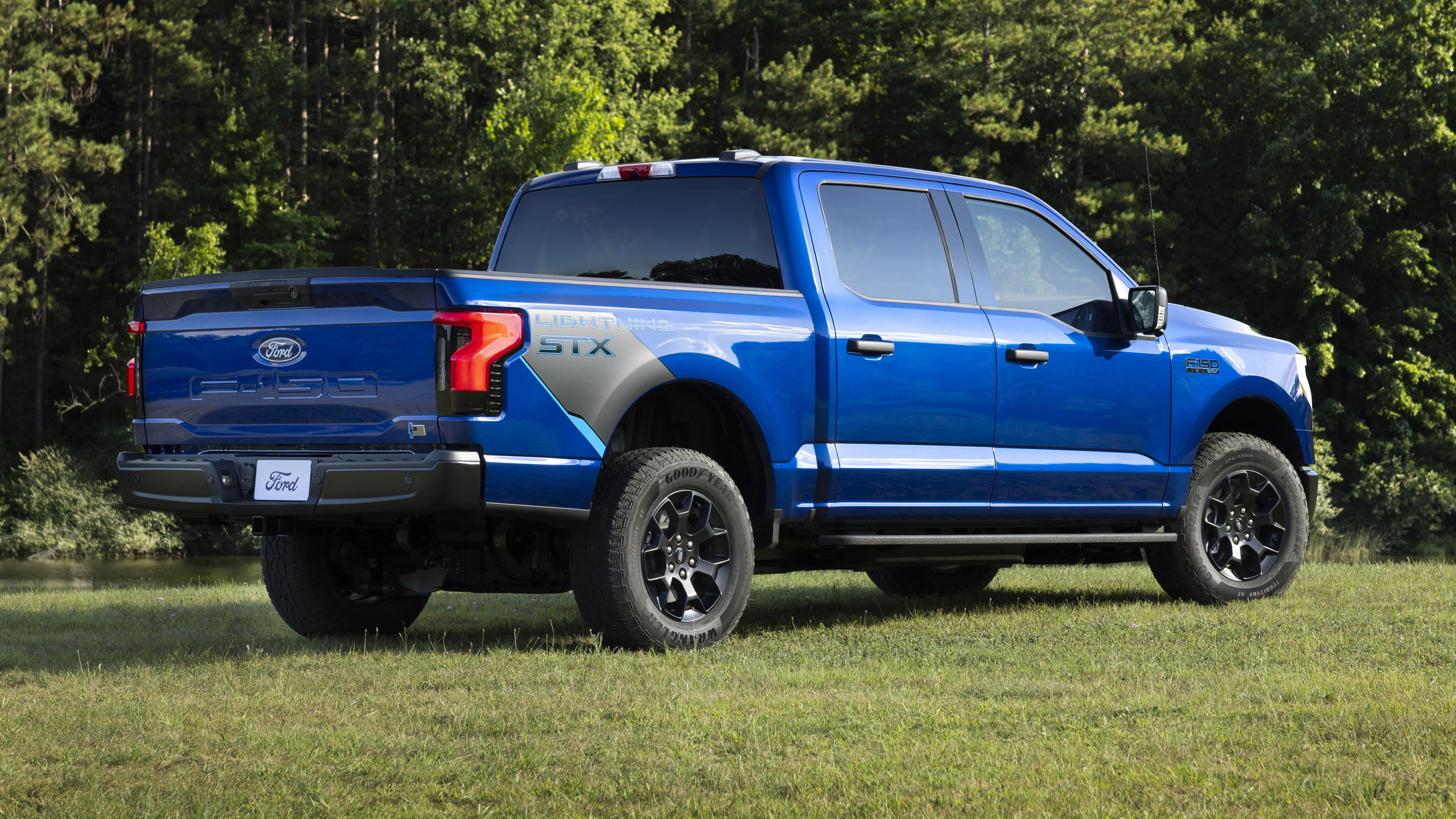
Ford has already revealed that its retreat from EVs has cost roughly $21 billion. The company scrapped plans for a three-row electric SUV and ended production of the F-150 Lightning last year after it failed to meet sales expectations.

Stellantis recently said its EV pullback will cost about $26 billion, following the cancellation of several electric models. GM has also stepped back, halting production of the Chevrolet BrightDrop electric van in Canada and repurposing a Michigan plant for gas trucks after originally planning to build EVs there.

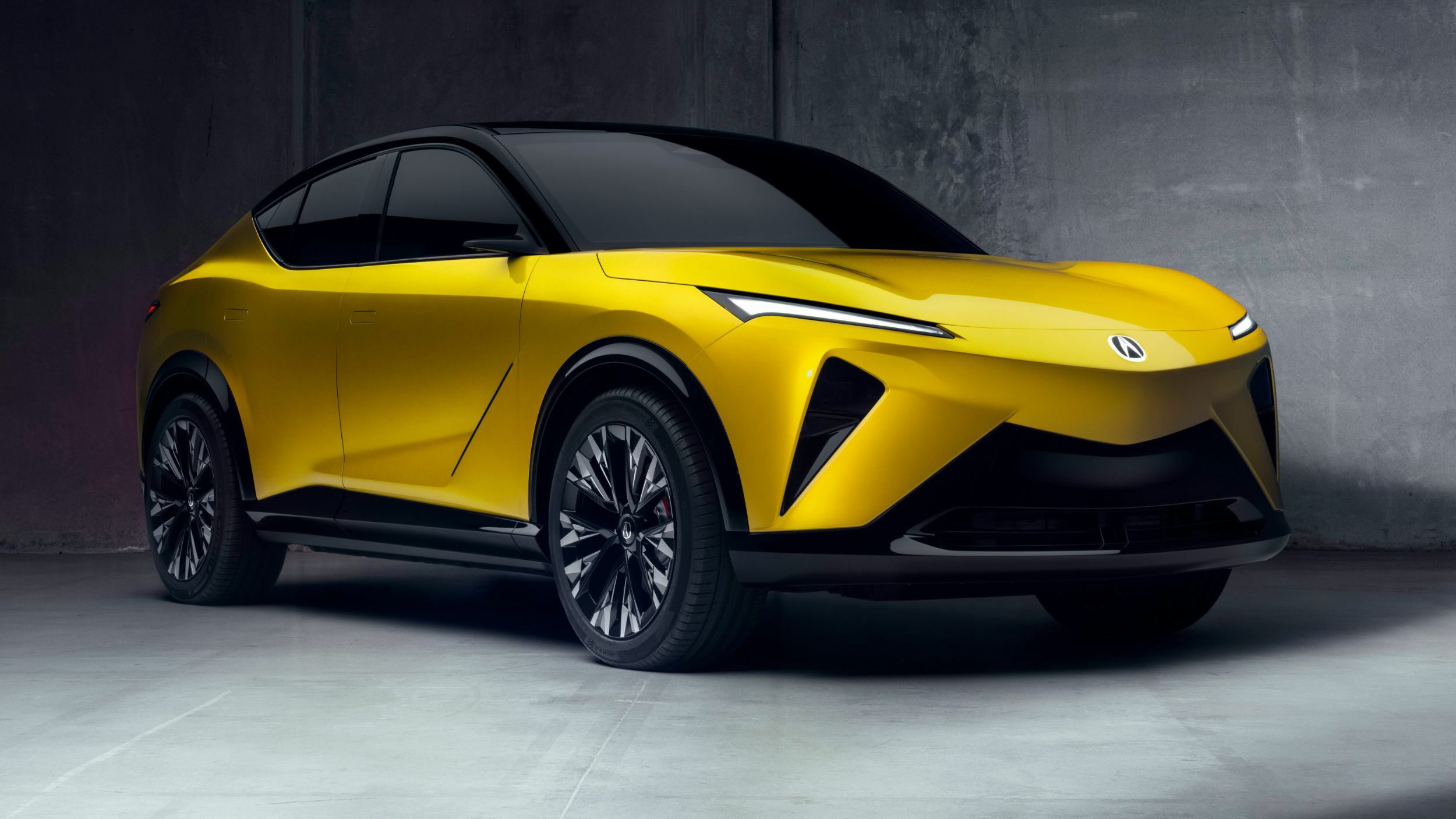
As noted by Auto News, Honda is booking 2.5 trillion yen or $15.7 billion in expenses and losses due to its EV U-turn. In addition to killing off the 0 Saloon and the 0 SUV, the car manufacturer has killed off the all-electric Acura RSX. That sleek coupe SUV was unveiled as a pre-production prototype last year and would have been the first to use Honda’s in-house global EV platform.

Honda is booking 2.5 trillion yen or $15.7 billion in expenses and losses tied to its EV U-turn. Alongside the cancellation of the 0 Saloon and the 0 SUV, the automaker has also killed the all-electric Acura RSX. The stylish coupe SUV debuted as a pre-production prototype last year and was set to become the first model built on Honda’s in-house global EV platform.

 EV Bets Already Cost Four Legacy Carmakers $70B, And The Tab Keeps Climbing
Acura RSX

Gravity Dragged This Lucid’s Value Down $46,000 In Just 3 Months

  • The Gravity Dream Edition packs 1,070 hp and 909 lb-ft.
  • Early resale prices show the luxury EV losing value quickly.
  • The base version starts under $80,000 with 560 hp.

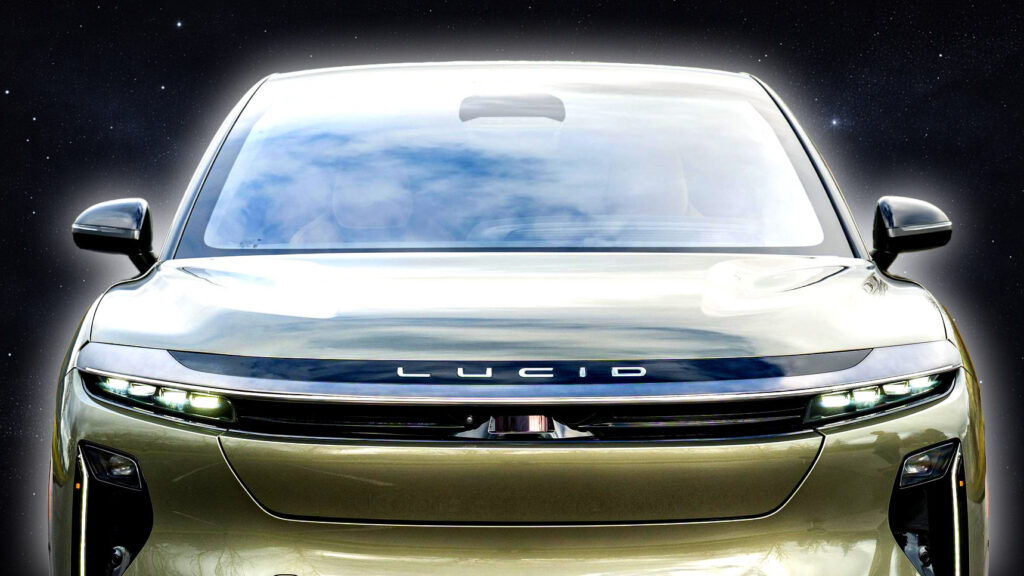
If you were among those who rushed to buy a new Lucid Gravity, you may want to look away now. Early resale results can reveal a lot about how the market values a new model. A flagship Dream Edition with just 3,500 miles (5,632 km) has sold for $96,000, nearly $46,000 below its original MSRP, offering a clear snapshot of how buyers currently price the SUV on the used market.

There’s a lot to like about the Gravity, particularly the Dream Edition model. It features a 123 kWh battery pack, four electric motors, and a combined 1,070 hp and 909 lb-ft of torque. Does anyone need an SUV with this much power? No, but being able to hit 60 mph (96 km/h) in 3.1 seconds and storm down the quarter-mile in 10.6 seconds in a luxury SUV is still pretty cool.

Read: He Sold His $142K Lucid At A Huge Loss After Just 400 Miles Of EV Reality

The Dream Edition is also equipped with all the luxury features you could ever want, including the Comfort and Convenience Package, which adds soft-close doors and power rear window shades, alongside an AR HUG, dynamic ambient lighting, and Nappa leather upholstery and seats with heated, ventilated, and massaging functions.

\\\\\\\\\\\\\\

Cars & Bids

Perhaps the biggest downside of the Dream Edition is the cost. In the US, it has an MSRP of $141,550, including destination charges, which feels like a lot, particularly given that the entry-level Gravity Touring with 560 hp is available from just $79,900.

Sure, it has roughly half the power, but most of the same features. Additionally, the 828-hp Gravity Grand Touring starts at $94,900, and also seems like a relatively bargain compared to the Dream Edition.

As the Cars & Bids auction shows, depreciation has been significant. This particular example was registered in early December and driven just 3,500 miles, yet it lost $45,550 in value. That works out to roughly $13 lost for every mile driven.

\\\\\\\\\\\\\\\\\

Cars & Bids

Ineos Hints Its Smallest SUV Yet Could Arrive Sooner Than Expected

  • Ineos admits it rushed early plans for the Fusilier SUV.
  • The Fusilier will rival baby Defender and G-Class models.
  • The company says the new model is not years away now.

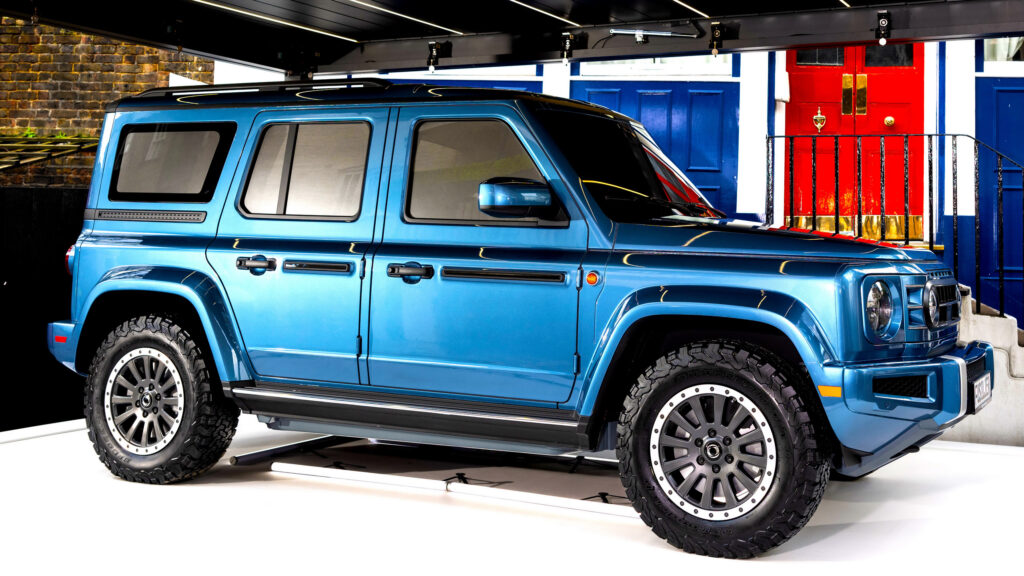
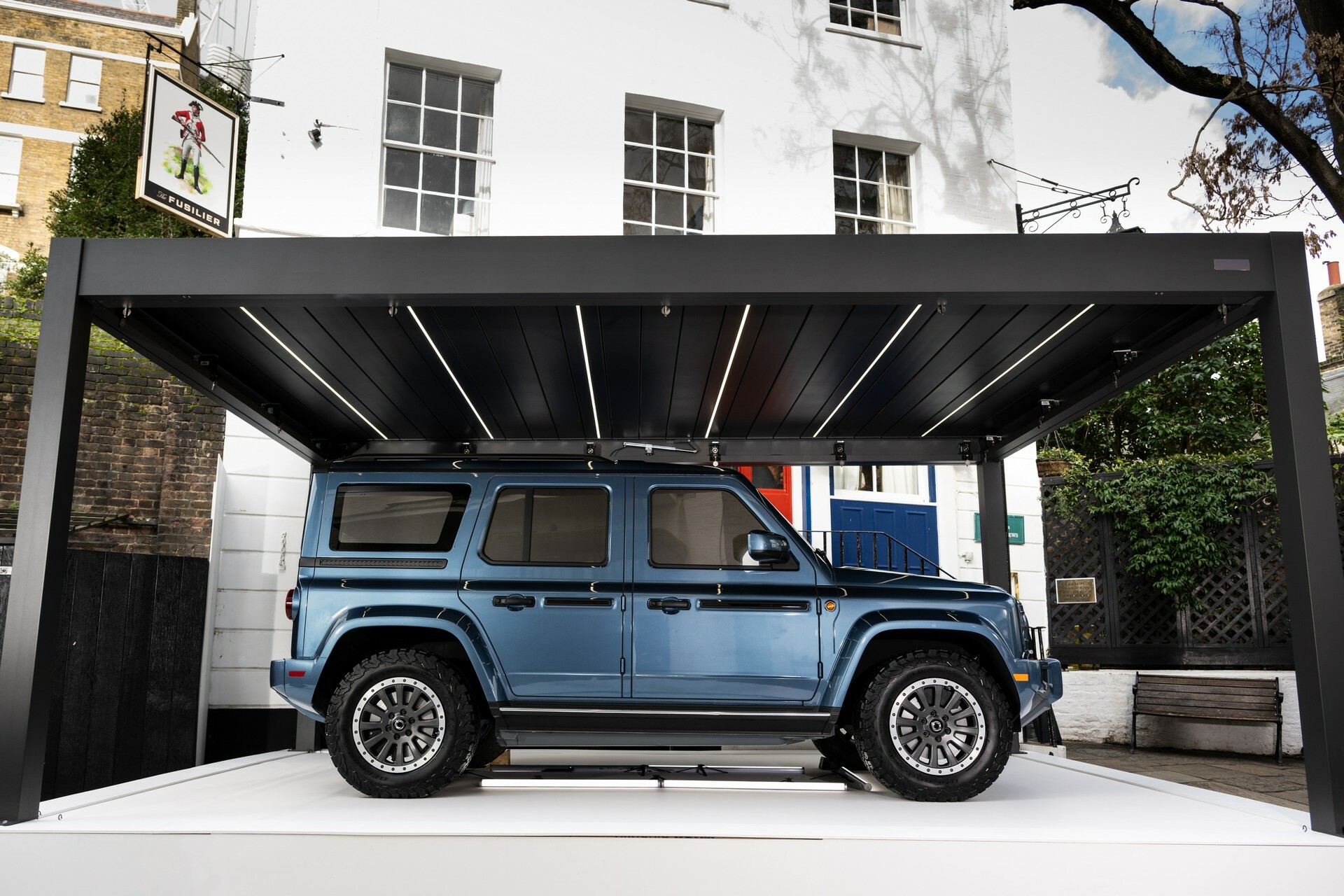
Ineos says development of the smaller Fusilier is back underway, nearly two years after the project was paused as enthusiasm for EVs began to cool. Exactly when it might appear in showrooms is still unclear, but the program itself is no longer sitting on the sidelines.

The company first pulled the wraps off the Fusilier in early 2024, outlining plans for a new bespoke skateboard platform underneath. Both a fully electric version and a range-extender variant were on the table from the start. In the bigger picture, the model is expected to become a key gateway into the Ineos lineup, positioned as a smaller, more attainable alternative to the Grenadier.

Read: New Ineos Fusilier EV Is A Smaller SUV With Optional Range-Extender

“The concept of the Fuselier – something that’s a bit smaller than the Grenadier – is still a vision that is alive and well in the company, and we’re actively pursuing what that vehicle would look like, or a vehicle like that would look like going forward,” the region director for Ineos in Australia, New Zealand, and APAC, Justin Hocevar told Car Expert. “That’s what we’ll be talking about in the not-too-distant future. In terms of announcing the timeline, I don’t think it’s years away.”

What’s Changed?

 Ineos Hints Its Smallest SUV Yet Could Arrive Sooner Than Expected

According to Hocevar, Ineos was “charging into” the Fusilier project too quickly, and had to pause it to ensure a range-extender powertrain could work with it.

“The project morphed over time, and part of the pause on that project had a lot to do with our desire to have an alternative new-energy powertrain in that vehicle – hybridization or a range-extender solution,” he said.

Hocevar stopped short of putting a firm date on the Fusilier’s arrival. Still, his suggestion that the wait is not “years away” hints that the project is moving along at a healthy pace, which should reassure anyone keeping an eye on Ineos’ next move.

Whenever it finally lands in showrooms, the compact off-roader will enter a growing niche. Mercedes-Benz is preparing a smaller G-Class and Land Rover has a baby Defender in the pipeline. Ineos appears ready to take a slightly different approach, leaning toward a more traditional, less tech-heavy interpretation of the segment.

\\\\\\\\\

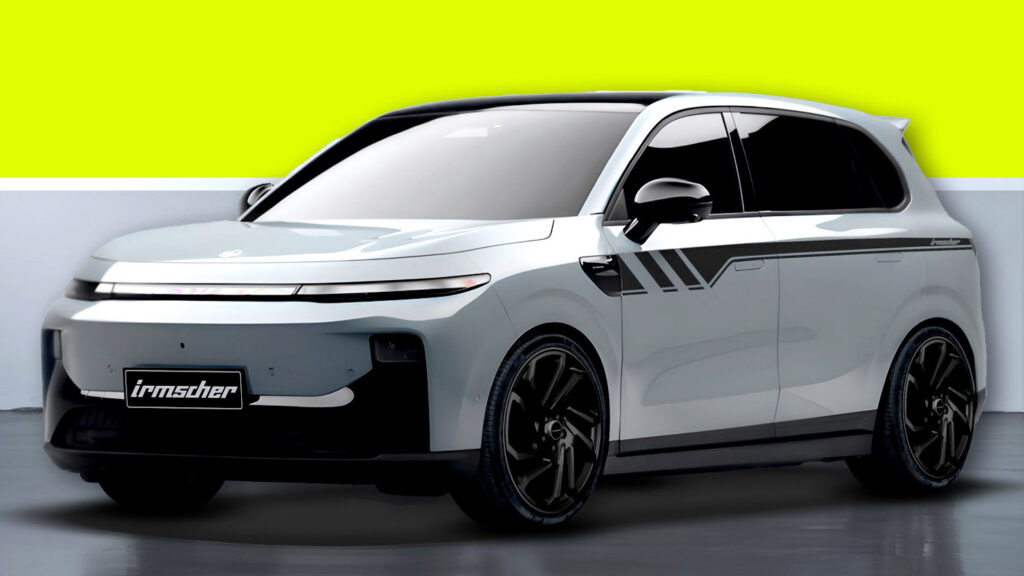
Stellantis Turns To A German Tuner For Its Chinese EV

  • Stellantis deepens ties with German tuner Irmscher again.
  • Leapmotor B10 Dynamic will be limited to just 500 units.
  • Lower suspension and new wheels sharpen the EV’s stance.

Stellantis has already made its position clear when it comes to competing with China’s fast-moving EV industry. Rather than trying to match those manufacturers head on, the group chose a different path, investing in Leapmotor and taking responsibility for selling the brand’s cars across Western markets.

Now it is strengthening another partnership as well. The automaker has deepened its relationship with German tuning house Irmscher, suggesting Stellantis sees more value in outside expertise than in building a dedicated in-house performance division like many rival brands have done.

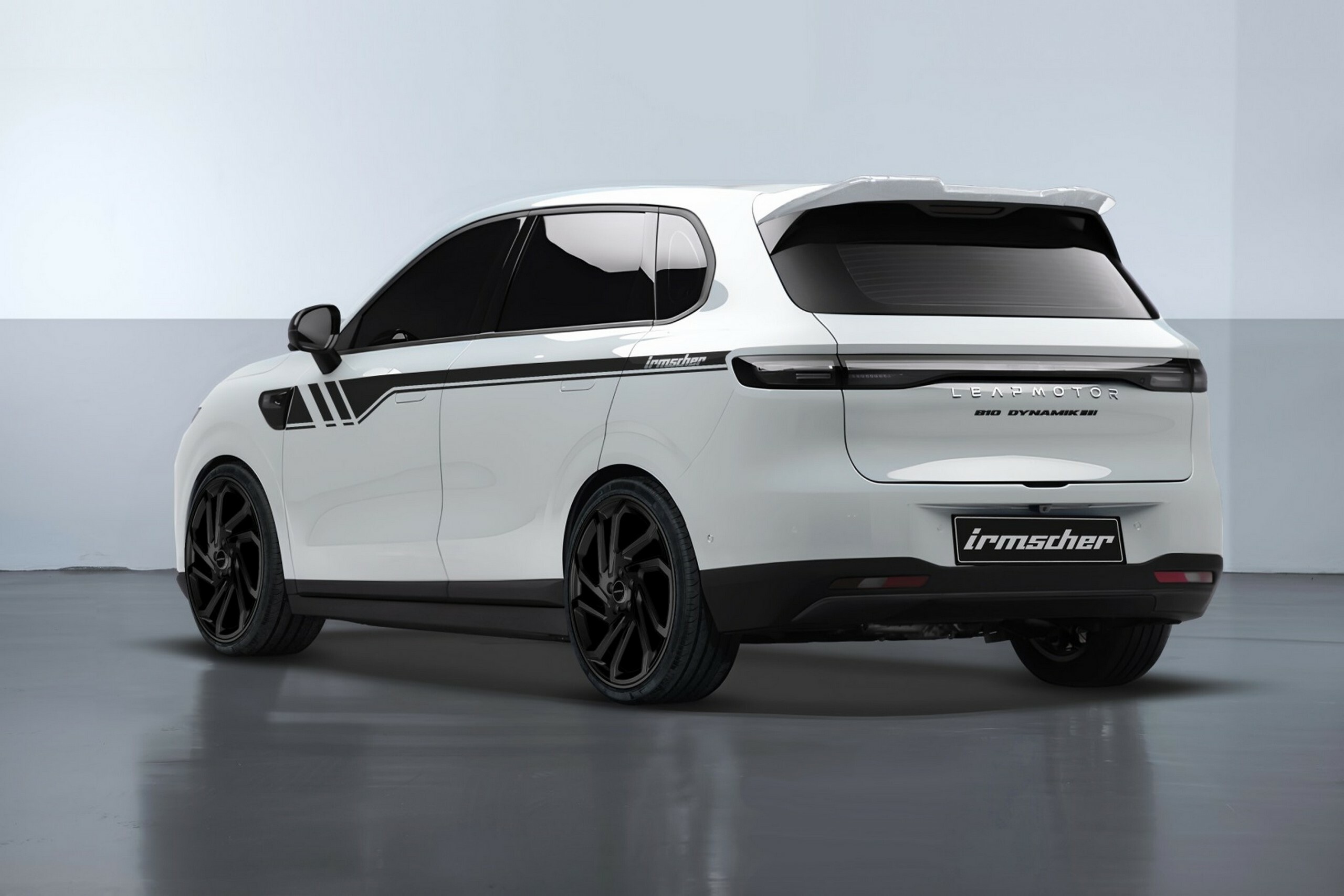
This second collaboration between Leapmotor and Irmscher is for the new B10, sitting below the slightly larger C10 in the company’s range. Known as the B10 Dynamic, the finished vehicle will be capped at just 500 units and has undergone a series of updates. Could you call it desirable? Probably not, but it does make the B10 that little more interesting.
Read: Stellantis’ Leapmotor Found An Unlikely Ally In Germany’s Tuning Scene

Immediately making this B10 differ from a regular one is that it sits 1.1 inches (30 mm) lower, presumably due to the fitment of lowering springs. A new set of 19-inch wheels has then been installed, perfectly fitting within the arches. According to Imrscher, chassis changes mean the B10 offers better steering feel and reduced body movement, improving handling.

A True Tuner Special

 Stellantis Turns To A German Tuner For Its Chinese EV

Further adding to the sporty vibe of the B10 are black graphics positioned along the doors and running across the rear quarter panels. These graphics, combined with the black wing mirrors, the wheels, black bumpers, and black rocker panels, may look a little too wannabe-racer for some. For others, they may be just about right.

Stellantis has only released photos of the B10 Dynamic’s exterior, but says the interior has been tweaked too, now including Irmscher embroidery and decorative stitching. There’s also an aluminum plaque in the cabin, denoting each car as one of 500.

Each example being built is based on the B10 Pro Max. This version has a 67.1 kWh battery pack and a 218 hp motor driving the rear wheels. Irmscher hasn’t touched the powertrain, so those figures remain the same. As for the price? It’s a rather hefty €38,500 ($44,300).

\\\\

China’s Dreame Built Its Own Purosangue, And It Packs 1,876 HP

  • Dreame revealed the Nebula Next 01X EV crossover concept.
  • It closely follows the design language of the earlier 01 coupe.
  • With 1,876 hp, the EV claims 0-60 mph in just 1.8 seconds.

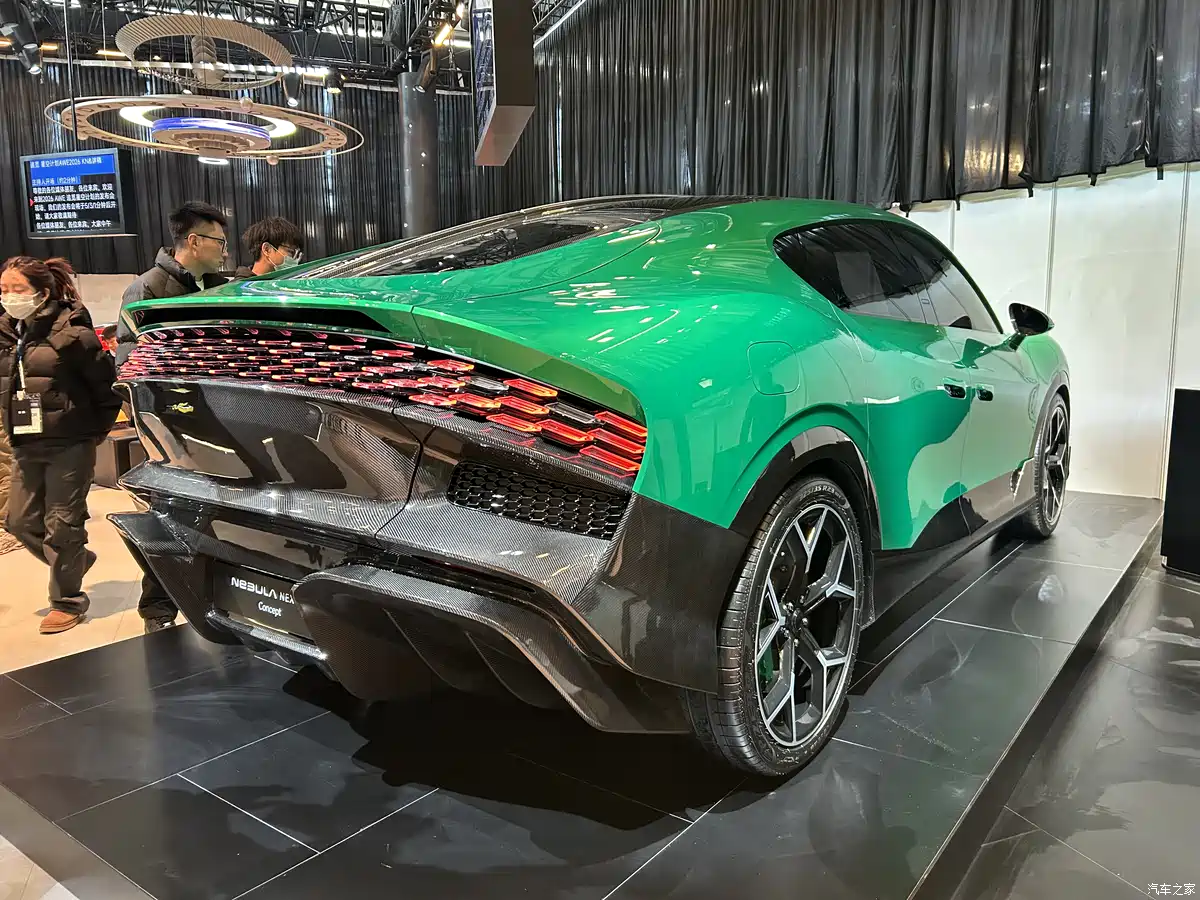
Dreame, best known for robotic vacuums and home gadgets, is now chasing something far larger than dust. The Chinese tech company has revealed another addition to its planned automotive lineup, a crossover concept called the Nebula Next 01X. The tall, coupe-like EV made its public debut this week at the China Home Appliances and Consumer Electronics Expo.

The tech firm has not put a single production car into showrooms yet, but its automotive ambitions are already split across three separate brands: Nebula Next, Kosmera, and Star Motor. The 01X builds directly on the Nebula Next 01 coupe revealed back in January.

Read: Chinese Vacuum Brand Drops A 1,876 hp Taycan-Trampling Reality At CES

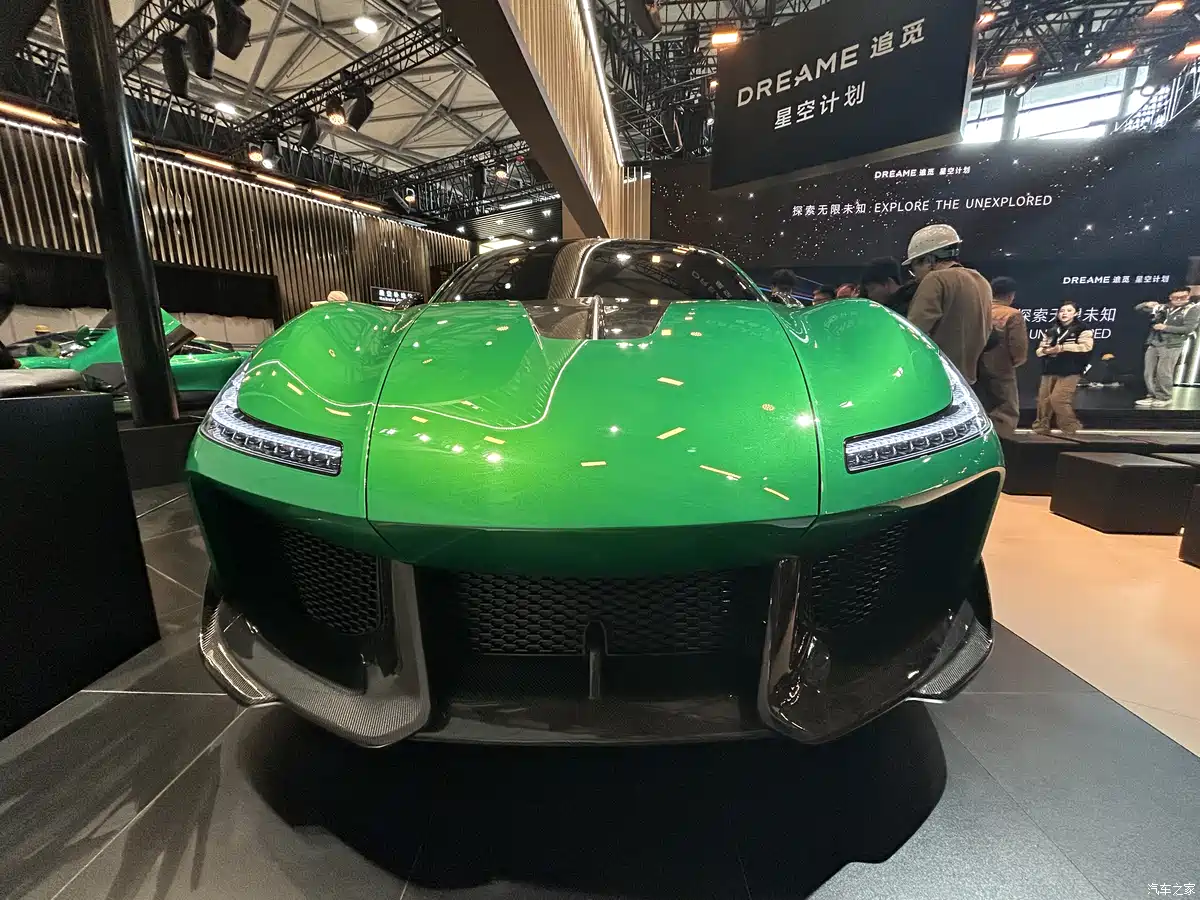
That car sat low and sleek, but much of its styling DNA has simply been lifted and stretched upward here, turning the concept into something that lands closer to the Ferrari Purosangue end of the crossover spectrum.

Tech To Match The Looks

 China’s Dreame Built Its Own Purosangue, And It Packs 1,876 HP
Autohome

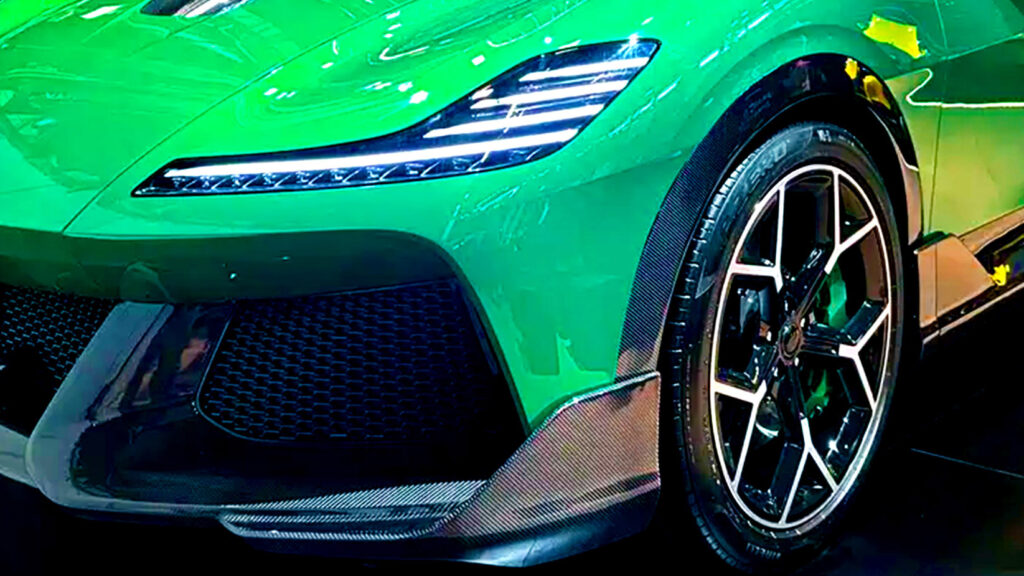
Dreame’s Star Motor brand has already shown a willingness to borrow heavily from existing cars. With the 01X, the company seems to be borrowing from itself instead. The crossover closely mirrors the earlier 01 Coupe. It wears the same vivid green paint, and the lower sections of the body are trimmed in carbon fiber. The Ferrari-inspired LED headlights appear unchanged, and the rear end follows almost exactly the same design theme.

For as wild as the shape of the SUV is, it’s perhaps what’s found under the skin that’s most interesting. Dreame claims to have developed the first volume-production-ready solid-state battery pack, aiming to start a small number of deliveries this year before ramping up production in 2027.

 China’s Dreame Built Its Own Purosangue, And It Packs 1,876 HP

According to Dreame, the 01X’s battery pack is a 60Ah unit with an energy density of 450 Wh/kg. Thanks to battery packs delivering a stupendous 1,876 hp, the vehicle can apparently hit 100 km/h (62 mph) in just 1.8 seconds.

Whether or not the 01X ever lands in the hands of buyers remains to be seen. While we’ve seen plenty of established companies venture in the world of EVs successfully, such as Xiaomi, as well as numerous startups like Nio do the same, we’ve seen even more companies try and fail to do so.

Dreame has big ambitions, but creating one-off concepts is much easier than building mass-market production models, so it still has a long way to come.

\\\\\\\

Photos Autohome

These Used EVs Are Selling Faster Than Gas Cars In Today’s Market

  • New study shows used EVs are selling quicker than used ICE models.
  • In February, the average used car took 53 days to sell in the US.
  • The Tesla Model X was the quickest-selling used car last month.

We all know that new car prices have surged over the past six years, but they’re not alone. The used market has followed the same trajectory. Prices have risen sharply, and vehicles are now lingering on dealer lots longer than before, partly because many owners are not shopping for cars and are holding on to their current ones. Even so, one automaker seems largely unaffected by the slowdown

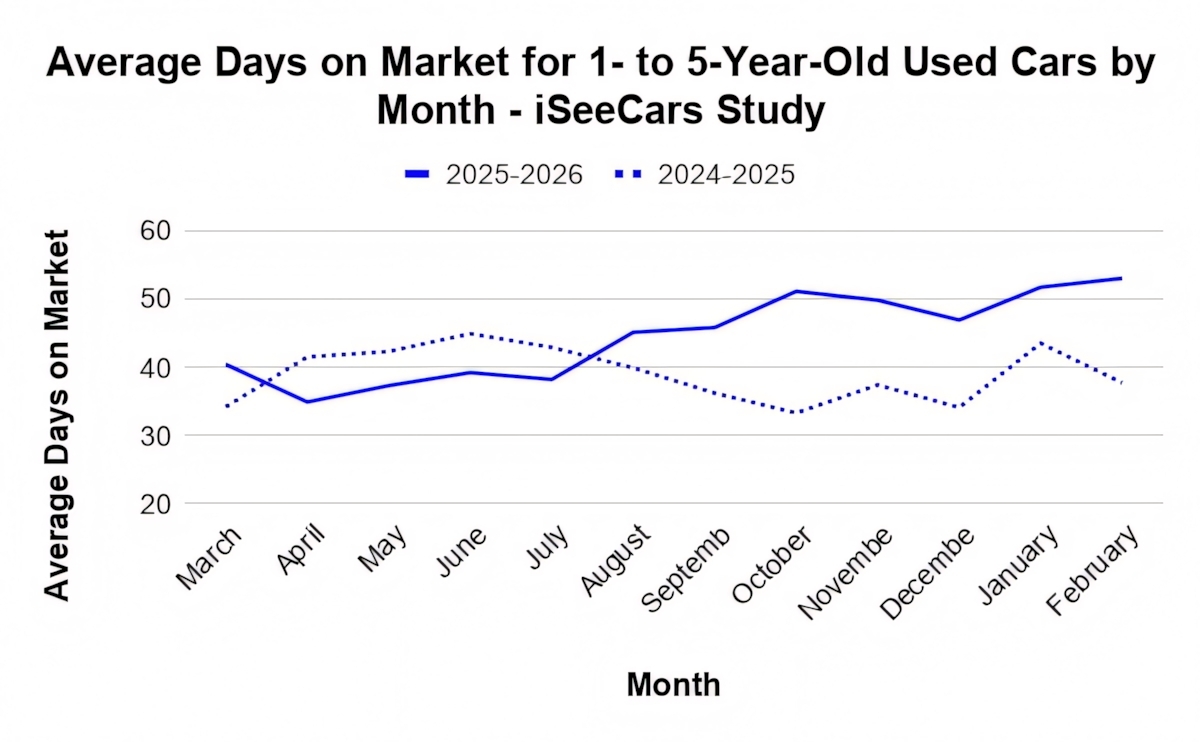
Fresh data from iSeeCars sheds some light on the trend. It examined more than 960,000 transactions involving used vehicles between one and five years old during February. Across that sample, the typical used car sat on the market for 53 days before finding a buyer. A year earlier the average was just 37.7 days in the US, which means selling times have stretched by roughly 40 percent in only twelve months.

Read: Tesla’s Sales Collapsed By Nearly 90% In The Land Of EVs

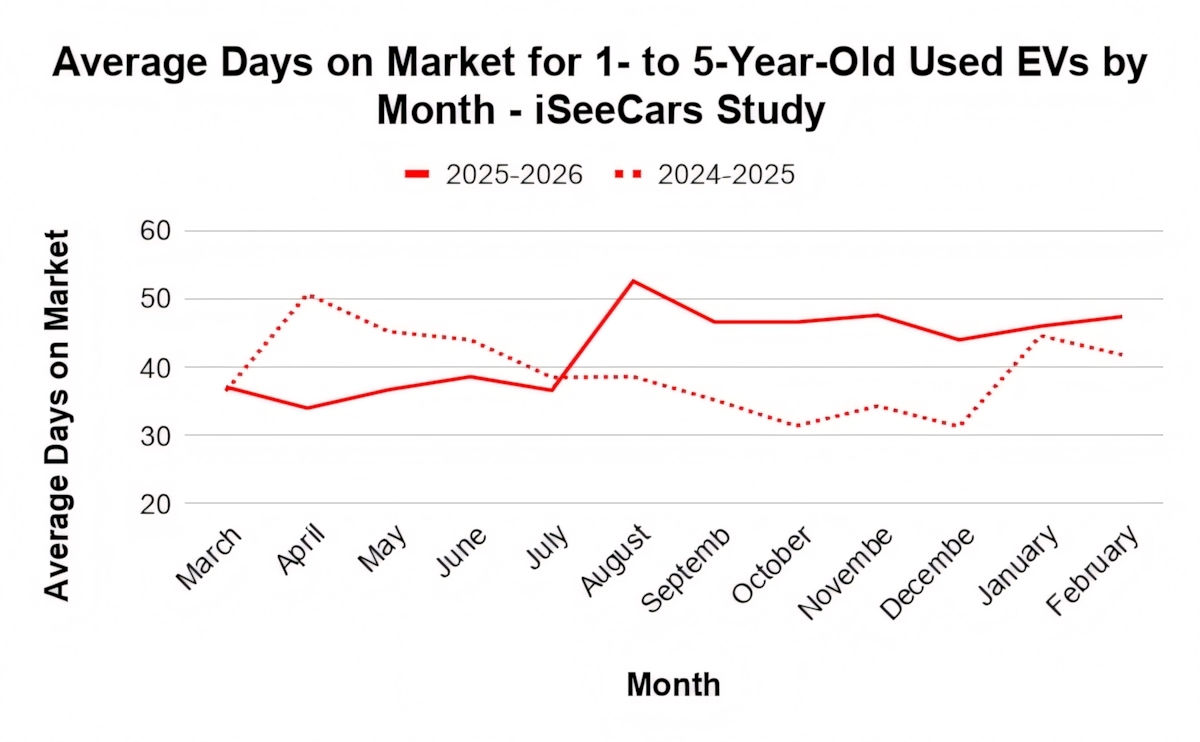
Used electric models, interestingly, are moving a bit faster than their gasoline counterparts. In February, the typical used EV took 47.4 days to sell. That figure has increased from last year’s 41.8-day average, but the 13.4 percent rise is modest compared with the broader used market.

 These Used EVs Are Selling Faster Than Gas Cars In Today’s Market
iSeeCars
 These Used EVs Are Selling Faster Than Gas Cars In Today’s Market

Tesla Bucks The Trend

However, there’s a little more to these figures than may first meet the eye. Because Teslas still account for the vast majority of EV sales, their typically quick resale times drag down the overall market average. Remove Tesla from the equation and the picture changes. Without those models included, the typical used EV took 57.3 days to sell in February, a 15.1 percent increase from the 49.8-day average recorded at the same time last year.

So which models disappear from listings the fastest? Comfortably leading the pack is the Tesla Model X, needing an average of just 22.6 days to sell. Surprisingly, it was followed by the Mercedes-Benz EQS SUV, at an average of 26.9 days, and then the Tesla Cybertruck, at 27.4 days.

Fastest-Selling Used Cars In February 2026
RankModelDays on MarketCompared to Average
1Tesla Model X22.60.43x
2Mercedes-Benz EQS (SUV)26.90.51x
3Tesla Cybertruck27.40.52x
4Mazda MX-5 Miata RF29.30.55x
5Toyota GR Supra30.00.57x
6Genesis G9030.40.57x
7Rivian R1S30.80.58x
8Toyota GR Corolla31.10.59x
9Hyundai Kona Electric31.40.59x
10Volkswagen Golf R31.80.60x
11Lexus GX 55032.40.61x
12Lexus RX 500h33.00.62x
13Tesla Model 333.10.62x
14Nissan LEAF33.80.64x
15Honda Civic Hybrid34.80.66x
16Tesla Model Y34.90.66x
17Toyota GR8635.10.66x
18BMW M235.40.67x
19BMW X5 M35.50.67x
20Cadillac Escalade-V35.60.67x
Overall Average53.0
SWIPE

Other strong performers uncovered by the iSeeCars study included the Mazda MX-5 Miata RF at 29.3 days, the Toyota GR Supra at 30 days, the Genesis G90 at 30.4 days, the Rivian R1S at 30.8 days, and the Toyota GR Corolla at 31.1 days. Several of these cars lean toward the enthusiast end of the spectrum, which likely helps keep demand strong.

Tesla’s higher-volume models appear a little further down the rankings. The Model 3 lands in 13th place with an average of 33.1 days on the market, while the Model Y sits in 16th at 34.9 days. However, it’s worth noting that far more Model 3s and Model Ys are sold monthly than the likes of the GR Supra, G90, R1S, and MX-5 Miata, so they help to sway the overall market.

The opposite end of the list looks very different. Some vehicles sit for months before finding a buyer. The Volvo XC60 is the slowest mover in the study, lingering for an average of 170.2 days. The BMW i5 is not far behind at 153 days, followed by the Dodge Hornet at 123.7 days and the Lincoln Nautilus Hybrid at 118 days.

Slowest-Selling Used Cars In February 2026
RankModelDays on MarketCompared to Average
1Volvo XC60 (hybrid)170.23.21x
2BMW i5 (electric)153.02.89x
3Dodge Hornet (hybrid)123.72.33x
4Lincoln Nautilus Hybrid118.02.23x
5GMC Sierra EV116.12.19x
6Ford Escape Plug-In Hybrid112.32.12x
7Volvo XC90 (hybrid)108.72.05x
8Nissan Z107.92.04x
9Genesis GV60101.61.92x
10Land Rover Discovery101.51.92x
11Dodge Charger (electric)96.71.82x
12Chevrolet Blazer EV96.31.82x
13Cadillac Escalade IQ93.81.77x
14Cadillac XT691.61.73x
15BMW 8 Series91.41.72x
16Lincoln Corsair (hybrid)90.61.71x
17Chevrolet Silverado EV87.71.65x
18Cadillac LYRIQ87.41.65x
19GMC HUMMER EV (SUV)87.21.65x
20Dodge Hornet87.21.65x
Overall Average53.0
SWIPE

Driver Claims Autopilot Tried To Send Her Cybertruck Straight Off A Houston Bridge

  • Texas lawsuit says Tesla FSD steered a Cybertruck into barrier.
  • Driver says the system aimed straight at a concrete divider.
  • The crash allegedly caused spinal injuries and wrist damage.

Tesla’s Full-Self Driving (Supervised) system has placed advanced semi-autonomous capability in the hands of thousands of owners across the United States. The technology remains one of the most closely watched developments in the industry. Yet despite its promise, the system is still far from flawless, and according to a recent lawsuit filed against Tesla, it can also be dangerous.

The lawsuit, filed in Harris County Court in Houston, Texas, alleges that Tesla Cybertruck owner Justine Saint Amour was using the FSD system in August last year while traveling along the 69 Eastex Freeway. As the electric pickup approached a Y-shaped junction near the Houston Metro 256 Eastex Park & Ride, the vehicle’s onboard systems should have followed the right-hand curve of the freeway.

FSD Navigation Error Alleged

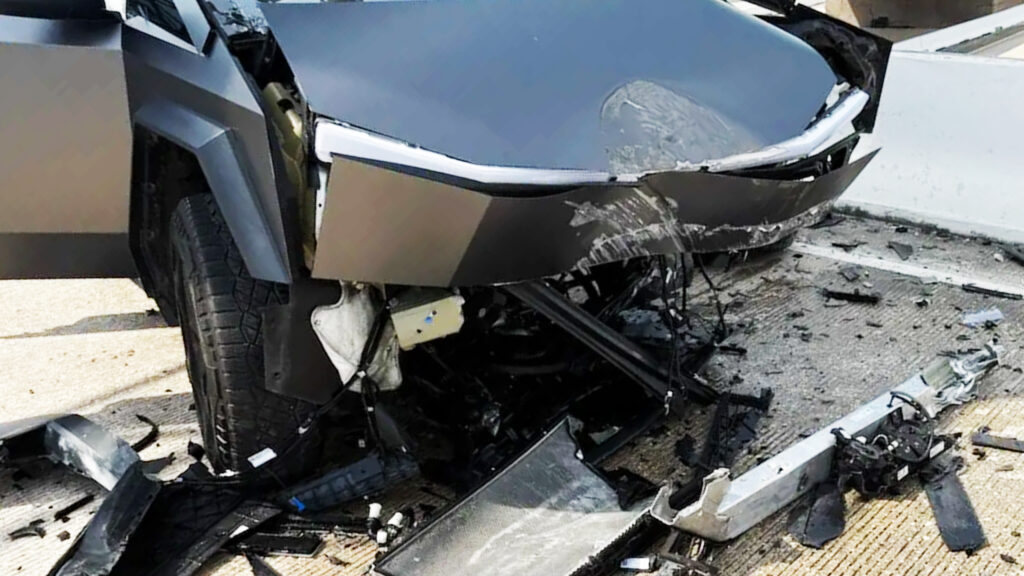
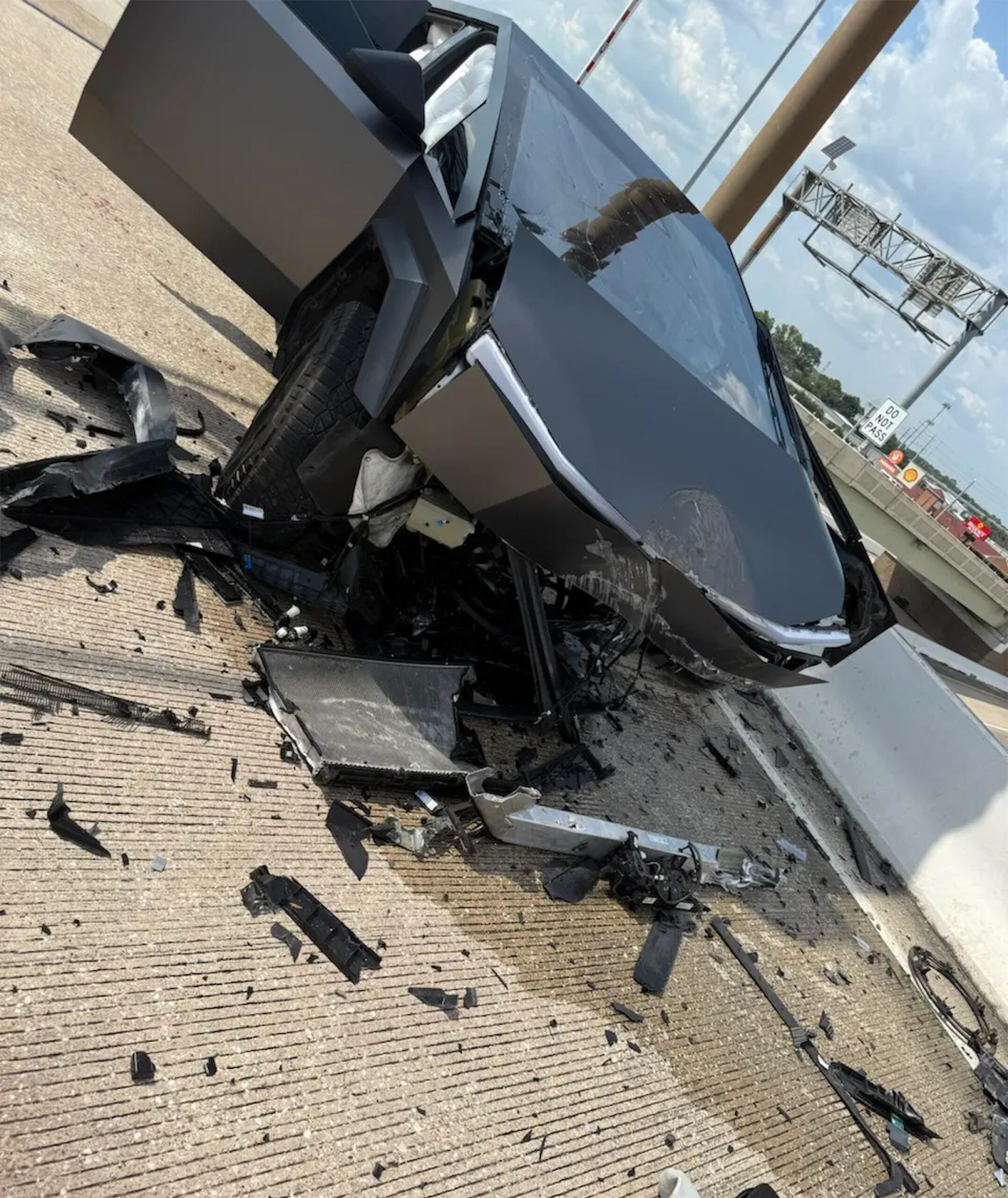
Instead, the lawsuit claims the Tesla attempted to continue straight ahead toward a concrete barrier. The driver reportedly took control just before impact but was unable to avoid the obstacle, with the Cybertruck striking the barrier head-on.

Read: Tesla On FSD Suddenly Swerves And Crashes Into A Tree, Claims Driver

The impact reportedly left the woman with two herniated discs in her lower back, a herniated disc in her neck, sprained wrist tendons, and neuropathy. Chron reports that dashcam footage captured the crash, showing the Cybertruck attempting to negotiate the curve at the interchange but ultimately hitting the barriers.

\\\\\\\

Camera Only System Criticized

An image taken after the crash shows that the front of the blacked-out Cybertruck took a serious hit, and that the front bumper shattered, leaving pieces of bodywork strewn across the road.

The lawsuit further alleges that Tesla’s decision to rely exclusively on a camera-based system for its self-driving technology, rather than incorporating radar or LiDAR sensors, contributed to the crash. It also claims Elon Musk is “an aggressive and irresponsible salesman” with a history of “making dangerous design choices.”

“Tesla’s decisions made Justine’s accident inevitable,” Saint Amour’s lawyer, Bob Hilliard, told Chron. “This company wants drivers to believe and trust their life on a lie: that the vehicle can self-drive and that it can do so safely. It can’t, and it doesn’t.”

The lawsuit accuses Tesla of negligence and seeks more than $1 million in damages.

 Driver Claims Autopilot Tried To Send Her Cybertruck Straight Off A Houston Bridge
Hilliard Law Firm

MG 4X Packs 317 Miles Into A Surprisingly Small Semi-Solid-State Battery

  • MG unveils the MG4X electric SUV with semi-solid-state tech.
  • New battery chemistry targets better range and heat stability.
  • Shares E3 electronic architecture with the MG4 hatchback.

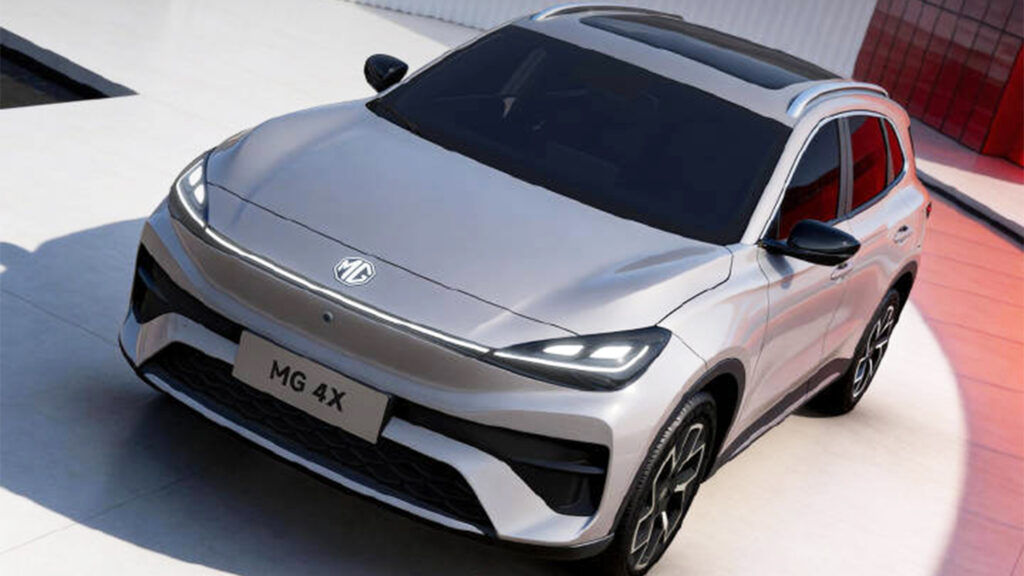
The new MG 4 lineup is expanding with a slightly larger addition called the MG 4X. Positioned as a higher-riding SUV counterpart to the hatchback, the model brings one particularly notable feature with it. Like its smaller sibling, the MG4X uses an advanced semi-solid-state battery pack.

Sitting between the axles is a 53.95 kWh battery that contains only 5 percent liquid electrolyte, which is why MG classifies it as semi-solid-state. The chemistry is intended to improve thermal stability and cope better with both very cold and very hot conditions. Even with a battery that is not especially large by modern EV standards, MG says the setup is good for a driving range of 317 miles (510 km).

Read: New MG4 Electric Hatch Draws Inspiration From Cyberster

For now, MG is keeping the performance figures to itself. Power output remains undisclosed, and there is still no word on the electric motor or motors that will power the SUV. What has been confirmed is the underlying tech. The MG4X runs on the same E3 electronic architecture as the latest MG4 hatchback, and it is clearly aimed at competitors like the BYD Atto 2.

A BYD Rival

 MG 4X Packs 317 Miles Into A Surprisingly Small Semi-Solid-State Battery

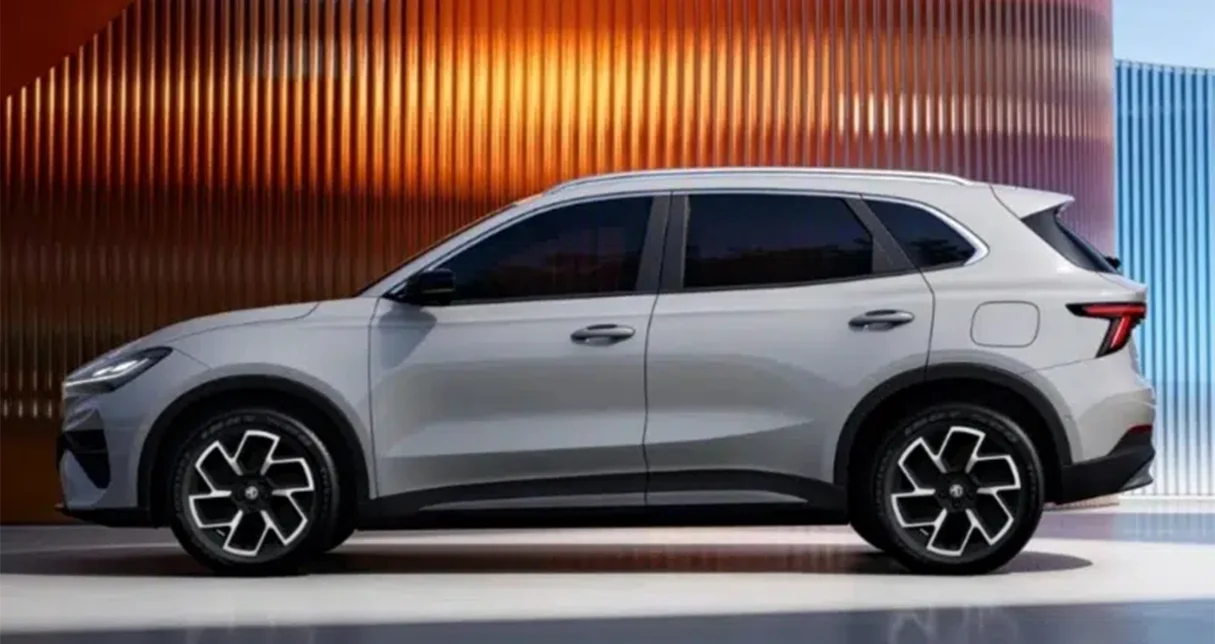
It is 4,395 mm (173 inches) long, 1,842 mm (72.5 inches) wide, 1,551 mm (61 inches) tall, and sits on a 2,750 mm (108.2-inch) wheelbase. It also has a curb weight of just 1,485 kg (3,273 lbs). Visually, it resembles the hatchback but has its own unique style.

The front end is quite imposing, complete with large air intakes and a lower grille, as well as triangular headlights with a thin light bar. Early images of the SUV also show it rocking black wing mirrors, a large panoramic glass roof, and sharp taillights, appearing to be similar in shape to the current MG S5, which sits right above it in MG’s range.
We don’t yet know what the cabin of the MG 4X will be like, but it’s safe to assume it will share parts with the hatchback. This could include the same central infotainment display, co-developed with smartphone manufacturer Oppo. It may also feature a handful of proper physical buttons on the steering wheel and console, ensuring that it’s not too minimalist.

\\\\

A New Range Rover Velar Is Coming, But It Doesn’t Look Like An SUV Anymore

  • The next-gen Range Rover Velar will be sold only as an EV.
  • The new model will ride on JLR’s EMA electric platform.
  • Land Rover is reshaping the Velar into a high-riding sedan.

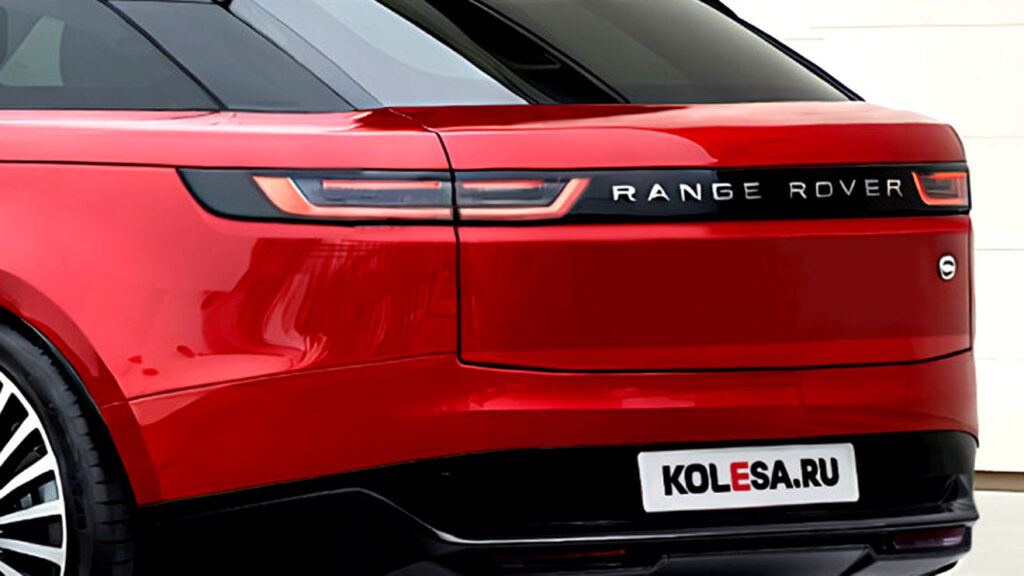
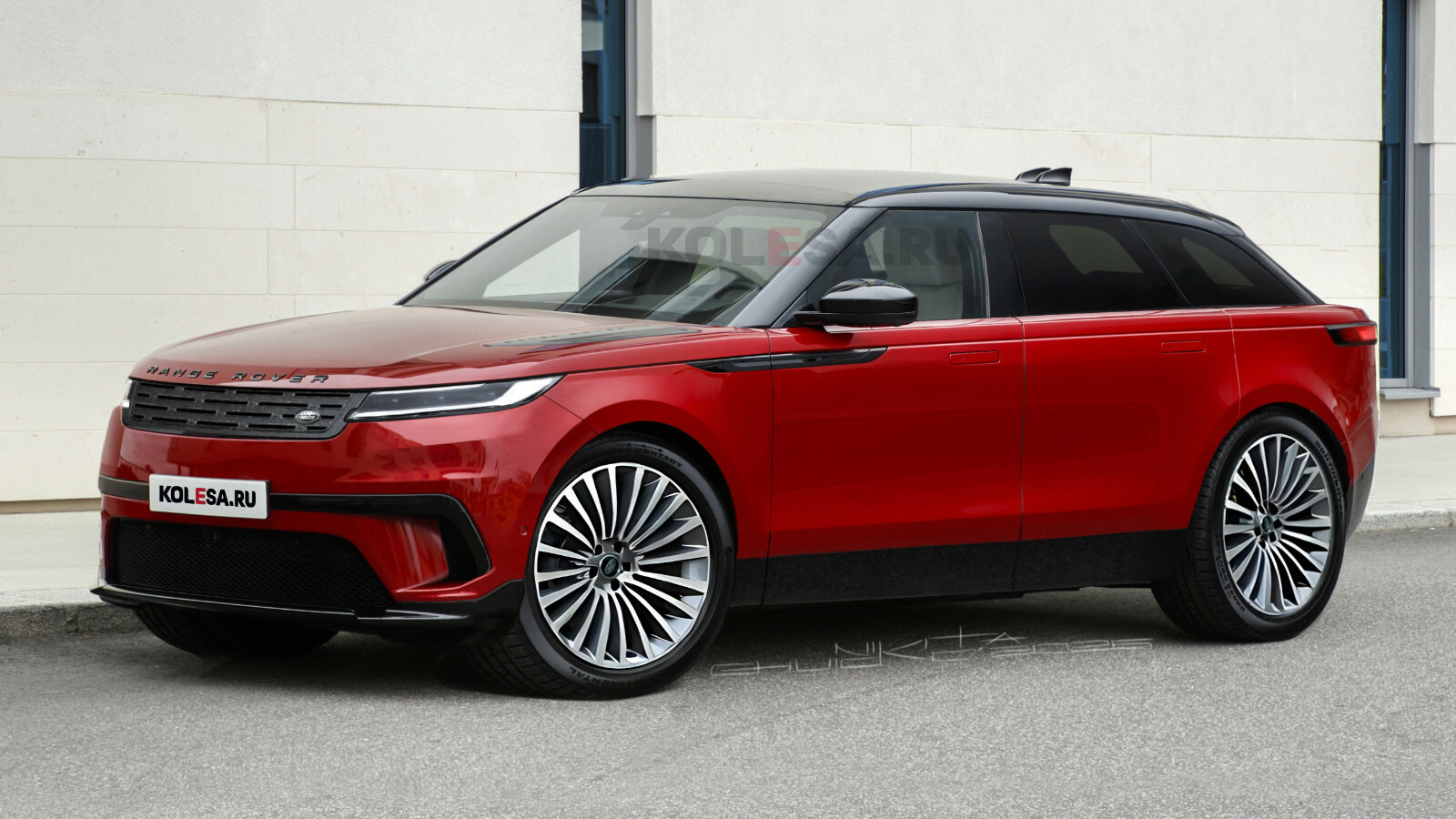
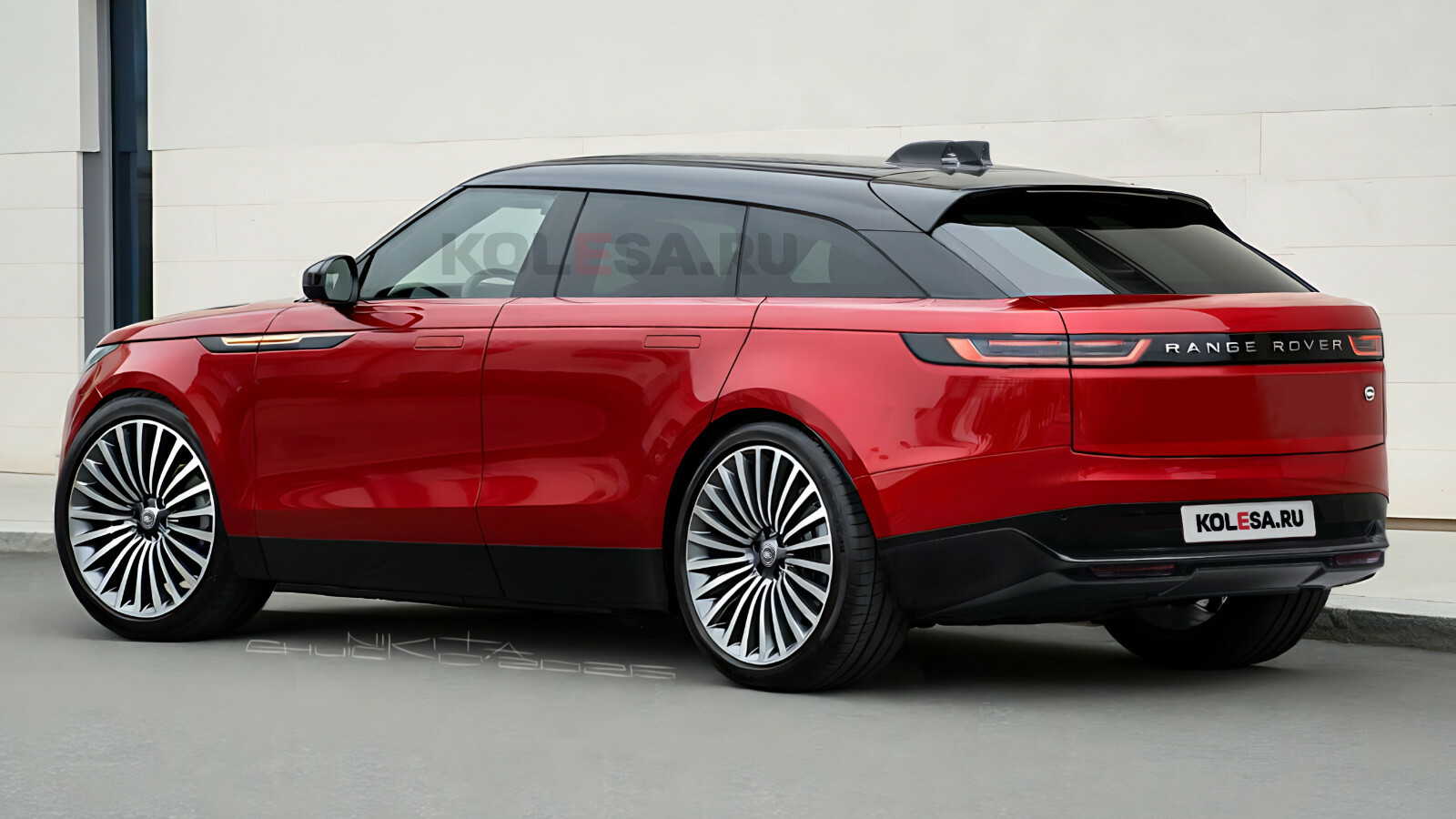
An all-new Range Rover Velar is just around the corner, and it will be very different from the model we know today in more ways than one. The next generation will switch to EV-only power, marking a seismic change for the nameplate. It will also look quite different. Land Rover will move away from the traditional SUV silhouette of the current version and adopt a lower-slung shape that resembles a high-riding sedan.

Read: New Velar Starts Looking More Like A Range Rover Sedan

Hot on the heels of a camouflaged prototype of the new Velar testing in the European snow, a pair of fresh renderings previewing the model has surfaced. We will have to wait and see whether the second-generation Velar looks like this when it reaches production, but if it does, it will certainly stand apart.

 A New Range Rover Velar Is Coming, But It Doesn’t Look Like An SUV Anymore
Illustrations Nikita Chuyko/Kolesa

These images, created by Nikita Chuyko for Kolesa, suggest the next Velar will retain a few recognizable cues from today’s model, though they have been reshaped into something closer to the Volvo ES90’s fastback-like profile. Up front, it still looks unmistakably Range Rover, with slim LED headlights and a relatively small upper grille defining the face

Future Cars: Ford Killed Fiesta For A Crossover, Now It Might Return Like This

The body itself sits noticeably lower. That would be controversial on something like a Land Rover Defender, but it is unlikely to trouble most Velar buyers. Realistically, few owners ever take their vehicles off-road, so the move toward a sleeker, road-focused profile may make sense.

 A New Range Rover Velar Is Coming, But It Doesn’t Look Like An SUV Anymore
Illustrations Nikita Chuyko/Kolesa

No doubt the most curious element of the redesigned Velar will be its rear. As spy shots have shown, there’s a short and stubby decklid, as well as a steeply raked rear window, which looks a little odd. Also visible in these renders are slim LED taillights and a blacked-out lower bumper.

The Juicy Details

Underpinning the new Velar will be the new Electrified Modular Architecture (EMA), as it will be sold exclusively as an EV. It could debut with the same 117 kWh battery pack planned for the full-size Range Rover Electric, although a slightly smaller pack remains possible. Either way, engineers will face pressure to ensure it delivers enough range and performance to replace the outgoing combustion-powered version.

\\\\\\\\\\

Xiaomi Finally Fixed A Feature Owners Said Was Fake, For Real This Time

  • Xiaomi engineered working vanes to make its aero hood functional.
  • Last year, the company was sued over an aero hood that did nothing.
  • The upgrade installs at a dealer and takes about two to three hours.

Xiaomi looks ready to close the chapter on the ‘fake’ aerodynamic hood controversy that rattled the company last year. The Chinese carmaker has now turned its optional carbon fiber hood into a genuinely functional component, a response that many established carmakers might study with interest.

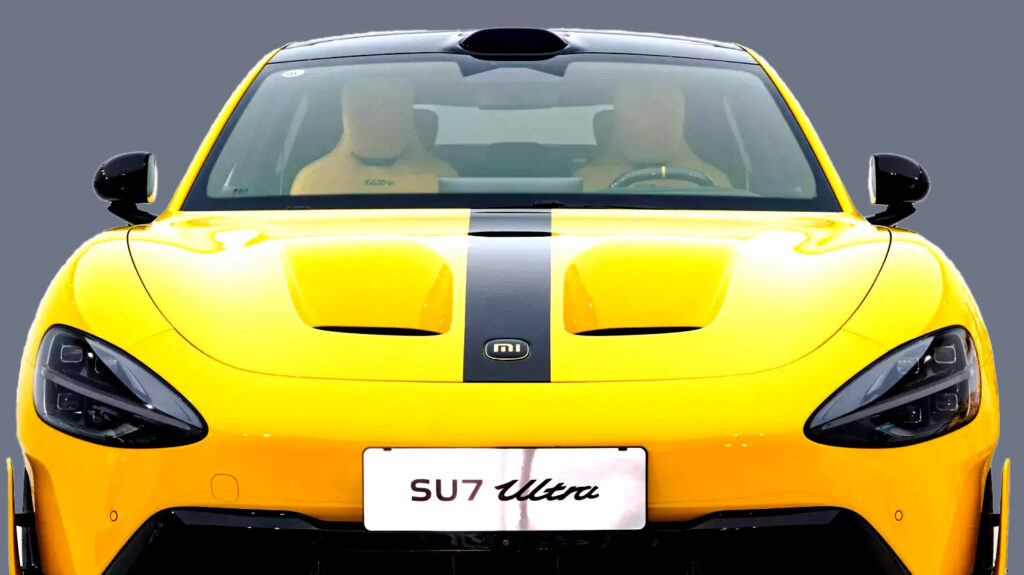
Back in early 2025, Xiaomi began offering a special carbon fiber hood for the SU7 Ultra. The design took inspiration from the record-setting SU7 Prototype and featured two prominent air ducts that were supposed to help cool the brakes and battery. On paper, it sounded convincing. In practice, it turned out to be something else.

Read: Xiaomi Will Have To Pay Owner For Faking It

Soon after customers started taking delivery of SU7s equipped with the 42,000 yuan ($6,100) hood, owners discovered the promised performance benefits simply were not there. The structure beneath the hood had not been changed at all, meaning the vents were purely decorative and did nothing for cooling or aerodynamics.

Unsurprisingly, the reaction was swift. Owners pushed back, some threatened to walk away from the brand, and the situation quickly spilled into the courts.

\\\\\\

Making The Carbon Hood Functional

Fast forward 12 months, and Xiaomi has announced it will start making these hoods functional to owners, free of charge. The company says that engineers have modified the internal structure of the front air ducts so they can work with the active grille and increase downforce over the front axle.
According to CarNewsChina, fitting the upgrade takes between 2 and 3 hours and includes the fitment of adjustable plastic vanes beneath the carbon fiber hood. It’s a big win for owners, and Xiaomi will be hoping the move helps repair some of the trust lost during the controversy.
The controversy had already reached the courts before this fix arrived. In October last year, a Chinese court sided with an SU7 Ultra owner who sued Xiaomi over the hood. The ruling required the company to refund the owner’s hood deposit, pay 126,000 yuan ($18,300) in compensation, and cover 10,000 yuan ($1,400) in legal fees. Xiaomi also promised 20,000 reward points to each customer who bought the hood, worth roughly 2,000 yuan ($290)

 Xiaomi Finally Fixed A Feature Owners Said Was Fake, For Real This Time

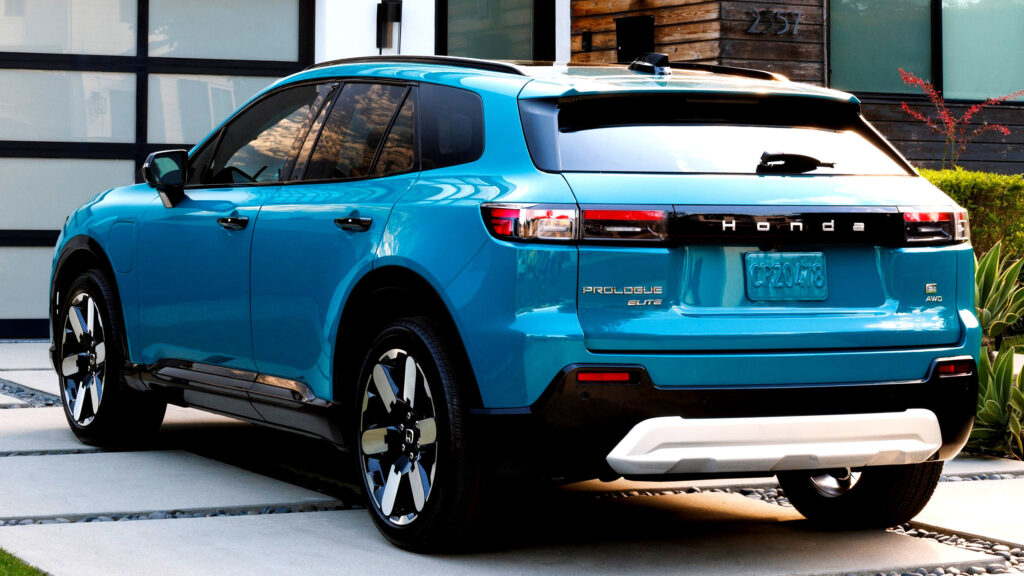
That Strange Clicking Noise In Honda’s Prologue Is Now A Lawsuit

  • Honda faces lawsuit over persistent Prologue axle noise.
  • Two owners cite popping and clicking after early delivery.
  • Dealers replaced CV axles but noises reportedly remain.

Honda’s all-electric Prologue has found itself under legal scrutiny following reports of some rather odd drivetrain noises. Not long after the company warned US dealers that certain 2024–2026 Prologue models might require repairs due to clicking or ratcheting-type sounds from the drive axles, a lawsuit followed. Owners say the noises can linger even after a trip, sometimes more than one, to the dealership.

A class action lawsuit filed in Pennsylvania names two Prologue owners who say their SUVs developed unusual noises from the front axle. One of them, Ashley Custer, leased a 2024 Prologue in May 2025 and soon began hearing the sounds, prompting a trip to the dealer with just 4,039 miles (6,500 km) on the odometer.

Read: She Expected 200K Miles From Her V6, Now She’s Suing Honda

After she reported a creaking noise when turning, the Honda dealer replaced the CV axles. That, however, didn’t solve the problem. Custer returned to the dealership in November, where she was told no repair was currently available. An associated repair order reportedly noted that she was “experiencing the suspension noise that we are familiar with and have seen on other Prologues,” adding that it is a “known issue that Honda is working on.”

 That Strange Clicking Noise In Honda’s Prologue Is Now A Lawsuit

She took her Prologue to a dealer last month, but was again told that no repairs were available. Similarly, the second plaintiff, Jorge Santiago, drives a 2024 Prologue and started noticing popping and clicking sounds shortly after taking delivery. Despite the car also being taken to a dealership, it hasn’t been fixed.

What’s The Fix?

In December, Honda issued a Tech Line to dealerships, asking them to verify the noise of faulty Prologue models, inspect for damage, and make any necessary repairs. However, the lawsuit claims that the fix is pointless as Honda is simply using the same defective front axles and components. As such, the noise continues, even after multiple dealership visits.

The lawsuit claims that Honda was aware of the “abnormal and anxiety-inducing noises” when it first started selling the all-electric Prologue.

\\\\\\\\\

Ferrari Teases The Luce’s Exterior In The Shadiest Way Possible

  • Ferrari fits the Luce with a 122 kWh battery and over 986 hp.
  • Its exterior may blend modern design with subtle retro cues.
  • Deliveries are expected to begin in 2027 after the May reveal.

While there will always be enthusiasts who scoff at Ferrari launching an EV, there’s an inevitability that even the most exotic of car manufacturers would need to venture into all-electric vehicles. Ferrari is doing exactly that with the Luce, and the company has now released a short clip offering a glimpse of its exterior. Well, sort of, because there is not much, if anything, to make out.

Just like the interior, the Luce’s exterior design has been penned by LoveFrom, the firm led by Jony Ive, the designer who helped shape products like the iPhone and iPad.

Read: Ferrari’s Luce EV Has A Glass Key And Buttons That Click Like A Rifle Bolt

In this video, we’re given a brief teaser of the electric car, filmed at night. Don’t expect to see much detail, though, as the car appears to be wearing the same white-and-black camouflage seen on recent prototypes.

What Will Power It?

What we can say with confidence is that the Luce will be a four- or five-seater, slightly smaller and sleeker than the Purosangue. Power will come from four electric motors, combining to produce more than 986 hp, enough to send the car to 62 mph (100 km/h) in 2.5 seconds and on to a top speed of 193 mph (310 km/h), an impressive figure for an EV.

Integrated into the Luce’s floorpan will be a large 122 kWh battery pack that supports charging speeds of up to 350 kW, giving the Luce a range exceeding 329 miles (530 km). To ensure the first electric Ferrari still delivers some sense of drama from behind the wheel, the company has developed a system that amplifies the powertrain’s mechanical vibrations, producing distinctive tones that vary with speed and torque delivery.

Ferrari has confirmed the Luce will be revealed in full in May, with the first customer deliveries expected to begin next year.

\\\\\\\\\\\\\

Ferrari Luce interior

BMW iX3 Starts Thousands Below Polestar And Audi Rivals Down Under

  • The all-new iX3 undercuts key Audi, Polestar rivals.
  • In Australia, the dual-motor iX3 starts at AU$109,900.
  • BMW says US pricing will start near the $60,000 mark.

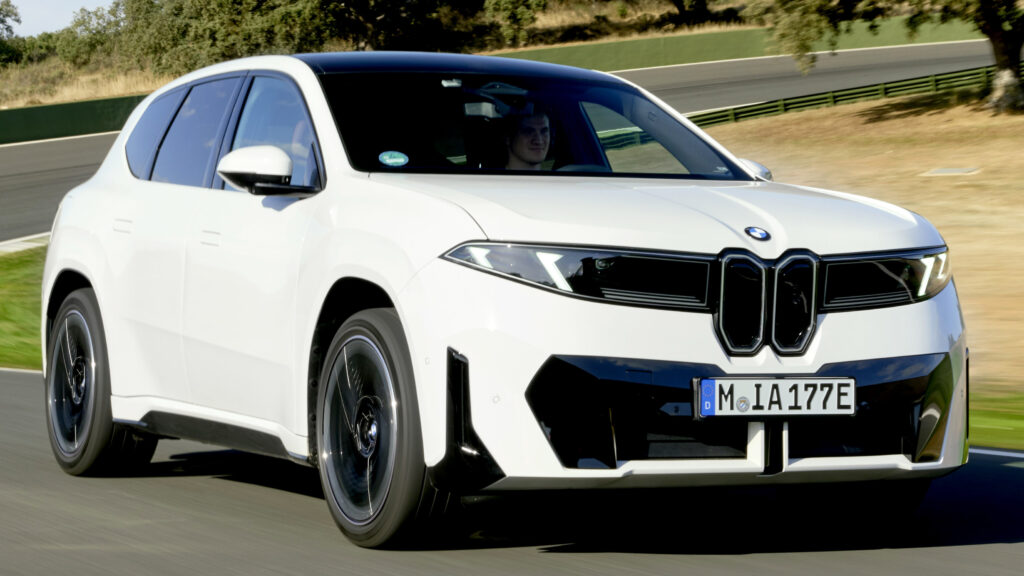
The second-generation iX3 is one of BMW’s most important new models in recent memory. It introduces an all-new design language and becomes the first EV to feature the brand’s sixth-generation batteries and electric motors. Still, like any new car, much of its success will ultimately depend on the price tag.

In the United States, we know it’ll start at around $60,000, but final details have yet to be announced. In Australia, however, pricing has now been locked in. The dual-motor iX3 50 xDrive will start at AU$109,900 ($77,600), which makes BMW’s latest EV look surprisingly competitive.

Read: BMW iX3 Has A 360 Camera, But You’ll Pay Monthly To Use It

It undercuts several key rivals, including the Polestar 3 (AU$116,700 / US$82,500), Audi Q6 e-tron quattro (AU$122,500 / US$86,600), Genesis Electrified GV70 (AU$132,800 / US$93,900), and Porsche Macan 4 (AU$134,400 / US$95,000). It is also just AU$5,000 ($3,500) more expensive than the previous-generation iX3 was in flagship form, back when it used a single electric motor.

The base price, however, is up AU$18,900 ($13,300) compared with the previous base iX3, which admittedly had a smaller battery pack, produced just 281 hp (210 kW) from its rear-mounted motor, and offered a quoted range of 286 miles (460 km).

\\\\\\\\\\\\\\\\\\\\\\\\\\\\\\

By comparison, the new iX3 50 is available only with a pair of electric motors delivering 463 hp (345 kW) and 476 lb-ft (645 Nm) of torque. It also features a much larger 108 kWh battery pack that supports DC charging speeds of up to 400 kW and offers a range of up to 500 miles (805 km) on a single charge. The dash to 62 mph (100 km/h) also comes in just 4.9 seconds.

Options Can Quickly Add Up

While the new model’s starting price is very competitive compared to European rivals, it will rise significantly once shoppers start ticking off a few options. For example, any color other than the standard Alpine White paint is a AU$2,000 ($1,400) option, or AU$6,000 ($4,200) for the Frozen Space Silver.

Wheel upgrades add further to the tally. The 21-inch wheels cost AU$2,500 ($1,700), 22-inch aerodynamic wheels add AU$5,300 ($3,700), and 22-inch M light-alloy wheels come in at AU$7,700 ($5,400). Buyers can also add an AU$3,500 ($2,500) M Sport Package Pro, AU$4,000 ($2,800) Black Bicolor or Adelaide Grey Bicolor interior finishes, and even a white leather steering wheel priced at AU$300 ($212).

\\\\\\\\\\\\\\\\\\\\\\\\\\\\

Donut Lab’s Solid-State Battery Lost Just 2.3% Charge In 10 Days As Critics Watch

  • The solid-state battery kept 97.7% charge in ten days.
  • Donut Lab faced claims its tech was just supercapacitors.
  • Independent test conducted by Finnish Technical Research Centre.

Donut Lab, a small Finnish startup claiming to have developed the first solid-state battery for electric vehicles, has released results from a new test aimed at addressing doubts about its technology. The company says the data shows its battery retains 97.7 percent of its charged capacity after sitting idle for 10 days. Even so, skeptics may still need convincing.

Read: Donut Lab Claims It Verified A 7-Minute Solid-State EV Battery Charge

This third test follows Donut Lab’s recent demonstration of how quickly its solid-state cells can charge. It is intended to counter reports suggesting the company has not built a true battery at all, but rather a supercapacitor. To address those claims, Donut Lab worked with the Finnish Technical Research Centre (VTT) to measure how slowly the cell loses charge while idle.

Measuring Idle Voltage Loss

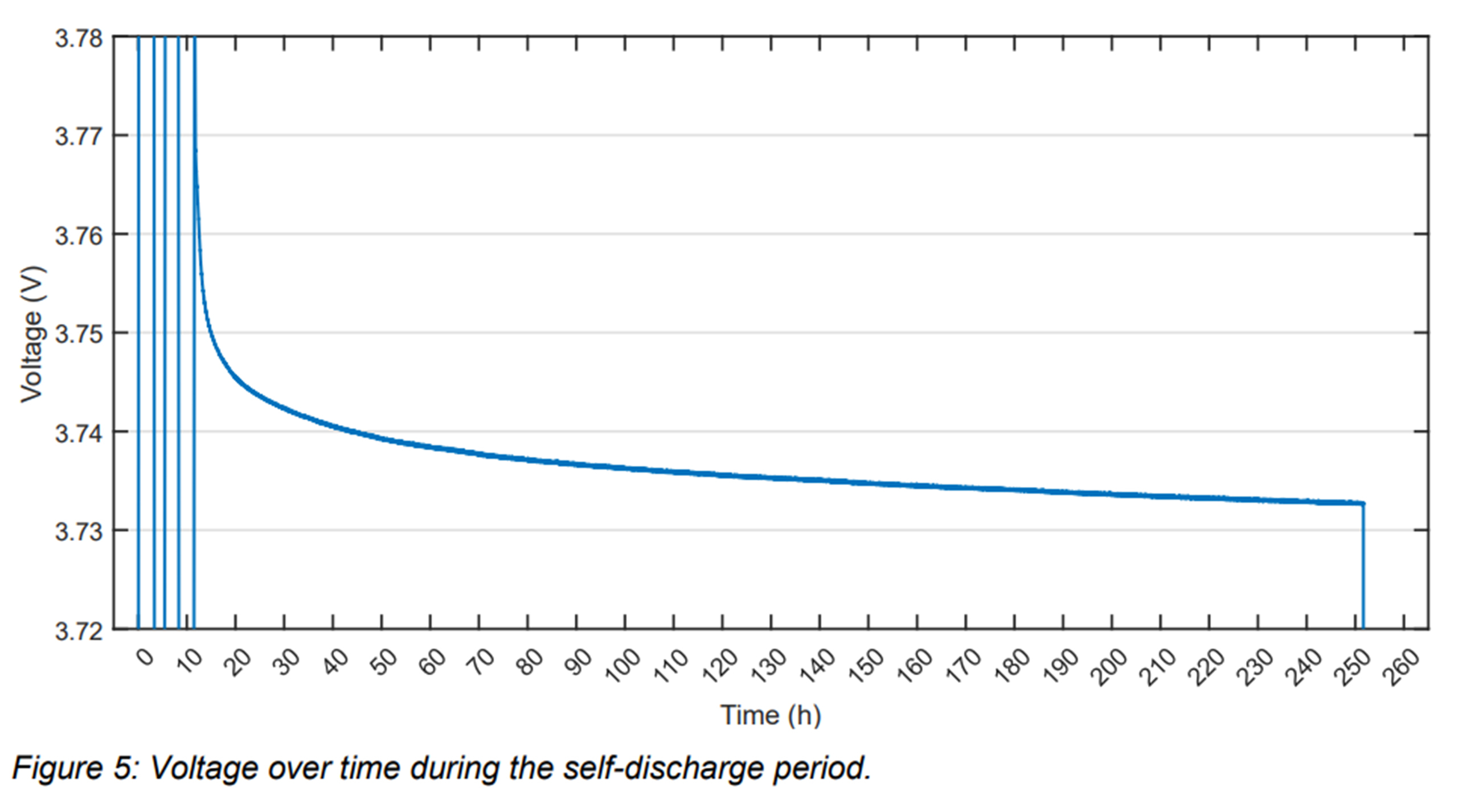
For the self-discharge test, a cell was charged to approximately 50 percent and then left idle for 240 hours. During the test, temperatures ranged between 22-28°C, and the cell’s voltage was recorded every 10 seconds.

The results are interesting. During the first hour, the battery’s voltage dropped by 103 mV, though the company says this is largely due to voltage relaxation rather than true self-discharge. By the end of the 240-hour test, the voltage had fallen by an additional 12 mV, representing a total loss of 2.3 percent over the 10-day period.

While this is a solid result, it’s not incredible. Typical lithium-ion battery cells can lose around 5 percent of their charge within the first 24 hours, after which the self-discharge rate typically slows to between 1-2 percent per month. Donut Lab argues the results still demonstrate that the technology is not a supercapacitor, which would normally lose far more charge when idle.

 Donut Lab’s Solid-State Battery Lost Just 2.3% Charge In 10 Days As Critics Watch

“Since we unveiled the Donut Battery, there has been a lot of speculation and theories about whether it is a supercapacitor,” Donut Lab chief technology officer Ville Piippo said. “In all its simplicity, this test proves that it is a battery. Supercapacitors charge and discharge quickly, but they also lose their charge quickly when not in use. The Donut Battery behaves like a battery and can maintain a charge for significantly longer.”

\\\\\\

Electric Porsche Boxster And Cayman Survive Rumors Of Cancellation

  • Porsche confirms electric 718 project remains alive.
  • Executive says he has already driven a prototype.
  • Launch timing for the new EV sports cars unclear.

Porsche has poured cold water on recent reports suggesting the entire electric 718 Boxster and Cayman project could be scrapped following the arrival of a new chief executive. While there’s still no confirmed timeline for the new models, Porsche says they will arrive first as fully electric vehicles.

It’s no secret that Porsche has faced challenges developing the next-generation Boxster and Cayman, particularly when it comes to capturing the character that defined their predecessors. The company has already scaled back parts of its EV strategy, and new CEO Michael Leiters, formerly of McLaren, was reportedly evaluating whether the project should proceed at all.

Read: Porsche’s New CEO Might Bury The Cayman, Boxster EVs Before They Even Launch

However, Car Sales recently spoke with Daniel Schmollinger, managing director and chief executive of Porsche Cars Australia, who said the project remains on track and revealed that he has already driven a prototype.

\\\\\\\\\

SH Proshots

“We can’t tell yet when it’s coming, but I had the chance to drive it, and it is actually amazing,” he said. “So I had the chance to drive it on a race track, and it was just amazing. A Boxster type of car should give you the weight distribution, a very go karty feeling and it provides that. And with the electric engine, of course, it gives you even more dynamic driving.”

Electric And Combustion Models

Initially, Porsche planned to offer the next-generation Boxster and Cayman exclusively with electric powertrains. Later reports suggested that the duo’s top derivatives could also arrive with internal combustion engines. According to more recent claims, combustion engines may even appear in more affordable 718 variants.

Schmollinger’s media training paid off when he was asked to confirm plans for the ICE models, stating that “there’s no official announcement,” but noted “headquarters is basically constantly evaluating where the opportunities are. Every six months they look into what can we do and what do we not want to do, so there is opportunity out there,” he added.

 Electric Porsche Boxster And Cayman Survive Rumors Of Cancellation

BYD Sales Crash 41% In China As Its Main Rival Takes The Lead

  • BYD’s China sales have tumbled 36 percent in 2026.
  • About half of BYD vehicles this year were exported.
  • Geely sold 76,000 more vehicles than BYD in China.

For much of the past three years, it has often seemed as though BYD could do no wrong. The company steadily launched new models, expanded its lineup, and watched its sales climb at an impressive pace. However, the start of 2026 has been alarmingly slower, allowing fellow Chinese automaker Geely to pull ahead.

Through the first two months of this year, BYD has sold 400,241 vehicles, down 36 percent from the year prior. Of these, 190,190 vehicles were sold in February, a drop of 9.5 percent from the past month, due in large part to the Lunar New Year holiday, but it was also a 41 percent drop compared to the same month last year.

Apparently, shrinking tax breaks and a dip in buyer confidence are starting to cool the market. Plenty of shoppers are opting to wait it out, holding off to see what new models land and whether government trade in schemes become clearer before committing their cash.

Read: A Chinese Brand Just Knocked Ford Out Of The Global Top Six

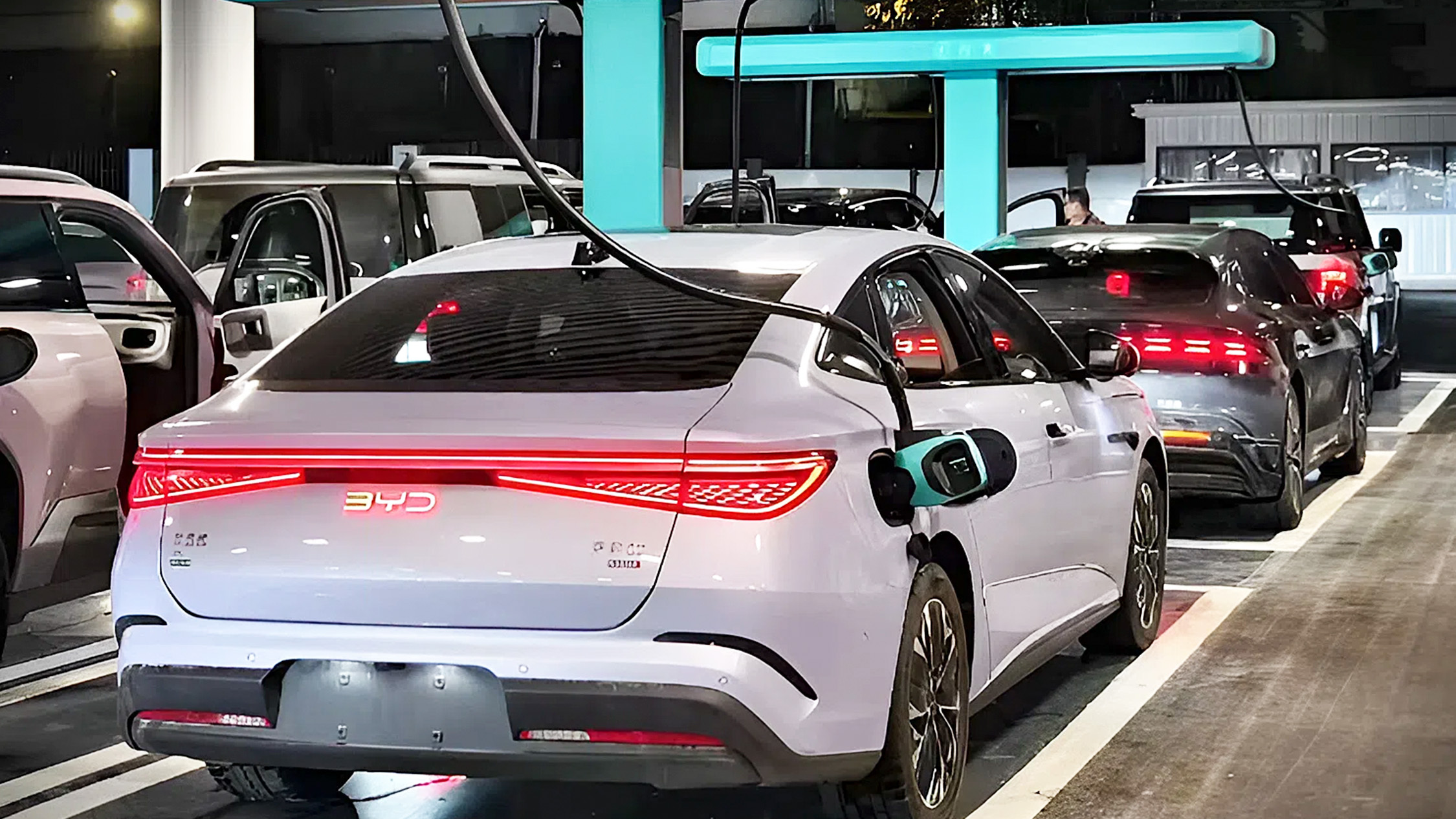
While BYD is facing some struggles at home, it continues to gain popularity in foreign markets. In February alone, it exported 100,600 of its new energy vehicles, consisting of EVs and plug-in hybrids. Include January in those figures, and BYD has exported 201,082 vehicles.

 BYD Sales Crash 41% In China As Its Main Rival Takes The Lead

Competitors Step Up

While BYD is facing growing pains, several other Chinese automakers are enjoying the opposite problem. Through the first two months of 2026, Stellantis partner Leapmotor’s sales have climbed 19 percent to 60,126 units. Xiaomi’s EV division is up 48 percent year over year to more than 59,000 units. Zeekr has posted an 84 percent surge across January and February, while Nio deliveries have jumped 77 percent, according to CNBC.

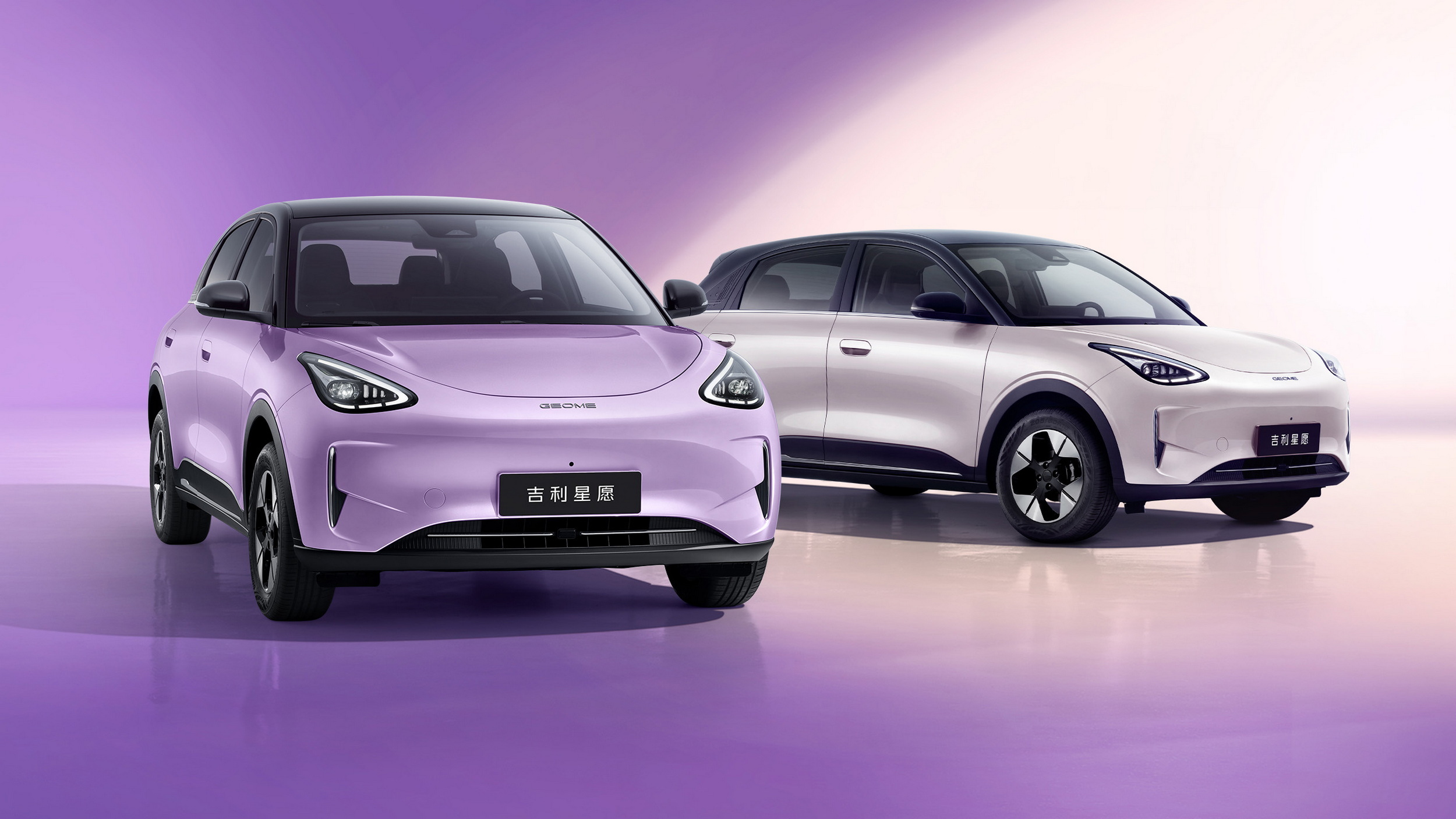
Geely is also having a particularly strong run. So far this year, it has delivered roughly 76,000 more vehicles than BYD. That is notable because it marks the first time Geely has outsold BYD for at least two consecutive months since 2022. While Geely currently leads within China, it trails slightly in overseas markets, exporting 181,891 vehicles so far this year.

According to Bloomberg, BYD chief executive Wang Chuanfu acknowledged the growing pressure back in December. He said rival automakers had begun closing the technological gap that once gave BYD a clear edge, something that now appears to be showing up in the sales figures.

 BYD Sales Crash 41% In China As Its Main Rival Takes The Lead
Geely Galaxy Xingyuan

CEO Mocks VW After Adopting Range-Extender Tech It Once Dismissed

  • Two different powertrains will be offered for the VW ID. Era 9X.
  • The ID. Era 9X is similar in size to the BMW X7 and has up to 510 hp.
  • VW once criticized EREV tech as environmentally unfriendly in 2020.

The VW Group began selling its EA211 engine in 2011, offering it in both three- and four-cylinder forms across a wide range of models. Over the years, it has powered familiar names such as the VW Golf, Seat Ibiza, Skoda Fabia, VW T-Roc, Audi Q2, and Seat Leon.

Now the company has updated and adapted this long-running engine for an entirely new role, serving as the range-extender in its first extended-range electric vehicle in China, the ID. Era 9X.

Read: VW Built A Bigger ID SUV Than The X7 And You Can’t Have It

VW presented its new flagship SUV, co-developed with SAIC, earlier this year. At the time, we knew it would use a range-extender powertrain, but few technical details were available. Earlier this month, VW confirmed that the ID. Era 9X uses a 1.5-liter turbocharged EA211 engine, although several notable revisions have been made to prepare it for this application.

What’s Different?

\\\\\\

For example, the updated engine now includes a new variable-geometry turbocharger to seamlessly adjust airflow, depending on the driving conditions. VW has also improved thermal efficiency and reduced emissions, while also installing a water-cooled intercooler for cooler intake temperatures. The upgraded engine is being built in China.

EREVs are enjoying something of a resurgence at the moment, though VW was not always enthusiastic about the concept. Six years ago, VW China executives described EREVs as “very environmentally unfriendly.”

 CEO Mocks VW After Adopting Range-Extender Tech It Once Dismissed

As reported by CarNewsChina, shortly after announcing production of the new EA211 range-extender, Li Auto’s social media director reminded VW of this statement, writing on social media, “Congratulations to Volkswagen for successfully mass-producing a technology that is ‘outdated, very environmentally unfriendly, and had little development potential’ in just 6 years!”

The tension dates to September 2020, when Volkswagen China CEO Stephan Wöllenstein criticized gasoline-powered range-extenders as environmentally unfriendly. Around the same time, the company’s China R&D chief, Wiedmann, described the technology as outdated with limited long-term potential.

The Juicy Details

\\\\

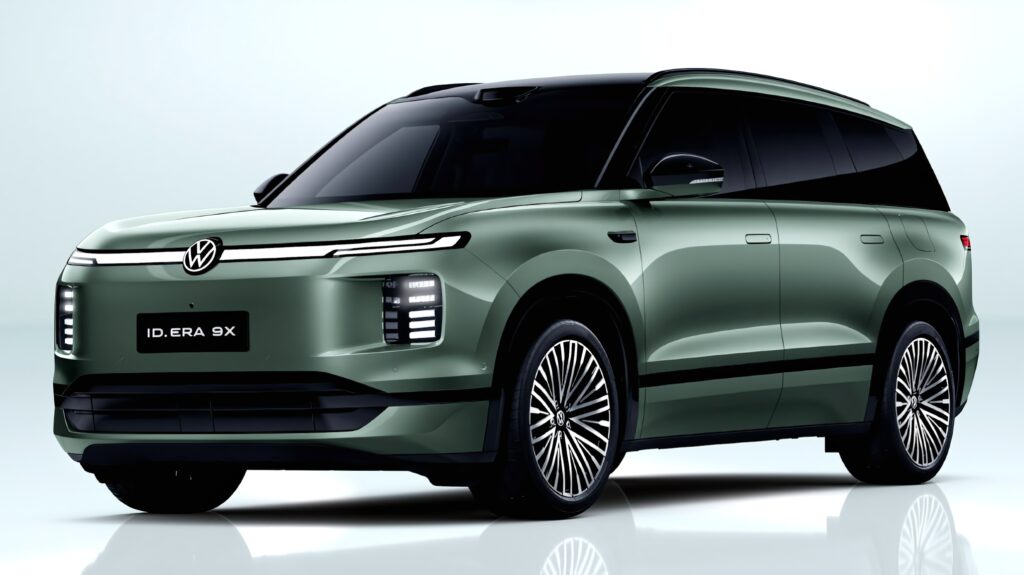
The VW ID. Era 9X is slightly longer, a touch narrower, and has a marginally shorter wheelbase than a BMW X7. It is one of several China-only Volkswagen models that could likely find an audience elsewhere if it were ever sold internationally.

In addition to the EA211 range-extender, the base model features a rear-mounted electric motor producing 295 hp and a 51.1 kWh LFP battery. This setup delivers an all-electric driving range of up to 166 miles (267 km). A version with a larger 65.2 kWh battery and up to 211 miles (340 km) of electric range will also be offered, along with a rear-wheel-drive twin-motor variant producing 510 hp.

\\\\\\\\\\

BYD’s New Flagship Great Tang Charges From 10 To 97% In 9 Minutes

  • This is the first BYD model with its second-gen Blade battery.
  • It rides on brand’s new Super e platform with 1000-volt tech.
  • Both rear-wheel drive and all-wheel drive versions are offered.

BYD has a new flagship SUV, and it’s called the Great Tang. The name may sound a little unusual, but underneath sits the Chinese giant’s latest electric platform, built to take on high-end rivals like the Zeekr 9X and IM LS9, along with more familiar names from Europe and Asia such as the Volvo EX90 and Hyundai Ioniq 9.

More: BYD Says Its New Battery Can Recharge As Fast As Filling Up Your Gas Tank

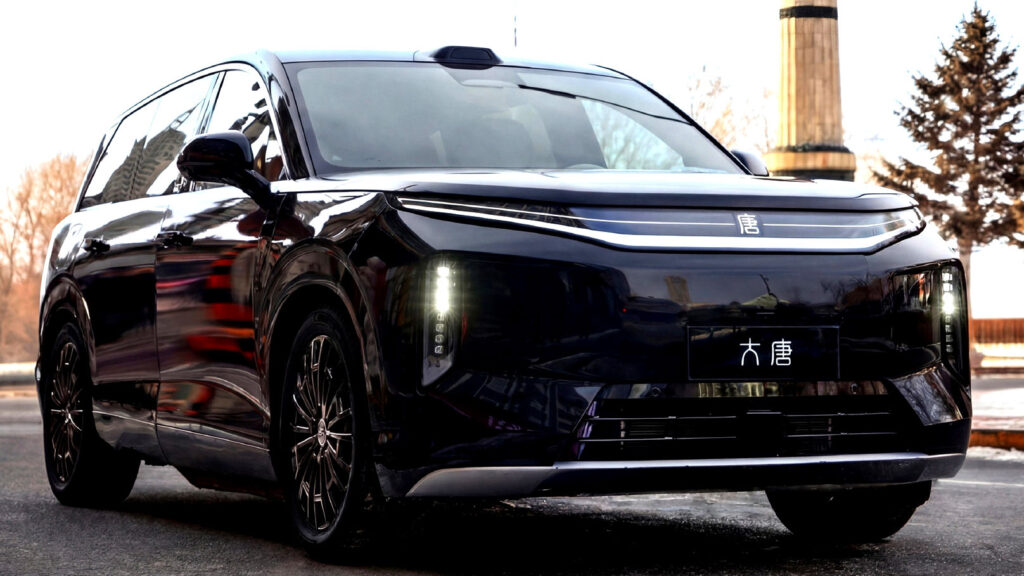
First previewed by the Chinese Ministry of Industry and Information Technology earlier this year and now revealed in full, the Great Tang is bigger than even the Denza B8. It stretches to 5,302 mm (208.7 inches) in length, measures 1,999 mm (78.7 inches) across, stands up to 1,800 mm (70.8 inches) tall, and rides on a generous 3,130 mm (123.2-inch) wheelbase. The SUV also forms part of BYD’s new premium Dynasty series of models.

Design-wise, it looks quite smart, particularly with the two-tone red-and-silver paint scheme it was presented with. The front end shares similarities with existing BYD models, complete with a flowing light bar, a black lower grille, and vertical headlamps neatly integrated into the fascia.

Class-Leading EV Tech

But the real story isn’t the styling. It’s the technology lurking underneath. The Great Tang rides on BYD’s new Super e platform and uses the company’s second-generation Blade battery. According to BYD, those cells can charge from 10 percent to 97 percent in just nine minutes, provided you plug into one of its new 1,500 kW charging stations. The SUV also runs a 1000-volt electrical architecture, which helps make those charging claims possible.

\\\\\\

There’s still no word on the size of the SUV’s battery pack, but BYD has confirmed a few key drivetrain details. A single-motor version will be offered with either 402 hp or 496 hp. If that sounds a bit restrained for something this large, there is also a dual-motor setup delivering 784 hp.

Even so, the numbers that matter most for a family-sized electric barge are the range figures. Despite weighing as much as 2,970 kg (6,547 lbs), BYD claims the rear-motor version can travel up to 590 miles (950 km) on the CLTC cycle. Opt for the punchier dual-motor model and the figure drops slightly to around 528 miles (850 km) on a charge. Still, for something this big, that is not exactly a short leash.

\\\\\\\\\

A glance inside reveals a 2+2+3 seating layout and pretty much every luxury extra you’d expect in a flagship family hauler. The dashboard is dominated by a large central infotainment display, joined by separate screens for the driver and front passenger. You also get wireless phone chargers, a built-in fridge, and a fold-down screen in the ceiling to keep rear passengers entertained on longer trips.

In China, prices are expected to start just above 400,000 yuan, which works out to roughly $58,000.

\\\\\\

Porsche Charges $133K For This Look, Now China Sells It For $36K

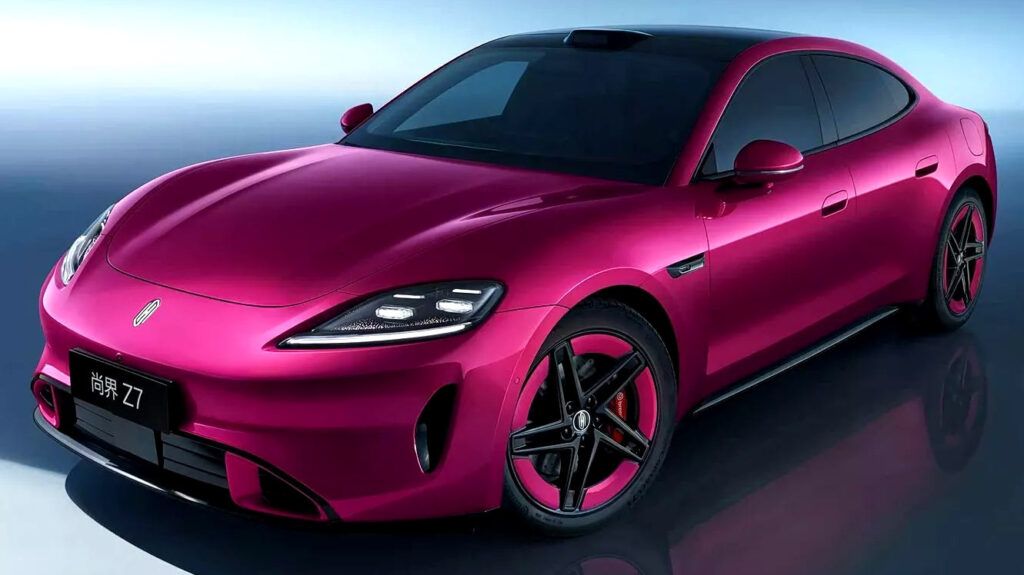
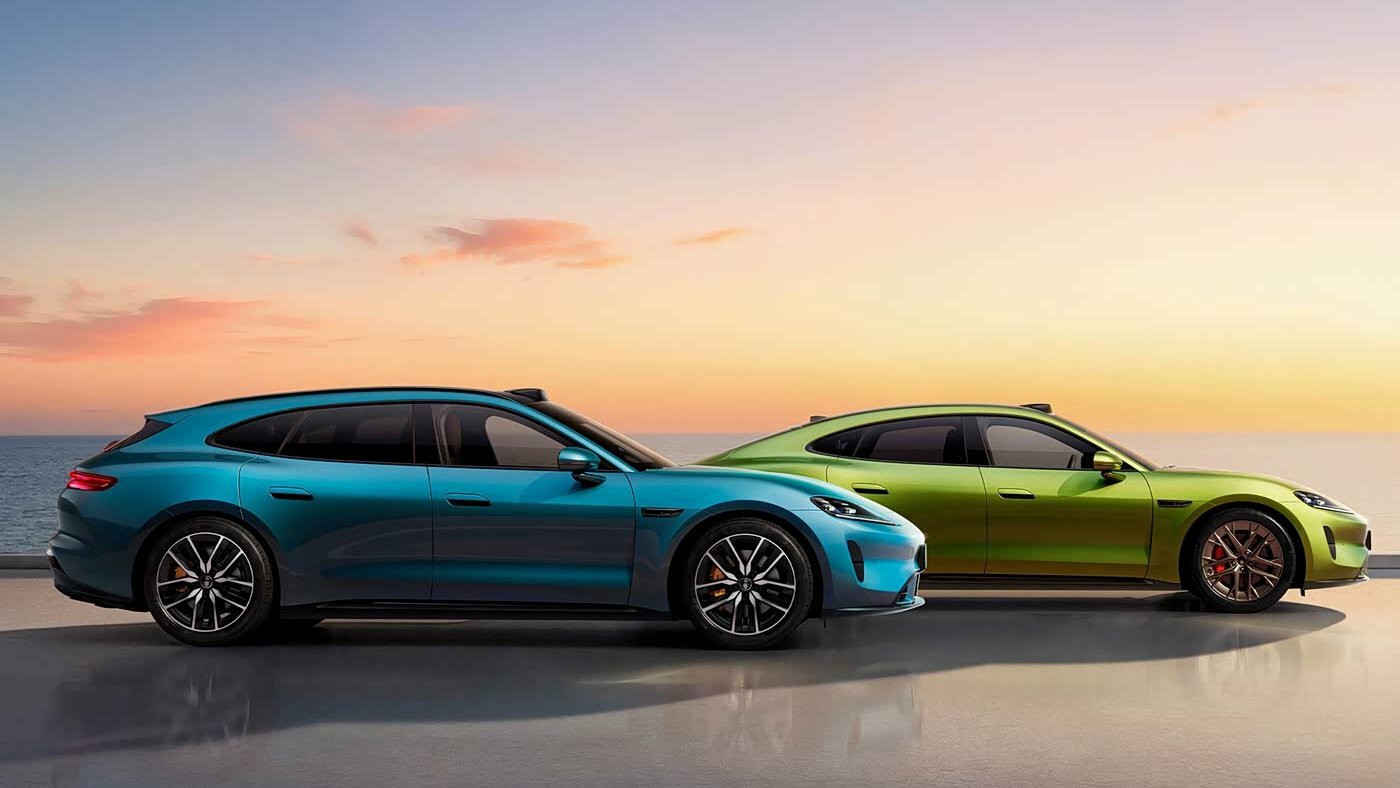
  • SAIC unveils the Z7 EV in sedan and Shooting Brake forms.
  • Its design shows clear similarities to Porsche’s Taycan.
  • Expected pricing ranges from $36,200 to about $50,700.

Thought the Xiaomi SU7 looked a little too much like a Porsche Taycan? Apparently that was just the warm-up act. Fellow Chinese carmaker SAIC has now pushed the idea of “imitation is the sincerest form of flattery” a step further, revealing an electric sedan and Shooting Brake that, from most angles, could easily have Porsche fans doing a double take.

Developed under the Harmony Intelligent Mobility Alliance (HIMA) and led by Huawei, the SAIC Z7 was teased earlier this year and has finally been shown in full. Several key details remain under wraps, but pricing is expected to land between 250,000 and 350,000 yuan ($36,200 – $50,700).

That is slightly higher than some early estimates suggested, though still a long way from Taycan money. Porsche’s electric sedan currently starts at 918,000 yuan (equal to around $133,000 at current rates).

Read: China’s $28K Taycan Clone Is Coming Whether Porsche Likes It Or Not

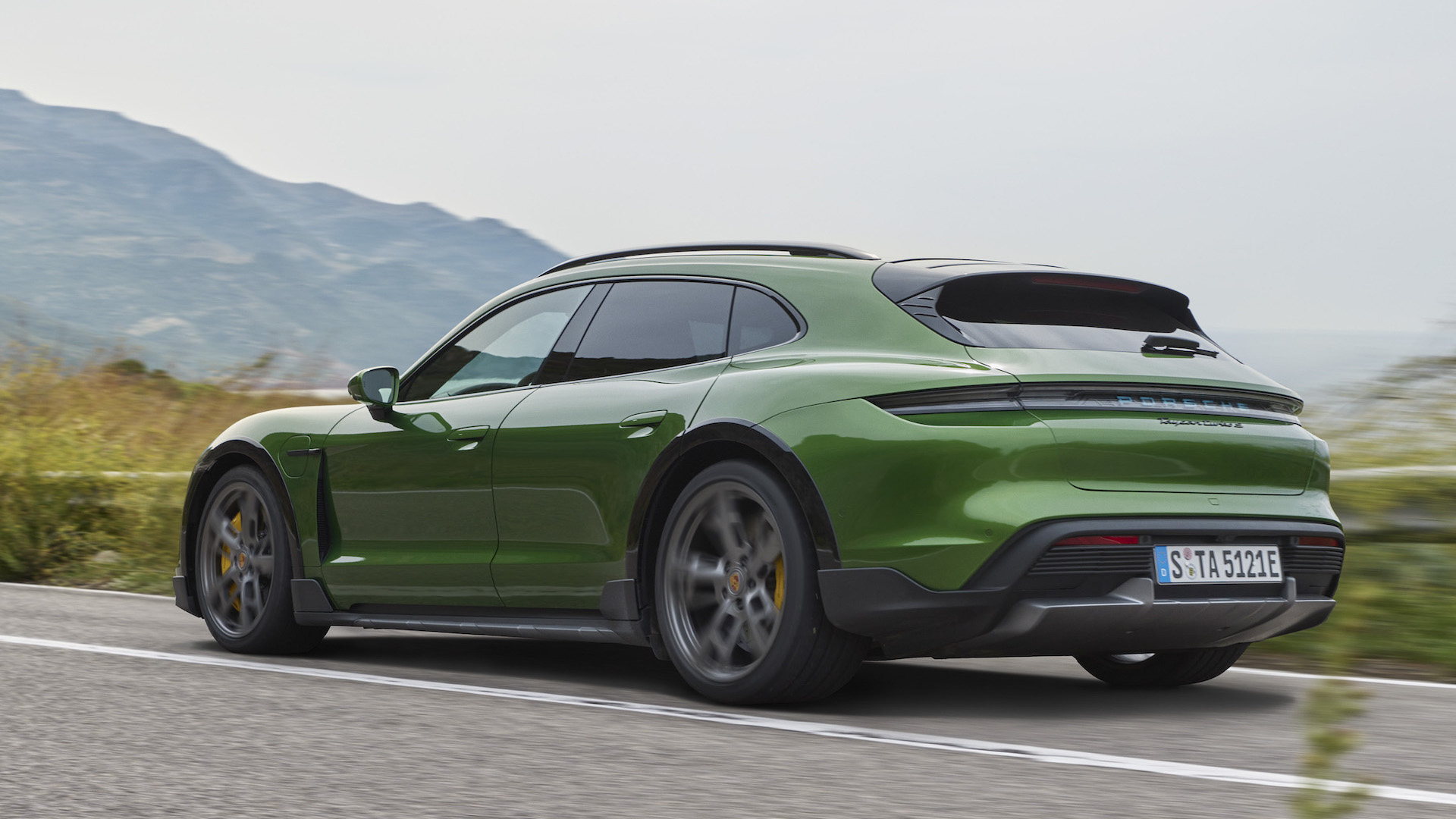
Viewed from the front, both the sedan and Shooting Brake models look somewhat distinctive, with sharp LED headlights and a black lower grille. But cast your eyes beyond the front fenders, and the similarities to the Taycan are impossible to ignore. The shape of the doors, the roofline, the wing mirrors, and the door handles look like they’ve been ripped straight from a Porsche parts catalog.

 Porsche Charges $133K For This Look, Now China Sells It For $36K
 Porsche Charges $133K For This Look, Now China Sells It For $36K
Porsche Taycan Cross Turismo

The resemblance becomes even more obvious when you walk around to the rear. Much like the Taycan, the Z7 features a full-width LED light bar with an intricate lighting signature. The tailgate design also looks remarkably similar to Porsche’s electric sedan.

And then there is the Shooting Brake. Its overall shape and side profile track very closely with the Taycan Sport Turismo, to the point where the silhouette alone could cause a moment of confusion.

Perhaps in a direct shot at the Xiaomi SU7, the Z7 has also been showcased in a bright shade of pink with black wheels and matching pink outer rims. As fate would have it, the Xiaomi SU7 15th Anniversary Edition presented in early 2025 had an identical finish.

 Porsche Charges $133K For This Look, Now China Sells It For $36K

Only a handful of interior images have been released so far. They reveal a thin digital instrument cluster, a large central infotainment display, and an additional screen for the passenger. In other words, the sort of setup that has become standard fare across many modern Chinese EVs.

There are also two wireless charging pads and a sporty flat-bottom steering wheel, rounding out a cabin that feels very much in line with current trends.

Technical specifications for the Z7 have not yet been confirmed. However, Chinese media reports suggest the EV could arrive with 80 kWh and 100 kWh battery packs, along with both rear-wheel-drive and all-wheel-drive configurations. More concrete details are expected to be released in the next few weeks.

\\\\\\\\\\\\\\\
❌