Reading view

There are new articles available, click to refresh the page.

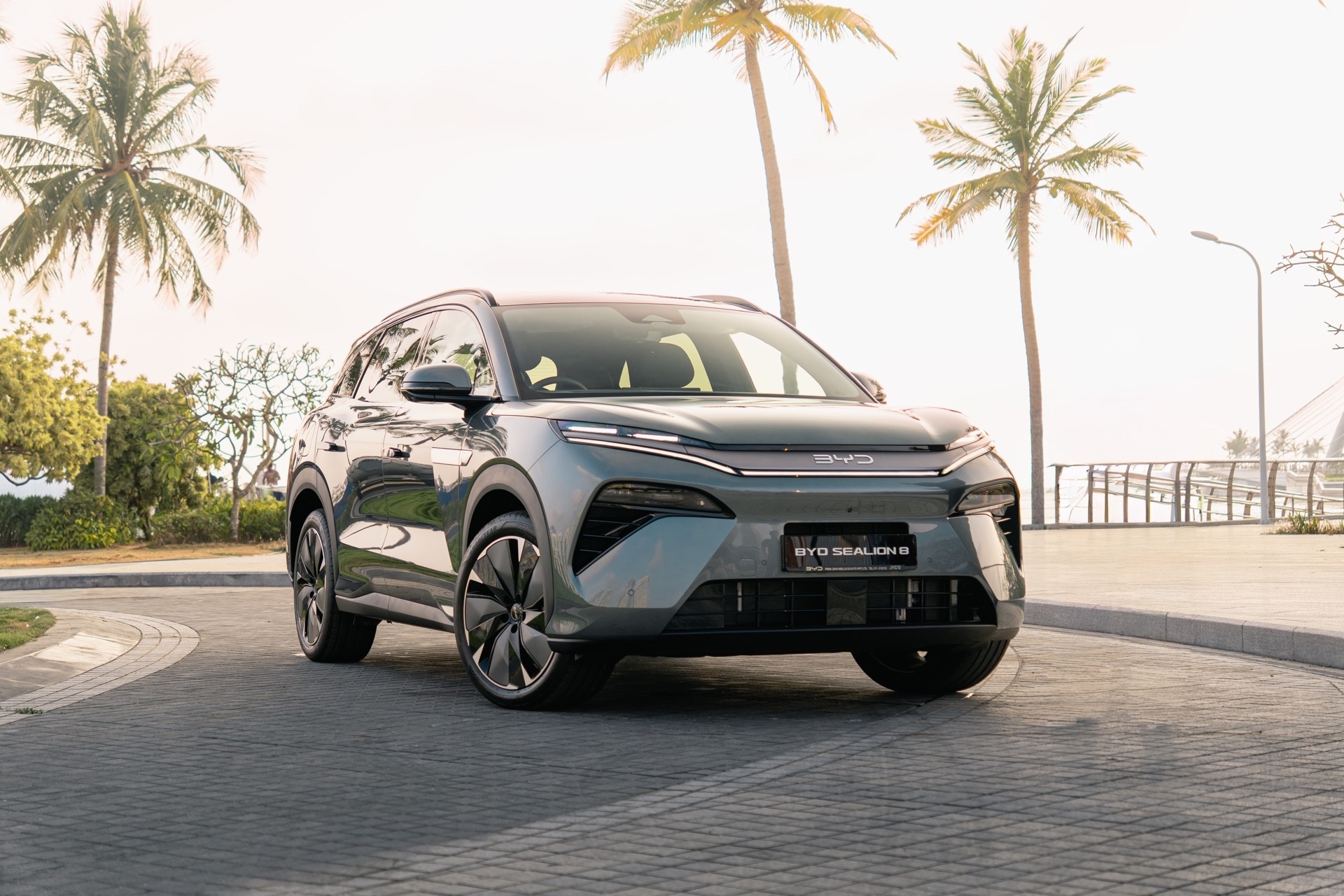
BYD Sold 700,000 Electrified Cars Last Quarter And Still Lost More Than Half Its Profit
  • BYD profits fell sharply in the first quarter of 2026 overall.
  • Revenue declined 12 percent year on year during the period.
  • Slower domestic sales in China drove much of the downturn.

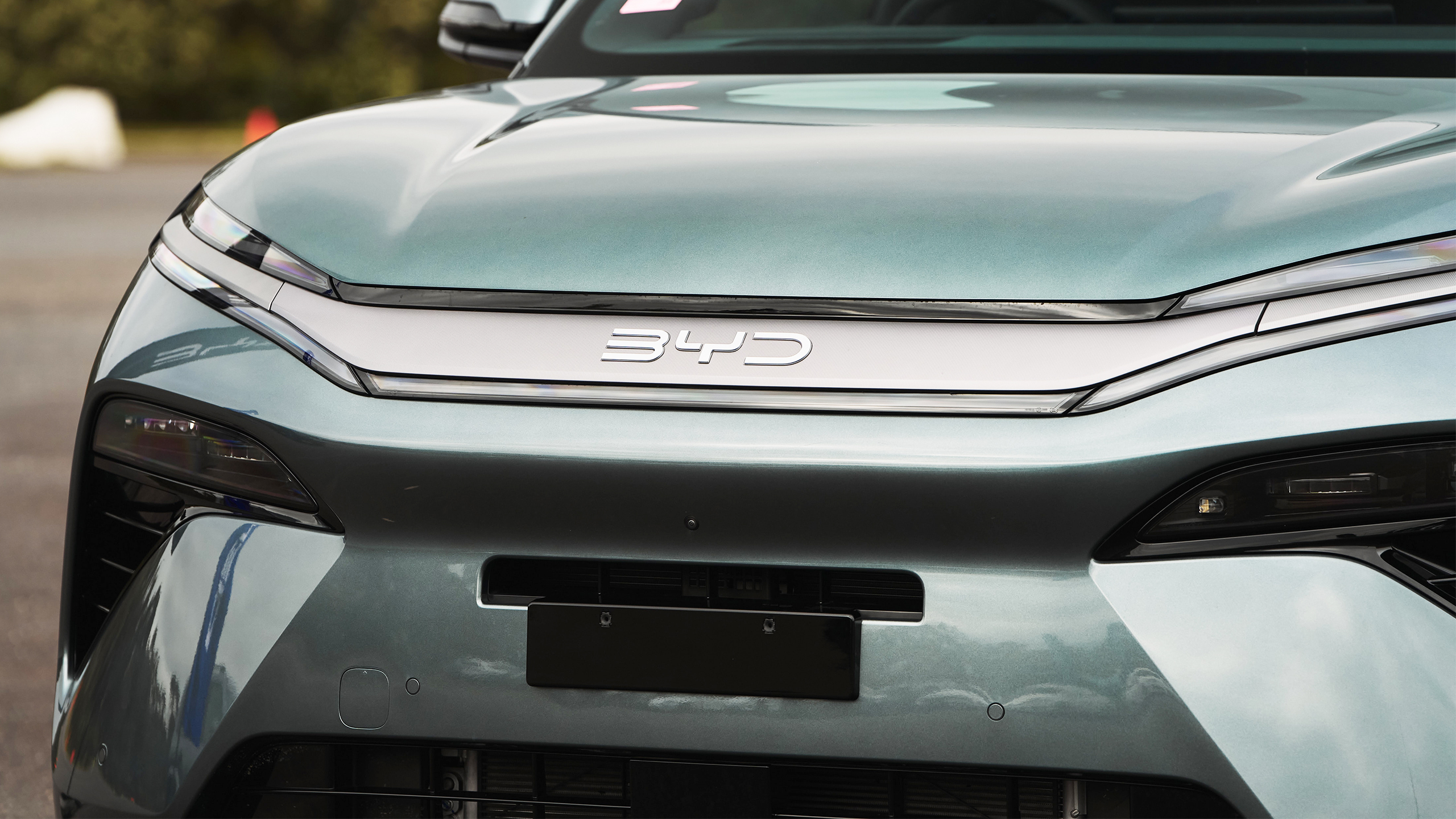
BYD has recorded its steepest quarterly profit decline since 2020, underlining the mounting pressure facing the world’s largest electric vehicle seller in its home market despite success abroad. The company’s latest report showed that net profit in the first quarter of 2026 declined by 55.4 percent from the previous year, falling to 4.09 billion yuan, approximately $597 million.

Revenue dropped by nearly 12 percent to 150.2 billion yuan ($22 million), the third consecutive quarterly decline and the lowest quarterly revenue figure since Q2 2024. However, the result still bested analysts’ prediction that revenue would be around 132-140 billion yuan. BYD sold 700,463 “New Energy Vehicle” (EVs and PHEVS) units in the quarter, down 30% year-on-year and nearly 48% below the record volumes of Q4 2025.

Read: China Told Automakers To Stop Cutting Prices, BYD Just Made It Worse

The Chinese market for electric cars is fiercely competitive. BYD has taken over as the market leader because of its low-priced models, yet price wars in its home market are intense. Meanwhile, the government has scaled back subsidies. China exempted NEVs from purchase tax entirely in 2024–2025, but for 2026 and 2027, the relief has been halved to a maximum of 15,000 yuan per vehicle.

This policy shift pulled demand forward into Q4 2025, exacerbating the Q1 2026 slowdown. Sales in China have declined for several consecutive months, and profits are being squeezed even as exports grow strongly.

Global Push Becomes Critical As Domestic Sales Cool
 BYD Sold 700,000 Electrified Cars Last Quarter And Still Lost More Than Half Its Profit

BYD is looking to the overseas market as domestic sales decline. It plans to ship more than 1.5 million automobiles this year in an attempt to overcome sluggish domestic sales. Industry insiders expect massive export growth next year, but overall delivery growth will probably be less aggressive.

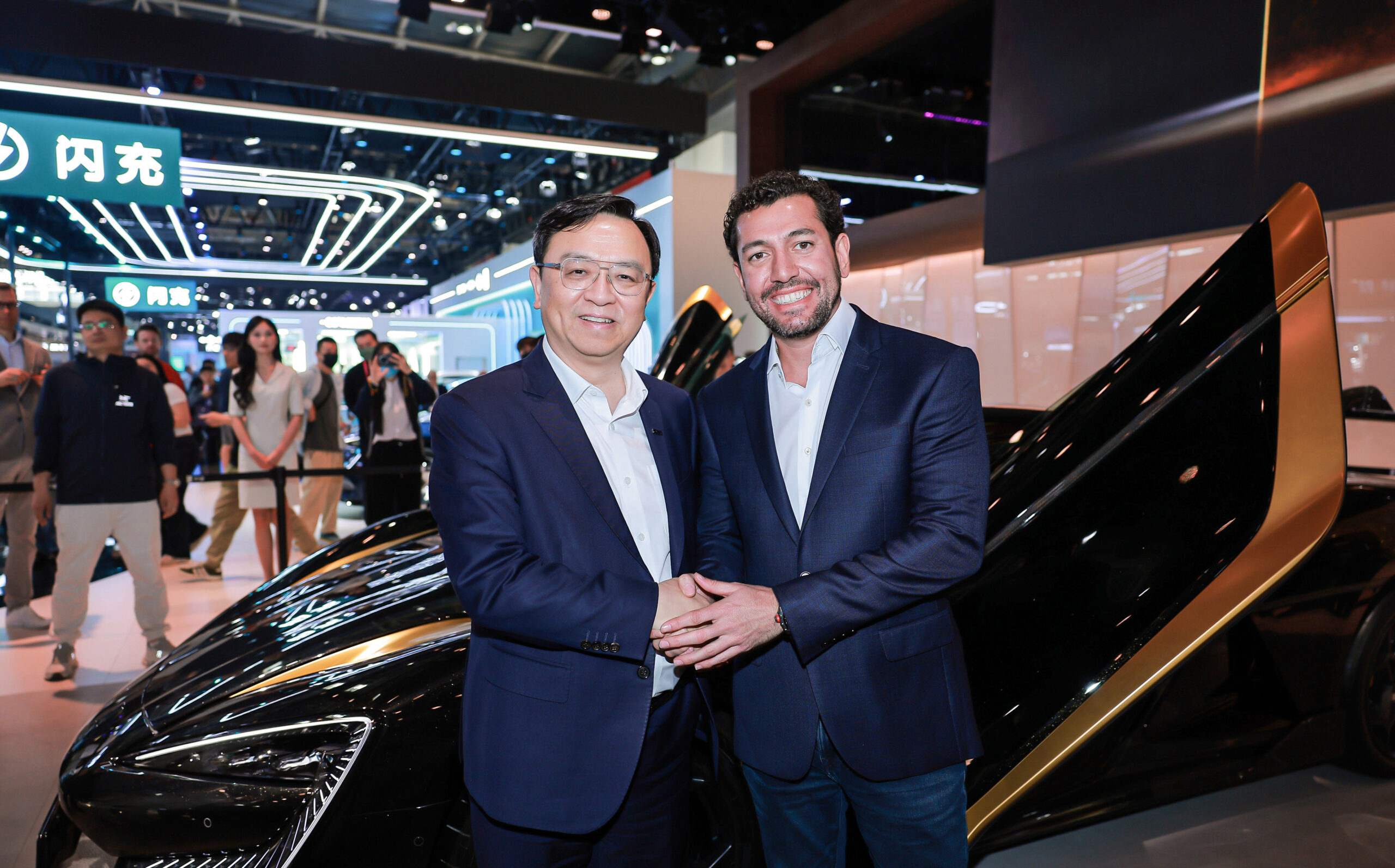
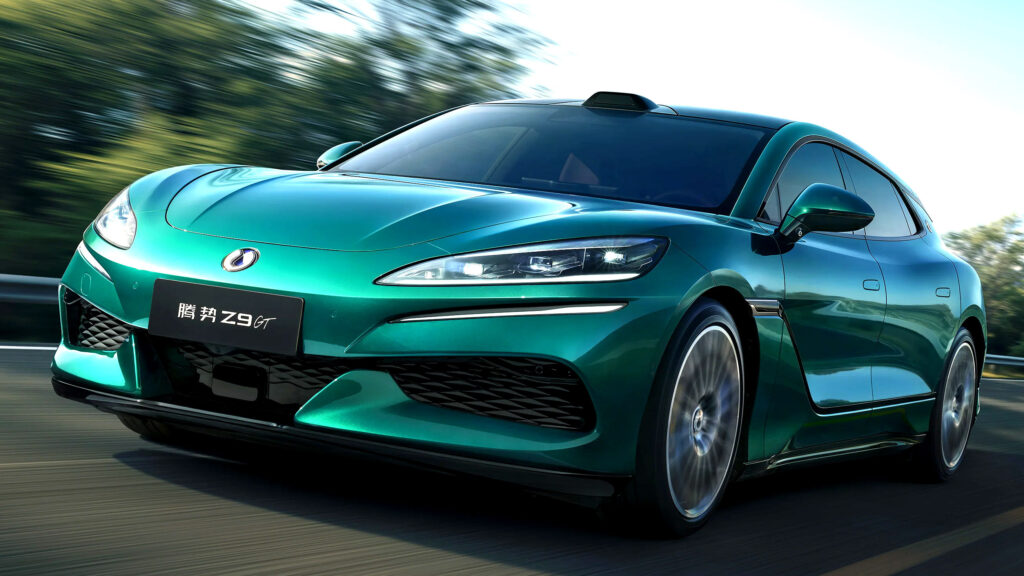
This strategic shift was on display at the Beijing Auto Show, where BYD launched new products targeting the premium segment, including the Datang (Great Tang), a full-size electric SUV priced from 250,000 yuan, which attracted more than 30,000 pre-orders on its first day. Moving beyond low-end models is intended to help the company sustain profitability amid the mass-market price war.

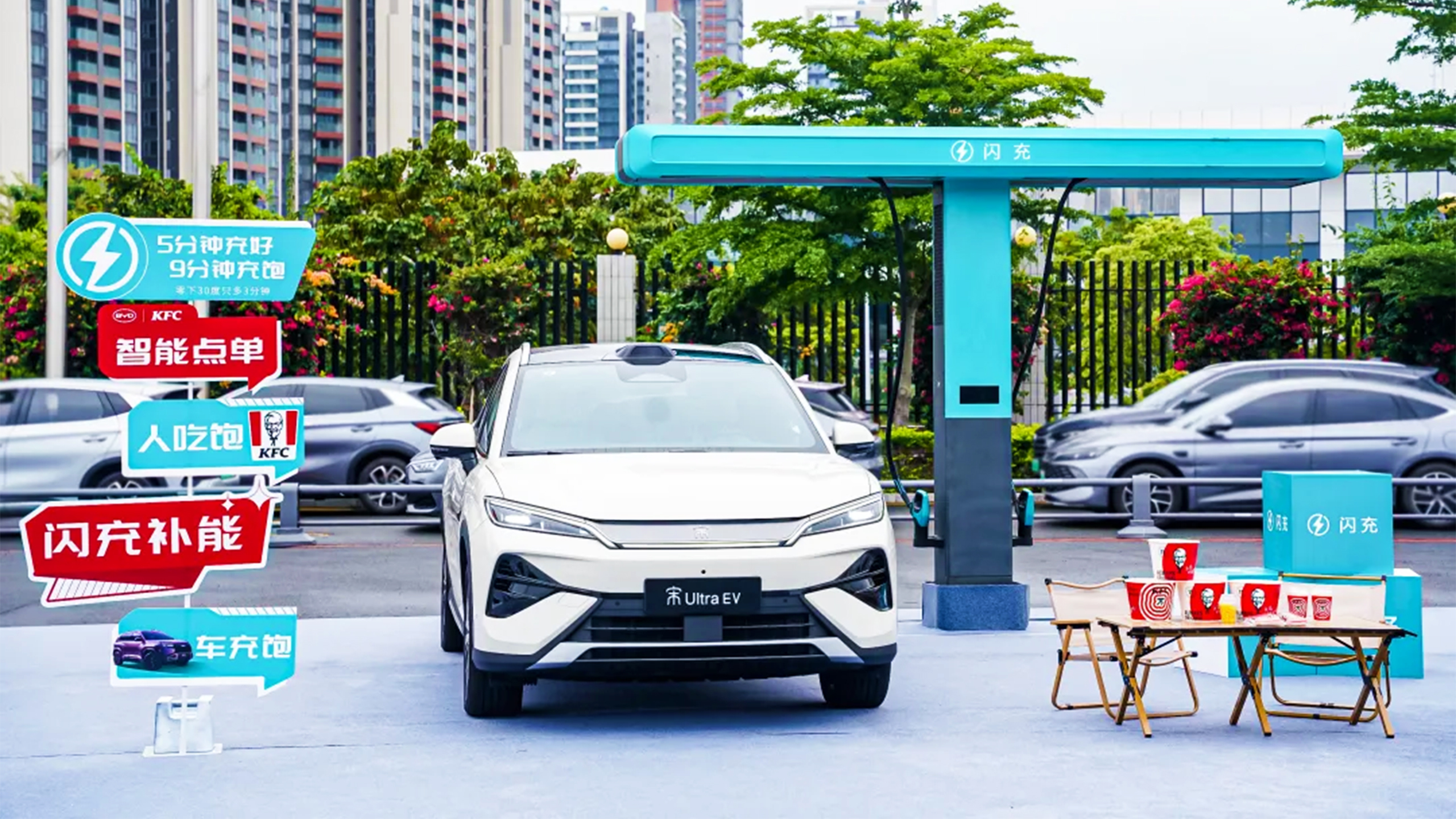
There’s a renewed focus on regaining technological superiority, too. The company is enhancing charging speed, among other features, to attract consumers who are not keen on switching from gas-powered cars.

But BYD is at a crossroads as it stands. Its expansion across borders may be the answer to whether it can bounce back. Analysts say the next few quarters will be critical, with domestic EV demand recovery and robust export growth seen as the keys to a profit rebound.
 BYD Sold 700,000 Electrified Cars Last Quarter And Still Lost More Than Half Its Profit

BYD’s 2,978 HP Hypercar Just Found Its First Buyers Willing To Pay Bugatti Money

  • The U9 Xtreme has four electric motors delivering 2,978 hp and hits 308.4 mph.
  • Last year, the limited-run U9 Xtreme lapped the Nurburgring in 6:57.147.
  • BYD is selling each YangWang U9 Xtreme for more than 20 million yuan.

Over the past few years, we’ve become accustomed to seeing new BYD models hit the market with absurdly low price tags. The record-breaking YangWang YangWang U9 Xtreme is not that kind of a car. It is, by some distance, the priciest thing the company has ever offered.

More: China’s YangWang U9 Smashed Bugatti’s Speed Record But Still Isn’t Officially The World’s Fastest Car

Li Yunfei, who runs branding and PR for BYD Group, posted on social media that several U9 Xtreme orders were locked in at the Beijing Auto Show. The price? North of 20 million yuan a pop, or roughly $2.92 million at current exchange rates.

 BYD’s 2,978 HP Hypercar Just Found Its First Buyers Willing To Pay Bugatti Money
Li Yunfei, BYD

This is more in line with hypercars from the likes of Koenigsegg and Bugatti than what we’d expect to see from BYD. It also makes it more than ten times as expensive as the ‘regular’ YangWang U9, which is available from 1.8 million yuan ($263,000).

Among those to have placed an order for the U9 Xtreme in Beijing was Nick Politis, an Australian businessman estimated to be worth over AU$4.5 billion ($3.2 billion). His car will be the only one sold in Australia and is expected to arrive early next year.

What will shoppers get for their money? Firstly, they get exclusivity, as just 30 units are bound for the production line. In addition, they get a car with four electric motors combining to produce an extraordinary 2,978 hp. This easily makes it the most powerful production car ever and the first to feature a 1,200-volt platform.

What Can It Do?

\\\\\\\\\\

All of the power means the U9 Xtreme can hit 308.4 mph or 496.22 km/h, a feat it achieved last year to eclipse the top speed of the Bugatti Chiron Super Sport 300+, while easily defeating the official two-way average top speed record holder of the SSC Tuatara, set at 282.9 mph (455.3 km/h). It’s unclear if customer cars will be able to hit these speeds, or if they’ll be software-limited to a slightly more reasonable pace.

The U9 Xtreme is also quite capable around a track. While it’s heavy, it lapped the Nurburgring Nordschleife in 6:57.147, outgunning the Rimac Nevera and Xiaomi SU7 Ultra. Admittedly, it is slower than a 500-hp Porsche 911 GT3 RS and almost 20 seconds slower than the new Ford Mustang GTD Competition.

200 Robotaxis Stopped In Traffic, Now China Has Stopped Issuing Permits

  • Baidu engineers instructed robotaxis to stop and immediately collect data.
  • As many as 200 robotaxis operated by the tech firm stopped in Wuhan traffic.
  • Regulations for robotaxis are generally set by local governments in China.

The robotaxi gold rush in China has just hit its first serious speed bump. About a month ago, dozens of autonomous vehicles run by Baidu malfunctioned on Chinese roads, and Beijing has now stopped issuing new robotaxi licenses. The episode is a reminder that while domestic brands push hard on ever more advanced self-driving systems, a single bad afternoon can quickly unravel progress.

The incident itself happened on March 31, when around 200 robotaxis from Baidu’s Apollo Go program stopped dead in traffic in Wuhan. Several collisions followed and passengers were left stranded in their cars. Fortunately, no one was injured. According to an unnamed source, Baidu engineers issued a command to tell vehicles to stop and collect data on the spot, triggering the chaos.

Read: Baidu’s Robotaxis Froze On Wuhan Highways And Cars Started Crashing Into Them

According to Nikkei Asia, China’s transport ministry, the industry and information technology ministry, the public security ministry, and the Cyberspace Administration sat down with eight of the country’s biggest autonomous driving firms after the Wuhan incident. Authorities demanded that these firms conduct a “comprehensive self-inspection.”

Although the Chinese government has stopped issuing new licenses for robotaxi operators, those who are already operating can continue to do so. For example, Pony.ai continues to operate its robotaxi services in Beijing, Shanghai, Guangzhou, and Shenzhen as normal.

What Laws Exist?

NEW: Dozens of robotaxis by Baidu stopped on the road in Wuhan, causing crashes on highways and trapping passengers in the cars—some for more than an hour. One passenger told me it took her 30 minutes to even connect to a customer representative.

Here’s a video of a crash. pic.twitter.com/fTitNMv8kj

— Zeyi Yang 杨泽毅 (@ZeyiYang) April 1, 2026

In general, regulations governing the testing of self-driving vehicles in China are relatively lax. The federal government has let local governments decide how they’d like to govern the introduction of robotaxi services, leading to a wide range of different regulations throughout the country.

It’s understood that roughly 4,500 robotaxis were operating across pilot zones in 10 Chinese cities as of last year. Some analysts estimate that as many as 500,000 robotaxis could be in service by 2030, or about 10 percent of the country’s total taxi fleet. A national decision outlining steps to prevent similar incidents could arrive by the end of May.

 200 Robotaxis Stopped In Traffic, Now China Has Stopped Issuing Permits

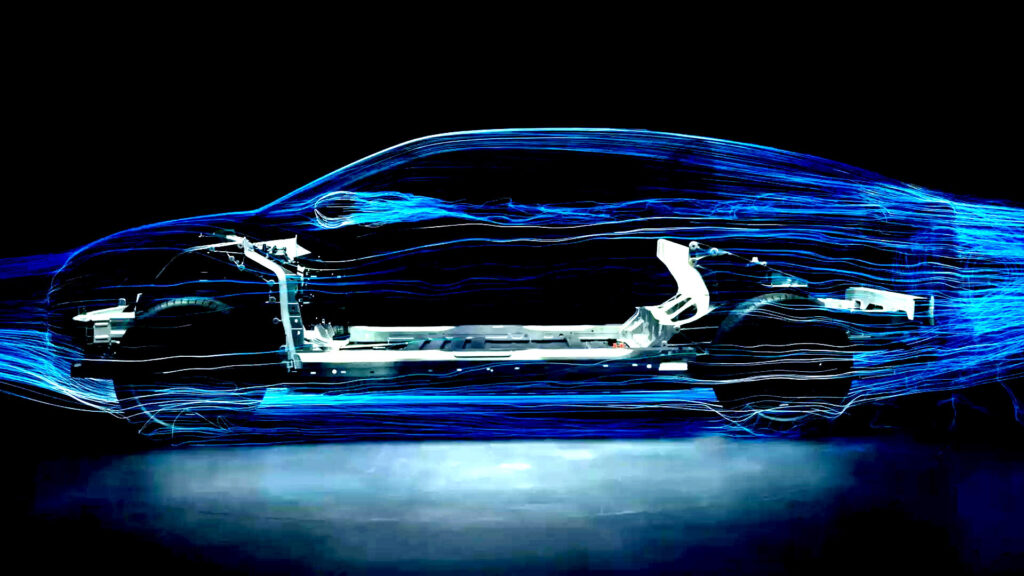
Ford’s EV Skunk Works Tech Is Quietly Reshaping The Gas Lineup Too

  • Ford’s next-gen EV tech will help to improve all future models.
  • Higher aluminum prices could cost the automaker an extra $1 billion.
  • Company’s $30,000 electric truck will appeal to crossover buyers.

Ford has high hopes for their upcoming mid-size electric truck and CEO Jim Farley recently revealed the company did an “incredible job” creating its UEV platform. However, its advancements won’t be limited to next-generation electric vehicles.

Speaking during an earnings call, Farley said the platform “represents a step change in efficiency and cost, especially for the EV market.” While the company has been touting those benefits for awhile, the executive revealed they’re now integrating these “skunk works breakthroughs” into their mainstream products and processes.

More: Ford Reveals Details Of $30K Electric Truck Due In 2027

He went on to say the Blue Oval is applying learnings from the program to their high-volume internal combustion and hybrid lines, and this will help to reduce costs as well as improve quality. Farley added that by the end of the decade, 90% of their global nameplates will offer electrified powertrains including hybrid, electric, and range-extended options.

When asked about Chinese automakers, Farley wants to have his cake and eat it too. As he explained, “As America’s largest auto producer, we are totally dedicated to a thriving U.S. auto industry and safeguarding our country’s industrial base.” However, he noted the company leverages global partnerships – including with Chinese automakers – to grow their business.

 Ford’s EV Skunk Works Tech Is Quietly Reshaping The Gas Lineup Too

Despite occasionally partnering with them, Farley wants to keep Chinese automakers out of America. He said it’s not just a case of “economic vitality,” but also “national security.”

The executive briefly addressed the war in Iran by saying they’re monitoring the situation. Farley went on to note the company has successfully navigated the pandemic, chip crisis, and tariff headwinds, so they’re used to making adjustments on the fly.

That being said, the automaker is expecting some impacts including commodity headwinds. This could end up costing them $1 billion more than they originally anticipated and it’s largely due to higher aluminum prices as a result of global supply constraints.

 Ford’s EV Skunk Works Tech Is Quietly Reshaping The Gas Lineup Too

While there was a lot of talk about aluminum, we’ll spare you the boring details and skip right to pickups. Ford is particularly bullish about them, despite a number of new contenders on the horizon including Kia.

As Farley explained, the market continues to broaden and grow. He said car and crossover buyers are moving into pickups, and he’s really excited about their $30,000 EV because its packaging will appeal to both truck and crossover shoppers.

 Ford’s EV Skunk Works Tech Is Quietly Reshaping The Gas Lineup Too

American Influencers Are Reviewing Chinese Cars That Are Illegal To Own Here, And It’s Not By Accident

  • Chinese EVs are blocked from US sale but dominate American social feeds.
  • A third of US new-car shoppers now say they would buy a Chinese-built vehicle.
  • A Beijing platform called DCar is helping US influencers to test these EVs.

Chinese car brands can’t even sell their vehicles in the United States, yet they’re creating loyal fans across the country, largely thanks to targeted campaigns with the help of popular automotive content creators. If these brands ever do get the go-ahead to sell cars locally, established players will need to watch their backs.

If you follow any of these influencers, you’ve probably seen plenty of Chinese cars being tested on American roads, despite not being available here. Forrest Jones, who helped to pioneer short-form car reviews on TikTok, has reviewed a bunch of these over the past couple of years, generating tens of millions of views.

Read: China Is Blocked From Selling Cars In America, Yet Three Democratic Senators Still Sent This Letter

Speaking with Bloomberg, Jones says some of his highest engagement comes from his Chinese car content. Last year, tech YouTuber Marques Brownlee tested the popular Xiaomi SU7 in the US, and that video alone, with 10 million views, reportedly generated $1.2 million in unpaid brand exposure for the company.

The Chinese Are Taking Over

Data from Sprout reveals that, thanks to Brownlee’s video and others, Xiaomi’s TikTok following jumped 20 percent in 2025. Remarkably, roughly half of these 7.8 million followers are from the United States. Videos like Brownlee’s also lead to spikes in inquiries from Americans.

According to China EV Marketplace, a popular e-commerce platform that exports Chinese EVs overseas, it received more than 1,000 price-quote requests from the US after Brownlee released his video, with most seemingly unaware that EVs like the SU7 can’t be legally insured and titled in the US.

A Chinese automotive content platform called Beijing Dongchedi Technology Co., or DCar, is helping give Chinese cars exposure in the US. Spun out of ByteDance, the company behind TikTok, in 2023, DCar has been “courting American influencers to create content for its mobile app and showcase Chinese tech,” Bloomberg writes, with 10 million daily active users in China.

Bloomberg reports that in early 2025, DCar funded a trip to Alaska for YouTubers including Richard Benoit, better known as Rich Rebuilds, presenting him with a catalog of electric models such as the BYD Fangchengbao and Wuling Bingo before shipping the cars stateside. DCar covered Benoit’s travel and paid him a fee equal to “the price of a cheap Chinese EV” for his coverage, he told Bloomberg.

The company told the outlet it purchased or rented all the models itself, with no participation from the carmakers, to maintain “objectivity and veracity.” In return, DCar gets a barrage of slickly produced influencer posts introducing it to a wider audience.

For what it’s worth, Chinese brands like BYD and Xiaomi insist they have no immediate plans to start selling passenger cars in the United States. However, with loopholes potentially opening, you can be assured they’ll be lobbying hard to loosen regulations so they can gain access to the American market.

Democrats Rarely Back Trump’s Tariffs, Until China’s Automakers Came Up

  • More than 70 Democrats have called for a harder stance against Chinese automakers.
  • They want tougher tariffs and trade enforcement as well as a production ban.
  • Move comes after Trump suggested he was open to Chinese automakers in America.

Bipartisanship is rare in Washington, but there’s one issue that Democrats and Republicans can seemingly agree on. We’re talking about the threat of cheap Chinese cars, which are slowly spreading across the globe.

The Biden and Trump administrations have setup a series of roadblocks including huge tariffs and a ban on connected vehicles, but some in Congress want even more action. As a result, dozens of House Democrats sent President Trump a letter expressing “significant concern” with his remarks “about allowing Chinese automakers access to the United States market.”

More: Chinese Cars Get Cheaper And Better, So U.S. Automakers Want Them Banned Even If They’re Made Here

The letter came in response to a speech Trump made at the Detroit Economic Club in January, where he said if Chinese automakers “want to ​come in and build a plant and hire you and hire your ​friends and ⁠your neighbors, that’s great, I love that.”

While those remarks were made months ago, the letter was apparently sent now because Trump is set to meet Chinese President Xi Jinping next month. Democrats apparently fear the President could give Chinese automakers the green light in exchange for a possible trade deal or agreement.

 Democrats Rarely Back Trump’s Tariffs, Until China’s Automakers Came Up

Getting back to the letter, it urged Trump to “take any and all decisive action necessary” to prevent Chinese automakers from gaining access to the United States. Signers went on to say “any effort to lower barriers for Chinese automobiles or otherwise facilitate their entry into the U.S. market would pose a direct threat to American manufacturing, workers, and national security.”

It went on to claim the American automotive industry supports approximately 10 million jobs and accounts for five percent of the gross domestic product. The letter then said the “Chinese auto industry does not compete on a level playing field” as it is “driven by a state-directed strategy to dominate global markets through government subsidies, below-market financing, and non-market behavior across the supply chain.”

It went onto suggest the entry of Chinese vehicles into Canada and Mexico could create a “backdoor into the United States under the United States-Mexico-Canada Agreement.” The letter added, “Chinese-owned or controlled vehicles, regardless of where they are assembled, must not be permitted to enter our market through USMCA or any other mechanism.”

 Democrats Rarely Back Trump’s Tariffs, Until China’s Automakers Came Up

That’s a little awkward for Polestar and Volvo, but the message called for Trump to “maintain and strengthen existing tariffs and trade enforcement measures on Chinese automakers and automobiles” as well as prevent them from establishing manufacturing operations in America. Democrats went on to ask that vehicles produced by Chinese-owned or controlled entities in Canada or Mexico be explicitly prohibited from qualifying for USMCA benefits or entering the United States. On top of that, they want the government to “accelerate and expand restrictions on Chinese-connected vehicle technologies.”

Reuters reached out to the White House and was told, “While the administration is always working to secure more investment into America’s industrial resurgence, any notion that we would ever ​compromise our national ​security to do so ⁠is baseless and false.”

 Democrats Rarely Back Trump’s Tariffs, Until China’s Automakers Came Up

For their part, the Chinese Embassy called for officials to “stop overstretching the concept of national security, cease discriminatory and exclusionary measures, and provide a fair, transparent, and non-discriminatory business environment.”

However, that seems unlikely as fear of Chinese automakers is one thing that almost all politicians can get behind.

 Democrats Rarely Back Trump’s Tariffs, Until China’s Automakers Came Up

VW Ruled China For 25 Years, Now Young Buyers Call It Their Parents’ Car

  • VW’s China boss admits young buyers now see it as a brand for parents.
  • German market share in China fell from 26 percent to 16 percent since 2019.
  • BYD overtook VW in 2024, and Geely pushed it to third the year after.

For more than two decades, a German badge in China was shorthand for arrival. That equation no longer holds. China remains one of the most important markets for German automakers. The trouble is they are now struggling to compete with local rivals who have captured the hearts and minds of young buyers.

The boss of VW in China, Robert Cisek, admitted that the rapid change in China’s car market has been “beyond imagination,” and means that now, “some younger customers perceive us as the brand for the parents.” For more than 25 years, VW was the best-selling carmaker in China, but was overtaken by BYD in 2024, and dropped to third in 2025 behind Geely.

Read: China Is Getting A Jetta SUV For Less Than A Used Corolla Costs In America

Automotive consultant Felipe Munoz says German brands “didn’t see this big change coming, and they didn’t see the speed at which it came.” While overall new car sales in China continue to climb, the market share of German brands slipped from 26 percent in 2019 to 16 percent in 2025, when they sold 3.9 million vehicles.

Germans Race To Compete

 VW Ruled China For 25 Years, Now Young Buyers Call It Their Parents’ Car
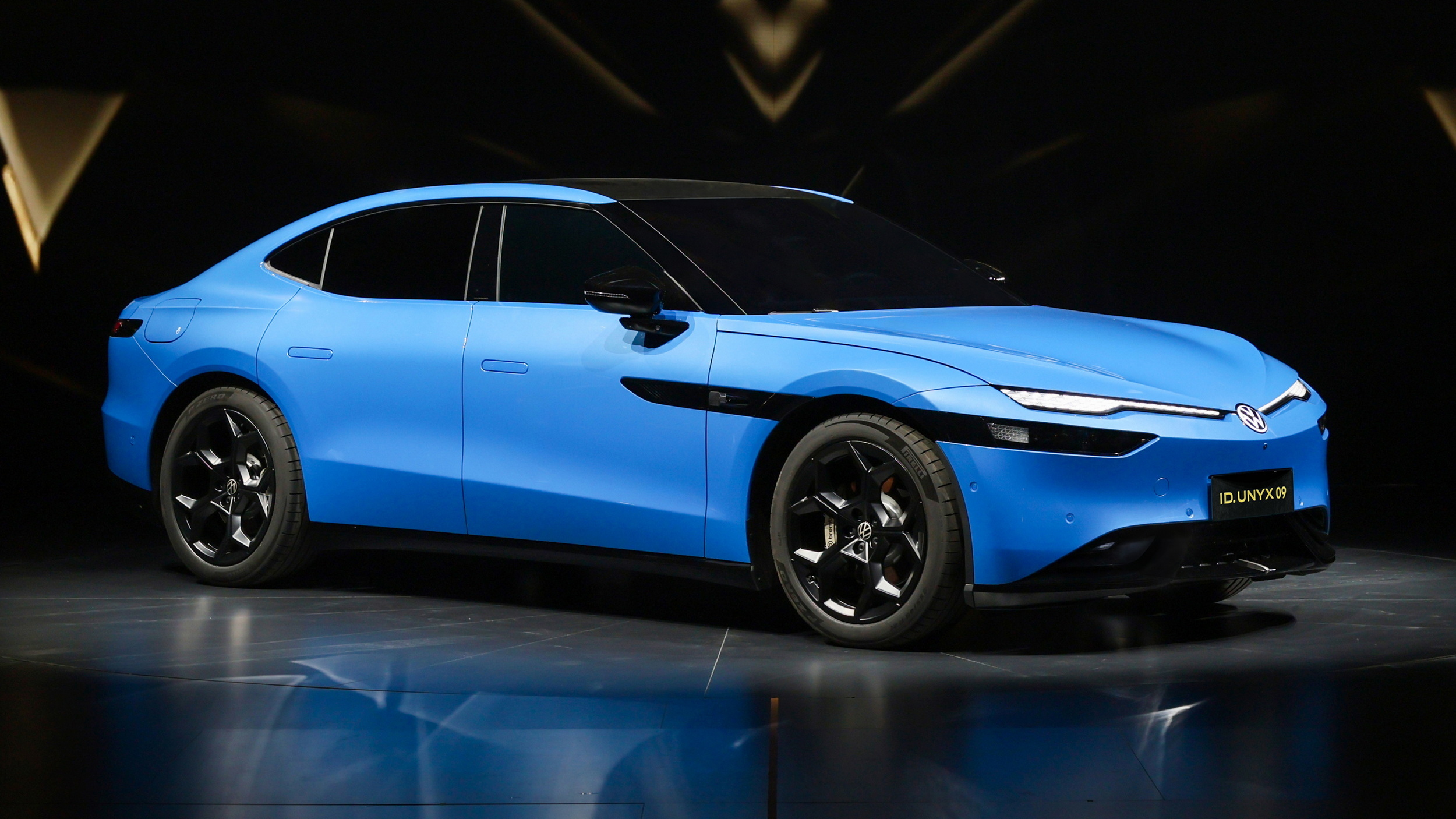
VW ID. Unyx 09

In times gone by, companies like VW could sell their vehicles in China thanks to their build quality, high-end materials, and strong reputations. However, this is no longer enough, Reuters reports.

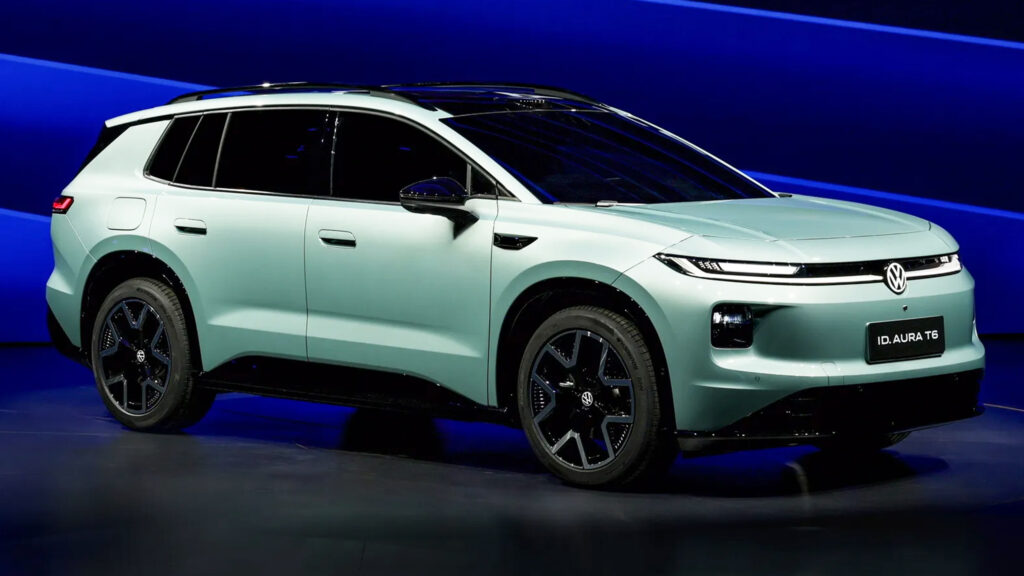
To try and claw back some ground, the Volkswagen Group will launch 20 new-energy vehicles in China this year, including several battery-electric models, plug-in hybrids, and EVs. Many of these new models were recently unveiled at the Beijing Auto Show, including the ID. Aura T6, which was built in partnership with FAW, the ID. Unyx 09, created alongside Xpeng, and the all-electric AUDI E7X from the firm’s SAIC joint venture.

It remains to be seen if vehicles like these will be enough. According to a recent survey from AlixPartners, young buyers in China are more likely to avoid German cars, despite the ‘Made in Germany’ tagline holding strong appeal in many other countries.

 VW Ruled China For 25 Years, Now Young Buyers Call It Their Parents’ Car

Stellantis’ Cheapest New EV Is Chinese, Made In Europe, And $15K Under Its Own Peugeot

  • Leapmotor’s new B05 starts at €26,900 in Italy before any local incentives apply.
  • The Chinese-designed hatchback is built at a Stellantis plant in Zaragoza, Spain.
  • Local assembly lets the B05 sidestep the EU tariffs aimed at Chinese-made EVs.

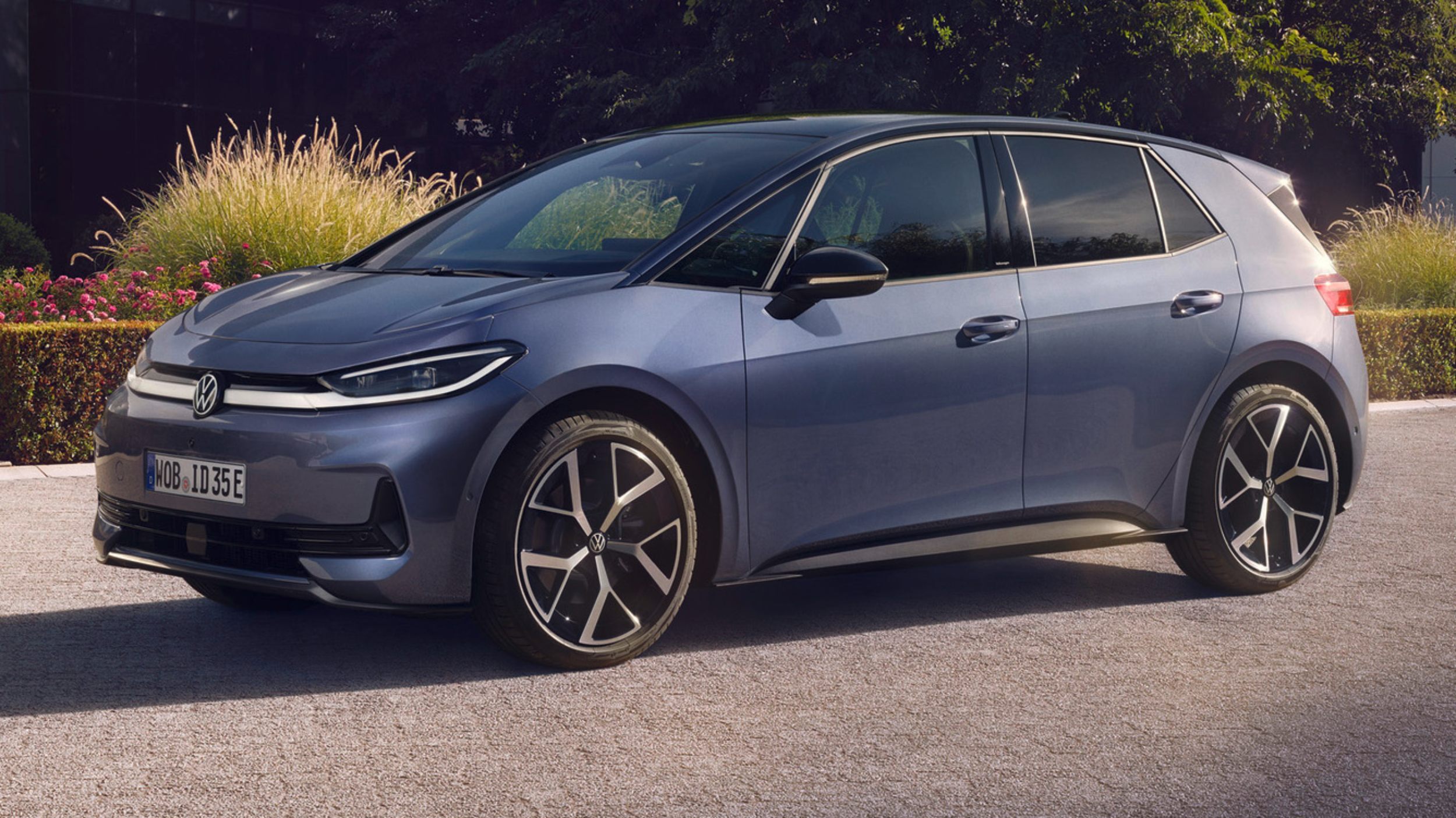
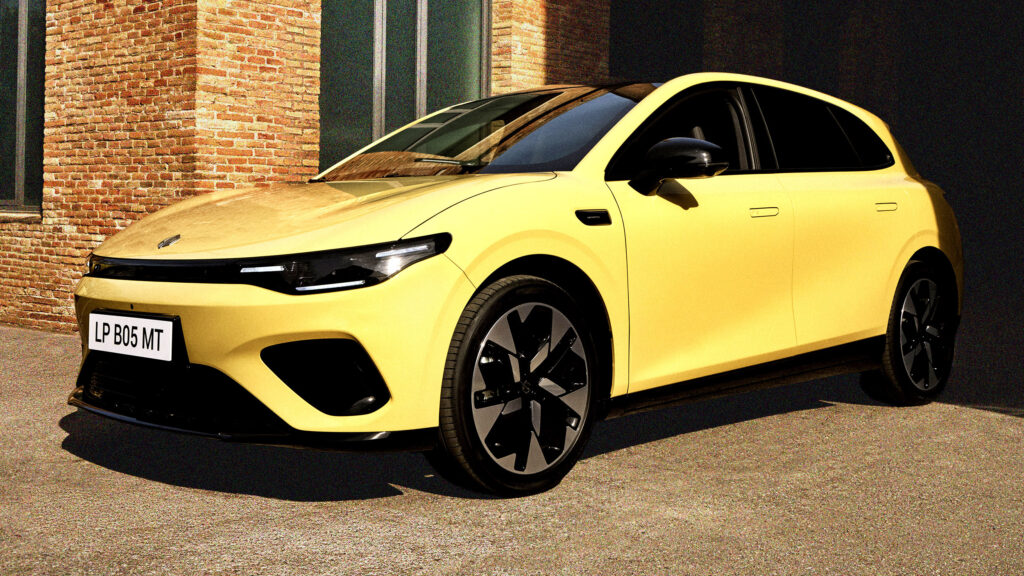
As European EV buyers grow more price-sensitive, new entrants are finding sharper ways to undercut established players without giving up headline specs. Stellantis is putting its strategic partnership with Leapmotor to work, launching the new B05 across Europe as a fully electric hatch aimed squarely at the freshly updated VW ID.3 Neo. A hotter Ultra variant will follow, with the next GTI in its sights.

Aggressive Pricing

The Leapmotor B05, known as the Lafa 5 in China, first appeared in Europe last September at the Munich Auto Show, then a static prototype. It is now on sale in European markets, priced in Italy from €26,900 ($31,500) to €30,900 ($36,200) before local incentives.

More: Stellantis’ Secret Weapon Against Chinese EVs In Europe Turns Out To Be A Chinese EV

This places the entry-level version €9,600 ($11,200) below the pre-facelifted VW ID.3 in Italy. The Leapmotor B05 also comes in €11,450 ($13,400) under the Renault Megane E-Tech and €13,080 ($15,400) less than Stellantis’ own Peugeot E-308 in the same market.

\\\\\\\\\\

The EU-spec Leapmotor B05 is currently being assembled at Stellantis’ Figueruelas plant in Zaragoza, Spain. Producing the car locally allows the company to avoid steep EU tariffs on Chinese-built EVs, helping it land at a price point that undercuts even the now-discontinued MG4.

Competitive Specs

Measuring 4,430 mm (174.4-inch) long, the EV rides on Leapmotor’s “LEAP 3.0” architecture and uses Cell-to-Chassis (CTC) technology. This setup integrates the battery into the structure, improving rigidity. The company also claims a 50:50 weight distribution and notes that the suspension was co-tuned with Stellantis’ global engineering teams.

More: Opel And Alfa Romeo’s Next EVs May Be Built Around Chinese Tech, Not German Or Italian

European buyers can choose between two LFP battery packs: a 56.2 kWh Pro unit with a WLTP range of 401 km (249 miles), or a 67.1 kWh Pro Max pack offering up to 482 km (300 miles). DC fast charging peaks at 174 kW, allowing a 30-80% charge in as little as 17 minutes.

\\\\\\\\\

The Leapmotor B05 is fitted with a rear-mounted electric motor offering 215 hp (160 kW / 218 PS) and 240 Nm (177 lb-ft) of torque. For those seeking better performance, the upcoming B05 Ultra bumps the output figures to 241 hp (180 kW / 245 PS) and 255 Nm (188 lb-ft), combined with a lowered suspension, fatter anti-roll bars, beefier brakes, a more aggressive bodykit, and performance tires.

Generous Equipment

Despite its budget pricing, the Leapmotor B05 is packed with tech. The entry-level Life trim has a comprehensive list of standard equipment, including a 14.6-inch touchscreen, an 8.8-inch digital instrument cluster, an AI-powered voice assistant with facial recognition, dual-zone climate control, a 360-degree camera, a panoramic glass roof, and a full ADAS suite.

More: This Leapmotor Packs Lamborghini Huracan Power Into A $38K Family SUV

The flagship Design trim adds 19-inch alloy wheels instead of 18-inch units, along with a heated steering wheel and heated, ventilated seats trimmed in eco-leather. It also brings 256-color ambient lighting that reacts to music, plus a more advanced ADAS package.

\\\\\\\\\\\\\\\\

The B06 Ultra has not yet been detailed for Europe, though the Chinese version includes a front splitter, side skirts, a rear spoiler, and a rear diffuser, along with unique 19-inch wheels. Inside, it adds sport seats with a massaging function, suede-style upholstery, and LiDAR-based driver assistance systems.

More: Stellantis Turns A Tiny Chinese Hatch Into A Delivery Van That’s Light On The Van Part

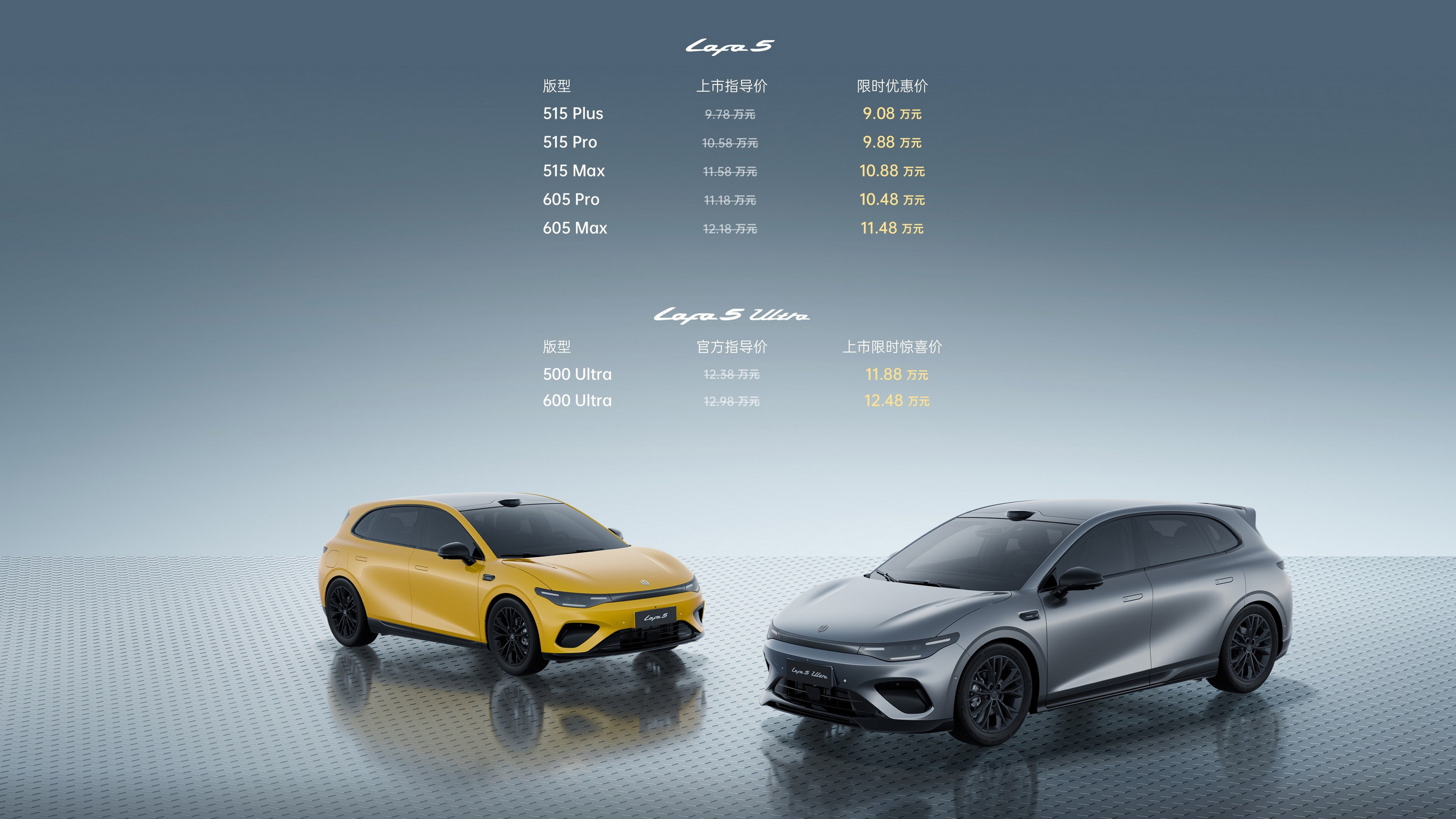
In China, the Leapmotor Lafa 5 is even cheaper compared to its EU-spec B05 twin, currently priced between ¥90,800-114,800 ($13,300-16,800). The Lafa 5 Ultra sits at the top of the lineup, priced between 118,800-124,800 ($17,400-18,300). However, it is worth noting that the entry-level variants of the Chinese-spec model have lower output and a smaller battery pack.

 Stellantis’ Cheapest New EV Is Chinese, Made In Europe, And $15K Under Its Own Peugeot

Xiaomi’s 990 HP Family SUV Costs Less Than A Base Macan EV And Outguns The Turbo

  • Xiaomi revealed the flagship YU7 GT at the Beijing Auto Show this week.
  • The SUV was developed in part at the Nürburgring for sharper handling.
  • Pricing is expected to start between $65,800 and $73,100 in China.

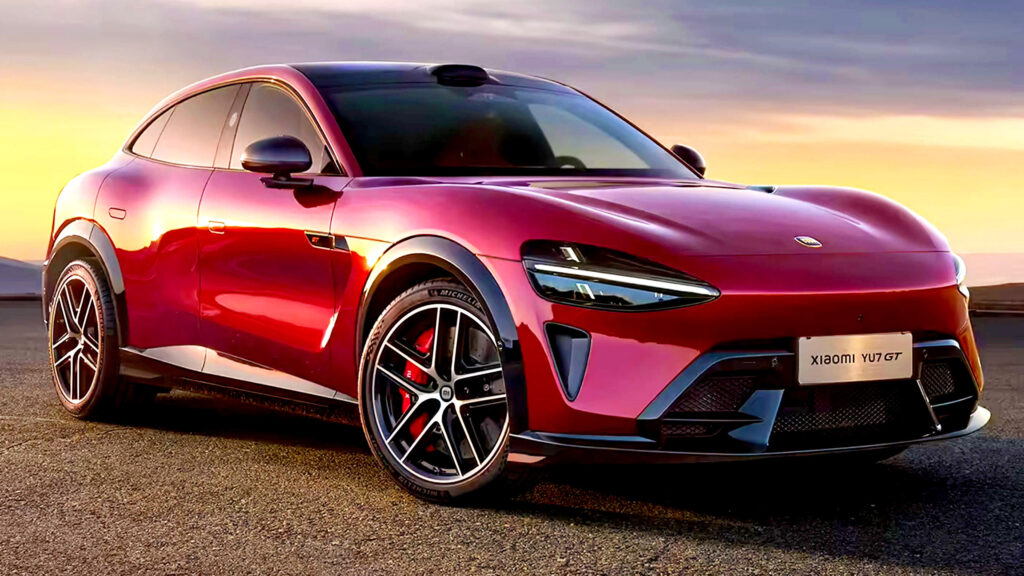
As expected, Xiaomi unveiled the flagship version of its YU7 SUV, known as the GT, at the Beijing Auto Show. It’s nowhere near as extreme as the SU7 Ultra, but it has been developed in part at the Nürburgring and brings with it a slew of upgrades over lesser variants.

As our own spy images from earlier this month revealed, the YU7 GT looks a lot more aggressive than the standard version. For example, it has flared wheel arches and a much more menacing front fascia, complete with a new blacked-out grille and unique air intakes. Positioned on the hood is a special badge made from carbon fiber and 24-karat gold.

Read: Xiaomi Brings Its 1,000HP YU7 GT To Porsche’s Backyard Naked And Unafraid

Xiaomi will sell the YU7 GT with 21- and 22-inch wheels, and has also upgraded its brakes. Other styling and aerodynamic tweaks are also found at the rear, including a dramatic diffuser and a small lip spoiler.

For as much as the YU7 GT may resemble a Ferrari Purosangue, it’s under the skin where most of the action is happening. Xiaomi has equipped the YU7 GT with a new front motor delivering 386 hp and a new rear motor with 604 hp, resulting in a combined 990 hp.

Although that falls well short of the SU7 Ultra’s 1,527 hp, it’s still a ludicrous amount of power for a family SUV, easily outgunning EVs like the flagship Porsche Macan Turbo Electric and its 630 hp.

Not Just About Power

\\\\

Xiaomi has yet to release full performance specifications for the GT, including how quickly it can lap Green Hell. What we do know is that it will run on to 186 mph (300 km/h), and it’s safe to presume the sprint from a standstill to 62 mph (100 km/h) will be dealt with in the low-2-second range.

Beyond upgrading the motors, Xiaomi has included a new air suspension system, rear-axle torque vectoring, and made tweaks to the traction control. Buyers eager to take their YU7 GTs to the track will also be able to configure it with optional carbon ceramic brakes from Brembo.

Prices have yet to be confirmed, but the model is expected to start between 450,000 yuan ($65,800) and 500,000 yuan ($73,100). Xiaomi will be hopeful that it helps to reinvigorate interest in the YU7, which has seen sales decline from a peak of almost 40,000 units last December to just under 15,000 in March.

\\\\\\\\\

Baldauf

Audi’s $45K Electric Sedan Claims 506 Miles Of Range In China

  • Audi is stretching their Chinese lineup with the new A6L e-tron.
  • The electric sedan has a wheelbase that grows by 5.2 inches.
  • It sports a larger 107 kWh battery and 543 hp AWD system.

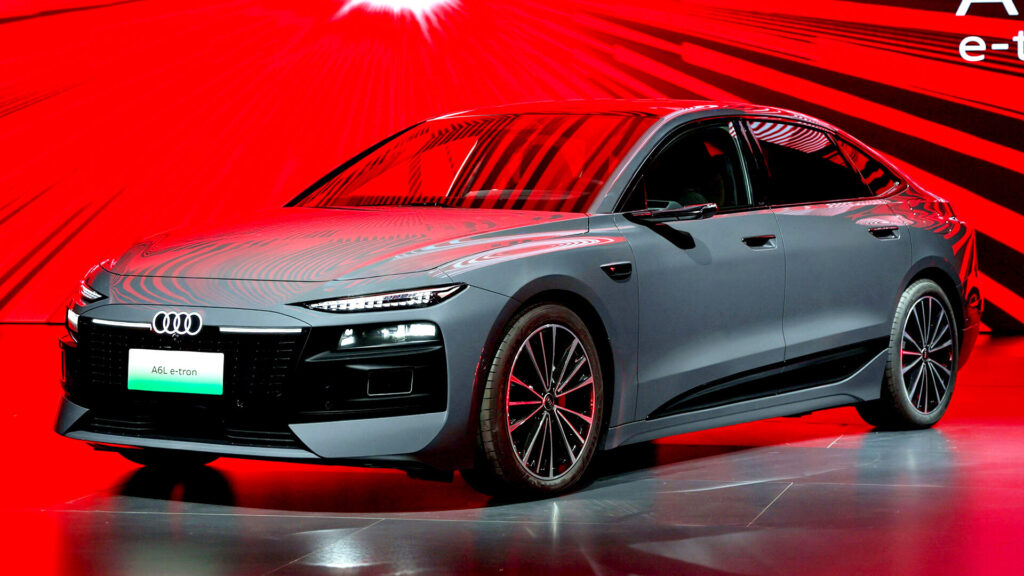
Audi introduced the A6L last month and now they’re following up with the A6L e-tron. The extended wheelbase sedan recently debuted at Auto China in Beijing and it packs a few tricks up its sleeve.

Built by Audi FAW, the EV’s wheelbase has been stretched by 5.2 inches (132 mm). This results in a spacious rear passenger compartment with flagship-worthy legroom.

More: Audi’s New A6L Feels Like An A8 For Half The Price

Audi didn’t stop there as they put the extra room to good use by installing a larger 107 kWh battery pack on most versions of the car. This enables the model to offer a CLTC range of up to 506 miles (815 km).

The A6L e-tron will be offered in Long and Extended Range variants. Some, if not all, will have a dual-motor all-wheel drive system producing 543 hp (405 kW / 551 PS) and 574 lb-ft (779 Nm) of torque. This enables the car to accelerate from 0-62 mph (0-100 km/h) in 4.3 seconds. When the battery is low, it can go from 10-80% in as little as 21 minutes thanks to the car’s 800V architecture.

\\\\\\\\\\\\\\\

There isn’t much to report on the styling front, but the A6L e-tron sports longer rear doors and a less dramatic roofline. Despite the changes, the model has an impressively low drag coefficient of 0.22.

The interior is also familiar as buyers will find an 11.9-inch digital instrument cluster, a 14.5-inch infotainment system, and a 10.9-inch front passenger display. They’re joined by two 7-inch screens for the digital side mirrors.

\\\\\\

Among other options, Audi mentioned sports seats with available heating, ventilation, and massage functions. Buyers can also get a dimming panoramic glass roof and a 20-speaker Bang & Olufsen premium audio system.

Pricing starts at ¥309,800 ($45,317), but climbs to ¥439,800 ($64,333) for the range-topping variant.

\\\\\\\

China Gets The AUDI EX7 With 671 HP And A 59-Inch Display, America Gets The Q7

  • AUDI has introduced the new E7X crossover at Auto China.
  • Launches later this year with two powertrains and 466 mile range.
  • Luxurious interior sports 59-inch display and premium materials.

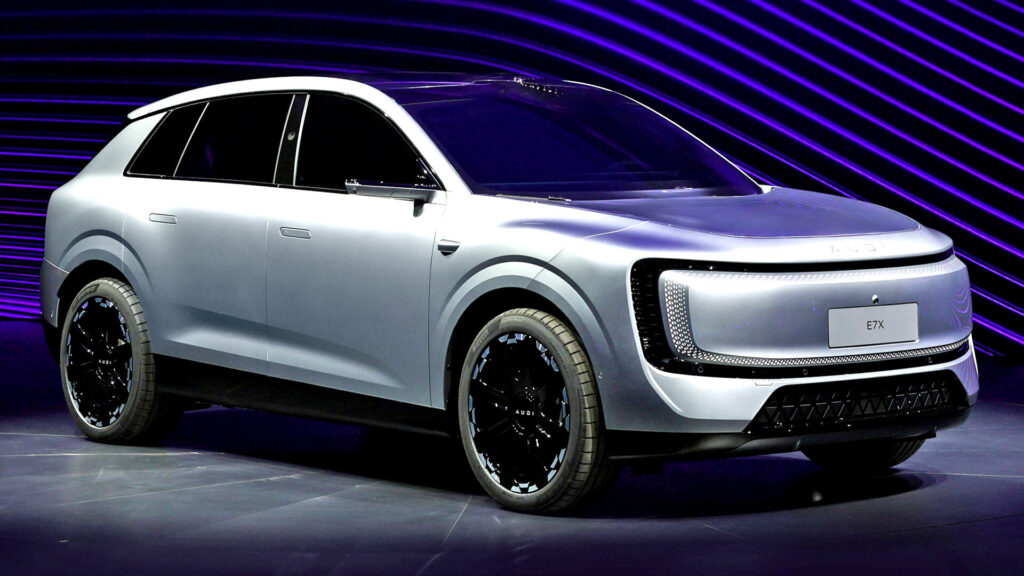
Following last year’s preview, AUDI has now put the E7X on stage at Auto China in Beijing. It is the ringless brand’s second model after the E5 Sportback, and its first move into the crossover space.

Created in collaboration with SAIC, the E7X follows in the footsteps of the E5 Sportback and features a streamlined front fascia with a “black wraparound loop.” It’s joined by a fully enclosed grille with a Light Frame that remains “elegantly invisible when inactive.” When turned on, more than 1,000 triangular lights come to life.

More: Audi’s AUDI Just Greenlit More Models Despite Early Struggles

The model also sports slender daytime running lights and vertical Digital Matrix LED headlights. They’re joined by digital rearview mirrors, frameless doors, and a rakish windscreen that flows into a sloping roof. Other highlights include flush-mounted door handles, aerodynamically optimized wheels, and an oval-shaped rear light surround.
In terms of size, the E7X measures 198.8 inches (5,049 mm) long, 78.6 inches (1,997 mm) wide, and 67.3 inches (1,710 mm) tall with a wheelbase that spans 120.5 inches (3,060 mm). This means the crossover is slightly shorter than the Q7, but has an additional 2.6 inches (66 mm) between the wheels.

A Minimalist, But High-Tech Interior

\\\\\\\\\\\\\\\\\\\\

Moving inside, drivers are greeted by a flat-bottom steering wheel and a full-width 4K panoramic display. It spans 59 inches and features video feeds from the camera mirrors at the outside edges.

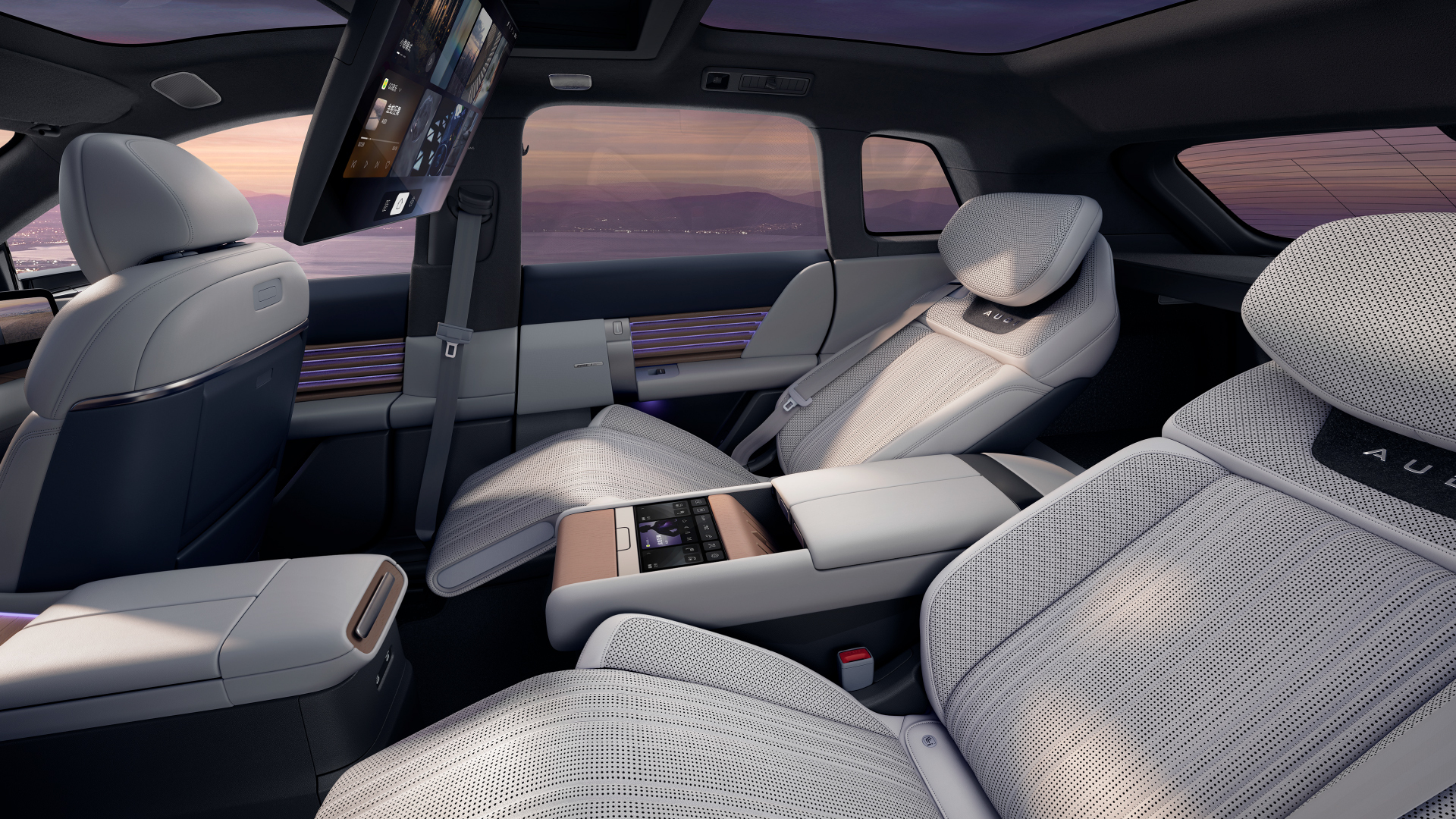
While technology is front and center, AUDI didn’t forget about luxury as the model has Nappa leather as well as premium wood trim. They’re joined by slatted door inlays, ambient lighting, and a Bose premium audio system with up to 26 speakers. Up top, there’s a panoramic sunroof that is split into two sections that have smart-dimming technology offering multiple levels of transparency.

The E7X is offered in four- and five-seat configurations. The former is the star of the show as it has two individual zero-gravity rear seats that recline 120 degrees and offer a 16-point massage as well as a pneumatic adjustment system with 23 airbags. They’re accompanied by four-way adaptive headrests and an integrated electric footrest.

 China Gets The AUDI EX7 With 671 HP And A 59-Inch Display, America Gets The Q7

The seats are separated by an elegant console, which features an integrated display as well as storage compartments. There’s also a warming/cooling compartment at the rear of the front center console for drinks and other items.

Elsewhere, there’s a 21.4-inch rear-seat entertainment system that deploys from the headliner. It can be controlled by voice, remote, or touchscreen.

On the topic of technology, there’s AUDI Assistant 2.0. It’s an “AI-powered in-car companion that goes well beyond voice control.” Developed with ByteDance, the assistant “manages vehicle functions, answers navigation and range queries, plays music, and engages in open-ended conversation on virtually any topic.”

Two Powertrains And Fast Recharging

\\\\\\\\\\\\\\\\\\\\\\\\\\\

The E7X rides on the Advanced Digitized Platform and features a 900-volt electrical architecture that enables the battery to go from 10% to 80% in as little as 13 minutes. Buyers will also find 100 and 109 kWh battery packs offering a CLTC range in excess of 466 miles (750 km).

AUDI only released a handful of performance specifications, but confirmed there will be a rear-wheel drive variant with a motor producing 402 hp (300 kW / 408 PS) and 369 lb-ft (500 Nm) of torque.

Customers can also opt for an all-wheel drive crossover, which has 671 hp (500 kW / 680 PS) and 590 lb-ft (800 Nm) of torque. This version can accelerate from 0-62 mph (0-100 km/h) in just 3.9 seconds.

Rounding out the highlights are all-wheel steering and a lidar-based AUDI 360 Driving Assist system. The latter was co-developed with Momenta and has been “tailored specifically for China’s complex traffic conditions and unique driving scenarios.”

\\\\\\\\\\\

Volvo’s Chinese Parent Built A $14K Sedan Americans Can’t Touch

  • The cheapest Galaxy A7 variant opens today at just over $14,000 in China market.
  • A plug in hybrid pairs a 1.5 liter four cylinder with an electric motor system.
  • The electric version uses a 58 kWh battery and a 215 hp mounted motor up front.

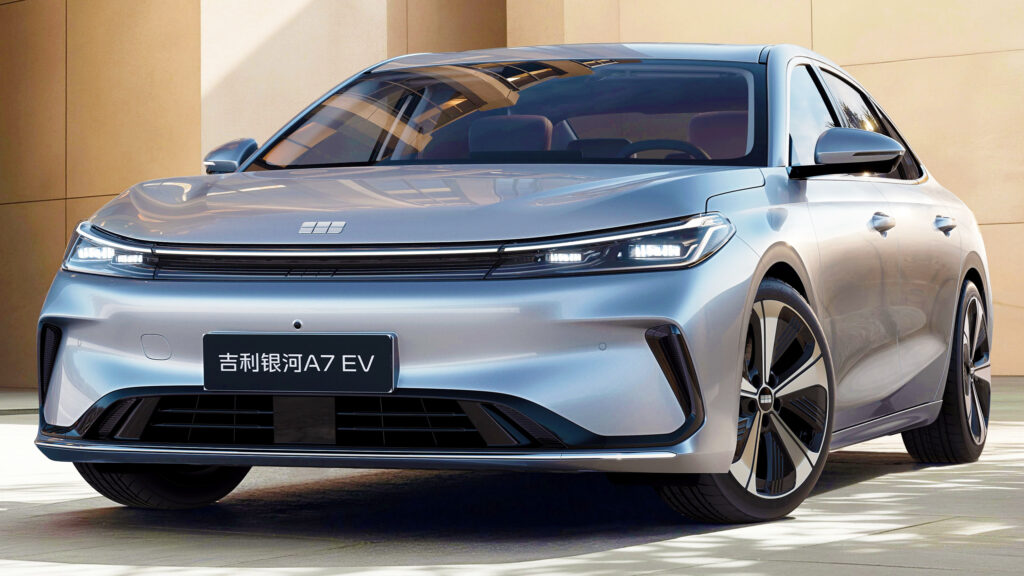
Over in China, Volvo’s parent company Geely isn’t just selling a slew of innovative and affordable hybrid and electric SUVs, but it’s also helping to keep the three-box sedan alive. One of its most appealing and cheapest models is the Galaxy A7, which has just been updated and is available in plug-in hybrid and all-electric guises.

There’s nothing particularly remarkable about the design of the sedan, but it’s hard to argue with the fact that it looks quite nice. The PHEV and EV models have the same classy headlights and light bar, but are distinguished by different grilles and intakes. The EV features a small lower grille finished in black and a pair of black trim accents, whereas the hybrid version sports additional air intakes and silver accents.

Read: Geely Claims Its New AI-Driven Hybrid Tech Hits 106 MPG, Beating Toyota’s Best

Around the back, it borrows cues from other Geely models like the Starray EM-I and the global market EX5. There’s a familiar LED light signature stretching across the tail, paired with minor differences in the lower bumper sections depending on whether you pick the EV or the hybrid.

Cheap And Efficient

\\\\\\\\\\\\\\\\

Of course, it’s not the design of the Galaxy A7 that’s worthy of attention, but rather the price and the specs. The all-electric version opens at 112,800 yuan, roughly $16,500, for the A7 EV 550 Premium. It runs a 58 kWh battery and a front-mounted motor producing 215 hp. On paper, that modest battery still delivers up to 342 miles or 550 km of range, with energy consumption quoted at just 11.4 kWh per 100 km.

Shoppers wanting a few more luxuries can opt for the Galaxy A7 EM 550 Excellence. It has the same powertrain but is priced from 119,800 yuan ($17,500).

Hybrid Options

 Volvo’s Chinese Parent Built A $14K Sedan Americans Can’t Touch

Then comes the part that feels almost provocative. The plug-in hybrid starts even lower, from a measly 97,800 yuan, or about $14,300, for the A7 EM 150 Enjoy. From there, trims stretch up to 131,800 yuan, around $19,300, for the A7 EM 235 Starship.

At the entry point, a 1.5-liter naturally aspirated four-cylinder producing 110 hp works alongside an electric motor and single-speed transmission, delivering a combined 235 hp. An 18.4 kWh battery allows up to 93 miles or 150 km of electric-only driving. Opt for the larger 28.3 kWh pack and that figure rises to 146 miles or 235 km.

It is not the most glamorous sedan on sale, but when something this usable lands at this price, the usual arguments about why sedans are fading start to look a little thin.

Geely Galaxy A7 PHEV
\\\\\\\\\\\\\\\

Mercedes’ Six-Seat GLC EV Borrows S-Class Suspension, And Only China Gets It

  • The Mercedes GLC L EV is a China-focused take on the familiar SUV.
  • It stretches the wheelbase and adds length at the rear for more room.
  • Buyers can opt for six seats and suspension derived from the S-Class.

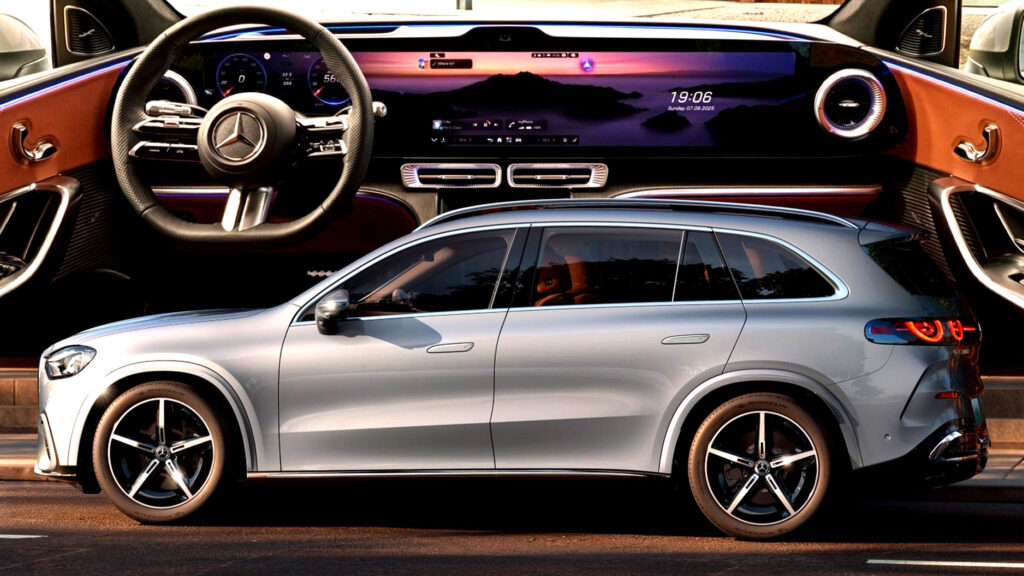
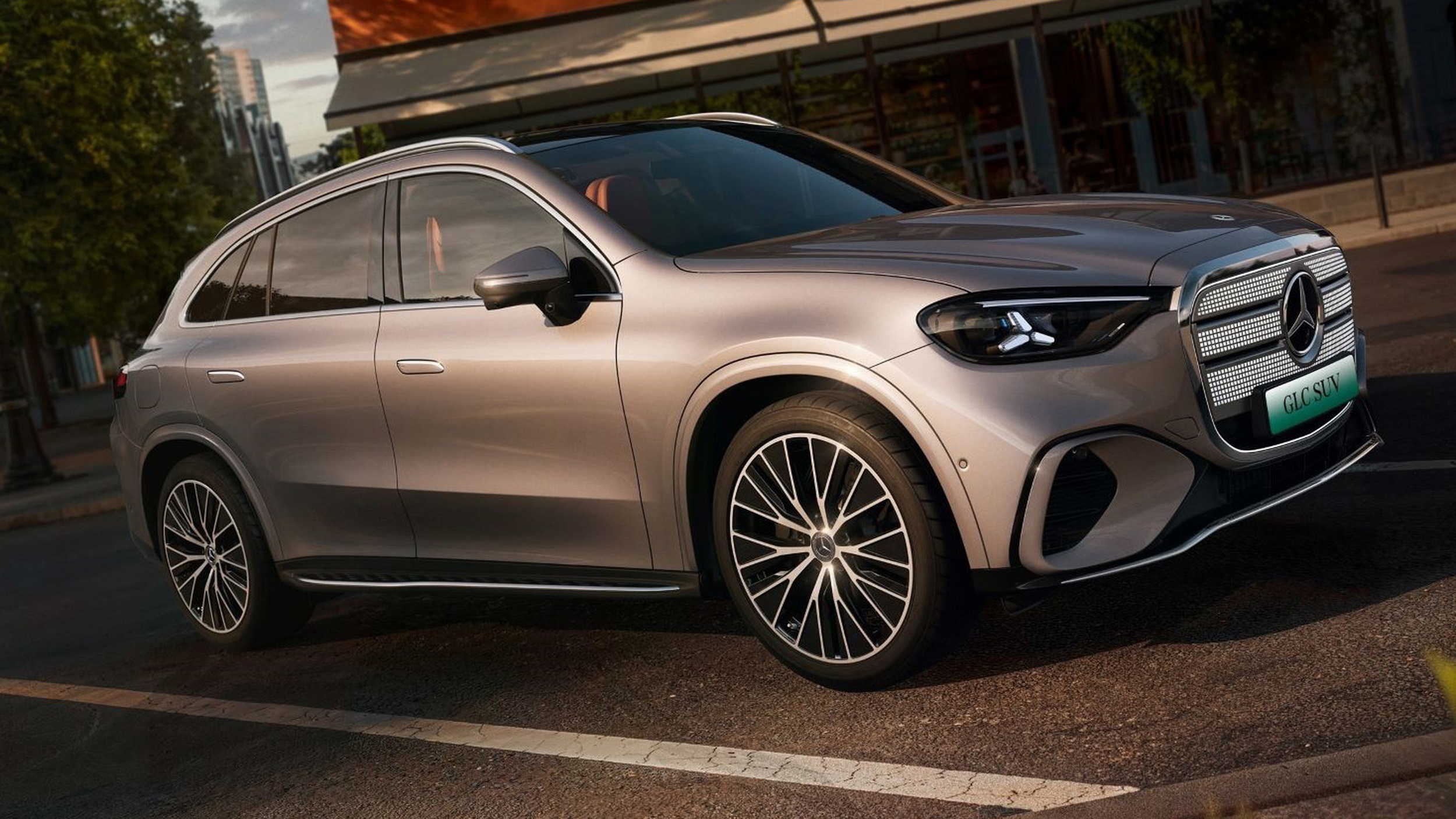
Mercedes is doing what every premium brand now does in China, stretching a familiar shape to suit a very specific brief. It has unveiled the long-wheelbase version of the new GLC EQ at the Beijing Auto Show, positioning it against the also new BMW iX3 LWB. The new electric SUV has a six-seater layout and borrows chassis tech from the brand’s flagship sedan.

Its overall length now sits at 4,950 mm (194.9 inches), paired with a 3,027 mm (119.2 inches) wheelbase. That makes it 105 mm (4.1 inches) longer than the standard global model, with 55 mm (2.1 inches of that added between the axles. It also edges past the EQE SUV by 87 mm (3.4 inches) and stretches 64 mm (2.5 inches) beyond the BMW iX3 LWB

More: BMW’s China-Only EVs Solve A Problem Tesla Owners Keep Running Into

The added length is easy to spot. Rear doors are longer, the quarter glass stretches further back, and the tail sits a touch more upright as a result. Otherwise, it keeps close to the standard GLC EQ, right down to the star-pattern LED lighting and the now-familiar illuminated grille.

 Mercedes’ Six-Seat GLC EV Borrows S-Class Suspension, And Only China Gets It

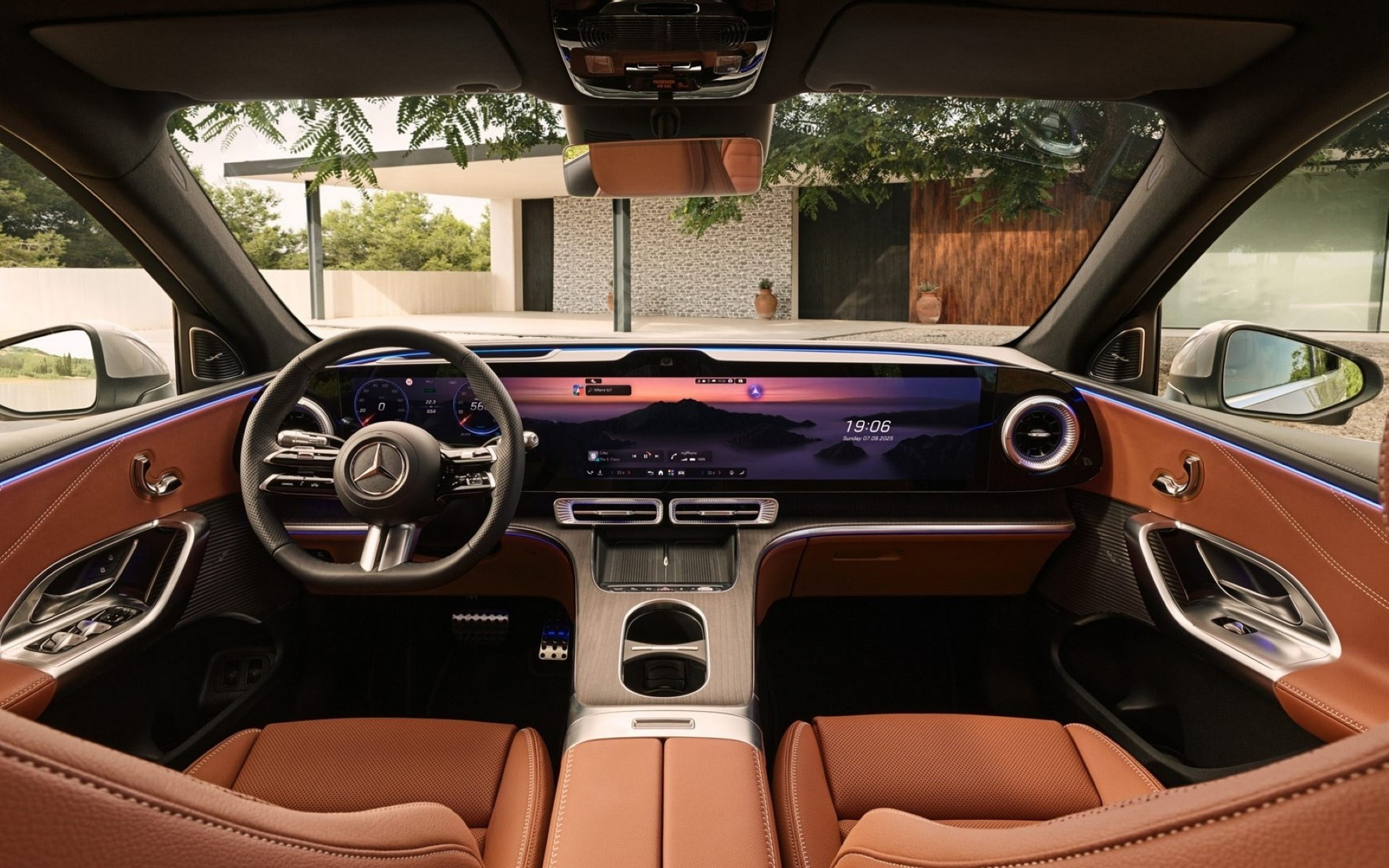
Inside, Mercedes has not held back on screen real estate. A 39.1-inch MBUX Hyperscreen spans the dashboard, as expected at this end of the market, but the more relevant change sits further back. The GLC L EV can be configured with three rows and six seats, giving it a practical edge over the BMW. Second-row passengers get individual captain’s chairs with heating, ventilation, and massage, which should make the middle row the place to be.

Different Specs

The GLC L EV will be initially available with dual electric motors generating 416 hp (310 kW / 421 PS) and 800 Nm (590 lb-ft) of torque. That is down on the global dual-motor GLC EV, which delivers 483 hp (360 kW / 489 PS), though few buyers in this segment are likely to notice the shortfall in daily use.

More: Mercedes’ Future EVs May Be More Chinese Than You Think

Interestingly, the Chinese-spec SUV has a smaller battery pack with a capacity of 85.5 kWh instead of 94 kW. Even so, Mercedes quotes a CLTC range of more than 700 km (435 miles). The reduced capacity likely comes down to a mix of weight targets, local sourcing, and the realities of packaging a third row into what began as a five-seat platform.

Chassis Technology From The S-Class

 Mercedes’ Six-Seat GLC EV Borrows S-Class Suspension, And Only China Gets It

The GLC L EV rides on a stretched version of Mercedes’ MB.EA platform, complete with an 800V architecture shared with the new electric C-Class. For China, it also borrows more than just space. Option the Agility & Comfort Package and you get S-Class hardware, including Airmatic air suspension and rear-axle steering, for greater comfort and maneuverability.

More: Mercedes’ EV Push In America Has Nothing To Do With What American Buyers Want

The GLC L EV is slated to arrive in Chinese showrooms in the fourth quarter of the year. Pricing will follow closer to launch.

\\\\\\\\\\\\

Call It The Temurario, Hyundai’s Production Ioniq V Mixes Lambo And Cybertruck For Less

  • Hyundai revealed the production Ioniq V at the Beijing Auto Show.
  • Electric sedan is designed specifically for the Chinese market.
  • Brand plans 20 new hybrids and EVs in China over next five years.

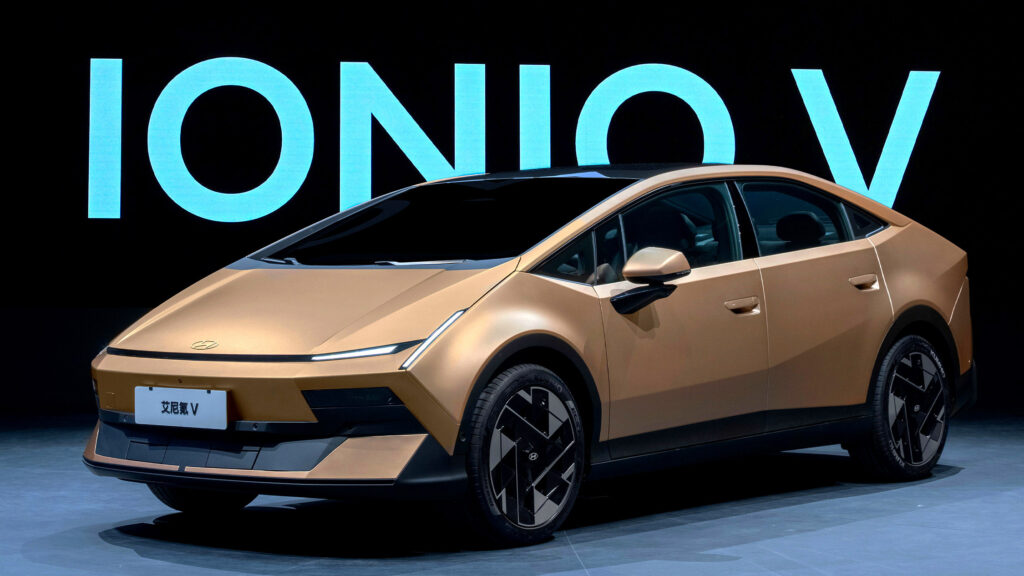
Hyundai barely let the paint dry on its wild Venus concept before rolling out the production version in Beijing. Meet the new Ioniq V, a China-focused EV that arrives just weeks after its show car preview, skipping the usual year-long tease-and-wait routine.

More: Hyundai’s N Rule Was Simple Until The Ioniq 3 Made It Inconvenient

And yes, it still looks like Hyundai raided several design studios at once. There’s a wedgy nose, razor-thin lighting, a tall crossover stance, and more than a hint of Italian supercar drama up front. We can see everything from the Toyota Prius to the Tesla Cybertruck and Lamborghini Temerario in the design without having to squint too hard.

\\\\\\\\

The V is the first dedicated production Ioniq model created specifically for China, and it launches a new styling direction Hyundai calls Origin. It also forms part of a much bigger plan. Hyundai says it will launch 20 new models in China over the next five years, covering battery EVs and range-extended EVs, while targeting annual sales of 500,000 vehicles.

One of those vehicles is an SUV coming next year, which is believed to be a production version of the Earth SUV concept Hyundai is showing alongside the V at Beijing.

\\\\\

Size matters in China, or to be more precise, the amount of rear legroom, and Hyundai says the V comes properly prepared. It measures 4,900 mm (192.9 inches) long, 1,890 mm (74.4 inches) wide, and rides on a 2,900 mm (114.2 inches) wheelbase, meaning it has a similar footprint to the Ioniq 6. That should give passengers plenty of space to stretch out, and make the driver thankful for a full set of parking sensors and cameras.

27-Inch Display

\\\

Inside, we get a new kind of screen treatment from Hyundai. The dashboard is dominated by a 27-inch ultra-thin 4K panoramic infotainment display, backed up by a head-up display that projects information directly into the driver’s line of sight. There’s also an eight-speaker audio system with Dolby Atmos and ambient lighting.

Average Range

No battery or powertrain specs were revealed, but 800-volt charging is confirmed, and Hyundai says the long-range version claims more than 600 km (373 miles) of driving range under China’s CLTC test cycle. Given that the CLTC test is notoriously optimistic, a likely real-world figure of less than 320 miles (483 km) doesn’t look very impressive in an era where BMW EVs can top 400 miles (644 km).

Whether the V eventually heads to Europe or America, perhaps as a replacement for the slow-selling Ioniq 6, remains unclear, but Hyundai is openly treating China as both laboratory and launchpad, so expect at least some of the ideas developed there to appear in your local showroom in the West soon.

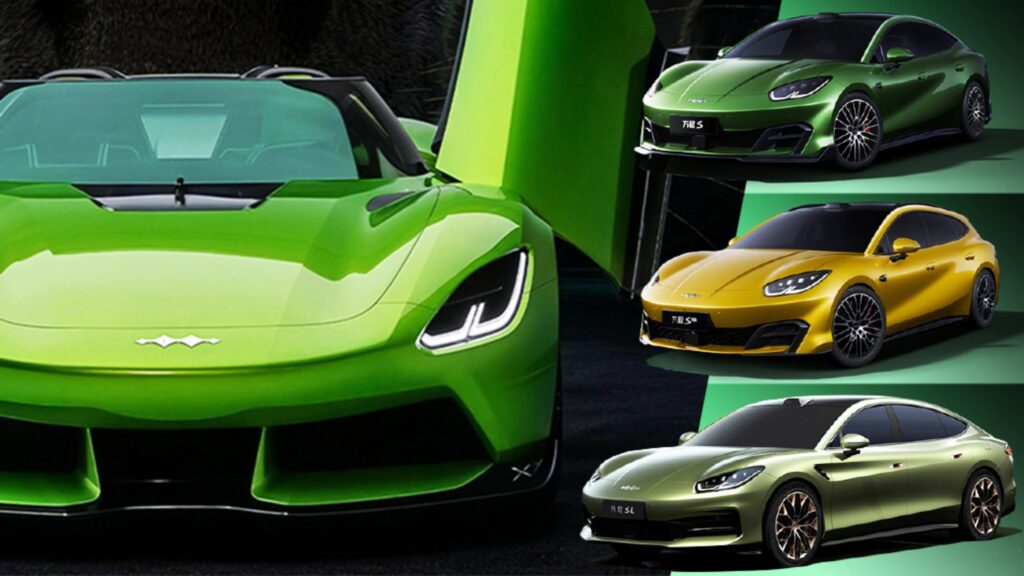
BYD’s Boxy Off-Road Brand Just Unveiled A 1,000-HP Supercar And Three Low-Slung Performance Sedans

  • Fang Cheng Bao reinvents itself with a supercar and sleek sedans.
  • Formula X brings 1,000 horsepower and a full carbon-fiber build.
  • The S, SL, and GT take aim at Porsche’s Taycan from three angles.

In China’s fast-moving EV market, brand identities can flip in an instant. Fang Cheng Bao built its name on squared-off SUVs that look ready for a quarry. At the 2026 Beijing Auto Show, it arrived with something else entirely. The BYD-owned brand has pivoted hard, unveiling a supercar and a trio of low-slung EVs under a new Formula line.

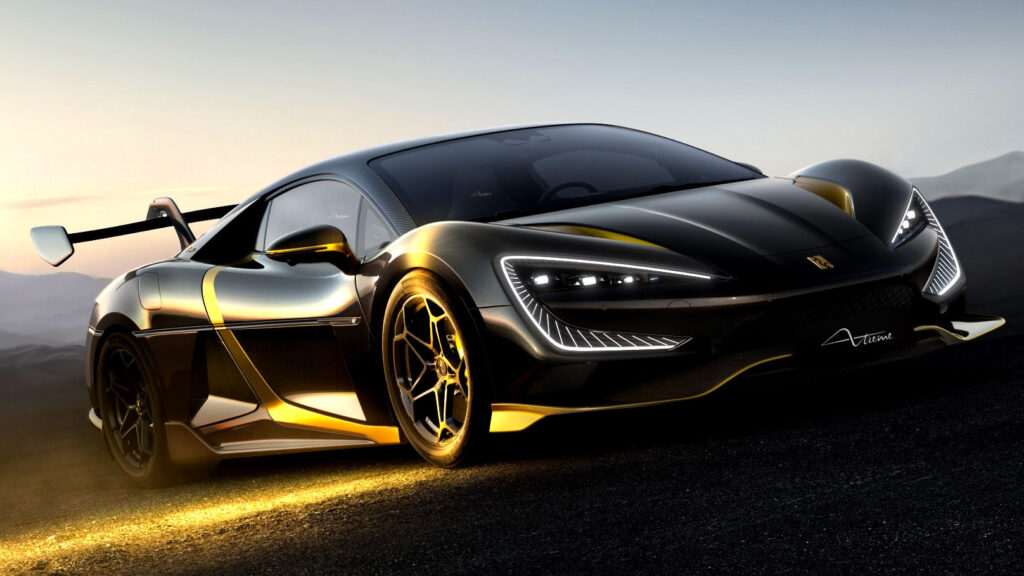
The Formula X is the undisputed showstopper. This open-air supercar evolved from the Super 9 speedster concept from 2024 and features balanced proportions, aggressive LED headlights, upward-opening doors and no less than 19 functional air vents. The overall styling aligns closely with Denza, another BYD brand that already carries a handful of rebadged Fang Cheng Bao models.

More: China’s EV Juggernaut Wants To Race In Formula 1

The structure leans heavily on carbon fiber, from the body panels to a bespoke monocage chassis. The exposed two-seater cabin has a futuristic “battle cockpit” wrapped around the driver, and does without the structural bridge of the earlier concept.

\\\\\\\\\\\\

The supercar uses a tri-motor setup that produces a combined 1,000 hp (746 kW / 1,014 PS) and 1,000 Nm (738 lb-ft) of torque. A decade ago, figures like these would have been considered extreme. Today, they sit in the shadow of BYD’s record-breaking YangWang U9 Xtreme, which reaches a staggering 2,977 hp (2,220 kW / 3,018 PS).

More: BYD’s 200 Software Updates Last Year Made Toyota’s 8 Look Like A Rounding Error

Even so, the Fang Cheng Bao Formula X’s numbers still land where they need to. More to the point, this is not just a concept parked under bright lights. BYD has confirmed a 2027 market launch, suggesting this will make the jump from show stand to road. Whether it travels beyond China remains unclear.

A Hatchback and Two Sedans

Beyond the supercar, the Formula lineup moves into more familiar territory. The Formula S is positioned as a rival to the Porsche Taycan, the Formula S GT adopts a shooting brake shape, and the Formula SL sits at the top of the range as a more upscale take on the sedan.

\\\\\\\\\\\

The S and S GT are essentially two bodystyles of the same model, both of which could pass for something wearing a Denza badge. The SL sets itself apart with redesigned bumpers, a more sculpted profile, and gold-finished 21-inch alloy wheels.

All three sit on the same electric underpinnings, built around an 800V architecture with a tri-motor AWD setup producing up to 1,000 horsepower. They also feature BYD’s DiSus-M magnetic ride control. In terms of size, each rides on a 3,100 mm (122,1 inches) wheelbase and stretches beyond 5,000 mm (196.8 inches) in length.

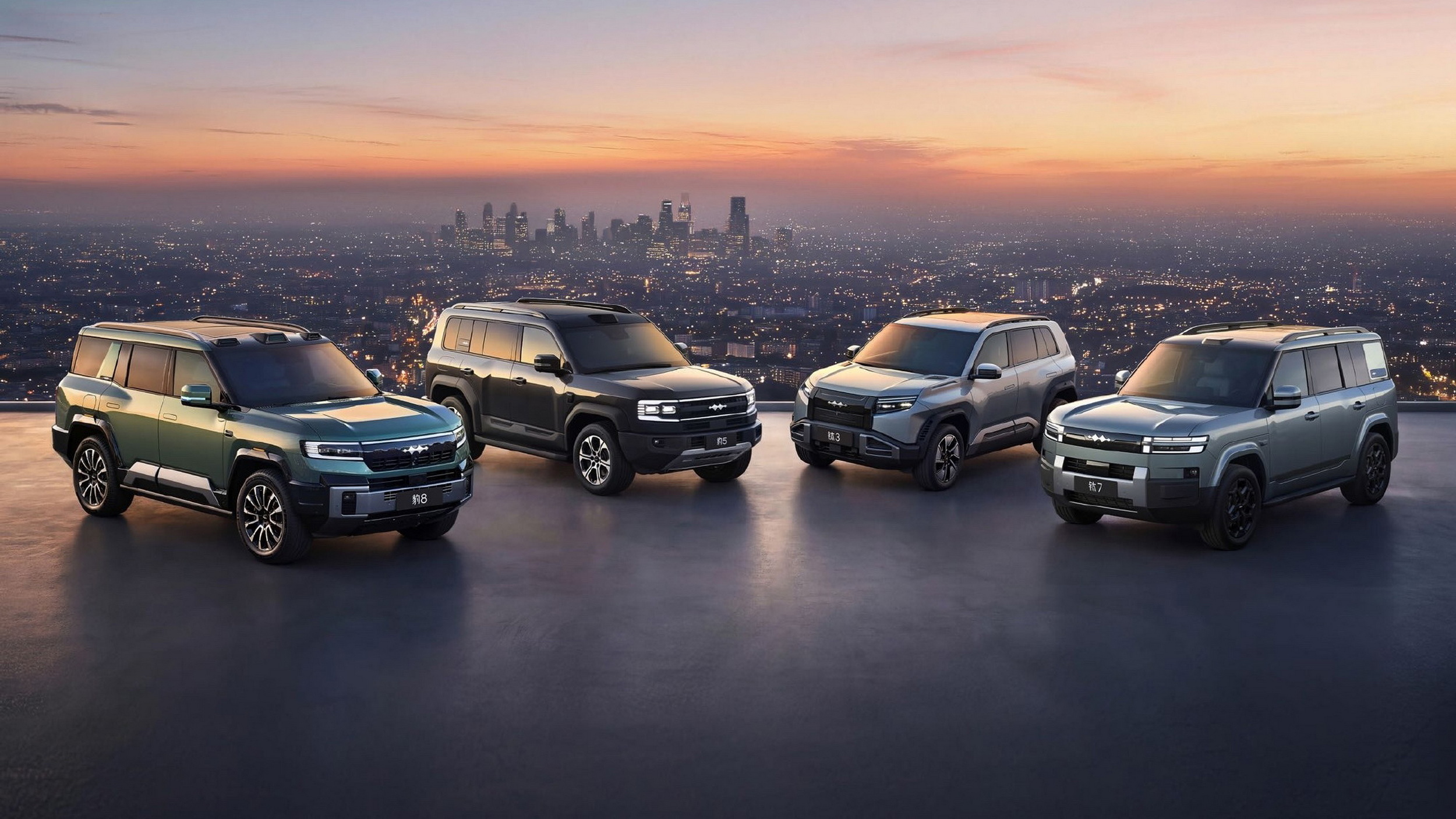
The high-performance EVs are due in Chinese dealerships in late 2026. These low-slung models will broaden the Fang Cheng Bao lineup alongside the existing Leopard SUVs. Given that some of those SUVs already appear overseas under the Denza brand, a similar export strategy would not be surprising here.

 BYD’s Boxy Off-Road Brand Just Unveiled A 1,000-HP Supercar And Three Low-Slung Performance Sedans
The previously SUV-only lineup of the Fang Cheng Bao brand.
BYD’s Fang Cheng Bao Goes Wild With 1,000 HP Supercar And High-Performance EV Lineup

  • Fang Cheng Bao unveils a striking electric supercar dubbed Formula X.
  • It is joined by the Formula S and SL sedans, and the GT hatchback.
  • All four high-performance EVs will enter production by next year.

Fang Cheng Bao, the BYD-owned brand that built its reputation on boxy and rugged SUVs, has undergone a radical transformation at the 2026 Beijing Auto Show. The automaker has unveiled a striking supercar, along with three low-slung EVs under the Formula series.

The Formula X is the undisputed showstopper. This open-air supercar evolved from the Super 9 speedster concept from 2024 and features balanced proportions, aggressive LED headlights, upwards opening doors and no less than 19 functional air vents. Overall, the styling language is similar to Denza, a BYD brand with European aspirations.

More: China’s EV Juggernaut Wants To Race In Formula 1

The sculpted bodywork is made of carbon fiber, as is the custom “monocage” chassis. The exposed two-seater cabin has a futuristic “battle cockpit” wrapped around the driver, and does without the structural bridge of the earlier concept.

\\\\\\\\\\\\

The supercar is powered by three electric motors producing a combined 1,000 hp (746 kW / 1,014 PS) and 1,000 Nm (738 lb-ft) of torque. These numbers would be labeled extreme a decade ago, but we now live in a world where BYD’s record-breaking YangWang U9 Xtreme generates a staggering 2,977 hp (2,220 kW / 3,018 PS).

More: BYD’s 200 Software Updates Last Year Made Toyota’s 8 Look Like A Rounding Error

In any case, the specs of the Fang Cheng Bao Formula X still sound quite promising. More importantly, the model is not just a show piece, as BYD announced plans for a market launch in 2027. It will be interesting to see whether the high-performance EV will be offered outside China.

A Hatchback and Two Sedans

Besides the high-performance EV, the Formula series expands into the executive sector. The Formula S is a Taycan-rivaling sedan, the Formula S GT is a hatchback/wagon with a shooting brake stance, and the Formula SL is a high-end version of the aforementioned sedan.

\\\\\\\\\\\

The S and the S GT are effectively two different bodystyles of the same model that could easily wear the Denza emblem. The SL is distinguished by the redesigned bumpers, the more sculpted profile, and the gold-finished 21-inch alloy wheels.

All three models share the same electric foundation, riding on an 800V platform with a tri-motor AWD powertrain generating up to 1,000 horsepower. They also utilize BYD’s DiSus-M magnetic ride control. In terms of footprint, they have an identical wheelbase of 3,100 mm (122,1 inches), and measure over 5,000 mm (196.8 inches) long.

The high-performance EVs are scheduled to hit the roads in late 2026. The low-slung models will expand the Fang Cheng Bao lineup next to the existing Leopard series of SUVs.

 BYD’s Fang Cheng Bao Goes Wild With 1,000 HP Supercar And High-Performance EV Lineup

The previously SUV-only lineup of the Fang Cheng Bao brand.
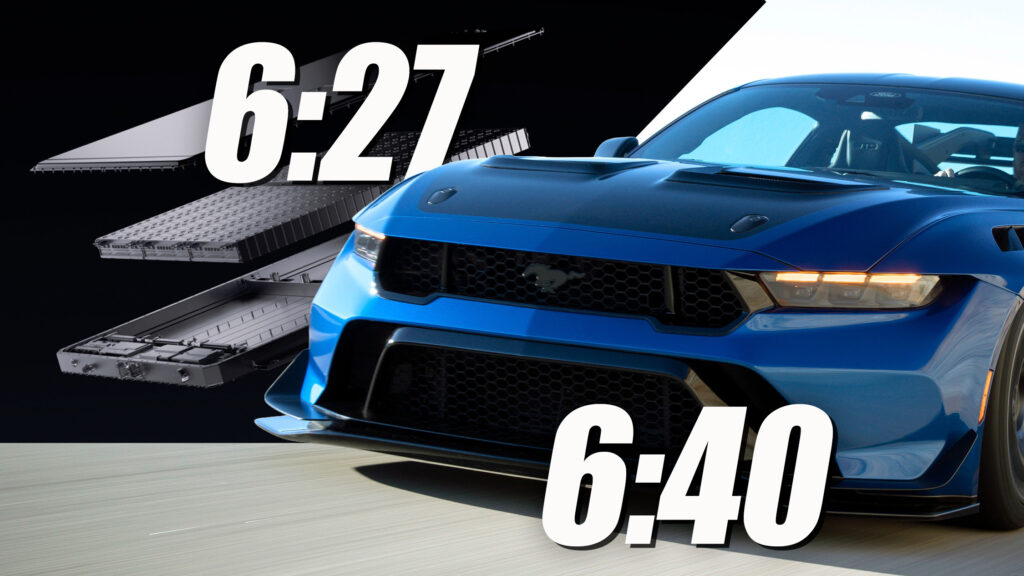
CATL’s New EV Battery Charges Faster Than Ford’s Mustang GTD Laps The ‘Ring

  • Battery maker CATL has just leaped ahead of BYD and Geely in charge speeds.
  • Its latest Shenxing LFP battery can charge from 10-35 % in only one minute.
  • A 10-80% charge takes 3 min 44 seconds, cold weather has minimal impact.

Some records stand for decades. Bob Beamon’s 8.9 m 1968 long jump, still unbroken 58 years later, is one. Others, like the 5 minutes it takes BYD’s Blade 2.0 battery to go from 10-70 percent, seem spectacular at the time, but here we are only weeks later and it’s already been smashed not once, but twice.

First it was Geely, whose Golden Brick battery can charge from 10-70 percent in 4 minutes 22 seconds. And now battery giant CATL has made even that look like it was hooked up to a household AC socket.

Related: Geely’s Golden Brick Battery Charges Faster Than BYD, But Good Luck Finding A Plug For It

CATL’s 3rd-gen Shenxing LFP battery stops the clock at 3 minutes 44 seconds. And that’s not even charging to 70 percent, but to 80 percent. Geely’s battery needs almost two minutes longer to reach the same point.

And that’s not the only crushing stat. If you’ve ever charged an EV, you’ll know that charge rates aren’t linear. It takes a while to reach peak charge speed and then the rate falls away again as the battery gets closer to full. But the CATL pack comes out all guns blazing, charging from 10-35 percent in just 1 minute.

And from 10-98 percent takes only 6 minutes and 27 seconds. That compares with 8 minutes 42 seconds for a 10-97 percent fill with Geely’s Golden Brick and 9 minutes for BYD’s Blade 2.0. Or to put it another way, the CATL goes from flat to full 13 seconds faster than it takes a Ford Mustang GTD to lap the Nurburgring.

Cold Weather? No Problem

These numbers are all achieved in optimal temperatures, of course, but CATL threw out another one to show that even in less than ideal condition charging is still really rapid. Drop the temperature to -30˚ C (-22˚F) and the 10-98 percent top-up still only takes 9 minutes.

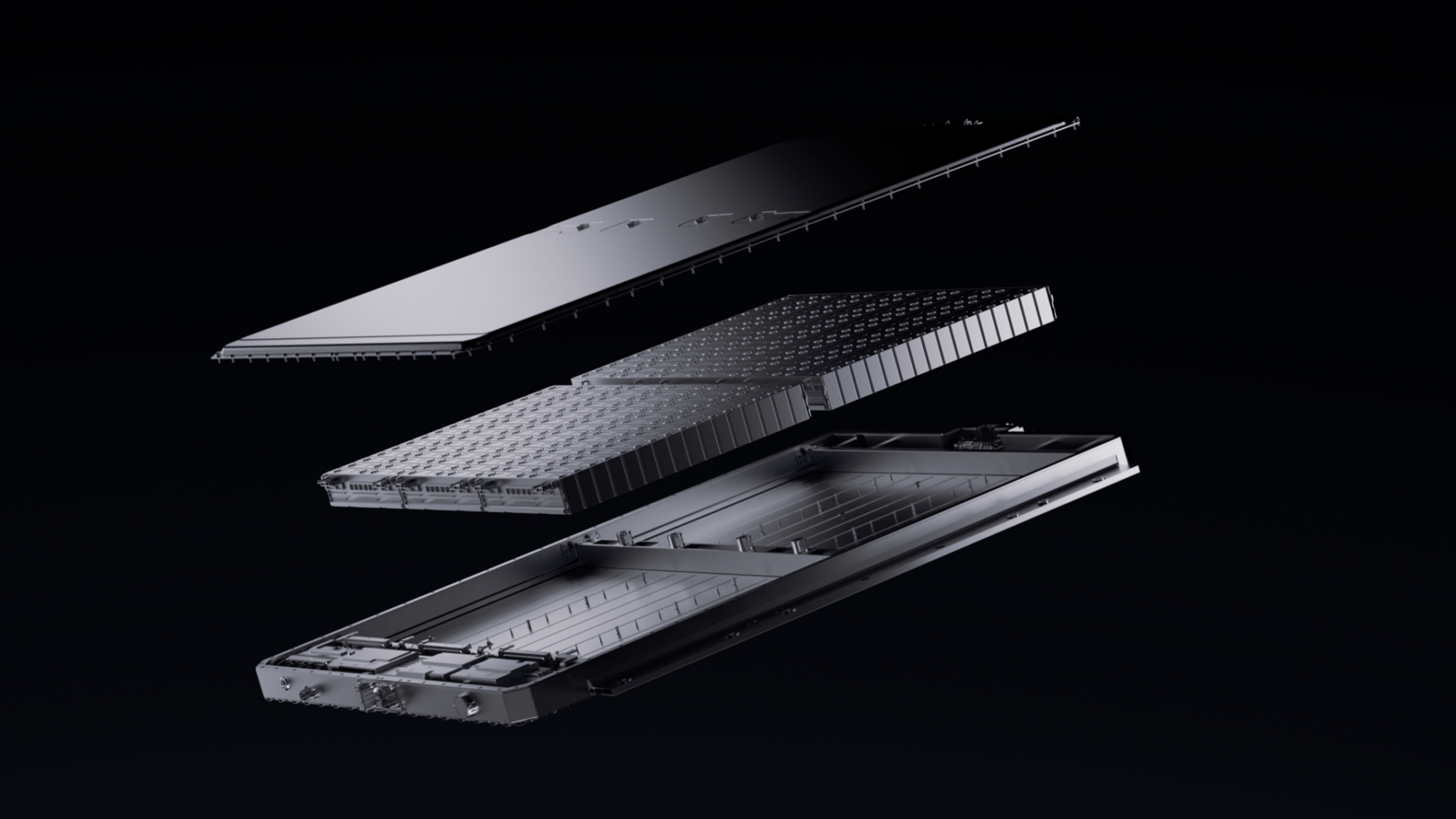
Unveiling the new battery at its Tech Day Event, CATL claimed the pack’s 0.25 milliohms internal resistance is 50 percent lower than the industry average. It also features multi-point temperature monitoring for each cell and Self-Heating tech that involves using pulses of heat to improve low-temperature charging speeds.

Long Lifespan

Just as importantly, CATL claims that the battery health remains above 90 percent even after 1,000 ultra-fast charge cycles, countering skepticism from BMW engineers about the viability of the new generation of insanely fast-filling Chinese batteries.

BYD has already begun to expand its Flash Charging network to Europe, and CATL also claims it’s looking into bringing its own tech behind China’s borders together with SAIC-GM-Wuling. But don’t bank on it arriving in the US any time soon.

 CATL’s New EV Battery Charges Faster Than Ford’s Mustang GTD Laps The ‘Ring

CATL, Ford

BMW’s China-Only EVs Solve A Problem Tesla Owners Keep Running Into

  • China-market BMW EVs swap pop-out handles for safer ones.
  • Long-wheelbase i3 and iX3 debut with local tech upgrades.
  • Claimed 621-mile range probably translates to less than 400.

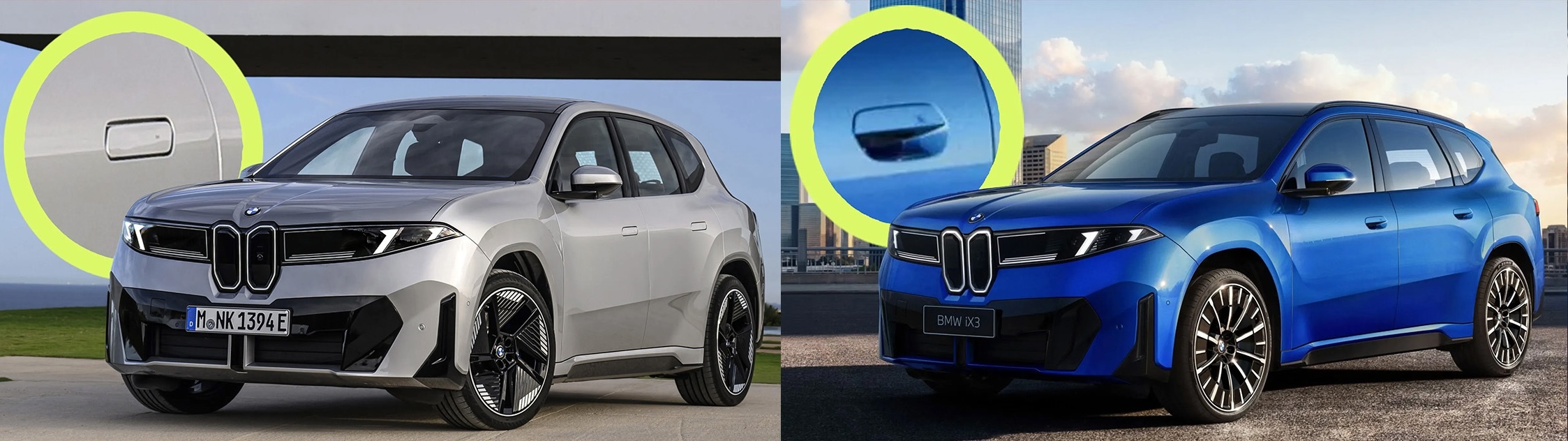
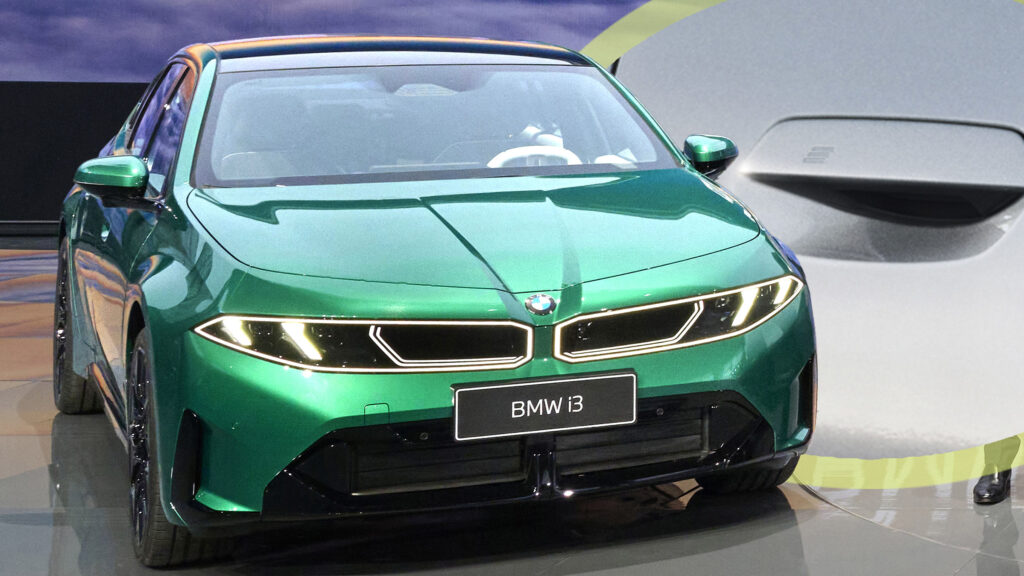
Sometimes the smallest detail says the most. BMW has launched its new China-only i3 Long Wheelbase and iX3 Long Wheelbase, but the headline feature, as we see it, isn’t rear legroom, horsepower, batteries, or giant screens. It’s the door handles.

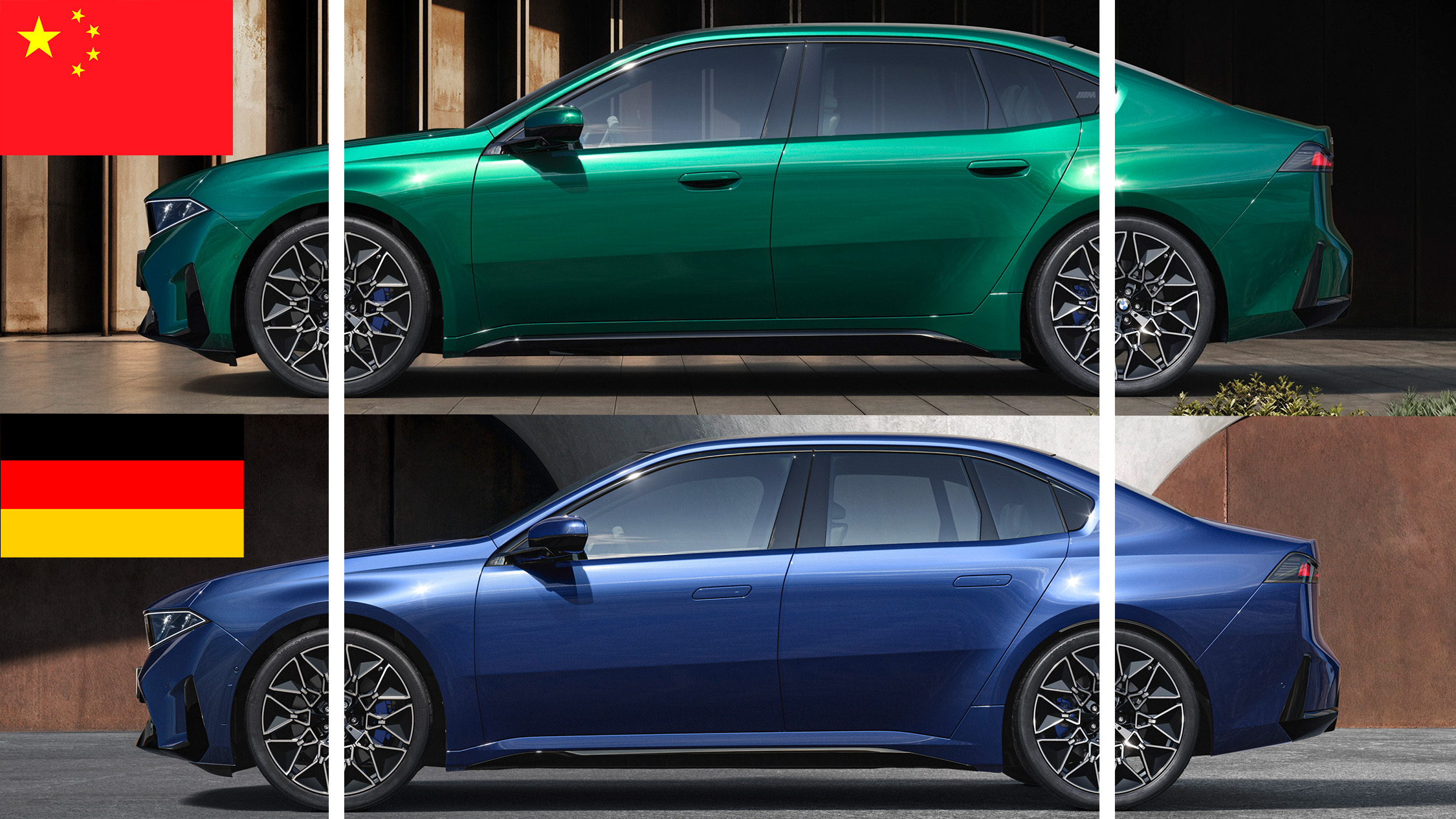
While European and US Neue Klasse models launched with flush pop-out handles, China’s versions get semi-recessed, more conventional units instead. That follows growing scrutiny of retractable handles after several high-profile crashes in China, where trapped occupants reportedly struggled to exit damaged vehicles.

Tesla has faced similar concerns in the US and abroad, with NHTSA opening an investigation into Model Y door handles last year after reports of parents unable to reach children trapped inside after a power loss. Suddenly, boring handles look pretty smart.

Related: BMW’s 7-Series Facelift Hides A Blueprint For Every Older Model It Still Sells

BMW says the redesigned hardware meets Chinese regulations while still satisfying its own global safety standards. And having tried cars with pop-out handles, often finding them fiddly, we’re kind of jealous of these new Asian ones.

Beyond the door handles, these two EVs mark the official start of the Neue Klasse era in China and have been tailored specifically for local buyers. Both ride on BMW’s latest Neue Klasse dedicated EV architecture, but they’re stretched compared with Western versions because you can never have enough legroom in China.

 BMW’s China-Only EVs Solve A Problem Tesla Owners Keep Running Into

Exactly how much the i3L is stretched versus the 2,898 mm (114.1 inches) wheelbase of the West’s i3 sedan, BMW hasn’t yet revealed. But we know the iX3L gets an extra 108 mm (4.25 inches) of wheelbase, bringing it to an X5-like 3,005 mm (118.3 inches). The good news is that the extra sheetmetal has been carefully integrated so as not to upset the proportions of either car.

Bespoke China OS

Inside, both models use BMW Panoramic iDrive and a China-specific version of Operating System X. There’s navigation developed with Amap, AI help via Alibaba and DeepSeek, and HarmonyOS NEXT compatibility so the cars can better live inside China’s digital ecosystem.

\\\\\\\

Driver assistance was also developed locally with Momenta and is tuned for Chinese roads, traffic patterns, and parking chaos. BMW says it offers Level 2 navigation-guided support across city streets, highways, and parking scenarios. 

That, we’re happy to believe, but as usual, we’ll treat the optimistic CLTC range figures with some healthy skepticism. BMW claims over 900 km (559 miles) for the iX3 Long Wheelbase and more than 1,000 km (621 miles) for the i3 Long Wheelbase.

 BMW’s China-Only EVs Solve A Problem Tesla Owners Keep Running Into

To give some perspective, BMW in North America quotes 400 miles (644 km) EPA for the shorter, so presumably lighter, iX3 and 440 miles (709 km) for the truncated i3 sedan.

Both Chinese models get 800-volt electrical systems with up to 400 kW DC charging, just like Western cars, but way behind what BYD can offer Chinese drivers. The powertrains seem identical, too. The iX3 50L xDrive makes 463 hp (470 PS / 345 kW) plus 476 lb-ft (645 Nm) of torque, BMW says.

Do you think BMW should also swap out its pop-out handles on Western-market i3s and iX3s? Drop a comment and let us know.

\\\\\\\\\\\\\\
\\\\\\\\\\\\\

BMW

Smart’s Smallest EV Just Grew Almost A Foot, And Mercedes Is To Blame

  • The Smart Concept #2 previews a successor to the Fortwo.
  • The urban EV promises a range of 186 miles (300 km).
  • The production version will debut at the Paris Motor Show.

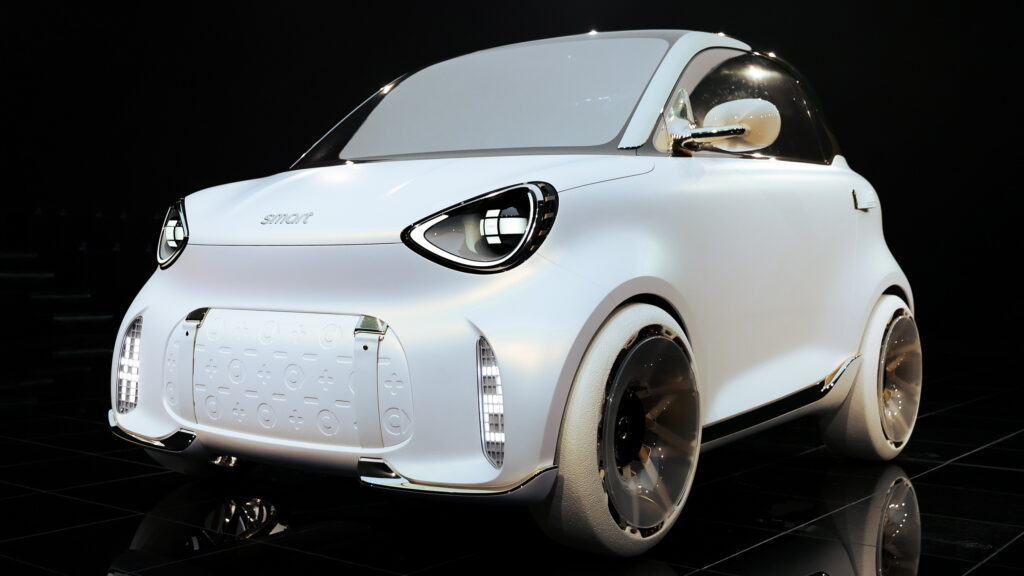
Smart goes back to basics with a successor to the original Fortwo microcar that put the company on the map. At the “Change of Perspectives” event in Beijing, the brand unveiled the Concept #2, which serves as a close preview of a tiny urban EV set to arrive later this year.

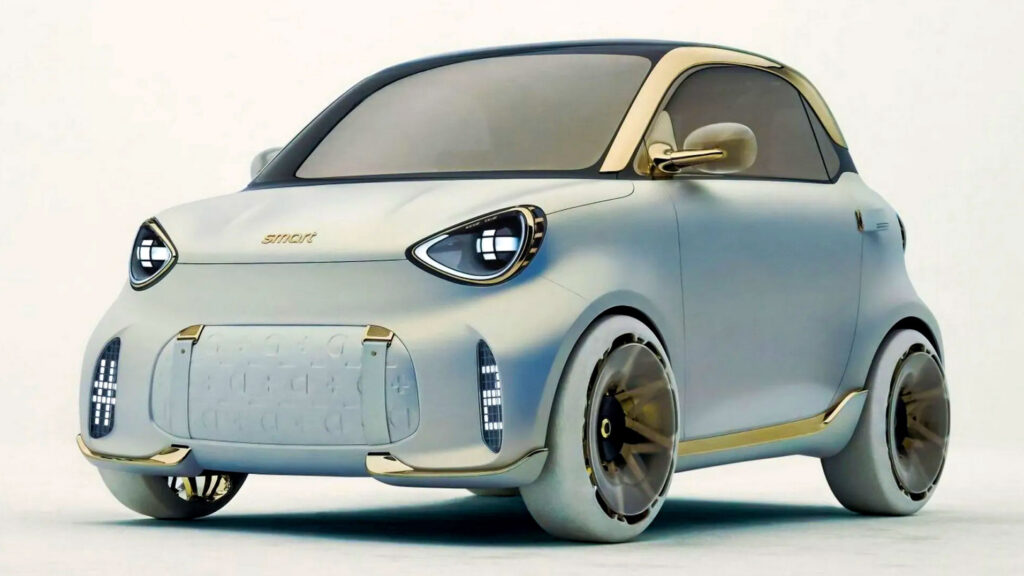
The model was designed by Mercedes-Benz, looking like a natural evolution of the EQ Fortwo that was discontinued in 2024. It has a familiar two-door silhouette with a very short hood and large wheels positioned at the corners. Other highlights include the aggressive LED headlights and the clean surfacing.

More: You’re Not Wrong, The New Mercedes GLB Looks Suspiciously Like A Smart

The concept features futuristic wheels with transparent aero covers shod in light-colored rubber, trick DRLs with #2 lettering, leather straps instead of door handles, and a blocked grille that looks like a luxury suitcase, while at the rear it sports a small matrix screen that can display various messages. Those elements will likely be toned down for production, as with the shiny gold finish of the floating roof.

\\\\\\\\\\\\\\\\\\\\\\\\\\\\\\\\\\\\\\

The Concept #2 measures 2,792 mm (109.9 inches) long, making it the largest interpretation of a two-door city car from Smart. It is 292 mm (11.5 inches) longer than the original Smart and 97 mm (3.8 inches) longer than the last generation of the EQ Fortwo.

More: Smart Thinks Its E-Class-Sized Sedan Looks Like A Shark, And Stands By It

Still, the EV remains the smallest contestant in Europe’s A-Segment, being 840 mm (33 inches) shorter than the Fiat 500e and 997 mm (39 inches) shorter than the Renault Twingo E-Tech. In fact, the new Smart is closer in size to heavy quadricycles like the Citroen Ami and the Fiat Topolino than actual cars.

New Underpinnings

Under the skin lies a new Electric Compact Architecture (ECA) developed in house. Since Smart is co-owned by Mercedes and Geely, it is safe to assume that the platform uses technology from the Chinese automaker.

The #2 will be exclusively available with an electric powertrain, similar to the #1 and #3 and unlike the larger #5 and #6, which are also available in plug-in hybrid forms.

\\\\\\\\\\

Smart has yet to announce detailed specifications, but mentioned a targeted range of around 186 miles (300 km), which is more than double the 135 km (84 miles) range of the EQ Fortwo. The battery will charge from 10-80% in under 20 minutes and will support V2L (Vehicle-to-Load) functions. Chances are that the #2 will stick to the RWD layout of its rear-engined predecessors.

More: Smart Just Killed Hopes Of A ForFour Comeback

The presentation didn’t include photos of the interior, but the packaging of the EV-dedicated platform promises a more spacious two-seater cabin which is also expected to be more premium than before.

The production Smart #2 will debut at the Paris Motor Show in October, ahead of its market launch. The model will be likely focused in Europe and the UK, although it could also find its way into other markets around the world.

\\\\\\\\\\\\\\\\\\\

Smart

Smart Goes Back To Its City Car Roots With Concept #2

  • The Smart Concept #2 previews a successor to the Fortwo.
  • The urban EV promises a range of 186 miles (300 km).
  • The production version will debut at the Paris Motor Show.

Smart goes back to basics with a successor to the original Fortwo microcar that put the company on the map. At the “Change of Perspectives” event in Beijing, the brand unveiled the Concept #2, which serves as a close preview of a tiny urban EV set to arrive later this year.

The model was designed by Mercedes-Benz, looking like a natural evolution of the EQ Fortwo that was discontinued in 2024. It has a familiar two-door silhouette with a very short hood and large wheels positioned at the corners. Other highlights include the aggressive LED headlights and the clean surfacing.

More: You’re Not Wrong, The New Mercedes GLB Looks Suspiciously Like A Smart

The concept features futuristic wheels with transparent aero covers shod in light-colored rubber, trick DRLs with #2 lettering, leather straps instead of door handles, and a blocked grille that looks like a luxury suitcase, while at the rear it sports a small matrix screen that can display various messages. Those elements will likely be toned down for production, as with the shiny gold finish of the floating roof.

\\\\\\\\\\\\\\\\\\\\\\\\\\\\\\\\\\\\\\

The Concept #2 measures 2,792 mm (109.9 inches) long, making it the largest interpretation of a two-door city car from Smart. It is 292 mm (11.5 inches) longer than the original Smart and 97 mm (3.8 inches) longer than the last generation of the EQ Fortwo.

More: Smart Thinks Its E-Class-Sized Sedan Looks Like A Shark, And Stands By It

Still, the EV remains the smallest contestant in Europe’s A-Segment, being 840 mm (33 inches) shorter than the Fiat 500e and 997 mm (39 inches) shorter than the Renault Twingo E-Tech. In fact, the new Smart is closer in size to heavy quadricycles like the Citroen Ami and the Fiat Topolino than actual cars.

New Underpinnings

Under the skin lies a new Electric Compact Architecture (ECA) developed in house. Since Smart is co-owned by Mercedes and Geely, it is safe to assume that the platform uses technology from the Chinese automaker.

The #2 will be exclusively available with an electric powertrain, similar to the #1 and #3 and unlike the larger #5 and #6, which are also available in plug-in hybrid forms.

\\\\\\\\\\

Smart has yet to announce detailed specifications, but mentioned a targeted range of around 186 miles (300 km), which is more than double the 135 km (84 miles) range of the EQ Fortwo. The battery will charge from 10-80% in under 20 minutes and will support V2L (Vehicle-to-Load) functions. Chances are that the #2 will stick to the RWD layout of its rear-engined predecessors.

More: Smart Just Killed Hopes Of A ForFour Comeback

The presentation didn’t include photos of the interior, but the packaging of the EV-dedicated platform promises a more spacious two-seater cabin which is also expected to be more premium than before.

The production Smart #2 will debut at the Paris Motor Show in October, ahead of its market launch. The model will be likely focused in Europe and the UK, although it could also find its way into other markets around the world.

\\\\\\\\\\\\\\\\\\\

Smart

❌