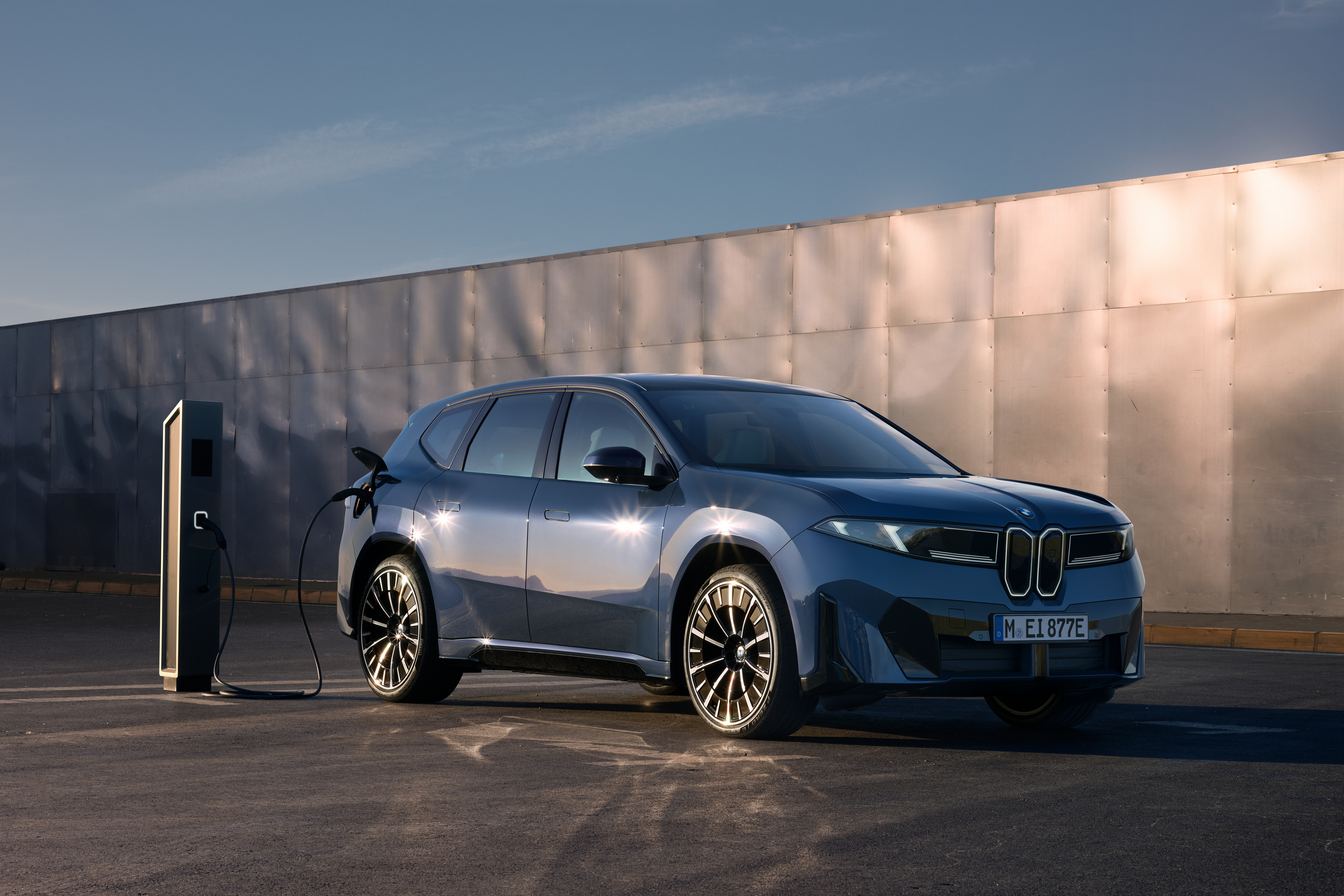
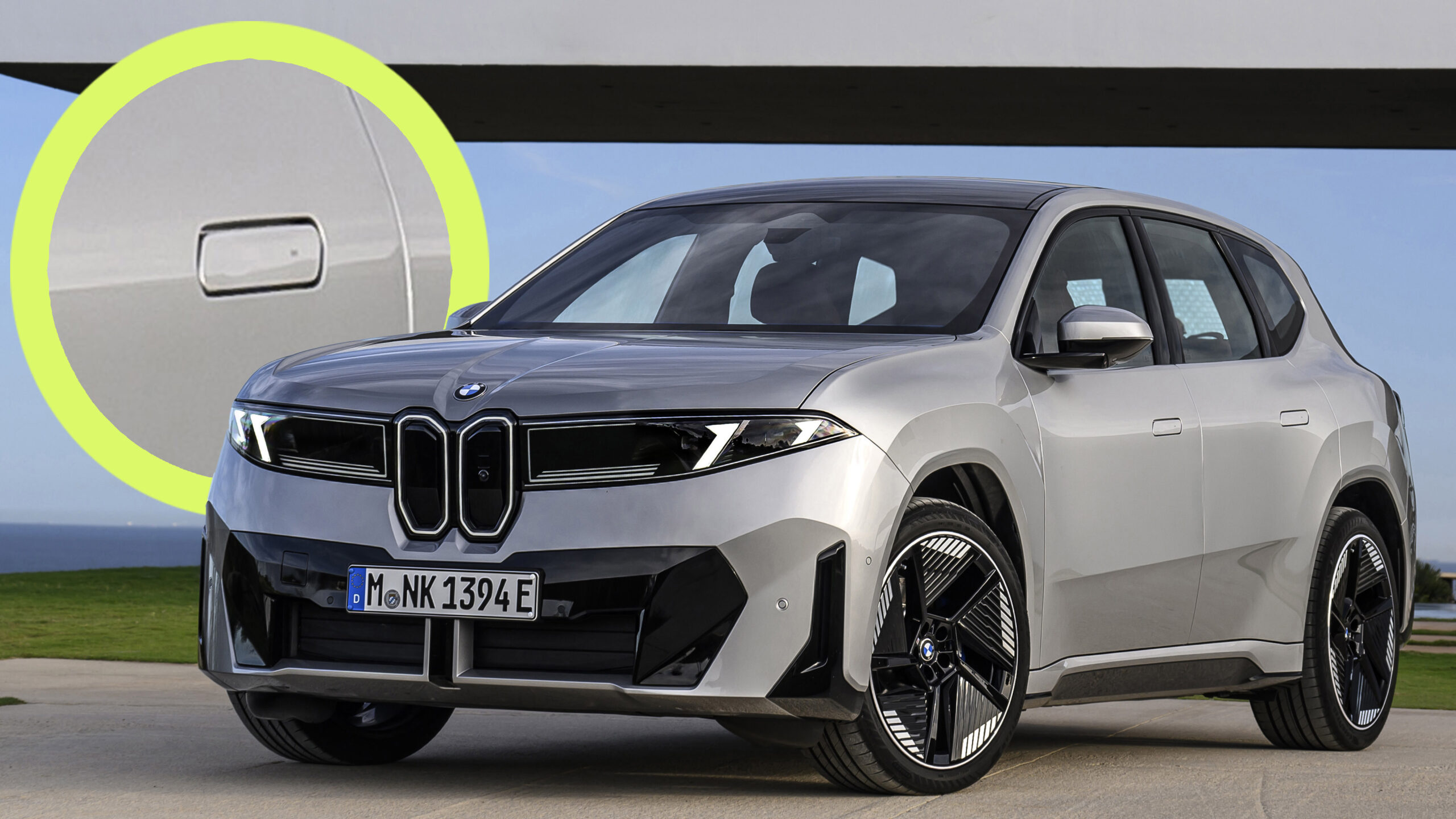
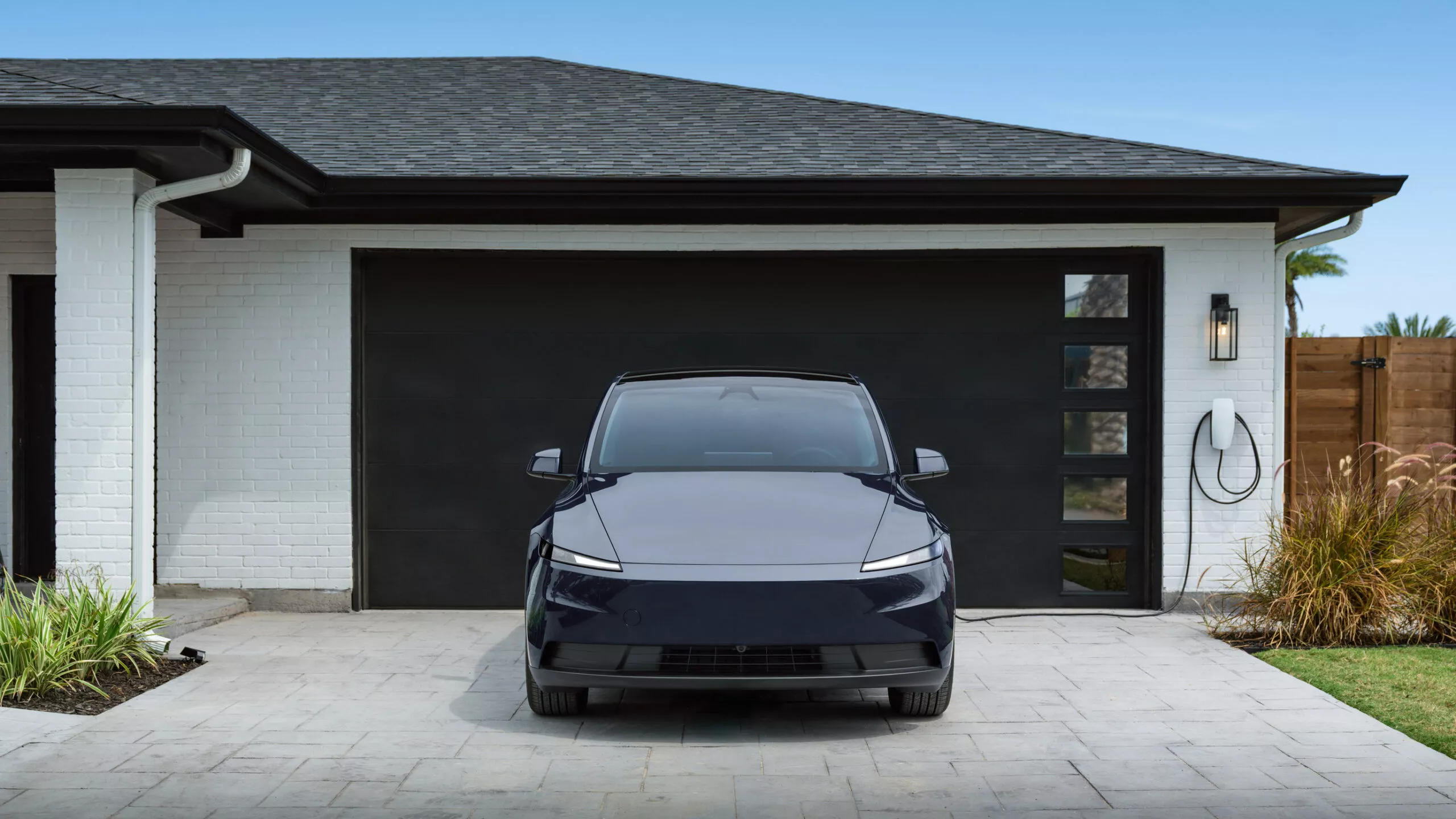
BMW has quietly introduced the entry-level iX3 40.
It features a smaller battery and rear-mounted motor.
Crossover has 316 hp and a WLTP range of 395 miles.
When BMW introduced the iX3 last fall, it was launched with a 108.7 kWh battery pack and a dual-motor all-wheel drive system producing a combined output of 463 hp (345 kW / 469 PS) and 476 lb-ft (645 Nm) of torque. The company promised further variants would follow including an entry-level model.
The automaker is now delivering on that by introducing the iX3 40. The crossover features a smaller 82.6 kWh battery as well as a rear-mounted motor developing 316 hp (235 kW / 320 PS) and 369 lb-ft (500 Nm) of torque. This enables the entry-level EV to accelerate from 0-62 mph (0-100 km/h) in 5.9 seconds, before hitting a top speed of 124 mph (200 km/h).
Buyers can expect a WLTP range of up to 395 miles (636 km), which falls well below the iX3 50’s rating of up to 500 miles (805 km). On the bright side, a 300 kW DC fast charger can provide up to 186 miles (299 km) of range in as little as 10 minutes. The model also has a bidirectional charging capability and can go from a 10-80% charge in as few as 21 minutes.
The iX3 40 will arrive in the United Kingdom this summer, where pricing starts at £53,250 (approximately $70,450 at current exchange rates). That’s £5,505 (around $7,280) less than the iX3 50, which represents a considerable savings.
The automaker was coy on equipment details, but said “as with its exterior and interior design, standard specification for the new iX3 40 is identical to that of the iX3 50 xDrive.” However, that might not be the same for all markets and we wouldn’t be surprised if some regions got smaller wheels or other minor changes.
The Freelander name returns on a new electrified 4×4 developed jointly in China.
It rides on an 800-volt platform supporting EV, PHEV, and range-extender setups.
Export versions will be bespoke regional models, not adapted China-market cars
The Freelander name has been dormant since 2015, but Jaguar Land Rover’s Chinese joint venture with Chery has brought it back as something entirely new. Instead of a badge within Land Rover’s lineup, it now stands alone as its own brand, focused squarely on electrified off-roaders. The first look at that direction comes in the form of a concept rather than a production-ready model.
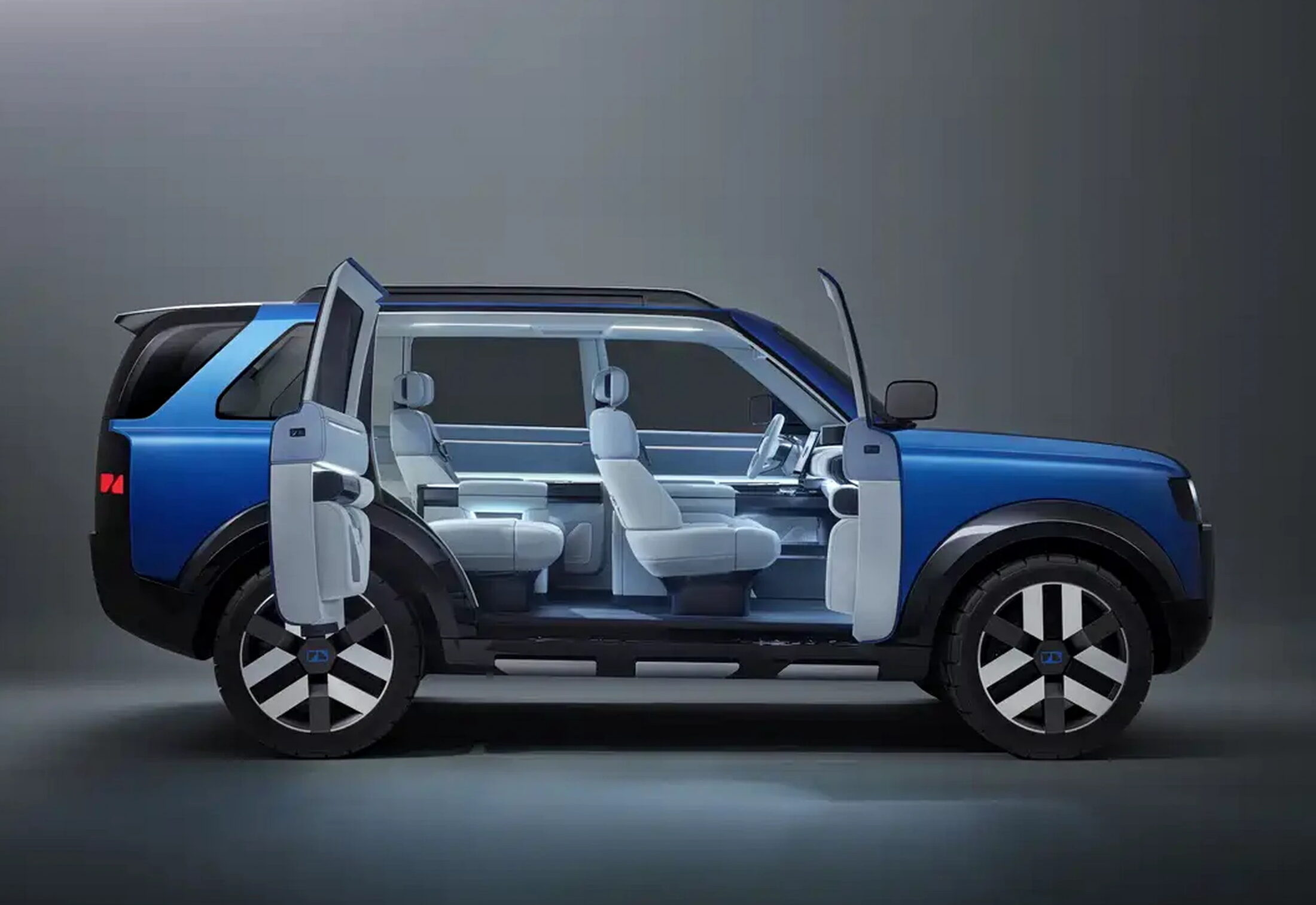
The Concept 97 takes its name from the Freelander’s original 1997 debut. While it wears no Land Rover badges, its design still leans heavily on the brand’s visual language, blending cues from the original Freelander with elements reminiscent of the modern Defender. The design is a product of collaboration between the teams at the UK and China.
The company showed two cocnept models, finished in Glacier Blue and Thousand Mountain Green. Both feature black cladding paired with aluminum accents across the hood, grille, skid plate, and tailgate. The wheels and tires lean toward concept-car theatrics, and the suicide doors underline that this is still very much a showpiece. Expect those to give way to something more conventional in production, unless Land Rover decides to keep things interesting, at least with the doors.
Design Details Pull From Different Eras
Look closer and the references become more specific. The angled D-pillar is a clear callback to the three-door Freelander from 1997, including the era when it even offered a soft-top. Meanwhile, the black trim beneath the headlights and the pixel-style LED arrangement echo the facelifted model introduced in 2003.
Around back, the taillights are tucked into a strip of black trim, contrasting against an upright aluminum-finished tailgate. The rear skid plate mirrors the front, and a sizeable roof spoiler caps things off with a slightly more modern flourish.
High-Tech Interior With Six Seats
The interior adopts a three-row six-seater configuration, with a rear bench that looks like a couch. A pillar-to-pillar display is mounted on the base of the windshield, joined by a large infotainment touchscreen. We can also see a pair of rotating dials and physical buttons on the steering wheel, alongside traditional stalks.
Second-row passengers have access to a drop-down screen, and a high-mounted center console similar to the one between the front seats. The SUV is also equipped with the latest Qualcomm Snapdragon 8397 chip, and Huawei’s Qiankun Intelligent Driving ADS 4.1 system featuring a 896-line LiDAR sensor.
Six Models Planned, But Not For Everyone
This is not a one-off exercise. The company says six production models will arrive under the Freelander brand over the next five years. China comes first, with global expansion planned afterward, although that rollout carries a significant caveat.
Every model will be built at the CJLR plant in Changshu, effectively replacing the soon-to-be discontinued Land Rover Discovery Sport and Range Rover Evoque on the production line. With production rooted entirely in China, current US tariff conditions make an American launch highly unlikely. Canada, however, thanks to newly reduced tariffs, could still be in play.
The SUVs are expected to ride on Chery underpinnings, supporting range-extender, plug-in hybrid, and fully electric powertrains. Based on earlier spy shots and leaked images, the first production Freelander of this new era will likely be a three-row, six-seat model, closely mirroring the Concept 97.
Cupra teases Raval rear with dramatic reflection, confirming April 9 reveal date.
Triple triangle LED lights and glowing Cupra badge hint at bold, sporty styling.
VZ version promises hotter performance with 233 hp and sharper chassis setup.
Cupra has confirmed the Raval will debut on April 9, and with just weeks to go, it’s dropped a teaser that gives us our first real taste of its smallest electric car yet. It’s only one image, but it’s enough to get us excited about a baby EV that should be both fun to drive and affordable.
The shot as provided by Cupra shows the rear end reflected in water, though flipping it reveals the details more clearly. The lighting signature is the standout feature. Triple triangle LED elements sit at each corner, connected by a full-width light bar with a textured, mesh-like look that feels suitably dramatic. An illuminated Cupra badge takes center stage, a detail we last saw on the facelifted Born.
We can also make out a roof spoiler at the top of the hatch door and a set of black and bronze alloy wheels wrapped in chunky Bridgestone tires, hinting at a sportier edge than your average small EV, and probably telling us that we’re looking at the VZ hot hatch version.
The Raval rides on VW Group’s new front-wheel drive MEB+ platform and measures just over 4,000 mm (157.5 inches) long, placing it firmly in the subcompact class. It shares its underpinnings with the upcoming VW ID. Polo and Skoda Epiq, though Cupra has reportedly led chassis development.
The Driver’s Choice
That influence shows in the setup. Engineers have lowered the suspension by around 15 mm versus the VW and Skoda equivalents, even on the base cars, stiffened things up, and added progressive steering to give it a more engaging feel. It’s meant to be the enthusiast’s option in this trio.
Cupra
Power options though, cover a broad range. Entry-level versions are expected to offer 114 hp (116 PS / 85 kW) or an optional 133 hp (135 PS / 99 kW), both paired with a 38.5 kWh battery. Step up and you get a single, front-mounted electric motor producing around 208 hp (211 PS / 155 kW) with a 55 kWh pack.
That mid-tier setup should deliver a 0 to 62 mph time of around 7.2 seconds and a WLTP range of up to 278 miles or 450 km. It’s a solid balance of performance and efficiency for everyday use.
VZ Equals GTI
But we’re naturally drawn towards the VZ, Cupra’s take on the ID. Polo GTI, the first electric VW to wear that legendary hot hatch badge. With 233 hp (226 PS 166 kW), an electronic differential, and a wider track, it promises sharper responses and more punch, even if range dips to around 249 miles (400 km).
With prices expected to start around €26,000 (£23,000) and a funkier, more youthful design than its VW and Skoda cousins, the Raval looks set to bring some real personality to the affordable EV space.
Jaguar pits its future EV flagship against icons from its storied past.
A V12-powered XJ Coupe served as a key benchmark for the project.
The four-door GT arrives in September with more than 986 hp on tap.
Jaguar has begun sketching out what comes next, offering fresh details on the new four-door GT that will usher in its all-electric era. The production EV is set to debut in September, pitched as a modern tribute to the brand’s most celebrated grand tourers, even as it marks a clean break from them.
To show that the move to a zero-emission powertrain won’t dull the experience, the company went digging through its archives. Jaguar engineers ran what they call a “Spirit of Jaguar Drive” evaluation, benchmarking the new GT against the XK120, E-Type, XJS, and the XJ Series I.
What stands out is the timeframe. Every benchmark model comes from between 1948 and 1975, with nothing from Jaguar’s more recent past making the cut, a telling choice about where the brand sees its identity, something that could just as easily apply to the as-yet unnamed EV.
Jaguar says the new GT’s character leans heavily on the V12-powered XJ Coupe, aiming to balance pace with refinement. Vehicle Engineering Director Matt Becker insists that familiar duality remains intact, describing a blend of performance and comfort that sits in what he calls “perfect harmony.”
Jaguar Drops The Curves And Starts Over
In terms of styling, the new Jag leans heavily on the Type 00 concept, now stretched into a four-door form. It marks a clean break from the past, ditching the brand’s familiar curves in favor of ultra-simple lines and flat, almost architectural surfacing. Even so, the long hood, low stance, oversized alloys, and sleek, aerodynamic roofline still give it the kind of proportions you’d expect from a proper rear-drive sedan.
The company also confirmed that the GT’s “cosseting cabin” will follow a “shrink around the driver” philosophy, echoing the approach first seen in the XK120.
Electric Underpinnings
The new luxury sedan will ride on Jaguar’s new Electric Architecture. At its core sits a tri-motor powertrain producing more than 986 hp (735 kW / 1,000 PS) and a hefty 1,300 Nm (959 lb-ft) of torque. That kind of output demands more than brute force alone. To keep it all in check, Jaguar has developed its own in-house torque vectoring software, fine-tuning how power is distributed.
The GT will ride on a dynamic air suspension setup with twin-valve active dampers, engineered to keep its rumored 2,700 kg (5,952 lbs) mass in check. That’s no small ask, though it gives a sense of the kind of grand touring brief Jaguar is chasing here.
Power comes from a substantial 120 kWh battery pack, targeting roughly 700 km (435 miles) of WLTP range, or about 400 miles on the EPA cycle. Hook it up to a 350 kW fast charger, and the numbers start to look properly competitive, with 322 km (200 miles) of range added in under 15 minutes.
Jaguar says it has put the car through its paces in extreme real-world conditions across the globe, alongside extensive digital testing. The company, which infamously halted production of its entire lineup to make room for a clean-sheet reset, hopes everything will be ready for the big launch in September 2026.
The Hilux BEV enters Australia as the most expensive variant in the local lineup.
Electric pricing carries a significant premium over both diesel and hybrid versions.
Dual motors provide AWD capability with modest output and limited driving range.
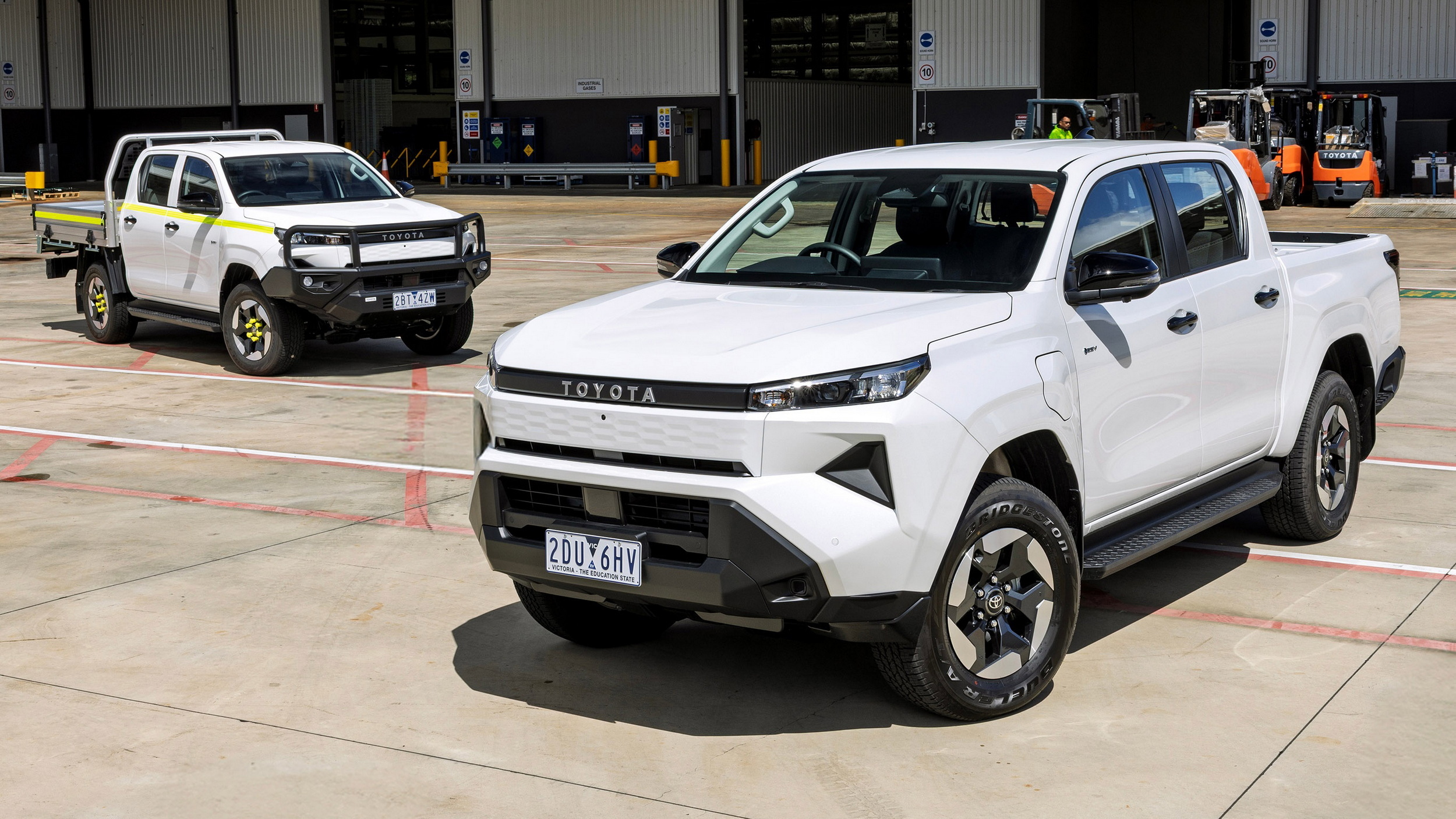
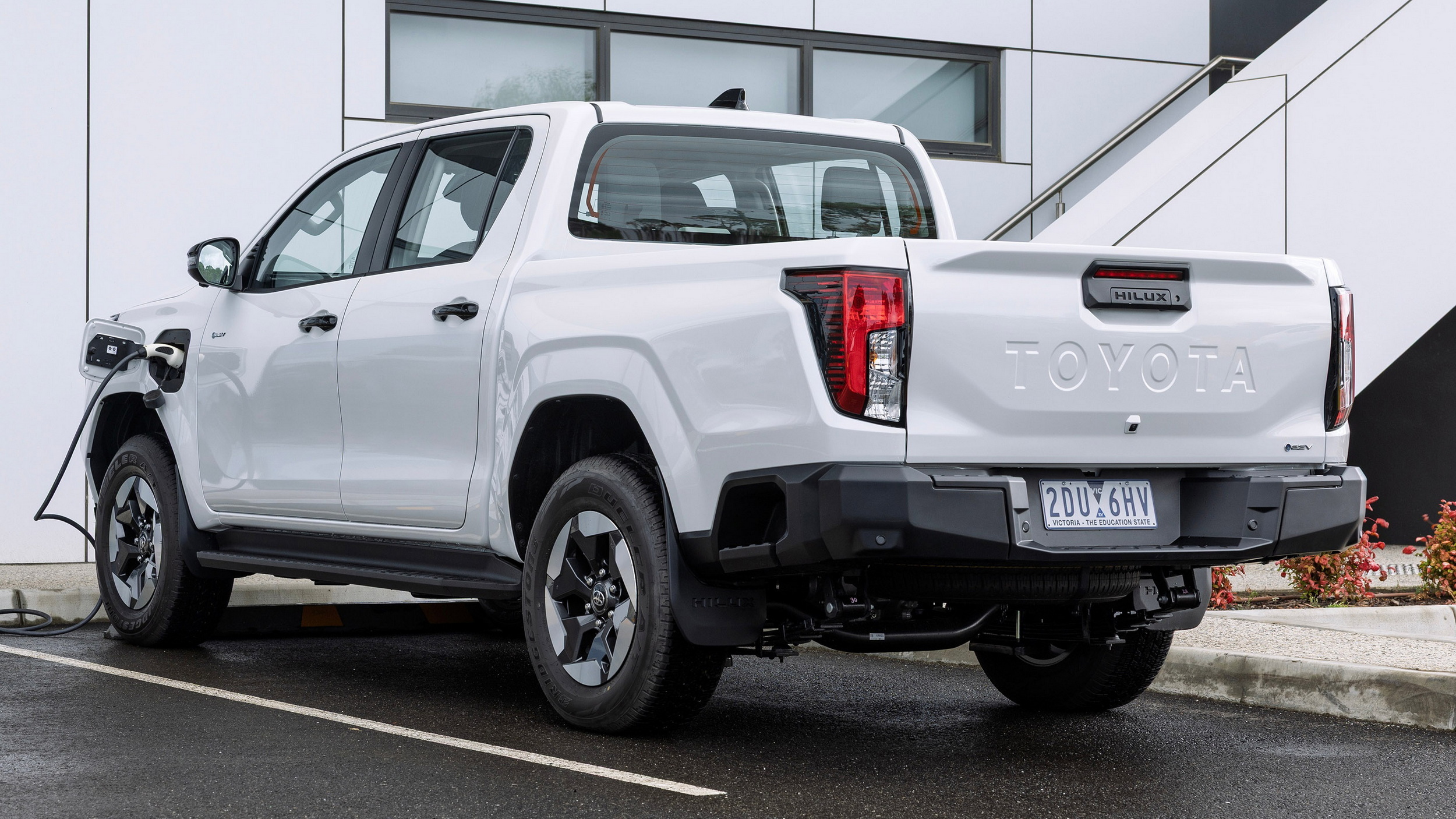
The latest generation of the Toyota Hilux has entered a new era. For the first time in its history, the nameplate offers a fully electric variant alongside existing gasoline, diesel, and mild-hybrid options. In Australia, the zero-emission truck is now available to order, sitting at the top of the local Hilux lineup as its most expensive model.
Jumping straight to the numbers, the entry-level Hilux BEV SR double-cab chassis starts at a hefty AU$74,990 (equal to US$51,400). That’s AU$20,000 (US$13,700) more than the equivalent diesel version with a manual gearbox. Move over to the electric SR double-cab pickup, and the price climbs to AU$76,490 (US$ 52,500), which still leaves it AU$ 17,000 (US$ 11,700) above its mild-hybrid diesel automatic counterpart.
The SR5 sits at the top of the electric Hilux range, largely by default, as the Rogue and Rugged X trims skip electrification altogether. Priced at AU$82,990 (US$56,900), it now stands as the most expensive Hilux you can buy in Australia.
Put that into perspective, and the electric SR5 carries a AU$19,000 (US$13,000) premium over the diesel SR5, while also undercutting expectations by coming in AU$11,000 (US$7,500) above the former range-topping mild-hybrid diesel Rugged X. More tellingly, it lands right on top of the starting price of the new Ford Ranger Super Duty, which says plenty about where Toyota is positioning its first electric truck.
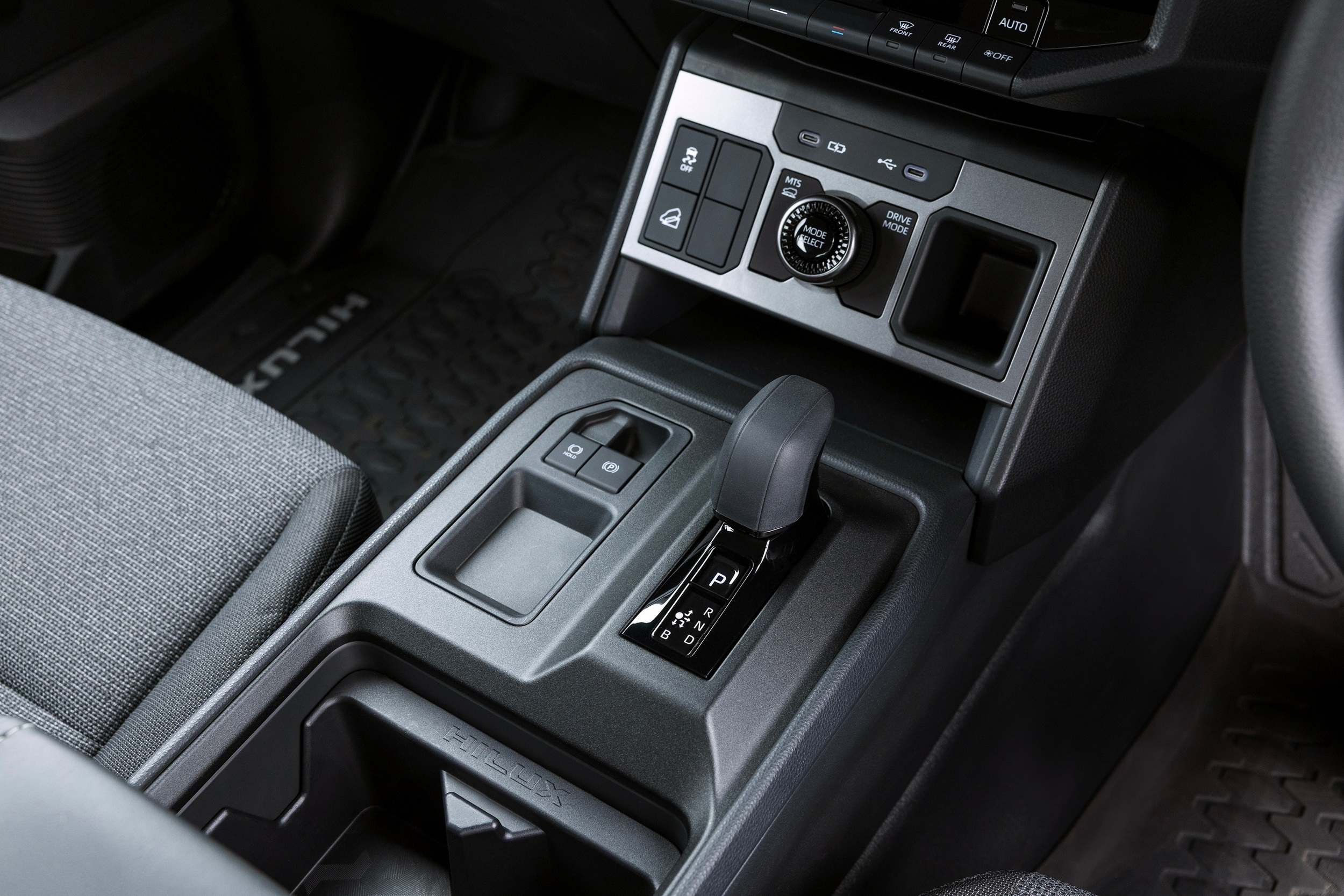
But what do you actually get for the money? The Hilux BEV runs a dual-motor setup delivering a combined 193 hp (144 kW / 196 PS) and 468 Nm (345 lb-ft) of torque. It comes with full-time AWD and six selectable drive modes via the Multi-Terrain Select system, so it’s not short on off-road intent.
Power comes from a 59.2 kWh battery, good for a claimed 245–315 km (152–196 miles) of range on the NEDC cycle, depending on spec. That’s hardly ideal for long hauls across the vast Australian outback, though a 10–80% charge takes around 30 minutes. There’s also a practical touch, as a 1,500 W inverter in the center console lets it double as a mobile power source when needed.
Underneath, the ladder-frame chassis gets a bespoke De Dion rear suspension with leaf springs, plus additional reinforcements to cope with the battery weight. Towing is capped at 2,000 kg (4,409 lbs), well short of the diesel’s 3,500 kg (7,716 lbs) figure.
Design And Features
Visually, the Hilux BEV sets itself apart with a closed-off grille and a set of distinct 17-inch alloy wheels shaped for improved aerodynamics. Color choices are kept tight, as they’re limited to Glacier White, Frosted White, and Ash Slate, reinforcing its fleet-focused brief, even if private buyers are still free to place an order.
As for equipment, the SR trim comes well stocked. LED headlights, body-colored bumpers, side steps, fabric upholstery, and all-weather floor mats are all standard. So are dual-zone climate control, a pair of 12.3-inch displays with built-in navigation, eight airbags, and the full Toyota Safety Sense ADAS suite.
The SR5 adds auto-leveling headlights, LED tech for the footlights and taillights, retractable and heated mirrors, privacy glass, leather upholstery, heated seats and steering wheel, an eight-speaker audio system, a wireless charging pad and more. Thanks to the shared design, the BEV is compatible with most of the optional accessories already available for the diesel, including the pictured bull bar.
Modest Sales Target
Given its pricing and rather underwhelming driving range, Toyota keeping expectations in check with just 500 units for Australia’s first year doesn’t come as much of a shock. Most are likely headed straight for mining and construction fleets, where outright range matters less than predictable daily use. To help make that case, the company says the HiLux BEV has already been pushed through extensive testing in remote outback conditions, working closely with mining operators.
For now, Thailand is the first place where buyers can actually place an order, fittingly as the truck’s production hub. There, the Hilux Travo-e starts at ฿1,491,000 ($45,300), undercutting expectations slightly but still landing ฿165,000 ($5,000) above a comparable diesel automatic Hilux Travo 4TREX.
Japan cut subsidies for the Chinese EV maker to just 150,000 yen.
New rules now favor EVs using locally produced battery packs.
Toyota and Nissan models still qualify for far higher incentives.
Electric vehicles make up less than 2 percent of new car sales in Japan, yet that didn’t stop Chinese EV giant BYD from unveiling an all-electric Kei car last year, aiming to make inroads into the local market. However, the company has just been dealt a serious blow.
It has been revealed that the Japanese government has slashed subsidies for BYD by more than half, reducing them to just 150,000 yen, or about $936. Previously, incentives for BYD models ranged between 350,000 yen ($2,000) and 400,000 yen ($2,500).
The reason is quite simple. Japan is revising its EV subsidy scheme to benefit vehicles that use locally manufactured battery packs. Obviously, BYD’s cars use Chinese-made batteries. Thus, it seems more like a measure to protect the Japanese car industry from the burgeoning Chinese brand, which was the world’s sixth-largest car manufacturer last year.
Japanese EVs Get A Big Boost
BYD Racco
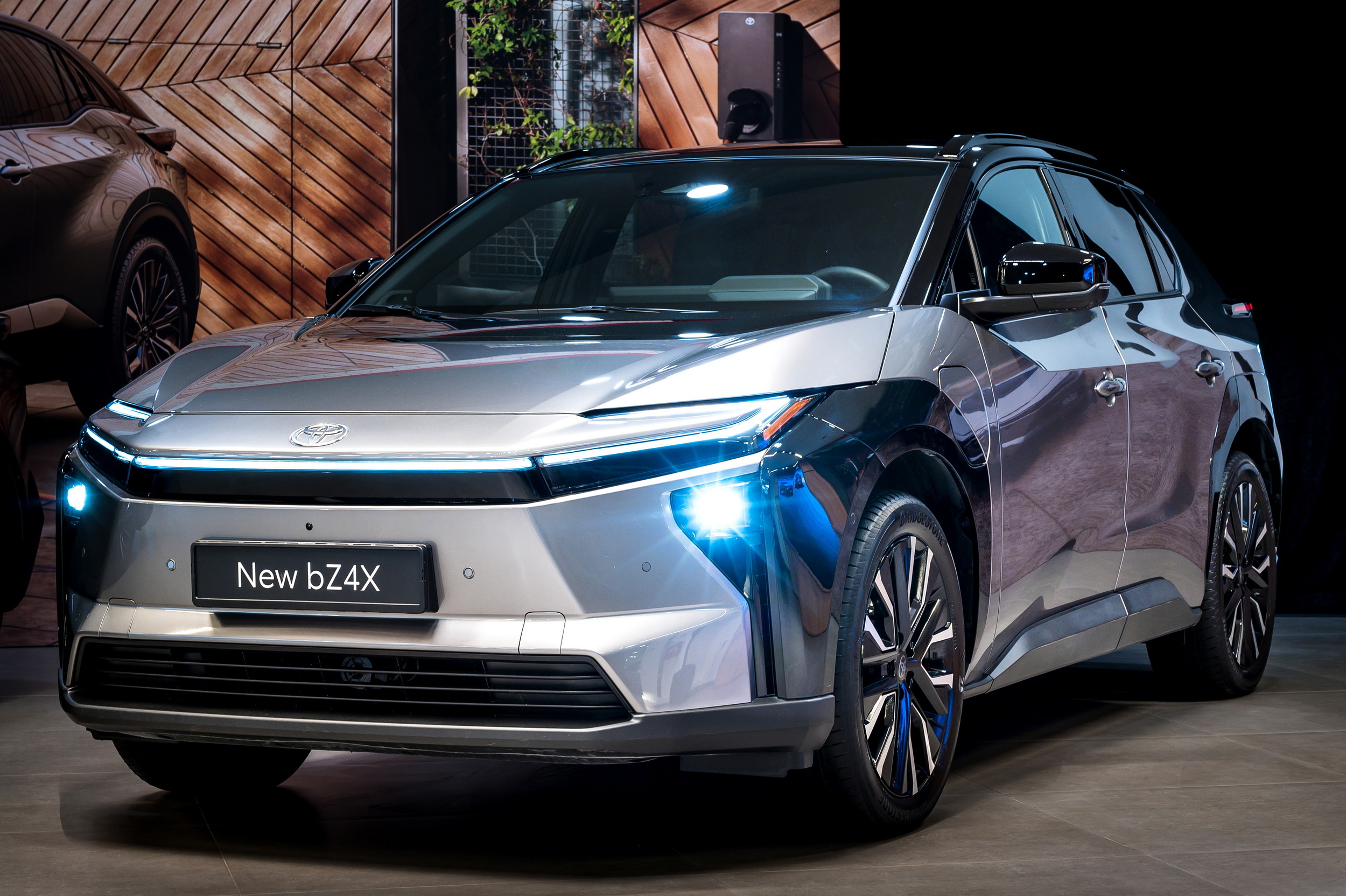
As part of a change to the subsidy program, the Toyota bZ4X will continue to be offered with the highest possible subsidy of 1.3 million yen ($8,100). The Nissan Ariya had been available with a 1.29 million yen ($8,075) subsidy, although this will be cut to 1 million yen ($6,200) in 2027.
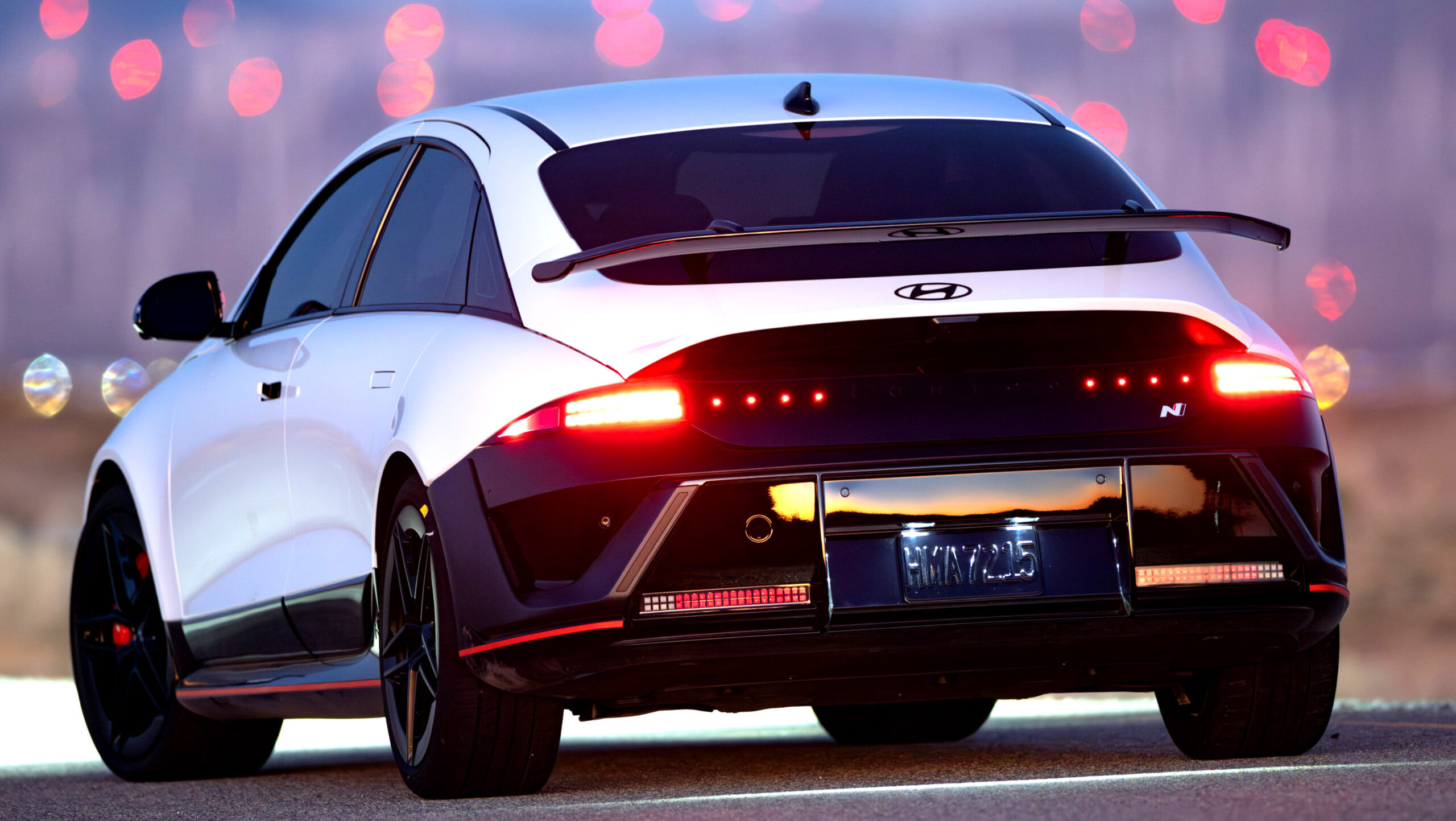
Interestingly, it’s not just Japanese brands that get generous government assistance. Earlier this month, Tesla’s subsidies were increased by 400,000 to 1.27 million yen ($7,900), likely due to the fact that it uses Panasonic batteries. Audi also saw a recent increase of 320,000 yen ($2,000) up to just over 1 million yen ($6,200) for its EVs. Similarly, subsidies for some of Hyundai’s EVs have been boosted this month.
As noted by Nikkei Asia, not all of these subsidy increases will remain in effect. From next January, subsidies for brands including Audi and Hyundai will be cut, although their extent remains unclear. Prior to the most recent round of cuts, BYD said it was already at a disadvantage.
“We’re at an overwhelming disadvantage,” the boss of its Japan unit, Atsuki Tofukuji said. “The gap [with companies like Toyota Motor] has grown to up to nearly 1 million yen. We can’t compete with 350,000 yen.”
Opel confirmed the GSE will be its most powerful production Corsa to date.
Nürburgring testing focused on chassis tuning, steering, and ESC calibration.
Hatch is expected to borrow its 278-hp electric powertrain from the Mokka GSE.
Opel announced plans for a Corsa GSE earlier this year and the automaker recently took the hot hatch to the Nürburgring for testing. Unsurprisingly, the brand’s answer to the upcoming Volkswagen ID. Polo GTI was spotted not only by spy photographers, but also by the company’s own cameras.
We’ll get to the details in a moment, but Opel said testing was primarily focused on fine-tuning the chassis. They went on to say the upcoming model will “be the most powerful series Corsa ever built” and have “specific throttle, steering, and ESC tuning.”
While the company is keeping details under wraps, we can see a lightly revised front end with triangular air curtain accents. They’re joined by extended fender flares and aerodynamically optimized wheels, which are backed up by yellow brake calipers with GSE badging.
The changes largely fly under the radar, but the production model could be hiding a few tricks up its sleeve. That remains to be seen, but we can expect to learn more as we approach the car’s unveiling at the Paris Motor Show in October.
Opel
One thing that isn’t much of a mystery is the powertrain as the hatchback is expected to borrow heavily from the Mokka GSE. This means we can likely expect a 54 kWh battery that powers a front-mounted motor developing 278 hp (207 kW / 281 PS) and 254 lb-ft (345 Nm) of torque. It enables the crossover to accelerate from 0-62 mph (0-100 km/h) in 5.9 seconds, before hitting a top speed of 124 mph (200 km/h).
The upgrades should extend beyond the powertrain as the Corsa GSE will likely be equipped with a limited-slip differential, unique axles, and a sport-tuned suspension with special shock absorbers.
The fifth-gen Wuling Hongguang Mini EV has launched in China.
The EV has a 40 hp motor and offers up to 187 miles of range.
It brings a redesigned exterior and interior, starting at $6,200.
The Wuling Hongguang Mini EV has been around since 2020, yet it has already cycled into what’s being called its fifth generation. If that feels excessive, you’re not alone. In reality, these aren’t clean-sheet overhauls so much as heavy facelifts, which says plenty about the pace at which China’s car industry moves. Even so, racking up so many redesigns in just six years is an impressive feat.
This latest iteration leans into a redesigned exterior with a soft, almost sugar-cube look, while also stepping up inside with improved tech and a more polished cabin. Range has increased too.
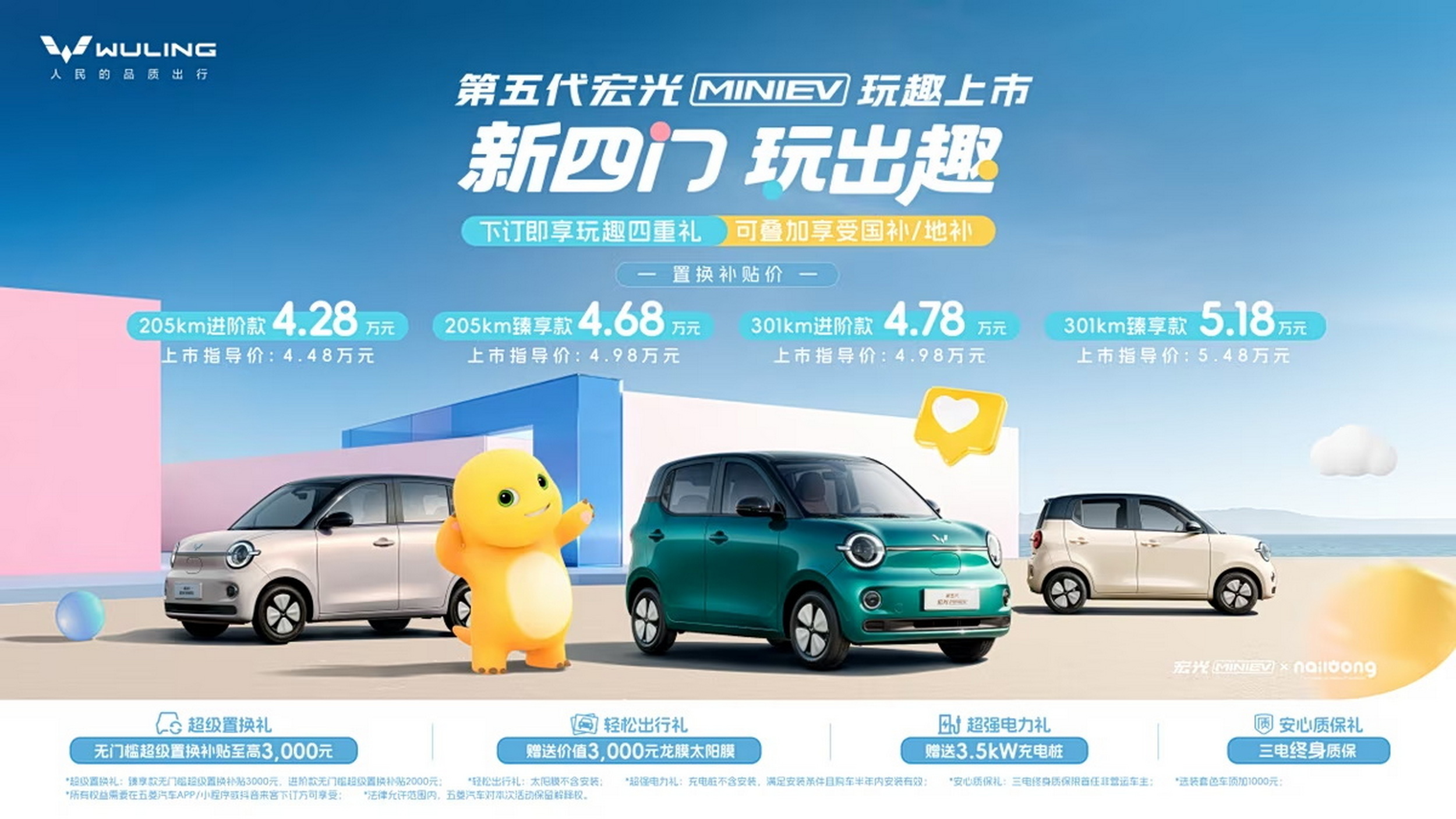
Built by the SAIC-GM-Wuling partnership, the micro EV has quietly become a runaway success in China, with cumulative sales surpassing 1.9 million units by the end of 2025. This version continues to widen its appeal with a more practical five-door layout, a bodystyle first introduced late in 2024 on the outgoing model.
Visually, the highlight is the new face with a more upright nose giving the car a friendlier, almost toy-like expression. Round LED headlights and taillights are linked by a chrome strip. The overall silhouette remains familiar, but every panel has been reworked and paired with a brighter, more playful color palette.
It’s Small, Really Small
The five-door Hongguang Mini measures 3,268 mm (128.7 inches) in length, just 12 mm (0.5 inch) longer than before, while keeping the same 2,190 mm (86.2 inches) wheelbase. The two-door version remains the more compact option, coming in at 3,064 mm (120.6 inches) long with a 2,010 mm (79.1 inches) wheelbase.
The interior looks familiar, but the dashboard has been redesigned with a larger 10.1-inch infotainment touchscreen and slimmer climate vents. Furthermore, the physical climate controls have been removed entirely, and a column-mounted gear selector opens up extra space between the front seats.
Cargo space stands at 170 liters (6 cu ft) with the seats up, expanding to 838 liters (29.6 cu ft) when the rear bench is folded. The company also claims 20 separate storage compartments throughout the cabin, which should help offset the Mini’s modest footprint in everyday use.
40 HP, But Range Does The Talking
Every version sticks with a rear-mounted electric motor, delivering just 40 hp (30 kW / 41 PS) and 85 Nm (63 lb-ft) of torque, identical to the outgoing model. Performance remains modest, as expected, with top speed capped at 101 km/h (62 mph).
Buyers get a choice of two battery packs. The entry-level model runs a 16.2 kWh unit, good for 205 km (127 miles) of CLTC range. Step up to the 25.1 kWh battery, and that figure climbs to 301 km (187 miles). In both cases, charging from 30% to 80% takes around 35 minutes, which keeps downtime relatively short for a city-focused EV.
How Much Does It Cost?
The five-door 2026 Wuling Hongguang Mini EV is already on sale in China, with pricing starting at ¥44,800 ($6,500) and rising to ¥55,800 ($8,100) for the range-topping version with the larger battery. Factor in current trade-in subsidies, and the entry point drops slightly further to ¥42,800 ($6,200), reinforcing its position as one of the most accessible EVs on the market.
Rivian wins direct sales rights in Washington after dealer resistance collapses.
Nearly 70 percent of buyers support skipping dealerships and buying directly.
Other states may follow as pressure builds against traditional franchise laws.
Rivian didn’t just win a fight in Washington this week when it was granted the right to sell cars directly to consumers. It might have started a war that will leave dealer groups across America far less powerful and profitable 10 or 15 years from now.
After years of getting blocked by dealer laws in Washington state, the EV startup pushed hard enough that the opposition simply stepped aside. The turning point came when Rivian threatened to take the issue to voters, a gamble that could have cost it up to $30 million. Faced with an expensive ballot battle, dealer groups backed off and supported a narrow law letting Rivian and Lucid – but no other brands – sell directly.
“The writing was on the wall,” said lawmaker Andrew Barkis to The Wall Street Journal. Once the resistance faded, the bill sailed through.
It’s a big moment in a long-running tug of war over how Americans buy cars. For decades, laws in most states have forced automakers to sell through independent dealers. That system isn’t going quietly, but Rivian just proved it can be bent, something Tesla already does, and VW is also trying to do with its new Scout brand.
Buyers Backed The Move
And the reason is simple. Buyers don’t love dealerships as much as the system assumes. Rivian’s own polling showed nearly 70 percent of people support direct sales in the same way that they like to get their sneakers from the Nike store or their new iPhone from an Apple outlet.
Rivian CEO RJ Scaringe says selling direct means more control, better margins, and a cleaner customer experience. But not everyone’s thrilled. Traditional automakers and dealer groups argue this creates an uneven playing field. They say franchise networks keep prices competitive and provide essential services like repairs and financing.
Limited Freedom
“The franchise model continues to be the ideal system,” Vicki Giles Fabré of the Washington State Auto Dealers Association told the WSJ in a statement. Still, even dealers seem to recognize the tide is turning. The Washington compromise is tightly limited, applying only to Rivian and Lucid, but it cracks the door open.
Now Rivian is eyeing other states where voters can be brought into the fight. Places like Ohio and Oklahoma could be next, and if this strategy keeps working, the patchwork of sales laws might start to unravel.
Google Maps is rolling out new trip planning features for EVs.
Users can now see how much battery usage trips will take.
Drivers will also see recommended charging stops along the way.
Electric vehicle owners are in for a treat as Google Maps is bringing new trip planning features to more than 350 vehicles with Android Auto. This promises to make long-distance trips less stressful as drivers won’t have to worry about running out of juice or bouncing between multiple apps to find a charging station.
To use the new features, owners need to add their vehicle to Google Maps. This can be done by opening the app, selecting your profile, scrolling down to Settings, and tapping Your Vehicles. They can then select Electric and add their make and model of EV.
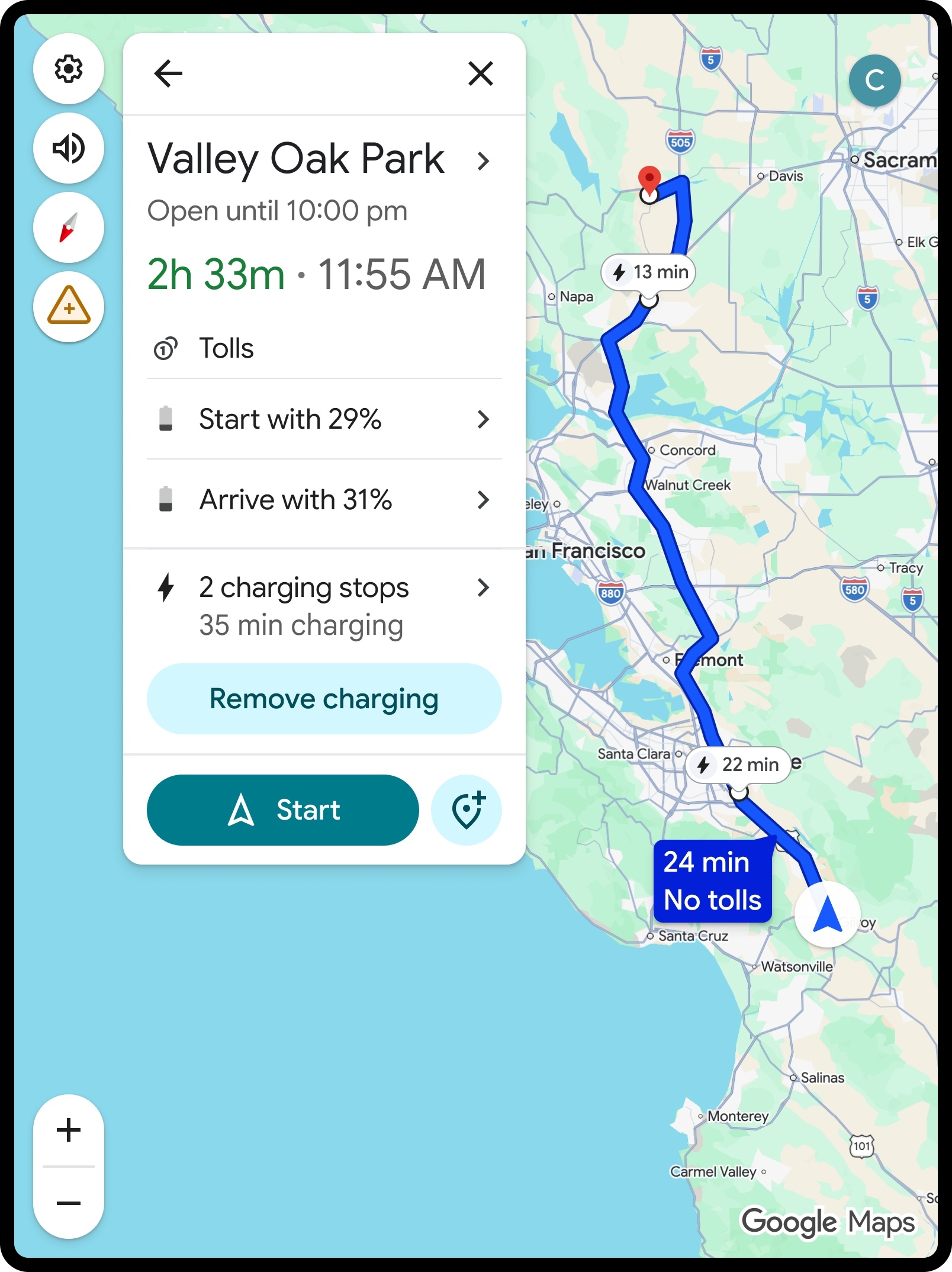
With this information in hand, Google Maps can use vehicle information to calculate several important details. For example, when you set a destination, the app will estimate battery usage for the trip.
Users can add their current battery level to unlock more features, including recommended charging stops, estimated arrival battery level, and an updated ETA based on charging time. There’s even an option that allows you to select how much battery charge you want left when you arrive at your destination, so you’re not immediately forced to recharge.
This sounds like a pretty handy update, and the tech giant said the predictions are made possible by a combination of AI and “advanced energy models that analyze vehicle details, like weight and battery size, alongside Maps’ real-time information about traffic, road elevation, and weather.” All of this means drivers will be well-informed and won’t have to worry about planning routes or charging stops ahead of time.
The new features are rolling out today in the United States and will support 16 brands, with additional companies coming in the future. As of now, that list includes Audi, BMW, Chevrolet, Fiat, Genesis, Hyundai, Jaguar, Kia, Lexus, Lucid, Mercedes, Nissan, Porsche, Subaru, Toyota, and Volkswagen.
BMW’s iX3 LWB adds 108 mm (4.25 inches) of wheelbase for Chinese buyers.
China-specific software includes Huawei, Alibaba, Deepseek, and Amap navigation.
Longer rear doors and new semi-enclosed handles meet local safety regulations.
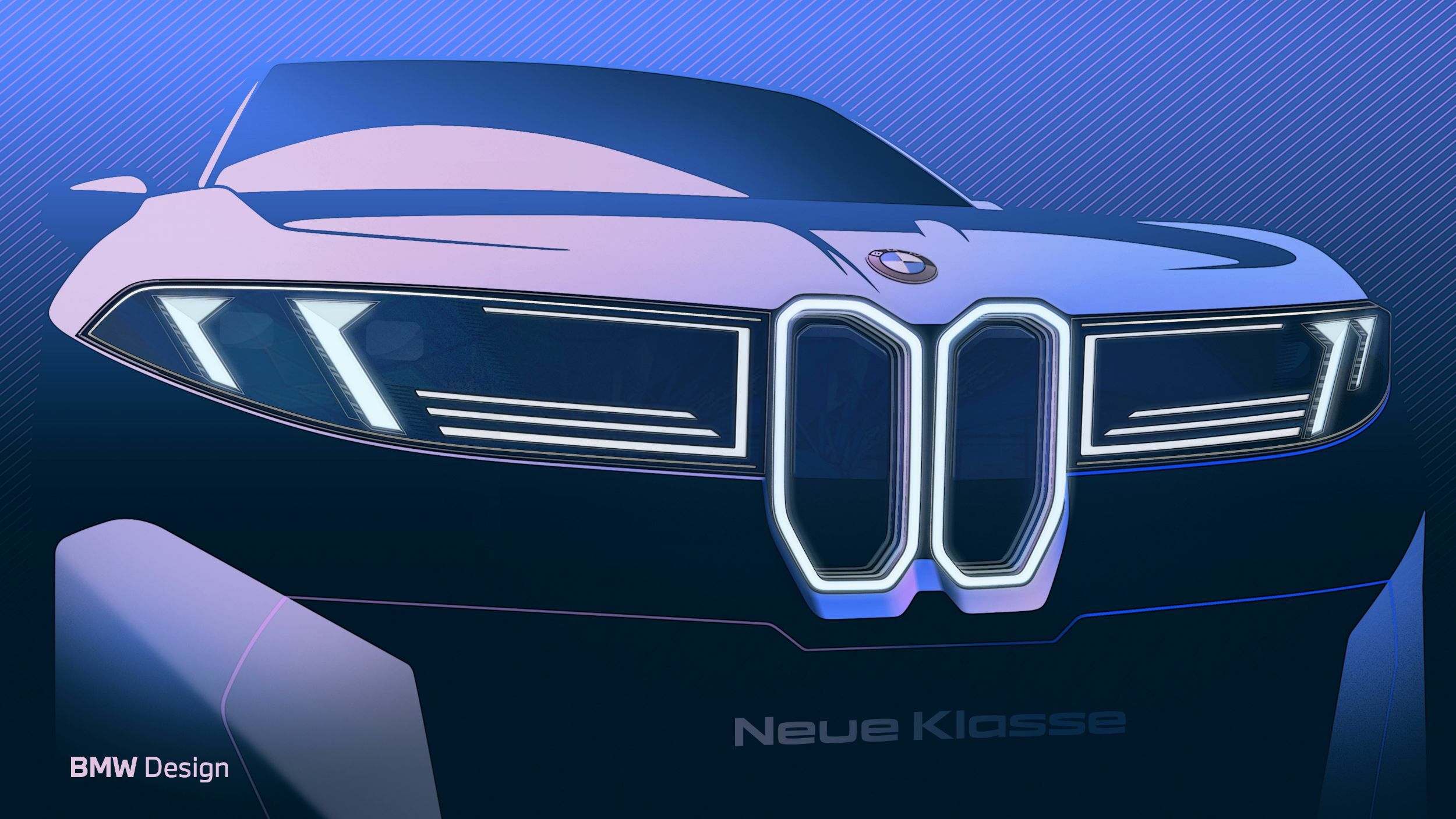
BMW is kicking off its Neue Klasse rollout in China with a version built specifically for the market, and the new iX3 LWB makes that clear from the outset. This all-electric SUV stretches its wheelbase to free up more rear-seat space, while also packing in tech and safety systems tuned to local expectations.
While the official debut of the BMW iX3 LWB is scheduled for the 2026 Beijing Auto Show in April, the company has already shared photos on its social media accounts, following the camouflaged prototypes they showed us last January.
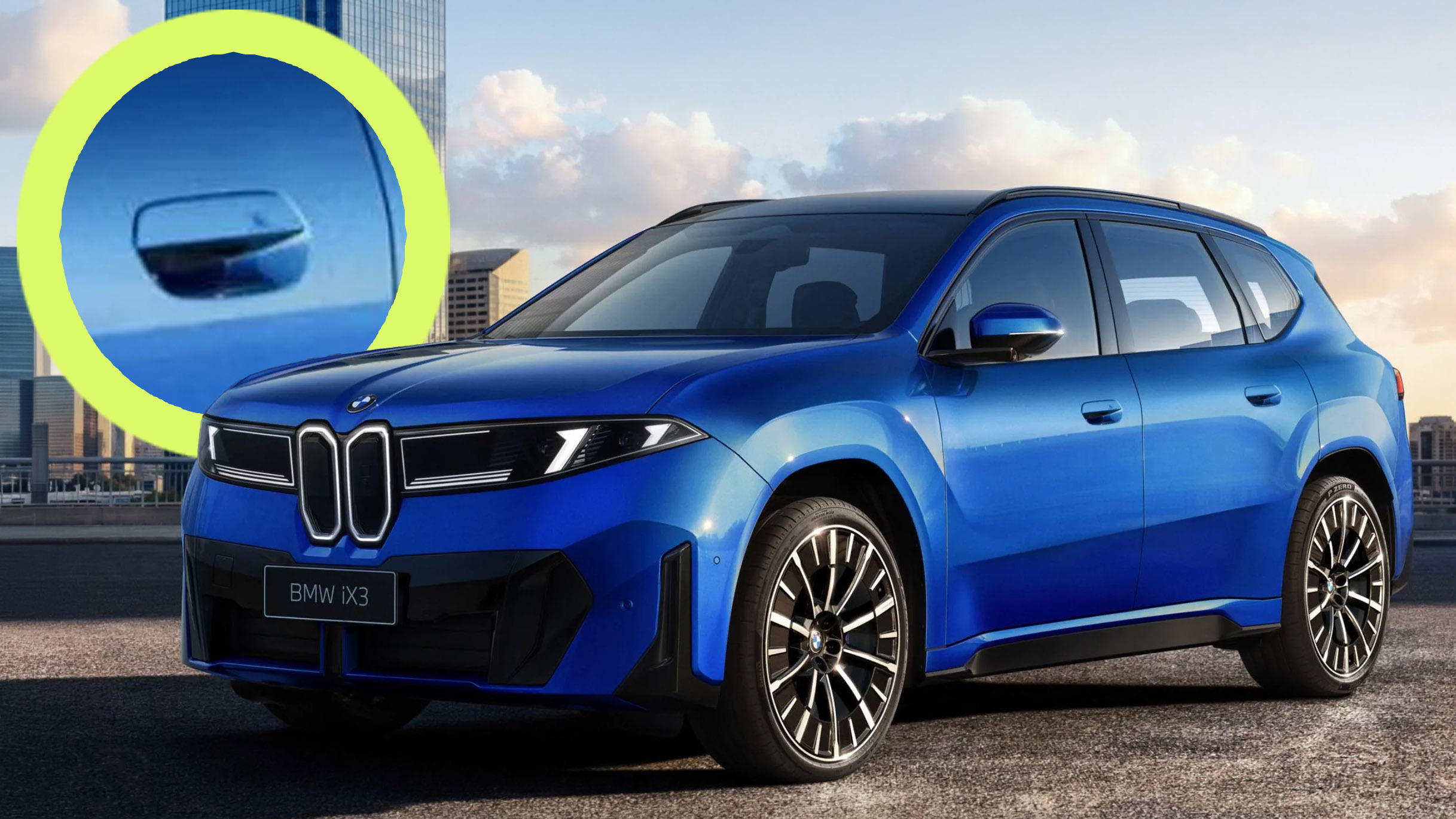
On the surface, the iX3 LWB closely mirrors the standard model, but the details start to separate it. The rear doors are slightly stretched, a result of the longer wheelbase, and the door handles now use a semi-enclosed design. That change is not just aesthetic, it aligns with Chinese regulations that restrict electronically controlled handles. It may also mark one of the first instances of a Western manufacturer developing two distinct door-handle solutions to comply with differing regional rules.
There are a couple of other small but telling tweaks. A new camera sensor sits on the roof spoiler, and the tailgate carries Chinese lettering, reinforcing that this version is very much market-specific.
The headline change is the extra 108 mm (4.25 inches) added to the wheelbase, bringing it to 3,005 mm (118.3 inches). That is actually 30 mm longer than the ICE-powered X3 LWB and puts it right in line with the current X5’s footprint between the axles.
Assuming the overhangs stay the same, overall length should land around 4,890 mm (192.5 inches). That places it slightly ahead of the X3 LWB, yet still just shy of an X5, which is an interesting bit of positioning.
Localized Software
Inside, BMW has yet to show the cabin, though expectations are that it will largely carry over from the standard iX3. The bigger story is software. The new BMW Operating System X is expected to integrate Huawei HarmonyOS Next, along with AI models from Alibaba and DeepSeek, plus navigation from Amap with 3D mapping.
BMW is also rolling out a “China-exclusive all-scenario driver assistance system” developed in collaboration with Momenta. This promises to be “deeply customized for Chinese users” providing sophisticated ADAS for China’s “complex urban environments, highways, and long-distance travel”.
Finally, BMW engineers have tweaked the chassis, electronics, and suspension of the Neue Klasse architecture for the Chinese market, targeting “an elegant balance of comfort and stability in diverse driving scenarios.”
Same Power, Big Numbers
As for the powertrain, the iX3 50L xDrive mirrors its standard iX3 counterpart. It runs a dual-motor setup producing a combined 463 hp (345 kW / 469 PS) and 645 Nm (476 lb-ft) of torque, paired with a 108.7 kWh battery pack. That battery is rated for more than 900 km (559 miles) of range on the CLTC cycle and supports DC fast charging at up to 400 kW.
Built In China, For China
This version of the iX3 will be exclusive to China, built locally through the BMW Brilliance partnership at its Shenyang plant. Pricing remains under wraps for now, though that will come into focus closer to launch.
Josef Borrell, CEO of BMW Brilliance, framed it as more than just another variant, positioning the long-wheelbase iX3 as a key step in blending BMW’s global tech with locally developed innovation.
“The new generation BMW iX3 long wheelbase represents a significant milestone for us in integrating innovation, driving pleasure, and digital intelligence for the Chinese market,” he said. “The new generation of technologies driven by our Chinese R&D team is gradually becoming an important part of BMW’s global technology landscape and brand DNA.”
GAC and FAW Toyota have slashed pricing for their bZ3X SUV and bZ3 sedan.
bZ3X was the top-selling joint-venture EV in China for five consecutive months.
Both EVs use batteries with enough capacity to cover between 321 and 383 miles.
Toyota has just made two of its cheap EVs in China even cheaper. They’re so affordable that, depending on where you live, you may consider selling your house, packing up your belongings, and immediately moving to China.
Just kidding, but when a brand new vehicle costs less than what you pay in the States for a 15-year-old used Corolla (around $14,000), then something has gone genuinely, wonderfully wrong with our understanding of what a car is supposed to cost.
Perhaps the most interesting of the pair is the bZ3X SUV, launched in China in early 2025 through the GAC Toyota joint venture. It typically starts at 109,800 yuan, or about $15,800, which already feels like a steal. Now, to celebrate GAC Toyota shifting 80,000 vehicles in its first year, the entry price has dropped to just 99,800 yuan, roughly $14,400.
You get a heck of a lot of features for the money. The base model is powered by a 50 kWh battery, and while that’s small, it’s good enough for 267 miles (430 km) of driving on the generous CLTC cycle. It powers a single electric motor producing 221 hp. Step up to the 58 kWh or 68 kWh battery options, and range stretches to as much as 379 miles (610 km).
Unsurprisingly, it’s been flying out of showrooms. The bZ3X topped joint venture EV sales for five consecutive months starting in September. Given the starting price, it’s hardly a surprise why.
The Sedan Is Even Cheaper
Too expensive? Well, good news, as the price cuts don’t stop with the SUV. FAW Toyota has also trimmed the cost of the bZ3 sedan, another strong seller. The refreshed version arrived just a few months ago and, like the SUV, originally carried a 109,800 yuan ($15,800) starting price. Now, that entry point has dropped to 93,800 yuan, or about $13,500.
Underneath, the electric sedan uses BYD’s Blade battery tech and comes with either a 49.9 kWh or 65.3 kWh pack. Depending on configuration, that translates to between 321 miles (517 km) and 383 miles (616 km) of claimed range.
Of course, you’re not just paying for the powertrain, but a slew of other technologies. For example, there’s a new 15.6-inch infotainment display, a digital gauge cluster, panoramic sunroof, dual wireless smartphone charging pads, a roof-mounted LiDAR, and Level 2 semi-autonomous driving functionalities. Not bad for $13,500, right?
Skoda’s Peaq is a fully electric three-row SUV stretching 192 inches long.
The flagship 90x trim offers 295 hp, AWD, and over 373 miles of claimed range.
European sales begin in mid-2026, with production set for the Czech Republic.
Skoda is lifting the veil a little further on its upcoming flagship, previewing the Peaq with fresh details and a camouflaged prototype. Sitting at the very top of the lineup, this large, fully electric SUV brings three rows of seating and is scheduled to hit European roads in mid-2026.
Size is a big part of the story. At 4,874 mm (191.9 inches) long, it stretches 116 mm (4.6 inches) beyond the ICE-powered Kodiaq. More telling is the 2,965 mm (116.7 inches) wheelbase, which outgrows the Kodiaq by 174 mm (6.9 inches) and even eclipses the Superb by 124 mm (4.9 inches), putting it right alongside the Chinese-spec VW ID.6 in footprint.
Despite the heavy camouflage, the near-production prototype already hints at a softer, more restrained look than the Vision 7S concept from 2022. The so-called “Tech-Deck Face” remains, pairing slim full LED Matrix headlights with a covered grille, much like the Epiq, Elroq, and Enyaq. The Peaq sets itself apart up front, though, with a more distinct bumper design featuring diagonal intakes that give it a sharper edge.
Skoda will offer a Sportline trim featuring black accents and optional 21-inch alloy wheels. The side profile is defined by large doors with flush handles, while the upright rear design hints at a spacious and practical cabin.
A Family-Focused Interior
The flagship SUV will be available in both five-seat and seven-seat configurations. The former offers a substantial 1,010 liters (35.7 cu-ft) of cargo space, while the latter provides 299 liters (10.6 cu-ft) with all seats in place. Both versions include a 37-liter (1.3 cu-ft) frunk.
Inside, highlights include a new 13.6-inch infotainment touchscreen, an optional augmented-reality head-up display, and the largest panoramic roof ever fitted to a Skoda. This roof features electrochromic technology called Dynamic Shade Control. For added comfort, the “Relax Package” brings ergonomic massage seats with leg rests, a wellness app, and a high-end Sonos audio system.
Skoda says more than 50 kg (110 lbs) of recycled materials have been used throughout the cabin, alongside both animal-free and genuine leather upholstery options. The Peaq also introduces a fresh set of “Simply Clever” features aimed at improving everyday usability.
Powertrain Options Breakdown
Under the skin, the EV ides on the VW Group’s familiar MEB architecture. It will be offered with two battery sizes and three powertrain configurations. The entry-level 60 variant features a rear-mounted motor producing 201 hp (150 kW / 204 PS), paired with a 63 kWh battery delivering over 460 km (286 miles) of range.
The 90 and 90x variants use a larger 91 kWh battery, enabling over 600 km (373 miles) of range and 10-80% charging in under 28 minutes. The 90 remains rear-wheel drive with 282 hp (210 kW / 286 PS), while the 90x adds a dual-motor all-wheel-drive setup producing 295 hp (220 kW / 300 PS), good for 0-100 km/h (0-62 mph) in 6.7 seconds.
Production will take place at Skoda’s Mlada Boleslav plant in the Czech Republic. When it arrives in mid-2026, the Peaq will go up against rivals such as the Kia EV9, Hyundai Ioniq 9, Peugeot E-5008, and Volvo EX90.
Skoda
Before yesterdayElectric Vehicles - Latest News | Carscoops
New Barnato will sit below the Bentayga as Bentley’s first fully-electric SUV.
Output could reach up to 1,140 hp, pointing to serious performance potential.
Its sleek styling draws from the EXP 15 concept with crisp, sharp, modern details.
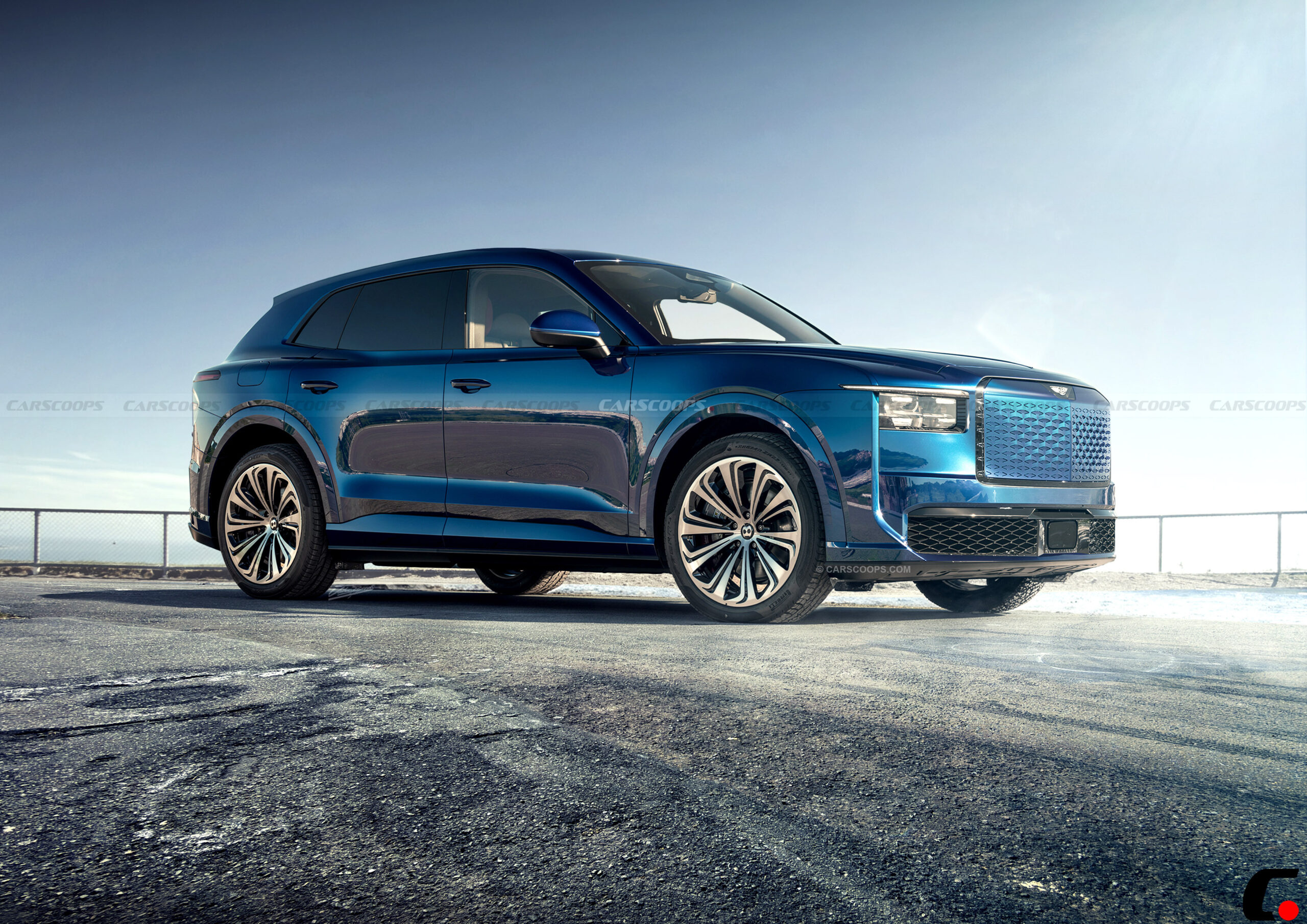
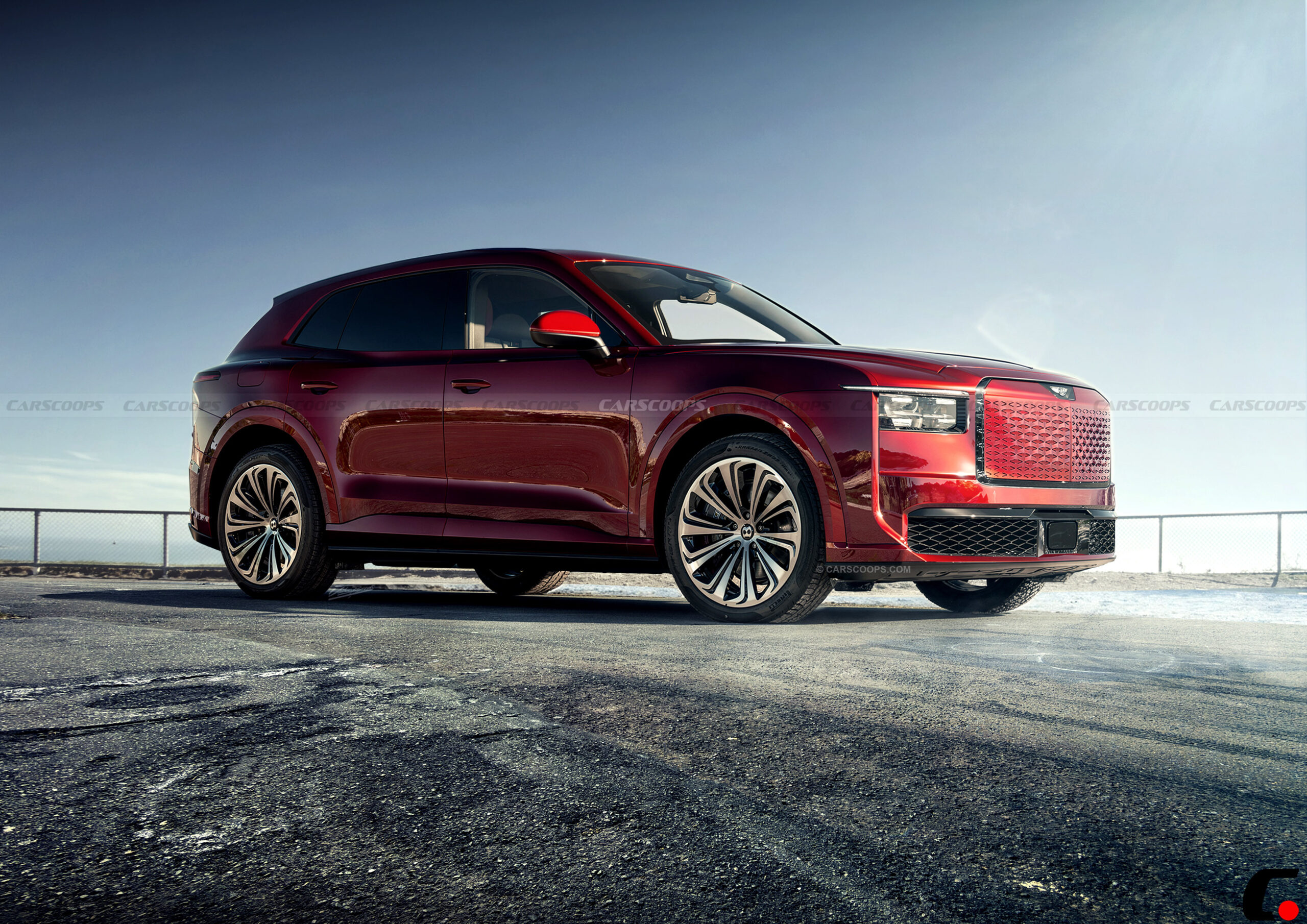
Bentley is getting ready to widen its SUV lineup with a second high-riding model, one that will slot in below the Bentayga. This time, though, the formula changes. Instead of another combustion-powered offering, the new arrival is set to be fully electric.
Early reports pointed to the name ‘Mayon,’ which appeared in a trademark filing with the European Union Intellectual Property Office last year. However, more recent intel points to the ‘Barnato’ name being used; after all, it carries more heritage honoring Le Mans winner and Bentley owner Woolf Barnato.
Our sleuths behind the lens have already captured heavily camouflaged prototypes testing in winter conditions, yet we’ve gone one step further by digitally decoding its design and exploring everything else we know ahead of its expected debut.
Unlike the much-criticised Bentayga, the Barnato is a sleeker affair that draws part inspiration from the brand’s futuristic EXP 15 concept.
At the front, the fascia evolves Bentley’s familiar matrix grille theme into a closed-off interpretation that hints at its electrified powertrain. The headlights adopt four distinct lighting elements, accompanied by a horizontal DRL strip that spears into the front fenders, and lower down, a wide lattice-detailed intake aids cooling and aerodynamic efficiency.
From the side, it appears shorter and more athletic than the Bentayga, with pronounced muscular haunches and frameless windows adding a sportier character. A scalloped shoulder line emphasises stately dynamism, while at the rear, the SUV features slim, jewel-like LED taillights, and a Taycan-style rear diffuser profile aids airflow.
Digital Cabin Experience
SH Proshots
Inside, Bentley is mixing old-school craftsmanship with a very modern digital backbone. Front and center sits a sweeping curved OLED display that cascades into the center console, echoing the layout seen in the latest Porsche Cayenne Electric. It runs on Android Automotive OS, backed by quicker processors, sharper AI voice control, and access to downloadable apps. There’s even a 3D digital model of the Barnato embedded in the system, letting occupants manage various functions directly through the interface.
Other goodies will include an OLED instrument cluster with 3D overlays, an augmented-reality head-up display, and digital key functionality. A new three-spoke steering wheel features physical buttons and knurled scroll wheels, and we can expect seating configurations to include four- and five-seat layouts.
There’s also a curious bit of hardware carried over from the wider VW Group playbook. A multi-function left-hand column stalk, first seen on the Audi Q3, joins a right-hand stalk that doubles as the transmission selector, similar to the setup in the Volkswagen ID.4. Even so, the materials and finish leave no doubt about where this sits in the hierarchy. It still feels unmistakably Bentley.
Platform And Powertrain
The Barnato rides on the VW Group’s Premium Platform Electric (PPE) architecture shared with the upcoming Cayenne Electric. Battery capacity is expected to reach 113 kWh, enabling high-performance and long-distance touring. Bentley claims 100 miles (160 km) of range can be recovered in less than seven minutes.
Using the electron-equipped Porsche as a reference point, power levels could range from 402 hp (300 kW/408 PS) to over 1140 hp (850 kW) in flagship variants. All models will likely feature dual-motor all-wheel drive as standard, with the rear motor featuring direct oil cooling to manage heat during sustained performance driving.
Rivals And Reveal
The Barnato is being lined up for the top tier of performance SUVs, going head to head with heavy hitters like the Mercedes-Maybach EQS SUV, Rolls-Royce Cullinan, Lotus Eletre, Lamborghini Urus, Aston Martin DBX, Ferrari Purosangue and Luce, and the flagship Range Rover SV. Serious company, then.
Expect electrified offerings from Porsche to act as the technical yardstick here, setting the pace in areas like performance, software, and charging capability.
Kia once targeted a late 2025 U.S. launch, but that window has now fully passed.
Built on E-GMP, it offers up to 372 miles of WLTP-rated range on a full charge.
Small crossover could become the brand’s most affordable EV in North America.
Kia is one of the fastest-moving brands in the business. Now, a keen-eyed reader believes they’ve spotted something new, a model we’ve already seen overseas showing up much closer to home. The Korean automaker has brought an EV3 prototype across the Atlantic for testing in Mexico.
It’s unclear why Kia would still wrap it in camouflage given that it’s already made its global launch, but the move could point to plans for bringing the sub-compact electric crossover to North America.
Despite the thick camouflage covering nearly every body panel, it’s easy to match the EV3 that’s already on sale elsewhere, including Europe. The short overhangs, upright stance, and boxy rear section are all visible, along with a high roofline that suggests Kia is prioritizing interior space over sleek styling.
Photos Silvia García / Carscoops
The test vehicle also appears to ride on aero-optimized wheels similar to those seen on other Hyundai Motor Group EVs, while the front end is completely hidden under padded covers designed to conceal the final lighting signature. The reader who snapped these photos, Silvia Garcia, told us that the same vehicle has been around town for at least a few days.
Testing there is especially interesting, as the country already builds several Kia and Hyundai models for global markets. Running prototypes in Mexico could simply be part of evaluating local road conditions. That said, it also lines up with the idea that Kia may be eyeing Canada for the EV3.
European specification Kia EV3
Kia initially focused the EV3 on overseas markets, including Europe. When it debuted in 2024, though, the company did confirm plans for a U.S. launch, targeting late 2025 or early 2026 with a starting price in the in the low-to-mid $30,000s. That, as you may have noticed, hasn’t happened, and nobody at Kia has said much since.
A lot has changed in the meantime: the $7,500 federal tax credit is gone, the American EV market has cooled considerably, and tariffs are making the whole equation messier by the day. The awkward part is that the appetite for affordable electric cars has never been stronger.
The EV3 is built on Kia’s E-GMP platform and is currently offered with two battery options, a 58.3 kWh Standard Range and a larger 81.4 kWh Long Range pack, both driving a single front-mounted motor producing 201 hp (150 kW). Depending on the battery, WLTP range is rated at up to 372 miles (599 km), while fast charging allows a 10 to 80% top-up in roughly 30 minutes under ideal conditions.
Back in January, Kia also pulled the covers off a hotter EV3 GT, this time with a more serious edge. It uses the larger battery and bumps output to 282 hp (215 kW / 286 PS), enough to cut the 0–62 mph (100 km/h) sprint down to a claimed 5.7 seconds.
Analysts expect Tesla deliveries to more than double by 2030.
Q1 2026 delivery expectations sit around 420,000 vehicles.
Tesla’s early release hints at softer near-term expectations.
Analysts believe that Tesla is on track to double its global deliveries by the end of the decade. That’s a huge bet, and it relies on more factories, cheaper models, and a broader global footprint that can push annual volume into the millions. That said, there’s a bit of a disconnect. If that’s indeed what the future looks like, the same analysts’ Q1 2026 predictions aren’t exactly screaming momentum.
The automaker just compiled estimated reports from 23 big-time analyst firms, including UBS, Barclays, Wells Fargo, and more. Wall Street expects Tesla to deliver roughly 420,000 vehicles in Q1 2026. For a company evidently on the verge of explosive growth, that figure leaves some room for head-scratching because it’s nearly flat compared to 2025 levels.
That said, the professionals betting on the future clearly see a path ahead. Their consensus is that Tesla will deliver 1,689,691 cars this year. That’s actually just above the 1,636,129 figure it managed in 2025, with a a modest 3.3% increase year over year.
Starting in 2027, their estimates just go up, up, and away, though. Notably, 2027 is the latest year in which all 23 firms provided an estimate, in this case, of 1,880,496 deliveries.
Twenty of the firms predicted (on average) that Tesla will deliver 2,128,187 cars in 2028. Just 13 firms went as far as to provide a consensus for 2029 and 2030. Those figures hit 2,613,623 deliveries for 2029 and then 3,032,000 the following year.
Q4-2025
Q1-2026
2026
2027
2028
2029
2030
Model 3/Y deliveries
406,585
351,179
1,623,697
1,742,498
1,867,254
2,159,874
2,426,452
All other models
11,642
13,946
60,685
131,509
240,229
423,599
570,590
Total deliveries
418,227
365,645
1,689,691
1,880,496
2,128,187
2,613,623
3,032,000
Median
418,227
363,371
1,678,900
1,866,273
1,979,348
2,384,678
2,626,100
Standard deviation
25,941
85,769
203,762
409,565
656,881
826,093
Number of estimates provided
23
23
23
20
13
13
Energy Storage Deployments (GWh)
14.2
14.4
65.2
88.1
112.5
139.1
166.1
Median
14.2
14.3
64.6
87.3
114.1
138.2
169.1
Standard deviation
1.3
5.2
10.6
16.8
25.0
31.1
Number of estimates provided
18
17
18
16
10
10
SWIPE
As is the case now, analysts believe the vast majority of the cars that Tesla does sell will be the Model 3 and Model Y by a factor of around eight to one overall. Notably, that mix diminishes to as low as four to one by 2030 in the consensus.
That’s important because it suggests that Tesla will need to continue to heavily invest in the growth and proliferation of both the Model Y and Model 3. Those two will largely bolster the car side of Tesla’s business if this consensus is correct.
What it doesn’t clarify is what falls under those “other models.” With the Tesla Model S and Tesla Model X out of the picture, the lineup narrows quickly. That leaves the Tesla Cybertruck as the only other vehicle currently in play, alongside plans for the Tesla Cybercab and, if Elon Musk is to be taken at his word, something he has teased as “way cooler than a minivan.”
The decision to publish this consensus ahead of its Q1 report is also significant and Tesla has done this in the past. It could be that it’s hoping to anchor expectations if results end up lower than some hoped for.
Used Model X offers more performance per dollar than a new Tesla.
A 2018 Model X P100D just sold for $36,000 with only 26,000 miles.
At that price, 680 hp and a 2.9-second 0-60 is an extraordinary deal.
Tesla has been chasing a $35,000 EV for the U.S. market since roughly 2015, when the Model 3’s unveiling promised to democratize electric motoring. It came close with the $36,990 Model 3 Rear-Wheel Drive launched last year, and the entry-level Model Y RWD at $39,990. But for buyers who want a genuinely affordable Tesla without the feel of a stripped-out special, the used market is where things get interesting.
Once-flagship versions of Tesla’s three-row Model X are now available for around $35,000 or so, and after eight years of depreciation, they represent a rather compelling proposition.
Bring a Trailer
A 2018 Model X P100D recently sold for $36,000 on Bring a Trailer. Yes, it’s eight years old, which explains the price, but it has only covered 26,000 miles (41,800 km), which is remarkably low for its age. Barring anything catastrophic, the SUV should deliver tens of thousands of additional trouble-free miles, provided it has been routinely maintained and kept up to date with software updates.
Supercar Performance With SUV Practicality
Before Tesla’s Plaid models were a thing, the P100D-branded models represented the pinnacle of performance. In the Model X, a pair of electric motors produces a combined 680 hp, enough to send it to 60 mph (96 km/h) in just 2.9 seconds. Find an SUV buyer who claims they need something faster than that, and we’ll tell you they’re lying.
Tesla only recently announced it would stop building the Model X, hardly a surprise given how few have been sold in recent years. But when it was first launched, it was incredibly innovative.
Bring a Trailer
We’d argue the cabin of this original model is more appealing than newer models, which adopted Tesla’s landscape-oriented touchscreen, rather than a vertical one. There are also loads of carbon fiber throughout and plenty of plush black leather.
Three-row electric SUVs still have relatively limited appeal, but at this price point, with this mileage, and with this level of performance, there’s no denying that something like this offers good value for the money.
The ID. Unyx 08 is sold with 82 kWh and 95 kWh battery packs in China.
VW says the flagship model can drive up to 453 miles on a single charge.
Xpeng’s advanced Level 2 driving-assistance system is used in the SUV.
VW’s partnership with Xpeng in China has started to bear fruit. Less than two years after the two car manufacturers joined forces to develop new EVs, production of the full-size ID. Unyx 08 has just started. It’s been priced very reasonably, too.
Pre-sales have started to coincide with the production of the ID. Unyx 08, starting at 239,900 yuan ($34,700) and topping out at 299,900 yuan ($43,400). To put those prices into perspective, a new ID.4 starts at $45,095 in the US, yet the ID. Unyx 08 blows it out of the water in terms of performance and technology.
The design of the new SUV is unlike any VW sold in the West, which is no bad thing. The front is sleek with intricate LED daytime running lights and black elements. Flowing sides taper off to a modern rear-end with an illuminated VW logo. All up, it is 5,000 mm (196.8 inches) long, 1,954 mm (76.9 inches) wide, and 1,672 mm (65.8 inches) tall, with a 3,030 mm (112.9-inch) wheelbase.
Efficiency And Power
Autohome
Importantly, the ID. Unyx 08 is underpinned by an 800-volt electrical architecture and offered with 82 kWh and 95 kWh battery packs, both sourced from CATL. Chinese buyers can order the SUV with either a 308 hp (230 kW) motor at the rear wheels, or in all-wheel drive configuration, which includes a 188 hp (140 kW) motor at the front wheels, making for a combined 496 hp (370 kW). This model can hit 62 mph (100 km/h) in 4.9 seconds.
VW has yet to release range estimates for all powertrain configurations, but we know versions with the 95 kWh pack will be able to drive up to 730 km on the CLTC cycle. The battery packs also support 315 kW DC fast charging, meaning the pack can be topped up from 10-80 percent in roughly 20 minutes.
The EV is also equipped with Xpeng’s Level 2 intelligent driving assistance system and has a modern interior that appears just as tech-focused as some Chinese competitors. Positioned behind the steering wheel is a relatively traditional digital instrument cluster, but the ID. Unyx 08 also includes two huge screens, consisting of one for the infotainment system and another for the passenger.
Other key features include massaging seats, an optional in-car fridge, an electrochromatic panoramic glass roof, and a 20-speaker audio system.
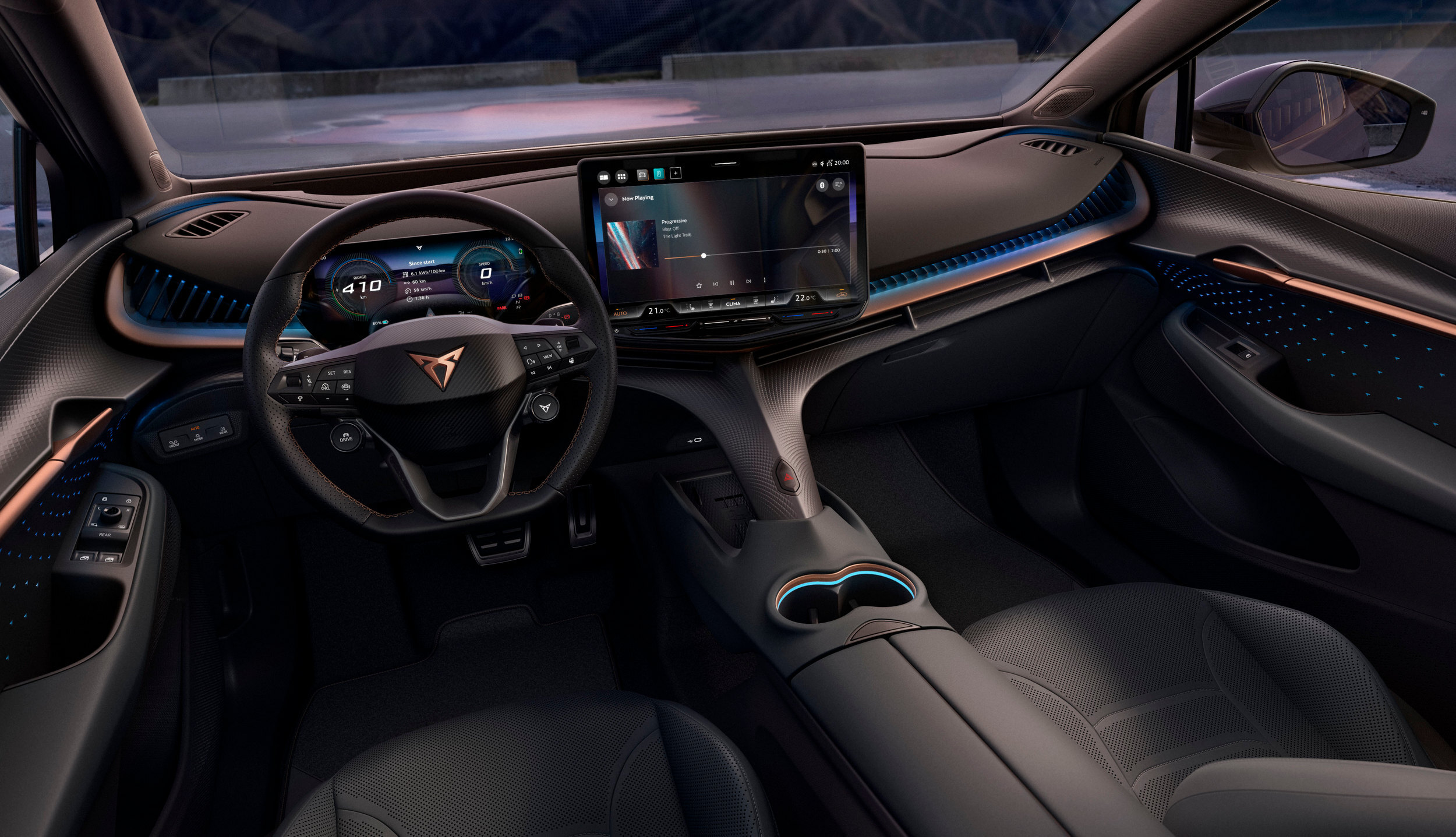
Cupra hit the brakes on their American road trip, but the company isn’t resting on their laurels. That’s clear today as the automaker has introduced an updated Tavascan.
Set to be launched this summer, the updated model has a new entry-level variant that features a 58 kWh battery pack as well as an electric motor producing 188 hp (140 kW / 190 PS). The company was coy on additional details, but said the model will deliver an “engaging driving experience” and have around 270 miles (435 km) of range.
There’s no word on pricing, but the entry-level variant should be significantly cheaper than the existing Endurance and VZ trims, which use a larger 77 kWh battery. Those models are also far more powerful as they’re rated at 282 hp (210 kW / 286 PS) and 335 hp (250 kW / 340 PS), respectively.
Speaking of the Endurance and VZ, they gain a new Launch Control function. All models also appear to have a new one pedal driving mode, which applies the regenerative brakes as soon as you lift off the accelerator.
Updated Interior With New Tech
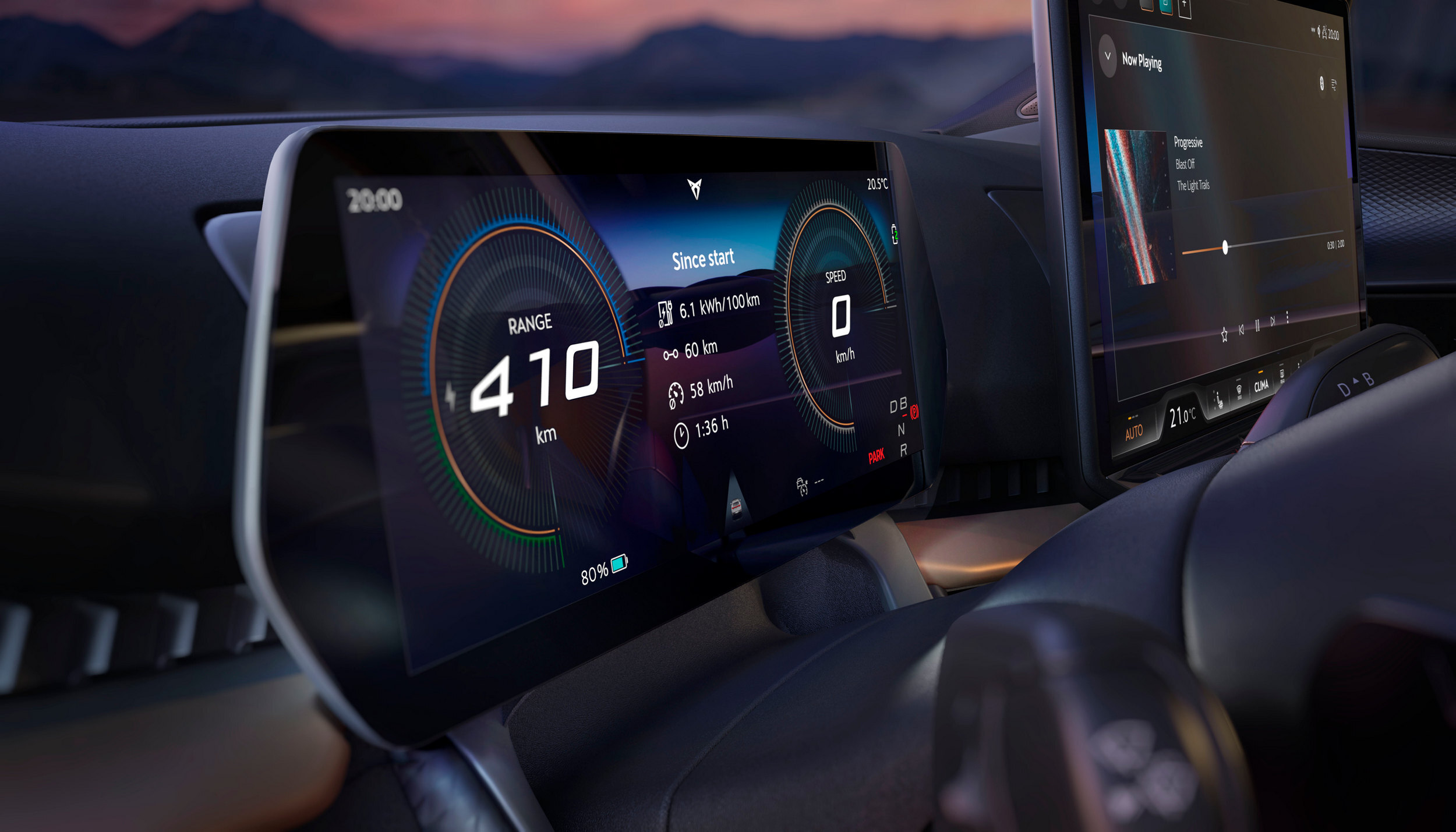
The changes continue inside as the Tavascan has been equipped with a larger 10.25-inch digital instrument cluster and a new infotainment system running Android OS. The latter promises a more intuitive user experience as well as access to an assortment of popular apps.
Despite the focus on technology, Cupra is rocking it old school with a new steering wheel that has physical buttons. That’s a welcome change, but the touch sliders remain.
On the subject of climate control, the crossover has “new electric air vents that activate even before the driver enters the cabin.” As Cupra explained, the system detects the key approaching the vehicle and begins to pre‑circulate air. Once people step inside, the vents apparently adjust direction based on where they’re sitting and the position of the sun. The vents can also be controlled by voice command for “added convenience.”
Needlessly complicated air vents aside, the updated Tavascan has digital key technology that enables owners to unlock, start, and share access to the vehicle using a smartphone. One ‘key’ is reserved for the owner, while four others can be shared.
Buyers will also find a new premium audio system with Sennheiser Contrabass technology. It uses “psychoacoustic techniques to deliver deep, punchy low‑end frequencies” to deliver a “rich, enveloping soundscape.”
Other Minor Changes
On the styling front, there isn’t much to report other than a new Dark Void paint job. The purple hue is described as a “deep and expressive new color that enhances the sculptural presence of the Tavascan and reinforces its progressive identity.
Last but not least is a new vehicle‑to‑load function, which is enabled via a dedicated adapter that plugs into the charging port. It effectively turns the crossover into a massive battery bank.
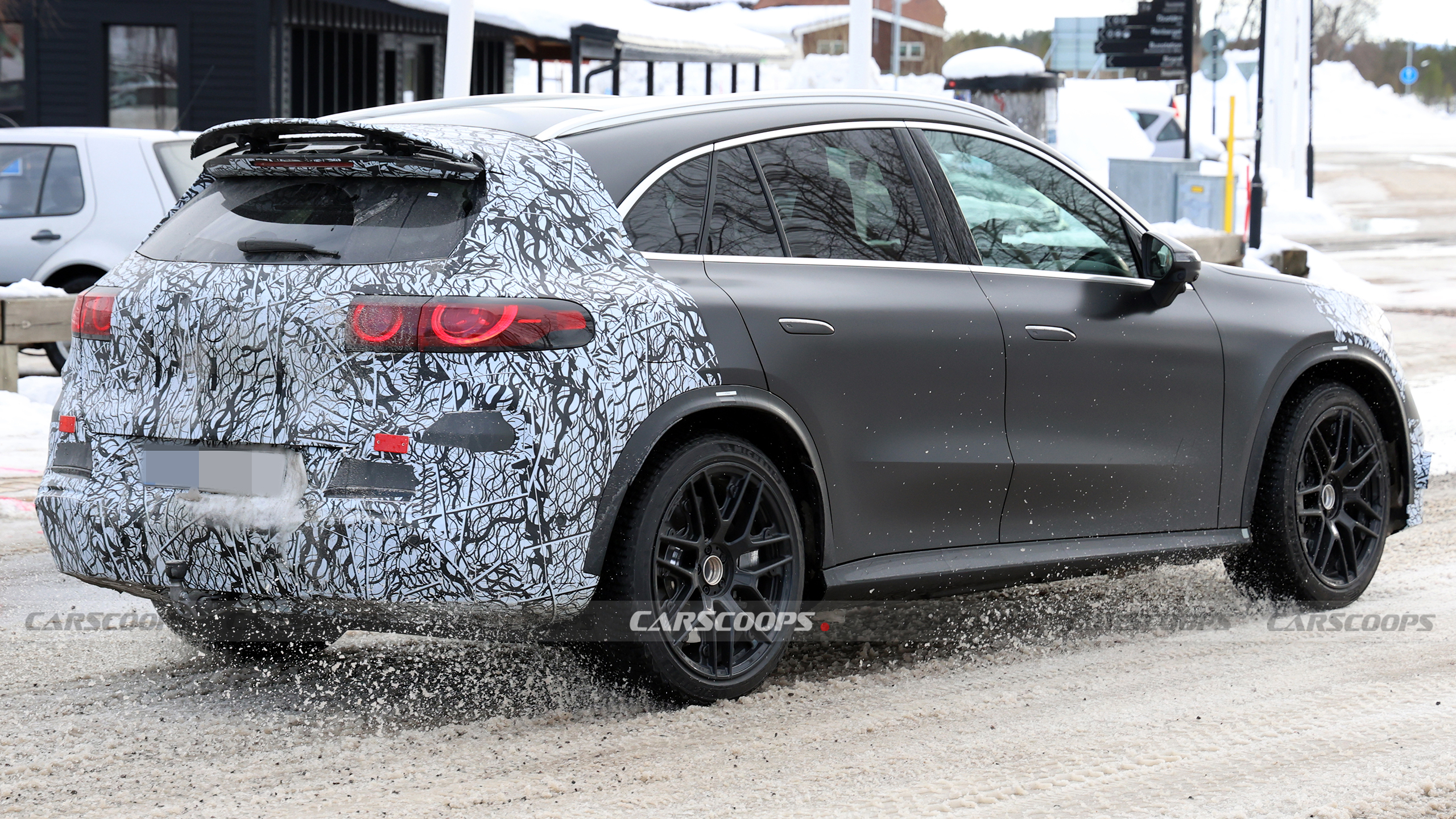
A tri-motor system could give the Mercedes-AMG GLC over 900 hp.
Spy shots show the tester with an active roof-mounted spoiler.
New battery cells could allow the SUV to charge at up to 400 kW.
Thanks to a new platform, more advanced batteries, and better electric motors, the all-new Mercedes-Benz GLC EQ is shaping up to be the firm’s most capable EV yet, at least based on early impressions. With a credible rival to the BMW iX3, along with increasing competition from Chinese EVs, Mercedes is clearly intent on expanding its electric GLC lineup.
Just a single version of the SUV has been unveiled so far, officially known as the GLC 400 4Matic with EQ Technology, producing 483 hp thanks to a pair of electric motors. In times gone by, that figure would have been enough for an AMG badge, but things have changed, and EV buyers now expect supercar-levels of performance.
Mercedes’ solution will be a proper AMG version of the GLC EQ. Pictured in these spy shots, the SUV will combine more menacing looks with significant performance gains, pushing it into a whole new stratosphere.
Design Changes
SH Proshots
This prototype, pictured in a deep shade of matte black, has camouflage across its front and rear, hiding some of the changes being made. Chief among these will be a more aggressive front bumper, tweaked air intakes, and a new grille. You’ll also notice it is sitting on a set of new blacked-out wheels with upgraded cross-drilled brake rotors and beefed-up calipers.
Perhaps the most intriguing detail is at the rear, where an active spoiler appears to be part of the package. Normally it would sit flush when parked, but this prototype was caught with it fully raised, giving a clear look at what’s to come. With the kind of power it promises to offer, there will be no shortage of airflow for it to work with.
Further down, the taillights should carry over from the standard electric GLC, but a new rear bumper will tie the look together with the revised front end.
According to sources, the AMG version of the GLC will follow the same path as the GT 4-Door EV and the brand’s dedicated electric SUV, pairing three of YASA’s advanced axial-flux motors. The target is over 900 hp, which should be enough to reach 60 mph (96 km/h) in under three seconds.
Elsewhere, the AMG model could use new prismatic battery cells, rather than the cylindrical ones of the standard GLC, improving power density and thermal performance. These cells may also enable DC fast-charging speeds of up to 400 kW, an improvement over the standard SUV’s 330 kW, and matching the iX3.
As for when it will debut, there’s a good chance it breaks cover this fall at the Paris Motor Show in October, with sales likely to follow not long after.

 Login
Login