Normal view

There are new articles available, click to refresh the page.
Today — 12 January 2026Main stream

China’s Biggest Electric SUV Yet Wasn’t Made For Drivers

  • ES9 is China’s longest electric SUV with a 127.9-inch wheelbase.
  • Dual electric motors deliver 697 hp and 516 lb-ft of torque total.
  • It supports three-minute battery swaps across Nio’s network.

For China’s most wealthiest car buyers, the appeal of driving often takes a back seat to being driven. Luxury isn’t measured in horsepower alone, but in legroom, comfort, and the ability to stretch out while someone else handles traffic.

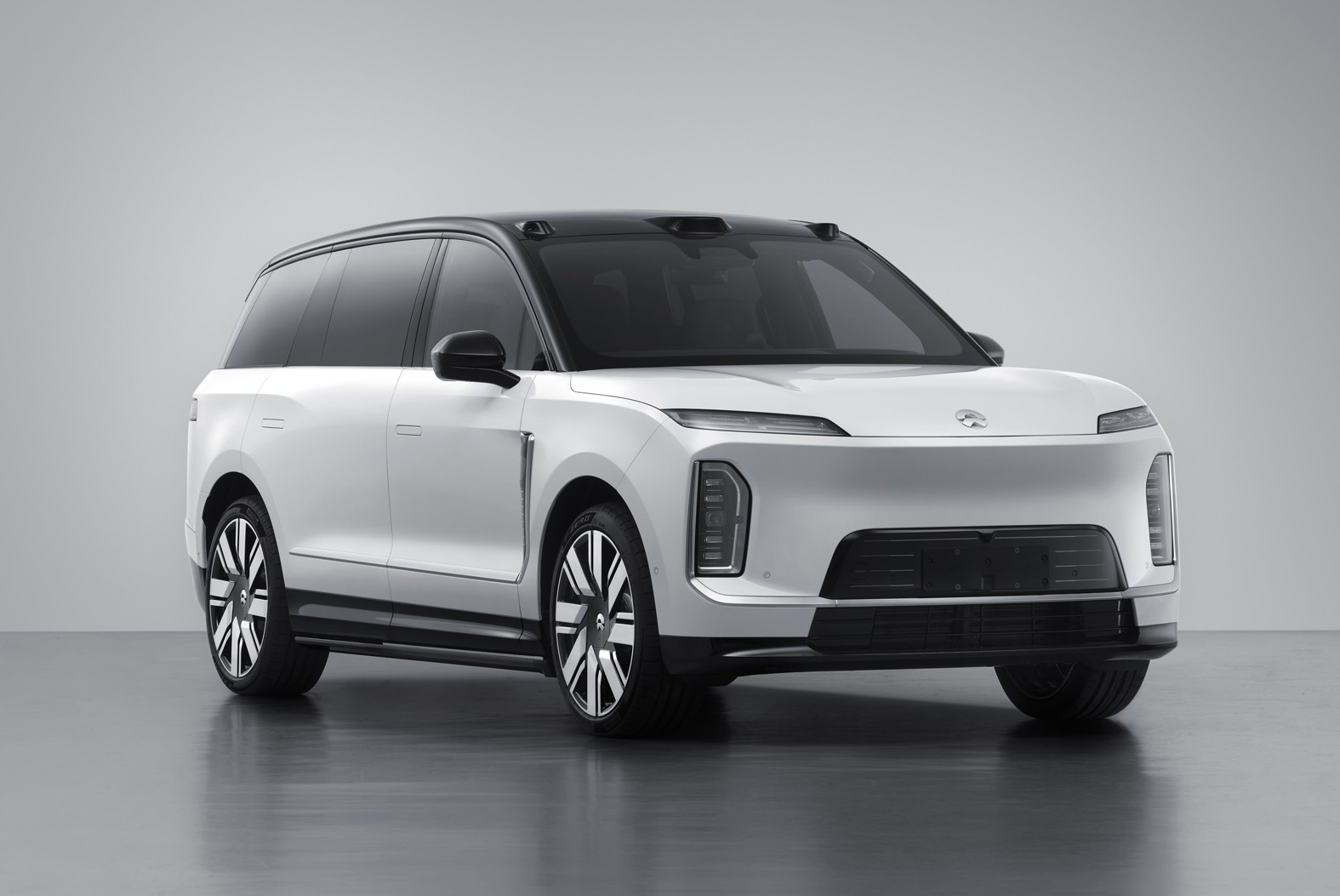
With that in mind, Nio is preparing a new electric SUV designed squarely for this audience, and for larger families as well. Shown here in newly released photos, the Nio ES9 is set to join the brand’s growing lineup, slotting in just above the ES8.

Big Numbers, Bigger Presence

This upcoming flagship will become the largest electric SUV available in China, overtaking the ES8 for that title, according to CarNewsChina. Figures from the Ministry of Industry and Information Technology confirm it stretches 5,365 mm (211.2 inches) in length, spans 2,029 mm (79.8 inches) in width, and stands 1,870 mm (73.6 inches) tall.

Read: This Full-Size Electric SUV Packs 456 HP And Costs Less Than A Honda Civic

That makes it 85 mm (3.3 inches) longer, 29 mm (1.1 inches) wider, and 70 mm (2.7 inches) taller than the ES8. More importantly, the wheelbase stretches to 3,250 mm (127.9 inches), an increase of 120 mm (4.7 inches) over the ES8, which translates to noticeably more room for passengers.

To put that in perspective, its footprint lands somewhere between the standard Cadillac Escalade and the extended-wheelbase Escalade ESV.
 China’s Biggest Electric SUV Yet Wasn’t Made For Drivers

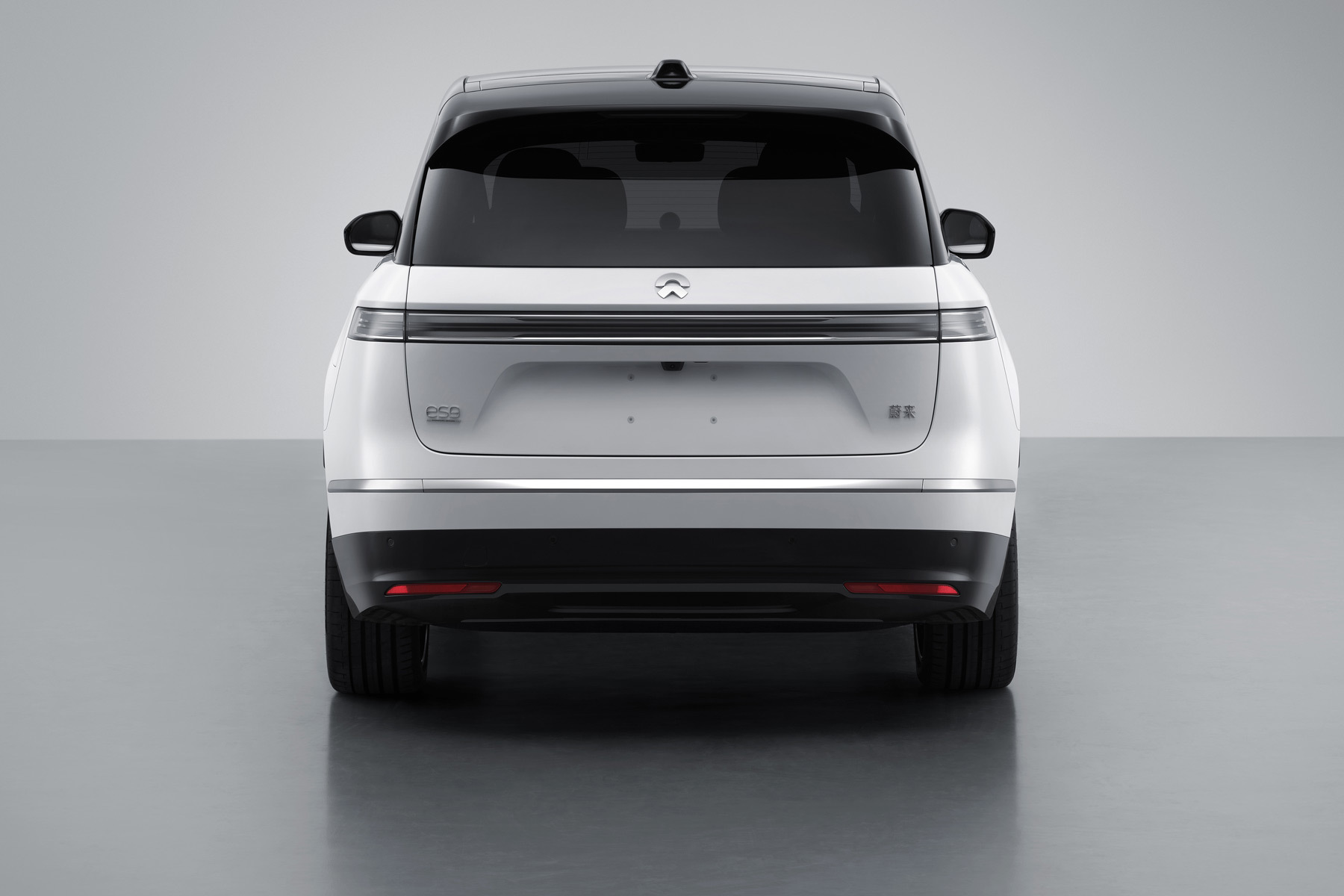
Visually, the design of the ES9 is very similar to its smaller brother, although it does have a more upright and squared front fascia. There are split DRLs and headlights at the front, alongside a large grille and a ribbon of black along the bottom of the bumper. As with the ES8, there’s a LiDAR protruding from the roof.

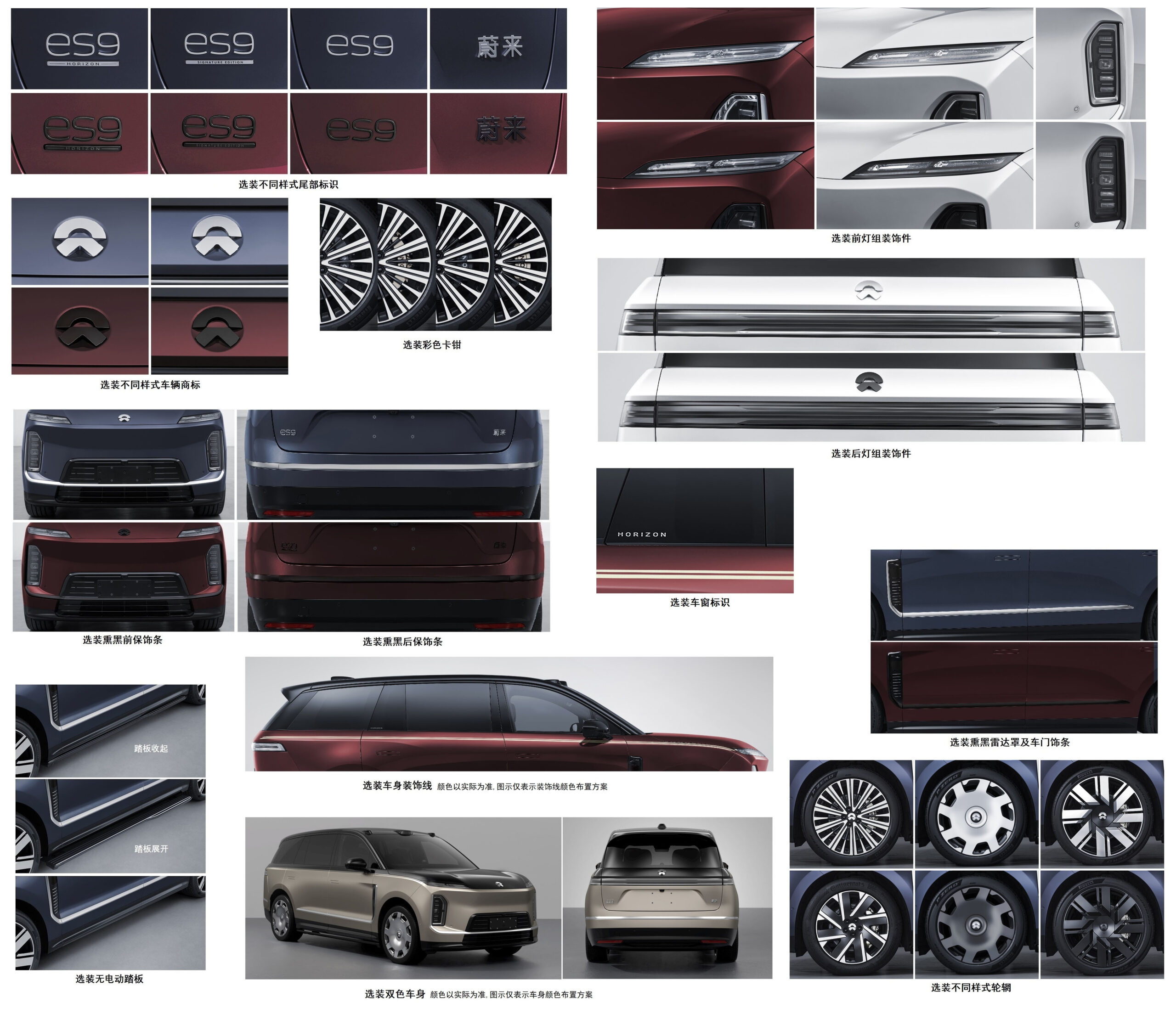
Around back, the design leans toward simplicity, featuring a single LED light bar and little else of interest. Other photos of the SUV reveal that retractable side steps will be available, as will at least six different wheel designs/finishes. Shoppers will also be able to choose between black or silver accents running along the body.

Dual-Motor Drive
 China’s Biggest Electric SUV Yet Wasn’t Made For Drivers

We don’t yet know what the cabin of the ES9 will look like, but we do have some important powertrain details. Powering the SUV will be a 241 hp (177 kW) electric motor at the front axle and a 456 hp (335 kW) motor at the rear axle, combining to deliver 697 hp (513 kW) and 516 lb-ft (700 Nm) of torque. The battery pack will be sourced from CATL and is expected to have a capacity of 102 kWh.

There’s no word on what charging speeds this battery will support, but in the land of Nio, charging times aren’t particularly important, as Nio operates a huge battery-swapping network where a depleted battery can be replaced with a fully charged one in just 3 minutes.

A full reveal is expected in the coming months, with its domestic launch set to follow soon after. Availability in markets outside China has not yet been confirmed.
 China’s Biggest Electric SUV Yet Wasn’t Made For Drivers
Before yesterdayMain stream

Mercedes Gave China’s GLC A Little Extra, And It Shows

  • China’s GLC EQ stretches an extra 2.1 inches in wheelbase.
  • It features dual motors with a 219 hp and 402 hp split.
  • Range could hit 500 miles using China’s local test cycle.

Mercedes-Benz isn’t waiting around when it comes to expanding its electric lineup in China. Less than six months after unveiling the all-new GLC with EQ Technology in Europe, the first images of the long-wheelbase version have surfaced, tailored specifically for the Chinese market.

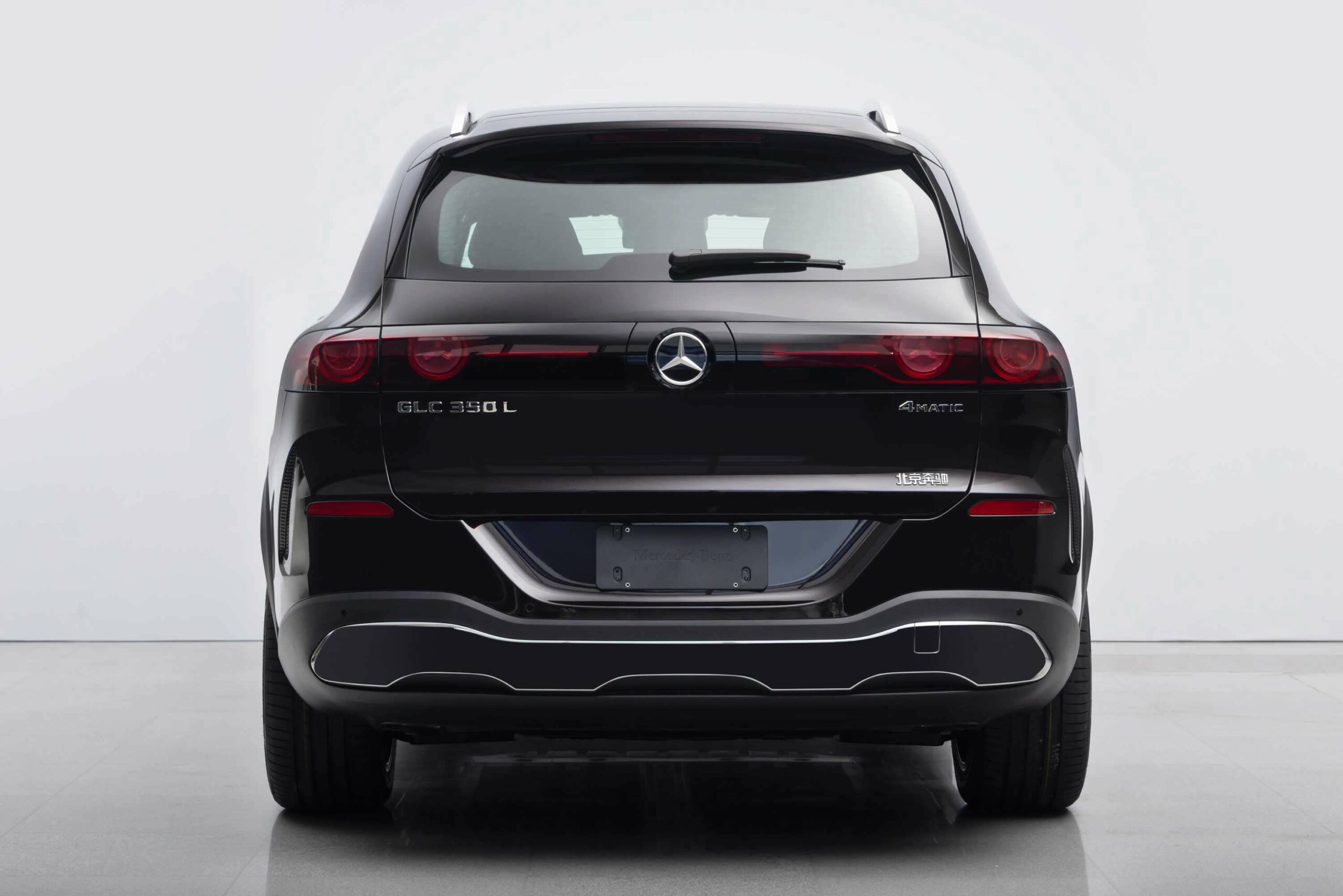
Scheduled to launch as the GLC 350 L, this variant stretches the wheelbase to 3,027 mm (119 inches), compared to the 2,972 mm (115.2 inches) found in Western versions. The extra 55 mm, or about 2.1 inches, may not seem dramatic on paper, but in practice, it’s likely to matter quite a bit for those riding in the back.

Read: Star-Stricken Mercedes GLC EV Has A Grille Big Enough To Swallow A BMW iX3

Without a direct comparison, the extended-wheelbase GLC EQ looks much like the standard version. The longer rear doors are the most visible difference, with a small ‘L’ badge on the tailgate offering the only other clear indication of the added length. Otherwise, the SUV looks quite suave, though we’re still not entirely convinced by the oversized illuminated grille up front.

 Mercedes Gave China’s GLC A Little Extra, And It Shows

So far, early details from China haven’t confirmed the exact battery specifications for the local version. Globally, the GLC EQ is equipped with a 94 kWh lithium-ion pack, offering up to 443 miles (713 km) of range.

It’s likely that the Chinese model will carry the same setup, though local testing standards tend to be more generous. If that holds true, the official figure could land somewhere north of 500 miles (805 km) on a full charge.

According to data released by Chinese authorities, the GLC 350 L comes standard with a dual-motor setup. The front axle motor produces up to 219 hp (163 kW), while the rear one delivers a more substantial 402 hp (300 kW). By comparison, Europe’s sole announced version, the GLC 400 EQ, offers a combined output of 483 hp.

Mercedes-Benz has a lot riding on the GLC EQ’s performance in China. Competition from domestic EV makers is intensifying, and the German carmaker saw a 7 percent dip in Chinese sales in 2024. Full-year figures for 2025 haven’t been released yet, but expectations are for another decline. The GLC EQ’s success may play a key role in reversing that trend.

\\\\

VW Built A Bigger ID SUV Than The X7 And You Can’t Have It

  • VW ID. Era 9X is a full-size SUV with extended-range EV tech.
  • Three powertrain options include rear- and all-wheel drive.
  • Dual-motor version produces 510 hp with 199 miles EV range.

As more carmakers double down on their efforts to cater specifically to China’s fast-evolving EV market, buyers in other parts of the world are being left out of some genuinely interesting vehicles. The VW ID. Era 9X is one of the latest examples, and it brings quite a bit to the table.

Revealed through filings with China’s Ministry of Industry and Information Technology, as well as VW itself, this new production SUV emerges from the SAIC Volkswagen joint venture. It’s a large, range-extender SUV positioned to compete in a growing segment of vehicles that blend electric driving with longer-distance practicality.

Read: VW’s Next Electric Sedan Looks Nothing Like You’d Expect

Battery-electric SUVs are increasingly common in China, but they still don’t meet the needs of every buyer. That’s where extended-range EVs, or EREVs, come into their own.

A Full-Size SUV Built for China

\\\\\\\\\\\\

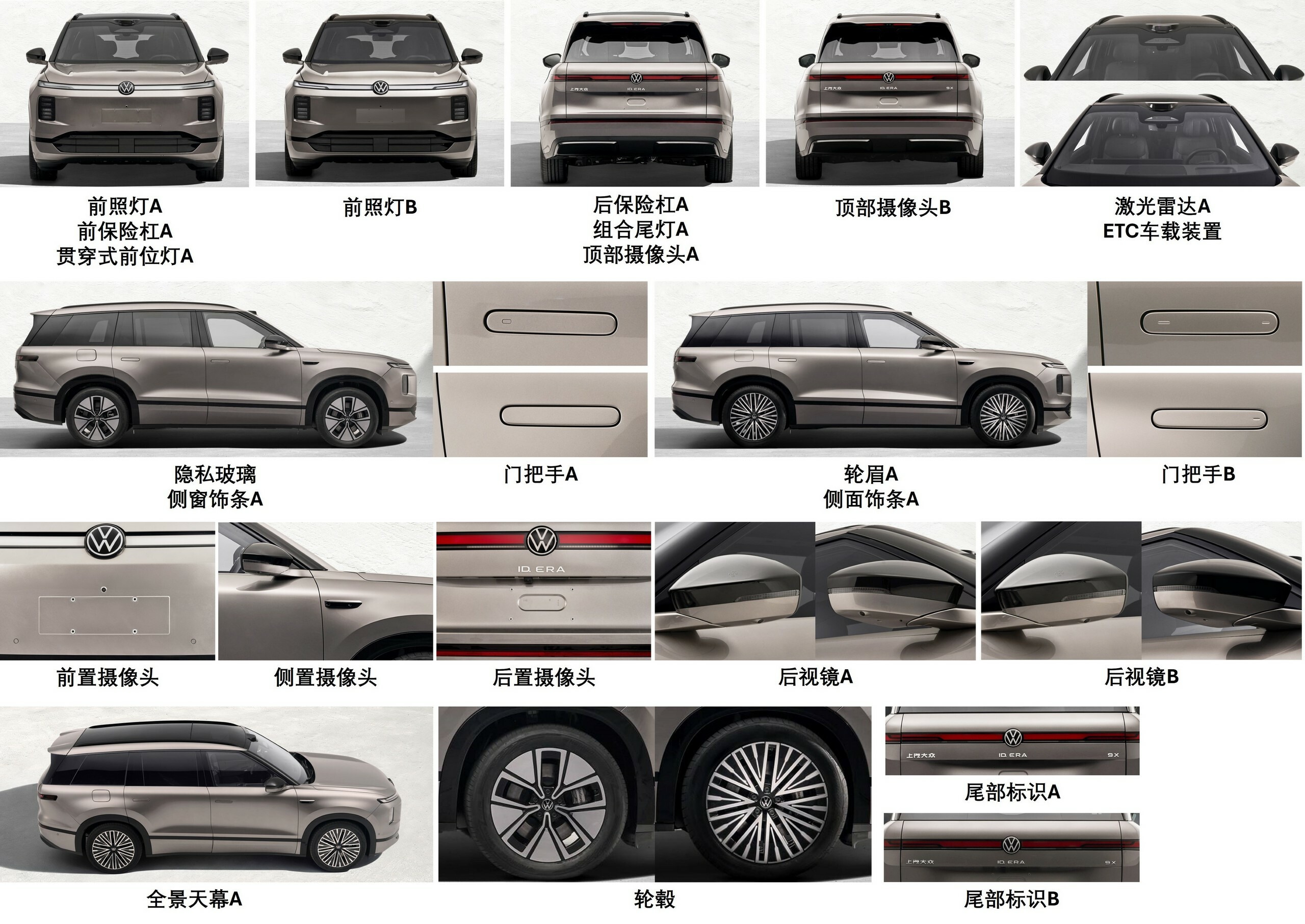
The VW ID. Era 9X, which somewhat curiously shares its 9X badge with Zeekr’s own EREV SUV, is bigger than many popular Western model, including the VW Atlas and Touareg. It even edges out the BMW X7 in overall length. Measuring 5,207 mm (205 inches) long, 1,997 mm (78.6 inches) wide, and 1,810 mm (71.2 inches) tall, the Era 9X rides on a 3,070 mm (120.8-inch) wheelbase.

For reference, the BMW X7 comes in at 5,181 mm (204 inches) in length, 2,000 mm (78.7 inches) wide, and 1,805 mm (71.1 inches) tall, with a 3,105 mm (122.2-inch) wheelbase. This makes the ID. Era 9X slightly longer and taller, though marginally narrower and with a slightly shorter wheelbase. In terms of footprint, it’s firmly in full-size luxury SUV territory.

 VW Built A Bigger ID SUV Than The X7 And You Can’t Have It
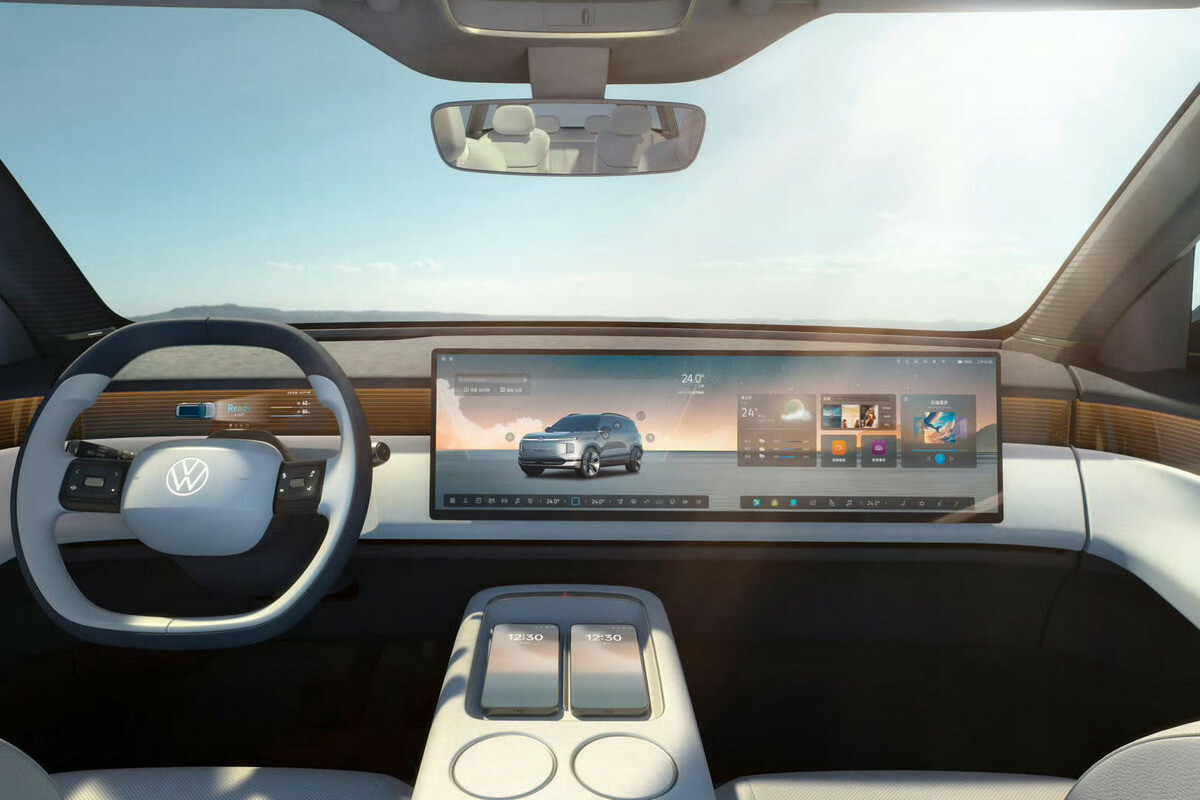
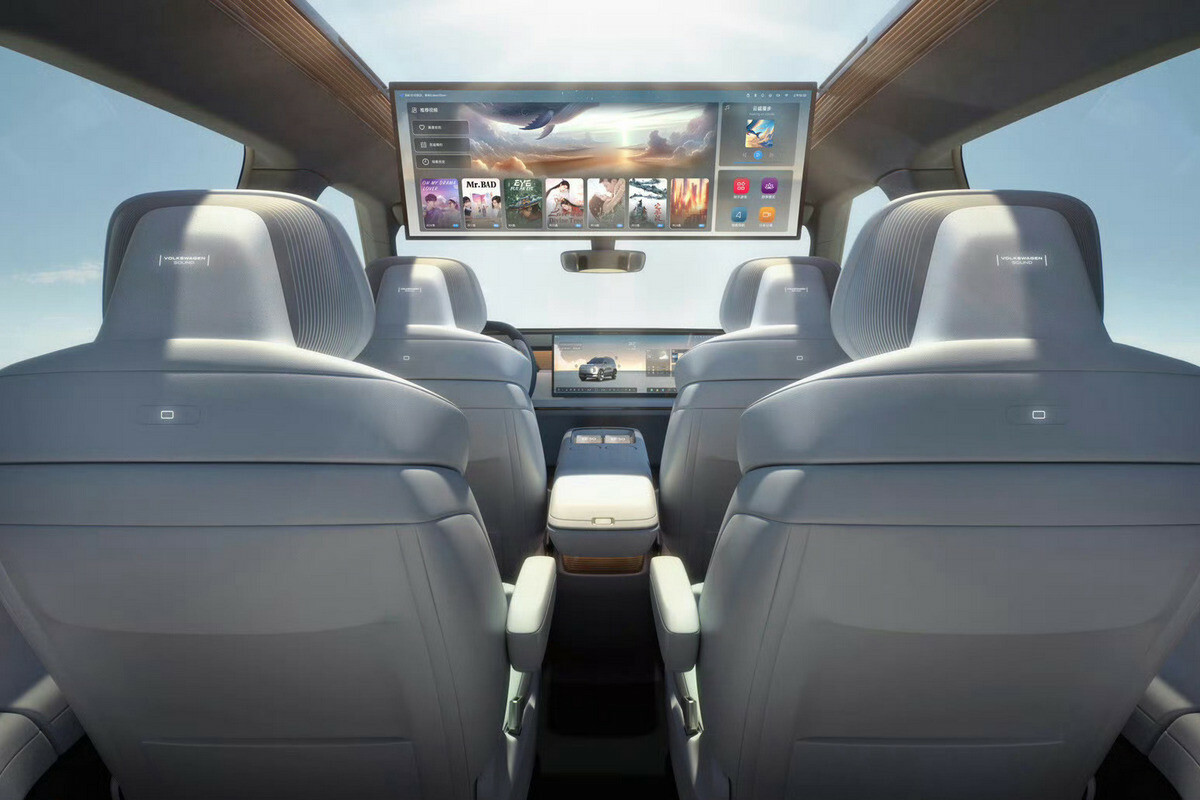
VW ID. Era Concept’s interior.
 VW Built A Bigger ID SUV Than The X7 And You Can’t Have It

The exterior design remains remarkably close to the original ID. Era concept that VW unveiled earlier last year, with a premium and contemporary look that hasn’t been watered down much in the transition to production.

Volkswagen hasn’t revealed the production interior yet. But if it mirrors the concept closely, expect a massive dashboard-spanning infotainment system to carry over. There may also be an optional roof-mounted display for rear passengers. The spec sheet confirms that the ID. Era 9X will come with six seats in a 2+2+2 arrangement.

Powertrain Options

Where things get more interesting is under the skin. The ID. Era 9X is an extended-range electric vehicle, using a gasoline engine only to charge the battery. Volkswagen will offer it in three powertrain configurations, with both rear- and all-wheel drive options.

The base model features a single rear-mounted electric motor producing 220 kW (295 hp), powered by a 51.1 kWh LFP battery. It delivers a pure electric range of up to 267 km (166 miles). The curb weight comes in at 2,600 kg (5,732 lbs).

The second variant uses the same electric motor driving the rear wheels but swaps in a larger 65.2 kWh NMC battery. This upgrade boosts the pure electric range to 340 km (211 miles). It weighs slightly more at 2,620 kg (5,776 lbs).

 VW Built A Bigger ID SUV Than The X7 And You Can’t Have It

Finally, at the top end, it keeps the 65.2 kWh battery but adds a second electric motor on the rear axle, bumping total output to 380 kW (510 hp). This dual-motor setup increases curb weight to 2,700 kg (5,952 lbs). Pure electric range drops slightly to 321 km (199 miles).

While full combined range figures haven’t been published, all three configurations are expected to comfortably exceed 1,000 km (over 600 miles) when using both battery and gasoline power, depending on the final gas tank capacity.

Will It Go Global?

Pricing is still under wraps and should be announced in the coming months before the vehicle officially goes on sale. While a Western launch isn’t confirmed, there’s reason to keep a small window of optimism open for certain martkets.

Mazda already offers its China-built JV models in Europe and Australia, having debuted the new CX-6e SUV earlier today, and Nissan is preparing to follow suit. It’s not out of the question for Volkswagen to consider doing the same with the ID. Era 9X, at least in select international markets, though a US launch is firmly off the table.

\\\\\\\\\

New Mazda CX-6e Looks Like The Future, But Drives Like It’s Still 2019

  • Mazda’s CX-6e electric SUV makes its debut at the Brussels Motor Show.
  • Tesla rival is the European version of the EZ-60 sold in China and Australia.
  • Only electric power and no hybrid planned for Europe; US gets nothing at all.

Mazda has pulled the wraps off its new CX-6e electric SUV at the Brussels Motor Show and it’s easily the best-looking SUV the brand has done in years. But under the skin this premium EV is also years behind rivals from BMW and Audi.

The CX-6e isn’t a pure Mazda creation. Like the mechanically similar 6e sedan, it’s the result of a joint project with Changan and is built in China on the same line as the Deepal S07. Mazda has done the design, tuning and branding work, but the bones are very much shared.

Related: Mazda Goes All In On Huge Display And No Buttons For Its Latest SUV

The Chinese connection means it won’t make it to the US, but it lands in European showrooms later in 2026 where it will take on the Tesla Model Y, BMW iX3 and Audi Q6 e-tron. And it’ll probably cost three times what it does in China, where prices start at just $16,800.

Off The Pace

Under the 2,902 mm (114.3 inches) wheelbase is a 78 kWh LFP battery feeding a single rear motor making 258 hp (258 PS / 190 kW) and just 214 lb-ft (290 Nm) of torque. Mazda claims a WLTP range of up to 300 miles (483 km), which looks like a joke when Volvo this week revealed its similarly-sized EX60 will have up to 503 miles (810 km) of range. Even Tesla’s most basic Model Y Standard, a more accurate rival for the CX, gives you 314 miles (505 km) between charges.

\\\\\\\\\\\\\\\\\\

The performance is nothing to get excited about, either. Zero to 62mph (100 kmh) takes 7.9 seconds, and while we’re talking speed, the 195 kW max charge rate is far from class-leading, meaning a 10 to 80 percent refill in about 24 minutes. AC charging tops out at 11 kW, which is on par with rivals, however.

Screens Everywhere, Buttons Nowhere

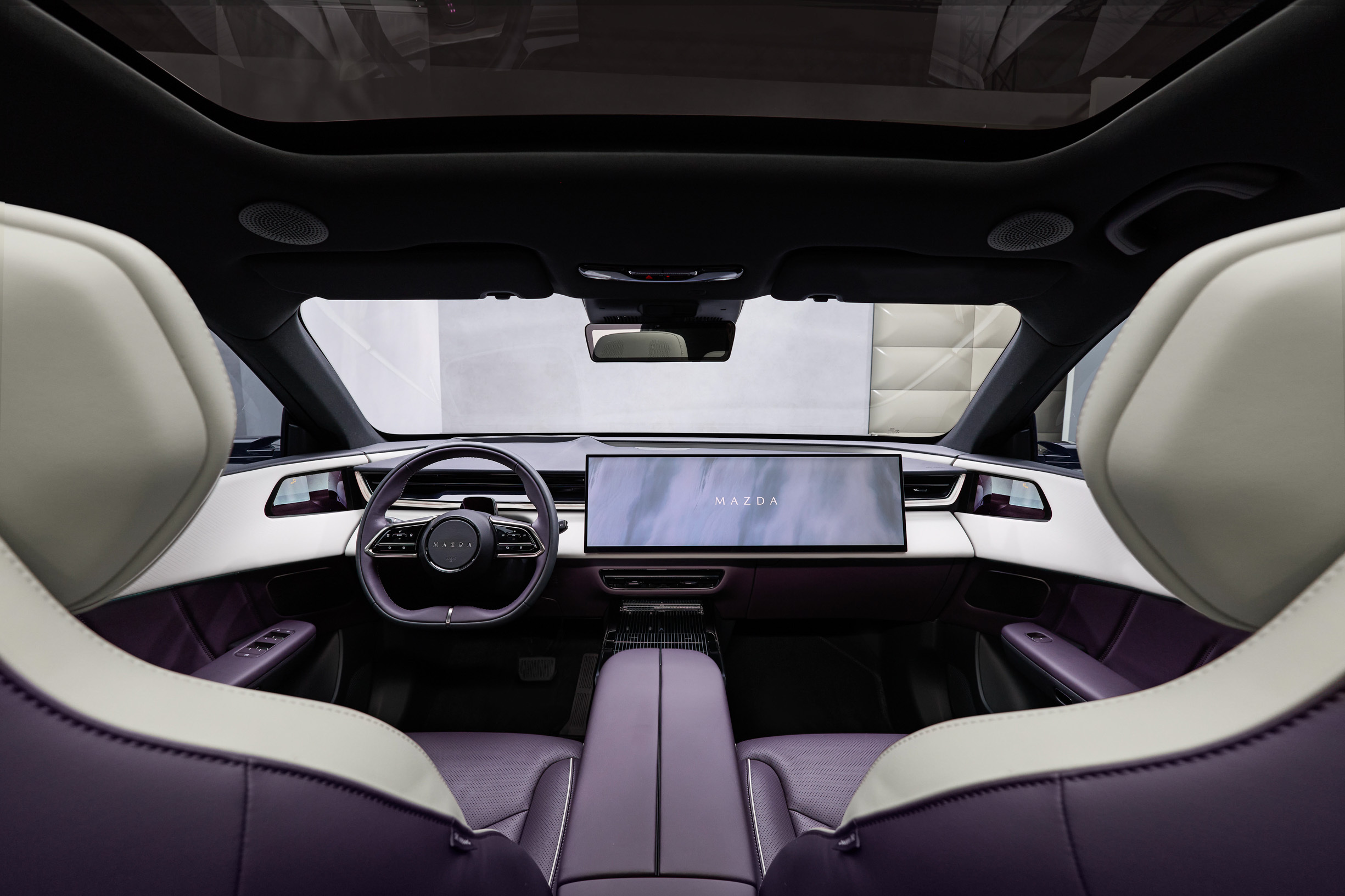
The interior is where the CX-6e really leans into the future. A huge 26 inch display stretches across the dash and a head up display removes the need for a traditional instrument cluster. Other tech highlights include gesture shortcuts, speakers in the headrests and screens for the camera-based door mirrors neatly embedded in the door cards.

 New Mazda CX-6e Looks Like The Future, But Drives Like It’s Still 2019

Size-wise, the CX-6e is longer and wider than the combustion CX-60 but it can’t touch the ICE SUV or its electric rivals for cargo space. The EV only offers 468 litres (16.5 cu-ft) compared with 570 liters (20.1 cu-ft) in the CX-60, and over 850 litres (30 cu-ft) in a Model Y, though you do also get an 80-liter (2.8 cu-ft) frunk for cables, which you don’t in the Tesla.

Style Over Substance.

We think the CX-6e looks great inside and out, but that style and the still-TBC prices might have to do a lot of heavy lifting to make buyers overlook the poor range, performance and practicality.

\\\\\\\\\\\\\\\\\\\

Mazda

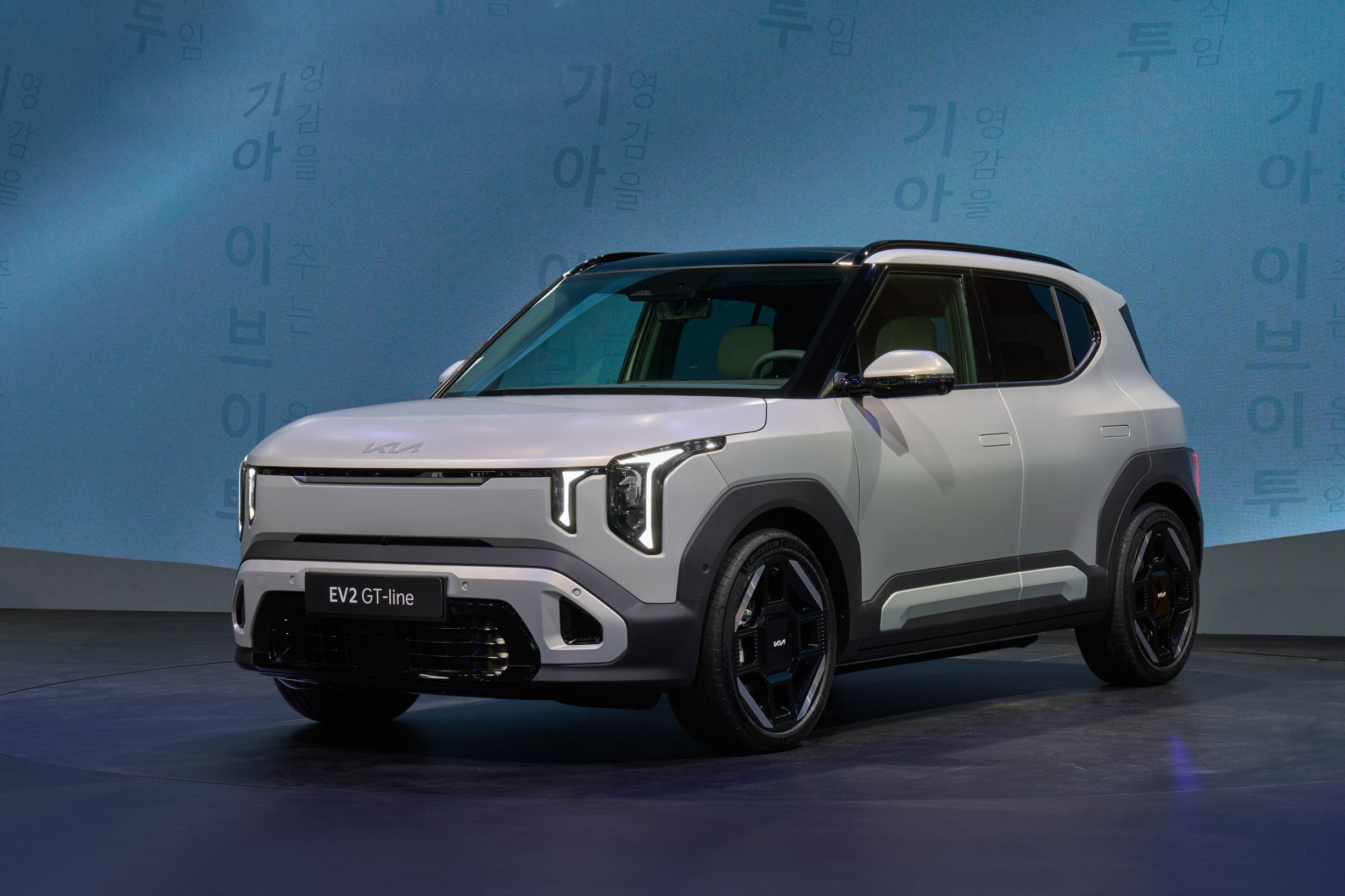
Kia’s EV2 Is Like A Renault 4 Without The Nostalgia

  • Kia debuts its entry-level EV at the Brussels Auto Show.
  • Biggest of two battery options gives 278-mile range.
  • EV2 debuted alongside GT versions of EV3, 4 and 5.

The electric SUV world is getting crowded, but Kia thinks it’s found a sweet spot. Meet the EV2, a new B-segment electric SUV that wants to be your first EV, your family car and your everyday runabout all at once. It’s compact, practical, packed with tech and at an estimated £26k/€30k, should be relatively affordable, too.

Kia is positioning the EV2 as its most accessible electric car yet. It sits below the brand’s bigger EV3 and EV5 SUVs but borrows their design language, technology and desirability. Think of it as a punchy YouTube short culled from your favourite long-form vid. The EV2 made its debut at this week’s Brussels Motor Show alongside GT-branded performance versions of the EV3, EV4 and EV5.

Related: Kia’s US EV Sales Collapsed, But It Just Did Something It’s Never Done Before

A circa-4.1m (160 inches) length means it’s suitably city-sized, the design is upright and confident, with vertical lighting signatures, chunky arches and a stance that looks adventurous and cute at the same time. Wheel choices run from 16 to 19 inches, and there’s even a GT line version if you want your small SUV with a side of attitude. Hopefully a full-house GT is in the works.

Up to 278 miles of range

 Kia’s EV2 Is Like A Renault 4 Without The Nostalgia

Two batteries are offered, each coming with a different power output. A 42.2 kWh version mated to a 145 hp (147 PS / 108 kW) motor available from launch this spring promises up to 197 miles (317 km) for drivers with few plans to leave town.

Coming later, along with the GT-Line versions, the 61.0 kWh pack aims for 278 miles (448 km) and adds flexibility if you think you might need to take on some longer journeys. Kia hasn’t revealed how much muscle the EV2 with the bigger battery gets, but both models feature a single motor driving the front wheels.

Charging times hover around 30 minutes on DC fast chargers, though like the EV3, EV4 and EV5, the EV2 makes do with slower-charging 400-volt electrics, rather than the lightning-fast 800-volt hardware used in the pricier EV6 and EV9. But it does support both 11 and 22 kW AC charging and offers V2L and V2G, letting you power devices or even send energy back to the grid.

Renault 4-grade space

 Kia’s EV2 Is Like A Renault 4 Without The Nostalgia

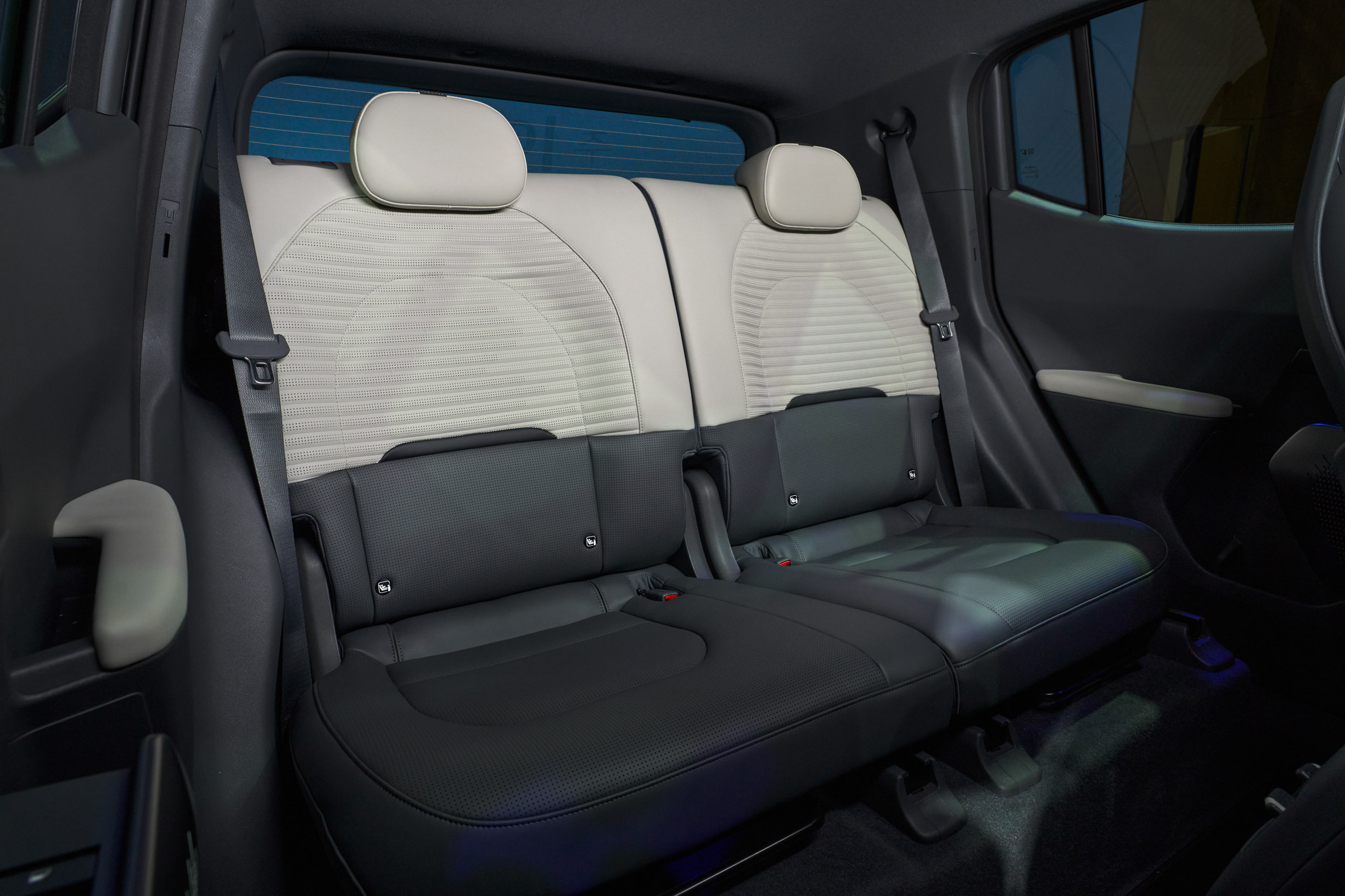
The EV2’s quoted 2,565 mm (101 inches) wheelbase is 59 mm (2.3 inches) shorter than a Renault 4’s, but Kia promises you won’t be disappointed by the interior space. Buyers get to choose between four- and five-seat configurations, and by sliding and reclining them you can stretch legroom or expand the cargo space depending on your needs. 

With seats slid forward, suitcase room tops out at up to 403 litres (14.2 cu-ft), in the slightly roomier four-seat version, which isn’t far short of the 420 liters (14.8 cu-ft) the Renault 4 delivers. Plus there’s a handy little 15-liter (0.5 cu-ft) frunk for cables that the Renault can’t match.

Big-car tech

 Kia’s EV2 Is Like A Renault 4 Without The Nostalgia

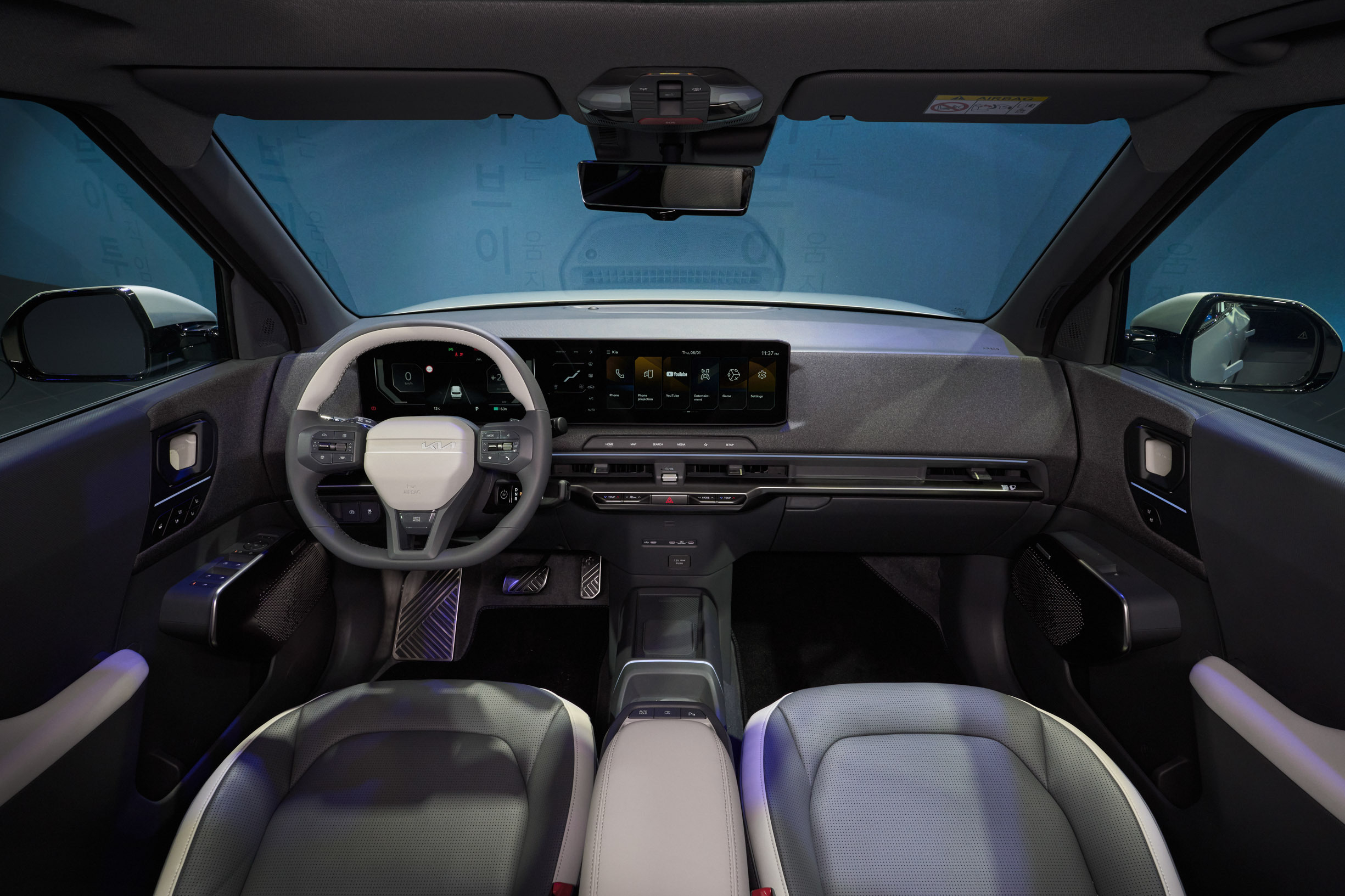
The tech is also surprisingly serious for a so-called entry-level EV. You get a triple-screen layout with a digital cluster, climate display and central touchscreen, just like you do in Kia’s pricier cars. But it’s actually a new lower cost ‘lite’ version of the ccNC infotainment system designed for the company’s more affordable cars. 

OTA updates, digital keys and app integration are all part of the deal, as are remote parking, surround view cameras and a long list of driver assistance systems normally reserved for more expensive cars.

Made in Europe for Europe, the Slovakia-built EV2 is shaping up to be yet another big hit for Kia. If it gets the pricing right, this could be one of the most important electric launches of the next few years, because small, sensible and actually affordable sounds bang on trend right now.

\\\\\\\\\\\\\\

Kia

Kia Unveils Four New GT Models With Speed, Minus The Drama

  • Kia launched GT versions of the EV3, EV4, and EV5 in Brussels.
  • Each GT model has dual-motor AWD and a revised chassis setup.
  • Production begins in Q2 2026 alongside EV6 GT and EV9 GT.

Kia is moving full speed ahead on its EV performance promise, expanding its electric GT range with three new entries unveiled at the Brussels Motor Show. With the covers pulled off the EV3 GT, EV4 GT, and EV5 GT, the brand is sticking to its plan to give every electric model a sharper, sportier twin.

All three, or technically speaking, four newcomers, since the EV4 is offered in both hatchback and fastback bodystyles, sit at the top of their respective ranges, each fitted with a more powerful dual-motor setup, a dedicated GT drive mode, revised suspension tuning, and styling tweaks that bring more edge inside and out.

More: Kia’s EV Sales Collapsed, Yet It Just Did Something It’s Never Done Before

If you’re not yet fluent in Kia’s EV naming scheme, here’s a quick primer: the EV3 is a subcompact SUV, the EV4 comes in hatchback and fastback forms, and the EV5 is a slightly larger compact SUV. In true Kia fashion, even the full-fat GT variants keep things relatively low-key.

Most of the visual changes are subtle, and all three models ride on distinctive 20-inch alloy wheels that hint at their upgraded performance.

\\\\\\\\\\\\\\

Inside the cabin, we find semi-bucket seats, GT-branded steering wheels, striking neon accents, and ambient lighting that changes depending on the drive mode. Equipment is rich, with features such as the Harman Kardon premium audio, head-up display, and Remote Smart Parking Assist included as standard.

How Much Power Do They Make?

Under the skin, all three GTs are built on Kia’s E-GMP platform and share the same 81.4 kWh battery pack. What separates them, though, is how each model tunes its dual-motor system.

Both the EV3 GT and EV4 GT generate 282 hp (215 kW / 286 PS), while the larger EV5 GT gets a slight bump to 302 hp (225 kW / 286 PS). Those aren’t headline-grabbing numbers, but they’re more than enough to give each vehicle a meaningful boost over its standard counterpart.

More: The Kia EV5 Just Launched In Some Markets, And It’s Already Getting A Facelift

Kia says the low-slung EV4 GT delivers “an even more agile and road-focused interpretation of the GT philosophy,” and based on its specs, that might hold up. It’s the quickest of the bunch, clocking 0-100 km/h (0-62 mph) in 5.6 seconds.

Just behind it, the EV3 GT completes the sprint in 5.7 seconds, while the heavier EV5 GT takes 6.2 seconds to do the same. All three are far from slow, especially given their size and class, but Kia seems more interested in fine-tuning the feel than chasing supercar numbers, which makes sense given their positioning.

\\\\\\\\\\\\\\\

All three models have a dedicated GT drive mode which sharpens up power delivery, steering response, and the standard electronically-controlled suspension. They also benefit from e-torque vectoring, Virtual Gear Shift (VGS), and active sound design systems aiming to make the driving experience a bit more engaging.

Launch Timeline

Production of the sporty EVs is scheduled to begin in the second quarter of the year. Pricing and details on availability will be announced closer to their market launch.

The EV3 GT, EV4 GT, and EV5 GT will join the existing EV6 GT and EV9 GT in Kia’s growing performance EV lineup. A sixth member, based on the yet-to-launch EV2, is also on the way and made its first appearance alongside the others in Brussels.

\\\\\\\\\\\\\\\

Kia

Volvo’s New EV Is Here To Give Mercedes GLC EQ Range Anxiety And Seat Envy

  • Volvo’s new EX60 SUV can add 211 miles of range in 10 minutes.
  • One teaser image appears to show a third row of seats folded down.
  • The BMW iX3-rivalling EX60 will be revealed in full on January 21.

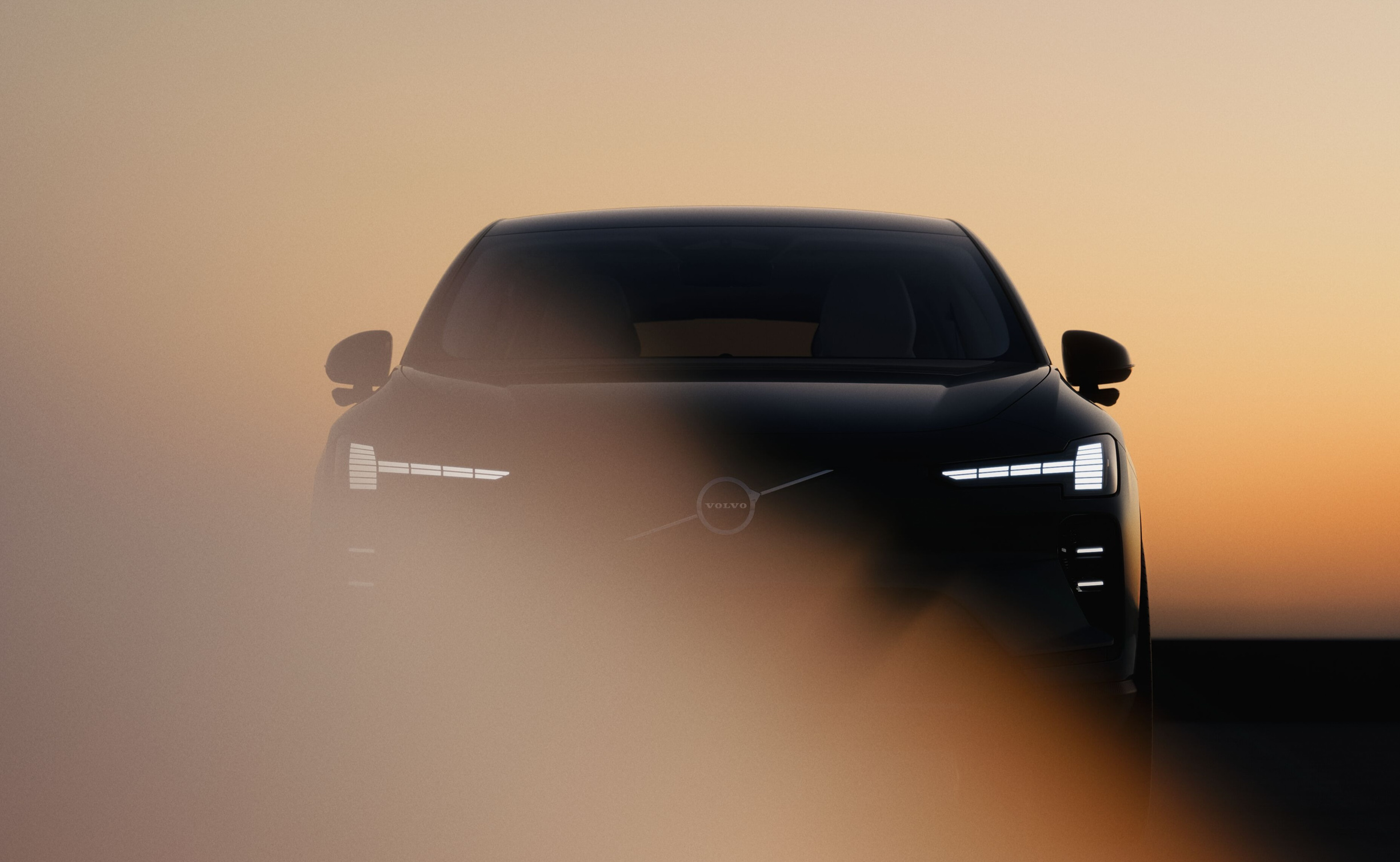
Volvo’s about to drop a crucial new electric car, and it looks like it’s bringing receipts. The EX60 launches later this month but a teaser this week revealed range figures that none of its BMW, Mercedes and Tesla rivals can match, and a hint that it might come with seating for seven.

We’ll have to wait until the debut on January 21 to get the full breakdown of what’s under the EX60’s skin, but the fact that the EX90’s little brother is rated at 503 WLTP miles (810 km) of electric range is enough to generate headlines.

Related: He Built The Volvo You Remember, Now He Has To Fix What It Became

For context, BMW’s brand new iX3 has up to 500-miles (805 km) rating, and the GLC 400 with EQ Technology that debuted at the same Munich Auto Show last September is only good for 443 miles (713 km), Mercedes says. Tesla’s most touring-focused Model Y can’t even crack 400 miles (644 km).

Fast Charging

Volvo also says you won’t have to spend too much time hanging around charging stations when you do eventually need a top-up. Thanks to its 800-volt electrics the EX60 can add 211 miles (340 km) of range in as little as 10 minutes. You also get a 10-year warranty on the battery.

 Volvo’s New EV Is Here To Give Mercedes GLC EQ Range Anxiety And Seat Envy

We’ve already had a sneak look at the rear and profile of the EX60 in previous teasers, and along with revealing the electric range, Volvo has now given us a look at the front. The brand’s trademark Thor hammer DRLs are present, made up of segmented LEDs, and we can also make up a pair of ADAS sensors mounted below each door mirror.

Reinventing the Seatbelt

The EX60 is the first Volvo to ride on the company’s SPA3 platform, an upgrade of the earlier SPA2 architecture that underpins models like the EX90. It’ll also be the first of the brand’s cars to get Volvo’s new adaptive seatbelt, which uses sensors to work out the height, weight and shape of a passenger before deciding how much belt force they need in a crash.

Seating for Seven

 Volvo’s New EV Is Here To Give Mercedes GLC EQ Range Anxiety And Seat Envy
Volvo

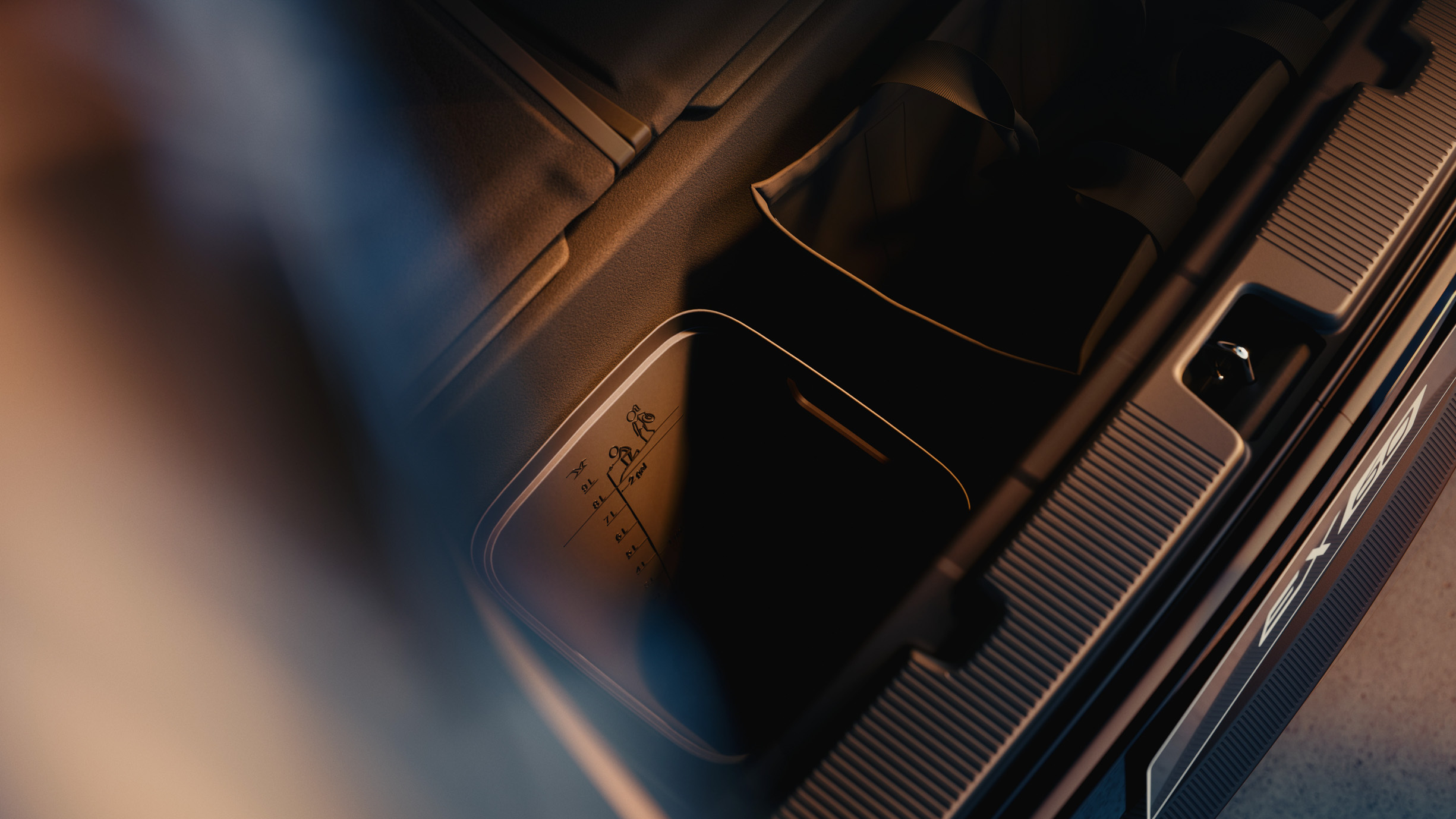
And unlike its BMW iX3 and Mercedes GLC rivals, which are strictly two-row affairs, it looks like the EX60 could have a small third row of seats stashed under the trunk floor. Though Volvo hasn’t mentioned anything about seven seats, in the image of the trunk it definitely looks like there are two seats folded away.

The picture of the body-in-white also shows mountings for a 50:50 split third-row, and the impression we get is there would still be enough space for a few shopping bags even if the seats were in use. We’ll find out more on January 21.

\\\\\\

Volvo

After A $90K Sedan, Sony Honda Thinks What America Needs Now Is Another Pricey Electric SUV

  • Sony Honda Mobility reveals Afeela Prototype 2026 crossover.
  • Both EVs share interior tech, platform, and design principles.
  • Afeela 01 sedan enters pre-production ahead of 2026 launch.

EV startup Sony Honda Mobility has returned to CES in Las Vegas this year with a fresh glimpse into its future, unveiling both a nearly production-ready version of the Afeela 01 sedan and a new crossover concept. The taller, more upright newcomer is called the Afeela Prototype 2026 and is set to arrive on American roads in 2028.

More: This $90K Sony Honda Lets You Play Gran Turismo Instead Of Just Living It

The two vehicles share a common mechanical platform and clearly draw from the same design playbook with broad LED light strips front and rear, a display panel built into the front fascia, and smooth, bi-tone bodywork.

Both wear their tech ambitions on their sleeves, though their overall shape leans more conventional than provocative. Still, they mark a visual step forward from the earlier Sony Vision-S 01 and Vision-S 02 prototypes that premiered at CES in 2020 and 2022.

A Cabin Built Around Screens

\\\\

Inside, the crossover closely mirrors the sedan, with a dashboard lined in multiple displays and two additional screens in the rear, where passengers can dive into PlayStation games. The tech backbone is Qualcomm Technologies’ Snapdragon Digital Chassis, paired with an advanced AI agent developed in collaboration with Microsoft.

The added height should translate into better interior packaging, especially for families or anyone regularly hauling passengers. With LiDAR modules and cameras mounted to the roof, both Afeela EVs aim for Level 2+ autonomy at launch, with built-in capability to support Level 4 once regulations and software catch up.

\\\\\\\

Technical details on the crossover remain mostly under wraps, though it’s expected to closely track the sedan in terms of performance and equipment.

More: Honda And Sony’s New EV Has Lost Over $360M Before Even Launching

The Afeela 01 has dual electric motors generating 483 hp (360 kW / 489 PS), , fed by a 91 kWh battery. That setup delivers an estimated 300 miles (483 km) of EPA range. Those numbers don’t sound that exciting for 2028 standards, especially when the new BMW iX3 already offers a 400-mile (644 km) range.

How Much Will it Cost?

\\\\\\\\

Sony Honda Mobility has yet to reveal pricing for the crossover variant that will hit the roads in 2028. However, the prices of the closely-related sedan are a good indication of what to expect.

The Afeela 01 sedan will debut in a high-spec Signature launch trim at $102,900, arriving in late 2026. A more affordable Origin base model, priced at $89,900, will follow in 2027. Interestingly, even though production is based in the US, the first customer deliveries are slated for Japan in the first half of that same year.

Sony Honda Mobility

BMW’s New X5 Doesn’t Care What Every Other SUV Is Doing

  • BMW’s next-gen X5 adopts a new face with a simplified grille.
  • Neue Klasse styling elements appear throughout the X5’s design.
  • A wide mix of gas, diesel, plug-in hybrid, and EVs will be on offer.

The X5 has never been BMW’s wildest design, but it’s managed to avoid the extremes seen elsewhere in the lineup. Still, the oversized kidney grilles on the current model don’t do it many favors. They don’t sink the look entirely, but they certainly don’t flatter it either.

The good news is that a new generation is on the way, and early signs suggest a cleaner direction, along with a range of powertrain options that stretches well beyond what most would expect.

Read: BMW’s 2027 X5 Finally Shows Its Lights And What’s Hiding Inside

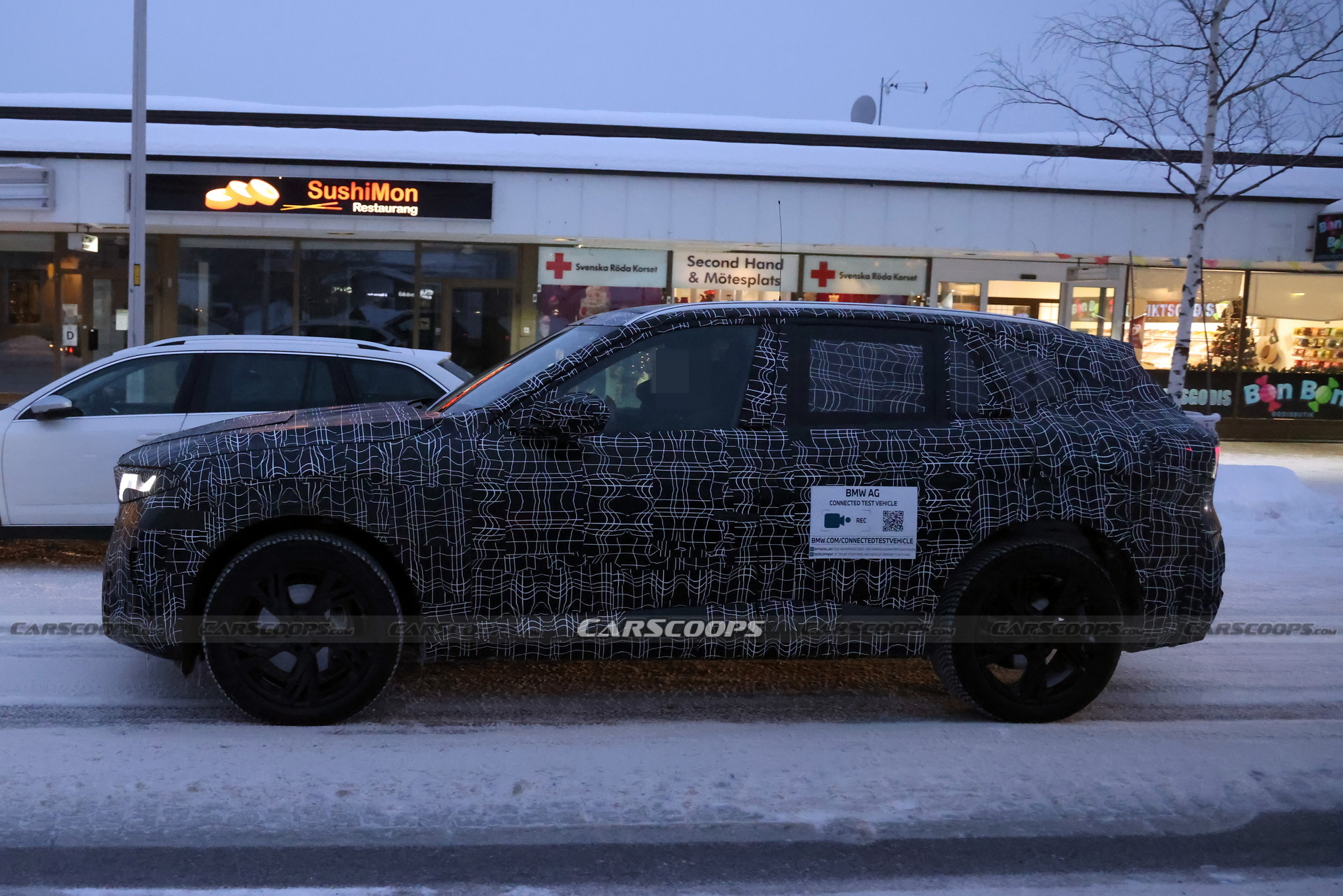
BMW has begun testing the upcoming X5, internally designated G65, and sent a prototype north to Sweden for winter trials. While still clad in camouflage, it’s already clear that the SUV will wear design elements from BMW’s Neue Klasse era.

Neue Klasse Meets X5

Like the second-generation iX3, the new X5 sports reworked headlights with sharply defined daytime running lights and a more technical front-end aesthetic. A gloss-black panel extends toward the center of the fascia, echoing the EV’s layout, and will house a pair of vertically oriented kidney grilles. Though still concealed by camouflage on this prototype, their shape is clearly visible beneath the surface.

\\\\\

SHproshots

The rear end of the new X5 will also be a dramatic departure from the current model. It ditches the traditional taillights of the outgoing model and replaces them with thin, horizontal LED units that appear reminiscent of those used by the XM. This prototype also has a curvy rear spoiler stretching out above the window, adding to the striking new design.

Interior Changes

\\\

SHproshots

The cabin is also in line for a thorough redesign. Recent spy shots have confirmed that the new X5 will adopt the same Panoramic iDrive setup as the iX3. This includes a narrow display spanning the base of the A-pillars, paired with a sharply angled central infotainment screen.

While the steering wheel on this prototype may differ from the iX3’s squared-off four-spoke unit, it looks likely to use a more conventional two-spoke design, with enough visual weight to stand out on its own.

Powertrain Options

\\\\\

SHproshots

Beneath it all, the G65 X5 will continue to ride on BMW’s CLAR architecture, albeit in an updated form. This means a familiar chassis with enough flexibility to support combustion, hybrid, and electric variants without needing to reinvent the platform.

According to CarScoops sources, the combustion model will be sold in 40, 40 xDrive, 40d xDrive, 50e xDrive, M60 xDrive, and M60e xDrive forms. A potent X5 M version also seems inevitable. In addition to selling a slew of combustion-powered models, the brand will introduce an all-electric iX5 model, set to be sold in 50 xDrive, 60 xDrive, and M70 xDrive forms.

The powertrain options won’t end there. In addition to the gas, diesel, plug-in hybrid, and electric models, there could be a range-extended version of the iX5, dubbed the Rex, complete with a driving range of up to 621 miles (1,000 km). The new X5 will also be BMW’s first mass-market model available with a hydrogen fuel-cell powertrain.

 BMW’s New X5 Doesn’t Care What Every Other SUV Is Doing

The Kia EV5 Just Launched In Some Markets, And It’s Already Getting A Facelift

  • Kia will update the EV5 by late 2026 with tech and design tweaks.
  • EV5 lacks range and charging speed versus Tesla and BYD rivals.
  • Weekender concept hints at cabin and tech changes Kia may adopt.

If it feels like the Kia EV5 just arrived, you’re not imagining things. The all-electric crossover made its debut in China in late 2023, followed by rollouts in Australia, Brazil, and other Western markets through 2024, eventually going on sale in Europe just this past fall.

Despite still being a recent arrival in most showrooms around the world, Kia has already confirmed that a mid-cycle refresh is on the way. The update is expected to arrive before the end of 2026, with a market launch likely following in 2027 for most regions outside China.

Review: The 2025 Kia EV5 Makes A Whole Lot Of Sense

Kia Australia’s general manager of product planning, Roland Rivero, recently addressed the upcoming update, noting it will come with the expected range of mid-life improvements. “So yes, there’ll be some cosmetics, and there’ll be some tech,” he told local outlet Drive.

Rivero didn’t elaborate on what those changes might involve. Still, it’s not hard to imagine where updates could be focused to make the EV5 more competitive and appealing.

Will Kia Speed Things Up?

\\\\\\\\\\\

The current European-specification 2025 Kia EV5

A likely candidate for improvement is charging. Unlike Hyundai’s flagship EVs, the EV5 doesn’t ride on the advanced E-GMP 800-volt platform. Instead, it uses the more affordable 400-volt N3 eK system. This limits DC fast charging speeds to a maximum of 140 kW, translating to a 10 to 80 percent charge in 38 minutes.

Also: Kia’s Pickup Isn’t Selling and Someone Just Designed a Better One

That’s a step behind direct competitors like the Tesla Model Y and BYD Sealion 7, and significantly slower than Hyundai’s Ioniq 5 and Kia’s own EV6.

While we do not expect the EV5 to shift to an 800-volt architecture as part of its facelift, Kia could work to improve charging times. Additionally, the EV5 isn’t as efficient as some rivals and could benefit from more range.

\\\\\\\\\\\\

EU-spec 2025 Kia EV5

It’s unclear if any significant alterations could be made to the SUV’s cabin. Last month, Kia unveiled the intriguing EV5 Weekender concept, fitted with a host of off-road upgrades. While the exterior was updated, more significant changes were made to the cabin.

For example, the concept ditched the dual driver and infotainment display of the current model, instead opting for a single panel encompassing the infotainment screen and a passenger display. Positioned ahead of the steering wheel was a thin cluster.

Kia also fitted the concept with a distinctive new steering wheel and eliminated the unconventional center console found in the production version.

The Weekender could even hint at a new variant for the refreshed lineup, potentially adding a more rugged model to the mix.

Kia EV5 Weekender Concept
\\\\\\\\\\\

Lexus Built A Wild New RZ F Sport, And You’re Not Allowed To Have It Yet

  • Lexus launches the RZ 600e F Sport Performance in Japan market.
  • It blends the RZ 450e bodykit with power and chassis upgrades.
  • Dual motors make 420 hp with yoke steering and lower ride height.

If you thought Lexus was finished updating the RZ, think again. After rolling out in Europe and North America, the refreshed model has now made its way to Japan, and it arrives with a surprise addition. Headlining the lineup is the new RZ 600e F Sport Performance trim, blending aggressive aero elements with chassis enhancements and a healthy jump in power.

The RZ 600e F Sport Performance borrows its carbon fiber bodykit from the limited-run RZ 450e F Sport launched in 2024, itself inspired by the 2023 RZ Sport Concept.

More: Toyota’s Most Expensive Supercar Has Something In Common With Lexus’ Cheapest Sedan

That means a vented hood, a front splitter, wider fenders with integrated aero extensions, reshaped side skirts, a pronounced rear diffuser, and a two-piece rear wing that adds both visual drama and functional downforce.

\\\\\\\

The special edition comes in two colors, Neutrino Gray and Hakugin II, each paired with black as a base, accented by exposed carbon fiber and blue detailing. It rides on 21-inch matte black Enkei alloy wheels, behind which sit larger 20-inch brakes and six-piston aluminum monoblock calipers up front.

Lexus also dropped the suspension by 20 mm (0.8 inches) compared to the RZ 550e F Sport, the base for this version.

Fastest RZ Yet

More significantly, the dual electric motors have been reworked to deliver a combined 420 hp (313 kW or 426 PS), making the 600e the most powerful RZ yet. It now surpasses the related Toyota bZ and Subaru Solterra in output, despite their shared architecture.

More: These Future Supercars From Toyota And Lexus Share DNA But Not A Soul

With the extra power on tap, the RZ 600e F Sport Performance accelerates from 0 to 100 km/h (62 mph) in 4.4 seconds. It uses the familiar 77 kWh battery, which provides a driving range of up to 525 km (326 miles) on a full charge.

\\\\\\\

Inside, the standout feature is the yoke-shaped steering wheel connected to Lexus’s steer-by-wire system, paired with what the brand calls “Interactive Manual Drive” for a more involved feel. The interior also features blue accents on the dashboard and sport seats upholstered in Ultrasuede, part of the F Sport Performance package.

The RZ 600e F Sport Performance will go on sale in Japan on March 2, 2026. Pricing is set at ¥12,165,000 (equal to $78,100 at current exchange rates) for the version in Black with Neutrino Gray, and ¥12,440,000 ($79,900) for the more distinctive Black and Hakugin II finish.

Interestingly, while Lexus limited the 2024 RZ 450e F Sport Performance to just 100 units, the new 600e will have no such production cap. Availability in other markets remains unknown at this time.

\\\\\

The Rest Of The RZ Lineup

Besides the RZ 600e F Sport Performance, Lexus has rolled out updates across the rest of the lineup, including the RZ 350e Version L, the RZ 500e Version L, and the RZ 550e F Sport.

All models benefit from increased power and improved efficiency, alongside a revised charging system. Range now varies from 579 km to 733 km (360 to 456 miles), depending on the configuration. As before, the Lexus RZ is available in both single-motor and dual-motor setups, with battery capacities of 75 kWh or 77 kWh carried over from the previous model.

More: Japan’s 2026 Toyota RAV4 Gets Something You Don’t

The F Sport trim remains visually distinct, marked out by sportier design cues and the same yoke steering wheel linked to the steer-by-wire system.

Pricing for the updated electric SUV start at ¥7,900,000 ($52,000) for the front-wheel-drive RZ 350e Version L and rise to ¥9,500,000 ($63,000) for the all-wheel-drive RZ 550e F Sport. Buyers can also opt for the “Performance Upgrade Boost + Interactive Manual Drive” package at ¥220,000 ($1,500), which increases peak output and adds simulated manual control.

\\\\\\\\\\\\\\\\

Lexus

Nissan Kills This EV In The US, Then Refreshes It For The World

  • Nissan Ariya gains a new nose, wheels, and updated colors.
  • Facelift adds Google infotainment and power export feature.
  • Carry-over batteries and motors, plus Nismo trim confirmed.

Nissan has released the updated Ariya in Japan, bringing fresh looks and a few upgrades to the electric crossover nearly four years after its original debut. While the Ariya is bowing out of the North American market, it continues to hold its ground at home, now with enhancements to its design, tech suite, and suspension tuning.

The 2026 model was first previewed at the Japan Mobility Show earlier this year, but Nissan has now revealed the full domestic lineup. The same round of changes is expected to roll out in other markets in the coming months.

New Face, Same Shape

The most noticeable change is up front, where a cleaner, grille-less design replaces the previous fascia. A reshaped bumper and more aggressive LED fangs sharpen the look, though the side profile and rear end carry over unchanged.

More: This Nissan Lets You Choose The Size Of Your Grille

The visual tweaks are complemented by a new set of 20-inch alloy wheels, combining aluminum and resin materials. Buyers can also spec a new Hisuinohikari paint option, pairing a bold Plasma Green body with contrasting Midnight Black accents on the roof, pillars, and lower cladding.

\\\\\\\\\\\\\\\

Inside, the cabin layout remains familiar, but the tech sees a step forward. NissanConnect now runs on Google’s software architecture, which supports new functions like Navi-Link Battery Conditioning and Intelligent Distance Control.

More: Nissan Teased A Mysterious Nismo And It’s Definitely Not A Z

The materials team has added a new leather option in a subdued green tone, paired with light gray elements for a softer, more tailored interior finish. Practicality gets a bump as well, thanks to an upgraded AC external power connector capable of supplying 1,500 Watts, even when the vehicle is locked.

Powertrain and Suspension

Mechanically, the Ariya sticks with the existing 66 kWh (B6) and 91 kWh (B9) battery packs, offered with single-motor FWD or dual-motor e-4ORCE all-wheel drive. Nissan says the suspension has been optimized specifically for Japanese roads, prioritizing comfort and delivering a more refined ride.

\\\\\

The Ariya Nismo will also return as part of the updated range. However, it skips the visual updates found on the standard models, sticking with its original aggressive body kit.

More: The Nismo Z Just Got What You Always Asked For

The Nismo variant continues with its dual-motor e-4ORCE setup, tuned specifically for this version. Its updates are limited to the new Google-based infotainment system, the high-output external power connector, and the Intelligent Distance Control feature.

In terms of pricing, the facelifted Ariya starts at ¥6,675,900 (equal to around $42,400 at current exchange rates) for the base B6 FWD and goes up to ¥8,072,900 (roughly $51,300) for the B9 e-4ORCE. That’s an increase of ¥85,800 ($550) compared to the outgoing version. Pricing for the updated Ariya Nismo will be revealed at a later date

 Nissan Kills This EV In The US, Then Refreshes It For The World
The 2026 Nissan Ariya Nismo (above) looks identical to its predecessor (below).
 Nissan Kills This EV In The US, Then Refreshes It For The World

Nissan

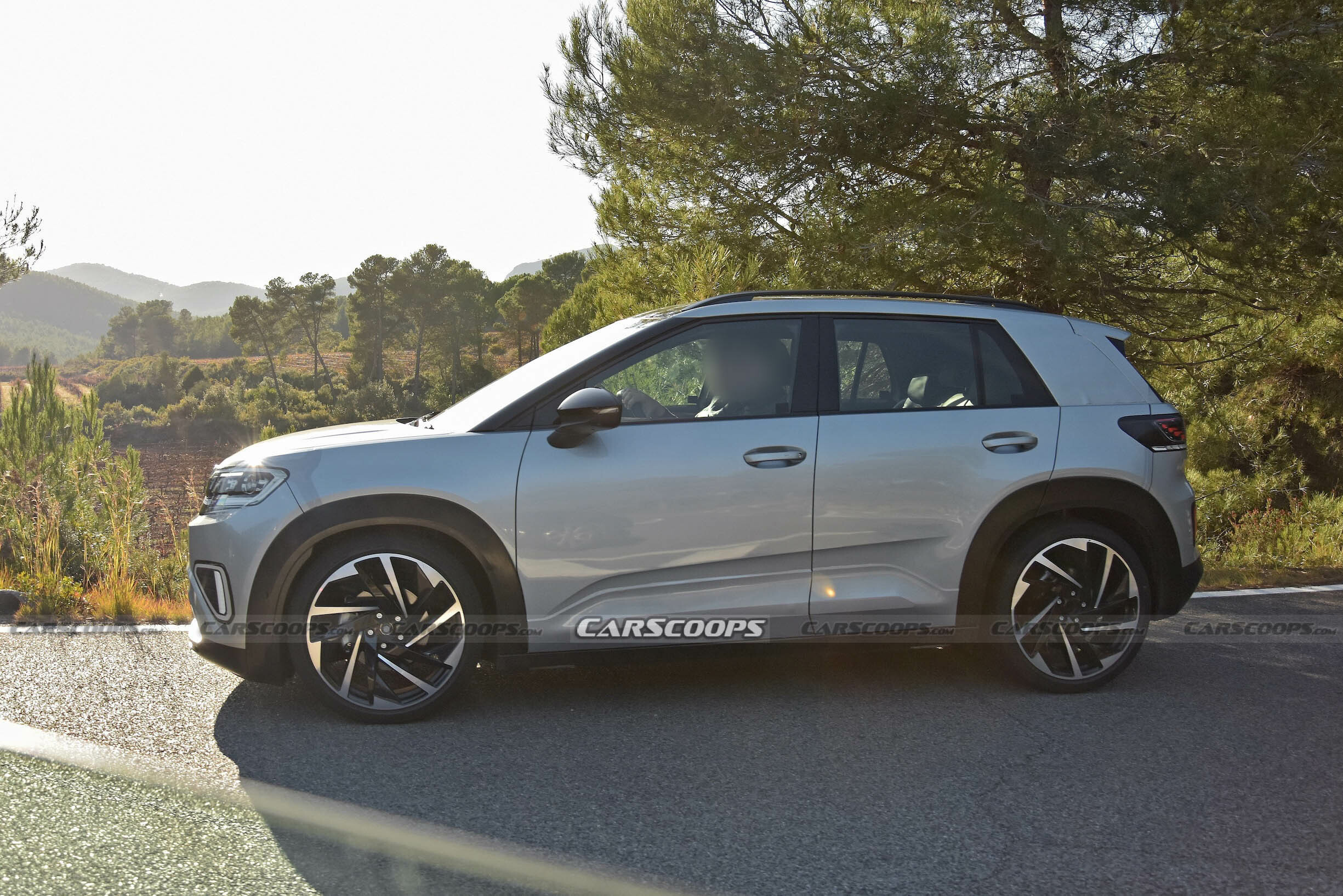
VW’s Cheapest Electric SUV Steps Out Almost Undisguised

  • New ID. Cross prototype loses heavy disguise and mirrors concept.
  • VW uses clever tape tricks to fake gas cues but EV details obvious.
  • Likely to get 208 hp motor and 52 kWh battery from ID. Polo.

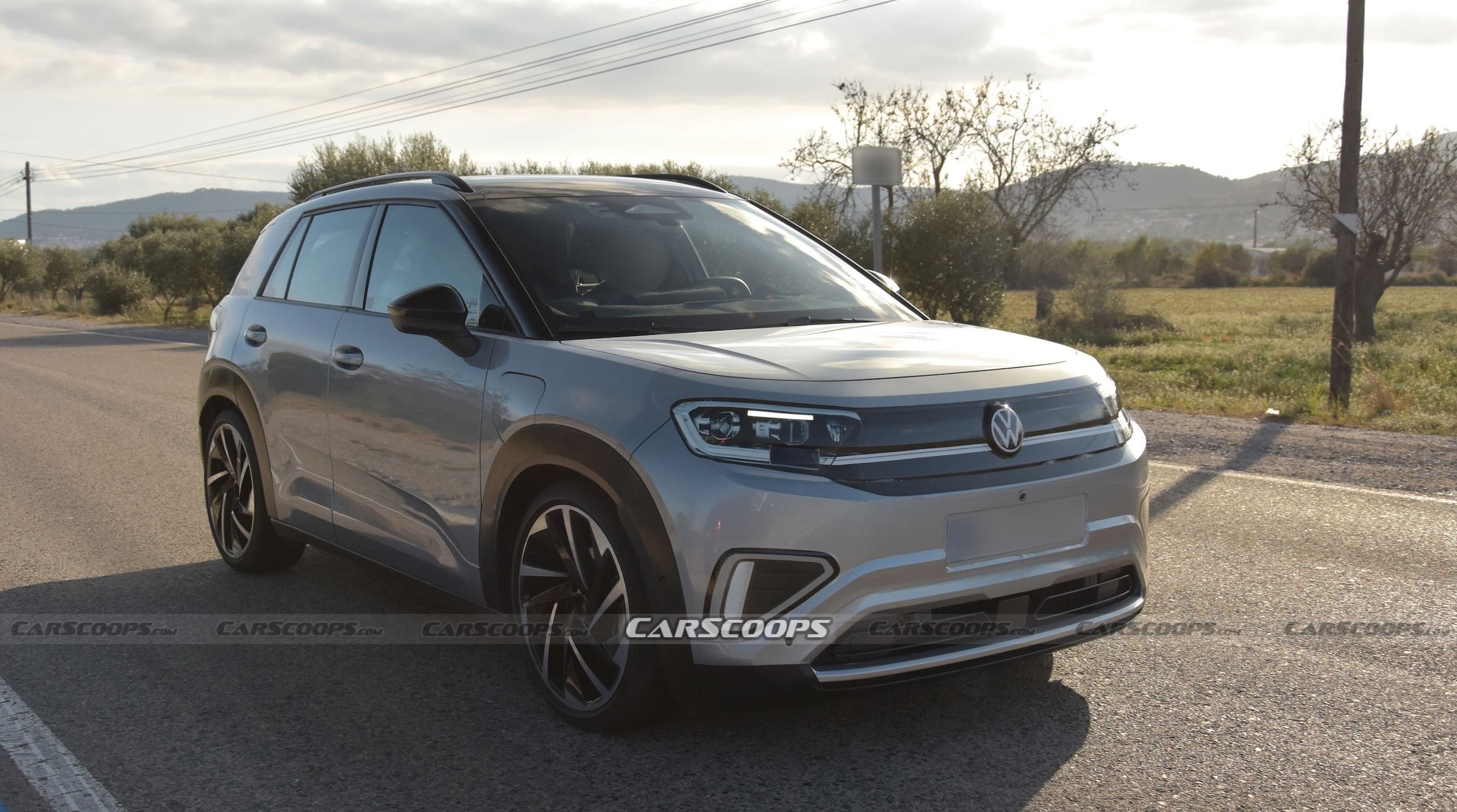
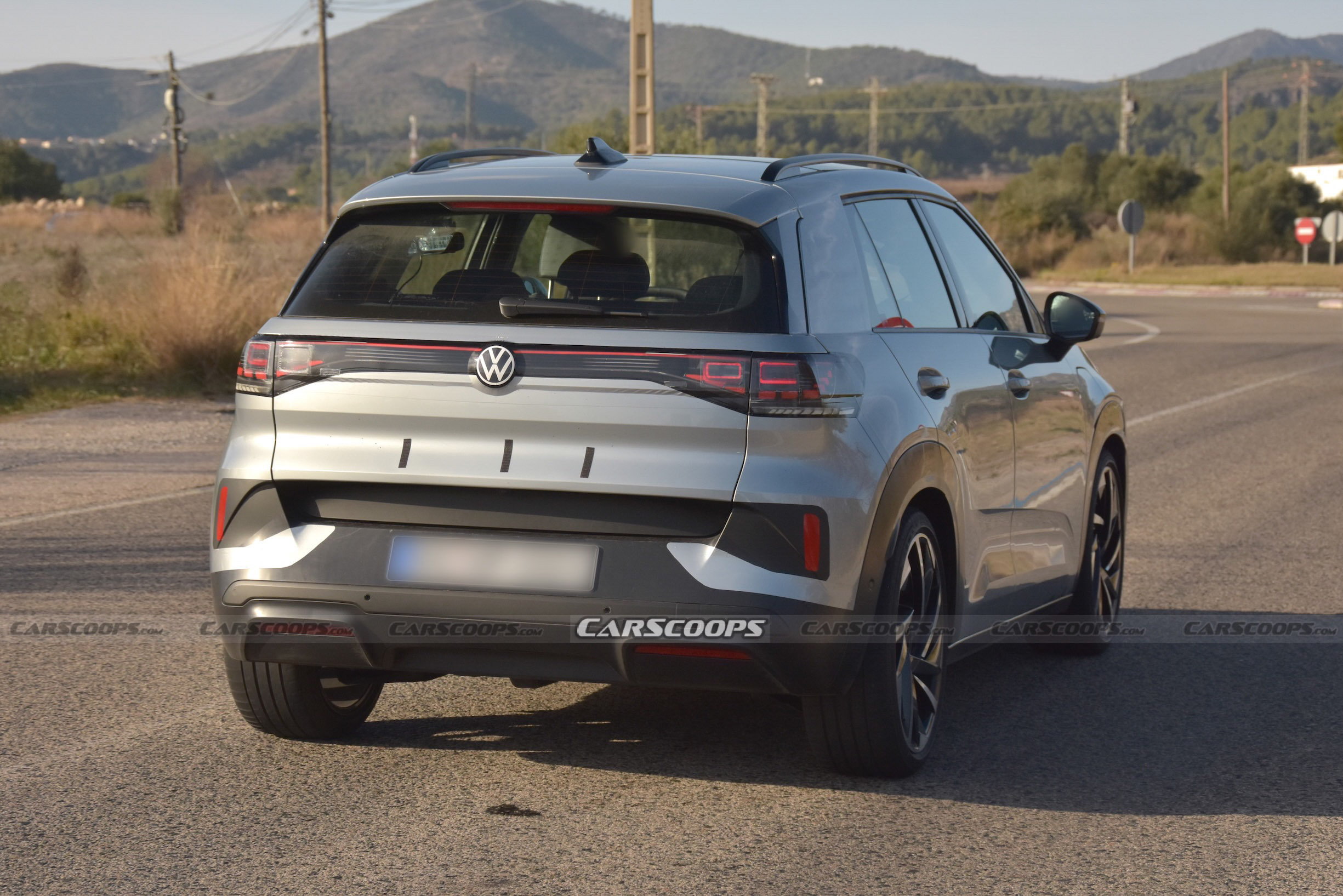
Spy photographers just caught VW’s smallest electric SUV running around almost completely undisguised – it was even wearing a VW badge. And the only thing more obvious than the ID. Cross‘s shape is the fact that Wolfsburg really wants us to think it’s not electric at all.

Related: VW’s Entry EV Packs More Power And Space Than You’d Think

Gone is the heavy swirly wrap. In its place is VW’s favorite optical illusion job where silver and black tape is slapped across the grille, lights and bumpers to impersonate an older gas powered model. It doesn’t work. Under the tape we can clearly see the exact contours of the ID.Cross concept shown a few months ago at the Munich auto show.

C pillars still hiding

 VW’s Cheapest Electric SUV Steps Out Almost Undisguised
Baldauf

The production doors are now almost fully exposed without their earlier cladding, although VW has even tried to hide the black lower plastic trim by covering it with body color tape. The C pillar treatment is also disguised, though only enough to hide the fun ID. Buzz style inserts that we know sit underneath.

Shape-wise nothing has changed. The bluff little nose, the tight overhangs and the tucked tail all match the concept almost panel for panel. Even the light graphics are visible through the tape and they look identical to the Munich show car’s with VW’s latest family face emerging loud and clear.

\\\\\\\\\\\\\\

Tablet touchscreen with AI

Though we can’t see inside on these latest images, we can be sure it will also closely echo what was on display at Munich. That means an 11-inch freestanding rectangular digital gauge cluster ahead of the steering wheel, and a much bigger, 13-inch tablet touchscreen mounted above the console and featuring ChatGPT-powered AI assistance.

Read: VW Has A Plan To Save EVs And It Involves Gas Engines

Under the skin the ID. Cross shares its MEB platform and hardware with the new ID. Polo. The Cross concept had a 208 hp (211 PS / 155 kW) front mounted motor, which is the punchiest of the three launch powertrains VW confirmed for the Polo EV this week.

 VW’s Cheapest Electric SUV Steps Out Almost Undisguised

ID.Cross GTI?

The other two Polo options make 114 hp (85 kW / 116 PS) and 133 hp (99 kW / 135 PS), and you can be sure that the second of those, if not both, will also make it to the ID. Cross.

How about an ID. Cross GTI? It’s theoretically possible, since VW plans to add a 223 hp (166 kW / 226 PS) motor to the Polo down the line to create its first electric hot hatch.

 VW’s Cheapest Electric SUV Steps Out Almost Undisguised
Baldauf

VW never confirmed battery dimensions for the concept, but did reveal a 261-mile (420 km) range. That ties in with the 280 miles (450 km) VW claims for the lighter, more slippery ID. Polo with a 52 kWh battery. Polos will also be available with a 37 kWh pack, though VW might not offer that on the SUV when it debuts in production form in 2026.

\\\\\\\\

Photos Baldauf / Carscoops

Bentley’s New Urban SUV Copies A Controversial Feature From Audi’s Q3

  • Bentley SUV sheds disguise and reveals production lighting.
  • Interior photo shows Porsche-style curved OLED display.
  • Electric SUV rides on VW PPE platform shared with Cayenne.

Bentley’s upcoming electric Urban SUV has stepped out in public again, and this time it has ditched the heavy plastic add-ons and cartoon headlights that made earlier prototypes look like a children’s drawing of a Bentayga. Winter testing is now underway, and the latest sighting gives us by far the clearest look yet at Crewe’s second SUV and first full EV.

Related: Bentley Rewrites Its Future With New Flying Spur Sedan That Breaks The Rules

The overall shape is familiar from previous spy runs, but with the production doors uncovered and the camouflage streamlined into a funky new wrap, the silhouette now reads much cleaner.

We can finally see a hint of the real lighting units peeking through too, rather than the fake circular decals Bentley used to throw us off the scent. They look far more modern, though definitely not as arresting as the ones on the EXP15 concept.

Family Interior Effort

\\\\

SH Proshots

But equally big news waits on the inside. For the first time, our photographers got a proper shot of the interior, and there is no pretending what inspired the layout.

A sweeping curved OLED display, similar to the Porsche Cayenne’s Flow Display, takes center stage, which makes perfect sense since both models ride on the same Premium Platform Electric.

The hardware is pure VW Group, including the multi-function left-hand column stalk, which we first saw on the Audi Q3, and a right-hand stalk serving as a transmission selector, as on VW’s ID.4. But the materials are unmistakably Bentley.

Even this early prototype shows a mix of rich leather, polished metal, and plush colors, including a steering wheel trimmed in black, red, and chrome.

Porsche-Plus Power

\\\\\\\\\\\

Bentley’s CEO Frank Steffen Walliser has already promised an impressive battery size and the fastest charging the company has ever offered. Meanwhile, Bentley’s own teaser claims the Urban SUV will add 100 miles (160 km) of range in just seven minutes.

Expect performance on par with or even above the Cayenne Electric’s outputs, which currently stretch from the 402 hp (408 PS / 300 kW) for the base Porsche in normal mode to 1,039 hp (1,155 PS / 850 kW) for the top-spec Turbo in launch control configuration.

Our guess is that Bentley’s base powertrain will be the circa-604 hp (612 PS / 450 kW) option that Porsche will add to its lineup when it unveils the Cayenne S EV next year.

We still don’t know the final name, though Bentley has trademarked “Mayon” and “Barnato,” so one of those could make the cut. What we do know is that the Urban SUV will be built in Crewe, revealed at the end of 2026, and reach customers in 2027.

\\\\\\\\\\

SH Proshots

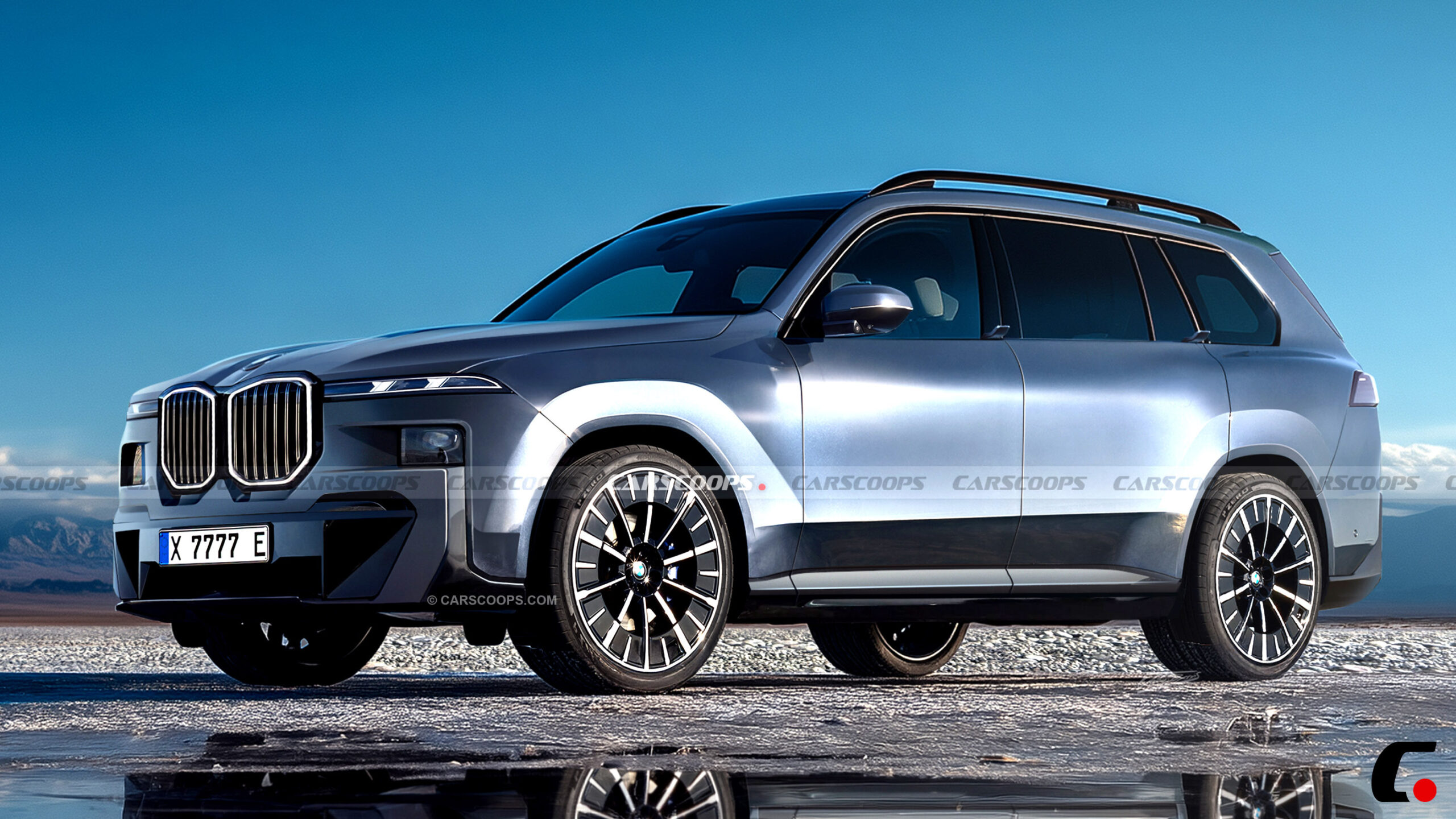
BMW’s New Flagship SUV Is Split Between Old Design And New Direction

  • Next generation BMW X7 appears in new spy shots ahead of 2027.
  • Split headlights stay but the large SUV gets redesigned bodywork.
  • Gas hybrid and electric powertrains will all be offered globally.

BMW engineers are burning the midnight oil to prepare a wave of 40 new or refreshed “Neue Klasse” models by the close of 2027. Among them is the next-generation X7, recently caught in fresh spy shots out of Germany.

At first glance, the camouflaged prototype might pass for a routine facelift, but the changes run far deeper, pointing clearly to a full generational shift. The current X7, launched in 2018, already underwent a mid-cycle refresh in 2022, so this next step arrives on schedule.

More: BMW’s Next Boss Already Has 40 New Models On His Plate

Unlike other Neue Klasse entries, the X7 will keep its distinctive split LED headlight setup, now framing what appears to be an even larger kidney grille. The headlights themselves are smaller and sit lower on a redesigned bumper that features more squared-off intakes.

In profile, the new X7 adopts cleaner surfacing along its pronounced fenders, and the conventional door handles give way to slim fins that likely improve aero. The glasshouse remains largely familiar, although the D-pillar looks set to adopt a more pronounced take on the Hofmeister kink.

\\\\\\\\\\\\\\

Baldauf

At the rear, heavy camouflage hides the design, and the prototype still wears placeholder taillights. These will almost certainly be swapped for full-width units in production, borrowing cues from the smaller iX3 Neue Klasse and what’s coming for the next X5 and iX5.

Tech Upgrades and Interior Overhaul

Inside, BMW is expected to introduce the Panoramic Vision display, running across the base of the windshield. It will be joined by a larger central touchscreen, an upgraded AI assistant, and a new-look steering wheel with a more concept-like aesthetic.

More: Two New Premium Contenders Are Coming For The G-Class

Processing capabilities will get a serious upgrade courtesy of BMW’s new “Superbrains,” the central computing architecture that acts as the vehicle’s digital backbone.

The X7 will continue offering a seven-seat, three-row layout, one of the key factors setting it apart from other BMW SUVs and placing it in direct competition with the Mercedes-Benz GLS and Volvo’s EX90 and XC90.

Electric and Gasoline Together

\\\\\\\

Baldauf

The latest prototype spotted on the road features quad round tailpipes and sits on sizable alloy wheels, pointing to a mild-hybrid V8 powertrain, likely in an M-badged variant. That said, earlier prototypes confirmed that the new generation will also include a fully electric iX7 model for the first time.

More: New i3 And 3-Series Reveal BMW’s Most Striking Split Yet

In contrast to BMW’s smaller models, where combustion and electric variants ride on separate platforms, the X7 and iX7 will share the same architecture. This will reportedly be a development of the current CLAR platform, adjusted to support both traditional and EV setups.

The lineup is also expected to include high-output variants from both BMW M and Alpina, with the electric versions possibly delivering up to 900 horsepower, according to our sources.

BMW hasn’t locked in a release date for the next X7 and iX7, but the roadmap suggests a 2027 launch. Both models will be built in BMW’s Spartanburg plant in South Carolina, alongside the X3, X5, X6, XM, and a brand-new rugged SUV aimed squarely at the Mercedes G-Class.

Below, you’ll find a speculative rendering of the next-generation X7, created by our own Josh Byrnes.

 BMW’s New Flagship SUV Is Split Between Old Design And New Direction

Illustration Josh Byrnes / Carscoops

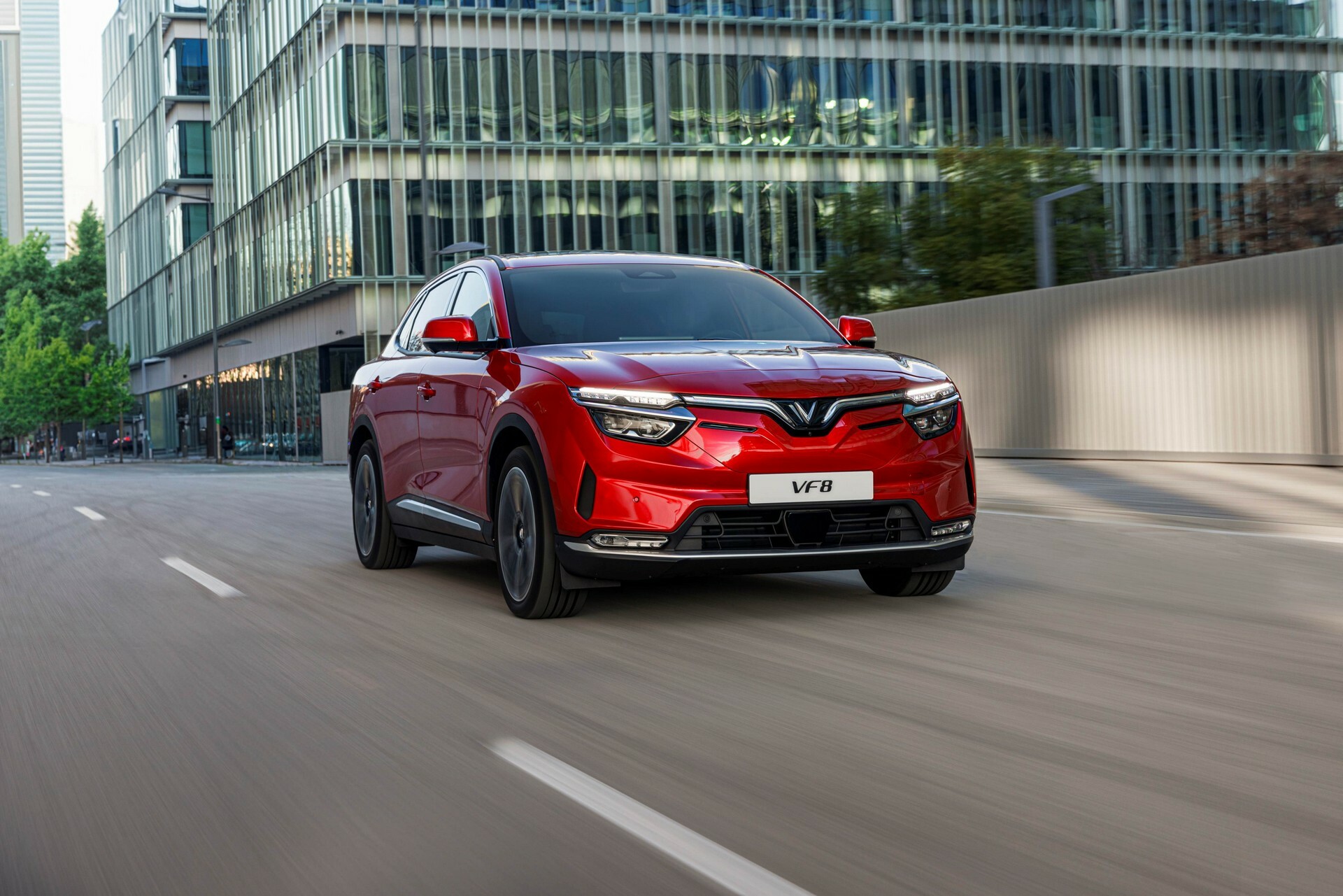
VinFast’s American Dream Is Cracking From The Inside Out

  • Fewer than 1,500 VinFast cars registered in the US this year.
  • VinFast had promised hundreds of US dealers by late 2024.
  • Only 17 VinFast dealers have VF 8 or VF 9 models in stock.

VinFast’s bid to break into the American market has struggled to gain traction. The Vietnamese automaker’s US adventure has been marked by sluggish sales, dwindling dealership support, and a strategy that appears to be unraveling faster than it came together.

As more partners step back from the brand, questions are beginning to surface about the future of VinFast’s presence in the States.

Read: Owners Sue VinFast After VF 8 Takes Almost 24 Hours To Charge

VinFast currently offers the VF 8 crossover and the three-row VF 9 locally, and at one point, it floated plans to bring a compact VF 3 and even a pickup truck to American buyers. Those ambitions now seem increasingly out of reach.

Stalled Expansion Plans

Adding to that, the company ceremoniously broke ground on a North Carolina factory in 2023, aiming to begin production just a year later. That timeline quickly fell apart. Construction was halted, and the plant’s opening has now been postponed until 2028.

The signs aren’t encouraging. According to a report from AutoNews, VinFast now has fewer than two dozen stores operating across the US. That figure continues to shrink, as one location shut down in July, another closed in November, and a third in North Carolina is scheduled to close before the year ends.

Even among the remaining dealers, many are operating in name only. Several locations have no vehicles on site, and some are down to just a handful of units.

Indeed, of the 22 active dealers that VinFast says it has, just 17 of them have EVs in stock. Most of them have 15 or fewer vehicles available. In the case of one dealer in Florida, it has just a single 2024 VF 8 in stock, priced at $52,910.

Sales Collapse

 VinFast’s American Dream Is Cracking From The Inside Out

VinFast sales have taken a big hit this year. Through the first ten months of this year, just 1,413 of its vehicles were registered in the United States, representing a 57 percent decline from the year prior. This comes despite the fact that total EV sales across the US have jump 11 percent this year.

The company’s expansion has clearly not gone as it would have liked. It originally expected to quickly sign 125 dealers, and then planned to have hundreds of outlets across the country by the end of 2024. As of August, it claimed to have “nearly 30 authorized dealerships.”

According to VinFast chairwoman Thuy Thu Le, the company has paused its aggressive push into the US and won’t open any more dealerships for the time being.

“Given the tariff situation and the instability in the EV market, we just need to see how that settles before we kind of push hard in the U.S.,” Thuy told Autonews. “Until we see some growth and stability in the U.S. market, we don’t intend to open more dealerships. Instead, we cultivate the relationship with the existing dealers and make sure they can get to profitability faster.”

\\\\\\\\\

Fiat’s New SUV Concept Just Got Real And The Fastback Roofline Isn’t Even The Best Part

  • Fiat’s Fastback concept is nearly ready for its global debut.
  • New spy shots reveal exterior styling and the cabin layout.
  • Powertrains will include gas, hybrid, and electric options.

Fiat is stepping into the spotlight once again, this time with a crossover that will expand the growing Panda lineup. The new model carries forward the Panda’s character, scaled up with a larger footprint and shaped by a fastback silhouette.

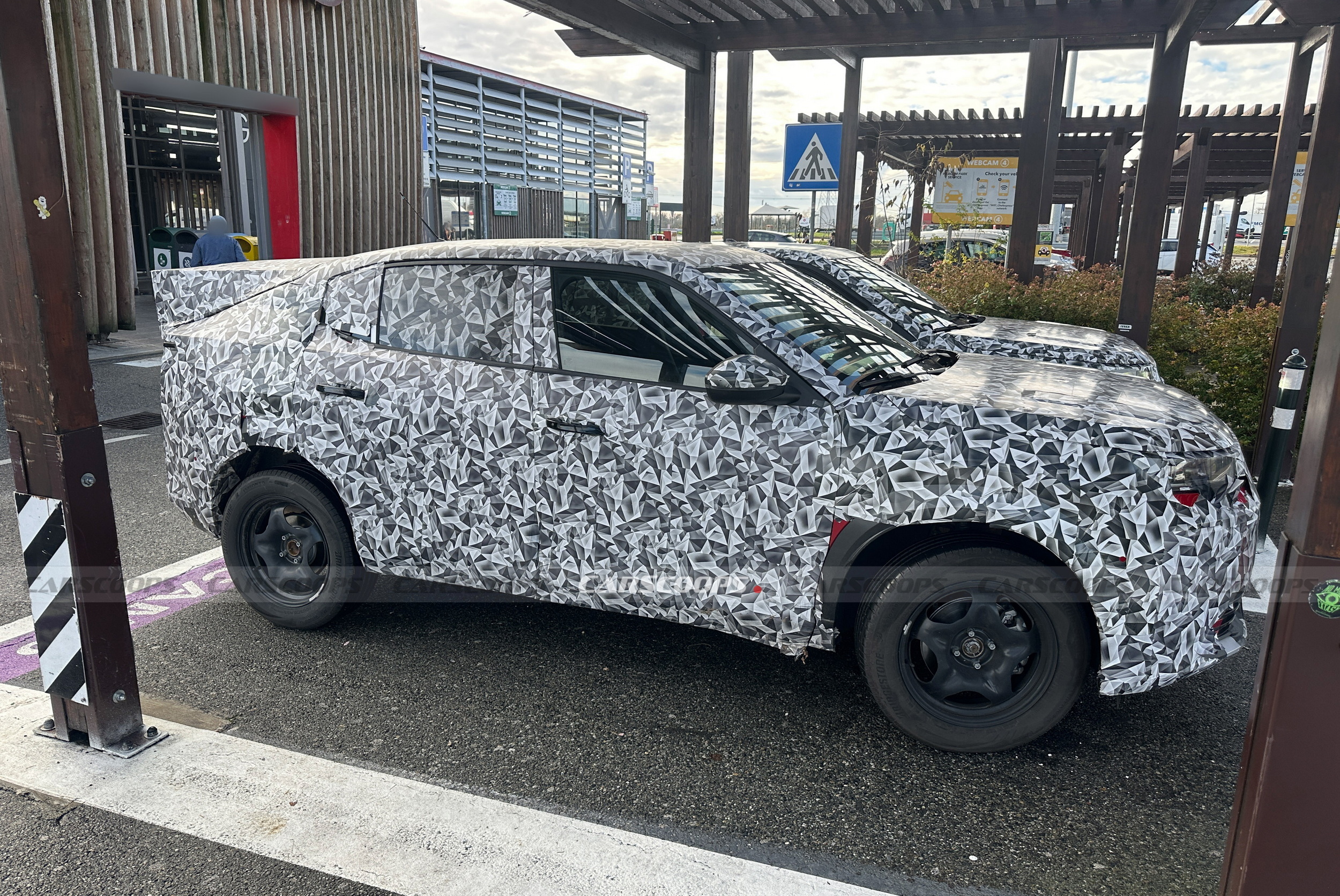
Two camouflaged prototypes of the production version of the 2024 Fastback concept were recently spotted in a parking lot, offering a clearer look at the exterior and, for the first time, a glimpse inside the cabin. The latest test cars have ditched some of their camouflage, revealing more of what’s in store.

Review: New Fiat Grande Panda Hybrid Makes Budget Look Cool Again

The LED headlights look similar to the Grande Panda, but they are slimmer and have tear-style extensions for a more modern look. These flank a concealed front grille that’s expected to carry over the pixel-like graphics and retro Fiat emblem found on the smaller sibling.

We can also see the lower bumper intake and a discreet skid plate with a metal-style finish. One of the prototypes has a red bodywork and rides on black steel wheels, which if intended for a base trim, are likely to be paired with hubcaps on the final production version.

 Fiat’s New SUV Concept Just Got Real And The Fastback Roofline Isn’t Even The Best Part

Baldauf

The side view reveals standard door handles and sculpted fenders that add some definition to the bodywork. More notably, both the greenhouse and metal panels appear distinct from those on the Citroen Basalt, a related model currently on sale in markets like South America and India.

More: Fiat’s Panda Camper Is Back Pretending It’s An Overlander

Naturally, the standout feature of the Fastback is its rear section, where a sloping roofline meets slim LED taillights for a clean, tapering finish. One of the prototypes has shed its heavy camouflage, exposing the rear glass and an integrated ducktail spoiler. The rest of the tail keeps things more upright, with boxy surfacing, a wide tailgate, and the license plate positioned on the rear bumper.

The model, overall, feels like a natural evolution of the original concept, though its design has been moderated in typical fashion for production. If the Grande Panda is any indication, expect the exterior to include a handful of playful Easter Eggs, likely paying homage to the classic four-stripe Fiat emblem.

How Does It Look Inside?

 Fiat’s New SUV Concept Just Got Real And The Fastback Roofline Isn’t Even The Best Part

Baldauf

Surprisingly, one of the prototypes had an uncovered interior. The interior layout diverges from that of the Grande Panda and even from its mechanical relatives, the Opel Frontera and Citroen C3 Aircross.

The dashboard pairs a compact digital gauge cluster with a larger central infotainment screen. Below that, leather-effect trim lines the dash, while glossy black plastic surrounds the oval-shaped center console for a bit of contrast.

A row of physical buttons sits along the lower part of the console, and the automatic gear selector appears to be the same unit used in several Stellantis models.

Other highlights include the two-spoke steering wheel that has the same shape with the Opel Frontera, and the new seats with a square pattern and semi-integrated headrests.

Multiple Powertrain Options

 Fiat’s New SUV Concept Just Got Real And The Fastback Roofline Isn’t Even The Best Part
Baldauf

As with the rest of the future Panda family, the fastback will ride on the budget-oriented Smart Car architecture. It is expected to be offered with gasoline, mild-hybrid, and fully electric powertrain options, most likely shared with the aforementioned Citroen and Opel SUVs.

Fiat plans to offer the model in both European and South American markets, with an official reveal expected in early 2026. A year after that, it may be joined by a more traditionally shaped sibling, an SUV with a boxier rear end and added cargo space.

That model is rumored to revive the Multipla name and could square off against the likes of the Dacia Duster and Bigster.

\\\\\\\\\

Baldauf

Lotus Dropped A Gas Engine Into The Eletre SUV

  • Lotus built its first hybrid SUV, based on the electric Eletre.
  • The hybrid’s 2.0L turbo engine is paired with electric motors.
  • Combined output could hit 952 hp, topping the Eletre R EV.

Not too long ago, Lotus committed to an all-electric future. The plan was ambitious, but in hindsight, maybe a touch premature. Like several other automakers, it’s now reevaluating that timeline. Enter a new chapter: hybrids. The first model stepping into this transitional role is a familiar face, spun from the current Eletre SUV.

Read: The Automaker That Swore Off Gas Engines Is Building Its Most Powerful Yet

Images released by the Chinese Ministry of Industry and Information Technology (MIIT) confirm what earlier reports suggested. Lotus’s first hybrid offering isn’t a ground-up redesign. It’s a lightly revised version of the existing Eletre, tweaked just enough to accommodate a new powertrain.

Visually, there’s little to give it away. The bodywork remains unchanged apart from a discreet new ‘For-Me’ badge on the decklid. That small emblem is the only outward hint that this Eletre swaps batteries alone for something a little more combustible.

What’s Changed Underneath?

 Lotus Dropped A Gas Engine Into The Eletre SUV

Many technical specifics are still being kept under wraps. What is confirmed is the presence of a 2.0-liter turbocharged four-cylinder engine producing 279 horsepower. That unit will work in tandem with an unspecified electric drive system.

We don’t yet know the size of the battery pack or how many electric motors are onboard, but reports claim that the hybrid setup will deliver a combined 952 hp. That would put it slightly ahead of the fully electric Eletre R, which tops out at 905 hp.

Review: We Drove Lotus’ Electric SUV To See If It Can Silence Its Haters

Electric range in the Lotus For-Me depends on the trim, with figures falling between 345 and 355 kilometers (214 to 221 miles) under the optimistic CLTC cycle.

 Lotus Dropped A Gas Engine Into The Eletre SUV
The electric Eletre SUV | Photo Brad Anderson / Carscoops

In plug-in hybrid mode, fuel consumption is exceptionally low at just 0.06 to 0.07 liters per 100 km (approximately 392 to 336 mpg), according to WLTC standards.

Once the battery is depleted and the crossover runs on its combustion engine alone, consumption rises significantly to between 6.0 and 6.10 liters per 100 km (around 39 to 38.6 mpg).

The dimensions of the hybrid are identical to the EV. As such, the sleek SUV is 5,103 mm (201 inches) long, 2,019 mm (79.4 inches) wide, and stands 1,636 mm (64.4 inches) tall with a 3,019 mm (118-inch) wheelbase. Weight will vary between 2,575 kg (5,676 lbs) and 2,625 kg (5,787 lbs), depending on the specification.

It’s Coming to Europe

 Lotus Dropped A Gas Engine Into The Eletre SUV

The hybrid version, called the Eletre For-Me, will make its debut in China. But this isn’t a market-exclusive product. Lotus has confirmed that its new plug-in hybrid lineup is headed for Europe as well.

Next in line after the hybrid Eletre is likely a plug-in version of the sleek Emeya sedan. Built on the same platform and sharing many core components with the SUV, the Emeya is an obvious candidate for hybridization. A third model, a smaller SUV, has also been confirmed and is due to arrive in 2027.

Each of these new plug-in hybrids will make use of Lotus’s 900-volt electrical architecture. Among other benefits, that setup supports ultra-fast charging. According to Lotus, charging from 10 to 80 percent will take just ten minutes.

\\\\

Nissan’s New NX8 SUV Outsizes The Rogue And Might Outshine It Too

  • Nissan NX8 debuted in China ahead of its 2026 market launch.
  • Electric and hybrid versions are powered by CATL battery tech.
  • The electric NX8 makes up to 335 hp from a single electric motor.

Nissan has introduced a new midsize SUV developed in partnership with Dongfeng in China, marking the latest addition to its growing, budget-conscious N-series lineup. Named the NX8, the model joins the existing N6 and N7 sedans and will be offered with a selection of electrified powertrains.

More: Nissan’s New Hybrid Sedan Is As Big An Altima For Thousands Less Than A Versa

The SUV’s exterior design follows the same styling language as its sedan counterparts, with clean surfacing and a grille-free front fascia. A full-width daytime running light runs across the split headlights and wraps around the front fenders, while OLED tail lights extend across the rear.

The overall shape leans toward conventional SUV proportions, marked by flush-fitting door handles and pronounced shoulders.

How Big Is It?

The NX8 measures 4,870 mm (191.7 inches) in length, 1,920 mm (75.6 inches) in width, and 1,680 mm (66.1 inches) in height, with a wheelbase of 2,917 mm (114.8 inches).

That makes it 222 mm (8.7 inches) longer than the Rogue (X-Trail) and 152 mm (6 inches) shorter than the Pathfinder. Interestingly, its wheelbase is 17 mm (0.7 inches) longer than the Pathfinder’s, which should translate to slightly better interior space.

\\\\\\\

Images reveal a suite of sensors along with a roof-mounted lidar unit, hinting at advanced driver assistance tech. Nissan hasn’t revealed the interior yet, but it’s expected to mirror the cabin layout of the N6 and N7, likely featuring a prominent touchscreen and soft-touch materials throughout. The company says the NX8 will offer a spacious five-seat configuration.

What Powers It?

Nissan has confirmed the NX8 will be classified as a NEV (New Energy Vehicle), with specifications recently published by China’s Ministry of Industry and Information Technology.

More: Nissan Thinks You’re Not Mature Enough To Appreciate What It Just Launched In Japan

The fully electric variants will be available with either a single motor producing 288 hp (215 kW / 292 PS) or a more powerful version at 335 hp (250 kW / 340 PS).

A plug-in hybrid or range-extender version will also be offered, pairing a 1.5-liter turbocharged engine making 146 hp (109 kW / 148 PS) with an electric motor rated at 262 hp (195 kW / 265 PS).

 Nissan’s New NX8 SUV Outsizes The Rogue And Might Outshine It Too

All variants will use the latest lithium iron phosphate battery packs supplied by CATL. While range figures and battery capacities have not yet been disclosed, the packs are said to support ultra-fast charging.

The market launch of the Nissan NX8 in China is scheduled for the first half of 2026 with pricing set to be announced closer to that date. As with the N6 and N7 sedans, the SUV will reportedly be exported to other markets in the near future.

When and Where Can You Buy One?

Nissan plans to launch the NX8 in China during the first half of 2026, with pricing to be confirmed closer to its market debut. As with the N6 and N7 sedans, the NX8 is expected to be exported to additional markets after its initial rollout. Whether that will include Western regions like Europe and Australia, however, remains to be seen.

As for pricing, we’ll have to wait for official figures, but if the N6 and N7 are any indication, it’s likely to stay within a very competitive range. The N7, for example, is priced between 119,900 and 149,900 yuan, or roughly $17,000 to $21,200 at current exchange rates.

 Nissan’s New NX8 SUV Outsizes The Rogue And Might Outshine It Too
The N7 (left), NX8 (center), and N6 (right) new energy vehicles from the Dongfeng-Nissan joint venture.

New Mercedes GLB Ditches Gas For Now, Adds AI And A Very Strange Rear End

  • Mercedes GLB replaces EQB and launches with electric-only options.
  • 85 kWh battery enables 392 miles in single-motor, 382 in dual-motor.
  • Next year, an entry-level EV will be introduced, as will several hybrids.

A new generation of the Mercedes-Benz GLB has arrived, and while the silhouette remains true to the blocky, upright form of the original, there’s quite a bit going on beneath the surface.

Offered in both 5- and 7-seat configurations, the 2026 GLB debuts as an all-electric model and, for now, serves as a replacement for the EQB in everything but name. Hybrid versions will follow later, but the first wave is electric-only.

Read: New Mercedes GLB Goes Big On Screens And Stars

Two versions of the new generation GLB are launching out of the gate. The first, labeled GLB 250+ with EQ Technology, features an 85 kWh lithium-ion battery and adopts an 800-volt electric architecture.

It powers a single rear-mounted motor rated at 268 hp and 247 lb-ft of continuous torque, with a short-term boost up to 335 lb-ft. Acceleration from 0–62 mph (100 km/h) takes 7.4 seconds, and range is quoted at 392 miles (630 km) on a full charge, olid figures for a compact SUV in this category.

\\\\\\\\\\\\\\\\\\\\\\\\\\\\\\\\\\\\\\\\\

Sitting above the 250+ is the 350 4Matic with EQ Technology. The name might not stick in your memory, but the numbers probably will. This dual-motor variant adds a front axle motor for all-wheel drive, producing a combined 349 hp and 380 lb-ft of torque.

Range takes a slight dip to 382 miles (615 km), but the extra grunt cuts the 0–62 mph time down to 5.5 seconds.

Mercedes has also confirmed a more affordable electric entry-level version will join the lineup next year, followed by a hybrid variant using 48-volt architecture. Three power levels will be available across front- and all-wheel drive formats.

Starry Eyed

\\\\\\\\\\\\\\\\\\\\\\\\\\\\

Like other new-generation Mercedes models (think CLA and GLC EQ), the GLB adopts a more expressive front end. A large grille dominates the nose, flanked by redesigned headlights with intricate star-shaped DRLs and a full-width light bar. It’s not a particularly handsome looking SUV, but neither is the outgoing model.

The rear-end is perhaps the most controversial angle of the 2026 GLB. The taillight treatment leans into the styling language seen on the brand’s EQXX Concept from a few years back, with vertically oriented clusters connected by a slim light bar. The signature star pattern makes another appearance here.

How Much Bigger Is It?

 New Mercedes GLB Ditches Gas For Now, Adds AI And A Very Strange Rear End

The new electric GLB has grown in nearly every direction compared to both the previous EQB and the combustion-powered GLB it effectively replaces in this segment. At 4,732 mm (186.3 inches) in length, it’s 48 mm (1.9 inches) longer than the EQB and a full 98 mm (3.9 inches) longer than the earlier GLB. Width is up as well, now measuring 1,861 mm (73.3 inches), 27 mm (1.1 inches) wider than both predecessors.

Interestingly, height has gone the other way, dropping slightly to 1,687 mm (66.4 inches), which makes it 14 mm (0.6 inches) lower than the previous models.

The wheelbase sees the most notable stretch, now sitting at 2,889 mm (113.7 inches), a 60 mm (2.4 inches) increase over earlier versions. That extra length between the axles should improve interior space, particularly in the second row.

One small trade-off comes in maneuverability: the turning circle has grown marginally, from 11.7 m (38.4 feet) in the old GLB to 11.9 m (39.0 feet) in the new electric version. Boot capacity is also up, with 667 liters (23.6 cubic feet) available in the rear and 127 liters at the front (frunk).

An All-New Cabin

\\\\\\\\\\\\\\\\\\\\\\\\\\\\\\

A big step into the future has also been made with the GLB’s interior. Like the CLA, it can be optioned with the Mercedes Superscreen, consisting of a 10.25-inch driver display, a 14-inch infotainment screen, and a 14-inch display for the passenger.

As with other new Mercedes-Benz interiors, the dash of the GLB is almost completely flat, largely free of any interesting design details.

It runs on the fourth-generation MBUX system that includes Microsoft and Google artificial intelligence. The screen runs on the Unity Game Engine and includes the MBUX Virtual Assistant, based on ChatGPT4o. Clearly, Mercedes was eager to make the GLB as tech-focused as possible.

At this point, pricing is confirmed only for Germany. The GLB 250+ with EQ Technology starts at €59,048 ($68,700), while the 350 4Matic comes in at €62,178 ($72,400). US pricing hasn’t been announced yet, but expect a similar spread when it arrives in other markets next year.

\\\\\\\\\\\\\\\\\\\\\\\\

Photos Mercedes

❌
❌