Normal view

There are new articles available, click to refresh the page.
Today — 20 March 2026Main stream

Xiaomi Updates The SU7, Gets 15k Orders In 8 Hours

  • The updated SU7 looks the same, but changes have been made under the skin.
  • Xiaomi is selling the electric sedan with 73 kWh and 96.3 kWh battery packs.
  • Prices start at 219,900 yuan ($31,900) and top out at 303,900 yuan ($44,000).

It’s been only two years since the Xiaomi SU7 hit the market, and it has quickly become one of the most popular electric sedans in China. An updated version has just been launched, and it promises to be even better while still remaining an absolute bargain.

Ordinarily, it takes car manufacturers four or five years to update a model, but Xiaomi is more like Apple than a traditional car brand, and it’s used to updating its products on a yearly basis, so it’s perhaps no surprise the SU7 has already been refreshed. Like before, it’ll continue to be sold in Standard, Pro, and Max configurations, and it took just 8 hours for local enthusiasts to place 15,000 orders.

Read: Xiaomi Finally Fixed A Feature Owners Said Was Fake, For Real This Time

The base SU7 Standard is equipped with a 73 kWh lithium-iron phosphate battery and a rear-mounted motor with 315 hp (235 kW). It has a claimed CLTC range of 447 miles (720 km), and starts at just 219,900 yuan or around $31,900. Sitting above it is the SU7 Pro, fitted with a larger 96.3 kWh LFP battery and the same 315 hp (235 kW) motor, boosting its range to 560 miles (902 km) and bumping up the price to 249,900 yuan, roughly $36,200.

\\\\\\\\\\\\\\\\\\\\\\\

The SU7 Max comes equipped with a 101.7 kWh ternary lithium battery, dual motors delivering 681 hp (508 kW), and a 519-mile (835 km) range. It starts at 303,900 yuan or $44,000. There’s no word on whether an update is also being readied for the hypercar-rivaling SU7 Ultra, but changes are likely in the works.

Visually, the new model looks largely the same as the outgoing SU7, though all versions now come with a roof-mounted LiDAR, a 4D millimeter-wave radar, and the Nvidia Thor-U computing system. A new radar has also been added up front, and the rear tires are slightly wider, perhaps to improve grip and reduce the risk of crashes like this.

An Important Door Solution

\\\\\\\\\\\\\\\\\\\\\\\\\\\\\\\

Xiaomi has also added a new door unlocking mechanism with a triple-redundancy system, no doubt to ensure drivers don’t get stuck inside should they be involved in a serious accident. The mechanical release on the front passenger doors is also now finished in bright red, making it easier to spot in an emergency.

The rest of the interior is familiar, although the infotainment screen is slightly bigger at 16.1 inches. The dual wireless phone chargers have been retained, but Xiaomi has repositioned the cupholders from a vertical configuration to a horizontal one. It’s also removed the vertical row of buttons that had been fitted to the console, instead shifting them between the charging pads and the cupholders.
\\\\\\\\\

China’s No. 2 Automaker Is Making A Play For Canada

  • Geely is preparing to launch its EV lineup in Canada soon.
  • The company is competing with BYD for early market entry.
  • Local production remains a possibility for market expansion.

Geely has begun taking the necessary steps to launch its vehicles in Canada and could start sales as early as this year. The move places it in direct competition with BYD, as both aim to become among the first Chinese EV-focused brands to enter the Canadian market following a recent trade deal between the two countries.

They are both locked in a race against Tesla, which appears positioned to secure, if not all, then most of the first batch of 24,500 Chinese-made EV permits available at a reduced tariff rate.

Geely Group chief executive Andy An says the company expects to secure the required certifications from Canadian officials soon, clearing the way for local sales. The automaker has been steadily climbing the ranks among the world’s largest car manufacturers and is now setting its sights on expansion across several key markets.

Read: Canada Could Give China’s Biggest Carmaker A Backdoor Into The US Market

“We’re not only considering the Canadian market, but also Brazil, South America, Eastern Europe, and Southeast Asia,” An told Bloomberg. “Geely’s globalization is mostly through exports right now, but we will look to localize production.”

 China’s No. 2 Automaker Is Making A Play For Canada

Geely ranks just behind BYD as China’s second-largest car manufacturer, and it already has a foothold in both Canada and the United States through Polestar and Volvo. Even so, steep 100 percent tariffs have long made exporting additional China-built models to Canada a tough business case.

Things are changing. Earlier this year, Canada and China agreed to a pivotal new trade deal, announcing that up to 49,000 Chinese-built EVs will be eligible for importation into the country at a reduced tariff rate of just 6.1 percent. That ceiling is expected to climb over time, reaching roughly 70,000 vehicles annually.

With those barriers easing, Geely, along with rivals like BYD and Chery, is lining up a Canadian market entry. The simplest route is to ship existing EVs from China, but local production, either through partnerships or independent operations, is very much on the table. Chery, for its part, is already recruiting in Canada as it prepares for its own arrival.

 China’s No. 2 Automaker Is Making A Play For Canada

BMW’s Smallest EV Now Looks Like A Mini iX3

  • BMW iX1 adopts Neue Klasse styling with a cleaner look.
  • The EV is expected to share battery and motor tech with iX3.
  • Single-motor variants are expected to launch before dual.

BMW may have just revealed the new i3 sedan, but behinds the scenes, it’s already working on another EV. A redesigned iX1 is on the way, and fresh spy shots make one thing clear, it is moving in a very different visual direction.

The brand’s smallest electric SUV now appears to be taking heavy inspiration from the iX3, effectively shrinking down that model’s look while adopting the Neue Klasse design language that is gradually rolling out across the brand’s lineup.

Read: BMW’s New Compact SUV Spills Its Innermost Secrets

While the company has gone to the trouble of wrapping the prototype in its typical black-and-white camouflage, there’s no hiding some of the biggest design changes. Most notably, we can see that the large kidney grilles of the outgoing EV have been ditched in favor of small, vertical units, similar to the iX3, which are also being added to the new X5.

Trick Tech And Quick Charging

\\\\\\\\\\\

Baldauf

The new grille will be joined by new headlights and a redesigned bumper. The side profile also looks noticeably cleaner than the outgoing iX1, and includes flush door handles. The rear is hidden from view, but we can see parts of the new LED taillights.

Based on early reviews, it looks like the second-generation iX3 is BMW’s first competitive offering against the tidal wave of Chinese electric SUVs. It’s equipped with the company’s sixth-generation battery pack and electric motors, providing it with class-leading range and performance.

\\\\\\\\

Baldauf

The new iX1 will use similarly innovative tech for a, hopefully, dramatic improvement over the existing model. We don’t know yet if it will have the same 108.7 kWh battery as the iX3, given its smaller size, but if it shares its 800-volt electrical architecture, it will enable charging speeds of up to 400 kW.

These images don’t show the cabin of the new iX1, but earlier ones from December did, revealing the same basic interior setup as the iX3, including BMW’s new Panoramic iDrive system and tilted central infotainment display. In all likelihood, the iX3’s odd four-spoke steering wheel will also come standard, like in the all-new i3 sedan.

\\\\\\\

Baldauf

EV Searches Jump 20% In One Week Of Rising Gas Prices

  • Last year, EVs cut oil use by 2.3 million barrels a day.
  • US drivers spent $1.65 billion more on fuel in just one week.
  • EV search interest surged after news of the Iran conflict.

Due to the ongoing conflict in the Middle East, oil prices have surged to a four-year high and are fast approaching $100 per barrel. Regardless of where you live, this means that if you’re driving an ICE-powered car, you’ll be paying more to fill it up. It’s perhaps the perfect time to own an EV instead.

A recent study indicates that last year’s increased adoption rate of EVs reduced oil consumption by 2.3 million barrels per day, and these fuel savings will continue to grow as more EVs are sold. By 2030, EVs could help to reduce global oil consumption by 5.25 million barrels per day.

Read: The $8 Gallon Is Here, If You’re Dumb Enough To Pay For It

As noted by BloombergNEF, a key contributor to the reduced oil demand is two- and three-wheeled EVs, which have surged in popularity, particularly across Asia. A separate, more conservative study that factors in how often plug-in hybrid vehicles run on fossil fuels pegged last year’s daily oil savings at 1.7 million barrels.

At this rate, and with average prices of $80 per barrel, the analysis says that China would save more than $28 billion a year in oil imports thanks to its massive EV industry. Similarly, Europe would save $8 billion, and India could save $600 million per year.

Is This The Break EVs Need?

 EV Searches Jump 20% In One Week Of Rising Gas Prices

The war in Iran has made regular fill-ups for ICE drivers far more expensive. Just this week, Bloomberg expects US drivers to pay an additional $1.65 billion at the pump. With gas prices showing no signs of stopping, it should come as no surprise that interest in EVs has jumped this month.

CarEdge reports that search traffic for electric vehicles jumped 20 percent in the week following the attack on Iran. Search traffic also nearly doubled for many of the market’s most popular EVs, including the Chevrolet Equinox EV and Tesla Model Y.

Of course, surging oil prices will likely also lead to increased electricity costs, meaning charging an EV could become more expensive. However, electricity rates won’t rise by as much, as only roughly a quarter of a typical US power bill is directly tied to fuel costs.

 EV Searches Jump 20% In One Week Of Rising Gas Prices

China Isn’t Buying Porsches, But It Sure Loves Making Ones That Look Like Them

  • The Aistaland GT7 mirrors the looks of the Taycan Sport Turismo.
  • It rides on an 800-volt architecture offering up to three motors.
  • The new model is set for its full debut at April’s Beijing Auto Show.

Porsche took a heavy hit in China last year, with sales tumbling 26 percent from 56,887 units to 41,938, a drop steep enough to force significant dealership cuts. While it continues to sell some very compelling cars, the rise of local brands offering similarly styled models at much lower prices has chipped away at Porsche’s luster. With EVs like this entering the scene, it’s not hard to see why.

What you’re looking at is an all-electric estate that clearly draws inspiration from the Porsche Taycan Sport Turismo. And no, this isn’t another take on the Xiaomi SU7, the SAIC Z7 unveiled a couple of weeks ago, or the upcoming MG 07 from the same company, even if all of them wear their Taycan influences quite openly.

Read: Porsche Is Shutting Down A Third Of Its Dealerships In China

Instead, this EV is called the GT7 and comes from Aistaland, a newly formed brand backed by Huawei and GAC. It will join the HIMA alliance, which already includes Aito, Luxeed, Maextro, Shangjie, and Stelato. For whatever reason, Chinese brands seem to have developed a habit of using the number ‘7’ for their Taycan-style lookalikes.

European Design With Chinese Tech

\\\\\\\\\\\\\\\\

The GT7 will be unveiled in full next month, but at this stage, we know it’s 198.9 inches (5,050 mm) long, 77.9 inches (1,980 mm) wide, 57.9 inches (1,470 mm) tall, and rides on a 118.1-inch (3,000 mm) wheelbase. It uses an advanced 800-volt electrical architecture and will be available with up to three electric motors, one at the front axle and two at the rear.

There’s no word on how much power the GT7 will have, nor what kind of driving range it’ll hit the market with. But given that the Xiaomi SU7 delivers 664 hp in flagship dual-motor guise and 1,527 hp in the tri-motor SU7 Ultra, the GT7 will likely have output somewhere between those two models.

A Cut-Price Taycan

\\\\\\\\

Obviously, the GT7 doesn’t just echo the Porsche Taycan in the way it’s engineered; it leans heavily on it for visual inspiration too. Up front, things are kept relatively clean, with large teardrop-shaped headlights and a small black grille doing most of the work. From the side, it’s even more familiar, with matching door handle placement and a shoulder line that could easily pass for Stuttgart’s handiwork.

The resemblance continues at the rear, where a full-width LED light bar closely echoes the Taycan’s look. Aistaland also seems to have taken a cue from the latest Tesla Model Y, adding two cut-outs above the light bar that glow red and give off a faint jet-thruster vibe.

There’s still no sign of the interior, and pricing remains unknown. However, if it lands close to the Xiaomi SU7, which starts at 229,900 yuan ($33,400), and the Z7, expected to begin around the same point, it would sit dramatically below the Porsche. In China, the Taycan starts at 918,000 yuan ($126,000) for the sedan and 1,008,000 yuan ($138,000) for the Sport Turismo, making Porsche’s position in China even harder to defend.

\\\\\\\\\\\\\\\

China Rewrites What An Audi SUV Should Look Like

  • The flagship E7X has a sizeable 109.3 kWh battery pack.
  • AUDI will sell the SUV in both single- and dual-motor guises.
  • Pricing details will be announced at April’s Beijing Auto Show.

While some of the electric SUVs that Audi sells in Western markets already feel a little outdated compared to the competition, the carmaker has shown that, in China, it can build an EV that feels as if it’s been dropped off from the future. We’re, of course, talking about the E7X, previewed late last year but only just officially launched.

To bring this model to life, the German marque leaned on its partnership with SAIC through the dedicated AUDI brand, which debuted the E5 Sportback last year. Like that model, the E7X bears little resemblance to any Audi sold elsewhere. While pricing details have yet to be announced, it’s a safe bet it will be cheaper than many European alternatives.

Read: This AUDI Is What Happens When A German Brand Asks China What It Should Be

The E7X is a big thing, stretching 198.7 inches (5,049 mm) long, 78.6 inches (1,997 mm) wide, and 67.3 inches (1,710 mm) tall, with a 120.4-inch (3,060 mm) wheelbase. As AUDI was under no obligation to follow traditional design cues in its development, there’s no single-frame grille in sight, just a collection of elements intended to appeal to Chinese buyers.

Chief among these touches is the front fascia, dominated by hundreds of tiny LEDs that replace a traditional grille. The side profile is also quite striking, with sharp lines, flush door handles, and cameras instead of traditional wing mirrors. Just like the front, the rear also sports some wild wraparound LEDs.

Sports Car Levels Of Power

\\\\\\\\\\\

It’s not just the design of the E7X that distinguishes it from typical Audi models, as its underpinnings are also distinct. All models will use CATL battery cells, with 100 kWh and 109.3 kWh packs being available. Depending on the battery pack and electric motor configuration, the SUV’s range will vary between 382 miles (615 km) and 466 miles (751 km).

The base model will be driven by a rear-mounted electric motor producing a hefty 402 hp. Sitting above it will be a dual-motor version delivering 671 hp. This dual-motor version will hit 62 mph (100 km/h) in just 3.97 seconds.

While AUDI has released a slew of new images of the E7X and more details about its powertrain, it’s yet to unveil the interior. Thankfully, we won’t have to wait long to see it in full, as the E7X will be displayed at next month’s Beijing Auto Show.

\\\\\\\

New Mercedes Electric Sedan Drops The EQS Bubble To Take On BMW’s i3

  • The C-Class EQ will use the Mercedes MB.EA architecture with 800-volt tech.
  • Mercedes will likely offer battery options ranging from 64 kWh to 94 kWh.
  • Early estimates indicate the C-Class EQ will have a driving range of 450 miles.

Hot on the heels of the new all-electric BMW i3, we can now turn our attention to its upcoming rival, the Mercedes-Benz C-Class EQ. Due for an April reveal, it will go head-to-head with the electric 3-Series, drawing on much of the same technology and drivetrain hardware as the GLC EQ.

See: BMW’s Most Traditional Sedan Becomes Its Most Futuristic Yet With New i3

As with the i3, which will be sold alongside a combustion 3-Series, the C-Class EQwon’t replace the gas-powered model but exist alongside it. Prototypes have been spotted testing for months, and a few journalists have already had early drives in production-intent cars.

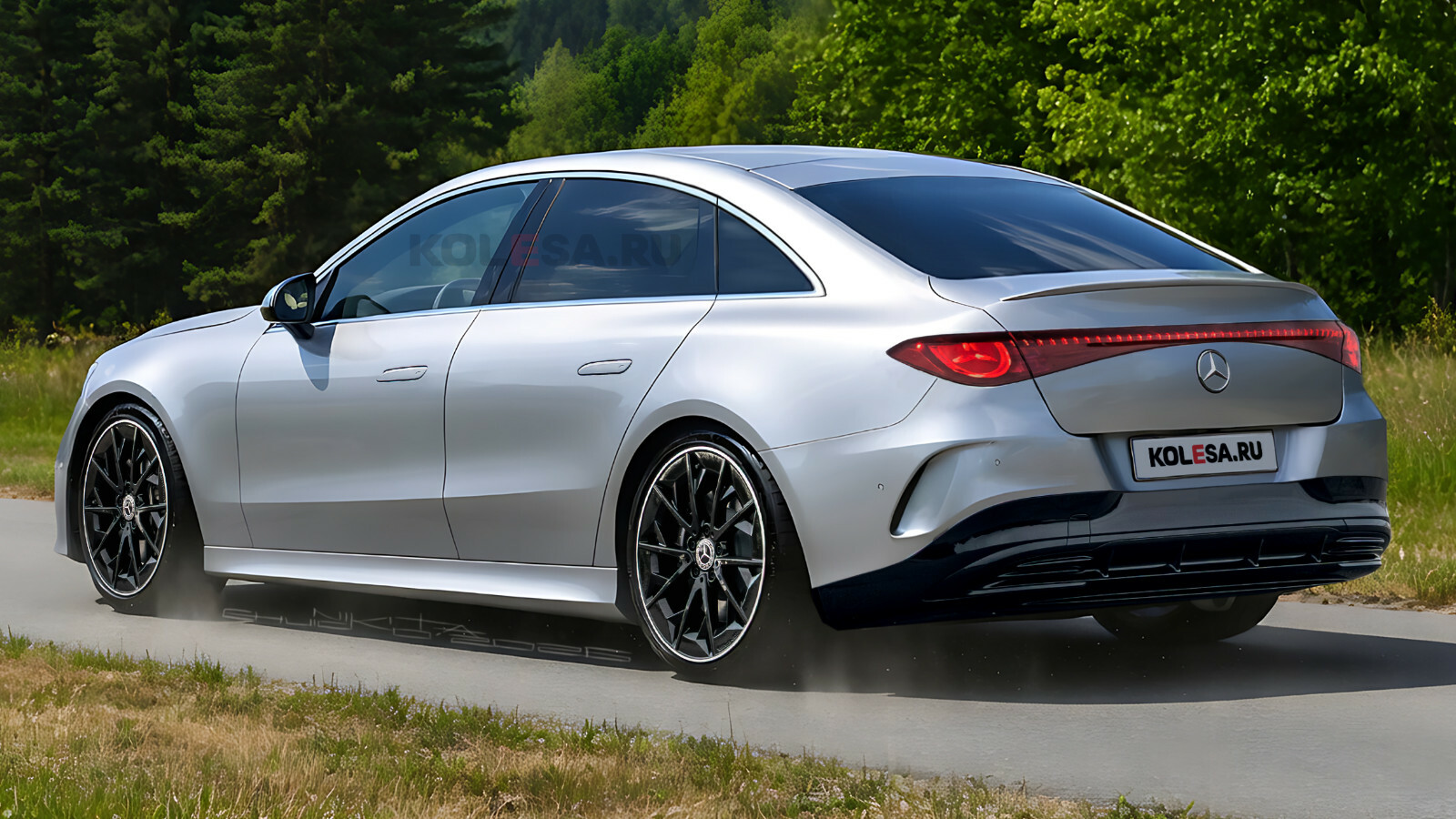
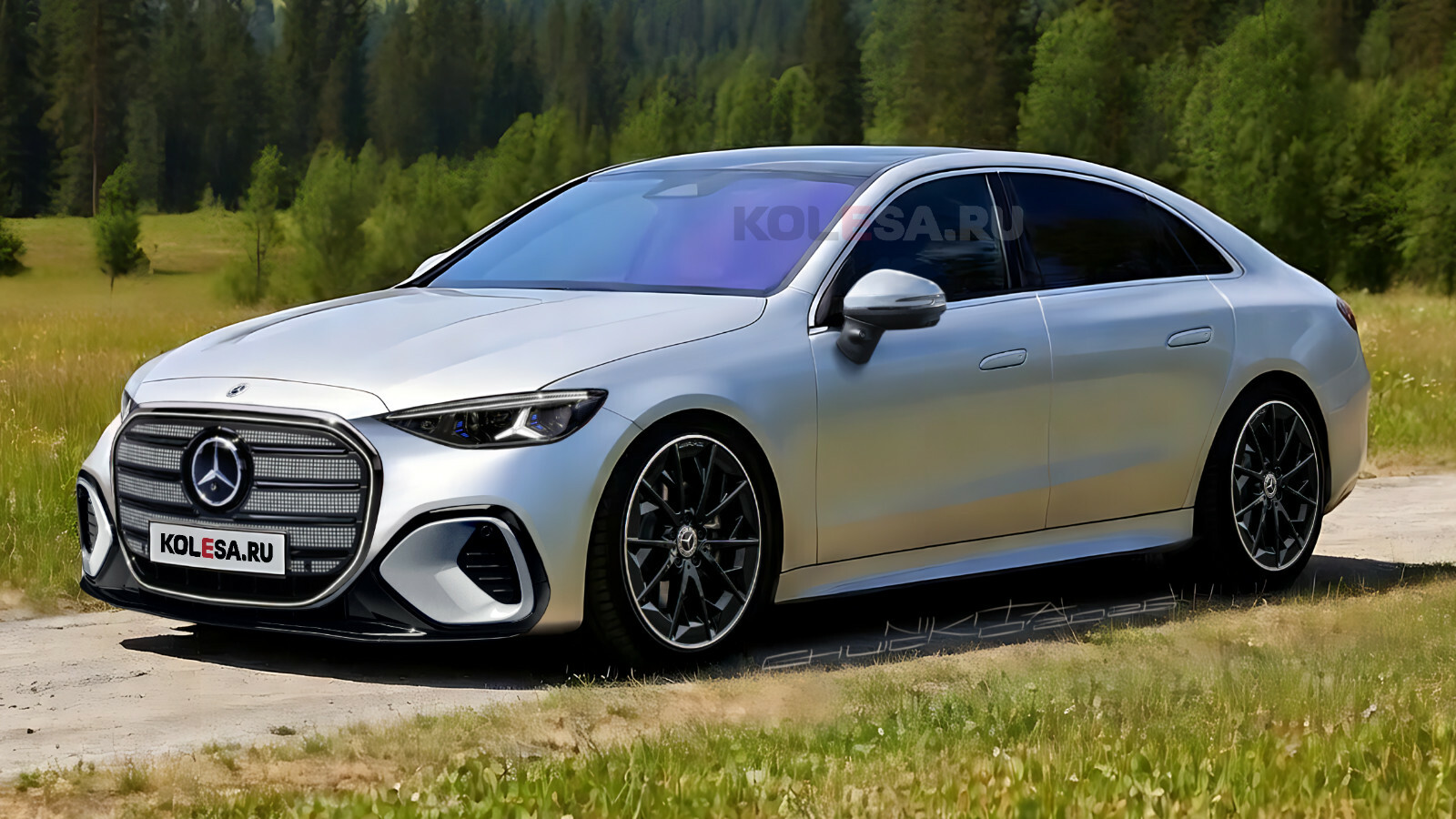
Visually, the biggest departure from the ICE version comes at the front. The EV is expected to feature an illuminated grille made up of hundreds of LEDs, much like the GLC EQ, as shown in these renderings created by Nikita Chuyko for Kolesa. Large grilles remain a divisive choice, and this one is unlikely to settle the debate, but it will certainly give the electric C-Class a distinct presence on the road.

A More Aero Shape

 New Mercedes Electric Sedan Drops The EQS Bubble To Take On BMW’s i3
Kolesa

During recent prototype testing, Autocar observed that the front end sits more upright than the current C-Class, while the rear window is set at a noticeably steeper angle. That extended rear glass is also reflected in these illustrations, giving the sedan a vibe reminiscent of the much-criticized EQS and EQE.

Read: Mercedes-AMG Turns Electric C-Class Up To 11, Power Up To 800 HP

Unlike those models, however, Mercedes appears to be edging back toward a more conventional silhouette, complete with a longer hood, as it gradually moves away from its more experimental EQ design language.

It also sits lower than the combustion version and stretches out slightly, with a larger footprint overall. The payoff is more cabin room, helped by a longer wheelbase and wider tracks.

\\\\\\\\\

Prototype of the Mercedes-Benz C-Class EQ (Photos SHProshots)

Underpinning the new sedan will be Mercedes-Benz’s MB.EA architecture, also used by the GLC EQ, features 800-volt technology. The platform is expected to support a two-speed transmission to improve efficiency and performance, along with available rear-wheel steering and adaptive air suspension borrowed from higher-end models.

Power And Driving Range

Full powertrain details have yet to be confirmed, but the lineup is likely to mirror the GLC EQ, with battery packs ranging from 64 kWh to 94 kWh.

According to AutoExpress, one of the launch models will be the C 400 4MATIC Electric, offering up to 450 miles (724 km) of range on the WLTP cycle. That is short of the 559 miles (900 km) quoted for the i3, but it still puts the Mercedes among the more longer-range contenders in the segment. Charging should be competitive as well, with a peak DC rate of 330 kW. Not quite the i3’s 400 kW ceiling, but more than sufficient in everyday use.

Power comes from a dual-motor setup producing around 482 hp and 800 Nm (590 lb-ft) of torque, paired with all-wheel drive. Expect a 0-62 mph time of under 4.5 seconds. Pricing is projected to fall between $50,000 and $60,000, with a full market launch slated for late 2026.

 New Mercedes Electric Sedan Drops The EQS Bubble To Take On BMW’s i3
Kolesa

700 Laid-Off Workers Rehired As GM Changes What Its Battery Plant Builds

  • The facility now builds LFP cells for grid and data use.
  • Retooling the plant cost the joint venture tens of millions.
  • LG is also shifting other battery plants to storage facilities.

Just a few months after Ford announced that one of its battery plants, originally destined for EV batteries, would instead start making batteries for energy storage systems, General Motors has done the same.

The car manufacturer, in partnership with LG Energy Solution, operates the Ultium Cells LLC joint venture and runs a large factory in Tennessee. This site opened in 2024, making cells for the Cadillac Lyriq and Vistiq, and the Acura ZDX. Late last year, more than 700 employees were laid off from the plant as GM, like its competitors, pulled back its EV investments.

Read: GM’s EV Plant Will Now Build The Gas Models People Actually Want

Now, Ultium’s vice president of operations, Tom Gallagher, said that these workers will be rehired and return to work by the end of April, as the site is switching to lithium-iron phosphate cells for grid and data center customers.

An Expensive Pivot

 700 Laid-Off Workers Rehired As GM Changes What Its Battery Plant Builds

Bloomberg reports that retooling the plant has cost the joint venture tens of millions of dollars, but will help prevent hemorrhaging even more money from its EV pivot. It will also help LG, which is also retooling four other EV battery plants in North America, including two in Michigan, one in Canada formed through a joint venture with Stellantis, and an Ohio plant established with Honda. All of these sites will now begin manufacturing LFP cells for storage systems.

“Having these facilities that are able to be converted in less than a year means that we can react and we can actually get up to capacity,” chief product officer from LG’s systems integration unit, Vertech, Tristan Doherty said. “We’re going to be supplying the majority of the US market with domestic cells.”

GM says staff at the joint venture battery plant will be retrained as part of the shift. But the car manufacturer is remaining silent about its longer-term plans for the site, having previously stated that it’d start producing lithium manganese-rich batteries in Tennessee by 2028.

 700 Laid-Off Workers Rehired As GM Changes What Its Battery Plant Builds

Yesterday — 19 March 2026Main stream

New Mercedes Electric Sedan Drops The EQS Bubble To Take On BMW’s i3

  • The C-Class EQ will use the Mercedes MB.EA architecture with 800-volt tech.
  • Mercedes will likely offer battery options ranging from 64 kWh to 94 kWh.
  • Early estimates indicate the C-Class EQ will have a driving range of 450 miles.

Hot on the heels of the new all-electric BMW i3, we can now turn our attention to its upcoming rival, the Mercedes-Benz C-Class EQ. Due for an April reveal, it will go head-to-head with the electric 3-Series, drawing on much of the same technology and drivetrain hardware as the GLC EQ.

See: BMW’s Most Traditional Sedan Becomes Its Most Futuristic Yet With New i3

As with the i3, which will be sold alongside a combustion 3-Series, the C-Class EQwon’t replace the gas-powered model but exist alongside it. Prototypes have been spotted testing for months, and a few journalists have already had early drives in production-intent cars.

Visually, the biggest departure from the ICE version comes at the front. The EV is expected to feature an illuminated grille made up of hundreds of LEDs, much like the GLC EQ, as shown in these renderings created by Nikita Chuyko for Kolesa. Large grilles remain a divisive choice, and this one is unlikely to settle the debate, but it will certainly give the electric C-Class a distinct presence on the road.

A More Aero Shape

 New Mercedes Electric Sedan Drops The EQS Bubble To Take On BMW’s i3
Kolesa

During recent prototype testing, Autocar observed that the front end sits more upright than the current C-Class, while the rear window is set at a noticeably steeper angle. That extended rear glass is also reflected in these illustrations, giving the sedan a vibe reminiscent of the much-criticized EQS and EQE.

Read: Mercedes-AMG Turns Electric C-Class Up To 11, Power Up To 800 HP

Unlike those models, however, Mercedes appears to be edging back toward a more conventional silhouette, complete with a longer hood, as it gradually moves away from its more experimental EQ design language.

It also sits lower than the combustion version and stretches out slightly, with a larger footprint overall. The payoff is more cabin room, helped by a longer wheelbase and wider tracks.

\\\\\\\\\

Prototype of the Mercedes-Benz C-Class EQ (Photos SHProshots)

Underpinning the new sedan will be Mercedes-Benz’s MB.EA architecture, also used by the GLC EQ, features 800-volt technology. The platform is expected to support a two-speed transmission to improve efficiency and performance, along with available rear-wheel steering and adaptive air suspension borrowed from higher-end models.

Power And Driving Range

Full powertrain details have yet to be confirmed, but the lineup is likely to mirror the GLC EQ, with battery packs ranging from 64 kWh to 94 kWh.

According to AutoExpress, one of the launch models will be the C 400 4MATIC Electric, offering up to 450 miles (724 km) of range on the WLTP cycle. That is short of the 559 miles (900 km) quoted for the i3, but it still puts the Mercedes among the more longer-range contenders in the segment. Charging should be competitive as well, with a peak DC rate of 330 kW. Not quite the i3’s 400 kW ceiling, but more than sufficient in everyday use.

Power comes from a dual-motor setup producing around 482 hp and 800 Nm (590 lb-ft) of torque, paired with all-wheel drive. Expect a 0-62 mph time of under 4.5 seconds. Pricing is projected to fall between $50,000 and $60,000, with a full market launch slated for late 2026.

 New Mercedes Electric Sedan Drops The EQS Bubble To Take On BMW’s i3
Kolesa

700 Laid-Off Workers Rehired As GM Changes What Its Battery Plant Builds

  • The facility now builds LFP cells for grid and data use.
  • Retooling the plant cost the joint venture tens of millions.
  • LG is also shifting other battery plants to storage facilities.

Just a few months after Ford announced that one of its battery plants, originally destined for EV batteries, would instead start making batteries for energy storage systems, General Motors has done the same.

The car manufacturer, in partnership with LG Energy Solution, operates the Ultium Cells LLC joint venture and runs a large factory in Tennessee. This site opened in 2024, making cells for the Cadillac Lyriq and Vistiq, and the Acura ZDX. Late last year, more than 700 employees were laid off from the plant as GM, like its competitors, pulled back its EV investments.

Read: GM’s EV Plant Will Now Build The Gas Models People Actually Want

Now, Ultium’s vice president of operations, Tom Gallagher, said that these workers will be rehired and return to work by the end of April, as the site is switching to lithium-iron phosphate cells for grid and data center customers.

An Expensive Pivot

 700 Laid-Off Workers Rehired As GM Changes What Its Battery Plant Builds

Bloomberg reports that retooling the plant has cost the joint venture tens of millions of dollars, but will help prevent hemorrhaging even more money from its EV pivot. It will also help LG, which is also retooling four other EV battery plants in North America, including two in Michigan, one in Canada formed through a joint venture with Stellantis, and an Ohio plant established with Honda. All of these sites will now begin manufacturing LFP cells for storage systems.

“Having these facilities that are able to be converted in less than a year means that we can react and we can actually get up to capacity,” chief product officer from LG’s systems integration unit, Vertech, Tristan Doherty said. “We’re going to be supplying the majority of the US market with domestic cells.”

GM says staff at the joint venture battery plant will be retrained as part of the shift. But the car manufacturer is remaining silent about its longer-term plans for the site, having previously stated that it’d start producing lithium manganese-rich batteries in Tennessee by 2028.

 700 Laid-Off Workers Rehired As GM Changes What Its Battery Plant Builds

Before yesterdayMain stream

Stellantis Hands Chinese EV Maker A Factory To Bypass EU Import Tariffs

  • The Chinese brand will start building the B10 in Spain, likely in Zaragoza.
  • Leapmotor’s global exports surged almost 400 percent last year.
  • Stellantis and Leapmotor are also eager to deepen the EV collaboration.

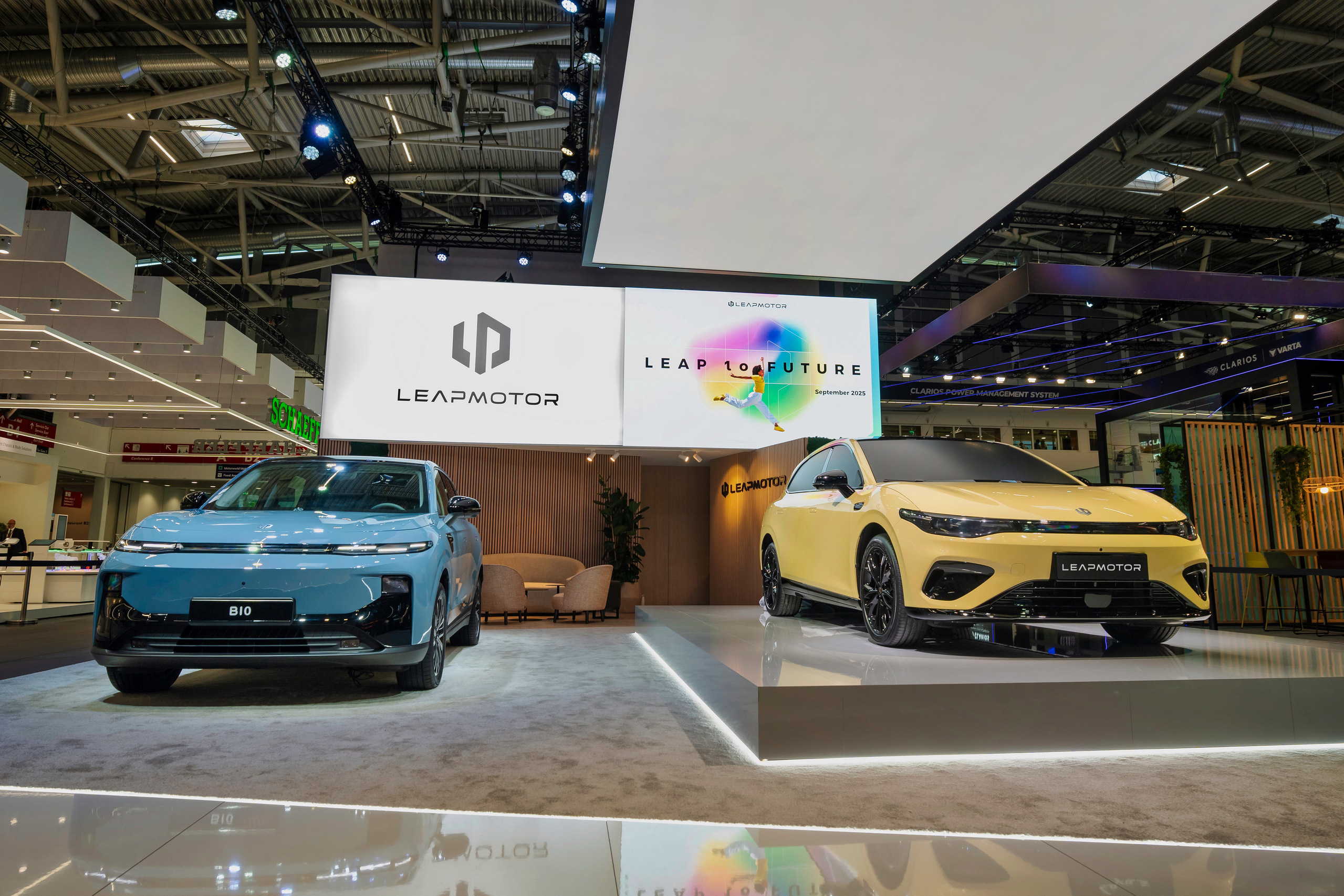
After a misstep last year in building its T03 electric city car in Poland, Leapmotor is on track to start building EVs elsewhere in Europe, this time in Spain. This will be a hugely important part of the company’s global expansion, particularly in Western markets, which has intensified since Stellantis took a major stake in it.

Leapmotor is expected to use the current Zaragoza plant operated by Stellantis, starting with the all-electric B10 from October according to the latest reports. This model is already available in Europe, but is currently being imported from China. The smaller B05 hatchback could also be built in Spain from as early as 2027.

Read: Stellantis Turns To A German Tuner For Its Chinese EV

Last year proved to be a pivotal one for the brand. Its global exports surged almost 400 percent, reaching 67,052 units, up from 13,726 in 2024. The Chinese brand’s expansion into Europe also saw local revenue jump 479 percent in 2025 compared to the year prior, hitting 5.6 billion yuan or $810 million.

Perhaps most impressive is the fact that Leapmotor posted a 538 million yuan ($78 million) net profit last year, making it just the second Chinese EV startup to post a full-year profit.

Closer Ties With Stellantis

 Stellantis Hands Chinese EV Maker A Factory To Bypass EU Import Tariffs
Leapmotor B05

With Leapmotor now stronger than ever, it has acknowledged it is “actively exploring” cooperation on cars and components with Stellantis, and is already having in-depth discussions on many important projects, Auto News reports.

Speaking on an earnings call, Leapmotor chief financial officer Li Tengfei said that a closer partnership with Stellantis will enable it to better navigate European regulations and tariff exemptions. As Bloomberg notes, establishing closer ties with Stellantis would also provide Leapmotor with more overseas opportunities, while enabling Stellantis to realize significant savings in developing new EVs by leveraging Leap’s existing EV technology.

Such a move would follow in the footsteps of VW, which is making EVs underpinned by Xpeng’s advanced EV platform. Similarly, Audi has partnered with SAIC.

\\\\\\

This Air-Cooled Battery Changes What Fast Charging Means For Electric Bikes

  • The Verge’s motorcycle has an 18 kWh capacity and supports fast charging.
  • A recent test shows the Donut Lab battery sitting at over 100 kW while charging.
  • Crucially, the motorcycle’s battery is air-cooled, rather than being liquid-cooled.

Electric motorcycles haven’t gained widespread acceptance to the same extent as electric cars. However, with solid-state battery packs now just around the corner, the motorbike industry is on the precipice of a revolution, one which could be led by Verge Motorcycles and Finnish firm Donut Lab.

Verge unveiled its new TS Pro electric two-wheeler earlier this year, promising up to 186 miles (299 km) of range in as little as 10 minutes when plugged into a 200 kW NACS charger. Eager to show the world just how quickly the bike can charge, Donut Lab conducted a live test at a public charging station as part of the company’s ongoing series to address the critics.

Read: Donut Lab’s Solid-State Battery Lost Just 2.3% Charge In 10 Days As Critics Watch

The model from Verge Motorcycles in this test is a previous-generation model that’s been upgraded with the latest Donut Lab battery pack. It has a capacity of 18 kWh, and the test showed peak charging rates of over 100 kW, allowing it to charge from 10-70 percent in a touch over 9 minutes, and then 10-80 percent in 12 minutes.

According to Donut Lab, the battery pack charges three times faster than Verge’s previous-generation pack. On the surface, having a battery pack that charges at a touch over 100 kW may not seem very impressive, particularly compared to some 1,500 kW charging systems being deployed by Chinese brands like BYD, Geely, and Zeekr.

An Air-Cooled Battery

\\\\\\\\\\\\\\\\\\\\\

However, it’s important to note that electric cars capable of extraordinarily fast charging use liquid cooling systems to prevent the battery pack from overheating. By comparison, Verge’s battery is air-cooled, which is why the charging rates aren’t as high. Donut Lab also says its battery will charge more quickly once Verge fully optimizes it.

“This is the first test we have published to a wider audience that demonstrates the performance and behaviour of multiple battery cells in a real vehicle environment,” Donut Lab chief technology officer Ville Piippo said. “The high energy density of our battery technology enables flexible battery pack design and superior performance even in more challenging applications, such as motorcycles, where space is limited and system simplicity is key.”

\\\\\\\\

VinFast Sold Less Than 1,500 Cars In The US, So Naturally It’s Building A Factory

  • VinFast plans to recommence construction of its US plant later this year.
  • The North Carolina site could start producing electric SUVs as early as 2028.
  • VinFast more than doubled its global sales last year, delivering 196,919 cars.

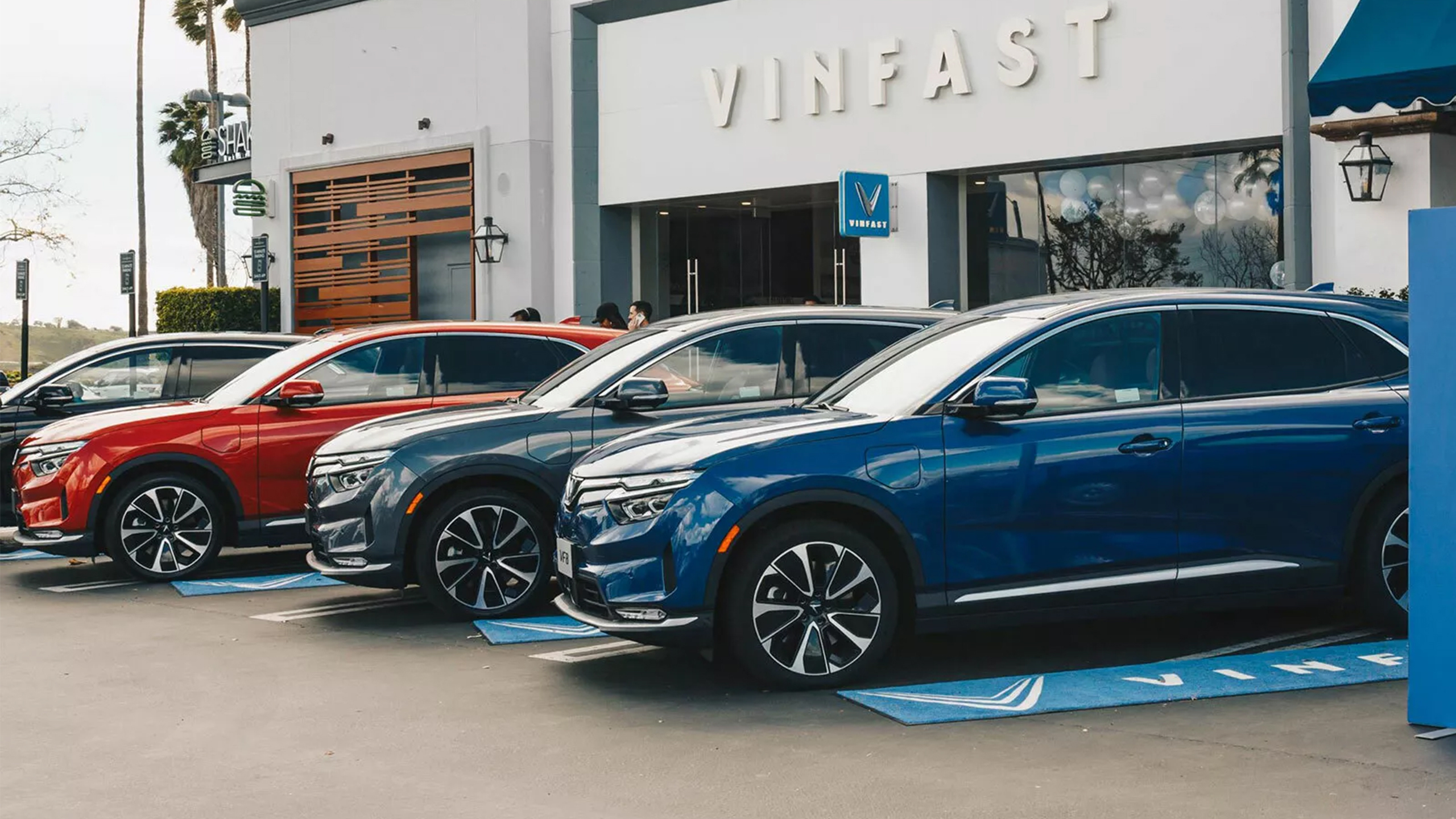
The American EV market may be faltering, but that hasn’t quelled the ambitions of Vietnamese car manufacturer VinFast. In fact, it’s been revealed that work will resume at its planned North Carolina production facility later this year, after being suspended more than 18 months ago.

VinFast first announced its plans for a US production site in March 2022 and said it could start production as early as mid-2024. Before long, that date was pushed back to 2025, and then VinFast decided to pause work on the plant entirely. It seemed almost inevitable that the firm would pull out of the US entirely, having registered fewer than 1,500 cars locally last year.

Read: VinFast Hits Brakes On US Production, Now Slated To Begin In 2028

Evidently, VinFast isn’t giving up just yet. Its most recent financial earnings report reveals that construction at the North Carolina site will resume later this year and that it still plans to start production in 2028. VinFast is also planning to open factories in India and Indonesia.

Although the company’s presence in America is tiny, it has been growing elsewhere. In the fourth quarter of 2025, VinFast sold 86,557 cars, a 127 percent quarterly jump and a 63 percent increase year-over-year, Bloomberg reports. The company ended last year having sold 196,919 vehicles, more than double its 2024 figure.

Revenues Rise But Problems Remain

\\\\\\

Thanks to the surge in sales, revenue rose 138.9 percent year-on-year in the fourth quarter to 39.4 trillion dong ($1.5 billion), although it reported a Q4 net loss of 35.2 trillion dong ($1.3 billion), a 15 percent increase.

VinFast says it “continues to evaluate opportunities to expand into additional countries and regions across Europe, Asia, the Middle East and Africa,” adding its “expansion strategy is aligned with Vingroup’s broader global development approach, leveraging the Vingroup ecosystem, partnerships and capital resources to support VinFast’s international growth.”

If the company wants to be successful in the US, it’ll need to start building some more compelling cars. The VF 8 and VF 9, available locally, have been criticized since launching. Late last year, VF 8 owners sued VinFast, alleging that DC charging speeds top out at under 2 kW, despite them being promoted as supporting charge rates of 6.6 kW or higher, meaning it can take more than 24 hours for the battery to be fully charged.

 VinFast Sold Less Than 1,500 Cars In The US, So Naturally It’s Building A Factory

Canada Could Give China’s Biggest Carmaker A Backdoor Into The US Market

  • BYD could enter Canada solo, avoiding joint venture deals entirely.
  • Canada may serve as a North American base for production and exports.
  • Tariff quota begins at 49,000 units and rises steadily over five years.

BYD is taking on the world, and thanks to a new trade deal between Canada and China, it could start building vehicles in the Great White North. The company’s executive vice president has even admitted an openness to acquire an existing car manufacturer as it looks to further broaden its reach.

Earlier this year, Canada announced it would slash tariffs on Chinese EVs from 100 percent to 6.1 percent, but only for the first 49,000 vehicles per year. This quota will grow to around 70,000 vehicles annually over five years, reopening the door for BYD to enter the Canadian market.

Read: Jim Farley Tests Chinese Pickups, And He Has Something To Say

The Chinese juggernaut was eager to enter Canada a couple of years ago, but shelved its plans in late 2024 when the 100 percent tariffs were announced by then-Prime Minister Justin Trudeau. Now, BYD executive vice president Stella Li said at an event in Brazil that a Canadian launch is back on the cards and that the firm is even considering a manufacturing facility there.

Exactly how BYD would establish itself locally remains undecided. Ottawa has been pushing Chinese automakers toward joint ventures with domestic partners, but Li was blunt on that point, saying she does not believe “a JV will work” for the company.

Can Anything Stop BYD’s Growth?

 Canada Could Give China’s Biggest Carmaker A Backdoor Into The US Market

Canada could provide BYD with a foothold in North America, meaning building models for the local market and having the option of exporting them. Fellow Chinese brands Geely and Chery are also reportedly making moves to enter Canada, although they’ve yet to commit to building cars in the country.

BYD’s growth strategy could involve acquiring an existing automaker. Speaking with Bloomberg, Li suggested the company is interested in taking over a legacy car brand, noting that “We’re open to every opportunity we have,” and that BYD is currently evaluating potential assets.

Acquiring an established automaker could also give BYD an indirect route into the United States. It is a well-worn strategy, and one that has worked before. Geely took control of Volvo and used it to expand its global footprint, while SAIC revived MG into a thriving EV-focused brand. BYD could be looking at a similar playbook.

\\\\\\\

This Classic Alfa Hits 60 In 2.9 Seconds Without Making A Sound

  • A collector in California commissioned Totem Automobili to build this car.
  • Powering this special Alfa Romeo-based model is a 590 hp electric motor.
  • The cabin includes high-end leather and a slew of satin gold accents.

This is the latest Alfa Romeo-based restomod from Italian brand Totem Automobili, and while it’s not the first we’ve seen, there’s one major thing that sets it apart from others. You see, rather than a 2.8-liter twin-turbocharged V6 producing up to 739 hp, this car is equipped with an all-electric powertrain.

Totem refers to this car as the GT Electric ‘Zeal 01’ and says it was commissioned by a client from California. Visually, it looks just as incredible as the ICE-powered GT Super models the small firm is also building. If Alfa Romeo itself were to build a new model inspired by its past, it’d be wise to look at this car for inspiration.

Read: This Alfa Romeo Restomod Laughs In The Face Of The Giulia QV

The exterior is painted in a special shade known as Accurro Pervinca and has loads of satin gold accents. These include the headlight surrounds, the triangular Scudetto grille, the wing mirrors, door surrounds, and even the metal windshield wipers. A set of gorgeous matching wheels has then been fitted.

A Masterpiece Of A Cabin

\\\\\\\\\

Somehow, the cabin looks even better than the outside. Totem has crafted custom gauges for the car, complete with satin gold surrounds, as well as a three-spoke steering wheel trimmed in blue leather and complete with custom switchgear on the steering column. The column itself, as well as parts of the dashboard and door panels, are made from carbon fiber with a very distinctive weave.

The rest of the interior is a mix of blue and cream Nappa leather, including on the seats, dash, transmission tunnel, and doors. Totem has then added a special fabric to the center of the carbon-fiber-backed Sabelt seats and even crafted a leather headliner.

\\\\\\\\\\\\\\\\\\\\

While we think it’s a little sad that the car’s owner won’t be able to enjoy the specially developed twin-turbo V6 that Totem also sells, the electric powertrain isn’t exactly lacking in grunt. It features a 590 hp motor at the rear axle, allowing it to hit 60 miles (96 km/h) in 2.9 seconds and is also said to be good for up to 300 miles (482 km) on a charge. Finally, Brembo brakes and an electronically controlled suspension should ensure the car handles as one would expect from such a build.

\\\\\\\\\\\\

Photos Totem Automobili

Mercedes’ Future EVs May Be More Chinese Than You Think

  • Mercedes explores deeper ties with Geely for future EV tech.
  • Talks focus on reducing costs and speeding development cycles.
  • New entry EV platform could debut around 2030 replacing MMA.

Mercedes-Benz has a pair of very interesting new EVs in its line-up, namely the latest-generation CLA and GLC, but that doesn’t mean it’s not thinking even further into the future. According to a new report, the brand may look to deepen ties with China’s second-largest car manufacturer for its next generation of EVs.

Unnamed sources claim that Mercedes has had early-stage discussions with Geely about its future EVs. It’s possible these vehicles will feature componentry from the Chinese brand, which would no doubt help cut engineering costs and shorten development times.

Read: 2026 Mercedes CLA To Get A 2.0L Turbo Engine Built By China’s Geely

While Geely declined to comment on the report, a Mercedes spokesperson acknowledged that the firm “is continually reviewing ways to make research and development faster, better and more efficient — both in China and globally.” Importantly, the same spokesperson told Bloomberg that there are no discussions about Mercedes and Geely sharing platforms.

Germany Joins With China

 Mercedes’ Future EVs May Be More Chinese Than You Think

This contrasts with what fellow German brand VW has done. It has partnered with Chinese brand Xpeng and is sharing architectures with the relatively young EV startup for some of its future EVs, including a new ID-badged sedan. Companies like Xpeng, as well as BYD, Geely, Chery, and others, have streaked ahead of many Western legacy automakers, developing more advanced batteries and electric motors.

Mercedes already has very strong ties with Geely and operates the Smart brand with its Chinese partner. Once exclusively a purveyor of small city cars, the Smart brand has been revitalized as an EV manufacturer with designs penned by Mercedes, while engineering and manufacturing are handled by Geely.

While Mercedes says it’s not interested in platform sharing with Geely, a recent report from China claims that the German company could develop its next-gen EV platform using Geely’s GEEA electronic and electrical architecture as its base. This report from 36Kr claims that the new platform has been dubbed ‘Phoenix’ and will be used for entry-level EVs sold worldwide, potentially launching as soon as 2030 as a replacement for the current MMA architecture.

 Mercedes’ Future EVs May Be More Chinese Than You Think
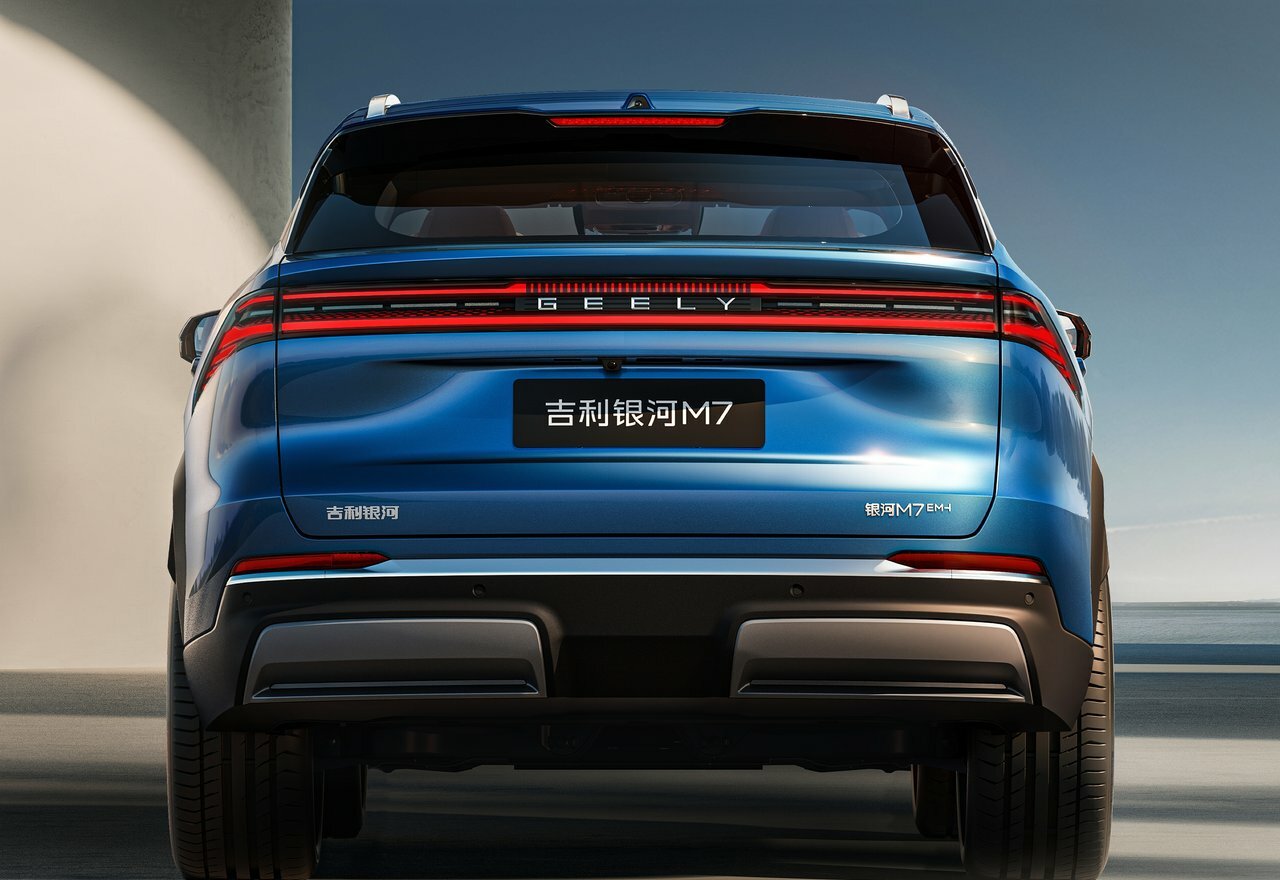
Geely Galaxy M7

EV Sales Plunge 41% In The US As Post-Incentive Reset Takes Hold

  • EV registrations fell sharply in January as market momentum faded.
  • Cadillac ranked as the No. 2 EV brand behind Tesla with modest growth.
  • Gas and hybrid vehicles gained market share as EV demand softened.

Newly-released sales figures from the United States is starting to reveal just how much electric vehicle demand leaned on the federal EV tax credit that was discarded on September 30 last year. With that incentive now gone, the early numbers suggest the market is already feeling the adjustment, and it has not been a subtle one.

Data from S&P Global Mobility shared by Auto News show that 59,802 new EVs were registered in January, a massive 41 percent drop from a year earlier. Out of nearly 1.2 million vehicles registered that month, that leaves fully electric models with just a 5.1 percent share of the market, down from 8.3 percent a year earlier.

Meanwhile, gasoline vehicles quietly expanded their hold, rising 2.3 percentage points to claim 76.6 percent of registrations. Hybrids also edged upward, gaining 1 point to reach a 14.7 percent share.

Read: Global EV Sales Just Fell 11%, But Carmakers Found A Surprising Backup Plan

Tesla still sits comfortably at the top of the US EV market, which will surprise absolutely no one. In January alone, 32,123 new Teslas were registered. Even so, Tesla is not immune to the slowdown, with registrations down 26 percent from a year earlier. Despite that drop, its share of the EV market jumped 11 percent to 53.7 percent.

Cadillac ranked a distant second with 3,189 registrations, more than ten times behind Tesla. However, the brand was one of the few to post growth, with registrations rising 8.1 percent year over year. Its share of the EV market also increased by 2.3 percent to 5.3 percent.

 EV Sales Plunge 41% In The US As Post-Incentive Reset Takes Hold

Many other carmakers have also seen their EV sales fall off a cliff. For example, there were 3,027 new Hyundai EVs registered in January, down 23 percent from the year prior. This decline was led by the Ioniq 5, which saw its deliveries slide 22 percent to 2,101 vehicles.

Ford’s EV registrations also dropped 67 percent to 2,772, while Chevrolet’s fell 55 percent to 2,658. Toyota, however, reported a 25 percent increase, although its EV registrations totaled just 2,529, meaning it still trails many competitors.

According to iSeeCars executive analyst Karl Brauer, “there’s going to be a shakeout to the new reality with no federal EV incentives, which was the carrot, and no greenhouse gas penalties, which was the stick.”

Auto News notes that EV registrations have declined year over year every month since the tax credit was scrapped on September 30. S&P Global Mobility analyst Tom Libby says the drop was “expected,” adding, “it’s a reset, and it’s going to be a very slow process moving forward.”

January 2026 EV Sales USA
BrandSalesDiff. vs Jan-25
Tesla32,123-26%
Cadillac3,189+8.1%
Hyundai3,027-23%
Ford2,772-67%
Chevrolet2,658-55%
Toyota2,529+25%
Rivian2,232-25%
Lucid1,633+97%
BMW1,501-60%
Kia1,462-58%
GMC1,156-31%
Lexus810+166%
Honda658-85%
Volvo599-32%
Subaru555-51%
Porsche495-60%
Volkswagen488-90%
Mercedes-Benz374-84%
Audi319-82%
Polestar299-34%
Nissan249-88%
Ram137
Jeep106-29%
Mini98-57%
Dodge80-65%
Genesis62-87%
Fisker41-70%
BrightDrop38-50%
VinFast37-76%
Rolls-Royce24-20%
Acura15-99%
Fiat15-91%
Maserati12+140%
Jaguar6-98%
Zeekr3
SWIPE

 S&P Global Mobility

Mercedes Planned An EV-Only Baby G, Now It’s Having Second Thoughts

  • Mercedes may sell the scaled-down G-Class as EV and hybrid.
  • The hybrid could borrow the CLA’s 1.5-liter engine setup.
  • The electric version may carry a sizable 85 kWh battery pack.

Given the cultural weight carried by the Mercedes G-Wagen, it’s a bit surprising the company has taken this long to pursue a smaller, more accessible version. Yet here it is at last. The so-called baby G is now deep into development, and these latest spy shots give us the clearest look yet at Mercedes’ downsized off-roader.

Read: Mercedes Baby G-Class Ditches Its EV-Only Plan

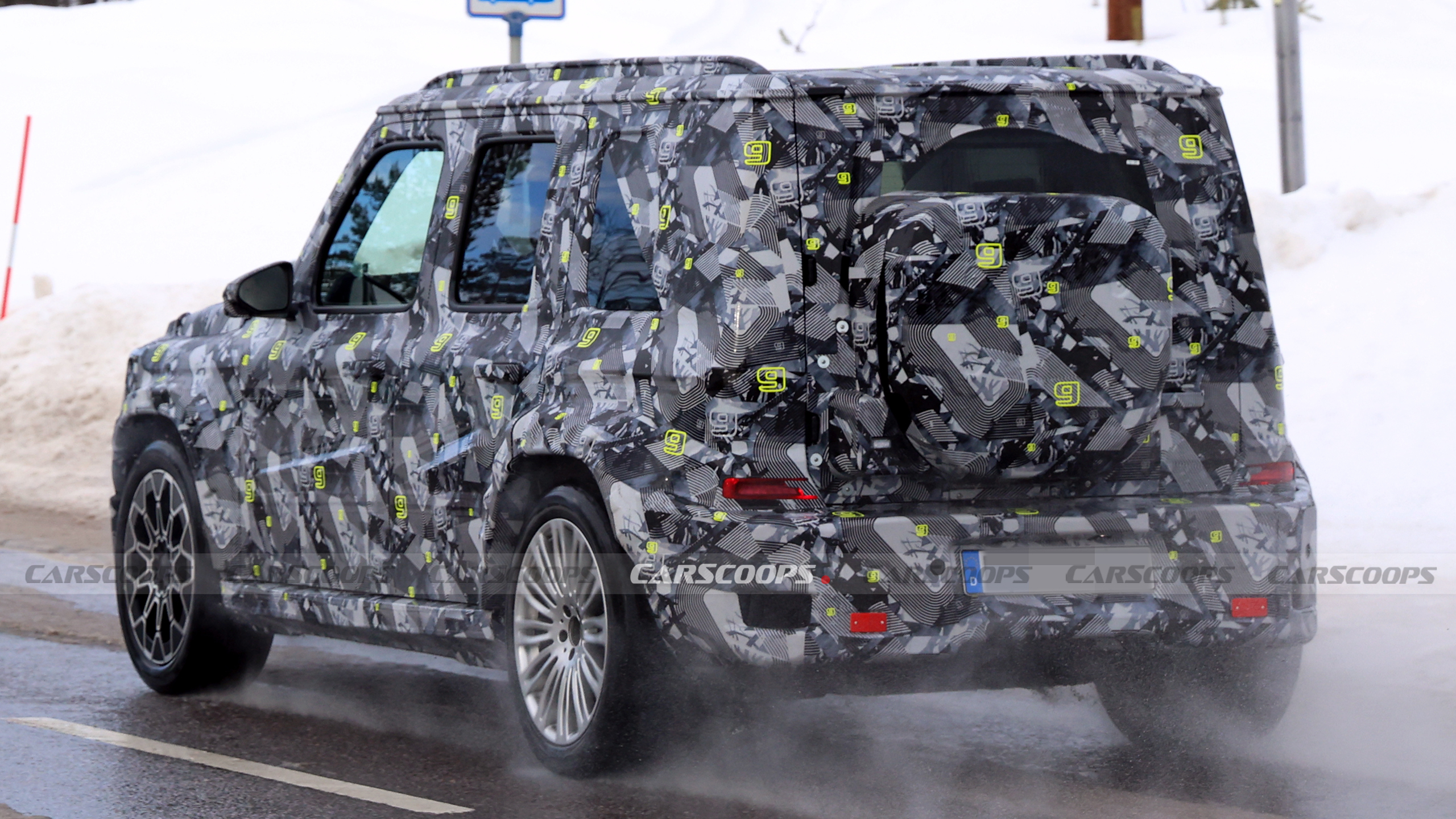
This prototype is sporting a distinctive new camouflage wrap that hides many of the more intricate details, but does nothing to shield the overall shape of the model from view. Look closely, and you’ll notice the wrap has hundreds of lower-case ‘g’ graphics, a playful nod to the model’s scaled-down identity.

Mercedes could easily have fallen into the trap of making the baby G-Class look a little too soft or restrained, perhaps little more than a lightly reworked GLB. Instead, the company appears to have taken the design of the full-size model, scaled it down, and applied a few subtler tweaks. Based on early impressions, the result looks very promising.

Classic But Modern Looks

 Mercedes Planned An EV-Only Baby G, Now It’s Having Second Thoughts
SH Proshots

The front has round headlights just like you’d expect, as well as a pronounced hood. The sides come complete with flared wheel arches, squared-off side windows, and prominent roof rails. Found at the rear will be small taillights positioned lower on the fascia, just like the normal G, in addition to a large spare wheel carrier.

Clearly, Mercedes has nailed the design. But what about what’s underneath? According to Mercedes CTO Markus Schäfer, the baby G is being engineered as a fully bespoke model rather than using an adapted version of an existing Mercedes platform. The company is developing new modules, suspension components, and wheel setups specifically for the vehicle, although it will not use a traditional ladder-frame chassis.

An Electrified Line-up

Originally, the project was intended to be purely electric. Now, however, Mercedes appears to be reconsidering that strategy. Recent reports suggest the company is evaluating the addition of a hybrid variant as well, a decision that makes practical sense given the current state of the EV market, particularly in North America.

\\\\\\

SH Proshots

If Mercedes follows through and offers a gas option, it could use the same hybrid powertrain found in the new CLA sedan. That system pairs a 1.5-liter engine developed through the Geely and Renault Horse Powertrain joint venture with electric assistance, producing 208 hp and 280 lb-ft (380 Nm). The German carmaker could recalibrate the setup for the baby G, squeezing out more power to better suit the SUV’s character.

More: Shrunken Land Rover Defender Is Coming For The Baby G-Class

As for the all-electric version, it could come fitted with an 85 kWh NMC battery providing 450 miles (724 km) of range and driving a pair of electric motors. Carscoops understands it could have a driving range of up to 450 miles (724 km), which would be very impressive considering the full-size electric G580 is only good for 280 miles (450 km).

When it finally reaches showrooms, the baby G-Class will not have the small off-roader space to itself. Rivals are already lining up, including a rumored compact version of the Land Rover Defender that aims to bring the same rugged image in a smaller package.

\\\\\

SH Proshots

BMW Revises Production Plans For The iX3 Just Months After Launch

  • BMW has already secured more than 50,000 orders for the new iX3.
  • The all-electric SUV is currently being produced in Hungary.
  • Production is expected to expand to plants in China and Mexico.

It’s been just six months since BMW unveiled the second-generation iX3, and the electric SUV is already gathering significant momentum. The early response suggests the company’s new wave of EVs may be off to a strong start. Indeed, the German brand has already announced a second shift at the Debrecen plant where it’s manufactured.

During its most recent earnings report, BMW chief executive Oliver Zipse noted that production of the iX3 has been ramping up at the plant in Hungary and that European deliveries have just started. He revealed that “order books for the iX3 are full and reach well into this year,” noting it’s proving to be popular among private and fleet customers.

Read: BMW iX3 Starts Thousands Below Polestar And Audi Rivals Down Under

Zipse went on to reveal that more than 50,000 orders have been placed for the new iX3, a very impressive figure for what is the first in a new generation of EVs from BMW. At full capacity, the plant in Debrecen will be able to build up to 150,000 vehicles annually.

There’s More To Come

\\\\\\\\\

Making the demand for the iX3 particularly impressive is the fact that only a single version has been released at this stage. This model, badged the iX3 50 xDrive, has a sizeable 108 kWh battery and a pair of electric motors combining to produce 463 hp and 476 lb-ft (645 Nm) of torque. It has a class-leading driving range of up to 500 miles (805 km) and supports charging speeds of up to 400 kW.

By the time the new iX3 range has matured, the 50 xDrive is expected to be positioned in the middle of the family. Sitting below it will be 40 and 40 xDrive versions, both of which are expected to use a smaller battery pack, while also costing quite a bit less.

Sitting towards the top of the range should be an M60 model, potentially delivering upwards of 600 hp from its upgraded motors. As reported by BMW Blog, this model could then be joined by a fully-fledged M variant in late 2027, rated at more than 800 hp.

Production of the iX3 will also spread. BMW is also expected to produce it in China and in Mexico, which should give it enough capacity to meet global demand for the EV.

\\\\\\\

This 1,111-HP Lucid Air Lost More Than A Third Of A Typical Pennsylvania Home’s Price

  • The Air Dream Edition Performance carried a hefty $170,500 MSRP.
  • After 22,000 miles, the depreciation works out to nearly $5 per mile.
  • Despite that, the luxury EV still sprints to 60 mph in just 2.5 seconds.

Luxury EVs have developed a nasty reputation for losing value at a frightening rate over the past few years, especially in the upper end of the market. However, you may be surprised to learn just how much this Lucid Air has depreciated since it was delivered in March of 2022.

The Air you’re looking at is the Dream Edition Performance, which was introduced as the flagship iteration of the all-electric sedan. With the exception of the almighty Sapphire, it’s the highest-powered version of the Air that’s been sold, thumping out a ridiculous 1,111 hp and 1,025 lb-ft of torque.

Read: Lucid Owner Gets A $50,000 Lesson On Depreciation

A look at the window sticker reveals the original owner paid $170,500 for the car. Given the performance it offers, the sleek exterior styling, and the upmarket interior, that’s not an unreasonable amount of money. But, after being driven 22,000 miles (35,000 km) over the past four years, the car’s value has plummeted, recently selling for $67,067 in Cars & Bids.

A Six Figure EV Bargain

\\\\\\\

Cars & Bids

The result is a staggering $103,433 wiped off the price. Spread across the 22,000 miles it covered, that works out to just under $5 lost for every mile driven.

For a sense of scale, that drop would cover a substantial chunk of a home in some US states. Bankrate data puts the median house price at about $282,400 in Alabama, $255,300 in Arkansas, $285,600 in Illinois, $230,600 in Iowa, $301,000 in Pennsylvania, and $249,300 in Michigan, to name a few. In other words, the money lost on this one car equals well over a third of a typical home in those places.

While it’s hard not to feel bad for the original owner, it’s nice to see a car as good as the Air becoming more accessible. The listing reveals the performance sedan has been fastidiously maintained over the past four years, and has had several parts replaced and numerous recall campaigns completed.

\\\\\\\\\

Cars & Bids

Off the line, the Air Dream Edition Performance can hit 60 mph (96 km/h) in just 2.5 seconds and storm down the quarter-mile in 9.9 seconds. Thanks to the sizeable 118 kWh battery pack, it can also travel up to 451 miles on a charge when equipped with the 21-inch wheels like this one.

Then there’s the cabin. While the Air may often be compared to the Tesla Model S, its interior is more luxurious and better equipped. Key features include Nappa full-grain leather upholstery, heated and ventilated front massage seats, a 34-inch infotainment and gauge cluster display, and a 21-speaker sound system. This Air also includes the Santa Monica interior trim, combining dark blue and light cream-colored leather.

Bad news for the first owner, great news for the next one. So the question is, would you buy a used Lucid Air knowing just how quickly these things depreciate?

\\\\\\\

Cars & Bids

❌
❌