Normal view

There are new articles available, click to refresh the page.
Before yesterdayMain stream

Nissan’s Popular Kei-Car Got A New Face For 2026. It’s The Leaf’s

  • The facelifted Nissan Sakura adopts a redesigned grille and bumper.
  • It also gains a new color and an extra cup holder inside the cabin.
  • We don’t expect any upgrades to the fully electric powertrain.

Nissan is lining up a major product presentation in Japan on April 14, but it has quietly slipped in a facelift reveal ahead of schedule. The Sakura receives mild exterior and interior tweaks, aimed at keeping it relevant in Japan’s fast-moving electric kei car segment.

The model was originally introduced in 2022, as the production version of the IMk concept from 2019. Still, Nissan played it safe with small changes, likely due to a limited budget.

Fresh Face And Floral Hues

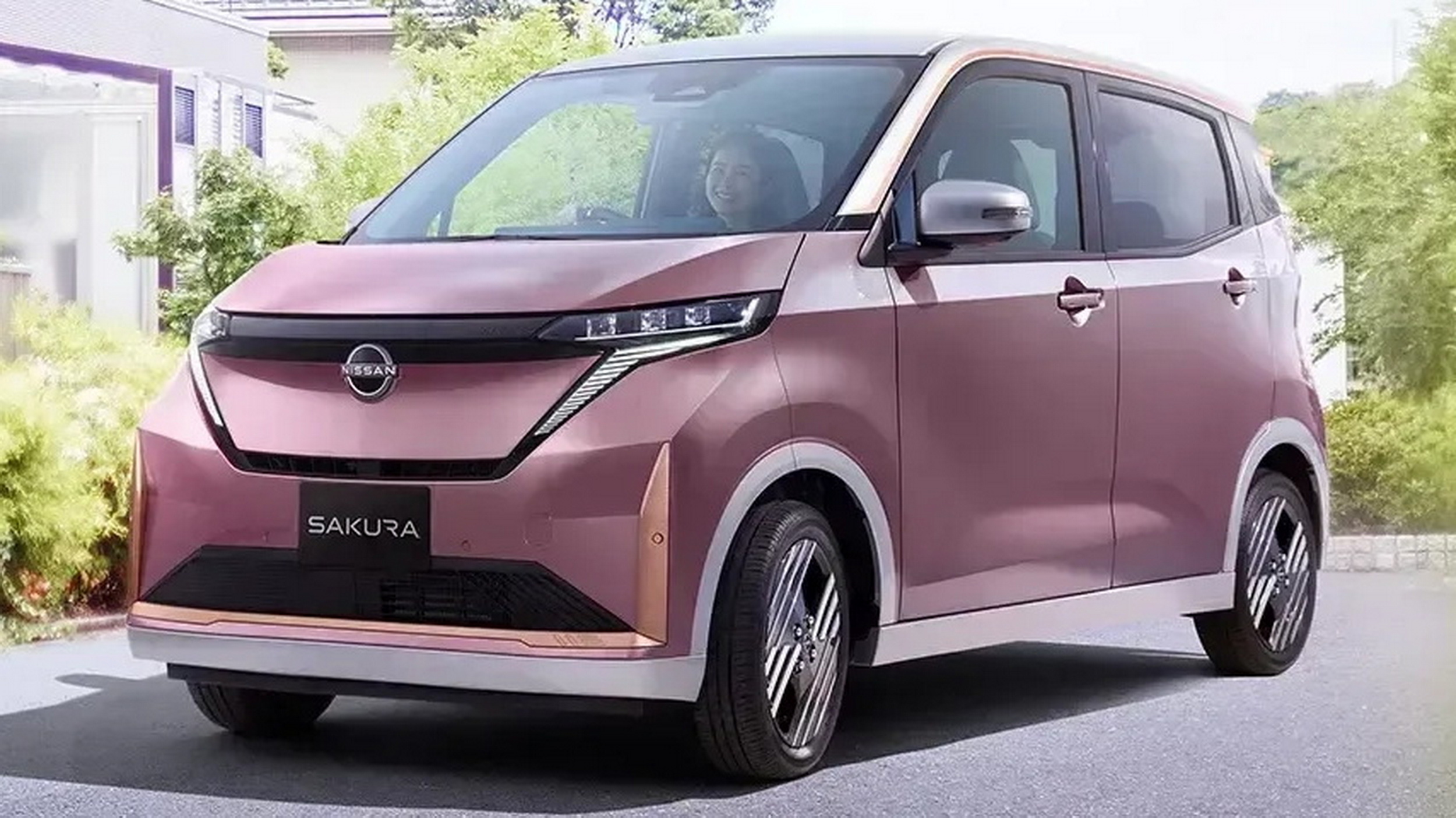
The most noticeable change is up front, where a redesigned fascia introduces a body-colored grille section that mimics the Nissan Leaf. It’s paired with a revised bumper that brings sharper angles and more pronounced vertical elements along the sides.

More: Nissan Pulls The Plug On The Most Affordable Leaf. For Now

The LED headlights carry over unchanged, as does the sheet metal along the profile. Around the back, things appear largely untouched as well, although the lower portion of the rear bumper remains out of view.
 Nissan’s Popular Kei-Car Got A New Face For 2026. It’s The Leaf’s

The color palette gains a new shade called “Minamono Sakura”, inspired by cherry blossoms floating on water. In the pictured example, the paint combines copper and silver accents, creating an unusual tri-color finish.

Key-Sized Improvements Inside

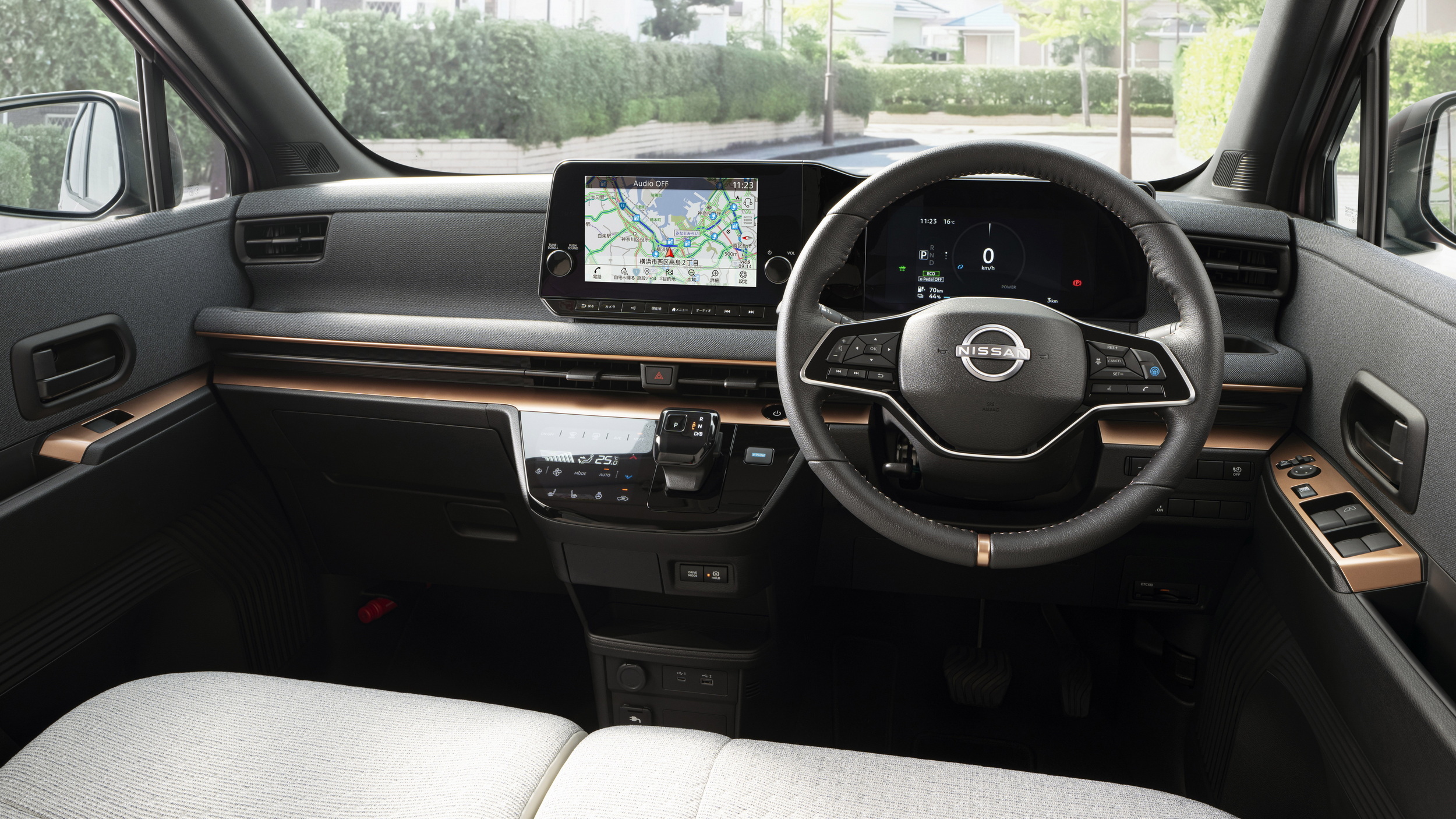
Inside, Nissan has shared just a single image, and at first glance, it looks unchanged. A closer look reveals addition of an extra cup holder on the passenger side.

More: Nissan Turns Sunlight Into Free Miles With Its Smart EV Upgrade

Designers didn’t seem to bother changing the 7-inch digital instrument cluster and 9-inch infotainment, but they did relocate the USB Type-C ports lower in the center console.
 Nissan’s Popular Kei-Car Got A New Face For 2026. It’s The Leaf’s

While the company has yet to release detailed specifications, there is little reason to expect meaningful changes under the skin. The outgoing Sakura uses a single electric motor producing 63 hp (47 kW) and 195 Nm (144 lb-ft) of torque, paired with a 20 kWh battery that delivers a WLTC-rated range of 180 km (112 miles).

The facelifted kei car is expected to reach the Japanese market in the coming weeks, at which point pricing details should be confirmed. For reference, the current model starts at ¥2,599,300 ($16,300) for the base X trim and rises to ¥3,082,200 ($19,400) for the flagship G.

Nissan says the model has been Japan’s best-selling EV for four consecutive years, recording 14,093 sales in 2025. Competition comes from familiar domestic rivals, including the Mitsubishi eK X EV twin, the Honda N-One e: and N-Van e:, as well as the upcoming BYD Racco.
\\\\\\\\\

Nissan

VW Spent Decades Selling Germans What China Wanted. Now China’s Selling VW What It Needs

  • The new electric SUV uses VW and Xpeng’s advanced CEA architecture.
  • A high-tech driver assistance system will come standard on the new model.
  • VW is also working on Chinese EVs with its other local joint venture partners.

Volkswagen is working on yet another addition to its burgeoning range of electric cars sold in China. Whereas the brand’s range of EVs offered in Western markets is starting to feel a little old, some of its Chinese models appear to be up to the task of rivaling local brands.

Its latest model is being brought to life through the FAW-Volkswagen joint venture, rather than the Volkswagen Anhui partnership with JAC, which is responsible for the new ID. Unyx 08. Photos published online by VW show its next Chinese EV will be a large SUV sitting above the Unyx.

Read: VW’s New Compact Sedan Costs Less Than Half What Americans Pay For A Jetta

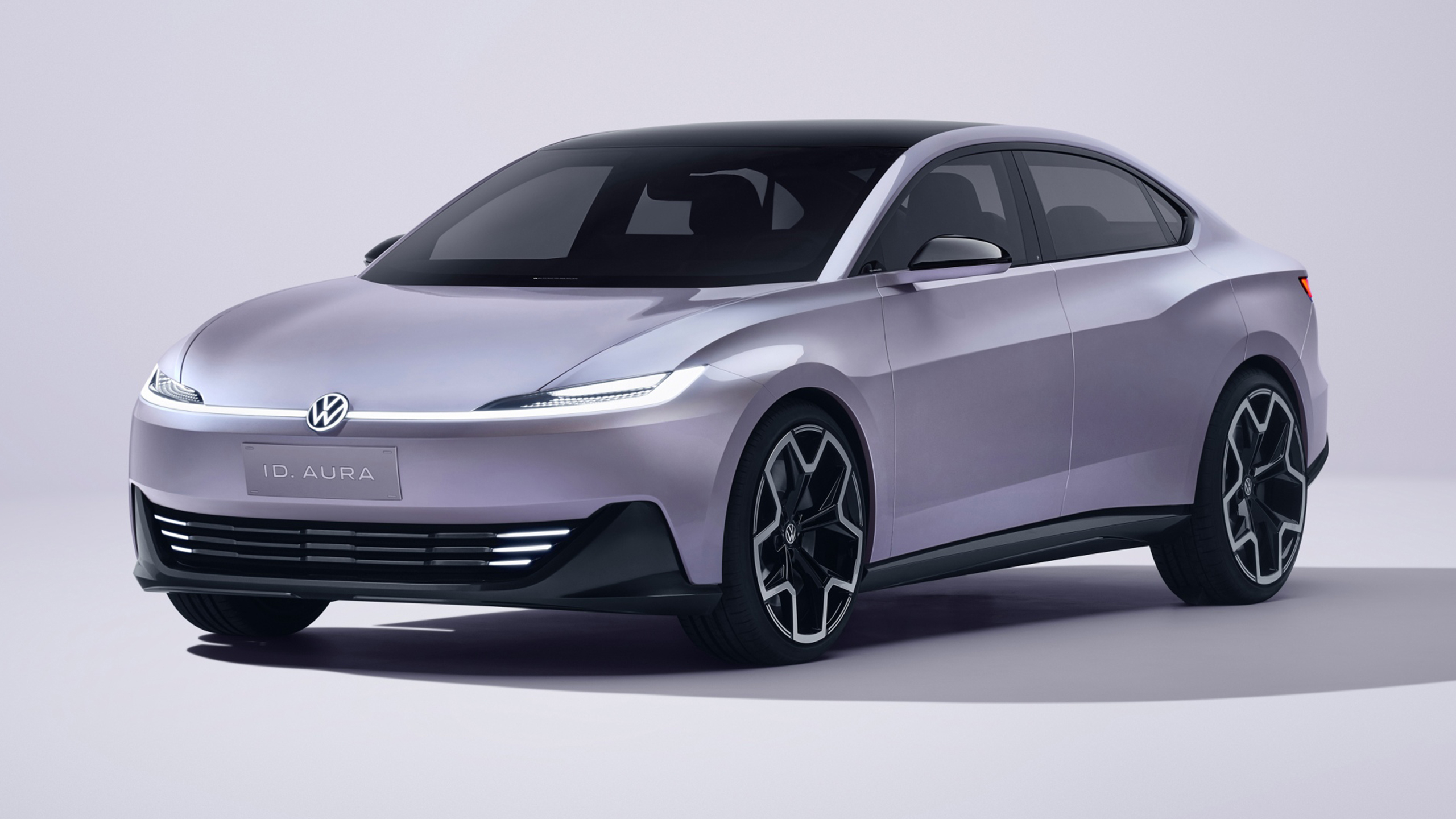
A final name for the model has yet to be confirmed, but we know this SUV will form part of VW’s ID.Aura family, previewed last year with a sleek, low-slung sedan. Like the ID. Unyx 08, it’s reported that this model is based on the CEA architecture that VW has co-developed with Xpeng, complete with 800-volt tech.

Advanced Driving Tech

\\\\

These images indicate the first ID.Aura model will be slightly more conventional in its shape than the Unyx. We can see it will have a split-headlight design and a front fascia that sits quite upright. Other notable elements of the design include bulging fenders and a LiDAR unit positioned above the windshield.

Elsewhere, this prototype can be seen sporting roof rails, a sunroof or panoramic glass roof, and a fairly traditional-looking tailgate. Small parts of the LED taillights are also visible.

It’s understood that the first model from the ID.Aura family will use an advanced driver assistant system developed by VW and Horizon Robotics, known as Carizon. Limited other details about it are known, including what powertrain it will have, what charging speeds it will support, and what kind of driving range will be on offer.

 VW Spent Decades Selling Germans What China Wanted. Now China’s Selling VW What It Needs
VW ID.Aura sedan concept

AMG Built A Sedan That Growls, Revs, And Shifts Like It Has A V8. It Doesn’t

  • Mercedes-AMG has revealed the V8 soundtrack of its latest EV
  • We’re talking about the fully electric AMG GT 4-Door Coupe.
  • The upcoming model offers highly configurable drive modes.

Mercedes-AMG is gearing up to unveil its new GT 4-Door Coupe, and this time it’s chasing a different target. What once took aim at the Porsche Panamera now pivots toward the Porsche Taycan, trading combustion muscle for electric intent without losing its sense of theater.

Even without a drop of fuel involved, AMG says it will still deliver a proper performance experience. The new model mimics the character of a V8, leaning on a mix of synthetic sound, feedback, and clever engineering to deliver something that still feels alive from behind the wheel.

The latest video teaser shows a camouflaged prototype of the Mercedes-AMG GT 4-Door Coupe undergoing winter testing in Lapland. American actor Gabriel Macht, AMG’s brand ambassador since mid-2025, gets an early drive of the upcoming EV before its official arrival.

More: AMG’s GT SUV Could Be The Least Mercedes-Looking Car Mercedes Has Ever Made

The highlight of the clip is the startup sequence when the driver selects Sport+ mode via the rotating steering wheel dial. That setting brings a digital V8 to life, complete with a simulated rev counter and paddle shifters that echo the feel of a combustion-powered car.

The Concept GT XX featured eight external speakers pumping synthesized engine sounds to alert pedestrians of the vehicle’s presence. Based on the exterior shots in the video, the production version appears to follow a similar approach.

More: Mercedes Is Betting On A Yoke To Save The Disastrous EQS

Macht also gets to play around with the three rotating dials on the center tunnel. These provide access to different levels of Throttle Response, Agility, and Traction, transforming the driving experience of the new AMG GT 4-Door Coupe. The Traction is probably the most impressive of the three, allowing everything from crazy wheel spin to insane traction and everything in between.

\\\\\\\\\\\\\\\\\

Mercedes-AMG / YouTube

Predictably, the video includes plenty of drifting, with the driver exploiting the advanced torque vectoring system. Since Mercedes has already revealed the interior, the prototype’s screen-heavy cabin remains fully visible throughout the drive.

More: Drivers Want More Buttons, So Mercedes-AMG’s New Super Sedan Removes Most Of Them

The new-generation AMG GT 4-Door Coupe will be the first production model built on the AMG.EA platform. The concept points to outputs as high as 1,341 hp (1,000 kW / 1,360 PS), delivered by three axial-flux electric motors. On the chassis side, AMG has confirmed adjustable air suspension, semi-active roll stabilization, configurable dampers, and a mix of carbon-ceramic and steel brake discs.

It remains to be seen whether the V8 soundtrack and the highly configurable driving experience will make the zero-emission era of AMG more appealing to its target audience.

\\\\\\

Mercedes-AMG

Mercedes Is Betting On A Yoke To Save The Disastrous EQS

  • The facelifted Mercedes EQS will offer steer-by-wire technology.
  • It will come with a new and more compact yoke steering wheel.
  • Updated EV will have revised styling and improved infotainment.

The Mercedes EQS has been an unmitigated disaster as consumers ignored the anonymous, electric blob. The underwhelming reaction pushed the automaker to rush out an emergency facelift in 2024, which featured a more traditional grille, a hood ornament, interior tweaks, and a beefier battery pack.

The company is now preparing a second facelift and Mercedes has confirmed the model will embrace steer-by-wire technology as well as a yoke steering wheel. They’re a bit late to the game, but said the change will usher in a variety of benefits.

More: Mercedes EQS Is Going Back Under The Knife For A Second Facelift

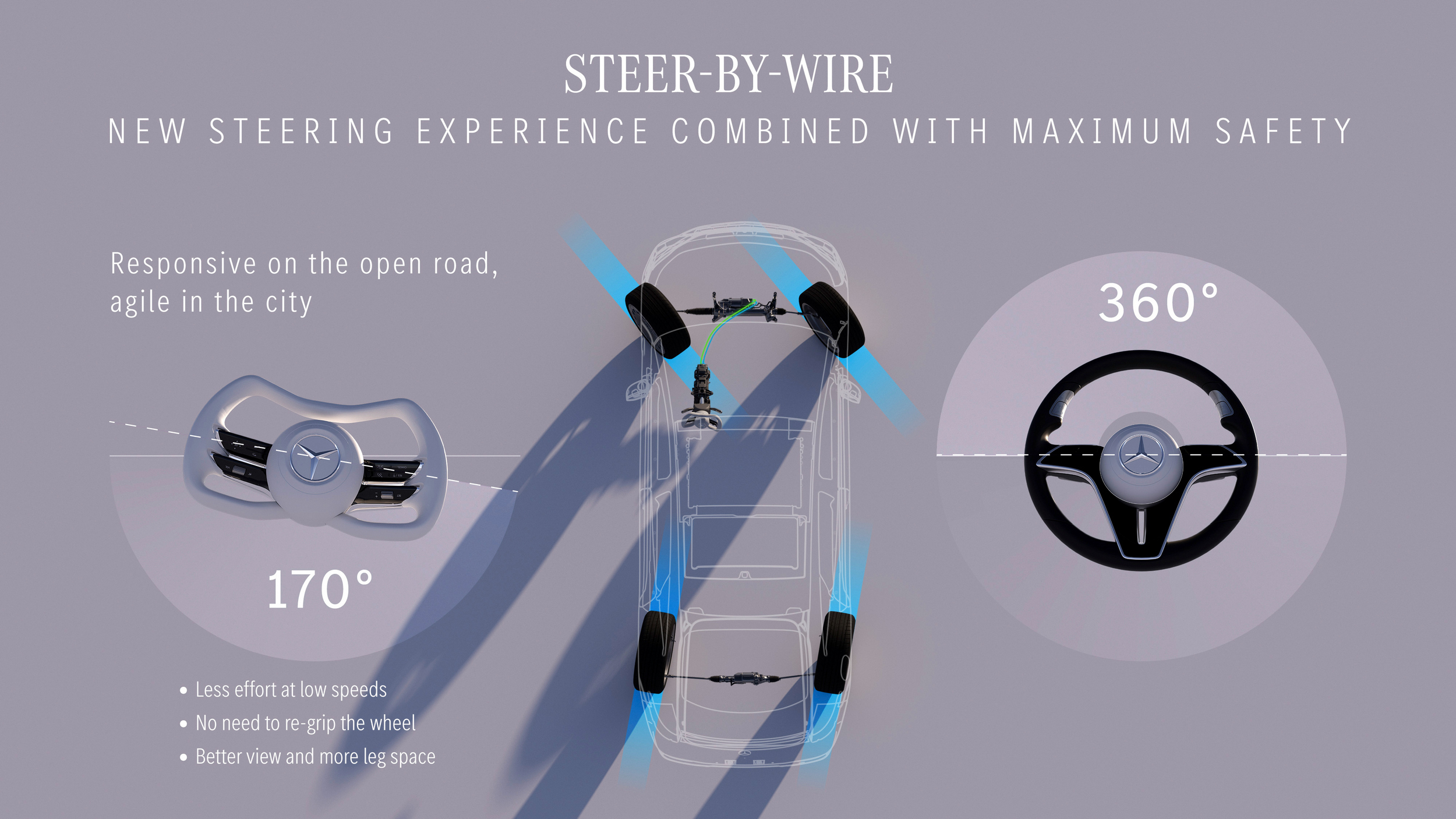
While the automaker didn’t go into many specifics, they said the changes reduce steering effort and mean drivers no longer need to adjust their grip on the wheel while turning. In effect, small movements can make a big difference when driving.

 Mercedes Is Betting On A Yoke To Save The Disastrous EQS

Mercedes went on to say road vibrations transmitted through the steering wheel are eliminated as there’s no longer a mechanical linkage. The automaker also promised the “precise, intuitive steering feel” will be maintained despite being digital.

The steer-by-wire system will be optional, but Mercedes said it has already logged over a million kilometers (621,371 miles) worth of testing. They added the technology has redundancies built in to ensure safety including two signal paths, so “steering capability is always guaranteed.”

A New Steering Wheel

\\\\\

Models equipped with steer-by-wire technology will have a new, yoke-style steering wheel. It features a rectangular design with four spokes as well as curves at the top and bottom.

Mercedes said the yoke gives drivers more space, while also aiding entry and egress. Drivers can also see the digital instrument cluster more easily as the steering wheel rim no longer blocks part of the view. Those are tangible benefits, but the company noted the new designed required the development of a unique airbag.

Other Changes

\\\\\\

The interior pictures suggest the cabin will largely carryover, but a closer inspection reveals an updated infotainment system with new graphics and a revised layout. It presumably runs the new Mercedes-Benz Operating System that debuted on the CLA and is slowly spreading across the company’s lineup.

Mercedes also gave us a peek at the updated exterior, which sports star-infused headlights. We can also expect a revised grille and updated bumpers.

More importantly, the EQS could adopt a new 800 volt electrical architecture to significantly reduce recharging times. We also wouldn’t be surprised to find a new battery pack with an improved cell chemistry as well as more efficient motors that were developed in-house. These changes should deliver a significant improvement in range, although that wasn’t much of a problem as the current model can travel up to 390 miles (628 km) between stops.

\\\\\\\\\\\

Baldauf

Hyundai’s New Concepts Tease A Design Direction Ioniq Has Never Tried Before

  • Hyundai teases Earth and Venus concepts as part of its Ioniq sub-brand.
  • The EVs show slim LEDs, futuristic proportions, and sharply cut surfaces.
  • A countdown on Hyundai China’s website points to an April 10 debut.

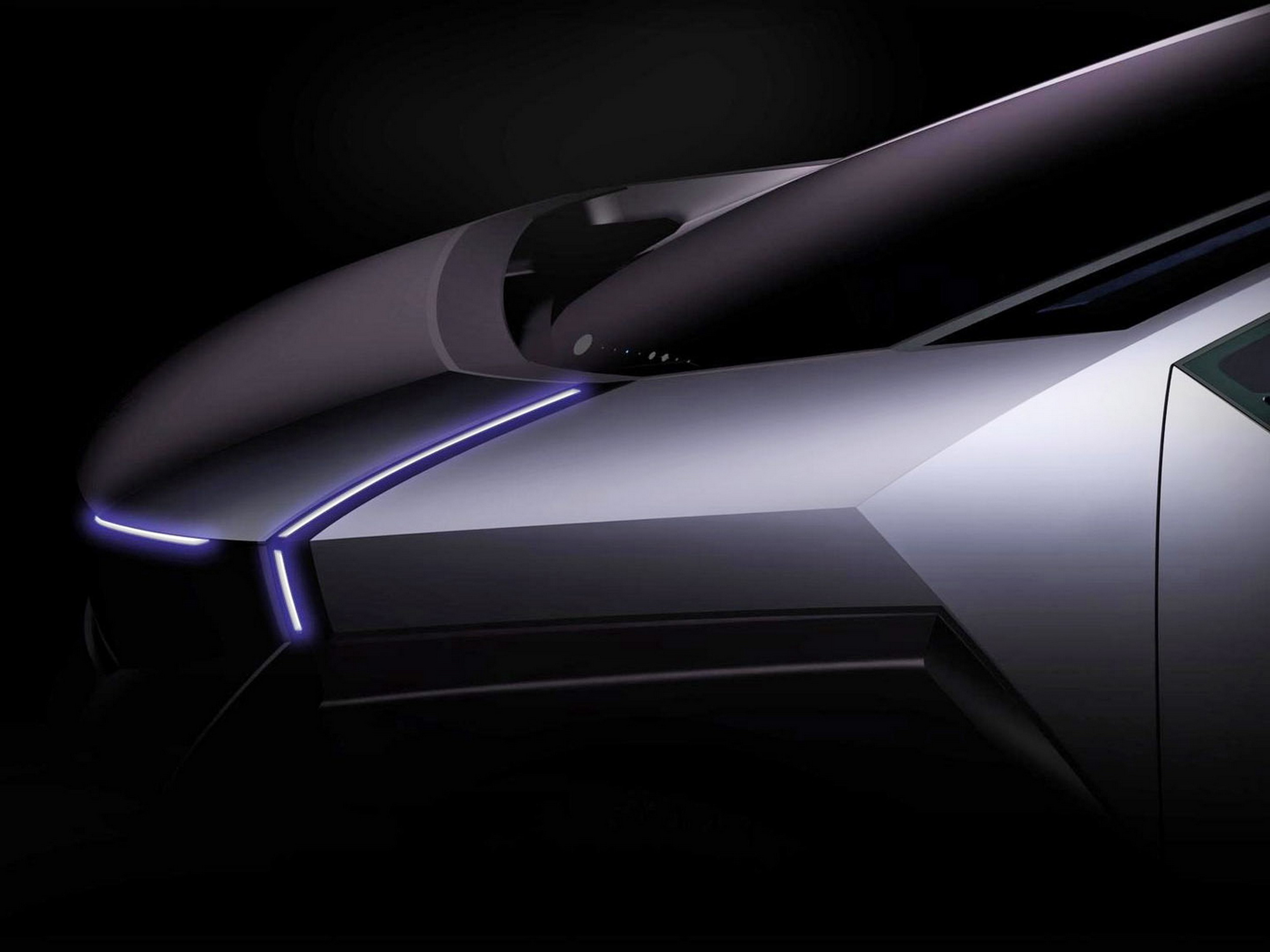
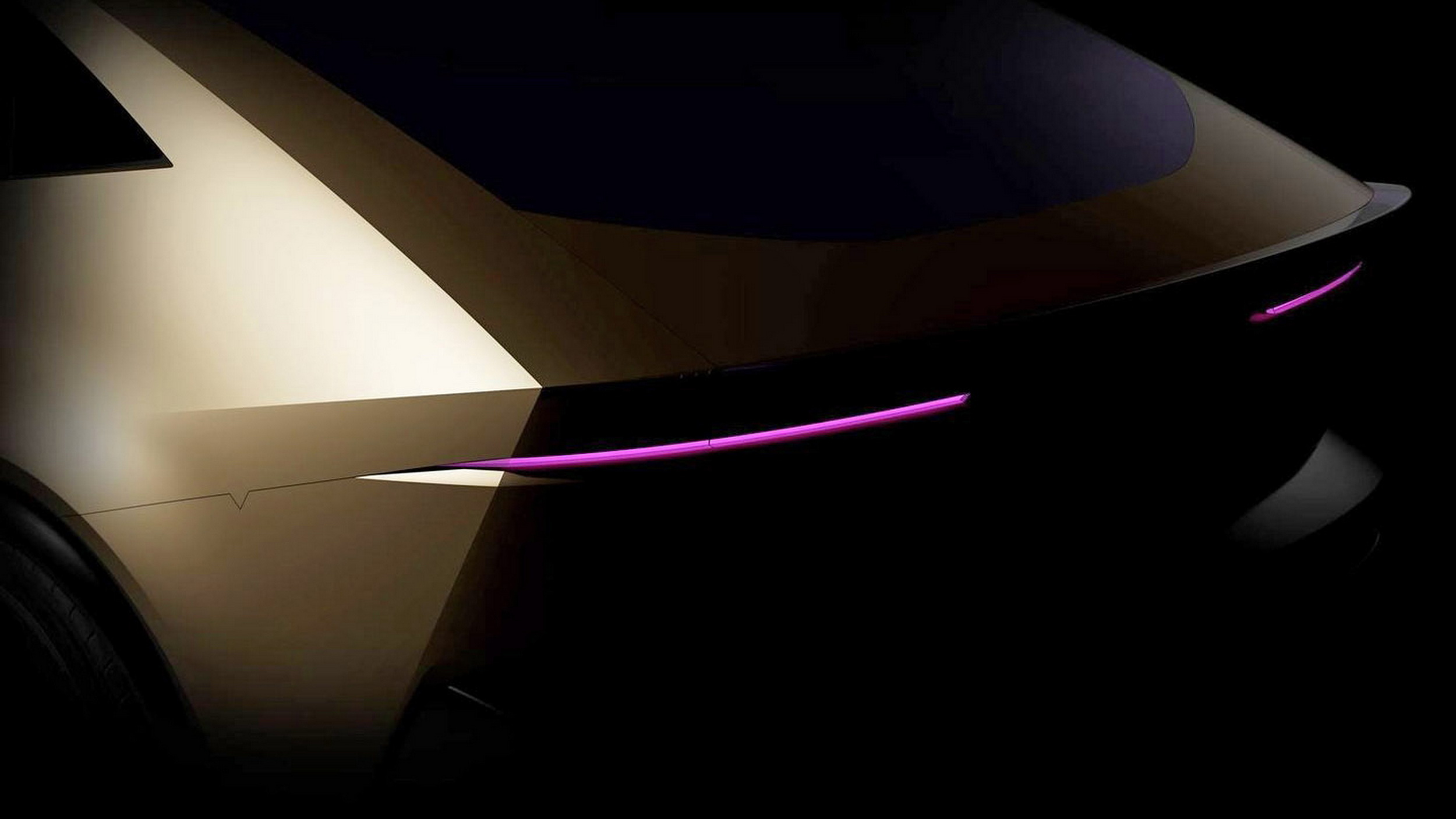
Hyundai is setting the stage for the next phase of its Ioniq sub-brand, previewing what’s to come with a pair of new concepts. The EVs, dubbed Earth and Venus, introduce an evolved design language that will likely carry over to future production models.

The automaker’s official website in China now features a countdown to a “Hyundai Ioniq Brand Launch Event” scheduled for April 10. A teaser video shows a meteorite impact revealing a gold-colored crystal, one face shaped like the letter “i.” Whether this becomes the new Ioniq emblem remains unclear.

More: The Boulder Is Hyundai’s Answer To The Ford Bronco, And A New Pickup Is Behind It

Hyundai has also released shadowy teasers of the upcoming concepts across its global social media channels, describing them as “a cosmic statement, engineered for humans.”

 Hyundai’s New Concepts Tease A Design Direction Ioniq Has Never Tried Before
Hyundai Earth Concept

The Earth is finished in silver and features Y-shaped LEDs reminiscent of the Lamborghini V12 Vision Gran Turismo Concept from 2019. Its short hood, steeply raked windscreen, boxy wheel arches, and flat surfacing give it a distinctly Cybertruck-like presence. Unfortunately, only a small portion of the profile is visible, so the overall bodystyle remains unclear.

More: Hyundai’s New Pickup Truck Will Be Everything The Santa Cruz Refused To Be

The Venus appears in a gold finish, with the teaser focusing on its rear. It leans into sharper, more angular surfacing, paired with a fastback-style tail, ultra-slim LEDs, and a ducktail spoiler. There are also glimpses of a pronounced bumper and round wheel arches.

 Hyundai’s New Concepts Tease A Design Direction Ioniq Has Never Tried Before
Hyundai Venus Concept

It will be interesting to see whether the Earth and Venus are simply futuristic styling exercises or early previews of where Hyundai’s electric lineup is headed alongside the Ioniq 3, 5, 6, and 9.

More: A Hyundai Beat The BMW M2 CS For World Performance Car Of The Year

The timing of the announcement, along with its ties to China, suggests the concepts could make their first public appearance at the Beijing Auto Show on April 24. Hyundai may also choose to reveal the designs earlier at its April 10 event.

Setting aside its global and China-focused ambitions, Hyundai is planning an aggressive product push in North America, with 36 new or refreshed models due over the next five years. That rollout includes a rugged SUV and a body-on-frame pickup previewed by the Boulder concept at the New York Auto Show.

\\\\\\

Hyundai

Cupra’s Baby EV Looks Like It Was Designed By People Who Actually Drive

  • Cupra teases Raval rear with dramatic reflection, confirming April 9 reveal date.
  • Triple triangle LED lights and glowing Cupra badge hint at bold, sporty styling.
  • VZ version promises hotter performance with 233 hp and sharper chassis setup.

Cupra has confirmed the Raval will debut on April 9, and with just weeks to go, it’s dropped a teaser that gives us our first real taste of its smallest electric car yet. It’s only one image, but it’s enough to get us excited about a baby EV that should be both fun to drive and affordable.

The shot as provided by Cupra shows the rear end reflected in water, though flipping it reveals the details more clearly. The lighting signature is the standout feature. Triple triangle LED elements sit at each corner, connected by a full-width light bar with a textured, mesh-like look that feels suitably dramatic. An illuminated Cupra badge takes center stage, a detail we last saw on the facelifted Born.

Related: Cupra’s Smallest EV Just Drove Around Naked Hoping Nobody Would Notice

We can also make out a roof spoiler at the top of the hatch door and a set of black and bronze alloy wheels wrapped in chunky Bridgestone tires, hinting at a sportier edge than your average small EV, and probably telling us that we’re looking at the VZ hot hatch version.

The Raval rides on VW Group’s new front-wheel drive MEB+ platform and measures just over 4,000 mm (157.5 inches) long, placing it firmly in the subcompact class. It shares its underpinnings with the upcoming VW ID. Polo and Skoda Epiq, though Cupra has reportedly led chassis development.

The Driver’s Choice

That influence shows in the setup. Engineers have lowered the suspension by around 15 mm versus the VW and Skoda equivalents, even on the base cars, stiffened things up, and added progressive steering to give it a more engaging feel. It’s meant to be the enthusiast’s option in this trio.

\\\\\\\\\\\\

Cupra

Power options though, cover a broad range. Entry-level versions are expected to offer 114 hp (116 PS / 85 kW) or an optional 133 hp (135 PS / 99 kW), both paired with a 38.5 kWh battery. Step up and you get a single, front-mounted electric motor producing around 208 hp (211 PS / 155 kW) with a 55 kWh pack.

That mid-tier setup should deliver a 0 to 62 mph time of around 7.2 seconds and a WLTP range of up to 278 miles or 450 km. It’s a solid balance of performance and efficiency for everyday use.

VZ Equals GTI

But we’re naturally drawn towards the VZ, Cupra’s take on the ID. Polo GTI, the first electric VW to wear that legendary hot hatch badge. With 233 hp (226 PS 166 kW), an electronic differential, and a wider track, it promises sharper responses and more punch, even if range dips to around 249 miles (400 km).

With prices expected to start around €26,000 (£23,000) and a funkier, more youthful design than its VW and Skoda cousins, the Raval looks set to bring some real personality to the affordable EV space.

\\\\\\\\\\

Baldauf

Jaguar Benchmarked Its Electric GT Against One Classic Above All Others

  • Jaguar pits its future EV flagship against icons from its storied past.
  • A V12-powered XJ Coupe served as a key benchmark for the project.
  • The four-door GT arrives in September with more than 986 hp on tap.

Jaguar has begun sketching out what comes next, offering fresh details on the new four-door GT that will usher in its all-electric era. The production EV is set to debut in September, pitched as a modern tribute to the brand’s most celebrated grand tourers, even as it marks a clean break from them.

To show that the move to a zero-emission powertrain won’t dull the experience, the company went digging through its archives. Jaguar engineers ran what they call a “Spirit of Jaguar Drive” evaluation, benchmarking the new GT against the XK120, E-Type, XJS, and the XJ Series I.

More: Jaguar Cancelled Three New Cars In Development To Make Room For One EV

What stands out is the timeframe. Every benchmark model comes from between 1948 and 1975, with nothing from Jaguar’s more recent past making the cut, a telling choice about where the brand sees its identity, something that could just as easily apply to the as-yet unnamed EV.

Jaguar says the new GT’s character leans heavily on the V12-powered XJ Coupe, aiming to balance pace with refinement. Vehicle Engineering Director Matt Becker insists that familiar duality remains intact, describing a blend of performance and comfort that sits in what he calls “perfect harmony.”

Jaguar Drops The Curves And Starts Over

\\\\\\\\\\\

In terms of styling, the new Jag leans heavily on the Type 00 concept, now stretched into a four-door form. It marks a clean break from the past, ditching the brand’s familiar curves in favor of ultra-simple lines and flat, almost architectural surfacing. Even so, the long hood, low stance, oversized alloys, and sleek, aerodynamic roofline still give it the kind of proportions you’d expect from a proper rear-drive sedan.

More: Jaguar Land Rover’s Design Boss Is Out After Two Decades With No Successor Named

The company also confirmed that the GT’s “cosseting cabin” will follow a “shrink around the driver” philosophy, echoing the approach first seen in the XK120.

Electric Underpinnings

The new luxury sedan will ride on Jaguar’s new Electric Architecture. At its core sits a tri-motor powertrain producing more than 986 hp (735 kW / 1,000 PS) and a hefty 1,300 Nm (959 lb-ft) of torque. That kind of output demands more than brute force alone. To keep it all in check, Jaguar has developed its own in-house torque vectoring software, fine-tuning how power is distributed.

\\\\\\\\\

The GT will ride on a dynamic air suspension setup with twin-valve active dampers, engineered to keep its rumored 2,700 kg (5,952 lbs) mass in check. That’s no small ask, though it gives a sense of the kind of grand touring brief Jaguar is chasing here.

Power comes from a substantial 120 kWh battery pack, targeting roughly 700 km (435 miles) of WLTP range, or about 400 miles on the EPA cycle. Hook it up to a 350 kW fast charger, and the numbers start to look properly competitive, with 322 km (200 miles) of range added in under 15 minutes.

More: You Can Still Buy A New Gas Jaguar For $22K, But Not Here

Jaguar says it has put the car through its paces in extreme real-world conditions across the globe, alongside extensive digital testing. The company, which infamously halted production of its entire lineup to make room for a clean-sheet reset, hopes everything will be ready for the big launch in September 2026.

\\\\\\\\\\\\\\

Jaguar

Skoda’s Most Dramatic Concept Just Became Its Most Sensible Production Car

  • Skoda’s Peaq is a fully electric three-row SUV stretching 192 inches long.
  • The flagship 90x trim offers 295 hp, AWD, and over 373 miles of claimed range.
  • European sales begin in mid-2026, with production set for the Czech Republic.

Skoda is lifting the veil a little further on its upcoming flagship, previewing the Peaq with fresh details and a camouflaged prototype. Sitting at the very top of the lineup, this large, fully electric SUV brings three rows of seating and is scheduled to hit European roads in mid-2026.

Size is a big part of the story. At 4,874 mm (191.9 inches) long, it stretches 116 mm (4.6 inches) beyond the ICE-powered Kodiaq. More telling is the 2,965 mm (116.7 inches) wheelbase, which outgrows the Kodiaq by 174 mm (6.9 inches) and even eclipses the Superb by 124 mm (4.9 inches), putting it right alongside the Chinese-spec VW ID.6 in footprint.

More: A VW Group Brand Lost 96% of Its China Sales, And Now It’s Game Over

Despite the heavy camouflage, the near-production prototype already hints at a softer, more restrained look than the Vision 7S concept from 2022. The so-called “Tech-Deck Face” remains, pairing slim full LED Matrix headlights with a covered grille, much like the Epiq, Elroq, and Enyaq. The Peaq sets itself apart up front, though, with a more distinct bumper design featuring diagonal intakes that give it a sharper edge.

\\\\\\\\\\\\\\\\\\\\\\\\\\\\\\

Skoda will offer a Sportline trim featuring black accents and optional 21-inch alloy wheels. The side profile is defined by large doors with flush handles, while the upright rear design hints at a spacious and practical cabin.

A Family-Focused Interior

The flagship SUV will be available in both five-seat and seven-seat configurations. The former offers a substantial 1,010 liters (35.7 cu-ft) of cargo space, while the latter provides 299 liters (10.6 cu-ft) with all seats in place. Both versions include a 37-liter (1.3 cu-ft) frunk.

More: The Fabia RS Exists, You Just Can’t Buy It For The Road

Inside, highlights include a new 13.6-inch infotainment touchscreen, an optional augmented-reality head-up display, and the largest panoramic roof ever fitted to a Skoda. This roof features electrochromic technology called Dynamic Shade Control. For added comfort, the “Relax Package” brings ergonomic massage seats with leg rests, a wellness app, and a high-end Sonos audio system.

Skoda says more than 50 kg (110 lbs) of recycled materials have been used throughout the cabin, alongside both animal-free and genuine leather upholstery options. The Peaq also introduces a fresh set of “Simply Clever” features aimed at improving everyday usability.

Powertrain Options Breakdown

\\\\\\\\\\\\\\\\\

Under the skin, the EV ides on the VW Group’s familiar MEB architecture. It will be offered with two battery sizes and three powertrain configurations. The entry-level 60 variant features a rear-mounted motor producing 201 hp (150 kW / 204 PS), paired with a 63 kWh battery delivering over 460 km (286 miles) of range.

More: Skoda’s Flagship Plugs Into Sleeper Mode, But The Stopwatch Has Other Ideas

The 90 and 90x variants use a larger 91 kWh battery, enabling over 600 km (373 miles) of range and 10-80% charging in under 28 minutes. The 90 remains rear-wheel drive with 282 hp (210 kW / 286 PS), while the 90x adds a dual-motor all-wheel-drive setup producing 295 hp (220 kW / 300 PS), good for 0-100 km/h (0-62 mph) in 6.7 seconds.

Production will take place at Skoda’s Mlada Boleslav plant in the Czech Republic. When it arrives in mid-2026, the Peaq will go up against rivals such as the Kia EV9, Hyundai Ioniq 9, Peugeot E-5008, and Volvo EX90.

\\\\\\\\\

Skoda

Tesla’s Next Model “Way Cooler Than A Minivan”, And That’s All Musk Will Say

  • Elon Musk teased a new Tesla model described as “cooler than a minivan”.
  • Tesla is discontinuing the Model S and Model X by the end of the year.
  • A Cybertruck-derived three-row SUV appeared as a clay model in 2025.

Elon Musk has confirmed that Tesla is working on a new model, and the internet has done what the internet does: immediately begun speculating. The leading theory involves a rugged, three-row SUV inspired by the Cybertruck.

Unless, of course, the big reveal turns out to be the three-row Model Y L recently spotted at Gigafactory Texas, in which case Musk’s gift for generating hype will have once again conjured a drum roll worthy of a stadium concert. Wouldn’t be the first time.

But we digress. On March 24, the Tesla CEO shared a post on X noting that the Cybertruck’s rear bench is large enough to fit three child seats or three adults. A follower then suggested he “make a minivan,” to which Musk replied: “Something way cooler than a minivan is coming.”

More: Tesla Roadster Delayed Again, Weeks Late But Years Behind

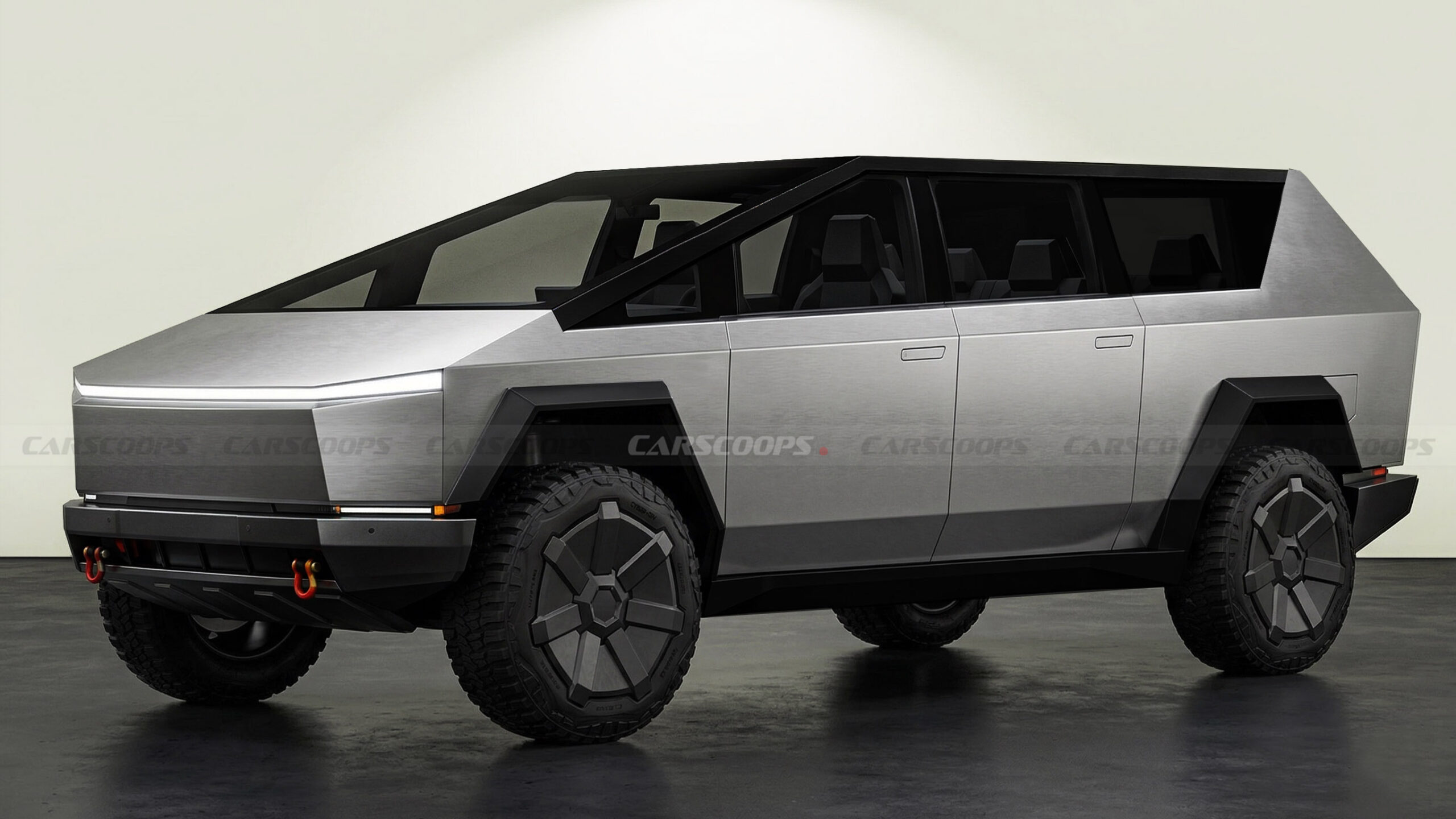
One credible scenario involves what has been dubbed by the internet, the CyberSUV. Back in September 2025, a clay model appeared in the background of an official Tesla video, suggesting a potential SUV sibling to the Cybertruck.

 Tesla’s Next Model “Way Cooler Than A Minivan”, And That’s All Musk Will Say
Our rendering of a Cybertruck-derived SUV (above) based on the clay model from last year (below).
 Tesla’s Next Model “Way Cooler Than A Minivan”, And That’s All Musk Will Say

The mockup featured a redesigned roofline and greenhouse, while the front-end design, full-width LED bar, and flat stainless steel surfacing appeared to carry over from the truck.

The timing matters, too, since Tesla is winding down production of the Model S and Model X this year, leaving a conspicuous gap in its production capacity.

More: Musk Lectures Legacy Brands On Cars, Even As Tesla Drifts Beyond Them

A CyberSUV would be larger and more spacious than the Model Y and Model X, positioning it against full-size SUVs such as the Cadillac Escalade.

Repurposing the Cybertruck platform for an SUV makes strategic sense. Sales of the electric truck are abysmal, given initial expectations, and an SUV twin could help Tesla increase production at Giga Texas while tapping a segment that American buyers never stopped loving. Keeping R&D costs down would be another advantage, particularly if the new model shared its underpinnings along with numerous exterior and interior components with the Cybertruck.

Could It Be A Longer Model Y?

Well this is interesting at Giga Texas today … what do YOU think this is? 🤔😎 pic.twitter.com/U9pLvqbf7L

— Joe Tegtmeyer 🚀 🤠🛸😎 (@JoeTegtmeyer) March 23, 2026

As we mentioned, another possibility is a stretched Model Y heading to North America. Last year, Musk stated that this model wouldn’t enter US production until late 2026, if at all. Footage from outside Gigafactory Texas, however, tells a somewhat different story.

More: Musk Said The U.S. Wouldn’t Get This Tesla. Texas Factory Footage Disagrees

Drone pilot Joe Tegtmeyer captured a large vehicle shell wrapped in blue plastic and sitting inside a wooden crate. Many believe the shell belongs to the Tesla Model Y L, already sold in China with extended bodywork and six-seat seating.

Whether the new Tesla will actually be cooler than a minivan remains to be seen. Hopefully, Tesla will clear up the mystery soon.

Something way cooler than a minivan is coming

— Elon Musk (@elonmusk) March 25, 2026

China’s New Porsche 911 Rival Goes By One Name. Z, Denza Z

  • The production-spec Denza Z makes its global debut at Goodwood this summer.
  • Daniel Craig is fronting Denza’s push into Europe, the Middle East, and Africa.
  • Concept styling carries over largely intact, but the large rear wing is gone for now.

A new Chinese sports car is on the way, and it’s aiming straight at one of the most recognizable nameplates in the business. Denza, BYD’s premium offshoot that began as a joint venture with Mercedes before it sold its stake in 2024, is preparing to unveil its long-anticipated Porsche 911 rival, and it has enlisted a certain former secret agent to attract eyeballs.

Read: What Looks Like A DIY Disaster Is China’s Answer To Porsche

Denza’s flagship sports car was previewed with the eye-catching Z Concept in April last year, and now we’re getting an early look at the production version ahead of its debut at the Goodwood Festival of Speed. The preview image puts a bright orange Z front and center, sitting just behind BYD executive vice president Stella Li and former James Bond actor Daniel Craig, and from what’s visible, it clearly sticks true to the concept.

This new model is set to crown Denza’s lineup, positioned above the Z9 GT, D9 MPV, and B5 SUV as the brand’s top-tier performance offering.

\\

Partially visible at the front are the sharp, diamond-shaped headlights and an aggressive front bumper, not dissimilar to what you’ll find on the Lotus Emira. Notably, the production model ditches the concept’s sharp splitter, though that may be present on a higher-performance version of the car.

Little else of the car can be seen, though you will notice it has silver-and-black wheels and does without the concept’s large fixed rear wing. Earlier prototypes have already been spotted testing at the Nürburgring, suggesting serious performance intent and perhaps even a push for a headline lap time.

Near Four-Digit Horsepower

\\\\\\\\\

Denza Z Concept

Powertrain details have yet to be confirmed, and Denza never actually said what was powering the concept. However, all signs point towards the Z getting the same powertrain as the all-electric Z9 GT. That car uses a 100-kWh Blade battery and a trio of electric motors that combine to deliver more than 952 hp. Obviously, this would easily outmuscle the Porsche 911, which isn’t available in an all-electric configuration.

Beyond raw output, Denza has also pointed to a suite of advanced hardware, including magnetorheological suspension and steer-by-wire. It’s also likely to inherit some trick features from the brand’s Z9 GT, such as crab-walk, slow-motion drifting into parking spaces, and tighter turning capability.

According to Stella Li, BYD has partnered with Daniel Craig for a promotional campaign for Denza, helping to expand its presence across Europe, Latin America, the Middle East, and Africa. The firm already has Land Rover Defender and Toyota Land Cruiser Prado rivals with the B8 and B5 off-roaders, and is now targeting the pinnacle of sports cars.

\\\\\\\\

Baldauf

Maybach Is Building The Ultra-Luxury Vehicle Rolls-Royce Will Never Make

  • Mercedes-Maybach has teased the upcoming VLS.
  • Ultra-luxury van promises a lounge-like interior.
  • It was previewed by a concept with a 65-inch display.

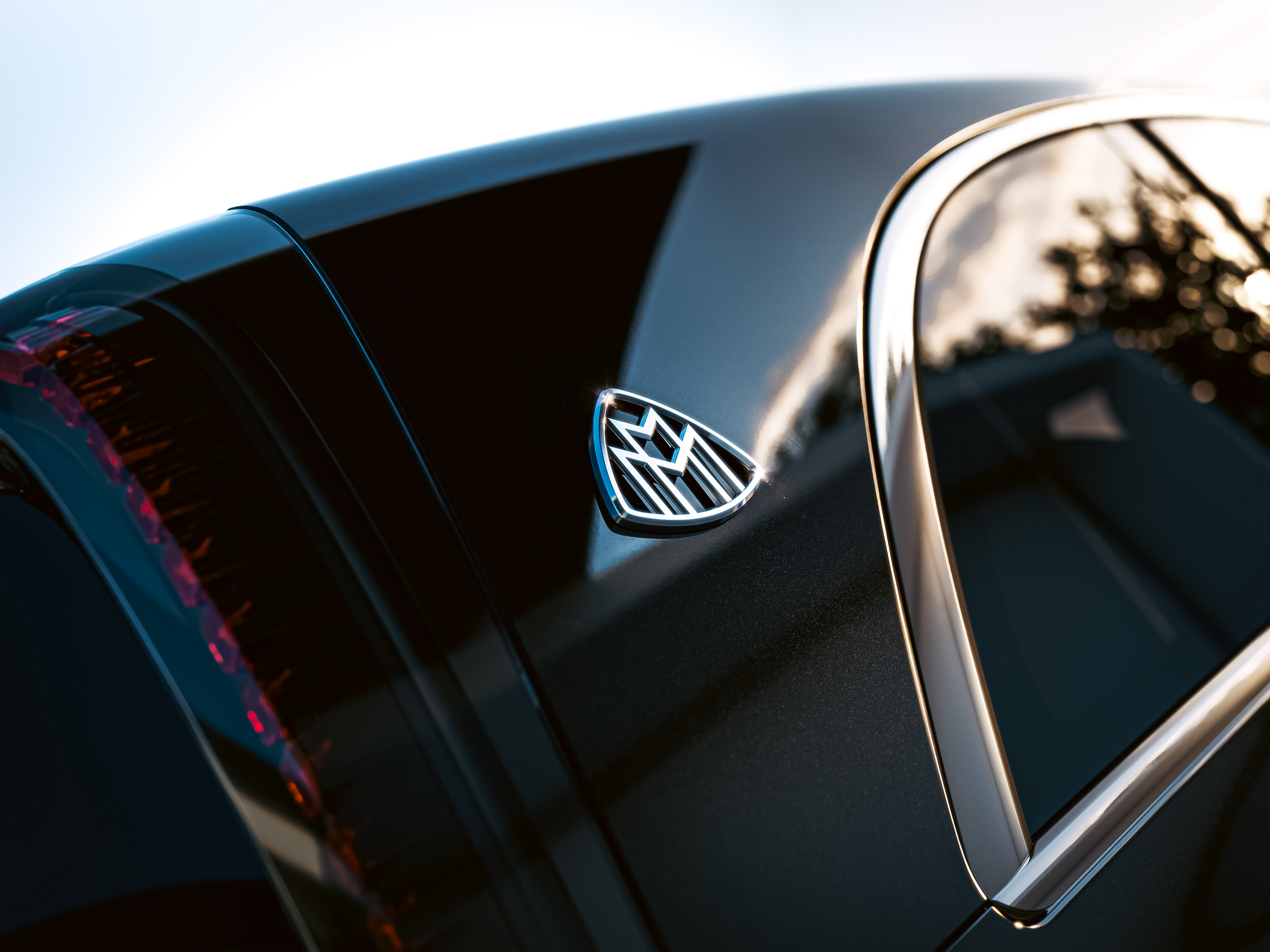
Mercedes introduced the VLE earlier this month and now they’re teasing the luxurious new VLS. However, they went a step further and confirmed the range-topping van will be getting a Maybach variant.

The company isn’t saying much at this point, but teased the model will elevate their “grand limousines [vans] into the realm of sophisticated luxury.” They went on to suggest the model will combine “timeless elegance” with a “first-class interior, a new level of digital sophistication, and an exceptional rear-seat experience.”

More: The Mercedes VLE Might Be The Most Luxurious Minivan America Has Ever Seen

Speaking of the rear seats, Mercedes hinted at an “extraordinary private lounge” that has luxurious materials, impeccable craftsmanship, and exquisite design details. That’s not much to go on, but the VLE offers private jet-style seats with a foot rest, pillow, and an integrated wireless phone charger.

The fancy seats will likely be joined by a center console, refrigerated compartment, and a high-tech entertainment system. If the Vision V concept is any indication, the model could have a 65-inch display as well as a 42-speaker premium audio system. We can also expect wood trim, metallic accents, and premium leather.

\\\\\\\

Vision V Concept

Little else is known about the model at this point, but the VLS will presumably be larger than the VLE. If that’s the case, this certainly isn’t a ‘minivan’ as the former measures 209.0 inches (5,309 mm) long, 78.7 inches (1,999 mm) wide, and 76.5 inches (1,943 mm) tall with a wheelbase that spans 131.6 inches (3,342 mm). An even larger VLE is also coming with a 138.5-inch (3,517 mm) wheelbase and an overall length of 215.9 inches (5,484 mm).

Powertrain details remain a mystery, but could echo higher-end versions of the VLE. This suggests the VLS could have a roughly 115 kWh battery pack as well as a dual-motor all-wheel drive system producing a combined output of 409 hp (305 kW / 415 PS).

We can also expect 800-volt technology and a 300+ kW DC fast charging capability. Other highlights will likely include an AirMatic air suspension and a rear-axle steering system.

 Maybach Is Building The Ultra-Luxury Vehicle Rolls-Royce Will Never Make

Here’s The New Freelander Before You’re Supposed To See It

  • Freelander returns as a standalone electrified brand under JLR and Chery.
  • Teaser and spy shots reveal pixel-style LED headlights and a boxy SUV design.
  • A global rollout is planned following the first model’s initial launch in China.

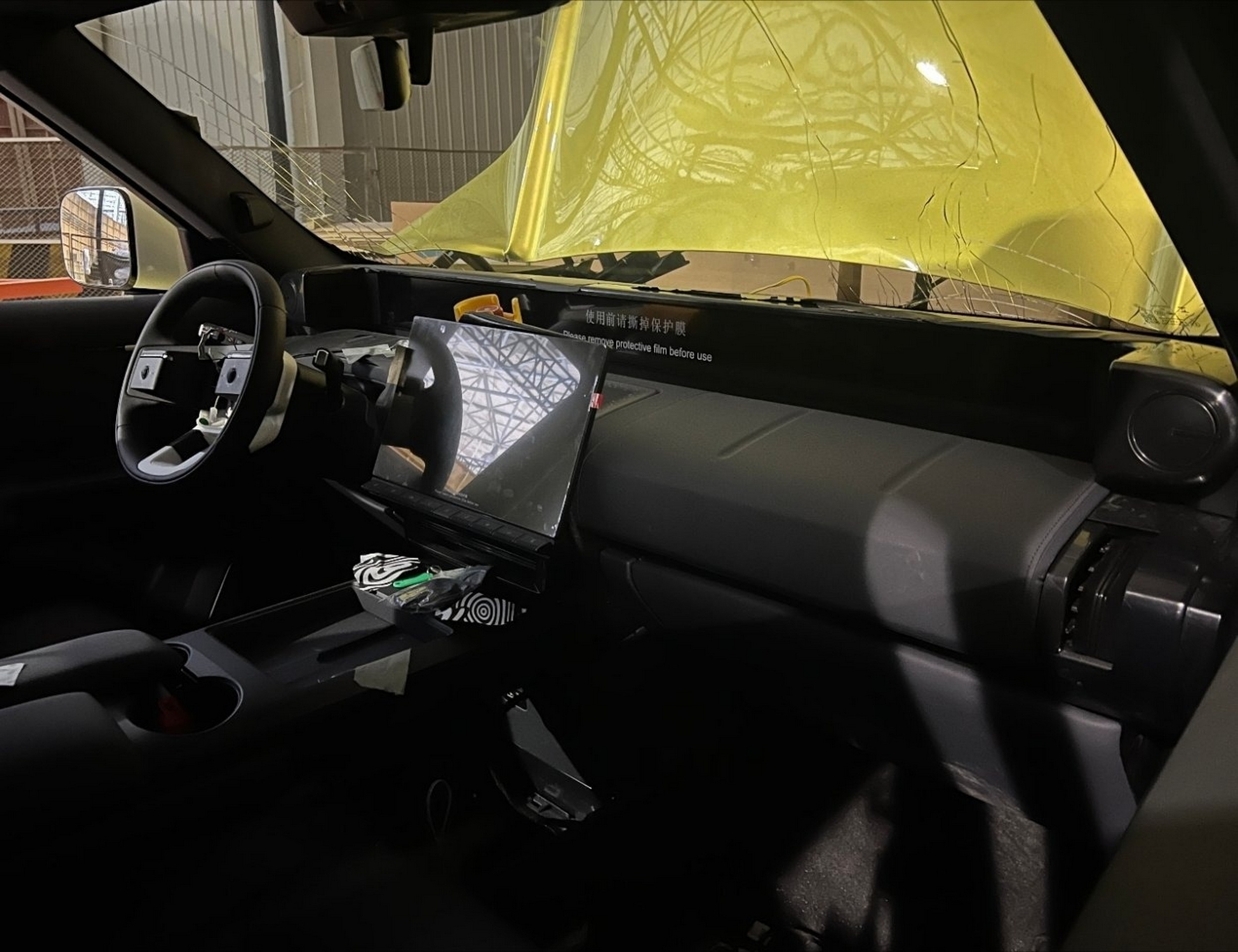
Update: So much for waiting on the official reveal. The first proper look at Land Rover’s newly spun-off Freelander brand has arrived early, thanks to a set of crash test images from China that show far more than intended just days before the March 31 debut.

The Freelander-badged SUV appears significantly larger than its Land Rover predecessor, adopting a more upright, squared-off stance. Visually, it sits somewhere between a Defender and a Discovery, with boxy headlights featuring modern LED graphics, a tall rear end, thick plastic cladding, and Freelander lettering pressed into the bodywork.

 Here’s The New Freelander Before You’re Supposed To See It

A look inside reveals a tech-heavy cabin, headlined by what appears to be a pillar-to-pillar display stretching across the base of the windscreen. It is paired with a large, freestanding infotainment screen. Beyond the tech, the electrified SUV seems to offer a three-row, six-seat configuration, trimmed in light blue leather upholstery.

The original story follows below.

\\\\\

Photos Weibo

The Freelander name is making an unexpected return, though not in the way many would have predicted just a few years ago. Jaguar Land Rover’s Chinese joint venture with Chery has confirmed that the new Freelander will debut on March 31. This time, the badge does not belong to Land Rover at all, instead re-emerging as a standalone electrified brand with no traditional ties to its former parent.

The first teaser focuses on the rectangular headlights, featuring pixel-style LED graphics. We can also spot an upright nose and hints of fender extensions, paired with gray plastic cladding on the front bumper.

More: Jaguar Land Rover’s Design Boss Is Out After Two Decades With No Successor Named

The upright lines across the front seem to nod to the original design. The Land Rover Freelander first arrived in 1997, followed by a second generation in 2006 that stayed on sale until 2015, when it was ultimately phased out in favor of the Discovery Sport.

Overall, the new model leans heavily on the Land Rover Defender’s design playbook, much like a growing number of SUVs coming out of China. Still, with JLR’s UK studio leading the design, this one at least has a legitimate claim to the look.

\\\\\\\\

Earlier spy shots have already given away much of the Freelander’s stance, revealing a boxy silhouette that leans heavily into SUV convention. It is expected to feature a three-row layout, with an overall length stretching beyond 5,100 mm (200.8 inches), placing it firmly in large family hauler territory.

Under the skin, the SUV is expected to ride on Chery’s modular architecture. The platform is designed to support both fully electric and range-extender powertrains, while also enabling ultra-fast charging,

More: Jaguar Built Its Last Gas Car, Now It Might Build China’s Next Best-Seller

Production of the new model will be centralized at the CJLR plant in Changshu, China. The facility is currently undergoing a ¥3 billion ($436 million) investment as it transitions away from the aging Land Rover Discovery Sport and Range Rover Evoque, preparing instead for the upcoming Freelander lineup.

The Chinese joint venture has also begun scaling up its workforce, recently sharing a recruitment poster on social media that lists more than 30 open positions across its Shanghai and Suzhou operations. The recruitment drive confirms that JLR and Chery are building an entirely new corporate infrastructure. While the new brand will initially launch in China, a wider global rollout is planned for the near future.

Spy Shots: Chery-JLR Freelander SUV for China

Freelander is a new brand under Chery-JLR. The Chinese name is 神行者 (Shén Xíngzhě). Freelander will manufacture various SUVs based on Chery platforms.

The spy shots show a boxy off-road-style SUV during winter tests in Northern… pic.twitter.com/IduwHRG5vw

— Tycho de Feijter (@TychodeFeijter) February 1, 2026

Subaru’s Biggest Electric Vehicle Yet Looks Exactly How You’d Expect

  • Subaru is gearing up to introduce a new three-row EV.
  • The model debuts in New York and will have 420 hp.
  • Crossover will likely be based on the Toyota Highlander.

The 2027 Nissan Z and Volkswagen Atlas are getting some company as Subaru has announced plans to introduce a new three-row, electric crossover at the New York Auto Show. It debuts on April Fool’s Day, but it’s real and it will pack a 420 hp (313 kW / 426 PS) punch.

Subaru isn’t saying much, but there’s little doubt the model will be yet another badge engineered vehicle shared with Toyota. This will make four of them and the latest should follow in the footsteps of the redesigned Highlander.

More: New Toyota Highlander Drops Its Biggest Tradition, And We Got A Front-Row Look

While the automaker is playing coy, they released a teaser image revealing a familiar front end that echoes the Solterra, Trailseeker, and Uncharted. Details are hard to make out, but we can see split lighting units and an illuminated logo. They’re joined by a roof rack and a shark fin antenna.

That’s not a lot to go on, but the Highlander has 77- and 95.8 kWh battery packs as well as a choice of front- and all-wheel drive. The former has 221 hp (165 kW / 224 PS), while the latter develops 338 hp (252 kW / 343 PS). These setups enable the crossover to offer ranges of between 270 and 320 miles (435 and 515 km).

\\

We can also expect a NACS port as well as a DC fast charging capability that can take the battery from 10% to 80% in approximately 30 minutes. A dual-level 120V/240V charging cable should also be included as well.

Powertrain aside, we can expect a 12.3-inch digital instrument cluster and a 14-inch infotainment system. They should be accompanied by a six-speaker audio system and a 64-color ambient lighting system.

The 2027 Toyota Highlander lands late this year, so expect the new Subaru to arrive around then as well.

\\\\\\\\\\\\\\\

2027 Toyota Highlander

BMW’s New 3-Series Wagon Just Crashed The i3 Party

  • BMW offered glimpses of the 3-Series Touring at i3 debut in Munich.
  • New i3 promises huge range and kicks off BMW Neue Klasse era.
  • Touring could be electric-only or still offer petrol and diesel options.

BMW did that thing where a brand casually drops something arguably cooler than the main event, just as it’s about to sign off. During the big reveal of its new electric 3-Series, the i3 sedan, a shadowy long-roof wagon shape popped up on the screen behind the brand’s CEO.

Yes, the 3-Series Touring is coming back, and this time it might plug-in rather than fill-up, but will probably be capable of both. The teaser was brief but unmistakable, showing a stretched roofline and that all-important hatch, plus a distinctive kink in the waistline behind the rear door and just before the classic Hofmeister kink.

Related: The Next ICE 3-Series Shares BMW’s Future Look, But Not The Same Foundations

“Business users and families will be particularly delighted,” Oliver Zipse said as the shadowy outline danced on the screen. “The Touring has always been a favorite with them.”

While those images were fleeting and unclear, between them and the official shots of the i3 sedan, it’s not hard to see how the wagon will look. We’ve mocked up a few images and put them in a gallery at the bottom of the post to give you an idea, and if the real thing is as sleek as our renders, then we know which body style we’ll be shopping for.

Range To Spare

The Touring’s wagon rear means it’ll have a ton more cargo space than the sedan, though that extra glass and metal will no doubt knock the i3 Touring’s electric range a little. Not that you’ll likely notice since BMW claims an impressive 400 miles (644 km) on the EPA cycle, and a massive 559 miles (900 km) on the European WLTP one, for the 463 hp (469 PS / 345 kW) i3 50 xDrive.

\\\\\\

There’s still a bit of mystery though. BMW hasn’t confirmed whether this new Touring will be purely electric or if petrol and diesel versions will stick around. But we’re confident that both electric and combustion options will be available, the ICE Tourings getting a very similar Neue Klasse design, but riding on an update of today’s CLAR platform and not the Neue Klasse architecture that forms the basis of the i3.

Electric M3 Touring?

And given that the M3 Touring has been such a hit with enthusiasts, we’ve got our fingers crossed that it’ll return, too. Maybe we’ll even get an electric M3 Touring to go with the electric M3 sedan we know BMW is working on to live alongside the next ICE M3.

Don’t expect to see Tourings of any kind on the road until 2027 or 2028, though. We haven’t seen any prototypes on test yet, which means the debut is some way off, and sadly, when the Touring does arrive, it’ll likely remain out of reach for North American fans, although never say never.

\\

2028 BMW 3-Series Touring illustrations by Carscoops.

BMW’s New 3-Series Wagon Just Crashed The i3 Party

  • BMW offered glimpses of the 3-Series Touring at i3 debut in Munich.
  • New i3 promises huge range and kicks off BMW Neue Klasse era.
  • Touring could be electric-only or still offer petrol and diesel options.

BMW did that thing where a brand casually drops something arguably cooler than the main event, just as it’s about to sign off. During the big reveal of its new electric 3-Series, the i3 sedan, a shadowy long-roof wagon shape popped up on the screen behind the brand’s CEO.

Yes, the 3-Series Touring is coming back, and this time it might plug-in rather than fill-up, but will probably be capable of both. The teaser was brief but unmistakable, showing a stretched roofline and that all-important hatch, plus a distinctive kink in the waistline behind the rear door and just before the classic Hofmeister kink.

Related: The Next ICE 3-Series Shares BMW’s Future Look, But Not The Same Foundations

“Business users and families will be particularly delighted,” Oliver Zipse said as the shadowy outline danced on the screen. “The Touring has always been a favorite with them.”

While those images were fleeting and unclear, between them and the official shots of the i3 sedan, it’s not hard to see how the wagon will look. We’ve mocked up a few images and put them in a gallery at the bottom of the post to give you an idea, and if the real thing is as sleek as our renders, then we know which body style we’ll be shopping for.

Range To Spare

The Touring’s wagon rear means it’ll have a ton more cargo space than the sedan, though that extra glass and metal will no doubt knock the i3 Touring’s electric range a little. Not that you’ll likely notice since BMW claims an impressive 400 miles (644 km) on the EPA cycle, and a massive 559 miles (900 km) on the European WLTP one, for the 463 hp (469 PS / 345 kW) i3 50 xDrive.

\\\\\\

There’s still a bit of mystery though. BMW hasn’t confirmed whether this new Touring will be purely electric or if petrol and diesel versions will stick around. But we’re confident that both electric and combustion options will be available, the ICE Tourings getting a very similar Neue Klasse design, but riding on an update of today’s CLAR platform and not the Neue Klasse architecture that forms the basis of the i3.

Electric M3 Touring?

And given that the M3 Touring has been such a hit with enthusiasts, we’ve got our fingers crossed that it’ll return, too. Maybe we’ll even get an electric M3 Touring to go with the electric M3 sedan we know BMW is working on to live alongside the next ICE M3.

Don’t expect to see Tourings of any kind on the road until 2027 or 2028, though. We haven’t seen any prototypes on test yet, which means the debut is some way off, and sadly, when the Touring does arrive, it’ll likely remain out of reach for North American fans, although never say never.

\\

2028 BMW 3-Series Touring illustrations by Carscoops.

Audi Confirms The A2 Is Back, Prays It’ll Sell This Time

  • Audi revives A2 name for small electric SUV aimed at urban buyers.
  • New A2 e-tron replaces combustion A1 and Q2 with a single EV.
  • MEB platform underpins hatch, meaning it’s limited to 400-volt tech.

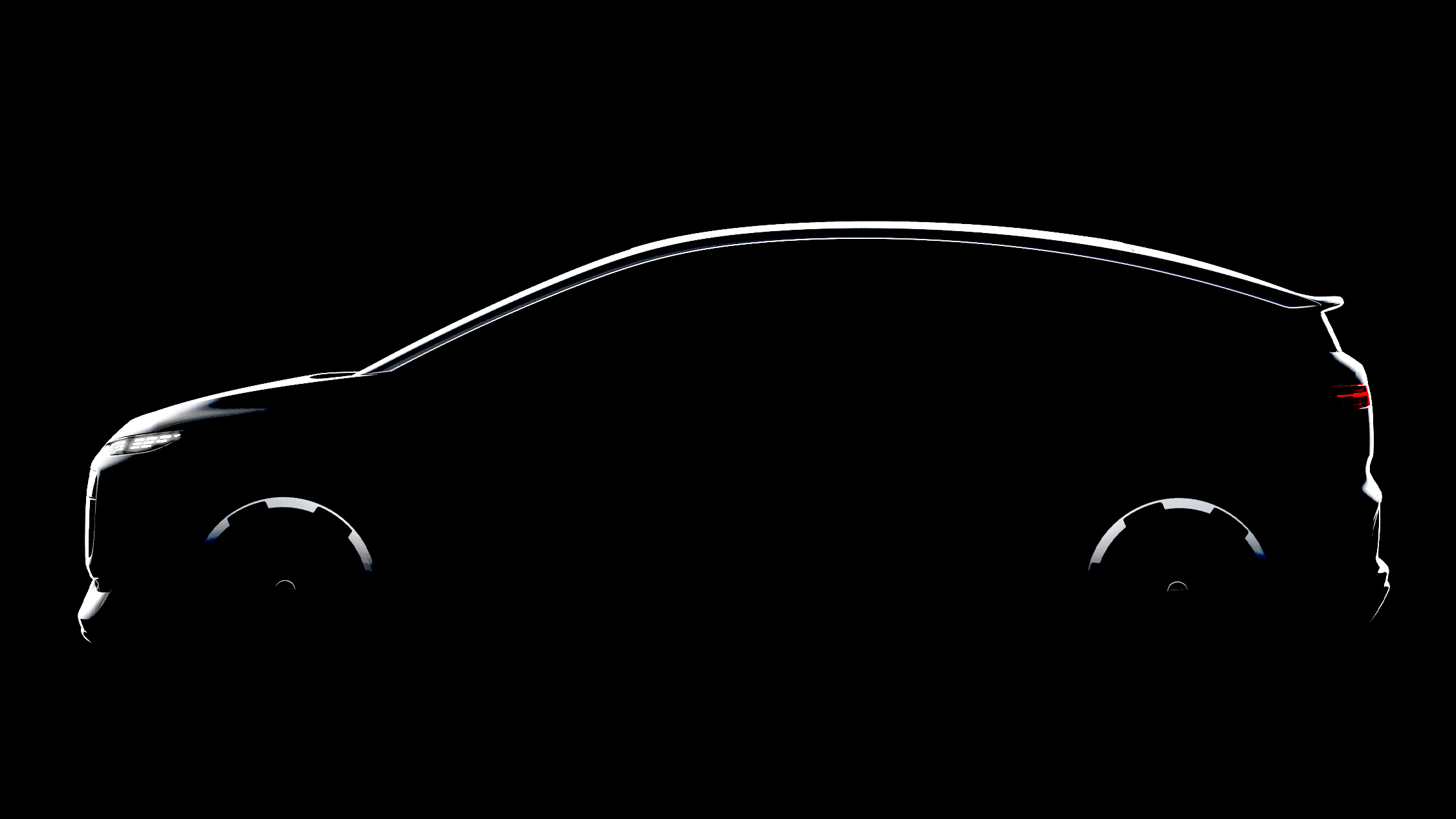
It’s official, the A2 is back, or at least its name is. Audi confirmed today that it’s resurrecting the badge it last used in the 2000s on an advanced but slow-selling hatch. Only this time, the A2 plugs in, speaks fluent touchscreen, and Audi hopes it will prove a lot more profitable.

Audi released a silhouetted profile image of the new A2 e-tron ahead of a full reveal this fall, probably at this year’s Munich Motor Show in Germany. The outline closely echoes the look of the original A2 that launched in 1999 with an exotic but expensive all-aluminum body and a lineup of efficient engines, the most frugal of which was a tiny 1.2-liter diesel rated at the equivalent of an incredible 94 mpg (78.4 mpg US, 3L/100 km).

Related: Audi Boss Says Electric Sports Coupe Will Arrive In 2027

But you won’t find any rattly diesel engines or combustion tech of any kind under the A2’s skin, which, being boring old steel, is far less advanced than the old model’s but much cheaper to make. The A2 e-tron rides on the Volkswagen Group’s MEB electric platform, meaning it shares its bones with cars like the Volkswagen ID.3. That should translate to decent range, familiar tech, and the option of multiple power outputs, but only 400-volt electrics, so no super-fast charging.

Retro Silhouette

 Audi Confirms The A2 Is Back, Prays It’ll Sell This Time

Design-wise, Audi says the new car nods to the original, and the teaser image backs that up. The silhouette has a slightly MPV-ish shape with a roofline that slopes gently towards the tail, finishing with a discreet lip spoiler. But we know from spy shots that the new A2 is much wider than the old one, giving the whole car a more planted look, presumably while still impressing with its aerodynamic qualities and interior space as the old car did.

Spy shots also tell us to expect the same clean, tech-heavy layout we’ve already seen in the latest Audis, including the bigger Q6. So big screens, minimal buttons, and enough ambient lighting to make your living room jealous. The A2 may be the smallest Audi EV, but it doesn’t sound like it’ll feel like a cheap one, even though it should be affordable by Audi standards.

Premium Badge, Mass-Market Price

\\\\

The A2 e-tron, which will be built at Audi’s hometown of Ingolstadt, is effectively stepping in for both the A1 and Q2, making it a cornerstone of Audi’s entry-level strategy. And with prices expected to land below £30,000 / €35,000 for the most basic model, it could be a car that brings a whole new crowd into the brand.

“We’ve listened,” said CEO Gernot Döllner. “Our customers want electric mobility that impresses in everyday life. The A2 e-tron is our promise to deliver exactly that – efficient, compact, and confident. We’re making entry into the electric Audi world easier and more relevant than ever.”

\\\\\\\\

Audi/SH Proshots

Volkswagen Details Its Cheapest Electric Crossover With A €28K ($32K) Starting Price

  • Volkswagen has teased the ID. Cross, ahead of its fall debut.
  • Buyers will get two battery options and three power outputs.
  • Pricing in Europe will start from around €28,000 ($32,220).

Spy photographers recently caught the ID. Cross virtually undisguised, but Volkswagen put the camouflage back on for an official photo shoot in Amsterdam. That’s not all as the company has released a handful of initial specifications.

The electric crossover is scheduled to arrive in Europe this fall with a starting price of about €28,000 ($32,218). It rides on the MEB+ platform and shares a lot in common with the ID. Polo. This includes a choice of three front-mounted motors with outputs of 114 hp (85 kW / 116 PS), 133 hp (99 kW / 135 PS), and 208 hp (155 kW / 211 PS).

More: VW’s Cheapest Electric SUV Steps Out Almost Undisguised

The ID. Polo lineup will also receive a GTI variant with 223 hp (166 kW / 226 PS). It will arrive in the spring of 2027, although there’s no word yet on whether the ID. Cross will get the same treatment.

\\\\\\\\\\\\\\\\\\\\\\\

Volkswagen also confirmed the crossover will have 37- and 52 kWh battery packs. Like on the ID. Polo, the smaller one should have a lithium iron phosphate chemistry and a 90 kW DC fast charging capability. It should power versions developing 114 hp (85 kW / 116 PS) and 133 hp (99 kW / 135 PS).

The 52 kWh battery will likely have a nickel manganese cobalt chemistry and Volkswagen has said it’ll give the hatchback a range of up to 280 miles (450 km). It will also have a slightly higher 105 kW DC fast charging capability.

\\\\\\\\

In terms of size, Volkswagen confirmed the model will measure 163.5 inches (4,153 mm) long, 70.6 inches (1,794 mm) wide, and 62.2 inches (1,581 mm) tall with a wheelbase that spans 102.4 inches (2,601 mm). The ID. Cross will also offer 20-inch wheels as well as a towing capacity of 2,645 lbs (1,200 kg).

Volkswagen didn’t release interior pictures, but the cabin should echo the ID. Polo and have a 10.25-inch digital instrument cluster as well as a 13-inch infotainment system. The automaker also revealed the model will have a cargo capacity of 16.8 cubic feet (475 liters), but that can be expanded to 47.3 cubic feet (1,340 liters) by folding the rear seats down. If that’s not enough, there’s an extra 0.7 cubic feet (22 liters) of space in the frunk.

\\\\\\\\\\\\

Baldauf

VW Teases Facelifted Vans, But The Real Changes Are Hidden Inside

  • Volkswagen previews refreshed Caddy and Multivan vans for 2026.
  • Larger infotainment screens arrive with simpler, more intuitive menus.
  • Other models, including the ID. Buzz, are also lined up for upgrades.

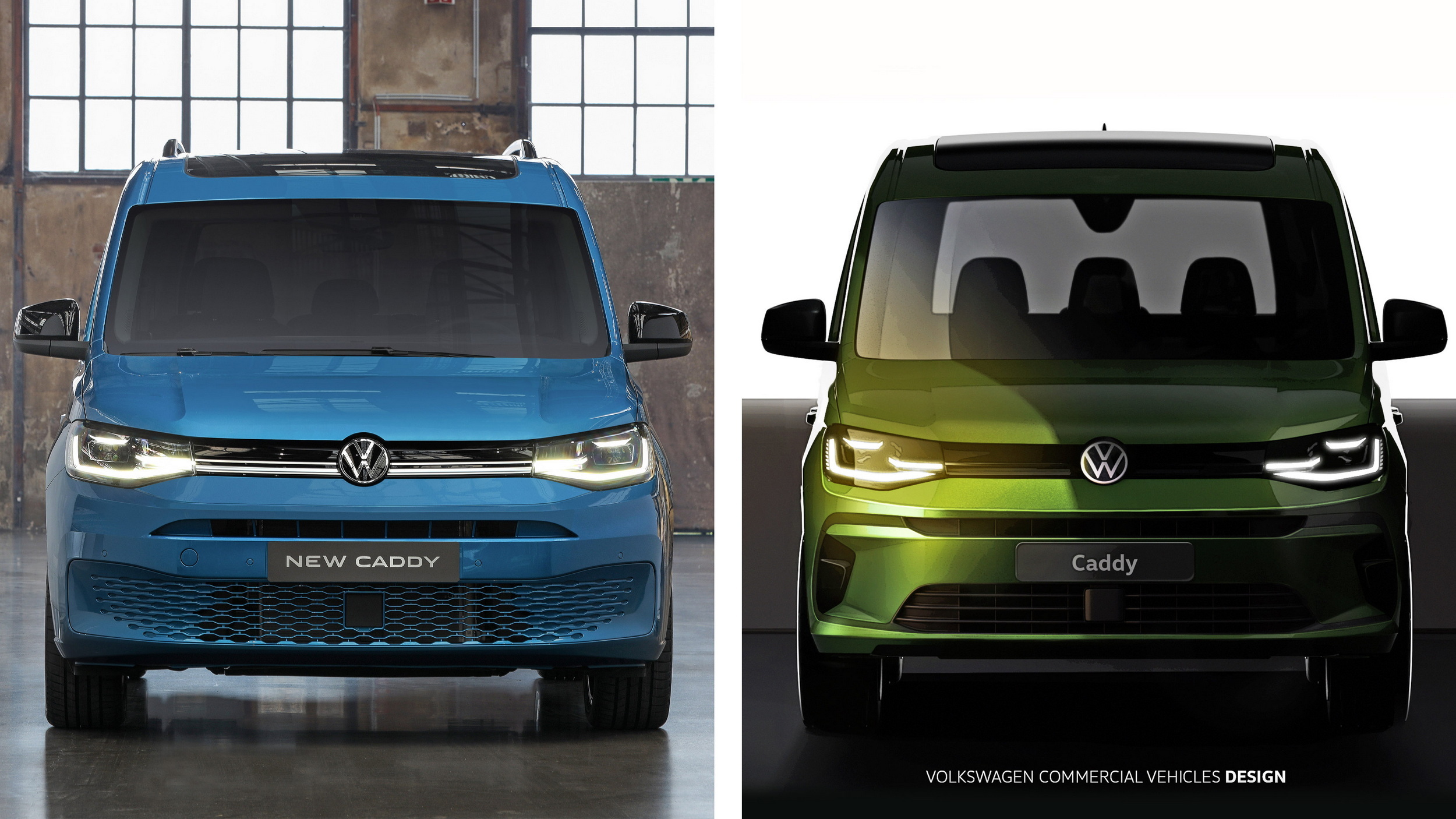
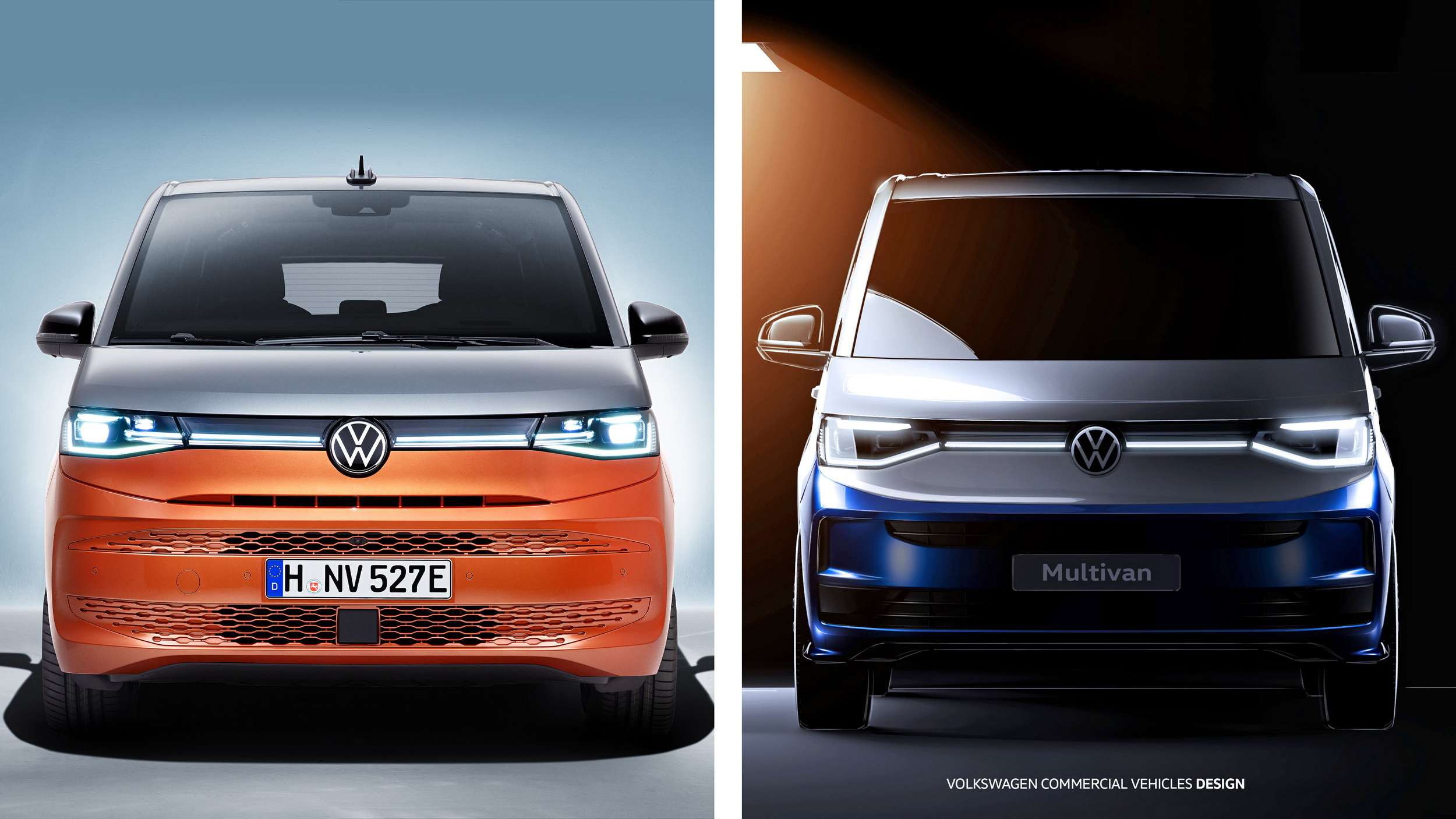
Volkswagen’s commercial vehicles division has offered a preview of what’s coming next for its van lineup at the 2026 Annual Media Conference. Alongside a business update, the company released official sketches teasing facelifted versions of the Caddy and the Multivan T7, both scheduled to arrive later this year with styling revisions and cabin upgrades.

The first teaser focuses on the Caddy. Up front, the van picks up a redesigned bumper that replaces the previous body-colored mesh pattern with more traditional cooling intakes. The grille shown in the sketch appears to drop illuminated elements altogether, though it remains unclear whether that detail will apply across the entire trim range.

More: Volkswagen Renames Its Hatch To ID.3 Neo, But The Real Change Is Inside

The Multivan T7 receives a similar refresh, although its front end retains the LED light strip spanning the grille. The headlights adopt revised LED graphics, and the van shown in the teaser wears a new two-tone paint scheme that echoes the look of the ID. Buzz.

 VW Teases Facelifted Vans, But The Real Changes Are Hidden Inside

Beyond the exterior tweaks, Volkswagen says both vans will receive what it calls “significantly optimized interior solutions.” The most obvious change will be larger infotainment displays paired with simpler, more intuitive menus, an update the company claims will make everyday use noticeably easier for owners.

More: VW Locks Gas Tiguan In Until 2035 With Two Major Updates Planned

It has also been confirmed that the 2026 MY updates will be applied to the California version of the Multivan T7, which was caught by our spy photographers during winter testing. For now, Volkswagen has not indicated any mechanical changes. Powertrain options for the Caddy and Multivan are expected to carry over largely unchanged from the current lineup.

 VW Teases Facelifted Vans, But The Real Changes Are Hidden Inside

Upgrades For Other Vans

The update cycle is not limited to the Caddy and Multivan. Volkswagen also plans to expand electrified options across the rest of its van range in 2026. That includes new plug-in hybrid powertrains for the Ford-based VW Transporter and Caravelle, giving both models a partially electric option for the first time.

More: VW’s ID. Buzz Picks Up A Feature No Minivan Has Any Business Offering

The fully electric ID. Buzz is also due for a few new tricks. Volkswagen plans to add Vehicle-to-Load (V2L) capability, allowing owners to power external devices directly from the van’s battery. A “Good Night” package and a dedicated Camp Mode are also on the way.

Finally, the Grand California flagship camper will be “comprehensively upgraded based on customer feedback”, and the Crafter will become available with a three-way tipper bodystyle.

Financial Hurdles Amid A Fresh Start

 VW Teases Facelifted Vans, But The Real Changes Are Hidden Inside

The product push comes as VW Commercial Vehicles tries to bounce back from a difficult 2025. Sales revenue actually rose 11% to €16.86 billion ($19.3 billion), but operating profit plunged 67% to €245 million ($281 million).

More: Volkswagen To Slash 50,000 Jobs After Profits Fell Off A Cliff

Much of the decline was attributed to provisions set aside for CO2 fines in the European Union, largely tied to the slower-than-expected ramp-up of fully electric LCVs. Even so, the brand maintained a solid net cash flow of €1 billion ($1.15 billion) to support future product updates. Deliveries also edged up, with VW Commercial Vehicles selling 428,000 units in 2025, a 6% increase compared to 2024.

\\\\\\\

Volkswagen Commercial Vehicles

Volkswagen Renames Its Hatch To ID.3 Neo, But The Real Change Is Inside

  • VW ID.3 Neo refresh brings a few subtle design and tech tweaks.
  • The electric hatch arrives next month with hardware upgrades.
  • Other ID EVs also now gain the same updated software platform.

Volkswagen is preparing another update for its compact electric hatchback. In mid-April, the company will unveil a revised version of the ID.3, which will carry the new ID.3 Neo name. The refreshed model brings a mix of hardware and software changes intended to keep the hatch competitive for the rest of the decade, at least until the long-anticipated ID. Golf eventually reaches showrooms.

Alongside the announcement, the automaker released a set of official design sketches. They show a shape that remains immediately recognizable as an ID.3, but with styling cues that align it more closely with Volkswagen’s next batch of electric models, including the ID. Polo and ID. Cross.

More: Volkswagen To Slash 50,000 Jobs After Profits Fell Off A Cliff

Most of the visual changes are concentrated at the front. The headlights are now linked by a slim grille element, creating a more cohesive face, while the bumper intakes adopt a simpler, cleaner design. From the side, the proportions look largely untouched.

\\\\\

Out back, however, the taillights gain updated LED graphics, and the lower section of the tailgate is now finished in body color rather than contrasting trim. Volkswagen is also expected to expand the palette with new exterior colors and wheel options.

Volkswagen design chief Andreas Mindt says the update focuses on refining the car’s overall presence. The goal, he explained, was to deliver “clean proportions, confident surfaces, and a sharper digital character” for one of the company’s most important electric models.

The ID.3 first arrived in 2019 as Volkswagen’s inaugural purpose-built EV, marking the start of the brand’s modern electric era. A facelift followed in 2023, so the upcoming ID.3 Neo effectively represents the model’s second major update since its original launch.

New Software And More Buttons

A major focus of the ID.3 Neo is the new Innovision infotainment system, which introduces an integrated app store for audio and video streaming, gaming, charging services, and parking services. Inside the cabin, Volkswagen has also eliminated the controversial touch-sensitive steering wheel controls, replacing them with traditional tactile buttons.

In addition, a new digital vehicle key option allows owners to unlock and access their cars using a smartphone or smartwatch without needing to carry a physical key fob or install a dedicated app.

\\\\\\

Updates For Other ID Models

On the practical side, Volkswagen is rolling out Vehicle-to-Load (V2L) capability across the ID lineup. This allows owners to draw up to 3.6 kW of electricity from the high-voltage battery through a 230V socket inside the cabin or by using an external adapter. That output can power tools, charge e-bikes, or run camping equipment when the car is parked.

More: VW Locks Gas Tiguan In Until 2035 With Two Major Updates Planned

The software package also receives additional functionality. Updates include Travel Assist with traffic light detection, along with support for One-Pedal Driving.

Kai Grünitz, Member of the Volkswagen Board of Management responsible for Technical Development, said: “The new software generation brings more performance and an even better customer experience to the ID. models. The new Volkswagen electric models in the small and compact vehicle segments – ID. Polo, ID. Polo GTI, ID. Cross – will also soon be launched on the market with these new innovations, offering more flexibility in everyday life and for leisure activities.”

More Power And Range For The ID.4 and ID.5

 Volkswagen Renames Its Hatch To ID.3 Neo, But The Real Change Is Inside

While a full facelift for the ID.4 is expected later this year, Volkswagen has already outlined a smaller round of updates for the current model and its coupe-styled sibling, the ID.5.

More: VW’s 1 Millionth EV Took 12 Years, Its 2 Millionth Took 10 Months

Beyond the updated software, the Pure trims of both electric crossovers will receive a new electric motor called the APP 350. The unit recently appeared in the closely related Ford Explorer and Capri EVs. It produces 187 hp (140 kW / 190 PS) and is said to deliver more torque while consuming less energy than the previous motor.

Efficiency gains also come from a new 58 kWh lithium phosphate battery pack. Combined with the updated motor, Volkswagen says the changes increase the WLTP range of the ID.4 by 40 km (25 miles).

 Volkswagen Renames Its Hatch To ID.3 Neo, But The Real Change Is Inside

Volkswagen

Even A Facelift Cannot Hide The New BMW 7-Series’ Giant Grille

  • The facelifted BMW 7-Series debuts next month in Beijing.
  • Teaser hints at a redesigned front and new lighting signature.
  • The luxury sedan gains Neue Klasse “tech clusters” in update.

BMW is getting ready to freshen up its flagship sedan. After months of camouflaged prototypes roaming public roads, the company has finally released its first official teaser of the facelifted 7-Series, confirming the luxury sedan will make its global debut at Auto China in Beijing next month.

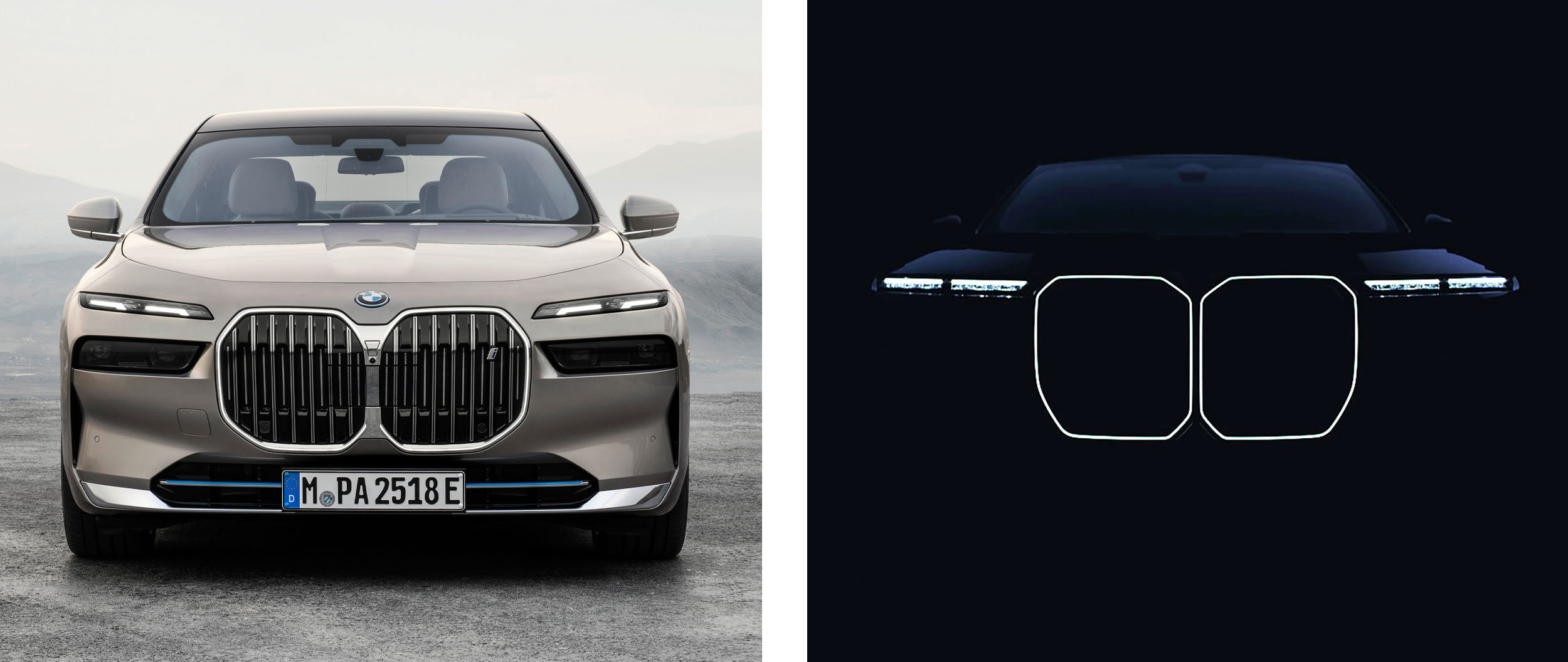
The current 7-Series generation arrived in 2022, which means it is right on schedule for BMW’s mid-cycle LCI update, short for Life Cycle Impulse. The shadowy teaser image focuses on the front end, revealing a new lighting signature with slimmer, more horizontal daytime running lights. They sit on either side of a larger, more squared-off illuminated kidney grille.

More: BMW’s New Electric 3-Series Has A Reveal Date

Judging from earlier spy shots, the kidney grille appears to switch from vertical slats to a horizontal layout. The split headlight arrangement remains, although the lower clusters that house the main beams look slightly smaller than before.

The side profile does not appear to be changing much. Expect the familiar long-wheelbase silhouette to carry over largely untouched, while the rear receives the usual facelift treatment with updated LED taillights and minor revisions to the bumper.

Neue Klasse Technology

 Even A Facelift Cannot Hide The New BMW 7-Series’ Giant Grille

At BMW’s 2026 Annual Conference, chairman Oliver Zipse confirmed that the facelifted 7-Series will serve as the first current model to inherit what the company calls “technology clusters” from the upcoming Neue Klasse lineup. The next-generation X5 is expected to follow shortly after, with its own debut slated for later this summer.

More: This BMW 7-Series Looks Like A Chauffeur Car, Until Your Day Turns Ugly

For the flagship sedan, that means several of the brand’s next-generation digital systems will make their way into the cabin. Among them is BMW Panoramic Vision, the wide pillar-to-pillar display stretching across the base of the windshield, along with the company’s new iDrive X operating system.

Behind the scenes, BMW also plans to integrate four central computing units, referred to internally as “Superbrains,” which handle major vehicle functions and software processes.

\\\\\\

Despite those upgrades, the big sedan will not migrate to the Neue Klasse platform itself. Instead, the facelift keeps the current CLAR architecture underneath. As with the outgoing model, it will remain available with gasoline, plug-in hybrid, and fully electric (i7) powertrain options, possibly with small refinements. It is also safe to assume that the 7-Series will gain a new variant from the BMW Alpina sub-brand.

The teaser for the mid-lifecycle update of the BMW 7-Series arrives just weeks after Mercedes unveiled a heavily refreshed version of its longtime rival, the S-Class. The luxury sedan also faces growing competition in China from newcomers such as the Huawei-backed Maextro S800.

\\\\\\

Baldauf

❌
❌