Normal view

There are new articles available, click to refresh the page.
Before yesterdayMain stream

Smart’s Smallest EV Just Grew Almost A Foot, And Mercedes Is To Blame

  • The Smart Concept #2 previews a successor to the Fortwo.
  • The urban EV promises a range of 186 miles (300 km).
  • The production version will debut at the Paris Motor Show.

Smart goes back to basics with a successor to the original Fortwo microcar that put the company on the map. At the “Change of Perspectives” event in Beijing, the brand unveiled the Concept #2, which serves as a close preview of a tiny urban EV set to arrive later this year.

The model was designed by Mercedes-Benz, looking like a natural evolution of the EQ Fortwo that was discontinued in 2024. It has a familiar two-door silhouette with a very short hood and large wheels positioned at the corners. Other highlights include the aggressive LED headlights and the clean surfacing.

More: You’re Not Wrong, The New Mercedes GLB Looks Suspiciously Like A Smart

The concept features futuristic wheels with transparent aero covers shod in light-colored rubber, trick DRLs with #2 lettering, leather straps instead of door handles, and a blocked grille that looks like a luxury suitcase, while at the rear it sports a small matrix screen that can display various messages. Those elements will likely be toned down for production, as with the shiny gold finish of the floating roof.

\\\\\\\\\\\\\\\\\\\\\\\\\\\\\\\\\\\\\\

The Concept #2 measures 2,792 mm (109.9 inches) long, making it the largest interpretation of a two-door city car from Smart. It is 292 mm (11.5 inches) longer than the original Smart and 97 mm (3.8 inches) longer than the last generation of the EQ Fortwo.

More: Smart Thinks Its E-Class-Sized Sedan Looks Like A Shark, And Stands By It

Still, the EV remains the smallest contestant in Europe’s A-Segment, being 840 mm (33 inches) shorter than the Fiat 500e and 997 mm (39 inches) shorter than the Renault Twingo E-Tech. In fact, the new Smart is closer in size to heavy quadricycles like the Citroen Ami and the Fiat Topolino than actual cars.

New Underpinnings

Under the skin lies a new Electric Compact Architecture (ECA) developed in house. Since Smart is co-owned by Mercedes and Geely, it is safe to assume that the platform uses technology from the Chinese automaker.

The #2 will be exclusively available with an electric powertrain, similar to the #1 and #3 and unlike the larger #5 and #6, which are also available in plug-in hybrid forms.

\\\\\\\\\\

Smart has yet to announce detailed specifications, but mentioned a targeted range of around 186 miles (300 km), which is more than double the 135 km (84 miles) range of the EQ Fortwo. The battery will charge from 10-80% in under 20 minutes and will support V2L (Vehicle-to-Load) functions. Chances are that the #2 will stick to the RWD layout of its rear-engined predecessors.

More: Smart Just Killed Hopes Of A ForFour Comeback

The presentation didn’t include photos of the interior, but the packaging of the EV-dedicated platform promises a more spacious two-seater cabin which is also expected to be more premium than before.

The production Smart #2 will debut at the Paris Motor Show in October, ahead of its market launch. The model will be likely focused in Europe and the UK, although it could also find its way into other markets around the world.
\\\\\\\\\\\\\\\\\\\

Smart

Smart Goes Back To Its City Car Roots With Concept #2

  • The Smart Concept #2 previews a successor to the Fortwo.
  • The urban EV promises a range of 186 miles (300 km).
  • The production version will debut at the Paris Motor Show.

Smart goes back to basics with a successor to the original Fortwo microcar that put the company on the map. At the “Change of Perspectives” event in Beijing, the brand unveiled the Concept #2, which serves as a close preview of a tiny urban EV set to arrive later this year.

The model was designed by Mercedes-Benz, looking like a natural evolution of the EQ Fortwo that was discontinued in 2024. It has a familiar two-door silhouette with a very short hood and large wheels positioned at the corners. Other highlights include the aggressive LED headlights and the clean surfacing.

More: You’re Not Wrong, The New Mercedes GLB Looks Suspiciously Like A Smart

The concept features futuristic wheels with transparent aero covers shod in light-colored rubber, trick DRLs with #2 lettering, leather straps instead of door handles, and a blocked grille that looks like a luxury suitcase, while at the rear it sports a small matrix screen that can display various messages. Those elements will likely be toned down for production, as with the shiny gold finish of the floating roof.

\\\\\\\\\\\\\\\\\\\\\\\\\\\\\\\\\\\\\\

The Concept #2 measures 2,792 mm (109.9 inches) long, making it the largest interpretation of a two-door city car from Smart. It is 292 mm (11.5 inches) longer than the original Smart and 97 mm (3.8 inches) longer than the last generation of the EQ Fortwo.

More: Smart Thinks Its E-Class-Sized Sedan Looks Like A Shark, And Stands By It

Still, the EV remains the smallest contestant in Europe’s A-Segment, being 840 mm (33 inches) shorter than the Fiat 500e and 997 mm (39 inches) shorter than the Renault Twingo E-Tech. In fact, the new Smart is closer in size to heavy quadricycles like the Citroen Ami and the Fiat Topolino than actual cars.

New Underpinnings

Under the skin lies a new Electric Compact Architecture (ECA) developed in house. Since Smart is co-owned by Mercedes and Geely, it is safe to assume that the platform uses technology from the Chinese automaker.

The #2 will be exclusively available with an electric powertrain, similar to the #1 and #3 and unlike the larger #5 and #6, which are also available in plug-in hybrid forms.

\\\\\\\\\\

Smart has yet to announce detailed specifications, but mentioned a targeted range of around 186 miles (300 km), which is more than double the 135 km (84 miles) range of the EQ Fortwo. The battery will charge from 10-80% in under 20 minutes and will support V2L (Vehicle-to-Load) functions. Chances are that the #2 will stick to the RWD layout of its rear-engined predecessors.

More: Smart Just Killed Hopes Of A ForFour Comeback

The presentation didn’t include photos of the interior, but the packaging of the EV-dedicated platform promises a more spacious two-seater cabin which is also expected to be more premium than before.

The production Smart #2 will debut at the Paris Motor Show in October, ahead of its market launch. The model will be likely focused in Europe and the UK, although it could also find its way into other markets around the world.
\\\\\\\\\\\\\\\\\\\

Smart

China Is Getting A Jetta SUV For Less Than A Used Corolla Costs In America

  • VW debuts the ID. Aura T6 SUV and ID. Unyx 09 sedan in China.
  • The Jetta X Concept previews an affordable electric SUV.
  • The VW Group has also revealed the production AUDI E7X SUV.

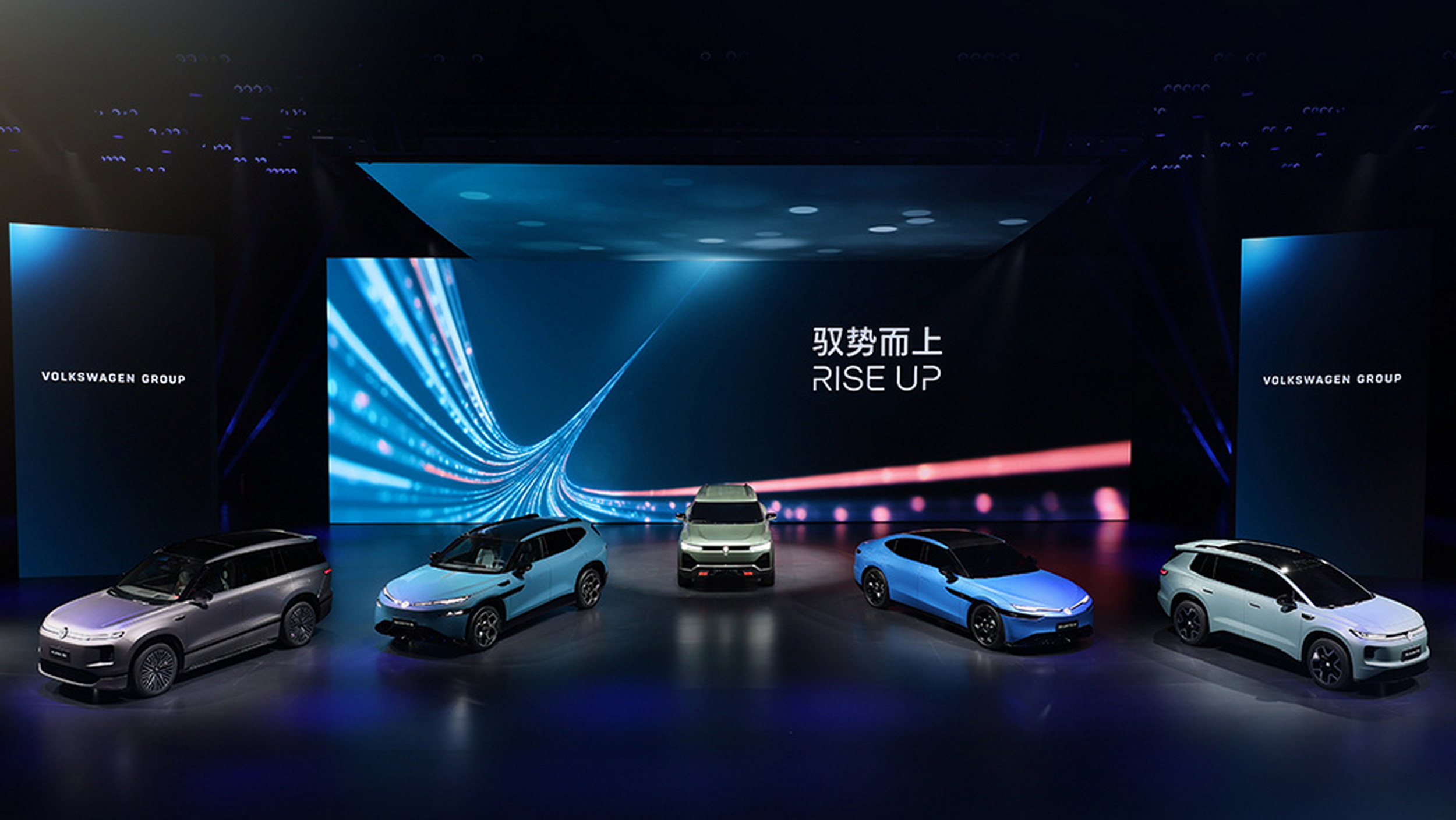
The Volkswagen Group arrived in China with a full plate, using its Media Night ahead of the Beijing Auto Show to roll out a mix of production models and near-future previews. There is a clear pattern running through it all, heavy local collaboration, faster development cycles, and a lineup that looks increasingly tailored to Chinese tastes rather than global consistency.

More: VW Spent Years Removing Knobs From Its Cars, The ID.3 Neo Puts Them Back

Among the reveals were the VW ID. Aura T6 from FAW, the ID. Unyx 09 co-developed with XPeng, and the AUDI E7X from SAIC. Sitting slightly off to the side, but arguably just as important, was the Jetta X Concept, previewing a cheaper, more accessible electric SUV.

The ID. Aura T6 is a fully electric midsize SUV built specifically for China, and at a glance, it could pass as an ID. Tiguan. It comes from the FAW-VW joint venture and leans into familiar design cues, split LED headlights, a full-width rear light bar, proper door handles, and a five-seat layout. It is also the first member of the ID. Aura family, even though the initial concept from 2025 was a sedan.

\\\\\\

VW ID. Aura T6

Next up is the ID. Unyx 09, an electrified sedan borrowing technology from Xpeng. It is a sibling to the recently unveiled ID Unyx 08 SUV, adopting a similar styling language. The low-slung model features slim LEDs and the signature black trim piece that connects the main headlights with the ADAS sensors on the profile.

More: Toyota Was Mocked For Going Slow On EVs, Honda And VW Are Now Paying For Going Fast

VW didn’t get into details, but the ID. Unyx 09 will likely share the electric powertrains with the ID. Unyx 08, including CATL-sourced battery packs. Its market launch in China is scheduled for the second half of 2026.

\\\\

VW ID. Unyx 09

Both the ID. Aura T6 and the ID. Unyx 09 feature the new CEA electric and electronic architecture, a result of VW’s partnership with Xpeng. This supports Level 2+ driving assistance and high-tech infotainment systems with an integrated AI Intelligent Assistant.

More: The New AUDI E7X Looks Nothing Like The Audis You Know

During the Media Night, VW Group also showed the production version of the AUDI E7X. The fully electric SUV is produced as part of its joint venture with SAIC, joining the E5 Sportback in the Chinese lineup.

A New Jetta SUV

Then there is the Jetta X Concept, which might be the most telling piece of the puzzle. It is a rugged-looking SUV with an electrified powertrain, styled with a kind of no-nonsense simplicity that feels closer to Dacia than anything wearing a VW badge. That is not accidental. With Skoda exiting China after a prolonged sales slide, Jetta now steps into its place as the value-focused brand.

The Jetta X rides on the Compact Main Platform (CMP), developed in China. More importantly, it is expected to reach production by FAW later this year, with a rumored starting price under the ¥100,000 ($14,700) mark. Overall, the Jetta lineup will grow with five new models by 2028, including four NEVs (models with electrified powertrains).

\\\\

VW Group’s Offensive In China

VW plans to launch 20 new electric vehicles this year as part of its “In China, for China” strategy. The company promises they will use “state-of-the-art electrical architectures, ADAS systems, an intelligent cockpit and AI features,” designed to fulfil the needs of Chinese customers.

More: VW’s China Collapse Is Bad, But Its American Problem Might Be Harder To Fix

Overall, the VW Group will offer around 50 electrified models in China by 2030, including around 30 battery electric vehicles.

 China Is Getting A Jetta SUV For Less Than A Used Corolla Costs In America

Lynk & Co’s First GT Concept Looks Like It Could Actually Happen

  • Lynk & Co will debut its first GT concept car at the Beijing auto show.
  • The performance-focused study adopts a sleek two-door coupe stance.
  • Volvo will take over European commercial operations for Lynk & Co.

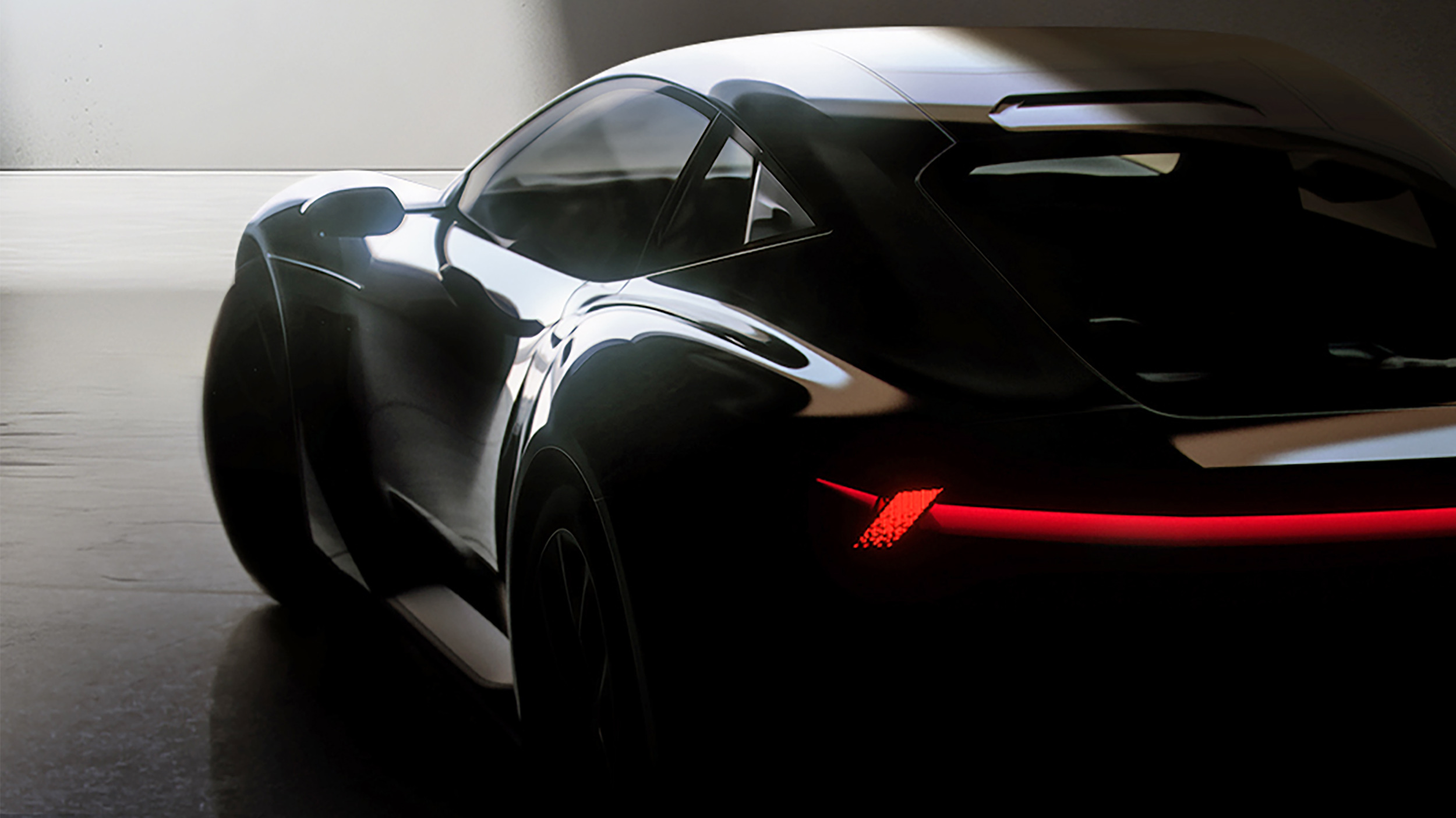
Lynk & Co’s production range has, until now, played it safe with SUVs and sedans. That may be about to change. The Geely-owned brand is preparing to show something with a bit more bite, announcing a two-door GT concept set to debut at the 2026 Beijing Auto Show on April 24, previewed by a single teaser.

The shadowy image suggests a front-engined, rear-wheel-drive sports car, with proportions that land somewhere close to the now-departed Jaguar F-Type. There is a long dash-to-axle ratio, a low, sculpted profile, and planted rear shoulders. A sloping roofline flows into full-width LED taillights, while the rising beltline brings to mind the Lynk & Co 10+ sedan.

More: This Chinese SUV Now Boasts Europe’s Longest Electric Range In A PHEV

Details remain thin, as expected at this stage, but the concept will almost certainly sit on existing Geely architecture. That opens the door to either a fully electric setup or a plug-in hybrid powertrain.

Interestingly, the GT appears closer to production than the 2022 Next Day concept, which shared a similarly low-slung, sporty silhouette but stretched things further with a longer body and four suicide scissor doors. If it gets the green light, this new model could find itself taking aim at the Porsche 911 and Mercedes-AMG GT, as well as China’s MG Cyberster.

 Lynk & Co’s First GT Concept Looks Like It Could Actually Happen
The official teaser of the new GT Concept by Lynk & Co.

The GT highlights the racing pedigree of Lynk & Co that has been quite successful in TCR. The company entered the TCR championship in 2019, taking the reigns from the defunct Volvo Polestar racing program.

Volvo Takes Over Sales And Service In Europe

Beyond the showroom floor, Lynk & Co is undergoing a structural shift in its global operations. Volvo Cars and Geely Auto recently signed a Memorandum of Understanding that will see the former take over the commercial and brand operations for Lynk & Co in Europe.

More: Volvo’s Favorite Tuner Just Crossed Over Into China’s EV Scene

Under this new arrangement, Volvo becomes the exclusive importer and distributor for Lynk & Co across the Old Continent, using its retailer and service networks. This means that the Geely-owned brand moves away from its previous subscription-heavy model toward a more traditional retail structure.

 Lynk & Co’s First GT Concept Looks Like It Could Actually Happen
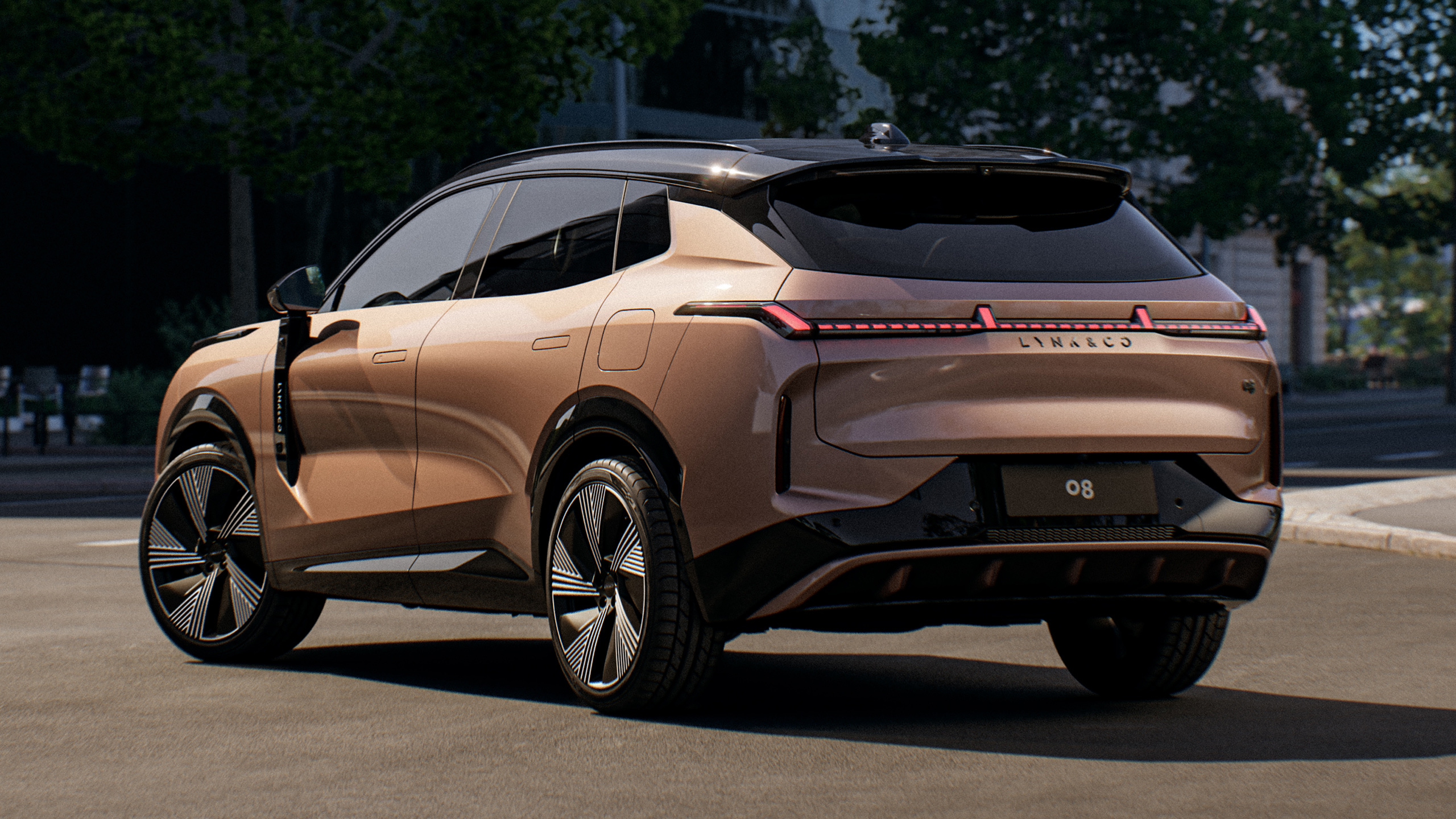
Lynk & Co 08

Smart’s Tiny ForTwo Is Back. Sort Of

  • Smart previews Concept #2 as modern two-seat city EV.
  • Original 1998 ForTwo spirit returns with same silhouette.
  • Concept debuts at Beijing alongside China-only #6 sedan.

Some cars try to dominate the road, but Smart’s greatest hit barely took up half a parking space. Now the brand is teasing its icon’s comeback act with the Concept #2, a preview of the long-awaited successor to the legendary ForTwo, which went out of production in 2024.

Having dropped disguised images of a prototype testing last year, Smart has now released sketches and extreme close-up teaser images of the new concept ahead of a global brand event at the Beijing Auto Show later this month.

Related: Smart’s First Ever Sedan Is Much Bigger Than You Think

While full design and tech details remain hidden, it’s clear from what we can see that the #2’s profile closely echoes the original’s, but that this time the the arches are much fatter. The front end also adopts the family face from other new-generation Smarts like the #1, #3 and #5. Slightly confusingly, the #2 will be much smaller, and probably less expensive, than the #1.

Fashion Inspiration

Smart says the concept uses a matte white and warm gold two-tone finish, along with details inspired by fashion accessories, including buckle-like elements and leather touches. This is definitely no Citroen Ami-style no-frills economy EV.

\\\

We can see some of that white and gold coloring in the teaser shots, though whether those “fashion” ideas will find their way onto the production car is another matter. That design direction makes sense, though. The modern Smart brand isn’t selling bare-bones transportation anymore. It now pitches itself as a premium EV maker, with larger models like the #1, #3, and #5 already moving the company far beyond its original microcar roots.

ForTwo Legacy

CEO Tong Xiangbei previously admitted that building a truly tiny EV on a fresh platform is harder than making a larger car. Packaging batteries, safety systems, and decent practicality into something this small is engineering Tetris at expert level. But the #2 matters emotionally. It’s the car enthusiasts actually associate with Smart, the machine that made city motoring weird and fun long before everyone else discovered quirky mobility.

We’ll see the full concept in Beijing on April 22, where it shares the stage with the new China-only #6 EHD fastback sedan. The #6 was designed by the Mercedes-Benz Global Design team, and is shaping up to be a bit like a cut-price Mercedes EQE.

\\\\\\\\

Smart

Hyundai’s Ioniq Concepts Forgot They Were Supposed To Look Like Hyundais, Especially The Lambo One

  • Hyundai has unveiled two Ioniq concepts, badged the Venus and Earth.
  • The Venus is a high-riding sedan that looks nothing like the Ioniq 5.
  • Both concept cars feature radical interiors to inspire production models.

China’s EV market has become a proving ground where global brands often rethink their playbook from the ground up. The Ioniq brand has served as Hyundai’s premium series of EVs in Western markets for several years. Now Hyundai is bringing Ioniq to China, but not with any existing models. Instead, it has revealed two concepts ahead of the Auto China show in Beijing.

Read: Hyundai’s New EV Sedan For China Could Be Everything The Ioniq 6 Wasn’t

All future Ioniq models bound for China will follow a new naming convention, one that swaps numbers for planets as Hyundai reshapes its electric lineup for the market. With this in mind, its first two concepts are dubbed the Venus and the Earth, the former a sharp looking sedan that strongly recalls a Lamborghini four-door, while the latter takes the form of an SUV.

According to Hyundai, the Ioniq series will “evolve beyond a product lineup into a broader mobility ecosystem tailored to local customers” as it develops.

\\\\\\\\\

Hyundai says the Venus and Earth serve as design ‘barometers’ for future production models. The Venus has been presented in a shade of Radiant Gold and looks unlike any other Ioniq model we’ve seen. Like an Ioniq 5, it sits quite high and has an aggressive front end with slim LEDs and a gaping grille.

The cabin is also quite intriguing, featuring a slew of gold accents and a panoramic screen for the infotainment system and the front passenger, similar to the current Hyundai Elexio built in China. Just how much of this concept’s interior will influence future production models remains to be seen, but it certainly makes a statement.

No Ordinary Hyundai

\\\\

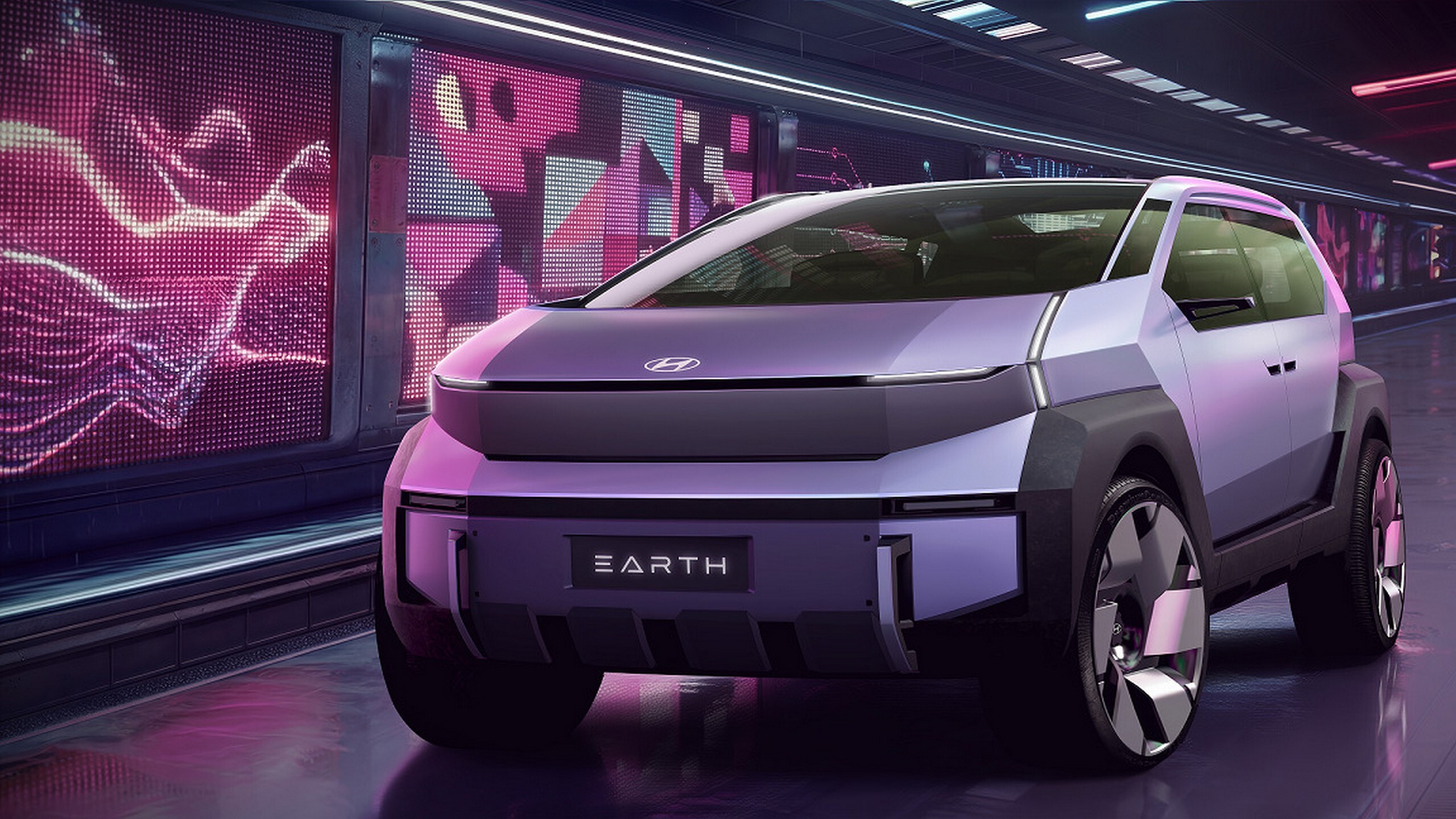
Hyundai’s Earth SUV is even more dramatic. Sharing some similarities to recent Kia concepts, it has a bold front fascia and a rugged design, painted in a shade Hyundai calls Aurora Shield. A peek inside the cabin reveals suicide rear doors, a tablet-like central touchscreen, and special seats with air-filled modules.

“Starting with the two concept cars unveiled today, we will continue to present products that reflect deep insight into Chinese customers and our genuine commitment to this market,” Beijing Hyundai Motor Company president Li Fenggang said.

“Built on IONIQ’s uncompromising principles of world-class safety and quality, we will soon introduce production models that seamlessly combine the smart driving and smart cabin experiences that Chinese consumers demand.”

Hyundai has yet to announce when the first of its China-only Ioniq models will be launched, but they shouldn’t be too far off.

Hyundai Goes Interstellar As Ioniq Brand Launches In China

  • Hyundai has unveiled two Ioniq concepts, badged the Venus and Earth.
  • The Venus is a high-riding sedan that looks nothing like the Ioniq 5.
  • Both concept cars feature radical interiors to inspire production models.

The Ioniq brand has served as Hyundai’s premium series of EVs in Western markets for several years. Now, Hyundai is launching Ioniq in China, but it’s not doing so with any existing models. Instead, it has presented two concepts ahead of the Auto China show in Beijing.

All future Ioniq models sold by Hyundai in China will be named after planets. With this in mind, its first two concepts are dubbed the Venus and the Earth, the first of which is a sleek sedan while the latter is an SUV. Hyundai has declared that its Ioniq series will “evolve beyond a product lineup into a broader mobility ecosystem tailored to local customers” as it develops.

Read: Hyundai’s New EV Sedan For China Could Be Everything The Ioniq 6 Wasn’t

Hyundai says the Venus and Earth serve as design ‘barometers’ for future production models. The Venus has been presented in a shade of Radiant Gold and looks unlike any other Ioniq model we’ve seen. Like an Ioniq 5, it sits quite high and has an aggressive front end with slim LEDs and a gaping grille.

The cabin is also quite intriguing, featuring a slew of gold accents and a panoramic screen for the infotainment system and the front passenger, similar to the current Hyundai Elexio built in China. Just how much of this concept’s interior will influence future production models remains to be seen, but it certainly makes a statement.

No Ordinary Hyundai

 Hyundai Goes Interstellar As Ioniq Brand Launches In China

Hyundai’s Earth SUV is even more dramatic. Sharing some similarities to recent Kia concepts, it has a bold front fascia and a rugged design, painted in a shade Hyundai calls Aurora Shield. A peek inside the cabin reveals suicide rear doors, a tablet-like central touchscreen, and special seats with air-filled modules.

“Starting with the two concept cars unveiled today, we will continue to present products that reflect deep insight into Chinese customers and our genuine commitment to this market,” Beijing Hyundai Motor Company president Li Fenggang said. “Built on IONIQ’s uncompromising principles of world-class safety and quality, we will soon introduce production models that seamlessly combine the smart driving and smart cabin experiences that Chinese consumers demand.”

Hyundai has yet to announce when the first of its China-only Ioniq models will be launched, but they shouldn’t be too far off.

\\\\\\\\\\

Hyundai’s New Concepts Tease A Design Direction Ioniq Has Never Tried Before

  • Hyundai teases Earth and Venus concepts as part of its Ioniq sub-brand.
  • The EVs show slim LEDs, futuristic proportions, and sharply cut surfaces.
  • A countdown on Hyundai China’s website points to an April 10 debut.

Hyundai is setting the stage for the next phase of its Ioniq sub-brand, previewing what’s to come with a pair of new concepts. The EVs, dubbed Earth and Venus, introduce an evolved design language that will likely carry over to future production models.

The automaker’s official website in China now features a countdown to a “Hyundai Ioniq Brand Launch Event” scheduled for April 10. A teaser video shows a meteorite impact revealing a gold-colored crystal, one face shaped like the letter “i.” Whether this becomes the new Ioniq emblem remains unclear.

More: The Boulder Is Hyundai’s Answer To The Ford Bronco, And A New Pickup Is Behind It

Hyundai has also released shadowy teasers of the upcoming concepts across its global social media channels, describing them as “a cosmic statement, engineered for humans.”

 Hyundai’s New Concepts Tease A Design Direction Ioniq Has Never Tried Before
Hyundai Earth Concept

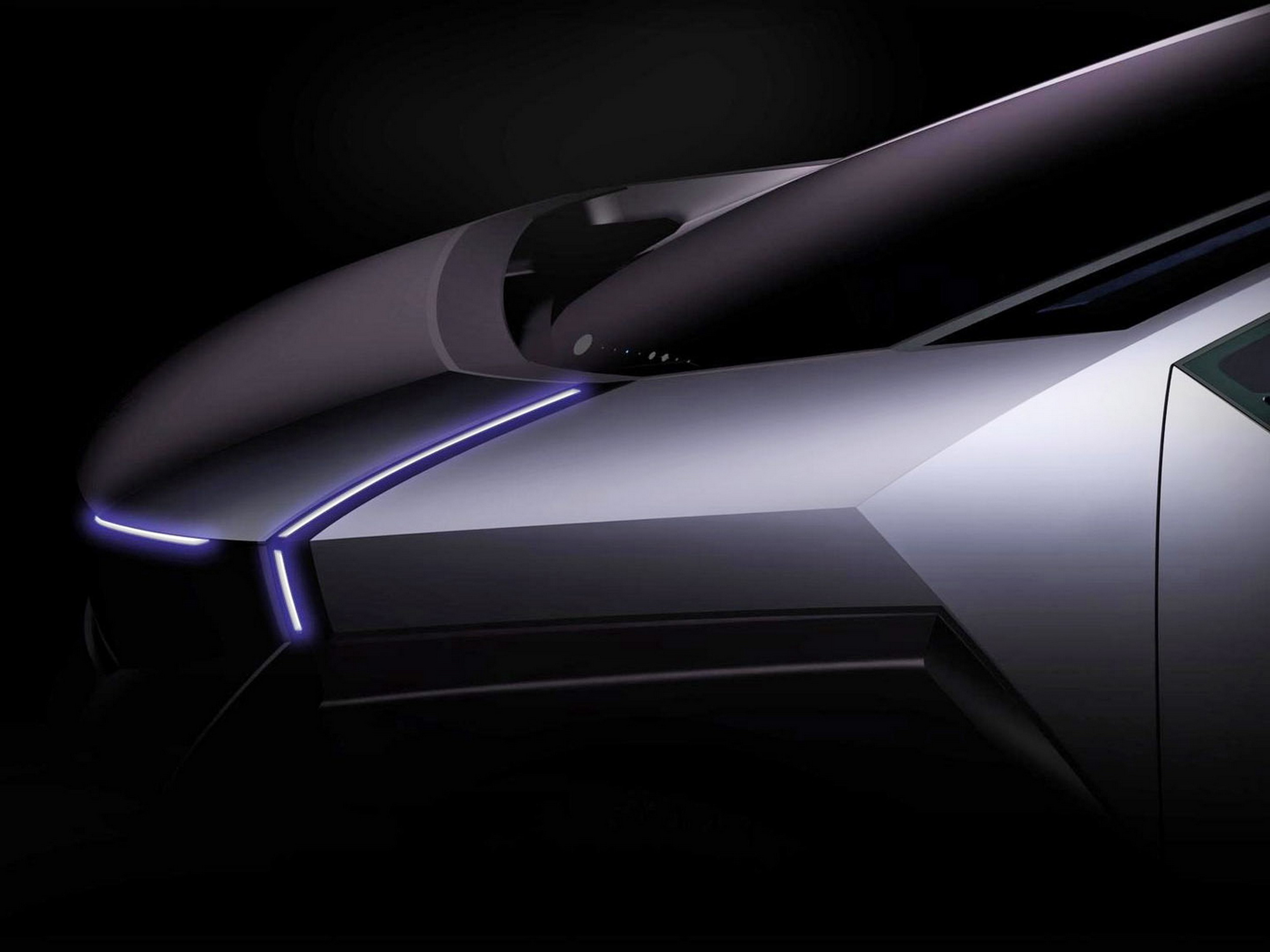
The Earth is finished in silver and features Y-shaped LEDs reminiscent of the Lamborghini V12 Vision Gran Turismo Concept from 2019. Its short hood, steeply raked windscreen, boxy wheel arches, and flat surfacing give it a distinctly Cybertruck-like presence. Unfortunately, only a small portion of the profile is visible, so the overall bodystyle remains unclear.

More: Hyundai’s New Pickup Truck Will Be Everything The Santa Cruz Refused To Be

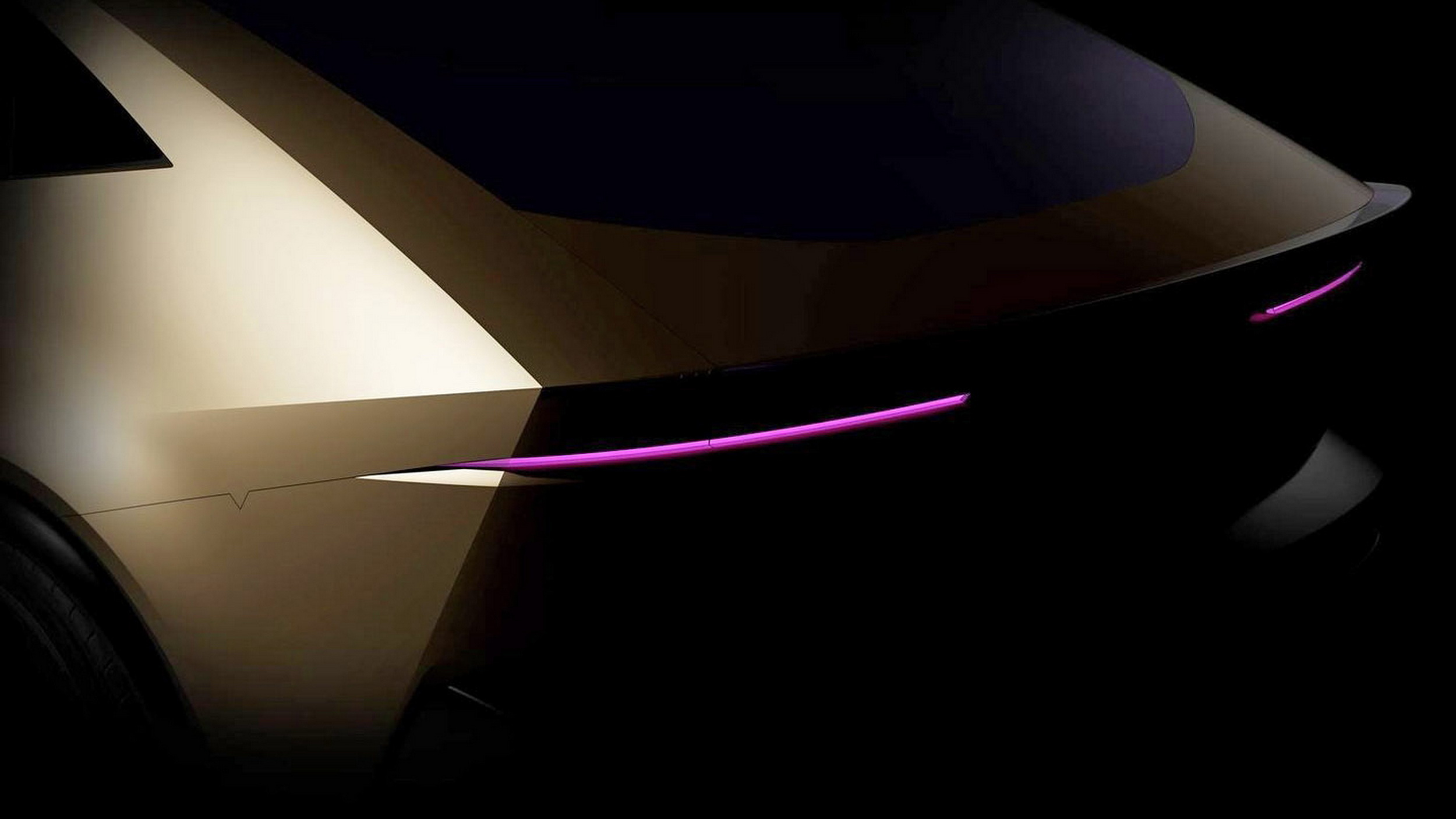
The Venus appears in a gold finish, with the teaser focusing on its rear. It leans into sharper, more angular surfacing, paired with a fastback-style tail, ultra-slim LEDs, and a ducktail spoiler. There are also glimpses of a pronounced bumper and round wheel arches.

 Hyundai’s New Concepts Tease A Design Direction Ioniq Has Never Tried Before
Hyundai Venus Concept

It will be interesting to see whether the Earth and Venus are simply futuristic styling exercises or early previews of where Hyundai’s electric lineup is headed alongside the Ioniq 3, 5, 6, and 9.

More: A Hyundai Beat The BMW M2 CS For World Performance Car Of The Year

The timing of the announcement, along with its ties to China, suggests the concepts could make their first public appearance at the Beijing Auto Show on April 24. Hyundai may also choose to reveal the designs earlier at its April 10 event.

Setting aside its global and China-focused ambitions, Hyundai is planning an aggressive product push in North America, with 36 new or refreshed models due over the next five years. That rollout includes a rugged SUV and a body-on-frame pickup previewed by the Boulder concept at the New York Auto Show.

\\\\\\

Hyundai

Kia Brought Its Electric Van To America As Something New York Actually Needs

  • Kia has introduced the PV5 WAV New York Taxi concept.
  • The electric van features a rear-mounted wheelchair ramp.
  • It appears to be a revised version of Korea’s PV5 WAV Taxi.

Hyundai didn’t have the only surprise at the New York Auto Show as Kia used the event to unveil the PV5 WAV New York Taxi and Rideshare concept. It was introduced alongside the redesigned Seltos as well as the new EV3.

Created in collaboration with BraunAbility, the concept is a wheelchair accessible vehicle that is fully compliant with the Americans with Disability Act. It’s designed to demonstrate the electric van’s potential as a wheelchair-accessible taxi and rideshare vehicle.

More: The PV5 Is Kia’s Idea Of An Electric Minivan

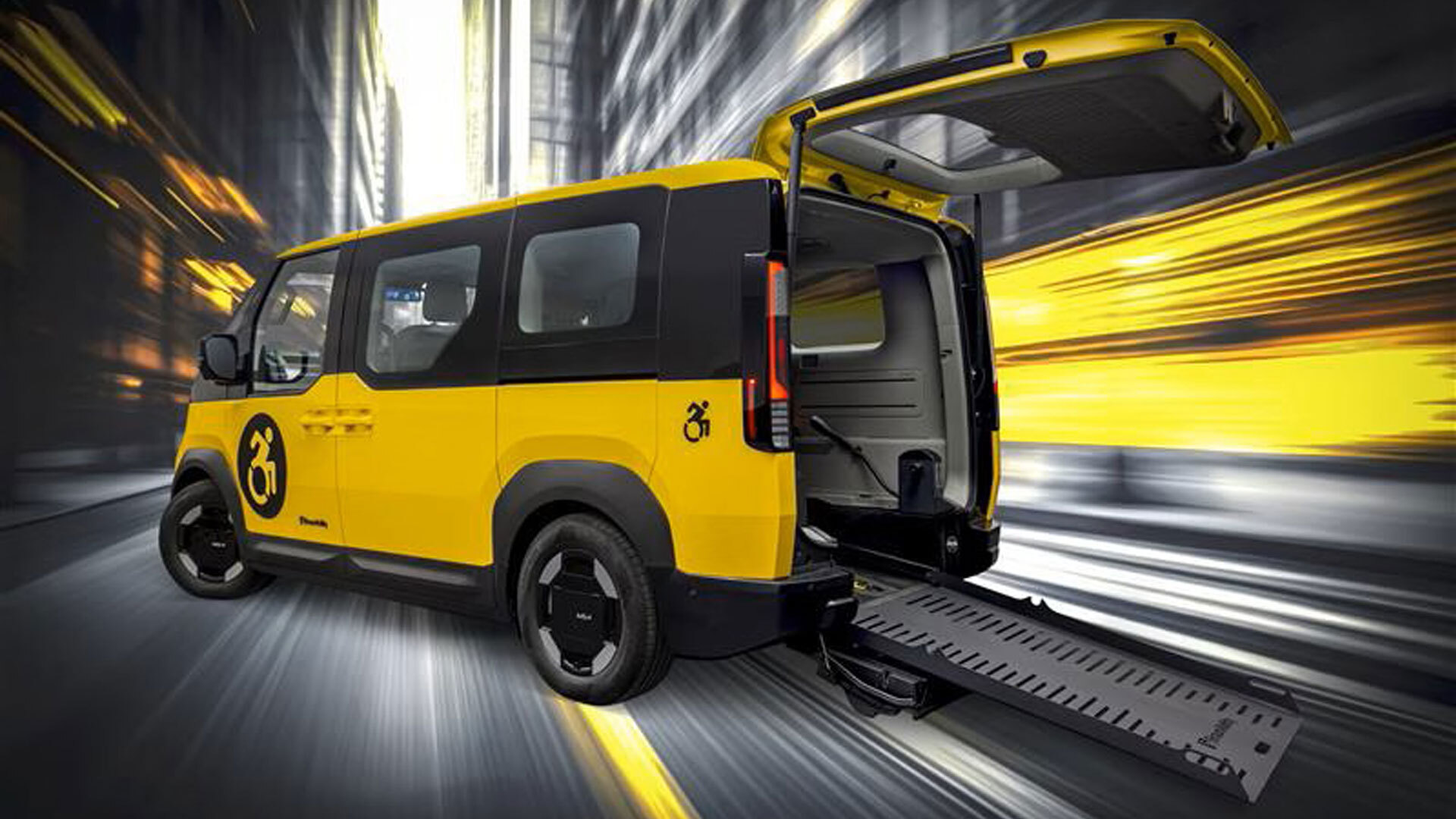
The companies said little about the “production-ready” concept and have only released one low-resolution image as of this writing. That doesn’t exactly scream commitment, but we can see the concept features a classic yellow and black livery with numerous wheelchair graphics.

More importantly, the PV5’s liftgate opens to reveal a wheelchair ramp that deploys from the back of the vehicle. Kia also mentioned the model has “integrated tiedowns and occupant restraints” as well as a low step height that is “well-suited to everyday taxi operations and entry for wheelchair users.”

 Kia Brought Its Electric Van To America As Something New York Actually Needs

The companies said the concept was “created with real-world production feasibility in mind” and will be evaluated in New York, which is one of the largest taxi and rideshare markets in the world. As part of this process, they’ll “engage government agencies, fleet operators, disability advocacy organizations, and other stakeholders to gather additional input and refine the vehicle based on their feedback.”

While little is known about the concept, the PV5 offers Passenger, Cargo, and Chassis Cab configurations as well as 43.3, 51.5, and 71.2 kWh battery packs. The model rides on the fleet-focused E-GMP.S platform and sports a front-mounted motor developing 161 hp (120 kW / 163 PS) and 184 lb-ft (250 Nm) of torque.

Despite the lack of details, Kia offers a PV5 WAV Taxi in Korea. It starts at $33,768 (₩ 51,100,000) and offers a range of up to 214 miles (345 km). However, that model has a side-mounted wheelchair ramp.

\\\\\\

Land Rover Let The Freelander Go. China Brought It Back As An Electrified SUV

  • The Freelander name returns on a new electrified 4×4 developed jointly in China.
  • It rides on an 800-volt platform supporting EV, PHEV, and range-extender setups.
  • Export versions will be bespoke regional models, not adapted China-market cars

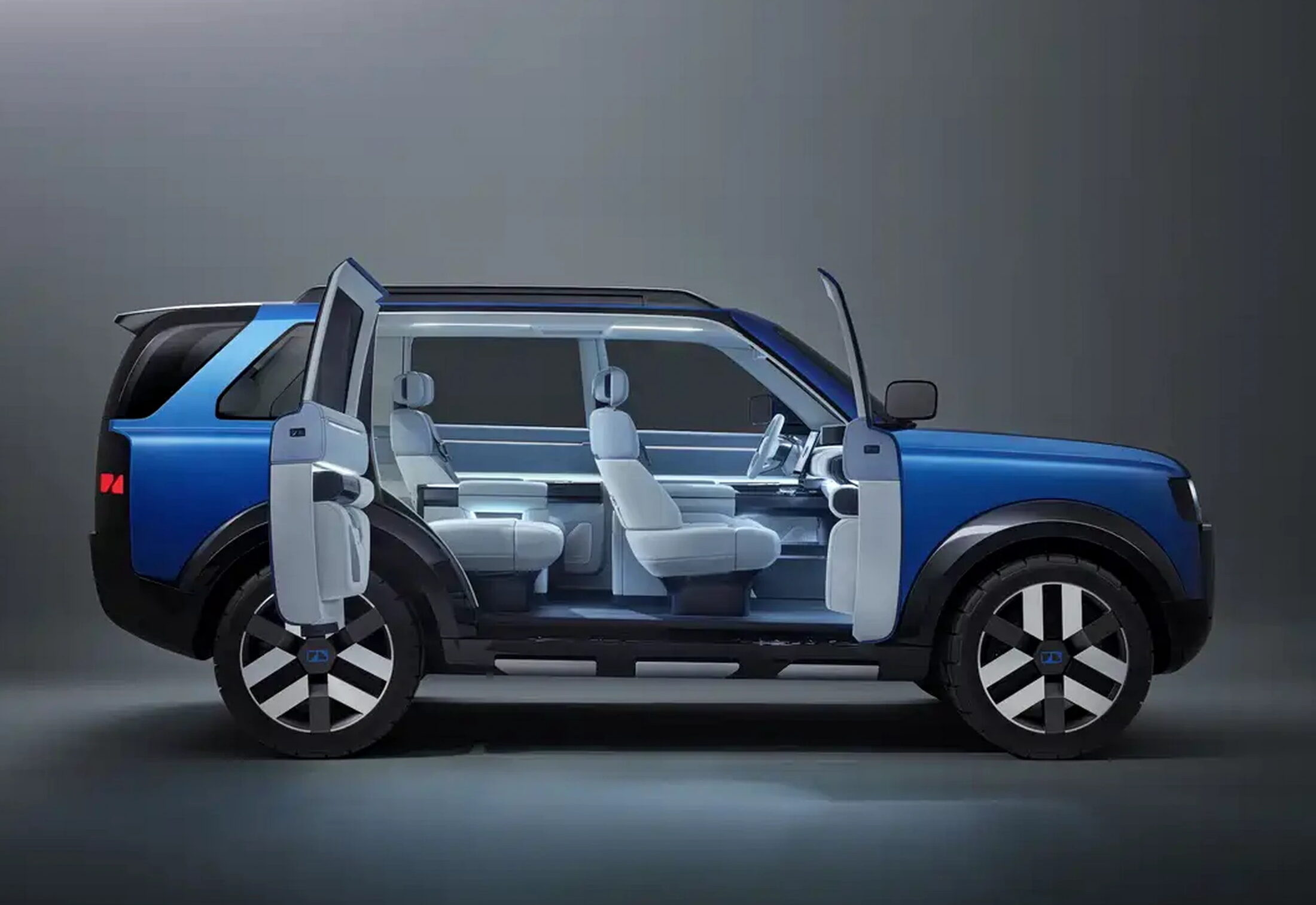
The Freelander name has been dormant since 2015, but Jaguar Land Rover’s Chinese joint venture with Chery has brought it back as something entirely new. Instead of a badge within Land Rover’s lineup, it now stands alone as its own brand, focused squarely on electrified off-roaders. The first look at that direction comes in the form of a concept rather than a production-ready model.

The Concept 97 takes its name from the Freelander’s original 1997 debut. While it wears no Land Rover badges, its design still leans heavily on the brand’s visual language, blending cues from the original Freelander with elements reminiscent of the modern Defender. The design is a product of collaboration between the teams at the UK and China.

More: The Freelander Is Coming Back, Just Not As A Land Rover

The company showed two cocnept models, finished in Glacier Blue and Thousand Mountain Green. Both feature black cladding paired with aluminum accents across the hood, grille, skid plate, and tailgate. The wheels and tires lean toward concept-car theatrics, and the suicide doors underline that this is still very much a showpiece. Expect those to give way to something more conventional in production, unless Land Rover decides to keep things interesting, at least with the doors.

Design Details Pull From Different Eras

\\\\\\\\\\\

Look closer and the references become more specific. The angled D-pillar is a clear callback to the three-door Freelander from 1997, including the era when it even offered a soft-top. Meanwhile, the black trim beneath the headlights and the pixel-style LED arrangement echo the facelifted model introduced in 2003.

More: Jaguar Land Rover’s Design Boss Is Out After Two Decades With No Successor Named

Around back, the taillights are tucked into a strip of black trim, contrasting against an upright aluminum-finished tailgate. The rear skid plate mirrors the front, and a sizeable roof spoiler caps things off with a slightly more modern flourish.

High-Tech Interior With Six Seats

\\\\\\\

The interior adopts a three-row six-seater configuration, with a rear bench that looks like a couch. A pillar-to-pillar display is mounted on the base of the windshield, joined by a large infotainment touchscreen. We can also see a pair of rotating dials and physical buttons on the steering wheel, alongside traditional stalks.

Second-row passengers have access to a drop-down screen, and a high-mounted center console similar to the one between the front seats. The SUV is also equipped with the latest Qualcomm Snapdragon 8397 chip, and Huawei’s Qiankun Intelligent Driving ADS 4.1 system featuring a 896-line LiDAR sensor.

Six Models Planned, But Not For Everyone

 Land Rover Let The Freelander Go. China Brought It Back As An Electrified SUV

This is not a one-off exercise. The company says six production models will arrive under the Freelander brand over the next five years. China comes first, with global expansion planned afterward, although that rollout carries a significant caveat.

Every model will be built at the CJLR plant in Changshu, effectively replacing the soon-to-be discontinued Land Rover Discovery Sport and Range Rover Evoque on the production line. With production rooted entirely in China, current US tariff conditions make an American launch highly unlikely. Canada, however, thanks to newly reduced tariffs, could still be in play.

More: Here’s The New Freelander Before You’re Supposed To See It

The SUVs are expected to ride on Chery underpinnings, supporting range-extender, plug-in hybrid, and fully electric powertrains. Based on earlier spy shots and leaked images, the first production Freelander of this new era will likely be a three-row, six-seat model, closely mirroring the Concept 97.

\\\\\\\\\\\\\\

Photos Chery Jaguar Land Rover, Weibo

New Fiat Giga Panda SUV And Lancia Gamma Have A Reveal Date

  • Fiat returns to the compact segment with two new production SUVs.
  • The “Giga Panda” in SUV and Fastback forms will premiere in Paris.
  • Other Stellantis debuts include the Lancia Gamma and two concepts.

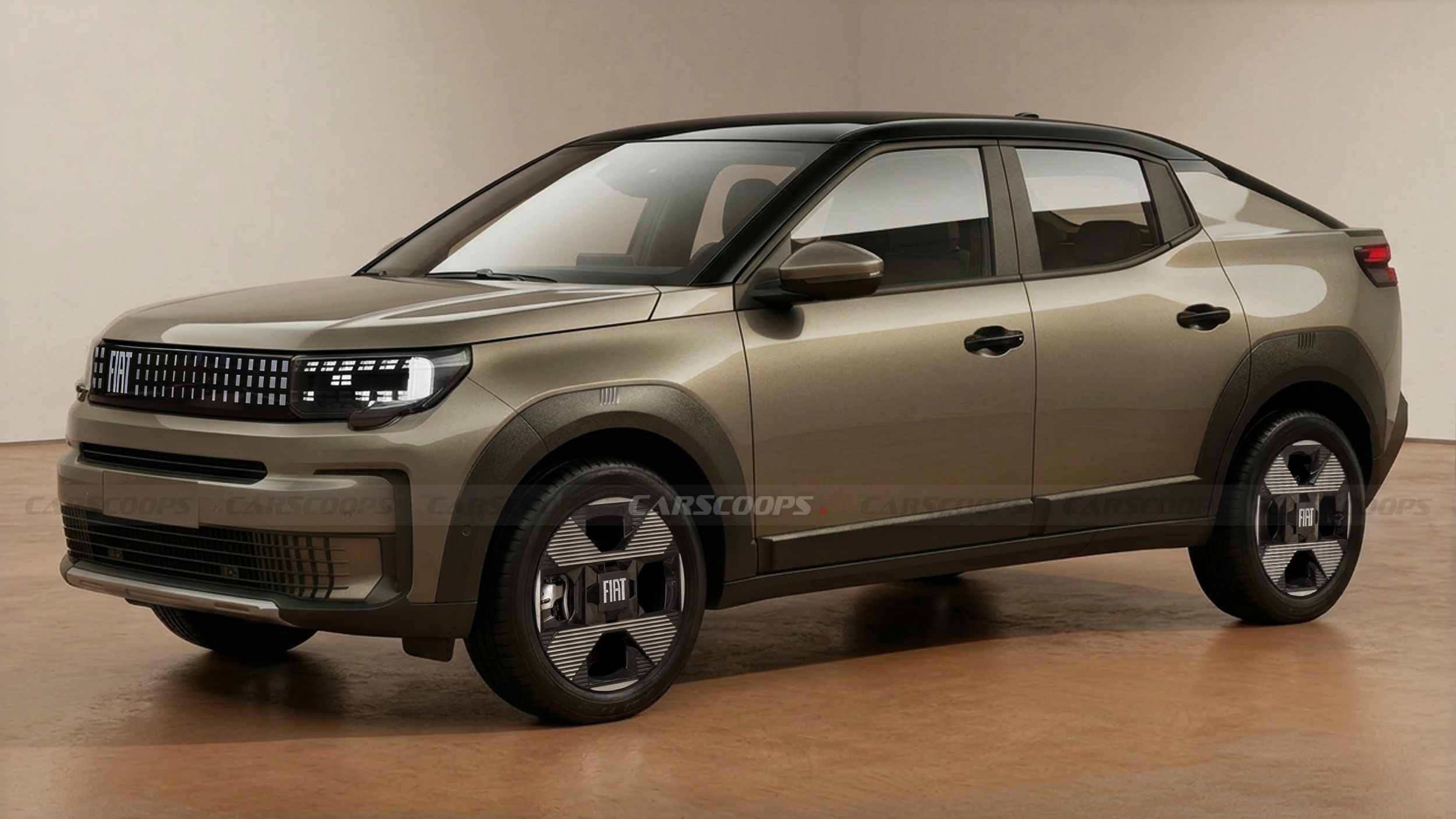
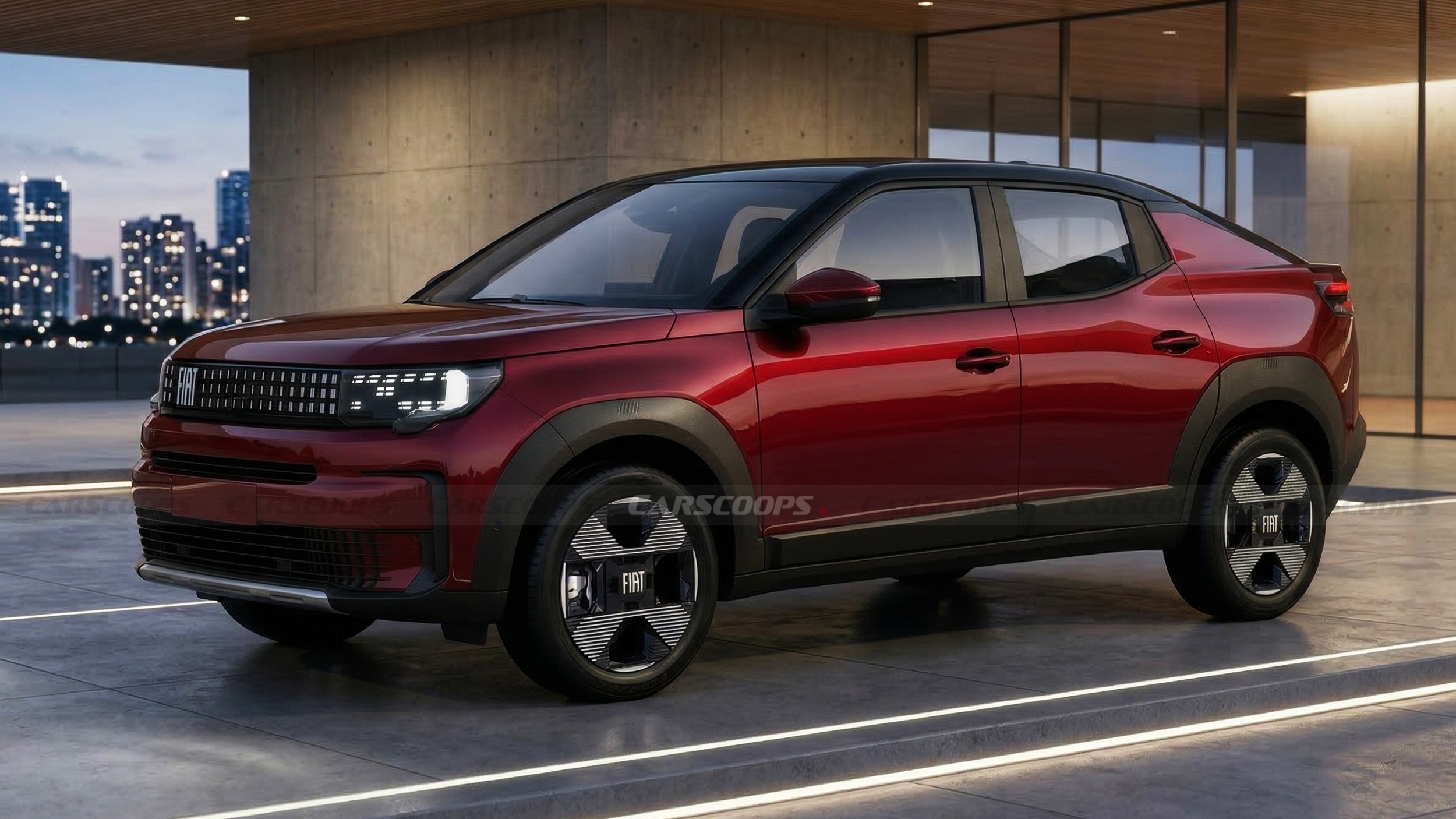
Fiat is lining up three debuts for the Paris Motor Show this October, two production cars and one concept. In the process, the brand returns to the compact segment, all but confirming that the long-teased “Giga Panda” SUV and Fastback will be the main attractions.

Building on the momentum of the Grande Panda, these new additions are set to be larger, more practical, and better suited to family duties. Their designs will closely follow the 2024 concepts, with the SUV adopting a more upright rear end, while the Fastback getting a sloping roofline similar to the Citroen Basalt.

More: Fiat’s New SUV Concept Just Got Real And The Fastback Roofline Isn’t Even The Best Part

Expect the two models to share a front-end design, featuring pixel-style LED lighting and a covered grille. Our speculative rendering, which is based on earlier prototype sightings, depicts the Fastback with modern styling cues borrowed from the smaller Grande Panda.

 New Fiat Giga Panda SUV And Lancia Gamma Have A Reveal Date
Illustrations Thanos Pappas / CarScoops

Underneath, both sit on Stellantis’ Smart Car platform, already in use on models like the Citroen C3 Aircross and the Opel Frontera. While it’s a cost-conscious architecture, it’s also a flexible one, supporting everything from combustion to mild-hybrid and fully electric powertrains.

More: A Tiny Crossover May Finally Bring Gas Engines Back To Abarth

Fiat has shared almost no details about the new concept, beyond vaguely calling it “exclusive.” Whether it previews another future addition to the expanding Panda family remains unclear.

 New Fiat Giga Panda SUV And Lancia Gamma Have A Reveal Date

What Else Will Stellantis Debut?

While Fiat focuses on the more affordable end of the spectrum, the wider Stellantis lineup is also bringing a few noteworthy debuts to this year’s Mondial de l’Auto in Paris.

More: New Lancia Crossover Appears In The Wild Hiding A Famous Old Name

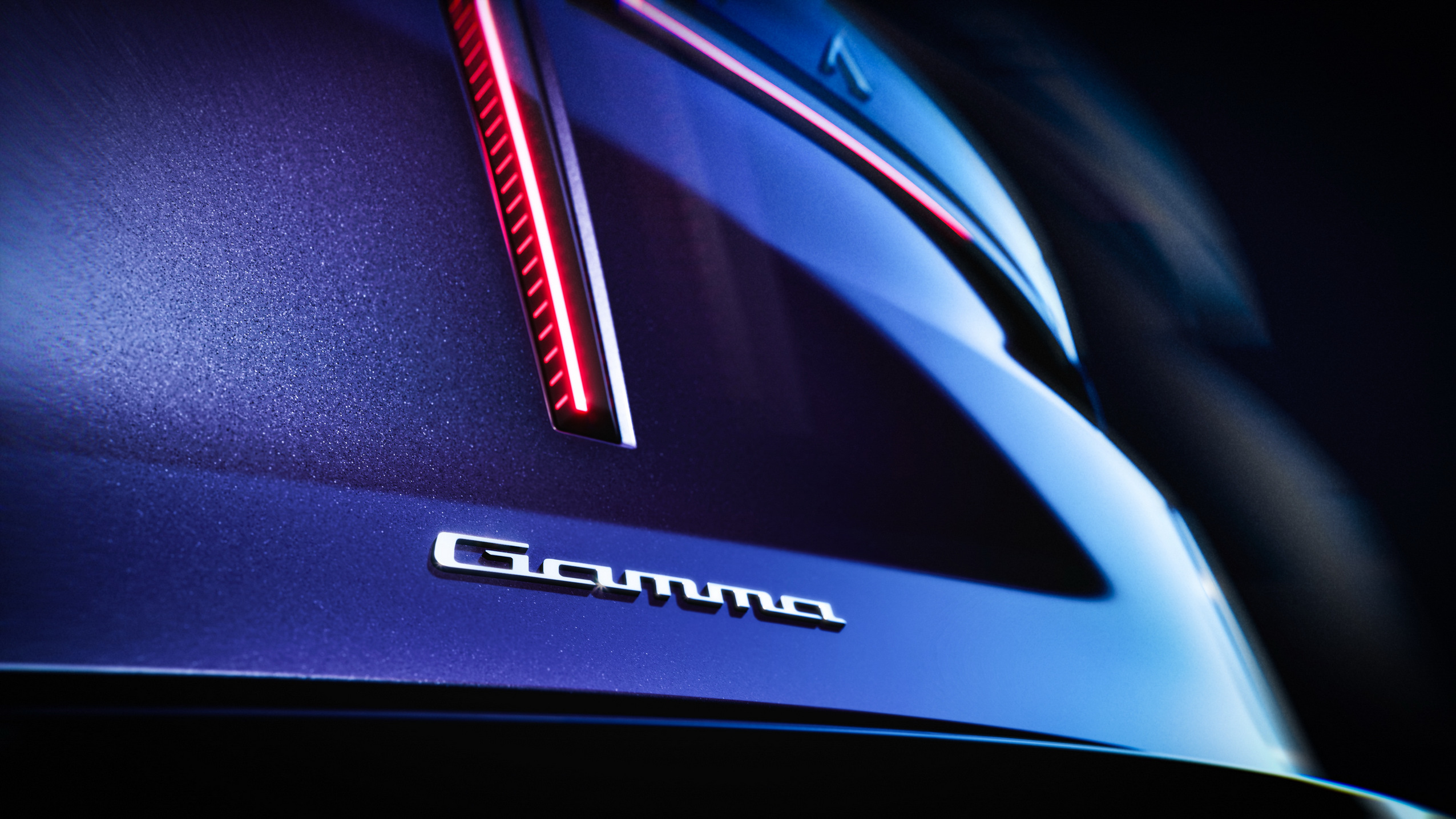
Lancia is set to take a leading role with the public debut of the all-new Gamma. It arrives as a sleek fastback-style crossover and will be built at the Melfi plant in Italy, alongside the DS No8. Underneath, it uses the STLA Medium platform, with a full spread of options including electric, mild-hybrid, and plug-in hybrid powertrains.

 New Fiat Giga Panda SUV And Lancia Gamma Have A Reveal Date
An earlier teaser for the new Lancia Gamma.

Citroen is also bringing a new concept to Paris, promising something “packed with personality.” Whether that means a pure design study in the vein of the late-2025 ELO concept or an early look at a future production model is still up in the air.

More: Stellantis Admits EV Bet Went Too Far, $26 Billion Later

Leapmotor, the Chinese brand backed by Stellantis, will also make an appearance with the B03 subcompact hatchback, positioned as the lower, better-looking counterpart to the B03X SUV. A different shape, same idea.

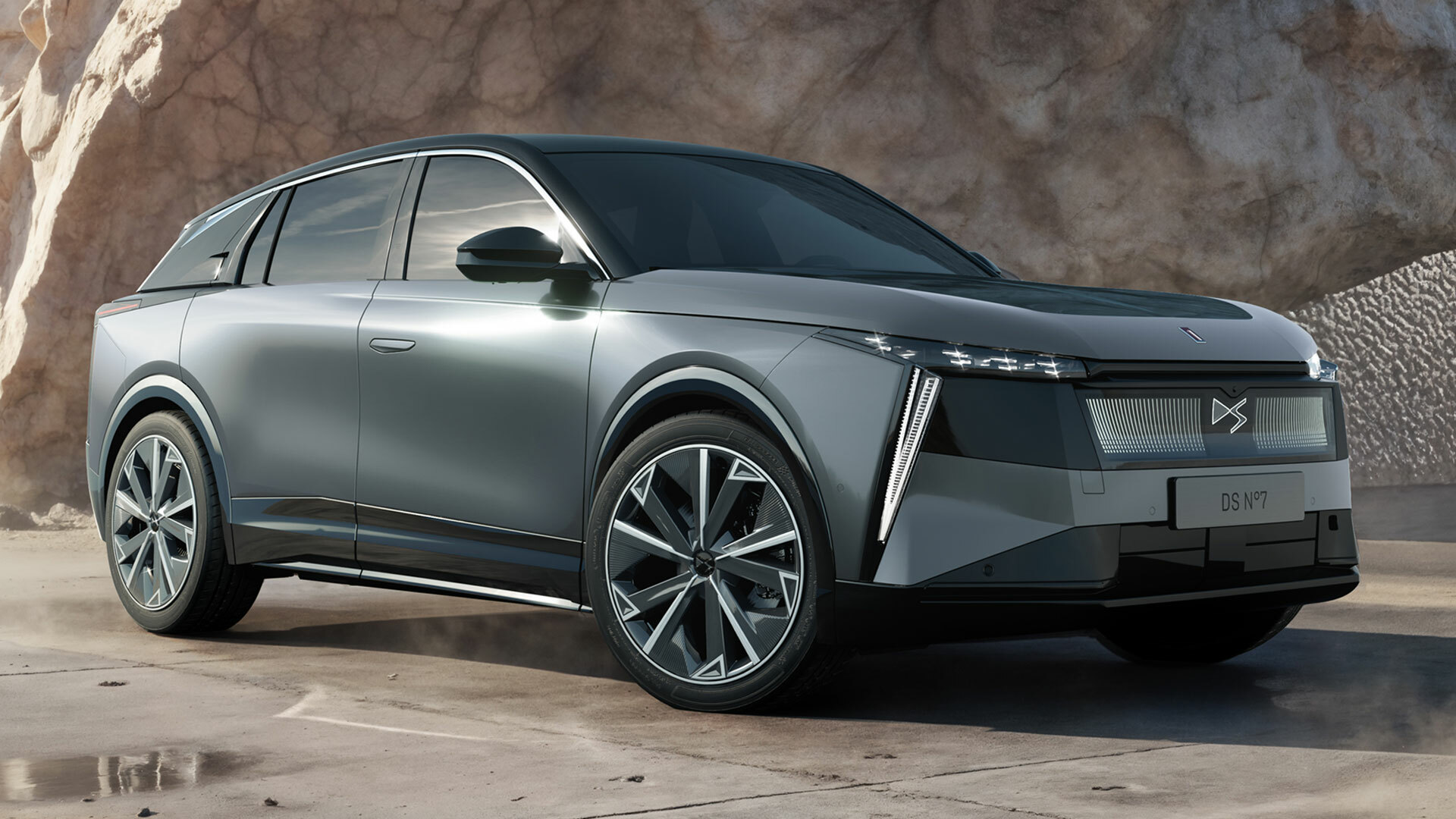
As for DS Automobiles, the more premium French brand is set to roll out the No7 SUV following its recent online reveal. The Stellantis roster, which includes Peugeot, Opel, and Alfa Romeo, will be on hand, though their displays will stick to models we have already seen.

 New Fiat Giga Panda SUV And Lancia Gamma Have A Reveal Date
DS No7

New Subaru Patents Fuel STI Hatchback Rumors

  • The rumored STI hatchback appeared in patent drawings in Japan.
  • A closer inspection suggests it is the Performance-B STI Concept.
  • Still, Subaru is rumored to be working on the return of a hot hatch.

The trail of breadcrumbs pointing to the return of a proper Subaru STI has been an entertaining one to follow. Shortly after the company put its new racing hatchback through testing, a set of patent drawings surfaced online, fueling more speculation about a potential production version.

The patents, filed at the Japan Patent Office, depict a Subaru hatchback with a wide body kit, WRX-sourced headlights, a new grille, and prominent aero components. It looks nearly identical to the Performance-B STI Concept from the 2025 Japan Mobility Show.

More: Subaru Says STI Is “Not Dead”, But Its Boxer May Be

A closer look reveals only minor differences, namely the absence of extra vents on either side of the signature hood scoop and the lack of tailpipes at the rear. The latter likely relates to the patent application itself, much like the blank wheels and simplified lighting details.

Concept Design Captured In Patents

\\\\\\\

Japan Platform for Patent Information

As reported by Top Gear Philippines, which spotted the filing on the Japan Platform for Patent Information, the documents were submitted on September 29, 2025, one month before the show car’s debut on October 30. The timing, combined with the near-perfect visual match, strongly suggest these drawings depict the Subaru Performance-B STI Concept rather than a rumored 2027 production model.

More: Subaru Showed Four New STI Models, And Not Even One’s A Real STI

A quick search of the same database shows that similar patents for the Subaru Performance-E STI Concept were filed on the very same day. They replicate the fully electric fastback’s design without any changes. This is standard practice, as automakers routinely secure design protection for both concepts cars and future production models ahead of their public debut to prevent copyright issues.

\\\\\\\

What About The Rumors?

While these patents likely exist for legal reasons, the timing of their discovery is what has enthusiasts paying attention. Subaru’s HiPerfX2 hatchback, essentially the racing counterpart to the Performance-B STI Concept, is set to compete in Japan’s Super Taikyu series, where it will double as a rolling development lab.

More: Subaru’s WRX STI Hatch Is Back On Track, Just Not On The Street

The race car pulls together an assortment of WRX STI sedan components, wrapped in a widebody hatchback silhouette that appears to draw from the Impreza. Under the hood sits a motorsport-tuned version of the turbocharged 2.4-liter boxer engine, producing 359 hp (268 kW / 364 PS), paired with a six-speed manual gearbox and an all-wheel-drive system.

\\\\\\\\\\

Subaru Performance-B STI Concept

Talk of a 2027 return for the WRX STI hatchback starts to make more sense when you look at the gaps forming in Subaru’s current lineup. The company has confirmed it will stop taking orders for the WRX sedan in Japan, along with the Levorg and Layback wagons, leaving some notable space to fill.

Another telling move is the removal of the STI Sport grade from the WRX range, which could be less about trimming options and more about clearing the stage for something more exciting with the STI badge.

Whether this all points to a routine model year reshuffle or a deeper generational reset, one that finally brings the STI badge back to a hot hatch, is still an open question.

\\\\\\\\\\\\\\

Subaru Performance-E STI Concept

Tesla Files New Seat Patent For A Supercar That’s Been Sitting Since 2017

  • Tesla filed a new “Vehicle Seat System” patent with the U.S. office.
  • The design replaces gears with flexible hinges for motion.
  • Electric motors are swapped for smaller multi-axis actuators.

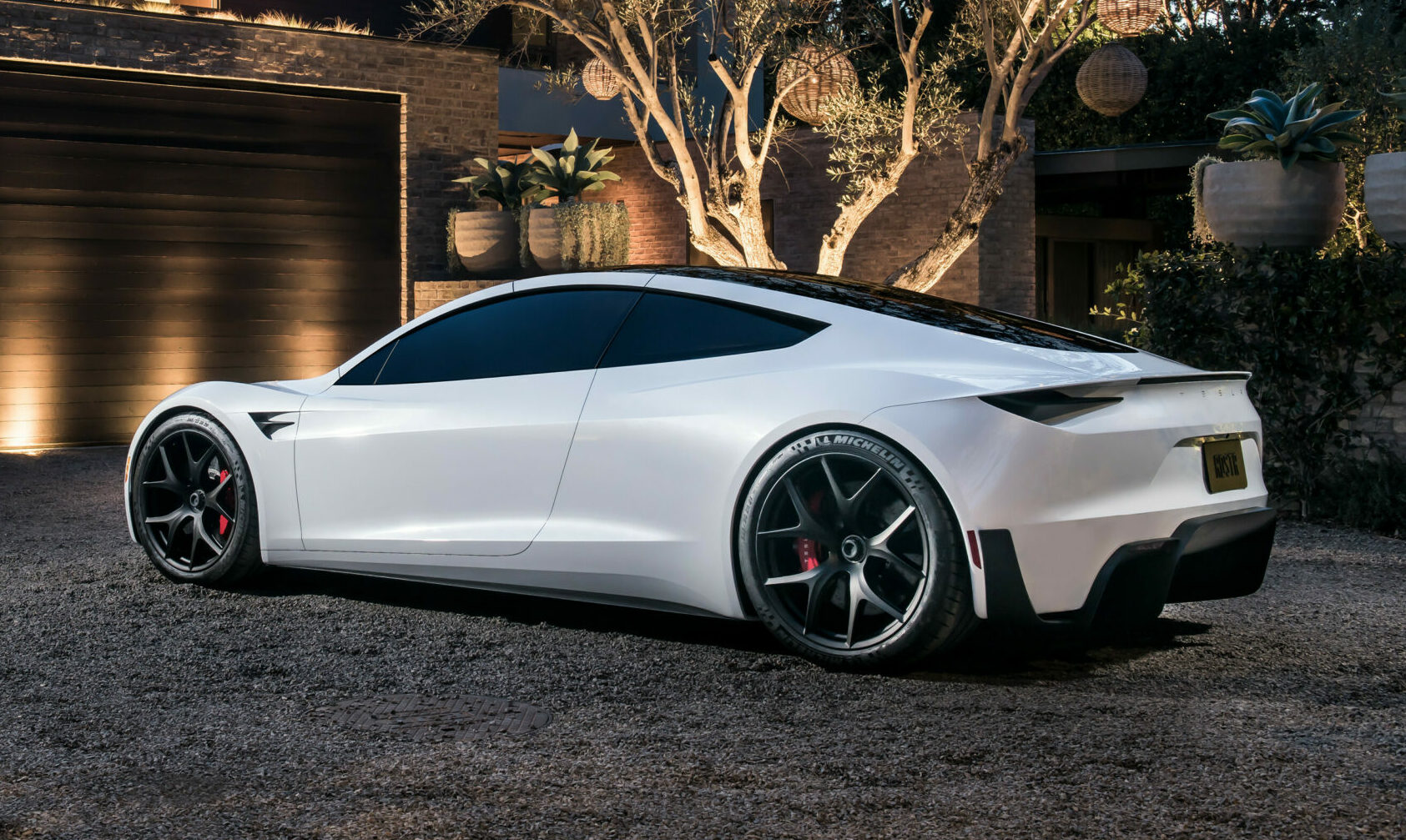
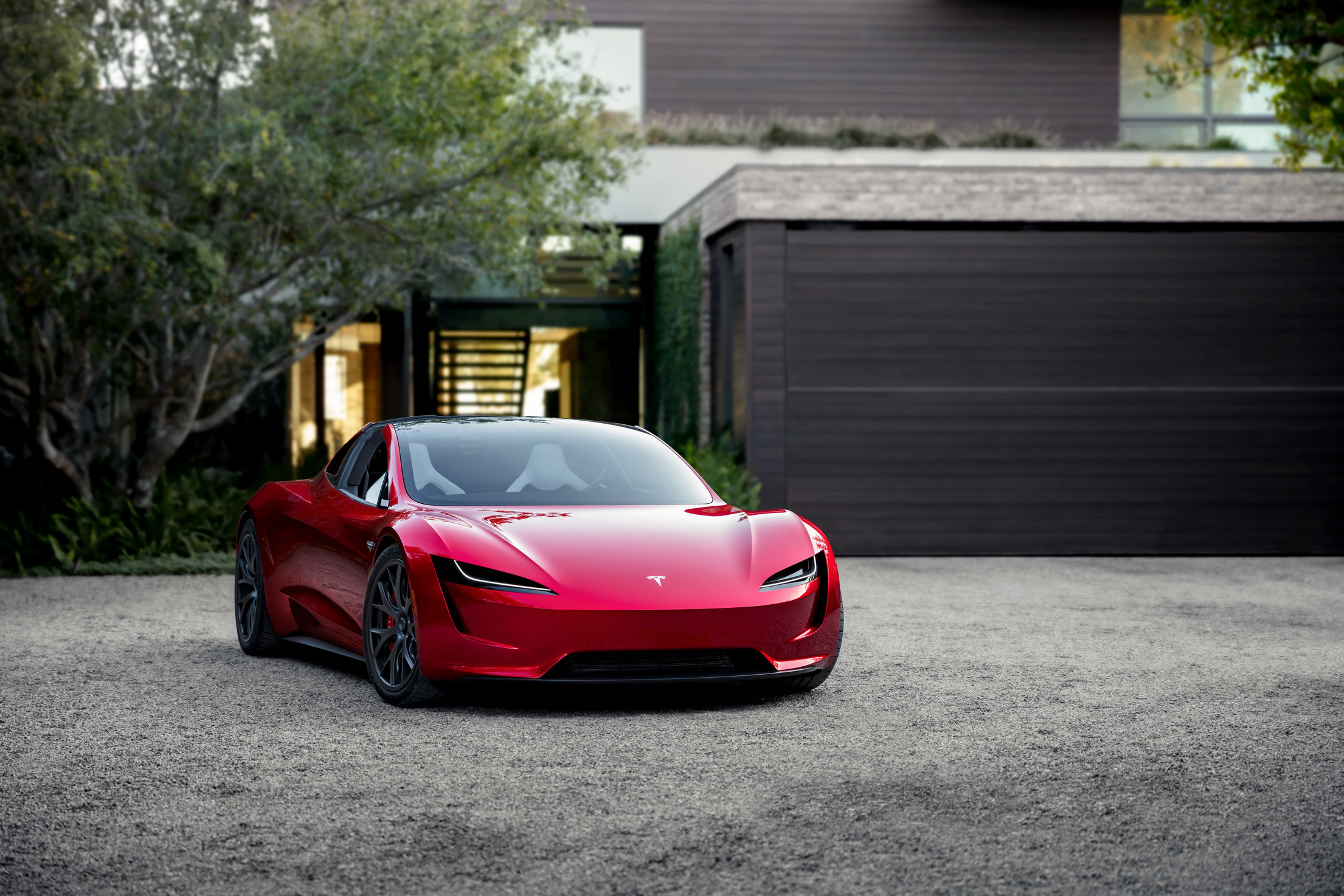
Tesla has a knack for dropping surprises at just the right time, and its latest patent has sent anticipation for the new Roadster skyrocketing. A filing published this month describes a new approach to performance seating, one that replaces the normal train of metal brackets and hinges with a single sculpted shell.

The document that was first spotted by Teslarati outlines a monolithic frame that integrates the seat base, backrest, headrest, and side supports into a single composite structure. It’s a radical departure from the multi-piece setups of most sports cars. The fact that such materials as Kevlar-nylon and carbon-nylon composites are mentioned gives us an indication of Tesla’s purpose of reducing unnecessary weight while providing the seat with more strength.

Read: This Might Be The Tesla Roadster’s Biggest Update Since 2017

Conventional seats also depend on dozens of connected parts, each of which adds mass and introduces possible points of failure. By making the seat all in one, the engineers are hoping for a lighter build with fewer places for the wear and tear of time.

Design Built For Performance

\\\

The patent also points out the way Tesla wants these seats to behave. Rather than having metal gears recline the structure, they depend on what they call an integrated flexible hinge which means the material itself flexes where it is needed to do so. And that allows the frame to bend in certain areas, but be rigid in others, enabling designers to fine-tune the seat for support during hard acceleration or tight cornering.

Tesla isn’t stopping at the frame though. The patent substitutes for ordinary electric motors and rails with small actuators that can move the seat in various directions. With the six degrees of freedom, the system is capable of moving the seat with more precision than most luxury vehicles. It’s a degree of adjustability normally reserved for high-end performance interiors.

An Imminent Reveal?

 Tesla Files New Seat Patent For A Supercar That’s Been Sitting Since 2017

This patent comes at a time when Tesla fans also are watching closely. Elon Musk recently announced that the Roadster’s design reveal is on April 1, and it’s cause for high expectations for a car that has been stuck in the development limbo for years.

The timeline has stretched far beyond the original plan. Tesla first showed a Roadster prototype back in 2017 and initially targeted a 2020 launch. That deadline came and went. Still, recent trademark filings for updated Roadster badges suggest the company may finally be preparing to reveal the production version in full.

Weight reduction has always been one of Tesla’s tenets as an engineering company, as well as the move to large castings for structural components. A more graduated and integrated seating configuration makes a lot of sense in that strategy, especially for a vehicle that is eyeing extreme acceleration figures.

 Tesla Files New Seat Patent For A Supercar That’s Been Sitting Since 2017

China’s Dreame Built Its Own Purosangue, And It Packs 1,876 HP

  • Dreame revealed the Nebula Next 01X EV crossover concept.
  • It closely follows the design language of the earlier 01 coupe.
  • With 1,876 hp, the EV claims 0-60 mph in just 1.8 seconds.

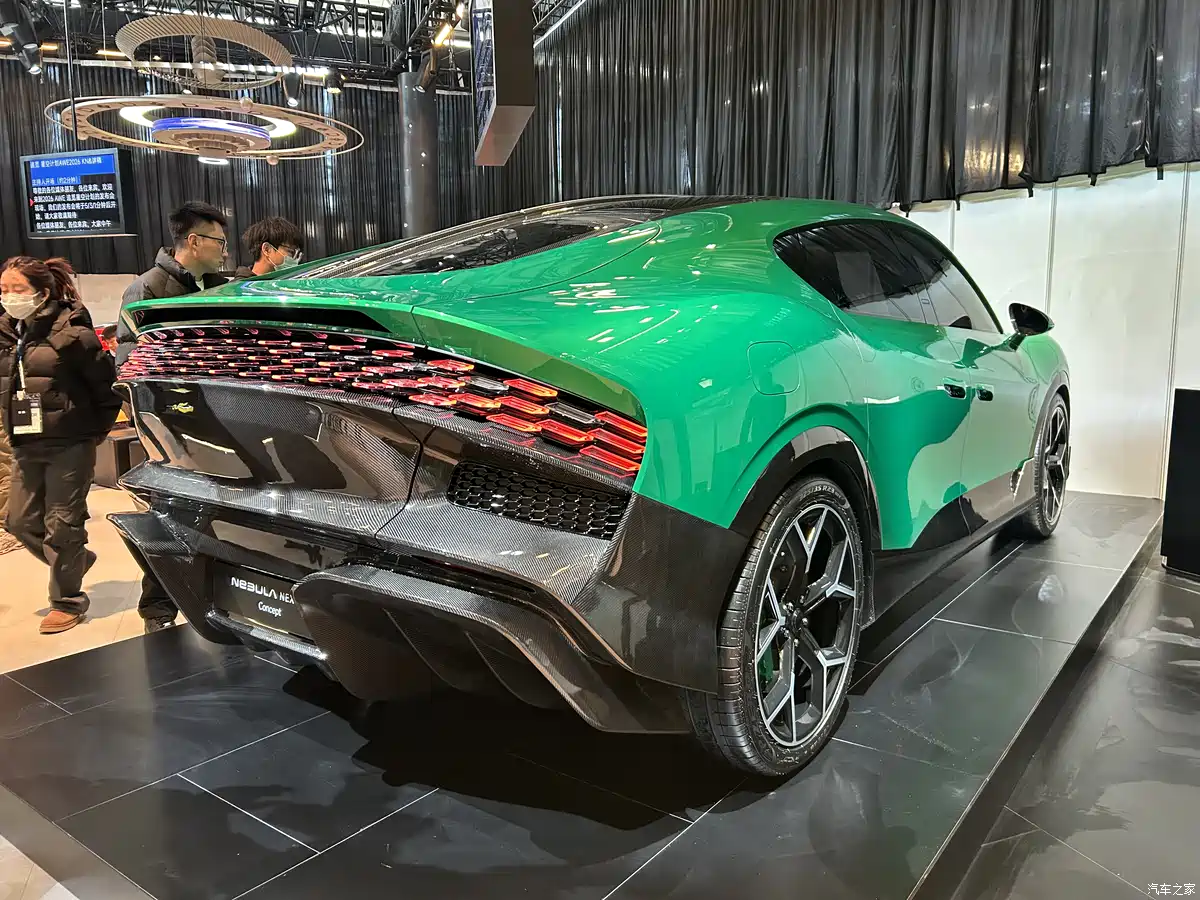
Dreame, best known for robotic vacuums and home gadgets, is now chasing something far larger than dust. The Chinese tech company has revealed another addition to its planned automotive lineup, a crossover concept called the Nebula Next 01X. The tall, coupe-like EV made its public debut this week at the China Home Appliances and Consumer Electronics Expo.

The tech firm has not put a single production car into showrooms yet, but its automotive ambitions are already split across three separate brands: Nebula Next, Kosmera, and Star Motor. The 01X builds directly on the Nebula Next 01 coupe revealed back in January.

Read: Chinese Vacuum Brand Drops A 1,876 hp Taycan-Trampling Reality At CES

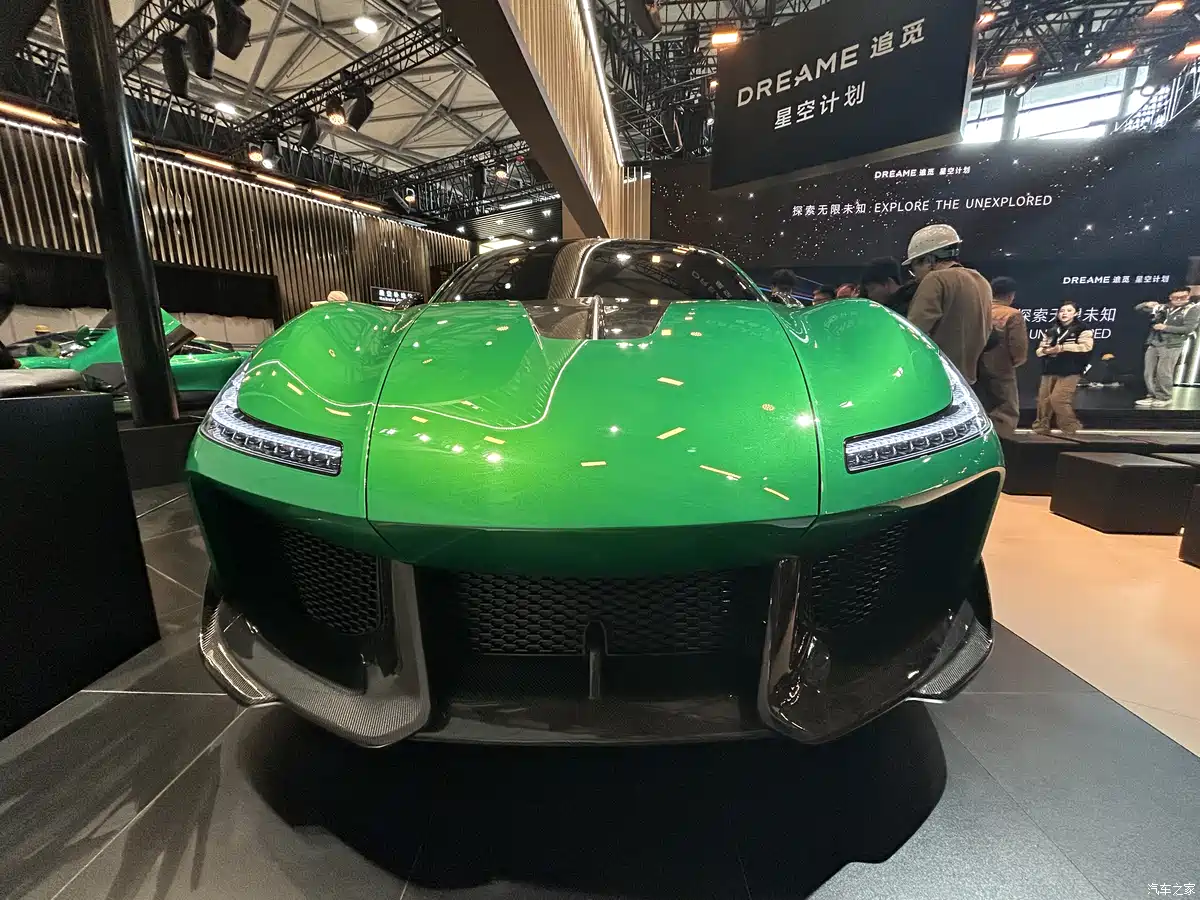
That car sat low and sleek, but much of its styling DNA has simply been lifted and stretched upward here, turning the concept into something that lands closer to the Ferrari Purosangue end of the crossover spectrum.

Tech To Match The Looks

 China’s Dreame Built Its Own Purosangue, And It Packs 1,876 HP
Autohome

Dreame’s Star Motor brand has already shown a willingness to borrow heavily from existing cars. With the 01X, the company seems to be borrowing from itself instead. The crossover closely mirrors the earlier 01 Coupe. It wears the same vivid green paint, and the lower sections of the body are trimmed in carbon fiber. The Ferrari-inspired LED headlights appear unchanged, and the rear end follows almost exactly the same design theme.

For as wild as the shape of the SUV is, it’s perhaps what’s found under the skin that’s most interesting. Dreame claims to have developed the first volume-production-ready solid-state battery pack, aiming to start a small number of deliveries this year before ramping up production in 2027.

 China’s Dreame Built Its Own Purosangue, And It Packs 1,876 HP

According to Dreame, the 01X’s battery pack is a 60Ah unit with an energy density of 450 Wh/kg. Thanks to battery packs delivering a stupendous 1,876 hp, the vehicle can apparently hit 100 km/h (62 mph) in just 1.8 seconds.

Whether or not the 01X ever lands in the hands of buyers remains to be seen. While we’ve seen plenty of established companies venture in the world of EVs successfully, such as Xiaomi, as well as numerous startups like Nio do the same, we’ve seen even more companies try and fail to do so.

Dreame has big ambitions, but creating one-off concepts is much easier than building mass-market production models, so it still has a long way to come.

\\\\\\\

Photos Autohome

Lucid Shows Its Pedal-Free Future As It Confirms Subscription For Its Current Cars

  • Lucid revealed a two-seat robotaxi and autonomy pricing.
  • Monthly autonomy subscriptions will run from $69 to $199.
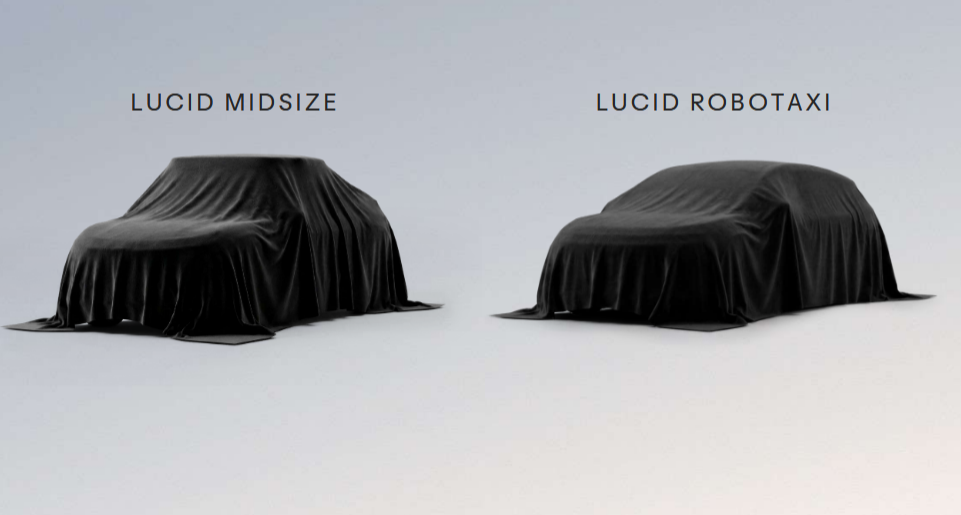
  • The robotaxi concept rides on Lucid’s new midsize platform.

Lucid is officially joining the robotaxi race, and it’s doing so with all-new products. During its investor day presentation on Thursday, the EV startup revealed a two-seat autonomous concept to insiders. Then, it confirmed plans to charge monthly subscription fees for advanced driver-assist and self-driving features in future cars.

More: Lucid Cuts 12% Of Its Workforce As The EV Shakeout Intensifies

The concept, called Lunar, is a purpose-built robotaxi designed without pedals or a steering wheel. It clearly signals that Lucid is serious about fully autonomous ride-hailing rather than just driver-assist technology. This puts the company on the same path as Tesla’s Cybercab program and similar efforts from other EV makers trying to turn autonomy into a long-term revenue stream.

Beyond the prototype reveal, Lucid shared very little technical detail about the Lunar. What it did emphasize is efficiency. The company is targeting between 5.5 and 6 miles per kWh, a figure that could translate to a theoretical range of around 400 miles.

\\\\\

Reaching that number will depend largely on low-drag aerodynamics and a carefully optimized body. Fast charging is also part of the equation, with Lucid claiming the robotaxi could gain more than 200 miles of range in about 15 minutes.

Whether the Lunar ever makes it past the concept stage is less certain, though. For now, the company already has plenty on its plate preparing its upcoming midsize EV lineup for launch, which carries far more weight for the company’s near-term finances.

Subscription Fees For Self Driving

Speaking of revenue, Lucid calls autonomy subscriptions “the single biggest software monetization opportunity.” As such, it’s going to start charging customers to use DreamDrive Pro, the brand’s in-car autonomy suite, on a monthly basis. Starting in the first half of 2027, owners will have to pay anywhere from $69 to $199 a month, depending on the level of autonomy they want.

Lucid says that it has a “Level 4-ready platform available directly from the factory.” While it hasn’t unveiled it to the public, it’ll ride on the brand’s midsize architecture that underpins a few new products heading to market. Lunar will only seat two individuals, so we expect it to have plenty of room for cargo.

That’ll work well with one of Lucid’s partners, Uber. The two are in talks to use the midsize platform in the way that they do Gravity with its robotaxi program.

Timelines

 Lucid Shows Its Pedal-Free Future As It Confirms Subscription For Its Current Cars

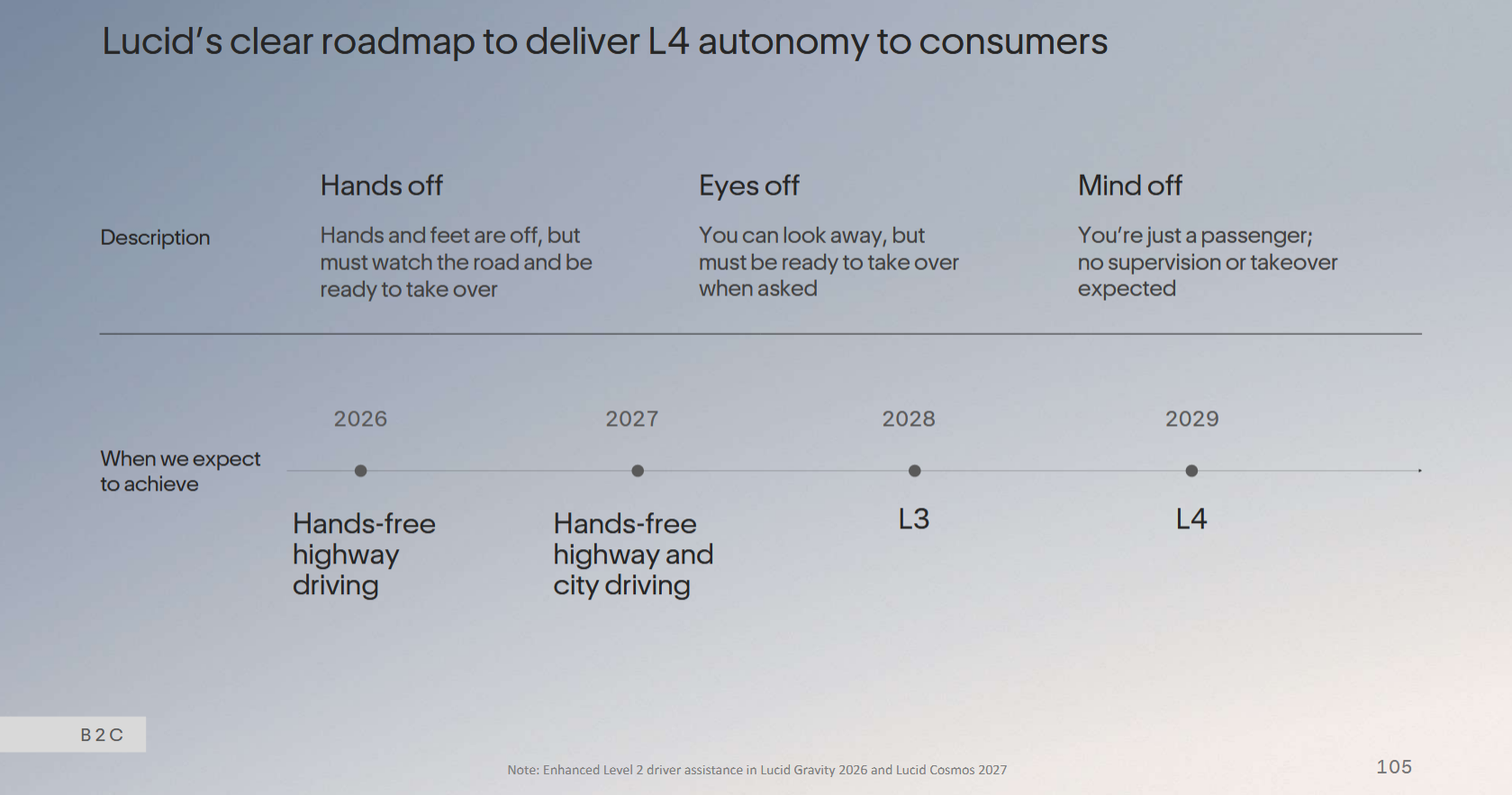
Lucid went as far as to openly lay out its timeline roadmap as well. This year, it believes it’ll offer hands-free highway driving to customers. Next year, it hopes to offer hands-free highway and city driving. In 2028, it wants to achieve Level 3 autonomy. That’s where drivers still need to be ready to take over but the car can mostly navigate on its own.

Level 4, something Lucid is aiming for in 2029, would allow drivers to take their eyes off of the road. Whether or not all of this comes to pass is up for debate, but at least now we know the plan.

 Lucid Shows Its Pedal-Free Future As It Confirms Subscription For Its Current Cars

Radical Espace Reboot Leads Renault’s 36-Car Plan To Fight China’s Threat

  • Renault Group will introduce 36 new models by 2030 including 16 new EVs.
  • 800-volt RGEV platform offers 466-mile EV range, 879 with range extender.
  • Aims to cut EV costs by 40 percent and development times to just 24 months.

Renault has decided the best way to prepare for the future is to literally name its strategy after it. The company’s new futuREady plan promises dozens of new models, cheaper EVs, and dramatically faster development cycles as the French automaker tries to China-proof its business and become Europe’s “benchmark” carmaker.

The strategy builds on the Renaulution turnaround plan launched in 2021, which helped stabilize the company after several turbulent years. Now Renault wants to turn that recovery into long term growth with a roadmap that stretches through the end of the decade.

Related: Renault’s Making A Jimny, But Even The French Can’t Have It

The headline figure is simple enough. Renault Group plans to launch 36 new models in the next five years, including 22 in Europe and 14 for international markets. Electrification will be a lynchpin, with 16 of those European launches set to be fully electric.

Hybrids will still have a role, though. Renault says hybrid technology will remain in its European lineup beyond 2030 while continuing to expand globally where charging infrastructure isn’t yet ready for a full EV takeover.

Dacia Expansion

Each brand has its own role in the plan. Renault aims to strengthen its European position while expanding internationally, targeting more than 2 million annual sales by 2030 with half delivered outside Europe, including a production version of the chunky Bridger combustion SUV set to do battle with the Suzuki Jimny in India (see gallery below).

\\\\\\

Dacia will stick with its familiar value formula but add more electrification. By the end of the decade, about two thirds of its sales are expected to be electrified and the brand will expand further into the larger C segment.

Alpine will carry the performance torch and a new generation of the A110, this time as an EV, is coming alongside newer models like the electric A290 and A390. And the brand’s boss Philippe Krief confirmed that the electric A110’s platform will also be able to handle combustion power. But if you were hoping to buy one in the United States, Renault’s latest strategy rules out a North American adventure for any of its brands.

Compact Upgrade

One of the most important pieces of the plan is Renault’s upcoming RGEV medium 2.0 electric platform destined for its next generation of compact, C-segment vehicles. This architecture brings 800 volt charging technology to the company for the first time and promises some impressive numbers, including a 40 percent reduction in build costs. Renault teased its possibilities, and also the look of the next Espace, with the the R-Space Lab, a slippery EV concept (shown below).

\\\\\\\\\\\\\\\

Renault says EVs built on the platform could deliver up to 466 miles (750 km) of range, while a range extender version could stretch that figure to around 879 miles (1400 km). Power won’t be lacking either. The next-generation electric motor is expected to deliver up to 271 hp (275 PS).

Keeping Up With China

Software is another big piece of the puzzle. Future Renault models will move toward software defined vehicle architecture that allows most functions to be updated over the air and eventually managed by artificial intelligence systems. The company also wants to speed things up dramatically. Renault aims to reduce development cycles for new vehicles to just two years, something that will be crucial to keeping pace with Chinese automakers.

Renault’s platform strategy
Platform FamilyPlatformsTypeSegments / Purpose
Electric Passenger Car PlatformsRGEV SmallEV platformA and B segment small EVs
RGEV Medium 1.0EV platformFirst generation C segment EVs
RGEV Medium 2.0EV platformNext generation C and D segment EVs with 800V tech
Electric Commercial PlatformsRGEV Medium VanEV platformC segment light commercial vans
Modular Multi Energy PlatformsRGMP SmallModular platformB and C segment vehicles with multiple powertrains
RGMP MediumModular platformC and D segment vehicles
RGMP Pick-UpModular platformPickup trucks
Entry Level Multi Energy PlatformRGEPMulti energy platformAffordable entry level vehicles
Partner Based PlatformRGEAAdapted Geely GEA platformShared platform for some international models
Performance PlatformAPPAlpine performance platformAlpine sports cars
SWIPE

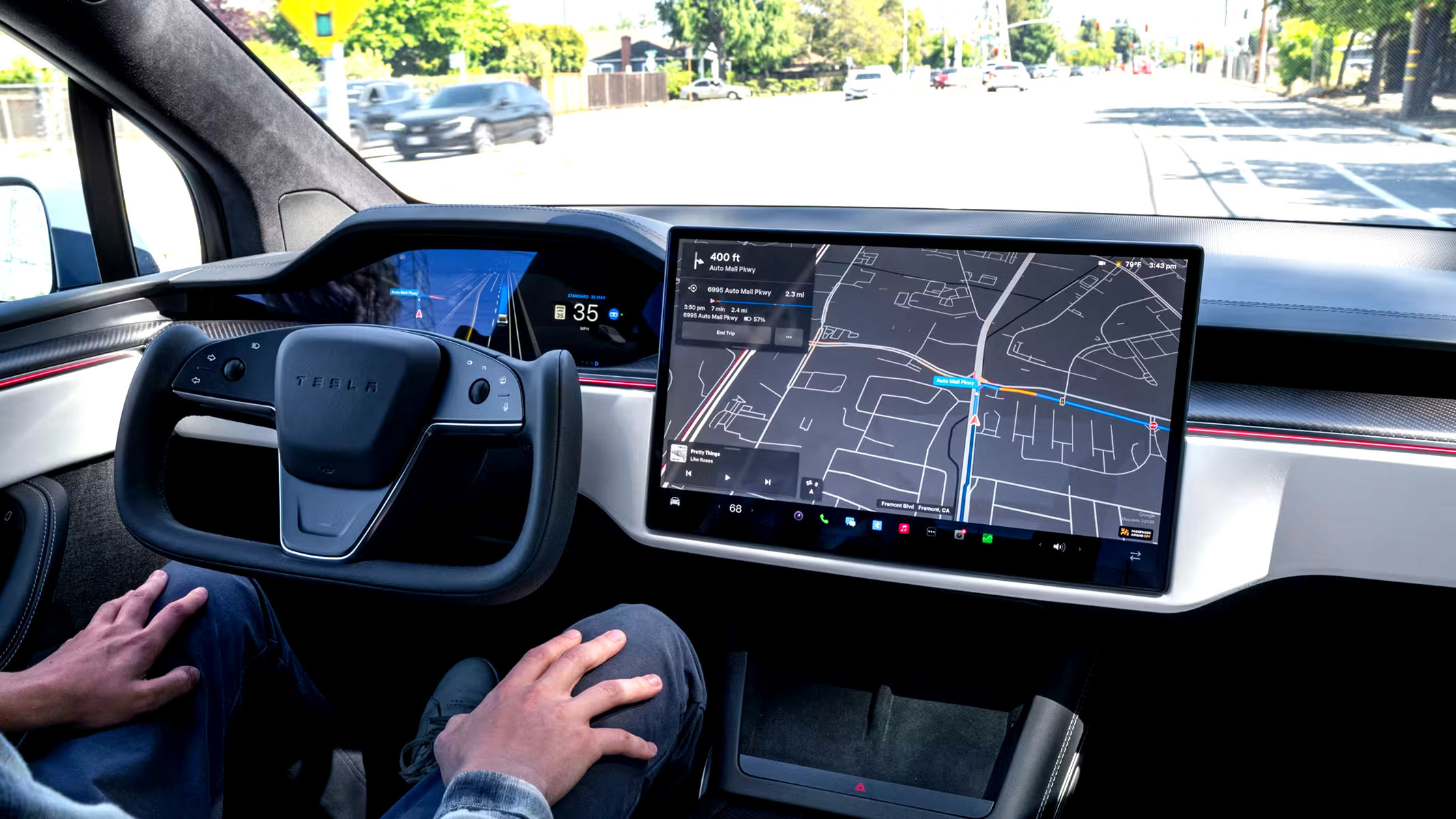
Tesla Owners Furious After FSD Transfer Rules Change Again

  • Tesla had said FSD transfers applied to orders by March 31.
  • Now it requires vehicles be delivered by March 31 instead.
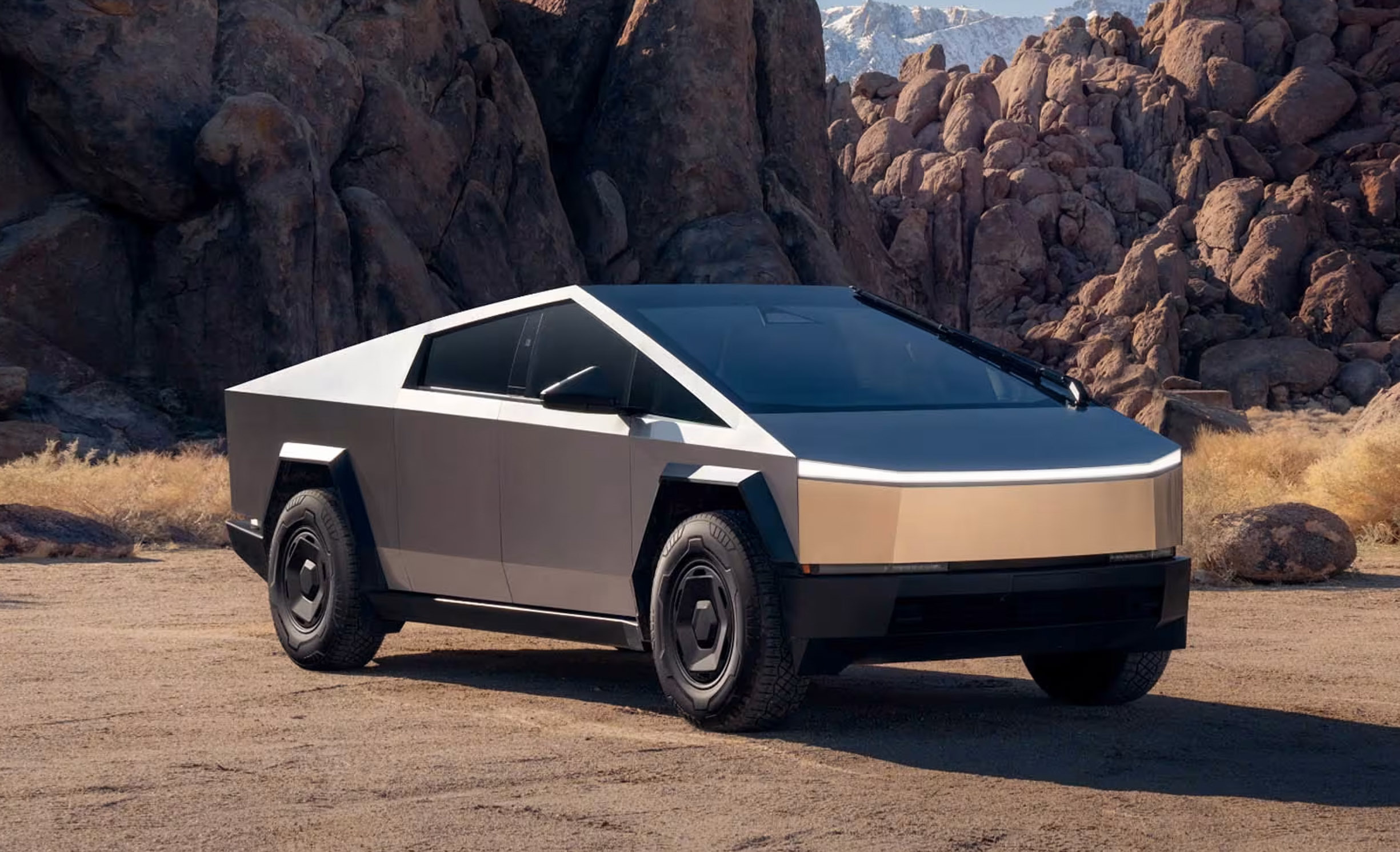
  • Many buyers chose the base Cybertruck expecting FSD transfers.

Few, if any, car manufacturers change their prices and sales policies as abruptly as Tesla, and it has become part of the brand’s public persona. The company famously reversed its resale ban for the Cybertruck a couple of years ago, and it has now unsettled customers again with its latest Full Self-Driving-related revision.

As Carscoops reported earlier this year, Tesla no longer offers Full Self-Driving (Supervised) as a one-time purchase and has shifted entirely to a monthly subscription model. It also announced that owners who had previously paid upfront for FSD would only be able to transfer it to their next vehicle if they took delivery of a new Tesla by March 31.

Read: That $8,000 Tesla Upgrade Won’t Be Yours Much Longer

Soon after this announcement, Tesla revised the wording of its FSD Transfer program terms, stating that customers simply needed to place an order by March 31 to qualify for a transfer. That revision took effect on January 20, 2026, temporarily replacing the delivery-by deadline with an order-by cutoff and giving buyers more flexibility, especially those trying to secure one of the final custom-built Model S or Model X vehicles before production winds down.

It has now reversed that change, once again requiring vehicles to be delivered by March 31 rather than merely ordered by that date.

 Tesla Owners Furious After FSD Transfer Rules Change Again

It is understood that customers who placed an order and received an expected delivery window on or before March 31 will remain eligible for an FSD transfer, even if delivery slips into April because of delays on Tesla’s side. However, those who placed an order but were given a delivery window beyond March 31 will not have their FSD transfer honored.

Bad News For Cybertruck Buyers

Those who placed an order for the new Tesla Model Cybertruck Dual-Motor AWD are likely to be most affected. After Tesla updated its policy to simply require an order placed by March 31, Not a Tesla App reports many shoppers placed orders for the new entry-level Cybertruck at its introductory price of $59,999, fully expecting to be able to transfer their FSD system, despite many deliveries not expected until next year. Now, those buyers appear to be out of luck.

Furthermore, that introductory price has since increased to $69,990, and deliveries for this specific trim are not expected to begin until the summer, effectively excluding all current order holders from the transfer window under the reinstated delivery rule.

Compounding the issue, there are no readily available Dual-Motor AWD Cybertruck units in existing inventory that would allow customers to pivot their transfer to an in-stock alternative.

In what seems to be an effort to ease frustration, Tesla is offering full refunds, including the $250 order fee, which is typically non-refundable.

 Tesla Owners Furious After FSD Transfer Rules Change Again

Chinese Phone Giant Is Hunting For Hypercar Cred On Gran Turismo

  • Xiaomi unveiled its Vision Gran Turismo concept at MWC 2026.
  • Like the Aston Martin Valkyrie, it uses huge venturi tunnels.
  • The cocoon-like cockpit makes just enough space for two.

Chinese smartphone and consumer electronics giant Xiaomi, now very much a car manufacturer too, has become the first Chinese brand to unveil its own Vision Gran Turismo concept. Presented at the Mobile World Congress 2026 in Barcelona, Spain, the car is bold and offers a glimpse of what a legitimate hypercar from the tech juggernaut might look like if it ever reached production.

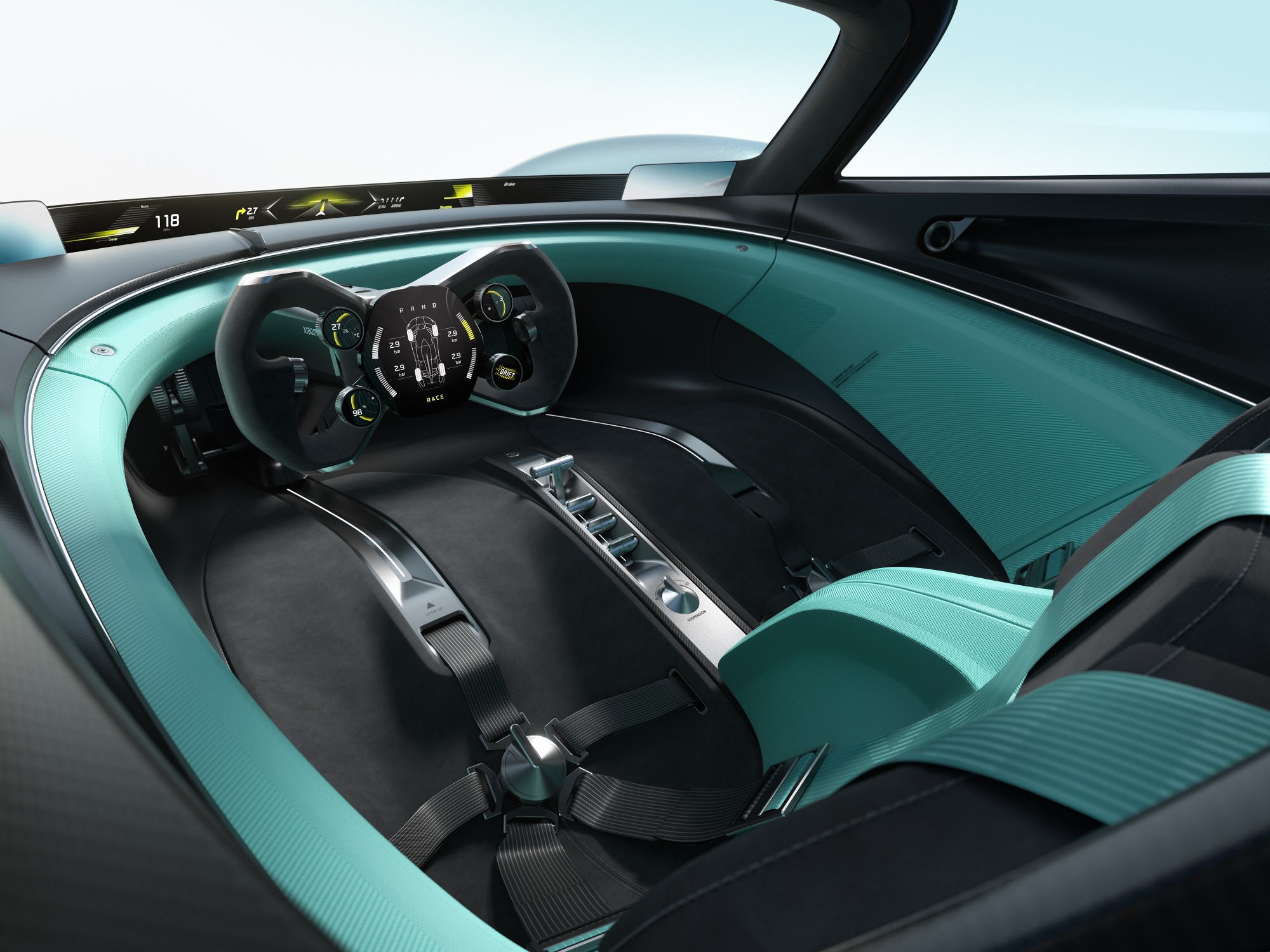
Underpinning the Vision GT is the company’s 900-volt Silicon Carbide platform. While no performance specifications have been released, it could deliver upwards of 1,900 hp from its electric powertrain. Most of the details shared by Xiaomi focus on the car’s design and aerodynamic intent.

Read: Trapped Driver Died After Xiaomi’s Electronic Doors Reportedly Failed

According to Xiaomi’s head of automotive design, Li Tianyuan, the Vision GT concept posts a drag coefficient of 0.29 and has effectively been sculpted by the wind.

\\\\\\

Like track-obsessed machines such as the Aston Martin Valkyrie and Red Bull RB17, the Vision GT runs vast venturi tunnels beneath its bodywork. They channel air through the underfloor and eject it at the rear, creating a dramatic tail section that works to pin the car to the tarmac at speed.

There’s no word on how much downforce it could have, but it’d inevitably be enough to warp your face while going around corners. The front-end includes a motorsport-inspired carbon fiber splitter and unobtrusive LED headlights. As mentioned, the rear is dominated by the huge venturi tunnels, but the LED taillight wrapping around the entire back of the car is also very striking.

Xiaomi has also imagined the Vision GT with a set of very intriguing wheels. Sitting over a set of carbon-ceramic brakes, the concept has a set of turbine fan rims with a floating cover over them, making it appear as though the wheels aren’t moving when the car is driving.

A Cabin From Another World

 Chinese Phone Giant Is Hunting For Hypercar Cred On Gran Turismo

The cabin looks tight, but futuristic. Occupants sit in a pair of seats stuffed into the carbon fiber monocoque. There’s a panoramic head-up display similar to the new BMW iX3, as well as a steering wheel straight out of racing with five large circular screens, including a toggle for a drift mode.

There’s no word on when the car will be added to Gran Turismo, but it should be made available in the coming weeks. Will it influence a future road-going supercar from Xiaomi? Not likely, at least in that extreme form, but only time will tell.

\\\\\\\\
❌
❌