A Gwinnett County school bus driver in Georgia was sentenced to five years in prison and lifelong registration as a sex offender after being convicted of masturbating on board his bus while students were present.
Steven Edward Wilkins, 67, was found guilty of six counts of child molestation and four counts of public indecency. He had worked as a school bus driver for students with special needs in the Gwinnett County School System.
The investigation reportedly began Feb. 9, 2023, after a parent walking her child to the bus reported seeing Wilkins behaving suspiciously.
Prosecutors said investigators reviewed footage from cameras installed on the bus. The video showed Wilkins using a tablet sexually stimulating himself while the bus was parked in the bus lane at Suwanee Elementary School.
The conduct occurred on at least four days between Jan. 31 and Feb. 9, prosecutors said. At least one student was on board the bus during each incident. Officials did not release the ages of the students or provided additional information about them.
The Gwinnett County District Attorney’s Office also noted that Wilkins portrays Santa Claus each Christmas at a local church.
A judge sentenced Wilkins to 20 years of close supervision by law enforcement authorities, including five years in prison. Following his release, Wilkins will be required to register as a sex offender for life and will be prohibited from having contact with minors.
“This is absolutely reprehensible behavior and will not be taken lightly,” Gwinnett County District Attorney Patsy Austin-Gatson told local reporters. “We are committed to protecting all victims, particularly those who are most vulnerable. This defendant will be monitored closely for the next 20 years and held accountable for the rest of his life.”
Officials did not provide information about when Wilkins stopped working for the school district. The district’s response to the conviction was not immediately available. No other details about the court proceedings were immediately released.
BYD’s Da Han slots above the Han as the brand’s flagship sedan.
Every electric version uses the same 102-kWh battery pack.
A plug-in hybrid variant will also be offered, with up to 422 hp.
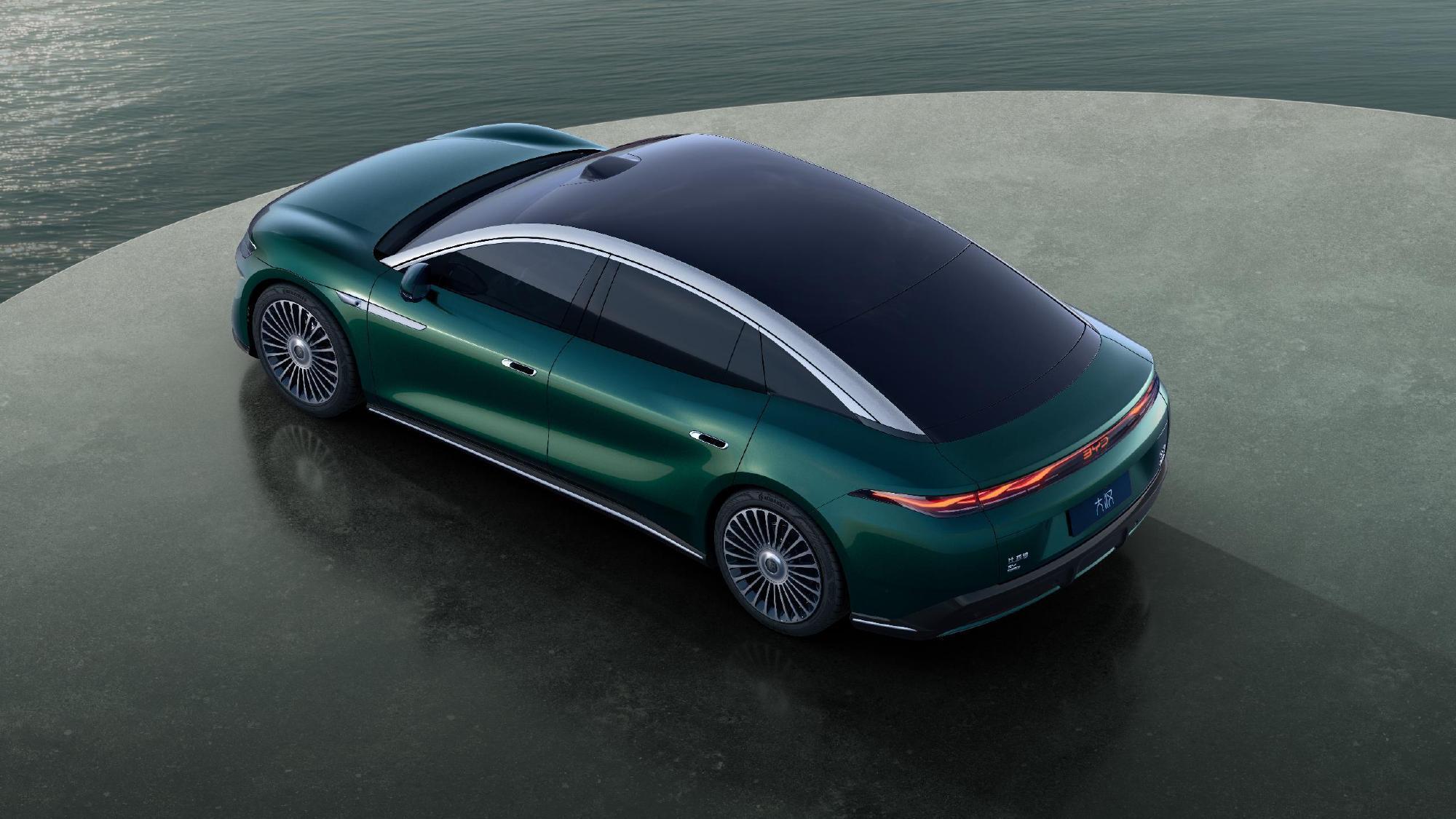
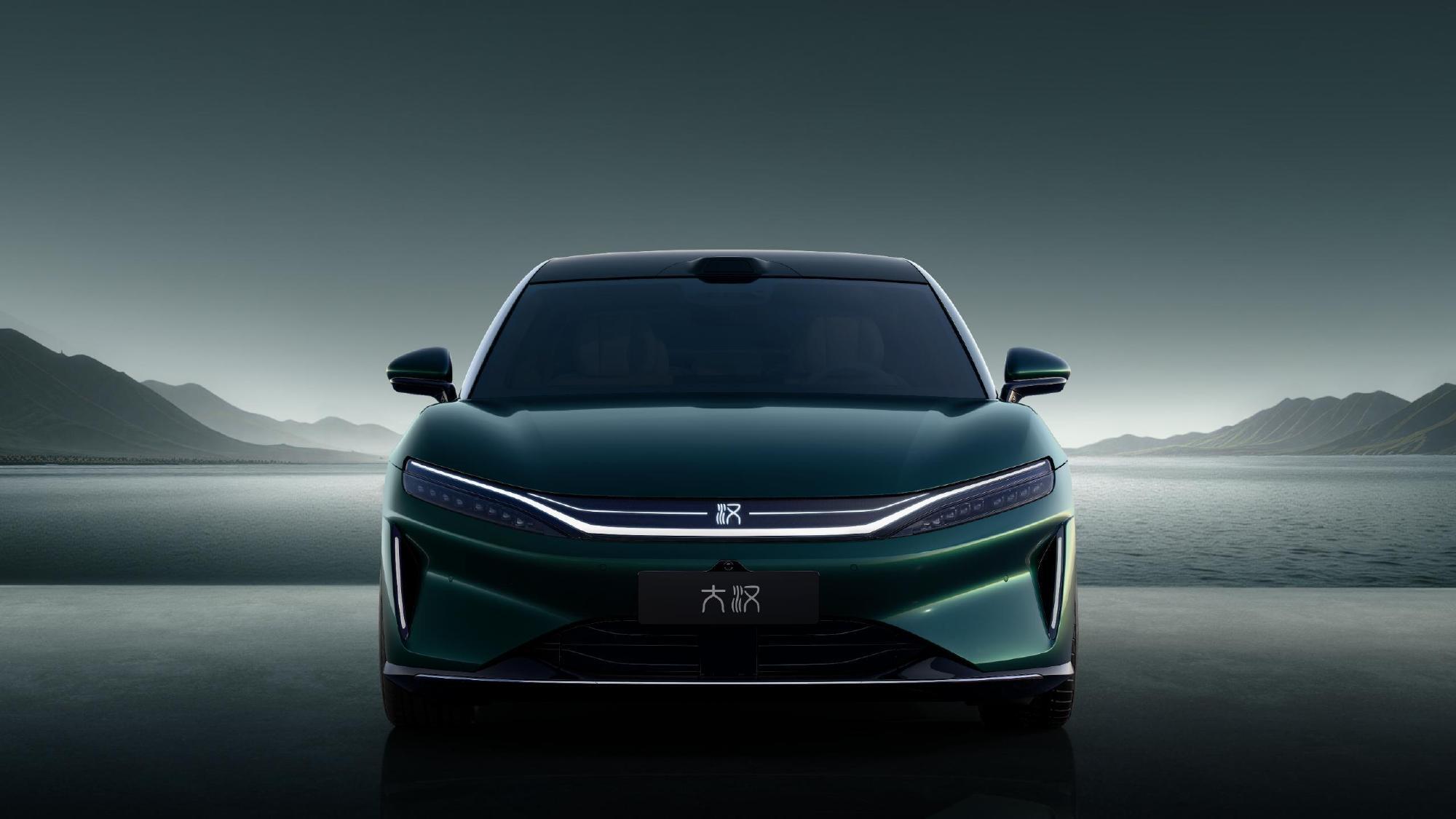
BYD has a new flagship sedan, and it’s called the Da Han. Get past the name and you’ve got a big electric four-door that stretches longer than an S-Class, cracks 760 hp in its hottest form, and claims north of 600 miles between charges.
The Da Han joins BYD’s Dynasty line-up and sits above the Han in the range. Previously referred to as the Great Han, it measures 207 inches (5,256 mm) long, 78.7 inches (1,999 mm) wide, and 59.4 inches (1,510 mm) tall, riding on a generous 123.2-inch (3,130 mm) wheelbase. That’s longer than a standard Mercedes S-Class, which runs 203.9 inches (5,179 mm) on a 122.2-inch (3,106 mm) wheelbase.
The first official photos show the car in dark green, a shade that plays up the aerodynamic bodywork. The nose sits low, with tapered LED headlights, a light bar, and a black lower grille. It looks especially clean from the side, helped by contrasting silver roof rails and black B-pillars that blend into the side glass.
For as striking as the Da Han is to look at, it’s the specifications are what land. An all-electric version leads the charge, but a plug-in hybrid will also be available, ensuring it caters to as many new car buyers as possible.
All-electric versions of the Da Han share the same 102 kWh battery pack. This hefty pack, apparently weighing in at 1,600 lbs (725.9 kg), drives a rear-mounted electric motor in the entry-level version, producing 496 hp (370 kW) and giving it a driving range of either 603 miles (970 km) or 626 miles (1,008 km), depending on the configuration.
Dual-Motor Power
Shoppers after more performance can step up to an all-wheel-drive version that keeps the same battery and rear-mounted motor but adds a front one, lifting combined output to 764 hp (570 kW). Range on the AWD models varies between 509 miles (820 km), 528 miles (850 km), and 547 miles (880 km). Impressive as those figures are, China’s CLTC cycle runs notoriously optimistic, so real-world numbers will come in lower.
As for the plug-in hybrid model, it will use a 1.5-liter turbocharged engine working alongside a 54.4 kWh battery and a single electric motor, resulting in a combined 422 hp. The electric driving range of this version will be a solid 292 miles (470 km).
Bentley has teased the interior of the upcoming Torcal EV.
Model sports curved displays and diamond-shaped accents.
Crossover will have a unique “floating diamond grille.”
The teaser campaign for the Bentley Torcal is kicking into high gear as the company has released a new clip that showcases the interior. The ultra-luxury brand has also released a few new details about their first electric vehicle.
Starting outside, the automaker said the crossover will have a “jewel-like floating diamond grille” that “transforms a functional necessity into a captivating design statement – one that is unmistakably Bentley and unlike anything else on the road.” The video doesn’t give us a very good look at it, but the grille is expected to echo the one found on the EXP 15 concept.
Bentley also provided a peek at the three dimensional taillights, which have a diamond pattern. The pointy shape is a bit of a theme for the Torcal and the company noted the historical design feature has been “reinterpreted for a new era.”
The automaker went on to say they teamed up with Cumbria Crystal to commission “bespoke hand-cut crystal objects designed specifically for the project.” Details are limited, but the company suggested the crystals will be illuminated to create a “distinctive visual signature rich in depth, movement and texture.”
Putting marketing hyperbole aside, we can see the crossover will have sculpted door panels with an interesting ridge-like pattern. Elsewhere, there are knurled climate controls and a rotary dial with a start/stop button. They’re joined by physical buttons as well as dedicated Sport and Comfort modes.
The latest pictures also give us another look at the crossover’s curved infotainment system. It features a portrait orientation as well as a lower bar that shows climate and seat information.
While there isn’t much else to see, previous spy photos have shown the model will have a three-spoke steering wheel with wing-like stalks similar to the Audi Q3. The right side has a shifter, while the left side has an assortment of light and wiper controls.
Well-heeled customers will also find a curved digital instrument cluster and circular air vents. They’ll be joined by real metal accents and a wide swath of wood trim on the passenger side dashboard.
Performance specifications remain mysterious, but the Torcal will ride on the PPE platform that underpins an assortment of models including the Porsche Cayenne Electric. It sports a 113 kWh battery pack, a 390 kW DC fast charging capability, and outputs of 435 hp (324 kW / 441 PS), 657 hp (490 kW / 666 PS), and 1,139 hp (849 kW / 1,155 PS). The Bentley will likely fall somewhere in between the latter two numbers and the company has already confirmed the model will be capable of getting 100 miles (161 km) of range in as little as seven minutes.
A debut is scheduled for September 23 and the model will arrive in the United States in the third quarter of 2027. When it does, it’s expected to start around $200,000 to $250,000.
Porsche chased Roc, the plane with the widest wingspan on Earth.
The stunt unfolded at California’s Mojave Air and Space Port.
Roc’s six engines combine for 340,500 pounds of thrust.
Eager to launch the all-new Porsche Cayenne Electric with the right amount of fanfare, the German brand went looking for a very special stunt, and it settled on one involving the largest aircraft in the world. While we’re not sure it’s as impressive as the time VW used a Touareg V10 TDI to tow a Boeing 747 two decades ago, it’s a decent effort all the same.
The whole thing took place at the Mojave Air and Space Port and involved Roc, the plane with the largest wingspan on Earth. The thing is so enormous it has two fuselages and can take off fully loaded at up to 1.3 million pounds (589,670 kg).
In the past, we’ve seen plenty of supercars racing fighter jets off the line, but extracting maximum acceleration from the Cayenne Electric to outpace Roc wasn’t the objective here. Instead, Porsche wanted to trail behind Roc as it sped down the runway before taking off, in what it describes as a “test of precision, stability and power.”
To keep the Cayenne, and driver Patrick Long, safe, the SUV had to be positioned perfectly in between the plane’s two fuselages. If positioned too far back, it’d be hit by the jet blast from the plane’s six powerful engines that combine to deliver 340,500 lbs (154,448 kg) of thrust, enough to throw the Porsche into the air. Too far forward and Long could have been at risk of hitting the landing gear.
As Roc accelerated down the runway, Long had to push the Cayenne Electric through to 167 mph (269 km/h) and then got the perfect view of the massive plane taking off mere feet away from him.
“It was probably one of the most focused and intense moments of my life,” Long said. “We believed in the data, and I knew I could rely on the Cayenne and the pilots of Roc – we had a good team. Operating with a fully charged battery, we started slow – I was using minimal power and holding the car exactly where it needed to be, and I knew I had the performance to maintain my position no matter what.”
The new Cayenne Electric was the obvious weapon of choice for this stunt. The current flagship Cayenne Turbo Electric uses a pair of electric motors delivering up to 1,138 hp and 1,106 lb-ft (1,500 Nm) of torque, and whereas a lighter vehicle may have been tossed around by the jet blast, the Porsche remained rock solid. Indeed, it weighs in at a hefty 5,831 lbs (2,645 kg).
The cheapest Model 3 lease now works out to $418 per month in the US.
The Performance version comes to $731 monthly over 36 months.
Lease prices across the lineup have climbed by as much as 12 percent.
Leasing a Tesla Model 3 in the US has just gotten more expensive, so anyone hoping to get behind the wheel of a new one may find that paying cash makes more sense than signing a lease, at least in some cases.
Lease prices have crept up quietly across the entire Model 3 family, and the increases start with the base Rear-Wheel Drive model, which now runs $379 per month over 36 months with an annual mileage cap of 10,000 miles. That figure looks reasonable enough on its own, but it leaves out the $4,075 due at delivery, a sum made up of a $3,000 down payment, the first monthly payment, and an acquisition fee.
After factoring this in, you get an effective rate of $481 per month, which is roughly 12 percent higher than earlier this year. As recently as last week, the EV was offered at $329 per month with a lower $4,024 fee due at signing.
Lease prices have also increased for other Model 3 variants. For example, the Premium Rear-Wheel Drive commands $399 per month over 36 months, excluding the $4,094 fee that’s due up front. Add that into the equation, and you’re looking at an effective rate of $501. The Premium All-Wheel Drive is more expensive at $479 per month with a higher fee of $4,174, meaning it works out to $581 per month over the life of the lease.
Then there’s the Model 3 Performance. It has a monthly lease of $629 plus the $4,324, which is due at delivery. Do the math, and it works out to $731 per month for 36 months.
While this is roughly 4.3 percent higher than previously, it’s not necessarily a bad deal. Earlier this year, Hyundai was offering the Ioniq 5 N for $699 per month over 36 months with $3,999 due at signing, working out to $810 per month.
The next-generation Hyundai Kona was caught completely undisguised.
It will bring a boxier and more mature styling alongside advanced tech.
The SUV could merge with the Creta and underpin a new GM crossover.
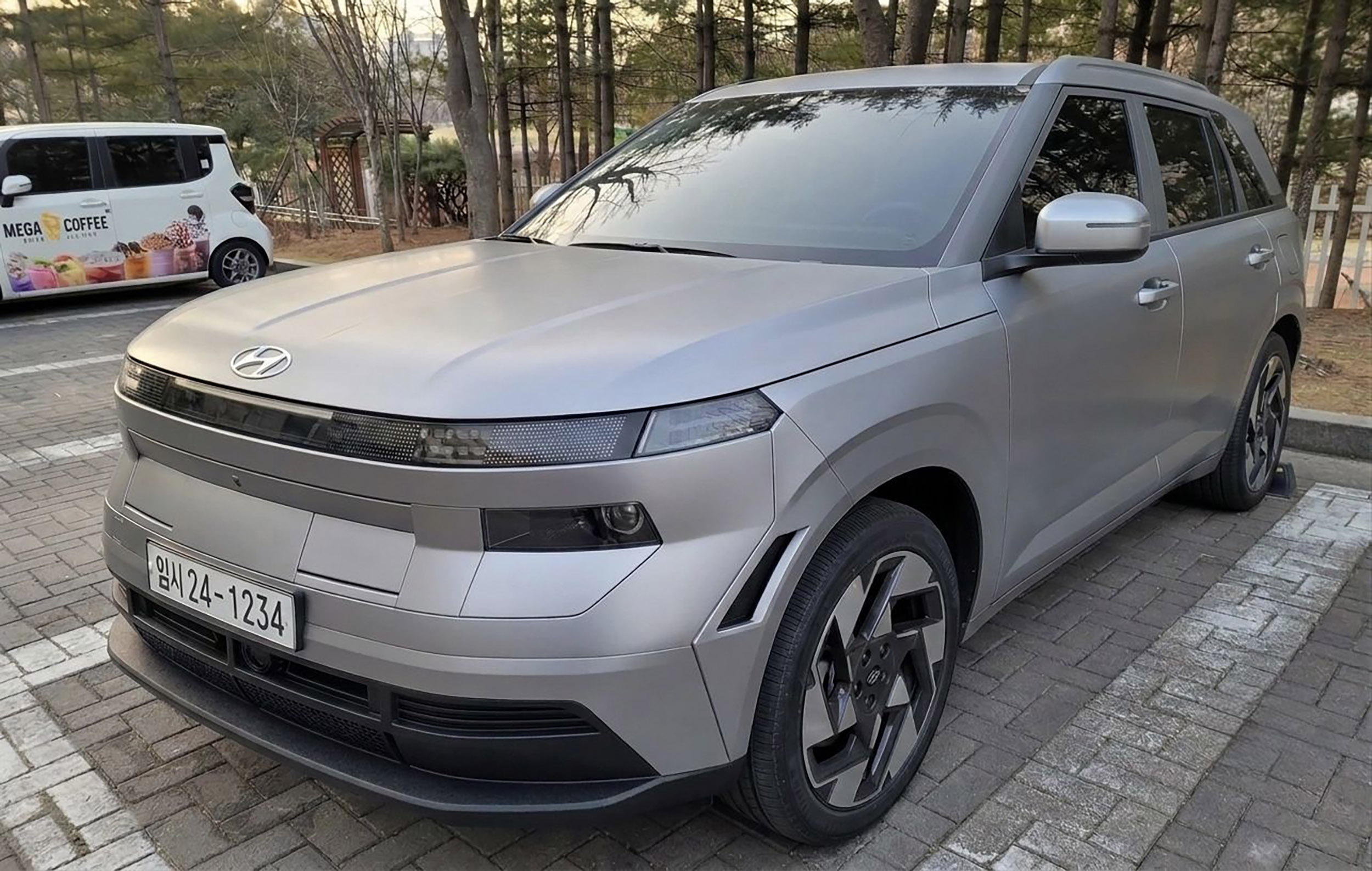
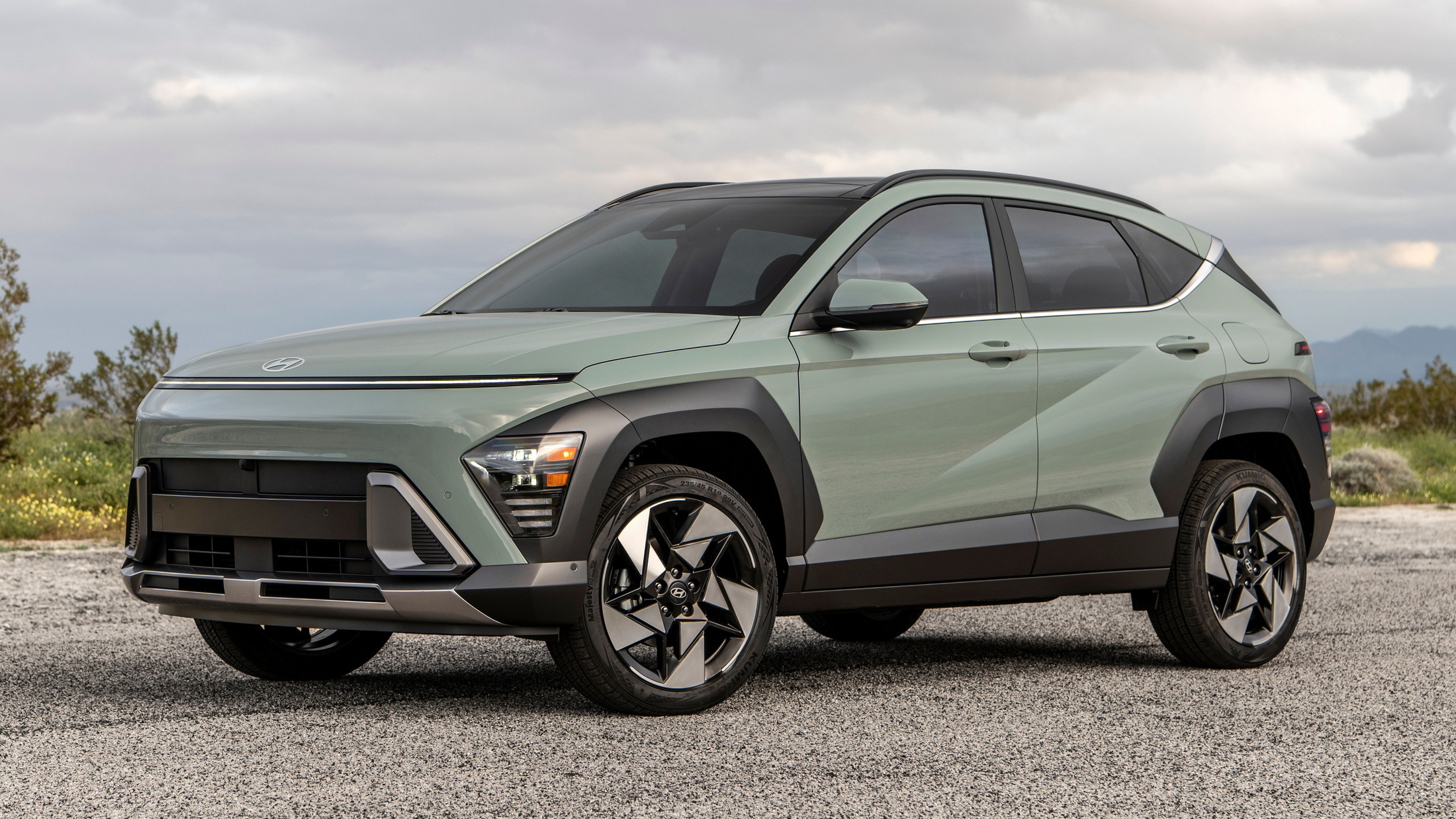
Hyundai pulled the wraps off the second-generation Kona in December 2022, but rather than settle for a mid-cycle nip and tuck, the automaker is preparing a more thorough redesign for 2027. After earlier runs of camouflaged prototypes, the new Kona has now turned up completely undisguised in Korea, and the exposed sheetmetal reveals a taller, more upright stance than the car it replaces.
The styling is only part of the story here, as reports suggest Hyundai wants to fold the Kona and Creta lines into a single global model, a logical move given their size and where each sits in the market. There’s also talk that the SUV’s underpinnings could be shared with the next Chevrolet Tracker, the product of an agreement struck with General Motors.
The photos making the rounds on social media, including a set posted by @EWVexillary, point to a Kona that borrows the rugged cues from the Crater concept. At the same time, the cleaner surfacing pulls it visually closer to the Ioniq EV family, splitting the difference between off-road attitude and electric-era modernity.
The front end keeps the split-headlight arrangement of the previous generations, though the main units are much smaller now and the full-LED bar runs thicker than before. Below sits a sculpted bumper with smaller intakes and what looks like a covered grille.
The profile is defined by what’s gone, namely the unpainted plastic cladding, which lends the car a more modern stance. A subtle two-tone treatment reinforces the effect, pairing gray pillars against matte silver bodywork. The flanks trade the diagonal creases of the outgoing model for cleaner surfacing, and the greenhouse is entirely new, its straight belt line running back to a more upright tail.
Dimensions haven’t been confirmed, but the SUV could grow, following the lead of the mechanically related Kia Seltos, which stretches to 4,430 mm (174.4 inches) long. By comparison, the current Hyundai Creta measures 4,330 mm (170.5 in), and the Kona is slightly longer at 4,350 mm (171.3 in).
— Elvis Will Vexillary 🔋 (@EWVexillary) July 21, 2026
A further increase in size could help the Kona cement its position between the subcompact and compact SUV segments in Europe, bridging the gap between the smaller Bayon and the larger Tucson. Rivals will include the likes of the VW T-Roc, the Toyota C-HR, the Honda HR-V, and the Mazda CX-30.
Inside, the crossover will most likely gain a digital cockpit with larger screens, following the lead of the Ioniq 3. Those run on the new Hyundai Pleos Connect infotainment, built on Google’s Android. Hyundai isn’t ditching buttons either, keeping physical controls for the functions that matter. Practicality should improve too, with a slightly larger footprint freeing up more room for passengers and their bags.
Depending on the market, the powertrain range may include a naturally aspirated 2.0-liter, a turbocharged 1.6-liter, and a self-charging hybrid 1.6-liter in FWD and AWD forms. Hyundai might also keep the fully electric variant around and potentially add a range-extender setup.
The unified third-generation Kona and Creta is expected to make its formal global debut within the next few months, likely as a 2027 model.
The Democratic primary for governor of Wisconsin has changed both dramatically and barely at all since the start of this year.
The size of the field, which remained stagnant at seven major candidates for months, shifted rapidly in the span of 10 days in July that included both the exit of Lt. Gov. Sara Rodriguez from the race after she revealed problems with her campaign finance reports and the reentry of Milwaukee County Executive David Crowley, who secured a historically rare endorsement from Gov. Tony Evers.
As of Sunday, the race includes former Lt. Gov. Mandela Barnes, former Department of Administration Secretary Joel Brennan, Crowley, Madison state Rep. Francesca Hong and Madison state Sen. Kelda Roys.
Here is what hasn’t changed: Hong, a self-described democratic socialist, led her opponents in the third consecutive Marquette University Law School poll released last week, which was conducted prior to Rodriguez’s exit from the race. Internal polling released by Barnes and Crowley’s campaigns also showed Hong in front.
A fractured field means support continues to be spread out across the remaining five candidates and could result in a winner on primary Election Day with far less than 50% of the vote. Meanwhile, Republicans have coalesced around likely nominee U.S. Rep. Tom Tiffany for months.
“Hong could certainly win the nomination with 35 to 40% of the vote,” said Anthony Chergosky, an associate professor of political science at the University of Wisconsin-La Crosse. “All available evidence indicates that Hong is below 50% of the vote, but she doesn’t even need 50% of the vote if the field remains so fragmented and divided.”
At the same time, the percentage of undecided voters continues to be higher than those who have selected any specific candidate. The Marquette poll found nearly half of registered voters surveyed in mid-July were undecided.
Wisconsin Watch traveled to forums, farm tours and meet-and-greets around the state as the five remaining candidates have continued to lay out their vision to voters and explain why they are best suited to lead Wisconsin.
The stakes of the race are high. Democrats see 2026 as an opportunity to win control of the Capitol for the first time since 2010, which could result in dramatic new progressive legislation. After Republicans won the governor’s office and majorities in the Senate and the Assembly in 2010, they used that power to dismantle public sector unions, increase pension and health insurance contributions for public employees, cut taxes, freeze UW tuition, restrict abortion, permit concealed carry of firearms, end the state’s land conservation program and enact gerrymandered legislative maps that protected their majority from a Democratic wave in 2018.
It leaves a lot for voters to digest as in-person early voting begins Tuesday and two weeks remain before the partisan primary on Aug. 11. Two key moments this week could reshape the race — a debate hosted by WISN on Tuesday evening and a new Marquette Law School Poll of the current field expected to be released on Wednesday.
Barnes takes aim at political establishment
Mandela Barnes, a Democratic candidate for governor, is seen with End Citizens United President Tiffany Muller at a town hall about money in politics on July 14, 2026. Barnes, the former lieutenant governor who lost a close U.S. Senate race in 2022, is one of five candidates running for an open seat after Gov. Tony Evers chose not to seek reelection. (Brittany Carloni / Wisconsin Watch)
The same day the Wisconsin Elections Commission determined tech businessman Elon Musk likely broke state election laws during the 2025 state Supreme Court race, former Lt. Gov. Mandela Barnes slammed the influence of money in politics at a town hall with End Citizens United, a political group that quickly endorsed him upon his entry in the governor’s race in December.
Wisconsinites rejected Musk’s financial influence last year and must continue to fight against a “rigged system” that doesn’t support policies for working people, like raising the minimum wage, Barnes told the small group gathered at the Goodman Community Center in Madison.
“These are the same industries that are making money hand over fist, the same people in industries that continue to make it hard for folks to get paid,” Barnes said. “You talk about people working harder and harder but life also getting harder and harder. It’s more difficult to get into the middle class. It’s more difficult to be able to purchase that first home. It’s more difficult to be able to even think about the American Dream now.”
Barnes grew up in Milwaukee with a mother as a public school teacher and a father who belonged to the United Auto Workers union. He is a former organizer who served two terms in the state Assembly, ran for and lost a state Senate seat and was elected lieutenant governor during the 2018 blue wave. He has led a voter turnout organization and a clean energy advocacy group, but hasn’t run any large organizations, which opponents have highlighted as a weakness for someone seeking to be the state’s chief executive.
In 2022 he won the Democratic nomination for U.S. Senate after opponents dropped out ahead of the primary, but narrowly lost to Republican U.S. Sen. Ron Johnson. While the race has driven his name recognition in the gubernatorial primary, that 26,000-vote defeat still eats at him, he told guests at the Wisconsin Democratic Convention in June.
The loss has opened him to criticism from other Democrats who have questioned whether he can win in a year when the party is striving for a trifecta in the governor’s office and the Legislature.
While he trails in the polls behind Hong, Barnes insists he remains the most battle-tested candidate to take on obstacles for Democrats after the primary. The recent Marquette poll shows only Barnes leading in head-to-head matchups against Tiffany among the remaining candidates in the race, although last week’s poll did not include Crowley.
Barnes has campaigned on what he calls “The Wisconsin Way,” a policy agenda that includes raising taxes on the rich, expanding BadgerCare, passing universal child care and freezing utility rates, though some experts question whether Barnes would have the legal authority to freeze rates as governor.
At a Democratic forum in Belmont, Barnes criticized the political moves that led Crowley to reenter the governor’s race with Evers’ endorsement. It’s another example of a system that leaves people frustrated with politics, he said in a clip shared on social media.
“The only people who win when we continue to play these insider politics games are corporations and special interests,” he said. “We deserve so much more.”
Brennan brings state government experience
Joel Brennan, right in white shirt, a Democratic candidate for governor, campaigns at a farm in East Troy, Wis., on July 2, 2026. Brennan spoke with research agronomist Jim Stute (green shirt), who owns the farm, and Chuck Anderas (blue shirt), the policy director at Michael Fields Agricultural Institute. (Brittany Carloni / Wisconsin Watch)
Joel Brennan arrived at an East Troy farm ready to listen.
Brennan nodded as Jim Stute, a research agronomist, explained how precipitation levels have changed on the property he has lived on for nearly three decades. Brennan leaned against a headless scarecrow in a white lab suit among the neat rows of research crops as Stute described his tactics to scare away sandhill cranes.
It’s a window into how Brennan, a longtime city dweller who grew up in Brookfield and lives in Milwaukee, has approached his campaign for governor.
“It’s got to be about learning and listening. If we’re going to get stuff done, it has to be around … data-driven decisions and personal stories,” Brennan explained. “For me it is about how do I get out here and do this, how do I learn from people who have been doing it, what are the successes, what are the ways the state’s been involved, and what’s the opportunity for us?”
Brennan is unabashedly running as a moderate Democrat, often aligning himself with the Evers administration that he helped lead as the secretary of the Department of Administration. He highlights his willingness to continue working across the aisle to get things done for Wisconsinites.
Like many of Brennan’s primary opponents, his campaign has focused on ways to make life more affordable in Wisconsin, such as expanding Medicaid and providing a public option for BadgerCare. But his ideas have often differed from some of the large-scale policies of his primary opponents. While the other Democrats have backed universal child care, Brennan has instead favored tax credits for child care businesses, caps on out-of-pocket costs for families and expanding eligibility for the existing Wisconsin Shares program.
He entered the race in mid-December and has leaned on his career experience holding executive-level roles in businesses and nonprofits, including serving as CEO of Discovery World and president of the Greater Milwaukee Foundation. In 2018, Evers tapped Brennan to lead the DOA, the top state executive agency tasked with overseeing financial management of state agencies and helping the governor draft the biennial budget. Brennan left that position in 2022.
Brennan is the only one of the remaining candidates who has not held elected office before, which has limited his name recognition. Though he was the first Democratic candidate to launch a campaign ad in June, he only mustered 5% support in last week’s Marquette poll.
Still, he has tried to find ways to push through the crowd, including questioning the electability of front-runners or his primary opponents’ leadership decisions. He was the first to attack Rodriguez with pointed questions after she fired her campaign manager over inaccuracies in her financial reports and released an ad last week criticizing Hong, Barnes and Crowley as unelectable in a general election. The ad, however, received pushback from Black Democrats, who called the spot racist for specifically highlighting candidates of color. It left out mention of Roys, who is white like Brennan.
Brennan insists his executive experience gives him an edge over the candidates with legislative experience who “don’t have defined duties.”
“That’s what I’m going to keep leaning into,” Brennan said. “That, plus listening and learning, I think, gets you to a point where people can see me doing the job, know that I could win and could be effective as governor. Those are the ingredients that get me to where I need to get to.”
Crowley returns with Evers’ endorsement
David Crowley, a Democratic candidate for governor, speaks to guests at a meet-and-greet at the Concordia Ballroom in La Crosse, Wis., on July 23, 2026. Crowley, who dropped out of the race in early July, reentered on July 18 with an endorsement from Gov. Tony Evers. (Brittany Carloni / Wisconsin Watch)
The first question for Milwaukee County Executive David Crowley from a smattering of people gathered at the Concordia Ballroom in La Crosse was about why he dropped out of the governor’s race in early July.
“It’s a long story,” Crowley said. He explained he initially chose to leave the race based on the numbers and campaign ad buy announcements that seemed to show Rodriguez with the best path forward, but more information came out about Rodriguez’s financial position that showed it was not the case.
Crowley restarted his campaign on July 18. While Crowley acknowledged he may be the “double Dutch candidate” in the race, he told the group in La Crosse he feels a momentum propelling his campaign that was not there before.
The most significant boost came from Evers, who endorsed Crowley on July 18 over the remaining candidates who served in his administration. Evers in a statement described Crowley as “the right candidate for the people of Wisconsin.”
“He’s not just a candidate who can win in November,” Evers said. “But he’s the kind of person who cares about doing the job right, he has the experience to make tough decisions, and he’s proven he can work together with others to get good things done.”
Crowley, at 40, is both the youngest and first Black person to serve as Milwaukee County executive, the job that oversees the most populous county in Wisconsin. It’s a role previously held by former Republican Gov. Scott Walker. “I’m not like him, though,” Crowley said with a chuckle to a guest in La Crosse.
Crowley grew up in Milwaukee and navigated challenging early years as his parents struggled with mental health and addiction and his family faced evictions. He credits public schools with his path to success and eventually became a community organizer.
His entry into politics first began with work on former U.S. Sen. Russ Feingold’s campaign. Crowley was first elected to office in 2016 when he ran for state Assembly. He served two terms and left the Legislature in 2020 to run for Milwaukee County executive.
Crowley tells audiences at campaign events how, as county executive, he has not shied away from working with anyone, including lawmakers across the aisle, to improve the lives of people in Milwaukee County. In La Crosse, he told the group about his efforts in passing the 2023 shared revenue law that has helped Milwaukee County pay off debts incurred from the pension scandal in the early 2000s, although Crowley acknowledged the law did not solve all municipal funding problems across the state.
Crowley has focused his campaign on an affordability plan referred to as the “Badger Basics,” which includes proposals such as building more housing, creating a public option for BadgerCare and easing child care costs for families with a child under age 5 by capping their costs at 7% of their household income.
The key question for Crowley’s campaign is whether any momentum following his reentry into the race can actually push Crowley to the front of the field with just two weeks left to go.
The new Marquette poll this week will provide a window into if his support has grown among registered voters, but in recent days, Crowley has also had to field questions about profane social media posts on an account he said he once shared with others. Crowley’s campaign told news outlets that although he had access to the account, he did not write any of the posts.
Crowley said Evers’ endorsement shows the governor, whose job performance remains favorable among Wisconsin voters, believes in Crowley’s judgment.
“I think indirectly, people are wondering, ‘OK, who the hell is this dude, and why did Governor Evers pick him?’” Crowley said. “So, people are showing up. They’re paying attention to our social media posts, and they’re coming out to volunteer and donating their hard-earned money to support this campaign because they trust his judgment.”
Hong rides momentum into final weeks of primary campaign
Francesca Hong, a Democratic candidate for governor (green hat), visits the Wegmueller farm in Monroe, Wis., on July 12, 2026. Hong, a Madison state representative, is a democratic socialist and has gained national attention for her campaign as democratic socialists have won big races in other states. (Brittany Carloni / Wisconsin Watch)
Francesca Hong diced tomatoes for pico de gallo as she told guests at Dan Wegmueller’s farm in Monroe about the top question she hears on the campaign trail.
Why is she a democratic socialist?
“It’s less about the labels and more about the solutions,” Hong explained as her knife hit the cutting board, a familiar task for the chef and former restaurant owner. “When we are focusing on local, on the means of taking care of people and lowering costs, that has to mean being less reliant on industry. Right now, our community is being dominated by billionaires and mega corporations not paying their fair share, and then deciding a lot of the pricing and the way that we live our lives.”
Hong, a 37-year-old state representative from deep-blue Madison, has emerged as a top contender in Wisconsin’s Democratic gubernatorial primary. Her surprising rise comes as democratic socialists are winning primaries across the country and rejecting establishment policies. Hong has led in three Marquette polls since October and finished second behind Rodriguez in the WisPolitics straw poll at the Wisconsin Democratic Convention in June.
If Hong wins the nomination, the key question for Democrats in swing-state Wisconsin is whether her policies appeal to voters across the state. The Marquette poll last week showed more registered voters have an unfavorable view of the democratic socialist label than a favorable one.
Republicans appear to be rooting for her nomination. A recent ad from the Republican Governors Association ominously casts her as being too liberal, opposed to President Donald Trump and supportive of abolishing Immigration and Customs Enforcement — all statements that could entice Democrats to vote for her in the primary.
Hong has had to answer questions about controversial democratic socialist views, such as her past social media posts in support of defunding and abolishing the police. She told radio station WTMJ in July that she does not believe police funding should go away. At the same time, Hong has faced backlash from Republicans for her statement that described the fatal shooting of Corey Ruiz in Madison as “an execution.”
Hong also has had to fend off questions about appearing on a fundraising live stream with Hasan Piker, the controversial political commentator and streamer, who has been criticized for antisemitic comments. Hong told the Milwaukee Journal Sentinel that she disagrees with some of Piker’s comments, but said candidates should not give up opportunities to address large audiences.
Hong, a single mother who was elected to the Assembly in 2020, has leaned on her service industry background and economic policy proposals, including universal child care and a moratorium on data center construction, to connect with voters.
In the final weeks, Hong said she plans to continue to show up in communities not expecting to see a candidate and engage in one-to-one conversations to drive curiosity about her vision and policies. People underestimate the extent that policy matters more than labels and existing political boundaries, Hong said.
“I’m lucky that I get to say and show up as a chef, a mom, a renter, a service industry worker,” Hong said. “That from worker to worker we’ve got to talk about how we’ve got to fix this.”
Roys has teachers union endorsement, campaign experience
Kelda Roys, a Democratic candidate for governor (blue blazer), speaks at a rural issues forum at Evansville High School in Evansville, Wis., on July 9, 2026. Roys, a Madison state senator, is one of five candidates running for an open seat after Gov. Tony Evers chose not to seek reelection. (Brittany Carloni / Wisconsin Watch)
Kelda Roys, sitting center stage in Evansville High School’s auditorium, eagerly chose a bucket brimming with education questions as the first category of the night during a forum on rural issues in early July. Just three candidates — Roys, Hong and Republican Andy Manske — participated.
It was an obvious move for the Madison state senator, who won the endorsement of Wisconsin’s largest teachers union and bills herself as the “education candidate” in this year’s Democratic primary.
Roys used the question — explain your position on separation of church and state regarding public schools in Wisconsin — to share her broader vision for public education in the state.
“What my kids are getting in our public schools is not the same as what my sisters and I got, and it’s not OK with me,” Roys told the crowd. “A huge part of that reason is because we are diverting public resources into private unaccountable vouchers, many of them religious in nature. So, as governor, I will fully fund our public schools.”
Gubernatorial forums are familiar spaces for Roys. She ran for governor in 2018, when 10 candidates competed in the Democratic primary for the chance to unseat then-Republican Gov. Scott Walker. Roys finished third far behind Evers, who defeated Walker that November.
Before that, she served two terms in the Assembly from 2009 through 2013, which overlapped with the early years of the Republican trifecta control of state government and the passage of Act 10. Roys led protests against the law that dismantled collective bargaining rights for most public employees while serving as the Assembly’s Democratic caucus chair.
In 2012, she ran for Congress and lost the Democratic primary to now-U.S. Rep. Mark Pocan. Roys returned to the Legislature when she was elected to the state Senate in 2020 after winning a seven-candidate Democratic primary on Madison’s west side and ran unopposed in 2024. She is also an attorney and a real estate agent.
Roys has focused her campaign on funding public schools, but also lowering costs and raising wages. Her policies include plans to open the state’s insurance plan to all Wisconsinites to decrease the cost of health insurance. She also proposes universal access to Wisconsin Shares, the state’s child care subsidy program for low-income families, with costs capped at 7% of parents’ income per child. The state would fund its portion of the costs through legalizing marijuana. “You’re going to be able to get baked for babies,” she said to laughs in Evansville.
She is quick at campaign events to describe the Trump administration as a “dangerous authoritarian regime,” while promising to safeguard Wisconsinites and their rights from attacks by the federal government.
Roys, though, has not made inroads in polling over the course of the primary, and last week’s Marquette poll shows her at the bottom of the pack among registered voters with support at just 2%.
Still, Wisconsin needs an experienced leader in this moment when Democratic control is on the line, and her experience in the Legislature makes her best suited for the job, she said.
“For over 20 years I have been turning progressive ideas into law in the toughest of political environments, and that is the kind of experience and deliverables that we should expect from our next governor,” Roys said. “Not just somebody with good ideas, because we’ve got six (now five) great Democrats running … but you’ve got to be able to turn them into law.”
Wisconsin Watch is a nonprofit, nonpartisan newsroom. Subscribe to our newsletters for original stories and our Friday news roundup.
After voting against guidance telling absentee voters they can't change their ballots, two Democrats on the Wisconsin Elections Commission are getting involved in a lawsuit to block the policy shift. Commissioners Ann Jacobs and Mark Thomsen claim the board they sit on acted "inconsistent with the law."
Mr. Blink’s latest record takes listeners on a tour through the state, from the Mississippi River to Door County, with their signature genre-blending style.
The Wisconsin Department of Revenue confirmed to WPR that it had issued a notice of a brewer’s permit revocation for two Minocqua Brewing Company locations. The business has locations in Minocqua and in Madison.
Last month, the U.S. Supreme Court ruled that states can exclude transgender girls from competing on girls sports teams. An advocate and a parent of a transgender athlete say bans already in place outside state law are harming transgender youth.
A Republican who flipped an Assembly seat in 2022 long held by Democrats is seeking to keep it in the GOP column, but first faces a repeat challenger within his own party.
Army veteran and longtime corrections officer Scott Harbridge is looking to unseat 74th Assembly District Rep. Chanz Green in an Aug. 11 rematch of their 2024 Republican primary.
Animal rescue leaders say new rules meant to prevent the spread of the livestock parasite make sense. But they are also costly for overcrowded shelters in Texas, which transfer many pets to other states.
The owner says the plug-in hybrid’s fuel filler cap was locked after he left China.
Zeekr says it locks down elements of the 9X for security reasons if they leave the country.
Mr. Liu is planning a cross-continent trip in his 9X, traveling from China to Europe.
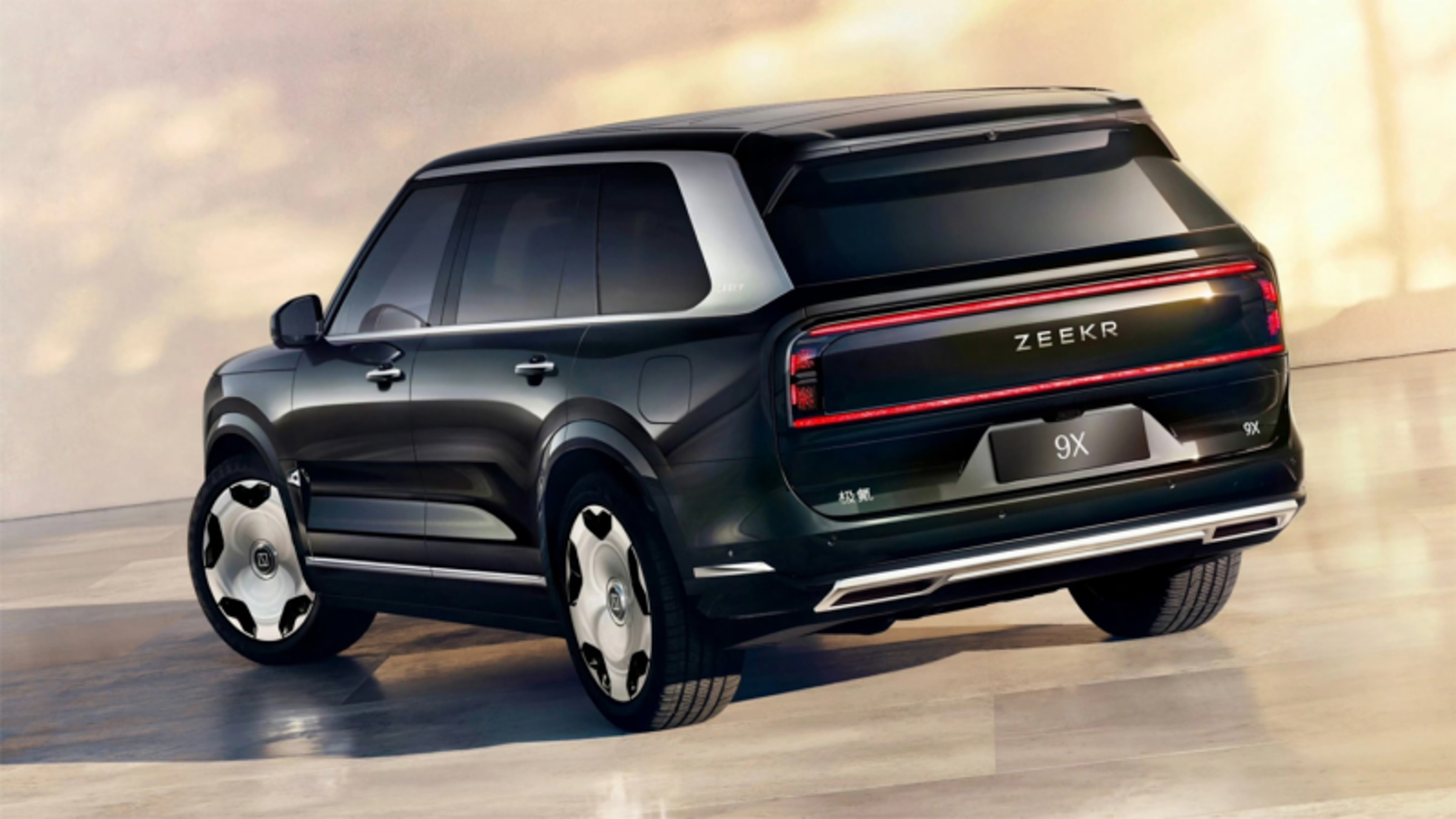
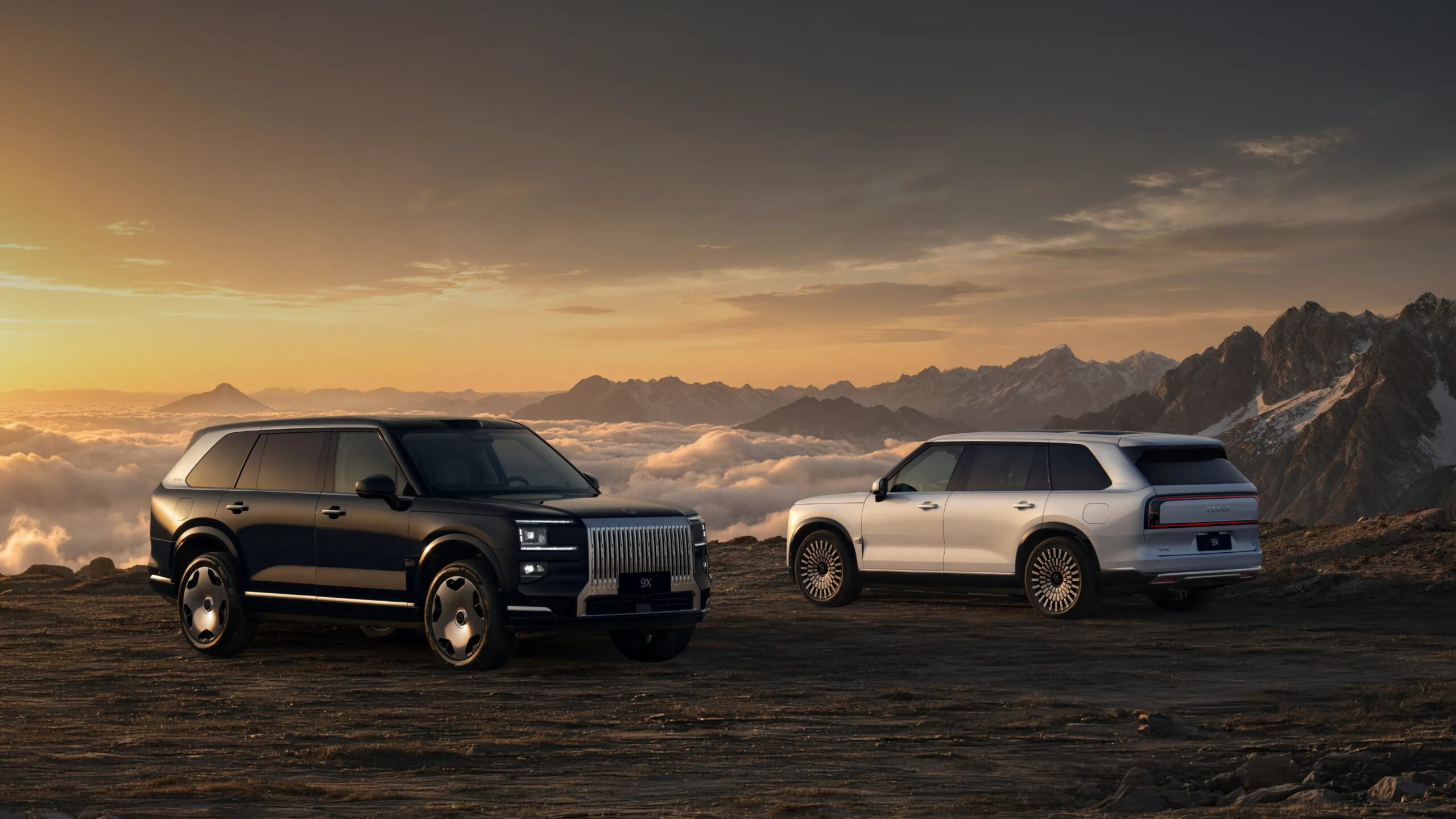
The Zeekr 9X is a deeply luxurious SUV stuffed with technology, and by most measures that counts as a selling point, but one owner in China has run into the flip side of all that intelligence. As he found out, the 9X may be smart enough to become a problem for the person who actually paid for it.
Earlier this month, 9X owner Mr. Liu set off on a planned road trip from China all the way to Europe, a journey meant to be the ultimate test of Zeekr’s flagship SUV. Things went sideways as soon as he crossed into Kazakhstan, forcing the brand to step in so his trip could continue.
Liu claims that once he left China, his 9X clamped down hard. The navigation quit, the glove box locked itself, and, most maddening of all, the electronically operated fuel filler cap stayed shut for more than 30 hours. He points out that his local Zeekr dealer knew about the trip ahead of time, since the 9X was in for routine maintenance beforehand, yet nobody mentioned these limits.
Too Much Tech?
No doubt eager to get its side of the story out before Liu’s experience went viral, Zeekr spoke to the National Business Daily and explained that the SUV’s security mechanisms kicked in the moment it left China. That triggers on-screen prompts and pop-up warnings and also restricts certain functions. The system, Zeekr later said, is meant to deter theft and smuggling.
Although Zeekr says the powertrain and brakes will continue to operate normally, it is not possible to open the fuel filler cap or charging port electronically, as is usually done in the 9X. Instead, the only way to open the fuel filler door is to hold the hazard light button inside the cabin for five seconds. Additionally, the charging flap can be opened by applying direct and firm pressure to it. While this all sounds rather easy, we suspect very few 9X owners know the hazard light switch can double as an opener for the fuel cap.
The restrictions were ultimately lifted through an authorization code sent to the 9X. However, CarNewsChina understands this may be something the owner has to do every time he crosses into a new country. Zeekr has since apologized, saying that real safety “shouldn’t be solely defined by the manufacturer” and framing its revised approach as “control by the user & protection by the manufacturer.”
A Passcode And An Apology
The company has now added a passcode generator to its companion app, letting owners create their own unlock codes after a cross-border lockout. Whether those codes work offline is unclear, since signal is hard to find near international crossings. Zeekr has also promised an over-the-air update with an opt-out toggle that turns cross-border lockouts off by default, sparing Liu a fresh authorization code every time he enters a new country.
Zeekr has already expanded into multiple countries, Europe included. Vehicles sold there presumably skip these location-based restrictions, given how often drivers hop between countries in a single trip.
The long-wheelbase versions of the X5 and iX5 use self-driving tech from Momenta.
BMW partnered with Momenta in mid-2025 to power its local self-driving systems.
One of the iX5’s all-electric versions will have a driving range of over 621 miles.
Less than a month after the all-new BMW X5 premiered, long-wheelbase versions of it and the electric iX5 have arrived in China, and beyond the added length you would struggle to spot anything separating them from the X5s headed to Western markets.
The stretch comes from reworked underpinnings, giving the Chinese models a wheelbase 5.1 inches (130 mm) longer and pushing the gap between the axles to 124.6 inches (3,165 mm). To put that into perspective, the larger X7 sold globally measures 122.2 inches (3,105 mm) between its wheels, so anyone who plans to spend more time in the back seat than behind the wheel might find this X5 the smarter buy.
When BMW rolled out the domestic long-wheelbase versions of the new i3 and iX3 earlier this year, it dropped the pop-out door handles used on those models globally, switching to flap-style handles to satisfy Chinese regulations. The X5 L and iX5 L needed no such fix, keeping the handle tabs built into the pillars, an approach shared with the Ford Mustang Mach-E.
Chinese Autonomy
Perhaps the biggest change related to the driver-assistance systems. It runs software from Chinese company Momenta, using locally trained end-to-end artificial intelligence and providing ‘address-to-address driver assistance.’ While it does not include a LiDAR, as many new cars from China do, it’s likely to be more advanced than the system BMW offers elsewhere.
One minor visual change made to the SUV is the presence of distinctive graphics near the Hofmeister kink and different wheel designs. As standard, the X5 L and iX5 L also feature diagonal daytime running lights, rather than the X-shaped lights of their global model. However, these units will be offered as an option. BMW’s Chinese team has also added extra light strips between the DRLs and the kidney grilles. The front bumper is also slightly less imposing.
Interior Upgrades
Several changes have been made to the cabin, making the long-wheelbase model even more luxurious than the standard model. These include new seats for the front passenger and rear occupants, and a fold-down theatre screen in the second row that supports 8K streaming and gaming. There are also different color options.
BMW has yet to publish powertrain figures for either car, but the company says the local iX5 L will cover more than 621 miles (1,000 km) between charges on the CLTC cycle.
Officials in western Wisconsin are set to release new zoning requirements for a proposed data center project, after a public outcry about the secrecy and development of the 320-acre facility in Menomonie.

 Login
Login