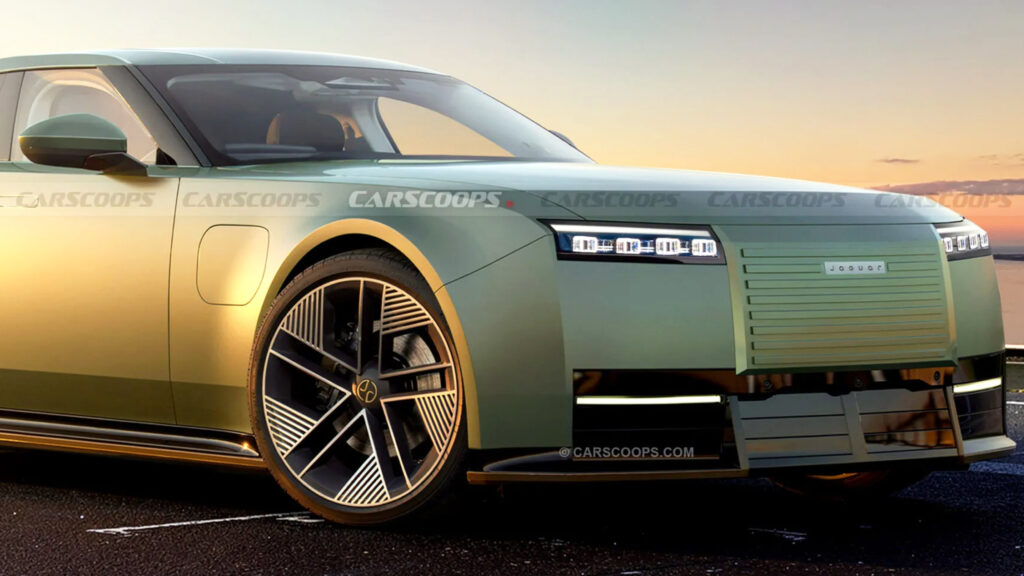
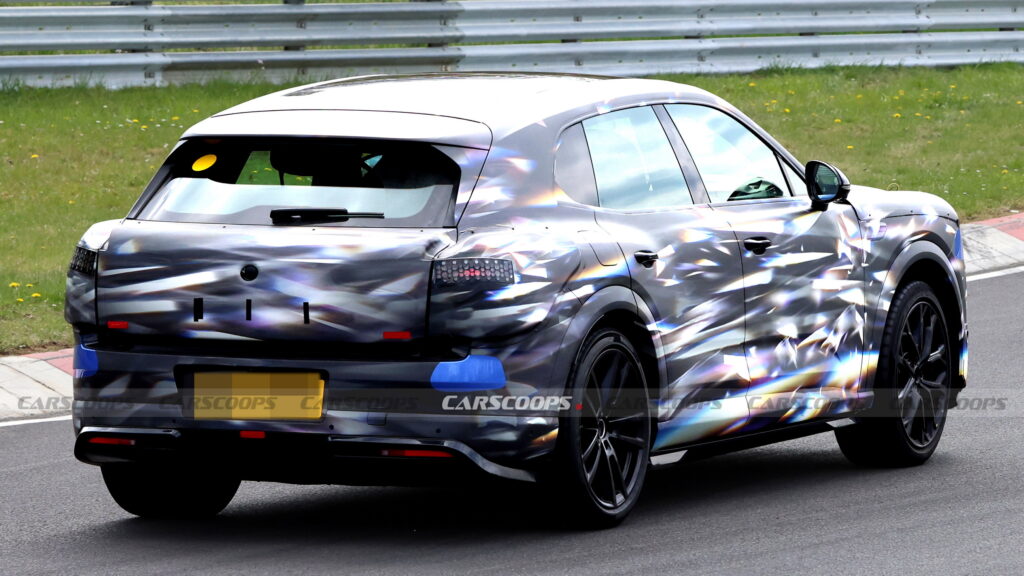
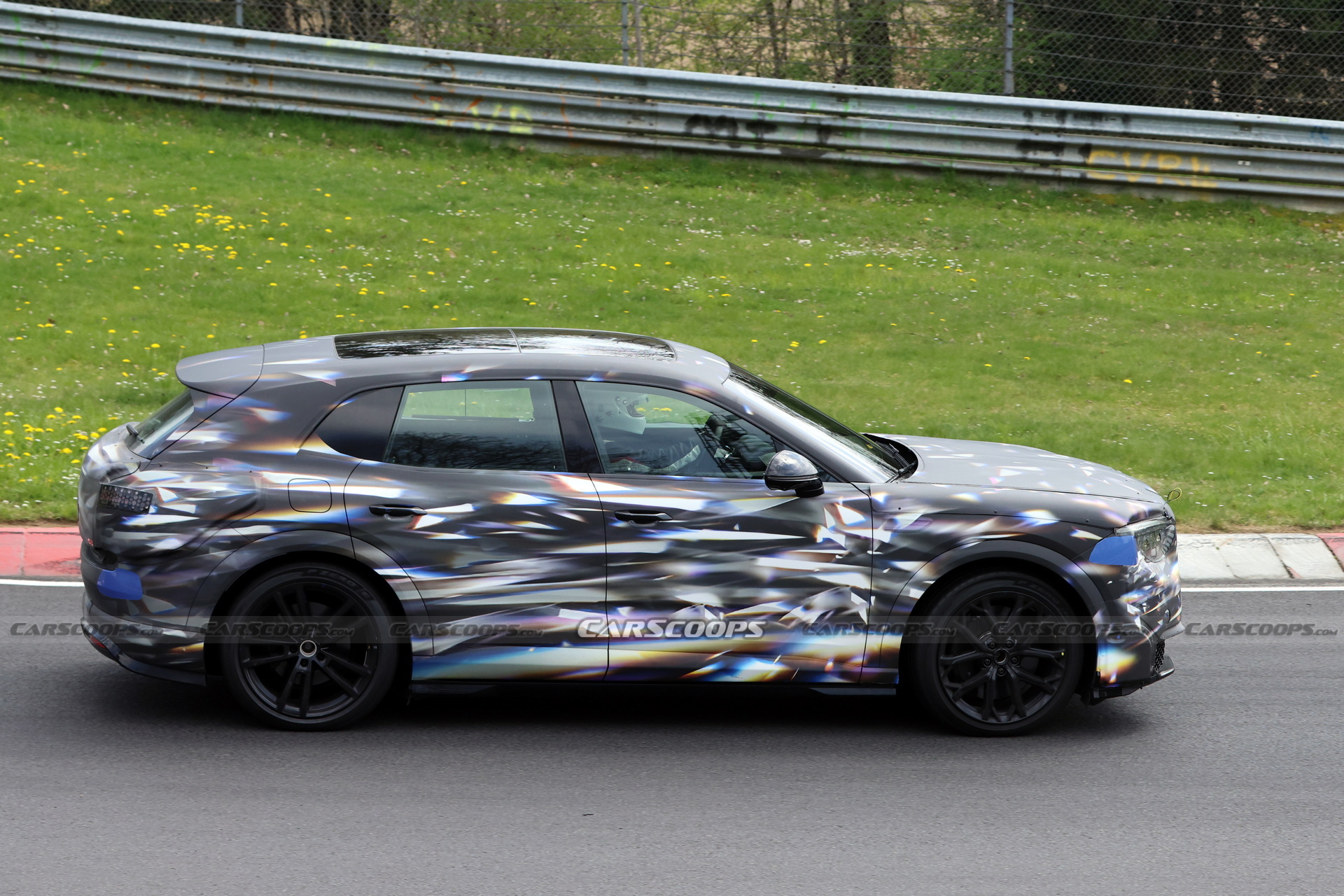
The Jaguar Type 01 will be underpinned by the company’s new EV platform.
Power is expected to come from a 120 kWh battery and three electric motors.
Jaguar will lift the veil on the all-new Type 01 in September before starting sales.
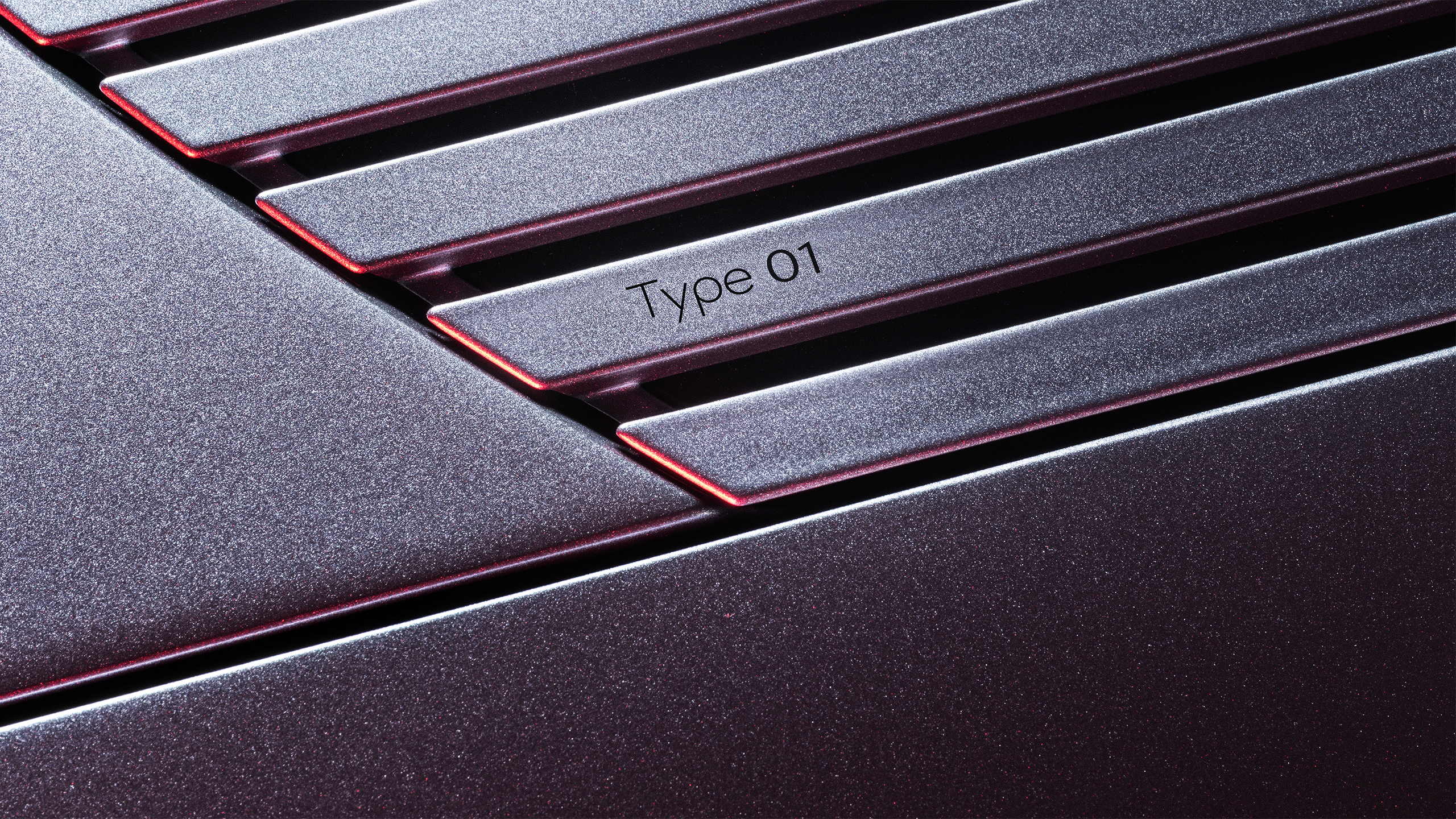
Jaguar’s all-electric sedan finally has a name, and it’s just a single digit away from the concept unveiled in 2024. Badged the Jaguar Type 01, the British company says the name “inaugurates a new era,” and joins an exclusive list of Jaguar models to use the ‘Type’ nameplate, including the D-Type, E-Type, and F-Type.
The Type 01 branding will be subtle, consisting of a motif at the base of the windshield. Jaguar says the ‘0’ refers to the vehicle’s electric powertrain and zero tailpipe emissions, while the ‘1’ signifies its status as the first Jaguar from its new, all-electric era. It’s certainly not the most evocative name, but it does roll off the tongue nicer than the Type 00 concept.
While the name of this new model is somewhat important, it will have very little impact on whether the electric sedan proves to be a success. While the covers have yet to be lifted on the vehicle’s completed design, spy shots have shown it will look very similar to the concept, although it has sprouted an extra pair of doors. It will stand out on the road, but the design will be controversial.
Three Motors And Over 1,000 HP
The powertrain will also be crucially important. We know the car will use Jaguar’s new dedicated EV platform, known as the Jaguar Electric Architecture, which includes an electric motor driving the front wheels, and two motors at the rear. All up, the car will deliver over 1,000 hp and around 959 lb-ft (1,300 Nm) of torque.
The EV’s battery pack will be around 120 kWh, although it’s not yet known where it will be sourced from. Jaguar’s last electric model, the I-Pace, won several awards when it was unveiled, but has been recalled numerous times due to dodgy battery packs from LG. Jaguar can’t afford to repeat these missteps.
Subaru might be working on a new sports car with an STI version.
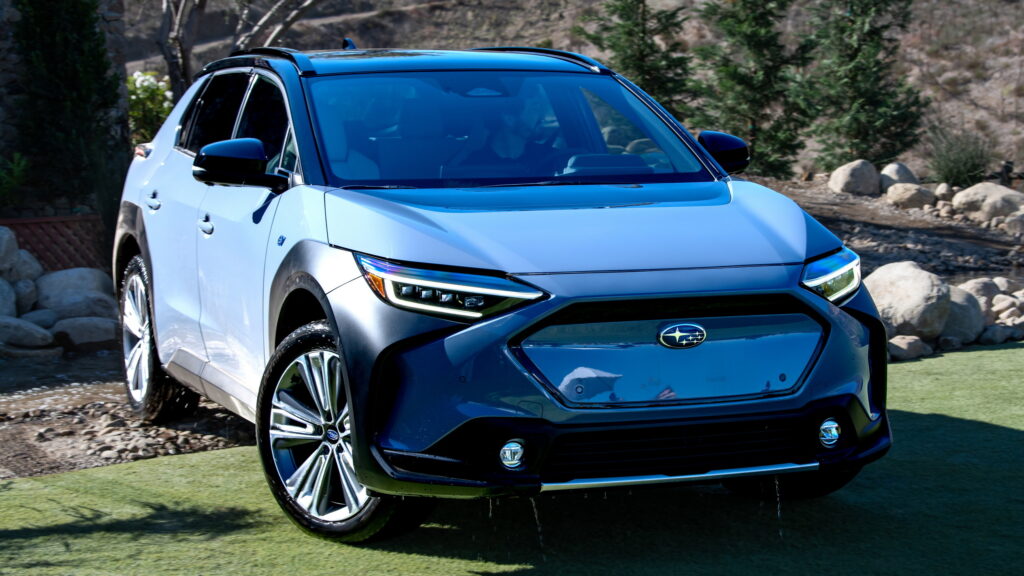
Recent ACX and ACX STI trademark filings point to an EV.
A combustion sports car could be based on the Toyota GR Celica.
The rumor mill around Subaru’s performance division has been working overtime lately. Fans of Subaru Tecnica International have spent months chasing reports of a returning WRX STI hot hatch, but the company may also be working on a new sports coupe with a proper STI variant attached.
The Trademarks
According to CarSales, Subaru has trademarked the ACX and ACX STI nameplates with IP Australia, a callback to the ACX-II concept car from 1985. The Australian outlet leans toward a gasoline-powered application, pointing to separate “Flat Shift” and “Rev Sync” filings as supporting evidence. However, trademarks lodged elsewhere in the world tell a different story.
The ACX, VPX, and ZPX names have already been trademarked in the US, Canada, and the UK alongside their respective STI variants. Each of those filings carries a specific description: “Automobiles and structural parts therefore electric cars.” That wording leaves little to the imagination.
Of the three new names, only VPX has been paired with a Wilderness designation, which points toward something taller and more utilitarian, whether a truck, a crossover, or an SUV. ACX and ZPX arrive without that context, leaving only earlier rumors and reports to go on. One plausible home for either name is the long-rumored successor to the BRZ.
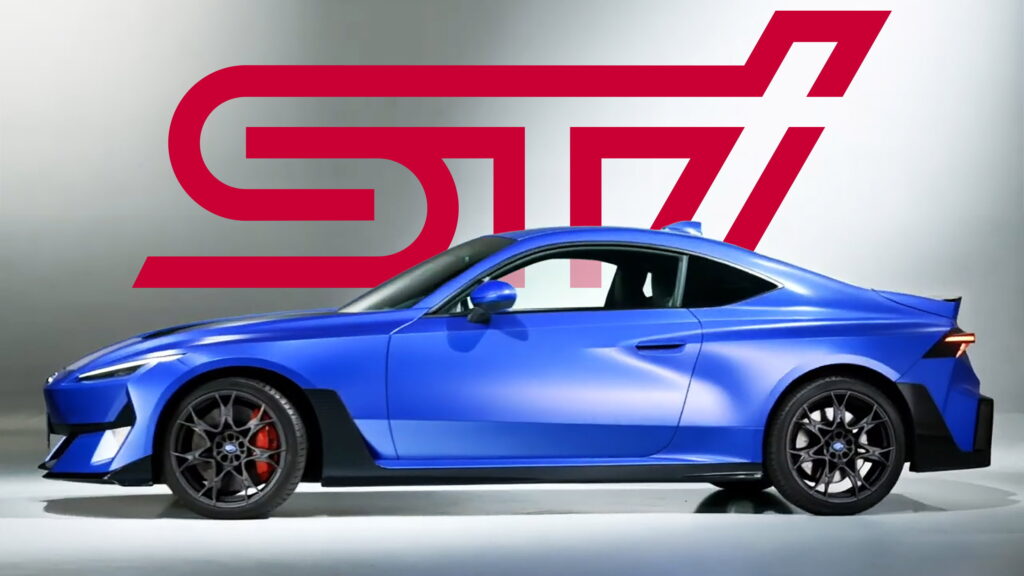
Independent digital artist Theophilus Chin has imagined that successor as a fully electric sports car, pulling design language from the Performance-E STI Concept into a modernized two-door silhouette that still reads as a BRZ.
What About ICE?
Illustrations Theottle
The ACX paperwork tilts heavily toward a zero-emission powertrain, but the ongoing Subaru-Toyota partnership leaves room for a combustion sports car to exist alongside it.
Subaru recently launched a widebody BRZ-based rally car running a turbocharged engine and all-wheel drive, built to compete in the JRC. Toyota, meanwhile, is testing a still-unidentified WRC contender with a two-door coupe profile, widely believed to be the competition version of the upcoming GR Celica.
Subaru Boxer Rally Spec.Z
The two rally cars share nothing mechanically, but there is still a path for Subaru to field a sibling to the production Toyota GR Celica when that car arrives. Whether Toyota commits to a front-engined or mid-engined layout for the road car is still unresolved.
Toyota has confirmed a next-generation GR 86 is coming, but the Subaru side of that partnership may diverge, with the next BRZ potentially going fully electric and adopting the elevated stance previewed by the Sport Mobility Concept.
A new Stinger is in Kia’s plans, just not for the immediate future.
The Meta Turismo concept is the blueprint, and it runs on batteries.
Design boss Karim Habib blames performance EV pricing for the delay.
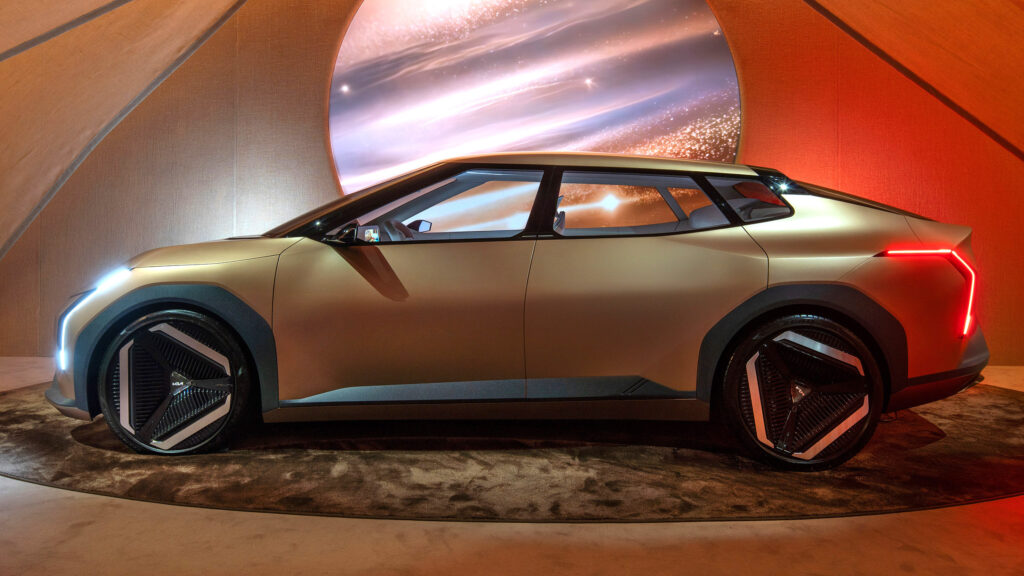
The Stinger never sold in the numbers Kia had hoped for, but it built something more valuable than volume: a small, loyal audience that still wants the brand to try again. The company is keen to make another sports sedan in the vein of the Stinger, only this one will run on electrons and could trace its bones to the recent Vision Meta Turismo concept.
The EV6 GT was supposed to fill the void. It hasn’t. The crossover stance and electric powertrain never landed with the enthusiast crowd the Stinger had cultivated, and the price walked well past where the Stinger ever lived. Design boss Karim Habib is betting that performance EVs will eventually get cheap enough to make the Meta Turismo a production reality and a real Stinger replacement.
“We have a small history of doing cars like the Stinger, and that’s something we don’t want to give up on,” Habib told Autocar. “The Meta Turismo is our idea of a sports sedan for the gamer generation. A few years ago, we started thinking about what could we do beyond SUVs? We do produce and sell a lot of SUVs, which is good, but we also believe that there’s more than that.”
Kia revealed the striking concept late last year as the latest evolution of its Opposites United design language. Like every recent Kia show car, it’s dramatic and has a design that the company says is supposed to be emotionally engaging. But it’s not yet ready for prime time.
“At this point, it is more strategic,” Karim said when asked by Autocar why Kia doesn’t start building it today. “It’s a pure EV, and the price of doing a high-performance EV is what is slowing us down. Hopefully, the upward movement of EVs keeps going. I think there will be more openness to this [type of] car. At least that’s what we’re betting on.”
Kia built the Stinger for just five and a half years before killing it off in 2023. It launched with a 2.0-liter turbo four and a 3.3-liter twin-turbo V6, picked up a 2.5-liter four at the facelift, and was briefly offered with a 2.2-liter turbo-diesel in some markets. While enthusiasts like ourselves would like Kia to capture some of the ICE magic in a successor, this doesn’t appear likely.
“We’re car people,” Kia head of interior design Jochen Paesen said. “We grew up on the side of a race track hearing V8s, but those are not the things that the younger generation care as much about. It actually doesn’t trigger them. It triggered us, but we’re living in a different age, so understanding what triggers the younger generation and gets them emotionally tied in and emotionally interested, that’s important.”
AMG has given us our first taste of the GT 4-Door Coupe’s electric powertrain in action.
In-car video footage reveals a synthesized V8 soundtrack as it runs through fake gears.
The new Porsche Taycan rival uses lightweight axial flux motors from Benz-owned Yasa.
Mercedes-AMG has already shown us the inside of the upcoming 4-Door Coupe, but this week, we got a much better idea of what it’ll be like to really get behind the wheel. Why? Because today we heard the EV powertrain do its best V8 impression, fake gears and all.
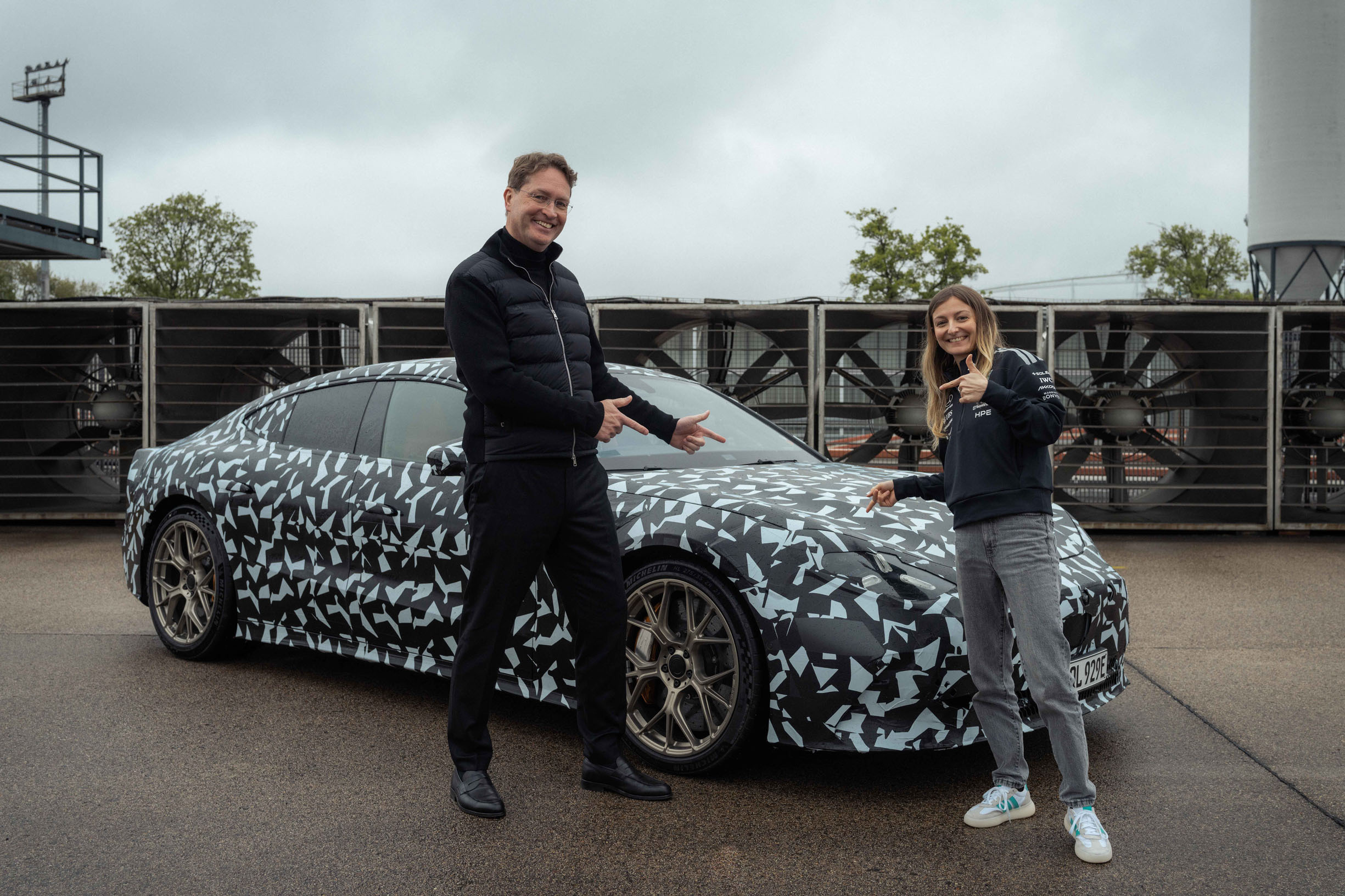
The reveal takes place inside one of those cheesy promo videos Mercedes trots out every time it’s about ready to debut a new car. CEO Ola Källenius goes for a spin in a camouflaged prototype, and together with a co-host runs through some supposed “challenges” that don’t really prove anything at all.
But there’s usually something interesting hidden in the fluff, and this GT video is no different. Most importantly, we get to hear the synthesized V8 noises the car makes when Mercedes-AMG F1 development driver Doriane Pin engages Sport+ mode and guns the four-door coupe hard from a dead stop.
Obviously, it’s hard to know from just watching a video how realistic those noises sound when you’re in the car, but they sound pretty good from here. Better than a Dodge Charger Daytona, that’s for sure.
Transmission Tips From Ioniq 5 N
And because AMG has worked in some fake shift points, we get to hear it barrp, barrp, barrp its way up to a pretend redline as it runs through some imaginary gears, just like a real combustion-powered GT 4 would. Skip to 4:30 on the video to jump straight to the key moment.
You might reasonably argue that if you want an AMG that sounds like a V8 so bad, then you should just get one, but that’s ignoring the fact that there are some massive tax advantages in some countries for going the EV route. And if you have to have an EV, you might as well have one with a sense of fun.
Slimline Motors
Besides, this new GT is much smarter than your average EV because it’s fitted with incredibly light axial flux motors from Yasa, the company that supplies electrical tech to the Mercedes-AMG Petronas F1 team, and which Mercedes bought in 2021.
We don’t yet know exactly what kind of power the GT’s tri-motor setup produces, but the GT XX concept that previewed it made 1,341 hp (1,000 kW / 1,360 PS). Porsche’s top Taycan is already pushing out 1,034 hp (1,048 PS / 770 kW), and Xiaomi’s SU7 Ultra generates 1,526 hp (1,548 PS / 1,138 kW), so the AMG is going to need to summon as many horses as it can when it debuts, probably this summer.
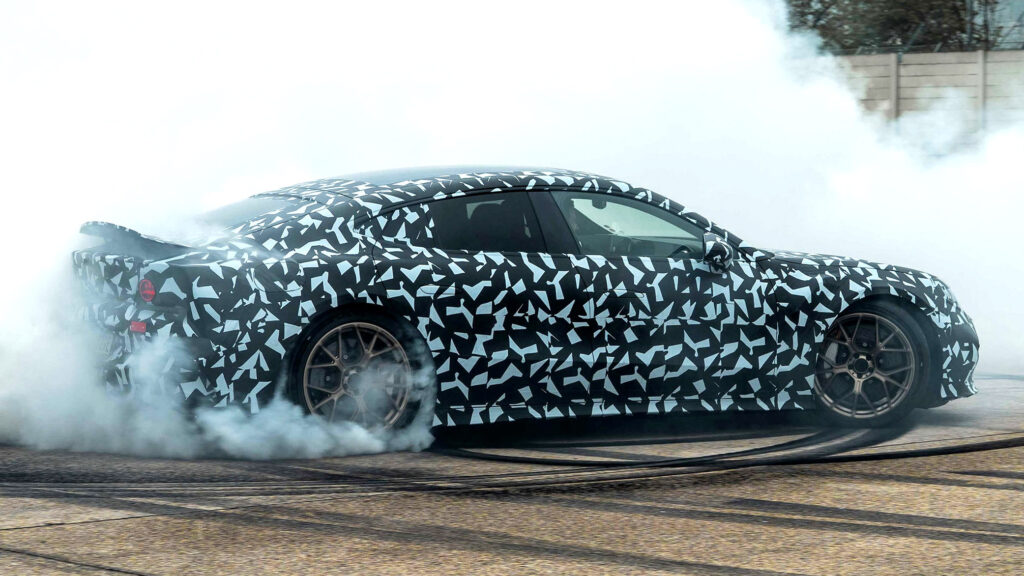
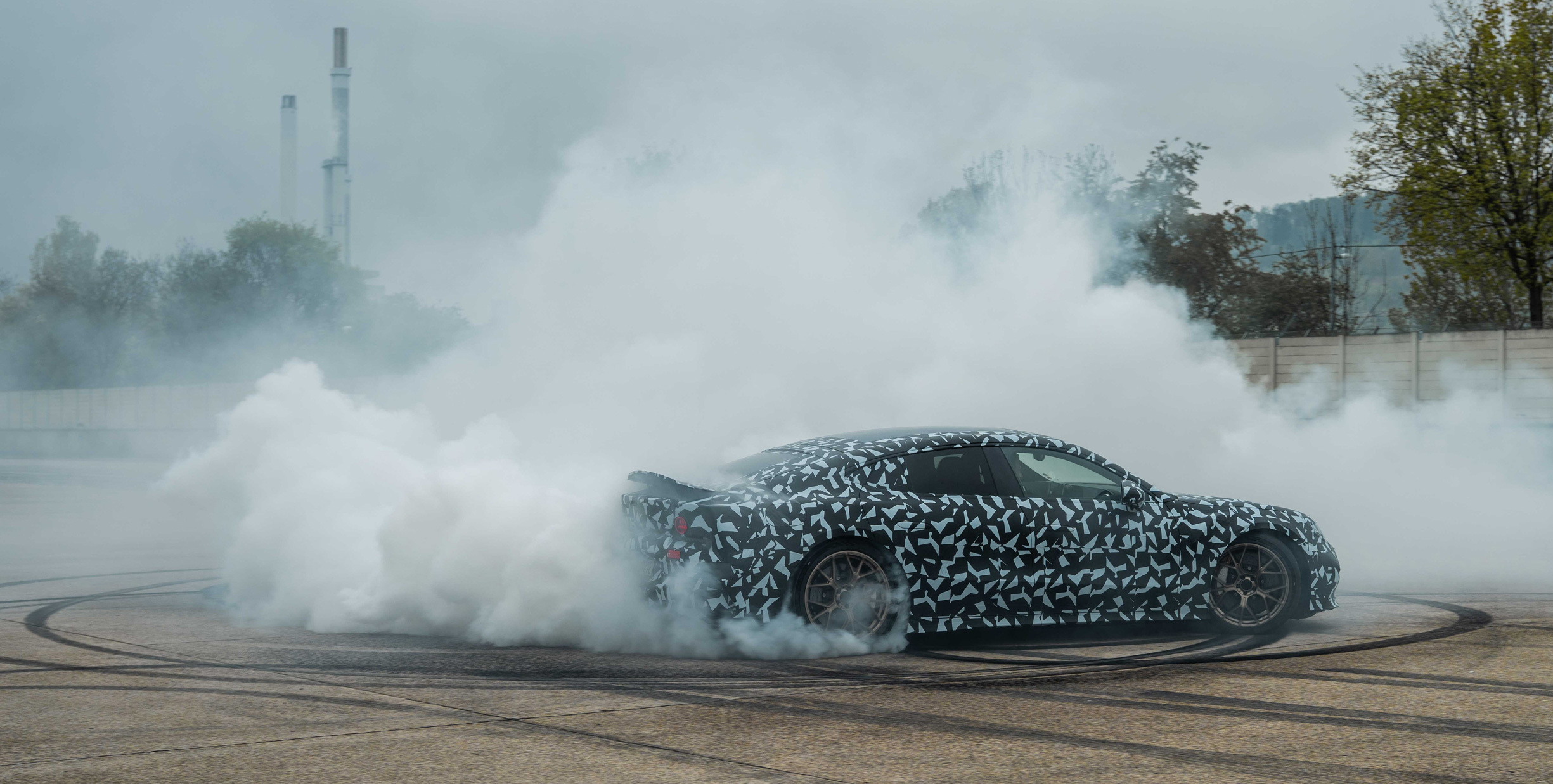
The video also shows the GT pulling off some donuts, proving that the first car to use the AMG.EA electric platform can send its power exclusively to the rear tires if the driver wants, much like a V8 GT.
The R4 JP4x4 Concept is inspired by beach buggies of the ’70s.
It gets a custom body, a lifted stance, and dual electric motors.
Renault has confirmed there are no plans for production.
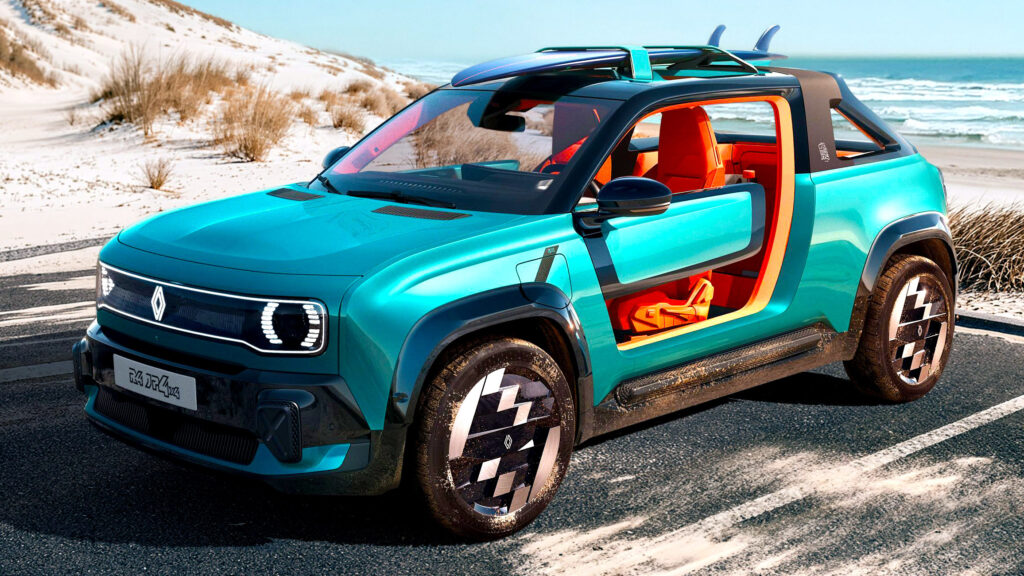
Renault has unveiled a new concept based on the R4 E-Tech, this one built around summer use. The R4 JP4x4 wears an open-air two-door body, a reworked two-seat cabin with an exposed cargo area, and an AWD powertrain for tackling whatever hypothetical sandy beach you have in mind.
The study borrows from two R4 variants of the past, the 1969 Plein Air and the 1981 JP4. Its name is short for Journée à la Plage, French for “a day at the beach.”
Visually, the highlight is the pair of half-doors that replace the production car’s five-door layout. They work with a redesigned roof structure built around an X-shaped element for carrying a surfboard. There are no side windows and no canvas top, which leaves the cabin permanently open to the elements.
The concept wears a custom Emerald Green finish that plays against a vibrant orange interior. Beyond its beach buggy identity, it also serves as a pickup with a drop-down tailgate for easy loading. The roof-mounted surfboard is joined by a pair of skateboards stowed in the cargo area.
Inside, the highlights include “Egyptian mummy” seats with integrated headrests and mixed-fabric upholstery. The dashboard and digital cockpit carry over from the production EV, though the concept adds a passenger-side grab handle and a floating center console.
As with last year’s R4 Savane 4×4 concept, the JP4x4 runs a dual-motor powertrain for AWD, a setup Renault still hasn’t offered on the production R4.
The concept rides 15 mm (0.6 inches) higher than the standard R4, with front and rear tracks widened by 10 mm (0.4 inches) per side. The 18-inch wheels carry a futuristic design and wear chunkier Goodyear UltraGrip Performance+ tires. Renault made no mention of changes to the EV’s 2,624 mm (103.3 inches) wheelbase.
No Plans For Production
Renault has been clear that the JP4x4 will stay a one-off, with no production plans on the table. The show car will be displayed at the Roland-Garros French Open alongside the R4, R5, and Twingo E-Tech production EVs.
For buyers who want an open-air R4 E-Tech, the automaker already sells the Plein Sud variant with an electric-powered canvas roof. That one went on sale earlier this month starting at €37,290 ($43,800).
Canada is preparing to accept the first of 49,000 Chinese EVs heading there this year.
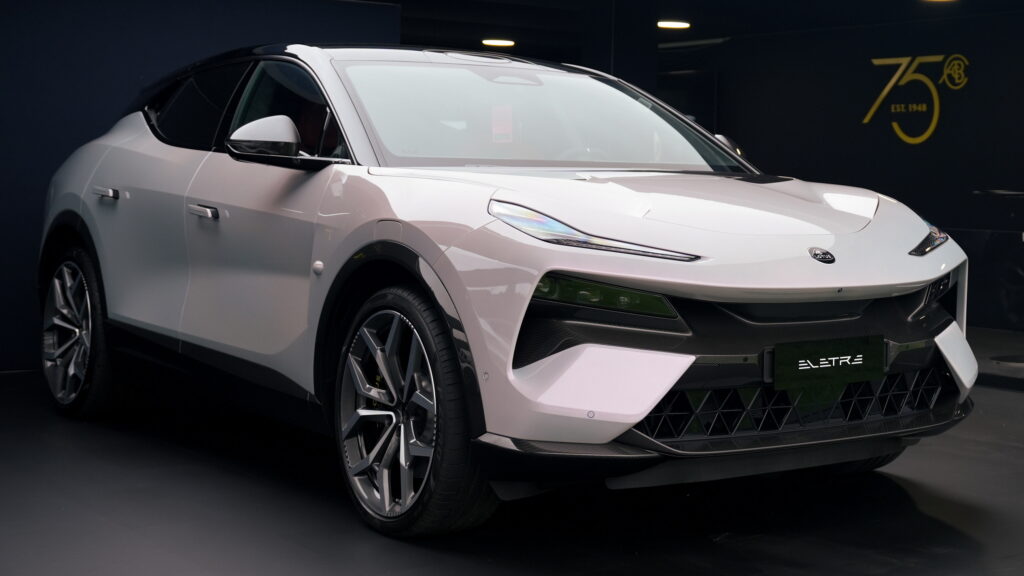
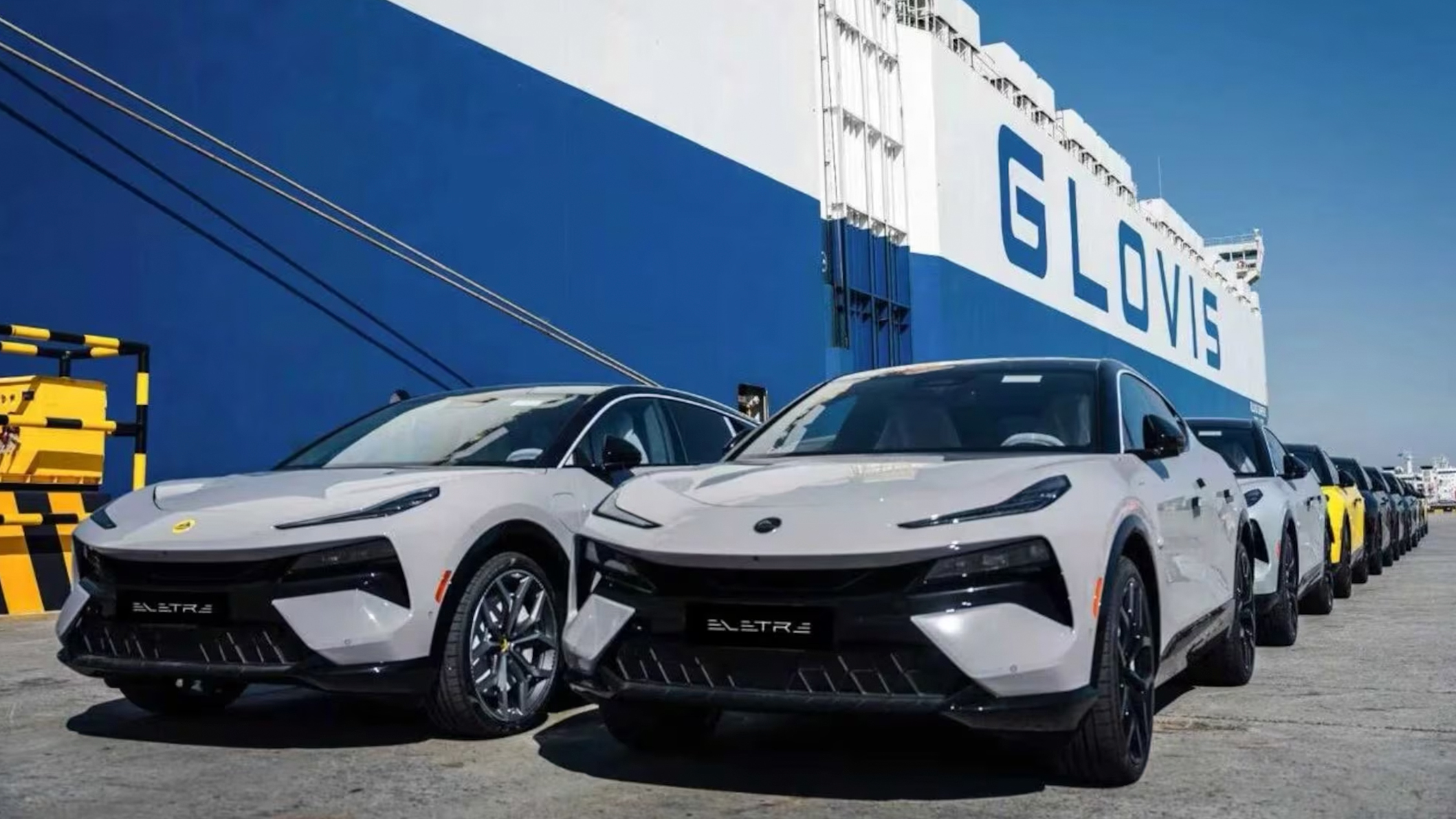
Lotus waved off 18 Canada-bound, Cayenne-sized Eletre SUVs from Wuhan on May 6.
Under a deal between Canada and China, EV import tariffs were cut from 106.1% to 6.1%.
Geely is officially heading to Canada, though don’t bother looking for the brand name at a car dealership strip north of the border just yet. The Chinese brand’s access to the Canadian market comes through its Lotus subsidiary, which sent 18 Eletre SUVs to North America on May 7.
This isn’t the first time China-built Lotus cars, or China-built cars of any brand, have been offered in Canada. Polestar, Lotus, and others previously sold vehicles that originated in the Asian country. But the 18 Eletres will be the first to hit Canada’s roads since a trade deal between the two countries was struck at the beginning of the year.
Imports from China effectively ceased after 2024 when then prime minister Justin Trudeau followed US president Joe Biden’s lead by slapping a 100 percent tariff on Chinese EVs, and that was on top of the 6.1 percent levy previously applied.
In retaliation, China applied tariffs on canola that brought Canada’s agricultural industry to its knees. Canola brings billions of dollars into the Canadian economy every year, so it’s no surprise that new prime minister Mark Carney was motivated to strike a deal, even as North America’s domestic automakers – which also form a large part of Canada’s economy – begged him not to.
Small Import Numbers for Now
Under the terms of the new trade deal, Canada will allow just 49,000 EVs in from China with a tariff rate of 6.1 percent in year one, rising to 70,000 in year five. In return, and in addition to relaxing tariffs on canola, China agrees to ease duties on Canadian steel and aluminum. But the trade truce also opens the door to Chinese brands building cars in Canada.
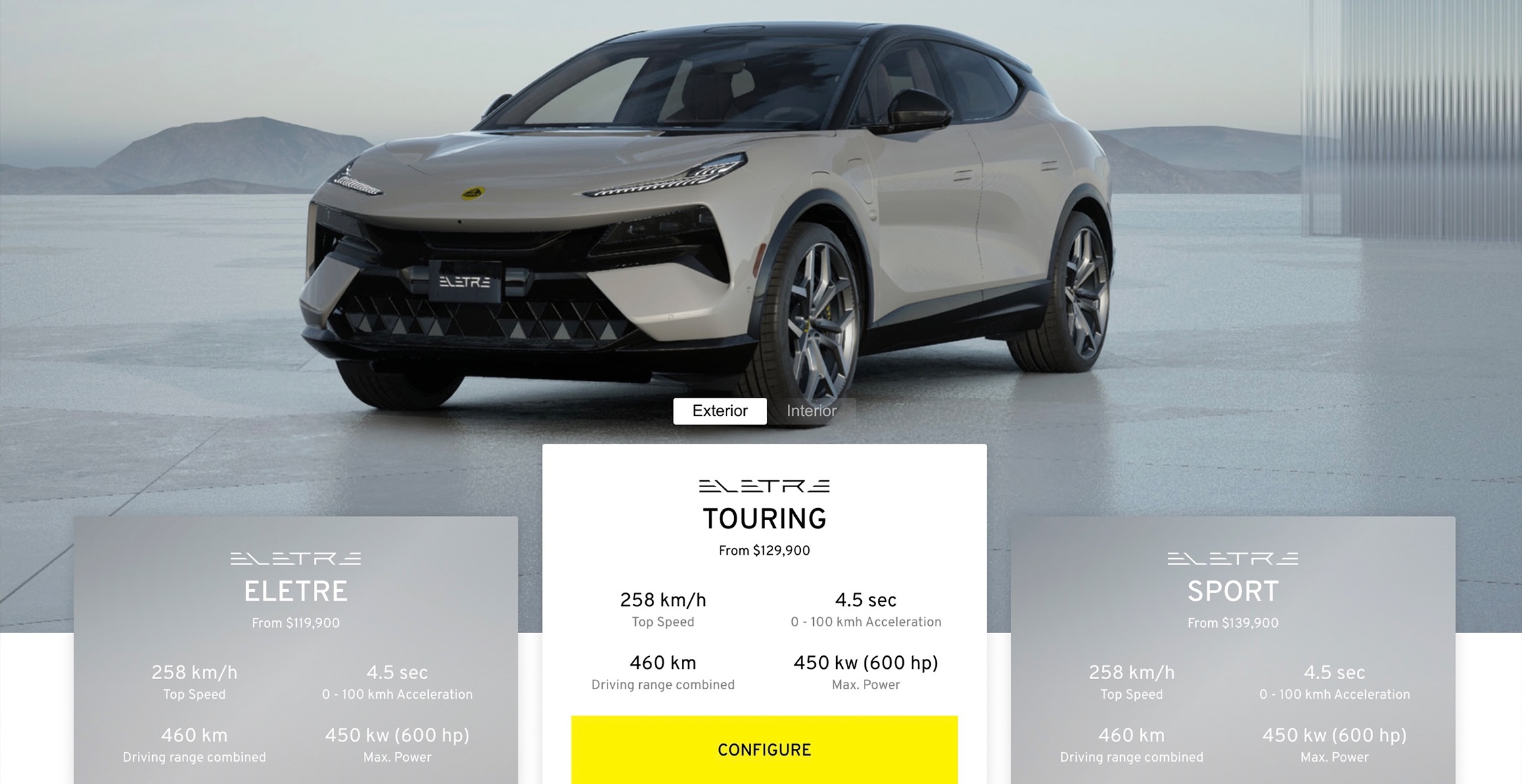
Lotus hasn’t revealed the exact mix of Eletre specs currently heading across the Pacific, but the brand’s Canada retail site currently only lists three trims based around the same 603 hp (611 PS / 450 kW) powertrain and priced between $119,900 CAD ($87,600 USD) and $139,900 CAD ($102,200 USD). Other countries also get a 905 hp (918 PS / 675 kW) version.
Hybrid Is A Recent Addition
Both are purely electric, though Lotus has reacted to a less-than-buoyant luxury EV market (and a really terrible North American one) by revealing a new Eletre hybrid. Powered by a 2.0-liter petrol engine and two electric motors making a combined 933 hp (946 PS / 696 kW), it was unveiled in China at the beginning of 2026, and is expected to be rolled out to Western markets later this year.
Lotus isn’t the only company rushing to take advantage of the new trade terms, which Canada’s government originally touted as a way to bring more affordable EVs to the country and help the nation meet its climate goals. Geely is making noises about bringing its own brand, as well as others, such as Zeekr, to Canada. BYD and Chery’s cars have been spied on North American roads, and Tesla is preparing its first batch of Chinese-built Model 3s for Canadian drivers, Drive Tesla Canada reports.
Hyundai’s Ioniq V electric hatch comes with a choice of 188- or 225-hp motors.
The V was revealed at last month’s Beijing Auto Show and is designed for China.
It’s one of 20 new models Hyundai will launch in China over the next five years.
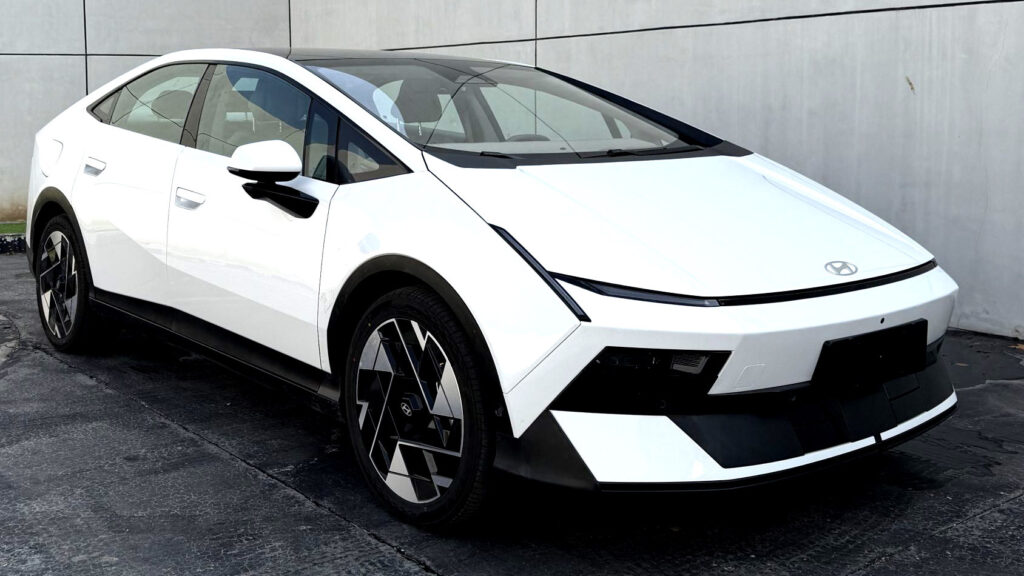
Hyundai’s sharp-edged, China-only Ioniq V unveiled in Beijing last month looks so different from the Ioniqs we get in the West that it’s only natural that we’re fascinated to find out more about it. And now, thanks to some homologation paperwork logged with Chinese authorities, a few more details have come to light.
The most obvious new bit of information concerns the powertrains. Ministry of Industry and Information Technology (MIIT) filings show the Ioniq V will launch with a choice of two single-motor configurations producing either 188 hp (190 PS / 140 kW) or 225 hp (228 PS / 168 kW).
The punchier of those motors is familiar from our own Ioniq 5, but you won’t find the lower-tune version in an American or European 5. Even Hyundai’s own humble US-market Elantra outguns it with 201 hp (204 PS / 150 kW) in N Line spec. Range extender hybrid and dual-motor versions should follow, according to Hyundai’s plan, and though there’s no mention of a truly hot version, an N makeover could give this EV Lamborghini Temerario-style pace to match its me-too design.
For now, supercar speeds are definitely not on the agenda. A listed top whack of 103 mph (165 km/h) isn’t going to set any records, but the 800-volt charging architecture should at least mean the CATL lithium iron phosphate battery packs can fill rapidly. We still don’t know battery sizes, but the bigger of the two available packs claims more than 600 km (373 miles) on the optimistic CLTC cycle.
Close To An Ionq 6 In Size, Not Style
The Ioniq V measures 4,900 mm (192.9 inches) long and rides on a 2,900 mm (114.2 inches) wheelbase, giving it dimensions similar to the Ioniq 6 we can buy in the West. But visually, this thing heads in a very different direction. The low-slung body combines a coupe-like roofline with chunky surfacing, split headlights, frameless doors, and dramatic V-shaped wheels.
Hopefully, the badly misaligned liftgate seen in the rear shot of the white car isn’t representative of production models. That’s certainly fixable, though it’s probably too late to do anything about the weird shelving system that passes for a rear diffuser.
27-Inches Of Infotainment
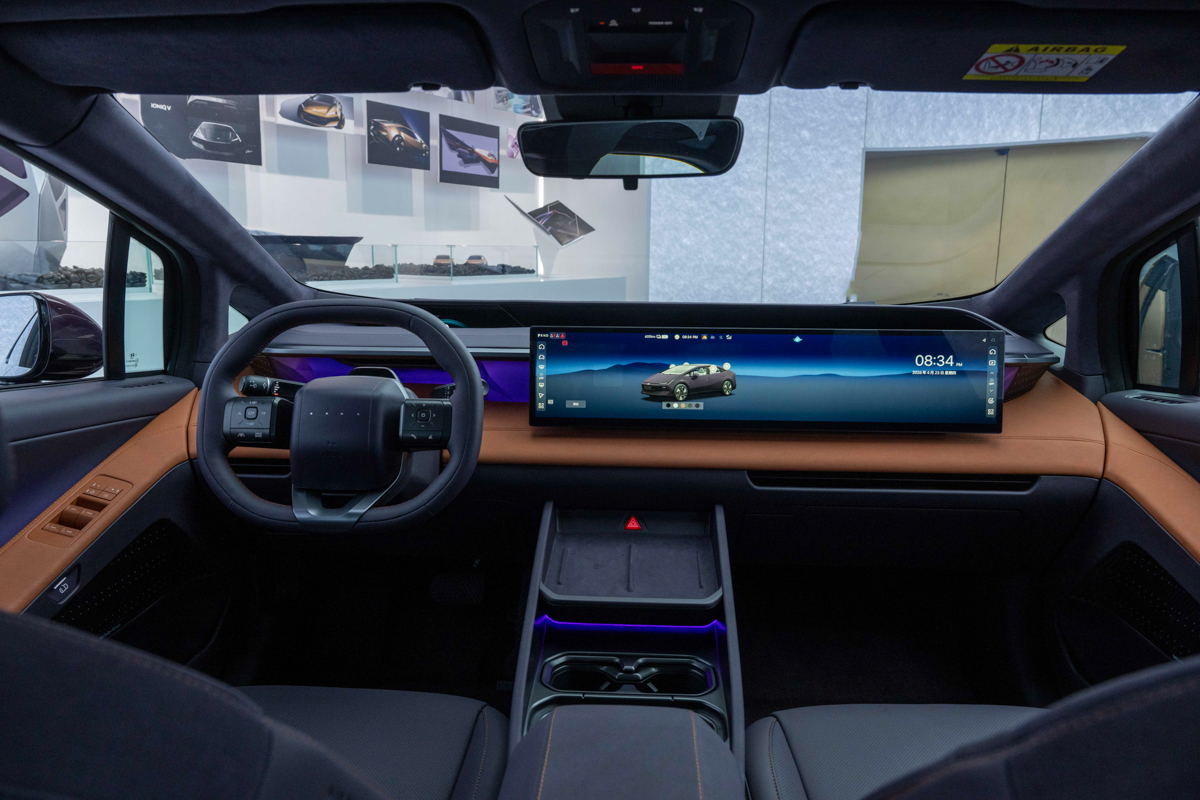
The cabin looks rather better. Hyundai’s China team developed the car around a huge 27-inch ultra-thin 4K display paired with a Cyber Eye head-up display and ambient lighting inspired by nebula imagery. The system also integrates Qualcomm’s Snapdragon 8295 cockpit chip together with AI features powered by Baidu and Volcano Engine technologies, Autohome reports.
Another major addition is Momenta-assisted Level 2-plus driving capability, something rapidly becoming essential for competing in China’s brutally competitive EV market.
Unfortunately for American buyers, the Ioniq V is almost certainly staying overseas. Hyundai developed it specifically for China under its new “global quality plus Chinese wisdom” strategy. That plan will see 20 new Hyundais of different powertrain types being unleashed in China over the next five years as the brand tries to shore up flagging sales.
Tesla has dropped Deep Blue Metallic and introduced Marine Blue.
Frost Blue Metallic from the Model S is now available for the 3 and Y.
Sadly, Frost Blue Metallic is only offered for the Performance models.
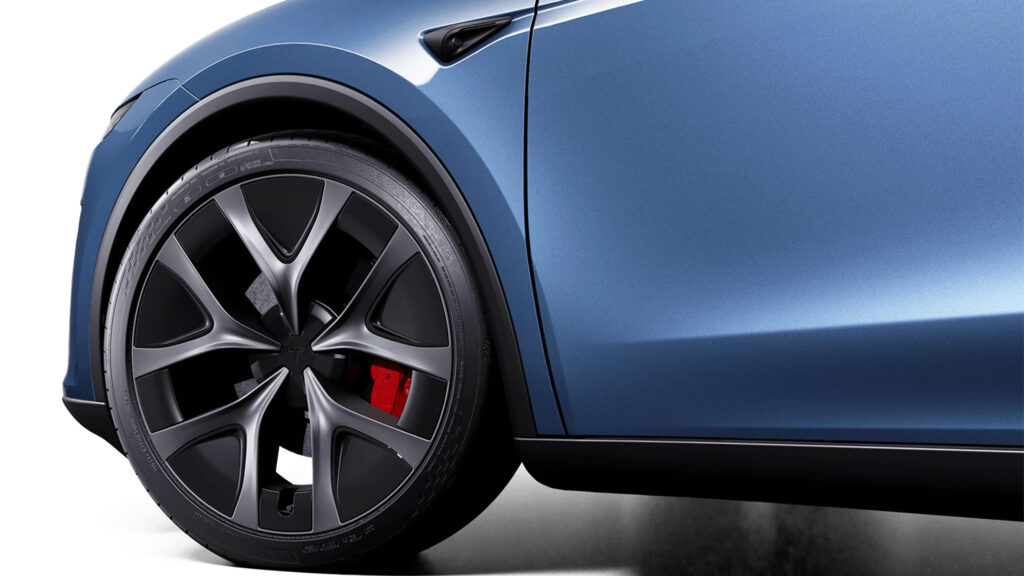
Tesla has never been known for offering particularly exciting or flamboyant paint schemes, generally opting for subtlety over pizzazz. However, the Model 3 and Model Y have just been updated with two new shades of blue in the United States, and both look superb.
The first new color is dubbed Marine Blue, and it’s available for the Premium Rear-Wheel Drive and Premium All-Wheel Drive versions of the Model 3 and Model Y. Marine Blue is a deep shade that replaces Deep Blue Metallic, which was brighter and a little more eye-catching.
As before, those shopping on a budget and looking to buy the entry-level Rear-Wheel Drive or All-Wheel Drive versions of the Model 3 or Model Y don’t get this new color and still only have Stealth Grey, Pearl White Multi-Coat, and Diamond Black to choose from.
In the US, Marine Blue adds $1,000 to the price of applicable Model 3s and Model Ys. In Canada, it costs CA$1,300 (US$940).
Exclusive Performance Color
The second new color introduced by Tesla is Frost Blue Metallic. It’s exclusive to the Model 3 Performance and Model Y Performance. This isn’t the first time this color has been offered by Tesla, as it was previously available on the Model S and Model X before those models were discontinued. Of all the colors that Tesla offers, Frost Blue Metallic might be our favorite, alongside Ultra Red.
What’s more, Frost Blue Metallic is a no-cost option in the US. It’s also been launched for the Model 3 Performance in Canada, though it’s not yet clear whether it will be added to the Model Y Performance locally.
BYD has rolled out a revised version of the little Seagull hatch in China.
The tiny EV starts at $10,300, or $13,400 with BYD’s DiPilot 300 ADAS.
DiPilot 300 isn’t fully autonomous, but can handle city streets, stoplights.
Though camera-loving Tesla swears otherwise, most experts agree that Lidar is the gold standard of driver assistance sensing technology. It’s better at judging distances and detecting unlit objects than cameras, and sees in more detail than radars. But it’s also expensive, or at least it is in Europe and America, where it’s restricted to $100k+ luxury cars. In China, though, you can now get it on a $10,000 micro EV.
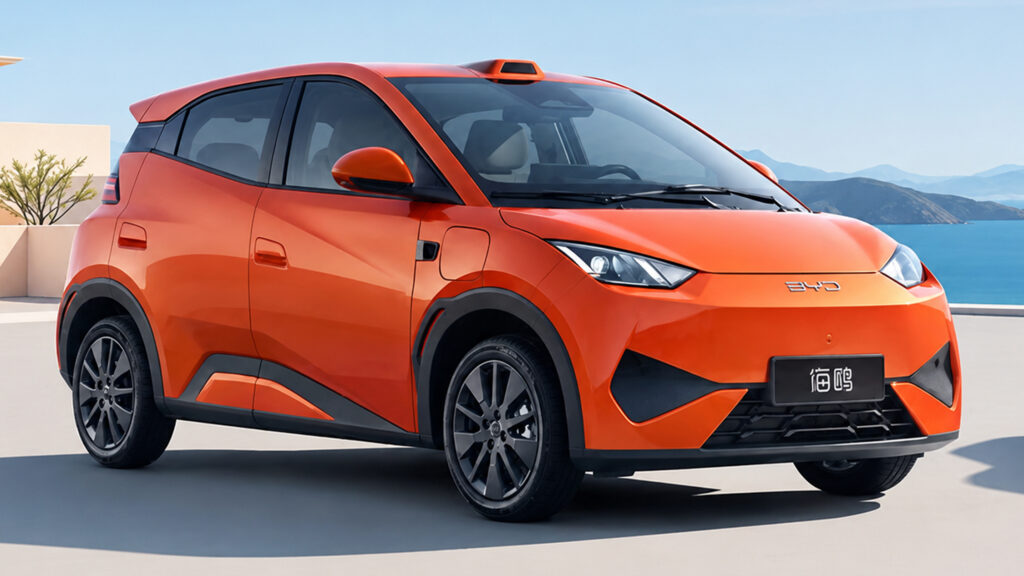
BYD has just refreshed its Seagull subcompact for its domestic market. The Seagull is the tiny 3,780 mm (148.8 inches) electric hatch sold as the Dolphin Surf in Europe. For MY26 there are a couple of new colors, Mango Orange and Mint Green, fresh 16-inch Starlight wheels and new LED taillights, though the 74 hp (75 PS / 55 kW) powertrain is carried over.
But the big news is the availability of a driver assistance system that combines a Lidar sensor with more commonly available radar and camera-type sensors. The Lidar tech comes as part of the optional DiPilot 300, an ADAS system that’s the mid-point of three BYD “God’s Eye” assistance packages. You can tell if the Seagull you’re looking at has DiPilot 300 because it looks like someone’s grafted on the roof snorkel from a McLaren 675LT.
A base Seagull Vitality Edition with the smaller 30.1 kWh battery and 190-mile (305 km) range costs ¥69,900 ($10,300), Car News China reports, while the poshest Flying Edition with a bigger 38.9 kWh power pack and 252-mile (405 km) range runs to ¥85,900 ($12,600). But add on the DiPilot 300 option and those prices jump significantly to ¥90,900 ($13,400) and ¥97,900 yuan ($14,400).
Lidar Works, But At A Price
A $3,100 option on a $10,300 car is kind of crazy, but then Lidar is expensive. That’s why BMW and Mercedes, who both previously offered the technology as part of their hands-off Level 3 assistance packages on their 7-Series and S-Class flagships, have dropped the circa-$7k options from the newest version of those cars.
Instead, both German brands are switching their attention to Level 2 systems that still require drivers to look at the road, but unlike the Level 3 systems – which were restricted to freeways – can operate hands-free in urban environments. Both brands will return to L3 tech at a later date.
Despite the presence of a Lidar sensor, the Seagull’s DiPilot 300 is also an advanced Level 2 system, not Level 3. But BYD is talking about L3 as a future development for some of its cars, and you wouldn’t want to bet against even the humblest models like the Seagull getting it in a few years.
The entry-level E7X has 402 hp and starts at just 289,900 yuan.
AUDI offers the all-electric SUV with 100 kWh and 109 kWh packs.
The flagship model starts at $55,900 and has 670 hp.
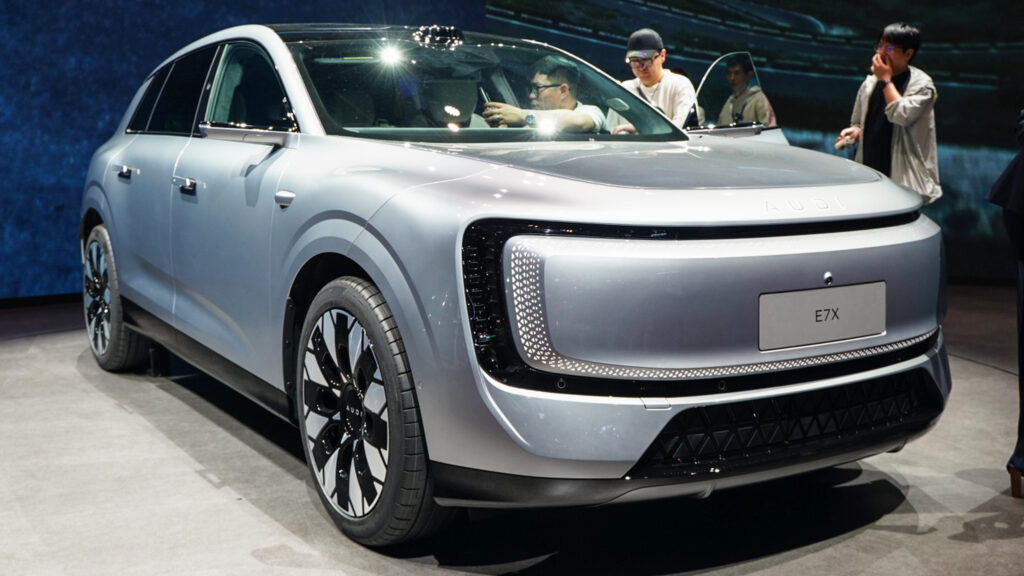
Prices have finally been confirmed for AUDI’s all-electric E7X in China. As we’ve come to expect, it’s incredibly cheap given how large it is and all the technologies crammed into it. If only the car manufacturer could build and sell something like this in Western markets.
The base E7X has been priced from 289,900 yuan ($42,600) and is known as the Pioneer. It comes with a 100 kWh battery pack and a 900-volt electrical architecture, providing it with 705 km (438 miles) of driving range on the CLTC cycle. It can also hit 100 km/h (62 mph) in 5.82 seconds. Power comes from a rear-mounted electric motor with 402 hp (300 kW) and 369 lb-ft (500 Nm) of torque.
Positioned above this model is the Pioneer Pro, which comes equipped with more features, including air suspension. It is priced from 319,800 yuan ($47,000) and has the same 5.82-second sprint time to 100 km/h, but a slightly longer range of 691 km (429 miles).
A longer-range version of the RWD model has also been confirmed, priced from 349,800 yuan ($51,400) and featuring a larger 109 kWh pack. This boosts the driving range to 751 km (476 miles), although the heavier battery means the 0-100 km/h time has swelled to 6.25 seconds.
Cheap And Big
Two all-wheel-drive versions of the AUDI E7X will also be offered. The first uses the 100 kWh pack and produces a combined 670 hp, slashing the 0-100 km/h to just 3.9 seconds. Priced from 349,800 yuan ($51,400), this model has a 636 km (395 miles) driving range. Sitting at the top of the range is a 670 hp version with the 109 kWh pack and a 660 km (410 miles) range, priced from 379,800 yuan ($55,800).
To put these prices into perspective, a new 2026 Audi Q3 in the United States starts at $43,700 and uses a 2.0-liter turbocharged four-cylinder engine with 255 hp and 273 lb-ft (370 Nm) of torque. The largest electric SUV that Audi sells in the US is the Q6 e-tron priced from $64,500, but it’s significantly smaller than the E7X.
Residents can anonymously report unsafe riding activity to Parker Police.
Police say electric motorcycles follow the same laws as regular motorcycles.
The system is meant to target illegal riding on streets, trails, and parks.
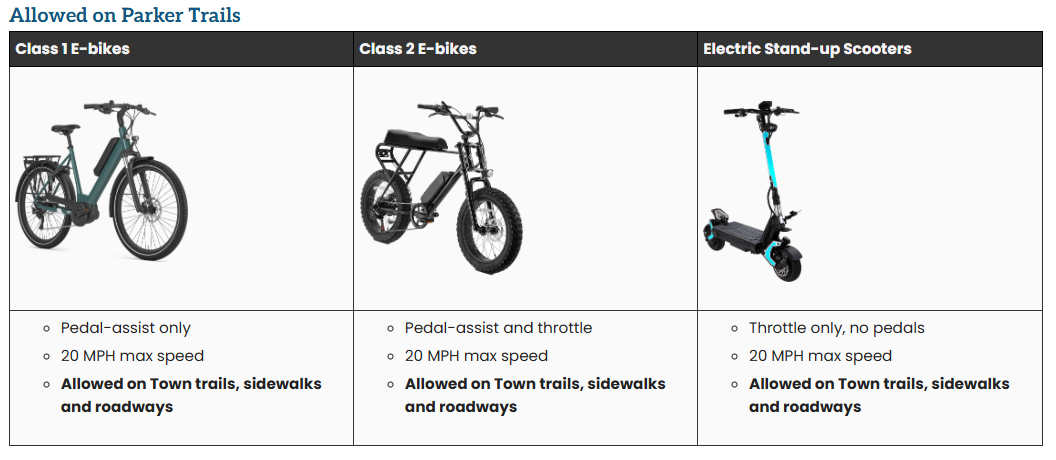
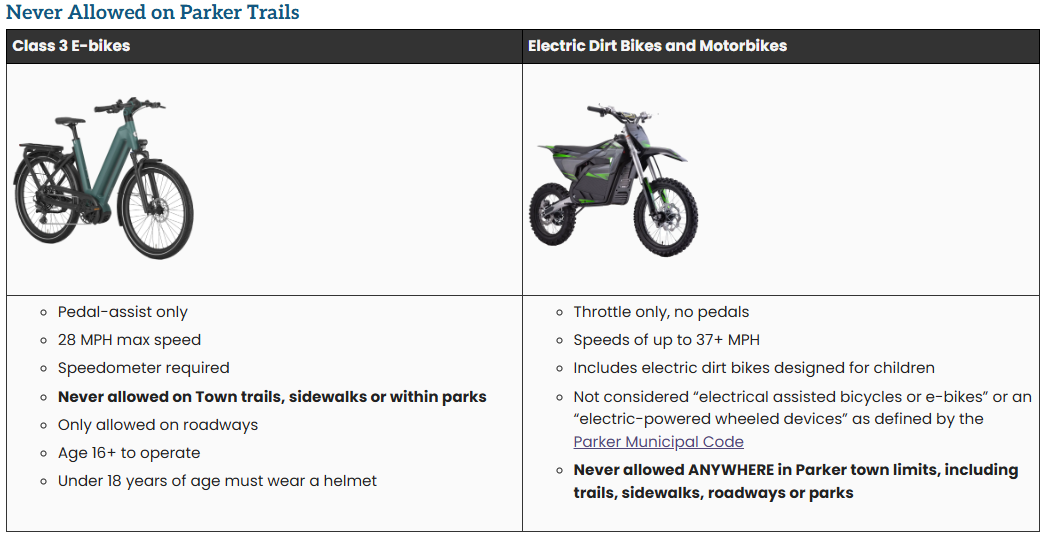
Police departments across the U.S. are struggling to figure out what to do with the explosion of electric motorcycles, Sur-Rons, dirt bikes, and high-powered e-bikes flooding suburban streets and trails. Now, one Colorado town is taking a new approach. It’s asking residents to report riders directly to police through an anonymous online portal.
The Parker Police Department in south Denver recently launched its “E-Bike, Dirt Bike, & E-Motorcycle Safety Reporting” tool, allowing residents to submit locations, rider descriptions, and details about allegedly unsafe behavior. The form includes options like “stunt riding,” “unsafe lane changes,” “running stop signs,” and even “no dangerous actions/just riding.”
Importantly, police are making the important distinction between genuine e-bikes, the ones made for commuting, trail use, and recreation, and electric motorcycles that are often nearly inoperable with the pedals alone. According to the department, many riders are allegedly operating without licenses, insurance, or registration while also damaging parks, trails, and private property. States nationwide have seen an uptick in illegal electric motorcycle use and abuse.
Parker Police also pointed to a recent California case where a mother was charged with involuntary manslaughter after her 14-year-old son allegedly struck and killed an 81-year-old man while riding an electric motorcycle. Officials say the incident highlights the potential dangers associated with improperly used high-powered electric bikes.
That all said, the new system effectively creates a crowdsourced enforcement network where residents can anonymously report riders without any direct interaction with law enforcement. While supporters will likely argue it improves public safety, critics may see it as another example of expanding surveillance culture creeping into everyday transportation.
One local tells Carscoops, “This isn’t an e-bike or e-motorcycle issue. It’s a person issue. If kids are running from the police, it’s a parenting issue. Either way, it’s about the person riding and not the mode of transportation.”
Whether Parker’s new reporting system becomes a model for other cities or a flashpoint in the growing debate over surveillance and micromobility remains to be seen. What’s clear is that towns and police departments are rapidly losing patience with high-powered electric motorcycles operating in legally gray areas, especially as crashes, complaints, and viral social media videos continue piling up.
Data suggests that the average used EV costs just ~$1,000 more than a used ICE car.
Analysts warn that there are some hidden costs of running an EV that need to be considered.
Components, accident repairs, and insurance cost more on average for EVs than for ICE vehicles.
In the past, used EVs may have been considered a bit of a gamble, especially if they were packing a few years under their belt. But things are changing. A report from Cox Automotive says that used EV sales in March were up 27.7% compared with the previous year.
Even more telling was that the March figures were a whopping 53.9% higher than February’s. There are several reasons driving the change, but according to CNBC, experts warn that while cheap EVs may look attractive, there are a few hidden considerations buyers should still be wary of.
An Influx Of Used EVs
One reason is the simple fact that as more people buy new EVs, more used EVs end up at dealer lots as their leases end. According to Joseph Yoon, a Consumer Insights Analyst at Edmunds, “Where we had the highest concentration of leasing happen was between the tail end of 2022 and all the way through 2023, and since most leases are three years long, all those cars… are coming back to dealer lots in droves.”
This means that much of the depreciation has already occurred, translating into some attractive deals for those looking at the used market. In fact, 44% of those EVs sold in March of this year were priced below the $25,000 mark.
More Choices & Price Parity
Whereas previously electric vehicles were offered by only a handful of manufacturers, nowadays there’s a veritable smorgasbord of options coming into the used market. And with more options comes lower prices as well. The average price of a used EV in March was $34,653, according to Cox Automotive. Contrast that with the average price of a used gas car being $33,641, and price parity isn’t far off.
With used EVs no longer bearing price premiums over their gas-powered equivalents, they are now more accessible to buyers who have long aspired to jump on the EV bandwagon but were unable to in the past. But it’s not just lower purchase prices that are seen as appealing. Promises of cheap running costs are just as enticing.
Costs To Consider
Charging an EV, especially if you use a home charger, can be pretty cheap, according to a Kelley Blue Book report. Taking into account a 1,015-mile monthly average, home-charging an EV worked out to an average of $59.66. But not everyone has the ability to install one of those. If you’re forced to use public fast charging exclusively, then things are a little different. That cost rises to $169, which is higher (albeit not by much) than the $147.24 gas bill that an average gas-powered vehicle with a 30mpg fuel efficiency figure would cost you.
Another of the biggest benefits that EV makers regularly promote is their relative lack of maintenance. It’s true that you don’t need to spend money on engine oil changes and filters because an EV doesn’t have a gasoline engine. Also, since EVs use regenerative braking to recover energy under deceleration, their brake pads also benefit from longer lifespans. However, there is one consumable component that EVs go through faster than gas cars, and that’s tires. According to Consumer Reports, this is primarily due to the higher curb weight of EVs contributing to accelerated tread wear.
Components’ Costs
EVs also have some pretty expensive components that can run you a pretty sum if they go wrong outside of warranty. Chief among these is the traction battery, where replacement costs can range from $5,000 to $15,000. That’s why the advice from experts is to seek out a used EV that still has warranty coverage remaining. Generally, EV batteries come with an eight- or ten-year warranty, and in most cases these are transferable to a subsequent owner.
Collision repairs are another area where EVs tend to cost more. In 2025, fully battery-powered cars cost an average of $6,395 to repair after a collision, compared with $5,105 for gas-powered vehicles, according to Mitchell International, which specializes in claims and collision technology.
Insurance is similarly pricier. The average annual cost of insuring an EV runs to $4,058, versus $2,732 for a comparable gas car, according to a 2025 report from insurance website Insurify. That said, the actual figure varies considerably by model, insurer, and location, and a used EV will generally cost less to insure than a new one.
A 2019 Tesla Model 3 hit 380,000 miles on its original battery pack.
Range took a serious hit, the kind most owners would call alarming.
Even so, it still cleared triple-digit highway miles in real-world testing.
Electric vehicles have plenty of advantages over combustion cars but all of them have an uncomfortable truth sitting under the sheet metal. Engines wear out over time, but the size of their gas tank doesn’t shrink. EVs will suffer battery and range degradation no matter what. The only question is how bad it’ll get before the battery fails. One seven-year-old Tesla still running on its original battery is providing some insight.
At over 380,000 miles (610,000 km), one Tesla Model 3 owned by the YouTube channel Drive Protected is going strong long after most vehicles (combustion or EV) are long dead. When new, it offered 240 miles of range. Today, a full charge shows 158 miles. That’s an 82-mile drop, or about 34.2 percent gone. There’s really no sugarcoating it. That’s substantial degradation and puts the battery well below 70 percent of its original capacity.
That said, it’s not quite the death sentence you might expect. The car was put through a real-world highway test at a steady 68 mph, returning 138.3 miles before hitting zero. That’s not impressive on paper, but it’s far from unusable. For shorter commutes or city duty, it’s still very much a functioning vehicle.
The numbers back that up. Over the test, it consumed 32.4 kWh. That’s well below the roughly 49 kWh it would have had when new. That aligns with the reduced range estimate and confirms the degradation isn’t just theoretical.
Still, despite losing over a third of its capacity, nothing else about the car appears fundamentally broken. No catastrophic failure, no sudden shutdowns. It’s just a steady erosion of range over time, and about double the miles of most cars when they head to the scrap yard.
In a way, this car is making a case for and against EVs. Yes, battery degradation is real, measurable, and significant. Making batteries cheaper and easier to replace in the near future is key to EV sustainability and longevity. But it also shows that even after mileage that would retire most vehicles, an EV can keep going, albeit with a shorter range.
Renault adds huge folding canvas roof to electric 4 E-Tech crossover for £1,500 premium.
4 Plein Sud, which translates as due south, cost from £27,445 including UK’s £3750 grant.
Like all 4 E-Techs it comes with 147 hp, a 52 kWh battery and up to 242 range miles.
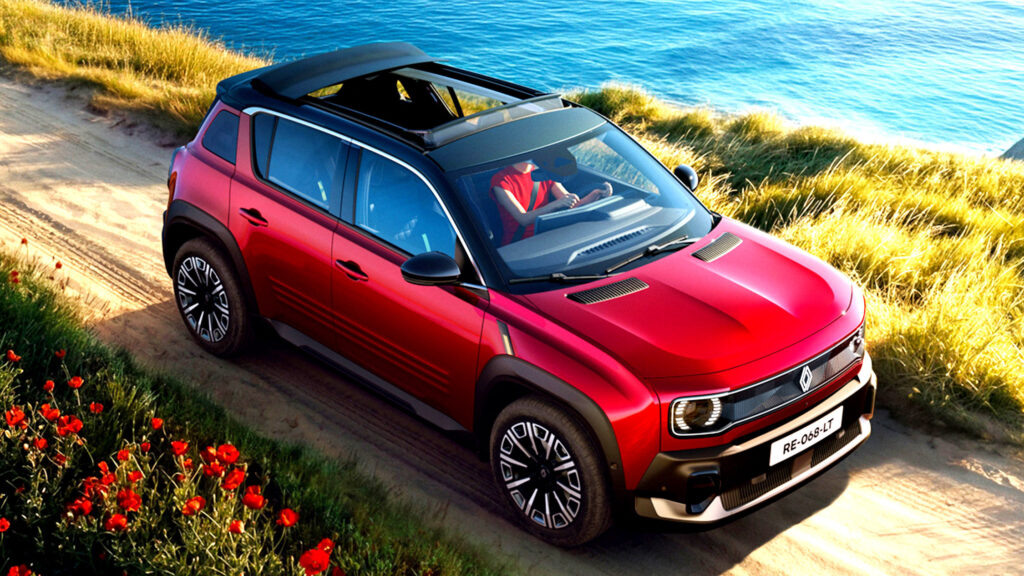
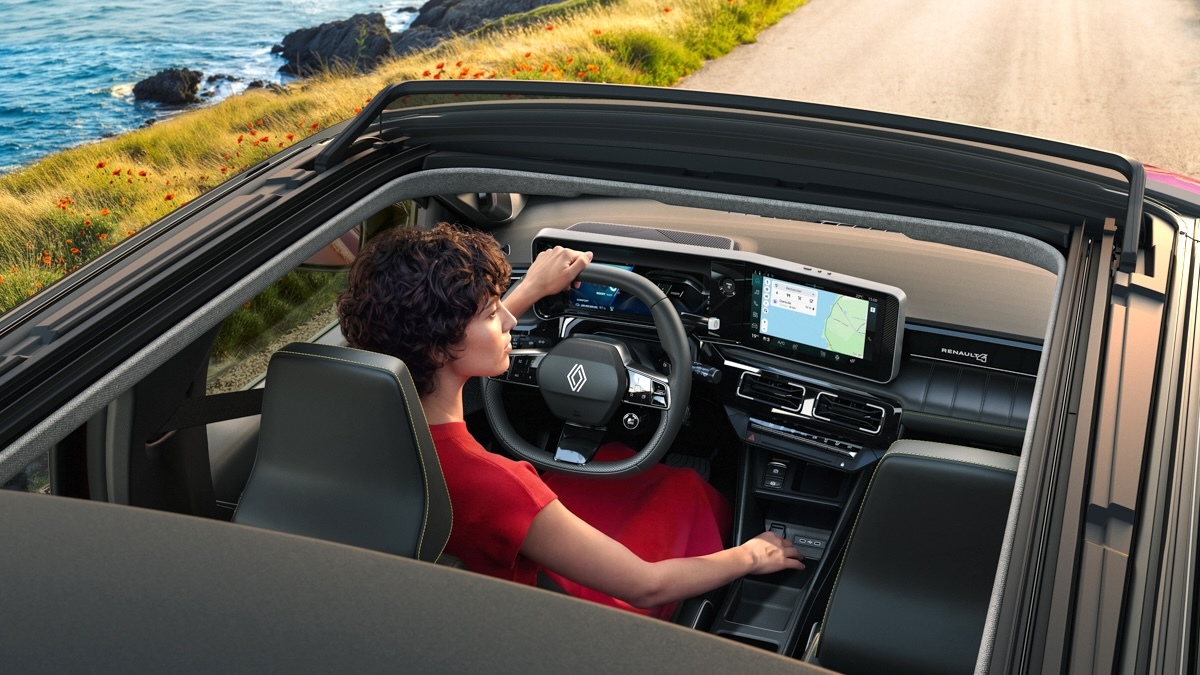
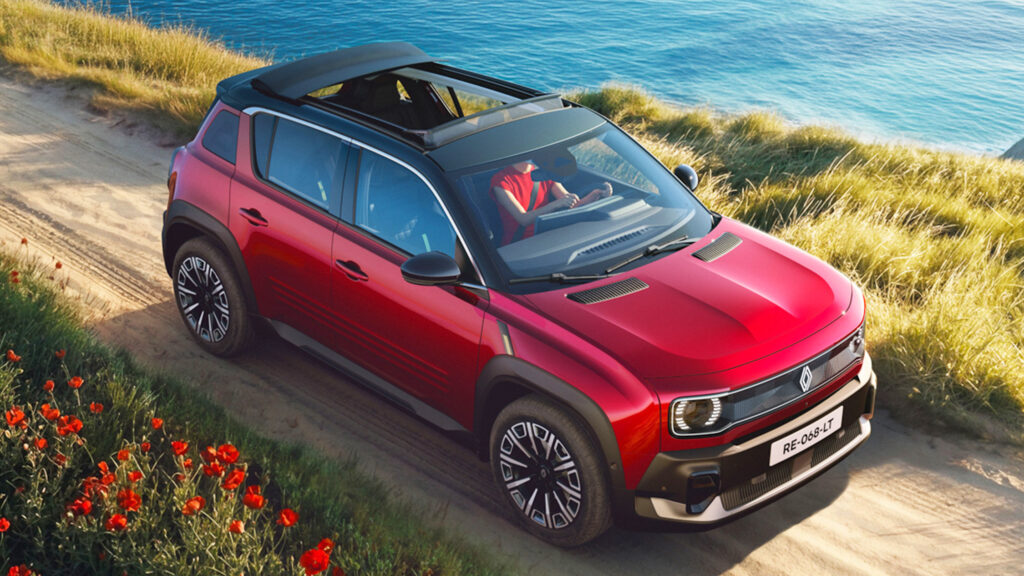
Renault’s retro-flavored 4 E-Tech has already borrowed plenty of design ideas from the original Renault 4, but now it’s reviving one of the old car’s coolest features too. Meet the new Plein Sud version, which swaps the standard roof for a giant electrically operated folding canvas setup.
The fabric opening stretches 800 by 920 mm (31.5 x 36.2 inches) and folds back electrically in multiple stages, giving both front and rear passengers a proper open-air feel. Renault says it’s the only fully electric B-segment SUV currently offering this kind of setup.
The roof itself is a pretty clear nod to the original Renault 4’s simple manually retractable fabric roof from the 1960s. But this one is a whole lot smarter. Not only is it fully electric, but you can open it by asking the Reno voice assistant if you’re feeling too lazy to press a button.
Underneath, nothing about the Renault 5 E-Tech‘s SUV brother changes mechanically. Buyers still get the familiar 148 hp (150 PS / 110 kW) front-mounted motor and 52 kWh battery pack delivering up to 242 miles (389 km) of WLTP range. That’s only slightly lower than the fixed-roof version, which manages up to 249 miles (400 km), proving the folding roof’s hasn’t hurt efficiency too badly.
Cheaper Than A Beach Holiday
The Plein Sud arrives in mid-spec Techno+ and top of the line Iconic+ trims, and costs £1,500 ($2,000) more than equivalent fixed-roof models. Prices start at £27,445 ($37,412) in the UK after applying the government’s £3,750 ($5,111) Electric Car Grant. In France, prices start at €31,110 ($36,684) after incentives.
Early access ordering opens immediately for Renault’s R Pass holders, basically customers who previously paid for priority reservation access to skip ahead in the queue. Everyone else can place orders from May 14.
Aside from the roof, Renault’s also rolled out updated safety tech across the 4 E-Tech range to comply with Europe’s latest regulations. New systems include driver fatigue monitoring and an emergency stop function capable of safely slowing the vehicle if the driver becomes unresponsive.
Renault adds huge folding canvas roof to electric 4 E-Tech crossover for £1,500 premium.
4 Plein Sud, which translates as due south, cost from £27,445 including UK’s £3750 grant.
Like all 4 E-Techs it comes with 147 hp, a 52 kWh battery and up to 242 range miles.
Renault’s retro-flavored 4 E-Tech has already borrowed plenty of design ideas from the original Renault 4, but now it’s reviving one of the old car’s coolest features too. Meet the new Plein Sud version, which swaps the standard roof for a giant electrically operated folding canvas setup.
The fabric opening stretches 800 by 920 mm (31.5 x 36.2 inches) and folds back electrically in multiple stages, giving both front and rear passengers a proper open-air feel. Renault says it’s the only fully electric B-segment SUV currently offering this kind of setup.
The roof itself is a pretty clear nod to the original Renault 4’s simple manually retractable fabric roof from the 1960s. But this one is a whole lot smarter. Not only is it fully electric, but you can open it by asking the Reno voice assistant if you’re feeling too lazy to press a button.
Underneath, nothing about the Renault 5 E-Tech‘s SUV brother changes mechanically. Buyers still get the familiar 148 hp (150 PS / 110 kW) front-mounted motor and 52 kWh battery pack delivering up to 242 miles (389 km) of WLTP range. That’s only slightly lower than the fixed-roof version, which manages up to 249 miles (400 km), proving the folding roof’s hasn’t hurt efficiency too badly.
Cheaper Than A Beach Holiday
The Plein Sud arrives in mid-spec Techno+ and top of the line Iconic+ trims, and costs £1,500 ($2,000) more than equivalent fixed-roof models. Prices start at £27,445 ($37,412) in the UK after applying the government’s £3,750 ($5,111) Electric Car Grant. In France, prices start at €31,110 ($36,684) after incentives.
Early access ordering opens immediately for Renault’s R Pass holders, basically customers who previously paid for priority reservation access to skip ahead in the queue. Everyone else can place orders from May 14.
Aside from the roof, Renault’s also rolled out updated safety tech across the 4 E-Tech range to comply with Europe’s latest regulations. New systems include driver fatigue monitoring and an emergency stop function capable of safely slowing the vehicle if the driver becomes unresponsive.
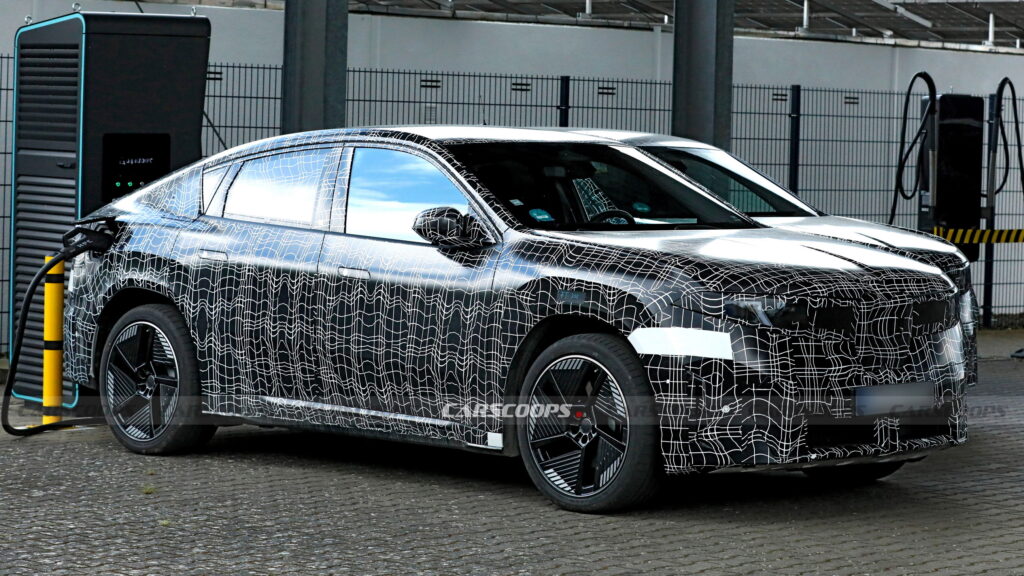
BMW’s upcoming iX4 electric coupe SUV has been spied testing.
Neue Klasse crossover shares platform, powertrains with new iX3.
iX4 50 xDrive should offer same 463 hp as iX3, cost around $67k.
BMW’s Neue Klasse offensive is picking up pace, and having this week been impressed by the price and EPA range of the iX3, we’re now getting a closer, though unofficial look at its coupe brother, which could stretch a full charge even further.
Like its boxier sibling, the iX4 adopts BMW’s new visor-style face that’s becoming a defining Neue Klasse trait. The same design language is also heading to the upcoming electric i3 sedan, helping tie the next generation of BMW cars together visually.
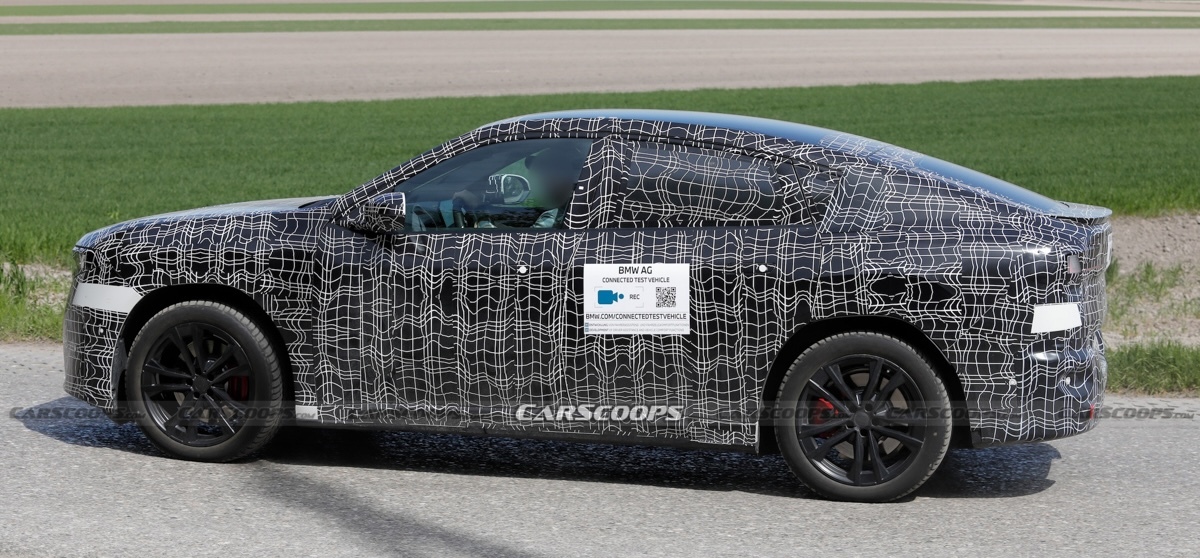
But beyond the nose, the iX4 starts doing its own thing. The roofline drops lower and flows into a fastback rear end, giving the crossover a sleeker silhouette than the standard iX3. It definitely looks sportier, though very tall rear passengers might not be celebrating the compromised headroom or smaller trunk.
The latest spy shots also reveal colored brake calipers hiding behind the wheels, strongly hinting this prototype wears M Sport trim, or is an M Performance variant. The basic M Sport package of interior and exterior trim is $2,500 on the new iX3 that arrives in US showrooms this fall, but upping the spend to $4,000 gets you the Professional version that adds colored M brakes and the Iconic Glow illuminated grille.
Inside, expect the same tech-heavy minimalist cabin already previewed by the iX3 and since rolled out to the facelifted 7-Series. That means a big 17.9-inch infotainment display, BMW’s pillar-to-pillar Panoramic iDrive setup, a futuristic four-spoke steering wheel, and an updated head-up display system.
40 And 50 Powertrains Planned
Underneath, the iX4 should mirror the iX3 lineup almost exactly. Earlier leaks tied to BMW’s accidentally published US product plans suggested America will get both 40 and 50 variants of the iX3 in rear and all-wheel drive configurations. It’d make little sense for BMW not to offer matching iX4 versions, though it looks like BMW will restrict the electric coupe to all-wheel drive.
That means entry-level models could use the European-spec iX3 40 setup featuring an 82.6 kWh battery and a 316 hp (235 kW / 320 PS) motor. Higher-end 50 xDrive versions should pack dual motors producing 463 hp (345 kW / 469 PS). Both versions will be capable of charging at 400 kW.
BMW recently confirmed the iX3 50 xDrive for America with a surprisingly low $62,850 starting price (including $1,350 destination) and an impressive EPA-rated 434 miles (699 km) of range. Since the iX4 slices through the air more cleanly, it could potentially travel even farther between charges, though expect pricing to climb past the $65,000 mark.
A year of ownership wiped nearly 60 percent off the Daytona’s value.
The electric Charger covered under 7,000 miles before its value collapsed.
Staff complaints ranged from fake exhaust sounds to glitchy software.
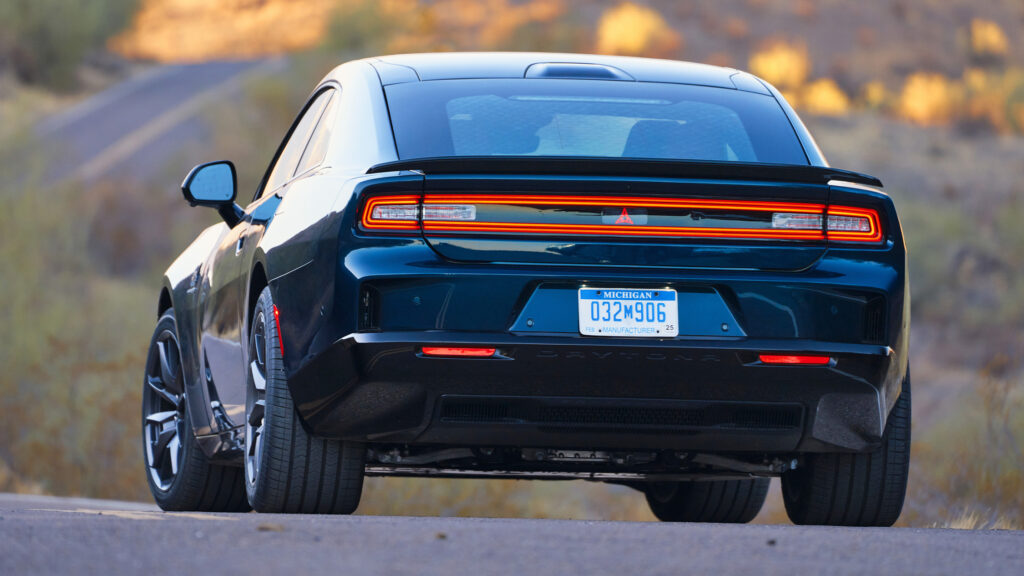
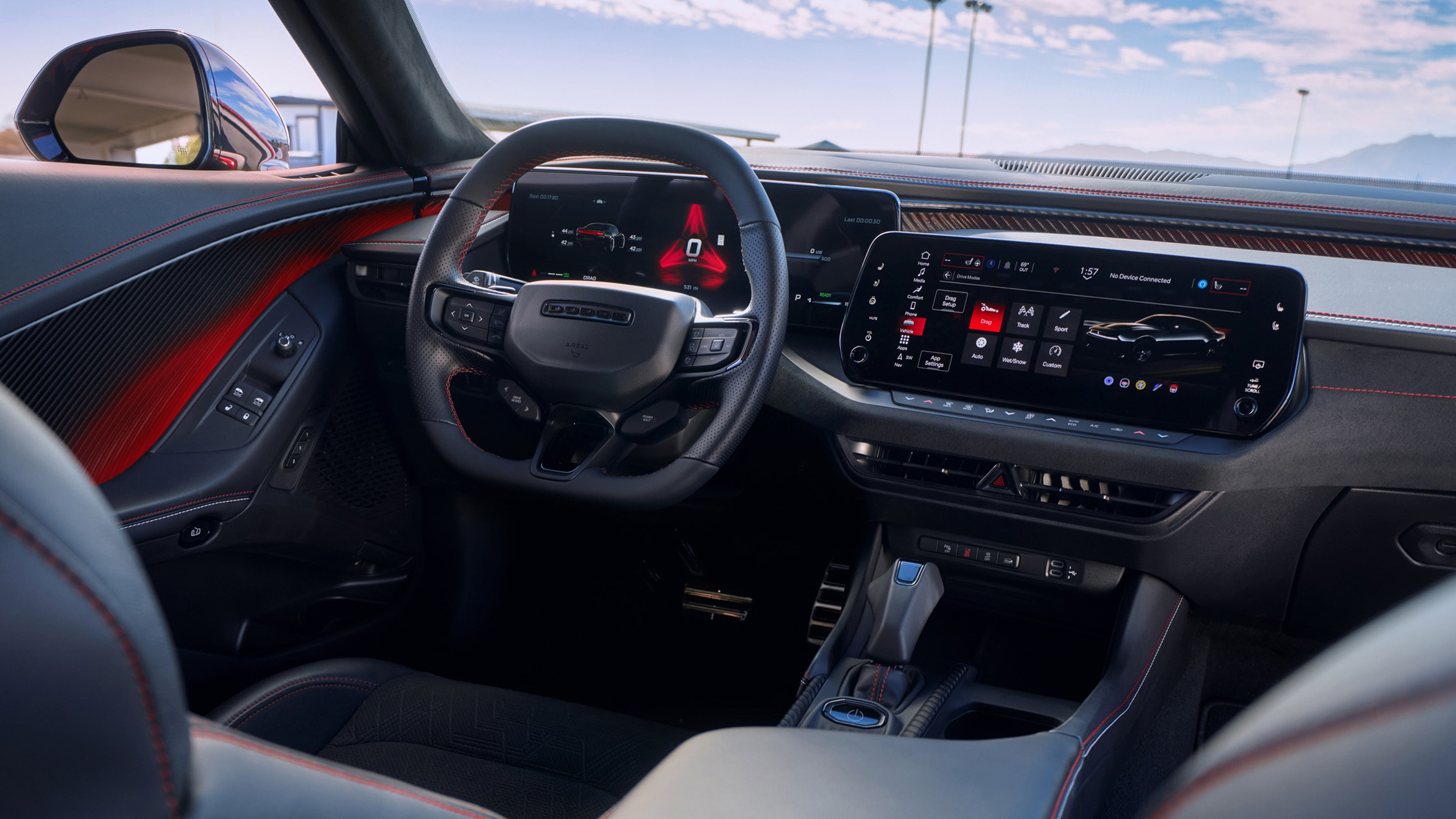
Buying a new car is almost always a terrible financial decision. But losing nearly $50,000 in a single year after just a few thousand miles takes things to an entirely different level of painful. Unfortunately for Edmunds, that’s exactly what happened with its 2024 Charger Daytona Scat Pack.
Unlike many magazines and websites, that simply borrow their long-term test cars from automakers, Edmunds buys them with real cash. True, it got a small discount from Dodge on the as-tested price of $85,965, but it still paid a hefty $82,000 to get behind the wheel of Detroit’s first electric muscle car.
But 12 months later when it came time to move the car on, Edmunds was shocked to find its Daytona was worth just $35,000. That’s almost a 60 percent hit, and not because the road test team had put a lifetime’s worth of miles on the EV. It had covered less than 7,000 miles (11,300 km), which is the kind of distance some drivers do in six months.
Even worse, the massive financial hit came after most of the Edmunds staff spent a year actively disliking the thing. Reading through their long-term test notes would be enough to send anyone wavering over which pony car to buy straight into the arms of a V8-powered Ford Mustang Dark Horse.
Digital Headaches
Complaints ranged from glitchy infotainment and strange drivetrain clunks to awkward ergonomics and bizarre software behavior. One editor described the fake Fratzonic exhaust sound as “an insult to V8s everywhere,” while another said the car was simply “boring,” which is probably the most brutal criticism you can level at something wearing a Charger badge.
Others hated the turning circle, massive dimensions, inconsistent regen braking, and handling that apparently couldn’t back up the car’s straight-line punch. But the year didn’t pass without the Charger getting some praise. Several staffers liked the styling, roomy hatchback practicality and surprisingly good range. The 670 hp (679 PS /500 kW) Daytona managed 255 miles (410 km) in real world use, comfortably beating its pathetic official EPA estimate of 216 miles (348 km).
“The Charger was a big, expensive disappointment,” the outlet said, summing up the year-long experience. “We won’t miss having this thing in our fleet.”
Hertz has cut prices on its Shelby Mach-Es again, and the drop is steep.
Mileage across the cars on offer ranges from just 3,275 to over 15,000 miles.
Shelby’s tuning package adds looks and sound, but no real performance.
Hertz has a long history of renting out modified cars from Shelby to its customers, and often these vehicles become prized collector’s items. That does not appear to be the case with the Shelby-tuned Ford Mustang Mach-Es that it had in its fleet.
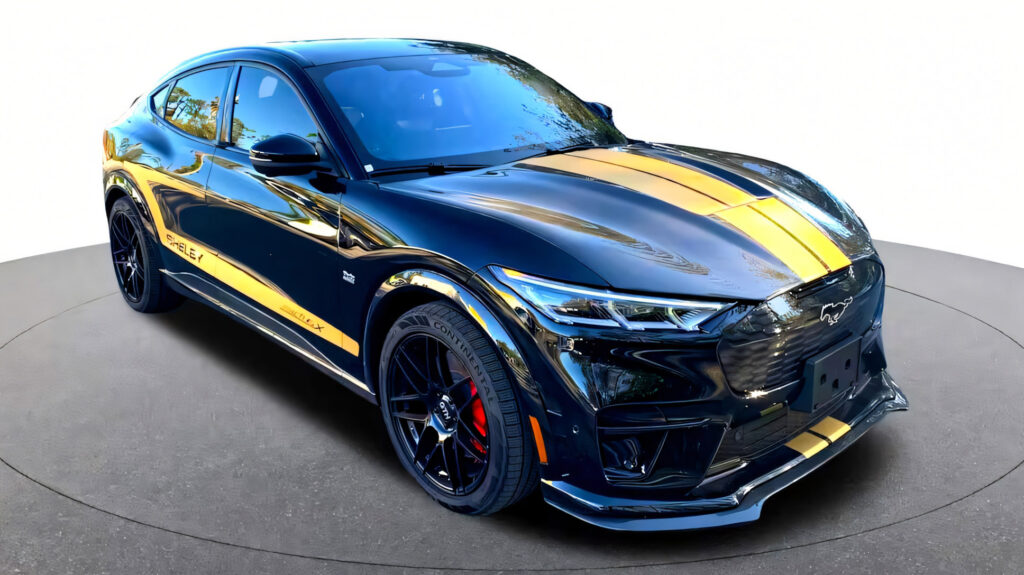
The rental giant started offloading a bunch of these special black-and-gold Mustang Mach-Es back in late 2024, asking around $65,000 for most of them. Fast forward just a couple of months to January 2025, and the prices were slashed to around $60,000. Hertz, clearly desperate to offload its remaining inventory, has reduced prices by a further $20,000. Could this be a deal too good to pass up?
Photos Hertz
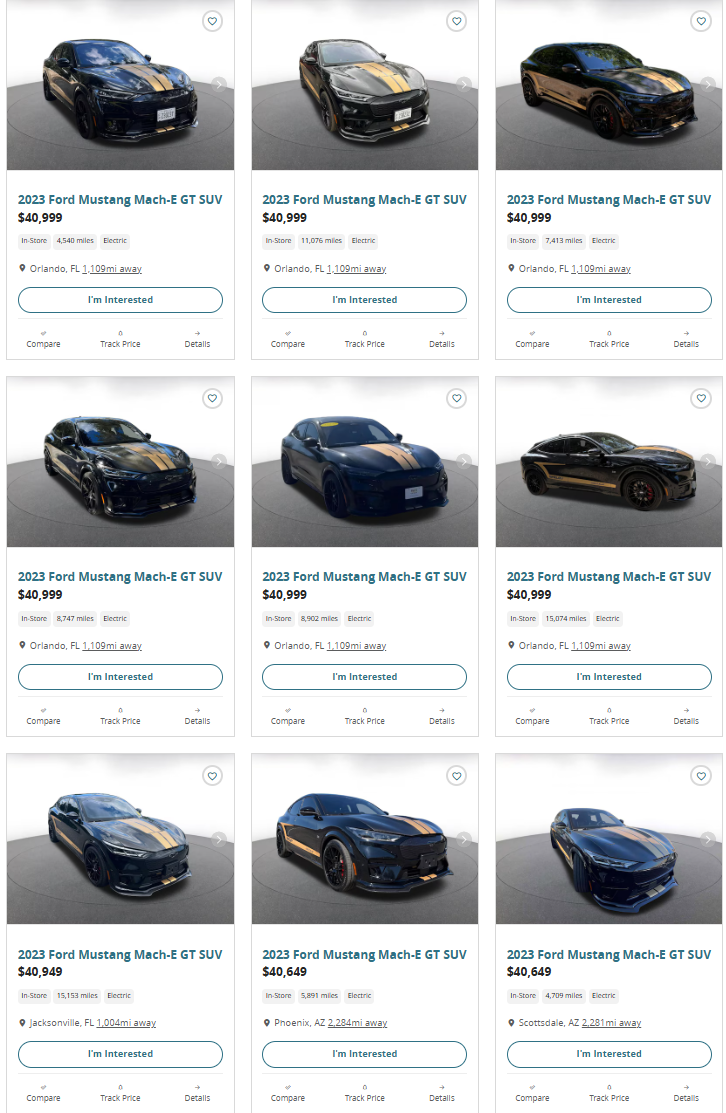
A scan of Hertz’s current inventory across the States turns up 31 Shelby Mach-Es, with prices spanning a narrow $40,085 to $40,999 and mileage stretching from 3,275 to just over 15,000. The cheapest examples sit in California, while a Scottsdale car claims the lowest mileage of the lot at 3,275 for $40,649. One in New Orleans splits the difference at 8,215 miles for $40,436. A new Mach-E GT, the donor car for the Shelby treatment, stickers at $53,395.
A Performance Bargain?
It shouldn’t come as much of a surprise that Hertz has slashed prices of these cars so significantly. After all, they are EVs, and current electric cars tend to depreciate very quickly. We suspect the designs of the Shelby models also turn off many prospective buyers, particularly because of the go-fast gold racing stripes and carbon fiber parts, including the hood.
Shelby is believed to have built just 100 examples of the Hertz-exclusive Ford Mustang Mach-E GT, so it does have exclusivity going for it. In addition to the gold stripes and the carbon parts, Shelby added custom black wheels and sourced an exhaust sound system from Borla, aiming to replicate the sound of an internal combustion engine. Sadly, no real performance upgrades were made that could justify the price.
There is also the usual caveat that comes with any ex-rental: someone else got the keys first, and they probably did not treat them gently.
Little Tikes offers an EV charger as an optional accessory.
It works with the Cozy Coupe and has lights and sounds.
Priced at $32.99, it is more expensive than the gas pump.
The Little Tikes Cozy Coupe is one of the most widely recognized vehicles on the planet, with an estimated 25 million sold since 1979. The toy car is actually leg powered, but it spent decades pretending to run on gasoline, which, with pump prices now north of $4.50 a gallon, is starting to feel like a uniquely cruel bit of make-believe. Now, Kids who’d rather go green can grab the charging station accessory and do their part for the EV transition.
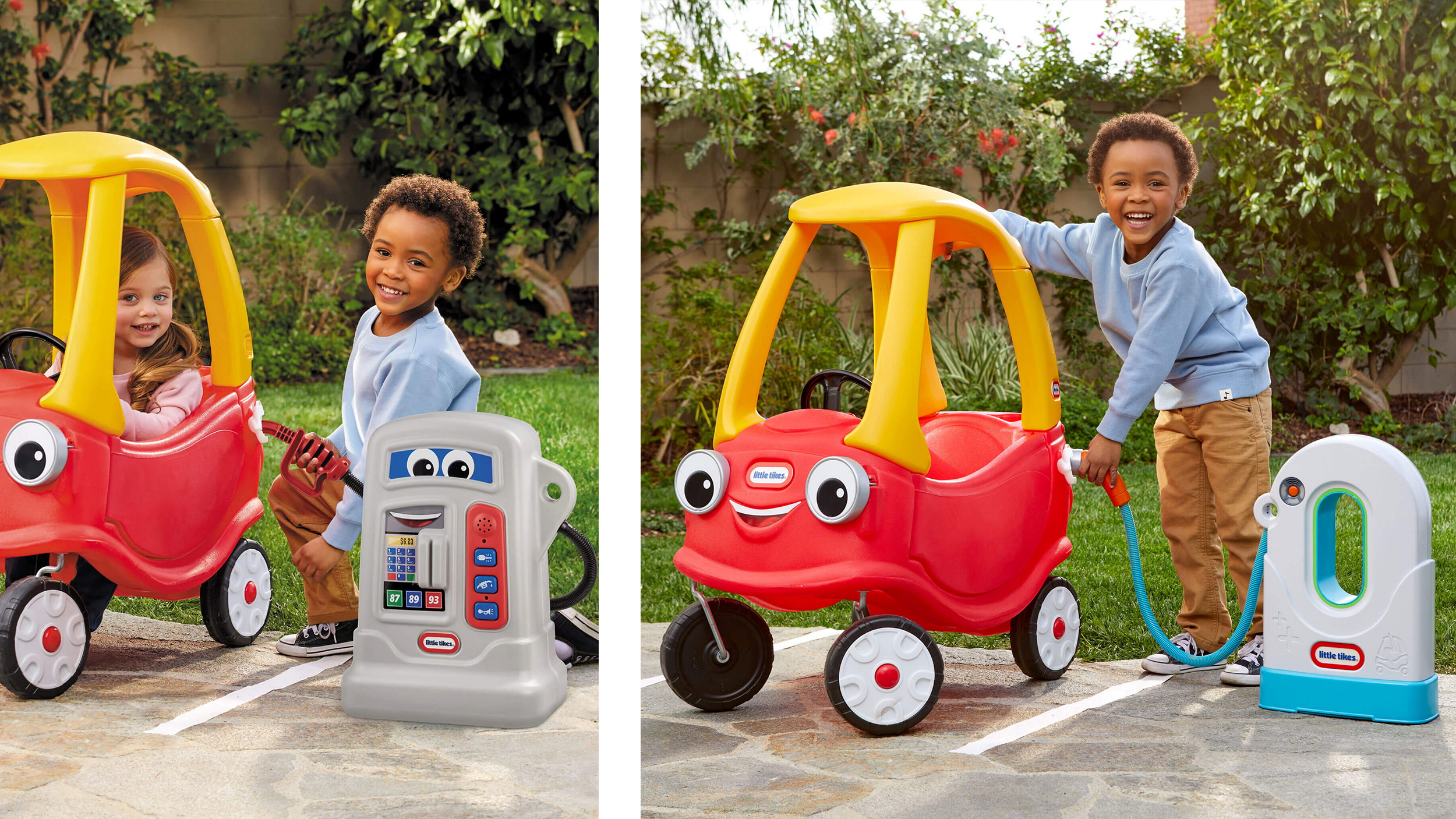
The Cozy E-Charging Station is designed to bring zero-emission infrastructure to backyards and playrooms, mirroring the real-world shift toward electric cars. The accessory first appeared in late 2022 as part of a UK campaign before graduating to a permanent fixture in the brand’s global lineup, now with a cleaner, more modern look.
The unit functions as an interactive charger, featuring a cable and a plug designed to slot into the fuel ports of all the existing Cozy Coupe models. Pressing the power button activates a sequence of light-up effects and electronic charging sounds, simulating a high-voltage top-up. The charger is powered by batteries making it suitable for outdoor play.
The Cozy E-Charging Station is about the same size with the old Cozy Pumper, measuring 17.50 inches (44.45 cm) tall and weighing about 3 lbs (1.36 kg). It is fitting for toddlers and kids aged from 18 months to 5 years, allowing them to “plug in and charge their car just like mom and dad“.
It retails for $32.99, a small premium over the $29.99 Cozy Pumper. Unlike their parents, however, toddlers do not need to buy a new vehicle to make the switch, since the charger is compatible with the existing fleet. They are also spared range anxiety, because the Flintstones-spec drivetrain of the Cozy Coupe will keep going as long as the driver is well rested and well fed.
Bentley’s second SUV will sit below the Bentayga and skip combustion entirely.
The rumored Barnato name would pay tribute to one of the original Bentley Boys.
Crewe’s newest electric SUV shares its bones with the Porsche Cayenne Electric.
Bentley’s customers cannot seem to get enough of the Bentayga, so the company in Crewe is expanding its SUV lineup with a second model. Expected to wear the Barnato name, in tribute to Woolf Barnato of Bentley Boys fame, the new model will slot in below the Bentayga and ditch combustion entirely.
While it remains to be seen how much demand Bentley will see for the new model in markets like the US, where EV sales have stagnated, it will certainly appeal to those seeking the most serene and comfortable driving experience. The use of electric power will also help Bentley lower its overall fleet emissions. Bentley is expected to reveal the new EV later this year, with customer deliveries reportedly beginning in 2027.
Spied here doing the rounds at the Nurburgring, this prototype is wearing the same camouflage we’ve seen on others. As such, key areas of the vehicle’s design remain hidden, though we can see the blacked-out lower grille.
Concept Looks
SHProshots
Earlier test cars used lighting designed to resemble the twin-headlamp setup of the Flying Spur and Bentayga, but this prototype is closer in style to the single-unit design of the Bentley Batur. The clusters also feature four separate LEDs, similar to the arrangement found on the Porsche Macan and Cayenne Electric.
It’s hard to say exactly what the grille will look like, though we expect it to be body-colored and used largely for visual effect rather than cooling duties. The design could take inspiration from last year’s EXP 15 concept. Cooling is instead handled by functional air intakes in the lower front bumper, while a radar sensor sits at the center of the fascia.
Porsche Power
We know the Barnato uses the Premium Platform Electric (PPE) architecture, as do other VW Group models, including the Cayenne Electric. Carscoops understands it’ll come equipped with a sizeable 113 kWh battery pack that supports DC fast charging, adding 100 miles (160 km) of range in under seven minutes.
Bentley is also expected to lean on the Porsche parts bin for its electric motors, with the Cayenne Electric the most likely donor. Output in the Porsche ranges from 402 hp at the entry point to 1,156 hp at the top, and the Crewe interpretation is tipped to offer more than 1,100 horsepower in its flagship forms.
The similarities to the Cayenne Electric will continue with the in-car technology. While these spy shots captured only a small portion of the interior, previous prototypes have shown that several tech components will be shared with Porsche, including a curved OLED central display running Android Automotive OS. Bentley is expected to give the cabin its own identity through more extensive use of leather, wood, and metal trim throughout.

 Login
Login