Volkswagen has delivered its 2 millionth EV, an ID. 3 hatch.
It only celebrated the 1 millionth electric car in April 2025.
New affordable models like ID. Polo and ID. Cross coming.
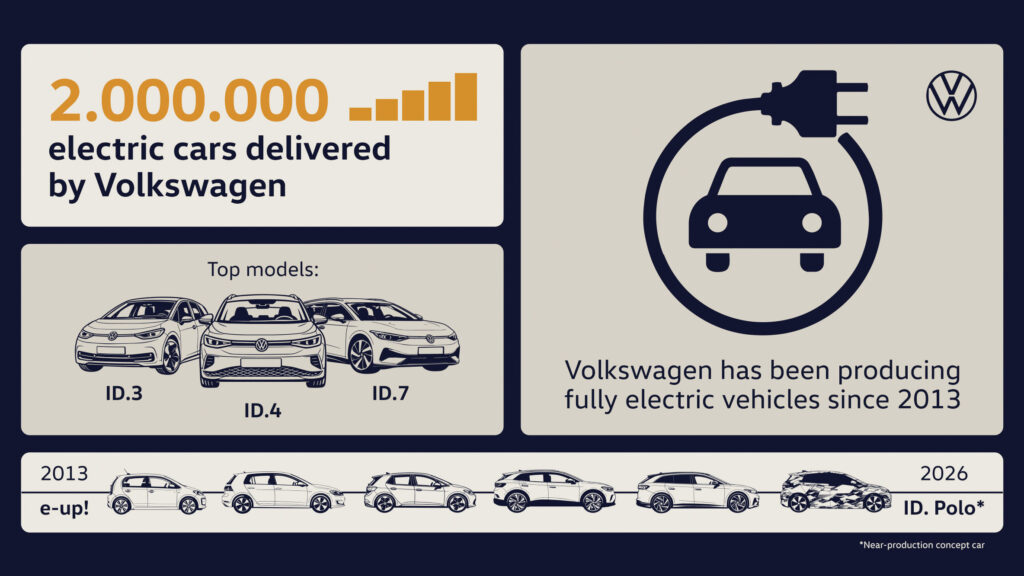
Volkswagen has just handed over its 2 millionth fully electric vehicle, and the pace is what really grabs you. It took 12 years to reach the first million. The 2 millionth car showed up just 10 months later.
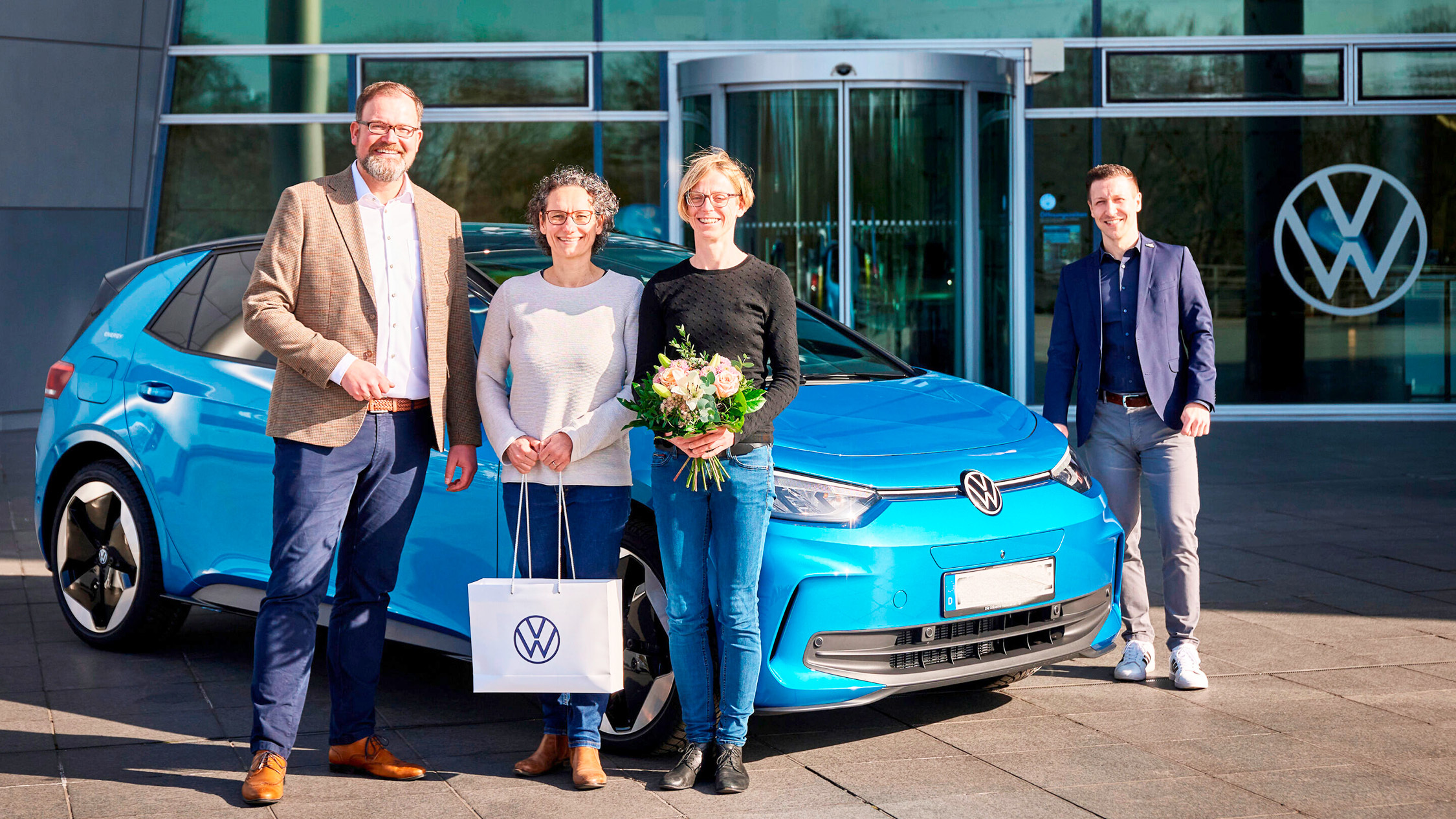
The anniversary car is an ID. 3 hatch, built in Zwickau, Germany, and delivered to a customer at the Transparent Factory in Dresden. The ID. 3 kicked off VW’s large-scale MEB era back in 2020, though the modern electric journey really began with the e-up in 2013 and the company experimented with a small number of electric Golfs as far back as the 1980s.
Volkswagen only celebrated its 1 millionth EV, an ID.3 GTX, last April. That means the brand effectively doubled its lifetime electric output in less time than it takes some automakers to add a new paint color to mark a model-year changeover.
ID. 4 Led The Charge
The heavy lifter in that sales charge is the ID. 4 SUV, which together with its ID. 5 fastback brother clocked up roughly 901,000 deliveries worldwide, proving SUVs still rule even in the electric age. The ID. 3, whose sales potential is restricted by the fact that it’s not available in North America, follows with around 628,000 units, while the larger and more premium ID. 7 has added another 132,000 to the tally.
Europe is the engine behind much of that growth. Roughly one in five cars sold there is now electric, and Volkswagen has carved out a leading role in the region. The US market has definitely cooled, but globally, the trajectory is still pointing upward.
More EVs On The Way
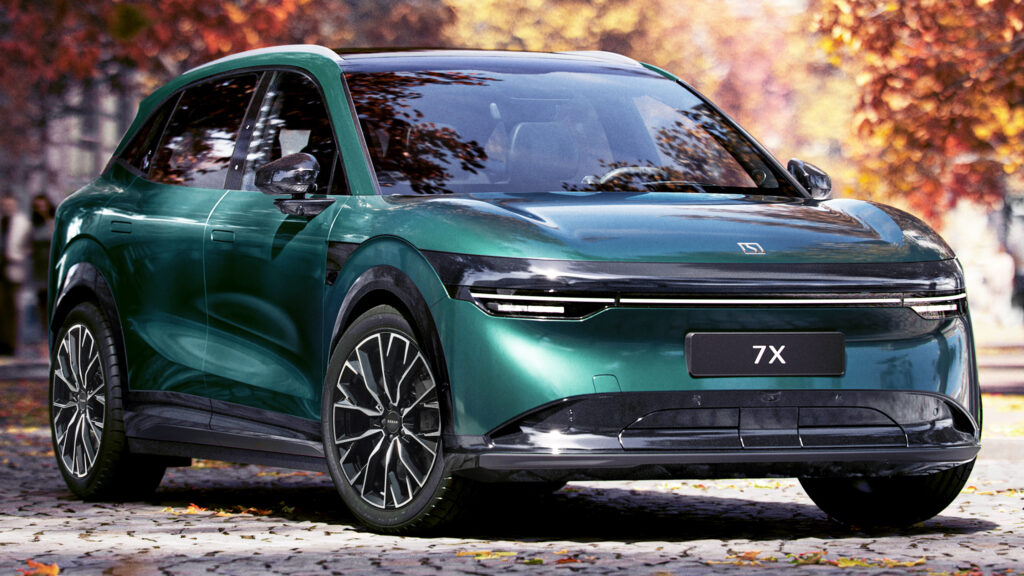
And VW isn’t slowing down. A refreshed ID. 4 badged as the ID. Tiguan is on the way this year, and the new ID. Polo (seen below) and first ever electric GTI, the ID. Polo GTI, will take the fight into the affordable small car segment.
An ID. Cross SUV spinoff follows soon after and an electric ID. Golf is also looming on the horizon. At this pace, don’t be surprised if we’re talking about 3 million before your summer tan has faded.
An employee walks behind cattle on an Idaho dairy farm in an undated photo. Dairy farms in Idaho say they depend on immigrant workers without legal work authorization and oppose mandates to check legal status with the federal E-Verify system. (Photo courtesy of Idaho Dairymen’s Association)
Pressured by businesses on the importance of immigrant labor, some Republican states are backing off plans to require all employers to check for legal employment status before hiring workers.
State and federal legislation to require that employers use E-Verify, a federal system to check legal status, has been limited this year as a push grows from business interests that say checking status could hurt state economies. Business groups have cited the cost of complying with the laws and the potential loss of crucial immigrant workers who don’t have legal work authorization.
Millions of worksites around the country use E-Verify to ensure new hires are legal to work in the United States, but it isn’t required in all states or for every industry. Going after employers has not been as popular with Republicans as immigration enforcement aimed at detaining and deporting people living here illegally.
In Idaho, for instance, legislation that would require all employers to use E-Verify, crafted with help from the conservative Heritage Foundation, is awaiting state House consideration — while a more limited mandate for large state and local government contractors passed the state Senate Feb. 19.
“I think we should tread lightly, and private businesses should not be enforcement agencies,” said state Sen. Mark Harris, a Republican and rancher who sponsored the less-stringent bill, on the Senate floor before the vote.
Idaho Republican state Sen. Brian Lenney, who voted for the bill, spoke resentfully of business leaders who came to the state Capitol to lobby against the broader mandate for all employers to use E-Verify.
“There were men in suits holding a press conference downstairs to let the world know and tell Idaho which industries cannot survive without illegal labor,” Lenney said before the vote. “They’re trying to protect a system that keeps human beings cheap, compliant and silent. … Is this bill making a dent, like it should? Not really.”
An industry-funded report said a sharp drop in unauthorized labor from deportations could cost the state economy billions of dollars and reduce state tax revenue by almost $400 million. The report, funded by the Idaho Alliance for a Legal Workforce and prepared by regional economists, emphasized the importance of immigrants to certain industries: As much as 90% of the workforce in dairy production is foreign-born, for example, and half of those individuals might not be authorized to work in the U.S.
I think we should tread lightly, and private businesses should not be enforcement agencies.
– Idaho Republican state Sen. Mark Harris
There were 21 states with E-Verify requirements for contracts or business licenses as of 2024, federal data showed. Seventeen states had pending legislation to begin or expand E-Verify mandates as of Feb. 5, said Mick Bullock, a spokesperson for the National Conference of State Legislatures.
Some bills have not progressed after business opposition, such as an E-Verify mandate in Kansas opposed by the Kansas Chamber and the League of Kansas Municipalities. The chamber said the bill “would create an aggressive, invasive, and costly system of employment verification on all Kansas businesses” in 2025 testimony.
“The goal of this bill is to prevent illegal immigration, however with the bill’s broad definitions and severe penalties this legislation would suppress business operations,” the chamber wrote in submitted testimony.
Another example of a limited E-Verify mandate is a recent Ohio law. It applies only to nonresidential construction, despite testimony about illegal labor in residential construction. After Republican Gov. Mike DeWine signed the measure in December, it takes effect March 20.
An earlier version of the same Ohio bill passed the state House in 2024 but did not pass the state Senate. In a hearing at the time, Richard Ochocki, an organizer for the state plumbers and pipefitters union, said he spent three hours at an apartment and condo construction site in Columbus without finding even one person with the legal work status required to join the union.
“The flow of undocumented workers to Ohio has been steadily increasing over my five and a half years as an organizer. I have personally encountered undocumented workers in Cleveland, Canton, Ashland, Lima, Cincinnati, Dayton, and Columbus,” said Ochocki, speaking in favor of E-Verify, in prepared remarks.
Madeline Zavodny, a professor at the University of North Florida who has researched the effects of E-Verify on the labor market, said exemptions for short-term work such as agriculture or small business is common, but limiting it to part of one industry such as nonresidential construction is unusual.
“The more limited the law is, the less impact it would have,” Zavodny said. “And nonresidential construction may be heavily unionized in Ohio such that there’s not a lot of unauthorized workers anyway. Unauthorized workers are often day laborers who work primarily in residential construction, not nonresidential.”
Meg Rietschlin, majority owner of a construction firm that bids on schools, roads, culverts and other nonresidential construction projects in rural Crawford County, Ohio, said she requires her workers to have a valid driver’s license, which should be enough to show they have legal status. An E-Verify mandate would drive her out of business because of the additional paperwork, she wrote in 2024 testimony.
“If you inundate me with the requirement to collect so much information, I will cease to be,” Rietschlin wrote. “This proposed law is meant to drive the small contractor out of public works opportunities.”
A report Zavodny co-authored in 2015 found E-Verify mandates appeared to help some workers who compete with unauthorized workers, such as Mexican immigrants who became citizens and U.S.-born Hispanic people, but did not measurably help U.S.-born non-Hispanic white people.
A 2020 working paper published by the National Bureau of Economic Research found no evidence that E-Verify mandates improve the native-born labor market in general, and no evidence that people without work authorization moved away because of the mandates. Unauthorized workers may move from large businesses to small businesses that are less likely to comply with the mandates, the paper concluded.
As the Trump administration’s immigration crackdown ramped up last year, restaurants and construction lost the largest number of immigrant laborers compared with 2024, according to a Stateline analysis of federal data. Landscaping, building services and warehousing industries also lost tens of thousands of laborers.
Rick Naerebout, who represents about 350 Idaho dairy farmers as CEO of the Idaho Dairymen’s Association, said his members depend on unauthorized labor to run their farms that together produce more than 18 billion pounds of milk in 2025, behind only California and Wisconsin.
Idaho farms have not seen large-scale raids by Immigration and Customs Enforcement officers, Naerebout said, though there was one last year in South Dakota and one in New Mexico in June, among others. Naerebout said he believes President Donald Trump has paused most ICE raids on agriculture and tourism, as has been reported by The New York Times and Stateline.
Idaho should limit E-Verify mandates to government as the state Senate bill would do, and shouldn’t pass more stringent mandates as the other bills would do, Naerebout added.
“The president couldn’t be more clear that he wants there to be space for critical industries like agriculture to try and get to where we find the solution,” Naerebout said. “The irony is Idaho voted overwhelmingly for President Trump, and you’ve got Idaho Republicans now saying what the president’s doing isn’t good enough.”
Among other states, Tennessee has a broad E-Verify mandate for all businesses with at least 35 employees, though the exact number of employees has shifted over the years. Republican Gov. Bill Lee signed a law effective in 2023 that lowered the threshold from 50 to 35, and one proposed bill this year could shift it back to 50 employees.
The mandate has faced business opposition but “other than a brief period of adjustment implementation has gone very smoothly,” Republican Lt. Gov. Randy McNally said in a statement to Stateline. McNally and other state officials have collaborated with the Trump administration on a package of proposed state legislation this year, including making E-Verify mandatory for state and local government hires.
Florida also has an E-Verify mandate for employers with 25 or more employees, with a bill under consideration to expand it to all employers. It passed the state House in January and is now in a state Senate committee.
In Democratic-led California, employers starting this month must notify employees about their rights under state law, including a prohibition on using E-Verify in a discriminatory way to screen only some employees. A bill in Democratic-led New York, with 12 Democratic sponsors, would prohibit use of E-Verify to screen job applicants or check on existing employees, which is already prohibited by federal law. E-Verify can only be used legally after a job offer and before an employee has started work.
Meanwhile, some conservative-leaning states are moving to tighten rules. An Indiana bill would hold public works subcontractors accountable as part of an E-Verify mandate for public agency contracts and a West Virginia bill would require all employers to use E-Verify.
Federal legislation to mandate E-Verify for all employers has bogged down in recent years. A Senate bill last year did not progress beyond a committee, and a similar House bill bogged down in 2018.
Last year, Pennsylvania Republican U.S. Rep. Ryan Mackenzie introduced a bill that would require E-Verify for federal contractors only, saying it was “an area where mandatory E-Verify makes clear sense” in prepared testimony.
Mackenzie said he had sponsored an E-Verify law as a state lawmaker in 2019, and that it “has ensured there is a lawful workforce in the construction industry in my home state of Pennsylvania, protecting American workers from unfair competition, providing a level playing field for businesses, and helping to confirm all appropriate taxes are paid.”
Mackenzie’s bill on federal contractors had a committee hearing in January, during which California Democratic U.S. Rep. Zoe Lofgren said the bill would need an exemption for agriculture, since the government buys food and milk produced by undocumented workers for the military and schools on military bases.
“If we don’t exempt ag, we will have a very serious problem throughout the federal government, especially in our military that relies on ag products in feeding our soldiers,” Lofgren said. Her request to amend the bill was voted down.
This story was originally produced by Stateline, which is part of States Newsroom, a nonprofit news network which includes Wisconsin Examiner, and is supported by grants and a coalition of donors as a 501c(3) public charity.
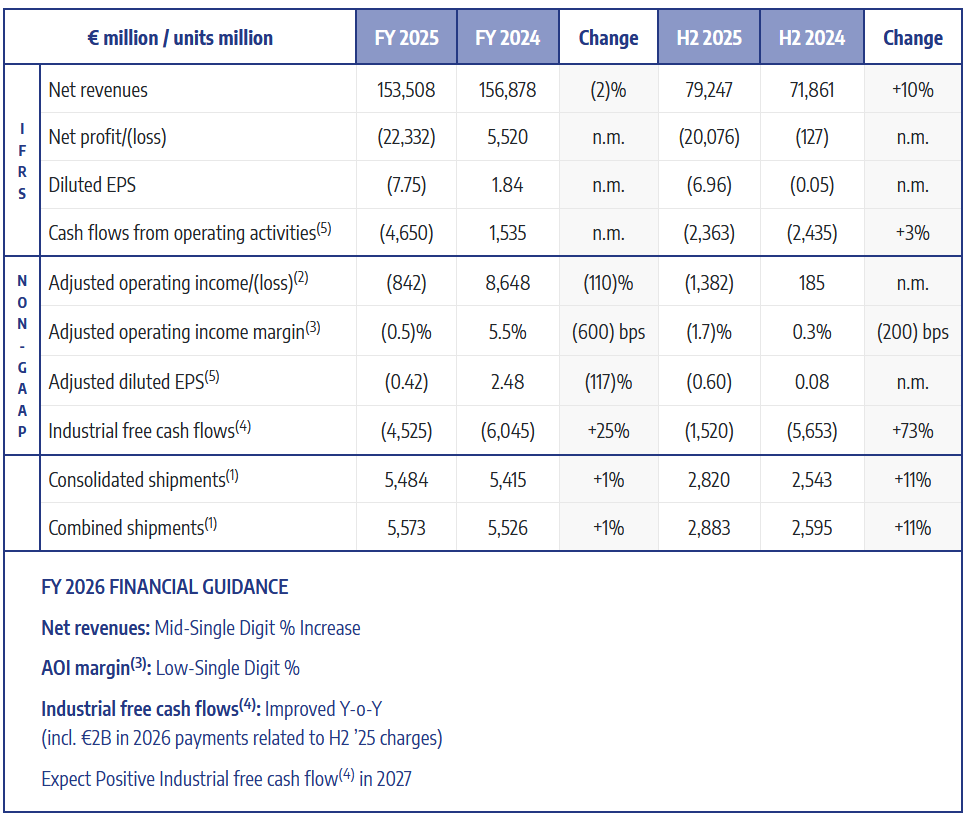
Stellantis has published its 2025 financial results, and they make for sobering reading. The headline figure is a €22.3 billion deficit, equal to $26.3 billion at current rates, marking the group’s first-ever annual loss. That swing looks even worse when set against 2024’s €5.5 billion ($5.8 billion) profit, which was already down 70% compared to 2023. In the span of two years, the company has gone from profitable to deep in the red.
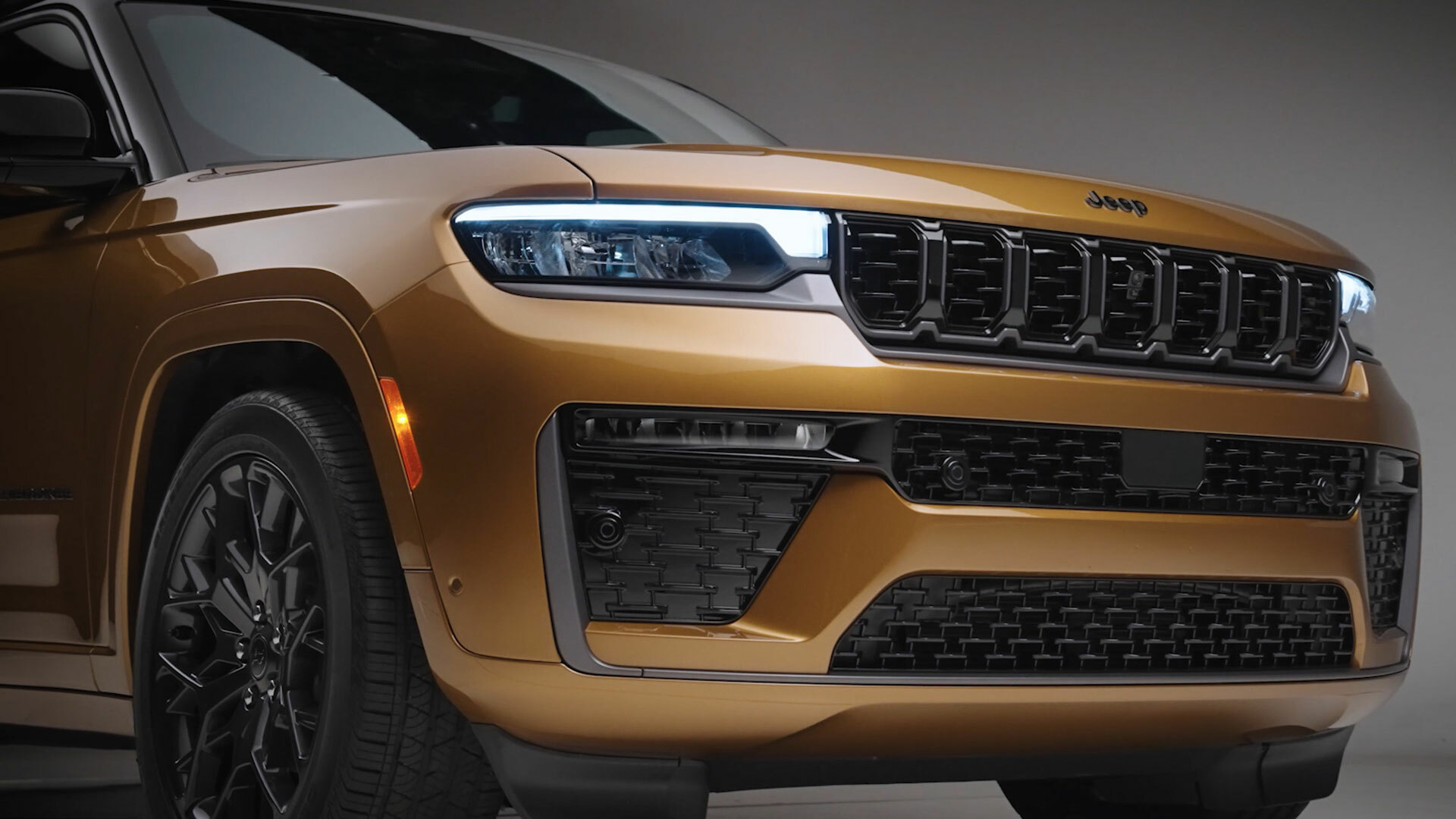
The group, which owns 14 brands including Abarth, Alfa Romeo, Chrysler, Citroen, Dodge, DS Automobiles, Fiat, Jeep, Lancia, Maserati, Opel, Peugeot, Ram, and Vauxhall, attributes the damage to €25.4 billion ($30 billion) in “unusual charges,” largely tied to what it calls a “profound strategic shift to meet customer preferences.” In plain terms, Stellantis overestimated how quickly the market would pivot toward electric mobility and is now paying to recalibrate.
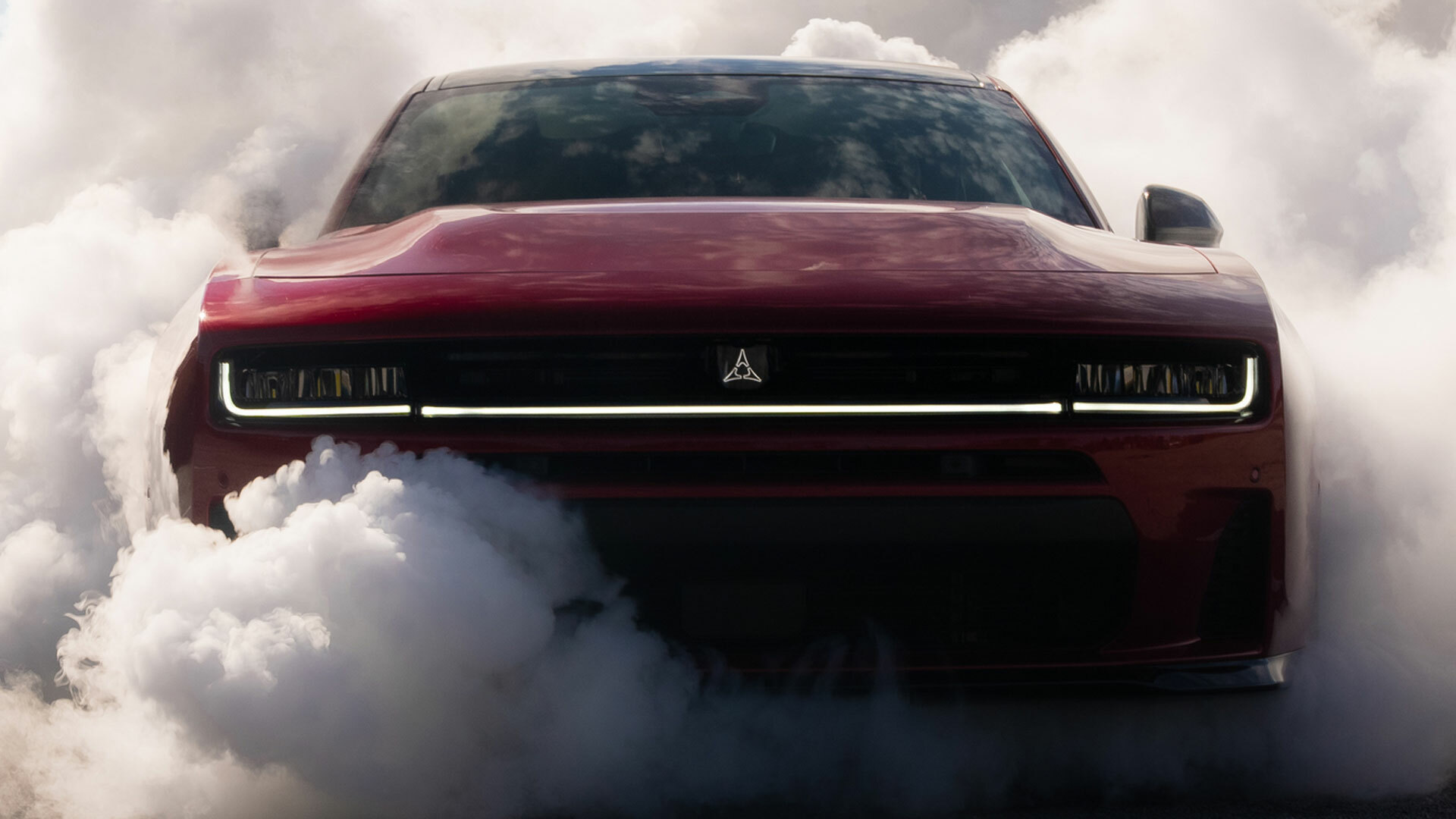
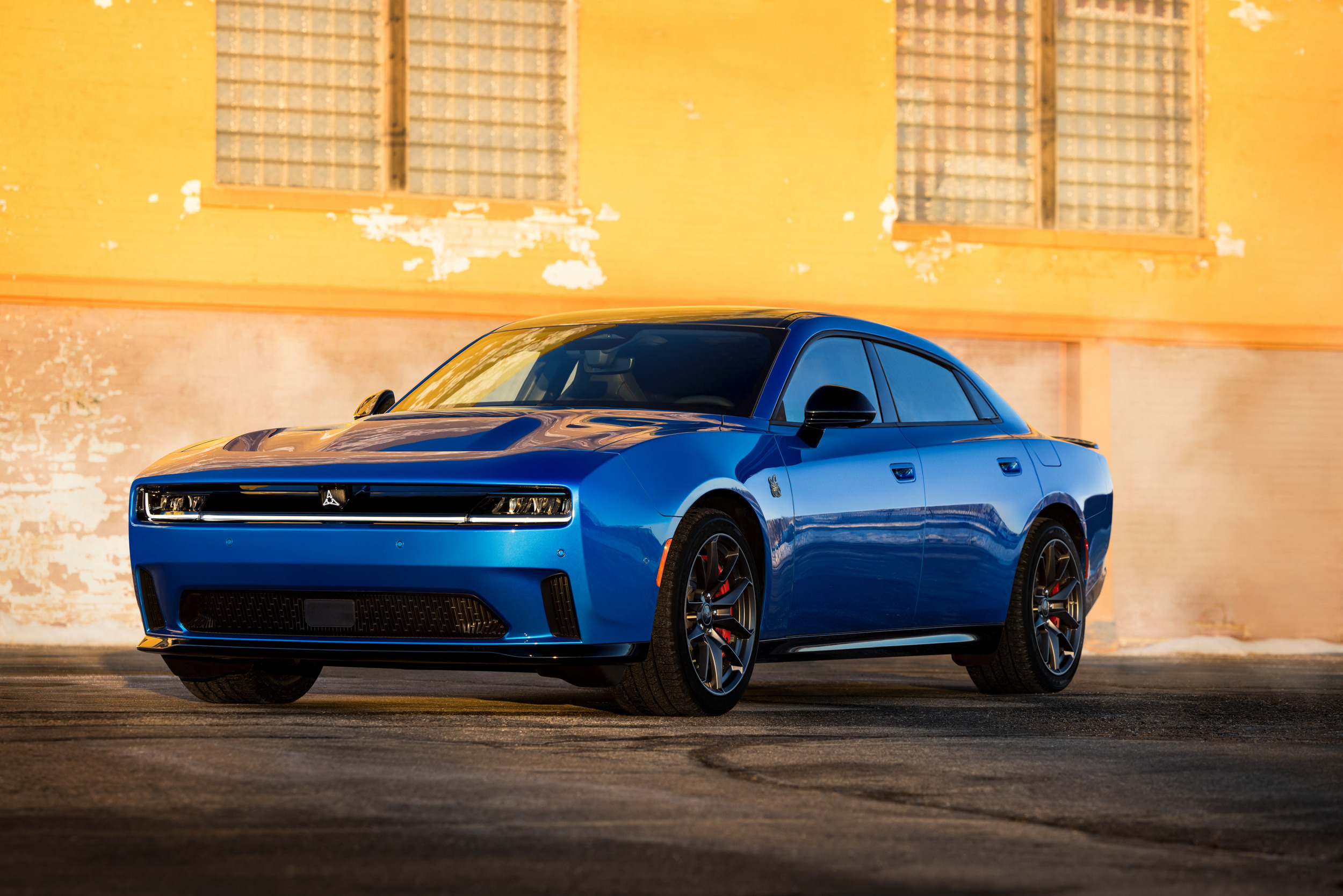
That is only part of the story. It wasn’t just a matter of customers being slow to embrace EVs. Several of Stellantis’ electric efforts, particularly in the US, struggled on their own terms. Models such as the Dodge Charger Daytona EV and the Jeep Wagoneer S were priced at the upper end of their segments yet struggled to justify that positioning against established rivals.
Rethinking Its EV Strategy
Regardless, that recalibration means canceling several electric models that were in development, mainly for the US market, and putting new emphasis on high-margin combustion engines. The return of the HEMI V8 in North America is the obvious attention grabber.
In Europe, diesel and mild-hybrid gasoline options are being folded back into the lineup across several current and upcoming models, including the now-delayed Alfa Romeo Stelvio and Giulia replacements.
“Our 2025 full year results reflect the cost of over-estimating the pace of the energy transition and of the need to reset our business around our customers’ freedom to choose from the full range of electric, hybrid and internal combustion technologies,” said Stellantis CEO Antonio Filosa.
“In the second half of the year we began to see initial, positive signs of progress with the early results of our drive to improve quality, strong execution of the launches of our new product wave and a return to top line growth. In 2026 our focus will be on continuing to close the execution gaps of the past, adding further momentum to our return to profitable growth.”
How Does Stellantis Plug The Gap?
The financial strain has prompted the board to suspend the 2026 dividend and authorize up to €5 billion ($5.9 billion) in hybrid bonds to shore up liquidity. Industrial free cash flow remained firmly negative at €4.5 billion ($5.3 billion), although that represents a 25% improvement on the previous year.
Net revenue totaled €153.5 billion ($181.1 billion), down 2% year-on-year. The decline is attributed to exchange rate headwinds and net pricing drops in the first quarter of 2025, neither of which tends to flatter the bottom line.
The group posted an adjusted operating loss of €842 million ($993.5 million). Still, the second half of the year showed signs of stabilization. Revenues rose 10% and shipments climbed 11% as inventories normalized. Stellantis also highlighted that H2 2025 marked the first six months under its renewed leadership team, a detail clearly intended to signal that the worst may already be in the rearview mirror.
Shipments Went Up But Shares Go Down
Combined shipments for 2025 reached 5.573 million vehicles, up 1% year-on-year. That keeps Stellantis in fifth place globally by volume, behind Toyota (11.3 million), Volkswagen Group (8.98 million), Hyundai Motor Group (7.27 million), and General Motors (6.11 million).
Momentum was stronger in the second half, with 2.883 million shipments, up 11% over H2 2024. North America did most of the heavy lifting, posting a 39% H2 increase as inventories returned to more normal levels and demand improved.
Investors, however, appear less convinced. Reuters reports that Stellantis shares have fallen by more than 30% this year, sliding to their lowest level since the PSA-FCA merger in 2021.
One of the new models is a wagon above the Jogger.
Another model, based on the electric Twingo, is near.
Dacia now builds only Duster and Bigster at home.
Dacia is Romania’s largest and most important car manufacturer, and this year it is preparing to expand its lineup in a meaningful way. Two all-new models are on the way, yet neither will actually be built in the company’s home market.
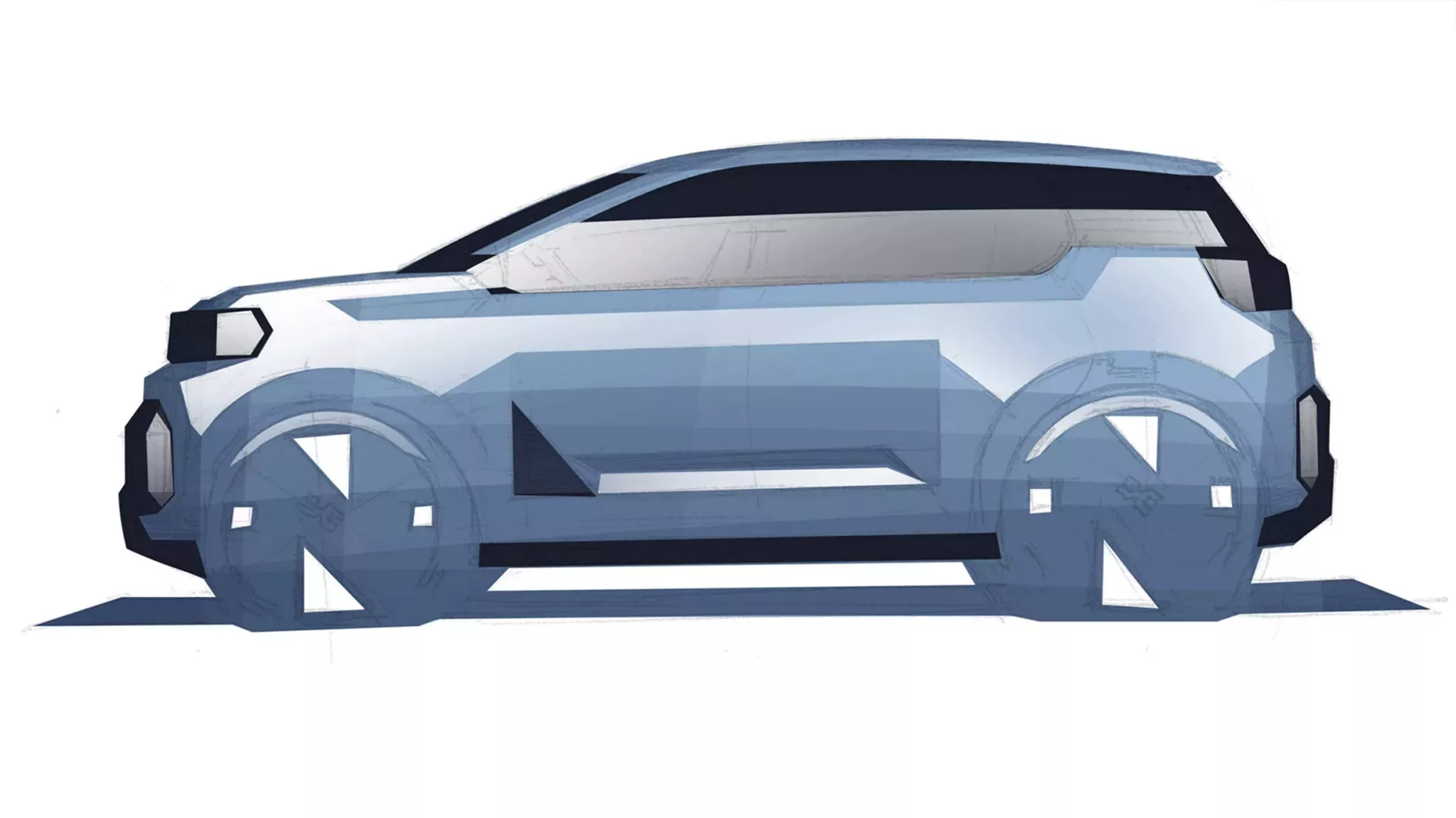
The first arrival will be a new wagon with crossover elements, currently known as the C-Neo. Positioned above the Jogger in Dacia’s range, it is intended to tap into the ever-growing compact segment.
Initially, Dacia planned to build the C-Neo in Romania. However, Romania-Insider reports that production will instead take place in Turkey. That decision leaves Dacia’s Mioveni plant in Romania focused exclusively on the Duster and Bigster.
SHproshots
The C-Neo will be underpinned by the existing CMF-B platform and should be offered with a slew of different powertrains, including gas, LPG, mild-hybrid, and full-hybrid options that use a 1.2-liter turbocharged three-cylinder.
Visually, Dacia says the new wagon will follow in the footsteps of the Sandero Stepway with rugged design elements, likely including muscular fenders and roof rails.
Just as significant is Dacia’s upcoming electric vehicle, which will be based on the Renault Twingo. It will not undercut the China-built Dacia Spring on price, but it is expected to start at around €18,000 or just over $20,000. That still positions it as one of the more accessible EV options in Europe. Production of this new addition will take place at Dacia’s Novo Mesto plant in Slovenia.
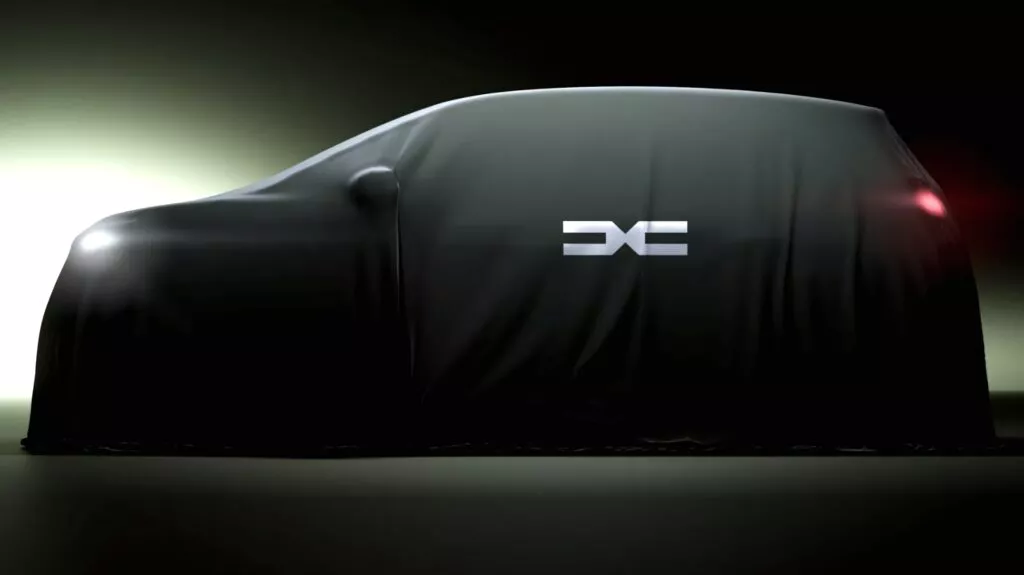
Dacia has identified the A-segment as an important growth driver in the broader EV market, hence why it’s launching a new model to compete. A single teaser image of the car has been released, revealing that while the proportions may be similar to the Twingo, it will look nothing like its French sibling.
Beyond these new models, Dacia already produces the Sandero and Jogger in Morocco to take advantage of the lower manufacturing costs. The approach reflects how the brand now operates as an international manufacturer, not one anchored solely to its Romanian base.
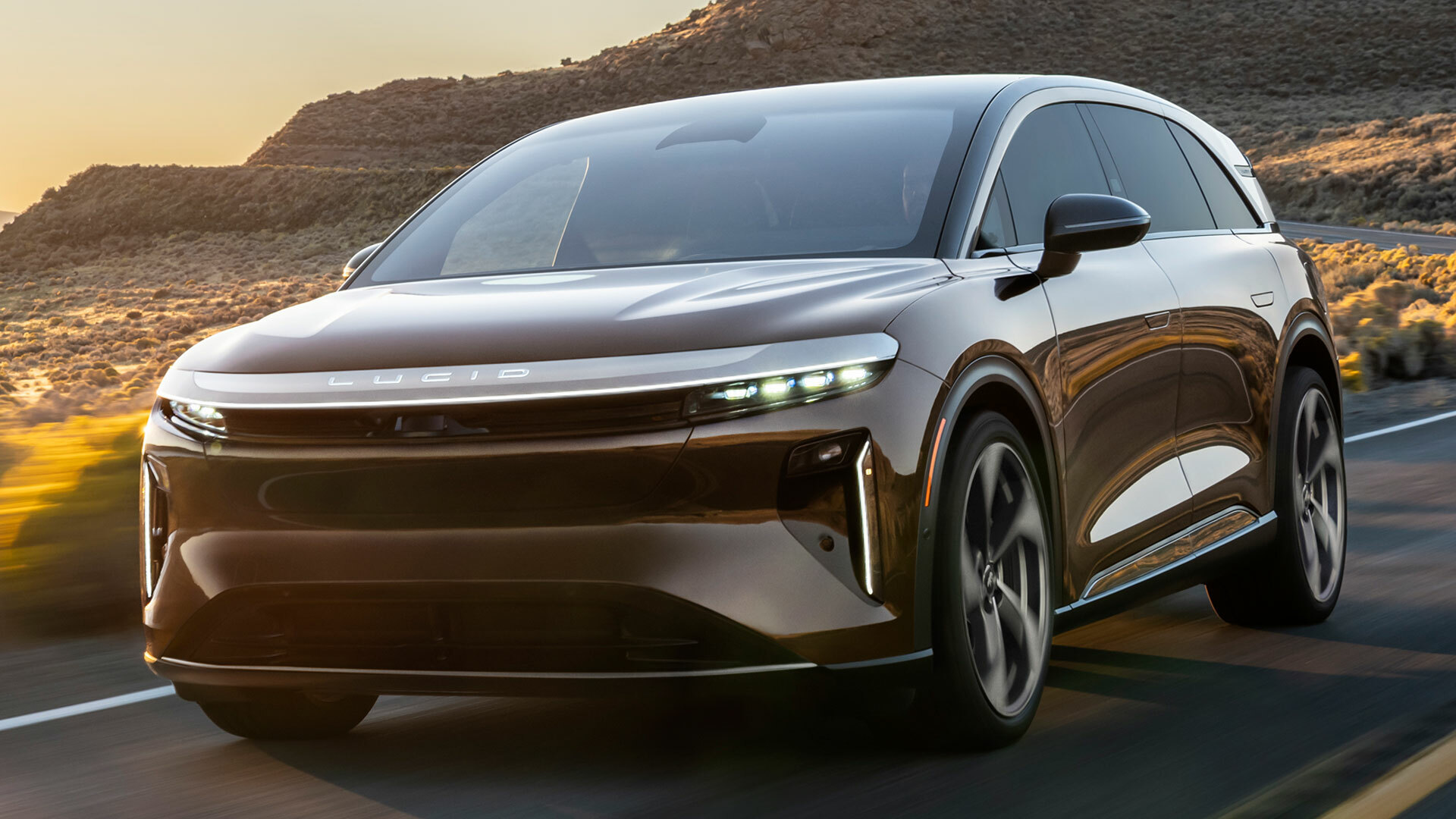
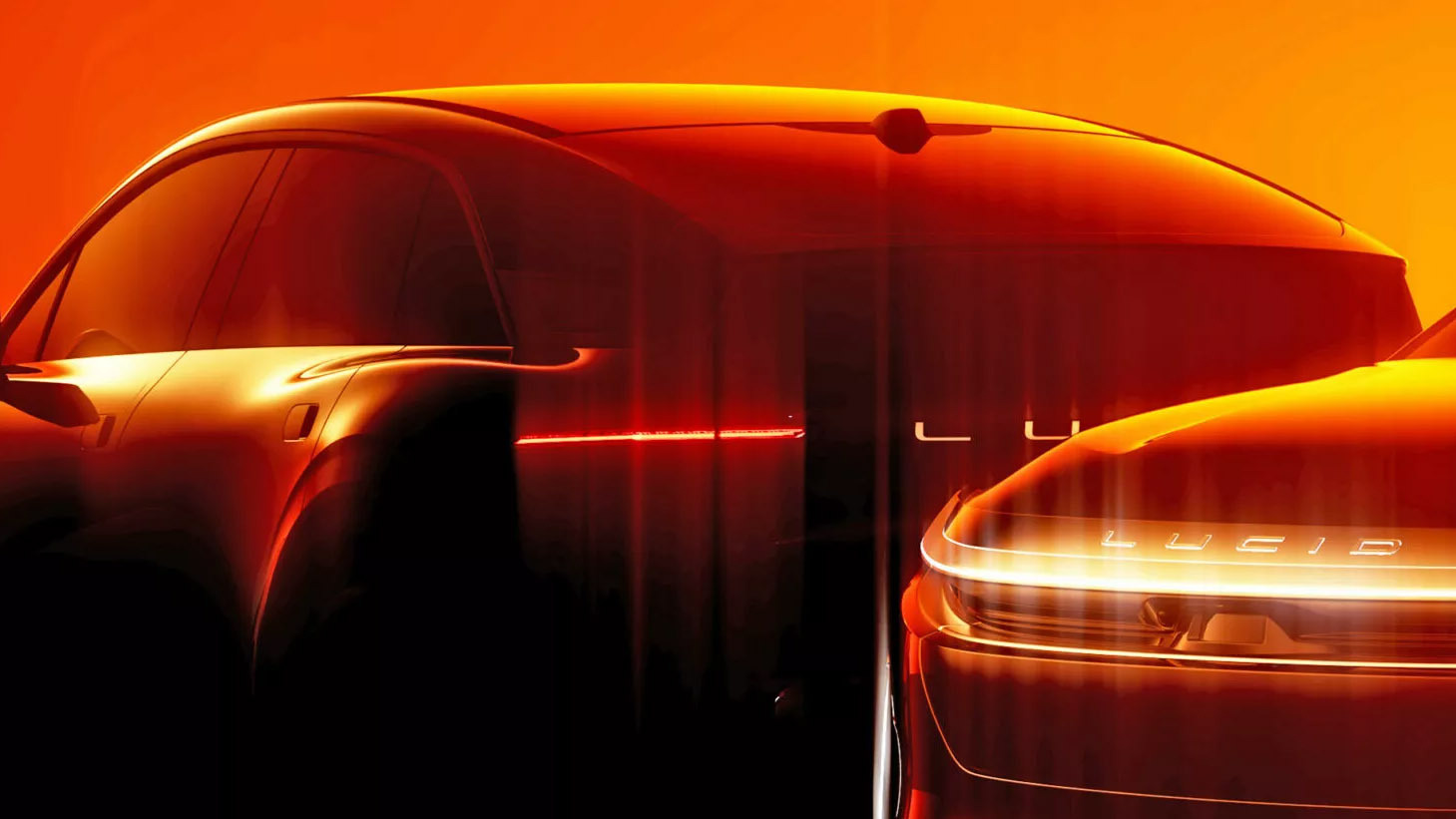
The automotive industry never slows down, and EV brands feel that pressure more than most. Lucid is responding to the market and to its own position by cutting 12 percent of its workforce. The move comes as it attempts to tighten spending and move closer to profitability as it ramps up Gravity production.
The layoffs were confirmed to Bloomberg in an emailed statement, following the leak of an internal memo from interim CEO Marc Winterhoff that circulated within the company and was seen by Techcrunch.
In the memo, Lucid addresses the cuts head on. “Saying goodbye to colleagues is never easy,” Winterhoff wrote. “We are grateful for the contributions of those impacted by today’s actions, and we are providing severance, bonus, continued health benefits, and transition support to help them through this period.”
Bloomberg reports that the majority of workers affected are salaried and corporate roles. Hourly workers tied directly to manufacturing, logistics, and quality operations at Lucid’s Arizona facility are not expected to be part of this reduction. That’s not all that shocking, given the brand’s need to ramp up production of the Gravity SUV and continue development of its Midsize platform.
“Importantly, today’s actions do not affect our strategy,” Winterhoff wrote. “Our core priorities remain unchanged, and we continue to focus on the start of production of our Midsize platform. With disciplined execution, we are also focused on further expansion into the robotaxi market, continued ADAS and software development, and growth in sales of Lucid Gravity and Air across existing and new geographies.”
A Murky Future
Right now, Lucid’s momentum is almost entirely pinned on the Gravity SUV. It undoubtedly broadens appeal beyond the ultra-luxury Air sedan expanding its reach to a more popular segment. That said, it’s not exactly what most buyers would consider mainstream or affordable.
That’s why the Midsize platform is so key to Lucid’s future. Tesla’s Model 3 and Model Y turned a niche player into a volume powerhouse, and Lucid is hoping for a similar inflection point.
Rivian is following a similar playbook with the R2. By the end of the year, we should have a clearer picture of who is getting closer to that goal. In a cooling US EV market, profitability is no longer a nice to have. It is the whole game.
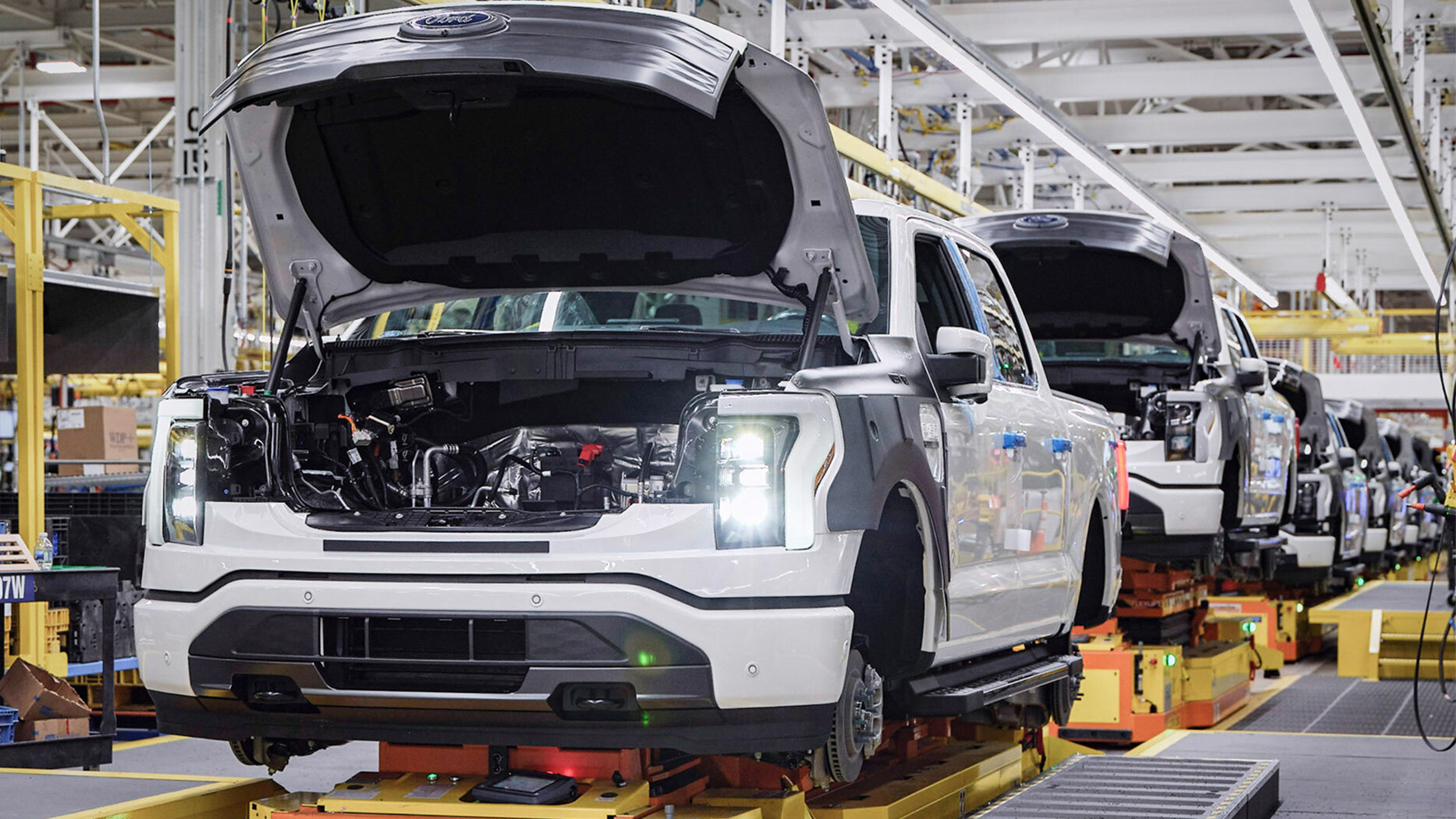
Ford closed Kentucky EV battery plant after just 4 months.
1,600 workers lost jobs after tax credit policy change.
Plant originally projected employment near 5,000 workers.
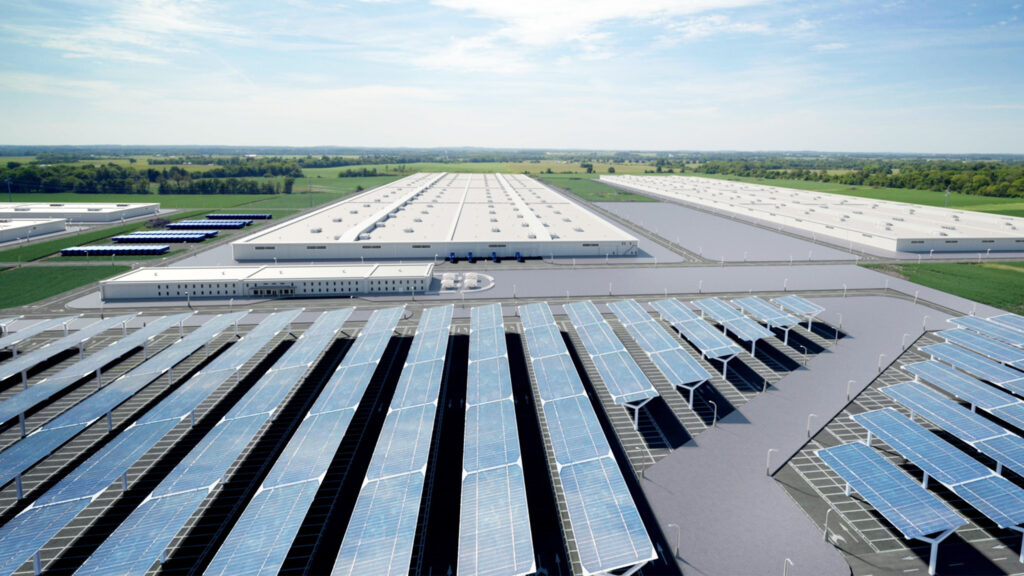
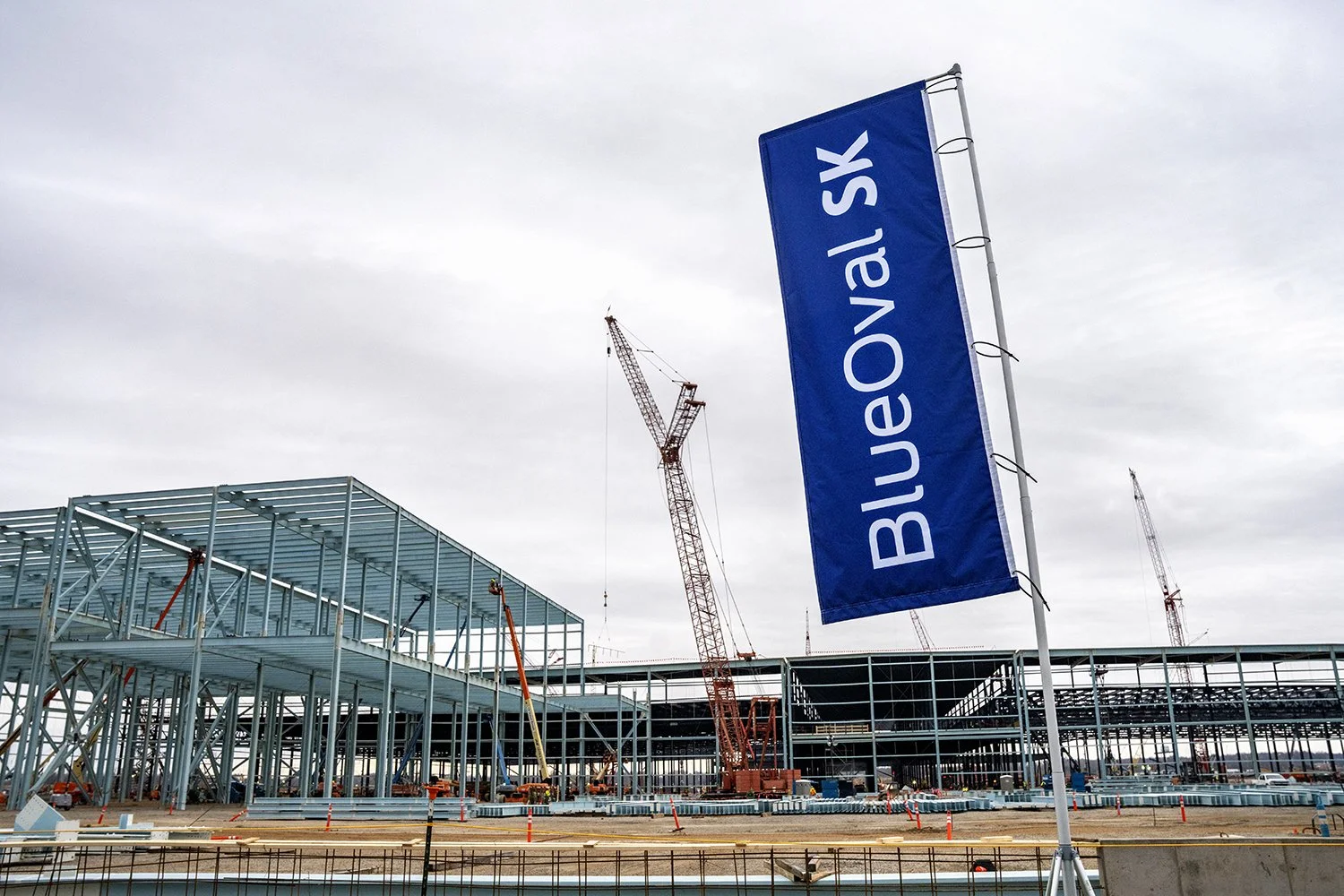
Ford’s sudden decision to cancel its multi-billion-dollar partnership with South Korean battery manufacturer SK On in December, just four months after the first batteries rolled off the line, left 1,600 people without jobs at the joint battery plant in Kentucky.
The move caught workers and locals off guard, and many are placing the blame squarely on Ford. That’s not surprising. Still, the political backdrop, including Trump-era EV policies that limited Ford’s options, played a larger role in how this ultimately unfolded.
The Ripple Effect Of A $7,500 Credit
All brands selling EVs in the US were hurt by the government’s decision to kill the federal tax credit, valued at up to $7,500 for new EVs. While some understandably criticized the program as artificially propping up the industry, there’s no denying that it played a hugely important role in convincing many Americans.
With fewer people buying EVs and other government policies relaxing CAFE fuel-economy standards, Ford acknowledged that “the operating reality has changed,” which is why it’s scrapped a slew of its more ambitious and important EV projects. “We are listening to customers and evaluating the market as it is today, not as everyone predicted it would be five years ago,” Ford recently said.
As reported by The New York Times, Kentucky’s Democratic governor, Andy Beshear, said: “1,600 Kentuckians lost their jobs solely because of Donald Trump pushing that big, ugly bill, eliminating the credits that had people interested and excited to buy EVs. I bet many, if not most, of those 1,600 people voted for him, and he basically fired them.”
Unexpected Closure
The site had only been manufacturing EV batteries for four months before it was shut down. Speaking with the NYT, Joe Morgan says he left a job of 24 years to start working at the plant, confident that EVs would grow in popularity.
Morgan, a registered Republican, acknowledges that “taking away the tax credits did play a little bit of a role in not selling EVs,” but he thinks it’s Ford that should take most of the blame. “I just think Ford made a bad decision when they came out with an F-150 that they wanted to make all electric.”
Derek Doughtery shares a similar view. Landing a job at the battery plant was a turning point for him after previously experiencing homelessness, especially with a second child on the way. He, like others, believes Ford may have misread the market and bears more responsibility than the government.
“At the end of the day, whatever the government policy would be, the company made the decision,” he said.
A Scaled-Back Future
Fortunately, the facility will not close entirely. Now under full Ford control, it will be retooled for battery storage production and is expected to employ roughly 2,100 people. That figure is well below the 5,000 jobs originally projected when the plant was dedicated to building EV batteries, but it offers at least some continuity for a site that only recently promised much more.
China banned selling new cars below cost including via subsidies.
Rules bar discounts, tax breaks, and trim upgrades at same price.
Automakers face legal risk if caught violating new pricing rules.
The Chinese government is stepping up efforts to end the price war among local car manufacturers following a sales decline in the first month of the year. In what is the government’s most drastic step yet, there will be a cap on how low automakers can price their vehicles.
Newly-released guidelines from the State Administration for Market Regulation explicitly ban companies from setting prices below the cost of production as part of their efforts to monopolize the market and squeeze out competition.
According to the China Automobile Dealers Association, the price war has caused up to 471 billion yuan ($68 billion) in lost output over the past three years. Market sales dipped by their fastest pace in almost two years in January, declining 19.5 percent year-on-year.
Sales fell by an even more considerable 36 percent from December 2025 to January, plummeting from 2.2 million units to 1.4 million, CTV News reports.
Some analysts predict that domestic demand for new cars in China will fall this year, with sales potentially dropping by up to 3 percent. However, Chinese car companies may offset this by exporting more vehicles to overseas markets. BYD, for example, aims to export 1.3 million battery-electric and plug-in hybrid vehicles this year, up from 1.05 million last year.
The Chinese market regulator has warned that companies that don’t comply with the new rules may face “significant legal risks,” although it didn’t reveal what actions could be taken.
Supplier Payment Cycles Slashed
This new ban on setting prices below the cost of production isn’t the only measure being taken to quell the price war. Tighter government oversight has led many major automakers to reduce their supplier payment cycles from an average of 300 days to under 60 days.
As reported by the South China Morning Post, many Chinese car brands have frequently extended payment cycles to keep cash reserves, enabling them to ramp up research and development. The new government oversight appears to be helping.
“The results showed government intervention worked, as the automotive groups feared they could face severe punishment if they failed to operate in compliance with the authorities’ requirements,” chief executive of the Shanghai Mingling Auto Service consultancy Chen Jinzhu said. “Without delayed payments to suppliers, they will not have sufficient cash on hand to sustain discount wars.”
Ford’s Model e division lost $4.48 billion again last year.
Total EV losses now exceed $16 billion in just four years.
Breakeven for Model e may not arrive until 2029.
Ford has never been shy about making big, attention-grabbing bets. Sometimes they pay off, sometimes they don’t. In early 2022, the company announced it was splitting its automaking operations into two distinct branches: Ford Blue, handling traditional combustion vehicles, and Ford Model e, dedicated to EVs. At the time, it sounded like a smart move, especially with EV demand climbing fast.
That optimism, however, hasn’t quite paid off. Fast forward four years, and Ford’s huge investments in EVs have come back to bite it. In its latest financial results, the automaker disclosed that the Model e division posted a staggering $4.48 billion loss in 2025. Worse, those losses are expected to continue mounting, even after canceling several planned EV projects.
Earlier this week, Ford revealed its electric car business will likely lose between $4 billion and $4.5 billion this year, and will continue to lose money through at least 2027 and 2028.
Speaking on a conference call following the earnings report, Ford CFO Sherry House stated the company is not aiming for a breakeven point for the Model e brand until “around 2029.”
Tallying The Fallout
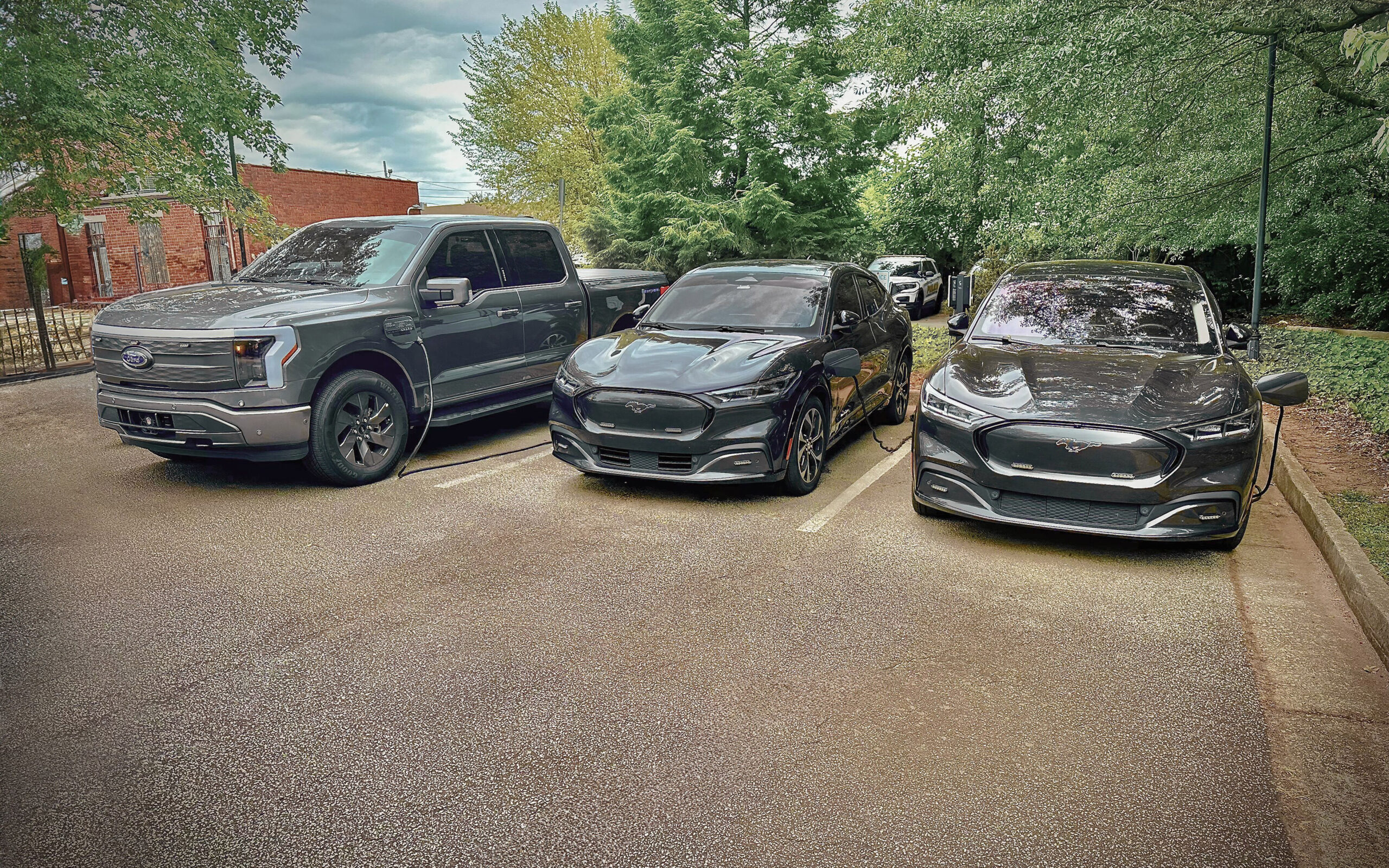
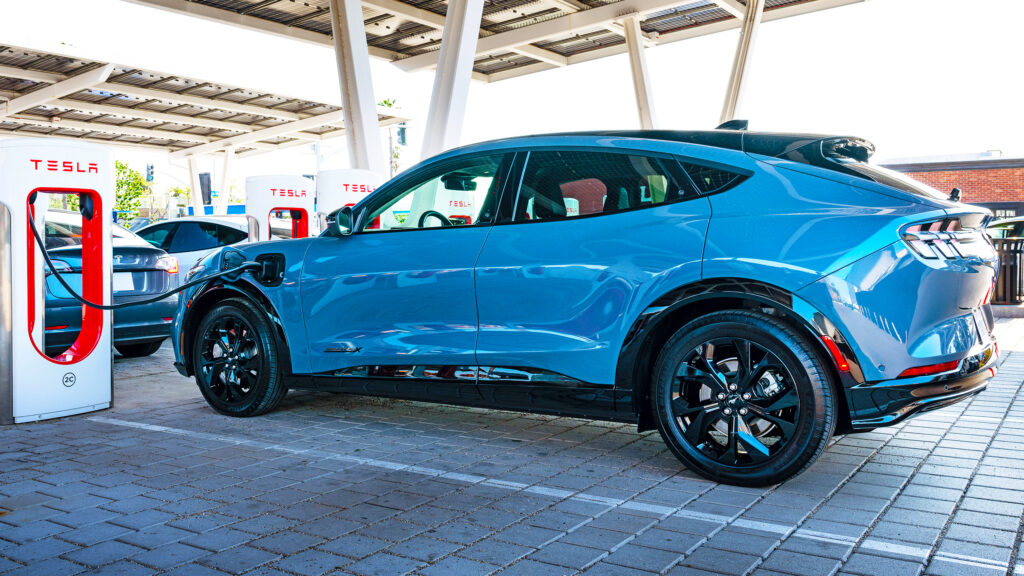
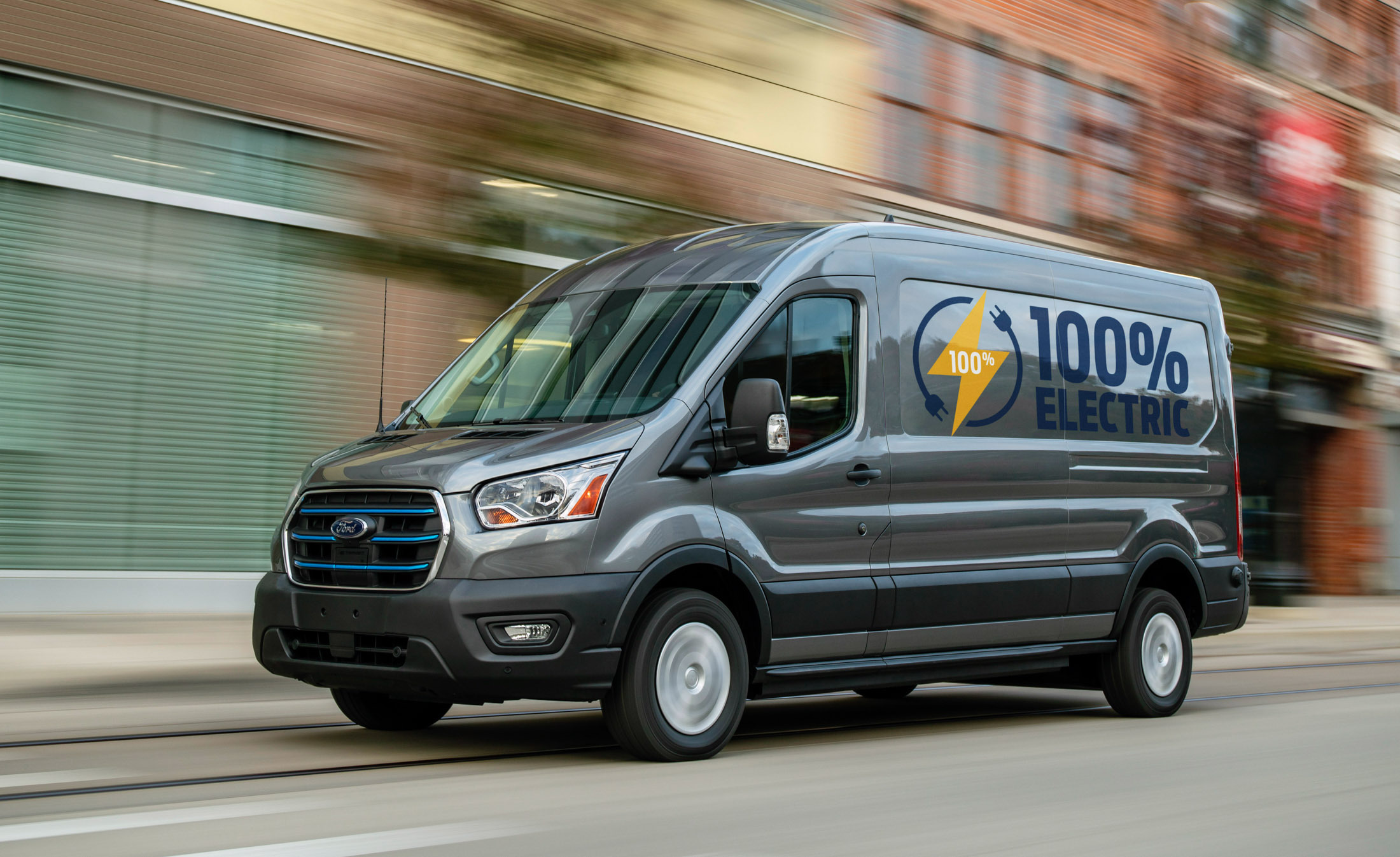
In the four years since the Model e division was established, Ford lost more than $16 billion. That’s an extraordinary amount of money, particularly when you consider that the only electric cars it currently sells in its home market are the Mustang Mach-E and E-Transit, following the early demise of the F-150 Lightning.
Combustion Still Carries The Load
According to The New York Times, Ford’s losses in electric vehicles were offset last year by stronger performance from its combustion-powered lineup and commercial vehicle sales. Those segments generated enough revenue to support an adjusted earnings total of $6.8 billion before interest and taxes. Ford expects those numbers to climb in 2026, projecting earnings between $8 billion and $10 billion.
One of the earliest signs of Ford backtracking on EVs came last year when it confirmed production of the F-150 Lightning had been halted indefinitely.
Still, there’s a sliver of hope for those holding out for an electrified truck. The next-generation F-150 Lightning is in the works and will feature a range-extending powertrain that combines electric drive with a combustion engine backup, offering over 700 miles of combined range.
January’s average new car price hit a record as incentives quietly pulled back.
Affordable models still exist, but true entry-level cars keep disappearing.
Electric car prices slip slightly, but EV sales have taken a dramatic slide.
You might have set a New Year’s resolution to slim down, but new-car prices made no such commitment. According to fresh industry data, prices just set another record for January, proving that handing over $50k for a virgin vehicle is basically normal now. But the number of people who think buying an EV is the normal thing to do has dropped dramatically.
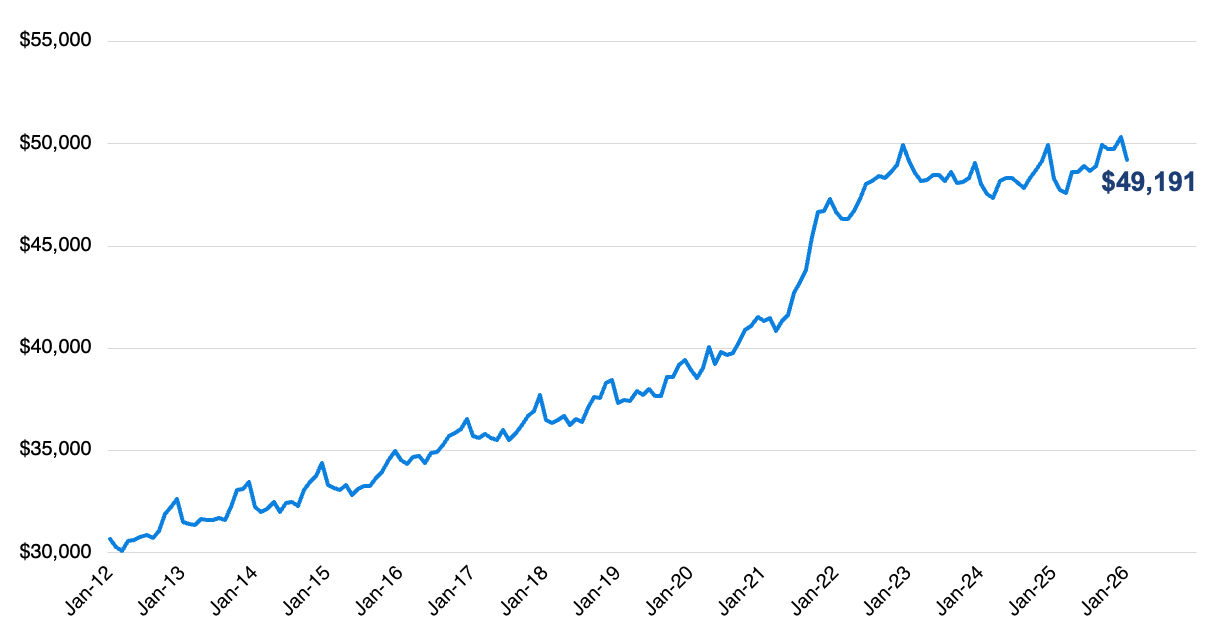
The average transaction price in January reached $49,191, up nearly 2 percent from a year earlier and the highest ever recorded for the month, according to KBB. Although prices dipped slightly from December, Cox Automotive called the drop “seasonally normal,” explaining that the market usually “takes a breather” after year-end, when luxury vehicles make up a larger share of sales.
The average new-vehicle manufacturer’s suggested retail price (MSRP), commonly called “the asking price,” also kept climbing, now sitting at $51,288 and staying north of fifty grand for 10 straight months.
New-Vehicle Average Transaction Price
Last month’s pricing uptick came even as sales mix shifted away from year-end luxury volumes. “We hit a new January high even as prices naturally pulled back from December’s luxury-heavy finish,” said Erin Keating, executive analyst at Cox Automotive.
“Consumers are still finding plenty of options below the industry average, especially in core segments like best-selling compact SUVs, but the disappearance of true entry-level vehicles continues to lift the floor higher.”
Incentives Pull Back Hard
Incentives fell to about 6.5 percent of transaction prices, down from higher levels late last year, meaning buyers are shouldering the burden of those higher prices. Automakers are clearly in margin-protection mode, offering just enough in the way of deals to keep metal moving but not enough to feel generous.
Luxury models and big pickups got the juiciest offers, while compact and midsize cars were left mostly to fend for themselves.
Few Bargains Remain
Compact SUVs remain the value choice. With average prices around $36,000 and down 0.6 percent, they sit well below the industry average and continue to dominate sales. Meanwhile, true bargain basement cars are basically extinct. With the Mitsubishi Mirage gone and the recently axed Nissan Versa reduced to whatever stock is still hanging around, the US market has waved goodbye to the sub $20,000 new car.
At the other end of the spectrum, full-size pickups are still living large. Average prices in that segment remain comfortably above $70,000, and buyers are still lining up, with more than 150,000 big trucks finding homes last month.
January marked the fifth consecutive month where full-size pickups averaged over $70K, reinforcing their outsized role in propping up the market average. Subcompact cars, by contrast, struggle to attract more than a few thousand takers a month. Fewer than 4,000 were sold industry-wide last month.
EVs Shunned
Electric vehicle prices actually slipped to around $55,700, down 0.6 percent lower than a year ago, although Tesla’s fell 2.2 percent in the same period. Incentives for EVs also cooled sharply, dropping to 12.4 percent of ATP, down from 18.3 percent in December. Even at those reduced levels, they remain well above the industry average.
However, we wouldn’t be surprised if they are kicked back in to shore up demand, which has dropped alarmingly, according to the data.
KBB says only 66,000 EVs were sold in January, being down a fifth from January 2025, and you can bet the loss of tax credits from October played a big role. In fact, that total reflects a nearly 30 percent year-over-year drop and a 20 percent decline from December. Tesla accounted for about 60 percent of total EV sales.
Chinese Cupra Tavascan could dodge tariffs under EU price deal.
Lawmakers expected to approve the pricing-based tariff path.
China supports the move but pushed for broader concessions.
The Volkswagen Group has been doing some careful footwork lately, trying to stay ahead as Europe tightens the rules on electric cars coming in from China. Cupra boss Wayne Griffiths warned just over a year ago that the brand could be “wiped out” by new European Union tariffs on electric vehicles imported from China.
But now, the VW Group might get a special lane through Europe’s new tariffs on Chinese-built EVs, and that possibility isn’t going unnoticed in Beijing.
Here’s the deal in simple terms. The EU slapped tariffs on electric cars made in China, arguing they benefit from heavy state support. But there is a loophole. Instead of paying those extra duties, a carmaker can agree to sell a model at a minimum price.
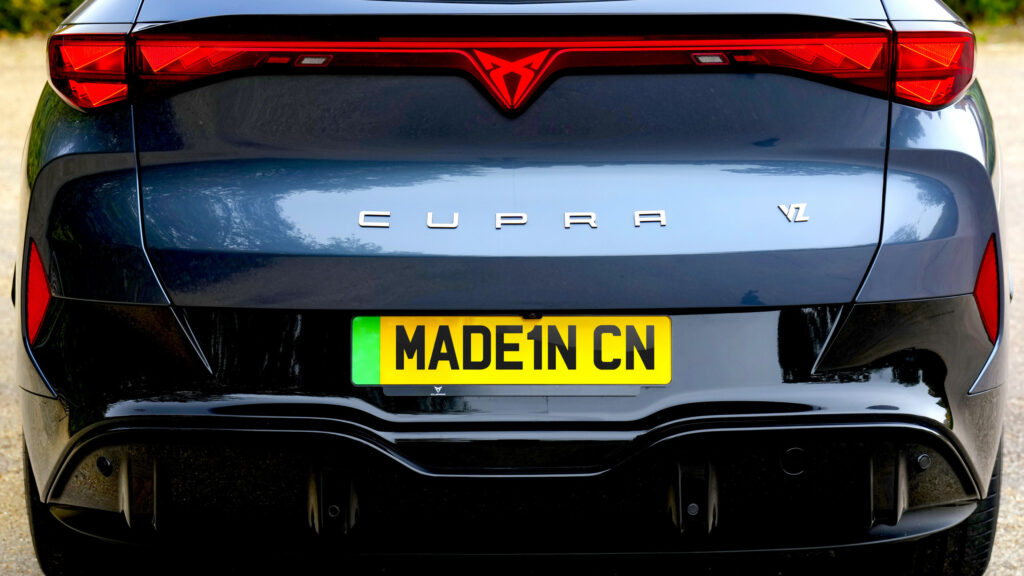
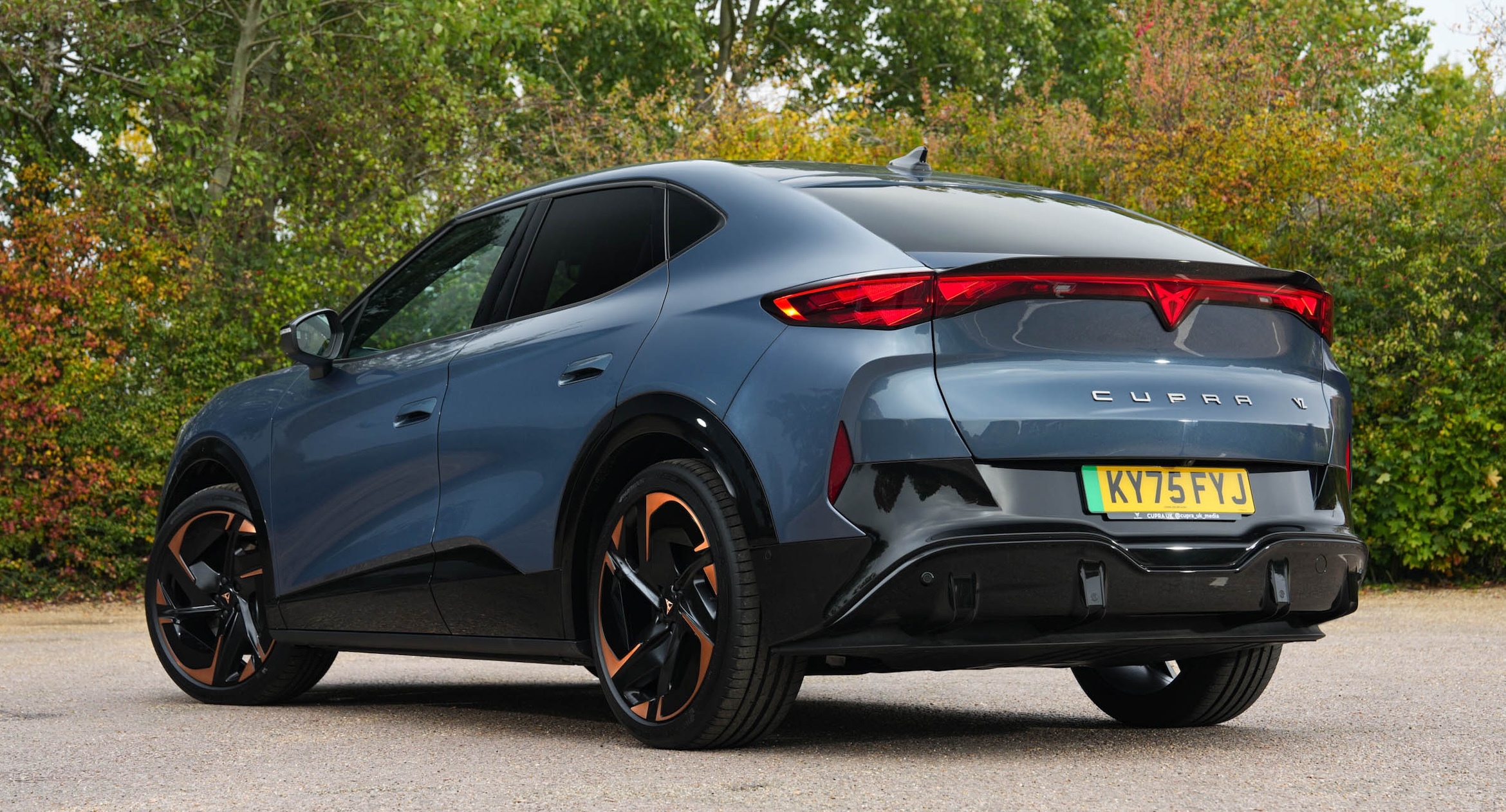
Volkswagen looks set to use that option for the Cupra Tavascan, which is built in China, Germany’s Handelsblatt reports. If Brussels signs off, VW can ship it into Europe without being stung by punitive 20.7 percent tariffs, as long as it sticks to the agreed pricing rules. Officially, this is all perfectly above board and part of existing procedures.
Not A U-Turn
The European Commission’s diplomats in Beijing say these kinds of allowances do not constitute a U-turn on its Chinese vehicle policy, a complaint leveled by some critics. Beijing, meanwhile, is being outwardly positive about the rumored EU concessions.
But behind closed doors, the Chinese worry that Volkswagen might be getting friendlier treatment than other manufacturers because it’s a European brand. China had pushed for an industry-wide solution, but now seems to be accepting smaller, case-by-case deals, realizing that letting individual brands cut their own deals may be better than endless stalemate.
Long Process
Each application for a minimum pricing deal can take well over a year and must be reportedly handled on a car-by-car basis, the report says. Industry watchers doubt every Chinese brand will rush in, especially those already making healthy margins even with tariffs in place, but VW evidently believes it’s worth the admin in the Tavascan’s case.
The Tavascan is Cupra’s sportier take on the VW ID.5, a 182.8-inch (4,644 mm) electric crossover built around the MEB platform and offering a mix of single and dual-motor powertrains with up to 353 miles (568 km) of electric range.
Canada cut Chinese EV tariffs from 100% to 6.1% in new deal.
Initial cap set at 49,000 vehicles, with future growth to 70,000.
Nearly half of new EVs expected to cost under $35k CAD to start.
A new trade agreement has cracked the door open for electric vehicles from China to officially re-enter the Canadian market. In exchange, the People’s Republic is easing up on tariffs for Canadian agricultural exports, especially canola. Yes, your future EV might be indirectly powered by salad oil diplomacy.
Cheap, tech-packed, and improving at a scary pace, Chinese EVs are terrifying North American automakers and fascinating savvy car buyers, and they haven’t even landed yet, kept out by tariffs and political caution.
This new agreement changes the vibe. Canada gets more affordable EV options because the tariff rate is being cut from 100 percent to 6.1 percent.
The initial annual import cap is set at 49,000 vehicles, or one third of the car market, but could grow to 70,000 annually five years from now. And crucially, around half of the volume is expected to cost less than $35k CAD ($25k).
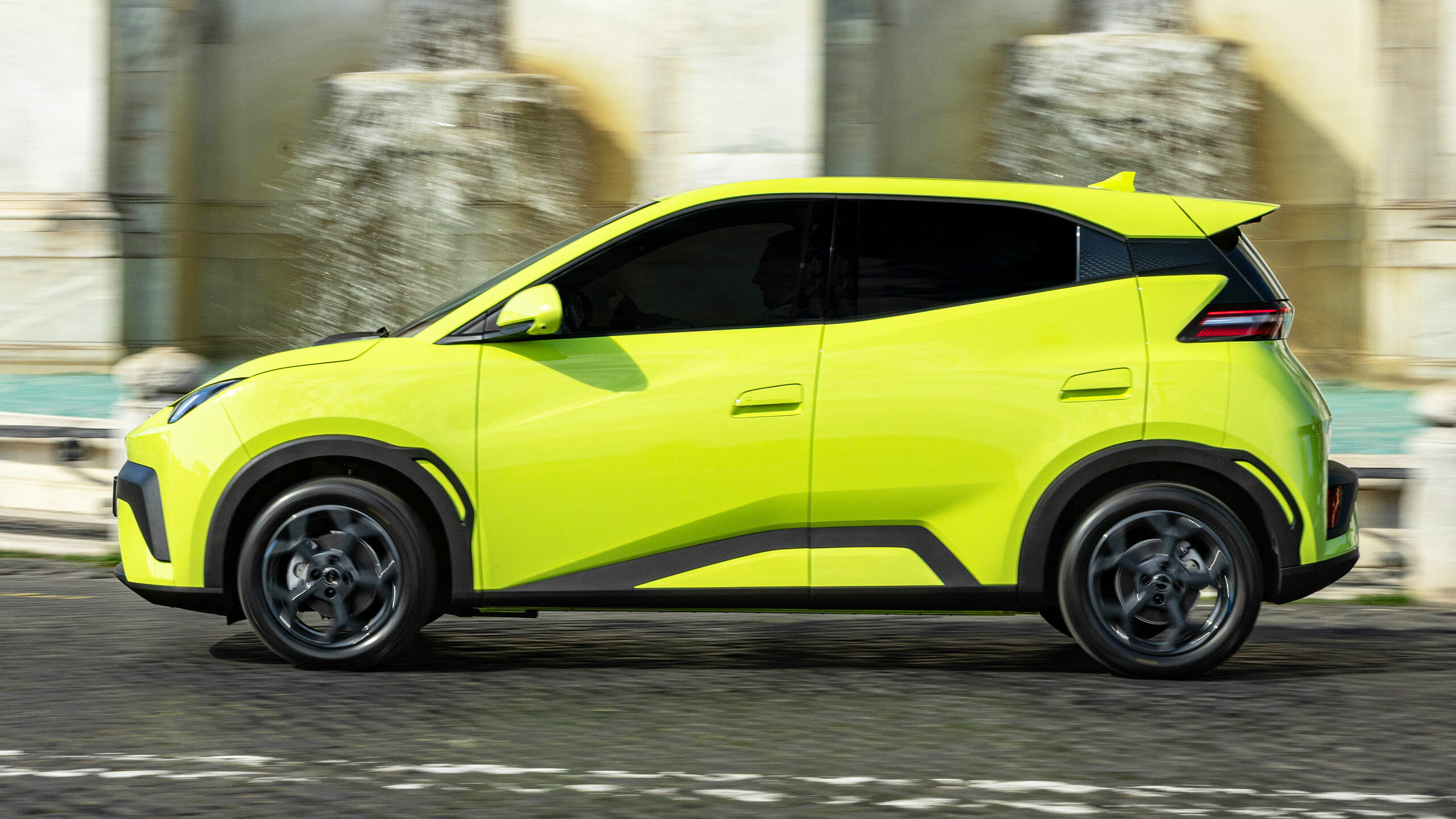
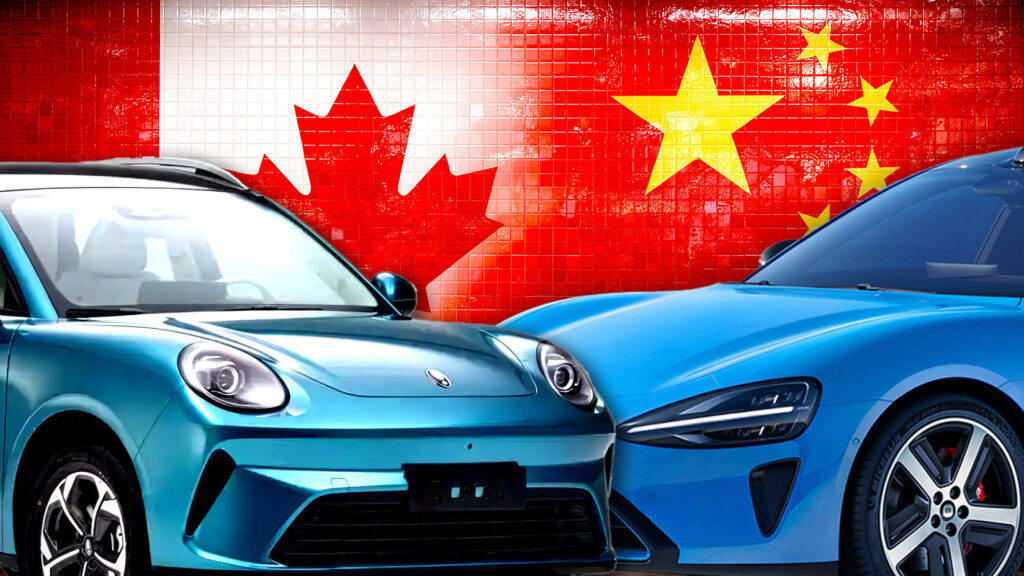
But what would you buy? If price is king, the tiny BYD Seagull, sold in some markets as the Dolphin Surf, could be the ultimate city runabout. Sure, it looks about the size of a carry on suitcase with headlights, and Canadian winters are not exactly minicar friendly.
However, if the goal is getting more people into affordable EVs, this little hatch and its bigger Dolphin brother could be game changers for urban commuters.
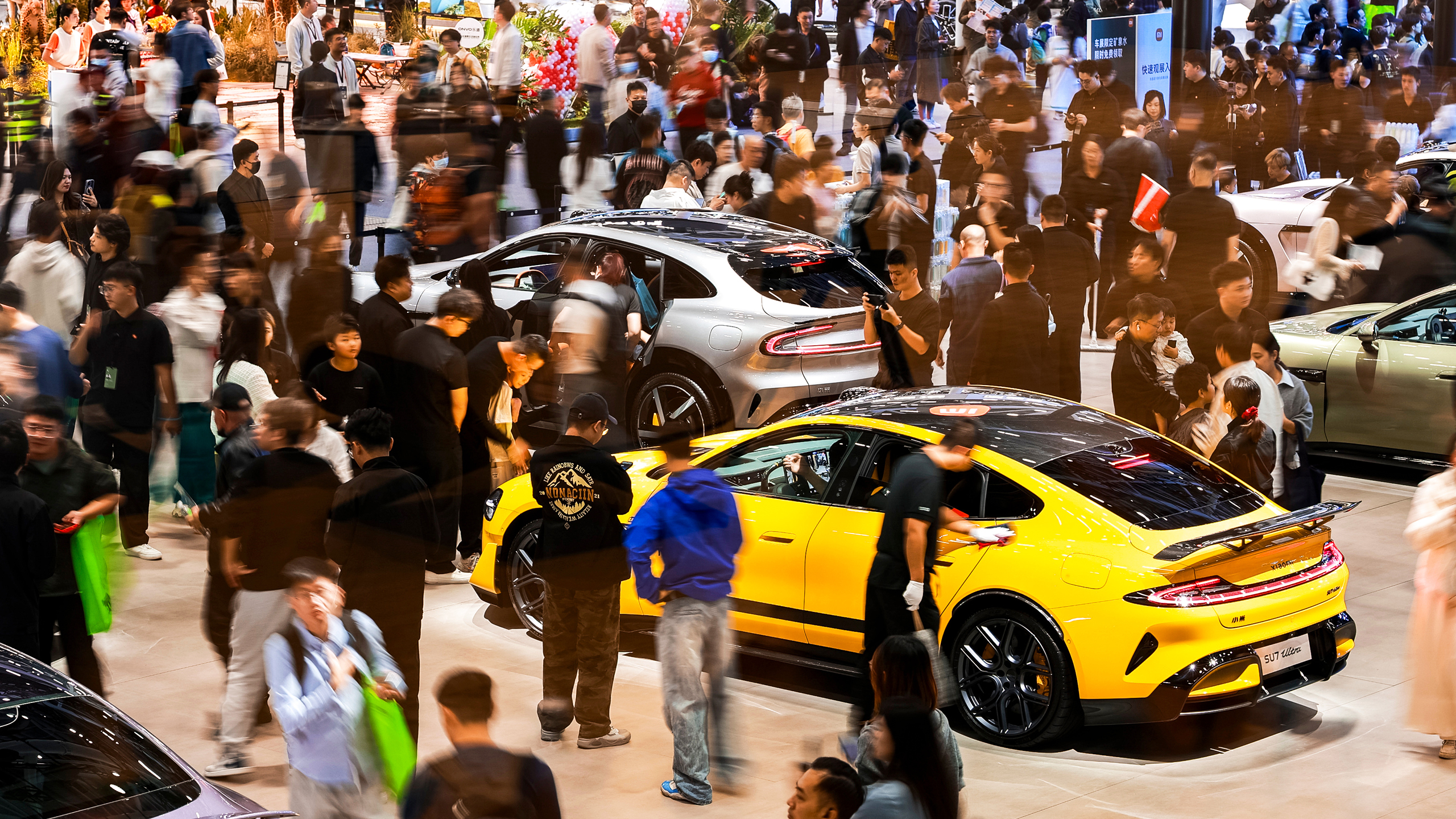
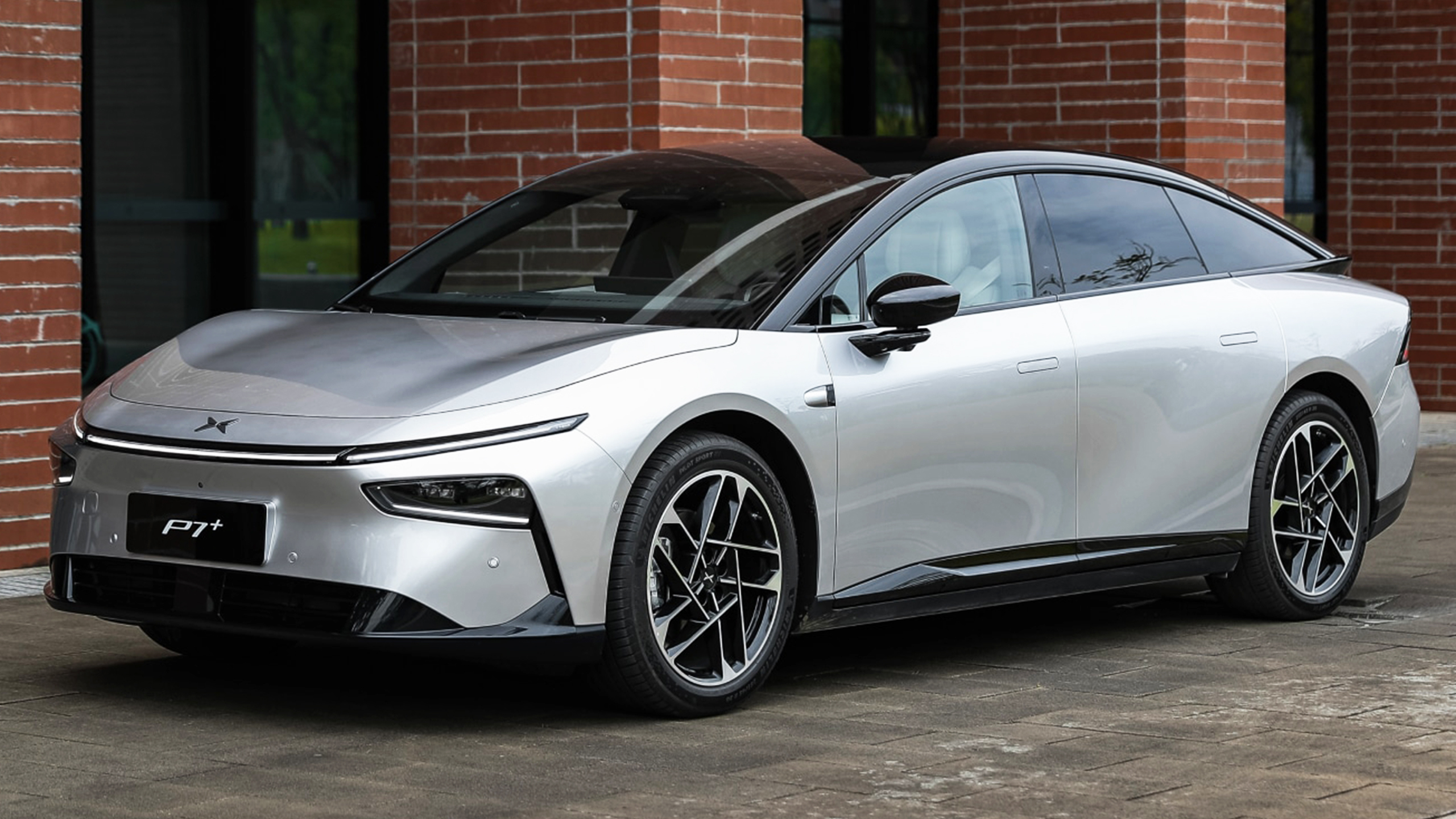
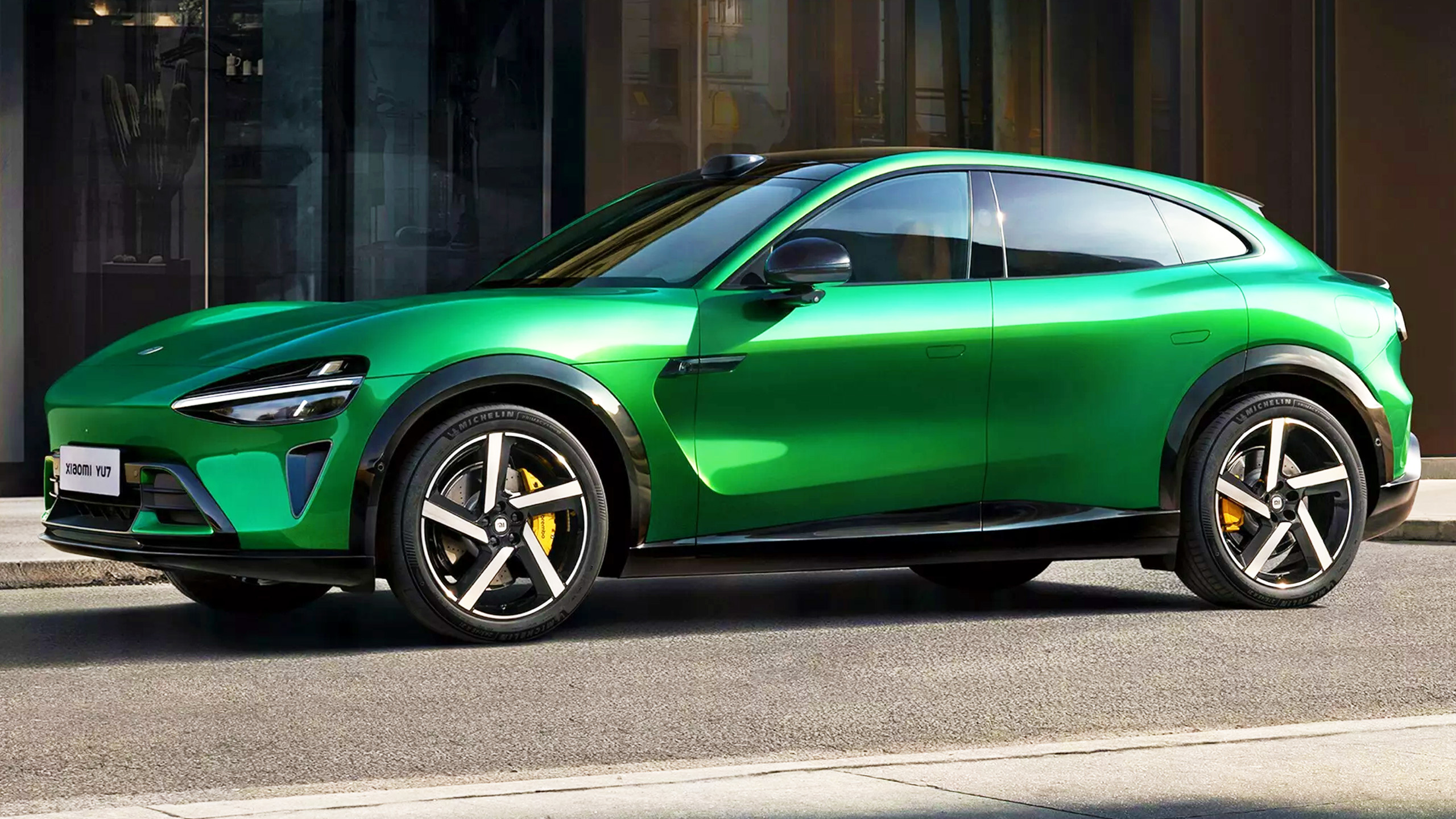
Sedan fans looking for some style, will be hoping Xpeng’s P7+ (seen above) gets an invite, but if you’re determined to blow past that $35k budget you’ve surely got to be rooting for the Xiaomi SU7 sedan and YU7 SUV.
These are the cars that make traditional brands nervous and car nerds very curious. Ford CEO Jim Farley daily-drove an SU7 specially imported for him and his team in 2024 and described it as “fantastic,” telling an interviewer “I don’t want to give it up.”
Of course, there will be questions about service networks, long term reliability, and how these brands fit into Canada’s market. But purely from a car geek perspective, the idea of suddenly having access to this whole new wave of EVs is kind of exciting.
So Canadians, if these cars start showing up in showrooms, which one are you signing for? And if you are reading from elsewhere, play along. If you did live in Canada, what Chinese EV would be on your driveway?
Porsche may cancel its electric 718 due to rising program costs.
Audi’s Concept C depends on the same shared EV platform.
Dropping the platform could delay or derail Audi’s sports car.
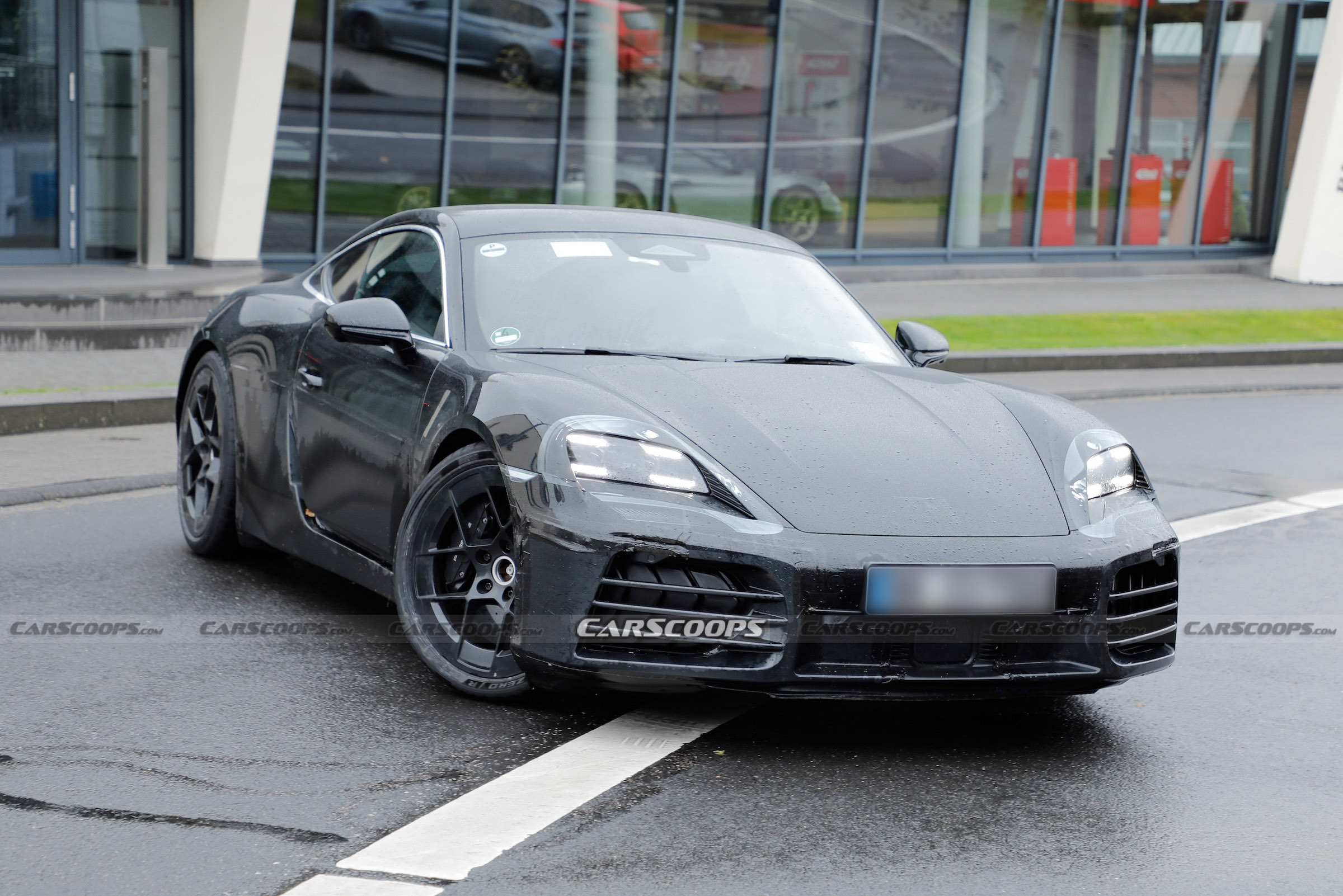
It’s a new year, and for Porsche, it begins with a leadership shakeup that might reshape more than just boardroom priorities. The brand has a new CEO, Michael Leiters, and within days of stepping in, he’s reportedly reconsidering the future of the all-electric 718 Boxster and Cayman.
That would be a huge reversal of course for the automaker, but here’s the real kicker: new reports suggest the unceremonious end of Audi’s new Concept C sports car before it ever reaches production.
Leiters has reportedly begun a sweeping review of Porsche’s operations as sales slump in China and profit margins took a big hit. One of the biggest question marks is the electric 718 program, which has been plagued by delays, ballooning costs, and battery supply issues following the bankruptcy of Swedish cell supplier Northvolt.
Insiders told German publication Handelsblatt that the battery issue has become particularly thorny, and finding a viable replacement would come with significant cost increases. Some within Porsche lay blame at the feet of former CEO Oliver Blume, saying he let the program’s problems drag on for too long.
According to sources cited by Bloomberg, Porsche is now actively debating whether continuing development of the electric Cayman and Boxster even makes financial sense.
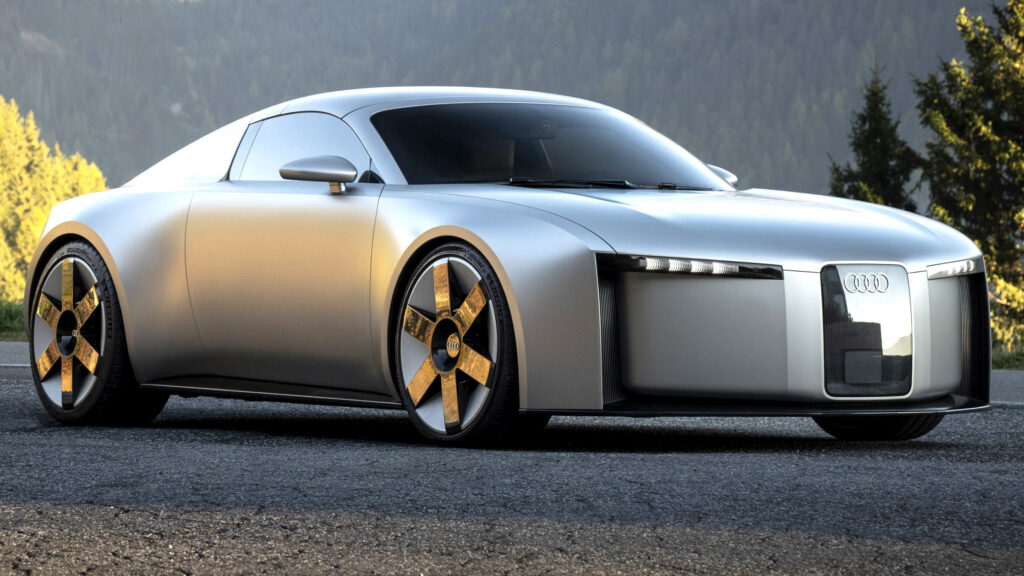
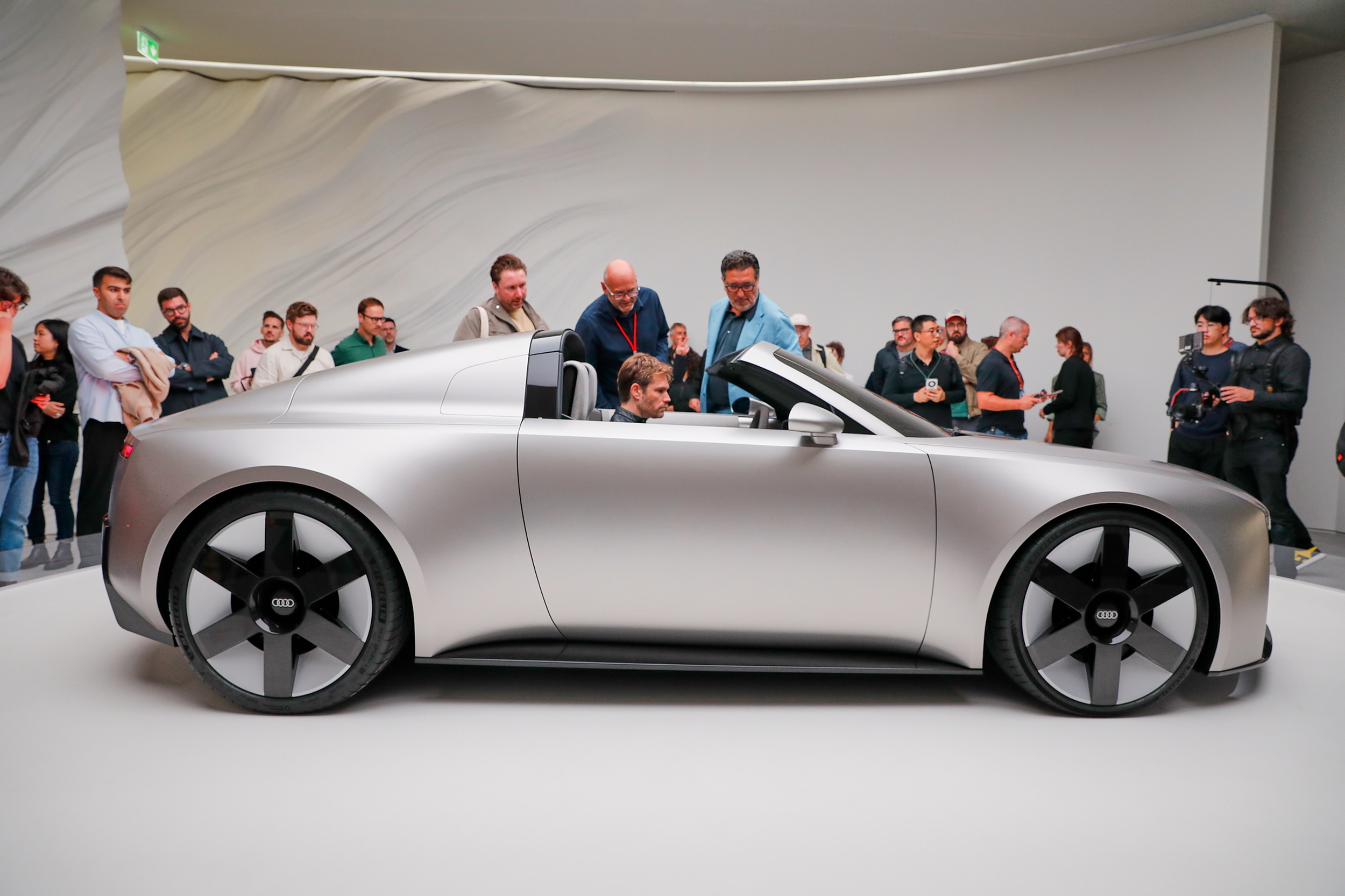
Audi CEO Gernot Döllner has tied much of his turnaround strategy to a new halo model known internally as Concept C and rumored to revive the TT nameplate and centering much of its future design around it. And the trouble is that it’s engineered around the same Porsche-developed EV platform intended for the electric 718.
The shared architecture was supposed to deliver cost savings and accelerate development. Without it, Audi may be forced to either shelve the Concept C entirely or buy and finish the platform independently.
Insiders told the German publication indicate that such a move could cost Audi a nine-figure sum. There’s no telling how long it would take Audi to sort out the development and get a production car ready to roll. Help isn’t coming from any other direction, either.
Volkswagen Group’s next-generation SSP platform, which will underpin most future EVs across its brands, isn’t expected to be ready before mid-2028. All of this is going on as Porsche is struggling to manage shifting industry sands. Sales of the Taycan have fallen off a cliff in China, and tariffs are making things a lot harder in the U.S. as well.
Projections for China, once Porsche’s biggest growth engine, have been cut from 100,000 units to just 30,000 to 40,000 in 2026, with the brand recently deciding to shut down more than a third of its dealerships in the country.
Audi, for its part, publicly showcased the Concept C in Milan last September during a high-profile launch event complete with celebrity appearances. At that event, Döllner described it as “the first visible evidence of Audi’s transformation as a company.” He emphasized that the model marks a break from the brand’s past design language and lays the groundwork for what comes next.
That foundation isn’t limited to design either. The Concept C’s tech platform is intended to underpin Audi’s future lineup. Originally, the sports car was scheduled to launch in 2027.
The big question now is whether Döllner will stick with Leiters’ cost-cutting approach or push ahead with Concept C, even if it means spending hundreds of millions to take over and finish the platform on Audi’s own terms by 2027.
For now, both companies are staying quiet. Porsche says no final decisions have been made, while Audi declined to comment on the Concept C’s future.
BMW begins i3 pre-series production at its Munich facility.
Electric i3 promises strong performance and long driving range.
Gas-powered 3-Series continues using BMW’s CLAR platform.
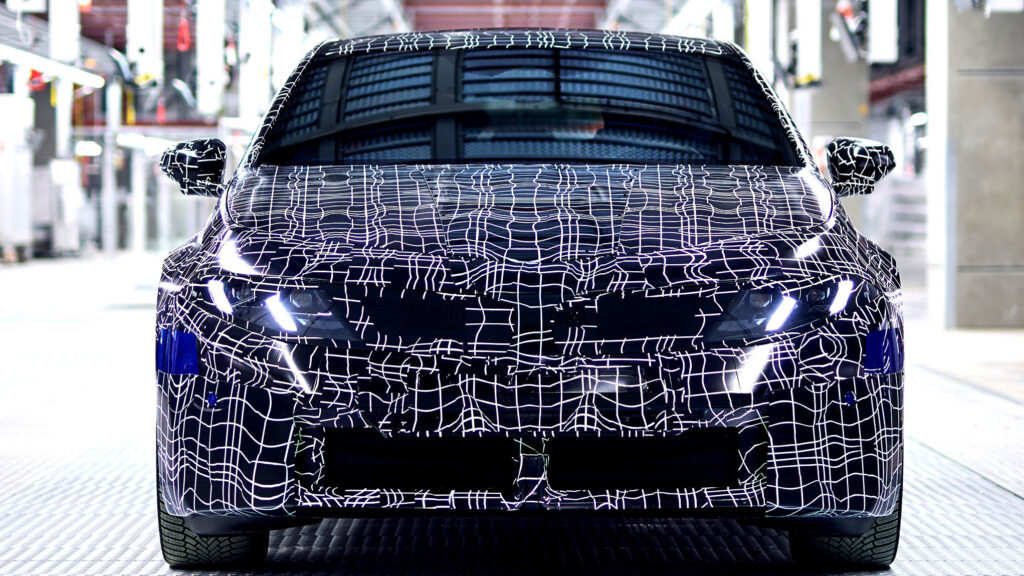
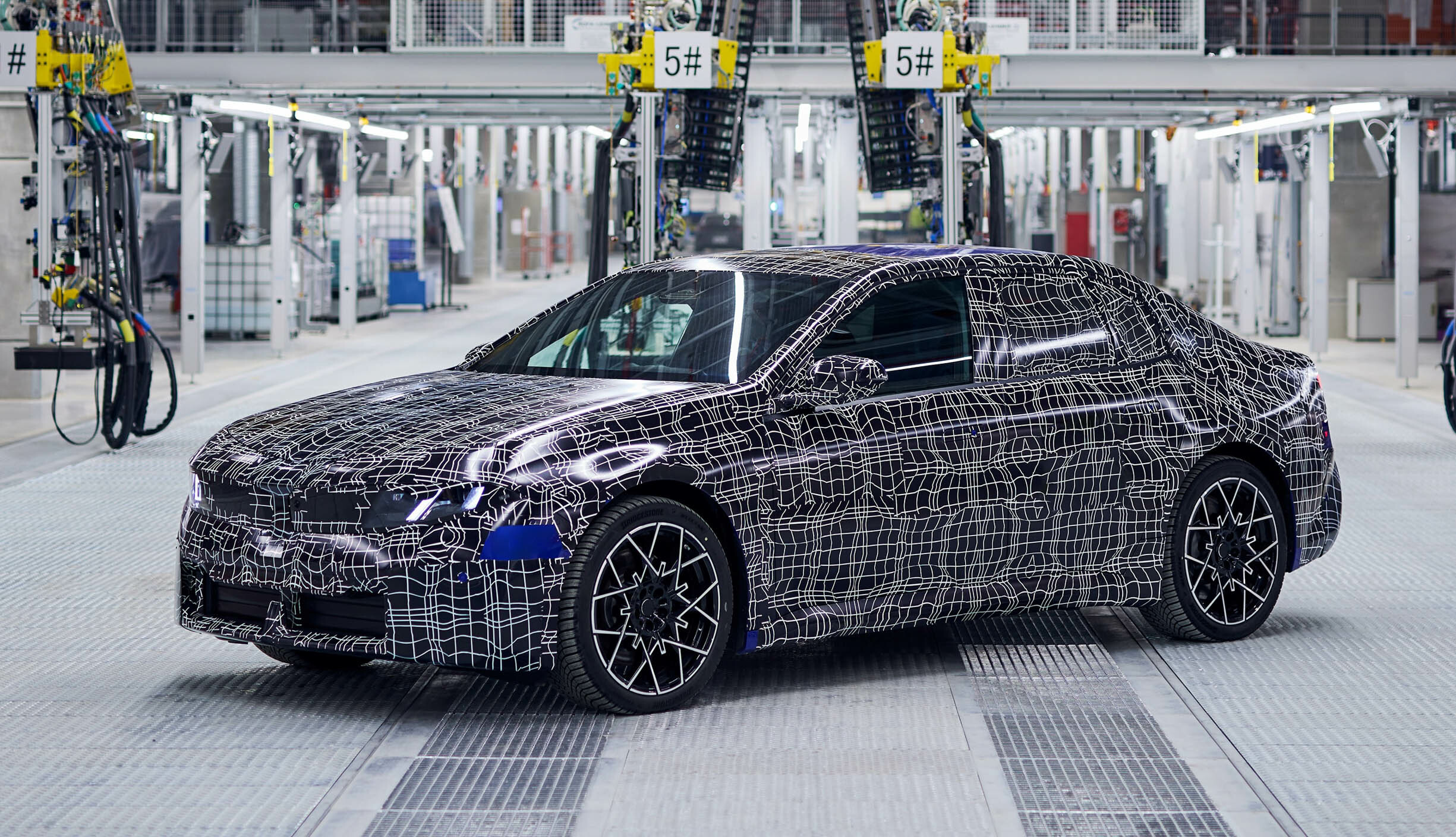
After months of spy shots and speculation, BMW’s all-new electric i3 is officially leaving the theoretical stage. The brand has begun pre-series production at its Munich plant, which means the future 3-Series EV is no longer just a prototype trying to evade Nürburgring photographers.
BMW released official images of camouflaged near-series cars to mark the milestone, confirming that production-spec hardware is now running through the factory. According to BMW, these early cars are built using full production processes, from the press shop to final assembly, to stress-test logistics, equipment, and workflows before series production begins in the second half of 2026.
This is a bigger deal than it sounds. Until now, early i3s were assembled partly at BMW’s pilot plant near its Research and Innovation Centre. With Munich’s new body shop, paint shop, and assembly areas now complete, the i3 finally goes through every production step under one roof, just like a real car should.
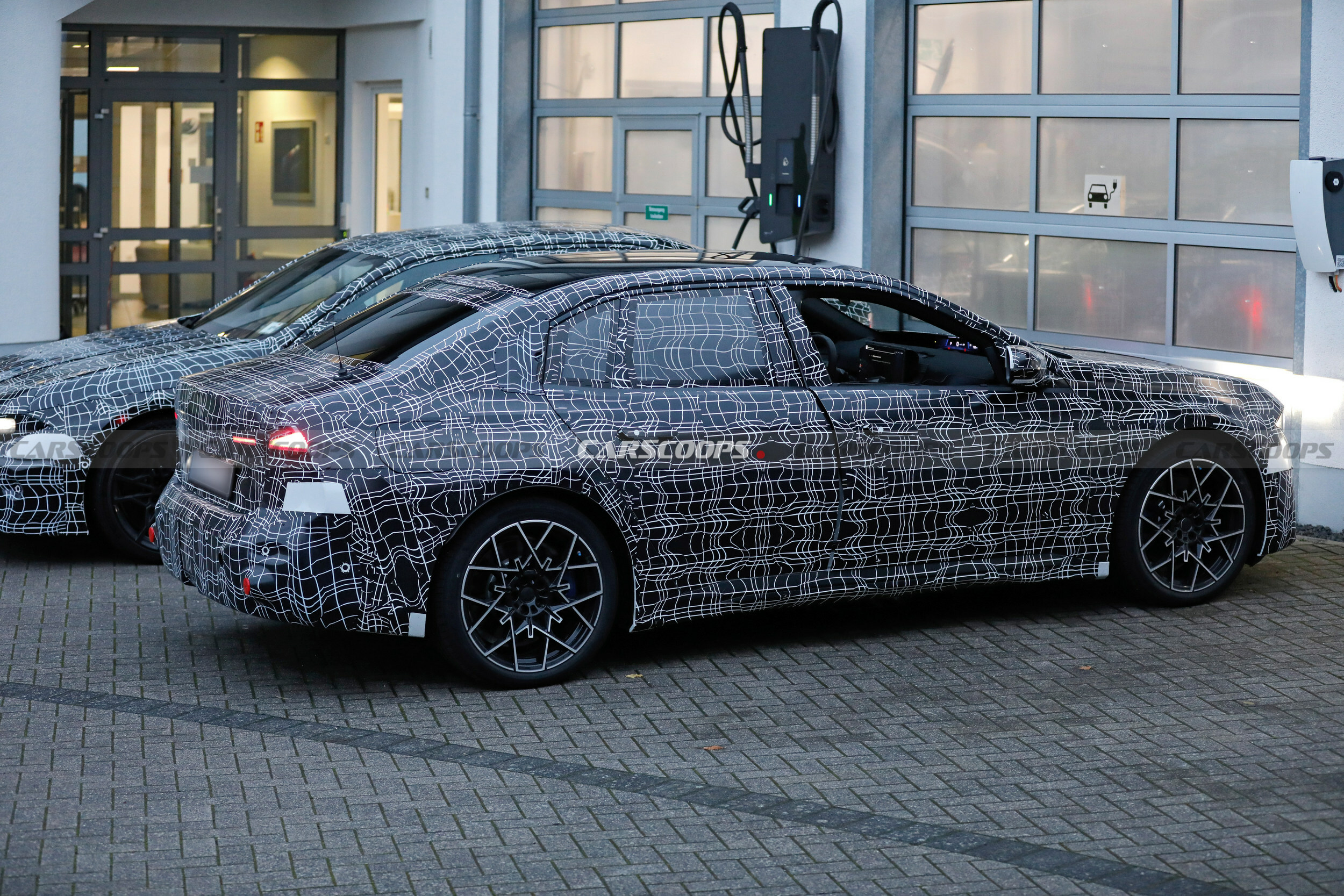
The timing fits perfectly with what we’ve seen on the road. Spy shots have shown the electric i3 and the next combustion 3-Series testing side by side, wearing similar Neue Klasse styling but hiding very different bones underneath.
The i3 rides on BMW’s dedicated Neue Klasse EV platform first seen on the 2026 iX3 SUV, while the gas-powered 3-Series sticks with an updated version of today’s CLAR architecture.
Spot the EV
But you won’t need to get them on a ramp to tell them apart, you’ll just have to look closely. The electric i3 has a flatter roofline, different door and window shapes, and even a relocated charging port compared to the fuel door on the ICE model. Inside, though, both will share a futuristic cabin, including a freestanding display and BMW’s pillar-to-pillar Panoramic iDrive screen.
iX3 Powertrain
Powertrain details remain unofficial, but based on what we already know about the iX3, expectations are sky high. The i3 50 xDrive is rumored to deliver around 463 hp (469 PS / 345 kW) and an EPA range that should exceed 400 miles (644 km), backed by a massive battery and ultra-fast DC charging.
An entry-level rear-wheel drive version will follow, with a hotter, heavier, M3 EV also confirmed.
BMW says employee training is now shifting from virtual reality to hands-on work with real machinery, which tells us the launch clock is ticking. The camouflage may still be on, but the electric i3 has clearly entered its final dress rehearsal and the full disguise-free show starts later this year with first deliveries coming in early 2027.
Hyundai is bidding to build 12 submarines for Canada.
Canada may link the deal to local Korean car production.
Korea accounts for 12 percent of car sales in the country.
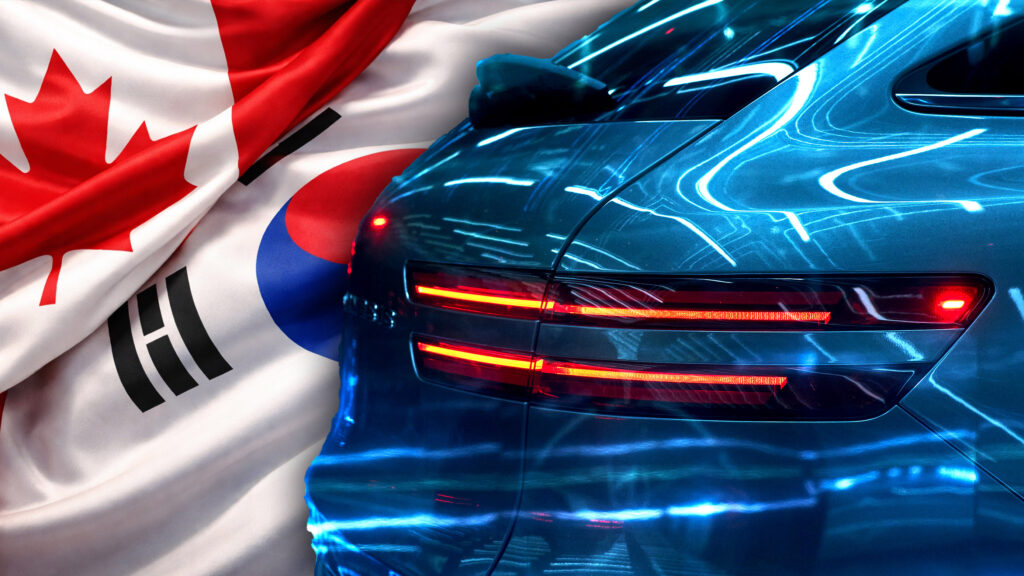
Just two weeks after announcing a major trade deal with China that sharply reduced tariffs on EV imports, Canada is exploring another pivotal agreement, this time with South Korea, that could open the door to more car production on Canadian soil.
Although the two countries have had a free trade agreement since 2015, removing tariffs on most goods, this new Memorandum of Understanding (MoU) points to a growing interest in deeper cooperation.
Both countries are responding to the unpredictability of U.S. trade policy under the Trump administration by diversifying their economic alliances. Still, for all the optics, neither has the capacity to replace the United States as a primary economic pillar.
The current priority is to strengthen South Korea’s automotive presence in Canada. That could include domestic manufacturing of Korean-branded vehicles as well as increased production of electric vehicle components and battery technologies.
“This agreement will grow our auto sector, create good jobs and reinforce Canada’s position as a global leader in future-ready vehicle manufacturing,” said Industry Minister Mélanie Joly in a statement on Thursday.
Ties Between Auto and Defence
Canada appears to be courting major Korean automakers such as Hyundai, especially in light of South Korea’s bid to replace Canada’s current submarine fleet.
According to CTV News, both Hyundai and defence contractor Hanwha are involved in a proposal to build and maintain 12 submarines for the Royal Canadian Navy. If selected, the deal could be worth up to $100 billion over the next 30 to 40 years.
Hanwha, a sprawling South Korean industrial group, has already laid groundwork by signing five separate MoUs with Canadian companies to incorporate their technologies and products into its submarine offerings. Among those agreements is a $275 million commitment toward a new structural steel beam mill in Ontario.
South Korea’s Growing Footprint in Canada’s Auto Market
In 2024, South Korean vehicles made up 12 percent of all cars sold in Canada, amounting to 228,257 units. In a statement, the Canadian government emphasized its aim to strengthen the domestic battery supply chain by encouraging investment and collaboration in battery manufacturing, materials processing, and the refinement, processing, and recycling of Canadian critical minerals.
Flavio Volpe, president of the Automotive Parts Manufacturers’ Association, believes the timing aligns well for Canada to boost its domestic auto sector by leveraging upcoming defence investments.
“Today the business case is there to build a plant here in Canada, perhaps making electric vehicles… and to build where they sell,” he said. “Canada is interested in buying submarines and there are two healthy bidders. And both of those healthy bidders have automakers that sell a lot of cars here and sell batteries here.”
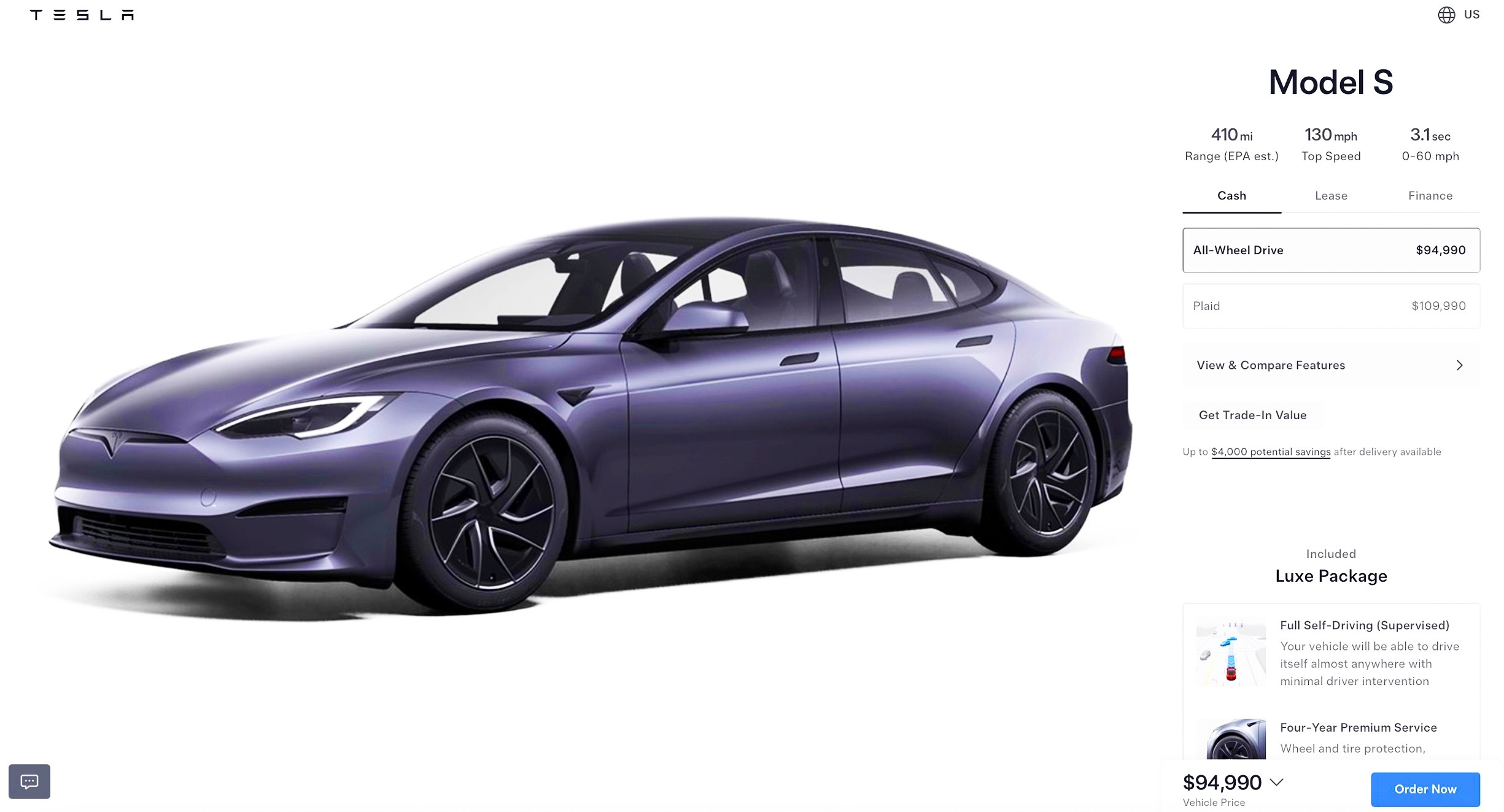
Tesla is ending Model S and X production this year, Musk says.
Model S helped prove EVs could be fast, fun, and desirable.
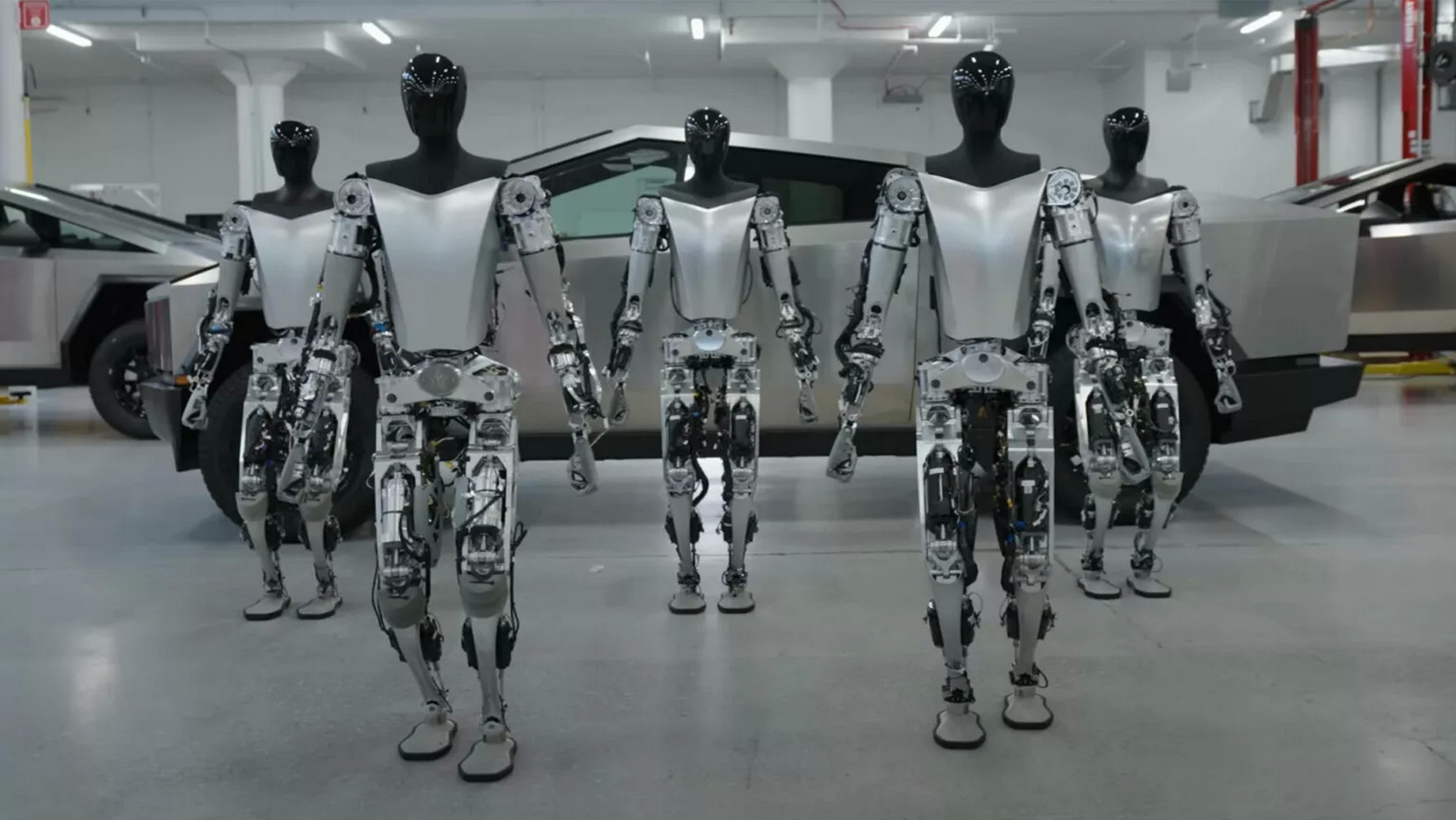
Fremont, CA, plant will be retooled to build humanoid robots.
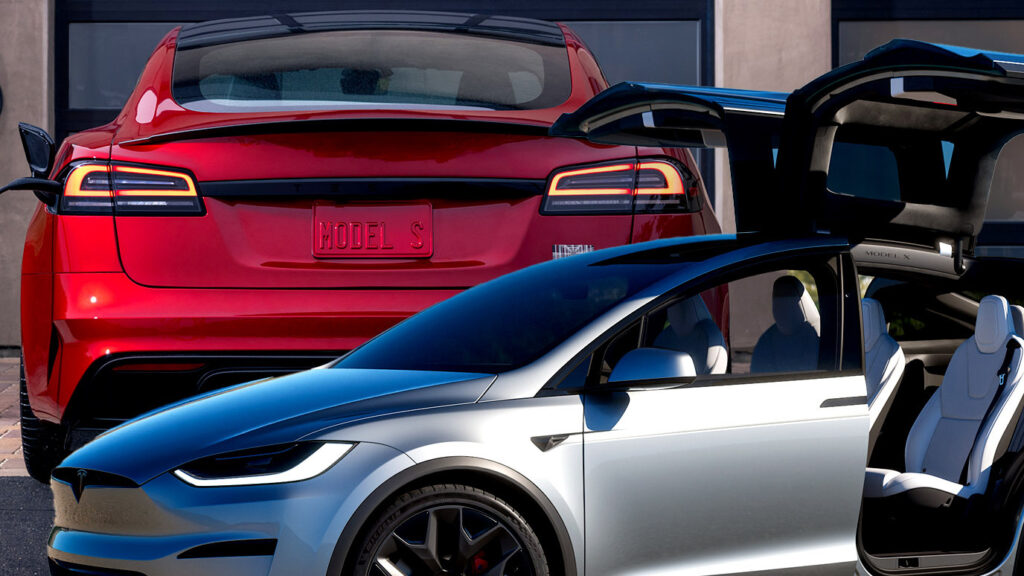
Tesla is quietly switching off two of the cars that helped kickstart the modern EV revolution. The Model S sedan and Model X SUV are heading for retirement as the company steers away from cars and toward humanoid robots instead.
CEO Elon Musk made the announcement on an earnings call on Wednesday, explaining that S and X production would end in California next quarter, and the Fremont plant would be repurposed to build Optimus robots.
“It’s time to bring the Model S and X programs to an honorable discharge because we’re really moving into a future that is based on autonomy,” Musk told investors.
“We’ll obviously continue to support S and X programs for as long as people have the vehicles, but we’re going to take the production space in our Fremont factory and convert that into an Optimus factory with the long term goal of having 1 million units a year.”
Game changer
It feels strange to say goodbye to the Model S, and Musk himself conceded the news was “slightly sad.” When it launched back in 2012, it rewrote the rulebook. Here was an electric car that was not a compromise box on wheels but a sleek, luxury sedan with Aston Martin vibes that could outrun a BMW M5 – and later, supercars – in a straight line. Alongside the Nissan Leaf, it helped drag EVs into the mainstream.
The Model X followed with its dramatic falcon wing doors and family friendly space, though it never quite matched the S for cultural impact. Still, both became rolling symbols of Tesla’s rise from scrappy startup to industry disruptor.
Replacements Overdue
The problem is time waits for no car, especially in the EV world. Sales numbers told the story. The Model 3 and Model Y became Tesla’s volume heroes, while S and X faded into niche status. While Tesla refreshed the S and X over the years, it never gave us all-new versions even as the threat from Western and Chinese rivals grew stronger.
Now, rather then reboot them, Tesla has decided to pivot to something different altogether, something with the potential to make even more money, and have an even bigger impact than the S did a decade ago.
Canada cut tariffs on Chinese EVs from 100 percent to 6.1.
Trump threatened 100 percent tariffs in response to deal.
China now wants to build EVs in Canada with local partners.
Canada’s recent trade deal with China was bound to cause controversy. The agreement slashes tariffs on Chinese EVs from 100 percent down to just 6.1 percent, prompting U.S. President Donald Trump to threaten 100 percent tariffs on Canada if the deal proceeds. Still, China insists the arrangement is meant to benefit both countries and isn’t a zero-sum game.
Under the new deal, up to 49,000 EVs from China can be imported to Canada at a reduced 6.1 percent tariff rate, though at least half of them must cost $35,000 or less by 2030.
Unifor labor union president Lana Payne argues the deal opens the door for China to quickly capture critical market share. Ontario Premier Doug Ford has voiced similar concerns, warning that Canada could be inundated with low-cost EVs, without any firm commitment from China to invest in the local economy.
Beijing Signals Willingness to Build in Canada
Despite those concerns, Chinese Ambassador to Canada Wang Di says China’s fast-growing automakers are being urged to invest directly in Canada and produce vehicles domestically.
“All these projects will be beneficial to the development of the Canadian EV industry, and will be helpful for job growth in Canada, and will help Canadian consumers to be able to buy higher quality and more affordable cars,” Wang told CTV News. “The character of China-Canada practical co-operation is complementarity and mutual benefit.”
“China encourages and supports Chinese companies to make investments and start-up companies here in Canada, on the basis of the market rules,” he continued. “At the same time, we hope that the Canadian side will provide a fair, non-discriminatory, and predictable business environment for the Chinese companies that come here.”
According to Wang, that is what Beijing ultimately wants to see, if companies choose to take up the opportunity.
“If Chinese companies will come to Canada to work with Canadian partners for investment, for opening factories or for joint ventures, all of these projects will be win-win,” he said.
Perhaps in a thinly veiled swipe at the Trump administration, Wang added that “unlike some other countries, China will not only take into consideration of its selfish interest, we don’t want ‘only we win and others lose.’”
The head of the Canada-China Energy and Environment Forum, Wenran Jiang, would like to see Canadian juggernaut Magna International partner with a Chinese car manufacturer to build EVs in Canada. Recently, it was confirmed that Magna would partner with GAC to build the Aion V, but it’ll be built at the parts giant’s factory in Graz, Austria.
“If they can do that, we can do it certainly here in Ontario,” Jiang said, adding that such cooperation could help bridge regional divides over China policy. “We could do probably better if we leverage our regional advantages and work together as a team.”
India will slash tariffs on European ICE cars from 110 to 40 percent.
European carmakers currently hold less than 4 percent market share.
Local market is projected to grow from 4.4M to 6M units by 2030.
India has long guarded its domestic car industry with near-impenetrable tariffs, making foreign vehicles a rare sight on its roads unless built locally. That’s about to change.The country is now getting ready to lower those duties on European Union cars, dropping them from a steep 110 percent to 40 percent.
Final terms of the trade agreement between India and the EU will be outlined later this week, but the current proposal outlines that tariffs on EU-made combustion-engine cars will fall to 40 percent for up to 200,000 units annually. Over time, that figure is expected to drop even further, eventually settling at 10 percent.
In order to protect local firms like Mahinda & Mahindra as well as Tata Motors, battery-electric vehicles would be excluded from the tariff cuts for the first five years. After that, European-made BEVs will also qualify for the reduced tariff structure.
Only cars priced above €15,000 (roughly $17,700) would be eligible for the reduction, a threshold designed to limit direct competition with mass-market offerings from firms such as Maruti Suzuki. These models dominate India’s affordable car segment and are critical to local industry stability.
According to Reuters, the deal is still under negotiation, with finer details yet to be finalized. Certain provisions remain subject to revision before the full announcement is made.
A Massive Market, Ripe for Growth
India now ranks as the third-largest new car market in the world, trailing only the United States and China. Yet European brands currently hold less than a 4 percent share of annual sales, positioning India as a key target for future expansion. Around 4.4 million new vehicles were sold in the country last year, with forecasts suggesting that number could climb to 6 million by 2030.
While the trade pact is expected to give EU carmakers a clearer path into the Indian market, it could also make things easier for Indian textile and jewellery exports. Those goods currently face US tariffs as high as 50 percent, and access to a new market could help take some pressure off.
Canada cut Chinese EV tariffs from 100 percent to 6.1 percent.
Doug Ford slammed the move, warning it risks local auto jobs.
Premier wants Canadians to boycott imported Chinese EV models.
Just days after Canada and China finalized a trade agreement slashing tariffs on Chinese electric vehicles from 100 percent to 6.1 percent, Ontario Premier Doug Ford has gone on the offensive.
Warning that the move could deliver a serious blow to Canada’s domestic auto industry, Ford is urging Canadians to steer clear of Chinese EVs altogether and “boycott” them, arguing the deal risks local jobs and undermines the country’s manufacturing base.
Ford didn’t wait for the details to land before voicing his concerns. Long before the tariff change was confirmed, he was already firmly against any auto-related trade agreement with China. According to the Ontario Premier, Prime Minister Mark Carney pushed the deal through without proper consultation.
Ford Sounds the Alarm on Local Jobs
“Maybe a few people might buy them, and I just discourage anyone from buying a Chinese vehicle,” Ford said at a press conference.
“But if they decide to do that, at what cost is it? Is it at the cost of your neighbor down the street that’s working in the auto sector that he’s not going to have, or she’s not going to have a job? Boycott the Chinese EV vehicles. Support companies that are building vehicles here. This is a team Canada approach. We gotta stick together.”
Who Really Benefits From the Deal
In announcing the dramatic tariff reduction, Carney stated that several Chinese carmakers have shown interest in building affordable electric vehicles on Canadian soil. Under the new deal, 49,000 EVs from China can be imported to Canada at the lower 6.1 percent tariff. Although Carney would welcome Chinese brands building cars locally, Ford isn’t convinced by the idea.
“The numbers just don’t add up,” he said. “Even if they do start assembling, how about the supply chain? They come, and they assemble, but they bring all Chinese parts in; that means nothing. We want to make sure we produce Canadian cars by Canadians, with the R and D and the specs and everything, and the steel, and the aluminum from Canada. It’s as simple as that.”
Are EV Incentives Needed?
Ontario Green Party Leader Mike Schreiner, speaking to CTV News, said the province should be looking at practical steps to build demand for Canadian-made EVs instead of clearing the way for imports.
“The federal government’s deal with China threatens Ontario’s automotive industry,” he claimed. “This is even more reason for the premier to take bold action to bring forward a complete plan to protect Ontario workers by going all-in on incentives to create demand for Ontario-made EVs.”
Canada will cut EV tariffs from 100 percent to just 6.1 percent.
New trade deal caps Chinese EV imports to 49,000 per year.
Ford warns deal risks job losses and US market retaliation.
Canadian Prime Minister Mark Carney says several Chinese carmakers are showing interest in building affordable electric vehicles on Canadian soil, just days after the country signed a new trade agreement with the world’s largest EV manufacturing nation.
Carney met with Chinese President Xi Jinping in Beijing late last week, where the two leaders finalized a deal that will sharply cut tariffs on Chinese EVs entering Canada, dropping them from 100 percent to 6.1 percent. As part of the agreement, a cap will initially limit imports to 49,000 vehicles per year, with half of those required to start below CA$35,000 (roughly $25,000 USD).
Framing the cap as a measured opening rather than a floodgate, Carney pointed out that 49,000 vehicles matches the number of Chinese-made EVs imported into Canada in 2023.
A Cautious Green Light
“We’ve had direct conversations directly from the Chinese companies…and collectively are the world’s leaders in this space, with explicit interest and intention to partner with Canadian companies,” Carney said.
He described the deal as a phased rollout designed to encourage collaboration between Chinese automakers and local firms. “This is an opportunity for Ontario. It’s an opportunity for Ontario workers, an opportunity for Canada, done in a controlled way with a modest start,” he added.
Any Chinese car manufacturer that intends to build EVs in Canada will need to meet the nation’s labor standards, Carney said, and reiterated that he wants to see Canada remain competitive in the auto market well into the future.
“We don’t want to be competitive in the market of 2000, 2010,” he said. “We want to become competitive in the market in the future.”
A Small Slice of the Market. For Now
To address concerns about disruption, Carney pointed out that the import cap amounts to less than three percent of Canada’s annual new car sales, which hover around 1.8 million vehicles. He called the agreement a “modest” first step, noting that a review is built into the deal after three years to gauge market impact.
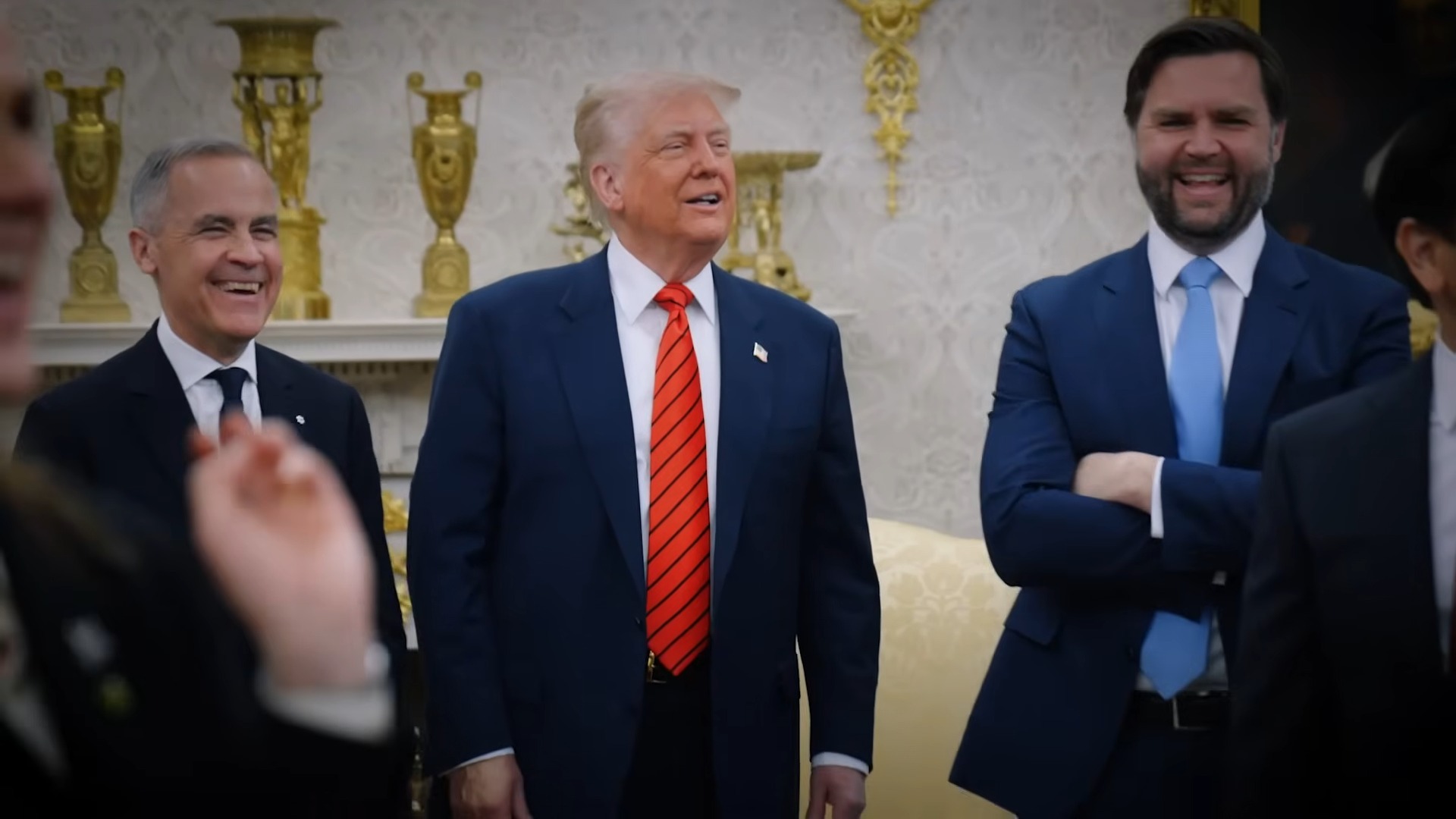
Perhaps surprisingly, US President Donald Trump said the trade deal was a good one, despite US Trade Representative Jamieson Greer deriding it as “problematic for Canada.” According to Trump, “Well, it’s okay. That’s what he [Carney] should be doing. If you can get a deal with China, you should do that.”
Premier Hits Out
Not everyone is a fan of seeing Canada reduce tariffs on Chinese EVs. Ontario Premier Doug Ford has criticized the deal, claiming it will hurt the local economy.
“By lowering tariffs on Chinese electric vehicles, this lopsided deal risks closing the door on Canadian automakers to the American market, our largest export destination, which would hurt our economy and lead to job losses,” he said, according to CP24.
Unifor National President Lana Payne also voiced concern. “Providing a foothold to cheap Chinese EVs, backed by massive state subsidies [and] overproduction…puts Canadian auto jobs at risk while rewarding labour violations and unfair trade practices,” she said.
Toyota will double down on hybrids and ICE in key regions.
China will remain Toyota’s electric-first market going forward.
GR GT V8 hybrid proves Toyota’s engine push isn’t just talk.
Saying the automotive world is in a bit of limbo may be an understatement. On one hand, you have the world’s largest market, China, accepting EVs and plug-in hybrids in even greater numbers than ever before. Meanwhile, in Europe, manufacturers are pulling back on their EV manifestos as the European Union provides some respite in the face of slower-than-predicted adoption.
Toyota, by contrast, has always been pro-ICE. For years, the company has questioned its competitors and governments, who have been advocating exclusively for electric vehicles. And while the company has shown off various plans for EVs, they’ve maintained a more balanced approach.
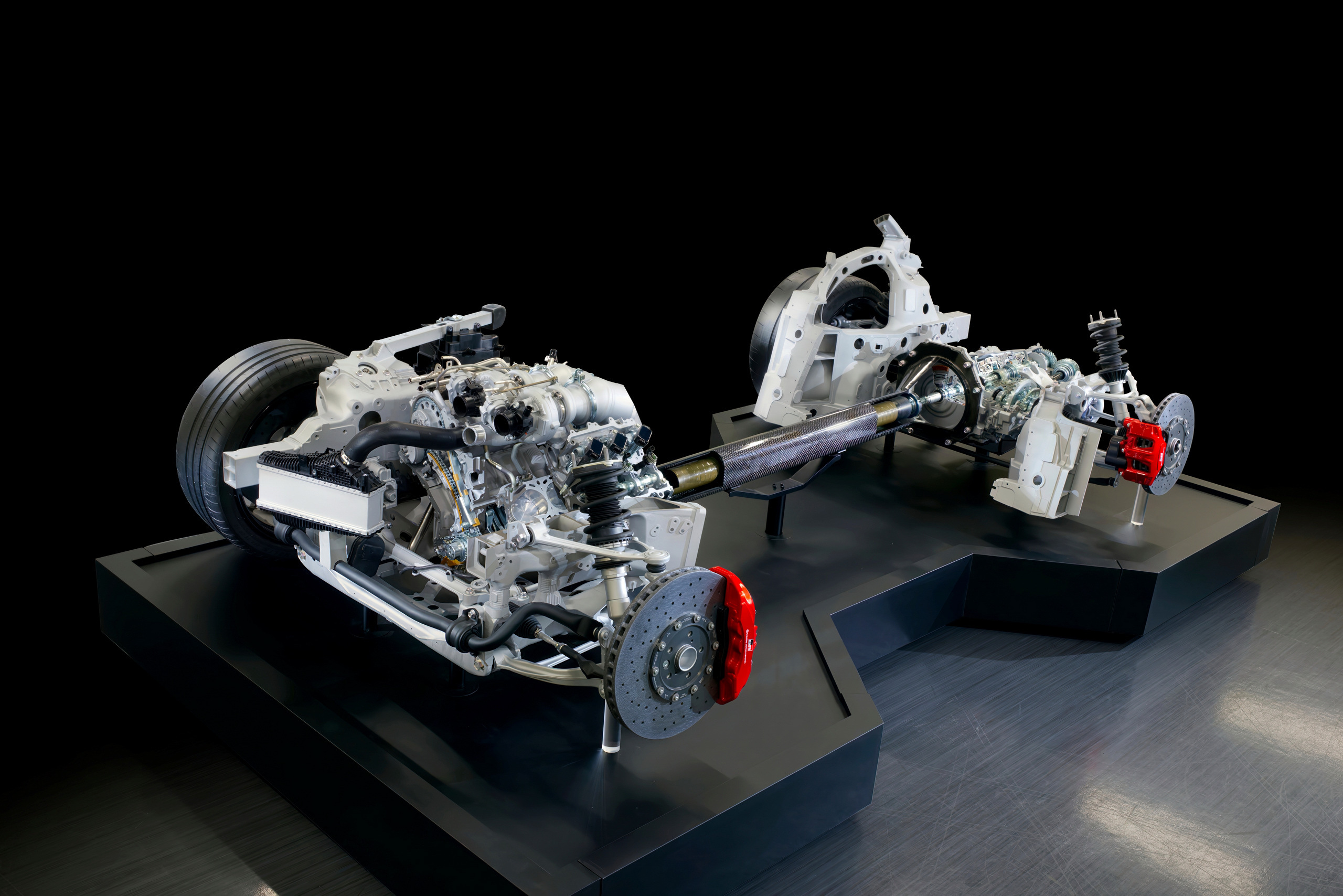
Now, it may be clear that Toyota wasn’t going to say goodbye to combustion without a fight, but we imagine not many would have predicted the unveiling of the GR GT: a production-slated halo supercar with a ferocious twin-turbocharged 4.0-liter hybridized V8 engine.
The Fight for Identity
In an era of tightening emissions regulations and downsized powertrains, the decision to green-light a V8 may seem almost rebellious. But for Toyota, the GR GT isn’t about volume or compliance alone. It’s about identity.
Nikkei Asia notes that the GR GT has been built without the assistance of Yamaha, unlike its spiritual forefathers, the 2000GT and Lexus LFA. “Automobiles, as an industrial product, are in danger of becoming commoditized,” says Toyota Chairman Akio Toyoda. “The engine still has a role to play,” underscoring the importance of the in-house powerplant.
The reality is that Toyota’s focus on keeping engines around will permeate throughout its lineup for the foreseeable future. In June 2025, Toyota convened suppliers at an internal combustion engine rally, where executives outlined plans to develop new engines, including high-output units, while maintaining overall engine production volumes through 2030.
It was a clear signal that Toyota sees a long runway for combustion, even as the market fragments.
However, Toyota is still hedging its bets with EVs, especially when it comes to China. Over there, the car-buying population continues to march towards an all-electric future.
Toyota, like all foreign manufacturers, is feeling the pinch against local rivals. At a supplier event in Shanghai last summer, a Toyota executive drew rare applause by declaring, “In China, we will focus not on cars for the global market, but on cars made specifically for China.”
He added pointedly that if Japan’s headquarters hesitated on investment, he would “explain things to them directly.”
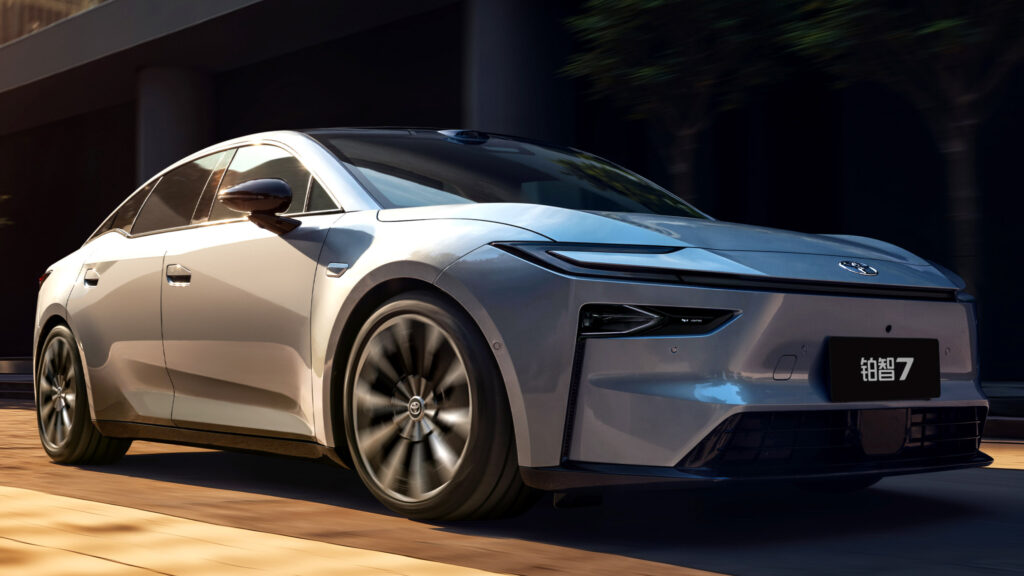
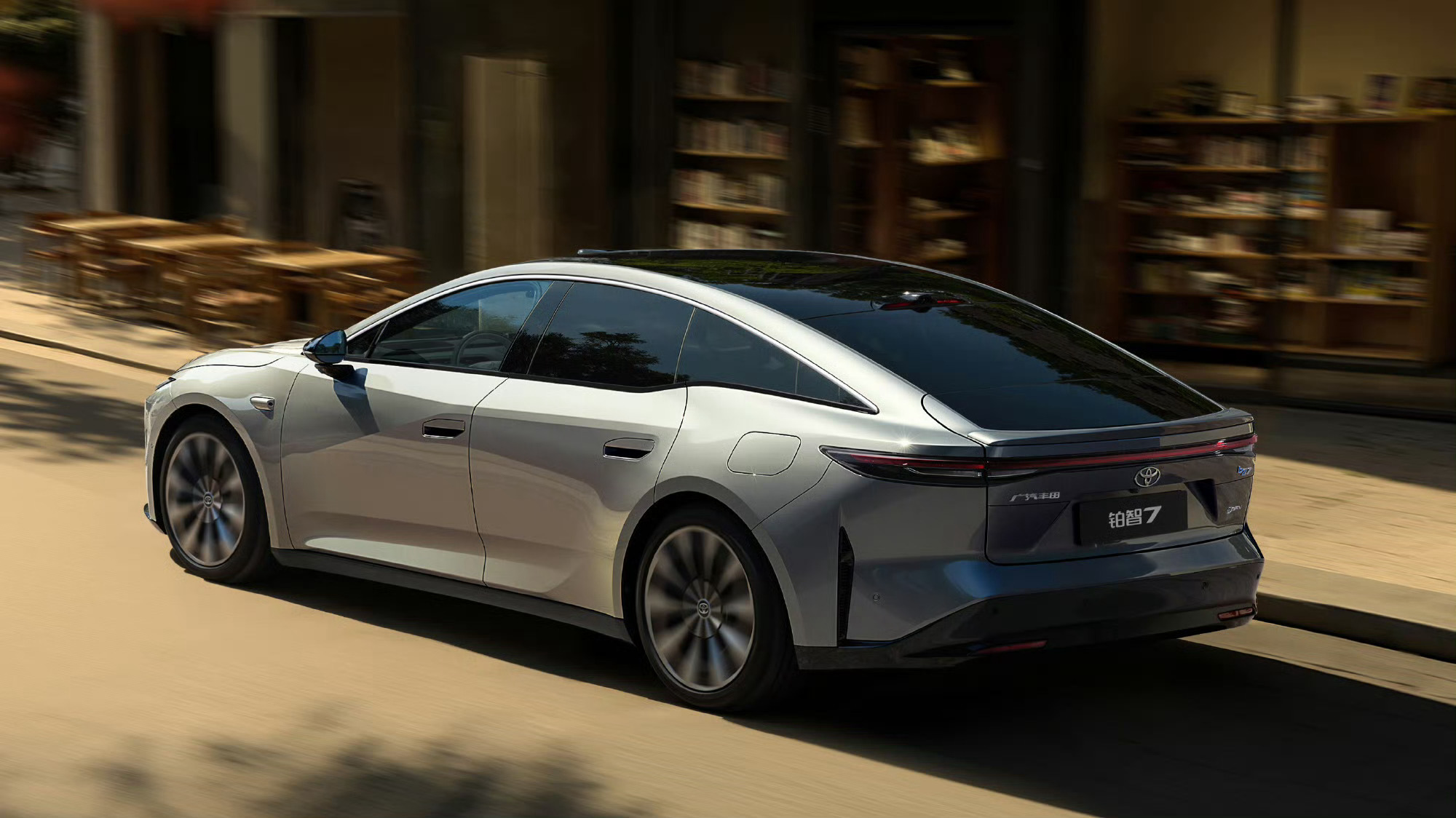
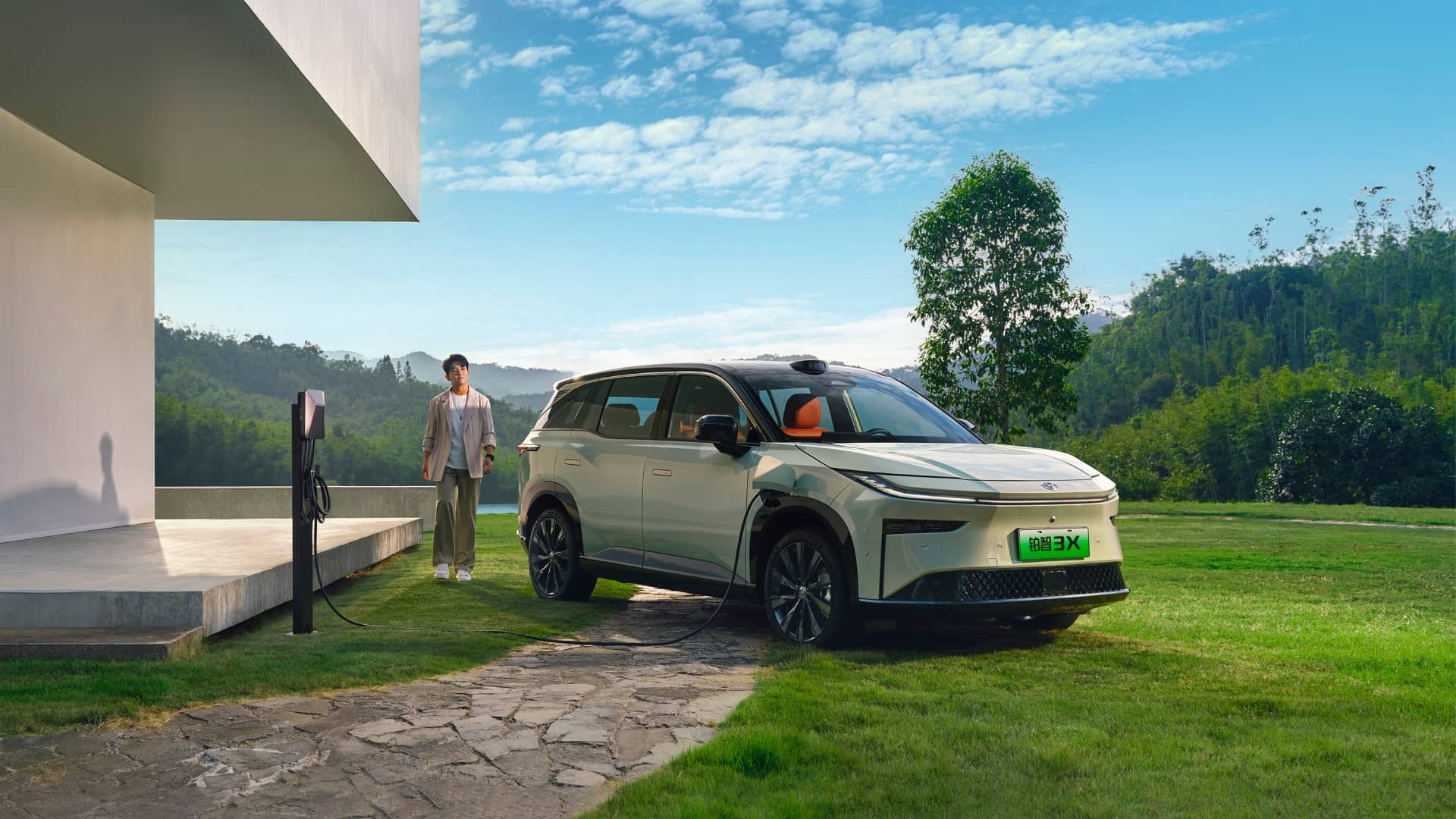
That shift is already visible in the product lineup. The bZ3X electric SUV, launched in March 2025 through GAC Toyota, was co-developed with Guangzhou Automobile Group and uses cost-effective lithium iron phosphate batteries. Priced from 109,800 yuan or about $15,300, it surpassed 10,000 units in monthly sales by November. A bZ7 electric sedan is set to follow.
Hybrid Momentum in America
Back in the US, where EV adoption is not as clear-cut, Toyota is investing in hybrid production. The move is driven by strong demand as hybrids accounted for roughly 13 percent of new-vehicle sales in the U.S. during the third quarter of 2025.
Toyota opened its new battery plant in North Carolina on November 12. Toyota Motor North America President Tetsuo Ogawa called it “a pivotal moment in our company’s history.”
On the same day, Toyota announced plans to invest up to $10 billion over five years to expand U.S. production of hybrids and related components, boosting output at five American plants and reducing reliance on Japanese imports.
Of course, building cars powered by everything from V8 hybrids to LFP-battery EVs is expensive. Toyota spent ¥1.3 trillion on R&D in the year ending March 2025, which is roughly on par with BYD, and well ahead of many rivals.
To manage the burden, Toyota has begun leaning more openly into partnerships, including work with NTT on AI-based crash prevention and a collaboration with Waymo on autonomous driving.
In a market increasingly obsessed with picking a single technological winner, Toyota’s refusal to do so may look risky. But if the global auto future really is plural rather than uniform, betting on engines, rather than shunning them, may yet prove to be the company’s most calculated move of all.

 Login
Login