Reading view

There are new articles available, click to refresh the page.

Even The $31,950 Slate SUV Still Wants You To Crank The Windows

  • Slate’s electric pickup starts at $24,950 before fees and taxes.
  • Projected range has increased to 205 miles on the standard battery.
  • First customer deliveries are scheduled to begin in late 2026.

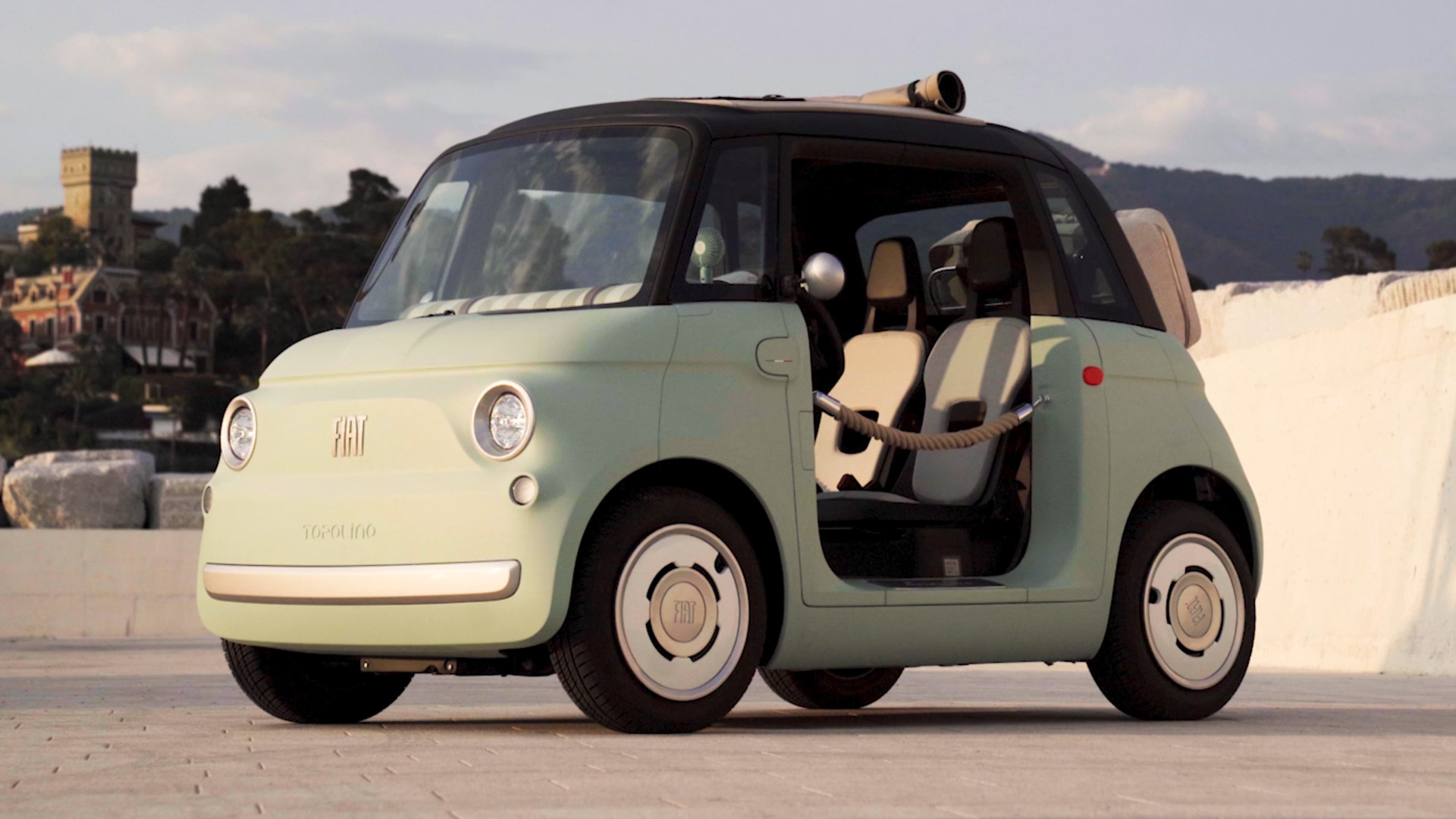
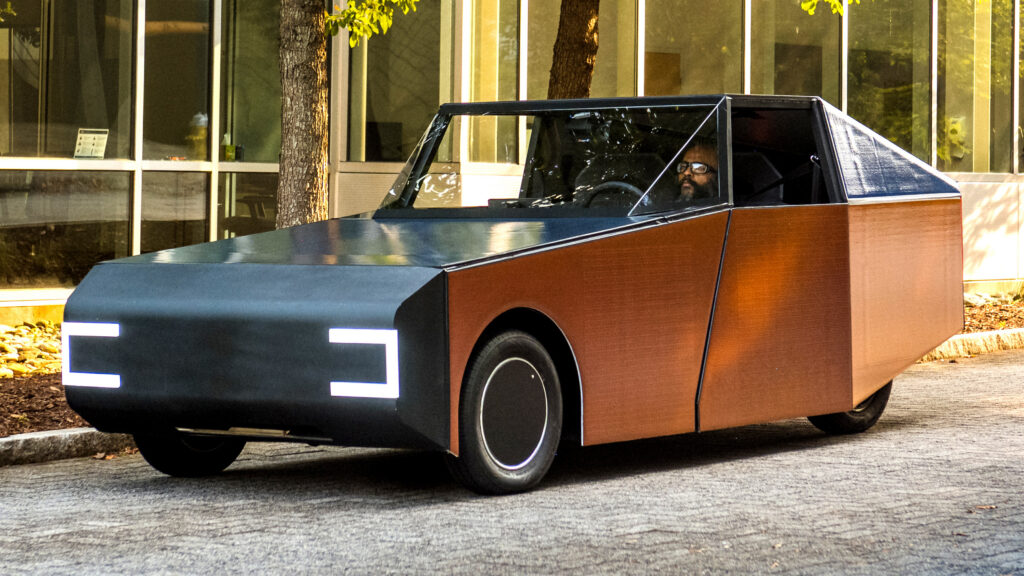
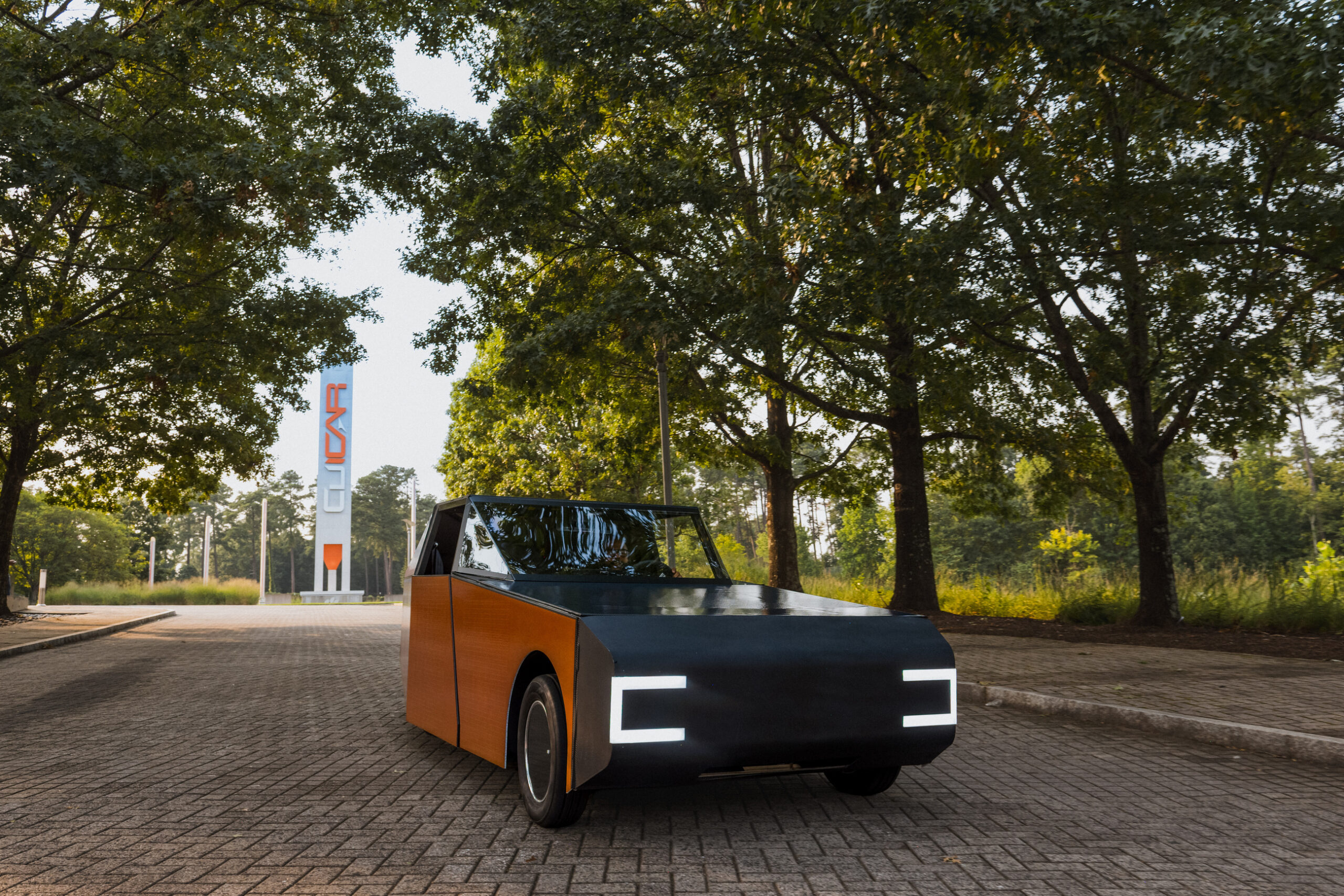
For months, Slate has been promising an affordable new truck. Now, the Jeff Bezos-backed startup has finally put real numbers behind that promise. The company announced today that its all-electric pickup will start at $24,950 before taxes, fees, destination charges, or optional equipment, while also revealing better-than-expected range figures. The order books are now open, and we’re all going to find out just how much of an appetite America has for a stripped-down EV.

According to Slate, customers can now place a preorder with a $300 non-refundable deposit to secure a delivery window. The startup says buyers don’t need to choose accessories or configurations immediately. A key part of its strategy is to sell a basic vehicle first and upsell customization later.

\\\\

The biggest surprise might be the range. Slate originally projected lower figures, but now says the standard battery pack should deliver 205 miles (330 km) of range. That’s not class-leading by any stretch, but it’s more than many expected from a vehicle targeting such a low price point. Beyond that, the formula sounds as though it’s unchanged from its original debut.

More: Carvana May Have A Foot In Bezos’s Slate Auto Already

\\\\\\\\

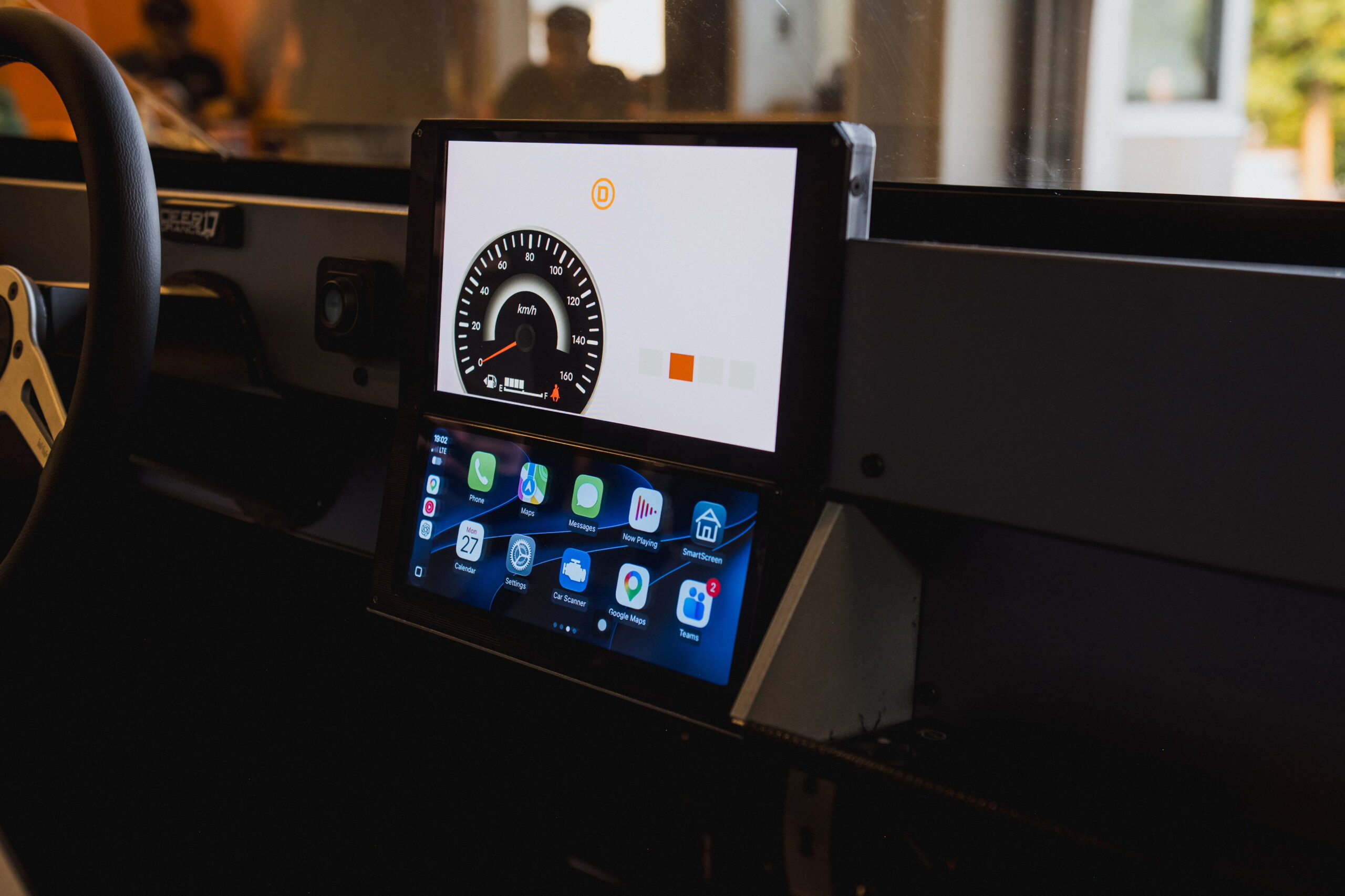
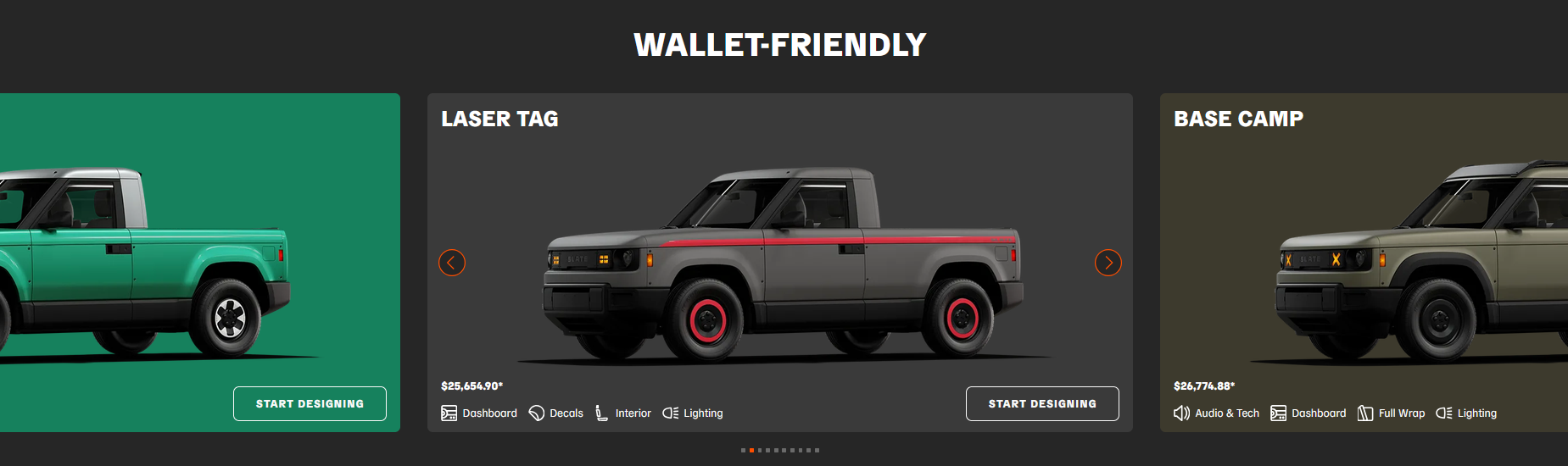
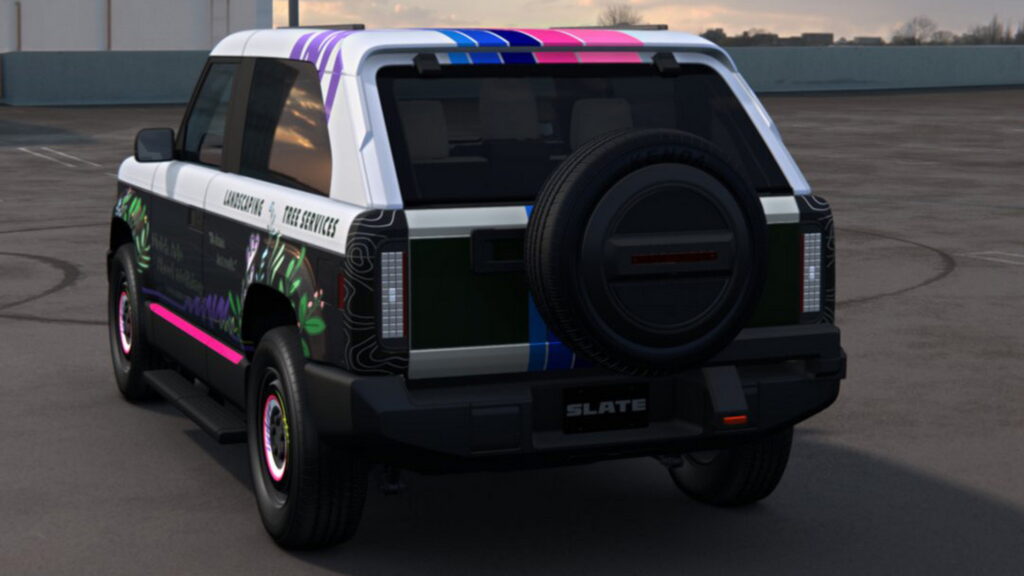
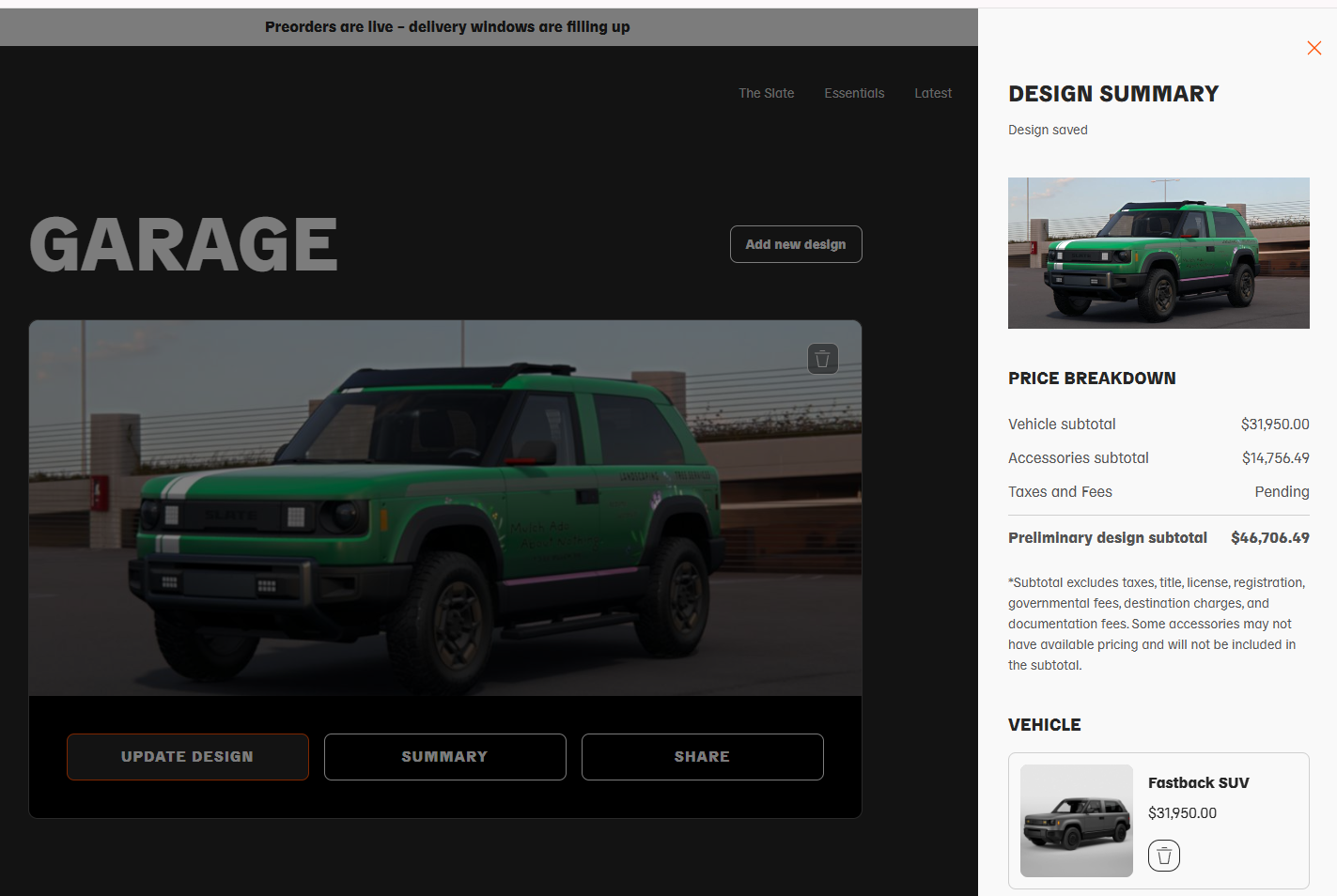
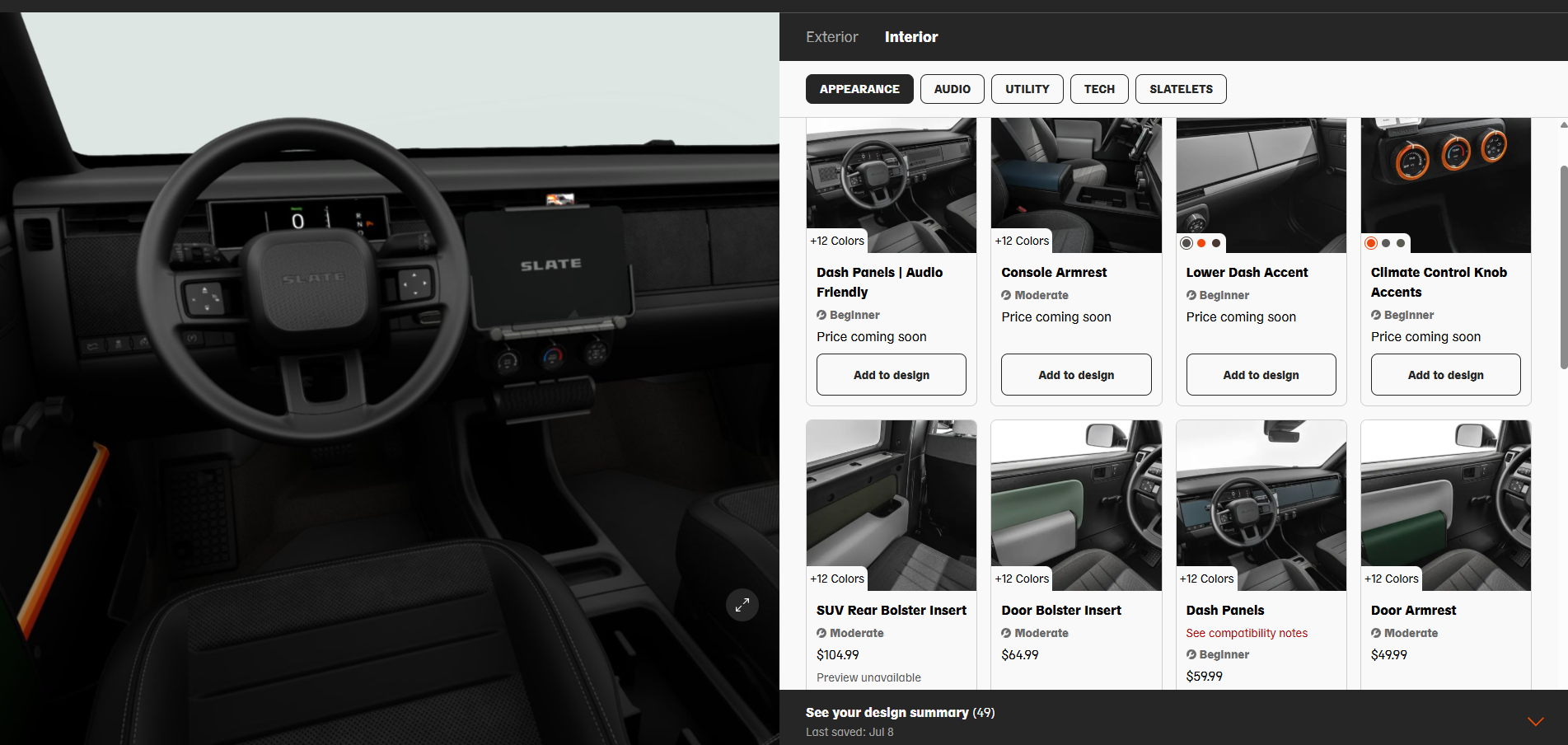
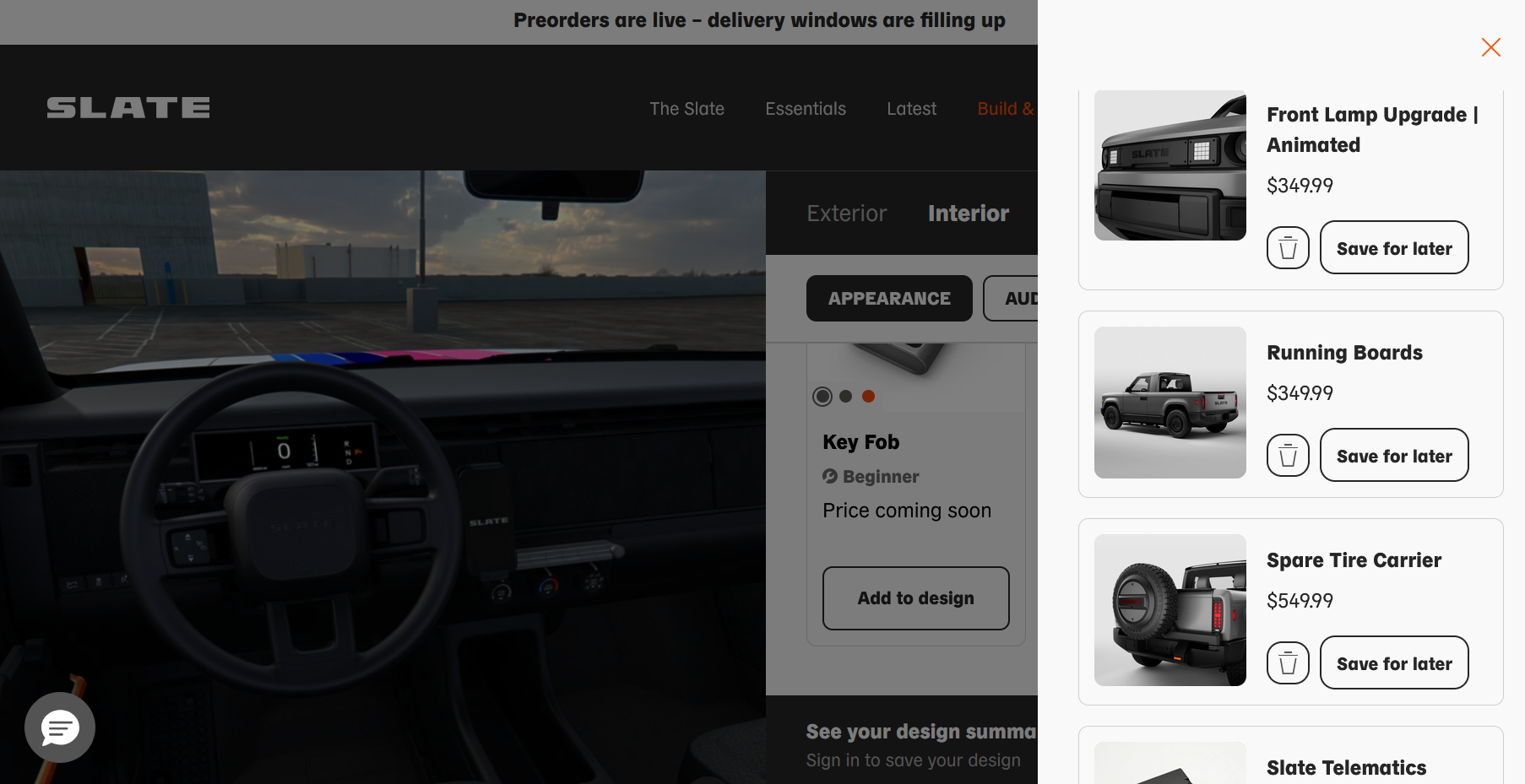
The truck itself remains intentionally simple. It’s a two-seat electric pickup with a projected towing capacity of up to 2,000 pounds (907 kg). Power windows, a conventional infotainment system, and plenty of the equipment buyers now treat as standard, a key fob among them, appear to be missing from all three body styles on the official configurator: the Blank State pickup, the Squareback SUV, and the Fastback SUV.

Instead, Slate is betting that customers would rather buy a basic truck and add features over time than finance a vehicle loaded with equipment they may never use.

 Even The $31,950 Slate SUV Still Wants You To Crank The Windows

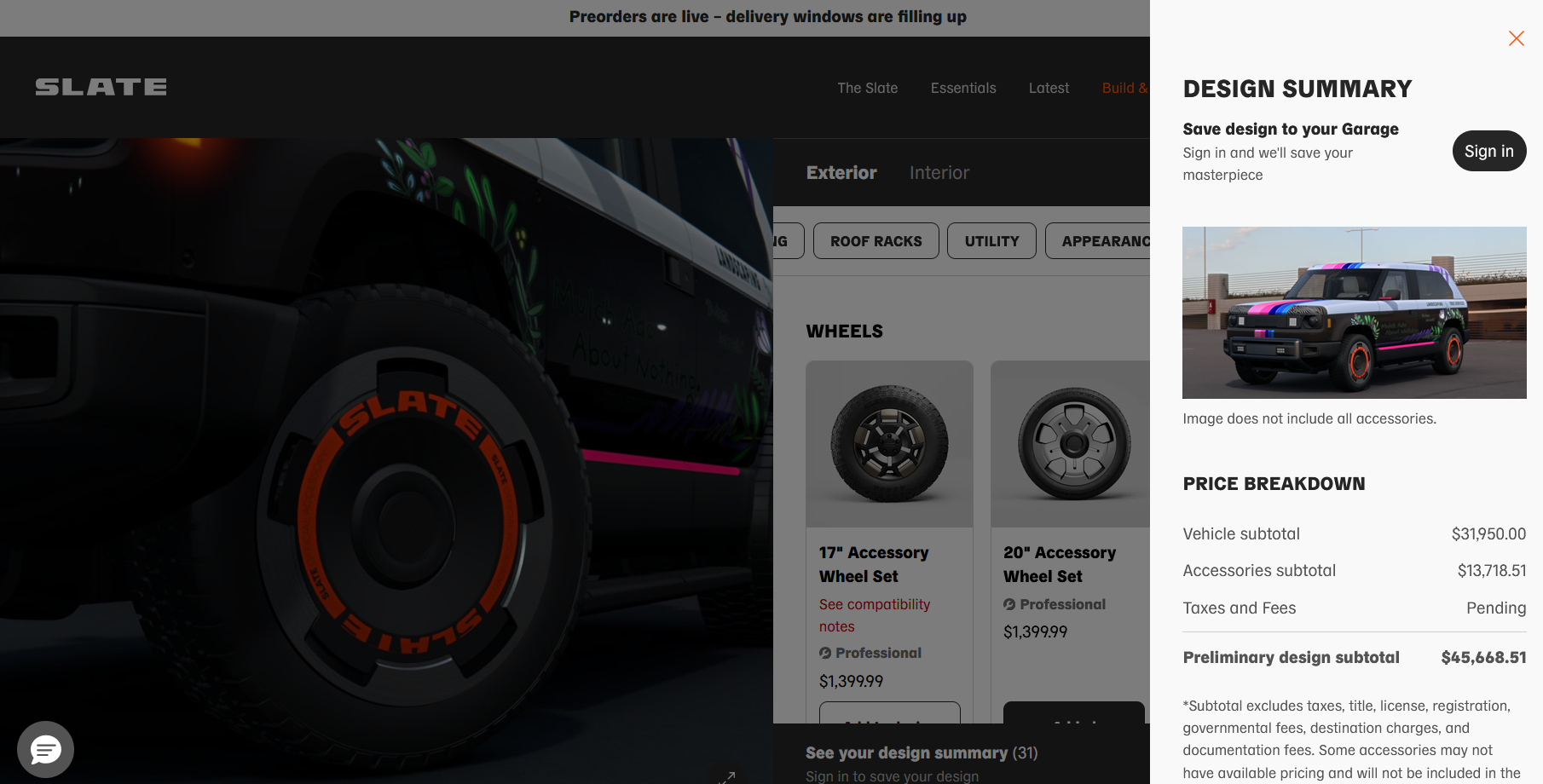
That philosophy extends beyond the pickup itself. Slate also confirmed that both of its SUV conversion variants, known as the Squareback and Fastback, will start at $29,950 and $31,950 respectively. The timing here is key because when Slate first announced its plans, the federal EV tax credit would’ve offered up to $7,500 off. When that ended, pricing was the big question. Now, with the pricing announced, the real challenge begins.

The company reportedly has around 180,000 reservations, but converting inexpensive reservation holders into actual buyers is a very different test. If Slate succeeds, it could prove that affordability matters more than horsepower, touchscreen size, or even battery range. If it fails, it’ll be another reminder that building a cheap vehicle is often harder than building an expensive one.

Credit: Slate Auto

Lucid To Lay Off 18% Of Its US Workforce, Just Four Months After Cutting 12%

  • Lucid is cutting roughly 18% of its U.S. workforce to save cash.
  • The automaker is eliminating a production shift in Arizona.
  • Former interim CEO Marc Winterhoff has departed immediately.

Lucid is doing all it can to get the Cosmos crossover to market quickly, but before that, it’s cutting more of its workforce and seemingly hitting the reset button… again. Four months after laying off 12% of its workforce, the EV startup is cutting another 18% of its U.S. employees while simultaneously shutting down a production shift at its Arizona factory.

The move affects full-time staff, contractors, and hourly workers alike. The automaker’s biggest issue might not be production or development, but rather, finding buyers.

The company announced the cuts Monday alongside the immediate departure of former interim CEO and chief operating officer Marc Winterhoff. Lucid is eliminating the COO position entirely as part of a broader restructuring effort under new CEO Silvio Napoli, who officially stepped into the top job on June 1.

Read: Lucid’s Sub-$50K Cosmos EV Revealed In Patent Drawings

According to Lucid, the layoffs should generate approximately $158 million in annualized savings while costing about $32 million in severance and related expenses. “These are difficult decisions taken to align production with demand, reduce inventory, and adapt to declining market conditions,” a Lucid spokesperson said in a statement to CNBC. “They are part of a broader effort to simplify the company, sharpen execution, and position Lucid to become more competitive over time.” That mention of demand is the key detail here.

Lucid has pretty much already proven that it can build a world-class EV. The Air is a sincerely impressive electric sedan. The Gravity takes that formula and applies it to a three-row SUV praised for its range, luxury, and performance. Despite that, none of the brand’s efforts have resulted in the kind of sales volume needed to support a brand with thousands of employees and ambitions of becoming a major player in the industry.

 Lucid To Lay Off 18% Of Its US Workforce, Just Four Months After Cutting 12%

The elimination of the second shift at Lucid’s AMP-1 factory in Casa Grande, Arizona, underscores the problem. Automakers don’t typically idle production capacity when demand is outpacing supply. Earlier this year, Lucid produced roughly 5,500 vehicles in the first quarter but delivered just over 3,000, leaving inventory levels higher than executives would like.

That’s what makes the brand’s upcoming Cosmos crossover such a big deal. Increasing overall demand is absolutely vital for Lucid right now. The Cosmos is supposed to start at under $50,000, which automatically opens up a whole new demographic of buyers. If Lucid can manage to take some sales away from Tesla and other rivals in the process, these layoffs could eventually look like very wise belt-tightening. If it doesn’t, they’ll just look like one more step away from the success Lucid once hoped for.

 Lucid To Lay Off 18% Of Its US Workforce, Just Four Months After Cutting 12%

Image Credits: Lucid

The 519-HP 2026 Optiq-V Is A Cadillac That Stopped Acting Like One | Review

PROS ›› Performance, driving dynamics, attractive design, cabin layout CONS ›› Expensive, pricey options, some cheap plastics

If you haven’t been tracking this corner of the market, the Cadillac Optiq V might catch you off guard. Who exactly buys this thing? Fair question, and one we kept circling back to. At nearly $80,000 as tested, nobody talks themselves into this on a whim.

It isn’t the quickest electric crossover on the lot, the plushest, or the one chasing the biggest tech headlines. Line up the spec sheets and a handful of rivals look like they hand you more car for the money.

That’s what makes it intriguing. We just spent a week digging into Cadillac’s newest performance EV, and every day it became harder to categorize. It doesn’t behave like a traditional luxury crossover. It doesn’t feel like a hardcore performance machine either.

QUICK FACTS
› Model:2026 Cadillac Optiq V
› Price:$67,300 (starting) / $78,526 (As Tested) + $1,495 Destination Charge
› Dimensions:190.0 in L x 75.3 in W x 65.0 in H (4,826 x 1,913 x 1,651 mm)
› Curb Weight:5,500 lbs (2,495 kg)
› Powertrain:Dual-Motor AWD Electric Drive – 1-Speed Automatic
› Output:519 hp (387 kW) / 650 lb-ft (880 Nm)
› Fuel Economy:103 city / 81 highway / 92 combined MPGe (EPA)
› Range:278 miles (447 km) EPA Est. (250 miles with optional summer tires)
› On Sale:Now
SWIPE

In fact, most of the time it reads like an electric hot hatch that someone stretched skyward to keep modern buyers happy. In a market that looks like this one, perhaps that might just be the whole idea.

Styling

\\\\\\\\

Photos Stephen Rivers / Carscoops

There’s no denying that the Optiq stands out. Despite being a crossover, it’s a handsome one. The angular sheetmetal, sharp lighting signatures, and tasteful mix of black and bright trim help it look modern and upscale without becoming overdone. Cadillac’s latest design language is still establishing itself, but the Optiq-V does a lot to reinforce the brand’s modern identity.

There are a few oddities. The dual-spoiler arrangement remains a little strange, even after spending time with the vehicle.

And while the hidden door handles worked flawlessly throughout testing, the reverse pop-out design feels like one of those solutions searching for a problem. They’re more annoying than clever, and I’m not convinced they’re an improvement over a traditional handle.

Still, viewed as a whole, the Optiq-V is attractive, distinctive, and appropriately premium. If there’s anything I’d change, it’s to make the whole car lower. It would give it more of a hot-hatch vibe, and frankly, that’s appropriate here. More on that later. 

Cabin 

\\\\\\\\\\\\\\

Photos Stephen Rivers / Carscoops

The cabin is where the Optiq-V simultaneously impresses and frustrates. Like several recent GM products, it can feel genuinely luxurious one moment and surprisingly cheap the next. Let’s start with the frustrations.

Review: Cadillac’s 2026 Escalade IQ Nails The Entrance, Then Spends A Week Undoing It

There’s simply too much piano black plastic. It’s everywhere, including on the steering wheel, where fingerprints accumulate almost immediately. It looks nice in a press photo. It looks significantly less impressive after five minutes of actual use.

The blue accent trim adds visual interest to the cabin, but the material itself feels less premium than it looks. Likewise, the chrome-look trim on the steering wheel initially appears upscale before reminding you that it’s still just plastic.

 The 519-HP 2026 Optiq-V Is A Cadillac That Stopped Acting Like One | Review

Thankfully, those complaints are balanced by a lot of genuinely excellent execution elsewhere. The leather upholstery feels rich. The contrast stitching is attractive. The fabric inserts on the doors add warmth and texture. The speaker grilles look fantastic. The steering wheel itself feels substantial and pleasant in your hands. Interior door handles have a reassuring heft. Those details matter because they’re the surfaces occupants actually interact with every day.

Cadillac also deserves credit for maintaining physical climate controls. In an era when seemingly every manufacturer is trying to bury basic functions inside a touchscreen, simple buttons and switches remain a victory for usability.

 The 519-HP 2026 Optiq-V Is A Cadillac That Stopped Acting Like One | Review

The center console is equally clever. The hidden wireless charging area tucked partially beneath the console structure keeps the driver’s phones secure and partially out of sight, while the console itself reveals both upper and lower storage compartments. The seats deserve praise too. They’re supportive enough for spirited driving, comfortable enough for long trips, and include a massage function for front occupants. 

As for technology, the infotainment system works well. Response times are quick, menus are logical, and navigation is straightforward. I was less enthusiastic about the haptic controls surrounding the rotary dial on the center console. 

Since I still have to look down to ensure I’m pressing the correct surface, I’d honestly rather have traditional buttons. At that point, the touchscreen becomes almost more convenient. Still, the inclusion of a physical volume knob remains appreciated, particularly for front passengers.

\\\\\\\

Photos Stephen Rivers / Carscoops

Visibility is excellent in every direction, and rear-seat occupants receive a surprisingly premium experience. The seats are comfortable, legroom is generous, and amenities include USB power ports, air vents, and seatback storage pockets. A little more lateral support wouldn’t hurt, but complaints are otherwise minor. Taller passengers won’t have a ton of headroom but most will get by without issue. 

Behind the second row, the cargo area is spacious (26 cu-ft) and easy to load. Beneath the floor sits additional storage alongside the tire repair kit.

Range, Reality, And Tesla’s Plugs

 The 519-HP 2026 Optiq-V Is A Cadillac That Stopped Acting Like One | Review
Credit: Stephen Rivers

One of the Optiq-V’s biggest advantages is something owners may not think about every day. It comes standard with NACS charging compatibility. That means access to Tesla’s Supercharger network without relying on adapters or future promises, an increasingly important consideration for anyone planning road trips.

 The 519-HP 2026 Optiq-V Is A Cadillac That Stopped Acting Like One | Review

During testing, I averaged 2.7 mi/kWh over approximately 220 miles of mixed driving. Based on the Optiq-V’s 85-kWh battery pack, that works out to a real-world range of roughly 230 miles if those conditions remained consistent. Cadillac’s EPA estimate is significantly higher at 275 miles.

As always, range depends heavily on speed, weather, terrain, and driving style. Given the Optiq-V’s performance capabilities, I suspect many owners will land somewhere between those figures.

Driving Impressions

 The 519-HP 2026 Optiq-V Is A Cadillac That Stopped Acting Like One | Review
Credit: Cadillac

This is where the Optiq-V earns its badge. At 5,437 pounds (2,466 kg), it has absolutely no business feeling as athletic as it does. Yet somehow, Cadillac has managed to hide much of that mass.

The dual-motor powertrain produces up to 519 horsepower (387 kW), which proves more than sufficient in everyday driving. Cadillac claims a 0-60 mph time of 3.5 seconds, and while my testing occurred at roughly 21 percent state of charge, I still recorded a respectable 4.53 seconds without rollout and 4.21 seconds with rollout using GPS equipment.

With a fuller battery, Cadillac’s claim seems entirely believable. More impressive than the straight-line performance, however, is the chassis tuning.

Read: Cadillac Finally Kills Its Dumbest Idea For Naming New Cars

The upgraded dual-valve dampers do an excellent job of controlling body motions while maintaining ride quality. The Optiq-V remains composed during aggressive cornering, yet never punishes occupants during normal commuting. The upgraded Brembo brakes provide strong, confidence-inspiring stopping power, while the quicker steering ratio gives the vehicle a responsiveness missing from standard Optiq models.

Most importantly, Cadillac resisted the temptation to make the Optiq-V feel artificially hardcore. Many performance EVs seem determined to remind you how fast they are every second you’re behind the wheel. The Optiq-V doesn’t. It’s perfectly content to cruise quietly through traffic before transforming into something genuinely entertaining when a winding road appears.

That balance may be its greatest strength.

Competition

 The 519-HP 2026 Optiq-V Is A Cadillac That Stopped Acting Like One | Review
Credit: Volvo

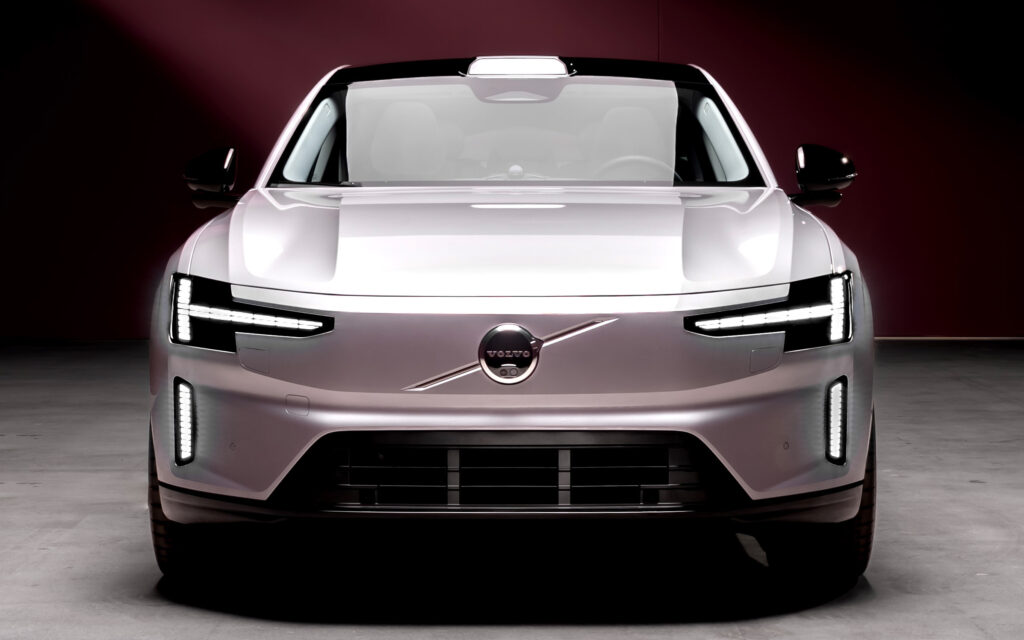
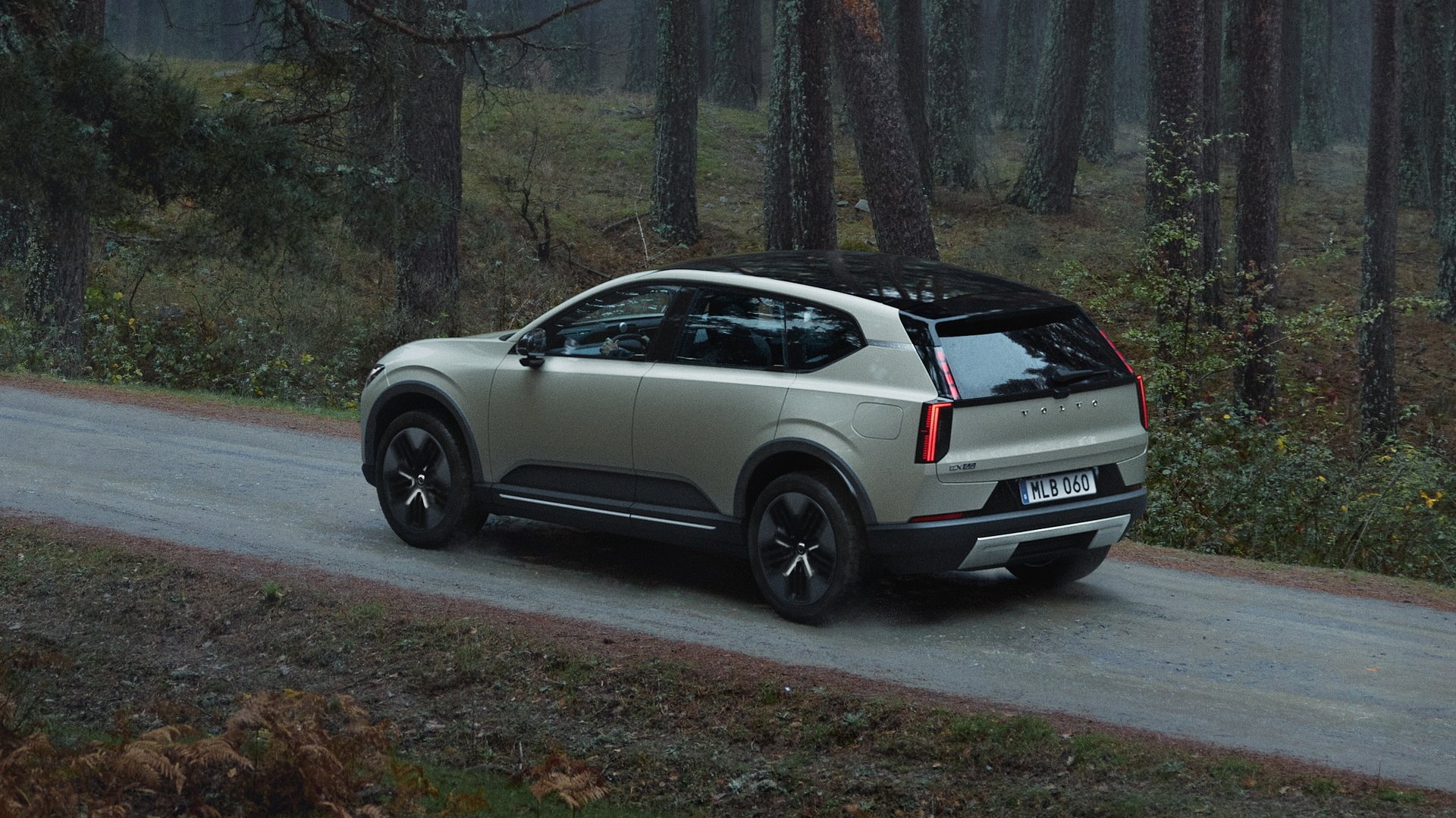
At nearly $79,000, the Optiq-V starts asking difficult questions. The upcoming Volvo EX60 appears poised to offer compelling value, though we’ll reserve judgment until we’ve driven one. 

The Porsche Macan Electric starts around $82,000 and becomes a very real consideration if you’re already spending close to eighty grand. You’ll give up substantial power compared to the Cadillac, but gain the Porsche badge and a benchmark driving experience.

That said, it’s easy to see why one would take the Optiq-V over other players in this space, like the Mercedes-Benz GLC-Class EV or an Audi SQ6 e-tron. The design is up to par, if not better; the power on offer is good, and the pricing could seal the deal. Of course, pricing is where buyers need to be careful.

Our tester’s carbon fiber package alone added $5,700. It looks nice, but it’s hardly essential. Skip that option, add the $2,555 Charging and Convenience Package II, and you’re looking at a vehicle that lands much closer to $71,000. At that price, the Optiq-V makes considerably more sense. It’s still not cheap, but it feels far easier to justify relative to the competition.

The Verdict

 The 519-HP 2026 Optiq-V Is A Cadillac That Stopped Acting Like One | Review

The Optiq-V isn’t the fastest performance EV. It isn’t the lightest. It isn’t the most technologically advanced. What it is, however, is remarkably complete. 

It’s comfortable, quick, practical, luxurious, and surprisingly engaging to drive. It offers enough performance to satisfy enthusiasts without compromising the everyday livability expected from a Cadillac.

Yes, it’s expensive. And yes, the audience willing to spend more than $70,000 on a compact luxury performance EV crossover remains relatively small. But for buyers who like Cadillac, appreciate understated performance, and want an EV that’s genuinely pleasant to live with every day, the Optiq-V makes a compelling case for itself.

Frankly, the biggest compliment I can give it is this: after a week behind the wheel, I stopped wondering who it was for and started understanding why someone would buy one. That’s a much harder trick to pull off than launching another absurdly powerful electric crossover.

 The 519-HP 2026 Optiq-V Is A Cadillac That Stopped Acting Like One | Review

So Ferrari’s $636K Luce Is Basically The ‘Buy The Boring Rolex To Get The Daytona’ Trick

  • Ferrari’s new EV may be helping buyers secure future allocations.
  • Collectors say the Luce has become part of Ferrari’s loyalty ladder.
  • Strategy resembles those used by luxury brands beyond automotive.

Ferrari has spent decades perfecting the formula it uses to sell cars today. It builds fewer cars than it can sell and lets exclusivity do the rest. Now, according to a new report, the brand’s first electric vehicle is doing more than adding to overall sales. Some collectors say it’s the ticket to getting allocations of far more desirable models in the future. Whether or not the payoff happens is another conversation entirely.

According to Bloomberg, several collectors and investors familiar with Ferrari’s customer network say they’ve been told, directly or indirectly, that purchasing the €550,000 ($636,000) Luce could strengthen their relationship with the automaker. The outlet spoke with more than half a dozen buyers from Italy to China about how Ferrari reached out following the Luce’s debut.

Read: Nissan Deletes Its Ferrari Luce Troll Post, Mazda Doubles Down

Ferrari has long rewarded repeat buyers with access to its most exclusive vehicles, including halo cars such as the LaFerrari Aperta. In many ways, that’s nothing new. Jay Leno famously doesn’t own any because he finds the rigamarole too much of a hassle. Collector-car adviser Max Girardo compared the process to securing a table at an impossible-to-book restaurant, saying frequent customers eventually receive preferential treatment.

The Rolex Playbook, Applied to Cars

Notably, Ferrari wouldn’t be the first luxury brand to operate this way. Rolex, Hermes, and others have built businesses around rewarding loyal customers with access to highly sought-after products. A buyer who regularly purchases watches from a Rolex dealer may eventually get the call for a hard-to-find steel Daytona. Hermes has famously used a similar approach with Birkin bags. The difference here is that the Luce itself appears to be the stepping stone rather than the prize.
 So Ferrari’s $636K Luce Is Basically The ‘Buy The Boring Rolex To Get The Daytona’ Trick

Ferrari told Bloomberg that it prioritizes customers with long-standing relationships when allocating highly desirable vehicles. It denied encouraging buyers to purchase cars simply to improve their ranking. The company said customers should choose vehicles based on their own tastes and preferences rather than any perceived advantage in future allocations.

The Signal Is Getting Through

Still, several collectors interviewed by Bloomberg said the signal is being received loud and clear. One buyer claimed Ferrari emphasized that taking the Luce mattered if he wanted to remain among the company’s top-tier clients. Others suggested that newer customers may view the EV as one route toward future one-off or limited-production Ferraris.

 So Ferrari’s $636K Luce Is Basically The ‘Buy The Boring Rolex To Get The Daytona’ Trick

“Most people seem to hate the car and say it’s ugly,” said Paul Welch, founder of luxury-assets platform MillionPlus. The styling isn’t the draw, though. “Some people are thinking about buying it just to get access for future cars and go higher up the waiting list – a lot of people play that game.”

Also: The New Luce EV Looks So Un-Ferrari We Tried It With Five Other Badges

Ultimately, both sides could be playing a losing game here. The Luce didn’t exactly arrive to fanfare and cheers. Collectors desperate for a low-volume halo car could end up with it and be less than pleased if they don’t get on the list after picking the Luce up. In that future, what’s to say that the Luce doesn’t build a reputation for letting both sides down?

\\\\\\\

Image Credits: Ferrari

Rivian Laid Off Hundreds Days After Launching The Car Meant To Save It

  • Rivian laid off hundreds of employees across sales and service teams.
  • The cuts came just days after the launch of the new R2.
  • Company has not posted a profit in any year since 2009.

Rivian has spent years honing production, development, and its customer-facing business. Now, just days after the launch of its most important product yet, the R2, it’s cutting hundreds of jobs. All of these moves come with a single goal in mind: profitability.

According to a report from The Wall Street Journal, Rivian laid off hundreds of workers on Tuesday. A company spokesperson said the reductions represent less than 2 percent of the automaker’s workforce, which stood at roughly 15,200 employees at the end of 2025. The cuts reportedly focused on Rivian’s service and customer organization, including sales and marketing functions.

Read: Rivian’s R2 Configurator Is Live, And A Spare Tire Costs $755

That seems like an odd move, perhaps, given the brand’s efforts to expand its service network, but the timing and positions affected are key here. The hype around the launch of the R2 is real, despite pricey lease offerings. According to CBT News, around half of buyers are opting to lease the R2 rather than to buy it.

Expensive or not, buyers eager to be near the front of the line will show up regardless of how many folks in sales and marketing still have their jobs. Those affected by the layoffs are encouraged to apply for other open positions in the company. In the meantime, the move allows Rivian to save some cash and edge closer and closer to long-term profitability.

 Rivian Laid Off Hundreds Days After Launching The Car Meant To Save It

That’s important because Rivian’s premium-first strategy has struggled to generate the volume needed to cover its costs. The company brought in roughly $5.4 billion in revenue last year while selling about 42,000 vehicles, but it has yet to post an annual profit since its founding in 2009. The R2 is the brand’s best chance to change that.

For now, Rivian appears to be making a familiar Silicon Valley calculation. It’s cutting costs today to preserve the cash needed for tomorrow. Whether the R2 becomes the breakthrough product that finally validates that strategy remains the question hanging over the entire company.

 Rivian Laid Off Hundreds Days After Launching The Car Meant To Save It
Image Credits: Rivian

So Ferrari’s $636K Luce Is Basically The ‘Buy The Boring Rolex To Get The Daytona’ Trick

  • Ferrari’s new EV may be helping buyers secure future allocations.
  • Collectors say the Luce has become part of Ferrari’s loyalty ladder.
  • Strategy resembles those used by luxury brands beyond automotive.

Ferrari has spent decades perfecting the formula it uses to sell cars today. It builds fewer cars than it can sell and lets exclusivity do the rest. Now, according to a new report, the brand’s first electric vehicle is doing more than adding to overall sales. Some collectors say it’s the ticket to getting allocations of far more desirable models in the future. Whether or not the payoff happens is another conversation entirely.

According to Bloomberg, several collectors and investors familiar with Ferrari’s customer network say they’ve been told, directly or indirectly, that purchasing the €550,000 ($636,000) Luce could strengthen their relationship with the automaker. The outlet spoke with more than half a dozen buyers from Italy to China about how Ferrari reached out following the Luce’s debut.

Read: Nissan Deletes Its Ferrari Luce Troll Post, Mazda Doubles Down

Ferrari has long rewarded repeat buyers with access to its most exclusive vehicles, including halo cars such as the LaFerrari Aperta. In many ways, that’s nothing new. Jay Leno famously doesn’t own any because he finds the rigamarole too much of a hassle. Collector-car adviser Max Girardo compared the process to securing a table at an impossible-to-book restaurant, saying frequent customers eventually receive preferential treatment.

The Rolex Playbook, Applied to Cars

Notably, Ferrari wouldn’t be the first luxury brand to operate this way. Rolex, Hermes, and others have built businesses around rewarding loyal customers with access to highly sought-after products. A buyer who regularly purchases watches from a Rolex dealer may eventually get the call for a hard-to-find steel Daytona. Hermes has famously used a similar approach with Birkin bags. The difference here is that the Luce itself appears to be the stepping stone rather than the prize.
 So Ferrari’s $636K Luce Is Basically The ‘Buy The Boring Rolex To Get The Daytona’ Trick

Ferrari told Bloomberg that it prioritizes customers with long-standing relationships when allocating highly desirable vehicles. It denied encouraging buyers to purchase cars simply to improve their ranking. The company said customers should choose vehicles based on their own tastes and preferences rather than any perceived advantage in future allocations.

The Signal Is Getting Through

Still, several collectors interviewed by Bloomberg said the signal is being received loud and clear. One buyer claimed Ferrari emphasized that taking the Luce mattered if he wanted to remain among the company’s top-tier clients. Others suggested that newer customers may view the EV as one route toward future one-off or limited-production Ferraris.

 So Ferrari’s $636K Luce Is Basically The ‘Buy The Boring Rolex To Get The Daytona’ Trick

“Most people seem to hate the car and say it’s ugly,” said Paul Welch, founder of luxury-assets platform MillionPlus. The styling isn’t the draw, though. “Some people are thinking about buying it just to get access for future cars and go higher up the waiting list – a lot of people play that game.”

Also: The New Luce EV Looks So Un-Ferrari We Tried It With Five Other Badges

Ultimately, both sides could be playing a losing game here. The Luce didn’t exactly arrive to fanfare and cheers. Collectors desperate for a low-volume halo car could end up with it and be less than pleased if they don’t get on the list after picking the Luce up. In that future, what’s to say that the Luce doesn’t build a reputation for letting both sides down?

\\\\\\\

Image Credits: Ferrari

Rivian Laid Off Hundreds Days After Launching The Car Meant To Save It

  • Rivian laid off hundreds of employees across sales and service teams.
  • The cuts came just days after the launch of the new R2.
  • Company has not posted a profit in any year since 2009.

Rivian has spent years honing production, development, and its customer-facing business. Now, just days after the launch of its most important product yet, the R2, it’s cutting hundreds of jobs. All of these moves come with a single goal in mind: profitability.

According to a report from The Wall Street Journal, Rivian laid off hundreds of workers on Tuesday. A company spokesperson said the reductions represent less than 2 percent of the automaker’s workforce, which stood at roughly 15,200 employees at the end of 2025. The cuts reportedly focused on Rivian’s service and customer organization, including sales and marketing functions.

Read: Rivian’s R2 Configurator Is Live, And A Spare Tire Costs $755

That seems like an odd move, perhaps, given the brand’s efforts to expand its service network, but the timing and positions affected are key here. The hype around the launch of the R2 is real, despite pricey lease offerings. According to CBT News, around half of buyers are opting to lease the R2 rather than to buy it.

Expensive or not, buyers eager to be near the front of the line will show up regardless of how many folks in sales and marketing still have their jobs. Those affected by the layoffs are encouraged to apply for other open positions in the company. In the meantime, the move allows Rivian to save some cash and edge closer and closer to long-term profitability.

 Rivian Laid Off Hundreds Days After Launching The Car Meant To Save It

That’s important because Rivian’s premium-first strategy has struggled to generate the volume needed to cover its costs. The company brought in roughly $5.4 billion in revenue last year while selling about 42,000 vehicles, but it has yet to post an annual profit since its founding in 2009. The R2 is the brand’s best chance to change that.

For now, Rivian appears to be making a familiar Silicon Valley calculation. It’s cutting costs today to preserve the cash needed for tomorrow. Whether the R2 becomes the breakthrough product that finally validates that strategy remains the question hanging over the entire company.

 Rivian Laid Off Hundreds Days After Launching The Car Meant To Save It
Image Credits: Rivian

Tesla Is Eating Up More Of America’s EV Market As Many Rivals Fall Apart

  • EV registrations fell again in April, though the drop was much smaller.
  • Tesla regained momentum and captured more than half the EV market.
  • New entries from Toyota, Subaru, and Lexus helped lift the segment.

There was no question that when federal tax credits for electric vehicles ran out, the market would see a drop-off. What was a bit surprising was just how brutal the start of 2026 was. Now, though, new sales data suggests that the market is beginning to stabilize.

New registration figures from S&P Global Mobility, first reported by Autonews, show 89,147 electric vehicles were registered in April, down 9.8 percent compared to the same month last year. That might sound bad, but it represents a significant improvement over the first quarter, when EV registrations plunged 41 percent in January, 37 percent in February, and 25 percent in March.

Read: America’s Used EV Market Is Heating Up For One Simple Reason

Overall, April delivered the strongest EV registration total of the year so far. The industry has spent months digesting the loss of the federal $7,500 EV tax credit, which triggered a buying frenzy before it disappeared and left a hangover afterward. Now, analysts say the market is beginning to normalize. “We’re seeing gradual inching up,” S&P Global Mobility analyst Tom Libby said. “From that perspective, I think it’s a more healthy market.”

Tesla played a major role in April’s rebound. Registrations for the brand jumped 13 percent to 45,800 vehicles, giving it a commanding 51 percent share of the U.S. EV market, up from 41 percent a year ago. The star of the show was unsurprisingly the Model Y, which posted a staggering 61 percent increase to 31,001 registrations. Meanwhile, registrations of the aging Model S and Model X also surged despite the end of production for both models.

April 2026 US EV Registrations
BrandApr-26Diff. vs
Apr-25
Tesla45,800+13%
Chevrolet5,89036%
Hyundai4,936+3%
Ford4,03327%
Cadillac4,020+5.1%
Rivian3,537+5.5%
Toyota3,524+225%
BMW2,51749%
Kia2,456+44%
Subaru1,959+99%
Honda1,545-19%
Lexus1,345+107%
GMC1,24740%
Lucid1,073+42%
Mercedes-Benz98559%
Volkswagen74026%
Volvo73542%
Porsche618-46%
Audi354-83%
Nissan335-90%
BrightDrop318+336%
Polestar31442%
Zeekr292
Genesis11969%
Ram96
Dodge9490%
Jeep8194%
Mini7279%
VinFast3283%
Rolls-Royce2429%
Fiat2087%
Acura1599%
Fisker1156%
Maserati6+200%
Jaguar491%
SWIPE

Source: S&P Global Mobility / Autonews

Taking a look at the market’s other players reveals some other clear winners and losers. Toyota’s EV registrations surged 225 percent thanks to the bZ and new C-HR EV, while Lexus climbed 107 percent and Subaru nearly doubled its volume. Kia also enjoyed a strong month, boosted by a 225 percent jump in EV9 registrations and an 11 percent increase in EV6 sales.

On the flip side, Chevrolet remained the nation’s second-largest EV brand but saw registrations fall 36 percent. Ford dropped 27 percent, while BMW’s volume slid 49 percent. Further down, the damage got worse: Nissan and Dodge both fell 90 percent, Jeep dropped 94 percent, and Acura all but vanished at -99 percent, down to just 15 registrations.

That performance makes it clear that we’re not looking at a cohesive EV market just yet. Hybrids, PHEVs, and gas-powered cars are all still getting serious market share, and plenty of automakers are slowing EV plans, too. The second half of the year should give everyone a better indication of what to expect in 2027 and beyond.

 Tesla Is Eating Up More Of America’s EV Market As Many Rivals Fall Apart

i3 Demand Is So High BMW Opened Orders Months Ahead Of Schedule

  • BMW reportedly moved i3 orders forward due to overwhelming customer interest.
  • The electric sedan has generated strong demand across Europe and China.
  • Production timing remains unchanged despite the accelerated ordering schedule.

The BMW i3 is a huge step forward for the brand as it takes the 3-Series into fully electric territory. According to a new report, the automaker couldn’t be happier with the response. Rather than open up orders later this year, it’s going to do so this week. Production won’t ramp up sooner, but BMW will take customers’ orders starting Thursday.

According to a report from Automobilwoche citing company sources, BMW will begin taking orders for a special “1st Edition” version of the i3 starting June 18. The move is notable because the original plan reportedly called for orders to open sometime this fall. BMW hasn’t publicly confirmed the change, but the publication says strong customer interest following the car’s March debut in Munich prompted the decision.

 i3 Demand Is So High BMW Opened Orders Months Ahead Of Schedule

That enthusiasm shouldn’t come as a complete surprise. BMW executives were already hinting at an unusually strong response shortly after the i3’s reveal. Sales chief Jochen Goller reportedly said interest in the sedan surpassed even the positive reaction generated by the upcoming iX3. That’s a significant benchmark considering the electric SUV is said to have accumulated around 50,000 orders just months after its unveiling, plus more than 10,000 sales in Europe in only two months.

Also: Two Months Was All BMW’s iX3 Needed To Crack 10,000 Sales In Europe

The i3’s appeal also appears to stretch well beyond BMW’s home market. The report indicates the sedan has received positive feedback from Europe and China alike, with its appearance at the Beijing Auto Show helping raise its profile in one of the world’s most important EV markets.

\\\\\\\\\\\\\\\

BMW has even suggested the i3 could help breathe new life into the midsize sedan segment. That’s an ambitious claim, but the specifications certainly give the company something to talk about. The version shown so far, the i3 50 xDrive, delivers 469 horsepower (350 kW) from a dual-motor all-wheel-drive setup and is claimed to offer up to 900 kilometers (559 miles) of range under the applicable test cycle.

Read: Lexus’s BMW i3 Sedan Rival Is Dead, But Its Most Ambitious Tech Isn’t

Despite the accelerated ordering timeline, production plans reportedly remain unchanged. BMW is expected to begin series production of the i3 at its Munich plant in August. If customer demand is truly as strong as reported, the bigger question may not be when orders open, but if BMW can build enough cars to keep up.

\\\\\\\\

Image Credit: BMW

Rivian’s R2 Costs More To Lease Now Than The Bigger R1S Did A Month Ago

  • Rivian’s most affordable SUV carries a surprisingly steep lease.
  • Many reservation holders say they’ll wait for less expensive versions.
  • Company says demand remains strong despite complaints about pricing.

The Rivian R2 is finally available to lease, but shoppers expecting a budget-friendly path into the brand may be in for a surprise. While the automaker’s newest electric crossover starts well below the larger R1S on paper, the real-world lease numbers tell a different story. In fact, whether you put thousands down or nothing at all, the R2 still ends up costing about $1,000 a month to drive.

The 2026 R2 Performance is currently advertised at $829 per month for 36 months with $5,724 due at signing, which includes fees and the first month’s payment. Against its $57,990 MSRP and a 10,000-mile annual allowance, and stripping that first payment out of the upfront total, the effective monthly cost works out to roughly $965.

Read: Rivian’s R2 Configurator Is Live, And A Spare Tire Costs $755

Understandably, many shoppers prefer to evaluate leases with little or no money down. Rivian’s payment estimator shows that removing the down payment increases the monthly payment to $939 for the same 10k miles and 36 months. The amount due at signing falls to roughly $2,334 including the first month, but the effective monthly cost still lands at approximately $978. In other words, the difference between putting money down and keeping that cash in your bank account is only about $13 per month over the life of the lease.

\\

That figure becomes even more interesting when compared to Rivian’s own lineup. CarsDirect points out that less than a month ago, the R1S Dual Standard was available for $799 per month with $5,694 due at signing. That translated to an effective monthly cost of around $935 despite the SUV carrying roughly $19,000 more MSRP than the R2.

Today, that comparison is harder to spot because Rivian quietly increased R1S lease pricing. The same R1S now lists at $899 per month with $8,794 due at signing, resulting in an effective cost of roughly $1,118 monthly. The MSRP remains unchanged, but the lease economics have shifted dramatically.

That points to why some customers say they’re going to wait. Lease programs can change quickly, and lower-priced R2 trims are still on the way. On Reddit, the theme of comments was clear. “1-1.1k/month with no down including taxes and fees is rough. Probably gotta wait for deals,” said one. “I make a good living, but offering a lease at what is essentially 10% APR ($40k in payments over three years) is ridiculous, and I fear they may have miscalculated,” said another.

That said, the hype around the R2 is big. Rivian will likely have little trouble delivering all the examples they can make this year. Once that demand slows, the deals could roll in quickly.

\\\\\\\

Photos Rivian

Ferrari Bet Big On Its First EV, Lamborghini’s Boss Says Its Buyers Want None Of It

  • Lamborghini says it doesn’t need an EV until at least 2030.
  • Ferrari’s controversial Luce debut appears to be influencing rivals.
  • Lamborghini will keep combustion engines alive with hybrids for now.

Ferrari’s controversial Luce debut got plenty of attention, though perhaps not the kind Maranello was hoping for. Rather than have cross-town rival Lamborghini feeling like it’s behind the times, it appears as though the brand’s CEO is even more content now that the Lanzador didn’t remain on schedule for an earlier debut. He’s openly doubling down on the idea that Lamborghini was right to delay the brand’s first EV.

In a round table with journalists, asked about the reaction to the Luce, Lamborghini CEO Stephan Winkelmann said his company made the “right decision” in postponing its first fully electric car, arguing that customer demand for electric supercars simply hasn’t materialized the way much of the industry assumed it would.

Read: EV Plans Wait As Lamborghini Expands V8 And V12 Lineup

According to Handelsblatt, Winkelmann said Lamborghini has spent years monitoring demand in the luxury segment. To no one’s surprise who’s been paying attention, the company found that acceptance of electric vehicles hasn’t climbed at anything close to the pace many had forecast.

The automaker had planned to launch the all-electric Lanzador before the end of the decade. Initially, production was simply delayed. Now, it won’t happen until at least 2030, if not later, because acceptance for EVs within the brand’s target demographic was “close to zero.” For now, Lamborghini has scrapped it and is looking at a new hybrid model to join the lineup in the near future.

 Ferrari Bet Big On Its First EV, Lamborghini’s Boss Says Its Buyers Want None Of It

Importantly, European regulations currently call for a ban on the sale of new combustion-powered vehicles beginning in 2035, although exemptions for e-fuels and certain low-volume manufacturers remain under discussion. While many exotic-car makers spent the last several years announcing ambitious EV programs, Lamborghini now appears content to let others test the waters first.

That’s probably a wise move considering its positioning. While nowhere near as successful as Ferrari, Lamborghini has its position underneath Volkswagen Group going for it. It’s currently one of the most profitable divisions. In 2025, it generated €3.2 billion ($3.7 billion) in revenue. Even though operating profit slipped from €835 million ($970 million) to €768 million ($892 million), the company still posted a remarkable 24 percent operating margin.

 Ferrari Bet Big On Its First EV, Lamborghini’s Boss Says Its Buyers Want None Of It

Ford’s Secret $30,000 EV Truck Starts Public Testing Within Weeks

  • Ford’s secretive EV team is testing a new $30,000 electric pickup ahead of launch.
  • Midsize truck will debut a cost-focused EV platform designed for multiple models.
  • Ford says the new architecture must compete with both EVs and gas-powered vehicles.

Ford announced its “Model T Moment” a year ago. With it came the promise of an affordable electric pickup and other models on the same platform. According to a new report, we’re about to see prototypes on the road in Dearborn prior to its release next year.

According to Ford CFO Sherry House, prototypes of the automaker’s upcoming electric midsize pickup are already being built and tested as the company pushes toward a planned 2027 launch. While Ford later clarified that the camouflaged trucks aren’t yet driving on Michigan roads, spokesman Dave Tovar confirmed to The Detroit Free Press that they’ll be out in public within the next few weeks.

That means Detroit-area motorists could soon catch a glimpse of the vehicle Ford hopes will reshape its electric future.

Read: Ford Working On Affordable EVs, Setup A “Skunkworks Team” For New Platform

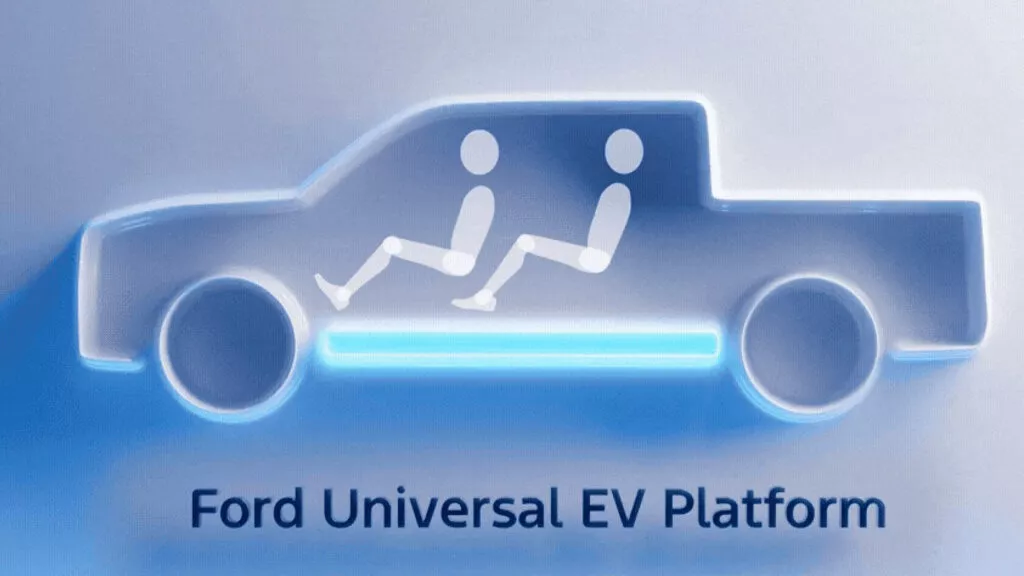
The truck is significant for more than simply being a brand-new platform and model. It’s the first product of Ford’s “skunkworks” team at the brand’s Electric Vehicle Development Center in Long Beach, California. More importantly, it will be the debut model for Ford’s new Universal Electric Vehicle platform.

Ford CEO Jim Farley first revealed the architecture in 2025, promising a family of affordable EVs built around a radically different cost structure. The first vehicle is expected to be a four-door midsize pickup starting at roughly $30,000.

 Ford’s Secret $30,000 EV Truck Starts Public Testing Within Weeks

House told investors the project remains on schedule. “We’re on plan for our 2027 launch,” she said, noting that Ford is already validating suppliers, testing prototype vehicles, and evaluating new manufacturing technologies, including megacasting.

Also: Ford Gives A Tiny Glimpse Of The $30K EV Truck Slate Should Be Worried About

The process, popularized by Tesla, can significantly reduce manufacturing complexity and costs. Ford believes those savings will be key to making the new truck profitable at a relatively low price point. “It’s going to be very feature-rich. It’s going to be very tech-forward,” House said. “It’s going to be affordable.”

Ford’s EV business has struggled to generate profits, making the success of this new architecture especially important. If House’s comments are any indication, Ford is betting that this vehicle and platform will turn the tide. We’ll get our first real look at that strategy once those heavily disguised prototypes start appearing on public roads.

 Ford’s Secret $30,000 EV Truck Starts Public Testing Within Weeks
Photos Ford

Nissan Brings Back The Primera, But It’s A Chinese EV Now

  • Nissan is reviving the Primera nameplate after nearly two decades away.
  • The new Primera EV is essentially a rebadged Chinese-market N7 sedan.
  • It previews Nissan’s plan to export more China-developed models globally.

Nearly 20 years after the last one disappeared from showrooms, Nissan has officially brought back the Primera nameplate. The catch? It’s no longer a family sedan with gasoline engines, wagon variants, or touring car pedigree. Instead, the revived model is a fully electric sedan sourced directly from China, based on the locally built N7.

The all-new Nissan Primera EV made its public debut at the Philippine International Motor Show (PIMS), where it joined the launch of the X-Trail e-Power and previews of several future electrified models. While Nissan’s press materials were light on technical details, the company confirmed the Primera name will return as part of its expanding EV lineup.

Read: Nissan Won’t Build A T-Top Z, So One Fan Is Doing It Himself

For longtime Nissan fans, the badge carries significant history. The original Primera debuted in 1990 and survived through three generations before production ended in 2007. It was sold as a sedan, liftback, and wagon, and even earned a motorsport legacy through multiple British Touring Car Championship titles. We even got it in the States as the Infiniti G20 from 1990 to 2002.

\\

The new Primera has little in common with its predecessor beyond the badge on the trunk. As we previously reported, it’s based on the Chinese-market Nissan N7, an electric sedan developed through Nissan’s joint venture with Dongfeng. Let’s define what that means for buyers.

At 194.1 inches (4,930 mm) long and riding on a 114.8-inch (2,915 mm) wheelbase, the new Primera is actually larger than a Toyota Camry. Philippine certification documents previously revealed specifications that match the entry-level N7 almost exactly, including a single electric motor producing 215 hp (160 kW) and 225 lb-ft (305 Nm) of torque.

\\\\\\\\\\

The classic gas-powered Primera was built from 1990 through 2008.

Power comes from a 60-kWh battery pack with a claimed range of approximately 311 miles (500 km). Visually, the car itself is almost unchanged from the N7. It features a fastback profile, controversial flush door handles, and wide LED lighting elements.

\\\\\\\\

Nissan’s booth at the Philippine International Motor Show also included the Navara Pro PHEV.

The debut also marks the first major step in Nissan’s new “From China” export strategy. Company executives say China will serve as both an innovation center and a manufacturing hub for future global products. Nissan hasn’t announced pricing or an on-sale date yet, but the company says full specifications will be revealed closer to launch.
Also: Nissan’s Low-Cost Chinese EVs Are About To Go Global

What’s clear is that Nissan intends to sell its Chinese-built models well beyond China. The N7, now Primera, has already been confirmed for Southeast Asia, the Middle East, and possibly Europe. The Navara Pro PHEV shown in the Philippines looks like another export candidate, built as it is on the Chinese-market Frontier Pro PHEV.

\\\\\

The Chinese-market Nissan N7.

Jason Momoa Put A 666 Badge On His Tiny Bentley, But It’s Not What It Looks Like

  • Jason Momoa commissioned a one-off Blower Jnr packed with custom touches.
  • EV recreation features a brass skull shifter and custom crimson paintwork.
  • The unique build also appears in season two of HBO Max’s On The Roam.

Actor, filmmaker, and all-around gearhead Jason Momoa has added another unusual machine to his collection. This time, it’s a highly personalized version of the Bentley Blower Jnr, the 85-percent-scale electric recreation of Bentley’s legendary 1929 supercharged racer. Created by British firm Hedley Studios in partnership with Bentley Motors, the tiny EV already stands out as one of the strangest vehicles on sale. Momoa apparently looked at it and decided it needed even more character.

The result is a one-of-one build featuring more than 100 bespoke or specially developed components. Finished in a unique shade called Momoa Crimson, the miniature Bentley also wears aged brass exterior detailing and a custom Koa wood dashboard. The craftsmanship here is aiming for an aged aesthetic more than a pristine museum-class finish.

Read: Bentley Brings Back A 100-Year-Old Car, But Something’s Different

Inside, it gets a “Momoa 1 of 1” plaque and perhaps the most Jason Momoa touch imaginable: a hand-carved brass skull gear selector. According to Hedley Studios, that skull alone required more than 100 hours of hand craftsmanship to complete. There’s also a custom “666” radiator badge. It sounds ominous, but the company says it’s actually a tribute to Momoa’s grandfather, who carried the nickname “El Diablo.”

\\\\\\\\\\\\\

The project is featured in the second season of HBO Max’s On The Roam, with Hedley Studios’ workshop appearing in an episode that premiered today. The series follows Momoa as he meets craftspeople, builders, and artisans across a range of industries, making the partnership a natural fit.

For those unfamiliar with the Blower Jnr, it’s a road-legal electric recreation of Bentley’s iconic 4½ Litre Supercharged racer. Power comes from a 20 hp (15 kW) electric motor, enough for a claimed range of 65 miles (105 km). Despite its toy-like proportions, it’s certified for road use in the U.K., Europe, and the United States. That said, don’t expect to see it on a highway anytime soon. These things can’t even reach 50 mph. Think of it less as a car and more as the world’s most extravagant beach-town cruiser.

\\\\\\\\\

DC Turns Streetlights Into EV Chargers, And Dirty Diesel Foots The Bill

  • Washington, D.C. is funding new curbside EV charging projects across the city.
  • Voltpost will retrofit existing streetlights and utility poles into Level 2 chargers.
  • Officials hope easier charging access will encourage more residents to switch to EVs.

There’s no doubt that the biggest issue facing electric vehicle adoption relates to range. Specifically, how fast and how easy it is to go from a low battery to a full one. While it’s easy to own an EV if you can charge at home overnight, it’s a totally different story for everyone else who doesn’t have that cheap daily access to power. Now, a company is trying to provide a solution, and it’s using existing street-side infrastructure to do it.

Rather than digging up sidewalks and installing entirely new charging stations, Washington, D.C., is helping fund a project that converts existing streetlights and utility poles into EV chargers. According to WJLA, the District’s Department of Energy and Environment (DOEE) recently awarded $609,500 in grants to three EV charging companies. One of the biggest winners is Voltpost, a startup that specializes in retrofitting existing poles with Level 2 charging equipment.

Read: Charging An EV Cost $11 More This Year, Filling A Sequoia Cost $1,623 More

According to the company, its chargers can be installed in just a few hours by leveraging existing electrical infrastructure. That means no major construction work, no trenching, and potentially tens of thousands of dollars in savings compared to traditional charging installations. The company says it plans to deploy up to 16 chargers around the city, though exact locations are still being determined in coordination with local agencies and utility provider Pepco.

Funded By Dieselgate, Not Taxpayers

 DC Turns Streetlights Into EV Chargers, And Dirty Diesel Foots The Bill
Photos Voltpost

Voltpost wasn’t the only recipient. PowerUp America received funding to expand its charging footprint, while curbside charging specialist ‘It’s Electric’ also secured grant money. Together, the three companies are expected to significantly increase public charging access across the District. Importantly, none of the funding comes from local taxpayers. The cash actually comes from the money allocated to D.C. from Volkswagen’s emissions-cheating settlement with the EPA.

If this approach proves successful, it could help build a guideline for how urban areas nationwide could add relatively inexpensive public charging without major infrastructural changes. That alone could make EV adoption that much easier for those who can’t charge where they live otherwise.

 DC Turns Streetlights Into EV Chargers, And Dirty Diesel Foots The Bill

Photos Voltpost

Slate Will Take Your Order For Its Cheap EV On June 24, Price Sold Separately

  • Slate Auto will begin taking orders for its budget-focused EV on June 24.
  • Startup still hasn’t revealed final pricing after losing the federal EV tax credit.
  • More than 160,000 people have already placed refundable reservations.

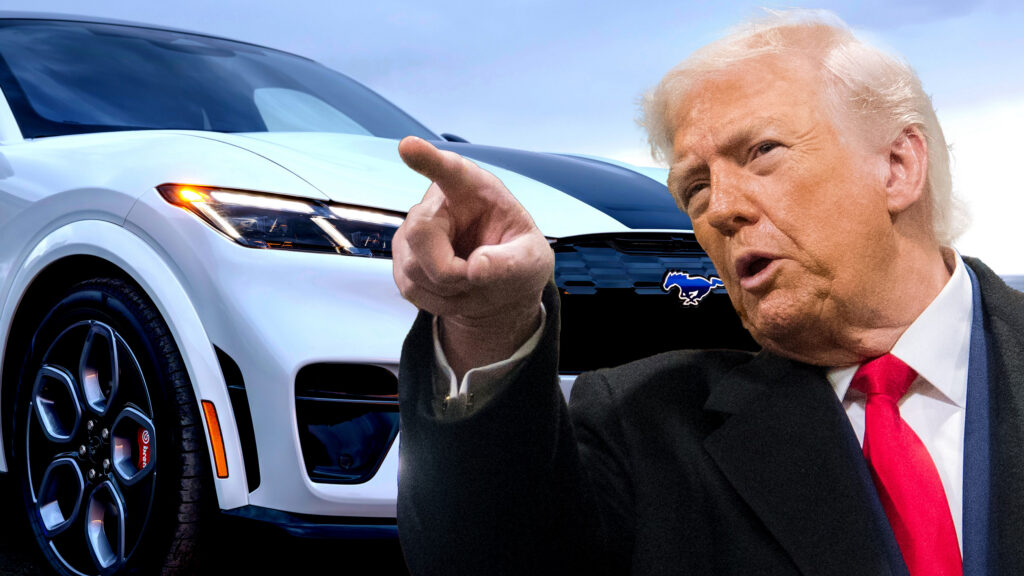
For Slate Auto, it’s been a wild ride since its inception four years ago. Initially, it planned to bring an EV to market for less than $20,000. Then Donald Trump cancelled the $7,500 tax credit that made such a price feasible. Now, the company is about to open up order books on June 24, but there’s still something missing… the price buyers will have to actually pay.

Today, the electric vehicle startup backed by Amazon’s Jeff Bezos sent an email to prospective buyers saying that preorders will begin in June. Specifically, they’ll open on June 24, and those who jump on board early will evidently get a “delivery window before non-reservers.”

More: Slate Auto Replaces CEO Just Months Before Launching $25K–$30K EV

That date is about a month away as of this writing, and there’s still no official base price for the small electric pickup truck. The number is apparently dropping the same day orders open. For now, Slate only says the truck will start somewhere in the “mid-$20,000” range.

 Slate Will Take Your Order For Its Cheap EV On June 24, Price Sold Separately

If not knowing the price was one hurdle for hand-raisers, the preordering and reservation process might be another. According to a post on Slateforums, on June 24, those with an existing reservation will have an assigned delivery window and a link to finish their preorder.

Customers will need to pay a $300 non-refundable deposit (minus their $50 reservation fee if they have one already). Those with a reservation have 30 days starting on the 24th to submit their deposit. Slate evidently has over 160,000 reservation holders.

\\\\\\\\\\\\\\\\\\

Photos Slate

If those 30 days pass, they can still preorder, but their delivery window will shift further back in the queue. Importantly, the deposit will go toward the final price of the vehicle. The email to customers claims that in the fall of this year, they’ll have the option to pick their wrap and accessories, select financing, finalize the purchase, and then choose how they’d like to take delivery of their Slate.

Read: Slate’s New Electric Truck Is So Basic Even The Repair Network Is DIY

Keep in mind that even for those who do make a reservation and follow through on the preorder, they’ll have to wait to get delivery until mid-2027. Between now and then, Slate says it’ll offer customers the chance to see the vehicle up close, but there’s no word on exactly how that’ll take place or where those locations will be. Hopefully, the preorder rollout answers the bevvy of questions piling up.

\\\\\\\\\\\\\

Photos Slate

We Drove The 2026 Lexus ES Hybrid And EV, And One Version Stands Out | Review

PROS ›› Classy cabin, great fuel economy, spacious second row CONS ›› A bit boring to drive, some questionable materials, no RWD

For decades, the Lexus ES has existed in a comfortable little bubble. Buyers loved it because it was quiet, reliable, spacious, and almost aggressively committed to not upsetting anyone. It wasn’t sporty, it wasn’t especially daring, and if you asked enthusiasts about it, many would respond with a shrug and a comment about retirement communities.

That wasn’t really criticism either. Lexus knew exactly what the ES was and, more importantly, who it was for. The formula worked so well that the brand had little reason to mess with it. Why reinvent a luxury sedan that’s spent years quietly printing money? Now Lexus says it’s broadened the ES formula.

Read: The First Electric Lexus ES Actually Costs Less Than The Hybrid

After driving the all-new 2026 ES lineup around San Diego, including the ES 350h AWD hybrid, ES 350e, and range-topping ES 500e AWD, there’s evidence the company wasn’t just tossing around marketing jargon. The eighth-generation ES is a big change. It’s literally larger in every direction, rides on a new multi-pathway architecture supporting both hybrid and EV variants, and, for the first time ever, gets fully electric versions.

That also created an unusual challenge for this review. The new ES is really two different cars wearing nearly identical sheet metal. One relies on Lexus’ latest hybrid system while the other embraces full electrification, and they deliver very different experiences from behind the wheel. So rather than force them into one giant blended driving section, we’re splitting that section of this review into two. One set of impressions for the hybrid and another for the EVs.

QUICK FACTS
› Model:2026 Lexus ES
› Starting Price:$48,895–$60,295 + $1,395 destination (depending on trim/powertrain)
› Dimensions:202.4 in L x 75.6 in W x 61.2 in H (5,141 x 1,920 x 1,554 mm)
› Curb Weight:Hybrid: 4,001–4,134 lbs (1,815–1,875 kg)

EV: 4,608–4,928 lbs (2,090–2,235 kg)
› Powertrain:ES 350h – 2.5-liter four-cylinder hybrid + rear electric motor, eCVT AWD
ES 350e – Single Motor FWD electric
ES 500e – Dual-motor AWD electric
› Output:ES 350h – 244 hp (182 kW)
ES 350e – 221 hp (167 kW) / 198 lb-ft (268 Nm)
ES 500e – 338 hp (252 kW)
› MPG / Range:Hybrid – 47 city / 42 highway / 44 combined MPG (AWD)
Electric – 272–307 miles EPA-estimated
› On Sale:Hybrid – June 2026
Electric – Now
SWIPE

Because after spending a day hopping between all three variants, one thing became clear: they may look nearly identical, and sitting in them produces the same vibe… but they absolutely don’t feel identical once you’re moving. So did Lexus finally build an ES with some personality? Or is this just a modernized appliance for those who don’t really love driving to begin with? Read on to find out.

Styling

\\\\\\\\\

Aside from actual ES owners and sincere fans, most folks probably couldn’t provide many details about what the ES generations look like from one to the next. Most blended into traffic so effectively that you could probably lose one in a Costco parking lot within minutes. Not this one.

The new ES genuinely looks striking. During our drive, it repeatedly turned heads and, at one point, one distracted Mazda driver seemed more interested in staring at the Lexus than the road ahead. That’s anecdotal, sure, but the point stands. People noticed it.

The side profile is dominated by an enormous character strake that feels very Lexus. It very much reminds me of the Maxwell tape ad “Blown Away Guy.” Some people are going to hate it. Others will love it. That’s okay. Lexus has spent years pushing design further than Toyota, and it continues doing exactly that here.

 We Drove The 2026 Lexus ES Hybrid And EV, And One Version Stands Out | Review

The hood itself is wild too. There are creases and surfacing details piled on top of more creases and surfacing details. Exhibit should pop out any moment, asking if we wanted creases on our creases. Depending on your taste, it’ll either feel bold or overworked. It’s probably one of the many touches Lexus is using to make this look as far afield from a Toyota product as it can.

The rear, meanwhile, is where things come together best. The Blade-style taillight treatment works, the proportions are cleaner than before, and the trunk opens surprisingly wide. Useful details still matter in a sedan like this. Dimensionally, this thing has grown significantly too. Wheelbase stretches to 116.1 inches, while total length swells to 202.4 inches.

Cabin Appointments

\\\\\\\\\\

The cabin immediately creates a strong first impression. The seats are excellent. Bolstering is good, thigh support is good, visibility is good, and the seating position doesn’t leave you perched awkwardly high like some modern luxury vehicles (especially electrified ones). Add in the massage functionality, and long highway drives should be easy work.

Fit and finish are generally impressive, too. This isn’t a flagship, but that doesn’t mean that Lexus suddenly abandoned quality. Panel fit felt mature and well-sorted. The available bamboo trim also deserves praise. It looks genuinely interesting and, importantly, it’s real material rather than some totally fake printed substitute. Luxury trims get illuminated bamboo layering integrated into the cabin design as well.

Of course, then you start touching things, and a few cracks begin to appear.

 We Drove The 2026 Lexus ES Hybrid And EV, And One Version Stands Out | Review

For example, the look of the HVAC controls is nice. It’s uniform, simple, and most importantly, we’re talking about physical buttons. But Lexus hid them all under a long rubberized panel. It feels a lot like (and I realize very few ES buyers will get this reference) the texture of gaming controller stalks. That’s all well and good, but only to a point.

Since everything lives on one strip and relies almost entirely on symbols, you still glance down to make sure you’re pressing the right thing. Worse, if one switch fails, replacing it means replacing or, at very least, removing a much larger assembly. Plenty of buyers won’t care because they’ll sell before the warranty runs out, but it’s worth considering for second or third buyers and especially beyond.

The steering wheel buttons don’t help. Some feel oddly cheap for a Lexus, and the infotainment volume knob looks expensive while somehow feeling… not expensive.

Thankfully, the infotainment system itself provides no real reason for anything but praise. Every ES gets a 14-inch touchscreen and a 12.3-inch digital driver display. The screen is bright, responsive, and fairly intuitive once you learn your way around it. The Mark Levinson 17-speaker system absolutely rips, too.

\\\\\\\\\\\\\\\\\

Rear seat buyers get interesting options too. The Executive Package adds heated, ventilated, and massaging rear seats plus a deployable ottoman on the passenger side. That’s delightfully weird and surprisingly cool. Lexus says buyers get 13.3 cubic feet of cargo space, which is fine for the class. The extra length of this car really goes toward rear-seat comfort over all else. From that standpoint, it’s a clear winner, as at 6’6”, my head only grazed the roof and my legs had space for days.

Driving Impressions

 We Drove The 2026 Lexus ES Hybrid And EV, And One Version Stands Out | Review

ES 350h

First and foremost, let’s focus on the ES 350h. The hybrids will no doubt be the volume sellers here. Lexus imagines that 80 percent of buyers will pick the hybrid, and it’s easy to see why. It’s the tech that most are familiar with, and the two versions couldn’t be much more different when it comes to range and performance.

The ES 350h uses a 2.5-liter four-cylinder hybrid setup producing 244 hp (182 kW), a CVT, and offers up to 46 mpg combined in FWD form. Lexus also says the range exceeds 600 miles. Our test car started the day with 629 miles of predicted range. That’s outstanding and makes this a genuine highway mile crusher for those who regularly take longer drives.

Those who opt for the AWD version won’t give up much in fuel economy either. It gets up to 44 mpg, but keep in mind that performance doesn’t really change. The FWD version does 0-60 mph in 7.3 seconds, while the AWD gets an electric motor for the rear axle and does the same sprint in 7.1 seconds. Those figures are acceptable, but far from what the average enthusiast will consider reasonable.

First Look: Lexus’ New TZ Trades Fake Ruggedness For Quiet Luxury

Around town, the ES is dialed in. It’s comfortable, quiet, composed, and just a pleasant place to spend time. I’d stop short of saying that it feels particularly nimble or playful, but it doesn’t feel clumsy, dopey, or disappointing. While the steering verges on overly light, the pedal feedback deserves real praise. It’s easy to get hybrid braking systems wrong, but Lexus absolutely nailed it here. Modulating the brakes on what starts out as a harder braking event is easy enough that you can finish that same event with a deft and subtle touch easily.

There’s only one problem that really stands out, but it only pops up under one circumstance, and to solve it, there’s a simple fix. Never ever drive the EV.

ES 350e / ES 500e

 We Drove The 2026 Lexus ES Hybrid And EV, And One Version Stands Out | Review

Back when we tested the BMW i5 and its gas-powered counterparts, we noted something unique. The gas-burners felt decidedly more fun to drive because, while they weren’t as quick, they were so much lighter that chucking them around was more engaging. Somehow, Lexus has done the exact opposite here. If anything, the EVs feel more playful, but that’s not why hybrid buyers need to stay away.

The problem is that the EVs are so quiet that the hybrid feels abnoxiously loud after driving them back to back. Don’t get us wrong. The hybrids aren’t actually loud in the grand scheme of things. But adding a relatively unrefined efficiency-focused four-cylinder to a CVT and lengthy acceleration times for things like getting on the highway, and these two are in different leagues when it comes to interior noise.

Recentering on the driving experience itself, the ES 350e starts with 221 hp (167 kW), front-wheel drive, and up to 307 miles of range. It reaches 60 mph in 7.4 seconds. That’s right, a modern automaker just built an EV that’s slower than its hybrid equivalent. Leave it to Lexus, I guess. From behind the wheel, though, it’s surprisingly good. Obviously, the throttle response is far more direct.

The steering and braking are similar to the hybrid, but it’s worth noting that there’s no simple one-pedal driving setting. Instead, Lexus allows drivers to increase or decrease regenerative braking via pedals. That’s nice, but one-pedal driving is even nicer for those who prefer it.

The ES 500e is the real winner here. Its dual-motor setup pumps out 338 hp (252 kW) and launches to 60 mph in 5.1 seconds. This is the one for drivers. Acceleration hits hard down low. It feels punchy, nimble in traffic, and more premium because it actually feels like Lexus wanted to compete dynamically.

Even then, this still feels slightly conservative. Like Lexus got halfway toward building a true German sports sedan rival and then eased off. Still, if I had to choose? Easy. I’d charge at home and buy the ES 500e. NACS charging capability only sweetens the deal.

Competition

 We Drove The 2026 Lexus ES Hybrid And EV, And One Version Stands Out | Review

Pricing is where the new ES starts making a strong argument. The hybrid lineup begins at just over $51,000, while the EV range spans from roughly $49,000 for the ES 350e to just over $60,000 for a loaded ES 500e AWD Luxury. That’s notable because key rivals often start much higher. A BMW i5 begins around $68,500, while the Mercedes E-Class starts in the mid-$60,000 range before options begin their inevitable attack on your wallet.

Then there are the numbers. The ES 350h offers up to 46 mpg combined and over 600 miles of estimated range, while the EVs deliver between 272 and 307 miles depending on trim and wheel choice. The ES 500e also puts down 338 hp (252 kW) and reaches 60 mph in 5.1 seconds, making it quick enough to stay in the conversation even if it won’t embarrass German rivals at a stoplight.

The difference is philosophy. BMW and Mercedes still prioritize performance and prestige. Lexus seems content offering a quieter, less complicated luxury experience that also happens to cost thousands less. Whether that’s enough depends entirely on what you want out of a luxury sedan.

The Verdict

 We Drove The 2026 Lexus ES Hybrid And EV, And One Version Stands Out | Review

The old ES formula worked because Lexus understood exactly what its buyers wanted. It wasn’t a big flagship sedan, and it wasn’t a tight compact sports sedan either. This new one adds a little more spice without completely abandoning the script. The hybrid remains the rational choice.

But the EVs, especially the ES 500e, finally inject some personality into a sedan that spent years avoiding it. Lexus broadened the ES. I just wish it had gone a little further. Thankfully, this is just the start of the generation. There’s plenty of time left for an ES 500e F. Note that we didn’t say “F-Sport.” Hope Lexus is listening.

\\\\\\\

Credit: Stephen Rivers for Carscoops / Lexus

Ferrari’s Luce Is A Four-Door EV Designed By The iPhone Guy

  • Ferrari’s first electric car carries four motors and 1,035 horsepower.
  • The Luce seats five and adds a rear hatch, breaking with supercar tradition.
  • Sir Jonathan Ive’s LoveFrom handled the exterior and interior design.

We’ve officially entered a new automotive age that includes an electric Ferrari. We saw disguised test vehicles roaming around Europe. Executives talked around it. Spy photographers chased camouflaged prototypes. But there was always a sense that Maranello was buying itself more time before confronting what might be the biggest challenge in its modern history. Well, time’s up. Meet the Ferrari Luce.

Read: NASA Helped Ferrari Fix The Luce EV’s “Disturbing” Acceleration

Ferrari didn’t tiptoe into electrification either. Rather than building a low-volume experiment or a softened-up grand tourer, it has created something entirely new: a four-door, five-seat, four-motor EV making 1,035 hp (772 kW / 1,050 PS) and capable of hitting 62 mph (100 km/h) in just 2.5 seconds. That’s only marginally slower than a couple of American sedans that cost under $300,000.

The company says Luce (Italian for “light”) isn’t intended to be viewed as merely Ferrari’s EV. Instead, Maranello calls it a “Ferrari 360°,” a completely new product intended to broaden the brand without replacing combustion or hybrid models. To that end, it’s not a ‘supercar’ in the traditional sense, of course. Thanks to the EV architecture, this is the first Ferrari in history that can shuttle a driver and four passengers at the same time.

A Four-Door Ferrari Designed From Scratch

\\\\\\\

The Luce was shaped almost entirely by LoveFrom, the studio set up by Jony Ive and Marc Newson together after leaving Apple. Outside design houses are not new to Maranello. Pininfarina and Bertone, for example, have both left fingerprints on the brand over the decades. What is different this time, Ferrari says, is that LoveFrom was given the freedom to argue for something genuinely unconventional rather than refine an existing template.

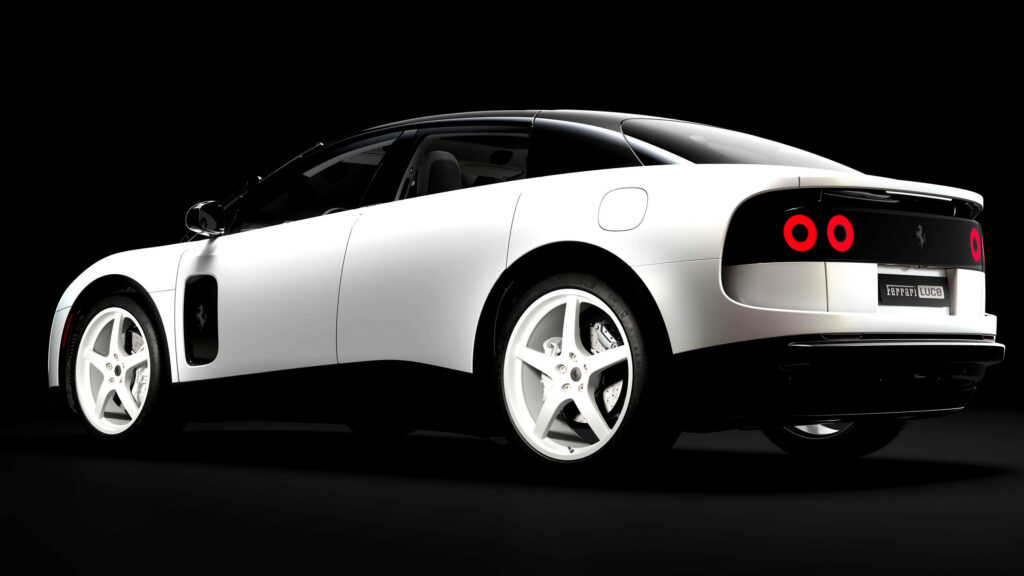
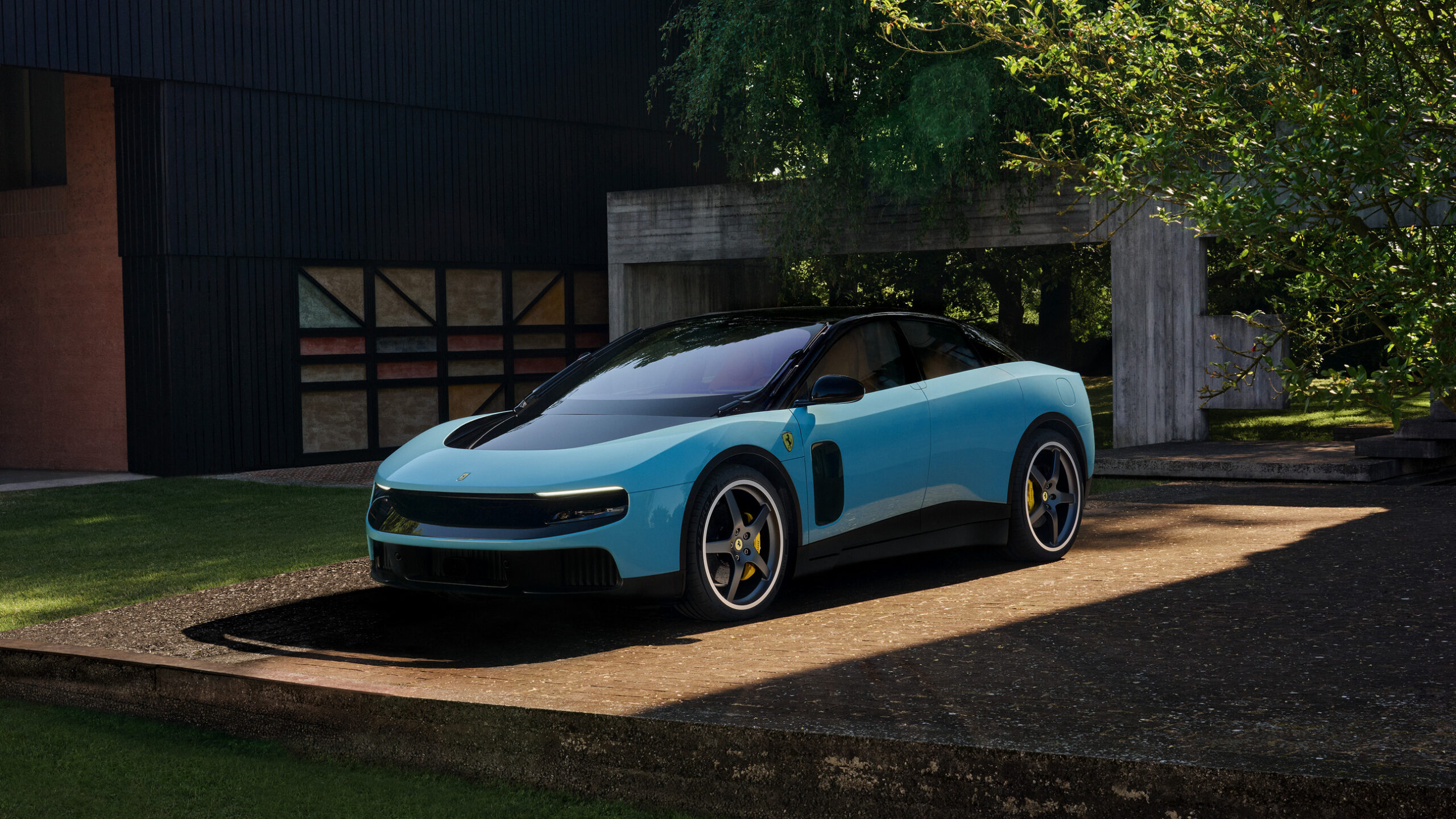
The shape backs that up. Ferrari says the car is centered around an ultra-clean “glass house” design with floating front and rear aerodynamic wings. In reality, without the Ferrari badging, it would probably be tough for most everyday folks to tie this car back to the Prancing Horse brand.

Let’s start up front and work our way around. The Luce’s face features a huge frontal wing that mimics the good ol’ boys at Dodge with the Charger Daytona. There’s a secondary hood area behind it in gloss black and the two tones do tie the car to other modern cars within the Ferrari family. That said, the lighting and front fascia don’t really shout Ferrari in any way.

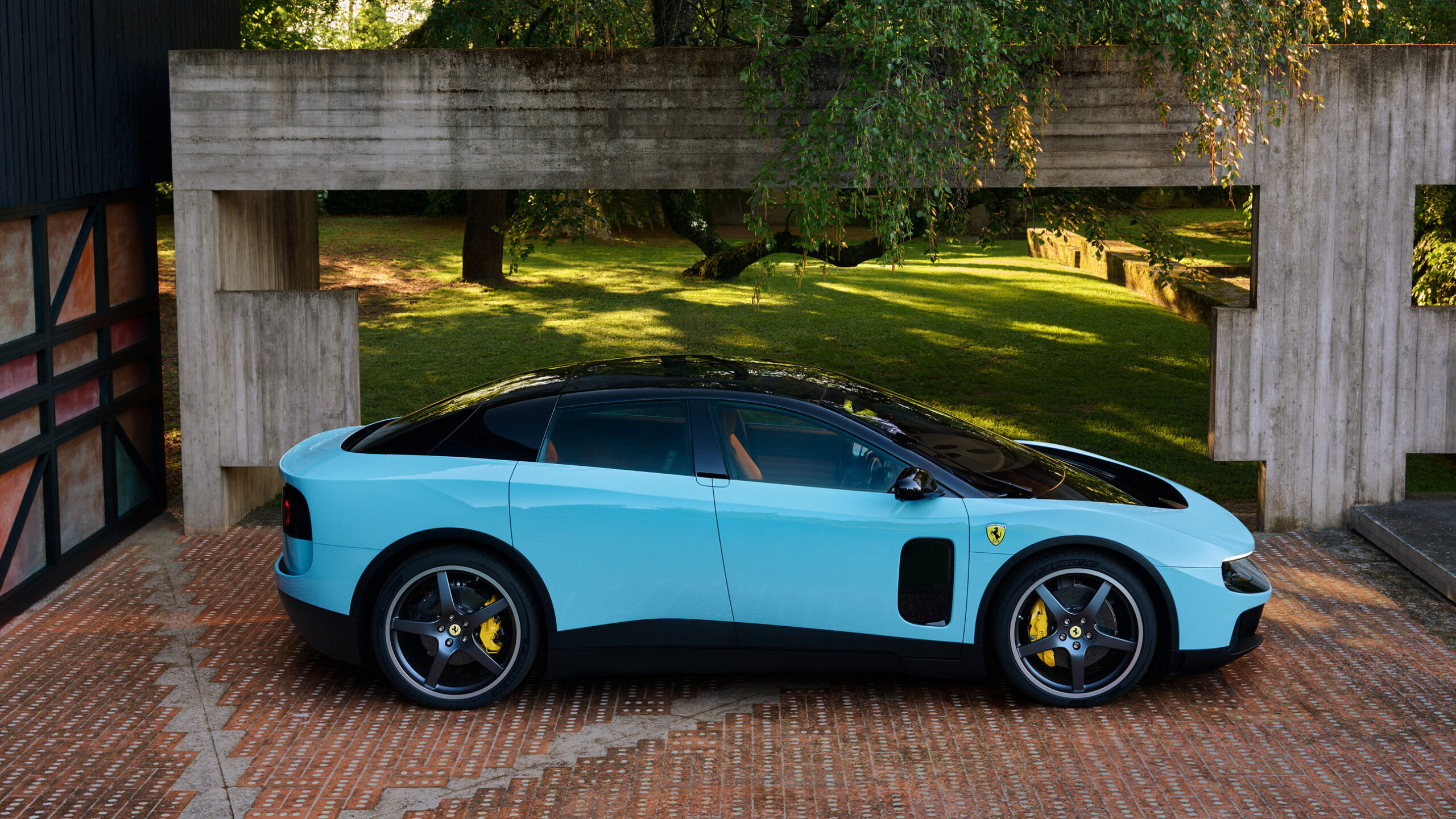
The Luce rides on gigantic 23-inch front and 24-inch rear wheels, the largest ever fitted to a production Ferrari road car. The overhangs are short, and behind the front wheels, you’ll find a large black panel that appears to be a vent for turbulent air in the wheel well. Beyond that, there’s not much to say of the side beyond the use of Tesla Cybertruck-style door poppers on the B-pillar and, as we suspected, suicide doors for the rear occupants.

\\\\\\\\\\\\\\

The rear is where things get more interesting. The silhouette reads sedan at a glance, but the entire back panel lifts as a hatch, with the rear glass hinged into the tailgate rather than fixed to the roofline.

Ferrari points to the 360 Modena and 458 Italia as the inspiration, and this might be where the strongest ties to brand DNA actually show up. The lighting structure, on the other hand, could just as easily have someone thinking of a Nissan Skyline or a Chevrolet Impala. That probably is not the flattery Maranello was after, but it is worth remembering who drew the thing.

Ive was central to the design of the original iPhone, and Newson worked on the Apple Watch and various special editions. Today, the original iPhone is a flagship moment in design. The Luce probably won’t go down in the history books with as much gravity, but perhaps over the years it’ll age like fine wine.

The Cabin

\\\\\\\\\\\\

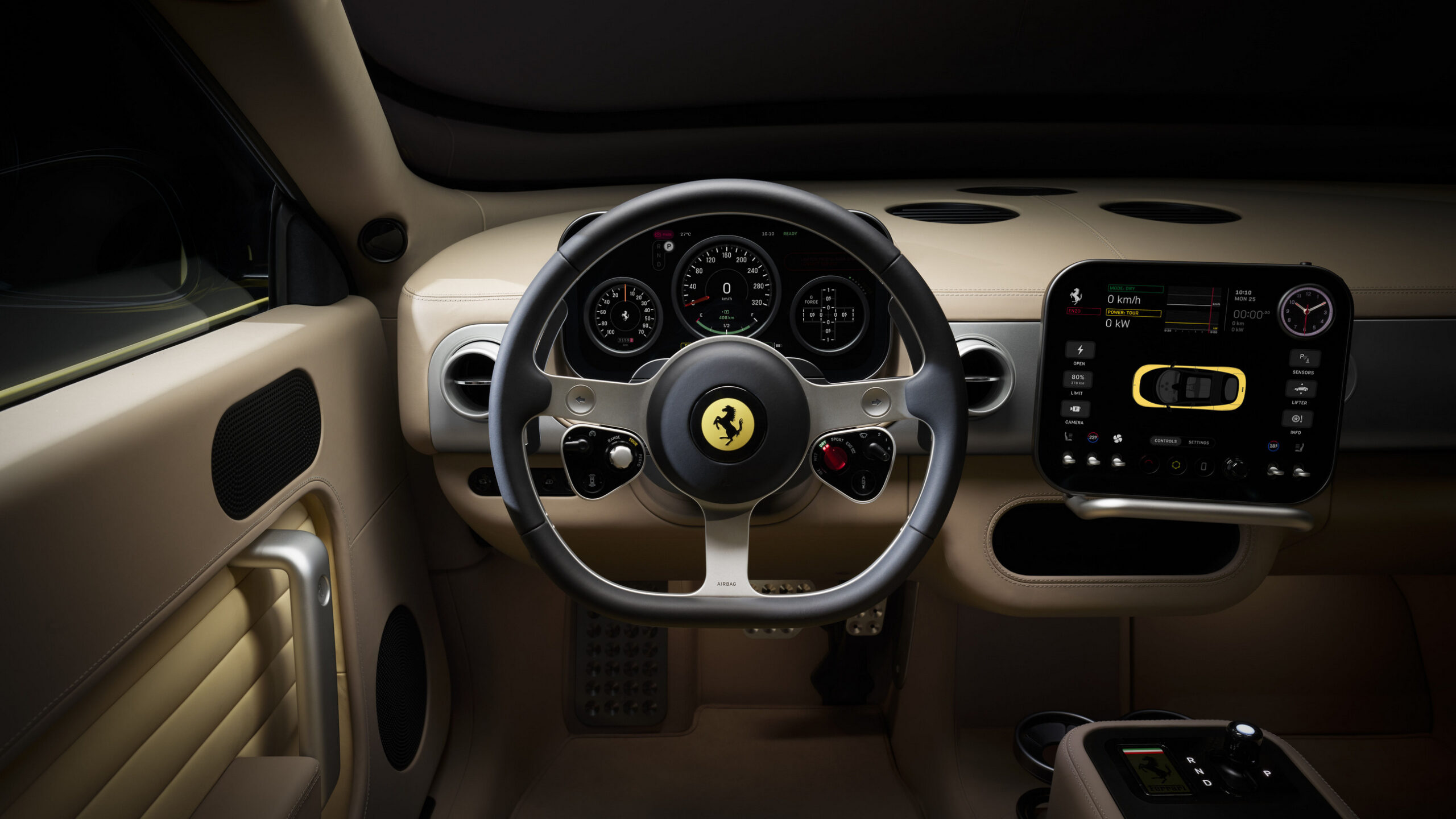
The details are where things start getting nerdy. The steering wheel itself is machined from recycled aluminum and works with a moving binnacle that travels with the wheel to keep key information directly in the driver’s line of sight. Ferrari also mixed physical controls with digital interfaces rather than going all-in on touchscreens. That means actual switches, dials, and toggles still exist alongside OLED displays developed specifically for the Luce.

Then there are the oddball touches that sound peak Ferrari. The key itself uses Corning Gorilla Glass and E Ink technology, and docking it triggers a startup sequence where Ferrari yellow reportedly spreads across the cabin interface.

There’s also a physical overhead pull that activates Launch Mode because, apparently, pressing a button was considered too ordinary. Add in optional massage seats, rear passenger controls, and a 21-speaker, 3,000-watt audio system (more than you get in a seven-passenger Jeep Grand Wagoneer), and the Luce starts sounding less like a stripped-out supercar and more like Ferrari looked at luxury EV buyers and decided to build them something entirely new.

Performance And Power

\\\\\\

Power is key, and clearly this thing has it, but let’s talk about weight for a moment first, as it defines how far performance can go in many aspects. The Luce tips the scales at 2,260 kg (4,982 lbs), which means Ferrari’s first EV arrives carrying nearly two-and-a-half tons of mass. That’s not exactly featherweight territory, even by modern EV standards.
Then again, Ferrari engineers seem acutely aware of that reality. The company says the low-mounted battery, four-motor setup, torque vectoring, and packaging give the car responses comparable to something roughly 400 kg lighter. That’s a bold claim, but at this point, Ferrari can’t really make small ones.

The Luce was never going to be judged like a normal EV. Nobody expects Ferrari to simply build a quicker alternative to a luxury electric sedan or crossover. The brand’s entire reputation rests on making machines that feel special, irrational, and emotional.

An Electric Guitar Approach to Ferrari Noise

Sound is one of the levers Ferrari pulls to get there, and crucially the Luce’s is not piped in or synthesized, which is the standard playbook for EVs trying to sound interesting. A precision accelerometer mounted in the rear axle housing captures the real vibrations of the rotating components, and a patented system then “filters, equalises and amplifies the signal in a similar way to an electric guitar, but only when functional to the driving experience.” Ferrari calls the result authentic and functional, and the driver can turn it up or down at will.

There’s also a unique torque shift engagement system designed to deliver a feeling of “engine braking worthy of a sports car.” Speaking of torque, the Luce leverages four electric motors that Ferrari derived from the F80 supercar. The vehicle uses an elastically-mounted subframe to dampen road harshness while the motors produce up to 1,035 hp (772 kW) together.

It has a 122 kWh battery pack, an 800V architecture, and can recover 70 kWh in 20 minutes when using a DC fast charger capable of delivering up to 350 kW. The entire battery pack does more than hold cells. It is a structural member, contributing a 25 percent gain in bending rigidity and 35 percent in torsional rigidity over previous four-door Ferrari applications. At this rate, given all the changes, I’m a little surprised it’s not carrying a Dino badge.

Europe First, U.S. Buyers Wait Until 2027

Ferrari opens European order books later this year with a price tag around €520,000, or over $600,000 at today’s rates. North America will have to wait longer. The Luce does not land at U.S. dealers until Q2 2027, and Maranello has not said what it will charge here.

QUICK FACTS
DIMENSIONS AND WEIGHT
Length197.9 in (5026 mm)
Width (without mirrors)78.7 in (1999 mm)
Height60.8 in (1544 mm)
Wheelbase116.6 in (2961 mm)
Front track66.8 in (1696 mm)
Rear track66.5 in (1690 mm)
Kerb weight*4982 lbs (2260 kg)
Kerb weight to power ratio4.76 lbs/hp (2.16 kg/cv)
Weight distribution47% front / 53% rear
Trunk capacity21.1 cu ft (597 l)
TIRES
Front265/35 R23 J9.5
Rear315/30 R24 J11
BRAKES
FrontCCM, 15.4 x 1.3 in (390 x 34 mm)
RearCCM, 14.6 x 1.3 in (372 x 34 mm)
POWERTRAIN
Number of electric engines4 (one per wheel)
Maximum power**1,035 hp (772 kW / 1050 PS)
Maximum torque, measured at the engines**730 lb-ft (990 Nm)
Maximum torque, measured at the wheels8,482 lb-ft (11500 Nm)
FRONT E-AXLE
Power at the axle282 hp (210 kW)
Torque at the wheels**2,508 lb-ft (3400 Nm)
Torque at the engines**207 lb-ft (280 Nm)
Power density3.23 kW/kg (93% efficiency)
Engine revs30,000 rpm
Weight143 lbs (65 kg)
REAR E-AXLE
Power at the axle831 hp (620 kW)
Torque at the wheels**5716 lb-ft (7750 Nm)
Torque at the engines**524 lb-ft (710 Nm)
Power density4.80 kW/kg (93% efficiency)
Engine revs25,500 rpm
Weight284 lbs (129 kg)
BATTERY
No. of cells210 (15 modules with 14 cells)
Total power density195 Wh/kg
Cell power density305 Wh/kg
Gross capacity122 kWh
Maximum voltage800 V
Maximum recharge power350 kW
PERFORMANCE
0-62 mph (0-100 km/h)2.5 s
0-124 mph (0-200 km/h)6.8 s
Maximum speed193 mph (310 km/h)
Range***329 miles (530 km)
Consumption (WLTP cycle)Under homologation
SWIPE

With optional equipment, ** In Launch Control mode, *** Estimation (under homologation)

Lexus’s F-Sport Built Its Name On V8 Theatrics, The Next One Might Ditch Gas Entirely

  • Lexus says EV power may make more sense for future F-Sport models.
  • Chief engineer Kohei Chiashi believes electrification enables new possibilities.
  • The ES500e can send all available torque rearward in some situations.

Performance and electrification spent years looking like reluctant roommates. Enthusiasts rolled their eyes, automakers talked about efficiency, and every new hybrid sports car seemed to come with a warning that excitement wasn’t the priority. Fast forward to now, and electrification has infiltrated nearly everything, from economy cars to six-figure exotics with varying degrees of success.

Increasingly, performance brands aren’t asking if electricity belongs in the conversation, but how much of it should be involved. According to the engineer behind the all-new Lexus ES, electrification may end up shaping the future of F-Sport too.

Chief Engineer Makes The Case For Batteries

While speaking with ES chief engineer Kohei Chiashi during the new ES first-drive launch event, we asked which powertrain made more sense if Lexus ever wanted to build a more performance-focused F-Sport variant: hybrid or battery-electric. His answer was revealing.

Also: Lexus ES Chief Engineer Is ‘Not Happy’ About SUVs Taking Over

“Personally, I think the BEV is well-suited because electrification has raw power and we can manipulate the powertrain more granularly to produce different types of performance within that envelope,” Chiashi told us.

 Lexus’s F-Sport Built Its Name On V8 Theatrics, The Next One Might Ditch Gas Entirely

That line may sound like standard EV talking points at first, but Chiashi followed it with something more interesting. According to him, the ES500e’s system can send 100 percent of available torque to the rear wheels in certain situations. Drivers don’t control that behavior directly, though, so before anyone starts imagining a drift button hidden in a submenu, Lexus isn’t going there.

Why An F-Sport ES Isn’t Here Yet

The answer also helps explain why Lexus isn’t rushing to add an F-Sport model to the ES lineup immediately. According to Chiashi, the ES500e already checks many of the boxes that F-Sport traditionally represented, and introducing another trim at launch would have complicated things.

Read: The First Electric Lexus ES Actually Costs Less Than The Hybrid

That doesn’t mean Lexus has abandoned the idea. Chiashi made clear the company is still considering future possibilities. If nothing else, the comments offer an interesting glimpse into where Lexus performance thinking may be headed. F once stood for naturally aspirated V8s and high-revving theatrics. The next chapter might involve software, instant torque, and a whole lot more electricity.

 Lexus’s F-Sport Built Its Name On V8 Theatrics, The Next One Might Ditch Gas Entirely
Stephen Rivers / Carscoops

Charging An EV Cost $11 More This Year, Filling A Sequoia Cost $1,623 More

  • Gas prices jumped 46 percent in four months, hitting traditional vehicles the hardest.
  • EV annual energy costs barely moved while gas vehicles saw a $706 average increase.
  • Large SUVs, trucks, and minivans got hammered, with some owners facing $1,600+ jumps.

Gas prices have a way of fading into the background when they’re stable. Then they spike, and suddenly every fill-up feels like a minor financial crisis. Drivers of thirsty trucks and body-on-frame SUVs know the feeling all too well. A new study suggests 2026 has turned into one of those years where fuel costs go from annoyance to budget item almost overnight.

According to a new study from iSeeCars, gasoline prices climbed nearly 46 percent between January and April, moving from $2.81 to $4.10 per gallon. The picture has only worsened since. At the time of publishing on May 24, the national average sits at $4.52 for regular, $5.01 for mid-grade, $5.39 for premium, and $5.62 for diesel.

Even working from the smaller January-to-April window the study covers, the math is ugly: an average annual fuel-cost increase of $706 for traditional gas-powered vehicles. EV drivers, meanwhile, barely felt it, with annual charging costs up just $11.

Fuel Cost Increase By Drivetrain: Jan vs. Apr 2026
DrivetrainAvg. Miles
Per Year
Annual Fuel
Cost Jan-26
Annual Fuel
Cost Apr-26
Diff.
ICE13,323$1,533$2,240$706
Hybrid14,696$1,055$1,540$486
PHEV11,660$1,385$1,676$291
EV11,880$714$725$11
SWIPE

iSeeCars

The data comes from an analysis of more than 2.1 million three-year-old used vehicles sold in 2025. Researchers looked at average annual mileage and paired it with fuel costs in January and April to estimate how much ownership costs changed in just four months.

Read: As Gas Prices Soar, Here’s How To Cut Your Fuel Bill Now

The hit landed unevenly across powertrains. Internal-combustion vehicles were hit the hardest, jumping from $1,533 to $2,240 in annual fuel costs. Hybrids took a smaller hit, rising $486. Plug-in hybrids landed in the middle with a $291 increase. EVs barely moved at all, increasing from $714 to $725 annually, and that’s even more impressive when you consider that the study didn’t just sample drivers who can charge at home.
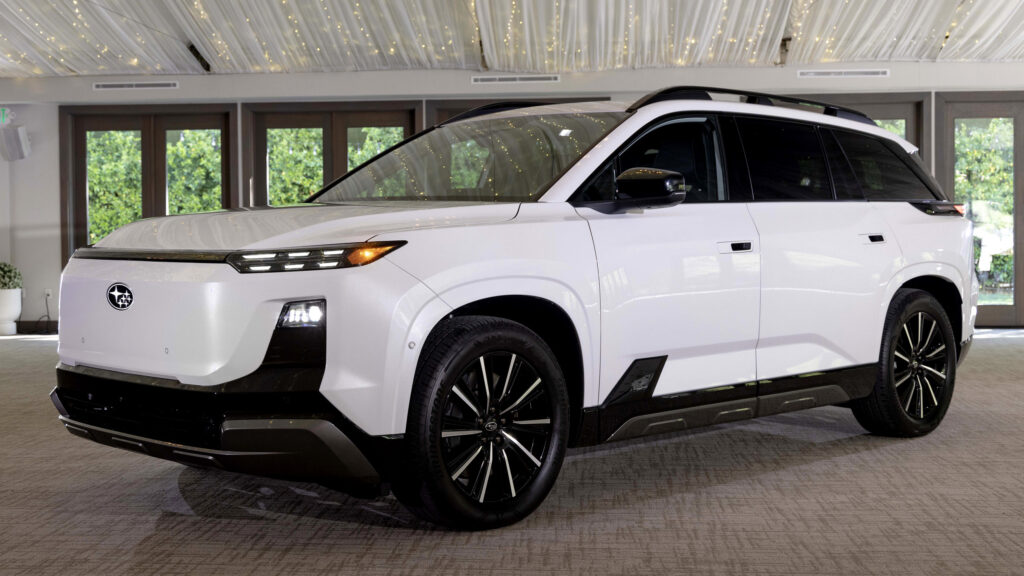
Fuel Cost Increase for Major Gas Vehicle Segments: Jan vs. Apr 2026
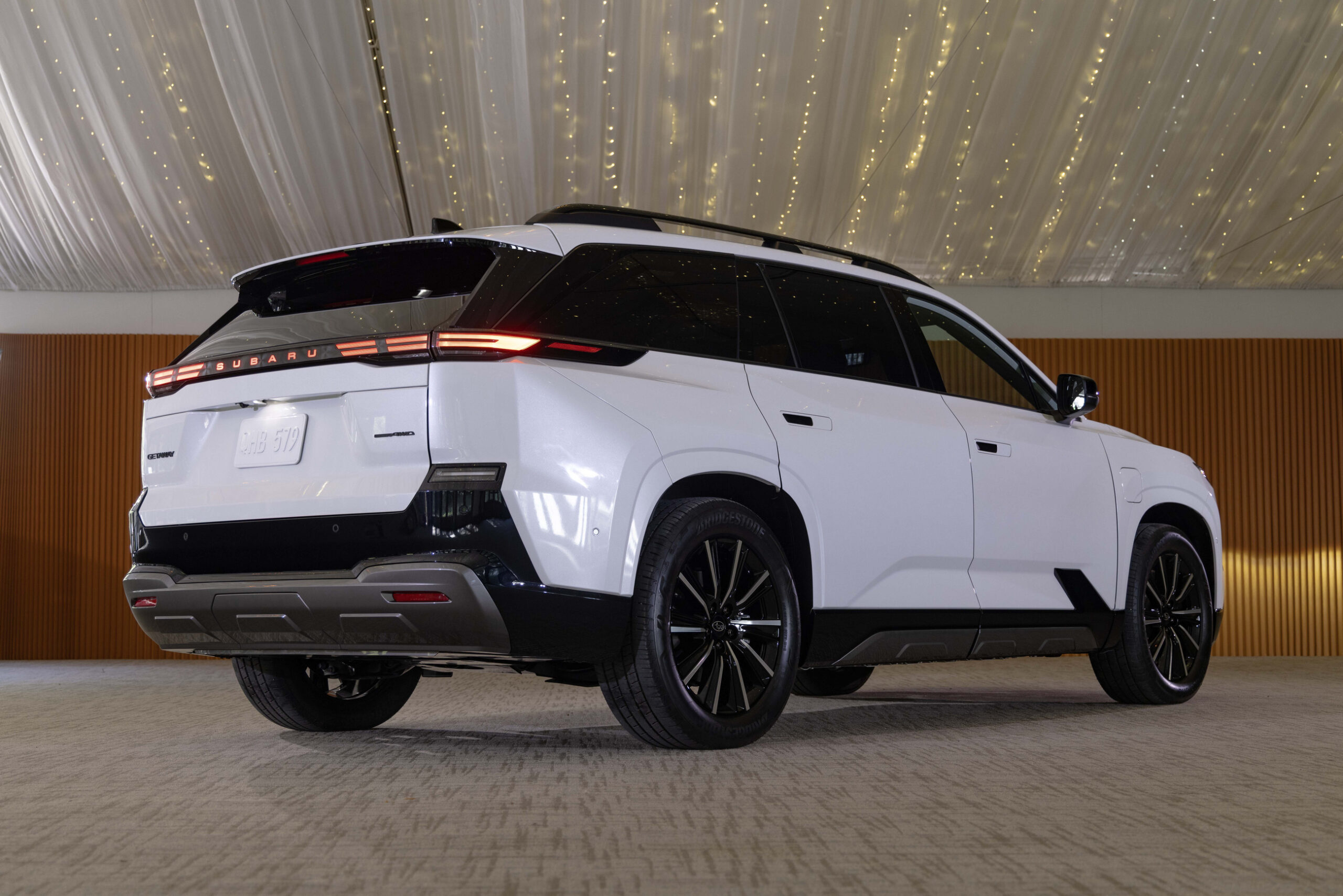
SegmentAvg. Miles
Per Year
Annual Fuel
Cost Jan-26
Annual Fuel
Cost Apr-26
Diff.
Minivans19,292$2,472$3,610$1,139
Trucks14,369$2,154$3,146$992
SUVs12,731$1,479$2,161$681
Passenger Cars13,714$1,316$1,922$606
SWIPE

iSeeCars

Here’s the kicker. Efficiency alone wasn’t the whole story. Mileage played a huge role, too. Minivans, surprisingly, took the biggest hit of any segment. Annual fuel costs rose by $1,139, climbing to $3,610. Of course, a big piece of that is how much most minivans (save for the VW ID.Buzz) are built for lots of miles. Trucks with their comical fuel economy and brick-like drag coefficient weren’t far behind with a $992 jump.

SUV owners were almost karmically hit the hardest, with the Toyota Sequoia topping the charts at an average $1,623 increase. The Chevrolet Suburban came in second with $1,542, and the top three rounded out with the Nissan Armada at $1,513. Zoom out, and this may explain why hybrids continue gaining traction. They avoid the range anxiety and charging headaches some buyers still worry about, while taking a lot of the sting out of gas-price roulette.

Top 10 Vehicles With the Biggest Fuel Cost Increases
RankModelAvg. Miles
Per Year
Annual Fuel
Cost Jan-26
Annual Fuel
Cost Apr-26
Diff.
1Toyota Sequoia17,856$3,523$5,145$1,623
2Chevrolet Suburban19,626$3,347$4,889$1,542
3Nissan Armada18,098$3,284$4,797$1,513
4GMC Yukon XL18,734$3,193$4,664$1,471
5Chevrolet Tahoe16,727$2,860$4,177$1,317
6Cadillac Escalade ESV16,387$2,847$4,159$1,312
7GMC Yukon16,592$2,831$4,135$1,304
8Jeep Wagoneer16,975$2,782$4,064$1,282
9GMC Sierra 1500 Limited17,069$2,772$4,050$1,277
10Chrysler Pacifica20,872$2,682$3,918$1,236
ICE Average13,323$1,533$2,240$706
SWIPE

iSeeCars

❌