Normal view

There are new articles available, click to refresh the page.
Today — 31 December 2025Vehicles

Dozens Of Chinese EV Brands Could Collapse In The Next Year

  • Only a few Chinese EV brands have reached profitability.
  • Up to 50 struggling EV firms may slash operations in 2026.
  • China’s EV tax perks are ending or being sharply reduced.

Chinese electric vehicles are spreading fast across global markets, fueled by booming demand and strong backing from Beijing. In November alone, China’s EV exports jumped 87 percent compared to the same month last year. Yet even with this rapid growth, cracks are starting to show.

The year 2026 is shaping up to be a major turning point for China’s EV sector, with a looming shakeout expected to hit dozens of struggling manufacturers.

Read: China’s Getting Ready To Flood The World With Even Cheaper EVs And PHEVs

Deliveries of new vehicles in China are expected to slip by as much as 5 percent next year, the largest contraction since 2020, due in part to lowered government support and the industry’s history of overcapacity.

Industry at a Crossroads

And this isn’t speculation from outsiders either, but comes from the South China Morning Post (SCMP), a Hong Kong-based English-language newspaper owned by Alibaba Group. The SCMP reports that around 50 of China’s money-losing EV makers may be forced to either downsize or shut down entirely in 2026.

“Time is against those players whose cars cannot impress young drivers,” said Qian Kang, who runs a factory producing automotive printed circuit boards. “For most of the unprofitable EV assemblers, next year’s performance will be critical.”

 Dozens Of Chinese EV Brands Could Collapse In The Next Year

Policy Shifts and Market Pressure

Much hinges on an upcoming policy decision. In January, Beijing is expected to determine whether the 20,000 yuan (roughly US$2,900) EV trade-in subsidy will be extended. Meanwhile, the current 10 percent purchase tax exemption is set to expire at the end of this year. A reduced 5 percent rate will apply starting in January and remain in place until the full tax returns in 2028.

While the price war among Chinese firms has brought affordable EVs within reach of millions of car buyers, it has eroded many companies’ ability to turn a profit. Combined with significant investments into research and development, as well as urgency among brands to establish large portfolios of models, it’s hardly a surprise that very few carmakers have become profitable.

“The fundraising bonanza surrounding China’s EV makers and key car component suppliers is history now,” angel investor Yin Ran said. “So it will be a game of survival, with profitable carmakers becoming the winners, while unprofitable players face running out of funds soon.”

Few companies have weathered the storm. Profitable big players such as BYD, Seres, and Li Auto stand out as rare exceptions. These firms are expected to intensify their overseas efforts as they look for new growth opportunities. Research from AlixPartners suggests that only about 10 percent of China’s EV brands will be profitable in the coming years.

 Dozens Of Chinese EV Brands Could Collapse In The Next Year

Leapmotor Gets Cash Injection

Among the handful of companies securing new support, Stellantis-backed Leapmotor has landed a major investment. The state-owned FAW Group has announced it will acquire a 5 percent stake in the Chinese carmaker for 3.74 billion yuan, or $534 million. This makes Leapmotor the first of the nation’s car manufacturers to receive investment from a state-owned group and will help with its planned expansion.

Leapmotor is aiming to deliver 1 million vehicles in 2026. If it achieves this figure, it would be China’s third-largest EV maker, trailing only BYD and Geely. Through the first 11 months of 2025, Leapmotor delivered 536,132 vehicles.

“Leapmotor aims to achieve annual deliveries of 4 million units a year in 10 years’ time,” Leapmotor found and chief executive Zhu Jiangming revealed in an interview. “Leapmotor will strengthen our value through the fine-tuning of our production, while offering customers best [driving] experiences.”

 Dozens Of Chinese EV Brands Could Collapse In The Next Year
Leapmotor A10

VW Promised A €25k ID. Polo, But You Might Wait A While To See It

  • VW has reinvented its Polo as the electric ID. Polo for 2026.
  • It targeted a base price of €25k but first cars will cost far more.
  • Early versions priced higher due to larger batteries, more power.

Volkswagen wants you to believe it’s democratizing electric power. The ID.Polo that hits showrooms in 2026 is supposed to be the proof, with a headline starting price of €25,000 ($29,400/£21,800). The catch is that when the order books open, that price will be more of a concept than a reality.

According to dealer sources who spoke to German media, customers will be able to configure the ID.Polo from April 2026. That much appears to be on schedule.

Related: VW Cancels ID. Buzz For 2026 As Dealers Warn It Might Be Over

But initially, only the more powerful 208 hp (155 kW / 211 PS) version, fitted with a larger 52 kWh nickel manganese cobalt battery, will be available. That version is expected to land well above the headline price, with estimates circling closer to €30,000 ($35,300/£26,100) or more, depending on equipment and regional taxes.

 VW Promised A €25k ID. Polo, But You Might Wait A While To See It

The reason is battery supply. The affordable 114 hp (85 kW / 116 PS) base version and the 133 hp (99 kW / 135 PS) mid-ranking variant uses a simpler and cheaper 37 kWh battery that offers less range, but makes the price work. But that battery won’t be ready at launch, Germany’s Handelsblatt reports.

Volkswagen has confirmed that the entry level version will follow later, blaming the delayed availability of the lower cost cells rather than any sudden change of heart about pricing.

Weeks or months?

Officially, Volkswagen says the delay will only be a few weeks. Dealers, though, are less optimistic. Some suggest it could be six months or even longer before the true budget version is actually available to order.  “The longest we’ve heard is that it could take up to six or even nine months until the smaller battery is actually available,” one of them told the news outlet.

That gap matters because much of the ID.Polo’s marketing pitch has been built around that €25k figure – except for the upcoming GTI version, the first electric VW to carry those letters.

 VW Promised A €25k ID. Polo, But You Might Wait A While To See It

It is not an unusual strategy. Automakers often launch with higher margin versions first to cover costs, manage supply and just milk fans who are desperate to be the first on their street to own a certain new model and are happy to pay a premium for that privilege.

The difference, Handelsblatt suggests, is in expectations. Volkswagen has positioned the ID.Polo as a political and cultural milestone, the electric car for the masses that finally makes EV ownership feel normal and affordable.

When that affordable version isn’t immediately available, disappointment is inevitable, even if the strategy makes business sense.

 VW Promised A €25k ID. Polo, But You Might Wait A While To See It
VW

The Kia EV5 Just Launched In Some Markets, And It’s Already Getting A Facelift

  • Kia will update the EV5 by late 2026 with tech and design tweaks.
  • EV5 lacks range and charging speed versus Tesla and BYD rivals.
  • Weekender concept hints at cabin and tech changes Kia may adopt.

If it feels like the Kia EV5 just arrived, you’re not imagining things. The all-electric crossover made its debut in China in late 2023, followed by rollouts in Australia, Brazil, and other Western markets through 2024, eventually going on sale in Europe just this past fall.

Despite still being a recent arrival in most showrooms around the world, Kia has already confirmed that a mid-cycle refresh is on the way. The update is expected to arrive before the end of 2026, with a market launch likely following in 2027 for most regions outside China.

Review: The 2025 Kia EV5 Makes A Whole Lot Of Sense

Kia Australia’s general manager of product planning, Roland Rivero, recently addressed the upcoming update, noting it will come with the expected range of mid-life improvements. “So yes, there’ll be some cosmetics, and there’ll be some tech,” he told local outlet Drive.

Rivero didn’t elaborate on what those changes might involve. Still, it’s not hard to imagine where updates could be focused to make the EV5 more competitive and appealing.

Will Kia Speed Things Up?

\\\\\\\\\\\

The current European-specification 2025 Kia EV5

A likely candidate for improvement is charging. Unlike Hyundai’s flagship EVs, the EV5 doesn’t ride on the advanced E-GMP 800-volt platform. Instead, it uses the more affordable 400-volt N3 eK system. This limits DC fast charging speeds to a maximum of 140 kW, translating to a 10 to 80 percent charge in 38 minutes.

Also: Kia’s Pickup Isn’t Selling and Someone Just Designed a Better One

That’s a step behind direct competitors like the Tesla Model Y and BYD Sealion 7, and significantly slower than Hyundai’s Ioniq 5 and Kia’s own EV6.

While we do not expect the EV5 to shift to an 800-volt architecture as part of its facelift, Kia could work to improve charging times. Additionally, the EV5 isn’t as efficient as some rivals and could benefit from more range.

\\\\\\\\\\\\

EU-spec 2025 Kia EV5

It’s unclear if any significant alterations could be made to the SUV’s cabin. Last month, Kia unveiled the intriguing EV5 Weekender concept, fitted with a host of off-road upgrades. While the exterior was updated, more significant changes were made to the cabin.

For example, the concept ditched the dual driver and infotainment display of the current model, instead opting for a single panel encompassing the infotainment screen and a passenger display. Positioned ahead of the steering wheel was a thin cluster.

Kia also fitted the concept with a distinctive new steering wheel and eliminated the unconventional center console found in the production version.

The Weekender could even hint at a new variant for the refreshed lineup, potentially adding a more rugged model to the mix.

Kia EV5 Weekender Concept
\\\\\\\\\\\

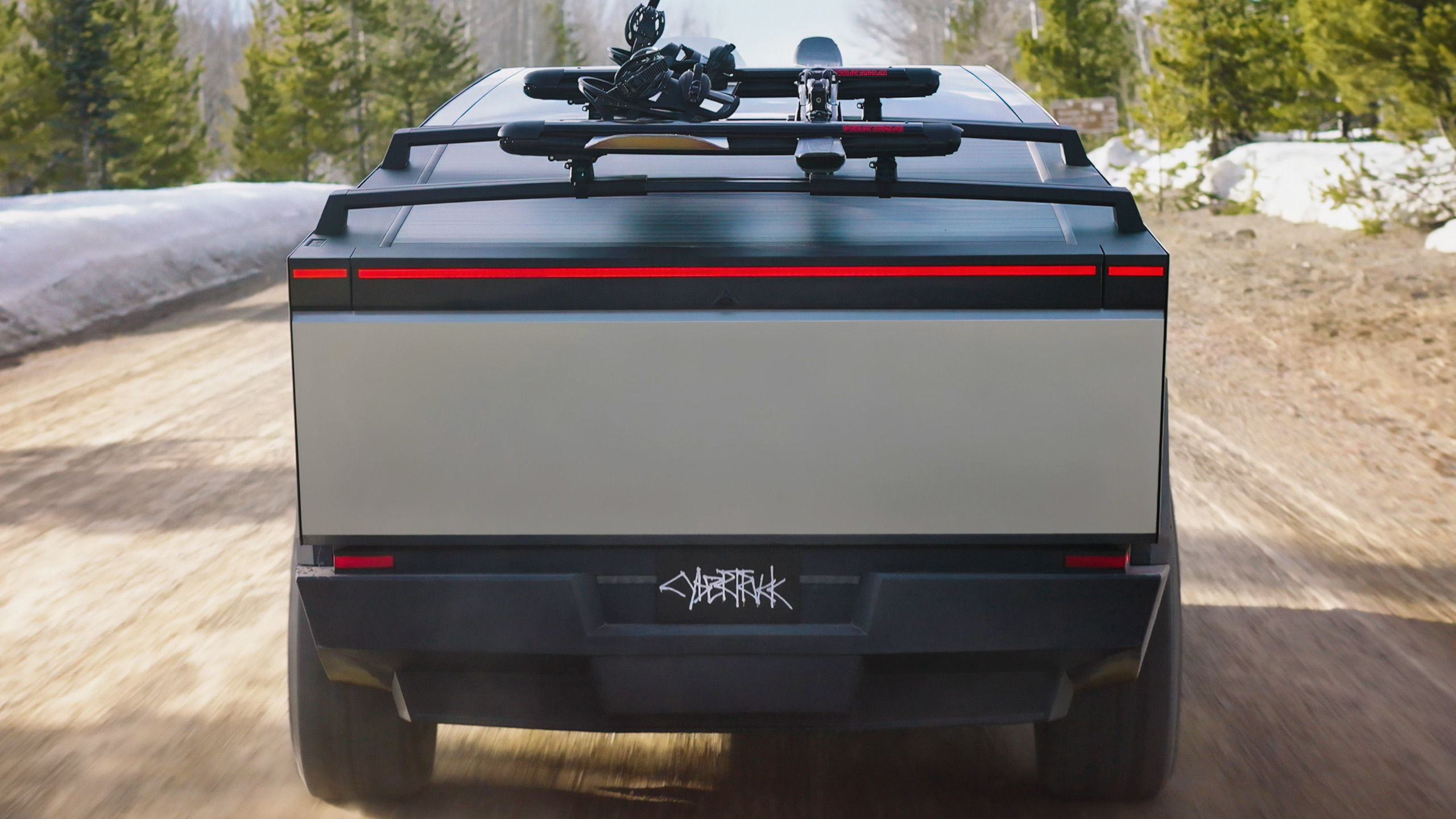
Tesla’s $2.67B Cybertruck Battery Deal Is Now Worth Just $6,776

  • Tesla signed a $2.67B Cybertruck battery deal in 2023.
  • The deal has been slashed to just $6,776 after poor sales.
  • Cybertruck was expected to sell 250K yearly, hit under 20K.

Several years ago, Elon Musk proudly proclaimed that Tesla would be moving as many as 250,000 Cybertrucks annually. The electric pickup was billed as a disruptive force, set to shake up the truck market. In reality, it hasn’t come anywhere near those targets. This year, Tesla is expected to sell fewer than 20,000 Cybertrucks, less than 10 percent of that overly ambitious goal.

Read: This Shop Tore Down A Cybertruck To Do What Tesla Wouldn’t In Europe

While you’ll never hear Tesla head honcho Elon Musk describe the Cybertruck as anything other than a raging success, lower-than-expected sales are hurting suppliers.

One notable casualty is L&F Co., a South Korean battery material supplier, which recently disclosed that its supply contract with Tesla had been cut by 99 percent, a shift attributed in part to sluggish demand for the truck.

A Contract Cut to the Bone

Back in February 2023, L&F had secured a sizable deal worth 3.83 trillion won (roughly $2.67 billion) to provide Tesla with high-nickel cathode material intended for the Cybertruck’s batteries. But that agreement has now been trimmed down to a token 9.73 million won, or about $6,776 at current exchange rates.

 Tesla’s $2.67B Cybertruck Battery Deal Is Now Worth Just $6,776

The original contract was tied to Tesla’s 4680 battery cells, which were first revealed in 2020. At the time, Tesla presented them as a major leap forward, central to its plan to rapidly expand production and eventually launch a $25,000 EV. That model has yet to materialize, and so far, the 4680 cells are used primarily in the Cybertruck.

According to an unnamed source with knowledge of the supply contract, L&F only needed to supply contract with small amounts of material as the development of the Cybertruck was repeatedly postponed. Bloomberg reports that policy and economic issues also affected the contract, including the elimination of subsidies through the Inflation Reduction Act.

SpaceX to the Rescue?

As Tesla continues to struggle with sluggish Cybertruck sales, a familiar buyer has entered the picture. According to a recent report, SpaceX has already purchased more than 1,000 Cybertrucks from Tesla, and that number could eventually climb to 2,000.

SpaceX hasn’t said why it’s buying so many Cybertrucks, but it likely has more to do with surplus stock than necessity. Either way, the move points to just how closely Musk’s companies operate, and hints that Tesla may be offloading inventory through its own back door.

 Tesla’s $2.67B Cybertruck Battery Deal Is Now Worth Just $6,776
Yesterday — 30 December 2025Vehicles

Chinese EV Exports Are Exploding, And The West Has No Way To Stop Them

  • Chinese EV exports are booming and were up 87% last month.
  • Mexico was the top export market in November with 19,344 units.
  • Over 600,000 Chinese EVs have been exported to Europe in 2025.

Chinese cars were once the butt of jokes, but they’ve become a major threat to Western automakers. That’s clear today as data from China’s General Administration of Customs has revealed exports of electric vehicles soared 87 percent in November.

More: Europe Tried To Block Chinese Cars But Ended Up Helping Them Instead

That’s a huge increase compared to last year and the most popular destination in November was Mexico. Chinese EV exports to the country soared 2,367 percent to total 19,344 units. While the numbers don’t reveal which vehicles were responsible for the boost, the BYD Dolphin Mini has been a hit south of the border.

The small EV measures just 148.8 inches (3,780 mm) long and features a front-mounted motor developing 74 hp (55 kW / 75 PS) and 100 lb-ft (135 Nm) of torque. Customers can also get 30.1 and 38.8 kWh battery packs, which provide a NEDC range of up to 236 miles (380 km).

Mexico was followed by Indonesia and Thailand as the top markets for Chinese exports last month. The former country imported 17,503 vehicles, while the latter took in 13,517.

\\\\\\\

Focusing on Europe, exports to the UK soared 113 percent last month to 9,096. This means 121,555 Chinese EVs have arrived since the beginning of the year and this is an increase of 24 percent .

That pales in comparison to Belgium, where 195,309 Chinese EVs have been imported in the first 11 months of the year. However, it’s worth noting this is a 15 percent drop compared to 2024.

Where Most Chinese EVs Are Going

Asia remained the biggest market for Chinese EVs as exports climbed 71 percent to 110,061 units in November. They were followed by Europe and Latin America (including the Caribbean).

While Asian countries have imported nearly 1 million Chinese EVs through November, the big story is Europe’s 604,105. That’s 12 percent more than 2024 and the number shows why European automakers and politicians are so worried.

 Chinese EV Exports Are Exploding, And The West Has No Way To Stop Them

Cybertruck’s Most Hated Feature Is Still Failing, And Winter Just Made It Worse

  • Cybertruck’s 4-foot wiper has frustrated owners since launch.
  • Owners say wiper contact is weak, reducing cleaning ability.
  • Tesla confirms wiper performance is under investigation now.

It’s been two years since Tesla began delivering the Cybertruck to customers, yet the company is still wrestling with one of the vehicle’s most persistent design headaches. We’re talking about its massive single windshield wiper.

Despite earlier attempts to fix it through mechanical and software updates, Tesla is now believed to be working on a third version of the wiper system to finally address lingering faults.

Read: Texans Roast Police Department’s New “Garbage Can” Cybertruck

A recent case in the US highlights the problem. When a Cybertruck owner brought their vehicle in for service, Tesla’s response revealed that “wiper performance is under active Engineering investigation,” according to a message from the company’s service department.

What’s Wrong With the Blade?

 Cybertruck’s Most Hated Feature Is Still Failing, And Winter Just Made It Worse

Complaints from owners began as soon as deliveries started. The wiper’s 4-foot blade is the largest fitted to any production vehicle, but users have flagged multiple problems. These include poor blade contact at the middle and top of the stroke, improper stowing at highway speeds, and washer fluid issues.

Performance drops further in cold weather, where salt, slush, and snow can overwhelm the system. Some owners have also noted that the wiper occasionally fails to clear the area in front of the forward-facing FSD cameras.

One post on X captured the frustration:

Love the Cybertruck. Hate the wiper system. Tesla needs to issue a voluntary service providing a free upgraded/redesigned wiper arm and sprayer. This is not a one-time event. Happens every time we hit salt/slush and snow. It’shighly unsafe. There were a few times today on I-70… pic.twitter.com/ajy2BYFQDA

— Spotted Model: Cars & Tech (@spotted_model) December 18, 2025

Updates Haven’t Solved It

Tesla recalled the wiper motors in June 2024 and has also updated the software, aiming to improve the blade’s movement and how it sits when not in use. A revised V2 blade has also been installed on many trucks, but that version appears to have its own reliability concerns.

The full scope of Tesla’s engineering investigation, initially reported by Not a Tesla App, hasn’t been made public. It’s unclear how long the company has been working on a fix or when an update might be introduced.

There’s speculation that a more substantial redesign could be underway. NotebookCheck notes that the original self-driving Cybercab concept featured a single wiper blade, similar to the Cybertruck. But a newer prototype, believed to be close to production, was recently spotted with a more conventional twin-wiper setup. That’s fueled suggestions that the Cybertruck might adopt the same configuration.

 Cybertruck’s Most Hated Feature Is Still Failing, And Winter Just Made It Worse

Sources: Not a Tesla App, NotebookCheck

EV Makers Just Got A New Problem In China, And It Starts In 2026

  • EVs in China must meet new consumption rules starting in 2026.
  • Models that fail may be pulled from sale or updated to comply.
  • Rule is said to be world’s first mandatory EV efficiency law.

Fuel economy regulations have shaped the auto industry for decades, setting benchmarks for combustion engines around the world. But when it comes to electric vehicles, formal efficiency standards have remained largely absent.

That’s beginning to change. In China, a new set of laws focused on EV energy consumption is set to take effect, requiring automakers to deliver more efficient electric models.

Read: China Is Banning Tesla-Style Door Handles

The regulations are designed around vehicle weight, assigning maximum energy usage thresholds for different categories. For example, a typical battery-electric passenger car weighing about two tons will need to consume no more than 15.1 kilowatt-hours per 100 kilometers.

That’s quite a low number and is around the same as you might expect to achieve in a new Tesla Model 3 during typical, everyday driving.

Efficiency Gets a Legal Backbone

 EV Makers Just Got A New Problem In China, And It Starts In 2026

According to local media, these new regulations will be approximately 11 percent stricter than the outgoing recommendations. Chinese authorities believe that thanks to the new efficiency standards, EV owners will see an increase in their average driving ranges of about 7 percent.

Importantly, the regulations are designed to prevent manufacturers from simply bolting on larger battery packs to achieve longer ranges. Instead, the focus will shift to improving the efficiency of existing systems and designs.

Chinese tech publication IT Home notes that this will be the first mandatory EV power consumption regulation in the world. The law is scheduled to take effect on January 1, 2026.

Behind the Policy Push

 EV Makers Just Got A New Problem In China, And It Starts In 2026

Work on the new standards has been ongoing for several months. In July, China’s Ministry of Industry and Information Technology, the National Development and Reform Commission, and the State Administration for Market Regulation met to work on the new laws, as well as new battery recycling standards.

Read: BMW And Porsche Just Lost China’s Luxury Market To A $100,000 Newcomer

Car News China notes that many EVs currently sold by major brands like BYD and Geely already meet the new efficiency standards. Models that fall short may need to be upgraded or pulled from production entirely until they’re brought into compliance.

 EV Makers Just Got A New Problem In China, And It Starts In 2026

Sources: IT Home, Car News China

People Get Paid $24 Just To Walk Up And Shut A Robotaxi Door

  • Some robotaxis stall when doors are left slightly open by riders.
  • Workers say the job is often inefficient and barely profitable.
  • New robotaxi models may fix this with automated sliding doors.

Getting paid to shut a car door might sound like the setup for a joke, but in parts of Los Angeles, it’s become a legitimate line of work. As autonomous vehicles increasingly take to the streets, a small but growing number of local towing companies have found themselves serving as on-call assistants to robotaxis with limited physical capabilities.

Read: What Happened When Robotaxis Met A Citywide Blackout Is A Little Scary

For as much as $24 a pop, these companies are paid to close car doors left ajar by distracted passengers exiting Waymo’s self-driving vehicles. If the situation is more complicated, such as a car stranded mid-route, they can earn between $60 and $80 for helping get the vehicle moving again.

What Happens When Tech Forgets the Basics

 People Get Paid $24 Just To Walk Up And Shut A Robotaxi Door

A recent report highlights how tow truck drivers are now using an app called Honk, which contracts with Waymo’s autonomous EV fleet in the Los Angeles area.

If a rider exits without properly closing the door, the car won’t budge. It simply waits, parked awkwardly in the street, until someone shows up to finish the job. That someone often arrives thanks to a notification from Honk.

According to Cesar Marenco, owner of Milagro Towing in Inglewood, California, who spoke with The Washington Post, he handles around three jobs per week for Waymo through the Honk app, usually to shut a door or tow a vehicle that’s run out of charge.

It’s not exactly a money-maker. JKK Towing owner Evangelica Cuevas says that the Honk app doesn’t always provide them with the precise location of a vehicle, meaning they may have to walk around for up to an hour just to locate it.

When factoring in the fuel costs, receiving between $22 and $24 to close a door, or up to $80 to tow a vehicle, doesn’t always make it profitable.

The Cost of Chasing Robotaxis

 People Get Paid $24 Just To Walk Up And Shut A Robotaxi Door

Earlier this month, several of Waymo’s robotaxis stopped after a power outage at traffic lights throughout San Francisco. Several tow companies were alerted to the disruption. Not everyone believes the rates offered by Waymo are fair.

Jesus Ajuiñiga, manager of Alpha Towing and Recovery in San Francisco, told The Washington Post that he’s turned down Waymo calls. The rates, he says, don’t come close to the $250 he normally charges to tow an all-wheel-drive vehicle. And for some, that’s just too steep a compromise.

Things could start to change. Whereas the Jaguar I-Pace models primarily used by Waymo need their doors to be manually shut, the new robotaxis built by China’s Zeekr that Waymo is currently testing, have sliding doors like a minivan, meaning they can be opened and closed automatically.

 People Get Paid $24 Just To Walk Up And Shut A Robotaxi Door
Waymo’s latest robotaxi, built by Zeekr

Volunteers collect pine needles to help figure out how PFAS get into the environment

30 December 2025 at 09:52

There's increasing concern about PFAS, the substances commonly called forever chemicals found throughout the environment. Now volunteers in Minnesota are collecting pine needles throughout the state in an effort to help researchers determine how PFAS find their way in water, soil, and air when there seems to be no obvious source

Signs Point in the Right Direction

29 December 2025 at 19:10

The health of the school bus industry was strong and stable in 2025. I predict more of the same in 2026. There is renewed EPA funding optimism, as more funds are set to be dispersed, yet the exact dollar figure remains unknown.The remaining $2 billion in the Clean School Bus program could soon be released to support propane and electric school bus acquisition.

States like New York and California continue to push for more stringent regulations while other states follow the federal mandate of more relaxed emission standards. Keep in mind, a proposed rule to amend the 2027 Greenhouse Gas Emissions (GHG) Phase 3 regulations for heavy-duty vehicles looms.

Regardless of government regulations, engine OEMs have already done the work to get heavy-duty low NOx and CO2 emissions baked into future powertrain solutions. This will likely drive engine prices higher in 2026 and beyond.

As we ended 2025, inflation appeared to have leveled off but still remained too high as are interest rates, despite the Fed’s latest cut. There are hopes of more rate cuts in the future. I see the increased costs being reflected on labor, manufacturing and raw materials
from industry suppliers. Tariff discussions will continue to take center stage as costs on components and goods can change quickly. Those sudden increases are already being passed on to the end user.

School busing should be deemed an essential service, like during COVID, and receive a tariff waiver. It will take a lot of loud and convincing voices to influence policy makers in Washington, D.C. No easy task but worth it.

A benchmark for industry health is new OEM school bus manufacturing data. As reported starting on page 13, the numbers reported are up about 7 percent to 40,345 school buses produced. Clean diesel school bus volumes spiked as the top buying choice for fleets with an overall increase of 3,699 units to 26,677 units. Alternative fuel school bus purchasing was modest relative to the previous year. The green bus market share leader remained electric school buses with 2,906 units manufactured, which was slightly down from the previous year. School bus OEMs have continued to expand school bus electrification offerings across all model types.

Propane-powered school bus volume was down slightly at 1,617 units, and CNG school buses saw a 91-unit decrease compared to last year with a scant 6 units produced. Gasoline school buses were down 515 units to 10,326 units over the previous year’s data. I see the potential for more gasoline adoption in 2026 as school bus OEMs offer the Cummins B6.7 Octane engine. Type A school bus chassis demand and predictability is good. Chassis allocations for school transportation OEMs have remained steady from GM and Ford in 2025.

According to industry insiders, that trend should remain similar for 2026, but tariffs are causing some hesitation in the marketplace.

I am seeing a significant increase in van conversions and van dealers o”ering multi-passenger vehicle (MPV) options to end users. More companies are exhibiting at STN EXPO and TSD Conference than ever before. I expect that market to continue to expand in 2026. Growing budget pressures seem to have accelerated the adoption of alternative student transportation services. This has given school districts another option on a supplemental basis to support growing demand of servicing students with disabilities, special needs or who are experiencing homelessness.

According to a recent STN readership study, over 667 subscribers identified products that they were interested in purchasing over the coming year. The top 2026 buying trends are new Type C and D school buses, new diesel buses/engines/components, wheels/tires, brakes, lighting and LEDs, and cellular radio communications systems. (See the full list on page 16.)

Be sure to utilize this ultimate resource guide for contacts and data, to discover new products and the companies that sell them. I also invite you to participate in the professional development training and networking opportunities we have to o”er at the STN EXPO and the TSD Conference. Learn more at stnexpo.com.

As I look to 2026 and beyond, I see school transportation being future-ready mobility for every student. The yellow school bus of tomorrow is already on the road. The question is no longer whether the industry will transform, but which school districts, suppliers and communities will lead the way.

Editor’s Note: As reprinted from the School Transportation News Buyer’s Guide.


Related: As School Bus Production Spikes, So Do Alternative Vehicles?
Related: Top 10 STN Website Articles of 2025
Related: Buyer’s Guide 2026
Related: (STN Podcast E288) 2025 in Review: Top STN Online Articles

The post Signs Point in the Right Direction appeared first on School Transportation News.

Top 10 STN Website Articles of 2025

29 December 2025 at 17:00

During 2025, the most-viewed online articles on the School Transportation News  website overwhelmingly focused on school bus crashes, student injuries or fatalities, and incidents involving driver misconduct or error. Together, these stories reflect ongoing public concern about the safety of students not only while riding the bus, but also during loading and unloading, as well as the accountability of those entrusted with student transportation.


Below is a summary of the top 10 most-viewed STN articles of 2025, as ranked by reader engagement.

10. Former Pennsylvania School Bus Driver Charged for Inappropriately Touching Students

Prisoner, Jail, Handcuffs
Stock Image

Published May 16, 2025
The 10th most-viewed online article covered the criminal charges against a former school bus driver in Pennsylvania accused of inappropriately touching students. The article highlighted the severity of the allegations, addressed community reaction, and underscored the importance of screening and oversight in school transportation staff.


9. Indiana School Bus Driver Arrested for Allegedly Driving While Intoxicated

Police officer holds breathalyzer device.
Stock image.

Published Feb. 19, 2025
A school bus driver in Indiana was arrested for allegedly operating a school bus under the influence. Given the serious responsibilities school bus drivers carry, the story resonated strongly, underlining the potential risks when safety protocols are not followed.


8. Kindergartner Struck and Killed by School Bus

Published Jan. 13, 2025
A tragic account of a kindergartner fatally struck by a school bus served as a sobering reminder of how hazardous pick-up and drop-off zones can be, especially for very young children. The article prompted readers to reflect on safety practices around bus loading zones.


7. 8-Year-Old Struck, Killed by Vehicle After Exiting School Bus in Texas

Published March 4, 2025
The heartbreaking case in Texas of an 8-year-old who was struck and killed by a vehicle after exiting a school bus, was the year’s seventh most-viewed online article. It underscored the vulnerabilities children face even after safely leaving the bus, and how monitoring, infrastructure and awareness are critical for safety after the ride ends.


6. Pennsylvania Kindergartener Struck by School Bus

Stock image of first responders loading a patient into an ambulance.

Published April 24, 2025
In a separate but related incident, a kindergartner was hit by a school bus in Pennsylvania. The coverage drew attention to recurring safety issues with bus-stop zones and raised questions about what measures are in place (or need to be put in place) to prevent such accidents.


5. Over a Dozen Injured in a New Jersey School Bus Crash

Published March 17, 2025
This online article described a serious crash in New Jersey involving a school bus, with more than a dozen individuals injured. The high number of injuries made this a widely read and deeply concerning report, emphasizing the risks school buses face when collisions occur.


4. Missouri Child Hit by Pickup Truck While Getting Off School Bus

Stock image.

Published Jan. 22, 2025
A child in Missouri was struck by a pickup truck as they were exiting a school bus. It highlighted how everyday tasks, like getting off a bus, can turn dangerous, especially in areas with vehicle traffic and stirred discussions about safer drop-off procedures.


3. Alabama School Bus Driver Falls Asleep at Wheel, Crashes
An entry-level school bus driver performs behind-the-wheel training. (Image courtesy of FMCSA.)
Published March 5, 2025
A report on a school bus crash in Alabama was caused by a driver reportedly falling asleep at the wheel. This article resonated widely, bringing attention to driver fatigue and the critical importance of driver readiness, training, and safety oversight.


2. School Bus Crashes into Pennsylvania Home

Published Oct. 13, 2025
In a startling incident, a school bus crashed into a residential home in Pennsylvania. The unusual nature of the crash, a bus leaving the road and hitting a home, captured many readers’ attention and raised serious questions about mechanical safety, driving conditions and oversight.


1. Michigan Middle Schooler Dead After Exiting School Bus

Published April 18, 2025
Topping the list of the most-viewed online articles, this tragic article reported on a middle schooler in Michigan, who died after exiting their school bus. The cause was unclear and under investigation, which added to the emotional weight of the story. The high view count suggests a strong public concern for student safety beyond just the ride itself, particularly what happens immediately after students leave the bus.


Related: 2025 STN Magazine Top Articles
Related: (STN Podcast E241) 2024 in Review: Top STN Online News Articles
Related: Newsflash: School Buses Are Essential

The post Top 10 STN Website Articles of 2025 appeared first on School Transportation News.

Before yesterdayVehicles

The World Is About To Get A New Hyundai Ioniq The US Will Never See

  • Hyundai’s smallest Ioniq debuts with practical five-door design.
  • All-electric powertrains could offer up to 400 miles of range.
  • Styling draws influence from the coupe-like Three Concept.

Electric vehicle sales may be cooling off with the rollback of government incentives in the United States, but Hyundai isn’t lifting its foot off the pedal just yet. In fact, it’s charging ahead with its most compact EV after the Inster. Named the Ioniq 3, this practical five-door hatch slots below the Ioniq 5 and Ioniq 6 in both size and price.

Read: Audi A4 Returns With Concept TT Styling To Give BMW Something To Worry About

Previewed by the recent Concept Three, the Ioniq 3 could become one of Hyundai’s most significant global EVs, combining affordability with everyday usability. Camouflaged prototypes have already been spotted testing out in the open, hinting that an official debut is just around the corner. Here’s a look at everything we know so far.

Striking the Middle Road

Unlike its larger siblings, the Ioniq 3 avoids polarizing the public with a look that’s easier on the eye. Prototypes confirm that it retains the Concept Three’s coupe-like proportions, although the front fascia is toned down with more conventional battery-cooling intakes and slim pixel DRLs split from the main headlamps underneath. 

 The World Is About To Get A New Hyundai Ioniq The US Will Never See
Illustrations Josh Byrnes / Carscoops

From the profile, it trades the concept’s slim-frame windows for clamshell items (welcome back to the 90s). Elsewhere, it’s a clean, uncluttered profile with smooth surfacing and intersecting lines drawn from Hyundai’s ‘Art of Steel’ design language.

The rear features a high-mounted full-width tail light cluster with LED pixel elements and a split-glass hatch configuration similar to that of Toyota’s Prius. The concept’s translucent aero elements and wild lower diffuser won’t make the cut, yet it still sports a subtle spoiler.  

A Tech-Focused Interior

\\\\\\\

SH Proshots

In a significant departure from Hyundai’s existing lineup, the cabin offers an all-new experience with a separate digital instrument cluster and a large Tesla-style infotainment display.

Also: BMW’s Largest SUV Is About To Get A Lot More Interesting

The screen runs Hyundai’s new Pleos Connect system, which is built on Android Automotive OS, bringing cloud-based user profiles (allowing owners to download features on demand) and conversational voice control for navigation and other vehicle functions.

Importantly, spy shots confirm the presence of physical buttons for HVAC controls below the infotainment screen. Elsewhere, the 5-seat cabin follows the same design theme as other Ioniq models, with minimalist door cards and ovoid trim elements. 

Other highlights include Apple CarPlay Ultra compatibility, ambient lighting and enhanced Level 2 driver assistance.

Platform, Powertrain, and Battery 

 The World Is About To Get A New Hyundai Ioniq The US Will Never See
Illustrations Josh Byrnes / Carscoops

While key specs remain under wraps, we know the Ioniq 3 will ride on a pared-down version of the E-GMP platform. Unlike the 800-volt architecture used in the Ioniq 5 and 6, this model runs a 400-volt system, helping to keep costs in check.

It shares much of its underpinnings with the upcoming Kia EV4, meaning a single-motor, front-wheel-drive layout is expected at launch, delivering 201 hp (150 kW). A dual-motor setup may follow in a potential N performance trim.

\\\\\\\\

SH Proshots

Two Lithium-ion NCM battery configurations are said to be on the cards, with the smaller packing coming in at 58 kWh, while the larger one muscles up 81.4 kWh. The latter should be good for a range estimate of 390-400 miles (628–644 km), and both offering V2G (vehicle-to-grid) and V2L (vehicle-to-load) capabilities. 

Rivals and Reveal

 The World Is About To Get A New Hyundai Ioniq The US Will Never See
A prototype of the Kia EV3

Key rivals include Kia’s EV3 and EV4 (essentially an Ioniq 3 in different clothing), Volkswagen ID.3, Cupra Borne, Peugeot e-308Mini Aceman ElectricMG4, BYD Dolphin, and Skoda Enyaq.

See: Kia’s Smallest EV Could Become One Of Its Most Thrilling Performance Models

With thin camouflage and key interior tech already known, we expect a full debut within the next six months and a global rollout by 2027. North American availability? Sorry folks, as this will be built in Turkey, it won’t be offered in the States.

Should Hyundai bring the Ioniq 3 to the USA? We’d love to hear your views in the comments below.

 The World Is About To Get A New Hyundai Ioniq The US Will Never See
Illustrations Josh Byrnes / Carscoops

Fiat’s Most Polarizing Minivan Deserves A Comeback, And This Is The Perfect Starting Point

  • Our render uses the Citroen ELO to imagine a Fiat Multipla EV.
  • Two-story headlights return with subtle vintage Fiat design cues.
  • Sliding doors reveal a modular six-seat cabin with center driving.

The unveiling of Citroen’s ELO concept, with its stacked LED lights, minivan-like shape, and six-seat layout, immediately stirred speculation. Not just about the prospect of a Citroen-badged people carrier, but also about what it might mean for other brands within the Stellantis umbrella. It landed with a visual impact that invited questions beyond the concept itself.

More: We Imagined Stellantis’ Tiny EV As Jeep, Dodge, And Chrysler Oddballs

Could this be the design foundation for a new Fiat Multipla? At first glance, it may seem like a stretch, but the idea isn’t as far-fetched as it sounds. Fiat is rumored to be bringing back the Multipla name for a family-focused SUV.

Still, the ELO’s shape and proportions prompted a different line of thinking; what if the next Multipla leaned more closely into its original spirit?

The Return of One-Box Thinking

The single-box layout of the Citroen concept feels oddly well-suited to a spiritual successor to the original 1955 Fiat 600 Multipla. The notion doesn’t feel far off, especially since both marques fall under the Stellantis umbrella.

 Fiat’s Most Polarizing Minivan Deserves A Comeback, And This Is The Perfect Starting Point
Illustrations Thanos Pappas / Carscoops

With minimal styling revisions, Fiat could spin off a distinctive variant while still sharing development costs with Citroen, if such a minivan duo were ever to hit the streets.

There’s a clear visual callback in the lighting setup. The concept features round LEDs paired with slim DRLs positioned at the base of the windshield, subtly hinting to the stacked, two-tier headlights that made the 1998 Multipla infamous. A slightly reworked front end, with smoother surfacing and Fiat’s latest badge, completes the update.

Most of the 4.10-meter (161.4-inch) bodywork is carried over from the Citroen ELO, with the exception of the rear. There, the UFO-like split taillights jutting from the corners could be swapped for pill-shaped units that recall the cheerful styling of the Fiat Topolino.

More: You’ll Grow A Beard Before Fiat’s New Manual Hybrid Hits 60

As a finishing touch, we added a set of vintage alloy wheels from the Fiat 500 anniversary specials, along with a more expressive palette of exterior colors. Finally, discreet plastic cladding around the wheel arches with a matching finish for the bumpers and door inserts make the fictional model look ready to hit the road.

 Fiat’s Most Polarizing Minivan Deserves A Comeback, And This Is The Perfect Starting Point
Illustrations Thanos Pappas / Carscoops

The wide-opening sliding doors and experimental cabin layout of the Citroen concept also make sense here. Six individual seats, a central driving position, and the option to remove chairs or add accessories like inflatable mattresses and modular storage could make this an ideal companion for family adventures.

Packaging like that requires a dedicated EV platform. That means no room for combustion engines. But a compact rear-mounted motor and a modest battery would be more than sufficient for city use and the occasional weekend escape.

The Story of the Multipla

The original Fiat 600 Multipla, designed by Dante Giacosa, was introduced in 1955. It was based on the underpinnings of the Fiat 600 featuring cab-over styling. Despite measuring just 3,531 mm (139 inches) long, it had a spacious interior that could accommodate up to six passengers and their luggage.

More: Remember The Fiat Multipla? Reimagining The ’90s Icon For The EV Age

Fiat revived the Multipla name in 1997 for a new compact MPV, and while it may be better remembered for its polarizing design, it delivered genuine functionality. Roberto Giolito’s design, with its two-level headlights and expansive glasshouse, stood out in every possible way.

\\\\\\\\\\\\\\\\\\\

Despite being shorter than a modern supermini at 3,994 mm (157.2 inches) long, the Multipla offered uncompromising practicality. Rather than stretching it lengthwise, Fiat’s designers cleverly pushed the dimensions outward, giving it a width of 1,871 mm (73.7 inches).

That allowed for two full rows of three seats, making it a genuine six-seater, with a minimum of 430 litres of boot space, plenty of room for luggage, shopping, or a four-legged passenger or two.

And because Fiat made it wide rather than long, the Multipla not only packed in the space but also handled better than most people movers, with a squat stance that gave it a more planted feel on the road.

The second-generation model received a more conventional facelift in 2004 and was discontinued in 2010. However, production continued under license in China by Zotye until 2013.

Is There Room for a Quirky Comeback?

 Fiat’s Most Polarizing Minivan Deserves A Comeback, And This Is The Perfect Starting Point
The 1998 Fiat Multipla (left) and the 1955 Fiat 600 Multipla (right).

Fiat hasn’t confirmed a new Multipla, but the name keeps resurfacing in product speculation. n. Most likely, it will be assigned to a crossover in the expanding Panda lineup.

That model is expected to use Stellantis’ Smart Car platform, shared with the Citroen C3 Aircross and Opel Frontera, and would likely compete with budget-friendly models like the Dacia Duster and Bigster.

Review: New Fiat Grande Panda Hybrid Makes Budget Look Cool Again

 Fiat’s Most Polarizing Minivan Deserves A Comeback, And This Is The Perfect Starting Point
Illustrations: Thanos Pappas for CarScoops

The forthcoming SUV will reportedly be offered with gasoline, mild-hybrid, and fully electric powertrain options, following the example of the Grande Panda subcompact hatchback and a mechanically-related fastback crossover that has been spied testing.

Still, for all the SUV planning, there remains a quiet corner of the internet hoping that Fiat remembers what made the original Multipla special: not just practicality, but a certain willingness to stand apart.

\\\\\

Stellantis Heritage Hub

As School Bus Production Spikes, So Do Alternative Vehicles?

By: Ryan Gray
26 December 2025 at 18:50

Any year that school bus production figures spike is cause for celebration, especially amid “anemic” growth in the larger trucking
industry.

That is how Steve Tam, vice president of ACT Research, put it to me early in the fall. Truck manufacturers were laying o! workers, in part due to Trump administration tariffs and reduced purchase interest among companies. Class 8 forecasts were down by 20 to 25 percent.

But he sounded more optimism for the bus market, as production was up 11 percent in July alone. For school buses specifically, manufacturing exhibited continued resiliency from pandemic induced shortages despite tariff pressures with a 6.7-percent spike in overall output. But within those numbers, the market disruption provided by alternative vehicles appears to account for a big drop-off in smaller school buses.

Total Type A small school bus production fell almost 14 percent from 2023-2024, as Type 1 vehicles weighing under 10,000 pounds GVWR came in at 1,041 units compared to over three times as many as the previous year. The good news is larger Type A-2 school buses weighing over 10,000 pounds GVWR nearly doubled to 6,326 units.

As School Transportation News articles and conversations with attendees at STN EXPO and TSD conferences continue to indicate, school districts are foregoing the smaller Type A school buses for light-duty passenger vehicles to transport students experiencing homelessness and those with Individualized Education Programs. It should come as little surprise considering the National Congress on School Transportation last May approved for the first time, a section on the use of alternative transportation vehicles for student transportation.

The Type C conventional category remained vibrant as reported output increased over 17 percent to 30,654 units, the most since 31,834 for the 2018-2018 production cycle and the third-most over the past decade. School districts have long preferred Type Cs for home-to-school routes, and that trend has been buoyed in recent years by OEMs offering wheelchair lifts on their models, which has also further affected the Type A market.

Type D transit-style school buses, on the other hand, came in at 2,324 units manufactured, or about 7 percent of the Type C figure. Type D’s have historically accounted for 10- to 15-percent of the number of Type Cs produced each year.

Another big winner? Diesel rebounded to nearly 27,000 units, similar to pre-COVID-19 levels. That could be largely due to a hiatus in the five-year,$5-billion Clean School Bus Program that has heavily favored electric school bus awards. (Word is funds will start up again in 2026.) Additionally, uncertainty has centered on the status of the pending federal greenhouse gas emission rule and a rollback of California requirements.

Two years ago, the conversation was that the industry might be facing a large amount of pre-buy orders as districts looked to delay the inevitable cost increase associated with more strict diesel emissions
equipment and software. Those fears have subsided as the EPA is in the process of publishing updated rule making to pare back a lot of those requirements.

OEMs led by Daimler Trucks North America are suing the California Air Resources Board over its rules, arguing they are incompatible with the rollbacks from Washington, D.C. For the larger commercial sector, Tam said ACT Research removed the prospect of fuel buys entirely from its forecast.

Electric school bus output was flat. Meanwhile, Blue Bird and Micro Bird remain the lone propane suppliers to the market, courtesy of the
ROUSH CleanTech autogas injection system, which accounts for another year of reduced numbers. Its gasoline cousin remained consistent at over 10,000 units produced. Interest is only ramping up as Cummins’ new octane engine enters the marketplace this year. IC Bus and Thomas Built Buses are already set to o!er models.

As for tariffs? They certainly hit the school bus industry. Unsurprisingly, few OEMs chose to publicly weigh in on their impact to manufacturing costs and purchasing. But two respondents said they indeed had to pass along increased supplier and parts costs to customers, with one of them adding the tariffs forced layoffs of company workers.

Editor’s Note: As reprinted from the School Transportation News Buyer’s Guide.


Related: Alternative School Transportation: Roadmap for Decision-Making For Children with Disabilities and Special Needs
Related: (STN Podcast E259) Feel the Passion: Debates on Wi-Fi, Technology, Alternative Transportation & Safety
Related: National Specifications Manual Republished to Fix Alternative Transportation Section Omission
Related: Alternative Transportation a Fit for this Catholic All-Girls High School in L.A.

The post As School Bus Production Spikes, So Do Alternative Vehicles? appeared first on School Transportation News.

The Quickest Porsche Ever Just Faced A Brutal Reality Check At Auction

  • Porsche’s 1,019 hp Taycan Turbo GT failed to meet reserve price.
  • EV depreciation hit hard, echoing trends in luxury segments.
  • Faster than Plaid and SF90, yet buyers barely showed interest.

It’s far from unusual for high-performance models from Porsche’s exclusive GT division to appreciate in value the moment they leave the showroom. That’s been the case with the current 911 GT3 RS, and it’s often true for limited-run, motorsport-infused builds.

But the electric Taycan Turbo GT isn’t following that playbook. Despite its credentials, it seems to be moving in lockstep with the value drop seen across the wider Taycan range.

Read: Taycan Goes Full Psycho Mode To Steal Porsche’s Lost Record From Xiaomi

The standard Taycan, just like its corporate cousin from Audi, the e-tron GT, has taken a beating in resale value since launch. EVs in general depreciate faster than most combustion cars, but the Taycan has faced a particularly steep drop.

Earlier this week, a near-new Taycan Turbo GT went up for auction and came in a staggering $82,000 below its original MSRP before the bidding stopped.

A Bad Day for Taycan Values

\\\\\\\\\\\\\\\\\

Bring a Trailer

The high-performance sedan was listed for auction on Bring a Trailer by Gaudin Classic, a Porsche dealer in Nevada. Prior to the auction, it had never been sold to a private owner and had just 141 miles (227 km) on the clock. It is also equipped with the Weissach package that includes a fixed rear wing, no rear seats, and more pieces made from lightweight carbon fiber.

A look at the car’s window sticker reveals it has an MSRP of $238,300, bolstered by nearly $10,000 in additional options. Among them is a $2,950 Shade Green Metallic paint finish, $1,380 satin black wheels, and $1,760 race-tex-finished inner door-sill guards. As Taycans go, this one ticks every box, but the final bid landed at just $167,000.

Harsh Market Reality

According to the seller, bidding came close to meeting the reserve, and they plan to negotiate with the top bidder to see if a deal can still be made. Whether or not it sells, the takeaway is as clear as ever. That’s a brutal level of depreciation for a car that hasn’t even gone through its first full charge cycle.

For as impressive as the Taycan Turbo GT is, there may not be many buyers eager to spend that much on a track-focused electric sedan that, for most owners, will likely never see a circuit. The Weissach package also means it has two fewer seats than some 911s, so it’s not exactly practical either.

 The Quickest Porsche Ever Just Faced A Brutal Reality Check At Auction

What Makes This EV Special?

To be fair, the specs are hard to argue with. The Taycan Turbo GT uses dual electric motors to deliver 1,019 hp with launch control, peaking at 1,092 hp in two-second bursts.

Earlier this year, MotorTrend launched the Weissach model to 60 mph (96 km/h) in just 1.89 seconds using a one-foot rollout, making it the quickest car the publication has ever tested in its 76-year history.

Without rollout, the time comes to 2.1 seconds, beating the Tesla Model S Plaid, Ferrari SF90 Stradale Assetto Fiorano, and even the Lucid Air Sapphire.

\\\\\\\\

Source: Bring a Trailer

Gallery: Student Transporters Share Holiday Festivities

24 December 2025 at 16:56

The holiday season means plenty of celebrations, including staff parties, decorated school buses, community events and more! View the gallery of photos shared by school districts and transportation companies below.

1 of 33
A.B. Chandler Elementary School in Kentucky shared photos of a special visit from the “Christmas Bus” to kindergarten students, courtesy of the transportation department!
American Student Transportation shared this photo of their annual ginger bread house contest winter, Rhonda Bitzer who created this school bus design.
The Indiana State School Bus Drivers Association shared photos from New Palestine Community Schools, crediting transportation department garage supervisor Mike Real for the pictures of a decorated school bus.
Metcalfe County Elementary School in Kentucky shared that “the winners of their World’s Finest Chocolate Fundraiser were treated to a magical Christmas school bus ride they won’t soon forget!”
Pine Tree Bird Elementary School in Texas shared photos from a visit from the transportation’s department decorated school bus.
A familiar holiday figure appeared on a school bus route at Spartanburg School District One in South Carolina.
Pine Tree Bird Elementary School in Texas shared photos from a visit from the transportation’s department decorated school bus.
Seven Rivers Christian Schools in Florida said that “In the spirit of the season, SRCS bus drivers have decked their buses with lights, tinsel, ornaments, and art to add some jolly to the bus ride!”
Sharp Bus Lines Limited, based in Ontario, shared some of their favorite moments from the holiday season at their office.
Spartanburg County School District Six in South Carolina highlighted their transportation staff saying that they are “making school bus rides extra special for students!”
Spartanburg County School District Six in South Carolina highlighted their transportation staff saying that they are “making school bus rides extra special for students!”t
Student Transportation of America shared photos of a “Stuff the Bus” event saying that their team has been participating to create a positive impact in their communities.
Swain County Schools in North Carolina congratulated Paula Brady who works at the district’s Bus Garage as a winner of their “Twelve Days of Christmas” giveaway.
Humphreys County Schools in Tennessee shared these photos of a decked out bus saying “Our transportation team went above and beyond decking out the bus for Christmas parades across the county, complete with lights dancing in perfect harmony to your favorite holiday tunes… Thank you to our incredibly hardworking transportation staff for sprinkling joy, creativity, and a whole lot of Christmas cheer throughout our community.”
Humphreys County Schools in Tennessee thanked their transportation department for this festive school bus (Photo courtesy of Humphreys County Schools Facebook Page)

Related: Kansas School Bus Drivers Deliver Christmas Gifts
Related: Gallery: Student Transporters Celebrate Holiday Season
Related: North Carolina School’s ‘Stuff the Bus’ Drive Returns to Support Local Students

The post Gallery: Student Transporters Share Holiday Festivities appeared first on School Transportation News.

Lexus Built A Wild New RZ F Sport, And You’re Not Allowed To Have It Yet

  • Lexus launches the RZ 600e F Sport Performance in Japan market.
  • It blends the RZ 450e bodykit with power and chassis upgrades.
  • Dual motors make 420 hp with yoke steering and lower ride height.

If you thought Lexus was finished updating the RZ, think again. After rolling out in Europe and North America, the refreshed model has now made its way to Japan, and it arrives with a surprise addition. Headlining the lineup is the new RZ 600e F Sport Performance trim, blending aggressive aero elements with chassis enhancements and a healthy jump in power.

The RZ 600e F Sport Performance borrows its carbon fiber bodykit from the limited-run RZ 450e F Sport launched in 2024, itself inspired by the 2023 RZ Sport Concept.

More: Toyota’s Most Expensive Supercar Has Something In Common With Lexus’ Cheapest Sedan

That means a vented hood, a front splitter, wider fenders with integrated aero extensions, reshaped side skirts, a pronounced rear diffuser, and a two-piece rear wing that adds both visual drama and functional downforce.

\\\\\\\

The special edition comes in two colors, Neutrino Gray and Hakugin II, each paired with black as a base, accented by exposed carbon fiber and blue detailing. It rides on 21-inch matte black Enkei alloy wheels, behind which sit larger 20-inch brakes and six-piston aluminum monoblock calipers up front.

Lexus also dropped the suspension by 20 mm (0.8 inches) compared to the RZ 550e F Sport, the base for this version.

Fastest RZ Yet

More significantly, the dual electric motors have been reworked to deliver a combined 420 hp (313 kW or 426 PS), making the 600e the most powerful RZ yet. It now surpasses the related Toyota bZ and Subaru Solterra in output, despite their shared architecture.

More: These Future Supercars From Toyota And Lexus Share DNA But Not A Soul

With the extra power on tap, the RZ 600e F Sport Performance accelerates from 0 to 100 km/h (62 mph) in 4.4 seconds. It uses the familiar 77 kWh battery, which provides a driving range of up to 525 km (326 miles) on a full charge.

\\\\\\\

Inside, the standout feature is the yoke-shaped steering wheel connected to Lexus’s steer-by-wire system, paired with what the brand calls “Interactive Manual Drive” for a more involved feel. The interior also features blue accents on the dashboard and sport seats upholstered in Ultrasuede, part of the F Sport Performance package.

The RZ 600e F Sport Performance will go on sale in Japan on March 2, 2026. Pricing is set at ¥12,165,000 (equal to $78,100 at current exchange rates) for the version in Black with Neutrino Gray, and ¥12,440,000 ($79,900) for the more distinctive Black and Hakugin II finish.

Interestingly, while Lexus limited the 2024 RZ 450e F Sport Performance to just 100 units, the new 600e will have no such production cap. Availability in other markets remains unknown at this time.

\\\\\

The Rest Of The RZ Lineup

Besides the RZ 600e F Sport Performance, Lexus has rolled out updates across the rest of the lineup, including the RZ 350e Version L, the RZ 500e Version L, and the RZ 550e F Sport.

All models benefit from increased power and improved efficiency, alongside a revised charging system. Range now varies from 579 km to 733 km (360 to 456 miles), depending on the configuration. As before, the Lexus RZ is available in both single-motor and dual-motor setups, with battery capacities of 75 kWh or 77 kWh carried over from the previous model.

More: Japan’s 2026 Toyota RAV4 Gets Something You Don’t

The F Sport trim remains visually distinct, marked out by sportier design cues and the same yoke steering wheel linked to the steer-by-wire system.

Pricing for the updated electric SUV start at ¥7,900,000 ($52,000) for the front-wheel-drive RZ 350e Version L and rise to ¥9,500,000 ($63,000) for the all-wheel-drive RZ 550e F Sport. Buyers can also opt for the “Performance Upgrade Boost + Interactive Manual Drive” package at ¥220,000 ($1,500), which increases peak output and adds simulated manual control.

\\\\\\\\\\\\\\\\

Lexus

❌
❌