Normal view

There are new articles available, click to refresh the page.
Today — 12 February 2026Electric Vehicles - Latest News | Carscoops

Mazda’s Rotary Sports Coupe Plan Faces A Roadblock It Can’t Engineer Around

  • Mazda says rotary dreams live, but business limits remain.
  • Iconic SP may shape MX-5 more than spawn an RX-7 reboot.
  • European emissions rules complicate rotary development.

When Mazda rolled out the gorgeous Iconic SP concept in 2023, the enthusiast collective brain immediately screamed “new RX-7 confirmed!” Now yet another interview with Mazda execs is gently fanning those flames again, but serving it with a generous helping of cold financial reality.

In a recent chat, Mazda insiders made it clear the idea of a rotary sports car is not locked in a dusty basement drawer and that the company’s workforce would love to crank out a new RX-7-style flagship.

Related: Mazda’s RX-7 Successor Meets The One Problem It Can’t Engineer Away

“The amount of car enthusiasts in this company is insane,” Mazda Europe’s planning chief Moritz Oswald told Auto Express. “Everybody loves cars, so of course there is a deep desire to keep on launching emotional products.”

Profit Is The Priority

The problem is passion doesn’t usually balance spreadsheets, and while no one doubts Mazda could deliver a great $100k sports car, guaranteeing that it would sell in sufficient quantities to make a decent profit is another matter altogether.

“So are we looking into [the Iconic SP]? Yes, of course,” Oswald continued. “But again, we are also a company that has to bring in revenues,” he aded, making clear that the MX-5 is “still our halo car.”

\\\\\\\\\\\\\\\\\\\\\\\

Christian Schultze of Mazda Europe’s R&D team also poured water on the RX-7 dream in the same Auto Express story, stating that “Mazda stands for cars for ordinary people,” not wealthy Porsche owners.

True rotary sports car

But Schultze did hint that if Mazda ever did build something like the SP, it could have a much better powertrain setup than the concept, which used its rotary engine only as a generator to power the 365 hp (272 kW / 370 PS) electric motors that turned the car’s road wheels.

“If you want to have it more sporty then maybe you look rotary plus a more sporty oriented hybrid, more parallel hybrid rather than a series hybrid,” said Schultze. “Because people who cherish the engine, they want to feel the power of the engine directly, not only listen to it.”

 Mazda’s Rotary Sports Coupe Plan Faces A Roadblock It Can’t Engineer Around

What Happened To “Coming Soon”?

This downbeat, pragmatic intel from Mazda Europe paints a very different picture of the SP’s future than the one presented by Masashi Nakayama, Mazda’s design chief, in November 2024.

“This concept is not just one of those empty show cars,” Nakayama said at the time. “It has been designed with real intent to turn it into a production model in the not-so-distant future.”

What feels more realistic to us is the Iconic SP acting as a design preview for the next MX-5. Not the full rotary fantasy, maybe, but still a pretty tasty compromise. And last year’s 503 hp (375 kW / 510 PS) Vision X four-door coupe concept hinted that we could still see a performance rotary powertrain in the near future, though probably not in a two-seat sports car.

\\\\\\\\\\\\\

Mazda

The Brand That’s Going All In On EVs Warns Thousands Of EV Owners To Park Outside Again

  • Jaguar is recalling 2,278 I-Paces in the United States.
  • Battery flaw may cause thermal overload and short circuits.
  • Affected I-Paces will get software limiting charging capacity.

The Jaguar I-Pace was praised upon its release in 2018, even being named both the World Car of the Year and European Car of the Year in 2019. But that early momentum hasn’t aged well. Over the years, the I-Pace’s reputation has unraveled under the weight of battery-related problems, repeated recalls, and even a US buyback program.

Read: This Car Loses 73% Of Its Value After Just Five Years

Now, the I-Pace is back in the spotlight for all the wrong reasons. Jaguar has issued yet another recall in the United States due to a serious battery defect, something that doesn’t bode well for its EV aspirations.

More Battery Trouble

 The Brand That’s Going All In On EVs Warns Thousands Of EV Owners To Park Outside Again

This time, the culprit is thermal overload linked to a folded anode tab, which could cause a short circuit. Battery supplier LG has acknowledged there may be additional problems, though investigations are still ongoing.

Also: Jaguar I-Pace Owners Told To Park Outside After 3 Fires Involving Previously Recalled EVs

This latest recall impacts 2,278 I-Paces. Of these, 1,824 are 2020 models built from April 8, 2019, to January 8, 2020, while 454 are 2021 models assembled from March 9, 2020, to June 10, 2021.

According to Jaguar, none of the vehicles involved in this latest recall were taken off the road under prior recall campaigns, nor have their battery packs been replaced, as other I-Paces have.

What Owners Are Being Told

 The Brand That’s Going All In On EVs Warns Thousands Of EV Owners To Park Outside Again

Jaguar is so concerned about the battery issue that it is urging owners to take immediate precautions. Vehicles should be parked outdoors and kept away from buildings. Additionally, owners are being told to charge their vehicles to no more than 90 percent and only when outside.

More: Jaguar I-Pace EV’s Tragic End, From World Car Of The Year To Scrapyard Junk

The issue appears to be persistent. Jaguar has revealed that several 2019 I-Pace models recalled in the past for fire risk were subjected to another recall in 2024. These cases prompted a deeper examination of the battery system, leading directly to the current action.

Impacted models will will receive updated software that limits the maximum state of charge to 90 percent while Jaguar continues work on a permanent fix. Dealers will be notified of the recall starting February 19, and owners should expect official communication from Jaguar no later than April 3.

 The Brand That’s Going All In On EVs Warns Thousands Of EV Owners To Park Outside Again

AC Schnitzer Can’t Wait For BMW, Gives i5 Its Own Facelift

  • AC Schnitzer shared new BMW i5 photos with aero-focused mods.
  • The electric sedan wears a subtle kit and 21-inch alloys.
  • Owners can add lowering springs and wheel spacers for stance.

BMW is already preparing a mid-cycle refresh for the 5-Series and its all-electric sibling, the i5, but current owners don’t have to wait for the facelift to give their cars more visual presence. Thanks to aftermarket specialists like AC Schnitzer, there are already options on the table.

The German tuning brand has just released images of a newly modified i5 that comes across as a more civilized version of the ultra-aggressive M5.

More: What Happens When The M5 Loses Restraint And Gains Nearly 800 HP

AC Schnitzer originally announced a series of styling and chassis upgrades for the G60/G61 generation in 2024. At the time, the preview focused on the internal combustion variants. This latest update showcases the same upgrades applied to the fully electric i5, specifically the range-topping M60 xDrive model.

What Does The Package Include?

\\\\\\\\\\\

The styling kit brings a more aggressive stance, starting with a front splitter that works in tandem with matching side skirts and two distinct spoilers at the rear. Touring models get their own unique rear spoiler variation. These parts are tailored for i5 units equipped with the M Sport package, which already comes with sportier bumpers as standard.

For those who want an extra dose of visual drama, the tuner offers stripe decals along the sides. The most impactful upgrade, however, might be the new alloy wheels, which come in three designs, multiple finishes, and sizes ranging from 19 to 21 inches in diameter.

More: BMW’s Neue Klasse Plan Starts To Blur As You Look At The 2027 5-Series

The example shown wears 21-inch AC3 FlowForming wheels with a five double-spoke pattern, paired with bold red brake calipers for contrast. Suspension tweaks include lowering springs that reduce ride height by 20 to 25 mm (0.8 to 1 inch), along with spacers that increase the track width by 20 mm (0.8 inch), giving the i5 a more grounded stance.

\\\\\\

The i5 M60 xDrive donor car is the most powerful electric version in the 5-Series lineup. Straight from the factory, it’s equipped with dual electric motors delivering a combined 593 hp (445 kW / 601 hp) and 820 Nm (605 lb-ft) of torque.

Still, AC Schnitzer insists that’s “not enough” for its tuning team. Even so, it’s unlikely they’ll venture into performance upgrades for the EV, instead reserving those efforts for the internal combustion models, including the upcoming M5.

What Do The Upgrades Cost?

As for the cost of dressing up the i5, the upgrades are mostly shared with the standard 5-Series. The front splitter is priced at €1,290 ($1,500), while the side skirts come in at €840 ($1,000). The roof spoiler adds €490 ($580), and the subtle rear lip spoiler another €540 ($640).

Wheels represent the biggest investment, potentially adding up to €5,390 ($7,700) depending on spec. Additional parts include spacers at €486 ($580) and lowering springs priced at €581 ($830).

\\\\\\\\\

AC Schnitzer

New Mazda 6e Costs Over Twice As Much In The UK Than In China

  • The Mazda6e will be available exclusively with a 78 kWh battery.
  • Power is provided by a rear-mounted motor with 254 hp.
  • It shares a platform with China’s Changan Deepal SL03 sedan.

Mazda has taken its time getting into the EV game, aside from the underwhelming and slow-selling MX-30. But now, it finally has a compelling electric sedan in the lineup in the form of the new 6e, which has just landed in the UK. There’s a bit of sticker shock, though, especially when you compare it to pricing in China, where it’s built and sold as the EZ-6 alongside the EZ-60 SUV.

A single electric powertrain setup will be offered for UK buyers, though shoppers can choose between two trim levels. The entry-level version, dubbed the Takumi, is priced at £38,995 (around $53,200 at today’s exchange rates), landing just shy of the €44,900 (US$53,400) starting price in Germany.

Read: Mazda’s Sportier 6e Sedan Launches With A Price Tag That Feels Like A Typo

On the surface,this pricing doesn’t seem too far off the mark. An entry-level Tesla Model 3 starts at £37,990 ($51,900) in the UK, and the Mazda wants to be positioned as a slightly more premium offering. Even so, the UK price tag looks far less compelling when held up against what customers in China are paying.

Twice The Price, Same Car

\\\\\\\\\\\\\\\\\\\\\\

In the People’s Republic, where the 6e is built, the entry-level model starts at 159,800 yuan (£16,900 / $23,100), and the flagship model at 181,800 yuan (£19,300 / $26,300). By comparison, UK buyers are being asked to pay more than twice the price for the same vehicle. Specifically, 2.3 times more.

This discrepancy may come as a shock to many buyers, but it’s not without precedent, as it’s common for EVs built and sold in China to be far cheaper there than they are in overseas markets.

However, keep in mind that, that, unlike mainland Europe, the UK doesn’t impose specific tariffs on Chinese cars. There’s just the standard 10 percent import duty, plus a 20 percent VAT on all new vehicles, no matter where they’re made. That tax is included in the advertised price, unlike in the US.

\\\\\\\\\\\\\\\\\\\\\\\\\

Battery and Charging Basics

Both trim levels of the 6e sold in the UK come with a 78 kWh lithium-ion phosphate battery, offering a solid driving range of 348 miles (560 km) and the ability to charge from 10-80 percent in 24 minutes.

The 6e doesn’t promise to be a particularly spritely performer, however, as the rear-mounted electric motor is only good for 254 hp and 214 lb-ft (290 Nm) of torque, meaning the sedan needs 7.9 seconds to hit 62 mph (100 km/h).

The higher-end Takumi Plus starts at £39,995 ($54,600) and adds more upscale finishes, including tan Nappa leather, titanium-look accents, synthetic suede upholstery, and a panoramic glass roof.

Despite appearances, the Mazda6e isn’t a purely in-house creation from Hiroshima. It’s based on the Changan Deepal SL03 (also known as the L07), sharing its platform and much of its core engineering with the Chinese model.

\\\\\\\\\\\\\\\\\\\\

You Trust EV Batteries Until Someone Forgets To Tighten A Bolt

  • Hyundai recalled Ioniq 5 and 9 for a battery pack issue.
  • Some high-voltage busbars may not be torqued correctly.
  • Faulty bolts could lead to fire risk or fail-safe mode.

Hyundai is recalling two of its newest electric models, the Ioniq 5 and Ioniq 9, in the United States due to a potential fire risk stemming from a battery defect. Both models are currently produced at the company’s plant in Georgia.

According to Hyundai, the issue involves the battery pack’s internal components and could increase the risk of electrical fire if not addressed. Specifically, a recall notice points to improperly tightened high-voltage busbars during assembly.

Read: Stop Sale Issued For Hyundai Ioniq 5 As Sonata Gas Tanks Risk Melting

If the retention bolts work loose over time, this could lead to electrical arcing within the battery pack, which in turn may trigger a fire. Hyundai also notes that these loose connections could disrupt voltage readings, pushing the vehicle into a fail-safe operating mode.

How Many Vehicles Are Affected?

The recall affects a very limited number of vehicles. Hyundai has identified 21 units of the Ioniq 5 from the 2025 to 2026 model years, built between January 24 and September 8, 2025. Additionally, just six Ioniq 9s produced from April 8 to September 12, 2025, are impacted.

 You Trust EV Batteries Until Someone Forgets To Tighten A Bolt

The issue was first identified in November, when Mobis North America Electrified, Hyundai’s in-house battery supplier, discovered a battery system assembly unit that failed a quality test. The root cause was traced to under-torqued busbar bolts. By December, Hyundai had compiled a list of potentially affected VINs, and the recall decision followed in January.

Hyundai has confirmed that no related incidents have occurred in the field. So far, there have been no reports of crashes, fires, or injuries linked to the issue.

Starting April 6, Hyundai will notify both owners and dealers. The fix is straightforward. Dealers will inspect the busbar bolts in the battery system assembly and tighten them if necessary.

 You Trust EV Batteries Until Someone Forgets To Tighten A Bolt

EV Sales Fell Off A Cliff, Yet New Car Prices Still Set Another Record

  • January’s average new car price hit a record as incentives quietly pulled back.
  • Affordable models still exist, but true entry-level cars keep disappearing.
  • Electric car prices slip slightly, but EV sales have taken a dramatic slide.

You might have set a New Year’s resolution to slim down, but new-car prices made no such commitment. According to fresh industry data, prices just set another record for January, proving that handing over $50k for a virgin vehicle is basically normal now. But the number of people who think buying an EV is the normal thing to do has dropped dramatically.

More: A Third of Americans Are Priced Out Of New Cars, And It’s Getting Worse

The average transaction price in January reached $49,191, up nearly 2 percent from a year earlier and the highest ever recorded for the month, according to KBB. Although prices dipped slightly from December, Cox Automotive called the drop “seasonally normal,” explaining that the market usually “takes a breather” after year-end, when luxury vehicles make up a larger share of sales.

The average new-vehicle manufacturer’s suggested retail price (MSRP), commonly called “the asking price,” also kept climbing, now sitting at $51,288 and staying north of fifty grand for 10 straight months.

New-Vehicle Average Transaction Price
 EV Sales Fell Off A Cliff, Yet New Car Prices Still Set Another Record

Last month’s pricing uptick came even as sales mix shifted away from year-end luxury volumes. “We hit a new January high even as prices naturally pulled back from December’s luxury-heavy finish,” said Erin Keating, executive analyst at Cox Automotive.

“Consumers are still finding plenty of options below the industry average, especially in core segments like best-selling compact SUVs, but the disappearance of true entry-level vehicles continues to lift the floor higher.”

Incentives Pull Back Hard

Incentives fell to about 6.5 percent of transaction prices, down from higher levels late last year, meaning buyers are shouldering the burden of those higher prices. Automakers are clearly in margin-protection mode, offering just enough in the way of deals to keep metal moving but not enough to feel generous.

Luxury models and big pickups got the juiciest offers, while compact and midsize cars were left mostly to fend for themselves.

Few Bargains Remain

Compact SUVs remain the value choice. With average prices around $36,000 and down 0.6 percent, they sit well below the industry average and continue to dominate sales. Meanwhile, true bargain basement cars are basically extinct. With the Mitsubishi Mirage gone and the recently axed Nissan Versa reduced to whatever stock is still hanging around, the US market has waved goodbye to the sub $20,000 new car.

 EV Sales Fell Off A Cliff, Yet New Car Prices Still Set Another Record

At the other end of the spectrum, full-size pickups are still living large. Average prices in that segment remain comfortably above $70,000, and buyers are still lining up, with more than 150,000 big trucks finding homes last month.

January marked the fifth consecutive month where full-size pickups averaged over $70K, reinforcing their outsized role in propping up the market average. Subcompact cars, by contrast, struggle to attract more than a few thousand takers a month. Fewer than 4,000 were sold industry-wide last month.

EVs Shunned

Electric vehicle prices actually slipped to around $55,700, down 0.6 percent lower than a year ago, although Tesla’s fell 2.2 percent in the same period. Incentives for EVs also cooled sharply, dropping to 12.4 percent of ATP, down from 18.3 percent in December. Even at those reduced levels, they remain well above the industry average.

However, we wouldn’t be surprised if they are kicked back in to shore up demand, which has dropped alarmingly, according to the data.

KBB says only 66,000 EVs were sold in January, being down a fifth from January 2025, and you can bet the loss of tax credits from October played a big role. In fact, that total reflects a nearly 30 percent year-over-year drop and a 20 percent decline from December. Tesla accounted for about 60 percent of total EV sales.

Average transaction price by automaker
Jan ’26Dec ’25Jan ’25MoM changeYoY change
BMW$71,396$72,139$71,684-1.0%-0.4%
Ford Motor Company$58,041$58,451$56,187-0.7%3.3%
Geely Auto Group$60,034$61,317$60,443-2.1%-0.7%
General Motors$53,588$55,803$53,274-4.0%0.6%
Honda Motor Company$38,984$38,874$38,4800.3%1.3%
Hyundai Motor Group$38,292$38,890$37,813-1.5%1.3%
Mazda Motor Corporation$36,089$36,237$36,093-0.4%0.0%
Mercedes-Benz Group AG$76,410$75,819$78,0200.8%-2.1%
Renault-Nissan-Mitsubishi Alliance$35,753$36,888$35,144-3.1%1.7%
Stellantis$56,634$55,417$53,7402.2%5.4%
Subaru Corporation$37,522$37,125$34,8301.1%7.7%
Tata Motors$99,594$101,565$96,935-1.9%2.7%
Tesla Motors$52,628$53,678$53,795-2.0%-2.2%
Toyota Motor Corporation$46,207$45,571$44,2541.4%4.4%
Volkswagen Group$57,744$58,624$54,272-1.5%6.4%
Industry$49,191$50,318$48,2802.2%1.9%
SWIPE
Average transaction price by brand
Jan ’26Dec ’25Jan ’25MoM changeYoY change
Acura$49,911$49,817$52,4320.2%-4.8%
Audi$64,573$65,968$65,260-2.1%-1.1%
BMW$73,653$73,935$74,353-0.4%-0.9%
Buick$36,229$36,765$35,147-1.5%3.1%
Cadillac$83,667$86,931$86,721-3.8%-3.5%
Chevrolet$49,208$50,429$47,934-2.4%2.7%
Chrysler$48,252$47,646$47,9001.3%0.7%
Dodge$49,589$48,166$50,4753.0%-1.8%
Ford$57,249$57,620$55,745-0.6%2.7%
Genesis$65,223$65,571$63,202-0.5%3.2%
GMC$64,806$67,196$65,126-3.6%-0.5%
Honda$37,886$37,661$37,1040.6%2.1%
Hyundai$37,966$38,050$36,776-0.2%3.2%
Infiniti$68,538$70,793$67,350-3.2%1.8%
Jeep$52,386$49,589$49,3995.6%6.0%
Kia$36,414$36,761$36,644-0.9%-0.6%
Land Rover$101,554$104,193$99,386-2.5%2.2%
Lexus$64,231$61,877$60,7013.8%5.8%
Lincoln$72,264$71,957$65,4300.4%10.4%
Mazda$36,089$36,237$36,093-0.4%0.0%
Mercedes-Benz$76,410$75,819$78,0200.8%-2.1%
MINI$40,906$41,061$40,990-0.4%-0.2%
Mitsubishi$31,593$34,238$28,645-7.7%10.3%
Nissan$34,677$34,848$33,916-0.5%2.2%
Porsche$128,761$128,593$111,9660.1%15.0%
Ram$64,850$64,612$63,6230.4%1.9%
Subaru$37,522$37,125$34,8301.1%7.7%
Tesla$52,628$53,678$53,795-2.0%-2.2%
Toyota$43,105$42,345$41,6151.8%3.6%
Volkswagen$38,324$38,732$37,415-1.1%2.4%
Volvo$59,815$61,131$60,498-2.2%-1.1%
Industry$49,191$50,318$48,2802.2%1.9%
SWIPE
Average transaction price by segment
CategoryJan ’26Dec ’25Jan ’25MoM changeYoY change
Compact Car$27,306$26,939$27,0711.4%0.9%
Compact SUV/Crossover$36,414$36,414$36,5700.0%-0.4%
Entry-level Luxury Car$57,803$57,672$57,9310.2%-0.2%
Full-size Pickup Truck$66,102$66,384$65,251-0.4%1.3%
Full-size SUV/Crossover$79,492$79,731$75,385-0.3%5.4%
High Performance Car$137,774$137,992$117,837-0.2%16.9%
High-end Luxury Car$125,918$122,758$120,6212.6%4.4%
Luxury Car$60,093$62,491$57,619-3.8%4.3%
Luxury Compact SUV/Crossover$51,380$52,176$51,647-1.5%-0.5%
Luxury Full-size SUV/Crossover$103,461$98,854$111,4974.7%-7.2%
Luxury Mid-size SUV/Crossover$74,444$73,219$73,6101.7%1.1%
Luxury Subcompact SUV/Crossover$38,309$38,790$38,956-1.2%-1.7%
Mid-size Car$33,838$33,554$33,3690.8%1.4%
Mid-size SUV/Crossover$49,890$49,143$48,3591.5%3.2%
Minivan$48,033$47,697$47,9340.7%0.2%
Small/Mid-size Pickup Truck$43,426$43,144$43,5330.7%-0.2%
Sports Car$47,848$49,334$47,749-3.0%0.2%
Subcompact Car$25,610$24,665$22,3193.8%14.7%
Subcompact SUV/Crossover$30,877$30,883$29,6530.0%4.1%
Van$61,917$59,028$61,7994.9%0.2%
Industry$49,191$50,318$48,2802.2%1.9%
SWIPE

Data Cox Automotive/Kelley Blue Book

VW’s ID. Buzz Picks Up A Feature No Minivan Has Any Business Offering

  • VW has launched factory partition for the cabin of the ID. Buzz.
  • The composite wall adds cargo-style utility to the five-seater EV.
  • Available for SWB and LWB models, it costs €1,856 in Germany.

Ever wished your family-friendly van could moonlight as a workhorse? Volkswagen Commercial Vehicles is narrowing the divide (quite literally) between passenger comfort and utility with a new factory accessory designed for the European market ID. Buzz.

Developed in collaboration with long-time partner Snoeks Automotive in the Netherlands, the fixed partition gives owners a way to convert the rear of their five-seat electric van into a proper cargo area, without sacrificing everyday practicality.

More: VW Spruces Up ID.Buzz Cargo With Factory Bodykit And Fake Windows

The new partition is mounted directly behind the second row and includes a window, preserving the ID. Buzz’s five-seat layout while creating a separate floor-to-ceiling cargo space much like the ID. Buzz Cargo variant.

Beyond safety, the partition keeps dirt, smells, and noise from the cargo area out of the cabin, while also helping the climate control system work more efficiently by reducing the volume of the space that needs to be heated or cooled.

 VW’s ID. Buzz Picks Up A Feature No Minivan Has Any Business Offering

The divider is made from Compax, a composite material known for being both lightweight and durable. To avoid a purely industrial feel, Volkswagen finished it in a high-grade soft-touch surface. There’s even a built-in storage compartment under the floor, designed specifically to hold the charging cable. Importantly, the setup doesn’t interfere with rear seatbelts or the operation of the side airbags.

More: VW’s New Van Shows Up In GTI Cosplay, But No One Told The Engine

The new accessory can be fitted to both the standard and long-wheelbase versions of the ID. Buzz. For the short wheelbase, it’s offered on the Freestyle, Pure, Energy, and Pro trims. For the longer model, it’s available on the Energy and Pro lines. In Germany, pricing starts at €1,856.40, or roughly $2,000 based on current exchange rates.

While the ID. Buzz remains part of VW’s European lineup, the electric minivan has skipped the 2026 MY in the US market, due to lower-than-expected demand. A return isn’t off the table, though. Volkswagen may bring it back in 2027 with more substantial updates aimed at attracting US buyers.

 VW’s ID. Buzz Picks Up A Feature No Minivan Has Any Business Offering

Volkswagen Commercial Vehicles

Ford Hasn’t Lost This Much Money Since The Great Recession And It’s Not Over

  • Ford had a disappointing 2025 as their bet on EVs backfired.
  • Booked billions in special charges related to failed projects.
  • Tariffs and supplier fires also weighed heavily on the automaker.

Ford has revealed their fourth quarter and full year 2025 financial results, and they’re a doozy. While officials tried to sugar coat things, there’s no hiding an $8.2 billion net loss for the full year, the company’s largest since the 2008 financial crisis, also known as the Great Recession. This compares to a net profit of $5.9 billion the prior year and it came despite revenues of $187.3 billion.

The company was dragged down by an $11.1 billion net loss in the fourth quarter, as well as lackluster demand for electric vehicles. Ford’s Model e division reported a full-year EBIT loss of $4.8 billion, although they noted it was an improvement compared to 2024.

More: Ford Kills The F-150 Lightning And Proves Ram Had The Right Idea

EVs weighed heavily on the automaker last year as they booked a $10.7 billion special charge for “Model e Asset Impairment and EV Program Cancellations.” Another $1.2 billion was wasted on cancelled three-row EVs, while $3.2 billion went to the BlueOval SK joint venture disposition. The company also spent around $500 million on a fuel injector recall.

While EVs were front and center as Ford recently killed the fully electric F-150 Lightning, they weren’t the company’s only problem. Far from it as the automaker got hammered by tariffs as well as fallout from the Novelis fires. The latter impacted supplies of aluminum, which hampered F-150 production.

 Ford Hasn’t Lost This Much Money Since The Great Recession And It’s Not Over

For the year, the company posted an adjusted EBIT of $6.8 billion, which was down from $10.2 billion in 2024. Adjusted earnings per share also fell from $1.84 to $1.09.

CEO Jim Farley said, “Ford delivered a strong 2025 in a dynamic and often volatile environment. We improved our core business and execution, made significant progress in the areas of the business we control – lowering material and warranty costs and making real progress on quality – and made difficult but critical strategic decisions that set us up for a stronger future.”

 Ford Hasn’t Lost This Much Money Since The Great Recession And It’s Not Over

Speaking of which, the company is expecting an adjusted EBIT of between $8 and $10 billion for 2026. The automaker is also expecting to lose $4 to $4.5 billion on Ford e.

On top of that, we can expect special charges of around $7 billion in 2026 and 2027 due to their “updated EV strategy and expected disposition of BOSK [BlueOval SK] investment.”

 Ford Hasn’t Lost This Much Money Since The Great Recession And It’s Not Over

Honda Walks Back Its EV Plans As Losses Spiral

  • Honda logged its fourth straight quarter of operating losses.
  • EV-related write-offs reached $1.71 billion through December.
  • A revised EV roadmap is expected to be announced this year.

Honda, like many other automakers, is learning just how expensive missteps and overinvestment in the EV market can be. The Japanese company has already taken major write-offs tied to its electric vehicle efforts and now finds itself in damage control after multiple consecutive quarters of operating losses.

Read: Honda’s New Electric SUV Might Be Small But Its Global Ambitions Are Big

In the nine months ending December 31, Honda reported 267.1 billion yen (or $1.71 billion) in write-offs and expenses tied to its push into electric vehicles. While the financial impact hasn’t reached the same level as Ford’s EV setbacks, it remains a troubling sign for Honda’s strategy.

Losses Pile Up

 Honda Walks Back Its EV Plans As Losses Spiral

Honda has shelved several upcoming EV models and recently logged its fourth straight quarter of operating losses. For the first three quarters of its fiscal year, those losses total 166.4 billion yen, or $1.07 billion. Industry outlet Auto News projects that the full-year impact could reach 700 billion yen, around $4.48 billion, all stemming from its EV ventures.

Speaking about Honda’s most recent financial results, executive vice president Noriya Kaihara acknowledged the firm needs “to conduct a fundamental review of our strategies to rebuild our competitive strength.”

GM Partnership Unwinds

 Honda Walks Back Its EV Plans As Losses Spiral

Things will soon become even more costly. Honda is ending its close cooperation with General Motors on EVs, due in part to slow sales of the Acura ZDX and Honda Prologue, both of which use GM’s Ultium EV platform. It’s understood that Honda reduced the number of vehicles it purchased from GM, and compensated the carmaker.

Redrawing The EV Map

As recently as 2024, Honda said it aimed to sell up to 2 million EVs annually by 2030. However, it greatly overestimated the global popularity of EVs, which has undoubtedly been affected in part by the change in administration in the US just over twelve months ago. According to Kaihara, the company now plans to “significantly revise our future EV strategy” and expects to unveil an updated roadmap in the near future.

 Honda Walks Back Its EV Plans As Losses Spiral

That said, Honda recently told us during a roundtable that the new electric Acura RSX and Honda 0 Series SUV are still on track for a launch later this year.

Central to this realignment will be a renewed emphasis on hybrid models. Honda aims to double its hybrid sales to 2.2 million units in 2020, signaling a clear pivot away from its earlier EV-heavy approach.

 Honda Walks Back Its EV Plans As Losses Spiral
Yesterday — 11 February 2026Electric Vehicles - Latest News | Carscoops

New Toyota Highlander Drops Its Biggest Tradition, And I Got A Front-Row Look

  • Toyota’s 2027 Highlander is electric only with no gas option.
  • Two trims launch later this year with up to 320 miles range.
  • New platform brings larger dimensions and improved packaging.

For over twenty years, the Toyota Highlander has quietly been a heavy hitter. It’s never been wildly flashy, it’s never pretended to be an off-road giant, and yet, it’s been one of Toyota’s most important family haulers. Even with the arrival of the larger Grand Highlander that siphoned off some spotlight (and a fair share of sales), the original has held steady as a central figure in the lineup.

Read: Subaru’s Next SUV Is Big, Electric, And Very Toyota

Now, for 2027, the brand is tearing up what seemed like a tried and true formula for something much bigger and far bolder than ever before. This all-new Highlander is an EV aimed squarely at the heart of the mid-sized market. 

QUICK FACTS
OutputXLE FWD: 221 hp / 198 lb-ft

XLE AWD: 338 hp / 323 lb-ft

Limited AWD: 338 hp / 323 lb-ft
Overall Length198.8 in (5,050 mm)
Overall Width78.3 in (1,989 mm)
Overall Height67.3 in (1,709 mm)
Wheelbase120.1 in (3,050 mm)
Cargo Volume45.6 ft³ (1,292 L) with 3rd row folded

15.9 ft³ (450 L) with 3rd row up
Range (Est.)XLE FWD (77 kWh): 287 miles

XLE FWD (77 kWh): 270 miles

XLE AWD & Limited (95.8 kWh): 320 miles
SWIPE

Again, this isn’t just a new generation of the Highlander. It’s like a train switching tracks altogether. Buyers can’t get a gas-powered version, no matter how much they pay. That alone makes this a huge shift but Toyota didn’t stop there. This new SUV arrives with a new platform, larger proportions (color us shocked), and more technology than ever before. 

Bigger And Bolder

\\\\\\\

Photos Stephen Rivers/Carscoops

Visually, the new Highlander leans heavily into the new styling that we’ve seen from the brand in recent years. Who would’ve guessed that the Prius would spark a styling revolution? Nevertheless, that’s what’s happened, and the hammerhead front-end has slowly moved from Toyota’s most famous hybrid to the BZ line and now to the Highlander. In this case, that equates to an aerodynamically slippery front end, slim LED DRLs, flush door handles, and broad fenders. 

More: Toyota’s Most Forgettable SUV Outsold Mitsubishi’s Entire Lineup

It’s also considerably larger than the last-gen Highlander. Overall length jumps to 198.8 inches (+3.9 in.), width to 78.3 inches (+2.3 in.), and height to 67.3 inches (-0.8 in.). More importantly, the wheelbase now stretches to 120.1 inches (+7.9 in.). Don’t forget that the very first Highlander had a wheelbase of 106.9 inches (2,716 mm).

\\\\\\\

Photos Stephen Rivers/Carscoops

The two share little more than a name at this point. That said, the roofline is lower than the outgoing version. Combining that lower roof with a longer and wider body provides a planted stance. 

Toyota says those revised proportions weren’t just about aesthetics. The longer wheelbase allows for a roomier cabin, easier third-row access, and better overall packaging for the battery underneath. Ultimately, it’s all about how the car shuttles passengers, so let’s dive into that interior space. 

Cabin Acoutrement

\\\\\\\\\\\\\\\\

From the front seats, what stands out most is that this Highlander feels more elegant and straightforward. Everything is centered around a 14-inch infotainment system and a 12.3-inch digital gauge cluster. Thankfully, Toyota includes physical buttons and switches for vital functions like climate controls. 

Both trims come standard with SofTex upholstery, heated front seats, customizable ambient lighting with 64 colors, and Toyota’s latest multimedia system. A panoramic glass roof is available on the base XLE trim and standard on the Limited. It’s the largest ever fitted to a Toyota. 

\\\\\\\\\\

Photos Stephen Rivers/Carscoops

In the second row, things are pretty stellar as well. Captain’s chairs are standard. Buyers of the XLE AWD can choose an optional bench to increase seating from six to seven. Perhaps the boldest claim from Toyota is that the third row can comfortably fit adults. 

Review: The Toyota Grand Highlander Is A Jack Of All Trades, Master Of Some

After sitting in it myself, I can say that short adults might find it perfectly livable. No question, it has some nice features like USB-C ports, climate vents, and the flexibility to recline the backrest a little. That said, please don’t try to carry around taller folks back there for very long.

\\\\\\\\\\\

Photos Stephen Rivers/Carscoops

Toyota lists cargo space at 45.6 cubic feet (1,292 liters) with the third row folded and 15.9 cubic feet (450 liters) with it upright. For comparison, the gas-powered Grand Highlander offers over 57 cubic feet behind the second row and just above 20 cubic feet behind the third. So while the new EV Highlander is spacious, it’s not quite as roomy as its larger sibling.

Power And Range

 New Toyota Highlander Drops Its Biggest Tradition, And I Got A Front-Row Look

While all 2027 Highlanders use an electric powertrain, buyers do have a few options on that front. Toyota will offer a front-wheel drive XLE with a 77.0 kWh battery and 287 miles of range as the base model. It offers just 221 horsepower and 198 lb-ft of torque.

Above that is an AWD XLE with the same battery and 270 miles of range, but buyers can also spec a larger 95.8 kWh battery to acquire up to 320 miles of range. Those who opt for the Limited trim get both the larger battery and AWD standard, along with the same 320-mile range. 

Read: Toyota Just Swapped Its ‘Car Guy’ CEO For An Accountant

Performance varies by configuration. AWD models deliver up to 338 horsepower and 323 lb-ft of torque, while FWD versions make 221 hp and 198 lb-ft. Paddle shifters control regenerative braking, and AWD models add features like Multi-Terrain Select and Crawl Control—yes, even on an EV.

Charging hardware includes a standard NACS port for DC fast charging, with Toyota estimating a 10–80 percent charge in about 30 minutes under ideal conditions (which is a very important qualifier). A dual-voltage home charging cable is included, along with battery preconditioning and Plug & Charge capability.

Tech And Safety

 New Toyota Highlander Drops Its Biggest Tradition, And I Got A Front-Row Look

Toyota has long led the way with regard to standard safety tech, and the Highlander gets to continue that legacy. It’s the debut vehicle for Safety Sense 4.0. It bundles updated driver aids, including pre-collision braking, adaptive cruise control, lane-tracing assist, and proactive driving assist. The Limited adds Traffic Jam Assist, Advanced Park, a panoramic view monitor, and lane change assist. 

Of all the big new tech features, vehicle-to-load might be the most likely to fly under the radar. It allows the car to power external devices, such as power tools at a job site, or to act as a backup power source during an outage. That’s a really beneficial feature for a family SUV trying to stand out. 

What’s Left?

Toyota still hasn’t allowed us to drive it, though we have good reason to believe it’ll be a positive experience. More on that in the next couple of weeks. For now, we know that sales begin late this year, but we still don’t have pricing. 

 New Toyota Highlander Drops Its Biggest Tradition, And I Got A Front-Row Look

Normally, we’d make pricing the biggest key to success here, and no doubt, it’ll be vital. That said, the EV market in America is cooling off. Federal tax incentives are gone, and plenty of brands are backtracking or ditching EV goals altogether. For Toyota, putting this big a name on this EV says that it has a lot of confidence in how it’ll sell. 

It certainly helps that production will take place in the U.S. at Toyota’s Kentucky facility, with the battery sourced from North Carolina. That should eliminate much of the concern over tariffs and help to keep prices low. That said, it would be shocking to see this thing start at under $50,000.

Is a price above that figure attractive enough in this market? Only time will tell. If it’s lower than that, it’ll probably sell well despite the market thanks to one of the most recognizable names in the segment. 

\\\\\\\\\\\\\\\

Photos Stephen Rivers for Carscoops

He Put 165,000 Miles On His Xiaomi, And The Real Surprise Was The Battery

  • Owner averaged 373 miles daily, driving more than some taxis.
  • Brake pads never replaced, thanks to regenerative braking system.
  • Car used 47,800 kWh of power, equal to 506 full charge cycles.

The Xiaomi SU7 hasn’t been on the market for very long, but one owner in China put the electric sedan through its paces at a rate higher than most taxis. The model has covered an astonishing 165,134 miles (265,757 km) in just 16 months (476 days), offering a real-world look at how the EV hardware handles heavy use.

What is likely the highest mileage Xiaomi in existence was highlighted on a video that was uploaded on Bilibili by Jackson’s Sunset Drive. The vehicle in question is an Aqua Blue SU7 Pro owned by Mr. Feng, who drove an average of 373 miles (600 km) every day since he took delivery.

More: His Hyundai Ioniq 5 Battery Still Held 88% After 360,000 Miles

For context, the daily trip matches the distance between Los Angeles and San Francisco, with the total distance covered being the equivalent of 6.63 times the circumference of the Earth.

Battery Health After 165,000 Miles

The most impressive takeaway from the high-mileage experiment is the battery’s state of health, as measured by an official Xiaomi service station. Despite the intensive usage, the 94.3 kWh lithium iron phosphate Shenxing battery pack from CATL has retained 94.5% of its original capacity.

As Carnewschina points out, the rival Tesla Model 3 Long Range comes with an eight-year, 120,000-mile (193,120 km) warranty, promising a battery health of at least 70 percent after that period.

 He Put 165,000 Miles On His Xiaomi, And The Real Surprise Was The Battery

Minimal Wear And Tear

In the case of the Xiaomi, it isn’t just the battery that is holding up. The owner claims the vehicle has never required a brake pad replacement, which is a testament to the efficiency of its regenerative braking system. Furthermore, the coolant remains pure, with zero water contamination.

More: After 100K Miles, VW’s EV Barely Lost Range Thanks To One Trick

The Pro trim of the fully electric sedan is fitted with a rear-mounted motor producing 295 hp (220 kW / 299 PS) and 400 Nm (295 lb-ft) of torque. According to the automaker, the 94.3 kWh battery offers a CLTC range of 830 km (516 miles) in this variant.

Fuel Savings

Doing the math, based on an estimated efficiency of 18 kWh/100km, Mr. Feng’s Xiaomi has consumed roughly 47,800 kWh of electricity over the past 18 months. This translates to around 506 full charge/discharge cycles for the 94.3 kWh battery.

 He Put 165,000 Miles On His Xiaomi, And The Real Surprise Was The Battery

Overall, Mr. Feng estimates that by opting for the electric sedan over an ICE-powered vehicle he has saved over ¥100,000 ($14,400) in fuel costs over the 265,757 km (165,134 miles). That is a significant amount considering that the starting price of a Xiaomi SU7 Pro is ¥245,900 ($35,400) in China.

More: Ford’s Jim Farley Was “Shocked” After Tearing Down Chinese And Tesla EVs

Predictably, the video has gained traction and was even shared by Xiaomi CEO Lei Jun. The owner revealed that he plans to continue racking up miles on his EV, targeting to reach 600,000 km (372,823 miles) within three years.

The Xiaomi SU7 has recently made headlines for outselling the rival Tesla Model 3 in China, with 258,164 units delivered in 2025. The company has already announced a refreshed version of the sedan, which is set to arrive in April 2026 with more advanced ADAS, a standard LiDAR, and a longer driving range of up to 560 miles (902 km) in the CLTC cycle.

\\\\\\\\

Xiaomi

This Isn’t The GTI You Remember And VW’s Fine With That

  • VW’s first electric GTI is based on the ID. Polo.
  • It arrives next year with FWD and 223 hp.
  • Hot hatch features unique aero and wheels.

Spy photographers snapped the ID. Polo R-Line earlier today and now they’ve followed up with images of the real deal. We’re talking about the ID. Polo GTI, which was previewed by a concept in 2023.

Spotted virtually undisguised, the model looks pretty tame at first glance. However, there are a few telltale cues that separate the GTI from the regular model.

More: ID. Polo R-Line Is Shaping Up To Be The Poor Man’s GTI

One of the most notable changes is a unique front bumper, which features a pronounced air intake with a honeycomb mesh pattern. Moving further back, we can see sportier side skirts and what appear to be larger wheels. The latter have a two-tone design and are backed up by a braking system with red calipers.

\\\\\\\\\

SHProshots

The boy racer upgrades continue out back, where there’s an extended spoiler and a revised bumper with a massive diffuser. The latter would appear more at home on an off-road focused crossover than a hot hatch.

The interior should largely carryover from the standard model, which means we can expect a 10.25-inch digital instrument cluster and a 13-inch infotainment system. They’ll likely be joined by a sport steering wheel and red accents. Customers can also expect a spacious boot that holds up to 43.9 cubic feet (1,243 liters) of luggage when the rear seats are folded down.

 This Isn’t The GTI You Remember And VW’s Fine With That
The standard 2027 VW ID. Polo’s interior.

Volkswagen hasn’t been shy about details as they’ve previously revealed the ID. Polo GTI will arrive one year after the regular model and have a front-mounted motor producing 223 hp (166 kW / 226 PS). It will be powered by a 52 kWh nickel manganese cobalt battery pack.

Volkswagen has previously said the battery will provide a range of up to 280 miles (450 km), although the actual number could be lower on the performance variant. While that remains to be seen, the company has already confirmed a 130 kW DC fast charging capability.

\\\\\\\\\\

SHProshots

This Might Be The Biggest Discount Any Luxury EV Has Ever Seen

  • Maserati is offering up to $85,000 off select 2025 Folgore EVs.
  • Discounts represent cuts of more than 40 percent off MSRP.
  • Incentives appear aimed at clearing unsold electric inventory.

It’s official: Maserati is in “just get it out of here” territory regarding its electric lineup. A new bulletin sent to dealers authorizes them to serve up $85,000 in EV Assistance Cash on select 2025 Folgore models. And no, that number is not a typo.

More: Maserati GranCabrio Folgore Tignanello Is A Wine-Themed One-Off

Folgore is the Italian brand’s moniker for its EV lineup, and that discount is simply too big not to discuss. Put another way, buyers who once would have shelled out full price for a single Maserati EV could now walk away with that car and a brand-new Chevy Corvette for the same amount.

Sticker Shock Reversed

 This Might Be The Biggest Discount Any Luxury EV Has Ever Seen

Leading the charge are the 2025 GranTurismo Folgore and GranCabrio Folgore, both eligible for the full $85,000 incentive when purchased or leased. On the GranTurismo, which carries an MSRP of $199,690, that discount works out to about 43 percent off at $114,690.

According to a report from CarsDirect, it’s the single largest manufacturer-backed discount they’ve ever encountered. That says a lot.

For comparison, the gas-powered GranTurismo starts at $159,495, meaning Maserati originally wanted roughly $40,000 more for the electric version. Now the pendulum has swung violently in the opposite direction.

The GranCabrio Folgore, priced at $208,590, isn’t far behind. Its $85,000 discount equates to roughly 41 percent off MSRP, making it a far more palatable proposition than it was just months ago.

\\\\\\\

Grecale Joins the Party

Even the far more accessible and practical Gercale Folgore is getting a big cut. Buyers can get up to 33 percent off its $121,290 sticker price, which amounts to $40,000 off. After incentives, that leaves it within just $1,400 of its gas-powered counterpart, which starts at $79,895.

Not only is that a huge change, but the Folgore also comes with a few more bells and whistles that buyers might be interested in if they don’t have to pay a premium.

 This Might Be The Biggest Discount Any Luxury EV Has Ever Seen

Where’s the Maserati Magic?

That all said, it’s not too tough to see why these cars didn’t fly off of lots in the first place. For starters, none of them offers especially competitive range. The Grecale is rated for 245 miles, the GranTurismo manages 229, and the GranCabrio tops out at 233 miles.

Really, though, the biggest problem is likely the theater shoppers desire in a Maserati. Sure, these look great… but they don’t sound great.

 This Might Be The Biggest Discount Any Luxury EV Has Ever Seen

VW’s First Electric GTI Is Inbound, But Maybe This Is All You Need

  • Spy shots reveal ID. Polo bodywork with minimal disguise.
  • Two prototypes show R-Line styling with subtle add-ons.
  • FWD platform offers 114, 133, and 208 hp configurations.

Camo season is clearly ending early for Volkswagen’s smallest electric hatch. Fresh spy shots show the upcoming ID. Polo testing in winter conditions, while wearing so little disguise it might as well not have bothered at all.

Sure, VW already showed us official photos of prototypes at the tail end of 2025, but those cars were wrapped like overenthusiastic Christmas presents. These new images are different. The sides are totally clean, giving us a proper look at the proportions, surfacing, and that neat rear door handle tucked into the window frame near the C pillar.

Related: VW’s ID. Polo Interior Brings Back Something You Thought Was Gone For Good

Up front and out back, there’s still a thin layer of visual misdirection, but not enough to hide the shape of the lower intakes or the basic bumper design. It all looks very production-ready and incredibly close to the ID.2 all concept from back in 2023.

Not Quite A GTI

\\\\\\\\\\\\\

Two cars appear in the photos, one white and one black. The darker car rolls on larger, sportier alloys, and both seem to wear subtle body add-ons. Think small roof spoiler, chunkier side skirts, and a deeper front lip. That points to R Line trims rather than the full-fat GTI, which VW has previewed separately, again in disguise form, with even angrier details.

Size-wise, this electric supermini is close to the current combustion Polo, but clever packaging and a long 2,600 mm (102.4 inches) wheelbase mean more interior room. Volkswagen says rear passengers get extra legroom, plus gains in headroom and cabin width.

Inside, drivers get to enjoy real buttons, warm materials, and some slick retro gauge cluster graphics, as VW itself recently teased.

\\\\\\\

Up To 223 hp

Power comes from front-mounted motors in three flavors: 114 hp (116 PS / 85 kW), 133 hp (135 PS / 99 kW), and 208 hp (211 PS / 155 kW). Those setups exactly match those confirmed for the ID. Polo’s Skoda Epiq cousin, which, along with the Cupra Raval, rides on the same front-wheel drive MEB+ platform, so expect zero to 62 mph (100 kmh) in around 7 seconds.

The even hotter ID. Polo GTI, the first electric VW to get those letters, lands later with 223 hp (226 PS / 166 kW).

Entry versions use a 37 kWh battery with modest fast charging and city-friendly range, but a larger 52 kWh pack will give 280 miles (450 km) between stops. But it sounds like the big battery will be the only one available at launch, meaning the promised €25,000 starting price might not be a reality until very late 2026 or early 2027.

\\\\\\\\\\

SH Proshots

VW Found A Way To Slip A Chinese EV Past EU Tariffs

  • Chinese Cupra Tavascan could dodge tariffs under EU price deal.
  • Lawmakers expected to approve the pricing-based tariff path.
  • China supports the move but pushed for broader concessions.

The Volkswagen Group has been doing some careful footwork lately, trying to stay ahead as Europe tightens the rules on electric cars coming in from China. Cupra boss Wayne Griffiths warned just over a year ago that the brand could be “wiped out” by new European Union tariffs on electric vehicles imported from China.

But now, the VW Group might get a special lane through Europe’s new tariffs on Chinese-built EVs, and that possibility isn’t going unnoticed in Beijing.

More: Ford May Fill Its Factory With Chinese EVs So They Can Dodge Tariffs

Here’s the deal in simple terms. The EU slapped tariffs on electric cars made in China, arguing they benefit from heavy state support. But there is a loophole. Instead of paying those extra duties, a carmaker can agree to sell a model at a minimum price.

Volkswagen looks set to use that option for the Cupra Tavascan, which is built in China, Germany’s Handelsblatt reports. If Brussels signs off, VW can ship it into Europe without being stung by punitive 20.7 percent tariffs, as long as it sticks to the agreed pricing rules. Officially, this is all perfectly above board and part of existing procedures.

Not A U-Turn

The European Commission’s diplomats in Beijing say these kinds of allowances do not constitute a U-turn on its Chinese vehicle policy, a complaint leveled by some critics. Beijing, meanwhile, is being outwardly positive about the rumored EU concessions.

 VW Found A Way To Slip A Chinese EV Past EU Tariffs

But behind closed doors, the Chinese worry that Volkswagen might be getting friendlier treatment than other manufacturers because it’s a European brand. China had pushed for an industry-wide solution, but now seems to be accepting smaller, case-by-case deals, realizing that letting individual brands cut their own deals may be better than endless stalemate.

Long Process

Each application for a minimum pricing deal can take well over a year and must be reportedly handled on a car-by-car basis, the report says. Industry watchers doubt every Chinese brand will rush in, especially those already making healthy margins even with tariffs in place, but VW evidently believes it’s worth the admin in the Tavascan’s case.

The Tavascan is Cupra’s sportier take on the VW ID.5, a 182.8-inch (4,644 mm) electric crossover built around the MEB platform and offering a mix of single and dual-motor powertrains with up to 353 miles (568 km) of electric range.

\\\\\\\

Cupra

The Man Who Popularized Touch Screens Says Touch Controls Don’t Belong In Cars

  • The Luce’s interior is dominated by aluminum switches and toggles.
  • Even the screens of Ferrari’s EV are analog-inspired with physical controls.
  • Jony Ive says carmakers have made a mistake pursuing touchscreens.

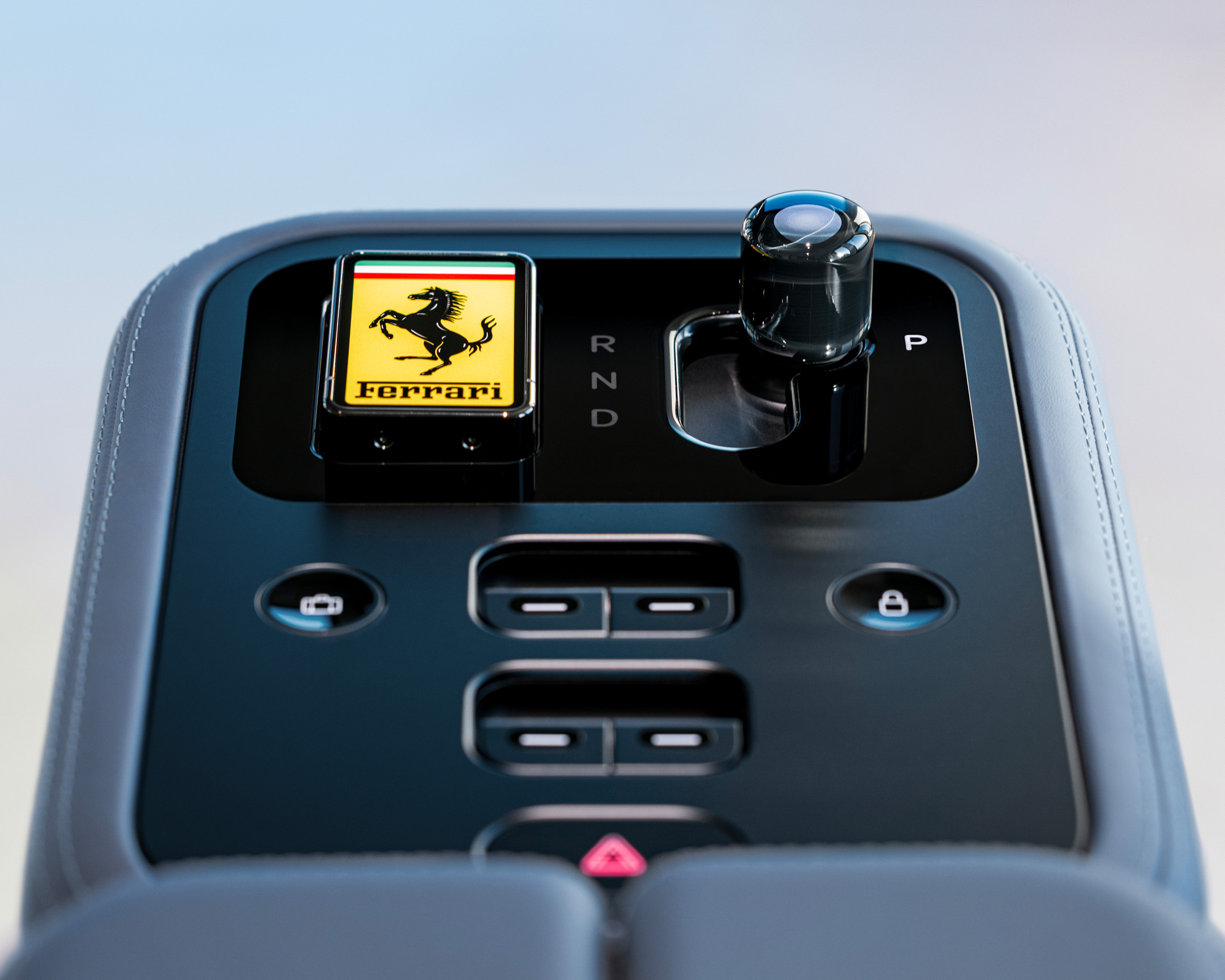
Ferrari unveiled the interior of its first-ever EV this week, the Luce, created in collaboration with Jony Ive, former Apple design chief and the creative force behind the iPhone, iPad, and MacBook. It’s a retro-themed bonanza with plenty of physical buttons, switches, and toggles, representing a radical departure from the screen-focused and minimalist designs of most electric cars.

Read: Ferrari’s Luce EV Has A Glass Key And Buttons That Click Like A Rifle Bolt

The approach may seem counterintuitive at first, especially given Ive’s legacy at Apple, where he helped usher in the age of touchscreens. But the British-American designer’s reasoning is rooted in practicality rather than nostalgia. As it turns out, he never believed touch interfaces belonged in cars in the first place.

Touch Isn’t Always The Answer

“The reason we developed touch [for the iPhone] was that we were developing an idea to solve a problem,” he told Autocar. “The big idea was to develop a general-purpose interface that could be a calculator, could be a typewriter, could be a camera, rather than having physical buttons. I never would have used touch in a car [for the main controls].”

“It is something I would never have dreamed of doing because it requires you to look [away from the road],” Ive added. “So that’s just the wrong technology to be the primary interface.”

\\\\\\\

This isn’t to say the Ferrari Luce is completely devoid of screens. The gauge cluster features OLED panels from Samsung, designed to mimic the look of classic analog dials. The needle, though, is a physical piece made from anodised aluminium and backlit by 15 LEDs. In the center of the dash sits a touchscreen, angled slightly toward the driver.

Feel Your Way Around

Yet nearly every essential function, including climate controls, drive settings, even audio, can be adjusted through metal toggles or rotary knobs. Ive notes that “every single switch feels different, so you don’t need to look.”

When asked what sets the Luce’s screen apart from others, Ive said, “So much of what we did was so that you could use it intuitively, enjoy it and use it safely.”

In addition to real switches beneath the center touchscreen, the Luce features tactical dials and buttons on the steering wheel and center console, and even an airplane-inspired panel in the headliner. It looks like a welcome reprieve for the haptic controls of many recent Ferrari models, like the SF90.

“I think what happened was touch was seen almost like fashion,” Ivy explained. “It was the most current technology, so [companies thought] ‘we need a bit of touch’, then the next year ‘we’re going to have an even bigger one’, and it will get bigger and bigger.”

He added, “I think the way that we design [car interiors] isn’t that we’re trying to solve problems [like we did with the iPhone].” That, in his view, is where much of modern automotive UX design goes astray.

\\\\\\\\\

BYD Got In America Through The Back Door, Now It Wants The Front One Too

  • BYD is suing US officials over vehicle import tariffs.
  • The lawsuit claims the US overstepped legal authority.
  • Company already builds electric buses in California.

Chinese juggernaut BYD has expanded rapidly across global markets in a remarkably short time, positioning itself as one of the world’s largest car manufacturers. Yet despite its international reach, it has so far been unable to enter the world’s second-largest new car market: the United States. The main obstacle has been import tariffs, but BYD is now pushing back.

Eager to establish a foothold in the US market with its passenger vehicles, four BYD subsidiaries based in the United States have filed suit against the federal government.

Read: China’s EV Boom Is Cooling, And The Big Names Are Feeling It

The case, brought before the US Court of International Trade, challenges tariffs imposed under the International Emergency Economic Powers Act (IEEPA). The plaintiffs include BYD America LLC, BYD Coach & Bus LLC, BYD Energy LLC, and BYD Motors LLC.

The lawsuit names not only the federal government but also officials from the Department of Homeland Security, Customs and Border Protection, the Office of the US Trade Representative, and the Treasury Department.

It argues that these agencies exceeded the authority granted to them under the IEEPA statute and contends that the resulting tariff orders are legally invalid.

Tariffs Under Fire

\\\\\

In addition, the lawsuit specifically challenges nine executive orders and amendments issued since February 2025, including tariffs at the borders with Mexico and Canada, as well as tariffs targeting China and related to fentanyl.

The Chinese car manufacturer is seeking permanent injunctions against these measures and wants refunds for all IEEPA tariffs collected, in addition to interest and reasonable litigation costs.

While it may sound like a long shot for BYD to try and get these tariffs overthrown, its efforts aren’t without precedent. The lawsuit cites the case of New York-based wine importer V.O.S. Selections, which successfully sued the US government over tariffs, arguing that the US President lacks authority to impose them, even under the IEEPA framework.

Already On American Soil

 BYD Got In America Through The Back Door, Now It Wants The Front One Too
BYD school bus

Though it may surprise many American consumers, BYD already maintains a manufacturing presence in the United States. Its 550,000 square-foot facility in Lancaster, California, produces hundreds of electric buses and employs roughly 500 workers.

Getting the tariffs thrown out wouldn’t just help this complex, but also open the door for BYD to sell cars in the United States, perhaps importing them from factories in Canada and Mexico.

Could This Open the Floodgates?

Sun Xiaohong, secretary-general of the automotive branch of the China Chamber of Commerce for Import and Export of Machinery and Electronic Products, told Global Times that “BYD’s move follows a growing trend of companies using legal channels to safeguard their legitimate rights and interests.”

While the case still faces legal hurdles, Sun told the outlet that it could set an important precedent for other Chinese companies looking to assert their rights through formal channels. He also argues that letting automakers like BYD in could benefit US buyers by adding more affordable EV options to a market that’s only getting more competitive.

\\\\\

Subaru’s Next SUV Is Big, Electric, And Very Toyota

  • Subaru’s next electric SUV will feature three-row seating.
  • It’s based on Toyota’s new all-electric Highlander platform.
  • Production was delayed but Subaru says it’s coming in 2026.

Subaru is preparing to expand its EV lineup with something larger and more family-focused. Soon, the company’s range will welcome a three-row electric SUV designed to compete with newer offerings in the segment. Like the compact Solterra before it, this won’t be a ground-up Subaru product but a rebadged version of Toyota’s upcoming all-electric three-row Highlander.

We’ve known about Subaru’s plans to have its own version of the latest Toyota for several years now. In fact, Toyota and Subaru confirmed in 2023 that both brands would receive the new model, anticipating that production would start in 2025. While that date has come and gone, Subaru of Americas chief operating officer Jeff Walters recently confirmed it’s still happening.

Read: Subaru’s New $35K SUV Breaks Years Of AWD Tradition

Speaking with Auto News, Walters said that Subaru’s version of the three-row EV is scheduled to arrive later this year. He added that the model is being targeted at two-car households with home charging capabilities. It will join the electric Solterra, as well as the similarly Toyota-derived Uncharted and Trailseeker, in Subaru’s growing U.S. EV portfolio.

\\\\\\

2027 Toyota Highlander teaser.

Will Subaru Add Its Own Edge?

What we haven’t seen yet is how closely Subaru’s new entry will mirror Toyota’s new electric Highlander. Given past collaborations, it’s reasonable to expect minimal differentiation beyond some badging and minor design tweaks on the front and rear ends, along with unique side trimmings. Still, there’s a chance Subaru could roughen things up a bit, as it did with the Uncharted, which shares its bones with Toyota’s C-HR

Toyota’s new three-row electric SUV will look virtually identical to the bZ Large prototype previewed a few years ago, closely resembling the smaller Toyota bZ. This new model has been a long time coming and will give Toyota a legitimate rival to the electric Kia EV9 and Hyundai Ioniq 9.

A Lexus Too?

There’s also a possibility Subaru won’t be the only one getting a version of Toyota’s latest EV. According to previous reports, Lexus is working on a premium variant as well. This model could go by the name TZ and serve as an electric counterpart to the gas-powered TX, further spreading Toyota’s electric SUV platform across its portfolio

 Subaru’s Next SUV Is Big, Electric, And Very Toyota
2026 Subaru Solterra
Before yesterdayElectric Vehicles - Latest News | Carscoops

Stellantis Traded A $5B EV Battery Plant For A Nice Dinner In Toronto

  • Stellantis is selling their stake in NextStar Energy for just $100.
  • Move comes amid lackluster EV sales and changing regulations.
  • LG is shifting focus from EVs to energy storage systems.

Stellantis is pivoting away from electric vehicles as the company embraces the ‘power of choice.’ This has cost them billions and they’re selling their 49% stake in NextStar Energy to LG Energy Solution.

This is an interesting development as the NextStar Energy joint venture was established in 2022 and aimed to create Canada’s first large-scale battery manufacturing facility in Windsor. The plant was originally designed to employ approximately 2,500 people and have an annual production capacity of more than 45 gigawatt hours.

More: Stellantis’ Big Bet On EVs Was A $20 Billion Mistake

Battery module production began in the fall of 2024 and mass production of lithium-ion battery cells followed in November of 2025. While more than $3.7 billion ($5 billion CAD) has been invested into the facility, a lot has changed since 2022.

Electric vehicle adoption has grown more slowly than many automakers anticipated and the Trump administration recently eliminated federal tax credits. On top of that, tariffs have complicated things and automakers are now turning their attention away from EVs.

Stellantis didn’t go into many specifics, but called the move a “strategic decision” that was mutually agreed upon. They went on to describe themselves as a “committed customer” that “will continue to source battery products from NextStar Energy.”

 Stellantis Traded A $5B EV Battery Plant For A Nice Dinner In Toronto

Stellantis CEO Antonio Filosa said, “By enabling LG Energy Solution to fully leverage the Windsor facility’s capacity, we are strengthening its long-term viability while securing the battery supply for our electric vehicles. This is a smart, strategic step that supports our customers, our Canadian operations, and our global electrification roadmap.”

Those sentiments were echoed by LG Energy Solution CEO David Kim, who stated “LG Energy Solution sees growth opportunities in North America by situating a key production hub in Canada. Full ownership of NextStar Energy will enable us to respond swiftly to the growing demand from the ESS [Energy Storage System] market and position us to play a key role in Canada’s EV industry by securing additional North American-based customers.”

Despite the upbeat rhetoric, The Detroit News reports Stellantis sold their stake for just $100. That’s a token amount, especially given the sizable investment into the facility.

 Stellantis Traded A $5B EV Battery Plant For A Nice Dinner In Toronto

The Chinese Carmaker That Copied Rolls-Royce Just Added More SUVs To The Pile

  • Dreame has launched a third car brand called Star Motor.
  • Two of the new models closely resemble Dongfeng vehicles.
  • One upscale SUV channels China’s take on the Rolls-Royce.

Just a month after Chinese vacuum cleaner firm Dreame unveiled three high-performance EVs at the CES show in Las Vegas, it has previewed three additional models it plans to add to its fleet. These will be launched under the new Star Motor brand, existing alongside Dreame’s Nebula Next and Kosmera brands.

The first two models are the T08 and T08L. Both are striking off-roaders, with the T08L sharing much of its design with the T08 but is considered even more focused on off-road performance. There’s no denying the T08 models are striking, but their design isn’t unique. In fact, they almost look like direct copies of two other bold Chinese off-roaders.

Read: Chinese Brands Bring Not One, Not Two, But Three Bugatti-Style Super Sedans To CES

Those two models come from Dongfeng, where they are badged the M917 and M817. Dreame has quite clearly copied Dongfeng’s homework with the T08L, crafting bodywork that looks almost identical to the M917, as well as near-identical headlights. The T08 looks mostly the same but has slightly different headlights, apparently copied from the smaller M817.

The similarities between Star Motor’s T08 and Dongfeng’s M917 are particularly apparent from the sides. It has virtually identical squared-off fenders, the same exposed hinges on the front doors, and door panels that look exactly the same as the M917. The only unique element that Star Motor appears to have designed is a distinctive front bumper.

\\\\
 The Chinese Carmaker That Copied Rolls-Royce Just Added More SUVs To The Pile
Dongfeng’s M917

Star Motor hasn’t actually unveiled the T08 and T08L, and only previewed them with a couple of images at a recent company event. As such, we don’t know what kind of powertrains they will have, other than the fact that they will include rear-wheel steering that can turn the rear wheels by up to 24 degrees.

Rolls-Royce Fighter

Previewed alongside the T08 and T08L was the Star Motors D09 that looks to be positioned as the firm’s flagship luxury SUV, akin to the Rolls-Royce Cullinan. It shares similarities with the Cullinan lookalike that Dreame previewed last year and could be the production version of that model.

The front of the D09 is dominated by a grille that makes even a Rolls-Royce grille seem small. It also has prominent LED daytime running lights up front, a LiDAR mounted on the roof, and a set of fancy-looking wheels.

 The Chinese Carmaker That Copied Rolls-Royce Just Added More SUVs To The Pile
Star Motor D09
 The Chinese Carmaker That Copied Rolls-Royce Just Added More SUVs To The Pile
An early rendering of Dreame’s Cullinan-inspired SUV
❌
❌