Normal view

There are new articles available, click to refresh the page.
Today — 26 March 2026Electric Vehicles - Latest News | Carscoops

Musk Said The U.S. Wouldn’t Get This Tesla. Texas Factory Footage Disagrees

  • Mystery vehicle at Tesla Texas plant looks longer than the Model Y.
  • Fans think it could be the stretched Model Y L already sold in China.
  • If true, Tesla may be readying a larger family SUV as Model X goes away.

Every time a drone buzzes over Tesla’s Texas Gigafactory, the internet immediately goes into detective mode. Usually, the result is a grainy shot of construction equipment and a few wild guesses. This time, though, the mystery object might actually be something real. Fans of the brand have torn these shots apart like they’ll reveal whether or not alien life exists.

Drone pilot Joe Tegtmeyer recently captured footage of a large vehicle shell sitting inside a wooden crate outside Tesla’s Gigafactory Texas. The structure was wrapped in blue plastic and surrounded by construction materials. That didn’t stop folks from trying to suss out exactly what we’re looking at. Most think it’s Tesla’s Model Y L.

Read: Tesla’s Budget Model Y Gets Grip And Grit For $2K More, But Don’t Call It Standard

That’s the long-wheelbase take on Tesla’s compact crossover, first rolled out in China last year. It matters more than it might seem at first glance. This is effectively Tesla’s only proper three-row crossover heading into the near future. Yes, you can spec tiny rear seats in the standard Model Y, though calling them usable depends on how much you like the people riding back there.

The Model X is about to go away with the death of its flagship stablemate, the Model S. That leaves Tesla with a big gap in the market. A lengthened Model Y would help plug that third-row-sized hole.

Well this is interesting at Giga Texas today … what do YOU think this is? 🤔😎 pic.twitter.com/U9pLvqbf7L

— Joe Tegtmeyer 🚀 🤠🛸😎 (@JoeTegtmeyer) March 23, 2026

The vehicle in the drone footage appears to be little more than a body shell. These unfinished body structures allow automakers to continue development or manufacturing testing without building a full car to do so. It’s a normal part of production and something we’d expect from Tesla if it were setting up to sell the Model Y L in the U.S. market.

As Teslarati pointed out, observers have done just about everything they can to sort this out. Some used AI to create renders. Others compared how the dimensions came together compared to the standard Model Y. Some went as far as to superimpose the Model Y L’s window shapes over the shell.

More: Tesla’s Model Y L Gets Bigger And Pricier With New Six-Seat Layout

\\\\\\\\\\\

The Chinese market Tesla Model Y L.

All signs, at least for now, point toward this being the Model Y L, or something very close to it. One user even shared a rare overhead shot of what appears to be the production SUV, and the resemblance lines up almost too neatly to ignore. The proportions, the silhouette, the overall footprint, it all matches.

That said, there’s no word on when or even if the vehicle could come to the U.S. market in any official capacity. Musk once seemed to indicate that it might not ever end up in the States. These images seem to indicate otherwise, though with Tesla, certainty has never really been part of the package.

It looks the same as my Model Y L. pic.twitter.com/uVf98xpvTE

— @BananaMemeClub (@BananaMemeClub) March 23, 2026

Lead image Joe Tegtmeyer @ X

GM’s China Sales Are Down 75%, And The Clock Running Out Isn’t One It Controls

  • GM and SAIC are spending $1.4 billion on a three-year plan in China.
  • Sales were promising in 2025, but are down from their all-time high.
  • Strategy focuses on more electrification, new tech, and connected cockpits.

General Motors’ joint venture in China is attempting to turn things around before the partnership with China’s SAIC expires. The aim of the game is electrification. Go green, be quick, and build trust again before it is too late.

At a dealer meeting in early March, SAIC-GM President Lu Xiao announced a three-year plan, which is based around new Buick and Cadillac EVs, improved in-car technology, and increased exports.

But the plans are still leaving some in the industry skeptical. Despite Xiao’s assurances that the joint venture is focused on the future, there’s no clear sign yet that a renewal is actually in motion, even with the agreement set to expire in June 2027.

Contrast that with the venture between Volkswagen and SAIC, which was extended six years early, and you can see why some GM-SAIC dealers may be concerned, reports AutoNews.

Buick And Cadillac Spearhead The Plan

 GM’s China Sales Are Down 75%, And The Clock Running Out Isn’t One It Controls
Buick Electra L7 sedan

The backdrop is tough. While sales last year were promising, they’re still down since a high of 2 million cars in 2017 to only 562,000 in 2025, a 75 percent decrease. The joint venture has just come back to the black, as GM recorded restructuring costs amounting to $2.7 billion in order to reduce capacity and rebrand operations.

Read: GM’s Comeback Story Isn’t Happening In America

SAIC-GM will use over 10 billion yuan (about $1.4 billion at current rates) to revise existing Buick models and come up with the new generation of its products. The strength that Buick has in the multipurpose vehicle market is a home run, and the company desires to maintain what it has and advance further in the direction of electrification.

 GM’s China Sales Are Down 75%, And The Clock Running Out Isn’t One It Controls

Momentum is already gaining speed. The Buick Electra L7, an all-electric and range-extender crossover, is arriving in the next few months. An all-electric version of the Encasa MPV was recently introduced and a plug-in hybrid version will be introduced later this year with a quicker charger and an increased engine size.

Cadillac is trending along at the same speed. The completely electric Cadillac Vistiq SUV, which will feature lidar and an advanced driver-assistance system co-developed with Momenta, will debut in late April. At the same time, models such as the Buick LaCrosse, the Envision, and the Cadillac XT5, which were traditionally ICE nameplates, will be getting electrification.

Cars That Charge Faster, Smarter Software, Sharper Focus

 GM’s China Sales Are Down 75%, And The Clock Running Out Isn’t One It Controls

One of the reasons why GM’s, and other foreign carmakers’, products have been falling out of favor with Chinese consumers is the lack of up-to date tech that is often commonplace in domestic offerings. GM and SAIC’s action plan hopes to address that on a number of fronts.

The Xiaoyao platform will be able to support next-generation battery systems with 1,000V fast charging, driving ranges of up to 1,000 kilometers, and power outputs up to 850 kilowatts. The future holds advances in active suspension, steer-by-wire, and rear-wheel steering, all controlled under GM-SAIC’s proprietary software.

 GM’s China Sales Are Down 75%, And The Clock Running Out Isn’t One It Controls

Inside the cabin, change is just as important. All Buick Electra models and the Cadillac XT5 will adopt new smart cockpit systems this year, boosting smartphone connectivity as well as improving digital interfaces.

A further upgrade in the future will take technology from ByteDance (the name behind TikTok) and refine the user experience. On the driver’s assistance front, such Level 2 systems hit the road this year, with Level 3 slated for 2027.

Exports are another lever, albeit a complicated one. SAIC-GM has exported vehicles overseas since 2001 as well as to the US and Mexico. But new tariffs have wreaked havoc on that business. Exports plunged 40 percent in 2025 to about 50,500 vehicles, most of them because of higher U.S. duties, and Mexico has also increased its tariffs on China-built light vehicles.

 GM’s China Sales Are Down 75%, And The Clock Running Out Isn’t One It Controls

Volvo’s First Commercial Van Looks Familiar Because It Is

  • Volvo turned the EX30 into a two-seat electric commercial vehicle for fleets.
  • The rear bench is replaced by a flat floor offering 1,000 liters of cargo space.
  • Conversion is available on new stock and applies across the full EX30 lineup.

The EX30 may be the smallest SUV in Volvo’s lineup, yet that hasn’t stopped the brand from turning it into a working vehicle. Meet the Volvo EX30 Cargo, a second-stage conversion developed by the brand’s UK arm, pitched as a compact and very quick way to move parcels around town.

From the outside, Volvo’s first commercial vehicle looks just like a regular EX30 if you look past the pitch-black rear windows. Volvo will even offer it in Cross Country form, adding a tougher look and a touch more ground clearance for those who like their delivery runs with a bit of attitude.

More: After Just Two Years, Volvo Drops Its Cheapest EV From America

Open the tailgate, though, and the illusion falls away. What you find is effectively a two-seat van hiding inside a small SUV shell. The rear bench has been removed entirely, pushing cargo capacity from 318 liters (11.2 cu ft) in the passenger version to a much more useful 1,000 liters (35.3 cu ft).

To make it genuinely usable, Volvo added a bulkhead to separate the cargo area, paired with a flat load floor and tougher interior paneling that should shrug off daily abuse. Around the back, the rear doors now open wider, there’s an extra work light for low-visibility jobs, and an underfloor subframe brings additional mounting points into play. Payload capacity is rated at 390 kg (860 lbs).

 Volvo’s First Commercial Van Looks Familiar Because It Is

Despite its work-focused role, the EX30 Cargo retains the performance, safety, and technology of the standard model. After all, the conversion can be applied to both new vehicles and existing stock, making it available across the full lineup.

Review: New Zeekr X Got Me Questioning My Feelings For Volvo

The base Cargo Core trim comes equipped with automatic LED headlights, 18-inch Aero alloy wheels, adaptive cruise control, front and rear parking sensors, a rearview camera, and wireless Apple CarPlay and Google Android Auto.

Stepping up to the Cargo Plus adds 19-inch wheels, a black roof, heated seats and steering wheel, dual-zone climate control, a wireless charging pad, Pilot Assist, and a Harman Kardon premium audio system.

 Volvo’s First Commercial Van Looks Familiar Because It Is

In terms of performance, the entry-level EV offers 148 hp (110 kW / 150 PS), while the twin-motor AWD flagship delivers 422 hp (315 kW / 428 PS). The most powerful version completes the 0-100 km/h (0-62 mph) sprint in 3.6 seconds, making it an unexpectedly rapid way to deliver a small parcel in Britain.

More: New Base Volvo EX30 In Europe Has 45% Less Power Than Yours

The bad news is that the EX30 Cargo is exclusively available through Volvo UK’s fleet sales channels, so private buyers are excluded. Pricing starts at £36,010 ($48,200), which is £2,950 ($3,900) more than the least expensive passenger version. Availability in other markets has not been confirmed and appears unlikely.

\\\\\\

Volvo UK

Europe’s ICE Car Sales Collapsed 23% In A Single Month, As EVs Surge

  • EVs accounted for 18.8 percent of EU sales in the first two months of 2025.
  • Petrol car registrations collapsed 23.3 percent in February across the bloc.
  • BYD doubled its European sales while matching Tesla’s 1.8 percent market share.

Sales of battery-electric vehicles across the European Union continue to rise and are now nipping at the heels of petrol-powered cars. Due to the ongoing war in Iran and spiking oil prices, EV demand could jump even further. However, market conditions remain mixed, with total car registrations across the EU, Britain, and EFTA rising just 1.7 percent in February to 979,321 units, signaling only modest overall growth.

Registration data from Europe’s ACEA reveals that EVs accounted for 18.8 percent of the new car market across January and February, a notable increase from 15.2 percent over the same period last year. A total of 312,369 EVs were registered in the first two months of the year, thanks in part to France (38.5 percent increase) and Germany (26.3 percent increase).

Read: EV Buyers Didn’t Disappear, They Just Moved Somewhere Automakers Don’t Love

This growth has been supported by a surge of more affordable EV models and national incentive programs that continue to encourage adoption. However, not every European country bought more electric vehicles. In fact, EV sales declined by a significant 34.9 percent in the Netherlands and 11 percent in Belgium.

 Europe’s ICE Car Sales Collapsed 23% In A Single Month, As EVs Surge

Notably, Tesla’s registrations rose 11.8 percent year-on-year, snapping a prolonged decline, though it still trailed BYD by a slim margin. Both brands held a 1.8 percent market share, while BYD’s sales more than doubled over the same period, highlighting growing pressure at the top of the EV segment.

Hybrid Boost

Hybrid vehicles remain the most popular powertrain choice in Europe, accounting for 38.7 percent of the market. This placed HEVs well ahead of cars powered solely by petrol, which have accounted for 22.5 percent of new car registrations this year.

Across February alone, battery-electric, plug-in hybrid, and hybrid vehicles together represented 67 percent of registrations, up from 58.5 percent a year earlier.

 Europe’s ICE Car Sales Collapsed 23% In A Single Month, As EVs Surge
ACEA

Petrol car sales are also on a downward trajectory, dropping 23.3 percent in February, with France reporting a massive 48.5 percent decrease. Registrations also dropped 22.8 percent in Germany, 20.8 percent in Spain, and 18.6 percent in Italy. Last year, petrol cars had a 29 percent share of the market, and this time next year, EVs may have overtaken them if current trends continue.

Plug-in hybrids were behind HEVs, petrol cars, and EVs as the fourth most popular powertrain choice, securing a 9.8 percent share of the market, over 7.4 percent last year. Sales reached 162,751 in the first two months, thanks in part to Italy (116.1 percent increase), Spain (71.5 percent increase), and Germany (23.8 percent increase). Trailing behind PHEVs are diesel vehicles with an 8.1 percent share, down 17.7 percent, and ‘others’ with a 2.2 percent share.

 Europe’s ICE Car Sales Collapsed 23% In A Single Month, As EVs Surge

Porsche Once Fought Audi Over A Shared Platform, Now It Wants More Of Them

  • Porsche’s new CEO met with Audi’s leadership within days of taking the role.
  • Next Audi TT will be an EV based on the next-generation 718 Boxster platform.
  • Porsche is targeting up to 10 percent margins by using more Audi architectures.

Porsche and Audi have collaborated numerous times over the decades, but the relationship has often been fraught as engineers and executives butted heads over shared goals. Now, the two car companies are planning to deepen their ties, not just to cut costs but also to help ensure their survival.

The two companies are under increased pressure from declining demand, tariffs, and product strategy mistakes. Porsche has had a particularly trying time after backing away from its plan to target 80 percent EV sales by 2030, and amid a collapse in demand for its models in China.

Read: Porsche Profit Crash Suddenly Makes A New Sports Car Above The 911 Likely

Industry veteran Michael Leiters was recently named as Porsche’s new chief executive, and according to Auto News, he traveled to Audi’s headquarters to meet with boss Gernot Döllner within days. According to Leiters, “Audi is a key partner for us,” noting that “we want to leverage shared potential even more.”

More Shared Platforms

 Porsche Once Fought Audi Over A Shared Platform, Now It Wants More Of Them
Michael Leiters

Porsche is aiming to restore margins to as much as 10 percent as it shifts its focus back to combustion-powered vehicles, and hopes to do so by using more Audi platforms and parts. For example, the next-generation Macan – which will include ICE models – will share the same Premium Platform Combustion (PPC) architecture as the Audi Q5. Porsche also still has plans for an SUV to sit above the Cayenne, currently known as the K1, which itself will be derived from the upcoming Audi Q9.

The future of Porsche’s planned electric 718 Boxster and Cayman models is also important for Audi. While Porsche has backed away from its initial plans to sell these models as EVs only, switching to a multi-energy plan with combustion engines included, they’ll offer the platform for the next-generation Audi TT. The new TT will be sold exclusively as an EV with batteries placed behind the driver to allow for a lower seating position and mid-engined driving dynamics.

German Frictions

Porsche and Audi worked together on the Premium Platform Electric (PPE) underpinnings used by models like the Macan Electric, A6 e-tron, and Q6 e-tron, but according to reports, there was fierce internal rivalry between the companies and disputes over development leadership, forcing VW boss Oliver Blume to step in and act as mediator. Neither Porsche nor Audi can afford to have disputes like these moving forward.

\\\\\\

Honda’s EV Pivot Just Wiped Out The Entire Sony Afeela Brand

  • Sony Honda Mobility cancels electric sedan and SUV
  • Honda’s strategy shift leaves the joint venture without tech.
  • Reservation holders of the Afeela 1 will receive full refunds.

The dream of a Sony-branded electric car has officially run out of road, ending a project that once promised to blend consumer tech with automotive engineering. Sony Honda Mobility has confirmed it is pulling the plug on the development and launch of its entire EV lineup, including the Afeela 1 sedan set to arrive later this year, along with a follow-up SUV previously penciled in for 2028.

The decision effectively collapses the joint venture formed in 2022, which aimed to combine Sony’s software and entertainment ecosystem with Honda’s manufacturing backbone. What once looked like a credible attempt to rethink the in-car experience has instead unraveled before a single production model reached customers.

More: EV Bets Already Cost Four Legacy Carmakers $70B, And The Tab Keeps Climbing

The project’s demise traces directly back to Honda’s sweeping strategy reset announced earlier this month. The automaker pulled the plug on several key EV programs, including the Honda 0 Saloon, the 0 SUV, and the Acura RSX crossover, all of which had been planned for North America.

 Honda’s EV Pivot Just Wiped Out The Entire Sony Afeela Brand
The Afeela 1 sedan (left) and a prototype of the mechanically-related SUV (right).

As Honda pivots away from its previous electrification targets to stem a projected 2.5 trillion yen ($15.7 billion) loss, it has withdrawn the technical assets and dedicated platforms that Afeela was supposed to use. Without the automaker’s hardware support, the joint venture admitted it does not have a viable path forward to bring the models to market as originally planned.

More: Honda’s Prologue Might Soon Become An EV Epilogue

The news comes shortly after Sony Honda Mobility of America announced the grand opening of the Afeela Studio and Delivery Hub in Torrance, California, on March 16. Instead of taking delivery of the Afeela 1, those who placed reservations for the electric sedan will receive full refunds.

Is It Game Over For Sony?

 Honda’s EV Pivot Just Wiped Out The Entire Sony Afeela Brand
Afeela Prototype 2026

Sony’s push into the automotive space began with the Vision-S 01 and Vision-S 02 prototypes, unveiled at CES in 2020 and 2022, with the intention of evolving into production models. In 2022, Sony partnered with Honda to form the joint venture that would bring that ambition closer to reality.

The Afeela brand name was introduced at CES 2023 alongside an early prototype. By CES 2025, the production version of the electric sedan debuted as the Afeela 1, with reservations opening via a refundable $200 deposit and a target price of $89,900.

More: After Honda Kills Three EVs, Afeela Tries Something Shiny While It Still Can

The last chapter was written at CES 2026 with the unveiling of the Afeela Prototype 2026, which was intended to evolve into a production SUV by 2028. In March 2026, the company also revealed two art cars based on the Afeela 1 in collaboration with Matt Copson and Hajime Sorayama, though by then the project was already on borrowed time.

In its announcement, the company stated that Sony Honda Mobility will continue discussions with Sony and Honda regarding its future business plans. Whether it can repurpose its technology and resources, or whether this venture will stand as a costly experiment, remains unclear.

 Honda’s EV Pivot Just Wiped Out The Entire Sony Afeela Brand
Afeela 1

Every Tesla Is Missing The Door Handle The Cybercab Just Introduced

  • Tesla has designed a new door handle similar to what Audi and Lexus use.
  • The new interior handle houses both the electric and mechanical releases.
  • Other Tesla models will be updated with these safer door releases.

Following a spate of fatal incidents involving Tesla models with door handles that allegedly couldn’t be opened after a crash, and several lawsuits, we now have our first chance to see the new inner door handles that Tesla has developed. Perhaps surprisingly, these new handles have premiered on the self-driving Cybercab.

Development of Tesla’s mass-market robotaxi is continuing, and the carmaker continues to make changes to the car. Recently, a pair of YouTubers had the chance to take an in-depth look at a new Cybercab prototype, revealing the new handles and a slew of other features.

Read: Cybercab Spotted Up Close, Steering Wheel, Panel Gaps And All

In the current Tesla Model 3, Model Y, and Cybertruck, there are individual interior buttons to open the doors, and then physical pulls incorporated into the handles. At the rear, the emergency releases are generally located in the door pockets, beneath a plastic panel, possibly making them hard to find in an emergency, particularly for someone unfamiliar with the car.

Tesla’s solution has been to switch to a small latch that can be lifted lightly to trigger the electronic release, opening the door. If you then pull the same latch harder, it will serve as the manual release. It’s a much better system than the one currently used and is similar to the door latches used by companies like Audi and Lexus, where the electronic and manual releases share the same switch or handle.

Tesla has also gone to the trouble of adding braille to the release, helping those with visual impairments to find it. That’ll be particularly useful in the Cybercab, where people will be driven around by the car’s advanced self-driving suite without anyone else on board. This new door pull is presumably the same one that will be added across all other existing Tesla models.

What Else Is New?

 Every Tesla Is Missing The Door Handle The Cybercab Just Introduced

Several other changes have been made to the Cybercab. For example, it now includes a charging port at the rear, despite initially being presented without one because Tesla only wanted them to be charged wirelessly. However, the more significant change made on a prototype Carscoops recently spied was the presence of a steering wheel, which given the autonomous nature of the Cybercab was a surprise.

\\\\\\

Photos Robert G. | Lead screenshot Kim Java / YouTube

Yesterday — 25 March 2026Electric Vehicles - Latest News | Carscoops

Our First Look At The Mercedes Built To Fix Everything Wrong With The AMG EQE

  • The Mercedes-AMG E-Class EQ has been spied for the first time.
  • It replaces the AMG EQE and sports a more traditional design.
  • Car could have a tri-motor powertrain with around 900 hp.

Spy photographers have snapped the Mercedes E-Class EQ on multiple occasions and now they’ve gotten the first glimpse of the AMG variant. It’ll replace the slow-selling AMG EQE and feature a more conventional, and arguably safer, design direction.

Speaking of which, we can see the car will have a fully enclosed grille that should echo the one found on the C-Class and GLC EQs. We can also expect a sporty front bumper as well as star-infused headlights on the production model.

More: Mercedes’ New E-Class EQ Is Coming To Right The EQE’s Wrongs

Moving further back, there are lightweight AMG wheels that are backed up by a high-performance braking system with cross drilled discs. Designers also gave the car streamlined bodywork and a more traditional sedan silhouette. A closer inspection reveals extended fender flares, which likely hint at a wider track.

Elsewhere, the early prototype has a makeshift rear spoiler and temporary taillights. We can also get a glimpse of a sportier rear diffuser.

\\\\\\\\\\\

Baldauf

Spy photographers haven’t gotten a good look inside the E-Class EQ, but the model could follow in the footsteps of the electric GLC. If that’s the case, we can expect a 10.25-inch digital instrument cluster and a 14-inch infotainment system. The crossover also offers an MBUX Superscreen, which adds a 14-inch front passenger display. If that isn’t enough digital real estate, the MBUX Hyperscreen boasts a 39.1-inch display that spans the width of the dashboard.

Performance specifications remain a mystery, but the model will ride on the MB.EA platform and have a lot in common with the GLC EV. The crossover’s AMG variant is rumored to have three Yasa axial flux motors developing as much as 939 hp (700 kW / 952 PS).

That sounds like overkill, but there’s little doubt the upcoming model will easily eclipse the AMG EQE. As a refresher, it has a 90.6 kWh battery pack as well as a dual-motor all-wheel drive system producing a combined output of up to 668 hp (498 kW / 677 PS) and 738 lb-ft (1,000 Nm) of torque. This enables the model to rocket from 0-60 mph (0-96 km/h) in 3.2 seconds, but the car has a dismal EPA range of 220 miles (354 km).

\\\\\\

Baldauf

There’s No Defending The Design Of Geely’s New SUV

  • Geely has teased the upcoming Zhanjian 700.
  • It’s heavily inspired by the Land Rover Defender.
  • SUV features a tri-motor four-wheel drive system.

If imitation is the sincerest form of flattery, Land Rover must be blushing as Geely is gearing up to introduce the new Zhanjian 700. It apes the Defender and is being billed as an “AI all-terrain hardcore SUV.”

The automaker isn’t saying much at this point, but the model was previewed by a concept at last year’s Shanghai auto show and looks more British than Chinese. The similarities are striking as both models have rectangular headlights with circular daytime running lights. The 700 even incorporates the Defender’s single bar grille, although here it’s illuminated and features a logo in the center.

More: Geely’s Swimming Defender Clone Wants Land Rover’s Lunch

The design déjà vu continues further back as we can see familiar body work and similar front fender vents. They’re joined by plastic body cladding and a Defender-esque greenhouse. That being said, the 700 eschews Land Rover’s side-mounted panel and features a beltline that kicks up at the rear doors.

Rounding out the highlights are a contrasting white roof, two-tone wheels, and a rear-mounted spare tire carrier. The model also has blacked out pillars as well as a roof rack.

 There’s No Defending The Design Of Geely’s New SUV

The interior image isn’t very revealing, but we can see a lever-style shifter with a leather grab handle. It’s flanked by two metallic controls and one of them could be the drive mode selector.

While that remains to be seen, the 700 has high quality switchgear and a row of dedicated off-road buttons. This appears to include a ride height selector, a 4L button, and a locking rear diff.

 There’s No Defending The Design Of Geely’s New SUV

Geely was tight-lipped on specifics, but said the model has an integrated frame as well as a tri-motor four-wheel drive system for “intelligent electric performance.” While that implies the vehicle is fully electric, that might not be the case as there are doors on both sides of the rear fenders.

One of them could be a charging port, while the other is for the gas tank. This would make sense as previous reports have suggested the model could have a 1.5- or 2.0-liter engine as well as a 70 kWh battery pack.

While a number of questions remain, the Zhanjian 700 will likely debut at Auto China next month. We can expect to learn more then, but Geely hinted the SUV won’t be cheap as it will compete in the “high-end off-road segment” and deliver “flagship-level performance.”

\\\

The Cybertruck Nobody Wanted New Is Now The One Nobody Wants Used

  • The Cybertruck Long Range RWD was only built for a limited time last year.
  • This pickup has a single electric motor and a 123 kWh battery pack.
  • Tesla lowered the Cybertruck’s towing capacity from 11,000 lbs to 7,500 lbs.

The Tesla Cybertruck’s Long Range RWD variant was short-lived, produced for less than six months, yet that rarity has done little to shield it from steep depreciation. Just look at this 2025 example, which recently changed hands for just $56,500.

Tesla introduced the Cybertruck Long Range RWD last year, pricing it from $69,990 and undercutting the All-Wheel Drive model by $10,000. However, it never proved particularly popular as Tesla cut out some important features to achieve the somewhat more approachable price tag.

 The Cybertruck Nobody Wanted New Is Now The One Nobody Wants Used

To get there, Tesla stripped back more than just an electric motor. The front axle is left unpowered, and buyers also miss out on a powered tonneau cover, 120/240V outlets, and the premium 15-speaker sound system, replaced here by a basic seven-speaker setup. The interior takes another step down with textile seats instead of leather and no rear touchscreen.

Capability takes a hit too. Towing drops from 11,000 lbs (4,989 kg) to 7,500 lbs (3,401 kg), while payload falls from 2,500 lbs (1,133 kg) to 2,006 lbs (910 kg). It’s a long list, and not the kind that quietly disappears once you’ve signed the paperwork.

Read: New Video Shows Tesla Nearly Going Off Overpass With Mom And Baby Inside

With this in mind, it’s perhaps no surprise that demand for used examples isn’t particularly strong. This Cybertruck was sold on Cars & Bids earlier this week, falling well short of its original price tag of $73,490, which included optional $3,500 20-inch Cyber wheels with 35-inch tires.

The Least Desirable Cybertruck?

\\\\\\\\

Cars & Bids

The fact that the owner also spent several thousand dollars to wrap the truck in Halo Green, add aftermarket side steps, and fit leather seat covers doesn’t seem to have boosted interest. It has just 5,800 miles (9,334 km) on the clock, which should have helped its value, but clearly hasn’t made much difference.

There is, at least, one clear strength. The RWD Long Range model carries a sizeable 123 kWh battery pack, giving it the best range of any Cybertruck at an EPA-rated 350 miles (563 km). That should be a headline advantage. Still, pairing that range with a rear-wheel-drive setup in a pickup limits how useful it feels in the real world, especially for buyers who expect capability to match the look.

In the end, this version lands in an awkward middle ground. It is cheaper, yet not cheap enough. It goes farther, yet gives up too much along the way. And in a segment where image and ability matter just as much as numbers, that balance does not seem to be working.

\\\\\\\\\\\\\\\\\\

Cars & Bids

Maybach Is Building The Ultra-Luxury Vehicle Rolls-Royce Will Never Make

  • Mercedes-Maybach has teased the upcoming VLS.
  • Ultra-luxury van promises a lounge-like interior.
  • It was previewed by a concept with a 65-inch display.

Mercedes introduced the VLE earlier this month and now they’re teasing the luxurious new VLS. However, they went a step further and confirmed the range-topping van will be getting a Maybach variant.

The company isn’t saying much at this point, but teased the model will elevate their “grand limousines [vans] into the realm of sophisticated luxury.” They went on to suggest the model will combine “timeless elegance” with a “first-class interior, a new level of digital sophistication, and an exceptional rear-seat experience.”

More: The Mercedes VLE Might Be The Most Luxurious Minivan America Has Ever Seen

Speaking of the rear seats, Mercedes hinted at an “extraordinary private lounge” that has luxurious materials, impeccable craftsmanship, and exquisite design details. That’s not much to go on, but the VLE offers private jet-style seats with a foot rest, pillow, and an integrated wireless phone charger.

The fancy seats will likely be joined by a center console, refrigerated compartment, and a high-tech entertainment system. If the Vision V concept is any indication, the model could have a 65-inch display as well as a 42-speaker premium audio system. We can also expect wood trim, metallic accents, and premium leather.

\\\\\\\

Vision V Concept

Little else is known about the model at this point, but the VLS will presumably be larger than the VLE. If that’s the case, this certainly isn’t a ‘minivan’ as the former measures 209.0 inches (5,309 mm) long, 78.7 inches (1,999 mm) wide, and 76.5 inches (1,943 mm) tall with a wheelbase that spans 131.6 inches (3,342 mm). An even larger VLE is also coming with a 138.5-inch (3,517 mm) wheelbase and an overall length of 215.9 inches (5,484 mm).

Powertrain details remain a mystery, but could echo higher-end versions of the VLE. This suggests the VLS could have a roughly 115 kWh battery pack as well as a dual-motor all-wheel drive system producing a combined output of 409 hp (305 kW / 415 PS).

We can also expect 800-volt technology and a 300+ kW DC fast charging capability. Other highlights will likely include an AirMatic air suspension and a rear-axle steering system.

 Maybach Is Building The Ultra-Luxury Vehicle Rolls-Royce Will Never Make

A New 912-HP Audi Sat Unsold For Months And The Price Finally Cracked

  • The 2025 Audi RS e-tron GT Performance starts at $170,500.
  • A new 13-mile example in Las Vegas is listed $54,005 under MSRP.
  • Listings nationwide show multiple cars already priced below sticker.

The new Audi RS e-tron GT Performance is a road-going rocket ship, blending hypercar-level acceleration with genuine long-distance comfort. It delivers extraordinary pace alongside impressive Grand Touring ability, yet like the model it replaces, it’s already shedding value quickly in the US. That makes now a surprisingly sensible moment to snag yourself a bargain.

The RS e-tron GT starts at $170,500, though that figure climbs past $180,000 once a few options are added. With 912 hp and 757 lb-ft (1,027 Nm) of torque available, that pricing isn’t outlandish on paper, but the market is clearly suggesting it’s too steep for a luxury EV.

Read: 2025 Audi e-tron GT Is $19,000 Pricier But Much Faster This Year

A quick scan of current classifieds shows dozens of 2025 and 2026 RS e-tron GT models listed across the United States, many showing minimal or delivery mileage and asking prices already below MSRP. The cheapest example we found is a lightly used 2025 model with 1,930 miles (3,106 km) listed by Audi Beverly Hills.

Prices Are Going Down, Down, Down

\\\\\\\\\\\\\\\\\

Audi Beverly Hills

That listing doesn’t specify the original MSRP, but with the $5,900 forged carbon package included, it would have cost at least $180,000 new. It’s now listed at just $123,993.

If you’re shopping for a new one, it’s worth checking out a 2025 model listed at Audi Las Vegas for $124,590, down from an MSRP of $178,595. It has just 13 miles (21 km) on the clock, essentially delivery mileage, and has already shed $54,005 in value without ever being registered. The gods of depreciation have clearly taken a liking to this electric Audi.

\\\\\\\\\

Audi Las Vegas

Despite the upgrades to the refreshed RS e-tron GT, it’s likely going to suffer the same fate as the original model, plummeting in value the moment it’s driven off the showroom floor. Some examples of the pre-facelift RS e-tron GT, which offers up to 637 hp and 612 lb-ft (830 Nm), have asking prices under the $50,000 mark, and the facelifted model is trending in that direction.

\\\\\\\\\

Audi Beverly Hills

Land Rover Built It, Killed It, And Now China Is Bringing It Back Without A Land Rover Badge

  • Freelander returns as a standalone electrified brand under JLR and Chery.
  • The teaser reveals pixel-style LED headlights and a boxy SUV design.
  • A global rollout is planned following the first model’s initial launch in China.

The Freelander name is making an unexpected return, though not in the way many would have predicted just a few years ago. Jaguar Land Rover’s Chinese joint venture with Chery has confirmed that the new Freelander will debut on March 31. This time, the badge does not belong to Land Rover at all, instead re-emerging as a standalone electrified brand with no traditional ties to its former parent.

The first official teaser focuses on the rectangular headlights, featuring pixel-style LED graphics. We can also spot an upright nose and hints of fender extensions, paired with gray plastic cladding on the front bumper.

More: Jaguar Land Rover’s Design Boss Is Out After Two Decades With No Successor Named

The upright lines across the front seem to nod to the original design. The Land Rover Freelander first arrived in 1997, followed by a second generation in 2006 that stayed on sale until 2015, when it was ultimately phased out in favor of the Discovery Sport.

Overall, the new model leans heavily on the Land Rover Defender’s design playbook, much like a growing number of SUVs coming out of China. Still, with JLR’s UK studio leading the design, this one at least has a legitimate claim to the look.

\\\\\\\\

Earlier spy shots have already given away much of the Freelander’s stance, revealing a boxy silhouette that leans heavily into SUV convention. It is expected to feature a three-row layout, with an overall length stretching beyond 5,100 mm (200.8 inches), placing it firmly in large family hauler territory.

Under the skin, the SUV is expected to ride on Chery’s modular architecture. The platform is designed to support both fully electric and range-extender powertrains, while also enabling ultra-fast charging,

More: Jaguar Built Its Last Gas Car, Now It Might Build China’s Next Best-Seller

Production of the new model will be centralized at the CJLR plant in Changshu, China. The facility is currently undergoing a ¥3 billion ($436 million) investment as it transitions away from the aging Land Rover Discovery Sport and Range Rover Evoque, preparing instead for the upcoming Freelander lineup.

The Chinese joint venture has also begun scaling up its workforce, recently sharing a recruitment poster on social media that lists more than 30 open positions across its Shanghai and Suzhou operations. The recruitment drive confirms that JLR and Chery are building an entirely new corporate infrastructure. While the new brand will initially launch in China, a wider global rollout is planned for the near future.

Spy Shots: Chery-JLR Freelander SUV for China

Freelander is a new brand under Chery-JLR. The Chinese name is 神行者 (Shén Xíngzhě). Freelander will manufacture various SUVs based on Chery platforms.

The spy shots show a boxy off-road-style SUV during winter tests in Northern… pic.twitter.com/IduwHRG5vw

— Tycho de Feijter (@TychodeFeijter) February 1, 2026

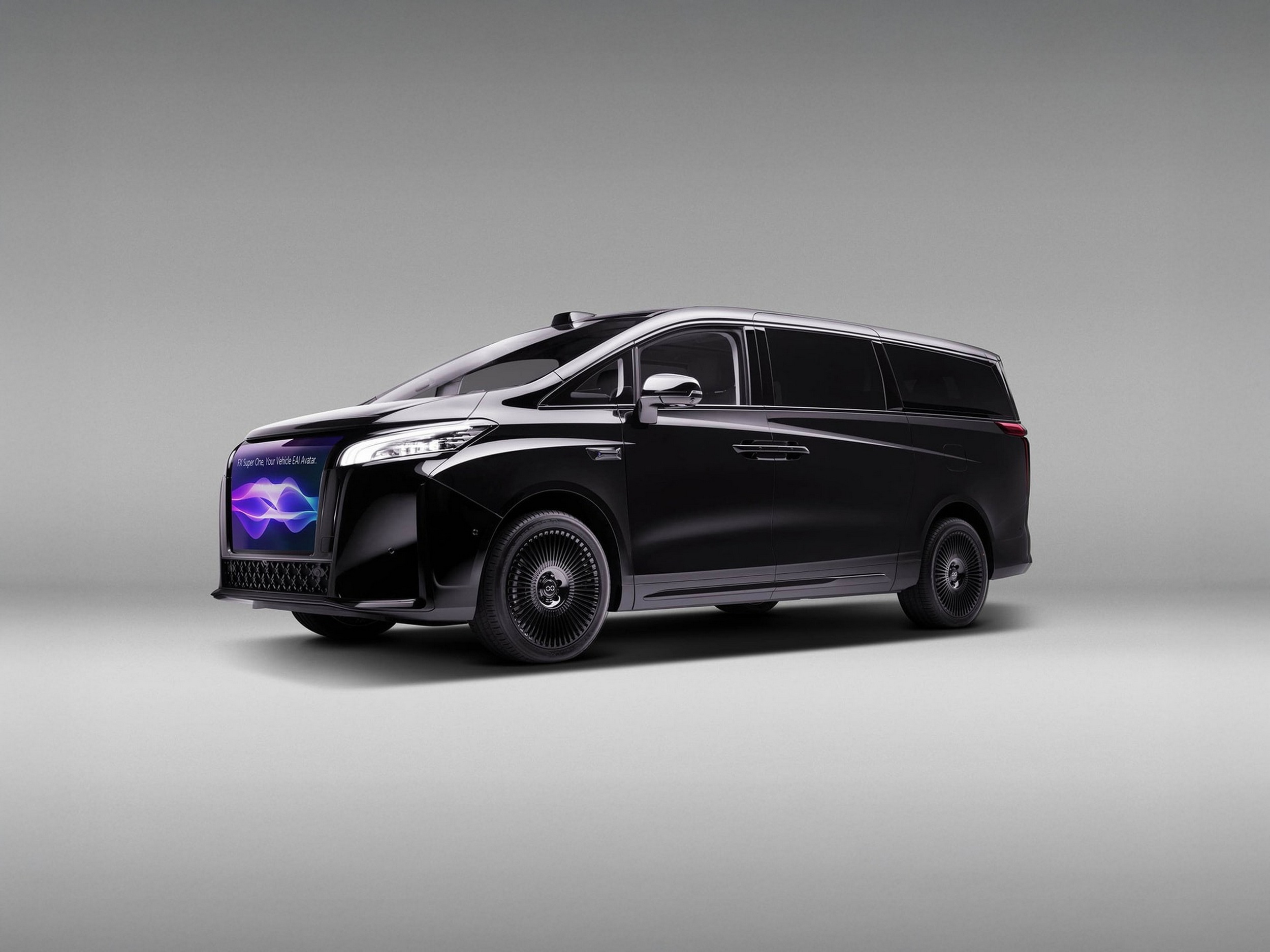
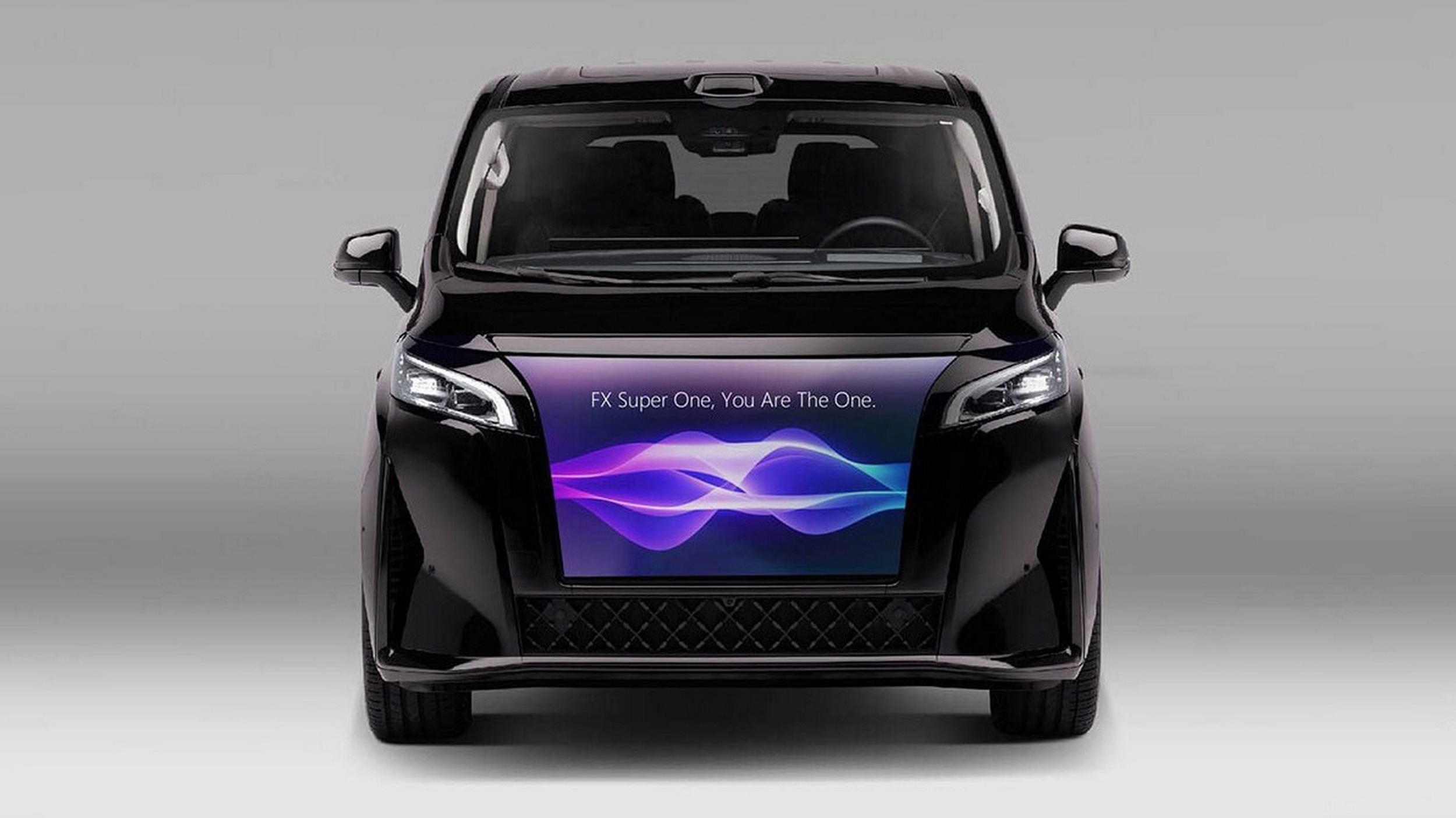
The EV Startup That Beat All Odds Just Beat An SEC Notice Sending 85% To Court

  • Faraday Future avoids SEC action after a four-year investigation.
  • Regulators scrutinized the company’s 2021 reverse merger with a SPAC.
  • Company now faces Nasdaq $1 share price compliance deadline.

Few car manufacturers have had a history as turbulent as Faraday Future. Founded more than a decade ago as one of America’s most promising EV startups, it’s been teetering on the edge of financial collapse for years, but has just reported one of its most significant wins.

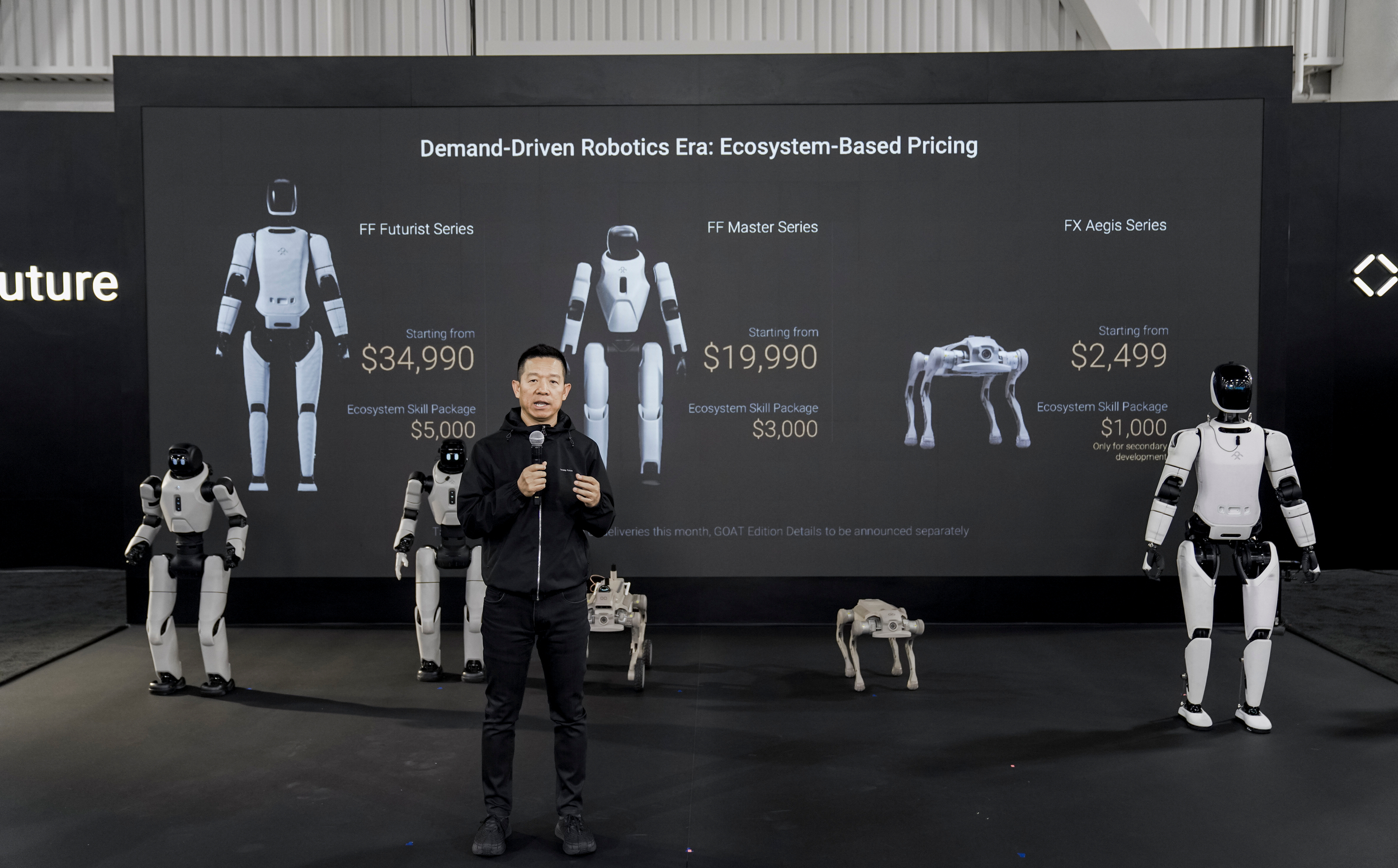
Over the weekend, Faraday Future revealed that the US Securities and Exchange Commission has concluded its four-year investigation into the company and has decided not to take any action against it. Founder and co-CEO Jia Yueting, as well as Faraday Future President Jerry Wang, have also avoided the court room.

Read: After Failing At Cars, Faraday Is Now Building Robots

The SEC had been investigating Faraday Future over its 2021 merger with a special purpose acquisition company (SPAC) that allowed it to go public, alleging the company made several false and misleading statements. Throughout the SEC’s investigation, it subpoenaed the company and took depositions from multiple former employees and executives.

The Troubles Don’t Stop Here

\\\\\\\

Last year, it appeared the SEC was stepping up its action against Faraday Future, issuing ‘Wells Notices’ to Yueting and other executives, notices usually issued when the SEC has been recommended to take enforcement action. According to Tech Crunch, approximately 85 percent of cases where Wells Notices are issued result in the individuals facing the SEC in court.

“The conclusion of the SEC’s investigation means that the long-standing overhang and sources of instability that had constrained the Company have now been removed,” Faraday Future said in a statement. “This is the strongest and cleanest response to potential illegal short sellers. Some short sellers used the time when the investigation was still open to spread rumors, defame the Company, create panic, and profit illegally. Now, the SEC’s conclusion means FF’s reputation is being restored, and confidence is coming back.”

Admittedly, Faraday Future isn’t out of hot water yet, as it recently received a notice from Nasdaq for failing to meet the minimum $1-per-share price requirement over 180 days. It now has 180 days to boost its shares to over $1 and hopes to do so without issuing a reverse stock split.

\\\\\\\\\\\\\

Kia’s Cheapest Electric SUV Drops A Seat To Hit Its Price

  • The EV2 starts at €26,600, positioning it as an accessible entry EV.
  • Multiple trims and seating layouts give buyers flexibility across the lineup.
  • Kia has confirmed the EV2 will not be sold in the United States.

Fresh off the Kia EV2’s global premiere in Brussels earlier this year, the brand has opened order books for its latest all-electric SUV in Germany and other European markets, revealing a starting price of just €26,600 ($30,800 at current exchange rates). At that level, it feels like a missed opportunity that the EV2 isn’t headed to the United States, though tariffs would likely erode much of its affordability if it ever made the trip across the Atlantic.

Read: Kia’s Smallest Electric SUV Might Get A GT Version, But Not The Kind You’re Expecting

For European shoppers who’d rather not pay upfront for the EV2, the new car can be leased for as little as €239 ($275) per month. There are also plenty of versions on offer, ensuring there’s an EV2 to suit everyone.

 Kia’s Cheapest Electric SUV Drops A Seat To Hit Its Price

The base version is known as the Light and comes equipped with a 42.2 kWh battery pack and a single electric motor rated at 146 hp. This model has a relatively limited range of 197 miles (317 km), but that should be enough for most Europeans, particularly those living in large urban centers. Helping to further lower the cost of this version is the fact that it’s sold exclusively as a four-seater.

What Else Is On Offer?

\\\\\

Sitting above the EV2 Light is the Air, which is a five-seater. It retains the same battery and motor as the Light in standard guise, but starts at €28,990 ($33,600). Kia also sells it with a larger 61 kWh battery pack and a 135 hp motor, boosting the range to 281 miles (453 km). This version starts at €33,490 ($38,800).

Kia will also sell the EV2 in Earth and GT-Line configurations. The Earth is available as either a four-seater or five-seater with the 42.2 kWh pack and 146 hp motor, priced from €31,290 ($36,200), topping out at €31,590 ($36,600), and both with a 191-mile (308 km) driving range.

The GT-Line then starts at €36,890 ($42,700) for the five-seater with the 61 kWh pack and 135 hp motor, and tops out at €37,190 ($43,100) for the four-seater with the same powertrain. Both versions have a claimed driving range of 256 miles (413 km).

It’s not just the EV2 that the US misses out on. Kia originally intended to sell the EV4 in the United States but axed those plans late last year, likely due to concerns that it wouldn’t sell well.

\\\\\\\\\\\\\
Before yesterdayElectric Vehicles - Latest News | Carscoops

This Leapmotor Packs Lamborghini Huracan Power Into A $38K Family SUV

  • The C10 AWD Sports+ delivers 590 hp from a twin-motor setup.
  • Australian pricing starts at a competitive AU$53,888 plus costs.
  • A 81.9 kWh battery offers up to 272 miles of WLTP-rated range.

The standard Leapmotor C10 is an electric SUV that could be best described as adequate. It’s not exciting or engaging to drive, but aside from a few tech gremlins, it drives quite nicely and is well priced. Now, a new version of the C10 has been launched, and it might be enough to get people excited.

Known as the Leapmotor C10 AWD Sports+ Special Edition and just introduced in Australia, the power on offer and the SUV’s price tag are simply absurd. Whereas the standard C10 has a single electric motor with 215 hp (160 kW) and 236 lb-ft (320 Nm) of torque, the AWD version has a pair of upgraded motors delivering 590 hp (440 kW) and 561 lb-ft (760 Nm).

Read: Stellantis’ Leapmotor Found An Unlikely Ally In Germany’s Tuning Scene

To put those figures into perspective, the original Lamborghini Huracan LP 610-4 had 602 hp and 413 lb-ft (560 Nm), while the rear-wheel drive only LP 580-2 was rated at 572 hp and 398 lb-ft (540 Nm). Leapmotor says its new flagship needs just 4 seconds to hit 100 km/h (62 mph), which is impressive, but perhaps a little slower than we’d expect given the horsepower and torque figures.

A Price To Stun

 This Leapmotor Packs Lamborghini Huracan Power Into A $38K Family SUV

Arguably just as impressive as the C10’s performance is the fact that it’ll start at just AU$53,888 ($37,600) plus on-road costs, or just AU$10,000 ($7,000) more than the standard model. This allows it to easily undercut the BYD Sealion 7 Performance that starts at AU$63,990 ($44,700), and even undercuts less powerful, rear-wheel drive versions of the Tesla Model Y (AU$58,900 / $41,100) and Zeekr 7X (AU$57,600 / $40,200).

Complementing the more powerful motors is a larger 81.9 kWh LFP battery that provides the oddly-named C10 AWD Sports+ Special Edition with up to 272 miles (437 km) of WLTP range. It supports DC charging speeds of up to 180 kW, meaning the battery can charge from 30-80 percent in 22 minutes, which is below par in this segment despite the C10 having an 800-volt architecture.

Leapmotor has failed to mention if any upgrades have been made to the C10’s suspension or braking systems to cope with almost triple the power of the standard model.

\\\\

Nearly 1 In 15 Wagoneer S EVs Have A Part That Can Fall Off

  • Nearly 12,000 Wagoneer S SUVs from 2024 to 2026 are recalled.
  • The liftgate hinge cover may not clip in and could fall off.
  • Jeep is aware of 17 warranty claims related to the fault in the US.

Nearly 12,000 examples of Jeep’s all-electric Wagoneer S are being recalled in the United States, highlighting a quality lapse that arguably should have been caught earlier. Now, owners will need to visit a dealership to have their vehicles inspected and the faulty component repaired or replaced.

A recall notice issued by the NHTSA states that 2024–2026 Wagoneer S models may have been built with a liftgate hinge cover that lacks sufficient design tolerances. Stellantis explains that in some cases, the rear liftgate hinge cover may not clip securely into place and could detach from the vehicle, creating a potential road hazard.

Owners might get an early warning. The company notes that occupants could hear a rattling noise or notice that one or both hinge covers aren’t sitting flush.

Review: The 2026 Jeep Wagoneer S Is Fast, Comfortable, And Wearing The Wrong Badge

FCA’s Technical Safety and Regulatory Compliance team opened an investigation on January 8. Over the next five weeks, it worked with FCA US Engineering and Manufacturing to review production data and design revisions tied to the hinge cover, focusing on pinpointing the root cause of the issue.

Warranty Claims Start Piling Up

\\\\\\\\

Jeep says that as of February 18, it had logged two customer assistance cases, 17 warranty claims, and 32 field reports potentially tied to the issue. In total, 11,767 vehicles are being recalled, all built between March 21, 2024, and July 24, 2025. The automaker estimates that 6.7 percent of them may actually have the defect in question.

The problematic component comes from Magna International, with owner notifications set to go out starting May 1. Dealers have been told to inspect the hinge cover and, if needed, repair or replace it with an updated version that stays put.

This isn’t the only recall recently issued by Jeep in the US. In February, more than 80,000 Grand Cherokees were called in for repairs because the rear coil springs may have been installed incorrectly as part of a previous recall. In this case, Jeep revealed the spring could detach from the vehicle entirely, presenting a serious safety risk.

\\\\

Two Of China’s Biggest Brands Are Looking To Build A Canadian Dealer Network With One City Leading The Way

  • BYD and Chery are actively looking to establish a Canadian dealership network.
  • It comes after Canada agreed to a quota of Chinese EVs allowed in with reduced tariffs.
  • The Chinese automakers’ plans start with Toronto, before expanding west and east.

A report has seemingly confirmed that two of China’s biggest electric car manufacturers are swiftly building the foundation for a Canadian push. The news comes from a consultant tasked with laying the groundwork. The companies are in talks to set up branded dealerships throughout the country, a serious move into a massive market that has so far eluded Chinese car makers.

Read: Three Chinese Carmakers Are Rushing To Enter Canada In 2026, And It’s Only The Start

It’s understood that both BYD and Chery have plans centered around establishing independent dealerships, but cautioned that the low volume of cars allowed by the quota may not be enough to sustain many Canadian dealerships.

 Two Of China’s Biggest Brands Are Looking To Build A Canadian Dealer Network With One City Leading The Way
Chery Fulwin T9L

The initial strategy involves launching out of the Greater Toronto Area, then expanding west and east to cities such as Vancouver, Montreal, and Calgary. Those involved in the talks say that BYD’s goal is to build about 20 dealership locations in the first year of operation. That would give China’s biggest carmaker a visible presence in Canada’s biggest urban markets, where there is a continuing rise in the demand for electric vehicles as consumers look for cheaper alternatives.

The news comes from Farid Ahmad, the CEO of Dealer Solutions Mergers & Acquisitions, a consultancy which has already had discussions with three possible BYD locations. “They’ve asked us to help them find as many of the 20 that they possibly can, but they’re out there doing that themselves, as well,” said Ahmad speaking to The Globe And Mail. Ahmad went on to say that a number of Chinese manufacturers were interested in setting up shop in Canada, including Chery.

Canada Is Opening The Door To New Competition

 Two Of China’s Biggest Brands Are Looking To Build A Canadian Dealer Network With One City Leading The Way
BYD YangWang U7

Canada recently restructured its tariff regime relating to Chinese-built electric vehicles by implementing a quota that permits 24,500 Chinese-made EV to come into Canada at a significantly reduced duty rate of just 6.1 percent. That change in policy means a change in math for companies such as BYD and Chery that previously have struggled with steep barriers that made it difficult for them to expand.

With the advent of lower import costs now possible under the quota, the move into the Canadian market is becoming more realistic. Still, there are a number of steps before any cars are in showrooms. Regulatory approvals, dealer agreements, financing structures, and service networks all have to be put in place.

Launch Timing Remains Unclear

Sources caution that although discussions are ongoing, there hasn’t been an official date initiated for the launch by BYD. The company has not publicly outlined its timeline, nor the specific models it prioritizes for Canada.

By coming into the Canadian EV market, Industry analysts believe BYD and Chery will transform pricing and competition in the industry. The market has been dominated by established North American, European, and Korean brands for an extended period. A new player that is well-known globally for high-volume electric vehicles production could expand consumer choice and put a squeeze on rivals.

 Two Of China’s Biggest Brands Are Looking To Build A Canadian Dealer Network With One City Leading The Way
BYD Shark 6

Subaru’s Biggest Electric Vehicle Yet Looks Exactly How You’d Expect

  • Subaru is gearing up to introduce a new three-row EV.
  • The model debuts in New York and will have 420 hp.
  • Crossover will likely be based on the Toyota Highlander.

The 2027 Nissan Z and Volkswagen Atlas are getting some company as Subaru has announced plans to introduce a new three-row, electric crossover at the New York Auto Show. It debuts on April Fool’s Day, but it’s real and it will pack a 420 hp (313 kW / 426 PS) punch.

Subaru isn’t saying much, but there’s little doubt the model will be yet another badge engineered vehicle shared with Toyota. This will make four of them and the latest should follow in the footsteps of the redesigned Highlander.

More: New Toyota Highlander Drops Its Biggest Tradition, And We Got A Front-Row Look

While the automaker is playing coy, they released a teaser image revealing a familiar front end that echoes the Solterra, Trailseeker, and Uncharted. Details are hard to make out, but we can see split lighting units and an illuminated logo. They’re joined by a roof rack and a shark fin antenna.

That’s not a lot to go on, but the Highlander has 77- and 95.8 kWh battery packs as well as a choice of front- and all-wheel drive. The former has 221 hp (165 kW / 224 PS), while the latter develops 338 hp (252 kW / 343 PS). These setups enable the crossover to offer ranges of between 270 and 320 miles (435 and 515 km).

\\

We can also expect a NACS port as well as a DC fast charging capability that can take the battery from 10% to 80% in approximately 30 minutes. A dual-level 120V/240V charging cable should also be included as well.

Powertrain aside, we can expect a 12.3-inch digital instrument cluster and a 14-inch infotainment system. They should be accompanied by a six-speaker audio system and a 64-color ambient lighting system.

The 2027 Toyota Highlander lands late this year, so expect the new Subaru to arrive around then as well.

\\\\\\\\\\\\\\\

2027 Toyota Highlander

Mazda’s 600 HP Pickup Idea Starts With A Chinese Truck That Doesn’t Behave Like One

  • Mazda is reportedly exploring a deeper tie-up with Changan.
  • The two already share a joint venture, offering the EZ-6 and EZ-60.
  • It’s reportedly considering a rebadge the Deepal E07 for its lineup.

Mazda isn’t ruling out a possible entry into the super-pickup sphere with a 600 hp (440kW) offering, but there’s a big caveat. If it does move forward, the result would be anything but a traditional Mazda. The idea, at least in its early form, centers on a rapid rebadge of the Deepal E07 transforming truck from China. Picture something closer to a Cybertruck-style ute than anything currently wearing a Mazda badge.

Changan, Deepal’s parent company, already maintains a close working relationship with Mazda. Through their joint venture in China, the Mazda 6e (also known as the EZ-6) sedan is produced by Changan and based on the Deepal L07. The upcoming Mazda CX-6e (EZ-60) SUV will also be manufactured in China.

Another Chinese-Based EV

The timing makes sense. Electric and plug-in hybrid pickups have been garnering more attention in markets like Australia, where buyers are in search of something functional, yet at the same time want something exciting to drive around. The fact that powerful pickups have a great amount of interest has already been shown by other manufacturers, such as BYD with the Shark 6, and the plug-in hybrid Ford Ranger.

\\\\\\\\\\\

Read: Mazda Admits It Learned From China, And Its Future EVs Will Show It

While Mazda has made its reputation for efficiency and clever engineering, especially with its Skyactiv technology, they don’t have an in-house developed ute or pickup, with the BT-50 workhouse based on the Isuzu D-Max. It would also do no harm to Mazda’s overall EV lineup, while offering a way to offset CO2 penalties.

But a ute producing about 600 hp (440 kW) would take things in a very different direction. While it’s not a current priority, Hiroshi Ozawa, General Manager of the Changan Mazda Automobile Technical Development Center, won’t rule out the possibility.

“My personal view is that Deepal E07 that pick up, the truck [that] opens up, it’s a very interesting vehicle,” said Ozawa, speaking to Carsales. “I like that kind of vehicle… In Australia I think customers may also like the kind of vehicle.”

Is The E07’s Time Now?

\\\\\\\\\\\\\

The Deepal E07 hasn’t had much attention outside of China, but it is already available in Australia, as well as other parts of South Asia. To bring you up to speed, it’s not a pickup in the traditional sense. The E07 is dubbed by the brand as a “transformer,” able to operate as both an SUV and a pickup, with a retractable glass portion revealing a bed.

Review: BYD Shark 6 Is Faster Than A Ranger Raptor But That Is Only Half The Surprise

It can be configured in either a single-motor rear-wheel-drive layout or an all-wheel-drive dual-motor version. Both versions are powered by a 90kWh battery, with a claimed range of up to 550km. That top-spec dual-motor AWD version can dispatch 0-100 km/h (0-96 mph) in just 3.9 seconds thanks to its 440 kW (590 hp) output.

At this stage, there’s no official word on whether the E07 will be getting the green light as a Mazda. Still, the fact that the company is openly discussing the potential of super ute shows that it’s thinking outside of its usual boundaries.

\\\\\\\\\\\

Photos Deepal, Deepal Australia, Deepal YouTube

❌
❌