Normal view

There are new articles available, click to refresh the page.
Today — 17 April 2026Electric Vehicles - Latest News | Carscoops

Mercedes’ EV Push In America Has Nothing To Do With What American Buyers Want

  • Mercedes will continue offering EVs across US for the foreseeable future.
  • The company expects pockets of demand despite lost federal tax incentives.
  • US supply remains tight as Europe and China continue to absorb inventory.

Mercedes-Benz is not stepping back from electric vehicles, despite competitors scaling back amid slower adoption rates. The news comes as US demand for EVs cools following the rollback of federal tax credits.

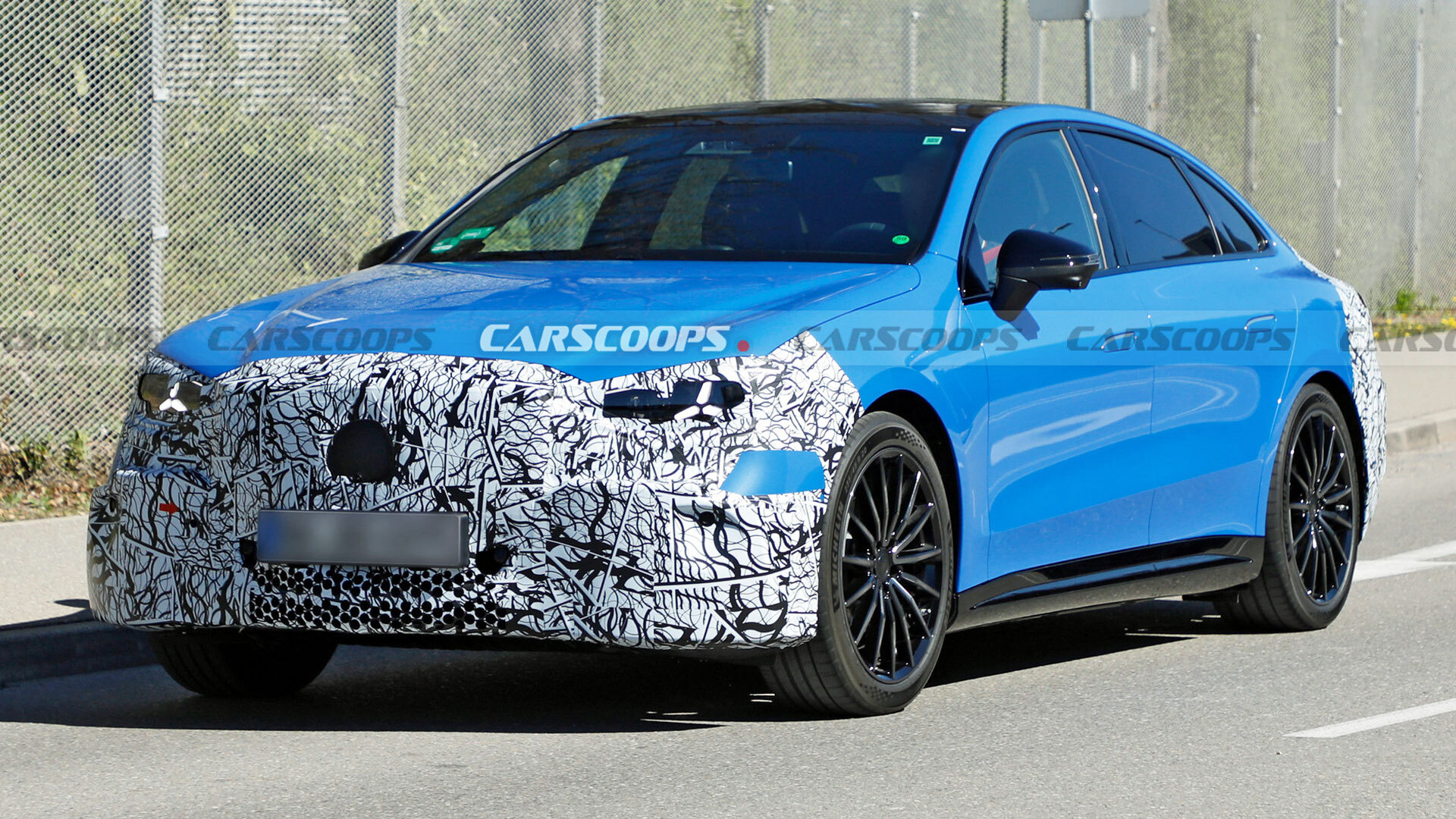
Instead, during the next three years, Mercedes will introduce a number of new electric models to the United States, including three AMG performance EVs and battery-powered versions of popular models such as the GLC crossover, E-Class and the C-Class sedan that was previewed today.

The Global Need To Go Electric

The update to Mercedes’ plans came from Adam Chamberlain, the CEO of Mercedes-Benz USA, speaking to AutoNews, who explained the company’s position. Mercedes is sticking to its EV plans due to the requirement from global markets, said Chamberlain. Strict international regulations, especially in China and Europe, mean that for a brand selling worldwide, it is impossible to turn its back on EVs.

Also: Mercedes Heard ‘Too Many Screens’ And Built A New C-Class EV That’s One Giant Screen

However, unlike other manufacturers, they won’t be pushing electrification on consumers, hoping they’ll switch. Instead, Mercedes has moved to flexible vehicle platforms. Rather than their initial approach of offering a separate line of EVs, Merc’s current plan is to design cars compatible with gasoline engines, hybrids, or full battery-electric power.

American Demand For EVs Remains
 Mercedes’ EV Push In America Has Nothing To Do With What American Buyers Want
The upcoming Mercedes-Benz C-Class with EQ Tech.

Mercedes predicts pockets of demand among US consumers for EVs in the foreseeable future, despite the loss of federal incentives. While the company predicts EVs to constitute approximately 5 percent of its retail sales in the U.S. this year, that’s partly down to limited production and strong demand from Europe and China.

On the national scale, approximately 14 percent of consumers indicate that they would give serious consideration to an EV next time. In California, it grows to 28 percent. So, there is demand, but it is unevenly distributed. In fact, according to the report, Mercedes US have only been able to allocate around 200 electric CLA’s for customers, all units of which have been spoken for.

Read: Mercedes’ Future EVs May Be More Chinese Than You Think

Chamberlain thinks the U.S. EV sales would rise to 10 to 15 percent in the year 2021, with the supply increasing and more mainstream electric models coming into the market, such as battery versions of the GLC and C-Class. Nevertheless, profitability is still its focus. He made sure it was evident that Mercedes is not going to produce tens of thousands of vehicles without confirmed demand in its bid to achieve market share.
 Mercedes’ EV Push In America Has Nothing To Do With What American Buyers Want

Ford’s Biggest Product Push In Years Will See 80% Of Its American Lineup Refreshed By 2029

  • Ford plans to refresh most of its global vehicle lineup by 2029.
  • A new internal group will unify design, EV, and software teams.
  • UEV platform focuses on weight reduction and system simplicity.

Ford is preparing one of its most aggressive product overhauls in years, and it is reorganizing itself to get there. The company plans to refresh 70 percent of its global portfolio by 2029 and, to support that effort, has created a new end-to-end internal organization that integrates its EV, digital, and design teams with its global industrial system.

According to Ford, this structure will “deliver one of the most intensive product, software, and services rollouts in Ford’s history.”

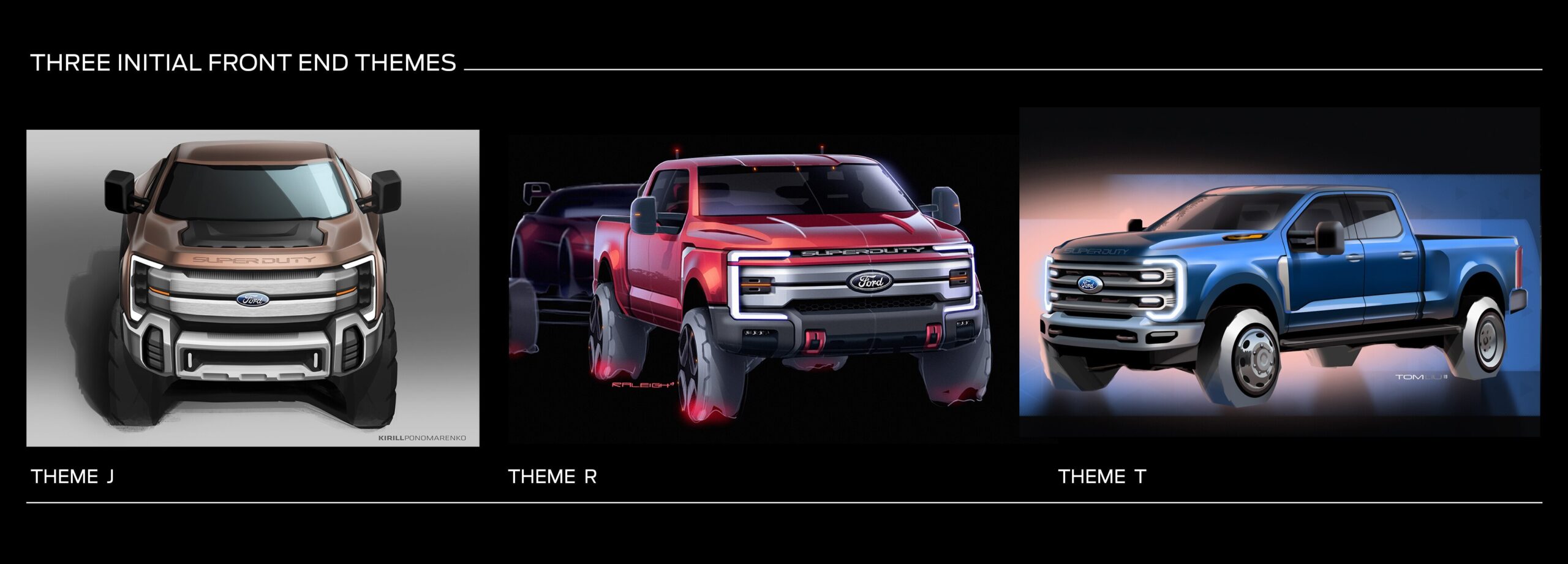
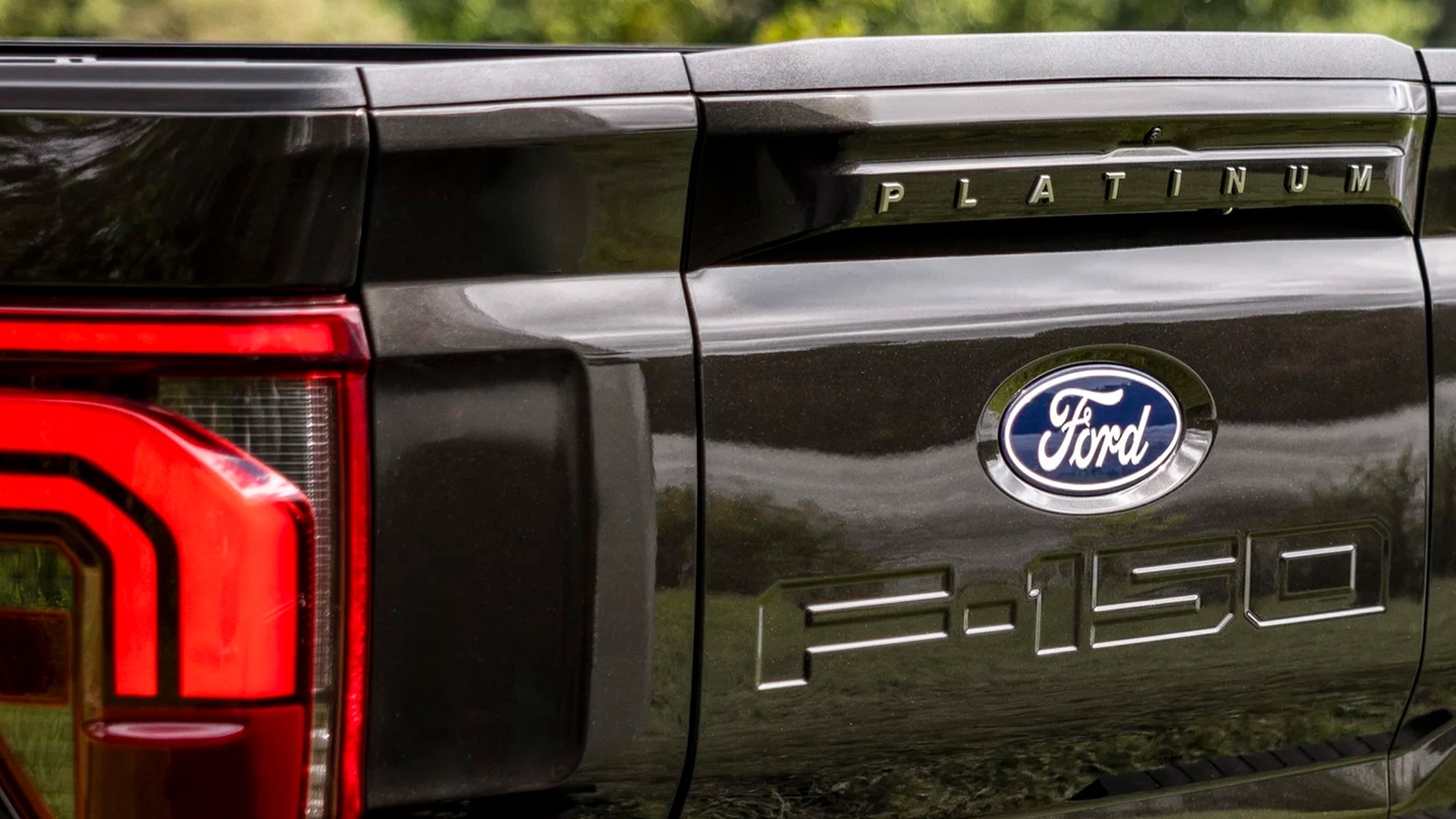
The new group, called Product Creation and Industrialization, will be led by Kumar Galhotra. Beyond the global target, Ford says 80 percent of its North American portfolio by volume will also be refreshed by 2029. That includes a next-generation F-150 and F-Series Super Duty, alongside a new mid-size pickup built on Ford’s Universal Electric Vehicle (UEV) platform.

Read: Jim Farley Promises A New Affordable Ford EV To Take On Tesla’s Model 3 And Y

Developed by a skunkworks team, the UEV platform uses unicastings to reduce weight and complexity. It also features an ultra-efficient powertrain and a fully zonal electrical architecture, supported by in-house software and advanced driver assistance systems.

More Electrified Options

 Ford’s Biggest Product Push In Years Will See 80% Of Its American Lineup Refreshed By 2029

As part of Ford’s product updates, nearly 90 percent of its global nameplates will offer electrified powertrains by 2030, including hybrids, extended-range EVs, and full EVs. Interestingly, Ford notes that work on its UEV platform will benefit its hybrids, too, thanks to the new high-efficiency motors developed.

“This is the culmination of years of work and progress to create the modern Ford – a talented, unified organization capable of scaling high-quality, software-defined vehicles with a choice of propulsion, distinctive digital experiences and features, and a personalized ownership experience that improves over time,” Ford chief executive Jim Farley said in the announcement.

Doug Field Exits

Ford’s sweeping internal reset comes with a notable departure at the top. The company confirmed that Doug Field, who joined five years ago to steer its push into electrified, connected, and software-defined vehicles, will leave within the next month.

Field played a central role in shaping the newly formed Product Creation and Industrialization organization, the same group tasked with streamlining development across hardware, software, and manufacturing. His exit lands at a critical moment, as Ford leans on this structure to execute its broad product overhaul and move toward an 8 percent adjusted EBIT margin by 2029.

 Ford’s Biggest Product Push In Years Will See 80% Of Its American Lineup Refreshed By 2029
Ford Super Duty sketches from the past.

Mercedes Heard ‘Too Many Screens’ And Built A New C-Class That’s One Giant Screen

  • The new electric C-Class adopts a full-width digital dashboard layout.
  • A 39.1-inch Hyperscreen dominates the cabin with few physical controls.
  • Mercedes promises improved space, long-distance comfort, and sportiness.

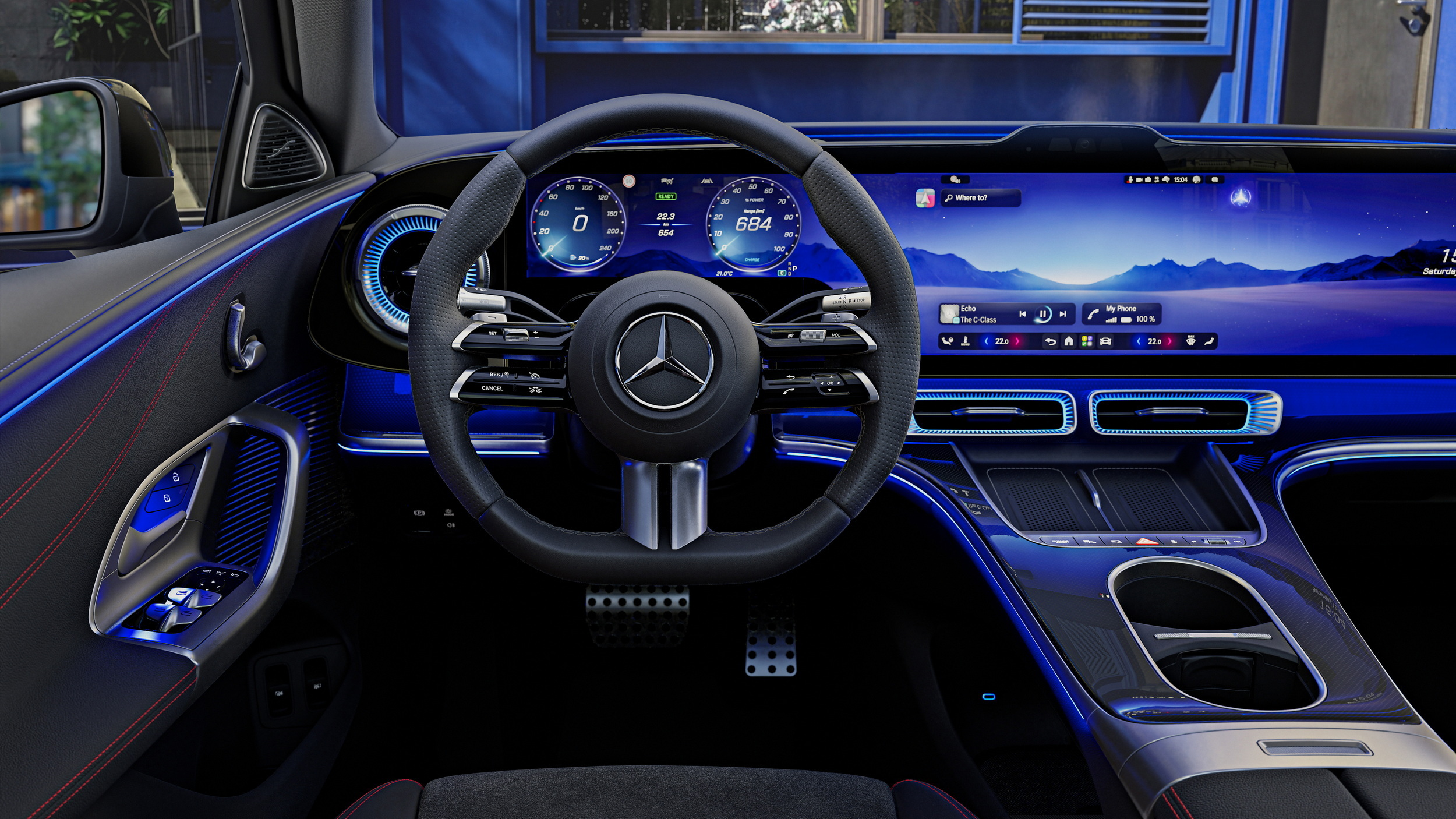
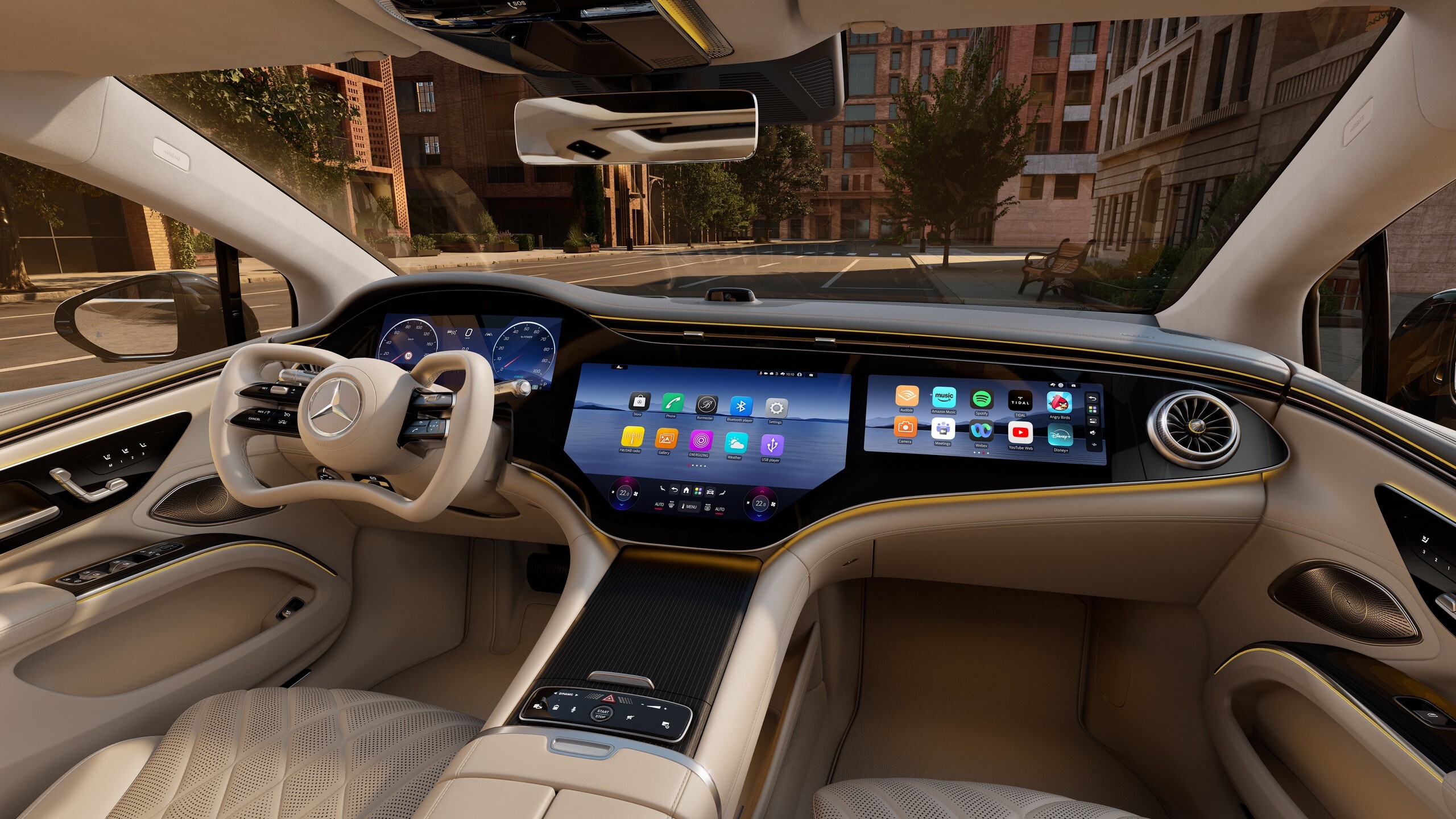
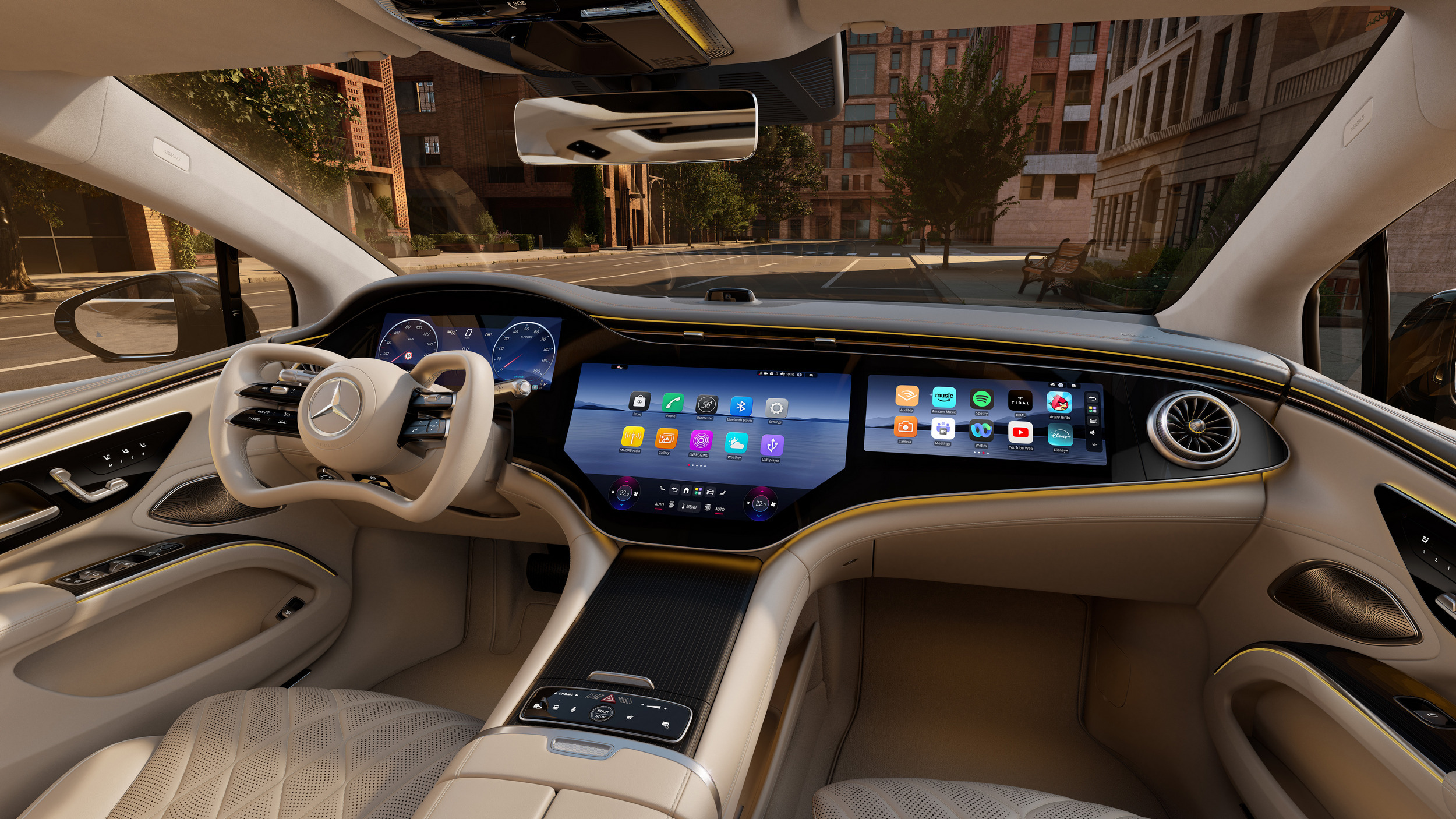
Mercedes is getting ready to reveal its all-electric C-Class on April 20, but the interior has already made an early appearance. Front and center is a massive MBUX Hyperscreen stretching almost the full width of the dashboard, uninterrupted and unmistakably similar to what we have already seen in the GLC EV.

The company describes the new interior of the electric sedan as a “driver-oriented refuge”, though it reads more like a rolling digital billboard from where we’re sitting. The display appears to mirror the 39.1-inch Hyperscreen from the GLC EV, which makes the recently updated EQS and S-Class flagships feel either a step ahead or already behind, depending on your perspective.

More: Mercedes’ Electric C-Class EQ Is Running Out Of Camouflage

With approximately 10 million pixels, the giant display aims to reduce the need of menus, having everything within reach. Even so, experience keeps reminding us that glass can’t replace the certainty of a proper button or dial. There are at least a few holdouts here, with physical controls still present on the center console and steering wheel, the latter seemingly lifted straight from its SUV counterpart.

 Mercedes Heard ‘Too Many Screens’ And Built A New C-Class That’s One Giant Screen

Besides the attention-grabbing Hyperscreen, Mercedes also mentions the Superscreen, which is a more conventional triple-screen layout reserved for lower trim levels of the sedan. Both setups offer the option between ten ambient styles with different colors to fit your mood.

More Space And Comfort

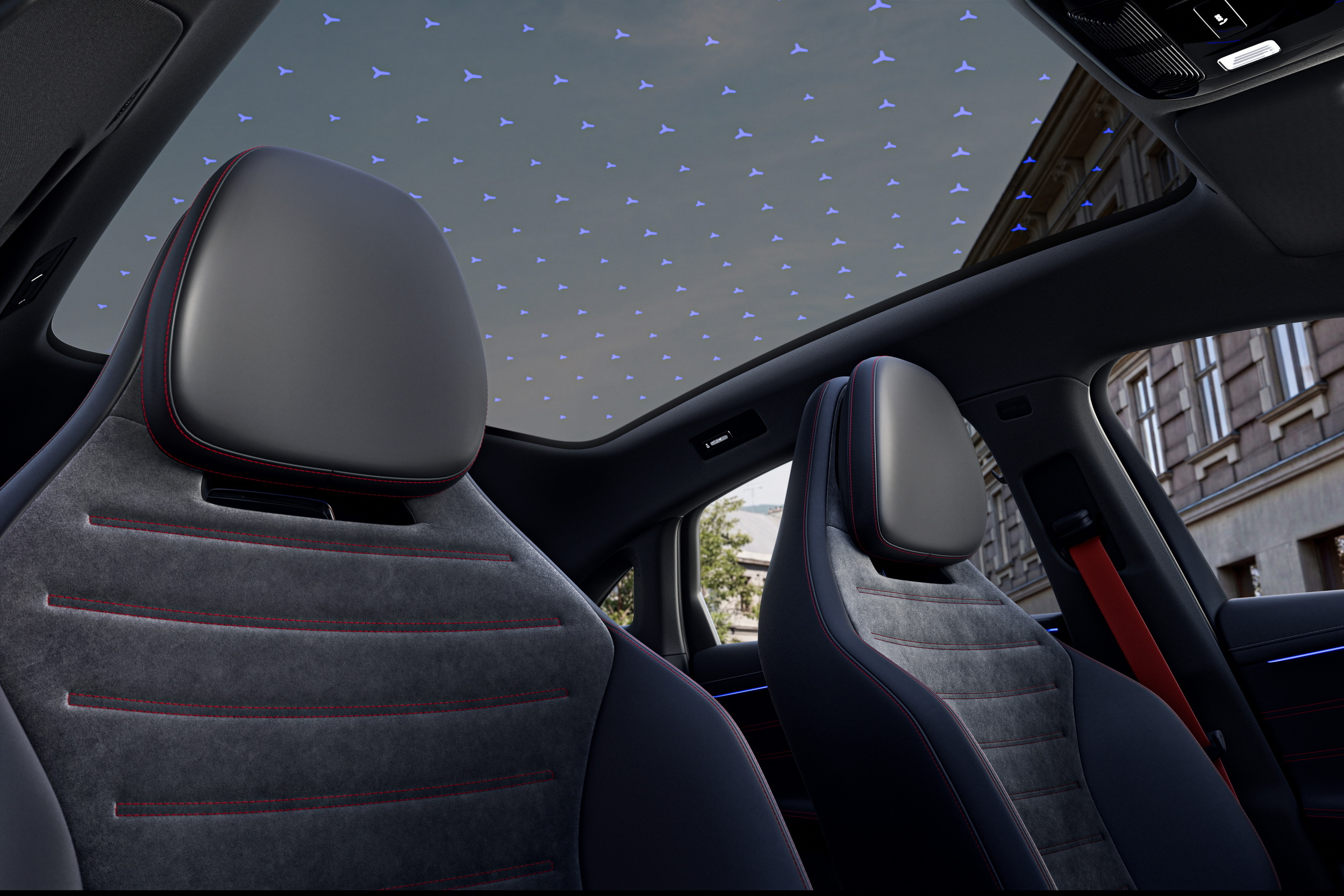
The company promises that the electric sedan will be the best and sportiest C-Class yet, while offering more space than ever before. It will also bring “exceptional” long distance comfort thanks to the new seats, the optional star-shedded panoramic sunroof, the sophisticated climate control system, and the extensive sound insulation.

 Mercedes Heard ‘Too Many Screens’ And Built A New C-Class That’s One Giant Screen

The front seats come with electro-pneumatic four-way lumbar support, 4D sound, massaging and ventilation functions. These are coordinated with the Energizing Comfort programs designed for “mental and physical rejuvenation” while on the go. Furthermore, the climate system features a multi-source heat pump that can heat the cabin twice as fast as a combustion vehicle while using 50% less energy.

More: C-Class Facelift Mirrors A Direction Mercedes Has Already Taken Elsewhere

The electric C-Class will also offer a vegan-certified interior with soft-touch surfaces. Other options include the Softtorino leather grain, the Twisted Diamond Nappa leather, and the 3D-relief stainless steel speaker grilles for the Burmester 3D sound system.

 Mercedes Heard ‘Too Many Screens’ And Built A New C-Class That’s One Giant Screen
A lightly camouflaged prototype of the electric C-Class. Photo: Baldauf

In terms of exterior design, we already know that the model will adopt a large illuminated grille flanked by aggressive headlights with star-shaped LED graphics.

Recent spy shots have also revealed the sleek surfacing of the profile, looking like an evolution of the EQE and EQS sedans albeit with more pronounced front and rear volumes to avoid an egg-shaped silhouette. Expect sportier bumpers and different wheels for the AMG Line trims.

Any Specs?

Mercedes has yet to announce the technical specifications of the electric C-Class, but the model will most likely ride on the same 800-volt MB.EA platform with the GLC. The SUV produces 483 hp (360 kW / 490 PS) and 800 Nm (590 lb-ft) of torque from dual electric motors, with a 94 kWh battery offering a WLTP range of 673 km (418 miles).

More: AMG Built A Sedan That Growls, Revs, And Shifts Like It Has A V8. It Doesn’t

In terms of the chassis setup, the company claims that the sedan “raises performance and driving dynamics”, making our appetite for future AMG-branded versions.

We will learn everything about the new model at its official debut in South Korea on April 20. The EV will be joined by a facelifted version of the ICE-powered C-Class, also expected to be unveiled later this year. It’s biggest rival is the new BMW i3 Neue Klasse sedan that debuted last month.

\\\\\\\
Yesterday — 16 April 2026Electric Vehicles - Latest News | Carscoops

Side By Side, The Rivian R2 And Model Y Look Like They’re From Different Planets

  • Rivian’s new entry-level electric SUV has a lot going for it.
  • The R2 is taller than a Model Y, but surprisingly, it’s also shorter.
  • Driving the R2 Performance are dual electric motors with 656 hp.

In a market where electric SUVs are starting to blur into one another, standing out is no longer optional. The Rivian R2 is a pivotal model for the brand, bringing its EV technology into a smaller, more affordable package. If Rivian wants to grow into a true volume manufacturer and challenge legacy players, the R2 needs to land with buyers.

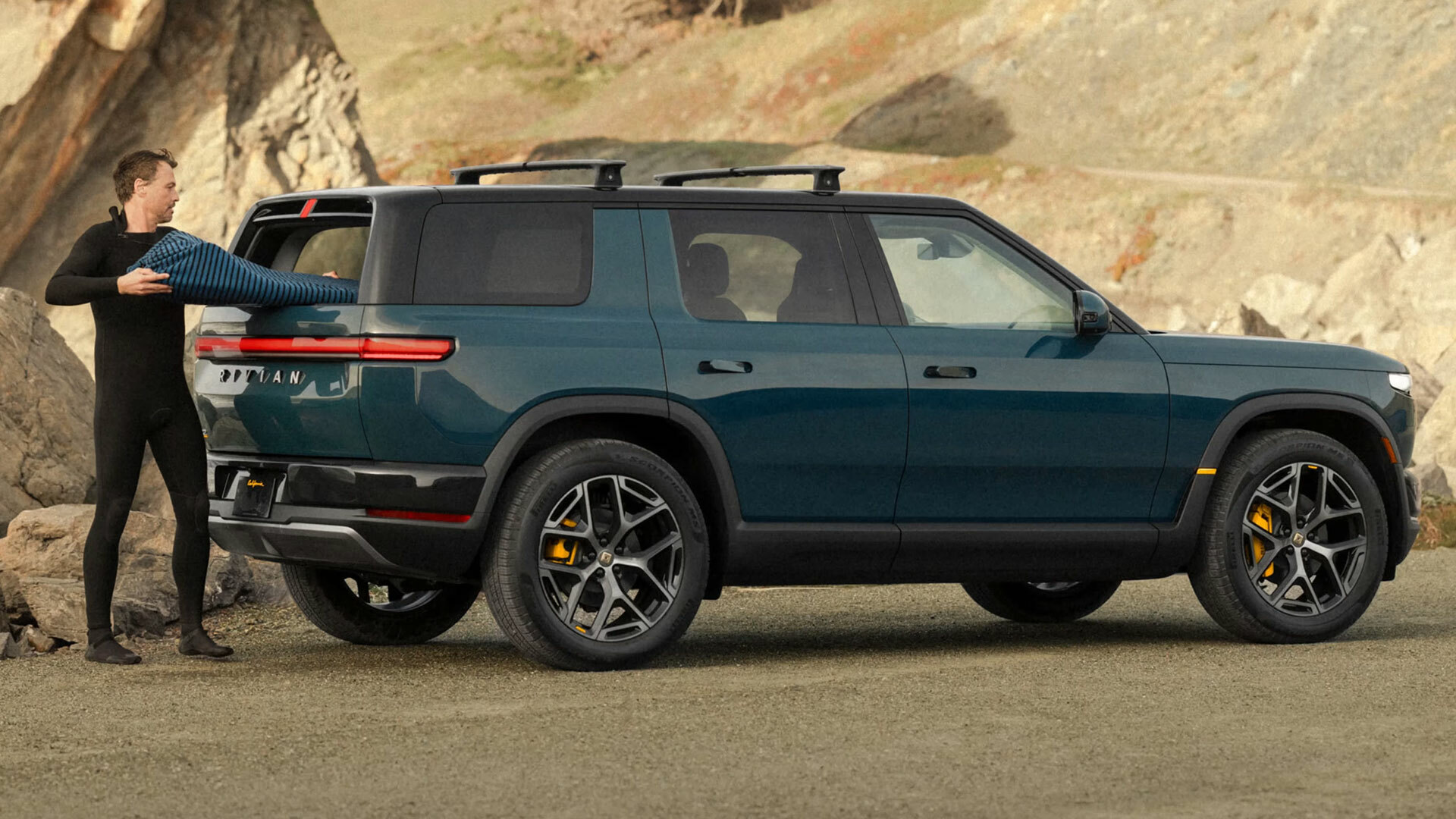
Its biggest hurdle is persuading shoppers to choose it over the Model Y, still America’s best-selling EV by a wide margin that even Tesla’s own Model 3 does not approach, let alone anything else. As these side-by-side photos of an R2 and a Model Y show, the pair have similar footprints but look absolutely nothing alike.

Read: Rivian R2 And Jeep Recon Solve The Same Problem, But Which One Solves It For You?

These photos, captured by Reddit user SciencesNotStudies at Rivian’s headquarters, show both vehicles charging next to each other. Whereas Tesla opted for a sleek profile in the Model Y, making it look like a bloated Model 3 rather than a traditional SUV, the Rivian R2 is very different. It’s boxier, stands taller, and is much more upright, looking just like the R1, albeit on a slightly smaller scale.

Interestingly, the Model Y is slightly longer than the R2, measuring 188.6 inches (4,790 mm) compared to the Rivian’s 185.9 inches (4,722 mm). The R2 is also slightly narrower at 75 inches (1,905 mm), versus 75.6 inches (1,920 mm) for the Tesla.

The biggest gap appears in height, with the R2 standing 66.9 inches (1,700 mm) tall compared to the Model Y’s 63.9 inches (1,624 mm). The Rivian’s wheelbase is also 1.8 inches longer, at 115.6 inches (2,935 mm) compared to 113.8 inches (2,890 mm) for the Tesla.

The ground clearance also differs dramatically between the pair. Like the R1, the R2 has been designed to be right at home off-roading, offering 9.6 inches (245 mm) of clearance compared to the Model Y’s 6.0 inches (152 mm).

What About Performance?

 Side By Side, The Rivian R2 And Model Y Look Like They’re From Different Planets

The first version of the R2 to be sold, the Performance Launch Edition, rocks a pair of electric motors delivering 656 hp and an 88.7 kWh battery pack, giving it slightly more power than the Model Y Performance with 618 hp and better range, 328 miles (528 km) compared to 306 miles (492 km). However, as the Tesla weighs less, it hits 60 mph (96 km/h) in 3.3 seconds compared to the R2’s 3.6 seconds.

Where The Numbers Stop Favoring Rivian

And then there’s pricing, which is not doing Rivian many favors on paper. The R2 Performance Launch Edition starts at $57,990, essentially mirroring the $57,490 Model Y Performance. However, step down to the mid-tier R2 Premium with 450 hp and all-wheel drive, and you’re still looking at $53,990, a noticeable jump over Tesla’s Model Y Premium AWD at $48,990.

Also: Rivian R2 Starts At $57,990, But Cheaper Versions Are Still Coming

Rivian has confirmed a base rear-wheel-drive R2 at $45,000, though that version will not arrive until 2027, which is a long wait. Tesla, meanwhile, already covers that ground with two RWD options, starting at $39,990 for the standard version and $44,990 for the Premium.

Although the R2 is Rivian’s answer to the Tesla Model Y, matching its sales volume will be a tall order. Like the R1, it appears to lean toward a more niche appeal and could end up competing more closely with models like the Jeep Recon.

\\\\\\\\\

Lead image Reddit / SciencesNotStudies

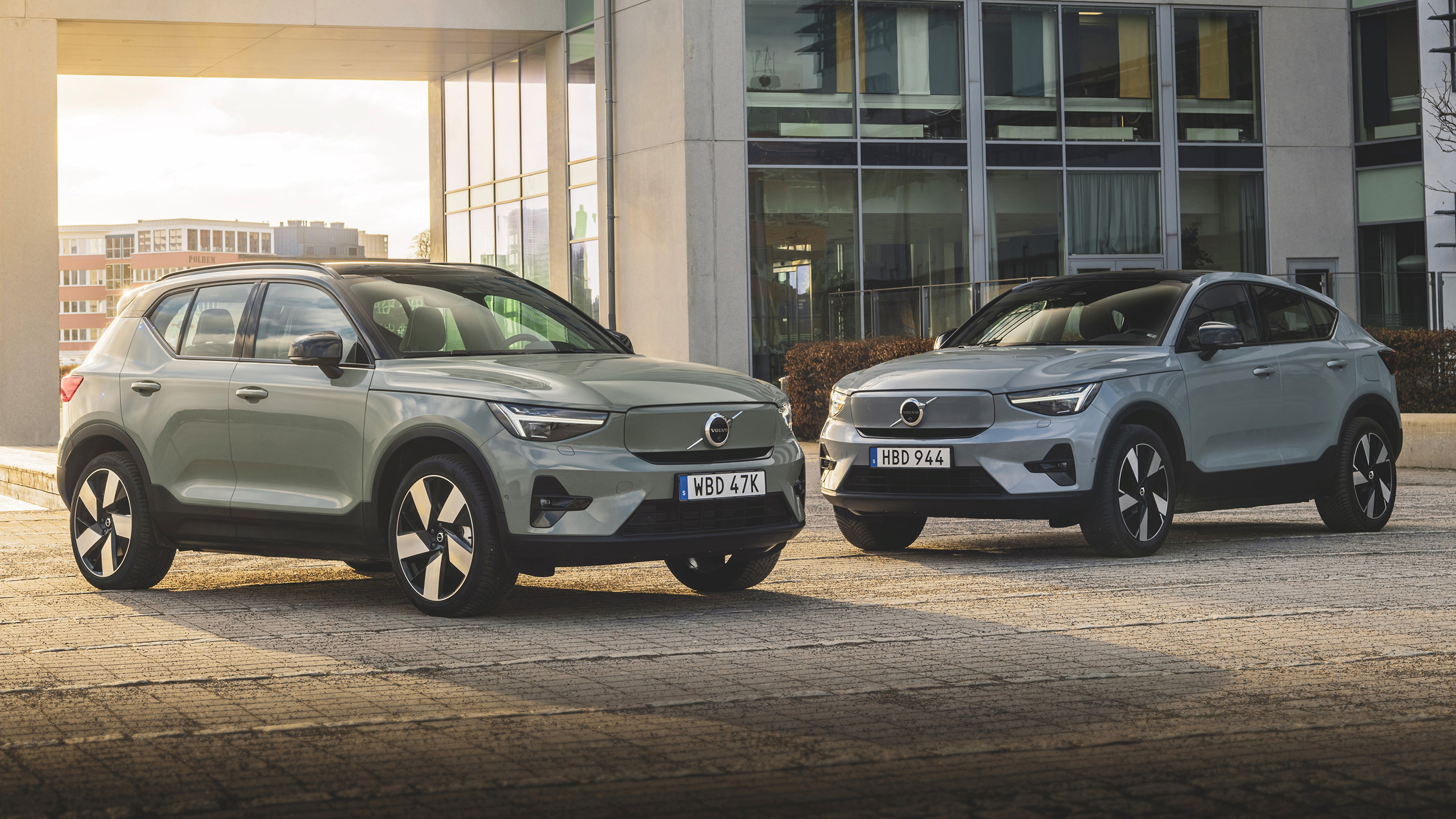
Volvo’s Entry SUV Gets A Successor, But Dealers Aren’t Sure It’s The Right Priority

  • The second-gen XC40 could reverse the brand’s declining sales in the US.
  • Volvo sold just 22,651 vehicles in the US last quarter, down 32 percent.
  • New electric EX40 will likely be built on the company’s latest SPA3 platform.

Volvo is deep into development of a redesigned XC40, and the plan is to have it on sale in the US next year. Details are still thin, but its arrival confirms something else. The current XC40 and its electric counterpart, the EX40, are sticking around a little longer, with production expected to run through late this year.

Launched in late 2017 as Volvo’s smallest SUV, the XC40 has aged reasonably well, though it’s starting to feel its years. Updates have been minimal, limited to a single light facelift. The next-generation version is expected to widen its appeal with a plug-in hybrid option, sitting alongside the existing mild-hybrid lineup.

Read: Volvo’s New 400-Mile SUV Has One Feature Tesla Owners Will Be Jealous Of

There is more riding on this update than just keeping things fresh. Dealers are counting on the new XC40 to help steady the brand’s footing in the US. Total sales collapsed 32 percent in the first quarter to 22,651 vehicles, while Volvo’s share of the luxury segment slid to 5.8 percent, its lowest point since 2019. The XC40 has been hit especially hard, with sales down 47 percent to just 3,403 units.

More Updates Are Needed

 Volvo’s Entry SUV Gets A Successor, But Dealers Aren’t Sure It’s The Right Priority

To help keep the XC40 somewhat fresh for 2026, Volvo updated it with a new infotainment system. But if it wants to recapture buyers, it’ll need to make much more significant upgrades to the next-generation model. Auto News reports that the new EX40 will make a major step forward by sharing its SPA3 platform with the electric EX60.

While a new XC40 is just around the corner, some dealers believe Volvo would be better off prioritizing other models, like the XC60 and XC90, as they’re more profitable. “XC40 is a great car, and we appreciate the updates,” one dealer said, before adding that “the US is a big car market.”

Volvo is already putting effort into its larger lineup. The XC60 received updates last year and is set to be built at the brand’s Ridgeville, South Carolina plant starting in late 2026. The XC90, meanwhile, got a second facelift in 2024, with a full redesign also in development. That said, it may not arrive until 2029, leaving the current model to carry the load a while longer.

\\\\\\\\\

VW’s China Collapse Is Bad, But Its American Problem Might Be Harder To Fix

  • VW Group global sales fell 4 percent in Q1, landing at just over 2 million units.
  • The US dropped 20.5 percent, with tariffs and regulatory shifts taking the blame.
  • China shed nearly 100,000 units year over year, down 14.8 percent from Q1 2025.

Global car demand has proven uneven this year, with regional pressures shaping very different outcomes for major automakers. Like many other car manufacturers, the Volkswagen Group has had a difficult start to 2026. Company sales slipped 4 percent in the first quarter, and EVs fell even further, despite a generally positive outlook across Europe.

The world’s second-largest automaker ended the quarter having sold 2,048,900 vehicles, down 4 percent from the 2,133,600 it sold in Q1 2025. This drop was largely due to a 14.8 percent collapse in China, from 644,100 units to 548,700.

Read: A 96% Sales Collapse Is Why VW Just Killed US ID.4 Production

Similarly, sales were down 13.3 percent in North America from 237,200 units to 205,500. The drop was led by the United States, where sales fell 20.5 percent, blamed on the current tariff situation, “as well as changes in regulations.” Sales were also down 8 percent in Asia-Pacific to 70,200 and declined 5.3 percent in the Middle East and Africa to 92,800.

VW Q1 2026 Sales
RegionQ1-26Q1-25Diff.
Western Europe848,500814,000+4.2%
Central and Eastern Europe135,300125,800+7.6%
North America205,500237,200-13.3%
South America147,900138,200+7.0%
China548,700644,100-14.8%
Rest of Asia-Pacific70,20076,300-8.0%
Middle East/Africa92,80098,000-5.3%
World2,048,9002,133,600-4.0%
SWIPE

Bucking the trend was a 4.2 percent increase in sales in Western Europe, rising from 814,000 to 848,500. Sales in Central and Eastern Europe also climbed 7.6 percent to 135,300, while sales in South America increased 7 percent to 147,900.

“The first quarter of 2026 was once again characterized by very challenging economic and geopolitical conditions. The worldwide automotive market declined overall through the end of March,” VW’s Marco Schubert said of the results.

Just three brands from the VW Group reported sales rises in the first quarter. The first was Skoda, whose sales rose 14 percent to 271,900, up from 238,600 in the first quarter of 2025. Additionally, Volkswagen Commercial Vehicles sales rose 10.1 percent to 88,900, while MAN truck sales climbed 14.5 percent to 23,600.

VW Brand Sales
BrandQ1-26Q1-25Diff.
Brand Group Core1,554,4001,600,300-2.9%
Volkswagen Passenger Cars1,048,3001,134,200-7.6%
Škoda271,900238,600+14.0%
SEAT/CUPRA145,300146,700-1.0%
Volkswagen Commercial Vehicles88,90080,800+10.1%
Brand Group Progressive364,900388,800-6.1%
Audi360,100383,400-6.1%
Bentley2,2002,400-9.9%
Lamborghini2,6003,000-11.7%
Brand Group Sport Luxury61,00071,500-14.7%
Porsche61,00071,500-14.7%
Brand Group Trucks / TRATON68,60073,100-6.1%
Scania20,90022,200-5.7%
MAN23,60020,600+14.5%
International13,30016,900-21.1%
Volkswagen Truck & Bus10,80013,400-19.6%
Volkswagen Group (total)2,048,9002,133,600-4.0%
SWIPE

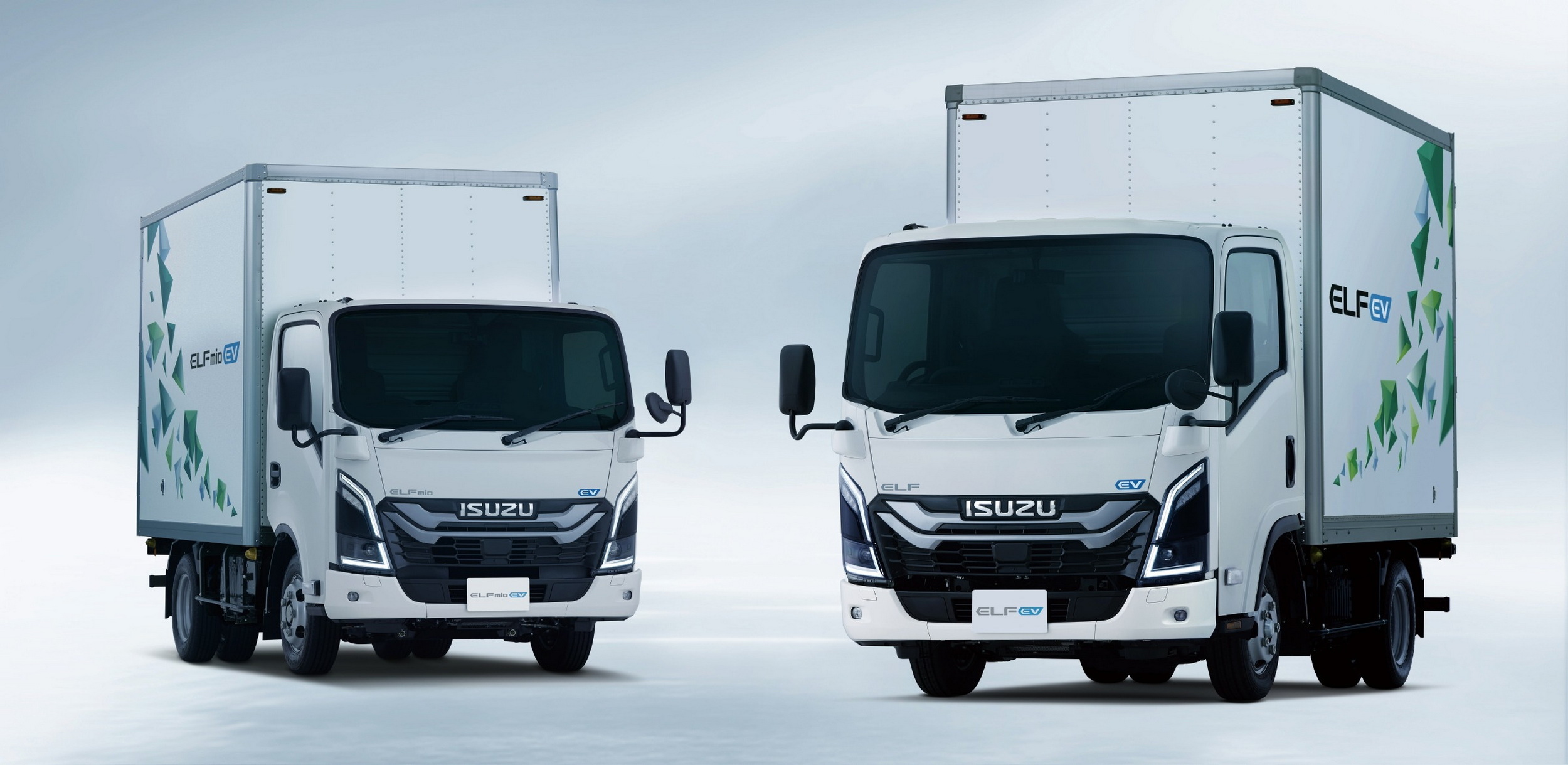
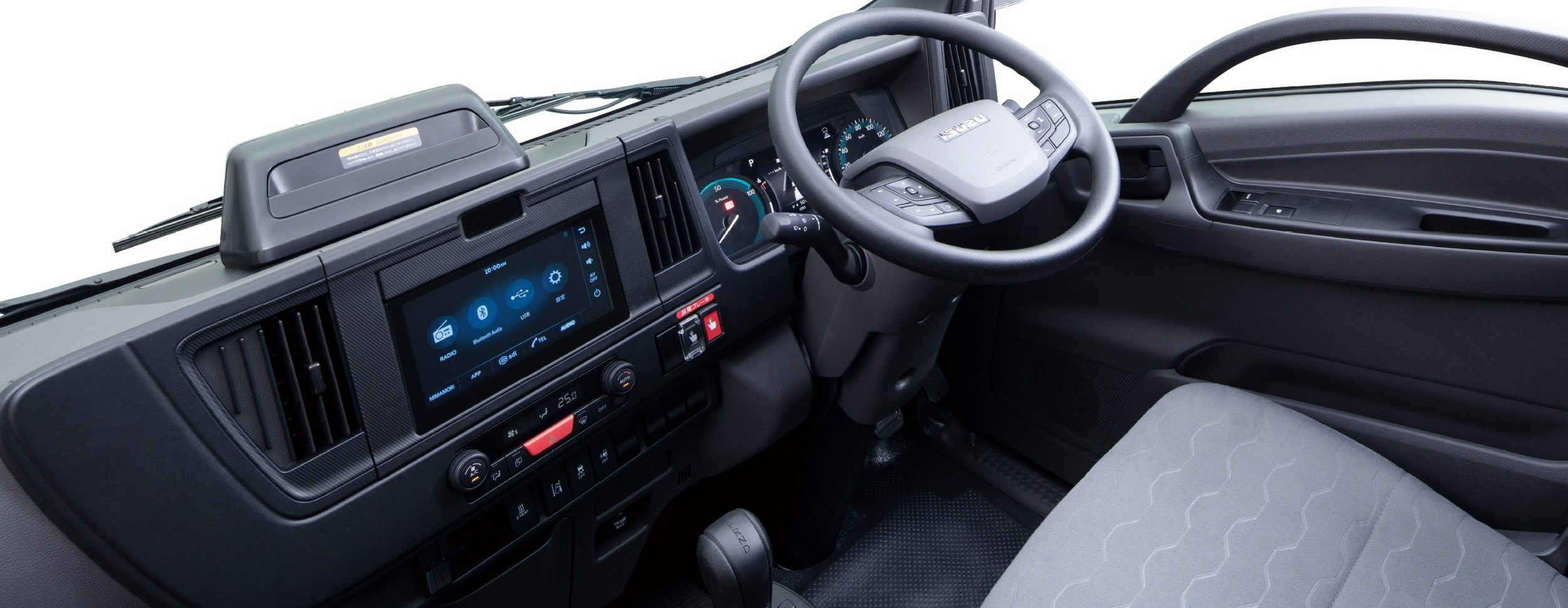
Toyota And Isuzu’s New Hydrogen Truck Solves The Problem Refrigerated Delivery EVs Can’t

  • Isuzu and Toyota are building Japan’s first hydrogen light-duty truck.
  • The fuel cell hardware is Toyota’s, the chassis is Isuzu’s Elf EV.
  • Toyota’s next fuel cell system delivers 20% better efficiency than before.

Hydrogen mobility might not be moving forward as quickly as expected in passenger cars, but it still has clear promise in the commercial space. The latest move comes from Isuzu and Toyota, which have teamed up to develop Japan’s first mass-produced light-duty fuel-cell electric truck, expected to reach the road within the next two years.

This won’t be a ground-up rethink. Instead, it rides on the familiar ladder-frame chassis of the Isuzu Elf EV. The electric Elf, known globally as the N-Series, arrived in 2023 with modular 20 kWh battery packs, scaling from 40 to 180 kWh depending on spec.

More: A Gullwing Door Hides The Coziest Room On Wheels

The real story sits under the skin. Toyota’s upcoming third-generation fuel-cell system takes center stage here, bringing a claimed 20% improvement in efficiency over the current setup. It is also expected to last longer and cope better with hard use, which matters when your daily routine involves stop-start urban logistics or hauling refrigerated goods across a city.

Why Hydrogen?

 Toyota And Isuzu’s New Hydrogen Truck Solves The Problem Refrigerated Delivery EVs Can’t

One of the primary drivers behind this FCEV project is the inherent limitation of battery-electric trucks in certain commercial roles. Light-duty trucks used for supermarket and convenience store deliveries often require heavy refrigeration equipment that drains battery power quickly. Furthermore, the long charging times associated with large battery packs can disrupt tight delivery schedules.

More: BMW iX5 Hydrogen Teased With 385 Miles Of Range

Hydrogen refueling, which takes roughly the same amount of time as diesel, offers a more seamless transition for fleet operators, while offering an extended driving range. At the same time, an FCEV truck produces much fewer vibrations and noise compared to a diesel-powered equivalent, while having zero CO2 emissions.

Reducing Costs Is The Key

 Toyota And Isuzu’s New Hydrogen Truck Solves The Problem Refrigerated Delivery EVs Can’t

The sticking point remains cost. Fuel-cell vehicles are still expensive, and hydrogen infrastructure is far from widespread. Isuzu and Toyota say the answer lies in smarter engineering, from optimizing the vehicle structure to rethinking manufacturing processes, alongside continued development of the fuel-cell system itself.

More: The Honda CR-V e:FCEV Is Living On Borrowed Time

Production of the light-duty fuel cell truck is scheduled to start in the Japanese fiscal year 2027, which ends on March 30, 2028.

This isn’t the first time the two companies have worked together on hydrogen. Isuzu and Toyota are already collaborating on the ERGA FCV, an urban flat-floor bus with hydrogen tanks integrated on its roof structure.

\\\\\\

VW Spent Years Removing Knobs From Its Cars, The ID.3 Neo Puts Them Back

  • The VW ID.3 Neo arrives as a successor with several key updates.
  • It gets sharper styling and an interior with welcome physical controls.
  • Three battery options are offered, with up to 391 miles of range.

Volkswagen has revealed a heavily updated version of its electric compact hatchback, giving it a new identity and a much-needed hardware boost to carry it through until the electric ID. Golf arrives later this decade. The ID.3 Neo brings cleaner styling and a welcome return to physical controls, along with more power and range at the top end.

The compact EV, still absent from North America, was originally introduced in 2019 and received a mild facelift in 2023. While the ID.3 Neo is not a new generation, it represents a comprehensive update designed to keep it competitive against the growing competition from China.

More: VW’s ID. Lineup Looked Like The Future, Turns Out People Wanted The Past

Starting with the exterior, the biggest change is the adoption of a thicker full-width LED strip that connects the slightly tweaked headlights and is joined by black trim. The VW emblem is positioned slightly lower than before, while the bumper gains sharper intakes.

\\\\\\\\\\\\\\\\\\\\

The rest of the bodywork is carried over, but the A-pillars, roof, rear spoiler, and tailgate gain a body-colored finish, replacing the previous glossy black treatment. According to the company, this makes the ID.3 Neo appear “longer, flatter, and more dynamic” than its predecessor.

Overall, the styling updates are not as extensive as one would expect, but they do bring the compact hatchback closer to the upcoming ID. Polo.

Overhauled Interior

Inside, Volkswagen has listened to critics and replaced its controversial touch-sensitive sliders and with traditional buttons. Those can be found on the new two-spoke steering wheel, and on the center console. The dashboard has been slightly redesigned with simpler lines and improved materials, while a wider center tunnel sits higher than before.

More: Finally, The 2027 VW Atlas Gets A Cabin You Won’t Have To Apologize For

Besides the clicky controls, the centerpiece is a new digital cockpit comprising a larger 10.25-inch instrument cluster and a 12.9-inch infotainment display. Those feature fresh graphics and simpler menus, following the example of the ID. Polo. The Innovision infotainment system comes with an integrated app store, offering options for video streaming, gaming, parking, and charging.

\\\\\\\\\\

Premium features such as an augmented reality head-up display, a panoramic sunroof, front seats with massage and memory functions, and a Harman Kardon Audio system are available as options.

More: VW’s Considering A Flagship SUV For Buyers Who Can Afford A Porsche But Won’t Drive One

In terms of safety, the ID.3 Neo will be available with an enhanced Connected Travel Assist system featuring optional traffic light recognition, and the optional Park Assist Pro with a memory function. Those join various standard ADAS such as Lane Assist, Front Assist, and turning brake function.

Powertrain Options

The ID.3 Neo launches in Europe with three outputs and battery configurations, bringing improved efficiency. The Entry model delivers 168 hp (140 kW / 170 PS) from a 50 kWh battery. The Mid version nudges that to 188 hp (140 kW / 190 PS), paired with a 58 kWh pack.

At the top, the High model makes the case for sticking around a bit longer. It produces 228 hp (170 kW / 231 PS) and uses a 79 kWh battery, good for a claimed WLTP range of 391 miles (630 km). That is the number that matters here, and it does most of the heavy lifting.

\\\\\\\\

Charging capacity has also been improved at 105 kW in the Entry and Mid versions, and up to 183 kW in the High. Furthermore, the EV gains Vehicle-to-Load (V2L) capability, allowing it to power external devices.

More: VW’s New Compact Sedan Costs Less Than Half What Americans Pay For A Jetta

For anyone still holding out for a bit of life, Volkswagen is said to be working on a quicker follow-up to the performance-focused ID.3 GTX. The smart money is on a GTI badge, which gives it some heritage to lean on, even if the driving experience has to do the rest of the talking.

Simplified Lineup

Pre-sales for the ID.3 Neo start in Germany and other European markets on April 16. While official pricing has yet to be announced, VW has simplified the trim structure reducing it to Trend, Life, and Style grades.

\\\\\\\\\\\

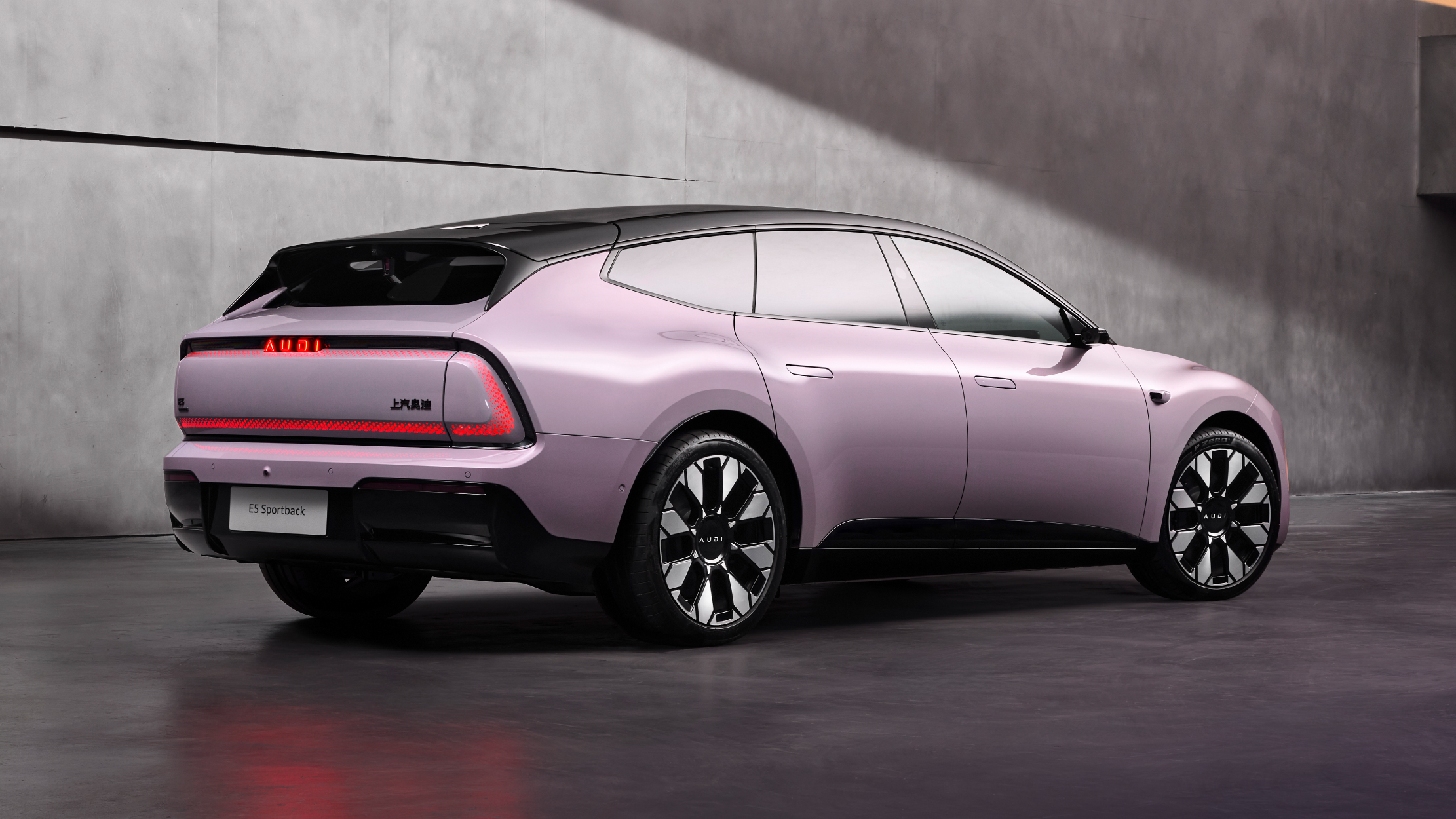
Audi’s China Brand Is Cutting Prices And Losing Sales, So It’s Building A Sporty Limo

  • A third model will arrive as a sporty limousine with new EV tech.
  • AUDI sales in China have slipped following last year’s launch.
  • The company will soon start deliveries of the full-size E7X SUV.

Audi’s China play is picking up pace, and the next move is already lined up. Audi’s partnership with SAIC in China will soon spawn its third model, following the E5 Sportback launched last year and the E7X, which will reach customers this quarter.

The German brand’s move to launch a dedicated offshoot, known as AUDI, without the four rings, was controversial but highlighted the ever-growing importance of the Chinese car market.

Read: The New AUDI E7X Looks Nothing Like The Audis You Know

Speaking with Reuters at a recent event in Beijing, the chief executive of the Audi and SAIC partnership, Fermin Soneira, confirmed that “the third car is already in the pipeline.” He described it as a sporty limousine aimed at the high-end market, though specifics remain firmly under wraps.

Audi’s Local EV Push

 Audi’s China Brand Is Cutting Prices And Losing Sales, So It’s Building A Sporty Limo
Audi E5 Sportback

Interestingly, Audi has just unveiled a new high-end luxury sedan in China, albeit through its FAW joint venture. This new model, known as the A6L e-tron, will be built in Changchun and is an extended wheelbase of the A6 e-tron sold in other markets. It’s underpinned by the company’s familiar Premium Platform Electric (PPE) architecture and includes 800-volt technology.

While the tie-up with SAIC is expanding, it is experiencing some growing pains. When order books were first opened for the E5 Sportback, AUDI locked in around 10,000 orders for the EV. However, sales have started to decline, with roughly 6,500 sold since January, in part due to the withdrawal of some government subsidies. This decline has forced the brand to cut prices by up to €3,700 ($4,400).

The larger and more expensive AUDI E7X also faces an uphill battle. Positioned as a large, ultra-luxurious electric SUV, it’s in direct competition with rivals from Zeekr, Xiaomi, Li Auto, and others. Powering the base model is a rear-mounted electric motor with 402 hp, while the flagship version has two motors, all-wheel drive, and muscles out 671 hp.

\\\\\\\\
Before yesterdayElectric Vehicles - Latest News | Carscoops

Lucid’s Elevator CEO Gets A $1.5M Salary, Two Company Cars, And A $1M Moving Allowance

  • Lucid Motors has named Silvio Napoli as their new CEO.
  • Company also announced $750 million worth of investments.
  • Uber is increasing their Lucid order by at least 15,000 units.

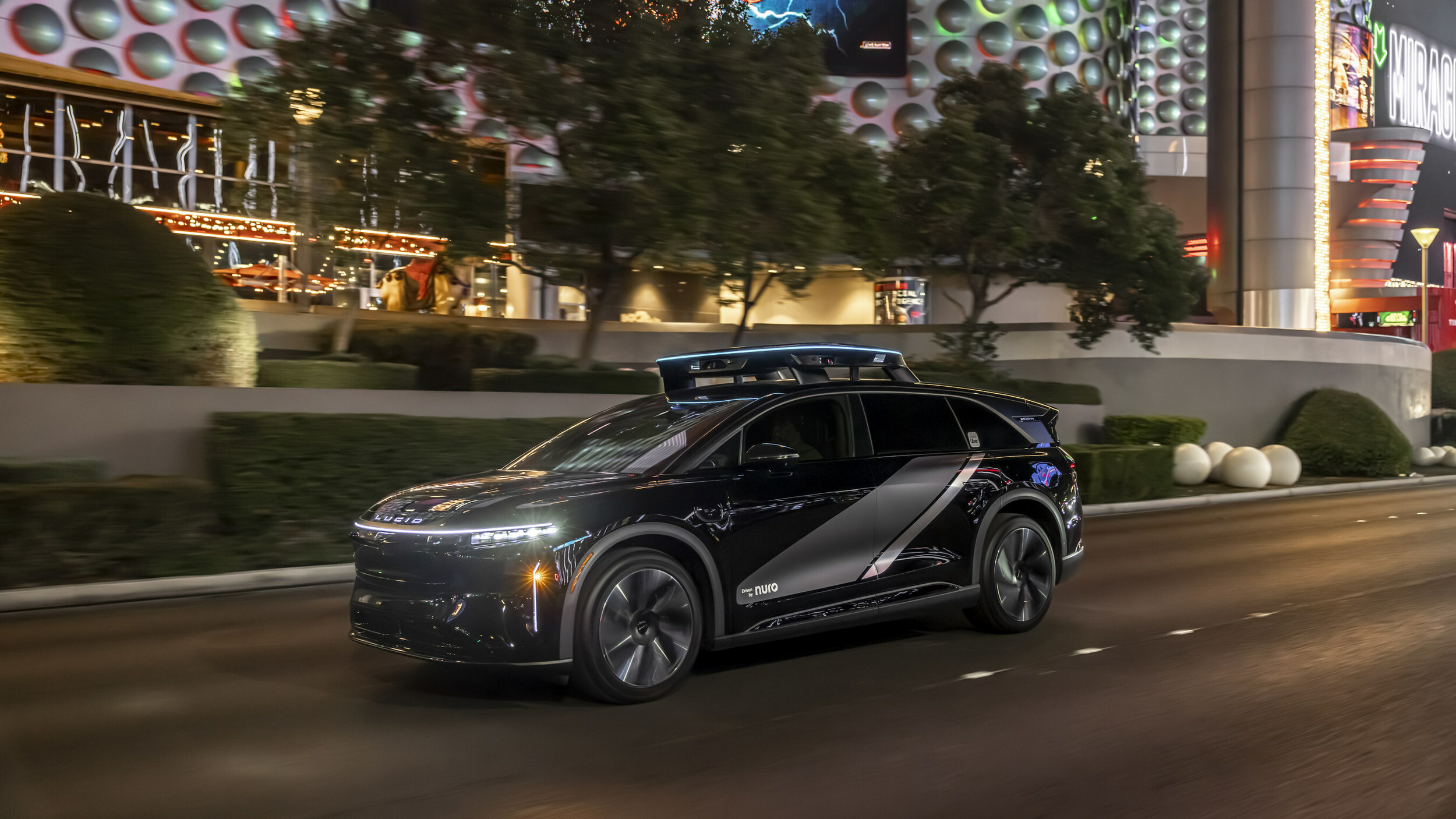
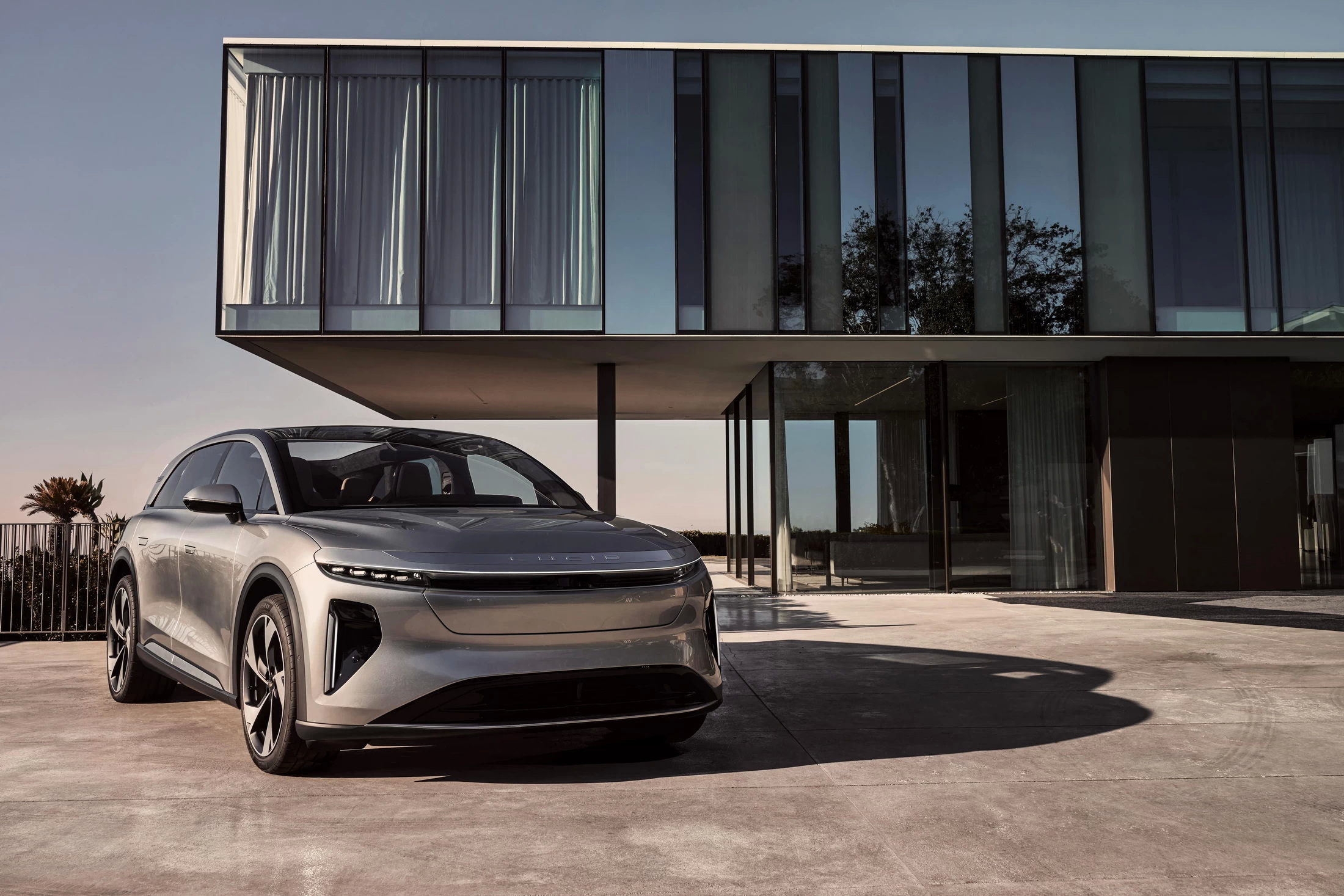
Lucid Motors should be doing great as they finally added a much-needed crossover to their lineup in the form of the Gravity. The model was recently named World Luxury Car, but it hasn’t reversed the company’s fortunes.

Given this, the automaker has announced a series of developments including the appointment of a new CEO. Silvio Napoli has been tapped for the top spot and he’ll replace interim CEO Marc Winterhoff, who will be transitioning to COO.

More: Uber And Lucid Partner For Thousands Of Robotaxis

While Napoli isn’t a household name, he was previously CEO of Switzerland’s Schindler Group, which makes elevators, escalators, and moving walks. That’s not exactly automotive experience, but Lucid praised his “deep operational expertise, financial discipline, and track record of leadership in innovation.”

 Lucid’s Elevator CEO Gets A $1.5M Salary, Two Company Cars, And A $1M Moving Allowance

In a Form 8-K filing, Lucid revealed Napoli will have a base salary of $1,500,000 and the potential to make $4,500,000 if certain performance targets are hit. He’s also getting up to $25,000 per month in temporary housing expenses for half a year as well as a “lump sum payment of $1,000,000 to cover any expenses in connection with moving to the US.”

Napoli will also get two company cars, security, as well as tax and financial planning support. If that wasn’t enough, the company also mentioned a “long-term incentive grant” with a target value of $9,500,000.

Bigger Uber Order And New Investments

 Lucid’s Elevator CEO Gets A $1.5M Salary, Two Company Cars, And A $1M Moving Allowance

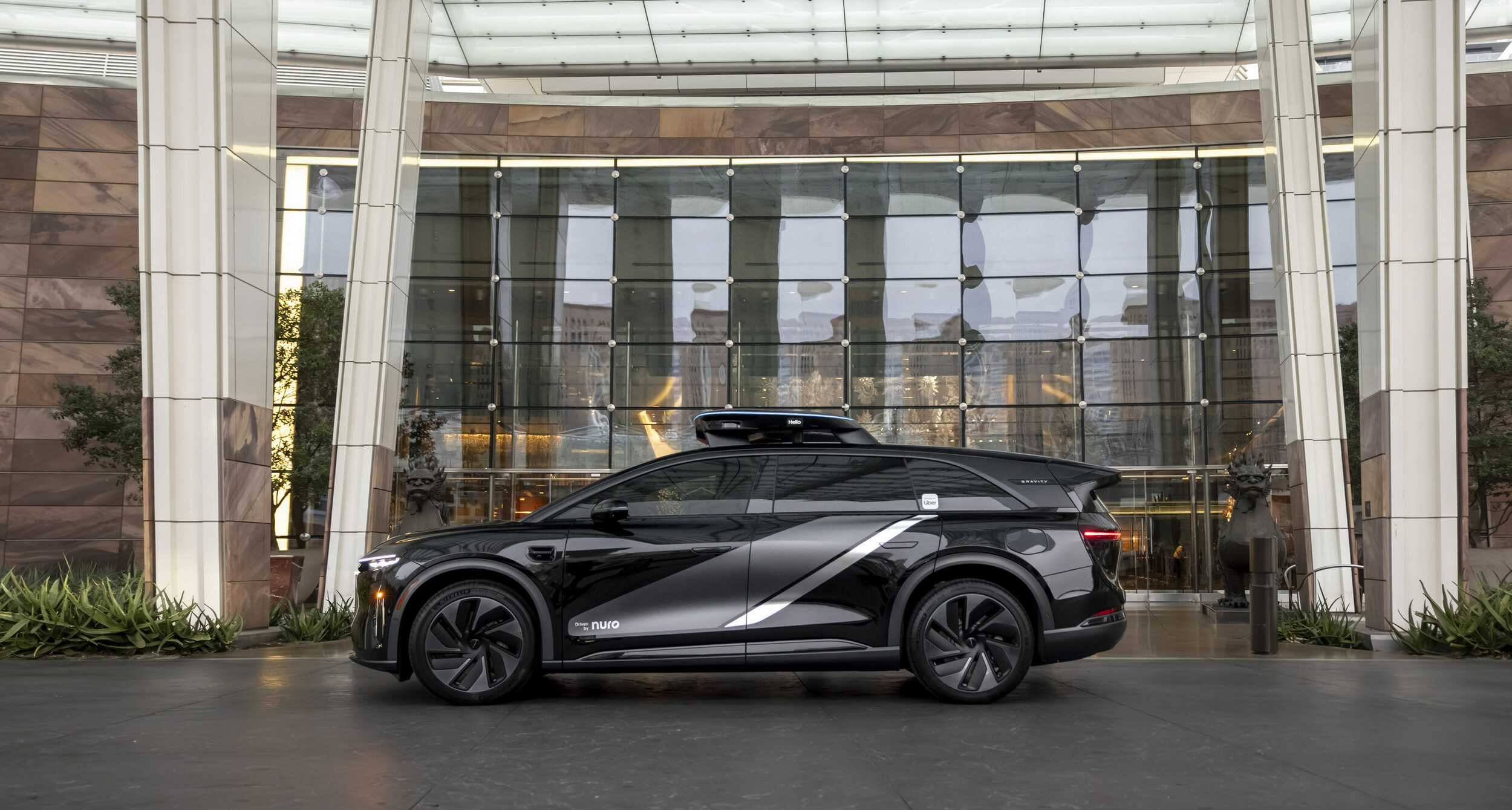
Besides announcing a new CEO, Lucid revealed Uber is increasing their previously announced order of at least 20,000 Gravity SUVs to be used as robotaxis as part of a three-way tie up with Nuro. The service is scheduled to launch this year in the San Francisco Bay area and eventually spread to dozens of markets around the world.

The order has now been expanded to at least 35,000 vehicles and the ride-hailing giant has also promised to invest an additional $200 million into Lucid. This will raise their total investment into the firm to $500 million.

 Lucid’s Elevator CEO Gets A $1.5M Salary, Two Company Cars, And A $1M Moving Allowance

Uber isn’t the only one forking over the dough as the Ayar Third Investment Company is pumping $550 million into Lucid. They’re an affiliate of Saudi Arabia’s Public Investment Fund, which is a major backer of the automaker.

Winterhoff said “Today’s announcement demonstrates the growing strength of our relationship with Uber, our continued partnership with the PIF, and the benefits our software-defined EV platforms bring to next-generation mobility networks.” He added, “This is yet another milestone in our partnership with Uber and Nuro, and we look forward to building on our momentum together in the years to come.”

 Lucid’s Elevator CEO Gets A $1.5M Salary, Two Company Cars, And A $1M Moving Allowance

Tesla’s Signature Edition Buyers Face A $50,000 Resale Ban Tesla Already Failed To Enforce Once

  • Tesla’s final Signature Edition Models come with a one-year no-resale clause.
  • Flip one earlier than that, and Tesla could demand at least $50,000.
  • Lifetime FSD, free Supercharging, and connectivity die with the first owner.

Production of the Tesla Model S and Model X is ending with 350 Signature Edition cars. Each one gets a ton of perks and a premium price tag. On top of that, buyers have to agree not to sell for at least one year from delivery. Tesla has tried and failed to enforce this type of thing before. This time, it might have figured out the right levers to pull.

Buyers of the last-ever Signature Edition versions of the Model S Plaid and Model X Plaid will reportedly have to sign a strict no-resale agreement before taking delivery. According to the order documents spotted by Not A Tesla App, owners agree not to sell or even attempt to sell the vehicle within the first year after delivery. Breaking the agreement evidently makes owners subject to liquidated damages of $50,000 or however much profit they make, whichever is greater.

More: You’d Have To Be High To Pay $159,420 For Tesla’s Signature Editions

The move is clearly aimed at keeping speculators from immediately flipping the final 350 Signature Editions for huge profits. Tesla is only building 250 examples of the Model S and 100 of the Model X, each finished in exclusive Garnet Red paint with gold badging and unique trim. Tesla tried this with the Cybertruck and the entire scheme fell apart, aside from the brand allegedly blacklisting some customers.

The policy was met with immediate backlash. Owners argued Tesla was trying to control something they had already paid for, while others simply ignored the clause and listed their trucks anyway. Within months, Tesla quietly dropped the restriction as Cybertruck supply increased and the market cooled. This time around, there are some key differences.

Signature Edition Model S/X orders contain a No Resale Agreement.

Here is the document.

Additionally, here is the resale clause which states the Luxe Package does not transfer (this is not new) pic.twitter.com/CGB5QBJIL6

— The Cybertruck Guy (@cybrtrkguy) April 12, 2026

The new agreement is cleaner and potentially easier to enforce. Unlike the Cybertruck contract, which relied on vague “unforeseen reason” language, the Signature Edition version flatly says owners cannot “sell or otherwise attempt to sell” the car within a year.

Tesla also has a stronger case because these are truly limited: just 350 cars total, versus thousands of Cybertrucks. Most importantly, Tesla made the biggest perks like FSD, free Supercharging, and Premium Connectivity non-transferable. That means even after a year, the car is worth less to a second owner, reducing the incentive to flip it in the first place. Will that stop every buyer from selling within 12 months? We doubt it.

NEWS: Tesla has announced a Signature Edition Model S and Model X as a final goodbye for these two vehicles.

• Price: $159,420
• Only 250 Model S & 100 Model X Signature Editions will be built. All Plaid variants.
• Garnet Red exterior paint
• Matching Garnet Red Door… https://t.co/3FYGlbKEa2 pic.twitter.com/VA8NZN8Mht

— Sawyer Merritt (@SawyerMerritt) April 11, 2026

BMW Pulls The iX From America As A Better, Cheaper Alternative Waits In The Wings

  • BMW is discontinuing sales of the iX in the United States.
  • The company is instead turning its attention to the new iX3.
  • iX will continue to be sold in other global markets for now.

BMW iX sales fell 50.7% in the United States during the first quarter as dealers only managed to move 1,788 units. It appears this was the last straw as the electric crossover is being dropped in America.

In a statement to BMW Blog, a spokesperson said “Our success in the U.S. is driven by a broad and flexible powertrain portfolio that allows us to navigate a dynamic environment, while continuing to evolve our lineup. As part of this progression, we are concluding U.S. allocation of the BMW iX as we prepare for the next-generation of our fully electric vehicles.”

More: BMW’s Entry-Level iX3 Saves You Thousands, But There’s A Range Cut

The spokesperson went on to say, “We are proud of what we have accomplished with the BMW iX” as it was a “technological showcase” that pushed the “boundaries of design, manufacturing, sustainability, and circularity.” Despite the iX’s demise, the company said they’re fully committed to electrification in America and they’re turning their attention to Neue Klasse models.

The effort will begin with the iX3, which was introduced last fall. The crossover will come stateside during the middle of the year and the company has previously said the iX3 50 xDrive will start around $60,000.

\\\\\\\\\

It features a 112.2 kWh battery pack as well as a dual-motor all-wheel drive system developing 463 hp (345 kW / 469 PS) and 476 lb-ft (645 Nm) of torque. This enables the model to accelerate from 0-60 mph (0-96 km/h) in approximately 4.7 seconds and have an EPA-estimated range of 400 miles (644 km). When the battery is low, a 400 kW DC fast charger will be able to provide 175 miles (282 km) of range in as little as ten minutes.

Those numbers easily beat the iX, which was launched in 2021. As a refresher, the entry-level variant starts at $75,150 and has a 94.8 kWh battery pack as well as a combined output of 402 hp (300 kW / 408 PS) and 516 lb-ft (699 Nm).

This enables the iX xDrive45 to hit 60 mph (96 km/h) in 4.9 seconds, before topping out at 124 mph (200 km/h). The model also has a range of up to 312 miles (502 km) as well as a 175 kW DC fast charging capability that delivers a mere 78 miles (126 km) of range in ten minutes.

\\\\\\\\\\

Audi’s New RS Q6 Is Essentially A Porsche With Different Badges

  • The Audi RS Q6 Sportback e-tron was spied testing at the Nürburgring.
  • The electric coupe gets a sharper face, fender vents, and a new diffuser.
  • It will likely use dual motors and all-wheel drive with around 600 hp.

It’s been nearly two years since spy photographers last spotted the Audi RS Q6 Sportback e-tron, but it’s back on the Nürburgring and gearing up for a possible debut later this year.

Designed to slot above the SQ6 Sportback, the high-performance variant features a unique front fascia with a more aggressive lower intake. It features angular accents, honeycomb mesh inserts, and triangular elements with horizontal bars. We can also see a special surround, which recalls the look of AUDI models in China and features vertical air curtains at the outside edges.

More: Audi RS Q6 Sportback E-Tron Spied, Could Pack A 600+ HP Punch

A number of the vents likely channel air to the beefier front braking system, which appears to have significantly larger calipers. On the topic of air flow, the model has subtle front fender vents that are tall and skinny. We can also expect the crossover to ride on model-specific lightweight wheels.

The rear end largely carries over, but the RS Q6 has been equipped with a new bumper and sportier diffuser. The latter features a prominent central channel as well as protruding elements where a four-tailpipe exhaust system would typically reside. We can also see a familiar spoiler and rear light bar.

\\\\\\\\\\\\

Baldauf

There isn’t much to see inside, but the model should have an 11.9-inch digital instrument cluster, a 14.5-inch infotainment system, and a 10.9-inch front passenger display. They should be joined by sport seats, carbon fiber trim, and plenty of RS badging.

Powertrain details are more mysterious, but the model should echo the SQ6 which has a 100 kWh battery pack and a dual-motor all-wheel drive system developing up to 510 hp (380 kW / 517 PS) with launch control. However, the RS variant will be significantly more powerful and likely take a page from the Porsche Macan Turbo Electric.

The Audi’s PPE platform mate has a combined output of up to 630 hp (470 kW / 639 PS) and 833 lb-ft (1,129 Nm) of torque. This enables the Macan to rocket from 0-60 mph (0-96 km/h) in 3.1 seconds, run the quarter mile in 11.4 seconds, and eventually top out at 162 mph (261 km/h).

\\\\\\\\\\

Baldauf

America’s EV Sales Fell By Nearly A Third, But Toyota Jumped 79%

  • Just a handful of brands have reported increased EV sales in the USA.
  • Companies performing well include Toyota, Rivian, Lucid, and Cadillac.
  • Audi’s EV sales collapsed by 89.6 percent in Q1, and BMW’s by 63.3 percent.

It was inevitable that sales of new EVs would slide in the US after the Trump administration axed the long-standing $7,500 federal tax credit at the end of September. New data shows that sales fell off a cliff in the final quarter of last year, but they’ve since started to somewhat stabilize, indicating we may have hit a new normal.

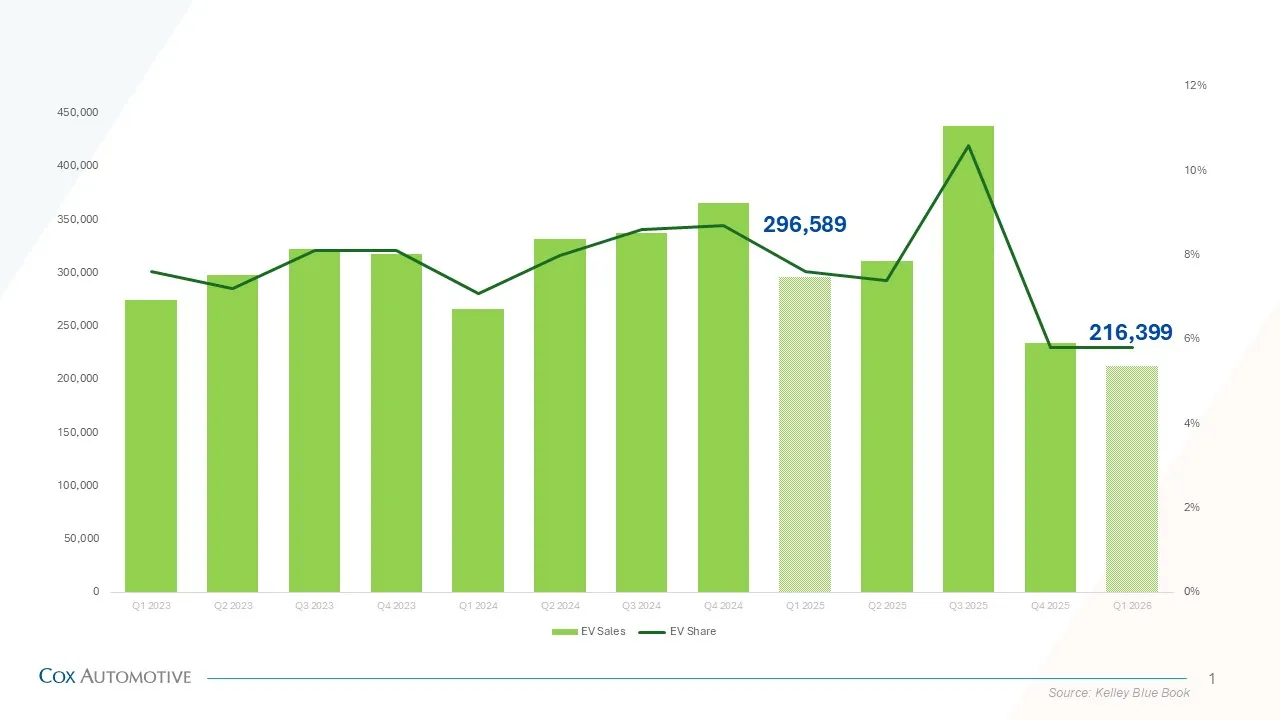
During the first three months of this year, 216,399 new EVs are estimated to have been sold nationwide. This is down 27 percent from the first quarter of 2025 and is also down 7.8 percent from Q4 2025.

Read: EV Prices Are Falling, But Automakers Are Eating Nearly $8,000 Per Sale To Pull It Off

While this decline is noteworthy, it was as significant as the drop-off seen in Q4 last year, when sales plunged 36 percent year-over-year and 46 percent from the previous quarter, which was the last quarter before the tax credit was axed.

 America’s EV Sales Fell By Nearly A Third, But Toyota Jumped 79%
Cox Automotive

“The U.S. EV market has clearly entered a new phase,” director of insights at Cox Automotive, Stephanie Valdez Streaty noted. “With federal incentives gone, the first quarter reflected a necessary reset – sales slowed and market share shifted. What comes next will be driven less by policy and more by fundamentals: more affordable products, smarter pricing strategies, and continued investment in infrastructure. Those longer-term fundamentals continue to support EV growth. The timeline has shifted, but the direction hasn’t.” 

The Losers And The Winners

Most brands saw their EV sales slip significantly last quarter compared to the same period in 2025. For example, Audi’s EV sales were down 89.6 percent, BMW’s by 63.3 percent, Dodge’s by 87.7 percent, Genesis’ by 89 percent, and Honda’s were down 65.3 percent. However, there were a few exceptions to this general trend.

For example, Lexus EVs rose 206.7 percent to 4,456 units, Rivian by 21.2 percent to 10,365, Cadillac’s by 19.8 percent, Lucid’s by 3.5 percent, and Toyota’s EV sales climbed 79 percent to 10,042, thanks to strong demand for the updated BZ.

USA EV Sales
BrandQ1-26Q1-25Diff.
Acura734,813-98.5%
Audi6355,905-89.6%
BMW4,96313,538-63.3%
Cadillac9,5517,97219.8%
Chevrolet13,35919,186-30.4%
Dodge2401,947-87.7%
Fiat68448-84.8%
Ford6,86022,550-69.6%
Genesis1641,496-89.0%
GMC2,9414,728-37.8%
Honda3,3199,561-65.3%
Hyundai12,66212,851-1.5%
Jeep1932,595-92.6%
Kia5,2798,695-39.3%
Lexus4,4561,454206.7%
Lucid2,5512,4643.5%
Mercedes1,1123,570-68.9%
Mini202669-69.8%
Nissan7246,471-88.8%
Porsche1,2804,358-70.6%
Ram223
Rivian10,3658,55321.2%
Subaru3,0413,131-2.9%
Tesla117,300128,100-8.4%
Toyota10,0425,61079.0%
Volvo2,3433,026-22.6%
VW1,1779,564-87.7%
Other Brands1,2763,334-61.7%
Total (Estimates)216,399296,589-27.0%
SWIPE

Rolls-Royce Calls The Nightingale Its Most Accessible Coachbuild. It Starts At $9.5 Million

  • Rolls-Royce’s Nightingale is a fully electric, two-seat coachbuild.
  • At 226.8 inches, it matches the Phantom sedan in overall length.
  • The cabin ceiling uses 10,500 stars patterned on a nightingale’s song.

While several automakers quietly scale back their EV projects, Rolls-Royce is doing the opposite, and doing it in typical fashion. The Project Nightingale arrives as an exclusive two-door convertible, marking the first entry in the company’s Coachbuild Collection with bespoke styling and a strictly limited run of 100 units

With a length of 5.76 meters (226.8 inches), the Nightingale closely mirrors the Phantom sedan in sheer presence. It adopts a raked windscreen, a two-seat cabin, a long, tapering tail, and a set of 24-inch directional wheels styled to echo yacht propellers.

More: Rolls-Royce’s Electric SUV Revives A Long-Forgotten Hood Design

The front is dominated by the Pantheon Grille, carved from a solid block of stainless steel, and flanked by ultra-slim vertical LED headlights. Those are connected to the split LED taillights through polished stainless-steel bands that run across the entire length of the car. Furthermore, a sophisticated diffuser manages airflow without the need for a spoiler, a feat made possible by the absence of exhaust pipes.

\\\\\\\\\\\\\

The pictured model is painted in Cote d’Azur Blue infused with subtle red flakes, combined with silver accents and a matching soft top. This pale blue shade is inspired by the experimental Rolls-Royce 17EX from 1928.

Two-Seater Cabin

Inside, the dashboard looks familiar, but the cabin only has two seats, framed by horseshoe-shaped forms. The saddle-like armrest glides rearwards to reveal the Spirit of Ecstasy controller, which is one of the five rotary controls.

More: This Exclusive Rolls-Royce Was 100 Years In The Making

Another highlight is the “Starlight Breeze” with 10,500 individual fiber-optic stars that wrap around the occupants. In typical Rolls-Royce fashion, these are not arranged in a random order, but with a special pattern derived from the sound-wave analysis of a nightingale’s song

\\\\\\\\\

For the launch vehicle, designers chose a combination of Charles Blue with Grace White, joined by Deep Navy details, Peony Pink accents, and Openpore Blackwood inserts.

More: When A Tech Billionaire Says Game On, Rolls-Royce Unlocks A Secret Level

To maintain the romance of open-top driving, the roof uses a composite blend of cashmere and high-performance fabrics, specifically tuned to let the sound of raindrops through while blocking mechanical noise.

Shared Underpinnings

Naturally, the Nightingale shares the “Architecture of Luxury” aluminum spaceframe chassis with the rest of the Rolls-Royce lineup. It also uses the same fully electric powertrain, currently employed by the Spectre.

Specifications remain under wraps, but the company promised to unveil more details as the vehicle “progresses through its global testing and development program”.

Rolls-Royce Decides Who Will Buy It

The Nightingale is significantly less exclusive than coachbuilt specials from the recent past like the Sweptail, Boat Tail, and Drop Tail. More specifically, the model will be manufactured in 100 units, with owners hand-picked from the firm. Deliveries are scheduled to begin in 2028.

As reported by Autocar, the starting price is approximately £7 million ($9.5 million), although the final cost is expected to climb following extensive personalization options. Besides the vehicle itself, the Coachbuild Collection program includes behind-the-scenes access to design and testing, plus global curated events.

\\\\\\\\\\\\\\\\\\\\\
\\\\\

Nissan’s Strangest-Looking SUV Just Got Stranger, And It’s Going Electric To Prove It

  • The new Juke goes on sale in early 2027 as a pure electric crossover.
  • Its platform is shared with the Renault Scenic E-Tech and the Alpine A390.
  • Nissan will keep the second-gen hybrid model on sale alongside the new EV.

The Nissan Juke has always stood out from the crowd, sporting a unique shape that’s allowed it to remain a solid option despite competition in its segment always increasing. At its Vision event in Japan, Nissan has unveiled the third-generation Juke, and it’s even more striking than we could have predicted.

The new Juke will be sold exclusively as an EV and will be built at the brand’s British site in Sunderland, alongside the Leaf. It’s based on the CMF-EV or AmpR Medium platform used by the likes of the Renault Scenic E-Tech, Alpine A390, and Nissan Ariya, and is scheduled to launch globally in the spring of next year.

Read: Nissan’s New Rogue Wants To Take The RAV4’s Hybrid Crown

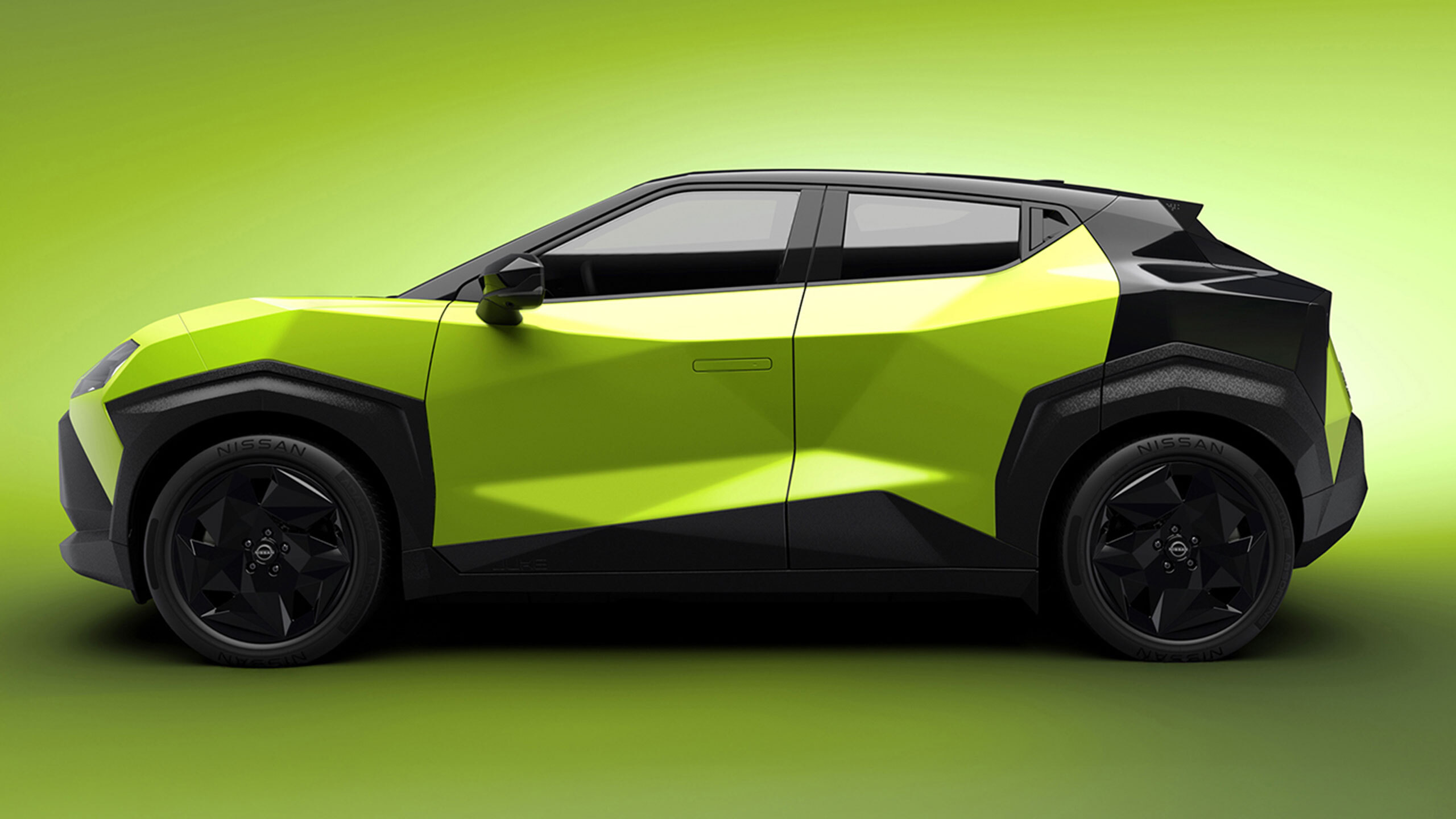
Nissan has yet to release final specifications for the Juke, nor has it released any photos of the crossover’s interior. However, it has unveiled the full exterior design, and it looks unlike any other model Nissan sells. In fact, the design is striking enough that it looks more like a concept car than one that’ll be sold to the public.

Concept Looks

 Nissan’s Strangest-Looking SUV Just Got Stranger, And It’s Going Electric To Prove It

The design is dominated by sharp and jagged lines, starting at the front with a large blacked-out grille and intriguing headlights. It’s also been showcased with angular black wheel arches, while much of the body is finished in a bright shade of green. This color really helps to highlight the profile of the Juke, particularly the wild door skins.

As with the outgoing Juke, the handles for the rear doors remain on the C-pillars. Like the front, the rear is bold with intricate LED taillights and a distinctive tailgate.

Like the current Leaf, the new Nissan Leaf EV will support vehicle-to-grid technology. The battery packs will likely mimic those of the Nissan Leaf, meaning it could be offered with 52 kWh and 75 kWh packs. Interestingly, the existing second-generation Juke isn’t going anywhere.

Despite originally planning to replace the old model with this new one, the second and third-gen versions will instead be sold alongside each other. It’s understood that Nissan will update the design of the old model to mimic the new EV.

\\\\\

Mercedes Gave The 2027 EQS Up To 575 Miles Of Range, And The Yoke’s On You

  • Mercedes moves the EQS to 800V setup, lifting peak charging to 350kW.
  • A modest 3% battery increase results in a 13% real-world range gain.
  • Steer-by-wire replaces the steering with a yoke and a 270-degree lock.

Mercedes-Benz has already decided the EQS won’t get a second generation. Instead, the next S-Class will carry the load, offered in both combustion and all-electric forms. Even so, the EQS isn’t done just yet. The brand has rolled out a comprehensive second facelift, packing in a slew of new technologies that might finally persuade a few more buyers to give the polarizing blob a chance.

Four versions have been confirmed at this stage, known as the EQS 400, EQS 450+, EQS 500 4Matic, and EQS 580 4Matic, the latter three of which are all equipped with 800-volt electrical architectures and 122 kWh battery packs that promise improved energy density. The news EQS 400 has a smaller 112 kW pack.

Read: Mercedes Is Betting On A Yoke To Save The Disastrous EQS

Mercedes has also improved the charging abilities of the EV, as it now supports DC charging of up to 350 kW, meaning 199 miles (320 km) of range can be added in 10 minutes. This has been achieved by implementing software that virtually divides the battery pack into two parts, charging each with 400 volts at up to 175 kW.

 Mercedes Gave The 2027 EQS Up To 575 Miles Of Range, And The Yoke’s On You

In addition to the new battery, Mercedes has incorporated new electric motors for all versions. The base EQS 400 delivers 362 hp (270 kW), while the EQS 500 4Matic ups this to 469 hp (350 kW), and the EQS 580 4Matic delivers 577 hp (430 kW) and 590 lb-ft (800 Nm).

Range figures haven’t been announced for all models, but we know the EQS 450+ has a WLTP-rated range of 575 miles (926 km) with claimed energy consumption of between 15.4 kWh/100 km and 19.3 kWh/100 km. All models are also equipped with a two-speed transmission with the first gear focused on providing quick acceleration and the second kicking in at high speeds to boost efficiency.

Perhaps the most significant change made is the implementation of steer-by-wire technology, as pioneered by Lexus and Tesla. The steering ratio has been set at 4:1 at low speeds, allowing drivers to make low-speed maneuvers without needing to repeatedly cross their hands over the steering wheel.

Even More Tech-Focused Than Before

\\

Speaking of the steering wheel, it has morphed into a Tesla-like yoke – which is bound to be controversial. Crucially, Mercedes will continue offering it with a more traditional wheel and electro-mechanical steering, rather than the fancy steer-by-wire system. In addition to the new system, Mercedes has further developed its air suspension system to improve comfort even further.

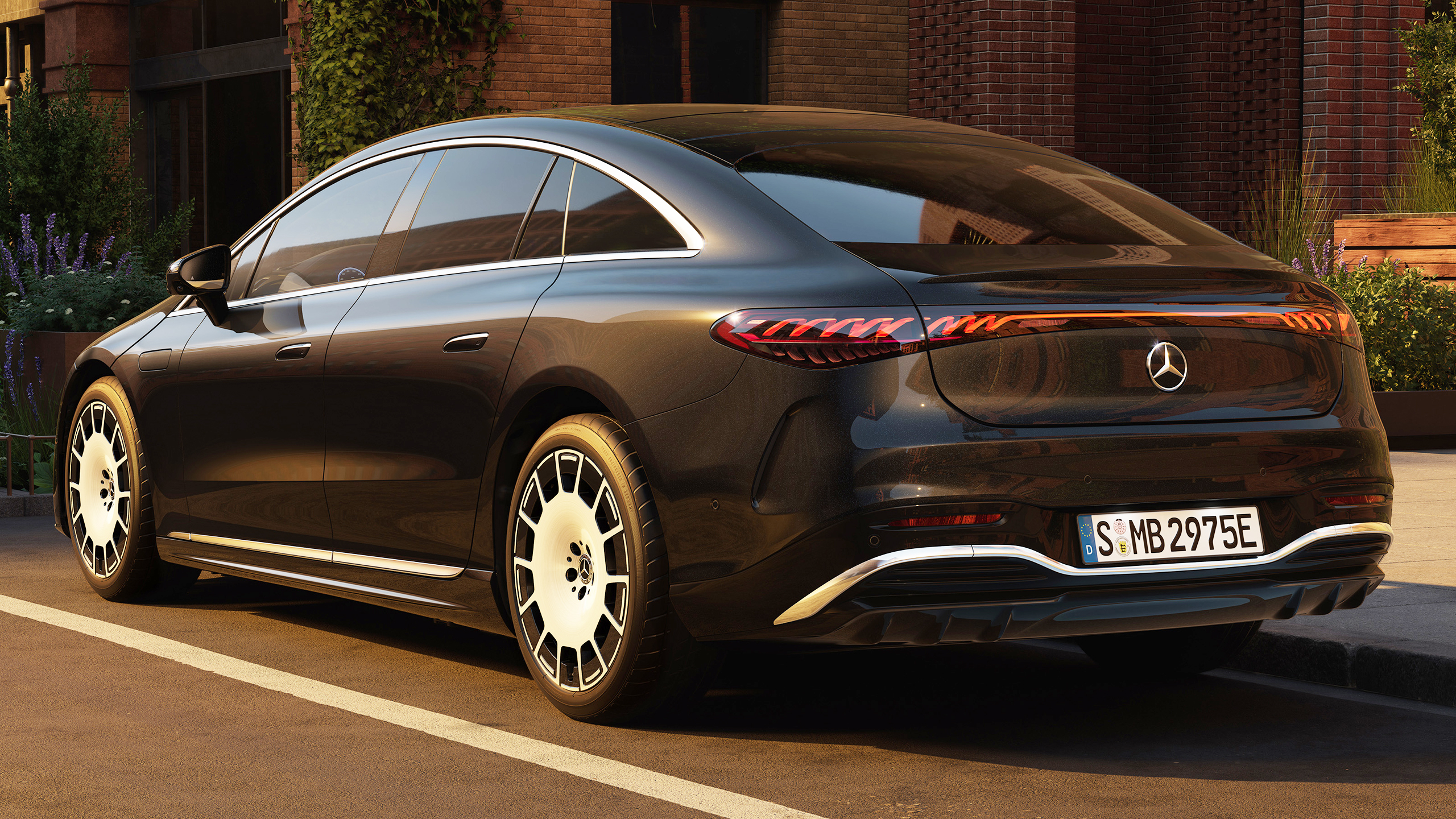
Visually, the updated EQS is distinguished from the old model thanks to a revised front fascia with a new blacked-out grille complete with dozens of three-pointed stars, and new headlights with star-shaped DRLs.

\\\\\\\\\

With the exception of the yoke wheel, the interior is mostly familiar. With that being said, there’s now Mercedes-Benz’s latest Operating System (MB.OS) and the new MBUX Virtual Assistant. The massive Hyperscreen remains, while found in the new 13.1-inch entertainment screens are found in the second row.

US pricing has yet to be announced, but in Europe, we know prices kick off from €94,403 ($111,000) for the EQS 400, €108,635 ($127,700) for the EQS 450+, €123,285 ($145,000) for the EQS 500 4Matic, and €134,732 ($158,500) for the EQS 580 4Matic.

\\\\

Nissan’s New Juke EV Looks More Concept Than Reality

  • The Juke EV shares its platform with the Nissan Ariya and Renault Megane E-Tech.
  • Nissan will continue selling the outgoing hybrid model alongside this new EV.
  • The new electric crossover will hit the market in the spring of 2027.

The Nissan Juke has always stood out from the crowd, sporting a unique shape that’s allowed it to remain a solid option despite competition in its segment always increasing. At its Vision event in Japan, Nissan has unveiled the third-generation Juke, and it’s even more striking than we could have predicted.

The new Juke will be sold exclusively as an EV and will be built at the brand’s British site in Sunderland, alongside the Leaf. It’s based on the CMF-EV or AmpR Medium platform used by the likes of the Renault Scenic E-Tech, Alpine A390, and Nissan Ariya, and is scheduled to launch globally in the spring of next year.

Read: Nissan’s New Rogue Wants To Take The RAV4’s Hybrid Crown

Nissan has yet to release final specifications for the Juke, nor has it released any photos of the crossover’s interior. However, it has unveiled the full exterior design, and it looks unlike any other model Nissan sells. In fact, the design is striking enough that it looks more like a concept car than one that’ll be sold to the public.

Concept Looks

 Nissan’s New Juke EV Looks More Concept Than Reality

The design is dominated by sharp and jagged lines, starting at the front with a large blacked-out grille and intriguing headlights. It’s also been showcased with angular black wheel arches, while much of the body is finished in a bright shade of green. This color really helps to highlight the profile of the Juke, particularly the wild door skins.

As with the outgoing Juke, the handles for the rear doors remain on the C-pillars. Like the front, the rear is bold with intricate LED taillights and a distinctive tailgate.

Like the current Leaf, the new Nissan Leaf EV will support vehicle-to-grid technology. The battery packs will likely mimic those of the Nissan Leaf, meaning it could be offered with 52 kWh and 75 kWh packs. Interestingly, the existing second-generation Juke isn’t going anywhere.

Despite originally planning to replace the old model with this new one, the second and third-gen versions will instead be sold alongside each other. It’s understood that Nissan will update the design of the old model to mimic the new EV.

\\\\\

With A Yoke And More Range, The Failed Mercedes EQS Steps Into The Future

  • Mercedes has made some important technical upgrades to the EQS.
  • Most versions have a larger 122 kWh battery pack with up to 575 miles of range.
  • Just like Tesla and Lexus, the EQS has been updated with steer-by-wire tech.

Mercedes-Benz isn’t planning a second generation of the EQS, and instead, will sell the future S-Class in both combustion and all-electric guises. Despite this, the brand has just introduced a comprehensive second facelift for the EQS, bringing with it a host of new technologies that may finally convince a small number of shoppers to actually buy the blob.

Four versions have been confirmed at this stage, known as the EQS 400, EQS 450+, EQS 500 4Matic, and EQS 580 4Matic, the latter three of which are all equipped with 800-volt electrical architectures and 122 kWh battery packs that promise improved energy density. The news EQS 400 has a smaller 112 kW pack.

Read: Mercedes Is Betting On A Yoke To Save The Disastrous EQS

Mercedes has also improved the charging abilities of the EV, as it now supports DC charging of up to 350 kW, meaning 199 miles (320 km) of range can be added in 10 minutes. This has been achieved by implementing software that virtually divides the battery pack into two parts, charging each with 400 volts at up to 175 kW.

In addition to the new battery, Mercedes has incorporated new electric motors for all versions. The base EQS 400 delivers 362 hp (270 kW), while the EQS 500 4Matic ups this to 469 hp (350 kW), and the EQS 580 4Matic delivers 577 hp (430 kW) and 590 lb-ft (800 Nm).

 With A Yoke And More Range, The Failed Mercedes EQS Steps Into The Future

Range figures haven’t been announced for all models, but we know the EQS 450+ has a WLTP-rated range of 575 miles (926 km) with claimed energy consumption of between 15.4 kWh/100 km and 19.3 kWh/100 km. All models are also equipped with a two-speed transmission with the first gear focused on providing quick acceleration and the second kicking in at high speeds to boost efficiency.

Perhaps the most significant change made is the implementation of steer-by-wire technology, as pioneered by Lexus and Tesla. The steering ratio has been set at 4:1 at low speeds, allowing drivers to make low-speed maneuvers without needing to repeatedly cross their hands over the steering wheel.

Even More Tech-Focused Than Before

 With A Yoke And More Range, The Failed Mercedes EQS Steps Into The Future

Speaking of the steering wheel, it has morphed into a Tesla-like yoke – which is bound to be controversial. Crucially, Mercedes will continue offering it with a more traditional wheel and electro-mechanical steering, rather than the fancy steer-by-wire system. In addition to the new system, Mercedes has further developed its air suspension system to improve comfort even further.

Visually, the updated EQS is distinguished from the old model thanks to a revised front fascia with a new blacked-out grille complete with dozens of three-pointed stars, and new headlights with star-shaped DRLs.

With the exception of the yoke wheel, the interior is mostly familiar. With that being said, there’s now Mercedes-Benz’s latest Operating System (MB.OS) and the new MBUX Virtual Assistant. The massive Hyperscreen remains, while found in the new 13.1-inch entertainment screens are found in the second row.

US pricing has yet to be announced, but in Europe, we know prices kick off from €94,403 ($111,000) for the EQS 400, €108,635 ($127,700) for the EQS 450+, €123,285 ($145,000) for the EQS 500 4Matic, and €134,732 ($158,500) for the EQS 580 4Matic.

\\\\\\\\\\\\\\\

Stellantis Turns A Tiny Chinese Hatch Into A Delivery Van That’s Light On The Van Part

  • The Leapmotor T03 urban EV transforms into a pint-sized van.
  • It offers a 657-liter cargo area and 220 kg payload capacity.
  • The model will hit dealers this summer, starting at €14,590.

Stellantis is broadening its lineup with a slightly left-field addition, rolling out a last-mile delivery vehicle for Europe through its Leapmotor joint venture, based on the tiny T03. Its compact footprint makes it well suited to the cramped streets of Europe’s city centers, backed by a zero-emission powertrain and pricing pitched to keep fleet buyers interested.

As with most LCV conversions of existing models, the T03 has been reworked into a two-seat van. The rear bench is gone, replaced by a 657 lt (23.2 cubic feet) cargo area. Access comes via the tailgate and rear doors, though the openings are predictably tight.

More: This Leapmotor Packs Lamborghini Huracan Power Into A $38K Family SUV

Payload is less convincing. It is rated at just 220 kg (485 lbs), which limits what it can realistically carry. Then again, this is more about parcels and city drops than shifting bags of cement, so for its intended job, it may be enough.

\\\\\\\\\\\

Inside, it’s better equipped than you’d expect from something pitched at delivery duty. You get an 8-inch digital instrument cluster, a 10.1-inch infotainment touchscreen, and a full suite of ADAS features.

More: Opel And Alfa Romeo’s Next EVs May Be Built Around Chinese Tech, Not German Or Italian

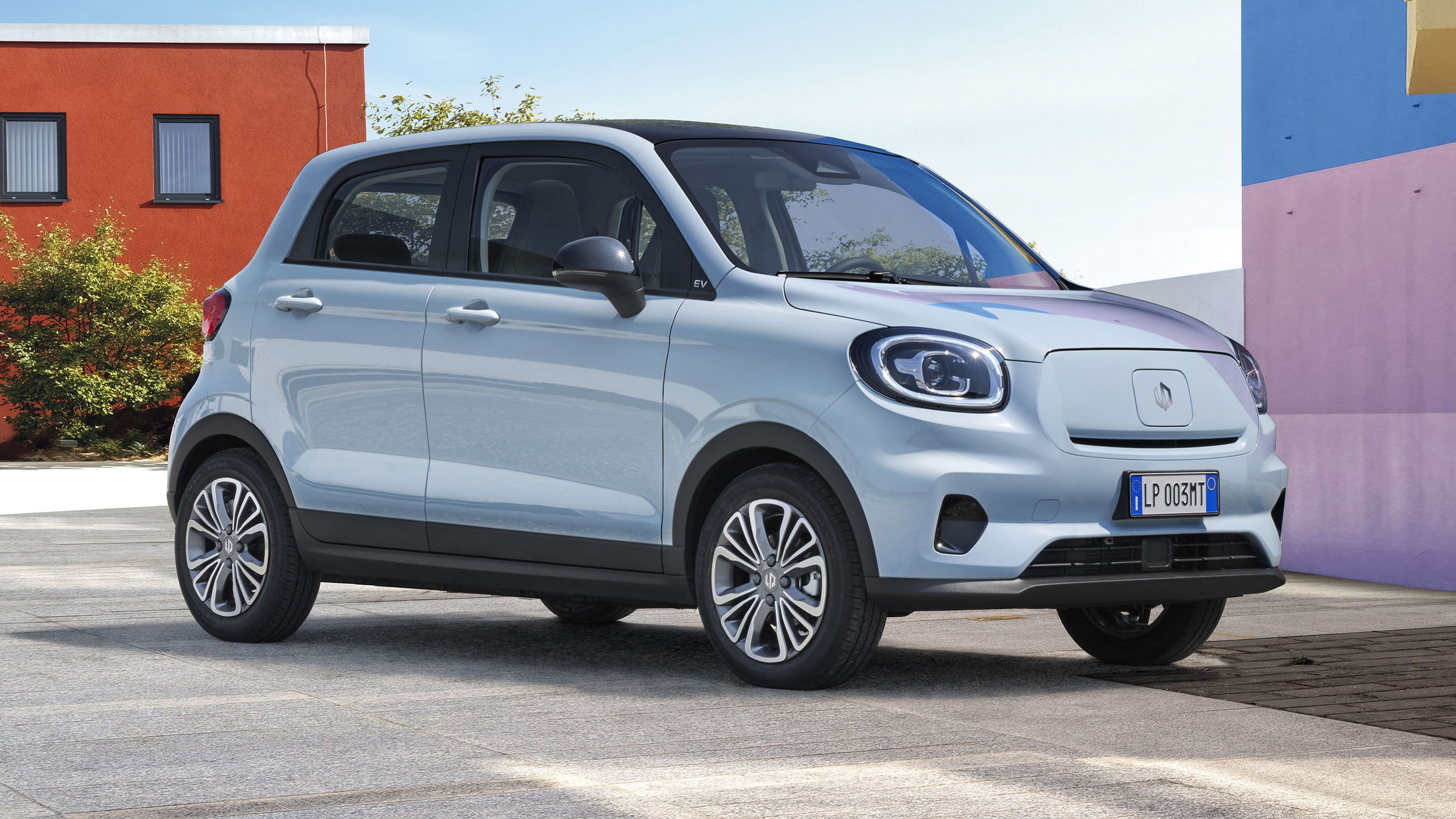
On the outside, the five-door hatchback is unchanged from the standard Leapmotor T03, measuring 3,620 mm (142.5 inches) long. The LCV version sets itself apart with 15-inch steel wheels finished in black, while the color choices are limited to Caribbean Blue, Light White, and Canopy Grey.

Power comes from a single electric motor producing 95 hp (70 kW) and 158 Nm (116.5 lb-ft) of torque, identical to the passenger model. A 37.3 kWh battery delivers up to 256 km (159 miles) of WLTP range, with support for 45 kW DC fast charging.

\\\\\\

According to Stellantis, “production finalization” for European markets will take place at the Mirafiori plant in Turin. In reality, that likely means the LCV conversion is handled there, as the Leapmotor T03 itself continues to be built in Jinhua, China, after plans for production at the Tychy plant in Poland were quietly dropped.

More: Stellantis’ Plan For Canada Looks Less Like A Car Factory And More Like A Chinese IKEA, Says Official

Orders for the Leapmotor T03 LCV will open in select EU markets later this month, with the first deliveries expected to land this summer.

Pricing starts at €14,590 ($17,100) excluding VAT, putting it among the most affordable commercial vehicles on sale in Europe. Stellantis is not new to the small EV game either, already offering an LCV version of the even smaller Citroen Ami heavy quadricycle.

 Stellantis Turns A Tiny Chinese Hatch Into A Delivery Van That’s Light On The Van Part
The standard Leapmotor T03.
❌
❌