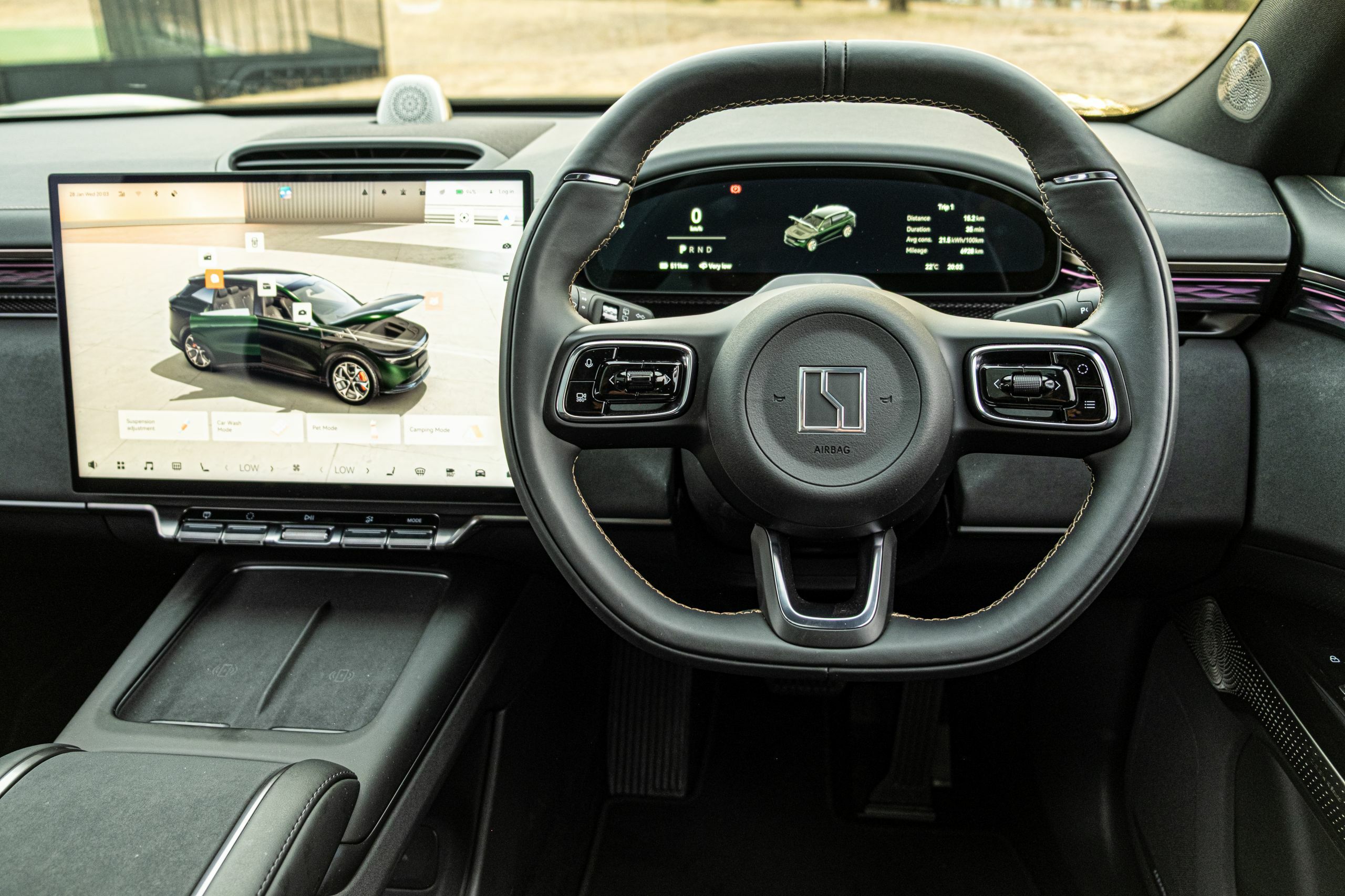
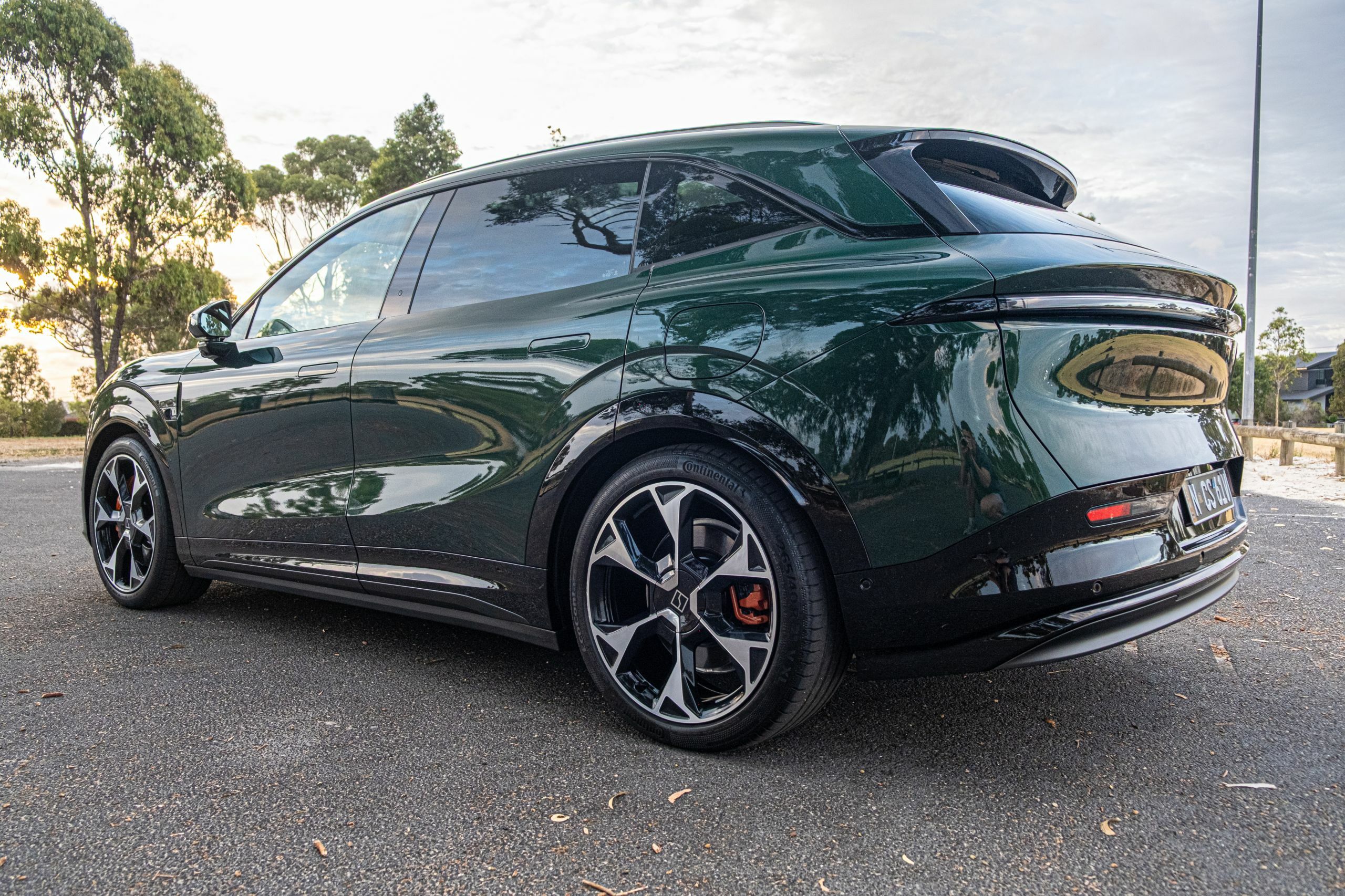
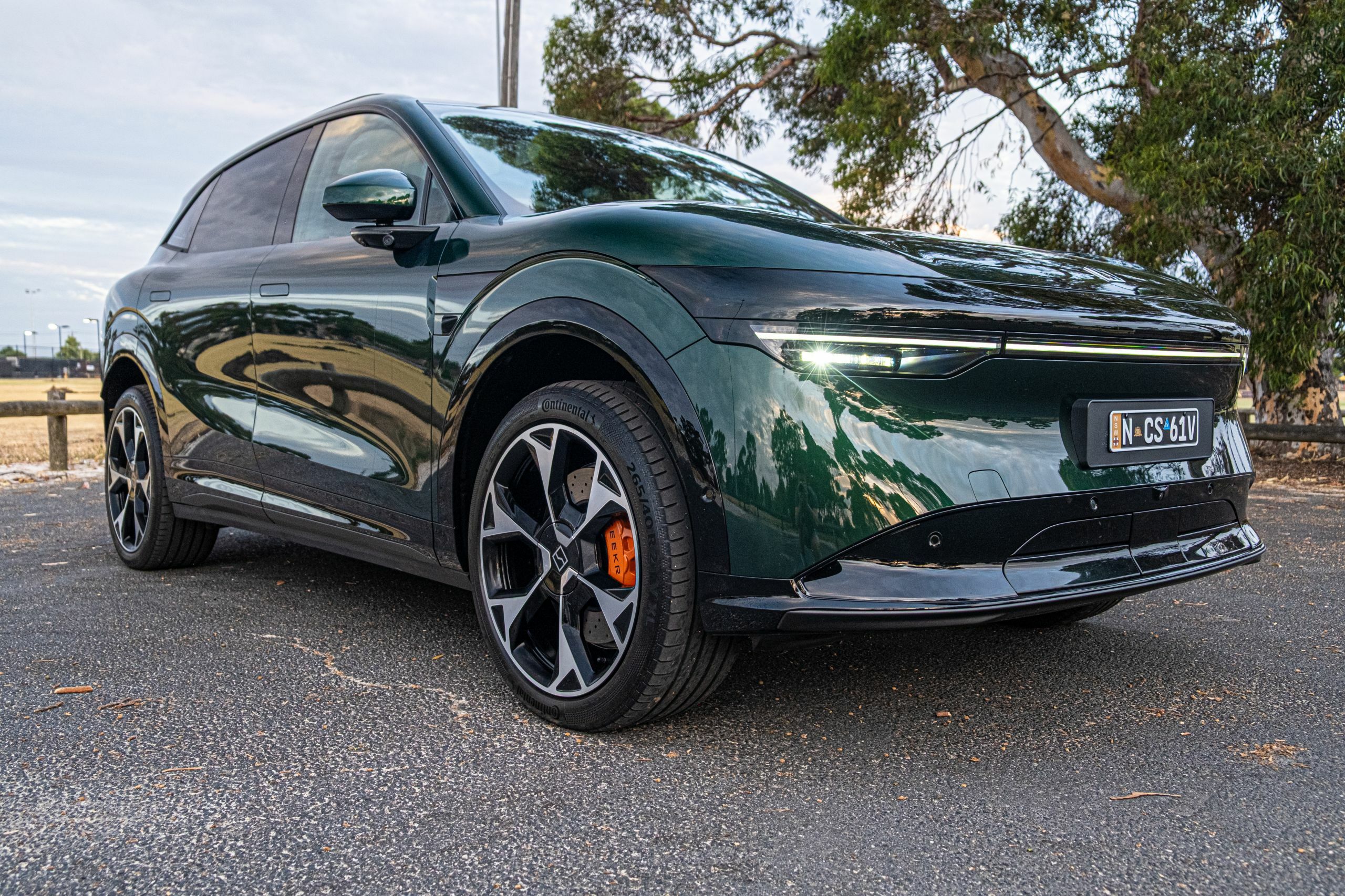
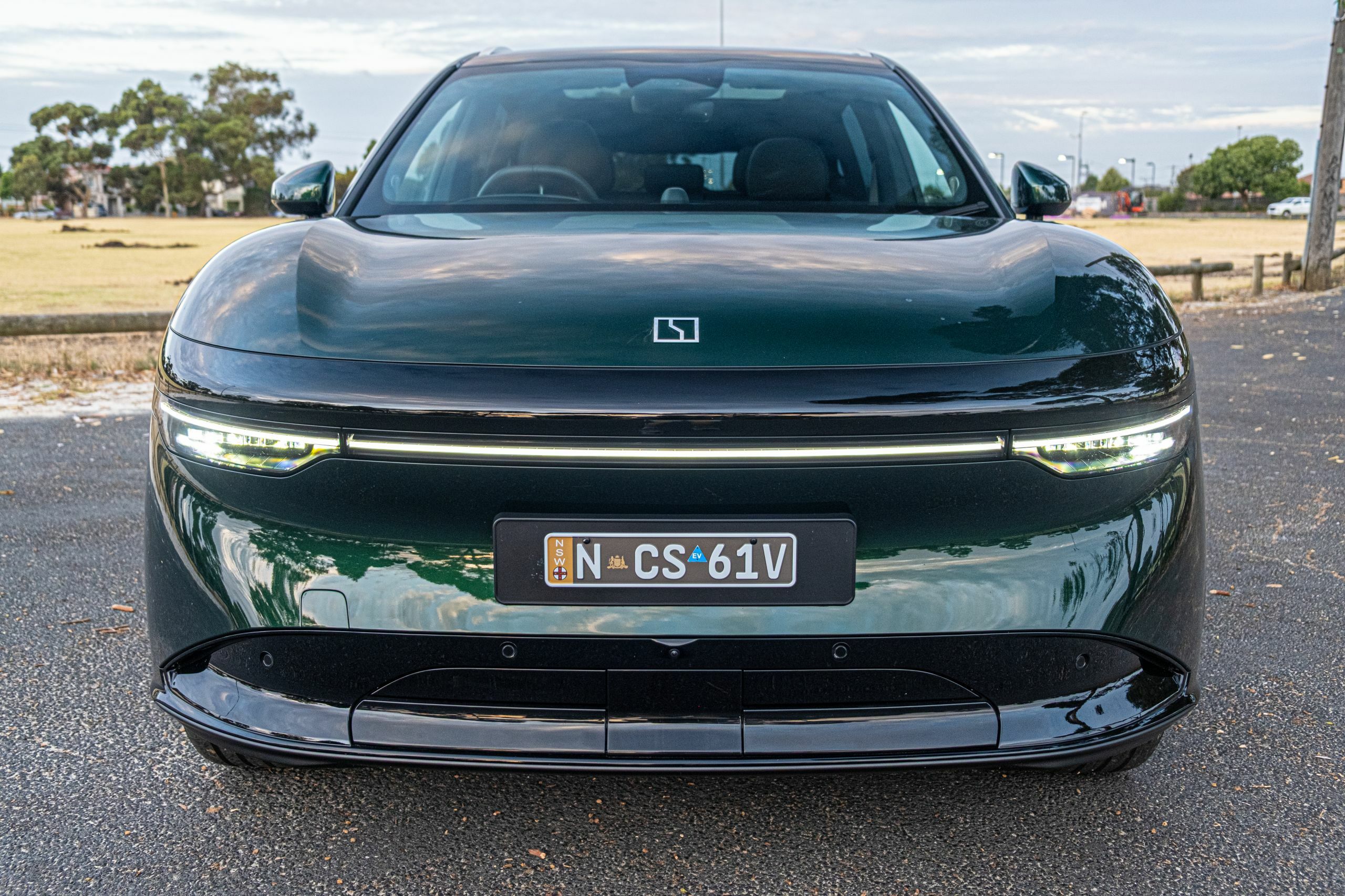
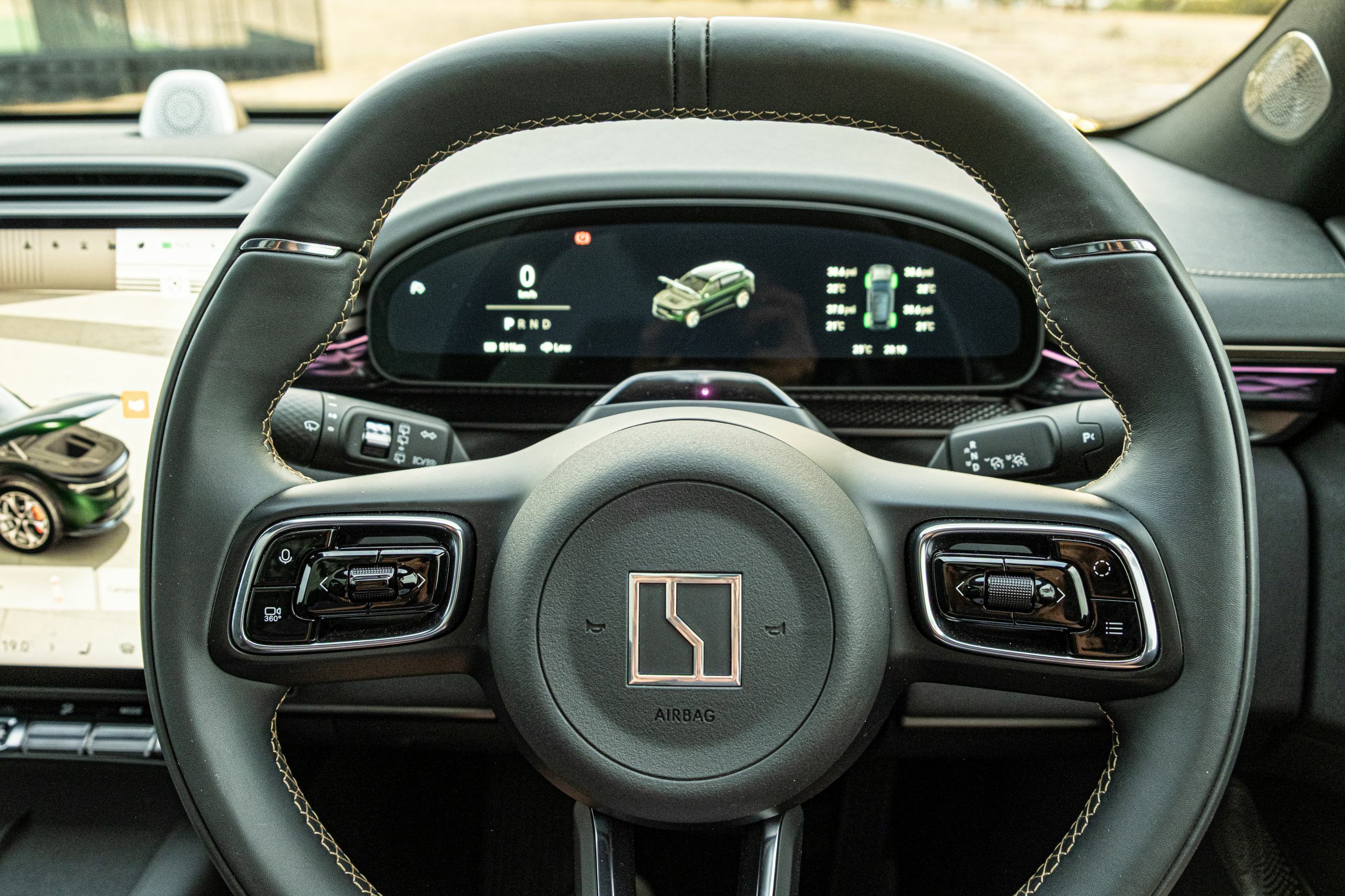
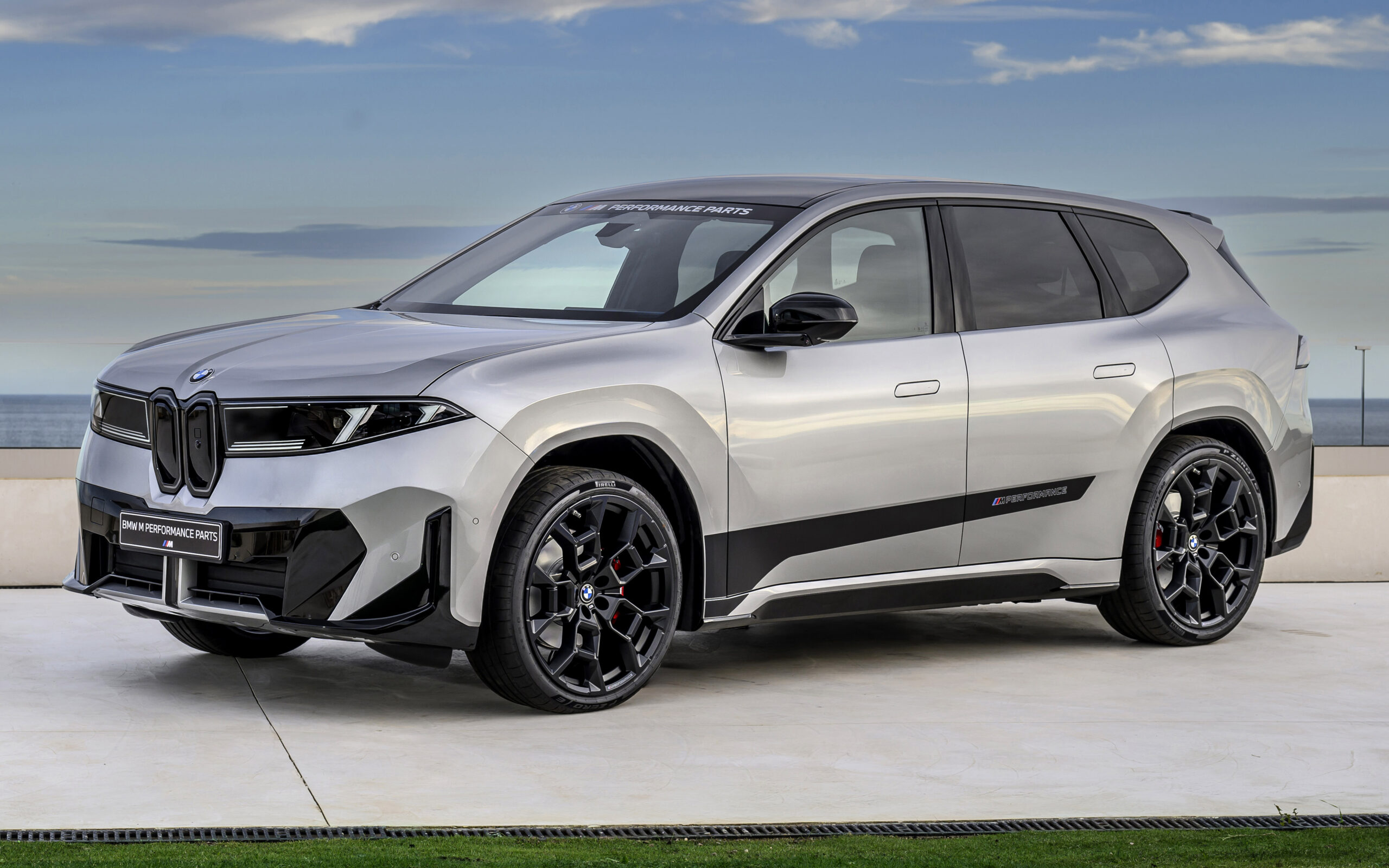
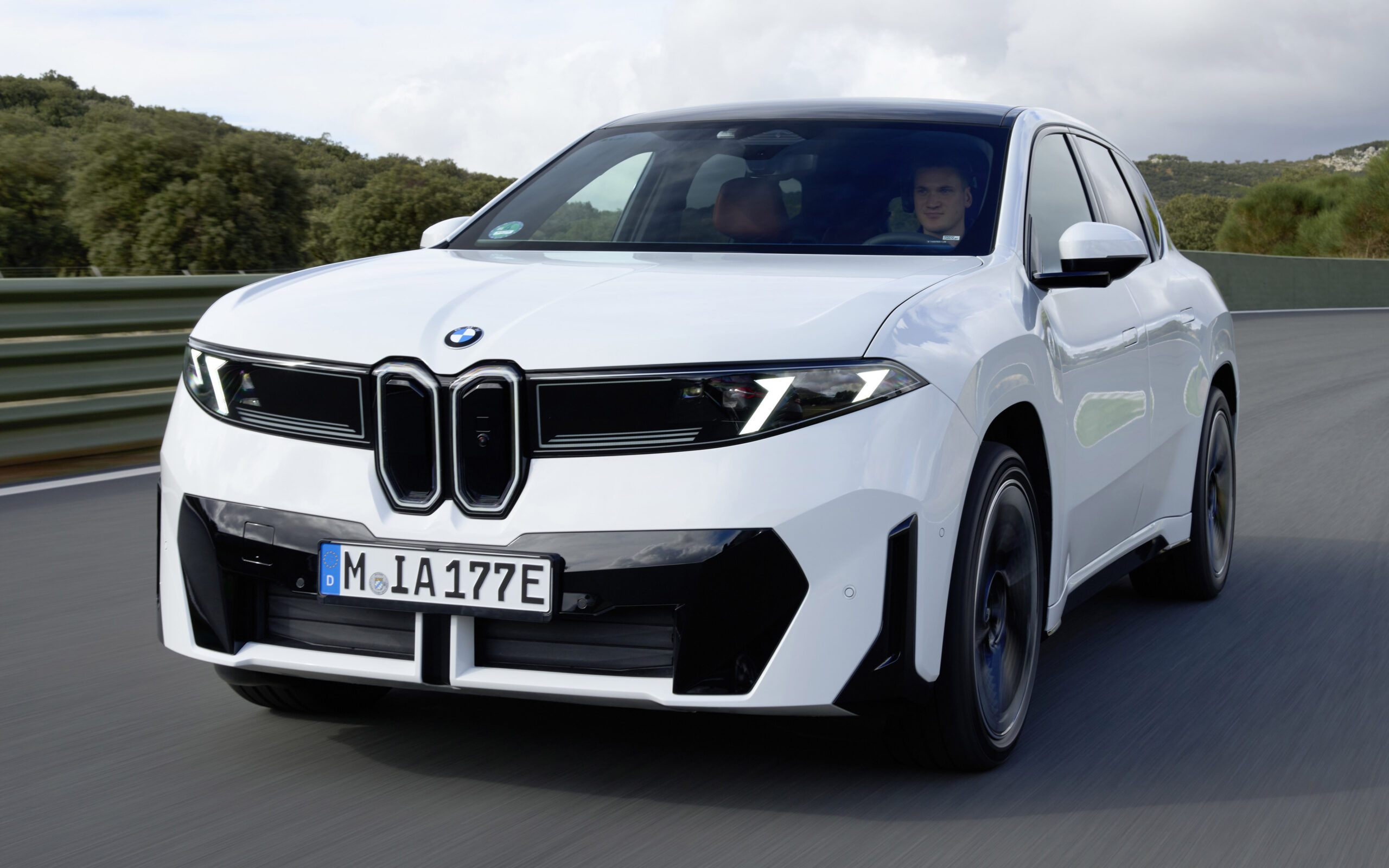
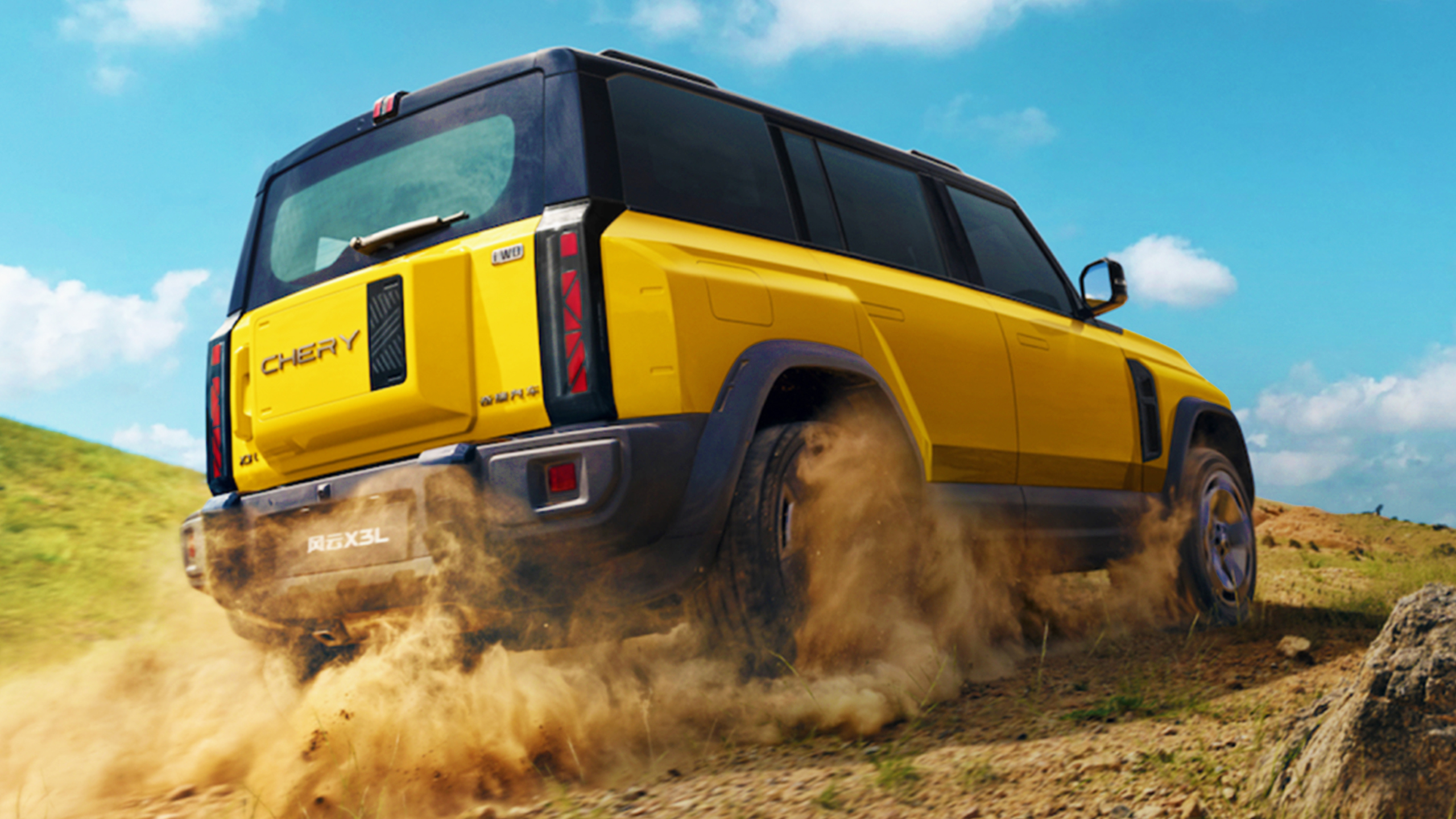
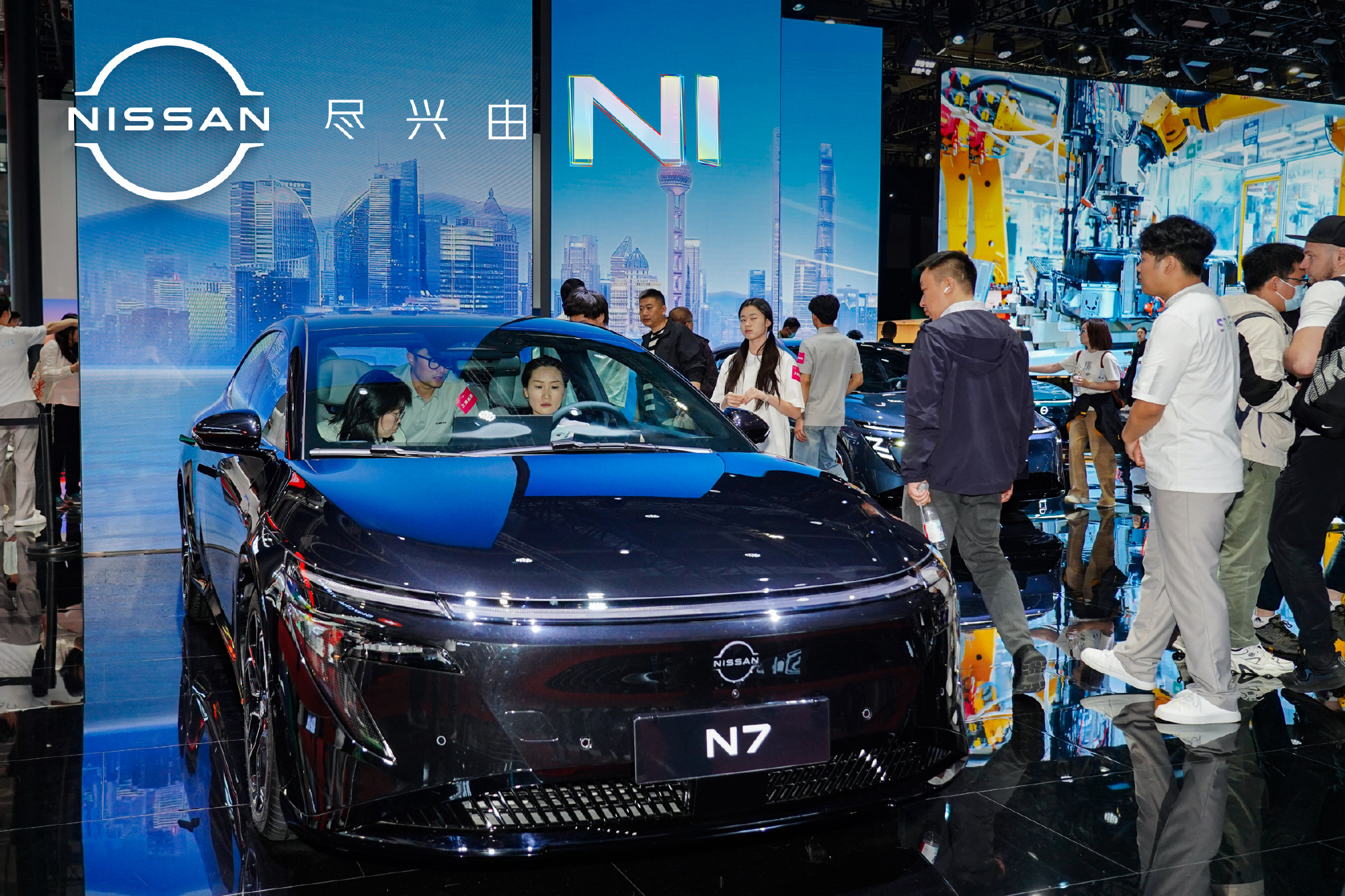
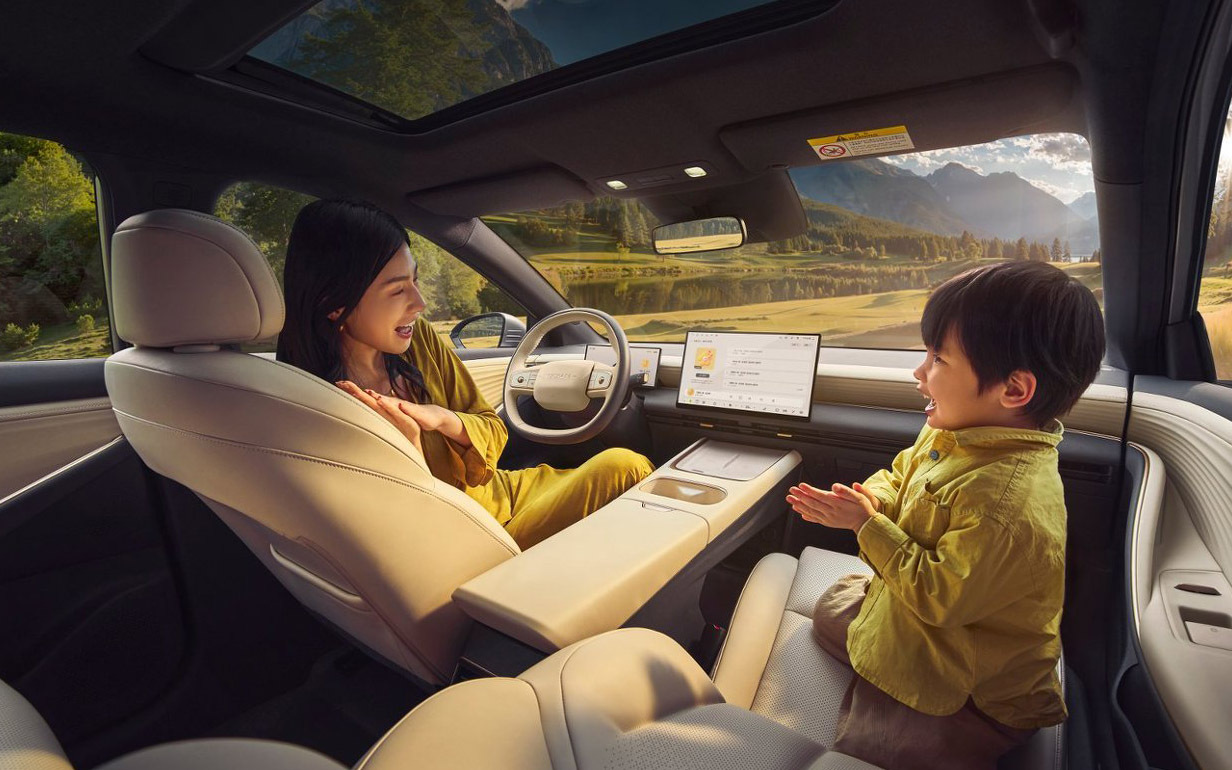
Dreame has launched a third car brand called Star Motor.
Two of the new models closely resemble Dongfeng vehicles.
One upscale SUV channels China’s take on the Rolls-Royce.
Just a month after Chinese vacuum cleaner firm Dreame unveiled three high-performance EVs at the CES show in Las Vegas, it has previewed three additional models it plans to add to its fleet. These will be launched under the new Star Motor brand, existing alongside Dreame’s Nebula Next and Kosmera brands.
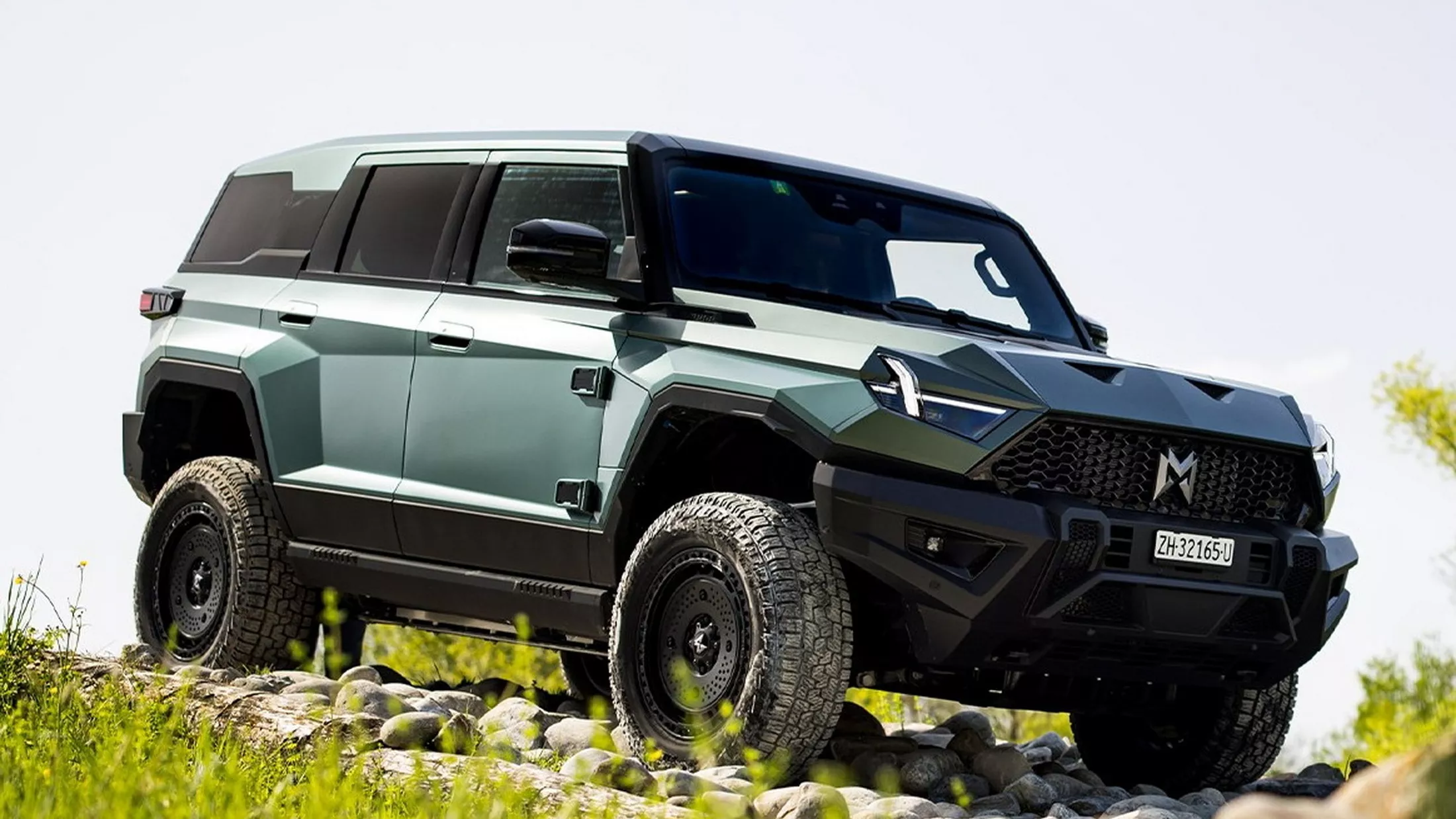
The first two models are the T08 and T08L. Both are striking off-roaders, with the T08L sharing much of its design with the T08 but is considered even more focused on off-road performance. There’s no denying the T08 models are striking, but their design isn’t unique. In fact, they almost look like direct copies of two other bold Chinese off-roaders.
Those two models come from Dongfeng, where they are badged the M917 and M817. Dreame has quite clearly copied Dongfeng’s homework with the T08L, crafting bodywork that looks almost identical to the M917, as well as near-identical headlights. The T08 looks mostly the same but has slightly different headlights, apparently copied from the smaller M817.
The similarities between Star Motor’s T08 and Dongfeng’s M917 are particularly apparent from the sides. It has virtually identical squared-off fenders, the same exposed hinges on the front doors, and door panels that look exactly the same as the M917. The only unique element that Star Motor appears to have designed is a distinctive front bumper.
Star Motor hasn’t actually unveiled the T08 and T08L, and only previewed them with a couple of images at a recent company event. As such, we don’t know what kind of powertrains they will have, other than the fact that they will include rear-wheel steering that can turn the rear wheels by up to 24 degrees.
Rolls-Royce Fighter
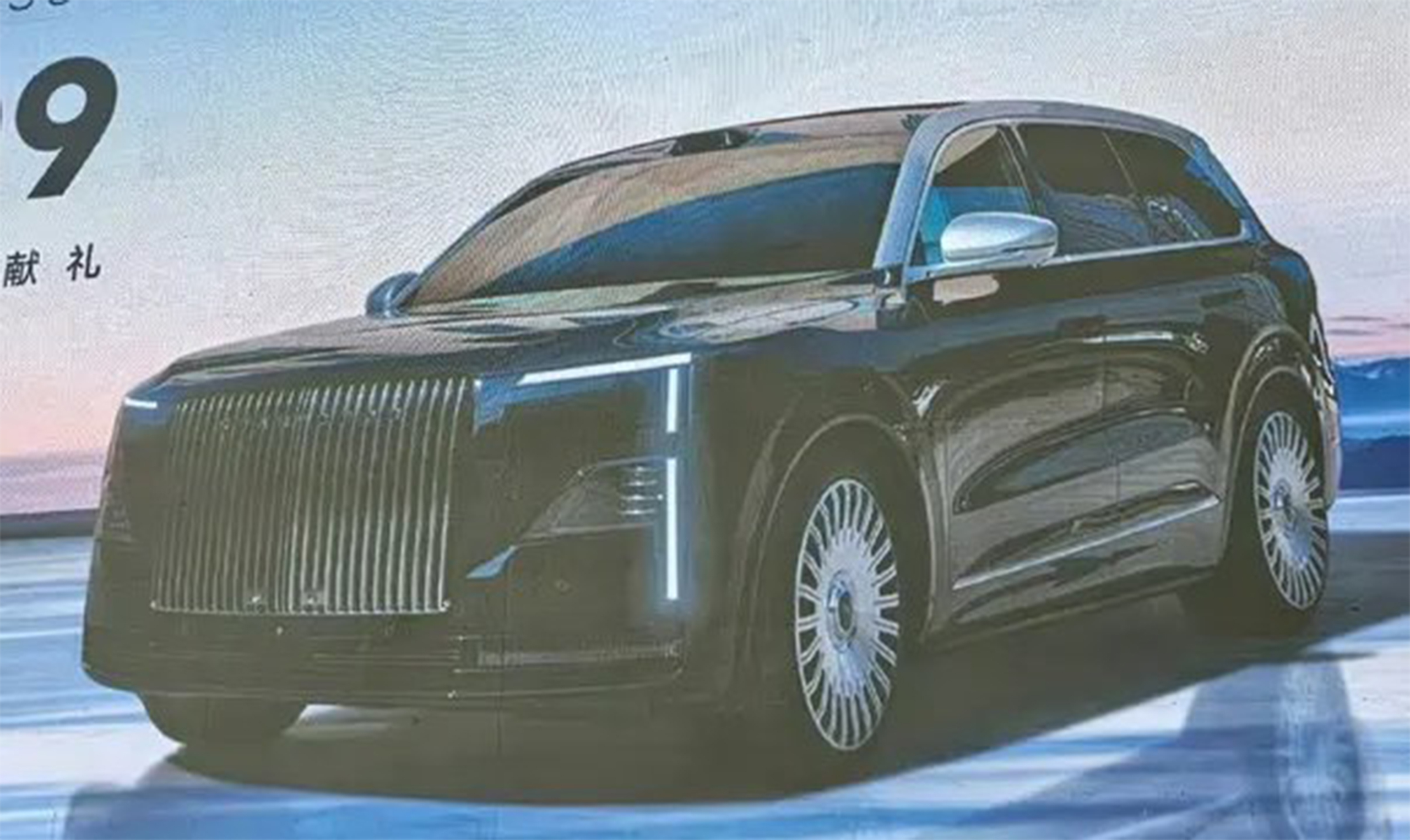
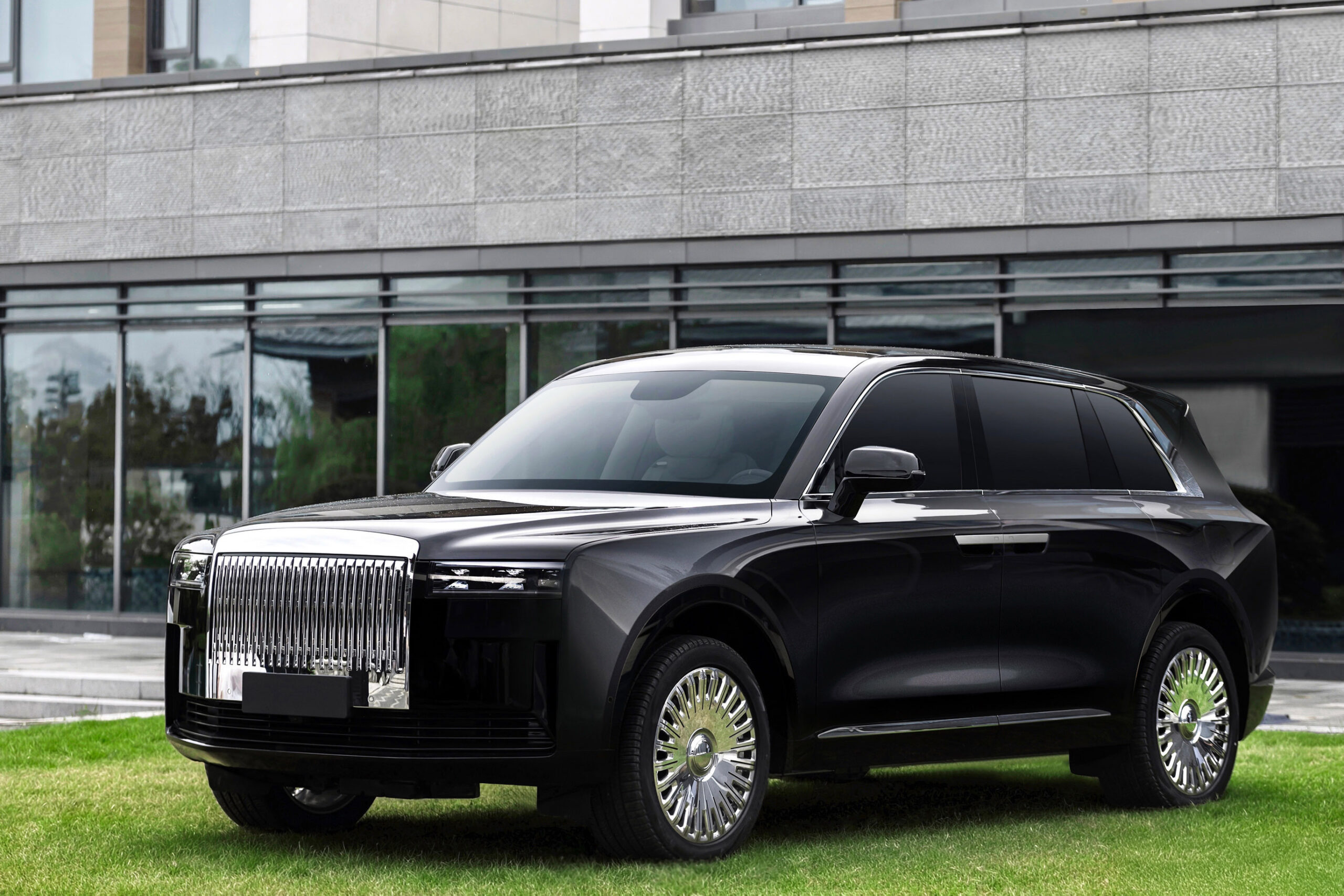
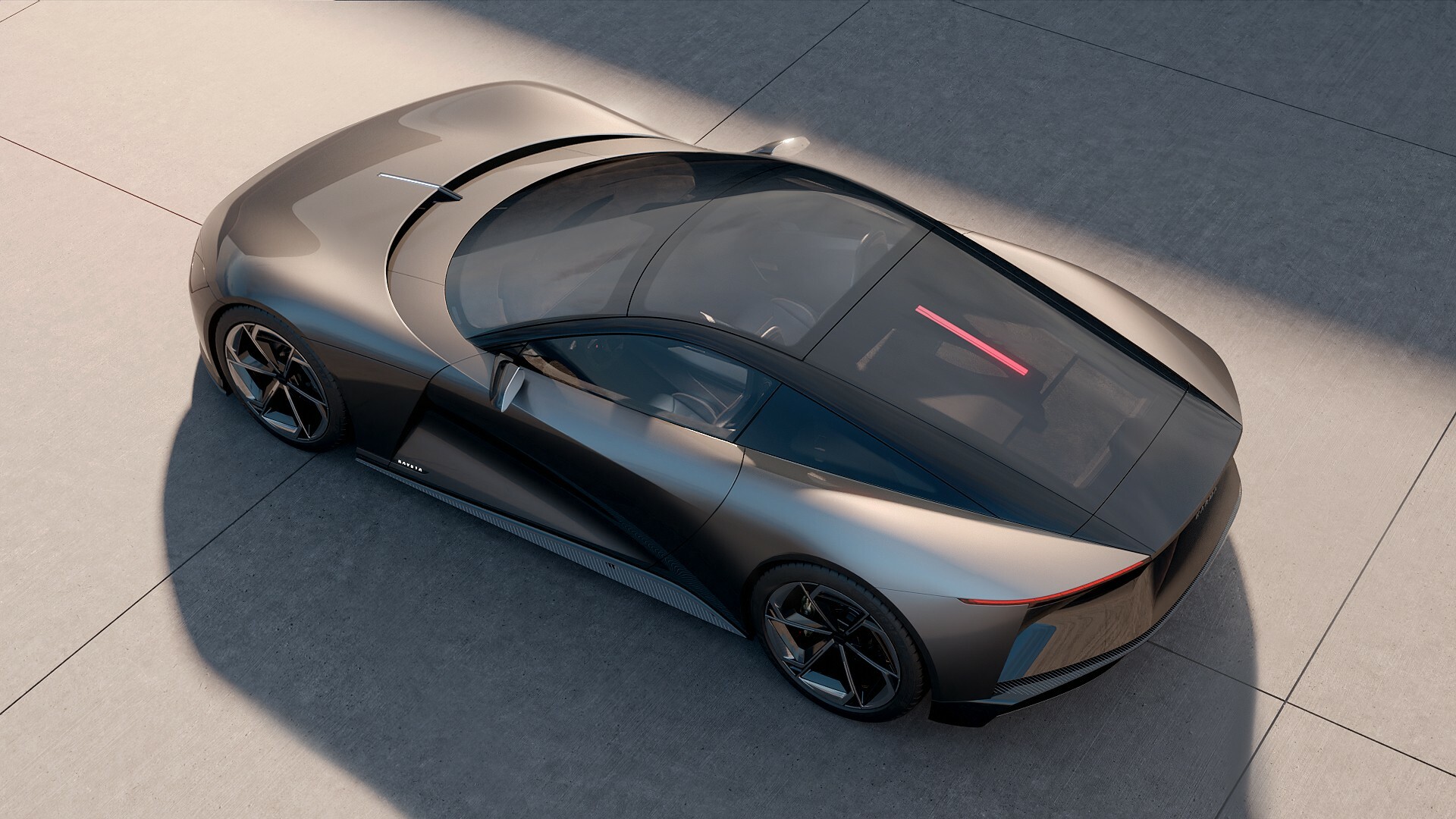
Previewed alongside the T08 and T08L was the Star Motors D09 that looks to be positioned as the firm’s flagship luxury SUV, akin to the Rolls-Royce Cullinan. It shares similarities with the Cullinan lookalike that Dreame previewed last year and could be the production version of that model.
The front of the D09 is dominated by a grille that makes even a Rolls-Royce grille seem small. It also has prominent LED daytime running lights up front, a LiDAR mounted on the roof, and a set of fancy-looking wheels.
BYD sold 205,518 cars in January, down from 300,538 last year.
EV and plug-in hybrid sales both dropped compared to 2025.
Analysts say Beijing may revive incentives if sales stay low.
Demand for electric cars in China may be cooling, and some of the country’s biggest automakers are starting to feel the chill. Several of the most prominent domestic brands, including BYD, Xpeng, and Xiaomi, reported noticeable drops in January sales.
Data shows that BYD sold 205,518 vehicles in China last month. The number sounds solid on its own, but it marks a sharp decline from the 300,538 vehicles the company moved in January 2025.
Both BYD’s electric vehicles and plug-in hybrids were affected. Of the 205,518 vehicles sold last month, 83,249 were EVs and 122,269 were PHEVs. A year earlier, those numbers stood at 125,377 and 171,069 respectively. Exports took a hit too, dropping to 100,482 units in January from 133,172 in December.
Is Government Policy Slowing Sales?
These figures suggest weakening demand in China and possibly overproduction for overseas markets, but a recent government policy change may go some way to explaining the drop. As of January 1, the country reinstated a 5 percent purchase tax for new energy vehicles, having previously exempted them from a 10 percent tax for more than a decade, CNBC reports.
“We see increasing pressure on China’s auto market in 2026, driven by a combination of policy and competitive factors,” Helen Liu, partner at Bain & Company, told CNBC. She added that recent tax changes may prompt some consumers to delay purchases, while automakers hold back on new model launches.
“We know [EV sales will] slow, we just don’t know by how much,” added Tu Le, founder of Sino Auto Insights. “We’ll know much better after the first quarter is over.”
Rough Starts And Reversals
Xiaomi also struggled out of the gate. It sold 39,000 cars in January, which was an improvement over the same time last year, but a steep drop from the more than 50,000 EVs delivered in December. Xpeng’s January was even rougher. Sales fell 34.1 percent year-on-year to 20,011 units, and the month-on-month drop was starker still at 46 percent compared to December 2025.
Li Auto’s performance dipped as well, with deliveries slipping to 27,668 units for the month.
Competitors Capitalize
However, it’s not all bad news. One of the few bright spots was Aito, a newer brand backed by Huawei’s operating system, which reported more than 40,000 deliveries in January, marking a gain of more than 80 percent compared to the same month last year.
Sales at Leapmotor rose to 32,059, while Nio also reported an increase to 27,182 units. Geely sold more than 270,000 cars in January, a 1 percent increase year-on-year. Interestingly, its EV sales fell by 15 percent, while its PHEV sales rose 37 percent.
That performance has pushed Geely into second place in the country’s EV market behind BYD, thanks in part to strong momentum from its Galaxy and Zeekr brands.
Will China Step In?
The slowdown has fueled speculation that Beijing may step in once again. If the slump continues into the first quarter, analysts believe the government could reinstate certain subsidies or incentives
Samuel Tremblett, 20, died after his Tesla caught fire.
He called 911, saying he was trapped inside the car.
His body was later found in the Model Y’s rear seat.
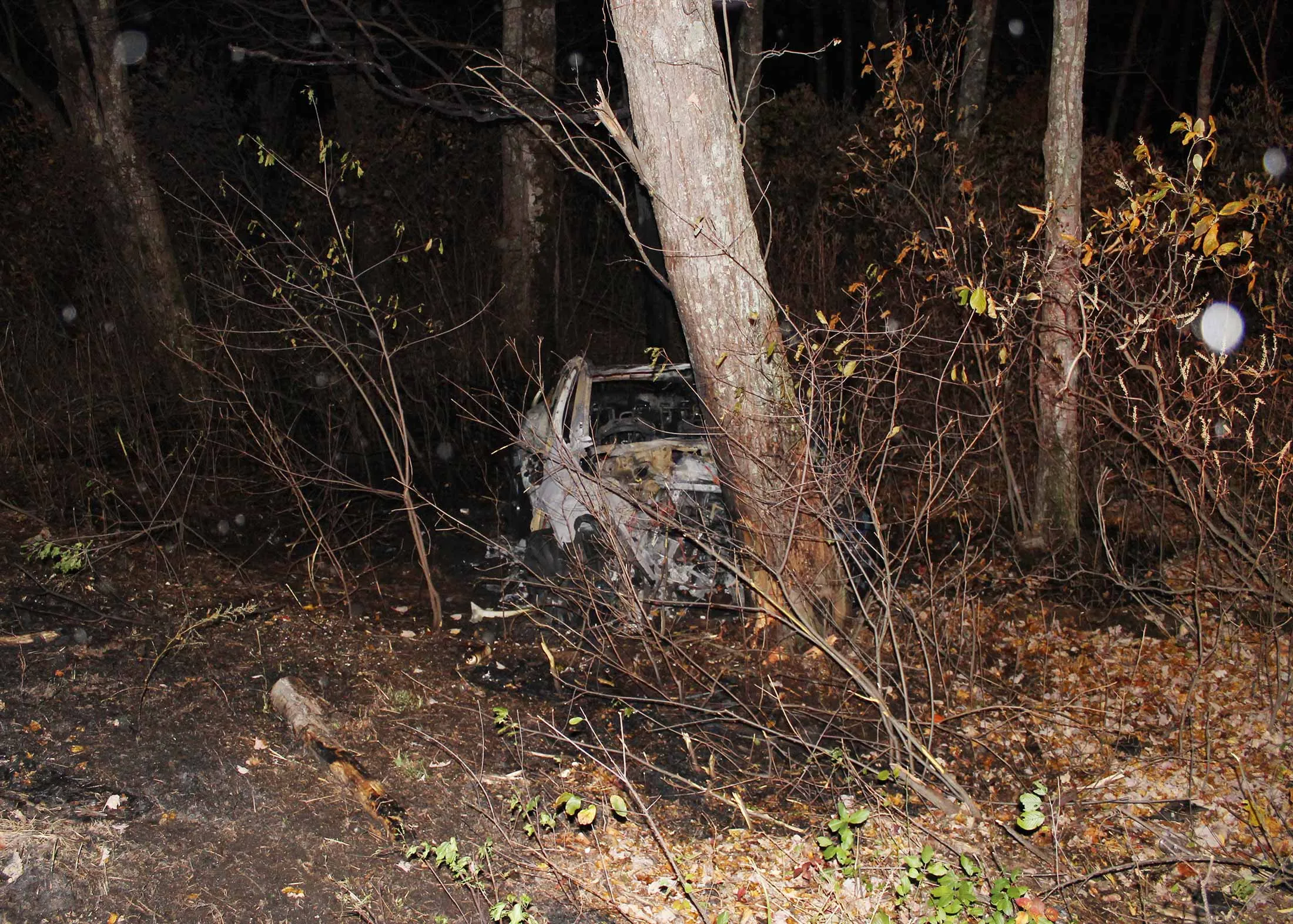
Tesla has been hit with yet another lawsuit related to its electrically powered doors. Last week, the mother of a 20-year-old man who died following a collision in a 2021 Tesla Model Y filed a lawsuit against the automaker. The complaint was submitted to federal court in Massachusetts.
According to the filing, Samuel Tremblett was still alive after crashing his Model Y into a tree along Route 138 in Easton, a small town just south of Boston. He managed to dial 911 from inside the car, but a transcript of the call reveals he was unable to open the doors as fire began to engulf the car.
Trapped And Unable To Escape
“I’m stuck in a car crash,” Tremblett said on the call, no doubt in a frenzied state. “I can’t get out, please help me. I can’t breathe…It’s on fire…I’m going to die.”
Emergency crews were dispatched to the scene, but they couldn’t extinguish the blaze fast enough to save the young man. According to local media, fire responders heard four explosions from the Model Y within the first 10 minutes at the scene. It took four hours before the inferno was put out.
The lawsuit states that Tremblett suffered “catastrophic thermal” injuries as well as smoke inhalation. His body was found in the back seat of the Model Y. According to the complaint, he was unable to open the doors after the crash and succumbed to the fire before help could reach him.
How Tesla Doors May Fail
The lawsuit claims that the electronic exterior door handles on the Tesla Model Y may fail to open during a crash, making it impossible to access the vehicle from outside. In addition, the suite says that the interior mechanical door release is not clearly marked and may be difficult to locate.
This is especially problematic in the rear, where the emergency release is hidden beneath a plastic panel in the door pocket. It’s a simple cable, and many Model Y owners and/or passengers may not even realize it’s there.
The lawsuit cites 17 incidents, going back to 2016, in which Tesla reportedly received complaints of both adults and children becoming trapped inside vehicles during thermal runaway events.
Growing Regulatory Pressure
A recent report from Bloomberg says that at least 15 people in the US have been killed in crashes involving Tesla vehicles where the doors couldn’t be opened. Concerns over the operation of these electronic door handles have recently prompted a ban in China, and it’s possible that other countries could follow suit.
In the US, the National Highway Traffic Safety Administration announced in September that it is investigating potential defects in some Model Y vehicles. These cases involve incidents where the external door handles allegedly failed following collisions.
Meanwhile, a US lawmaker has proposed legislation that would require manual door releases in new vehicles and provide first responders with reliable access when power is lost.
Lawmakers criticized Waymo’s growing reliance on Chinese suppliers.
Some robotaxi operations are remotely managed from the Philippines.
Senators raised national security concerns over foreign involvement.
Waymo chief safety officer Mauricio Peña fronted US lawmakers at a tense Senate hearing last week, where the self-driving tech company was accused of getting “in bed with China,” as it rolls out more of its robotaxis. The hearing also offered a reminder that beneath the polished image of AI, there’s still a reliance on human labor, often lower paid, sourced from abroad, and largely out of sight.
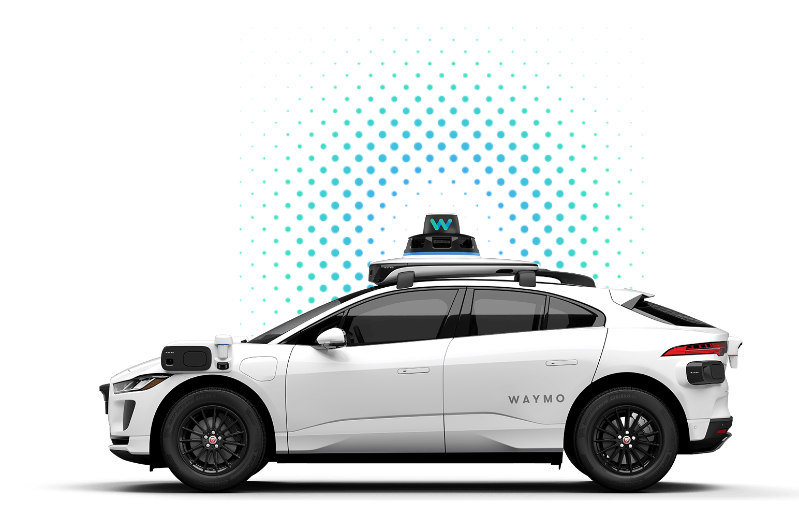
For years, the Google Alphabet-owned company has relied on the Jaguar I-Pace for its fleet, but Waymo is now preparing to roll out a next-generation, minivan-style robotaxi developed in partnership with Zeekr, a subsidiary of China’s Geely Group.
During the hearing, Peña told lawmakers that the United States is “locked in a race with Chinese companies for the future of autonomous vehicles.”
He also warned that without a clear national framework, the industry could end up facing a fragmented patchwork of state regulations that slows investment and limits progress.
Lawmaker Questions Zeekr Partnership
Sen. Bernie Moreno from Ohio didn’t let the irony of Waymo using a Chinese vehicle for its fleet go unnoticed. “You said in your testimony that we’re locked in a race with China, but it seems like you’re getting in bed with China,” he retorted during the hearing.
“Giving a natural market to a Chinese company to ship us cars is making us better and creating more jobs for Americans? That’s completely ridiculous,” Moreno added.
According to Business Insider, Moreno went on to suggest that Waymo could be sidestepping US laws designed to curb Chinese involvement in sensitive vehicle technologies. He speculated that the company might be using a “backdoor” to avoid complying with the federal connected vehicle rule, which was finalized last year but has not yet been fully implemented.
Peña rejected that characterization. He maintained that the Zeekr vehicles have “no connectivity” and that all of the autonomous systems are installed in the United States. He also argued that leveraging a global supply chain gives Waymo the flexibility to grow faster and build in operational safeguards.
Overseas Operators Raise Flags
Still, the issue of oversight didn’t stop at the hardware. During the hearing, Waymo revealed that in addition to using remote operators in the US, it also has some working overseas.
When asked for a breakdown of operator locations, Peña said he didn’t have exact figures but confirmed that while some are based in the US, others are much farther away, including in the Philippines, Futurism reports.
“They provide guidance,” he argued. “They do not remotely drive the vehicles. Waymo asks for guidance in certain situations and gets an input, but the Waymo vehicle is always in charge of the dynamic driving tasks, so that is just one additional input.”
According to Senator Ed Markey of Massachusetts, “having people overseas influencing American vehicles is a safety issue,” adding that these are the jobs that Americans should have. He called the use of remote human operators outside the US “completely unacceptable,” according to Business Insider.
In a statement to Carscoops, Waymo emphasized that no remote employees drive the vehicles.
“Waymo’s fleet response teams are located in the U.S. and abroad. As we scale globally – including to London and Tokyo – we need some Fleet Response functions outside of the U.S. It is very important to note, however, their role is never to drive the vehicle remotely. Our technology, the Waymo Driver, is in control of the dynamic driving task, even when it is receiving guidance from remote assistance”, the spokesperson said.
Tesla Joins the Conversation
The vice president of vehicle engineering at Tesla, Lars Moravy, was also in attendance at the Senate hearing. He said that the US needs to “modernize regulations that inhibit the industry’s ability to innovate,” or risk losing the autonomous vehicle race.
“Federal regulations for vehicles have not kept up with the pace of the rapid evolution of technology,” Moravy said. He added that many safety standards still in place were designed decades ago and no longer account for today’s technical realities.
Update: We’ve added quotes from Mauricio Peña and a statement from Waymo.
Mercedes-AMG is preparing a third EV alongside SUV and GT EVs.
Third model remains under wraps but has been officially confirmed.
Simulated shifts and fake ICE sound are expected once again.
Mercedes-AMG isn’t just refining its performance playbook, it’s rewriting it with a two-pronged strategy. On one end, the brand is leaning back into larger displacement engines, bringing more inline-six and V8 models into the fold. At the same time, it’s investing heavily in electrification, with three bespoke EVs slated for release in the coming years.
The first of these will be the all-electric AMG GT four-door, previewed last year by the radical AMG GT XX concept. That model will be followed by a high-powered electric SUV that’s expected to produce more than 1,000 hp. A coupe version of this SUV is already in the pipeline as well, and Mercedes-AMG has said it should break cover by late 2027.
Mercedes-AMG chief executive Michael Schiebe confirmed the news during a recent interview with Autocar. While he didn’t share specific technical details about the coupe SUV, it’s a fair assumption that it will closely mirror the standard SUV beneath the surface, just with a more streamlined roofline.
More Dramatic Looks?
SHProshots
Interestingly, recent spy shots of the regular all-electric SUV from AMG show that it already has quite a low-slung shape, not too dissimilar to a Lamborghini Urus, rather than a more upright SUV like a Bentley Bentayga.
If AMG makes it even more coupe-like, it could end up looking just as dramatic in profile as the Ferrari Purosangue, not that you’d hear us complaining if that is the case.
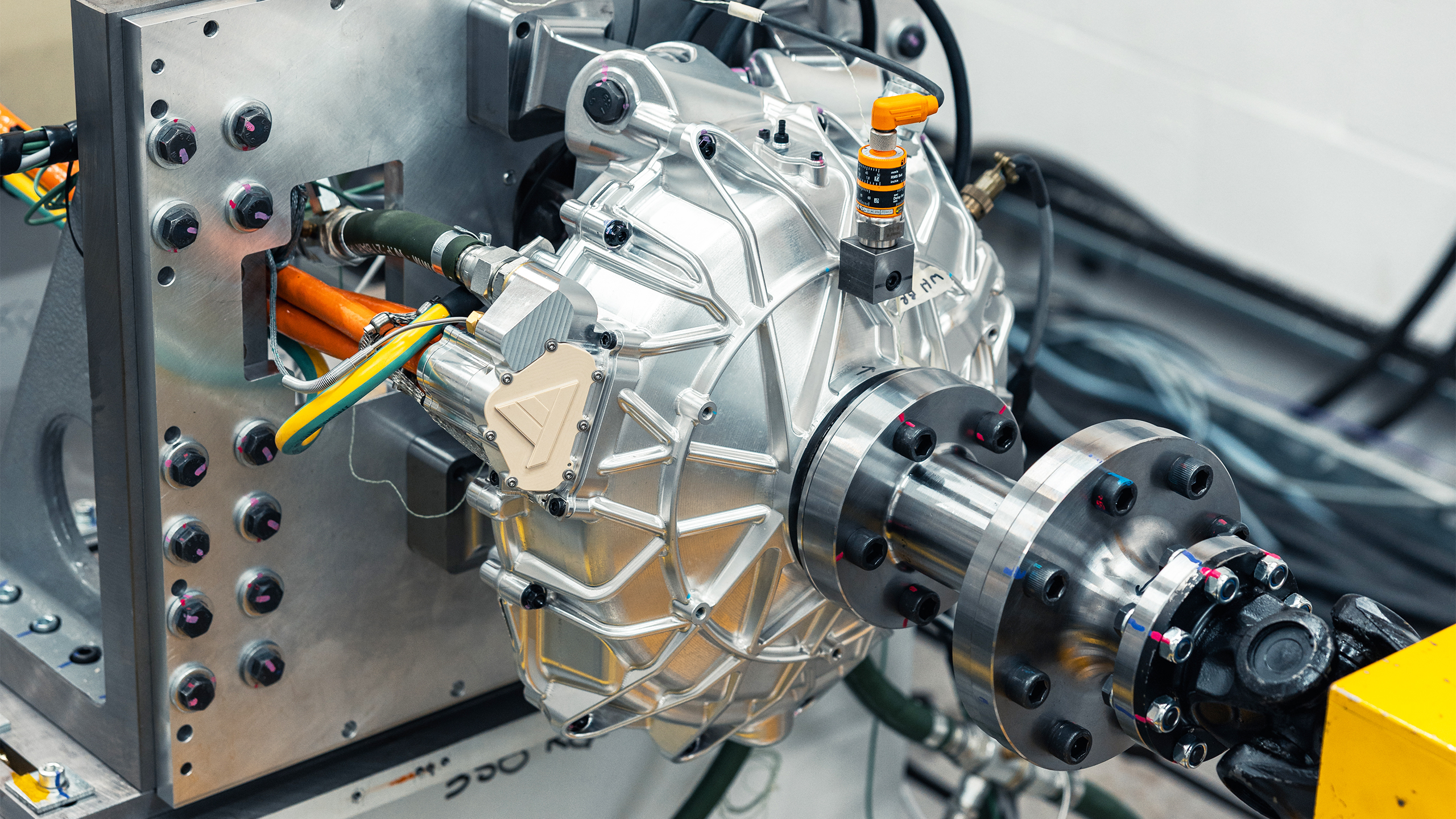
It’s not the design of the SUV-coupe that will be the key selling point. As with the standard SUV, as well as the GT four-door, AMG’s third dedicated EV will be based on the bespoke AMG. EA architecture using trip Yasa axial flux motors.
Insane Levels Of Power
Both two- and three-motor versions are expected, with the range-topping potentially producing as much as 1,341 hp, or one Megawatt of power. This will allow it to leave more traditional combustion-powered super SUVs for dead, and could make it one of the quickest on the market.
Whether either of the two SUVs or the GT four-door can match the driving enjoyment of AMG’s more traditional V8s remains to be seen. In an effort to make them a little more exciting, AMG will add fake ICE soundtracks to its electric models, as well as simulated shifts like those pioneered by Hyundai’s N division.
PROS ›› Interior, good tech, great value CONS ›› Inefficient, slow A/C, heavy
Electric car startups are everywhere these days, but most struggle to move beyond the hype. Zeekr is one of the rare exceptions. In just five years, Geely Group’s premium EV-focused brand has already rolled out a handful of genuinely impressive models and is making real progress with its battery tech.
Initially, Zeekr’s models were sold only in China, but the company has since expanded quickly abroad. First came the smaller X, a compact SUV that shares its tech with the Volvo EX30 and Smart #1. Most recently, Zeekr launched the 7X in Australia. It’s been pitched as a Tesla Model Y rival, but can it really measure up to the world’s most popular EV?
QUICK FACTS
› Model:
2026 Zeekr 7X Performance AWD
› Starting Price:
AU$72,900 ($50,800) as tested
› Dimensions:
4,787 mm (188.4 in.) Length
1,930 mm (75.9 in.) Width
1,650 mm (64.9 in.) Height
2,900 mm (114.1 in.) Wheelbase
› Curb Weight:
2,385 kg (5,258 lbs)
› Powertrain:
Dual electric motors / 100 kWh battery
› Output:
637 hp (475 kW) / 524 lb-ft (710 Nm)
› 0-62 mph (100kmh)
3.8 seconds
› Transmission:
Single speed
› Efficiency:
21.8 kWh/100 km
› On Sale:
Now
SWIPE
After spending time living with the flagship 7X Performance AWD, we came away convinced. It doesn’t just keep up with Tesla’s best, it beats it in several areas, and in some cases, rivals EVs that cost two or even three times more. In short, it’s well worth your attention.
How Much Does It Cost?
Photos Brad Anderson/Carscoops
Three different versions of the 7X are available. The range starts at AU$57,900 (equal to US$40,400 at current exchange rates) for the RWD, undercutting a Model Y Rear-Wheel Drive by AU$1,000 (US$700). Sitting in the middle of the 7X family is the Long Range RWD, priced at AU$63,900 (US$44,500), or AU$5,000 (US$3,500) less than the Model Y Long Range All-Wheel Drive.
Perched at the top of the line-up is the Performance AWD, starting at AU$72,900 (US$50,800), making it comparatively cheap compared to the AU$89,400 (US$62,300) Model Y Performance All-Wheel Drive.
So, what do you get for your money? The 7X Performance AWD uses a 100 kWh NMC battery and has electric motors at the front and rear, combining to produce a monstrous 475 kW (637 hp) and 710 Nm (524 lb-ft) of torque. Thanks to its advanced 800-volt architecture, it supports DC charging at up to 420 kW and AC charging at 22 kW.
What’s It Like Inside?
Photos Brad Anderson/Carscoops
It’s also a certifiable tech-fest, and this is no more obvious than in the cabin. Unlike Tesla and some competitors like Xpeng, Zeekr hasn’t adopted the same ultra-minimalistic approach that appeals to some but, to us, is usually an exercise in penny-pinching.
After pressing a button on the B-pillar to open the driver’s door, I was immediately struck by the remarkable fit and finish of the 7X’s cabin. Not only does it feel more premium and way more interesting than a Model Y, but it also feels of a higher standard than cars from legacy rivals like Kia’s EV5, and even BMW and Audi. In fact, the 7X’s cabin feels almost as plush as the Lotus Eletre I tested last year, which also comes from Geely but costs three times as much.
Photos Brad Anderson/Carscoops
A 16-inch infotainment display sits in the center of the dashboard and is brilliant. It’s among the snappiest I’ve ever used, thanks to the high-end Qualcomm processor, and is an absolute joy to use.
Like so many other EVs, it has a smartphone-inspired setup with a swipe-down menu for shortcuts and notifications, as well as an in-depth settings menu. You don’t have to wait even a split second for the screen to load after sitting inside, and if your phone’s connected, Apple CarPlay or Android Auto will load instantaneously.
All the climate control settings are on the screen, and while auto scribes like ourselves often complain about this, it didn’t bother me in the 7X, as it’s easy to use, even on the move. However, I found it could take up to 5 minutes for the AC to start blasting really cold air on hot days.
What Else Makes The Cabin Stand Out?
The 13-inch digital instrument cluster and 36-inch head-up display are also superb, although the cluster offers very little scope for customization, which is a shame.
Zeekr’s designers and engineers were incredibly thoughtful when crafting the 7X’s cabin. There are beautiful knurled metal switches below the screen, metal speaker grilles on the pillars and door panels, and beautiful soft-touch materials across virtually every square-inch of the cabin, even along the lower parts of the door panels.
Elsewhere, there are hidden pockets on the door’s armrests, two 50-watt cooled wireless charging pads, and a gargantuan center console storage area. There are plenty of luxurious features too, including heated and ventilated seats, as well as massage functions for the front pews, which are among the best I’ve ever used. In the rear, there are even electronic sunshades that deploy at the press of a button, and hidden storage draws under the seats.
Photos Brad Anderson/Carscoops
The 7X Long Range RWD and Performance AWD also include a 21-speaker audio system that’s incredibly adjustable and of great quality, although it didn’t sound quite as crisp as I would have liked. Zeekr has also added a panoramic glass roof, and unlike some rivals, it includes a folding shade. There’s even an interior camera on the B-pillar, which displays a live video to the infotainment screen, allowing drivers to keep a watchful eye on their kids at any time.
What About The Trick Doors?
Then there are the doors. As mentioned, they’re electric. From inside, you touch a button, and they will open, using sensors to determine if there’s an object nearby, automatically adjusting how far they’ll open. When entering, the doors can be pulled shut manually or by pressing the same button. The driver can even close the doors by stepping on the brake, just like a Rolls-Royce.
For the most part, these doors work well, although there were occasions when they didn’t open as wide as they could have, even if there was nothing blocking them. Fortunately, the electric functions can be disabled, and they can be used like manual doors.
The 7X also has adaptive Magic Carpet air suspension with Zeekr’s Continuous Damping Control system and five different ride heights, including one where it looks slammed to the ground, and one where it sits high enough for off-roading.
Visibility is good, though the rear window view is very limited. Given how much tech is found inside the 7X, it’s perhaps surprising that there isn’t a digital rearview mirror, similar to what sister brand Polestar uses. Storage space is great with 539 liters (19 cubic-feet) of cargo space, and 1,978 liters (69.8 cubic-feet) with the rear seats folded down. There’s also a 42-liter (1.4 cubic foot) frunk.
How Does It Drive?
Photos Brad Anderson/Carscoops
With a serious amount of power, it’s no surprise that the 7X Performance AWD feels absolutely ferocious in a straight line. Zeekr says it needs just 3.8 seconds to hit 100 km/h, (62 mph) and that’s a figure we were able to match. There’s no need to worry about the acceleration being capped as the battery drains either, as it’ll still run sub-4.0 second times even below 30 percent state of charge.
The ‘Performance’ name could easily lead you to think this is a focused, razor-sharp model like a BMW M or an Audi RS, but that’s not the case. Let me explain.
SUVs, particularly heavy electric ones that place too much emphasis on dynamic handling, often have compromised levels of comfort. Some owners may be willing to live with this for an occasional blast along a mountain road, but for the vast, vast majority of driving scenarios, luxury EVs like the 7X need to feel polished and comfortable. That’s exactly the feeling Zeekr has achieved.
If you throw the 7X aggressively into turns, it offers immense levels of grip, but can feel a little unsettled. Additionally, the front seats offer very little bolstering, so you can slide around while behind the wheel. However, drive it at 80 percent of its capabilities, or below, and it feels just about perfect.
First is the ride. The adaptive suspension offers Comfort, Standard, and Sport options. The first is very supple, but perhaps is a little too floaty. For most of my time with the 7X, I drove it with the ride in Standard mode, finding it remained soft over speed bumps, without bouncing around unnecessarily. Even in the stiffer Sport mode, it feels softer than some other heavy electric SUVs, like the Kia EV5.
The steering also offers Comfort, Standard, and Sport settings. Regardless of which is selected, the steering remains sharp, even though it lacks communication like virtually all electronic steering systems on the market. Much to my surprise, I left it in Comfort most of the time, enjoying how light and direct the steering was.
Photo Credits: Brad Anderson/Carscoops
Zeekr has also done a superb job of calibrating the brakes, and they feel completely natural, as if there isn’t any regen going on, even though there is. Of course, there is also a one-pedal driving mode, perfect for use in town. However, the one-pedal mode isn’t nearly as strong as some rivals, so unless you lift off the throttle far in advance before a stop, you’ll still need to gently apply the brakes. That’s no drama, as even when driven spiritedly, the big orange calipers feel up to the task.
Whereas the RWD and Long Range RWD models have 19-inch wheels, the Performance AWD sits on larger 21-inch forged units wrapped in Continental EcoContact7 tires. Grip is good, although there’s quite a bit of tire noise at highway speeds. We suspect the 19-inch wheels are quieter.
Is Zeekr’s ADAS As Polished As The Rest?
Zeekr’s ADAS system is also a good one. It’s enabled just like Autopilot on a Tesla, offering good radar cruise control functionality, as well as active lane centering. During multiple long highway stints, it always kept me in the center of my lane and even includes an automatic lane-change function that worked faultlessly.
However, there was also one time when the entire ADAS system was disabled as I hit a bump while crossing onto a bridge. But, for the most part, it works well.
Interestingly, Australian models use a Mobileye software stack for their ADAS, where in other markets there’s an Nvidia system instead. This system is also included in the recently updated 7X launched in China, which features a 900-volt platform, and it is expected to come to Australia next year. According to some reports, the Nvidia system is even better, but we will have to wait and see.
How Far Can It Go?
Zeekr says the 7X Performance AWD can travel up to 543 km (337 miles) on a single charge and quotes power consumption of 19.9 kWh/100 km. During my time with it, I averaged 21.8 kWh/100 km with an even mix of urban and highway driving.
That’s not great, but it is better than the 22.4 kWh/100 km I averaged in the Audi SQ6 e-tron, even though it has 95 kW (127 hp) less grunt than the Zeekr. Those seeking better efficiency would be wise to opt for either the RWD or Long Range RWD models with driving ranges of 480 km (298 miles) and 615 km (382 miles).
What’s The Verdict?
Photos Brad Anderson/Carscoops
The Zeekr 7X is superb in almost all areas. Its cabin is a key highlight: not only does it feel way more premium than a Tesla, but it also feels nicer than the excellent BYD Sealion 7, and many other German EVs, for that matter. Vehicles like the 7X have shattered the illusion that you need to buy something from a premium legacy brand, and to pay a hefty price, to get a high-quality vehicle.
While I haven’t had the chance to drive the RWD and Long Range RWD versions, I suspect that these will suit most buyers more than the Performance AWD. Regardless, all three have been competitively priced, offer amazing features, and once again prove that when it comes to EVs, the Chinese do it better than most.
Toyota teased the exterior and interior of a new three-row SUV.
Production rumored for Kentucky using U.S.-sourced batteries.
The model will be fully revealed on Tuesday, February 10.
A big reveal is just around the corner for Toyota, and it’s shaping up to be one of the brand’s most important new models of the year. Teased earlier this week and set to debut on February 10, the automaker is about to introduce a new three-row SUV, and there’s a strong chance it will be fully electric.
We’ve speculated that this new model could step in as a successor to the aging Highlander SUV, though it’s unclear whether Toyota will stick with that name, adapt it to something like “bZ Highlander,” or go in a different direction altogether.
This model has been a long time coming. Toyota first offered a glimpse of its planned seven-seat SUV back in late 2021, referring to it then as the bZ Large Concept. The latest teasers strongly suggest the production version is finally here, giving us a much clearer idea of what to expect.
Design Echoes the bZ Family
Illustrations Nikita Chuyko/Kolesa
As shown in these renderings, created by Nikita Chuyko for Kolesa and based on the original concept, the new SUV appears to follow the same design language as Toyota’s existing bZ models. The front end features headlights reminiscent of the original bZ, formerly known as the bZ4X, along with a blacked-out lower grille and prominent vertical air curtains.
The side profile isn’t particularly striking, but these renders do show the new SUV with very thin A-, B-, and C-pillars, just like the original concept. This should greatly improve visibility and help give the cabin a light, airy feel.
It has also been designed with both pop-out and traditional door handles. If Toyota is thinking ahead, it’ll stick with them, especially since China has now banned retractable versions and other countries could soon follow.
Illustrations Nikita Chuyko/Kolesa
These renderings also depict the new model with standard wing mirrors and rear-facing cameras in place of the mirrors. Given that no other Toyota has digital wing mirrors, we’d be surprised if this one does, but it’s not beyond the realm of possibility.
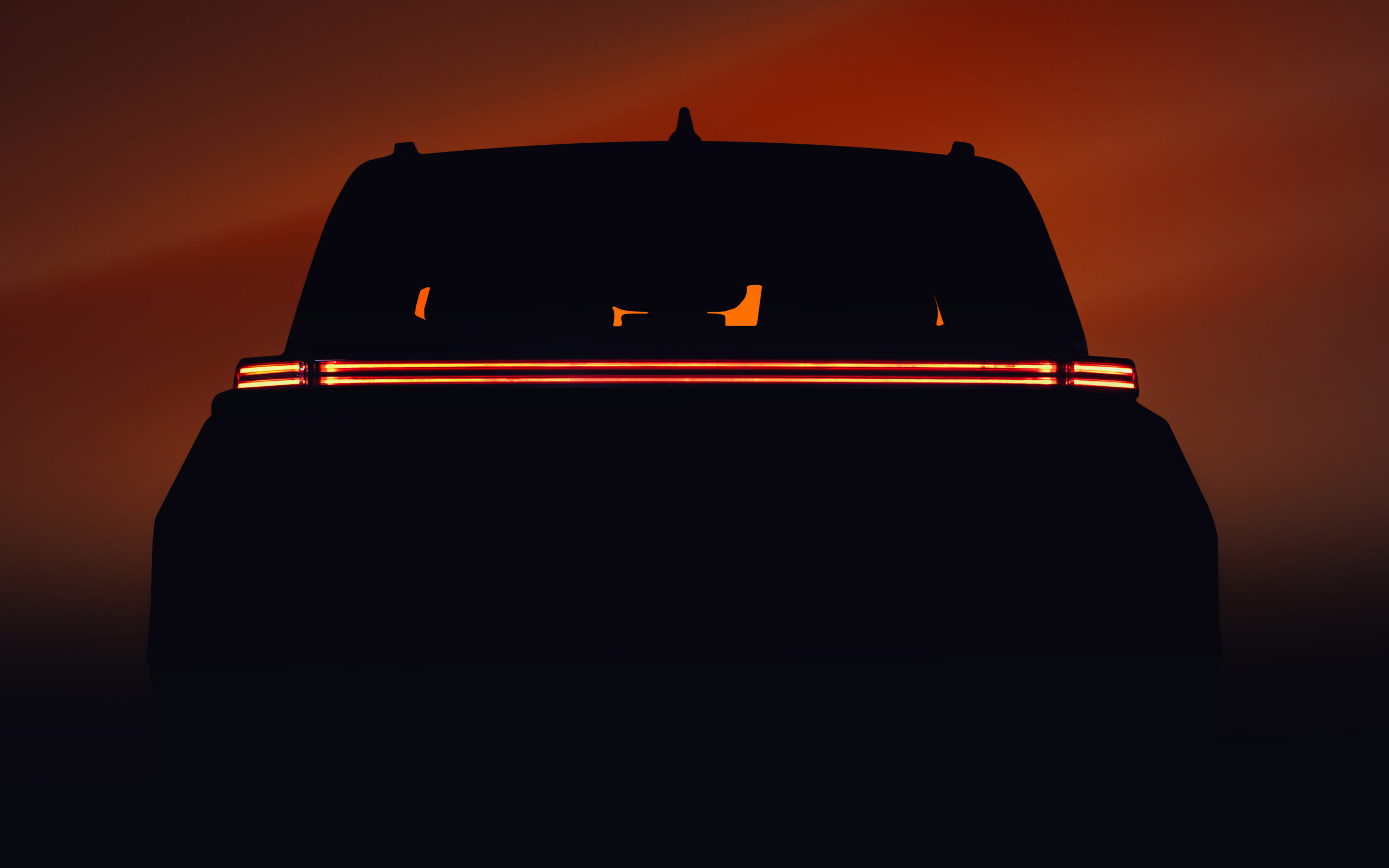
At the back, the design includes a full-width LED light bar connecting two taillight units, echoing styling trends across the industry.
Inside the Three-Row Cabin
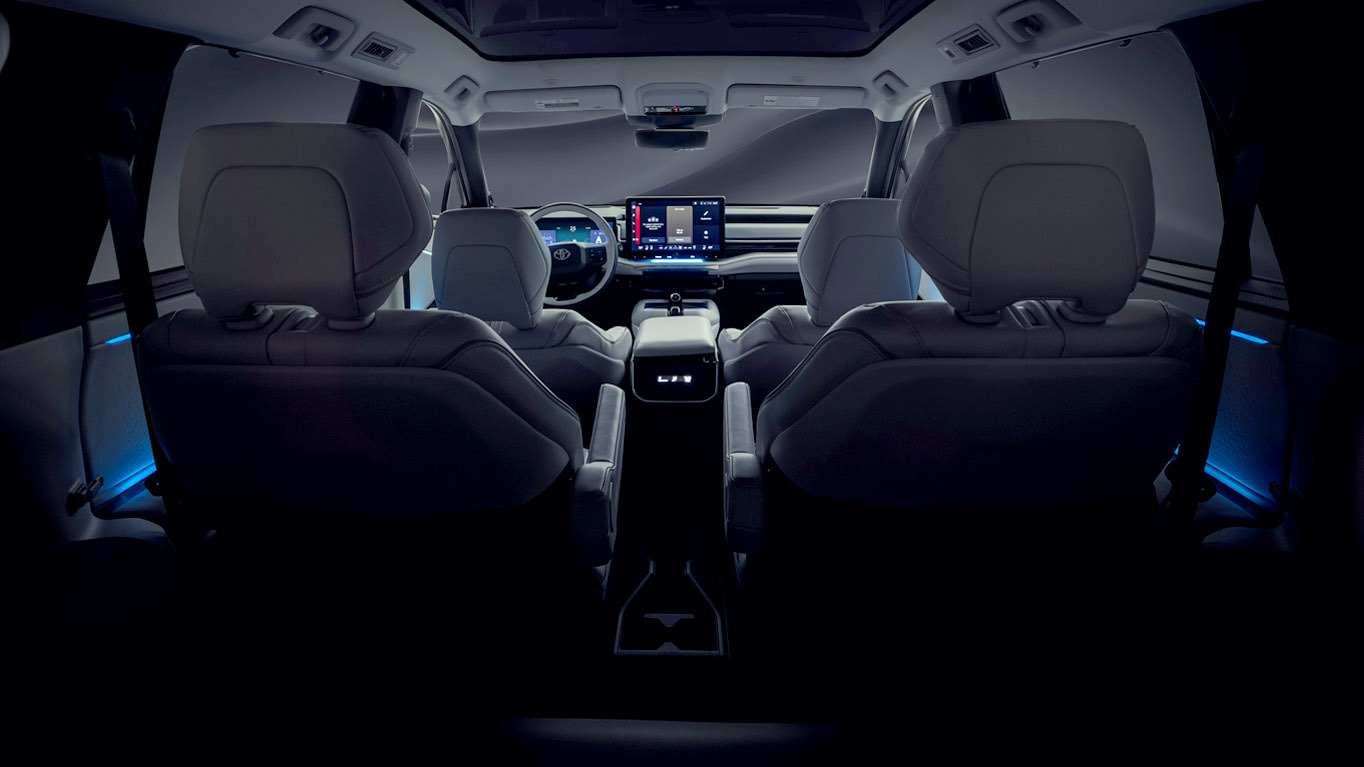
After previewing the exterior, Toyota followed up with an interior teaser confirming the vehicle’s three-row layout. In the version shown, it appears to adopt either a 2+2+3 or 2+2+2 configuration with second-row captain’s chairs. Still, Toyota may offer an option with a bench seat in the second row, potentially increasing total capacity by one.
Front and center on the dash is a wide, horizontally oriented touchscreen perched above a row of physical buttons, possibly for climate control, volume, and other secondary functions. The driver has a separate, large digital gauge cluster. Second-row passengers, meanwhile, have access to their own climate controls housed within a dedicated center console.
Other visible elements include ambient lighting integrated into the door panels and a panoramic glass roof that appears to extend at least to the second row.
Toyota is expected to sell this new model in several different markets, with a particular focus on the US, where it will be sold alongside the current ICE Grand Highlander.
While official confirmation is still pending, this vehicle is believed to be the electric three-row SUV that Toyota has already announced for production at its Kentucky facility, powered by batteries sourced from North Carolina. As for timing, it’s rumored to launch sometime later this year.
New Kaveya will use a U.S.-made solid-state battery pack.
Factorial’s battery tech also works with existing EV factories.
Karma delayed the hypercar to improve driving range and feel.
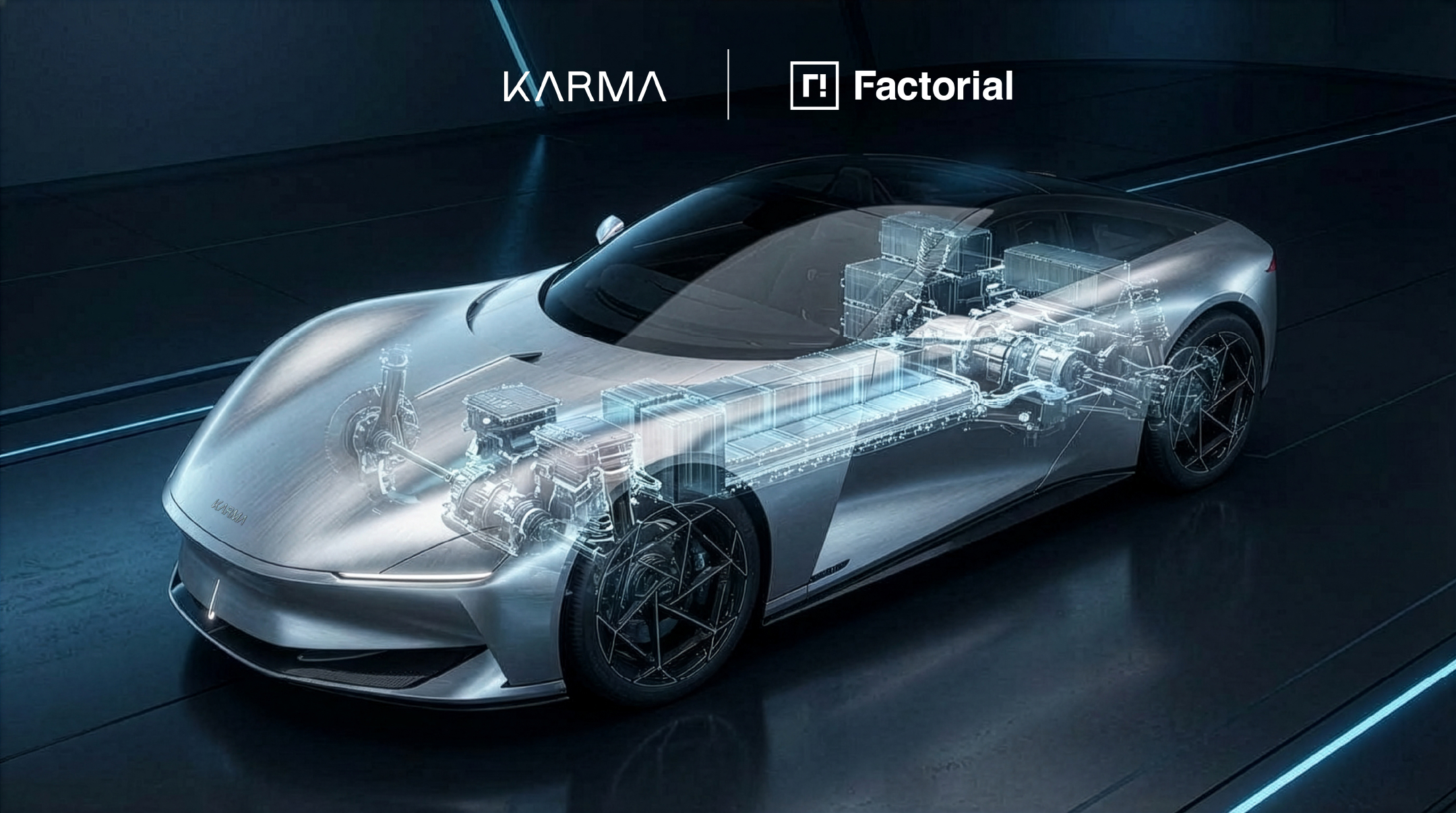
Karma Automotive, which emerged from the remnants of Fisker Automotive, recently ended production of its range-extender Revero and is now turning its attention to a far more ambitious project. In late 2023, the American brand previewed the Kaveya, a hypercar-rivaling electric coupe, and to bring it to life, it’s teaming up with a local solid-state battery manufacturer.
That partner is Factorial, a solid-state battery company with close ties to several global OEMs, including Mercedes-Benz, Hyundai, Kia, and Stellantis. Its technology will form the foundation of Karma’s upcoming electric platform, which will debut in the Kaveya.
Technical specifications for the battery pack are not yet known, but Factorial’s proprietary FEST (Factorial Electrolyte System Technology) solid-state design is engineered for compatibility with current lithium-ion manufacturing lines.
Up to 80 percent of the same production equipment can be reused, which could dramatically cut costs and speed up deployment. For a low-volume manufacturer like Karma, that’s a critical advantage.
Waiting Until the Tech Could Catch Up
Karma president and chief executive Marques McCammon says Karma delayed the launch of the Kaveya last year as it “did not yet see a clear path to fully delivering the uncompromising driving experience that should be expected from an American ultra-luxury vehicle company.”
Thanks to its partnership with Factorial, the company’s solid-state battery will offer better efficiency and a longer driving range compared with traditional lithium-ion batteries. When the Kaveya was first previewed, it was going to use a 120 kWh pack with over 250 miles (402 km) of range. In all likelihood, the new solid-state pack will be smaller and offer more range.
“Launching our first U.S. passenger-vehicle program with Karma is a meaningful milestone for Factorial,” said CEO Siyu Huang. “FEST was built to scale, and this milestone not only highlights the energy and performance solid-state technology can deliver but also underscores the global leadership of U.S. technology innovators. High-performance luxury vehicles require cutting-edge innovation, and this collaboration showcases what’s possible when performance leads.”
Hypercar Performance
Karma has already outlined some of the performance targets for the Kaveya. Dual electric motors will combine for a total output of 1,180 hp and 1,270 lb-ft (1,720 Nm) of torque. That should be enough to get the car from zero to 60 mph (96 km/h) in under 3 seconds, with a projected top speed north of 180 mph (290 km/h)
Tesla filed two new Roadster trademarks in the United States.
One shows three sharp lines, possibly previewing the design.
The other spells Roadster in a slanted sci-fi-style font.
Could the second-generation Tesla Roadster finally be on the verge of actually hitting the market? Well, if history is any guide, don’t hold your breath. It’s been more than eight years since it first showed up as a concept, but two recent trademark applications suggest things might actually be moving, and that the car could, just maybe, be inching closer to something.
Earlier this week, Tesla submitted two trademark filings with the United States Patent and Trademark Office, as first spotted by Business Insider. The first features three sharp lines that outline the sleek silhouette of the two-door, all-electric supercar. It could be used in marketing or possibly even serve as the foundation for a new badge.
The second application depicts the ‘Roadster’ name in all-caps. It uses a custom font that’s slanted and has a sci-fi vibe, perfect for a vehicle like this.
Since its initial reveal in November 2017, details on the production Roadster have been scarce. Tesla originally promised a massive 200 kWh battery pack, claiming over 620 miles (1,000 km) of range per charge. Performance targets were just as ambitious, including a 0–60 mph (96 km/h) time of 1.9 seconds and a top speed north of 250 mph (402 km/h).
The electric car industry has advanced significantly since the Roadster was first previewed, so we expect it to reach the market with different performance and range figures. A 200 kWh pack, which would be extraordinarily heavy, seems unlikely, particularly given how much more energy-dense and efficient battery packs are now.
Last October, Tesla chief designer Franz von Holzhausen said Tesla would demo the new car before the end of 2025. That deadline came and went without anyone outside of the company seeing the new car in the flesh. He also said production would start within two years, but as with every promise made about the Roadster over the past decade, we’re taking that with a grain of salt.
2027 Audi A6 e-tron and Q6 e-tron launch in the second quarter.
Tactile scroll wheels replace some hated haptic buttons on wheel.
Prices start at $66,700 for A6 e-tron and $64,500 for Q6 e-tron.
Not long after updating the 2026 A5 and Q5 models for the US market, Audi has applied a similar round of changes to its electric offerings, the A6 e-tron and Q6 e-tron. Set to arrive in the second quarter as 2027 models, both come equipped with upgraded tech and features.
One of the most noticeable changes lies directly in front of the driver. Audi’s latest steering wheels come fitted with piano-black haptic-style buttons that work either by touch or swipe. They’re difficult to use and should probably be replaced altogether.
Audi hasn’t walked away from the design entirely, but at least it has scaled things back in the 2027MYs. Some of the more finicky haptic controls have been replaced with physical scroll wheels. The one on the right adjusts volume, while the left now controls gauge cluster menus and settings.
2027 Audi A6 e-tron
What Else is New?
As with the updated A5 and Q5, the electric A6 and Q6 models can be optioned with a dashcam through the Premium trim package, while the Premium Plus models include one as standard. The 4K dashcam is mounted at the base of the rear-view mirror and can be configured to automatically save recordings when triggered.
Audi has also added a new Technology package that includes an augmented-reality head-up display and a dedicated display for the front passenger. The infotainment system gets a few upgrades of its own. Navigation has been made more intuitive, and smartphone integration is smoother than before.
Similarly, the virtual cockpit has been tweaked with different displays and now has fewer icons. Regardless of the viewing mode selected, dedicated time and outside temperature displays will appear in the upper-right corner. Of more importance is the fact that a driver’s smartphone navigation, media, and telephone functions can be displayed directly onto the gauge cluster.
2027 Audi A6 e-tron and Q6 e-tron
For the 2027 A6 e-tron and Q6 e-tron models, Audi has also improved its voice control function, meaning it can now be used to operate things like the adaptive cruise control and air suspension. The central and passenger displays can now also be paired with controllers, making them even better for in-car gaming.
Driving Improvements
In terms of driving, Audi has improved the regenerative braking function to include a one-pedal mode. The S6 Sportback e-tron has also been updated to include a new Dynamic Plus driving mode that allows for controlled oversteer.
Three versions of the 2027 Audi A6 will be available. The standard 375 hp e-tron starts at $66,700, followed by the 456 hp e-tron quattro at $68,700. At the top sits the 543 hp S6 Sportback e-tron, priced at $79,600.
The Q6 e-tron comes in four versions. The base e-tron SUV quattro and e-tron Sportback quattro each produce 456 hp, with pricing starting at $64,500 and $68,300, respectively. Above those sit the SQ6 e-tron SUV at $73,200 and the SQ6 Sportback at $75,600.
GM shut down BrightDrop van production in Ontario last year.
Dumarey Group may buy the plant and restart van production.
The vans could be exported to Europe if the deal proceeds.
GM’s BrightDrop electric vans may not be done just yet. After nearly four months of uncertainty, an unexpected lifeline may be taking shape. GM had announced it would end production of the vans at its Ontario plant in Canada, effectively shutting down one of its more high-profile EV ventures. Now, a European engineering firm has reportedly shown interest in buying the facility and restarting production.
The company in question is Dumarey Group, a Belgium-based engineering and manufacturing firm. In 2020, Dumarey acquired GM’s propulsion engineering center in Turin, Italy, and now appears poised to deepen its relationship with the American automaker.
According to a recent report, the group aims to build BrightDrop vans in Canada, then ship them across the Atlantic to European markets.
Limited details about the potential deal are known, but GM Authority reports the firm’s chief executive and founder, Guido Dumarey, plans to tour the Ingersoll plant soon.
A Fragile Hope for CAMI Employees
This could be great news for workers at the plant, many of whom have been facing an uncertain future since GM announced it would stop production. However, a significant number of the laid-off employees remain on GM’s callback list in case production resumes on a new vehicle at the CAMI facility. That means Dumarey would likely need to negotiate with GM to bring those workers on board.
Speaking with CTV News, Brendan Sweeney, managing director of a London-based non-profit agency, said Dumarey could be a good fit. However, he suspects it may only need a few hundred workers to handle production, meaning it’s unlikely the plant will return to the 3,000-strong workforce it had when it was building the Chevrolet Equinox and GMC Terrain.
“[Dumarey are] diversified,” Sweeney said. “They engage with a number of different technologies, including fuel cells, which is a really interesting play for Canada that, you know, might get a bit more gain more steam.”
The CAMI assembly plant began producing BrightDrop electric vans in 2022. Despite GM’s hopes, the program struggled to maintain momentum. Even after BrightDrop was folded into Chevrolet to bolster visibility and sales, the vans failed to establish a solid foothold in the EV delivery space.
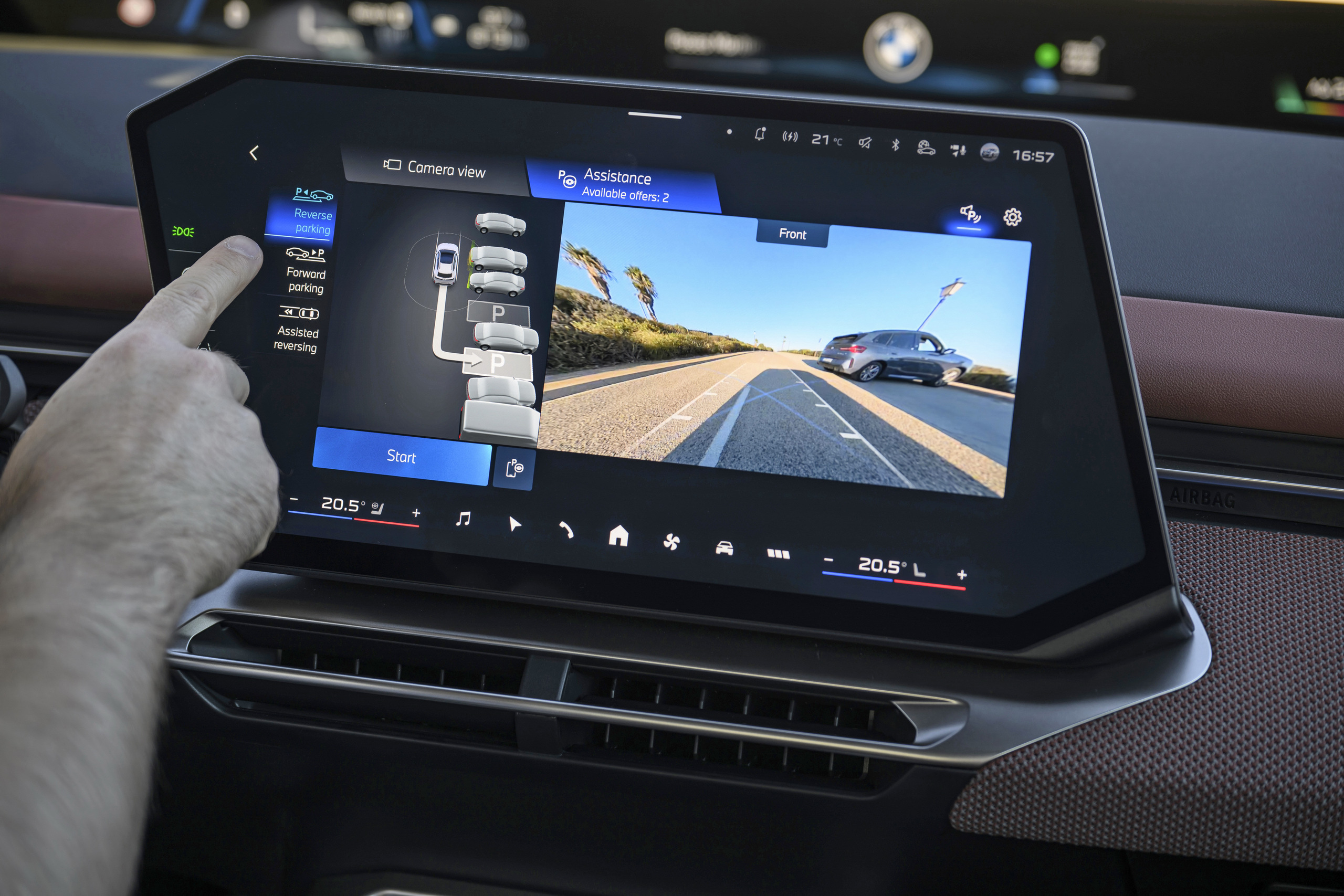
BMW iX3 needs a subscription to use its 360-degree camera.
Driving Assist Pro also requires a monthly subscription.
Company admits heated seat subscriptions were a mistake.
BMW learned a hard lesson in 2022 when it tried to charge a subscription fee for heated seats, prompting swift and widespread backlash. While the company walked that decision back within a year, it’s still firmly committed to the broader idea of subscription-based features.
In the case of the all-new iX3, BMW will ask its customers to subscribe to features such as the 360-degree camera and the Driving Assistant Pro package, which includes hands-free driving on highways and semi-autonomous features for urban settings, much like Tesla’s approach with its own systems nowadays.
This comes even as BMW concedes that offering heated seats as a subscription option was a mistake, and the fact that all new iX3s will have the hardware for advanced-driving assistance systems and the 360-degree camera.
Other features, such as real-time traffic updates and adaptive suspension, are also sold as subscriptions depending on the market. In Australia, adaptive suspension can be activated after purchase for A$29 (US$20) per month, with a one-month free trial to get drivers acquainted.
Why BMW Still Believes in Subscriptions
“The criticism we got was from the seat heating, so this was probably not the best way to start with it,” BMW head of product communications Alexandra Landers told Australia’s Drive. “However, we decided for the technology, everything is on board, but for the additional other systems, we also have costs for running. You have cloud use, and that is cost.”
“If you use it, we have to pay for it. It’s not everything important [to every customer], but the technology is important [to have in all vehicles], and we still believe in the option offer structure that you do not have to decide from the start if you want this ADAS [safety] system.”
Landers added that having subscriptions can be useful for owners who may change their mind about having a certain feature during their ownership. “For example, if they’re sitting in a traffic jam, and think ‘Oh, maybe I should have bought [ADAS] two years ago’. And then they can, you know, add it online.”
BMW will tie downloadable over-the-air software updates to its subscriptions. For example, as ADAS systems are improved, updates could be introduced to paying subscribers.
Some features, however, will reach certain regions before others. BMW confirmed that semi-autonomous driving functions will first roll out in Germany before expanding to other markets.
Performance Stays Unlocked
That said, BMW has ruled out certain types of paid upgrades entirely. Customers won’t be able to unlock more power or battery range through remote updates, as the automaker believes base vehicles should deliver full performance from the start.
“Because this is the thing we say, you buy a car with maximum power, and we are not a tuner. You just felt that 345 kilowatt (463hp), so why restrict it and then have [customers] pay [more] for it? That didn’t make sense for us as an offer strategy.”
Will Buyers Push Back?
It remains to be seen how customers will respond to the subscription offerings for the latest BMW models, particularly the new iX3. While locking the advanced semi-autonomous driving system behind a paywall isn’t unique in the industry, as Tesla does with its supervised Full-Self Driving suite, requiring a subscription for features like a 360-degree camera, is bound to be controversial.
A woman’s Spectre has been sitting at a service center for months.
The EV reportedly “experienced a sudden and serious malfunction.”
The lawsuit says the electric Rolls has a major battery defect.
A dissatisfied Rolls-Royce buyer in Texas has filed a lawsuit against the automaker, claiming her 2025 Spectre Black Badge failed just four months after delivery due to an serious battery defect. With the brand planning additional EVs, including an electric sedan and SUV, the legal dispute is a headache it’d rather not have to deal with.
The complaint, filed against Rolls-Royce Motor Cars North America and authorized dealer Avondale Dealership, alleges that plaintiff Marci M. Donovitz paid $546,385 for a bespoke Rolls-Royce Spectre Black Badge in early 2025. She took delivery on June 23, 2025.
Buyer Says Car Failed in Four Months
Things soon turned sour. According to the filing, the vehicle “experienced a sudden and serious malfunction” in October, just months after delivery. The plaintiff claims the EV would “soon become inoperable” and sent it to the dealer for inspection.
The dealership reportedly informed her by text that parts had been ordered, but were on backorder with no estimated delivery date.
Rolls-Royce Spectre Black Badge
After 40 days with no progress, Donovitz retained legal counsel and sent a letter to Rolls-Royce requesting that it repurchase the vehicle and issue a refund. The company declined. As of February, the lawsuit states, the Spectre remains in the possession of Avondale Dealership and has not been repaired. The filing refers to the luxury EV as a “lemon.”
It further claims the vehicle suffers from a “serious battery defect rendering it unsafe and undrivable.” It’s also claimed that Rolls-Royce and the dealer have failed to diagnose or repair the vehicle within a reasonable timeframe, and they’ve retained the car even as it depreciates.
Resale Value in Question
The complaint additionally alleges that Rolls-Royce was aware of reliability concerns and declining secondary-market performance related to the Spectre but failed to disclose this information to the plaintiff at or before the time of sale.
Donovitz is seeking economic damages, including a full repurchase or rescission of the sale, damages for loss of use and enjoyment, diminished value, incidental and consequential losses, pre- and post-judgment interest, and attorney’s fees and legal costs associated with pursuing the case.
Poll shows 61 percent of Canadians back more Chinese EVs.
Canada will import 49,000 Chinese EVs yearly at lower duties.
Some have raised concerns about data security and privacy.
As electric vehicles become a bigger part of the global conversation, Canada’s latest trade move has stirred plenty of debate at home. The government’s new agreement with China, which slashes tariffs on a limited number of EVs from 100 percent to just 6.1 percent, has sparked plenty of controversy. Still, a new poll suggests that most Canadians support bringing more Chinese-made electric vehicles into the market.
A recent poll conducted by Leger reveals that most Canadians are not only aware of the deal but also largely supportive of increased access to Chinese EVs.
According to the results, 70 percent of respondents said they were familiar with the agreement, and 62 percent expressed some level of support for allowing more Chinese electric cars into the market. Of those, 24 percent strongly backed the policy while 38 percent indicated moderate support.
Support Varies, But the Appeal Is Clear
The Canadian Press that shared the results highlighted that support was particularly strong in Quebec, where 72 percent of respondents favored the policy. That figure outpaces the national average and suggests regional dynamics may be at play when it comes to openness toward foreign electric vehicle brands.
The survey, conducted online between Jan. 30 and Feb. 2 among 1,570 respondents, found awareness of the agreement was notably higher among men and Canadians aged 55 and over.
It’s easy to see why many Canadians are in favor. Chinese manufacturers such as BYD, Chery, and Geely have made a name for themselves by delivering well-equipped EVs at competitive prices. Their cars have found traction in several overseas markets and are increasingly seen as value leaders in a segment often criticized for high costs.
Australia offers a telling example. There, Chinese EVs have become a regular sight, with many models priced comparably to traditional gasoline vehicles. Their arrival has not only expanded consumer choice but also pressured legacy automakers to trim prices to stay in the game. The same kind of market shake-up could easily play out in Canada.
Concerns Remain
Despite the support, Canadians do have their concerns about Chinese electric cars. For example, the poll shows many respondents are worried about vehicle quality and durability.
Three quarters of those surveyed reported at least one concern related to Chinese EVs, with additional worries tied to potential effects on Canada’s domestic auto industry, vehicle safety standards, and broader geopolitical tensions.
They also have concerns about data security and privacy. Shortly after the trade deal was announced, Ontario Premier Doug Ford suggested the vehicles could be used to spy on Canadians.
The tie-up between Canada and China will not result in local roads being overrun by Chinese cars. As part of the agreement, a cap will initially limit imports at the reduced tariff rate to 49,000 vehicles per year, with half of these priced below CA$35,000 (roughly $25,000). The 49,000-vehicle cap matches the number of Chinese-made EVs already imported into Canada in 2023.
Reckless riders in Irvine could also face fines of up to $500.
Authorities want to hold parents accountable for e-bike riders.
Speed limits of 20 mph could also be enforced on sidewalks.
You’ve probably noticed it too: e-bikes are everywhere these days, and not always in the safest hands. Across the country, cities are scrambling to respond to a rise in reckless riding, much of it by young teens weaving through streets and sidewalks with little regard for rules, or risk. Irvine, California, is now the latest city preparing to take a harder stance.
The city council in Irvine has voted 6-1 in favor of new restrictions targeting e-bikes and scooter use. Among the most significant changes are stricter penalties for modifying e-bikes to exceed legal speed limits, expanded powers for local police to impound vehicles, and the potential for repeat violations to be treated as misdemeanors.
When Parents Share the Blame
Repeat offenders may soon find themselves facing more than just a warning. Fines could reach up to $500, particularly for riders caught flouting the new rules multiple times. Local officials also want to increase accountability among parents, especially those who knowingly allow their children to ride in violation of city ordinances.
A growing number of young locals have been seen riding their e-bikes dangerously on sidewalks, bicycle paths, and roads. As part of the changes, 20 mph speed limits will be enforced on bicycle paths and trails, and a 10 mph limit on sidewalks. Sidewalk speed limits would drop further to 5 mph when children are present in school zones.
Before authorities take the step to impound e-bikes of repeat offenders, Irvine Police Department lieutenant Shaheen Jahangard says officers will need to consider several important factors, Voice of OCreports.
“Discretion is going to depend on the circumstances of the situation — how compliant the juvenile is when they’re being detained or stopped for the violation, what the violation is, how egregious is it, are their parents or guardian able to respond to pick up their electric bicycle,” Jahangard said.
“There’s a lot of factors the officers will take into consideration before impounding an e-bike.”
In the past three years, 70 percent of bicycle collisions in Irvine have involved a juvenile rider, and 65 percent of them involved an e-bike. Cracking down on reckless riders seems like common sense, particularly as powerful e-bikes become increasingly popular among the youth.
Unlike an early proposal, the new EV incentive will include several Tesla models.
Passenger vehicles priced at or below $55,000 in the state will be eligible.
State needs to finalize details for the new program, but it will commit $200M.
The federal EV tax credit is no more, but California is stepping in with a plan to keep momentum alive in the country’s largest EV market. Governor Gavin Newsom has outlined a new set of state-level incentives aimed at first-time EV buyers, designed to pick up where the now-defunct federal tax credit left off.
However, the proposal rules out any repeat discounts for those who already own an electric vehicle, limiting eligibility to newcomers.
The initiative, which still requires approval from state lawmakers, would set aside $200 million. Under the current framework, passenger EVs priced at or under $55,000 would qualify, while vans, SUVs, and pickup trucks with a starting price below $80,000 would also be eligible.
Who Gets What and When?
California has yet to confirm the value of each incentive. What we do know is that the policy would require manufacturers to match the state’s contribution dollar-for-dollar. Like the old federal tax credit, the incentives will be offered immediately at the point of sale and will apply to new EVs purchased or leased. Additionally, Bloomberg reports there will be incentives for used EVs priced below $25,000.
Sarah Swig, a senior climate advisor to Governor Newsom, criticized the rollback of federal support. “The Trump administration’s reckless retreat has created unprecedented uncertainty for automakers and families alike,” she said.
“California is proud to partner with automakers who are committed to the transition to a zero-emission future through shared investment to keep costs down and drive the market forward.”
Expanding the EV Base
According to a spokesperson from the California Air Resources Board, limiting eligibility to first-time EV buyers will help to expand the market, “introducing new consumers to ZEV technology.” CARB added in a statement to InsideEVs that “research shows that once consumers make the switch to ZEVs, they typically don’t go back to dirty gasoline or diesel vehicles.”
In late 2024, Governor Gavin Newsom presented his first proposal for a new EV subsidy scheme in the state, in response to President-elect Trump’s threat to repeal the federal program. Newsom’s proposal would have excluded EVs from Tesla, which quickly drew the ire of Elon Musk. As part of the latest proposal, many Tesla models would be eligible.
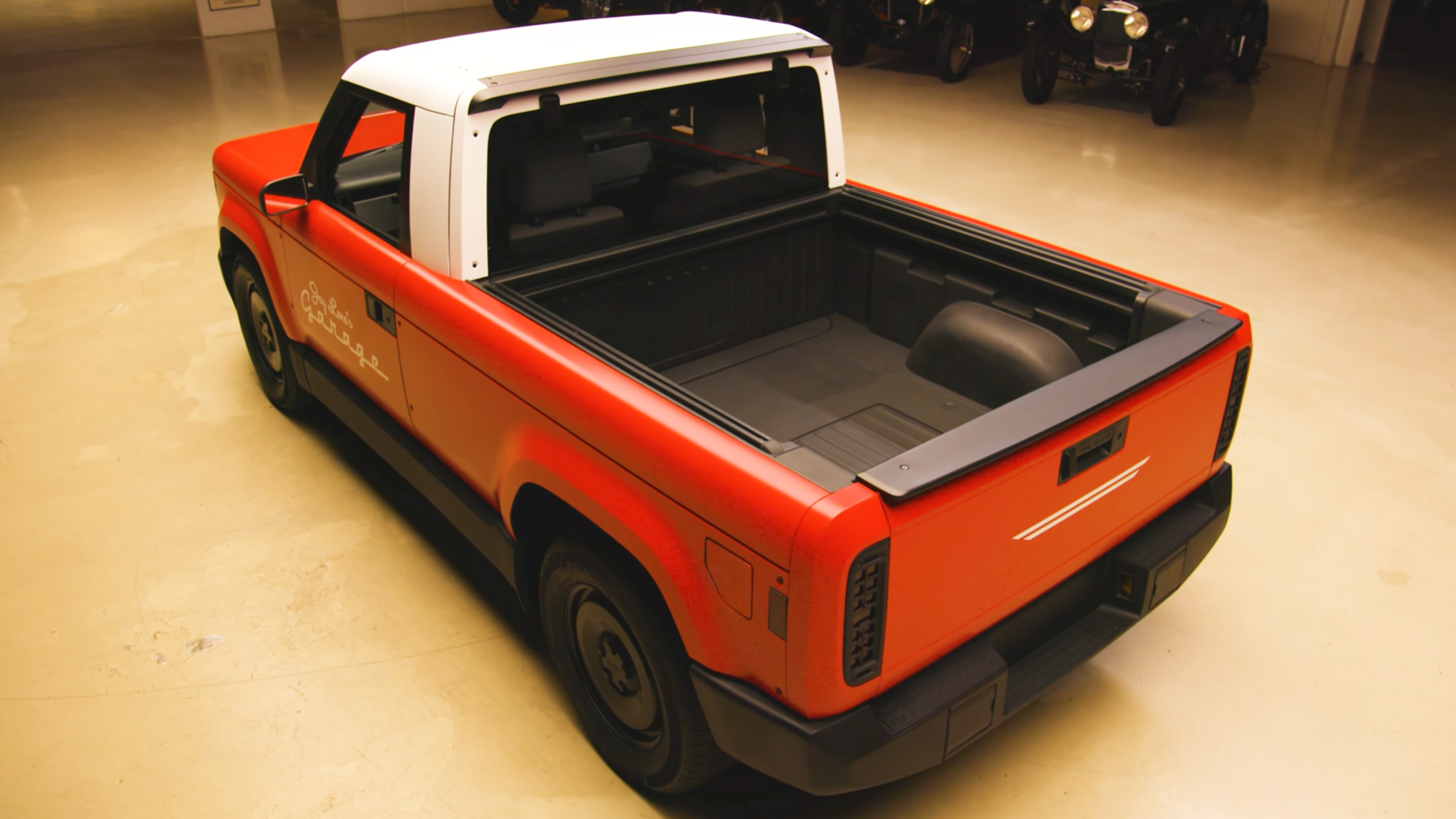
Jay Leno featured the Slate Truck and its DIY upgrade system.
Owners can customize it with kits or convert it to an SUV.
No dealership visits needed for service or warranty repairs.
Amid all the noise and high-concept EV launches, one company is quietly betting that simple might be the next big idea. Slate Auto has its skeptics, including Ram boss Tim Kuniskis, but tens of thousands of people have placed reservations for its back-to-basics electric vehicle, suggesting a real appetite for something more grounded and affordable.
Production of the Slate is scheduled to start at a converted factory in Warsaw, Indiana, before the end of this year, but well before this happens, the carmaker has brought one example to Jay Leno’s Garage, eager to show what makes it special.
Joining the bright red and white Slate with Leno was the head of design at Slate, Tisha Johnson, and the company’s chief commercial officer, Jeremy Snyder.
According to Slate, its philosophy is to build an affordable vehicle, which is desperately needed now that the average new car in the US costs almost $50,000. During the interview with Leno, Snyder says the Slate will start in the “mid-$20s,” although the firm still doesn’t appear to have nailed down a final price.
When the EV was announced, it had a promised starting price of under $20,000, thanks largely to the $7,500 federal EV tax credit. Now that the tax credit has been axed, the price has increased.
Personalization is also a key part of what makes Slate interesting. Many exterior parts have exposed fasteners, making it easy to remove and customize panels. Buyers who prefer an SUV body style can purchase a conversion kit, either to install themselves or through a Slate service provider. This places the owner at the center of the experience, and also helps cut costs.
Slate is also placing right-to-repair at the forefront of the ownership experience. Owners won’t need to visit Slate service centers to have their vehicles repaired, whether under warranty or not, and can shop around and take them to their preferred mechanic. If desired, owners can easily repair the Slate truck themselves.
Scout says 85 percent of buyers chose the range extender models.
A four cylinder engine recharges the 63 kWh battery on board.
Reservations for Terra and Traveler have passed 150,000 already.
Volkswagen is investing a significant amount of money to revive the Scout brand and is facing costly overruns. Still, the gamble might be paying off, as early demand for the upcoming Terra pickup and Traveler SUV has been unexpectedly strong.
In a recent interview, a company spokesperson confirmed that more than 150,000 reservations have been placed across the two models. It’s worth noting, though, that these are fully refundable, so as always, there’s a gap between raising a hand and writing a check. Still, for a vehicle that doesn’t yet exist beyond concept form, that’s a solid show of intent.
Of those reservations, Scout CEO Scott Keogh told InsideEVsthat roughly 85 percent are for the extended-range models, with only 15 percent opting for the pure EV variants.
A Telling Preference
The decision to launch both the Terra and Traveler as extended-range electric vehicles (EREVs) appears to have struck a nerve. Dubbed the “Harvester,” these versions use a compact four-cylinder generator mounted at the rear, paired with a 63 kWh lithium-ion battery and an electric motor. The result is a combined range of over 500 miles, which clearly resonates with customers wary of battery-only limits.
According to Keogh, Scout has been surprised by just how popular the EREV options are proving. “We felt very good about it,” he said. “Did I think it was 85/15? No. I thought it might be more 60/40, let’s put it that way.”
He went on to point out that Scout’s call to go EREV from day one has since been echoed by announcements from other major brands, including Ford, Hyundai, Kia, and Jeep, all of whom are preparing range-extender models of their own.
“We felt good about it, and we still do obviously feel good about it,” he added. “We feel better about it now, because, let’s be honest, when you’re all alone, you feel good, but you’re still a little bit alone. Now that others have made similar announcements, it’s like, okay, yeah, people are jumping in.”
All future Scout models will be built at a plant in Blythewood, South Carolina. This site was initially expected to cost $2 billion, but according to a new report, that figure has ballooned to $3 billion. Production of the Terra and Traveler is scheduled to begin in 2027.
VW ID.3, Toyota bZ4X, and Urban Cruiser beat Model Y.
EVs made up 94 percent of all new car sales in Norway.
Tesla sales increased in Italy, Spain, Sweden, and Denmark.
It’s no secret that Tesla’s dominance in Europe has been under pressure for a while, but few expected just how steep the drop would be in one of its most loyal markets. While Elon Musk’s polarizing behavior and the rise of competitive alternatives have chipped away at Tesla’s popularity across the continent, one country had stood firm. Until now.
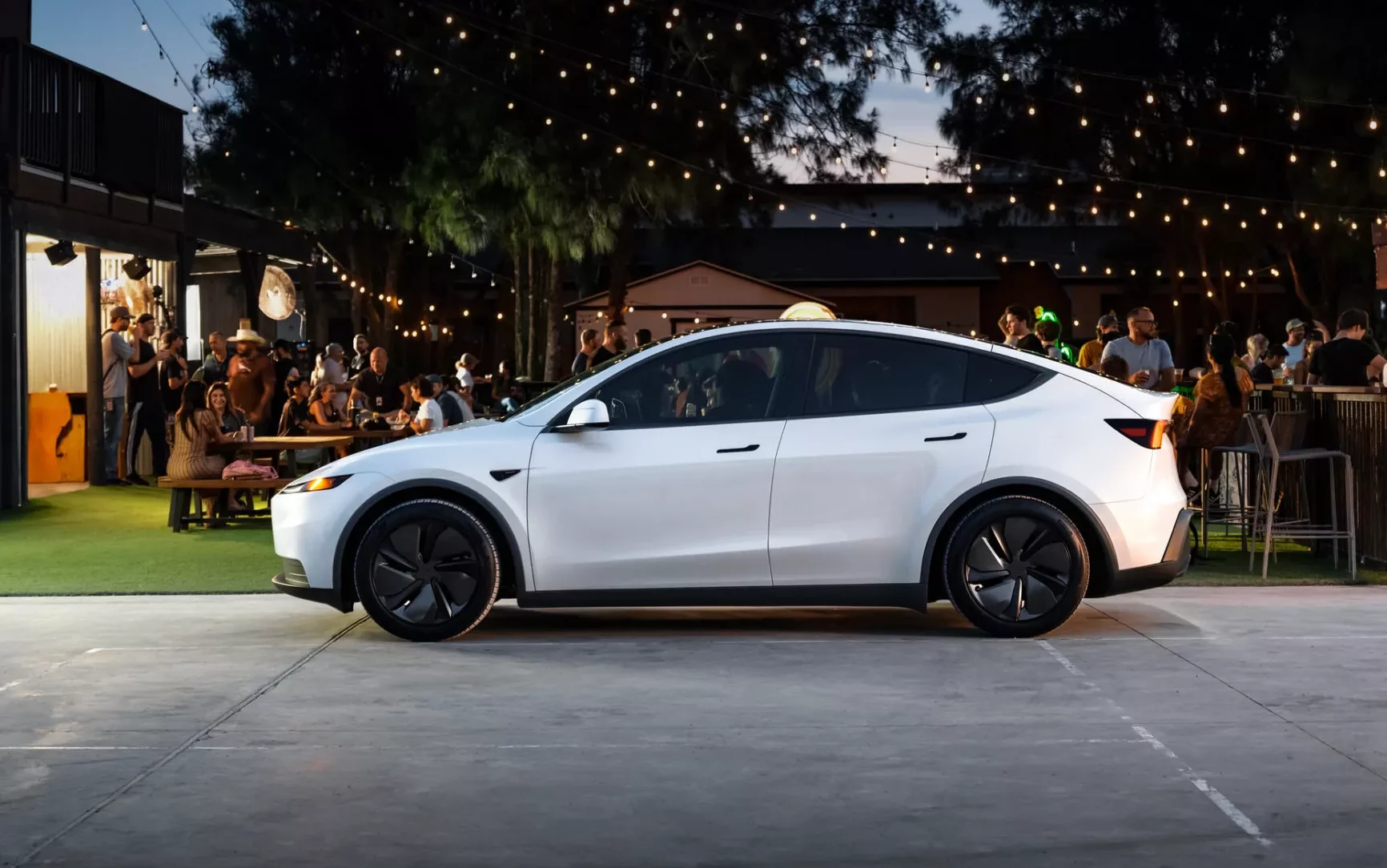
It turns out that even Norway, long considered Tesla’s European stronghold, may be losing interest. New registration data from January 2026 shows that only 62 units of the Tesla Model Y were delivered in Norway last month, accounting for just 2.8 percent of new car sales.
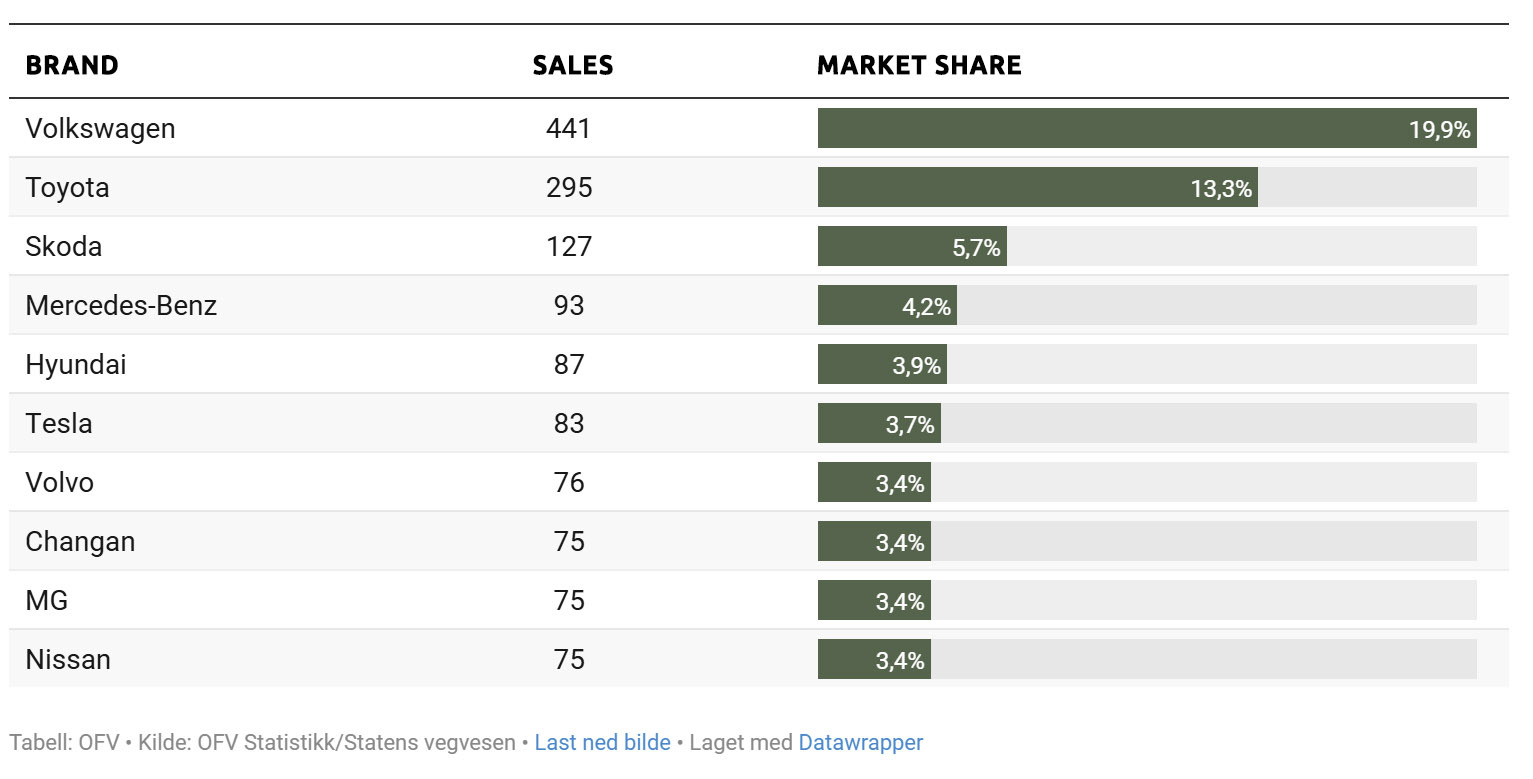
Across its full range, Tesla sold just 83 vehicles in total, marking an 88 percent decline compared to the same period last year.
Changing of the Guard
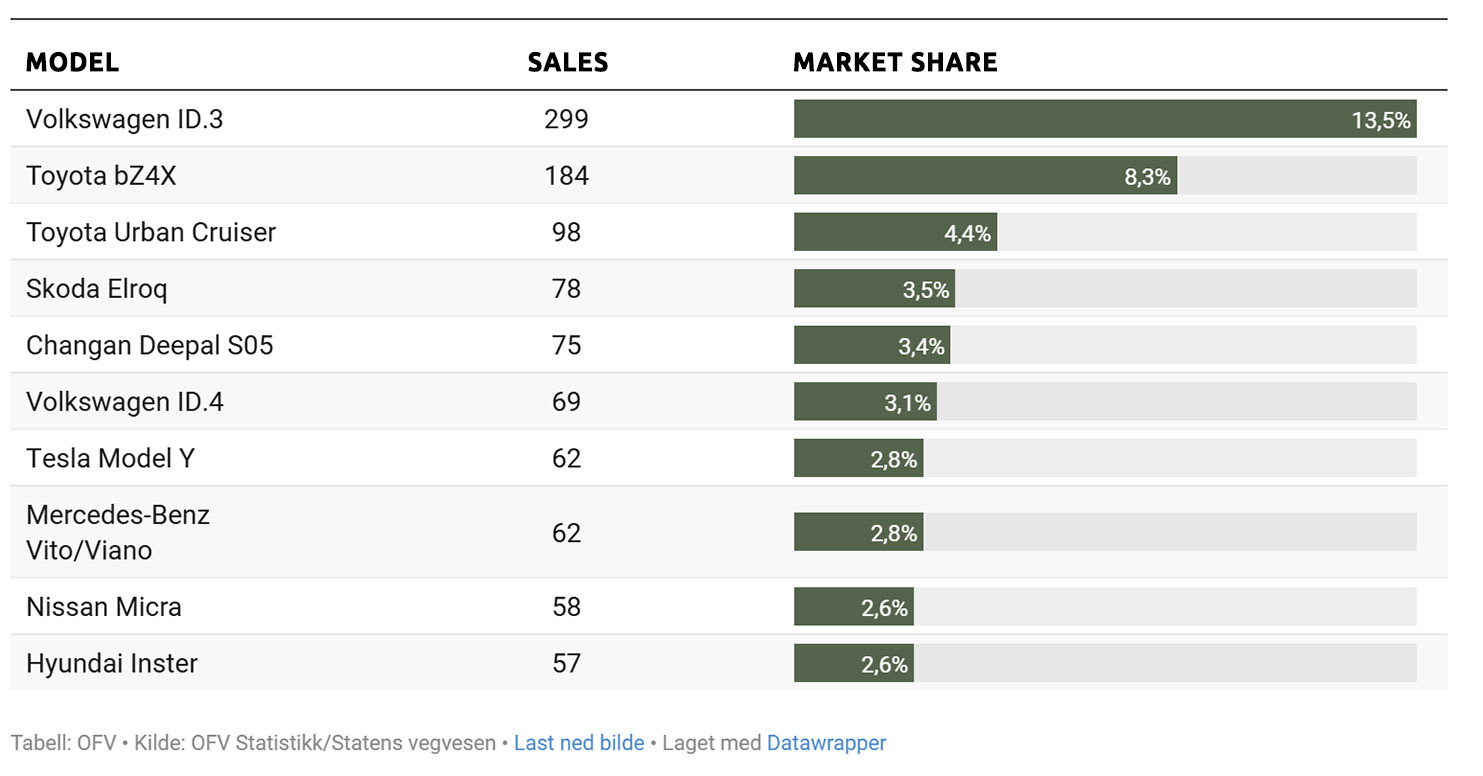
Several other electric vehicles now comfortably outpace the Model Y in Norwegian sales. Leading the pack in January was the Volkswagen ID.3, with 299 units registered, nearly five times as many as the Tesla.
Norway January 2026 Sales by Model
The Toyota bZ4X followed with 184, ahead of the Toyota Urban Cruiser at 98 and the Skoda Elroq at 78. Even the relatively obscure Deepal S05 managed to beat the Model Y with 75 new registrations, while the Volkswagen ID.4 came in just above Tesla’s numbers with 69.
EVs Still Reign Supreme
Despite Tesla’s stumble, the Norwegian EV market remains overwhelmingly electric. A staggering 94 percent of all new vehicles sold in Norway last month were EVs. Diesel cars accounted for just 98 sales, while only 7 petrol-powered vehicles were registered across the entire country, the lowest number on record.
While Tesla endured a difficult month in Norway, it did actually experience a bump in sales in certain European markets. For example, sales rose 70 percent in Spain to 456 examples. Additionally, sales jumped 75 percent in Italy to 713 units, rose 26 percent in Sweden to 512, and increased 3 percent in Denmark to 458.
Likely contributing to this growth are the newly available, affordable, and stripped-out versions of the Model 3 and Model Y. These Standard variants were introduced to breathe new life into Tesla’s aging lineup, which has been increasingly criticized for lagging behind newer, more dynamic competitors.
Still, Tesla’s European picture remains mixed. A Reuters report highlights significant losses in key markets: sales in France fell 42 percent, Belgium dropped 31 percent, and the Netherlands saw a dramatic 67 percent decline. In Portugal, the dip was modest but noticeable at just over 3 percent.
New Threats on the Horizon
It will be interesting to see how the rest of 2026 plays out for Tesla in Europe. A growing number of Chinese brands are launching several new models in Europe, and in the second quarter, BYD will start mass production at its plant in Szeged, Hungary, allowing it to sell EVs tariff-free in the region.
Porsche is slashing costs after pulling back on EV expansion.
Delays and rising costs have plagued both electric sports models.
EV-only plan scrapped as ICE options return to the 718 lineup
Porsche has spent years developing its all-electric 718 Boxster and Cayman models, recently retiring the outgoing ICE generation to clear the stage for the EV duo. But despite that long runway, a new report suggests the company may pull the plug on both models before they ever reach showrooms.
Michael Leiters, the former CEO of McLaren, stepped into his new role as Porsche’s chief executive on January 1. And according to unnamed sources cited in a new report, one of his first major decisions could be to scrap the electric 718s entirely, due to mounting development costs and repeated delays.
Porsche is under pressure to rein in spending after pulling back from its earlier electric-only strategy, compounded by a sharp 26 percent drop in Chinese sales in 2025. Bloomberg reports that the brand is now weighing the addition of a plug-in hybrid variant to its lineup, a move that would require fresh architecture and substantial financial outlay.
These changes could cause further delays for the next-gen 718 models, and if they do eventually launch, they might already feel outdated by the time they reach the market.
Leiters has inherited a long to-do list from his predecessor Oliver Blume, who served as Porsche CEO for the past ten years. The brand’s EV pullback reportedly wiped out €1.8 billion ($2.1 billion) in operating profit last year. Meanwhile, new tariffs in the United States have added more friction, and Porsche’s recent market struggles led to its removal from Germany’s benchmark DAX index.
Carscoops contacted Porsche for comment. A company representative said Porsche was declining to comment on the “speculation”.
Changing Plans
Baldauf
The electric 718 Cayman and Boxster have already faced several delays. In early 2025, Blume revealed that Porsche was having trouble sourcing the high-performance battery cells it needed for the two models, in part due to Swedish battery manufacturer Northvolt filing for bankruptcy. Sales of the two models were due to start this year, but this now appears increasingly unlikely.
Clearly realizing that it couldn’t put all of its eggs in one basket, Porsche announced last September that flagship versions of the next-gen 718 would be updated to include internal combustion engines, likely including replacements for the Cayman GT4 and GT4 RS, as well as the 718 Spyder RS.
Just a few months later, it was revealed that combustion options could also be made available across a larger proportion of the 718 model line, not just the pricey flagships.

 Login
Login