Normal view

There are new articles available, click to refresh the page.
Today — 26 February 2026Main stream

Hyundai’s Chinese 2026 Elexio Gets So Much Right, And That’s The Frustrating Part | Review

PROS ›› Good tech, comfortable ride, better than EV5 CONS ›› Poor ADAS, pricey, inefficient, slow-charging

Electric vehicles make up just over 8 percent of new car sales in Australia, so they are hardly dominant. Yet the competitive noise has increased dramatically in recent years, thanks largely to a surge of new Chinese brands. Hyundai’s counterpunch is the Elexio, its latest EV and one aimed squarely at that fast-growing crowd.

The Elexio is unlike any other electric Hyundai so far. Crucially, it was not developed entirely in-house, but rather brought to life through its joint venture partnership with BAIC Motors.

Review: The 2026 Ioniq 9 Calligraphy’s Biggest Threat Is Hyundai Itself

This means it is built in China, tapping into the country’s vast manufacturing scale and efficiency, paired with the engineering experience and brand weight of a legacy player like Hyundai. When it was revealed last year, it looked set to remain a China-only model. Instead, it has now landed in Australia, and we were among the first to get behind the wheel earlier this month.

QUICK FACTS
› Model:2026 Hyundai Elexio Elite
› Starting Price:AU$61,990 ($44,000) as tested
› Dimensions:181.6 L x 73.8 W x 65.8 in H (4,615 x 1,875 x 1,673 mm)
› Wheelbase:108.2 in (2,750 mm)
› Curb Weight:2,105 kg (4,640 lbs)
› Powertrain:Single electric motor / 88.1 kWh battery
› Output:215 hp (160 kW) / 236 lb-ft (320 Nm)
› 0-62 mph~8.0 seconds
› Transmission:Single-speed
› Efficiency:19.5 kWh/100 km as tested
› On Sale:Now
SWIPE

According to Hyundai, the Elexio has been designed to neatly slot between the Kona EV and Ioniq 5 in its line-up, serving as an all-electric alternative to the Hyundai Tucson. It’s Hyundai’s answer to popular competitors like the Tesla Model Y, Kia EV5, BYD Sealion 7, and Xpeng G6, and this is reflected in the price.

Can It Compete On Price?

\\\\\\\\\\\\\\\\\\\\\\\\\\\\\\\\\\\\\\\\\\\\\\\\\\\\\\\\\\\\\\\\\\\

Hyundai Australia

Two versions will be offered: the base Elexio and the flagship Elexio Elite. Prices for the base version will start at AU$58,990 (US$41,900) before on-road costs, while the Elite will be priced from AU$61,990 (US$44,000). However, the Elite will be available for AU$59,990 (US$42,600), including all on-road costs, in a limited-time deal running until the end of March.

Hyundai is predicting big things for the Elexio and expects it to be its best-selling EV in Australia. Achieving this won’t be easy. The Kia EV6 undercuts the Elexio at AU$56,770 (US$40,300), the Tesla Model Y Premium is available from AU$58,900 (US$41,800), and the BYD Sealion 7 Premium is available from AU$54,990 (US$39,000). The superb Zeekr 7X also undercuts it at AU$57,900 (US$41,100).

Big Battery, Modest Charging Speeds

 Hyundai’s Chinese 2026 Elexio Gets So Much Right, And That’s The Frustrating Part | Review

So, what do you get for your money in the world of the Elexio? Like Hyundai’s Ioniq models, and unlike the Kia EV5, the Chinese-built Elexio uses the familiar E-GMP platform. However, it doesn’t have an 800-volt architecture like the Ioniqs, instead using a 400-volt system.

With this in mind, charging the battery pack 10-80 percent on a 150 kW charger, with peak speeds in the mid-120s, will take 38 minutes. This is slightly slower than the Kia EV5, which takes 36 minutes, but whereas it has a compact 64.2 kWh battery, the Hyundai has a much larger and more practical 88.1 kWh unit.

This battery powers a front-mounted electric motor with 160 kW (215 hp) and 310 Nm (236 lb-ft). Hyundai quotes a combined efficiency of 18.2 kWh/100 km, which is okay, but certainly not class-leading.

A Digital-First Cabin

\\\\\\\\\\\\\\\\\\\

Photos Brad Anderson/Carscoops

We only sampled the Elexio in flagship Elite trim, so first impressions came fully loaded. Stepping into the cabin for the first time, it is immediately clear this is not your typical Hyundai interior.

Dominating the interior is a massive widescreen 27-inch display, encompassing both the central infotainment display and a display for the passenger. This screen houses Hyundai’s new Connect-C infotainment system and runs on Android Automotive with a powerful Snapdragon 8295 processor and Unreal 3D graphics engine.

While there are several cars on sale in China with a similar passenger and infotainment screen, this is one of the first implementations of a display like this in a Western market. It looks great, providing excellent colors, clarity, and response. However, it’s not particularly practical to use, especially when you’re driving.

\\\\\\\\\\\\\\\\\\\\\

Photos Brad Anderson/Carscoops

I am quite tall with long arms, yet adjusting the climate controls or digging into vehicle settings on the move meant leaning forward and stretching almost to the limit. It should not feel like a light workout just to change the temperature. The more traditional screens in other current Hyundai models are much easier to reach, as are the tablet-like displays found in many of the Elexio’s rivals.

Read: Hyundai’s New EV Costs Over Twice As Much In Australia As In China

On the plus side, the new Connect-C system is good and is far more modern than Hyundai’s outgoing software. It has a much smartphone-like layout with convenient shortcuts on the driver’s side.

In a Hyundai first, a traditional gauge cluster has been replaced by a head-up display. In photos, it doesn’t look like a HUD at all, but rather a physical cluster positioned at the base of the windshield. In reality, it is a true head-up display, albeit it projects onto a small black area of the windshield, providing better contrast than HUDs that project onto normal glass.

The obvious downside of this is that if you chip or crack the windshield, you probably won’t be able to buy a generic HUD-compatible replacement, but rather need one from Hyundai with this black element.

Quality And Space

 Hyundai’s Chinese 2026 Elexio Gets So Much Right, And That’s The Frustrating Part | Review

The rest of the cabin is quite minimal, as many EVs are today. In terms of fit and finish, it feels on par with some Chinese rivals, like the BYD Sealion 7, and is certainly more premium than the Kia EV5. There’s soft-touch suede on the dashboard and door panels, as well as heated and ventilated front seats, and plenty of leather. Dual wireless chargers are also standard on the Elite.

Overall, space and comfort are good, whether that be in the front row or the second-row. While the Elexio only has a wheelbase of 2,750 mm (108.2 inches), 5 mm (0.1 inches) less than the Tucson and 250 mm (9.8 inches) less than the Ioniq 5, there’s still plenty of legroom for rear passengers, and that includes adults. Cargo space is decent, rated at 506 liters (17.8 cubic-feet) or 1,540 liters (54.3 cubic-feet) with the rear seats folded 60/40 flat.

Disappointingly, neither Elexio model has a panoramic glass roof, which is common in electric SUVs at this price point, nor a frunk, even though there’s plenty of space for one.

How Does It Drive?

\\\\\\\\\

Photos Brad Anderson/Carscoops

Driving the Elexio revealed that it is a solid performer, and it does some things well. However, it fails to stand out from the competition and could benefit from some tweaks to lift it to a new level.

As any EV should, the Elexio’s powertrain is smooth and quiet, providing more than enough grunt for everyday driving duties, whether that be in urban settings or on the highway.

Review: Why Kia’s New EV5 SUV Makes More Sense Than A Model Y

With 160 kW (215 hp) and 310 Nm (236 lb-ft), the Elexio has exactly the same power as the front-wheel drive Kia EV5. Crucially, it doesn’t suffer from the same horrible torque steer that the EV5 does. In fact, there’s no torque steer whatsoever, which is a great thing. However, like the EV5, the Elexio does love to spin up its inside front wheel should you get greedy with the throttle and play around with the traction control.

 Hyundai’s Chinese 2026 Elexio Gets So Much Right, And That’s The Frustrating Part | Review

Efficiency is not so good. After several stints behind the wheel of the Elexio, we averaged 19.5 kWh/100 km, which is quite poor, particularly given that we averaged 20.5 kWh/100 km in the Sealion 7 Performance, and it has an extra 230 kW (308 hp) and 380 Nm (280 lb-ft) of torque.

Like other Hyundai and Kia EVs, the Elexio has paddle shifters behind the steering wheel to adjust the level of brake regeneration, which is something every EV should have. I spent most of my time in the one pedal i-Pedal mode, with it bringing the SUV to a smooth and predictable stop every time. The transition between the mechanical brakes and the regen is also imperceptible, so kudos to Hyundai for that.

The brand says that, like most of the cars it sells in Australia, the Elexio has been specifically tuned for local roads by teams of engineers from South Korea. I was pleasantly surprised with the Elexio’s ride, finding it to be comfortable and softer than many other EVs, which can be too firm and harsh over bumps.

Software Still Finding Its Feet

\\\\\\\\\\\\\\

Photos Brad Anderson/Carscoops

In addition to tweaking the suspension for Australia, Hyundai insinuated during a press briefing that the Elexio’s advanced driver assistance system have also been set up for local conditions. Despite this, further refinements are needed.

During long highway jaunts, there were several instances when the lane-keeping assist and lane-centering functions failed to recognize clearly-marked lines, causing it to slowly drift into adjacent lanes. In addition, I experienced some slow ping-ponging between lane markings. This is odd as the dozens of other Hyundai and Kia models I’ve tested in recent years all have great lane-keeping systems, keeping you locked in the center of the lane on well-marked highways.

Review: 2026 Zeekr 7X Performance Is Proof That Tesla Isn’t The Benchmark Anymore

In addition, there was an instance where I had the adaptive cruise control enabled on a 100 km/h (62 mph) country road when suddenly, the Elexio suddenly braked to 75 km/h (47 mph) despite there being no object or car in front of me. I suspect the large semi-truck traveling in the opposite direction in the lane next to me fooled the system.

Like so many other new cars built in China, the Hyundai Elexio’s driver monitoring system is overactive, ringing the moment you yawn or take your eyes off the road. Additionally, turning it offer requires multiple steps through the menu, which is frustrating.

Verdict

\\\\\\\\\\\\\\\\

Photos Brad Anderson/Carscoops

The Hyundai Elexio is definitely better than the Kia EV5, which has quickly gained popularity in Australia and is the best-selling EV from a legacy brand in the local market. With this in mind, there’s a good chance that the Elexio should also sell well for Hyundai, and it’ll likely attract many shoppers who were previously interested in the Kona EV or Ioniq 5.

However, it may be prudent for buyers to exercise some patience before getting an Elexio. Earlier this year, Hyundai slashed prices of the Inster by AU$7,288 ($5,200), and reduced the Kona Electric by more than AU$13,000 ($9,200). If internal sales targets are missed, similar price adjustments for the Elexio would hardly be surprising.

Just as importantly, Hyundai’s latest EV still needs a few software refinements, particularly to its ADAS, before it feels like the clear choice in an increasingly crowded segment.
\\\\\\\\\\\\\\\\\\\\\\\\\\\\\\\\\\\\\\\\\\\\\\\\\\\\\\\\\\\\\\\\\\\\\\\\\\\\\\\\\

Photos Brad Anderson/Carscoops

Who Needs Subscriptions When Ford Charges You Nearly $500 To Use The Frunk

  • Ford claims most Mach-E owners barely use the frunk.
  • Several standard features have been dropped for 2026.
  • The EV also gains new physical door handles at the rear.

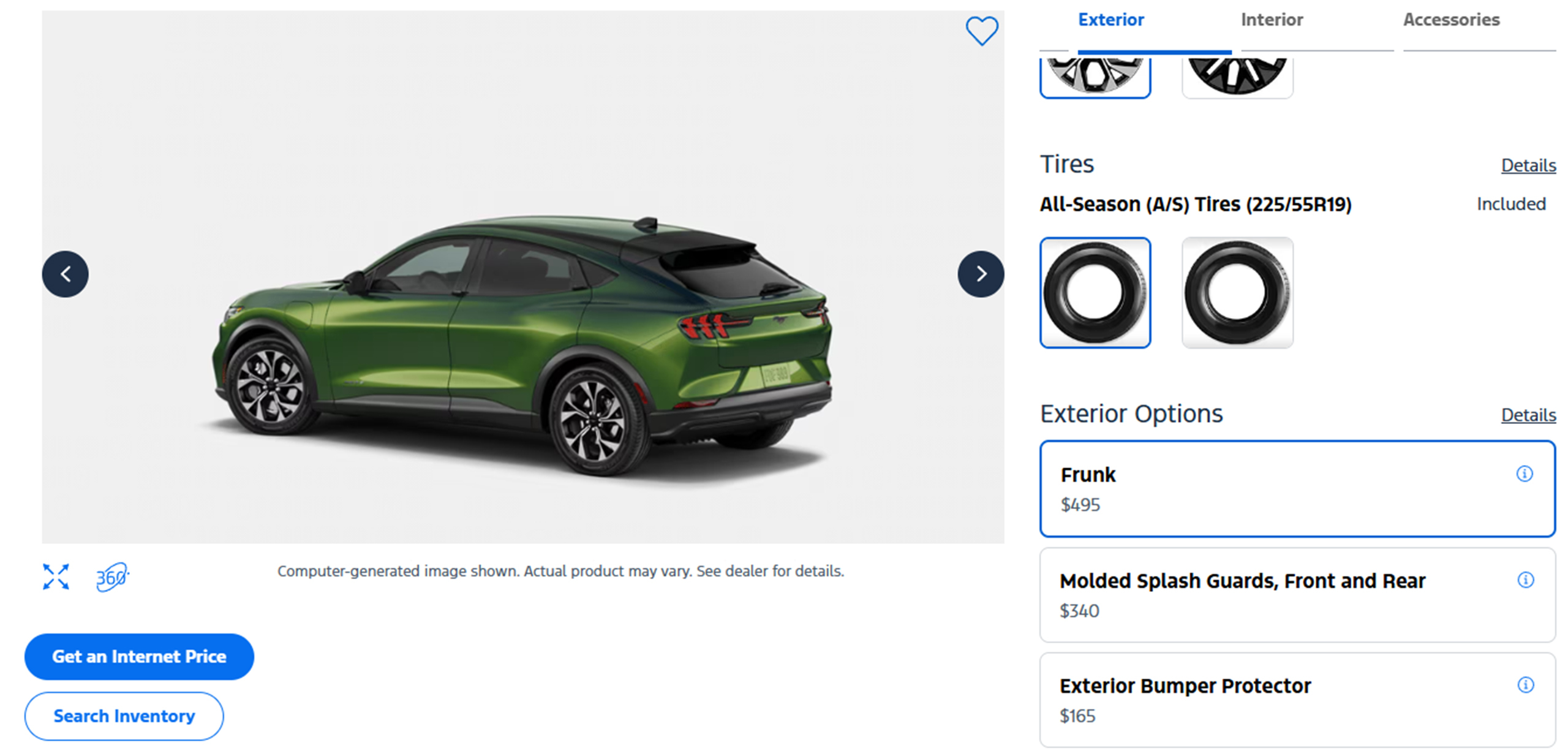
Ford has given the Mustang Mach-E a light reshuffle for 2026, and one change jumps out immediately. The front trunk is no longer standard kit. If you want a frunk now, you will have to tick a box and pay for the privilege. And it’s a pretty expensive one at that.

First noticed by Ford Authority, the updated online configurator reveals that the frunk is now a $495 option across the entire model line-up. While there are plenty of EVs out there that don’t have a frunk at all, this is the first time we’ve heard of one being offered as an optional extra. It may also be the first instance of a once-standard frunk becoming a paid add-on.

Read: Mustang Mach-E Owners Will Need A Fix Before Nightfall Becomes A Problem

Ford says the decision was driven by customer behavior. Not many owners were using the frunk in the first place, or so the company claims. Removing it as standard helps cut costs, and the company insists those savings are being passed on.

To be fair, as we reported back in December, the Mach-E GT is almost $1,000 cheaper for 2026 than it was last year. The entry-level car, however, still starts at $37,795, which suggests the savings have not been distributed equally.

What Else Is Missing?

 Who Needs Subscriptions When Ford Charges You Nearly $500 To Use The Frunk

There are a few more trims to the lineup for 2026. For example, the front-seat map pockets have quietly disappeared, presumably in the name of saving a few pennies per car. The Mach-E Rally also parts ways with its standard rear spoiler and graphics, both now shuffled onto the options sheet. And if you were fond of the Bronze Appearance Package, it has been shown the door as well.

It is not all subtraction, though. Ford has made one practical addition at the back, fitting the rear doors with the same small grab handles used up front. You still have to press a button to pop the door open, because this is 2026, but at least there is now something physical to grab once it releases.

However, given how much bad press electronic door handles had over the past year, as well as regulatory changes in other markets, it’s possible Ford may eventually have to revert to more traditional door handles. We will see how long the current setup lasts.

\\\\\\\\\\\\\\\\

Toyota Wants To Fix Your Home Charger Install Headache In 48 Hours

  • Toyota and Lexus teamed up with Treehouse to simplify home charging.
  • Every 2026 and newer model includes a Level 1 and Level 2 charger.
  • Buyers can spend $524 on a stronger ChargePoint Level 2 unit.

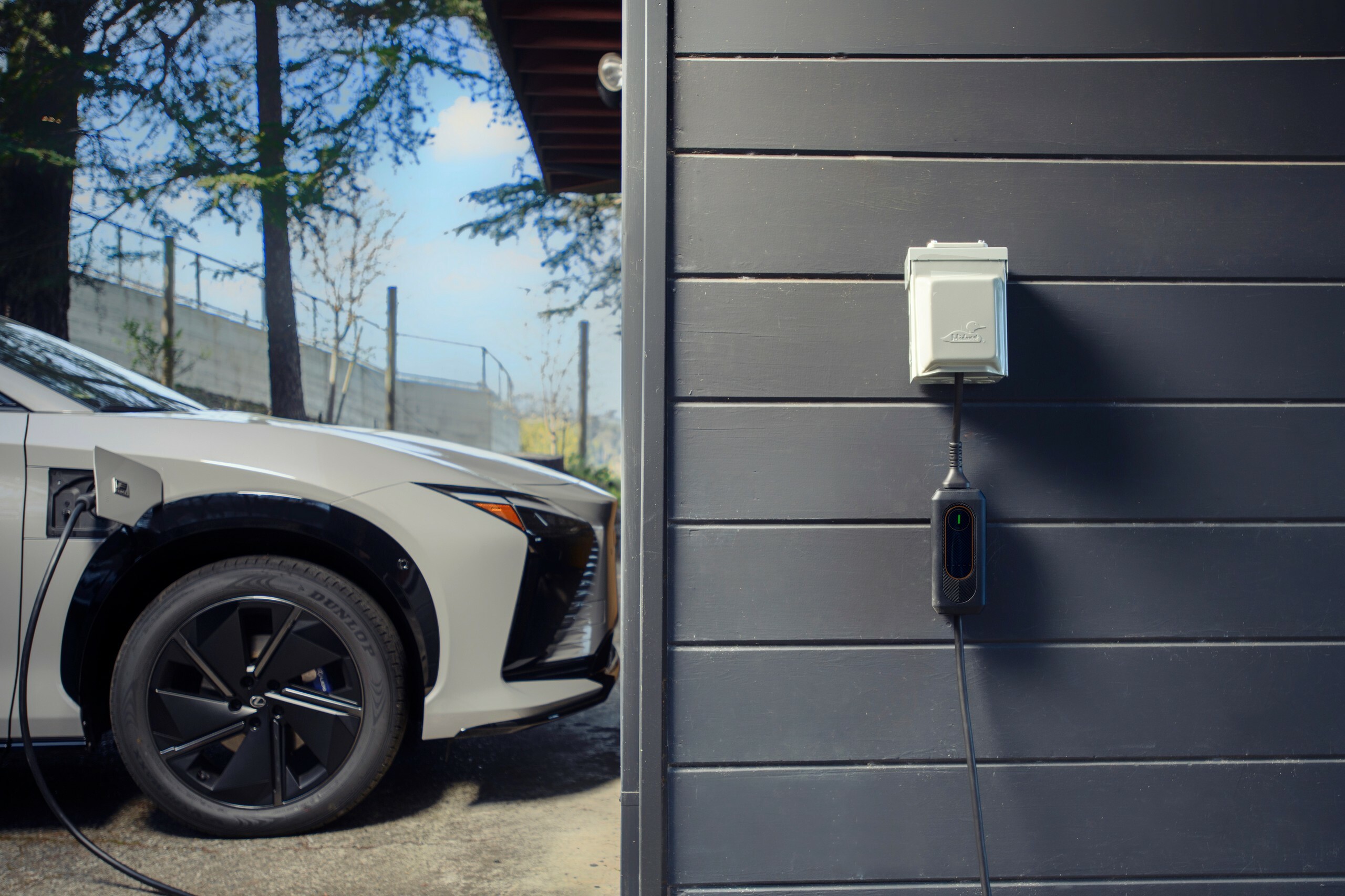
Electric vehicles make plenty of sense if you are not clocking up cross-country miles every week and you have somewhere at home to plug in. The complication usually starts after you sign the paperwork, when you realize installing a home charger involves quotes, site visits, and more emails than expected. Toyota thinks it has found a way to smooth that part out.

Toyota’s North American division has partnered with Treehouse, an EV charging infrastructure company, to simplify the process of getting a Level 2 AC home charger installed and operational.

Read: Toyota Slashes Thousands Off Its Newest EV Just Weeks After Launch

Thanks to Treehouse, owners only need to upload a few photos and complete a short survey. From there, the company promises a quote within 48 hours and can then send technicians out to install the charger.

Traditionally, home charger installs can involve multiple visits, especially when someone needs to assess the right mounting location and electrical setup in person. This approach is meant to cut that step out entirely.

Treehouse says it relies on proprietary technology, along with the homeowner’s photos, to determine exactly what the installation requires. If upgrades are necessary, licensed electricians will step in to update or install any electrical systems needed to support home EV charging.

Standard Equipment On 2026 Models

 Toyota Wants To Fix Your Home Charger Install Headache In 48 Hours

From 2026 onward, every Toyota and Lexus battery-electric vehicle and PHEV sold in the US will include a dual-voltage 120V/240V AC home charger. It supports both Level 1 and Level 2 charging, so you can plug into a standard outlet or step up to a quicker setup. In typical conditions, that is enough to take a battery from about 10 percent to full overnight, which should cover most daily routines.

If that still feels too leisurely, there is an upgrade. Owners can opt for a hardwired ChargePoint Home Flex Level 2 charger, installed by Treehouse, which Toyota says trims charging times by roughly 30 percent. The unit costs $524, assuming your electrical panel is feeling cooperative.

“We’re thrilled to work with Toyota to enhance the electrified vehicle and home charging experience for Toyota and Lexus customers,” Treehouse co-founder and chief executive Eric Owski said. “By bringing seamless, end-to-end home charging solutions into the EV ownership journey, this collaboration with Toyota reflects our shared commitment to making electrification easy and accessible for consumers.”

\\\\
Yesterday — 25 February 2026Main stream

Richard Hammond Once Crashed A Rimac, Now Trusted With BYD’s 2,978 HP Hypercar

  • The YangWang U9 Xtreme makes 2,978 hp from four motors.
  • Former Top Gear host drove the limited-run model on track.
  • He also sampled the Xiaomi SU7 Ultra and Maextro S800.

China’s most outrageous new hypercar has already brushed up against the outer limits of physics, and now it has handed the keys to Richard Hammond. Last year, the YangWang U9 Xtreme went faster than any production car before it, recording a one-way top speed of 308.4 mph or 496.22 km/h at the ATP Papenburg high-speed oval in Germany.

Because the run was completed in only one direction, however, SSC’s Tuatara technically still retains the official two-way average production car record at 282.9 mph (455.3 km/h).

Even so, it was a headline-grabbing run that instantly placed BYD’s halo car in rare company. Keen to showcase that achievement to a broader audience, BYD recently invited Richard Hammond to become the first Western journalist to drive the car. The result makes for compelling viewing.

Read: China’s YangWang U9 Smashed Bugatti’s Speed Record But Still Isn’t Officially The World’s Fastest Car

As Hammond admits in his latest DriveTribe video, he doesn’t exactly have the greatest reputation when it comes to driving extremely fast, ultra-powerful cars. In 2017, he crashed the all-electric 1,224 hp Rimac Concept One while filming The Grand Tour. Back in 2006, he was seriously injured after crashing a dragster on the set of Top Gear.

BYD obviously put a lot of faith in him to keep the U9 Xtreme in one piece, particularly given that this four-motor electric beast delivers a maximum of 2,978 hp, more than any other production car.

Rather than driving it on the road, Hammond was able to put it through its paces on a racetrack. Understandably, he appears to take things quite easily, which is hardly a surprise given that a BYD test driver spun up the car’s wheels the day prior and crashed into a barrier. It would seem as though having almost 3,000 hp under your right foot requires a lot of care. Who would have thought?

Hammond Tests Xiaomi Too

Interestingly, this isn’t the only recent video that Hammond has made in China. Late last year, he joined what could best be described as the Chinese version of Top Gear, alongside three hosts for a road trip. In this video, he drove three of China’s most impressive new EVs: the Xiaomi SU7 Ultra, the ‘regular’ YangWang U9, and the luxurious Maextro S800.

The clip was originally shared only on Chinese social media but has since been translated and uploaded to YouTube for our viewing pleasure. It’s well worth a watch.

Screenshot Drivetribe/YouTube

Land Rover’s Freelander Revival Feels Familiar, Until You Check Its DNA

  • The new Freelander will be based on Chery’s T1X platform.
  • JLR is expected to sell the SUV in both EV and EREV guises.
  • Freelander becomes a sub-brand with multiple models.

Land Rover is not only working on a smaller Defender, but it is also dusting off the Freelander badge for something altogether more targeted. This time, the name returns on an all-new, rugged SUV built specifically for China, and if these spy shot-based renderings are on the money, it will not be shy about looking the part.

The project is being handled by the Chery Jaguar Land Rover joint venture, better known as CJLR. Underneath, the new Freelander will sit on Chery’s existing T1X platform, which already underpins various Jaecoo, Omoda, and Chery SUVs. In plain terms, that means lower development costs and a much quicker route to market. Reinventing the wheel is expensive. Borrowing one from the parts bin is not.

Read: The Freelander’s Back As Its Own Brand And It’s Launching Soon

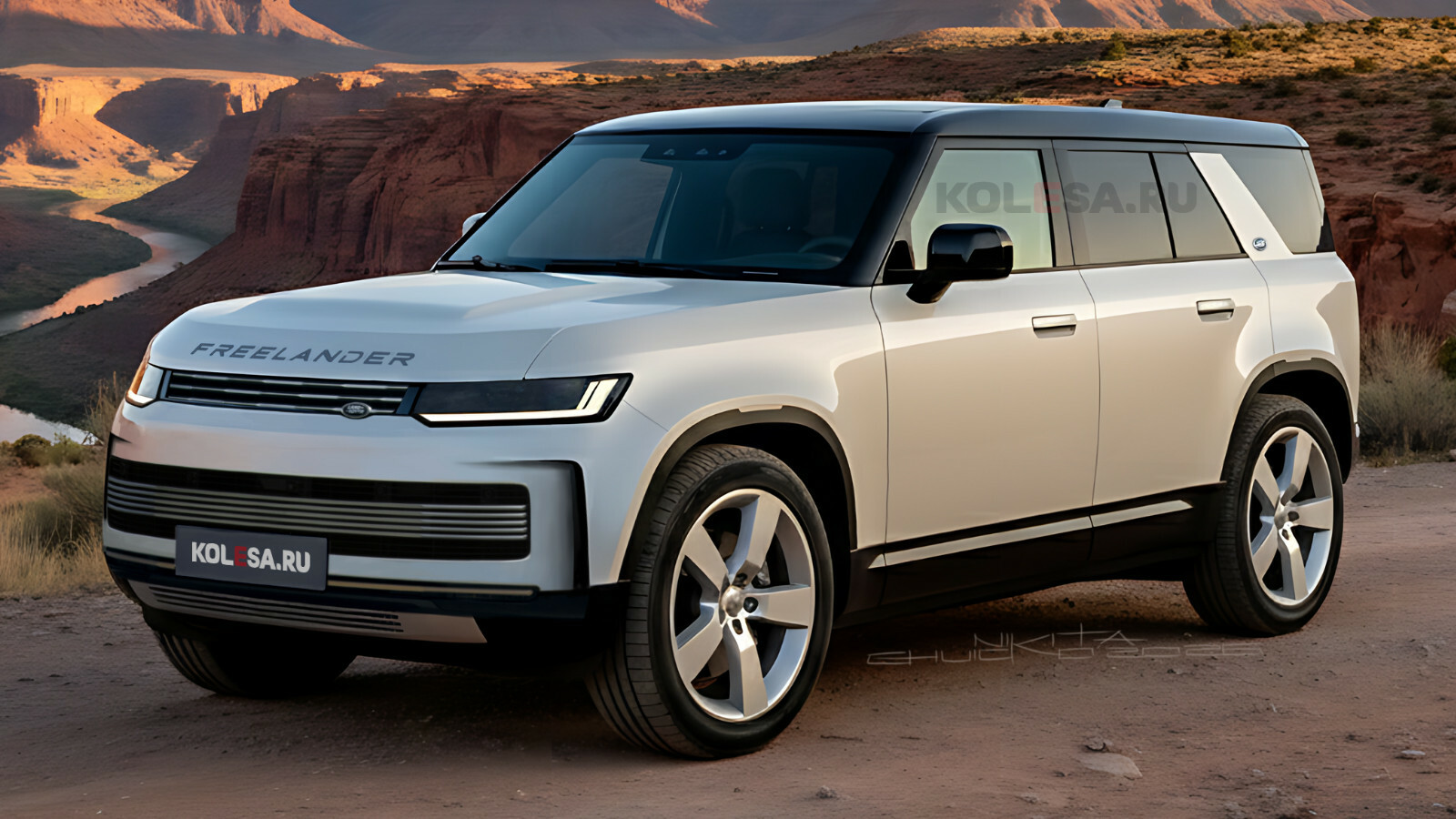
Interestingly, Land Rover won’t simply revive the Freelander name for a single model. Instead, it is spinning the name into its own sub-brand, with the potential to spawn several models over time. The first of these SUVs has been spied testing under heavy camouflage, leading to these detailed renderings from Nikita Chuyko for Kolesa.

Does It Pass The Land Rover Test?

 Land Rover’s Freelander Revival Feels Familiar, Until You Check Its DNA
Illustrations Nikita Chuyko / Kolesa

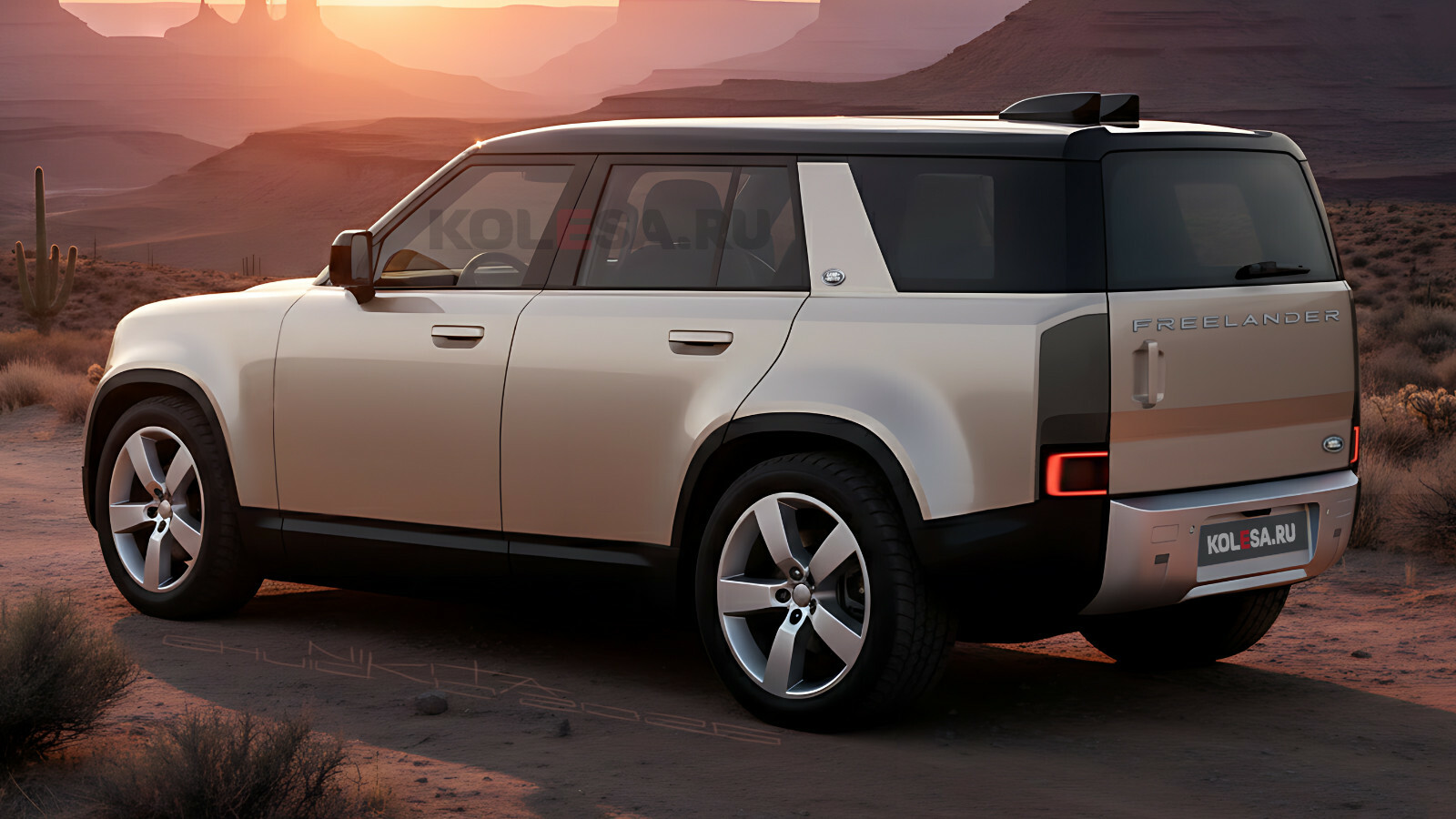
Based on recent spy shots, the first Freelander looks reassuringly boxy, exactly what you would expect from something wearing a Land Rover badge. Up front, it appears to feature slim headlights with simple DRLs, flanked by blacked-out split grilles and capped off with a hood that carries a noticeable bulge.

Similarities could also be shared with the larger Defender, particularly with the smooth profile of the side doors and the blacked-out roof and pillars. Like the previous Freelander, this new model features angled C-pillars painted in the same shade as the lower body.

 Land Rover’s Freelander Revival Feels Familiar, Until You Check Its DNA
Illustrations Nikita Chuyko / Kolesa

The rear styling may prove more divisive. The renderings show small taillights mounted just above the bumper, which gives the back end a slightly awkward stance. Here’s hoping the lights of the eventual production model are positioned a little higher on the fascia. If not, it risks drifting into the same visual territory that has drawn mixed reactions for the current Hyundai Santa Fe.

Technical details about the new Freelander have not been confirmed, but it’s expected to be offered in both battery-electric and EREV guises. Production will be handled by the CJLR plant in Changshu.

Spy Shots: Chery-JLR Freelander SUV for China

Freelander is a new brand under Chery-JLR. The Chinese name is 神行者 (Shén Xíngzhě). Freelander will manufacture various SUVs based on Chery platforms.

The spy shots show a boxy off-road-style SUV during winter tests in Northern… pic.twitter.com/IduwHRG5vw

— Tycho de Feijter (@TychodeFeijter) February 1, 2026
 Land Rover’s Freelander Revival Feels Familiar, Until You Check Its DNA

Donut Lab Claims It Verified A 7-Minute Solid-State EV Battery Charge

  • Donut Lab’s solid-state battery may be a breakthrough.
  • It charges from zero to 80 percent in just 4.5 minutes.
  • The company claims an energy density of 400 Wh/kg.

The battery world is hardly lacking in ambition, but it remains controlled by a tight circle of Chinese and Korean heavyweights. When Finnish startup Donut Lab claimed earlier this year that it had developed the world’s first all-solid-state battery for vehicles, it was never going to land quietly.

Donut Lab says it has built what many consider the holy grail of batteries. It claims the pack can charge faster than anything else on the market, delivers 400 Wh/kg of energy density, and is good for 100,000 cycles. Predictably, that raised questions.

Industry experts pushed back hard, which led Donut Lab to team up with Finland’s VTT Technical Research Center to demonstrate just how quickly its battery can actually charge.

Read: Verge Fixed The Two Biggest Electric Motorcycle Problems At Once

In a newly released video, Donut Lab sets out to show the charging speed and thermal stability of its latest battery. The headline figure is a claimed charge rate of up to 11C (286A), which, if sustainable, would put it in rare company.

Cooling Reality Check

In the 11C charging test, the battery cell charged from 0 to 80 percent in just 4.5 minutes when equipped with two heatsinks. A full charge at 11C took just over 7 minutes. During this test, the battery temperature reached 63°C (145°F). In a separate test with just one aluminum heat sink, the temperature rose to 90°C (194°F), prompting a pause for 4 minutes while the battery cooled.

As noted by Electrek, Donut Lab claimed its battery required no active cooling to safely achieve its extraordinary charging speeds. However, this test suggests that some level of thermal management is necessary. Even so, the charging speeds are impressive, particularly for a company of this size.

\\\\\\\\

According to Donut Lab chief executive Vile Piippo, “unlike other solid-state batteries requiring high compressive pressures and undergoing volume changes of up to 15-20 per cent during recharging cycles, the Donut Battery does not require special compression or more extensive cooling.”

Hitting Back At Critics

The company published the results of its fast-charging test on a new website, dubbed “iDonutBelieve,” in a thinly veiled swipe at those who said the firm was exaggerating its claims. It is promising that the results of another test will be released next week, with the aim of proving the pack’s energy density and 100,000-cycle claim.

The first vehicle to use the Donut Lab solid-state battery is an all-electric motorcycle from Verge. Dubbed the TS Pro, it’s set to arrive in the first quarter and will be offered with 20.2 and 33.3 kWh packs.

\\\\\\\\\\\\\\\\\

Four Years Later, Polestar’s 6 Is Starting To Look A Lot Like Tesla’s Roadster

  • Polestar 6 delayed to at least 2029 launch.
  • 500 LA Concept slots were pre-sold in 2022.
  • Buyers placed $25,000 deposits for launch.

It is not only Tesla that struggles to turn a halo roadster into reality. The production version of Polestar’s stunning, two-door 02 Concept, known as the 6, was supposed to hit the market later this year. That’s no longer happening, and those who have already placed an order will have to wait until at least 2029 to take delivery.

Polestar, like many other young car manufacturers, has ambitions for a massive family of models, but it remains a relatively small player in the burgeoning, ultra-competitive EV market. With this in mind, the firm has put the Polestar 6 on the back burner for now, allowing it to prioritize the updated 2 and its next all-new product, the Polestar 7 small SUV.

Read: Polestar Boss Says It’s Time To Outrun BMW M And Mercedes-AMG

While speaking with Auto Express at a recent company event in Gothenburg, Sweden, Polestar chief executive Michael Loscheller described the Polestar 6 as a “small volume” product, meaning customers will have to wait.

\\\\\\

“We are targeting the big-profit potential of segments and that’s what we should have done in the first place,” he revealed. “We are working on the 6 as a high-end product. The 6 is still in the plan, but plans can change.”

The Next Tesla Roadster?

Delays like this aren’t uncommon in the automotive industry, but Polestar seems to be following the unfortunate lead of Tesla in this case. It’s been over eight years since the second-generation Tesla Roadster was unveiled, and those who placed $50,000 deposits have yet to receive their cars.

Similarly, Polestar began accepting $25,000 deposits for the limited-run 6 LA Concept, capped at just 500 units, in 2022 with the promise of launching it in 2026. Those who have locked in an order will now be waiting at least seven years for their car, and that’s only if the 2029 timeline doesn’t blow out further.

Just like the Polestar 5, the new 6 will be based around an 800-volt electric architecture and a 112 kWh battery pack. The flagship Polestar 5 Performance pairs this with two electric motors delivering 872 hp and 749 lb-ft (1,015 Nm), the same figures expected for the 6.

\\\\\\\
Before yesterdayMain stream

Tesla Once Tested 90-Second Battery Swaps, Nio Scaled It To 176,000 In A Day

  • Record came during Lunar New Year travel surge.
  • Nio runs over 8,600 swap and charging stations.
  • Fourth-gen sites handle up to 480 swaps daily.

Back in 2013, Tesla flirted with the idea of battery-swapping for its EVs, even demonstrating a system that could replace a Model S battery in as little as 90 seconds. It was an impressive showpiece, but the company ultimately chose not to commercialize the concept. Nio, meanwhile, saw potential where Tesla stepped back. The Chinese startup embraced battery swapping and went on to build the largest EV battery-swapping network in the world.

Just how popular has Nio’s battery-swap service become? On February 21, Nio owners carried out a staggering 175,976 battery swaps across China in a single day. That figure translates to roughly one Nio having its battery changed every half a second.

Read: This Full-Size Electric SUV Packs 456 HP And Costs Less Than A Honda Civic

This record was set on the second day of the Lunar New Year, typically the busiest travel day of the year in China.

How Wide Is Nio’s Network?

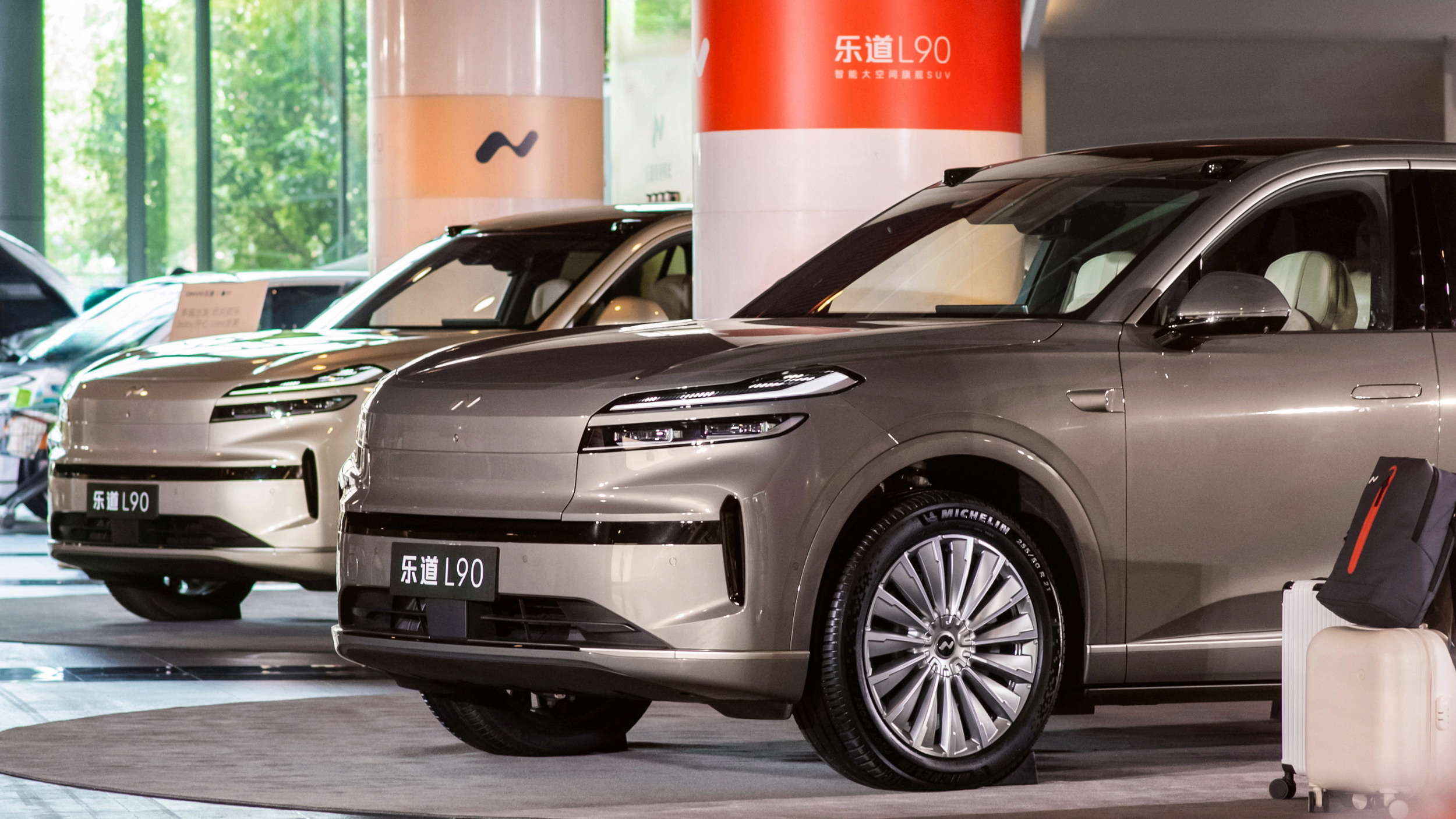
Nio currently operates more than 8,600 charging and battery-swapping stations across China. The network spans more than 550 cities and includes highway routes linking 16 of the country’s major urban centers. The company has also begun rolling out charging stations in Europe.

The Chinese electric car startup is currently on its fourth-generation swapping stations, with the latest version launched in mid-2024. The original stations could store just four to five batteries at a time. In contrast, the fourth-generation sites can hold 23 battery packs and handle up to 480 swaps per day. Each swap takes 2 minutes and 24 seconds, which is less time than refueling a combustion-powered car.

Soon, it will not just be Nio owners pulling into those swap bays. The company has struck agreements with Geely, Chery, FAW, GAC, and Changan to share its battery-swapping technology, opening the network to a much broader slice of China’s car market.

 Tesla Once Tested 90-Second Battery Swaps, Nio Scaled It To 176,000 In A Day

Dacia Adds Two New Models And Neither Will Be Built In Romania

  • One of the new models is a wagon above the Jogger.
  • Another model, based on the electric Twingo, is near.
  • Dacia now builds only Duster and Bigster at home.

Dacia is Romania’s largest and most important car manufacturer, and this year it is preparing to expand its lineup in a meaningful way. Two all-new models are on the way, yet neither will actually be built in the company’s home market.

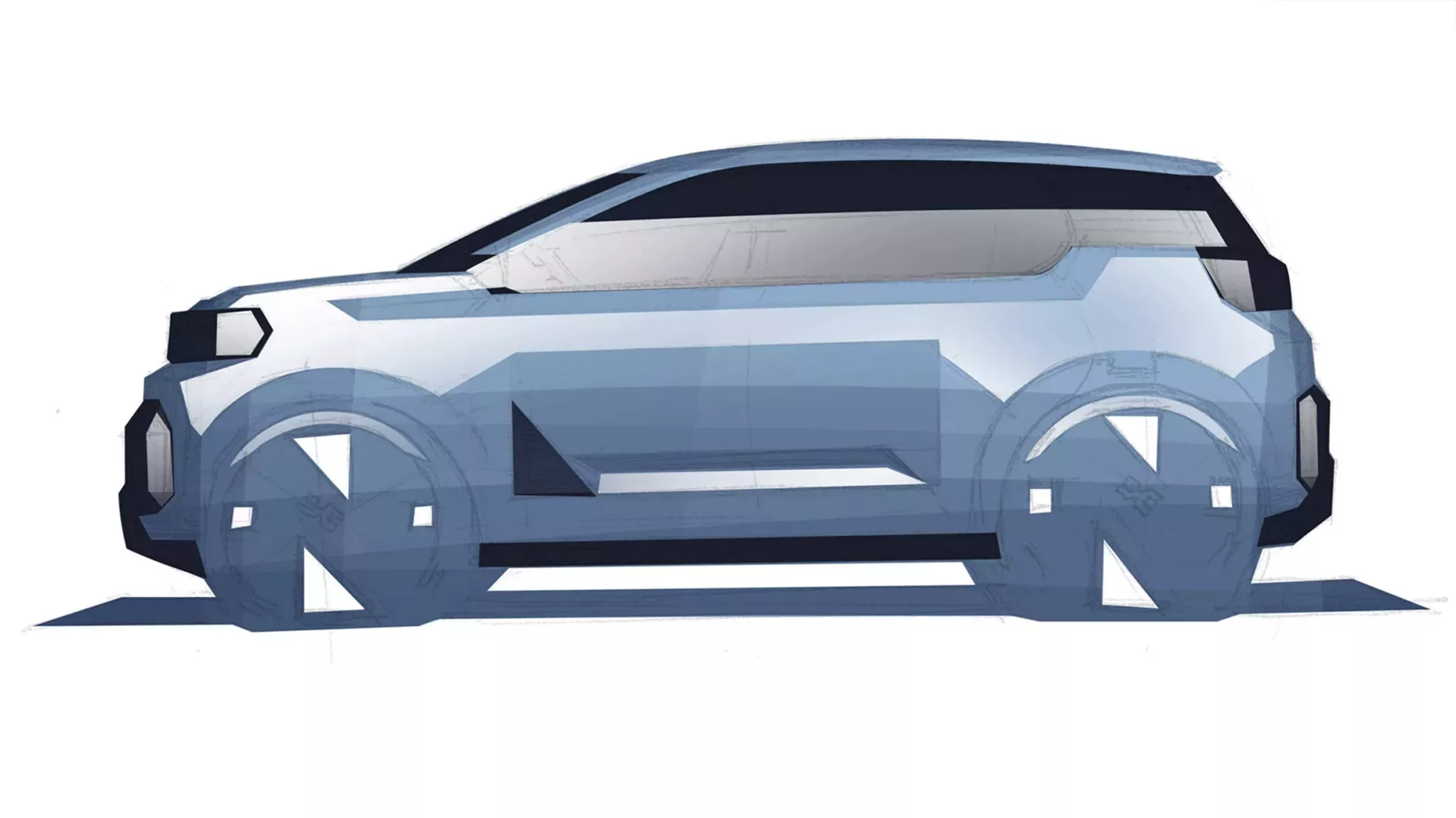
The first arrival will be a new wagon with crossover elements, currently known as the C-Neo. Positioned above the Jogger in Dacia’s range, it is intended to tap into the ever-growing compact segment.

Read: India’s New Renault Duster Looks Like A Rich Man’s Dacia Duster

Initially, Dacia planned to build the C-Neo in Romania. However, Romania-Insider reports that production will instead take place in Turkey. That decision leaves Dacia’s Mioveni plant in Romania focused exclusively on the Duster and Bigster.

\\\\\\\\\\\\\

SHproshots

The C-Neo will be underpinned by the existing CMF-B platform and should be offered with a slew of different powertrains, including gas, LPG, mild-hybrid, and full-hybrid options that use a 1.2-liter turbocharged three-cylinder.

Visually, Dacia says the new wagon will follow in the footsteps of the Sandero Stepway with rugged design elements, likely including muscular fenders and roof rails.

A New Electric City Car

 Dacia Adds Two New Models And Neither Will Be Built In Romania
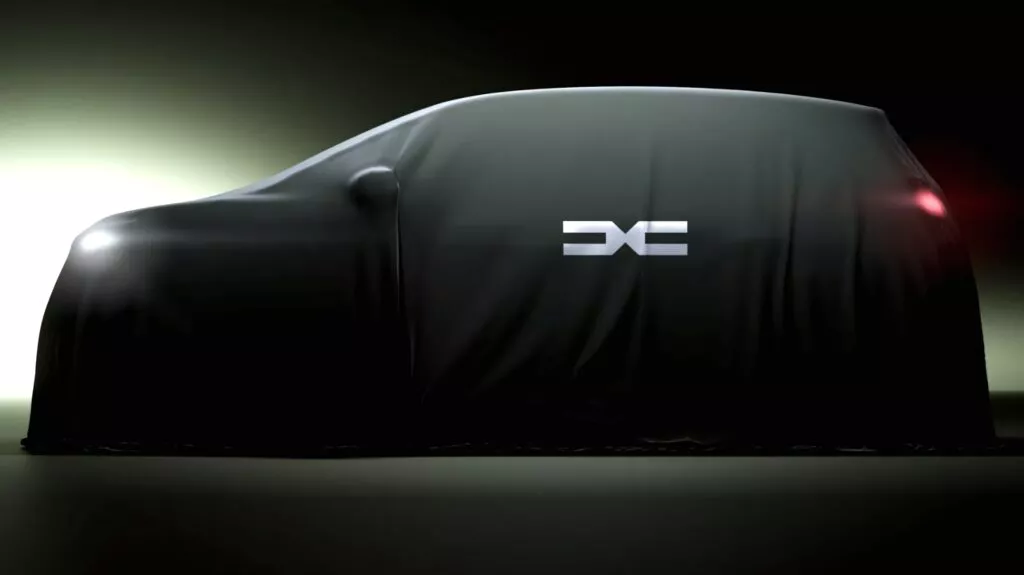
Dacia EV teaser

Just as significant is Dacia’s upcoming electric vehicle, which will be based on the Renault Twingo. It will not undercut the China-built Dacia Spring on price, but it is expected to start at around €18,000 or just over $20,000. That still positions it as one of the more accessible EV options in Europe. Production of this new addition will take place at Dacia’s Novo Mesto plant in Slovenia.

 Dacia Adds Two New Models And Neither Will Be Built In Romania
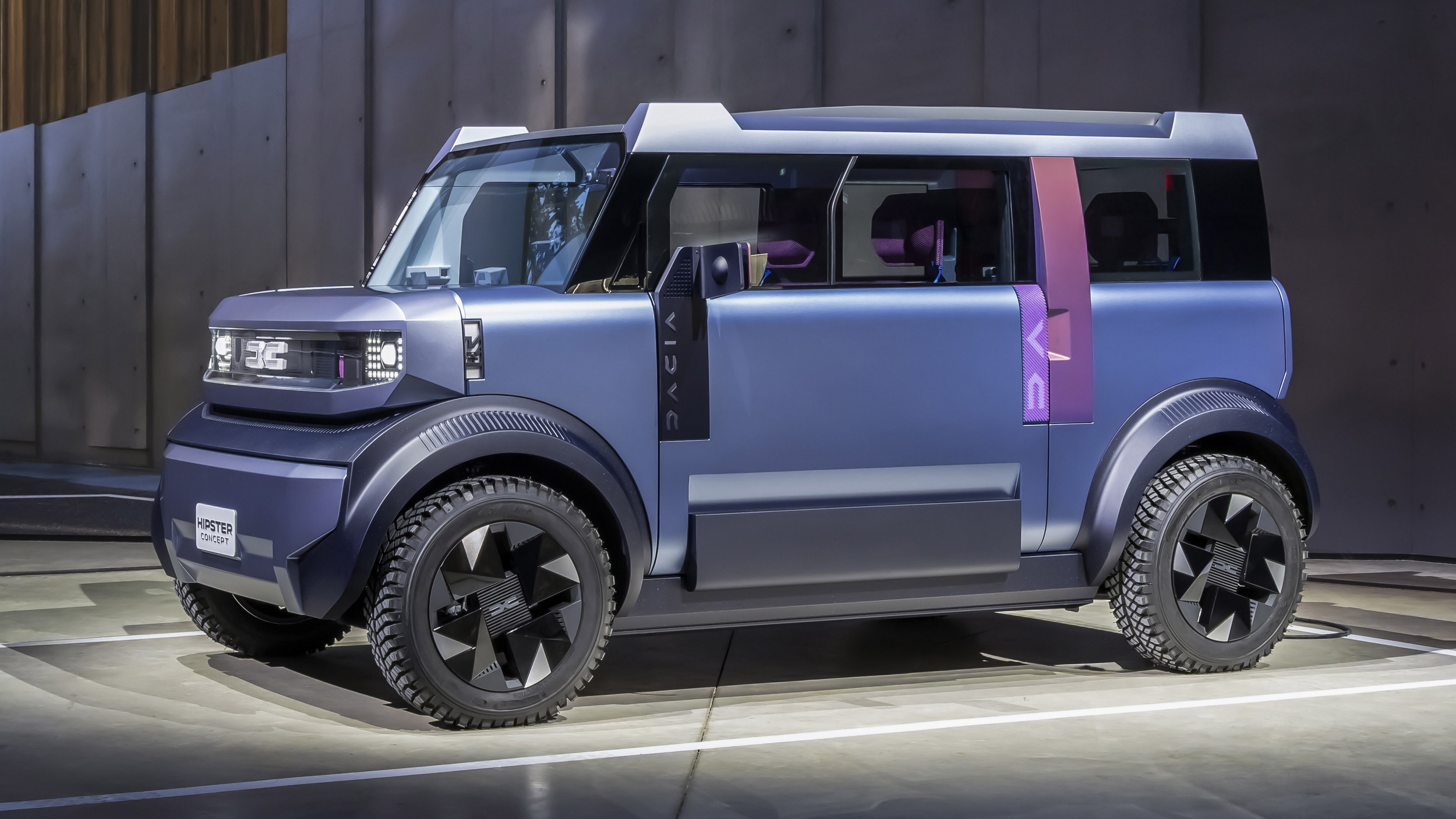
Dacia Hipster Concept

Dacia has identified the A-segment as an important growth driver in the broader EV market, hence why it’s launching a new model to compete. A single teaser image of the car has been released, revealing that while the proportions may be similar to the Twingo, it will look nothing like its French sibling.

Beyond these new models, Dacia already produces the Sandero and Jogger in Morocco to take advantage of the lower manufacturing costs. The approach reflects how the brand now operates as an international manufacturer, not one anchored solely to its Romanian base.

 Dacia Adds Two New Models And Neither Will Be Built In Romania

Nissan Pulls The Plug On The Most Affordable Leaf. For Now

  • Nissan planned a $25,360 Leaf S for the US market.
  • The entry-level model has been delayed indefinitely.
  • It was set to use a smaller 52 kWh battery pack.

In September last year, Nissan revealed it was preparing a new cut-price version of the 2026 Leaf for the US, known simply as the Leaf S. The announcement signaled a renewed push toward true entry-level electric mobility. This model was expected to start at just $25,360, significantly undercutting the competition and bringing an affordable EV within reach of many more buyers.

Sadly, this model is nowhere to be seen and may have been dropped entirely. Last week, Nissan confirmed that the entry-level Leaf S will not launch this year as originally planned. While it said the car has not been canceled, at least not at this stage, there is no guarantee it will ever see the light of day.

Read: Nissan Beats Tesla To $25K EV Musk Said Would Never Happen

“Nissan continually evaluates market trends, customer preferences, and the evolving EV landscape to ensure we are focusing our resources where they create the most value,” Nissan US director of product communications Dominic Vizor told InsideEVs. “As part of that process, we have decided not to introduce the smaller‑battery variant of the 2026 Nissan LEAF in the U.S. this model year.”

Vizor added that Nissan remains “committed to delivering the right products at the right time,” adding that it “will continue to assess future battery configurations based on customer demand and segment needs.”

\\\\\\\\

The Nissan Leaf S was supposed to launch with a 52 kWh battery pack, significantly smaller than the 75 kWh pack of other models. No range figure was announced, but it would likely have fallen to the low 200s, which would be enough for some but would no doubt fall short of those planning longer journeys. Existing Leaf models have a driving range of 288-303 miles (463-487 km).

Although Nissan didn’t pinpoint a specific reason for the Leaf S’s delay, beyond mentioning broad market trends and the “evolving EV landscape,” likely impacting the model’s financial viability are the import tariffs it would be subject to due to its Japanese origins.

\\\\\\\\\

Mercedes G-Class Got Too Big And Expensive, The Little G Is Meant To Fix It

  • The mini Mercedes G-Class will rival Land Rover’s baby Defender.
  • Underpinning the SUV will be a bespoke ladder frame chassis.
  • Launches as an EV, but combustion power remains a possibility.

Sales of the Mercedes-Benz G-Class surged 23 percent last year to a record 49,700 vehicles. Not bad for a machine that still drives like it could climb a mountain on the school run. Now, those who can’t get enough of the G-Wagen will soon have another compelling, albeit smaller, option.

Read: Mercedes Wants This Baby G-Wagen To Win Buyers The Big One Never Could

The so-called ‘Little G’ is on the way, promising all the boxy attitude of the full-size model in a tighter, more affordable package. Positioned beneath the full-size model, the Little G marks Mercedes’ first serious attempt to stretch the G-Class name beyond a single model line.

A Compact G Takes Shape

\\\\\\\\

Baldauf

Also known as the mini G and baby G, this new addition to the Mercedes-Benz line-up should have enthusiasts paying close attention. It’s expected to rival the smaller Defender currently in development at Jaguar Land Rover. For now, it’s confirmed to launch as an all-electric model, while a combustion-powered version remains possible in the future.

The latest round of spyshots of the Little G shows the model testing in the depths of the European winter. While this prototype is still under heavy camouflage and some body cladding, there’s no hiding the overall shape. It looks just like a G-Class should, just scaled to about 70 percent and softened slightly around the edges.

\\\\\\

Baldauf

Found at the front are the circular headlights you’d expect, with outer rings that serve as the turn signals. It also has blocky front quarter panels and a remarkably flat hood. This particular prototype can also be seen on a set of mismatched wheels and with a pair of roof rails. Although future powertrain options have not been detailed, this prototype is clearly an EV, as evidenced by the lack of exhaust.

Like the larger G 580 with EQ Technology, the test cars appear to retain signature details such as a side-hinged rear door and an external spare wheel cover. On the electric version, that rear-mounted housing is expected to double as storage for charging cables, echoing the setup already offered on the full-size EV.

Bespoke Bones Beneath The Boxy Body

Underpinning the new model will be a bespoke chassis. According to the former chief technology officer of Mercedes, Markus Schäfer, the Little G will have a “miniature ladder-frame chassis,” adding that it will have similar qualities “when it comes to suspension and wheel size,” to the larger model.

\\\\\\\\

EV Rollout Plan

Mercedes is set to launch the baby G as a fully electric SUV. Exact battery sizes and motor outputs are still under wraps, but expect it to borrow heavily from the tech already rolling out in Merc’s newer EVs, including the GLA and GLC electric models.

What it won’t get, according to Schäfer, is a range-extender setup. Smaller and mid-size Mercedes models are steering clear of that halfway-house solution, which means the Little G should stick with proper, full battery-electric hardware.

As for combustion power, nothing is confirmed. Mercedes hasn’t shut the door on it, but it hasn’t opened it either. If an ICE version does materialize, it’ll likely depend on the market. For now, the company is keeping its options open.

\\\\\\\

Baldauf

Polestar Is Reworking Its Interiors Before The Screen Backlash Grows

  • New interiors may debut with the next Polestar 2 and 7.
  • The current Polestar 3 and 4 rely heavily on one screen.
  • Polestar also plans to expand its interior color range.

Like many other EV makers, Polestar has largely followed Tesla down the minimalist route, filling its cabins with screens, clean surfaces, and very few physical controls in models such as the Polestar 4 and 5. That approach is now set to change.

The company has confirmed it will begin reintroducing more physical switches inside its cars, a move that will likely be welcomed by drivers who prefer not to hunt through menus to adjust basic functions.

Review: We Drove The Polestar 4 And It Wants To Change Your Mind On EVs

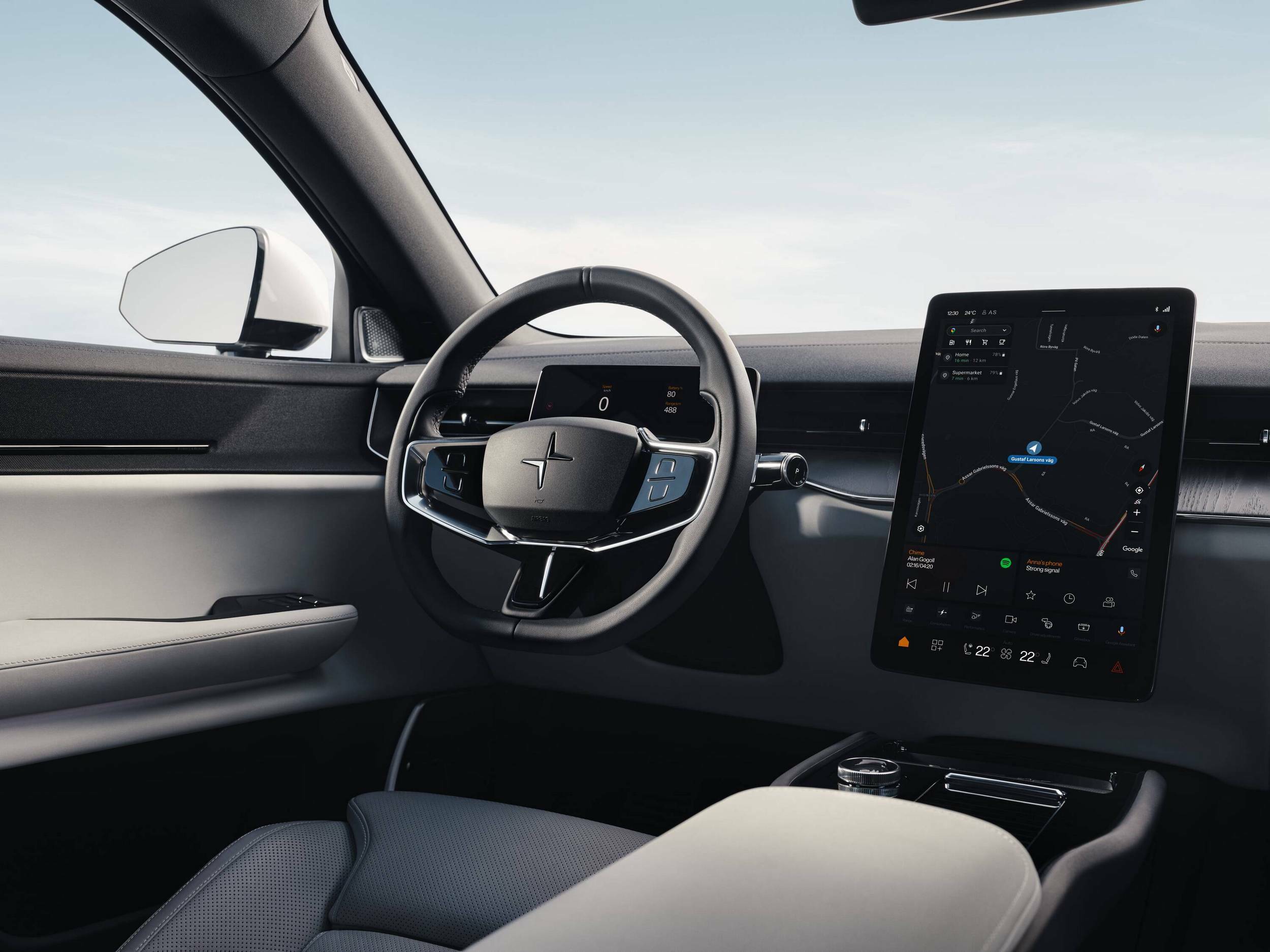
Take the Polestar 4 as it stands today. Physical controls are limited to the steering wheel, the seat adjustments, the stalks, plus a Play and Pause button and a volume dial on the center console. Beyond that, nearly everything lives inside the touchscreen.

To its credit, Polestar never removed every physical button. Still, the cabins can feel pared back to the point of austerity. Speaking to InsideEVs while previewing upcoming models, Polestar head of design Philipp Römers confirmed that more buttons are on the way, though he stopped short of detailing which functions will regain dedicated controls.

More Color And Customization On The Way

 Polestar Is Reworking Its Interiors Before The Screen Backlash Grows
Polestar 3

Römers added that Polestar plans to add more interior color options, noting that its customers are on average roughly 10 years younger than those of Audi, Mercedes, and BMW. Improvements will also be made to the Android Automotive-based infotainment system, and it will soon offer more scope for personalization.

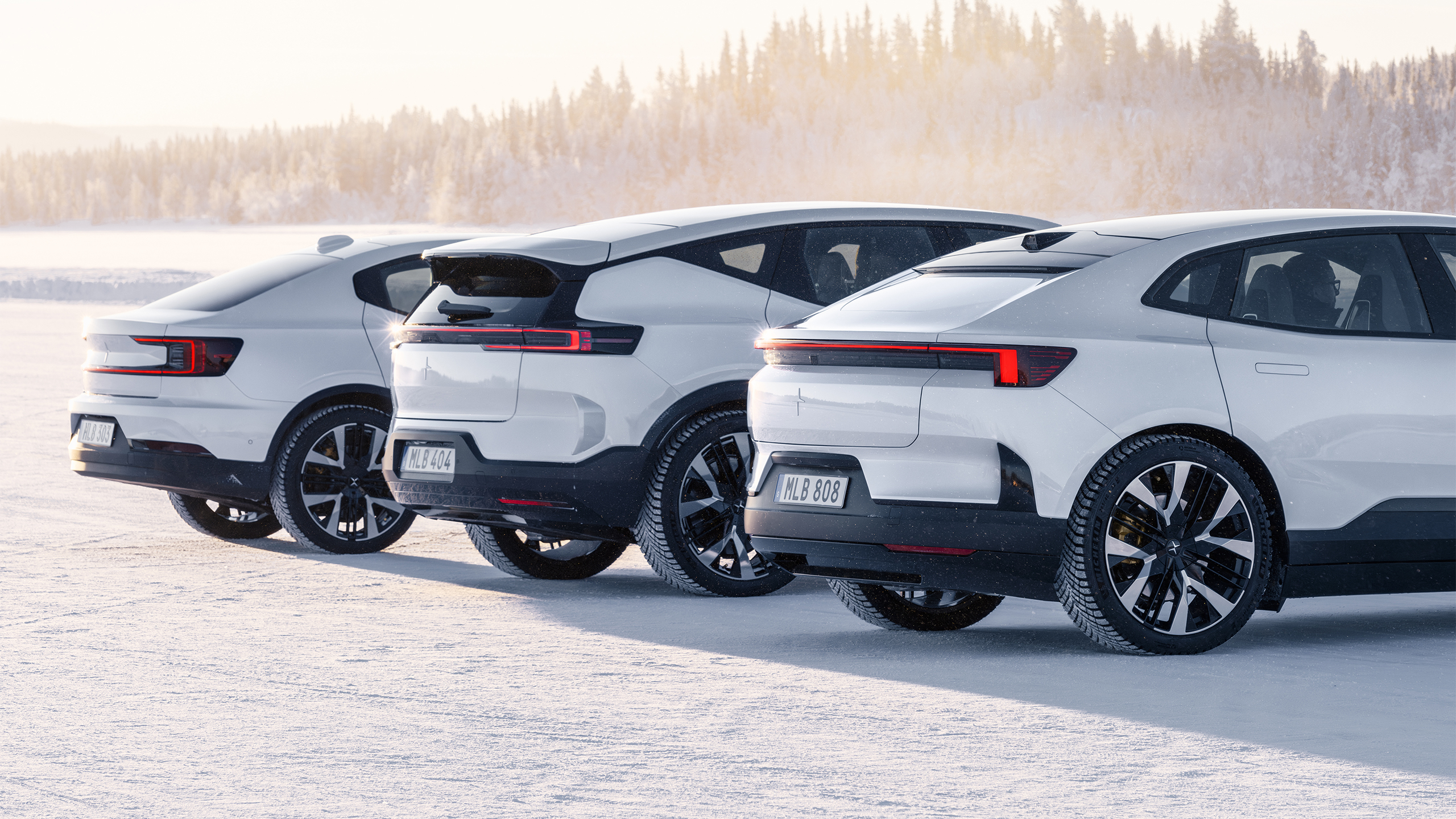
Unfortunately, we won’t see new Polestar interiors for quite some time. For example, the updated Polestar 4 ‘wagon,’ complete with a rear window, will likely retain the same cabin as the existing model. Similarly, the Polestar 5 grand tourer will get a familiar minimalist cabin.

The first real glimpse of a revised interior could come with the second-generation Polestar 2, recently teased ahead of its launch next year. After that, the new Polestar 7, due in 2027 and positioned above the current Polestar 3 SUV, should follow suit.

 Polestar Is Reworking Its Interiors Before The Screen Backlash Grows

China Powers The Return Of One Of Russia’s Most Famous Car Brands

  • Volga’s new model may be based on a Changan SUV.
  • A teaser suggests a sleek but fairly traditional design.
  • Production could begin in China for the Russian market.

The Russian car industry looks very different from the one that existed before the invasion of Ukraine four years ago. As Western automakers made a swift exit after the war erupted, Chinese brands moved in just as quickly, expanding their presence and absorbing a sizable chunk of the market. A few domestic names are also resurfacing, including one of its most Volga.

Read: Tesla Never Made A Cybervan, So A Russian Startup Did It First

The Volga name rose to prominence in the 1950s as a series of executive cars built and sold in Russia by local firm GAZ until 2012, when production ended. Back in its heyday, the Volga wasn’t something you simply drove. It was what you were driven in if you held the right title in the Soviet hierarchy. That alone turned it into a cultural fixture.

Now, after more than a decade on ice, the name is finally set to return, having initially been slated for a revival in 2024.

Volga, now under the umbrella of China’s Changan, presented three different vehicles in May 2024, known as the K30, X5 Plus, and K40. The trio included two crossovers and a sedan, each based on existing Changan vehicles sold in China. The plan was to build them in China and ship them to Russia for final assembly, with market launch targeted for late 2024.

\\\

For whatever reason, that rollout never materialized. Now, however, the Chinese-owned Volga appears ready to try again, launching a new Russian-language website and releasing a pair of teasers previewing its first model.

The vehicle shown in the teaser resembles one of the crossovers presented in 2024, though with subtle visual changes. A side-profile sketch suggests a conventional SUV silhouette, complete with a large grille, squared wheel arches, and a rear design with taillights that faintly echo the Audi Q8. Reports indicate it will be joined by two additional models.

A separate teaser for the cabin was also released, showing a flat-bottomed steering wheel, a digital instrument cluster, and a large central infotainment screen. In general, it looks quite conventional, which in this context may be exactly the point.

\\\\

Volga models previewed in 2024

New Mercedes C-Class EQ Lets Its Supersized Grille Do All The Talking

  • The electric C-Class gets a larger LED-lit grille up front.
  • It rides on MB.EA with a 94 kWh battery and 800-volt tech.
  • The dual-motor C400 could deliver a combined 483 hp.

Shortly after pulling the covers off the electric GLC EQ last year, Mercedes-Benz slipped out a shadowy teaser of the upcoming all-electric C-Class. It was the sort of image designed to spark arguments rather than answer questions. Now, a new batch of renderings based on that teaser gives us a clearer sense of where the compact executive EV could be headed.

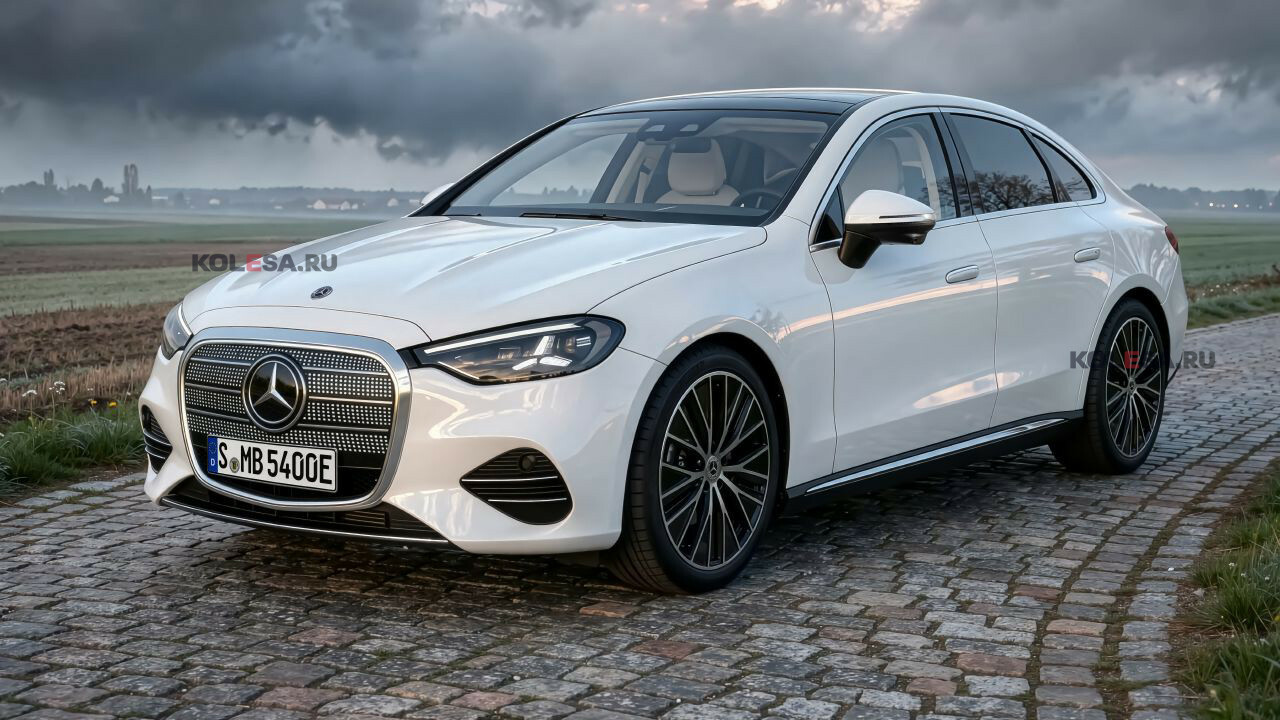
Front and center sits the talking point. The C-Class EV’s grille looks set to grow rather than shrink, ignoring the recent retreat from oversized snouts at BMW and Audi. Instead, Mercedes appears ready to make it the visual anchor of the car, in much the same way Rolls-Royce leans on its Pantheon grille.

Read: Mercedes Previews C-Class EV With A Face That’s Bound To Start Fights

These renderings from Kolesa show how the grille should come standard with a thick silver or chrome-finished bezel, three horizontal slats, and hundreds of little LEDs.

 New Mercedes C-Class EQ Lets Its Supersized Grille Do All The Talking
Kolesa

Flanking it is a fresh headlight design, complete with the now-familiar star-shaped daytime running light signature seen on other new Mercedes models. All told, the lights, plus the grille, give the new sedan a very intriguing look, although we wouldn’t exactly call it elegant.

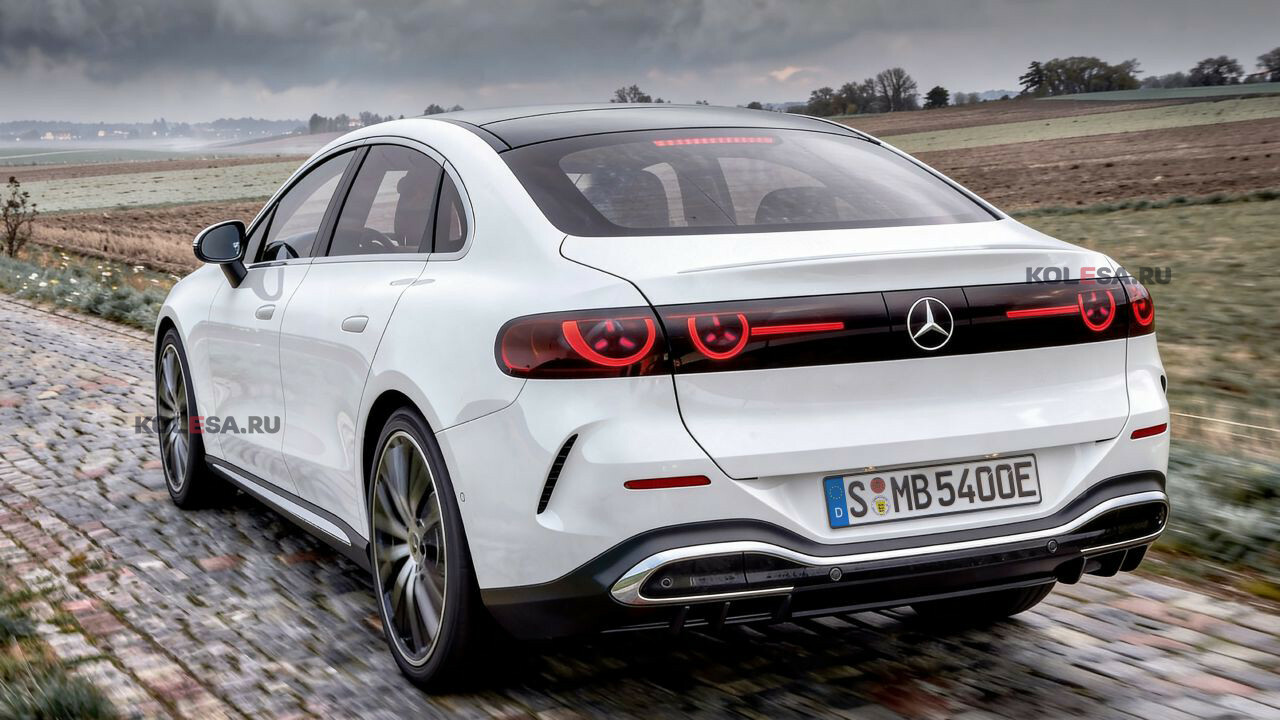
We have not had this officially confirmed, but some reports suggest the electric C-Class could adopt a liftback layout, much like the new Audi A5. If that proves accurate, expect a cleaner, more tapered rear than the combustion-powered version. The renderings show slim LED taillights set within a gloss-black panel that spans the full width of the car.

MB.EA Underpinnings And 800-Volt Charging

 New Mercedes C-Class EQ Lets Its Supersized Grille Do All The Talking
Kolesa

Just like the GLC EQ, the new C-Class EV will be based on the MB.EA architecture and come standard with a 94 kWh battery pack and an 800-volt electrical architecture, supporting 330 kW charging speeds. Mercedes has confirmed it will offer a driving range of up to 497 miles (800 km), easily eclipsing the 443 miles (713 km) offered up by the GLC EQ.

The first version could wear a C400 badge, pairing dual electric motors for a combined 483 hp. That should be enough for 0 to 60 mph (96 km/h) in under five seconds, which is brisk by any sensible definition.

Naturally, AMG versions are on the way too. One prototype has already been spotted testing on large 21-inch wheels with carbon-ceramic brakes.

\\\\\\\\\

Mercedes’ new C-Class teaser and camouflaged prototypes spotted by our spies.

As for the cabin, details remain under wraps. Mercedes could simply transplant the 39.1-inch seamless MBUX Hyperscreen from the GLC EQ, turning the dashboard into one continuous slab of illuminated glass. Alternatively, it may opt for the newer Superscreen layout featured in the latest CLA, pairing a 10.25-inch digital instrument cluster with a 14-inch central infotainment display and a matching 14-inch passenger screen.

The new C-Class EQ is expected to debut before the end of this year, with a global launch slated for early 2027.

\\\\\\

Illustrations Kolesa

Rivian R1T Tried A Touchless Wash, It Definitely Got Touched

  • A touchless car wash tore off a Rivian R1T roof panel.
  • Clips and adhesive were ripped loose in the incident.
  • Repairs may require interior trim removal for access.

A Rivian R1T owner has just learned the hard way that “touchless” does not mean “harmless.” Sure, these washes skip the spinning brushes, but that does not make them gentle. As it turns out, high-pressure water and moving hardware can still do a number on a six-figure electric pickup.

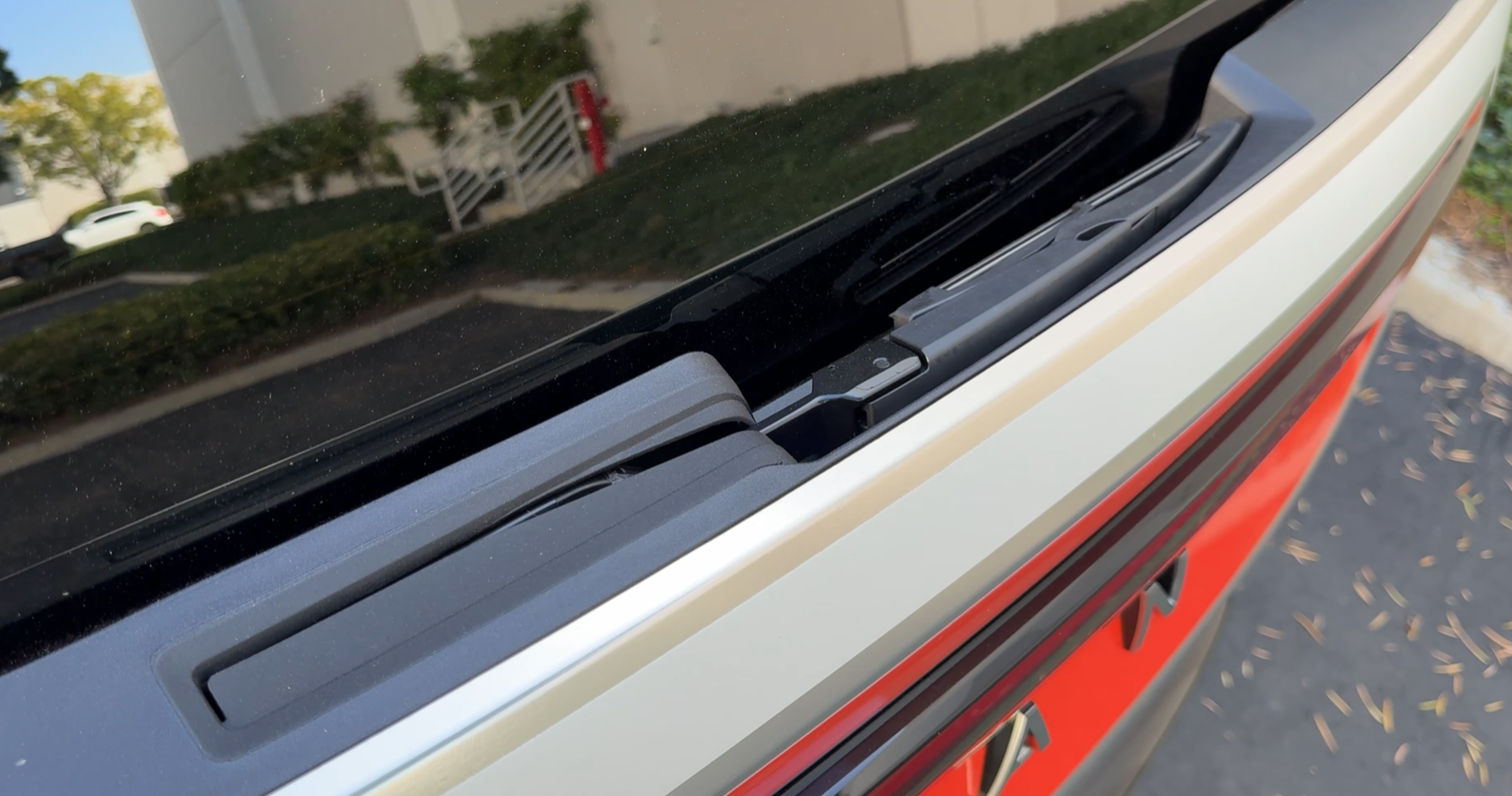
Posting on Reddit, the owner says he recently took his R1T through a touchless car wash for the first time when a black plastic panel at the rear of the EV’s roof suddenly popped off. That panel covers a fair bit of electronic gubbins, including the antenna, and is secured with clips and adhesive. Obviously, it is meant to stay put.

Read: That Rattle In Your Rivian Might Mean A Recall

Photos show several of those clips torn loose, with adhesive strips peeled back as if the truck had tried to shed its own roof trim. It would be easy to blame water pressure or the industrial-strength dryers at the end of the tunnel, but that does not appear to be what happened.

According to the owner, one of the wash’s spraying arms became lodged under the roof panel, apparently misjudging the height of the pickup. Instead of gliding past, it hooked underneath and pried the piece upward. Not exactly part of the premium wash package.

Image Reddit/mrwillya

Some commenters on the Reddit thread suggest that in order for Rivian to repair the rear roof panel, it’s possible that part of the interior will have to be removed to gain access to all of the wires positioned beneath the panel. Additionally, the third brake light of the R1T is positioned directly above the rear window near this panel, and may also need to be replaced.

Then there’s the matter of who will end up paying for the repairs. The owner says the car wash’s insurance will cover the costs, though that likely means a round of negotiations between insurers before any money changes hands. In the meantime, the damaged truck could spend weeks, possibly longer, waiting in a body shop bay for parts and repairs. So much for a quick rinse.

 Rivian R1T Tried A Touchless Wash, It Definitely Got Touched

The Rivian R2’s Hidden Rear Wiper Has A Trick To Survive Winter

  • Rivian R2 launches by June priced from about $45,000.
  • Sliding rear glass disappears fully into the tailgate area.
  • It claims wiper placement improves driving range too.

Rivian will begin deliveries of the long-awaited R2 by June this year, finally giving a much larger slice of the public the opportunity to buy one of its EVs. In many ways, it marks a pivotal expansion for the brand into a more accessible segment. Priced to start at around $45,000, it closely resembles the R1S but in a smaller package, and it brings several new features with it.

Read: Rivian’s R2 Still Doesn’t Fix A Critical Flaw That Matters When Seconds Count

One of the highlights is the rear window. Seemingly inspired by vehicles such as the Toyota Land Cruiser, Lexus GX, and BMW 3 Series Touring, Rivian has designed a rear window that opens. However, rather than swinging open like some vehicles, the R2’s rear window rolls down into the tailgate, much like a side window.

 The Rivian R2’s Hidden Rear Wiper Has A Trick To Survive Winter
Screenshots Doug Demuro/YouTube

This sliding setup presented a challenge when Rivian needed to develop a rear wiper. Because the glass disappears completely into the tailgate, mounting the wiper directly to it was not an option. The R2’s teardrop-shaped roof and spoiler also ruled out placing the wiper higher up. As a result, the company developed a compact holder for the wiper within the tailgate itself.

Some Reddit users have questioned how this arrangement will function in the depths of winter, when snow and ice could easily build up around the mechanism. Rivian appears to have anticipated those concerns.

According to InsideEVs, the small compartment housing the wiper includes a hidden drain that channels water out from beneath the tailgate, preventing it from pooling. For those in the Northeast already thinking about freezing temperatures, the holder-and-drain assembly also integrates a heating element designed to melt accumulated snow or ice and guide the water away.

Rivian says that by placing the rear wiper in this position, it has been able to boost the R2’s range by a considerable six miles. It no doubt caused headaches for some designers and engineers, but it could prove worthwhile. Here’s hoping it’s adequately tested in winter conditions before customer deliveries begin.

Kentucky Workers Are Furious After Ford’s EV Factory Reversal

  • Ford closed Kentucky EV battery plant after just 4 months.
  • 1,600 workers lost jobs after tax credit policy change.
  • Plant originally projected employment near 5,000 workers.

Ford’s sudden decision to cancel its multi-billion-dollar partnership with South Korean battery manufacturer SK On in December, just four months after the first batteries rolled off the line, left 1,600 people without jobs at the joint battery plant in Kentucky.

Read: Ford Got The Loan And Built The EV Battery Plant. Now Everything’s Falling Apart

The move caught workers and locals off guard, and many are placing the blame squarely on Ford. That’s not surprising. Still, the political backdrop, including Trump-era EV policies that limited Ford’s options, played a larger role in how this ultimately unfolded.

The Ripple Effect Of A $7,500 Credit

 Kentucky Workers Are Furious After Ford’s EV Factory Reversal

All brands selling EVs in the US were hurt by the government’s decision to kill the federal tax credit, valued at up to $7,500 for new EVs. While some understandably criticized the program as artificially propping up the industry, there’s no denying that it played a hugely important role in convincing many Americans.

With fewer people buying EVs and other government policies relaxing CAFE fuel-economy standards, Ford acknowledged that “the operating reality has changed,” which is why it’s scrapped a slew of its more ambitious and important EV projects. “We are listening to customers and evaluating the market as it is today, not as everyone predicted it would be five years ago,” Ford recently said.

As reported by The New York Times, Kentucky’s Democratic governor, Andy Beshear, said: “1,600 Kentuckians lost their jobs solely because of Donald Trump pushing that big, ugly bill, eliminating the credits that had people interested and excited to buy EVs. I bet many, if not most, of those 1,600 people voted for him, and he basically fired them.”

Unexpected Closure

 Kentucky Workers Are Furious After Ford’s EV Factory Reversal

The site had only been manufacturing EV batteries for four months before it was shut down. Speaking with the NYT, Joe Morgan says he left a job of 24 years to start working at the plant, confident that EVs would grow in popularity.

Morgan, a registered Republican, acknowledges that “taking away the tax credits did play a little bit of a role in not selling EVs,” but he thinks it’s Ford that should take most of the blame. “I just think Ford made a bad decision when they came out with an F-150 that they wanted to make all electric.”

Derek Doughtery shares a similar view. Landing a job at the battery plant was a turning point for him after previously experiencing homelessness, especially with a second child on the way. He, like others, believes Ford may have misread the market and bears more responsibility than the government.

“At the end of the day, whatever the government policy would be, the company made the decision,” he said.

A Scaled-Back Future

Fortunately, the facility will not close entirely. Now under full Ford control, it will be retooled for battery storage production and is expected to employ roughly 2,100 people. That figure is well below the 5,000 jobs originally projected when the plant was dedicated to building EV batteries, but it offers at least some continuity for a site that only recently promised much more.

 Kentucky Workers Are Furious After Ford’s EV Factory Reversal

BMW’s New i3 Is Becoming Easier To Picture

  • The electric i3 will be sold alongside a new ICE 3-Series.
  • Design influence comes from the 2023 Vision Neue Klasse.
  • Sixth-gen motors and batteries shared with the iX3 SUV.

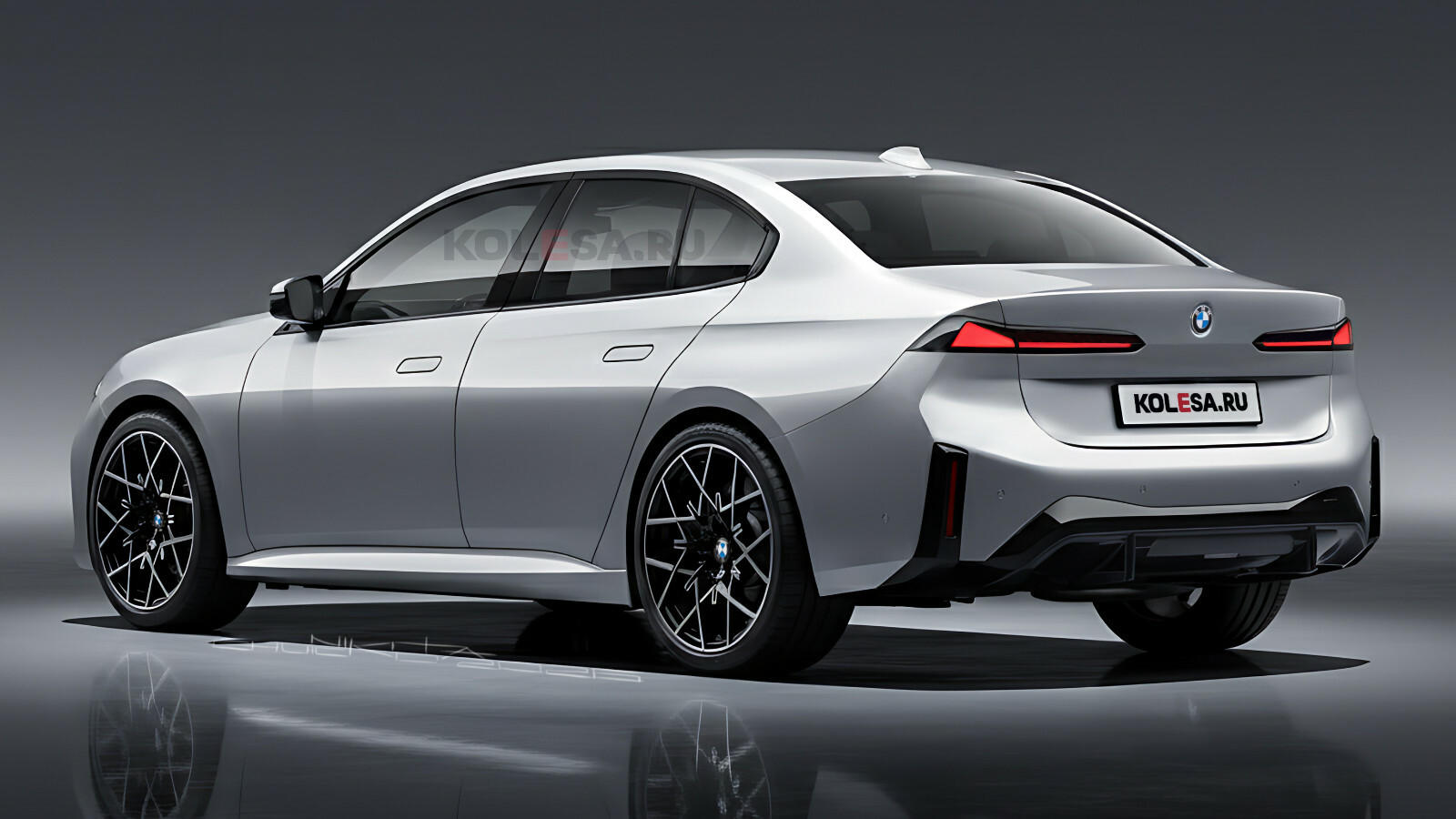
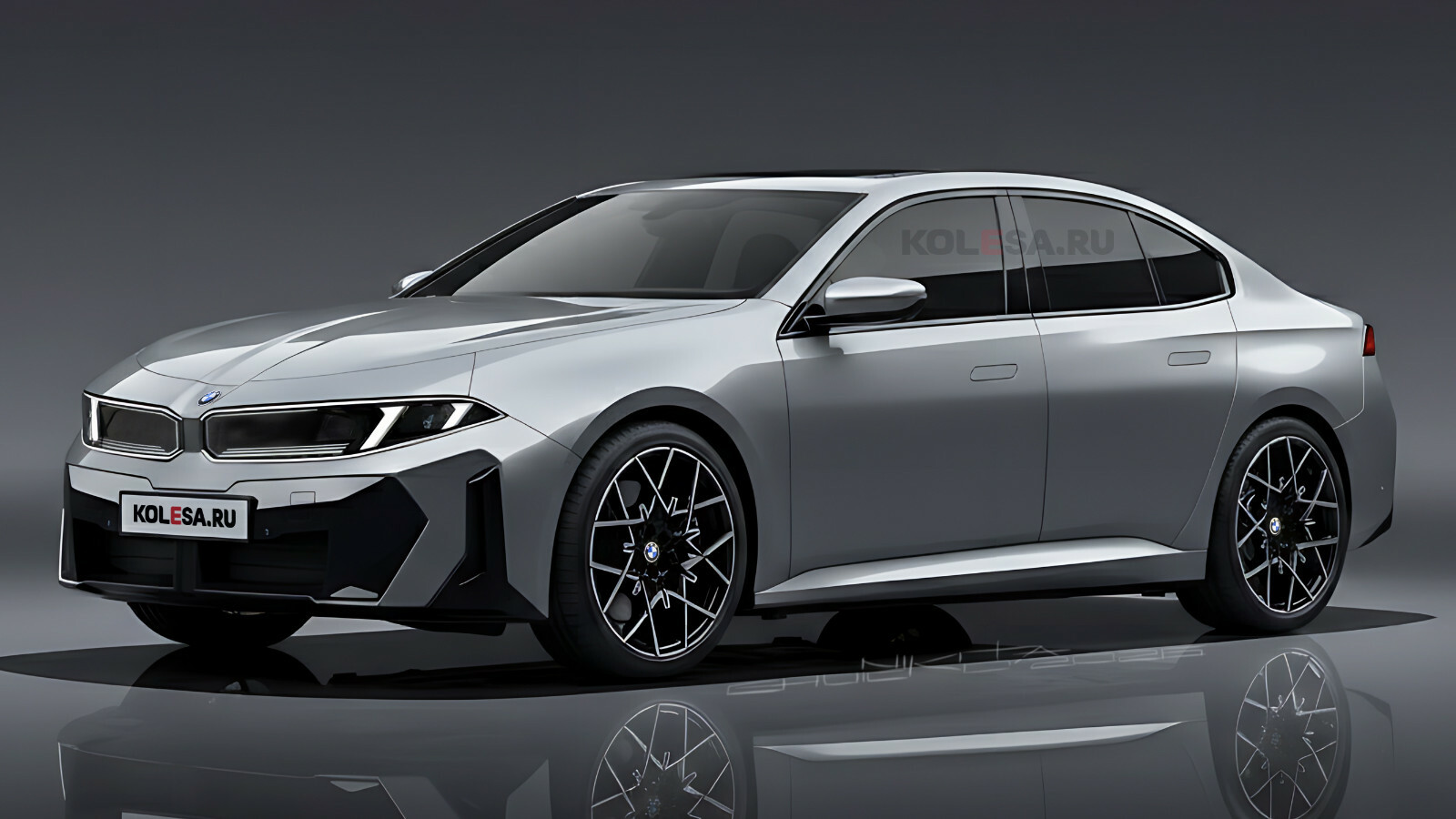
The next chapter in BMW’s electric transition is beginning to come into focus as a new i3 edges closer to the market. It brings technology closely aligned with the second-generation iX3, now packaged in sedan form. With pre-series production now underway and official images of a camouflaged prototype already released, new renderings have begun to fill in the remaining blanks.

Read: New i3 And 3-Series Reveal BMW’s Most Striking Split Yet

Much of the i3’s design will be inspired by the Vision Neue Klasse concept unveiled in 2023. However, whereas the subsequent Vision Neue Klasse X ended up looking almost identical to the new iX3, it appears BMW has calmed some of the sedan concept’s most dramatic elements, and the production model should look better.

 BMW’s New i3 Is Becoming Easier To Picture
Illustrations Nikita Chuyko / Kolesa

While the concept featured large illuminated kidney grilles flowing into the LED headlights, recent spy shots and renderings indicate the production model might adopt smaller and slimmer units, better suited to a sedan of this size.

More: The 2027 BMW M5 Facelift Might Skip The Drama, But Not The Debate

These renderings by Nikita Chuyko for Kolesa also show the new electric sedan with a sharper lower front bumper and gloss-black accents. Along the sides, it departs noticeably from the current 3-Series, with split shoulder lines and flush door handles that give the bodywork a cleaner, more contemporary look.

 BMW’s New i3 Is Becoming Easier To Picture
Illustrations Nikita Chuyko / Kolesa

Some uncertainty still surrounds the taillight design. Recent prototypes indicate they will be much smaller than those on the Vision Neue Klasse concept and, in these renderings, they resemble scaled-down versions of the old 2-Series Gran Coupe units.

What About The Interior?

 BMW’s New i3 Is Becoming Easier To Picture
The interior of the new BMW iX3 SUV.

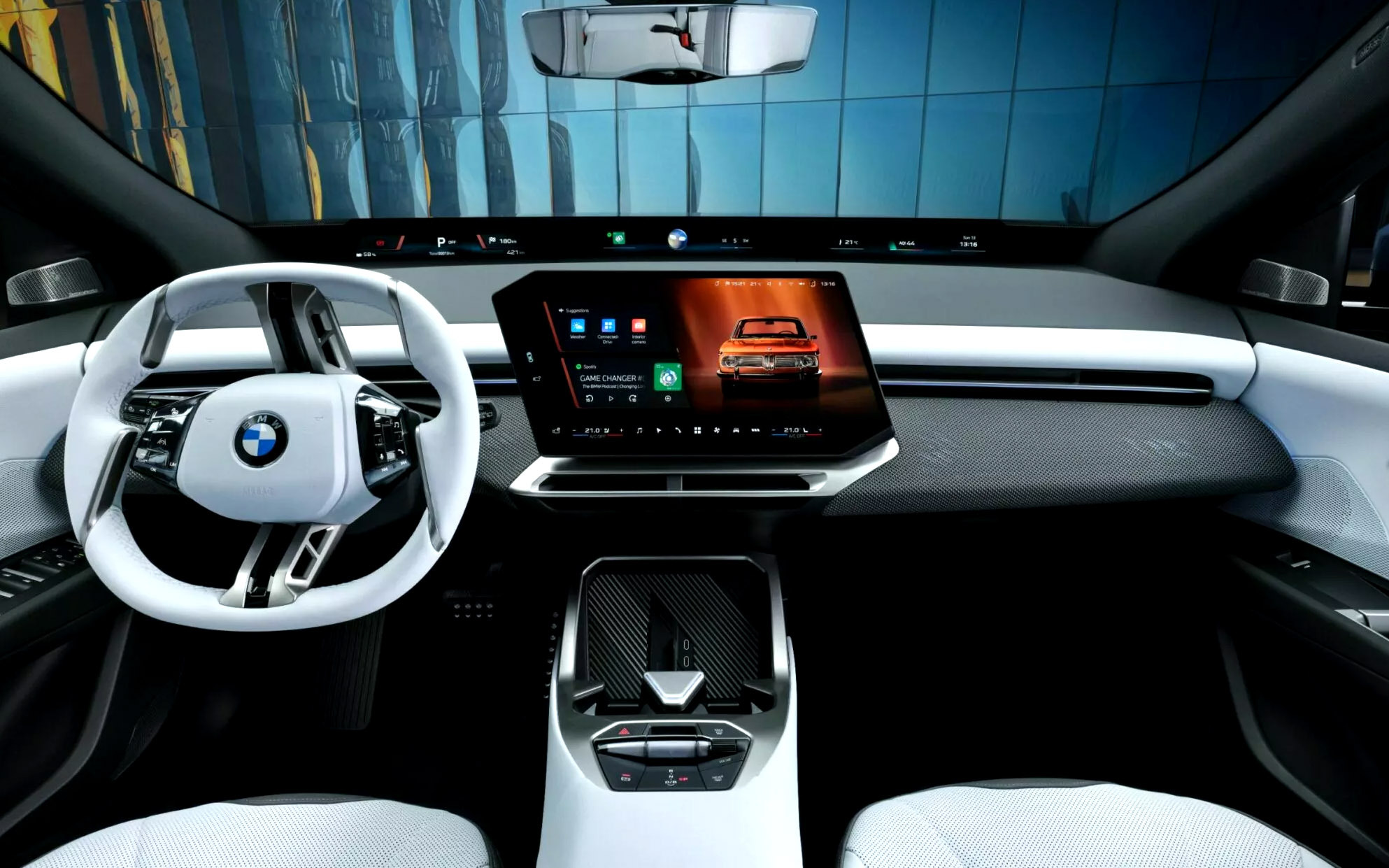
Inside, the change may feel even more dramatic than the exterior. Anyone climbing out of a current 3-Series should brace for a clear break from the more traditional cockpit BMW has refined over the years. If you are coming from the iX3, however, none of this will feel particularly shocking. The i3, along with the next combustion-powered 3-Series, will mirror BMW’s first production Neue Klasse model, down to a dashboard layout.

Also: BMW iX3 Has A 360 Camera, But You’ll Pay Monthly To Use It

Front and center will be BMW’s new ‘Panoramic iDrive’ concept, paired with the brand’s latest software. The conventional instrument cluster is gone, replaced by key information projected across the base of the windscreen, while a large touchscreen sits on the center console.

Shared Underpinnings

 BMW’s New i3 Is Becoming Easier To Picture

Beneath the surface, the i3 rides on the same Neue Klasse EV platform as the new iX3. For anyone concerned that it might fully replace the 3-Series, there is no need. The combustion-powered 3-Series is being updated separately, continuing on a revised version of BMW’s CLAR architecture.

The i3 is expected to launch with BMW’s sixth-generation electric motors and battery technology, along with an 800-volt electrical system shared with the iX3. Early reports suggest one of the first variants will be the i3 50 xDrive, potentially producing around 463 hp, placing it within reach of today’s BMW M3. A less powerful rear-wheel drive model is also planned, along with a flagship electric iM3 featuring four motors.

That high-performance version has been tipped to deliver as much as 1,000 hp, and could even feature a synthesized V10-style soundtrack.

\\\\\\

The 2026 Leapmotor C10 REEV Fixes The Biggest EV Problem Only To Fail At The Basics | Review

PROS ›› Smooth powertrain, generous range, well-priced CONS ›› Tech gremlins, subpar AC, inconsistent ADAS

Range extenders are enjoying a bit of a renaissance at the moment. Early examples like the Chevrolet Bolt and BMW i3 gave the world a preview of what these powertrains were capable of, but they largely fell out of favor in the middle of the last decade as carmakers shifted their focus to fully electric models.

Review: Before You Buy A Small SUV, Look At Kia’s 2026 K4 Turbo Hatch First

Things have changed. Thanks in large part to several major Chinese manufacturers, range-extender EVs are becoming more common and are even being adopted by legacy brands like Ford and Hyundai. Last year, Leapmotor, Stellantis’ Chinese partner brand, joined the movement by adding a range-extender option to its mid-size C10 SUV, and we had the chance to live with it over the Christmas period.

QUICK FACTS
› Model:2026 Leapmotor C10 REEV Ultra Hybrid
› Price:AU$47,888 (US$33,500) as tested
› Dimensions (L x W x H):186.5 x 74.8 x 66.1 in (4,739 x 1,900 x 1,680 mm)
› Wheelbase:111.2 in (2,825 mm)
› Curb Weight:1,950 kg (4,299 lbs)
› Powertrain:1.5-liter four-cylinder / Single electric motor
› Output:212 hp (158 kW) / 236 lb-ft (320 Nm)
› 0-62 mph:8.5 seconds
› Transmission:Single speed
› Efficiency:14.5 kWh/100 km, 6.1 l/100 km as tested
› On Sale:Now
SWIPE

In markets where charging infrastructure is still patchy and long-distance driving is simply part of life, the range-extender idea holds up. You get the smooth, instant response of an EV without planning your schedule around charging stops.

On paper, the C10 REEV arrives at the right moment, pitching itself as sensible rather than compromised. In reality, while the powertrain delivers on that promise, the experience is undercut by a collection of nagging tech issues that chip away at its appeal.

What Changes With The REEV?

\\\\\\\\\\\

Photos Brad Anderson/Carscoops

The first Leapmotor I tested last year was the regular C10 EV, equipped with a 69.9 kWh battery and a rear-mounted electric motor with 215 hp and 236 lb-ft (320 Nm). The C10 REEV is quite a bit different.

Review: I Drove Stellantis’ Chinese Electric SUV That Rivals Tesla For Just $30K

Under the hood sits a 1.5-liter four-cylinder that never drives the wheels, serving solely as a generator to charge the battery pack. That battery is a 28.4 kWh unit powering a rear-mounted electric motor rated at 158 kW (212 hp) and 320 Nm (236 lb-ft) of torque.

Leapmotor says the C10 REEV can travel up to 1,150 km (715 miles) between top-ups and charges, average 15.2 kWh/100 km in electric operation, and has a quoted fuel consumption of 0.9 l/100 km (261 US mpg).

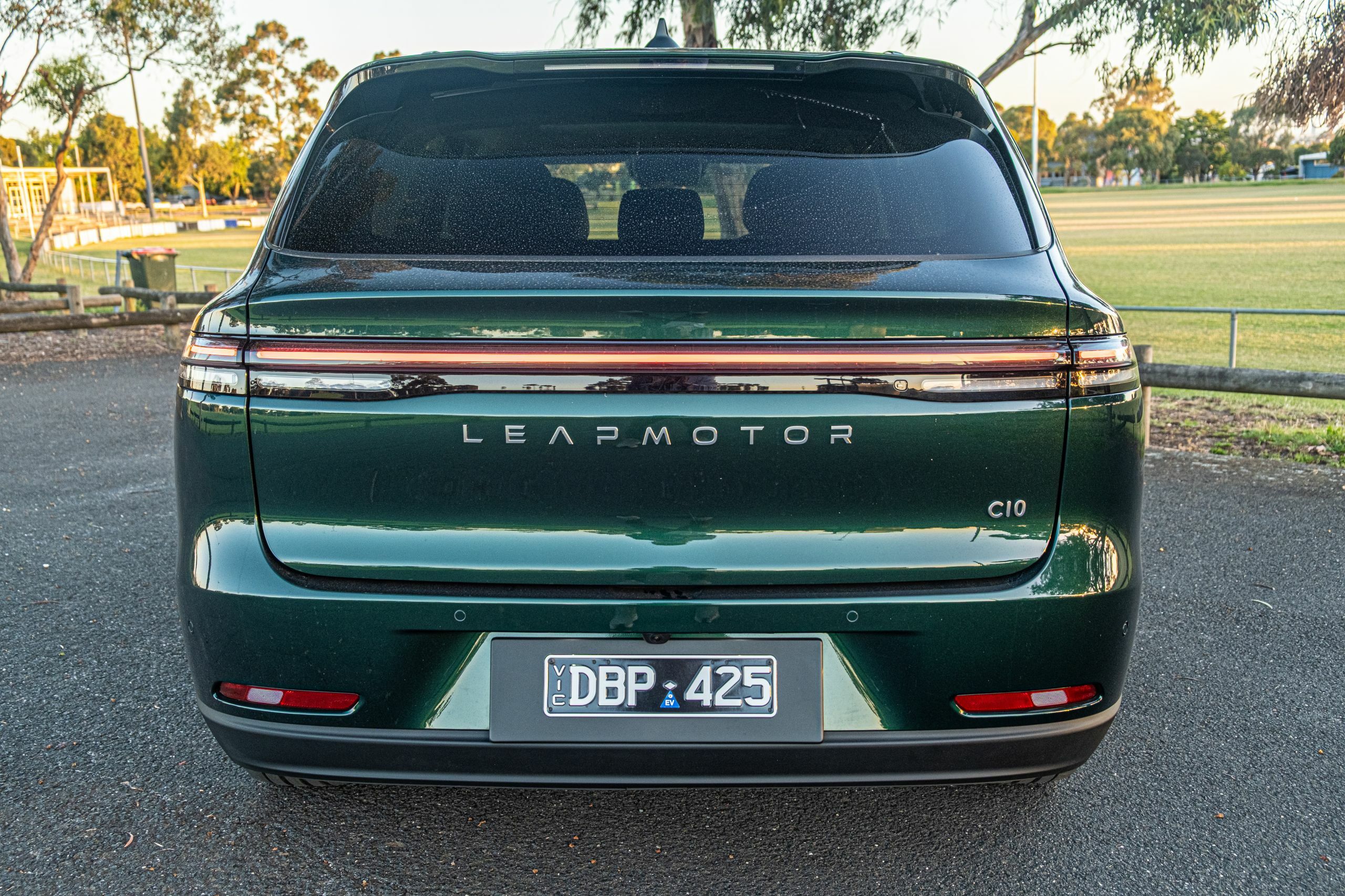
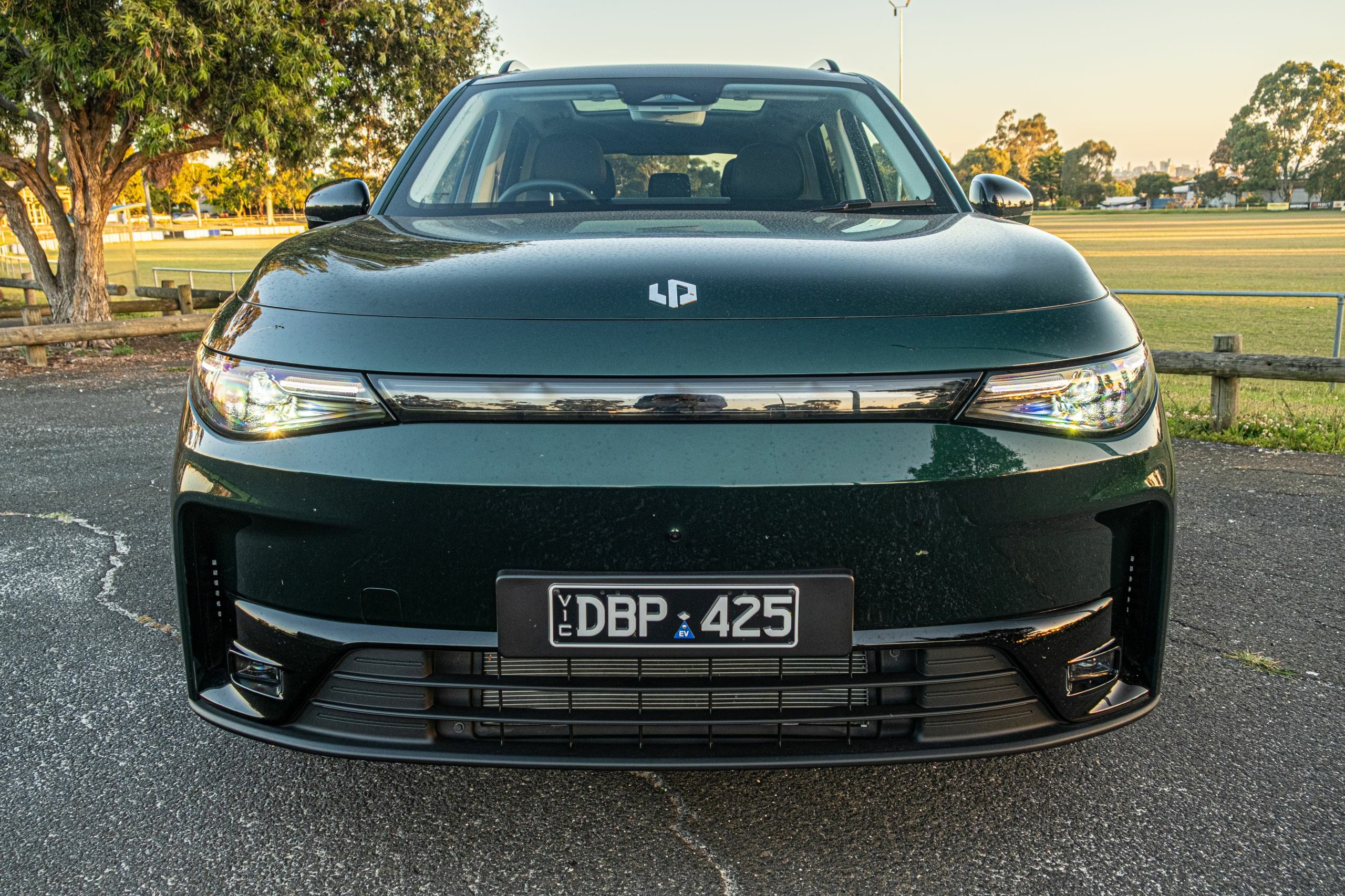
Visually, there’s nothing differentiating the C10 REEV from the EV. That means it looks as uninspiring as the EV, with not even the slightest bit of personality.

How’s The Interior?

\\\\\\\\\\\\

Photos Brad Anderson/Carscoops

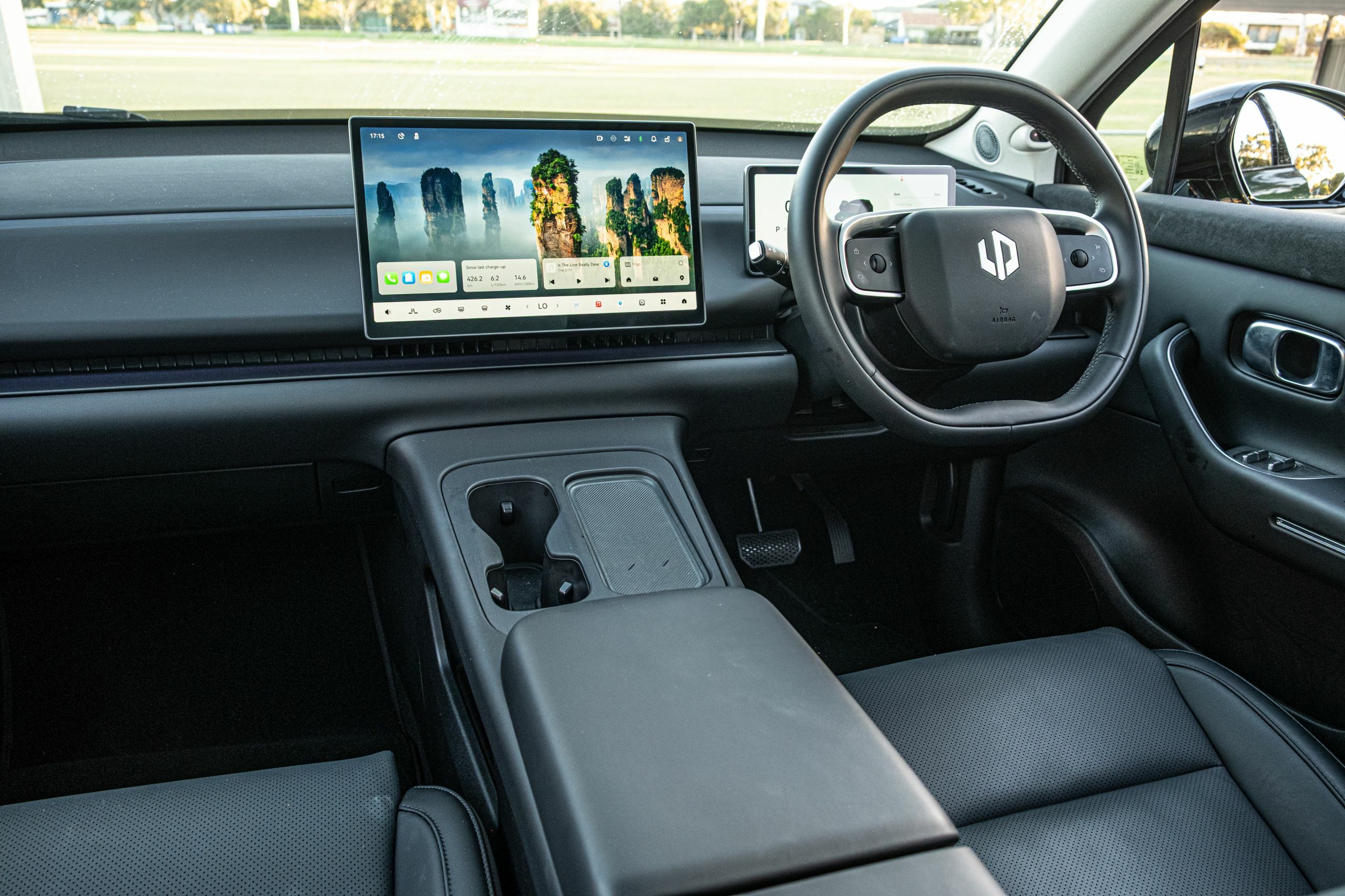
In the cabin, it’s also very familiar. Leapmotor has done exactly what Tesla popularized with the Model 3 and Model Y, opting for an ultra-minimalist design that some people will love, but others will hate.

A 14.6-inch infotainment display sits at the center of the dash running on Leapmotor’s in-house operating system, which uses Android as its base. While we wouldn’t go as far as to describe the C10’s infotainment as good as Tesla’s, it’s surprisingly not far off.

The tablet-like design doesn’t require a steep learning curve to get used to, and the display is very responsive to the touch. Admittedly, some of the settings hidden in the menu are a little too comprehensive, and it can be difficult to find things while on the move. Fortunately, there is a swipe-down notification menu that can be configured with dozens of different toggles for important vehicle functions, ensuring they’re never more than a couple of touches away.

\\\\\\\\\\\\\\\\\

Photos Brad Anderson/Carscoops

Frustratingly, the display does not support smartphone mirroring, so there’s no Android Auto or Apple CarPlay, leaving me to place my phone in the cupholder for navigation. Additionally, the quality of the reversing camera is shocking and not up to modern standards. The infotainment system also needs 15 seconds to load after the car is turned on, by which time I’d often already reversed without the camera loading and started driving away.

All of the materials used feel pleasantly plush, particularly the soft-touch leather adorning the seats, door panels, dashboard, and center console. However, I found that the leather marked very easily, so while it looks nice, it doesn’t stay clean for very long.

Entering and exiting the C10 REEV also turned into a bigger hassle than it should have been. In the first C10 I tested, I easily synced my phone with it and used it as the key. When I tried to use the Leapmotor app on my phone to do the same with this C10, it refused to work. A bit of digging suggests this could have been because the VIN had already been assigned to another device. Apparently, resetting the infotainment system should have fixed it. It didn’t.

Do Small Annoyances Add Up?

 The 2026 Leapmotor C10 REEV Fixes The Biggest EV Problem Only To Fail At The Basics | Review

This left me with no choice but to use the silly keycard for my two weeks with the C10 REEV. Not only is a keycard inferior to a traditional key in every single way, but it also doesn’t have any buttons, meaning I had to tap the NFC logo on the driver’s side mirror every time I wanted to lock or unlock it. It doesn’t even have a proximity locking/unlocking function, so when unloading things out of the passenger side or the trunk, I’d have to walk back around to the driver’s mirror and tap it.

I get it, keycards are in fashion (thanks, Tesla…), but they are just not nice to use.

My issues didn’t stop here. The air conditioning is genuinely disappointing. With the temperature turned down to its lowest setting, the AC on, and the fan speed at full, the C10 would only blow out mildly cool air, equivalent to what most cars do with the AC turned off and just the fans running. In the Australian summer, that was very annoying.

Set those issues aside, and the cabin of the C10 REEV is a nice place to spend time. It’s spacious, and there’s plenty of room in the rear, too. Cargo space is also good, as it can swallow up to 546 liters (19.2 cubic feet) or 1,375 liters (48.5 cubic-feet) with the rear seats folded down.

Smooth Power

\\\\\\\\\\

Photos Brad Anderson/Carscoops

Out on the open road, I quickly grew quite fond of the range-extender powertrain, and actually preferred it to the more traditional full-EV version.

As the engine is only ever operating in the background to charge the battery, it doesn’t intrude on the driving experience at all. In fact, even when I had the Leapmotor in the mode that prioritizes the engine charging the battery, the four-cylinder barely ever revved to beyond 2,000 rpm, so it couldn’t be heard. Around town, it’ll happily sit at less than 1,200 rpm, remaining completely silent while the instant power and torque of the rear-mounted electric motor make the REEV drive just as smoothly as an EV.

I ended my two weeks with the C10 REEV averaging 14.5 kWh/100 km, while fuel consumption sat at 6.1 l/100 km (38.5 US mpg).

On The Road

 The 2026 Leapmotor C10 REEV Fixes The Biggest EV Problem Only To Fail At The Basics | Review

Admittedly, the Leapmotor isn’t particularly fun or engaging to drive. It takes 8.5 seconds to reach 100 km/h (62 mph) and isn’t the type of SUV that likes to be driven in a sporty manner. Drive it calmy, and it does the job just fine.

As I found in my first test of the all-electric C10, the driver assistance systems leave a lot to be desired. The SUV includes both adaptive cruise control and active lane centering, neither of which works well. Even if the adaptive cruise is set and the C10 detects a vehicle ahead, it’ll struggle to maintain a consistent distance from it, repeatedly accelerating and decelerating to hold position.

The lane centering also needs improvement. I spent hours on end sitting on well-marked highways during my time with the Leapmotor, and it’d consistently ping-pong between the lines. That’s unacceptable in this day and age.

 The 2026 Leapmotor C10 REEV Fixes The Biggest EV Problem Only To Fail At The Basics | Review

The C10 REEV also has several other overactive sensors, like the driver attention monitoring system and speed limit warnings. Fortunately, these can be easily disabled in the swipe-down menu, and I didn’t find them to be as intrusive as I did when I first tested the C10 six months ago.

Ride quality is good most of the time, but there were a few instances when it felt like I hit the bump stops after going over speed bumps a little too fast, which most cars would have easily dealt with. The steering is exceptionally light, particularly in the Comfort setting, but it can be configured to feel slightly firmer in Sport mode.

Verdict

\\\\\\\\\\\

Photos Brad Anderson/Carscoops

The Leapmotor C10 REEV has promise. The trick hybrid powertrain works well, combining all of the benefits of a traditional EV like smoothness and instant power, without any of the downsides like range anxiety, particularly in Australia, where the charging network is sub-par.

However, the overall experience of living with the C10 is marred by poorly calibrated safety systems and some tech gremlins that need to be fixed. If these systems can be improved with software updates, the C10 REEV would be a very tempting proposition.

\\\\\\\\\\\\\\\\\\\\\\\\\\\\\\\\\\\\\\\\\\\\\\\\\\\\\\\\\\\\\\\\\\\\\\\\\\\\\\

Photos Brad Anderson/Carscoops

Cadillac’s Electric Escalade Learns A Hard Lesson From Its Loudmouth V8 Sibling

  • Cadillac’s flagship SUVs are very evenly matched in a sprint.
  • Electric Escalade IQ packs 750 hp and 785 lb-ft of torque.
  • Escalade-V delivers an almighty 682 hp and 653 lb-ft total.

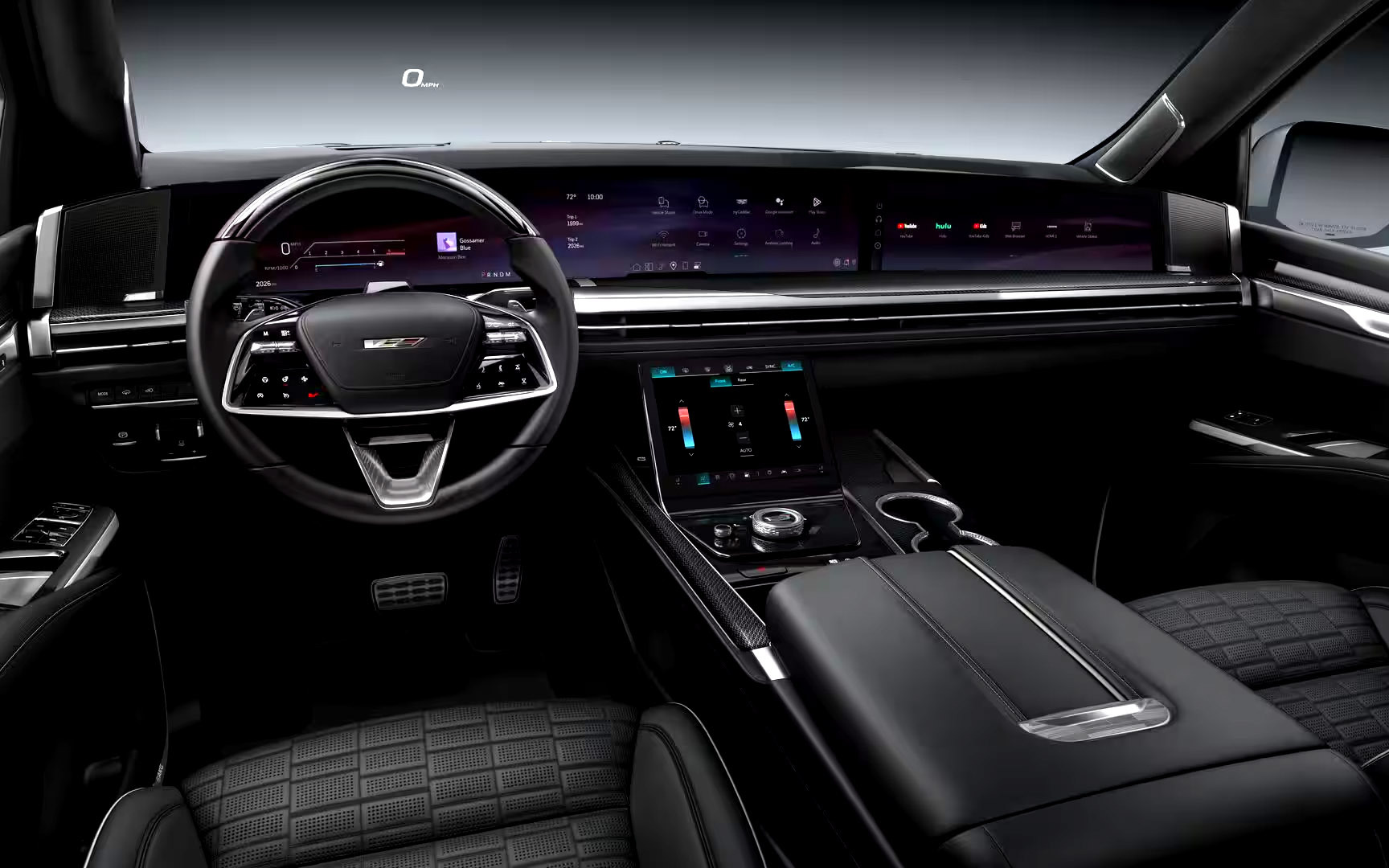
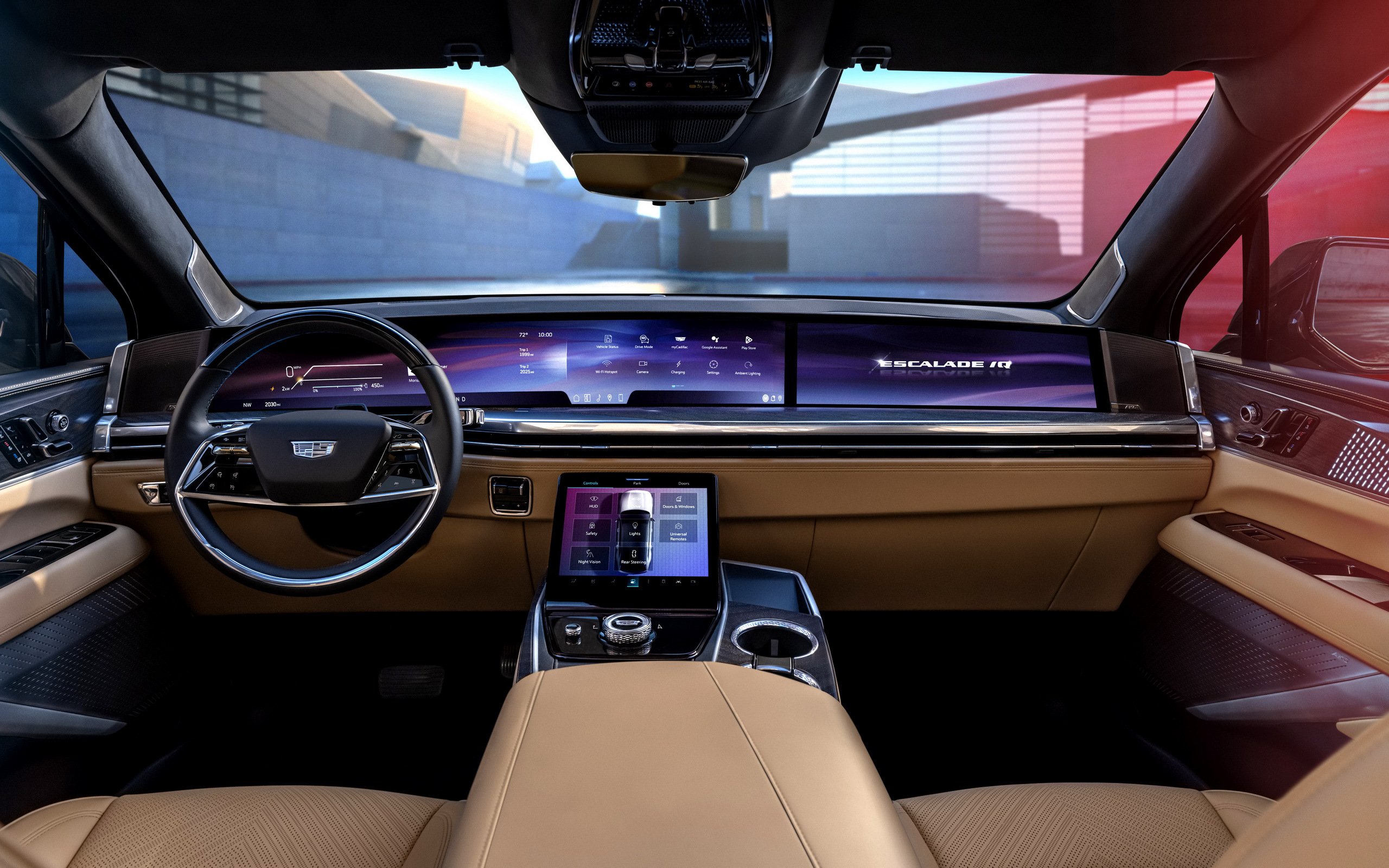
There’s something uniquely American about building an SUV with insane straight-line performance and then expecting it to hustle like a sports car. The Escalade-V and its unrelated Escalade IQ electric sibling may be two of the most gloriously excessive vehicles Cadillac sells today. Both deliver supercar levels of power, which makes the obvious question hard to resist.

More: There’s Only One Way A Mustang Dark Horse Can Beat A BMW M4 Like This

Curious to see which one is actually quicker, Edmunds lined them up for one of its U-drag races. Watching these two dinosaur-sized SUVs subjected to hard launches, heavy braking, and tight turns feels surreal and just plain absurd in the best possible way.

Gas V8 Power Versus Electric Surge

 Cadillac’s Electric Escalade Learns A Hard Lesson From Its Loudmouth V8 Sibling
2026 Cadillac Escalade-V

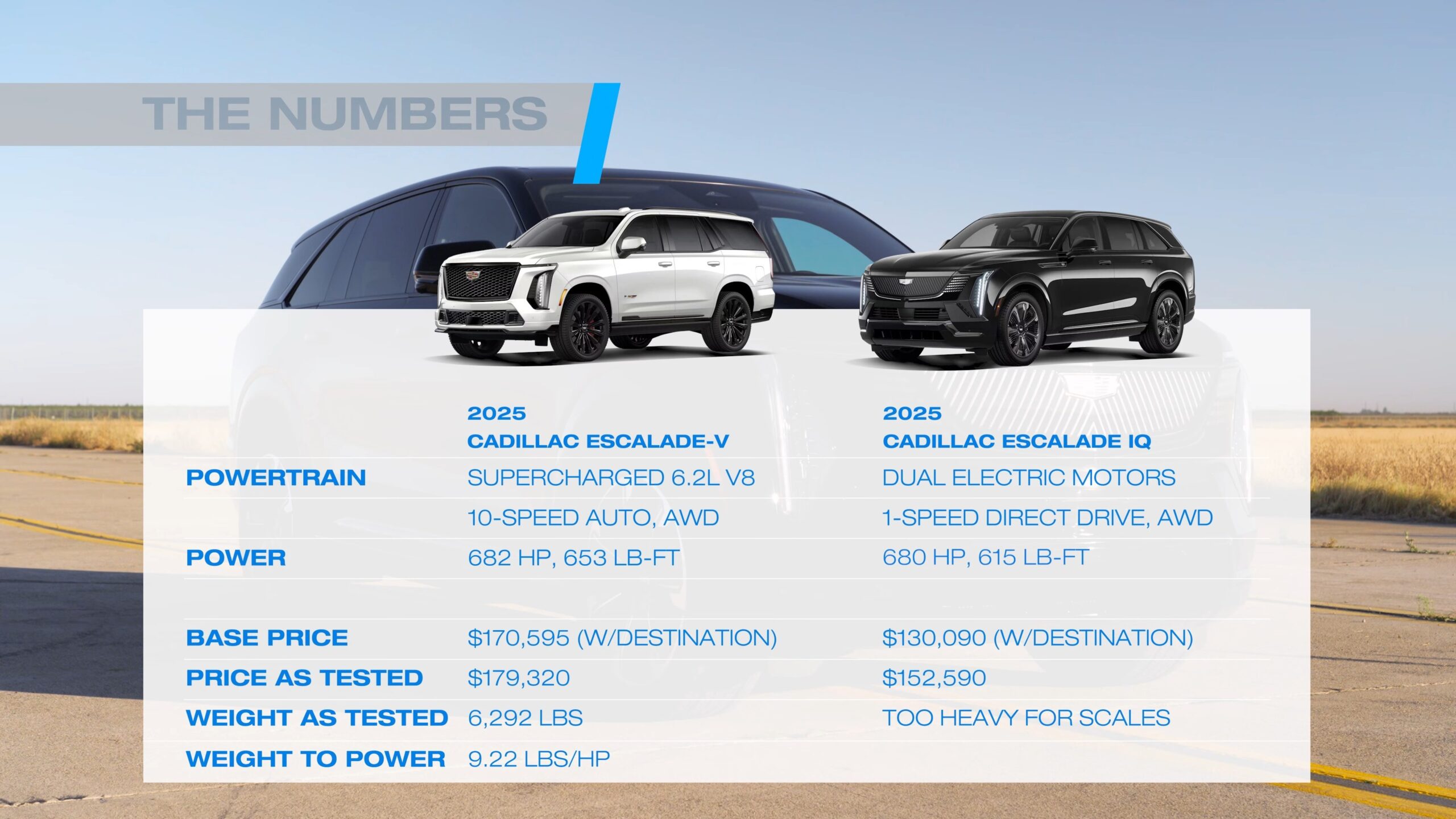
On paper, the Escalade-V and IQ are closely matched, even though their powertrains could not be more different. The V is powered by Cadillac’s 6.2-liter supercharged V8, producing 682 hp and 653 lb-ft (885 Nm) of torque, paired with a 10-speed automatic transmission that drives all four wheels.

By contrast, the Escalade IQ relies on a pair of electric motors and a substantial 212 kWh battery pack. In standard form, it delivers 680 hp and 615 lb-ft (834 Nm) of torque. Switch it into Velocity Max mode, and those figures climb to a healthier 750 hp and 785 lb-ft (1,063 Nm).

 Cadillac’s Electric Escalade Learns A Hard Lesson From Its Loudmouth V8 Sibling
Edmunds

The Escalade IQ needs this additional grunt to somewhat offset its insane heft. Whereas the combustion-powered V weighs around 6,300 lbs (2,857 kg), depending on configuration, the IQ weighs in at 9,100 lbs (4,127 kg), making it one of the heaviest passenger vehicles currently on sale.

Read: 2026 Cadillac Escalade IQL Is Long, Really Long

That weight difference shapes the entire contest. In a straight line, instant electric torque can mask mass for a moment, but physics always keeps score. The U-drag format, with its hard launch, heavy braking, tight turn, and sprint to the line, exposes not just power but how well each SUV manages it.

 Cadillac’s Electric Escalade Learns A Hard Lesson From Its Loudmouth V8 Sibling
2025 Cadillac Escalade IQ

During the first test, the V8-powered version got the jump off the line. After the U-turn, however, the transmission struggled to find the right gear, and the hesitation cost the Escalade-V its lead. That opened the door for the electric IQ to surge past and cross the line several lengths ahead.

Also: When A Super Venom Mustang Shows Up, Hellcats Turn Into Pussycats

Things were closer in the second race. This time, the electric model had the best launch, although the V regained some of that lost time under braking. The duo was neck-and-neck as they raced to the finish, but the IQ just ran out of puff at the top end, allowing the V to narrowly win.

❌
❌